Visual abstracts
New randomized trials and meta-analyses from leading journals at a glance: who was studied, what was compared, and what was found. Every paper is free to read in full.
All specialtiesCardiology 4877Oncology 4138Gastroenterology & Hepatology 1942Infectious Disease 3837Neurology 1905Psychiatry & Mental Health 2273Pulmonology 2143Critical Care 1365Endocrinology & Diabetes 2580Pediatrics 2980Surgery 2559Orthopedics & Sports Medicine 931Neurosurgery 537Cardiothoracic & Vascular Surgery 674Plastic & Reconstructive Surgery 591Nephrology 1133Rheumatology 823Hematology 1109Dermatology 621Ophthalmology 543Obstetrics & Gynecology 1686Public & Global Health 1058Radiology & Imaging 648Anesthesiology 986Urology 764ENT (Otolaryngology) 503Emergency Medicine 511Allergy & Immunology 313Geriatrics 981Family Medicine & Primary Care 562Medical Genetics & Genomics 676Pathology & Laboratory Medicine 159Physical Medicine & Rehabilitation 757Palliative Care 444Nutrition 1588Digital Health & AI 2201General Medicine 321
An Omicron-specific, self-amplifying mRNA booster vaccine for COVID-19: a phase 2/3 randomized trial
Randomized trialBenefit found
Is Omicron-specific mRNA booster vaccine effective?
Who
3140
Healthy adults with two doses of COVID-19 vaccine · Multicenter
Compared
GEMCOVAC-OM: significantly higher neutralizing antibody titers
ChAdOx1 nCoV-19: not significantly higher neutralizing antibody titers
GEMCOVAC-19: lower IgG titers
Main outcome
Neutralizing antibody titers
Result: noninferior and superior
Bottom line: Omicron-specific mRNA booster vaccine is safe and effective
Nat Med · 2024-04-18Download image

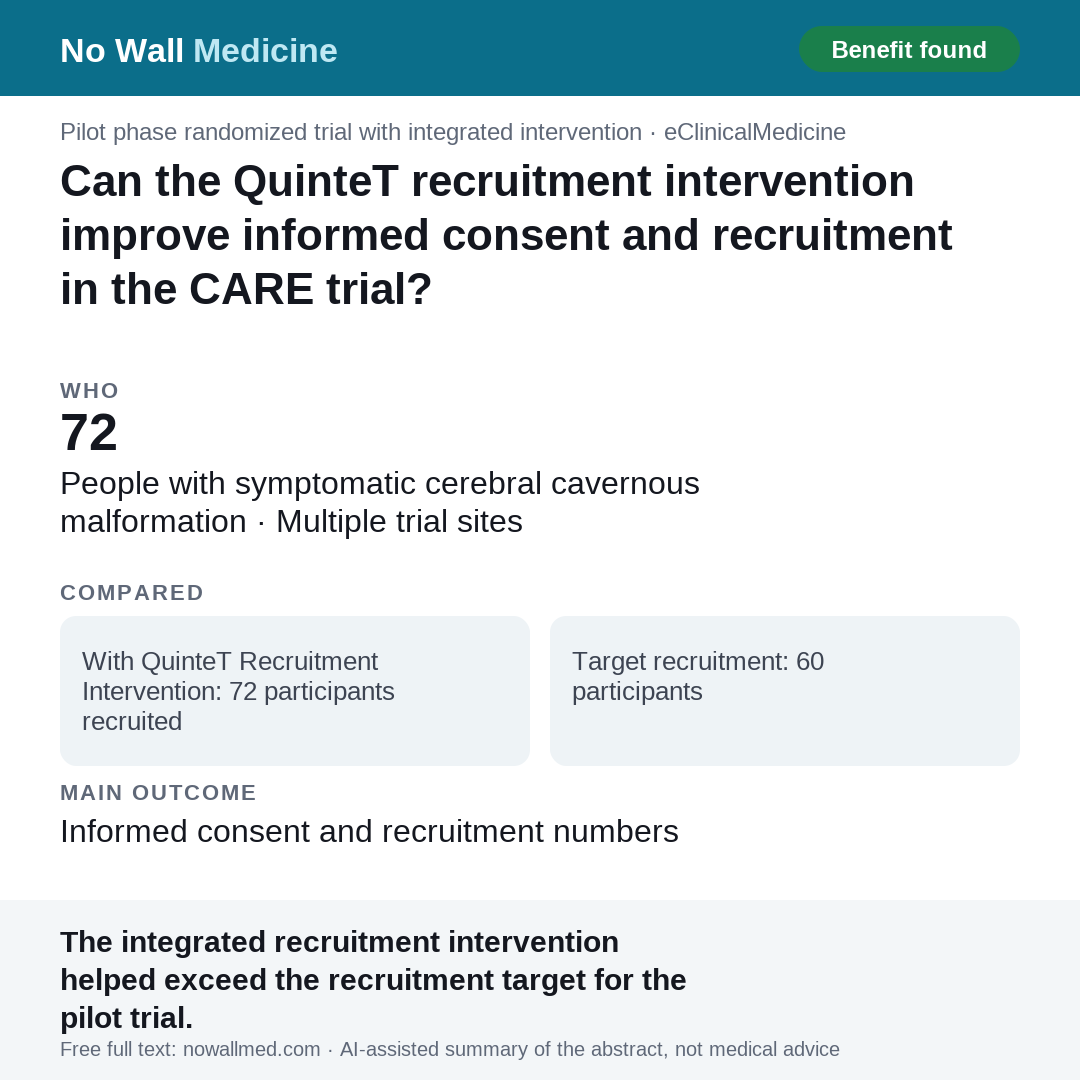
Addressing barriers and identifying facilitators to support informed consent and recruitment in the Cavernous malformations A Randomised Effectiveness (CARE) pilot phase trial: insights from the integrated QuinteT recruitment intervention (QRI)
Pilot phase randomized trial with integrated interventionBenefit found
Can the QuinteT recruitment intervention improve informed consent and recruitment in the CARE trial?
Who
72
People with symptomatic cerebral cavernous malformation · Multiple trial sites
Compared
With QuinteT Recruitment Intervention: 72 participants recruited
Target recruitment: 60 participants
Main outcome
Informed consent and recruitment numbers
Bottom line: The integrated recruitment intervention helped exceed the recruitment target for the pilot trial.
Funded by: National Institute for Health and Care Research
eClinicalMedicine · 2024-04-18Download image
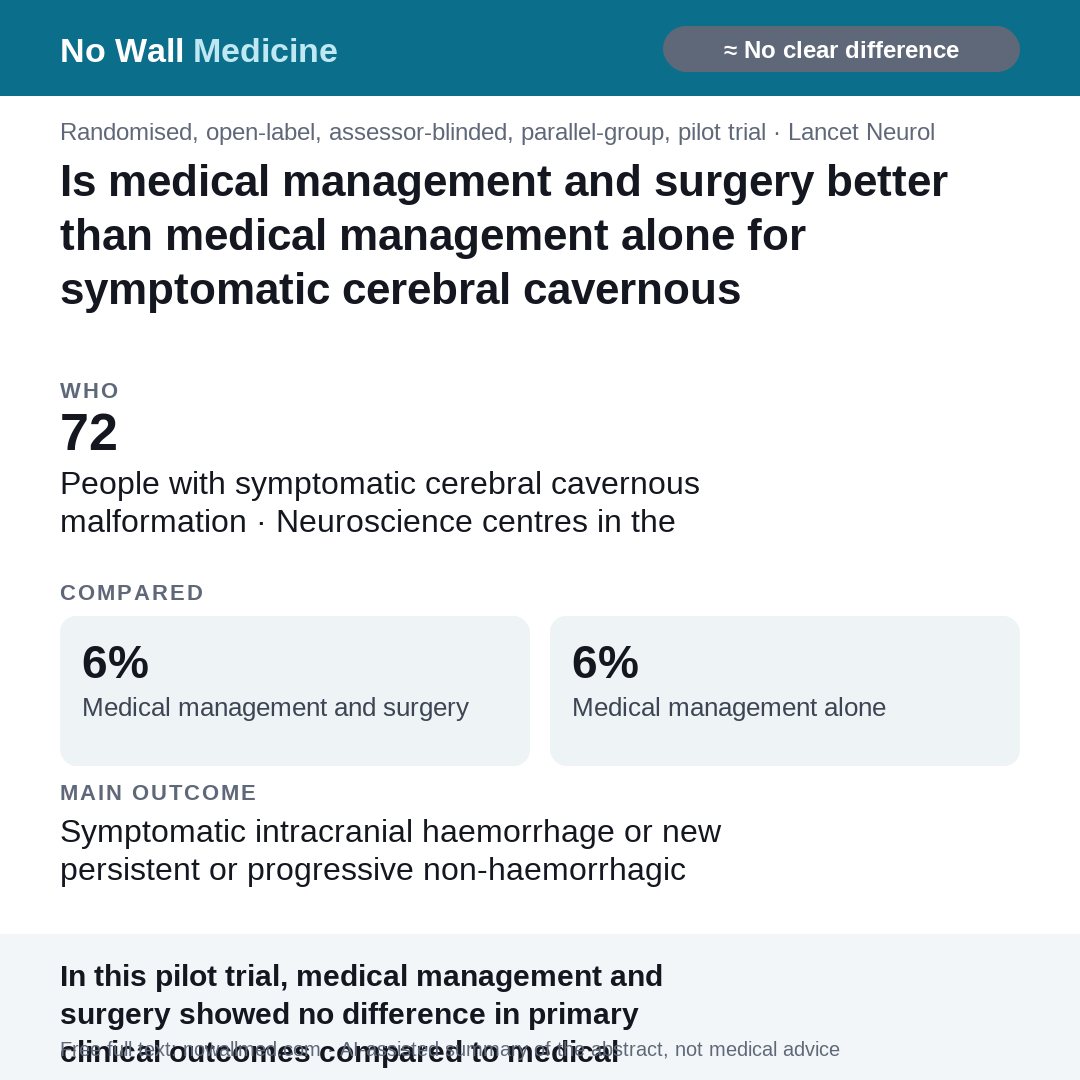
Medical management and surgery versus medical management alone for symptomatic cerebral cavernous malformation (CARE): a feasibility study and randomised, open, pragmatic, pilot phase trial
Randomised, open-label, assessor-blinded, parallel-group, pilot trialNo clear difference
Is medical management and surgery better than medical management alone for symptomatic cerebral cavernous malformation?
Who
72
People with symptomatic cerebral cavernous malformation · Neuroscience centres in the United Kingdom and Ireland
Compared
6%Medical management and surgery (2/33)
6%Medical management alone (2/34)
Main outcome
Symptomatic intracranial haemorrhage or new persistent or progressive non-haemorrhagic focal neurological deficit
Result: 8.0%, 95% CI 2.0-32.1 per year vs 7.5%, 1.9-30.1 per year
Bottom line: In this pilot trial, medical management and surgery showed no difference in primary clinical outcomes compared to medical management alone.
Funded by: National Institute for Health and Care Research
Lancet Neurol · 2024-04-18Download image
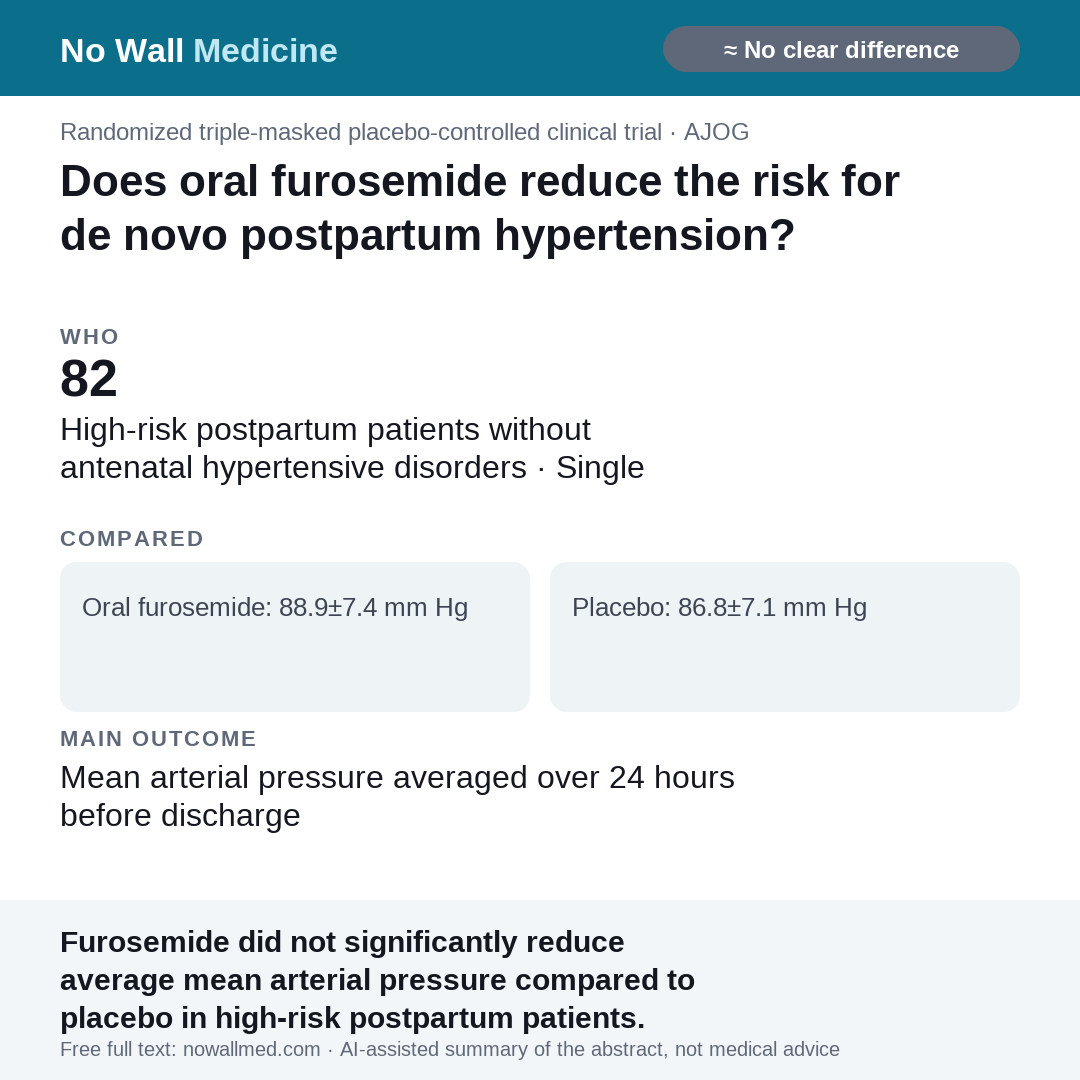
Lasix for the prevention of de novo postpartum hypertension: a randomized placebo-controlled trial (LAPP Trial)
Randomized triple-masked placebo-controlled clinical trialNo clear difference
Does oral furosemide reduce the risk for de novo postpartum hypertension?
Who
82
High-risk postpartum patients without antenatal hypertensive disorders · Single university-based tertiary care medical center
Compared
Oral furosemide: 88.9±7.4 mm Hg
Placebo: 86.8±7.1 mm Hg
Main outcome
Mean arterial pressure averaged over 24 hours before discharge
Result: absolute difference, 2.1 mm Hg; 95% confidence interval, -1.2 to 5.3
Bottom line: Furosemide did not significantly reduce average mean arterial pressure compared to placebo in high-risk postpartum patients.
AJOG · 2024-04-18Download image
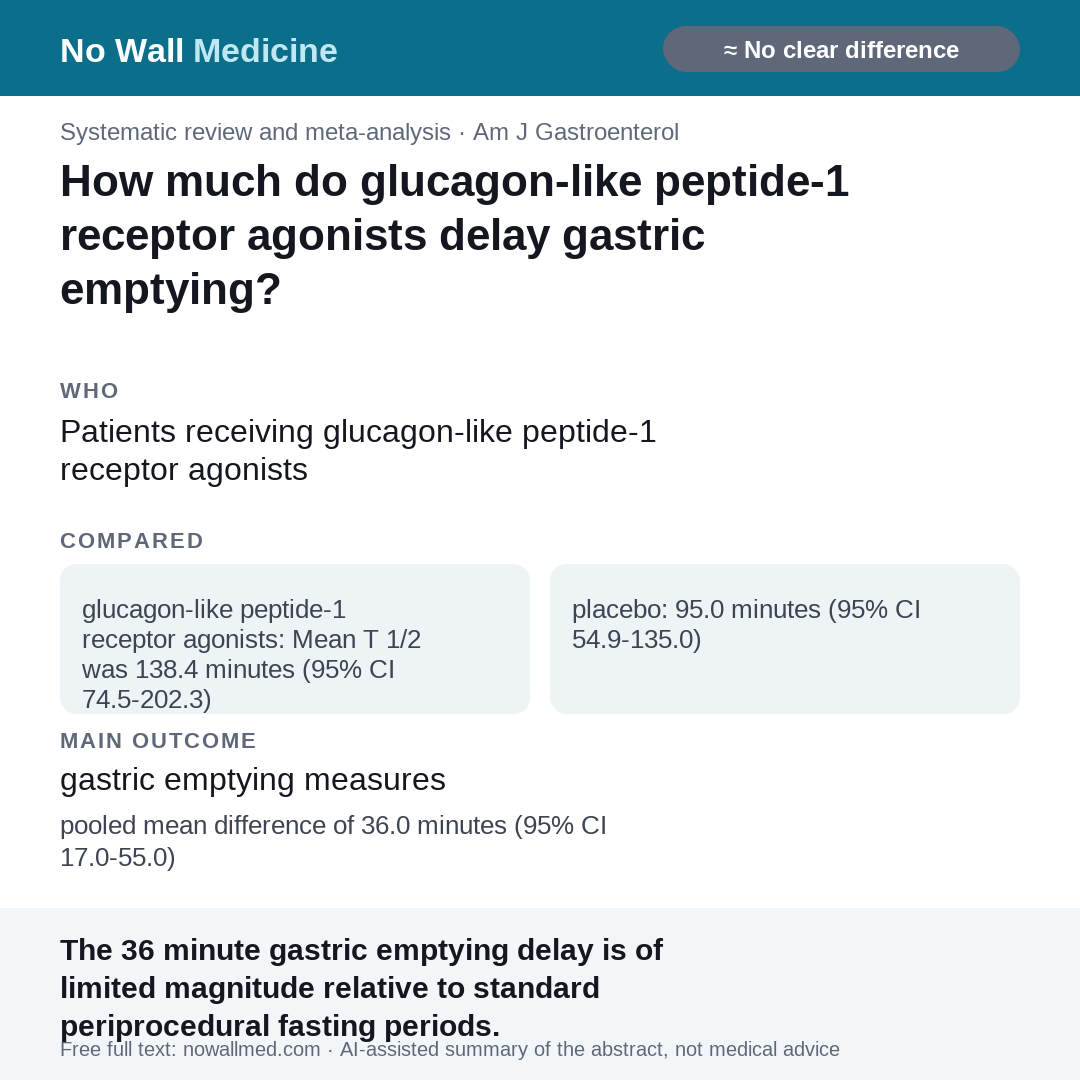
Quantified Metrics of Gastric Emptying Delay by Glucagon-Like Peptide-1 Agonists: A Systematic Review and Meta-Analysis With Insights for Periprocedural Management
Systematic review and meta-analysisNo clear difference
How much do glucagon-like peptide-1 receptor agonists delay gastric emptying?
Who
Patients receiving glucagon-like peptide-1 receptor agonists
Compared
glucagon-like peptide-1 receptor agonists: Mean T 1/2 was 138.4 minutes (95% CI 74.5-202.3)
placebo: 95.0 minutes (95% CI 54.9-135.0)
Main outcome
gastric emptying measures
Result: pooled mean difference of 36.0 minutes (95% CI 17.0-55.0)
Bottom line: The 36 minute gastric emptying delay is of limited magnitude relative to standard periprocedural fasting periods.
Am J Gastroenterol · 2024-04-18Download image
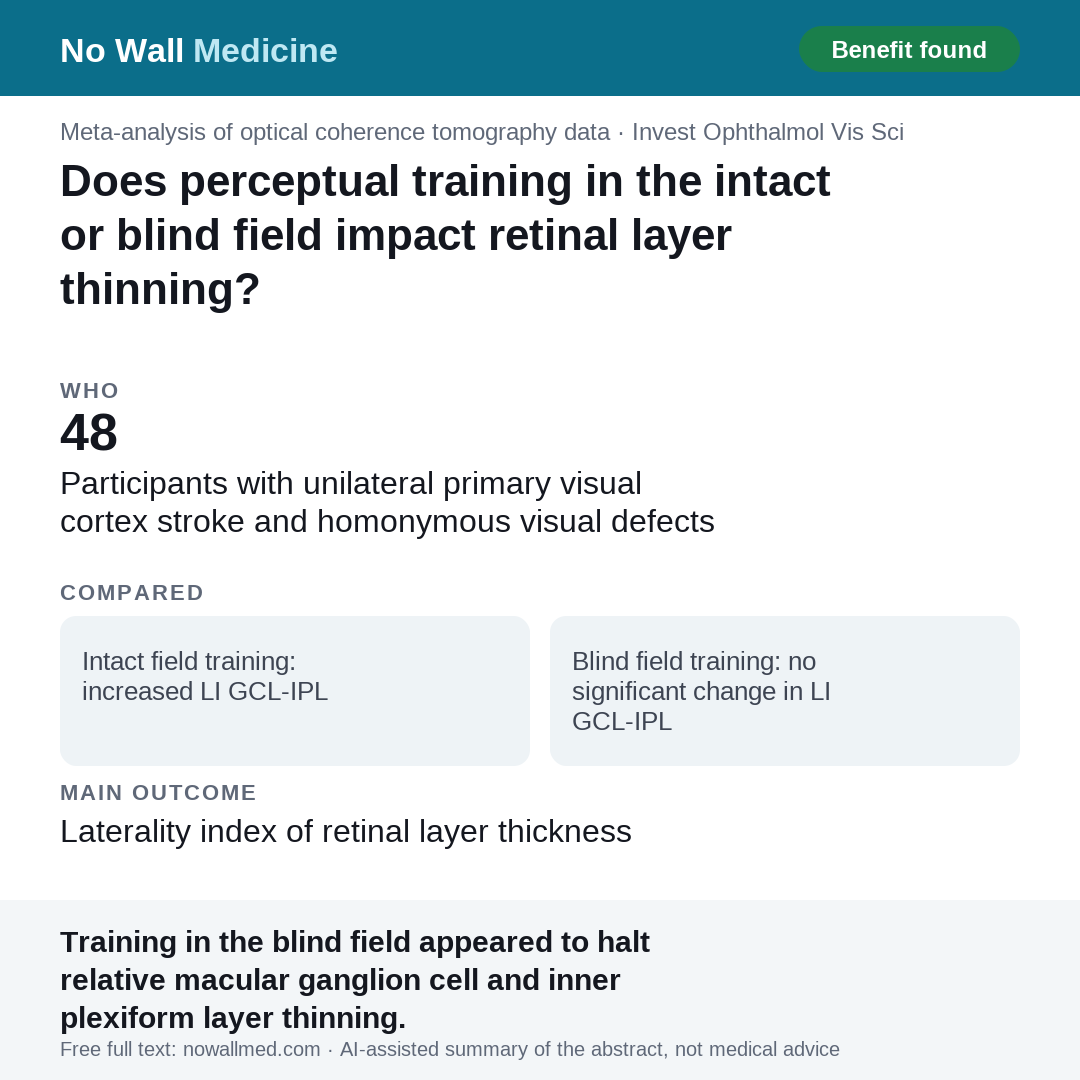
Training in Cortically Blinded Fields Appears to Confer Patient-Specific Benefit Against Retinal Thinning
Meta-analysis of optical coherence tomography dataBenefit found
Does perceptual training in the intact or blind field impact retinal layer thinning?
Who
48
Participants with unilateral primary visual cortex stroke and homonymous visual defects
Compared
Intact field training: increased LI GCL-IPL
Blind field training: no significant change in LI GCL-IPL
Main outcome
Laterality index of retinal layer thickness
Bottom line: Training in the blind field appeared to halt relative macular ganglion cell and inner plexiform layer thinning.
Invest Ophthalmol Vis Sci · 2024-04-18Download image
An umbrella review of health co-benefits from actions to reduce greenhouse gas emissions
Umbrella review of 26 reviewsBenefit found
What are the health co-benefits from actions to reduce greenhouse gas emissions?
Who
57
200 mitigation actions across various sectors and countries · Global, including high, middle, and lower middle-income countries
Compared
Energy sector actions: substantial health co-benefits in lower middle-income countries
Diet and clean cookstove actions: greatest health benefits
Main outcome
Health co-benefits from greenhouse gas emission reduction actions
Bottom line: Reducing greenhouse gas emissions provides large health benefits through reduced air pollution, healthier diets, and increased physical activity.
Funded by: Wellcome Trust and the Oak Foundation
Lancet Planet Health · 2024-04-18Download image

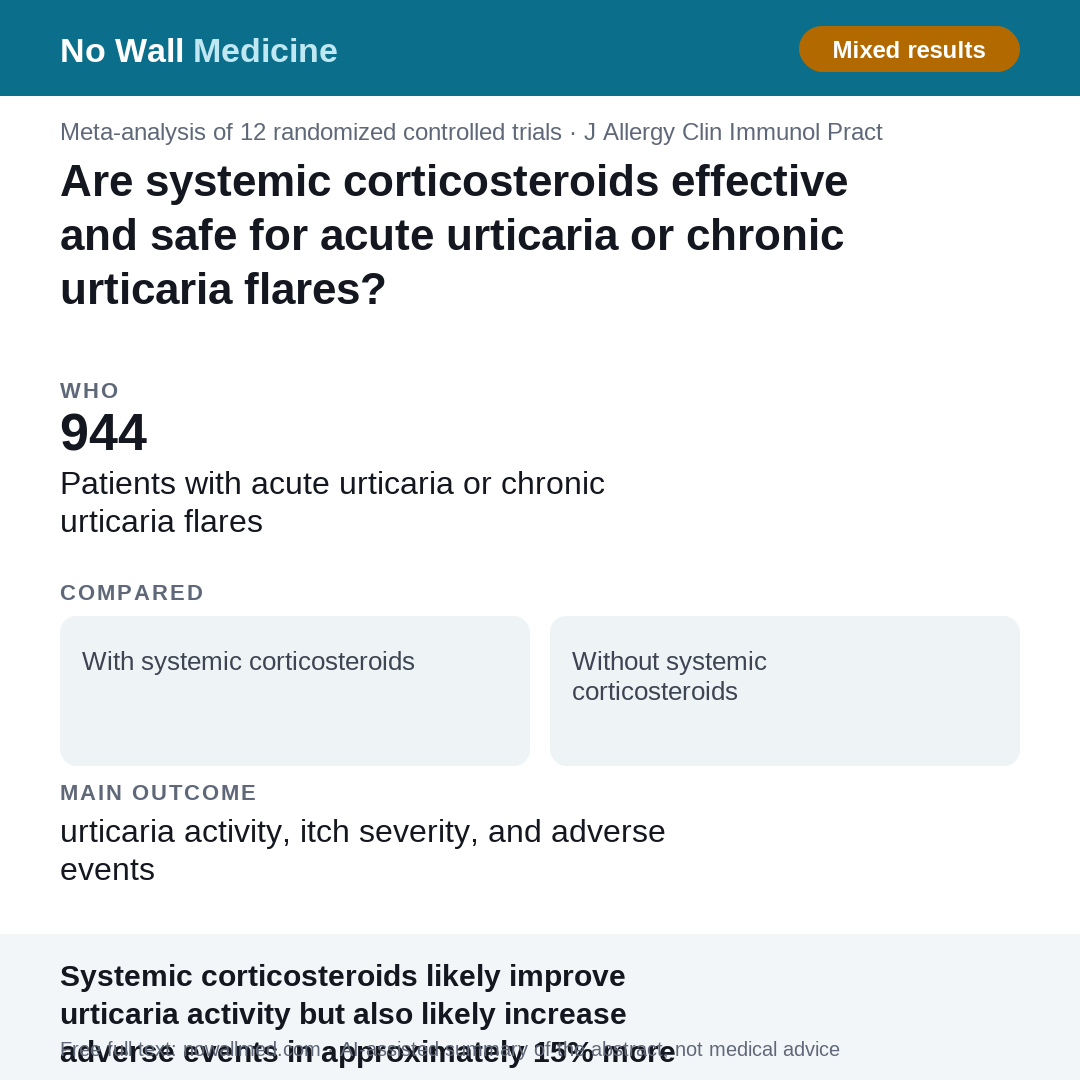
Efficacy and Safety of Systemic Corticosteroids for Urticaria: A Systematic Review and Meta-Analysis of Randomized Clinical Trials
Meta-analysis of 12 randomized controlled trialsMixed results
Are systemic corticosteroids effective and safe for acute urticaria or chronic urticaria flares?
Who
944
Patients with acute urticaria or chronic urticaria flares
Compared
With systemic corticosteroids
Without systemic corticosteroids
Main outcome
urticaria activity, itch severity, and adverse events
Result: odds ratio 2.17 (95% CI 1.43-3.31) for urticaria activity improvement
Bottom line: Systemic corticosteroids likely improve urticaria activity but also likely increase adverse events in approximately 15% more patients.
Limitation: low certainty for itch severity improvement
J Allergy Clin Immunol Pract · 2024-04-18Download image
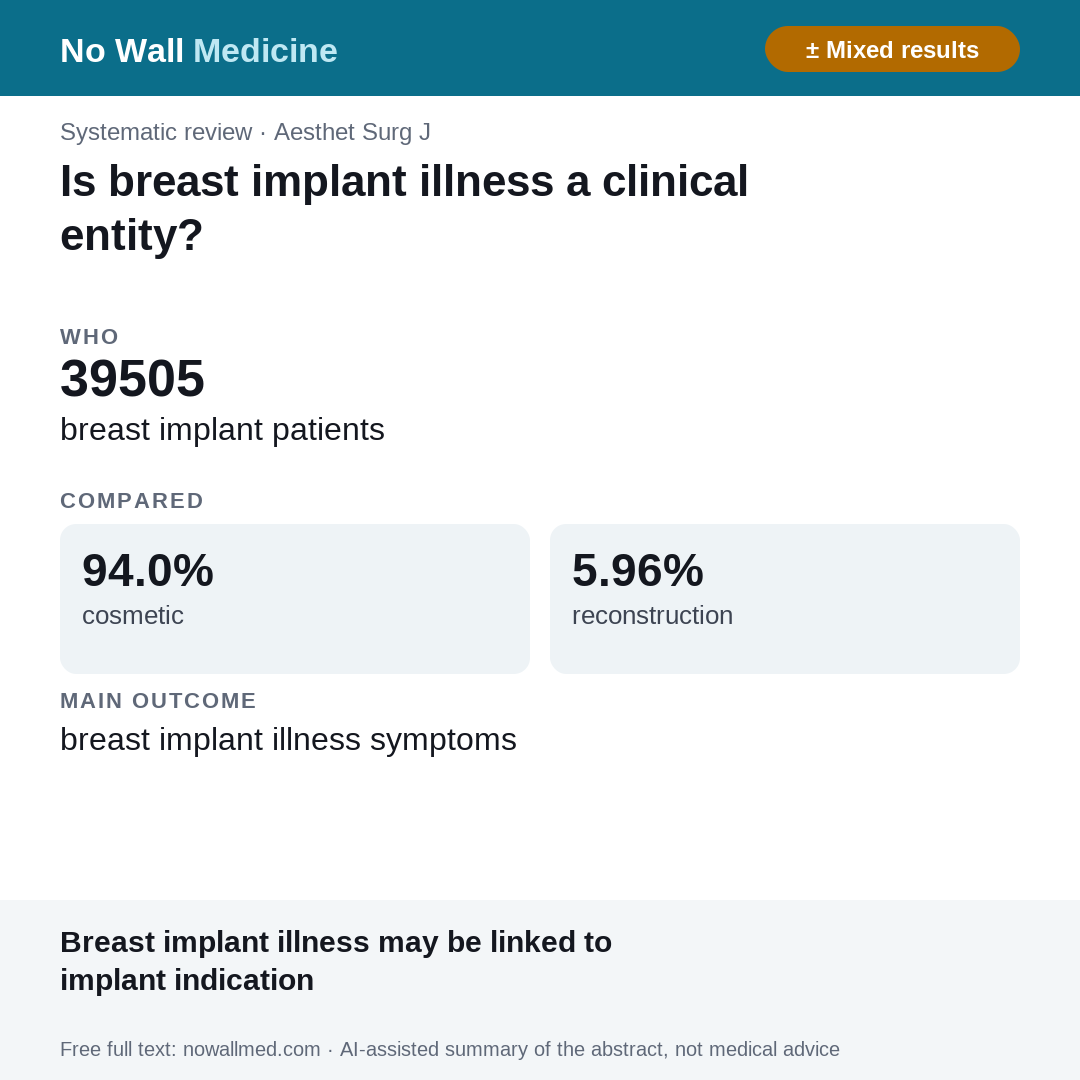
Breast Implant Illness as a Clinical Entity: A Systematic Review of the Literature
Systematic reviewMixed results
Is breast implant illness a clinical entity?
Who
39505
breast implant patients
Compared
94.0%cosmetic (3864/4109)
5.96%reconstruction (245/4109)
Main outcome
breast implant illness symptoms
Bottom line: Breast implant illness may be linked to implant indication
Aesthet Surg J · 2024-04-18Download image
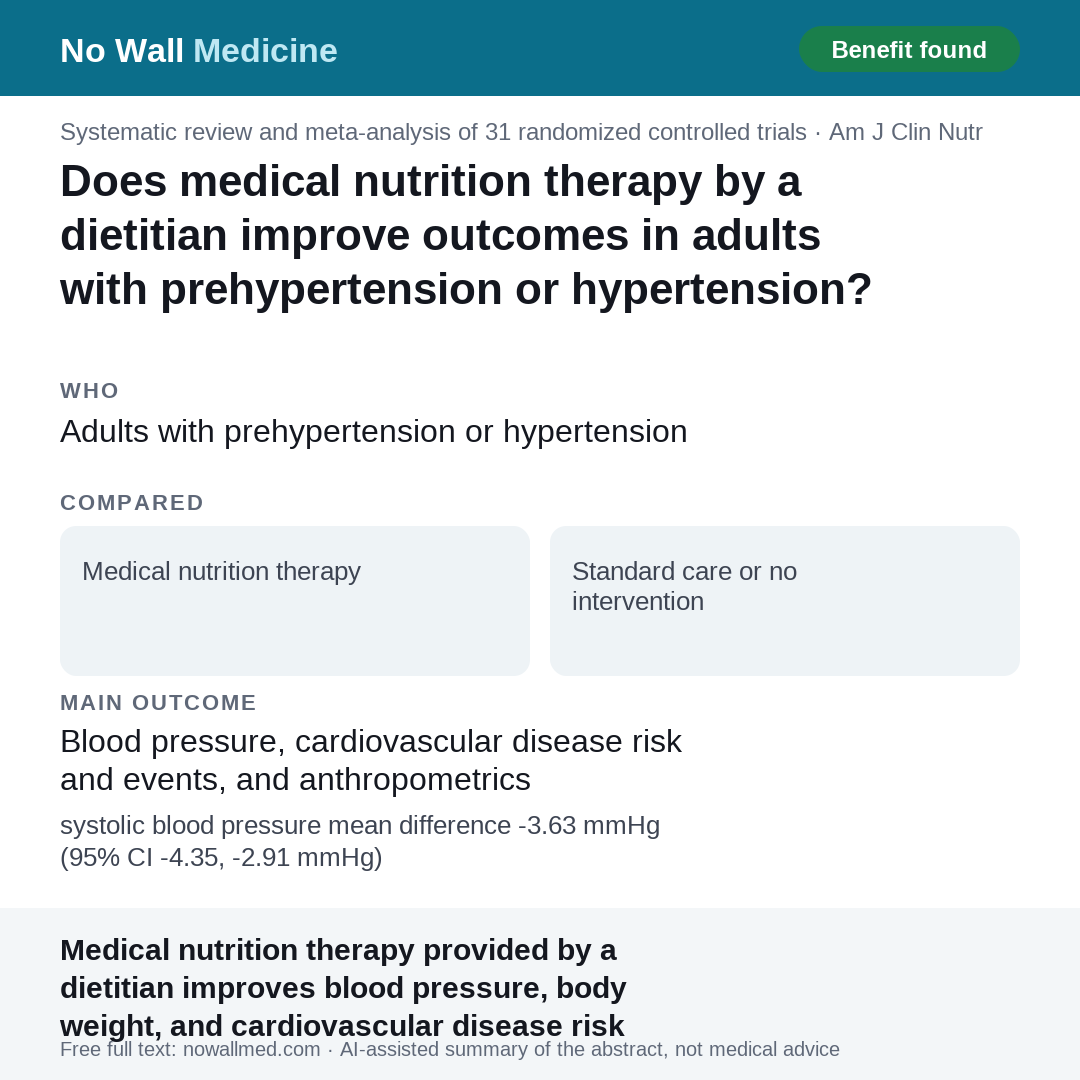
Medical nutrition therapy provided by a dietitian improves outcomes in adults with prehypertension or hypertension: a systematic review and meta-analysis
Systematic review and meta-analysis of 31 randomized controlled trialsBenefit found
Does medical nutrition therapy by a dietitian improve outcomes in adults with prehypertension or hypertension?
Who
Adults with prehypertension or hypertension
Compared
Medical nutrition therapy
Standard care or no intervention
Main outcome
Blood pressure, cardiovascular disease risk and events, and anthropometrics
Result: systolic blood pressure mean difference -3.63 mmHg (95% CI -4.35, -2.91 mmHg)
Bottom line: Medical nutrition therapy provided by a dietitian improves blood pressure, body weight, and cardiovascular disease risk scores.
Limitation: Certainty of evidence was low for arterial stiffness and waist circumference outcomes.
Am J Clin Nutr · 2024-04-18Download image
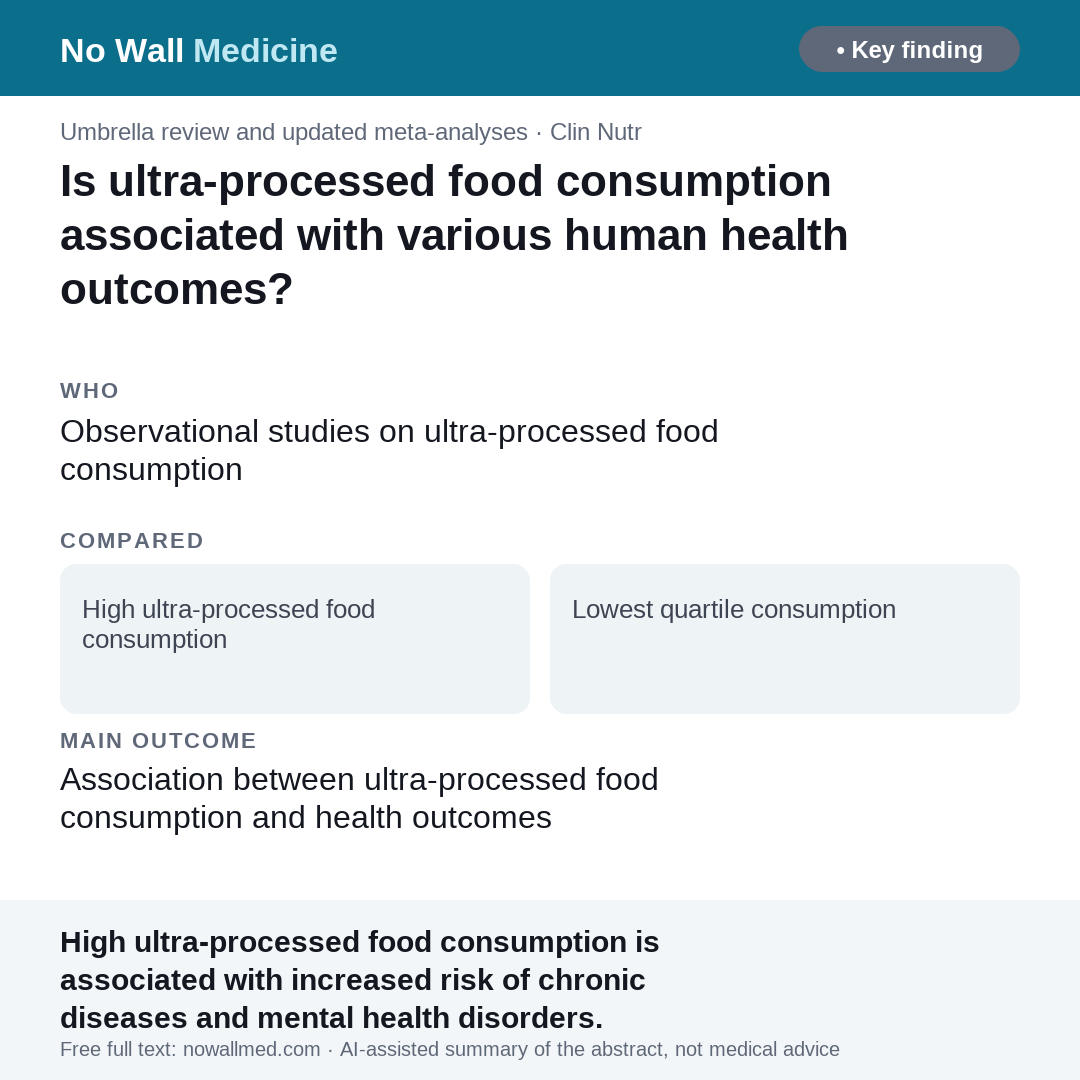
Ultra-processed foods and human health: An umbrella review and updated meta-analyses of observational evidence
Umbrella review and updated meta-analysesHarm found
Is ultra-processed food consumption associated with various human health outcomes?
Who
Observational studies on ultra-processed food consumption
Compared
High ultra-processed food consumption
Lowest quartile consumption
Main outcome
Association between ultra-processed food consumption and health outcomes
Bottom line: High ultra-processed food consumption is associated with increased risk of chronic diseases and mental health disorders.
Clin Nutr · 2024-04-18Download image
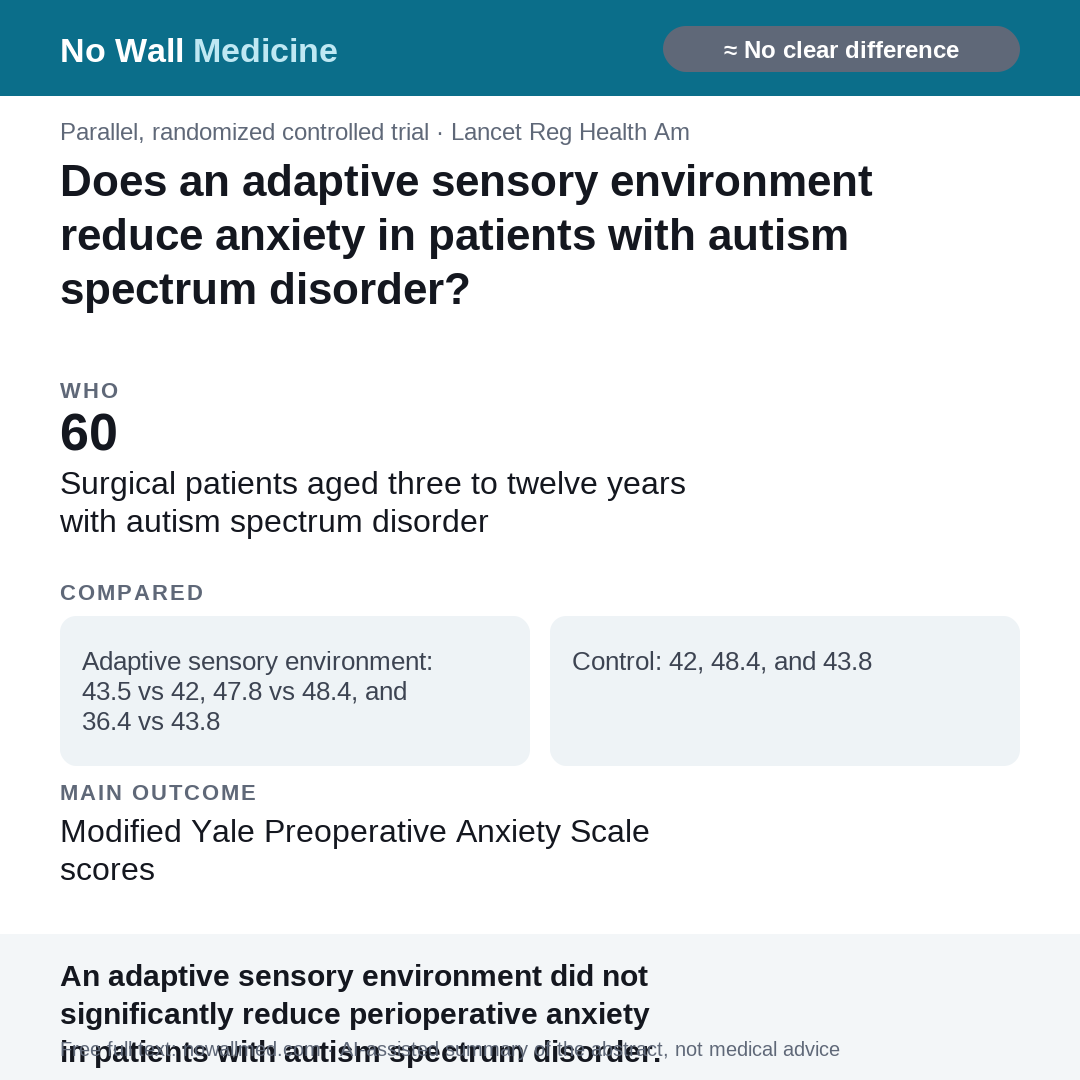
Use of an adaptive sensory environment in patients with autism spectrum disorder (ASD) in the perioperative environment: a parallel, randomized controlled trial
Parallel, randomized controlled trialNo clear difference
Does an adaptive sensory environment reduce anxiety in patients with autism spectrum disorder?
Who
60
Surgical patients aged three to twelve years with autism spectrum disorder
Compared
Adaptive sensory environment: 43.5 vs 42, 47.8 vs 48.4, and 36.4 vs 43.8
Control: 42, 48.4, and 43.8
Main outcome
Modified Yale Preoperative Anxiety Scale scores
Bottom line: An adaptive sensory environment did not significantly reduce perioperative anxiety in patients with autism spectrum disorder.
Limitation: This was a feasibility study.
Funded by: Dayton Children's Hospital Foundation
Lancet Reg Health Am · 2024-04-18Download image
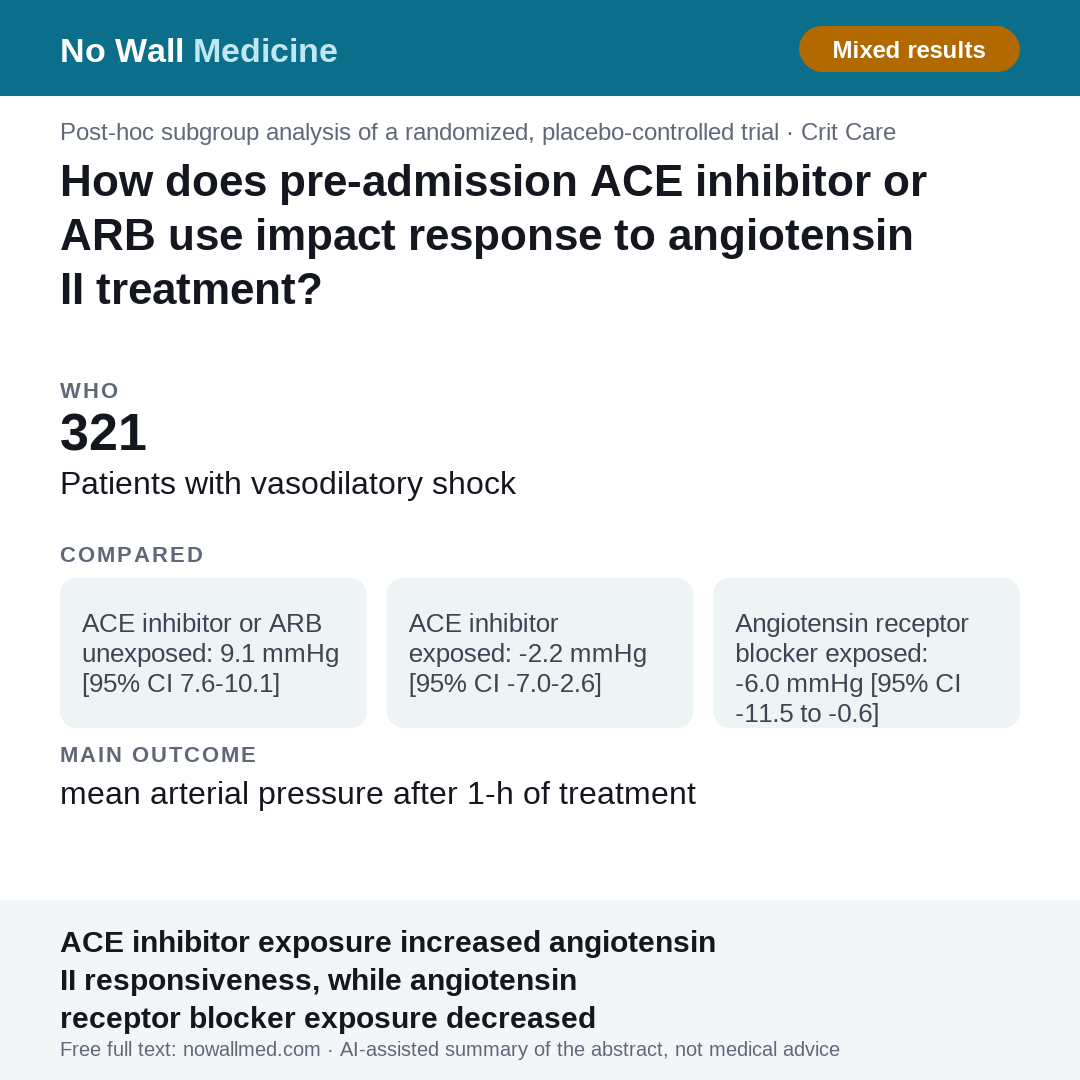
ACE inhibitors and angiotensin receptor blockers differentially alter the response to angiotensin II treatment in vasodilatory shock
Post-hoc subgroup analysis of a randomized, placebo-controlled trialMixed results
How does pre-admission ACE inhibitor or ARB use impact response to angiotensin II treatment?
Who
321
Patients with vasodilatory shock
Compared
ACE inhibitor or ARB unexposed: 9.1 mmHg [95% CI 7.6-10.1]
ACE inhibitor exposed: -2.2 mmHg [95% CI -7.0-2.6]
Angiotensin receptor blocker exposed: -6.0 mmHg [95% CI -11.5 to -0.6]
Main outcome
mean arterial pressure after 1-h of treatment
Bottom line: ACE inhibitor exposure increased angiotensin II responsiveness, while angiotensin receptor blocker exposure decreased responsiveness in vasodilatory shock.
Crit Care · 2024-04-18Download image
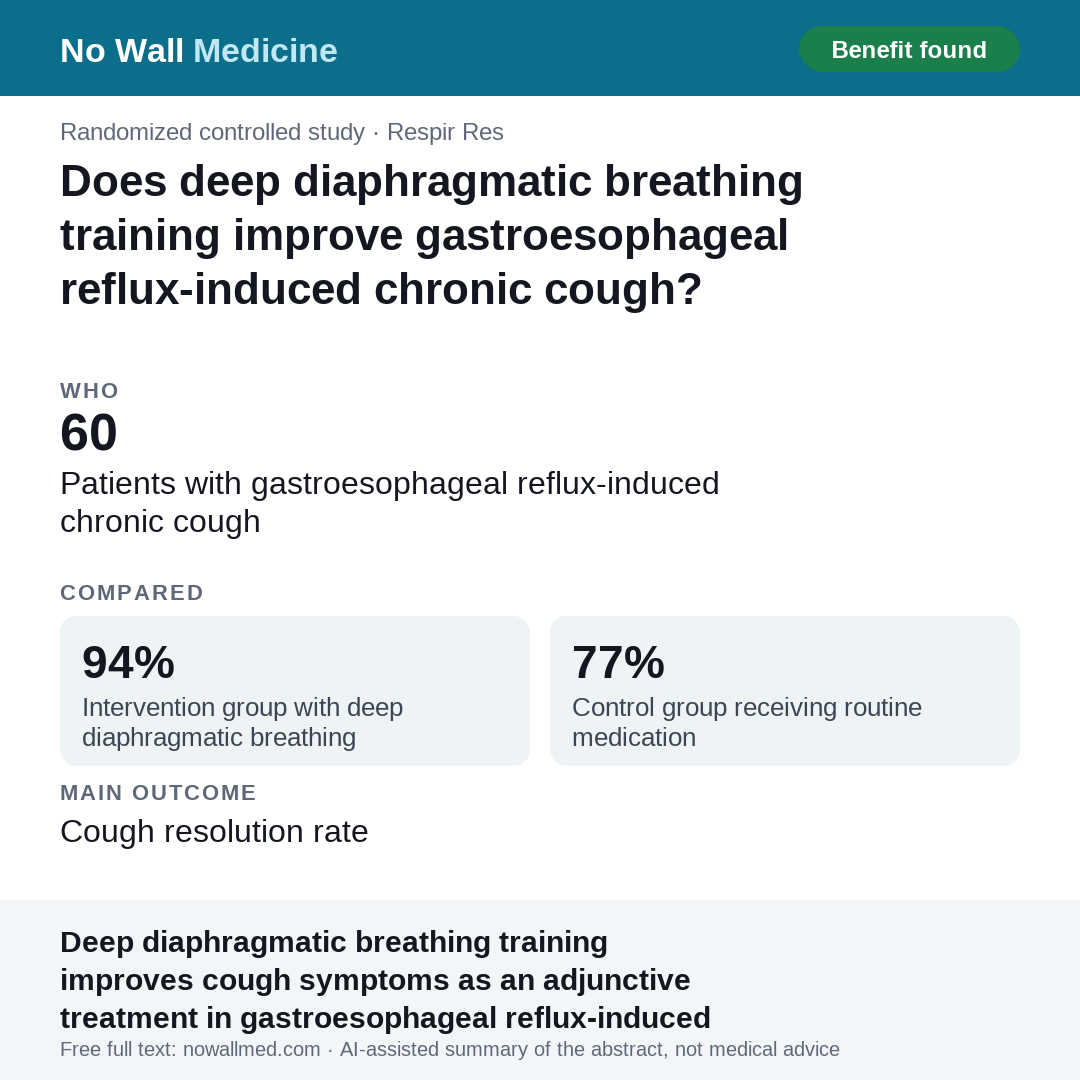
Positive effect of deep diaphragmatic breathing training on gastroesophageal reflux-induced chronic cough: a clinical randomized controlled study
Randomized controlled studyBenefit found
Does deep diaphragmatic breathing training improve gastroesophageal reflux-induced chronic cough?
Who
60
Patients with gastroesophageal reflux-induced chronic cough
Compared
94%Intervention group with deep diaphragmatic breathing training
77%Control group receiving routine medication
Main outcome
Cough resolution rate
Bottom line: Deep diaphragmatic breathing training improves cough symptoms as an adjunctive treatment in gastroesophageal reflux-induced chronic cough patients.
Respir Res · 2024-04-18Download image
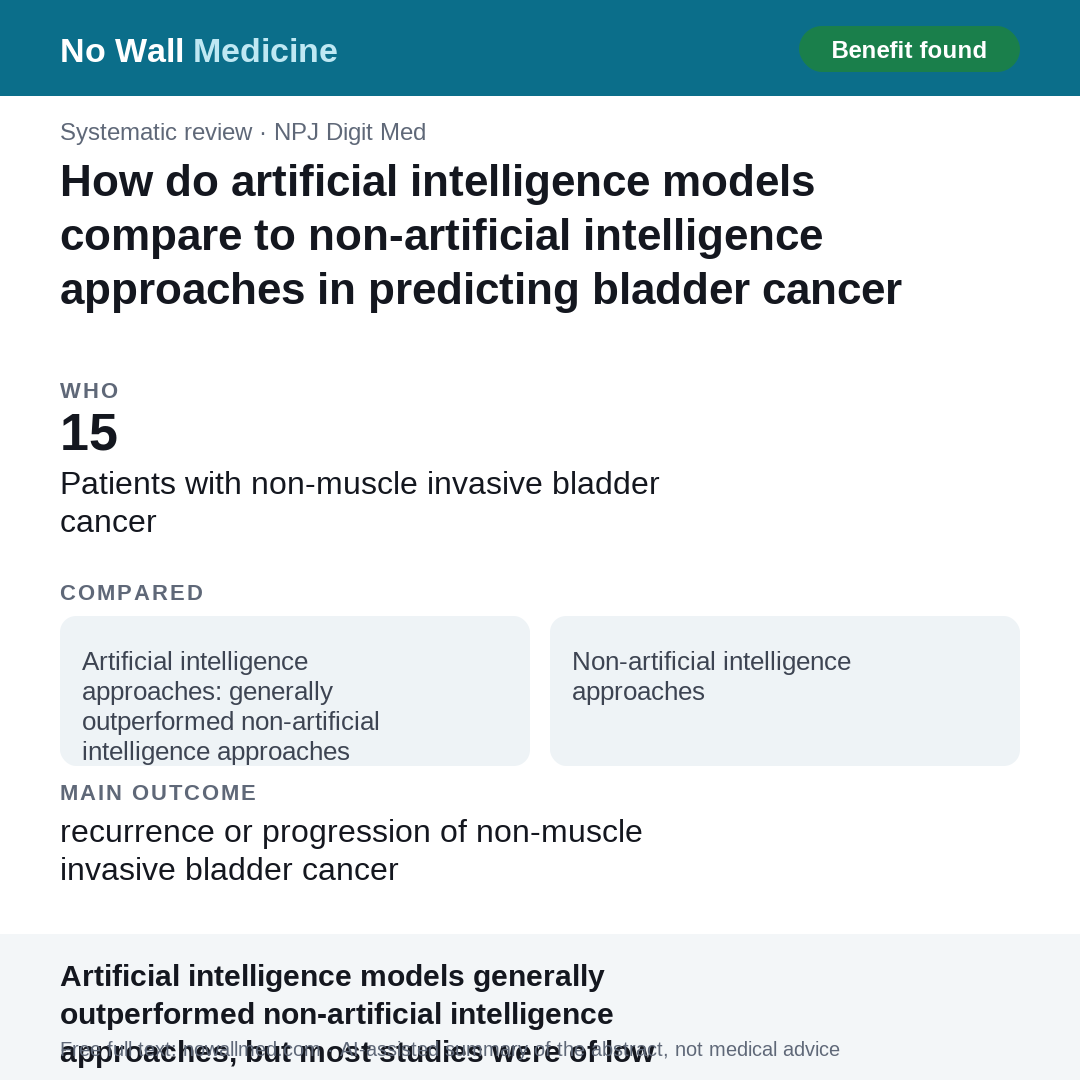
Predicting non-muscle invasive bladder cancer outcomes using artificial intelligence: a systematic review using APPRAISE-AI
Systematic reviewBenefit found
How do artificial intelligence models compare to non-artificial intelligence approaches in predicting bladder cancer outcomes?
Who
15
Patients with non-muscle invasive bladder cancer
Compared
Artificial intelligence approaches: generally outperformed non-artificial intelligence approaches
Non-artificial intelligence approaches
Main outcome
recurrence or progression of non-muscle invasive bladder cancer
Result: median absolute performance difference was 10 for low, 22 for moderate, and 4 for high quality studies
Bottom line: Artificial intelligence models generally outperformed non-artificial intelligence approaches, but most studies were of low quality.
Limitation: Most studies were low quality, with dataset limitations, methodological flaws, and reproducibility issues.
NPJ Digit Med · 2024-04-18Download image
Prevalence of Mental Health Disorders Among Individuals Experiencing Homelessness: A Systematic Review and Meta-Analysis
Systematic review and meta-analysisBenefit found
What is the current and lifetime prevalence of mental health disorders among people experiencing homelessness?
Who
48414
People experiencing homelessness aged 18 years and older · Global
Compared
67%Current prevalence (95% CI, 55-77)
77%Lifetime prevalence (95% CI, 61-88)
Main outcome
Current and lifetime prevalence of mental health disorders
Bottom line: Most people experiencing homelessness have mental health disorders, with higher prevalences than those observed in general community samples.
JAMA Psychiatry · 2024-04-17Download image

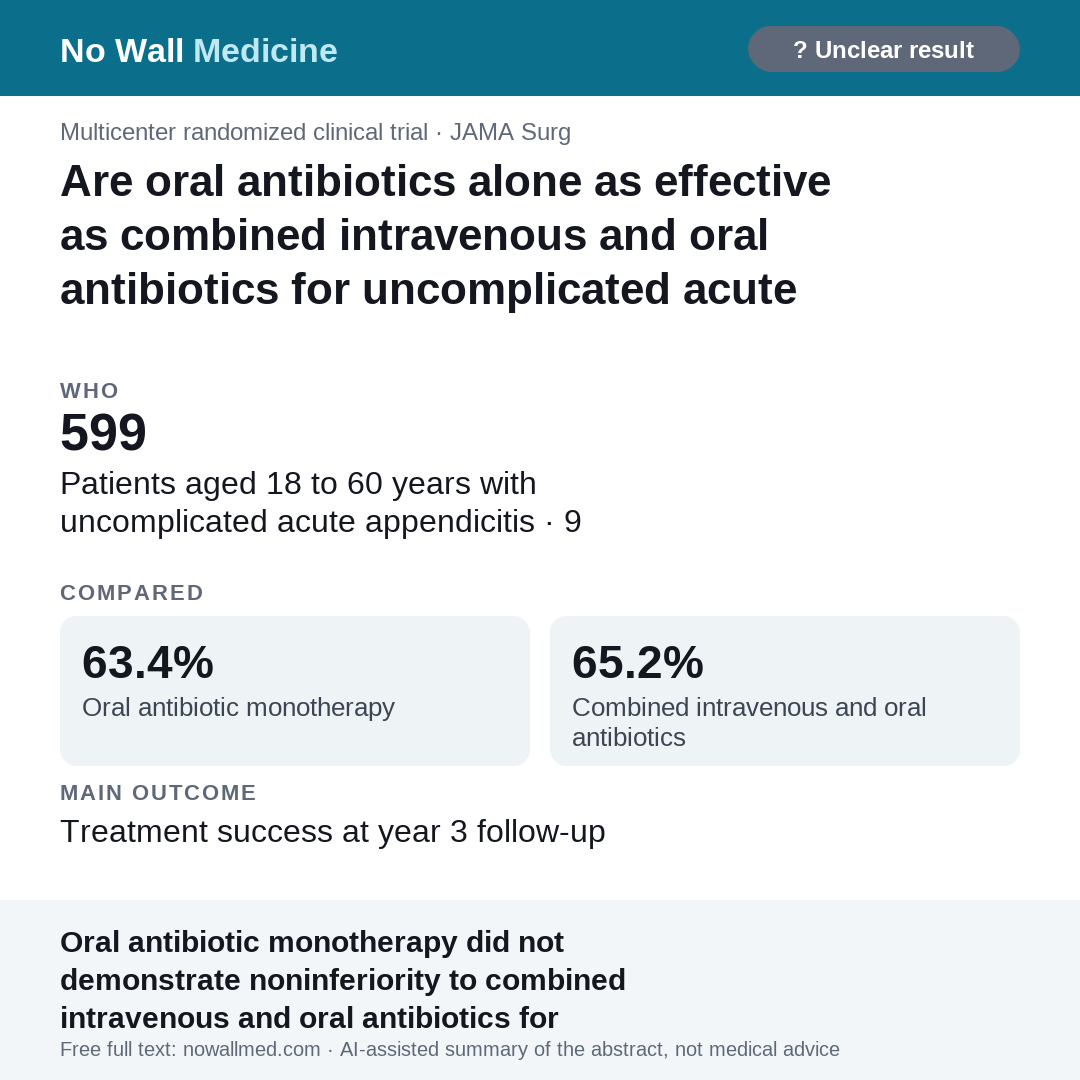
Three-Year Outcomes of Oral Antibiotics vs Intravenous and Oral Antibiotics for Uncomplicated Acute Appendicitis: A Secondary Analysis of the APPAC II Randomized Clinical Trial
Multicenter randomized clinical trialUnclear result
Are oral antibiotics alone as effective as combined intravenous and oral antibiotics for uncomplicated acute appendicitis?
Who
599
Patients aged 18 to 60 years with uncomplicated acute appendicitis · 9 university and central hospitals in Finland
Compared
63.4%Oral antibiotic monotherapy (1-sided 95% CI, 58.8% to ∞)
65.2%Combined intravenous and oral antibiotics (1-sided 95% CI, 60.5% to ∞)
Main outcome
Treatment success at year 3 follow-up
Result: -1.8 percentage points (1-sided 95% CI, -8.3 percentage points to ∞)
Bottom line: Oral antibiotic monotherapy did not demonstrate noninferiority to combined intravenous and oral antibiotics for three-year treatment success.
Limitation: The confidence interval limit exceeded the noninferiority margin.
JAMA Surg · 2024-04-17Download image
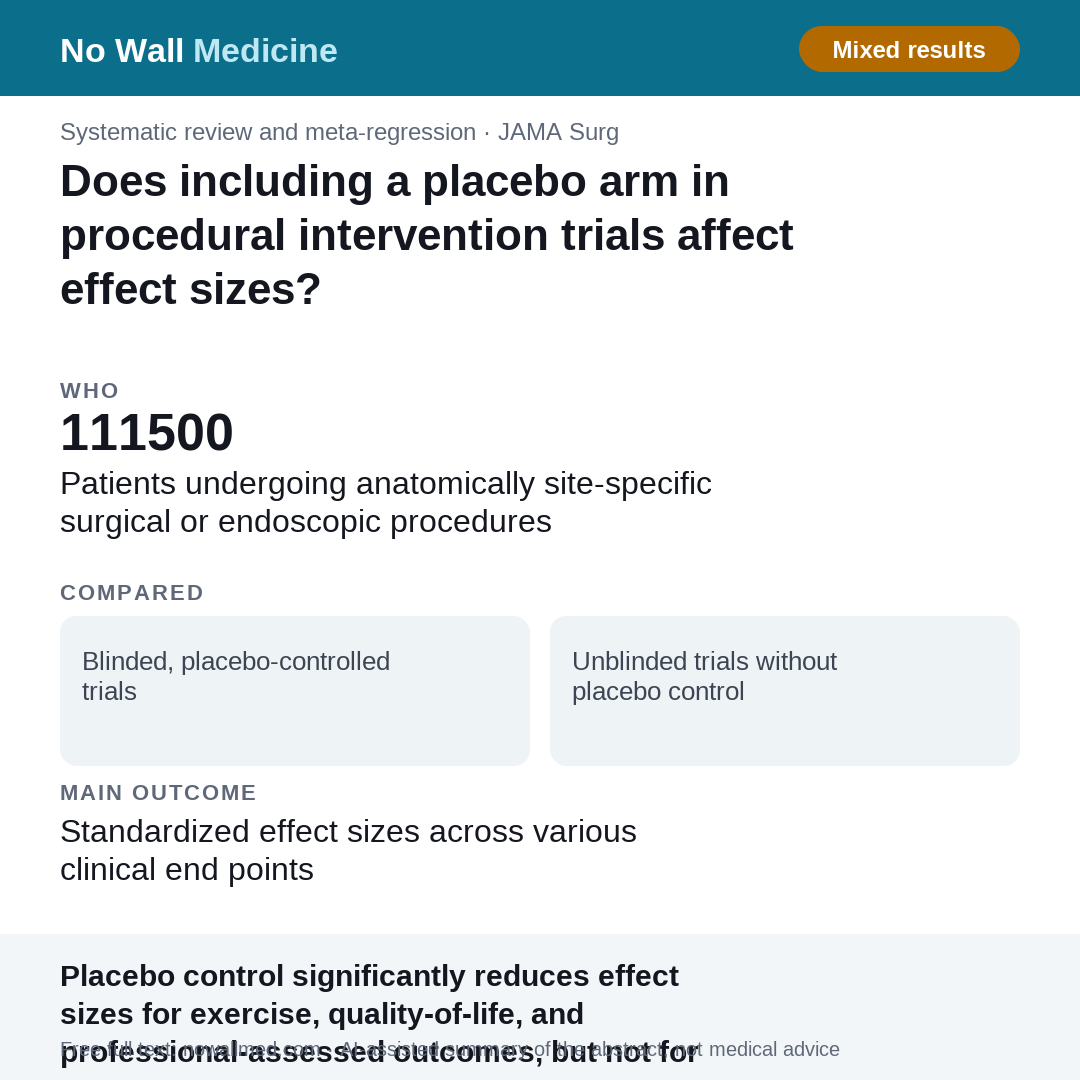
Placebo Control and Blinding in Randomized Trials of Procedural Interventions: A Systematic Review and Meta-Regression
Systematic review and meta-regressionMixed results
Does including a placebo arm in procedural intervention trials affect effect sizes?
Who
111500
Patients undergoing anatomically site-specific surgical or endoscopic procedures
Compared
Blinded, placebo-controlled trials
Unblinded trials without placebo control
Main outcome
Standardized effect sizes across various clinical end points
Result: SMD 0.59 (95% CI, 0.29 to 0.89) for exercise-related outcomes in unblinded trials
Bottom line: Placebo control significantly reduces effect sizes for exercise, quality-of-life, and professional-assessed outcomes, but not for mortality or pain.
JAMA Surg · 2024-04-17Download image
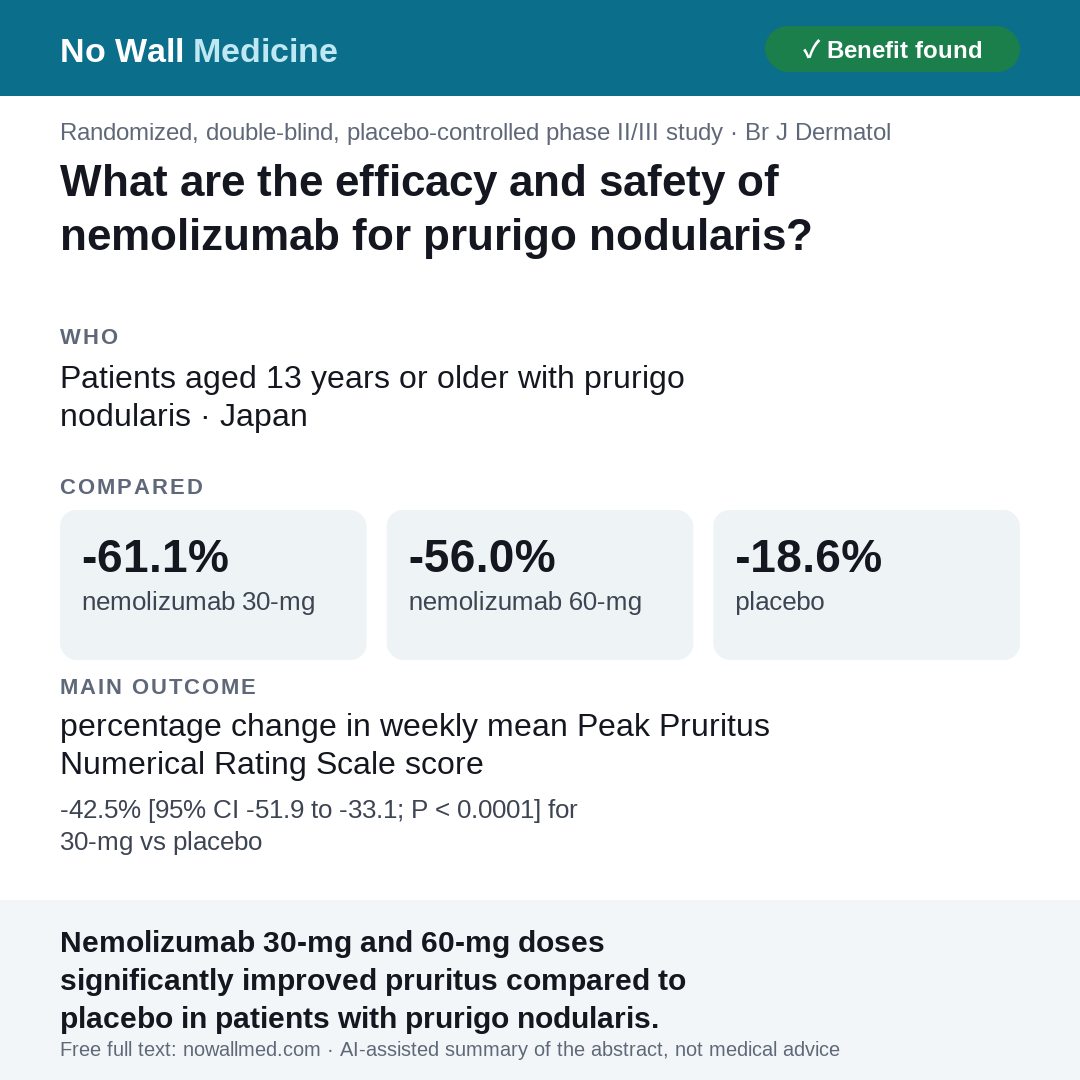
Efficacy and safety of nemolizumab and topical corticosteroids for prurigo nodularis: results from a randomized double-blind placebo-controlled phase II/III clinical study in patients aged ≥ 13 years
Randomized, double-blind, placebo-controlled phase II/III studyBenefit found
What are the efficacy and safety of nemolizumab for prurigo nodularis?
Who
Patients aged 13 years or older with prurigo nodularis · Japan
Compared
-61.1%nemolizumab 30-mg
-56.0%nemolizumab 60-mg
-18.6%placebo
Main outcome
percentage change in weekly mean Peak Pruritus Numerical Rating Scale score
Result: -42.5% [95% CI -51.9 to -33.1; P < 0.0001] for 30-mg vs placebo
Bottom line: Nemolizumab 30-mg and 60-mg doses significantly improved pruritus compared to placebo in patients with prurigo nodularis.
Br J Dermatol · 2024-04-17Download image
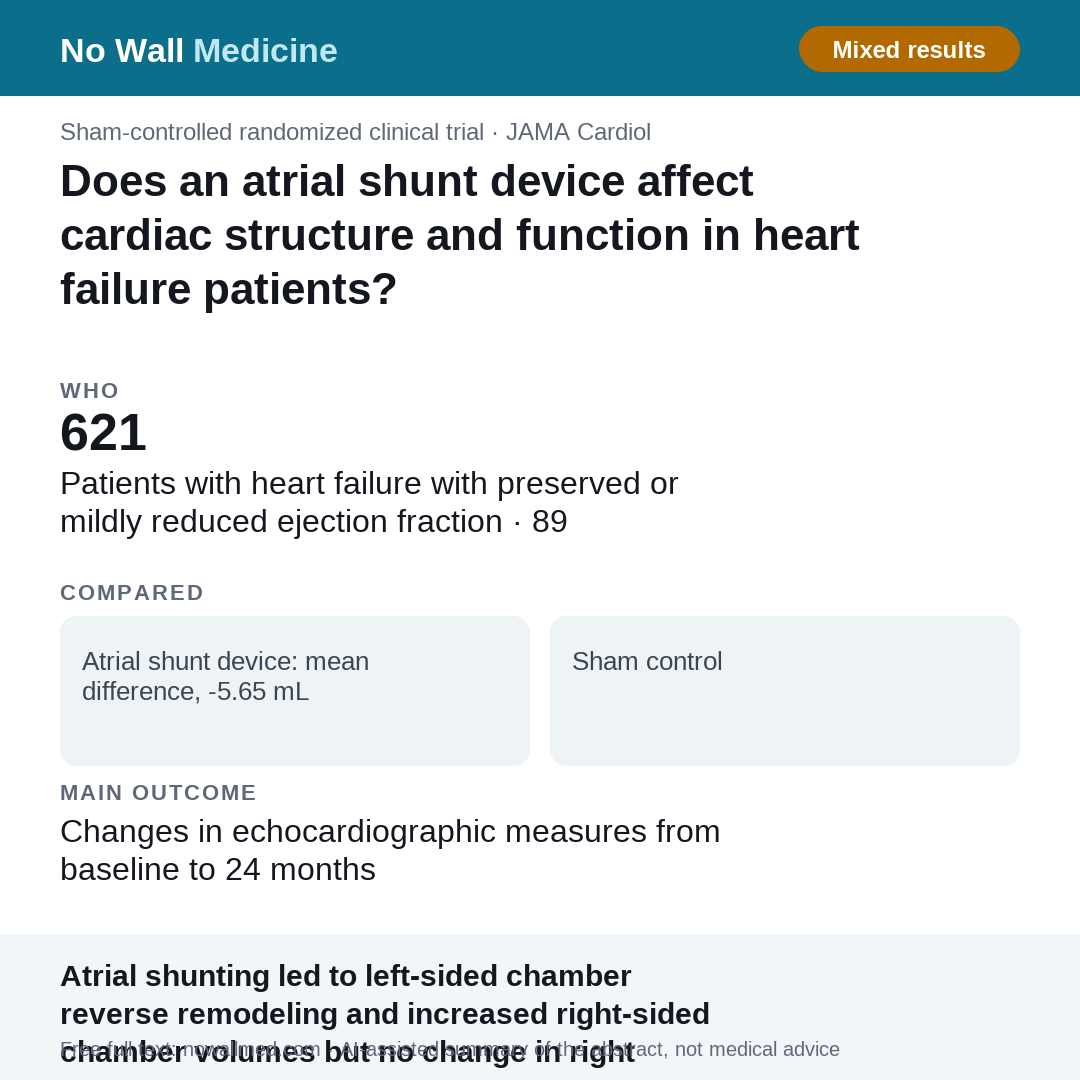
Atrial Shunt Device Effects on Cardiac Structure and Function in Heart Failure With Preserved Ejection Fraction: The REDUCE LAP-HF II Randomized Clinical Trial
Sham-controlled randomized clinical trialMixed results
Does an atrial shunt device affect cardiac structure and function in heart failure patients?
Who
621
Patients with heart failure with preserved or mildly reduced ejection fraction · 89 international medical centers
Compared
Atrial shunt device: mean difference, -5.65 mL
Sham control
Main outcome
Changes in echocardiographic measures from baseline to 24 months
Result: mean difference, -5.65 mL (for left ventricular end-diastolic volume)
Bottom line: Atrial shunting led to left-sided chamber reverse remodeling and increased right-sided chamber volumes but no change in right ventricular function.
JAMA Cardiol · 2024-04-17Download image