Visual abstracts
New randomized trials and meta-analyses from leading journals at a glance: who was studied, what was compared, and what was found. Every paper is free to read in full.
All specialtiesCardiology 4877Oncology 4138Gastroenterology & Hepatology 1942Infectious Disease 3837Neurology 1905Psychiatry & Mental Health 2273Pulmonology 2143Critical Care 1365Endocrinology & Diabetes 2580Pediatrics 2980Surgery 2559Orthopedics & Sports Medicine 931Neurosurgery 537Cardiothoracic & Vascular Surgery 674Plastic & Reconstructive Surgery 591Nephrology 1133Rheumatology 823Hematology 1109Dermatology 621Ophthalmology 543Obstetrics & Gynecology 1686Public & Global Health 1058Radiology & Imaging 648Anesthesiology 986Urology 764ENT (Otolaryngology) 503Emergency Medicine 511Allergy & Immunology 313Geriatrics 981Family Medicine & Primary Care 562Medical Genetics & Genomics 676Pathology & Laboratory Medicine 159Physical Medicine & Rehabilitation 757Palliative Care 444Nutrition 1588Digital Health & AI 2201General Medicine 321
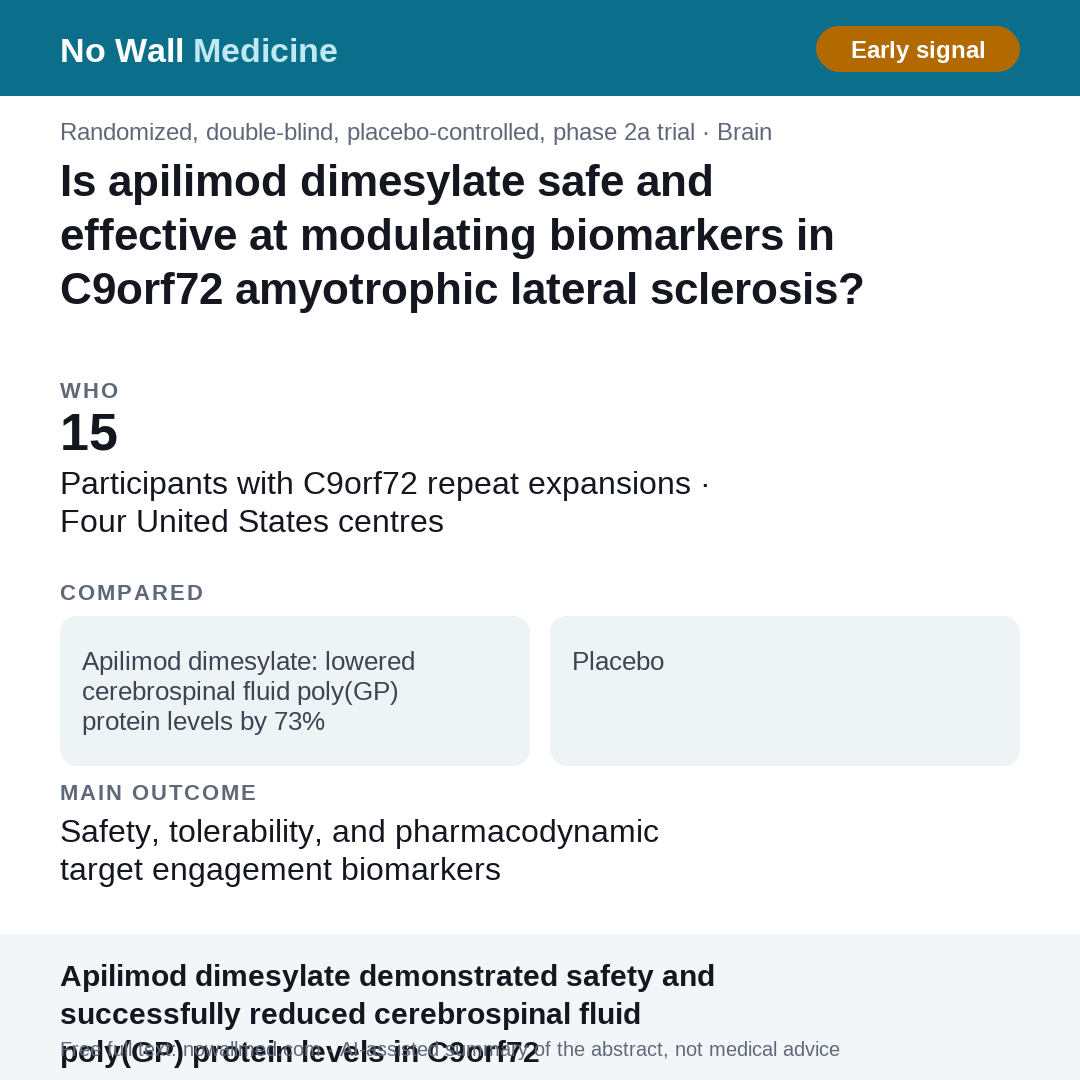
Apilimod dimesylate in C9orf72 amyotrophic lateral sclerosis: a randomized phase 2a clinical trial
Randomized, double-blind, placebo-controlled, phase 2a trialBenefit found
Is apilimod dimesylate safe and effective at modulating biomarkers in C9orf72 amyotrophic lateral sclerosis?
Who
15
Participants with C9orf72 repeat expansions · Four United States centres
Compared
Apilimod dimesylate: lowered cerebrospinal fluid poly(GP) protein levels by 73%
Placebo
Main outcome
Safety, tolerability, and pharmacodynamic target engagement biomarkers
Bottom line: Apilimod dimesylate demonstrated safety and successfully reduced cerebrospinal fluid poly(GP) protein levels in C9orf72 amyotrophic lateral sclerosis.
Brain · 2024-04-12Download image
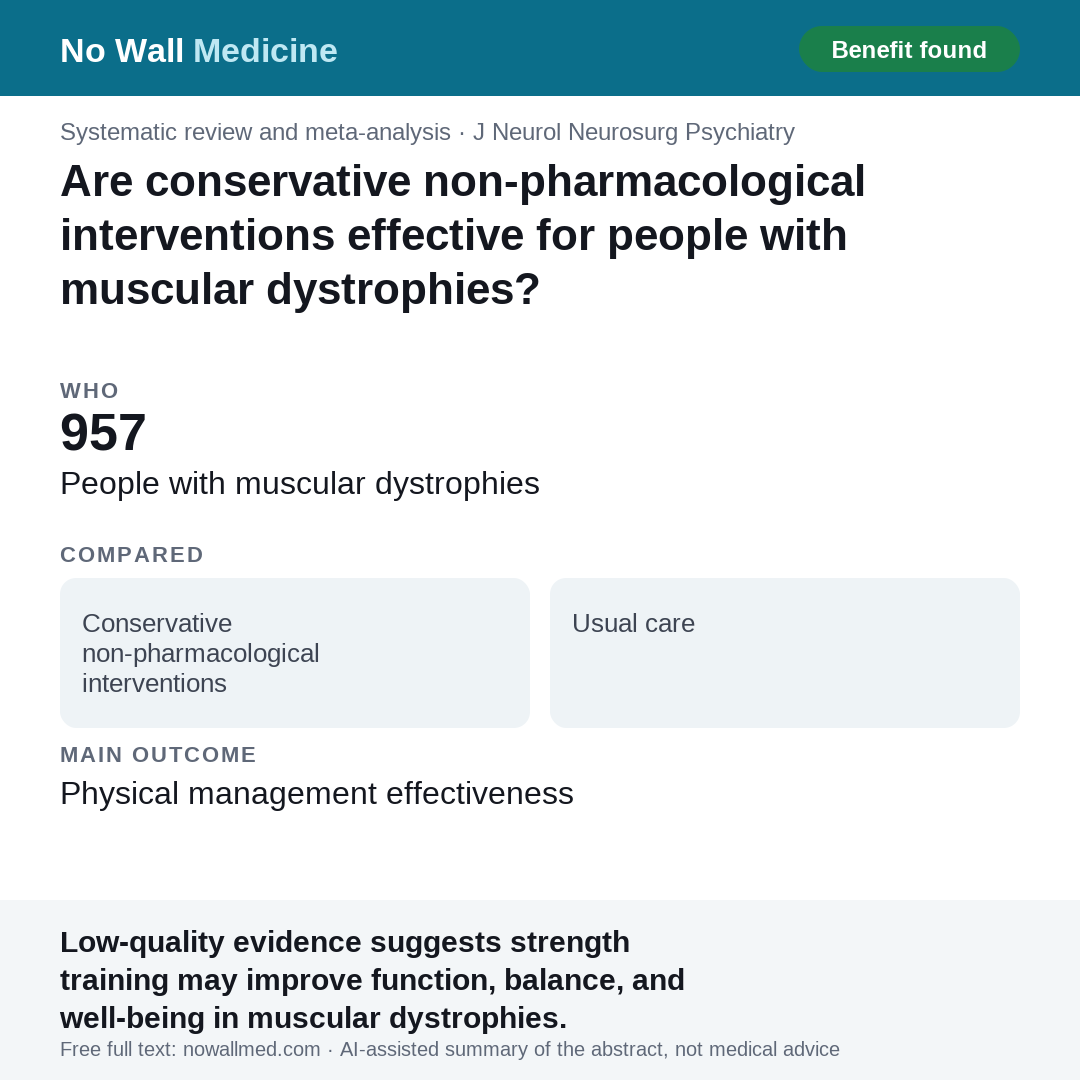
Effectiveness of conservative non-pharmacological interventions in people with muscular dystrophies: a systematic review and meta-analysis
Systematic review and meta-analysisBenefit found
Are conservative non-pharmacological interventions effective for people with muscular dystrophies?
Who
957
People with muscular dystrophies
Compared
Conservative non-pharmacological interventions
Usual care
Main outcome
Physical management effectiveness
Bottom line: Low-quality evidence suggests strength training may improve function, balance, and well-being in muscular dystrophies.
Limitation: Most studies were mostly at high risk of bias.
J Neurol Neurosurg Psychiatry · 2024-04-12Download image
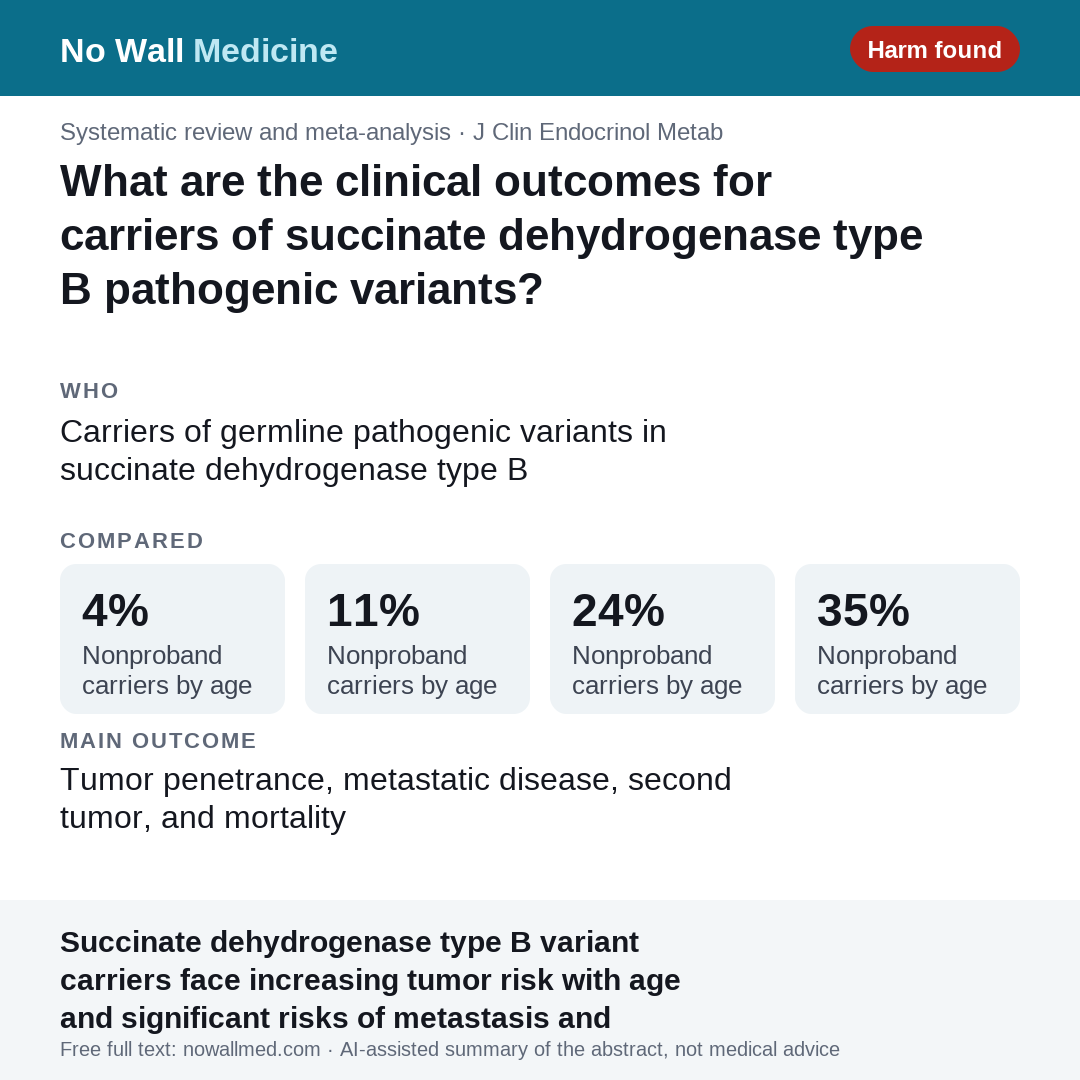
Outcomes of SDHB Pathogenic Variant Carriers
Systematic review and meta-analysisHarm found
What are the clinical outcomes for carriers of succinate dehydrogenase type B pathogenic variants?
Who
Carriers of germline pathogenic variants in succinate dehydrogenase type B
Compared
4%Nonproband carriers by age 20 (95% CI, 3%-6%)
11%Nonproband carriers by age 40 (95% CI, 8%-15%)
24%Nonproband carriers by age 60 (95% CI, 19%-31%)
35%Nonproband carriers by age 80 (95% CI, 25%-47%)
Main outcome
Tumor penetrance, metastatic disease, second tumor, and mortality
Bottom line: Succinate dehydrogenase type B variant carriers face increasing tumor risk with age and significant risks of metastasis and mortality.
J Clin Endocrinol Metab · 2024-04-12Download image
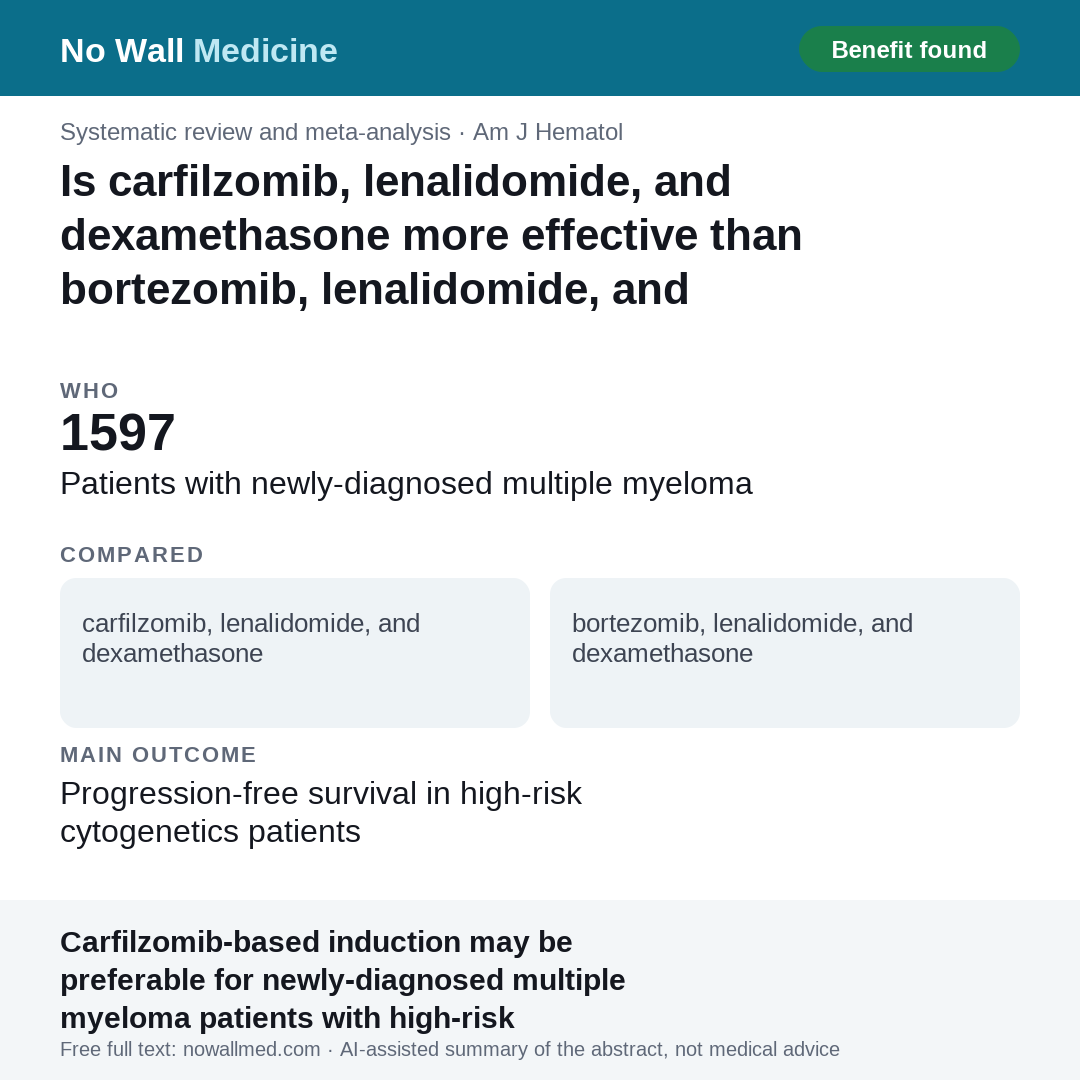
Comparative efficacy of carfilzomib, lenalidomide, and dexamethasone (KRd) versus bortezomib, lenalidomide, and dexamethasone (VRd) in newly-diagnosed multiple myeloma: A systematic review and meta-analysis
Systematic review and meta-analysisBenefit found
Is carfilzomib, lenalidomide, and dexamethasone more effective than bortezomib, lenalidomide, and dexamethasone?
Who
1597
Patients with newly-diagnosed multiple myeloma
Compared
carfilzomib, lenalidomide, and dexamethasone
bortezomib, lenalidomide, and dexamethasone
Main outcome
Progression-free survival in high-risk cytogenetics patients
Result: hazard ratio 0.70 (95% CI 0.50 to 0.97)
Bottom line: Carfilzomib-based induction may be preferable for newly-diagnosed multiple myeloma patients with high-risk cytogenetics.
Am J Hematol · 2024-04-12Download image
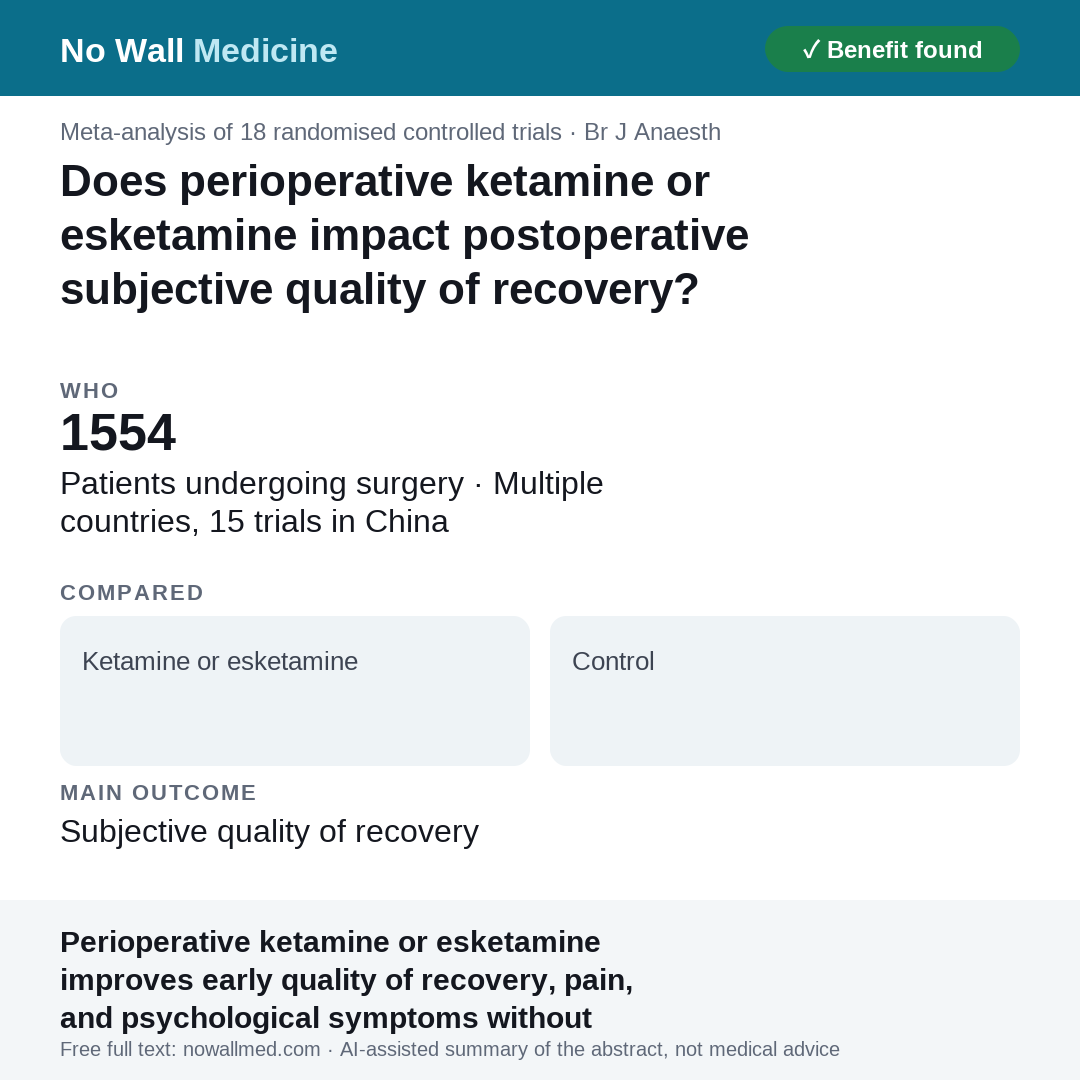
The impact of perioperative ketamine or esketamine on the subjective quality of recovery after surgery: a meta-analysis of randomised controlled trials
Meta-analysis of 18 randomised controlled trialsBenefit found
Does perioperative ketamine or esketamine impact postoperative subjective quality of recovery?
Who
1554
Patients undergoing surgery · Multiple countries, 15 trials in China
Compared
Ketamine or esketamine
Control
Main outcome
Subjective quality of recovery
Result: standardised mean difference 0.63 (P<0.0001) for postoperative day 1
Bottom line: Perioperative ketamine or esketamine improves early quality of recovery, pain, and psychological symptoms without increasing adverse events.
Br J Anaesth · 2024-04-12Download image
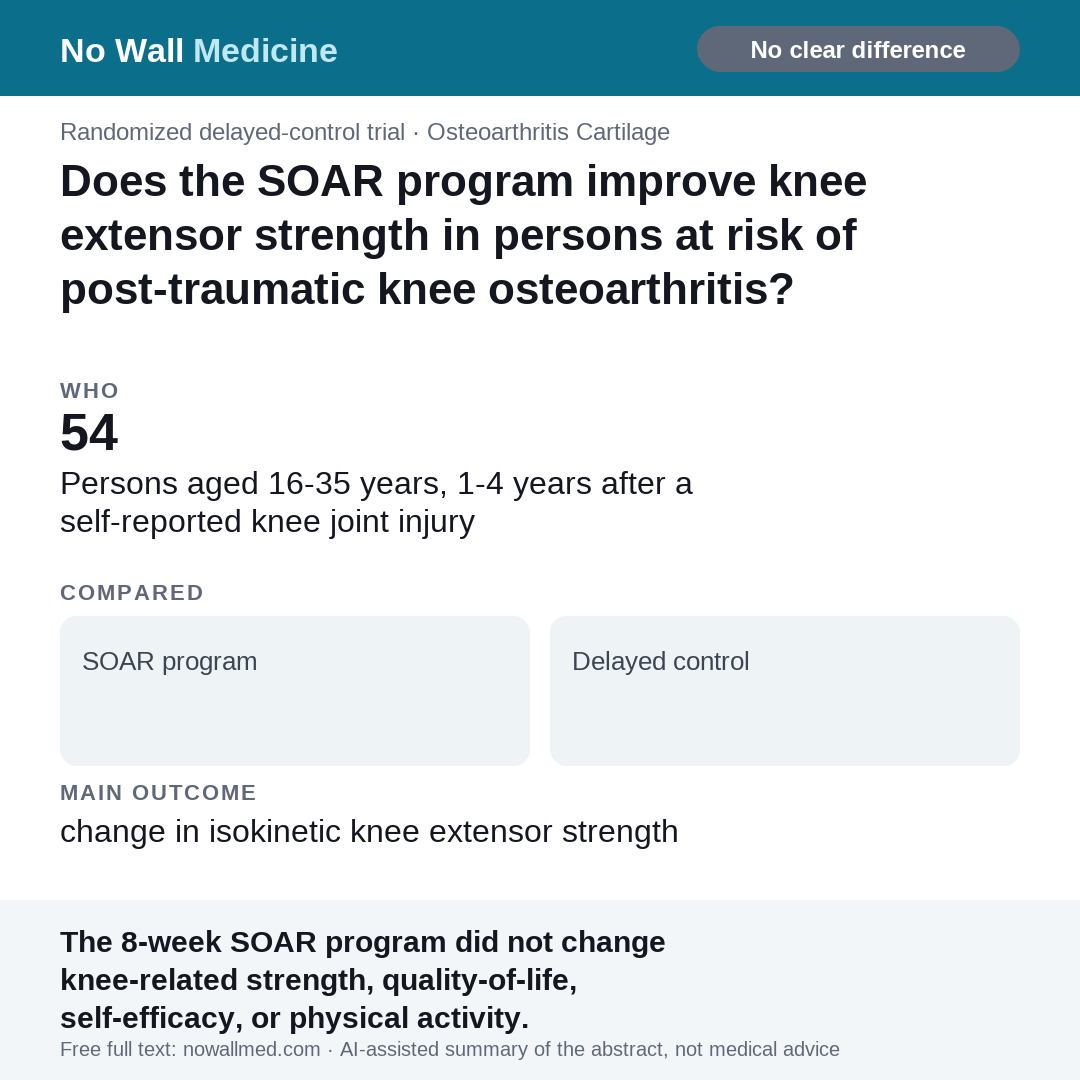
Assessing the efficacy of the Stop OsteoARthritis (SOAR) program: A randomized delayed-controlled trial in persons at increased risk of early onset post-traumatic knee osteoarthritis
Randomized delayed-control trialNo clear difference
Does the SOAR program improve knee extensor strength in persons at risk of post-traumatic knee osteoarthritis?
Who
54
Persons aged 16-35 years, 1-4 years after a self-reported knee joint injury
Compared
SOAR program
Delayed control
Main outcome
change in isokinetic knee extensor strength
Result: 0.05 (95% confidence interval: -0.10, 0.19)
Bottom line: The 8-week SOAR program did not change knee-related strength, quality-of-life, self-efficacy, or physical activity.
Osteoarthritis Cartilage · 2024-04-12Download image
Anticoagulation for Patients With Concomitant Atrial Fibrillation and End-Stage Renal Disease: A Systematic Review and Network Meta-Analysis
Network meta-analysisMixed results
What are the efficacy and safety of anticoagulation in dialysis-dependent patients with atrial fibrillation?
Who
185 864
Patients with atrial fibrillation and end-stage renal disease on long-term dialysis · MEDLINE, EMBASE, and the Cochrane Library
Compared
Vitamin K antagonists
Direct oral anticoagulants
No anticoagulation
Main outcome
major bleeding, thromboembolism, and all-cause death
Result: hazard ratio 0.74 (95% CI 0.64-0.84) for DOACs versus VKAs for major bleeding
Bottom line: Dabigatran and rivaroxaban showed better efficacy, while dabigatran and apixaban showed better safety compared to vitamin K antagonists.
J Am Heart Assoc · 2024-04-12Download image

Adjunctive treatments for pneumococcal meningitis: a systematic review of experimental animal models
Systematic review of experimental animal modelsMixed results
What are the most promising adjunctive treatments for pneumococcal meningitis in animal models?
Who
2703
Experimental animals including rats, rabbits, mice, and gerbils
Compared
Dexamethasone: improved clinical outcomes in 6 studies
Complement component 5 antibody: improved clinical outcomes in 3 studies
Daptomycin: improved clinical outcomes in 3 studies
Main outcome
Clinical and biological parameters including disease severity and inflammation
Bottom line: Dexamethasone, complement component 5 antibodies, and daptomycin show promise for clinical trials in pneumococcal meningitis.
Limitation: Study heterogeneity regarding animal models used and outcomes reported.
Brain Commun · 2024-04-12Download image

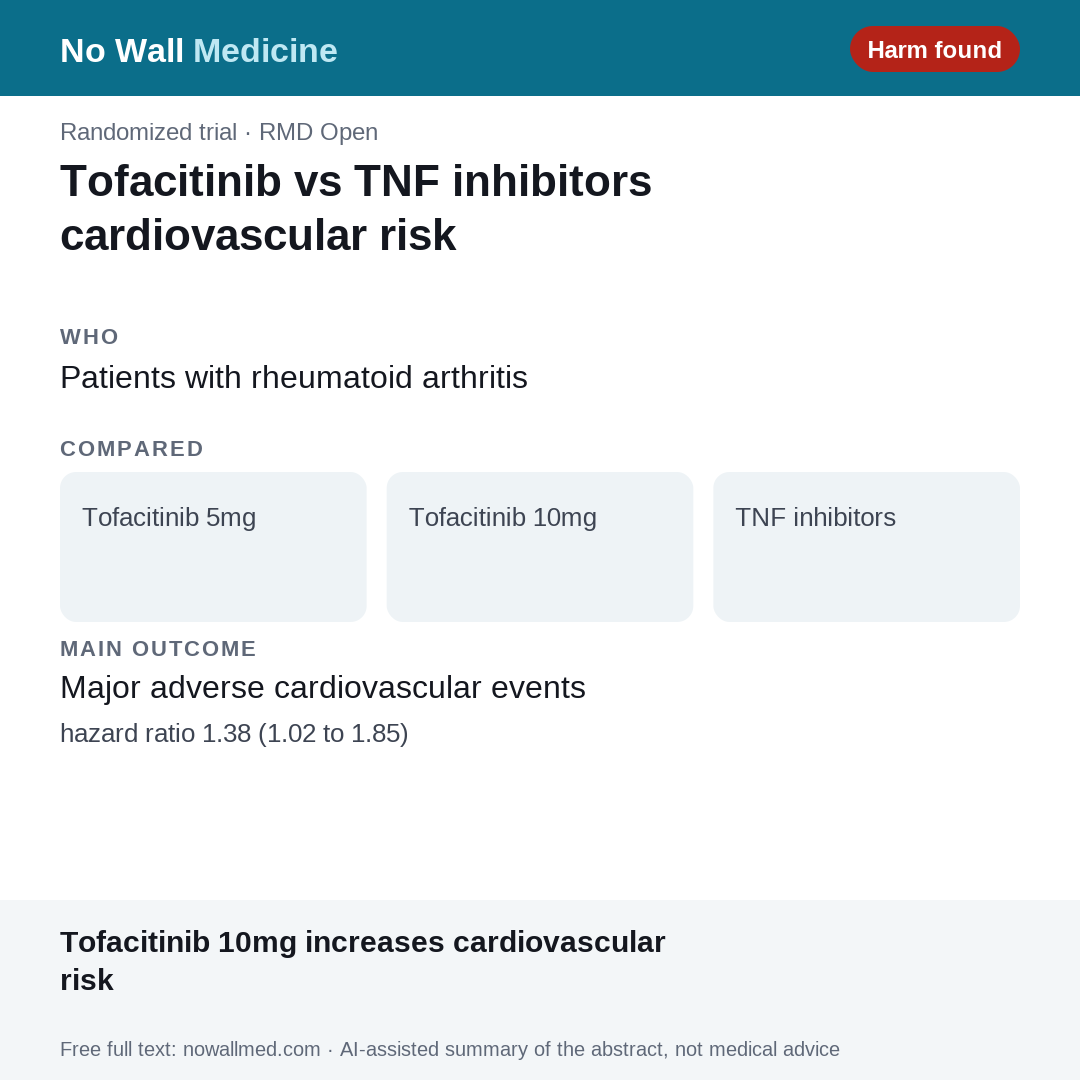
Risk of extended major adverse cardiovascular event endpoints with tofacitinib versus TNF inhibitors in patients with rheumatoid arthritis: a post hoc analysis of a phase 3b/4 randomised safety study
Randomized trialHarm found
Tofacitinib vs TNF inhibitors cardiovascular risk
Who
Patients with rheumatoid arthritis
Compared
Tofacitinib 5mg
Tofacitinib 10mg
TNF inhibitors
Main outcome
Major adverse cardiovascular events
Result: hazard ratio 1.38 (1.02 to 1.85)
Bottom line: Tofacitinib 10mg increases cardiovascular risk
RMD Open · 2024-04-12Download image
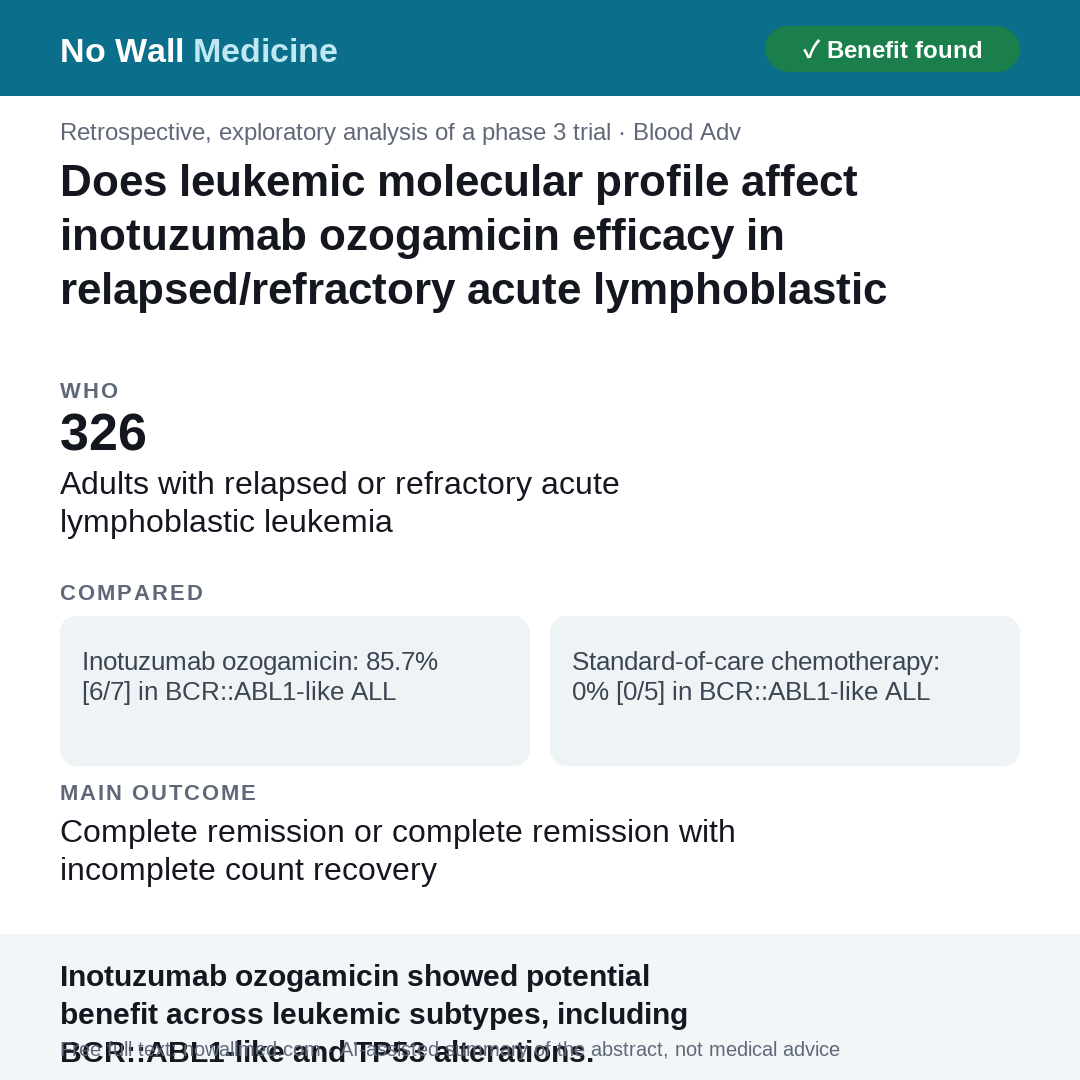
Association of leukemic molecular profile with efficacy of inotuzumab ozogamicin in adults with relapsed/refractory ALL
Retrospective, exploratory analysis of a phase 3 trialBenefit found
Does leukemic molecular profile affect inotuzumab ozogamicin efficacy in relapsed/refractory acute lymphoblastic leukemia?
Who
326
Adults with relapsed or refractory acute lymphoblastic leukemia
Compared
Inotuzumab ozogamicin: 85.7% [6/7] in BCR::ABL1-like ALL
Standard-of-care chemotherapy: 0% [0/5] in BCR::ABL1-like ALL
Main outcome
Complete remission or complete remission with incomplete count recovery
Bottom line: Inotuzumab ozogamicin showed potential benefit across leukemic subtypes, including BCR::ABL1-like and TP53 alterations.
Blood Adv · 2024-04-12Download image
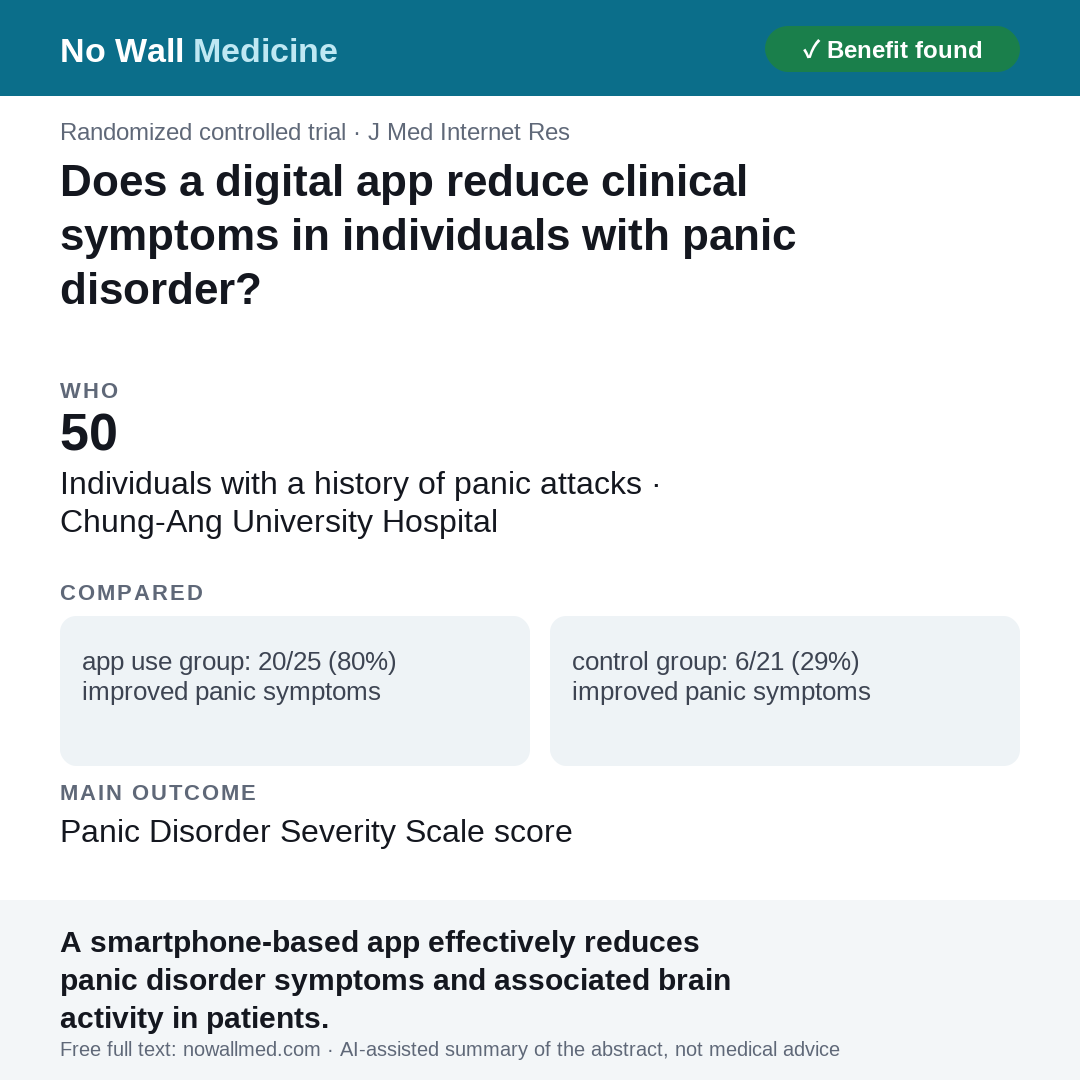
The Effectiveness of a Digital App for Reduction of Clinical Symptoms in Individuals With Panic Disorder: Randomized Controlled Trial
Randomized controlled trialBenefit found
Does a digital app reduce clinical symptoms in individuals with panic disorder?
Who
50
Individuals with a history of panic attacks · Chung-Ang University Hospital
Compared
app use group: 20/25 (80%) improved panic symptoms
control group: 6/21 (29%) improved panic symptoms
Main outcome
Panic Disorder Severity Scale score
Bottom line: A smartphone-based app effectively reduces panic disorder symptoms and associated brain activity in patients.
J Med Internet Res · 2024-04-12Download image
Application of AI in Multilevel Pain Assessment Using Facial Images: Systematic Review and Meta-Analysis
Meta-analysis of 6 studiesBenefit found
AI for pain assessment accuracy
Who
45
patients with postoperative pain
Compared
98%Artificial Intelligence (95% CI 96%-99%)
Control
Main outcome
pain assessment accuracy
Result: sensitivity 98% (95% CI 96%-99%)
Bottom line: AI shows promising performance for pain estimation
Limitation: imbalanced data and high risk of bias
J Med Internet Res · 2024-04-12Download image

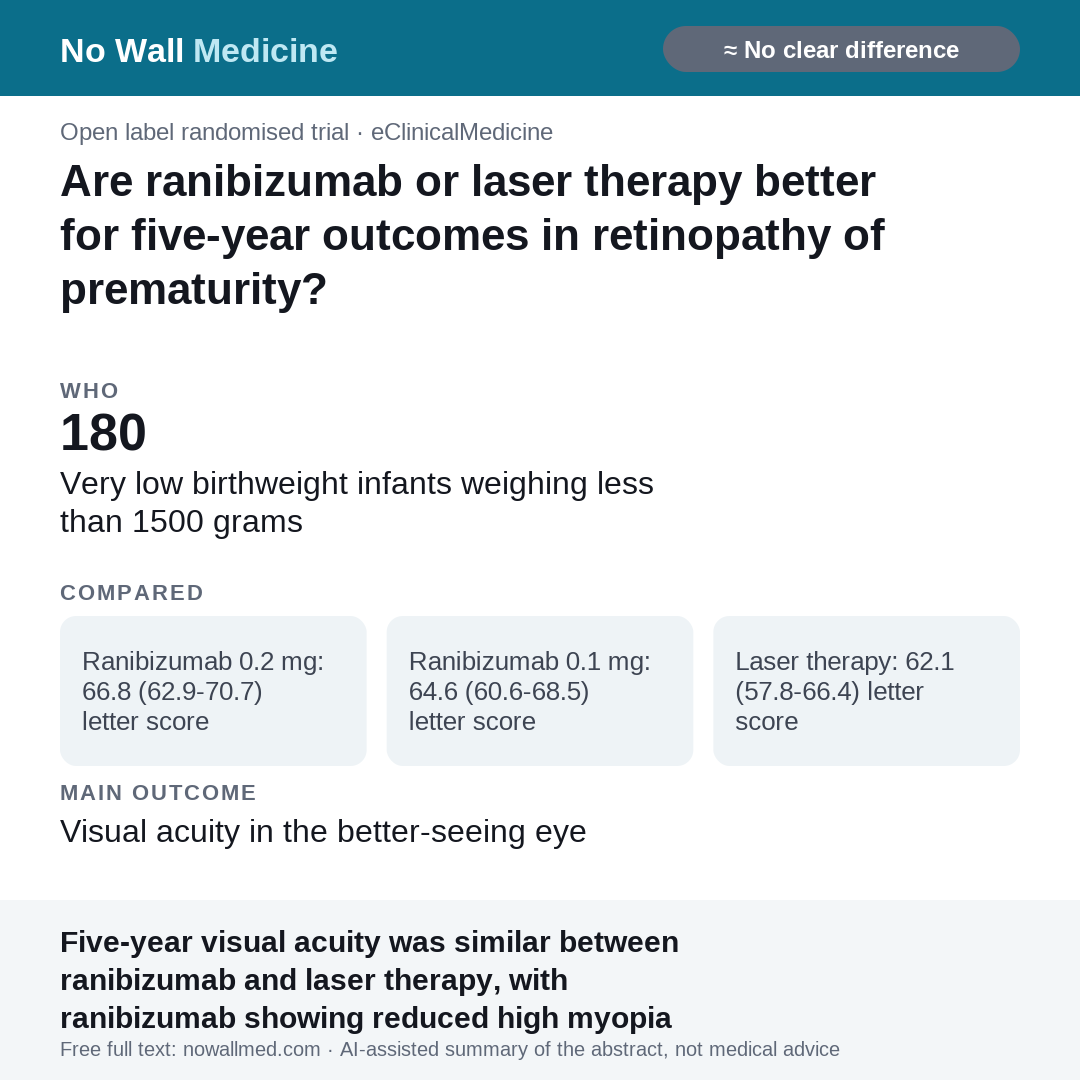
Ranibizumab versus laser therapy for the treatment of very low birthweight infants with retinopathy of prematurity (RAINBOW): five-year outcomes of a randomised trial
Open label randomised trialNo clear difference
Are ranibizumab or laser therapy better for five-year outcomes in retinopathy of prematurity?
Who
180
Very low birthweight infants weighing less than 1500 grams
Compared
Ranibizumab 0.2 mg: 66.8 (62.9-70.7) letter score
Ranibizumab 0.1 mg: 64.6 (60.6-68.5) letter score
Laser therapy: 62.1 (57.8-66.4) letter score
Main outcome
Visual acuity in the better-seeing eye
Result: differences in means: ranibizumab 0.2 mg v laser: 4.7 (95% CI: -1.1, 10.5)
Bottom line: Five-year visual acuity was similar between ranibizumab and laser therapy, with ranibizumab showing reduced high myopia frequency.
Funded by: Novartis Pharma AG
eClinicalMedicine · 2024-04-11Download image
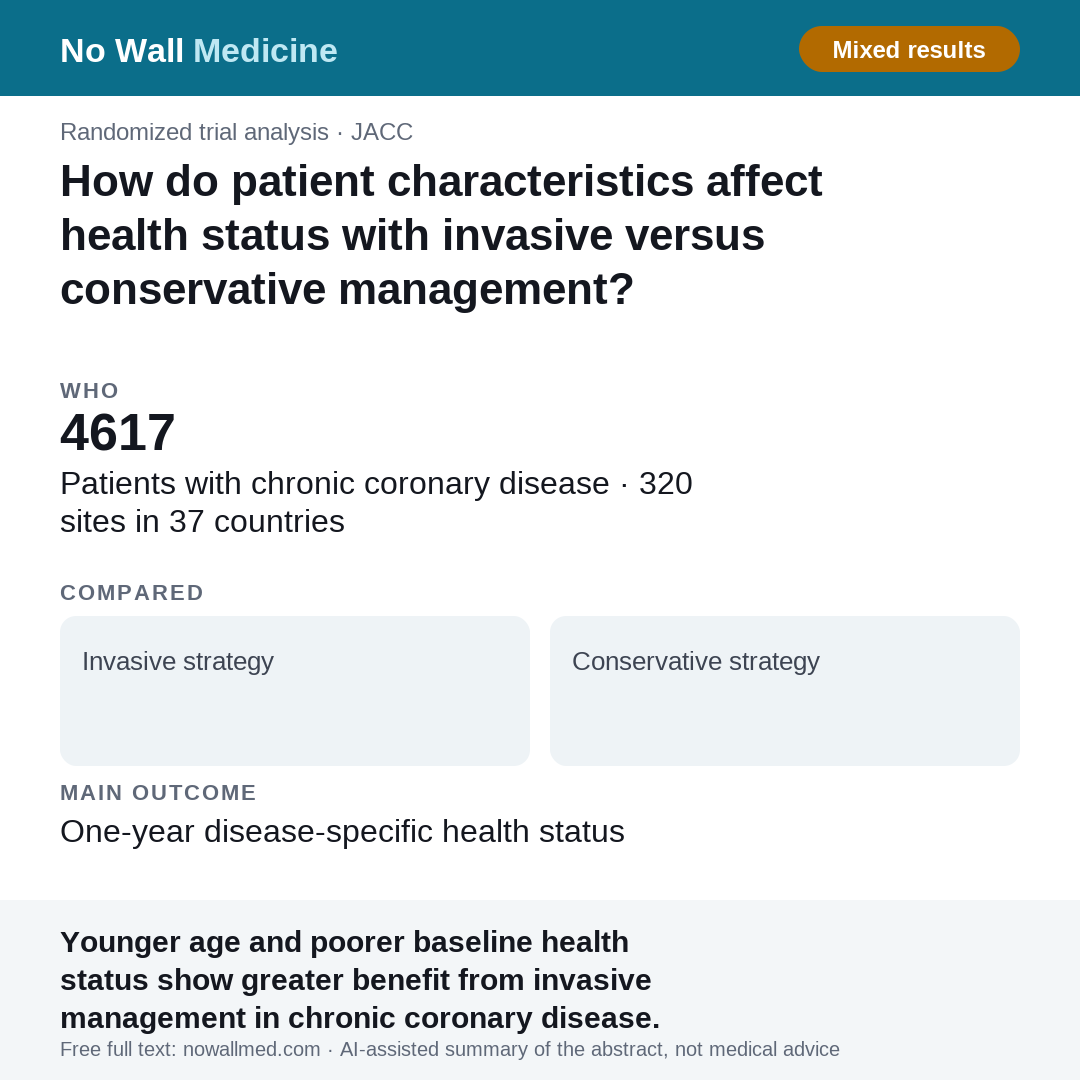
Variation in Health Status With Invasive vs Conservative Management of Chronic Coronary Disease
Randomized trial analysisMixed results
How do patient characteristics affect health status with invasive versus conservative management?
Who
4617
Patients with chronic coronary disease · 320 sites in 37 countries
Compared
Invasive strategy
Conservative strategy
Main outcome
One-year disease-specific health status
Bottom line: Younger age and poorer baseline health status show greater benefit from invasive management in chronic coronary disease.
JACC · 2024-04-11Download image
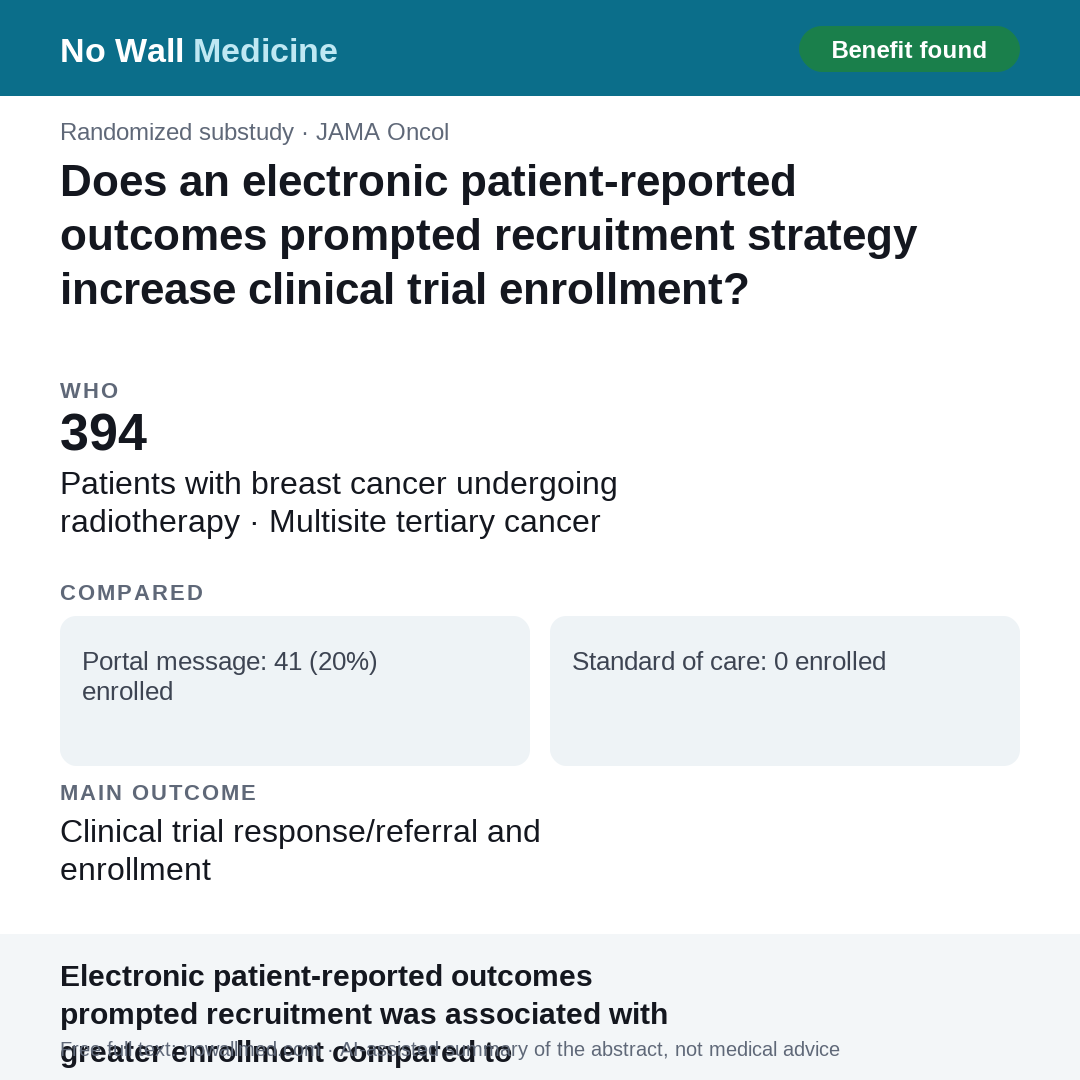
Patient-Reported Outcomes as a Recruitment Strategy for Clinical Trial Enrollment
Randomized substudyBenefit found
Does an electronic patient-reported outcomes prompted recruitment strategy increase clinical trial enrollment?
Who
394
Patients with breast cancer undergoing radiotherapy · Multisite tertiary cancer center
Compared
Portal message: 41 (20%) enrolled
Standard of care: 0 enrolled
Main outcome
Clinical trial response/referral and enrollment
Bottom line: Electronic patient-reported outcomes prompted recruitment was associated with greater enrollment compared to physician-based referral.
JAMA Oncol · 2024-04-11Download image
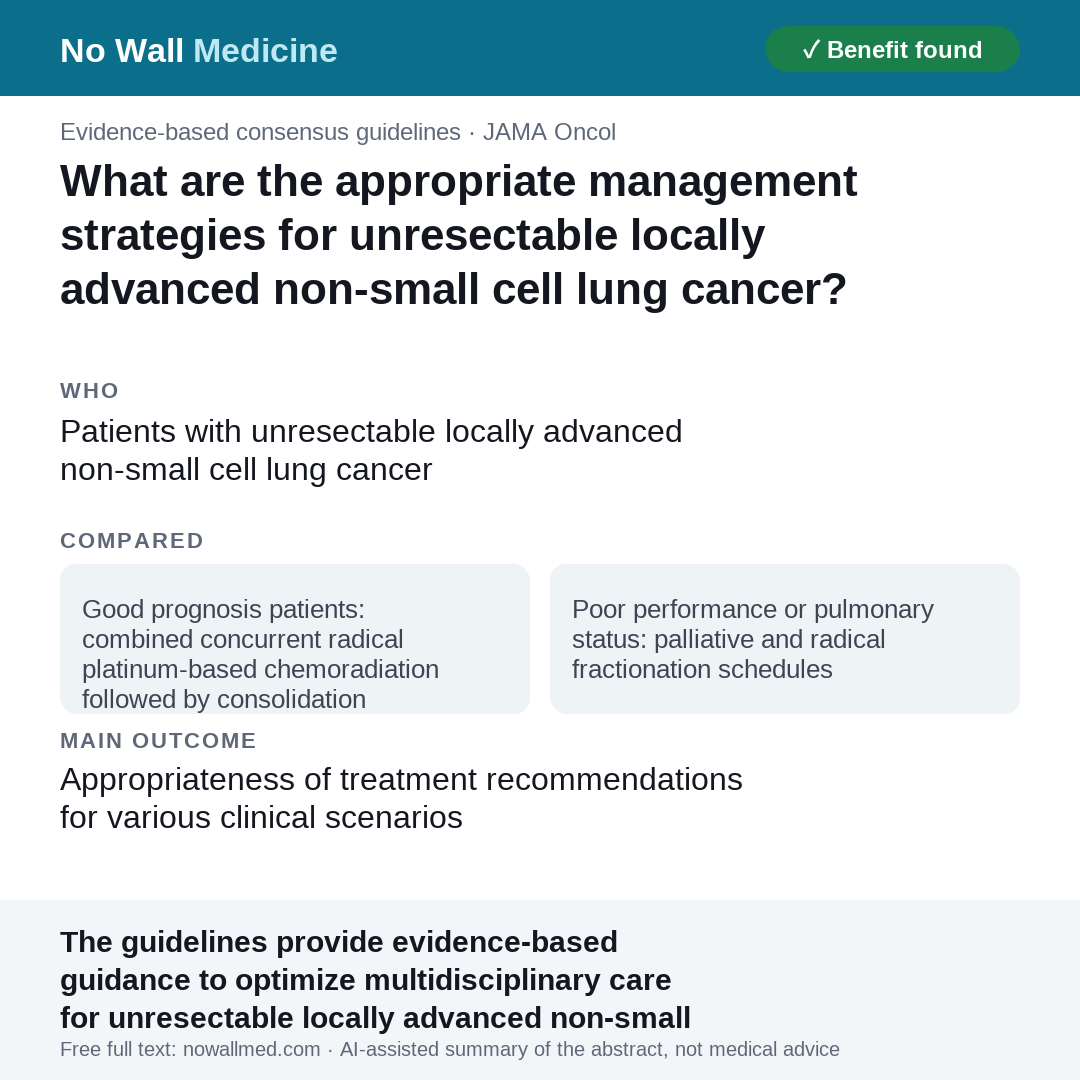
American Radium Society Appropriate Use Criteria for Unresectable Locally Advanced Non-Small Cell Lung Cancer
Evidence-based consensus guidelinesBenefit found
What are the appropriate management strategies for unresectable locally advanced non-small cell lung cancer?
Who
Patients with unresectable locally advanced non-small cell lung cancer
Compared
Good prognosis patients: combined concurrent radical platinum-based chemoradiation followed by consolidation durvalumab immunotherapy
Poor performance or pulmonary status: palliative and radical fractionation schedules
Main outcome
Appropriateness of treatment recommendations for various clinical scenarios
Bottom line: The guidelines provide evidence-based guidance to optimize multidisciplinary care for unresectable locally advanced non-small cell lung cancer.
JAMA Oncol · 2024-04-11Download image
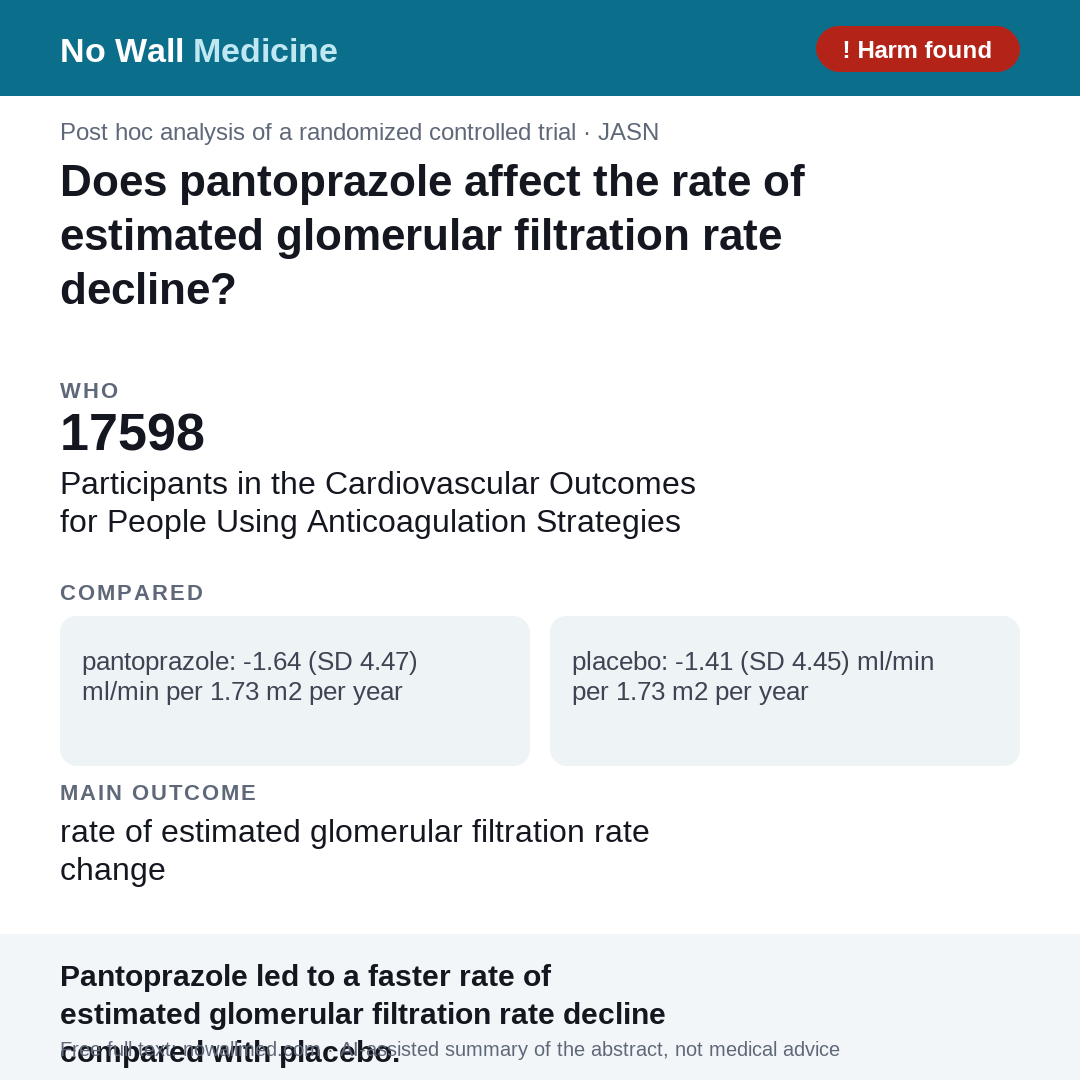
The Effects of Pantoprazole on Kidney Outcomes: Post Hoc Observational Analysis from the COMPASS Trial
Post hoc analysis of a randomized controlled trialHarm found
Does pantoprazole affect the rate of estimated glomerular filtration rate decline?
Who
17598
Participants in the Cardiovascular Outcomes for People Using Anticoagulation Strategies trial
Compared
pantoprazole: -1.64 (SD 4.47) ml/min per 1.73 m2 per year
placebo: -1.41 (SD 4.45) ml/min per 1.73 m2 per year
Main outcome
rate of estimated glomerular filtration rate change
Result: 0.27 ml/min per 1.73 m2 per year greater decline (95% CI, 0.11 to 0.43)
Bottom line: Pantoprazole led to a faster rate of estimated glomerular filtration rate decline compared with placebo.
JASN · 2024-04-11Download image
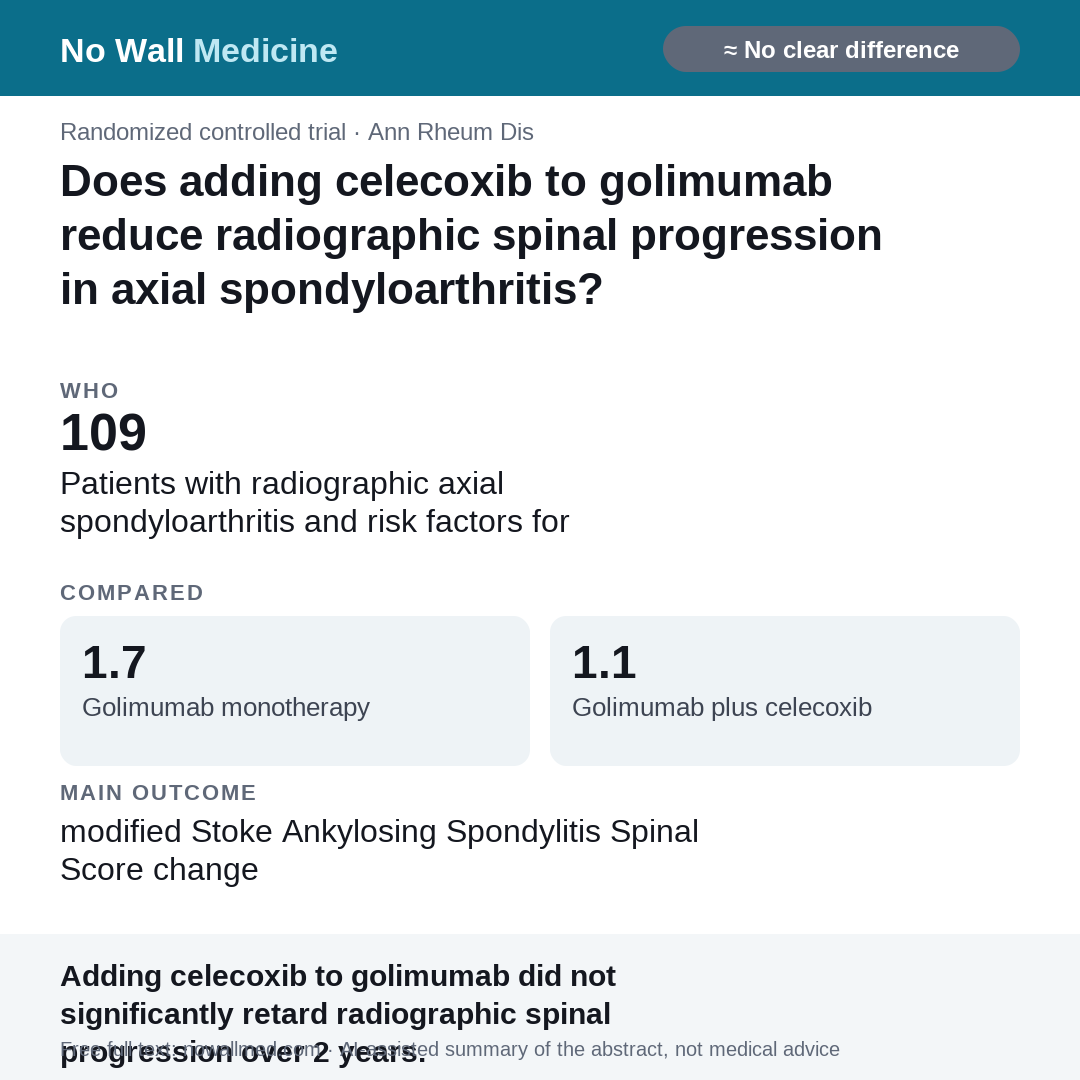
Comparison of the effect of treatment with NSAIDs added to anti-TNF therapy versus anti-TNF therapy alone on the progression of structural damage in the spine over 2 years in patients with radiographic axial spondyloarthritis from the randomised-controlled CONSUL trial
Randomized controlled trialNo clear difference
Does adding celecoxib to golimumab reduce radiographic spinal progression in axial spondyloarthritis?
Who
109
Patients with radiographic axial spondyloarthritis and risk factors for progression
Compared
1.7Golimumab monotherapy (95% CI 0.8 to 2.6)
1.1Golimumab plus celecoxib (95% CI 0.4 to 1.8)
Main outcome
modified Stoke Ankylosing Spondylitis Spinal Score change
Bottom line: Adding celecoxib to golimumab did not significantly retard radiographic spinal progression over 2 years.
Ann Rheum Dis · 2024-04-11Download image
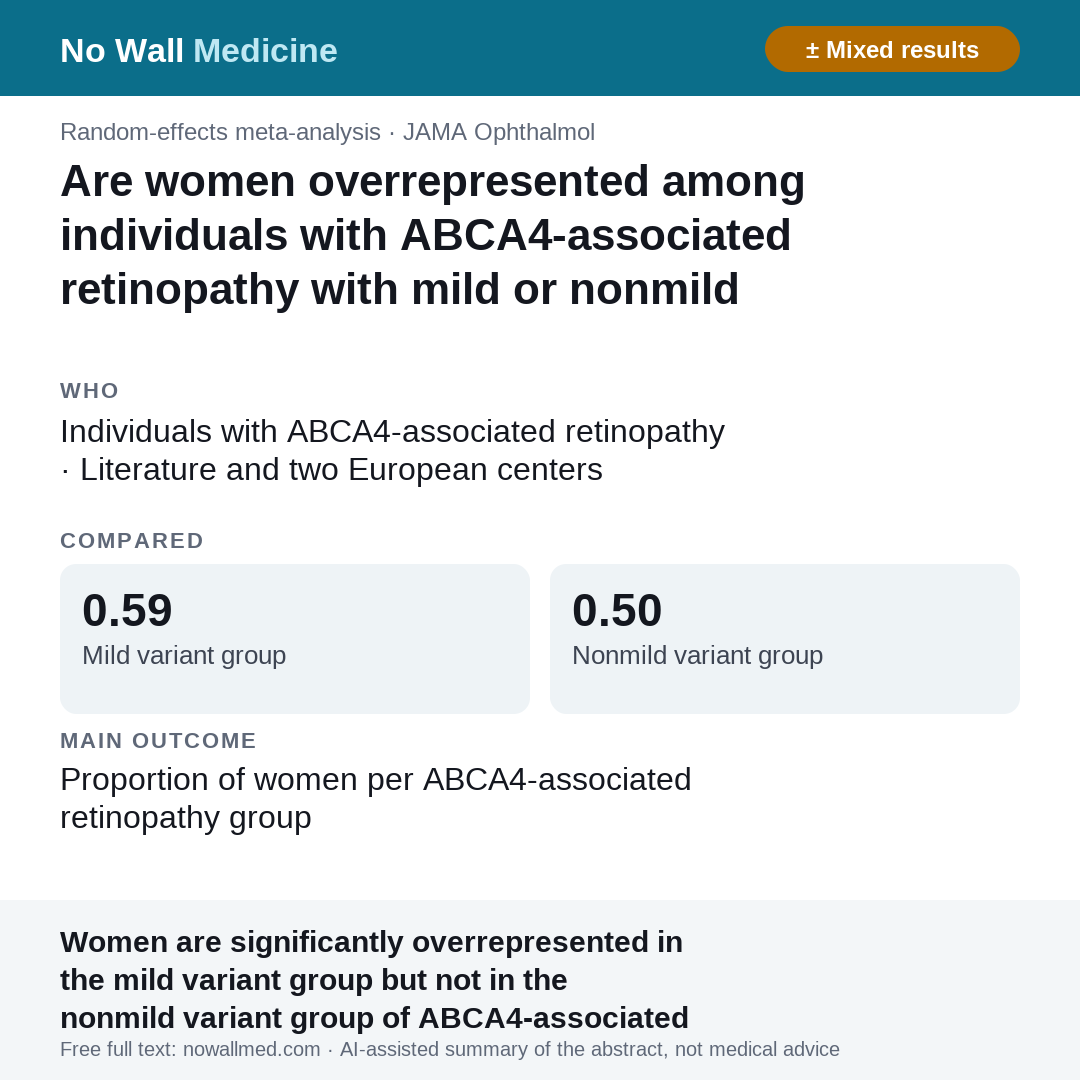
Representation of Women Among Individuals With Mild Variants in ABCA4-Associated Retinopathy: A Meta-Analysis
Random-effects meta-analysisMixed results
Are women overrepresented among individuals with ABCA4-associated retinopathy with mild or nonmild variants?
Who
Individuals with ABCA4-associated retinopathy · Literature and two European centers
Compared
0.59Mild variant group (95% CI, 0.56-0.62)
0.50Nonmild variant group (95% CI, 0.46-0.54)
Main outcome
Proportion of women per ABCA4-associated retinopathy group
Bottom line: Women are significantly overrepresented in the mild variant group but not in the nonmild variant group of ABCA4-associated retinopathy.
JAMA Ophthalmol · 2024-04-11Download image
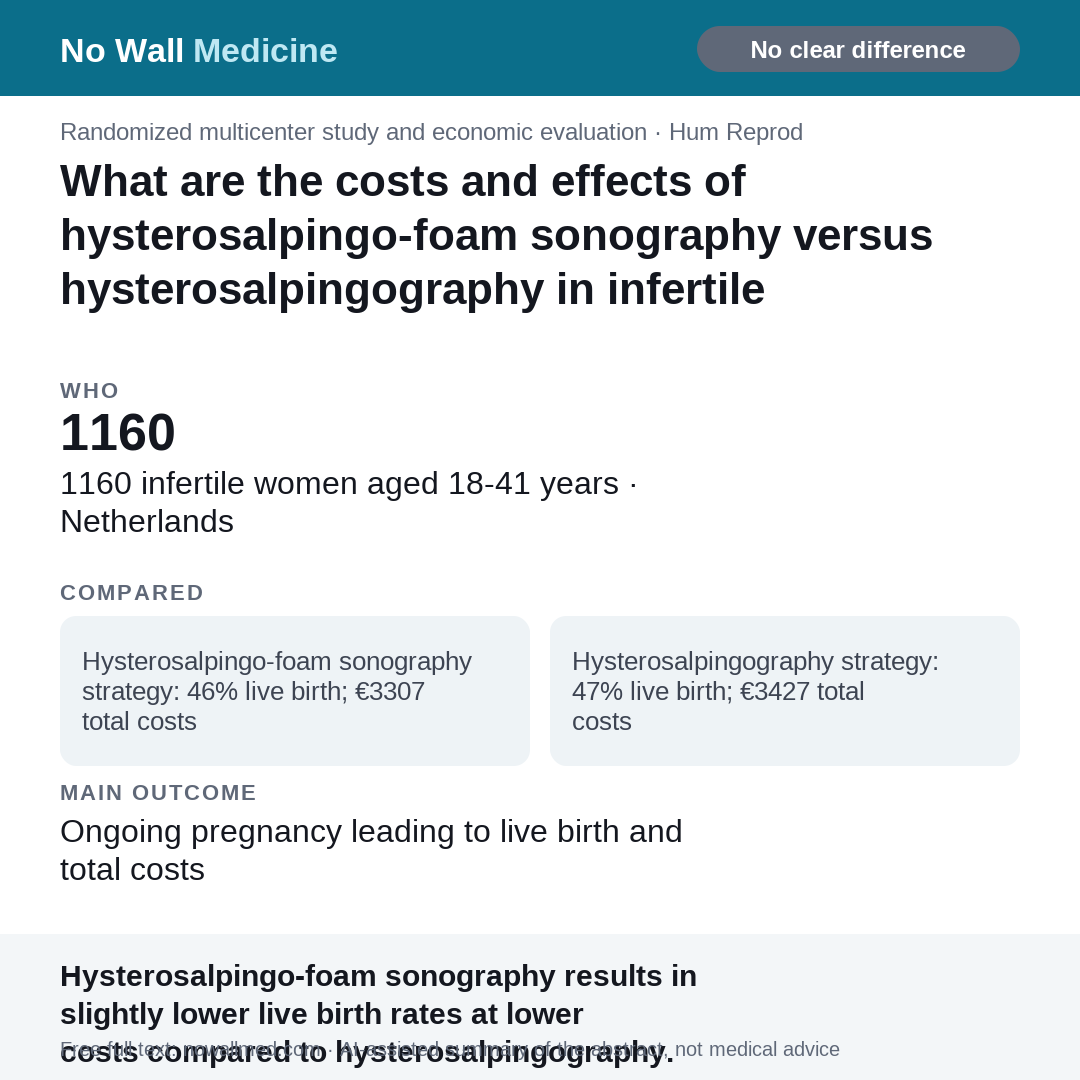
Hysterosalpingo-foam sonography versus hysterosalpingography during fertility work-up: an economic evaluation alongside a randomized controlled trial
Randomized multicenter study and economic evaluationNo clear difference
What are the costs and effects of hysterosalpingo-foam sonography versus hysterosalpingography in infertile women?
Who
1160
1160 infertile women aged 18-41 years · Netherlands
Compared
Hysterosalpingo-foam sonography strategy: 46% live birth; €3307 total costs
Hysterosalpingography strategy: 47% live birth; €3427 total costs
Main outcome
Ongoing pregnancy leading to live birth and total costs
Result: difference -1.2%; 95% CI: -3.4% to 1.5%
Bottom line: Hysterosalpingo-foam sonography results in slightly lower live birth rates at lower costs compared to hysterosalpingography.
Limitation: Considerable uncertainty around the incremental cost-effectiveness ratio and direct fertility enhancing effect not incorporated.
Funded by: ZonMw
Hum Reprod · 2024-04-11Download image