Visual abstracts
New randomized trials and meta-analyses from leading journals at a glance: who was studied, what was compared, and what was found. Every paper is free to read in full.
All specialtiesCardiology 4877Oncology 4138Gastroenterology & Hepatology 1942Infectious Disease 3837Neurology 1905Psychiatry & Mental Health 2273Pulmonology 2143Critical Care 1365Endocrinology & Diabetes 2580Pediatrics 2980Surgery 2559Orthopedics & Sports Medicine 931Neurosurgery 537Cardiothoracic & Vascular Surgery 674Plastic & Reconstructive Surgery 591Nephrology 1133Rheumatology 823Hematology 1109Dermatology 621Ophthalmology 543Obstetrics & Gynecology 1686Public & Global Health 1058Radiology & Imaging 648Anesthesiology 986Urology 764ENT (Otolaryngology) 503Emergency Medicine 511Allergy & Immunology 313Geriatrics 981Family Medicine & Primary Care 562Medical Genetics & Genomics 676Pathology & Laboratory Medicine 159Physical Medicine & Rehabilitation 757Palliative Care 444Nutrition 1588Digital Health & AI 2201General Medicine 321
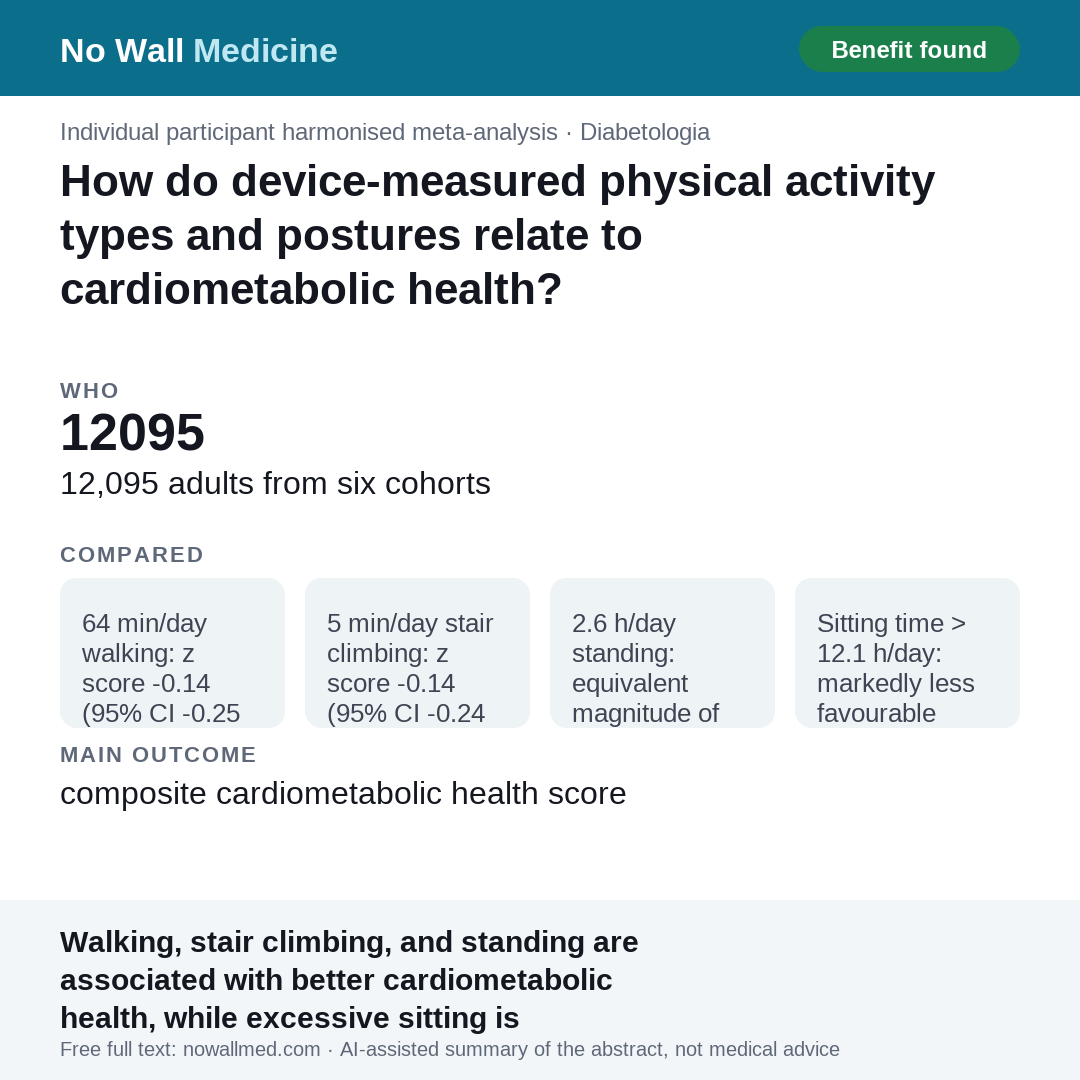
Relationship of device measured physical activity type and posture with cardiometabolic health markers: pooled dose-response associations from the Prospective Physical Activity, Sitting and Sleep Consortium
Individual participant harmonised meta-analysisBenefit found
How do device-measured physical activity types and postures relate to cardiometabolic health?
Who
12095
12,095 adults from six cohorts
Compared
64 min/day walking: z score -0.14 (95% CI -0.25 to -0.02)
5 min/day stair climbing: z score -0.14 (95% CI -0.24 to -0.03)
2.6 h/day standing: equivalent magnitude of association
Sitting time > 12.1 h/day: markedly less favourable
Main outcome
composite cardiometabolic health score
Bottom line: Walking, stair climbing, and standing are associated with better cardiometabolic health, while excessive sitting is deleterious.
Diabetologia · 2024-03-13Download image
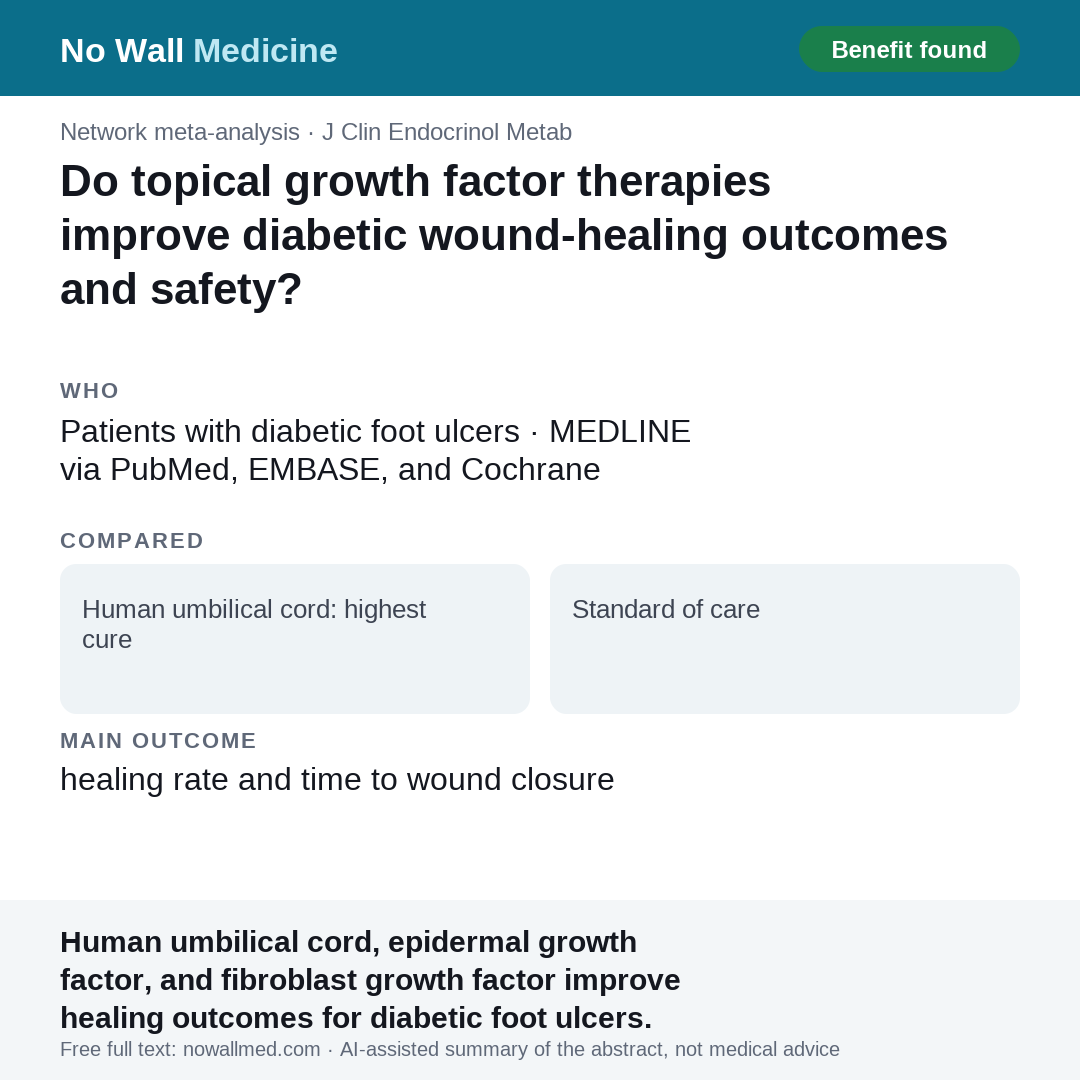
Improving Diabetic Wound-Healing Outcomes With Topical Growth Factor Therapies
Network meta-analysisBenefit found
Do topical growth factor therapies improve diabetic wound-healing outcomes and safety?
Who
Patients with diabetic foot ulcers · MEDLINE via PubMed, EMBASE, and Cochrane
Compared
Human umbilical cord: highest cure
Standard of care
Main outcome
healing rate and time to wound closure
Bottom line: Human umbilical cord, epidermal growth factor, and fibroblast growth factor improve healing outcomes for diabetic foot ulcers.
J Clin Endocrinol Metab · 2024-03-13Download image
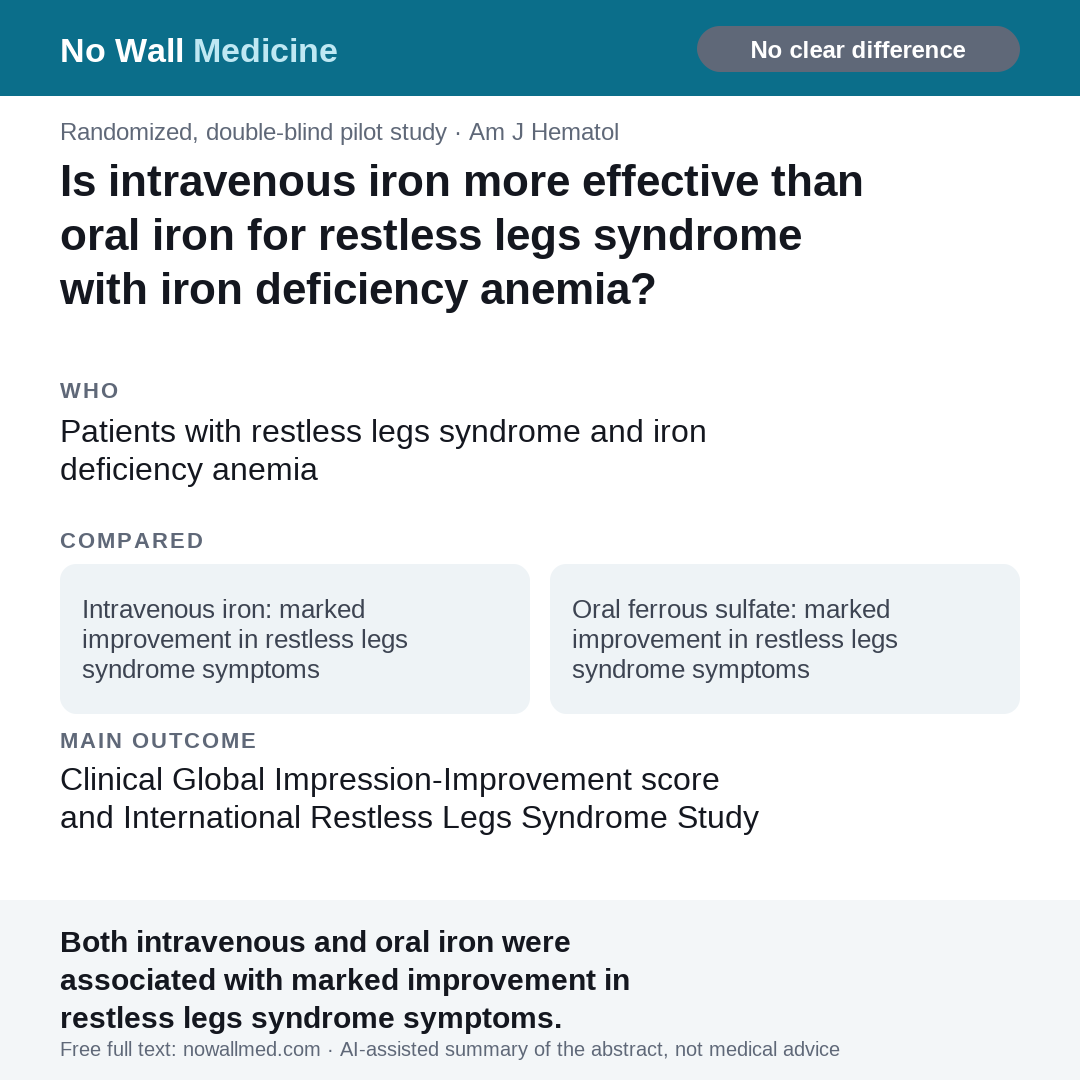
A randomized double-blind pilot study to evaluate the efficacy, safety, and tolerability of intravenous iron versus oral iron for the treatment of restless legs syndrome in patients with iron deficiency anemia
Randomized, double-blind pilot studyNo clear difference
Is intravenous iron more effective than oral iron for restless legs syndrome with iron deficiency anemia?
Who
Patients with restless legs syndrome and iron deficiency anemia
Compared
Intravenous iron: marked improvement in restless legs syndrome symptoms
Oral ferrous sulfate: marked improvement in restless legs syndrome symptoms
Main outcome
Clinical Global Impression-Improvement score and International Restless Legs Syndrome Study Group rating scale
Bottom line: Both intravenous and oral iron were associated with marked improvement in restless legs syndrome symptoms.
Limitation: Final-week data were found missing for 30 patients due to COVID-19 pandemic challenges.
Am J Hematol · 2024-03-13Download image
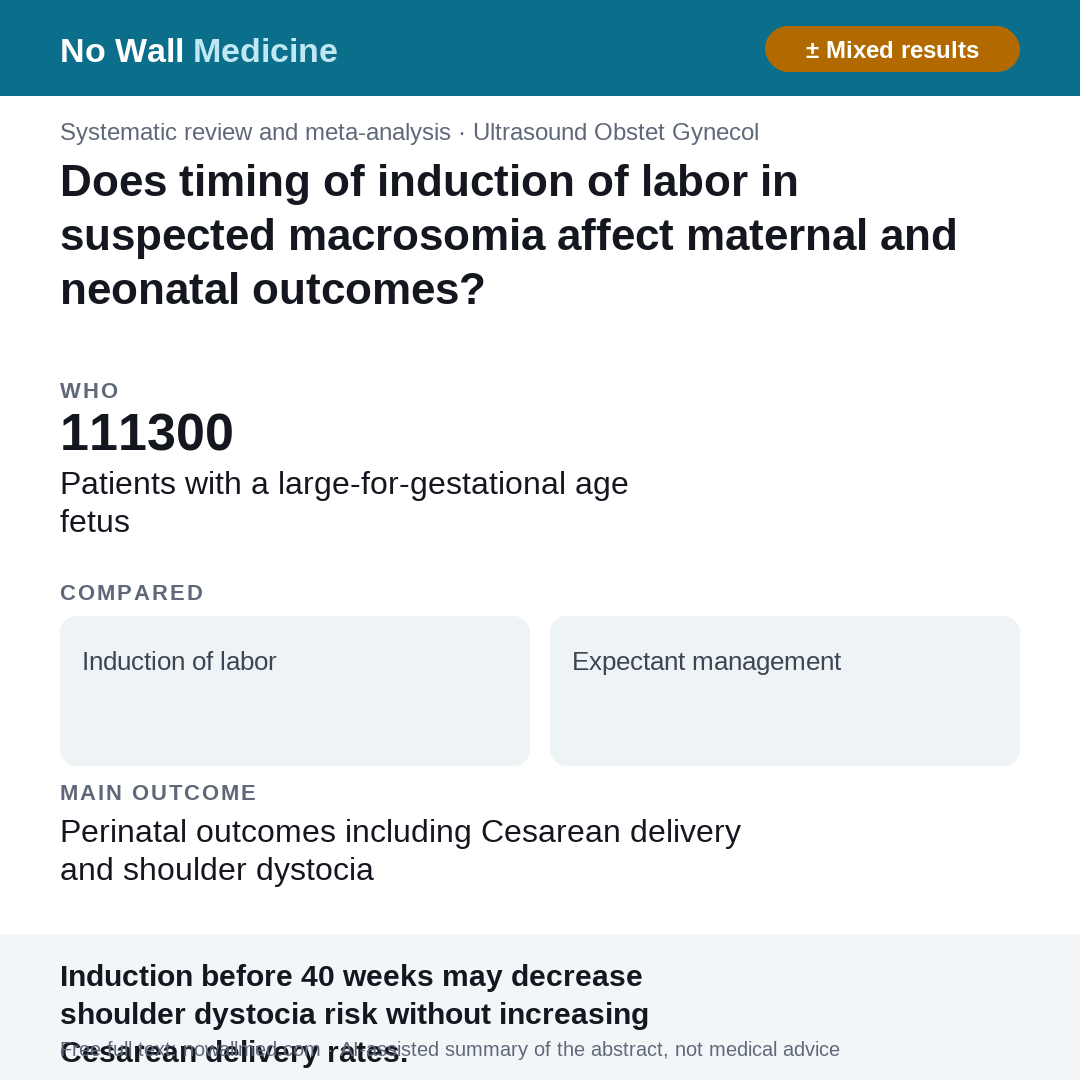
Timing of induction of labor in suspected macrosomia: retrospective cohort study, systematic review and meta-analysis
Systematic review and meta-analysisMixed results
Does timing of induction of labor in suspected macrosomia affect maternal and neonatal outcomes?
Who
111300
Patients with a large-for-gestational age fetus
Compared
Induction of labor
Expectant management
Main outcome
Perinatal outcomes including Cesarean delivery and shoulder dystocia
Result: odds ratio 0.64 (95% CI, 0.42-0.98) for shoulder dystocia
Bottom line: Induction before 40 weeks may decrease shoulder dystocia risk without increasing Cesarean delivery rates.
Ultrasound Obstet Gynecol · 2024-03-13Download image
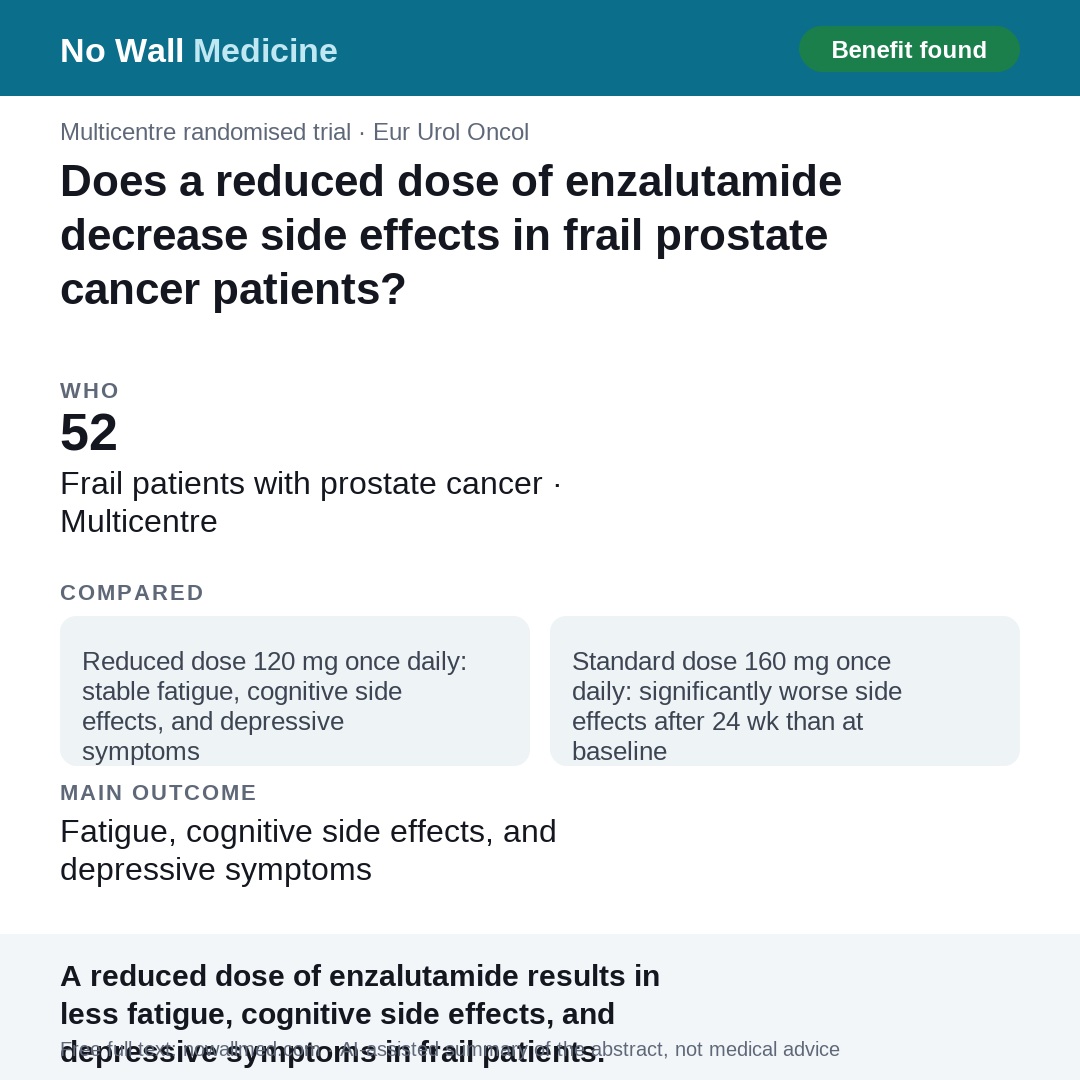
A Prospective Randomised Trial to Determine the Effect of a Reduced Versus Standard Dose of Enzalutamide on Side Effects in Frail Patients with Prostate Cancer
Multicentre randomised trialBenefit found
Does a reduced dose of enzalutamide decrease side effects in frail prostate cancer patients?
Who
52
Frail patients with prostate cancer · Multicentre
Compared
Reduced dose 120 mg once daily: stable fatigue, cognitive side effects, and depressive symptoms
Standard dose 160 mg once daily: significantly worse side effects after 24 wk than at baseline
Main outcome
Fatigue, cognitive side effects, and depressive symptoms
Result: difference FACIT-Fatigue 6.2; 95% confidence interval 1.4-11.0
Bottom line: A reduced dose of enzalutamide results in less fatigue, cognitive side effects, and depressive symptoms in frail patients.
Eur Urol Oncol · 2024-03-13Download image
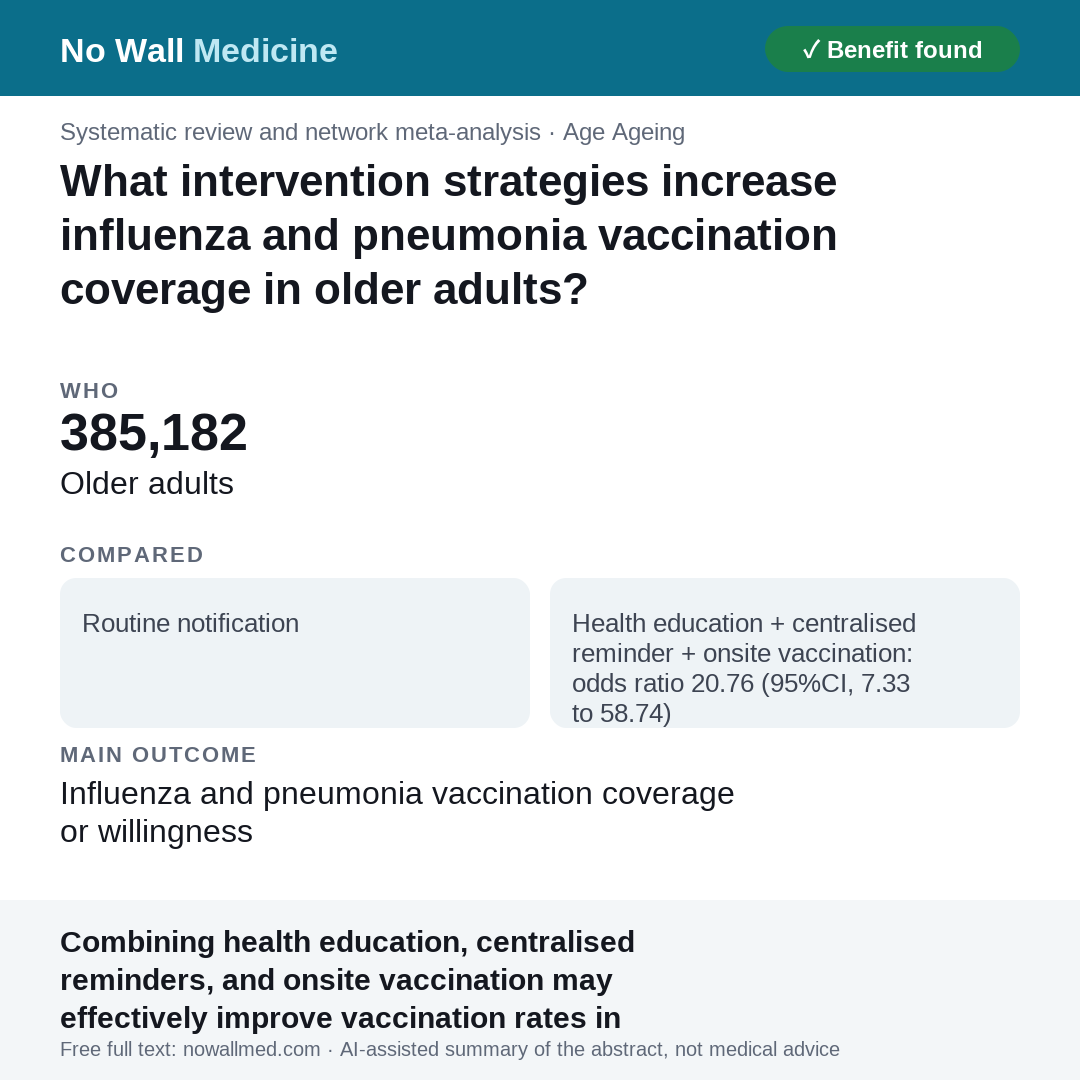
Strategies to increase the coverage of influenza and pneumonia vaccination in older adults: a systematic review and network meta-analysis
Systematic review and network meta-analysisBenefit found
What intervention strategies increase influenza and pneumonia vaccination coverage in older adults?
Who
385,182
Older adults
Compared
Routine notification
Health education + centralised reminder + onsite vaccination: odds ratio 20.76 (95%CI, 7.33 to 58.74)
Main outcome
Influenza and pneumonia vaccination coverage or willingness
Result: odds ratio 20.76 (95%CI, 7.33 to 58.74)
Bottom line: Combining health education, centralised reminders, and onsite vaccination may effectively improve vaccination rates in older adults.
Age Ageing · 2024-03-13Download image
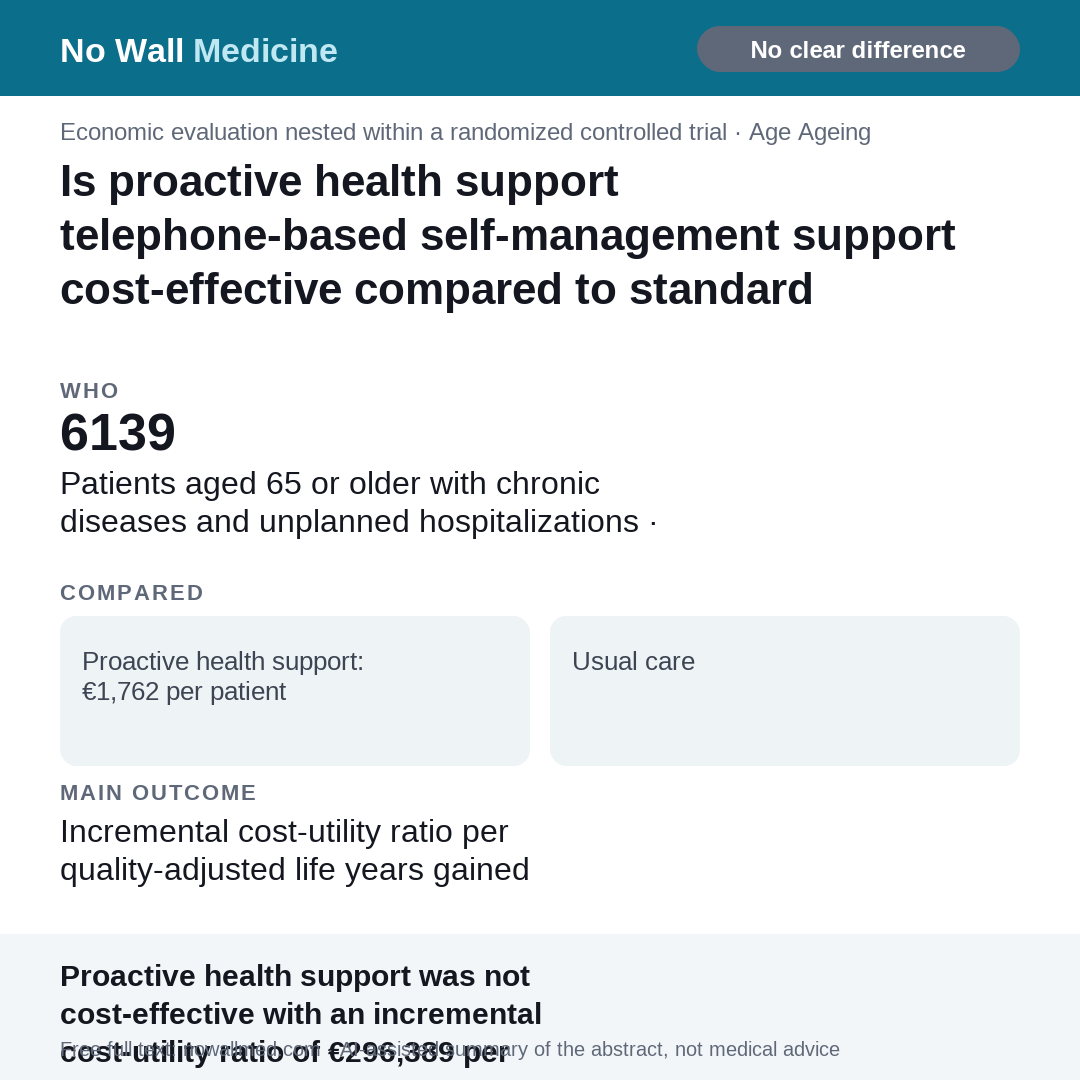
Cost-effectiveness of proactive health support-telephone-based self-management support compared with standard care for persons at risk of hospital admission
Economic evaluation nested within a randomized controlled trialNo clear difference
Is proactive health support telephone-based self-management support cost-effective compared to standard care?
Who
6139
Patients aged 65 or older with chronic diseases and unplanned hospitalizations · Denmark
Compared
Proactive health support: €1,762 per patient
Usual care
Main outcome
Incremental cost-utility ratio per quality-adjusted life years gained
Result: incremental costs of €2,075 and incremental effects on quality-adjusted life years 0.007
Bottom line: Proactive health support was not cost-effective with an incremental cost-utility ratio of €296,389 per quality-adjusted life year gained.
Age Ageing · 2024-03-13Download image
Shared decision-making in palliative cancer care: A systematic review and metasynthesis
Systematic review and metasynthesisUnclear result
Shared decision-making in palliative cancer care
Who
people with cancer, carers, healthcare professionals
Compared
Shared decision-making
No shared decision-making
Main outcome
experience of shared decision-making
Bottom line: Shared decision-making is complex in palliative cancer care
Limitation: conceptual confusion
Palliat Med · 2024-03-13Download image

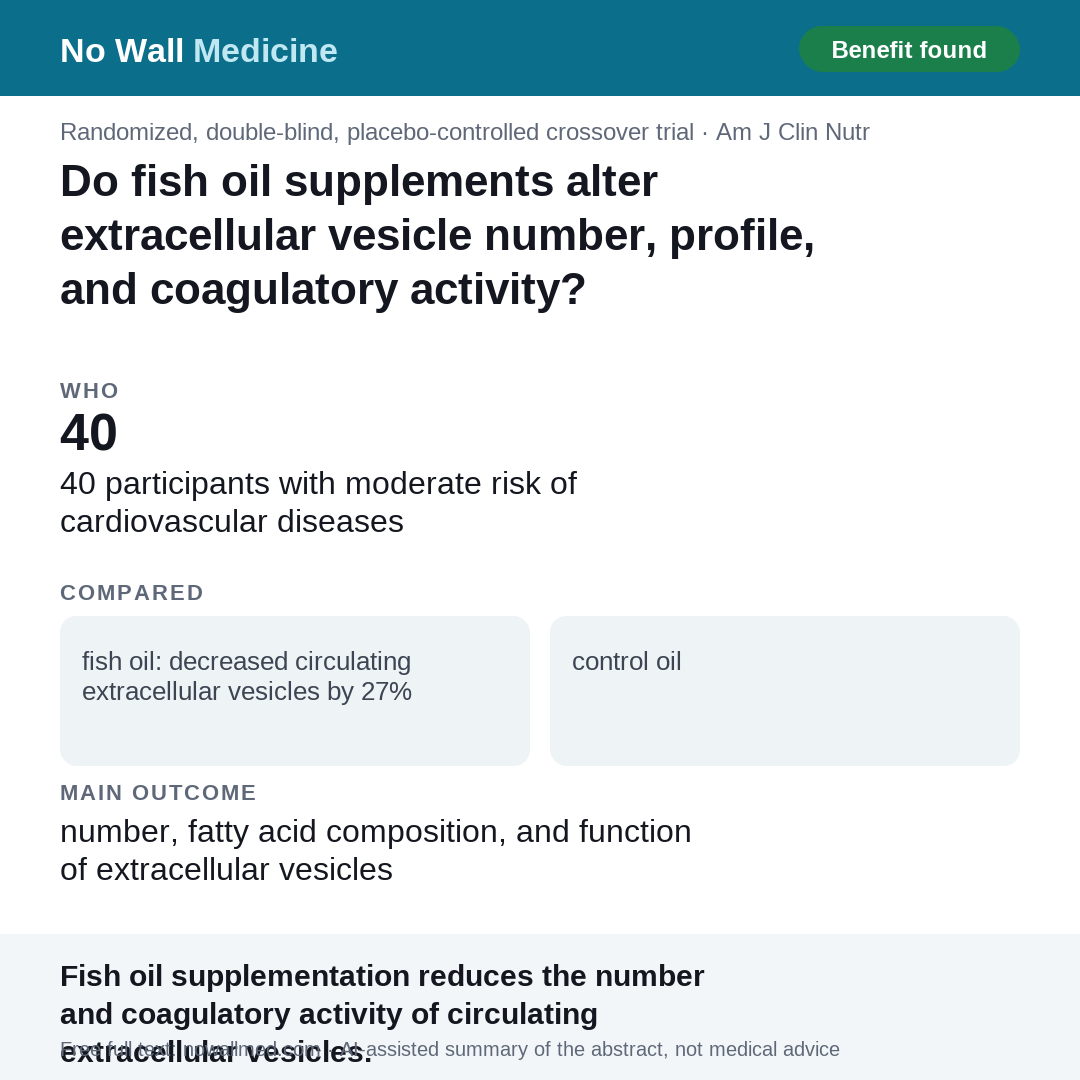
Dietary n-3 polyunsaturated fatty acids alter the number, fatty acid profile and coagulatory activity of circulating and platelet-derived extracellular vesicles: a randomized, controlled crossover trial
Randomized, double-blind, placebo-controlled crossover trialBenefit found
Do fish oil supplements alter extracellular vesicle number, profile, and coagulatory activity?
Who
40
40 participants with moderate risk of cardiovascular diseases
Compared
fish oil: decreased circulating extracellular vesicles by 27%
control oil
Main outcome
number, fatty acid composition, and function of extracellular vesicles
Bottom line: Fish oil supplementation reduces the number and coagulatory activity of circulating extracellular vesicles.
Am J Clin Nutr · 2024-03-13Download image
Mass drug administration for neglected tropical disease control and elimination: a systematic review of ethical reasons
Systematic review of qualitative analysisMixed results
What are the ethical reasons for and against mass drug administration for neglected tropical disease control?
Who
60
Publications regarding mass drug administration for neglected tropical diseases
Compared
20Positive ethical reasons (32.7%)
13Ambivalent ethical reasons (21.3%)
28Negative ethical reasons (45.9%)
Main outcome
Ethical reasons for and against mass drug administration
Bottom line: Mass drug administration presents diverse ethical reasons, with negative implications being the most frequent among identified reasons.
Limitation: Due to the diversity of included studies, no general recommendations can be made.
BMJ Glob Health · 2024-03-13Download image

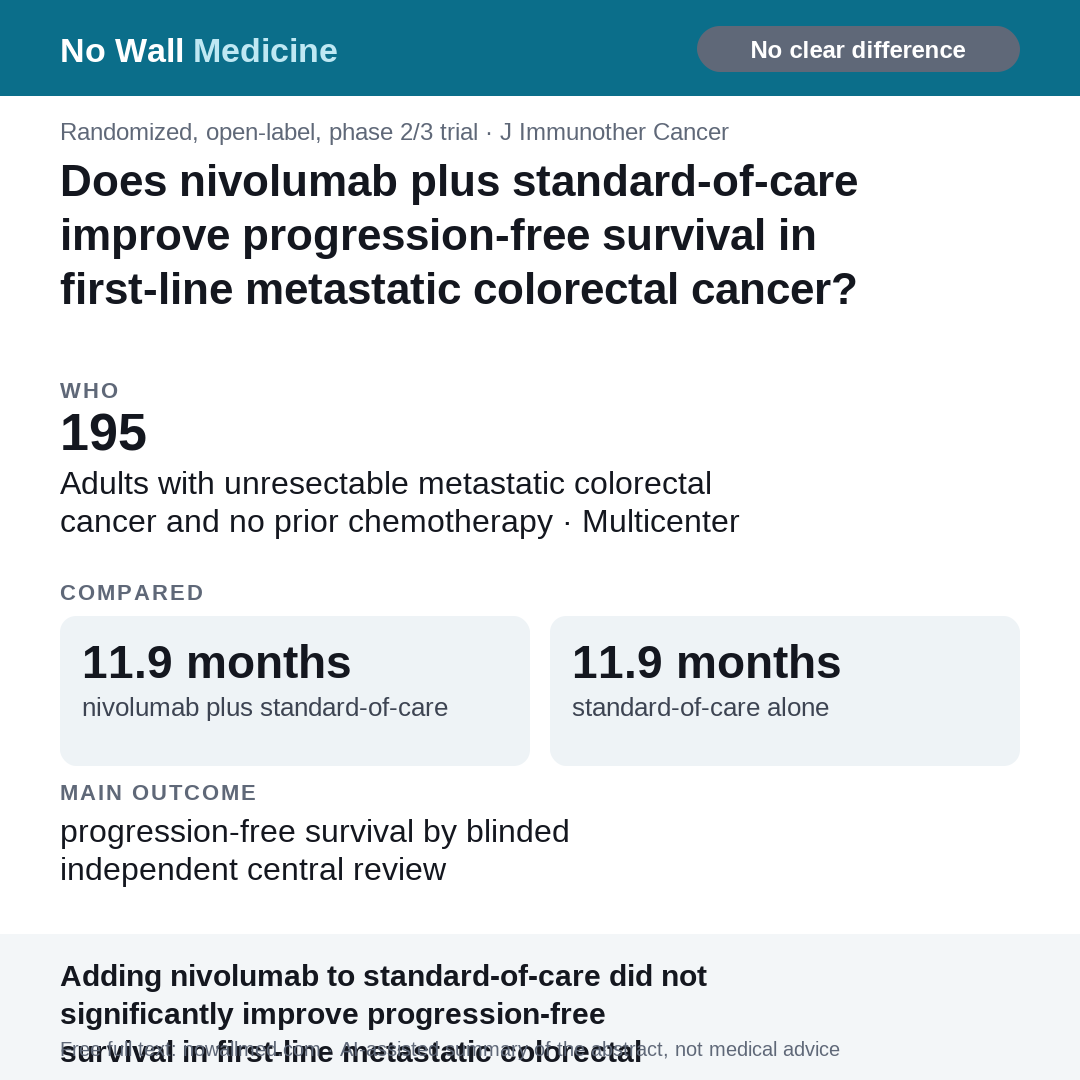
Modified FOLFOX6 plus bevacizumab with and without nivolumab for first-line treatment of metastatic colorectal cancer: phase 2 results from the CheckMate 9X8 randomized clinical trial
Randomized, open-label, phase 2/3 trialNo clear difference
Does nivolumab plus standard-of-care improve progression-free survival in first-line metastatic colorectal cancer?
Who
195
Adults with unresectable metastatic colorectal cancer and no prior chemotherapy · Multicenter
Compared
11.9 monthsnivolumab plus standard-of-care
11.9 monthsstandard-of-care alone
Main outcome
progression-free survival by blinded independent central review
Result: hazard ratio 0.81 (95% CI 0.53 to 1.23)
Bottom line: Adding nivolumab to standard-of-care did not significantly improve progression-free survival in first-line metastatic colorectal cancer.
J Immunother Cancer · 2024-03-13Download image
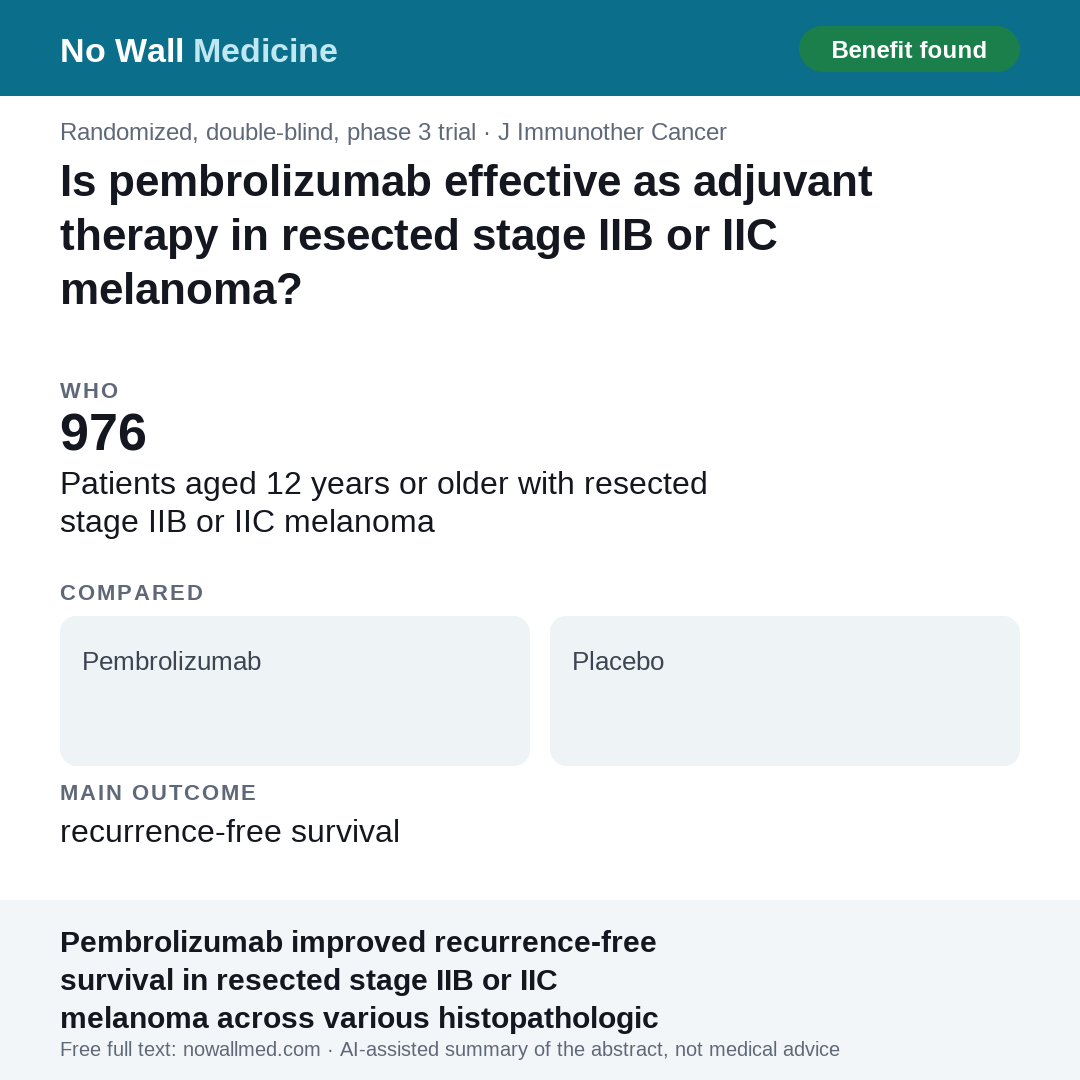
Pembrolizumab versus placebo as adjuvant therapy in resected stage IIB or IIC melanoma: Outcomes in histopathologic subgroups from the randomized, double-blind, phase 3 KEYNOTE-716 trial
Randomized, double-blind, phase 3 trialBenefit found
Is pembrolizumab effective as adjuvant therapy in resected stage IIB or IIC melanoma?
Who
976
Patients aged 12 years or older with resected stage IIB or IIC melanoma
Compared
Pembrolizumab
Placebo
Main outcome
recurrence-free survival
Result: hazard ratio 0.64 (95% CI, 0.50 to 0.84)
Bottom line: Pembrolizumab improved recurrence-free survival in resected stage IIB or IIC melanoma across various histopathologic subgroups.
J Immunother Cancer · 2024-03-13Download image
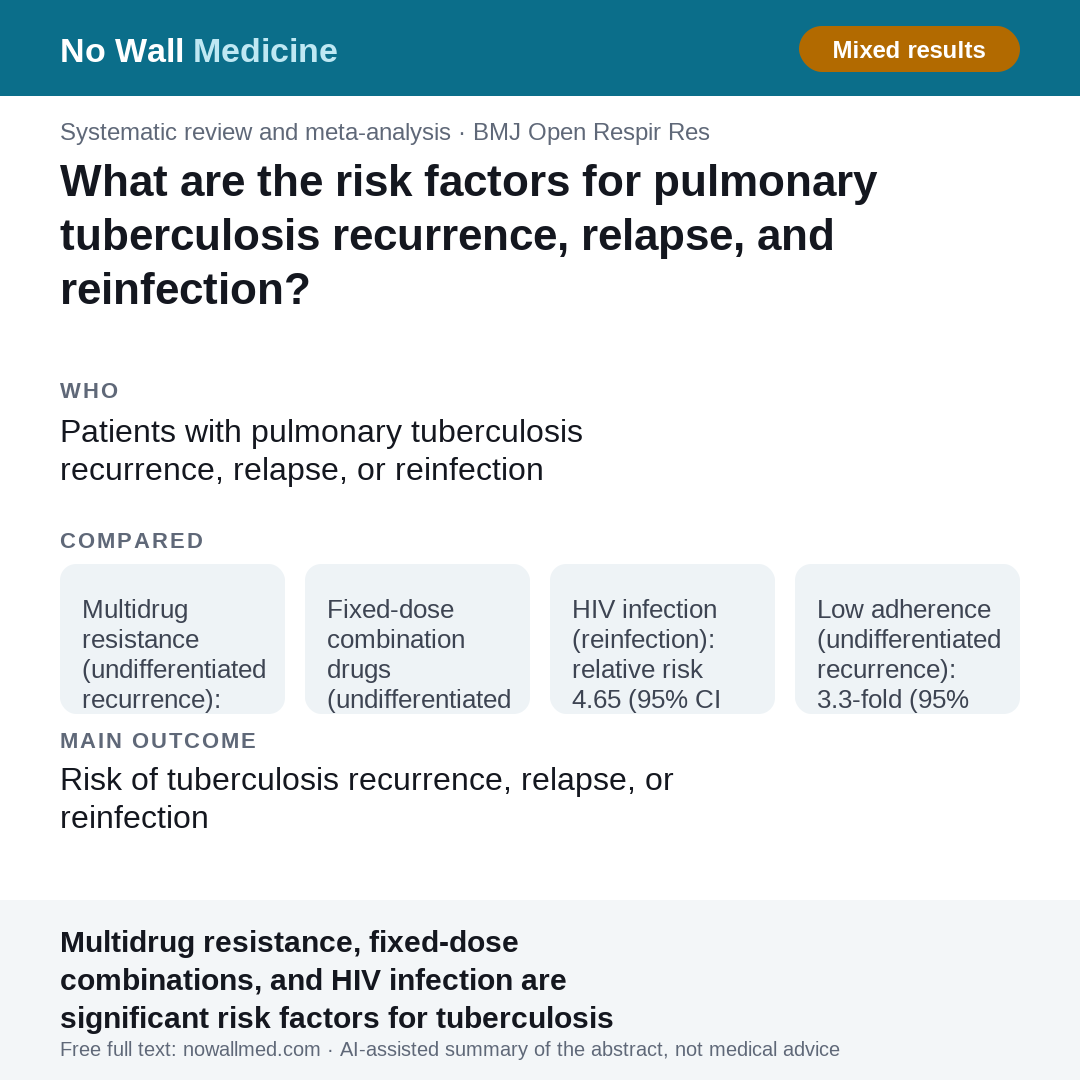
Risk factors for pulmonary tuberculosis recurrence, relapse and reinfection: a systematic review and meta-analysis
Systematic review and meta-analysisMixed results
What are the risk factors for pulmonary tuberculosis recurrence, relapse, and reinfection?
Who
Patients with pulmonary tuberculosis recurrence, relapse, or reinfection
Compared
Multidrug resistance (undifferentiated recurrence): relative risk 3.49 (95% CI 1.86 to 6.53)
Fixed-dose combination drugs (undifferentiated recurrence): relative risk 2.29 (95% CI 1.10 to 4.75)
HIV infection (reinfection): relative risk 4.65 (95% CI 1.71 to 12.65)
Low adherence (undifferentiated recurrence): 3.3-fold (95% CI 2.37 to 4.62)
Main outcome
Risk of tuberculosis recurrence, relapse, or reinfection
Bottom line: Multidrug resistance, fixed-dose combinations, and HIV infection are significant risk factors for tuberculosis recurrence and reinfection.
Limitation: Wide variety of factors studied, inconsistency in confounding control, and few studies used molecular genotyping.
BMJ Open Respir Res · 2024-03-13Download image
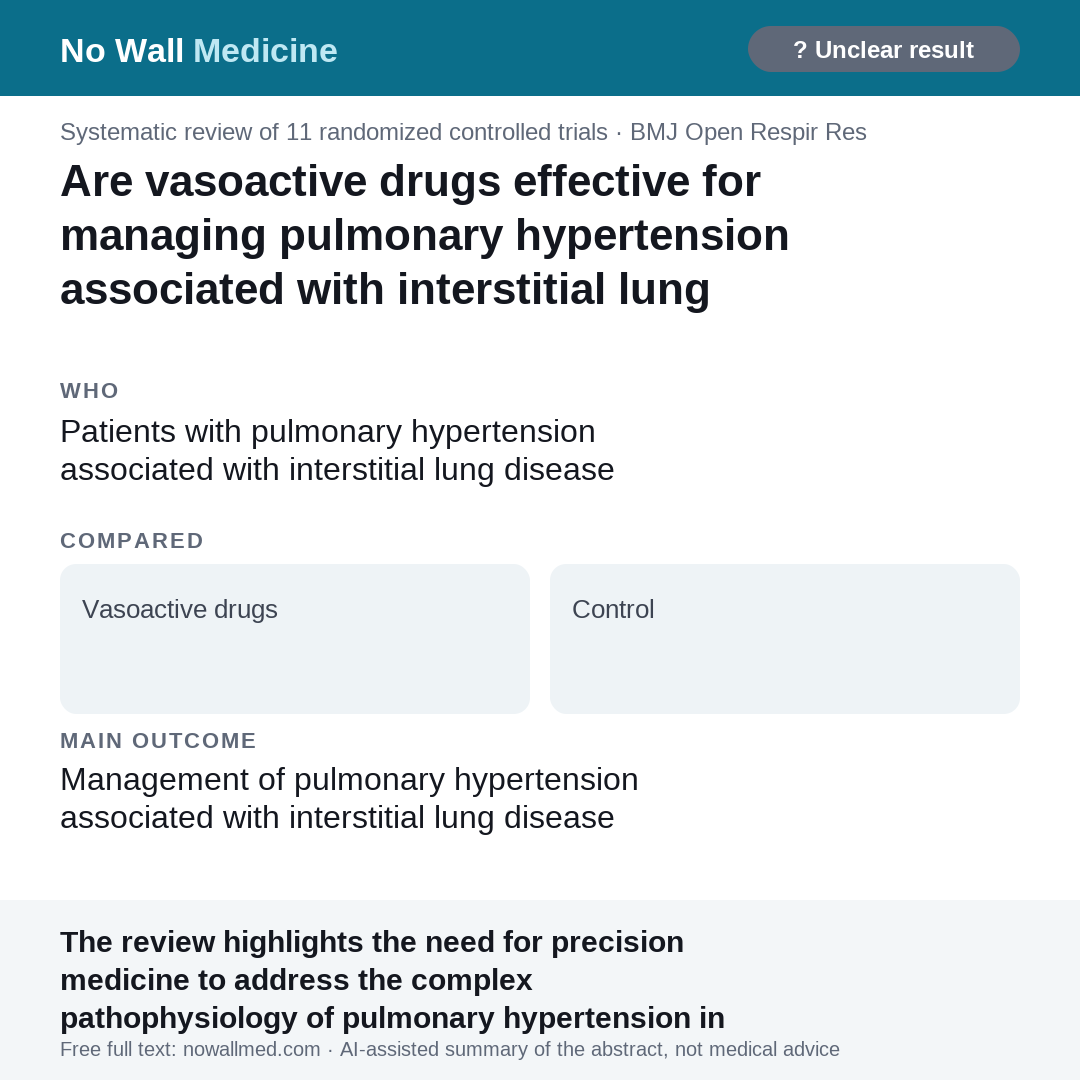
Vasoactive drugs for the treatment of pulmonary hypertension associated with interstitial lung diseases: a systematic review
Systematic review of 11 randomized controlled trialsUnclear result
Are vasoactive drugs effective for managing pulmonary hypertension associated with interstitial lung diseases?
Who
Patients with pulmonary hypertension associated with interstitial lung disease
Compared
Vasoactive drugs
Control
Main outcome
Management of pulmonary hypertension associated with interstitial lung disease
Bottom line: The review highlights the need for precision medicine to address the complex pathophysiology of pulmonary hypertension in interstitial lung disease.
Limitation: Studies are limited by population heterogeneity, short-term follow-up, and uncertain clinical significance of outcomes.
BMJ Open Respir Res · 2024-03-13Download image
Long- and short-term effects of fecal microbiota transplantation on antibiotic resistance genes: results from a randomized placebo-controlled trial
Randomized placebo-controlled trialMixed results
What are the short- and long-term effects of fecal microbiota transplantation on antibiotic resistance genes?
Who
100
Patients undergoing allogeneic hematopoietic cell transplantation or receiving anti-leukemia induction chemotherapy
Compared
Fecal microbiota transplantation
Placebo
Main outcome
47 antibiotic resistance genes
Bottom line: Fecal microbiota transplantation shows a bimodal pattern of antibiotic resistance gene transfer and long-term colonization resistance.
Gut Microbes · 2024-03-13Download image

Barriers and facilitators to primary care management of type 2 diabetes in Shijiazhuang City, China: a mixed methods study
Mixed methods studyMixed results
What are the barriers and facilitators to primary care management of type 2 diabetes?
Who
Primary health care service providers and recipients with type 2 diabetes · Shijiazhuang City, Hebei Province, China
Compared
Primary health care providers
Patients with type 2 diabetes
Main outcome
Barriers and facilitators of diabetes management
Bottom line: Policy provides infrastructure and training, but provider workload and patient health literacy remain significant barriers to management.
BMC Prim Care · 2024-03-13Download image

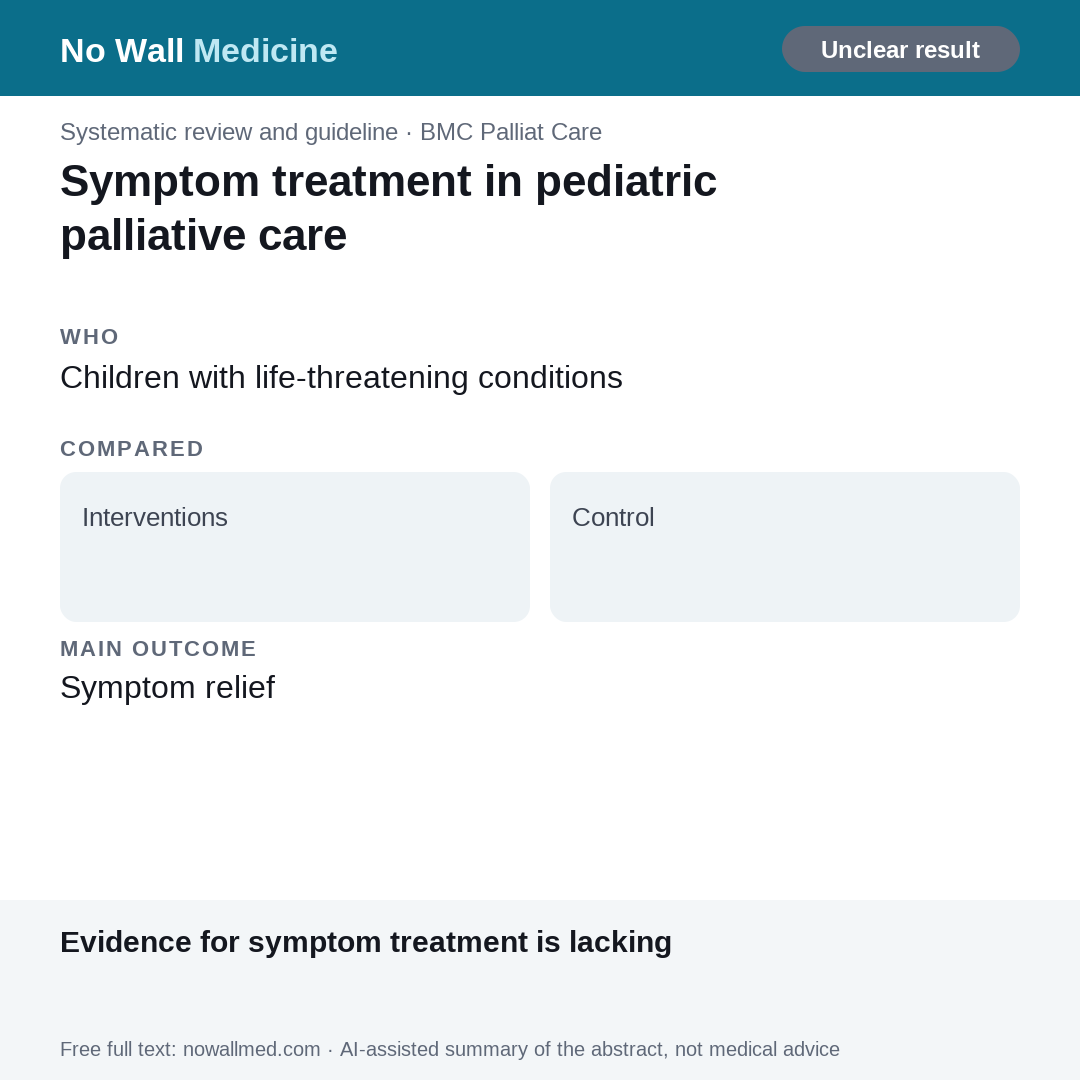
A Dutch paediatric palliative care guideline: a systematic review and evidence-based recommendations for symptom treatment
Systematic review and guidelineUnclear result
Symptom treatment in pediatric palliative care
Who
Children with life-threatening conditions
Compared
Interventions
Control
Main outcome
Symptom relief
Bottom line: Evidence for symptom treatment is lacking
BMC Palliat Care · 2024-03-13Download image
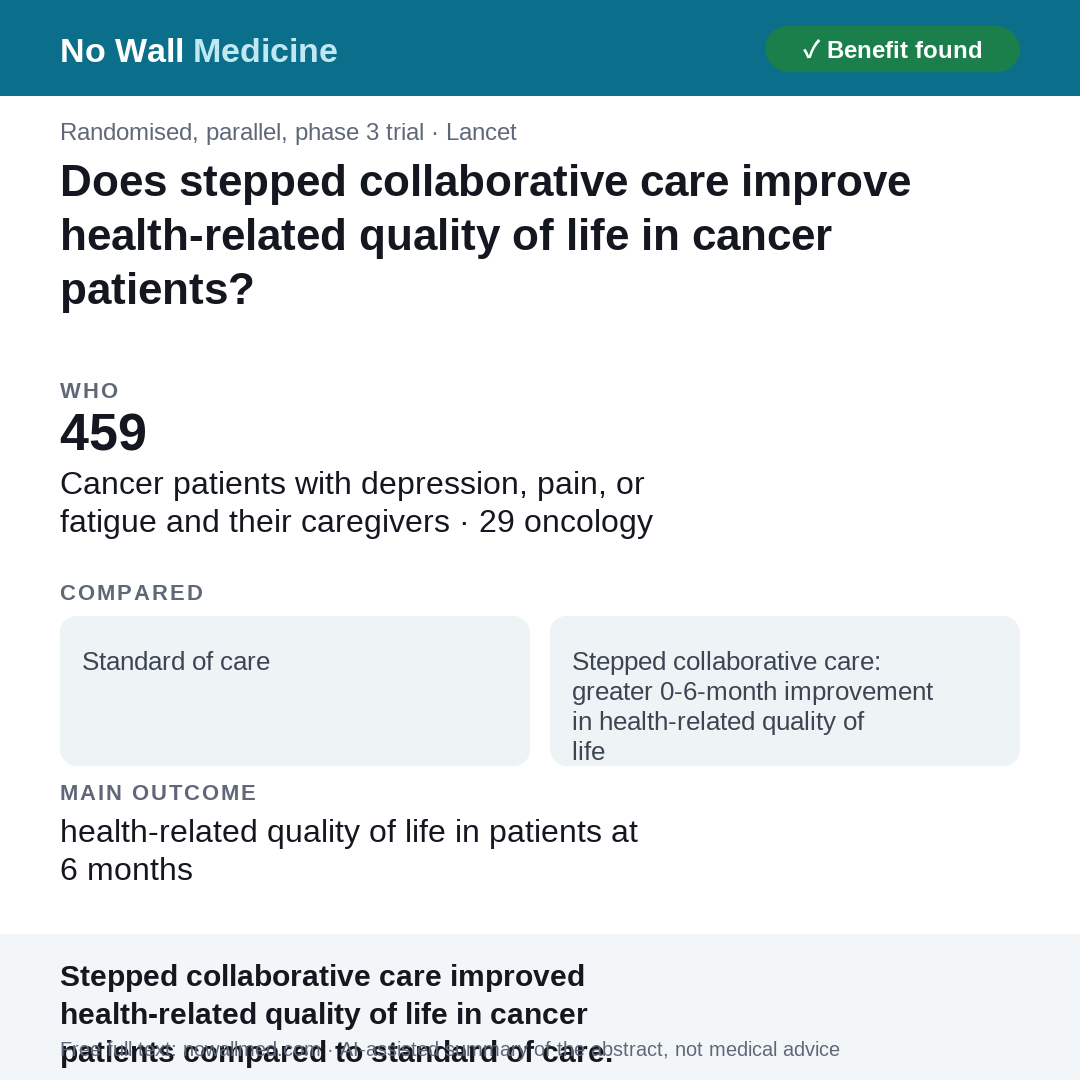
Patient, family caregiver, and economic outcomes of an integrated screening and novel stepped collaborative care intervention in the oncology setting in the USA (CARES): a randomised, parallel, phase 3 trial
Randomised, parallel, phase 3 trialBenefit found
Does stepped collaborative care improve health-related quality of life in cancer patients?
Who
459
Cancer patients with depression, pain, or fatigue and their caregivers · 29 oncology outpatient clinics in the USA
Compared
Standard of care
Stepped collaborative care: greater 0-6-month improvement in health-related quality of life
Main outcome
health-related quality of life in patients at 6 months
Result: effect size 0·09 (p=0·013)
Bottom line: Stepped collaborative care improved health-related quality of life in cancer patients compared to standard of care.
Funded by: US National Cancer Institute
Lancet · 2024-03-12Download image
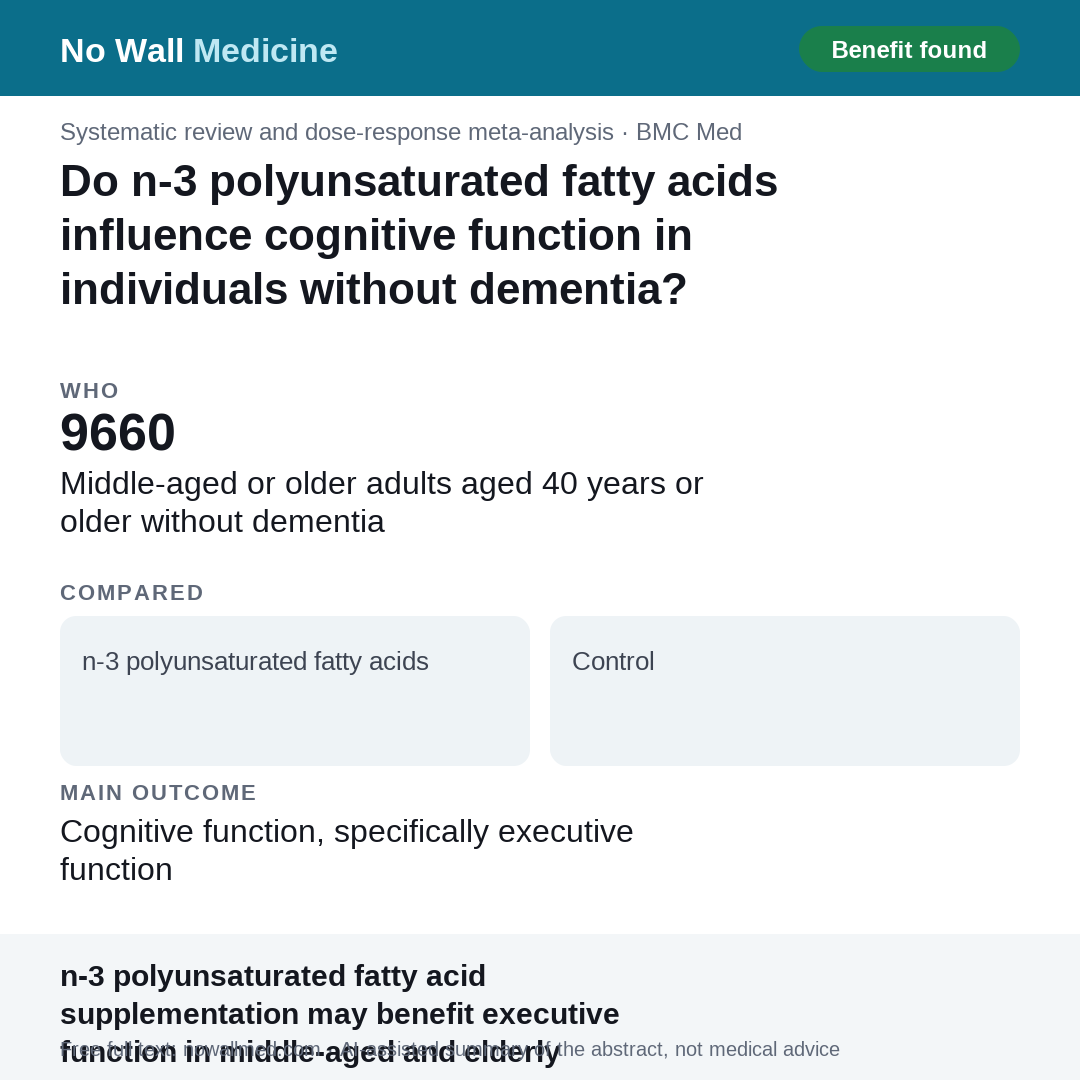
The influence of n-3 polyunsaturated fatty acids on cognitive function in individuals without dementia: a systematic review and dose-response meta-analysis
Systematic review and dose-response meta-analysisBenefit found
Do n-3 polyunsaturated fatty acids influence cognitive function in individuals without dementia?
Who
9660
Middle-aged or older adults aged 40 years or older without dementia
Compared
n-3 polyunsaturated fatty acids
Control
Main outcome
Cognitive function, specifically executive function
Bottom line: n-3 polyunsaturated fatty acid supplementation may benefit executive function in middle-aged and elderly individuals.
BMC Med · 2024-03-12Download image
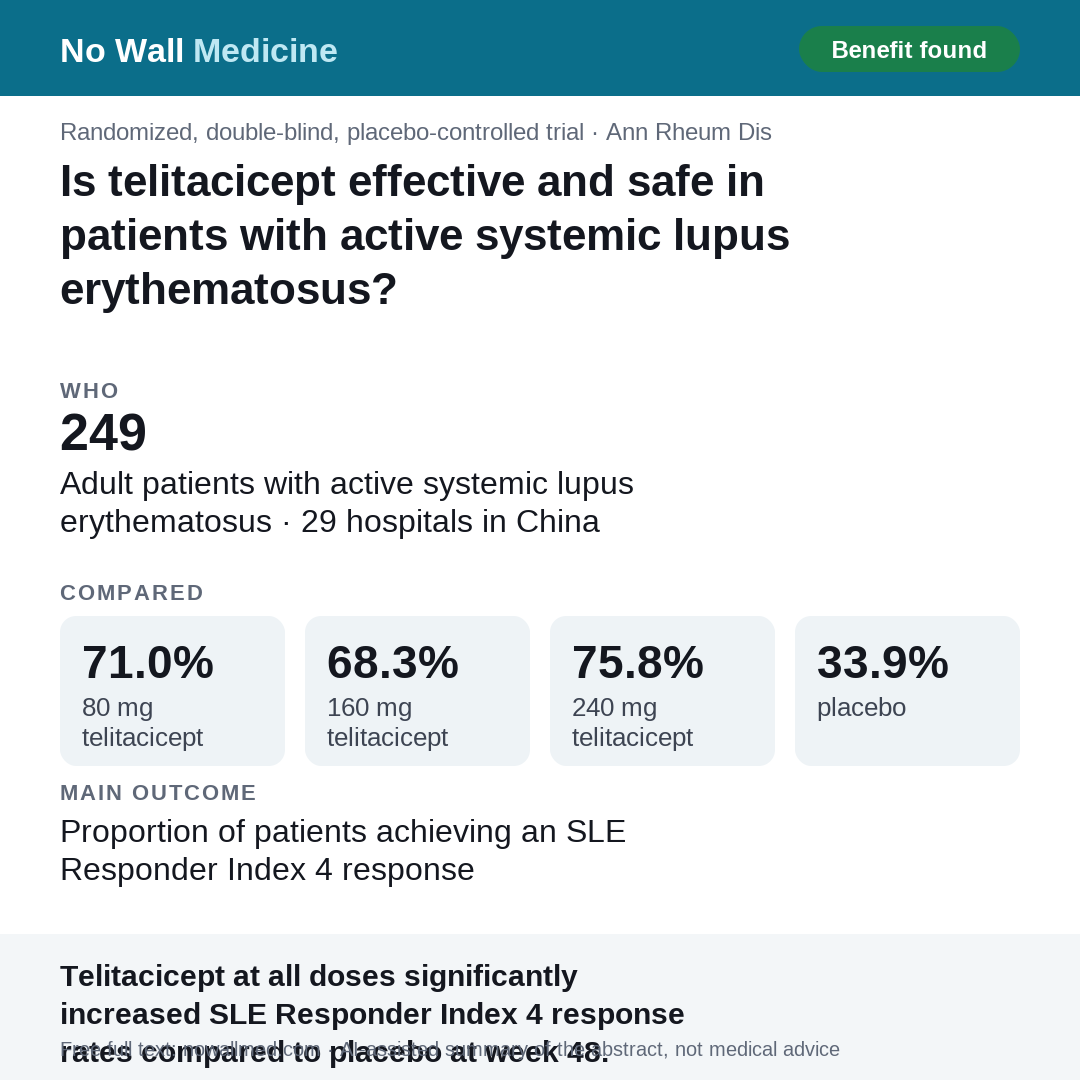
Telitacicept in patients with active systemic lupus erythematosus: results of a phase 2b, randomised, double-blind, placebo-controlled trial
Randomized, double-blind, placebo-controlled trialBenefit found
Is telitacicept effective and safe in patients with active systemic lupus erythematosus?
Who
249
Adult patients with active systemic lupus erythematosus · 29 hospitals in China
Compared
71.0%80 mg telitacicept
68.3%160 mg telitacicept
75.8%240 mg telitacicept
33.9%placebo
Main outcome
Proportion of patients achieving an SLE Responder Index 4 response
Bottom line: Telitacicept at all doses significantly increased SLE Responder Index 4 response rates compared to placebo at week 48.
Ann Rheum Dis · 2024-03-12Download image