Visual abstracts
New randomized trials and meta-analyses from leading journals at a glance: who was studied, what was compared, and what was found. Every paper is free to read in full.
All specialtiesCardiology 4877Oncology 4138Gastroenterology & Hepatology 1942Infectious Disease 3837Neurology 1905Psychiatry & Mental Health 2273Pulmonology 2143Critical Care 1365Endocrinology & Diabetes 2580Pediatrics 2980Surgery 2559Orthopedics & Sports Medicine 931Neurosurgery 537Cardiothoracic & Vascular Surgery 674Plastic & Reconstructive Surgery 591Nephrology 1133Rheumatology 823Hematology 1109Dermatology 621Ophthalmology 543Obstetrics & Gynecology 1686Public & Global Health 1058Radiology & Imaging 648Anesthesiology 986Urology 764ENT (Otolaryngology) 503Emergency Medicine 511Allergy & Immunology 313Geriatrics 981Family Medicine & Primary Care 562Medical Genetics & Genomics 676Pathology & Laboratory Medicine 159Physical Medicine & Rehabilitation 757Palliative Care 444Nutrition 1588Digital Health & AI 2201General Medicine 321
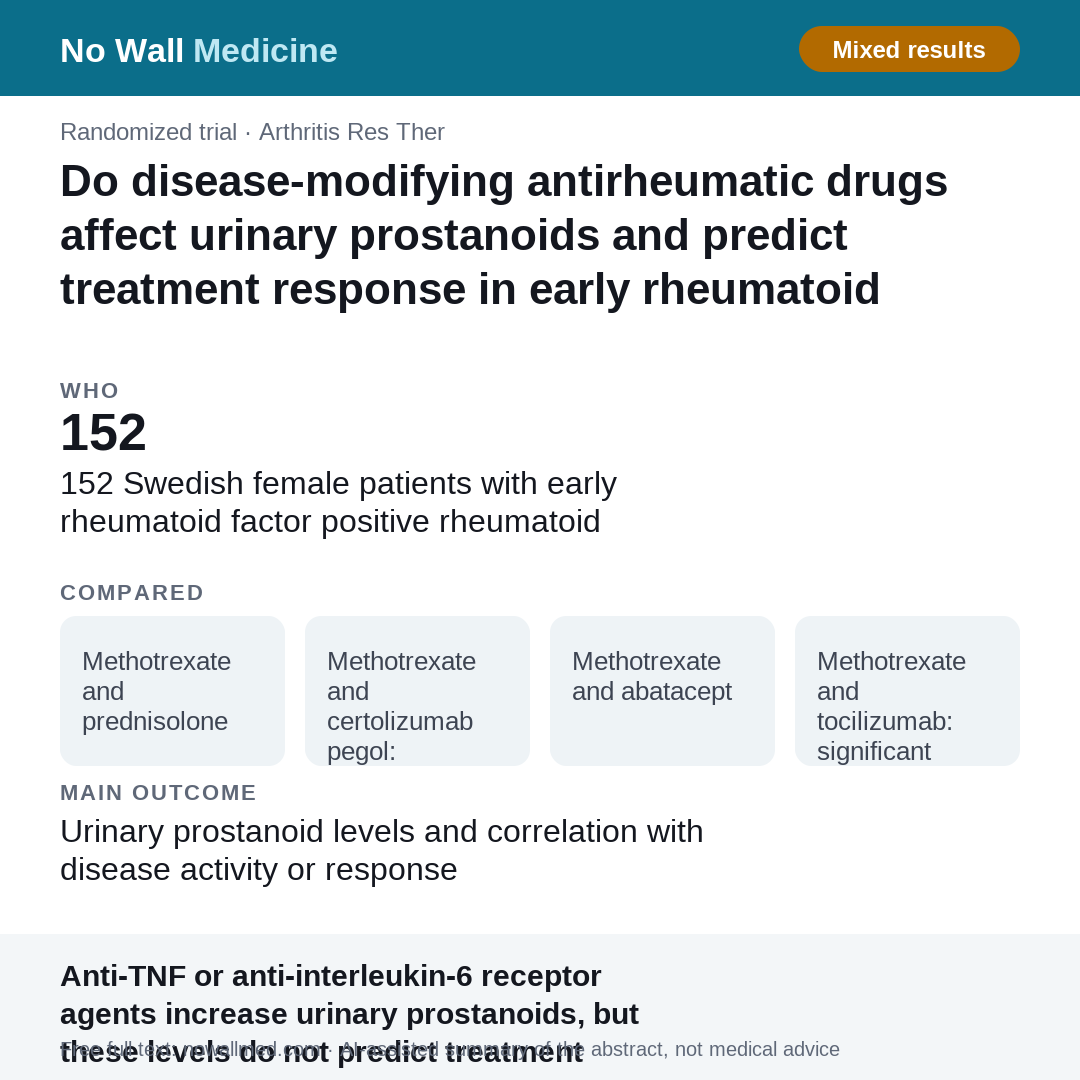
Urinary prostanoids are elevated by anti-TNF and anti-IL6 receptor disease-modifying antirheumatic drugs but are not predictive of response to treatment in early rheumatoid arthritis
Randomized trialMixed results
Do disease-modifying antirheumatic drugs affect urinary prostanoids and predict treatment response in early rheumatoid arthritis?
Who
152
152 Swedish female patients with early rheumatoid factor positive rheumatoid arthritis · Sweden
Compared
Methotrexate and prednisolone
Methotrexate and certolizumab pegol: significant elevations in urinary tetranor-prostaglandin E metabolite and 2,3-dinor thromboxane B2
Methotrexate and abatacept
Methotrexate and tocilizumab: significant elevations in urinary tetranor-prostaglandin E metabolite and 2,3-dinor thromboxane B2
Main outcome
Urinary prostanoid levels and correlation with disease activity or response
Bottom line: Anti-TNF or anti-interleukin-6 receptor agents increase urinary prostanoids, but these levels do not predict treatment response.
Arthritis Res Ther · 2024-03-05Download image
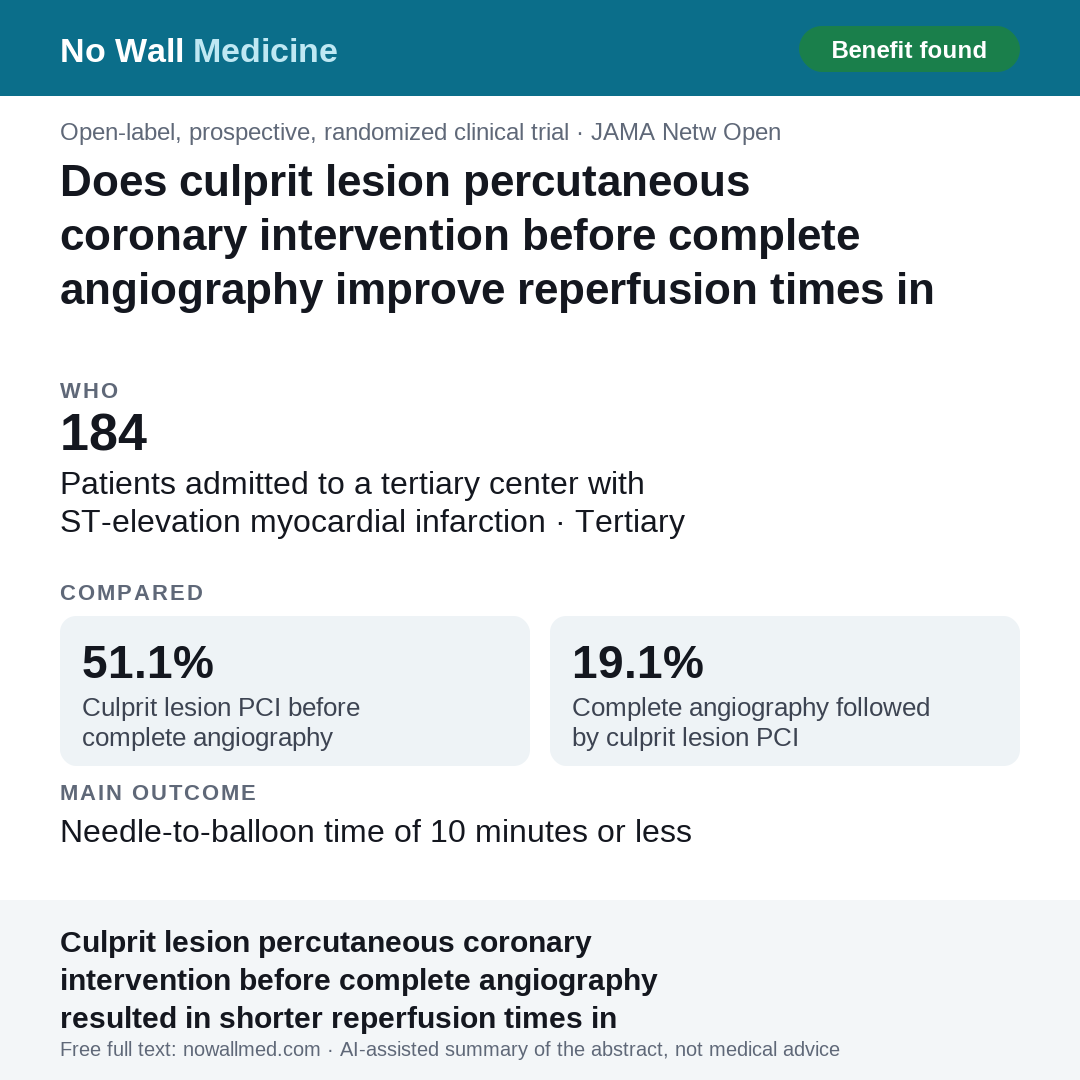
Culprit Lesion Coronary Intervention Before Complete Angiography in ST-Elevation Myocardial Infarction: A Randomized Clinical Trial
Open-label, prospective, randomized clinical trialBenefit found
Does culprit lesion percutaneous coronary intervention before complete angiography improve reperfusion times in STEMI?
Who
184
Patients admitted to a tertiary center with ST-elevation myocardial infarction · Tertiary center in Jerusalem, Israel
Compared
51.1%Culprit lesion PCI before complete angiography (46 of 90)
19.1%Complete angiography followed by culprit lesion PCI (18 of 94)
Main outcome
Needle-to-balloon time of 10 minutes or less
Result: odds ratio 4.4 (95% CI 2.2-9.1)
Bottom line: Culprit lesion percutaneous coronary intervention before complete angiography resulted in shorter reperfusion times in patients with ST-elevation myocardial infarction.
JAMA Netw Open · 2024-03-04Download image
Magnetic Resonance Imaging, Clinical, and Biopsy Findings in Suspected Prostate Cancer: A Systematic Review and Meta-Analysis
Systematic review and meta-analysisBenefit found
What is the optimal strategy for deciding prostate biopsy using MRI and clinical data?
Who
36366
Men with suspected clinically significant prostate cancer
Compared
PI-RADS ≤3 and PSAD <0.10 ng/mL2: 30% unnecessary biopsies
Biopsy all suspected patients: 48% unnecessary biopsies
Main outcome
Unnecessary biopsies and sensitivity for clinically significant prostate cancer
Result: sensitivity 97% (vs 95%)
Bottom line: Combining PI-RADS and prostate-specific antigen density can reduce unnecessary biopsies while maintaining high sensitivity.
JAMA Netw Open · 2024-03-04Download image

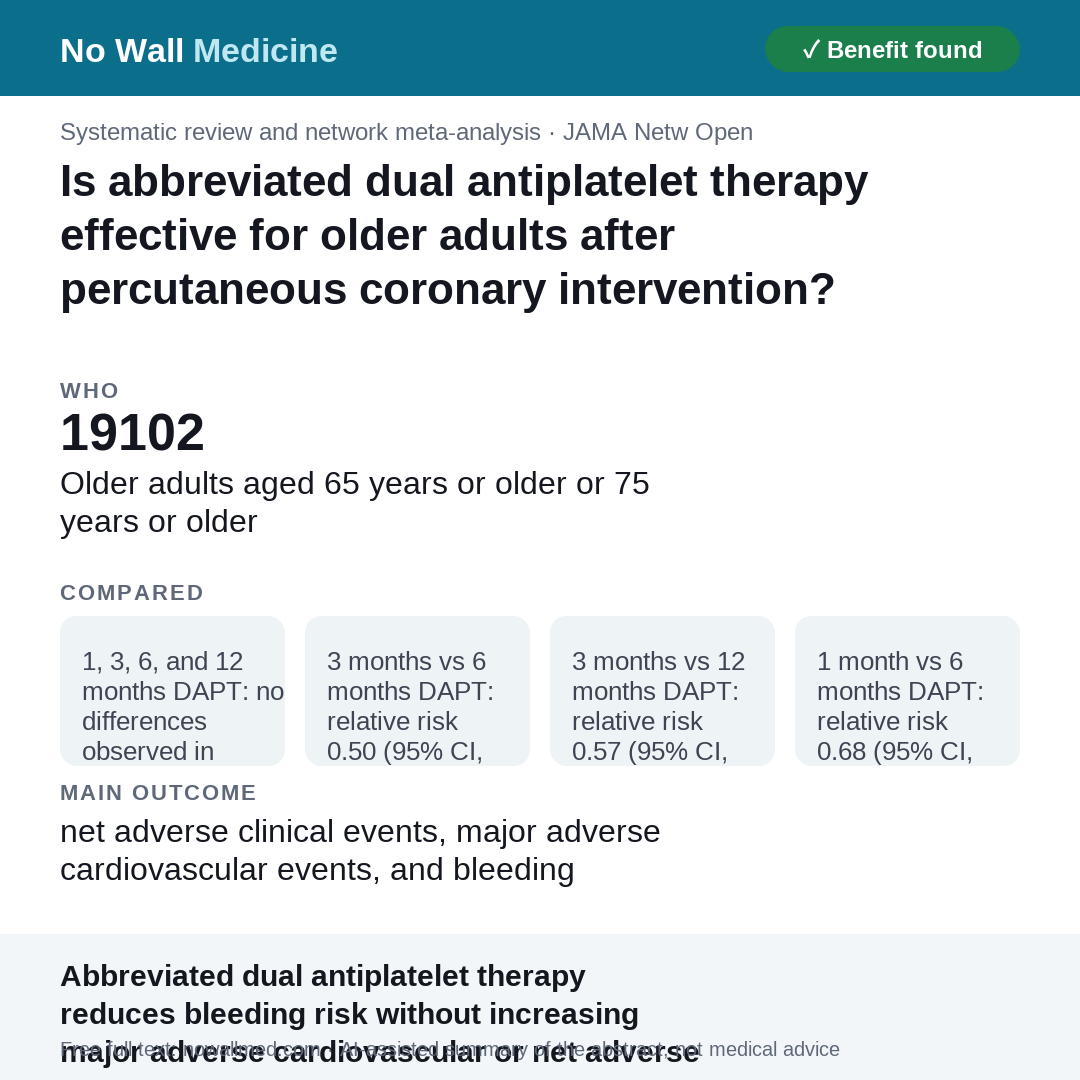
Shorter Dual Antiplatelet Therapy for Older Adults After Percutaneous Coronary Intervention: A Systematic Review and Network Meta-Analysis
Systematic review and network meta-analysisBenefit found
Is abbreviated dual antiplatelet therapy effective for older adults after percutaneous coronary intervention?
Who
19102
Older adults aged 65 years or older or 75 years or older
Compared
1, 3, 6, and 12 months DAPT: no differences observed in risks of net adverse clinical events
3 months vs 6 months DAPT: relative risk 0.50 (95% CI, 0.29-0.84) for bleeding
3 months vs 12 months DAPT: relative risk 0.57 (95% CI, 0.45-0.71) for bleeding
1 month vs 6 months DAPT: relative risk 0.68 (95% CI, 0.54-0.86) for bleeding
Main outcome
net adverse clinical events, major adverse cardiovascular events, and bleeding
Bottom line: Abbreviated dual antiplatelet therapy reduces bleeding risk without increasing major adverse cardiovascular or net adverse clinical events.
JAMA Netw Open · 2024-03-04Download image
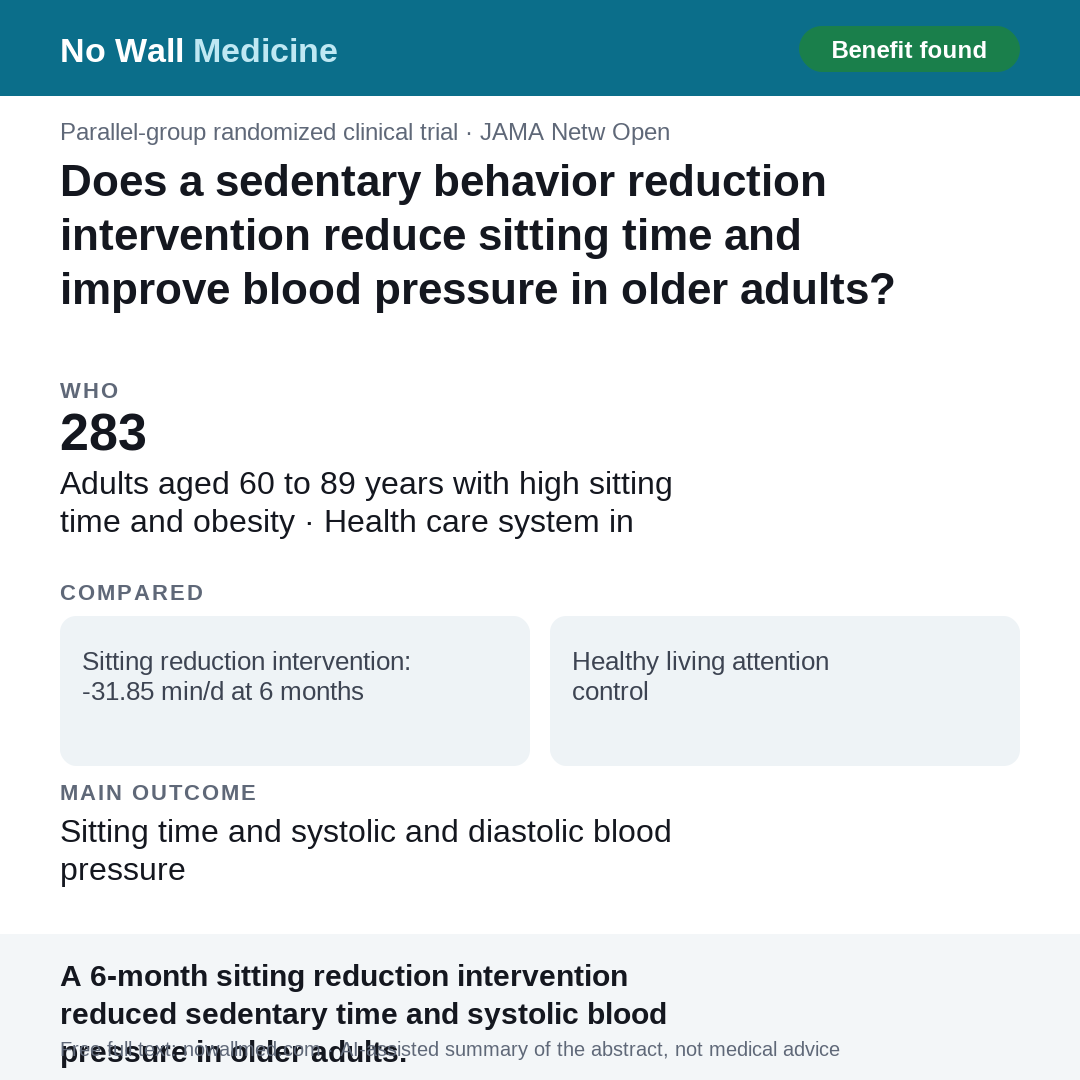
Sitting Time Reduction and Blood Pressure in Older Adults: A Randomized Clinical Trial
Parallel-group randomized clinical trialBenefit found
Does a sedentary behavior reduction intervention reduce sitting time and improve blood pressure in older adults?
Who
283
Adults aged 60 to 89 years with high sitting time and obesity · Health care system in Washington State
Compared
Sitting reduction intervention: -31.85 min/d at 6 months
Healthy living attention control
Main outcome
Sitting time and systolic and diastolic blood pressure
Result: systolic blood pressure change was lower by 3.48 mm Hg (95% CI, -6.68 to -0.28 mm Hg)
Bottom line: A 6-month sitting reduction intervention reduced sedentary time and systolic blood pressure in older adults.
JAMA Netw Open · 2024-03-04Download image
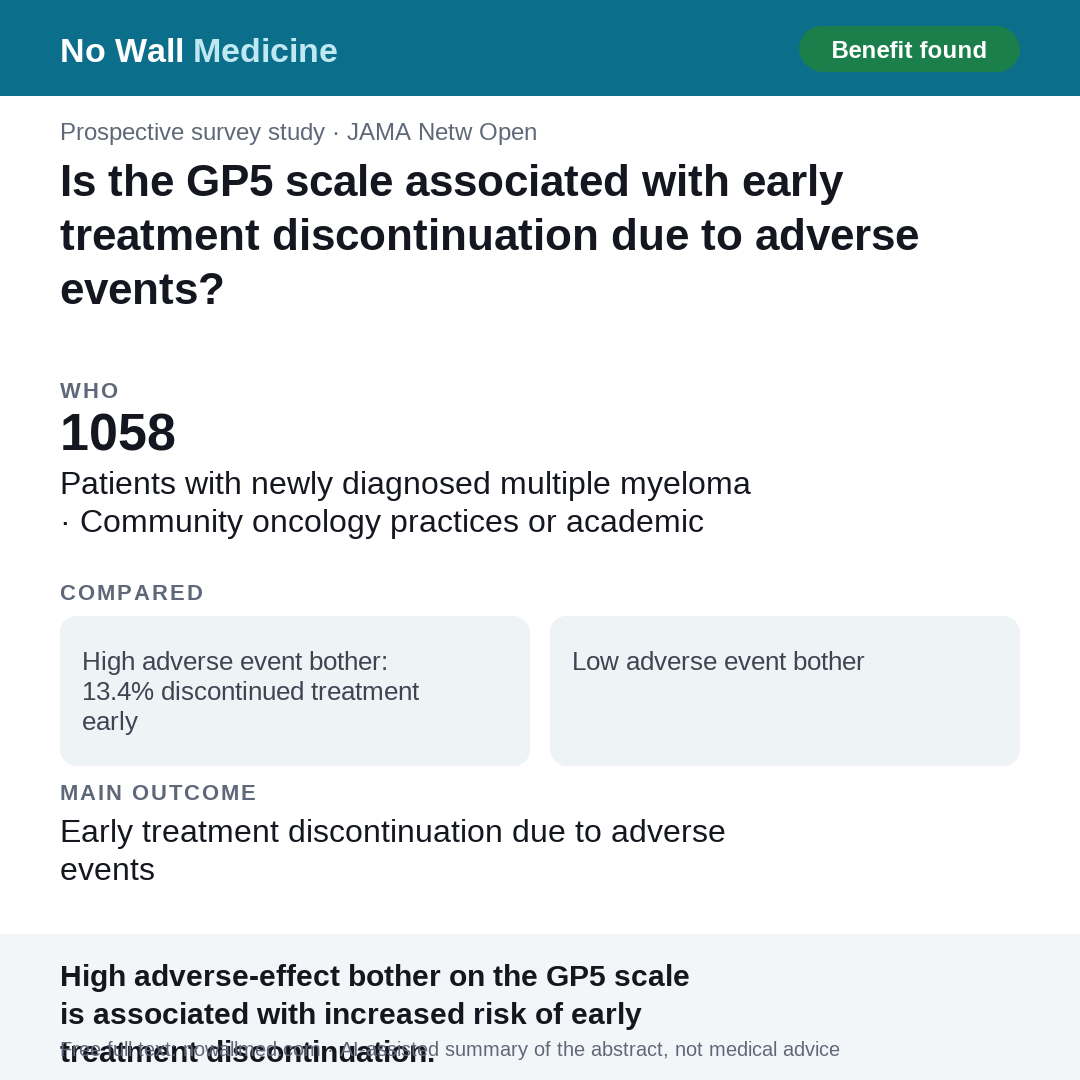
Patient-Reported Adverse Events and Early Treatment Discontinuation Among Patients With Multiple Myeloma
Prospective survey studyBenefit found
Is the GP5 scale associated with early treatment discontinuation due to adverse events?
Who
1058
Patients with newly diagnosed multiple myeloma · Community oncology practices or academic medical centers in the US
Compared
High adverse event bother: 13.4% discontinued treatment early
Low adverse event bother
Main outcome
Early treatment discontinuation due to adverse events
Result: adjusted odds ratio 2.20 (95% CI, 1.25-3.89) at 1 month
Bottom line: High adverse-effect bother on the GP5 scale is associated with increased risk of early treatment discontinuation.
JAMA Netw Open · 2024-03-04Download image
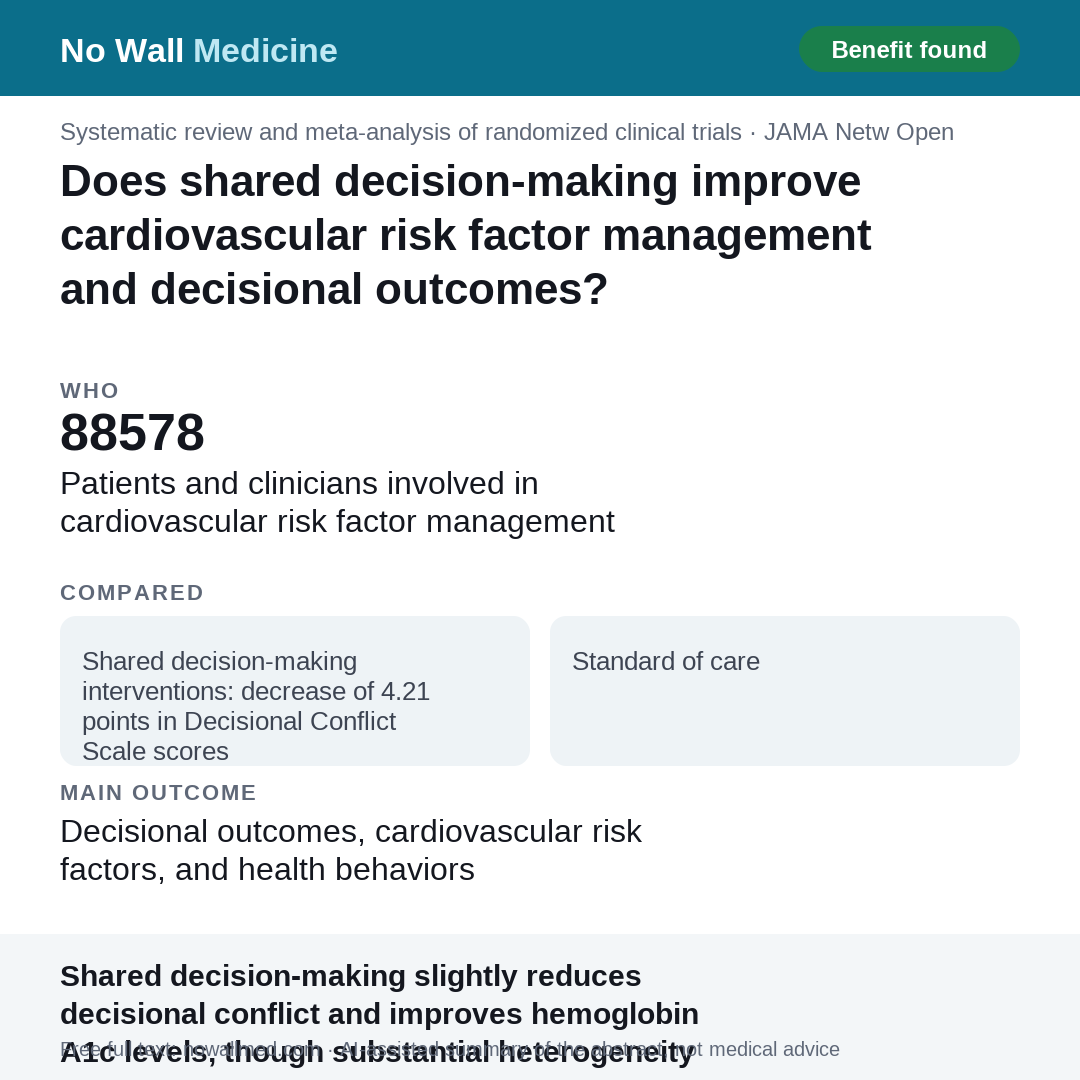
Shared Decision-Making in Cardiovascular Risk Factor Management: A Systematic Review and Meta-Analysis
Systematic review and meta-analysis of randomized clinical trialsBenefit found
Does shared decision-making improve cardiovascular risk factor management and decisional outcomes?
Who
88578
Patients and clinicians involved in cardiovascular risk factor management
Compared
Shared decision-making interventions: decrease of 4.21 points in Decisional Conflict Scale scores
Standard of care
Main outcome
Decisional outcomes, cardiovascular risk factors, and health behaviors
Result: decrease of 4.21 points (95% CI, -8.21 to -0.21) in Decisional Conflict Scale scores
Bottom line: Shared decision-making slightly reduces decisional conflict and improves hemoglobin A1c levels, though substantial heterogeneity exists.
JAMA Netw Open · 2024-03-04Download image
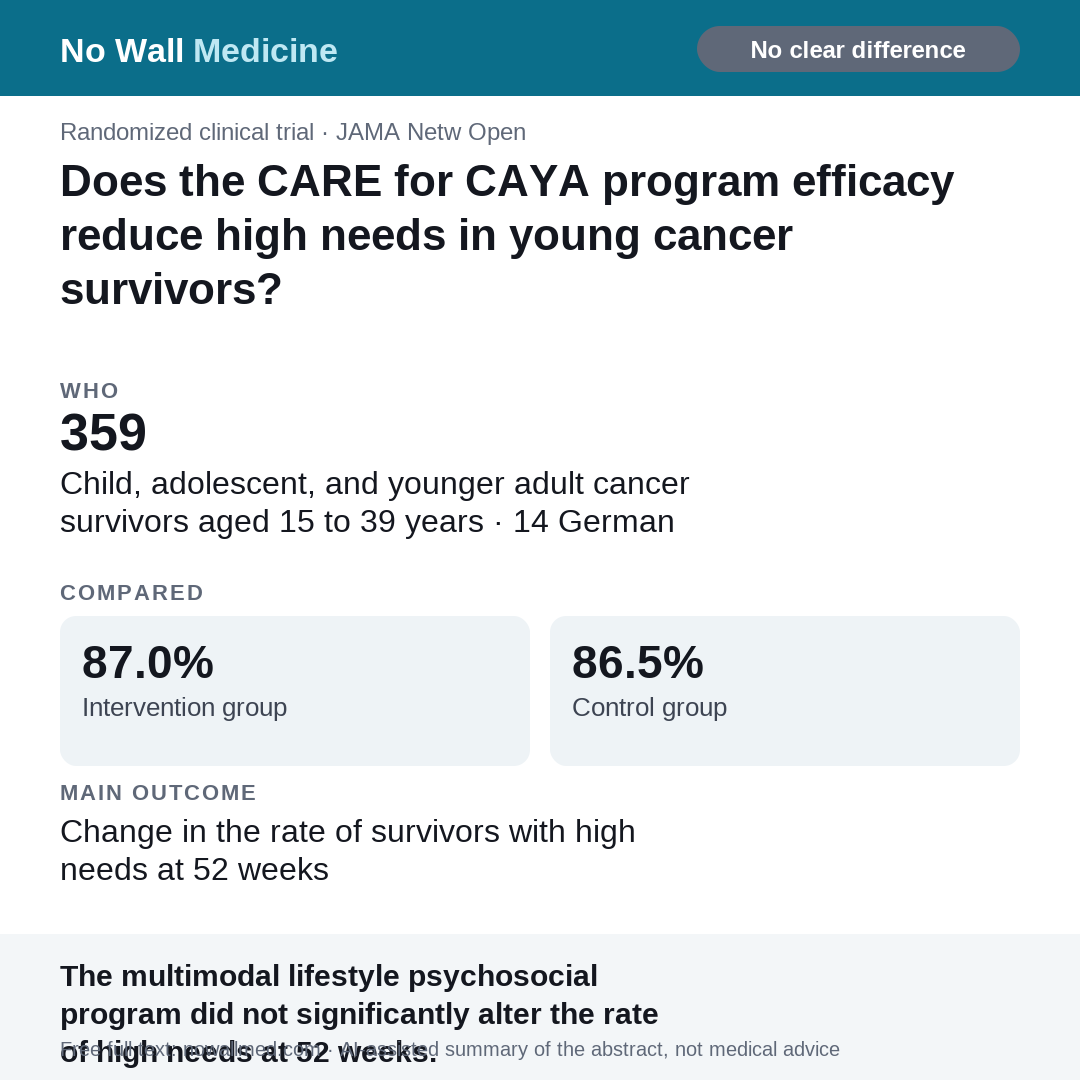
A Multimodal Lifestyle Psychosocial Survivorship Program in Young Cancer Survivors: The CARE for CAYA Program-A Randomized Clinical Trial Embedded in a Longitudinal Cohort Study
Randomized clinical trialNo clear difference
Does the CARE for CAYA program efficacy reduce high needs in young cancer survivors?
Who
359
Child, adolescent, and younger adult cancer survivors aged 15 to 39 years · 14 German outpatient clinics
Compared
87.0%Intervention group
86.5%Control group
Main outcome
Change in the rate of survivors with high needs at 52 weeks
Result: odds ratio 1.04 (95% CI 0.51-2.11)
Bottom line: The multimodal lifestyle psychosocial program did not significantly alter the rate of high needs at 52 weeks.
JAMA Netw Open · 2024-03-04Download image
Effectiveness of Multifaceted Strategies to Increase Influenza Vaccination Uptake: A Cluster Randomized Trial
Cluster randomized trialBenefit found
Do multifaceted strategies improve influenza vaccination uptake among primary school students?
Who
1691
Primary school students in grades 2 and 3 · Primary schools in Beijing, China
Compared
76.0%Multifaceted strategies (695 of 915 students)
71.3%Usual practice (553 of 776 students)
Main outcome
Influenza vaccination uptake at school and overall vaccine uptake
Result: odds ratio 1.49 (95% CI 1.12 to 1.99)
Bottom line: Multifaceted strategies significantly improved both school-based and overall influenza vaccination uptake among primary school students.
JAMA Netw Open · 2024-03-04Download image

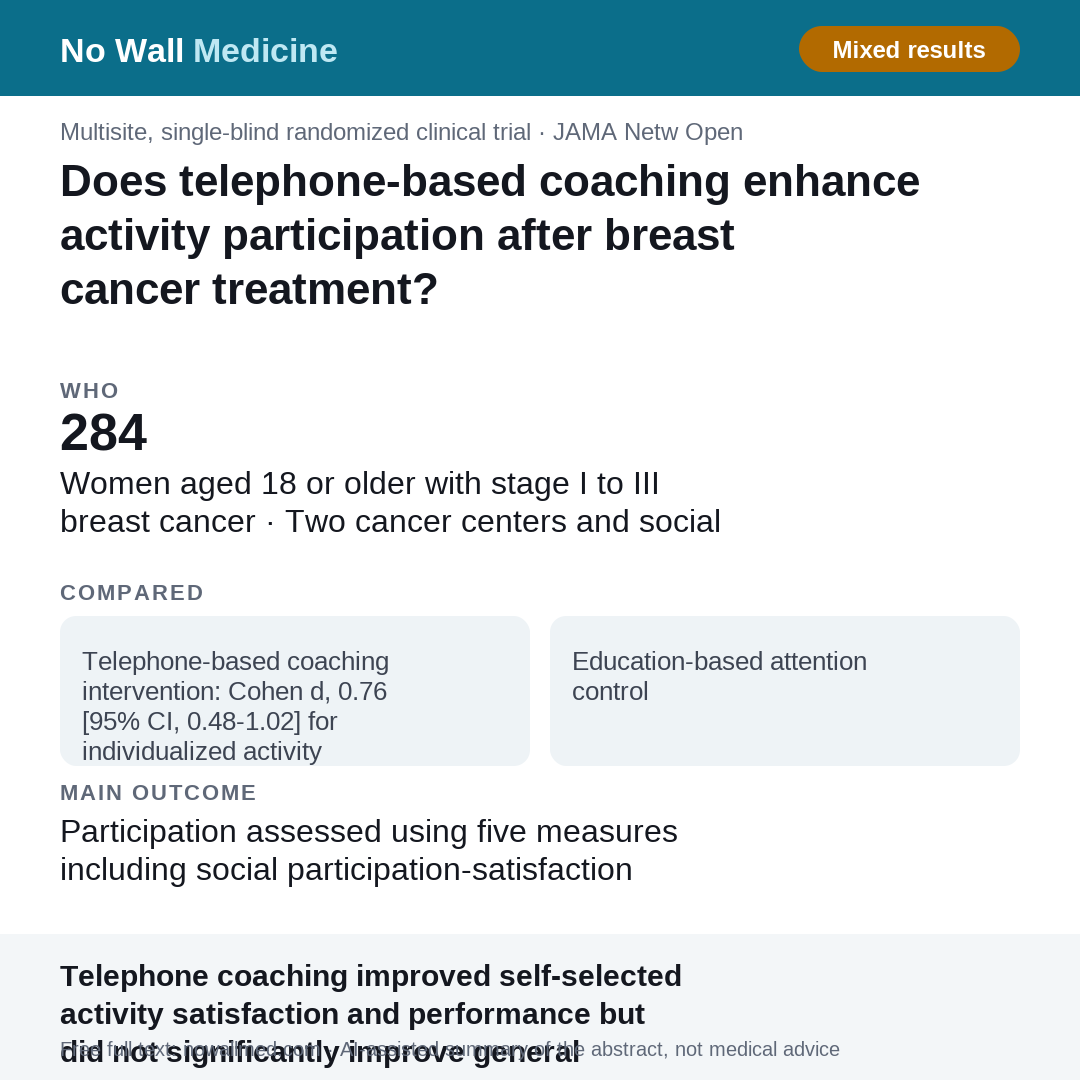
Telephone-Based Rehabilitation Intervention to Optimize Activity Participation After Breast Cancer: A Randomized Clinical Trial
Multisite, single-blind randomized clinical trialMixed results
Does telephone-based coaching enhance activity participation after breast cancer treatment?
Who
284
Women aged 18 or older with stage I to III breast cancer · Two cancer centers and social media recruitment
Compared
Telephone-based coaching intervention: Cohen d, 0.76 [95% CI, 0.48-1.02] for individualized activity satisfaction
Education-based attention control
Main outcome
Participation assessed using five measures including social participation-satisfaction
Result: Cohen d, 0.1 [95% CI, -0.09 to 0.29] for PROMIS satisfaction at week 20
Bottom line: Telephone coaching improved self-selected activity satisfaction and performance but did not significantly improve general participation measures.
JAMA Netw Open · 2024-03-04Download image
Citations of microRNA Biomarker Articles That Were Retracted: A Systematic Review
Systematic reviewMixed results
What are the citation patterns of retracted microRNA biomarker research articles?
Who
10461
Retracted microRNA biomarker articles and matched control articles · PubMed, Web of Science, and Retraction Watch
Compared
Retracted articles: 6327 citations after retraction
Control articles
Main outcome
Citation metrics and postretraction citation patterns
Result: odds ratio 6.57 (95% CI 3.39-12.72)
Bottom line: Retraction did not reduce citations, but articles citing retracted publications had higher odds of being subsequently retracted.
JAMA Netw Open · 2024-03-04Download image

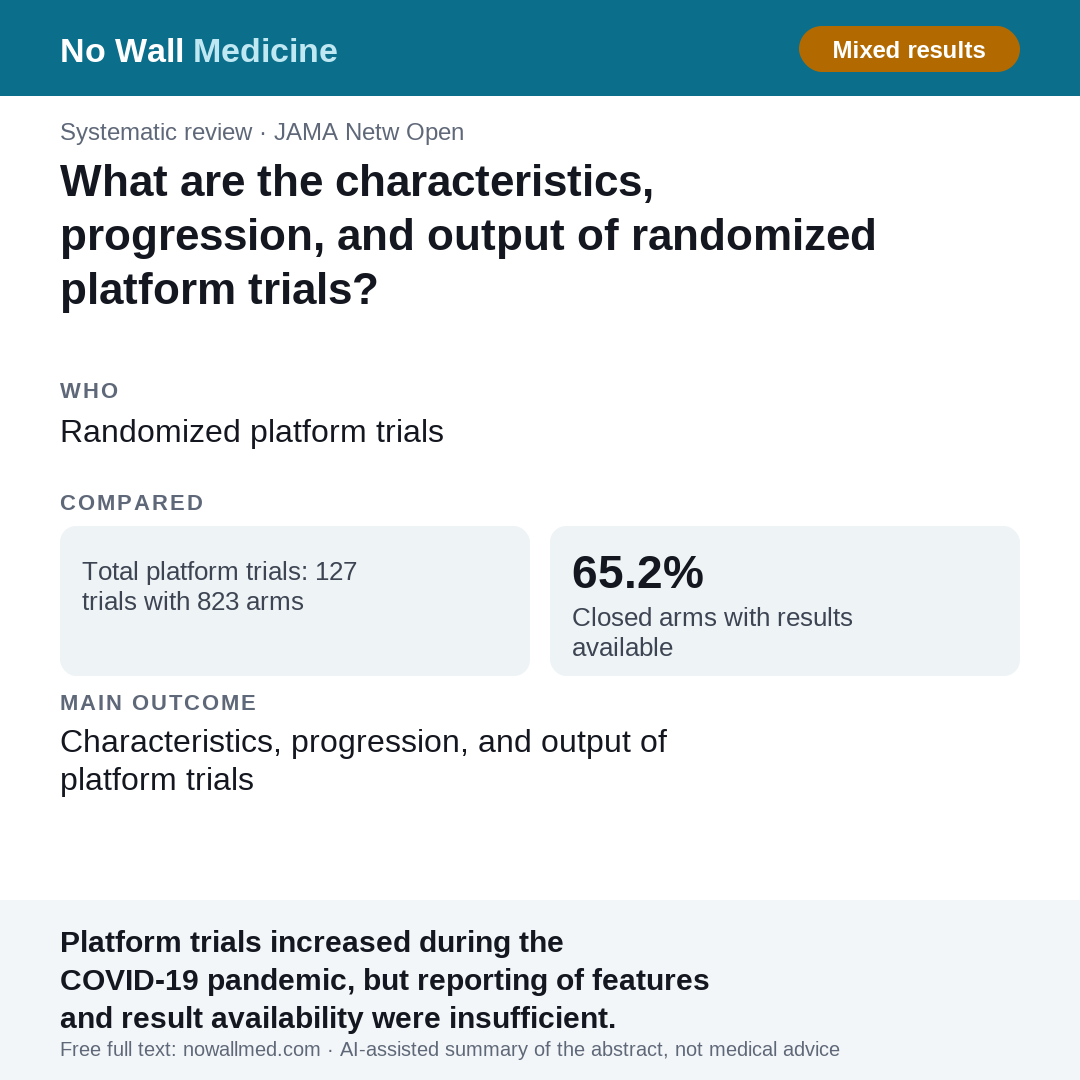
Characteristics, Progression, and Output of Randomized Platform Trials: A Systematic Review
Systematic reviewMixed results
What are the characteristics, progression, and output of randomized platform trials?
Who
Randomized platform trials
Compared
Total platform trials: 127 trials with 823 arms
65.2%Closed arms with results available (230 of 353)
Main outcome
Characteristics, progression, and output of platform trials
Bottom line: Platform trials increased during the COVID-19 pandemic, but reporting of features and result availability were insufficient.
JAMA Netw Open · 2024-03-04Download image
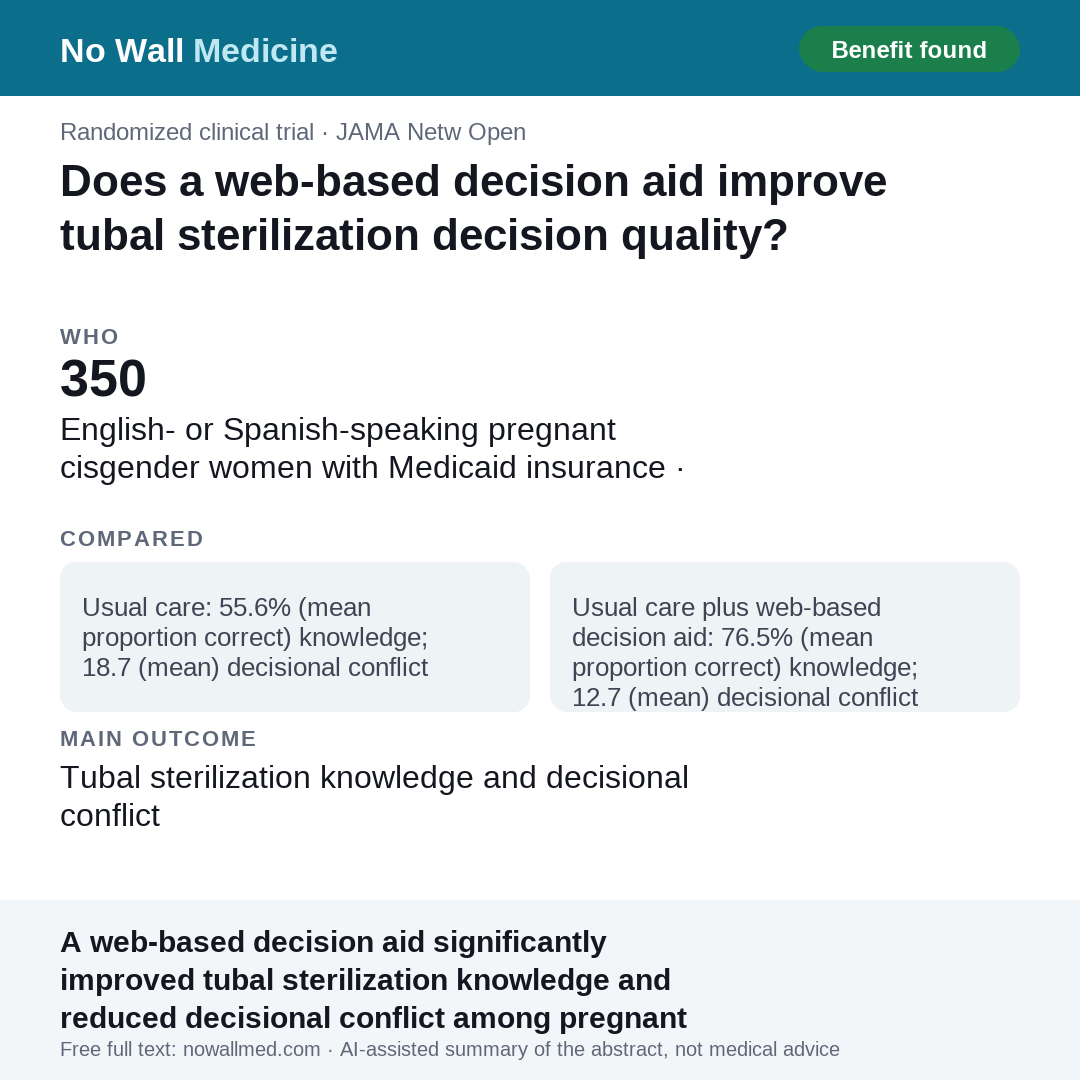
A Decision Aid to Support Tubal Sterilization Decision-Making Among Pregnant Women: The MyDecision/MiDecisión Randomized Clinical Trial
Randomized clinical trialBenefit found
Does a web-based decision aid improve tubal sterilization decision quality?
Who
350
English- or Spanish-speaking pregnant cisgender women with Medicaid insurance · Outpatient obstetric clinics in 3 US cities
Compared
Usual care: 55.6% (mean proportion correct) knowledge; 18.7 (mean) decisional conflict
Usual care plus web-based decision aid: 76.5% (mean proportion correct) knowledge; 12.7 (mean) decisional conflict
Main outcome
Tubal sterilization knowledge and decisional conflict
Result: OR 14.2 (95% CI 7.9-25.4) for permanence knowledge
Bottom line: A web-based decision aid significantly improved tubal sterilization knowledge and reduced decisional conflict among pregnant women.
JAMA Netw Open · 2024-03-04Download image
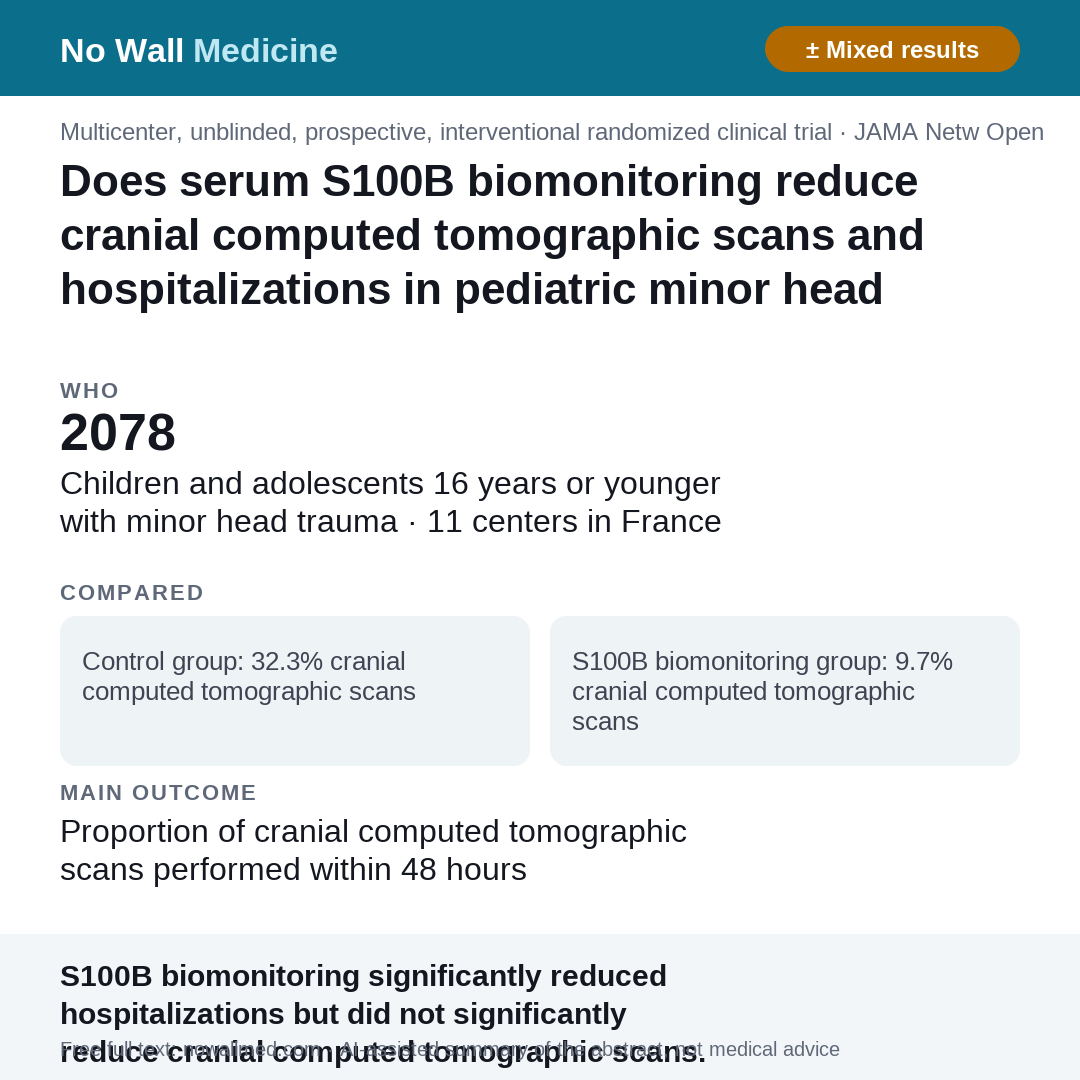
Serum S100B Level in the Management of Pediatric Minor Head Trauma: A Randomized Clinical Trial
Multicenter, unblinded, prospective, interventional randomized clinical trialMixed results
Does serum S100B biomonitoring reduce cranial computed tomographic scans and hospitalizations in pediatric minor head trauma?
Who
2078
Children and adolescents 16 years or younger with minor head trauma · 11 centers in France
Compared
Control group: 32.3% cranial computed tomographic scans
S100B biomonitoring group: 9.7% cranial computed tomographic scans
Main outcome
Proportion of cranial computed tomographic scans performed within 48 hours
Result: difference of 23% (95% CI, 19%-26%)
Bottom line: S100B biomonitoring significantly reduced hospitalizations but did not significantly reduce cranial computed tomographic scans.
JAMA Netw Open · 2024-03-04Download image
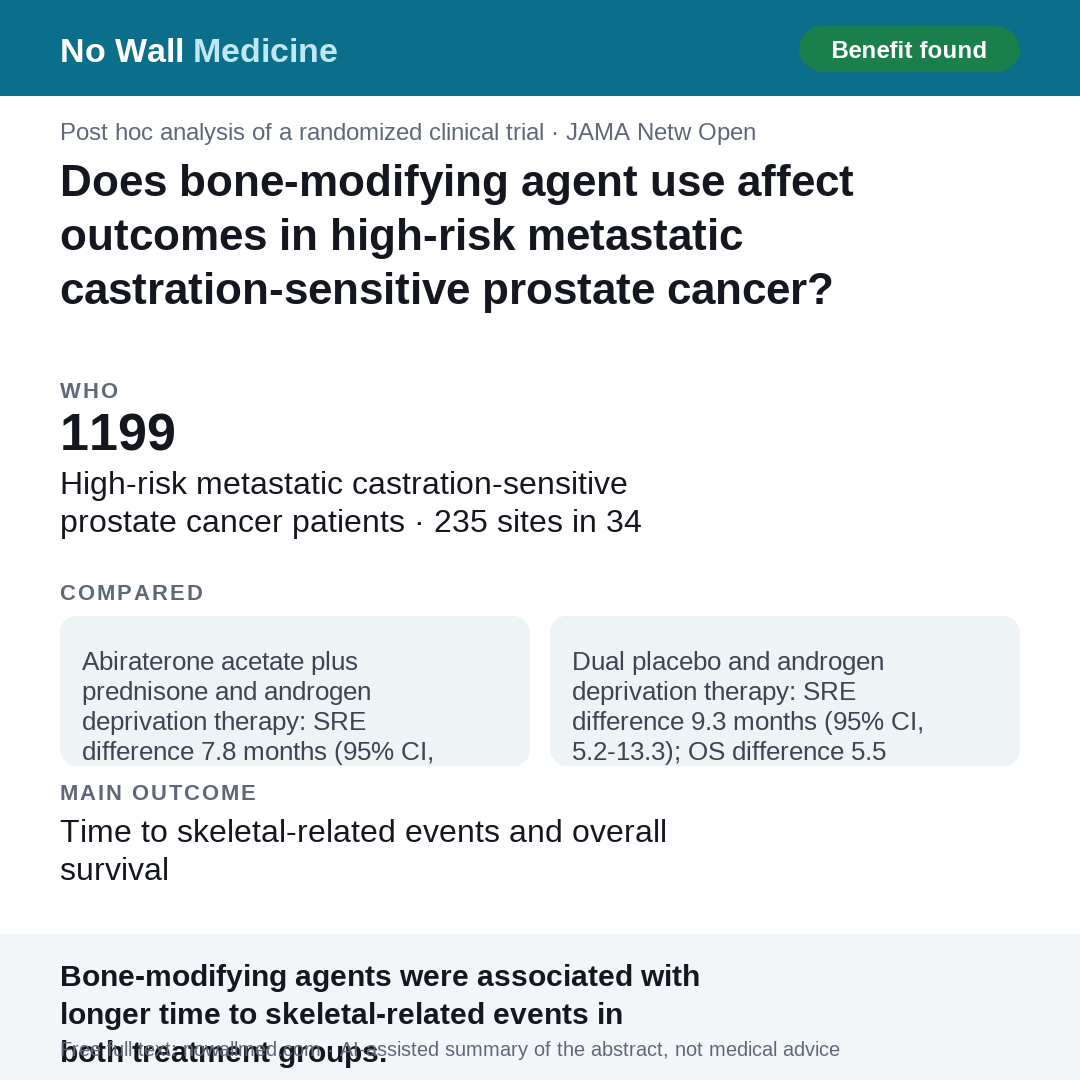
Bone-Modifying Agents in Patients With High-Risk Metastatic Castration-Sensitive Prostate Cancer Treated With Abiraterone Acetate
Post hoc analysis of a randomized clinical trialBenefit found
Does bone-modifying agent use affect outcomes in high-risk metastatic castration-sensitive prostate cancer?
Who
1199
High-risk metastatic castration-sensitive prostate cancer patients · 235 sites in 34 countries
Compared
Abiraterone acetate plus prednisone and androgen deprivation therapy: SRE difference 7.8 months (95% CI, 4.2-11.3); OS difference 1.6 months (95% CI, -2.5 to 5.8)
Dual placebo and androgen deprivation therapy: SRE difference 9.3 months (95% CI, 5.2-13.3); OS difference 5.5 months (95% CI, 3.2-9.8)
Main outcome
Time to skeletal-related events and overall survival
Result: hazard ratio for time to SRE 0.99 (95% CI 0.48-2.08); hazard ratio for OS 1.31 (95% CI 0.88-1.96)
Bottom line: Bone-modifying agents were associated with longer time to skeletal-related events in both treatment groups.
JAMA Netw Open · 2024-03-04Download image
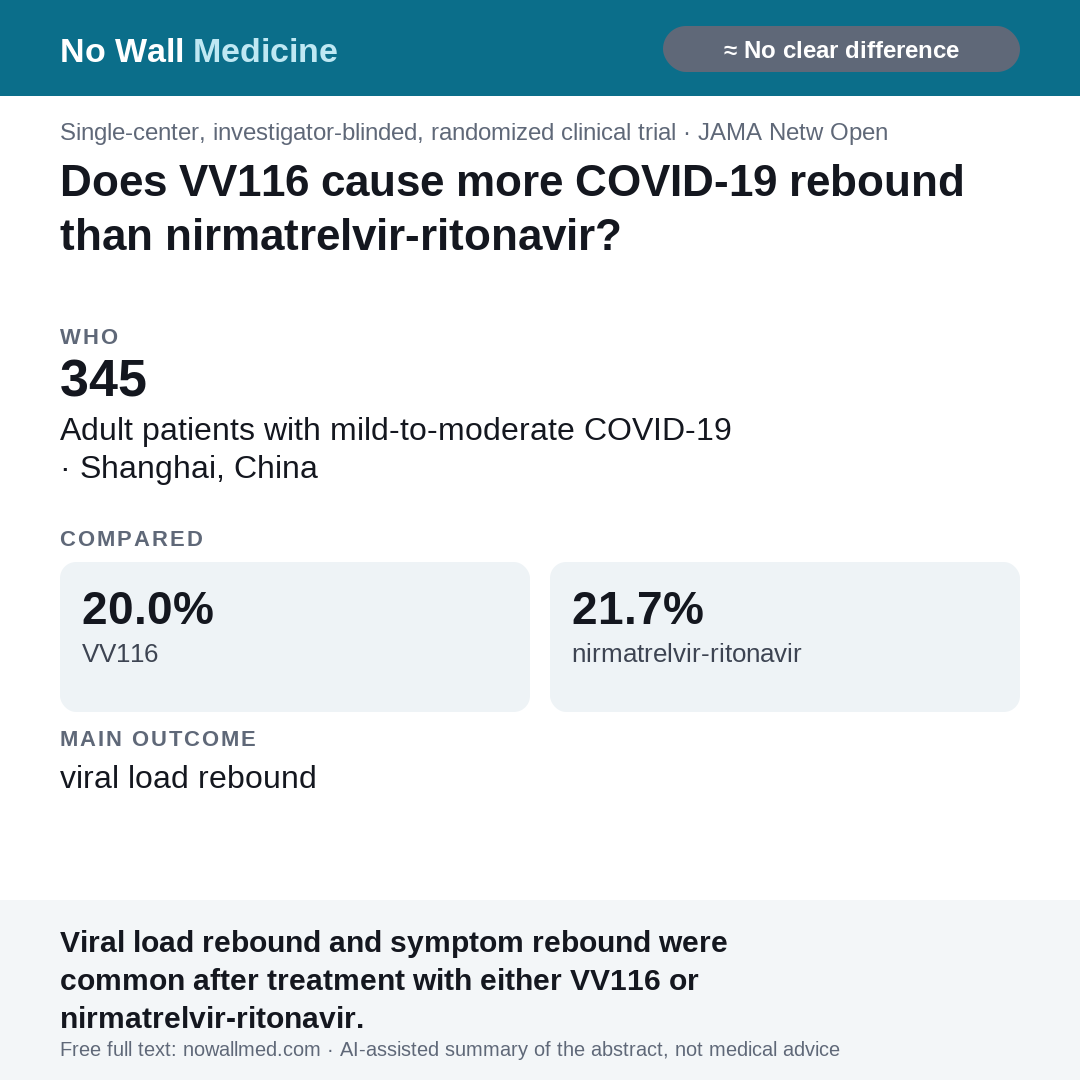
COVID-19 Rebound After VV116 vs Nirmatrelvir-Ritonavir Treatment: A Randomized Clinical Trial
Single-center, investigator-blinded, randomized clinical trialNo clear difference
Does VV116 cause more COVID-19 rebound than nirmatrelvir-ritonavir?
Who
345
Adult patients with mild-to-moderate COVID-19 · Shanghai, China
Compared
20.0%VV116
21.7%nirmatrelvir-ritonavir
Main outcome
viral load rebound
Bottom line: Viral load rebound and symptom rebound were common after treatment with either VV116 or nirmatrelvir-ritonavir.
JAMA Netw Open · 2024-03-04Download image
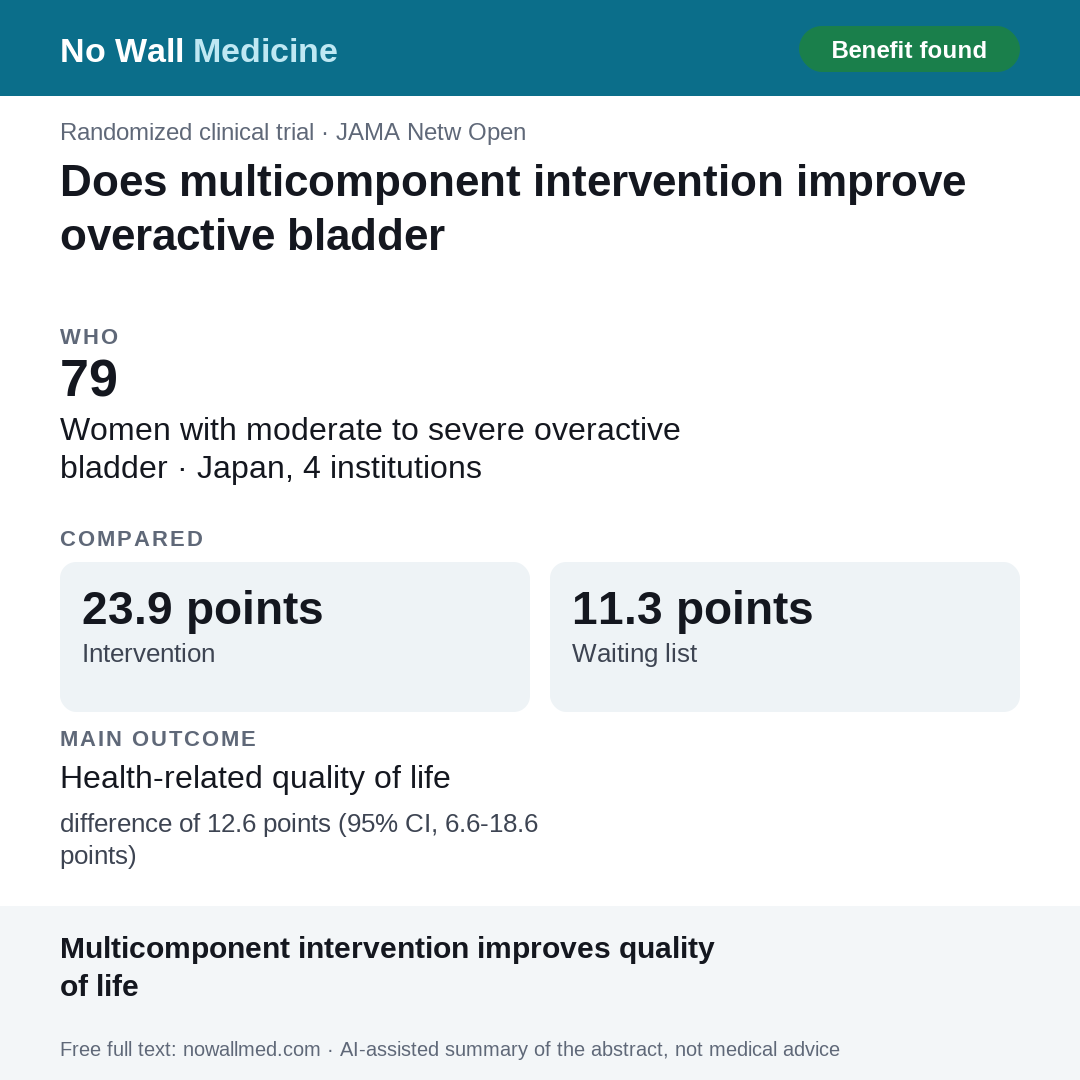
Multicomponent Intervention for Overactive Bladder in Women: A Randomized Clinical Trial
Randomized clinical trialBenefit found
Does multicomponent intervention improve overactive bladder
Who
79
Women with moderate to severe overactive bladder · Japan, 4 institutions
Compared
23.9 pointsIntervention
11.3 pointsWaiting list
Main outcome
Health-related quality of life
Result: difference of 12.6 points (95% CI, 6.6-18.6 points)
Bottom line: Multicomponent intervention improves quality of life
JAMA Netw Open · 2024-03-04Download image
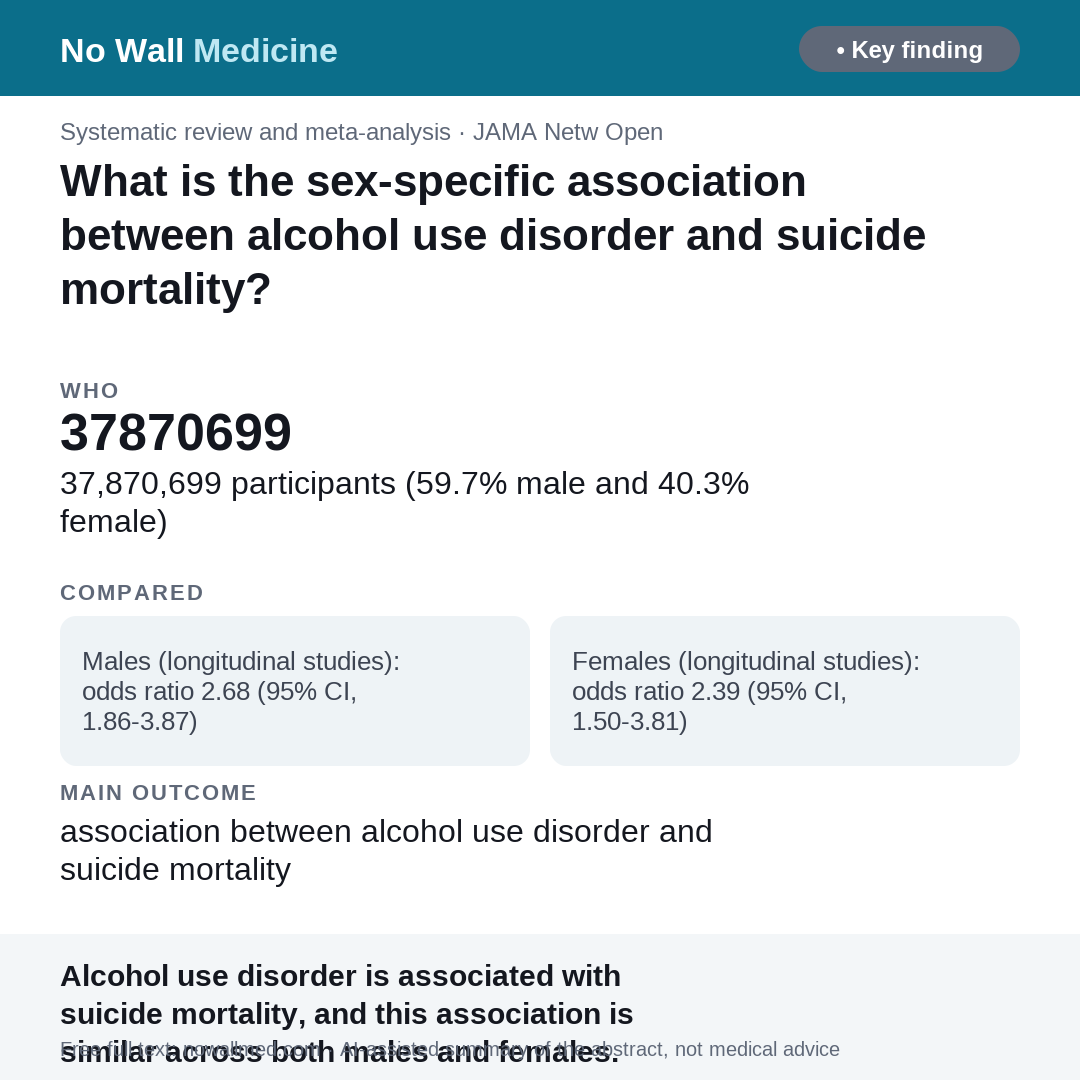
Sex-Specific Association of Alcohol Use Disorder With Suicide Mortality: A Systematic Review and Meta-Analysis
Systematic review and meta-analysisBenefit found
What is the sex-specific association between alcohol use disorder and suicide mortality?
Who
37870699
37,870,699 participants (59.7% male and 40.3% female)
Compared
Males (longitudinal studies): odds ratio 2.68 (95% CI, 1.86-3.87)
Females (longitudinal studies): odds ratio 2.39 (95% CI, 1.50-3.81)
Main outcome
association between alcohol use disorder and suicide mortality
Bottom line: Alcohol use disorder is associated with suicide mortality, and this association is similar across both males and females.
JAMA Netw Open · 2024-03-04Download image
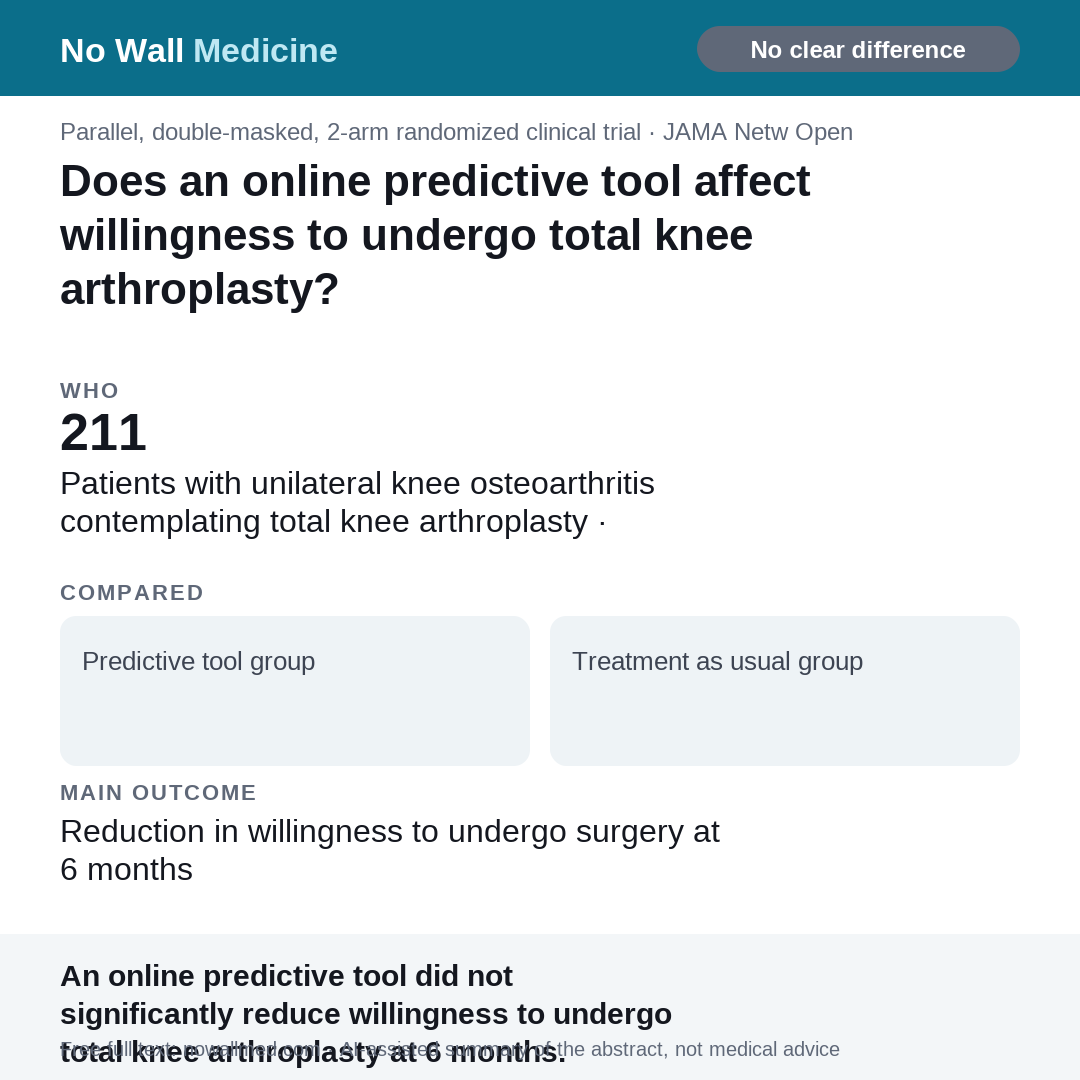
Predictive Tool Use and Willingness for Surgery in Patients With Knee Osteoarthritis: A Randomized Clinical Trial
Parallel, double-masked, 2-arm randomized clinical trialNo clear difference
Does an online predictive tool affect willingness to undergo total knee arthroplasty?
Who
211
Patients with unilateral knee osteoarthritis contemplating total knee arthroplasty · Australia
Compared
Predictive tool group
Treatment as usual group
Main outcome
Reduction in willingness to undergo surgery at 6 months
Result: adjusted odds ratio 0.85 (95% CI 0.42-1.71)
Bottom line: An online predictive tool did not significantly reduce willingness to undergo total knee arthroplasty at 6 months.
Limitation: Additional research is needed to optimize design and implementation of predictive tools.
JAMA Netw Open · 2024-03-04Download image
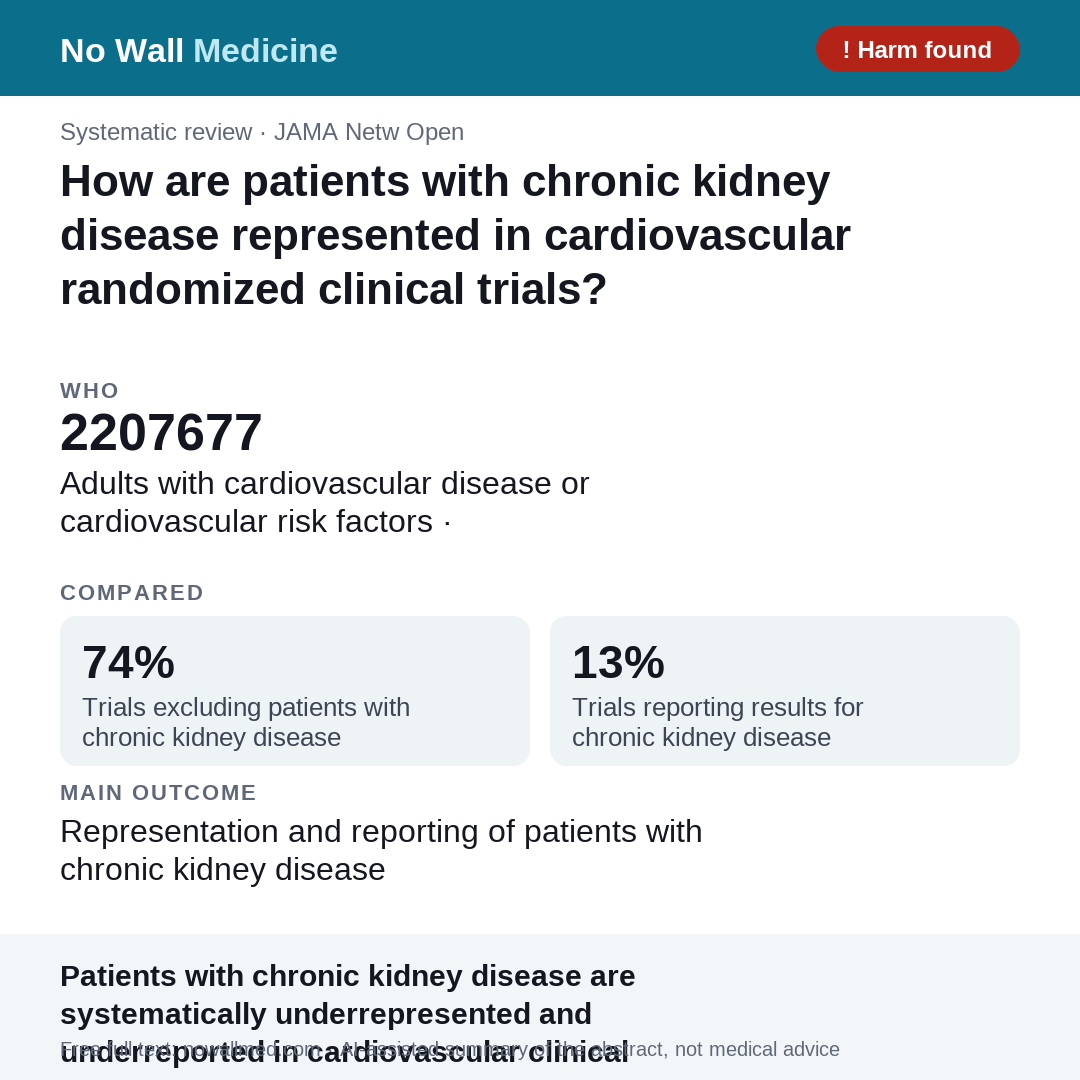
Representation of Patients With Chronic Kidney Disease in Clinical Trials of Cardiovascular Disease Medications: A Systematic Review
Systematic reviewHarm found
How are patients with chronic kidney disease represented in cardiovascular randomized clinical trials?
Who
2207677
Adults with cardiovascular disease or cardiovascular risk factors · ClinicalTrials.gov, MEDLINE, Embase, and Google Scholar
Compared
74%Trials excluding patients with chronic kidney disease (884 RCTs)
13%Trials reporting results for chronic kidney disease separately (158 RCTs)
Main outcome
Representation and reporting of patients with chronic kidney disease
Bottom line: Patients with chronic kidney disease are systematically underrepresented and underreported in cardiovascular clinical trials, creating significant evidence gaps.
JAMA Netw Open · 2024-03-04Download image