Visual abstracts
New randomized trials and meta-analyses from leading journals at a glance: who was studied, what was compared, and what was found. Every paper is free to read in full.
All specialtiesCardiology 4832Oncology 4114Gastroenterology & Hepatology 1934Infectious Disease 3824Neurology 1899Psychiatry & Mental Health 2256Pulmonology 2082Critical Care 1345Endocrinology & Diabetes 2572Pediatrics 2940Surgery 2525Orthopedics & Sports Medicine 926Neurosurgery 534Cardiothoracic & Vascular Surgery 671Plastic & Reconstructive Surgery 591Nephrology 1124Rheumatology 823Hematology 1104Dermatology 620Ophthalmology 543Obstetrics & Gynecology 1684Public & Global Health 1056Radiology & Imaging 641Anesthesiology 962Urology 754ENT (Otolaryngology) 503Emergency Medicine 489Allergy & Immunology 313Geriatrics 981Family Medicine & Primary Care 541Medical Genetics & Genomics 675Pathology & Laboratory Medicine 157Physical Medicine & Rehabilitation 751Palliative Care 424Nutrition 1580Digital Health & AI 2195General Medicine 321
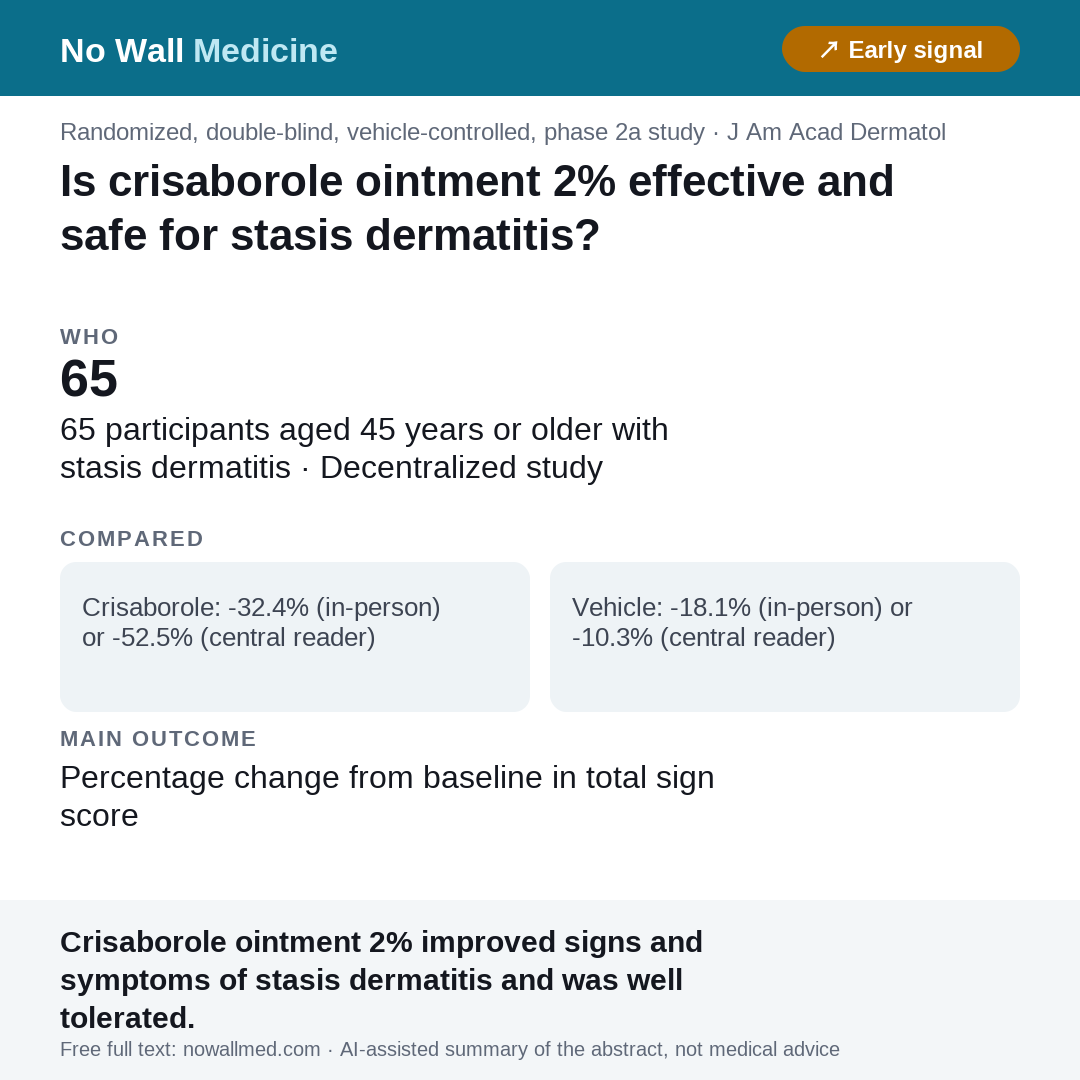
Efficacy and safety of crisaborole ointment, 2%, in participants aged ≥45 years with stasis dermatitis: Results from a fully decentralized, randomized, proof-of-concept phase 2a study
Randomized, double-blind, vehicle-controlled, phase 2a studyEarly signal
Is crisaborole ointment 2% effective and safe for stasis dermatitis?
Who
65
65 participants aged 45 years or older with stasis dermatitis · Decentralized study
Compared
Crisaborole: -32.4% (in-person) or -52.5% (central reader)
Vehicle: -18.1% (in-person) or -10.3% (central reader)
Main outcome
Percentage change from baseline in total sign score
Bottom line: Crisaborole ointment 2% improved signs and symptoms of stasis dermatitis and was well tolerated.
Limitation: Small sample size, short treatment duration, and in-person assessment not conducted by dermatologists.
J Am Acad Dermatol · 2024-02-08Download image
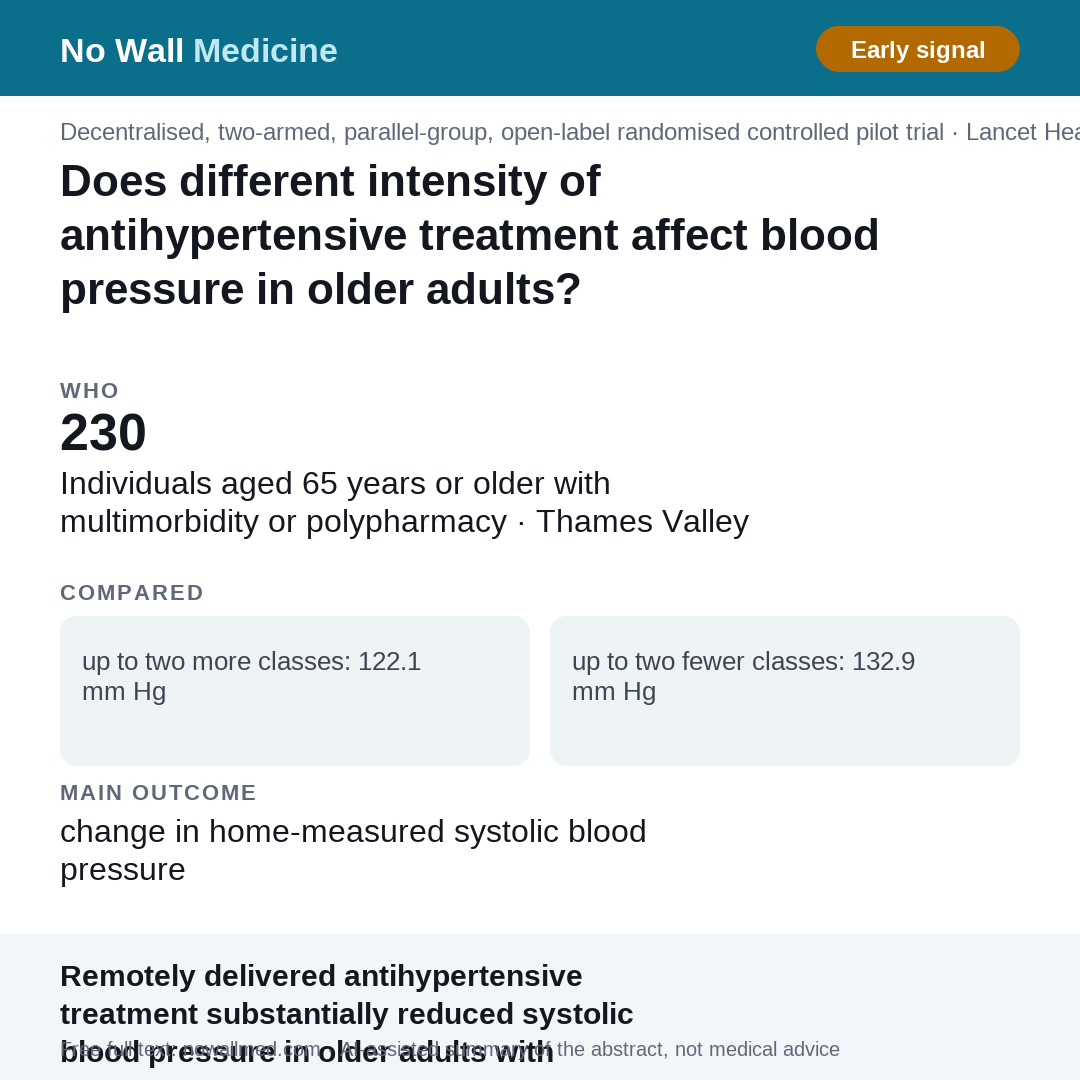
Efficacy of decentralised home-based antihypertensive treatment in older adults with multimorbidity and polypharmacy (ATEMPT): an open-label randomised controlled pilot trial
Decentralised, two-armed, parallel-group, open-label randomised controlled pilot trialEarly signal
Does different intensity of antihypertensive treatment affect blood pressure in older adults?
Who
230
Individuals aged 65 years or older with multimorbidity or polypharmacy · Thames Valley area, South East England
Compared
up to two more classes: 122.1 mm Hg
up to two fewer classes: 132.9 mm Hg
Main outcome
change in home-measured systolic blood pressure
Result: mean difference of -10.7 mm Hg (95% CI -17.5 to -4.0)
Bottom line: Remotely delivered antihypertensive treatment substantially reduced systolic blood pressure in older adults with multimorbidity and polypharmacy.
Funded by: National Institute for Health Research Oxford Biomedical Research Centre and Oxford Martin School
Lancet Healthy Longev · 2024-02-08Download image
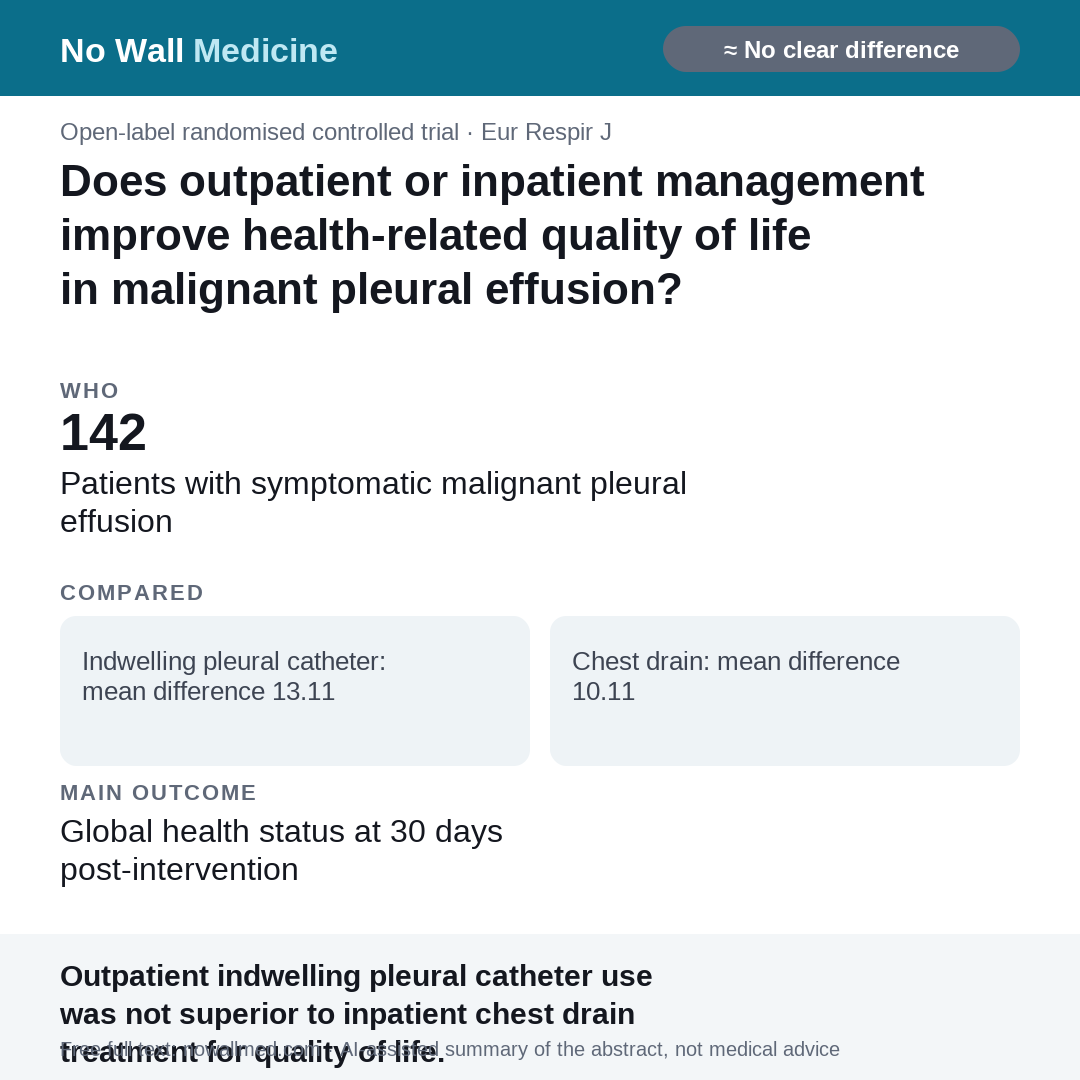
The impact of outpatient versus inpatient management on health-related quality of life outcomes for patients with malignant pleural effusion: the OPTIMUM randomised clinical trial
Open-label randomised controlled trialNo clear difference
Does outpatient or inpatient management improve health-related quality of life in malignant pleural effusion?
Who
142
Patients with symptomatic malignant pleural effusion
Compared
Indwelling pleural catheter: mean difference 13.11
Chest drain: mean difference 10.11
Main outcome
Global health status at 30 days post-intervention
Result: mean intergroup difference 2.06, 95% CI -5.86 to 9.99
Bottom line: Outpatient indwelling pleural catheter use was not superior to inpatient chest drain treatment for quality of life.
Eur Respir J · 2024-02-08Download image
Systematic review and meta-analysis of vaginal natural orifice transluminal endoscopic surgery vs laparoscopic hysterectomy
Systematic review and meta-analysis of 14 studiesBenefit found
Is vaginal natural orifice transluminal endoscopic surgery better than laparoscopic hysterectomy for benign gynecologic diseases?
Who
Women with benign gynecologic pathology
Compared
Vaginal natural orifice transluminal endoscopic surgery
Conventional laparoscopic hysterectomy
Main outcome
Safety and effectiveness of hysterectomy techniques
Bottom line: Vaginal natural orifice transluminal endoscopic surgery may offer advantages in operative time, hospitalization, pain, and complications.
AJOG Glob Rep · 2024-02-08Download image

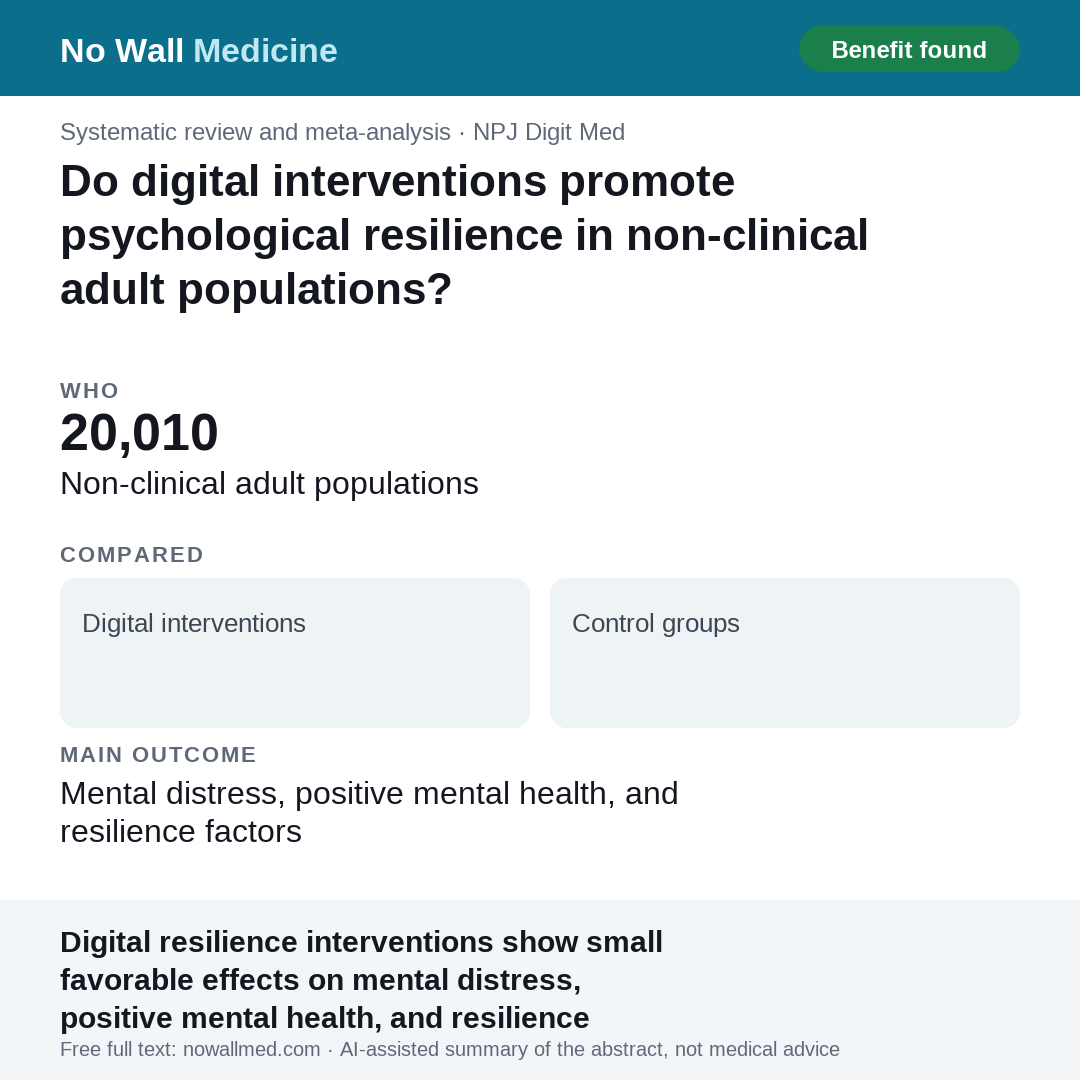
Digital interventions to promote psychological resilience: a systematic review and meta-analysis
Systematic review and meta-analysisBenefit found
Do digital interventions promote psychological resilience in non-clinical adult populations?
Who
20,010
Non-clinical adult populations
Compared
Digital interventions
Control groups
Main outcome
Mental distress, positive mental health, and resilience factors
Result: SMD -0.24 (95% CI -0.31 to -0.18) for mental distress; SMD 0.27 (95% CI 0.13 to 0.40) for positive mental health; SMD 0.31 (95% CI 0.21 to 0.41) for resilience factors
Bottom line: Digital resilience interventions show small favorable effects on mental distress, positive mental health, and resilience factors.
NPJ Digit Med · 2024-02-08Download image
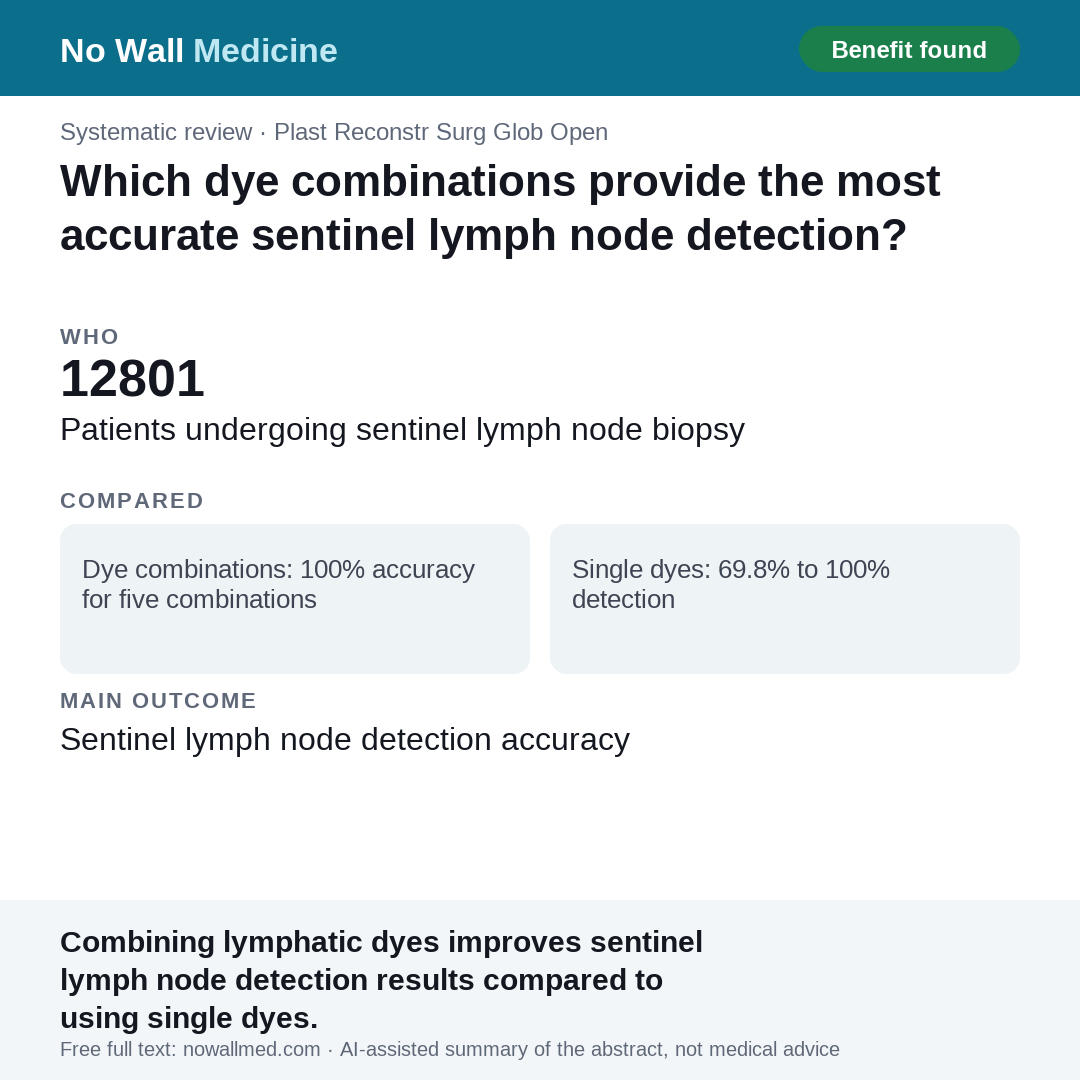
Determining Accurate Dye Combinations for Sentinel Lymph Node Detection: A Systematic Review
Systematic reviewBenefit found
Which dye combinations provide the most accurate sentinel lymph node detection?
Who
12801
Patients undergoing sentinel lymph node biopsy
Compared
Dye combinations: 100% accuracy for five combinations
Single dyes: 69.8% to 100% detection
Main outcome
Sentinel lymph node detection accuracy
Bottom line: Combining lymphatic dyes improves sentinel lymph node detection results compared to using single dyes.
Plast Reconstr Surg Glob Open · 2024-02-08Download image
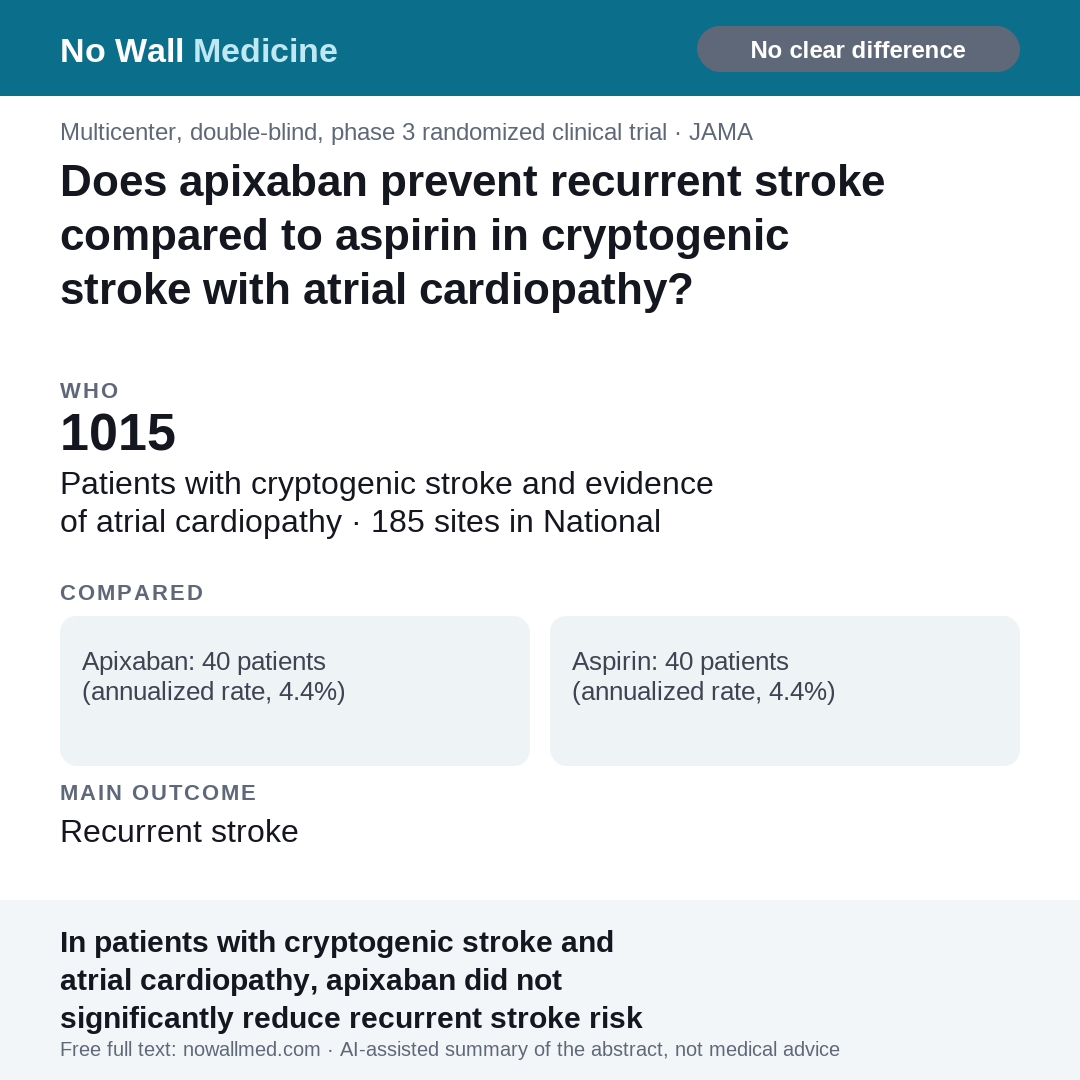
Apixaban to Prevent Recurrence After Cryptogenic Stroke in Patients With Atrial Cardiopathy: The ARCADIA Randomized Clinical Trial
Multicenter, double-blind, phase 3 randomized clinical trialNo clear difference
Does apixaban prevent recurrent stroke compared to aspirin in cryptogenic stroke with atrial cardiopathy?
Who
1015
Patients with cryptogenic stroke and evidence of atrial cardiopathy · 185 sites in National Institutes of Health StrokeNet and Canadian Stroke Consortium
Compared
Apixaban: 40 patients (annualized rate, 4.4%)
Aspirin: 40 patients (annualized rate, 4.4%)
Main outcome
Recurrent stroke
Result: hazard ratio 1.00 (95% CI 0.64-1.55)
Bottom line: In patients with cryptogenic stroke and atrial cardiopathy, apixaban did not significantly reduce recurrent stroke risk compared with aspirin.
JAMA · 2024-02-07Download image
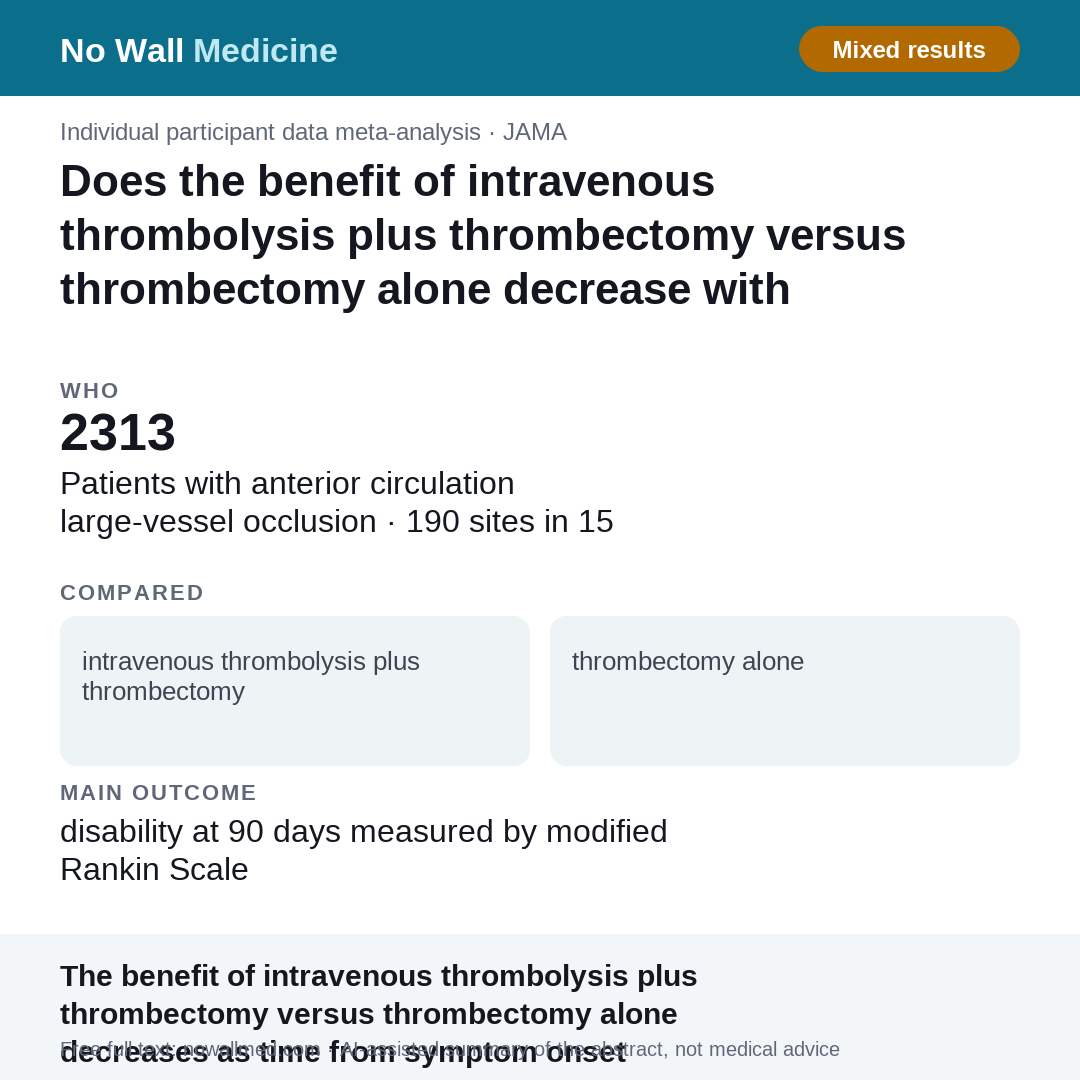
Time to Treatment With Intravenous Thrombolysis Before Thrombectomy and Functional Outcomes in Acute Ischemic Stroke: A Meta-Analysis
Individual participant data meta-analysisMixed results
Does the benefit of intravenous thrombolysis plus thrombectomy versus thrombectomy alone decrease with treatment time?
Who
2313
Patients with anterior circulation large-vessel occlusion · 190 sites in 15 countries
Compared
intravenous thrombolysis plus thrombectomy
thrombectomy alone
Main outcome
disability at 90 days measured by modified Rankin Scale
Result: ratio of adjusted common odds ratio per 1-hour delay 0.84 (95% CI 0.72 to 0.97)
Bottom line: The benefit of intravenous thrombolysis plus thrombectomy versus thrombectomy alone decreases as time from symptom onset increases.
JAMA · 2024-02-07Download image
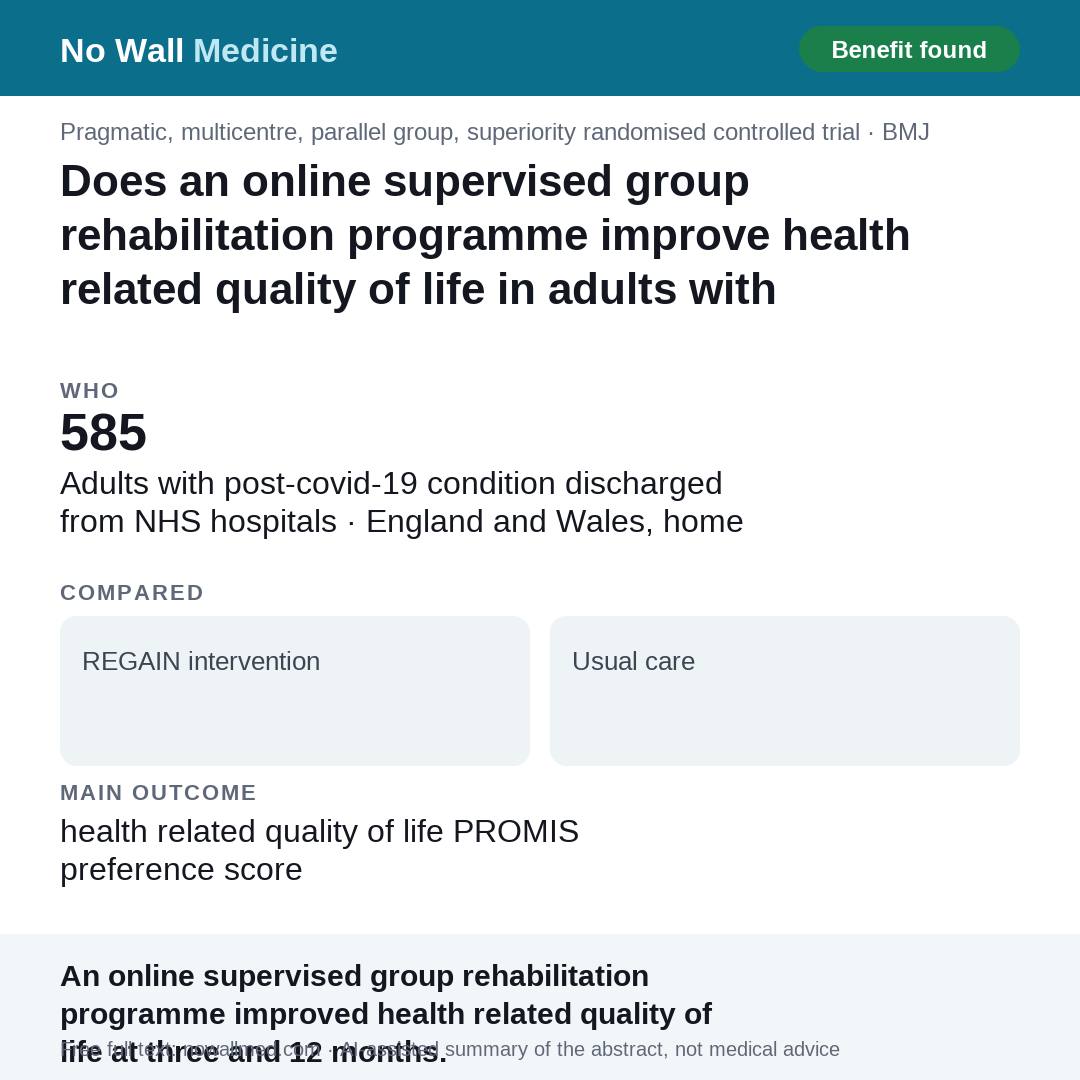
Clinical effectiveness of an online supervised group physical and mental health rehabilitation programme for adults with post-covid-19 condition (REGAIN study): multicentre randomised controlled trial
Pragmatic, multicentre, parallel group, superiority randomised controlled trialBenefit found
Does an online supervised group rehabilitation programme improve health related quality of life in adults with post-covid-19 condition?
Who
585
Adults with post-covid-19 condition discharged from NHS hospitals · England and Wales, home based interventions
Compared
REGAIN intervention
Usual care
Main outcome
health related quality of life PROMIS preference score
Result: adjusted mean difference 0.03 (95% confidence interval 0.01 to 0.05)
Bottom line: An online supervised group rehabilitation programme improved health related quality of life at three and 12 months.
BMJ · 2024-02-07Download image
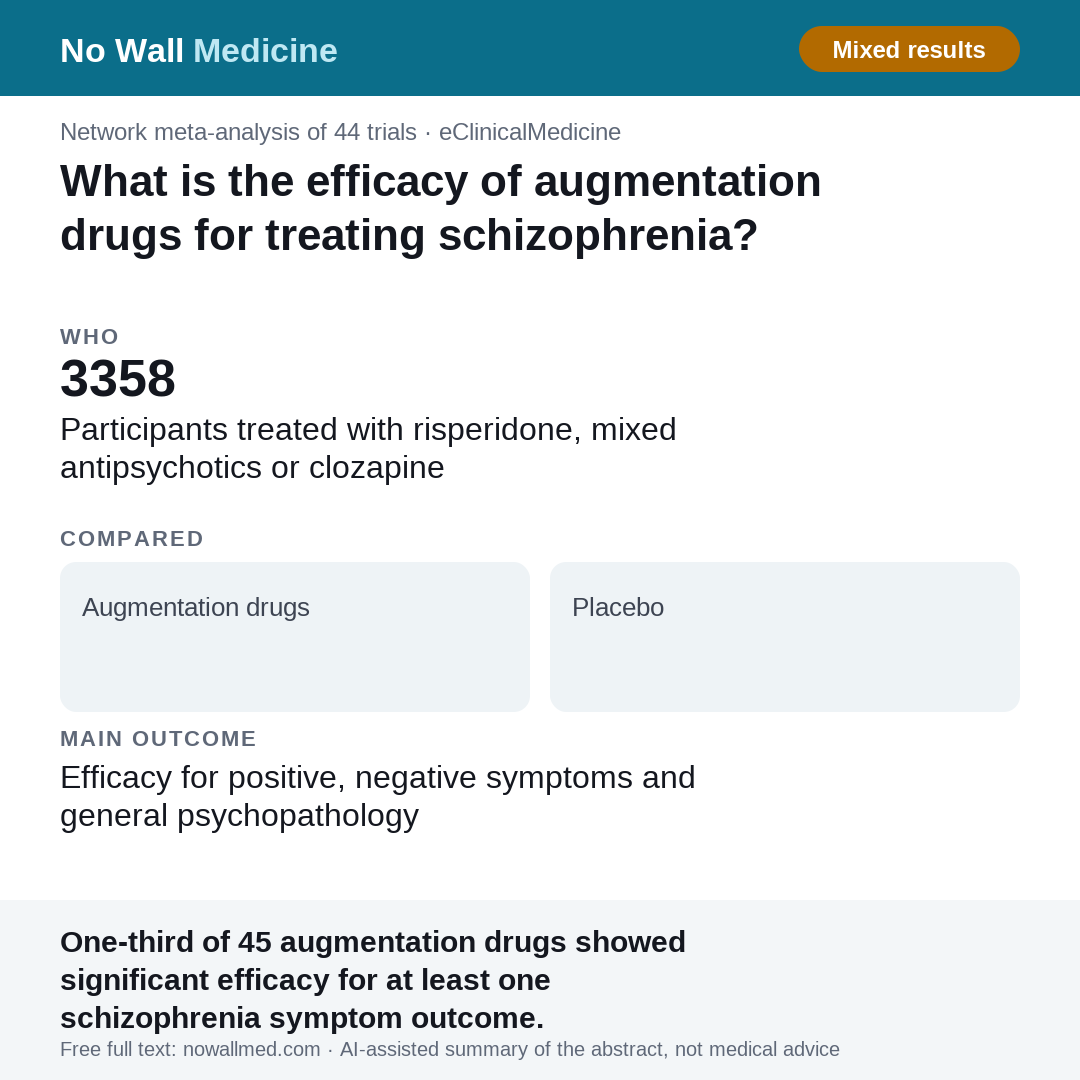
Comprehensive evaluation of 45 augmentation drugs for schizophrenia: a network meta-analysis
Network meta-analysis of 44 trialsMixed results
What is the efficacy of augmentation drugs for treating schizophrenia?
Who
3358
Participants treated with risperidone, mixed antipsychotics or clozapine
Compared
Augmentation drugs
Placebo
Main outcome
Efficacy for positive, negative symptoms and general psychopathology
Bottom line: One-third of 45 augmentation drugs showed significant efficacy for at least one schizophrenia symptom outcome.
Limitation: Moderate quality of evidence due to limited low risk of bias randomized controlled trials.
eClinicalMedicine · 2024-02-07Download image
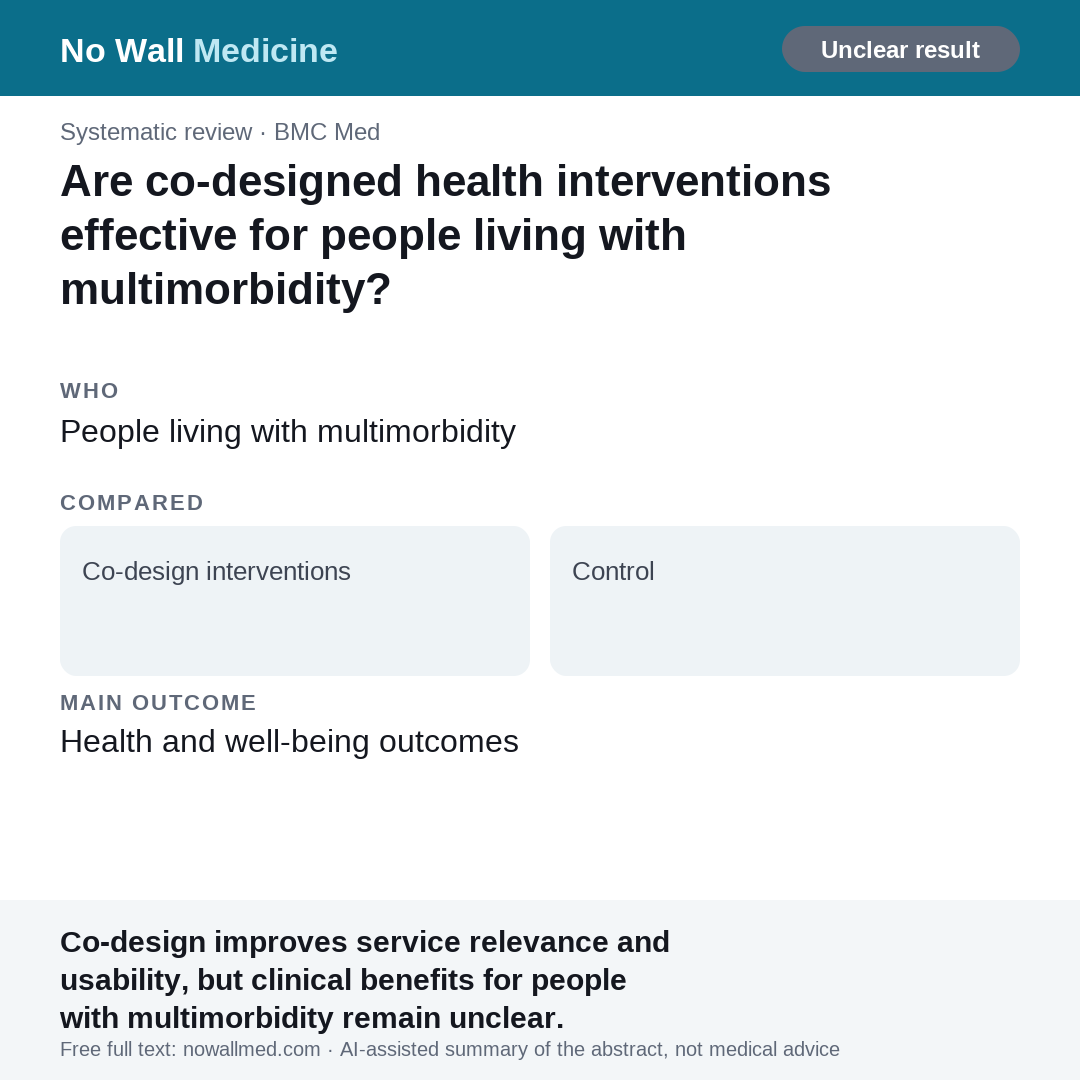
Co-designing care for multimorbidity: a systematic review
Systematic reviewUnclear result
Are co-designed health interventions effective for people living with multimorbidity?
Who
People living with multimorbidity
Compared
Co-design interventions
Control
Main outcome
Health and well-being outcomes
Bottom line: Co-design improves service relevance and usability, but clinical benefits for people with multimorbidity remain unclear.
Limitation: Few projects assessed health and well-being outcomes and observed benefits were minimal.
BMC Med · 2024-02-07Download image
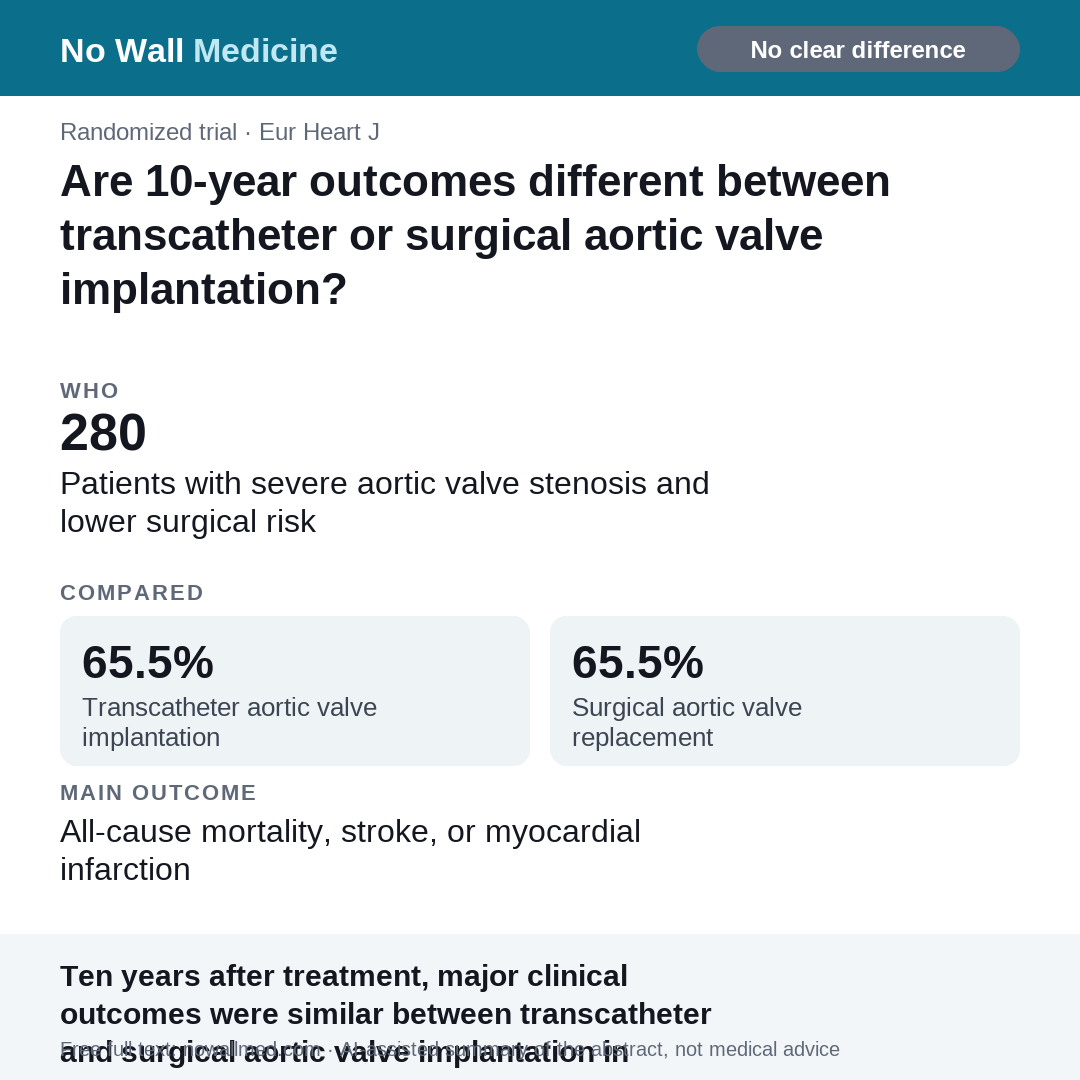
Transcatheter or surgical aortic valve implantation: 10-year outcomes of the NOTION trial
Randomized trialNo clear difference
Are 10-year outcomes different between transcatheter or surgical aortic valve implantation?
Who
280
Patients with severe aortic valve stenosis and lower surgical risk
Compared
65.5%Transcatheter aortic valve implantation
65.5%Surgical aortic valve replacement
Main outcome
All-cause mortality, stroke, or myocardial infarction
Result: hazard ratio 1.0 (95% CI 0.7-1.3)
Bottom line: Ten years after treatment, major clinical outcomes were similar between transcatheter and surgical aortic valve implantation in low-risk patients.
Eur Heart J · 2024-02-07Download image
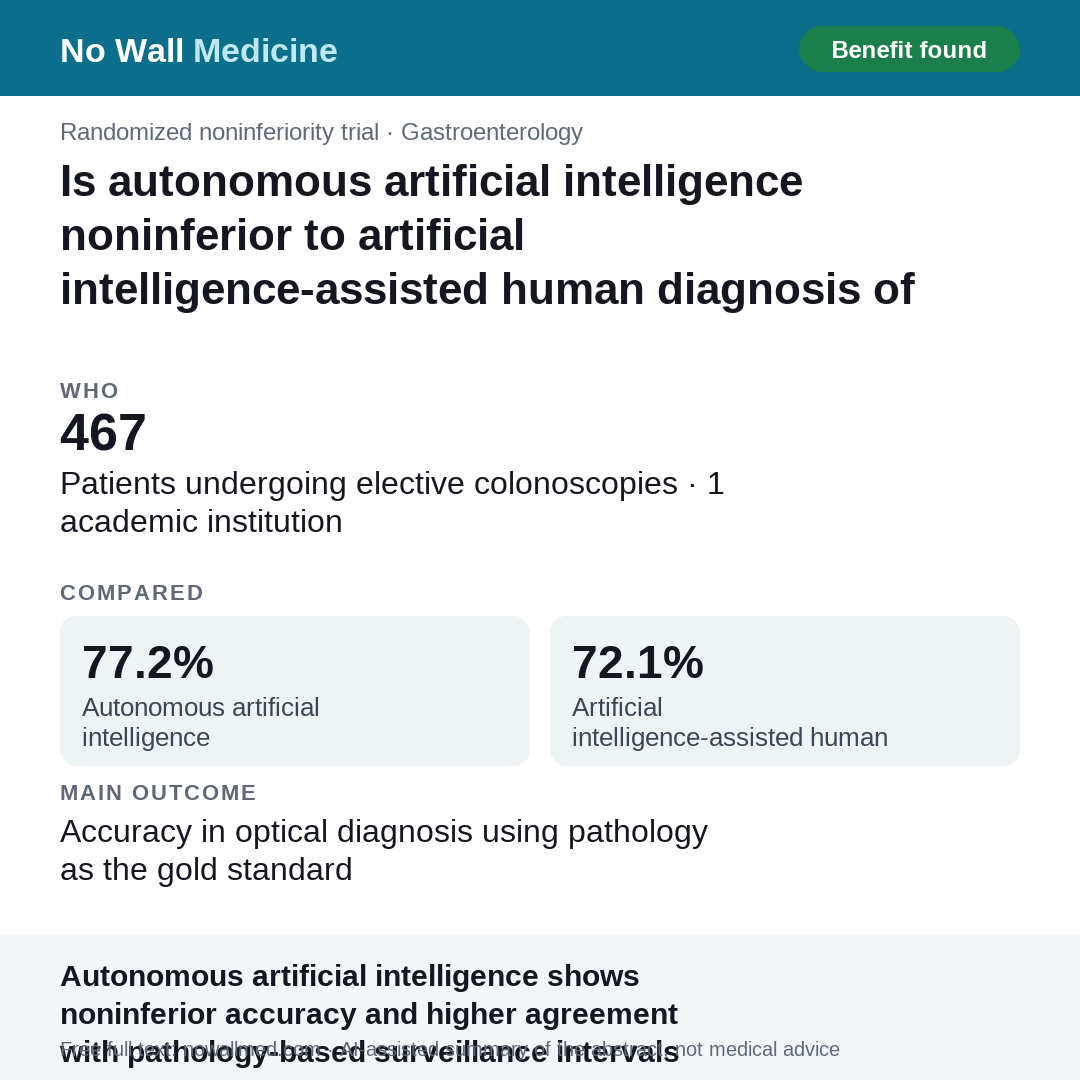
Autonomous Artificial Intelligence vs Artificial Intelligence-Assisted Human Optical Diagnosis of Colorectal Polyps: A Randomized Controlled Trial
Randomized noninferiority trialBenefit found
Is autonomous artificial intelligence noninferior to artificial intelligence-assisted human diagnosis of colorectal polyps?
Who
467
Patients undergoing elective colonoscopies · 1 academic institution
Compared
77.2%Autonomous artificial intelligence (95% confidence interval 69.7-84.7)
72.1%Artificial intelligence-assisted human (95% confidence interval 65.5-78.6)
Main outcome
Accuracy in optical diagnosis using pathology as the gold standard
Bottom line: Autonomous artificial intelligence shows noninferior accuracy and higher agreement with pathology-based surveillance intervals compared to artificial intelligence-assisted human diagnosis.
Limitation: Both autonomous artificial intelligence and artificial intelligence-assisted human exhibited relatively low accuracy for optical diagnosis.
Gastroenterology · 2024-02-07Download image
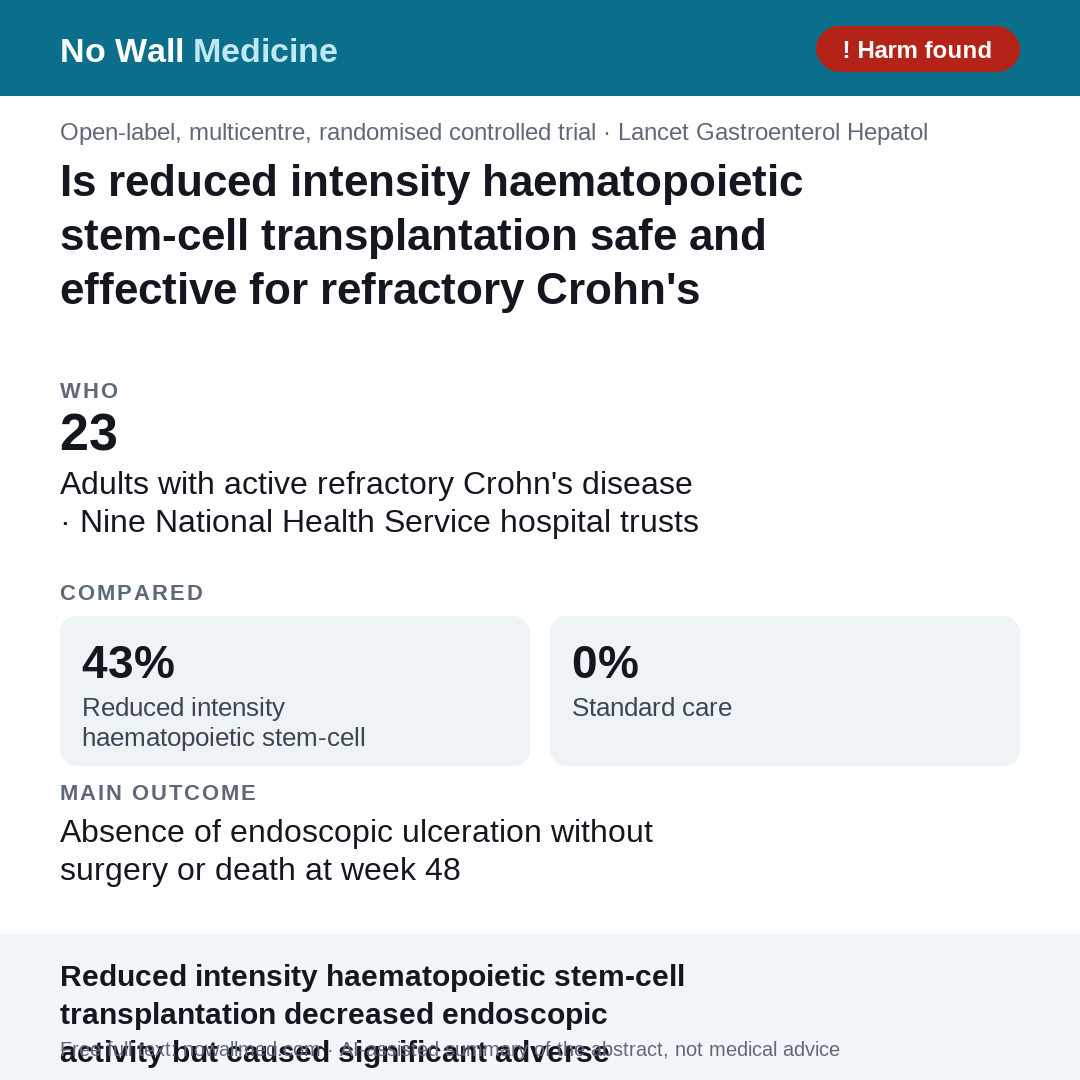
Safety and efficacy of autologous haematopoietic stem-cell transplantation with low-dose cyclophosphamide mobilisation and reduced intensity conditioning versus standard of care in refractory Crohn's disease (ASTIClite): an open-label, multicentre, randomised controlled trial
Open-label, multicentre, randomised controlled trialHarm found
Is reduced intensity haematopoietic stem-cell transplantation safe and effective for refractory Crohn's disease?
Who
23
Adults with active refractory Crohn's disease · Nine National Health Service hospital trusts across the UK
Compared
43%Reduced intensity haematopoietic stem-cell transplantation (3/7)
0%Standard care (0/6)
Main outcome
Absence of endoscopic ulceration without surgery or death at week 48
Bottom line: Reduced intensity haematopoietic stem-cell transplantation decreased endoscopic activity but caused significant adverse events, making it unsuitable for clinical use.
Funded by: Medical Research Council and National Institute for Health Research partnership
Lancet Gastroenterol Hepatol · 2024-02-07Download image
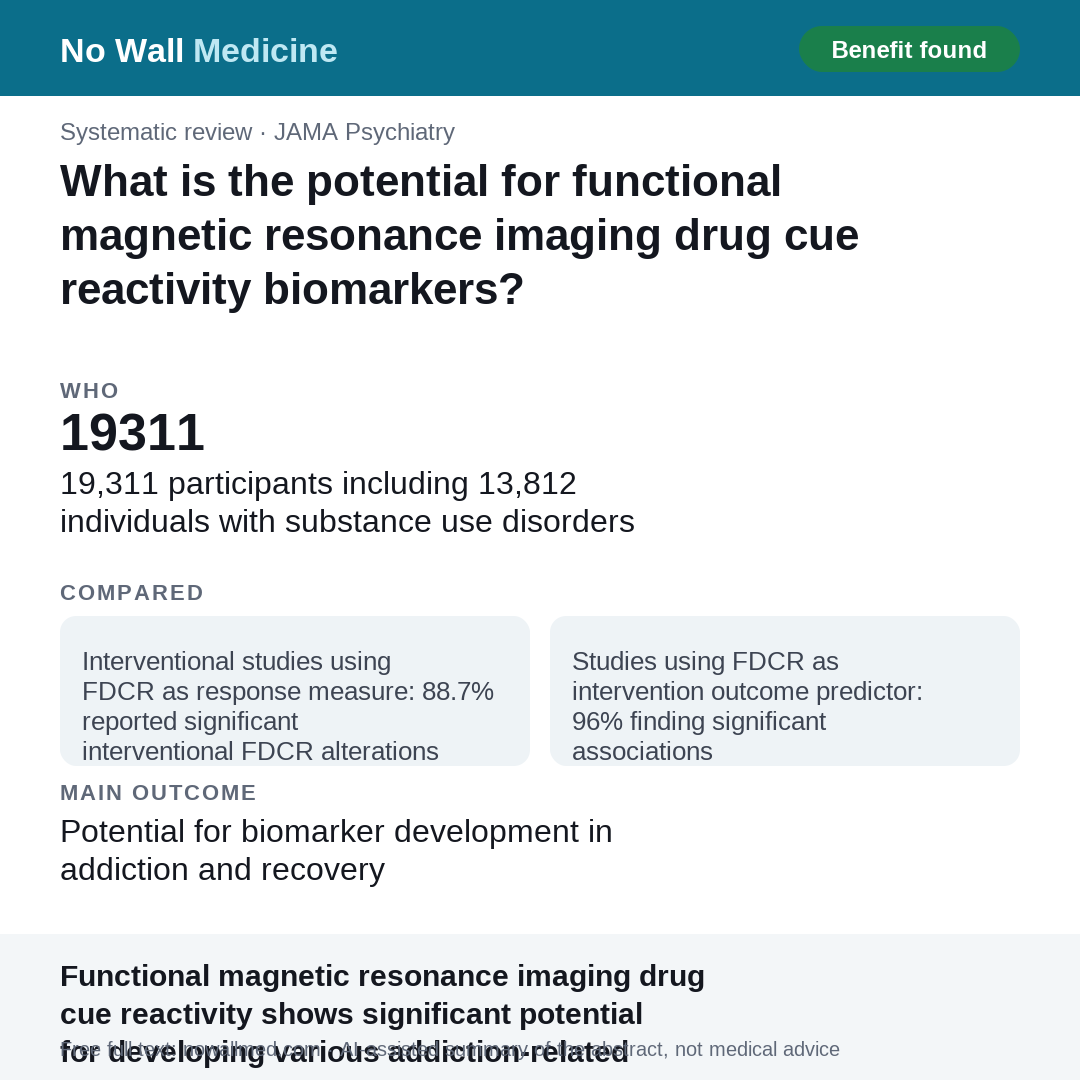
Parameter Space and Potential for Biomarker Development in 25 Years of fMRI Drug Cue Reactivity: A Systematic Review
Systematic reviewBenefit found
What is the potential for functional magnetic resonance imaging drug cue reactivity biomarkers?
Who
19311
19,311 participants including 13,812 individuals with substance use disorders
Compared
Interventional studies using FDCR as response measure: 88.7% reported significant interventional FDCR alterations
Studies using FDCR as intervention outcome predictor: 96% finding significant associations
Main outcome
Potential for biomarker development in addiction and recovery
Bottom line: Functional magnetic resonance imaging drug cue reactivity shows significant potential for developing various addiction-related biomarkers.
JAMA Psychiatry · 2024-02-07Download image
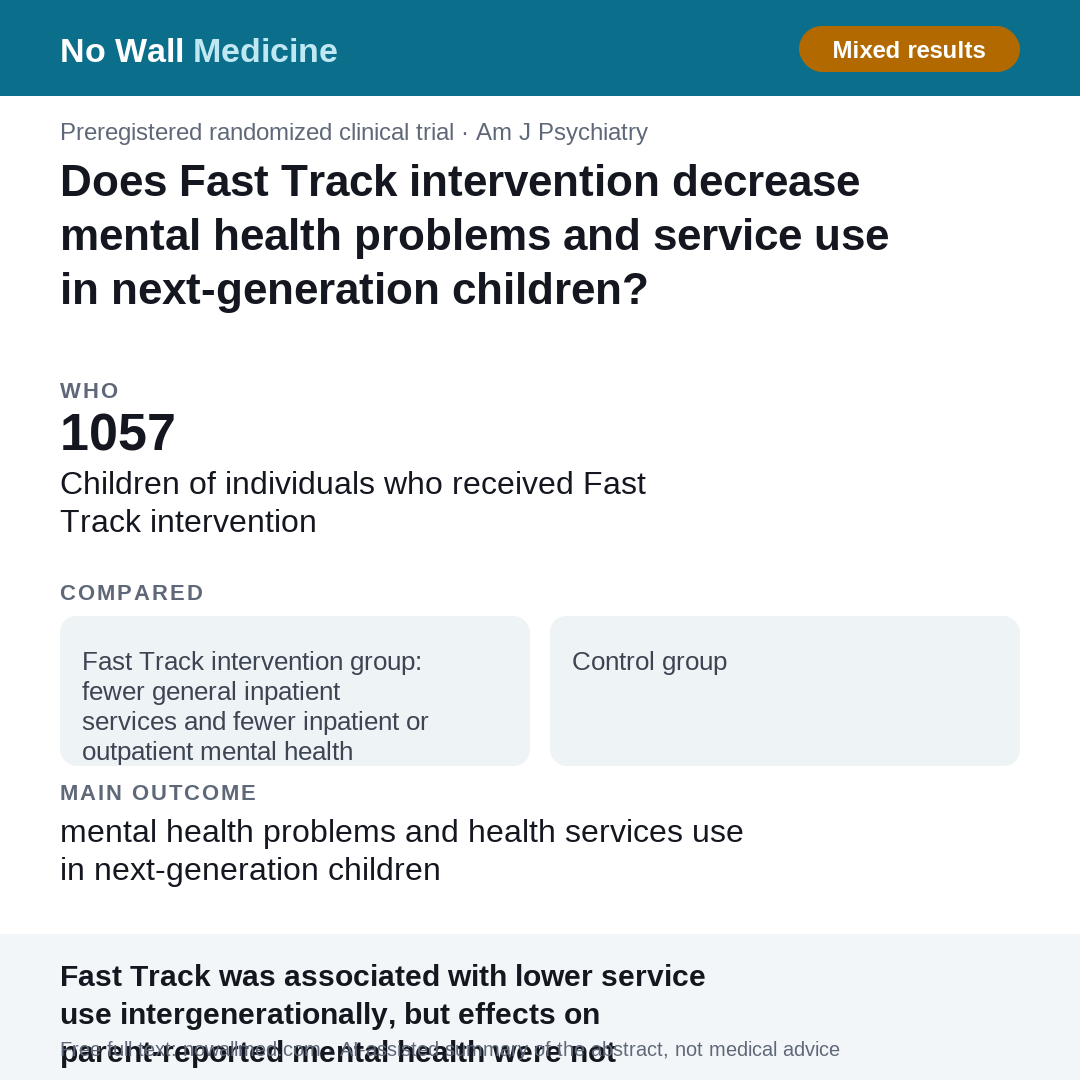
Intergenerational Effects of the Fast Track Intervention on Next-Generation Child Outcomes: A Preregistered Randomized Clinical Trial
Preregistered randomized clinical trialMixed results
Does Fast Track intervention decrease mental health problems and service use in next-generation children?
Who
1057
Children of individuals who received Fast Track intervention
Compared
Fast Track intervention group: fewer general inpatient services and fewer inpatient or outpatient mental health services
Control group
Main outcome
mental health problems and health services use in next-generation children
Bottom line: Fast Track was associated with lower service use intergenerationally, but effects on parent-reported mental health were not apparent.
Am J Psychiatry · 2024-02-07Download image
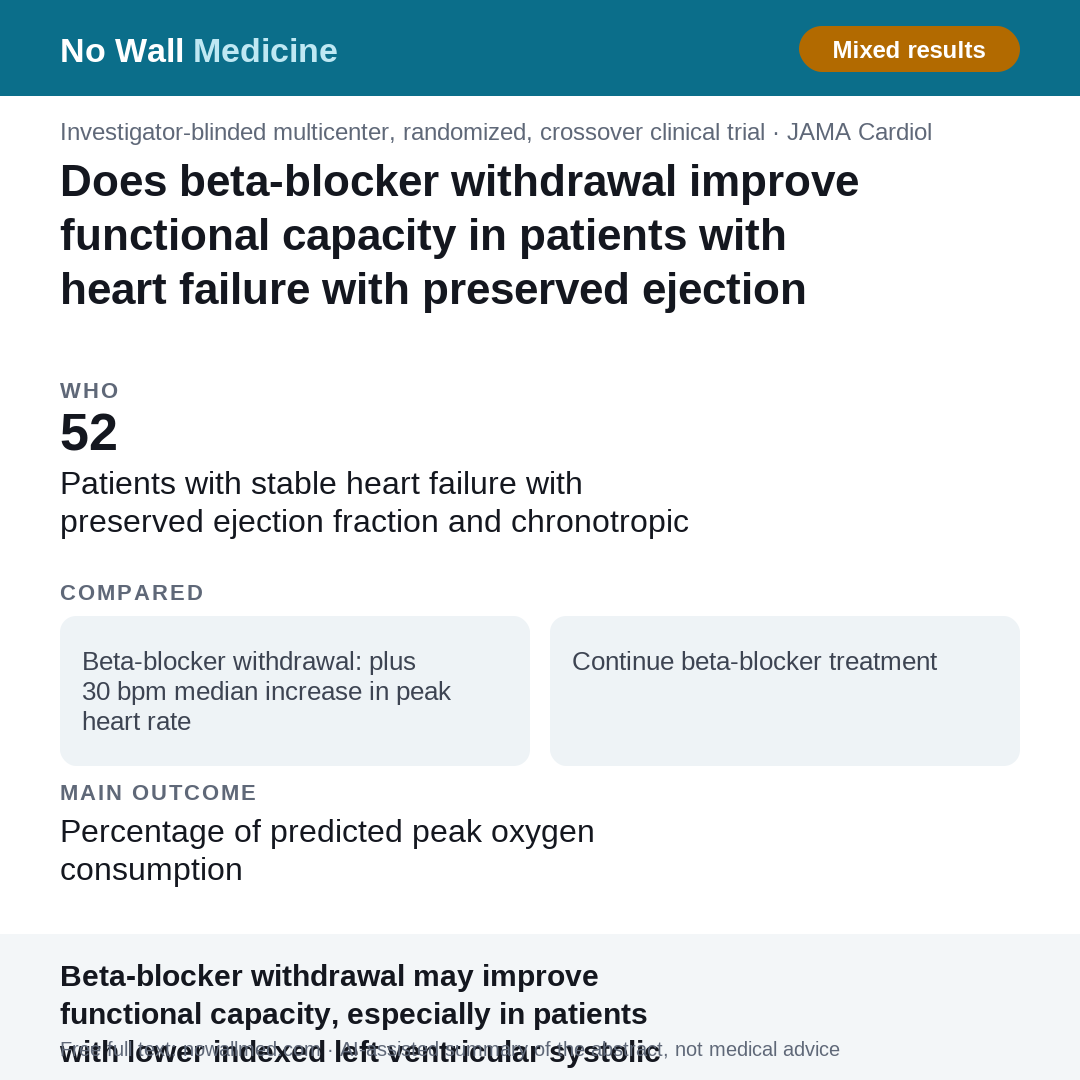
β-Blocker Withdrawal and Functional Capacity Improvement in Patients With Heart Failure With Preserved Ejection Fraction
Investigator-blinded multicenter, randomized, crossover clinical trialMixed results
Does beta-blocker withdrawal improve functional capacity in patients with heart failure with preserved ejection fraction?
Who
52
Patients with stable heart failure with preserved ejection fraction and chronotropic incompetence · Multicenter
Compared
Beta-blocker withdrawal: plus 30 bpm median increase in peak heart rate
Continue beta-blocker treatment
Main outcome
Percentage of predicted peak oxygen consumption
Bottom line: Beta-blocker withdrawal may improve functional capacity, especially in patients with lower indexed left ventricular systolic volumes.
Limitation: This was a post hoc analysis of a crossover trial.
JAMA Cardiol · 2024-02-07Download image
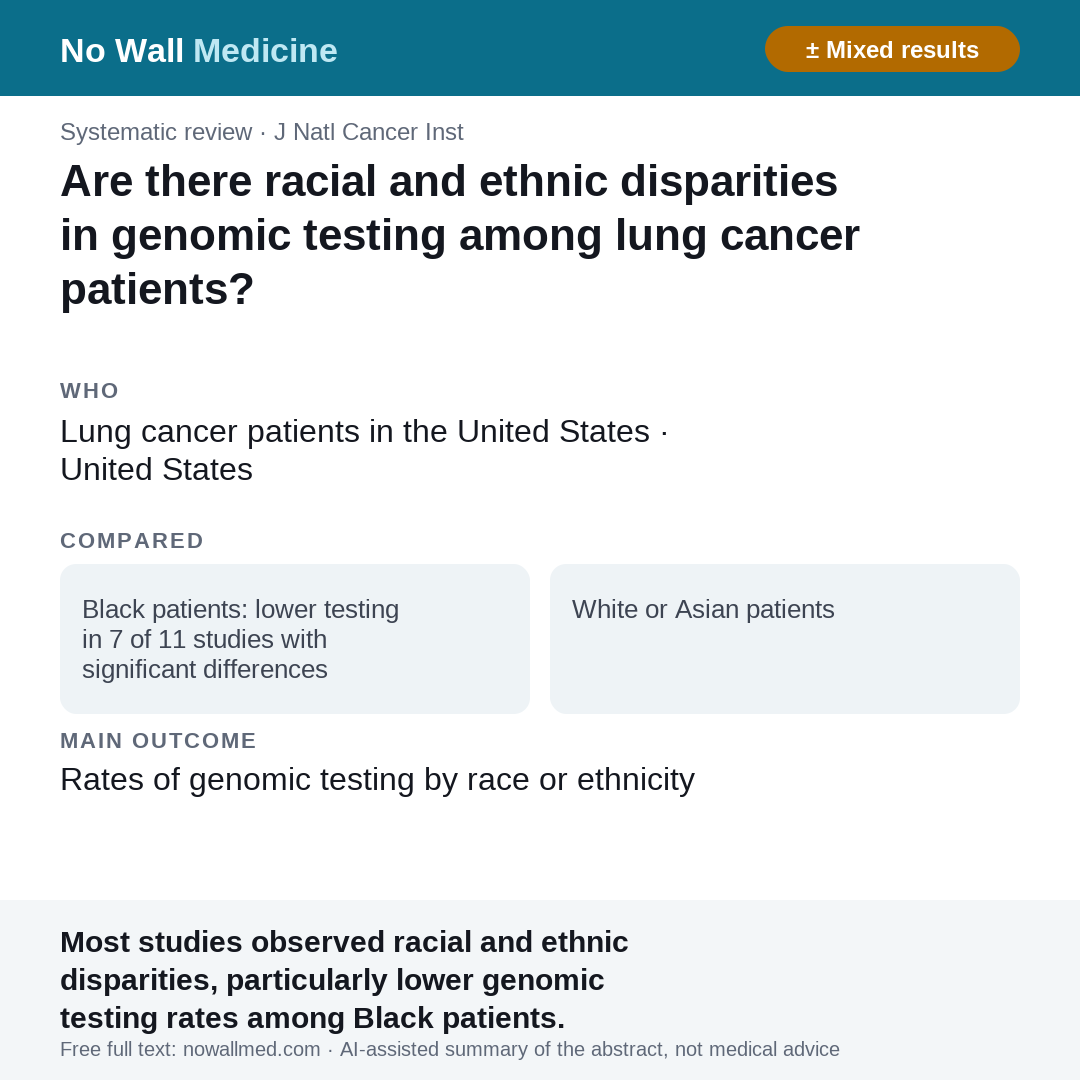
Racial and ethnic disparities in genomic testing among lung cancer patients: a systematic review
Systematic reviewMixed results
Are there racial and ethnic disparities in genomic testing among lung cancer patients?
Who
Lung cancer patients in the United States · United States
Compared
Black patients: lower testing in 7 of 11 studies with significant differences
White or Asian patients
Main outcome
Rates of genomic testing by race or ethnicity
Bottom line: Most studies observed racial and ethnic disparities, particularly lower genomic testing rates among Black patients.
Limitation: Many studies lacked adjustment for key covariates and included patients with unclear eligibility.
J Natl Cancer Inst · 2024-02-07Download image
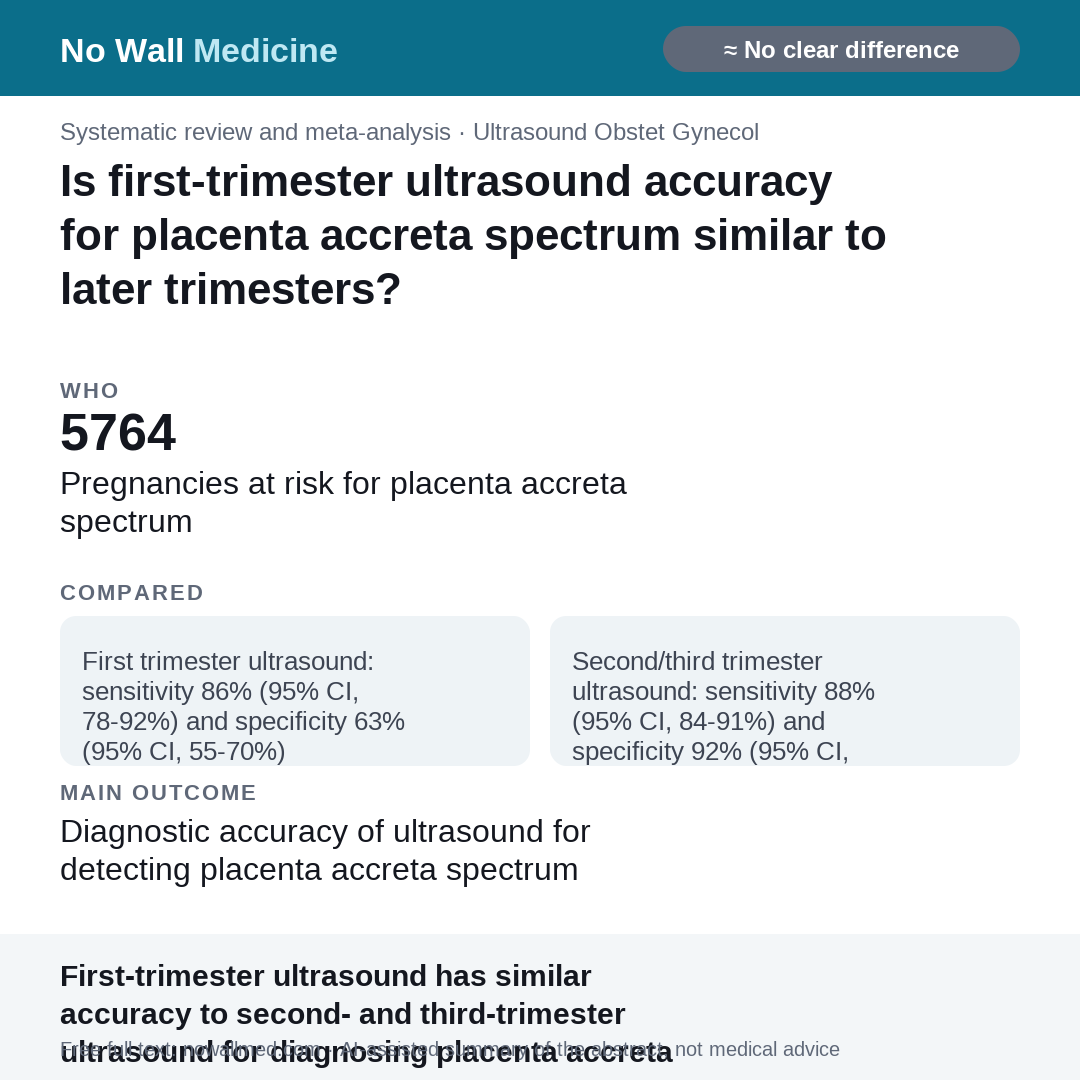
Trimester-specific diagnostic accuracy of ultrasound for detection of placenta accreta spectrum: systematic review and meta-analysis
Systematic review and meta-analysisNo clear difference
Is first-trimester ultrasound accuracy for placenta accreta spectrum similar to later trimesters?
Who
5764
Pregnancies at risk for placenta accreta spectrum
Compared
First trimester ultrasound: sensitivity 86% (95% CI, 78-92%) and specificity 63% (95% CI, 55-70%)
Second/third trimester ultrasound: sensitivity 88% (95% CI, 84-91%) and specificity 92% (95% CI, 85-96%)
Main outcome
Diagnostic accuracy of ultrasound for detecting placenta accreta spectrum
Bottom line: First-trimester ultrasound has similar accuracy to second- and third-trimester ultrasound for diagnosing placenta accreta spectrum.
Ultrasound Obstet Gynecol · 2024-02-07Download image
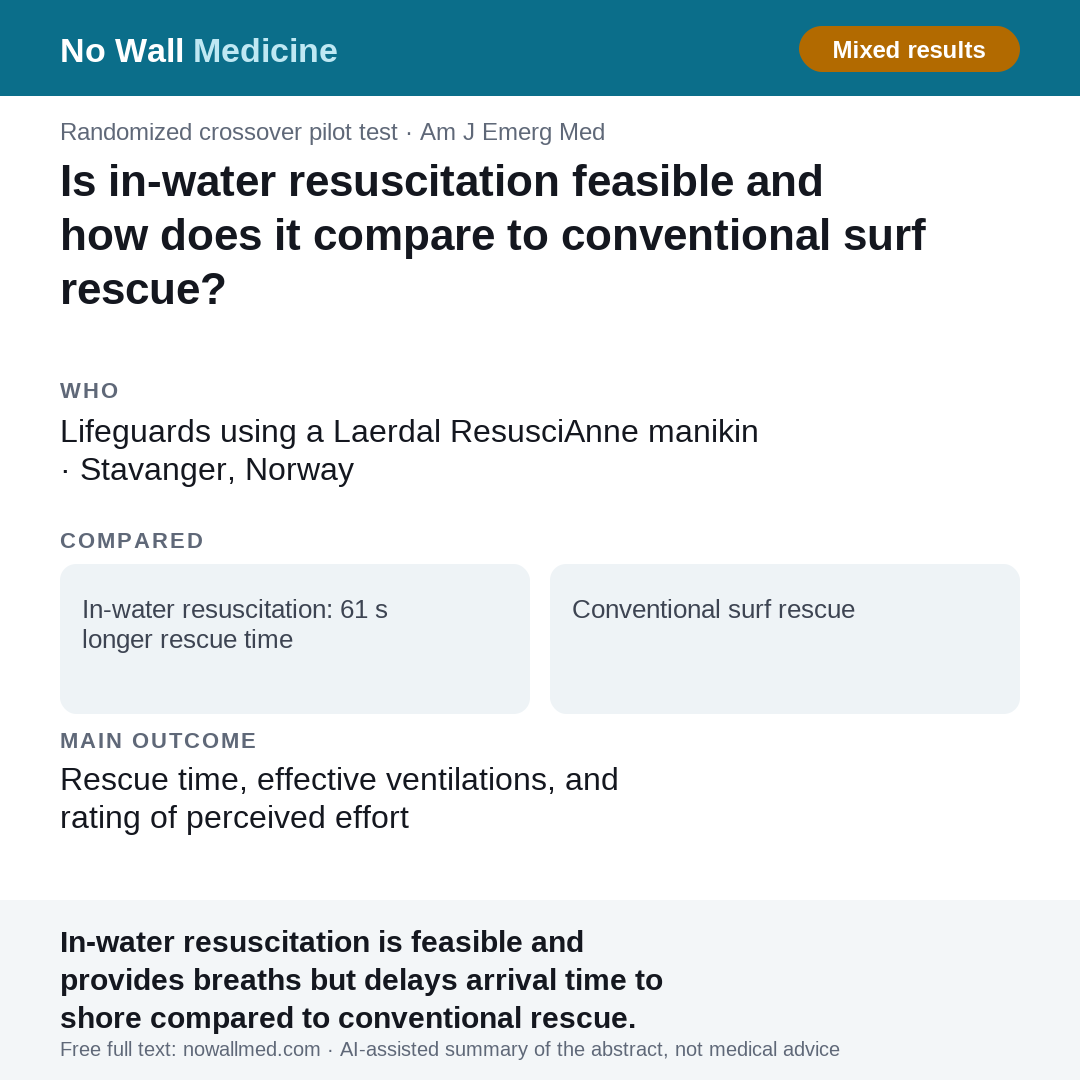
In-water resuscitation during a surf rescue: Time lost or breaths gained? A pilot study
Randomized crossover pilot testMixed results
Is in-water resuscitation feasible and how does it compare to conventional surf rescue?
Who
Lifeguards using a Laerdal ResusciAnne manikin · Stavanger, Norway
Compared
In-water resuscitation: 61 s longer rescue time
Conventional surf rescue
Main outcome
Rescue time, effective ventilations, and rating of perceived effort
Bottom line: In-water resuscitation is feasible and provides breaths but delays arrival time to shore compared to conventional rescue.
Am J Emerg Med · 2024-02-07Download image