Visual abstracts
New randomized trials and meta-analyses from leading journals at a glance: who was studied, what was compared, and what was found. Every paper is free to read in full.
All specialtiesCardiology 4763Oncology 4042Gastroenterology & Hepatology 1902Infectious Disease 3756Neurology 1872Psychiatry & Mental Health 2214Pulmonology 2042Critical Care 1319Endocrinology & Diabetes 2544Pediatrics 2889Surgery 2479Orthopedics & Sports Medicine 917Neurosurgery 525Cardiothoracic & Vascular Surgery 656Plastic & Reconstructive Surgery 574Nephrology 1107Rheumatology 810Hematology 1090Dermatology 611Ophthalmology 532Obstetrics & Gynecology 1645Public & Global Health 1037Radiology & Imaging 617Anesthesiology 957Urology 745ENT (Otolaryngology) 494Emergency Medicine 481Allergy & Immunology 309Geriatrics 972Family Medicine & Primary Care 533Medical Genetics & Genomics 659Pathology & Laboratory Medicine 156Physical Medicine & Rehabilitation 734Palliative Care 421Nutrition 1560Digital Health & AI 2133General Medicine 318
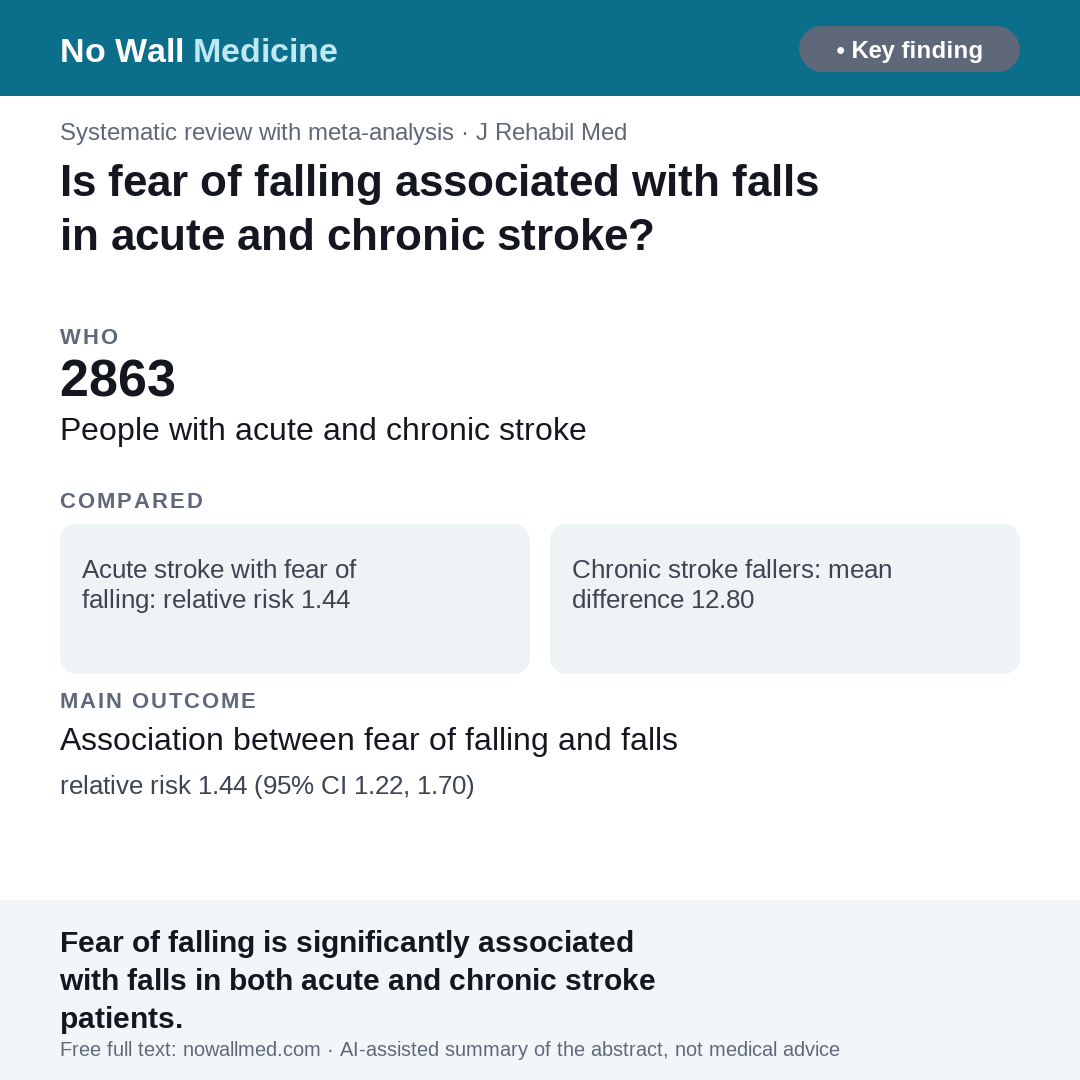
Association between fear of falling and falls following acute and chronic stroke: a systematic review with meta-analysis
Systematic review with meta-analysisKey finding
Is fear of falling associated with falls in acute and chronic stroke?
Who
2863
People with acute and chronic stroke
Compared
Acute stroke with fear of falling: relative risk 1.44
Chronic stroke fallers: mean difference 12.80
Main outcome
Association between fear of falling and falls
Result: relative risk 1.44 (95% CI 1.22, 1.70)
Bottom line: Fear of falling is significantly associated with falls in both acute and chronic stroke patients.
J Rehabil Med · 2024-01-16Download image
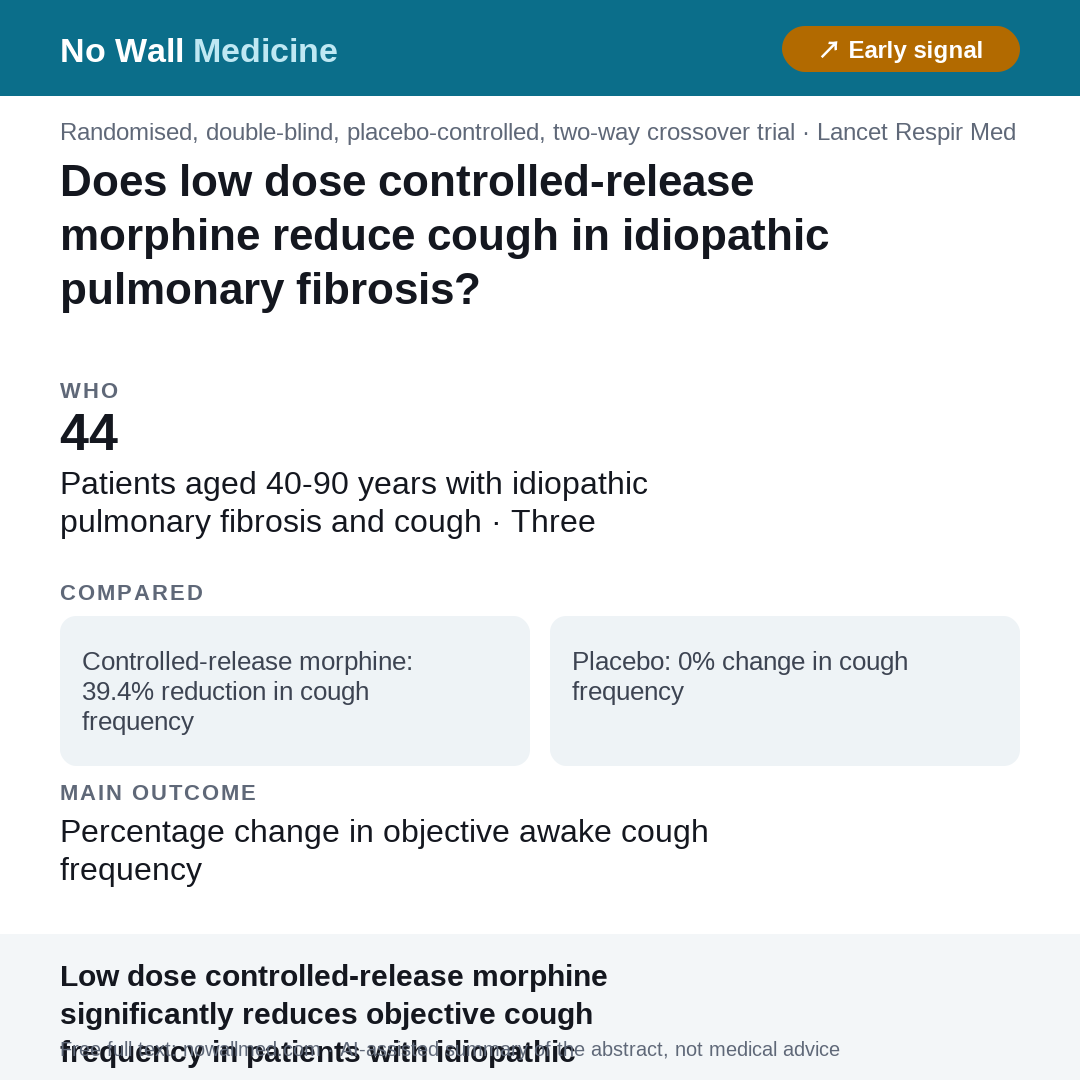
Morphine for treatment of cough in idiopathic pulmonary fibrosis (PACIFY COUGH): a prospective, multicentre, randomised, double-blind, placebo-controlled, two-way crossover trial
Randomised, double-blind, placebo-controlled, two-way crossover trialEarly signal
Does low dose controlled-release morphine reduce cough in idiopathic pulmonary fibrosis?
Who
44
Patients aged 40-90 years with idiopathic pulmonary fibrosis and cough · Three specialist centres in the United Kingdom
Compared
Controlled-release morphine: 39.4% reduction in cough frequency
Placebo: 0% change in cough frequency
Main outcome
Percentage change in objective awake cough frequency
Result: 39.4% reduction (95% CI -54.4 to -19.4)
Bottom line: Low dose controlled-release morphine significantly reduces objective cough frequency in patients with idiopathic pulmonary fibrosis.
Funded by: The Jon Moulton Charity Trust
Lancet Respir Med · 2024-01-15Download image
A systematic review for the evidence of recommendations and guidelines in hybrid nuclear cardiovascular imaging
Systematic reviewMixed results
What is the level of evidence in hybrid nuclear cardiovascular imaging guidelines?
Who
76
Guidelines for hybrid cardiovascular imaging techniques
Compared
7.9%Based on systematic reviews
47.4%Based on non-systematic reviews
19.7%Mix of systematic and non-systematic reviews
25%Did not report any evidence
Main outcome
Level of evidence and methodological quality of guidelines
Bottom line: Evidence procedures for developing cardiovascular hybrid imaging guidelines are currently suboptimal, requiring more standardized methodological procedures.
Eur J Nucl Med Mol Imaging · 2024-01-15Download image

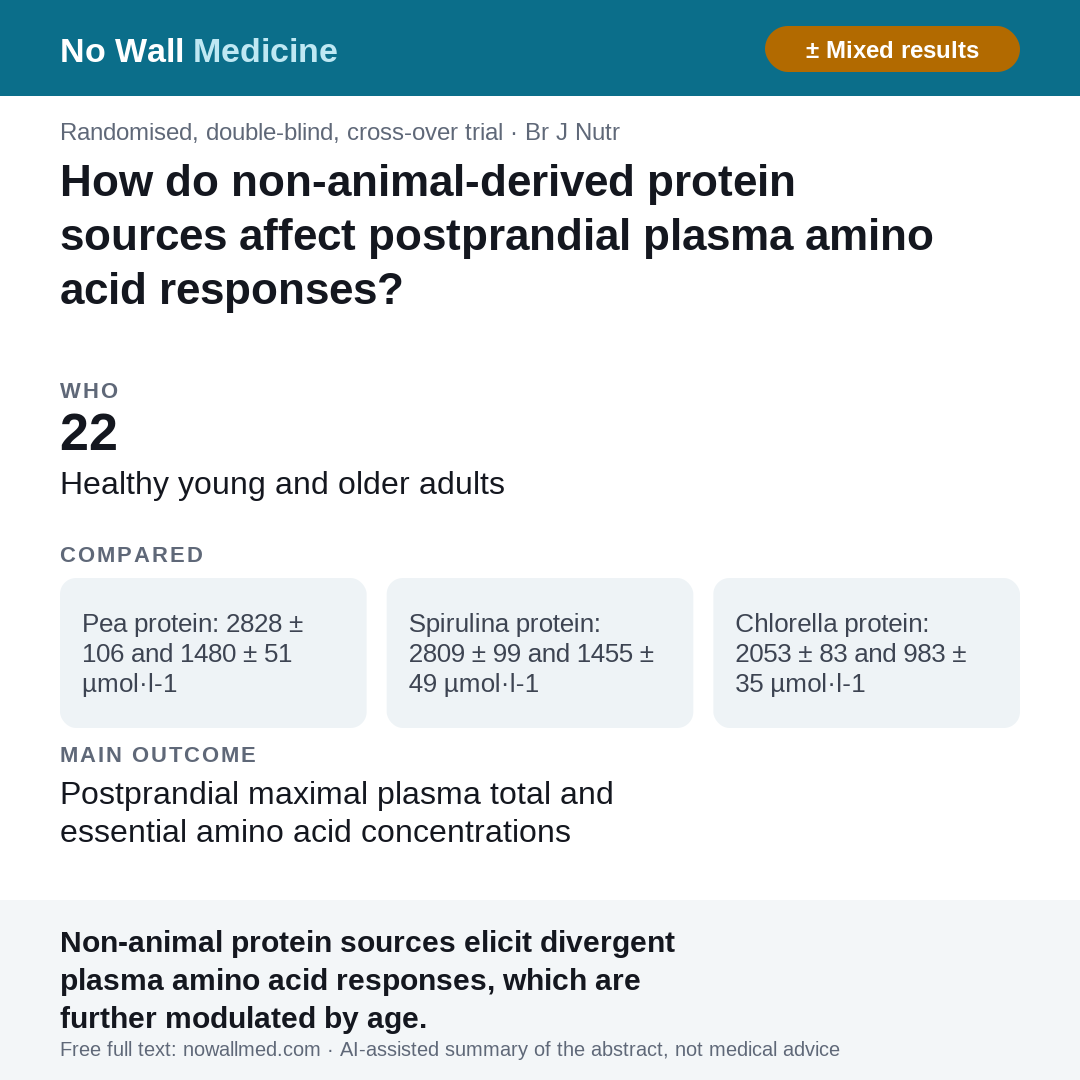
Ingestion of a variety of non-animal-derived dietary protein sources results in diverse postprandial plasma amino acid responses which differ between young and older adults
Randomised, double-blind, cross-over trialMixed results
How do non-animal-derived protein sources affect postprandial plasma amino acid responses?
Who
22
Healthy young and older adults
Compared
Pea protein: 2828 ± 106 and 1480 ± 51 µmol·l-1
Spirulina protein: 2809 ± 99 and 1455 ± 49 µmol·l-1
Chlorella protein: 2053 ± 83 and 983 ± 35 µmol·l-1
Main outcome
Postprandial maximal plasma total and essential amino acid concentrations
Bottom line: Non-animal protein sources elicit divergent plasma amino acid responses, which are further modulated by age.
Br J Nutr · 2024-01-15Download image
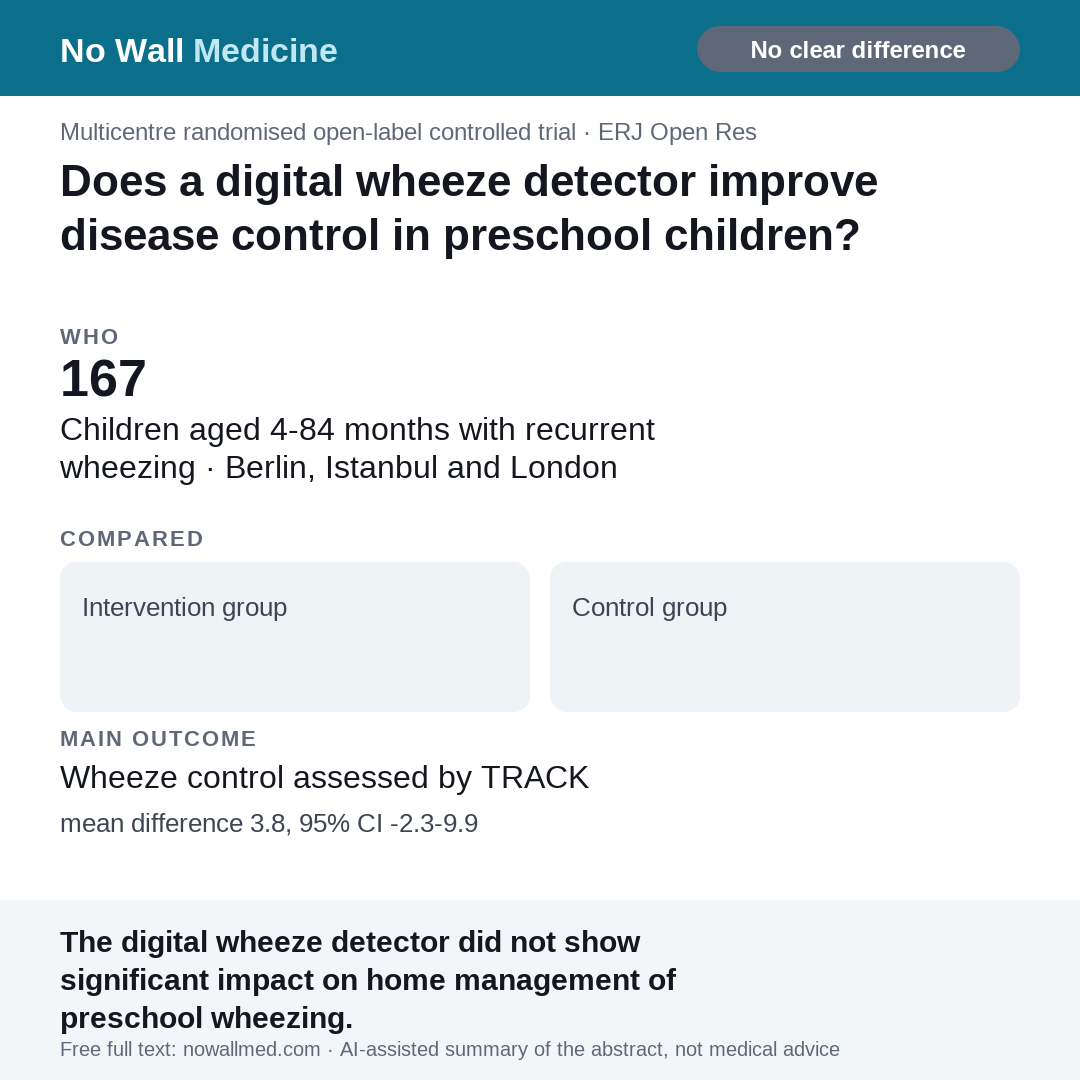
Clinical efficacy and satisfaction of a digital wheeze detector in a multicentre randomised controlled trial: the WheezeScan study
Multicentre randomised open-label controlled trialNo clear difference
Does a digital wheeze detector improve disease control in preschool children?
Who
167
Children aged 4-84 months with recurrent wheezing · Berlin, Istanbul and London
Compared
Intervention group
Control group
Main outcome
Wheeze control assessed by TRACK
Result: mean difference 3.8, 95% CI -2.3-9.9
Bottom line: The digital wheeze detector did not show significant impact on home management of preschool wheezing.
ERJ Open Res · 2024-01-15Download image
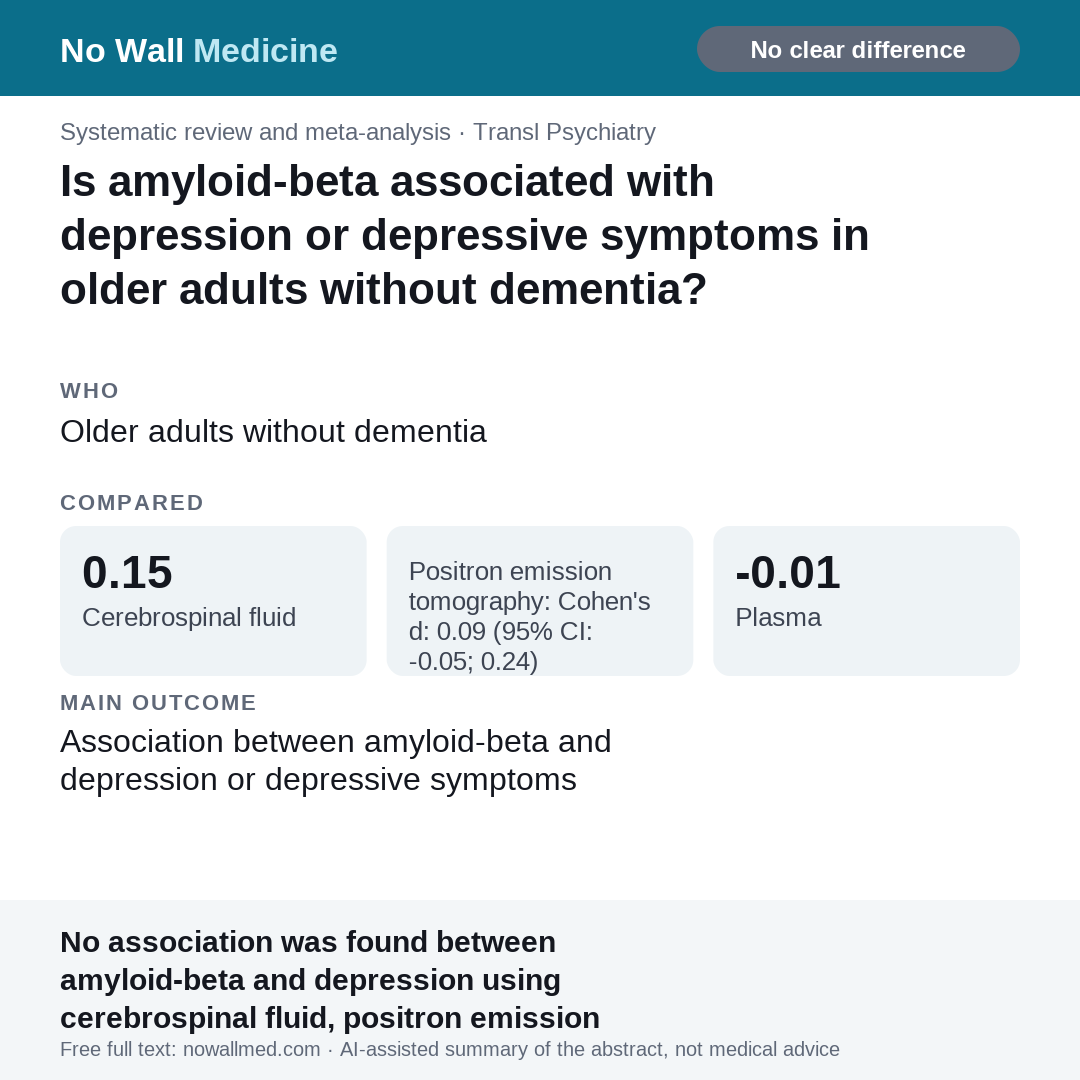
Association of amyloid-beta with depression or depressive symptoms in older adults without dementia: a systematic review and meta-analysis
Systematic review and meta-analysisNo clear difference
Is amyloid-beta associated with depression or depressive symptoms in older adults without dementia?
Who
Older adults without dementia
Compared
0.15Cerebrospinal fluid (95% CI: -0.08; 0.37)
Positron emission tomography: Cohen's d: 0.09 (95% CI: -0.05; 0.24)
-0.01Plasma (95% CI: -0.23; 0.22)
Main outcome
Association between amyloid-beta and depression or depressive symptoms
Bottom line: No association was found between amyloid-beta and depression using cerebrospinal fluid, positron emission tomography, or plasma.
Transl Psychiatry · 2024-01-15Download image
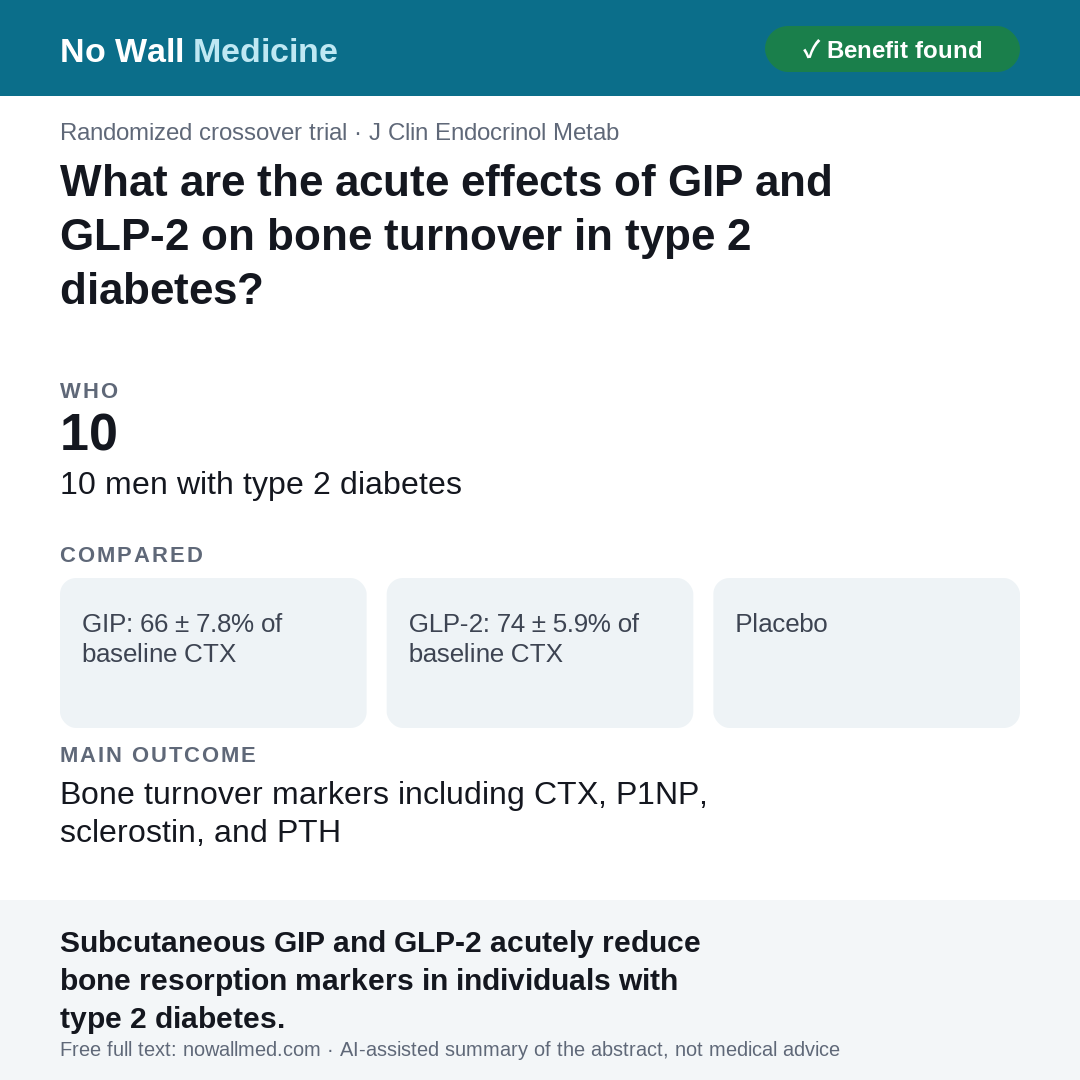
Effects of Exogenous GIP and GLP-2 on Bone Turnover in Individuals With Type 2 Diabetes
Randomized crossover trialBenefit found
What are the acute effects of GIP and GLP-2 on bone turnover in type 2 diabetes?
Who
10
10 men with type 2 diabetes
Compared
GIP: 66 ± 7.8% of baseline CTX
GLP-2: 74 ± 5.9% of baseline CTX
Placebo
Main outcome
Bone turnover markers including CTX, P1NP, sclerostin, and PTH
Bottom line: Subcutaneous GIP and GLP-2 acutely reduce bone resorption markers in individuals with type 2 diabetes.
J Clin Endocrinol Metab · 2024-01-14Download image
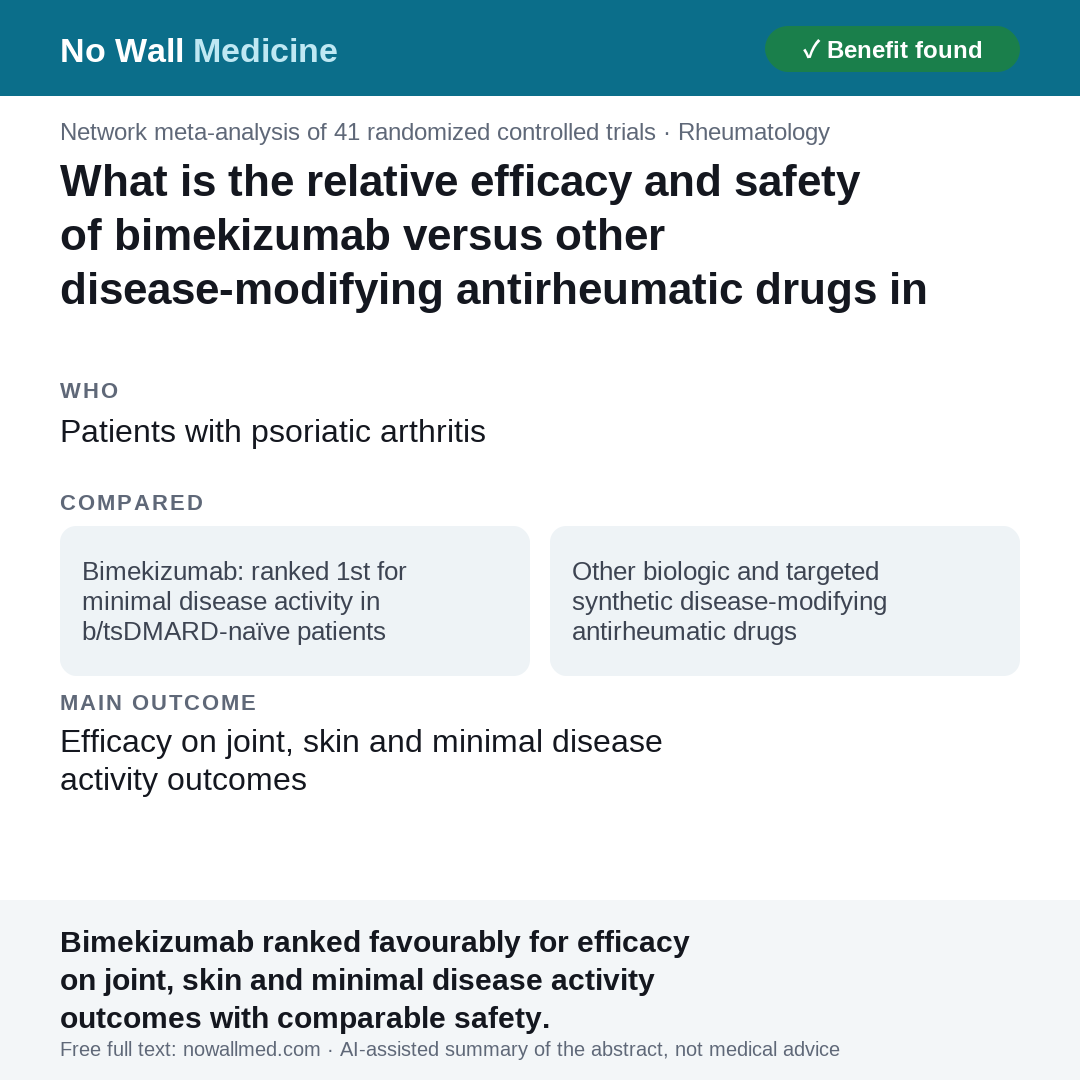
Comparative efficacy and safety of bimekizumab in psoriatic arthritis: a systematic literature review and network meta-analysis
Network meta-analysis of 41 randomized controlled trialsBenefit found
What is the relative efficacy and safety of bimekizumab versus other disease-modifying antirheumatic drugs in psoriatic arthritis?
Who
Patients with psoriatic arthritis
Compared
Bimekizumab: ranked 1st for minimal disease activity in b/tsDMARD-naïve patients
Other biologic and targeted synthetic disease-modifying antirheumatic drugs
Main outcome
Efficacy on joint, skin and minimal disease activity outcomes
Bottom line: Bimekizumab ranked favourably for efficacy on joint, skin and minimal disease activity outcomes with comparable safety.
Rheumatology · 2024-01-14Download image
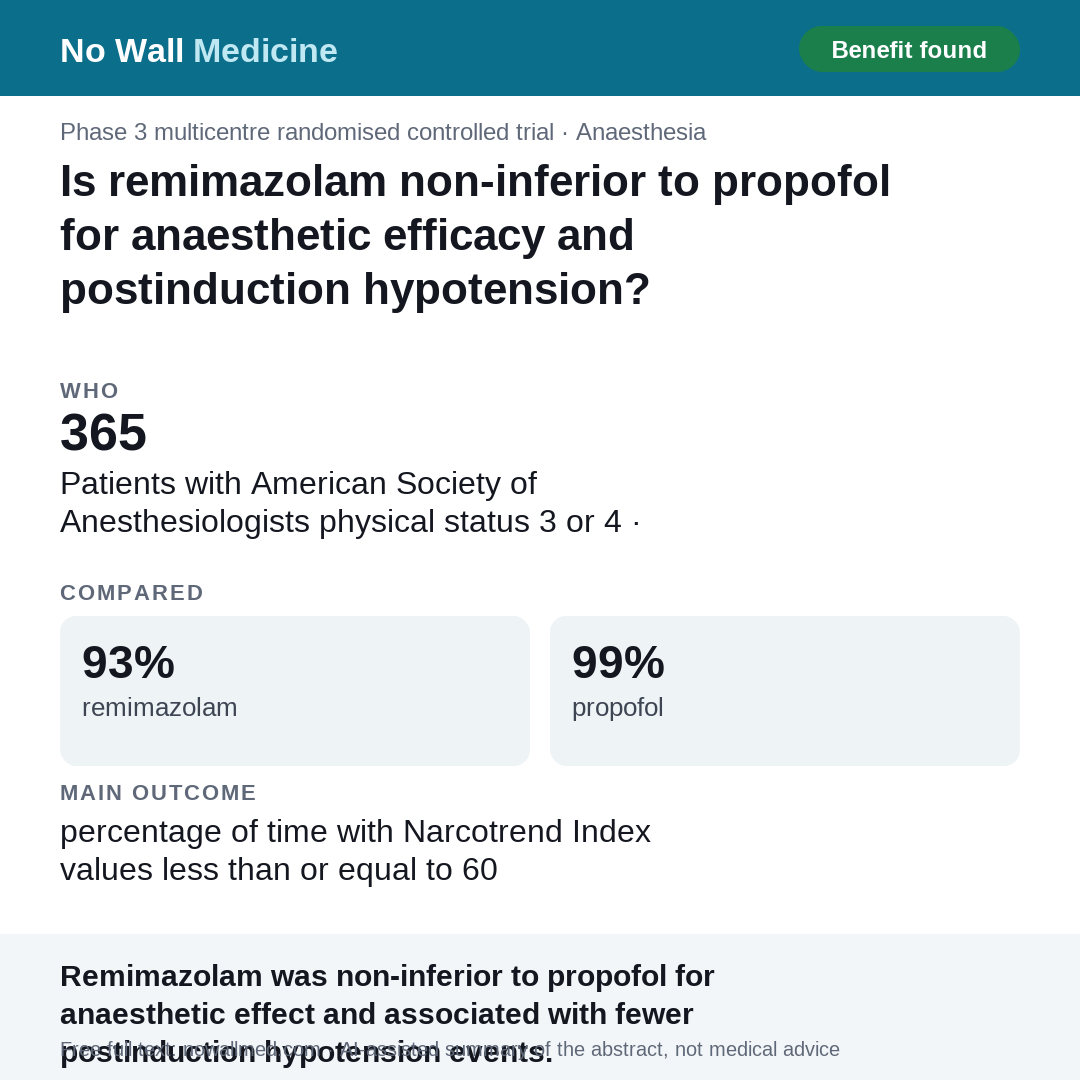
Anaesthetic efficacy and postinduction hypotension with remimazolam compared with propofol: a multicentre randomised controlled trial
Phase 3 multicentre randomised controlled trialBenefit found
Is remimazolam non-inferior to propofol for anaesthetic efficacy and postinduction hypotension?
Who
365
Patients with American Society of Anesthesiologists physical status 3 or 4 · multicentre
Compared
93%remimazolam (20.7)
99%propofol (4.2)
Main outcome
percentage of time with Narcotrend Index values less than or equal to 60
Result: mean difference 97.5%CI -6.28% (-8.89-infinite)
Bottom line: Remimazolam was non-inferior to propofol for anaesthetic effect and associated with fewer postinduction hypotension events.
Anaesthesia · 2024-01-14Download image
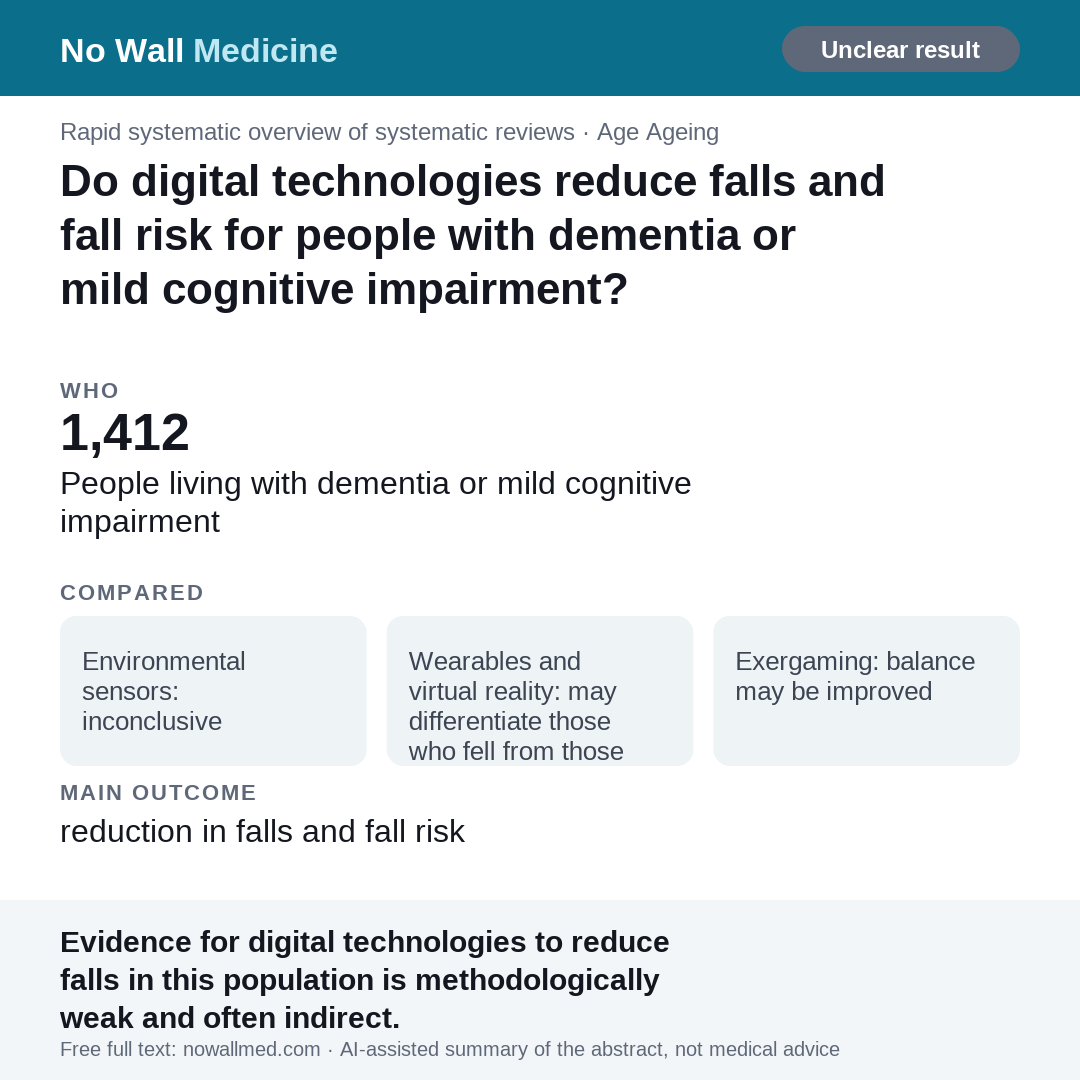
Digital technologies to prevent falls in people living with dementia or mild cognitive impairment: a rapid systematic overview of systematic reviews
Rapid systematic overview of systematic reviewsUnclear result
Do digital technologies reduce falls and fall risk for people with dementia or mild cognitive impairment?
Who
1,412
People living with dementia or mild cognitive impairment
Compared
Environmental sensors: inconclusive
Wearables and virtual reality: may differentiate those who fell from those who did not
Exergaming: balance may be improved
Main outcome
reduction in falls and fall risk
Bottom line: Evidence for digital technologies to reduce falls in this population is methodologically weak and often indirect.
Limitation: Included reviews had critical flaws, small studies, and were mostly non-randomised.
Age Ageing · 2024-01-14Download image
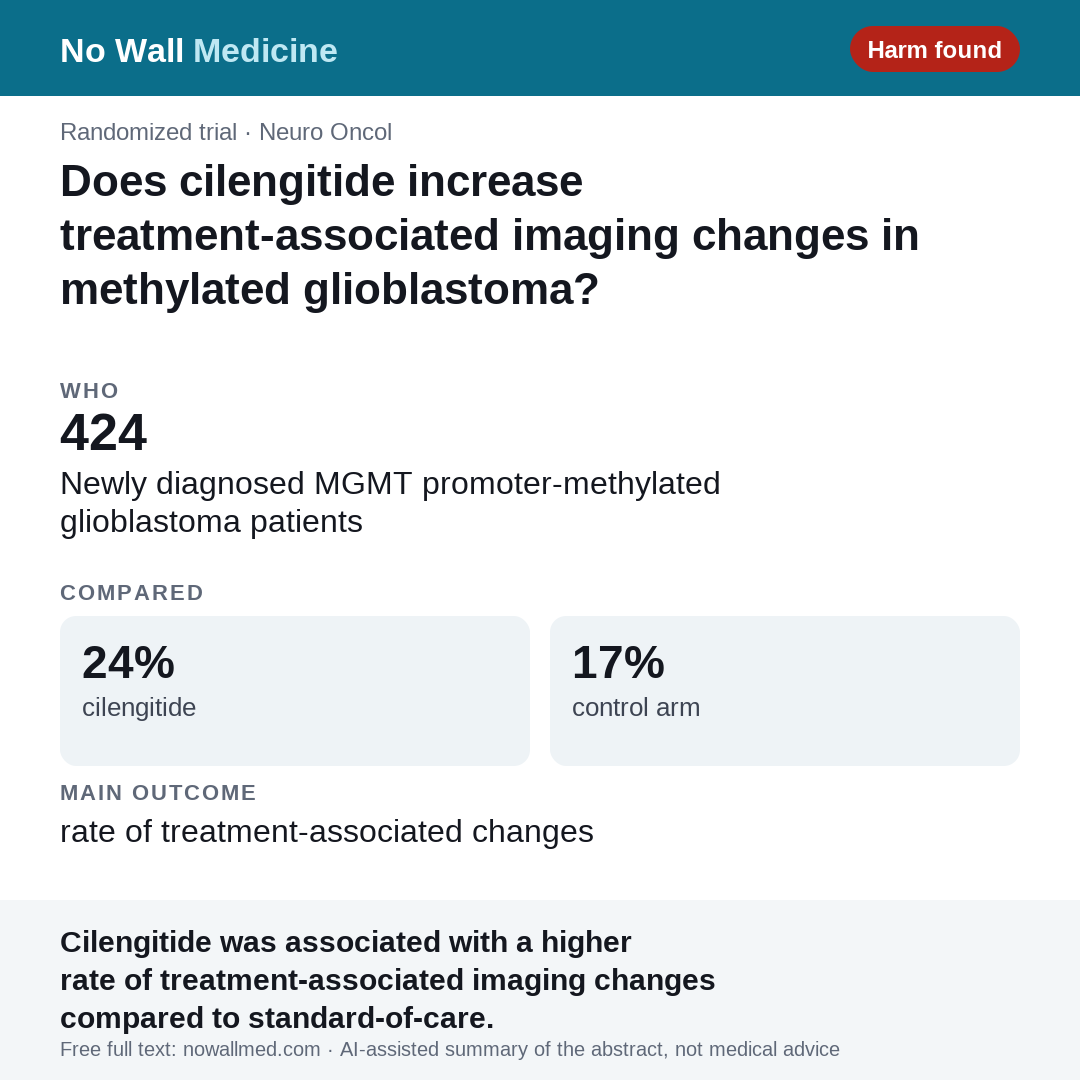
Treatment-associated imaging changes in newly diagnosed MGMT promoter-methylated glioblastoma undergoing chemoradiation with or without cilengitide
Randomized trialHarm found
Does cilengitide increase treatment-associated imaging changes in methylated glioblastoma?
Who
424
Newly diagnosed MGMT promoter-methylated glioblastoma patients
Compared
24%cilengitide
17%control arm
Main outcome
rate of treatment-associated changes
Result: relative risk 1.3 (95% CI 1.004-1.795)
Bottom line: Cilengitide was associated with a higher rate of treatment-associated imaging changes compared to standard-of-care.
Neuro Oncol · 2024-01-14Download image
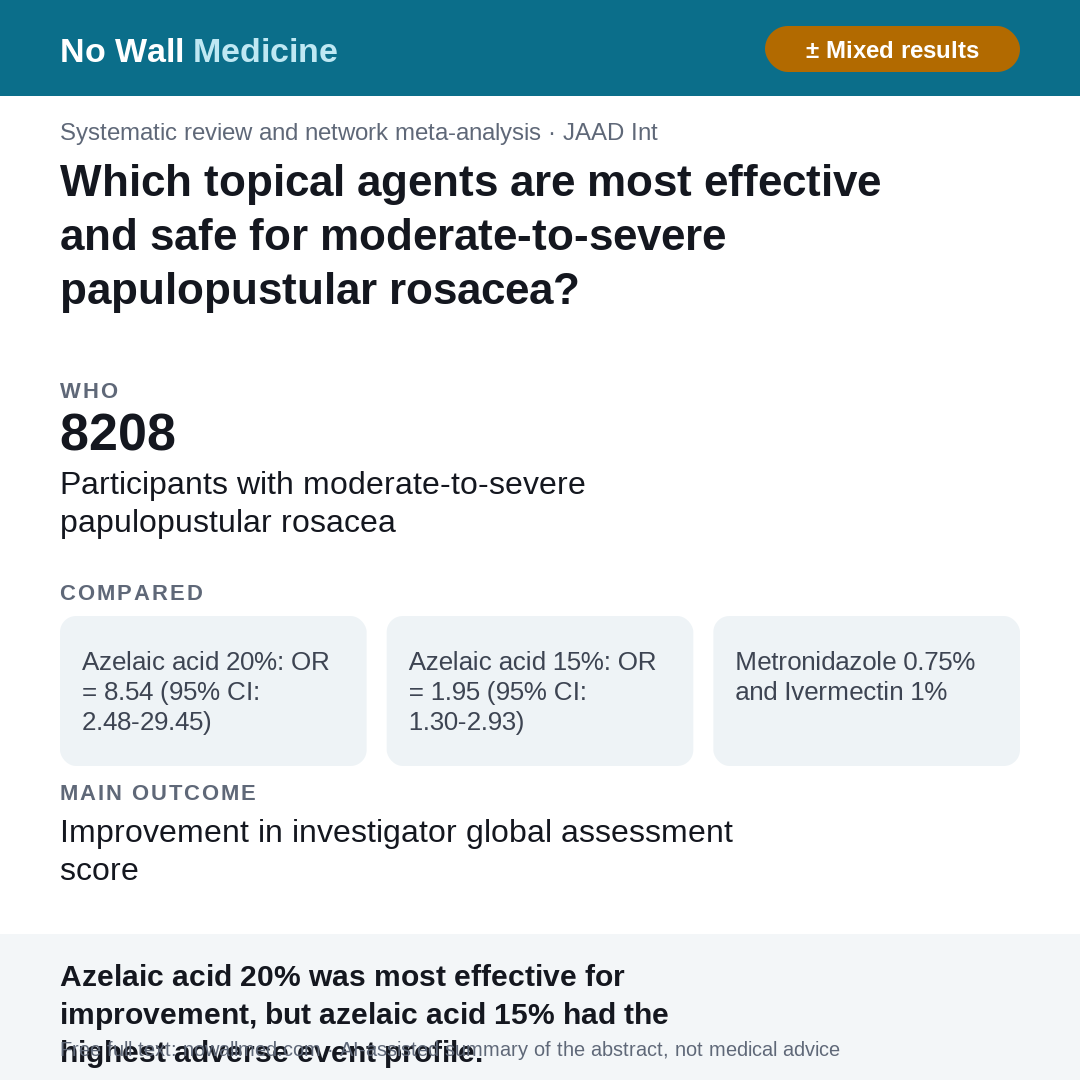
The efficacy and safety of minocycline, metronidazole, ivermectin, and azelaic acid in moderate-to-severe papulopustular rosacea: A systematic review and network meta-analysis
Systematic review and network meta-analysisMixed results
Which topical agents are most effective and safe for moderate-to-severe papulopustular rosacea?
Who
8208
Participants with moderate-to-severe papulopustular rosacea
Compared
Azelaic acid 20%: OR = 8.54 (95% CI: 2.48-29.45)
Azelaic acid 15%: OR = 1.95 (95% CI: 1.30-2.93)
Metronidazole 0.75% and Ivermectin 1%
Main outcome
Improvement in investigator global assessment score
Result: OR = 8.54 (95% CI: 2.48-29.45)
Bottom line: Azelaic acid 20% was most effective for improvement, but azelaic acid 15% had the highest adverse event profile.
Limitation: Sample size was limited for some agents and many clinically important outcomes were overlooked.
JAAD Int · 2024-01-13Download image
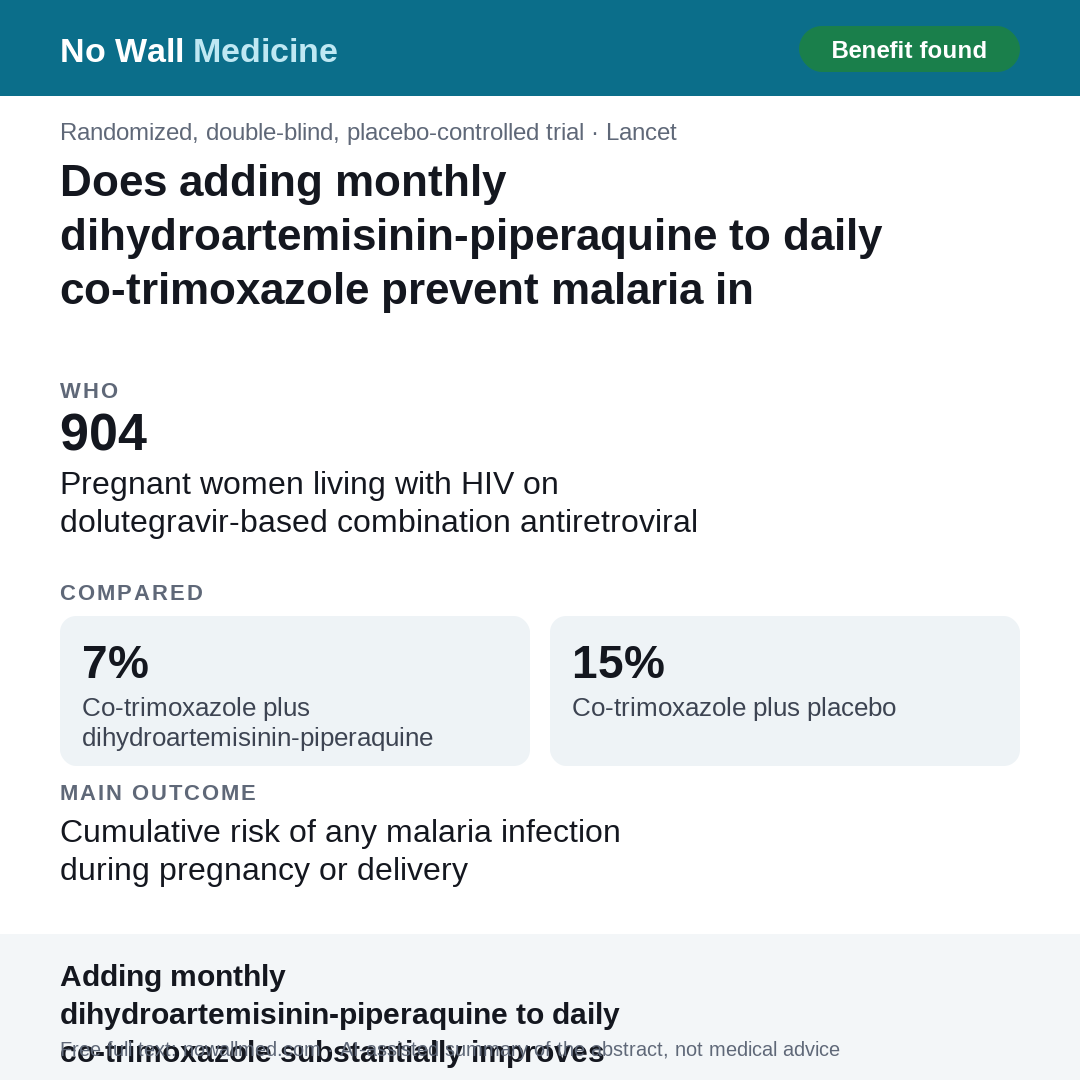
Chemoprevention for malaria with monthly intermittent preventive treatment with dihydroartemisinin-piperaquine in pregnant women living with HIV on daily co-trimoxazole in Kenya and Malawi: a randomised, double-blind, placebo-controlled trial
Randomized, double-blind, placebo-controlled trialBenefit found
Does adding monthly dihydroartemisinin-piperaquine to daily co-trimoxazole prevent malaria in pregnant women living with HIV?
Who
904
Pregnant women living with HIV on dolutegravir-based combination antiretroviral therapy · Kenya and Malawi
Compared
7%Co-trimoxazole plus dihydroartemisinin-piperaquine (31/443)
15%Co-trimoxazole plus placebo (70/452)
Main outcome
Cumulative risk of any malaria infection during pregnancy or delivery
Result: risk ratio 0·45 (95% CI 0·30-0·67)
Bottom line: Adding monthly dihydroartemisinin-piperaquine to daily co-trimoxazole substantially improves malaria prevention in pregnant women living with HIV.
Lancet · 2024-01-12Download image
Efficacy and safety of pegzilarginase in arginase 1 deficiency (PEACE): a phase 3, randomized, double-blind, placebo-controlled, multi-centre trial
Randomized, double-blind, placebo-controlled trialBenefit found
Does pegzilarginase improve plasma arginine and mobility in arginase 1 deficiency?
Who
32
Patients with arginase 1 deficiency · 7 countries
Compared
pegzilarginase: 354.0 μmol/L to 86.4 μmol/L
placebo: 464.7 to 426.6 μmol/L
Main outcome
change from baseline in plasma arginine after 24 weeks
Result: 95% CI: -67.1%, -83.5%
Bottom line: Pegzilarginase normalized plasma arginine levels and improved functional mobility in patients with arginase 1 deficiency.
Funded by: Aeglea BioTherapeutics
eClinicalMedicine · 2024-01-12Download image

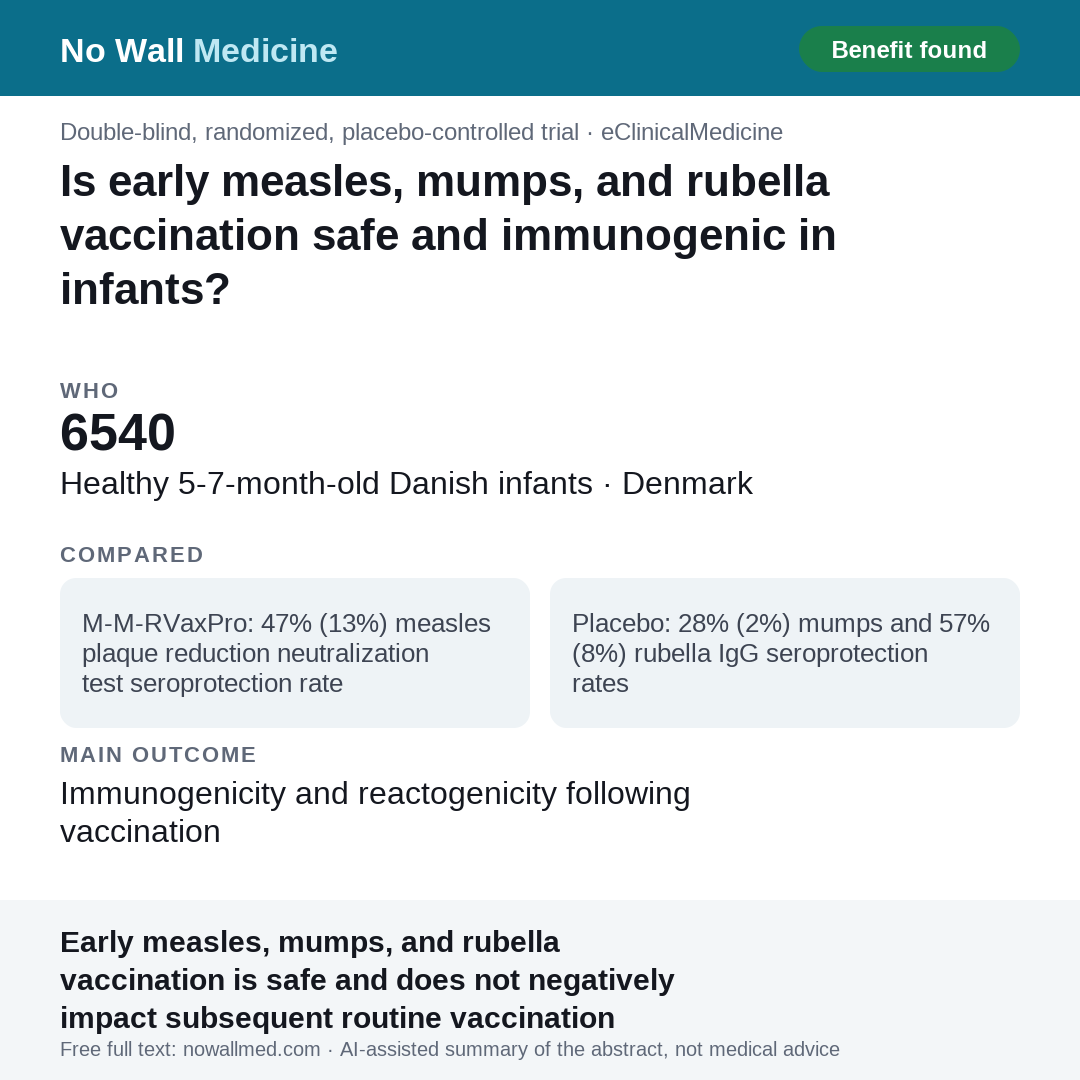
Immunogenicity and reactogenicity following MMR vaccination in 5-7-month-old infants: a double-blind placebo-controlled randomized clinical trial in 6540 Danish infants
Double-blind, randomized, placebo-controlled trialBenefit found
Is early measles, mumps, and rubella vaccination safe and immunogenic in infants?
Who
6540
Healthy 5-7-month-old Danish infants · Denmark
Compared
M-M-RVaxPro: 47% (13%) measles plaque reduction neutralization test seroprotection rate
Placebo: 28% (2%) mumps and 57% (8%) rubella IgG seroprotection rates
Main outcome
Immunogenicity and reactogenicity following vaccination
Result: hazard ratio 1.0 (95% CI 0.9-1.1)
Bottom line: Early measles, mumps, and rubella vaccination is safe and does not negatively impact subsequent routine vaccination responses.
Funded by: Innovation Fund Denmark
eClinicalMedicine · 2024-01-12Download image
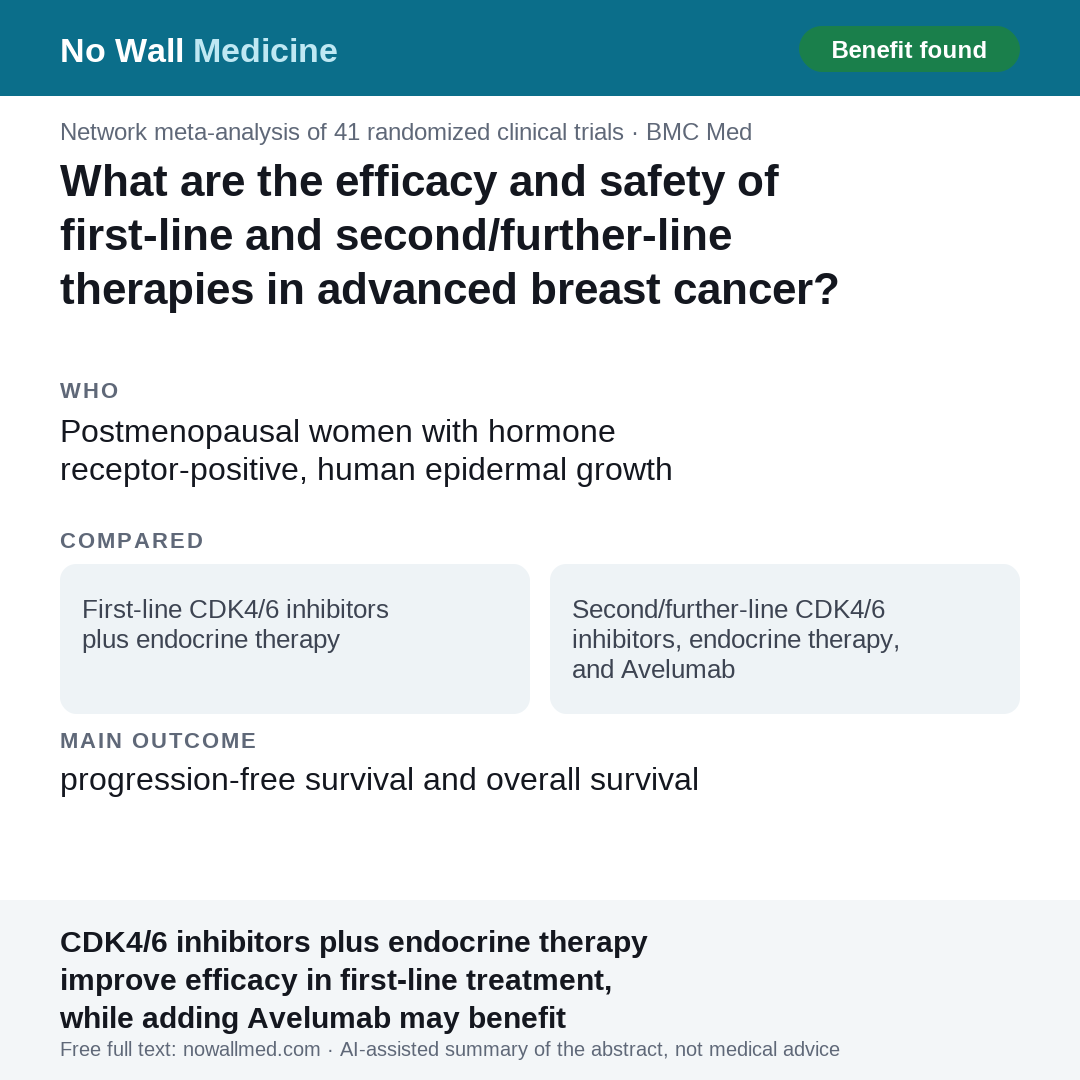
A network meta-analysis of efficacy and safety for first-line and second/further-line therapies in postmenopausal women with hormone receptor-positive, HER2-negative, advanced breast cancer
Network meta-analysis of 41 randomized clinical trialsBenefit found
What are the efficacy and safety of first-line and second/further-line therapies in advanced breast cancer?
Who
Postmenopausal women with hormone receptor-positive, human epidermal growth factor receptor 2-negative advanced breast cancer
Compared
First-line CDK4/6 inhibitors plus endocrine therapy
Second/further-line CDK4/6 inhibitors, endocrine therapy, and Avelumab
Main outcome
progression-free survival and overall survival
Bottom line: CDK4/6 inhibitors plus endocrine therapy improve efficacy in first-line treatment, while adding Avelumab may benefit second-line or later treatments.
Limitation: further trials comparing these novel treatments are warranted to reduce uncertainty
BMC Med · 2024-01-12Download image
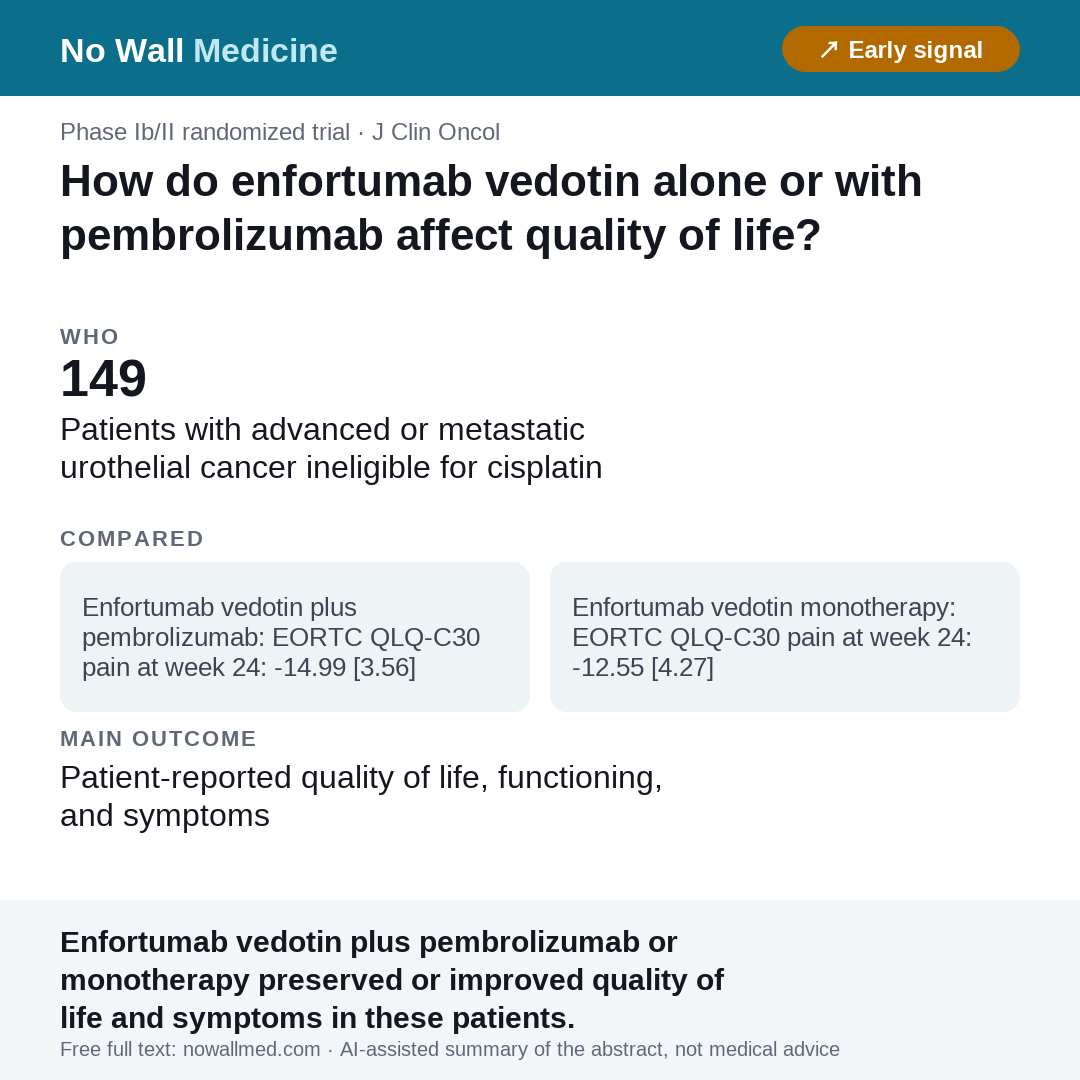
Patient-Reported Outcomes in Patients With Advanced Urothelial Cancer Who Are Ineligible for Cisplatin and Treated With First-Line Enfortumab Vedotin Alone or With Pembrolizumab
Phase Ib/II randomized trialEarly signal
How do enfortumab vedotin alone or with pembrolizumab affect quality of life?
Who
149
Patients with advanced or metastatic urothelial cancer ineligible for cisplatin
Compared
Enfortumab vedotin plus pembrolizumab: EORTC QLQ-C30 pain at week 24: -14.99 [3.56]
Enfortumab vedotin monotherapy: EORTC QLQ-C30 pain at week 24: -12.55 [4.27]
Main outcome
Patient-reported quality of life, functioning, and symptoms
Bottom line: Enfortumab vedotin plus pembrolizumab or monotherapy preserved or improved quality of life and symptoms in these patients.
J Clin Oncol · 2024-01-12Download image
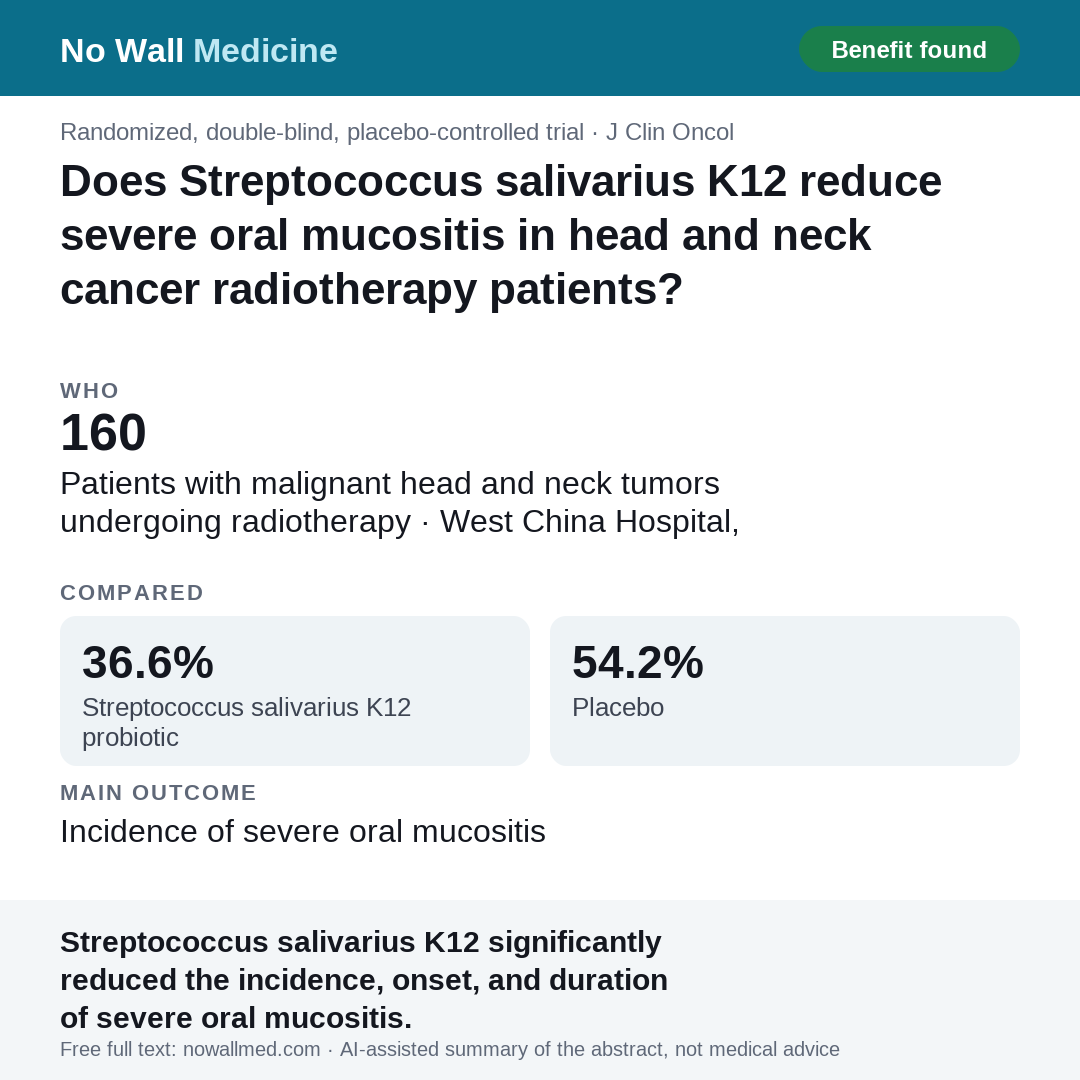
Streptococcus salivarius K12 Alleviates Oral Mucositis in Patients Undergoing Radiotherapy for Malignant Head and Neck Tumors: A Randomized Controlled Trial
Randomized, double-blind, placebo-controlled trialBenefit found
Does Streptococcus salivarius K12 reduce severe oral mucositis in head and neck cancer radiotherapy patients?
Who
160
Patients with malignant head and neck tumors undergoing radiotherapy · West China Hospital, Chengdu, China
Compared
36.6%Streptococcus salivarius K12 probiotic
54.2%Placebo
Main outcome
Incidence of severe oral mucositis
Result: hazard ratio 0.55 (95% CI 0.34 to 0.89)
Bottom line: Streptococcus salivarius K12 significantly reduced the incidence, onset, and duration of severe oral mucositis.
J Clin Oncol · 2024-01-12Download image
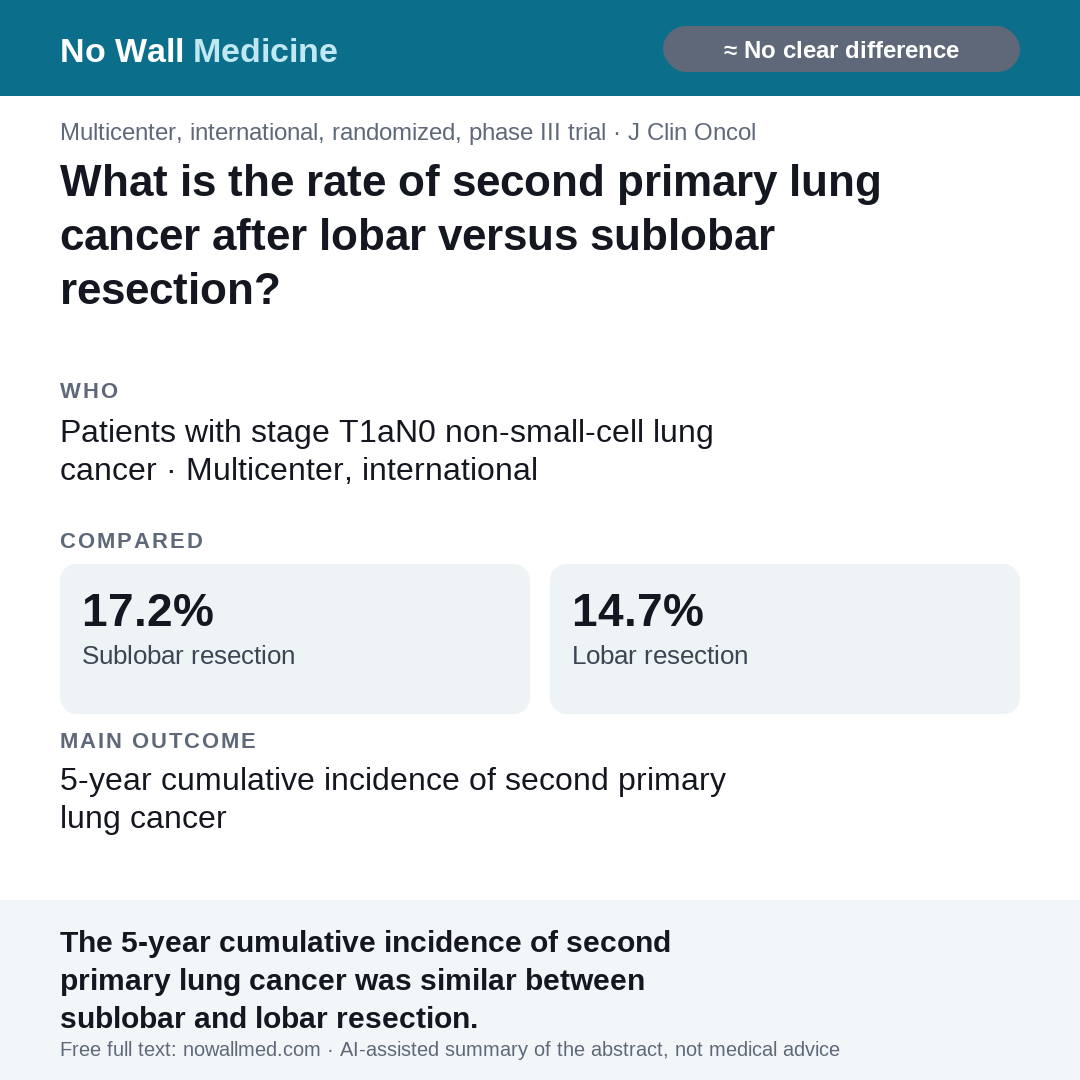
Secondary Analysis of the Rate of Second Primary Lung Cancer From Cancer and Leukemia Group B 140503 (Alliance) Trial of Lobar Versus Sublobar Resection for T1aN0 Non-Small-Cell Lung Cancer
Multicenter, international, randomized, phase III trialNo clear difference
What is the rate of second primary lung cancer after lobar versus sublobar resection?
Who
Patients with stage T1aN0 non-small-cell lung cancer · Multicenter, international
Compared
17.2%Sublobar resection (95% CI, 12.7 to 21.5)
14.7%Lobar resection (95% CI, 10.6 to 18.7)
Main outcome
5-year cumulative incidence of second primary lung cancer
Bottom line: The 5-year cumulative incidence of second primary lung cancer was similar between sublobar and lobar resection.
J Clin Oncol · 2024-01-12Download image
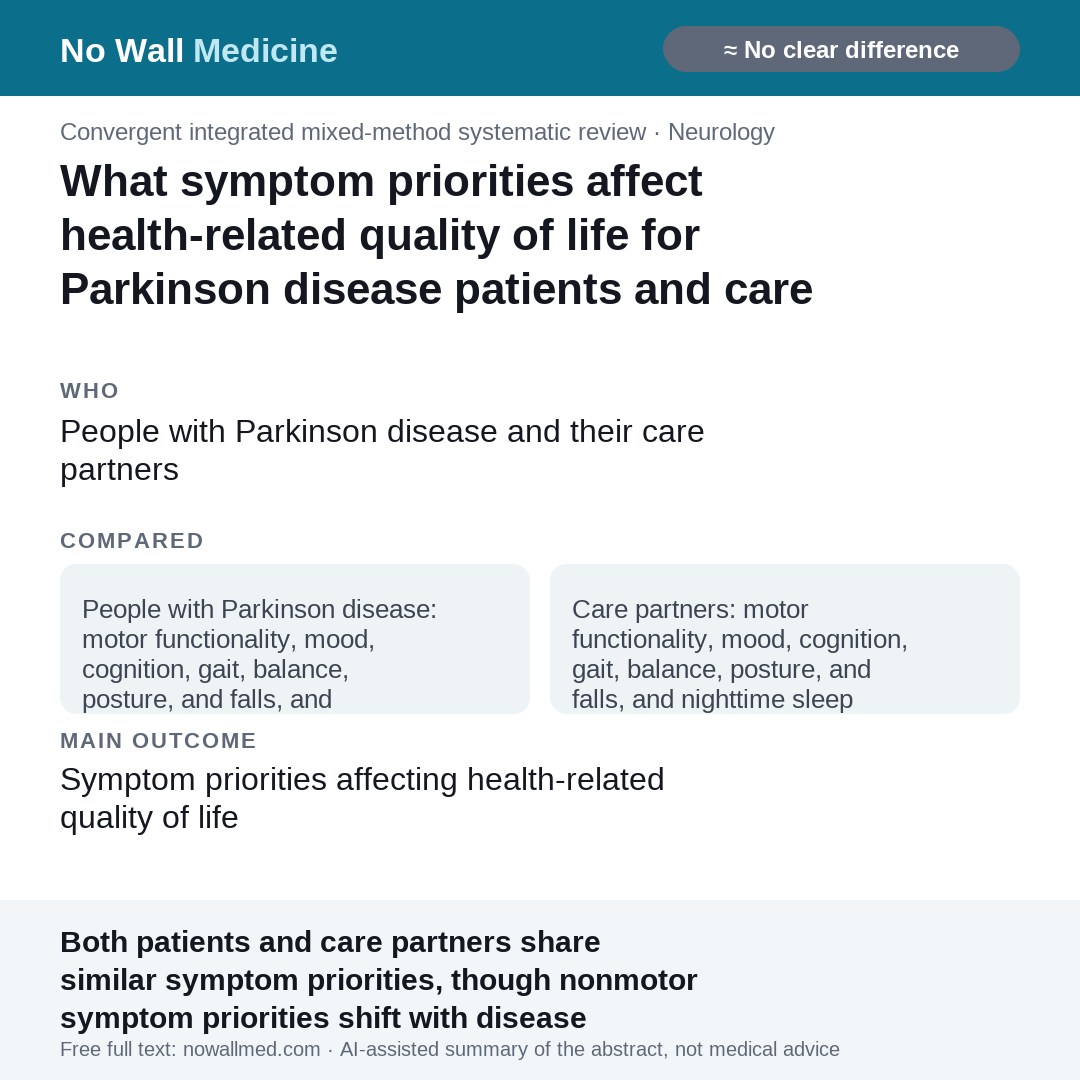
Patient With Parkinson Disease and Care Partner Perceptions of Key Domains Affecting Health-Related Quality of Life: Systematic Review
Convergent integrated mixed-method systematic reviewNo clear difference
What symptom priorities affect health-related quality of life for Parkinson disease patients and care partners?
Who
People with Parkinson disease and their care partners
Compared
People with Parkinson disease: motor functionality, mood, cognition, gait, balance, posture, and falls, and nighttime sleep disorders
Care partners: motor functionality, mood, cognition, gait, balance, posture, and falls, and nighttime sleep disorders
Main outcome
Symptom priorities affecting health-related quality of life
Bottom line: Both patients and care partners share similar symptom priorities, though nonmotor symptom priorities shift with disease severity.
Neurology · 2024-01-12Download image