Visual abstracts
New randomized trials and meta-analyses from leading journals at a glance: who was studied, what was compared, and what was found. Every paper is free to read in full.
All specialtiesCardiology 2449Oncology 2079Gastroenterology & Hepatology 933Infectious Disease 1520Neurology 979Psychiatry & Mental Health 1142Pulmonology 1021Critical Care 678Endocrinology & Diabetes 1267Pediatrics 1429Surgery 1244Orthopedics & Sports Medicine 446Neurosurgery 299Cardiothoracic & Vascular Surgery 269Plastic & Reconstructive Surgery 366Nephrology 509Rheumatology 345Hematology 528Dermatology 279Ophthalmology 287Obstetrics & Gynecology 796Public & Global Health 445Radiology & Imaging 332Anesthesiology 490Urology 409ENT (Otolaryngology) 306Emergency Medicine 277Allergy & Immunology 152Geriatrics 514Family Medicine & Primary Care 282Medical Genetics & Genomics 262Pathology & Laboratory Medicine 77Physical Medicine & Rehabilitation 408Palliative Care 206Nutrition 636Digital Health & AI 1197General Medicine 177
Effect of HEPA Filtration Air Purifiers on Blood Pressure: A Pragmatic Randomized Crossover Trial
Pragmatic randomized crossover trialBenefit found
Do in-home HEPA air purifiers reduce blood pressure in adults living near highways?
Who
154
Adults living adjacent to highways
Compared
HEPA filtration: 2.8-mm Hg mean reduction in systolic blood pressure
Sham filtration: 0.2-mm Hg mean increase in systolic blood pressure
Main outcome
Mean change in systolic and diastolic blood pressure
Result: 3.0-mm Hg mean difference in favor of HEPA filtration (P = 0.04)
Bottom line: HEPA air purifiers significantly reduced systolic blood pressure for people with elevated blood pressure.
JACC · 2025-08-06Download image

Artificial Intelligence-Augmented Human Instruction and Surgical Simulation Performance: A Randomized Clinical Trial
Single-blinded randomized clinical trialBenefit found
Does artificial intelligence-augmented personalized expert instruction improve surgical performance and skill transfer?
Who
87
Medical students without prior virtual reality surgical simulator use · Montreal, Quebec, Canada
Compared
Intelligent tutor instruction
Expert feedback in identical words to tutor
Artificial intelligence data-informed personalized expert feedback: mean difference 0.20 (95% CI 0.06 to 0.34) for realistic task
Main outcome
Change in overall surgical performance and skill transfer
Result: mean difference 0.26 (95% CI 0.09 to 0.43) for trial 5
Bottom line: Personalized expert instruction enhanced surgical performance and skill transfer compared to intelligent tutor instruction alone.
JAMA Surg · 2025-08-06Download image

Induction chemotherapy and molecular MRD influence outcomes in KMT2A-rearranged AML
Analysis of 2 large sequential randomized trialsBenefit found
Does induction chemotherapy and molecular measurable residual disease influence outcomes in KMT2A-rearranged acute myeloid leukemia?
Who
217
Patients with KMT2A-rearranged acute myeloid leukemia
Compared
FLAG-Ida: markedly lower rates of relapse
other chemotherapy regimens
Main outcome
relapse and death
Bottom line: FLAG-Ida resulted in lower relapse rates and molecular measurable residual disease predicts relapse and death.
Blood · 2025-08-06Download image
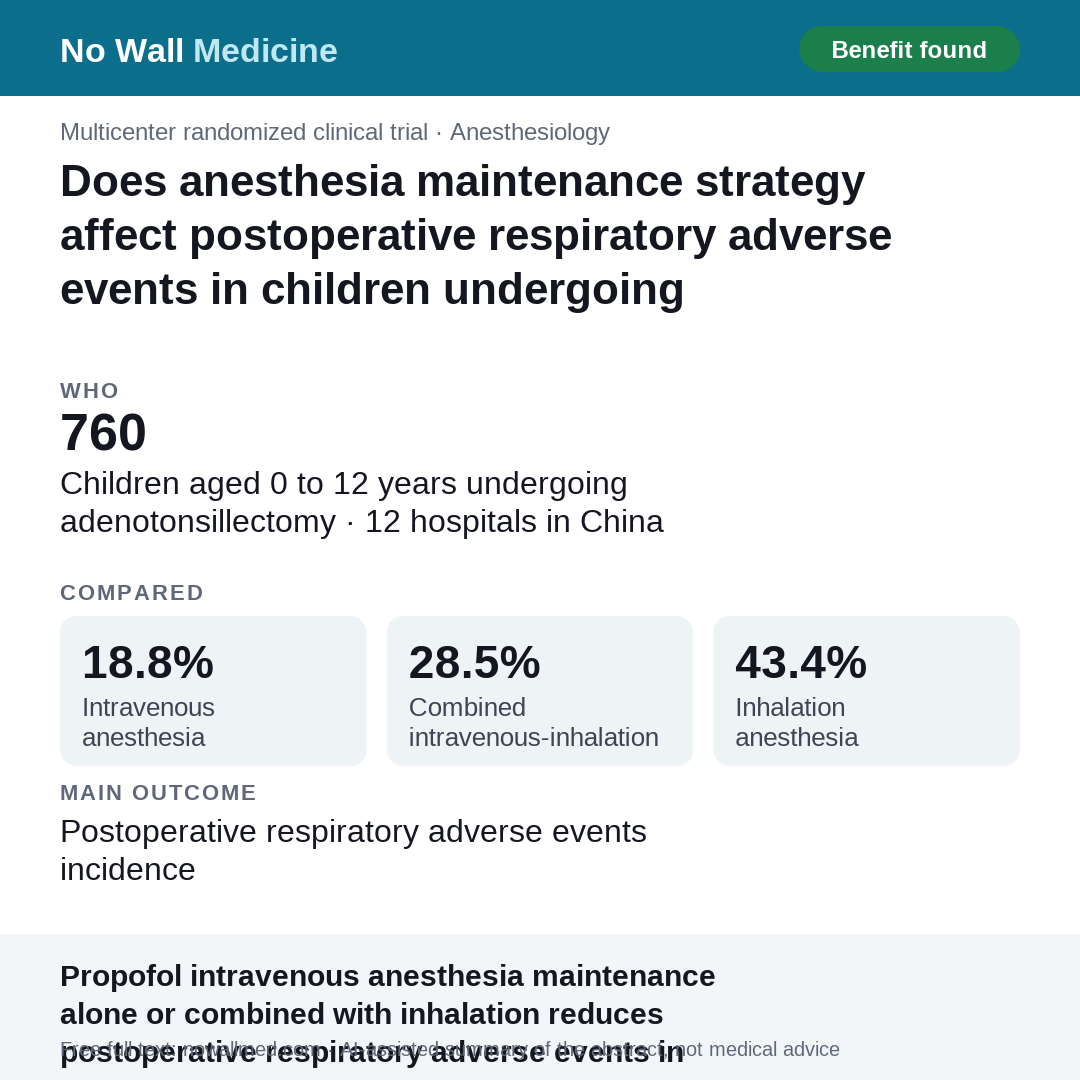
Effect of Intravenous, Inhalational, or Combined Anesthesia Maintenance on Postoperative Respiratory Adverse Events in Children Undergoing Adenotonsillectomy (AmPRAEC): A Multicenter Randomized Clinical Trial
Multicenter randomized clinical trialBenefit found
Does anesthesia maintenance strategy affect postoperative respiratory adverse events in children undergoing adenotonsillectomy?
Who
760
Children aged 0 to 12 years undergoing adenotonsillectomy · 12 hospitals in China
Compared
18.8%Intravenous anesthesia maintenance
28.5%Combined intravenous-inhalation anesthesia maintenance
43.4%Inhalation anesthesia maintenance
Main outcome
Postoperative respiratory adverse events incidence
Result: adjusted odds ratio 0.25 (95% CI 0.16 to 0.39)
Bottom line: Propofol intravenous anesthesia maintenance alone or combined with inhalation reduces postoperative respiratory adverse events in children.
Anesthesiology · 2025-08-06Download image
Investigating the impact of dipeptidyl peptidase-1 inhibition in humans using multi-omics
Randomized, placebo-controlled trial substudyMixed results
What are the effects of dipeptidyl peptidase-1 inhibition on the immune response?
Who
161
Patients hospitalized for severe coronavirus disease 2019 · 2 United Kingdom hospitals
Compared
brensocatib: reductions in cathepsin G and azurocidin-1 by day 29
placebo
Main outcome
immune response profiling including proteomics, cytokines, and mRNA sequencing
Bottom line: Brensocatib altered multiple neutrophil proteins including azurocidin-1 but did not change neutrophil extracellular traps or phagocytosis.
JACI · 2025-08-06Download image
Early detection of sexually transmitted infections from skin lesions with deep learning: a systematic review and meta-analysis
Systematic review and meta-analysisBenefit found
How accurate are deep learning algorithms in detecting sexually transmitted infections from skin lesions?
Who
Clinical skin lesion images of sexually transmitted infections
Compared
Mpox: sensitivity 0·97 (95% CI 0·95-0·98) and specificity 0·99 (0·98-0·99)
Scabies: sensitivity 0·95 (0·90-0·98) and specificity 0·97 (0·86-0·99)
Main outcome
Diagnostic performance assessed by pooled sensitivity and specificity
Bottom line: Deep learning shows potential for early detection of sexually transmitted infections, but generalisability to real-world practice remains a challenge.
Limitation: Limited heterogeneous data and quality issues regarding data, labelling, and bias assessments may impede generalisability.
Funded by: City University of Hong Kong
Lancet Digit Health · 2025-08-06Download image

Nomenclature, definitions, and methodological approaches to estimate the association between antimicrobial treatment and clinical outcomes of drug-resistant bloodstream infections
Systematic reviewMixed results
How does misaligned initial antibiotic treatment affect clinical outcomes in drug-resistant bloodstream infections?
Who
187
Patients with drug-resistant bloodstream infections caused by ESKAPE pathogens · PubMed and EMBASE
Compared
Misaligned initial antibiotic treatment: association in 122 of 186 studies (65.6%) for mortality
Hospital length of stay: shown in two of nine studies
Main outcome
mortality and hospital length of stay
Bottom line: Misaligned initial antibiotic treatment is associated with mortality in most studies, but high methodological heterogeneity and bias exist.
Limitation: No study scored a low risk of bias due to residual confounding and time-dependent bias.
Clin Microbiol Infect · 2025-08-06Download image

Digitally enhanced ketogenic diet versus low-fat diet for cardio-renal-metabolic health in a predominantly Hispanic adult population with overweight or obesity: Pilot randomised clinical trial
Pilot randomized clinical trialMixed results
Is a digitally enhanced ketogenic diet better than a low-fat diet for cardio-renal-metabolic health?
Who
60
60 adults living with overweight or obesity, 58.3% Hispanic
Compared
Ketogenic diet: HbA1c 3-month: 5.5±0.7%
Low-fat diet
Main outcome
Clinical outcomes including weight, blood pressure, and HbA1c
Bottom line: Both diets were efficacious for weight reduction, but the ketogenic diet showed potential benefits for glycaemic and blood pressure control.
Diabetes Obes Metab · 2025-08-06Download image

Benefits of first-pass reperfusion: secondary analysis based on three randomized multicenter trials in China
Secondary analysis of three randomized multicenter trialsBenefit found
Does first-pass reperfusion in stent-retriever thrombectomy improve clinical outcomes in acute ischemic stroke?
Who
543
Patients with acute large vessel occlusion · China
Compared
First-pass reperfusion: lower NIHSS score, lower mRS score, and lower mortality rate at 90 days
Non-first-pass reperfusion
Main outcome
Clinical outcomes including NIHSS, mRS score, and mortality
Bottom line: First-pass reperfusion is associated with improved clinical outcomes and reduced complication rates in acute ischemic stroke.
Int J Surg · 2025-08-06Download image
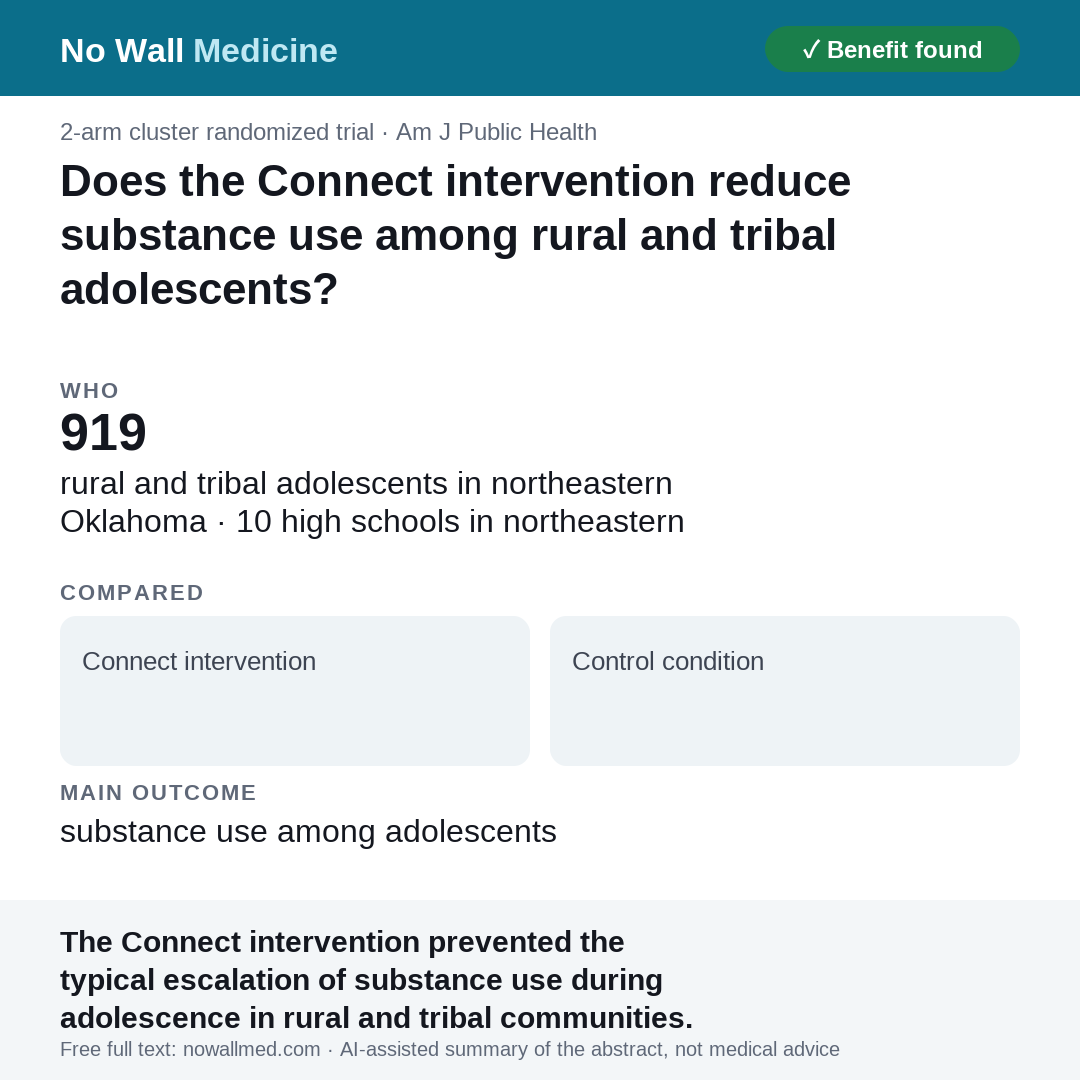
Primary Prevention of Drug Overdoses in Rural Low-Resource and Tribal Communities: A Cluster Randomized Trial
2-arm cluster randomized trialBenefit found
Does the Connect intervention reduce substance use among rural and tribal adolescents?
Who
919
rural and tribal adolescents in northeastern Oklahoma · 10 high schools in northeastern Oklahoma
Compared
Connect intervention
Control condition
Main outcome
substance use among adolescents
Result: rate ratio 0.82 (95% confidence interval 0.72 to 0.93)
Bottom line: The Connect intervention prevented the typical escalation of substance use during adolescence in rural and tribal communities.
Am J Public Health · 2025-08-06Download image
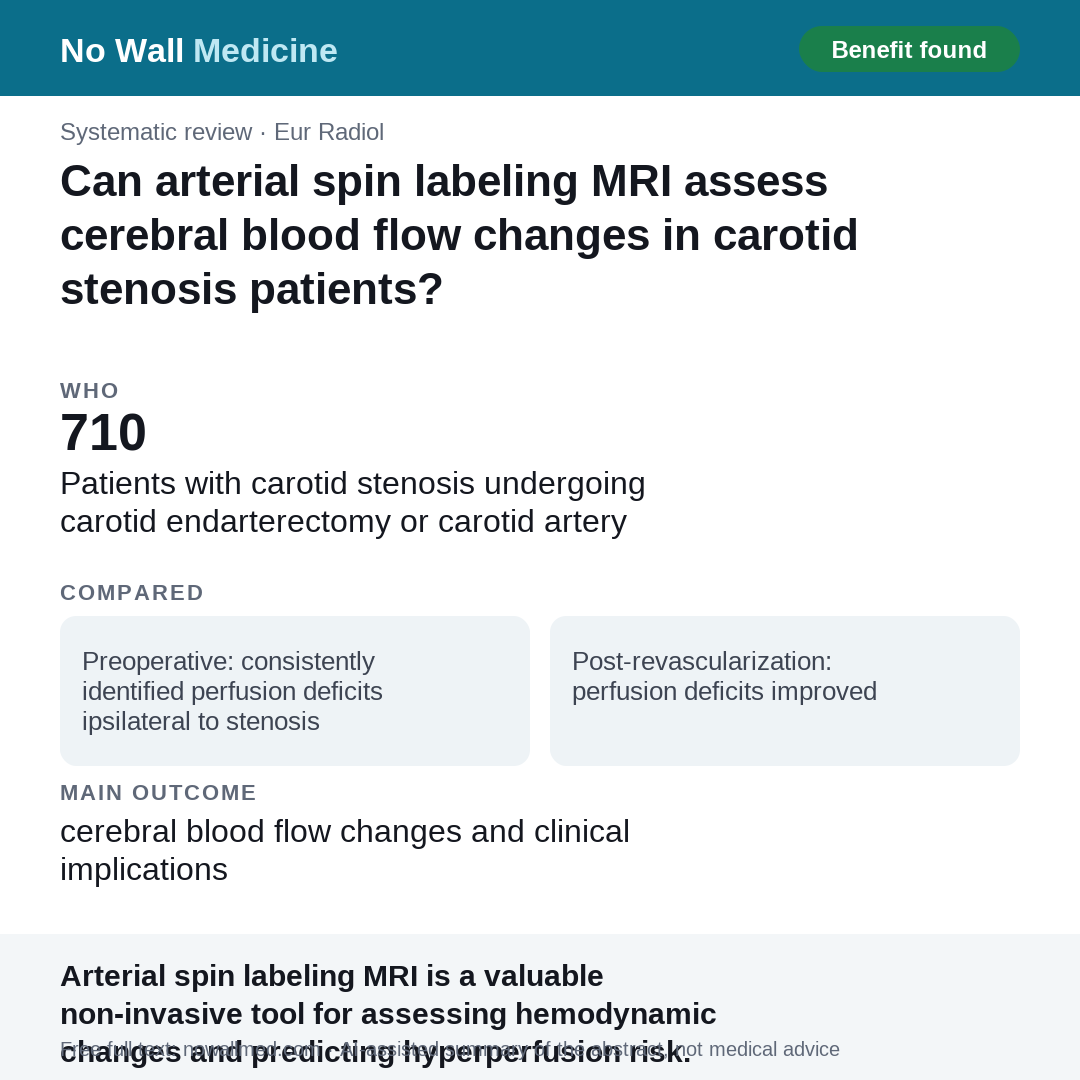
Arterial spin labeling MRI in patients undergoing carotid artery revascularization: a systematic review of the hemodynamic changes and clinical implications
Systematic reviewBenefit found
Can arterial spin labeling MRI assess cerebral blood flow changes in carotid stenosis patients?
Who
710
Patients with carotid stenosis undergoing carotid endarterectomy or carotid artery stenting
Compared
Preoperative: consistently identified perfusion deficits ipsilateral to stenosis
Post-revascularization: perfusion deficits improved
Main outcome
cerebral blood flow changes and clinical implications
Bottom line: Arterial spin labeling MRI is a valuable non-invasive tool for assessing hemodynamic changes and predicting hyperperfusion risk.
Eur Radiol · 2025-08-06Download image
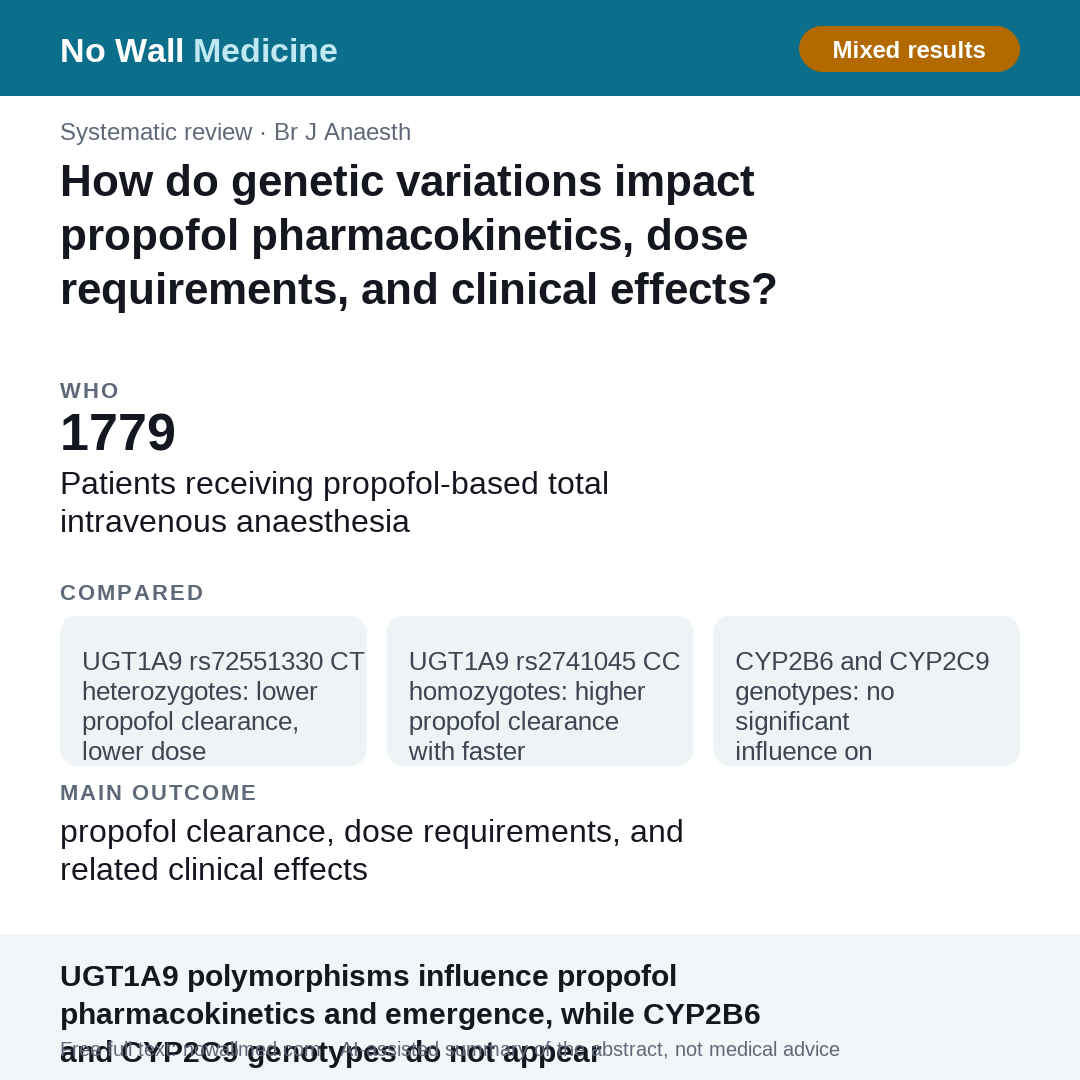
Impact of genetic variations on the pharmacokinetics, dose requirements, and clinical effects of propofol: a systematic review
Systematic reviewMixed results
How do genetic variations impact propofol pharmacokinetics, dose requirements, and clinical effects?
Who
1779
Patients receiving propofol-based total intravenous anaesthesia
Compared
UGT1A9 rs72551330 CT heterozygotes: lower propofol clearance, lower dose requirements, and longer emergence times
UGT1A9 rs2741045 CC homozygotes: higher propofol clearance with faster emergence
CYP2B6 and CYP2C9 genotypes: no significant influence on propofol pharmacokinetics or clinical outcomes
Main outcome
propofol clearance, dose requirements, and related clinical effects
Bottom line: UGT1A9 polymorphisms influence propofol pharmacokinetics and emergence, while CYP2B6 and CYP2C9 genotypes do not appear significant.
Br J Anaesth · 2025-08-06Download image
Effects of isolated single fibers, fiber mixtures, and fiber-rich whole foods on glucose homeostasis in individuals with overweight and obesity: A systematic review and meta-analysis
Systematic review and meta-analysisBenefit found
Do dietary fibers improve glucose homeostasis in individuals with overweight and obesity?
Who
3420
Individuals with overweight or obesity without type 2 diabetes mellitus
Compared
Dietary fiber supplementation
Placebo treatments
Main outcome
Glucose homeostasis and insulin resistance markers
Result: fasting glucose -0.07 mmol/L (95 % CI: -0.12, -0.02)
Bottom line: Dietary fiber supplementation improves glucose homeostasis and insulin sensitivity in individuals with overweight and obesity.
Clin Nutr · 2025-08-06Download image

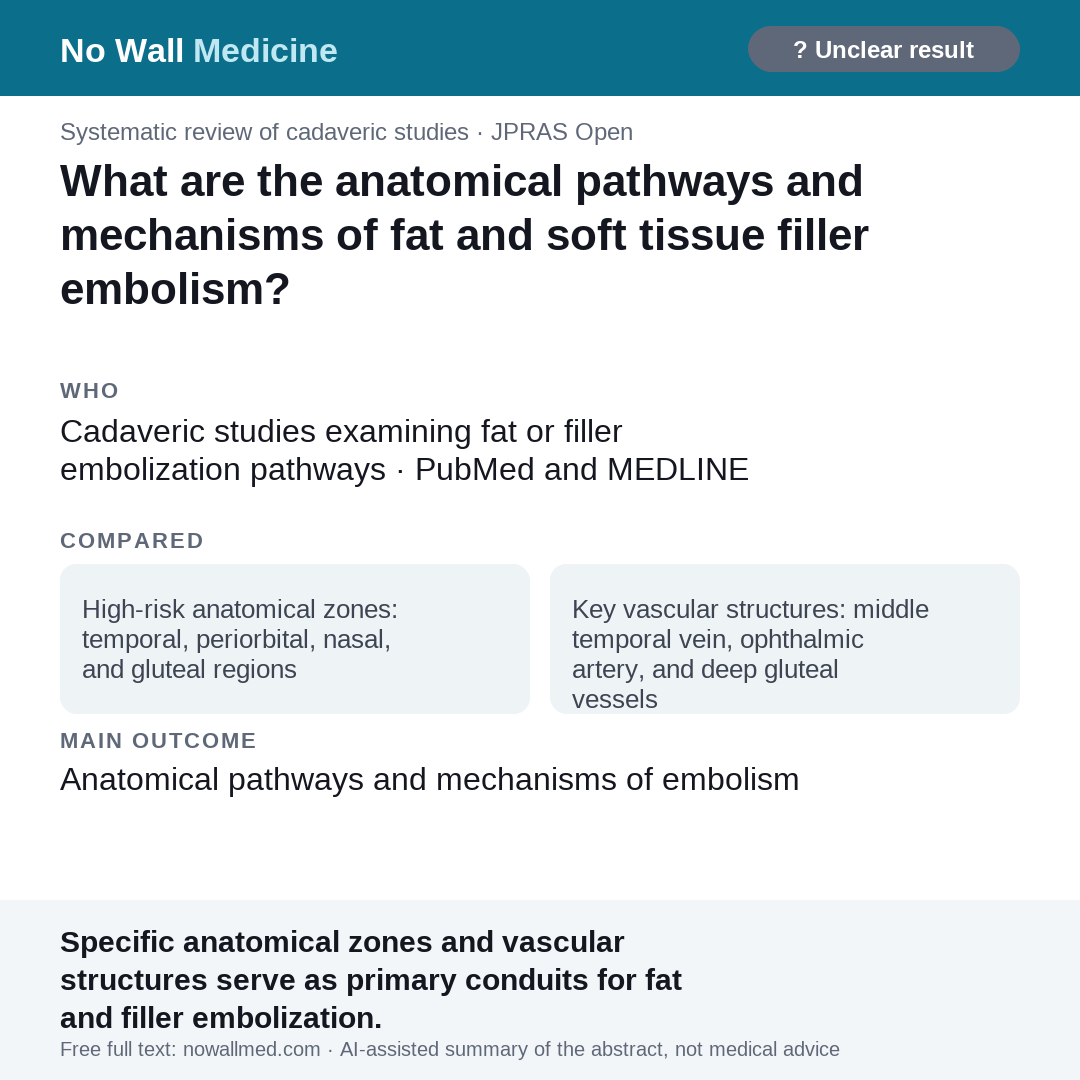
Mechanisms of fat and soft tissue filler embolism following aesthetic injections: A cadaveric systematic review
Systematic review of cadaveric studiesUnclear result
What are the anatomical pathways and mechanisms of fat and soft tissue filler embolism?
Who
Cadaveric studies examining fat or filler embolization pathways · PubMed and MEDLINE
Compared
High-risk anatomical zones: temporal, periorbital, nasal, and gluteal regions
Key vascular structures: middle temporal vein, ophthalmic artery, and deep gluteal vessels
Main outcome
Anatomical pathways and mechanisms of embolism
Bottom line: Specific anatomical zones and vascular structures serve as primary conduits for fat and filler embolization.
Limitation: Differences from in vivo conditions and variations in injection techniques.
JPRAS Open · 2025-08-06Download image
Neurofilament light chain for prognostication after cardiac arrest-first steps towards validation
Validation study of previously identified cut-offsBenefit found
Can neurofilament light chain predict poor neurologic outcome after cardiac arrest?
Who
638
Comatose out-of-hospital cardiac arrest patients
Compared
24 hour cut-off (1232 pg/mL): 98% specificity
48 hour cut-off (1539 pg/mL): 98% specificity
Main outcome
Poor neurologic outcome (Cerebral Performance Category score greater than 2)
Result: area under the receiver operator curve 0.95 at 24 and 48 h
Bottom line: Neurofilament light chain levels at 24 or 48 hours provide excellent specificity for predicting poor neurologic outcomes after cardiac arrest.
Crit Care · 2025-08-06Download image

Neoadjuvant Immunotherapy in Bladder Cancer: Ushering in a New Era of Treatment-A Systematic Review of Current Evidence
Systematic review of prospective studiesBenefit found
What is the efficacy and safety of neoadjuvant immunotherapy for bladder cancer?
Who
Patients with muscle-invasive bladder cancer
Compared
Neoadjuvant immunotherapy: 54% pathological complete response rate
Chemotherapy alone
Main outcome
pathological complete response, overall survival, and adverse events
Bottom line: Neoadjuvant immunotherapy shows promising efficacy and manageable adverse events for muscle-invasive bladder cancer.
Limitation: Financial toxicity, absence of predictive biomarkers, and risk of significant immune-related adverse events.
Eur Urol Open Sci · 2025-08-06Download image

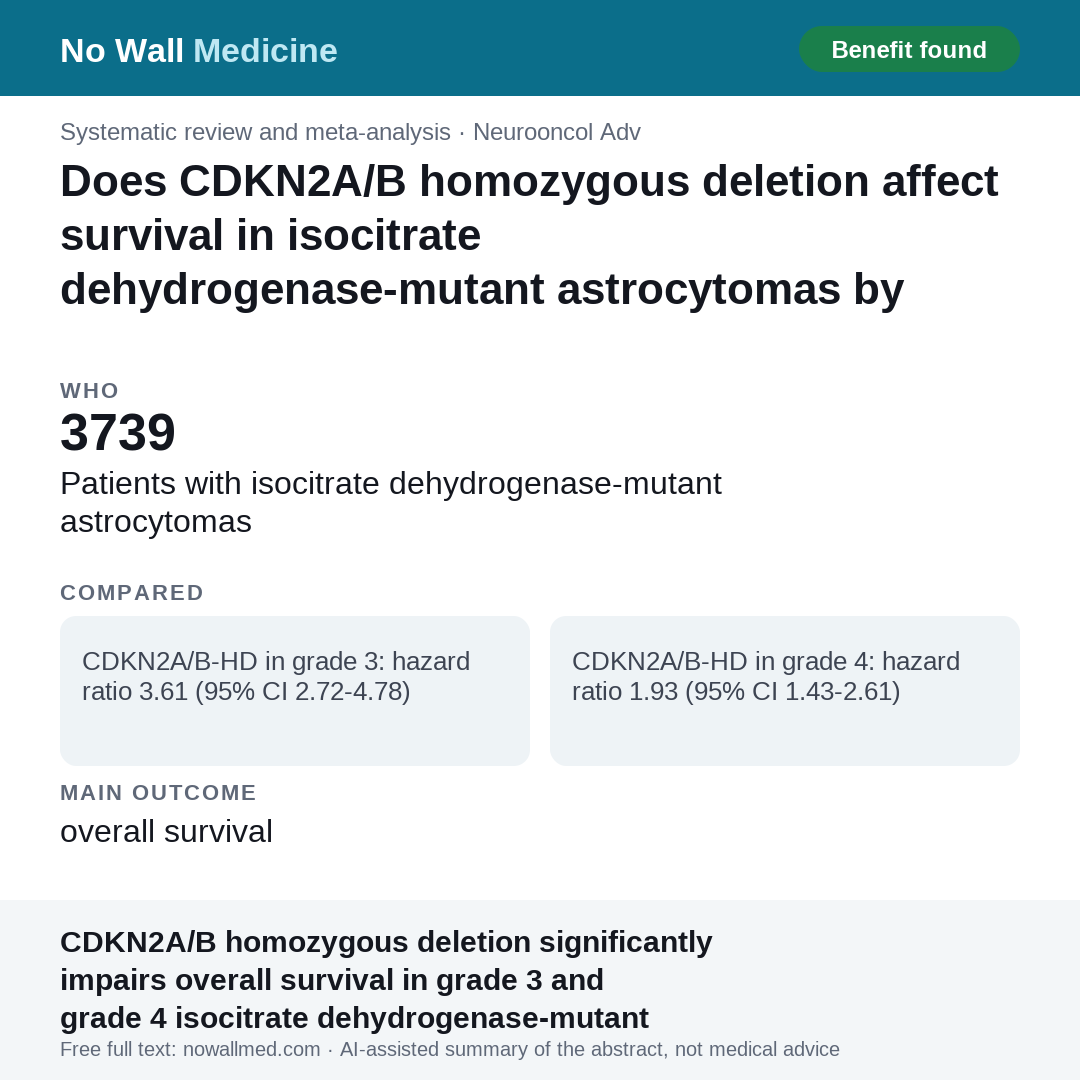
Prognostic implication of CDKN2A/B homozygous deletion on histological grades in isocitrate dehydrogenase-mutant astrocytomas: A systematic review and meta-analysis
Systematic review and meta-analysisBenefit found
Does CDKN2A/B homozygous deletion affect survival in isocitrate dehydrogenase-mutant astrocytomas by histological grade?
Who
3739
Patients with isocitrate dehydrogenase-mutant astrocytomas
Compared
CDKN2A/B-HD in grade 3: hazard ratio 3.61 (95% CI 2.72-4.78)
CDKN2A/B-HD in grade 4: hazard ratio 1.93 (95% CI 1.43-2.61)
Main outcome
overall survival
Result: hazard ratio 3.61 (95% CI 2.72-4.78) for grade 3; hazard ratio 1.93 (95% CI 1.43-2.61) for grade 4
Bottom line: CDKN2A/B homozygous deletion significantly impairs overall survival in grade 3 and grade 4 isocitrate dehydrogenase-mutant astrocytomas.
Limitation: evidence is insufficient for the classification of grade 2 with CDKN2A/B-HD due to paucity of data
Neurooncol Adv · 2025-08-06Download image
Outcomes of Open Versus Closed Rhinoplasty, a Systematic Review and Meta-analysis
Systematic review and meta-analysisNo clear difference
Are open and closed rhinoplasty techniques different in functional and aesthetic outcomes?
Who
1067
Adults undergoing rhinoplasty
Compared
Open rhinoplasty
Closed rhinoplasty
Main outcome
Rhinoplasty Outcome Evaluation score and Nasal Obstruction Symptom Evaluation score
Result: standardized mean difference -0.16 for ROE and 0.21 for NOSE
Bottom line: Open and closed rhinoplasty techniques show similar efficacy for functional and aesthetic outcomes.
Limitation: Absence of sample size calculations and biased endpoint assessments.
Plast Reconstr Surg Glob Open · 2025-08-06Download image

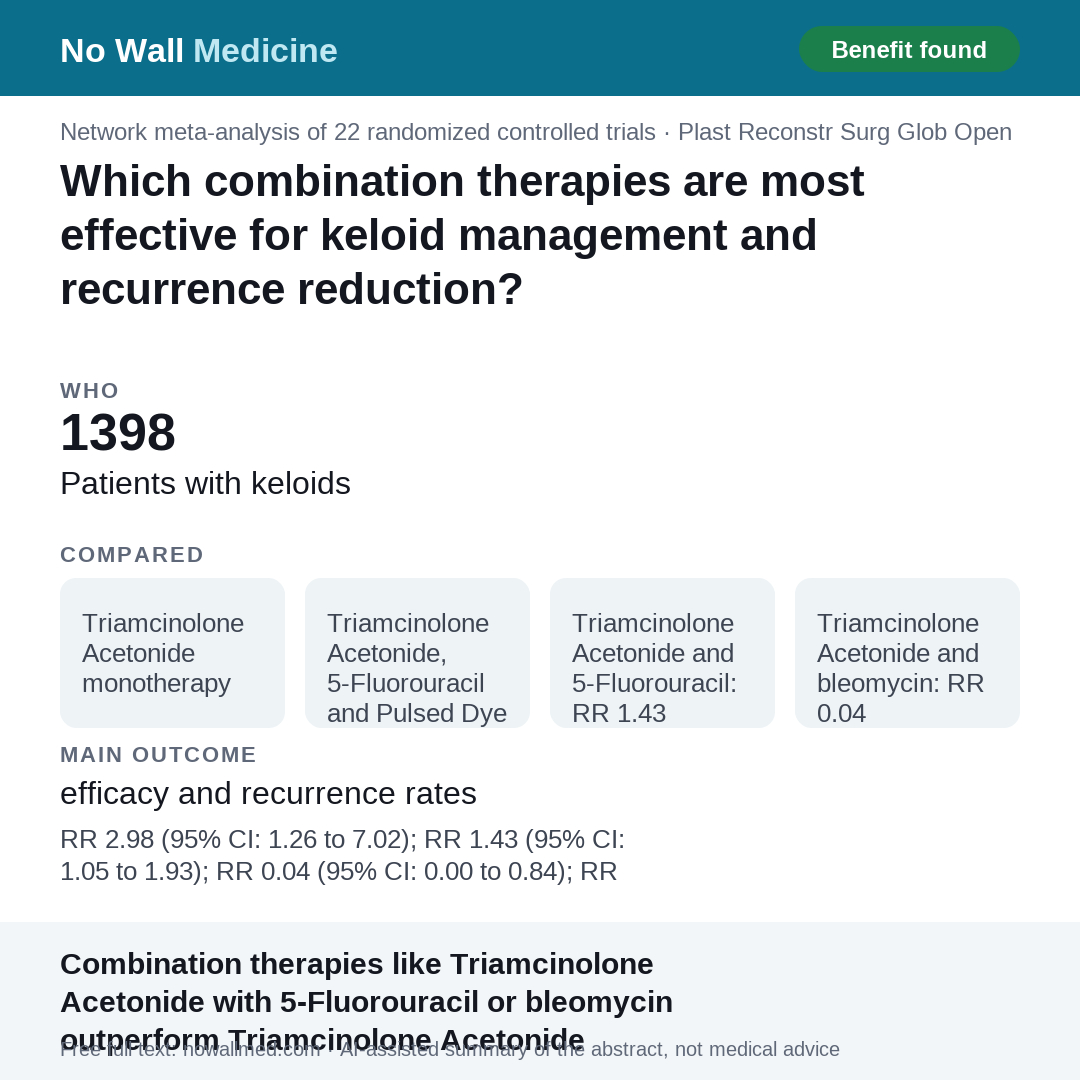
Comparative Efficacy and Recurrence of Combination Therapies in Keloid Management: A Systematic Review and Network Meta-analysis
Network meta-analysis of 22 randomized controlled trialsBenefit found
Which combination therapies are most effective for keloid management and recurrence reduction?
Who
1398
Patients with keloids
Compared
Triamcinolone Acetonide monotherapy
Triamcinolone Acetonide, 5-Fluorouracil and Pulsed Dye Laser: RR 2.98
Triamcinolone Acetonide and 5-Fluorouracil: RR 1.43
Triamcinolone Acetonide and bleomycin: RR 0.04
Main outcome
efficacy and recurrence rates
Result: RR 2.98 (95% CI: 1.26 to 7.02); RR 1.43 (95% CI: 1.05 to 1.93); RR 0.04 (95% CI: 0.00 to 0.84); RR 0.23 (95% CI: 0.07 to 0.73)
Bottom line: Combination therapies like Triamcinolone Acetonide with 5-Fluorouracil or bleomycin outperform Triamcinolone Acetonide monotherapy for keloid management.
Plast Reconstr Surg Glob Open · 2025-08-06Download image
Neurocognitive evaluation in patients with intracranial Meningiomas: A systematic review
Systematic reviewMixed results
Neurocognitive evaluation in meningioma patients
Who
patients with intracranial meningiomas
Compared
Meningioma patients
Postoperative patients
Main outcome
cognitive function
Bottom line: Meningiomas impact cognitive function, improve postoperatively
Brain Spine · 2025-08-06Download image