Visual abstracts
New randomized trials and meta-analyses from leading journals at a glance: who was studied, what was compared, and what was found. Every paper is free to read in full.
All specialtiesCardiology 4763Oncology 4043Gastroenterology & Hepatology 1903Infectious Disease 3756Neurology 1872Psychiatry & Mental Health 2216Pulmonology 2044Critical Care 1319Endocrinology & Diabetes 2544Pediatrics 2889Surgery 2480Orthopedics & Sports Medicine 917Neurosurgery 525Cardiothoracic & Vascular Surgery 656Plastic & Reconstructive Surgery 574Nephrology 1107Rheumatology 810Hematology 1090Dermatology 611Ophthalmology 532Obstetrics & Gynecology 1645Public & Global Health 1037Radiology & Imaging 619Anesthesiology 958Urology 745ENT (Otolaryngology) 494Emergency Medicine 481Allergy & Immunology 309Geriatrics 972Family Medicine & Primary Care 534Medical Genetics & Genomics 659Pathology & Laboratory Medicine 156Physical Medicine & Rehabilitation 734Palliative Care 421Nutrition 1560Digital Health & AI 2137General Medicine 318
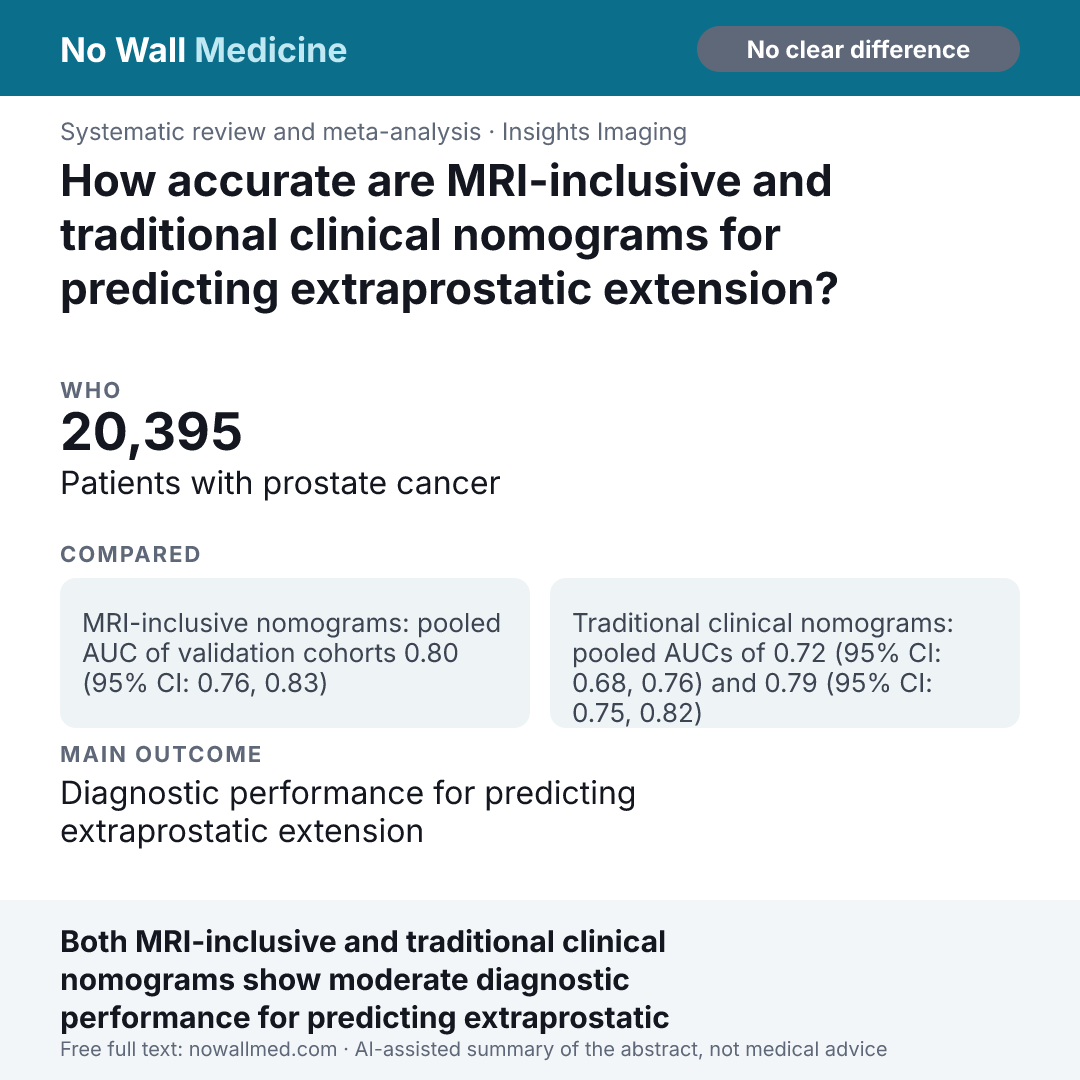
Diagnostic performance of prediction models for extraprostatic extension in prostate cancer: a systematic review and meta-analysis
Systematic review and meta-analysisNo clear difference
How accurate are MRI-inclusive and traditional clinical nomograms for predicting extraprostatic extension?
Who
20,395
Patients with prostate cancer
Compared
MRI-inclusive nomograms: pooled AUC of validation cohorts 0.80 (95% CI: 0.76, 0.83)
Traditional clinical nomograms: pooled AUCs of 0.72 (95% CI: 0.68, 0.76) and 0.79 (95% CI: 0.75, 0.82)
Main outcome
Diagnostic performance for predicting extraprostatic extension
Bottom line: Both MRI-inclusive and traditional clinical nomograms show moderate diagnostic performance for predicting extraprostatic extension in prostate cancer.
Insights Imaging · 2023-08-22 · Save PNG
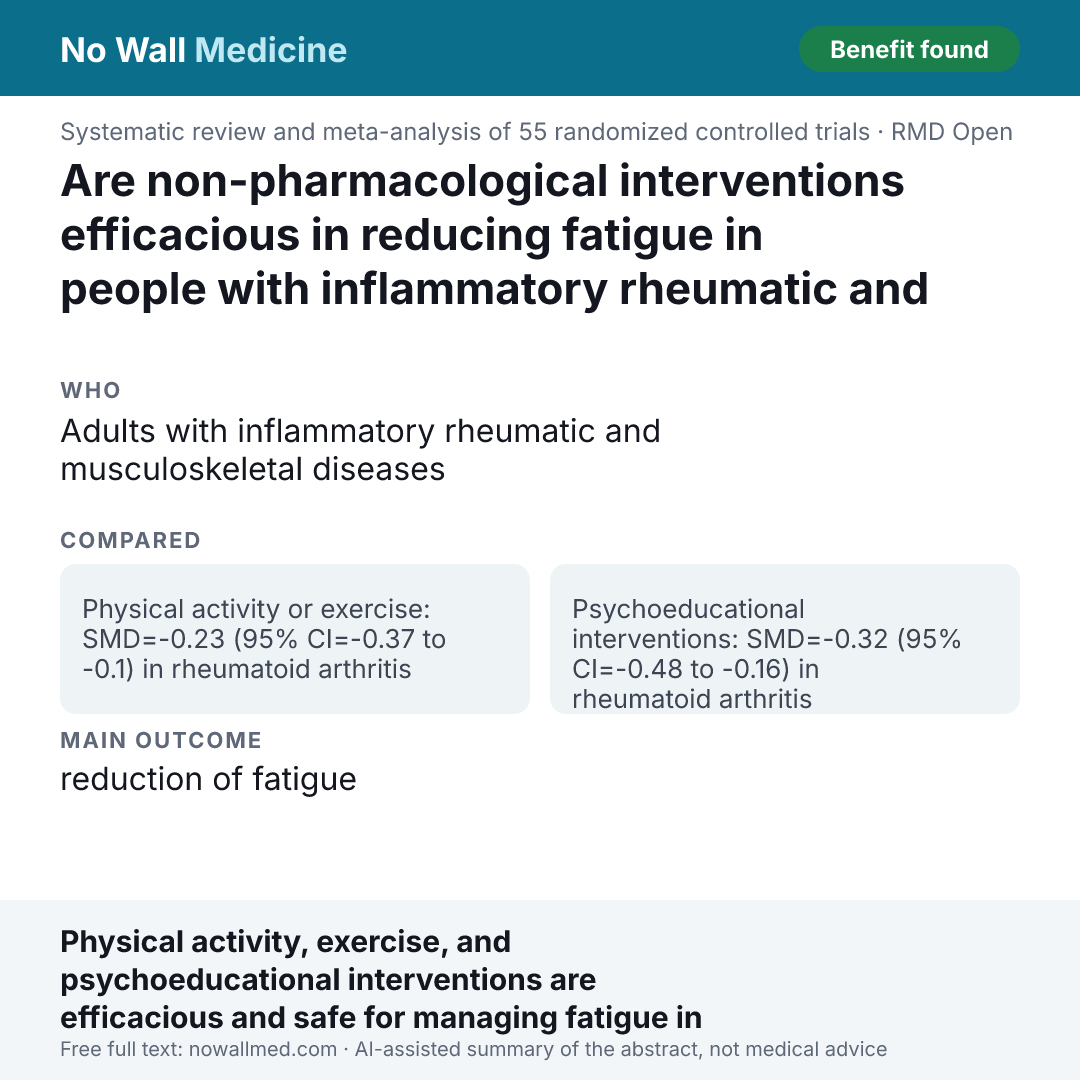
Efficacy of non-pharmacological interventions: a systematic review informing the 2023 EULAR recommendations for the management of fatigue in people with inflammatory rheumatic and musculoskeletal diseases
Systematic review and meta-analysis of 55 randomized controlled trialsBenefit found
Are non-pharmacological interventions efficacious in reducing fatigue in people with inflammatory rheumatic and musculoskeletal diseases?
Who
Adults with inflammatory rheumatic and musculoskeletal diseases
Compared
Physical activity or exercise: SMD=-0.23 (95% CI=-0.37 to -0.1) in rheumatoid arthritis
Psychoeducational interventions: SMD=-0.32 (95% CI=-0.48 to -0.16) in rheumatoid arthritis
Main outcome
reduction of fatigue
Bottom line: Physical activity, exercise, and psychoeducational interventions are efficacious and safe for managing fatigue in people with inflammatory rheumatic and musculoskeletal diseases.
RMD Open · 2023-08-22 · Save PNG
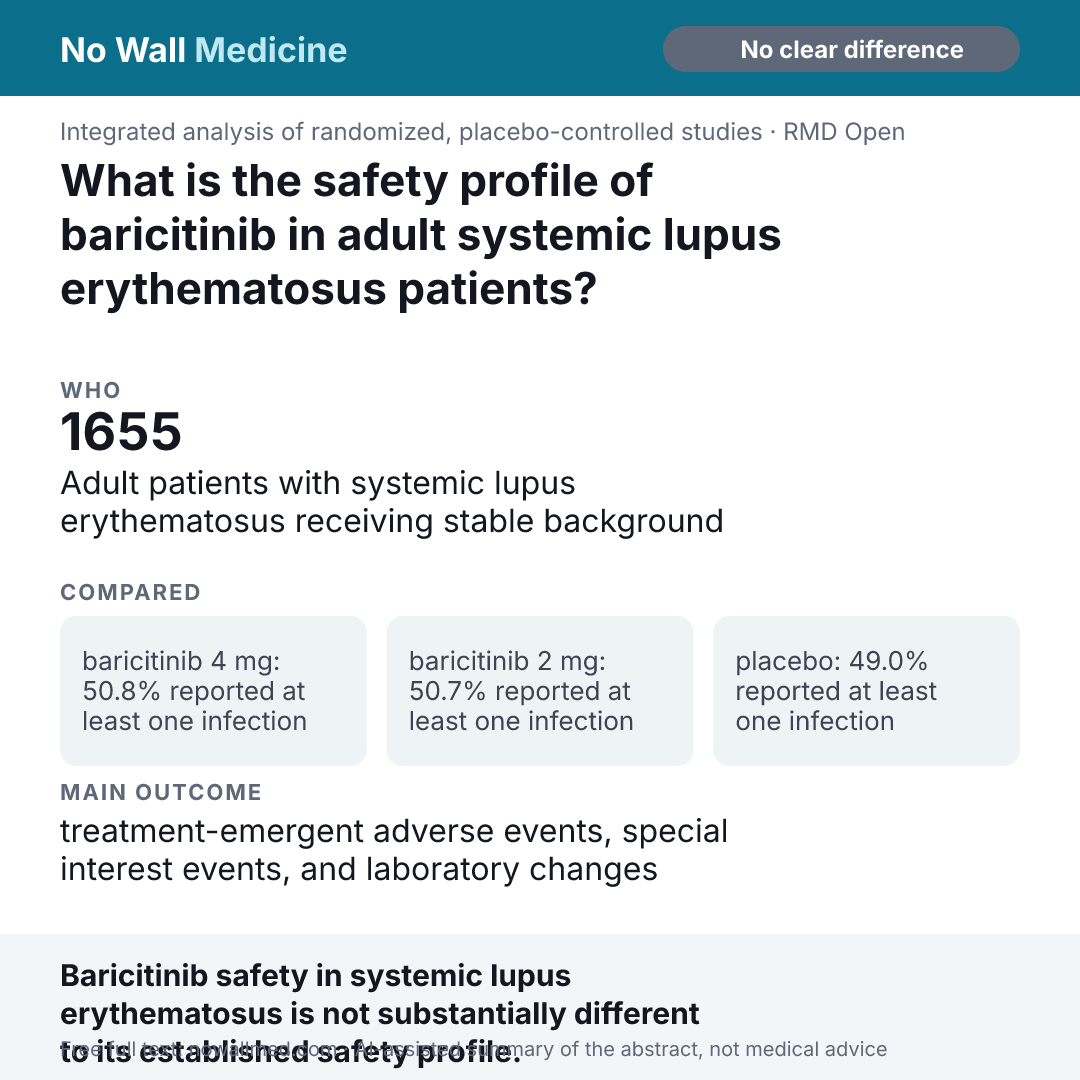
Safety profile of baricitinib in patients with systemic lupus erythematosus: an integrated analysis
Integrated analysis of randomized, placebo-controlled studiesNo clear difference
What is the safety profile of baricitinib in adult systemic lupus erythematosus patients?
Who
1655
Adult patients with systemic lupus erythematosus receiving stable background therapy
Compared
baricitinib 4 mg: 50.8% reported at least one infection
baricitinib 2 mg: 50.7% reported at least one infection
placebo: 49.0% reported at least one infection
Main outcome
treatment-emergent adverse events, special interest events, and laboratory changes
Bottom line: Baricitinib safety in systemic lupus erythematosus is not substantially different to its established safety profile.
RMD Open · 2023-08-22 · Save PNG
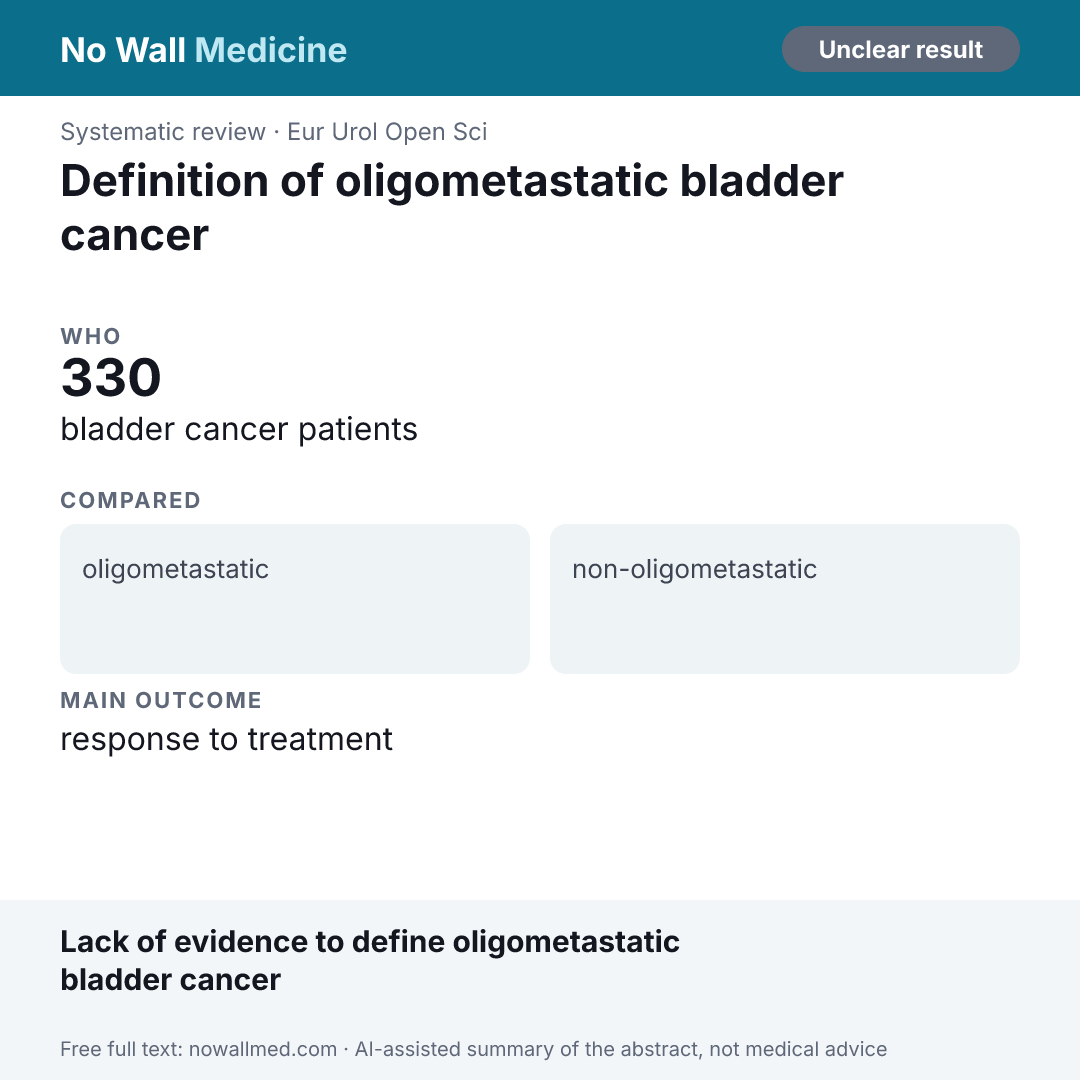
Defining Oligometastatic Bladder Cancer: A Systematic Review
Systematic reviewUnclear result
Definition of oligometastatic bladder cancer
Who
330
bladder cancer patients
Compared
oligometastatic
non-oligometastatic
Main outcome
response to treatment
Bottom line: Lack of evidence to define oligometastatic bladder cancer
Eur Urol Open Sci · 2023-08-22 · Save PNG
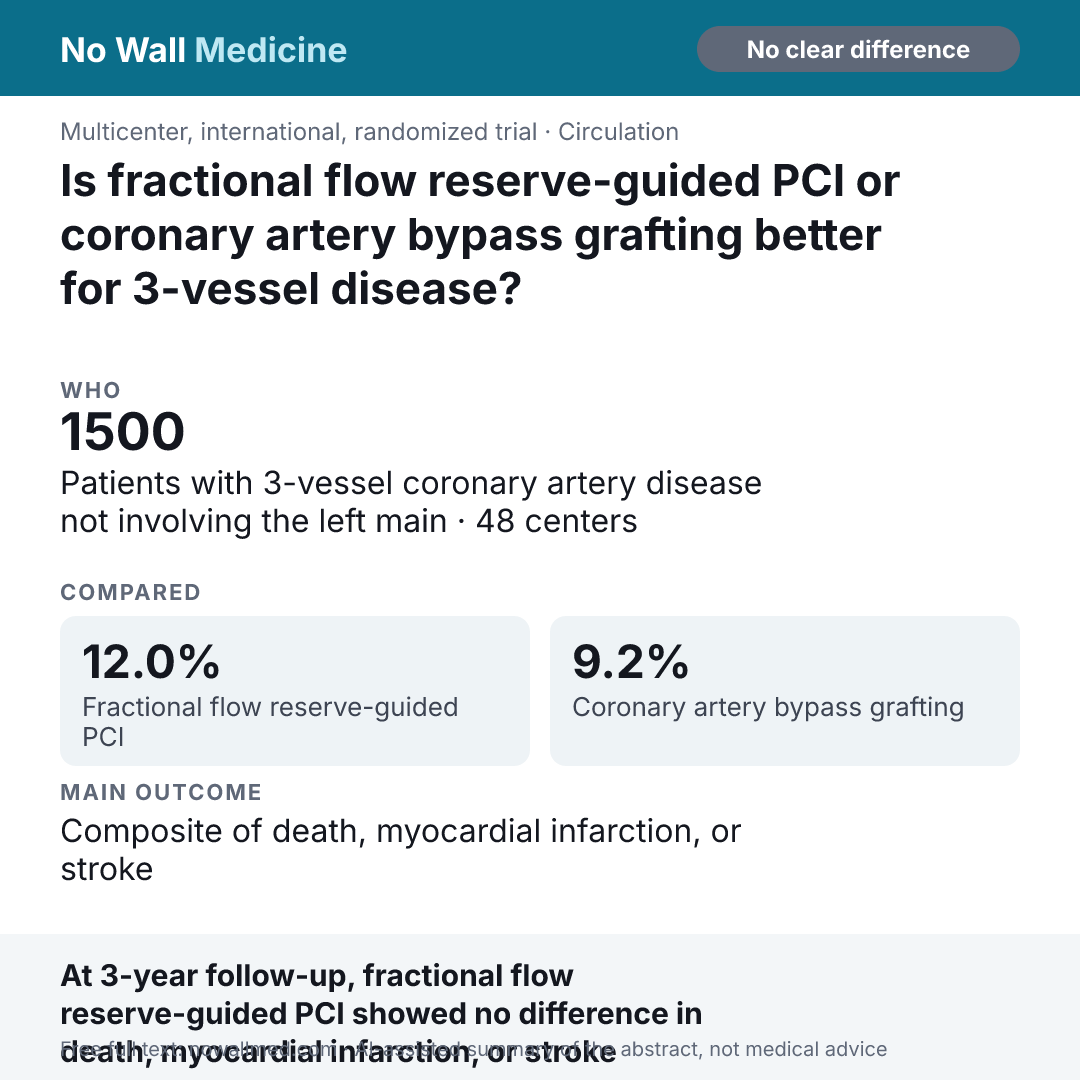
Fractional Flow Reserve-Guided PCI or Coronary Bypass Surgery for 3-Vessel Coronary Artery Disease: 3-Year Follow-Up of the FAME 3 Trial
Multicenter, international, randomized trialNo clear difference
Is fractional flow reserve-guided PCI or coronary artery bypass grafting better for 3-vessel disease?
Who
1500
Patients with 3-vessel coronary artery disease not involving the left main · 48 centers worldwide
Compared
12.0%Fractional flow reserve-guided PCI
9.2%Coronary artery bypass grafting
Main outcome
Composite of death, myocardial infarction, or stroke
Result: hazard ratio 1.3 (95% CI 0.98-1.83)
Bottom line: At 3-year follow-up, fractional flow reserve-guided PCI showed no difference in death, myocardial infarction, or stroke compared to bypass surgery.
Circulation · 2023-08-21 · Save PNG
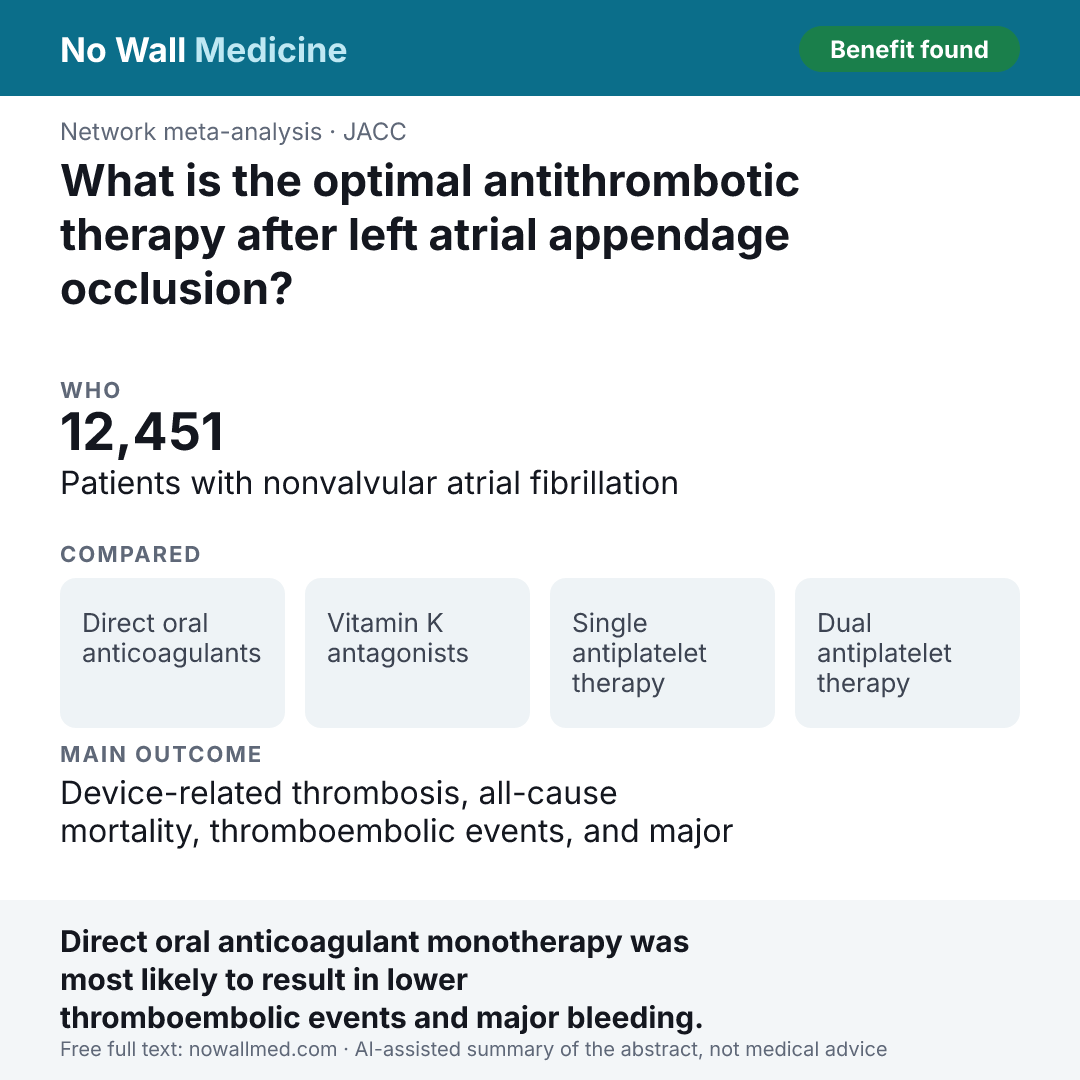
Network Meta-Analysis of Initial Antithrombotic Regimens After Left Atrial Appendage Occlusion
Network meta-analysisBenefit found
What is the optimal antithrombotic therapy after left atrial appendage occlusion?
Who
12,451
Patients with nonvalvular atrial fibrillation
Compared
Direct oral anticoagulants
Vitamin K antagonists
Single antiplatelet therapy
Dual antiplatelet therapy
Main outcome
Device-related thrombosis, all-cause mortality, thromboembolic events, and major bleeding
Result: OR: 0.39 (95% CI: 0.17-0.89) for all-cause mortality (DOAC vs VKA)
Bottom line: Direct oral anticoagulant monotherapy was most likely to result in lower thromboembolic events and major bleeding.
JACC · 2023-08-21 · Save PNG
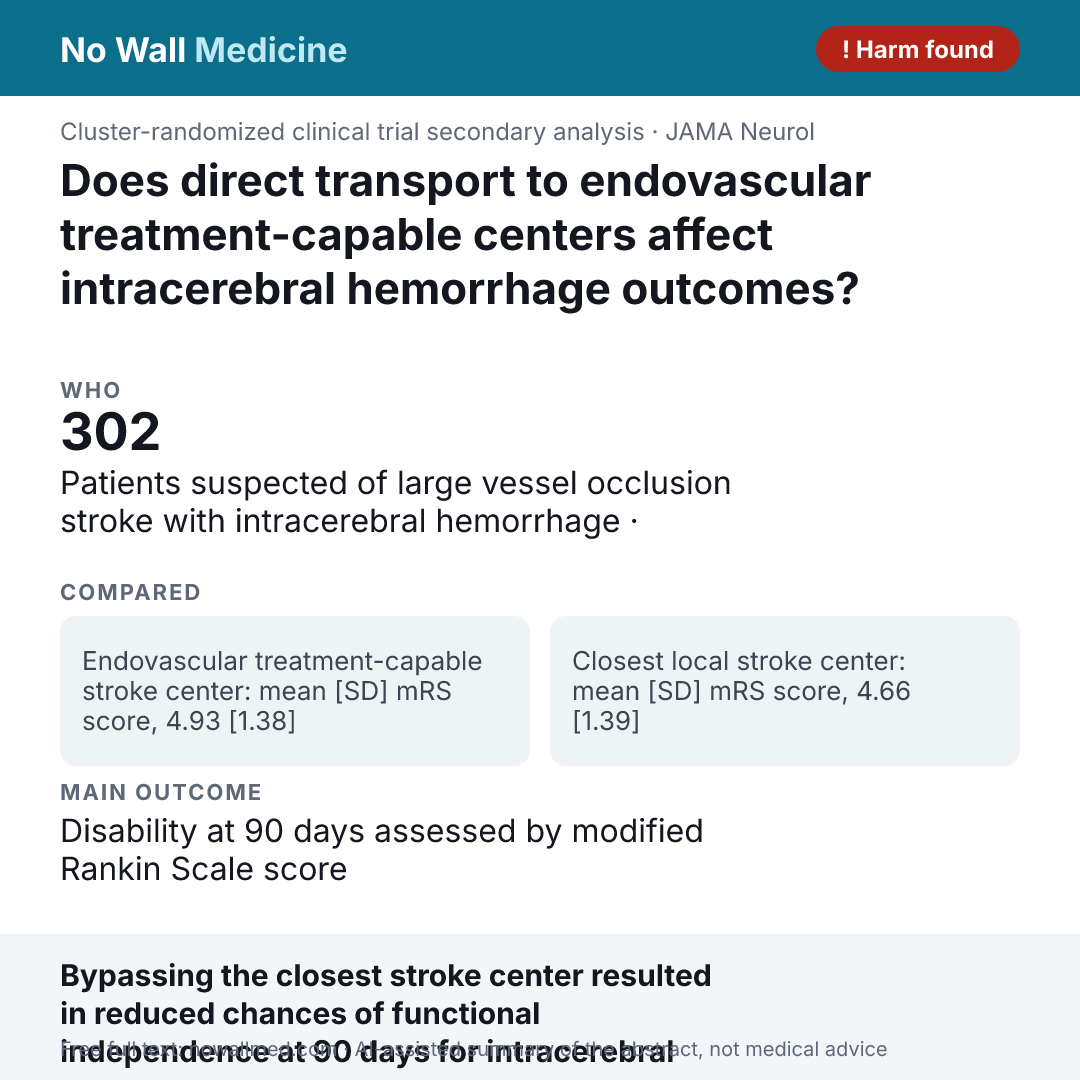
Effect of Bypassing the Closest Stroke Center in Patients with Intracerebral Hemorrhage: A Secondary Analysis of the RACECAT Randomized Clinical Trial
Cluster-randomized clinical trial secondary analysisHarm found
Does direct transport to endovascular treatment-capable centers affect intracerebral hemorrhage outcomes?
Who
302
Patients suspected of large vessel occlusion stroke with intracerebral hemorrhage · Multicenter, Catalonia, Spain
Compared
Endovascular treatment-capable stroke center: mean [SD] mRS score, 4.93 [1.38]
Closest local stroke center: mean [SD] mRS score, 4.66 [1.39]
Main outcome
Disability at 90 days assessed by modified Rankin Scale score
Result: adjusted common OR, 0.63; 95% CI, 0.41-0.96
Bottom line: Bypassing the closest stroke center resulted in reduced chances of functional independence at 90 days for intracerebral hemorrhage patients.
JAMA Neurol · 2023-08-21 · Save PNG
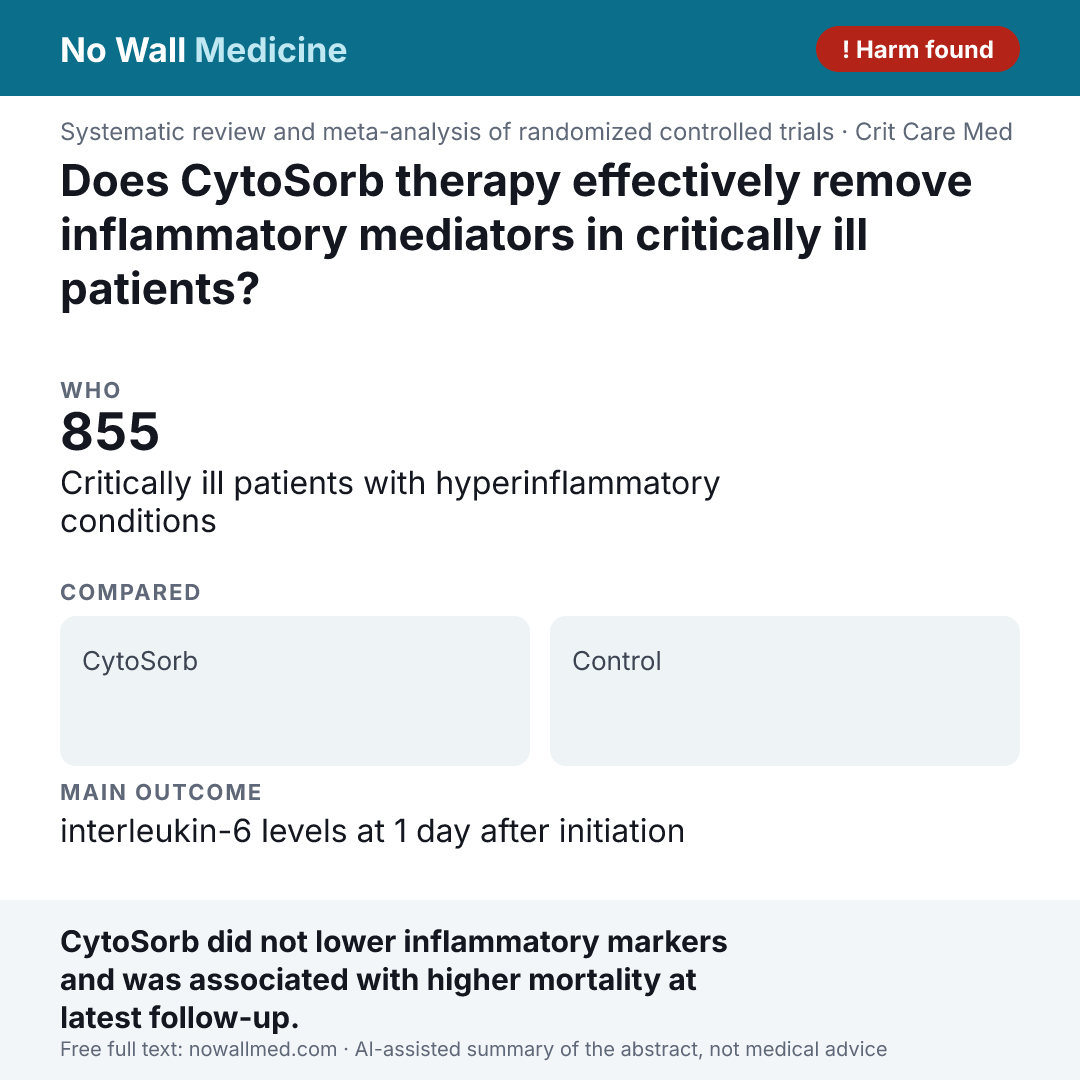
The Effect of CytoSorb on Inflammatory Markers in Critically Ill Patients: A Systematic Review and Meta-Analysis of Randomized Controlled Trials
Systematic review and meta-analysis of randomized controlled trialsHarm found
Does CytoSorb therapy effectively remove inflammatory mediators in critically ill patients?
Who
855
Critically ill patients with hyperinflammatory conditions
Compared
CytoSorb
Control
Main outcome
interleukin-6 levels at 1 day after initiation
Result: mean difference -5.98 (95% CI -30.44 to 18.48) pg/mL
Bottom line: CytoSorb did not lower inflammatory markers and was associated with higher mortality at latest follow-up.
Limitation: Certainty of evidence ranged from low to very low.
Crit Care Med · 2023-08-21 · Save PNG
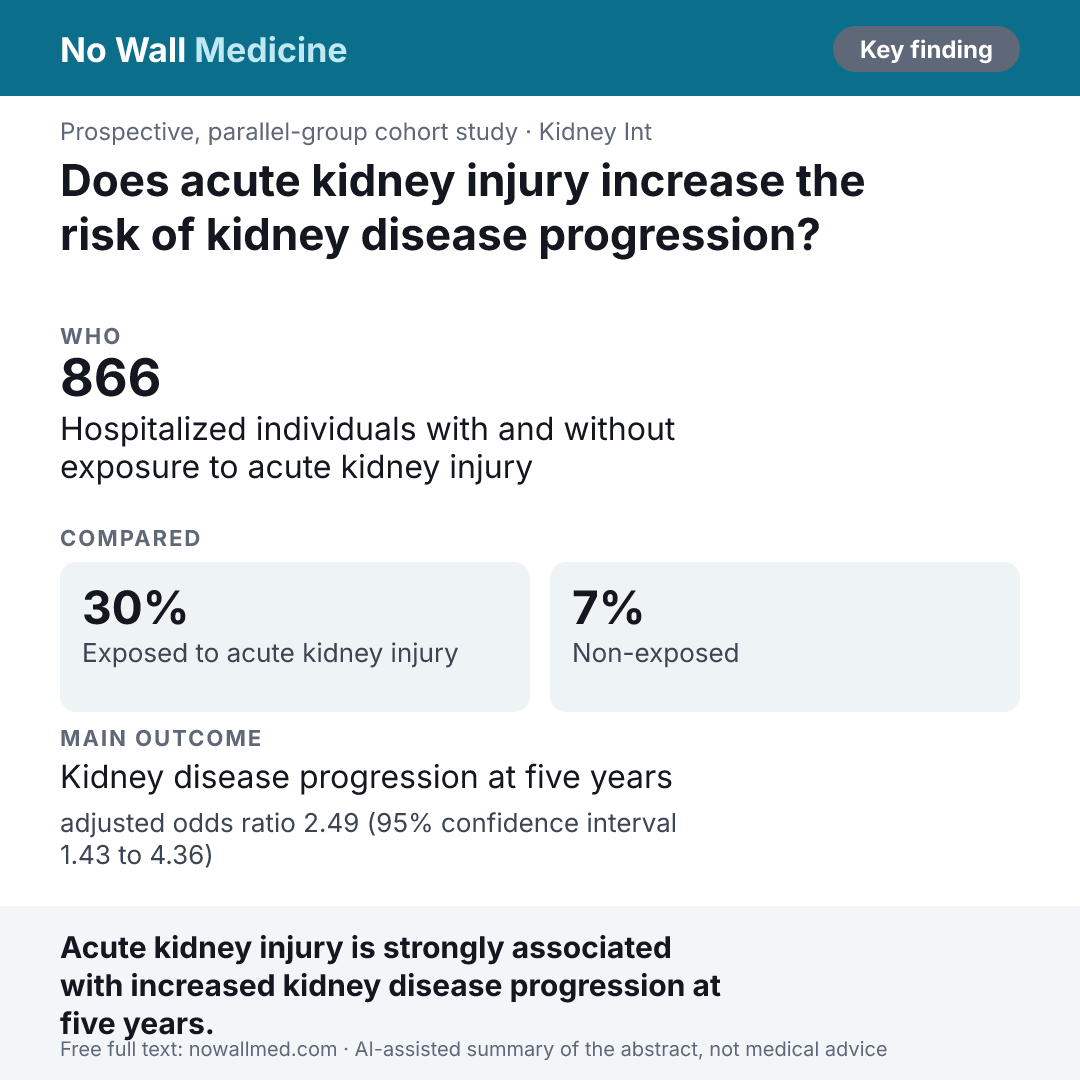
A comprehensive description of kidney disease progression after acute kidney injury from a prospective, parallel-group cohort study
Prospective, parallel-group cohort studyKey finding
Does acute kidney injury increase the risk of kidney disease progression?
Who
866
Hospitalized individuals with and without exposure to acute kidney injury
Compared
30%Exposed to acute kidney injury
7%Non-exposed
Main outcome
Kidney disease progression at five years
Result: adjusted odds ratio 2.49 (95% confidence interval 1.43 to 4.36)
Bottom line: Acute kidney injury is strongly associated with increased kidney disease progression at five years.
Kidney Int · 2023-08-21 · Save PNG
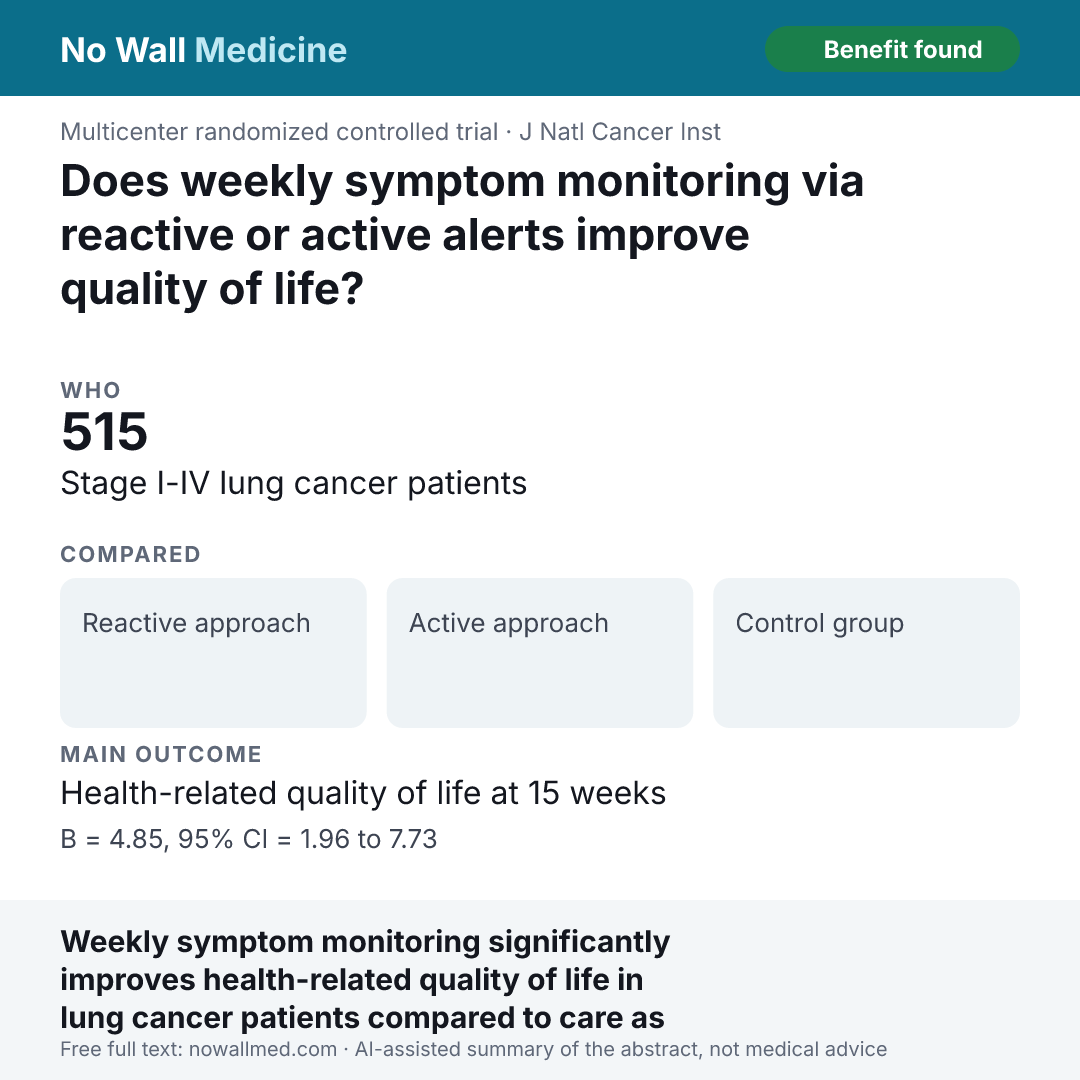
Quality of life after patient-initiated vs physician-initiated response to symptom monitoring: the SYMPRO-Lung trial
Multicenter randomized controlled trialBenefit found
Does weekly symptom monitoring via reactive or active alerts improve quality of life?
Who
515
Stage I-IV lung cancer patients
Compared
Reactive approach
Active approach
Control group
Main outcome
Health-related quality of life at 15 weeks
Result: B = 4.85, 95% CI = 1.96 to 7.73
Bottom line: Weekly symptom monitoring significantly improves health-related quality of life in lung cancer patients compared to care as usual.
J Natl Cancer Inst · 2023-08-21 · Save PNG
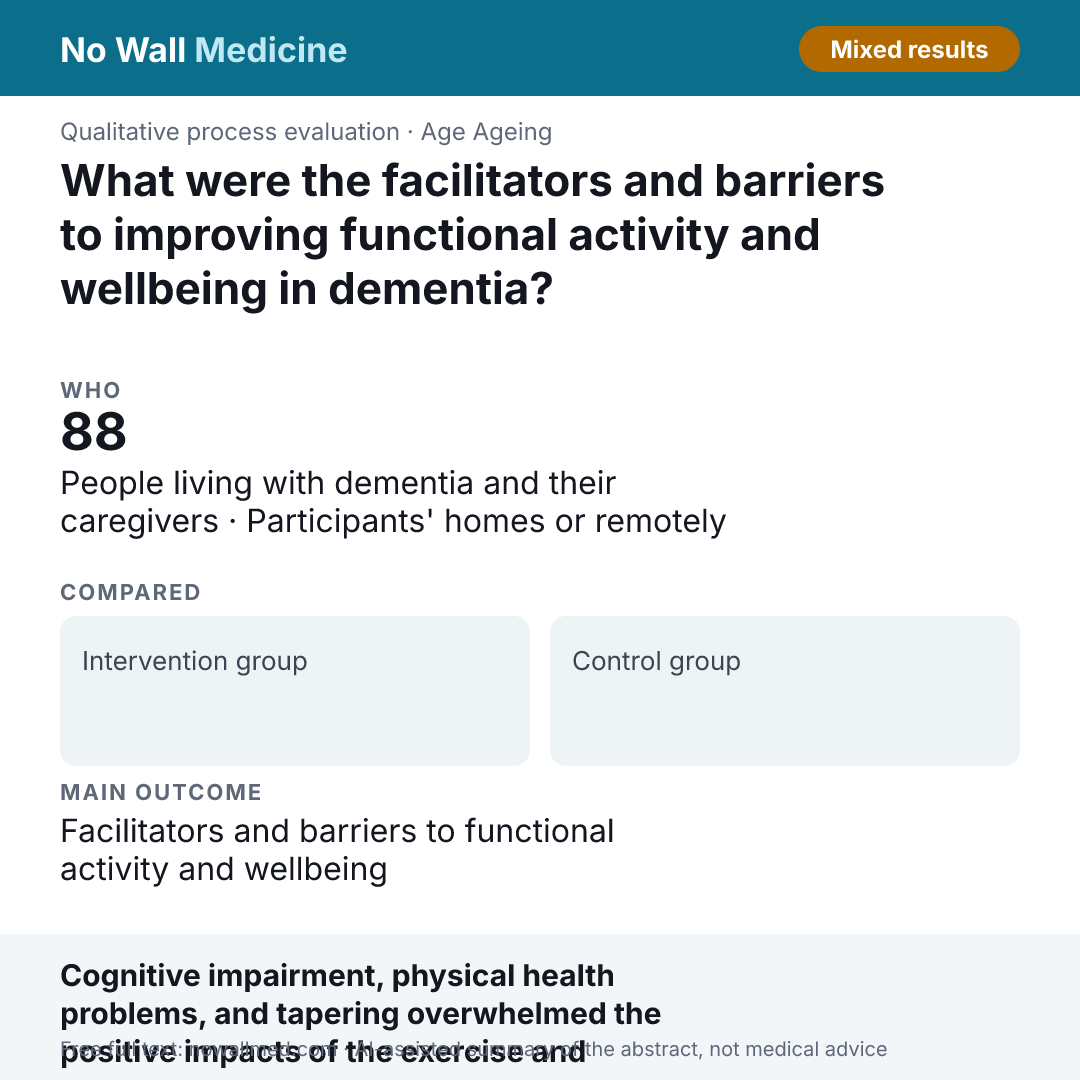
The facilitators and barriers to improving functional activity and wellbeing in people with dementia: a qualitative study from the process evaluation of Promoting Activity, Independence and Stability in Early Dementia (PrAISED)
Qualitative process evaluationMixed results
What were the facilitators and barriers to improving functional activity and wellbeing in dementia?
Who
88
People living with dementia and their caregivers · Participants' homes or remotely by telephone or videoconferencing
Compared
Intervention group
Control group
Main outcome
Facilitators and barriers to functional activity and wellbeing
Bottom line: Cognitive impairment, physical health problems, and tapering overwhelmed the positive impacts of the exercise and functional activity programme.
Age Ageing · 2023-08-21 · Save PNG
Performance of the ROX index in predicting high flow nasal cannula failure in COVID-19 patients: a systematic review and meta-analysis
Meta-analysis of 24 studiesKey finding
Can ROX index predict HFNC failure
Who
4790
COVID-19 patients with acute hypoxemic respiratory failure
Compared
HFNC failure
HFNC success
Main outcome
high flow nasal cannula failure
Result: area under curve 0.771 (95% CI: 0.666-0.847)
Bottom line: ROX index predicts HFNC failure in COVID-19 patients
Crit Care · 2023-08-21 · Save PNG
Key Factors in Helpfulness and Use of the SAFE Intervention for Women Experiencing Intimate Partner Violence and Abuse: Qualitative Outcomes From a Randomized Controlled Trial and Process Evaluation
Qualitative evaluation of a randomized controlled trialBenefit found
What are the helpful and useful aspects of the SAFE eHealth intervention?
Who
65
Women experiencing intimate partner violence and abuse · The Netherlands
Compared
Intervention arm
Control arm
Main outcome
Users' experiences and helpful aspects of the intervention
Bottom line: The SAFE eHealth intervention was positively rated for safety, content, and meeting user needs.
Limitation: Participants used interactive features like chat or forums mainly in a passive way.
J Med Internet Res · 2023-08-21 · Save PNG
Benefits of Telerehabilitation for Patients With Severe Acquired Brain Injury: Promising Results From a Multicenter Randomized Controlled Trial Using Nonimmersive Virtual Reality
Multicenter randomized controlled trialBenefit found
Does nonimmersive virtual reality telerehabilitation improve functional outcomes in patients with severe acquired brain injury?
Who
40
Patients with severe acquired brain injury and their caregivers · 2 Italian rehabilitation centers
Compared
teleneuro-VRRS group: statistically significant improvement in general, motor, psychological well-being and quality of life
usual territorial rehabilitative treatments
Main outcome
motor and neuropsychological functioning, psychological well-being, quality of life, and caregiver burden
Bottom line: Nonimmersive virtual reality telerehabilitation improves motor, cognitive, and psychological outcomes for patients and reduces caregiver burden.
J Med Internet Res · 2023-08-21 · Save PNG
Shoulder ultrasound imaging in the post-stroke population: a systematic review and meta-analysis
Systematic review and meta-analysisBenefit found
What are the structural changes in post-stroke shoulders detected by ultrasound?
Who
Stroke patients with hemiplegic shoulders
Compared
Hemiplegic shoulders: biceps long head tendon abnormalities 3.814 (95% confidence interval 2.044-7.117)
Contralateral shoulders: supraspinatus tendon abnormalities 2.101 (95% confidence interval 1.257-3.512)
Main outcome
Structural changes in shoulders detected by ultrasound examination
Result: odds ratio 3.814 (95% confidence interval 2.044-7.117) for biceps long head tendon
Bottom line: Ultrasound identifies common shoulder pathologies, specifically biceps and supraspinatus tendon abnormalities, in hemiplegic shoulders after stroke.
J Rehabil Med · 2023-08-21 · Save PNG
Interprofessional collaboration between prescribers, managers, nursing staff and on-site pharmacists within residential aged care facilities: a mixed-methods study
Mixed-methods study within a cluster randomised controlled trialBenefit found
What is the nature of interprofessional collaboration between on-site pharmacists and healthcare teams?
Who
Prescribers, managers, and nursing staff in residential aged care facilities · Seven residential aged care facilities
Compared
Physician-Pharmacist Collaboration Index at 3 months: positive working relationships
Physician-Pharmacist Collaboration Index at 9 months: positive relationships also existed
Main outcome
Extent of interprofessional collaboration and nature of working relationships
Bottom line: On-site pharmacists can positively contribute to interprofessional collaborative care within residential aged care facilities.
Age Ageing · 2023-08-20 · Save PNG

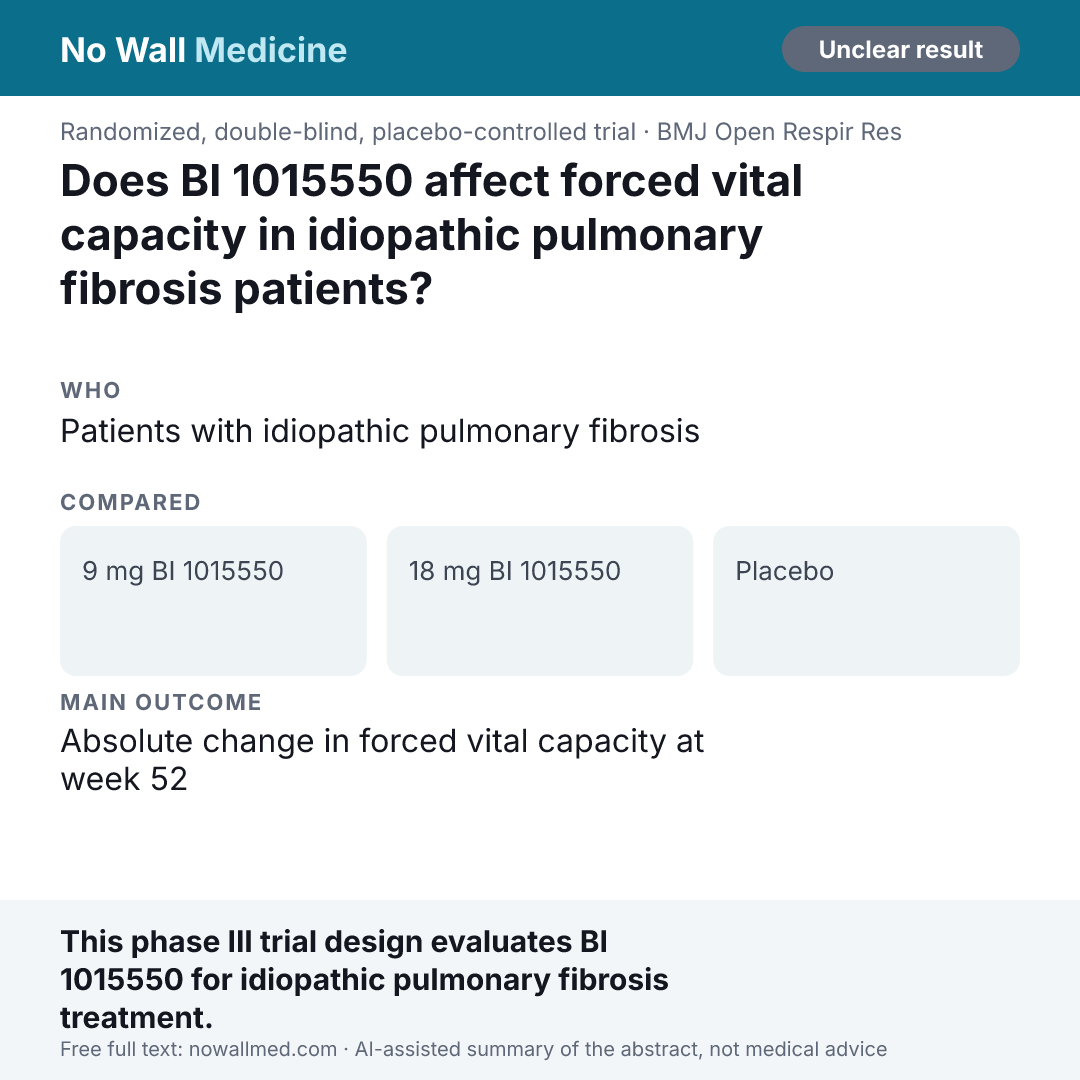
Design of a phase III, double-blind, randomised, placebo-controlled trial of BI 1015550 in patients with idiopathic pulmonary fibrosis (FIBRONEER-IPF)
Randomized, double-blind, placebo-controlled trialUnclear result
Does BI 1015550 affect forced vital capacity in idiopathic pulmonary fibrosis patients?
Who
Patients with idiopathic pulmonary fibrosis
Compared
9 mg BI 1015550
18 mg BI 1015550
Placebo
Main outcome
Absolute change in forced vital capacity at week 52
Bottom line: This phase III trial design evaluates BI 1015550 for idiopathic pulmonary fibrosis treatment.
BMJ Open Respir Res · 2023-08-20 · Save PNG
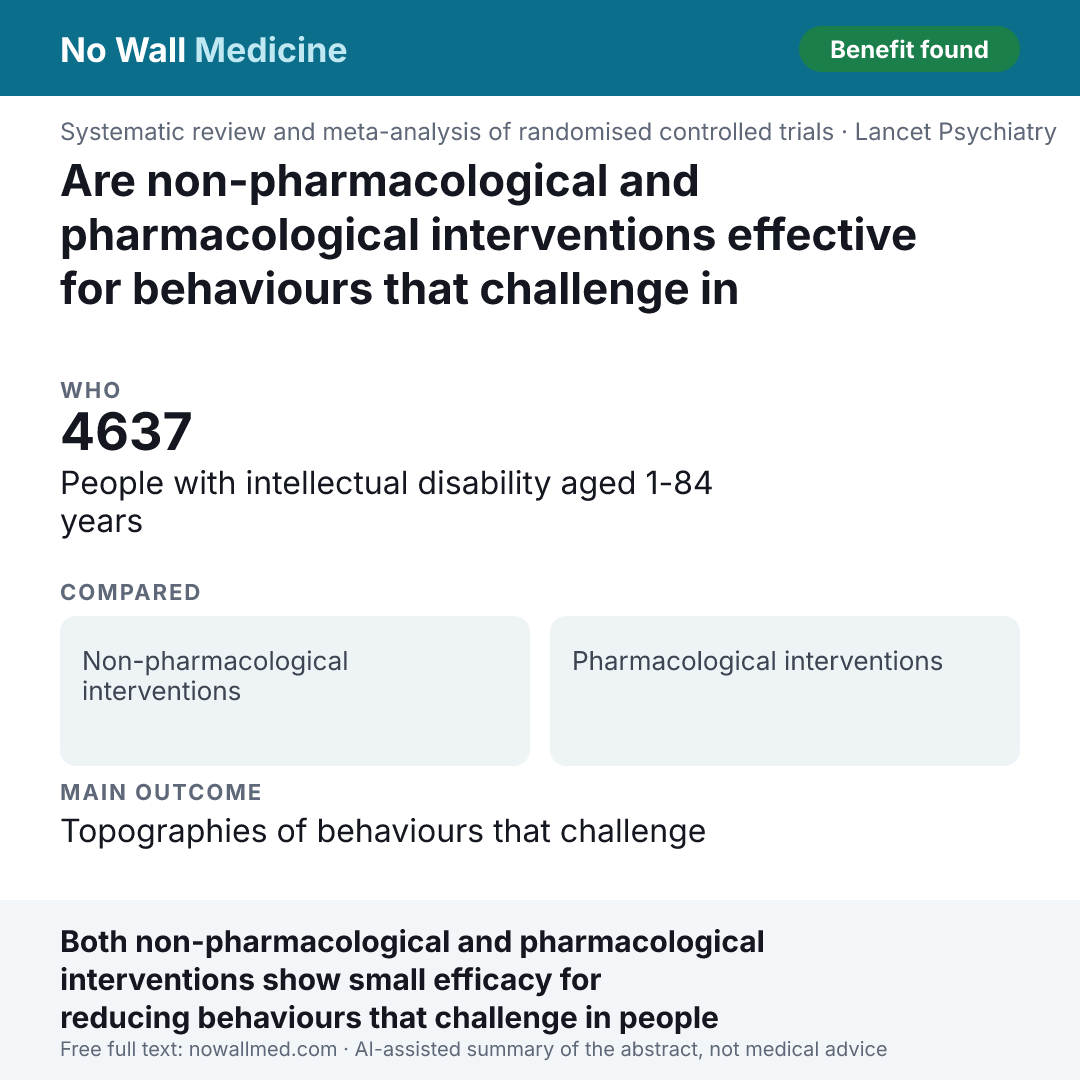
Non-pharmacological and pharmacological interventions for the reduction or prevention of topographies of behaviours that challenge in people with intellectual disabilities: a systematic review and meta-analysis of randomised controlled trials
Systematic review and meta-analysis of randomised controlled trialsBenefit found
Are non-pharmacological and pharmacological interventions effective for behaviours that challenge in intellectual disabilities?
Who
4637
People with intellectual disability aged 1-84 years
Compared
Non-pharmacological interventions
Pharmacological interventions
Main outcome
Topographies of behaviours that challenge
Result: standard mean difference -0·422 (95% CI -0·565 to -0·279)
Bottom line: Both non-pharmacological and pharmacological interventions show small efficacy for reducing behaviours that challenge in people with intellectual disabilities.
Funded by: Cerebra
Lancet Psychiatry · 2023-08-19 · Save PNG
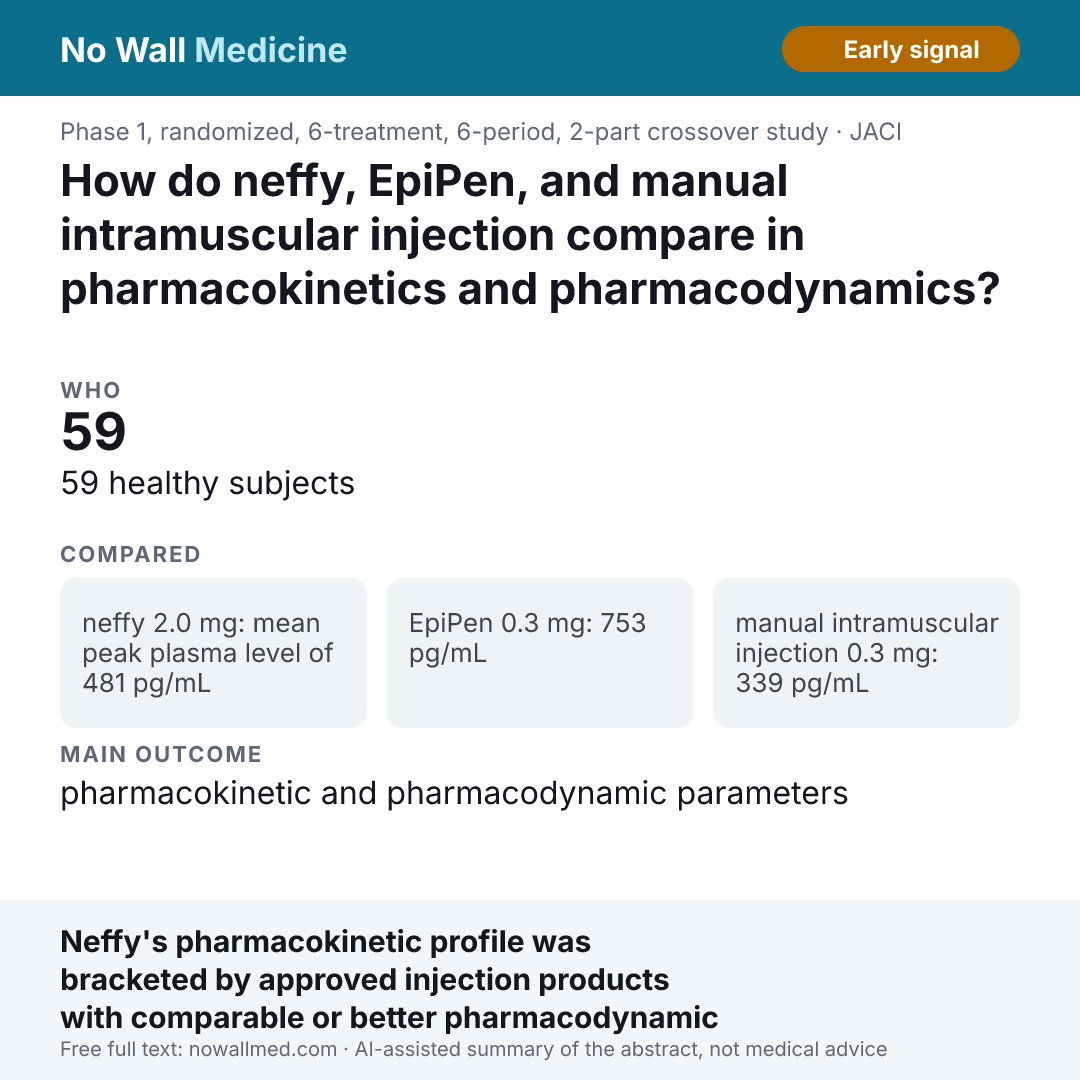
Pharmacokinetics/pharmacodynamics of epinephrine after single and repeat administration of neffy, EpiPen, and manual intramuscular injection
Phase 1, randomized, 6-treatment, 6-period, 2-part crossover studyEarly signal
How do neffy, EpiPen, and manual intramuscular injection compare in pharmacokinetics and pharmacodynamics?
Who
59
59 healthy subjects
Compared
neffy 2.0 mg: mean peak plasma level of 481 pg/mL
EpiPen 0.3 mg: 753 pg/mL
manual intramuscular injection 0.3 mg: 339 pg/mL
Main outcome
pharmacokinetic and pharmacodynamic parameters
Bottom line: Neffy's pharmacokinetic profile was bracketed by approved injection products with comparable or better pharmacodynamic responses.
JACI · 2023-08-19 · Save PNG
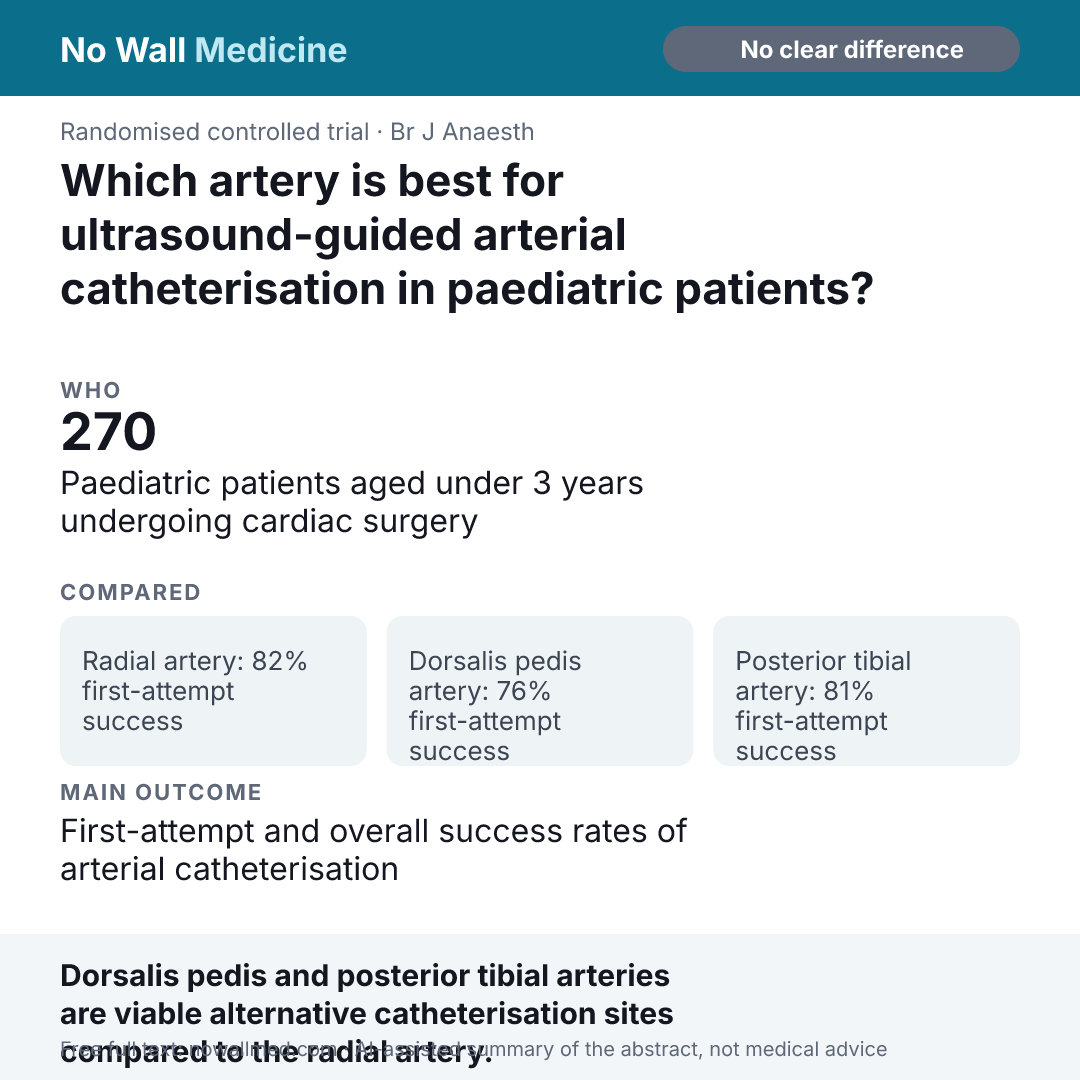
Comparison of radial, dorsalis pedis, and posterior tibial arteries for ultrasound-guided arterial catheterisation with dynamic needle tip positioning in paediatric patients: a randomised controlled trial
Randomised controlled trialNo clear difference
Which artery is best for ultrasound-guided arterial catheterisation in paediatric patients?
Who
270
Paediatric patients aged under 3 years undergoing cardiac surgery
Compared
Radial artery: 82% first-attempt success
Dorsalis pedis artery: 76% first-attempt success
Posterior tibial artery: 81% first-attempt success
Main outcome
First-attempt and overall success rates of arterial catheterisation
Bottom line: Dorsalis pedis and posterior tibial arteries are viable alternative catheterisation sites compared to the radial artery.
Br J Anaesth · 2023-08-19 · Save PNG