Visual abstracts
New randomized trials and meta-analyses from leading journals at a glance: who was studied, what was compared, and what was found. Every paper is free to read in full.
All specialtiesCardiology 4287Oncology 3649Gastroenterology & Hepatology 1713Infectious Disease 3282Neurology 1699Psychiatry & Mental Health 2010Pulmonology 1863Critical Care 1212Endocrinology & Diabetes 2228Pediatrics 2603Surgery 2266Orthopedics & Sports Medicine 809Neurosurgery 480Cardiothoracic & Vascular Surgery 556Plastic & Reconstructive Surgery 558Nephrology 964Rheumatology 709Hematology 967Dermatology 542Ophthalmology 471Obstetrics & Gynecology 1474Public & Global Health 870Radiology & Imaging 574Anesthesiology 870Urology 680ENT (Otolaryngology) 454Emergency Medicine 455Allergy & Immunology 268Geriatrics 880Family Medicine & Primary Care 508Medical Genetics & Genomics 594Pathology & Laboratory Medicine 144Physical Medicine & Rehabilitation 653Palliative Care 389Nutrition 1335Digital Health & AI 1987General Medicine 295
Use of Operative Video Technology in Surgical Education: A Systematic Review
Systematic reviewBenefit found
How do real-life operative videos compare to alternative teaching methods in surgical education?
Who
35
Surgical trainees
Compared
Operative videos
Alternative teaching methods
Main outcome
Educational impact including knowledge, skills, and clinical behaviors
Bottom line: Operative videos provide significant benefits for surgical training across knowledge, skills, and clinical behaviors.
Ann Surg Open · 2026-07-09Download image

Efficacy, safety and policy implications of anti-amyloid monoclonal antibodies for Alzheimer's disease: protocol for a living systematic review and meta-analysis
Living systematic review and meta-analysis protocolUnclear result
What are the efficacy and safety of anti-amyloid monoclonal antibodies for Alzheimer's disease?
Who
Adults with Alzheimer's disease
Compared
anti-amyloid monoclonal antibodies
placebo, standard care or active comparators
Main outcome
efficacy, safety, cognitive abilities, functional ability and neuropsychiatric symptoms
Bottom line: This protocol describes a living systematic review to evaluate anti-amyloid monoclonal antibodies for Alzheimer's disease.
Limitation: no review findings are available at this stage
BJPsych Open · 2026-07-09Download image

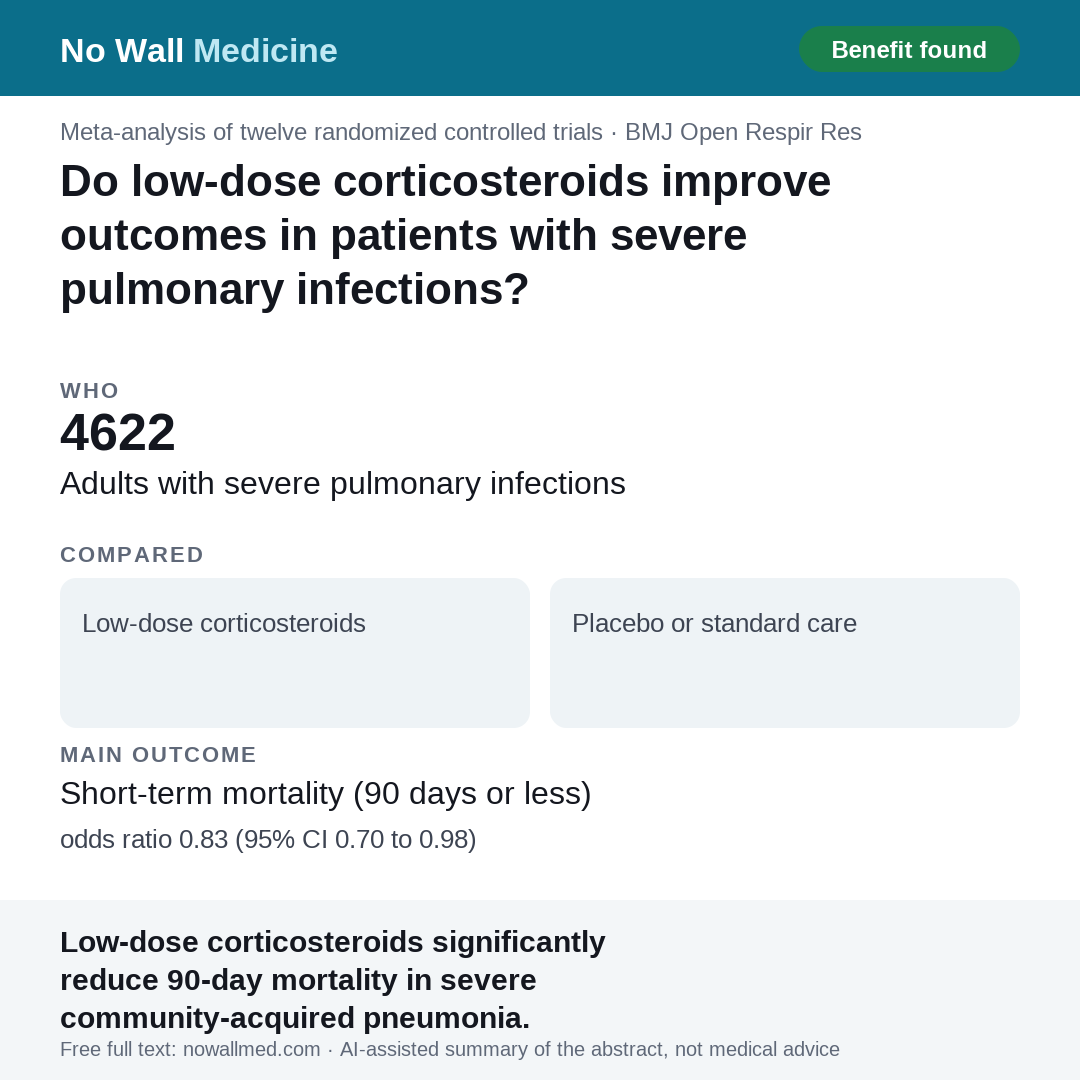
Low-dose corticosteroids in severe pulmonary infection: a meta-analysis of randomised controlled trials
Meta-analysis of twelve randomized controlled trialsBenefit found
Do low-dose corticosteroids improve outcomes in patients with severe pulmonary infections?
Who
4622
Adults with severe pulmonary infections
Compared
Low-dose corticosteroids
Placebo or standard care
Main outcome
Short-term mortality (90 days or less)
Result: odds ratio 0.83 (95% CI 0.70 to 0.98)
Bottom line: Low-dose corticosteroids significantly reduce 90-day mortality in severe community-acquired pneumonia.
BMJ Open Respir Res · 2026-07-09Download image
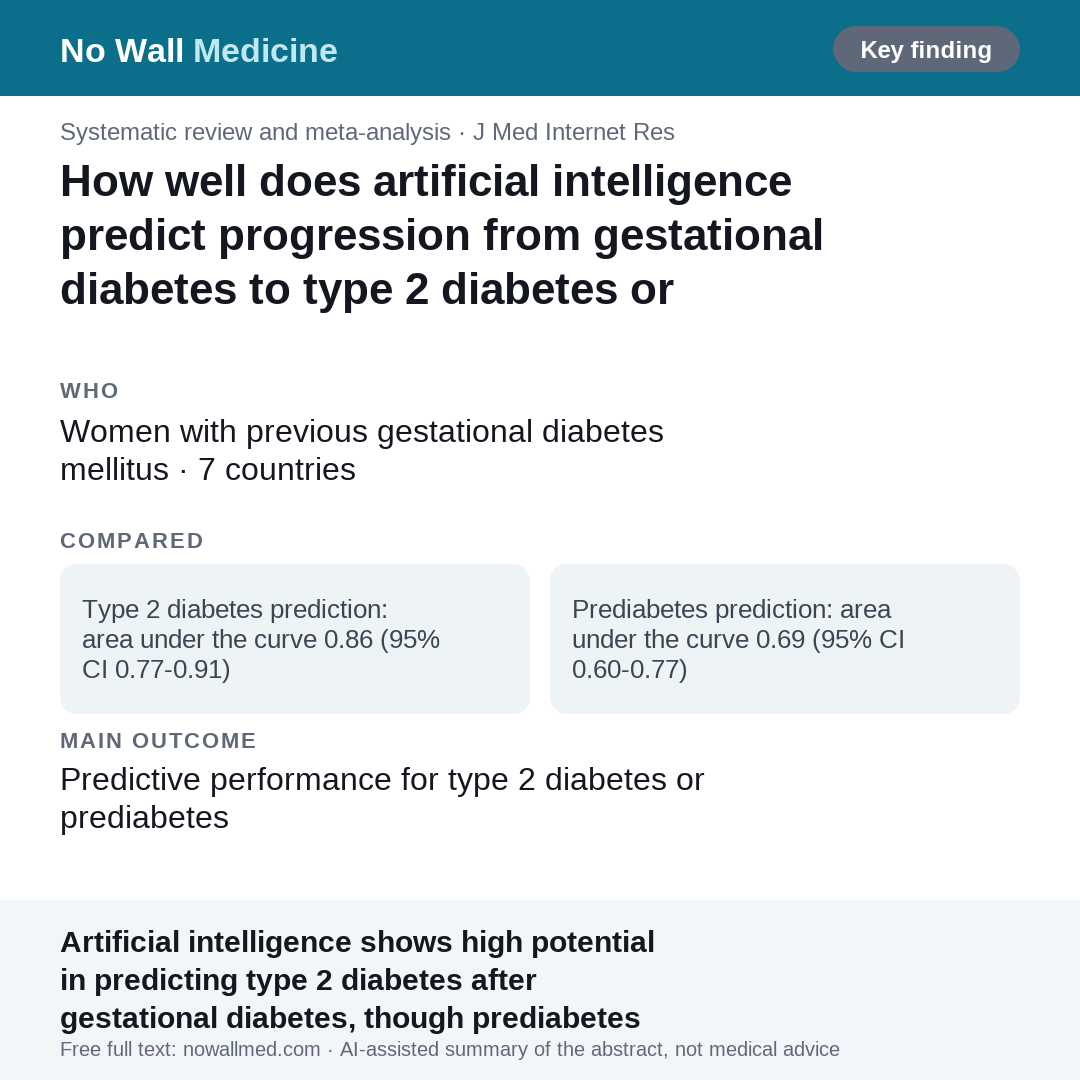
Performance of AI in Predicting the Progression of Gestational Diabetes to Type 2 Diabetes: Systematic Review and Meta-Analysis
Systematic review and meta-analysisBenefit found
How well does artificial intelligence predict progression from gestational diabetes to type 2 diabetes or prediabetes?
Who
Women with previous gestational diabetes mellitus · 7 countries
Compared
Type 2 diabetes prediction: area under the curve 0.86 (95% CI 0.77-0.91)
Prediabetes prediction: area under the curve 0.69 (95% CI 0.60-0.77)
Main outcome
Predictive performance for type 2 diabetes or prediabetes
Result: area under the curve 0.86 (95% CI 0.77-0.91)
Bottom line: Artificial intelligence shows high potential in predicting type 2 diabetes after gestational diabetes, though prediabetes prediction performance is modest.
Limitation: Small sample sizes, high heterogeneity, lack of external validation, and high risk of bias.
J Med Internet Res · 2026-07-09Download image
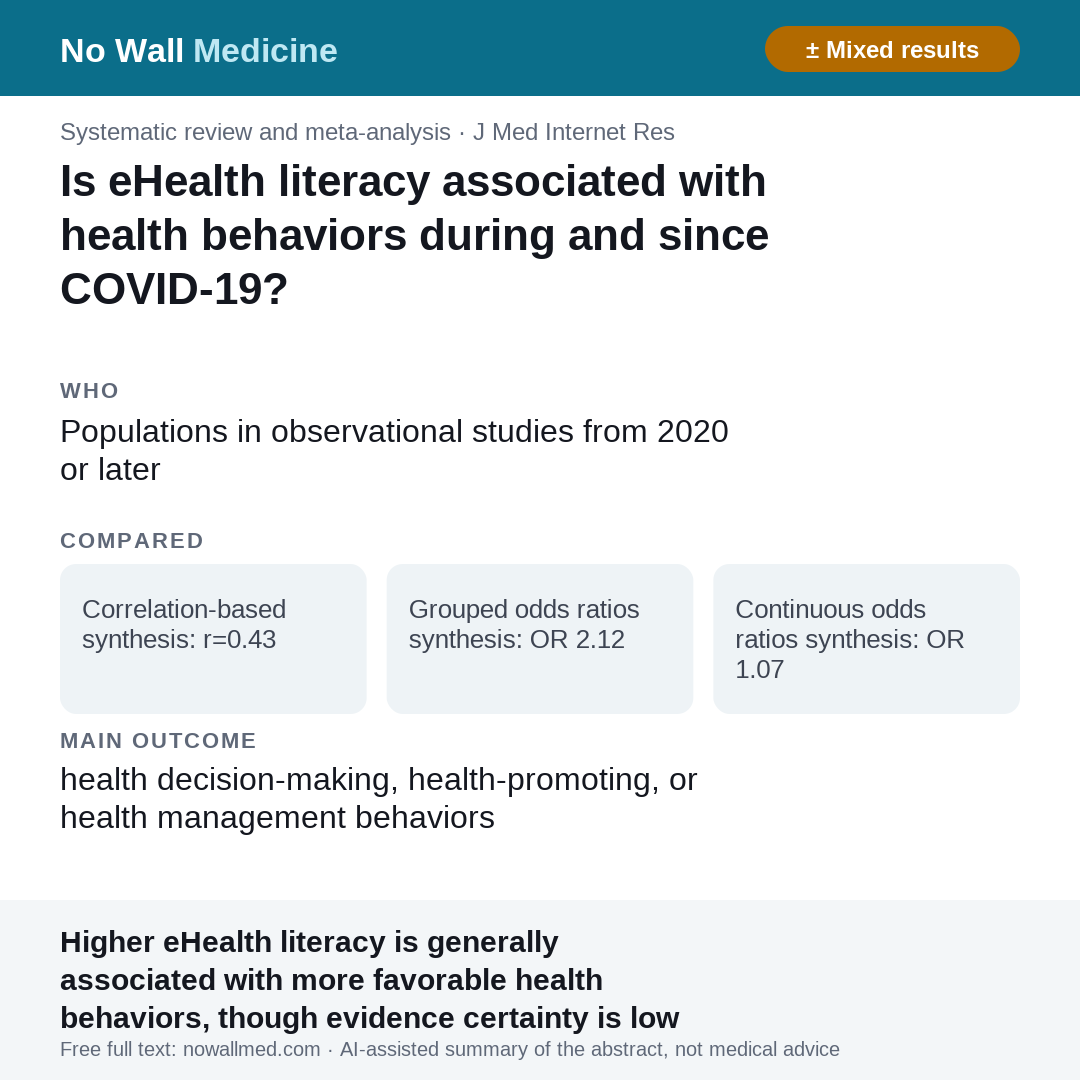
The Association Between eHealth Literacy and Health Behaviors During and Since the COVID-19 Pandemic: Systematic Review and Meta-Analysis
Systematic review and meta-analysisMixed results
Is eHealth literacy associated with health behaviors during and since COVID-19?
Who
19
Populations in observational studies from 2020 or later
Compared
Correlation-based synthesis: r=0.43
Grouped odds ratios synthesis: OR 2.12
Continuous odds ratios synthesis: OR 1.07
Main outcome
health decision-making, health-promoting, or health management behaviors
Result: pooled r=0.43 (95% CI 0.36-0.51); pooled OR 2.12 (95% CI 1.47-3.05); pooled OR 1.07 (95% CI 0.89-1.30)
Bottom line: Higher eHealth literacy is generally associated with more favorable health behaviors, though evidence certainty is low to very low.
Limitation: Predominantly cross-sectional evidence base, heterogeneity, risk-of-bias concerns, and low to very low certainty.
J Med Internet Res · 2026-07-09Download image
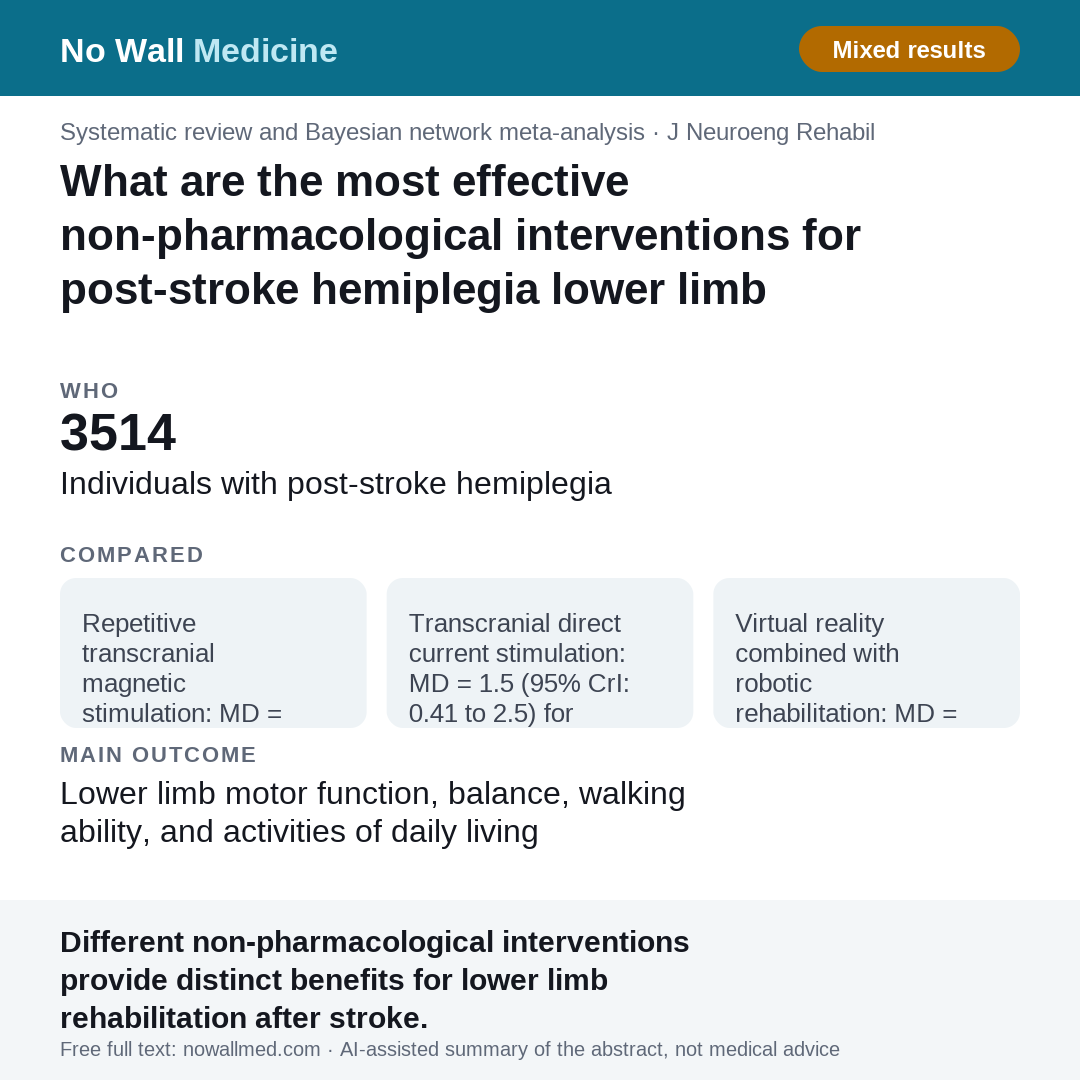
Effectiveness of non-pharmacological interventions for lower limb motor impairment in post-stroke hemiplegia: a systematic review and Bayesian network meta-analysis
Systematic review and Bayesian network meta-analysisMixed results
What are the most effective non-pharmacological interventions for post-stroke hemiplegia lower limb impairment?
Who
3514
Individuals with post-stroke hemiplegia
Compared
Repetitive transcranial magnetic stimulation: MD = 3.7 (95% CI 2.5 to 4.9) for motor function
Transcranial direct current stimulation: MD = 1.5 (95% CrI: 0.41 to 2.5) for walking independence
Virtual reality combined with robotic rehabilitation: MD = -6.6 (95% CrI: -8.9 to -4.3) for TUG time
Main outcome
Lower limb motor function, balance, walking ability, and activities of daily living
Bottom line: Different non-pharmacological interventions provide distinct benefits for lower limb rehabilitation after stroke.
Limitation: Further large-scale, multicenter, standardized randomized controlled trials with longer follow-up are needed.
J Neuroeng Rehabil · 2026-07-09Download image
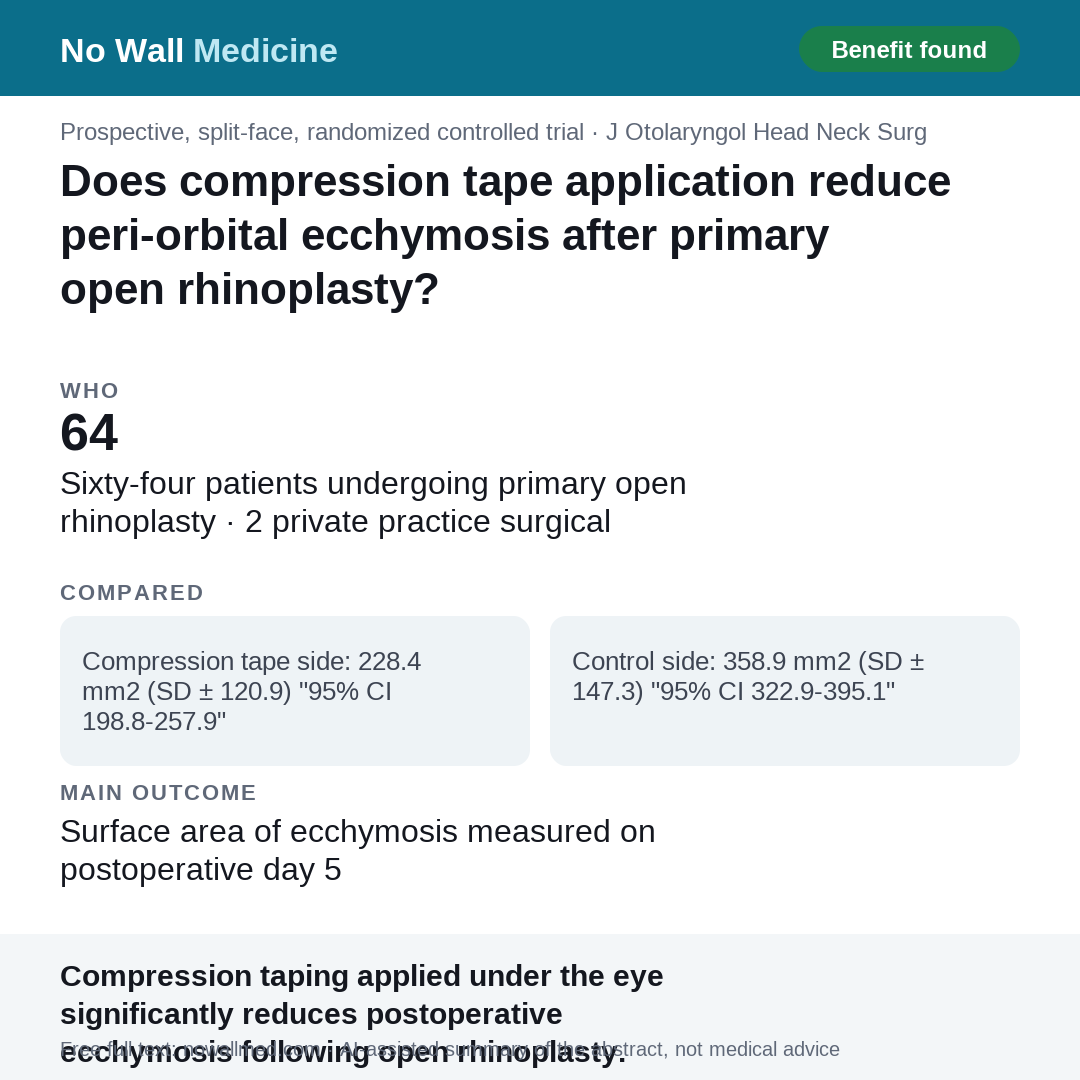
Effect of Compression Tape Application on Peri-orbital Ecchymosis After Rhinoplasty: A Prospective, Randomized, Split-face Study
Prospective, split-face, randomized controlled trialBenefit found
Does compression tape application reduce peri-orbital ecchymosis after primary open rhinoplasty?
Who
64
Sixty-four patients undergoing primary open rhinoplasty · 2 private practice surgical centers
Compared
Compression tape side: 228.4 mm2 (SD ± 120.9) "95% CI 198.8-257.9"
Control side: 358.9 mm2 (SD ± 147.3) "95% CI 322.9-395.1"
Main outcome
Surface area of ecchymosis measured on postoperative day 5
Result: 36.2% reduction in bruising
Bottom line: Compression taping applied under the eye significantly reduces postoperative ecchymosis following open rhinoplasty.
J Otolaryngol Head Neck Surg · 2026-07-09Download image
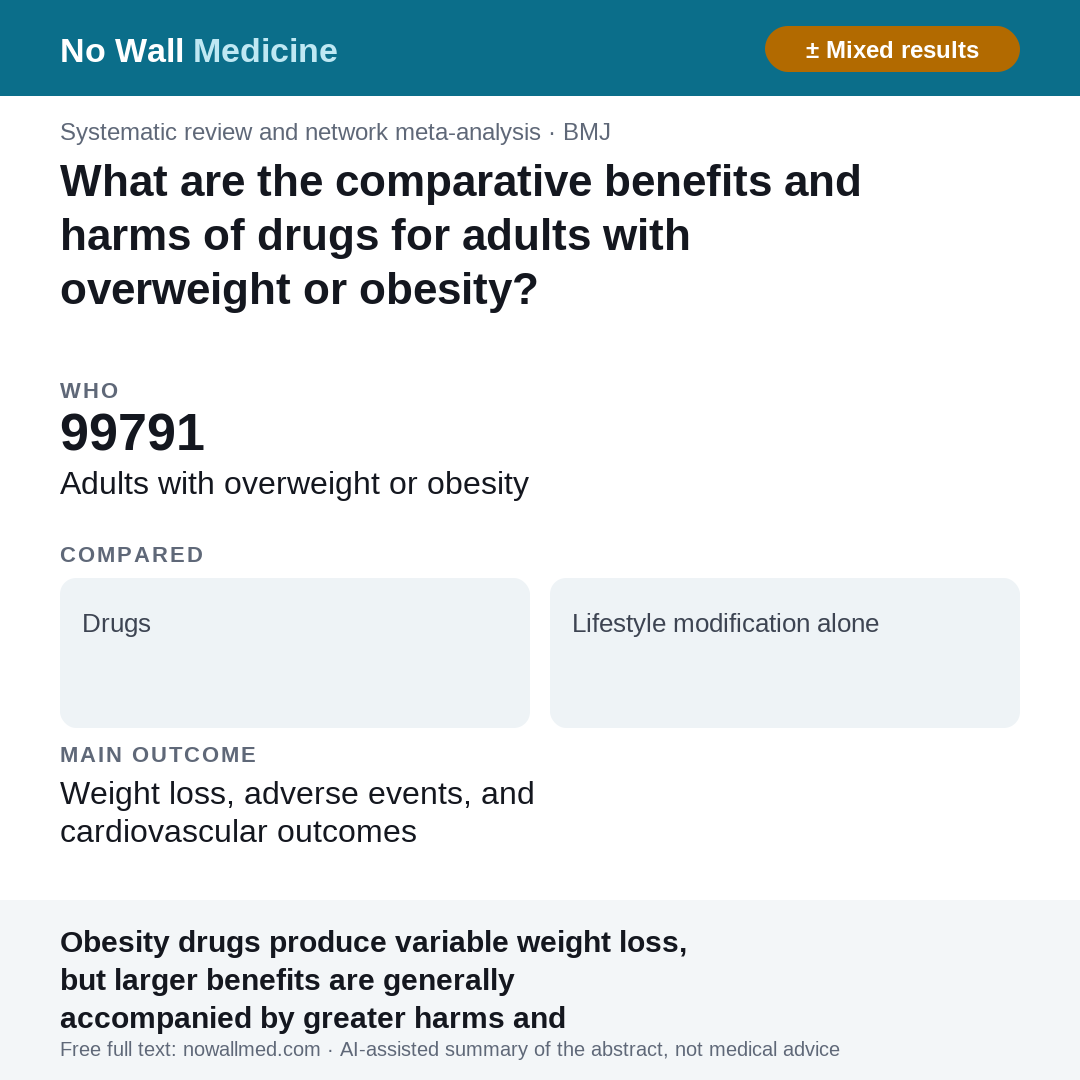
Comparative effects of drugs for adults with overweight or obesity: systematic review and network meta-analysis
Systematic review and network meta-analysisMixed results
What are the comparative benefits and harms of drugs for adults with overweight or obesity?
Who
99791
Adults with overweight or obesity
Compared
Drugs
Lifestyle modification alone
Main outcome
Weight loss, adverse events, and cardiovascular outcomes
Bottom line: Obesity drugs produce variable weight loss, but larger benefits are generally accompanied by greater harms and discontinuation.
Limitation: Subcutaneous semaglutide estimates were largely informed by cardiovascular outcome trials in high risk populations.
BMJ · 2026-07-08Download image
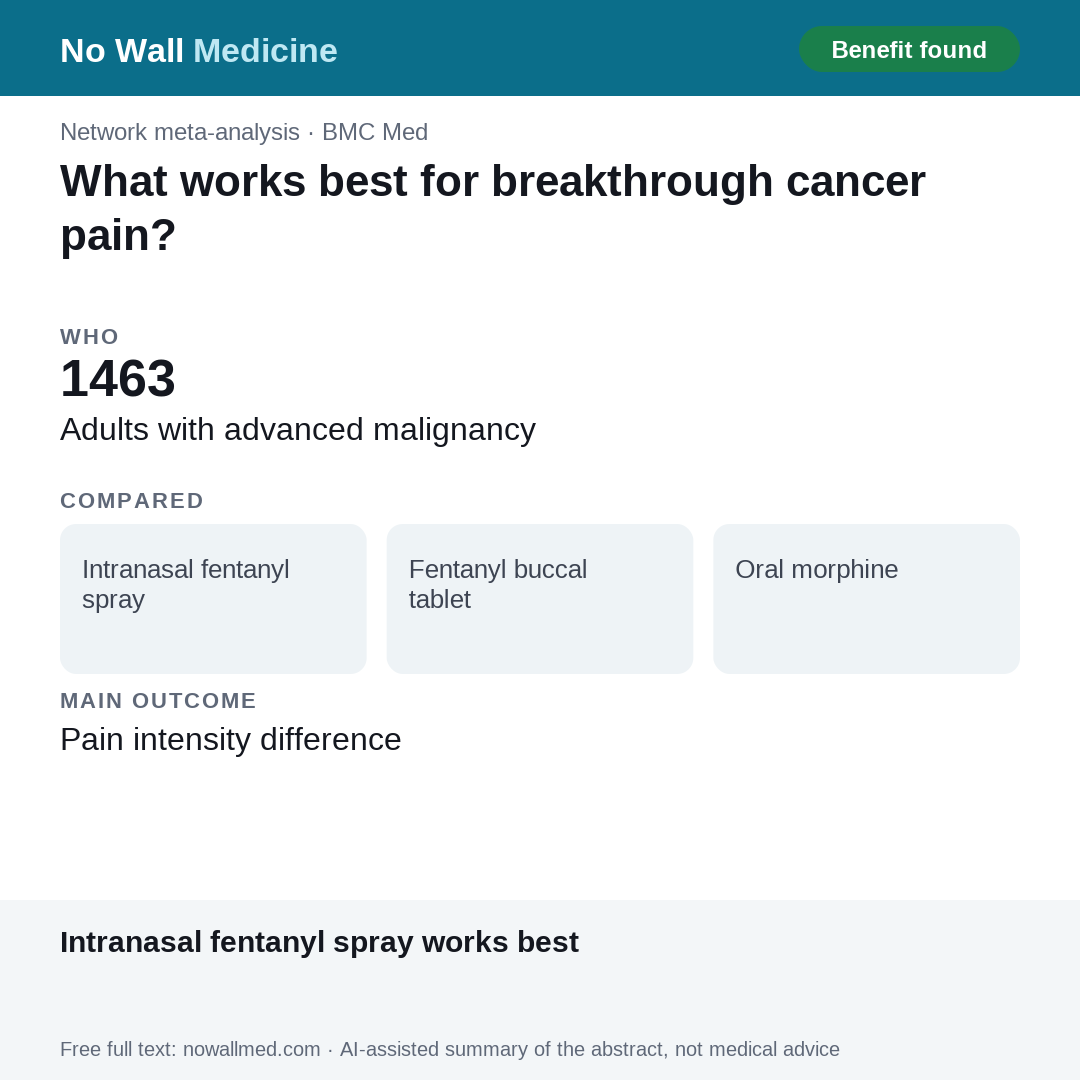
Establishing an efficacy hierarchy for breakthrough cancer pain management: a network meta-analysis of rapid-onset fentanyl formulations and morphine
Network meta-analysisBenefit found
What works best for breakthrough cancer pain?
Who
1463
Adults with advanced malignancy
Compared
Intranasal fentanyl spray
Fentanyl buccal tablet
Oral morphine
Main outcome
Pain intensity difference
Bottom line: Intranasal fentanyl spray works best
BMC Med · 2026-07-08Download image
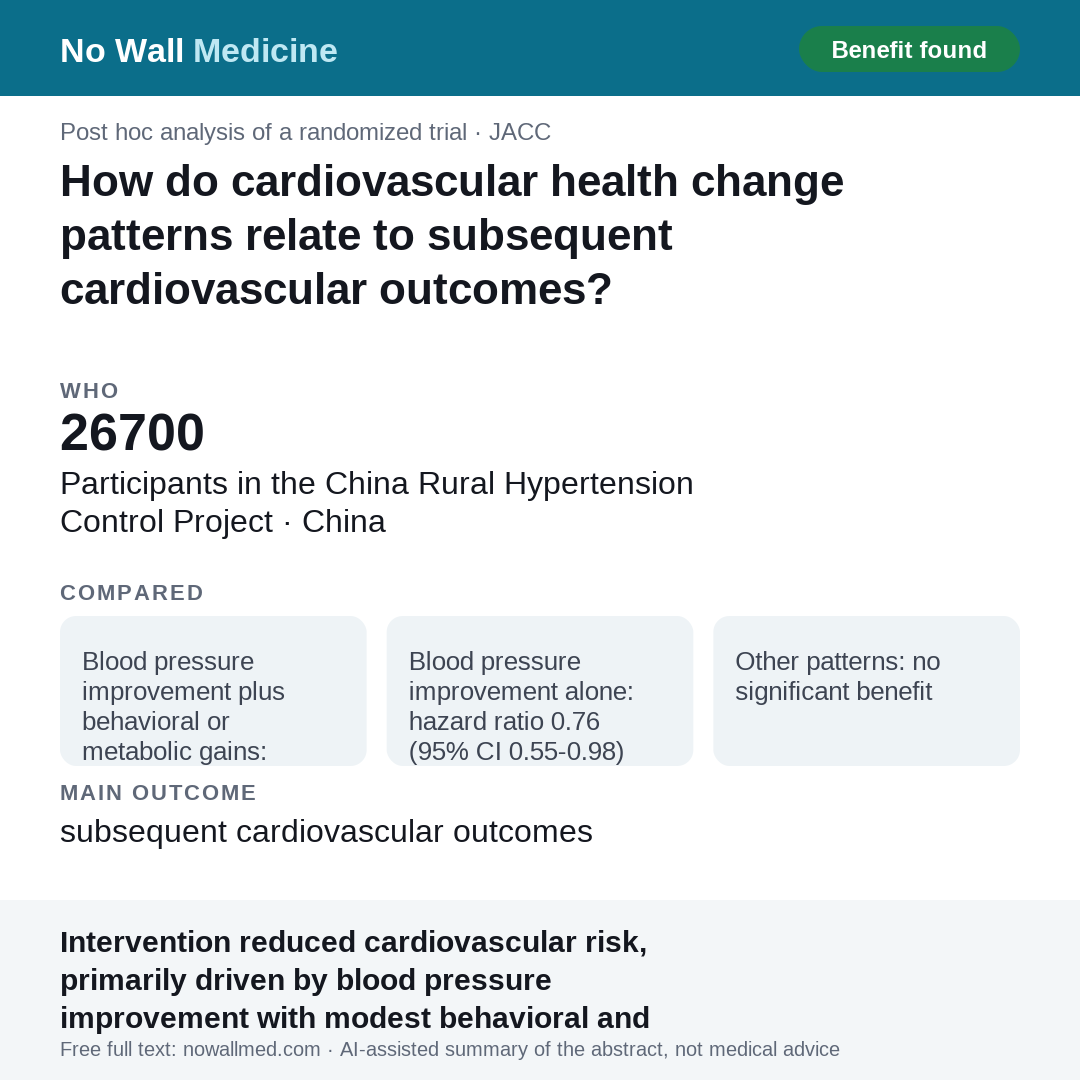
Cardiovascular Health Change Patterns After Multifaceted Antihypertensive Intervention and Cardiovascular Outcomes: A Post Hoc Analysis of CRHCP Trial
Post hoc analysis of a randomized trialBenefit found
How do cardiovascular health change patterns relate to subsequent cardiovascular outcomes?
Who
26700
26,700 participants with hypertension · China rural communities
Compared
BP improvement plus behavioral or metabolic gains: HR 0.57 (95% CI 0.30-0.84)
Blood pressure improvement alone: HR 0.76 (95% CI 0.55-0.98)
Other patterns: no significant benefit
Main outcome
subsequent cardiovascular outcomes
Result: HR 0.71 (95% CI 0.54-0.89)
Bottom line: Multifaceted intervention reduced cardiovascular risk, primarily driven by blood pressure improvement with modest behavioral and metabolic contributions.
JACC · 2026-07-08Download image
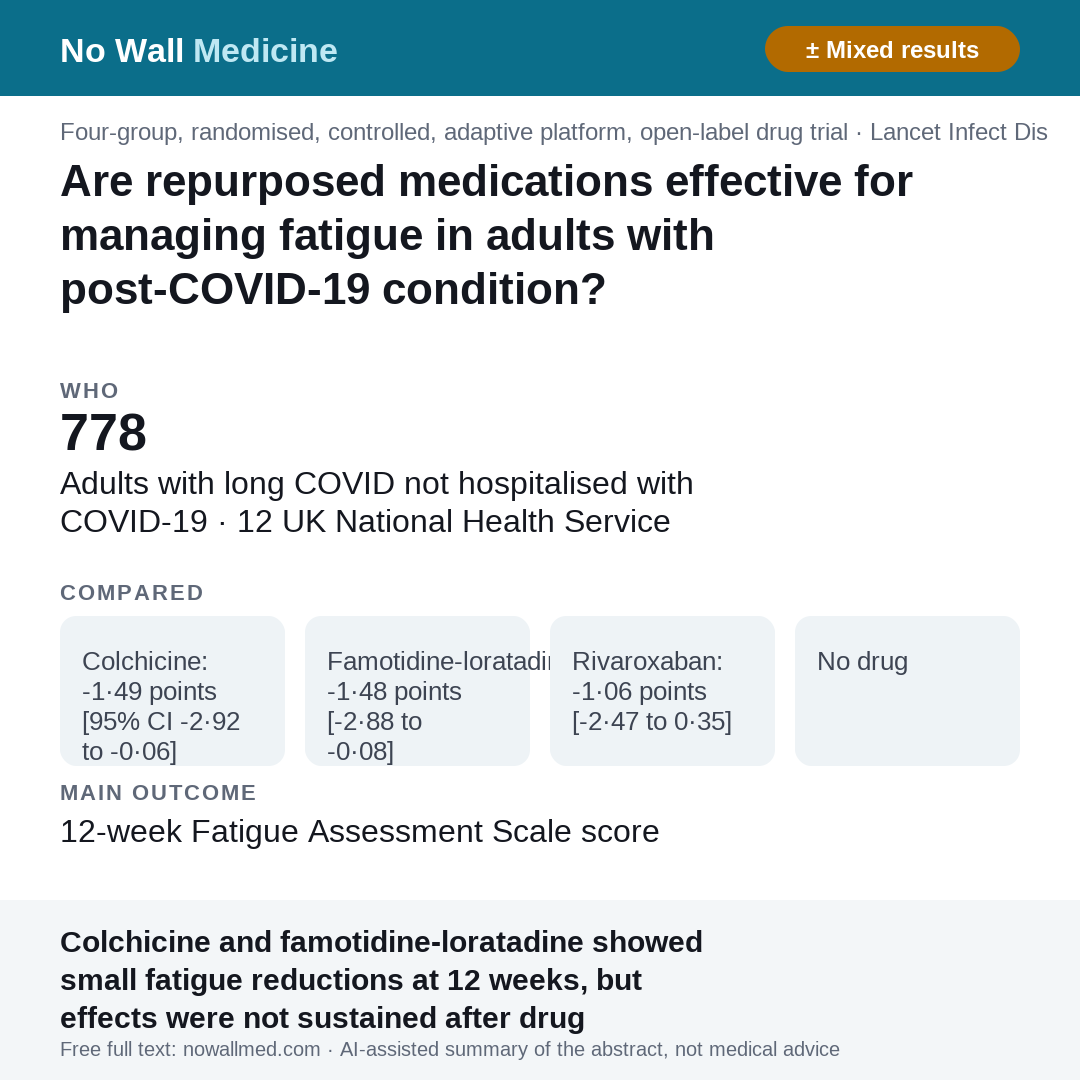
Efficacy and safety of rivaroxaban, colchicine, and famotidine-loratadine with specialist supportive clinical care for fatigue in patients with post-COVID-19 condition in the UK: a multisite, open-label, randomised controlled trial
Four-group, randomised, controlled, adaptive platform, open-label drug trialMixed results
Are repurposed medications effective for managing fatigue in adults with post-COVID-19 condition?
Who
778
Adults with long COVID not hospitalised with COVID-19 · 12 UK National Health Service specialist long COVID care clinics
Compared
Colchicine: -1·49 points [95% CI -2·92 to -0·06]
Famotidine-loratadine: -1·48 points [-2·88 to -0·08]
Rivaroxaban: -1·06 points [-2·47 to 0·35]
No drug
Main outcome
12-week Fatigue Assessment Scale score
Bottom line: Colchicine and famotidine-loratadine showed small fatigue reductions at 12 weeks, but effects were not sustained after drug withdrawal.
Limitation: Modest effects on Fatigue Assessment Scale were not sustained after drug withdrawal.
Funded by: UK National Institute for Health and Care Research
Lancet Infect Dis · 2026-07-08Download image
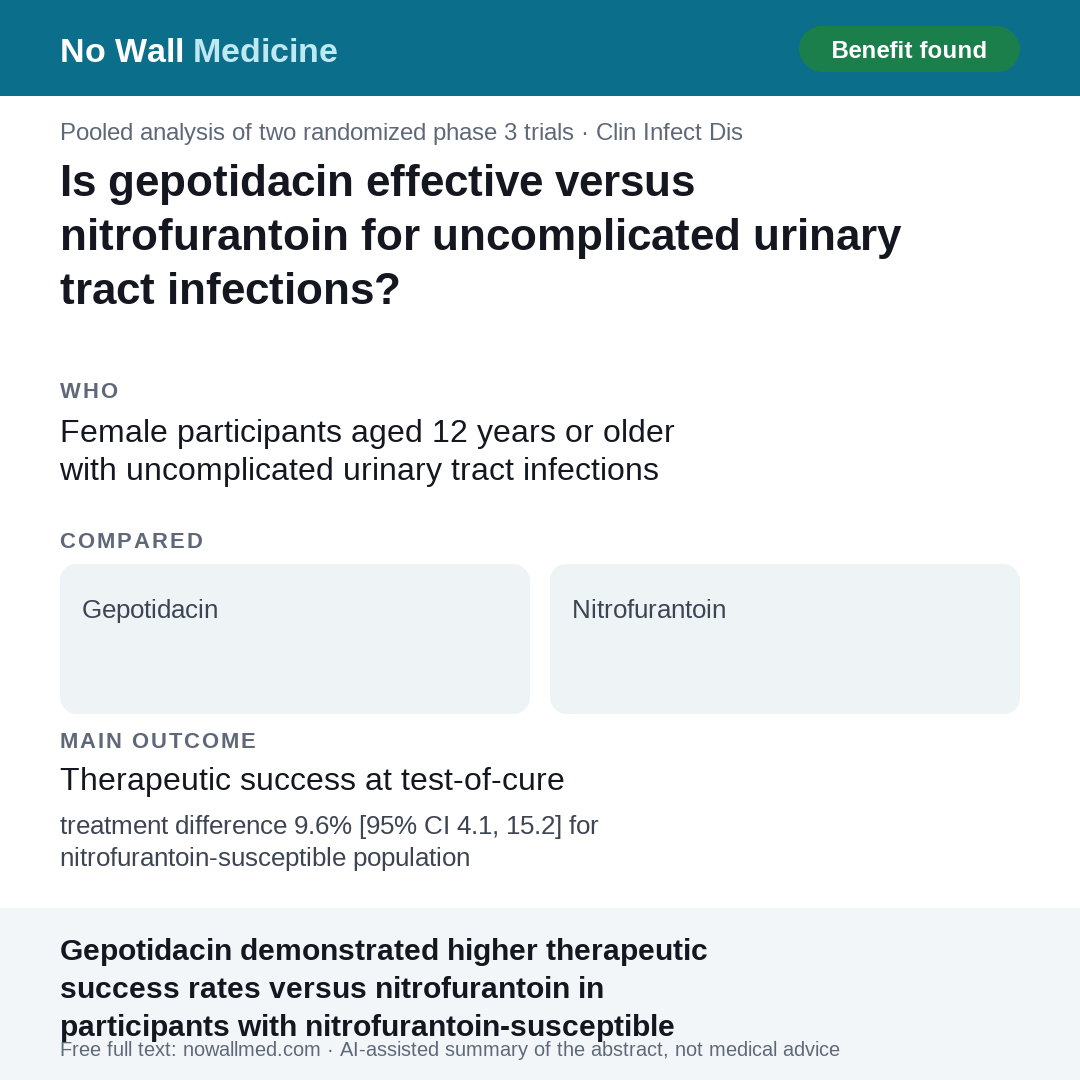
Subgroup Analysis of Pooled Phase 3 Efficacy Data From Two Randomized Trials of Gepotidacin Versus Nitrofurantoin in Uncomplicated Urinary Tract Infections (EAGLE-2 and EAGLE-3) Including Participants With Uropathogens Not-Susceptible to Nitrofurantoin
Pooled analysis of two randomized phase 3 trialsBenefit found
Is gepotidacin effective versus nitrofurantoin for uncomplicated urinary tract infections?
Who
Female participants aged 12 years or older with uncomplicated urinary tract infections
Compared
Gepotidacin in nitrofurantoin-susceptible population
Nitrofurantoin in nitrofurantoin-susceptible population
Gepotidacin in nitrofurantoin not-susceptible population
Nitrofurantoin in nitrofurantoin not-susceptible population
Main outcome
Therapeutic success at test-of-cure
Bottom line: Gepotidacin demonstrated efficacy with higher therapeutic success rates versus nitrofurantoin in both nitrofurantoin-susceptible and not-susceptible populations.
Clin Infect Dis · 2026-07-08Download image
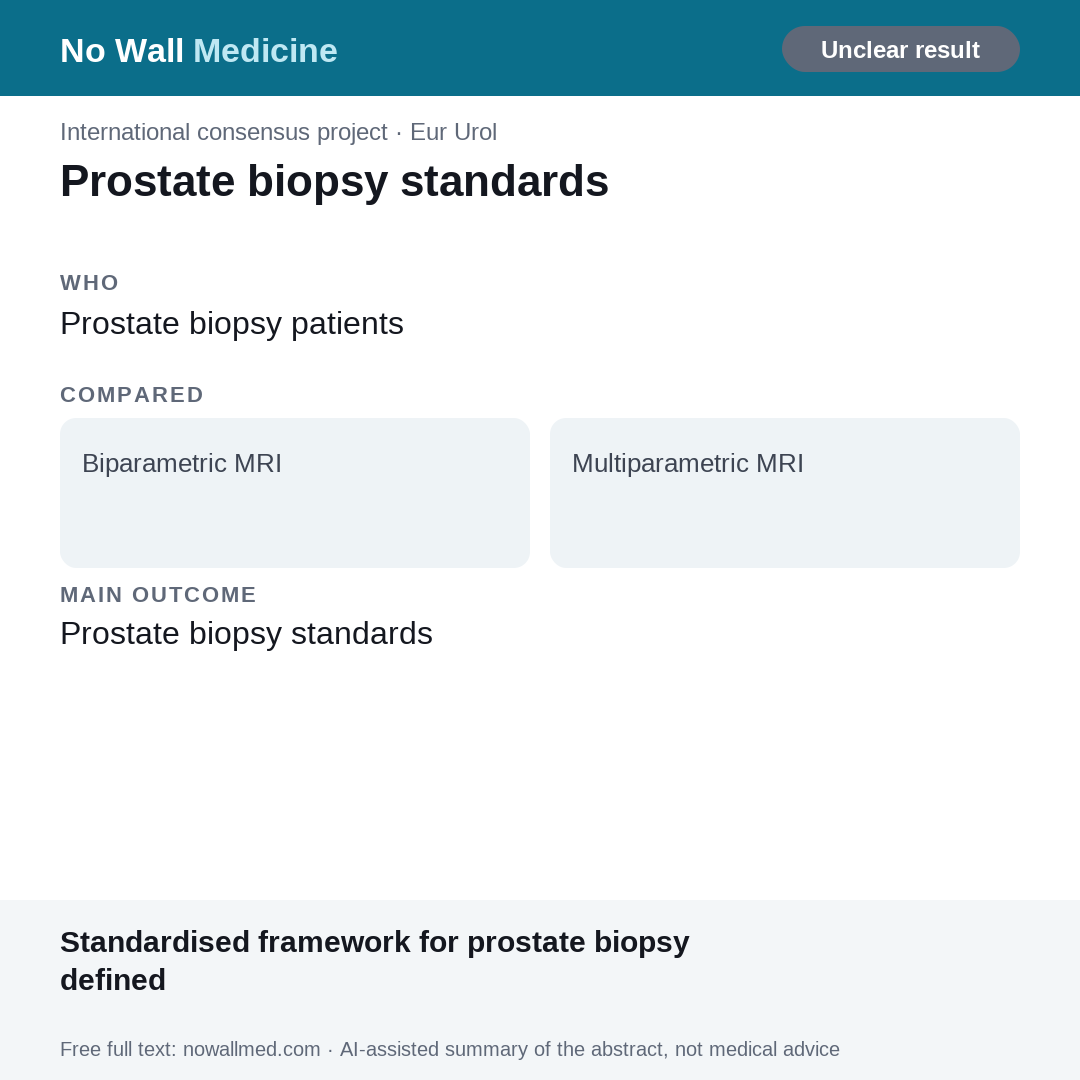
ProBIOPSY: A Multidisciplinary International Consensus on Standards for Prostate Biopsy
International consensus projectUnclear result
Prostate biopsy standards
Who
Prostate biopsy patients
Compared
Biparametric MRI
Multiparametric MRI
Main outcome
Prostate biopsy standards
Bottom line: Standardised framework for prostate biopsy defined
Limitation: Imbalances in specialty representation
Eur Urol · 2026-07-08Download image
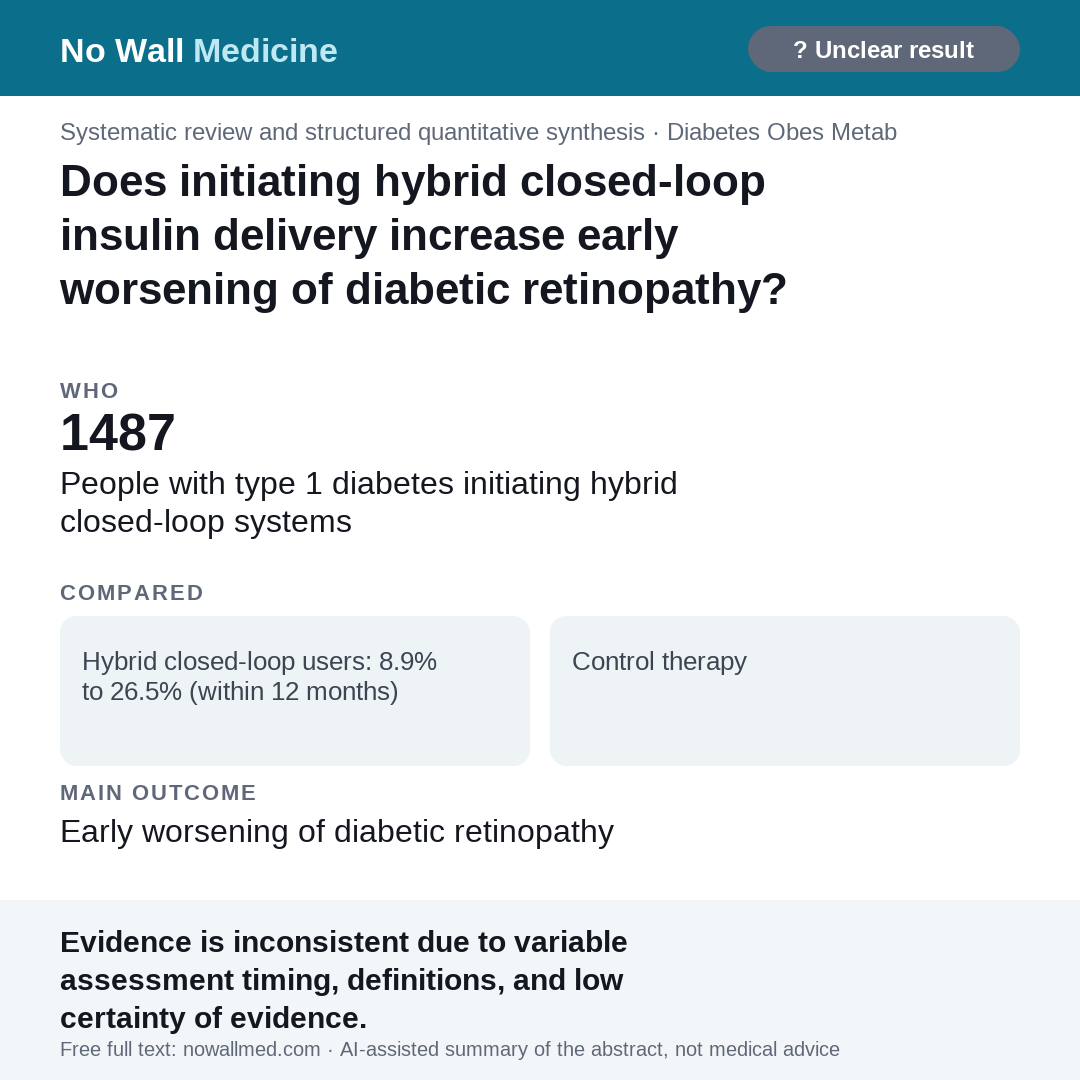
Early Worsening of Diabetic Retinopathy Following Initiation of Hybrid Closed-Loop/Automated Insulin Delivery Systems in Type 1 Diabetes: A Systematic Review and Structured Study-Level Synthesis
Systematic review and structured quantitative synthesisUnclear result
Does initiating hybrid closed-loop insulin delivery increase early worsening of diabetic retinopathy?
Who
1487
People with type 1 diabetes initiating hybrid closed-loop systems
Compared
Hybrid closed-loop users: 8.9% to 26.5% (within 12 months)
Control therapy
Main outcome
Early worsening of diabetic retinopathy
Bottom line: Evidence is inconsistent due to variable assessment timing, definitions, and low certainty of evidence.
Limitation: Substantial heterogeneity in definitions, assessment timing, follow-up duration, and comparator groups.
Diabetes Obes Metab · 2026-07-08Download image
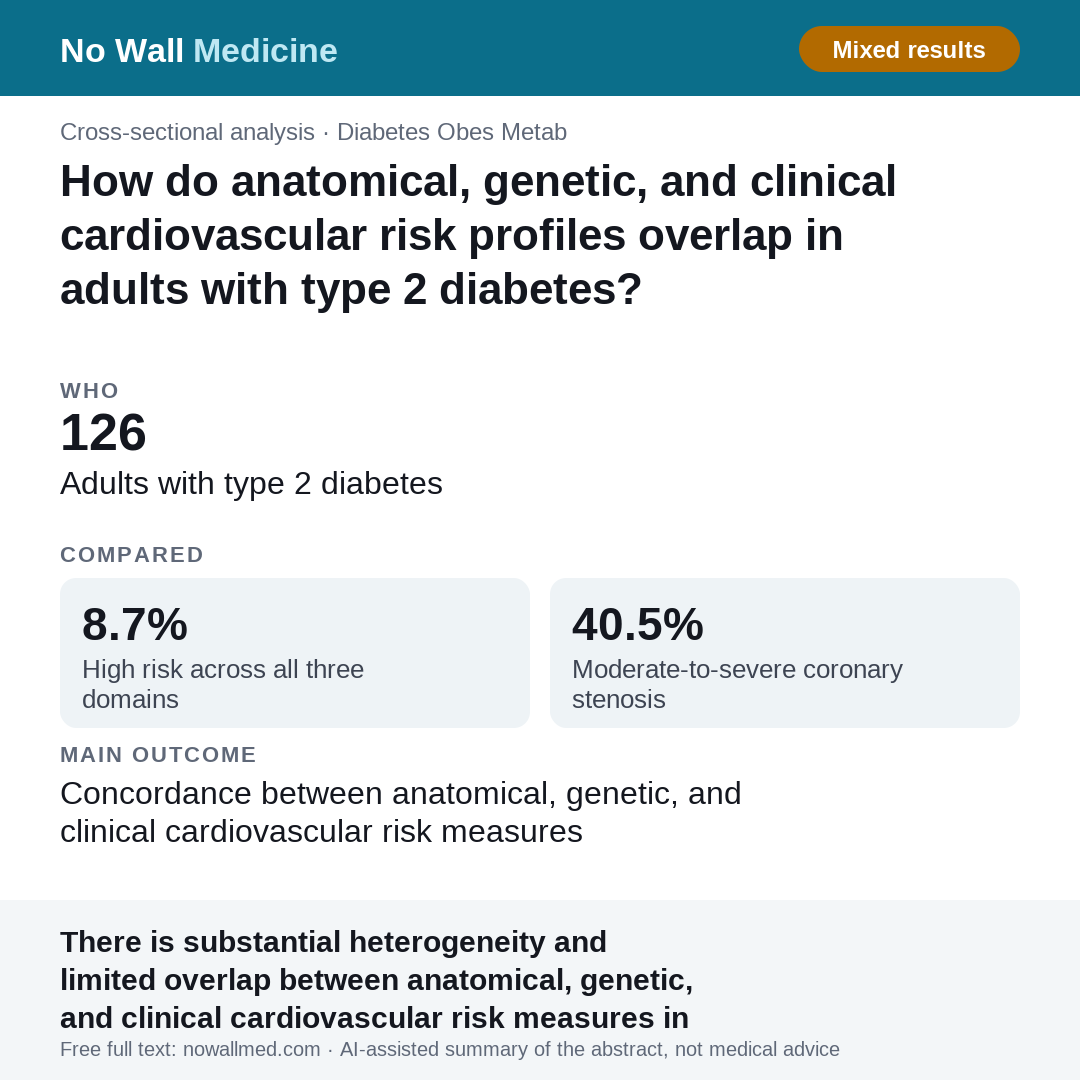
Baseline Computed Tomography Coronary Angiography and Polygenic Risk Profiles in Adults With Type 2 Diabetes: A Cross-Sectional Analysis From the VOLTAIRE Study
Cross-sectional analysisMixed results
How do anatomical, genetic, and clinical cardiovascular risk profiles overlap in adults with type 2 diabetes?
Who
126
Adults with type 2 diabetes
Compared
8.7%High risk across all three domains
40.5%Moderate-to-severe coronary stenosis
Main outcome
Concordance between anatomical, genetic, and clinical cardiovascular risk measures
Bottom line: There is substantial heterogeneity and limited overlap between anatomical, genetic, and clinical cardiovascular risk measures in type 2 diabetes.
Diabetes Obes Metab · 2026-07-08Download image
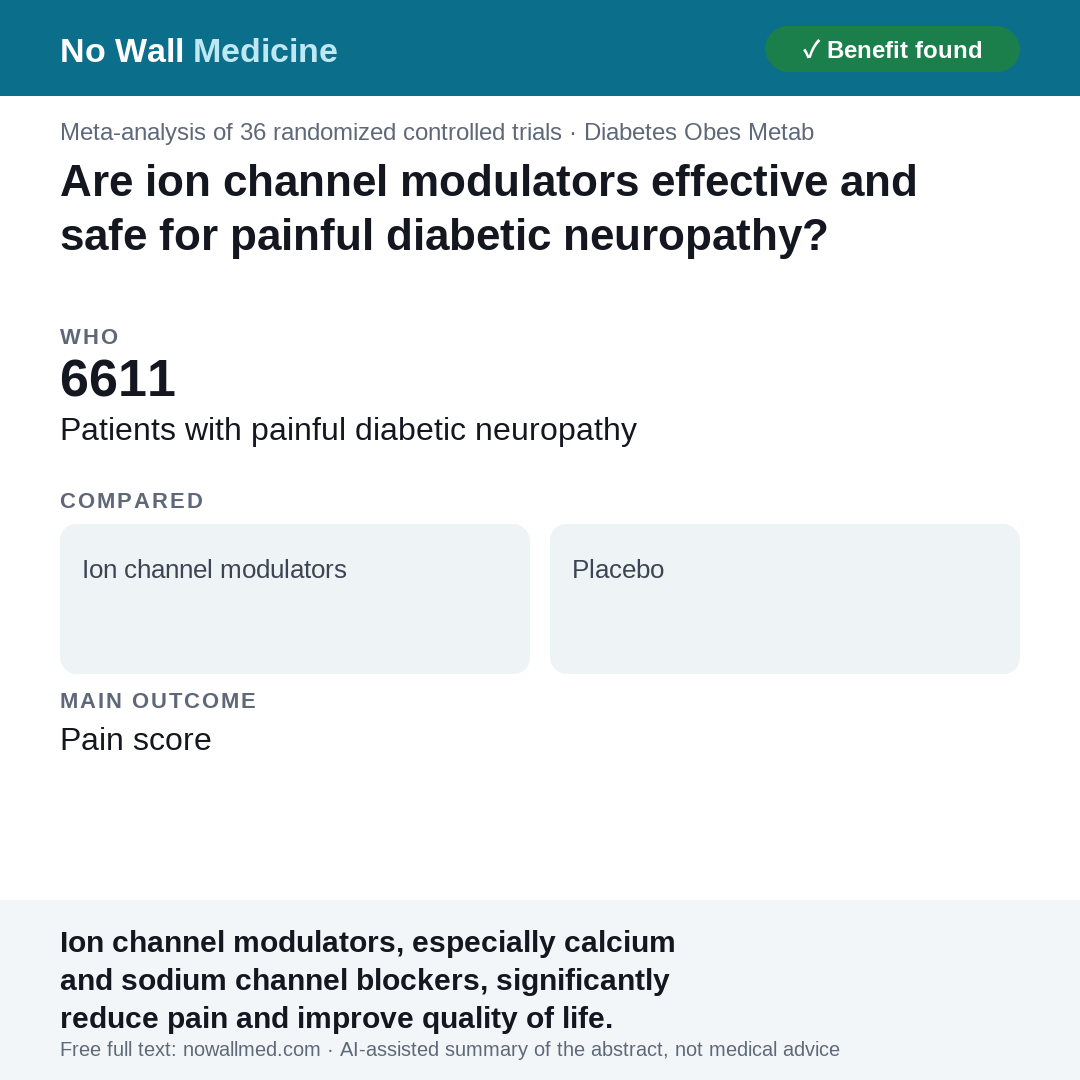
Efficacy and Safety of Ion Channel Modulators in Painful Diabetic Neuropathy
Meta-analysis of 36 randomized controlled trialsBenefit found
Are ion channel modulators effective and safe for painful diabetic neuropathy?
Who
6611
Patients with painful diabetic neuropathy
Compared
Ion channel modulators
Placebo
Main outcome
Pain score
Bottom line: Ion channel modulators, especially calcium and sodium channel blockers, significantly reduce pain and improve quality of life.
Diabetes Obes Metab · 2026-07-08Download image
Autograft Versus Allograft in Indirect Corneal Neurotization: A Systematic Review
Systematic review and narrative synthesisNo clear difference
Are autologous nerve grafts or processed nerve allografts better for indirect corneal neurotization?
Who
150
Patients with neurotrophic keratopathy or corneal anesthesia
Compared
Autograft: mean Cochet-Bonnet esthesiometry increasing from 2.7 to 31.1 mm
Allograft: mean Cochet-Bonnet esthesiometry increasing from 5.23 to 41.7 mm
Main outcome
Corneal sensation, epithelial healing, and visual outcomes
Bottom line: Both autografts and allografts improve corneal sensation and healing, but no clear superiority was identified.
Limitation: All included studies were at serious risk of bias and certainty of evidence was very low.
Am J Ophthalmol · 2026-07-08Download image

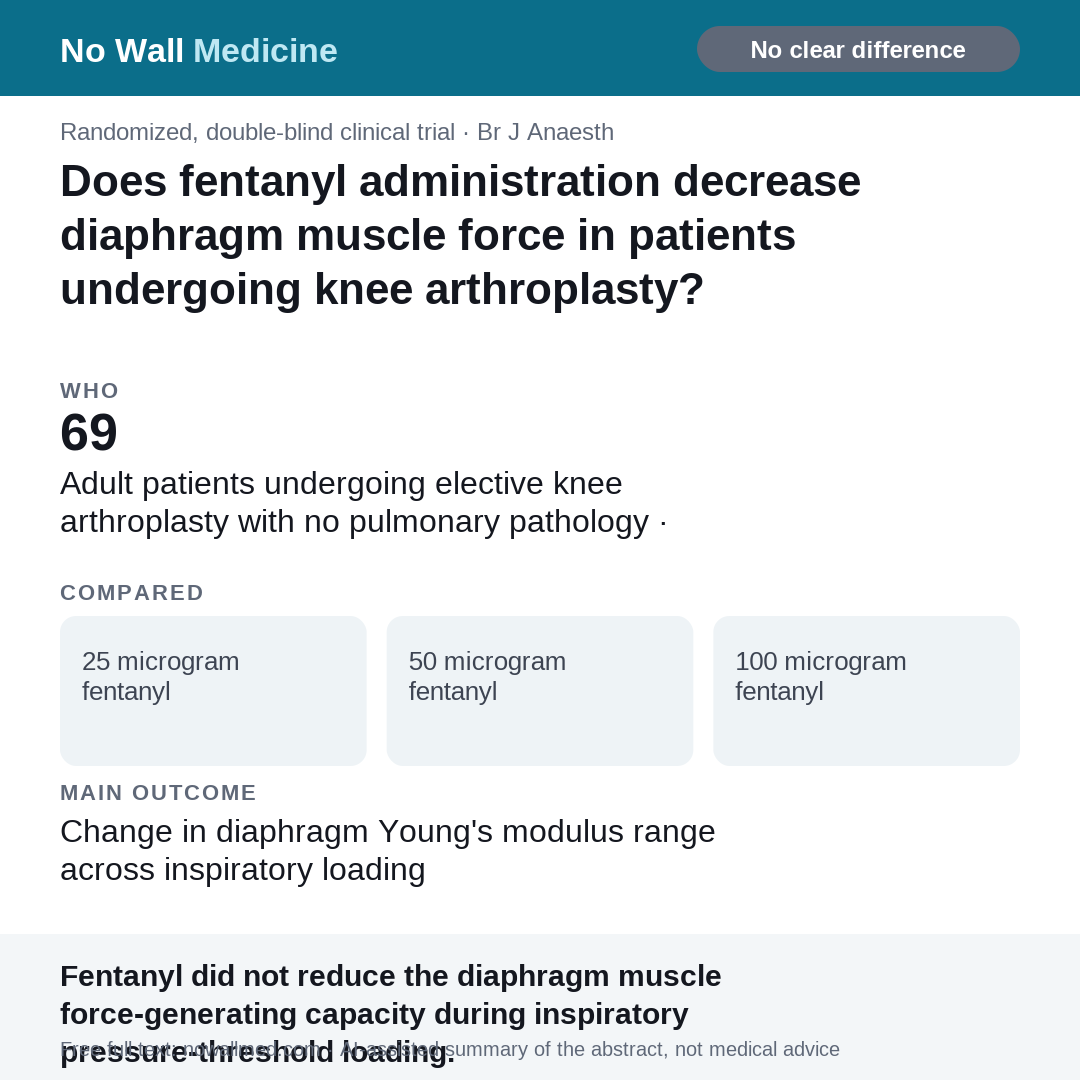
Effects of fentanyl on diaphragm muscle force in patients undergoing knee arthroplasty: a randomised double-blind clinical trial
Randomized, double-blind clinical trialNo clear difference
Does fentanyl administration decrease diaphragm muscle force in patients undergoing knee arthroplasty?
Who
69
Adult patients undergoing elective knee arthroplasty with no pulmonary pathology · Single-institution
Compared
25 microgram fentanyl
50 microgram fentanyl
100 microgram fentanyl
Main outcome
Change in diaphragm Young's modulus range across inspiratory loading
Bottom line: Fentanyl did not reduce the diaphragm muscle force-generating capacity during inspiratory pressure-threshold loading.
Br J Anaesth · 2026-07-08Download image
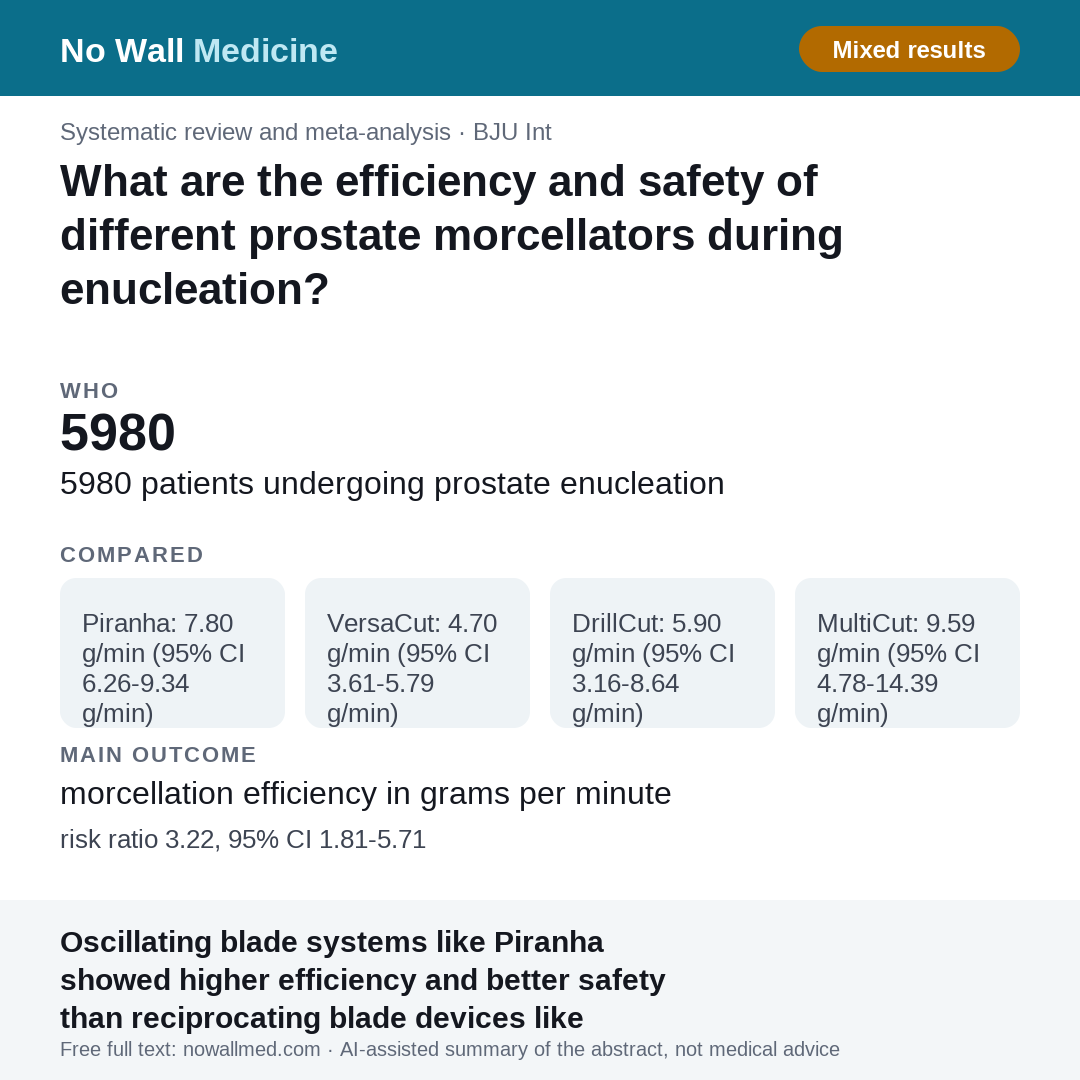
Prostate morcellation devices: a systematic review and meta-analysis of clinical outcomes and efficiency
Systematic review and meta-analysisMixed results
What are the efficiency and safety of different prostate morcellators during enucleation?
Who
5980
5980 patients undergoing prostate enucleation
Compared
Piranha: 7.80 g/min (95% CI 6.26-9.34 g/min)
VersaCut: 4.70 g/min (95% CI 3.61-5.79 g/min)
DrillCut: 5.90 g/min (95% CI 3.16-8.64 g/min)
MultiCut: 9.59 g/min (95% CI 4.78-14.39 g/min)
Main outcome
morcellation efficiency in grams per minute
Result: risk ratio 3.22, 95% CI 1.81-5.71
Bottom line: Oscillating blade systems like Piranha showed higher efficiency and better safety than reciprocating blade devices like VersaCut.
BJU Int · 2026-07-08Download image
Bridging the functional gap by synergy of exome/genome and RNA sequencing: A systematic semi-quantitative review demonstrating enhanced diagnostic yield in genetic diagnostics
Systematic semi-quantitative reviewBenefit found
Does adding RNA sequencing to exome or genome sequencing improve diagnostic yield?
Who
200
Studies reporting exome/genome sequencing or followed by RNA sequencing
Compared
0.37Exome/genome sequencing alone (95% CI: 0.35-0.39)
0.44Exome/genome sequencing followed by RNA sequencing (ranging from 0.34 to 0.53)
Main outcome
Diagnostic rate
Result: odds ratio 1.31 (95% CI 1.08-1.58)
Bottom line: Integrating RNA sequencing into exome or genome sequencing workflows improves the molecular diagnosis of genetic diseases.
Genet Med · 2026-07-08Download image