Visual abstracts
New randomized trials and meta-analyses from leading journals at a glance: who was studied, what was compared, and what was found. Every paper is free to read in full.
All specialtiesCardiology 4877Oncology 4138Gastroenterology & Hepatology 1942Infectious Disease 3837Neurology 1905Psychiatry & Mental Health 2273Pulmonology 2143Critical Care 1365Endocrinology & Diabetes 2580Pediatrics 2980Surgery 2559Orthopedics & Sports Medicine 931Neurosurgery 537Cardiothoracic & Vascular Surgery 674Plastic & Reconstructive Surgery 591Nephrology 1133Rheumatology 823Hematology 1109Dermatology 621Ophthalmology 543Obstetrics & Gynecology 1686Public & Global Health 1058Radiology & Imaging 648Anesthesiology 986Urology 764ENT (Otolaryngology) 503Emergency Medicine 511Allergy & Immunology 313Geriatrics 981Family Medicine & Primary Care 562Medical Genetics & Genomics 676Pathology & Laboratory Medicine 159Physical Medicine & Rehabilitation 757Palliative Care 444Nutrition 1588Digital Health & AI 2201General Medicine 321
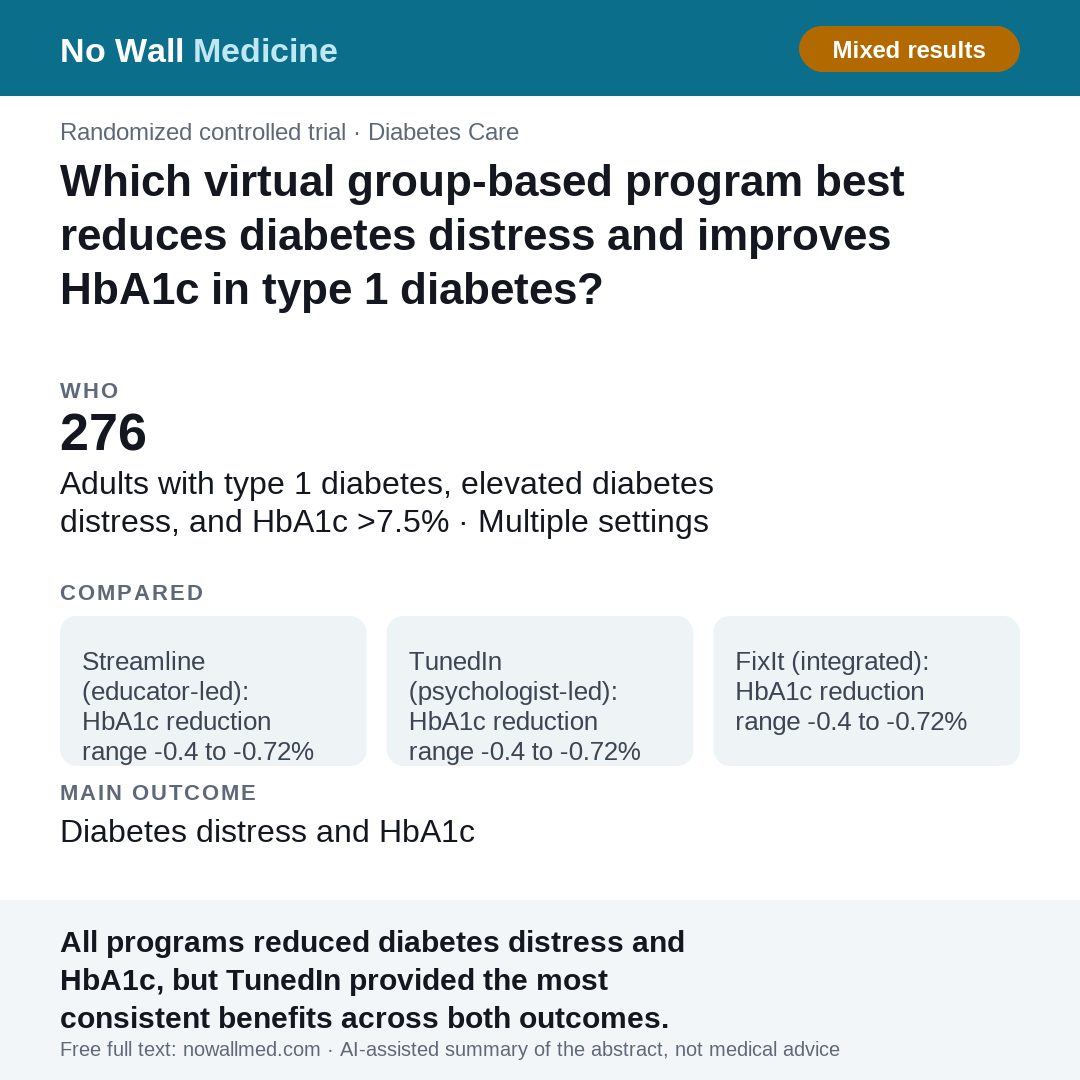
EMBARK: A Randomized, Controlled Trial Comparing Three Approaches to Reducing Diabetes Distress and Improving HbA1c in Adults With Type 1 Diabetes
Randomized controlled trialMixed results
Which virtual group-based program best reduces diabetes distress and improves HbA1c in type 1 diabetes?
Who
276
Adults with type 1 diabetes, elevated diabetes distress, and HbA1c >7.5% · Multiple settings
Compared
Streamline (educator-led): HbA1c reduction range -0.4 to -0.72%
TunedIn (psychologist-led): HbA1c reduction range -0.4 to -0.72%
FixIt (integrated): HbA1c reduction range -0.4 to -0.72%
Main outcome
Diabetes distress and HbA1c
Bottom line: All programs reduced diabetes distress and HbA1c, but TunedIn provided the most consistent benefits across both outcomes.
Diabetes Care · 2024-05-29Download image
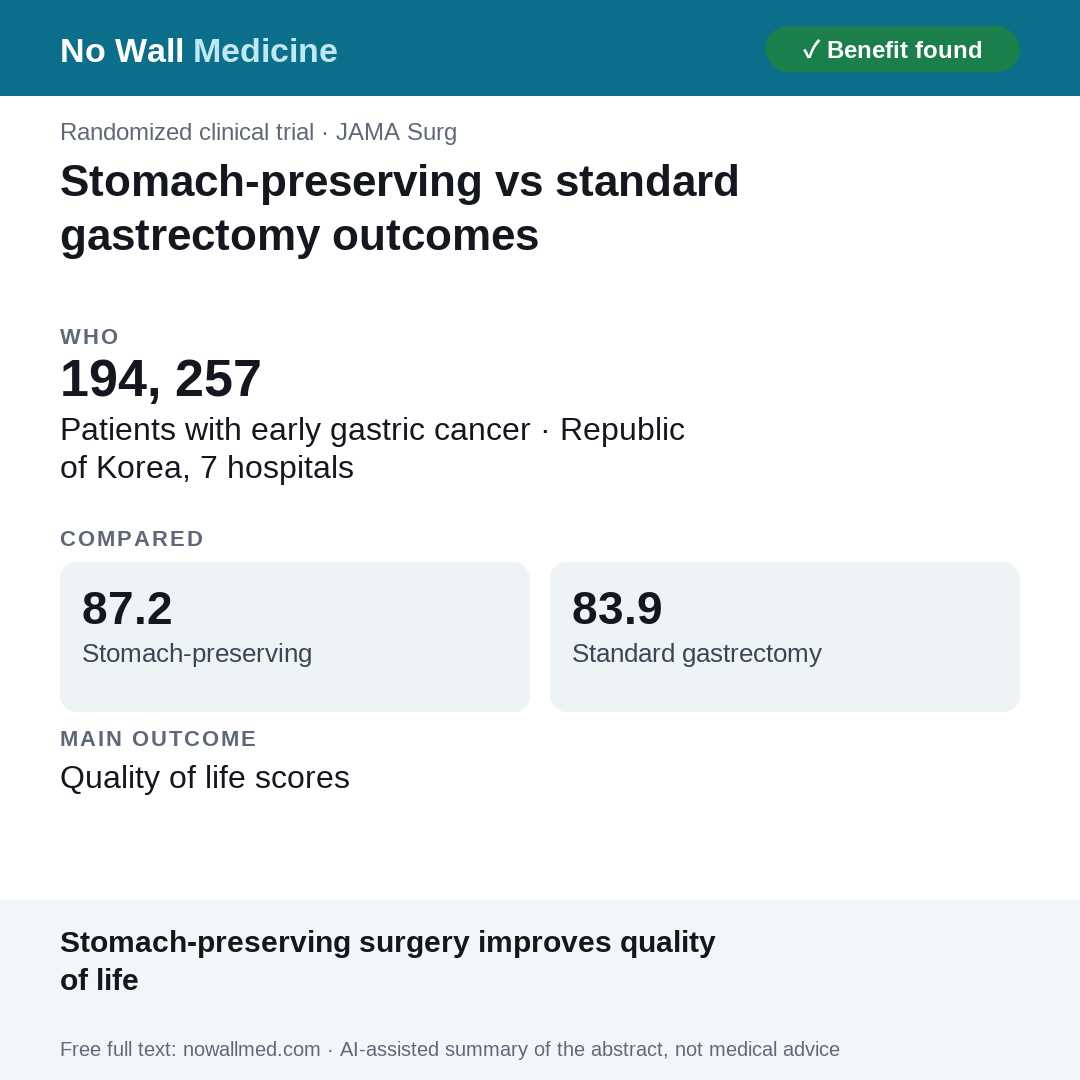
Quality of Life and Nutritional Outcomes of Stomach-Preserving Surgery for Early Gastric Cancer: A Secondary Analysis of the SENORITA Randomized Clinical Trial
Randomized clinical trialBenefit found
Stomach-preserving vs standard gastrectomy outcomes
Who
194, 257
Patients with early gastric cancer · Republic of Korea, 7 hospitals
Compared
87.2Stomach-preserving
83.9Standard gastrectomy
Main outcome
Quality of life scores
Bottom line: Stomach-preserving surgery improves quality of life
JAMA Surg · 2024-05-29Download image
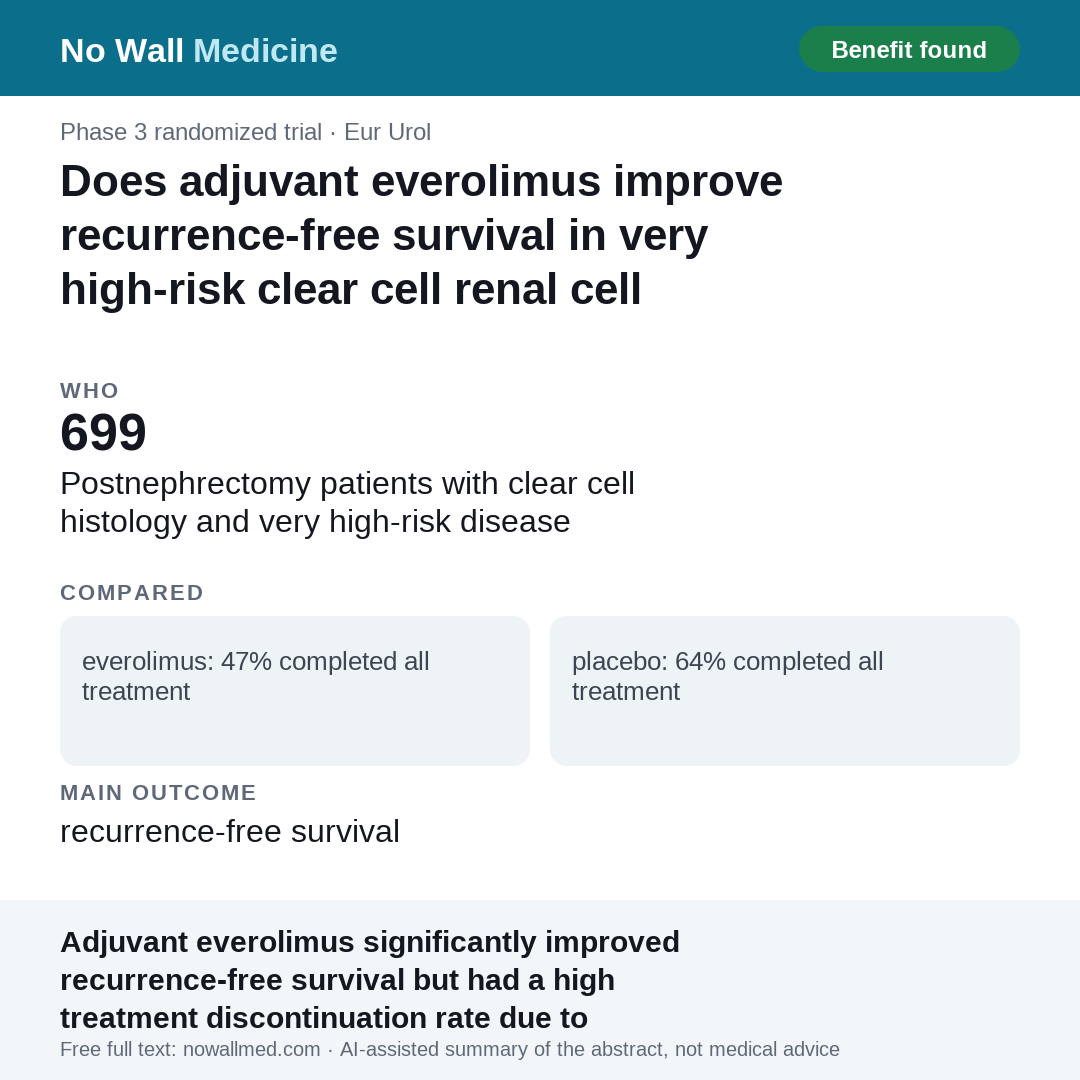
Adjuvant Everolimus in Patients with Completely Resected, Very High-risk Renal Cell Carcinoma of Clear Cell Histology: Results from the Phase 3 Placebo-controlled SWOG S0931 (EVEREST) Trial
Phase 3 randomized trialBenefit found
Does adjuvant everolimus improve recurrence-free survival in very high-risk clear cell renal cell carcinoma?
Who
699
Postnephrectomy patients with clear cell histology and very high-risk disease
Compared
everolimus: 47% completed all treatment
placebo: 64% completed all treatment
Main outcome
recurrence-free survival
Result: hazard ratio 0.80 (95% CI 0.65 to 0.99)
Bottom line: Adjuvant everolimus significantly improved recurrence-free survival but had a high treatment discontinuation rate due to adverse events.
Limitation: high discontinuation rate due to adverse events
Eur Urol · 2024-05-29Download image
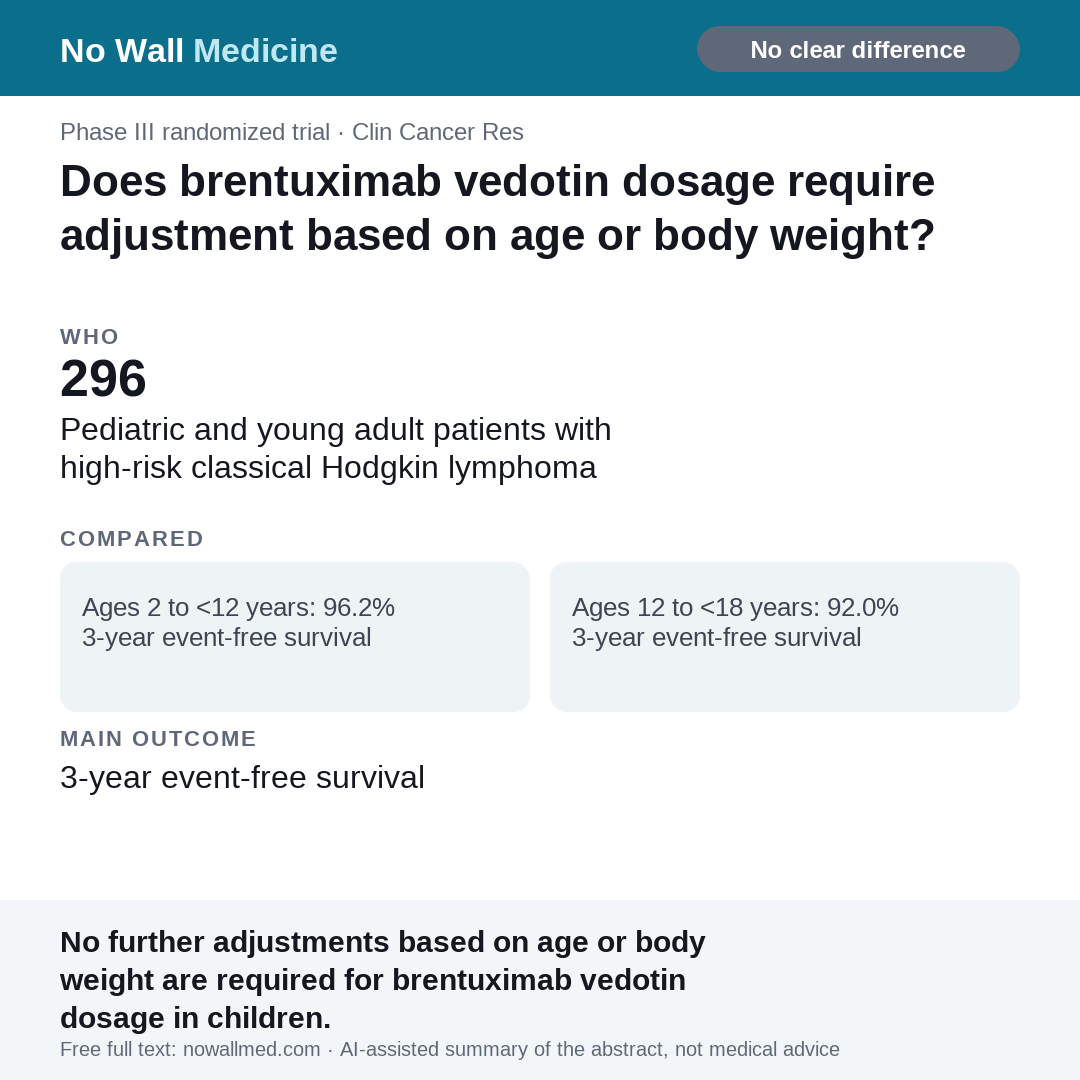
Exposure-Response and Subgroup Analyses to Support Body Weight-Based Dosing of Brentuximab Vedotin in Children and Young Adults with Newly Diagnosed High-risk Classical Hodgkin Lymphoma
Phase III randomized trialNo clear difference
Does brentuximab vedotin dosage require adjustment based on age or body weight?
Who
296
Pediatric and young adult patients with high-risk classical Hodgkin lymphoma
Compared
Ages 2 to <12 years: 96.2% 3-year event-free survival
Ages 12 to <18 years: 92.0% 3-year event-free survival
Main outcome
3-year event-free survival
Bottom line: No further adjustments based on age or body weight are required for brentuximab vedotin dosage in children.
Limitation: Exposure-response analyses were limited to the pharmacokinetic subpopulation of 24 patients.
Clin Cancer Res · 2024-05-29Download image
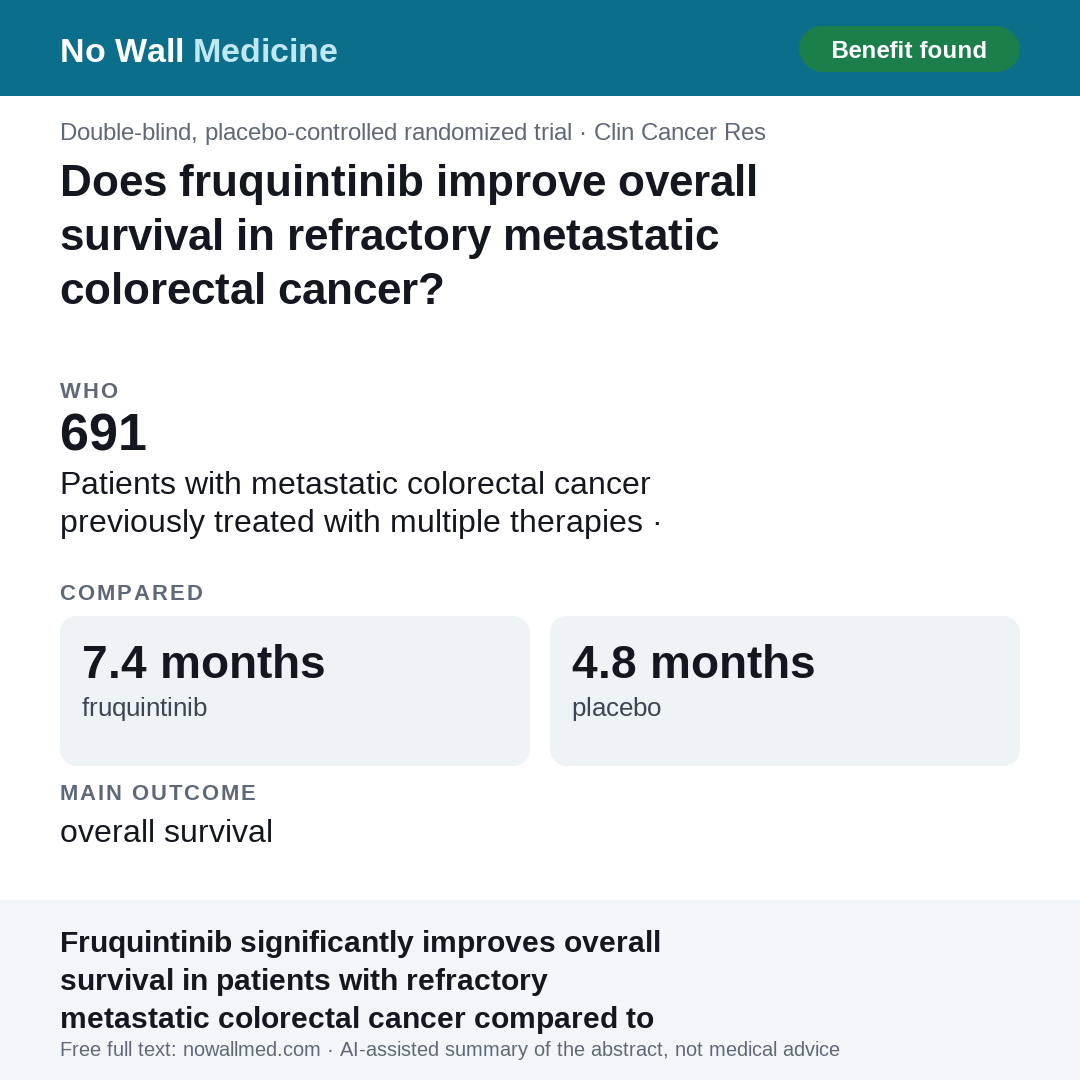
FDA Approval Summary: Fruquintinib for the Treatment of Refractory Metastatic Colorectal Cancer
Double-blind, placebo-controlled randomized trialBenefit found
Does fruquintinib improve overall survival in refractory metastatic colorectal cancer?
Who
691
Patients with metastatic colorectal cancer previously treated with multiple therapies · Globally conducted
Compared
7.4 monthsfruquintinib (95% CI, 6.7, 8.2)
4.8 monthsplacebo (95% CI, 4.0, 5.8)
Main outcome
overall survival
Result: hazard ratio 0.66 (95% CI, 0.55, 0.80)
Bottom line: Fruquintinib significantly improves overall survival in patients with refractory metastatic colorectal cancer compared to placebo.
Clin Cancer Res · 2024-05-29Download image
"Brain-IT": Exergame training with biofeedback breathing in neurocognitive disorders
Randomized controlled trialBenefit found
Exergame training effectiveness
Who
mild neurocognitive disorders patients
Compared
Intervention
Usual care
Main outcome
global cognitive performance
Bottom line: Exergame training improves cognitive performance
Alzheimers Dement · 2024-05-29Download image
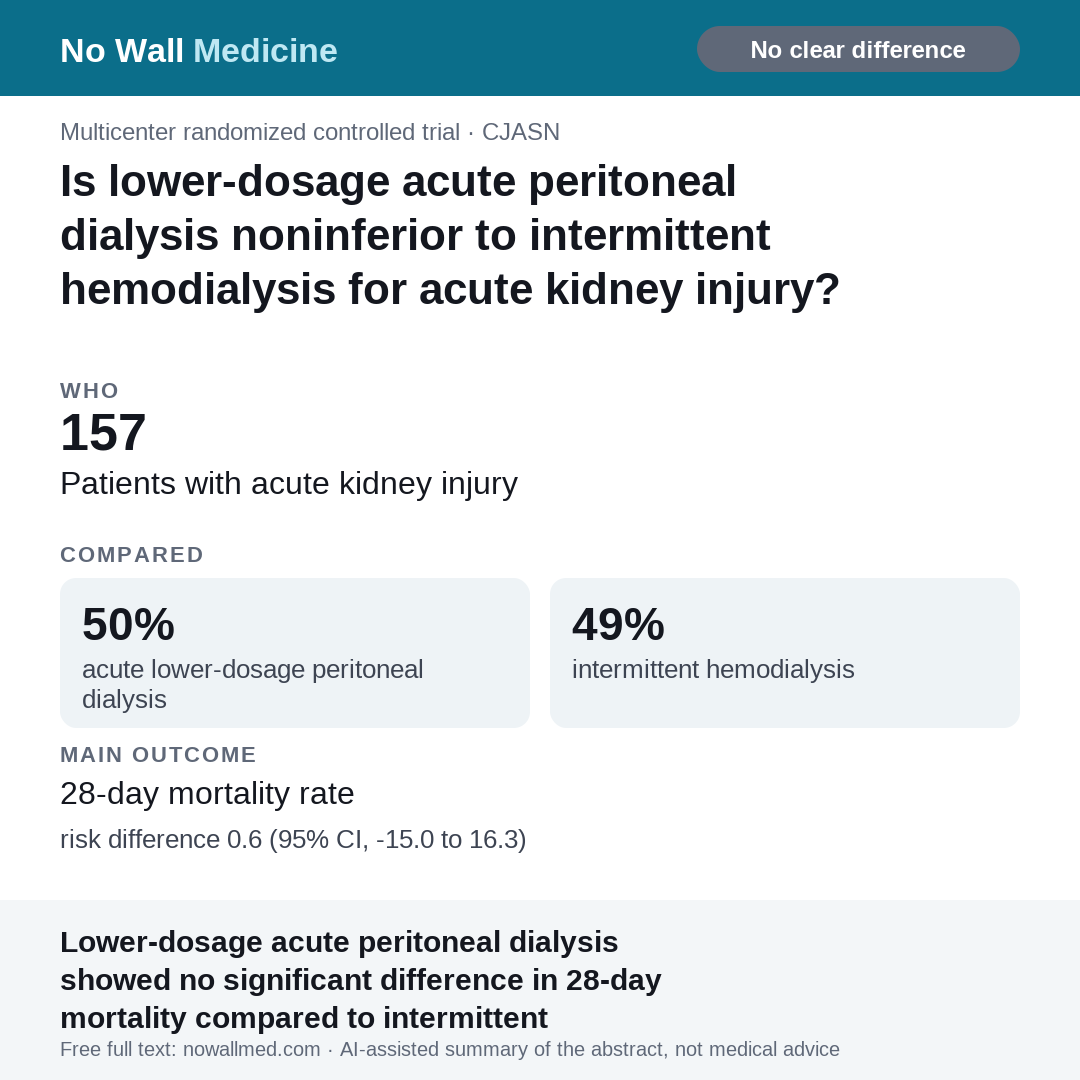
Lower-Dosage Acute Peritoneal Dialysis versus Acute Intermittent Hemodialysis in Acute Kidney Injury: A Randomized Controlled Trial
Multicenter randomized controlled trialNo clear difference
Is lower-dosage acute peritoneal dialysis noninferior to intermittent hemodialysis for acute kidney injury?
Who
157
Patients with acute kidney injury
Compared
50%acute lower-dosage peritoneal dialysis
49%intermittent hemodialysis
Main outcome
28-day mortality rate
Result: risk difference 0.6 (95% CI, -15.0 to 16.3)
Bottom line: Lower-dosage acute peritoneal dialysis showed no significant difference in 28-day mortality compared to intermittent hemodialysis.
CJASN · 2024-05-29Download image
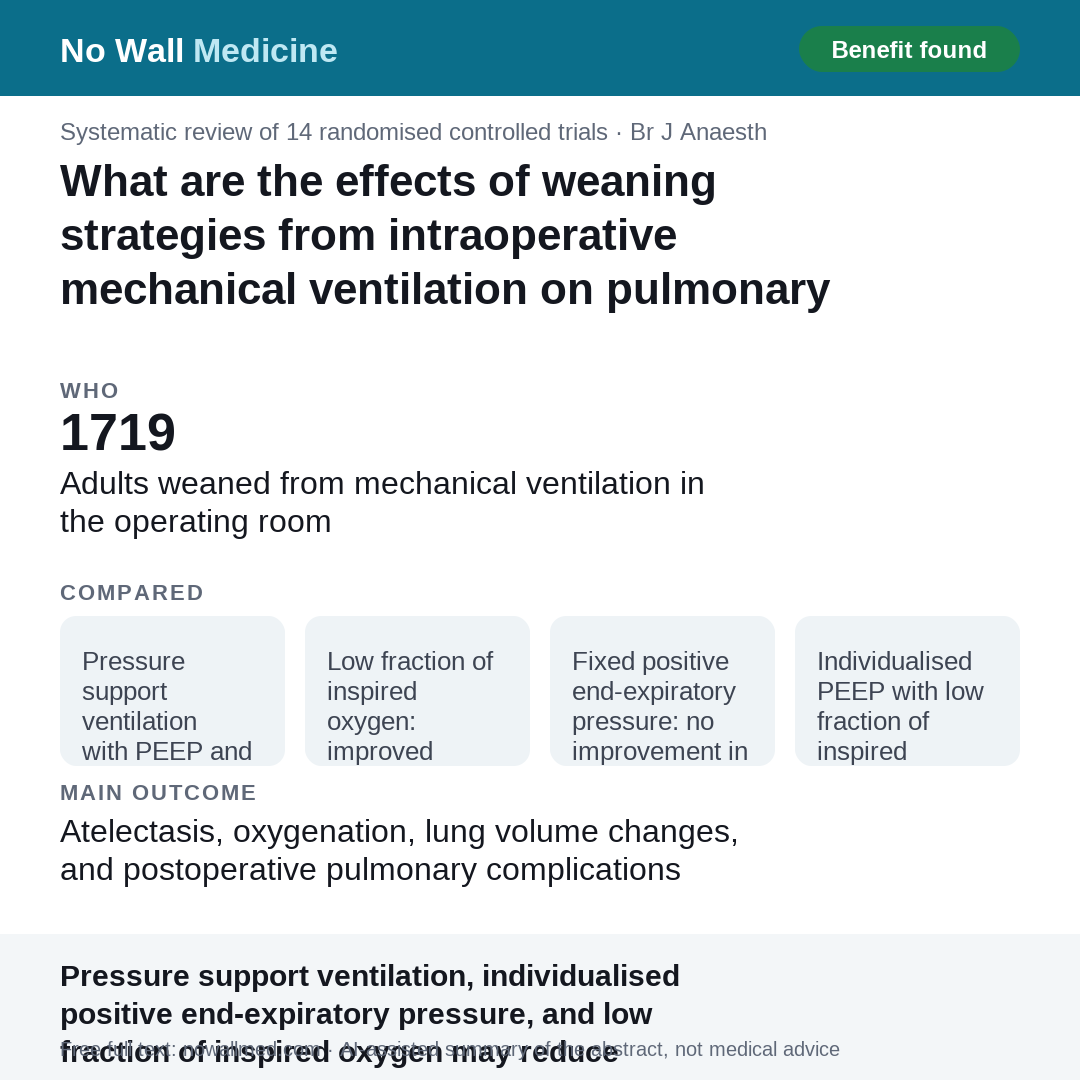
Weaning from mechanical ventilation in the operating room: a systematic review
Systematic review of 14 randomised controlled trialsBenefit found
What are the effects of weaning strategies from intraoperative mechanical ventilation on pulmonary outcomes?
Who
1719
Adults weaned from mechanical ventilation in the operating room
Compared
Pressure support ventilation with PEEP and low FiO2: improved atelectasis, oxygenation, and lung volumes
Low fraction of inspired oxygen: improved atelectasis and oxygenation
Fixed positive end-expiratory pressure: no improvement in oxygenation or atelectasis
Individualised PEEP with low fraction of inspired oxygen: improved oxygenation
Main outcome
Atelectasis, oxygenation, lung volume changes, and postoperative pulmonary complications
Bottom line: Pressure support ventilation, individualised positive end-expiratory pressure, and low fraction of inspired oxygen may reduce postoperative pulmonary outcomes.
Limitation: Half of included studies are of moderate or high risk of bias and evidence quality is low.
Br J Anaesth · 2024-05-29Download image
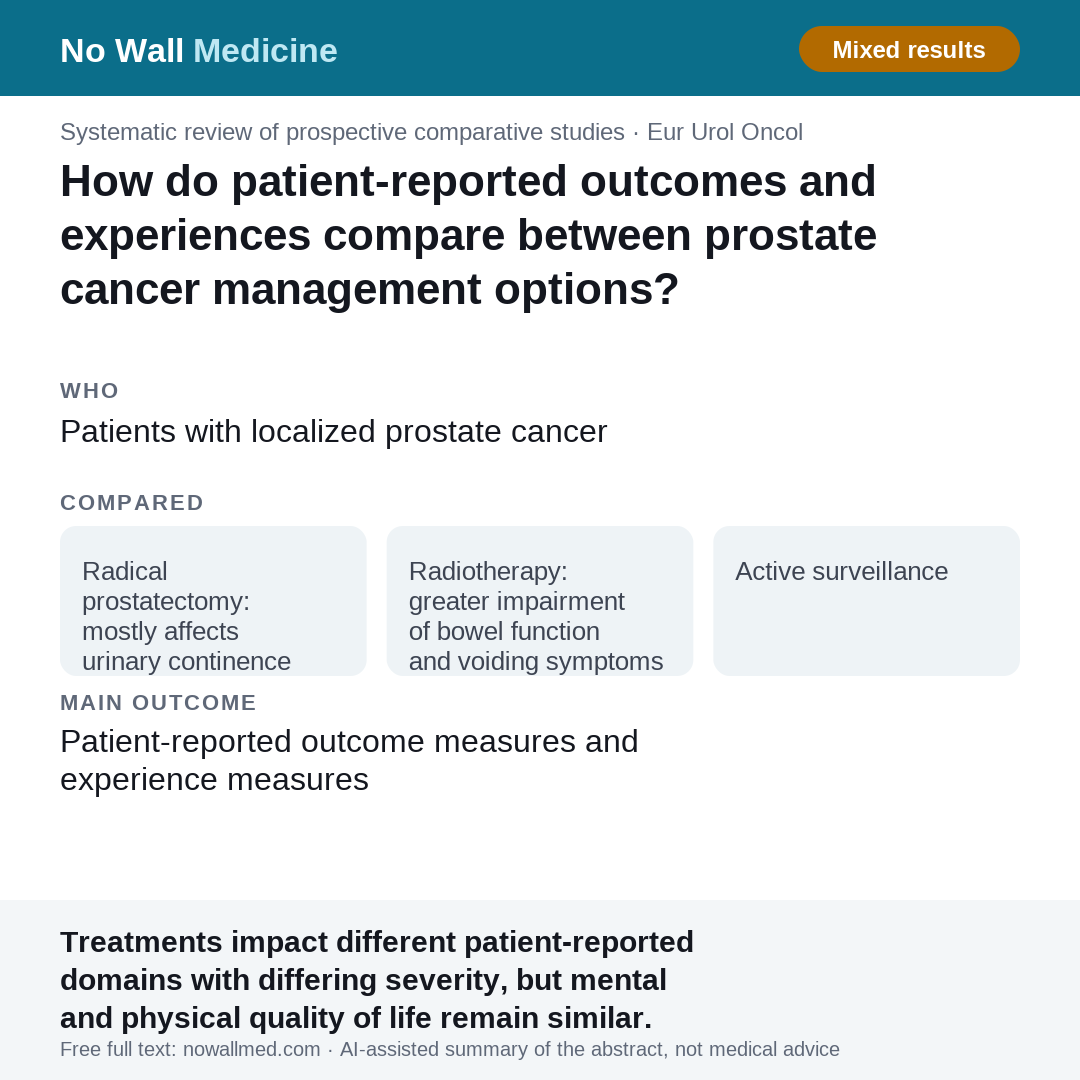
Patient-reported Outcome Measures and Experience Measures After Active Surveillance Versus Radiation Therapy Versus Radical Prostatectomy for Prostate Cancer: A Systematic Review of Prospective Comparative Studies
Systematic review of prospective comparative studiesMixed results
How do patient-reported outcomes and experiences compare between prostate cancer management options?
Who
Patients with localized prostate cancer
Compared
Radical prostatectomy: mostly affects urinary continence and sexual function
Radiotherapy: greater impairment of bowel function and voiding symptoms
Active surveillance
Main outcome
Patient-reported outcome measures and experience measures
Bottom line: Treatments impact different patient-reported domains with differing severity, but mental and physical quality of life remain similar.
Limitation: Significant heterogeneity in patient-reported outcome measure collection and few studies reporting experience measures.
Eur Urol Oncol · 2024-05-29Download image
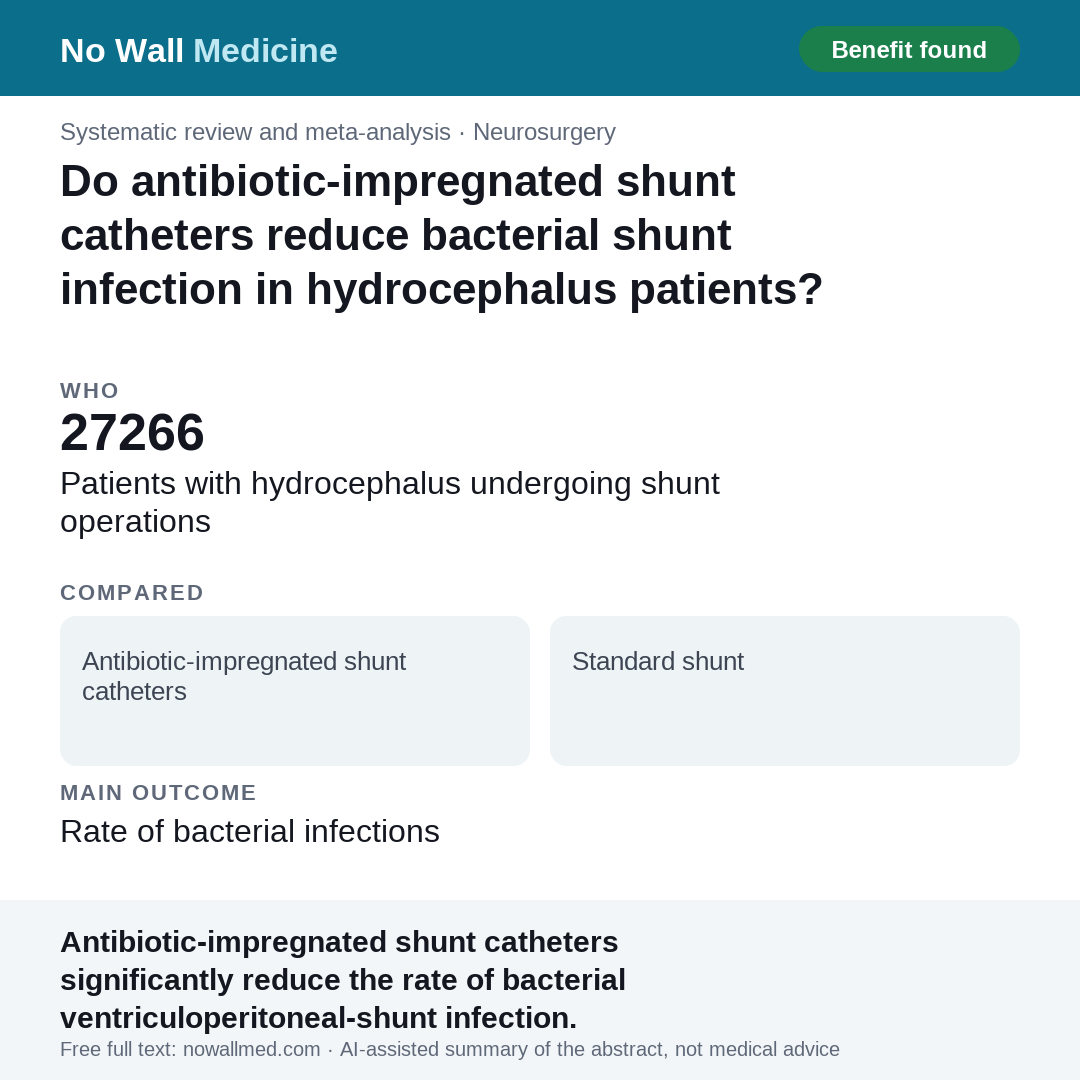
Antibiotic-Impregnated Ventriculoperitoneal Shunts Decrease Bacterial Shunt Infection: A Systematic Review and Meta-Analysis
Systematic review and meta-analysisBenefit found
Do antibiotic-impregnated shunt catheters reduce bacterial shunt infection in hydrocephalus patients?
Who
27266
Patients with hydrocephalus undergoing shunt operations
Compared
Antibiotic-impregnated shunt catheters
Standard shunt
Main outcome
Rate of bacterial infections
Result: odds ratio 0.42 (95% CI: 0.33-0.54)
Bottom line: Antibiotic-impregnated shunt catheters significantly reduce the rate of bacterial ventriculoperitoneal-shunt infection.
Neurosurgery · 2024-05-29Download image
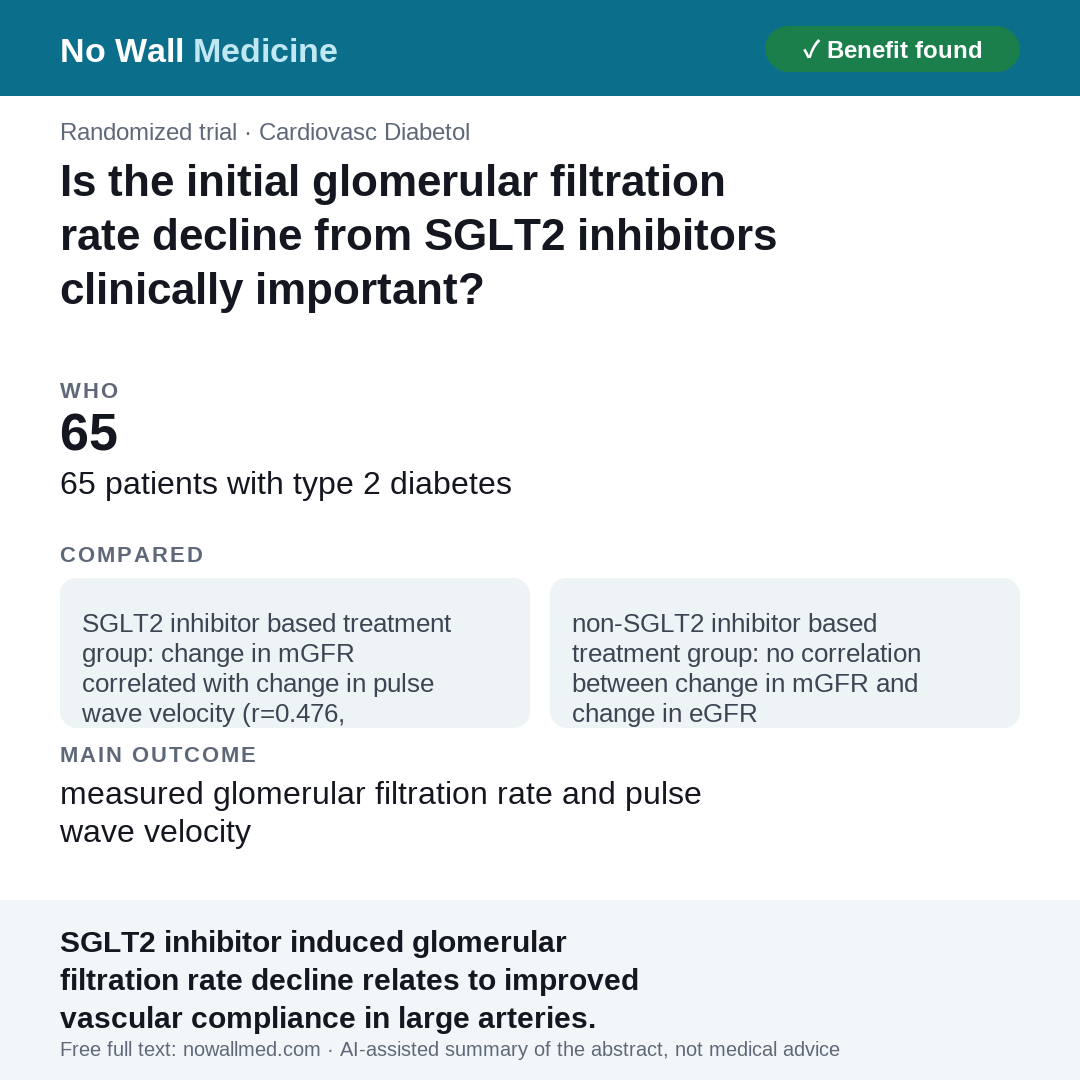
Is GFR decline induced by SGLT2 inhibitor of clinical importance?
Randomized trialBenefit found
Is the initial glomerular filtration rate decline from SGLT2 inhibitors clinically important?
Who
65
65 patients with type 2 diabetes
Compared
SGLT2 inhibitor based treatment group: change in mGFR correlated with change in pulse wave velocity (r=0.476, p=0.005)
non-SGLT2 inhibitor based treatment group: no correlation between change in mGFR and change in eGFR
Main outcome
measured glomerular filtration rate and pulse wave velocity
Bottom line: SGLT2 inhibitor induced glomerular filtration rate decline relates to improved vascular compliance in large arteries.
Cardiovasc Diabetol · 2024-05-29Download image
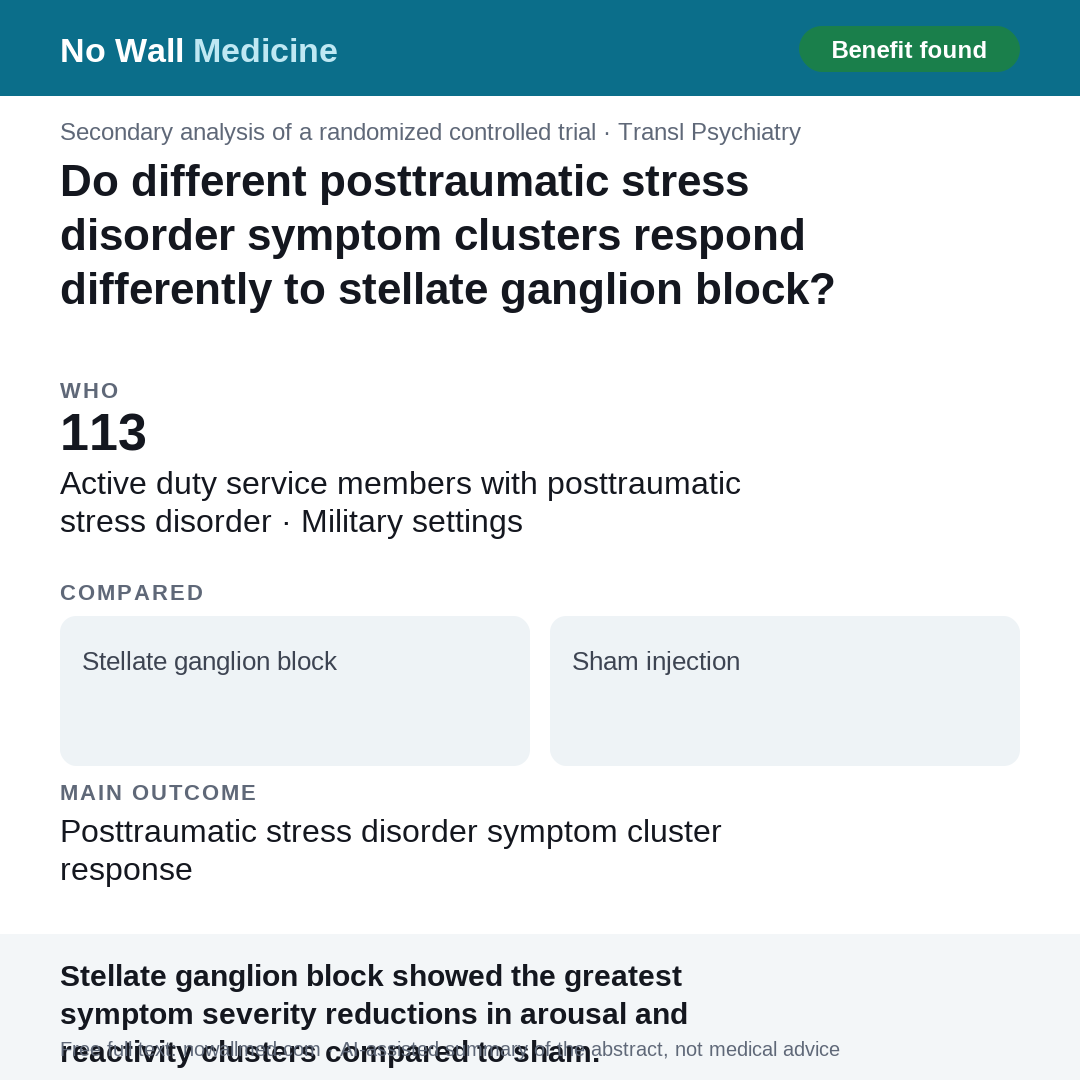
Differential posttraumatic stress disorder symptom cluster response to stellate ganglion block: secondary analysis of a randomized controlled trial
Secondary analysis of a randomized controlled trialBenefit found
Do different posttraumatic stress disorder symptom clusters respond differently to stellate ganglion block?
Who
113
Active duty service members with posttraumatic stress disorder · Military settings
Compared
Stellate ganglion block
Sham injection
Main outcome
Posttraumatic stress disorder symptom cluster response
Bottom line: Stellate ganglion block showed the greatest symptom severity reductions in arousal and reactivity clusters compared to sham.
Transl Psychiatry · 2024-05-29Download image
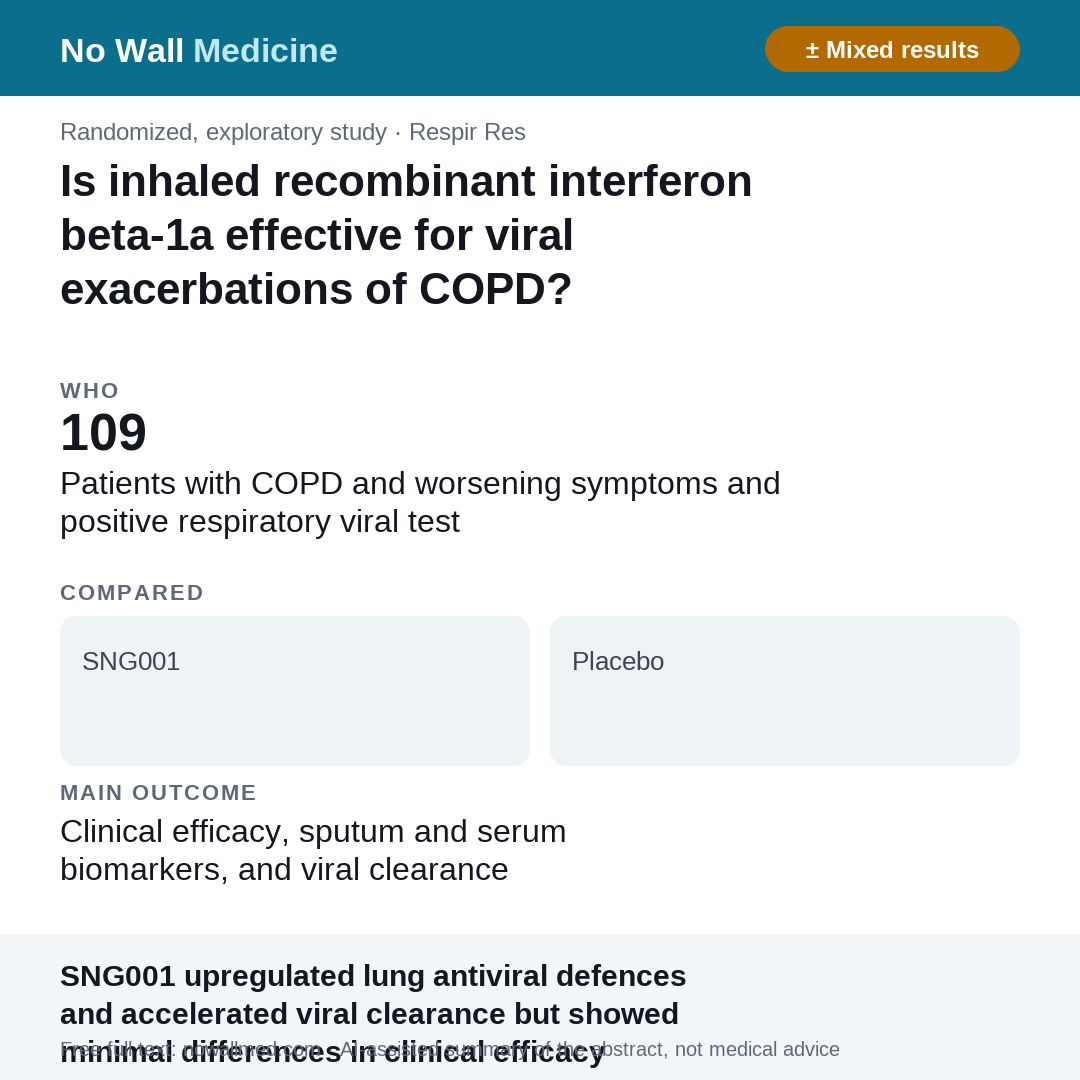
Nebulised interferon beta-1a (SNG001) in the treatment of viral exacerbations of COPD
Randomized, exploratory studyMixed results
Is inhaled recombinant interferon beta-1a effective for viral exacerbations of COPD?
Who
109
Patients with COPD and worsening symptoms and positive respiratory viral test
Compared
SNG001
Placebo
Main outcome
Clinical efficacy, sputum and serum biomarkers, and viral clearance
Bottom line: SNG001 upregulated lung antiviral defences and accelerated viral clearance but showed minimal differences in clinical efficacy endpoints.
Limitation: Findings warrant further investigation in a larger study.
Respir Res · 2024-05-29Download image
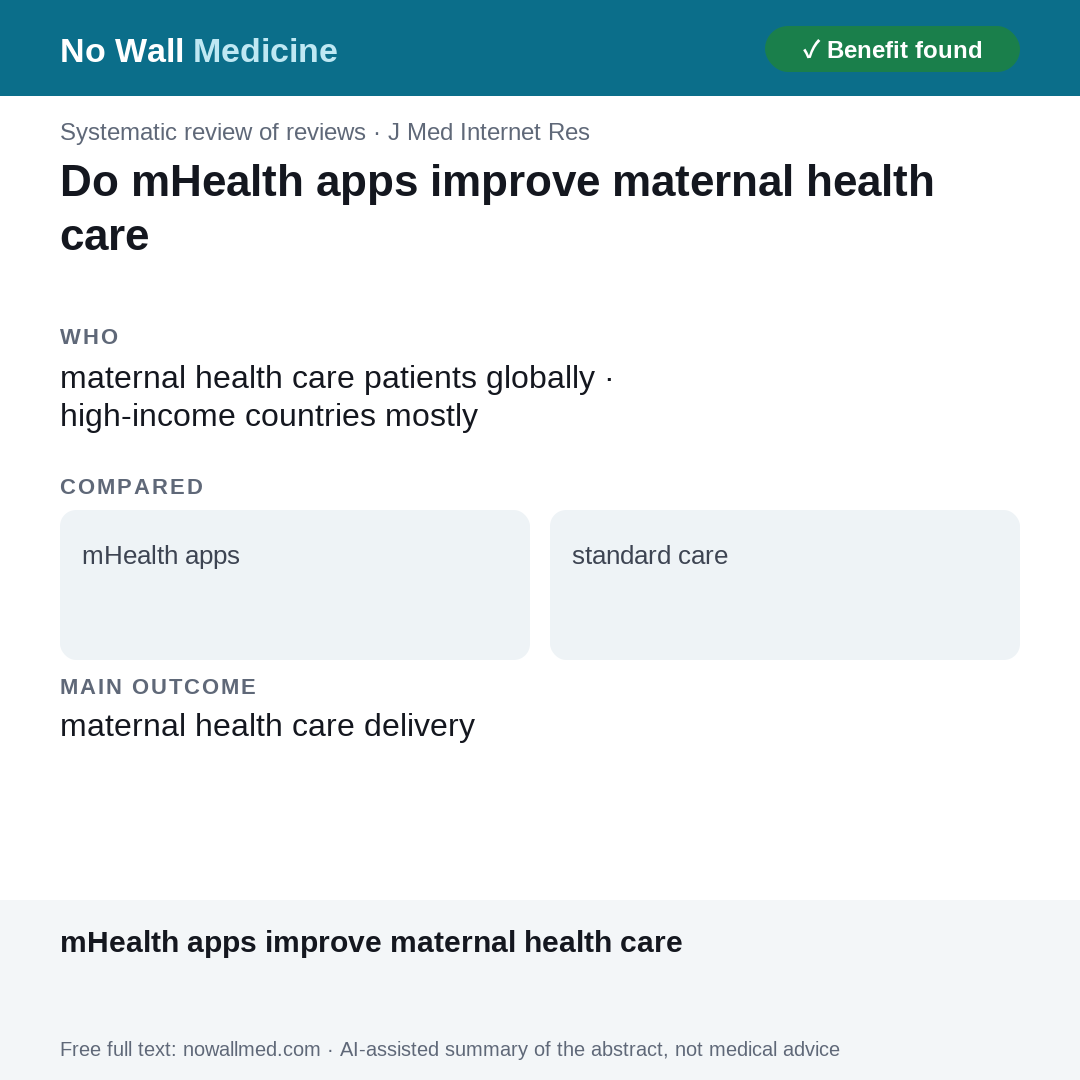
Effectiveness of mHealth Apps for Maternal Health Care Delivery: Systematic Review of Systematic Reviews
Systematic review of reviewsBenefit found
Do mHealth apps improve maternal health care
Who
maternal health care patients globally · high-income countries mostly
Compared
mHealth apps
standard care
Main outcome
maternal health care delivery
Bottom line: mHealth apps improve maternal health care
J Med Internet Res · 2024-05-29Download image
Motor imagery-based brain-computer interface rehabilitation programs enhance upper extremity performance and cortical activation in stroke patients
Randomized controlled trialBenefit found
Do motor imagery-based brain-computer interface programs enhance upper extremity function in chronic stroke patients?
Who
40
Forty-six stroke patients with upper limb motor dysfunction
Compared
Brain-computer interface group
Control group
Main outcome
Fugl-Meyer Assessment of the Upper Extremity score
Bottom line: Brain-computer interface therapy is effective and safe for arm rehabilitation after severe poststroke hemiparesis.
J Neuroeng Rehabil · 2024-05-29Download image

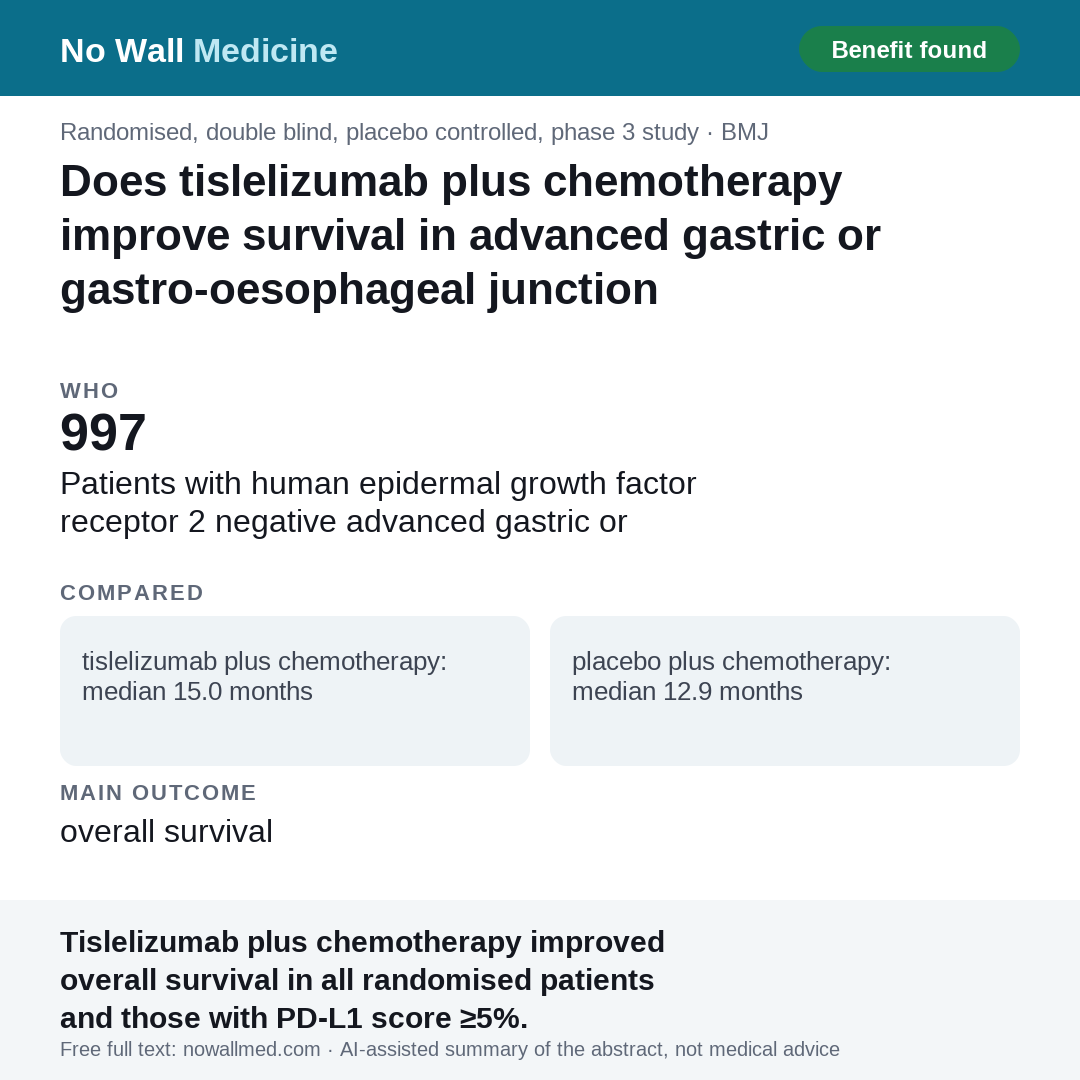
Tislelizumab plus chemotherapy versus placebo plus chemotherapy as first line treatment for advanced gastric or gastro-oesophageal junction adenocarcinoma: RATIONALE-305 randomised, double blind, phase 3 trial
Randomised, double blind, placebo controlled, phase 3 studyBenefit found
Does tislelizumab plus chemotherapy improve survival in advanced gastric or gastro-oesophageal junction adenocarcinoma?
Who
997
Patients with human epidermal growth factor receptor 2 negative advanced gastric or gastro-oesophageal junction adenocarcinoma · 146 medical centres across Asia, Europe, and North America
Compared
tislelizumab plus chemotherapy: median 15.0 months
placebo plus chemotherapy: median 12.9 months
Main outcome
overall survival
Result: hazard ratio 0.80 (95% CI 0.70 to 0.92)
Bottom line: Tislelizumab plus chemotherapy improved overall survival in all randomised patients and those with PD-L1 score ≥5%.
BMJ · 2024-05-28Download image
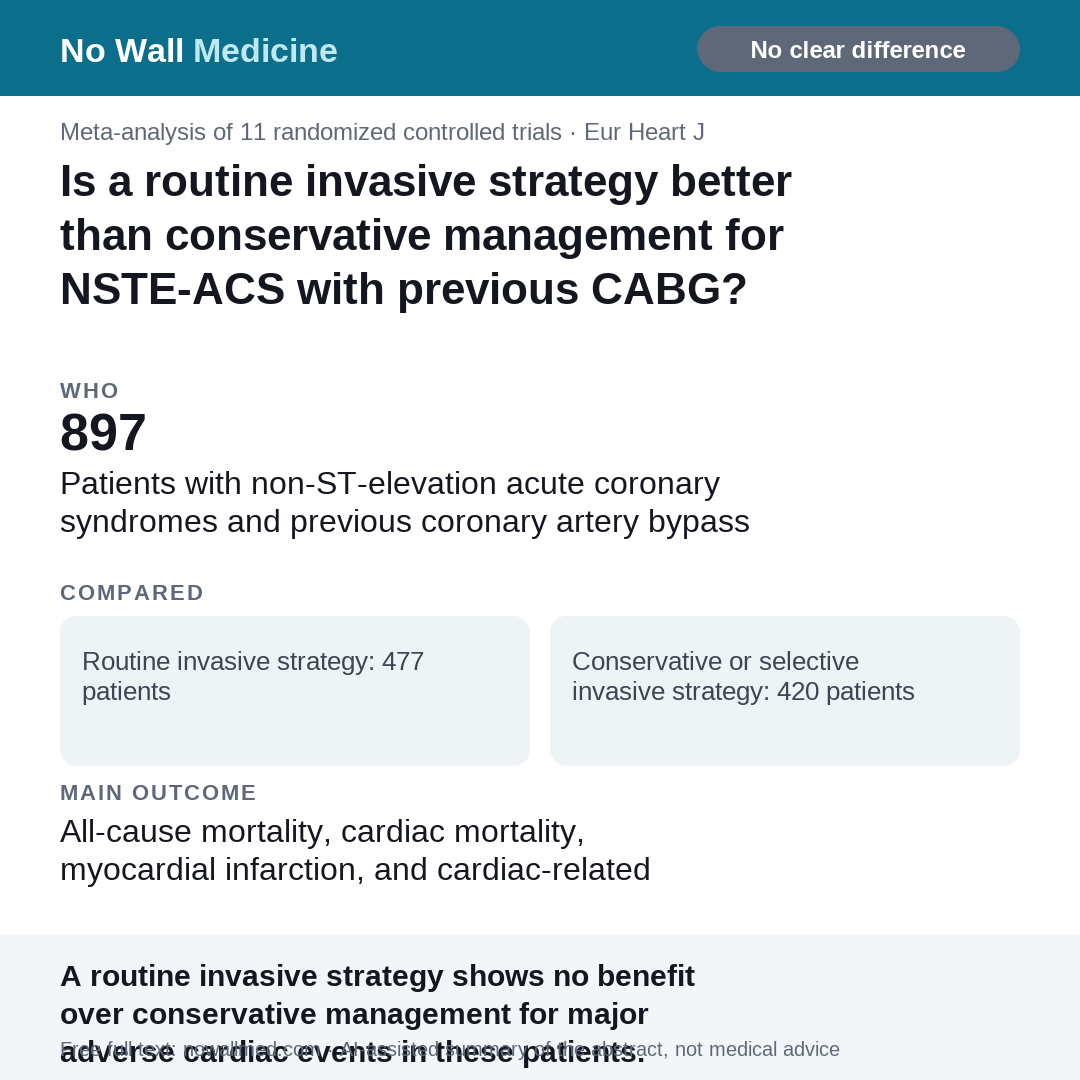
Non-ST-elevation acute coronary syndromes with previous coronary artery bypass grafting: a meta-analysis of invasive vs. conservative management
Meta-analysis of 11 randomized controlled trialsNo clear difference
Is a routine invasive strategy better than conservative management for NSTE-ACS with previous CABG?
Who
897
Patients with non-ST-elevation acute coronary syndromes and previous coronary artery bypass grafting
Compared
Routine invasive strategy: 477 patients
Conservative or selective invasive strategy: 420 patients
Main outcome
All-cause mortality, cardiac mortality, myocardial infarction, and cardiac-related hospitalization
Result: RR 1.12 (95% CI 0.97-1.29) for all-cause mortality
Bottom line: A routine invasive strategy shows no benefit over conservative management for major adverse cardiac events in these patients.
Limitation: Findings should be validated in an adequately powered randomized controlled trial.
Eur Heart J · 2024-05-28Download image
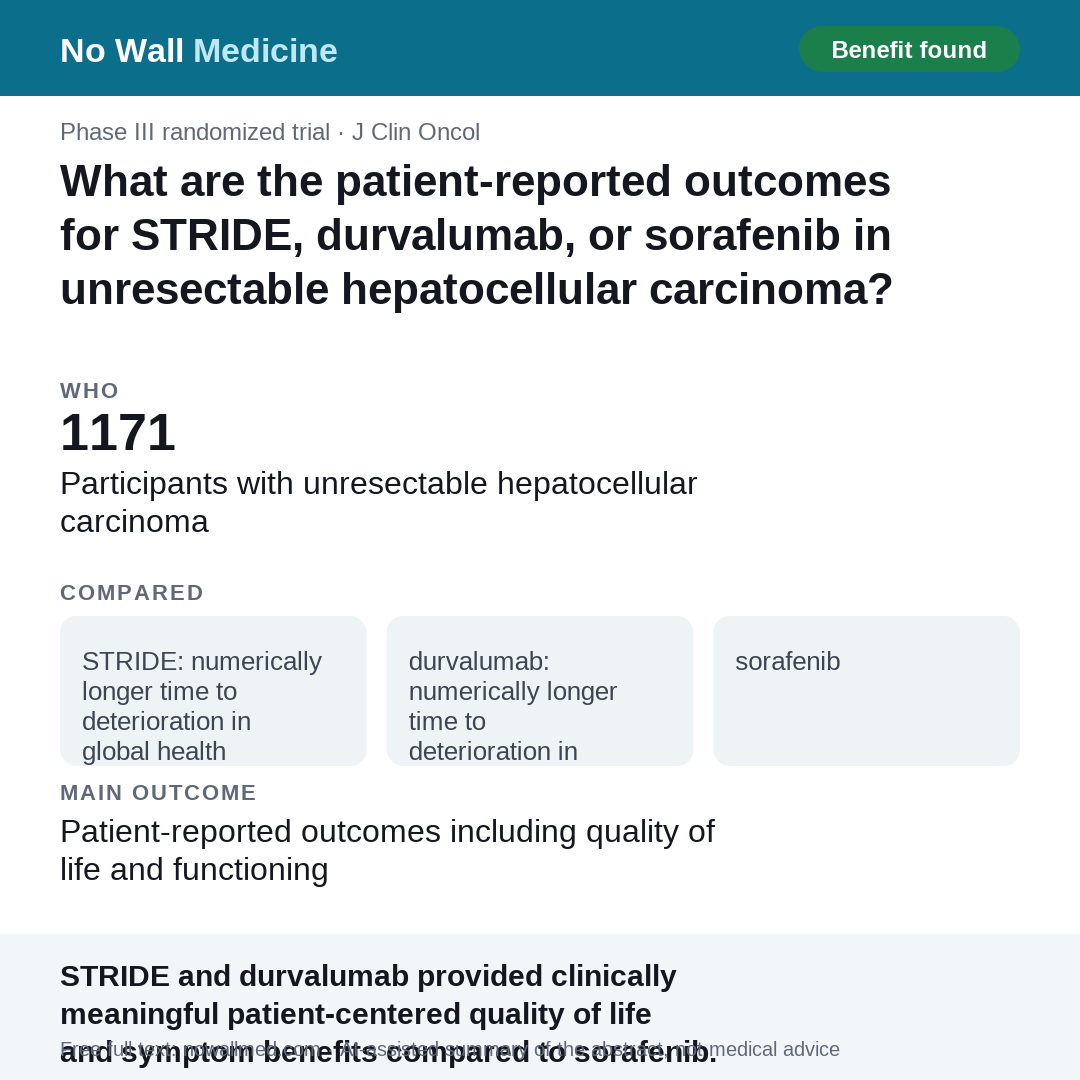
Patient-Reported Outcomes From the Phase III HIMALAYA Study of Tremelimumab Plus Durvalumab in Unresectable Hepatocellular Carcinoma
Phase III randomized trialBenefit found
What are the patient-reported outcomes for STRIDE, durvalumab, or sorafenib in unresectable hepatocellular carcinoma?
Who
1171
Participants with unresectable hepatocellular carcinoma
Compared
STRIDE: numerically longer time to deterioration in global health status/quality of life
durvalumab: numerically longer time to deterioration in global health status/quality of life
sorafenib
Main outcome
Patient-reported outcomes including quality of life and functioning
Bottom line: STRIDE and durvalumab provided clinically meaningful patient-centered quality of life and symptom benefits compared to sorafenib.
J Clin Oncol · 2024-05-28Download image
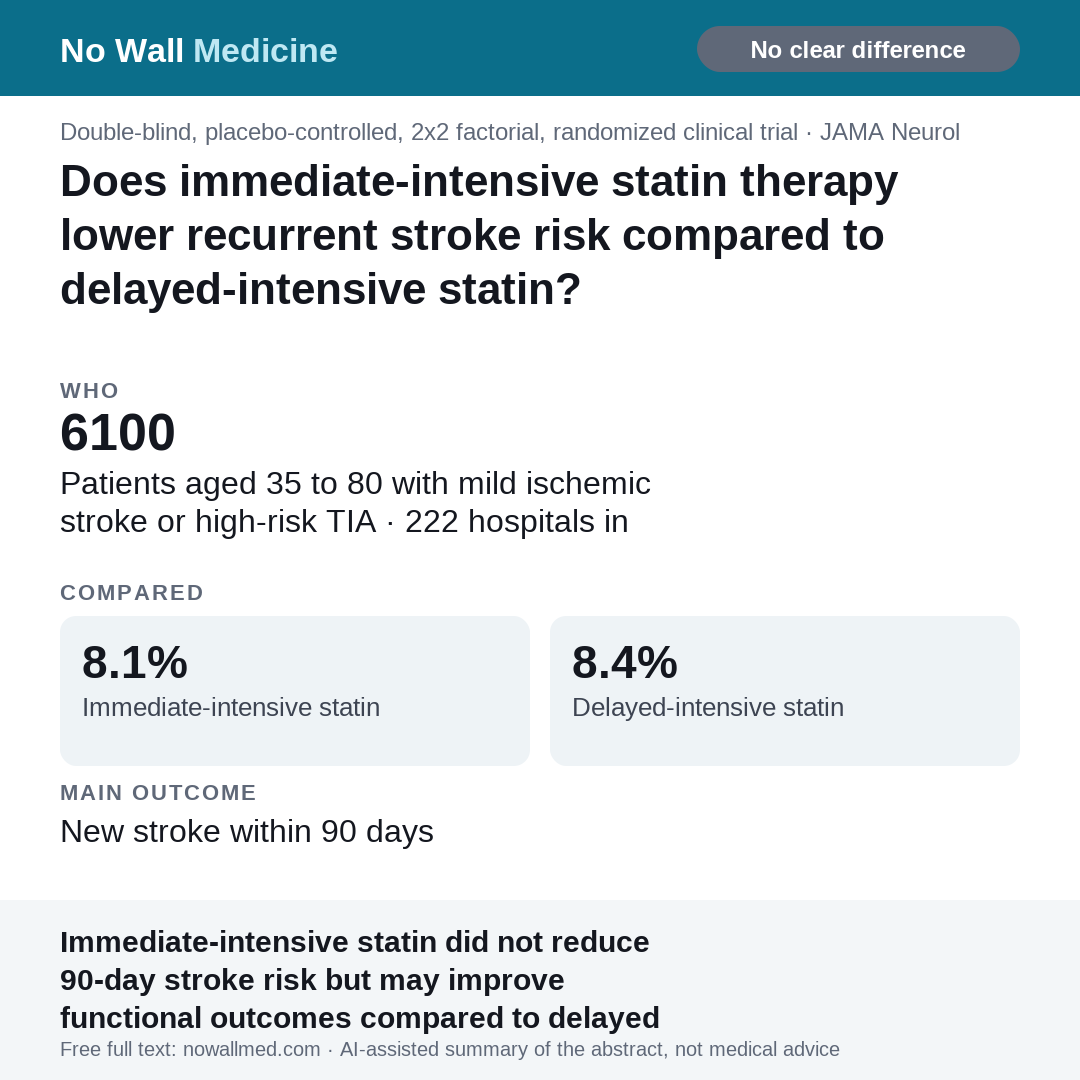
Immediate- or Delayed-Intensive Statin in Acute Cerebral Ischemia: The INSPIRES Randomized Clinical Trial
Double-blind, placebo-controlled, 2x2 factorial, randomized clinical trialNo clear difference
Does immediate-intensive statin therapy lower recurrent stroke risk compared to delayed-intensive statin?
Who
6100
Patients aged 35 to 80 with mild ischemic stroke or high-risk TIA · 222 hospitals in China
Compared
8.1%Immediate-intensive statin
8.4%Delayed-intensive statin
Main outcome
New stroke within 90 days
Result: hazard ratio 0.95 (95% CI 0.80-1.13)
Bottom line: Immediate-intensive statin did not reduce 90-day stroke risk but may improve functional outcomes compared to delayed treatment.
JAMA Neurol · 2024-05-28Download image
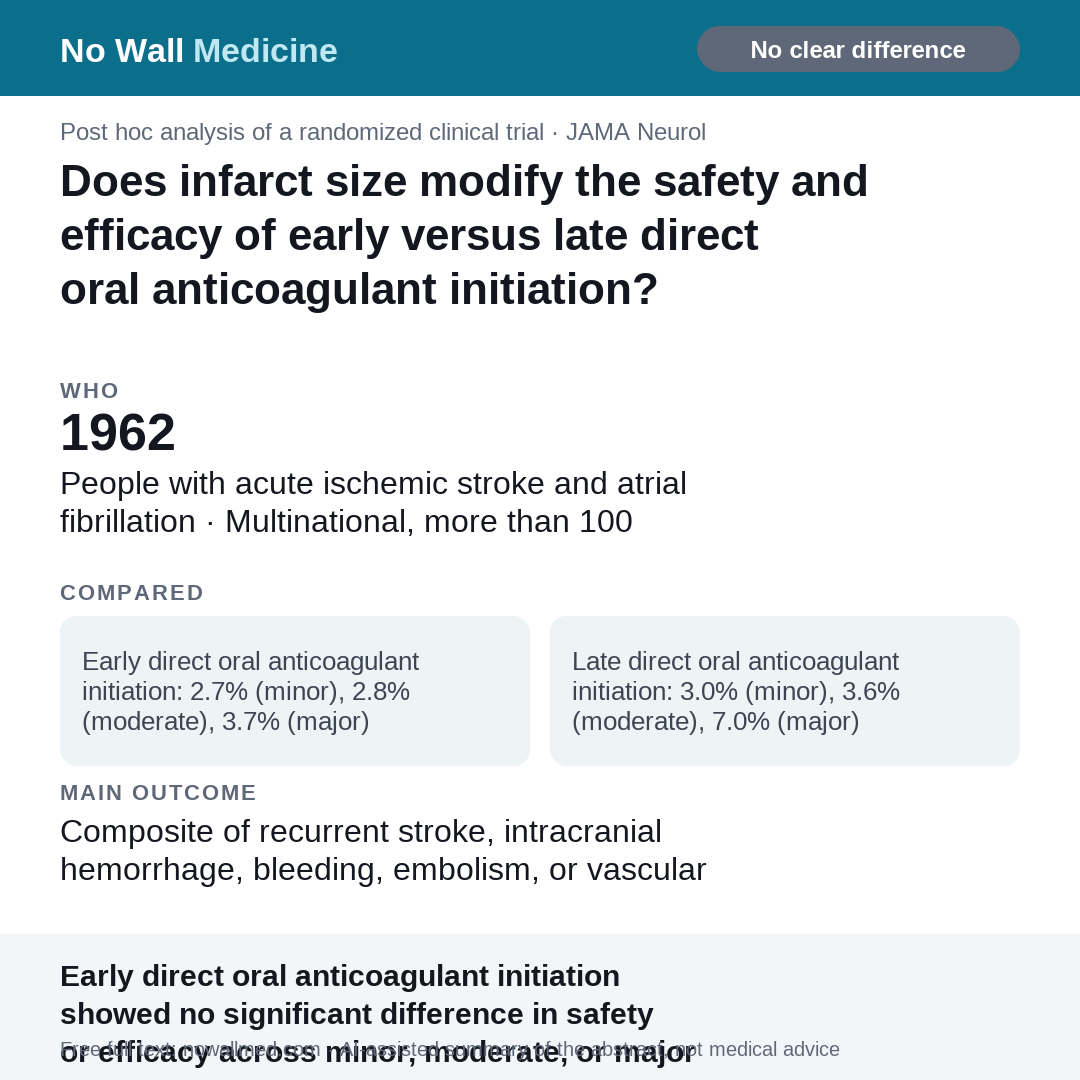
Early vs Late Anticoagulation in Minor, Moderate, and Major Ischemic Stroke With Atrial Fibrillation: Post Hoc Analysis of the ELAN Randomized Clinical Trial
Post hoc analysis of a randomized clinical trialNo clear difference
Does infarct size modify the safety and efficacy of early versus late direct oral anticoagulant initiation?
Who
1962
People with acute ischemic stroke and atrial fibrillation · Multinational, more than 100 sites in 15 countries
Compared
Early direct oral anticoagulant initiation: 2.7% (minor), 2.8% (moderate), 3.7% (major)
Late direct oral anticoagulant initiation: 3.0% (minor), 3.6% (moderate), 7.0% (major)
Main outcome
Composite of recurrent stroke, intracranial hemorrhage, bleeding, embolism, or vascular death
Result: no significant treatment interaction
Bottom line: Early direct oral anticoagulant initiation showed no significant difference in safety or efficacy across minor, moderate, or major strokes.
JAMA Neurol · 2024-05-28Download image