Visual abstracts
New randomized trials and meta-analyses from leading journals at a glance: who was studied, what was compared, and what was found. Every paper is free to read in full.
All specialtiesCardiology 4763Oncology 4042Gastroenterology & Hepatology 1902Infectious Disease 3756Neurology 1872Psychiatry & Mental Health 2214Pulmonology 2042Critical Care 1319Endocrinology & Diabetes 2544Pediatrics 2889Surgery 2479Orthopedics & Sports Medicine 917Neurosurgery 525Cardiothoracic & Vascular Surgery 656Plastic & Reconstructive Surgery 574Nephrology 1107Rheumatology 810Hematology 1090Dermatology 611Ophthalmology 532Obstetrics & Gynecology 1645Public & Global Health 1037Radiology & Imaging 617Anesthesiology 957Urology 745ENT (Otolaryngology) 494Emergency Medicine 481Allergy & Immunology 309Geriatrics 972Family Medicine & Primary Care 533Medical Genetics & Genomics 659Pathology & Laboratory Medicine 156Physical Medicine & Rehabilitation 734Palliative Care 421Nutrition 1560Digital Health & AI 2133General Medicine 318
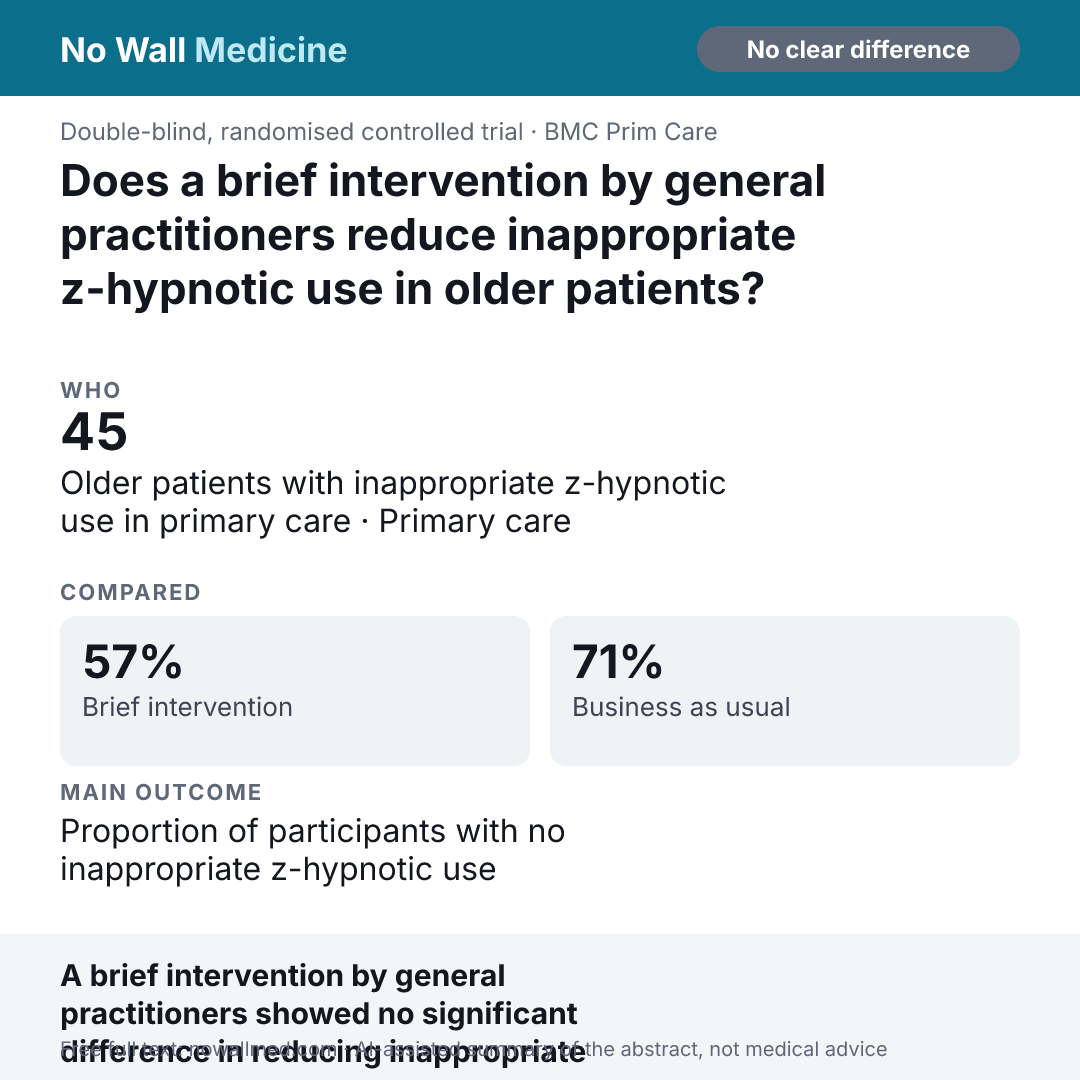
A brief intervention to discontinue inappropriate z-hypnotics use by older patients in primary care: a randomised controlled trial
Double-blind, randomised controlled trialNo clear difference
Does a brief intervention by general practitioners reduce inappropriate z-hypnotic use in older patients?
Who
45
Older patients with inappropriate z-hypnotic use in primary care · Primary care
Compared
57%Brief intervention
71%Business as usual
Main outcome
Proportion of participants with no inappropriate z-hypnotic use
Bottom line: A brief intervention by general practitioners showed no significant difference in reducing inappropriate z-hypnotic use compared to business as usual.
Limitation: The study became underpowered.
BMC Prim Care · 2026-02-13 · Save PNG
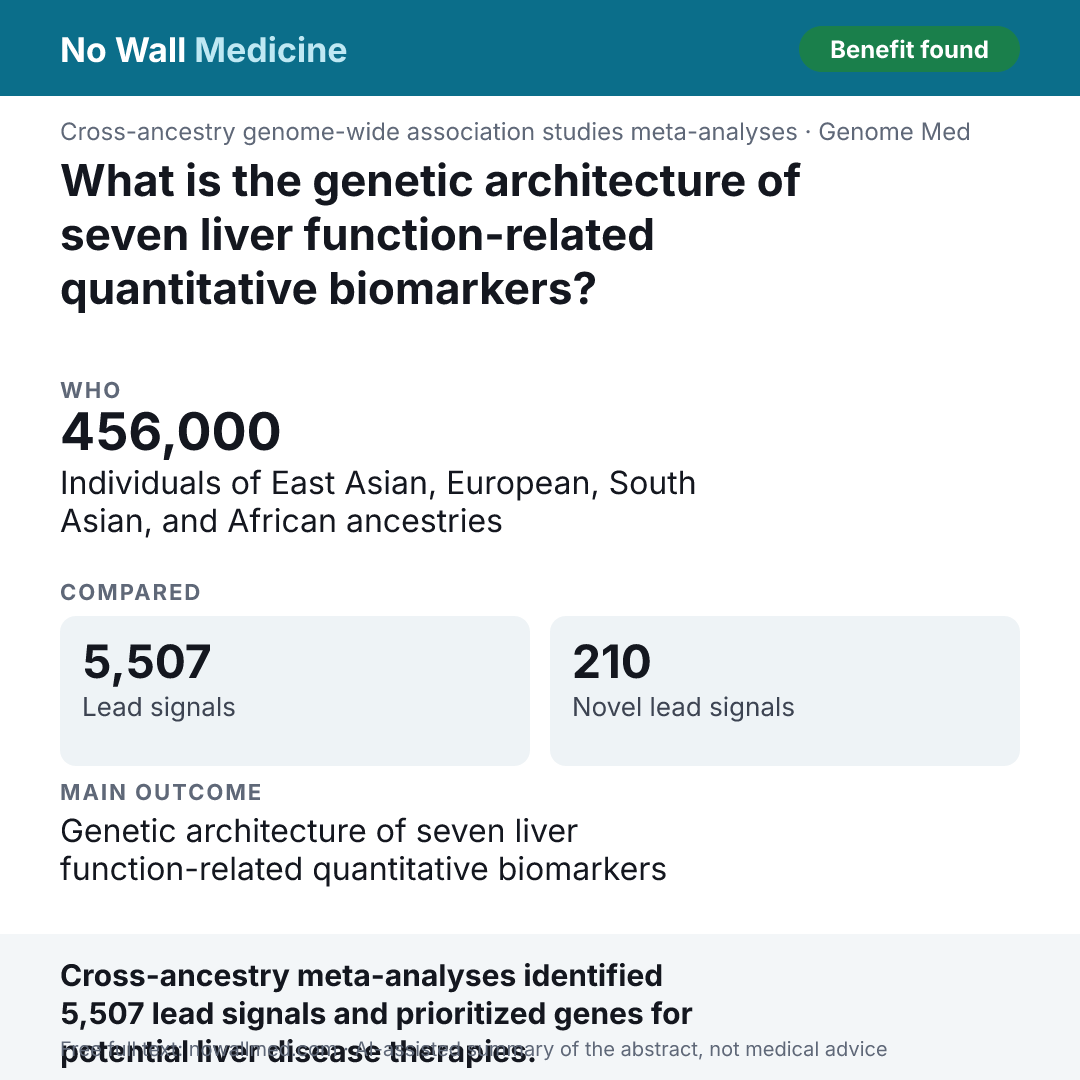
Cross-ancestry genome-wide association studies of liver function biomarkers uncover pleiotropic variants, systemic disease links and therapeutic targets
Cross-ancestry genome-wide association studies meta-analysesBenefit found
What is the genetic architecture of seven liver function-related quantitative biomarkers?
Who
456,000
Individuals of East Asian, European, South Asian, and African ancestries
Compared
5,507Lead signals (P < 5 × 10⁻⁹)
210Novel lead signals
Main outcome
Genetic architecture of seven liver function-related quantitative biomarkers
Bottom line: Cross-ancestry meta-analyses identified 5,507 lead signals and prioritized genes for potential liver disease therapies.
Genome Med · 2026-02-13 · Save PNG
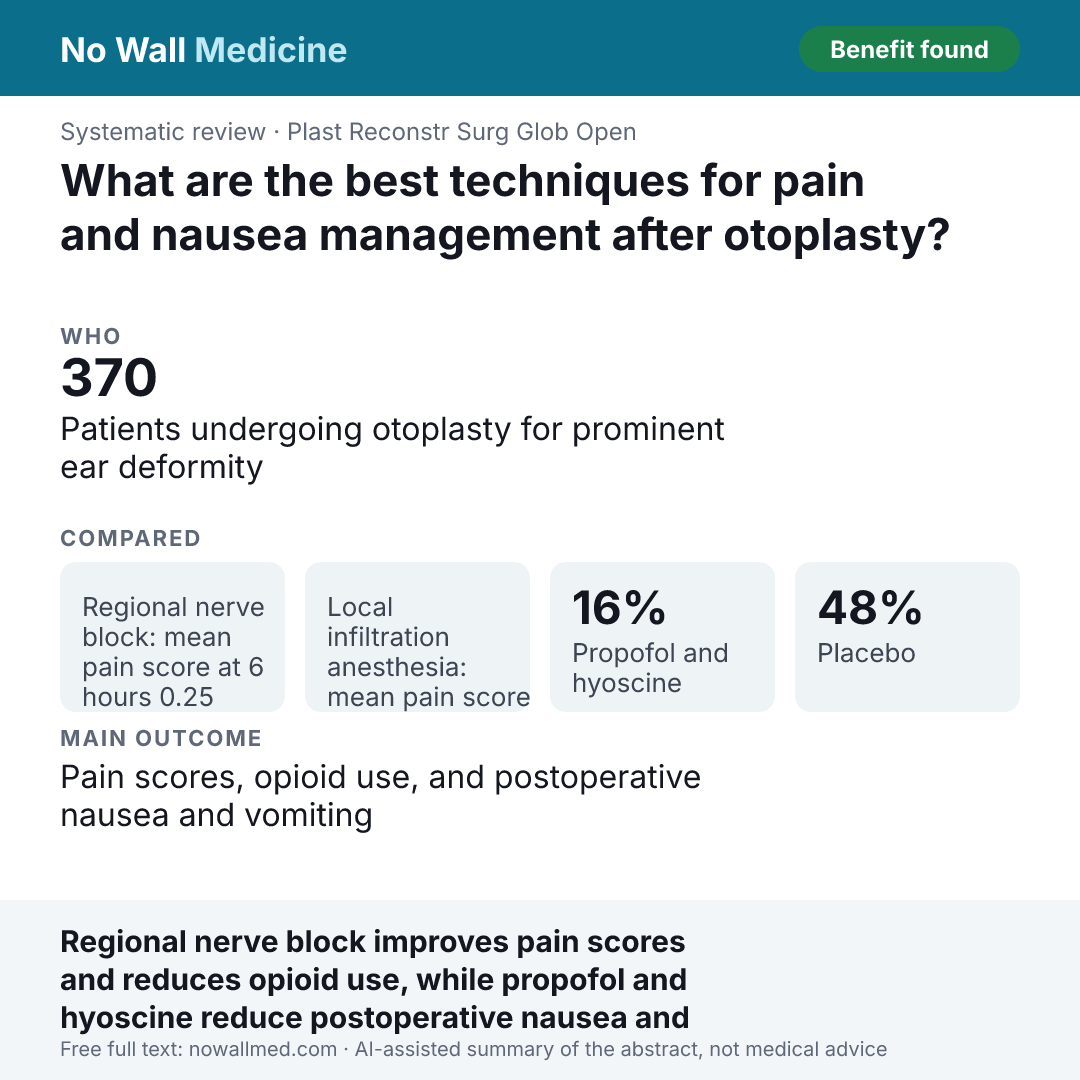
Perioperative Analgesia and Postoperative Nausea and Vomiting Management in Otoplasty: A Systematic Review
Systematic reviewBenefit found
What are the best techniques for pain and nausea management after otoplasty?
Who
370
Patients undergoing otoplasty for prominent ear deformity
Compared
Regional nerve block: mean pain score at 6 hours 0.25
Local infiltration anesthesia: mean pain score at 6 hours 2.34
16%Propofol and hyoscine patches
48%Placebo
Main outcome
Pain scores, opioid use, and postoperative nausea and vomiting
Bottom line: Regional nerve block improves pain scores and reduces opioid use, while propofol and hyoscine reduce postoperative nausea and vomiting.
Limitation: Overall methodological quality was moderate and heterogeneity precluded meta-analysis.
Plast Reconstr Surg Glob Open · 2026-02-13 · Save PNG
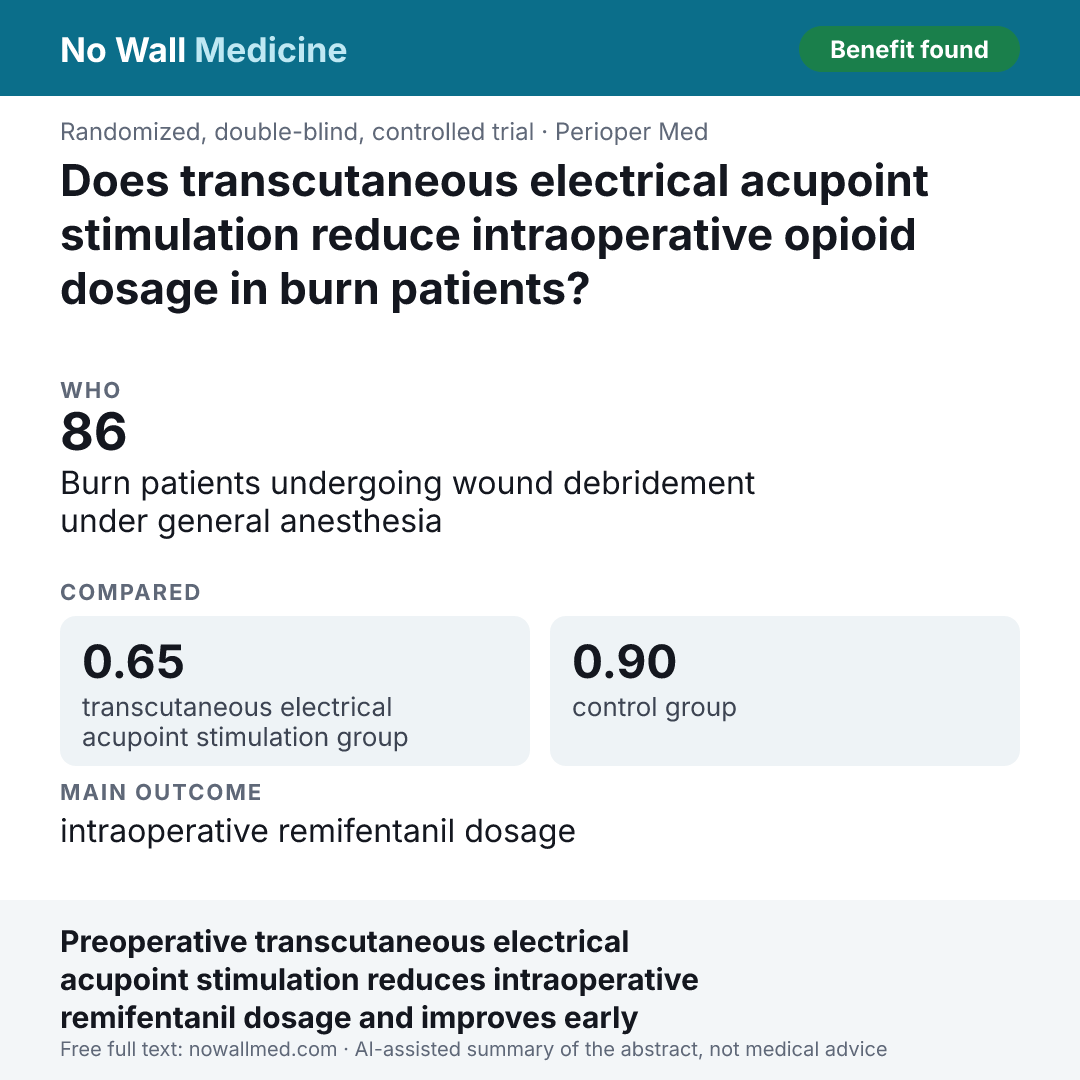
Effect of transcutaneous electrical acupoint stimulation for preemptive analgesia on intraoperative opioid dosage in burn patients: a randomized, double-blind, controlled trial
Randomized, double-blind, controlled trialBenefit found
Does transcutaneous electrical acupoint stimulation reduce intraoperative opioid dosage in burn patients?
Who
86
Burn patients undergoing wound debridement under general anesthesia
Compared
0.65transcutaneous electrical acupoint stimulation group (0.45,1.00)
0.90control group (0.67,1.23)
Main outcome
intraoperative remifentanil dosage
Bottom line: Preoperative transcutaneous electrical acupoint stimulation reduces intraoperative remifentanil dosage and improves early postoperative analgesia and gastrointestinal adverse reactions.
Perioper Med · 2026-02-13 · Save PNG
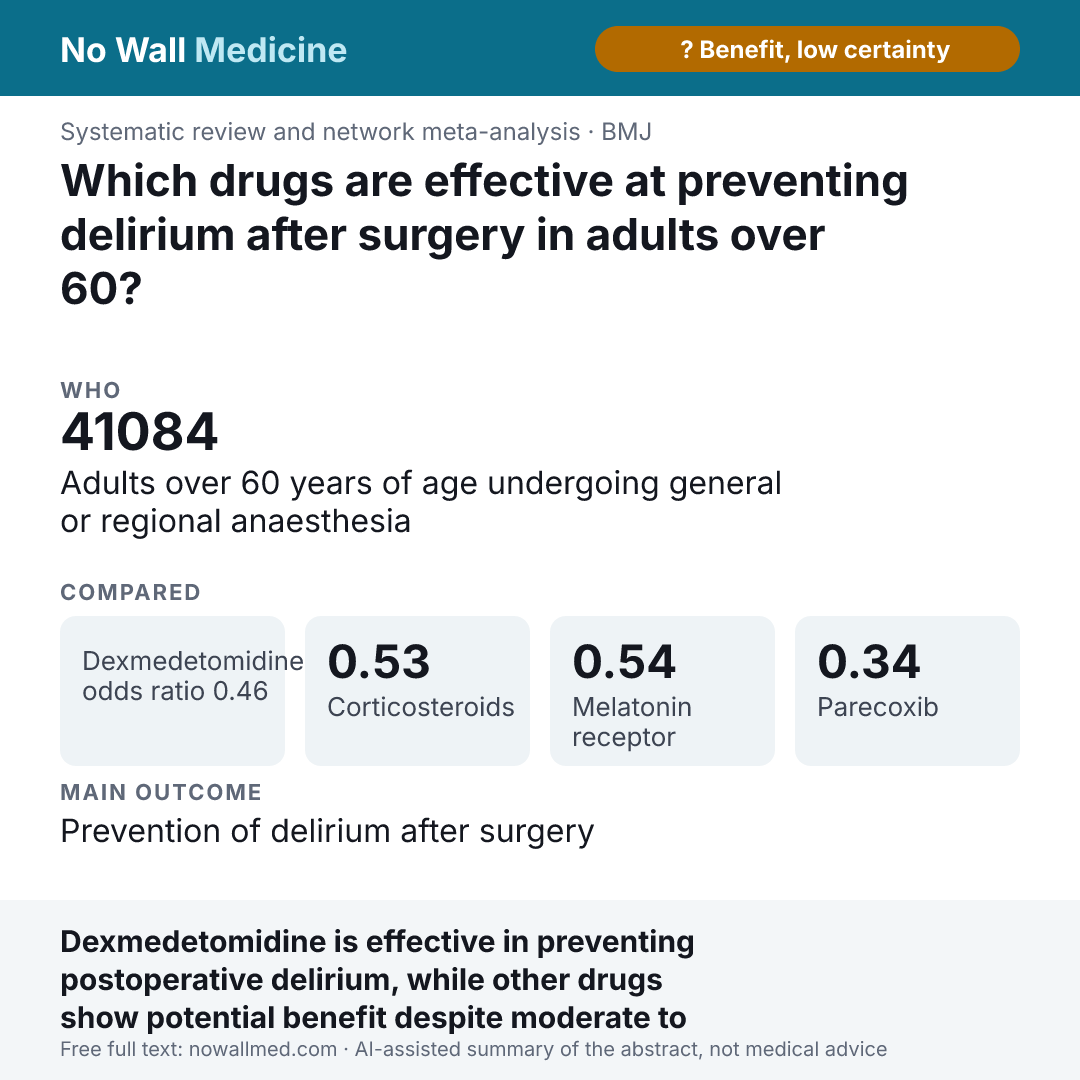
Effectiveness of drug interventions to prevent delirium after surgery for older adults: systematic review and network meta-analysis of randomised controlled trials
Systematic review and network meta-analysisBenefit, low certainty
Which drugs are effective at preventing delirium after surgery in adults over 60?
Who
41084
Adults over 60 years of age undergoing general or regional anaesthesia
Compared
Dexmedetomidine: odds ratio 0.46
0.53Corticosteroids
0.54Melatonin receptor agonists
0.34Parecoxib
Main outcome
Prevention of delirium after surgery
Result: dexmedetomidine odds ratio 0.46 (95% credible interval 0.36 to 0.57)
Bottom line: Dexmedetomidine is effective in preventing postoperative delirium, while other drugs show potential benefit despite moderate to very low quality evidence.
Limitation: Inadequate trial registration practices and incomplete adoption of core outcome sets.
BMJ · 2026-02-12 · Save PNG
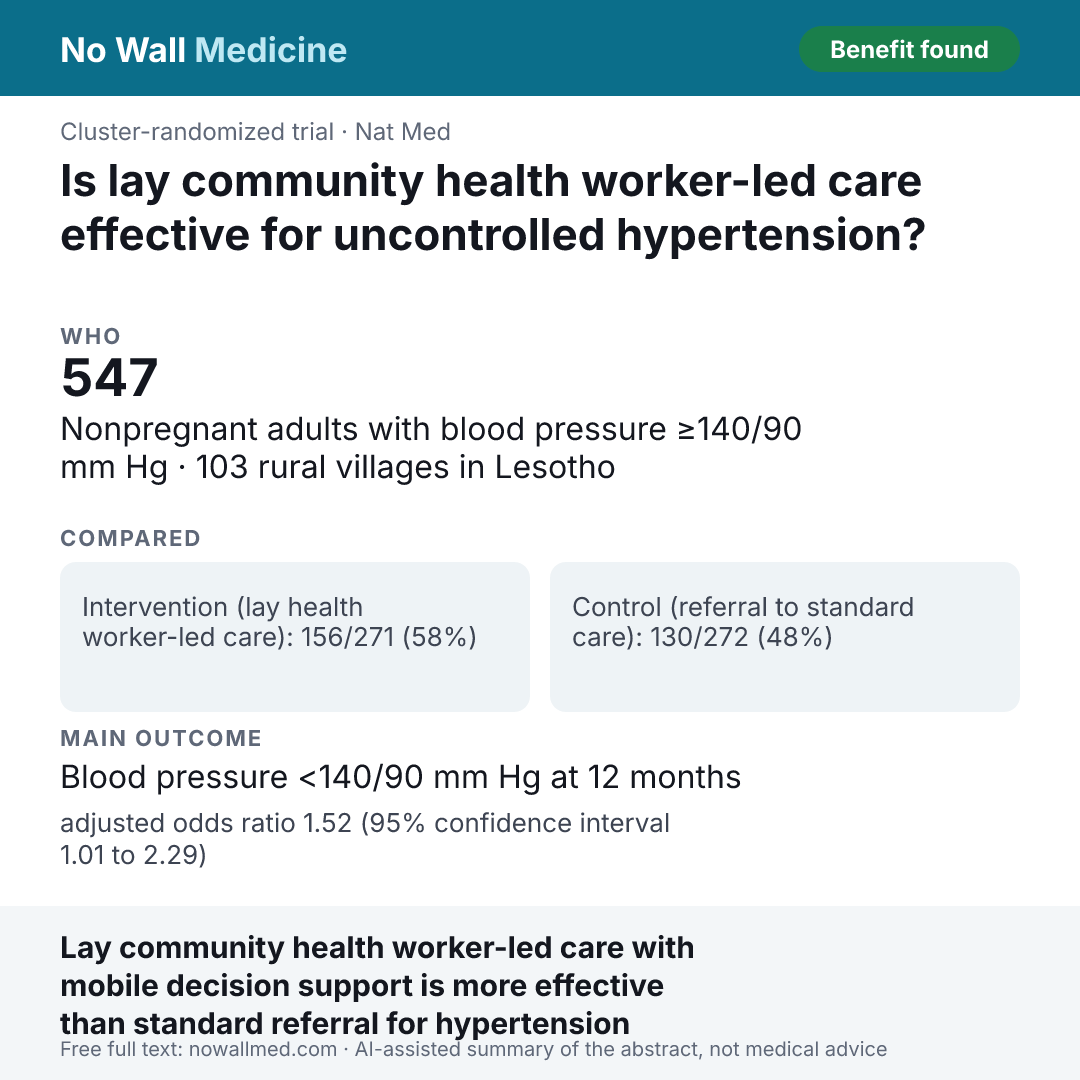
Lay community health worker-led care with mobile decision support for uncontrolled hypertension: a cluster-randomized trial
Cluster-randomized trialBenefit found
Is lay community health worker-led care effective for uncontrolled hypertension?
Who
547
Nonpregnant adults with blood pressure ≥140/90 mm Hg · 103 rural villages in Lesotho
Compared
Intervention (lay health worker-led care): 156/271 (58%)
Control (referral to standard care): 130/272 (48%)
Main outcome
Blood pressure <140/90 mm Hg at 12 months
Result: adjusted odds ratio 1.52 (95% confidence interval 1.01 to 2.29)
Bottom line: Lay community health worker-led care with mobile decision support is more effective than standard referral for hypertension control.
Nat Med · 2026-02-12 · Save PNG
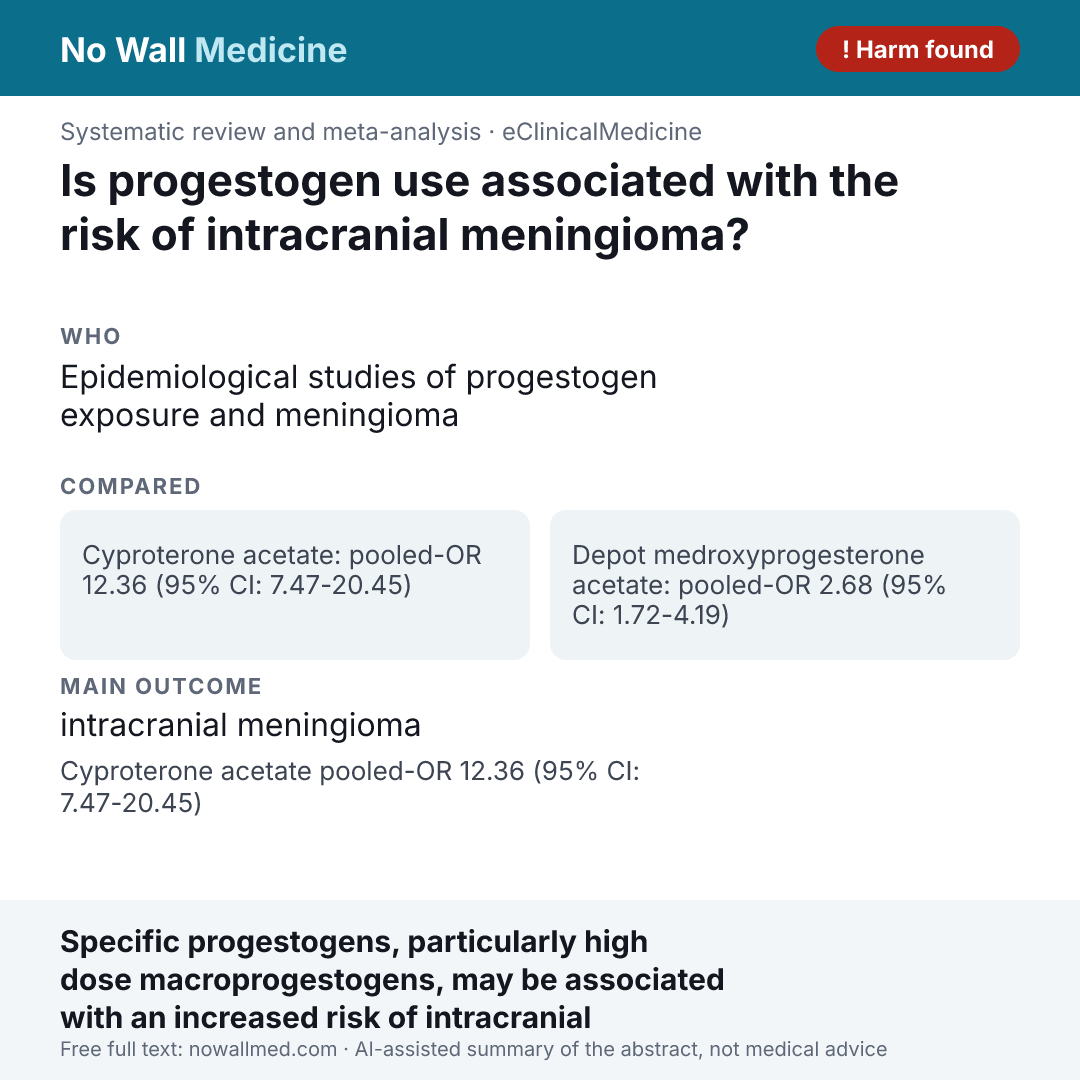
Progestogen use and the risk of intracranial meningioma: a systematic review and meta-analysis
Systematic review and meta-analysisHarm found
Is progestogen use associated with the risk of intracranial meningioma?
Who
Epidemiological studies of progestogen exposure and meningioma
Compared
Cyproterone acetate: pooled-OR 12.36 (95% CI: 7.47-20.45)
Depot medroxyprogesterone acetate: pooled-OR 2.68 (95% CI: 1.72-4.19)
Main outcome
intracranial meningioma
Result: Cyproterone acetate pooled-OR 12.36 (95% CI: 7.47-20.45)
Bottom line: Specific progestogens, particularly high dose macroprogestogens, may be associated with an increased risk of intracranial meningioma.
Limitation: Observational design, residual confounding, heterogeneity, and imprecision for some exposures.
eClinicalMedicine · 2026-02-12 · Save PNG
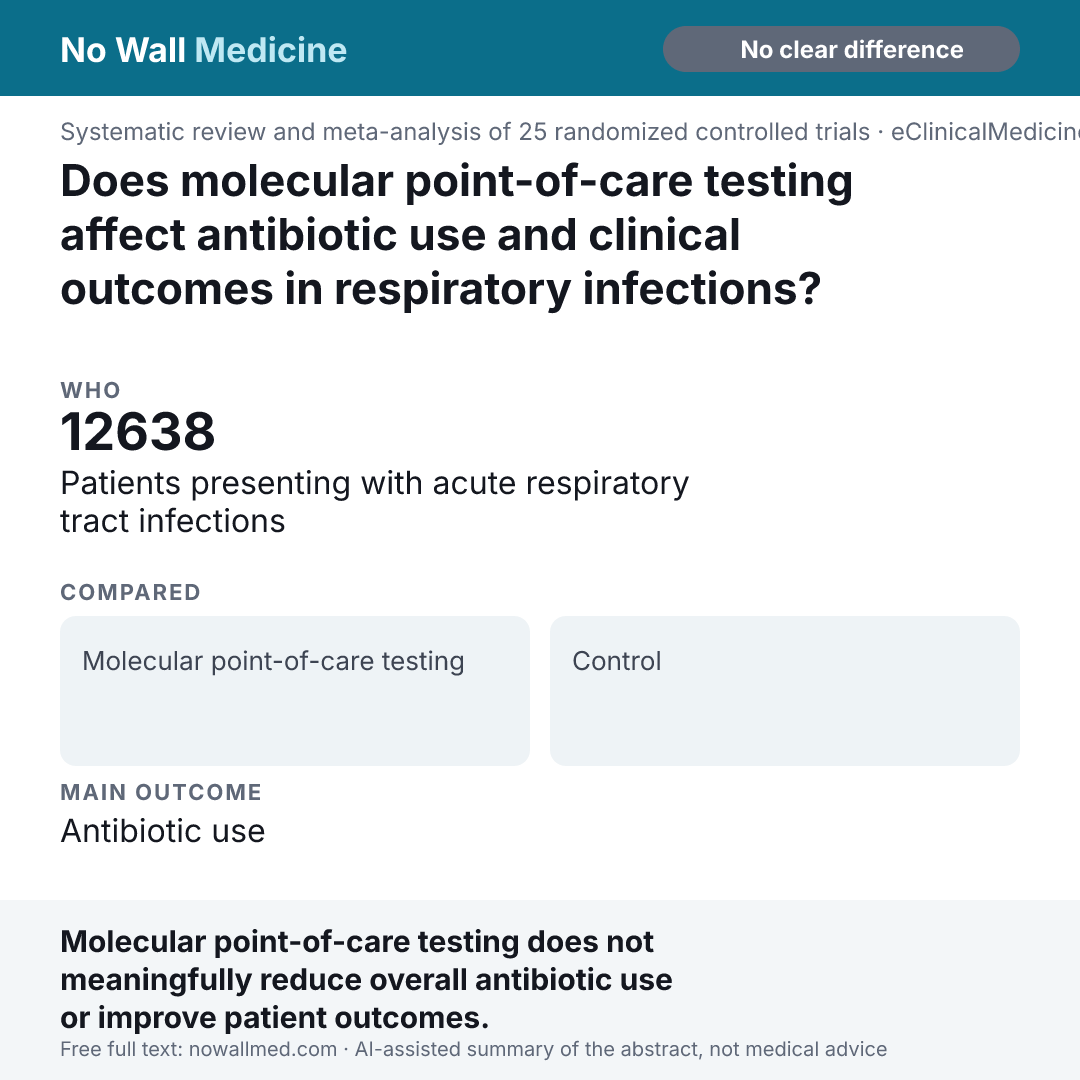
Impact of molecular point-of-care testing for respiratory pathogens on antibiotic use and clinical outcomes in acute respiratory tract infections: a systematic review and meta-analysis
Systematic review and meta-analysis of 25 randomized controlled trialsNo clear difference
Does molecular point-of-care testing affect antibiotic use and clinical outcomes in respiratory infections?
Who
12638
Patients presenting with acute respiratory tract infections
Compared
Molecular point-of-care testing
Control
Main outcome
Antibiotic use
Result: risk ratio 0.95 (95% CI 0.90-1.00)
Bottom line: Molecular point-of-care testing does not meaningfully reduce overall antibiotic use or improve patient outcomes.
Limitation: Low-certainty evidence for potential reduction in antibiotic use in children.
Funded by: National Natural Science Foundation of China and others
eClinicalMedicine · 2026-02-12 · Save PNG
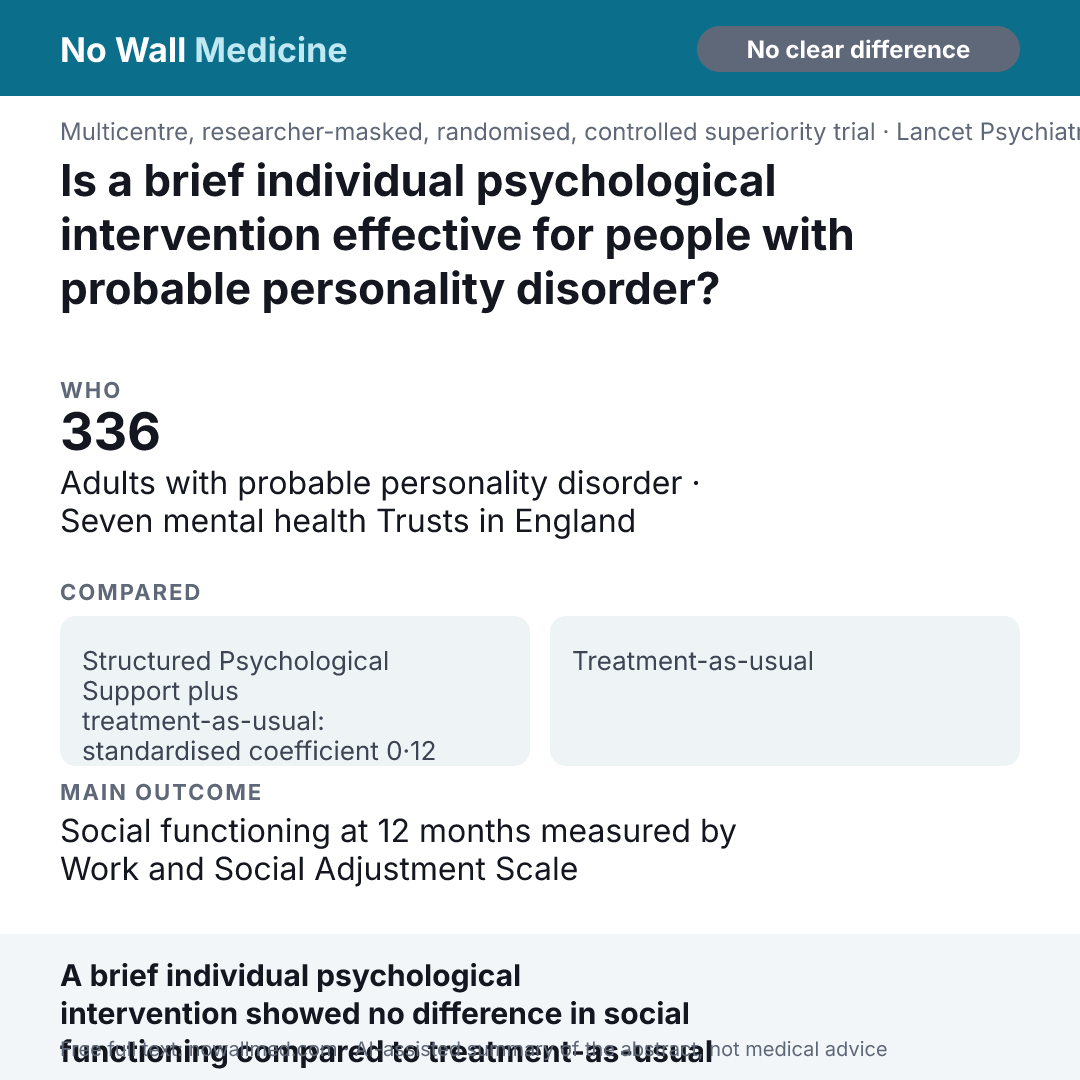
Brief individual psychological intervention for people with probable personality disorder: a multicentre, researcher-masked, randomised, controlled superiority trial in England
Multicentre, researcher-masked, randomised, controlled superiority trialNo clear difference
Is a brief individual psychological intervention effective for people with probable personality disorder?
Who
336
Adults with probable personality disorder · Seven mental health Trusts in England
Compared
Structured Psychological Support plus treatment-as-usual: standardised coefficient 0·12
Treatment-as-usual
Main outcome
Social functioning at 12 months measured by Work and Social Adjustment Scale
Result: standardised coefficient 0·12 (95% CI -2·14 to 2·38)
Bottom line: A brief individual psychological intervention showed no difference in social functioning compared to treatment-as-usual over 12 months.
Lancet Psychiatry · 2026-02-12 · Save PNG
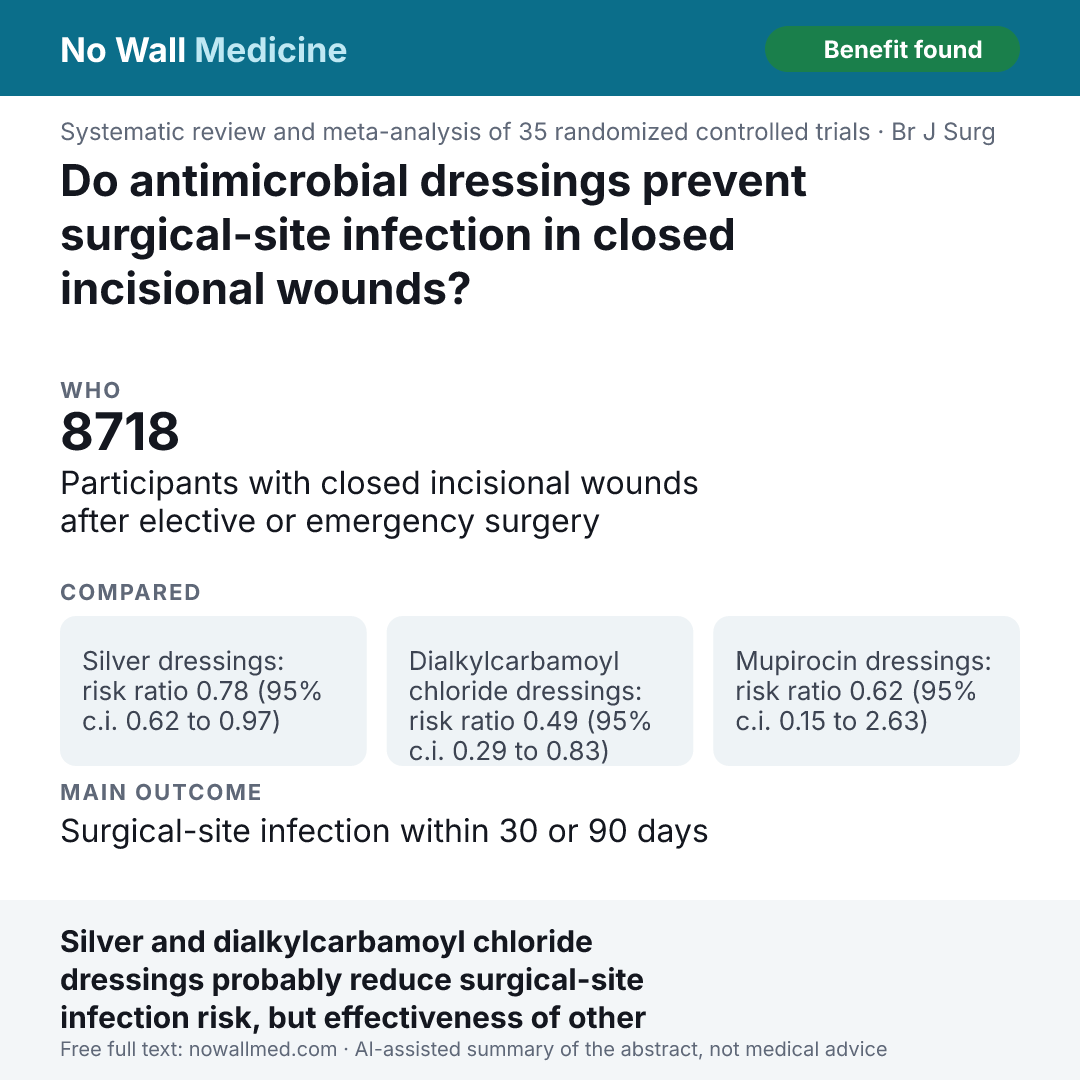
Antimicrobial dressings for the prevention of surgical-site infection: systematic review and meta-analysis
Systematic review and meta-analysis of 35 randomized controlled trialsBenefit found
Do antimicrobial dressings prevent surgical-site infection in closed incisional wounds?
Who
8718
Participants with closed incisional wounds after elective or emergency surgery
Compared
Silver dressings: risk ratio 0.78 (95% c.i. 0.62 to 0.97)
Dialkylcarbamoyl chloride dressings: risk ratio 0.49 (95% c.i. 0.29 to 0.83)
Mupirocin dressings: risk ratio 0.62 (95% c.i. 0.15 to 2.63)
Main outcome
Surgical-site infection within 30 or 90 days
Result: silver risk ratio 0.78 (95% c.i. 0.62 to 0.97); DACC risk ratio 0.49 (95% c.i. 0.29 to 0.83)
Bottom line: Silver and dialkylcarbamoyl chloride dressings probably reduce surgical-site infection risk, but effectiveness of other antimicrobial dressings remains uncertain.
Limitation: Evidence for other antimicrobial agents was insufficient.
Br J Surg · 2026-02-12 · Save PNG
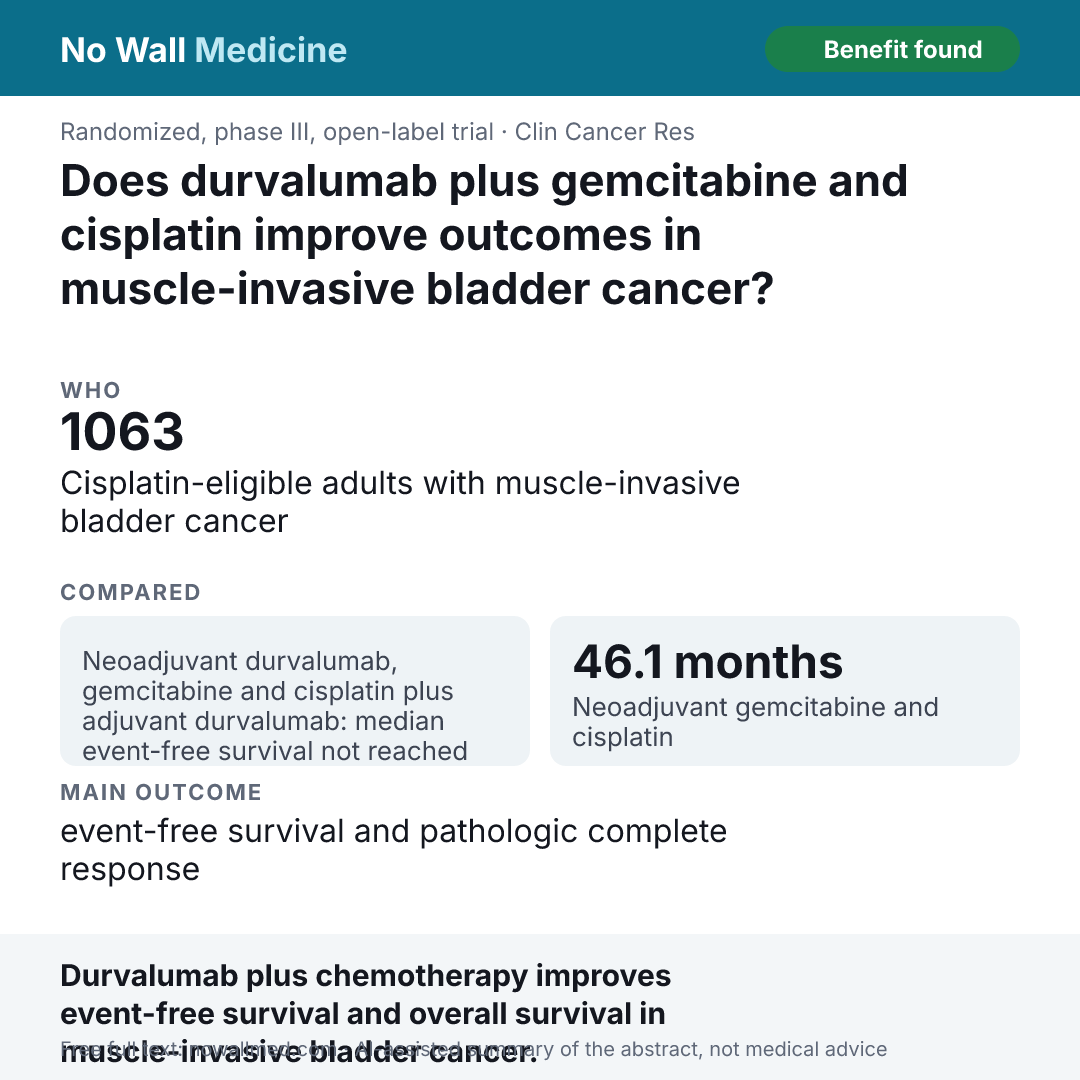
FDA Approval Summary: Durvalumab for the Treatment of Adult Patients with Muscle-Invasive Bladder Cancer
Randomized, phase III, open-label trialBenefit found
Does durvalumab plus gemcitabine and cisplatin improve outcomes in muscle-invasive bladder cancer?
Who
1063
Cisplatin-eligible adults with muscle-invasive bladder cancer
Compared
Neoadjuvant durvalumab, gemcitabine and cisplatin plus adjuvant durvalumab: median event-free survival not reached
46.1 monthsNeoadjuvant gemcitabine and cisplatin (95% CI 32.3-NR)
Main outcome
event-free survival and pathologic complete response
Result: hazard ratio 0.68 (95% CI 0.56-0.82)
Bottom line: Durvalumab plus chemotherapy improves event-free survival and overall survival in muscle-invasive bladder cancer.
Clin Cancer Res · 2026-02-12 · Save PNG
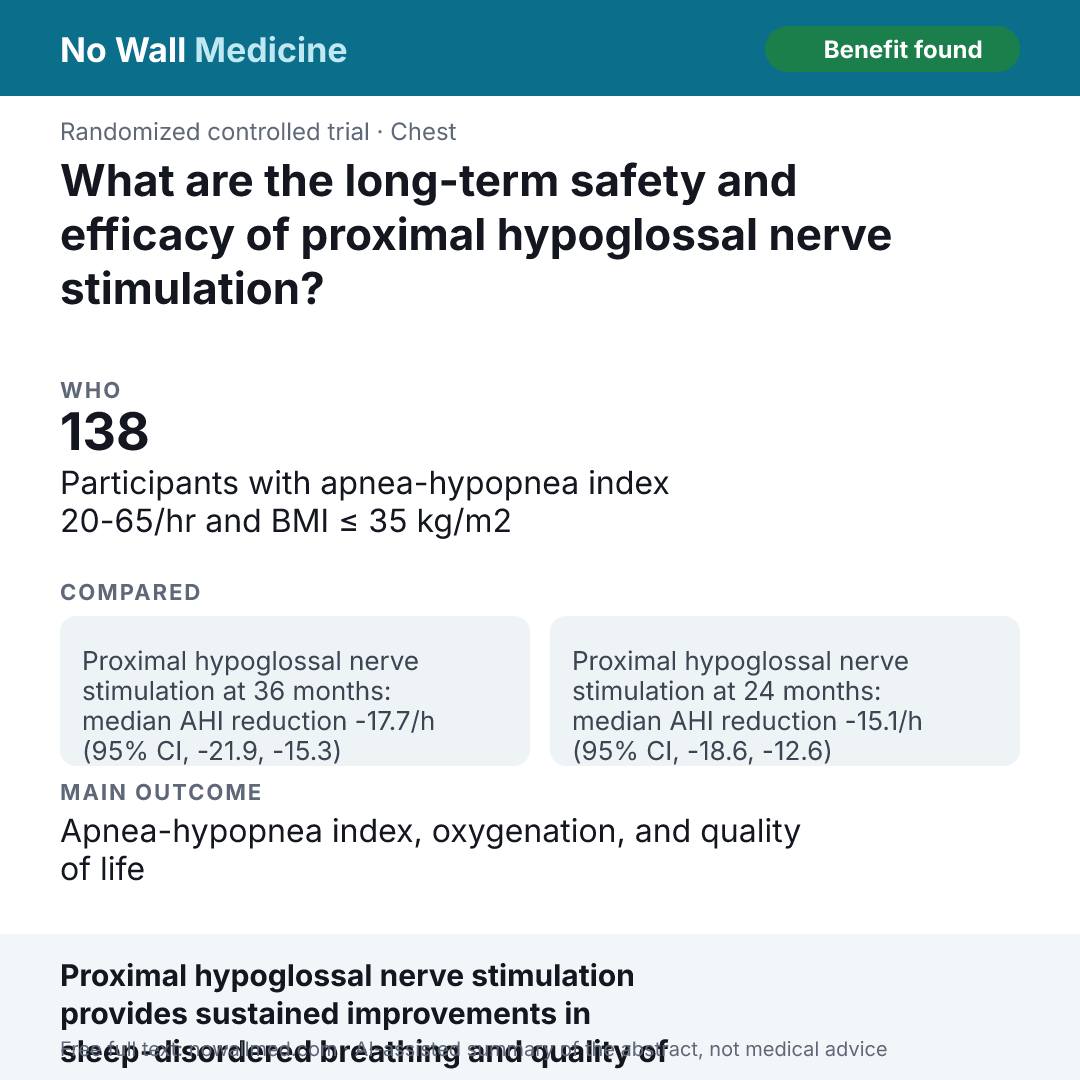
Three-Year Outcomes of Proximal Hypoglossal Nerve Stimulation in OSA
Randomized controlled trialBenefit found
What are the long-term safety and efficacy of proximal hypoglossal nerve stimulation?
Who
138
Participants with apnea-hypopnea index 20-65/hr and BMI ≤ 35 kg/m2
Compared
Proximal hypoglossal nerve stimulation at 36 months: median AHI reduction -17.7/h (95% CI, -21.9, -15.3)
Proximal hypoglossal nerve stimulation at 24 months: median AHI reduction -15.1/h (95% CI, -18.6, -12.6)
Main outcome
Apnea-hypopnea index, oxygenation, and quality of life
Bottom line: Proximal hypoglossal nerve stimulation provides sustained improvements in sleep-disordered breathing and quality of life through 3 years.
Chest · 2026-02-12 · Save PNG
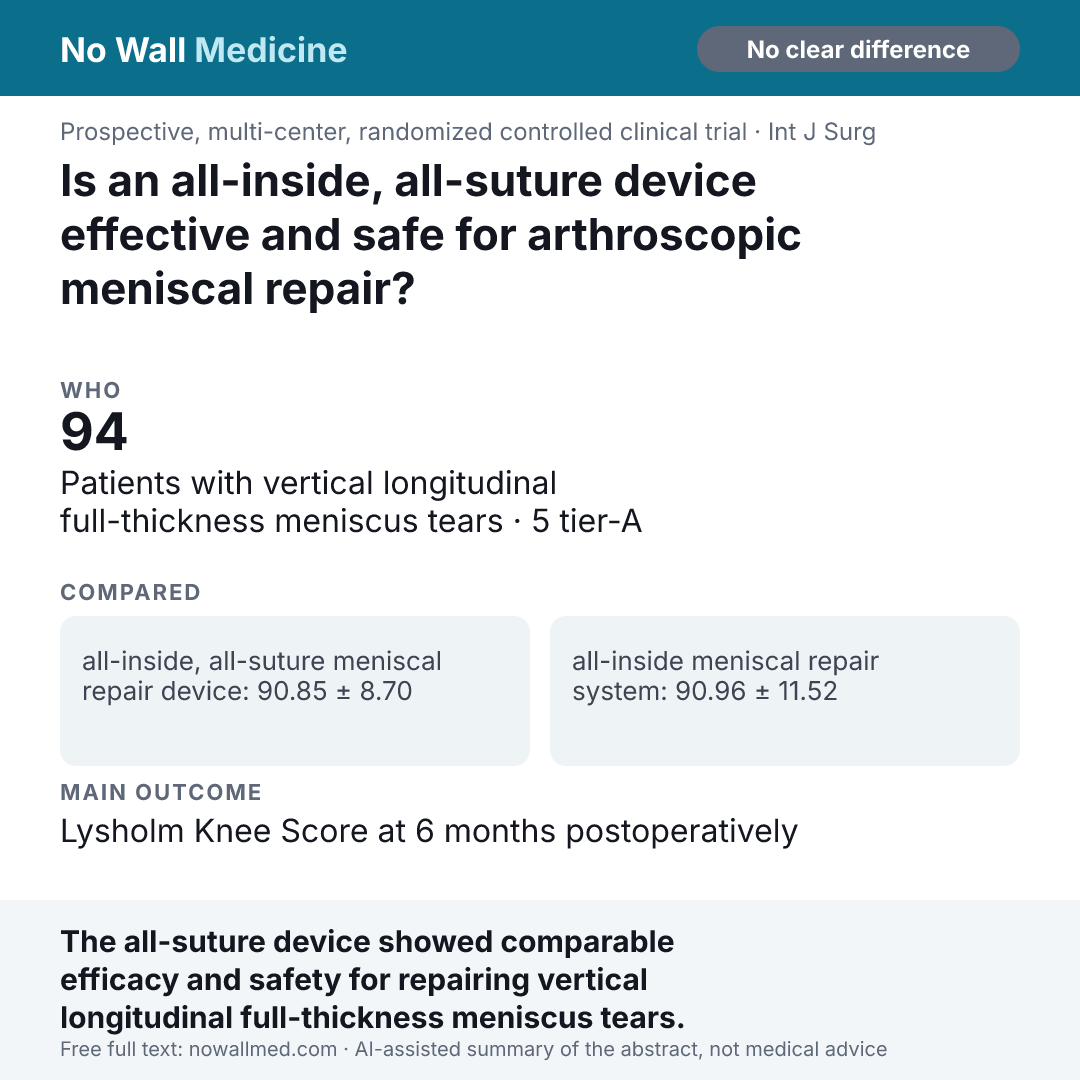
Evaluating the efficacy and safety of an all-inside, all-suture meniscal repair device on arthroscopic meniscal repair: a prospective, multi-center, randomized controlled clinical trial
Prospective, multi-center, randomized controlled clinical trialNo clear difference
Is an all-inside, all-suture device effective and safe for arthroscopic meniscal repair?
Who
94
Patients with vertical longitudinal full-thickness meniscus tears · 5 tier-A centers in China
Compared
all-inside, all-suture meniscal repair device: 90.85 ± 8.70
all-inside meniscal repair system: 90.96 ± 11.52
Main outcome
Lysholm Knee Score at 6 months postoperatively
Bottom line: The all-suture device showed comparable efficacy and safety for repairing vertical longitudinal full-thickness meniscus tears.
Int J Surg · 2026-02-12 · Save PNG
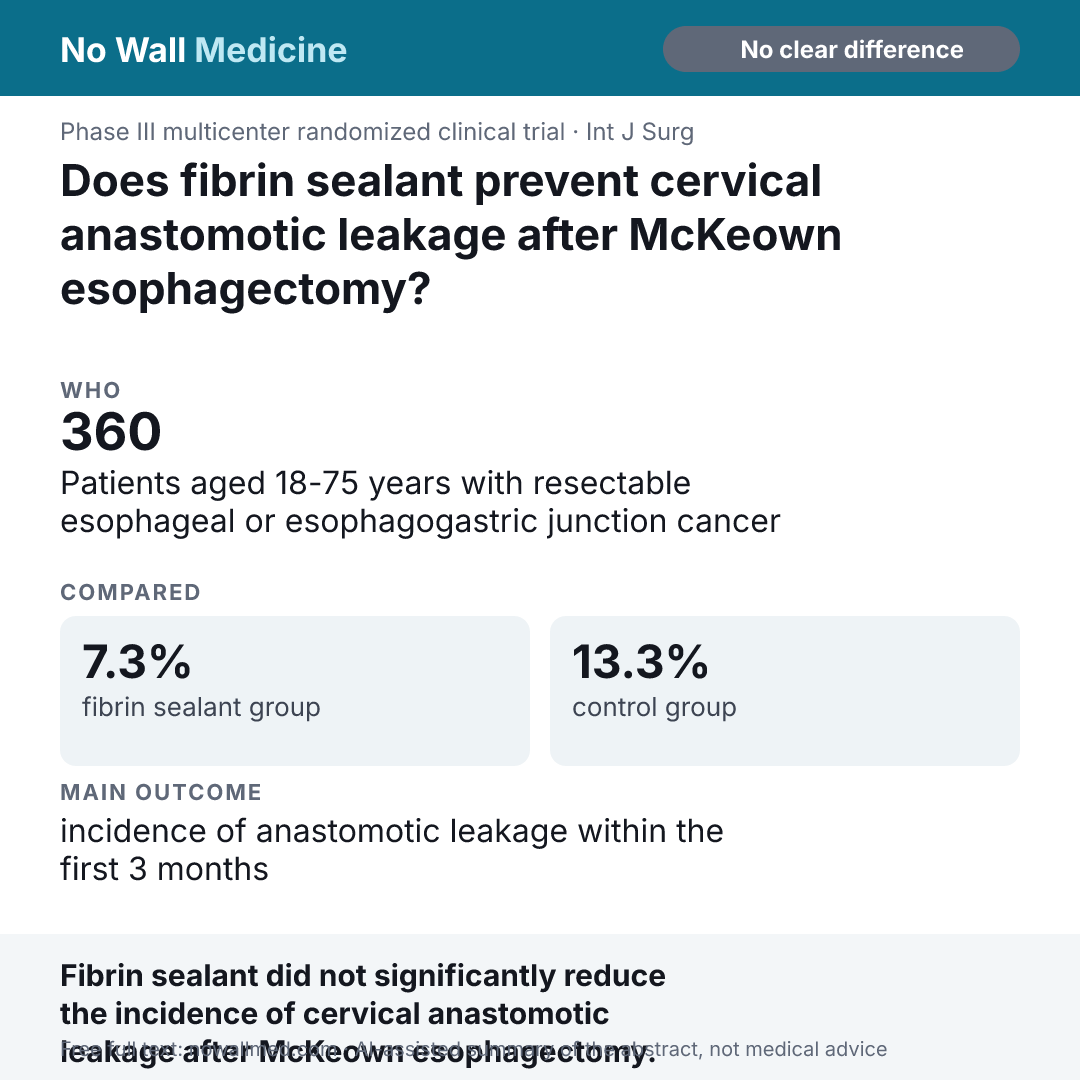
Fibrin sealant for prophylaxis of cervical anastomotic leakage after McKeown esophagectomy for esophageal or esophagogastric junction cancer (PLACE030): a Phase III multicenter randomized clinical trial
Phase III multicenter randomized clinical trialNo clear difference
Does fibrin sealant prevent cervical anastomotic leakage after McKeown esophagectomy?
Who
360
Patients aged 18-75 years with resectable esophageal or esophagogastric junction cancer · six centers in China
Compared
7.3%fibrin sealant group
13.3%control group
Main outcome
incidence of anastomotic leakage within the first 3 months
Bottom line: Fibrin sealant did not significantly reduce the incidence of cervical anastomotic leakage after McKeown esophagectomy.
Int J Surg · 2026-02-12 · Save PNG
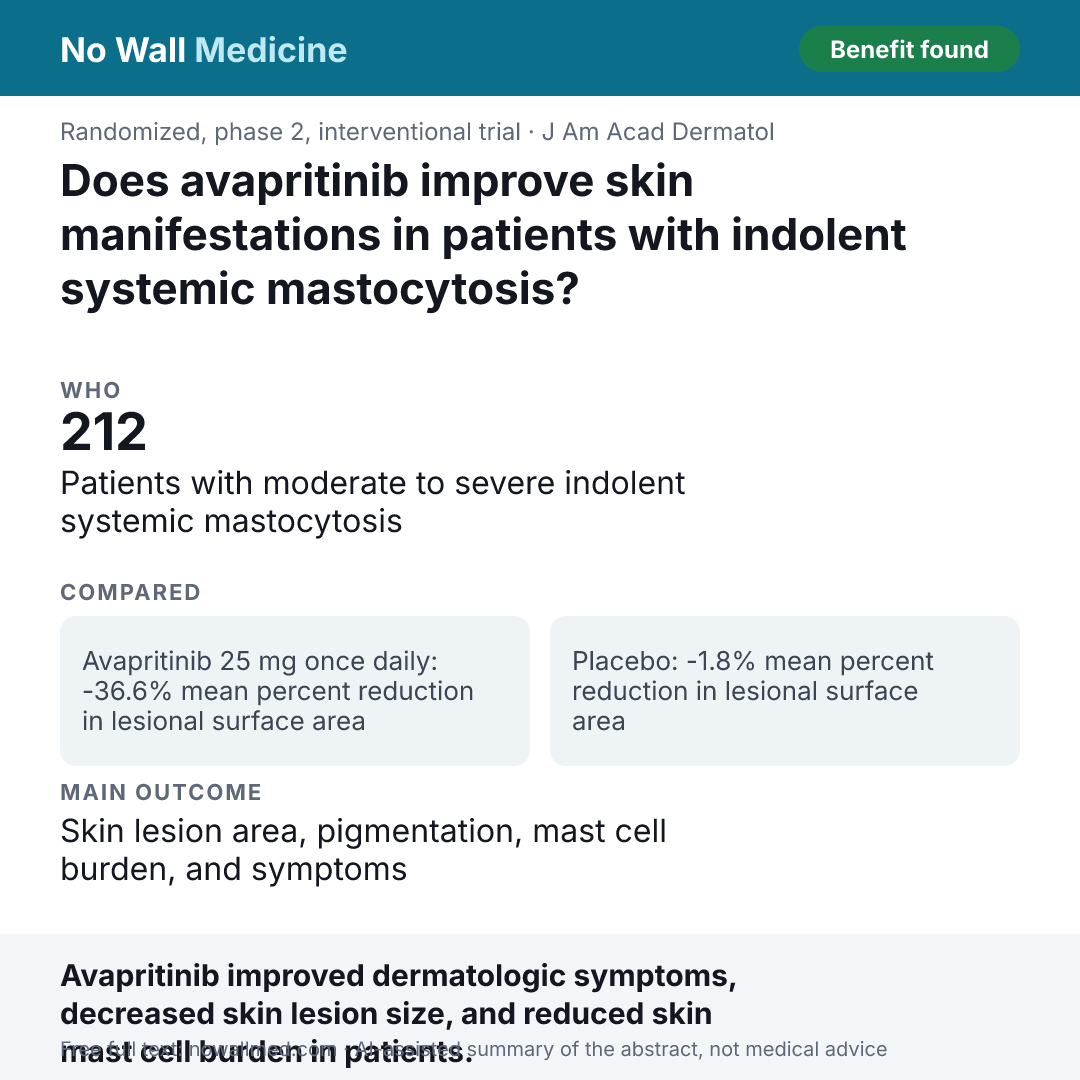
Avapritinib improves cutaneous involvement in patients with indolent systemic mastocytosis: Results from the randomized, phase 2, interventional PIONEER study
Randomized, phase 2, interventional trialBenefit found
Does avapritinib improve skin manifestations in patients with indolent systemic mastocytosis?
Who
212
Patients with moderate to severe indolent systemic mastocytosis
Compared
Avapritinib 25 mg once daily: -36.6% mean percent reduction in lesional surface area
Placebo: -1.8% mean percent reduction in lesional surface area
Main outcome
Skin lesion area, pigmentation, mast cell burden, and symptoms
Bottom line: Avapritinib improved dermatologic symptoms, decreased skin lesion size, and reduced skin mast cell burden in patients.
Limitation: Photography was optional, so analysis population for lesion area and color were smaller.
J Am Acad Dermatol · 2026-02-12 · Save PNG
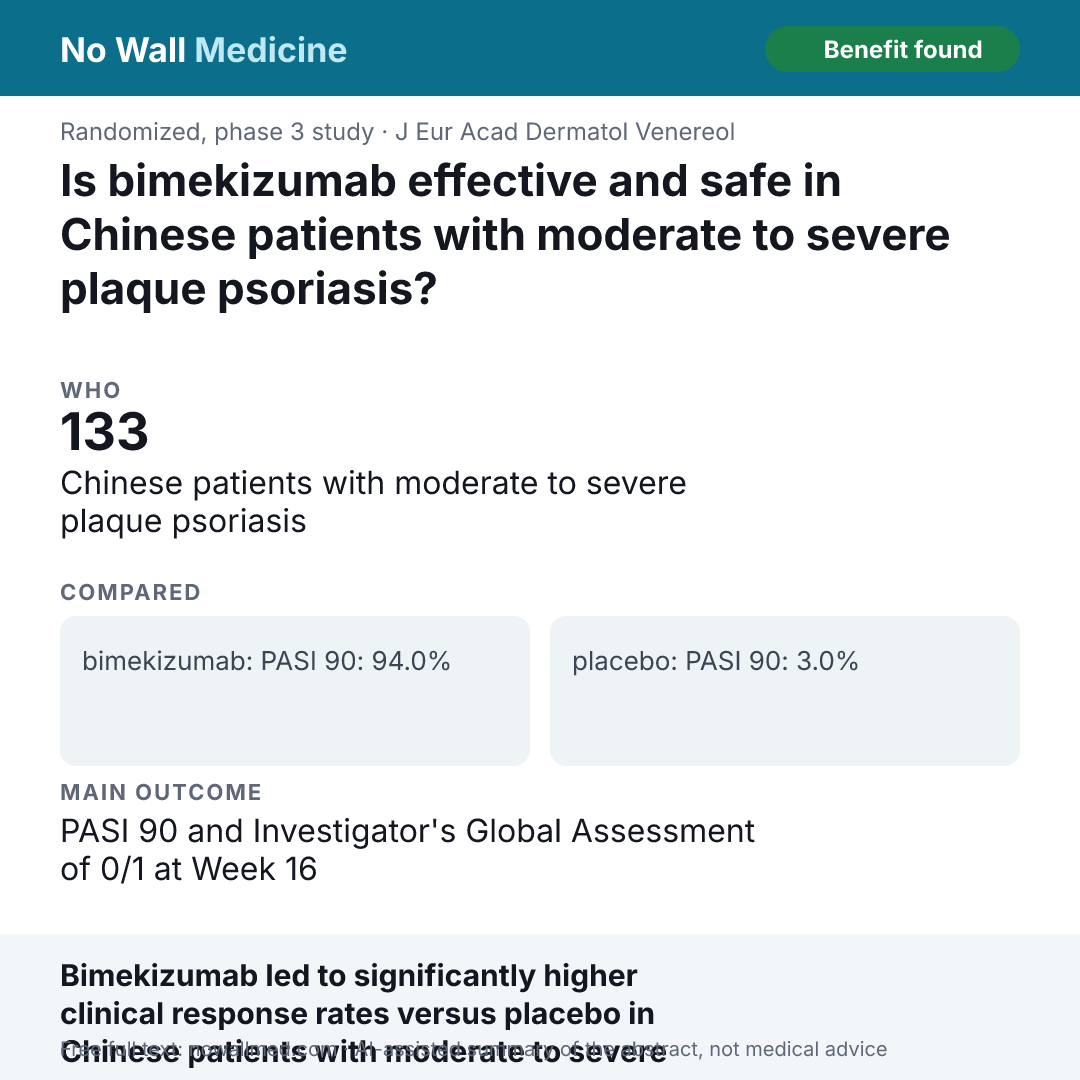
Bimekizumab efficacy and safety in Chinese patients with psoriasis in the BE SHINING Phase 3 study
Randomized, phase 3 studyBenefit found
Is bimekizumab effective and safe in Chinese patients with moderate to severe plaque psoriasis?
Who
133
Chinese patients with moderate to severe plaque psoriasis
Compared
bimekizumab: PASI 90: 94.0%
placebo: PASI 90: 3.0%
Main outcome
PASI 90 and Investigator's Global Assessment of 0/1 at Week 16
Bottom line: Bimekizumab led to significantly higher clinical response rates versus placebo in Chinese patients with moderate to severe psoriasis.
J Eur Acad Dermatol Venereol · 2026-02-12 · Save PNG
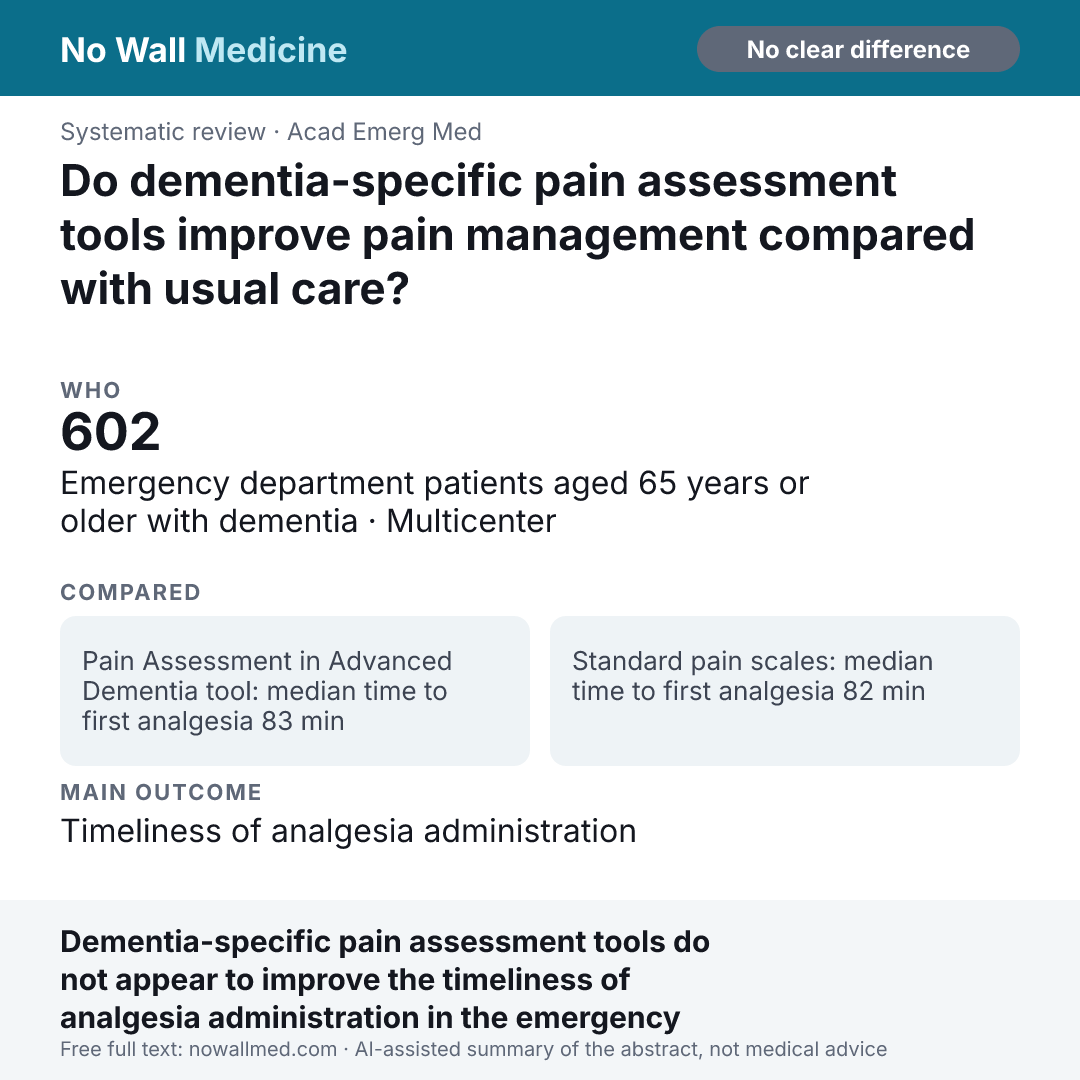
A Systematic Review Evaluating Pain Assessment Strategies for Patients With Dementia in the Emergency Department: The Geriatric ED Guidelines 2.0
Systematic reviewNo clear difference
Do dementia-specific pain assessment tools improve pain management compared with usual care?
Who
602
Emergency department patients aged 65 years or older with dementia · Multicenter
Compared
Pain Assessment in Advanced Dementia tool: median time to first analgesia 83 min
Standard pain scales: median time to first analgesia 82 min
Main outcome
Timeliness of analgesia administration
Result: p = 0.42 for median time to first analgesia
Bottom line: Dementia-specific pain assessment tools do not appear to improve the timeliness of analgesia administration in the emergency department.
Limitation: Evidence certainty was rated very low and available data is extremely limited.
Acad Emerg Med · 2026-02-12 · Save PNG
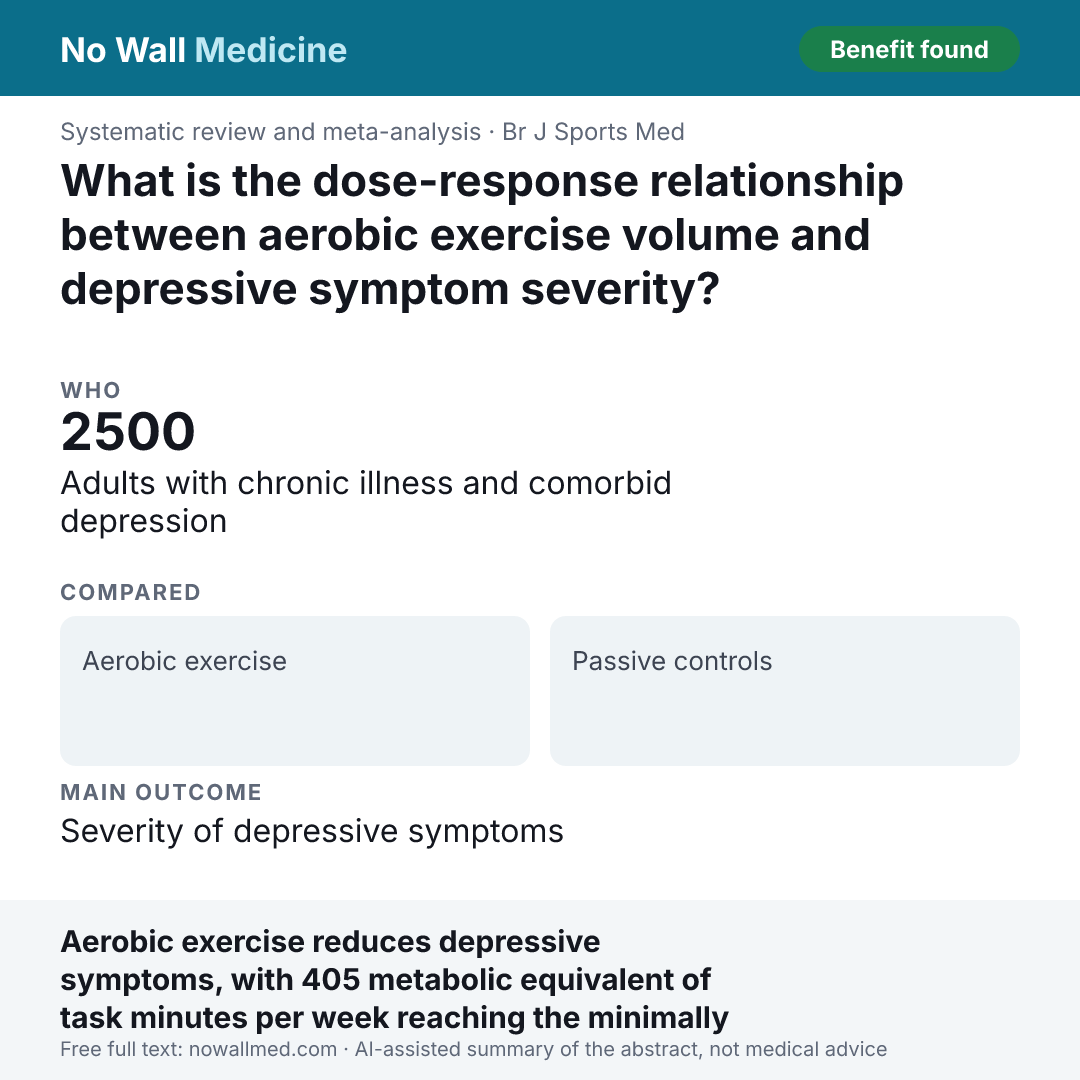
Dose-response effects of aerobic exercise on reducing depression in patients with chronic illness and comorbid depression: a systematic review and meta-analysis
Systematic review and meta-analysisBenefit found
What is the dose-response relationship between aerobic exercise volume and depressive symptom severity?
Who
2500
Adults with chronic illness and comorbid depression
Compared
Aerobic exercise
Passive controls
Main outcome
Severity of depressive symptoms
Result: Hedges' g: -0.73 (95% CI -0.99 to -0.46)
Bottom line: Aerobic exercise reduces depressive symptoms, with 405 metabolic equivalent of task minutes per week reaching the minimally important difference.
Br J Sports Med · 2026-02-12 · Save PNG
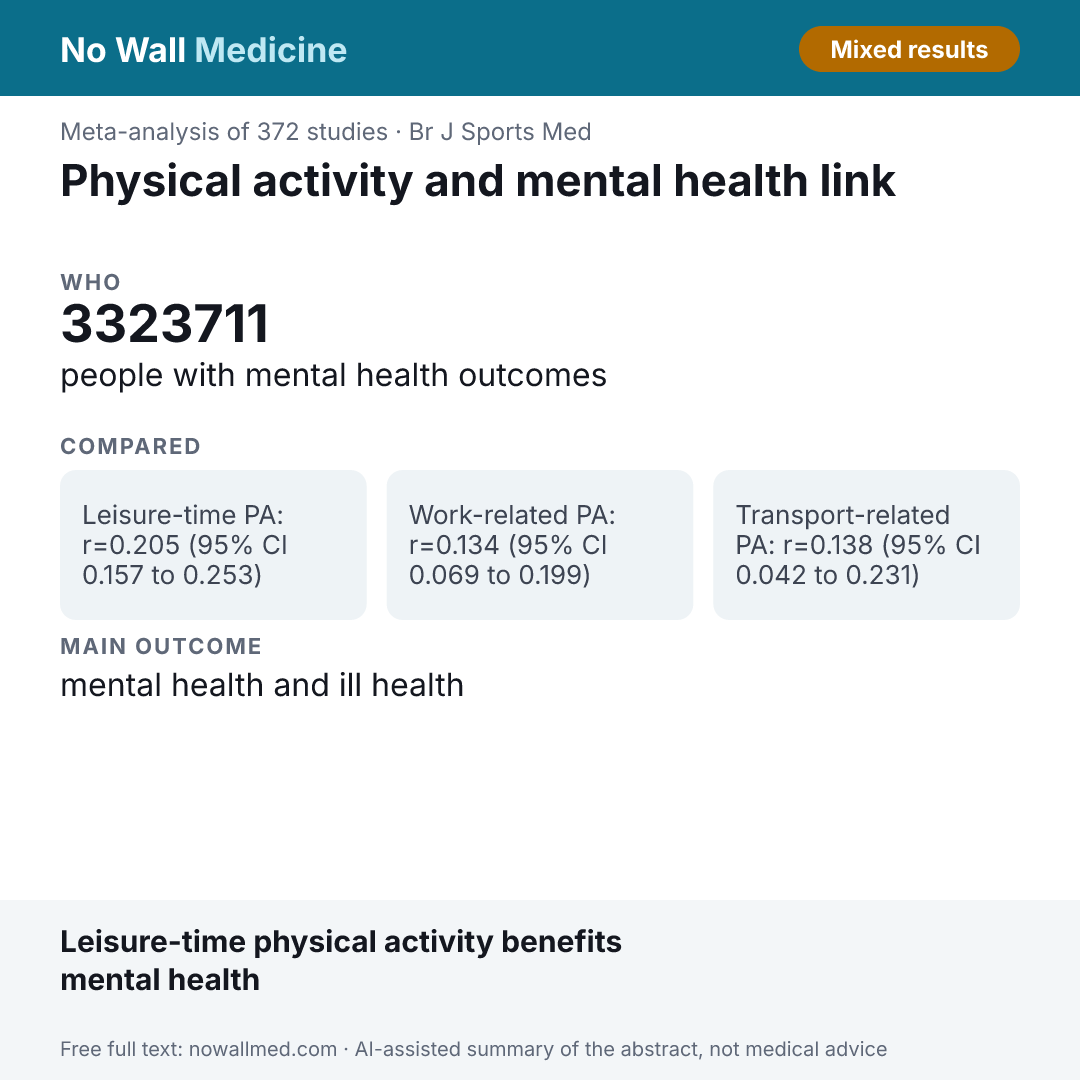
Domain-specific physical activity and mental health: an updated systematic review and multilevel meta-analysis in a combined sample of 3.3 million people
Meta-analysis of 372 studiesMixed results
Physical activity and mental health link
Who
3323711
people with mental health outcomes
Compared
Leisure-time PA: r=0.205 (95% CI 0.157 to 0.253)
Work-related PA: r=0.134 (95% CI 0.069 to 0.199)
Transport-related PA: r=0.138 (95% CI 0.042 to 0.231)
Main outcome
mental health and ill health
Bottom line: Leisure-time physical activity benefits mental health
Br J Sports Med · 2026-02-12 · Save PNG
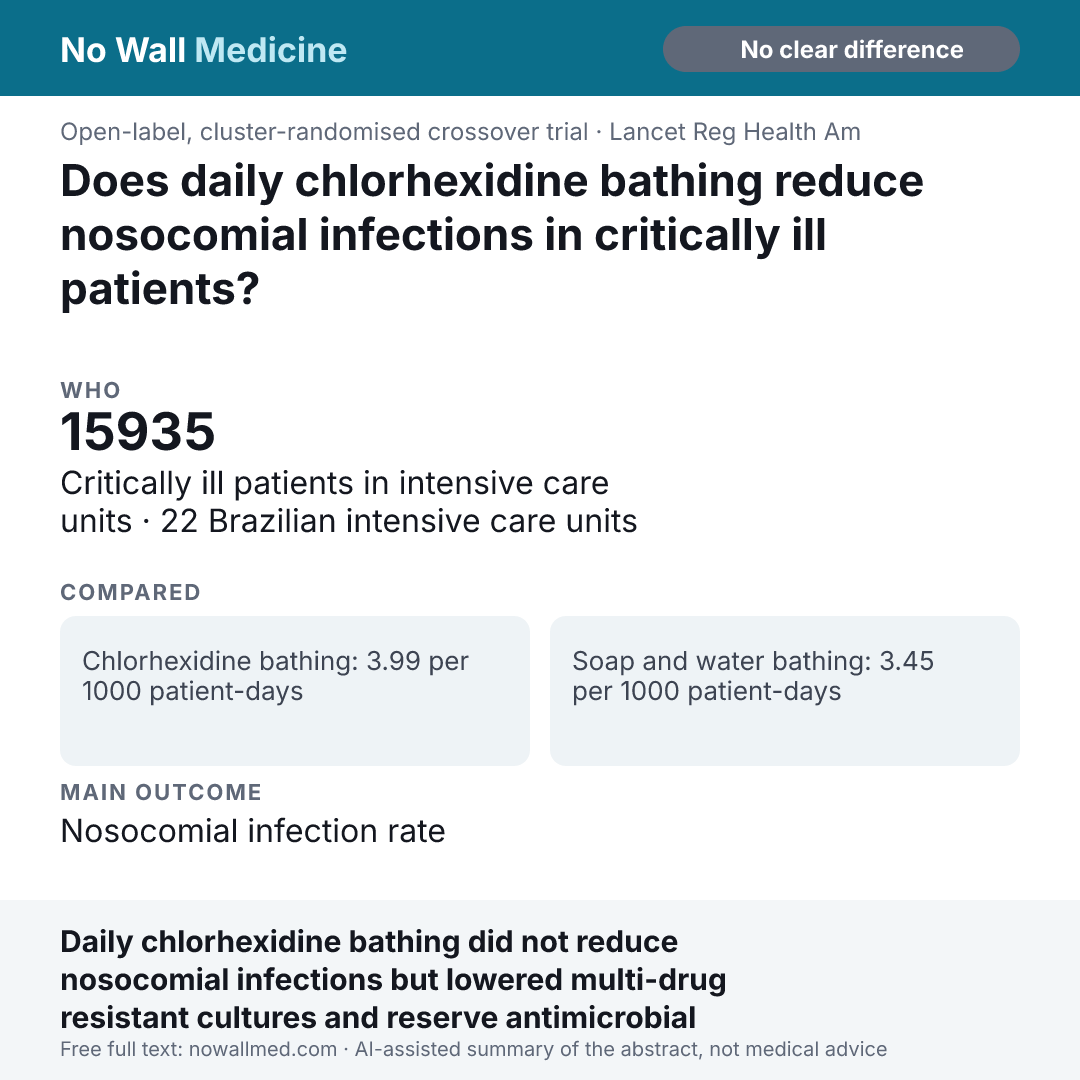
Daily Chlorhexidine Bathing for the Prevention of Nosocomial Infections in Critically Ill Patients (CLEAN-IT): a multicentre, cluster-randomised, crossover trial
Open-label, cluster-randomised crossover trialNo clear difference
Does daily chlorhexidine bathing reduce nosocomial infections in critically ill patients?
Who
15935
Critically ill patients in intensive care units · 22 Brazilian intensive care units
Compared
Chlorhexidine bathing: 3.99 per 1000 patient-days
Soap and water bathing: 3.45 per 1000 patient-days
Main outcome
Nosocomial infection rate
Result: rate-ratio, 1.09 (95% CI 0.95-1.25)
Bottom line: Daily chlorhexidine bathing did not reduce nosocomial infections but lowered multi-drug resistant cultures and reserve antimicrobial use.
Funded by: Brazilian Health Ministry through PROADI-SUS
Lancet Reg Health Am · 2026-02-12 · Save PNG