Visual abstracts
New randomized trials and meta-analyses from leading journals at a glance: who was studied, what was compared, and what was found. Every paper is free to read in full.
All specialtiesCardiology 2229Oncology 1906Gastroenterology & Hepatology 845Infectious Disease 1399Neurology 903Psychiatry & Mental Health 1068Pulmonology 936Critical Care 622Endocrinology & Diabetes 1173Pediatrics 1300Surgery 1124Orthopedics & Sports Medicine 410Neurosurgery 275Cardiothoracic & Vascular Surgery 241Plastic & Reconstructive Surgery 341Nephrology 473Rheumatology 309Hematology 485Dermatology 260Ophthalmology 263Obstetrics & Gynecology 732Public & Global Health 419Radiology & Imaging 310Anesthesiology 444Urology 385ENT (Otolaryngology) 287Emergency Medicine 245Allergy & Immunology 136Geriatrics 475Family Medicine & Primary Care 258Medical Genetics & Genomics 239Pathology & Laboratory Medicine 74Physical Medicine & Rehabilitation 382Palliative Care 191Nutrition 590Digital Health & AI 1130General Medicine 170
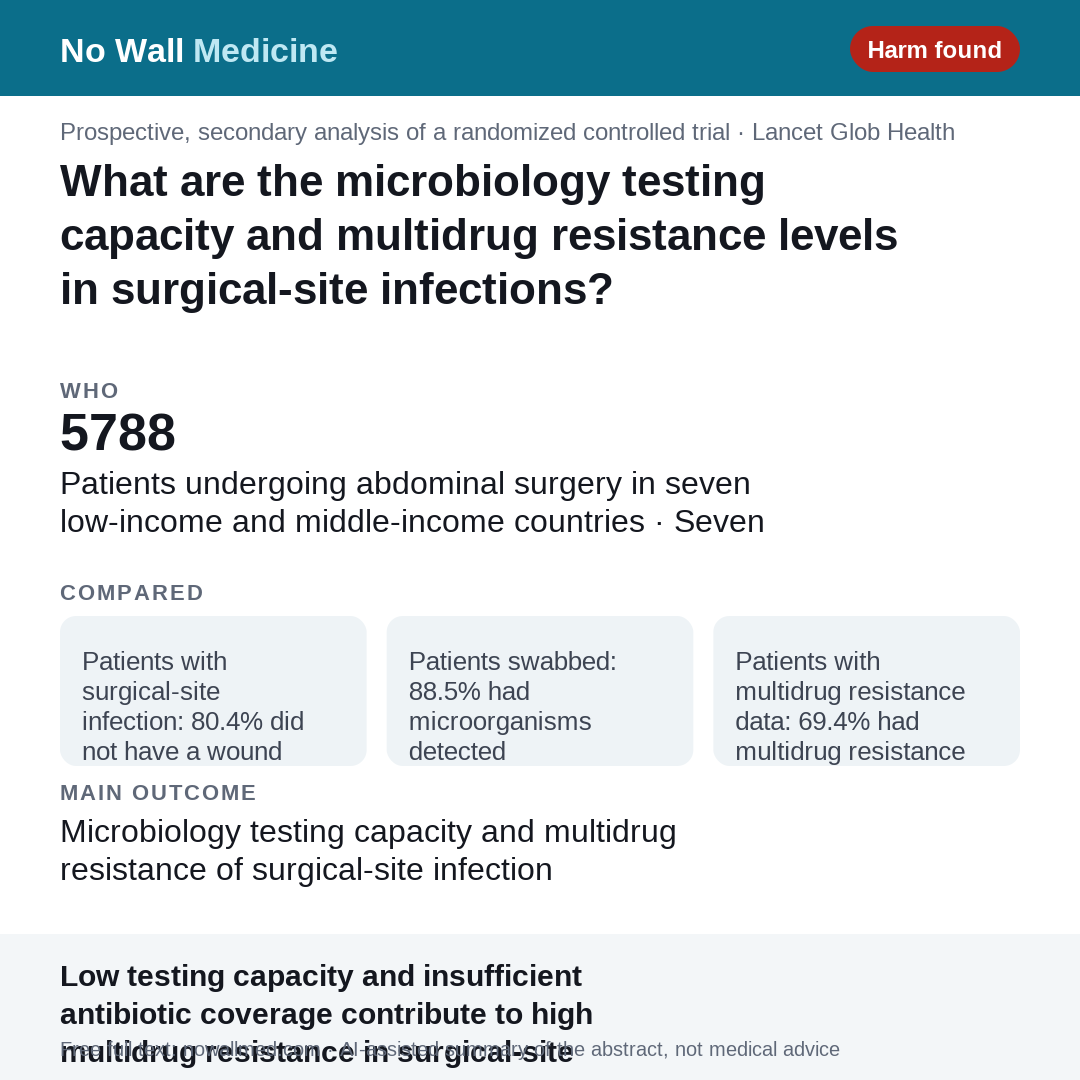
Microbiology testing capacity and antimicrobial drug resistance in surgical-site infections: a post-hoc, prospective, secondary analysis of the FALCON randomised trial in seven low-income and middle-income countries
Prospective, secondary analysis of a randomized controlled trialHarm found
What are the microbiology testing capacity and multidrug resistance levels in surgical-site infections?
Who
5788
Patients undergoing abdominal surgery in seven low-income and middle-income countries · Seven low-income and middle-income countries
Compared
Patients with surgical-site infection: 80.4% did not have a wound swab
Patients swabbed: 88.5% had microorganisms detected
Patients with multidrug resistance data: 69.4% had multidrug resistance
Main outcome
Microbiology testing capacity and multidrug resistance of surgical-site infection microorganisms
Bottom line: Low testing capacity and insufficient antibiotic coverage contribute to high multidrug resistance in surgical-site infections in low-income countries.
Funded by: National Institute for Health and Care Research
Lancet Glob Health · 2024-09-05Download image
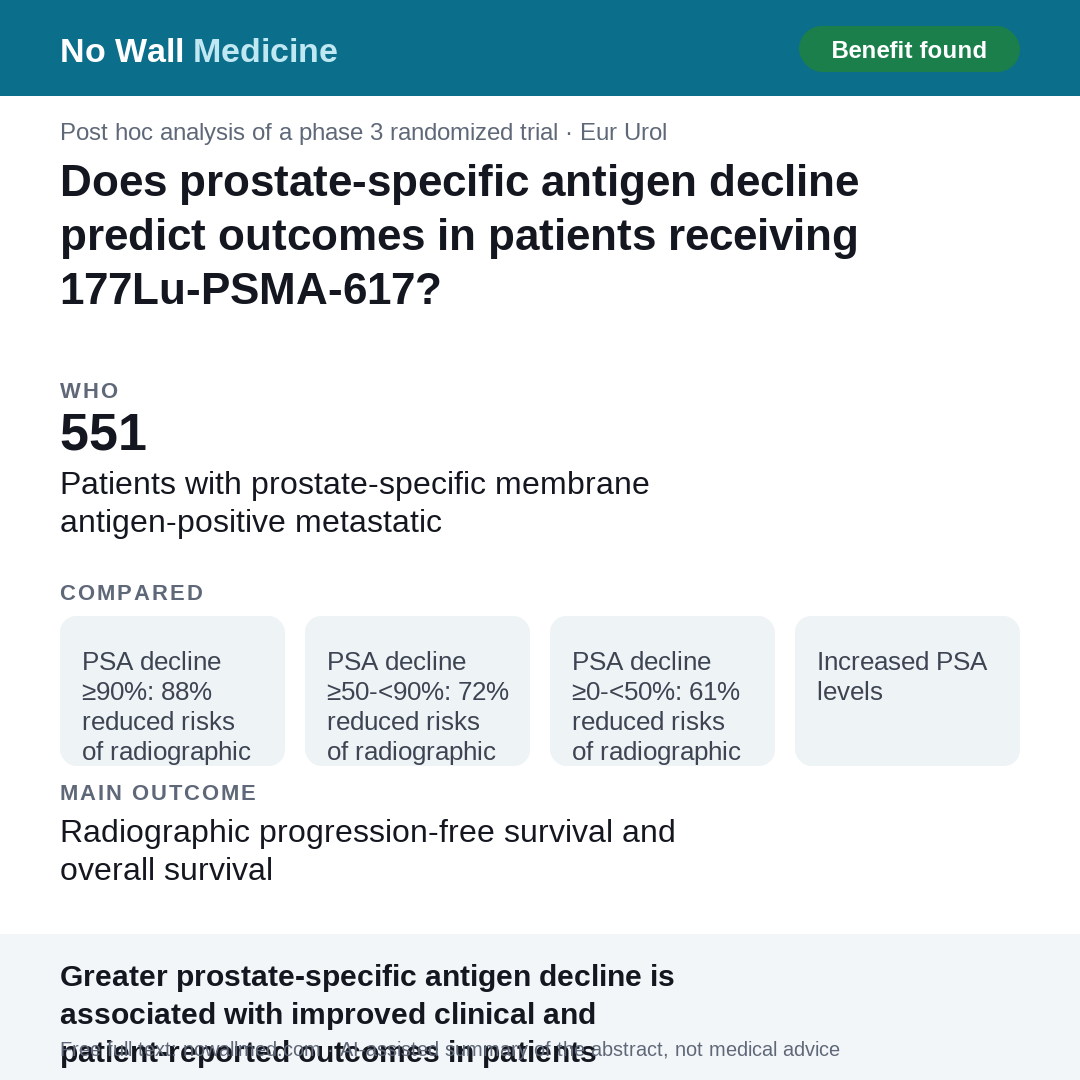
Association of Declining Prostate-specific Antigen Levels with Clinical Outcomes in Patients with Metastatic Castration-resistant Prostate Cancer Receiving [177Lu]Lu-PSMA-617 in the Phase 3 VISION Trial
Post hoc analysis of a phase 3 randomized trialBenefit found
Does prostate-specific antigen decline predict outcomes in patients receiving 177Lu-PSMA-617?
Who
551
Patients with prostate-specific membrane antigen-positive metastatic castration-resistant prostate cancer
Compared
PSA decline ≥90%: 88% reduced risks of radiographic disease progression or death
PSA decline ≥50-<90%: 72% reduced risks of radiographic disease progression or death
PSA decline ≥0-<50%: 61% reduced risks of radiographic disease progression or death
Increased PSA levels
Main outcome
Radiographic progression-free survival and overall survival
Bottom line: Greater prostate-specific antigen decline is associated with improved clinical and patient-reported outcomes in patients receiving 177Lu-PSMA-617.
Limitation: This was a post hoc analysis of the phase 3 VISION trial.
Eur Urol · 2024-09-05Download image
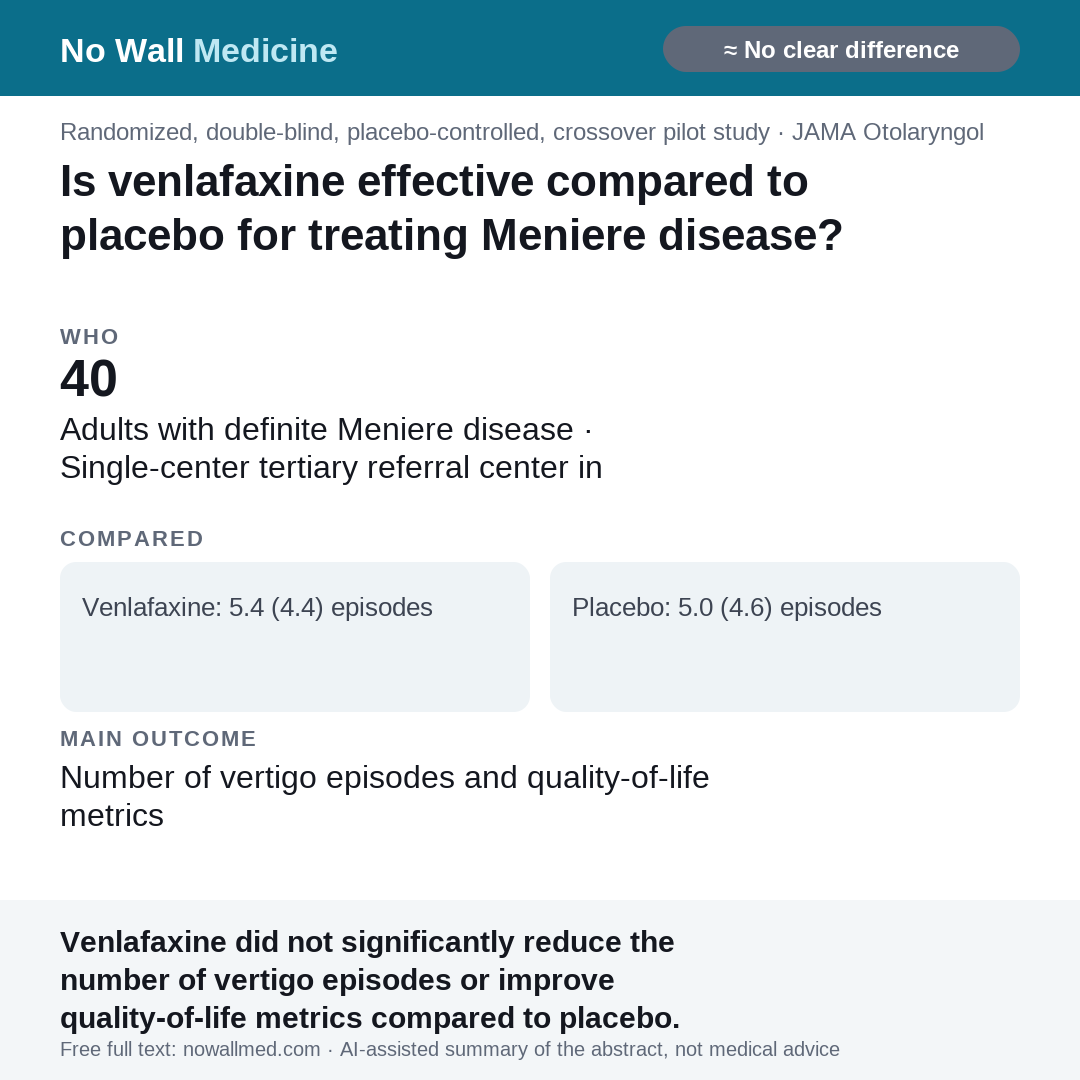
Efficacy of a Serotonin-Norepinephrine Reuptake Inhibitor as a Treatment for Meniere Disease: A Randomized Clinical Trial
Randomized, double-blind, placebo-controlled, crossover pilot studyNo clear difference
Is venlafaxine effective compared to placebo for treating Meniere disease?
Who
40
Adults with definite Meniere disease · Single-center tertiary referral center in South Carolina
Compared
Venlafaxine: 5.4 (4.4) episodes
Placebo: 5.0 (4.6) episodes
Main outcome
Number of vertigo episodes and quality-of-life metrics
Bottom line: Venlafaxine did not significantly reduce the number of vertigo episodes or improve quality-of-life metrics compared to placebo.
Limitation: Small pilot study; future studies may benefit from different dosing, larger cohorts, and longer therapy.
JAMA Otolaryngol · 2024-09-05Download image
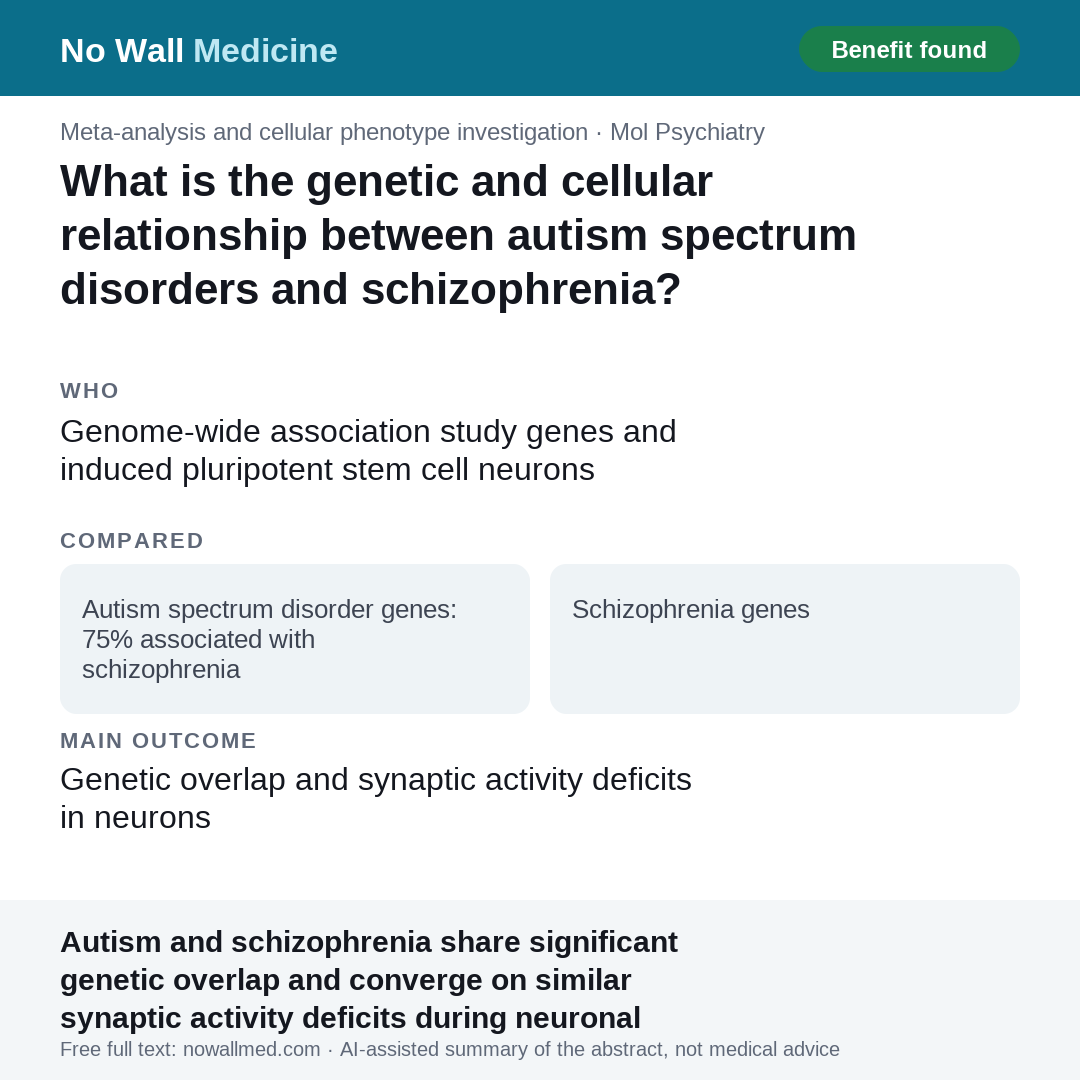
Uncovering convergence and divergence between autism and schizophrenia using genomic tools and patients' neurons
Meta-analysis and cellular phenotype investigationBenefit found
What is the genetic and cellular relationship between autism spectrum disorders and schizophrenia?
Who
Genome-wide association study genes and induced pluripotent stem cell neurons
Compared
Autism spectrum disorder genes: 75% associated with schizophrenia
Schizophrenia genes
Main outcome
Genetic overlap and synaptic activity deficits in neurons
Bottom line: Autism and schizophrenia share significant genetic overlap and converge on similar synaptic activity deficits during neuronal maturation.
Mol Psychiatry · 2024-09-05Download image
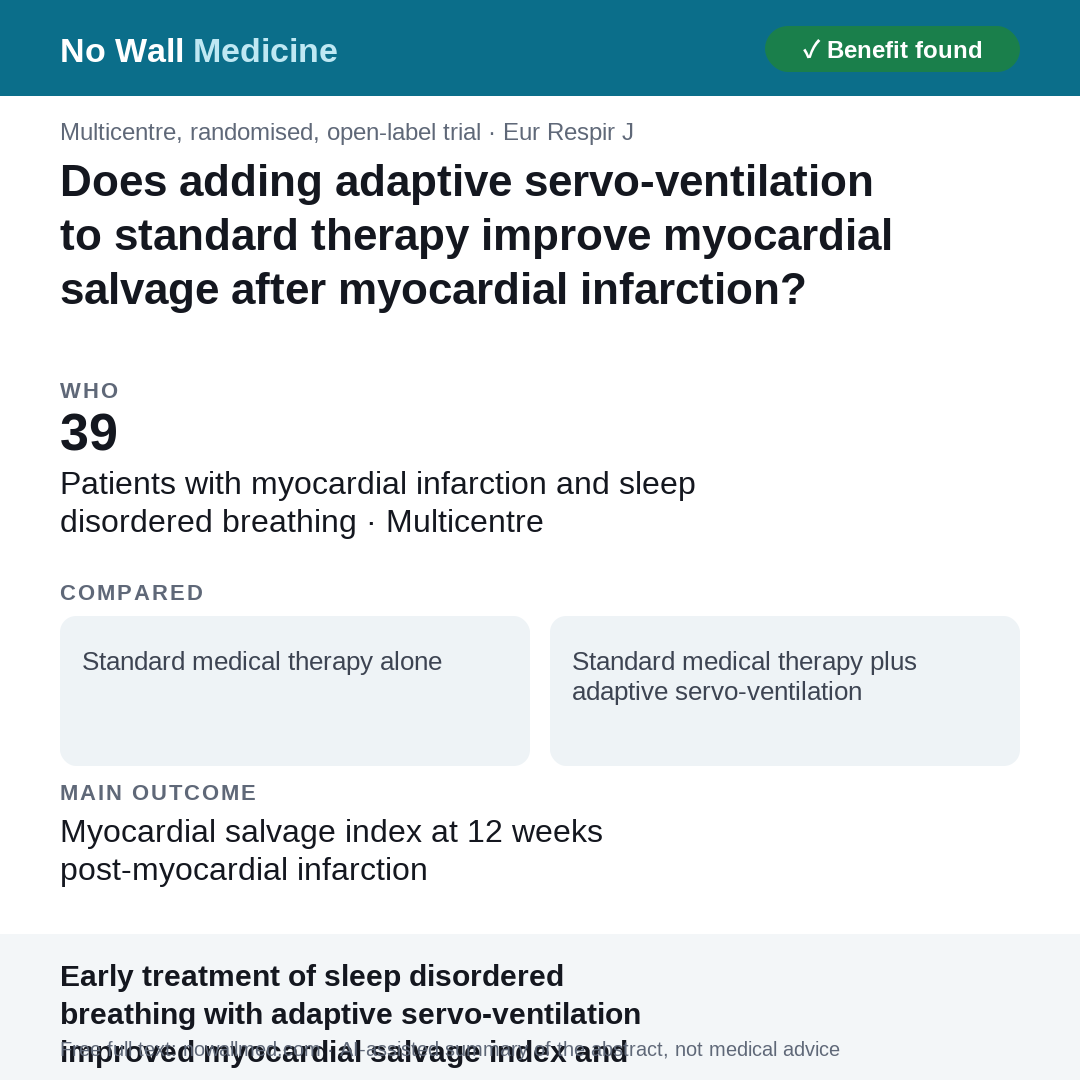
Treatment of sleep apnoea early after myocardial infarction with adaptive servo-ventilation: a proof-of-concept randomised controlled trial
Multicentre, randomised, open-label trialBenefit found
Does adding adaptive servo-ventilation to standard therapy improve myocardial salvage after myocardial infarction?
Who
39
Patients with myocardial infarction and sleep disordered breathing · Multicentre
Compared
Standard medical therapy alone
Standard medical therapy plus adaptive servo-ventilation
Main outcome
Myocardial salvage index at 12 weeks post-myocardial infarction
Result: difference 14.6% (95% CI 0.14-29.1%)
Bottom line: Early treatment of sleep disordered breathing with adaptive servo-ventilation improved myocardial salvage index and decreased infarct size.
Eur Respir J · 2024-09-05Download image
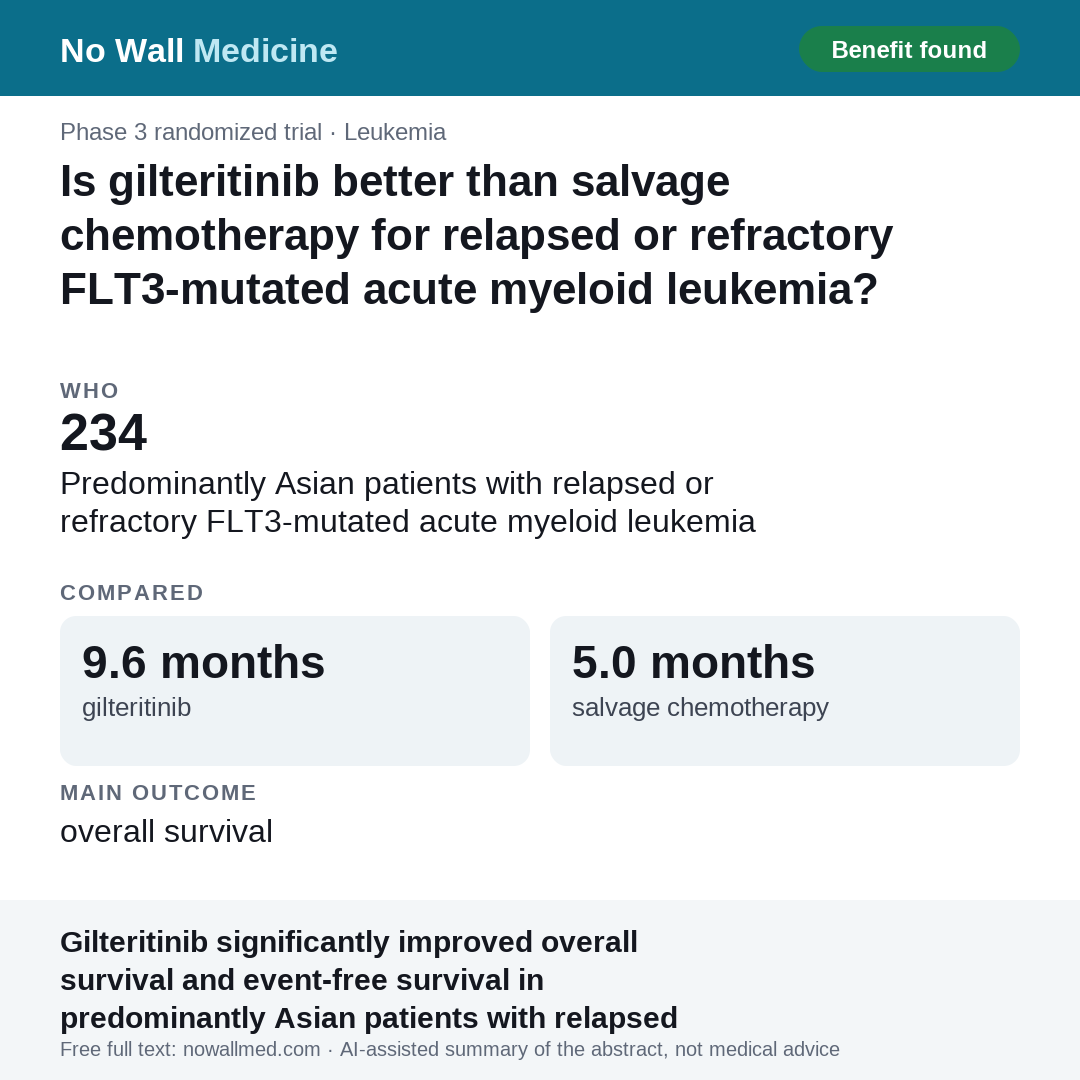
Phase 3 study of gilteritinib versus salvage chemotherapy in predominantly Asian patients with relapsed/refractory FLT3-mutated acute myeloid leukemia
Phase 3 randomized trialBenefit found
Is gilteritinib better than salvage chemotherapy for relapsed or refractory FLT3-mutated acute myeloid leukemia?
Who
234
Predominantly Asian patients with relapsed or refractory FLT3-mutated acute myeloid leukemia
Compared
9.6 monthsgilteritinib
5.0 monthssalvage chemotherapy
Main outcome
overall survival
Result: hazard ratio 0.566 (95% CI 0.392 to 0.818)
Bottom line: Gilteritinib significantly improved overall survival and event-free survival in predominantly Asian patients with relapsed or refractory FLT3-mutated acute myeloid leukemia.
Leukemia · 2024-09-05Download image
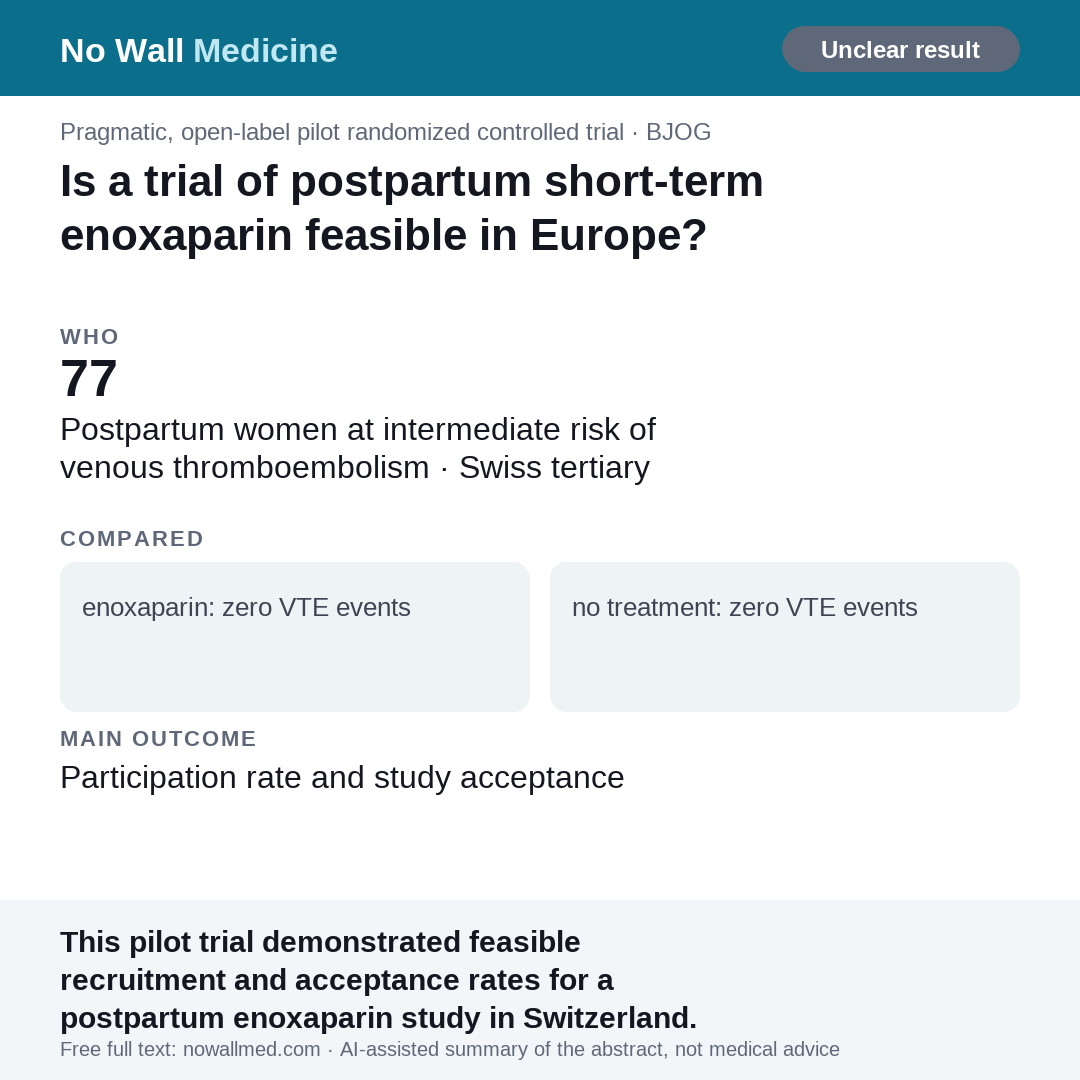
Preventing Postpartum Venous Thromboembolism With Low-Molecular-Weight Heparin: The PP-HEP Pilot Randomised Controlled Trial
Pragmatic, open-label pilot randomized controlled trialUnclear result
Is a trial of postpartum short-term enoxaparin feasible in Europe?
Who
77
Postpartum women at intermediate risk of venous thromboembolism · Swiss tertiary hospital
Compared
enoxaparin: zero VTE events
no treatment: zero VTE events
Main outcome
Participation rate and study acceptance
Bottom line: This pilot trial demonstrated feasible recruitment and acceptance rates for a postpartum enoxaparin study in Switzerland.
BJOG · 2024-09-05Download image
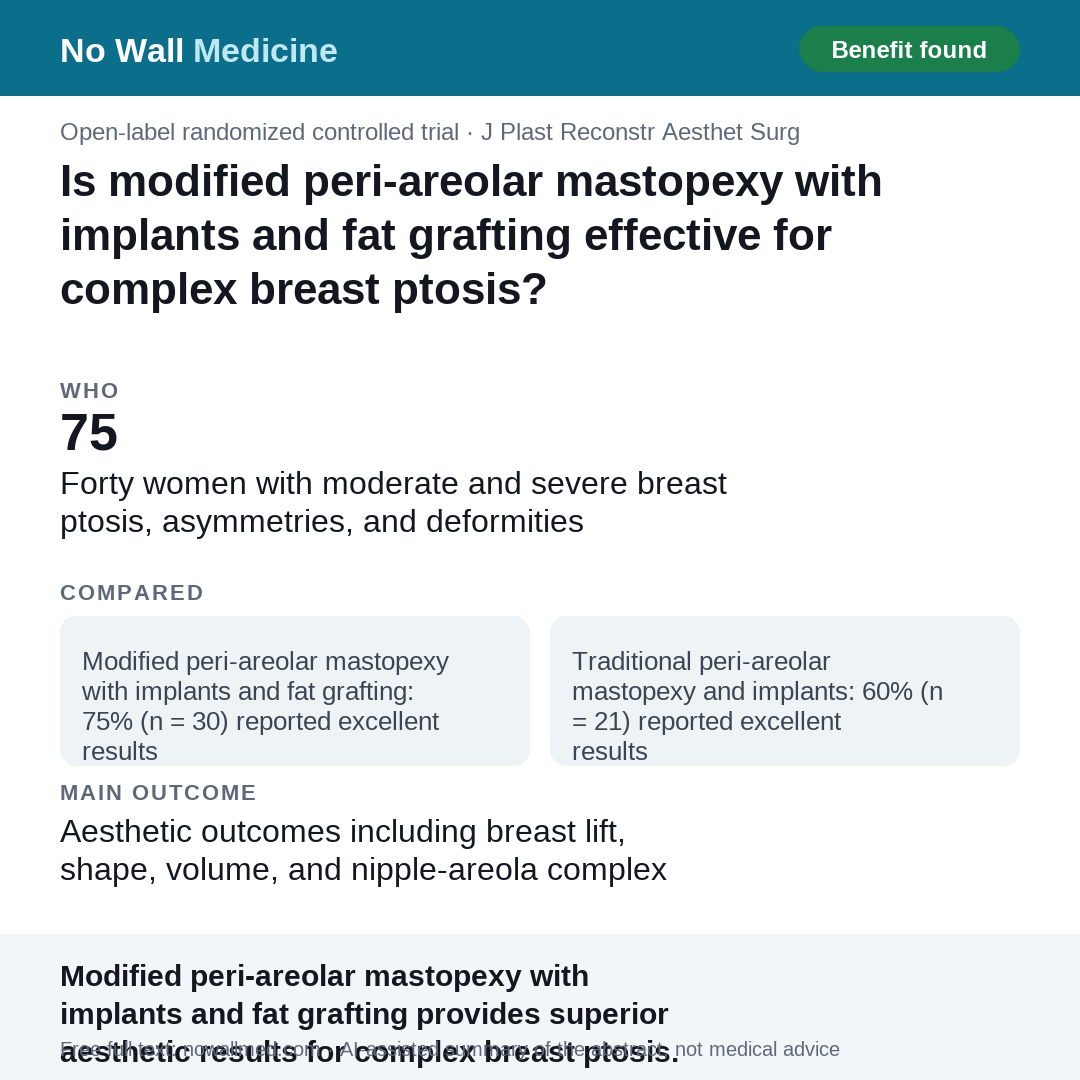
Modified peri-areolar mastopexy and fat grafting in complex breast ptosis: A randomized open-label controlled trial
Open-label randomized controlled trialBenefit found
Is modified peri-areolar mastopexy with implants and fat grafting effective for complex breast ptosis?
Who
75
Forty women with moderate and severe breast ptosis, asymmetries, and deformities
Compared
Modified peri-areolar mastopexy with implants and fat grafting: 75% (n = 30) reported excellent results
Traditional peri-areolar mastopexy and implants: 60% (n = 21) reported excellent results
Main outcome
Aesthetic outcomes including breast lift, shape, volume, and nipple-areola complex position
Bottom line: Modified peri-areolar mastopexy with implants and fat grafting provides superior aesthetic results for complex breast ptosis.
J Plast Reconstr Aesthet Surg · 2024-09-05Download image
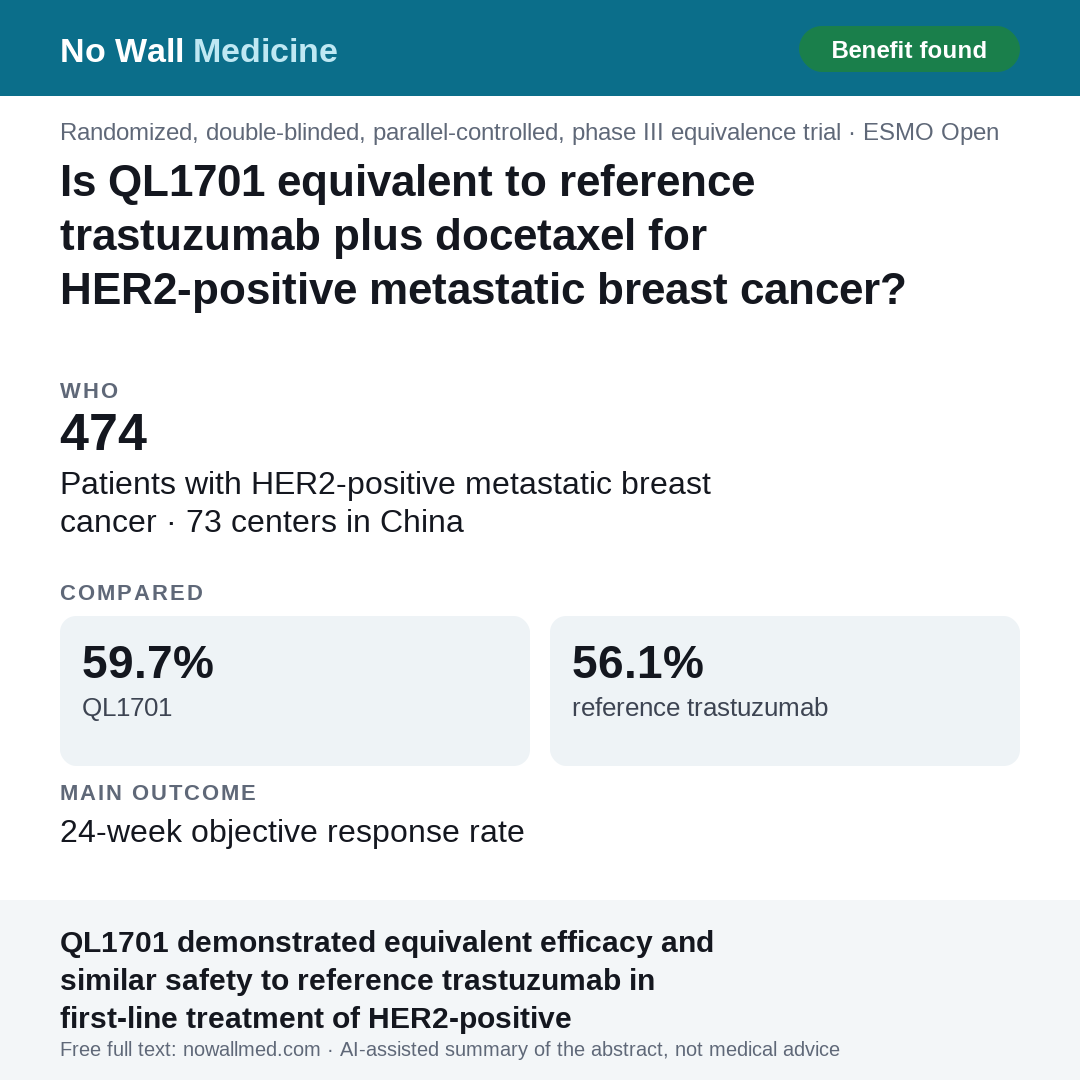
QL1701 (a proposed trastuzumab biosimilar) versus reference trastuzumab plus docetaxel as first-line therapy for HER2-positive metastatic breast cancer: a multicenter, randomized, double-blinded, parallel-controlled, phase III equivalence trial
Randomized, double-blinded, parallel-controlled, phase III equivalence trialBenefit found
Is QL1701 equivalent to reference trastuzumab plus docetaxel for HER2-positive metastatic breast cancer?
Who
474
Patients with HER2-positive metastatic breast cancer · 73 centers in China
Compared
59.7%QL1701 (95% CI 53.2% to 66.1%)
56.1%reference trastuzumab (95% CI 49.5% to 62.5%)
Main outcome
24-week objective response rate
Result: risk ratio 1.07 (90% CI 0.94-1.21)
Bottom line: QL1701 demonstrated equivalent efficacy and similar safety to reference trastuzumab in first-line treatment of HER2-positive metastatic breast cancer.
ESMO Open · 2024-09-05Download image
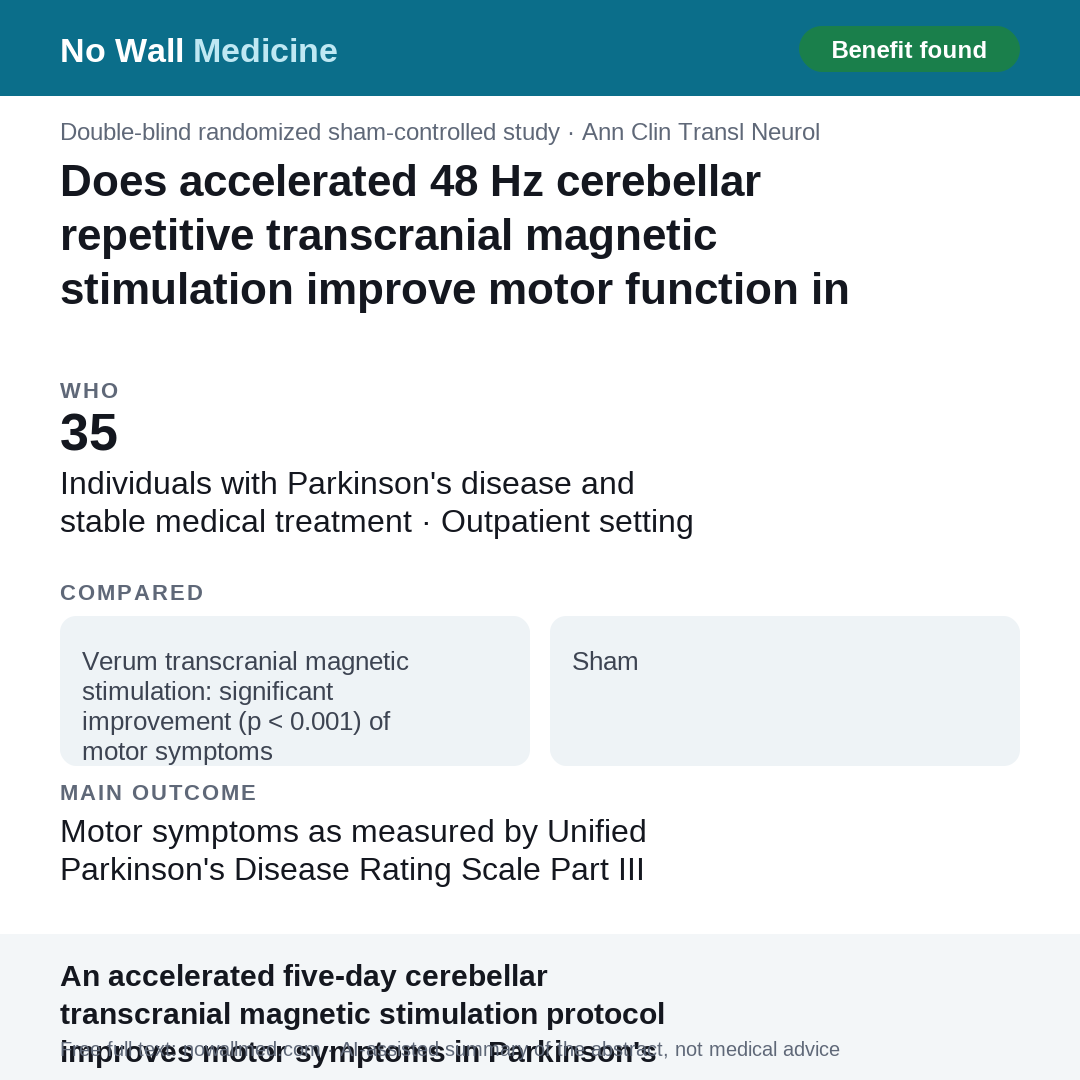
Cerebellar transcranial magnetic stimulation improves motor function in Parkinson's disease
Double-blind randomized sham-controlled studyBenefit found
Does accelerated 48 Hz cerebellar repetitive transcranial magnetic stimulation improve motor function in Parkinson's disease?
Who
35
Individuals with Parkinson's disease and stable medical treatment · Outpatient setting
Compared
Verum transcranial magnetic stimulation: significant improvement (p < 0.001) of motor symptoms
Sham
Main outcome
Motor symptoms as measured by Unified Parkinson's Disease Rating Scale Part III
Bottom line: An accelerated five-day cerebellar transcranial magnetic stimulation protocol improves motor symptoms in Parkinson's disease.
Ann Clin Transl Neurol · 2024-09-05Download image
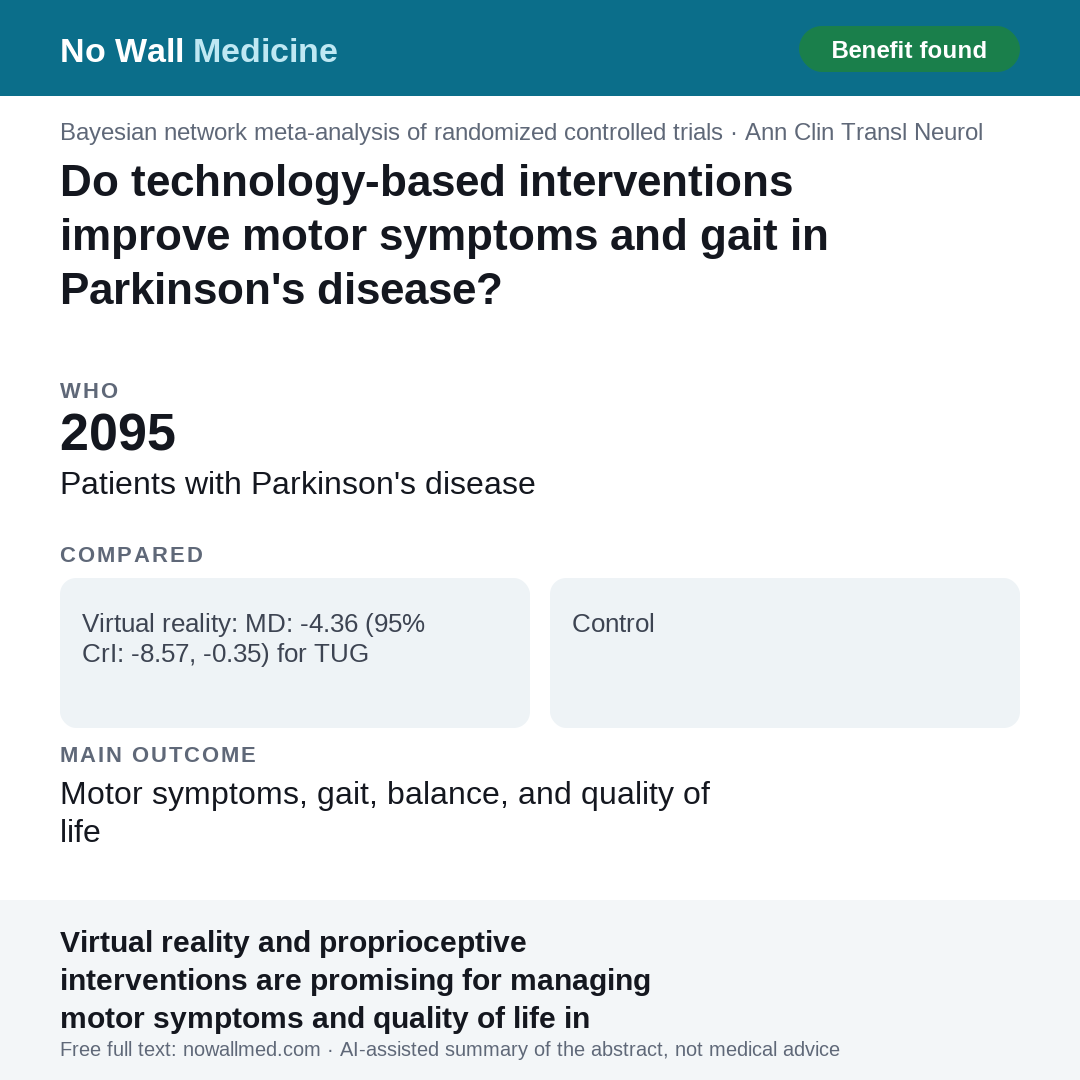
Innovative technology-based interventions in Parkinson's disease: A systematic review and meta-analysis
Bayesian network meta-analysis of randomized controlled trialsBenefit found
Do technology-based interventions improve motor symptoms and gait in Parkinson's disease?
Who
2095
Patients with Parkinson's disease
Compared
Virtual reality: MD: -4.36 (95% CrI: -8.57, -0.35) for TUG
Control
Main outcome
Motor symptoms, gait, balance, and quality of life
Bottom line: Virtual reality and proprioceptive interventions are promising for managing motor symptoms and quality of life in Parkinson's disease.
Ann Clin Transl Neurol · 2024-09-05Download image
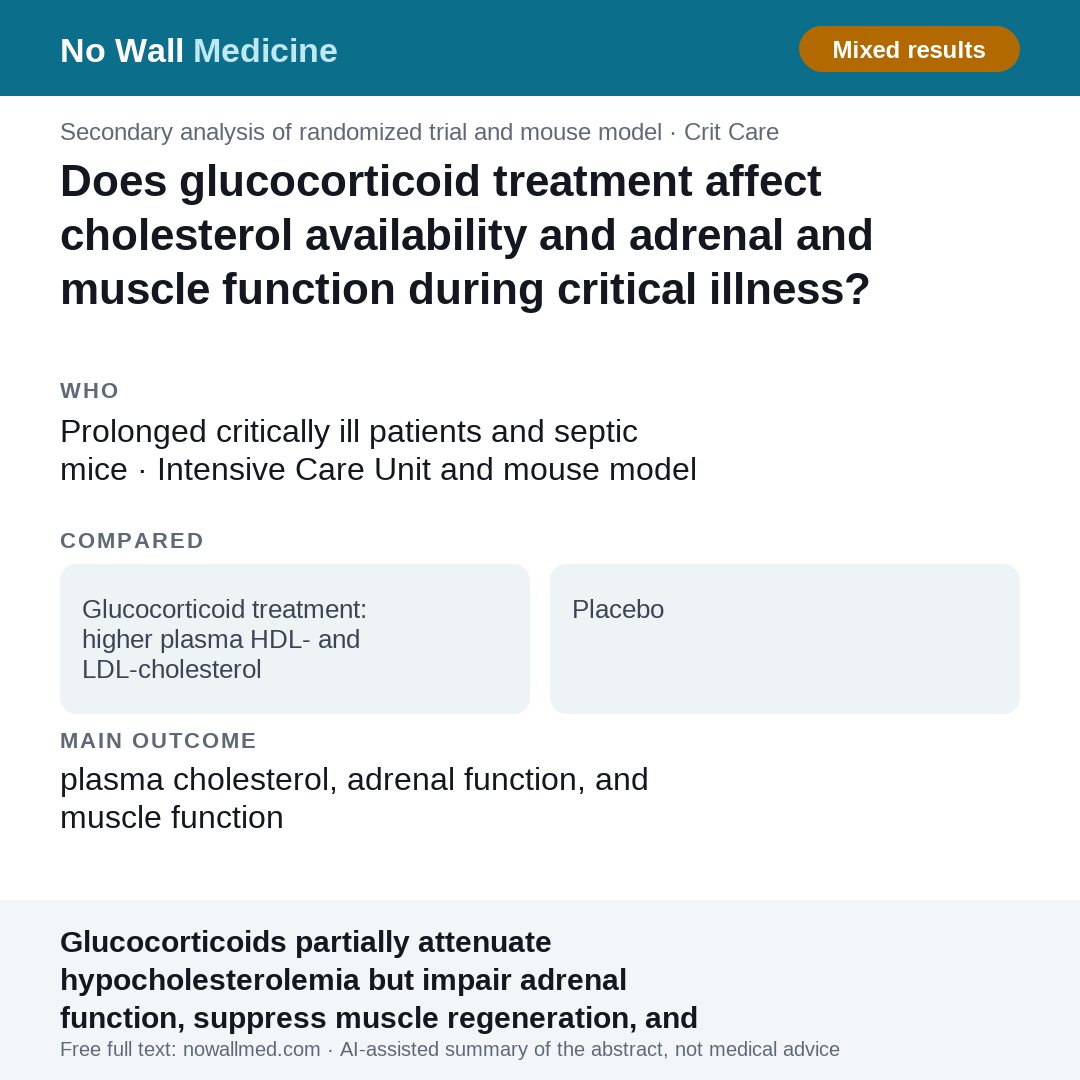
Glucocorticoid treatment increases cholesterol availability during critical illness: effect on adrenal and muscle function
Secondary analysis of randomized trial and mouse modelMixed results
Does glucocorticoid treatment affect cholesterol availability and adrenal and muscle function during critical illness?
Who
Prolonged critically ill patients and septic mice · Intensive Care Unit and mouse model
Compared
Glucocorticoid treatment: higher plasma HDL- and LDL-cholesterol
Placebo
Main outcome
plasma cholesterol, adrenal function, and muscle function
Bottom line: Glucocorticoids partially attenuate hypocholesterolemia but impair adrenal function, suppress muscle regeneration, and exacerbate body mass loss.
Crit Care · 2024-09-05Download image
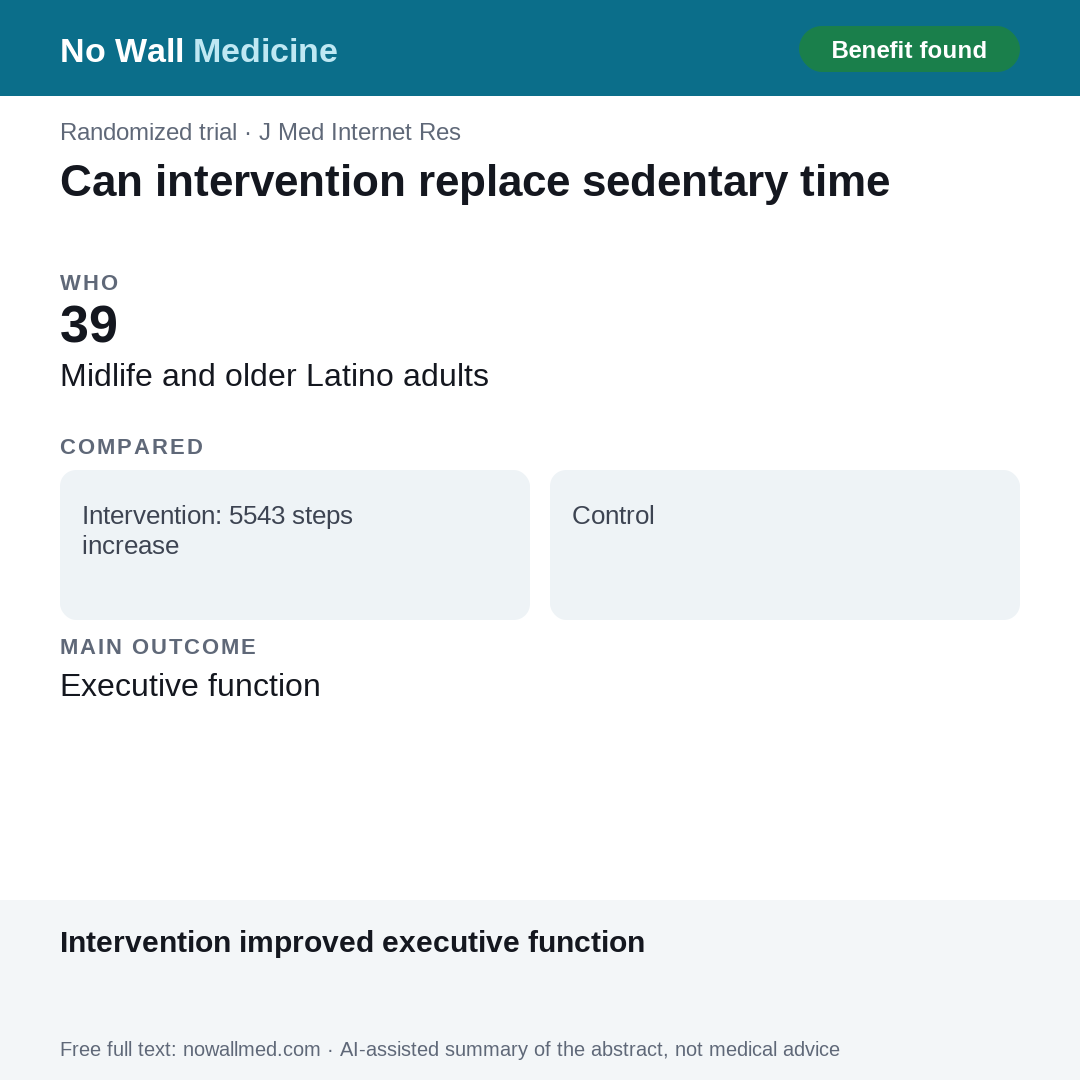
Ecological Momentary Intervention to Replace Sedentary Time With Physical Activity to Improve Executive Function in Midlife and Older Latino Adults: Pilot Randomized Controlled Trial
Randomized trialBenefit found
Can intervention replace sedentary time
Who
39
Midlife and older Latino adults
Compared
Intervention: 5543 steps increase
Control
Main outcome
Executive function
Bottom line: Intervention improved executive function
J Med Internet Res · 2024-09-05Download image
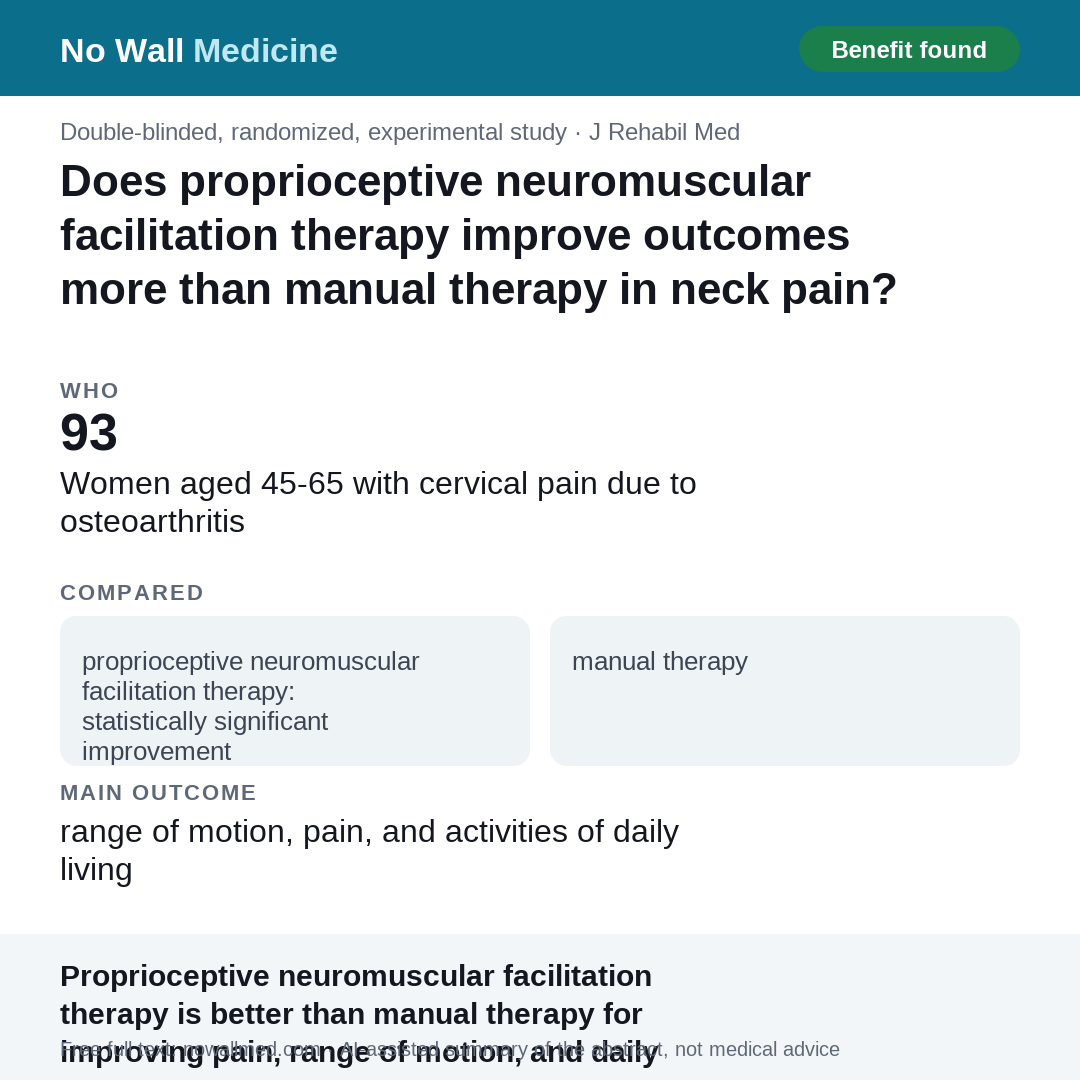
Proprioceptive neuromuscular facilitation therapy versus manual therapy in patients with neck pain: a randomised controlled trial
Double-blinded, randomized, experimental studyBenefit found
Does proprioceptive neuromuscular facilitation therapy improve outcomes more than manual therapy in neck pain?
Who
93
Women aged 45-65 with cervical pain due to osteoarthritis
Compared
proprioceptive neuromuscular facilitation therapy: statistically significant improvement
manual therapy
Main outcome
range of motion, pain, and activities of daily living
Bottom line: Proprioceptive neuromuscular facilitation therapy is better than manual therapy for improving pain, range of motion, and daily functioning.
J Rehabil Med · 2024-09-05Download image
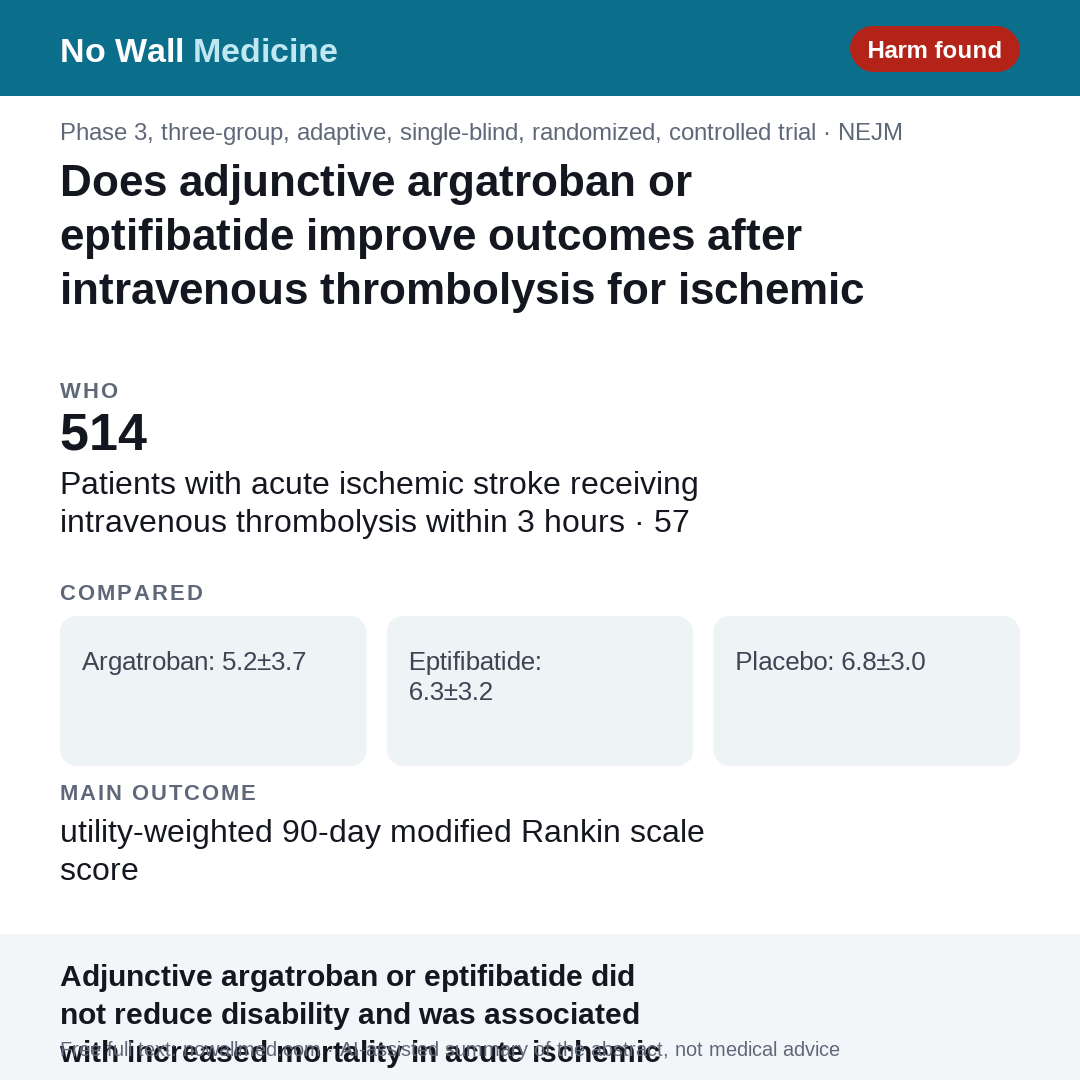
Adjunctive Intravenous Argatroban or Eptifibatide for Ischemic Stroke
Phase 3, three-group, adaptive, single-blind, randomized, controlled trialHarm found
Does adjunctive argatroban or eptifibatide improve outcomes after intravenous thrombolysis for ischemic stroke?
Who
514
Patients with acute ischemic stroke receiving intravenous thrombolysis within 3 hours · 57 sites in the United States
Compared
Argatroban: 5.2±3.7
Eptifibatide: 6.3±3.2
Placebo: 6.8±3.0
Main outcome
utility-weighted 90-day modified Rankin scale score
Result: posterior mean difference -1.51±0.51 for argatroban and -0.50±0.29 for eptifibatide
Bottom line: Adjunctive argatroban or eptifibatide did not reduce disability and was associated with increased mortality in acute ischemic stroke.
Funded by: National Institute of Neurological Disorders and Stroke
NEJM · 2024-09-04Download image
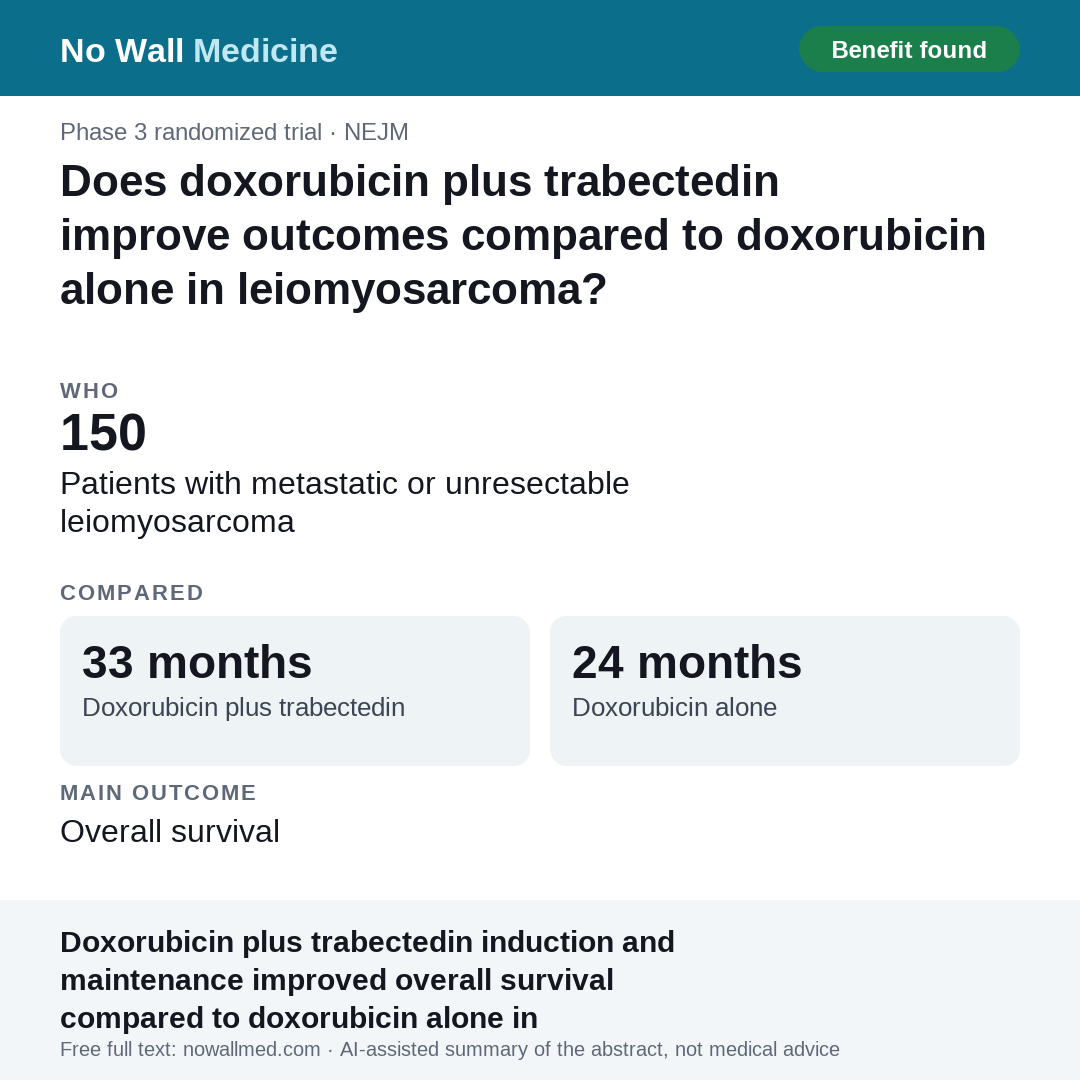
Doxorubicin-Trabectedin with Trabectedin Maintenance in Leiomyosarcoma
Phase 3 randomized trialBenefit found
Does doxorubicin plus trabectedin improve outcomes compared to doxorubicin alone in leiomyosarcoma?
Who
150
Patients with metastatic or unresectable leiomyosarcoma
Compared
33 monthsDoxorubicin plus trabectedin (95% CI, 26 to 48)
24 monthsDoxorubicin alone (95% CI, 19 to 31)
Main outcome
Overall survival
Result: hazard ratio 0.65 (95% CI, 0.44 to 0.95)
Bottom line: Doxorubicin plus trabectedin induction and maintenance improved overall survival compared to doxorubicin alone in leiomyosarcoma.
Funded by: PharmaMar and others
NEJM · 2024-09-04Download image
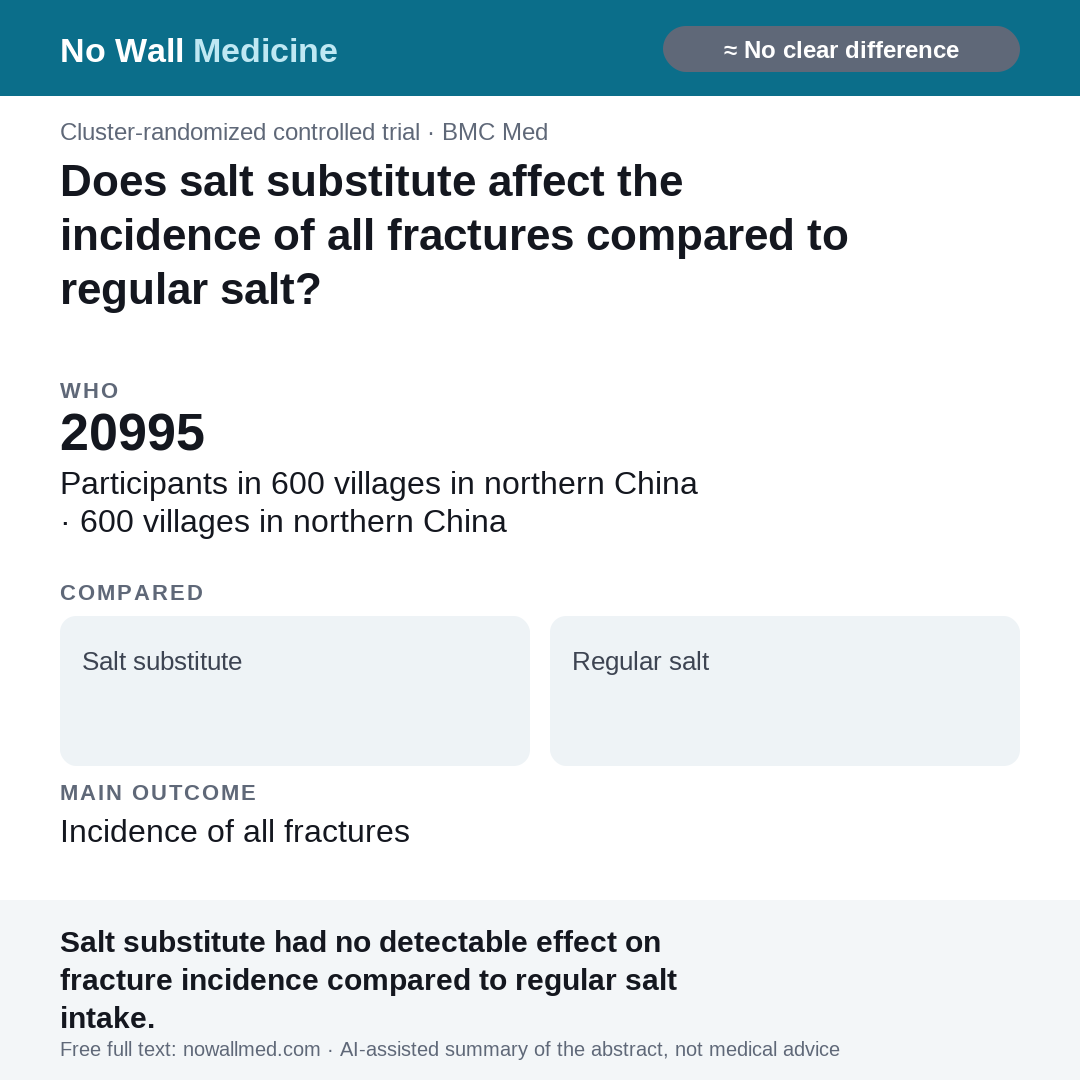
Effect of salt substitution on fracture-a secondary analysis of the Salt Substitute and Stroke Study (SSaSS)
Cluster-randomized controlled trialNo clear difference
Does salt substitute affect the incidence of all fractures compared to regular salt?
Who
20995
Participants in 600 villages in northern China · 600 villages in northern China
Compared
Salt substitute
Regular salt
Main outcome
Incidence of all fractures
Result: rate ratio 0.96 (95% CI 0.81 to 1.14)
Bottom line: Salt substitute had no detectable effect on fracture incidence compared to regular salt intake.
BMC Med · 2024-09-04Download image
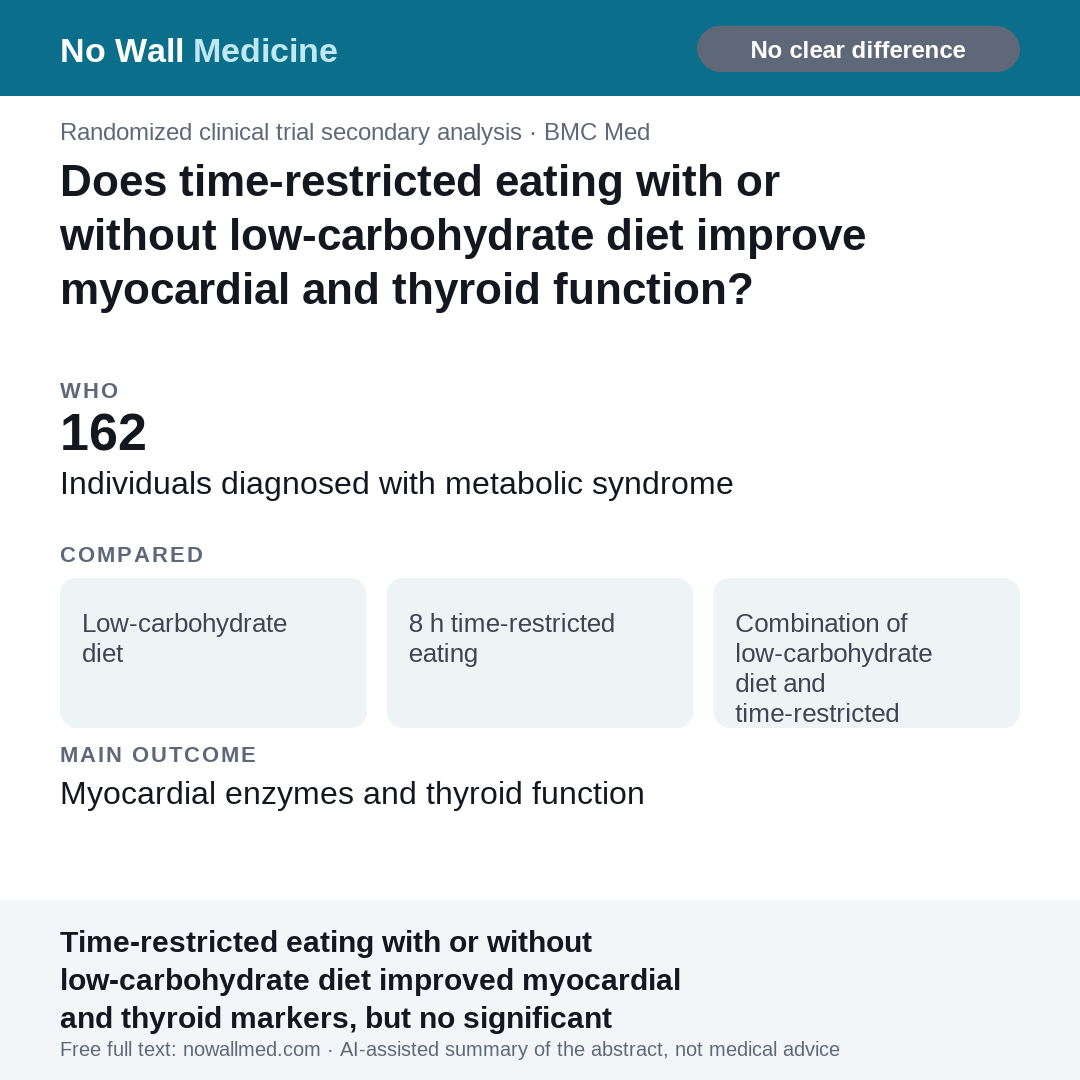
Time-restricted eating with or without a low-carbohydrate diet improved myocardial status and thyroid function in individuals with metabolic syndrome: secondary analysis of a randomized clinical trial
Randomized clinical trial secondary analysisNo clear difference
Does time-restricted eating with or without low-carbohydrate diet improve myocardial and thyroid function?
Who
162
Individuals diagnosed with metabolic syndrome
Compared
Low-carbohydrate diet
8 h time-restricted eating
Combination of low-carbohydrate diet and time-restricted eating
Main outcome
Myocardial enzymes and thyroid function
Bottom line: Time-restricted eating with or without low-carbohydrate diet improved myocardial and thyroid markers, but no significant difference was observed between groups.
Limitation: Only 57 participants adhered to their assigned protocol for the per-protocol analysis.
BMC Med · 2024-09-04Download image
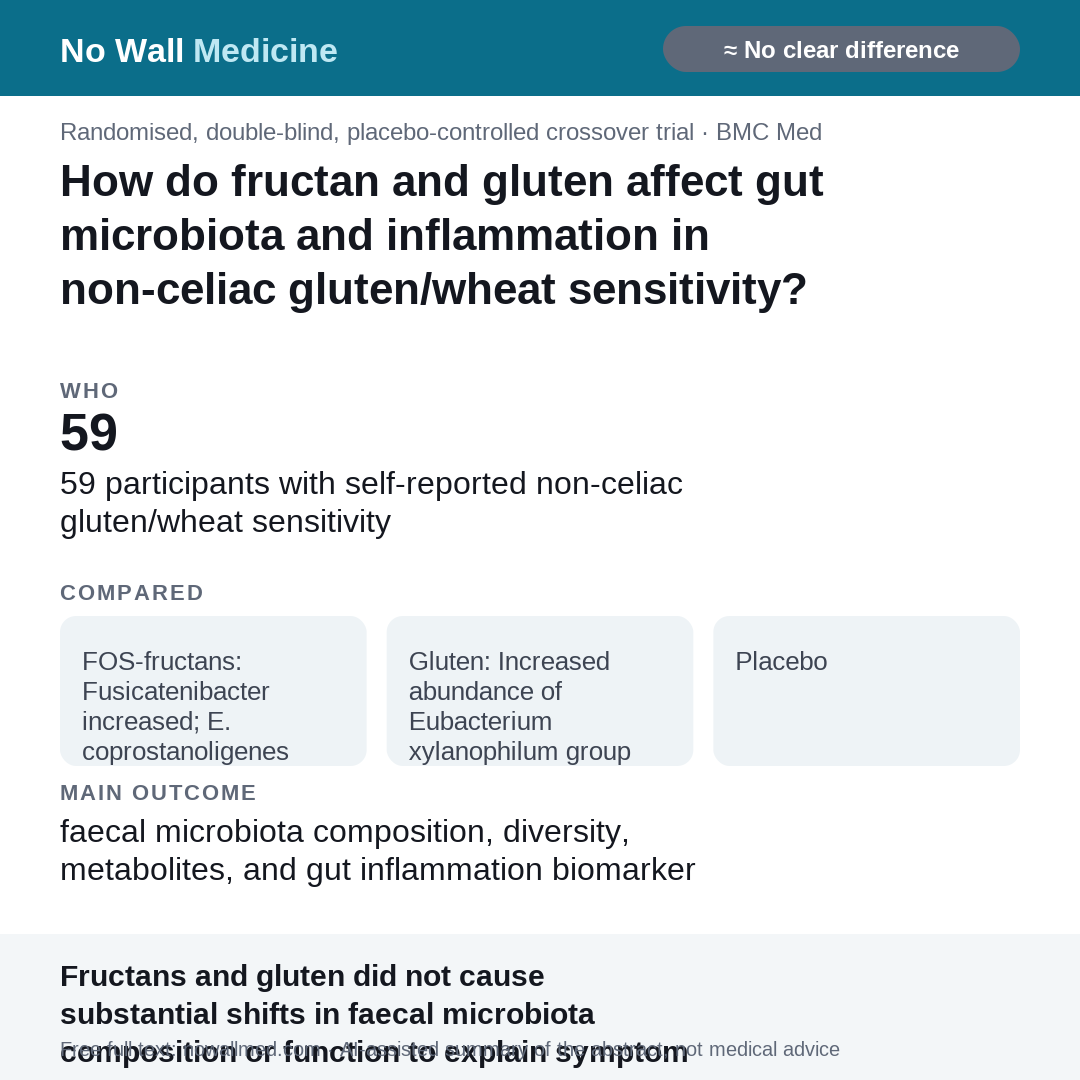
Effects of fructan and gluten on gut microbiota in individuals with self-reported non-celiac gluten/wheat sensitivity-a randomised controlled crossover trial
Randomised, double-blind, placebo-controlled crossover trialNo clear difference
How do fructan and gluten affect gut microbiota and inflammation in non-celiac gluten/wheat sensitivity?
Who
59
59 participants with self-reported non-celiac gluten/wheat sensitivity
Compared
FOS-fructans: Fusicatenibacter increased; E. coprostanoligenes group, Anaerotruncus, and unknown Ruminococcaceae decreased
Gluten: Increased abundance of Eubacterium xylanophilum group
Placebo
Main outcome
faecal microbiota composition, diversity, metabolites, and gut inflammation biomarker
Bottom line: Fructans and gluten did not cause substantial shifts in faecal microbiota composition or function to explain symptom differences.
BMC Med · 2024-09-04Download image
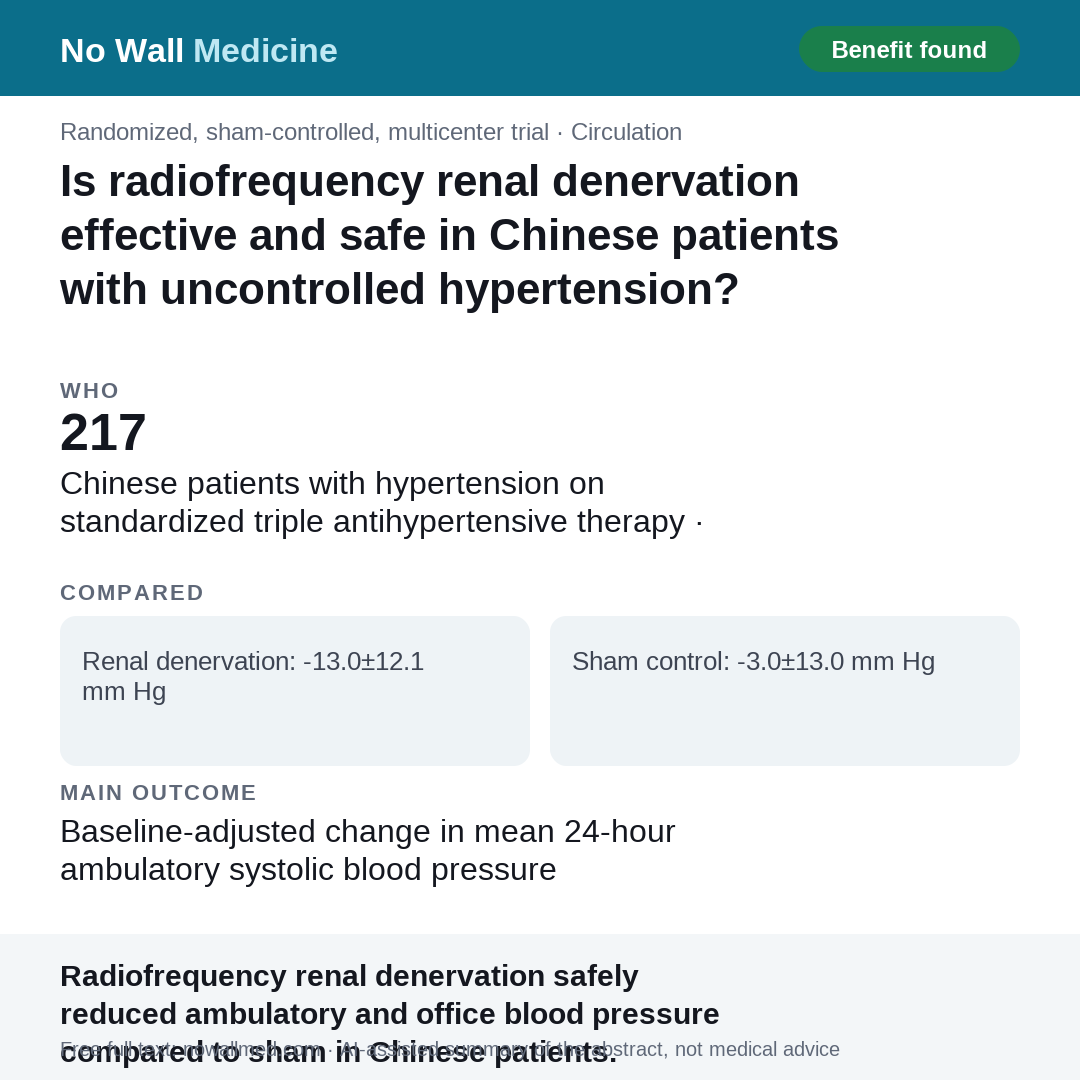
Efficacy and Safety of Catheter-Based Radiofrequency Renal Denervation in Chinese Patients With Uncontrolled Hypertension: The Randomized, Sham-Controlled, Multi-Center Iberis-HTN Trial
Randomized, sham-controlled, multicenter trialBenefit found
Is radiofrequency renal denervation effective and safe in Chinese patients with uncontrolled hypertension?
Who
217
Chinese patients with hypertension on standardized triple antihypertensive therapy · China
Compared
Renal denervation: -13.0±12.1 mm Hg
Sham control: -3.0±13.0 mm Hg
Main outcome
Baseline-adjusted change in mean 24-hour ambulatory systolic blood pressure
Result: -9.4 mm Hg (95% CI, -12.8 to -5.9)
Bottom line: Radiofrequency renal denervation safely reduced ambulatory and office blood pressure compared to sham in Chinese patients.
Circulation · 2024-09-04Download image