Visual abstracts
New randomized trials and meta-analyses from leading journals at a glance: who was studied, what was compared, and what was found. Every paper is free to read in full.
All specialtiesCardiology 4763Oncology 4043Gastroenterology & Hepatology 1903Infectious Disease 3756Neurology 1872Psychiatry & Mental Health 2216Pulmonology 2044Critical Care 1319Endocrinology & Diabetes 2544Pediatrics 2889Surgery 2480Orthopedics & Sports Medicine 917Neurosurgery 525Cardiothoracic & Vascular Surgery 656Plastic & Reconstructive Surgery 574Nephrology 1107Rheumatology 810Hematology 1090Dermatology 611Ophthalmology 532Obstetrics & Gynecology 1645Public & Global Health 1037Radiology & Imaging 619Anesthesiology 958Urology 745ENT (Otolaryngology) 494Emergency Medicine 481Allergy & Immunology 309Geriatrics 972Family Medicine & Primary Care 534Medical Genetics & Genomics 659Pathology & Laboratory Medicine 156Physical Medicine & Rehabilitation 734Palliative Care 421Nutrition 1560Digital Health & AI 2137General Medicine 318
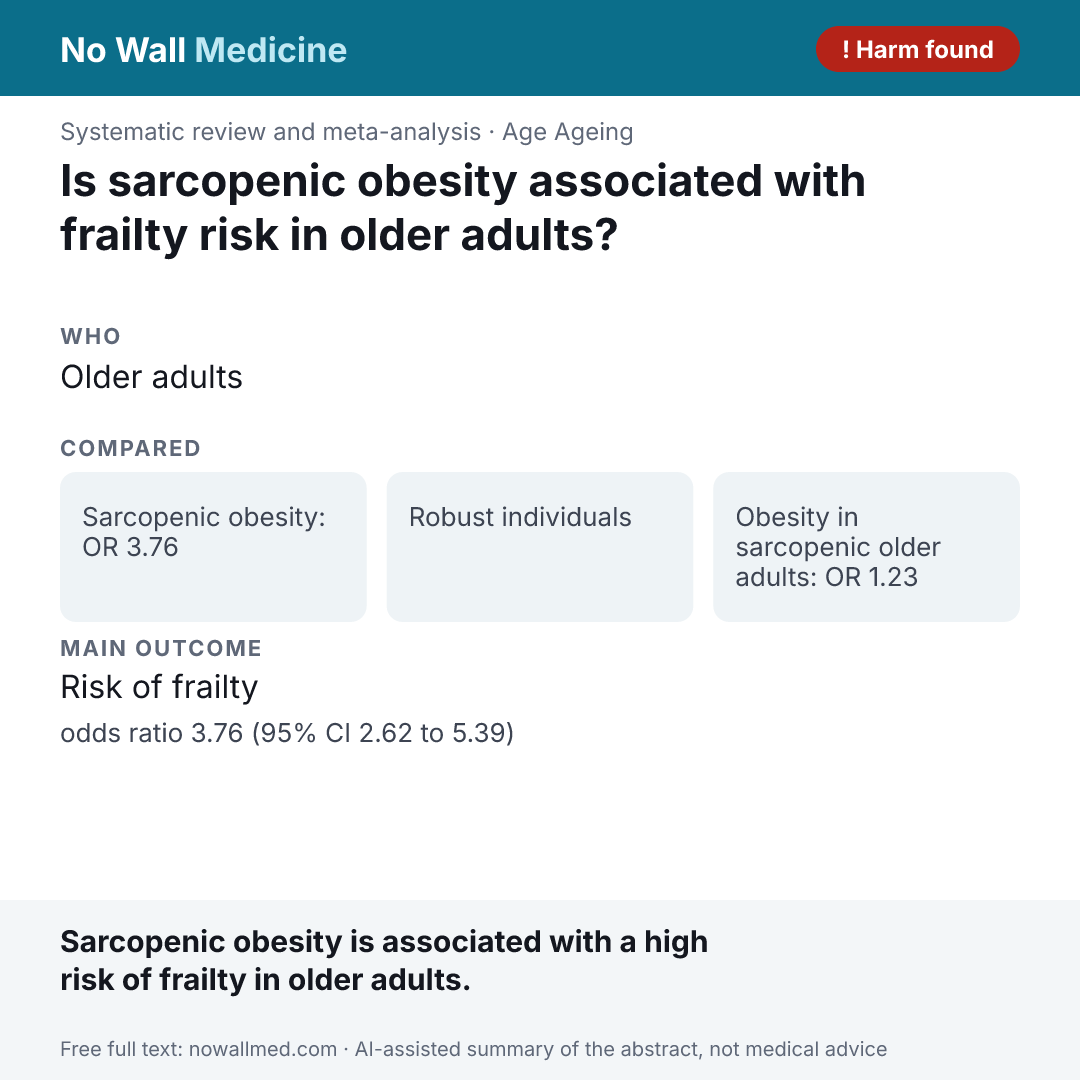
Association between sarcopenic obesity and risk of frailty in older adults: a systematic review and meta-analysis
Systematic review and meta-analysisHarm found
Is sarcopenic obesity associated with frailty risk in older adults?
Who
Older adults
Compared
Sarcopenic obesity: OR 3.76
Robust individuals
Obesity in sarcopenic older adults: OR 1.23
Main outcome
Risk of frailty
Result: odds ratio 3.76 (95% CI 2.62 to 5.39)
Bottom line: Sarcopenic obesity is associated with a high risk of frailty in older adults.
Age Ageing · 2025-01-08 · Save PNG
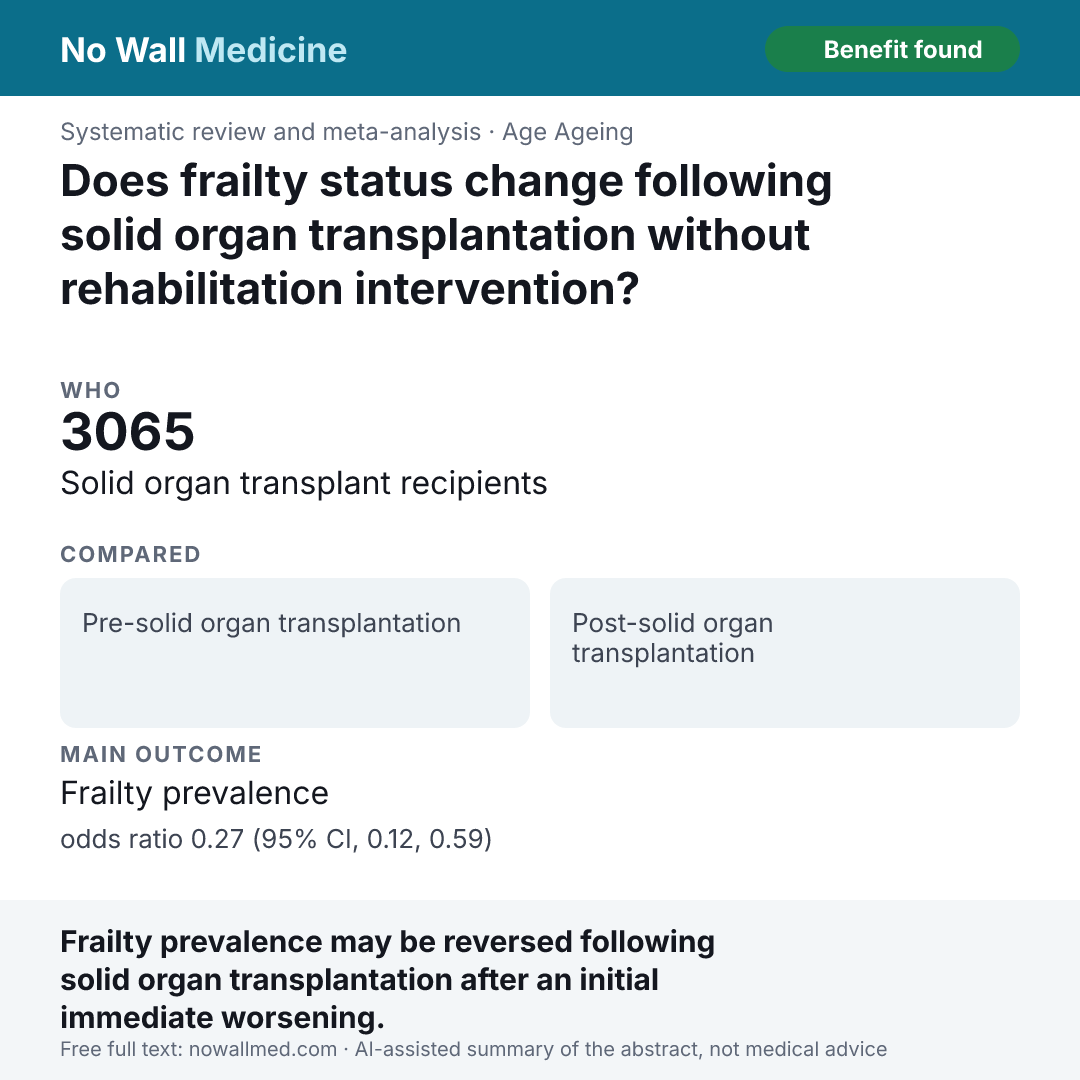
Change in frailty status in the 12 months following solid organ transplantation: a systematic review and meta-analysis
Systematic review and meta-analysisBenefit found
Does frailty status change following solid organ transplantation without rehabilitation intervention?
Who
3065
Solid organ transplant recipients
Compared
Pre-solid organ transplantation
Post-solid organ transplantation
Main outcome
Frailty prevalence
Result: odds ratio 0.27 (95% CI, 0.12, 0.59)
Bottom line: Frailty prevalence may be reversed following solid organ transplantation after an initial immediate worsening.
Age Ageing · 2025-01-08 · Save PNG
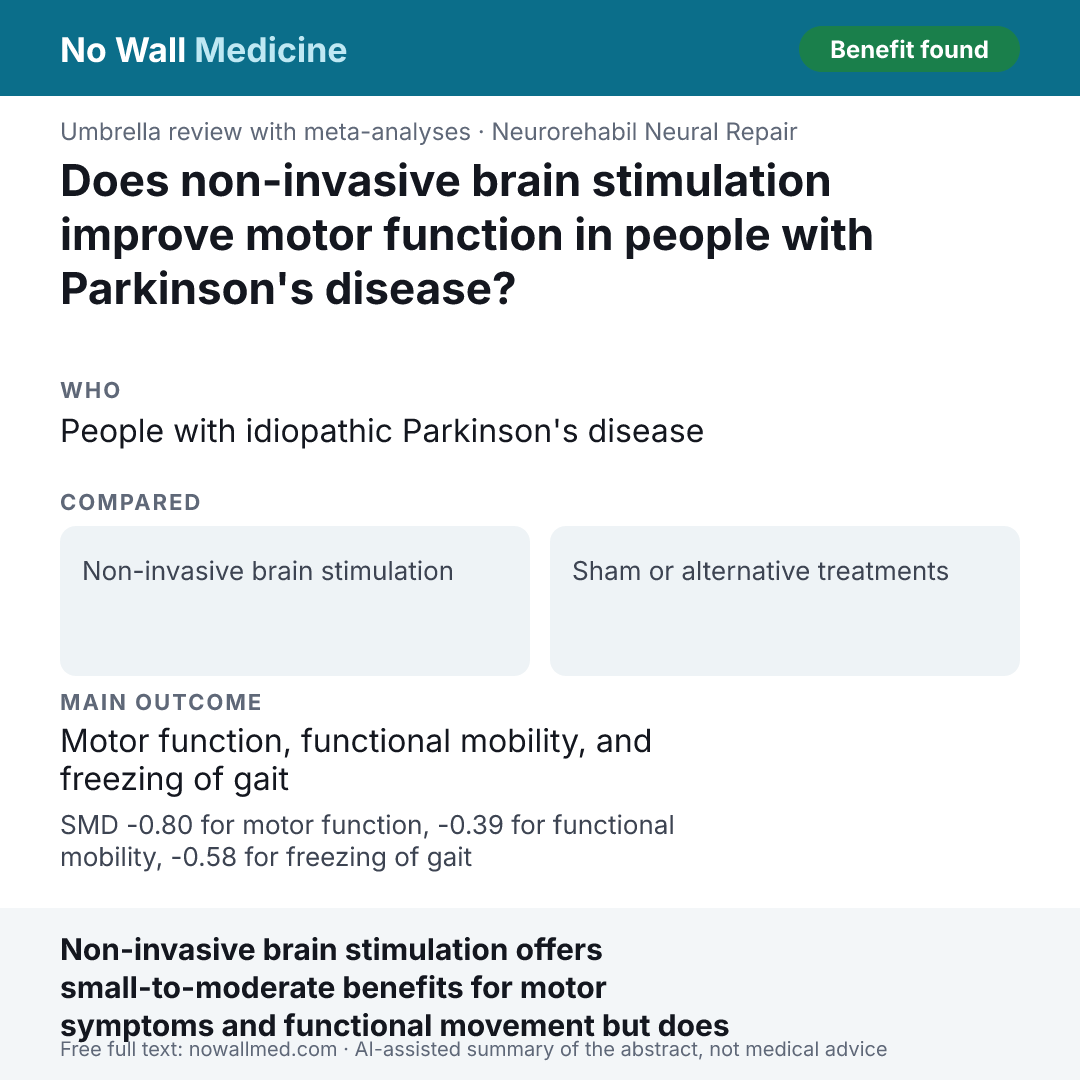
Exploring Non-invasive Brain Stimulation Effects on Physical Outcomes in People With Parkinson's Disease: An Umbrella Evidence Mapping Review With Meta-analyses
Umbrella review with meta-analysesBenefit found
Does non-invasive brain stimulation improve motor function in people with Parkinson's disease?
Who
People with idiopathic Parkinson's disease
Compared
Non-invasive brain stimulation
Sham or alternative treatments
Main outcome
Motor function, functional mobility, and freezing of gait
Result: SMD -0.80 for motor function, -0.39 for functional mobility, -0.58 for freezing of gait
Bottom line: Non-invasive brain stimulation offers small-to-moderate benefits for motor symptoms and functional movement but does not significantly impact balance.
Limitation: The included reviews were rated as moderate quality
Neurorehabil Neural Repair · 2025-01-08 · Save PNG
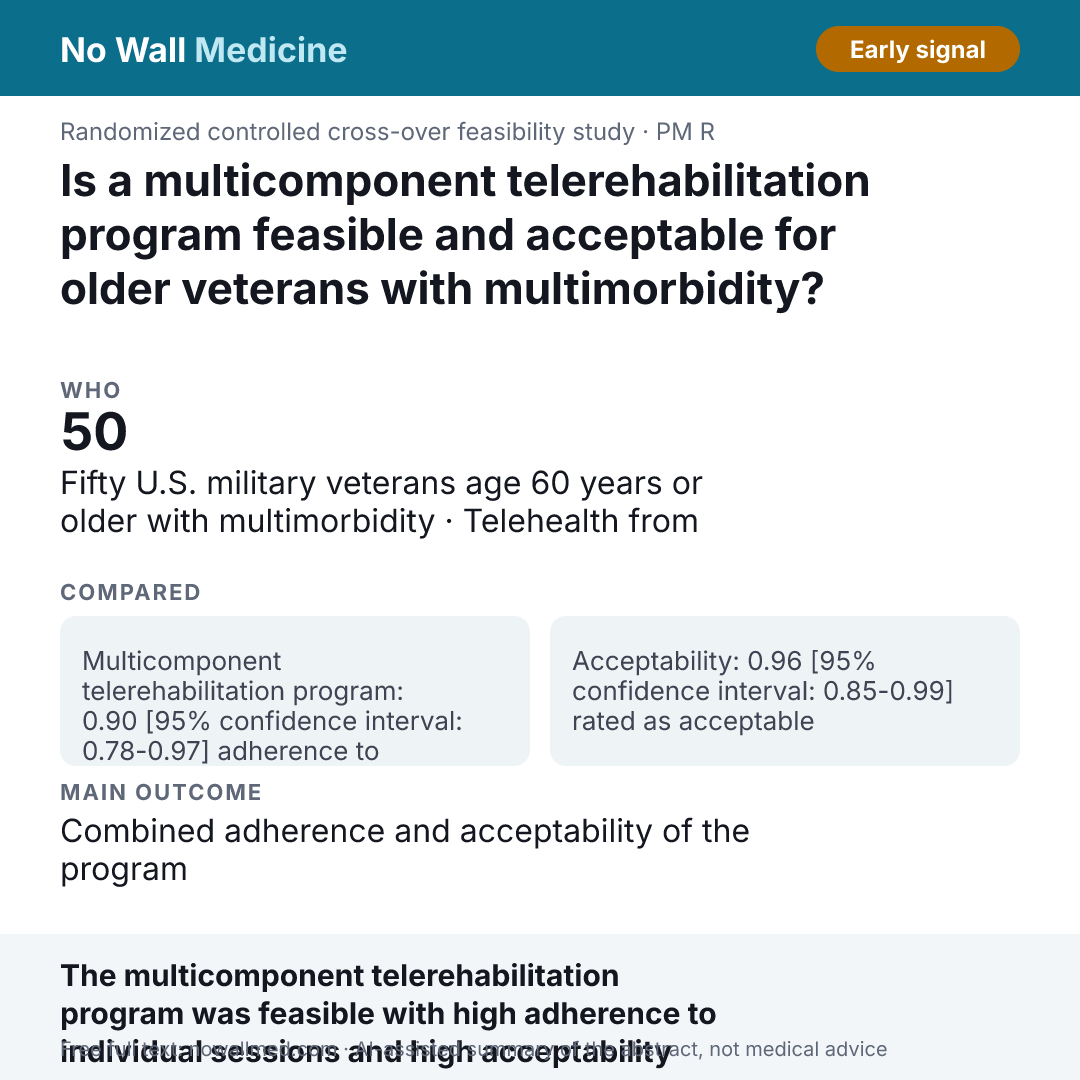
Multicomponent telerehabilitation program for veterans with multimorbidity: A randomized controlled feasibility study
Randomized controlled cross-over feasibility studyEarly signal
Is a multicomponent telerehabilitation program feasible and acceptable for older veterans with multimorbidity?
Who
50
Fifty U.S. military veterans age 60 years or older with multimorbidity · Telehealth from Veterans Affairs Medical Center to homes
Compared
Multicomponent telerehabilitation program: 0.90 [95% confidence interval: 0.78-0.97] adherence to individual sessions
Acceptability: 0.96 [95% confidence interval: 0.85-0.99] rated as acceptable
Main outcome
Combined adherence and acceptability of the program
Bottom line: The multicomponent telerehabilitation program was feasible with high adherence to individual sessions and high acceptability among older veterans.
PM R · 2025-01-08 · Save PNG
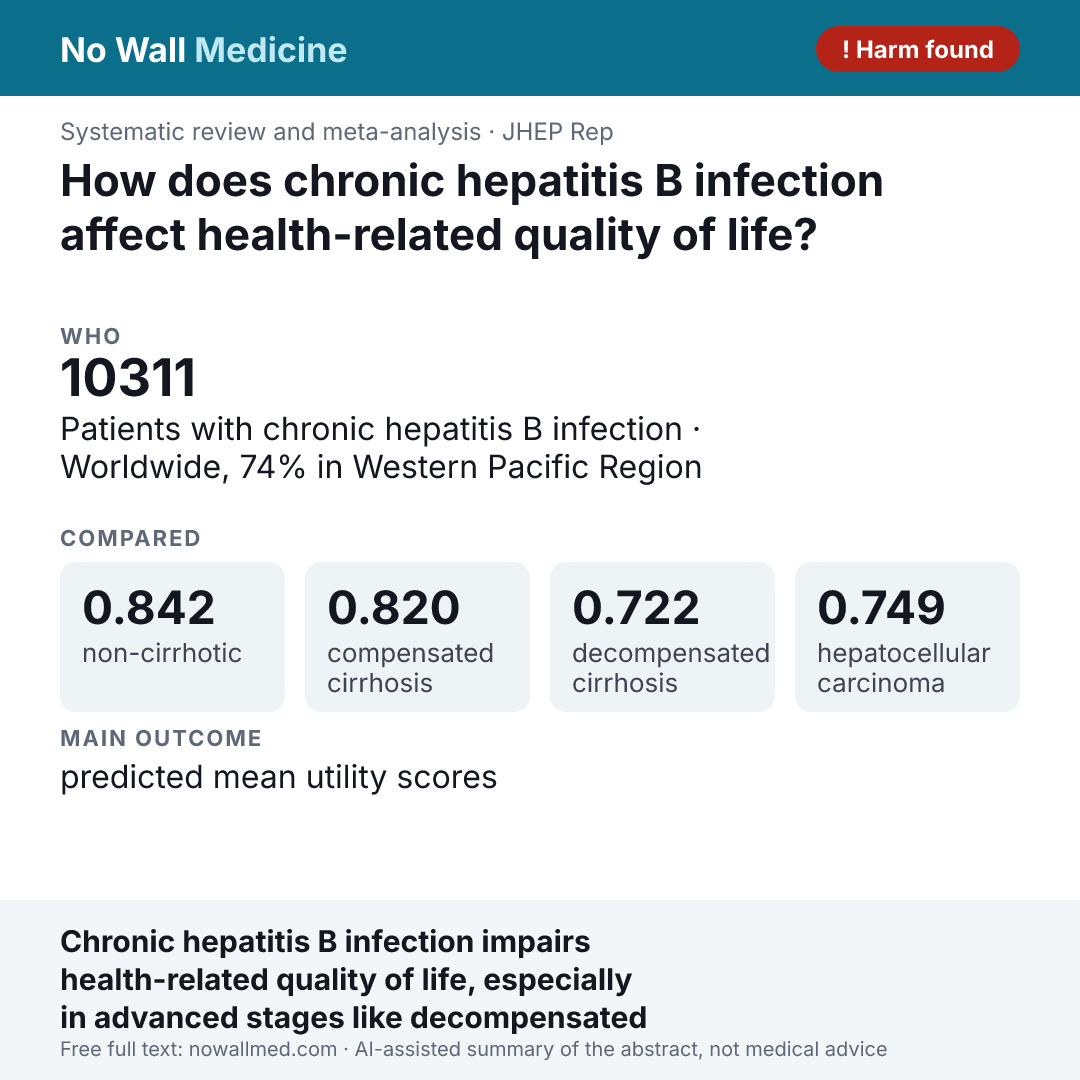
Quality of life in patients with HBV infection: A systematic review and meta-analysis
Systematic review and meta-analysisHarm found
How does chronic hepatitis B infection affect health-related quality of life?
Who
10311
Patients with chronic hepatitis B infection · Worldwide, 74% in Western Pacific Region
Compared
0.842non-cirrhotic
0.820compensated cirrhosis
0.722decompensated cirrhosis
0.749hepatocellular carcinoma
Main outcome
predicted mean utility scores
Bottom line: Chronic hepatitis B infection impairs health-related quality of life, especially in advanced stages like decompensated cirrhosis and hepatocellular carcinoma.
Limitation: Data are lacking in high-burden, low-income settings and regarding treatment effects.
JHEP Rep · 2025-01-08 · Save PNG
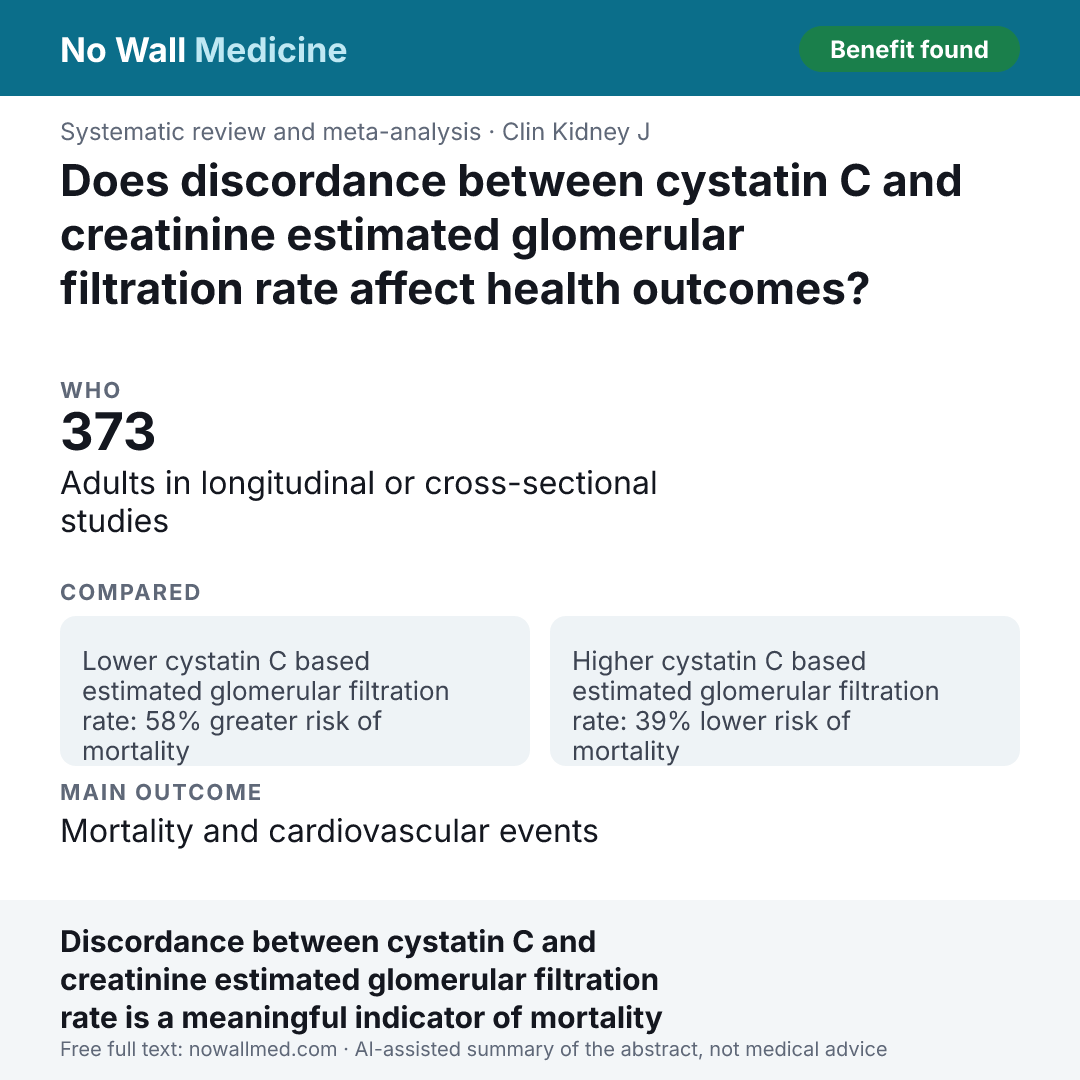
Discordance between cystatin C-based and creatinine-based estimated glomerular filtration rate and health outcomes in adults: a systematic review and meta-analysis
Systematic review and meta-analysisBenefit found
Does discordance between cystatin C and creatinine estimated glomerular filtration rate affect health outcomes?
Who
373
Adults in longitudinal or cross-sectional studies
Compared
Lower cystatin C based estimated glomerular filtration rate: 58% greater risk of mortality
Higher cystatin C based estimated glomerular filtration rate: 39% lower risk of mortality
Main outcome
Mortality and cardiovascular events
Result: hazard ratio 1.58 (95% CI 1.42, 1.76) for mortality
Bottom line: Discordance between cystatin C and creatinine estimated glomerular filtration rate is a meaningful indicator of mortality and cardiovascular risk.
Limitation: Lack of consensus on discordance cut-off values and mixture of equations used.
Clin Kidney J · 2025-01-08 · Save PNG
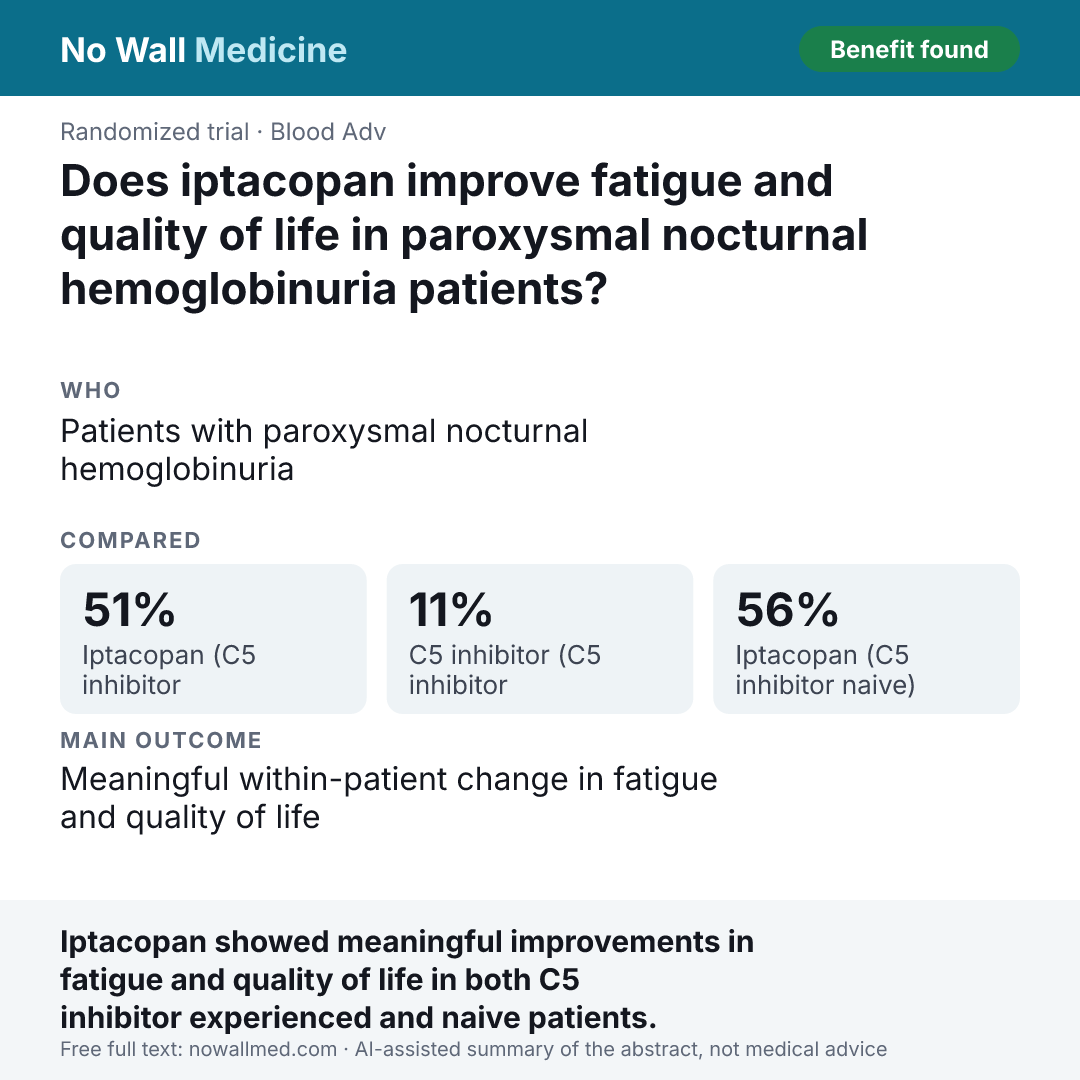
Patient-reported improvements in paroxysmal nocturnal hemoglobinuria treated with iptacopan from 2 phase 3 studies
Randomized trialBenefit found
Does iptacopan improve fatigue and quality of life in paroxysmal nocturnal hemoglobinuria patients?
Who
Patients with paroxysmal nocturnal hemoglobinuria
Compared
51%Iptacopan (C5 inhibitor experienced) (FACIT-Fatigue MWPC)
11%C5 inhibitor (C5 inhibitor experienced) (FACIT-Fatigue MWPC)
56%Iptacopan (C5 inhibitor naive) (FACIT-Fatigue MWPC)
Main outcome
Meaningful within-patient change in fatigue and quality of life
Bottom line: Iptacopan showed meaningful improvements in fatigue and quality of life in both C5 inhibitor experienced and naive patients.
Blood Adv · 2025-01-08 · Save PNG
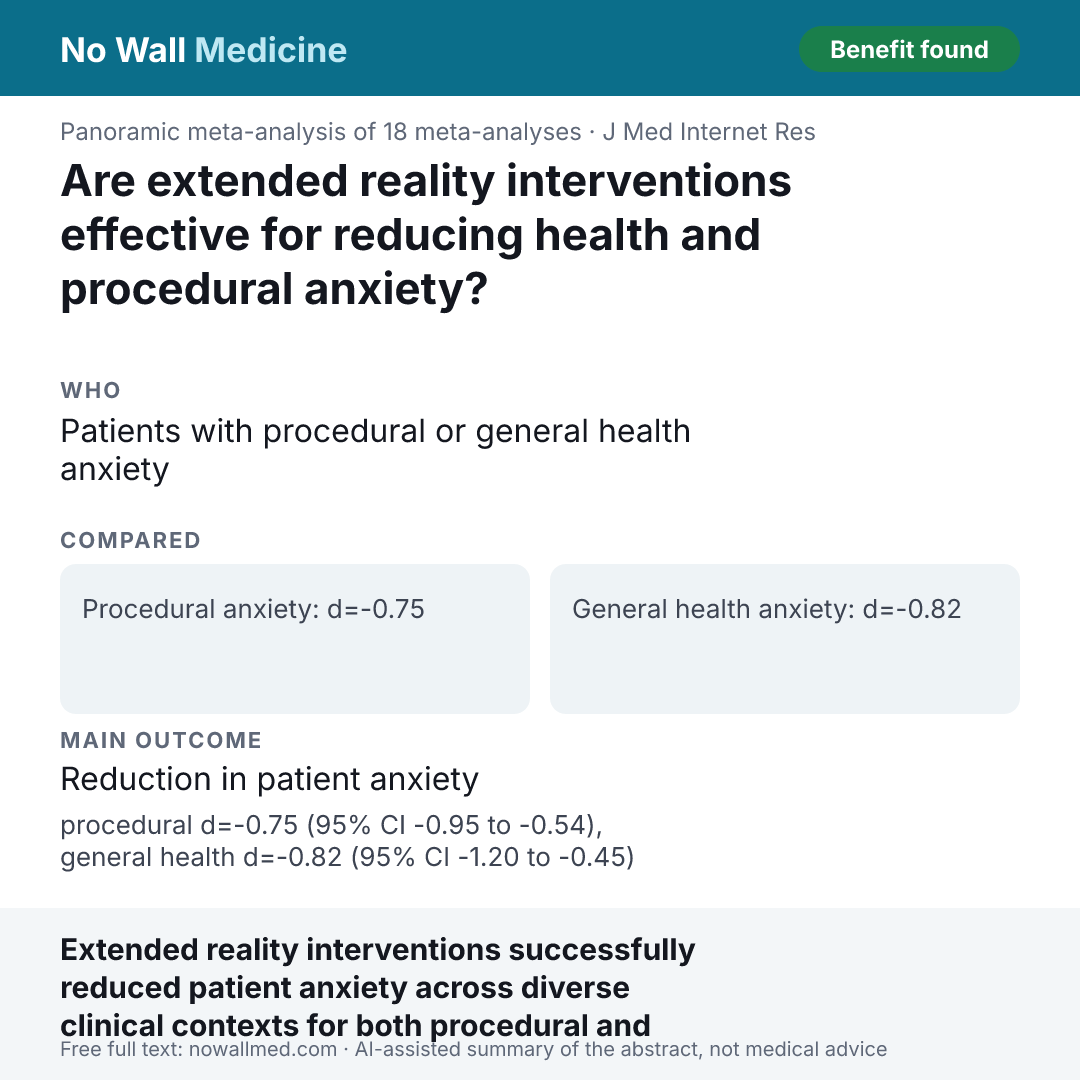
Extended Reality Interventions for Health and Procedural Anxiety: Panoramic Meta-Analysis Based on Overviews of Reviews
Panoramic meta-analysis of 18 meta-analysesBenefit found
Are extended reality interventions effective for reducing health and procedural anxiety?
Who
Patients with procedural or general health anxiety
Compared
Procedural anxiety: d=-0.75
General health anxiety: d=-0.82
Main outcome
Reduction in patient anxiety
Result: procedural d=-0.75 (95% CI -0.95 to -0.54), general health d=-0.82 (95% CI -1.20 to -0.45)
Bottom line: Extended reality interventions successfully reduced patient anxiety across diverse clinical contexts for both procedural and general health indications.
Limitation: Existing evidence is limited in methodological quality and generalizability remains uncertain.
J Med Internet Res · 2025-01-08 · Save PNG
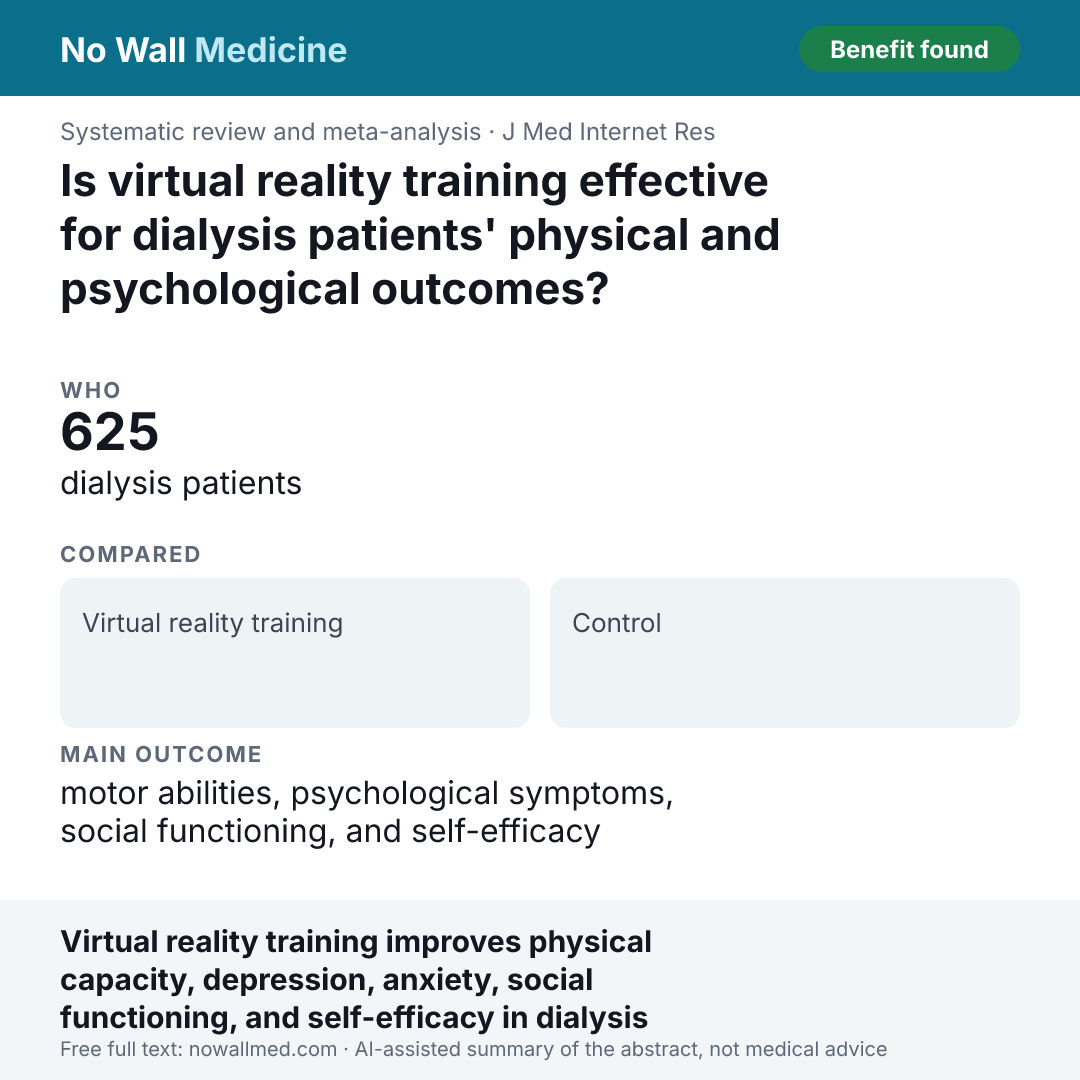
Effectiveness of Virtual Reality Training in Improving Outcomes for Dialysis Patients: Systematic Review and Meta-Analysis
Systematic review and meta-analysisBenefit found
Is virtual reality training effective for dialysis patients' physical and psychological outcomes?
Who
625
dialysis patients
Compared
Virtual reality training
Control
Main outcome
motor abilities, psychological symptoms, social functioning, and self-efficacy
Bottom line: Virtual reality training improves physical capacity, depression, anxiety, social functioning, and self-efficacy in dialysis patients.
Limitation: Further studies with larger sample sizes and more refined experimental designs are recommended.
J Med Internet Res · 2025-01-08 · Save PNG
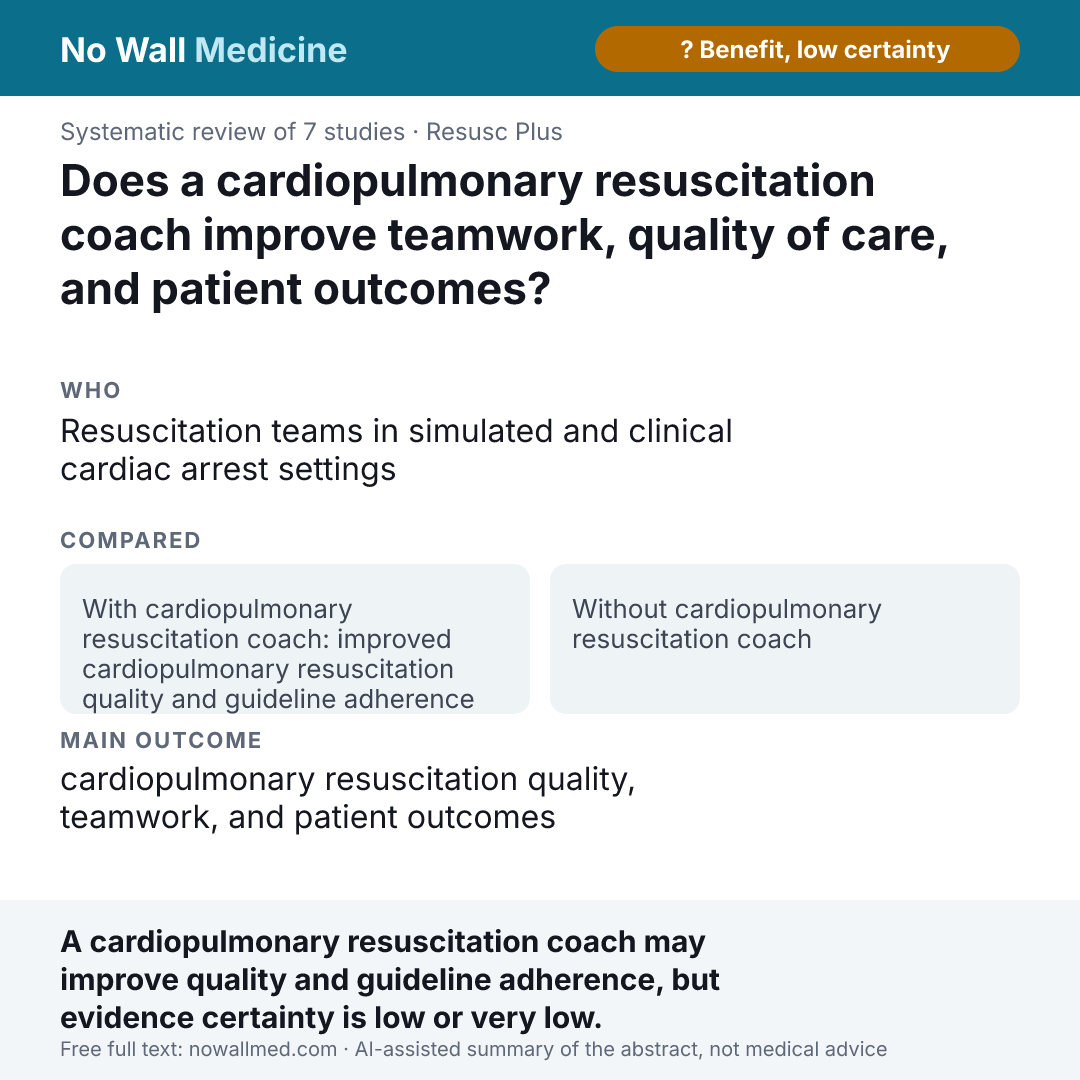
Cardiopulmonary resuscitation coaching for resuscitation teams: A systematic review
Systematic review of 7 studiesBenefit, low certainty
Does a cardiopulmonary resuscitation coach improve teamwork, quality of care, and patient outcomes?
Who
Resuscitation teams in simulated and clinical cardiac arrest settings
Compared
With cardiopulmonary resuscitation coach: improved cardiopulmonary resuscitation quality and guideline adherence
Without cardiopulmonary resuscitation coach
Main outcome
cardiopulmonary resuscitation quality, teamwork, and patient outcomes
Bottom line: A cardiopulmonary resuscitation coach may improve quality and guideline adherence, but evidence certainty is low or very low.
Limitation: The certainty of evidence across outcomes was low or very low.
Resusc Plus · 2025-01-08 · Save PNG
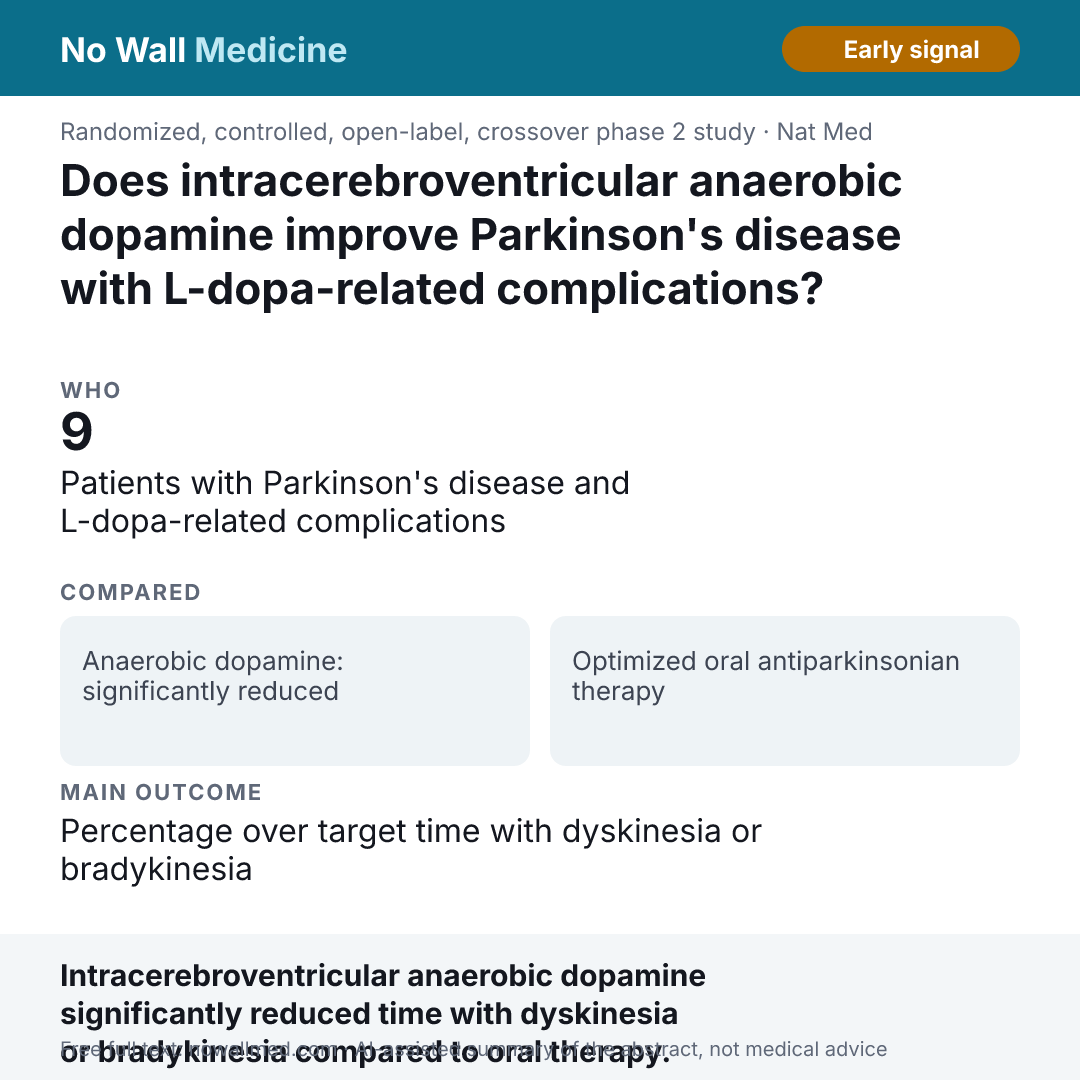
Intracerebroventricular anaerobic dopamine in Parkinson's disease with L-dopa-related complications: a phase 1/2 randomized-controlled trial
Randomized, controlled, open-label, crossover phase 2 studyEarly signal
Does intracerebroventricular anaerobic dopamine improve Parkinson's disease with L-dopa-related complications?
Who
9
Patients with Parkinson's disease and L-dopa-related complications
Compared
Anaerobic dopamine: significantly reduced
Optimized oral antiparkinsonian therapy
Main outcome
Percentage over target time with dyskinesia or bradykinesia
Result: Hedge g -0.62 (95% confidence interval: -1.43, -0.08)
Bottom line: Intracerebroventricular anaerobic dopamine significantly reduced time with dyskinesia or bradykinesia compared to oral therapy.
Nat Med · 2025-01-07 · Save PNG
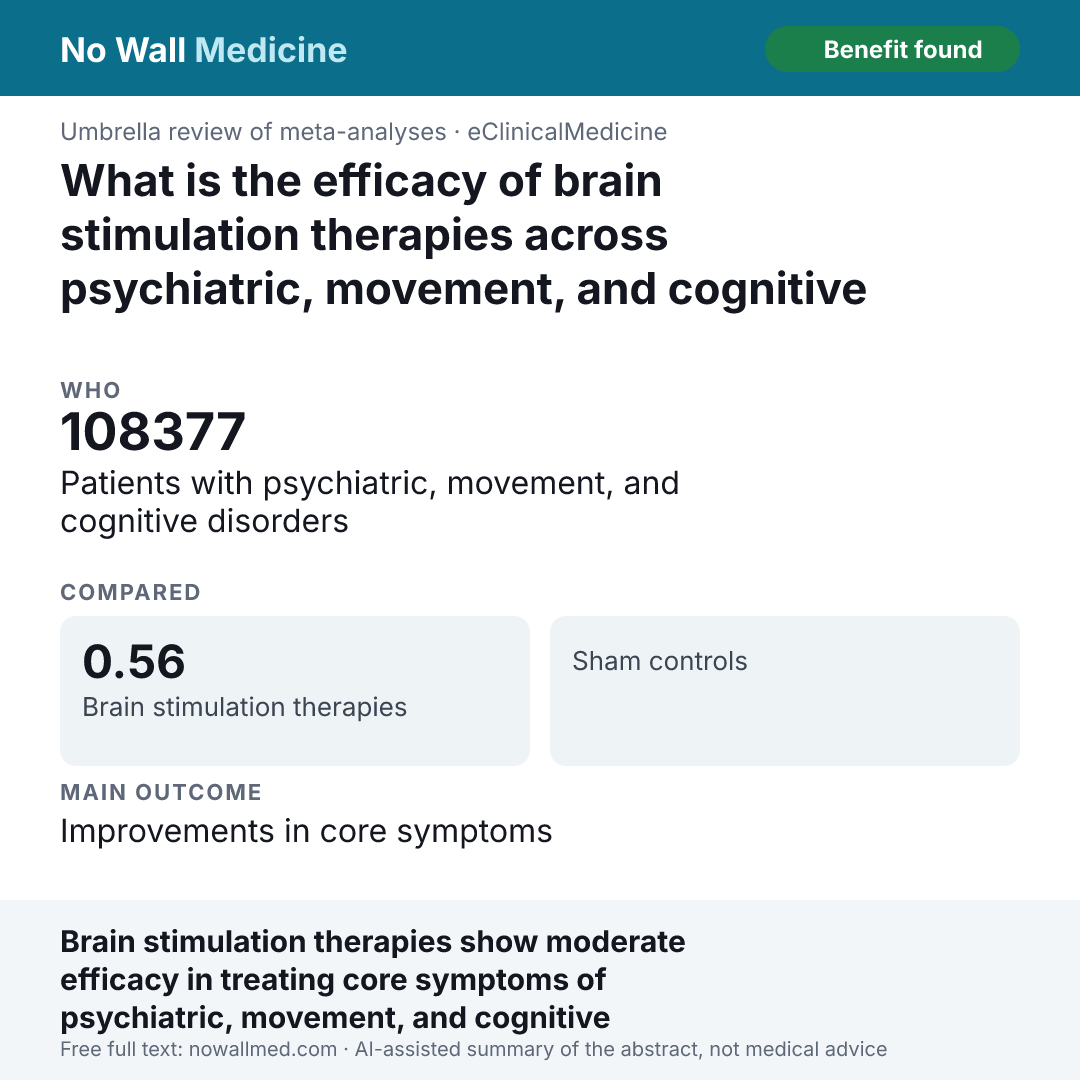
Efficacy of brain stimulation therapies across psychiatric, movement, and cognitive disorders: an umbrella review synthesizing meta-analyses of randomized controlled trials
Umbrella review of meta-analysesBenefit found
What is the efficacy of brain stimulation therapies across psychiatric, movement, and cognitive disorders?
Who
108377
Patients with psychiatric, movement, and cognitive disorders
Compared
0.56Brain stimulation therapies (95% CI: 0.49, 0.64)
Sham controls
Main outcome
Improvements in core symptoms
Result: standardized mean difference 0.56 (95% CI: 0.49, 0.64)
Bottom line: Brain stimulation therapies show moderate efficacy in treating core symptoms of psychiatric, movement, and cognitive disorders.
Funded by: Anhui Natural Science Foundation, Anhui Province, National Natural Science Foundation of China
eClinicalMedicine · 2025-01-07 · Save PNG
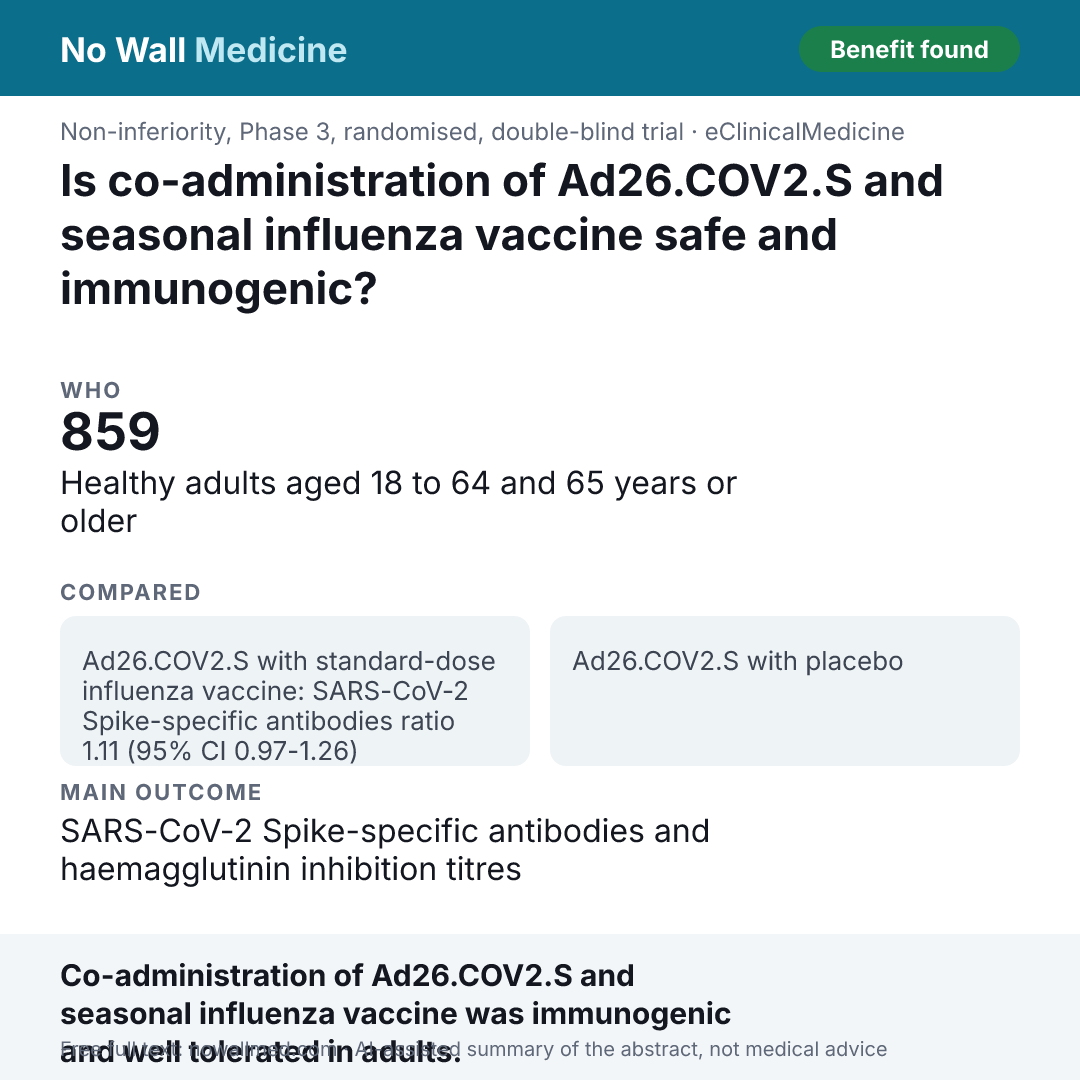
Safety, reactogenicity, and immunogenicity of Ad26.COV2.S co-administered with a quadrivalent standard-dose or high-dose seasonal influenza vaccine: a non-inferiority randomised controlled trial
Non-inferiority, Phase 3, randomised, double-blind trialBenefit found
Is co-administration of Ad26.COV2.S and seasonal influenza vaccine safe and immunogenic?
Who
859
Healthy adults aged 18 to 64 and 65 years or older
Compared
Ad26.COV2.S with standard-dose influenza vaccine: SARS-CoV-2 Spike-specific antibodies ratio 1.11 (95% CI 0.97-1.26)
Ad26.COV2.S with placebo
Main outcome
SARS-CoV-2 Spike-specific antibodies and haemagglutinin inhibition titres
Result: ratio 1.11 (95% CI 0.97-1.26)
Bottom line: Co-administration of Ad26.COV2.S and seasonal influenza vaccine was immunogenic and well tolerated in adults.
Funded by: Janssen Vaccines & Prevention BV and Biomedical Advanced Research and Development Authority
eClinicalMedicine · 2025-01-07 · Save PNG
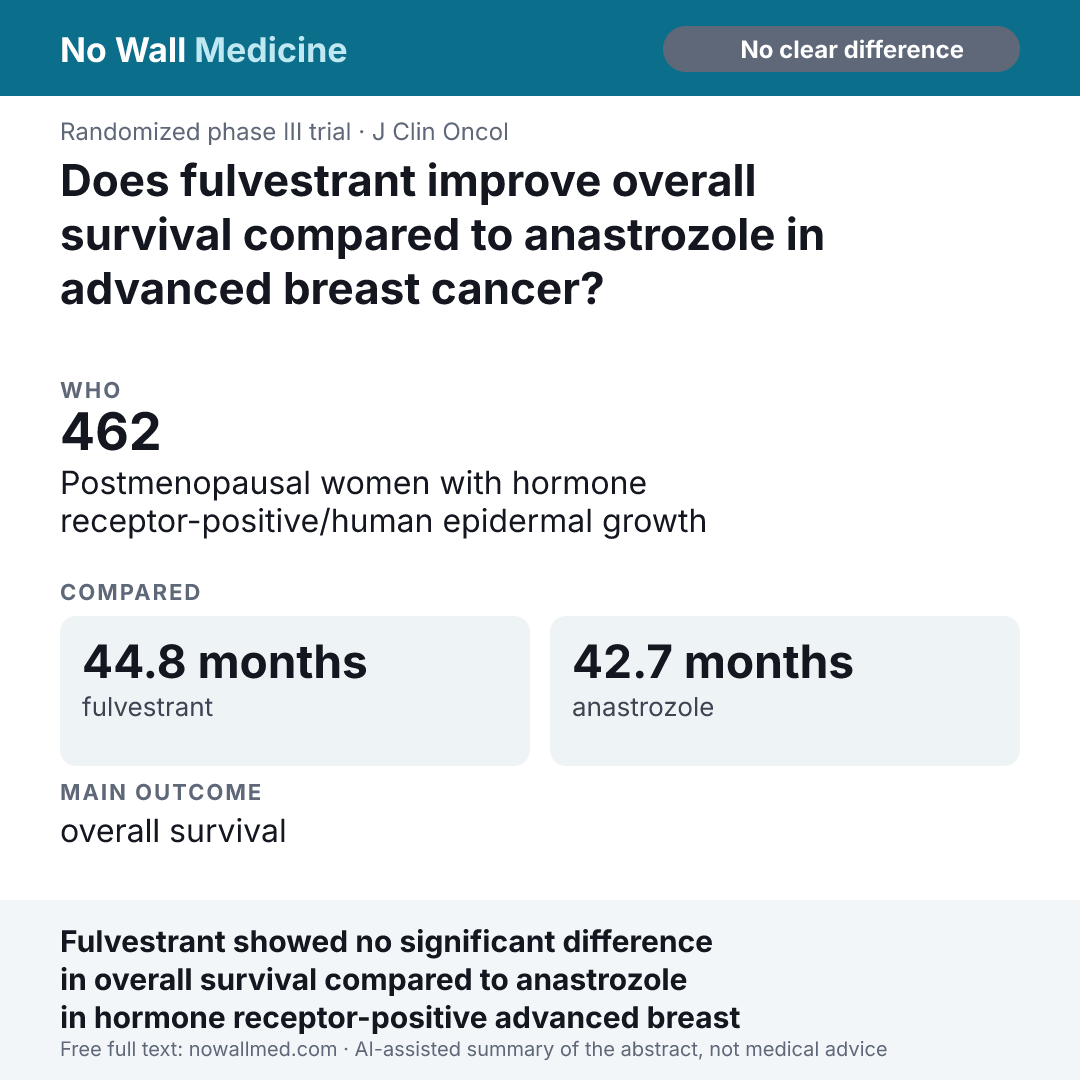
Fulvestrant Versus Anastrozole in Endocrine Therapy-Naïve Women With Hormone Receptor-Positive Advanced Breast Cancer: Final Overall Survival in the Phase III FALCON Trial
Randomized phase III trialNo clear difference
Does fulvestrant improve overall survival compared to anastrozole in advanced breast cancer?
Who
462
Postmenopausal women with hormone receptor-positive/human epidermal growth factor receptor 2-negative advanced breast cancer
Compared
44.8 monthsfulvestrant
42.7 monthsanastrozole
Main outcome
overall survival
Result: hazard ratio 0.97 (95% CI 0.77 to 1.21)
Bottom line: Fulvestrant showed no significant difference in overall survival compared to anastrozole in hormone receptor-positive advanced breast cancer.
J Clin Oncol · 2025-01-07 · Save PNG
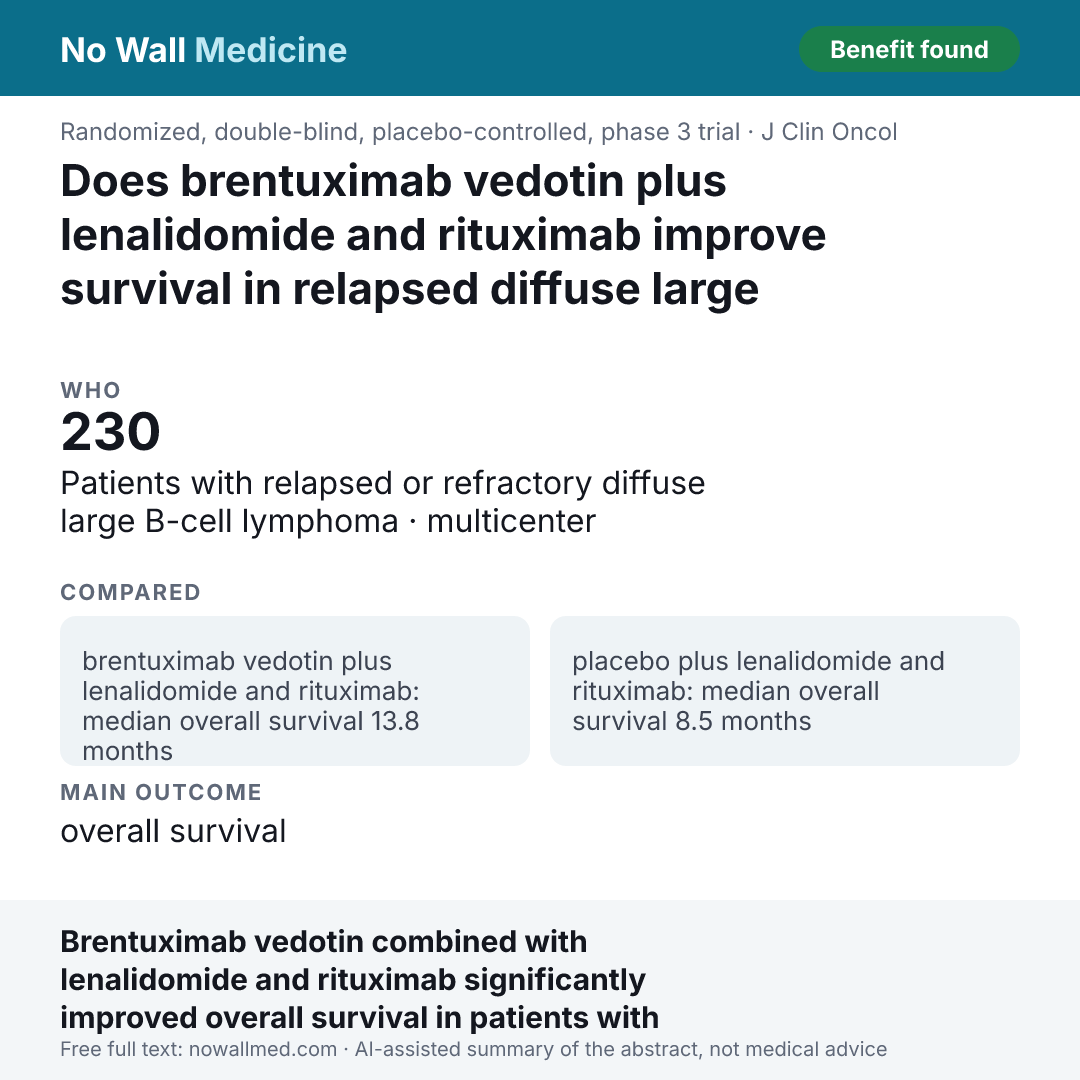
Brentuximab Vedotin Combination for Relapsed Diffuse Large B-Cell Lymphoma
Randomized, double-blind, placebo-controlled, phase 3 trialBenefit found
Does brentuximab vedotin plus lenalidomide and rituximab improve survival in relapsed diffuse large B-cell lymphoma?
Who
230
Patients with relapsed or refractory diffuse large B-cell lymphoma · multicenter
Compared
brentuximab vedotin plus lenalidomide and rituximab: median overall survival 13.8 months
placebo plus lenalidomide and rituximab: median overall survival 8.5 months
Main outcome
overall survival
Result: hazard ratio 0.63 (95% CI 0.45 to 0.89)
Bottom line: Brentuximab vedotin combined with lenalidomide and rituximab significantly improved overall survival in patients with relapsed or refractory diffuse large B-cell lymphoma.
J Clin Oncol · 2025-01-07 · Save PNG
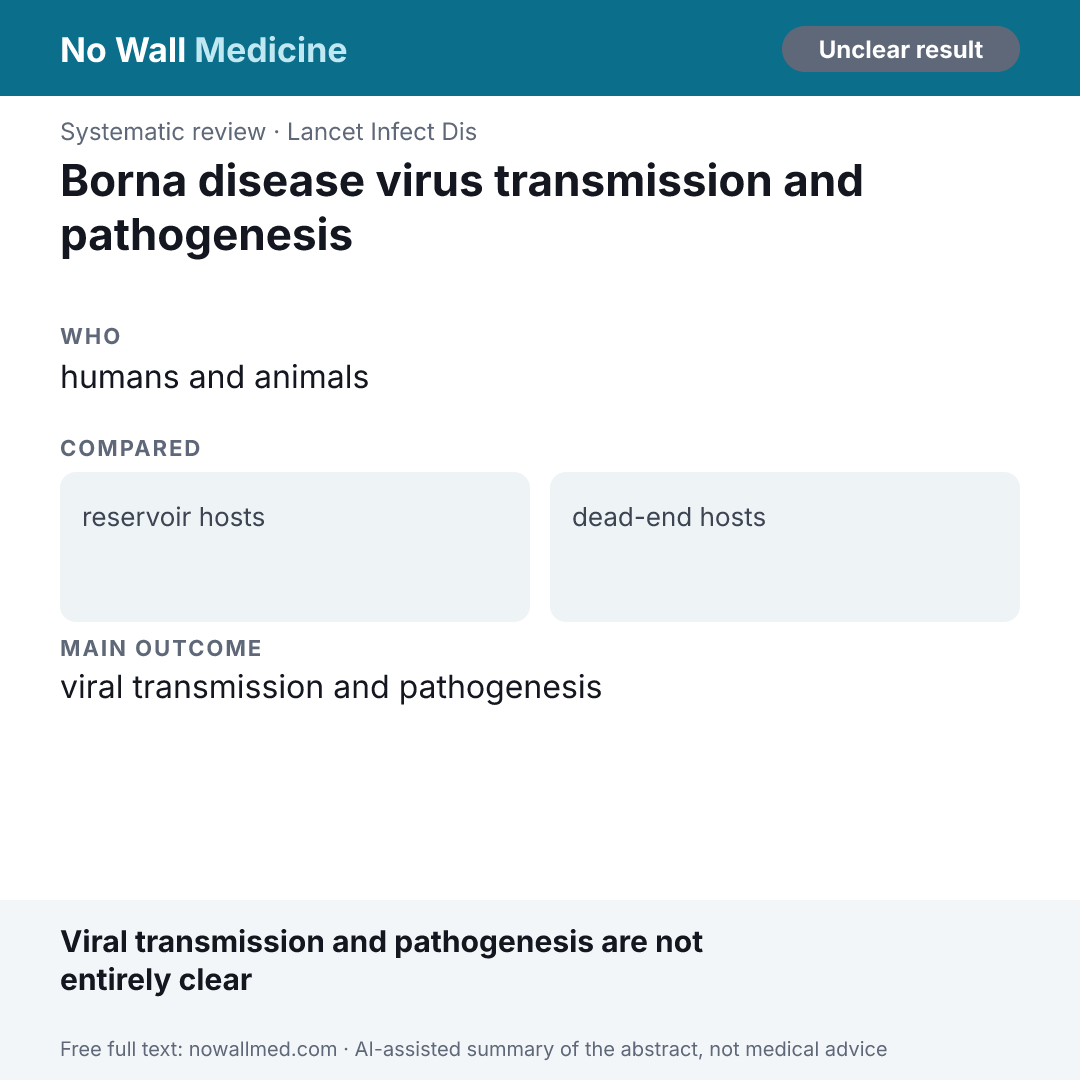
Neuropathology, pathomechanism, and transmission in zoonotic Borna disease virus 1 infection: a systematic review
Systematic reviewUnclear result
Borna disease virus transmission and pathogenesis
Who
humans and animals
Compared
reservoir hosts
dead-end hosts
Main outcome
viral transmission and pathogenesis
Bottom line: Viral transmission and pathogenesis are not entirely clear
Lancet Infect Dis · 2025-01-07 · Save PNG
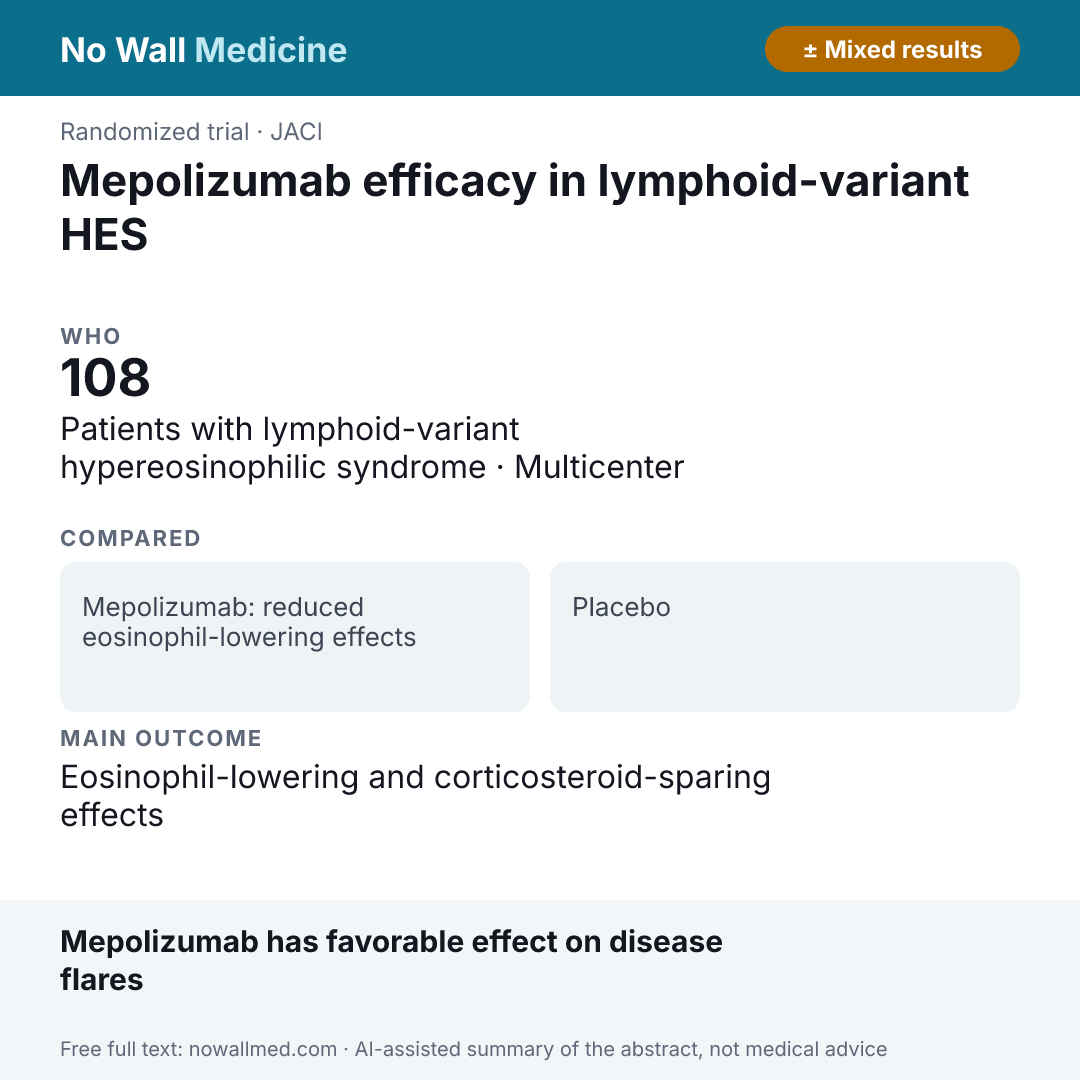
Mepolizumab in patients with lymphoid-variant hypereosinophilic syndrome: A multicenter prospective study
Randomized trialMixed results
Mepolizumab efficacy in lymphoid-variant HES
Who
108
Patients with lymphoid-variant hypereosinophilic syndrome · Multicenter
Compared
Mepolizumab: reduced eosinophil-lowering effects
Placebo
Main outcome
Eosinophil-lowering and corticosteroid-sparing effects
Bottom line: Mepolizumab has favorable effect on disease flares
JACI · 2025-01-07 · Save PNG
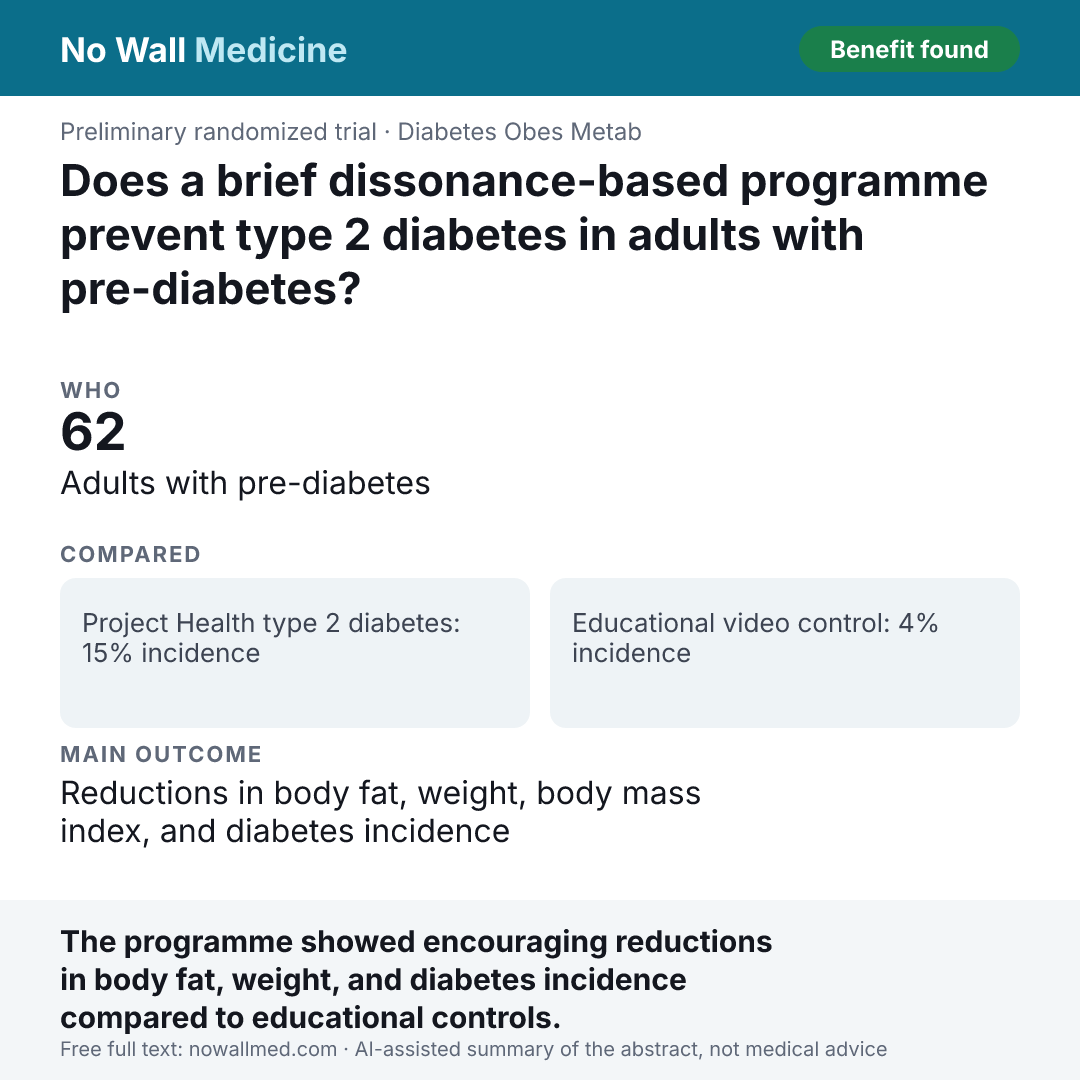
A preliminary randomized trial of a brief dissonance-based type 2 diabetes prevention programme for adults with pre-diabetes
Preliminary randomized trialBenefit found
Does a brief dissonance-based programme prevent type 2 diabetes in adults with pre-diabetes?
Who
62
Adults with pre-diabetes
Compared
Project Health type 2 diabetes: 15% incidence
Educational video control: 4% incidence
Main outcome
Reductions in body fat, weight, body mass index, and diabetes incidence
Result: odds ratio = 4.52, p = 0.096
Bottom line: The programme showed encouraging reductions in body fat, weight, and diabetes incidence compared to educational controls.
Diabetes Obes Metab · 2025-01-07 · Save PNG
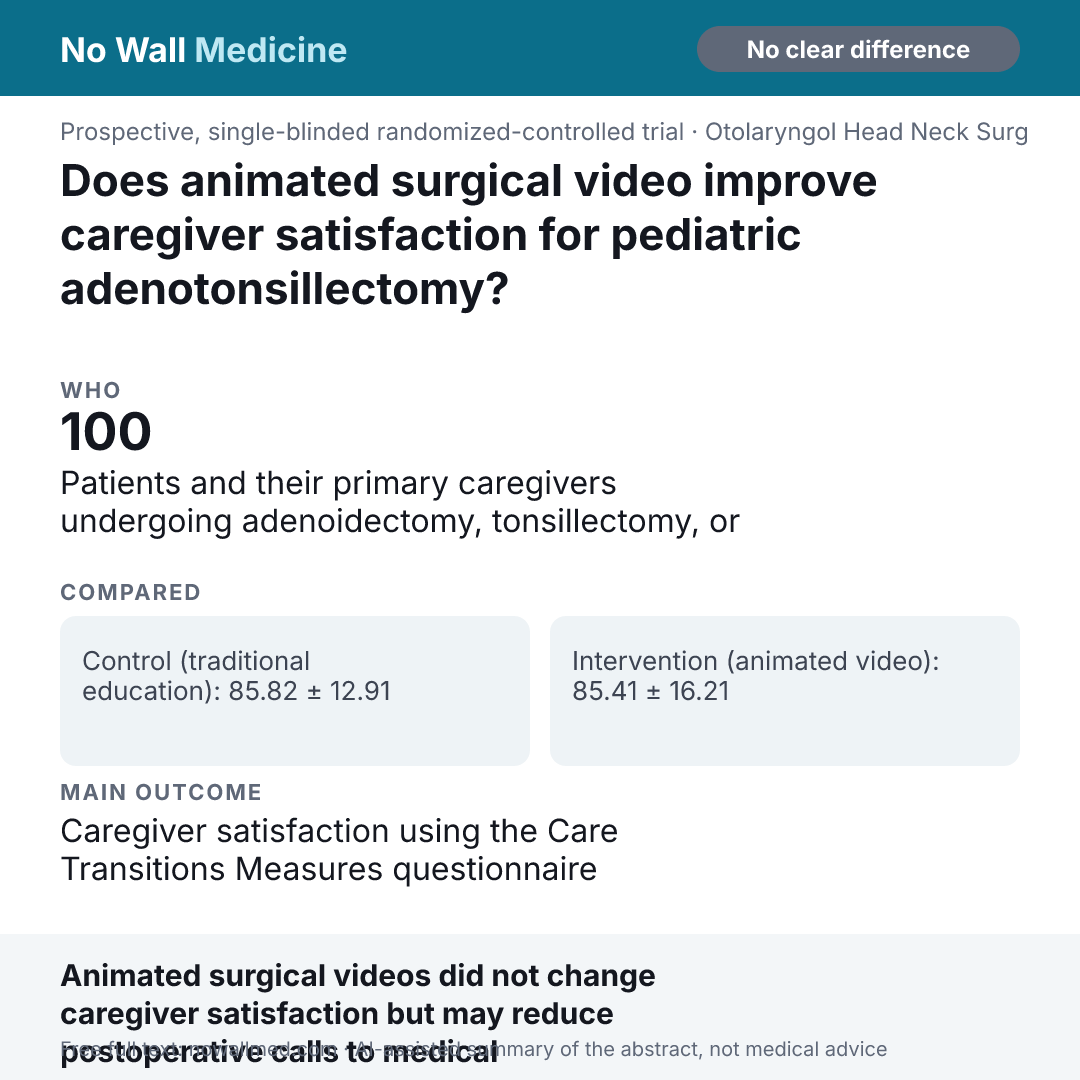
Perioperative Caregiver Education Using Animated Videos for Pediatric Tonsillectomy: A Randomized Controlled Study
Prospective, single-blinded randomized-controlled trialNo clear difference
Does animated surgical video improve caregiver satisfaction for pediatric adenotonsillectomy?
Who
100
Patients and their primary caregivers undergoing adenoidectomy, tonsillectomy, or both · Tertiary care academic pediatric hospital
Compared
Control (traditional education): 85.82 ± 12.91
Intervention (animated video): 85.41 ± 16.21
Main outcome
Caregiver satisfaction using the Care Transitions Measures questionnaire
Bottom line: Animated surgical videos did not change caregiver satisfaction but may reduce postoperative calls to medical professionals.
Otolaryngol Head Neck Surg · 2025-01-07 · Save PNG
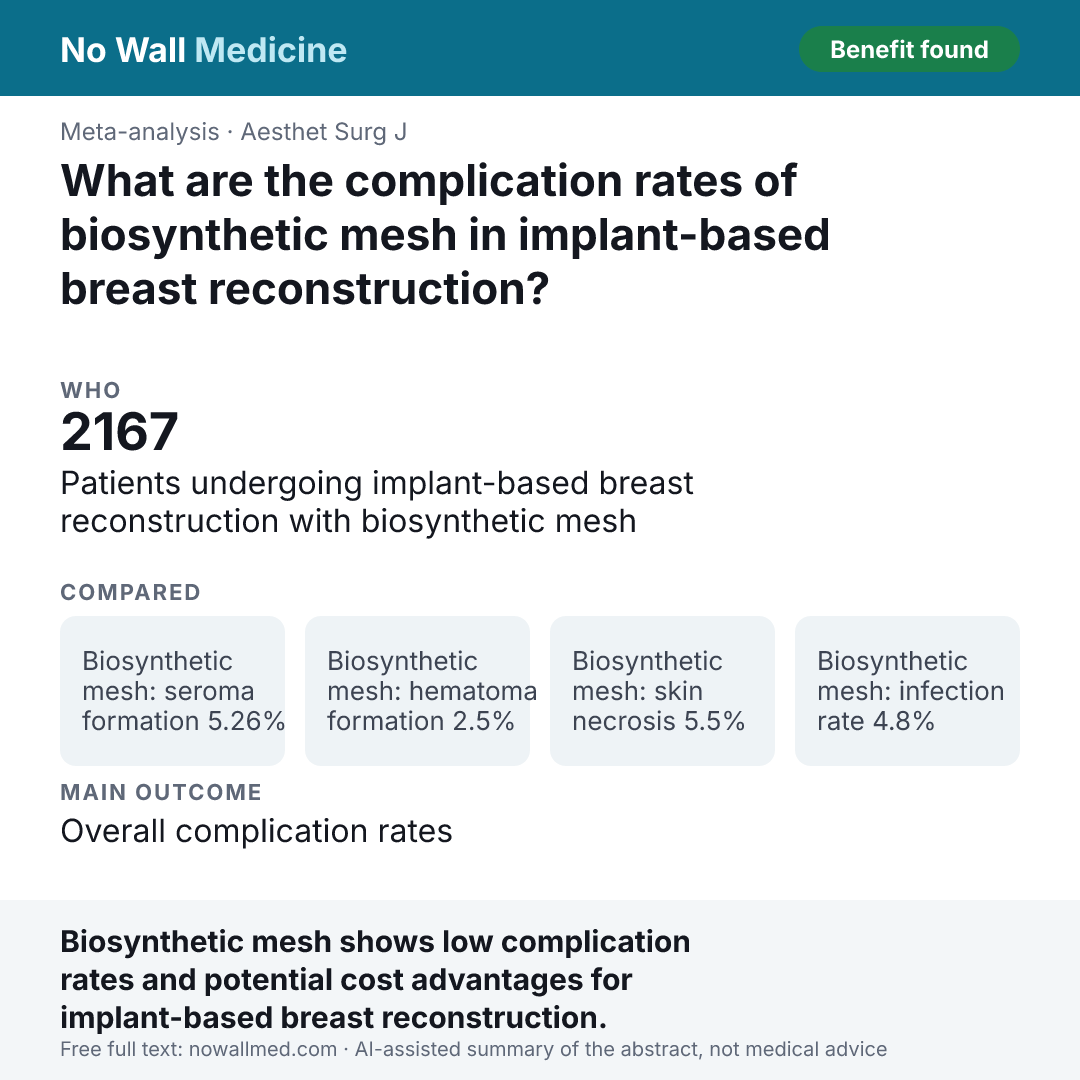
Outcomes in Implant-Based Breast Reconstruction Utilizing Biosynthetic Mesh: A Meta-Analysis
Meta-analysisBenefit found
What are the complication rates of biosynthetic mesh in implant-based breast reconstruction?
Who
2167
Patients undergoing implant-based breast reconstruction with biosynthetic mesh
Compared
Biosynthetic mesh: seroma formation 5.26%
Biosynthetic mesh: hematoma formation 2.5%
Biosynthetic mesh: skin necrosis 5.5%
Biosynthetic mesh: infection rate 4.8%
Main outcome
Overall complication rates
Bottom line: Biosynthetic mesh shows low complication rates and potential cost advantages for implant-based breast reconstruction.
Aesthet Surg J · 2025-01-07 · Save PNG