Visual abstracts
New randomized trials and meta-analyses from leading journals at a glance: who was studied, what was compared, and what was found. Every paper is free to read in full.
All specialtiesCardiology 3354Oncology 2879Gastroenterology & Hepatology 1324Infectious Disease 2284Neurology 1346Psychiatry & Mental Health 1588Pulmonology 1426Critical Care 954Endocrinology & Diabetes 1708Pediatrics 2036Surgery 1794Orthopedics & Sports Medicine 611Neurosurgery 396Cardiothoracic & Vascular Surgery 390Plastic & Reconstructive Surgery 469Nephrology 720Rheumatology 525Hematology 754Dermatology 416Ophthalmology 377Obstetrics & Gynecology 1136Public & Global Health 641Radiology & Imaging 473Anesthesiology 687Urology 567ENT (Otolaryngology) 369Emergency Medicine 363Allergy & Immunology 208Geriatrics 707Family Medicine & Primary Care 389Medical Genetics & Genomics 418Pathology & Laboratory Medicine 110Physical Medicine & Rehabilitation 530Palliative Care 306Nutrition 1008Digital Health & AI 1593General Medicine 237
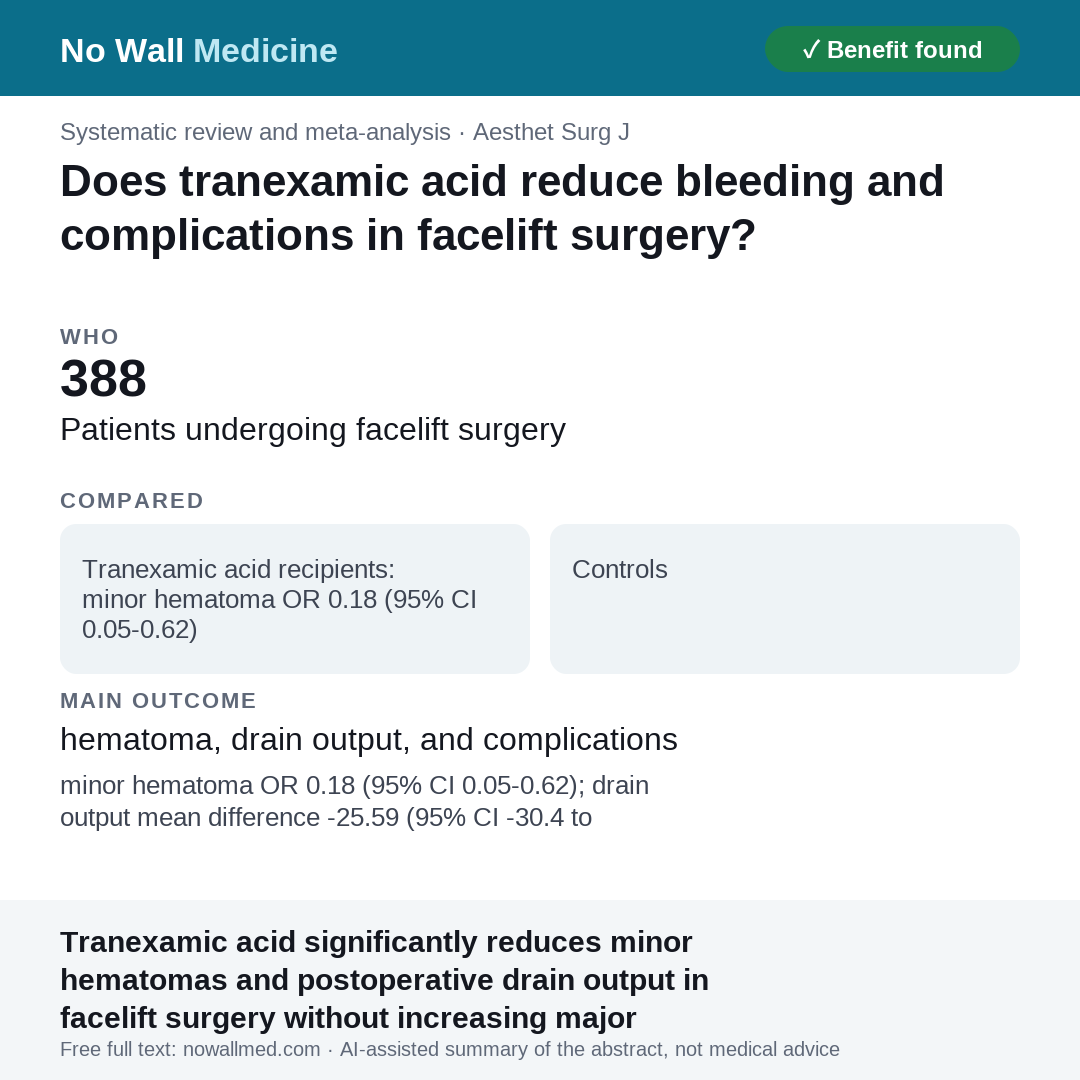
Impact of Tranexamic Acid on Bleeding Outcomes and Complication Rates in Facelift: A Systematic Review and Meta-analysis
Systematic review and meta-analysisBenefit found
Does tranexamic acid reduce bleeding and complications in facelift surgery?
Who
388
Patients undergoing facelift surgery
Compared
Tranexamic acid recipients: minor hematoma OR 0.18 (95% CI 0.05-0.62)
Controls
Main outcome
hematoma, drain output, and complications
Result: minor hematoma OR 0.18 (95% CI 0.05-0.62); drain output mean difference -25.59 (95% CI -30.4 to -20.77)
Bottom line: Tranexamic acid significantly reduces minor hematomas and postoperative drain output in facelift surgery without increasing major complications.
Limitation: further studies are required to explore efficacy with different dosages and administration routes
Aesthet Surg J · 2024-08-14Download image
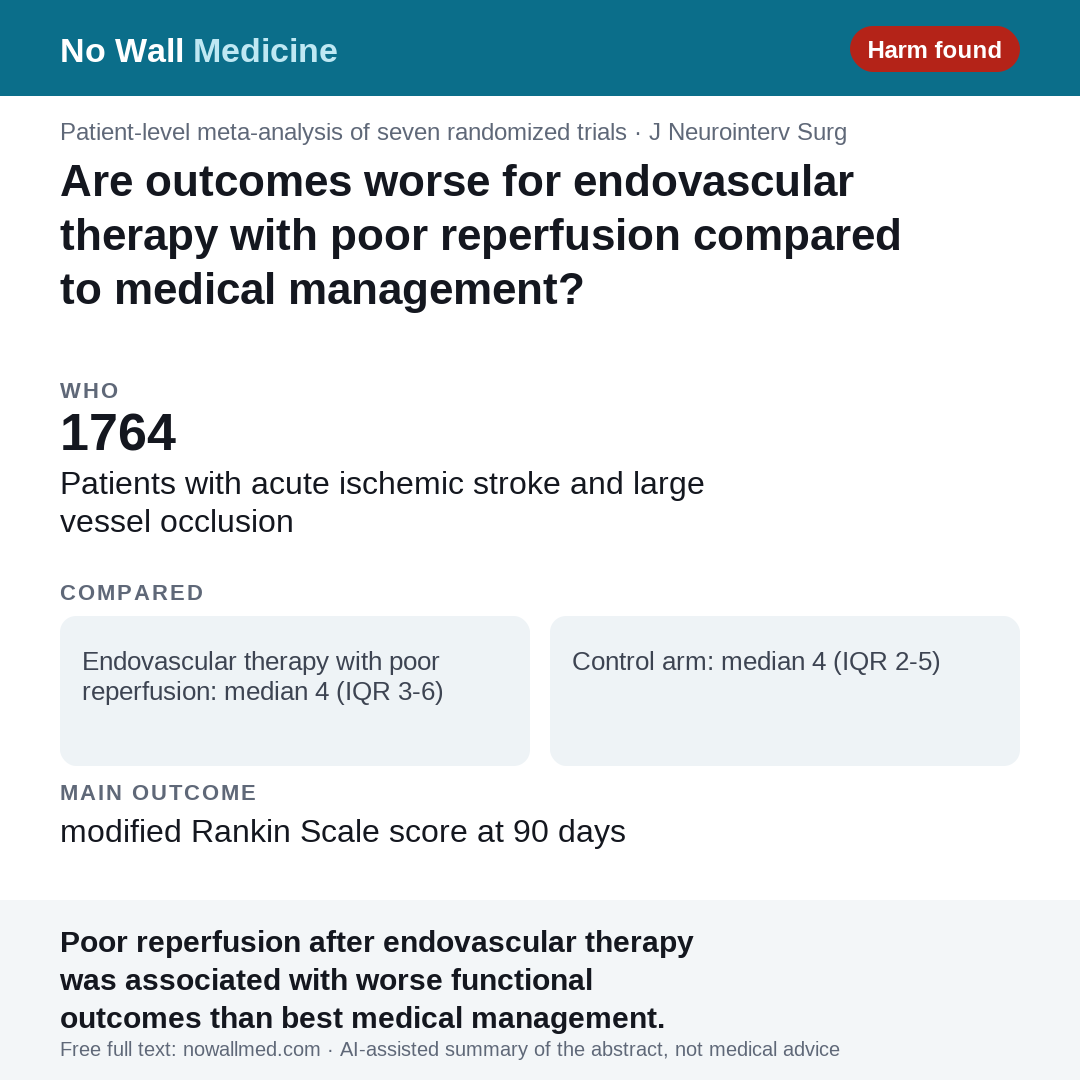
Endovascular therapy in acute ischemic stroke with poor reperfusion is associated with worse outcomes compared with best medical management: a HERMES substudy
Patient-level meta-analysis of seven randomized trialsHarm found
Are outcomes worse for endovascular therapy with poor reperfusion compared to medical management?
Who
1764
Patients with acute ischemic stroke and large vessel occlusion
Compared
Endovascular therapy with poor reperfusion: median 4 (IQR 3-6)
Control arm: median 4 (IQR 2-5)
Main outcome
modified Rankin Scale score at 90 days
Result: adjusted common OR 0.59 (95% CI 0.38 to 0.91)
Bottom line: Poor reperfusion after endovascular therapy was associated with worse functional outcomes than best medical management.
J Neurointerv Surg · 2024-08-14Download image
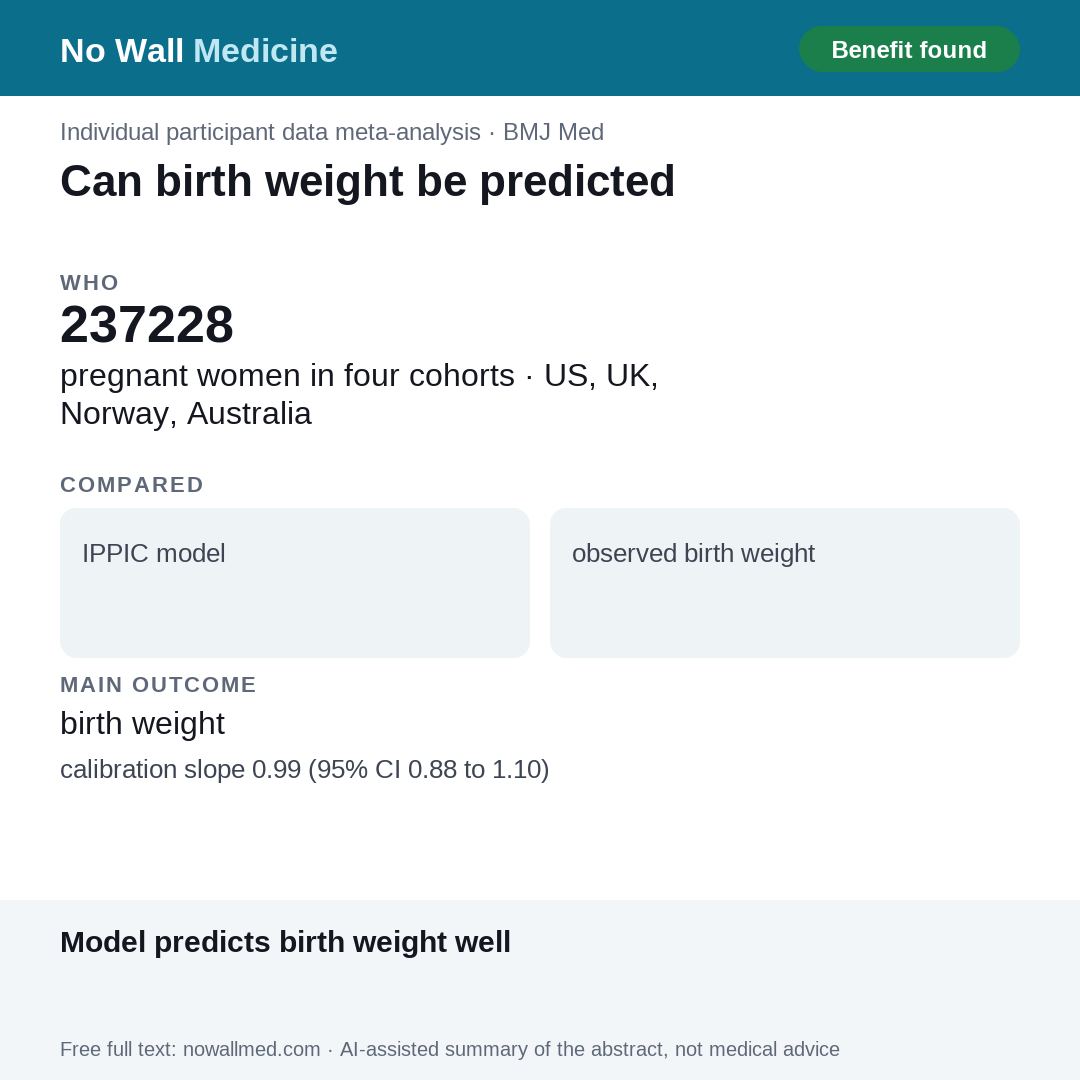
Development and validation of a prognostic model to predict birth weight: individual participant data meta-analysis
Individual participant data meta-analysisBenefit found
Can birth weight be predicted
Who
237228
pregnant women in four cohorts · US, UK, Norway, Australia
Compared
IPPIC model
observed birth weight
Main outcome
birth weight
Result: calibration slope 0.99 (95% CI 0.88 to 1.10)
Bottom line: Model predicts birth weight well
BMJ Med · 2024-08-14Download image
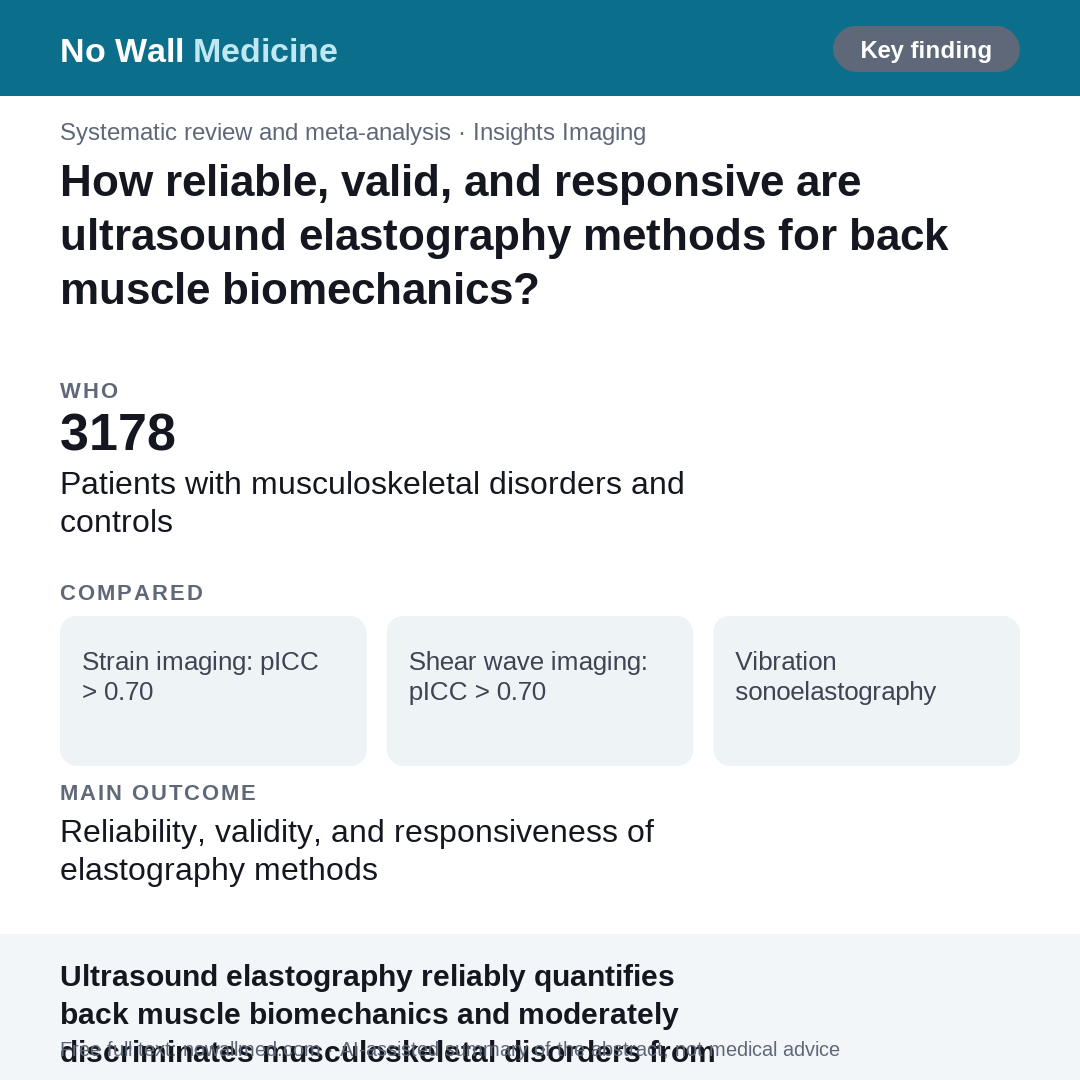
Ultrasound elastography of back muscle biomechanical properties: a systematic review and meta-analysis of current methods
Systematic review and meta-analysisBenefit found
How reliable, valid, and responsive are ultrasound elastography methods for back muscle biomechanics?
Who
3178
Patients with musculoskeletal disorders and controls
Compared
Strain imaging: pICC > 0.70
Shear wave imaging: pICC > 0.70
Vibration sonoelastography
Main outcome
Reliability, validity, and responsiveness of elastography methods
Bottom line: Ultrasound elastography reliably quantifies back muscle biomechanics and moderately discriminates musculoskeletal disorders from control conditions.
Insights Imaging · 2024-08-14Download image
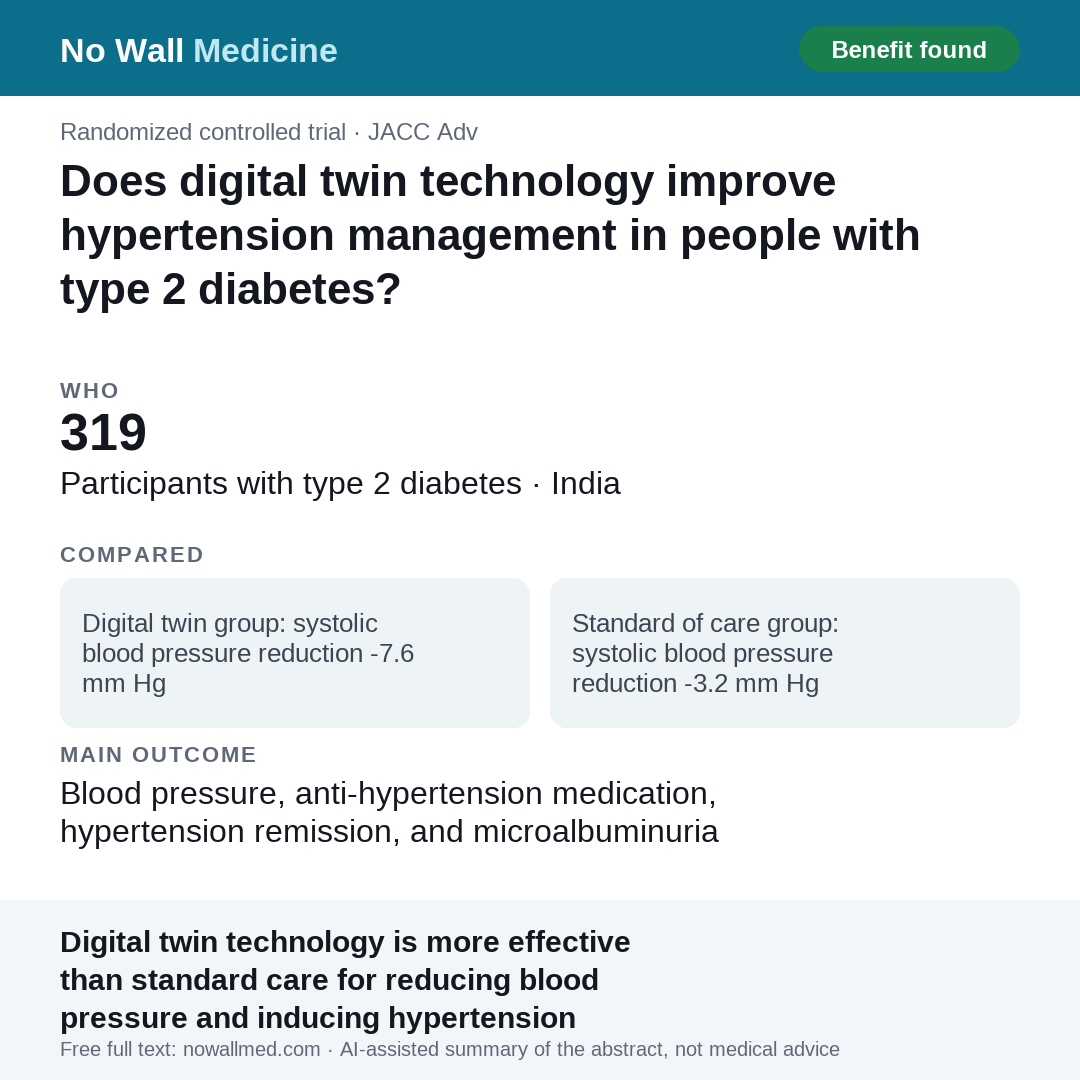
Digital Twin in Managing Hypertension Among People With Type 2 Diabetes: 1-Year Randomized Controlled Trial
Randomized controlled trialBenefit found
Does digital twin technology improve hypertension management in people with type 2 diabetes?
Who
319
Participants with type 2 diabetes · India
Compared
Digital twin group: systolic blood pressure reduction -7.6 mm Hg
Standard of care group: systolic blood pressure reduction -3.2 mm Hg
Main outcome
Blood pressure, anti-hypertension medication, hypertension remission, and microalbuminuria
Bottom line: Digital twin technology is more effective than standard care for reducing blood pressure and inducing hypertension remission.
JACC Adv · 2024-08-14Download image
Impact of an Online Discussion Forum on Self-Guided Internet-Delivered Cognitive Behavioral Therapy for Public Safety Personnel: Randomized Trial
Randomized trialNo clear difference
Does an online discussion forum improve outcomes in self-guided internet-delivered cognitive behavioral therapy for public safety personnel?
Who
107
Public safety personnel · Web-based
Compared
Self-guided internet-delivered cognitive behavioral therapy with forum
Self-guided internet-delivered cognitive behavioral therapy without forum
Main outcome
Changes in depression, anxiety, and posttraumatic stress
Bottom line: Adding a therapist-moderated online discussion forum did not change treatment outcomes for public safety personnel using self-guided therapy.
J Med Internet Res · 2024-08-14Download image

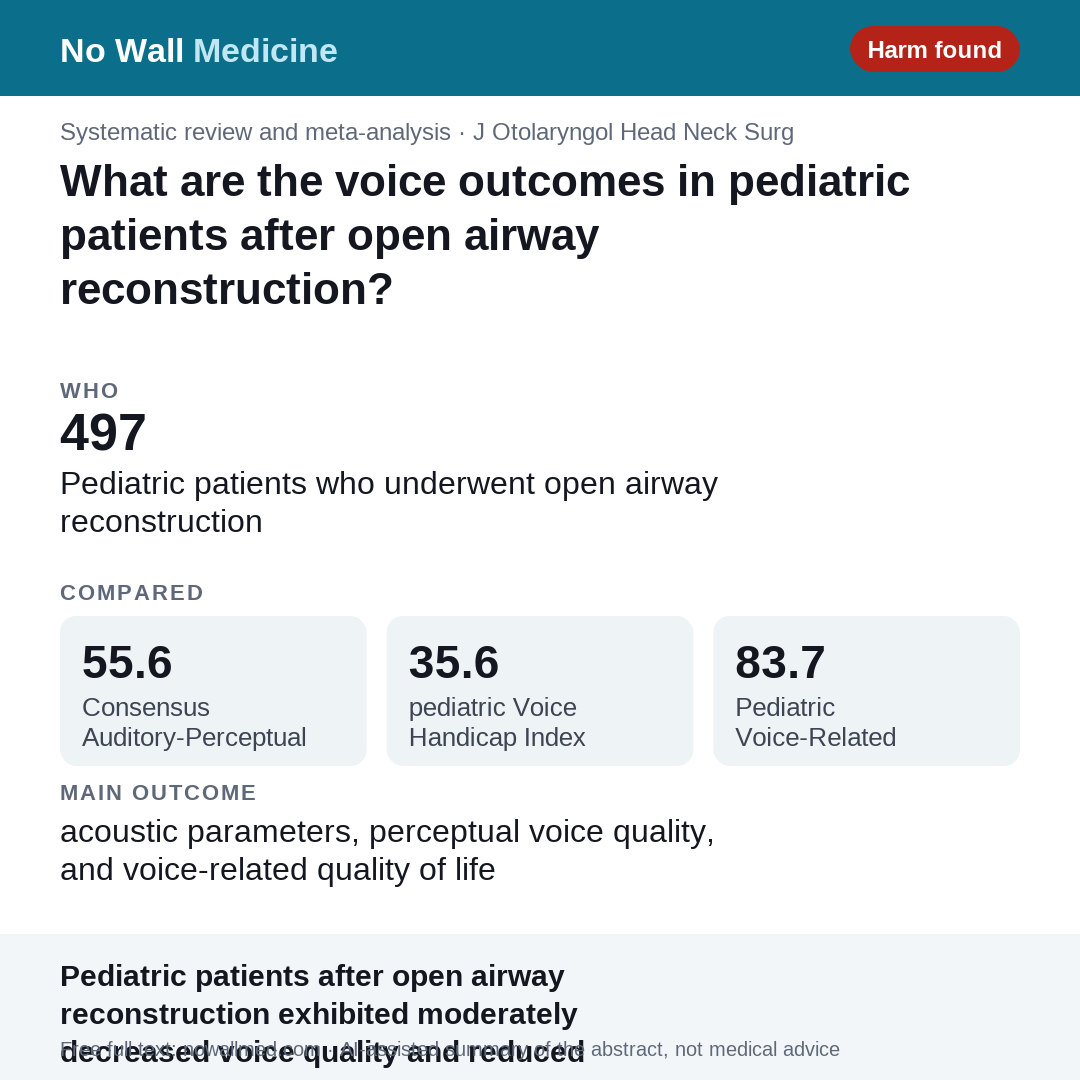
Characterizing Dysphonia After Pediatric Open Airway Reconstruction: Systematic Review and Meta-Analysis
Systematic review and meta-analysisHarm found
What are the voice outcomes in pediatric patients after open airway reconstruction?
Who
497
Pediatric patients who underwent open airway reconstruction
Compared
55.6Consensus Auditory-Perceptual Evaluation of Voice (95% CI: 47.9-63.3)
35.6pediatric Voice Handicap Index (95% CI: 21.4-49.7)
83.7Pediatric Voice-Related Quality of Life Survey (95% CI: 74.1-93.2)
Main outcome
acoustic parameters, perceptual voice quality, and voice-related quality of life
Bottom line: Pediatric patients after open airway reconstruction exhibited moderately decreased voice quality and reduced voice-related quality of life.
Limitation: There was inconsistency in study protocols and outcome measures used.
J Otolaryngol Head Neck Surg · 2024-08-14Download image
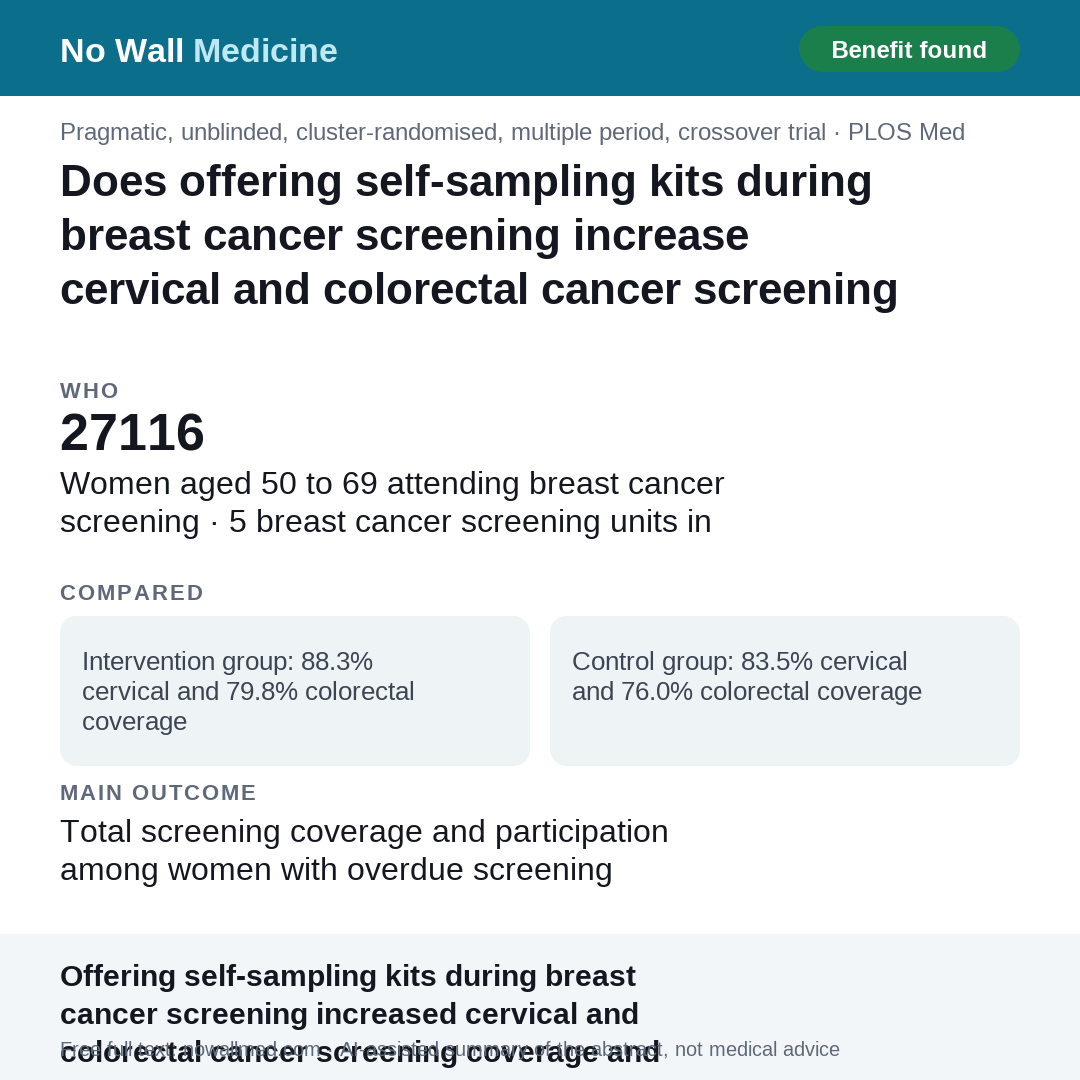
Increasing coverage in cervical and colorectal cancer screening by leveraging attendance at breast cancer screening: A cluster-randomised, crossover trial
Pragmatic, unblinded, cluster-randomised, multiple period, crossover trialBenefit found
Does offering self-sampling kits during breast cancer screening increase cervical and colorectal cancer screening coverage?
Who
27116
Women aged 50 to 69 attending breast cancer screening · 5 breast cancer screening units in Central Denmark Region
Compared
Intervention group: 88.3% cervical and 79.8% colorectal coverage
Control group: 83.5% cervical and 76.0% colorectal coverage
Main outcome
Total screening coverage and participation among women with overdue screening
Result: risk difference 4.8 percentage points (95% CI 3.6 to 6.0) for cervical screening
Bottom line: Offering self-sampling kits during breast cancer screening increased cervical and colorectal cancer screening coverage and participation.
PLOS Med · 2024-08-13Download image
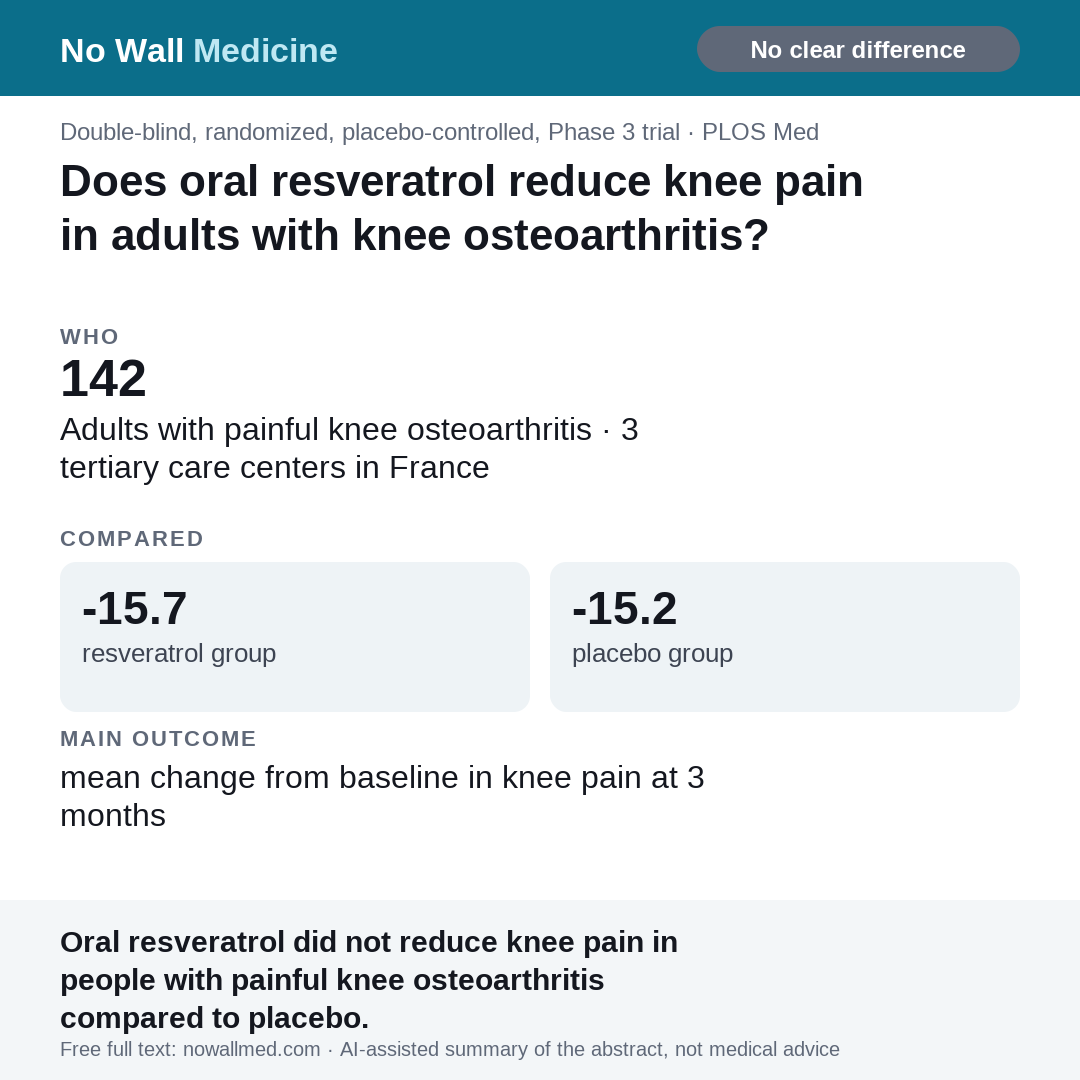
Oral resveratrol in adults with knee osteoarthritis: A randomized placebo-controlled trial (ARTHROL)
Double-blind, randomized, placebo-controlled, Phase 3 trialNo clear difference
Does oral resveratrol reduce knee pain in adults with knee osteoarthritis?
Who
142
Adults with painful knee osteoarthritis · 3 tertiary care centers in France
Compared
-15.7resveratrol group (95% CI, -21.1 to -10.3)
-15.2placebo group (95% CI, -20.5 to -9.8)
Main outcome
mean change from baseline in knee pain at 3 months
Result: absolute difference -0.6 (95% CI, -8.0 to 6.9)
Bottom line: Oral resveratrol did not reduce knee pain in people with painful knee osteoarthritis compared to placebo.
Limitation: The study was underpowered and the effect size was optimistically estimated.
PLOS Med · 2024-08-13Download image
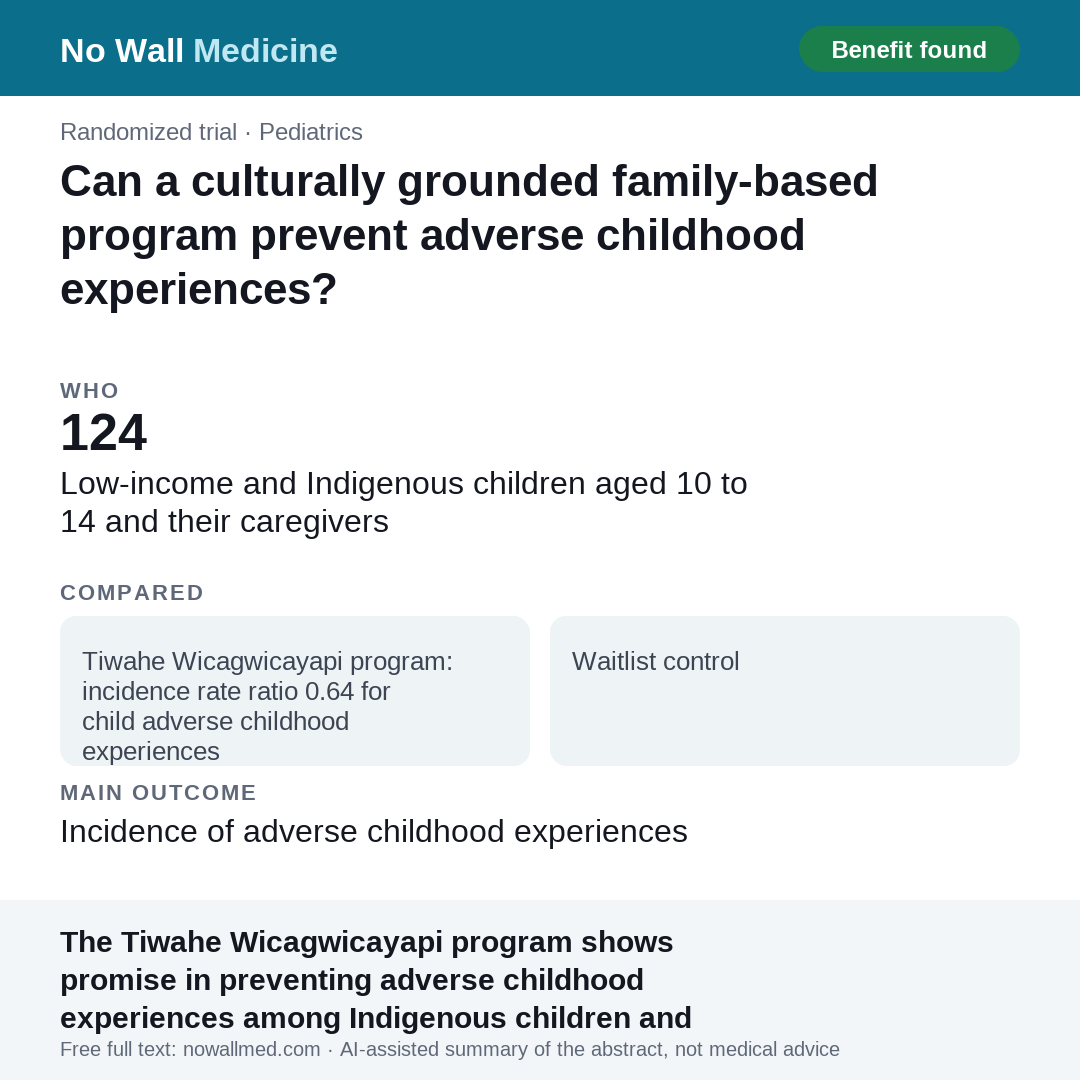
Preventing Adverse Childhood Experiences in a Sample of Largely Indigenous Children
Randomized trialBenefit found
Can a culturally grounded family-based program prevent adverse childhood experiences?
Who
124
Low-income and Indigenous children aged 10 to 14 and their caregivers
Compared
Tiwahe Wicagwicayapi program: incidence rate ratio 0.64 for child adverse childhood experiences
Waitlist control
Main outcome
Incidence of adverse childhood experiences
Result: incidence rate ratio 0.64
Bottom line: The Tiwahe Wicagwicayapi program shows promise in preventing adverse childhood experiences among Indigenous children and families.
Pediatrics · 2024-08-13Download image
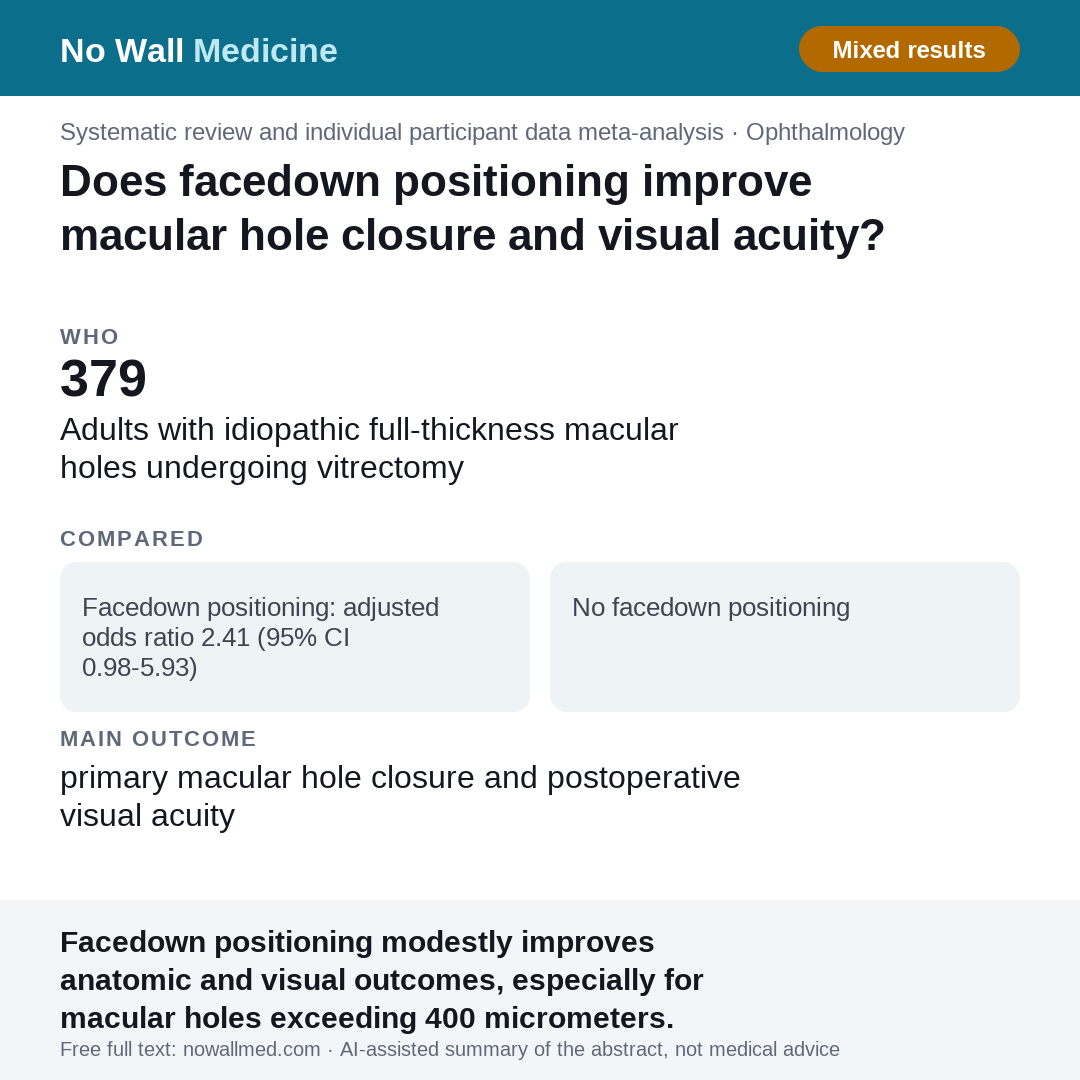
Facedown Positioning in Macular Hole Surgery: A Systematic Review and Individual Participant Data Meta-Analysis
Systematic review and individual participant data meta-analysisMixed results
Does facedown positioning improve macular hole closure and visual acuity?
Who
379
Adults with idiopathic full-thickness macular holes undergoing vitrectomy
Compared
Facedown positioning: adjusted odds ratio 2.41 (95% CI 0.98-5.93)
No facedown positioning
Main outcome
primary macular hole closure and postoperative visual acuity
Result: adjusted odds ratio 2.41 (95% CI 0.98-5.93)
Bottom line: Facedown positioning modestly improves anatomic and visual outcomes, especially for macular holes exceeding 400 micrometers.
Ophthalmology · 2024-08-13Download image
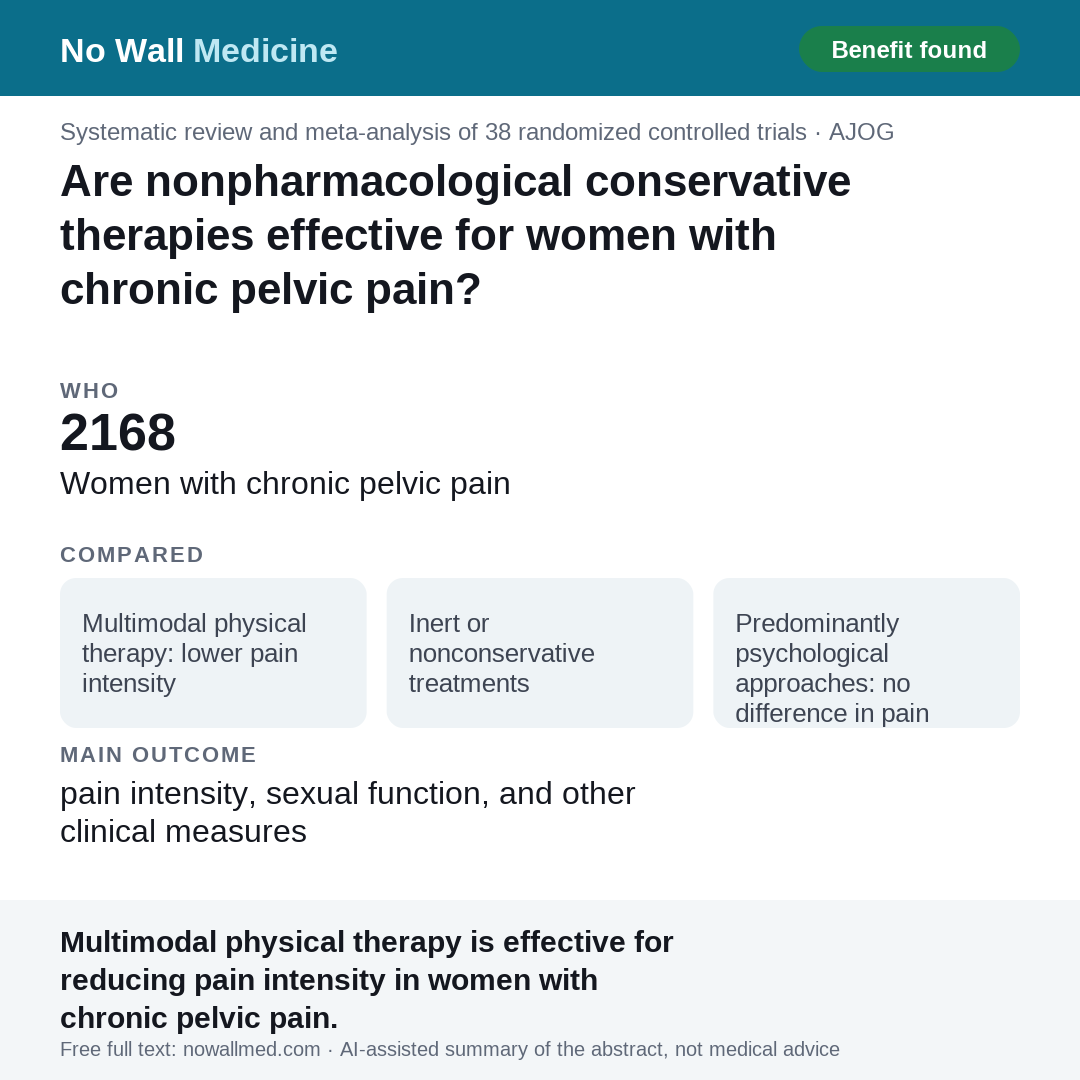
Effectiveness of nonpharmacological conservative therapies for chronic pelvic pain in women: a systematic review and meta-analysis
Systematic review and meta-analysis of 38 randomized controlled trialsBenefit found
Are nonpharmacological conservative therapies effective for women with chronic pelvic pain?
Who
2168
Women with chronic pelvic pain
Compared
Multimodal physical therapy: lower pain intensity
Inert or nonconservative treatments
Predominantly psychological approaches: no difference in pain intensity
Main outcome
pain intensity, sexual function, and other clinical measures
Result: standardized mean difference -1.69 (95% CI -2.54, -0.85) for multimodal physical therapy
Bottom line: Multimodal physical therapy is effective for reducing pain intensity in women with chronic pelvic pain.
Limitation: A limited number of trials investigated individual tissue-based monotherapies.
AJOG · 2024-08-13Download image
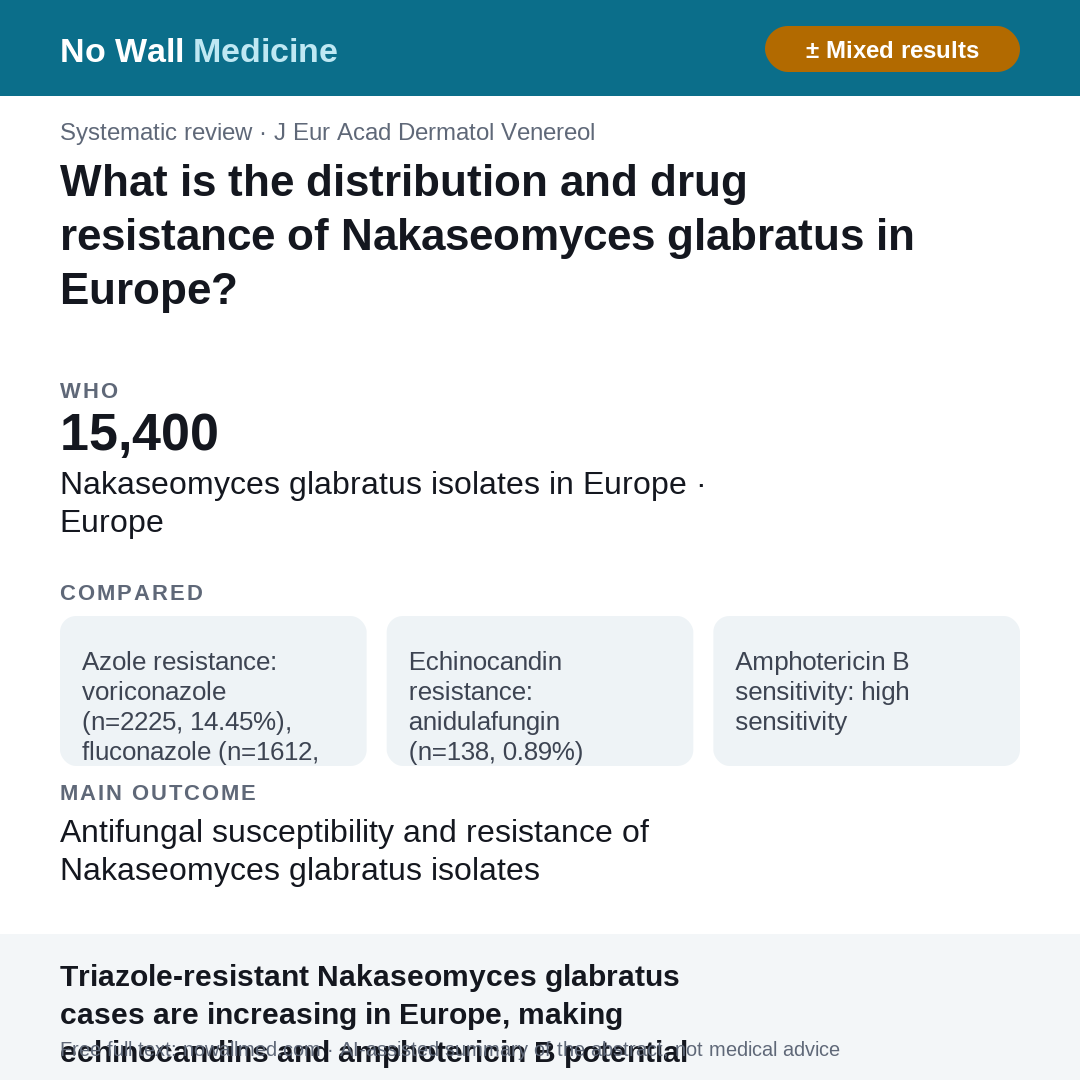
Virulence and resistance factors of Nakaseomyces glabratus (formerly known as Candida glabrata) in Europe: A systematic review
Systematic reviewMixed results
What is the distribution and drug resistance of Nakaseomyces glabratus in Europe?
Who
15,400
Nakaseomyces glabratus isolates in Europe · Europe
Compared
Azole resistance: voriconazole (n=2225, 14.45%), fluconazole (n=1612, 10.47%), itraconazole (n=337, 2.19%) and clotrimazole (n=89, 0.58%)
Echinocandin resistance: anidulafungin (n=138, 0.89%)
Amphotericin B sensitivity: high sensitivity
Main outcome
Antifungal susceptibility and resistance of Nakaseomyces glabratus isolates
Bottom line: Triazole-resistant Nakaseomyces glabratus cases are increasing in Europe, making echinocandins and amphotericin B potential empirical treatments.
J Eur Acad Dermatol Venereol · 2024-08-13Download image
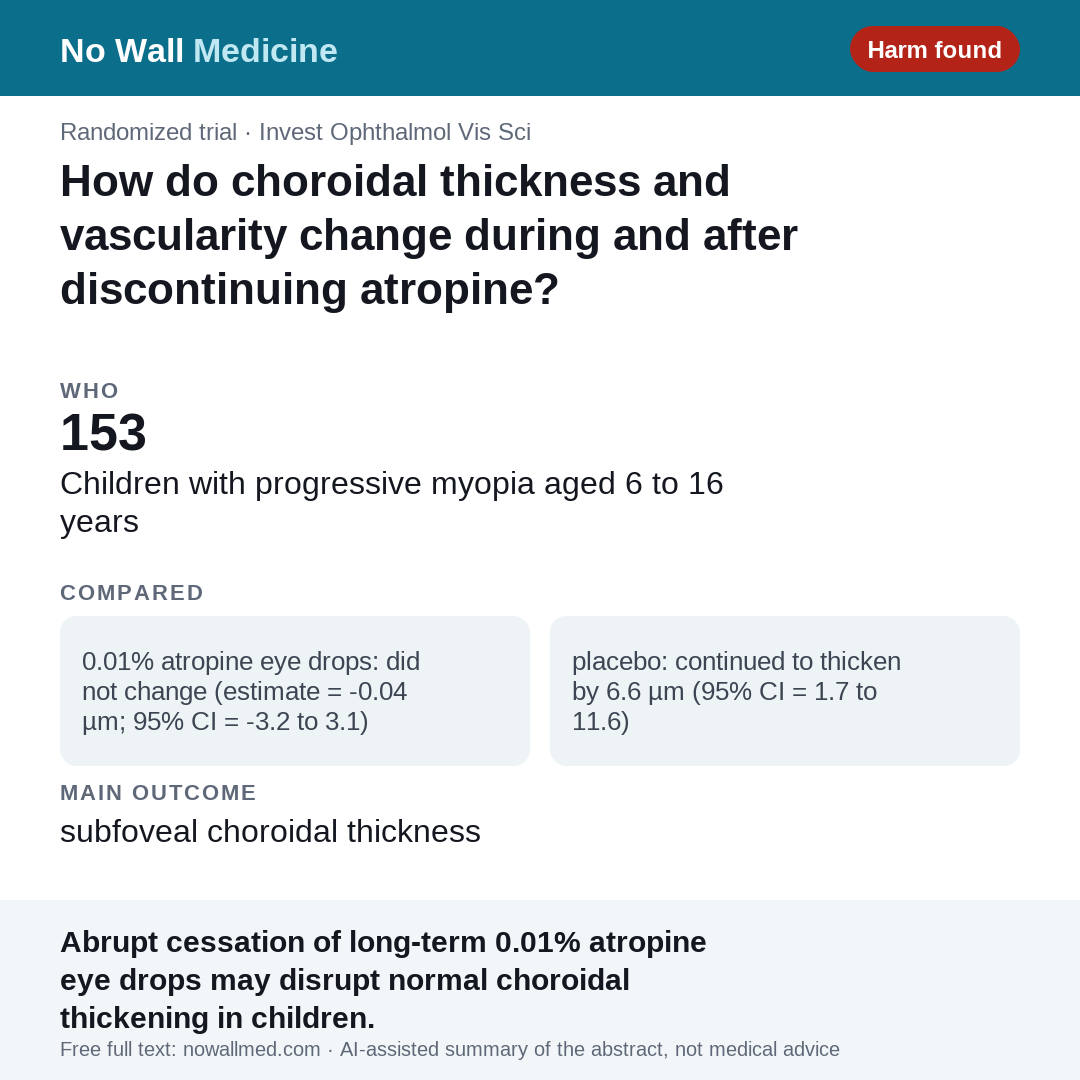
Choroidal Changes During and After Discontinuing Long-Term 0.01% Atropine Treatment for Myopia Control
Randomized trialHarm found
How do choroidal thickness and vascularity change during and after discontinuing atropine?
Who
153
Children with progressive myopia aged 6 to 16 years
Compared
0.01% atropine eye drops: did not change (estimate = -0.04 µm; 95% CI = -3.2 to 3.1)
placebo: continued to thicken by 6.6 µm (95% CI = 1.7 to 11.6)
Main outcome
subfoveal choroidal thickness
Bottom line: Abrupt cessation of long-term 0.01% atropine eye drops may disrupt normal choroidal thickening in children.
Invest Ophthalmol Vis Sci · 2024-08-13Download image
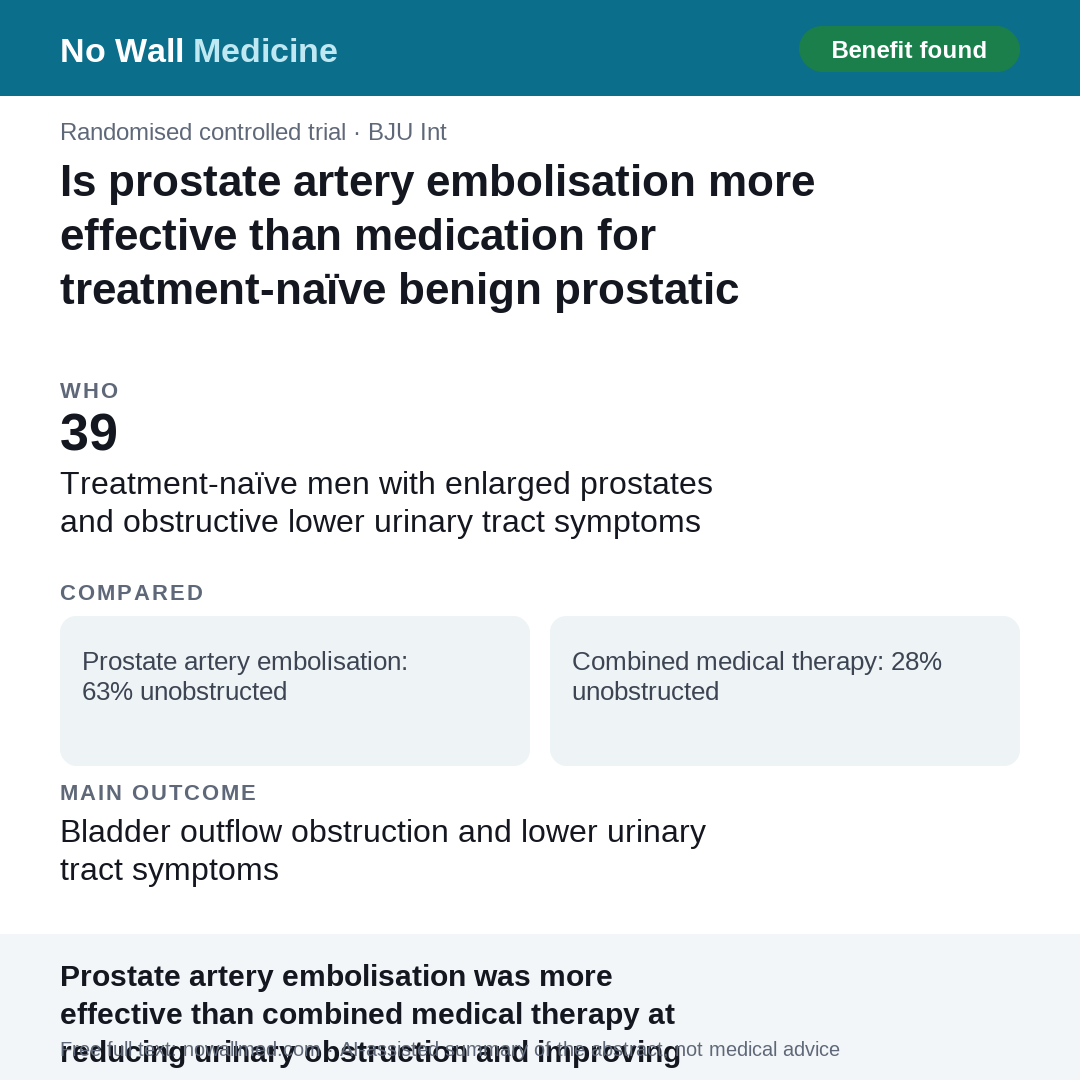
The 'Prostate Embolisation AS first-line therapY compAred to meDication in treatment naïVe men with prostAte eNlargement, a randomised ControllEd trial' (P-EASY ADVANCE): a randomised controlled trial of prostate embolisation vs medication for BPH
Randomised controlled trialBenefit found
Is prostate artery embolisation more effective than medication for treatment-naïve benign prostatic hyperplasia?
Who
39
Treatment-naïve men with enlarged prostates and obstructive lower urinary tract symptoms
Compared
Prostate artery embolisation: 63% unobstructed
Combined medical therapy: 28% unobstructed
Main outcome
Bladder outflow obstruction and lower urinary tract symptoms
Bottom line: Prostate artery embolisation was more effective than combined medical therapy at reducing urinary obstruction and improving symptoms.
BJU Int · 2024-08-13Download image
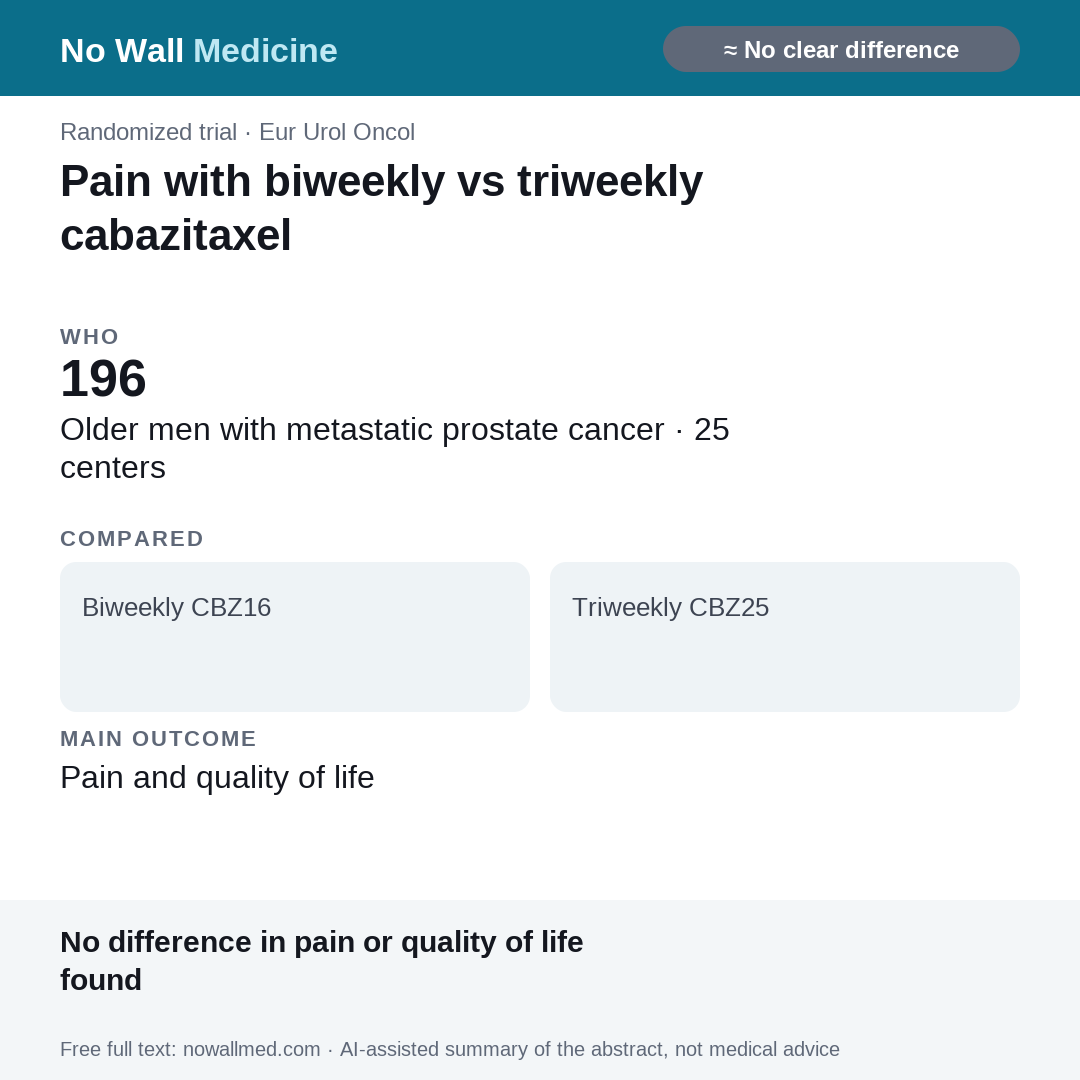
Pain and Health-related Quality of Life with Biweekly Versus Triweekly Cabazitaxel Schedule in Older Men with Metastatic Castration-resistant Prostate Cancer in the Multicenter, Randomized CABASTY Trial
Randomized trialNo clear difference
Pain with biweekly vs triweekly cabazitaxel
Who
196
Older men with metastatic prostate cancer · 25 centers
Compared
Biweekly CBZ16
Triweekly CBZ25
Main outcome
Pain and quality of life
Bottom line: No difference in pain or quality of life found
Eur Urol Oncol · 2024-08-13Download image
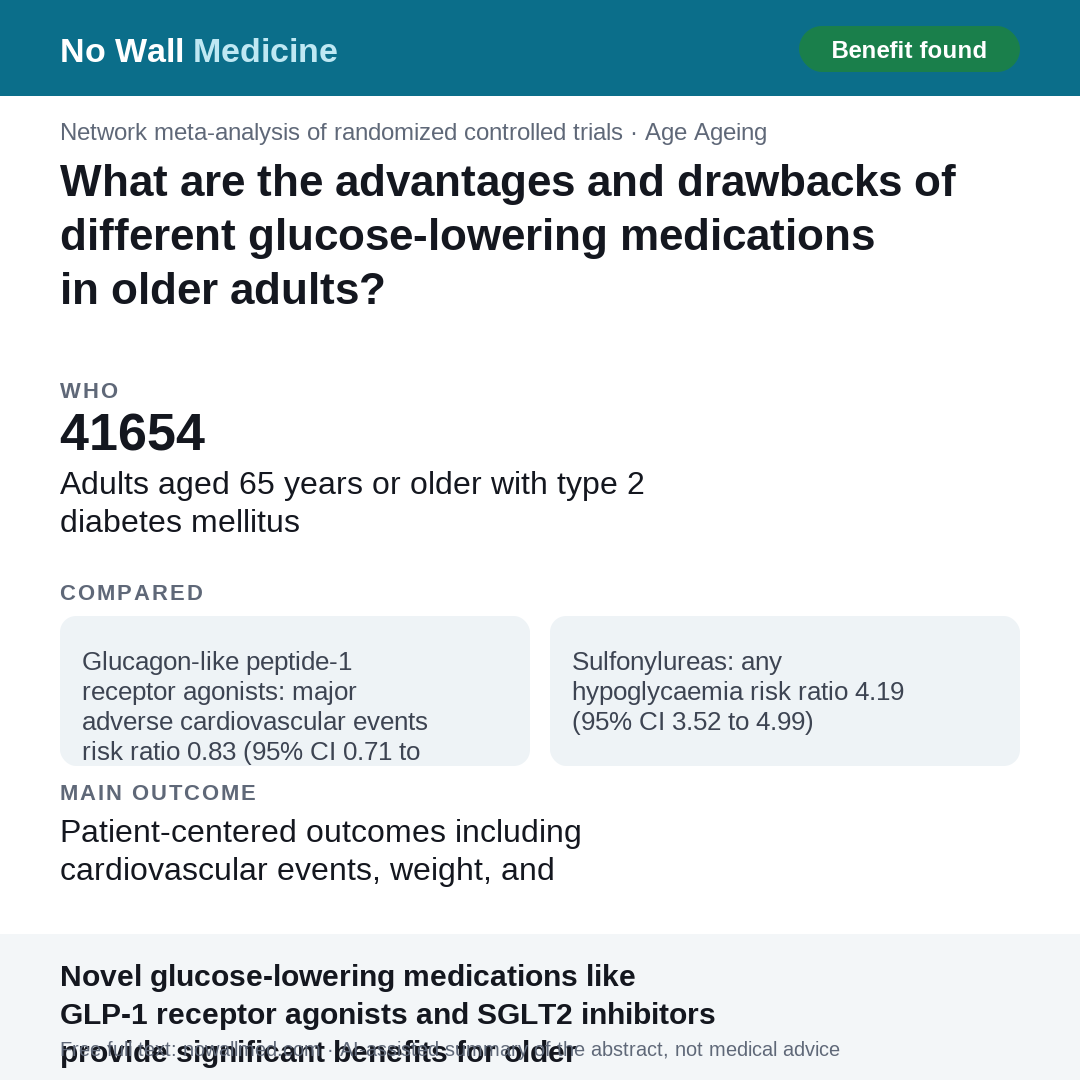
Evaluation of glucose-lowering medications in older people: a comprehensive systematic review and network meta-analysis of randomized controlled trials
Network meta-analysis of randomized controlled trialsBenefit found
What are the advantages and drawbacks of different glucose-lowering medications in older adults?
Who
41654
Adults aged 65 years or older with type 2 diabetes mellitus
Compared
Glucagon-like peptide-1 receptor agonists: major adverse cardiovascular events risk ratio 0.83 (95% CI 0.71 to 0.97)
Sulfonylureas: any hypoglycaemia risk ratio 4.19 (95% CI 3.52 to 4.99)
Main outcome
Patient-centered outcomes including cardiovascular events, weight, and hypoglycemia
Result: GLP-1RAs major adverse cardiovascular events risk ratio 0.83 (95% CI 0.71 to 0.97)
Bottom line: Novel glucose-lowering medications like GLP-1 receptor agonists and SGLT2 inhibitors provide significant benefits for older patients with diabetes.
Age Ageing · 2024-08-13Download image
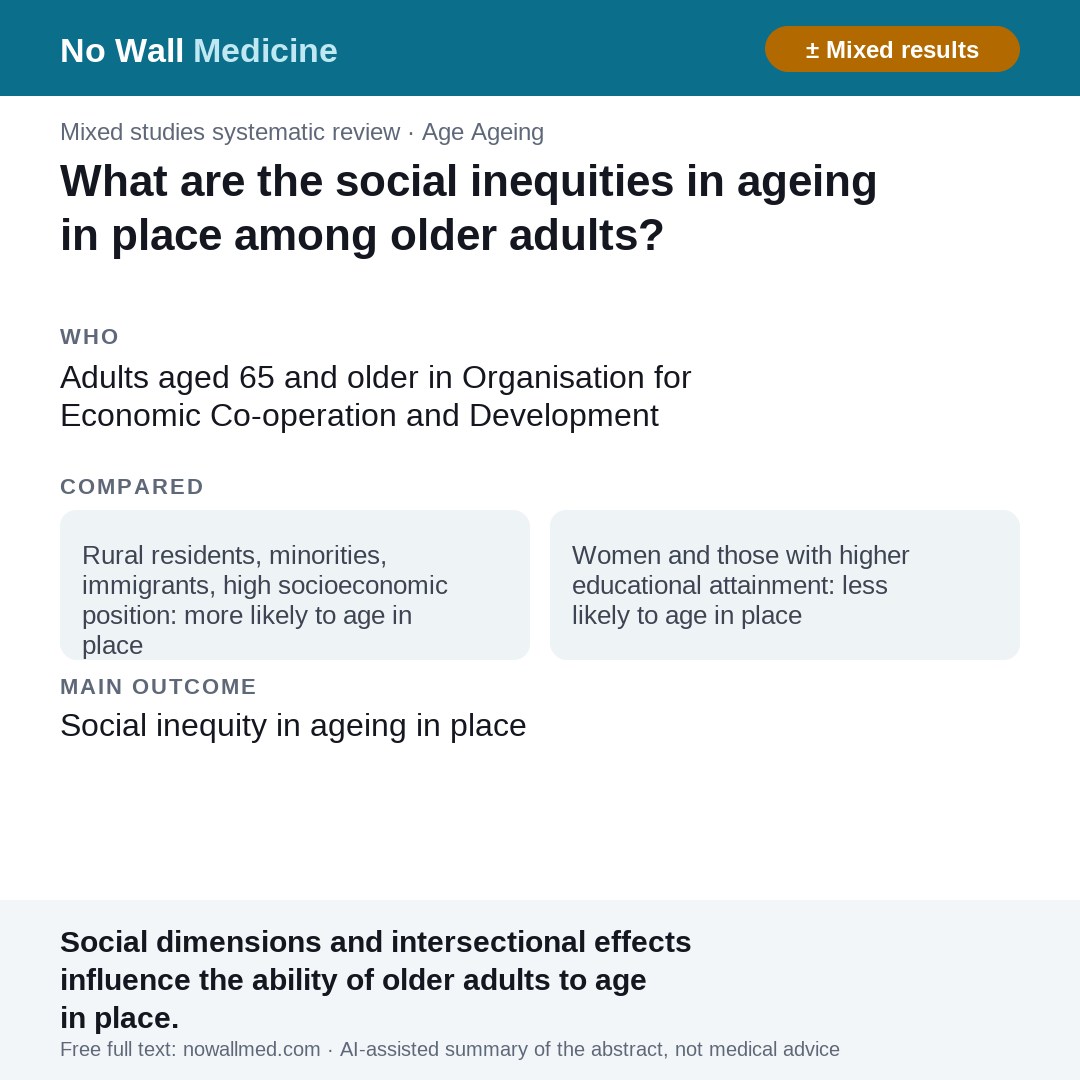
Social inequity in ageing in place among older adults in Organisation for Economic Cooperation and Development countries: a mixed studies systematic review
Mixed studies systematic reviewMixed results
What are the social inequities in ageing in place among older adults?
Who
Adults aged 65 and older in Organisation for Economic Co-operation and Development countries · Organisation for Economic Co-operation and Development countries
Compared
Rural residents, minorities, immigrants, high socioeconomic position: more likely to age in place
Women and those with higher educational attainment: less likely to age in place
Main outcome
Social inequity in ageing in place
Bottom line: Social dimensions and intersectional effects influence the ability of older adults to age in place.
Age Ageing · 2024-08-13Download image
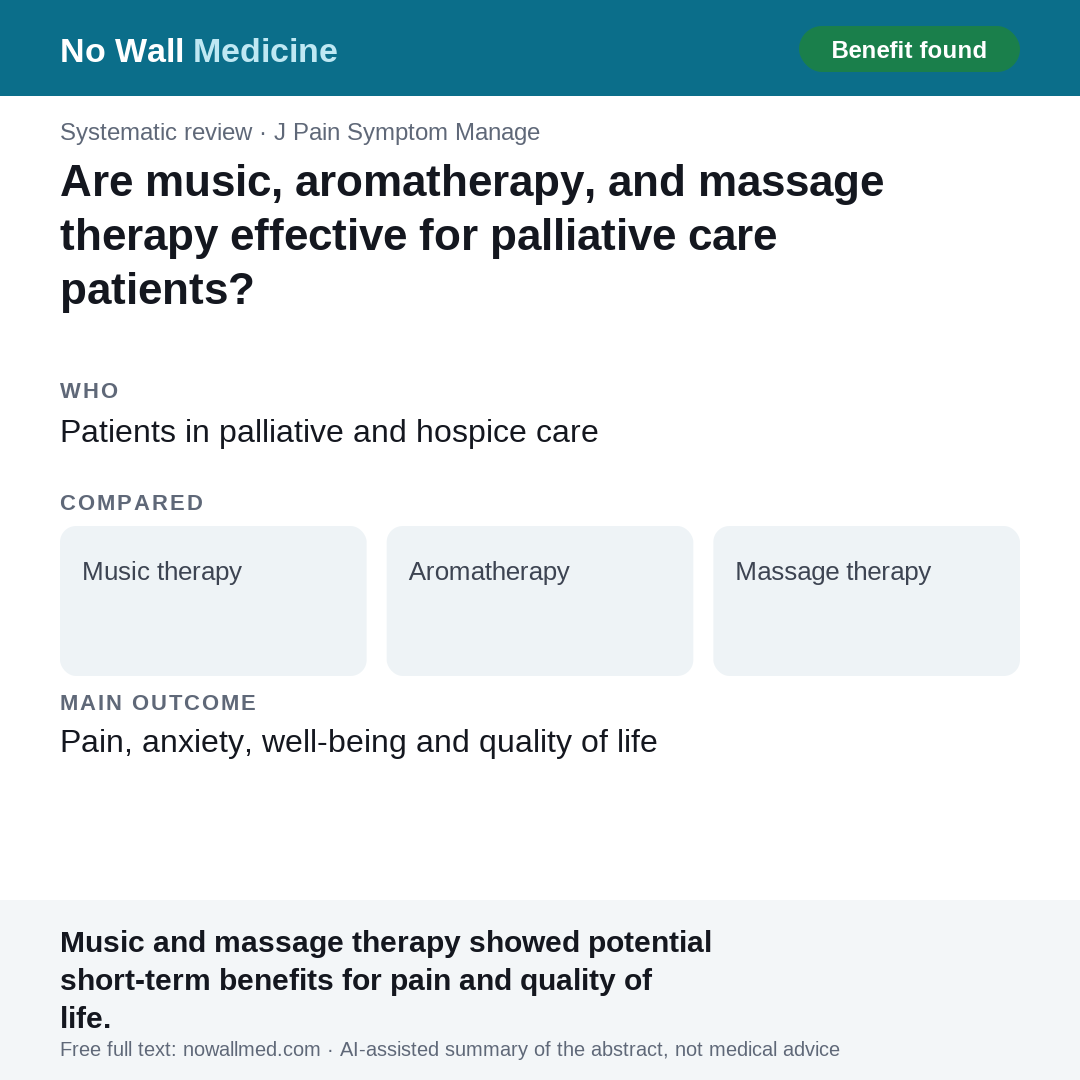
Effectiveness of music therapy, aromatherapy, and massage therapy on patients in palliative care with end-of-life needs: A systematic review
Systematic reviewBenefit found
Are music, aromatherapy, and massage therapy effective for palliative care patients?
Who
Patients in palliative and hospice care
Compared
Music therapy
Aromatherapy
Massage therapy
Main outcome
Pain, anxiety, well-being and quality of life
Bottom line: Music and massage therapy showed potential short-term benefits for pain and quality of life.
Limitation: Future studies may require more qualitative or mixed methods for comprehensive evaluation.
J Pain Symptom Manage · 2024-08-13Download image
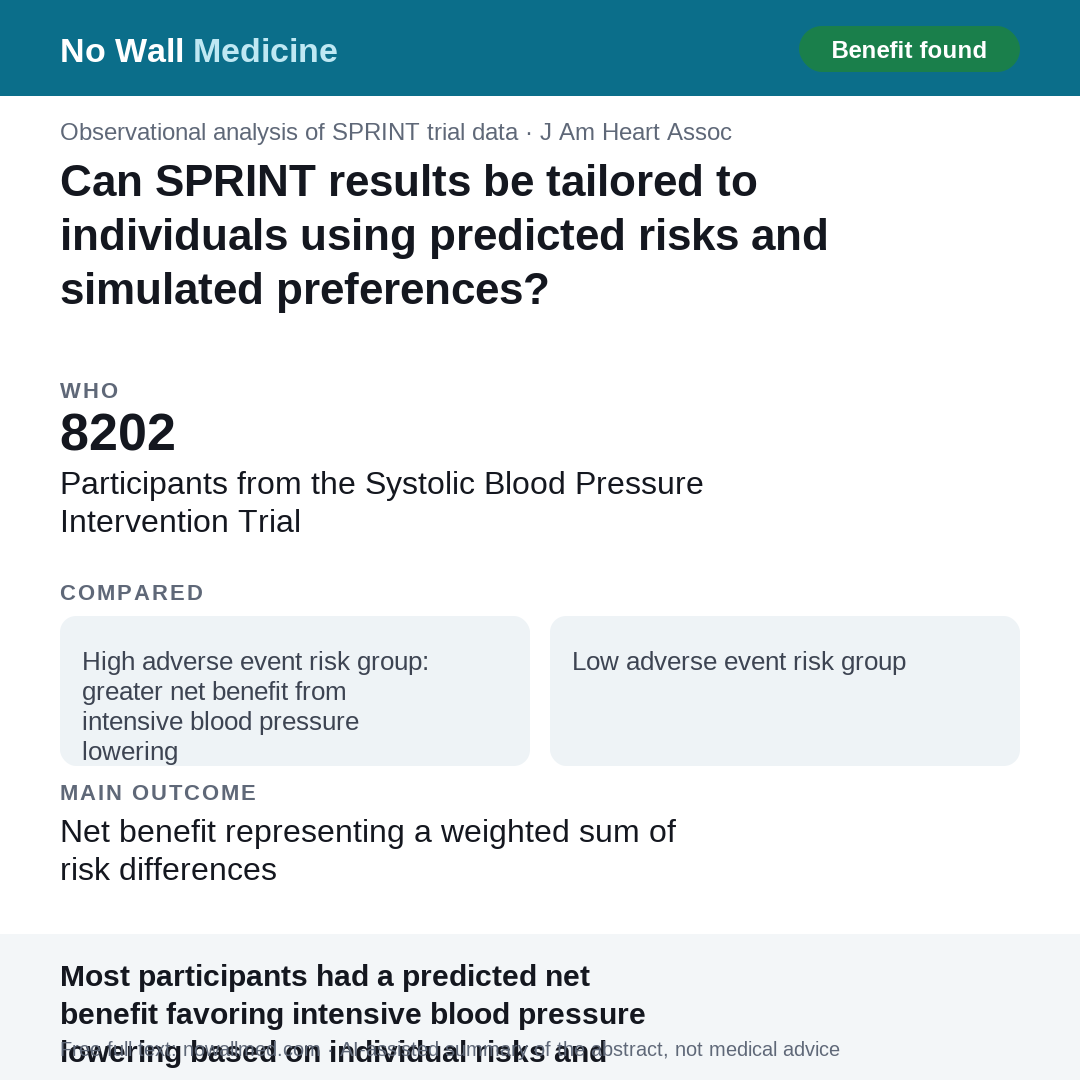
Incorporating Individual-Level Treatment Effects and Outcome Preferences Into Personalized Blood Pressure Target Recommendations
Observational analysis of SPRINT trial dataBenefit found
Can SPRINT results be tailored to individuals using predicted risks and simulated preferences?
Who
8202
Participants from the Systolic Blood Pressure Intervention Trial
Compared
High adverse event risk group: greater net benefit from intensive blood pressure lowering
Low adverse event risk group
Main outcome
Net benefit representing a weighted sum of risk differences
Bottom line: Most participants had a predicted net benefit favoring intensive blood pressure lowering based on individual risks and preferences.
J Am Heart Assoc · 2024-08-13Download image