Visual abstracts
New randomized trials and meta-analyses from leading journals at a glance: who was studied, what was compared, and what was found. Every paper is free to read in full.
All specialtiesCardiology 4877Oncology 4136Gastroenterology & Hepatology 1942Infectious Disease 3836Neurology 1904Psychiatry & Mental Health 2273Pulmonology 2143Critical Care 1364Endocrinology & Diabetes 2580Pediatrics 2980Surgery 2556Orthopedics & Sports Medicine 931Neurosurgery 537Cardiothoracic & Vascular Surgery 674Plastic & Reconstructive Surgery 591Nephrology 1133Rheumatology 823Hematology 1109Dermatology 621Ophthalmology 543Obstetrics & Gynecology 1686Public & Global Health 1058Radiology & Imaging 648Anesthesiology 986Urology 764ENT (Otolaryngology) 503Emergency Medicine 511Allergy & Immunology 313Geriatrics 979Family Medicine & Primary Care 562Medical Genetics & Genomics 676Pathology & Laboratory Medicine 159Physical Medicine & Rehabilitation 757Palliative Care 444Nutrition 1588Digital Health & AI 2197General Medicine 320
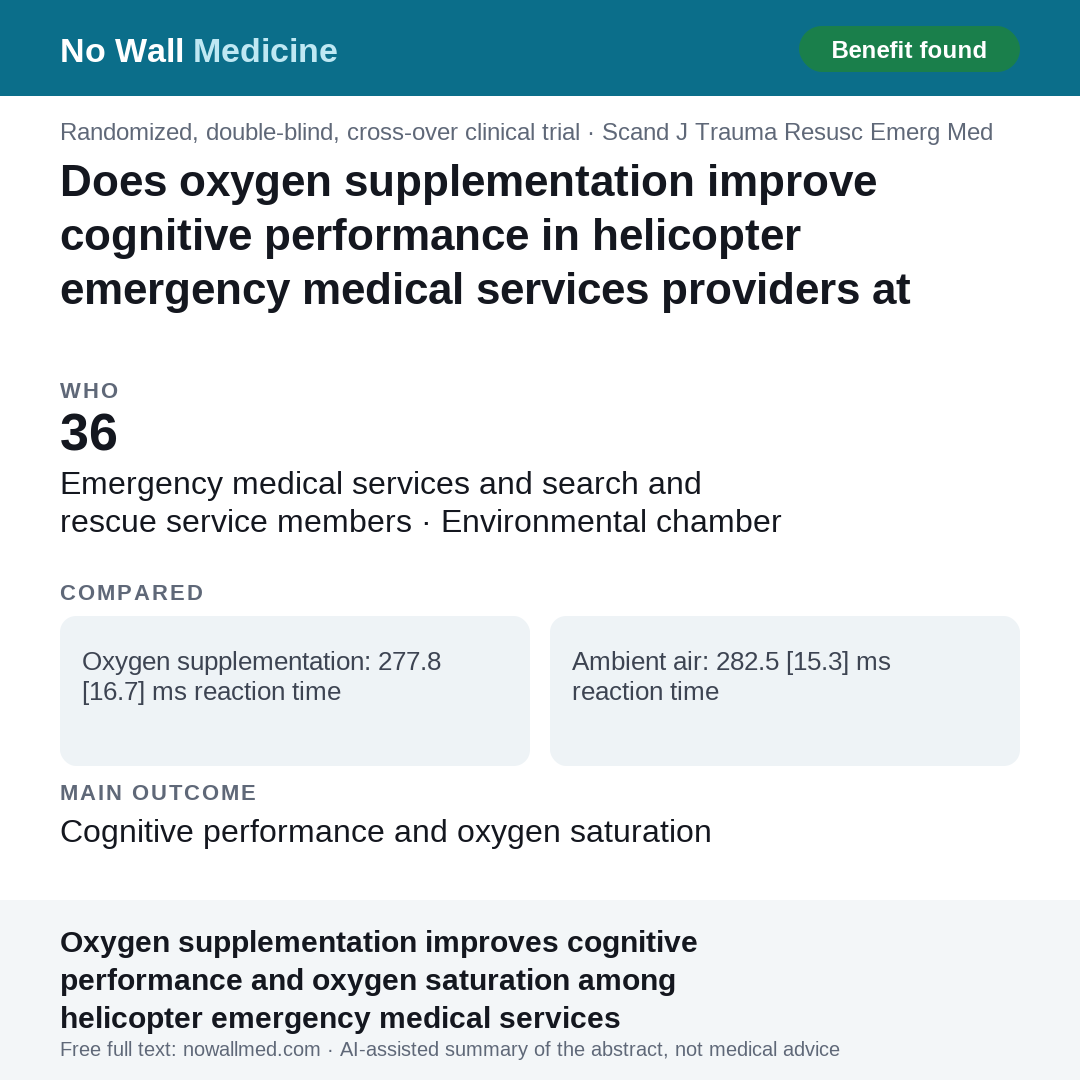
Effect of oxygen supplementation on cognitive performance among HEMS providers after acute exposure to altitude: the HEMS II randomized clinical trial
Randomized, double-blind, cross-over clinical trialBenefit found
Does oxygen supplementation improve cognitive performance in helicopter emergency medical services providers at altitude?
Who
36
Emergency medical services and search and rescue service members · Environmental chamber simulating 4000 m altitude
Compared
Oxygen supplementation: 277.8 [16.7] ms reaction time
Ambient air: 282.5 [15.3] ms reaction time
Main outcome
Cognitive performance and oxygen saturation
Bottom line: Oxygen supplementation improves cognitive performance and oxygen saturation among helicopter emergency medical services providers during acute altitude exposure.
Limitation: Impact of repeated altitude ascents, sleep-deprivation, and additional stressors should be investigated.
Scand J Trauma Resusc Emerg Med · 2024-07-29Download image
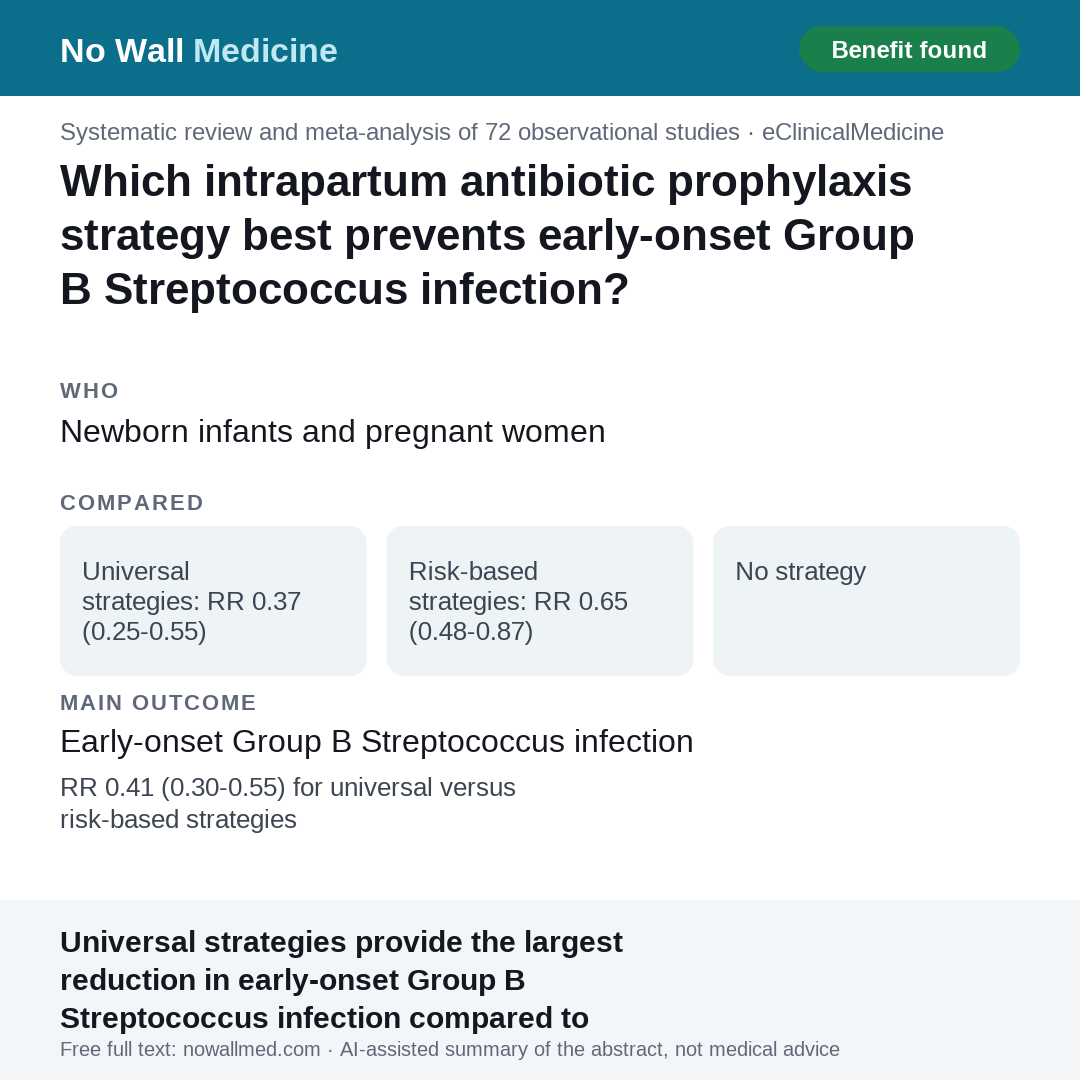
Intrapartum antibiotic prophylaxis to prevent Group B streptococcal infections in newborn infants: a systematic review and meta-analysis comparing various strategies
Systematic review and meta-analysis of 72 observational studiesBenefit found
Which intrapartum antibiotic prophylaxis strategy best prevents early-onset Group B Streptococcus infection?
Who
Newborn infants and pregnant women
Compared
Universal strategies: RR 0.37 (0.25-0.55)
Risk-based strategies: RR 0.65 (0.48-0.87)
No strategy
Main outcome
Early-onset Group B Streptococcus infection
Result: RR 0.41 (0.30-0.55) for universal versus risk-based strategies
Bottom line: Universal strategies provide the largest reduction in early-onset Group B Streptococcus infection compared to risk-based strategies.
Funded by: UNDP-UNFPA-UNICEF-WHO-World Bank Special Programme
eClinicalMedicine · 2024-07-28Download image
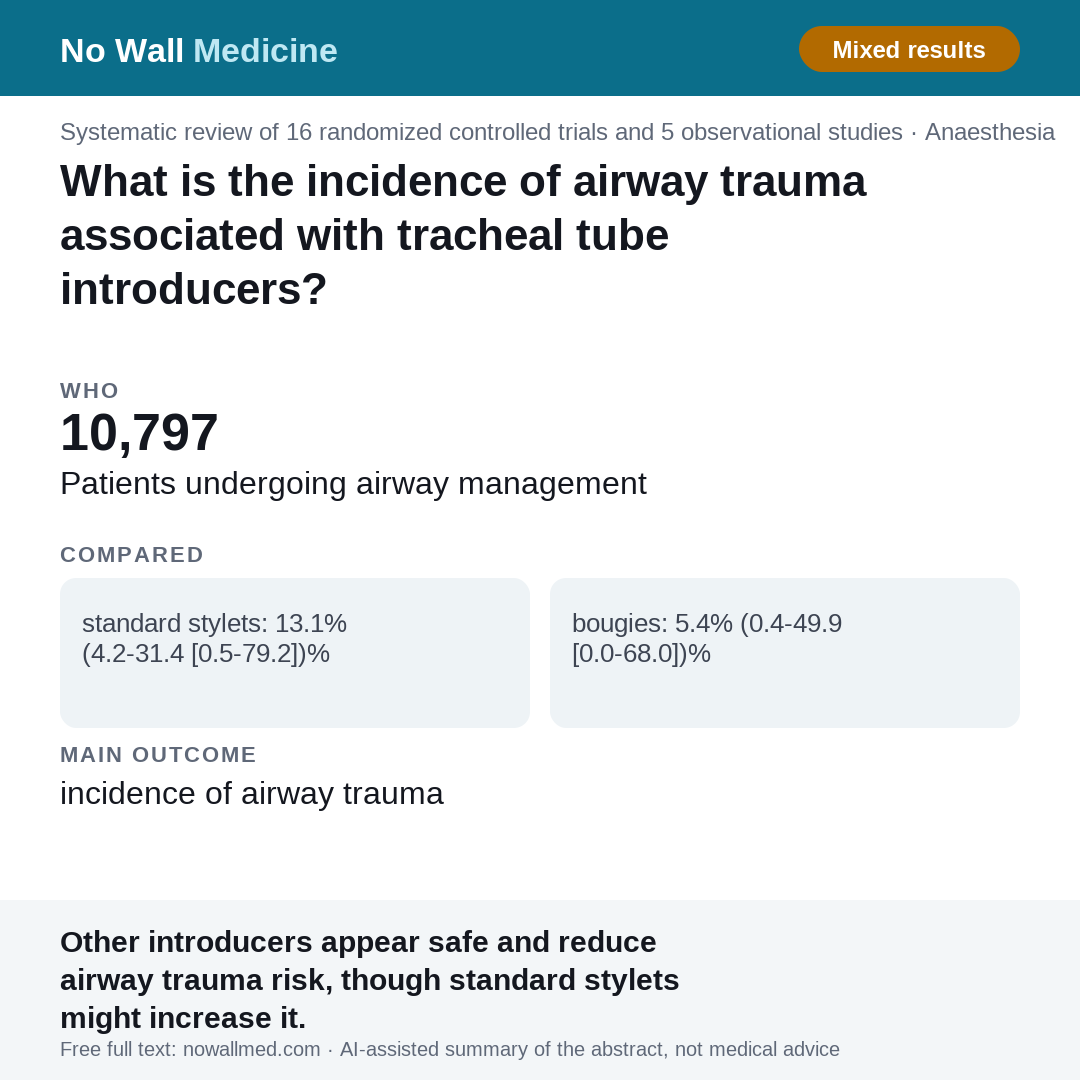
Tracheal tube introducer-associated airway trauma: a systematic review
Systematic review of 16 randomized controlled trials and 5 observational studiesMixed results
What is the incidence of airway trauma associated with tracheal tube introducers?
Who
10,797
Patients undergoing airway management
Compared
standard stylets: 13.1% (4.2-31.4 [0.5-79.2])%
bougies: 5.4% (0.4-49.9 [0.0-68.0])%
Main outcome
incidence of airway trauma
Bottom line: Other introducers appear safe and reduce airway trauma risk, though standard stylets might increase it.
Limitation: Heterogeneity in patient characteristics and high risk of bias in many randomized trials.
Anaesthesia · 2024-07-28Download image
Perceptions and experiences of clinicians and correctional officers facilitating palliative care for people in prison: A systematic review and meta-synthesis
Systematic review and meta-synthesisUnclear result
Palliative care in prison experiences
Who
clinicians and correctional officers
Compared
clinicians
correctional officers
Main outcome
palliative care experiences
Bottom line: Palliative care in prison is complex
Palliat Med · 2024-07-28Download image

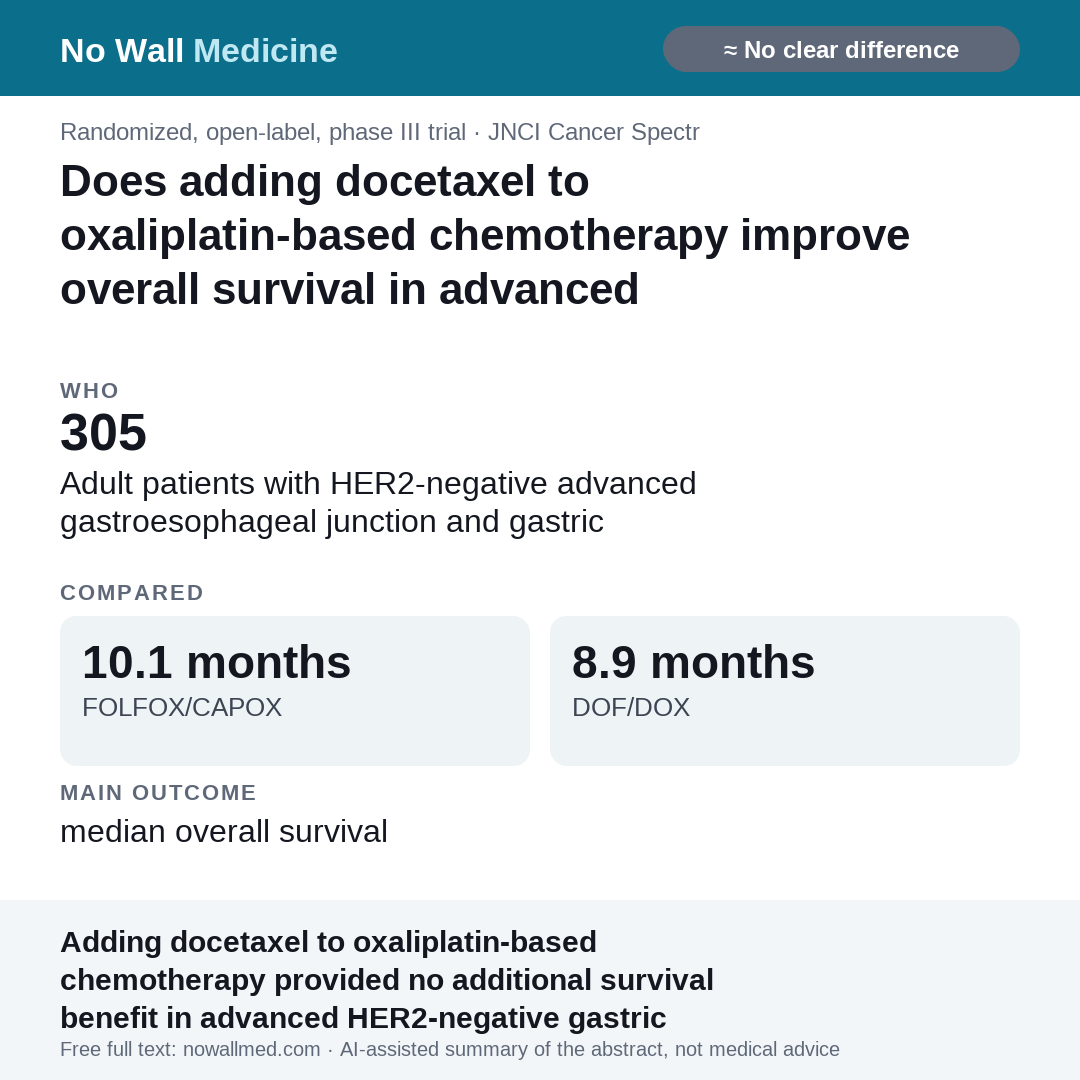
Docetaxel-oxaliplatin-capecitabine/5-fluorouracil (DOX/F) followed by docetaxel versus oxaliplatin-capecitabine/5-fluorouracil (CAPOX/FOLFOX) in HER2-negative advanced gastric cancers
Randomized, open-label, phase III trialNo clear difference
Does adding docetaxel to oxaliplatin-based chemotherapy improve overall survival in advanced HER2-negative gastric cancers?
Who
305
Adult patients with HER2-negative advanced gastroesophageal junction and gastric adenocarcinomas · multi-institutional
Compared
10.1 monthsFOLFOX/CAPOX (95% CI 9.2 to 10.9)
8.9 monthsDOF/DOX (95% CI 7.3 to 10.5)
Main outcome
median overall survival
Bottom line: Adding docetaxel to oxaliplatin-based chemotherapy provided no additional survival benefit in advanced HER2-negative gastric cancers.
JNCI Cancer Spectr · 2024-07-28Download image
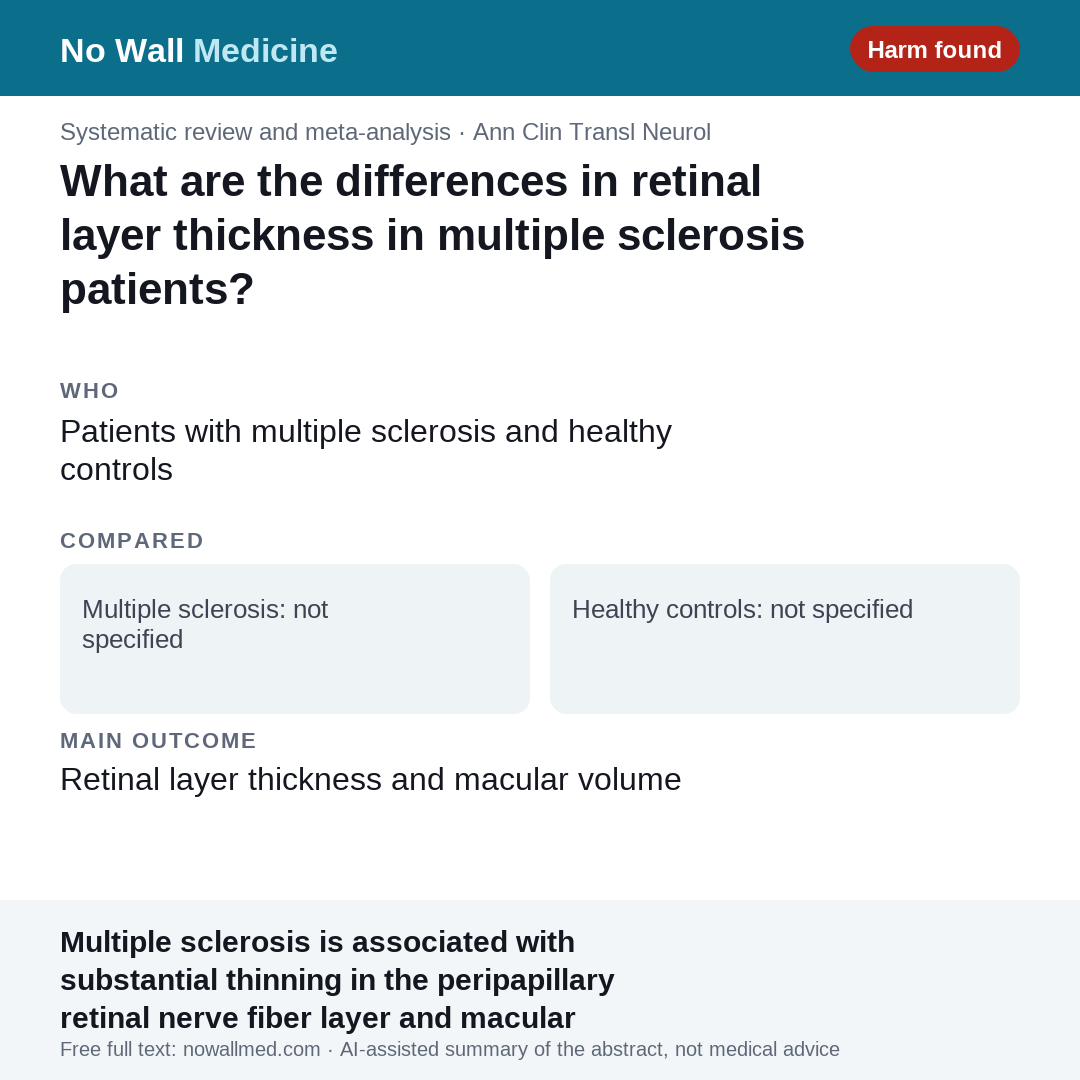
Retinal optical coherence tomography measures in multiple sclerosis: a systematic review and meta-analysis
Systematic review and meta-analysisHarm found
What are the differences in retinal layer thickness in multiple sclerosis patients?
Who
Patients with multiple sclerosis and healthy controls
Compared
Multiple sclerosis: not specified
Healthy controls: not specified
Main outcome
Retinal layer thickness and macular volume
Bottom line: Multiple sclerosis is associated with substantial thinning in the peripapillary retinal nerve fiber layer and macular ganglion cell layer.
Ann Clin Transl Neurol · 2024-07-28Download image
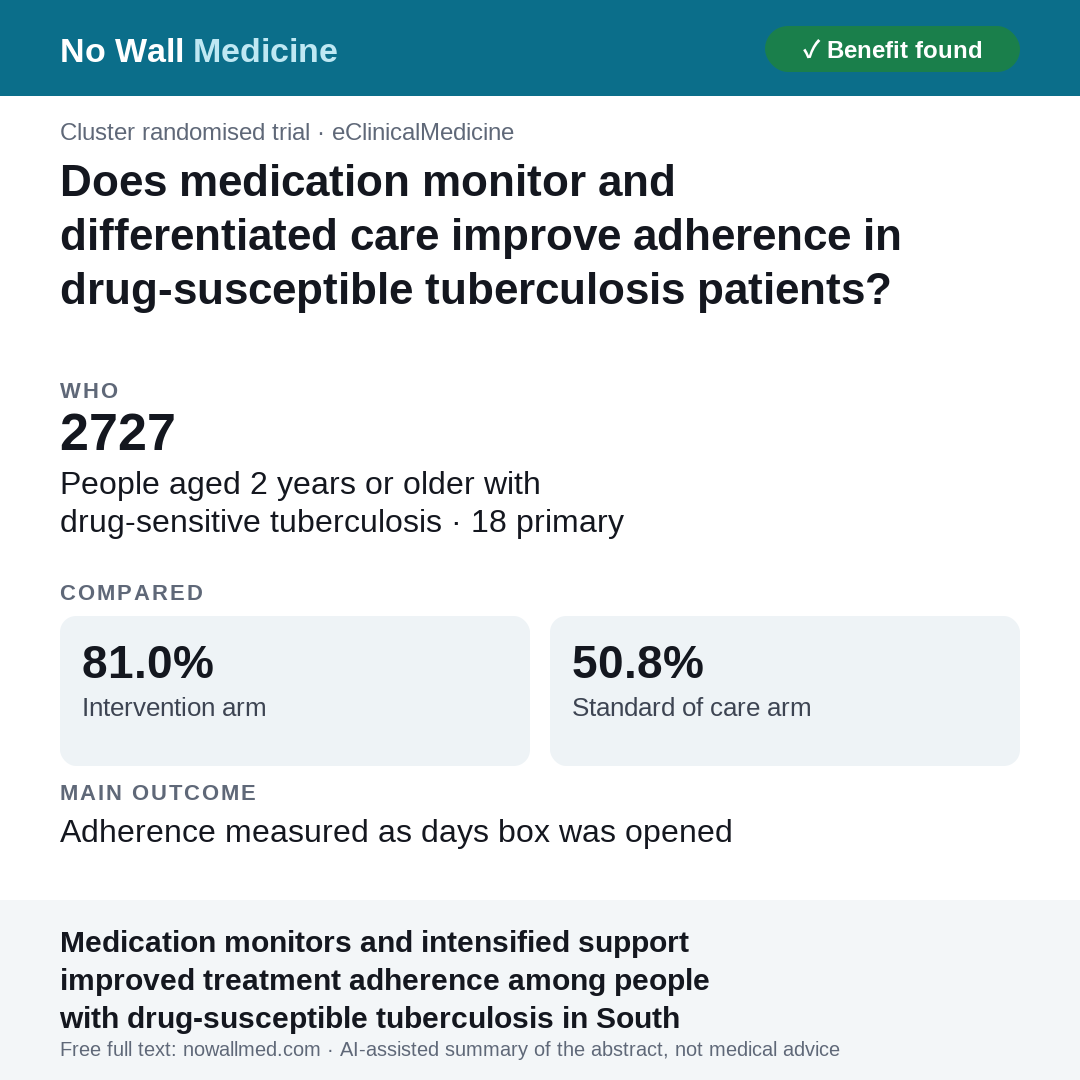
Treatment adherence and clinical outcomes amongst in people with drug-susceptible tuberculosis using medication monitor and differentiated care approach compared with standard of care in South Africa: a cluster randomized trial
Cluster randomised trialBenefit found
Does medication monitor and differentiated care improve adherence in drug-susceptible tuberculosis patients?
Who
2727
People aged 2 years or older with drug-sensitive tuberculosis · 18 primary health clinics in South Africa
Compared
81.0%Intervention arm
50.8%Standard of care arm
Main outcome
Adherence measured as days box was opened
Result: adjusted risk ratio 1.51 (1.36-1.66)
Bottom line: Medication monitors and intensified support improved treatment adherence among people with drug-susceptible tuberculosis in South Africa.
Funded by: Bill & Melinda Gates Foundation, Stop TB Partnership, South African Medical Research Council
eClinicalMedicine · 2024-07-27Download image
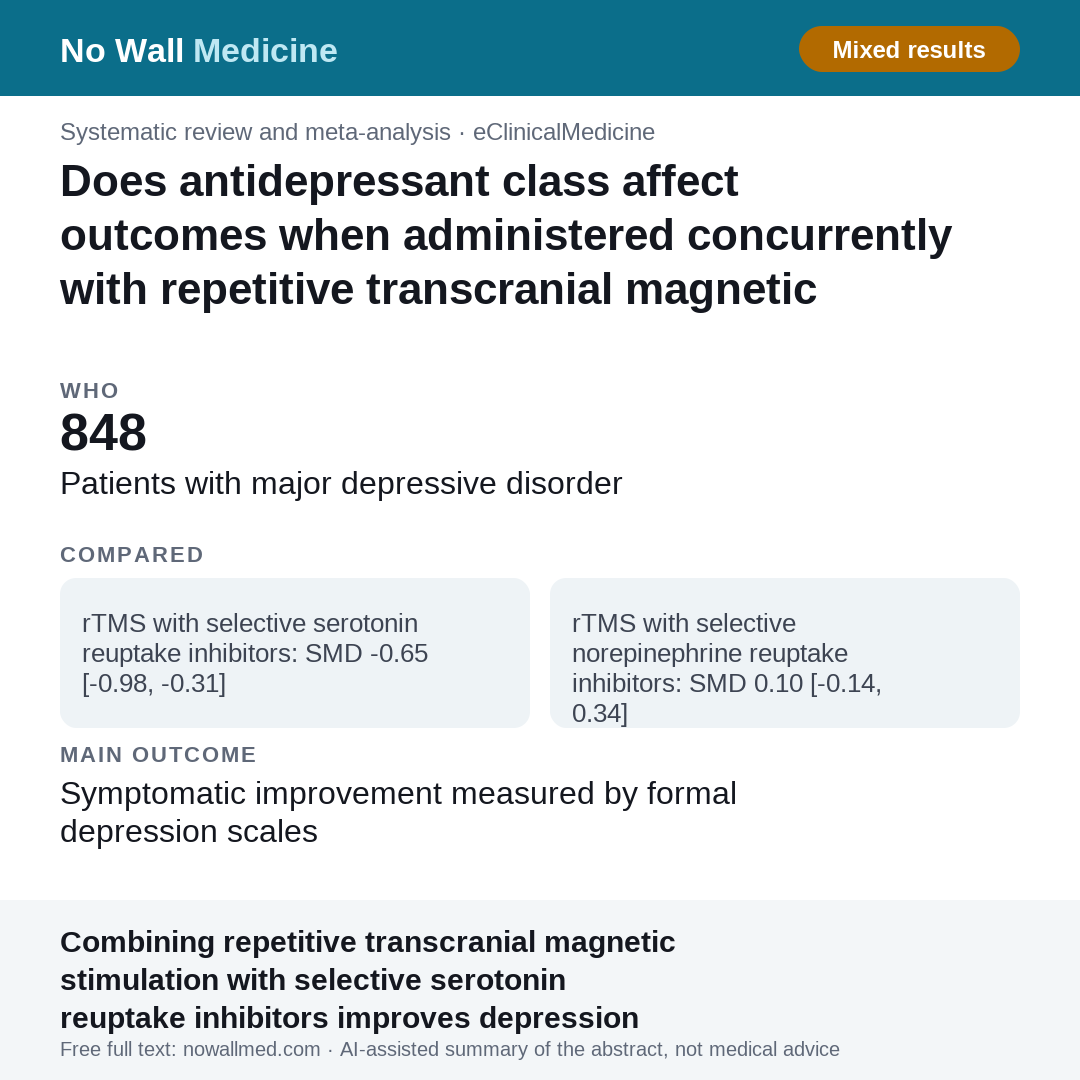
Antidepressant class and concurrent rTMS outcomes in major depressive disorder: a systematic review and meta-analysis
Systematic review and meta-analysisMixed results
Does antidepressant class affect outcomes when administered concurrently with repetitive transcranial magnetic stimulation?
Who
848
Patients with major depressive disorder
Compared
rTMS with selective serotonin reuptake inhibitors: SMD -0.65 [-0.98, -0.31]
rTMS with selective norepinephrine reuptake inhibitors: SMD 0.10 [-0.14, 0.34]
Main outcome
Symptomatic improvement measured by formal depression scales
Result: SMD -0.65 [-0.98, -0.31] for SSRIs
Bottom line: Combining repetitive transcranial magnetic stimulation with selective serotonin reuptake inhibitors improves depression scores, but selective norepinephrine reuptake inhibitors show no additive benefit.
Limitation: Some analyses demonstrated high heterogeneity, influenced by an SSRI trial with a high effect size.
Funded by: Sandra Black Centre for Brain Resilience & Recovery and Sunnybrook Foundation
eClinicalMedicine · 2024-07-27Download image
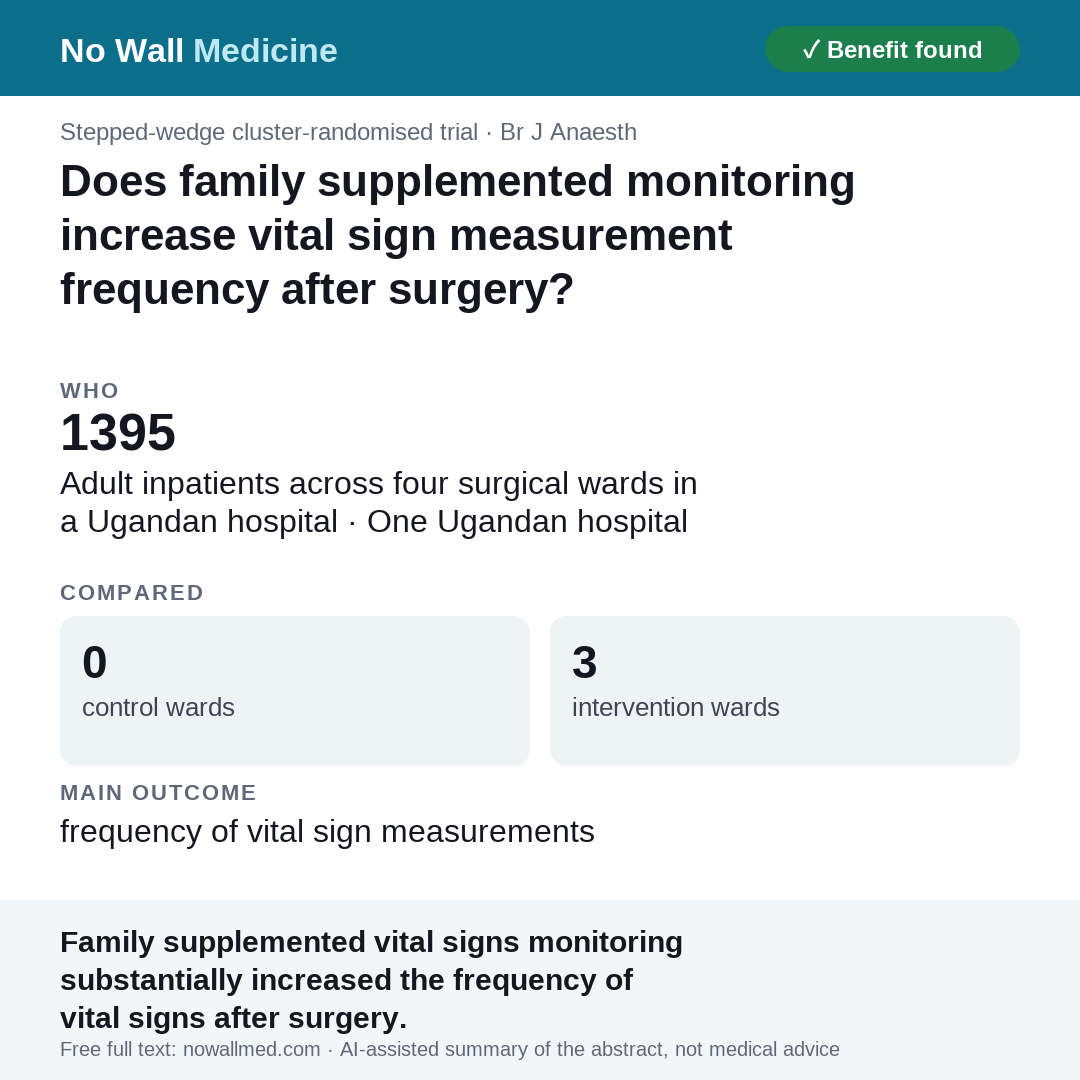
Family supplemented patient monitoring after surgery (SMARTER): a pilot stepped-wedge cluster-randomised trial
Stepped-wedge cluster-randomised trialBenefit found
Does family supplemented monitoring increase vital sign measurement frequency after surgery?
Who
1395
Adult inpatients across four surgical wards in a Ugandan hospital · One Ugandan hospital
Compared
0control wards (0-1)
3intervention wards (1-8)
Main outcome
frequency of vital sign measurements
Result: incident rate ratio 12.4, 95% confidence interval 8.8-17.5
Bottom line: Family supplemented vital signs monitoring substantially increased the frequency of vital signs after surgery.
Br J Anaesth · 2024-07-27Download image
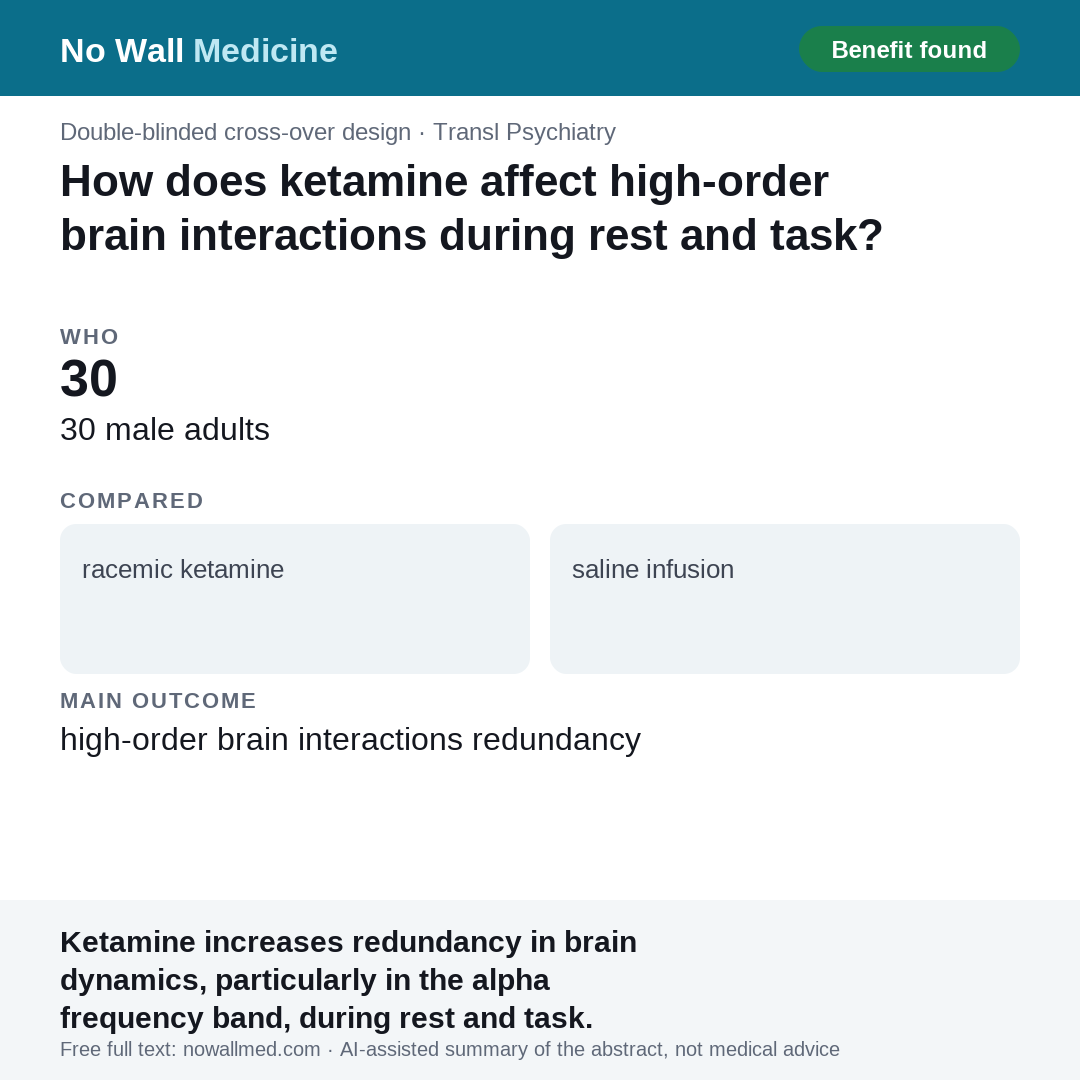
High-order brain interactions in ketamine during rest and task: a double-blinded cross-over design using portable EEG on male participants
Double-blinded cross-over designBenefit found
How does ketamine affect high-order brain interactions during rest and task?
Who
30
30 male adults
Compared
racemic ketamine
saline infusion
Main outcome
high-order brain interactions redundancy
Bottom line: Ketamine increases redundancy in brain dynamics, particularly in the alpha frequency band, during rest and task.
Transl Psychiatry · 2024-07-27Download image
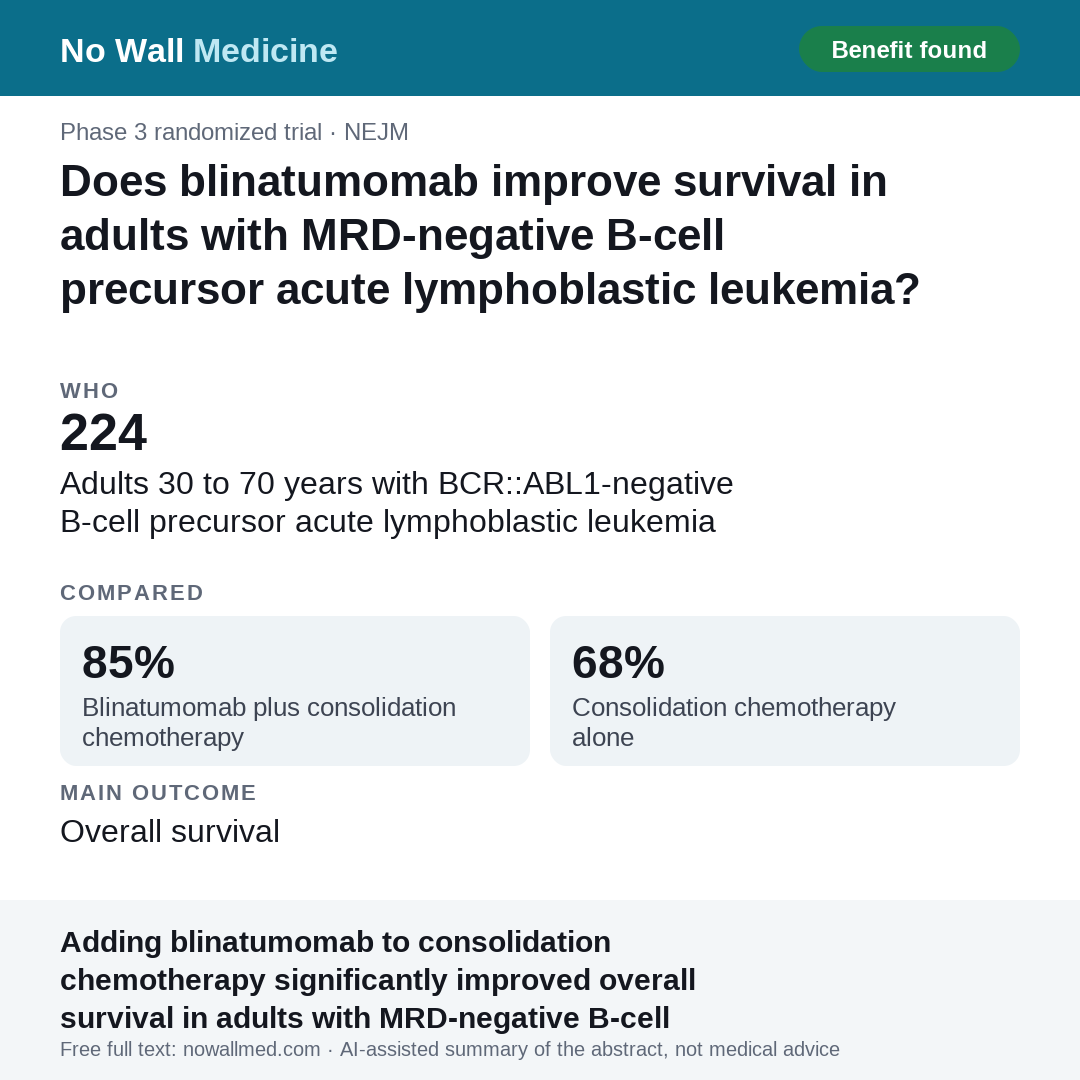
Blinatumomab for MRD-Negative Acute Lymphoblastic Leukemia in Adults
Phase 3 randomized trialBenefit found
Does blinatumomab improve survival in adults with MRD-negative B-cell precursor acute lymphoblastic leukemia?
Who
224
Adults 30 to 70 years with BCR::ABL1-negative B-cell precursor acute lymphoblastic leukemia
Compared
85%Blinatumomab plus consolidation chemotherapy (at 3 years)
68%Consolidation chemotherapy alone (at 3 years)
Main outcome
Overall survival
Result: hazard ratio for death, 0.41 (95% CI, 0.23 to 0.73)
Bottom line: Adding blinatumomab to consolidation chemotherapy significantly improved overall survival in adults with MRD-negative B-cell precursor acute lymphoblastic leukemia.
Funded by: National Institutes of Health and others
NEJM · 2024-07-26Download image
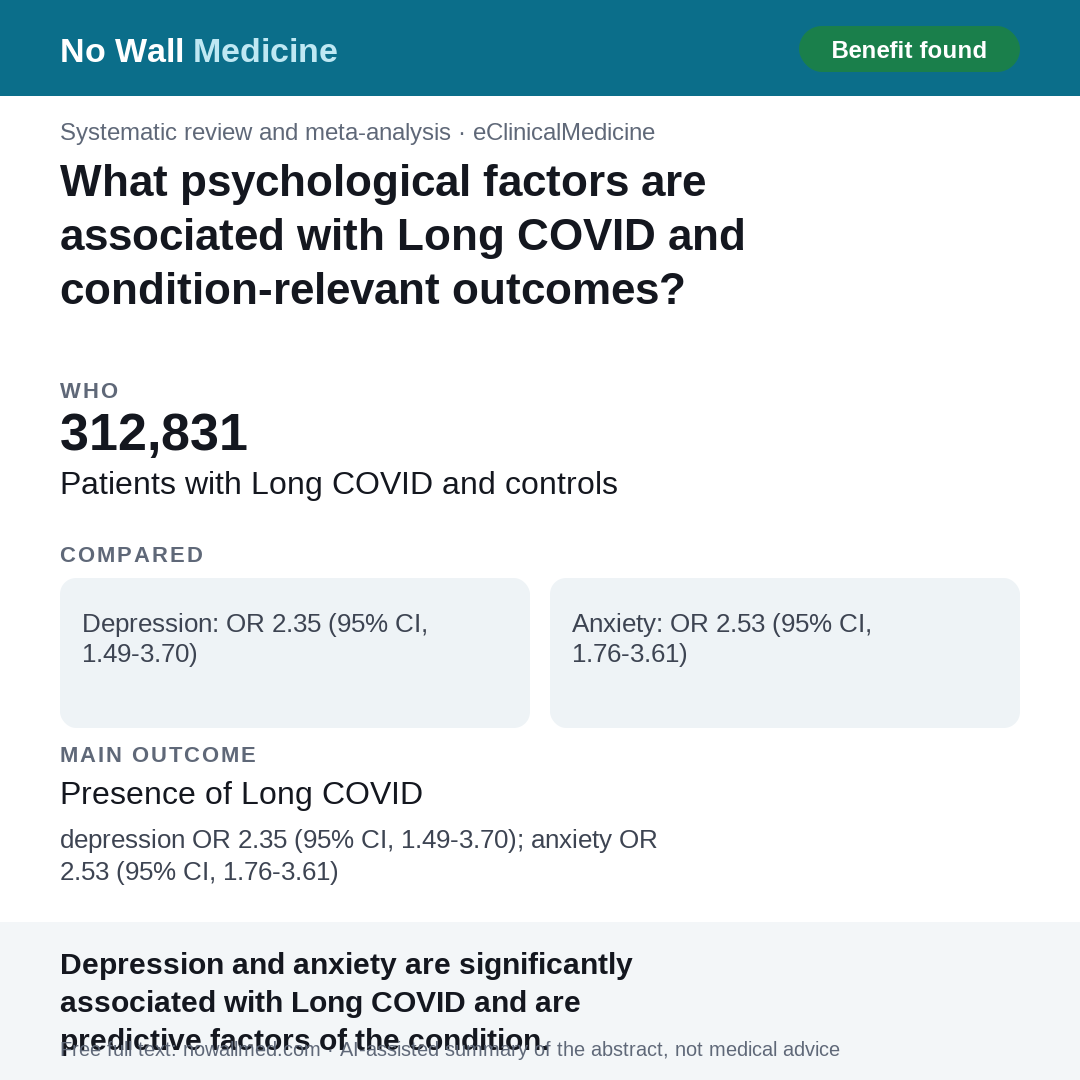
Psychological factors associated with Long COVID: a systematic review and meta-analysis
Systematic review and meta-analysisBenefit found
What psychological factors are associated with Long COVID and condition-relevant outcomes?
Who
312,831
Patients with Long COVID and controls
Compared
Depression: OR 2.35 (95% CI, 1.49-3.70)
Anxiety: OR 2.53 (95% CI, 1.76-3.61)
Main outcome
Presence of Long COVID
Result: depression OR 2.35 (95% CI, 1.49-3.70); anxiety OR 2.53 (95% CI, 1.76-3.61)
Bottom line: Depression and anxiety are significantly associated with Long COVID and are predictive factors of the condition.
Limitation: Psychological constructs like emotion regulation and dysfunctional symptom expectations are so far understudied.
eClinicalMedicine · 2024-07-26Download image
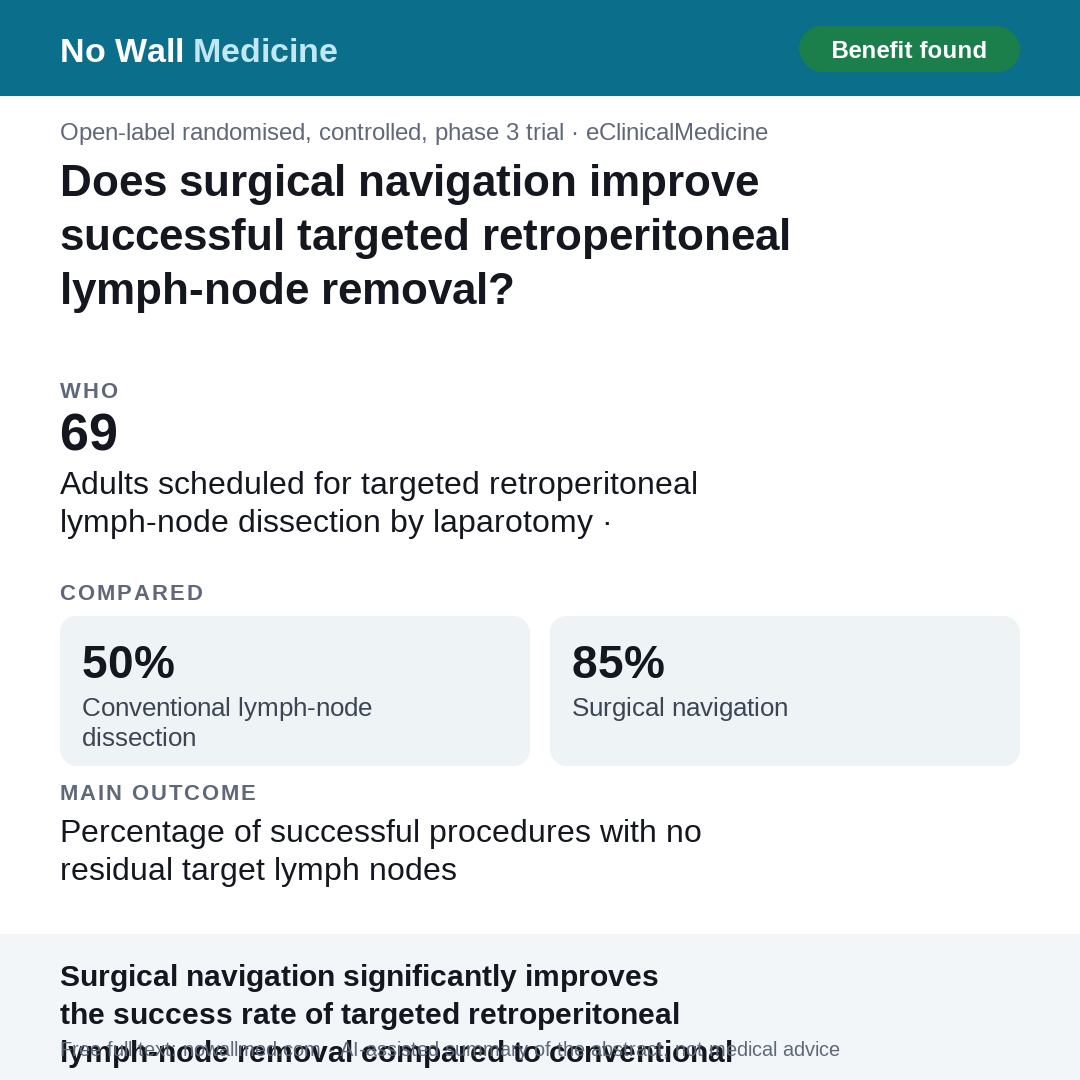
Surgical navigation for targeted retroperitoneal lymph-node removal: a randomised, controlled, phase 3 trial
Open-label randomised, controlled, phase 3 trialBenefit found
Does surgical navigation improve successful targeted retroperitoneal lymph-node removal?
Who
69
Adults scheduled for targeted retroperitoneal lymph-node dissection by laparotomy · Netherlands Cancer Institute, Amsterdam
Compared
50%Conventional lymph-node dissection (16/32)
85%Surgical navigation (28/33)
Main outcome
Percentage of successful procedures with no residual target lymph nodes
Result: one-tailed p = 0.0028, 90% CI: 14%-56%
Bottom line: Surgical navigation significantly improves the success rate of targeted retroperitoneal lymph-node removal compared to conventional methods.
Funded by: KWF-Alpe d'HuZes, The Dutch Cancer Society, Dutch Ministry of Health
eClinicalMedicine · 2024-07-26Download image
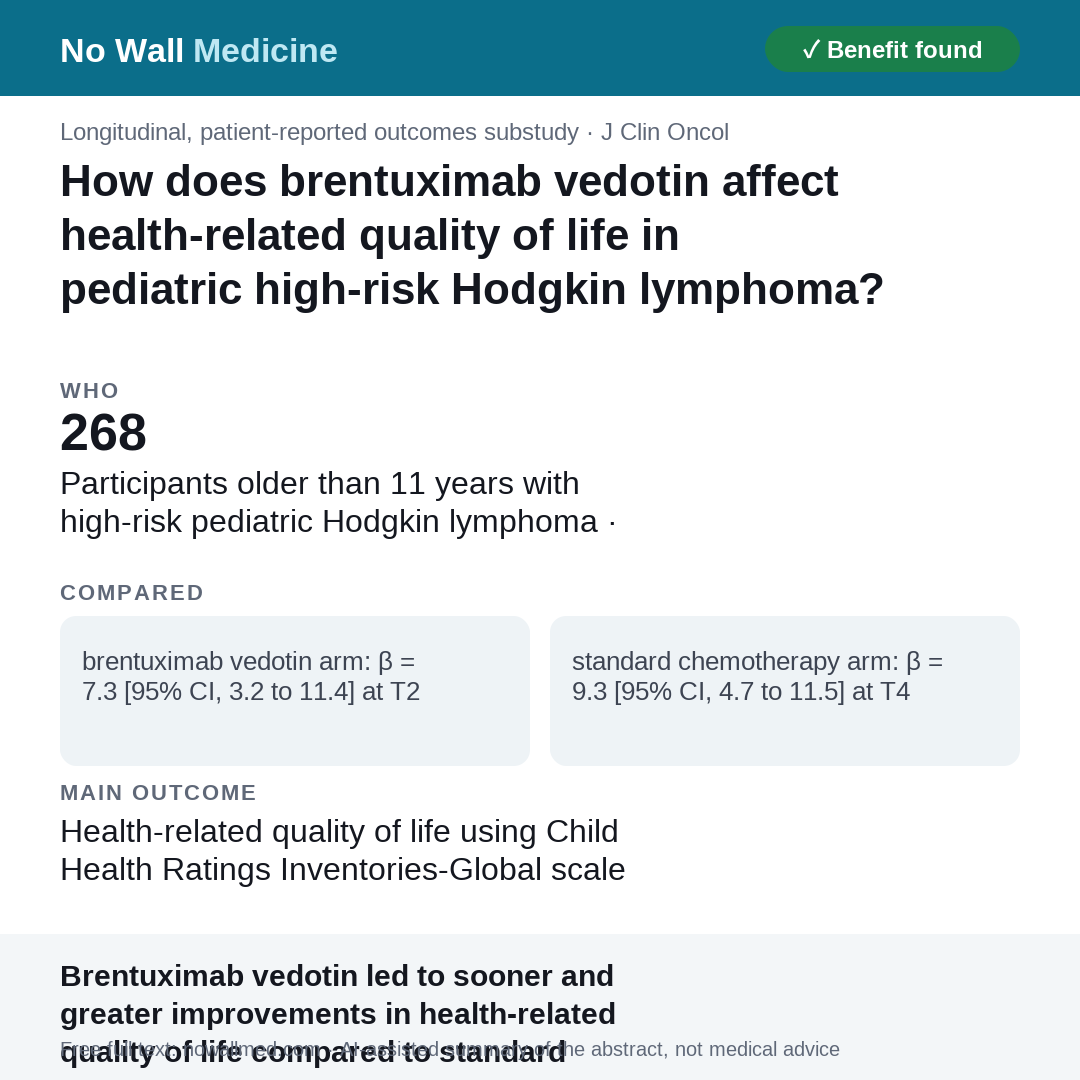
Longitudinal Health-Related Quality of Life Among Patients With High-Risk Pediatric Hodgkin Lymphoma Treated on the Children's Oncology Group AHOD 1331 Study
Longitudinal, patient-reported outcomes substudyBenefit found
How does brentuximab vedotin affect health-related quality of life in pediatric high-risk Hodgkin lymphoma?
Who
268
Participants older than 11 years with high-risk pediatric Hodgkin lymphoma · Children's Oncology Group AHOD 1331 study
Compared
brentuximab vedotin arm: β = 7.3 [95% CI, 3.2 to 11.4] at T2
standard chemotherapy arm: β = 9.3 [95% CI, 4.7 to 11.5] at T4
Main outcome
Health-related quality of life using Child Health Ratings Inventories-Global scale
Result: difference in change β = 5.1 [95% CI, -0.2 to 10.3]
Bottom line: Brentuximab vedotin led to sooner and greater improvements in health-related quality of life compared to standard chemotherapy.
J Clin Oncol · 2024-07-26Download image
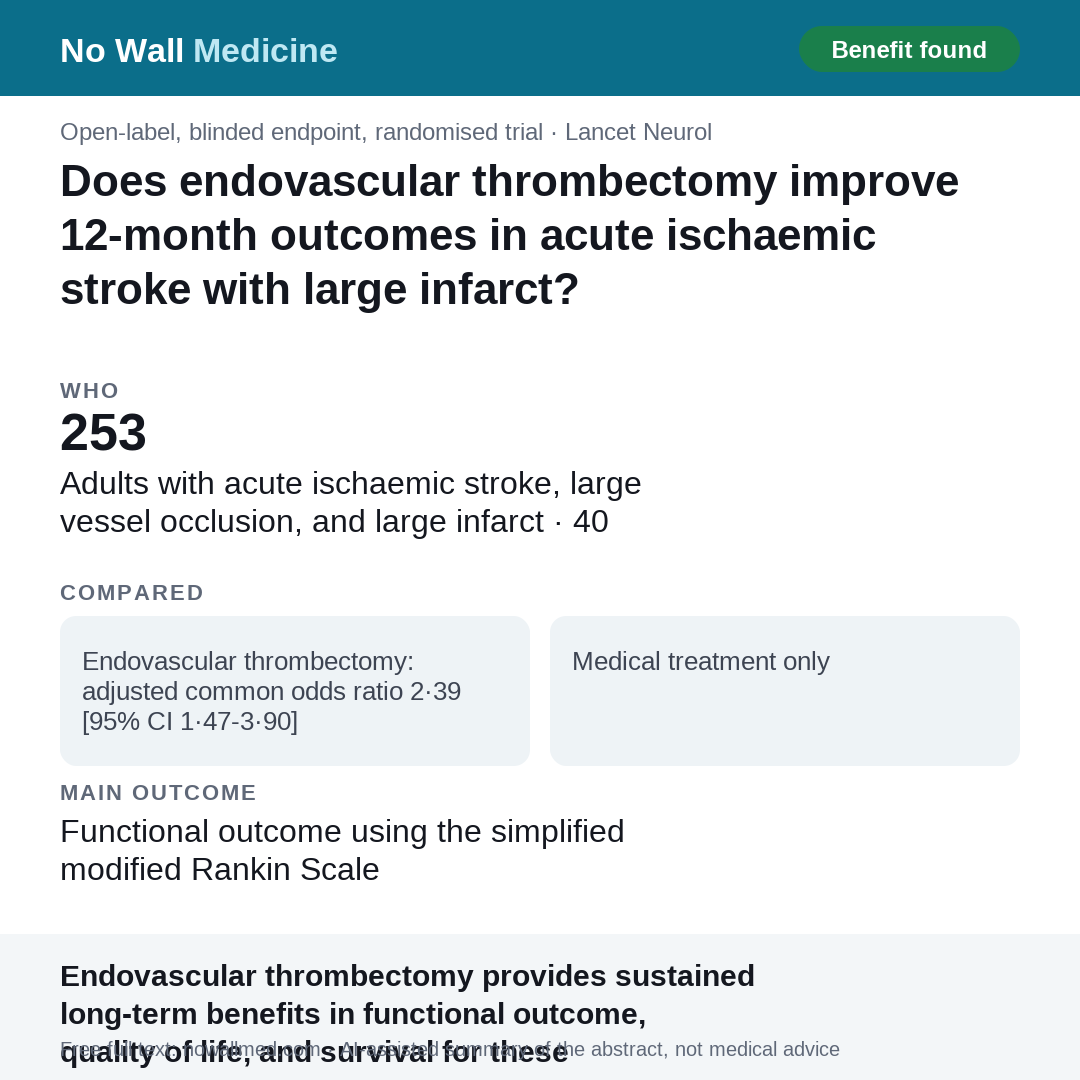
Endovascular thrombectomy for acute ischaemic stroke with established large infarct (TENSION): 12-month outcomes of a multicentre, open-label, randomised trial
Open-label, blinded endpoint, randomised trialBenefit found
Does endovascular thrombectomy improve 12-month outcomes in acute ischaemic stroke with large infarct?
Who
253
Adults with acute ischaemic stroke, large vessel occlusion, and large infarct · 40 hospitals in Europe and one in Canada
Compared
Endovascular thrombectomy: adjusted common odds ratio 2·39 [95% CI 1·47-3·90]
Medical treatment only
Main outcome
Functional outcome using the simplified modified Rankin Scale
Result: adjusted common odds ratio 2·39 (95% CI 1·47 to 3·90)
Bottom line: Endovascular thrombectomy provides sustained long-term benefits in functional outcome, quality of life, and survival for these patients.
Funded by: European Union Horizon 2020 Research and Innovation Programme
Lancet Neurol · 2024-07-26Download image
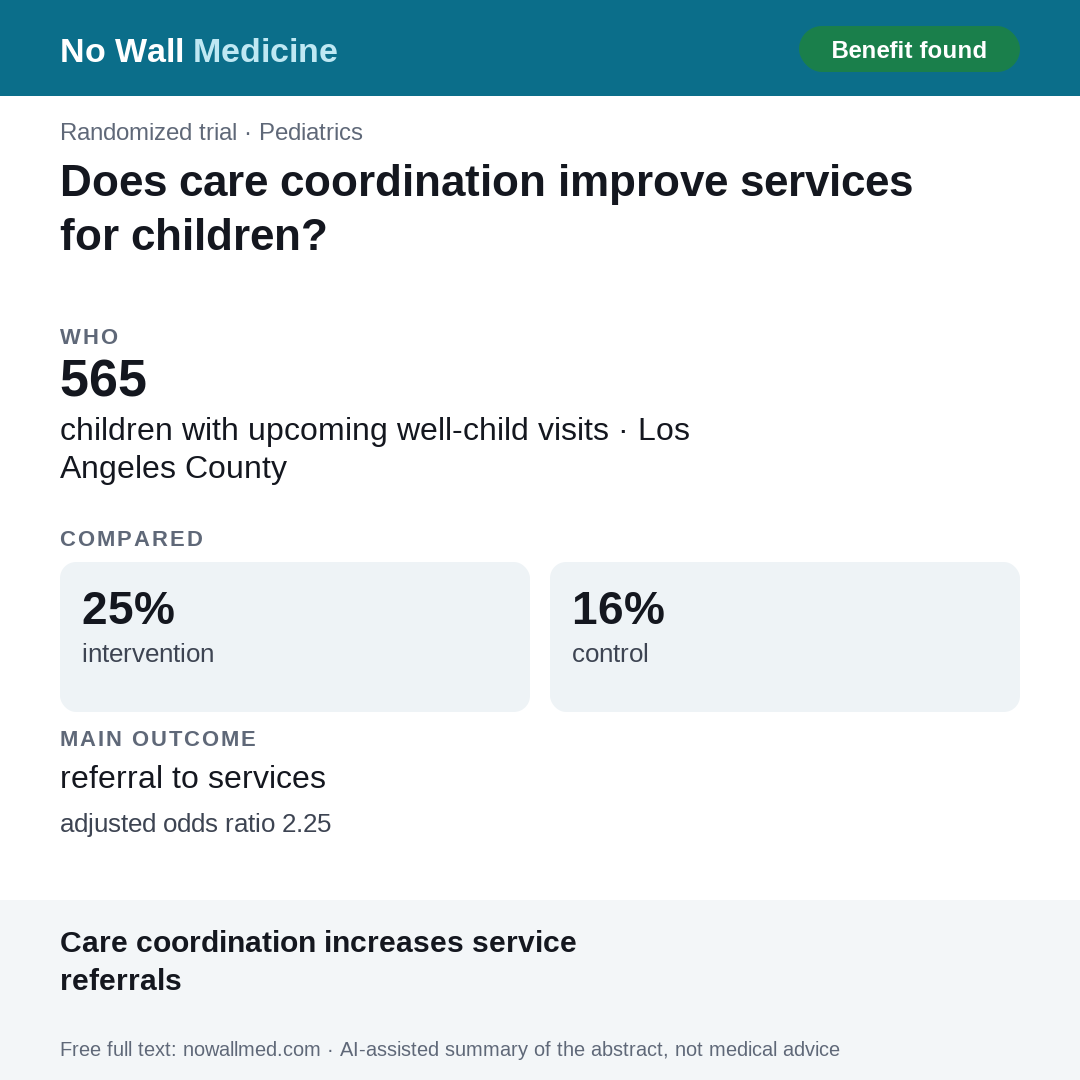
Early Childhood Care Coordination Through 211: A Randomized Clinical Trial
Randomized trialBenefit found
Does care coordination improve services for children?
Who
565
children with upcoming well-child visits · Los Angeles County
Compared
25%intervention
16%control
Main outcome
referral to services
Result: adjusted odds ratio 2.25
Bottom line: Care coordination increases service referrals
Pediatrics · 2024-07-26Download image
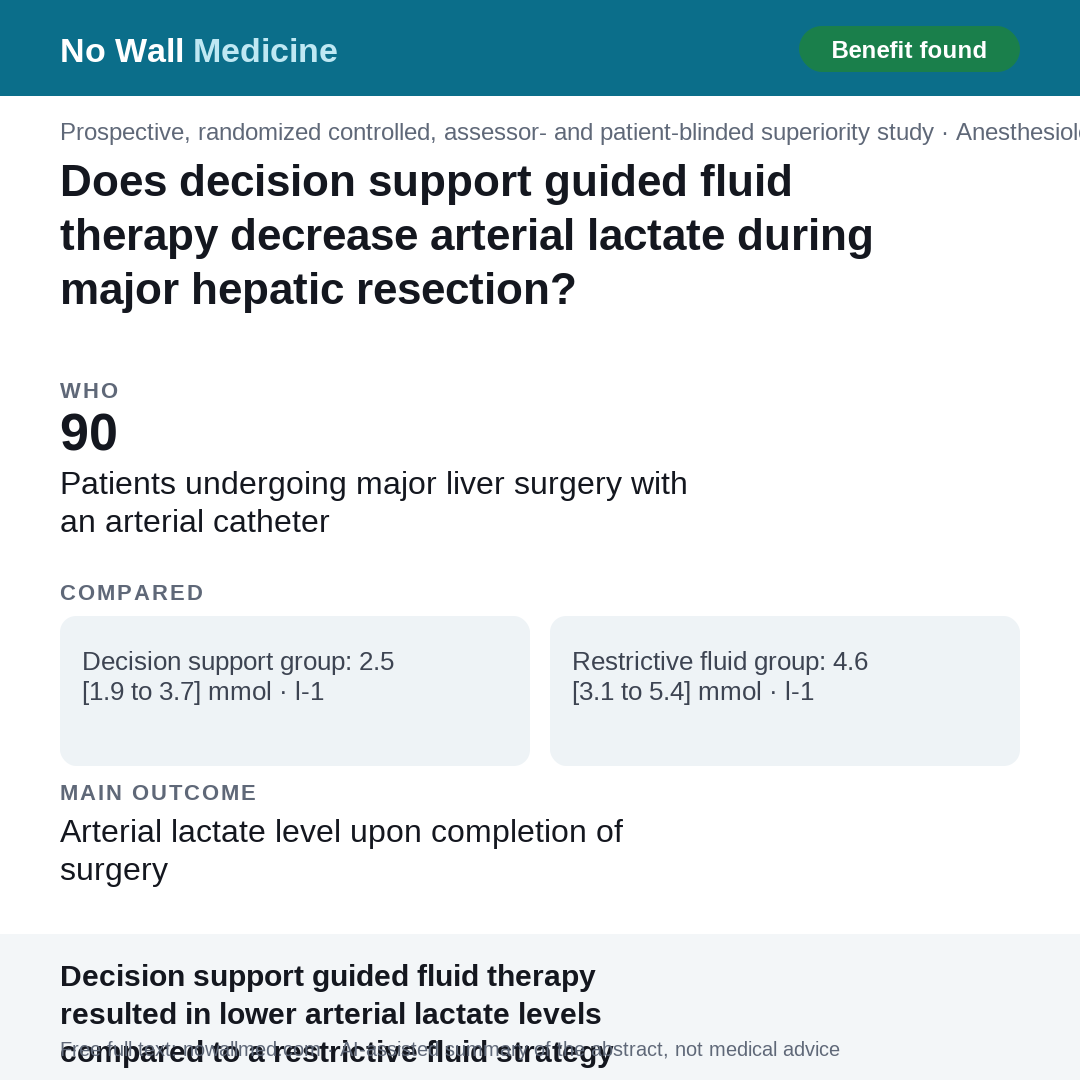
Restrictive versus Decision Support Guided Fluid Therapy during Major Hepatic Resection Surgery: A Randomized Controlled Trial
Prospective, randomized controlled, assessor- and patient-blinded superiority studyBenefit found
Does decision support guided fluid therapy decrease arterial lactate during major hepatic resection?
Who
90
Patients undergoing major liver surgery with an arterial catheter
Compared
Decision support group: 2.5 [1.9 to 3.7] mmol · l-1
Restrictive fluid group: 4.6 [3.1 to 5.4] mmol · l-1
Main outcome
Arterial lactate level upon completion of surgery
Result: median difference, -2.1; 95% CI, -2.7 to -1.2
Bottom line: Decision support guided fluid therapy resulted in lower arterial lactate levels compared to a restrictive fluid strategy during major hepatic resection.
Limitation: Future trials are necessary to make conclusive recommendations that will change clinical practice.
Anesthesiology · 2024-07-26Download image
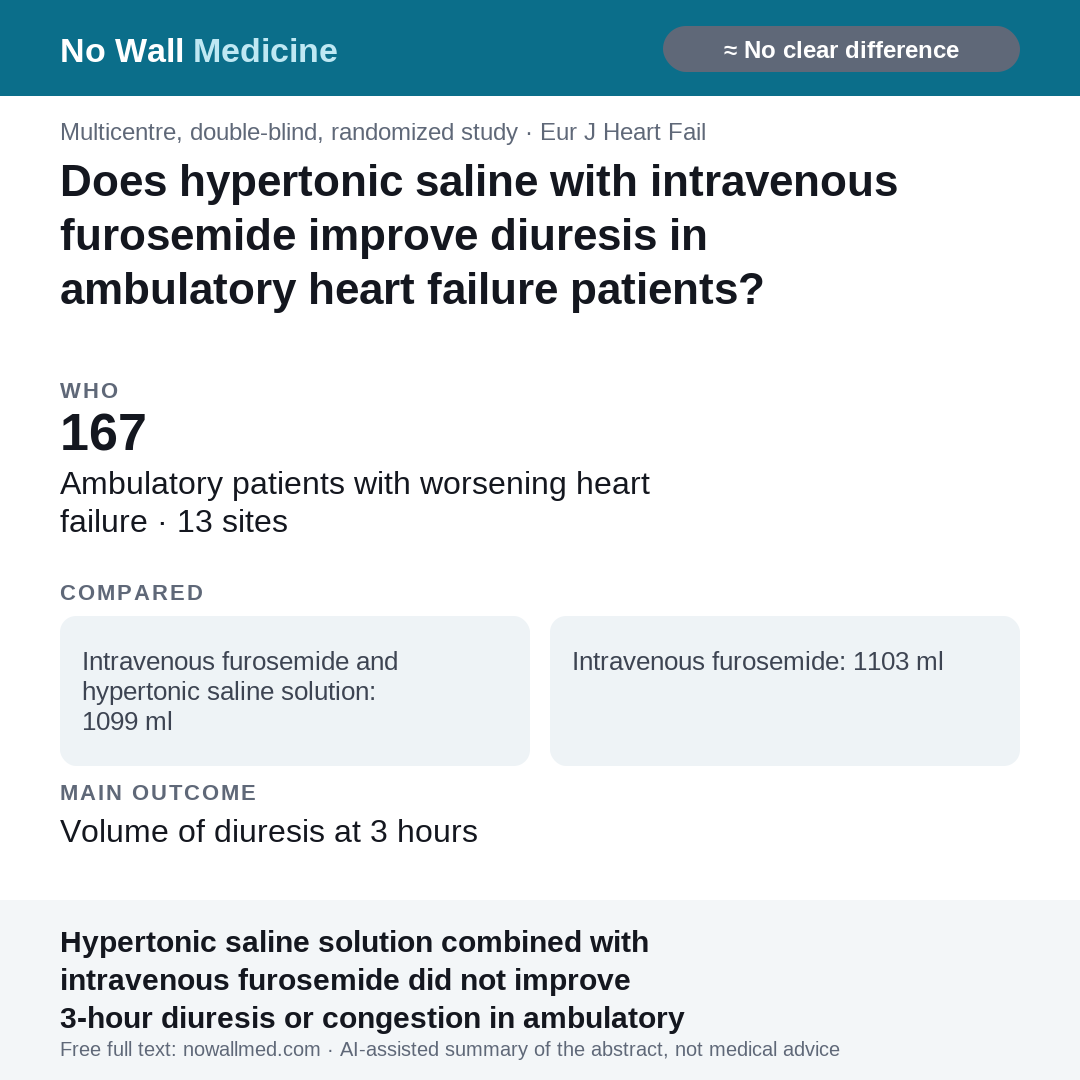
Efficacy and safety of hypertonic saline therapy in ambulatory patients with heart failure: The SALT-HF trial
Multicentre, double-blind, randomized studyNo clear difference
Does hypertonic saline with intravenous furosemide improve diuresis in ambulatory heart failure patients?
Who
167
Ambulatory patients with worsening heart failure · 13 sites
Compared
Intravenous furosemide and hypertonic saline solution: 1099 ml
Intravenous furosemide: 1103 ml
Main outcome
Volume of diuresis at 3 hours
Bottom line: Hypertonic saline solution combined with intravenous furosemide did not improve 3-hour diuresis or congestion in ambulatory patients.
Eur J Heart Fail · 2024-07-26Download image
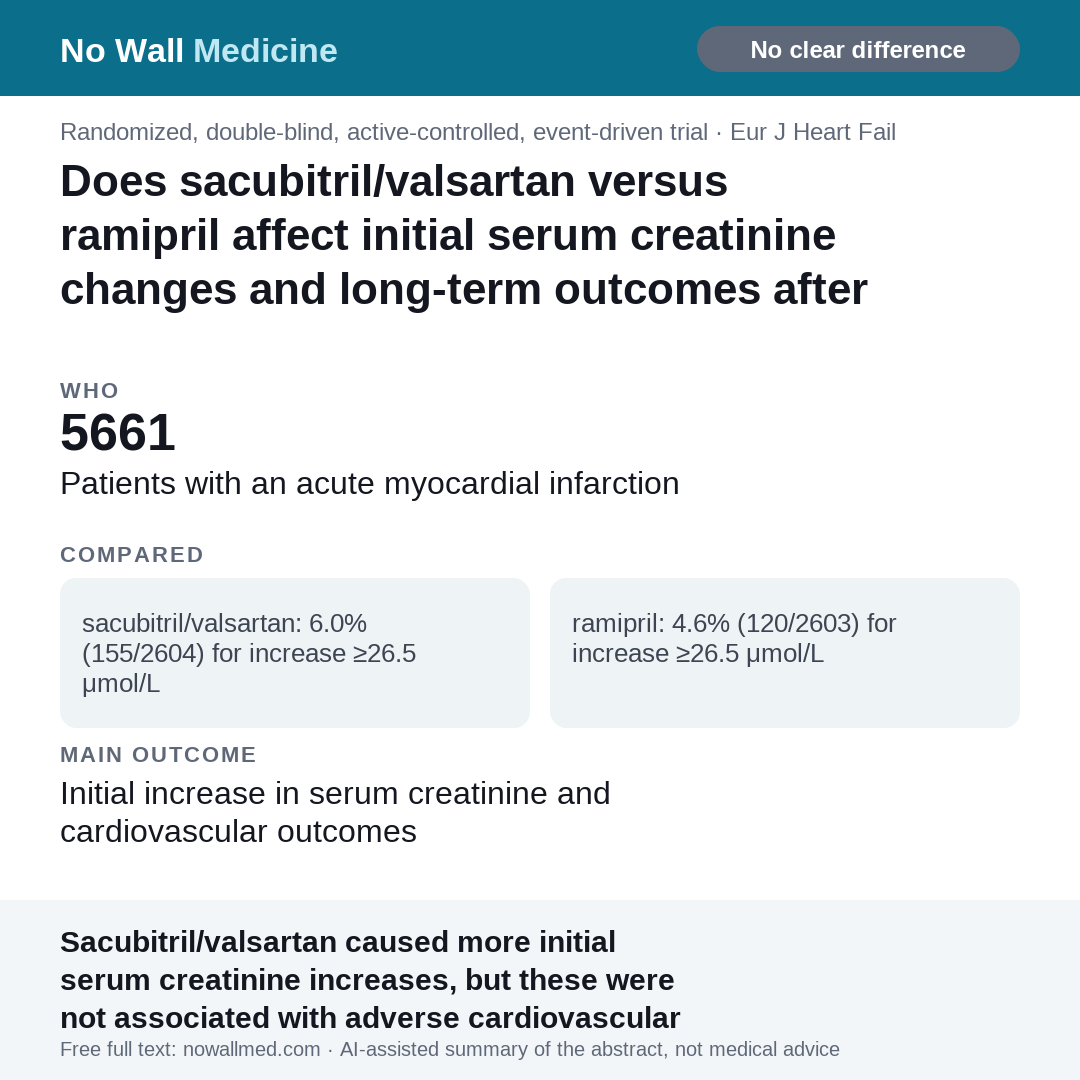
Acute changes in kidney function and outcomes following an acute myocardial infarction: Insights from PARADISE-MI
Randomized, double-blind, active-controlled, event-driven trialNo clear difference
Does sacubitril/valsartan versus ramipril affect initial serum creatinine changes and long-term outcomes after acute myocardial infarction?
Who
5661
Patients with an acute myocardial infarction
Compared
sacubitril/valsartan: 6.0% (155/2604) for increase ≥26.5 μmol/L
ramipril: 4.6% (120/2603) for increase ≥26.5 μmol/L
Main outcome
Initial increase in serum creatinine and cardiovascular outcomes
Result: odds ratio 1.32 (95% CI 1.03-1.68)
Bottom line: Sacubitril/valsartan caused more initial serum creatinine increases, but these were not associated with adverse cardiovascular or kidney outcomes.
Eur J Heart Fail · 2024-07-26Download image
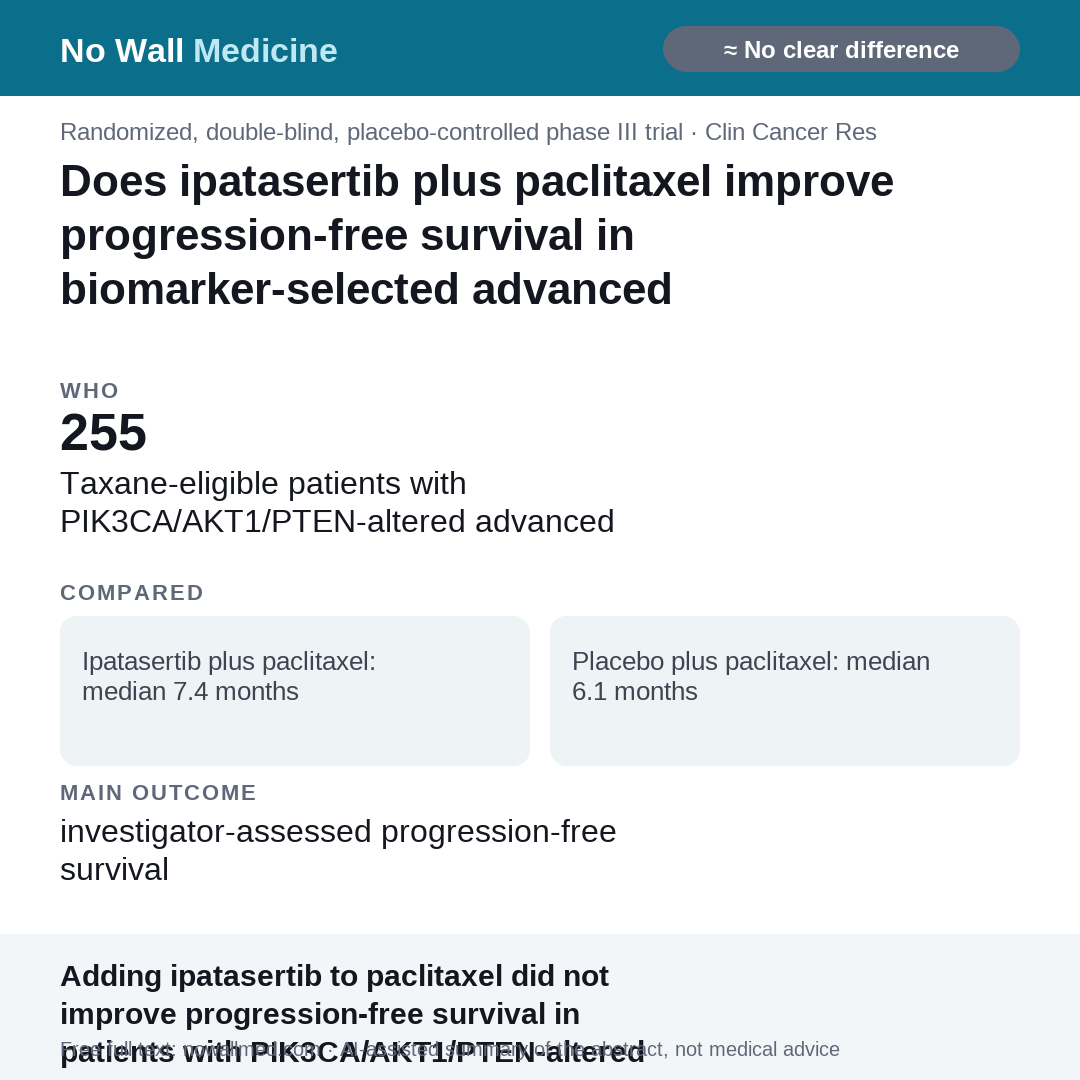
Ipatasertib plus Paclitaxel for Patients with PIK3CA/AKT1/PTEN-Altered Locally Advanced Unresectable or Metastatic Triple-Negative Breast Cancer in the IPATunity130 Phase III Trial
Randomized, double-blind, placebo-controlled phase III trialNo clear difference
Does ipatasertib plus paclitaxel improve progression-free survival in biomarker-selected advanced triple-negative breast cancer?
Who
255
Taxane-eligible patients with PIK3CA/AKT1/PTEN-altered advanced triple-negative breast cancer
Compared
Ipatasertib plus paclitaxel: median 7.4 months
Placebo plus paclitaxel: median 6.1 months
Main outcome
investigator-assessed progression-free survival
Result: hazard ratio 1.02 (95% CI 0.71-1.45)
Bottom line: Adding ipatasertib to paclitaxel did not improve progression-free survival in patients with PIK3CA/AKT1/PTEN-altered advanced triple-negative breast cancer.
Clin Cancer Res · 2024-07-26Download image