Visual abstracts
New randomized trials and meta-analyses from leading journals at a glance: who was studied, what was compared, and what was found. Every paper is free to read in full.
All specialtiesCardiology 4877Oncology 4138Gastroenterology & Hepatology 1942Infectious Disease 3837Neurology 1905Psychiatry & Mental Health 2273Pulmonology 2143Critical Care 1365Endocrinology & Diabetes 2580Pediatrics 2980Surgery 2558Orthopedics & Sports Medicine 931Neurosurgery 537Cardiothoracic & Vascular Surgery 674Plastic & Reconstructive Surgery 591Nephrology 1133Rheumatology 823Hematology 1109Dermatology 621Ophthalmology 543Obstetrics & Gynecology 1686Public & Global Health 1058Radiology & Imaging 648Anesthesiology 986Urology 764ENT (Otolaryngology) 503Emergency Medicine 511Allergy & Immunology 313Geriatrics 981Family Medicine & Primary Care 562Medical Genetics & Genomics 676Pathology & Laboratory Medicine 159Physical Medicine & Rehabilitation 757Palliative Care 444Nutrition 1588Digital Health & AI 2201General Medicine 321
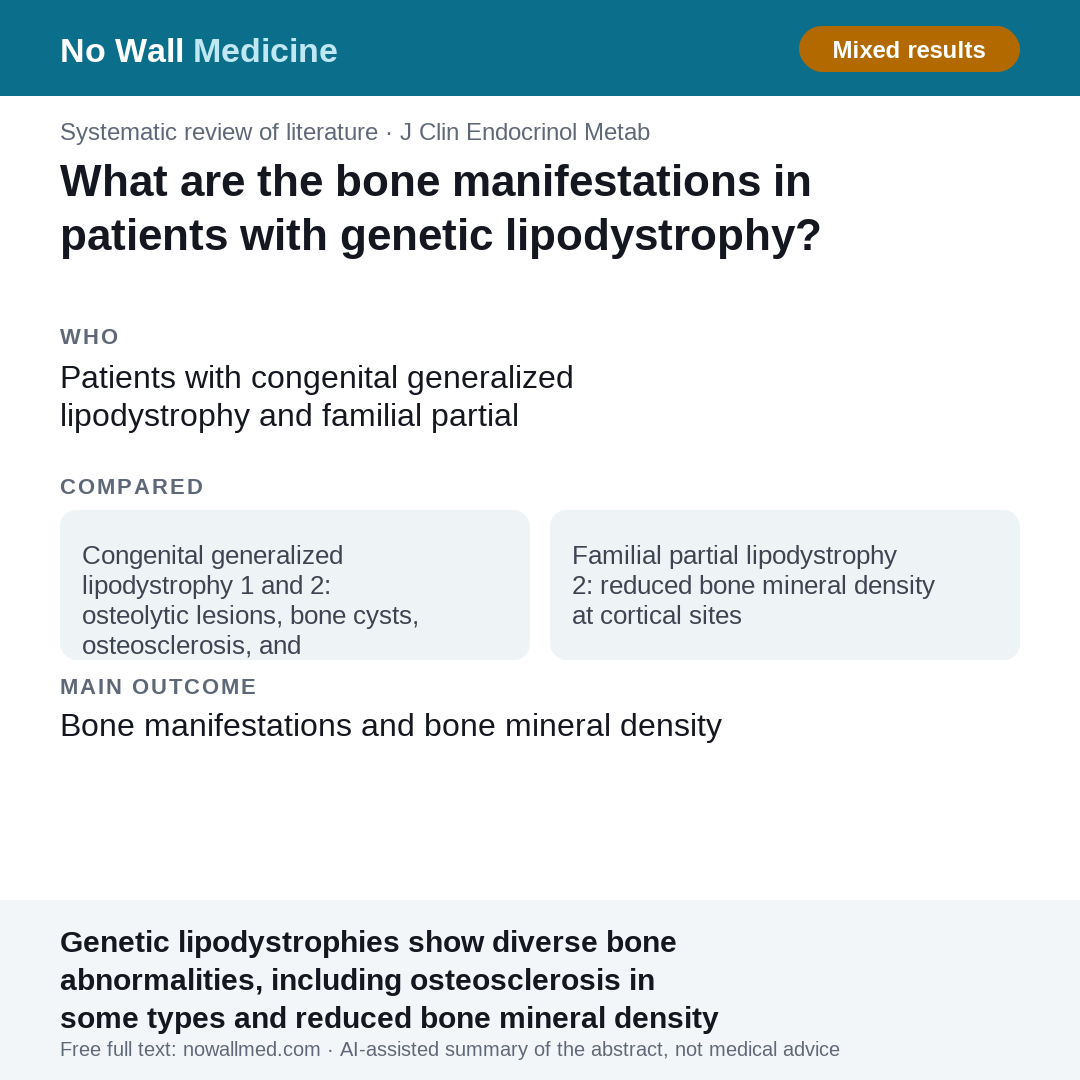
Bone phenotype of patients with genetic forms of lipodystrophy: a systematic review of literature
Systematic review of literatureMixed results
What are the bone manifestations in patients with genetic lipodystrophy?
Who
Patients with congenital generalized lipodystrophy and familial partial lipodystrophy
Compared
Congenital generalized lipodystrophy 1 and 2: osteolytic lesions, bone cysts, osteosclerosis, and pseudo-osteopoikilosis
Familial partial lipodystrophy 2: reduced bone mineral density at cortical sites
Main outcome
Bone manifestations and bone mineral density
Bottom line: Genetic lipodystrophies show diverse bone abnormalities, including osteosclerosis in some types and reduced bone mineral density in others.
Limitation: No studies were found on congenital generalized lipodystrophy 3 or 4.
J Clin Endocrinol Metab · 2026-07-06Download image
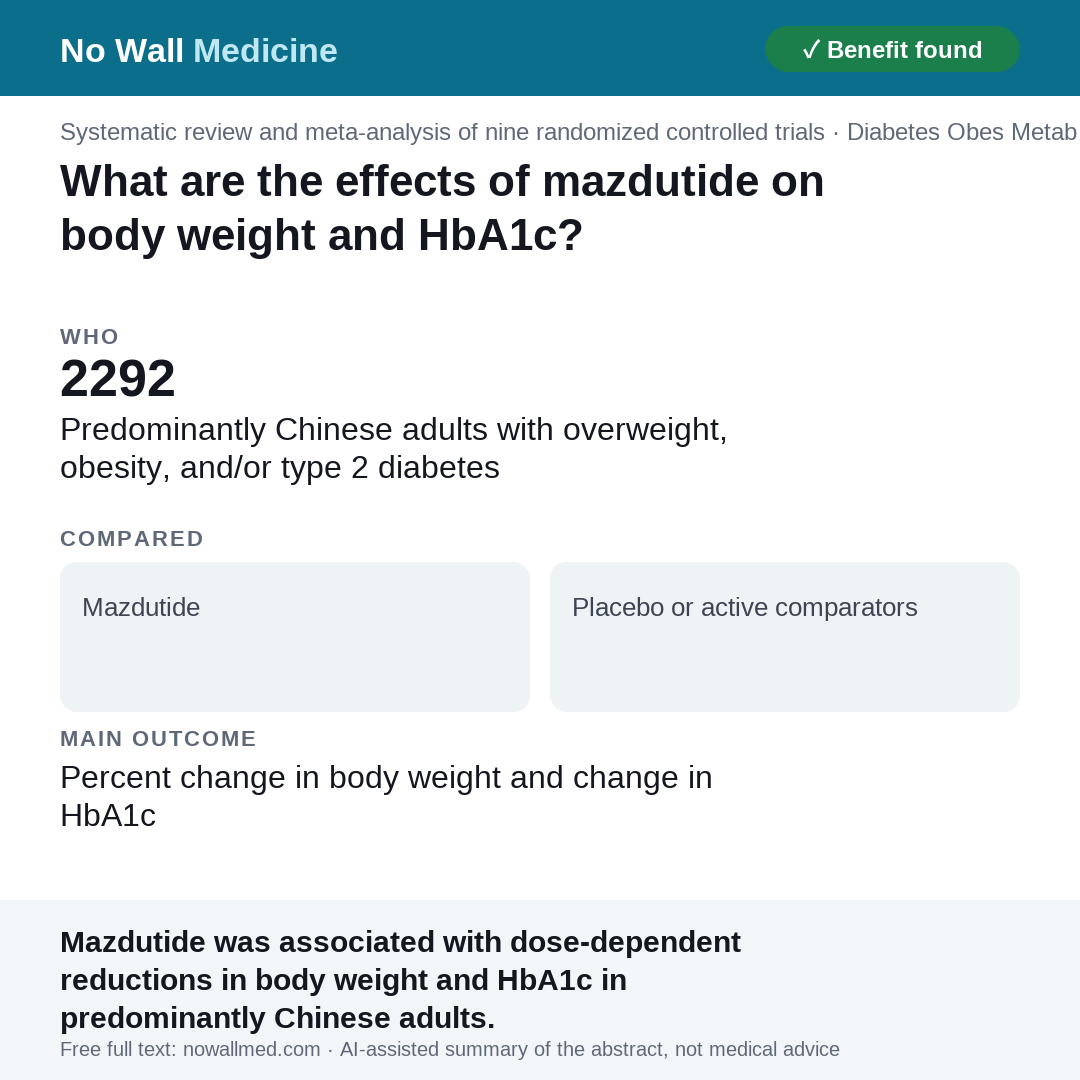
Efficacy and Safety of the Dual Glucagon-Like Peptide-1 and Glucagon Receptor Agonist Mazdutide in Predominantly Chinese Adults With Obesity and/or Type 2 Diabetes: A Systematic Review and Meta-Analysis
Systematic review and meta-analysis of nine randomized controlled trialsBenefit found
What are the effects of mazdutide on body weight and HbA1c?
Who
2292
Predominantly Chinese adults with overweight, obesity, and/or type 2 diabetes
Compared
Mazdutide
Placebo or active comparators
Main outcome
Percent change in body weight and change in HbA1c
Bottom line: Mazdutide was associated with dose-dependent reductions in body weight and HbA1c in predominantly Chinese adults.
Limitation: Longer-term, multi-ethnic studies are needed to confirm durability, generalizability, and cardiovascular safety.
Diabetes Obes Metab · 2026-07-06Download image
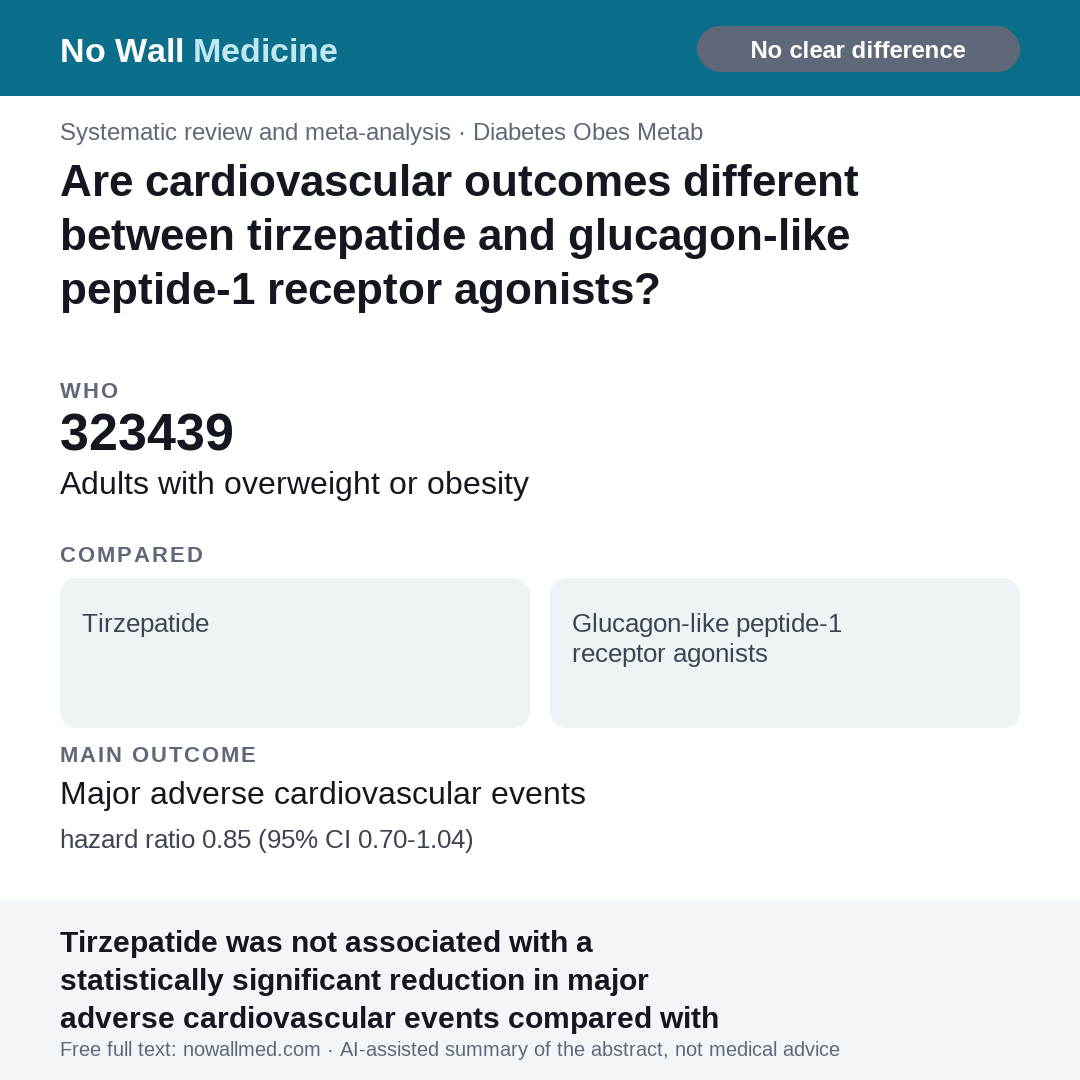
Cardiovascular Outcomes With Tirzepatide Versus GLP-1 Receptor Agonists in Overweight or Obesity: A Systematic Review and Meta-Analysis
Systematic review and meta-analysisNo clear difference
Are cardiovascular outcomes different between tirzepatide and glucagon-like peptide-1 receptor agonists?
Who
323439
Adults with overweight or obesity
Compared
Tirzepatide
Glucagon-like peptide-1 receptor agonists
Main outcome
Major adverse cardiovascular events
Result: hazard ratio 0.85 (95% CI 0.70-1.04)
Bottom line: Tirzepatide was not associated with a statistically significant reduction in major adverse cardiovascular events compared with glucagon-like peptide-1 receptor agonists.
Limitation: Substantial heterogeneity and the predominance of observational studies limit causal interpretation.
Diabetes Obes Metab · 2026-07-06Download image
Semaglutide Injection Once-Weekly for Weight Management in Adults: Results From A Randomized Phase III, Active-Controlled Study
Randomized, Phase III, non-inferiority studyBenefit found
Is synthetic semaglutide injection non-inferior to Wegovy for weight management?
Who
270
Adults with obesity or overweight with or without comorbidities · 21 centers in India
Compared
Test semaglutide: -13.8% ± 4.28%
Reference semaglutide: -14.1% ± 4.11%
Main outcome
percentage change in bodyweight from baseline to Week 24
Result: least-squares mean difference of 0.26% (95% CI: -0.86% to 1.39%)
Bottom line: Synthetic semaglutide injection was non-inferior to Wegovy for weight management in adults over 24 weeks.
Diabetes Obes Metab · 2026-07-06Download image

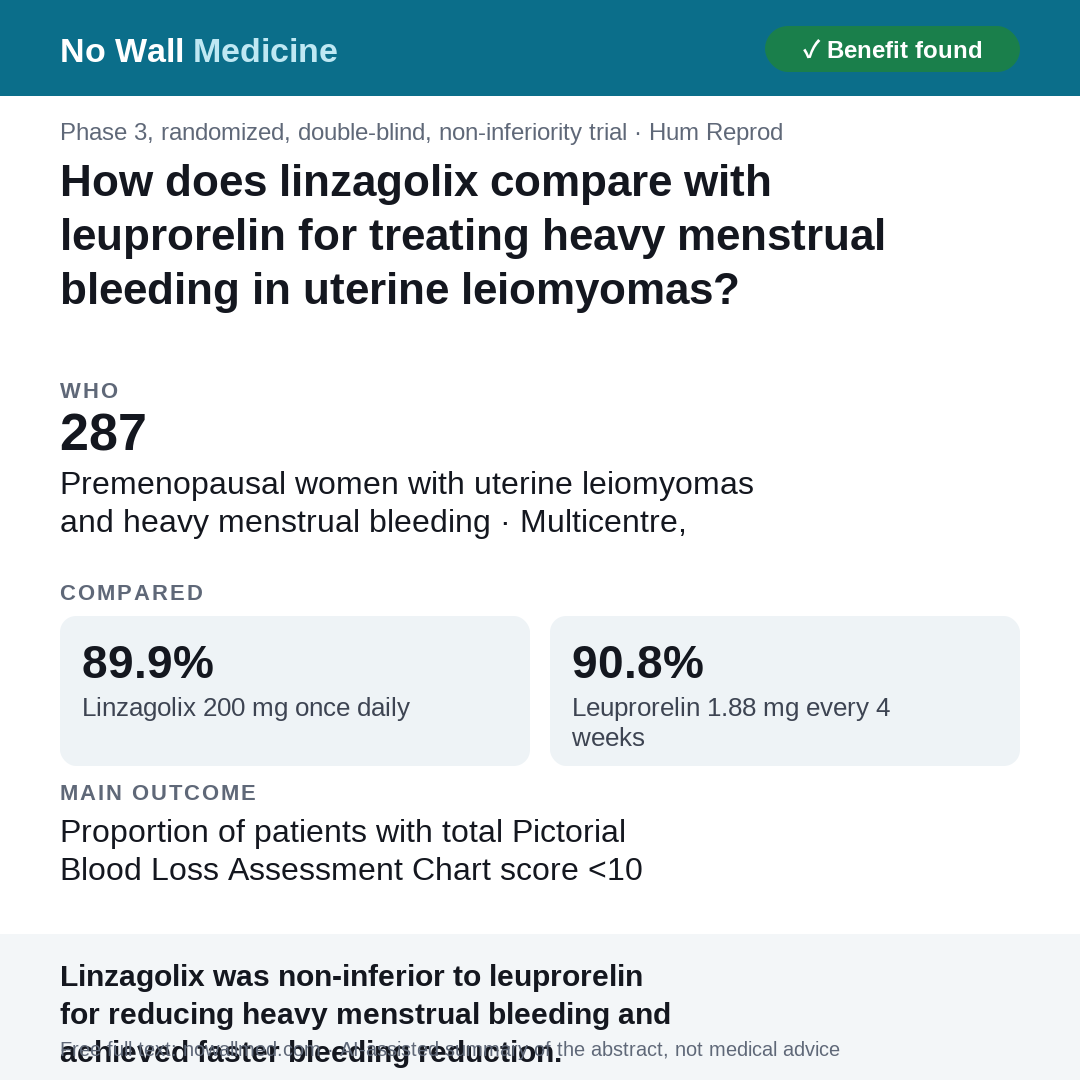
Linzagolix versus leuprorelin in Japanese women with uterine leiomyomas: a phase 3, randomized, active-controlled, non-inferiority trial
Phase 3, randomized, double-blind, non-inferiority trialBenefit found
How does linzagolix compare with leuprorelin for treating heavy menstrual bleeding in uterine leiomyomas?
Who
287
Premenopausal women with uterine leiomyomas and heavy menstrual bleeding · Multicentre, Japan
Compared
89.9%Linzagolix 200 mg once daily (95% CI, 83.7, 94.4)
90.8%Leuprorelin 1.88 mg every 4 weeks (84.7, 95.0)
Main outcome
Proportion of patients with total Pictorial Blood Loss Assessment Chart score <10
Result: difference, -0.9% [-8.6, 6.9]
Bottom line: Linzagolix was non-inferior to leuprorelin for reducing heavy menstrual bleeding and achieved faster bleeding reduction.
Limitation: Further studies are needed to compare linzagolix with other antagonists and evaluate longer-term safety.
Hum Reprod · 2026-07-06Download image
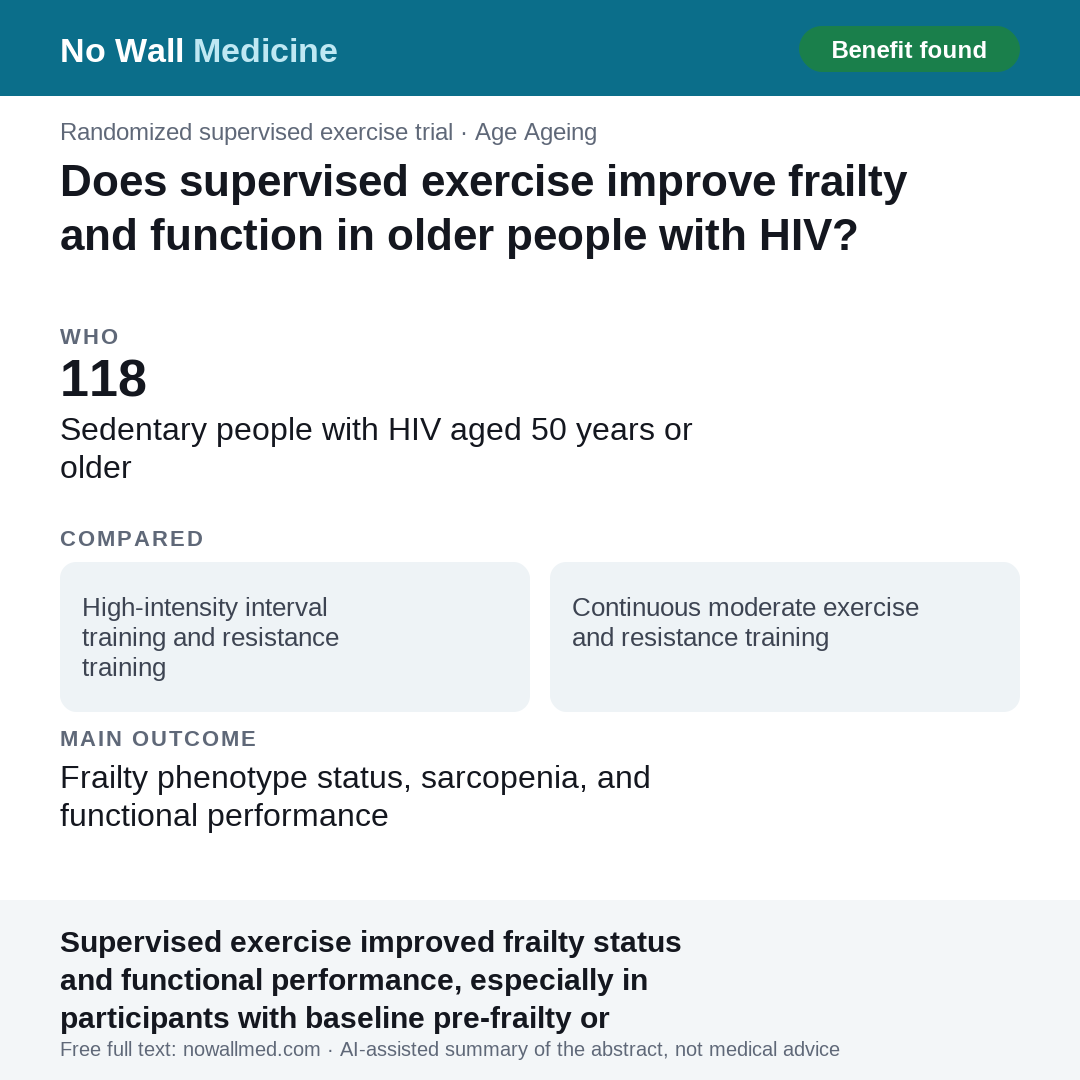
Frailty phenotype transitions and functional improvements during a supervised exercise trial in older people with HIV: results from the HEALTH Trial
Randomized supervised exercise trialBenefit found
Does supervised exercise improve frailty and function in older people with HIV?
Who
118
Sedentary people with HIV aged 50 years or older
Compared
High-intensity interval training and resistance training
Continuous moderate exercise and resistance training
Main outcome
Frailty phenotype status, sarcopenia, and functional performance
Bottom line: Supervised exercise improved frailty status and functional performance, especially in participants with baseline pre-frailty or frailty.
Limitation: Low sarcopenia prevalence limited conclusions regarding categorical sarcopenia outcomes.
Age Ageing · 2026-07-06Download image
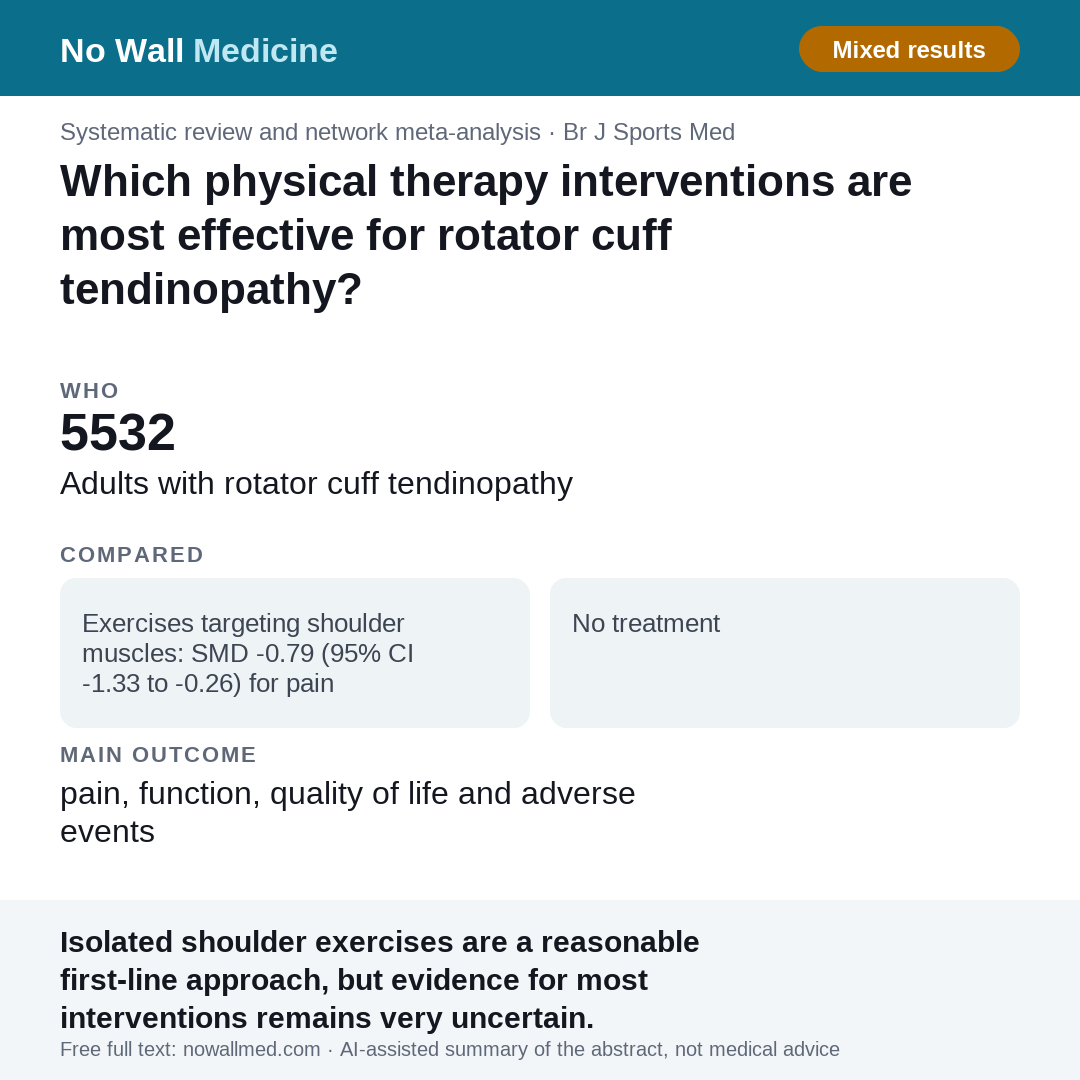
Comparative effectiveness of physical therapy interventions in adults with rotator cuff tendinopathy: a systematic review and network meta-analysis
Systematic review and network meta-analysisMixed results
Which physical therapy interventions are most effective for rotator cuff tendinopathy?
Who
5532
Adults with rotator cuff tendinopathy
Compared
Exercises targeting shoulder muscles: SMD -0.79 (95% CI -1.33 to -0.26) for pain
No treatment
Main outcome
pain, function, quality of life and adverse events
Result: SMD -0.79 (95% CI -1.33 to -0.26) for pain
Bottom line: Isolated shoulder exercises are a reasonable first-line approach, but evidence for most interventions remains very uncertain.
Limitation: The evidence is very uncertain and most interventions are informed by limited data.
Br J Sports Med · 2026-07-06Download image
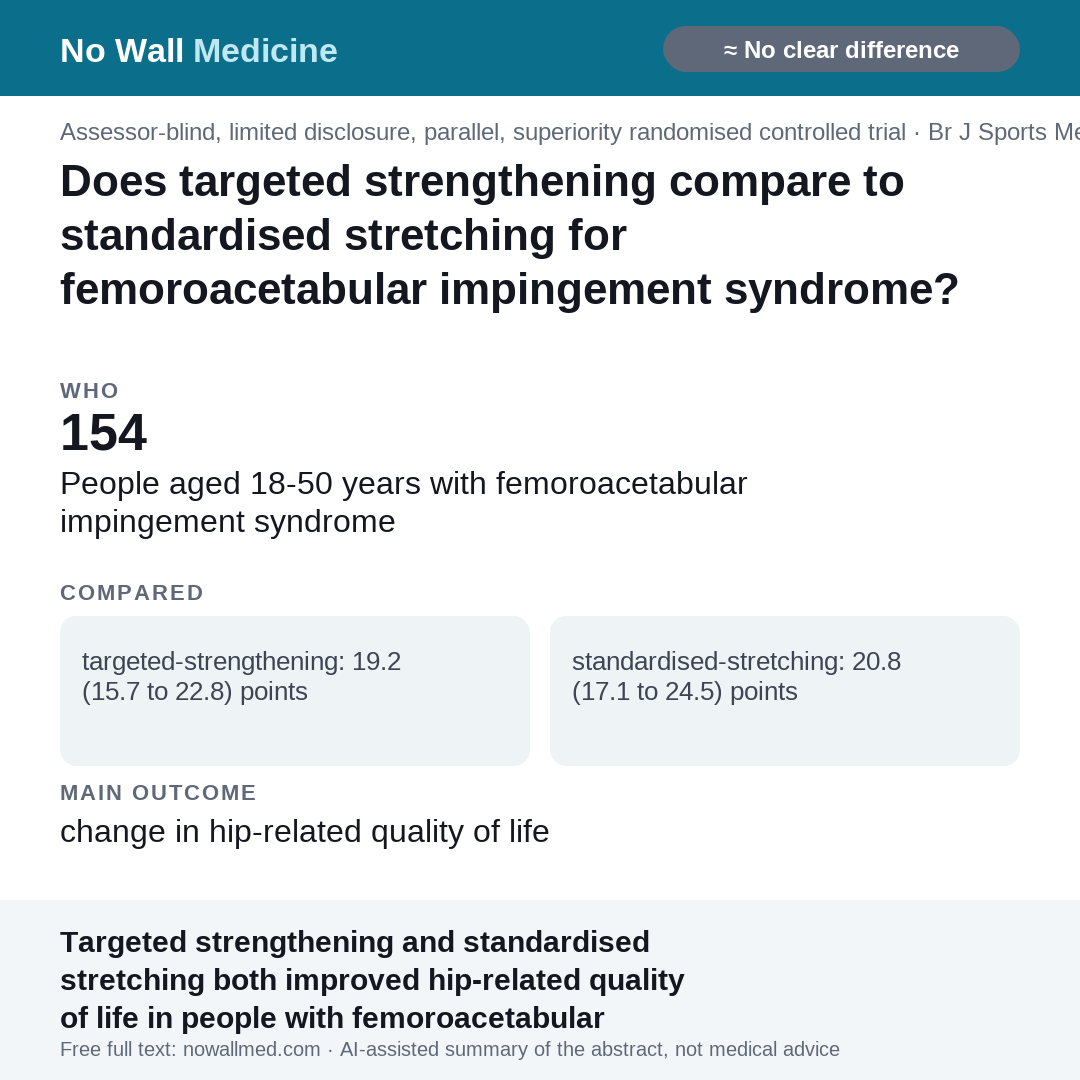
Physiotherapist-led treatment for femoroacetabular impingement syndrome (the PhysioFIRST study): an assessor-blinded, limited disclosure randomised controlled trial
Assessor-blind, limited disclosure, parallel, superiority randomised controlled trialNo clear difference
Does targeted strengthening compare to standardised stretching for femoroacetabular impingement syndrome?
Who
154
People aged 18-50 years with femoroacetabular impingement syndrome
Compared
targeted-strengthening: 19.2 (15.7 to 22.8) points
standardised-stretching: 20.8 (17.1 to 24.5) points
Main outcome
change in hip-related quality of life
Result: mean difference (95% CI) 0.2 (-5.9 to 6.3)
Bottom line: Targeted strengthening and standardised stretching both improved hip-related quality of life in people with femoroacetabular impingement syndrome.
Br J Sports Med · 2026-07-06Download image
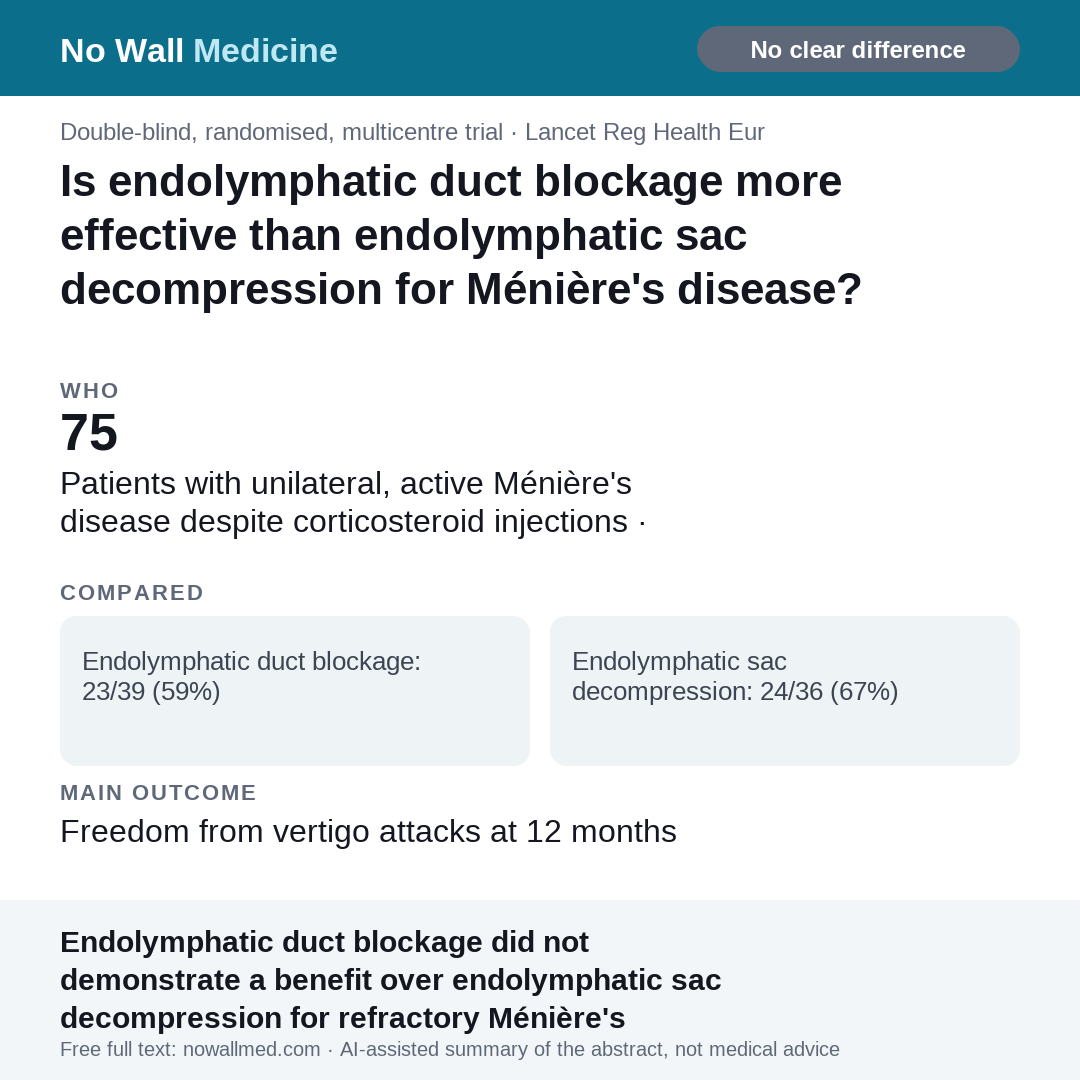
Endolymphatic duct blockage for Ménière's disease: a double-blind, randomised controlled trial
Double-blind, randomised, multicentre trialNo clear difference
Is endolymphatic duct blockage more effective than endolymphatic sac decompression for Ménière's disease?
Who
75
Patients with unilateral, active Ménière's disease despite corticosteroid injections · Seven hospitals in the Netherlands
Compared
Endolymphatic duct blockage: 23/39 (59%)
Endolymphatic sac decompression: 24/36 (67%)
Main outcome
Freedom from vertigo attacks at 12 months
Result: OR 0.72, 95% CI 0.28-1.84
Bottom line: Endolymphatic duct blockage did not demonstrate a benefit over endolymphatic sac decompression for refractory Ménière's disease.
Funded by: Dutch National Healthcare Institute and ZonMw
Lancet Reg Health Eur · 2026-07-06Download image
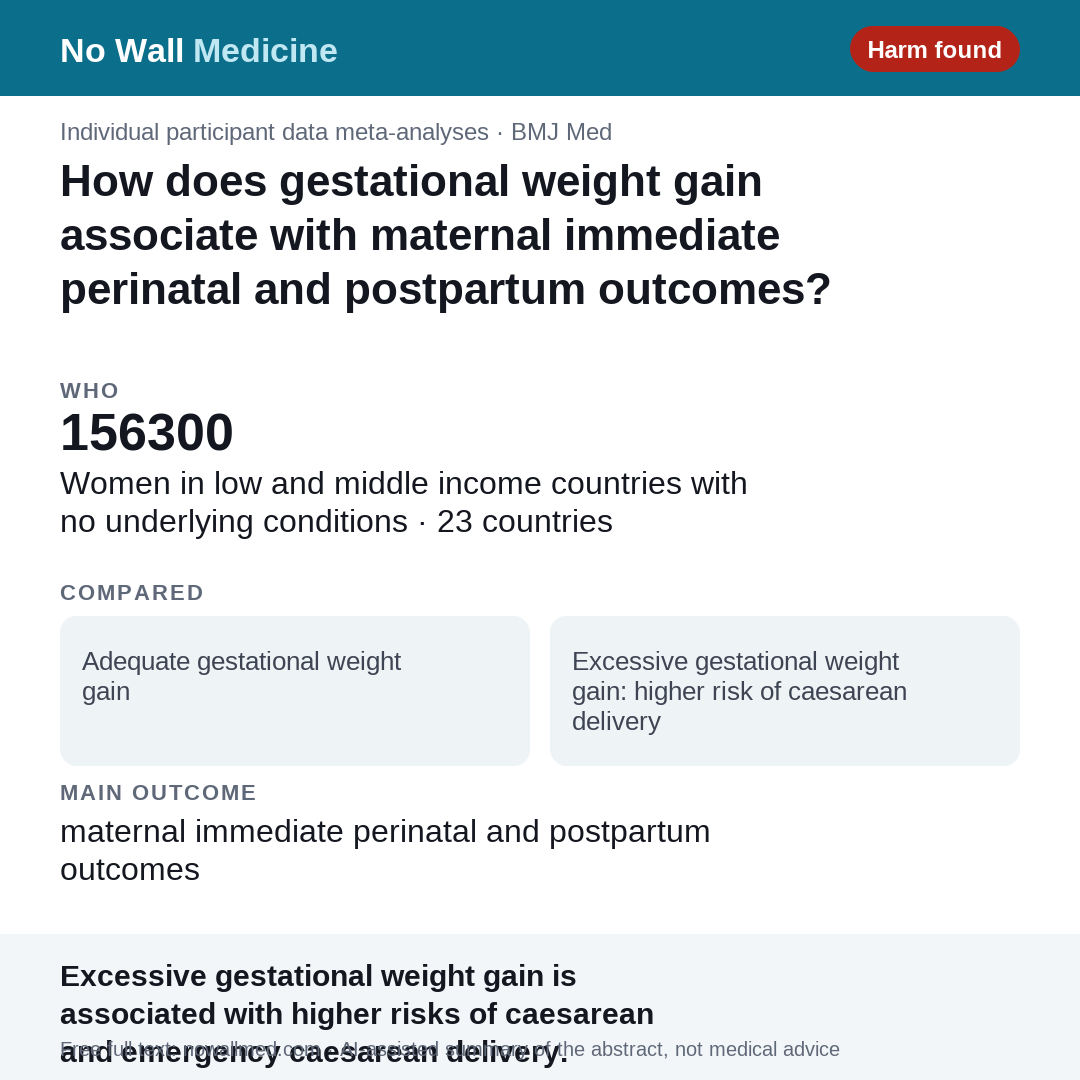
Gestational weight gain and maternal immediate perinatal and postpartum outcomes in low and middle income countries: individual participant data meta-analyses
Individual participant data meta-analysesMixed results
How does gestational weight gain associate with maternal perinatal and postpartum outcomes in low and middle income countries?
Who
156300
Women in low and middle income countries with no underlying conditions · 23 countries
Compared
Adequate gestational weight gain (90-125%)
Excessive gestational weight gain (>125%): risk ratio 1.10 (95% confidence interval 1.06 to 1.13)
Moderately inadequate gestational weight gain (70% to <90%): risk ratio 0.88 (95% confidence interval 0.84 to 0.92)
Severely inadequate gestational weight gain (<70%): risk ratio 0.82 (95% confidence interval 0.77 to 0.88)
Main outcome
maternal immediate perinatal and postpartum outcomes
Result: risk ratio 1.10 (95% confidence interval 1.06 to 1.13)
Bottom line: Suboptimal gestational weight gain is associated with adverse maternal outcomes in the immediate perinatal and postpartum periods.
BMJ Med · 2026-07-06Download image
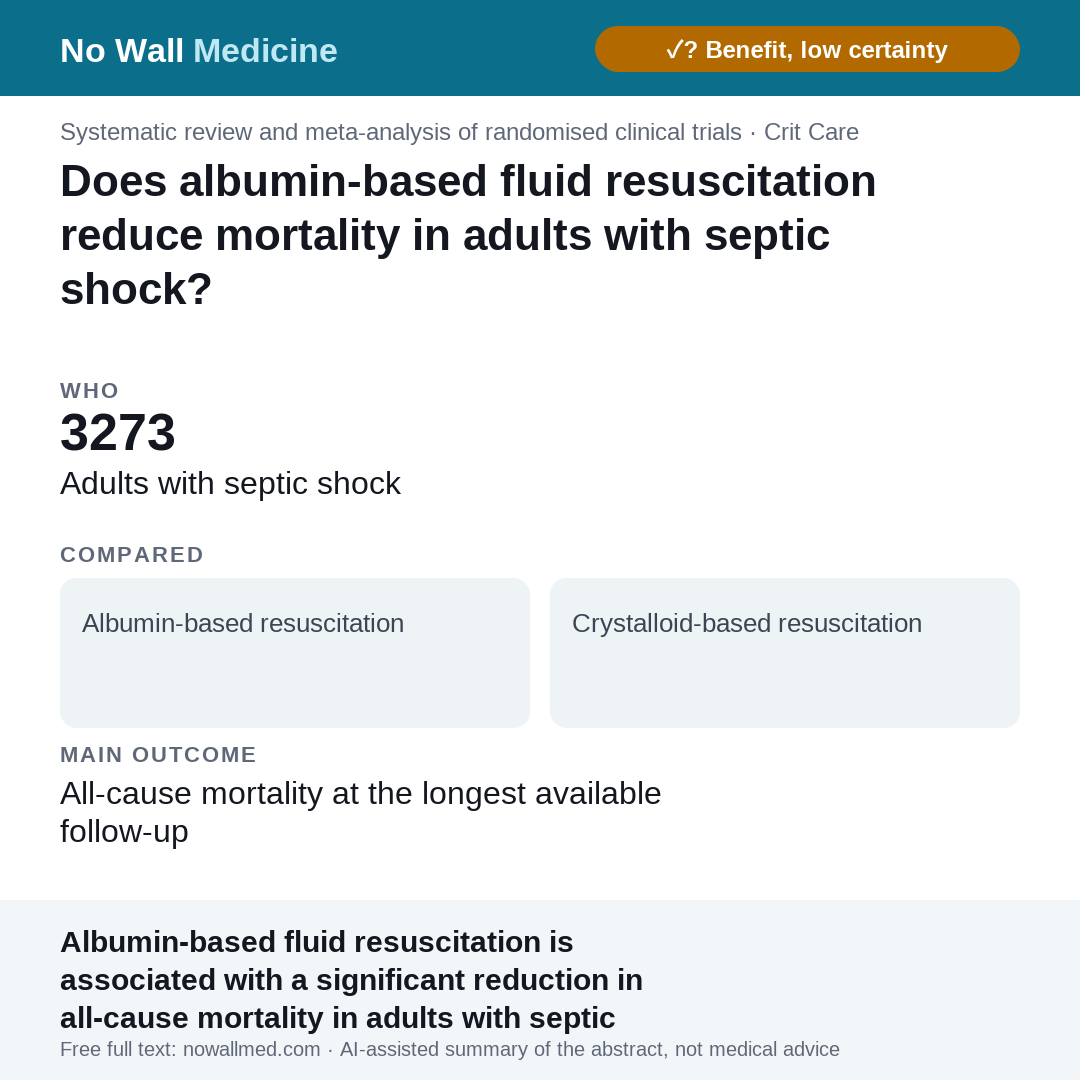
Mortality effect of albumin fluid resuscitation in adults with septic shock: a systematic review and dual frequentist-bayesian meta-analysis of randomised trials
Systematic review and meta-analysis of randomised clinical trialsBenefit found
Does albumin-based fluid resuscitation reduce mortality in adults with septic shock?
Who
3273
Adults with septic shock
Compared
Albumin-based resuscitation
Crystalloid-based resuscitation
Main outcome
All-cause mortality at the longest available follow-up
Result: relative risk 0.90 (95% CI 0.83-0.99)
Bottom line: Albumin-based fluid resuscitation is associated with a significant reduction in all-cause mortality in adults with septic shock.
Crit Care · 2026-07-06Download image
Digital health interventions for HIV-related sexual risk behaviors: a systematic review and network meta-analysis
Systematic review and network meta-analysisBenefit found
How effective are digital health interventions for HIV-related sexual risk behaviors?
Who
33183
Participants engaging in HIV-related sexual risk behaviors
Compared
SMS or phone call: largest reductions in unprotected anal intercourse prevalence and inconsistent condom use
eHealth: significant reduction in the number of sexual partners
Main outcome
HIV-related sexual risk behaviors
Result: OR 0.18 (95% CI 0.04-0.79) for unprotected anal intercourse prevalence
Bottom line: SMS, phone calls, and eHealth interventions can reduce HIV-related sexual risk behaviors.
Limitation: The majority of network comparisons were supported by low or very low certainty evidence.
NPJ Digit Med · 2026-07-06Download image

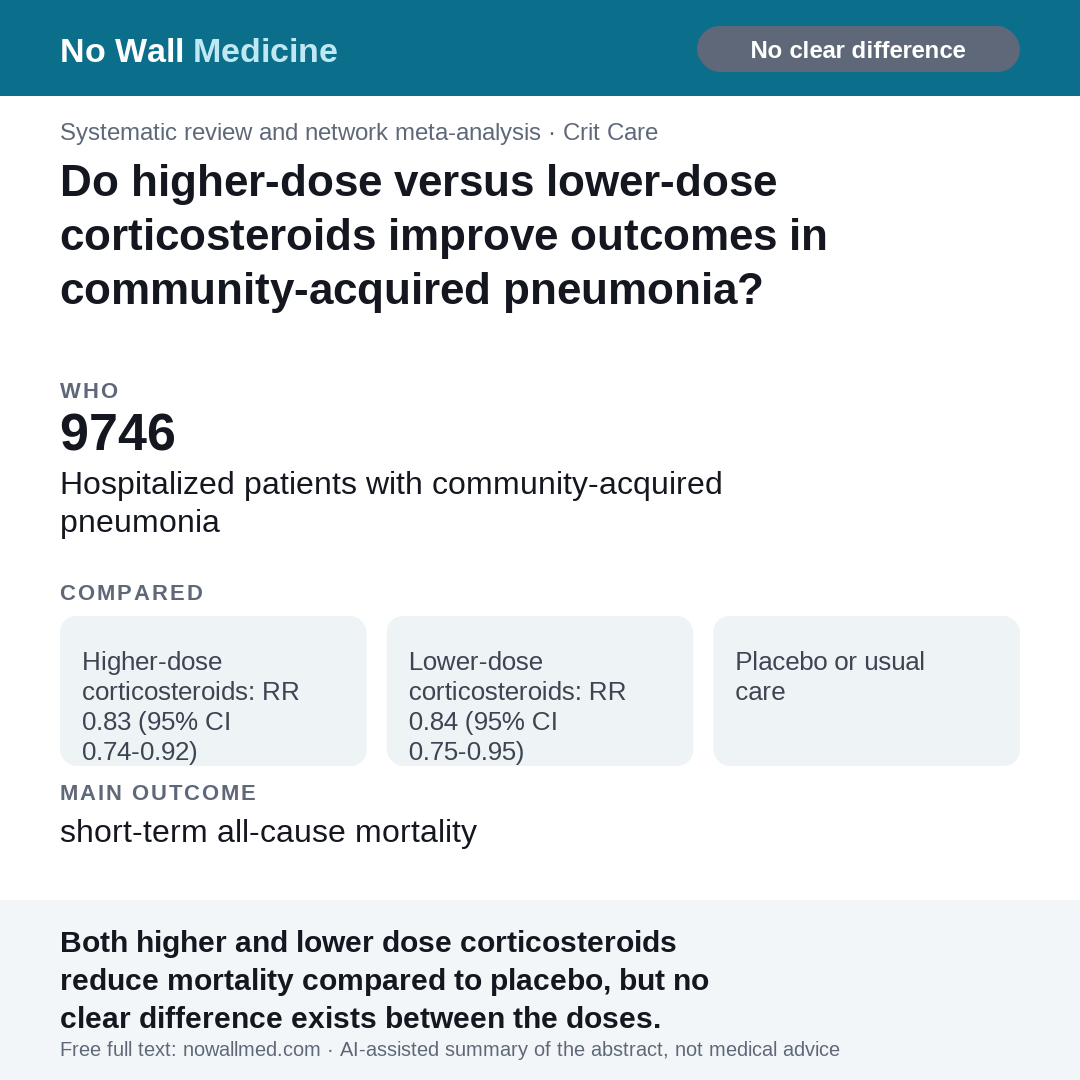
Efficacy of higher-dose versus lower-dose corticosteroids in community-acquired pneumonia: a systematic review and network meta-analysis
Systematic review and network meta-analysisNo clear difference
Do higher-dose versus lower-dose corticosteroids improve outcomes in community-acquired pneumonia?
Who
9746
Hospitalized patients with community-acquired pneumonia
Compared
Higher-dose corticosteroids: RR 0.83 (95% CI 0.74-0.92)
Lower-dose corticosteroids: RR 0.84 (95% CI 0.75-0.95)
Placebo or usual care
Main outcome
short-term all-cause mortality
Result: RR 0.98 (95% CI 0.83-1.16)
Bottom line: Both higher and lower dose corticosteroids reduce mortality compared to placebo, but no clear difference exists between the doses.
Crit Care · 2026-07-05Download image
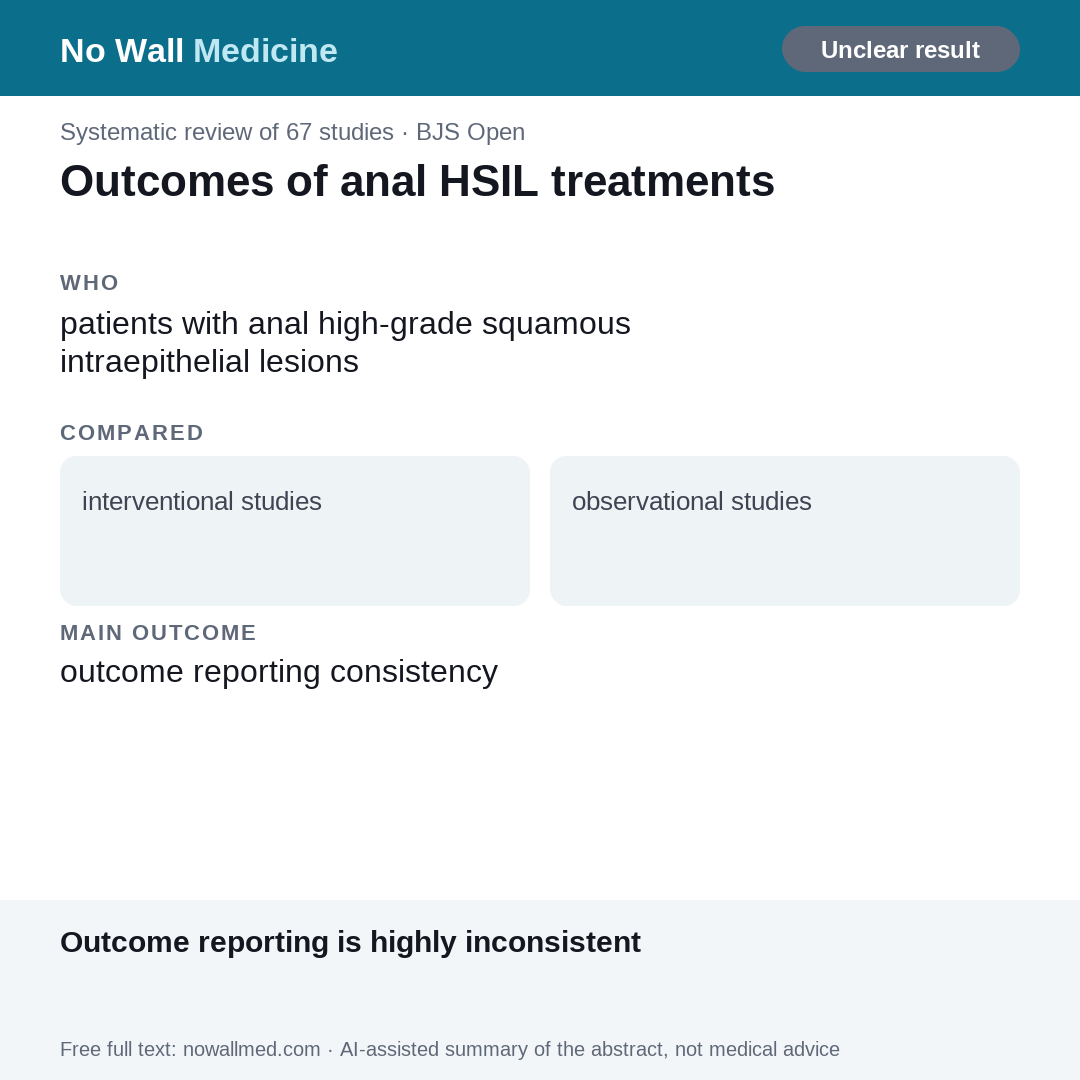
Outcomes reported in studies of anal high-grade squamous intraepithelial lesions treatments: systematic review
Systematic review of 67 studiesUnclear result
Outcomes of anal HSIL treatments
Who
patients with anal high-grade squamous intraepithelial lesions
Compared
interventional studies
observational studies
Main outcome
outcome reporting consistency
Bottom line: Outcome reporting is highly inconsistent
BJS Open · 2026-07-05Download image
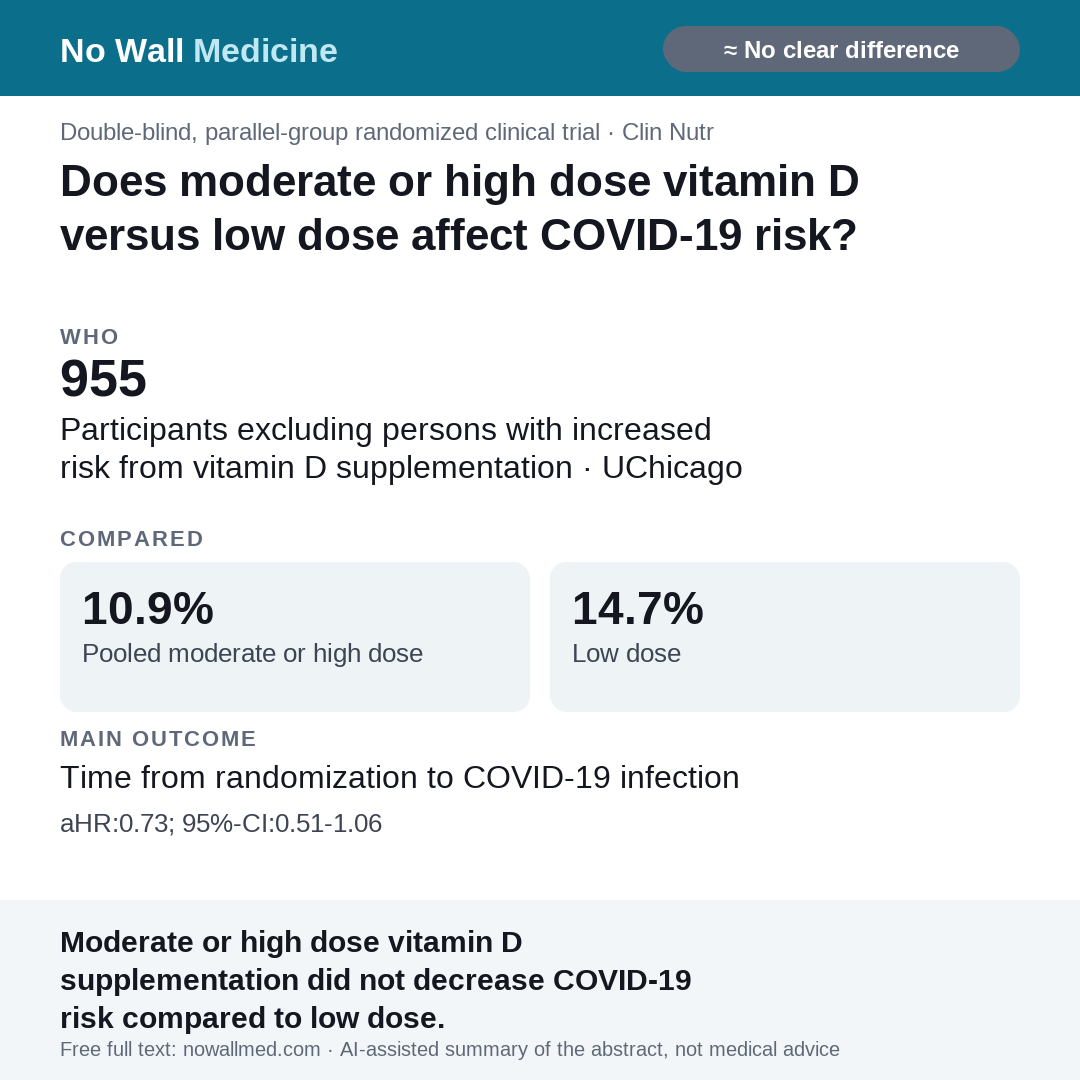
Effect of moderate or high versus low dose daily vitamin D on COVID-19 incidence: A double-blind, parallel-group randomized clinical trial
Double-blind, parallel-group randomized clinical trialNo clear difference
Does moderate or high dose vitamin D versus low dose affect COVID-19 risk?
Who
955
Participants excluding persons with increased risk from vitamin D supplementation · UChicago Medicine or Rush University Medical Center
Compared
10.9%Pooled moderate or high dose (50/461)
14.7%Low dose (68/462)
Main outcome
Time from randomization to COVID-19 infection
Result: aHR:0.73; 95%-CI:0.51-1.06
Bottom line: Moderate or high dose vitamin D supplementation did not decrease COVID-19 risk compared to low dose.
Limitation: Further study is warranted of the effects of higher doses and vitamin D levels.
Clin Nutr · 2026-07-04Download image
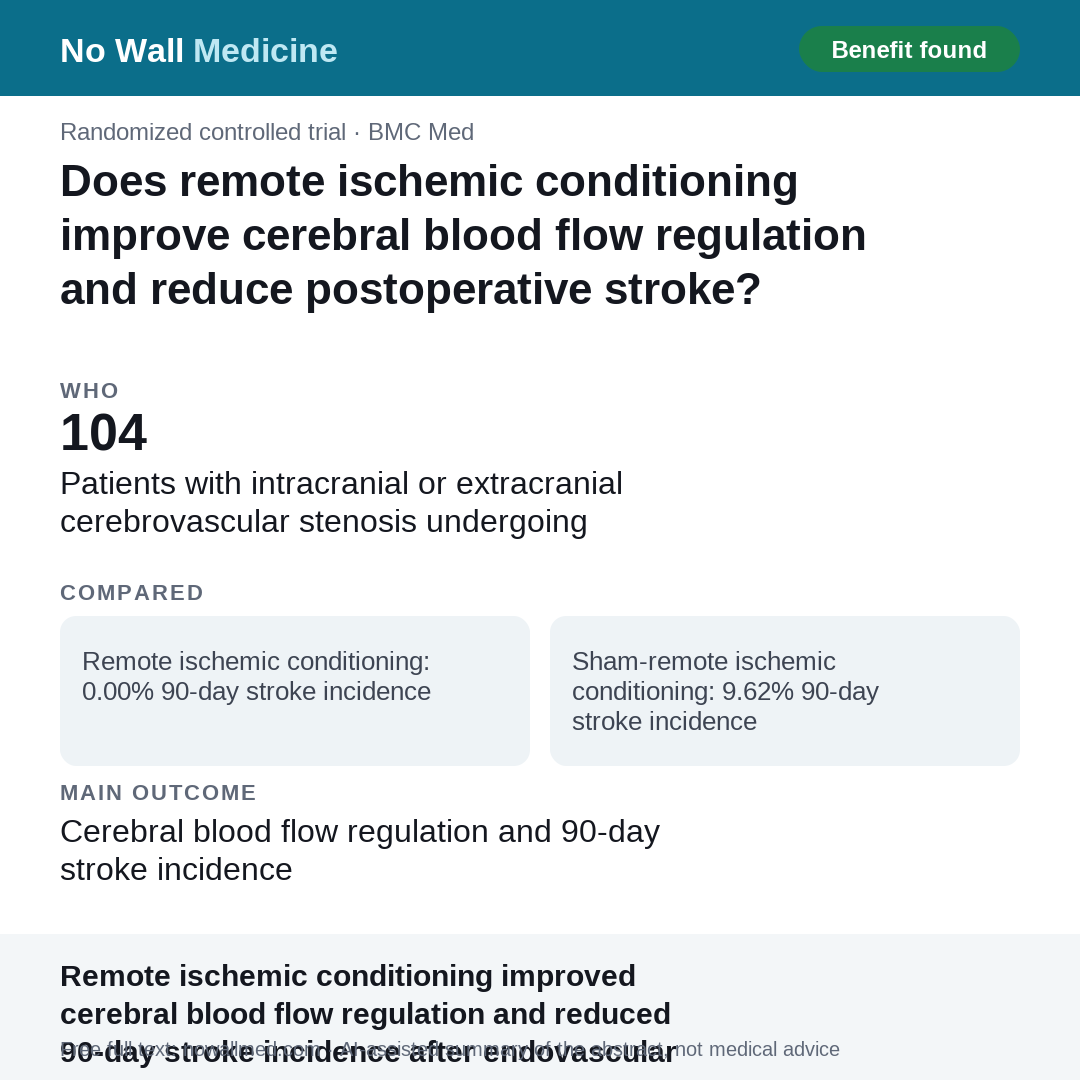
Efficacy of remote ischemic conditioning on cerebral blood flow regulation in patients with endovascular stenting: a randomized controlled trial
Randomized controlled trialBenefit found
Does remote ischemic conditioning improve cerebral blood flow regulation and reduce postoperative stroke?
Who
104
Patients with intracranial or extracranial cerebrovascular stenosis undergoing endovascular stenting
Compared
Remote ischemic conditioning: 0.00% 90-day stroke incidence
Sham-remote ischemic conditioning: 9.62% 90-day stroke incidence
Main outcome
Cerebral blood flow regulation and 90-day stroke incidence
Bottom line: Remote ischemic conditioning improved cerebral blood flow regulation and reduced 90-day stroke incidence after endovascular stenting.
BMC Med · 2026-07-04Download image
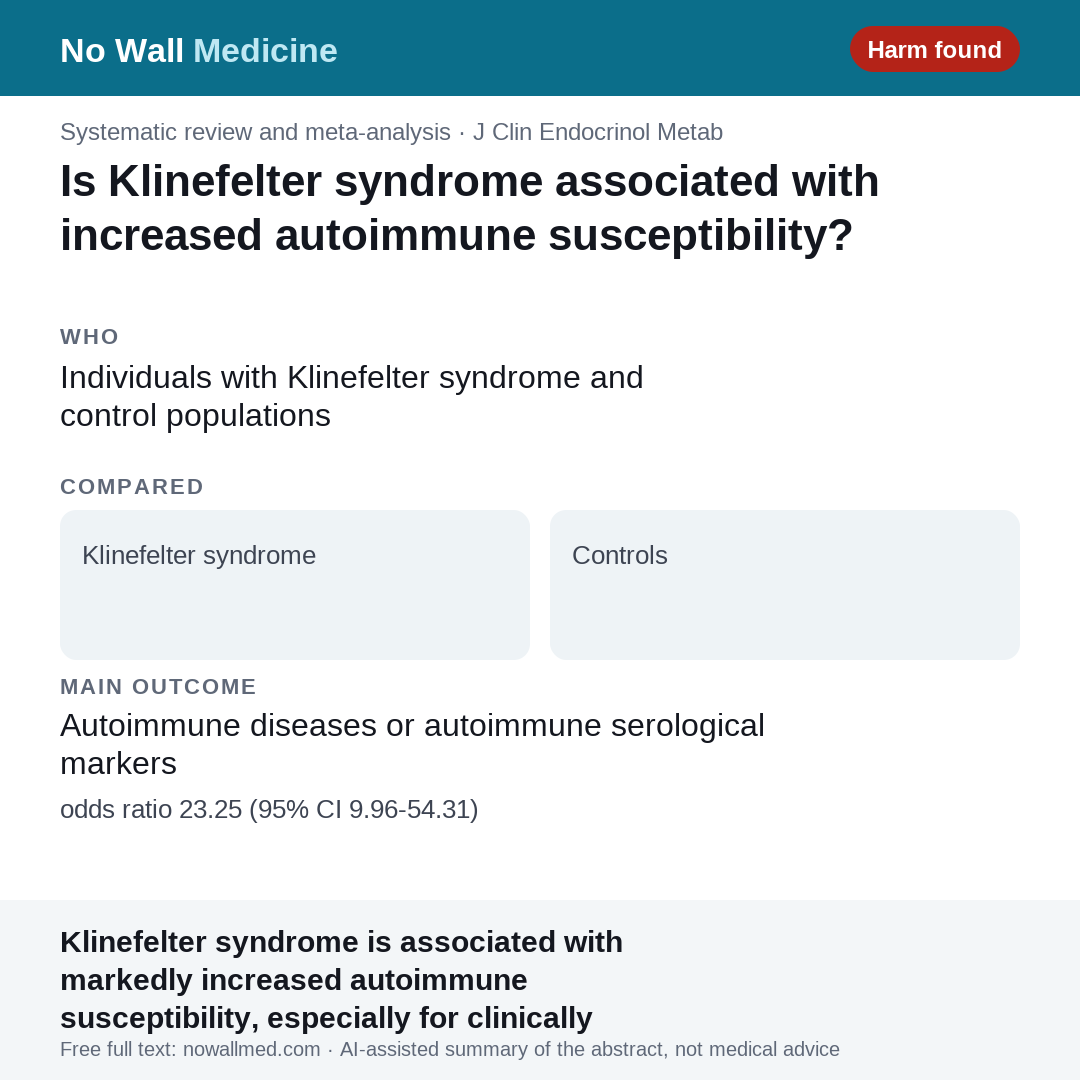
The extra X chromosome and autoimmune susceptibility in Klinefelter syndrome
Systematic review and meta-analysisHarm found
Is Klinefelter syndrome associated with increased autoimmune susceptibility?
Who
Individuals with Klinefelter syndrome and control populations
Compared
Klinefelter syndrome
Controls
Main outcome
Autoimmune diseases or autoimmune serological markers
Result: odds ratio 23.25 (95% CI 9.96-54.31)
Bottom line: Klinefelter syndrome is associated with markedly increased autoimmune susceptibility, especially for clinically manifest autoimmune diseases.
Limitation: moderate-to-substantial between-study heterogeneity (I2 = 66.4%)
J Clin Endocrinol Metab · 2026-07-04Download image
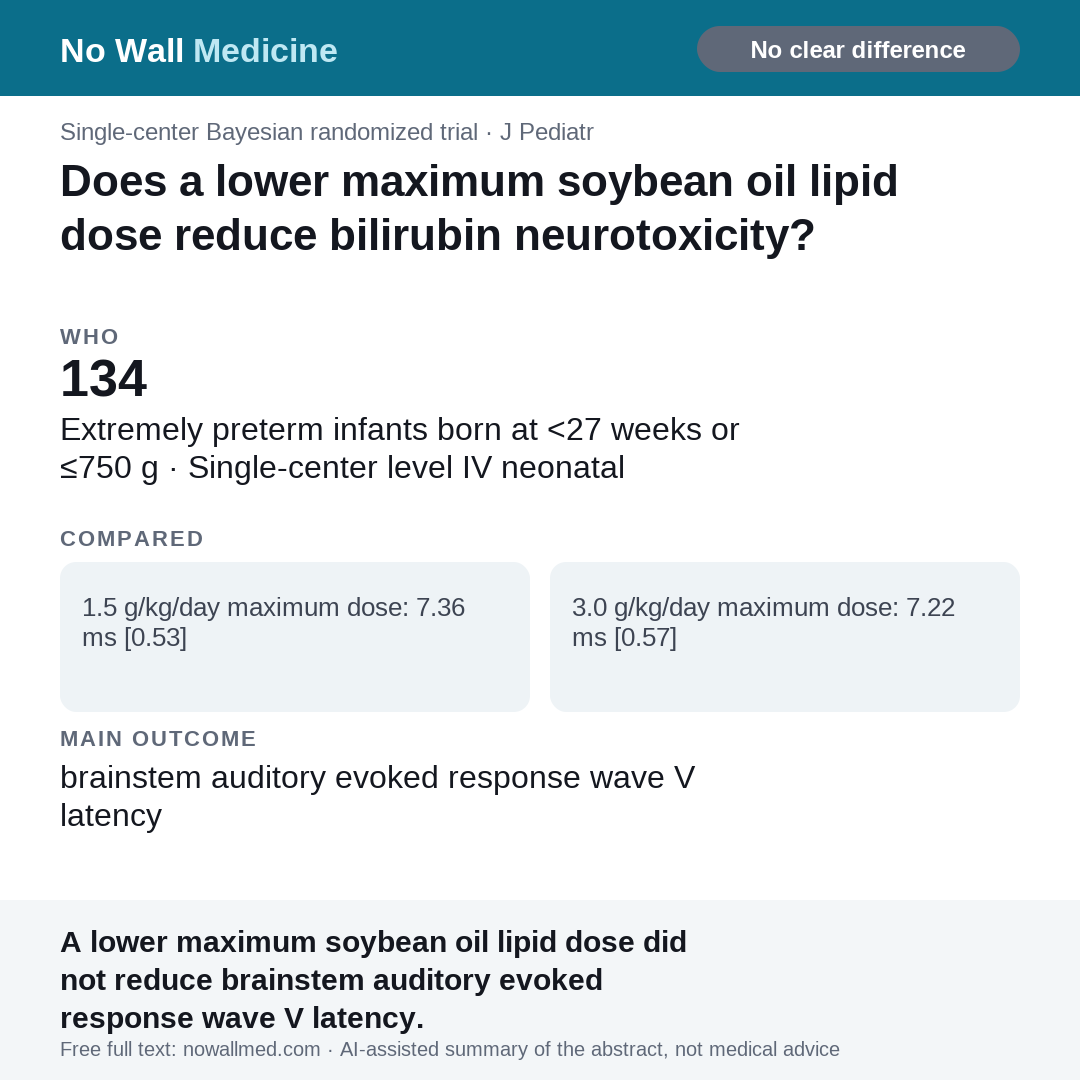
Parenteral Lipid Dose and Bilirubin Neurotoxicity in Extremely Preterm Infants: A Factorial Randomized Trial
Single-center Bayesian randomized trialNo clear difference
Does a lower maximum soybean oil lipid dose reduce bilirubin neurotoxicity?
Who
134
Extremely preterm infants born at <27 weeks or ≤750 g · Single-center level IV neonatal intensive care unit
Compared
1.5 g/kg/day maximum dose: 7.36 ms [0.53]
3.0 g/kg/day maximum dose: 7.22 ms [0.57]
Main outcome
brainstem auditory evoked response wave V latency
Result: adjusted mean difference -0.14 (95% CrI -0.34 to 0.06)
Bottom line: A lower maximum soybean oil lipid dose did not reduce brainstem auditory evoked response wave V latency.
J Pediatr · 2026-07-04Download image
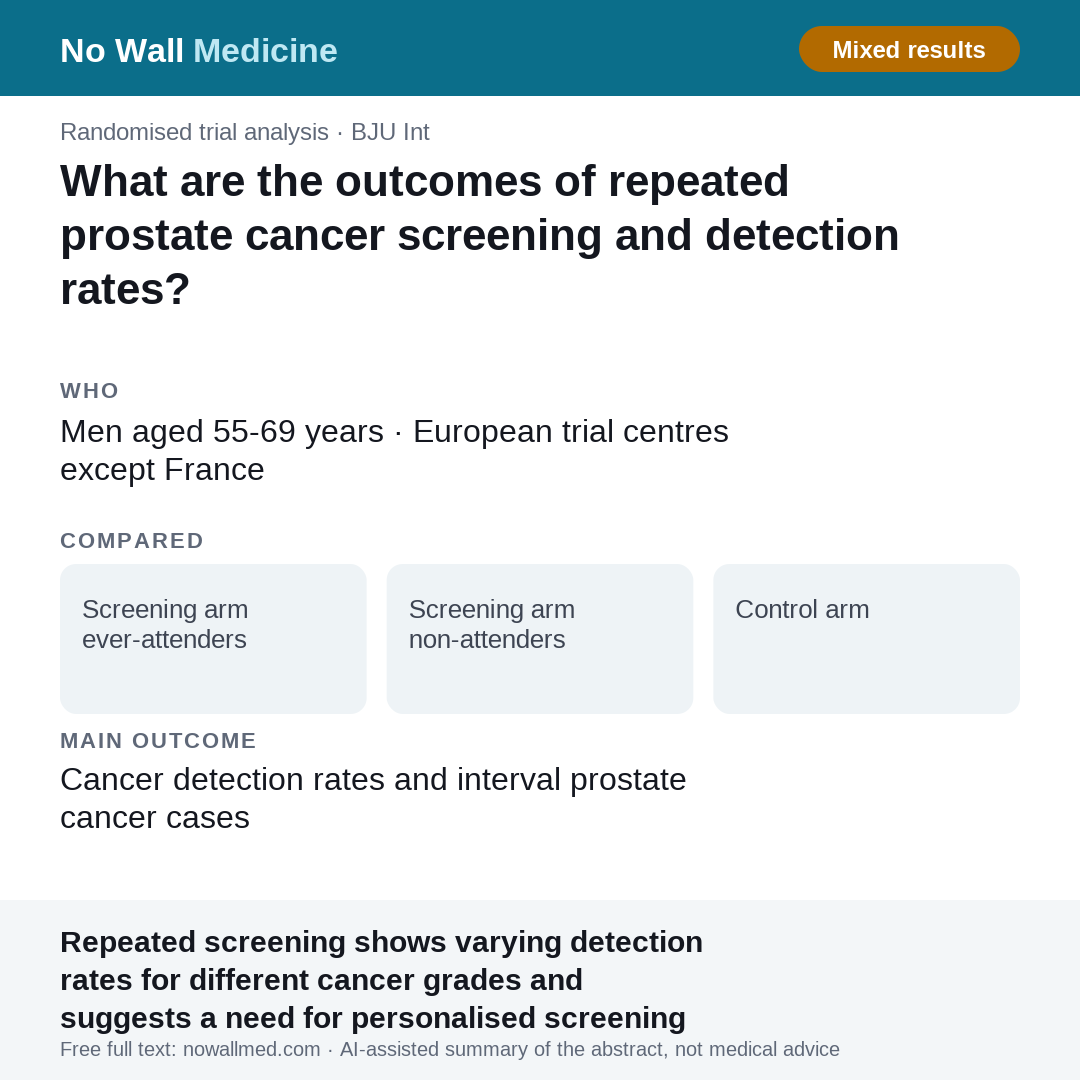
Cancer detection in the European Randomised Study of Screening for Prostate Cancer (ERSPC)
Randomised trial analysisMixed results
What are the outcomes of repeated prostate cancer screening and detection rates?
Who
Men aged 55-69 years · European trial centres except France
Compared
Screening arm ever-attenders
Screening arm non-attenders
Control arm
Main outcome
Cancer detection rates and interval prostate cancer cases
Bottom line: Repeated screening shows varying detection rates for different cancer grades and suggests a need for personalised screening approaches.
BJU Int · 2026-07-04Download image
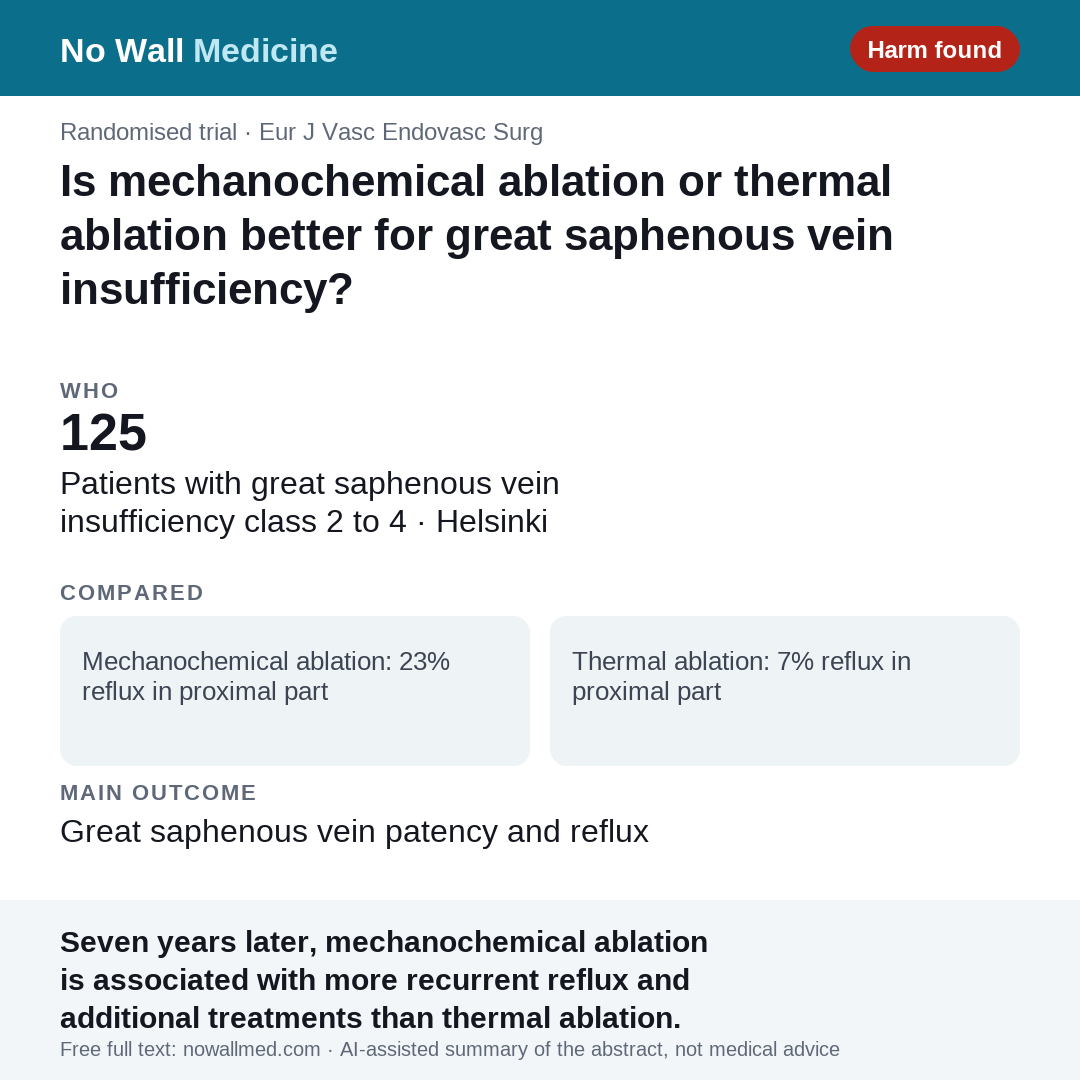
Randomised Trial of Mechanochemical or Thermal Ablation for Great Saphenous Vein Insufficiency: Seven Year Follow Up
Randomised trialHarm found
Is mechanochemical ablation or thermal ablation better for great saphenous vein insufficiency?
Who
125
Patients with great saphenous vein insufficiency class 2 to 4 · Helsinki University Hospital
Compared
Mechanochemical ablation: 23% reflux in proximal part
Thermal ablation: 7% reflux in proximal part
Main outcome
Great saphenous vein patency and reflux
Bottom line: Seven years later, mechanochemical ablation is associated with more recurrent reflux and additional treatments than thermal ablation.
Eur J Vasc Endovasc Surg · 2026-07-04Download image