Visual abstracts
New randomized trials and meta-analyses from leading journals at a glance: who was studied, what was compared, and what was found. Every paper is free to read in full.
All specialtiesCardiology 4877Oncology 4138Gastroenterology & Hepatology 1942Infectious Disease 3837Neurology 1905Psychiatry & Mental Health 2273Pulmonology 2143Critical Care 1365Endocrinology & Diabetes 2580Pediatrics 2980Surgery 2559Orthopedics & Sports Medicine 931Neurosurgery 537Cardiothoracic & Vascular Surgery 674Plastic & Reconstructive Surgery 591Nephrology 1133Rheumatology 823Hematology 1109Dermatology 621Ophthalmology 543Obstetrics & Gynecology 1686Public & Global Health 1058Radiology & Imaging 648Anesthesiology 986Urology 764ENT (Otolaryngology) 503Emergency Medicine 511Allergy & Immunology 313Geriatrics 981Family Medicine & Primary Care 562Medical Genetics & Genomics 676Pathology & Laboratory Medicine 159Physical Medicine & Rehabilitation 757Palliative Care 444Nutrition 1588Digital Health & AI 2201General Medicine 321
Using nudges with electronic health records systems to improve advance care planning: a systematic review
Systematic review of randomized controlled trialsBenefit found
Do electronic health record nudges improve advance care planning outcomes?
Who
27,556
Healthcare professionals and patients in healthcare settings
Compared
Electronic health record nudges
Non-electronic health record nudges
Main outcome
Advance care planning documentation and communication
Bottom line: Electronic health record nudges may improve advance care planning documentation and communication practices for seriously ill patients.
Limitation: Limited number of studies and high heterogeneity.
BMC Palliat Care · 2025-07-01Download image

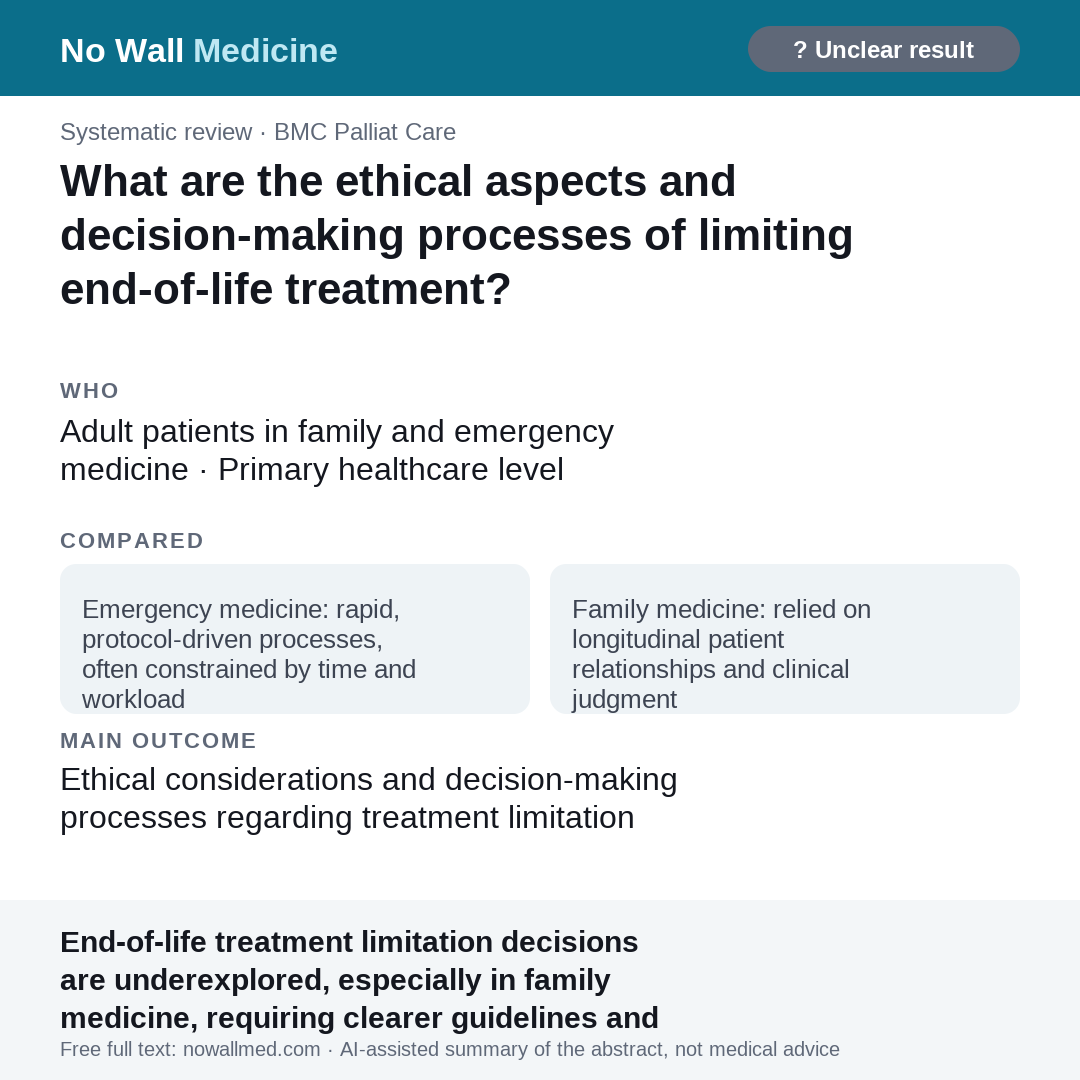
Ethical aspects of limiting end-of-Life treatment of adult patients at the primary healthcare level in family and emergency medicine: a systematic review
Systematic reviewUnclear result
What are the ethical aspects and decision-making processes of limiting end-of-life treatment?
Who
Adult patients in family and emergency medicine · Primary healthcare level
Compared
Emergency medicine: rapid, protocol-driven processes, often constrained by time and workload
Family medicine: relied on longitudinal patient relationships and clinical judgment
Main outcome
Ethical considerations and decision-making processes regarding treatment limitation
Bottom line: End-of-life treatment limitation decisions are underexplored, especially in family medicine, requiring clearer guidelines and enhanced physician collaboration.
Limitation: Decisions regarding treatment limitations in primary care settings remain underexplored.
BMC Palliat Care · 2025-07-01Download image
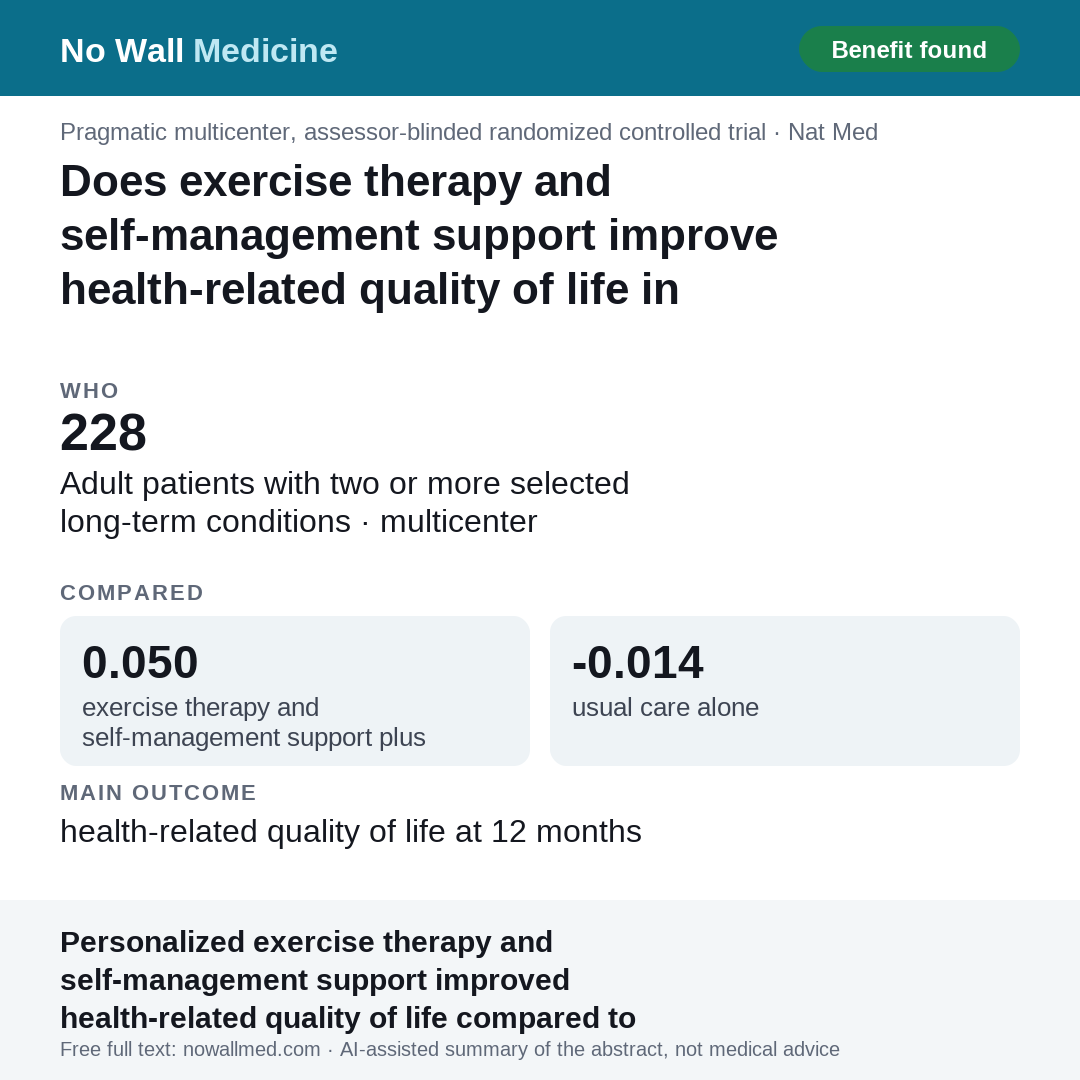
Exercise therapy and self-management support for individuals with multimorbidity: a randomized and controlled trial
Pragmatic multicenter, assessor-blinded randomized controlled trialBenefit found
Does exercise therapy and self-management support improve health-related quality of life in individuals with multimorbidity?
Who
228
Adult patients with two or more selected long-term conditions · multicenter
Compared
0.050exercise therapy and self-management support plus usual care
-0.014usual care alone
Main outcome
health-related quality of life at 12 months
Result: adjusted mean difference, 0.064 points (95% CI: 0.014-0.115)
Bottom line: Personalized exercise therapy and self-management support improved health-related quality of life compared to usual care alone in adults with multimorbidity.
Limitation: The clinical relevance of the results remains unclear.
Nat Med · 2025-06-30Download image
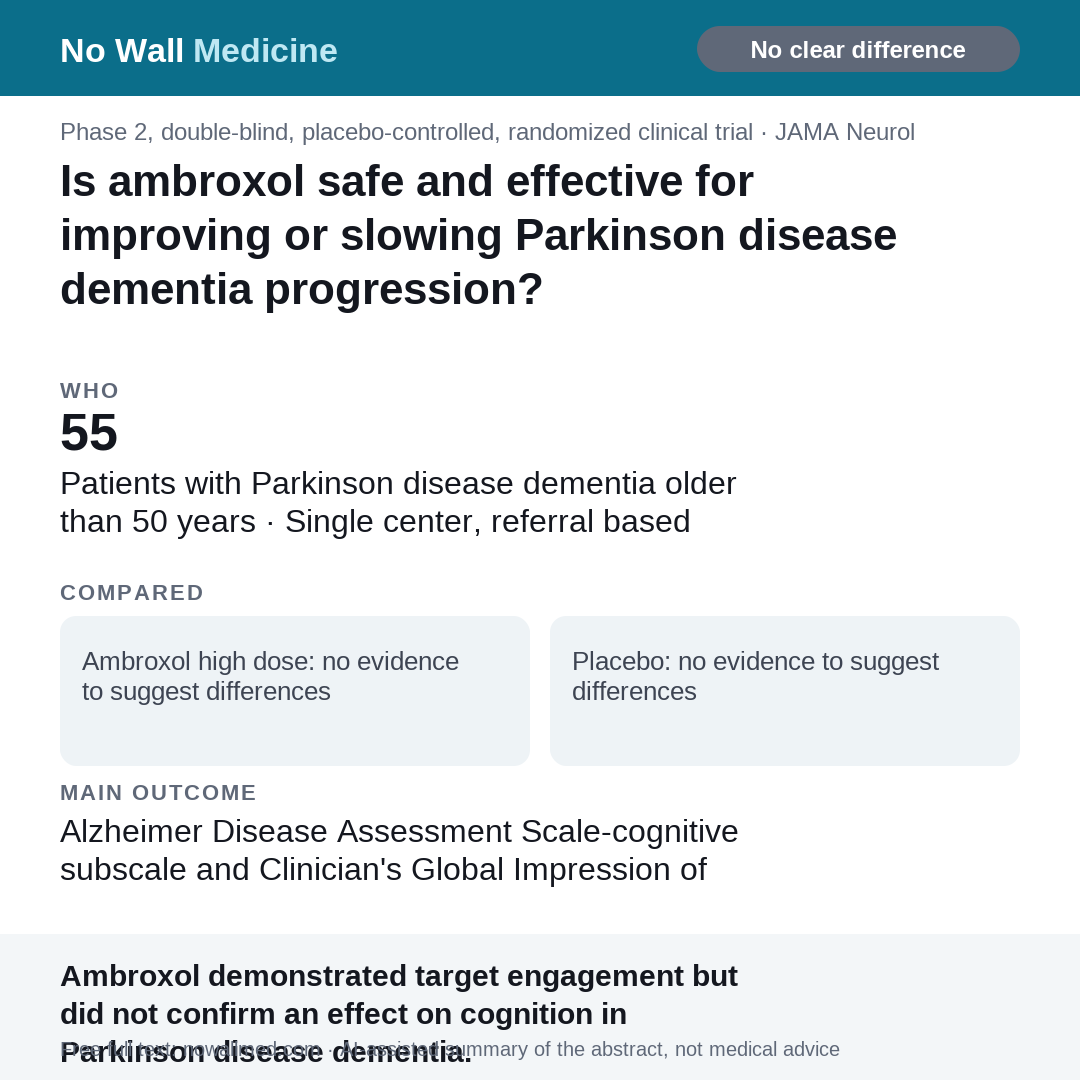
Ambroxol as a Treatment for Parkinson Disease Dementia: A Randomized Clinical Trial
Phase 2, double-blind, placebo-controlled, randomized clinical trialNo clear difference
Is ambroxol safe and effective for improving or slowing Parkinson disease dementia progression?
Who
55
Patients with Parkinson disease dementia older than 50 years · Single center, referral based
Compared
Ambroxol high dose: no evidence to suggest differences
Placebo: no evidence to suggest differences
Main outcome
Alzheimer Disease Assessment Scale-cognitive subscale and Clinician's Global Impression of Change
Bottom line: Ambroxol demonstrated target engagement but did not confirm an effect on cognition in Parkinson disease dementia.
JAMA Neurol · 2025-06-30Download image
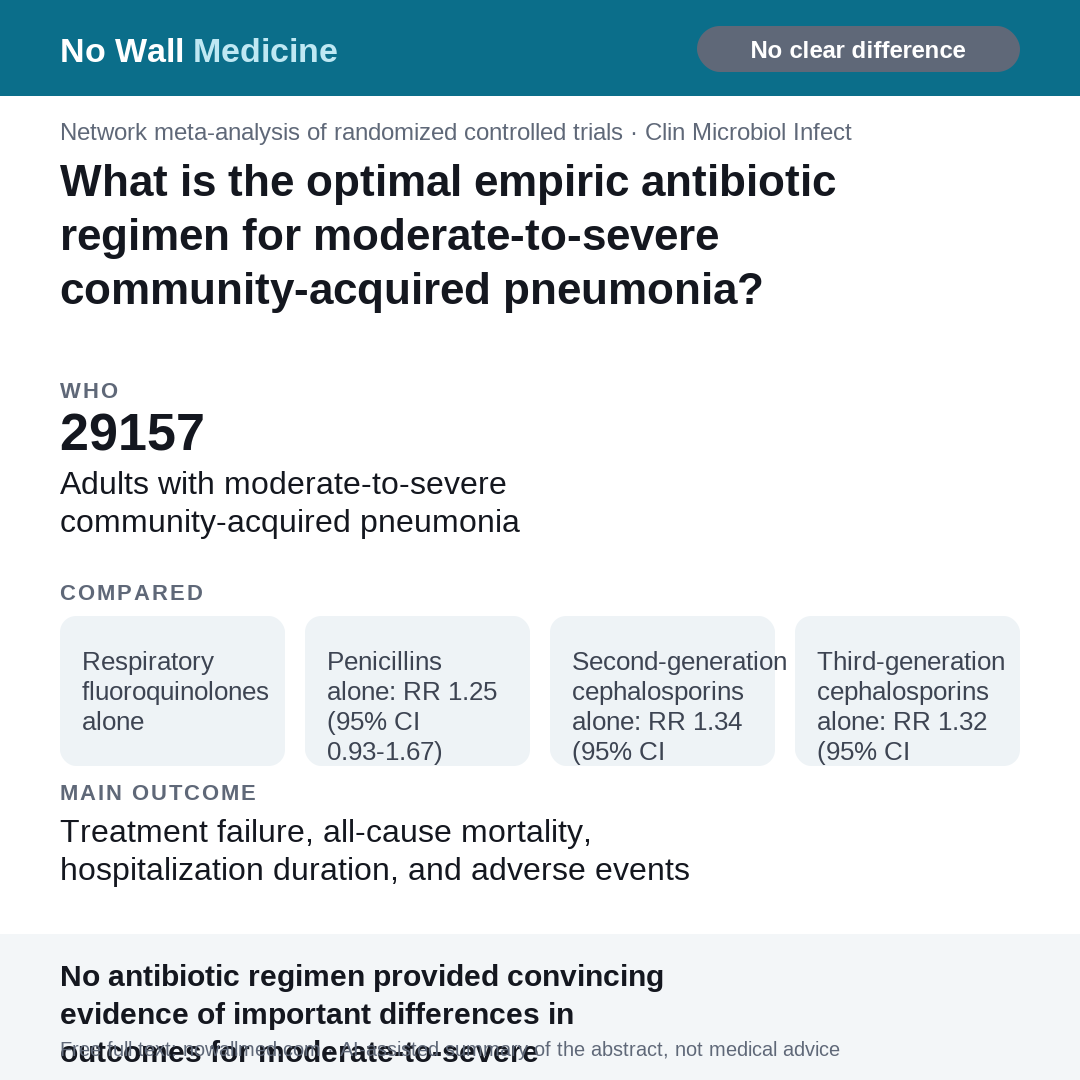
Empiric antibiotic therapy for moderate-to-severe community-acquired pneumonia: a systematic review and network meta-analysis
Network meta-analysis of randomized controlled trialsNo clear difference
What is the optimal empiric antibiotic regimen for moderate-to-severe community-acquired pneumonia?
Who
29157
Adults with moderate-to-severe community-acquired pneumonia
Compared
Respiratory fluoroquinolones alone
Penicillins alone: RR 1.25 (95% CI 0.93-1.67)
Second-generation cephalosporins alone: RR 1.34 (95% CI 0.89-2.02)
Third-generation cephalosporins alone: RR 1.32 (95% CI 0.99-1.77)
Main outcome
Treatment failure, all-cause mortality, hospitalization duration, and adverse events
Bottom line: No antibiotic regimen provided convincing evidence of important differences in outcomes for moderate-to-severe community-acquired pneumonia.
Limitation: Most evidence was of low or very low certainty.
Clin Microbiol Infect · 2025-06-30Download image
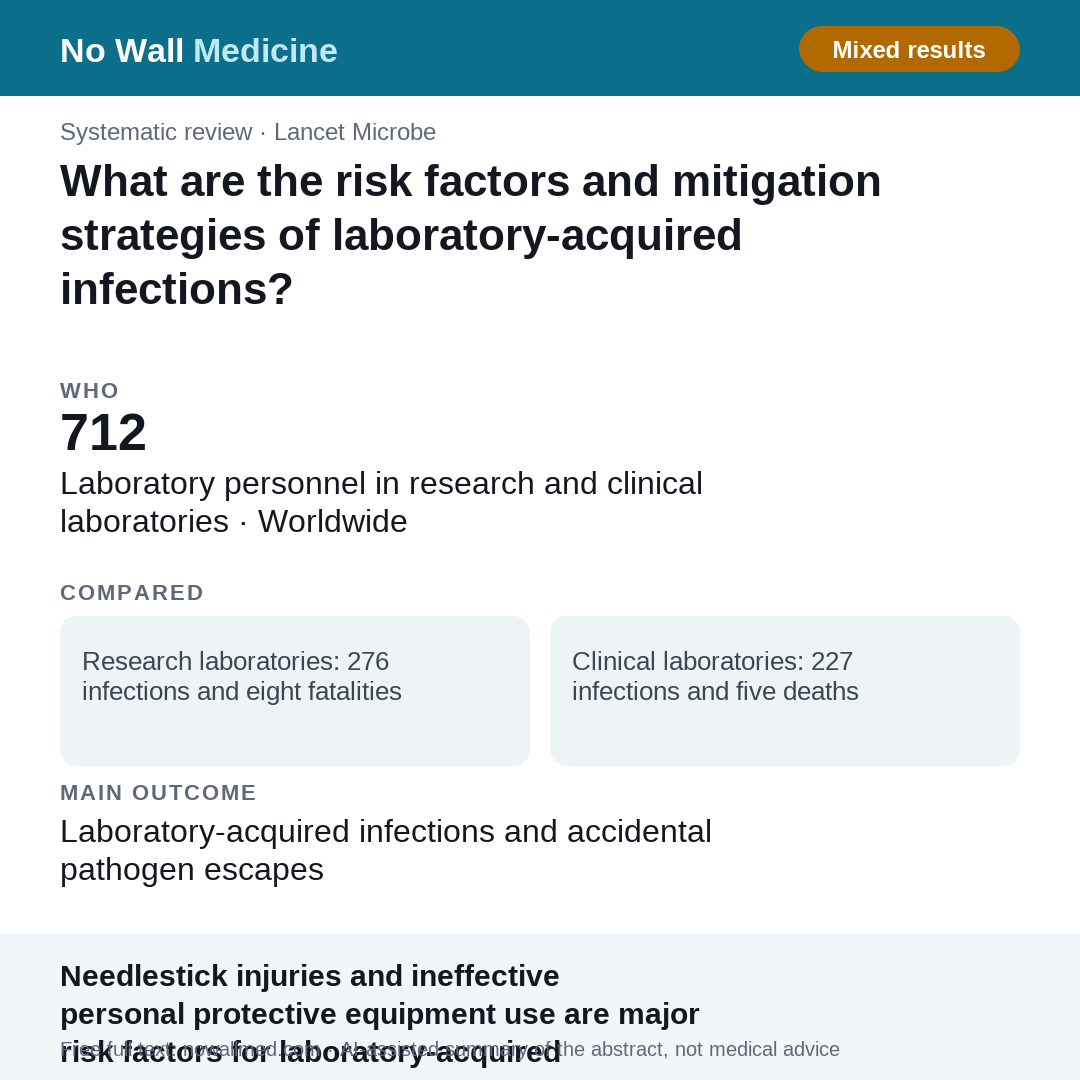
Risk factors and mitigation strategies of laboratory-acquired infections in research and clinical laboratories worldwide: a systematic review
Systematic reviewMixed results
What are the risk factors and mitigation strategies of laboratory-acquired infections?
Who
712
Laboratory personnel in research and clinical laboratories · Worldwide
Compared
Research laboratories: 276 infections and eight fatalities
Clinical laboratories: 227 infections and five deaths
Main outcome
Laboratory-acquired infections and accidental pathogen escapes
Bottom line: Needlestick injuries and ineffective personal protective equipment use are major risk factors for laboratory-acquired infections.
Lancet Microbe · 2025-06-30Download image
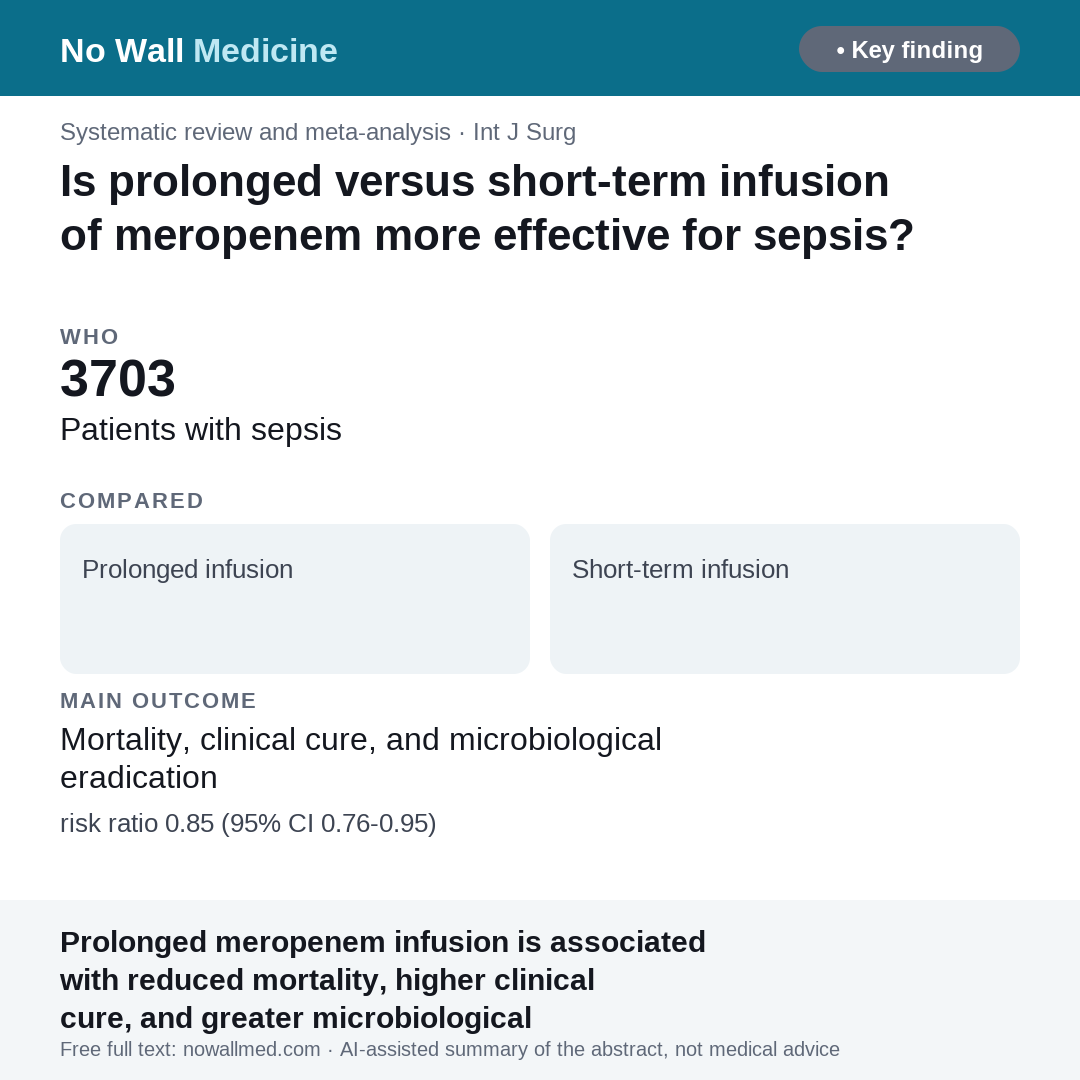
Prolonged versus short-term infusion of meropenem for the treatment of sepsis: a systematic review and meta-analysis
Systematic review and meta-analysisBenefit found
Is prolonged versus short-term infusion of meropenem more effective for sepsis?
Who
3703
Patients with sepsis
Compared
Prolonged infusion
Short-term infusion
Main outcome
Mortality, clinical cure, and microbiological eradication
Result: risk ratio 0.85 (95% CI 0.76-0.95)
Bottom line: Prolonged meropenem infusion is associated with reduced mortality, higher clinical cure, and greater microbiological eradication in sepsis patients.
Int J Surg · 2025-06-30Download image
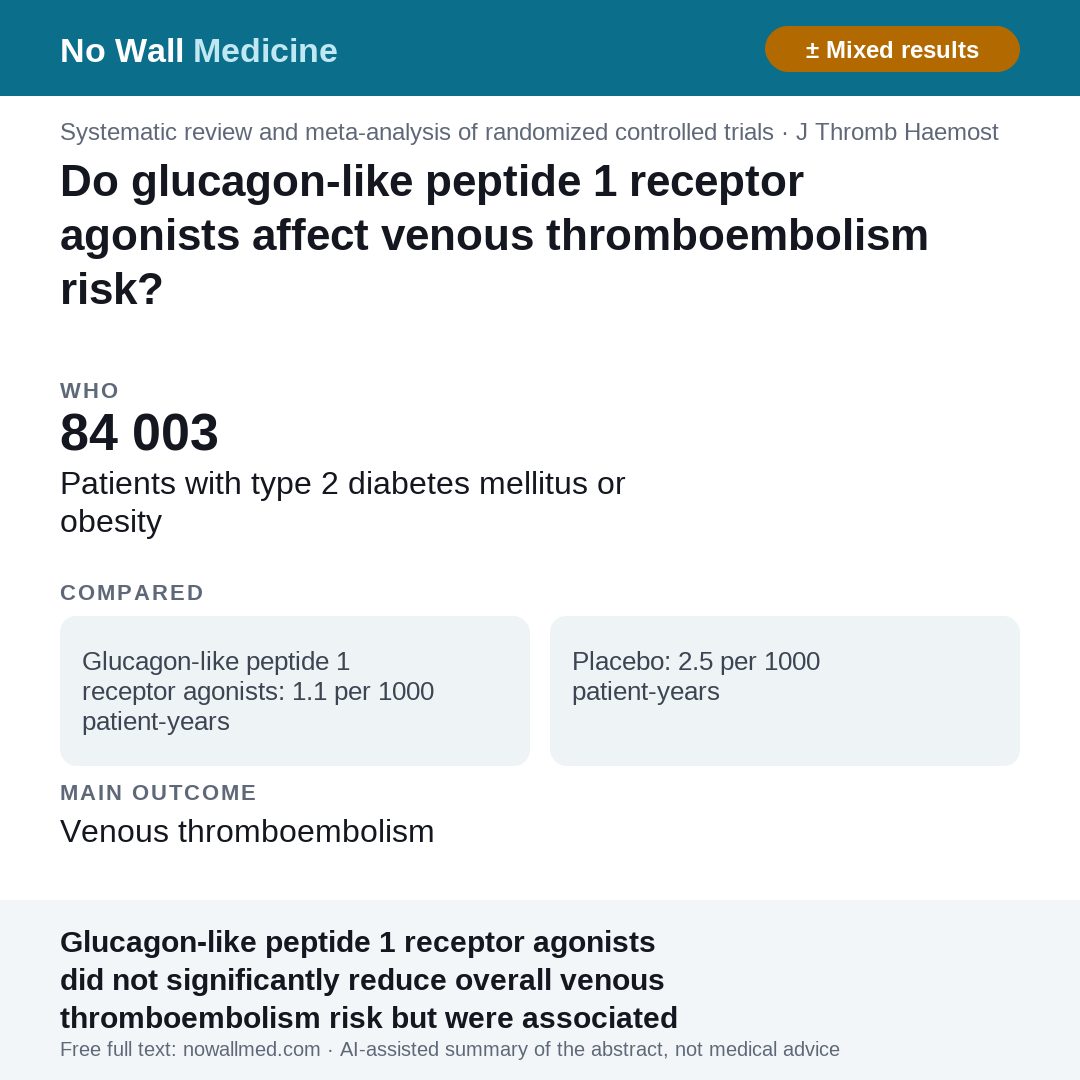
Glucagon-like peptide 1 receptor agonists and risk of venous thromboembolism: a systematic review and meta-analysis of randomized controlled trials
Systematic review and meta-analysis of randomized controlled trialsMixed results
Do glucagon-like peptide 1 receptor agonists affect venous thromboembolism risk?
Who
84 003
Patients with type 2 diabetes mellitus or obesity
Compared
Glucagon-like peptide 1 receptor agonists: 1.1 per 1000 patient-years
Placebo: 2.5 per 1000 patient-years
Main outcome
Venous thromboembolism
Result: risk ratio 0.70 (95% CI, 0.46-1.07)
Bottom line: Glucagon-like peptide 1 receptor agonists did not significantly reduce overall venous thromboembolism risk but were associated with lower pulmonary embolism risk.
J Thromb Haemost · 2025-06-30Download image
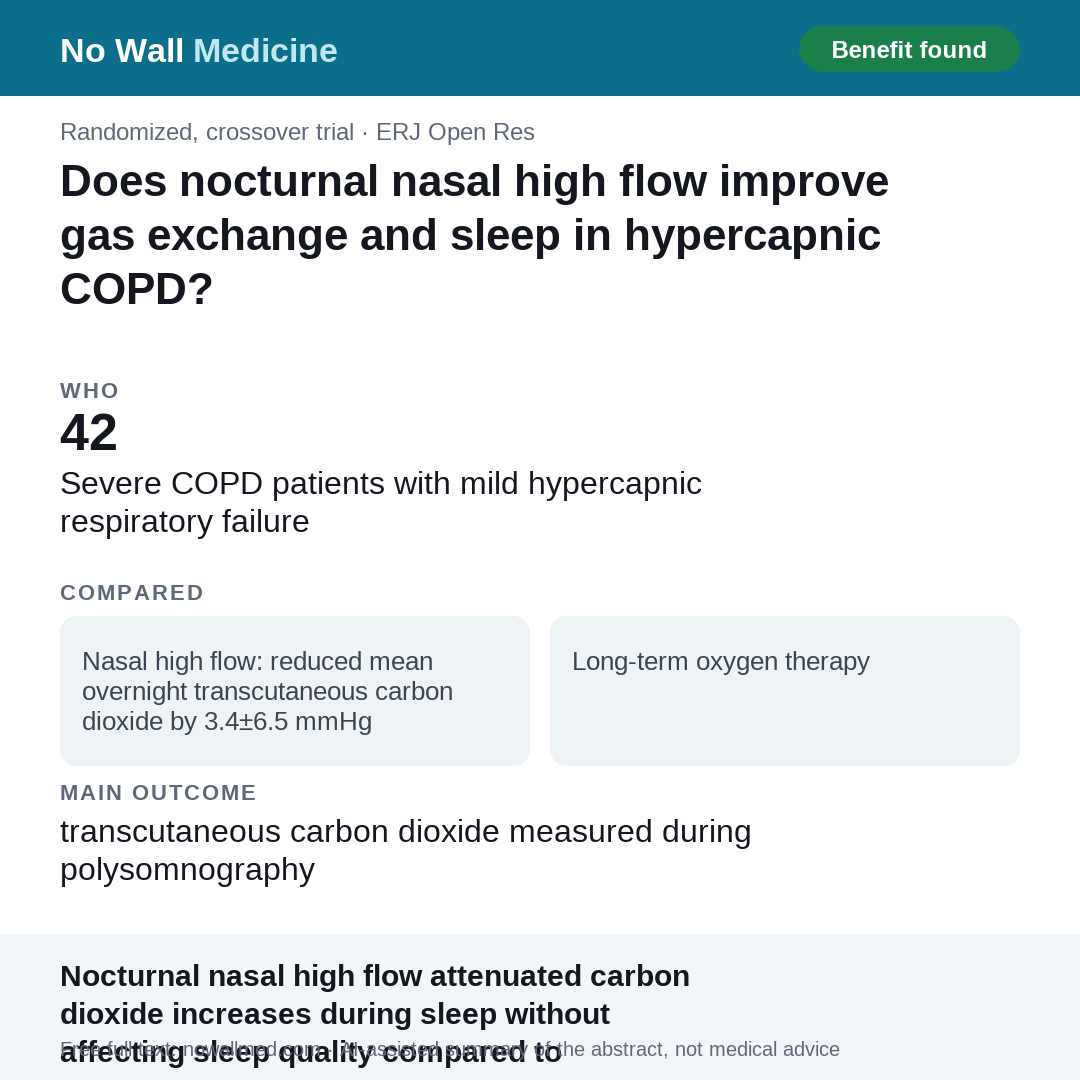
Nocturnal respiratory support with nasal high flow in hypercapnic COPD: a randomised, crossover trial
Randomized, crossover trialBenefit found
Does nocturnal nasal high flow improve gas exchange and sleep in hypercapnic COPD?
Who
42
Severe COPD patients with mild hypercapnic respiratory failure
Compared
Nasal high flow: reduced mean overnight transcutaneous carbon dioxide by 3.4±6.5 mmHg
Long-term oxygen therapy
Main outcome
transcutaneous carbon dioxide measured during polysomnography
Bottom line: Nocturnal nasal high flow attenuated carbon dioxide increases during sleep without affecting sleep quality compared to long-term oxygen therapy.
ERJ Open Res · 2025-06-30Download image
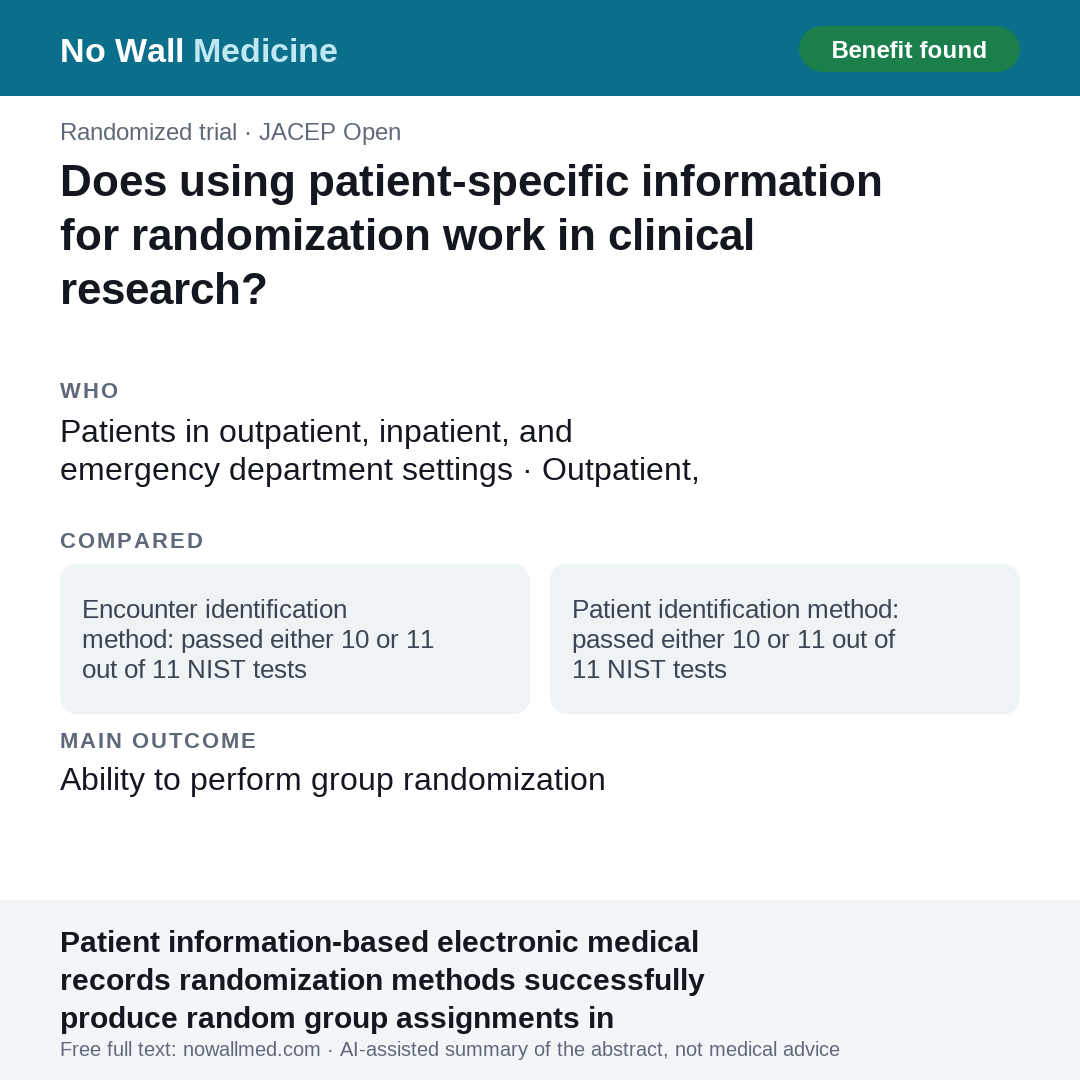
Use of Patient-Specific Information for Randomization in Clinical Research: A Randomized Trial
Randomized trialBenefit found
Does using patient-specific information for randomization work in clinical research?
Who
Patients in outpatient, inpatient, and emergency department settings · Outpatient, inpatient, and emergency department settings
Compared
Encounter identification method: passed either 10 or 11 out of 11 NIST tests
Patient identification method: passed either 10 or 11 out of 11 NIST tests
Main outcome
Ability to perform group randomization
Bottom line: Patient information-based electronic medical records randomization methods successfully produce random group assignments in pragmatic trials.
JACEP Open · 2025-06-30Download image
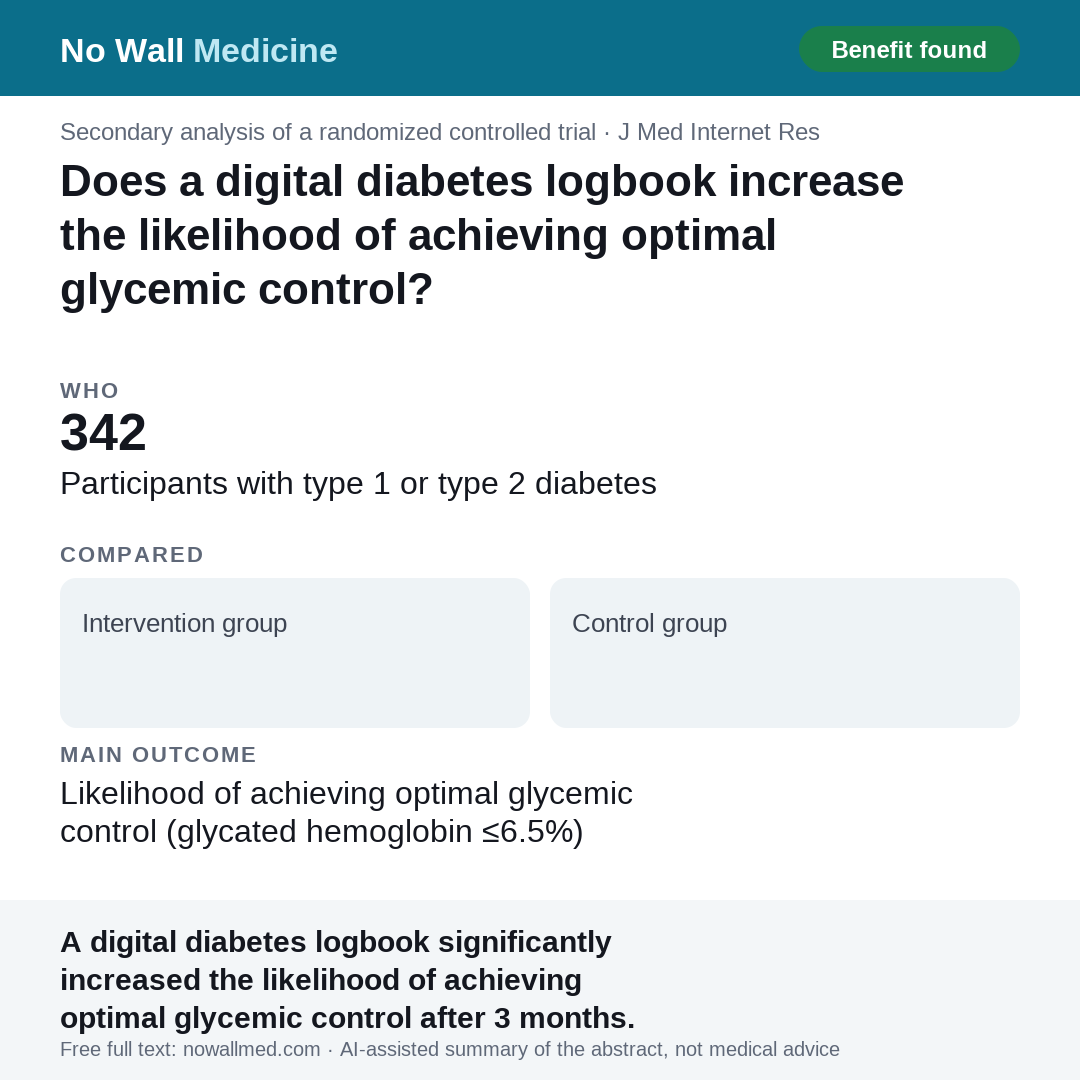
Improvements in Glycemic Control With a Digital Diabetes Logbook: Secondary Analysis of a Randomized Controlled Trial Enriched by Observational, Real-World Data
Secondary analysis of a randomized controlled trialBenefit found
Does a digital diabetes logbook increase the likelihood of achieving optimal glycemic control?
Who
342
Participants with type 1 or type 2 diabetes
Compared
Intervention group
Control group
Main outcome
Likelihood of achieving optimal glycemic control (glycated hemoglobin ≤6.5%)
Result: odds ratio 2.24 (95% CI 1.12-4.47)
Bottom line: A digital diabetes logbook significantly increased the likelihood of achieving optimal glycemic control after 3 months.
J Med Internet Res · 2025-06-30Download image
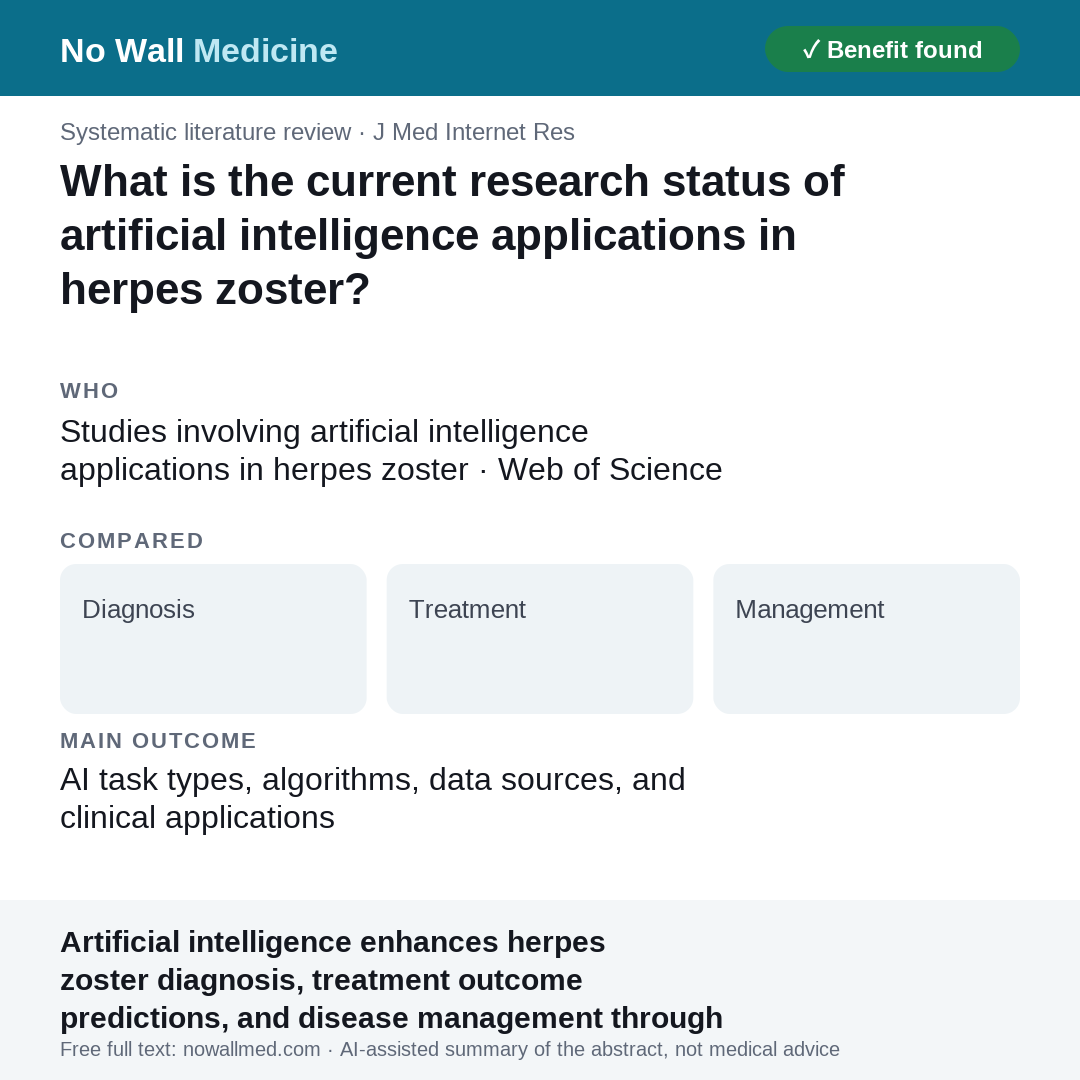
Advancements in Herpes Zoster Diagnosis, Treatment, and Management: Systematic Review of Artificial Intelligence Applications
Systematic literature reviewBenefit found
What is the current research status of artificial intelligence applications in herpes zoster?
Who
26
Studies involving artificial intelligence applications in herpes zoster · Web of Science Core Collection, PubMed, and IEEE
Compared
Diagnosis
Treatment
Management
Main outcome
AI task types, algorithms, data sources, and clinical applications
Bottom line: Artificial intelligence enhances herpes zoster diagnosis, treatment outcome predictions, and disease management through various algorithms and data types.
Limitation: Potential omissions from excluding Embase and Scopus, language bias, and risk of subjective bias in study selection.
J Med Internet Res · 2025-06-30Download image
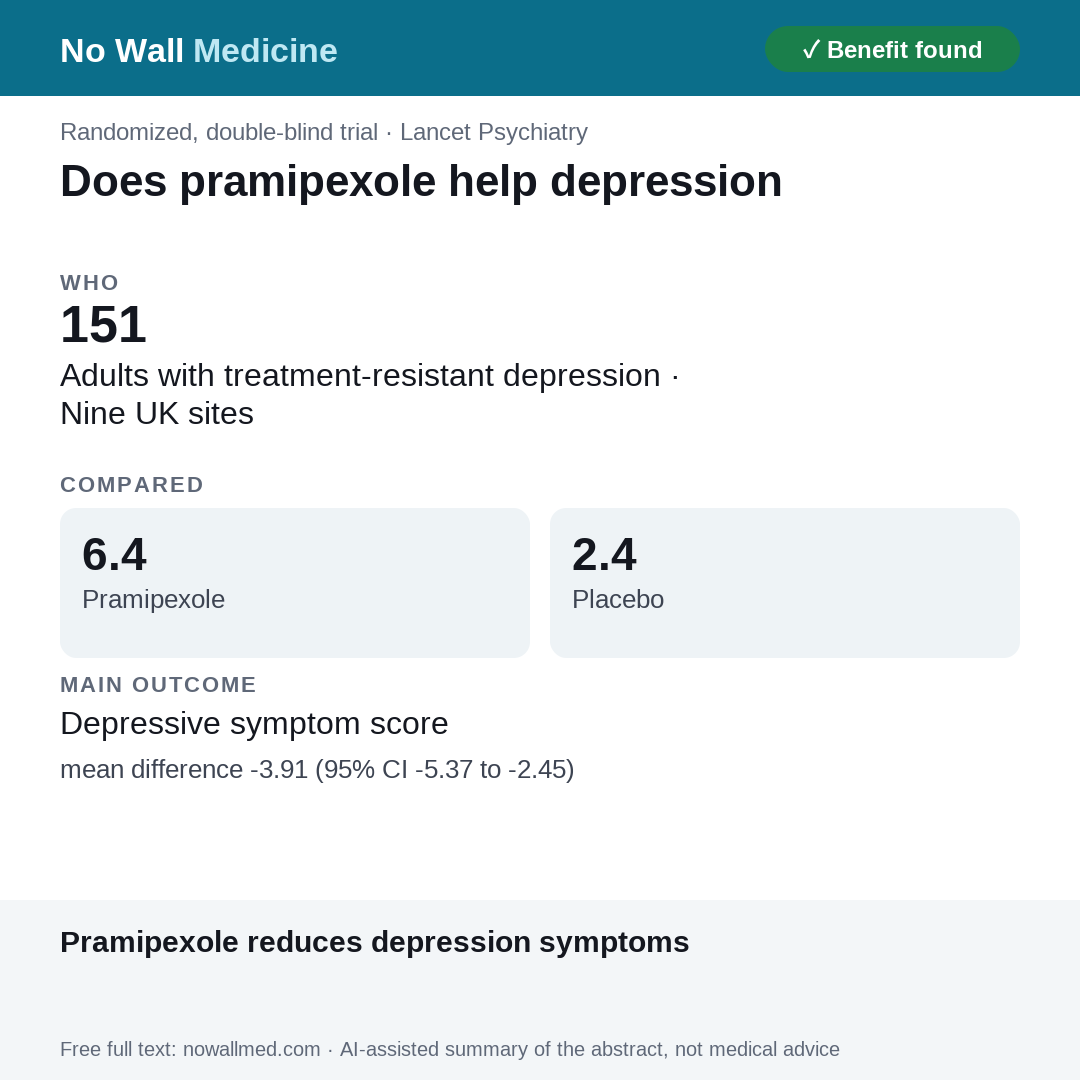
Pramipexole augmentation for the acute phase of treatment-resistant, unipolar depression: a placebo-controlled, double-blind, randomised trial in the UK
Randomized, double-blind trialBenefit found
Does pramipexole help depression
Who
151
Adults with treatment-resistant depression · Nine UK sites
Compared
6.4Pramipexole (SD 4.9)
2.4Placebo (4.0)
Main outcome
Depressive symptom score
Result: mean difference -3.91 (95% CI -5.37 to -2.45)
Bottom line: Pramipexole reduces depression symptoms
Funded by: National Institute of Health
Lancet Psychiatry · 2025-06-29Download image
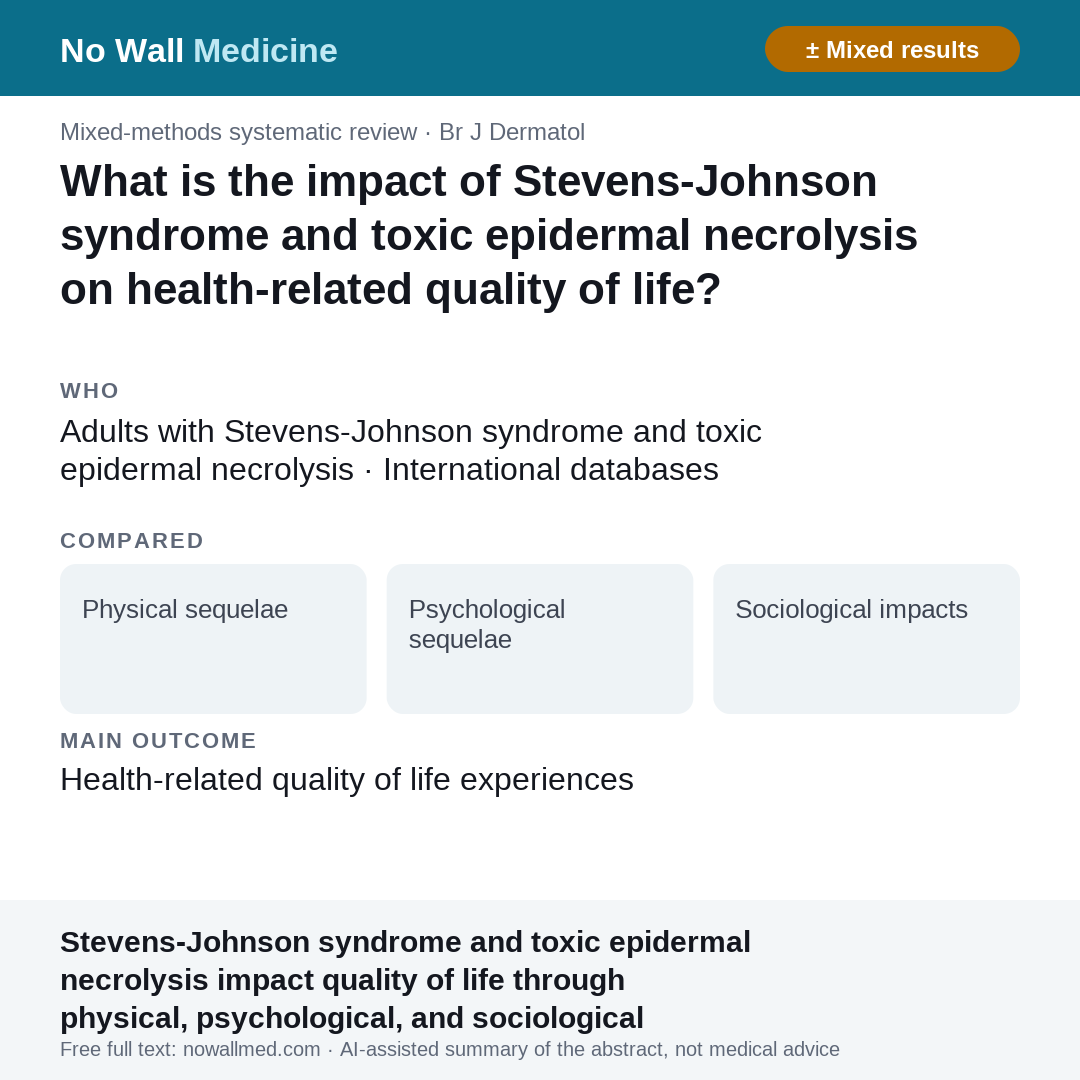
Impact of Stevens-Johnson syndrome (SJS) and toxic epidermal necrolysis (TEN) on the health-related quality of life (HRQoL) experiences of adults with SJS/TEN: a mixed-methods systematic review
Mixed-methods systematic reviewMixed results
What is the impact of Stevens-Johnson syndrome and toxic epidermal necrolysis on health-related quality of life?
Who
Adults with Stevens-Johnson syndrome and toxic epidermal necrolysis · International databases
Compared
Physical sequelae
Psychological sequelae
Sociological impacts
Main outcome
Health-related quality of life experiences
Bottom line: Stevens-Johnson syndrome and toxic epidermal necrolysis impact quality of life through physical, psychological, and sociological sequelae.
Br J Dermatol · 2025-06-28Download image
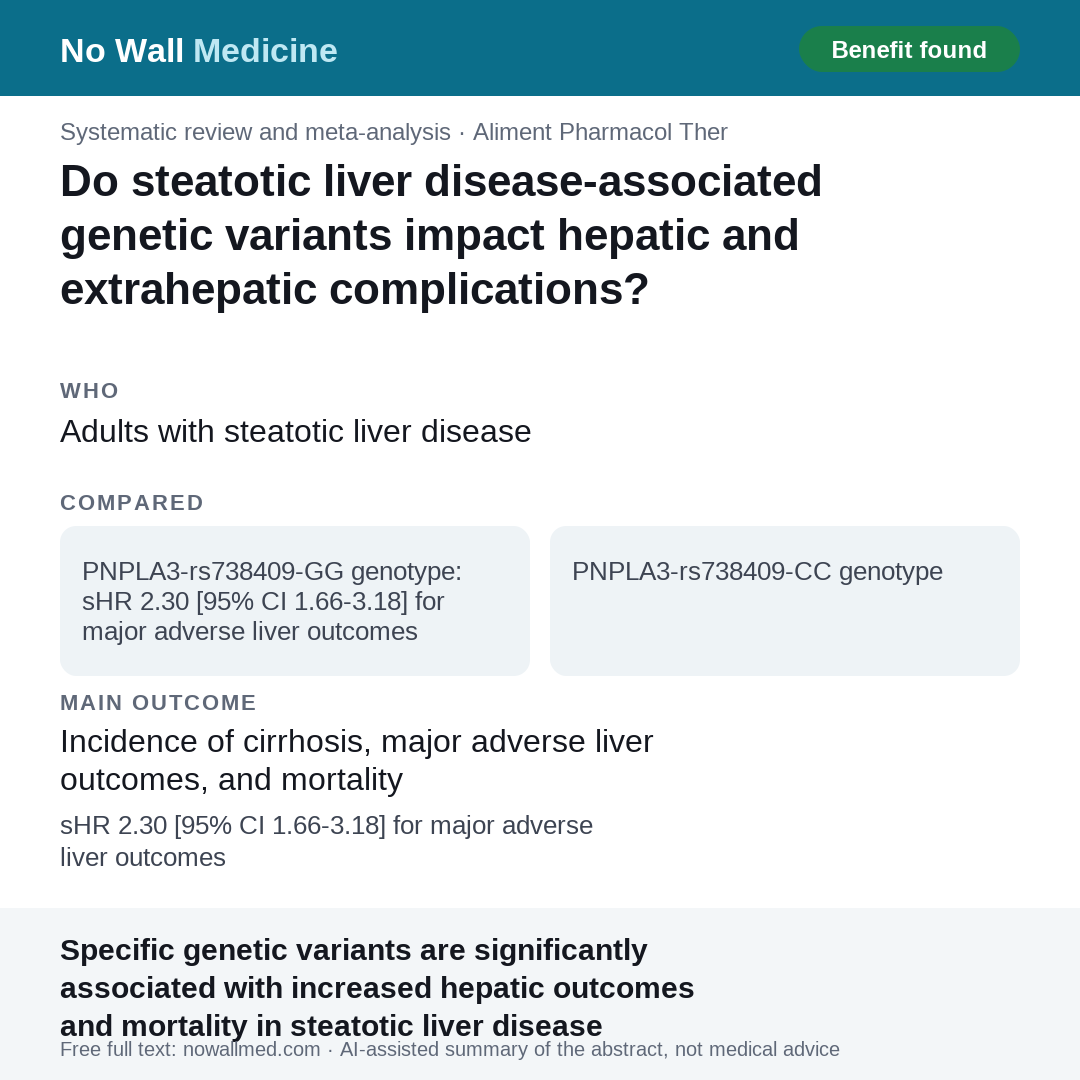
Meta-Analysis: Effects of Steatotic Liver Disease-Associated Genetic Risk Alleles on Longitudinal Outcomes
Systematic review and meta-analysisBenefit found
Do steatotic liver disease-associated genetic variants impact hepatic and extrahepatic complications?
Who
Adults with steatotic liver disease
Compared
PNPLA3-rs738409-GG genotype: sHR 2.30 [95% CI 1.66-3.18] for major adverse liver outcomes
PNPLA3-rs738409-CC genotype
Main outcome
Incidence of cirrhosis, major adverse liver outcomes, and mortality
Result: sHR 2.30 [95% CI 1.66-3.18] for major adverse liver outcomes
Bottom line: Specific genetic variants are significantly associated with increased hepatic outcomes and mortality in steatotic liver disease patients.
Limitation: Inconsistent outcome reporting, fibrosis stage distribution, and paucity of studies on certain variants.
Aliment Pharmacol Ther · 2025-06-28Download image
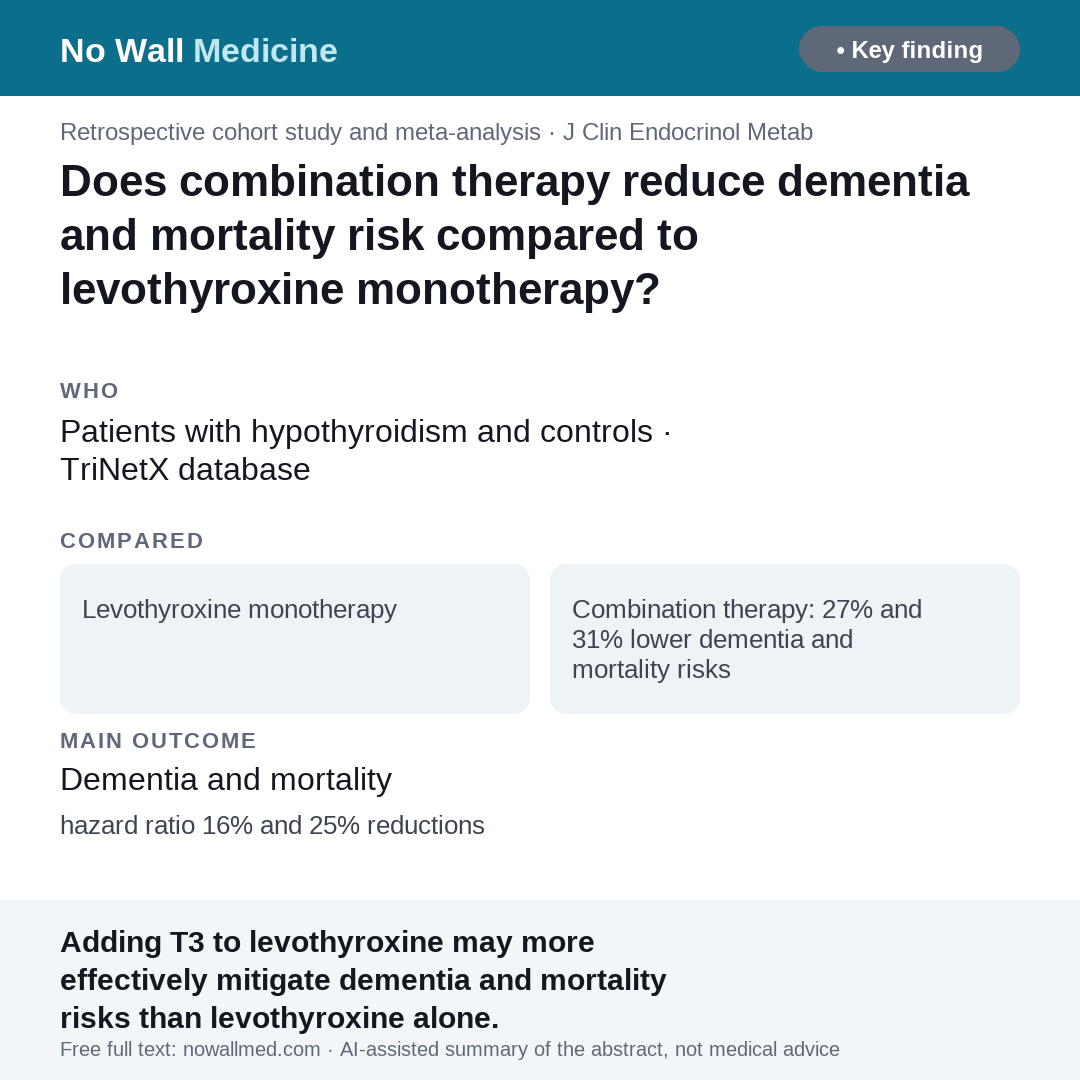
Treatment of Hypothyroidism That Contains Liothyronine is Associated With Reduced Risk of Dementia and Mortality
Retrospective cohort study and meta-analysisBenefit found
Does combination therapy reduce dementia and mortality risk compared to levothyroxine monotherapy?
Who
Patients with hypothyroidism and controls · TriNetX database
Compared
Levothyroxine monotherapy
Combination therapy: 27% and 31% lower dementia and mortality risks
Main outcome
Dementia and mortality
Result: hazard ratio 16% and 25% reductions
Bottom line: Adding T3 to levothyroxine may more effectively mitigate dementia and mortality risks than levothyroxine alone.
J Clin Endocrinol Metab · 2025-06-28Download image
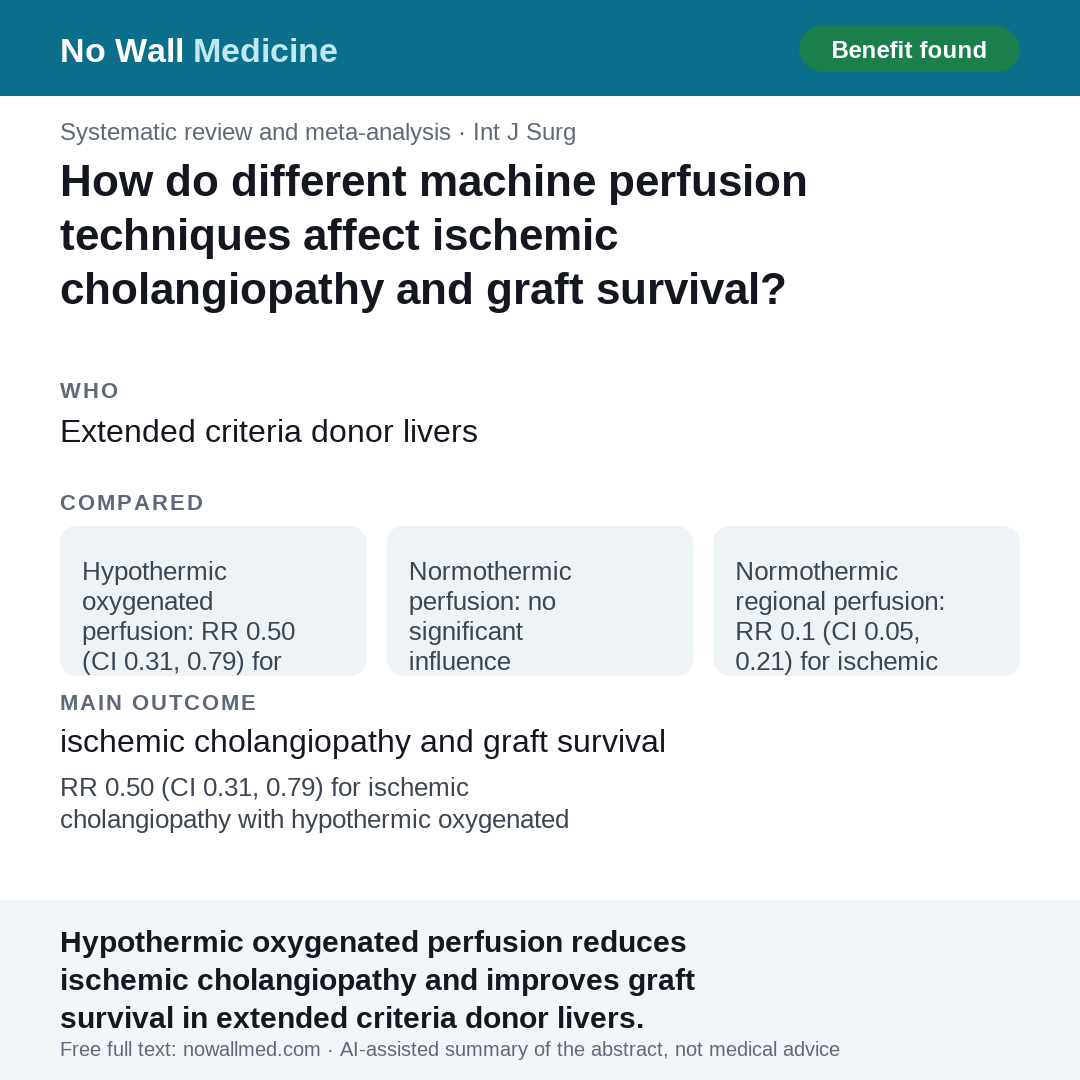
Machine perfusion of liver grafts: hypothermic versus normothermic versus normothermic regional perfusion
Systematic review and meta-analysisBenefit found
How do different machine perfusion techniques affect ischemic cholangiopathy and graft survival?
Who
Extended criteria donor livers
Compared
Hypothermic oxygenated perfusion: RR 0.50 (CI 0.31, 0.79) for ischemic cholangiopathy
Normothermic perfusion: no significant influence
Normothermic regional perfusion: RR 0.1 (CI 0.05, 0.21) for ischemic cholangiopathy
Main outcome
ischemic cholangiopathy and graft survival
Result: RR 0.50 (CI 0.31, 0.79) for ischemic cholangiopathy with hypothermic oxygenated perfusion
Bottom line: Hypothermic oxygenated perfusion reduces ischemic cholangiopathy and improves graft survival in extended criteria donor livers.
Limitation: Available literature is largely heterogeneous regarding risk profile, donor characteristics, and study designs.
Int J Surg · 2025-06-28Download image
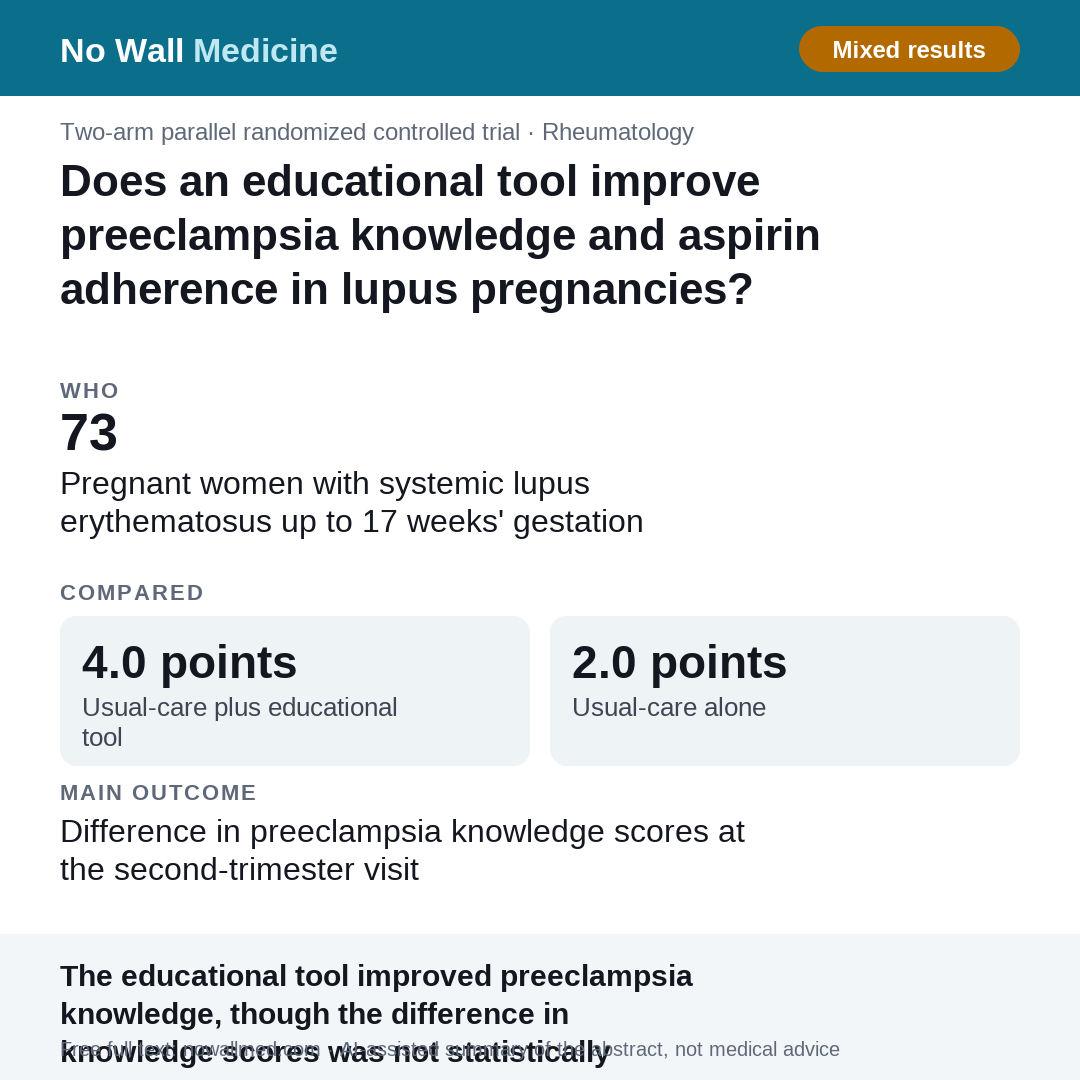
An educational tool to improve PREeclamPsia knowledge and Aspirin adheRence in lupus prEgnancies: the PREPARE trial
Two-arm parallel randomized controlled trialMixed results
Does an educational tool improve preeclampsia knowledge and aspirin adherence in lupus pregnancies?
Who
73
Pregnant women with systemic lupus erythematosus up to 17 weeks' gestation
Compared
4.0 pointsUsual-care plus educational tool (95% CI: 2.4, 5.6)
2.0 pointsUsual-care alone (95% CI: 0.3, 3.9)
Main outcome
Difference in preeclampsia knowledge scores at the second-trimester visit
Result: mean difference of 1.8 points higher (95% CI: -0.5, 4.2)
Bottom line: The educational tool improved preeclampsia knowledge, though the difference in knowledge scores was not statistically significant.
Rheumatology · 2025-06-28Download image
Clinical Nomogram for Determining Expected Choroidal Thickness in Children With Myopia
Post-hoc patient-level meta-analysisUnclear result
Can choroidal thickness predict myopia complications?
Who
Children with myopia aged 6-30 years
Compared
Expected ChT
Observed ChT
Main outcome
Deviation of subfoveal ChT from expected
Bottom line: Choroidal thickness can gauge myopia risk
Am J Ophthalmol · 2025-06-28Download image
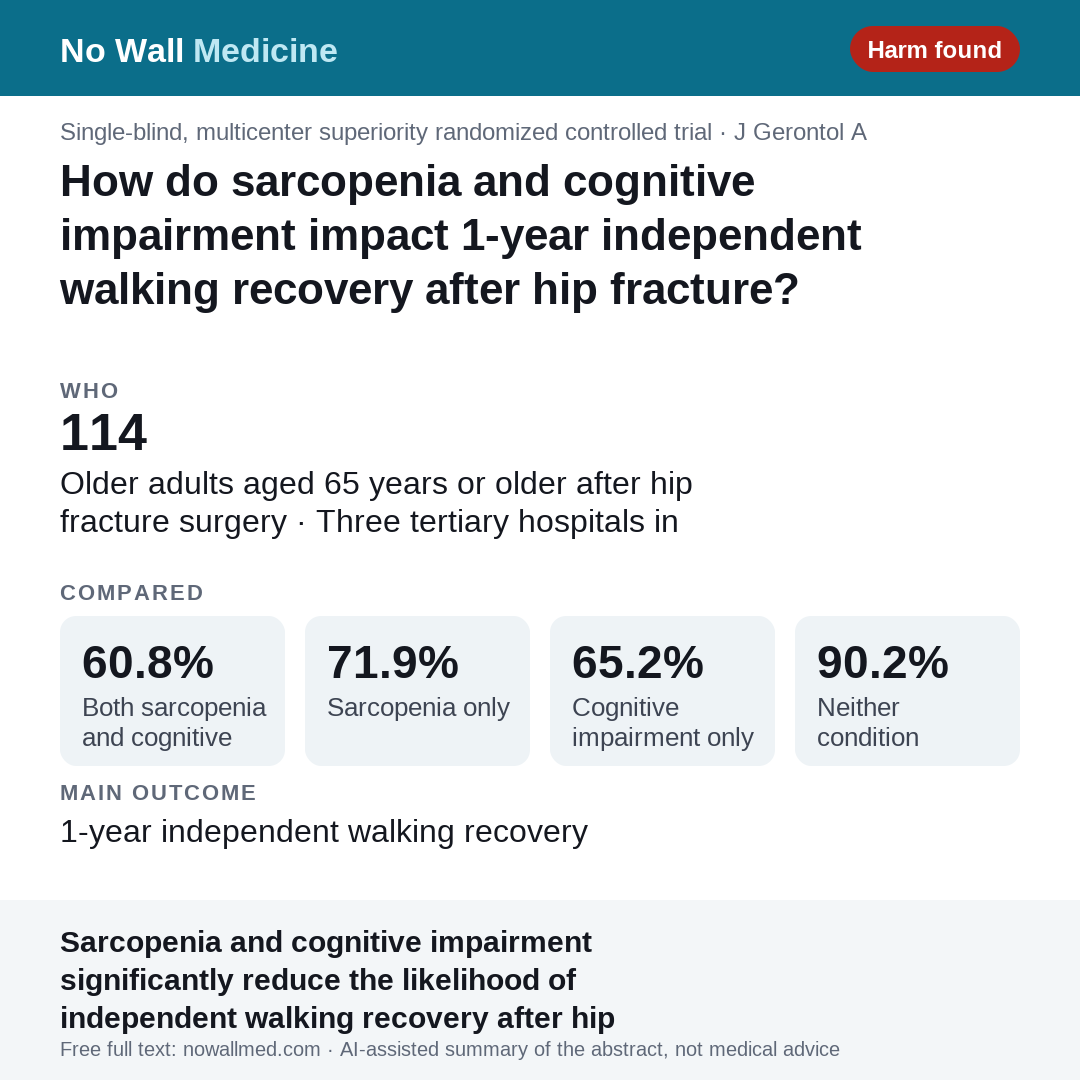
Concurrent impact of sarcopenia and cognitive impairment on walking recovery after rehabilitation following hip fracture surgery
Single-blind, multicenter superiority randomized controlled trialHarm found
How do sarcopenia and cognitive impairment impact 1-year independent walking recovery after hip fracture?
Who
114
Older adults aged 65 years or older after hip fracture surgery · Three tertiary hospitals in South Korea
Compared
60.8%Both sarcopenia and cognitive impairment
71.9%Sarcopenia only
65.2%Cognitive impairment only
90.2%Neither condition
Main outcome
1-year independent walking recovery
Result: hazard ratio 0.431 (95% CI 0.233 to 0.798)
Bottom line: Sarcopenia and cognitive impairment significantly reduce the likelihood of independent walking recovery after hip fracture rehabilitation.
J Gerontol A · 2025-06-28Download image