Visual abstracts
New randomized trials and meta-analyses from leading journals at a glance: who was studied, what was compared, and what was found. Every paper is free to read in full.
All specialtiesCardiology 4832Oncology 4114Gastroenterology & Hepatology 1934Infectious Disease 3824Neurology 1899Psychiatry & Mental Health 2256Pulmonology 2082Critical Care 1345Endocrinology & Diabetes 2572Pediatrics 2940Surgery 2525Orthopedics & Sports Medicine 926Neurosurgery 534Cardiothoracic & Vascular Surgery 671Plastic & Reconstructive Surgery 591Nephrology 1124Rheumatology 823Hematology 1104Dermatology 620Ophthalmology 543Obstetrics & Gynecology 1684Public & Global Health 1056Radiology & Imaging 641Anesthesiology 962Urology 754ENT (Otolaryngology) 503Emergency Medicine 489Allergy & Immunology 313Geriatrics 981Family Medicine & Primary Care 541Medical Genetics & Genomics 675Pathology & Laboratory Medicine 157Physical Medicine & Rehabilitation 751Palliative Care 424Nutrition 1580Digital Health & AI 2195General Medicine 321
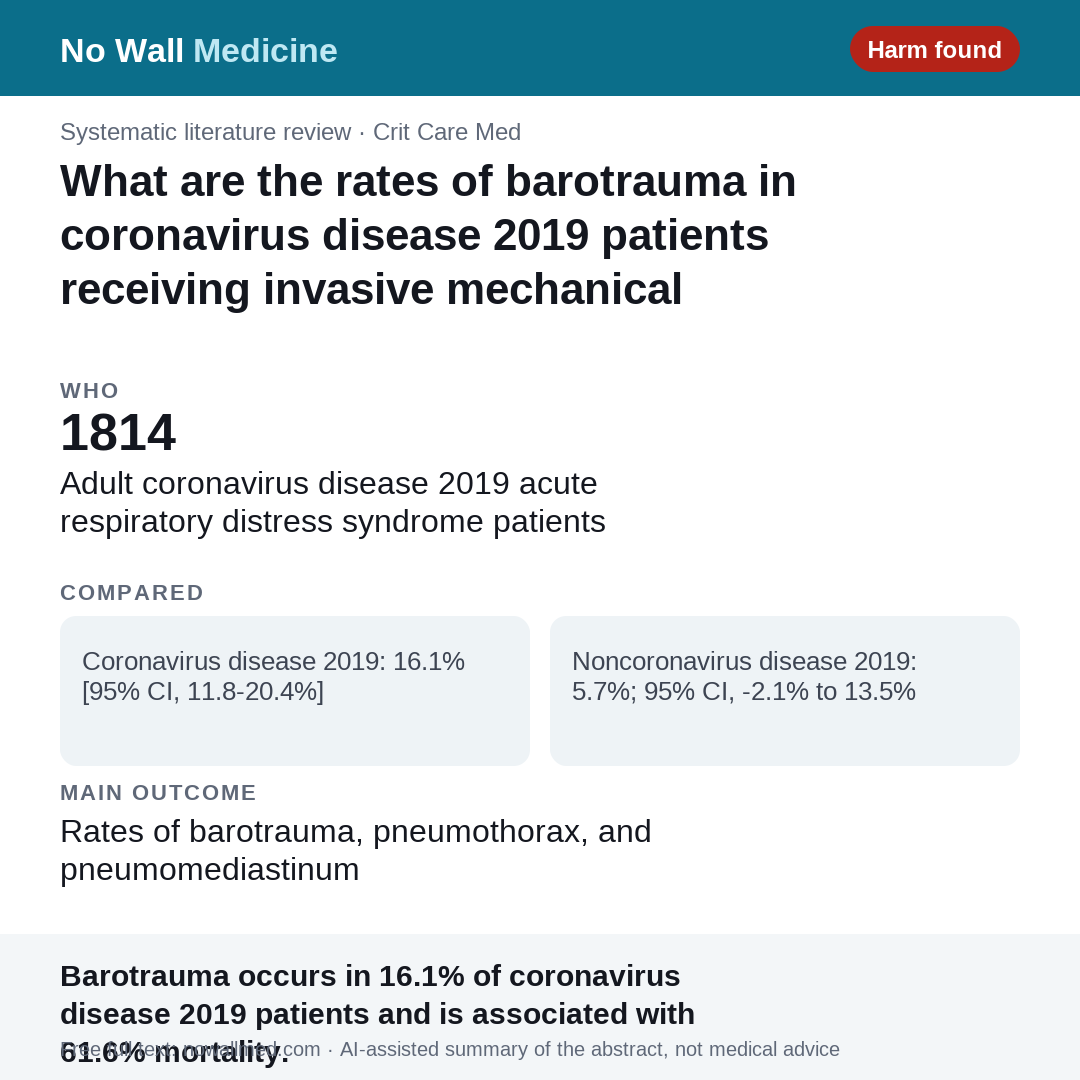
Barotrauma in Coronavirus Disease 2019 Patients Undergoing Invasive Mechanical Ventilation: A Systematic Literature Review
Systematic literature reviewHarm found
What are the rates of barotrauma in coronavirus disease 2019 patients receiving invasive mechanical ventilation?
Who
1814
Adult coronavirus disease 2019 acute respiratory distress syndrome patients receiving invasive mechanical ventilation
Compared
Coronavirus disease 2019: 16.1% [95% CI, 11.8-20.4%]
Noncoronavirus disease 2019: 5.7%; 95% CI, -2.1% to 13.5%
Main outcome
Rates of barotrauma, pneumothorax, and pneumomediastinum
Bottom line: Barotrauma occurs in 16.1% of coronavirus disease 2019 patients and is associated with 61.6% mortality.
Crit Care Med · 2021-10-13Download image
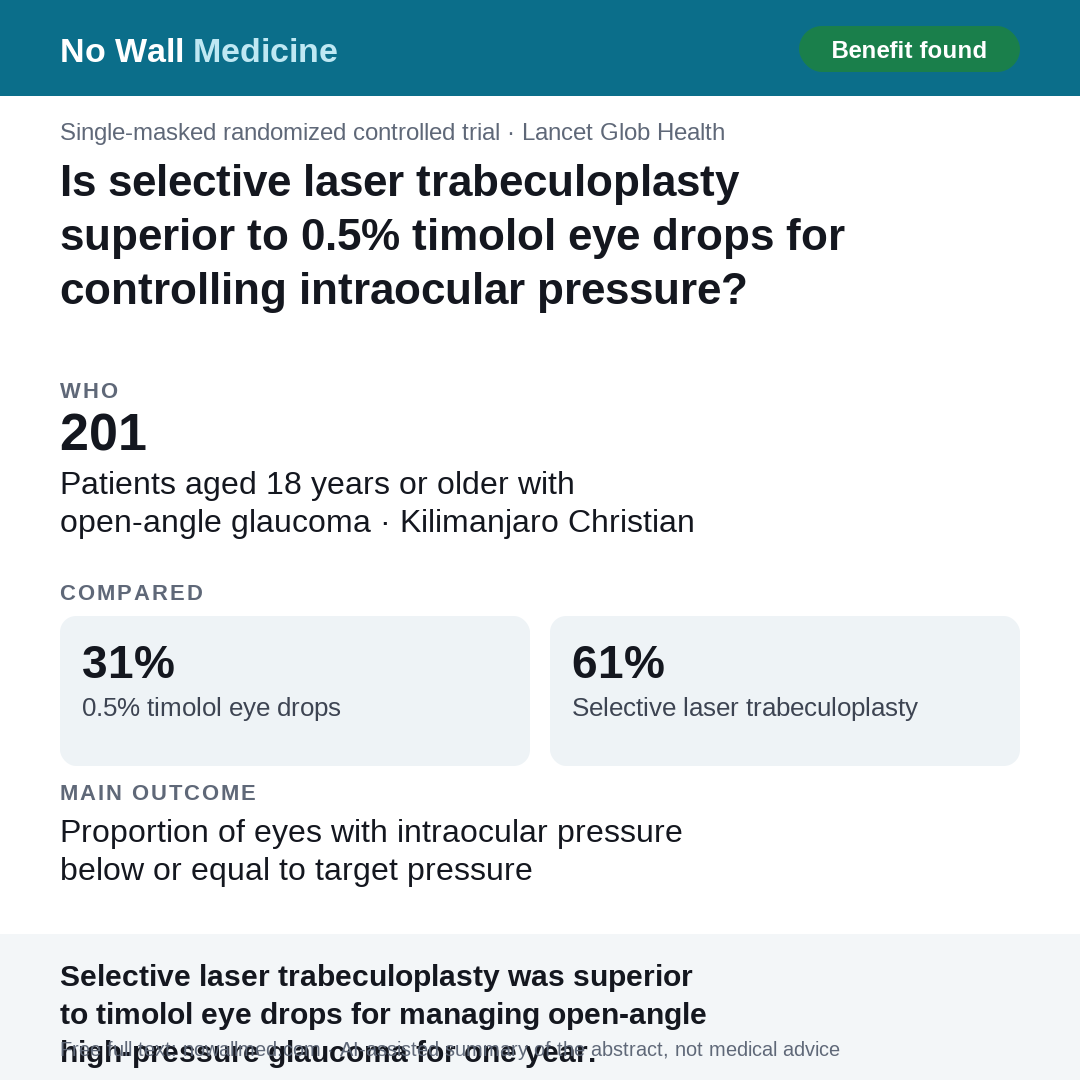
Selective laser trabeculoplasty versus 0·5% timolol eye drops for the treatment of glaucoma in Tanzania: a randomised controlled trial
Single-masked randomized controlled trialBenefit found
Is selective laser trabeculoplasty superior to 0.5% timolol eye drops for controlling intraocular pressure?
Who
201
Patients aged 18 years or older with open-angle glaucoma · Kilimanjaro Christian Medical Centre, Moshi, Tanzania
Compared
31%0.5% timolol eye drops (55/176)
61%Selective laser trabeculoplasty (99/163)
Main outcome
Proportion of eyes with intraocular pressure below or equal to target pressure
Result: odds ratio 3.37 (95% CI 1.96-5.80)
Bottom line: Selective laser trabeculoplasty was superior to timolol eye drops for managing open-angle high-pressure glaucoma for one year.
Funded by: Christian Blind Mission, Seeing is Believing Innovation Fund, and Wellcome Trust
Lancet Glob Health · 2021-10-13Download image
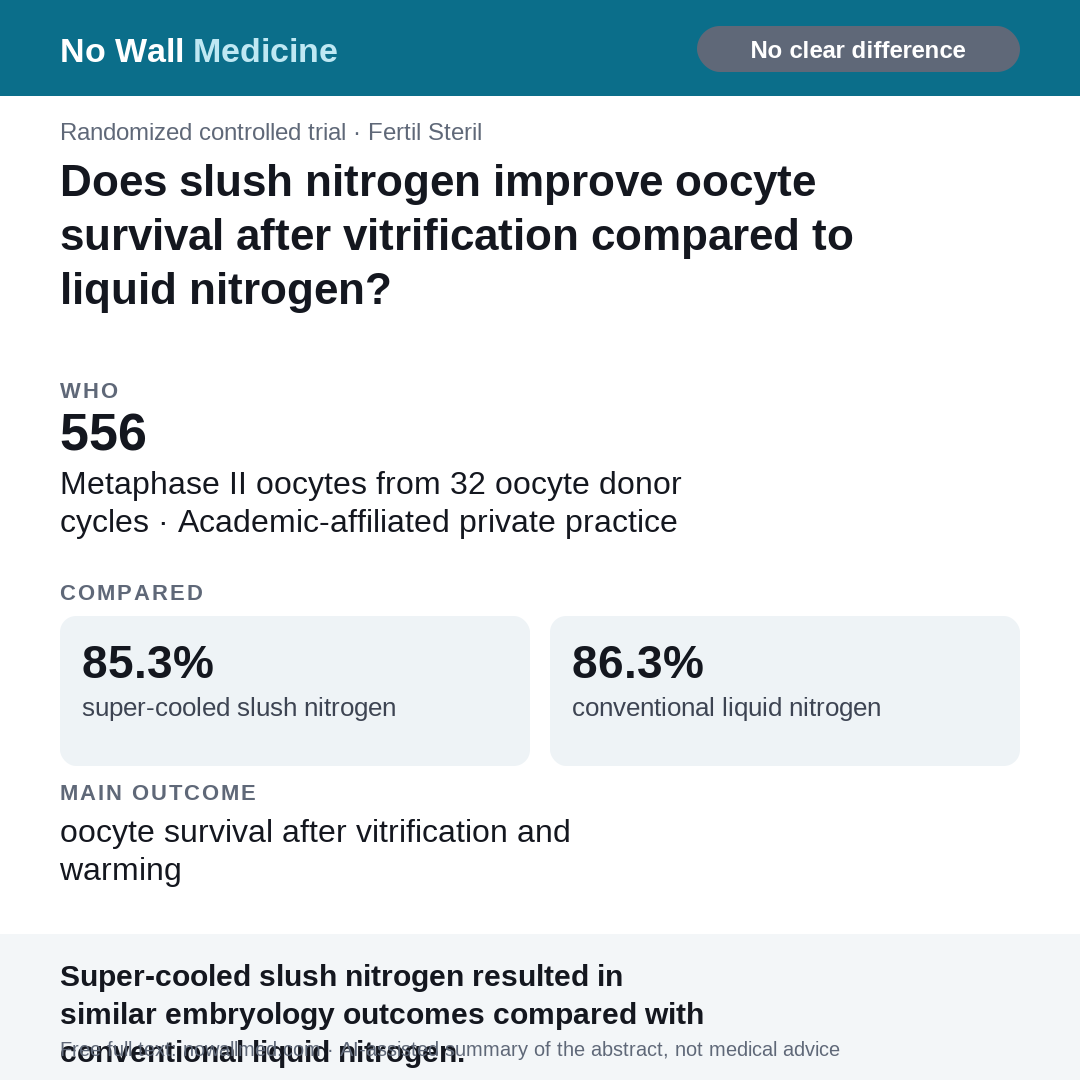
Embryology outcomes after oocyte vitrification with super-cooled slush nitrogen are similar to outcomes with conventional liquid nitrogen: a randomized controlled trial
Randomized controlled trialNo clear difference
Does slush nitrogen improve oocyte survival after vitrification compared to liquid nitrogen?
Who
556
Metaphase II oocytes from 32 oocyte donor cycles · Academic-affiliated private practice
Compared
85.3%super-cooled slush nitrogen
86.3%conventional liquid nitrogen
Main outcome
oocyte survival after vitrification and warming
Bottom line: Super-cooled slush nitrogen resulted in similar embryology outcomes compared with conventional liquid nitrogen.
Fertil Steril · 2021-10-13Download image
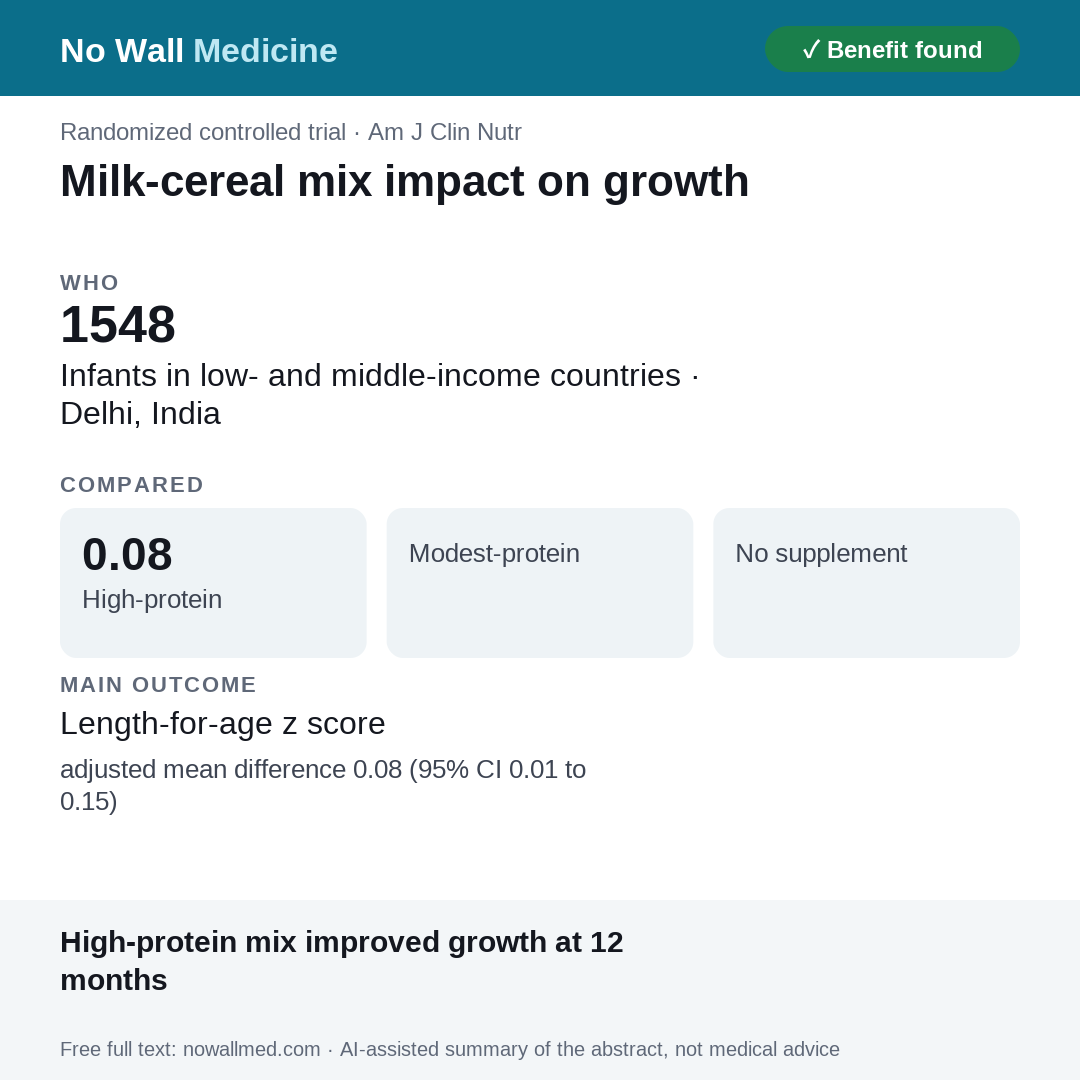
Impact of supplementation with milk-cereal mix during 6-12 months of age on growth at 12 months: a 3-arm randomized controlled trial in Delhi, India
Randomized controlled trialBenefit found
Milk-cereal mix impact on growth
Who
1548
Infants in low- and middle-income countries · Delhi, India
Compared
0.08High-protein (95% CI 0.01 to 0.15)
Modest-protein
No supplement
Main outcome
Length-for-age z score
Result: adjusted mean difference 0.08 (95% CI 0.01 to 0.15)
Bottom line: High-protein mix improved growth at 12 months
Am J Clin Nutr · 2021-10-13Download image
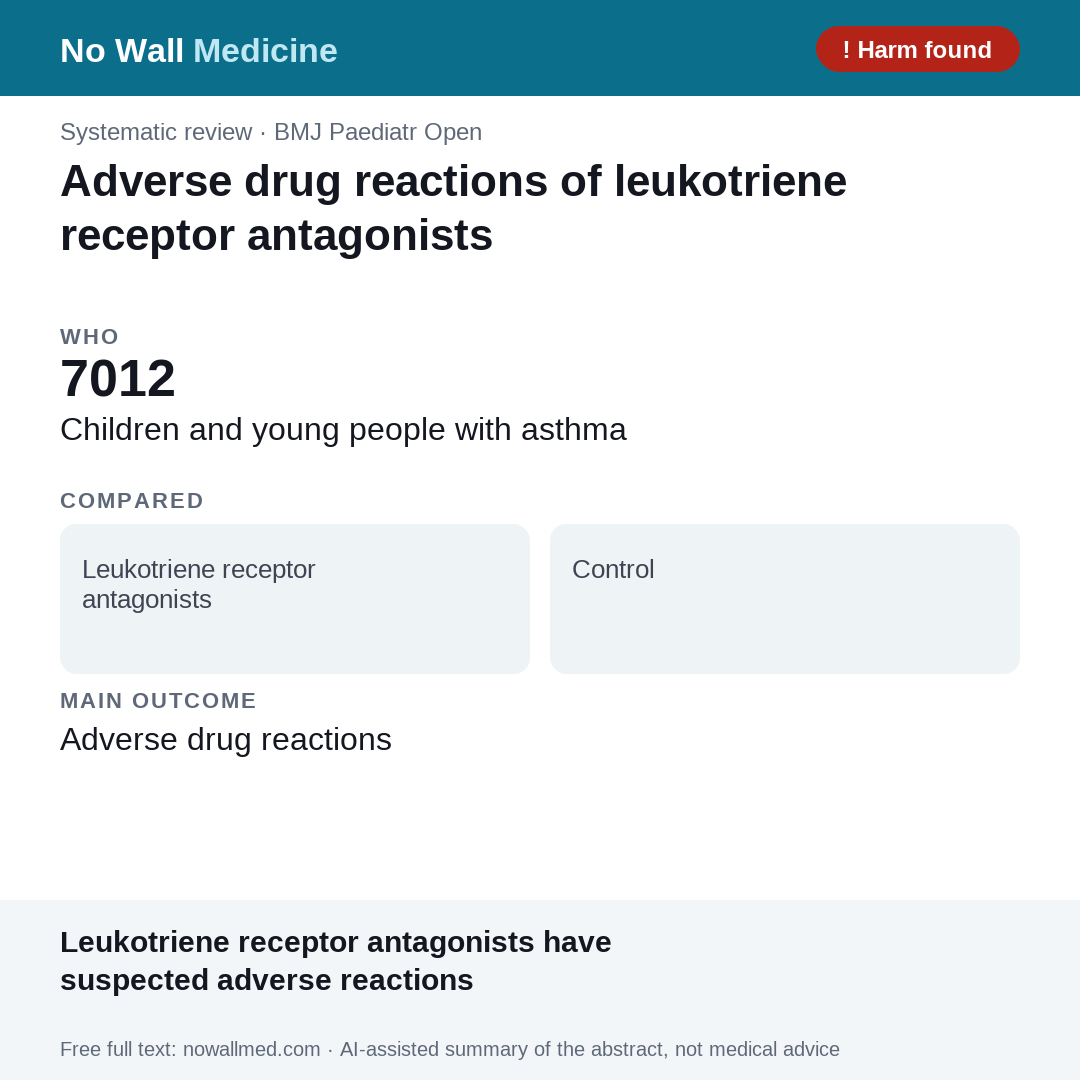
Adverse drug reactions of leukotriene receptor antagonists in children with asthma: a systematic review
Systematic reviewHarm found
Adverse drug reactions of leukotriene receptor antagonists
Who
7012
Children and young people with asthma
Compared
Leukotriene receptor antagonists
Control
Main outcome
Adverse drug reactions
Bottom line: Leukotriene receptor antagonists have suspected adverse reactions
BMJ Paediatr Open · 2021-10-13Download image
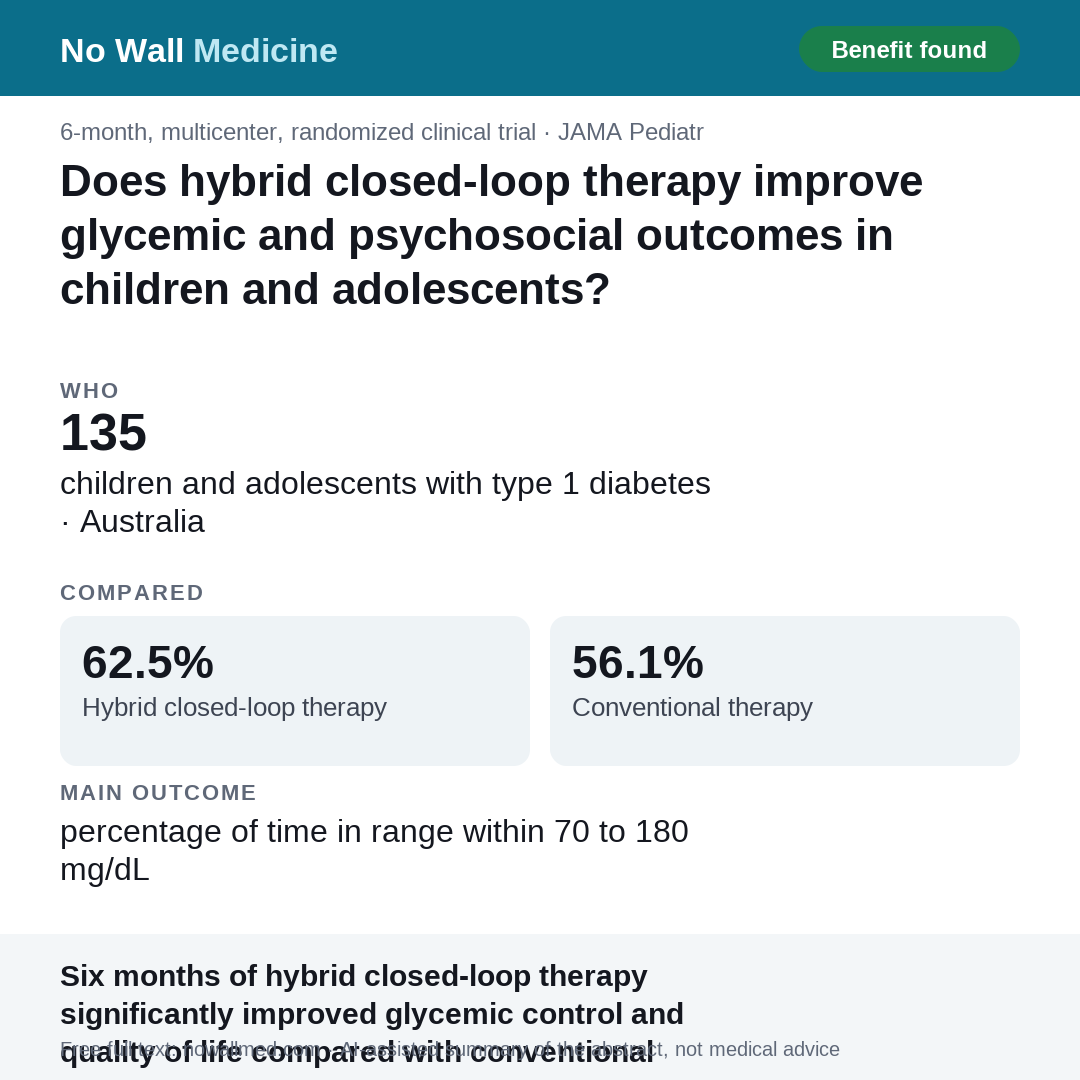
Effect of a Hybrid Closed-Loop System on Glycemic and Psychosocial Outcomes in Children and Adolescents With Type 1 Diabetes: A Randomized Clinical Trial
6-month, multicenter, randomized clinical trialBenefit found
Does hybrid closed-loop therapy improve glycemic and psychosocial outcomes in children and adolescents?
Who
135
children and adolescents with type 1 diabetes · Australia
Compared
62.5%Hybrid closed-loop therapy (12.0%)
56.1%Conventional therapy (12.2%)
Main outcome
percentage of time in range within 70 to 180 mg/dL
Result: mean adjusted difference 6.7% (95% CI, 2.7%-10.8%)
Bottom line: Six months of hybrid closed-loop therapy significantly improved glycemic control and quality of life compared with conventional therapy.
JAMA Pediatr · 2021-10-12Download image
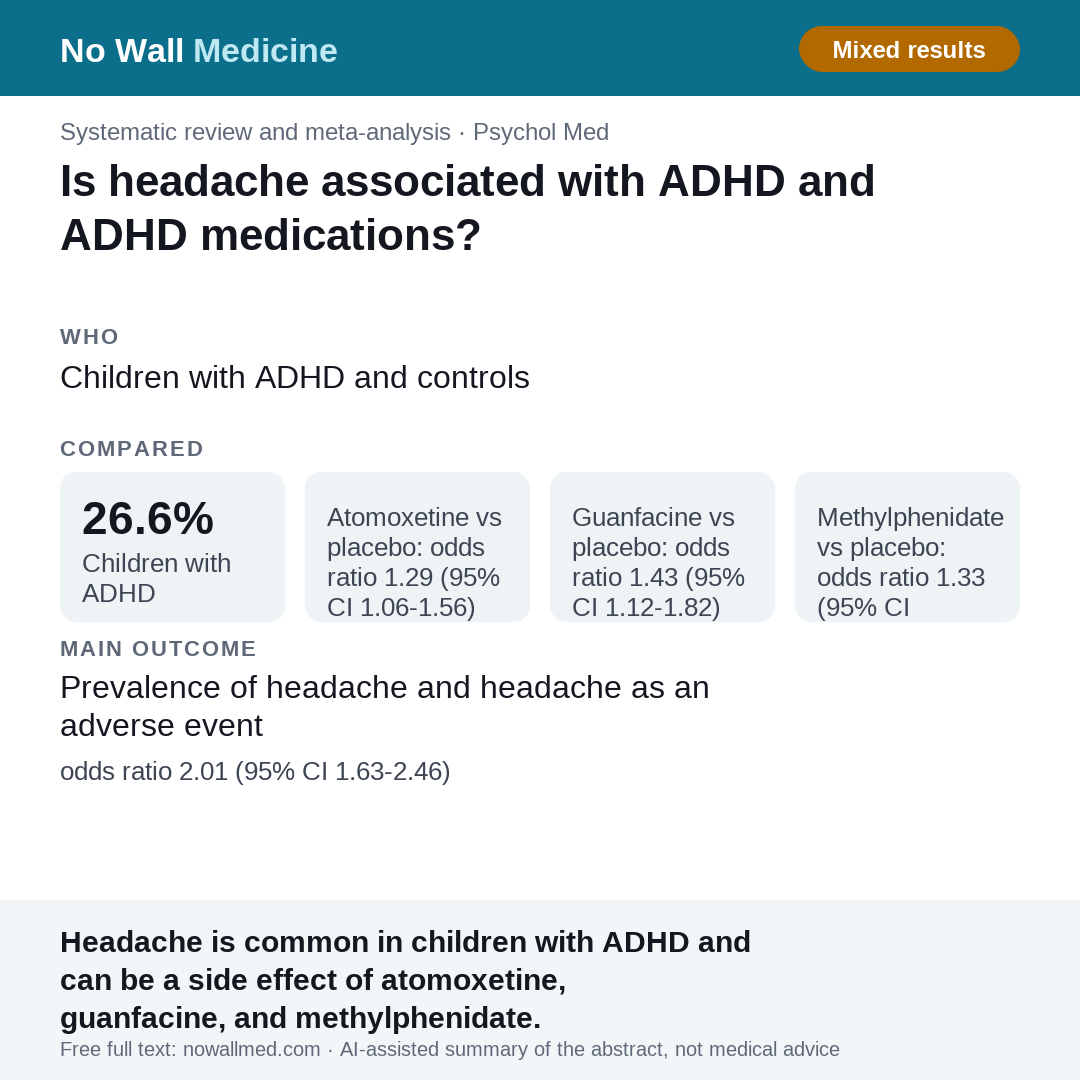
Headache in ADHD as comorbidity and a side effect of medications: a systematic review and meta-analysis
Systematic review and meta-analysisMixed results
Is headache associated with ADHD and ADHD medications?
Who
Children with ADHD and controls
Compared
26.6%Children with ADHD
Atomoxetine vs placebo: odds ratio 1.29 (95% CI 1.06-1.56)
Guanfacine vs placebo: odds ratio 1.43 (95% CI 1.12-1.82)
Methylphenidate vs placebo: odds ratio 1.33 (95% CI 1.09-1.63)
Main outcome
Prevalence of headache and headache as an adverse event
Result: odds ratio 2.01 (95% CI 1.63-2.46)
Bottom line: Headache is common in children with ADHD and can be a side effect of atomoxetine, guanfacine, and methylphenidate.
Psychol Med · 2021-10-12Download image
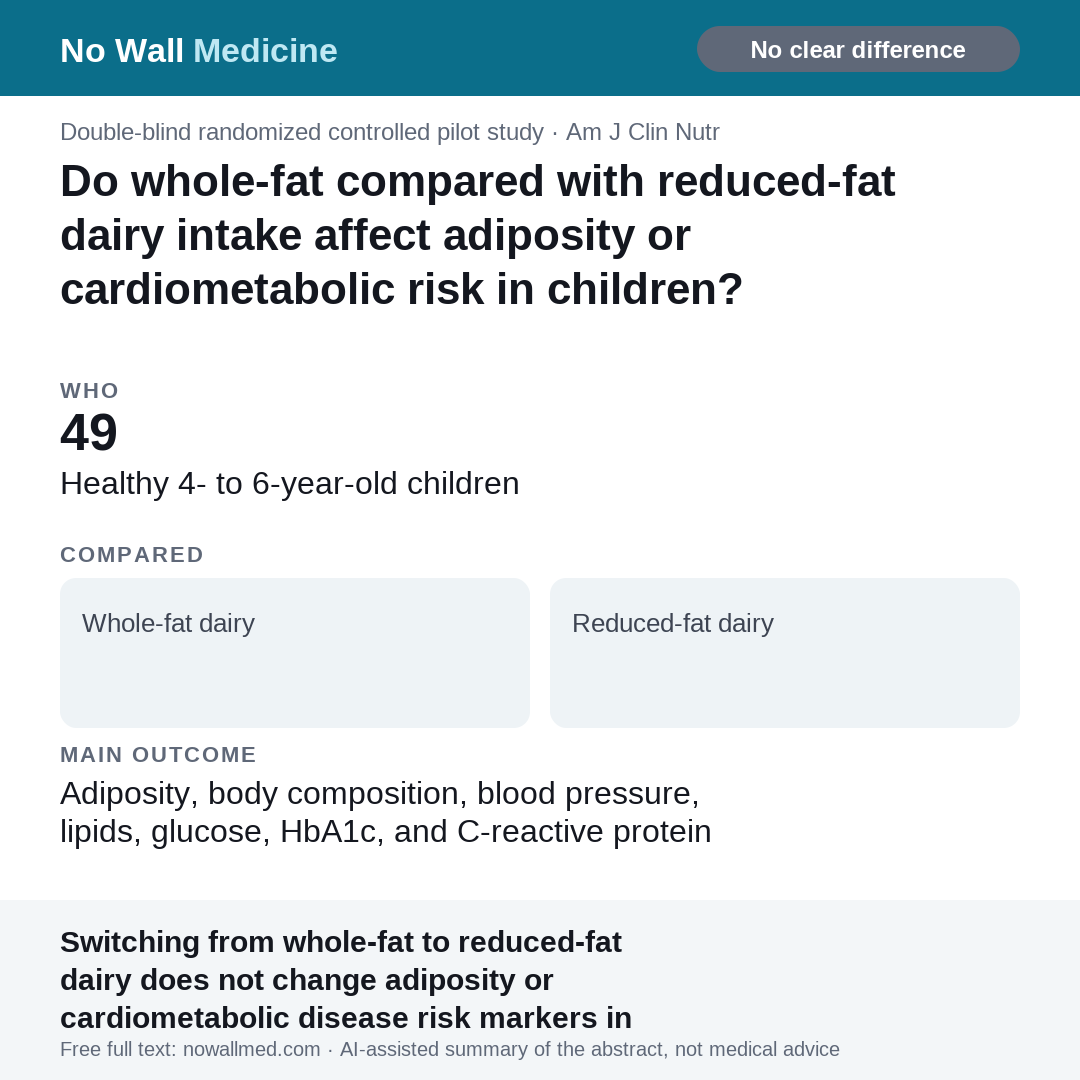
Whole-fat dairy products do not adversely affect adiposity or cardiometabolic risk factors in children in the Milky Way Study: a double-blind randomized controlled pilot study
Double-blind randomized controlled pilot studyNo clear difference
Do whole-fat compared with reduced-fat dairy intake affect adiposity or cardiometabolic risk in children?
Who
49
Healthy 4- to 6-year-old children
Compared
Whole-fat dairy
Reduced-fat dairy
Main outcome
Adiposity, body composition, blood pressure, lipids, glucose, HbA1c, and C-reactive protein
Bottom line: Switching from whole-fat to reduced-fat dairy does not change adiposity or cardiometabolic disease risk markers in healthy children.
Limitation: Pilot study
Am J Clin Nutr · 2021-10-12Download image
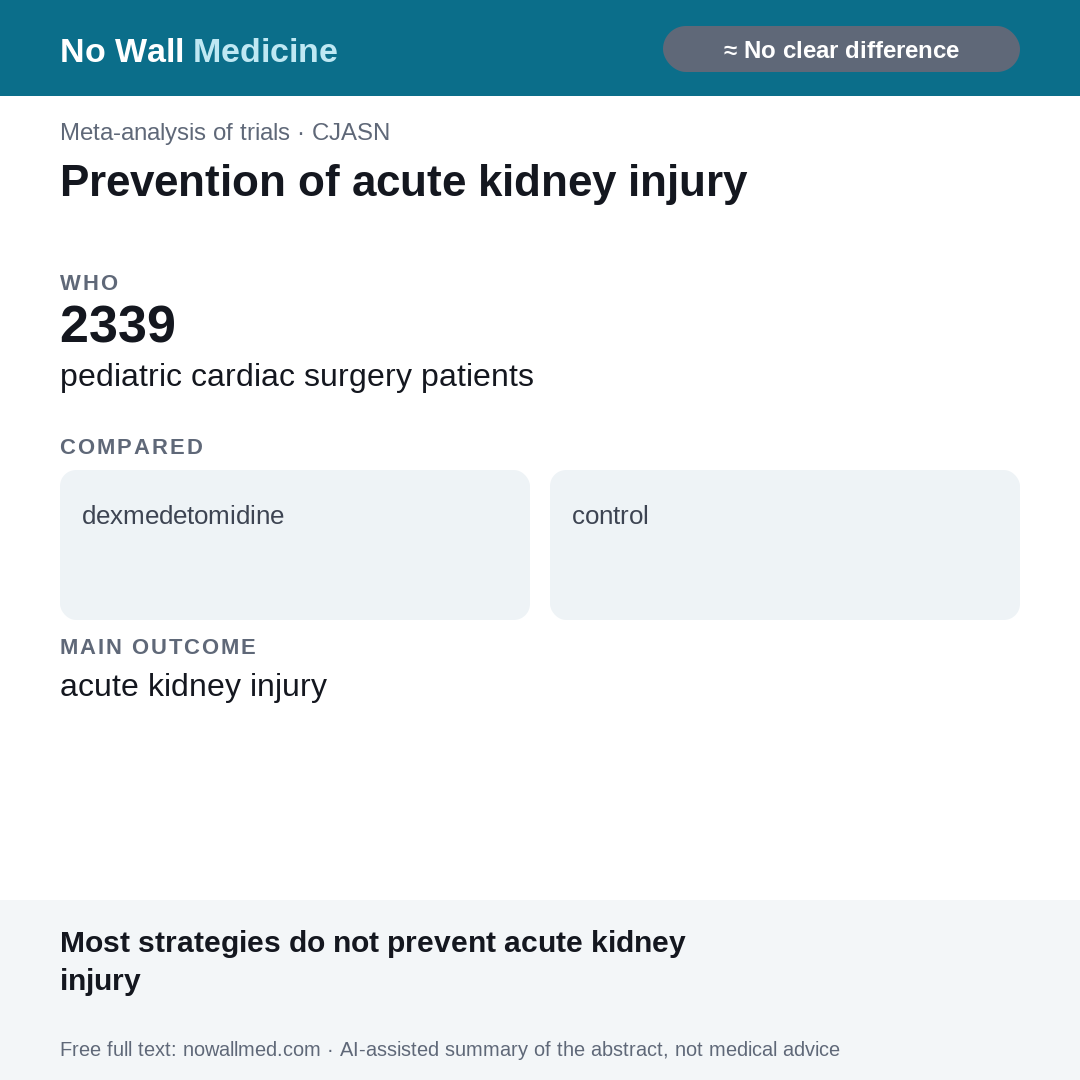
Strategies to Prevent Acute Kidney Injury after Pediatric Cardiac Surgery: A Network Meta-Analysis
Meta-analysis of trialsNo clear difference
Prevention of acute kidney injury
Who
2339
pediatric cardiac surgery patients
Compared
dexmedetomidine
control
Main outcome
acute kidney injury
Bottom line: Most strategies do not prevent acute kidney injury
CJASN · 2021-10-08Download image
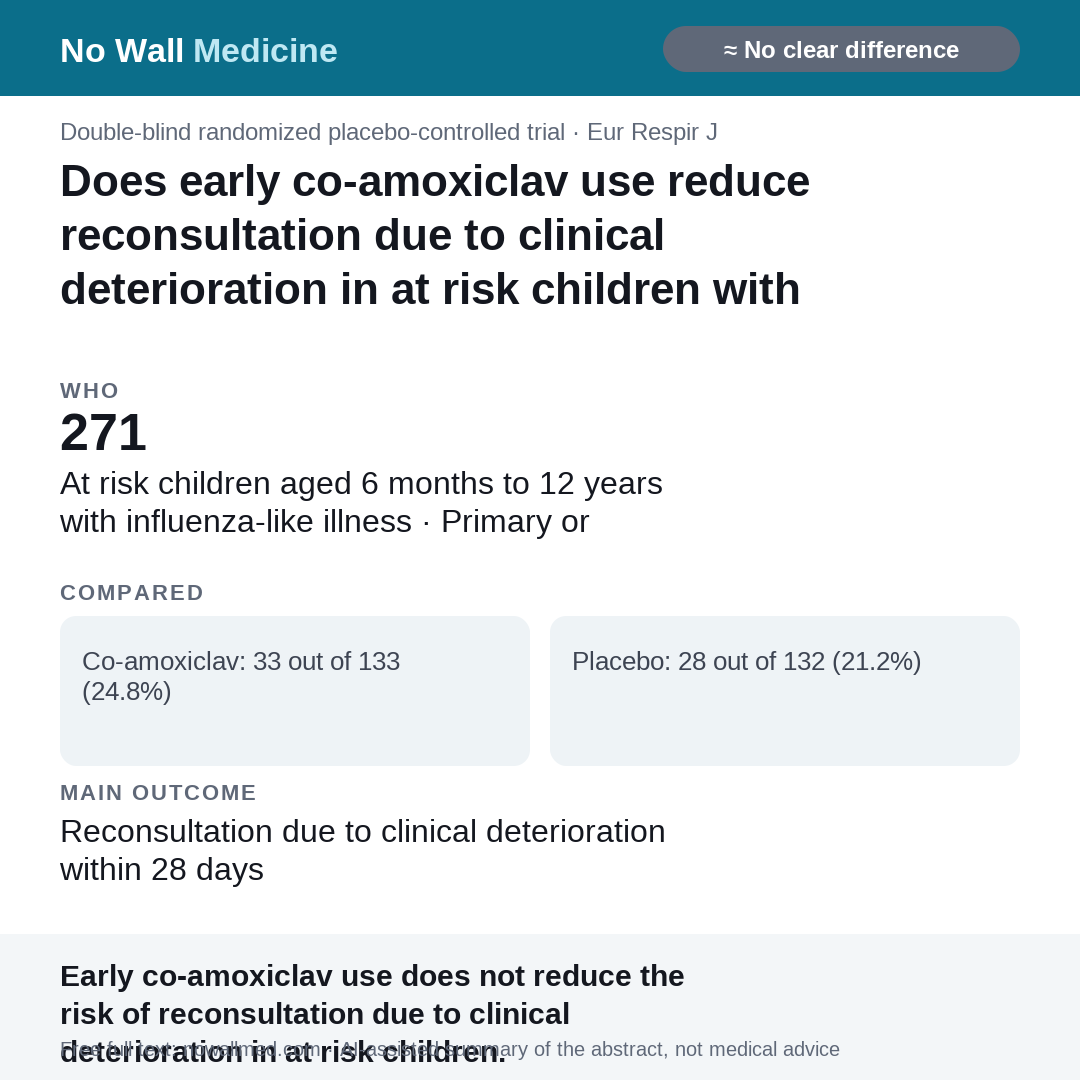
The early use of Antibiotics for at Risk CHildren with InfluEnza-like illness (ARCHIE): a double-blind randomised placebo-controlled trial
Double-blind randomized placebo-controlled trialNo clear difference
Does early co-amoxiclav use reduce reconsultation due to clinical deterioration in at risk children with influenza-like illness?
Who
271
At risk children aged 6 months to 12 years with influenza-like illness · Primary or ambulatory care
Compared
Co-amoxiclav: 33 out of 133 (24.8%)
Placebo: 28 out of 132 (21.2%)
Main outcome
Reconsultation due to clinical deterioration within 28 days
Result: adjusted risk ratio 1.16, 95% confidence interval 0.75-1.80
Bottom line: Early co-amoxiclav use does not reduce the risk of reconsultation due to clinical deterioration in at risk children.
Eur Respir J · 2021-10-07Download image
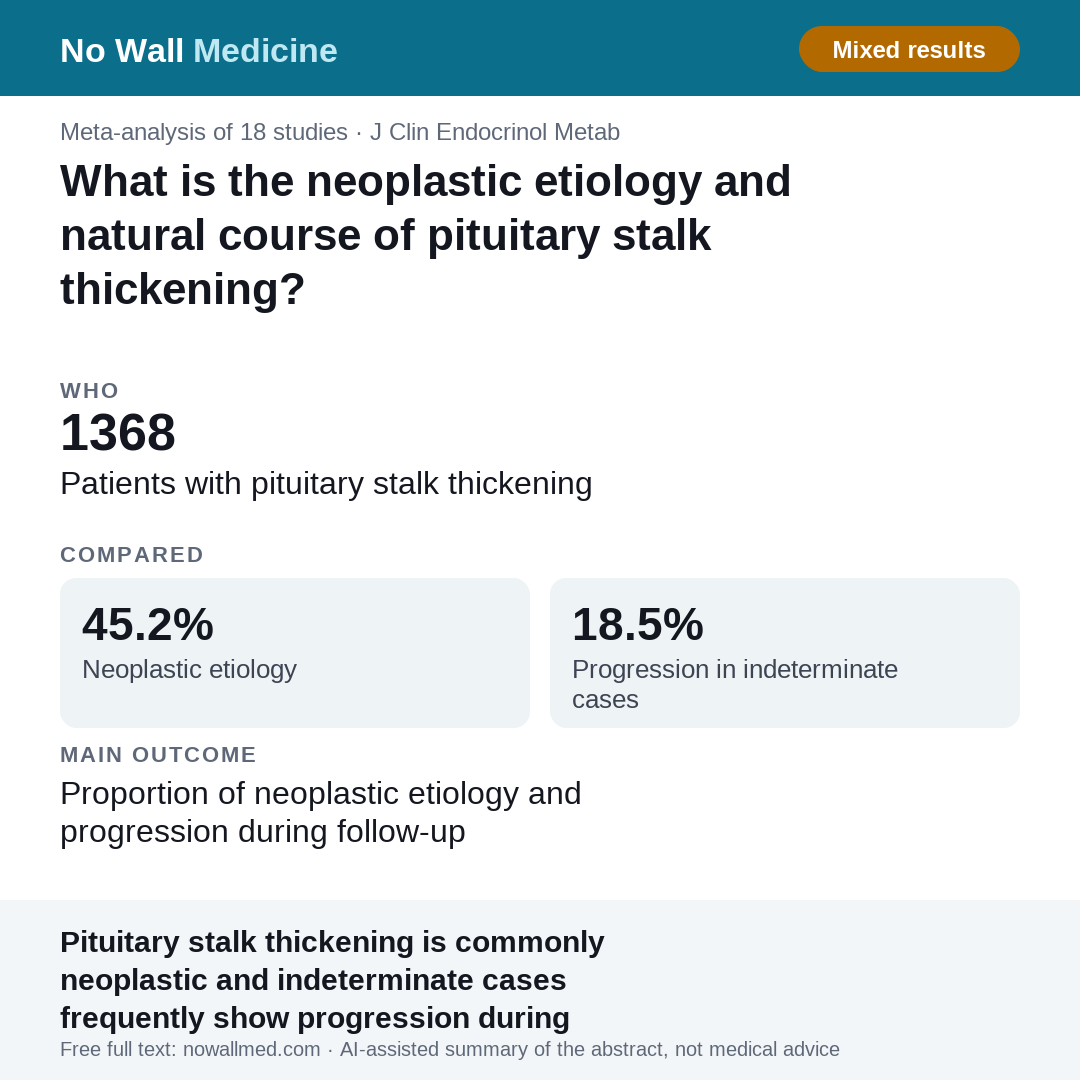
Neoplastic Etiology and Natural Course of Pituitary Stalk Thickening
Meta-analysis of 18 studiesMixed results
What is the neoplastic etiology and natural course of pituitary stalk thickening?
Who
1368
Patients with pituitary stalk thickening
Compared
45.2%Neoplastic etiology (95% CI, 33.3%-57.8%)
18.5%Progression in indeterminate cases (95% CI, 7.6%-38.3%)
Main outcome
Proportion of neoplastic etiology and progression during follow-up
Bottom line: Pituitary stalk thickening is commonly neoplastic and indeterminate cases frequently show progression during follow-up.
Limitation: substantial heterogeneity across studies (I2 = 93%)
J Clin Endocrinol Metab · 2021-10-07Download image
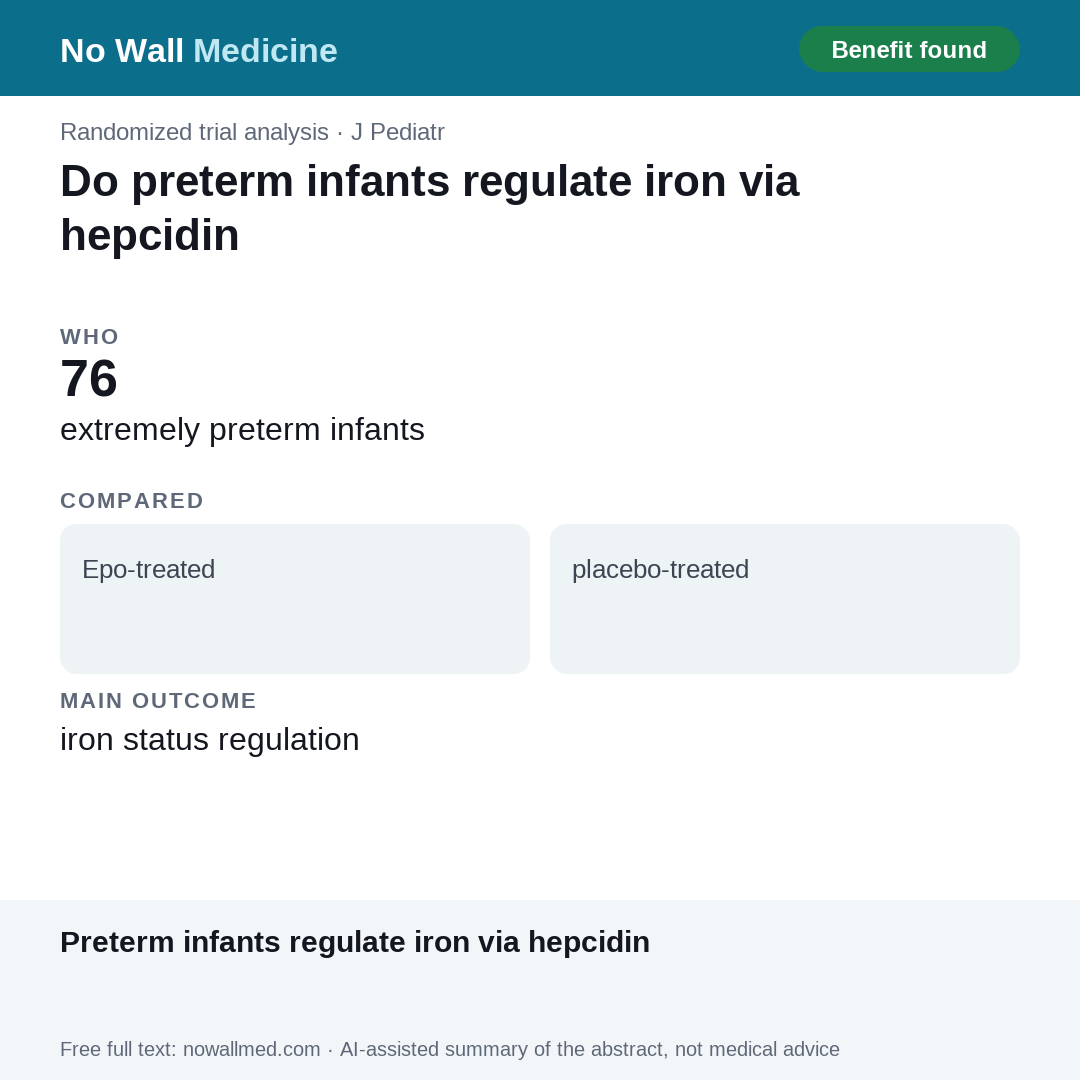
Do Extremely Low Gestational Age Neonates Regulate Iron Absorption via Hepcidin?
Randomized trial analysisBenefit found
Do preterm infants regulate iron via hepcidin
Who
76
extremely preterm infants
Compared
Epo-treated
placebo-treated
Main outcome
iron status regulation
Bottom line: Preterm infants regulate iron via hepcidin
J Pediatr · 2021-10-07Download image
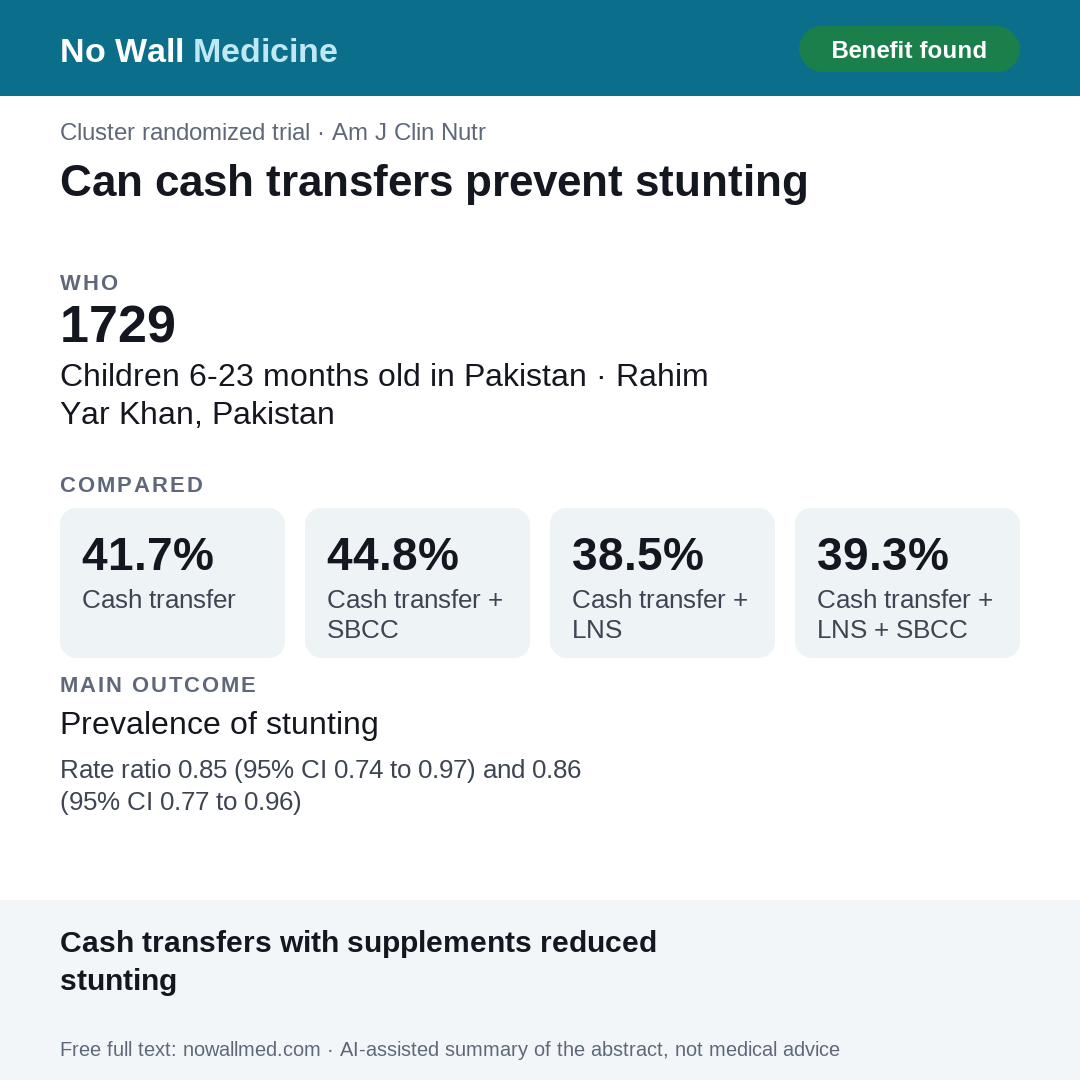
Effectiveness of unconditional cash transfers combined with lipid-based nutrient supplement and/or behavior change communication to prevent stunting among children in Pakistan: a cluster randomized controlled trial
Cluster randomized trialBenefit found
Can cash transfers prevent stunting
Who
1729
Children 6-23 months old in Pakistan · Rahim Yar Khan, Pakistan
Compared
41.7%Cash transfer
44.8%Cash transfer + SBCC
38.5%Cash transfer + LNS
39.3%Cash transfer + LNS + SBCC
Main outcome
Prevalence of stunting
Result: Rate ratio 0.85 (95% CI 0.74 to 0.97) and 0.86 (95% CI 0.77 to 0.96)
Bottom line: Cash transfers with supplements reduced stunting
Am J Clin Nutr · 2021-10-07Download image
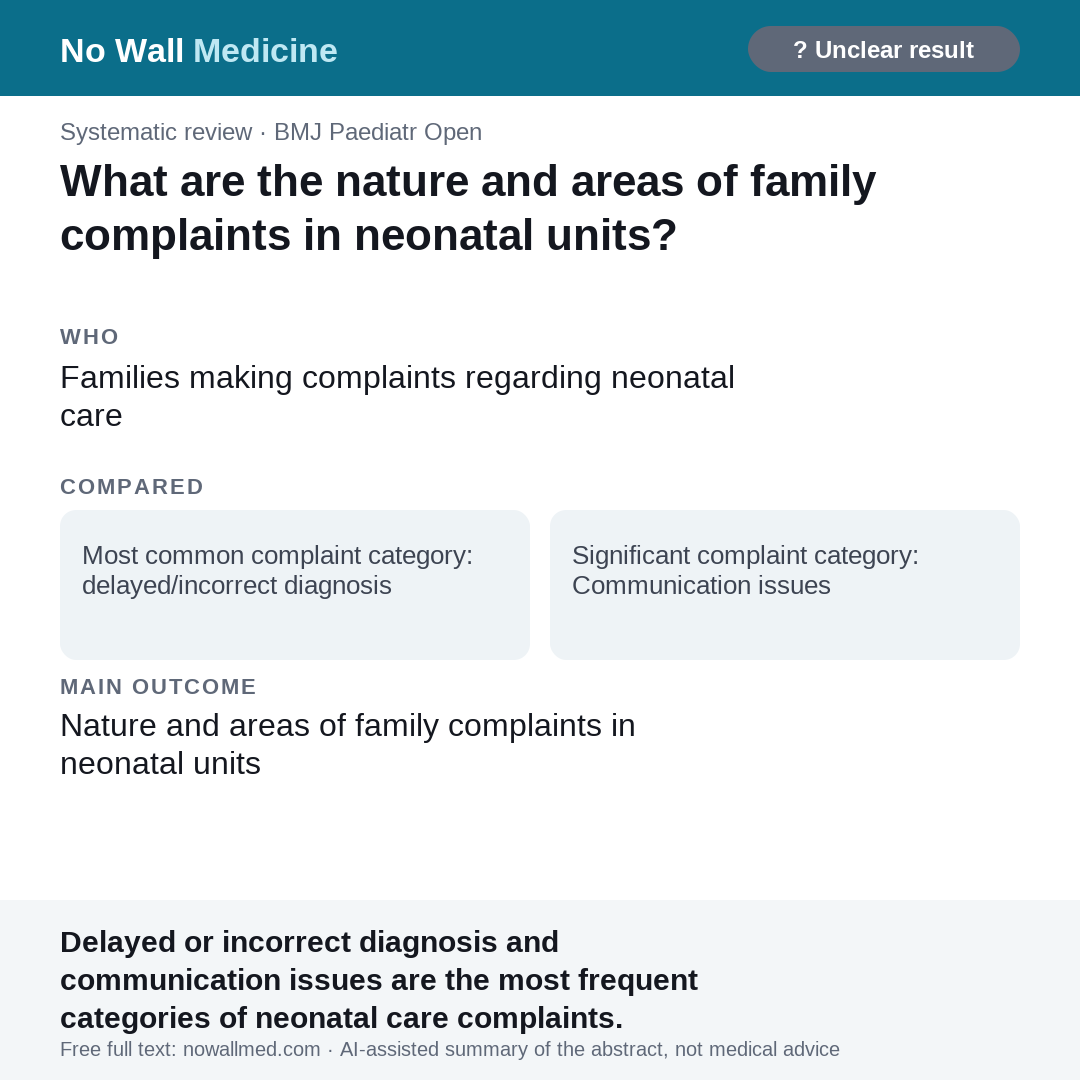
Systematic review of medical literature for medicolegal claims and complaints involving neonates
Systematic reviewUnclear result
What are the nature and areas of family complaints in neonatal units?
Who
378
Families making complaints regarding neonatal care
Compared
Most common complaint category: delayed/incorrect diagnosis
Significant complaint category: Communication issues
Main outcome
Nature and areas of family complaints in neonatal units
Bottom line: Delayed or incorrect diagnosis and communication issues are the most frequent categories of neonatal care complaints.
BMJ Paediatr Open · 2021-10-06Download image
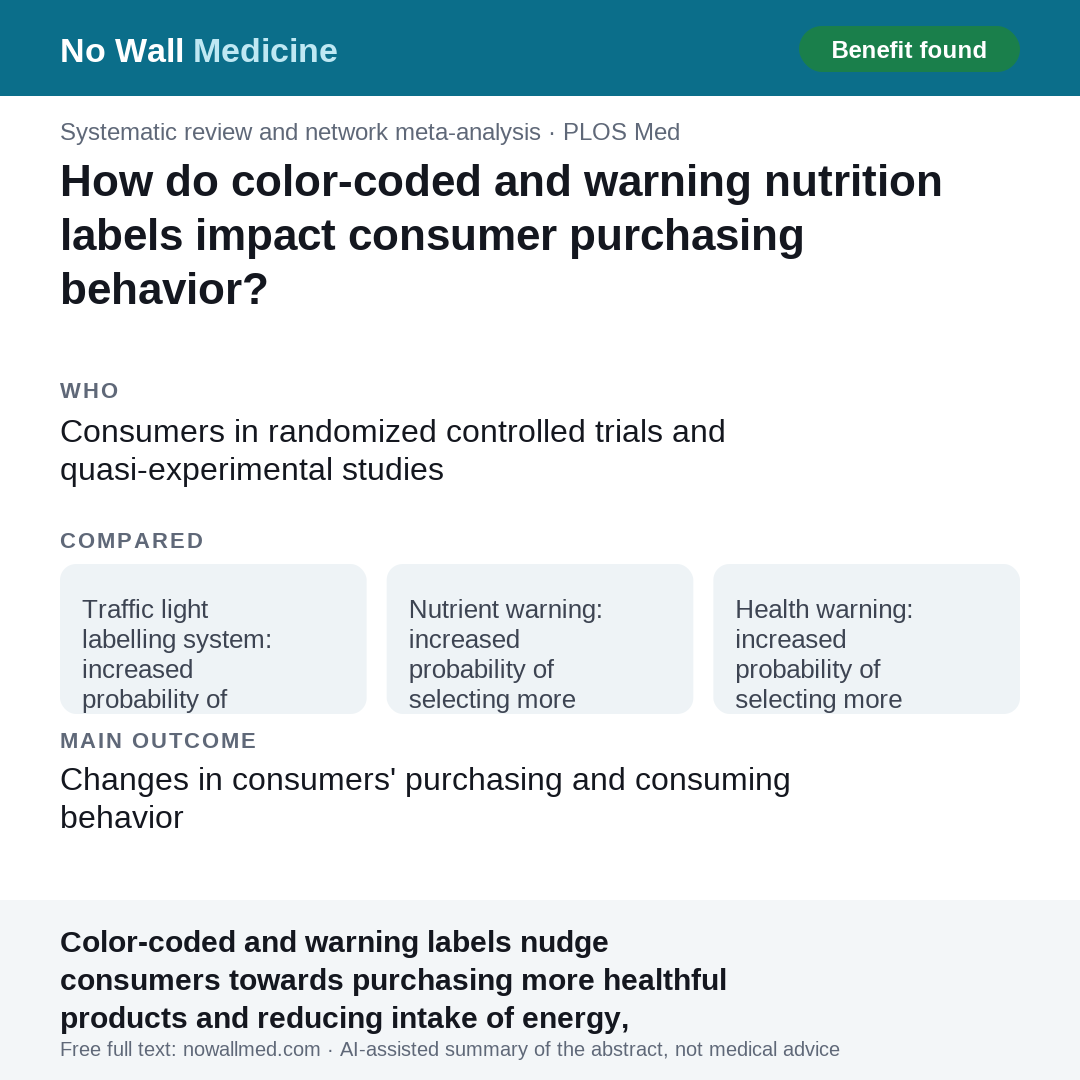
Impact of color-coded and warning nutrition labelling schemes: A systematic review and network meta-analysis
Systematic review and network meta-analysisBenefit found
How do color-coded and warning nutrition labels impact consumer purchasing behavior?
Who
Consumers in randomized controlled trials and quasi-experimental studies
Compared
Traffic light labelling system: increased probability of selecting more healthful products OR 1.5 (95% CI 1.2, 1.87)
Nutrient warning: increased probability of selecting more healthful products OR 3.61 (95% CI 2.82, 4.63)
Health warning: increased probability of selecting more healthful products OR 1.65 (95% CI 1.32, 2.06)
Main outcome
Changes in consumers' purchasing and consuming behavior
Bottom line: Color-coded and warning labels nudge consumers towards purchasing more healthful products and reducing intake of energy, sodium, fat, and saturated fat.
Limitation: High heterogeneity, limited real-world studies, and lack of long-term impact assessments.
PLOS Med · 2021-10-05Download image
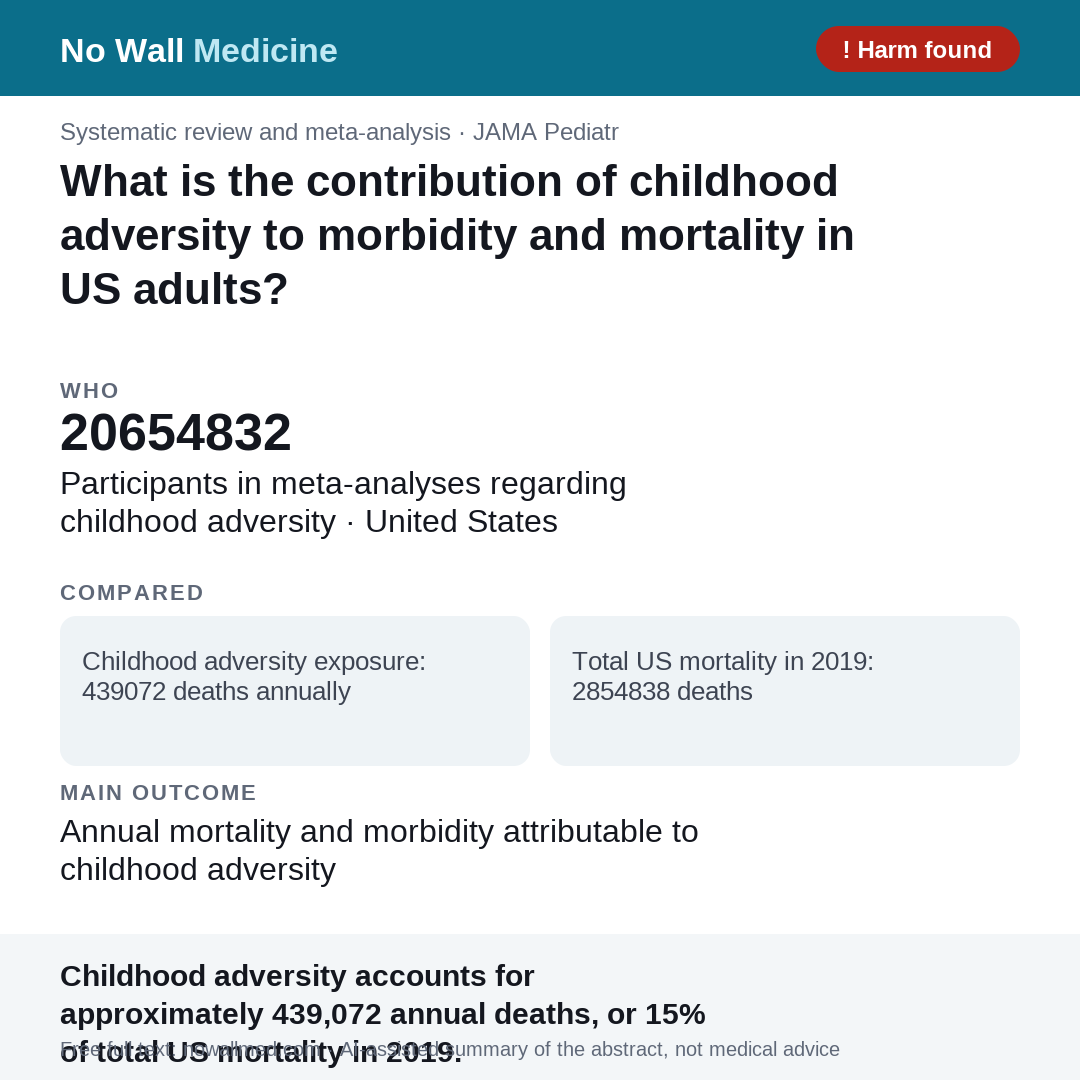
Association of Childhood Adversity With Morbidity and Mortality in US Adults: A Systematic Review
Systematic review and meta-analysisHarm found
What is the contribution of childhood adversity to morbidity and mortality in US adults?
Who
20654832
Participants in meta-analyses regarding childhood adversity · United States
Compared
Childhood adversity exposure: 439072 deaths annually
Total US mortality in 2019: 2854838 deaths
Main outcome
Annual mortality and morbidity attributable to childhood adversity
Bottom line: Childhood adversity accounts for approximately 439,072 annual deaths, or 15% of total US mortality in 2019.
JAMA Pediatr · 2021-10-05Download image
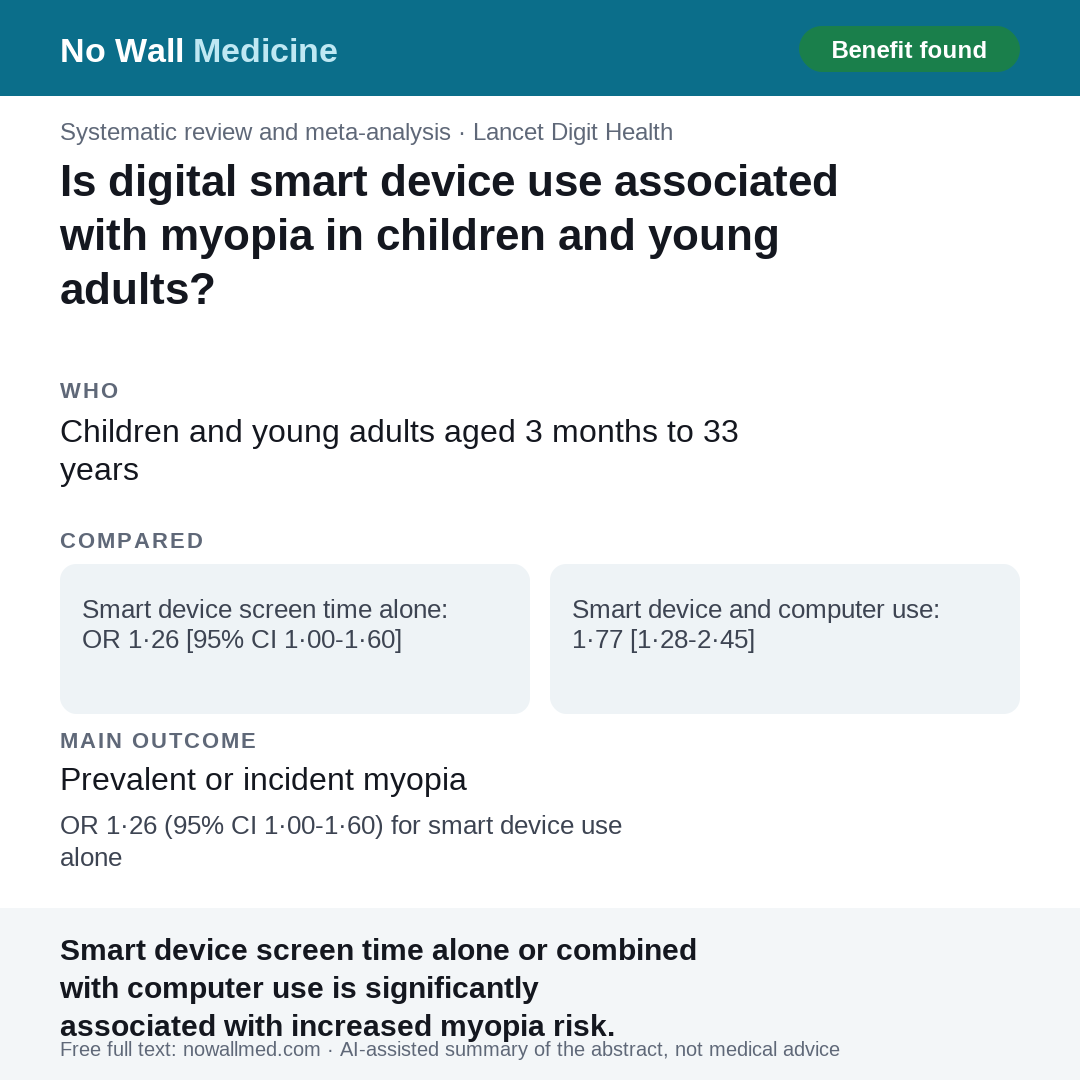
Association between digital smart device use and myopia: a systematic review and meta-analysis
Systematic review and meta-analysisBenefit found
Is digital smart device use associated with myopia in children and young adults?
Who
Children and young adults aged 3 months to 33 years
Compared
Smart device screen time alone: OR 1·26 [95% CI 1·00-1·60]
Smart device and computer use: 1·77 [1·28-2·45]
Main outcome
Prevalent or incident myopia
Result: OR 1·26 (95% CI 1·00-1·60) for smart device use alone
Bottom line: Smart device screen time alone or combined with computer use is significantly associated with increased myopia risk.
Limitation: Studies lacked reliable measures of screen time and objective myopia measurements.
Lancet Digit Health · 2021-10-05Download image
Long-term reproductive outcomes in patients with unexplained infertility: follow-up of the Fast Track and Standard Treatment Trial participants
Telephone survey follow-up of a randomized trialBenefit found
What are the long-term reproductive outcomes for couples with unexplained infertility?
Who
286
Couples enrolled in the Fast Track and Standard Treatment Trial · Large urban university-affiliated fertility center
Compared
Participants: 80.9% achieved a live birth after trial
6.6%Never achieved live birth
Main outcome
Number of live births and methods of conception
Bottom line: The majority of couples achieved a live birth following the trial, with only 6.6% never achieving one.
Fertil Steril · 2021-10-05Download image

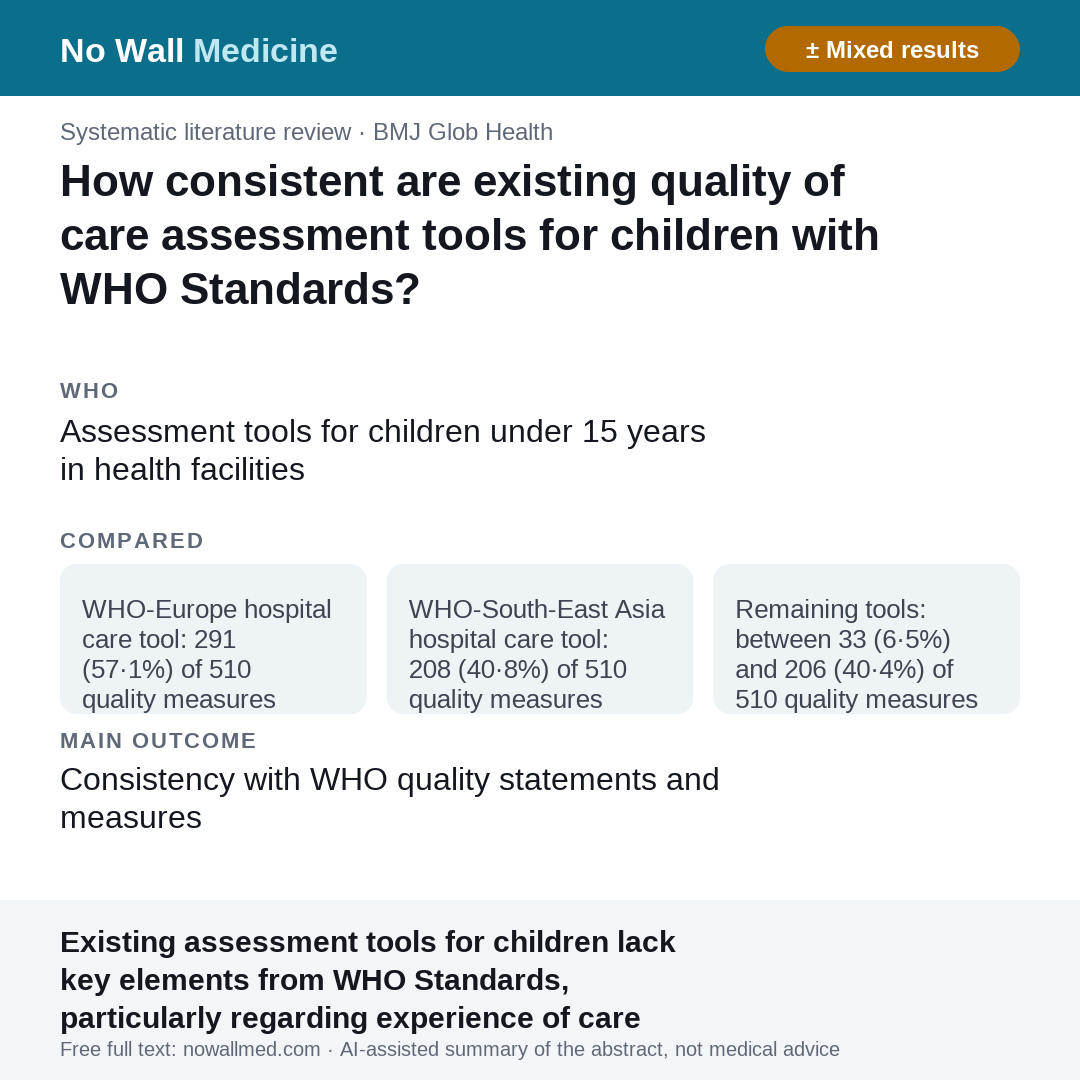
Assessing the quality of care for children attending health facilities: a systematic review of assessment tools
Systematic literature reviewMixed results
How consistent are existing quality of care assessment tools for children with WHO Standards?
Who
Assessment tools for children under 15 years in health facilities
Compared
WHO-Europe hospital care tool: 291 (57·1%) of 510 quality measures
WHO-South-East Asia hospital care tool: 208 (40·8%) of 510 quality measures
Remaining tools: between 33 (6·5%) and 206 (40·4%) of 510 quality measures
Main outcome
Consistency with WHO quality statements and measures
Bottom line: Existing assessment tools for children lack key elements from WHO Standards, particularly regarding experience of care and children's rights.
BMJ Glob Health · 2021-10-05Download image
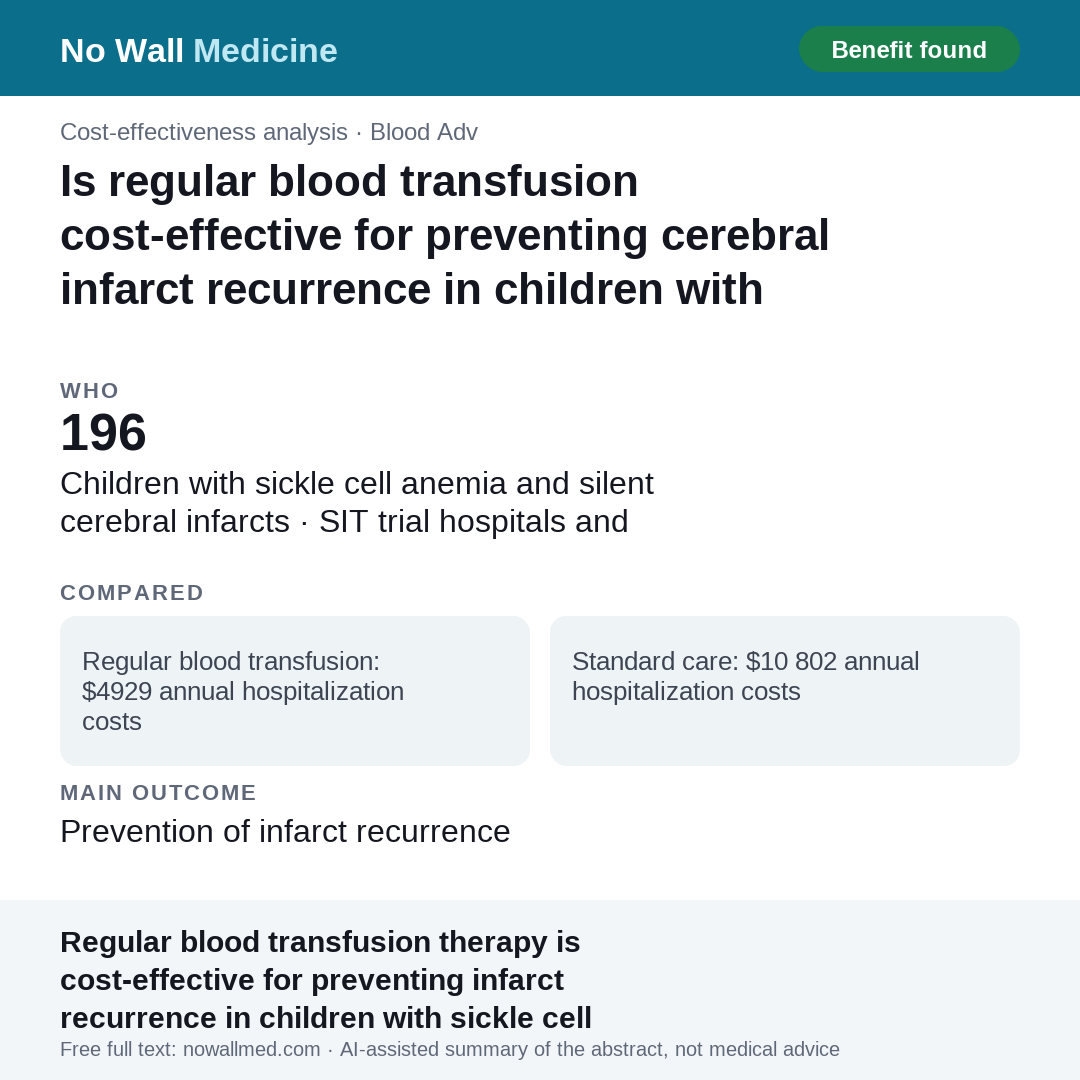
Economic evaluation of regular transfusions for cerebral infarct recurrence in the Silent Cerebral Infarct Transfusion Trial
Cost-effectiveness analysisBenefit found
Is regular blood transfusion cost-effective for preventing cerebral infarct recurrence in children with sickle cell anemia?
Who
196
Children with sickle cell anemia and silent cerebral infarcts · SIT trial hospitals and outpatient sites
Compared
Regular blood transfusion: $4929 annual hospitalization costs
Standard care: $10 802 annual hospitalization costs
Main outcome
Prevention of infarct recurrence
Result: $22 025 per infarct prevented
Bottom line: Regular blood transfusion therapy is cost-effective for preventing infarct recurrence in children with sickle cell anemia.
Blood Adv · 2021-10-05Download image