Visual abstracts
New randomized trials and meta-analyses from leading journals at a glance: who was studied, what was compared, and what was found. Every paper is free to read in full.
All specialtiesCardiology 785Oncology 716Gastroenterology & Hepatology 298Infectious Disease 569Neurology 336Psychiatry & Mental Health 414Pulmonology 352Critical Care 220Endocrinology & Diabetes 460Pediatrics 504Surgery 322Orthopedics & Sports Medicine 153Neurosurgery 73Cardiothoracic & Vascular Surgery 85Plastic & Reconstructive Surgery 99Nephrology 185Rheumatology 105Hematology 163Dermatology 69Ophthalmology 95Obstetrics & Gynecology 247Public & Global Health 162Radiology & Imaging 88Anesthesiology 104Urology 158ENT (Otolaryngology) 69Emergency Medicine 85Allergy & Immunology 58Geriatrics 153Family Medicine & Primary Care 105Medical Genetics & Genomics 91Pathology & Laboratory Medicine 22Physical Medicine & Rehabilitation 146Palliative Care 80Nutrition 218Digital Health & AI 456General Medicine 93
A Systematic Review of Pain Drawings for Perioperative Patient Management
Systematic review of 26 studiesBenefit found
Do pain drawings help patient management?
Who
5977
pediatric and adult surgical patients
Compared
Pain drawings
Standard care
Main outcome
pain management
Bottom line: Pain drawings help patient management
Limitation: heterogeneity in methodology
Plast Reconstr Surg Glob Open · 2026-05-28Download image

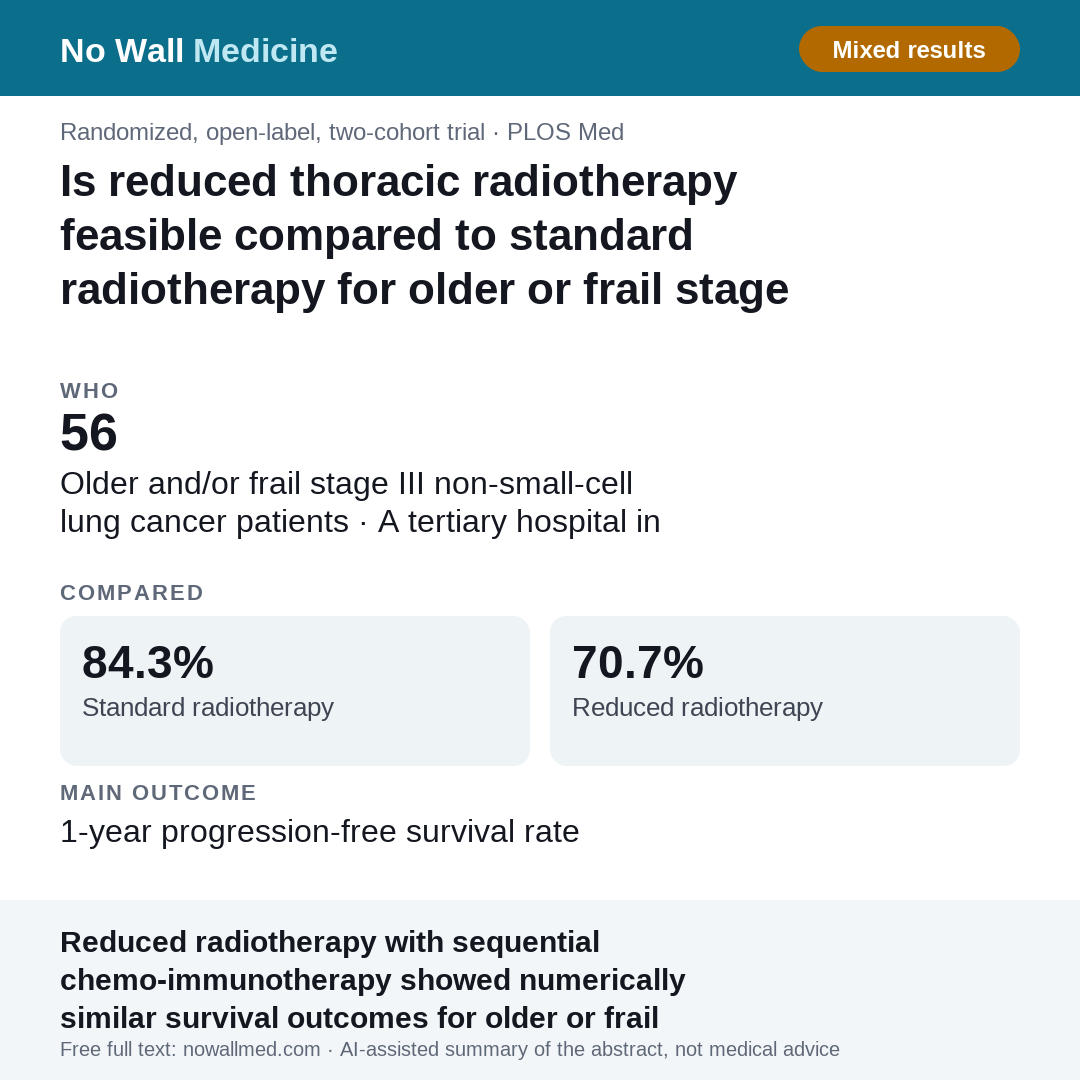
Sequential chemo-immunotherapy followed by standard versus reduced thoracic radiotherapy for older and/or frail stage III non-small-cell lung cancer: A randomized open-label cohort trial
Randomized, open-label, two-cohort trialMixed results
Is reduced thoracic radiotherapy feasible compared to standard radiotherapy for older or frail stage III lung cancer?
Who
56
Older and/or frail stage III non-small-cell lung cancer patients · A tertiary hospital in China
Compared
84.3%Standard radiotherapy (95% CI 70.3% to 98.3%)
70.7%Reduced radiotherapy (95% CI 54.3% to 87.1%)
Main outcome
1-year progression-free survival rate
Bottom line: Reduced radiotherapy with sequential chemo-immunotherapy showed numerically similar survival outcomes for older or frail patients.
Limitation: Non-comparative design, small sample size, and lack of power to establish non-inferiority or superiority.
PLOS Med · 2026-05-27Download image
WISE-Therapy (What's Important: Schedule and Engage) and bouldering psychotherapy for depression: A randomized clinical trial
Randomized, controlled, assessor-blinded, longitudinal, clinical trialBenefit found
Are WISE-Therapy and bouldering psychotherapy more effective than treatment as usual for depression?
Who
128
128 adults with depression · Monocentric setting in Erlangen, Germany
Compared
-5.5 pointsWhat's Important: Schedule and Engage
-4.2 pointsBouldering Psychotherapy
Treatment as usual
Main outcome
Montgomery-Asberg Depression Rating Scale score
Result: WISE-T: -5.5 points, 95%-CI [-9.5 to -1.5]; BPT: -4.2 points, 95%-CI [-8.2 to -0.3]
Bottom line: Both WISE-Therapy and bouldering psychotherapy significantly reduced depressive symptoms compared to treatment as usual.
BMC Med · 2026-05-27Download image

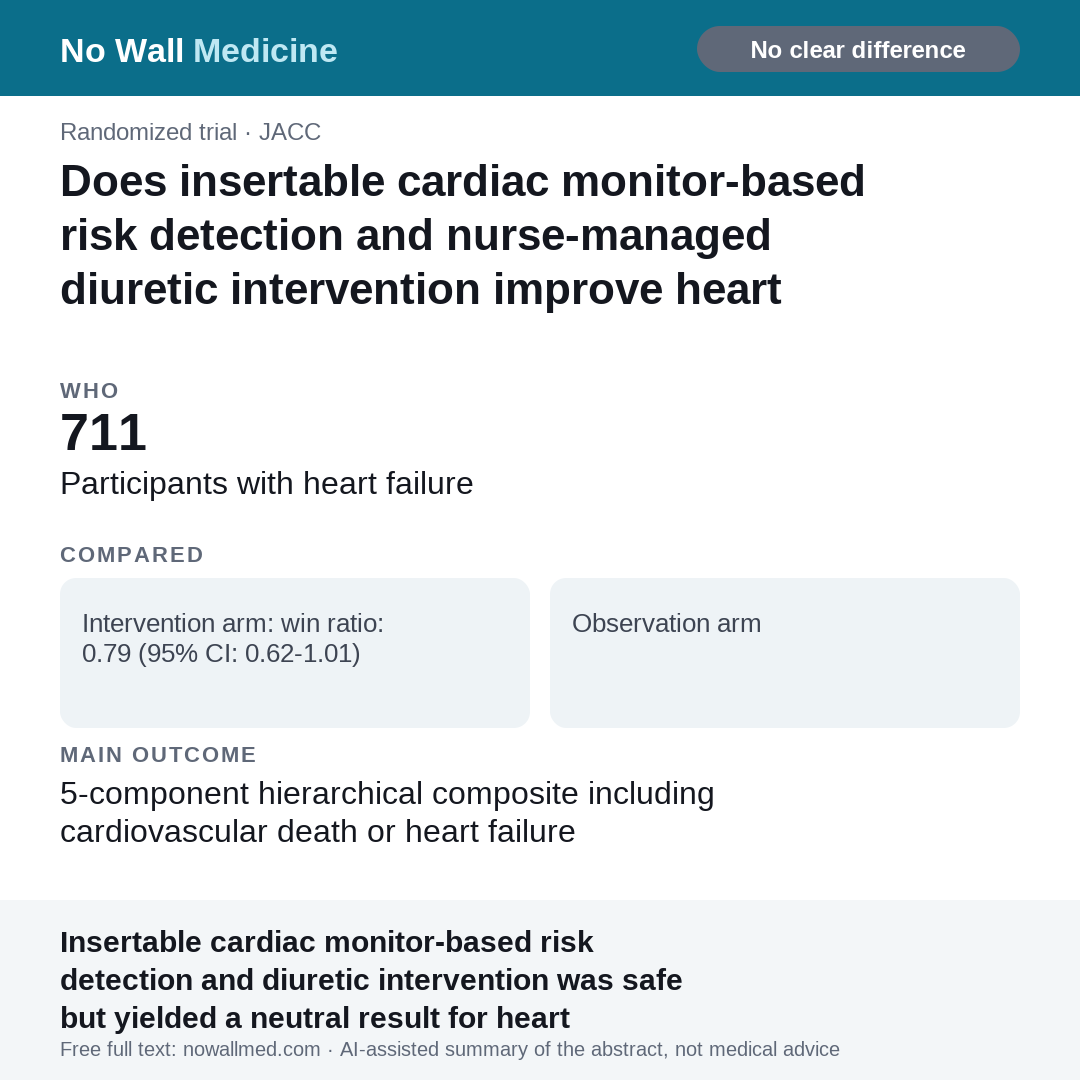
Risk-Based Nurse-Managed Personalized Heart Failure Interventions: The ALLEVIATE-HF Trial
Randomized trialNo clear difference
Does insertable cardiac monitor-based risk detection and nurse-managed diuretic intervention improve heart failure outcomes?
Who
711
Participants with heart failure
Compared
Intervention arm: win ratio: 0.79 (95% CI: 0.62-1.01)
Observation arm
Main outcome
5-component hierarchical composite including cardiovascular death or heart failure hospitalization
Result: win ratio: 0.79 (95% CI: 0.62-1.01)
Bottom line: Insertable cardiac monitor-based risk detection and diuretic intervention was safe but yielded a neutral result for heart failure outcomes.
JACC · 2026-05-27Download image
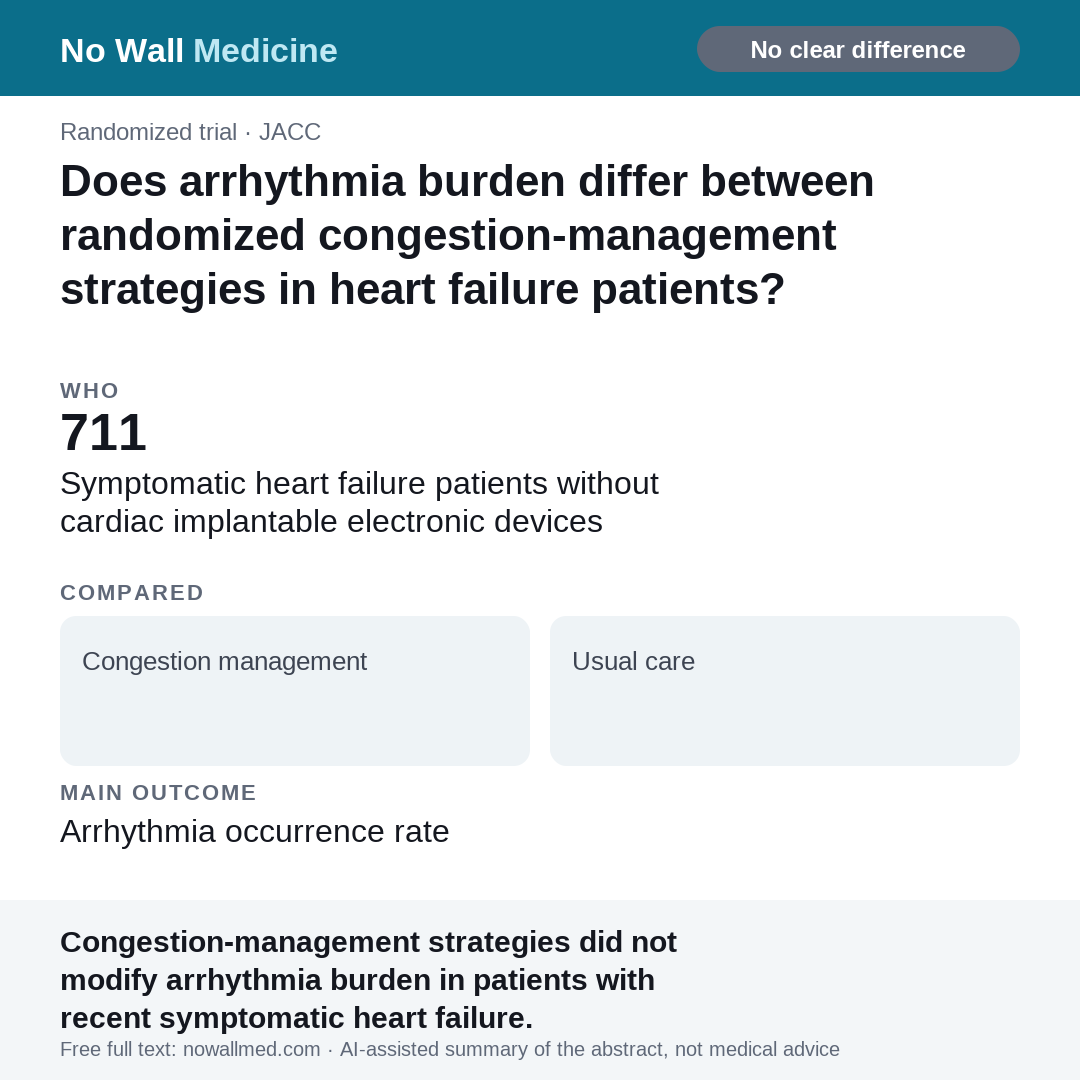
Arrhythmia Burden and Clinical Responses Under Continuous Monitoring in Heart Failure: Observations From the ALLEVIATE-HF Trial
Randomized trialNo clear difference
Does arrhythmia burden differ between randomized congestion-management strategies in heart failure patients?
Who
711
Symptomatic heart failure patients without cardiac implantable electronic devices
Compared
Congestion management
Usual care
Main outcome
Arrhythmia occurrence rate
Bottom line: Congestion-management strategies did not modify arrhythmia burden in patients with recent symptomatic heart failure.
JACC · 2026-05-27Download image
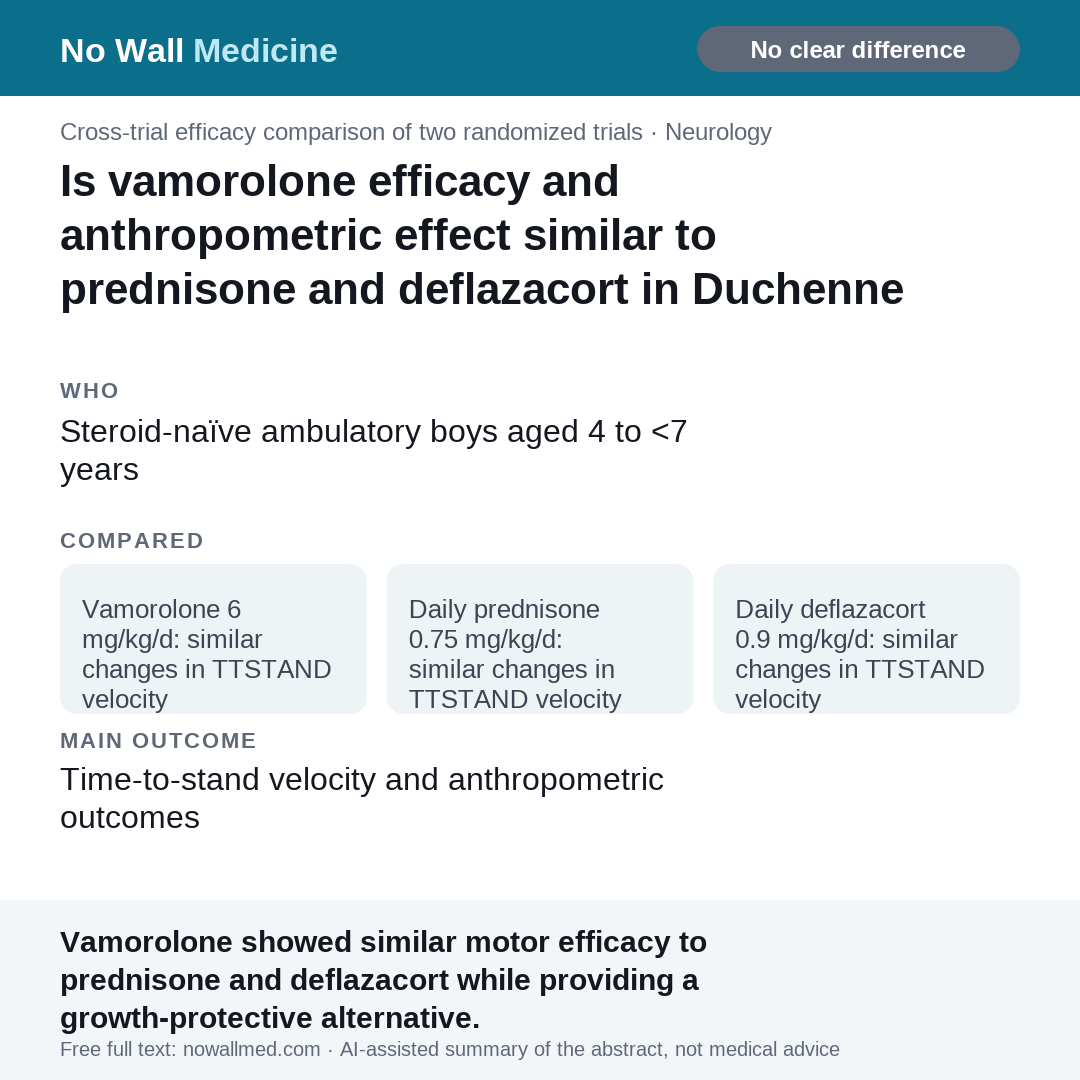
Vamorolone for Duchenne Muscular Dystrophy: A Cross-Trial Efficacy Comparison With Classic Corticosteroids From the FOR-DMD Trial
Cross-trial efficacy comparison of two randomized trialsNo clear difference
Is vamorolone efficacy and anthropometric effect similar to prednisone and deflazacort in Duchenne muscular dystrophy?
Who
Steroid-naïve ambulatory boys aged 4 to <7 years
Compared
Vamorolone 6 mg/kg/d: similar changes in TTSTAND velocity
Daily prednisone 0.75 mg/kg/d: similar changes in TTSTAND velocity
Daily deflazacort 0.9 mg/kg/d: similar changes in TTSTAND velocity
Main outcome
Time-to-stand velocity and anthropometric outcomes
Result: LSM difference vs prednisone 0.004 rises per second (95% CI -0.025 to 0.032)
Bottom line: Vamorolone showed similar motor efficacy to prednisone and deflazacort while providing a growth-protective alternative.
Limitation: Interpretations are limited by 95% confidence intervals crossing minimally important difference thresholds.
Neurology · 2026-05-27Download image
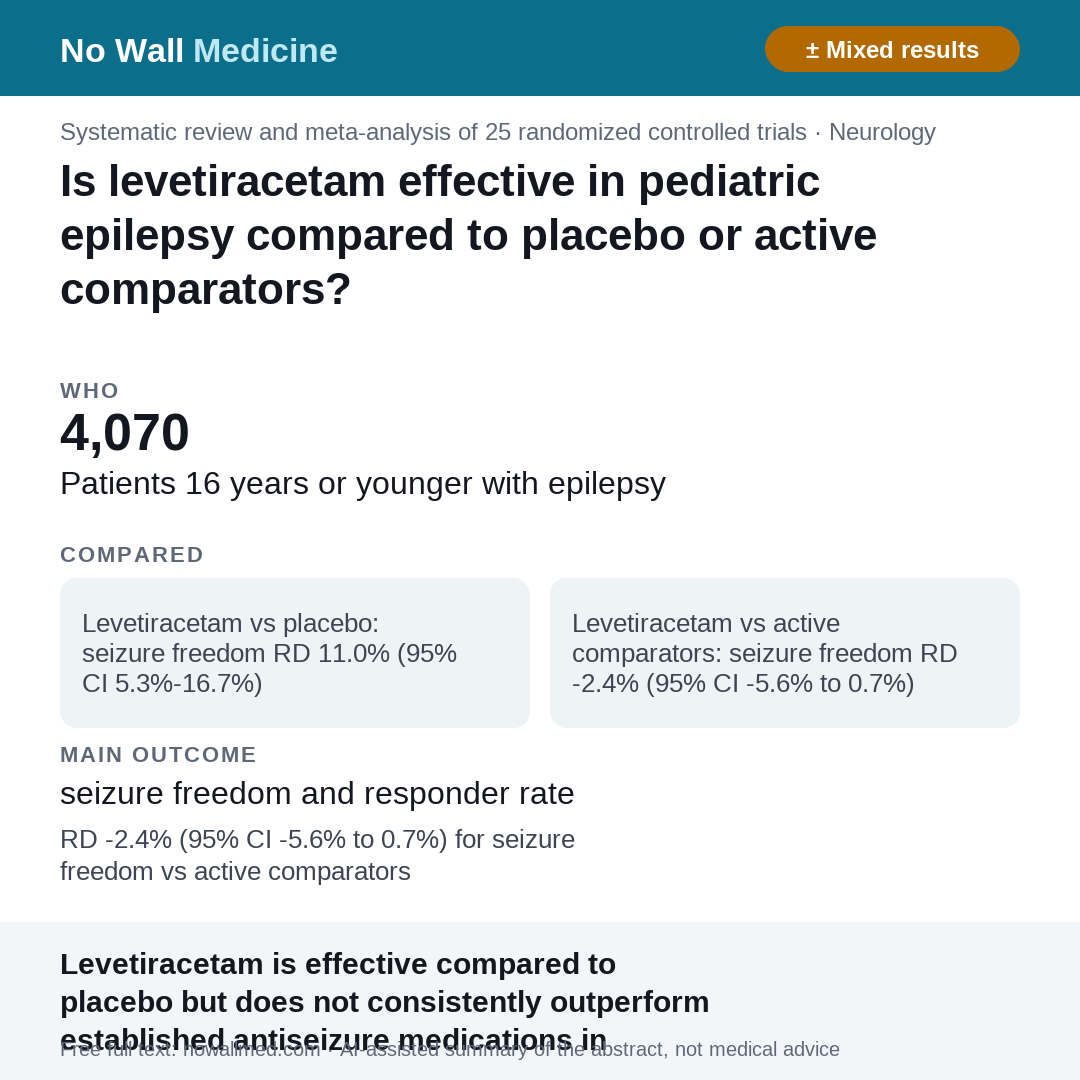
Efficacy of Levetiracetam in Patients With Pediatric Epilepsy: A Systematic Review and Meta-Analysis
Systematic review and meta-analysis of 25 randomized controlled trialsMixed results
Is levetiracetam effective in pediatric epilepsy compared to placebo or active comparators?
Who
4,070
Patients 16 years or younger with epilepsy
Compared
Levetiracetam vs placebo: seizure freedom RD 11.0% (95% CI 5.3%-16.7%)
Levetiracetam vs active comparators: seizure freedom RD -2.4% (95% CI -5.6% to 0.7%)
Main outcome
seizure freedom and responder rate
Result: RD -2.4% (95% CI -5.6% to 0.7%) for seizure freedom vs active comparators
Bottom line: Levetiracetam is effective compared to placebo but does not consistently outperform established antiseizure medications in pediatric epilepsy.
Limitation: Substantial heterogeneity, frequent high risk of bias, variable follow-up, and publication bias.
Neurology · 2026-05-27Download image
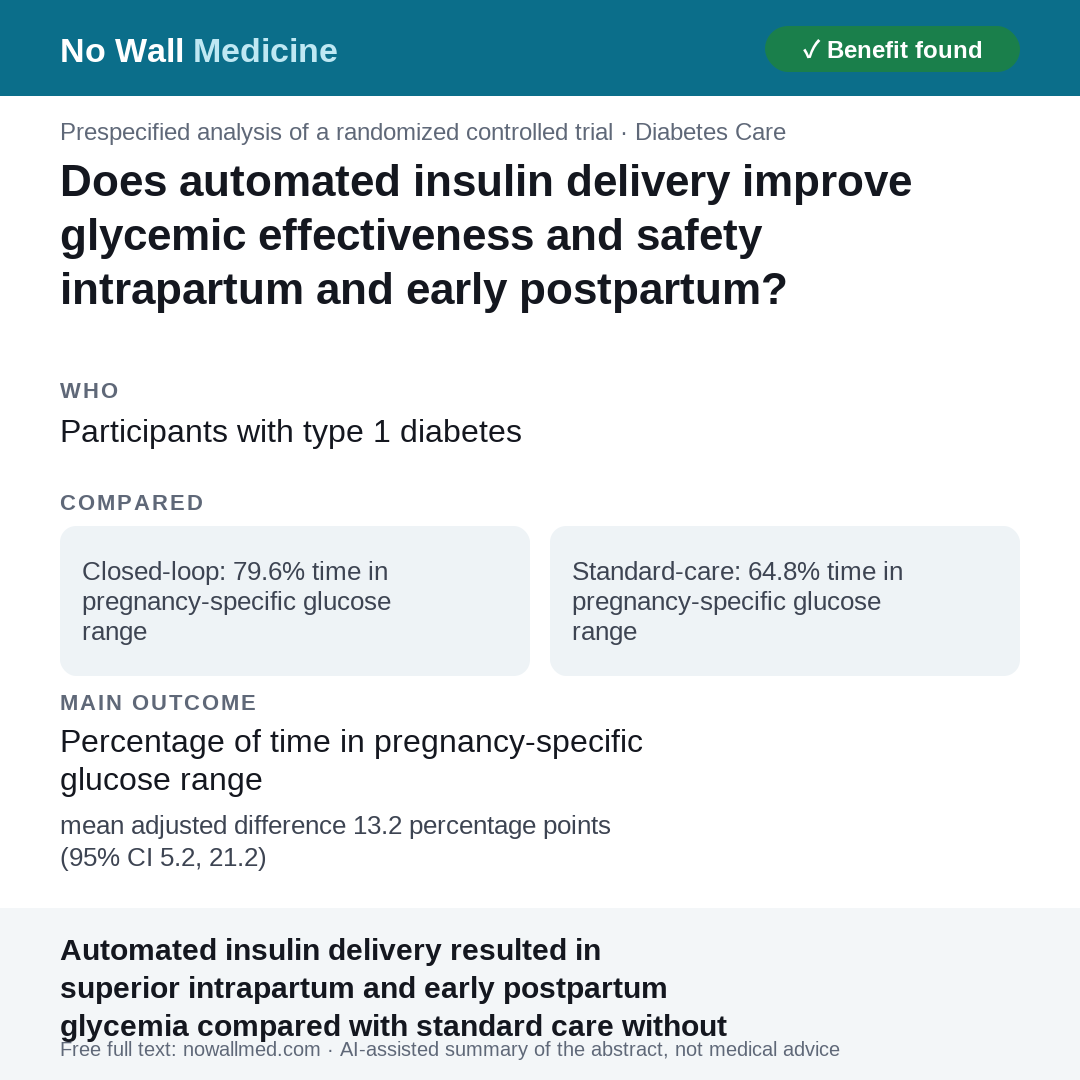
Intrapartum and Early Postpartum Use of Automated Insulin Delivery in Type 1 Diabetes: A Prespecified Analysis of the CIRCUIT Randomized Controlled Trial
Prespecified analysis of a randomized controlled trialBenefit found
Does automated insulin delivery improve glycemic effectiveness and safety intrapartum and early postpartum?
Who
Participants with type 1 diabetes
Compared
Closed-loop: 79.6% time in pregnancy-specific glucose range
Standard-care: 64.8% time in pregnancy-specific glucose range
Main outcome
Percentage of time in pregnancy-specific glucose range
Result: mean adjusted difference 13.2 percentage points (95% CI 5.2, 21.2)
Bottom line: Automated insulin delivery resulted in superior intrapartum and early postpartum glycemia compared with standard care without safety concerns.
Diabetes Care · 2026-05-27Download image
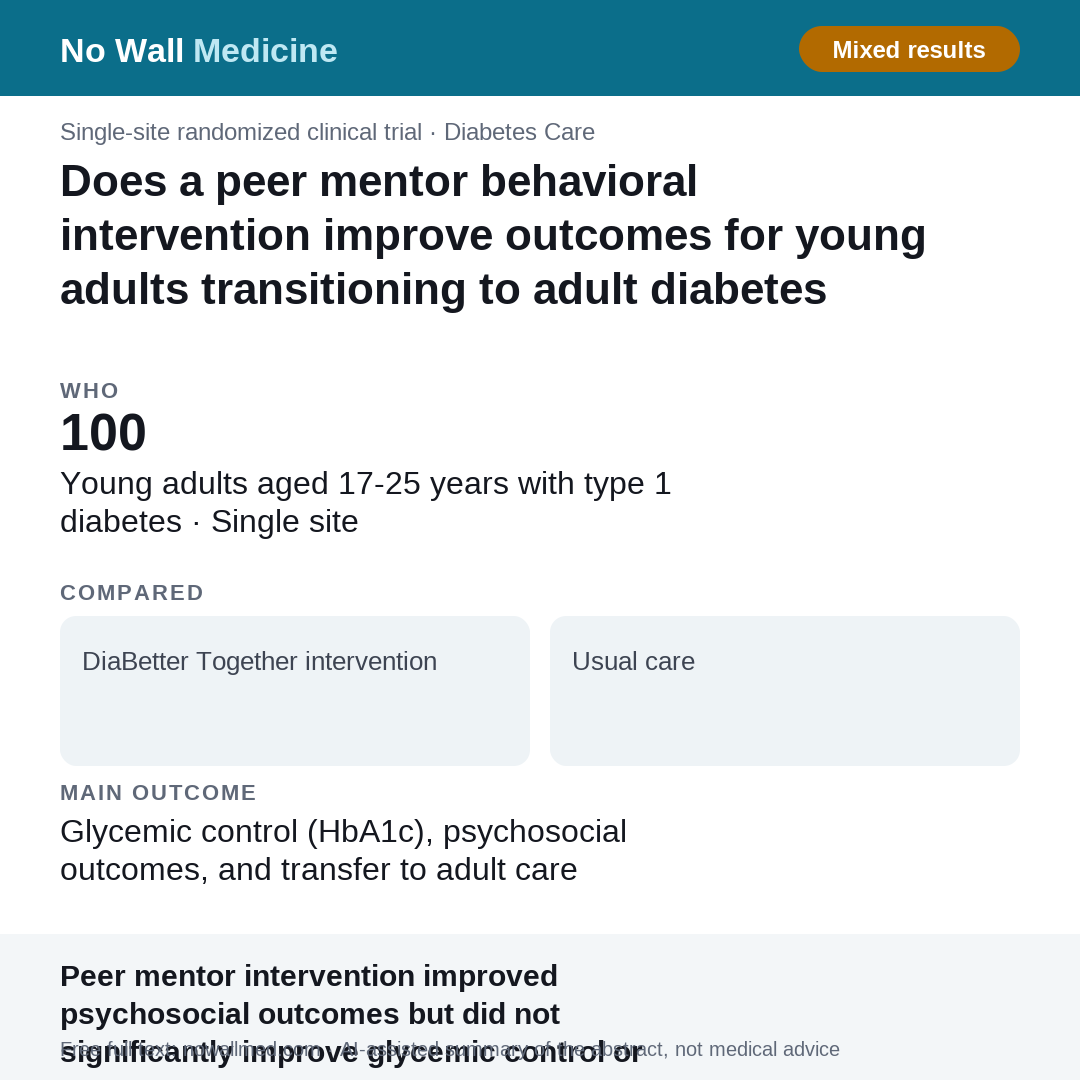
DiaBetter Together: Outcomes of a Randomized Controlled Trial Evaluating a Peer Mentor Behavioral Intervention for Young Adults With Type 1 Diabetes During the Transfer From Pediatric to Adult Care
Single-site randomized clinical trialMixed results
Does a peer mentor behavioral intervention improve outcomes for young adults transitioning to adult diabetes care?
Who
100
Young adults aged 17-25 years with type 1 diabetes · Single site
Compared
DiaBetter Together intervention
Usual care
Main outcome
Glycemic control (HbA1c), psychosocial outcomes, and transfer to adult care
Bottom line: Peer mentor intervention improved psychosocial outcomes but did not significantly improve glycemic control or transfer to adult care.
Limitation: Reduced sample size due to the coronavirus disease 2019 pandemic may have limited power.
Diabetes Care · 2026-05-27Download image
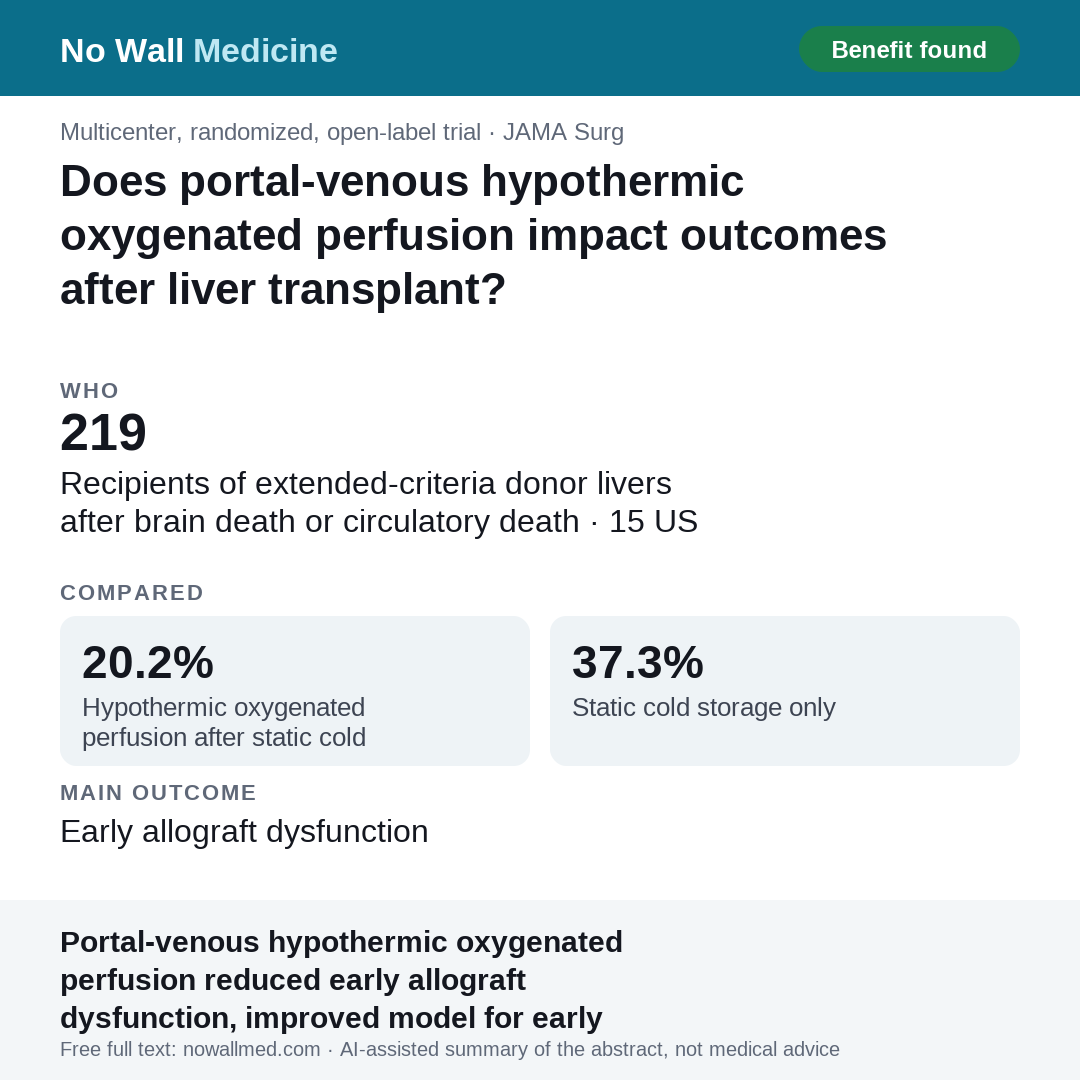
Portal-Venous Hypothermic Oxygenated Perfusion for Liver Transplant: A Randomized Clinical Trial
Multicenter, randomized, open-label trialBenefit found
Does portal-venous hypothermic oxygenated perfusion impact outcomes after liver transplant?
Who
219
Recipients of extended-criteria donor livers after brain death or circulatory death · 15 US liver transplant centers
Compared
20.2%Hypothermic oxygenated perfusion after static cold storage (22/109)
37.3%Static cold storage only (41/110)
Main outcome
Early allograft dysfunction
Result: rate difference, -17.1%; 95% CI, -27.2 to -7.0
Bottom line: Portal-venous hypothermic oxygenated perfusion reduced early allograft dysfunction, improved model for early allograft function scores, and shortened hospital stay.
JAMA Surg · 2026-05-27Download image
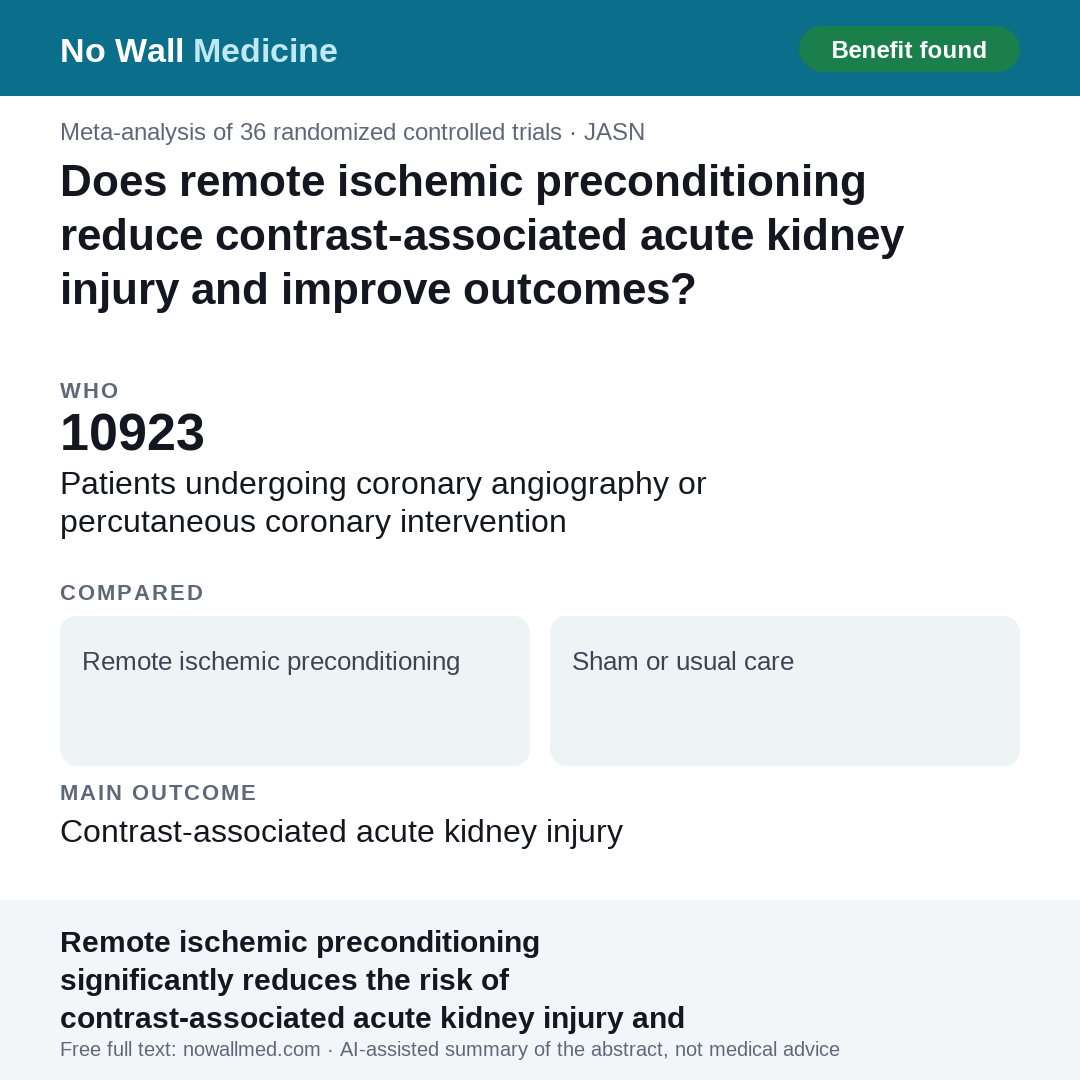
Remote Ischemic Preconditioning for Prevention of Contrast-Associated Acute Kidney Injury following Coronary Angiography or Percutaneous Coronary Intervention
Meta-analysis of 36 randomized controlled trialsBenefit found
Does remote ischemic preconditioning reduce contrast-associated acute kidney injury and improve outcomes?
Who
10923
Patients undergoing coronary angiography or percutaneous coronary intervention
Compared
Remote ischemic preconditioning
Sham or usual care
Main outcome
Contrast-associated acute kidney injury
Result: risk ratio 0.54 (95% CI 0.45 to 0.65)
Bottom line: Remote ischemic preconditioning significantly reduces the risk of contrast-associated acute kidney injury and in-hospital major adverse cardiovascular events.
JASN · 2026-05-27Download image
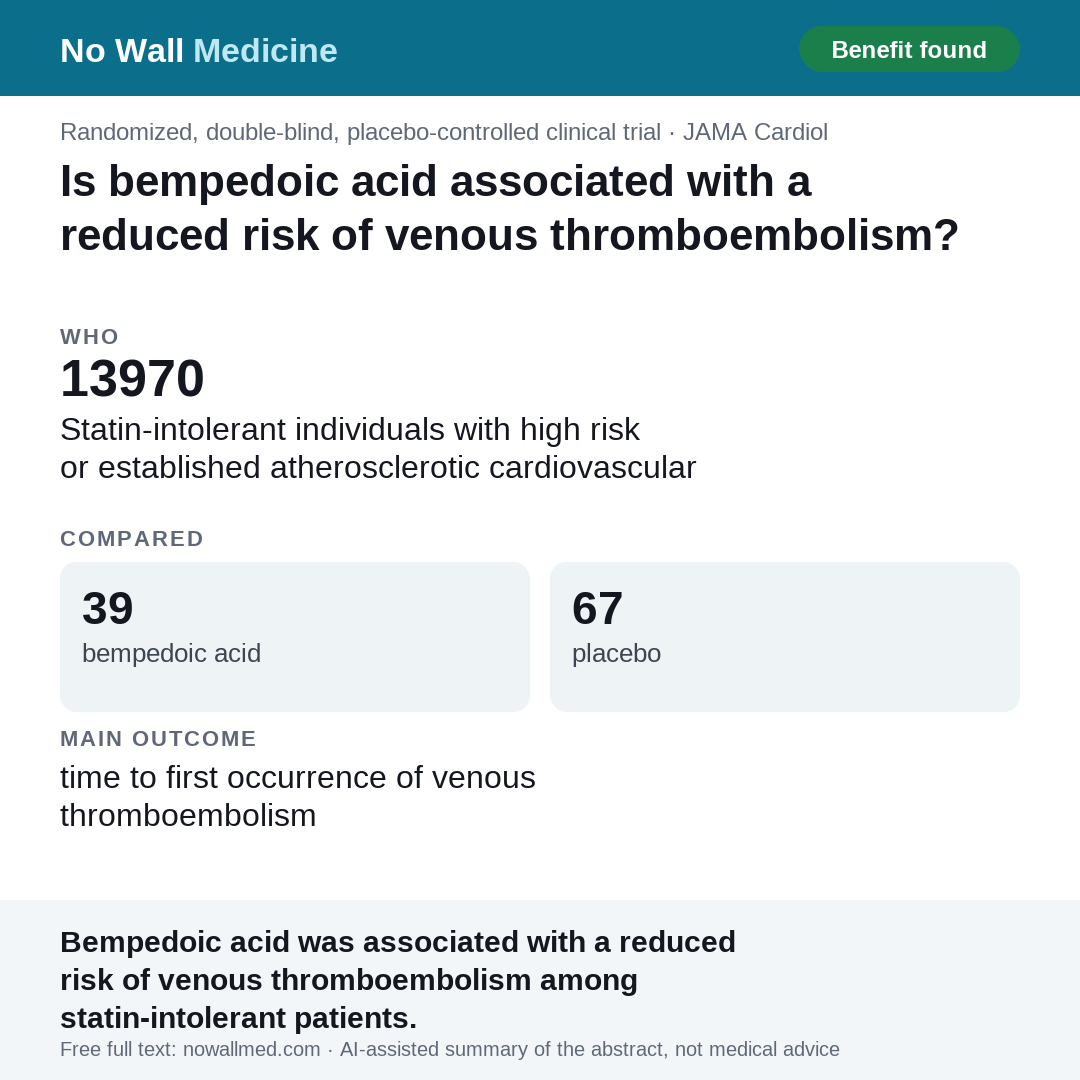
Bempedoic Acid and Venous Thromboembolism Risk Among Statin-Intolerant Patients: A Post Hoc Analysis of the CLEAR Outcomes Randomized Clinical Trial
Randomized, double-blind, placebo-controlled clinical trialBenefit found
Is bempedoic acid associated with a reduced risk of venous thromboembolism?
Who
13970
Statin-intolerant individuals with high risk or established atherosclerotic cardiovascular disease · 1250 centers across 32 countries
Compared
39bempedoic acid
67placebo
Main outcome
time to first occurrence of venous thromboembolism
Result: hazard ratio 0.58 (95% CI, 0.39-0.86)
Bottom line: Bempedoic acid was associated with a reduced risk of venous thromboembolism among statin-intolerant patients.
JAMA Cardiol · 2026-05-27Download image
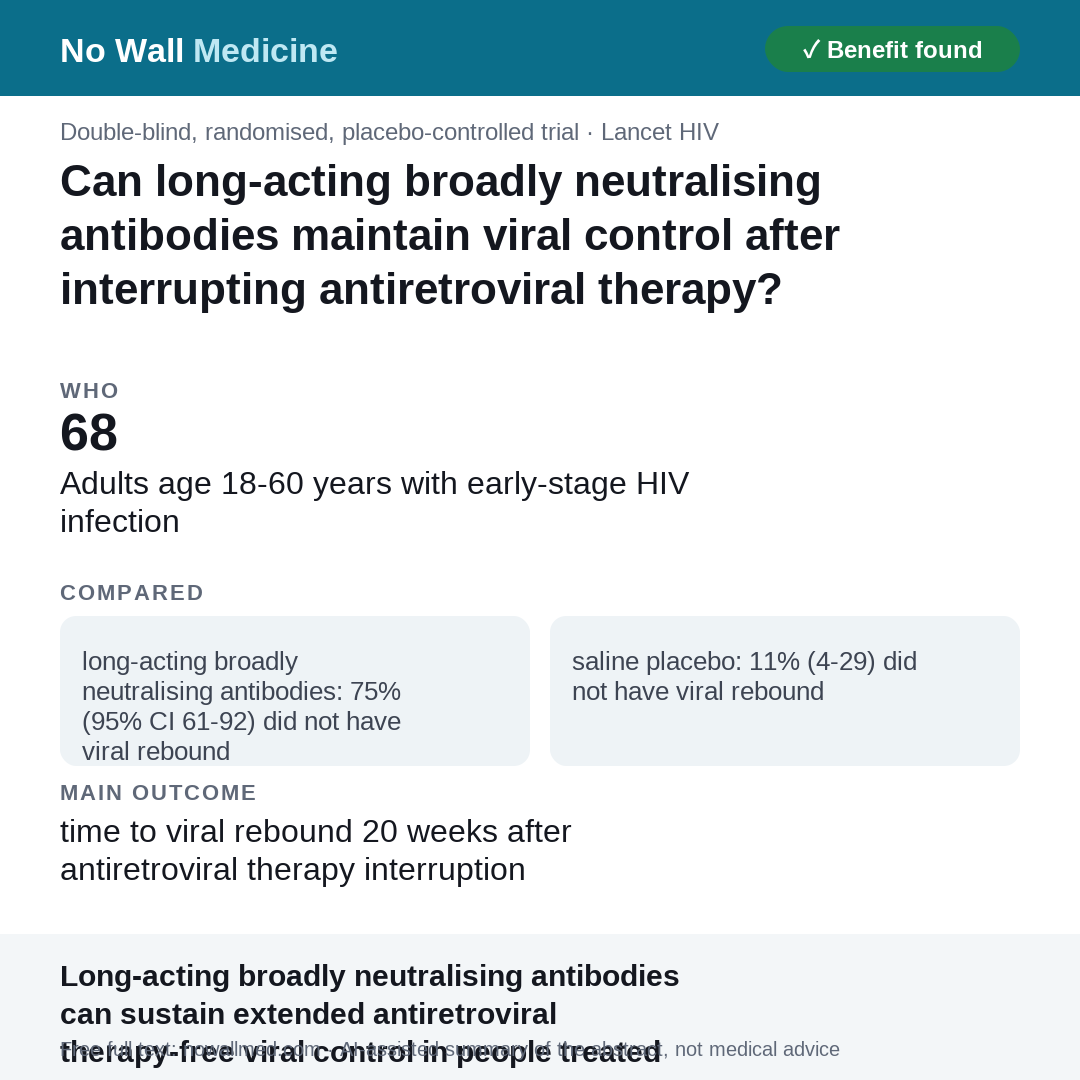
Time to HIV rebound after infusion of long-acting broadly neutralising antibodies 3BNC117-LS and 10-1074-LS and analytical treatment interruption (the RIO trial): a double-blind, randomised, placebo-controlled trial
Double-blind, randomised, placebo-controlled trialBenefit found
Can long-acting broadly neutralising antibodies maintain viral control after interrupting antiretroviral therapy?
Who
68
Adults age 18-60 years with early-stage HIV infection
Compared
long-acting broadly neutralising antibodies: 75% (95% CI 61-92) did not have viral rebound
saline placebo: 11% (4-29) did not have viral rebound
Main outcome
time to viral rebound 20 weeks after antiretroviral therapy interruption
Result: hazard ratio 0·09 (95% CI 0·04-0·21)
Bottom line: Long-acting broadly neutralising antibodies can sustain extended antiretroviral therapy-free viral control in people treated during early-stage HIV.
Funded by: Gates Foundation
Lancet HIV · 2026-05-27Download image
Synaptic biomarkers in Alzheimer's disease dementia and mild cognitive impairment: A systematic review and meta-analysis
Systematic review and meta-analysisMixed results
Are cerebrospinal fluid and blood-based synaptic biomarkers altered in Alzheimer's disease?
Who
Patients with Alzheimer's disease dementia, mild cognitive impairment, and healthy controls
Compared
Alzheimer's disease dementia and mild cognitive impairment
Healthy controls
Main outcome
Cerebrospinal fluid and blood-based synaptic biomarkers
Bottom line: Several cerebrospinal fluid and blood-based synaptic biomarkers are altered in Alzheimer's disease dementia and mild cognitive impairment.
Alzheimers Dement · 2026-05-27Download image

Beyond fear circuits: multiscale neurobiological architecture of panic disorder
Meta-analysis of functional neuroimaging experimentsMixed results
What is the multiscale neurobiological architecture of panic disorder?
Who
Patients with panic disorder
Compared
Panic disorder: increased activity in a prefrontal-hippocampus-brainstem axis
Control
Main outcome
Patterns of altered brain activity
Bottom line: Panic disorder involves widespread neural alterations across a prefrontal-hippocampus-brainstem axis beyond traditional fear circuitry.
Mol Psychiatry · 2026-05-27Download image

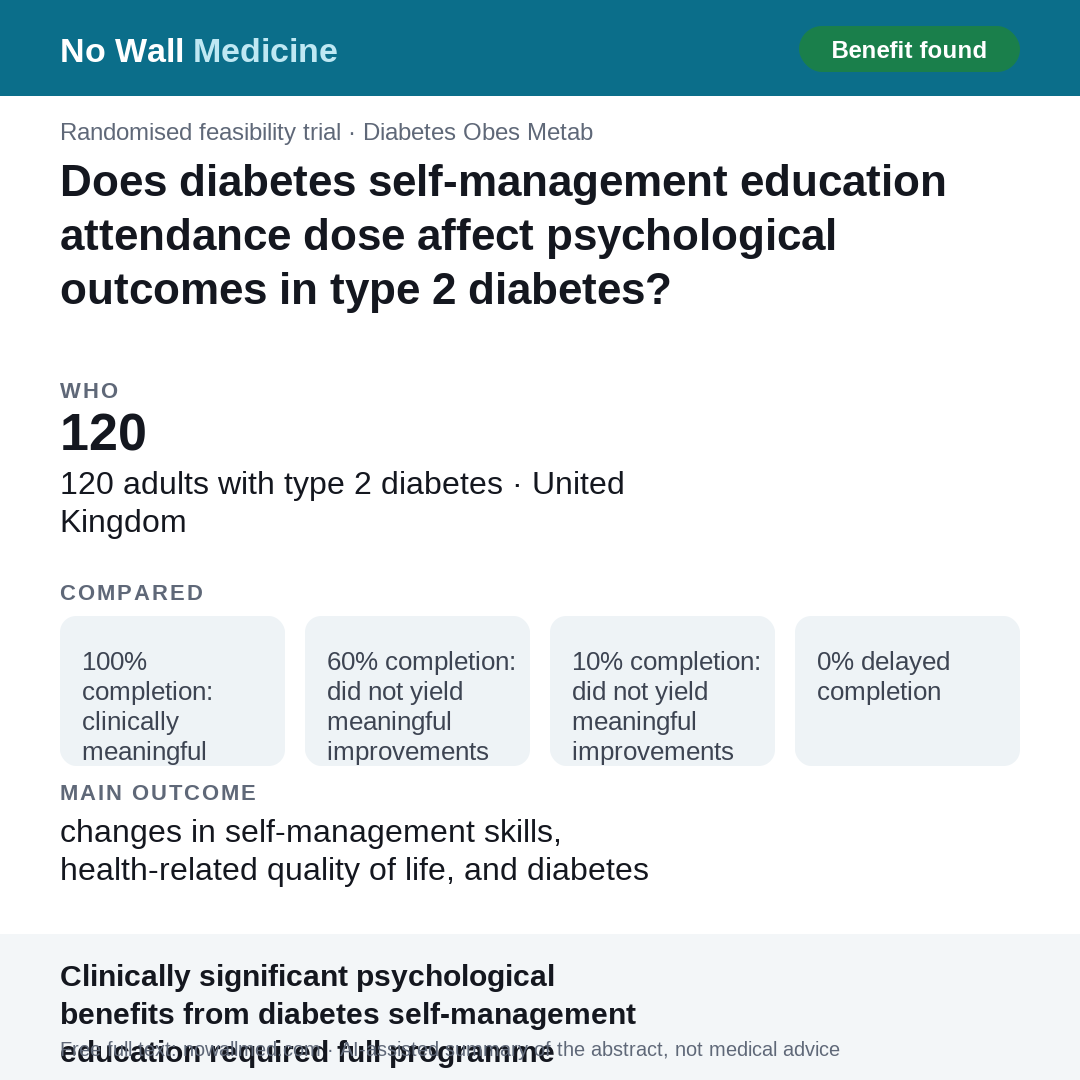
Randomised Controlled Feasibility Trial of Face-To-Face Diabetes Self-Management Education Shows High Completion Rates Are Needed to Improve Patient-Reported Outcomes
Randomised feasibility trialBenefit found
Does diabetes self-management education attendance dose affect psychological outcomes in type 2 diabetes?
Who
120
120 adults with type 2 diabetes · United Kingdom
Compared
100% completion: clinically meaningful improvements across all psychological domains
60% completion: did not yield meaningful improvements
10% completion: did not yield meaningful improvements
0% delayed completion
Main outcome
changes in self-management skills, health-related quality of life, and diabetes distress
Result: ηp 2 = 0.16-0.17 (95% CI [0.04, 0.27])
Bottom line: Clinically significant psychological benefits from diabetes self-management education required full programme completion.
Diabetes Obes Metab · 2026-05-27Download image
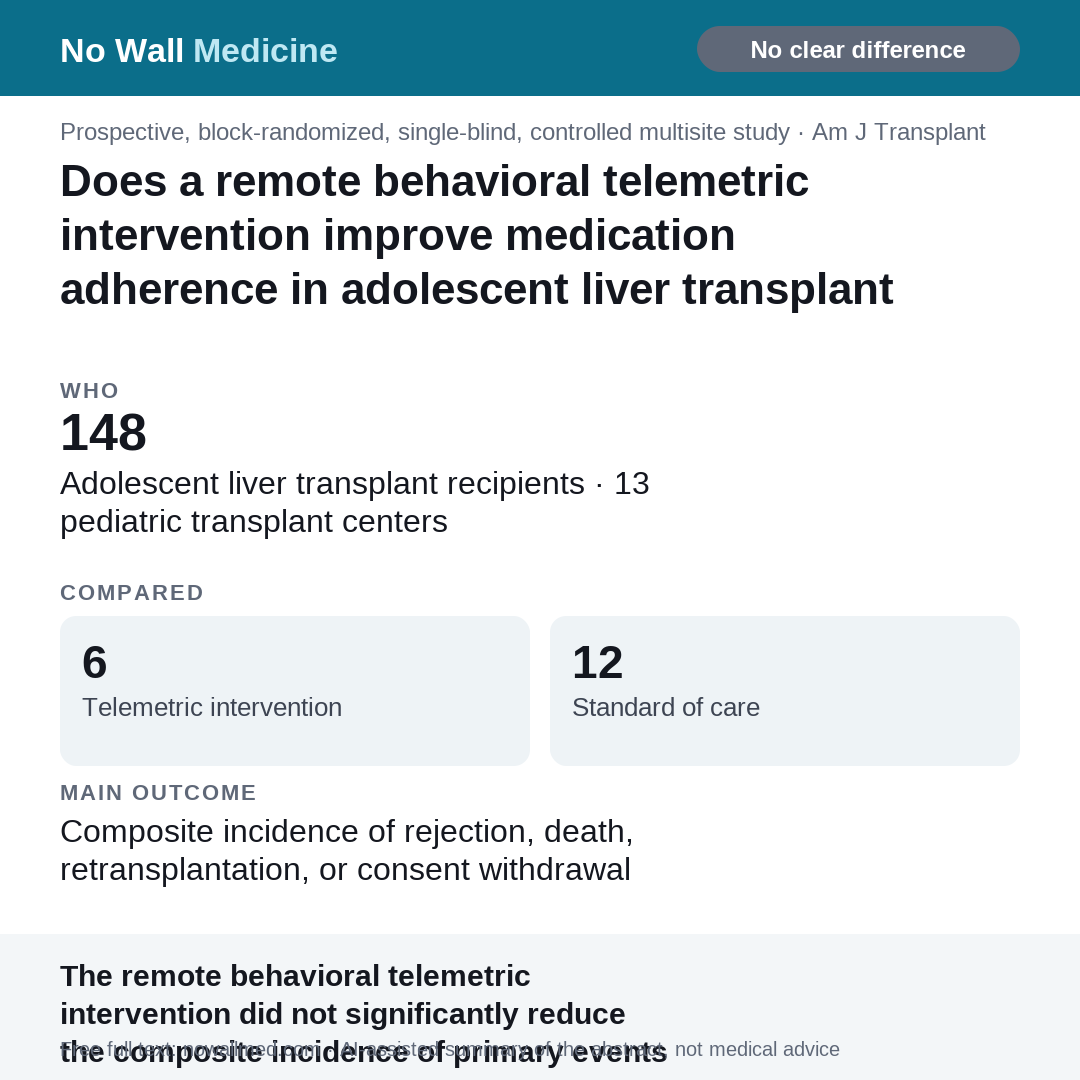
A remote intervention to improve medication nonadherence guided by a marker of risk derived from the electronic health records of adolescent transplant recipients
Prospective, block-randomized, single-blind, controlled multisite studyNo clear difference
Does a remote behavioral telemetric intervention improve medication adherence in adolescent liver transplant recipients?
Who
148
Adolescent liver transplant recipients · 13 pediatric transplant centers
Compared
6Telemetric intervention (8.3%)
12Standard of care (15.8%)
Main outcome
Composite incidence of rejection, death, retransplantation, or consent withdrawal
Result: relative risk 0.57 (95% confidence interval 0.24-1.35)
Bottom line: The remote behavioral telemetric intervention did not significantly reduce the composite incidence of primary events compared to standard care.
Am J Transplant · 2026-05-27Download image
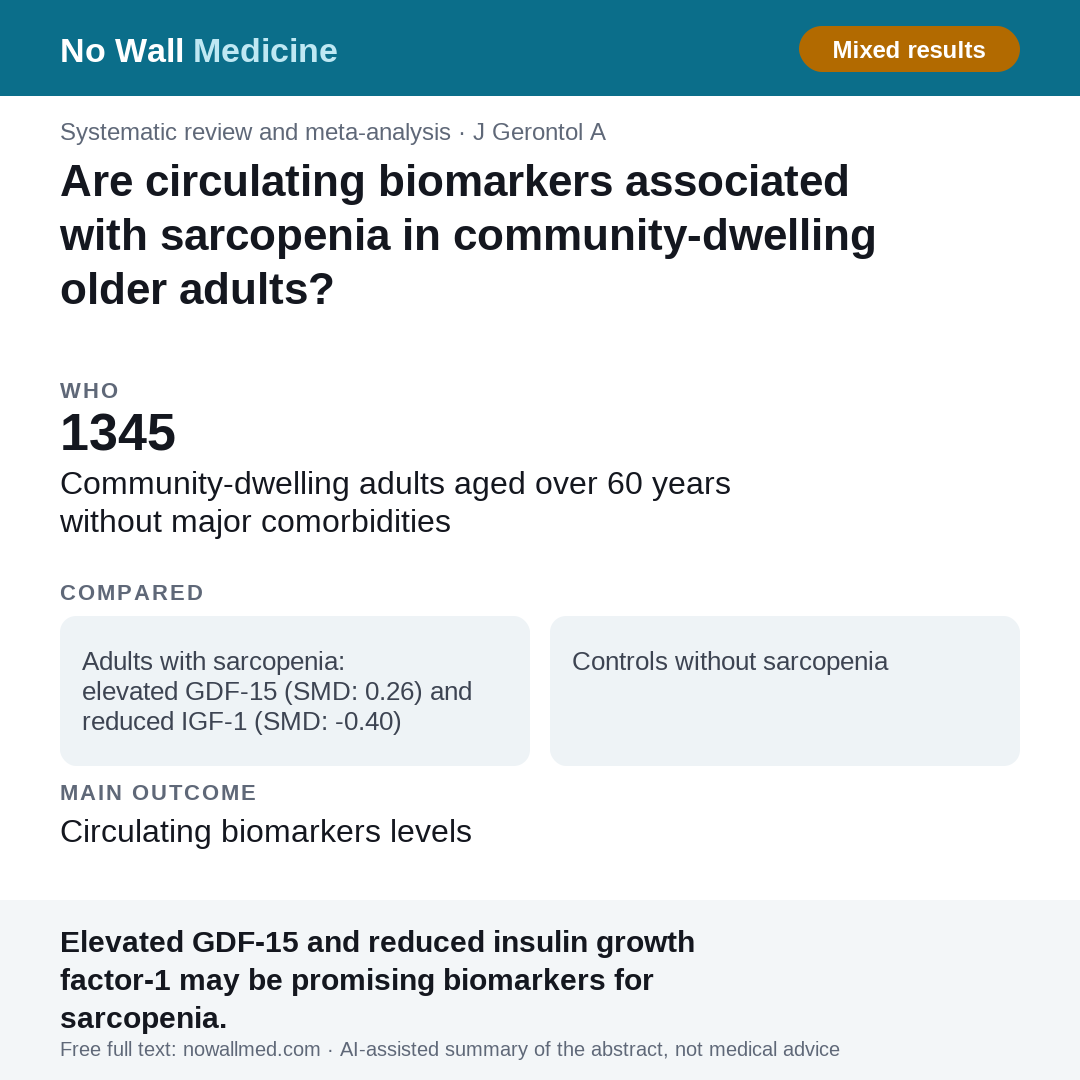
Circulating biomarkers in older adults with and without sarcopenia: a systematic review and meta-analysis
Systematic review and meta-analysisMixed results
Are circulating biomarkers associated with sarcopenia in community-dwelling older adults?
Who
1345
Community-dwelling adults aged over 60 years without major comorbidities
Compared
Adults with sarcopenia: elevated GDF-15 (SMD: 0.26) and reduced IGF-1 (SMD: -0.40)
Controls without sarcopenia
Main outcome
Circulating biomarkers levels
Result: GDF-15 SMD: 0.26 (95% CI 0.03 to 0.50); IGF-1 SMD: -0.40 (95% CI -0.54 to -0.27)
Bottom line: Elevated GDF-15 and reduced insulin growth factor-1 may be promising biomarkers for sarcopenia.
Limitation: Larger, longitudinal studies are needed to address heterogeneity and causality.
J Gerontol A · 2026-05-27Download image
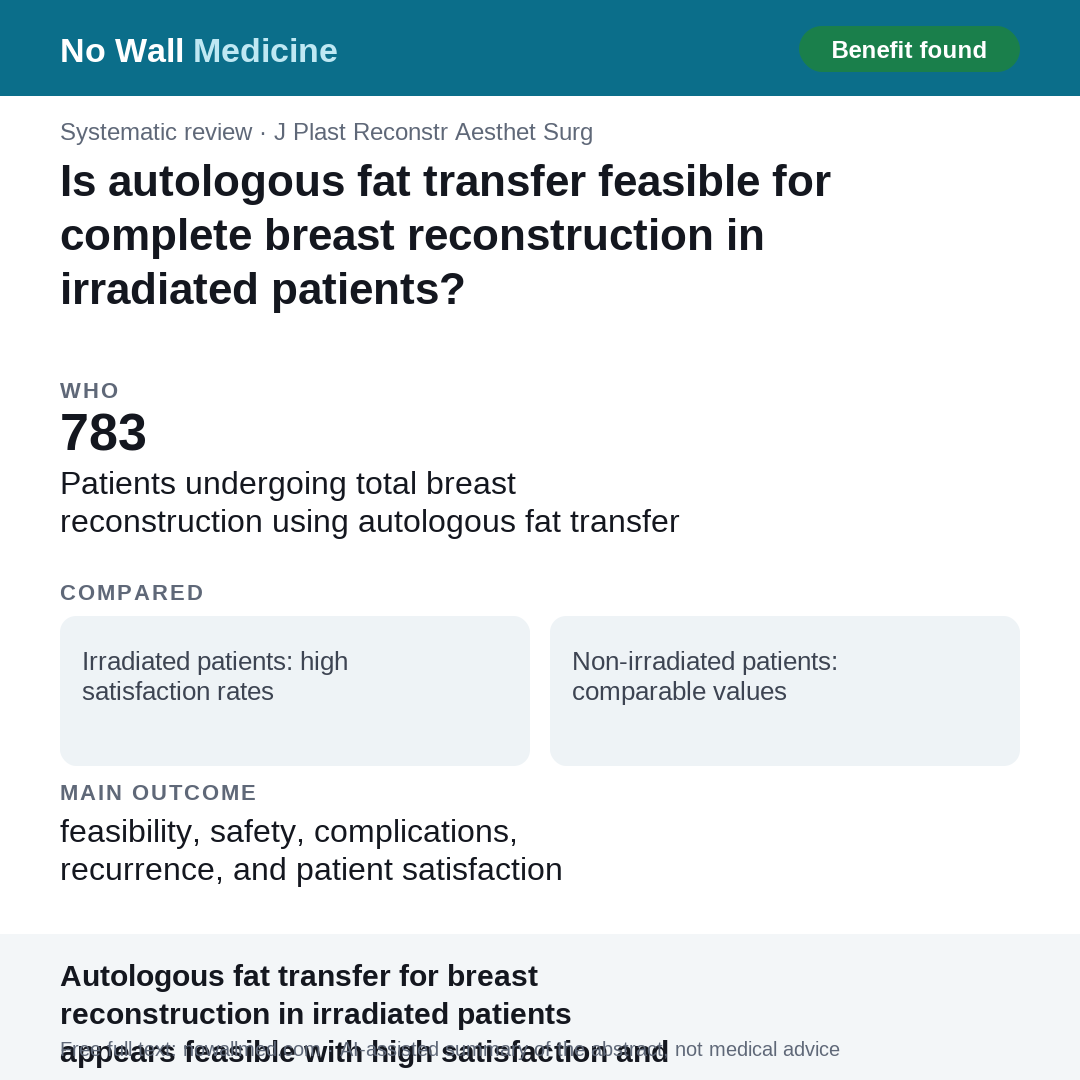
Autologous fat transfer for complete breast reconstruction in irradiated breast cancer patients: A systematic review
Systematic reviewBenefit found
Is autologous fat transfer feasible for complete breast reconstruction in irradiated patients?
Who
783
Patients undergoing total breast reconstruction using autologous fat transfer after radiotherapy
Compared
Irradiated patients: high satisfaction rates
Non-irradiated patients: comparable values
Main outcome
feasibility, safety, complications, recurrence, and patient satisfaction
Bottom line: Autologous fat transfer for breast reconstruction in irradiated patients appears feasible with high satisfaction and acceptable complications.
Limitation: The available evidence is predominantly retrospective and heterogeneous.
J Plast Reconstr Aesthet Surg · 2026-05-27Download image
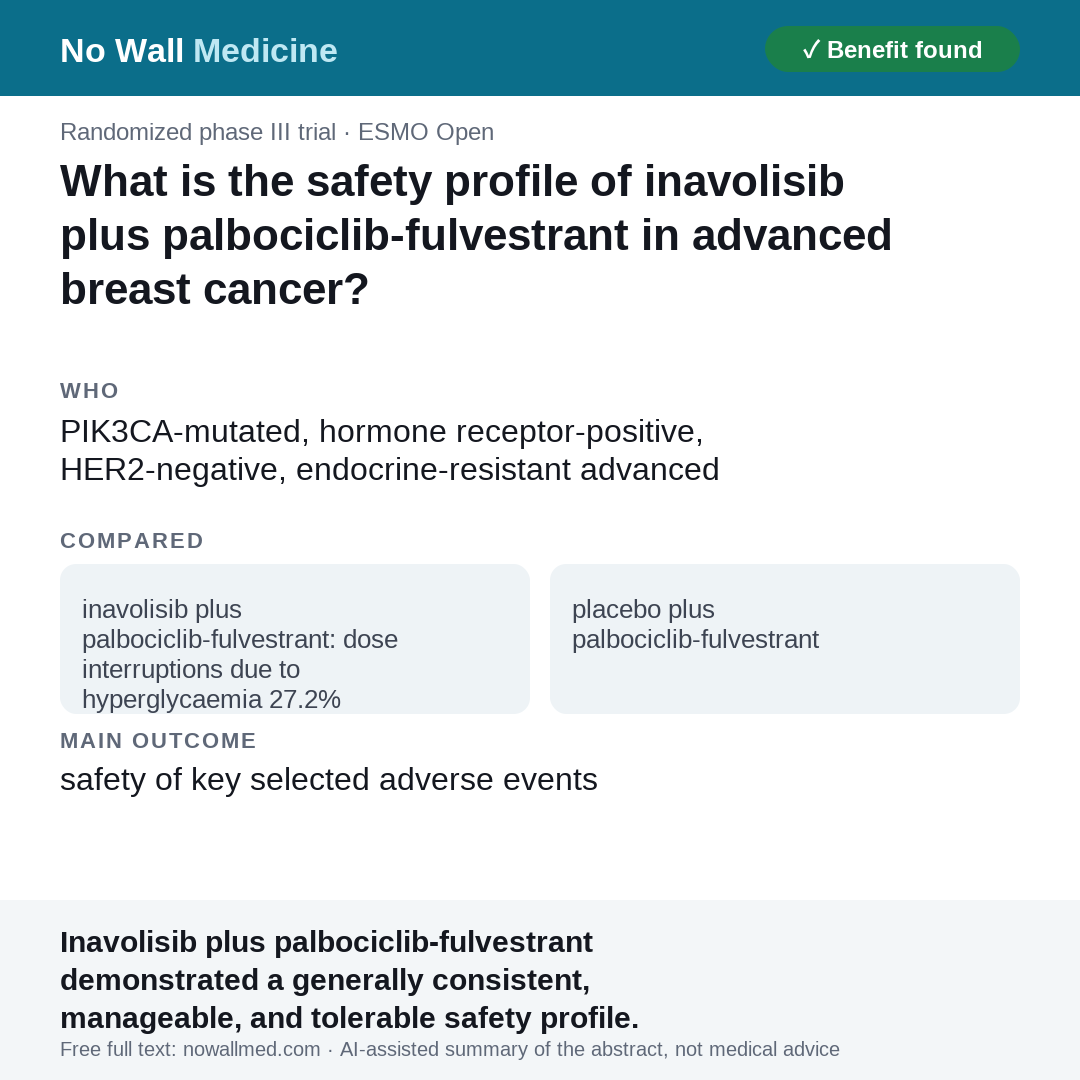
Safety analyses of the INAVO120 randomised phase III trial of inavolisib or placebo with palbociclib-fulvestrant in patients with PIK3CA-mutated, hormone receptor-positive, HER2-negative, endocrine-resistant advanced breast cancer
Randomized phase III trialBenefit found
What is the safety profile of inavolisib plus palbociclib-fulvestrant in advanced breast cancer?
Who
PIK3CA-mutated, hormone receptor-positive, HER2-negative, endocrine-resistant advanced breast cancer
Compared
inavolisib plus palbociclib-fulvestrant: dose interruptions due to hyperglycaemia 27.2%
placebo plus palbociclib-fulvestrant
Main outcome
safety of key selected adverse events
Bottom line: Inavolisib plus palbociclib-fulvestrant demonstrated a generally consistent, manageable, and tolerable safety profile.
ESMO Open · 2026-05-27Download image