Visual abstracts
New randomized trials and meta-analyses from leading journals at a glance: who was studied, what was compared, and what was found. Every paper is free to read in full.
All specialtiesCardiology 4832Oncology 4114Gastroenterology & Hepatology 1934Infectious Disease 3824Neurology 1899Psychiatry & Mental Health 2256Pulmonology 2082Critical Care 1345Endocrinology & Diabetes 2572Pediatrics 2940Surgery 2525Orthopedics & Sports Medicine 926Neurosurgery 534Cardiothoracic & Vascular Surgery 671Plastic & Reconstructive Surgery 591Nephrology 1124Rheumatology 823Hematology 1104Dermatology 620Ophthalmology 543Obstetrics & Gynecology 1684Public & Global Health 1056Radiology & Imaging 641Anesthesiology 962Urology 754ENT (Otolaryngology) 503Emergency Medicine 489Allergy & Immunology 313Geriatrics 981Family Medicine & Primary Care 541Medical Genetics & Genomics 675Pathology & Laboratory Medicine 157Physical Medicine & Rehabilitation 751Palliative Care 424Nutrition 1580Digital Health & AI 2195General Medicine 321
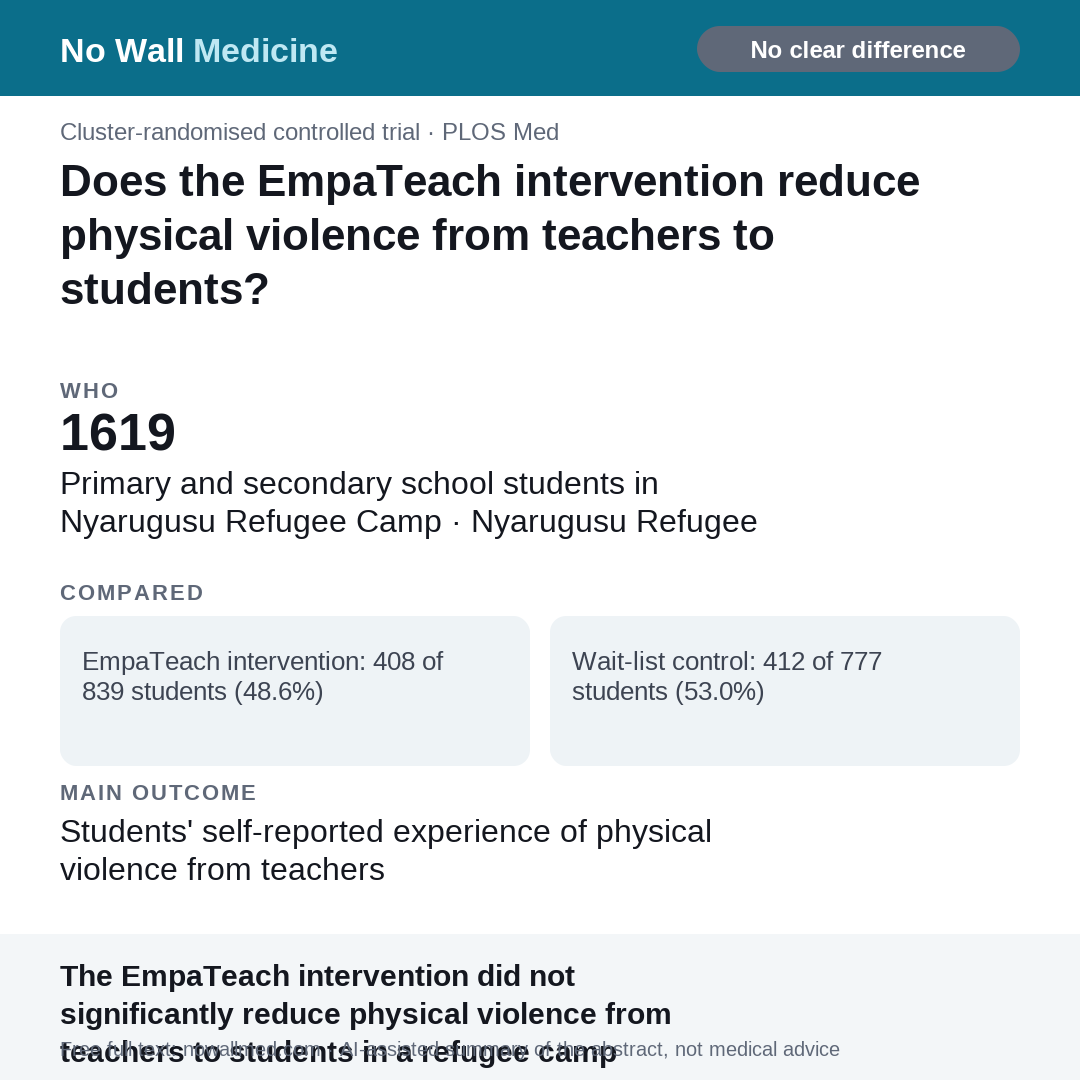
The EmpaTeach intervention for reducing physical violence from teachers to students in Nyarugusu Refugee Camp: A cluster-randomised controlled trial
Cluster-randomised controlled trialNo clear difference
Does the EmpaTeach intervention reduce physical violence from teachers to students?
Who
1619
Primary and secondary school students in Nyarugusu Refugee Camp · Nyarugusu Refugee Camp, Tanzania
Compared
EmpaTeach intervention: 408 of 839 students (48.6%)
Wait-list control: 412 of 777 students (53.0%)
Main outcome
Students' self-reported experience of physical violence from teachers
Result: risk ratio 0.91 (95% CI 0.80 to 1.02)
Bottom line: The EmpaTeach intervention did not significantly reduce physical violence from teachers to students in a refugee camp setting.
Limitation: Small number of schools limited statistical power to detect small differences.
PLOS Med · 2021-10-04Download image
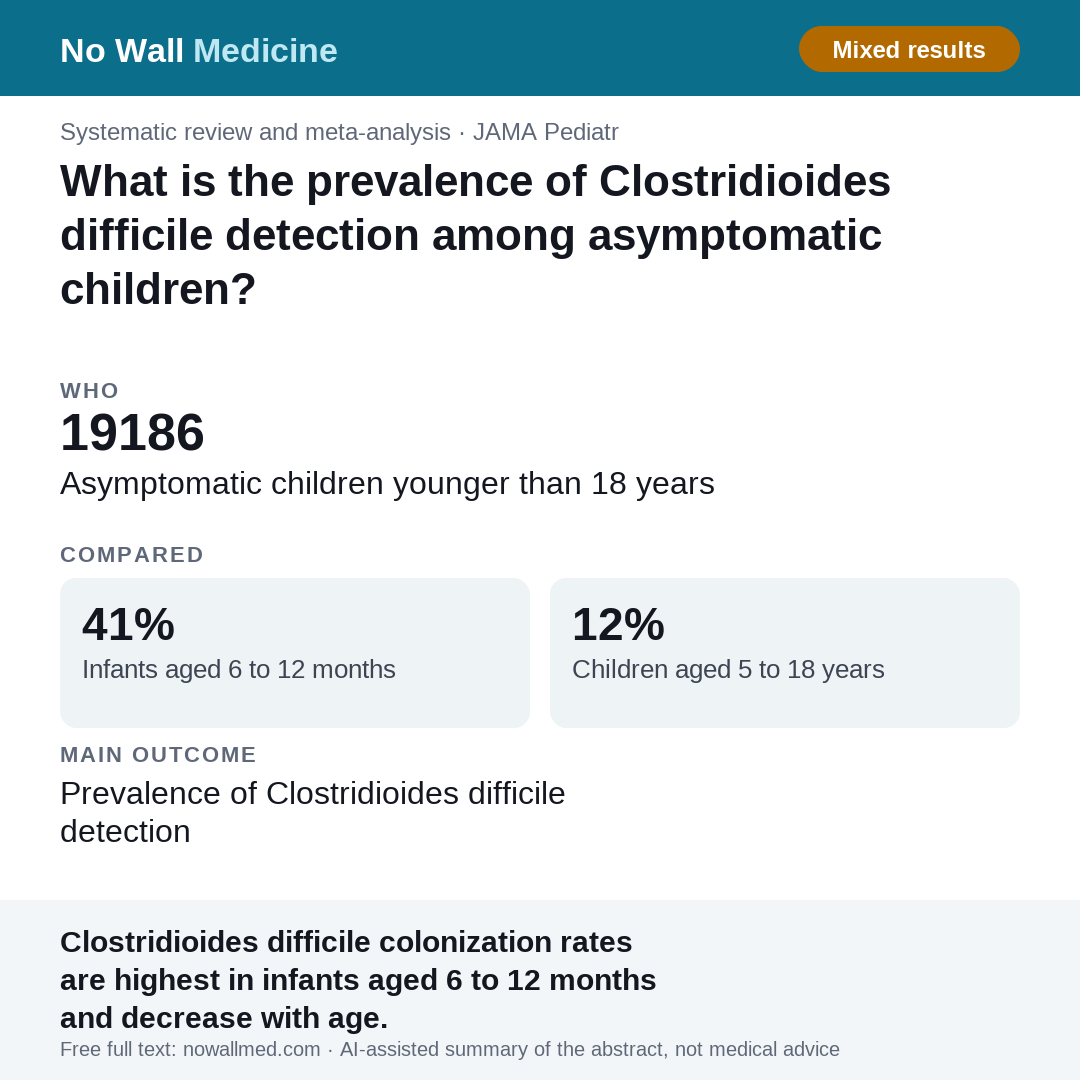
Prevalence of Detection of Clostridioides difficile Among Asymptomatic Children: A Systematic Review and Meta-analysis
Systematic review and meta-analysisMixed results
What is the prevalence of Clostridioides difficile detection among asymptomatic children?
Who
19186
Asymptomatic children younger than 18 years
Compared
41%Infants aged 6 to 12 months (95% CI, 32%-50%)
12%Children aged 5 to 18 years (95% CI, 7%-18%)
Main outcome
Prevalence of Clostridioides difficile detection
Bottom line: Clostridioides difficile colonization rates are highest in infants aged 6 to 12 months and decrease with age.
JAMA Pediatr · 2021-10-04Download image
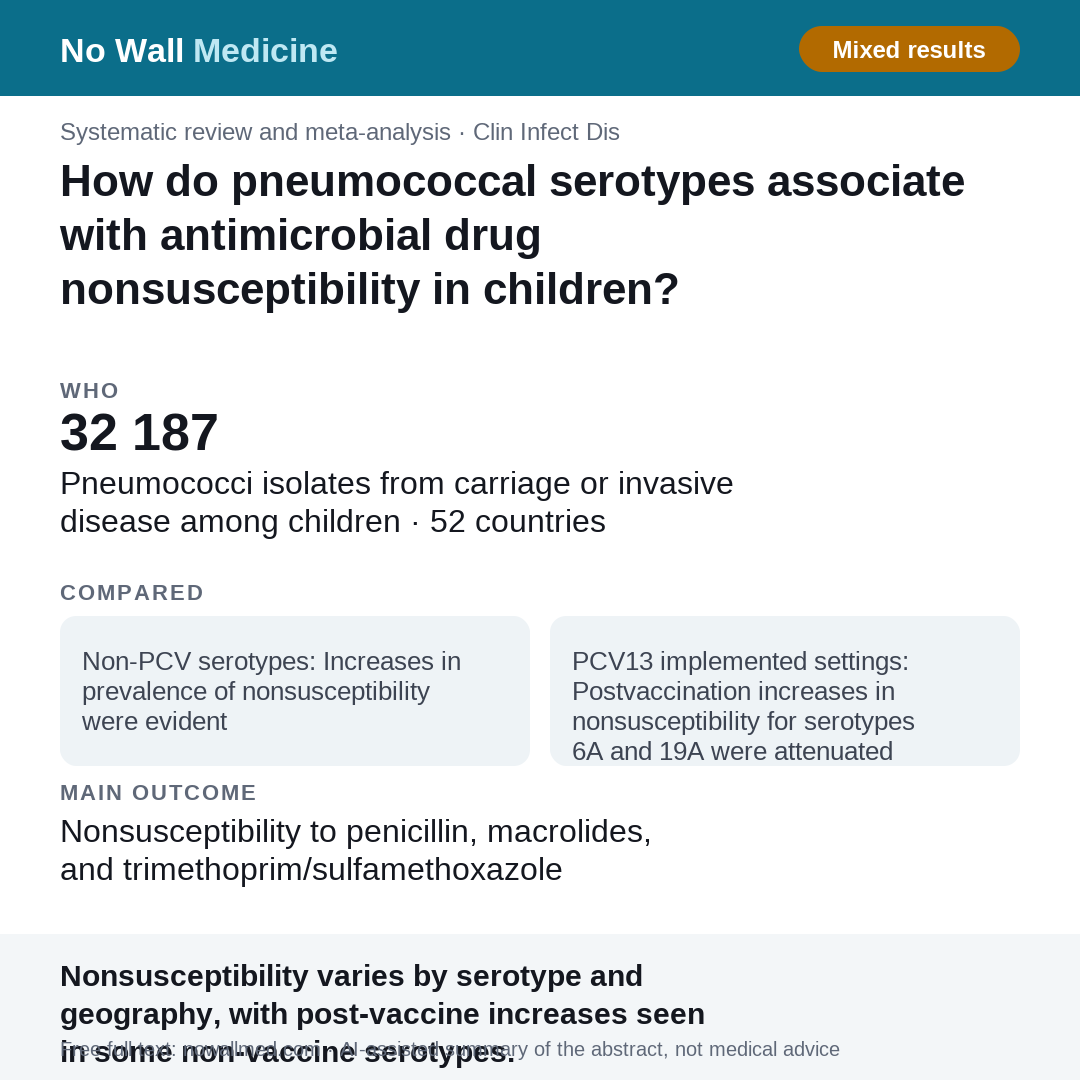
Association of Pneumococcal Serotype With Susceptibility to Antimicrobial Drugs: A Systematic Review and Meta-analysis
Systematic review and meta-analysisMixed results
How do pneumococcal serotypes associate with antimicrobial drug nonsusceptibility in children?
Who
32 187
Pneumococci isolates from carriage or invasive disease among children · 52 countries
Compared
Non-PCV serotypes: Increases in prevalence of nonsusceptibility were evident
PCV13 implemented settings: Postvaccination increases in nonsusceptibility for serotypes 6A and 19A were attenuated
Main outcome
Nonsusceptibility to penicillin, macrolides, and trimethoprim/sulfamethoxazole
Bottom line: Nonsusceptibility varies by serotype and geography, with post-vaccine increases seen in some non-vaccine serotypes.
Clin Infect Dis · 2021-10-03Download image
Pathogen-Specific Effects of Probiotics in Children With Acute Gastroenteritis Seeking Emergency Care: A Randomized Trial
Multicenter randomized, placebo controlled trialsNo clear difference
Do probiotics exert pathogen-specific effects in children with acute gastroenteritis?
Who
1565
Children 3-48 months with acute gastroenteritis · Pediatric emergency departments in Canada and the United States
Compared
Probiotic
Placebo
Main outcome
Post-intervention moderate-to-severe disease
Bottom line: Probiotics did not result in less severe disease compared to placebo across common etiologic pathogens in children.
Clin Infect Dis · 2021-10-02Download image

Bleeding assessment tools in the diagnosis of VWD in adults and children: a systematic review and meta-analysis of test accuracy
Meta-analysis of 7 studiesUnclear result
Do bleeding tools diagnose VWD accurately
Who
adult and pediatric patients
Compared
Bleeding assessment tools
Standard diagnosis
Main outcome
diagnosis of VWD
Result: sensitivity 75% (95% CI 66-83), specificity 54% (29-77)
Bottom line: Bleeding tools help diagnose VWD
Blood Adv · 2021-10-02Download image

Risk of Self-harm in Children and Adults With Autism Spectrum Disorder: A Systematic Review and Meta-analysis
Systematic review and meta-analysisHarm found
What is the risk of self-injurious behavior and suicidality in people with autism spectrum disorder?
Who
Children and adults with autism spectrum disorder
Compared
Autism spectrum disorder
Control
Main outcome
Self-injurious behavior and suicidality
Result: self-injurious behavior OR 3.18 (95% CI, 2.45-4.12); suicidality OR 3.32 (95% CI, 2.60-4.24)
Bottom line: Autism spectrum disorder is associated with a substantial increase in odds of self-injurious behavior and suicidality.
JAMA Netw Open · 2021-10-01Download image

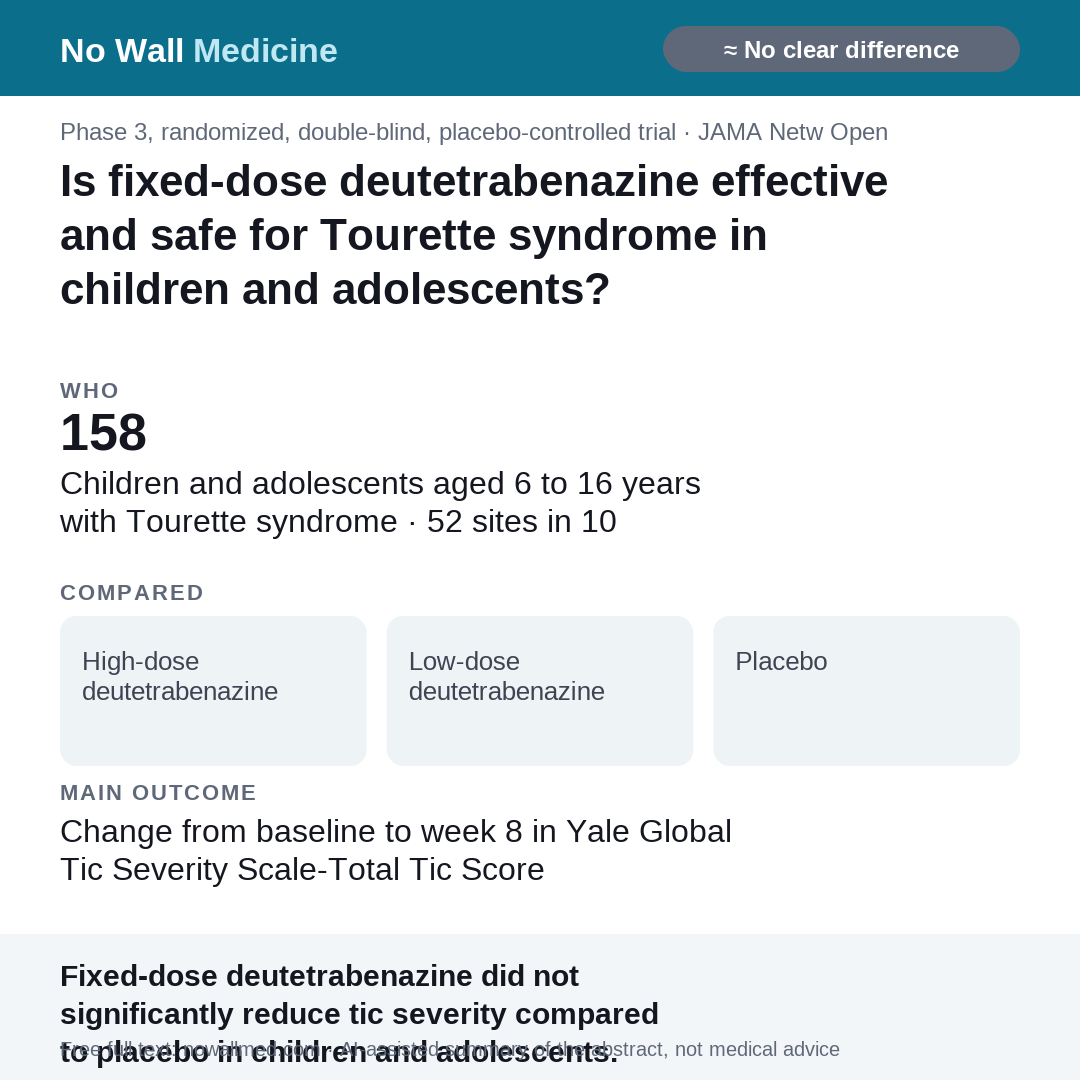
Efficacy and Safety of Fixed-Dose Deutetrabenazine in Children and Adolescents for Tics Associated With Tourette Syndrome: A Randomized Clinical Trial
Phase 3, randomized, double-blind, placebo-controlled trialNo clear difference
Is fixed-dose deutetrabenazine effective and safe for Tourette syndrome in children and adolescents?
Who
158
Children and adolescents aged 6 to 16 years with Tourette syndrome · 52 sites in 10 countries
Compared
High-dose deutetrabenazine
Low-dose deutetrabenazine
Placebo
Main outcome
Change from baseline to week 8 in Yale Global Tic Severity Scale-Total Tic Score
Result: least-squares mean difference -0.8 points (95% CI -3.9 to 2.3 points)
Bottom line: Fixed-dose deutetrabenazine did not significantly reduce tic severity compared to placebo in children and adolescents.
JAMA Netw Open · 2021-10-01Download image
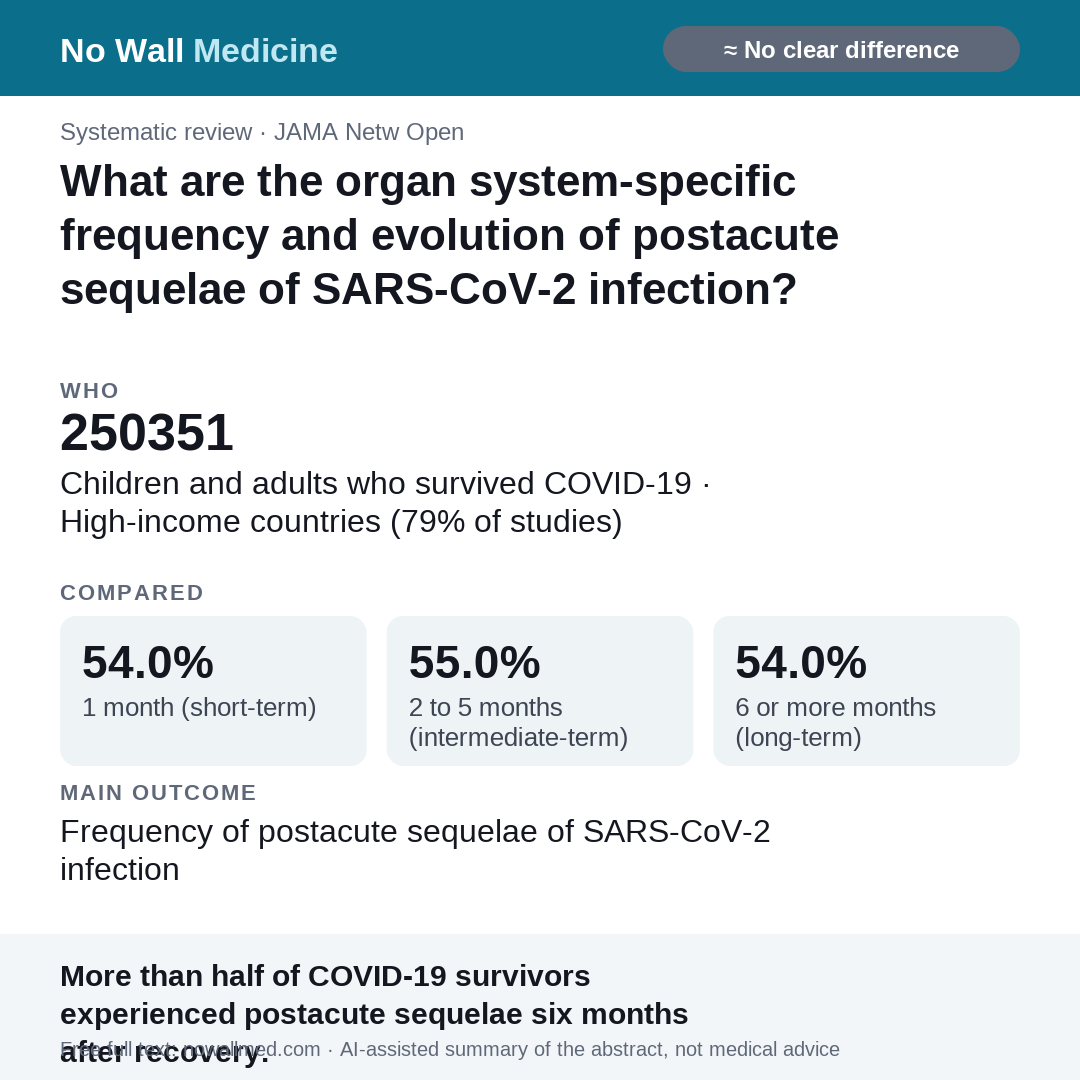
Short-term and Long-term Rates of Postacute Sequelae of SARS-CoV-2 Infection: A Systematic Review
Systematic reviewNo clear difference
What are the organ system-specific frequency and evolution of postacute sequelae of SARS-CoV-2 infection?
Who
250351
Children and adults who survived COVID-19 · High-income countries (79% of studies)
Compared
54.0%1 month (short-term) (45.0%-69.0%)
55.0%2 to 5 months (intermediate-term) (34.8%-65.5%)
54.0%6 or more months (long-term) (31.0%-67.0%)
Main outcome
Frequency of postacute sequelae of SARS-CoV-2 infection
Bottom line: More than half of COVID-19 survivors experienced postacute sequelae six months after recovery.
JAMA Netw Open · 2021-10-01Download image
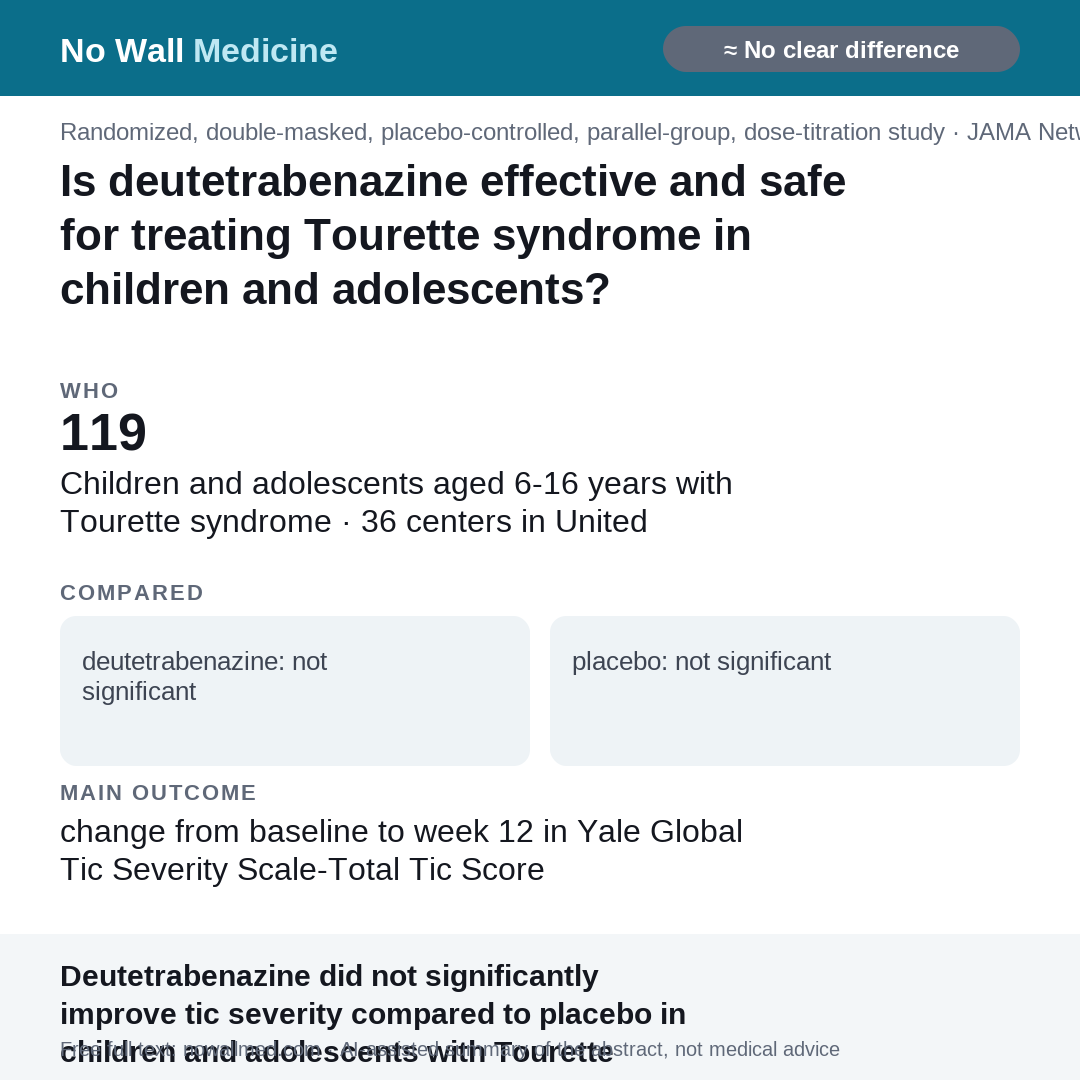
Safety and Efficacy of Flexible-Dose Deutetrabenazine in Children and Adolescents With Tourette Syndrome: A Randomized Clinical Trial
Randomized, double-masked, placebo-controlled, parallel-group, dose-titration studyNo clear difference
Is deutetrabenazine effective and safe for treating Tourette syndrome in children and adolescents?
Who
119
Children and adolescents aged 6-16 years with Tourette syndrome · 36 centers in United States, Canada, Denmark, Russia, Serbia, and Spain
Compared
deutetrabenazine: not significant
placebo: not significant
Main outcome
change from baseline to week 12 in Yale Global Tic Severity Scale-Total Tic Score
Result: least squares mean difference, -0.7 (95% CI, -4.1 to 2.8)
Bottom line: Deutetrabenazine did not significantly improve tic severity compared to placebo in children and adolescents with Tourette syndrome.
JAMA Netw Open · 2021-10-01Download image
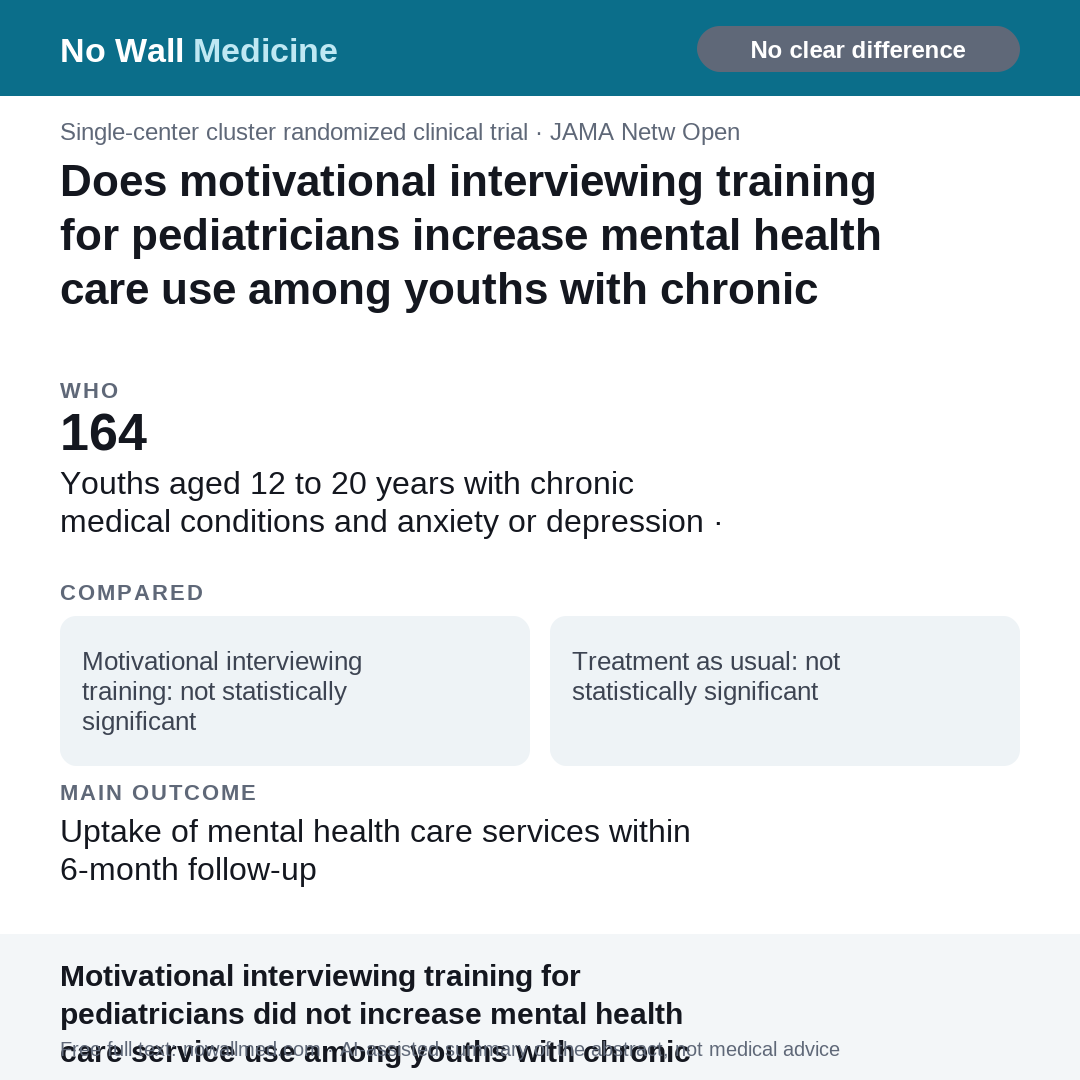
Efficacy of Motivational Interviewing to Improve Utilization of Mental Health Services Among Youths With Chronic Medical Conditions: A Cluster Randomized Clinical Trial
Single-center cluster randomized clinical trialNo clear difference
Does motivational interviewing training for pediatricians increase mental health care use among youths with chronic medical conditions?
Who
164
Youths aged 12 to 20 years with chronic medical conditions and anxiety or depression · University Children's Hospital outpatient clinics, Germany
Compared
Motivational interviewing training: not statistically significant
Treatment as usual: not statistically significant
Main outcome
Uptake of mental health care services within 6-month follow-up
Result: odds ratio 1.96 (95% CI 0.98-3.92)
Bottom line: Motivational interviewing training for pediatricians did not increase mental health care service use among youths with chronic medical conditions.
JAMA Netw Open · 2021-10-01Download image
Small-quantity lipid-based nutrient supplements for the prevention of child malnutrition and promotion of healthy development: overview of individual participant data meta-analysis and programmatic implications
Individual participant data meta-analysis of 14 randomized controlled trialsBenefit found
Do small-quantity lipid-based nutrient supplements prevent child malnutrition and promote healthy development?
Who
37,000
Children 6-24 months of age
Compared
Small-quantity lipid-based nutrient supplements
Control group
Main outcome
Growth, development, anemia, and micronutrient status
Bottom line: Small-quantity lipid-based nutrient supplements reduce stunting, wasting, underweight, anemia, and developmental delays in children.
Am J Clin Nutr · 2021-10-01Download image

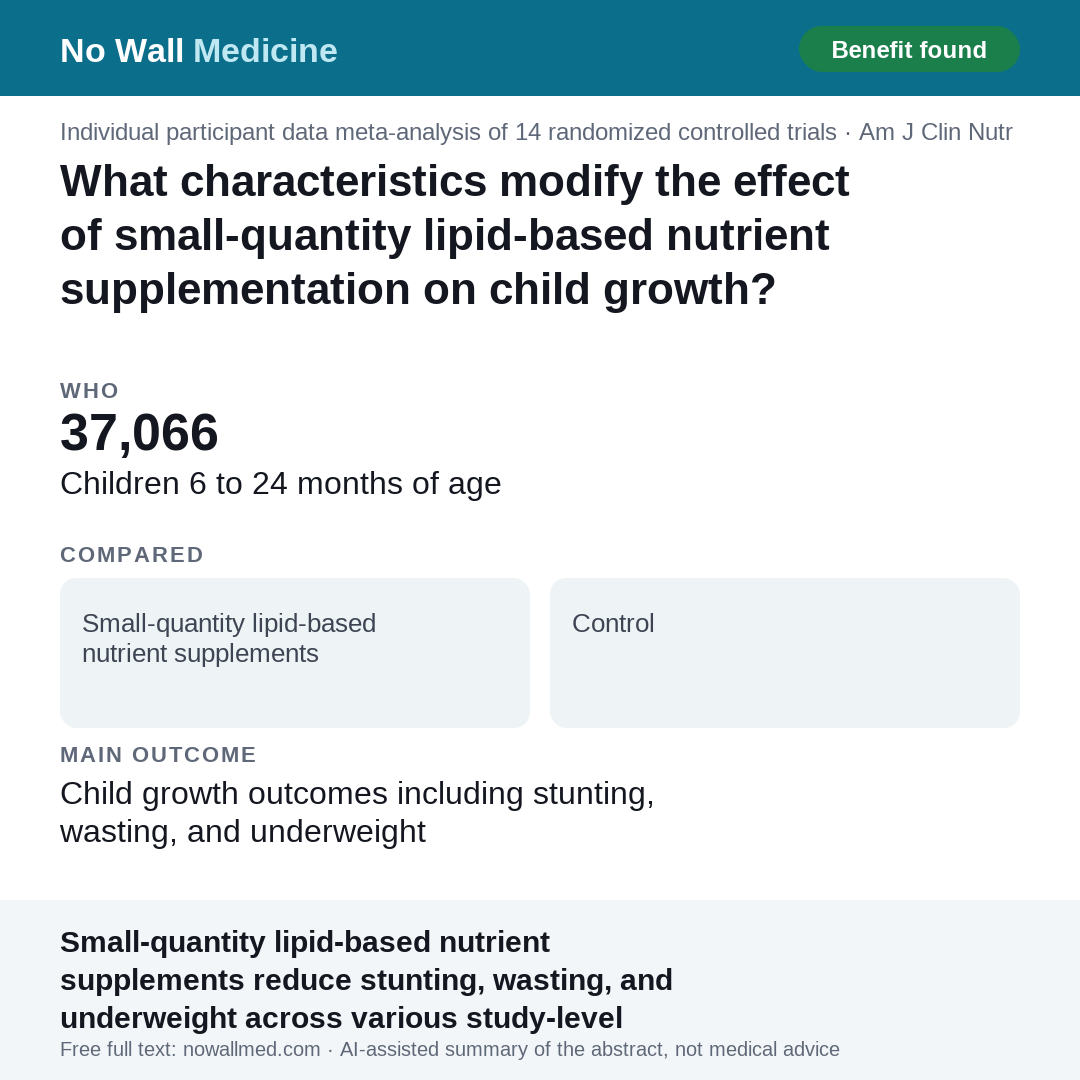
Characteristics that modify the effect of small-quantity lipid-based nutrient supplementation on child growth: an individual participant data meta-analysis of randomized controlled trials
Individual participant data meta-analysis of 14 randomized controlled trialsBenefit found
What characteristics modify the effect of small-quantity lipid-based nutrient supplementation on child growth?
Who
37,066
Children 6 to 24 months of age
Compared
Small-quantity lipid-based nutrient supplements
Control
Main outcome
Child growth outcomes including stunting, wasting, and underweight
Bottom line: Small-quantity lipid-based nutrient supplements reduce stunting, wasting, and underweight across various study-level contexts.
Am J Clin Nutr · 2021-10-01Download image
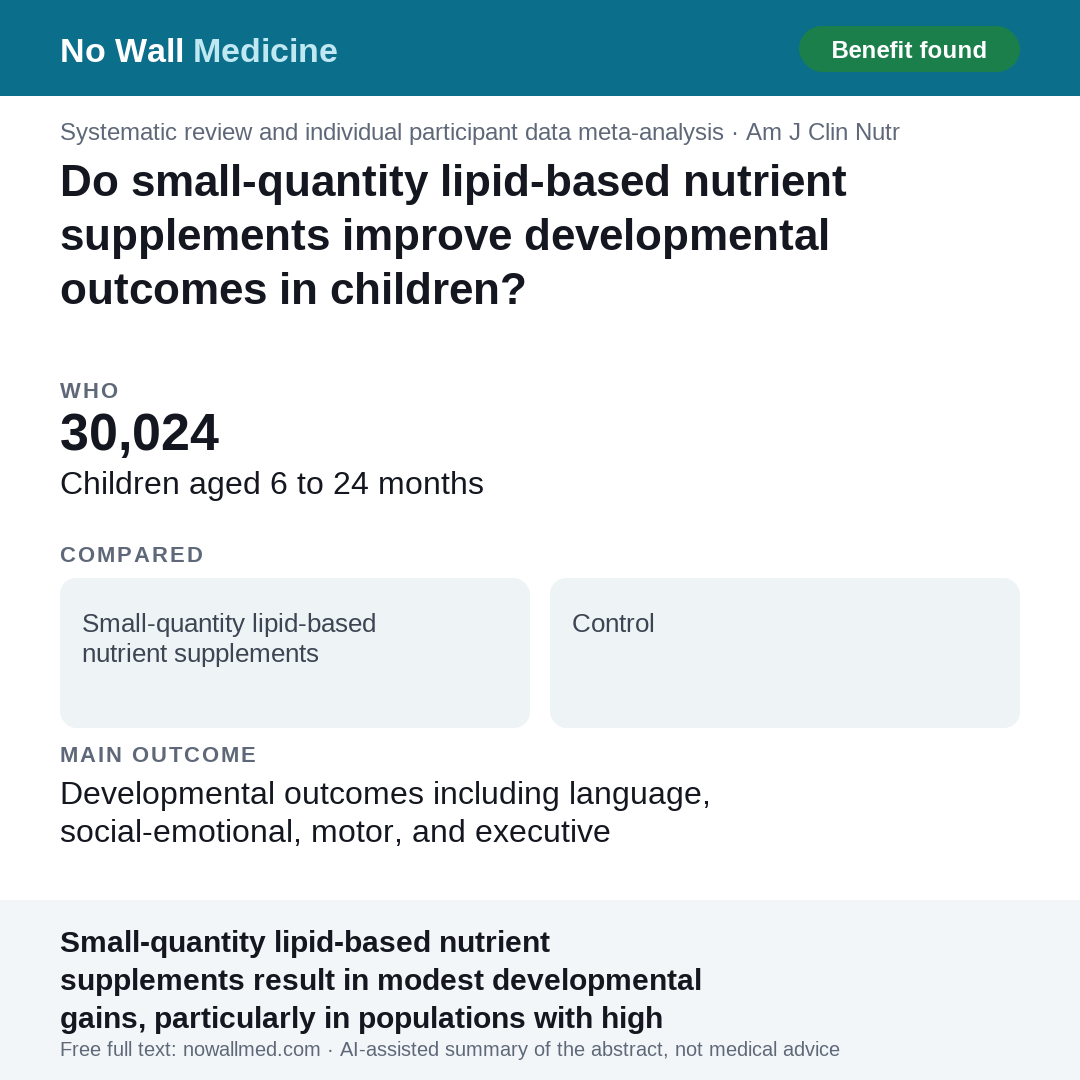
Small-quantity lipid-based nutrient supplements for children age 6-24 months: a systematic review and individual participant data meta-analysis of effects on developmental outcomes and effect modifiers
Systematic review and individual participant data meta-analysisBenefit found
Do small-quantity lipid-based nutrient supplements improve developmental outcomes in children?
Who
30,024
Children aged 6 to 24 months
Compared
Small-quantity lipid-based nutrient supplements
Control
Main outcome
Developmental outcomes including language, social-emotional, motor, and executive function
Result: mean difference: 0.07 SD (95% CI: 0.04, 0.10 SD) for language
Bottom line: Small-quantity lipid-based nutrient supplements result in modest developmental gains, particularly in populations with high stunting burden.
Am J Clin Nutr · 2021-10-01Download image
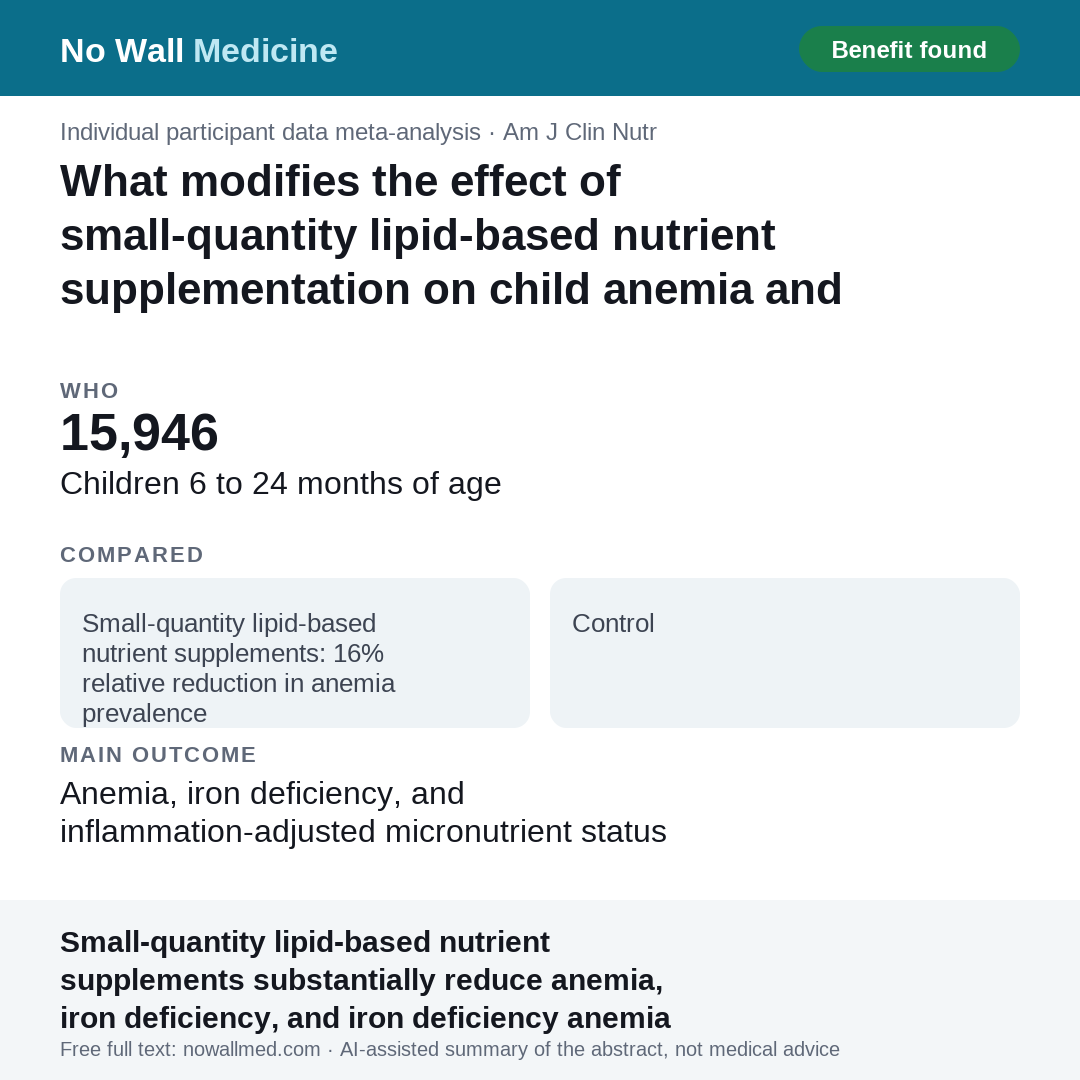
Characteristics that modify the effect of small-quantity lipid-based nutrient supplementation on child anemia and micronutrient status: an individual participant data meta-analysis of randomized controlled trials
Individual participant data meta-analysisBenefit found
What modifies the effect of small-quantity lipid-based nutrient supplementation on child anemia and micronutrient status?
Who
15,946
Children 6 to 24 months of age
Compared
Small-quantity lipid-based nutrient supplements: 16% relative reduction in anemia prevalence
Control
Main outcome
Anemia, iron deficiency, and inflammation-adjusted micronutrient status
Bottom line: Small-quantity lipid-based nutrient supplements substantially reduce anemia, iron deficiency, and iron deficiency anemia in children.
Am J Clin Nutr · 2021-10-01Download image
Spotlight influenza: Laboratory-confirmed seasonal influenza in people with acute respiratory illness: a literature review and meta-analysis, WHO European Region, 2004 to 2017
Meta-analysis and literature reviewNo clear difference
What proportion of people seeking medical care for acute respiratory infections have laboratory-confirmed influenza?
Who
People seeking medical care for influenza-like illness or acute respiratory infections · World Health Organization European Region
Compared
36%Outpatient setting (95% CI: 33-40)
24%Inpatient setting (95% CI: 20-29)
Main outcome
Proportion of people tested with laboratory-confirmed seasonal influenza
Result: 33% (95% CI: 30-36)
Bottom line: Laboratory-confirmed influenza accounted for approximately one third of all acute respiratory infections requiring medical care.
Euro Surveill · 2021-10-01Download image

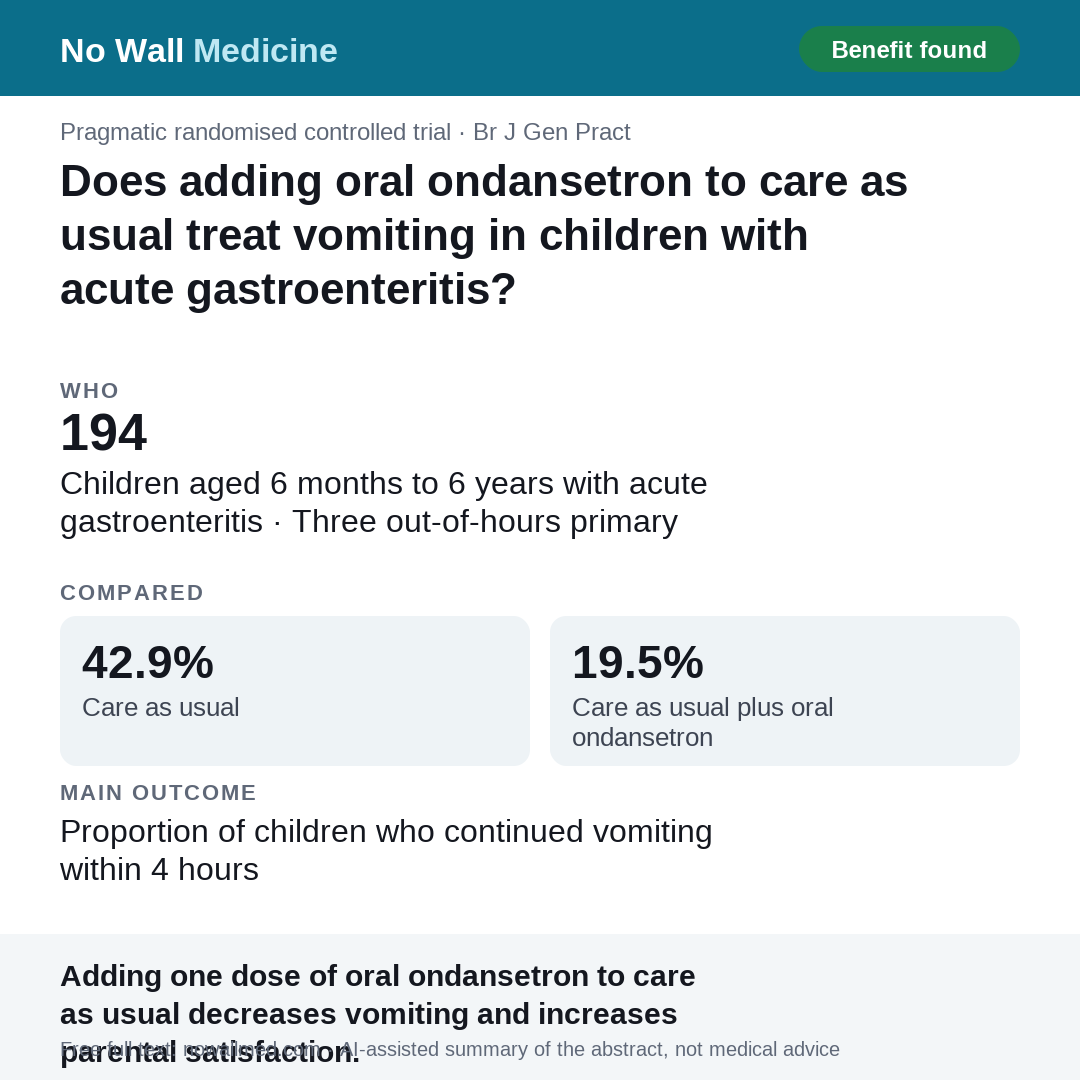
Oral ondansetron for paediatric gastroenteritis in primary care: a randomised controlled trial
Pragmatic randomised controlled trialBenefit found
Does adding oral ondansetron to care as usual treat vomiting in children with acute gastroenteritis?
Who
194
Children aged 6 months to 6 years with acute gastroenteritis · Three out-of-hours primary care centres in the Netherlands
Compared
42.9%Care as usual
19.5%Care as usual plus oral ondansetron
Main outcome
Proportion of children who continued vomiting within 4 hours
Result: odds ratio 0.37 (95% CI 0.20 to 0.72)
Bottom line: Adding one dose of oral ondansetron to care as usual decreases vomiting and increases parental satisfaction.
Br J Gen Pract · 2021-09-30Download image
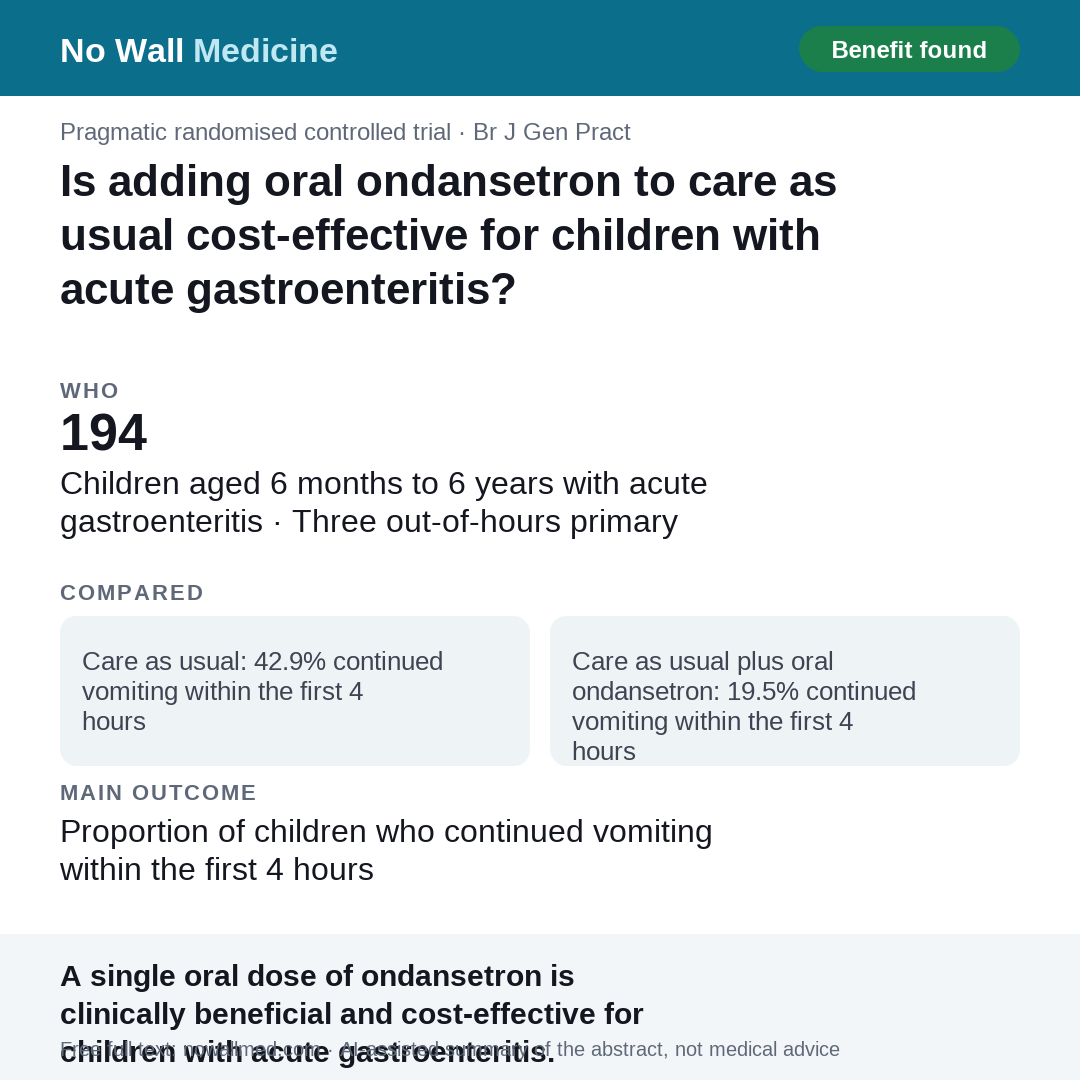
Cost-effectiveness of oral ondansetron for children with acute gastroenteritis in primary care: a randomised controlled trial
Pragmatic randomised controlled trialBenefit found
Is adding oral ondansetron to care as usual cost-effective for children with acute gastroenteritis?
Who
194
Children aged 6 months to 6 years with acute gastroenteritis · Three out-of-hours primary care centres in the Netherlands
Compared
Care as usual: 42.9% continued vomiting within the first 4 hours
Care as usual plus oral ondansetron: 19.5% continued vomiting within the first 4 hours
Main outcome
Proportion of children who continued vomiting within the first 4 hours
Result: odds ratio 0.4 (95% confidence interval 0.2 to 0.7)
Bottom line: A single oral dose of ondansetron is clinically beneficial and cost-effective for children with acute gastroenteritis.
Br J Gen Pract · 2021-09-30Download image
Psychoeducational Messaging to Reduce Alcohol Use for College Students With Type 1 Diabetes: Internet-Delivered Pilot Trial
Randomized pilot trialBenefit found
Does an internet-delivered psychoeducational intervention reduce alcohol use in college students with type 1 diabetes?
Who
138
College students aged 17-25 years with type 1 diabetes · Web-based channels
Compared
Peer narrator
Clinician narrator
Main outcome
Self-reported binge drinking
Result: odds ratio 0.48 (95% CI 0.31-0.75)
Bottom line: An internet-delivered psychoeducational intervention significantly reduced self-reported binge drinking among college students with type 1 diabetes.
J Med Internet Res · 2021-09-30Download image

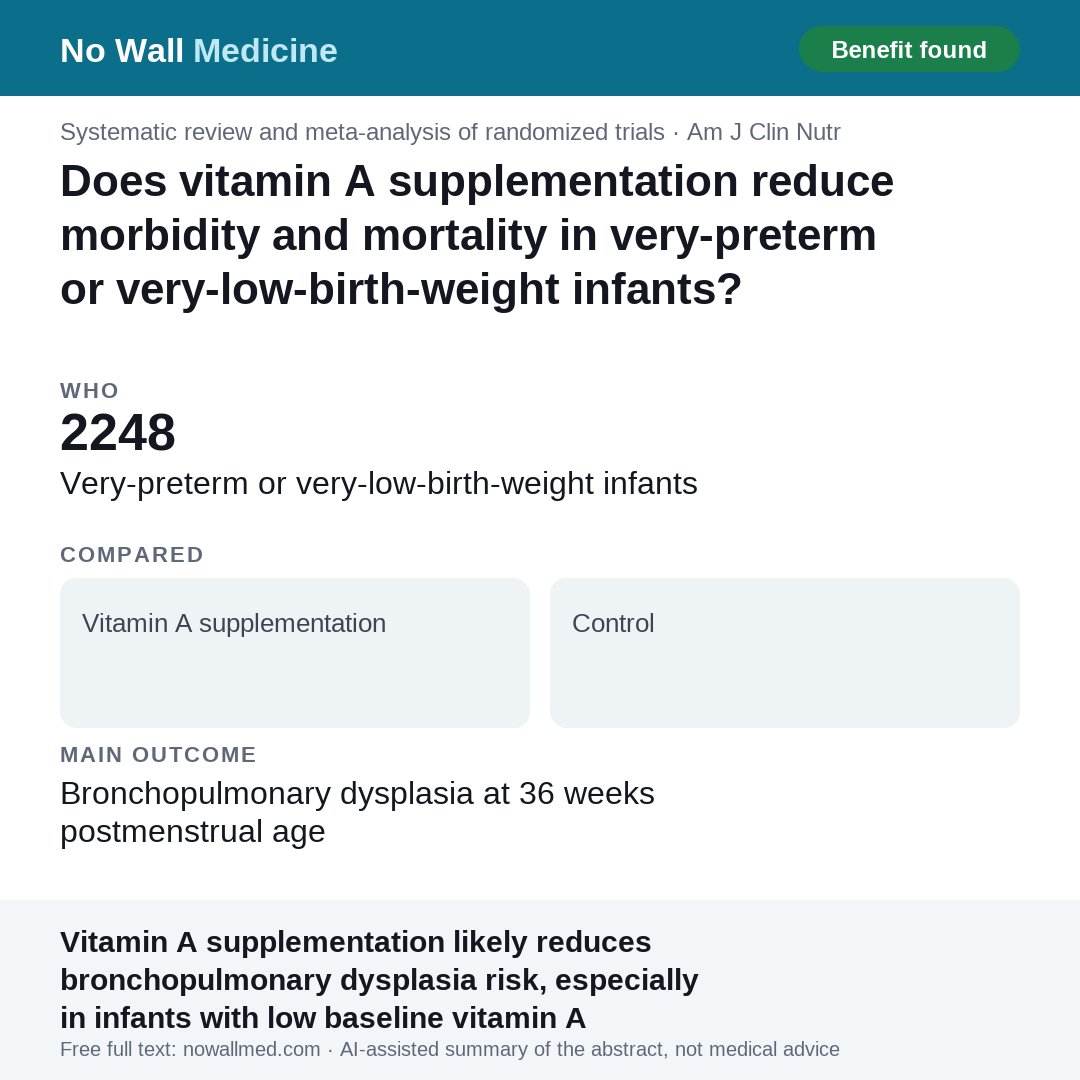
Vitamin A supplementation in very-preterm or very-low-birth-weight infants to prevent morbidity and mortality: a systematic review and meta-analysis of randomized trials
Systematic review and meta-analysis of randomized trialsBenefit found
Does vitamin A supplementation reduce morbidity and mortality in very-preterm or very-low-birth-weight infants?
Who
2248
Very-preterm or very-low-birth-weight infants
Compared
Vitamin A supplementation
Control
Main outcome
Bronchopulmonary dysplasia at 36 weeks postmenstrual age
Result: relative risk 0.83 (95% CI 0.74 to 0.93)
Bottom line: Vitamin A supplementation likely reduces bronchopulmonary dysplasia risk, especially in infants with low baseline vitamin A intake.
Am J Clin Nutr · 2021-09-29Download image
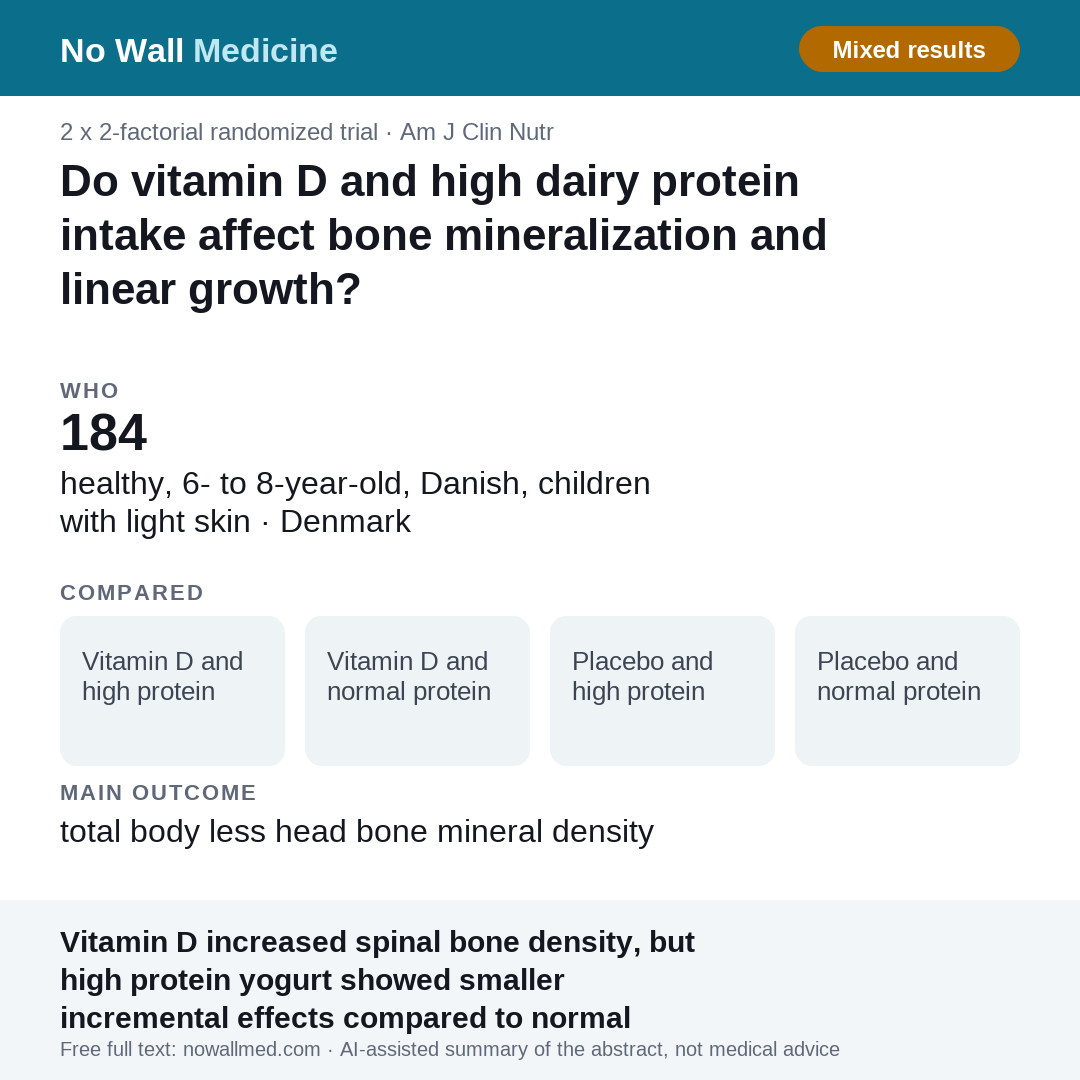
Effects of vitamin D and high dairy protein intake on bone mineralization and linear growth in 6- to 8-year-old children: the D-pro randomized trial
2 x 2-factorial randomized trialMixed results
Do vitamin D and high dairy protein intake affect bone mineralization and linear growth?
Who
184
healthy, 6- to 8-year-old, Danish, children with light skin · Denmark
Compared
Vitamin D and high protein
Vitamin D and normal protein
Placebo and high protein
Placebo and normal protein
Main outcome
total body less head bone mineral density
Bottom line: Vitamin D increased spinal bone density, but high protein yogurt showed smaller incremental effects compared to normal protein yogurt.
Am J Clin Nutr · 2021-09-29Download image