Visual abstracts
New randomized trials and meta-analyses from leading journals at a glance: who was studied, what was compared, and what was found. Every paper is free to read in full.
All specialtiesCardiology 832Oncology 754Gastroenterology & Hepatology 306Infectious Disease 625Neurology 347Psychiatry & Mental Health 429Pulmonology 362Critical Care 237Endocrinology & Diabetes 480Pediatrics 532Surgery 314Orthopedics & Sports Medicine 160Neurosurgery 76Cardiothoracic & Vascular Surgery 86Plastic & Reconstructive Surgery 100Nephrology 197Rheumatology 108Hematology 181Dermatology 72Ophthalmology 97Obstetrics & Gynecology 261Public & Global Health 166Radiology & Imaging 92Anesthesiology 105Urology 162ENT (Otolaryngology) 73Emergency Medicine 54Allergy & Immunology 58Geriatrics 160Family Medicine & Primary Care 111Medical Genetics & Genomics 91Pathology & Laboratory Medicine 22Physical Medicine & Rehabilitation 147Palliative Care 81Nutrition 222Digital Health & AI 458General Medicine 101
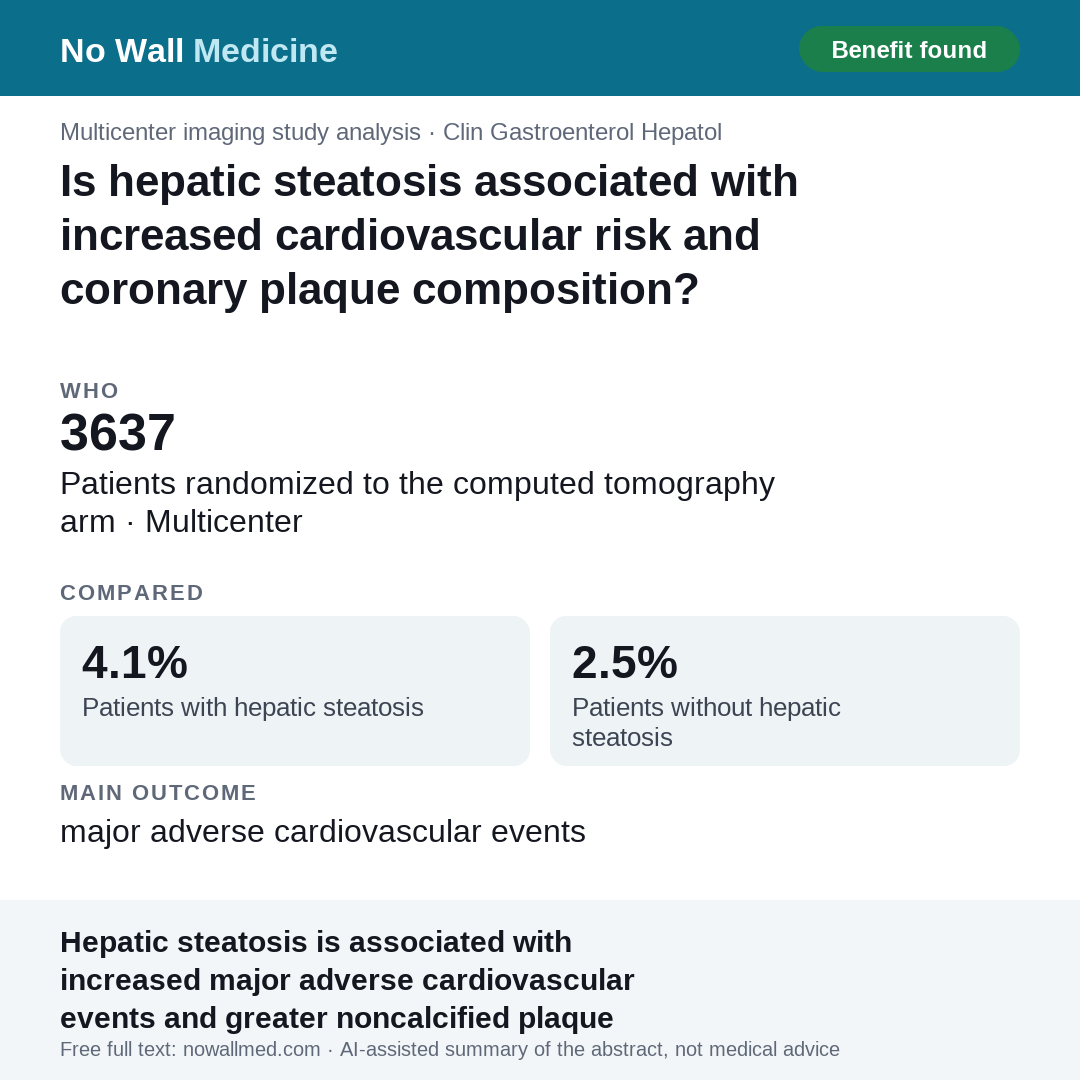
Hepatic Steatosis Is Associated With Increased Cardiovascular Risk Through Adverse Coronary Plaque Composition
Multicenter imaging study analysisBenefit found
Is hepatic steatosis associated with increased cardiovascular risk and coronary plaque composition?
Who
3637
Patients randomized to the computed tomography arm · Multicenter
Compared
4.1%Patients with hepatic steatosis
2.5%Patients without hepatic steatosis
Main outcome
major adverse cardiovascular events
Result: adjusted hazard ratio 1.69 (95% confidence interval, 1.12-2.54)
Bottom line: Hepatic steatosis is associated with increased major adverse cardiovascular events and greater noncalcified plaque burden.
Clin Gastroenterol Hepatol · 2026-05-20Download image
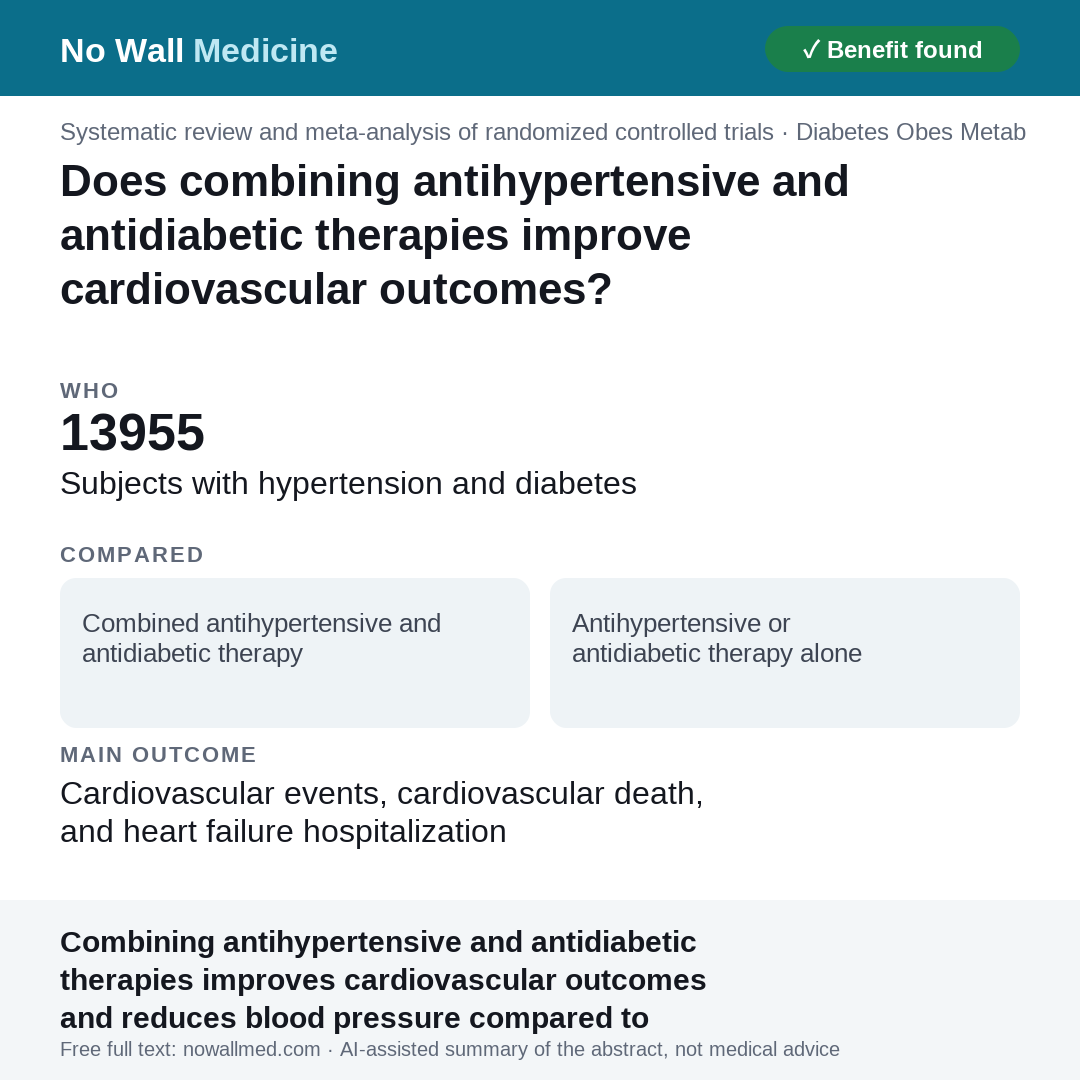
The Effects of Combined Antihypertensive and Antidiabetic Therapies on Cardiovascular Outcomes: A Systematic Review and Meta-Analysis
Systematic review and meta-analysis of randomized controlled trialsBenefit found
Does combining antihypertensive and antidiabetic therapies improve cardiovascular outcomes?
Who
13955
Subjects with hypertension and diabetes
Compared
Combined antihypertensive and antidiabetic therapy
Antihypertensive or antidiabetic therapy alone
Main outcome
Cardiovascular events, cardiovascular death, and heart failure hospitalization
Bottom line: Combining antihypertensive and antidiabetic therapies improves cardiovascular outcomes and reduces blood pressure compared to monotherapy.
Diabetes Obes Metab · 2026-05-20Download image
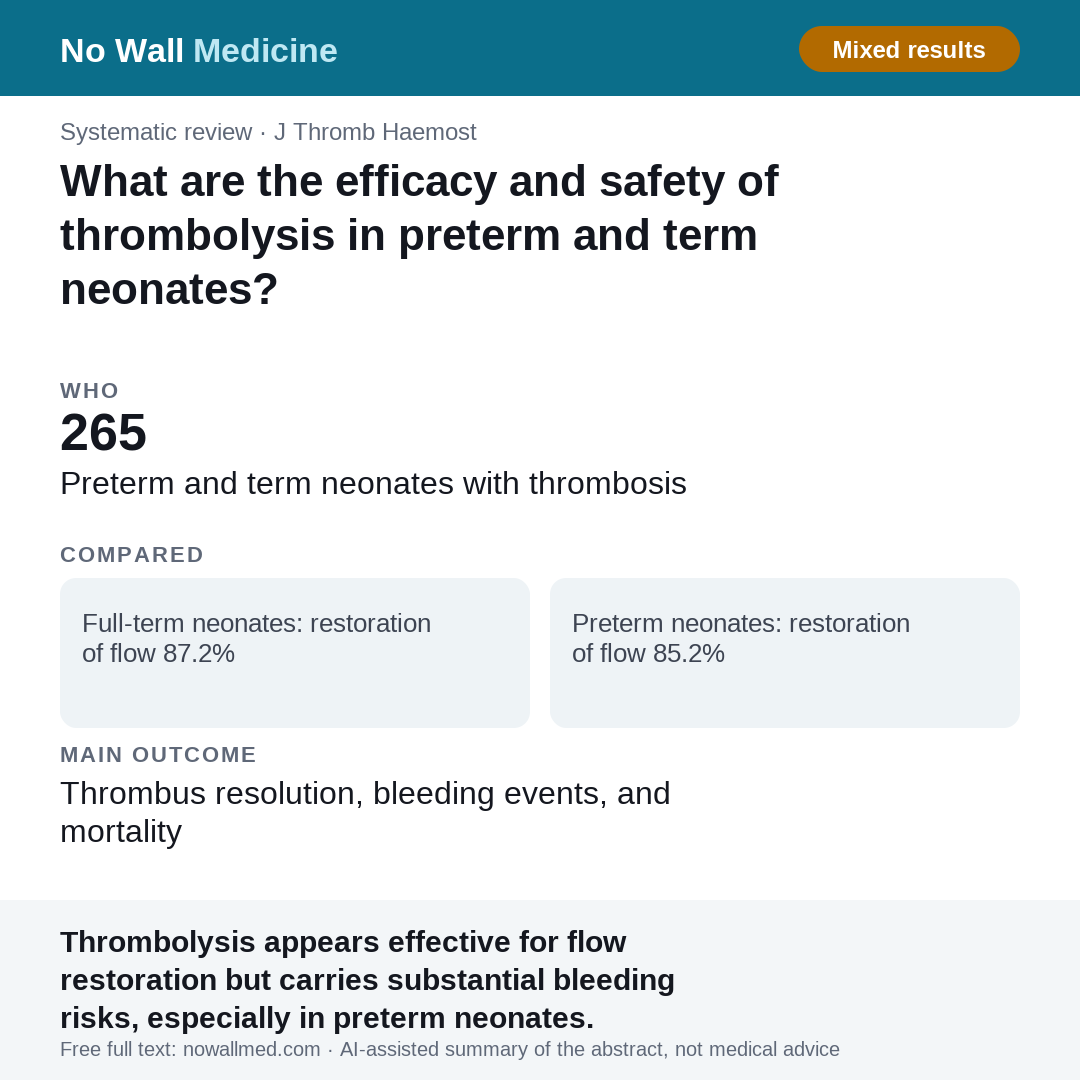
Thrombolysis in neonates: navigating the balance between efficacy and risk-a systematic review
Systematic reviewMixed results
What are the efficacy and safety of thrombolysis in preterm and term neonates?
Who
265
Preterm and term neonates with thrombosis
Compared
Full-term neonates: restoration of flow 87.2%
Preterm neonates: restoration of flow 85.2%
Main outcome
Thrombus resolution, bleeding events, and mortality
Bottom line: Thrombolysis appears effective for flow restoration but carries substantial bleeding risks, especially in preterm neonates.
Limitation: Evidence is limited and heterogeneous.
J Thromb Haemost · 2026-05-20Download image
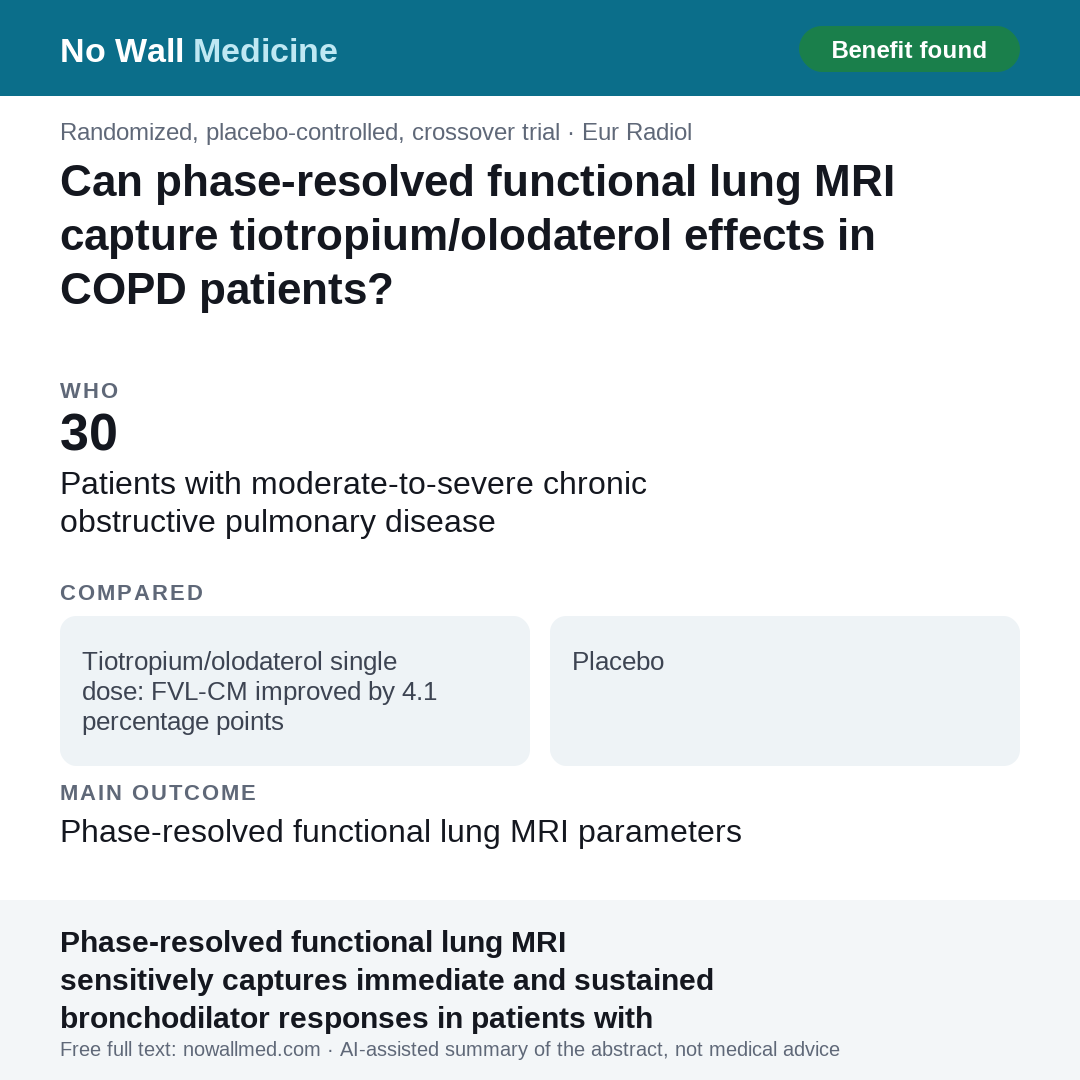
Phase-resolved functional lung MRI detects single-dose and sustained bronchodilator responses in COPD in a randomized crossover trial
Randomized, placebo-controlled, crossover trialBenefit found
Can phase-resolved functional lung MRI capture tiotropium/olodaterol effects in COPD patients?
Who
30
Patients with moderate-to-severe chronic obstructive pulmonary disease
Compared
Tiotropium/olodaterol single dose: FVL-CM improved by 4.1 percentage points
Placebo
Main outcome
Phase-resolved functional lung MRI parameters
Bottom line: Phase-resolved functional lung MRI sensitively captures immediate and sustained bronchodilator responses in patients with chronic obstructive pulmonary disease.
Eur Radiol · 2026-05-20Download image
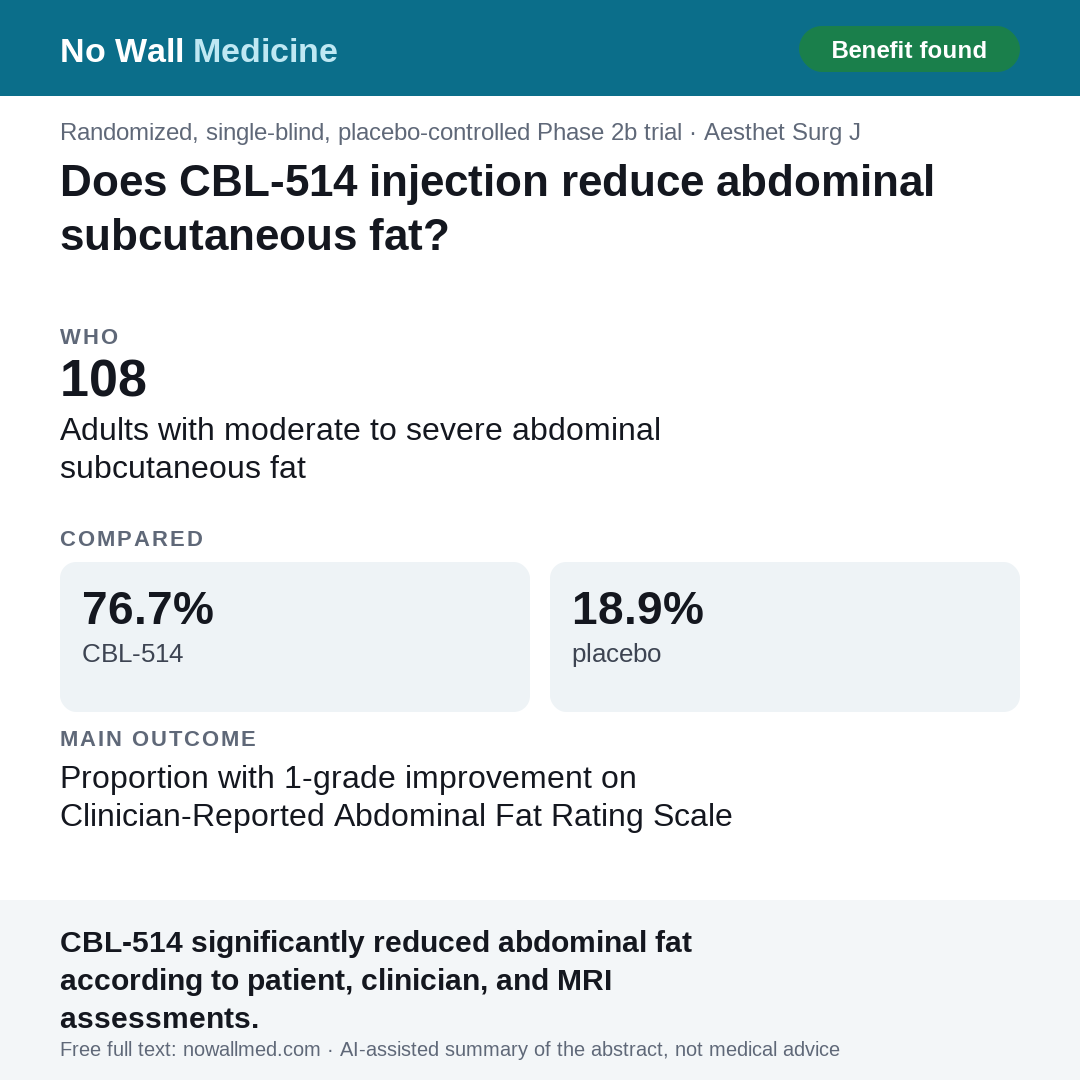
Randomized Phase 2b Trial of CBL-514 Injection for Abdominal Subcutaneous Fat Reduction With Clinician- and Patient-reported Outcomes and MRI Assessment
Randomized, single-blind, placebo-controlled Phase 2b trialBenefit found
Does CBL-514 injection reduce abdominal subcutaneous fat?
Who
108
108 adults with moderate to severe abdominal subcutaneous fat
Compared
CBL-514: 76.7% (23/30) achieved ≥1-grade Clinician-Reported Abdominal Fat Rating Scale improvement
Placebo: 18.9% (7/37) achieved ≥1-grade Clinician-Reported Abdominal Fat Rating Scale improvement
Main outcome
Proportion of participants with ≥1-grade improvement on Clinician-Reported Abdominal Fat Rating Scale
Bottom line: CBL-514 injection significantly reduced abdominal fat according to clinician, patient, and MRI assessments.
Aesthet Surg J · 2026-05-20Download image
Impact of Surgical Techniques on Anastomotic Stricture in Urinary Diversion: A Systematic Review and Meta-analysis
Systematic review and meta-analysisMixed results
How do various surgical techniques impact benign ureteral-ileal anastomotic stricture risk?
Who
11 732
Patients undergoing urinary diversion
Compared
Robotic surgery: RR 1.47
Open surgery
Intracorporeal urinary diversion: RR 1.34
Extracorporeal urinary diversion
Main outcome
Benign ureteral-ileal anastomotic stricture risk
Result: RR 1.47 (95% CI 1.24-1.76) for robotic vs open surgery
Bottom line: Robotic surgery and intracorporeal urinary diversion are associated with higher stricture risk, but other techniques showed no significant difference.
Limitation: Further prospective studies are needed to validate these findings.
Eur Urol Open Sci · 2026-05-20Download image

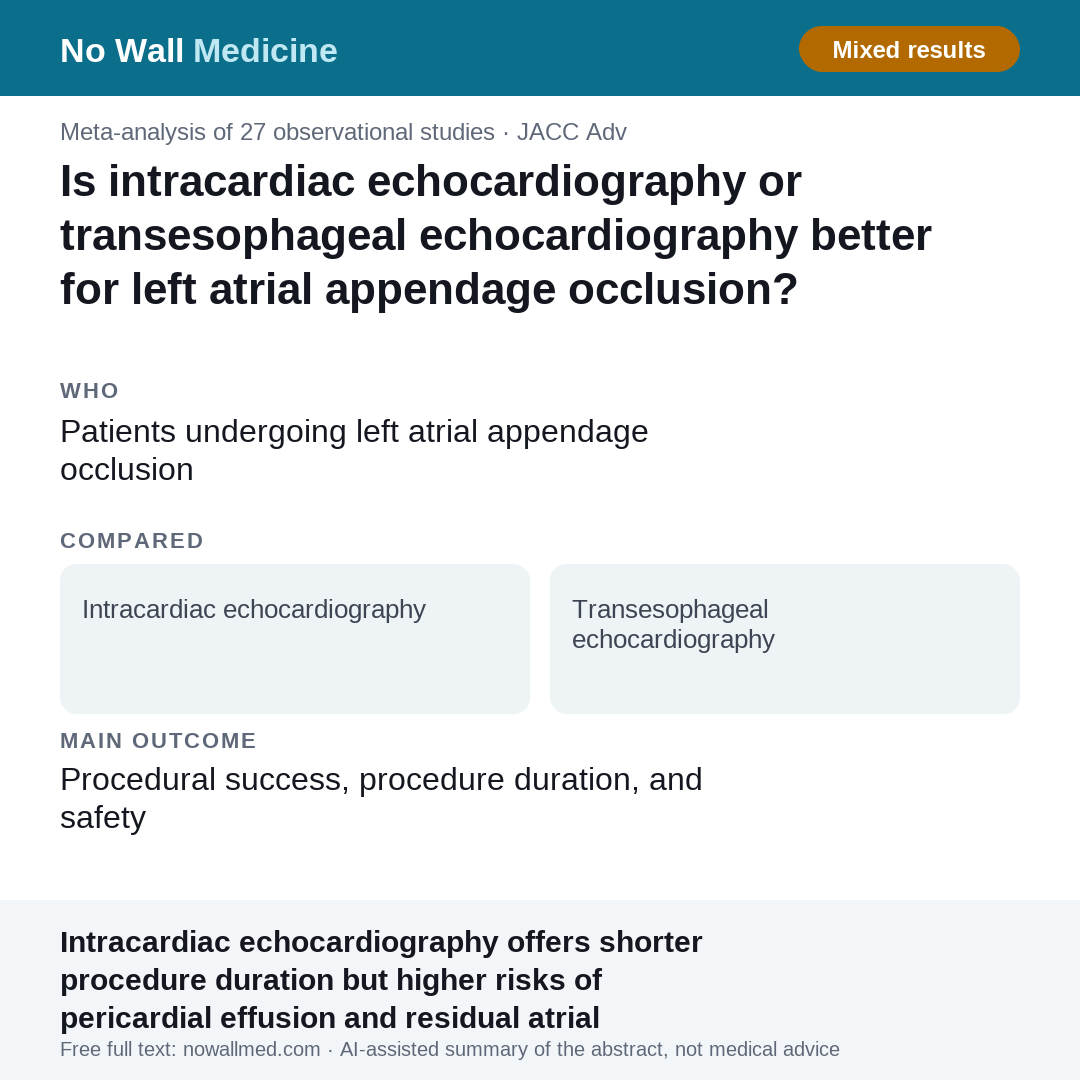
Intracardiac Versus Transesophageal Echocardiography for Left Atrial Appendage Occlusion: A Meta-Analysis
Meta-analysis of 27 observational studiesMixed results
Is intracardiac echocardiography or transesophageal echocardiography better for left atrial appendage occlusion?
Who
Patients undergoing left atrial appendage occlusion
Compared
Intracardiac echocardiography
Transesophageal echocardiography
Main outcome
Procedural success, procedure duration, and safety
Result: procedural success unadjusted OR: 1.16 (95% CI: 0.92-1.45)
Bottom line: Intracardiac echocardiography offers shorter procedure duration but higher risks of pericardial effusion and residual atrial septal defect.
Limitation: The meta-analysis included observational studies.
JACC Adv · 2026-05-20Download image
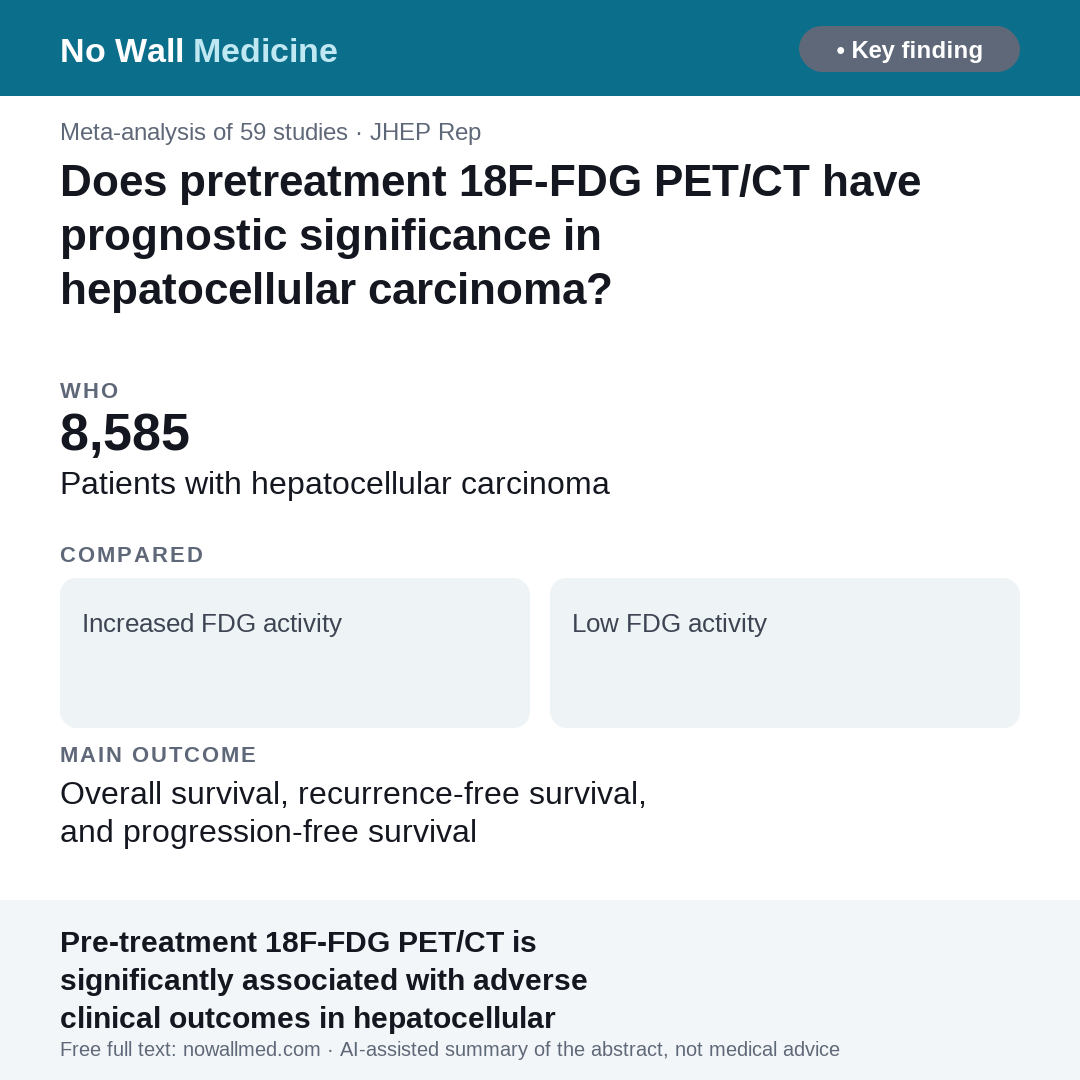
Prognostic significance of pretreatment 18F-FDG PET/CT in hepatocellular carcinoma: A systematic review and meta-analysis
Meta-analysis of 59 studiesBenefit found
Does pretreatment 18F-FDG PET/CT have prognostic significance in hepatocellular carcinoma?
Who
8,585
Patients with hepatocellular carcinoma
Compared
Increased FDG activity
Low FDG activity
Main outcome
Overall survival, recurrence-free survival, and progression-free survival
Result: hazard ratio 2.05 (95% CI 1.77-2.38) for overall survival
Bottom line: Pre-treatment 18F-FDG PET/CT is significantly associated with adverse clinical outcomes in hepatocellular carcinoma.
JHEP Rep · 2026-05-20Download image
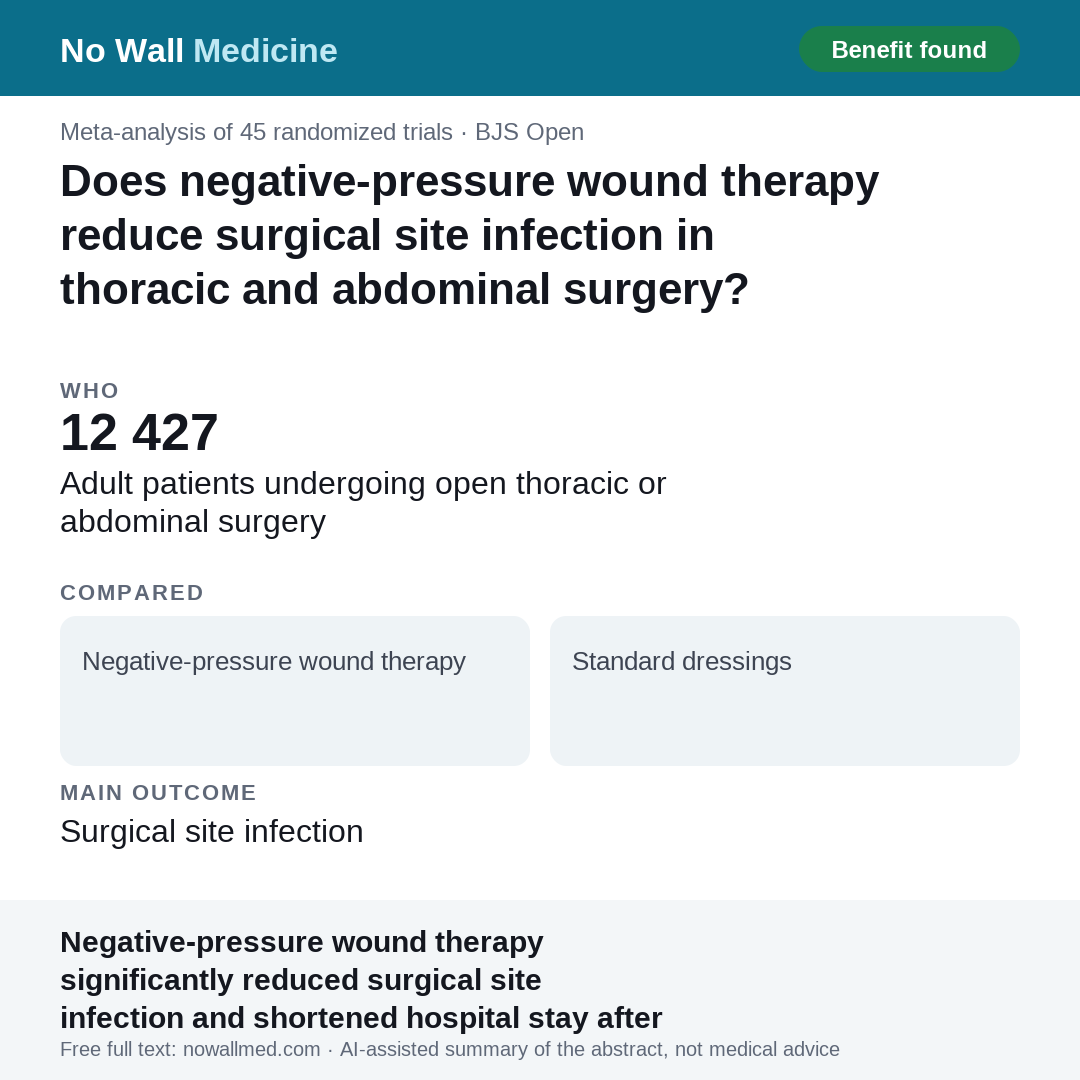
Negative-pressure wound therapy in thoracic and abdominal surgery: meta-analysis of randomized trials
Meta-analysis of 45 randomized trialsBenefit found
Does negative-pressure wound therapy reduce surgical site infection in thoracic and abdominal surgery?
Who
12 427
Adult patients undergoing open thoracic or abdominal surgery
Compared
Negative-pressure wound therapy
Standard dressings
Main outcome
Surgical site infection
Result: odds ratio 0.53 (95% confidence interval 0.42 to 0.66)
Bottom line: Negative-pressure wound therapy significantly reduced surgical site infection and shortened hospital stay after open abdominal surgery.
Limitation: Publication bias was detected and effect size may be overestimated.
BJS Open · 2026-05-20Download image
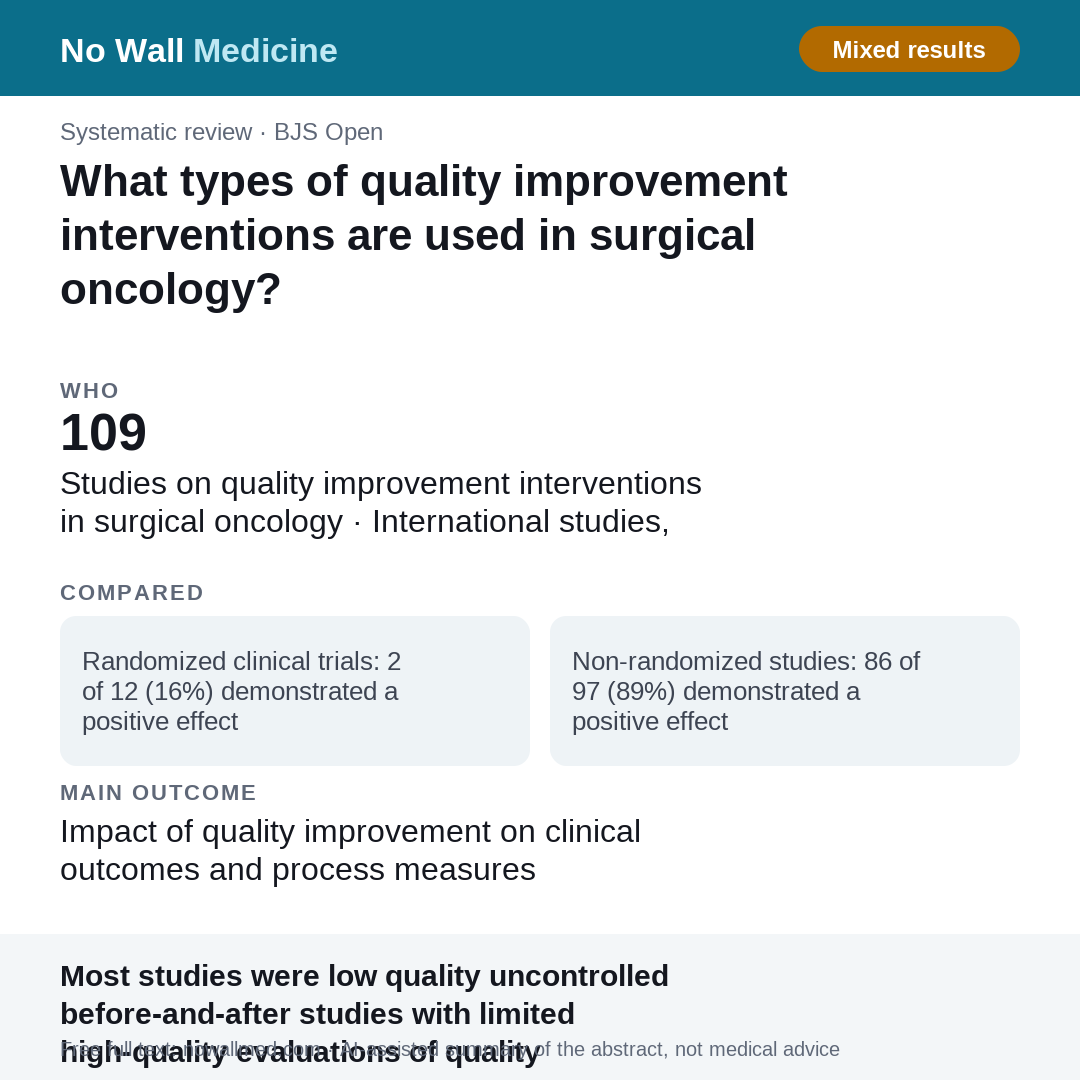
Quality improvement interventions in surgical oncology: systematic review of international studies
Systematic reviewMixed results
What types of quality improvement interventions are used in surgical oncology?
Who
109
Studies on quality improvement interventions in surgical oncology · International studies, mostly USA, Canada, and UK
Compared
Randomized clinical trials: 2 of 12 (16%) demonstrated a positive effect
Non-randomized studies: 86 of 97 (89%) demonstrated a positive effect
Main outcome
Impact of quality improvement on clinical outcomes and process measures
Bottom line: Most studies were low quality uncontrolled before-and-after studies with limited high-quality evaluations of quality improvement interventions.
Limitation: Most studies were uncontrolled before-and-after studies and were classified as low quality.
BJS Open · 2026-05-20Download image
Receipt of Medicines Information From the Internet and Other Information Sources Among Adult Medicine Users in Developed Economies, 2010-2025: Systematic Review
Systematic reviewNo clear difference
How do adult medicine users receive medicines information from electronic versus traditional sources?
Who
19,891
Adult medicine users in developed economies · 10 countries
Compared
Traditional sources: most common
Electronic sources: more common among internet-experienced users
Main outcome
Prevalence and patterns of medicines information receipt
Bottom line: Traditional sources remain central for medicine information despite the growing role of electronic platforms and no clear temporal trends.
Limitation: Substantial heterogeneity prevented meta-analysis and only 3 studies used an explicit theoretical framework.
J Med Internet Res · 2026-05-20Download image

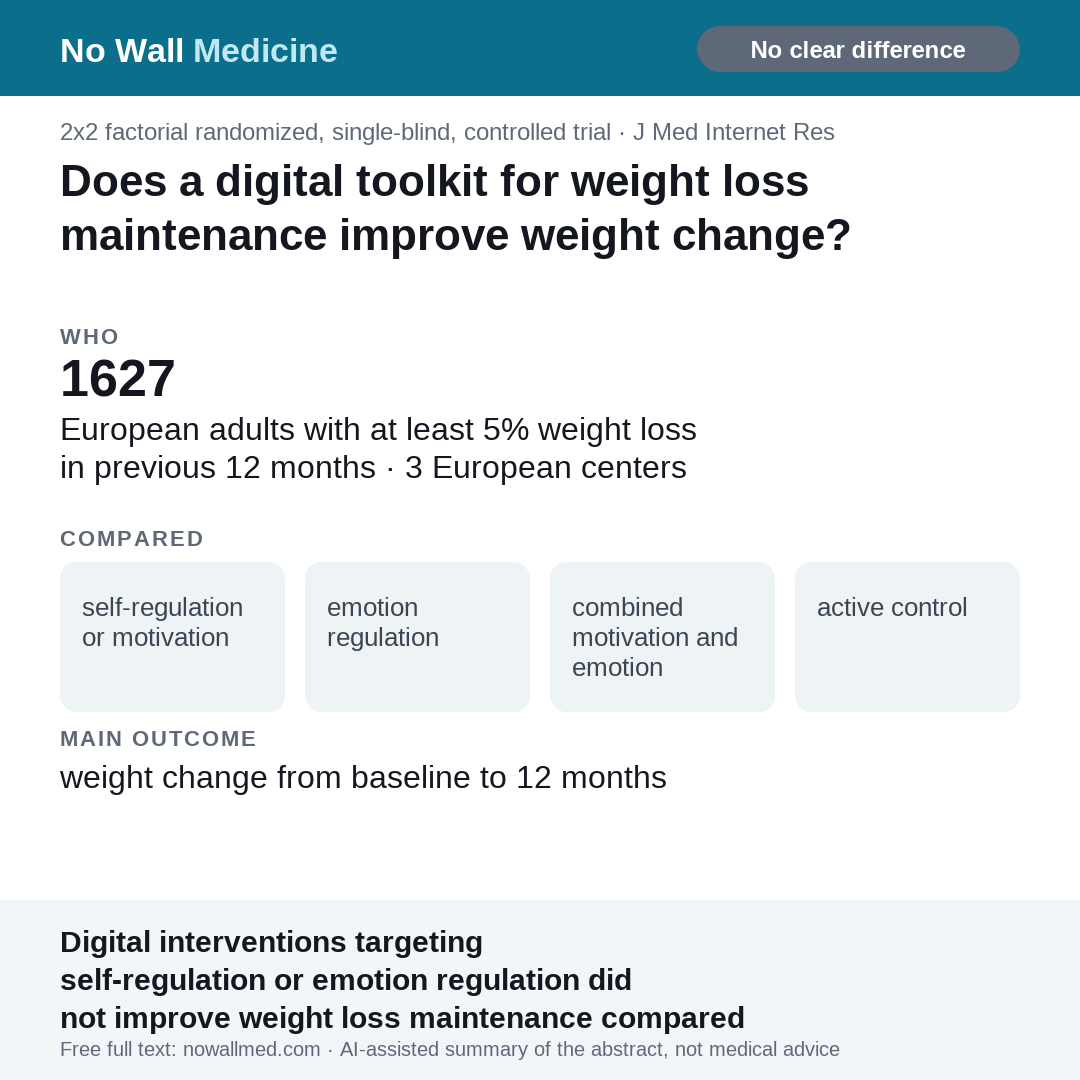
A Digital Toolkit for Weight Loss Maintenance in European Adults (NoHoW): 2×2 Factorial Randomized Controlled Trial
2x2 factorial randomized, single-blind, controlled trialNo clear difference
Does a digital toolkit for weight loss maintenance improve weight change?
Who
1627
European adults with at least 5% weight loss in previous 12 months · 3 European centers (United Kingdom, Denmark, and Portugal)
Compared
self-regulation or motivation
emotion regulation
combined motivation and emotion
active control
Main outcome
weight change from baseline to 12 months
Bottom line: Digital interventions targeting self-regulation or emotion regulation did not improve weight loss maintenance compared to active control.
Limitation: A small subgroup effect in men should be interpreted cautiously.
J Med Internet Res · 2026-05-20Download image
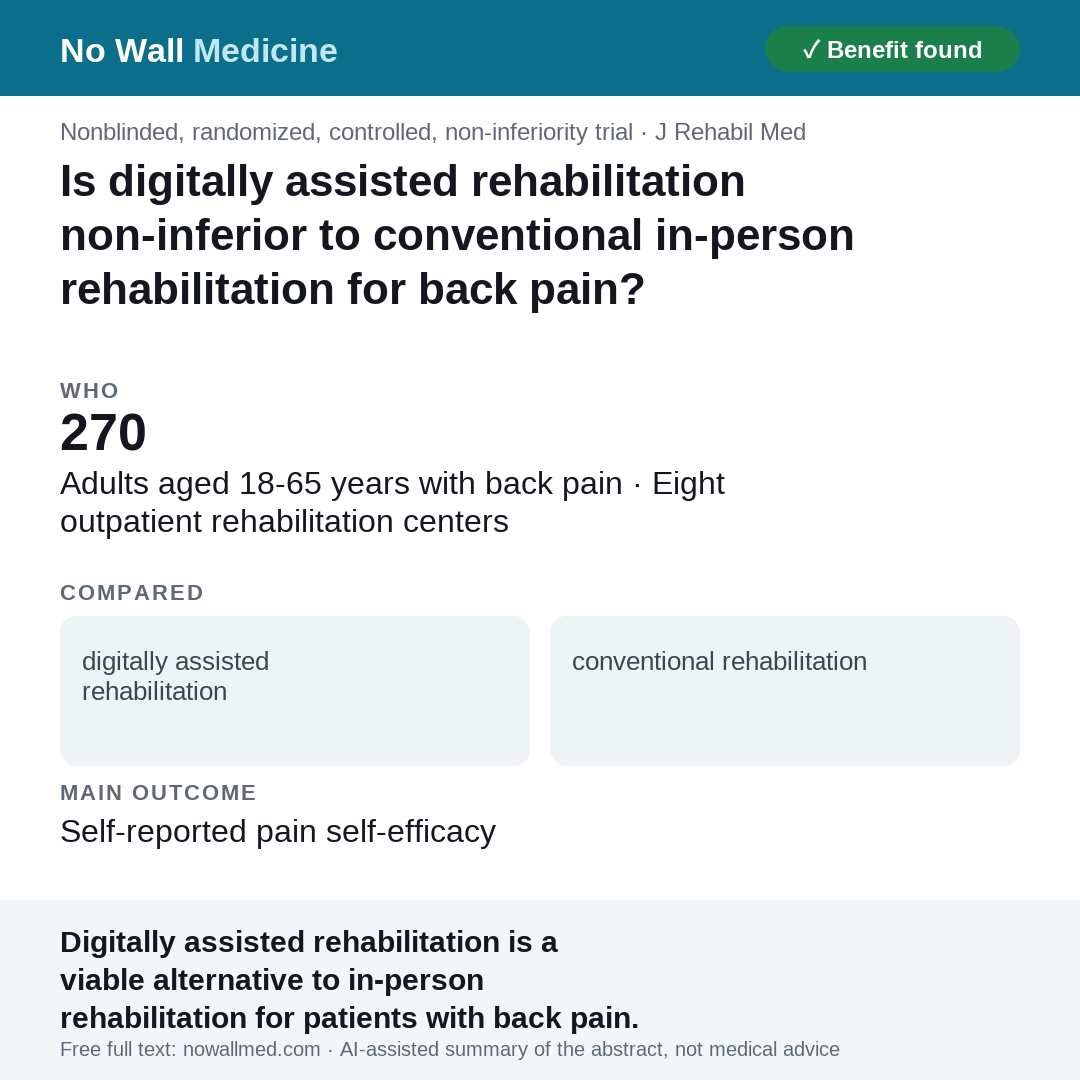
Non-inferiority of digitally assisted outpatient rehabilitation in patients with back pain: 12-month follow-up of a randomized controlled trial
Nonblinded, randomized, controlled, non-inferiority trialBenefit found
Is digitally assisted rehabilitation non-inferior to conventional in-person rehabilitation for back pain?
Who
270
Adults aged 18-65 years with back pain · Eight outpatient rehabilitation centers
Compared
digitally assisted rehabilitation
conventional rehabilitation
Main outcome
Self-reported pain self-efficacy
Result: b = 0.48 (95% CI = -3.09 to ∞)
Bottom line: Digitally assisted rehabilitation is a viable alternative to in-person rehabilitation for patients with back pain.
J Rehabil Med · 2026-05-20Download image
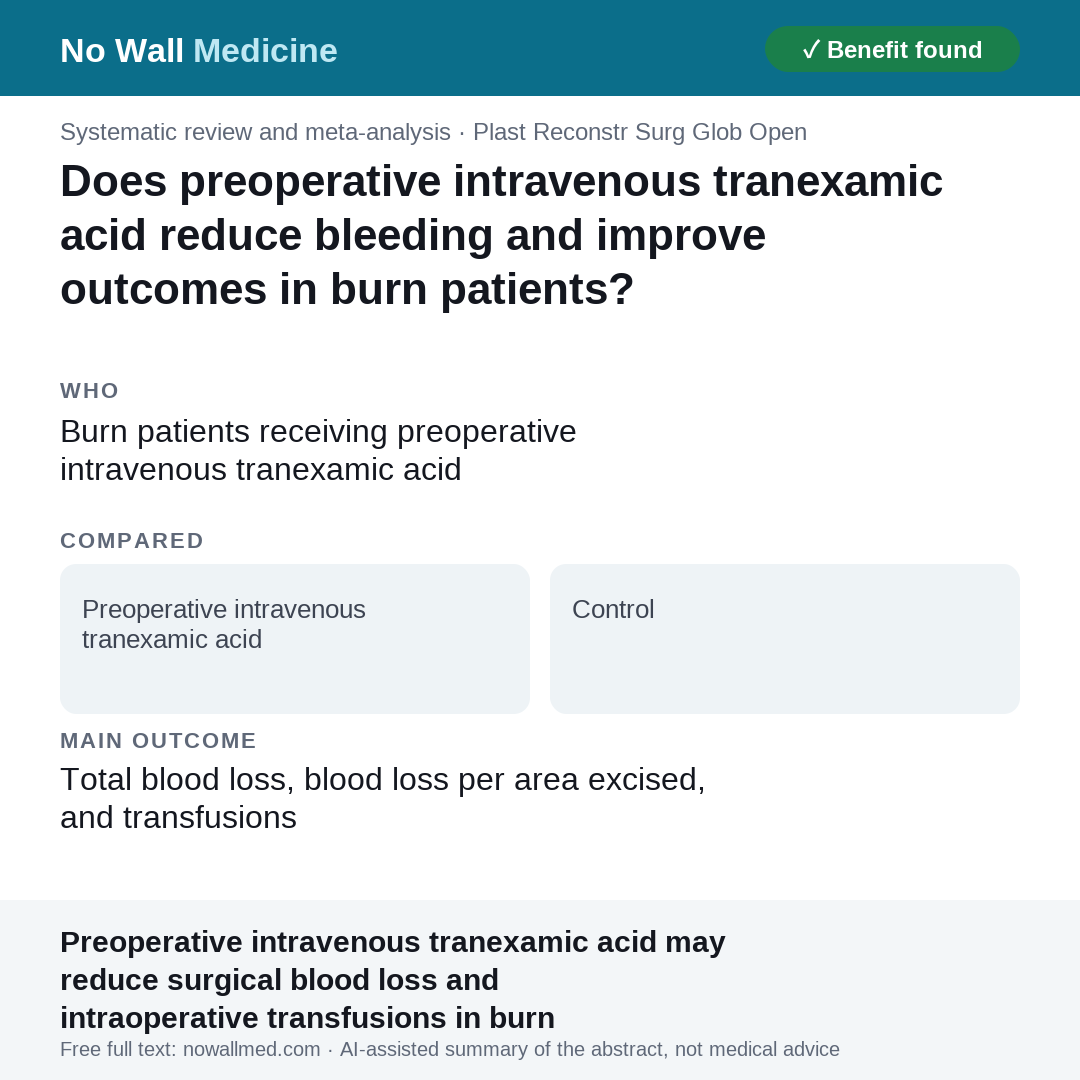
Efficacy and Safety of the Use of Tranexamic Acid in Burn Patients: A Systematic Review and Meta-analysis
Systematic review and meta-analysisBenefit found
Does preoperative intravenous tranexamic acid reduce bleeding and improve outcomes in burn patients?
Who
Burn patients receiving preoperative intravenous tranexamic acid
Compared
Preoperative intravenous tranexamic acid
Control
Main outcome
Total blood loss, blood loss per area excised, and transfusions
Result: standardized mean difference -0.65 for total blood loss; -3.66 for blood loss per area excised; -0.48 for packed red blood cell units
Bottom line: Preoperative intravenous tranexamic acid may reduce surgical blood loss and intraoperative transfusions in burn patients.
Limitation: Impact on graft survival and overall transfusion needs is uncertain.
Plast Reconstr Surg Glob Open · 2026-05-20Download image
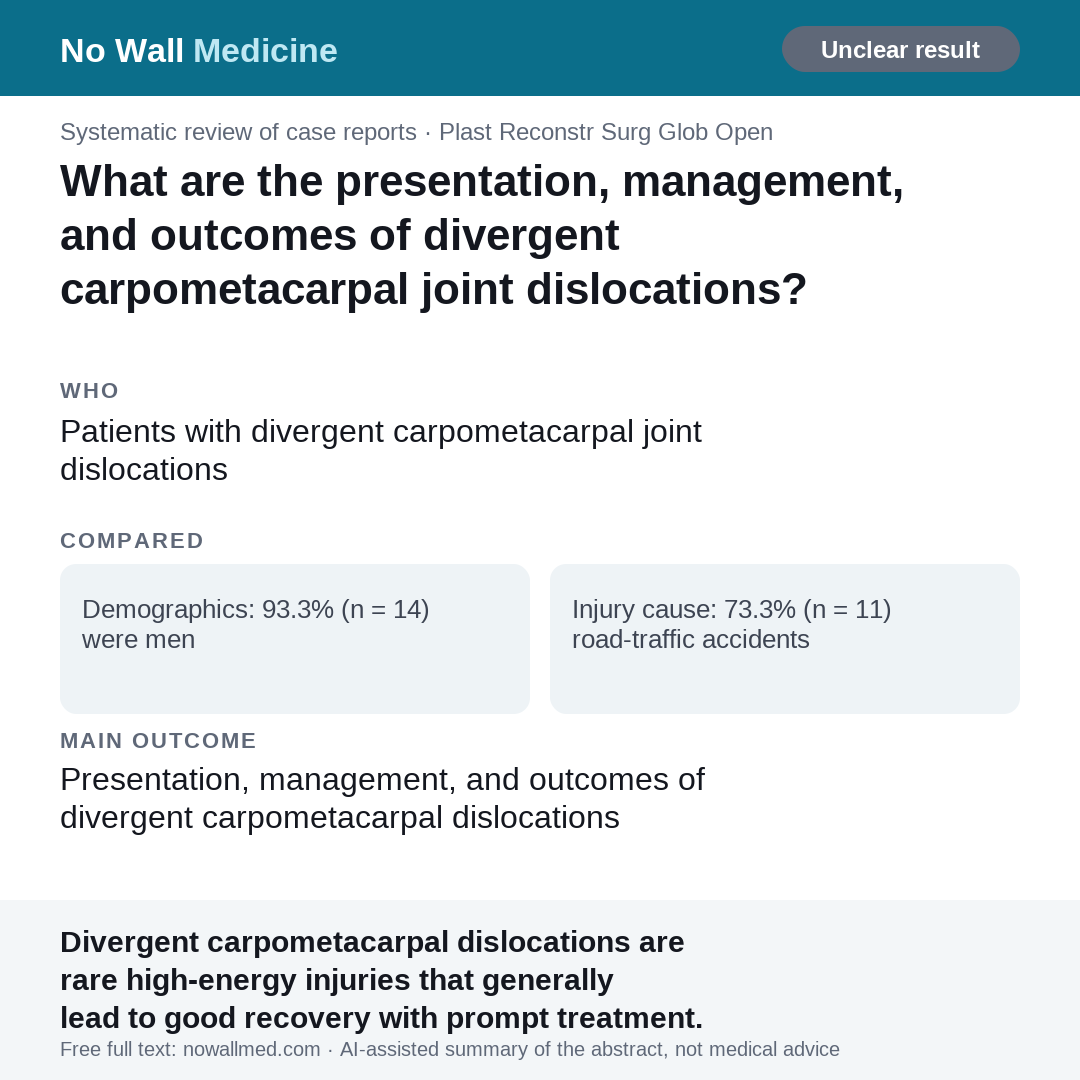
Divergent Dislocation of the Carpometacarpal Joints: A Case Report and Systematic Review
Systematic review of case reportsUnclear result
What are the presentation, management, and outcomes of divergent carpometacarpal joint dislocations?
Who
15
Patients with divergent carpometacarpal joint dislocations
Compared
Demographics: 93.3% (n = 14) were men
Injury cause: 73.3% (n = 11) road-traffic accidents
Main outcome
Presentation, management, and outcomes of divergent carpometacarpal dislocations
Bottom line: Divergent carpometacarpal dislocations are rare high-energy injuries that generally lead to good recovery with prompt treatment.
Limitation: Evidence is limited to case reports.
Plast Reconstr Surg Glob Open · 2026-05-20Download image
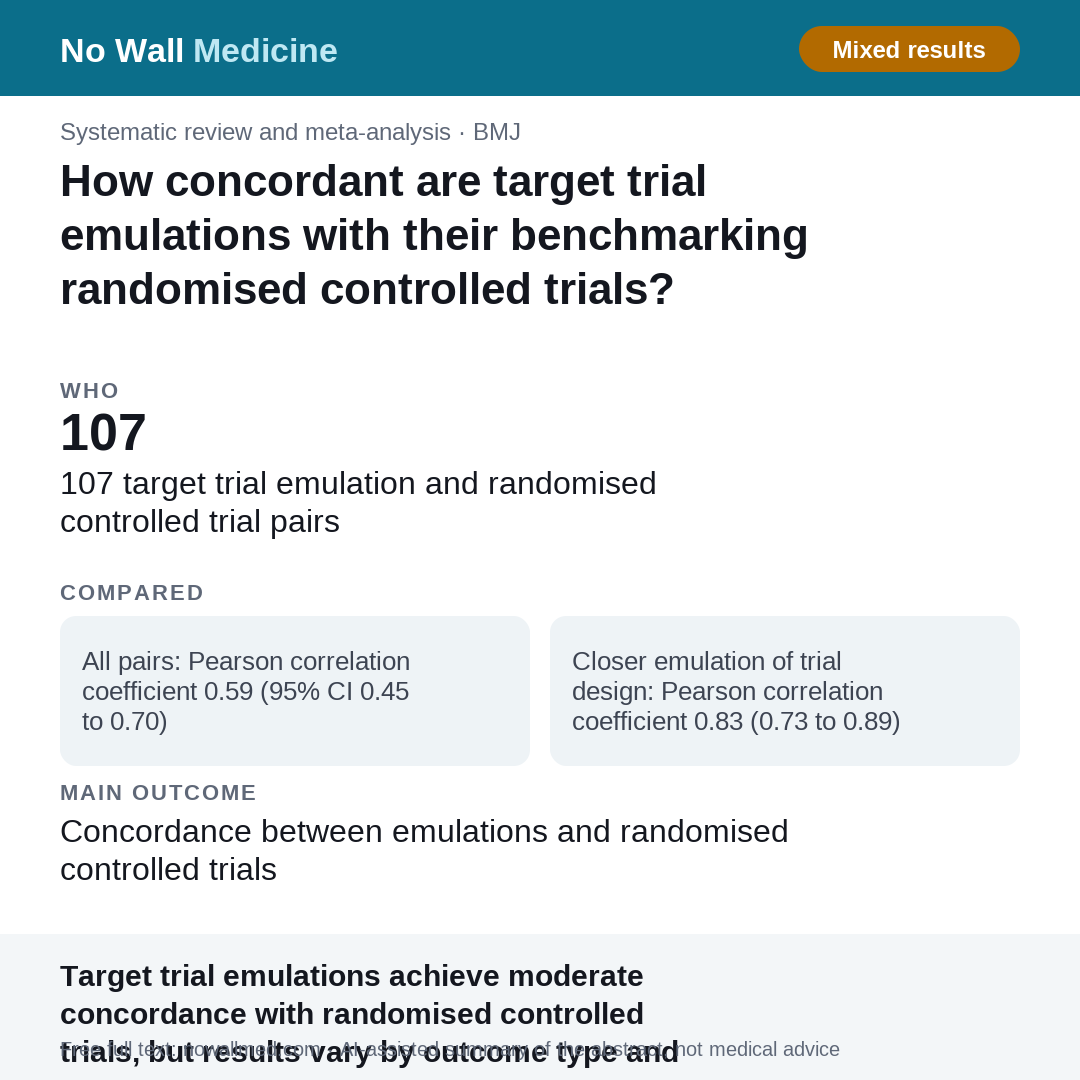
Concordance between target trial emulation and randomised controlled trials: systematic review and meta-analysis
Systematic review and meta-analysisMixed results
How concordant are target trial emulations with their benchmarking randomised controlled trials?
Who
107
107 target trial emulation and randomised controlled trial pairs
Compared
All pairs: Pearson correlation coefficient 0.59 (95% CI 0.45 to 0.70)
Closer emulation of trial design: Pearson correlation coefficient 0.83 (0.73 to 0.89)
Main outcome
Concordance between emulations and randomised controlled trials
Result: summary ratio of ratios 0.96 (95% CI 0.92 to 1.01)
Bottom line: Target trial emulations achieve moderate concordance with randomised controlled trials, but results vary by outcome type and data source.
BMJ · 2026-05-19Download image
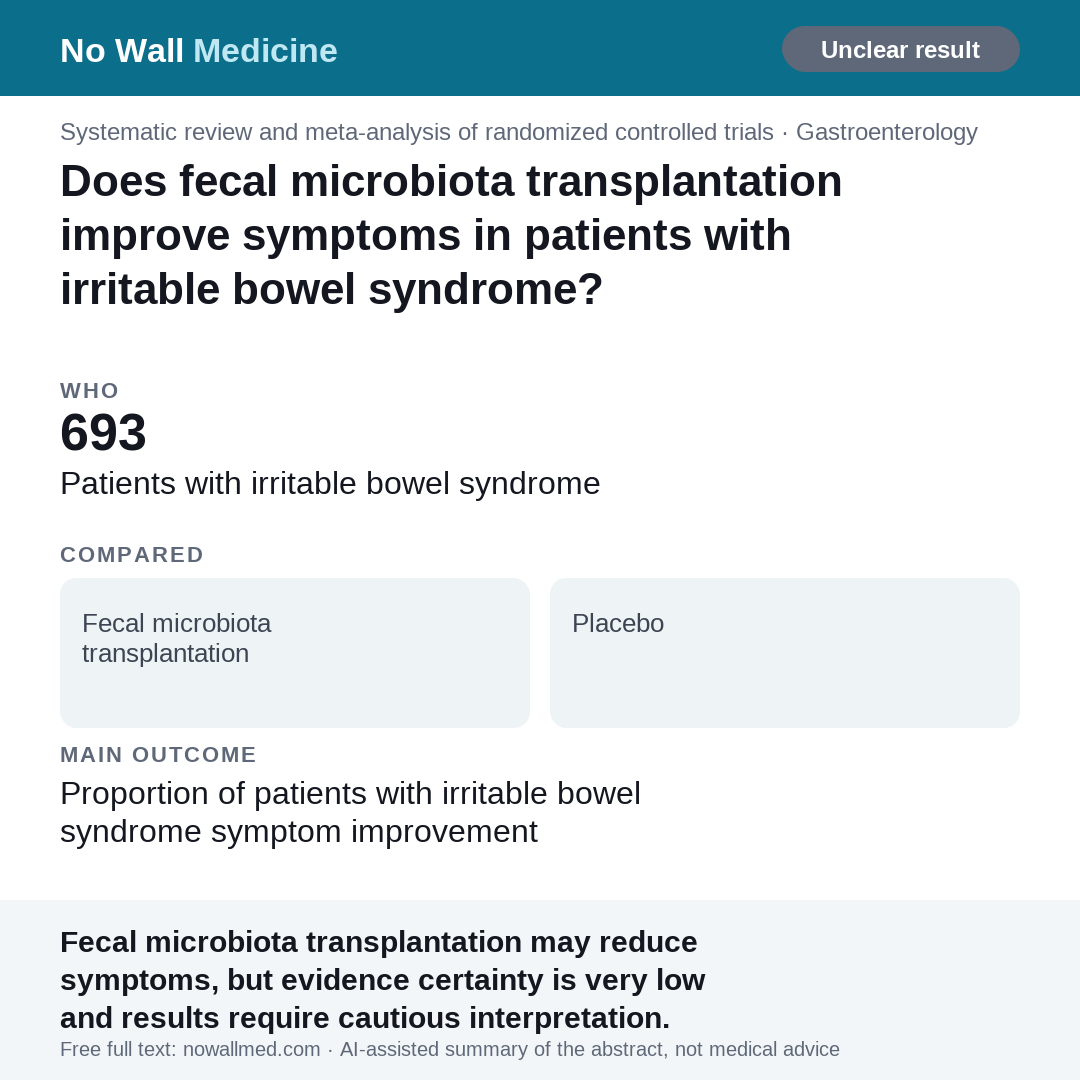
Fecal Microbiota Transplantation for Symptom Improvement in Patients With Irritable Bowel Syndrome: Systematic Review and Meta-Analysis of Randomized Controlled Trials
Systematic review and meta-analysis of randomized controlled trialsUnclear result
Does fecal microbiota transplantation improve symptoms in patients with irritable bowel syndrome?
Who
693
Patients with irritable bowel syndrome
Compared
Fecal microbiota transplantation
Placebo
Main outcome
Proportion of patients with irritable bowel syndrome symptom improvement
Result: risk ratio 0.72 (95% CI 0.50-1.03)
Bottom line: Fecal microbiota transplantation may reduce symptoms, but evidence certainty is very low and results require cautious interpretation.
Limitation: The certainty of evidence is very uncertain or very low.
Gastroenterology · 2026-05-19Download image
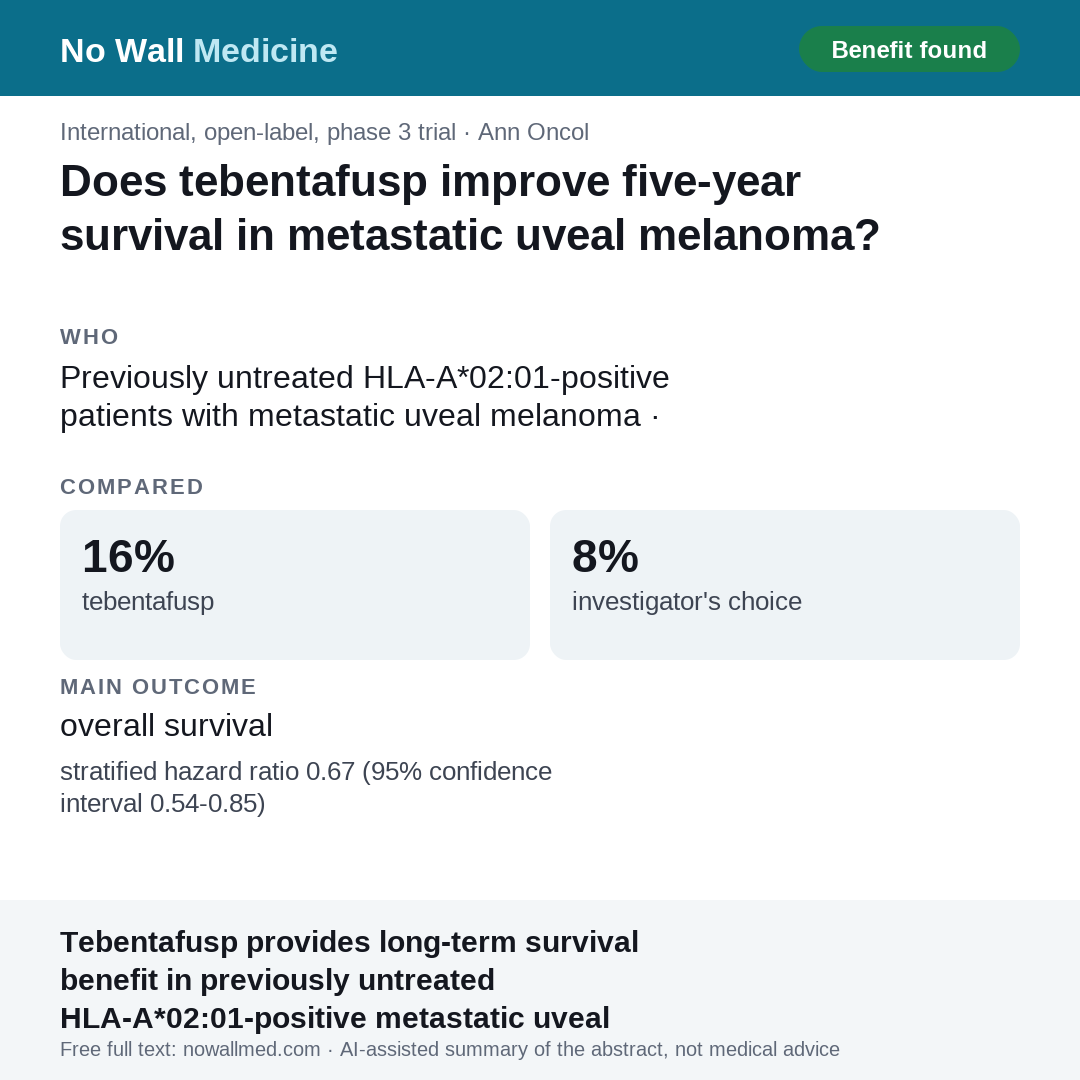
Five-year survival with tebentafusp in metastatic uveal melanoma
International, open-label, phase 3 trialBenefit found
Does tebentafusp improve five-year survival in metastatic uveal melanoma?
Who
Previously untreated HLA-A*02:01-positive patients with metastatic uveal melanoma · International
Compared
16%tebentafusp
8%investigator's choice
Main outcome
overall survival
Result: stratified hazard ratio 0.67 (95% confidence interval 0.54-0.85)
Bottom line: Tebentafusp provides long-term survival benefit in previously untreated HLA-A*02:01-positive metastatic uveal melanoma patients.
Ann Oncol · 2026-05-19Download image
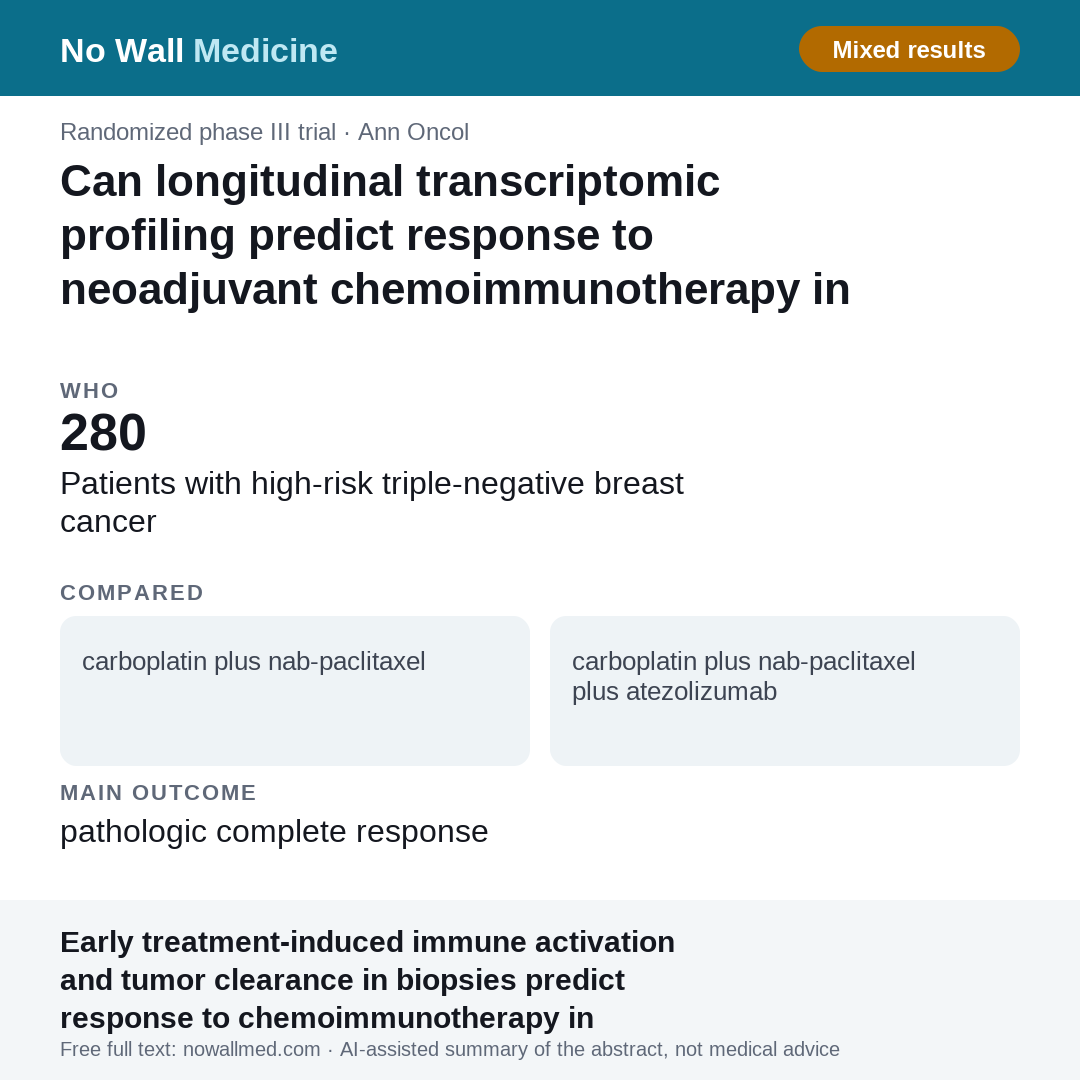
Longitudinal transcriptomic profiling identifies predictors of response to neoadjuvant chemoimmunotherapy in triple-negative breast cancer: results from the NeoTRIPaPDL1 trial
Randomized phase III trialMixed results
Can longitudinal transcriptomic profiling predict response to neoadjuvant chemoimmunotherapy in triple-negative breast cancer?
Who
280
Patients with high-risk triple-negative breast cancer
Compared
carboplatin plus nab-paclitaxel
carboplatin plus nab-paclitaxel plus atezolizumab
Main outcome
pathologic complete response
Bottom line: Early treatment-induced immune activation and tumor clearance in biopsies predict response to chemoimmunotherapy in triple-negative breast cancer.
Ann Oncol · 2026-05-19Download image
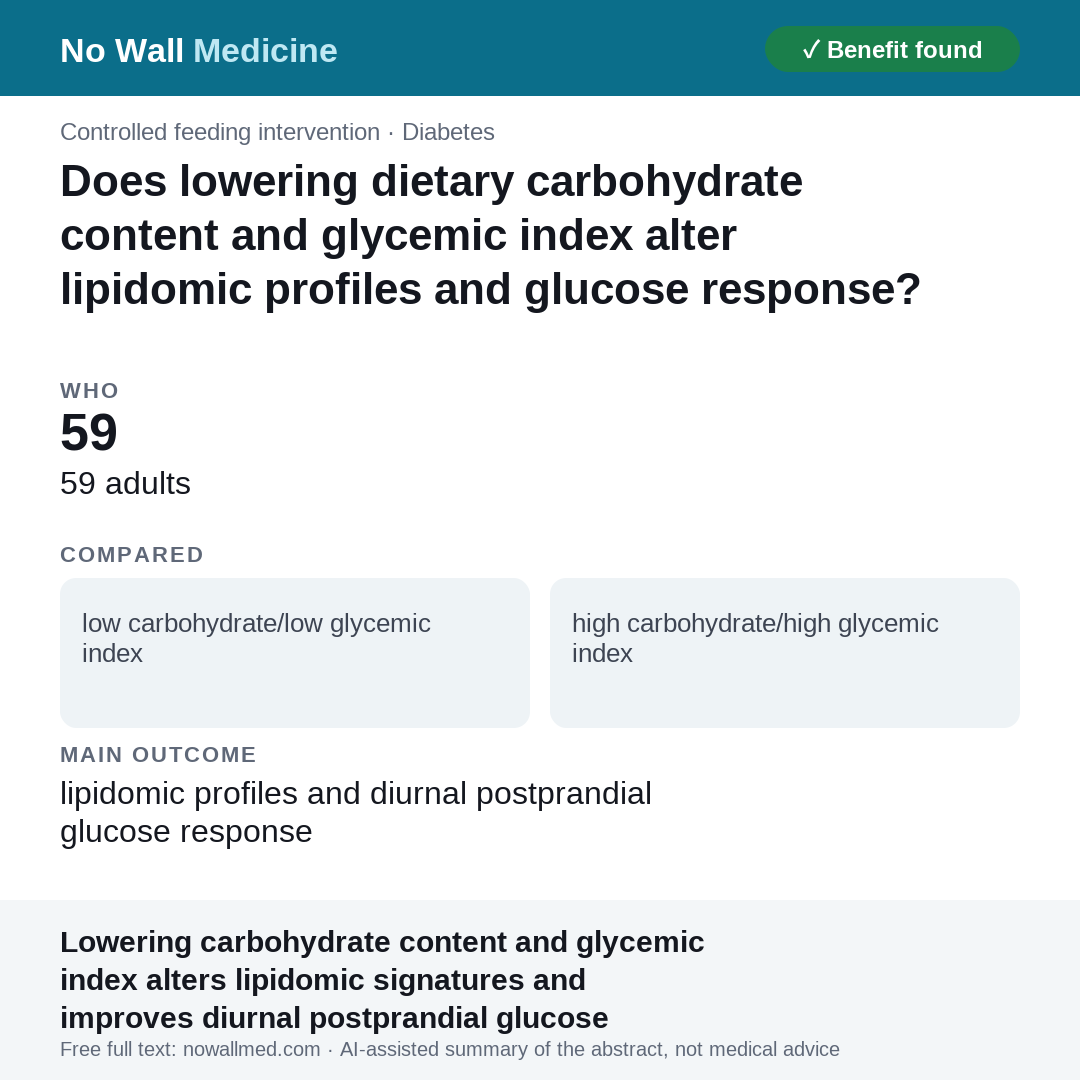
Effects of Dietary Carbohydrate Amount and Glycemic Index on Blood Lipidomic Signatures and Diurnal Postprandial Glucose Responses: The OmniCarb Trial
Controlled feeding interventionBenefit found
Does lowering dietary carbohydrate content and glycemic index alter lipidomic profiles and glucose response?
Who
59
59 adults
Compared
low carbohydrate/low glycemic index
high carbohydrate/high glycemic index
Main outcome
lipidomic profiles and diurnal postprandial glucose response
Bottom line: Lowering carbohydrate content and glycemic index alters lipidomic signatures and improves diurnal postprandial glucose responses.
Diabetes · 2026-05-19Download image