Visual abstracts
New randomized trials and meta-analyses from leading journals at a glance: who was studied, what was compared, and what was found. Every paper is free to read in full.
All specialtiesCardiology 4877Oncology 4138Gastroenterology & Hepatology 1942Infectious Disease 3837Neurology 1905Psychiatry & Mental Health 2273Pulmonology 2143Critical Care 1365Endocrinology & Diabetes 2580Pediatrics 2980Surgery 2559Orthopedics & Sports Medicine 931Neurosurgery 537Cardiothoracic & Vascular Surgery 674Plastic & Reconstructive Surgery 591Nephrology 1133Rheumatology 823Hematology 1109Dermatology 621Ophthalmology 543Obstetrics & Gynecology 1686Public & Global Health 1058Radiology & Imaging 648Anesthesiology 986Urology 764ENT (Otolaryngology) 503Emergency Medicine 511Allergy & Immunology 313Geriatrics 981Family Medicine & Primary Care 562Medical Genetics & Genomics 676Pathology & Laboratory Medicine 159Physical Medicine & Rehabilitation 757Palliative Care 444Nutrition 1588Digital Health & AI 2201General Medicine 321
Effects of caffeine on neuroinflammation in anxiety and depression: a systematic review of rodent studies
Systematic review of 17 studiesBenefit found
What are the effects of caffeine on neuroinflammation in rodent models of anxiety and depression?
Who
Rodent models of anxiety and depression
Compared
Caffeine and related xanthines: mitigating anxiety and depressive-like behaviors
Stress-induced models: possible cognitive impairments
Main outcome
Neuroinflammation and behavioral responses
Bottom line: Caffeine may alleviate symptoms by reducing pro-inflammatory cytokines and inhibiting glial cell activation in rodent models.
Limitation: Doses and routes of caffeine administration were highly variable among eligible studies.
Transl Psychiatry · 2025-11-17Download image

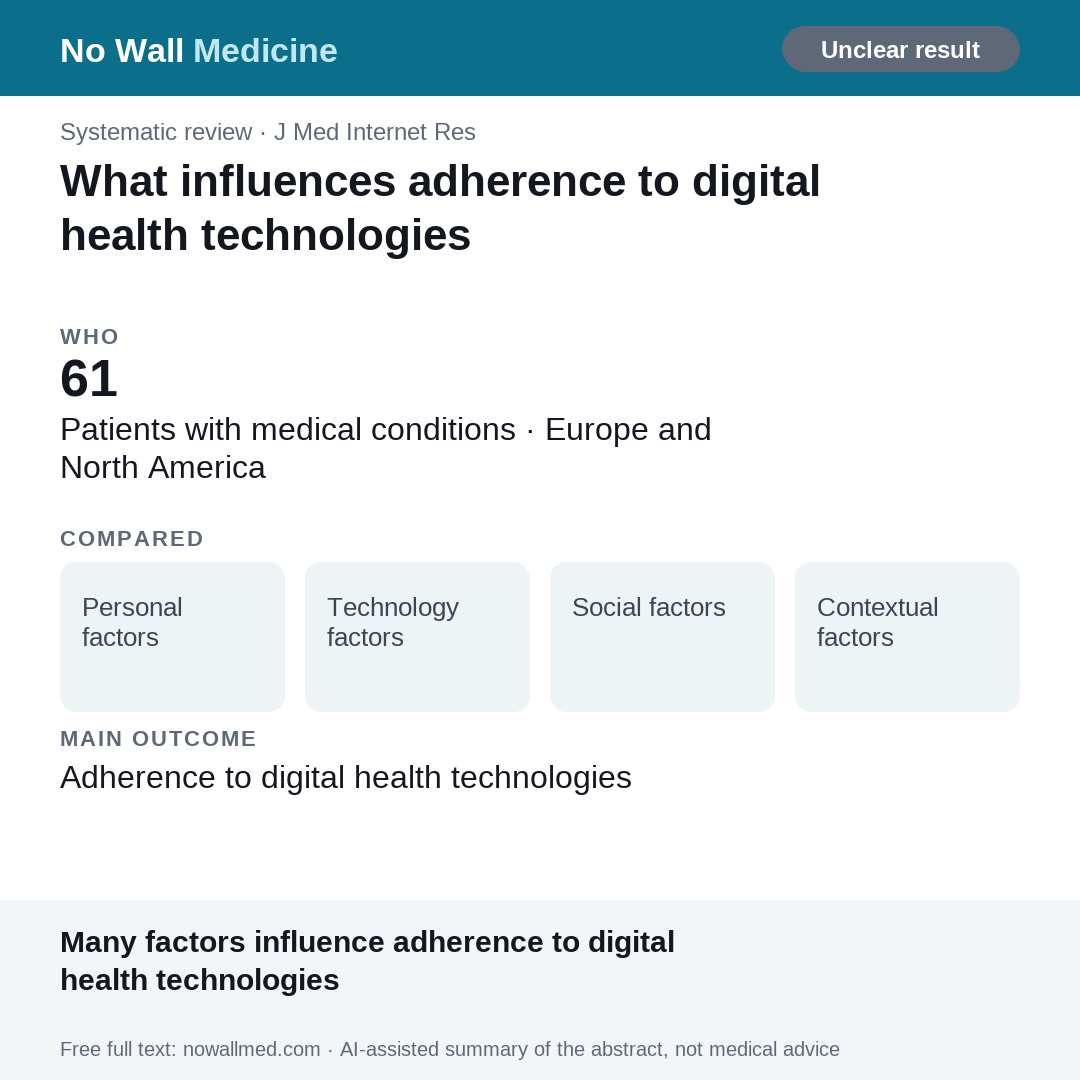
Understanding Adherence to Digital Health Technologies: Systematic Review of Predictive Factors
Systematic reviewUnclear result
What influences adherence to digital health technologies
Who
61
Patients with medical conditions · Europe and North America
Compared
Personal factors
Technology factors
Social factors
Contextual factors
Main outcome
Adherence to digital health technologies
Bottom line: Many factors influence adherence to digital health technologies
Limitation: Heterogeneity in study designs and adherence definitions
J Med Internet Res · 2025-11-17Download image
Optimizing Workplace Digital Mental Health Interventions: Systematic Review and Meta-Analysis
Systematic review and Bayesian multilevel meta-regressionBenefit found
Do intervention design, therapeutic approaches, and content features associate with greater digital mental health intervention efficacy?
Who
25,500
Employed adults · 4 electronic databases
Compared
Depression: θ=0.167 (95% credible interval -0.31 to -0.03)
Anxiety: θ=-0.211 (95% CI -0.36 to -0.07)
Stress: θ=-0.165 (95% CI -0.28 to -0.05)
Main outcome
Standardized measures of depression, anxiety, or stress
Bottom line: Workplace digital mental health interventions show small significant benefits, with efficacy influenced by therapeutic approach, design, and content features.
Limitation: 71 trials had high risk bias due to waitlist controls and inability to blind participants.
J Med Internet Res · 2025-11-17Download image

Decision aids for the care of patients with multimorbidity: a systematic review
Systematic reviewUnclear result
Do decision aids help patients with multimorbidity?
Who
Patients with multimorbidity · Primary care
Compared
Decision aids
Standard care
Main outcome
Decision-making quality
Bottom line: Limited evidence for decision aids' effectiveness
Limitation: Limited high-quality research
BMC Prim Care · 2025-11-17Download image

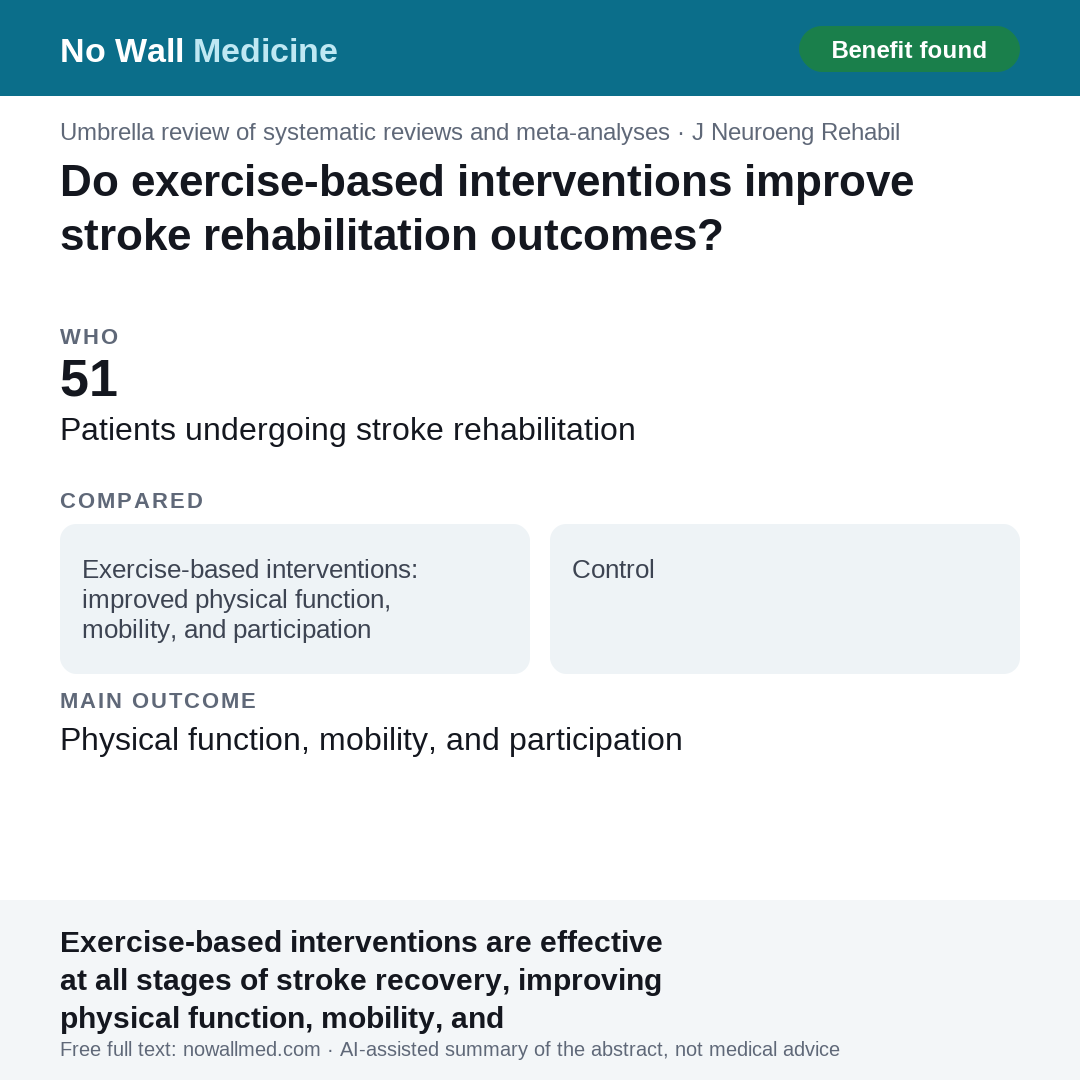
Effect of exercise-based interventions on stroke rehabilitation: an umbrella review of systematic reviews and meta-analyses
Umbrella review of systematic reviews and meta-analysesBenefit found
Do exercise-based interventions improve stroke rehabilitation outcomes?
Who
51
Patients undergoing stroke rehabilitation
Compared
Exercise-based interventions: improved physical function, mobility, and participation
Control
Main outcome
Physical function, mobility, and participation
Bottom line: Exercise-based interventions are effective at all stages of stroke recovery, improving physical function, mobility, and participation.
J Neuroeng Rehabil · 2025-11-17Download image
Affordability decision rules: a systematic review and framework for categorising budget impact thresholds across health systems
Systematic reviewBenefit found
What are the current budget impact thresholds and how can they be categorized?
Who
22
National or regional health systems · 13 countries
Compared
Low budget impact: <0·005%
Moderate budget impact: 0·005% to <0·01%
High budget impact: 0·01% to <0·02%
Very high budget impact: ≥0·02%
Main outcome
Budget impact thresholds as proportion of current health expenditure
Bottom line: A new framework categorizes budget impact thresholds into four levels to support global health technology assessment decisions.
Limitation: The framework is not a definitive tool and application should be adapted to each country's context.
Lancet Glob Health · 2025-11-16Download image

Text messaging interventions are associated with reductions in HbA1c among patients with diabetes: a systematic review and meta-analysis
Systematic review and meta-analysis of randomized controlled trialsBenefit found
Do text messaging interventions reduce hemoglobin A1c in adults with diabetes?
Who
Adults with diabetes in high-income countries · High-income countries
Compared
Texting interventions
Standard care
Main outcome
Between-group difference in hemoglobin A1c change from baseline
Result: 0.29-unit greater reduction in percent HbA1c over control (95% CI 0.14 to 0.45)
Bottom line: Text messaging interventions provide modest hemoglobin A1c reductions over 3 to 6 months, especially with higher baseline levels.
Limitation: Benefits appear to diminish by 12 months, requiring more long-term impact trials.
BMJ Open Diabetes Res Care · 2025-11-16Download image

Advancements in burn size assessment: A systematic review of emerging technologies
Systematic reviewUnclear result
How accurate and reliable are emerging technologies for estimating total body surface area?
Who
Human and artificial burns
Compared
3D stereophotogrammetry: mean ICC = 0.988
3D programs
Mobile applications
Machine learning models
Main outcome
Accuracy and reliability of total body surface area estimation
Bottom line: 3D stereophotogrammetry is highly accurate, but most studies were low quality and methodologically heterogeneous.
Burns · 2025-11-15Download image

Sex Differences in Leptin Levels in Children and Adolescents with Normal Weight and Overweight/Obesity Across Pubertal Stages: A Systematic Review and Meta-analysis
Systematic review and meta-analysisMixed results
Do sex differences in leptin levels exist across pubertal stages in children?
Who
Children and adolescents aged 5 to 19 years
Compared
Girls with normal weight: higher leptin levels than boys
Boys with normal weight
Main outcome
Leptin levels and body mass index standard deviation score
Result: mean difference 3.99 (95% CI, 2.63-5.35)
Bottom line: Sex differences in leptin levels seen in normal weight children are lost in obesity.
J Clin Endocrinol Metab · 2025-11-15Download image

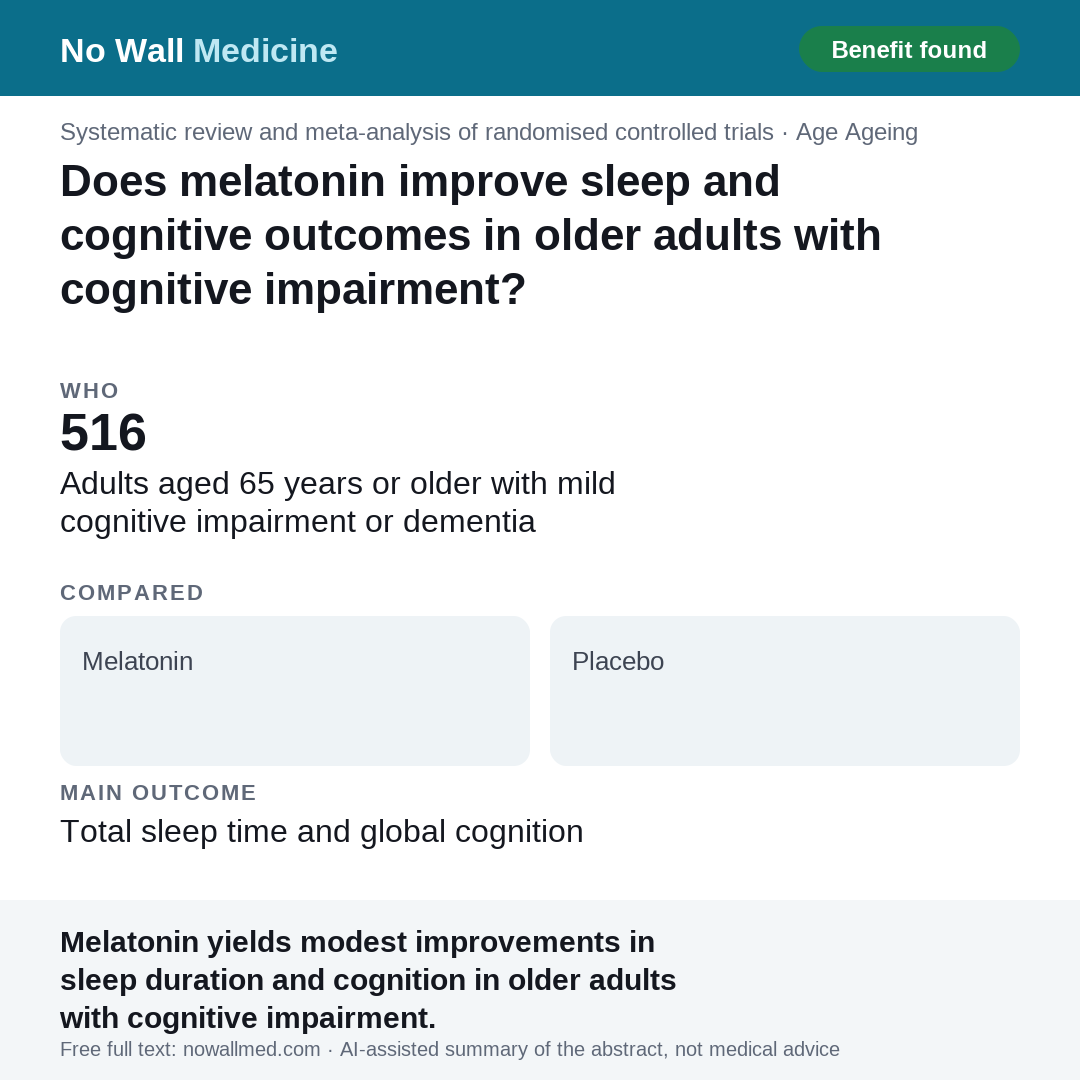
Melatonin for sleep and cognitive outcomes in older adults with cognitive impairment: a meta-analysis of randomised controlled trials
Systematic review and meta-analysis of randomised controlled trialsBenefit found
Does melatonin improve sleep and cognitive outcomes in older adults with cognitive impairment?
Who
516
Adults aged 65 years or older with mild cognitive impairment or dementia
Compared
Melatonin
Placebo
Main outcome
Total sleep time and global cognition
Result: total sleep time MD +12.4 min (95% CI 8.1-16.7); Mini-Mental State Examination MD +1.8 points (95% CI 0.9-2.7)
Bottom line: Melatonin yields modest improvements in sleep duration and cognition in older adults with cognitive impairment.
Limitation: Larger, rigorously designed randomised controlled trials with harmonised outcomes are needed to confirm findings.
Age Ageing · 2025-11-15Download image
Effects of glucagon-like peptide-1 receptor agonists on alcohol consumption: a systematic review and meta-analysis
Systematic review and meta-analysisBenefit found
Do glucagon-like peptide-1 receptor agonists reduce alcohol consumption?
Who
5262268
Adults with hazardous drinking or alcohol use disorder
Compared
Glucagon-like peptide-1 receptor agonists
Control
Main outcome
Change in Alcohol Use Disorders Identification Test scores
Result: mean difference -7.81 points (95% CI -9.02 to -6.60)
Bottom line: Glucagon-like peptide-1 receptor agonists reduce alcohol use as measured by Alcohol Use Disorders Identification Test scores.
Limitation: Large, dedicated randomized controlled trials are needed to confirm efficacy.
eClinicalMedicine · 2025-11-14Download image

Natural, unnatural, and cause-specific mortality among current psychiatric inpatients: a systematic review and meta-analysis
Systematic review and meta-analysisMixed results
What are the natural, unnatural, and cause-specific mortality rates among current psychiatric inpatients?
Who
Current psychiatric inpatients · Diverse geographic settings
Compared
81.6%Natural causes (95% CI 75.7-86.3%)
4.8%Suicides (95% CI 3.0-7.7%)
3.3%Accidents (2.3-4.7%)
Main outcome
Percentage of deaths by cause
Bottom line: Most psychiatric inpatient deaths are due to natural causes, though overall mortality rates have been falling over time.
eClinicalMedicine · 2025-11-14Download image

The Disease Burden of Helicobacter pylori Beyond Gastric Cancer: Quantifying the Forgotten Potential Benefits of Mass Eradication
Systematic literature searchBenefit found
What is the disease burden attributable to Helicobacter pylori beyond gastric cancer?
Who
Global population and specific countries · Global, including United States and South Korea
Compared
57%Peptic ulcer disease (44%-68%)
7%Dyspepsia (2%-13%)
33%Gastric lymphomas (12%-53%)
Main outcome
Population attributable fraction for various diseases
Bottom line: Mass eradication of Helicobacter pylori can prevent millions of cases of peptic ulcer disease and dyspepsia globally.
Limitation: Benefit depends on whether Helicobacter pylori triggers an irreversible disease pathway early in life.
Gastroenterology · 2025-11-14Download image

Characteristics and Effectiveness of Nurse-Led Family Communication Interventions in the ICU: A Systematic Review and Meta-Analysis
Systematic review and meta-analysisMixed results
What are the characteristics and effectiveness of nurse-led family communication interventions in the ICU?
Who
Adult intensive care unit patients and families · Intensive care units
Compared
Nurse-led family communication interventions
Control
Main outcome
Communication quality, hospital length of stay, distress, satisfaction, and mortality
Result: standardized mean differences 0.26 for communication quality; mean differences -3.87 d for length of stay
Bottom line: Nurse-led interventions may improve communication quality and reduce hospital length of stay but have limited effects on distress or mortality.
Limitation: Considerable heterogeneity in intervention intensity, implementer profiles, and adaptation descriptions.
Crit Care Med · 2025-11-14Download image

Review Article: Extending the Frontiers of Intestinal Ultrasound Knowledge, Performance and Expansion
Systematic umbrella reviewUnclear result
Gaps in intestinal ultrasound knowledge
Who
Patients with inflammatory bowel disease
Compared
IUS for Crohn's
IUS for ulcerative colitis
Main outcome
Evidence gaps in IUS
Bottom line: Gaps persist in intestinal ultrasound evidence
Limitation: Small sample sizes, heterogeneous designs
Aliment Pharmacol Ther · 2025-11-14Download image

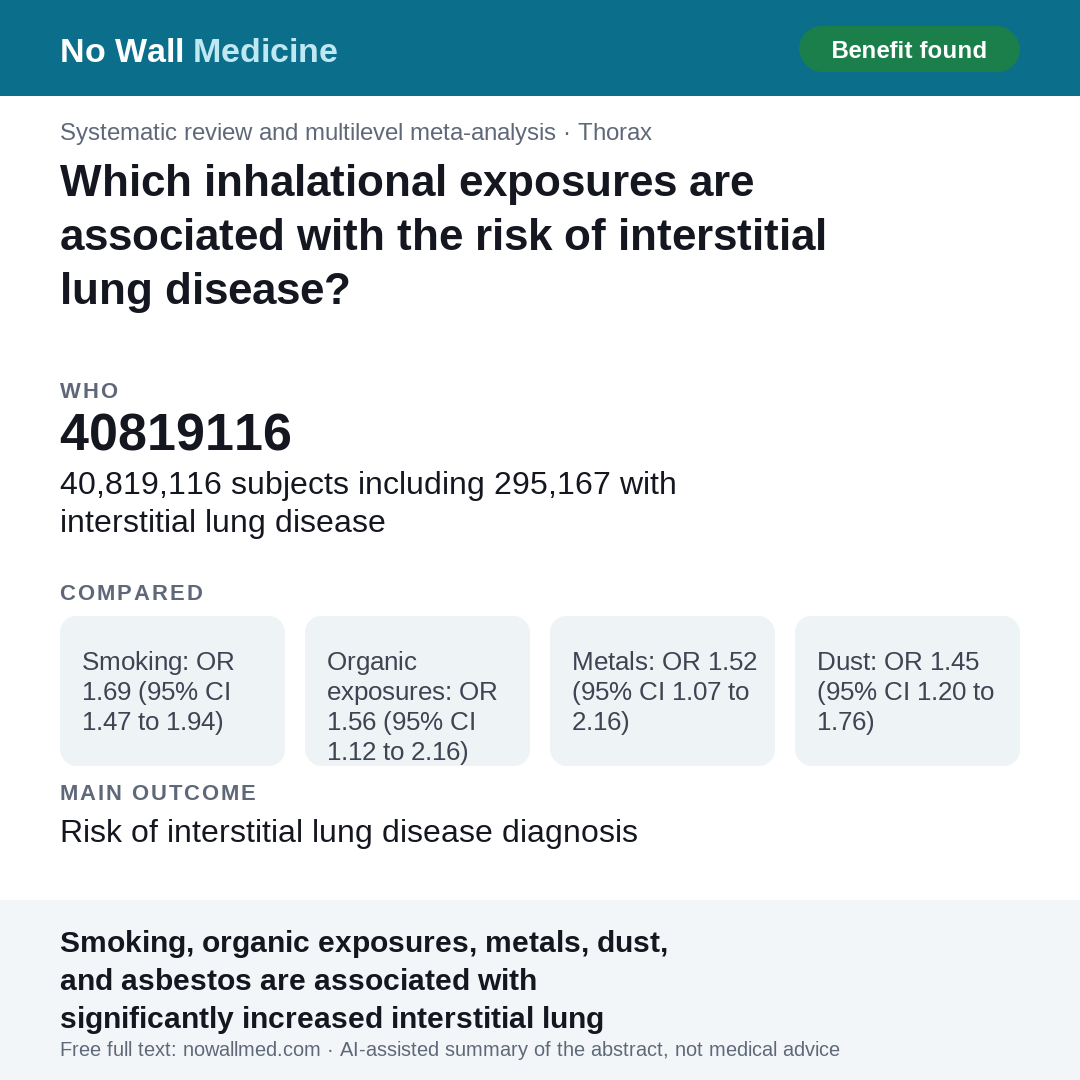
Inhalational exposures associated with risk of interstitial lung disease: a systematic review and meta-analysis
Systematic review and multilevel meta-analysisBenefit found
Which inhalational exposures are associated with the risk of interstitial lung disease?
Who
40819116
40,819,116 subjects including 295,167 with interstitial lung disease
Compared
Smoking: OR 1.69 (95% CI 1.47 to 1.94)
Organic exposures: OR 1.56 (95% CI 1.12 to 2.16)
Metals: OR 1.52 (95% CI 1.07 to 2.16)
Dust: OR 1.45 (95% CI 1.20 to 1.76)
Main outcome
Risk of interstitial lung disease diagnosis
Bottom line: Smoking, organic exposures, metals, dust, and asbestos are associated with significantly increased interstitial lung disease risk.
Limitation: Silica and fumes had positive associations that trended towards significance but were not significant.
Thorax · 2025-11-14Download image
Lung cancer risk assessment by prediction model: a global perspective
Literature search and comparative analysisMixed results
How do different lung cancer risk prediction models perform across global populations?
Who
Studies developing and validating lung cancer risk prediction models · Global
Compared
North American cohorts: C-index 0.60 to 0.87
European cohorts: C-indices surpassing 0.870
Asian cohorts: C-index 0.54 to 0.87
Main outcome
Discriminative accuracy and calibration performance
Bottom line: Lung cancer risk prediction model performance varies significantly across diverse populations and regions.
Thorax · 2025-11-14Download image

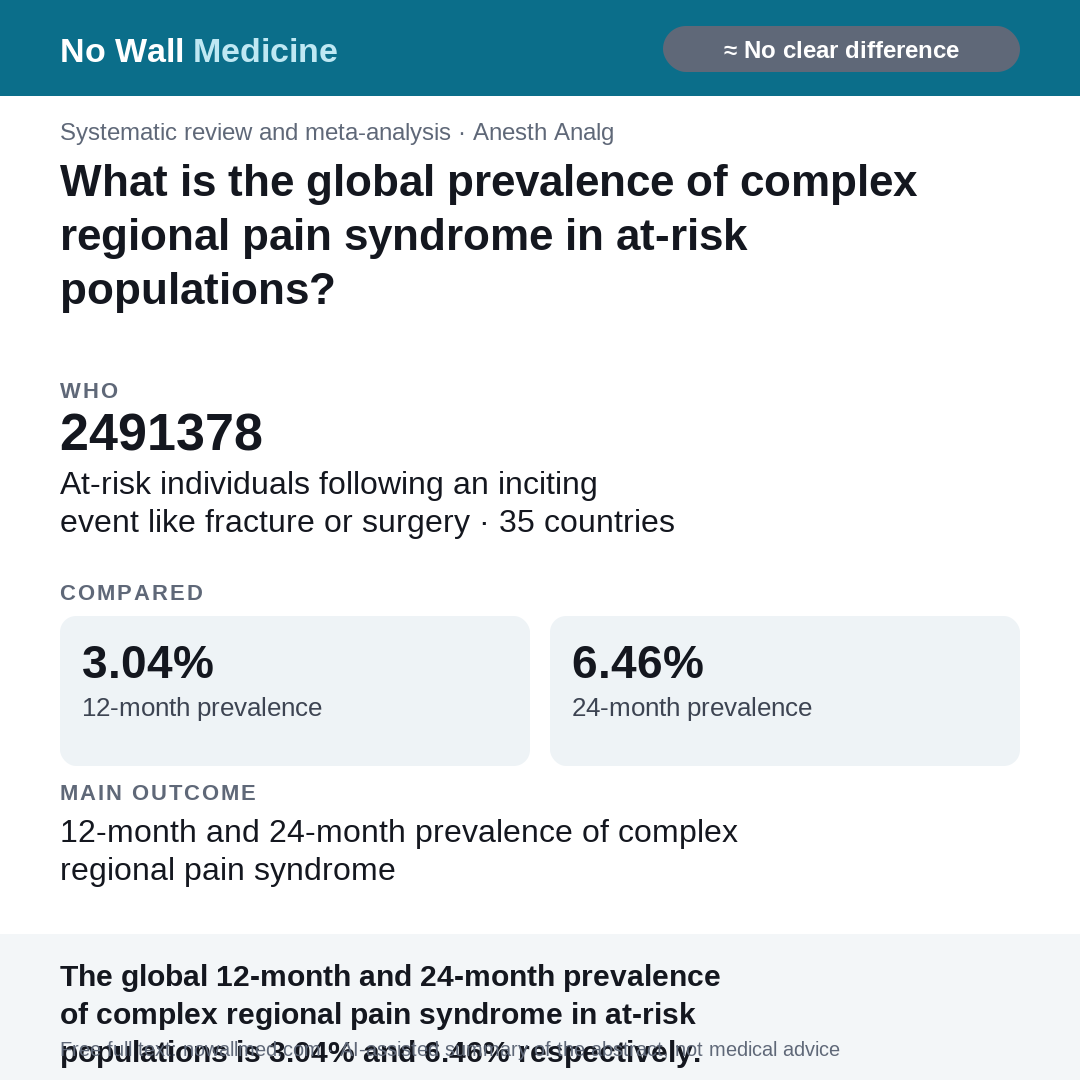
Global Burden of Complex Regional Pain Syndrome in At-Risk Populations: Estimates of Prevalence From 35 Countries Between 1993 and 2023
Systematic review and meta-analysisNo clear difference
What is the global prevalence of complex regional pain syndrome in at-risk populations?
Who
2491378
At-risk individuals following an inciting event like fracture or surgery · 35 countries
Compared
3.04%12-month prevalence (95% CI, 2.64-3.48)
6.46%24-month prevalence (95% CI, 5.46-7.53)
Main outcome
12-month and 24-month prevalence of complex regional pain syndrome
Bottom line: The global 12-month and 24-month prevalence of complex regional pain syndrome in at-risk populations is 3.04% and 6.46% respectively.
Anesth Analg · 2025-11-14Download image
Transcranial Direct Current Stimulation for Naming Disorders in Poststroke Aphasia: A Meta-analysis of Randomized Controlled Trials
Meta-analysis of randomized controlled trialsBenefit found
Does transcranial direct current stimulation improve naming disorders in poststroke aphasia?
Who
400
Patients with poststroke aphasia
Compared
Transcranial direct current stimulation
Control
Main outcome
Naming ability
Result: standardized mean difference 0.25 (95% CI 0.05 to 0.45)
Bottom line: Transcranial direct current stimulation significantly improves naming abilities in poststroke aphasia, especially in chronic stroke patients.
Limitation: Methodological limitations of the included studies.
Arch Phys Med Rehabil · 2025-11-14Download image

A Systematic Review of Applications, Challenges, and Future Trajectories of Artificial Intelligence in Cosmetic Surgery
Systematic reviewMixed results
AI in cosmetic surgery effectiveness
Who
cosmetic surgery patients
Compared
AI applications
traditional methods
Main outcome
precision and objectivity
Bottom line: AI shows potential in cosmetic surgery
Limitation: limited external validation
Aesthet Surg J · 2025-11-14Download image