Visual abstracts
New randomized trials and meta-analyses from leading journals at a glance: who was studied, what was compared, and what was found. Every paper is free to read in full.
All specialtiesCardiology 4877Oncology 4138Gastroenterology & Hepatology 1942Infectious Disease 3837Neurology 1905Psychiatry & Mental Health 2273Pulmonology 2143Critical Care 1365Endocrinology & Diabetes 2580Pediatrics 2980Surgery 2559Orthopedics & Sports Medicine 931Neurosurgery 537Cardiothoracic & Vascular Surgery 674Plastic & Reconstructive Surgery 591Nephrology 1133Rheumatology 823Hematology 1109Dermatology 621Ophthalmology 543Obstetrics & Gynecology 1686Public & Global Health 1058Radiology & Imaging 648Anesthesiology 986Urology 764ENT (Otolaryngology) 503Emergency Medicine 511Allergy & Immunology 313Geriatrics 981Family Medicine & Primary Care 562Medical Genetics & Genomics 676Pathology & Laboratory Medicine 159Physical Medicine & Rehabilitation 757Palliative Care 444Nutrition 1588Digital Health & AI 2201General Medicine 321
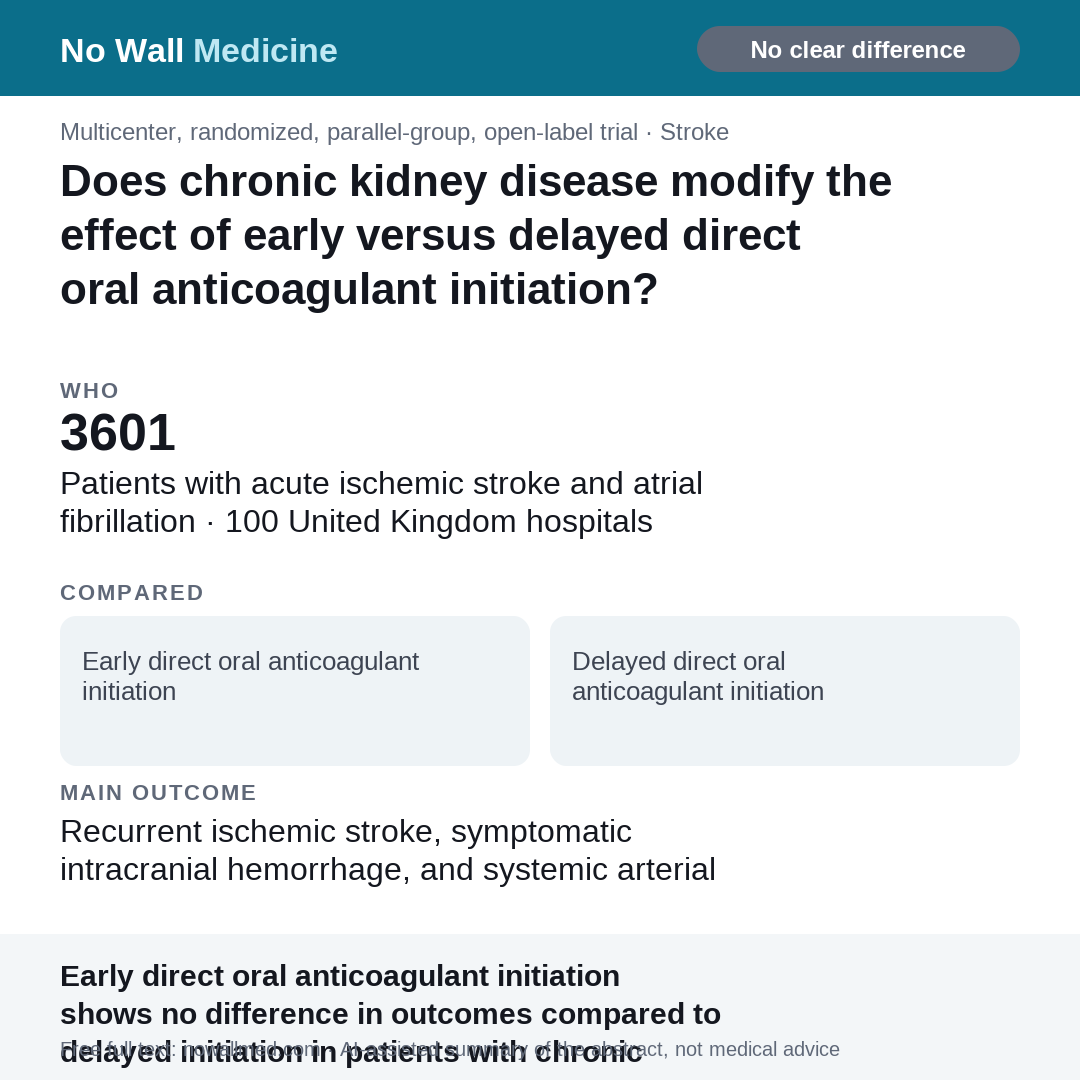
Anticoagulation Timing in Acute Stroke With Atrial Fibrillation According to Chronic Kidney Disease: The OPTIMAS Trial
Multicenter, randomized, parallel-group, open-label trialNo clear difference
Does chronic kidney disease modify the effect of early versus delayed direct oral anticoagulant initiation?
Who
3601
Patients with acute ischemic stroke and atrial fibrillation · 100 United Kingdom hospitals
Compared
Early direct oral anticoagulant initiation
Delayed direct oral anticoagulant initiation
Main outcome
Recurrent ischemic stroke, symptomatic intracranial hemorrhage, and systemic arterial embolism
Result: odds ratio 1.01 (95% CI 0.67-1.51) in normal kidney function; odds ratio 0.90 (95% CI 0.36-2.25) in chronic kidney disease
Bottom line: Early direct oral anticoagulant initiation shows no difference in outcomes compared to delayed initiation in patients with chronic kidney disease.
Stroke · 2025-05-22Download image
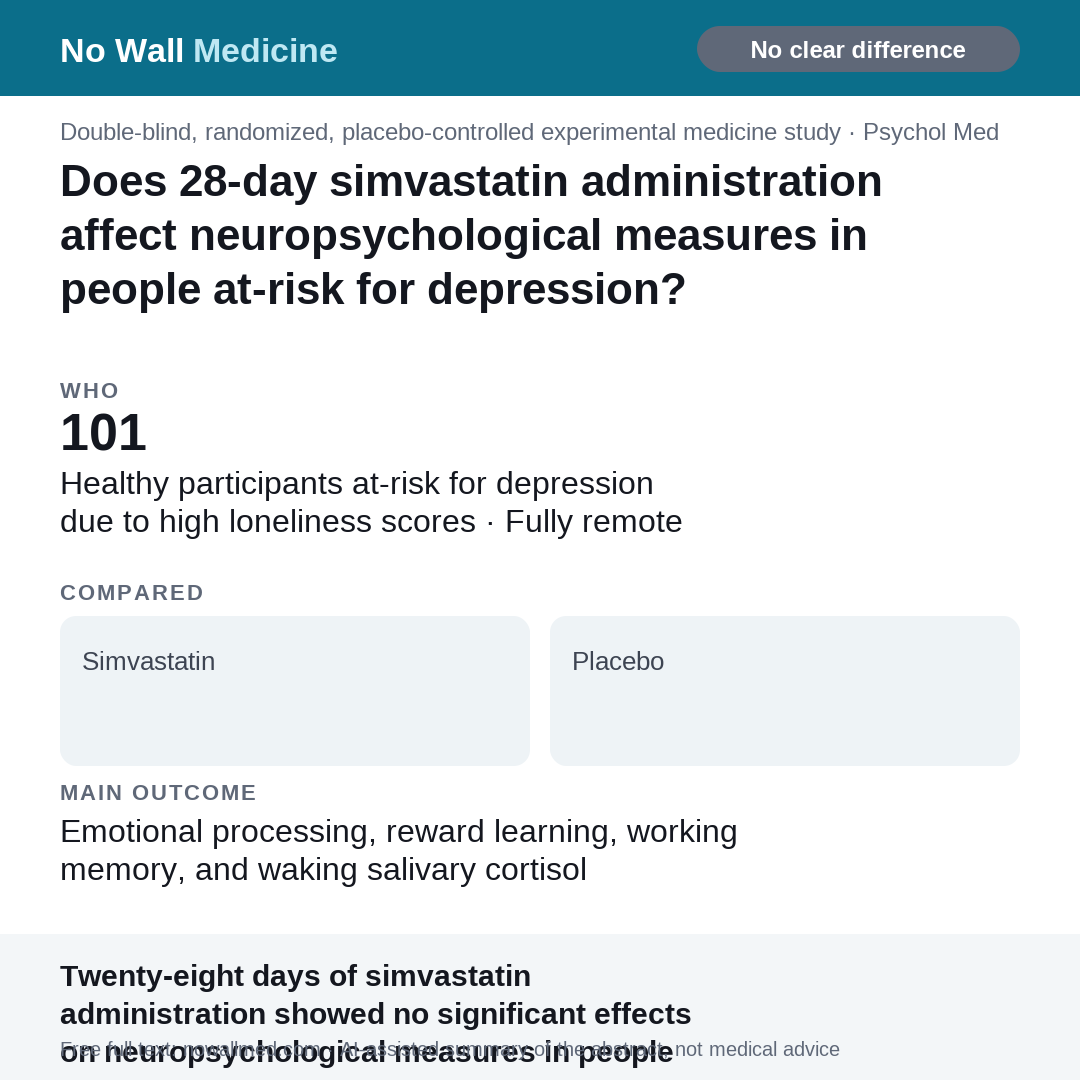
Effects of 28-day simvastatin administration on emotional processing, reward learning, working memory, and salivary cortisol in healthy participants at-risk for depression: OxSTEP, an online experimental medicine trial
Double-blind, randomized, placebo-controlled experimental medicine studyNo clear difference
Does 28-day simvastatin administration affect neuropsychological measures in people at-risk for depression?
Who
101
Healthy participants at-risk for depression due to high loneliness scores · Fully remote design within a United Kingdom-wide sample
Compared
Simvastatin
Placebo
Main outcome
Emotional processing, reward learning, working memory, and waking salivary cortisol
Bottom line: Twenty-eight days of simvastatin administration showed no significant effects on neuropsychological measures in people at-risk for depression.
Limitation: Other unmeasured cognitive processes may be involved.
Psychol Med · 2025-05-22Download image
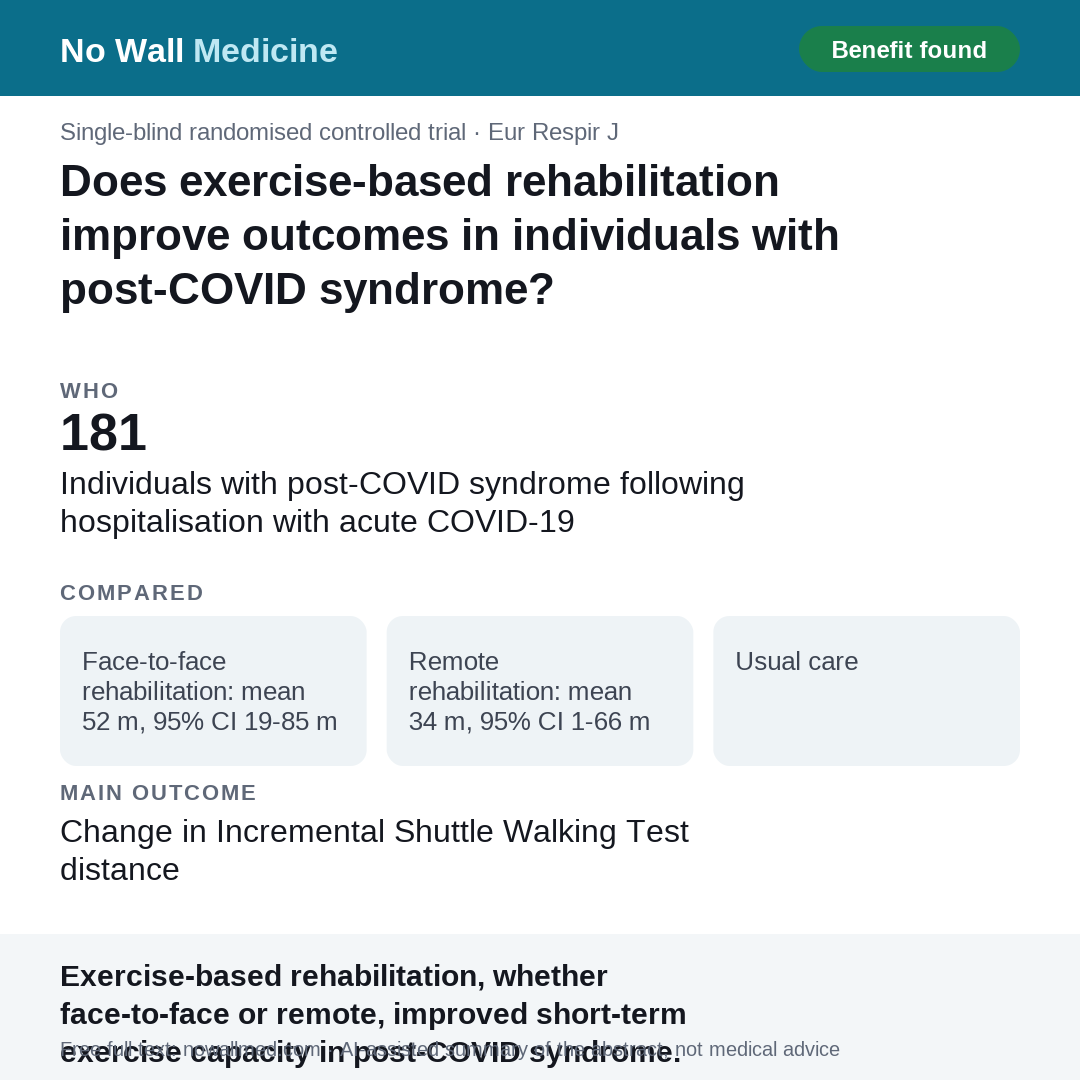
Post-Hospitalisation COVID-19 Rehabilitation (PHOSP-R): a randomised controlled trial of exercise-based rehabilitation
Single-blind randomised controlled trialBenefit found
Does exercise-based rehabilitation improve outcomes in individuals with post-COVID syndrome?
Who
181
Individuals with post-COVID syndrome following hospitalisation with acute COVID-19
Compared
Face-to-face rehabilitation: mean 52 m, 95% CI 19-85 m
Remote rehabilitation: mean 34 m, 95% CI 1-66 m
Usual care
Main outcome
Change in Incremental Shuttle Walking Test distance
Bottom line: Exercise-based rehabilitation, whether face-to-face or remote, improved short-term exercise capacity in post-COVID syndrome.
Eur Respir J · 2025-05-22Download image
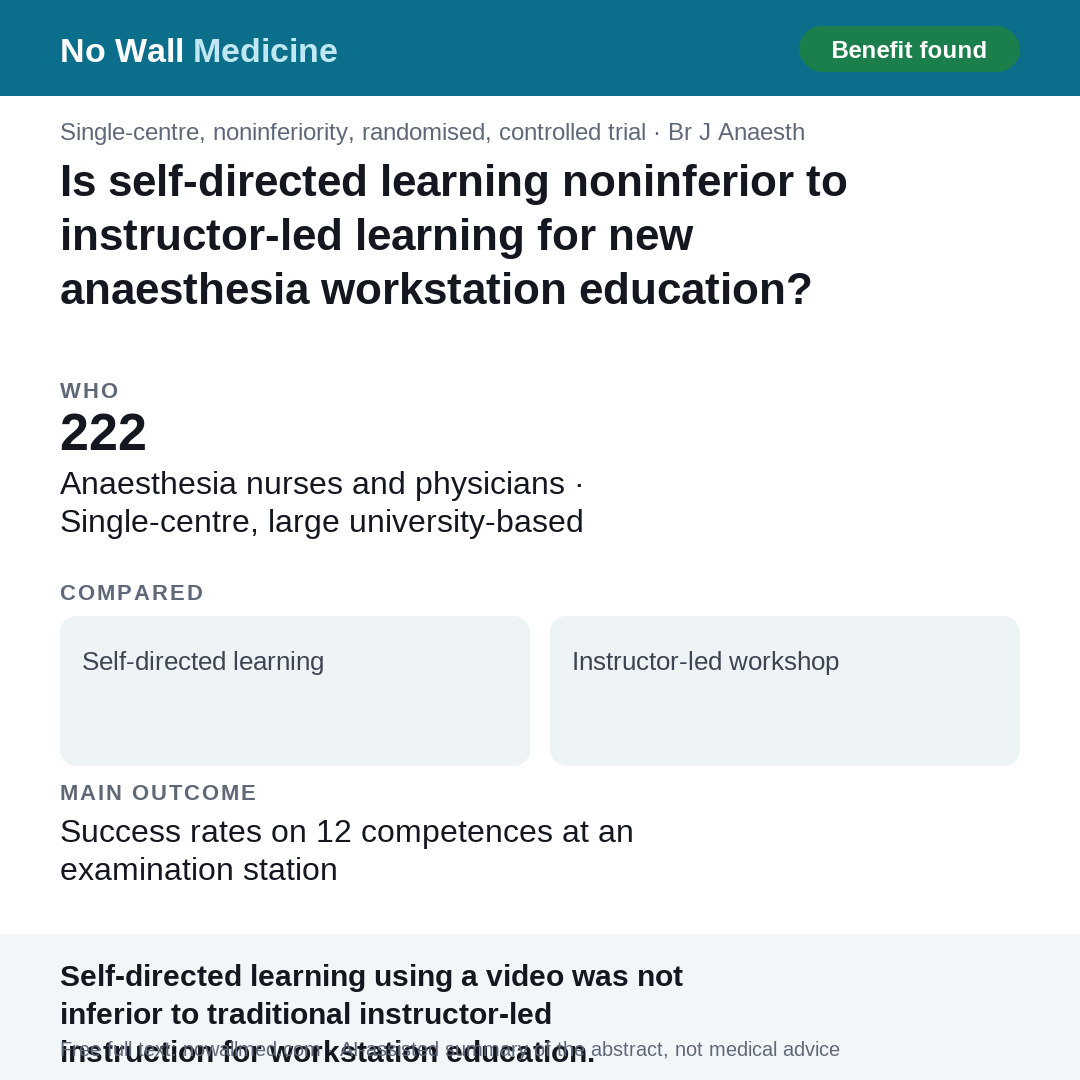
Self-directed learning versus traditional instructor-led learning for education on a new anaesthesia workstation: a noninferiority, randomised, controlled trial
Single-centre, noninferiority, randomised, controlled trialBenefit found
Is self-directed learning noninferior to instructor-led learning for new anaesthesia workstation education?
Who
222
Anaesthesia nurses and physicians · Single-centre, large university-based anaesthesia department
Compared
Self-directed learning
Instructor-led workshop
Main outcome
Success rates on 12 competences at an examination station
Result: -0.9% (90% confidence interval: -3.8%-1.7%)
Bottom line: Self-directed learning using a video was not inferior to traditional instructor-led instruction for workstation education.
Br J Anaesth · 2025-05-22Download image
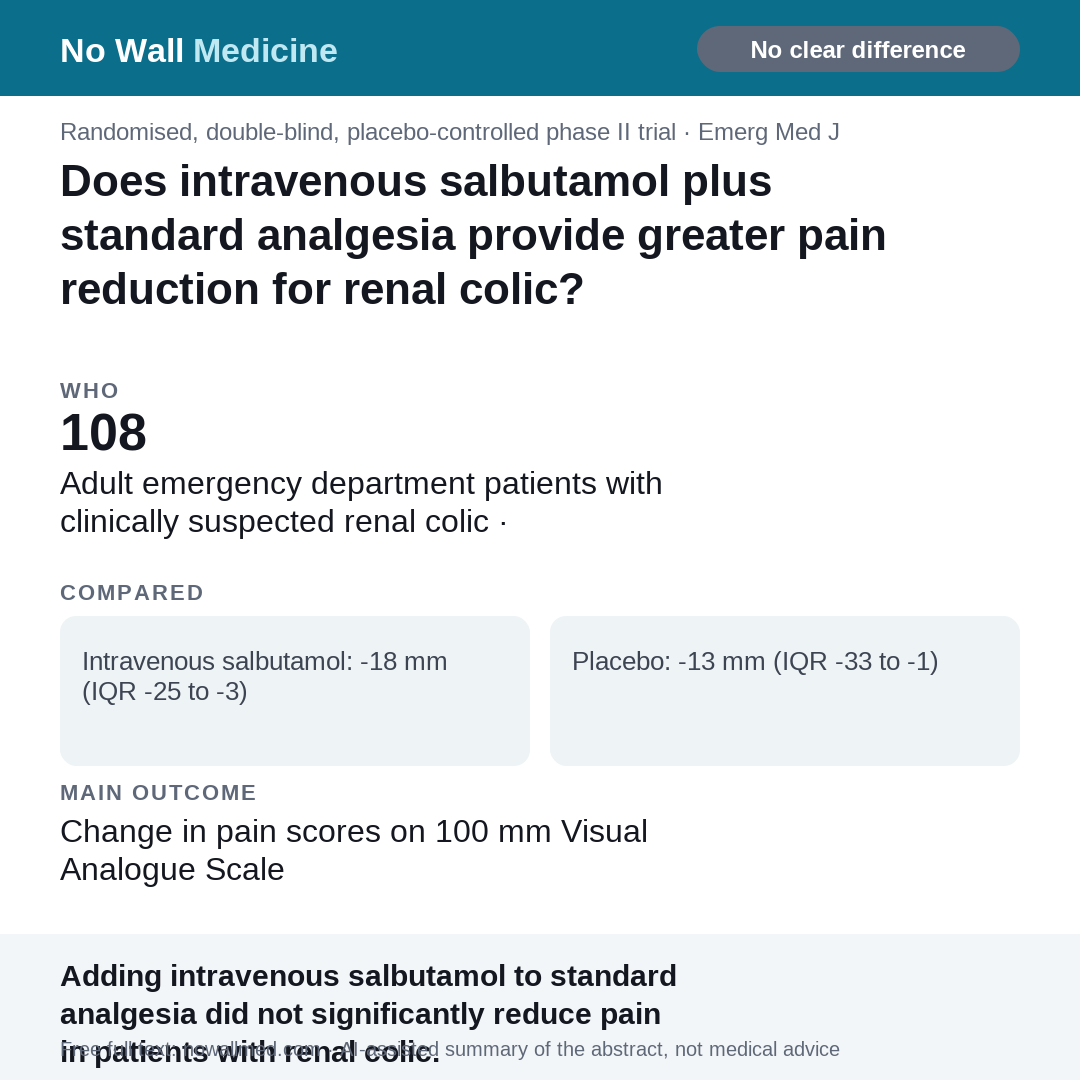
Salbutamol for analgesia in renal colic: a prospective, randomised, placebo-controlled phase II trial
Randomised, double-blind, placebo-controlled phase II trialNo clear difference
Does intravenous salbutamol plus standard analgesia provide greater pain reduction for renal colic?
Who
108
Adult emergency department patients with clinically suspected renal colic · Single-centre
Compared
Intravenous salbutamol: -18 mm (IQR -25 to -3)
Placebo: -13 mm (IQR -33 to -1)
Main outcome
Change in pain scores on 100 mm Visual Analogue Scale
Result: difference 5 mm (95% CI -16 to 6, p=0.575)
Bottom line: Adding intravenous salbutamol to standard analgesia did not significantly reduce pain in patients with renal colic.
Emerg Med J · 2025-05-22Download image
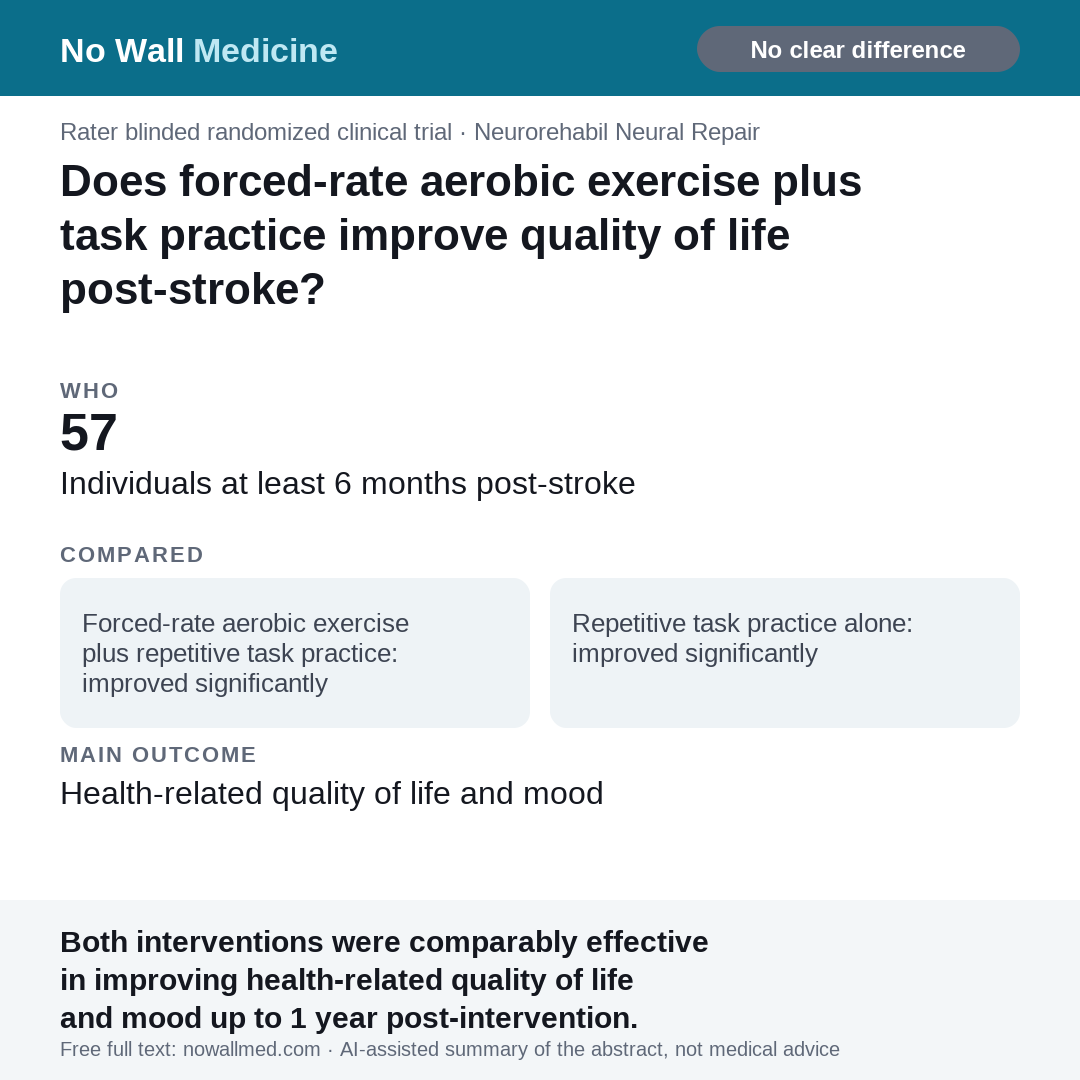
Task Practice With and Without Aerobic Exercise Improves Health-related Quality of Life and Social Participation Post-stroke: A Randomized Clinical Trial
Rater blinded randomized clinical trialNo clear difference
Does forced-rate aerobic exercise plus task practice improve quality of life post-stroke?
Who
57
Individuals at least 6 months post-stroke
Compared
Forced-rate aerobic exercise plus repetitive task practice: improved significantly
Repetitive task practice alone: improved significantly
Main outcome
Health-related quality of life and mood
Bottom line: Both interventions were comparably effective in improving health-related quality of life and mood up to 1 year post-intervention.
Neurorehabil Neural Repair · 2025-05-22Download image
The effects of the Multicultural Healthy Diet on cognitive decline and Alzheimer's disease risk: a phase II randomized controlled trial in middle-aged adults
Phase II pilot randomized clinical trialNo clear difference
Does the Multicultural Healthy Diet affect cognitive decline and Alzheimer's disease risk?
Who
290
Healthy middle-aged adults aged 40 to 65 years · Bronx, New York
Compared
Multicultural Healthy Diet
Usual diet
Main outcome
Global composite score of cognitive assessments
Result: -0.06 (95% CI -0.15, 0.04)
Bottom line: The Multicultural Healthy Diet is feasible but showed no significant effect on cognitive global score change at 9 months.
Limitation: Additional research using other measures like day-to-day variability is warranted.
Am J Clin Nutr · 2025-05-22Download image

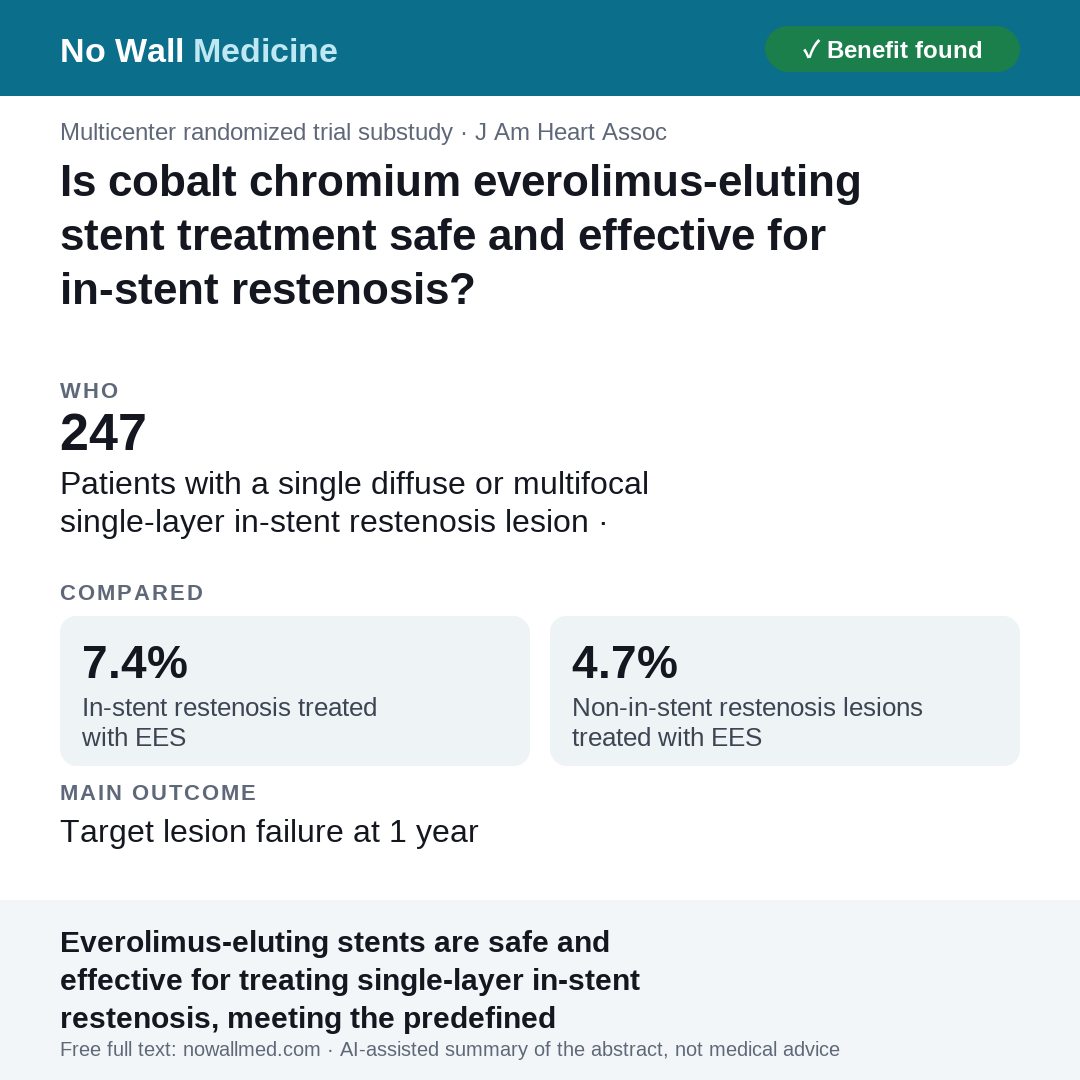
Safety and Efficacy of Cobalt Chromium Everolimus-Eluting Stents for Treatment of In-Stent Restenosis: An ILUMIEN IV Substudy
Multicenter randomized trial substudyBenefit found
Is cobalt chromium everolimus-eluting stent treatment safe and effective for in-stent restenosis?
Who
247
Patients with a single diffuse or multifocal single-layer in-stent restenosis lesion · Multicenter
Compared
7.4%In-stent restenosis treated with EES (18 patients)
4.7%Non-in-stent restenosis lesions treated with EES
Main outcome
Target lesion failure at 1 year
Result: hazard ratio 1.58 (95% CI 0.95-2.61)
Bottom line: Everolimus-eluting stents are safe and effective for treating single-layer in-stent restenosis, meeting the predefined performance goal.
J Am Heart Assoc · 2025-05-22Download image
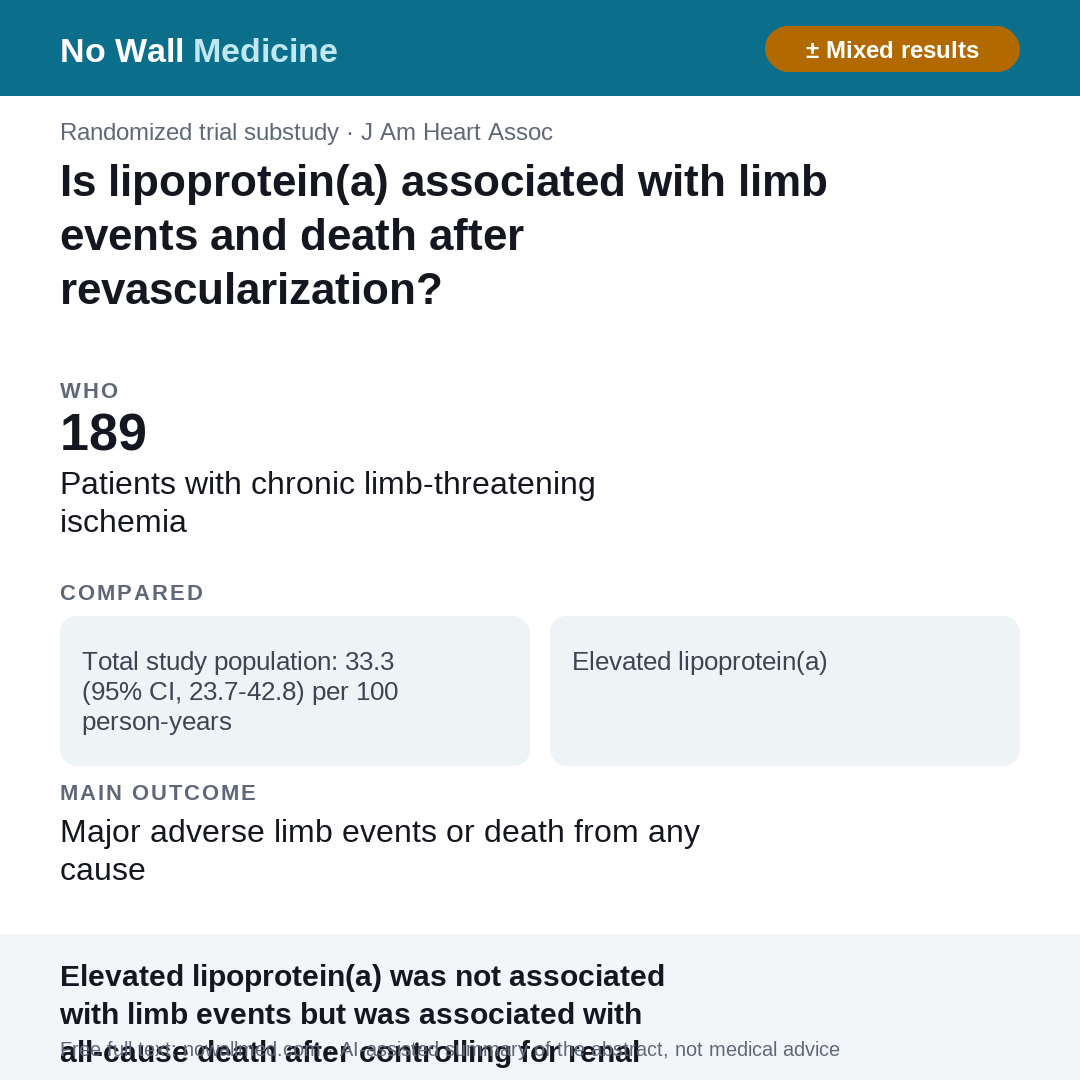
Association of Lipoprotein(a) With Major Adverse Limb Events and All-Cause Mortality Following Revascularization for Chronic Limb-Threatening Ischemia: A Substudy of the BEST-CLI Trial
Randomized trial substudyMixed results
Is lipoprotein(a) associated with limb events and death after revascularization?
Who
189
Patients with chronic limb-threatening ischemia
Compared
Total study population: 33.3 (95% CI, 23.7-42.8) per 100 person-years
Elevated lipoprotein(a)
Main outcome
Major adverse limb events or death from any cause
Result: hazard ratio 1.00 (95% CI 0.99-1.00)
Bottom line: Elevated lipoprotein(a) was not associated with limb events but was associated with all-cause death after controlling for renal function.
J Am Heart Assoc · 2025-05-22Download image
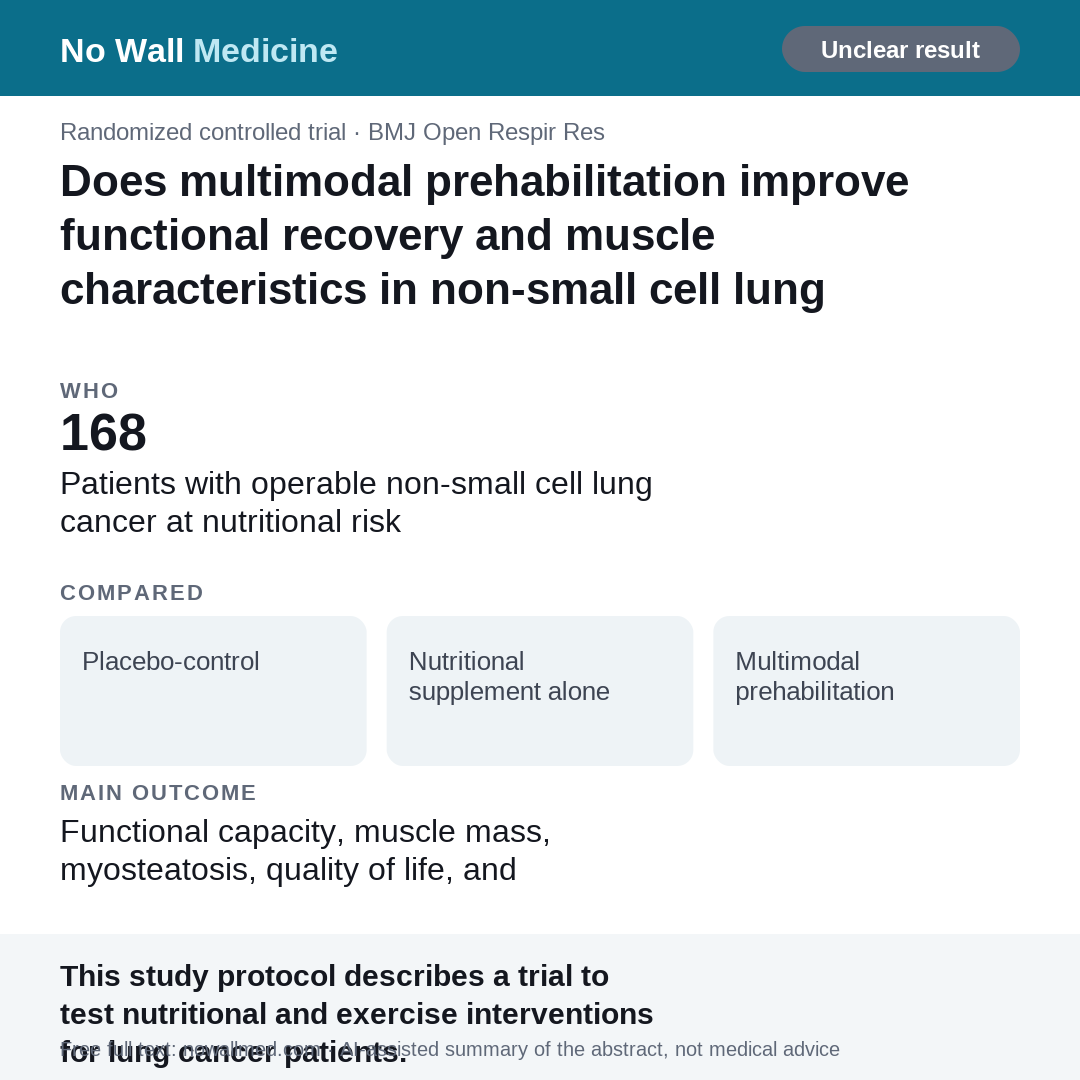
Novel multimodal intervention for surgical prehabilitation on functional recovery and muscle characteristics in patients with non-small cell lung cancer: study protocol for a randomised controlled trial (MMP-LUNG)
Randomized controlled trialUnclear result
Does multimodal prehabilitation improve functional recovery and muscle characteristics in non-small cell lung cancer patients?
Who
168
Patients with operable non-small cell lung cancer at nutritional risk
Compared
Placebo-control
Nutritional supplement alone
Multimodal prehabilitation
Main outcome
Functional capacity, muscle mass, myosteatosis, quality of life, and complications
Bottom line: This study protocol describes a trial to test nutritional and exercise interventions for lung cancer patients.
BMJ Open Respir Res · 2025-05-22Download image
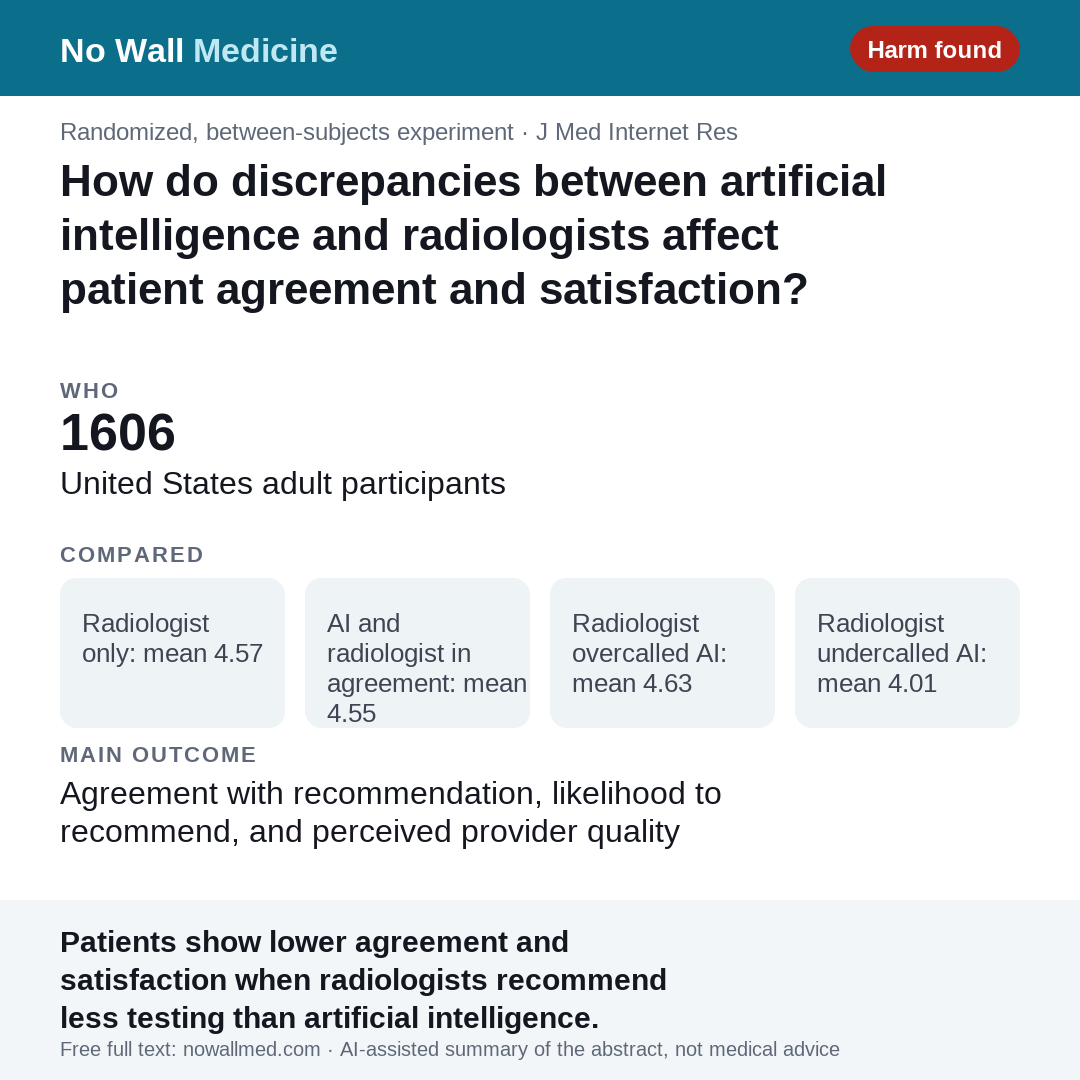
Patient Reactions to Artificial Intelligence-Clinician Discrepancies: Web-Based Randomized Experiment
Randomized, between-subjects experimentHarm found
How do discrepancies between artificial intelligence and radiologists affect patient agreement and satisfaction?
Who
1606
United States adult participants
Compared
Radiologist only: mean 4.57
AI and radiologist in agreement: mean 4.55
Radiologist overcalled AI: mean 4.63
Radiologist undercalled AI: mean 4.01
Main outcome
Agreement with recommendation, likelihood to recommend, and perceived provider quality
Bottom line: Patients show lower agreement and satisfaction when radiologists recommend less testing than artificial intelligence.
Limitation: The study used a simulated scenario where participants assumed the role of patients.
J Med Internet Res · 2025-05-22Download image
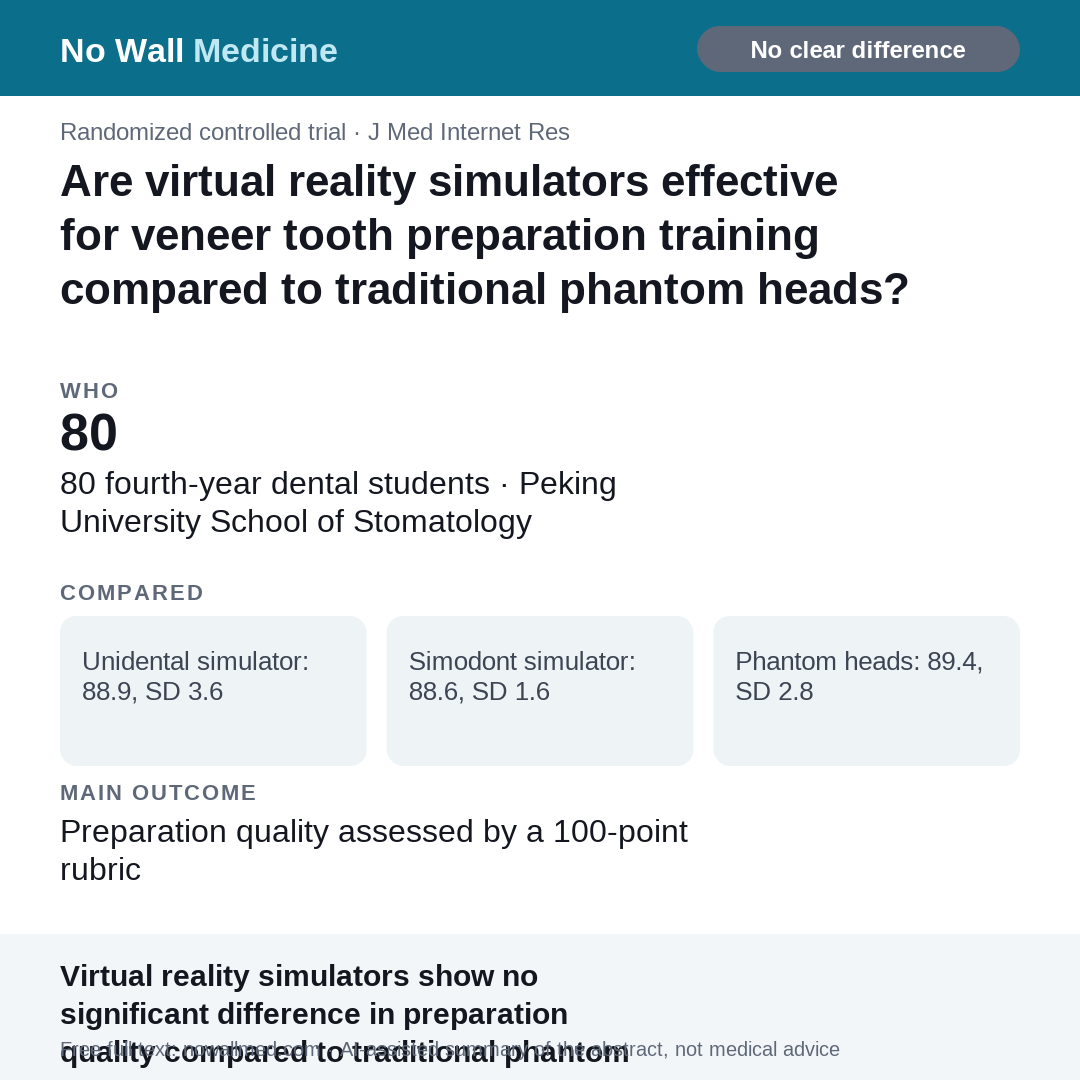
Effectiveness and Methodologies of Virtual Reality Dental Simulators for Veneer Tooth Preparation Training: Randomized Controlled Trial
Randomized controlled trialNo clear difference
Are virtual reality simulators effective for veneer tooth preparation training compared to traditional phantom heads?
Who
80
80 fourth-year dental students · Peking University School of Stomatology
Compared
Unidental simulator: 88.9, SD 3.6
Simodont simulator: 88.6, SD 1.6
Phantom heads: 89.4, SD 2.8
Main outcome
Preparation quality assessed by a 100-point rubric
Bottom line: Virtual reality simulators show no significant difference in preparation quality compared to traditional phantom heads for veneer training.
Limitation: Formal equivalence testing was not performed.
J Med Internet Res · 2025-05-22Download image
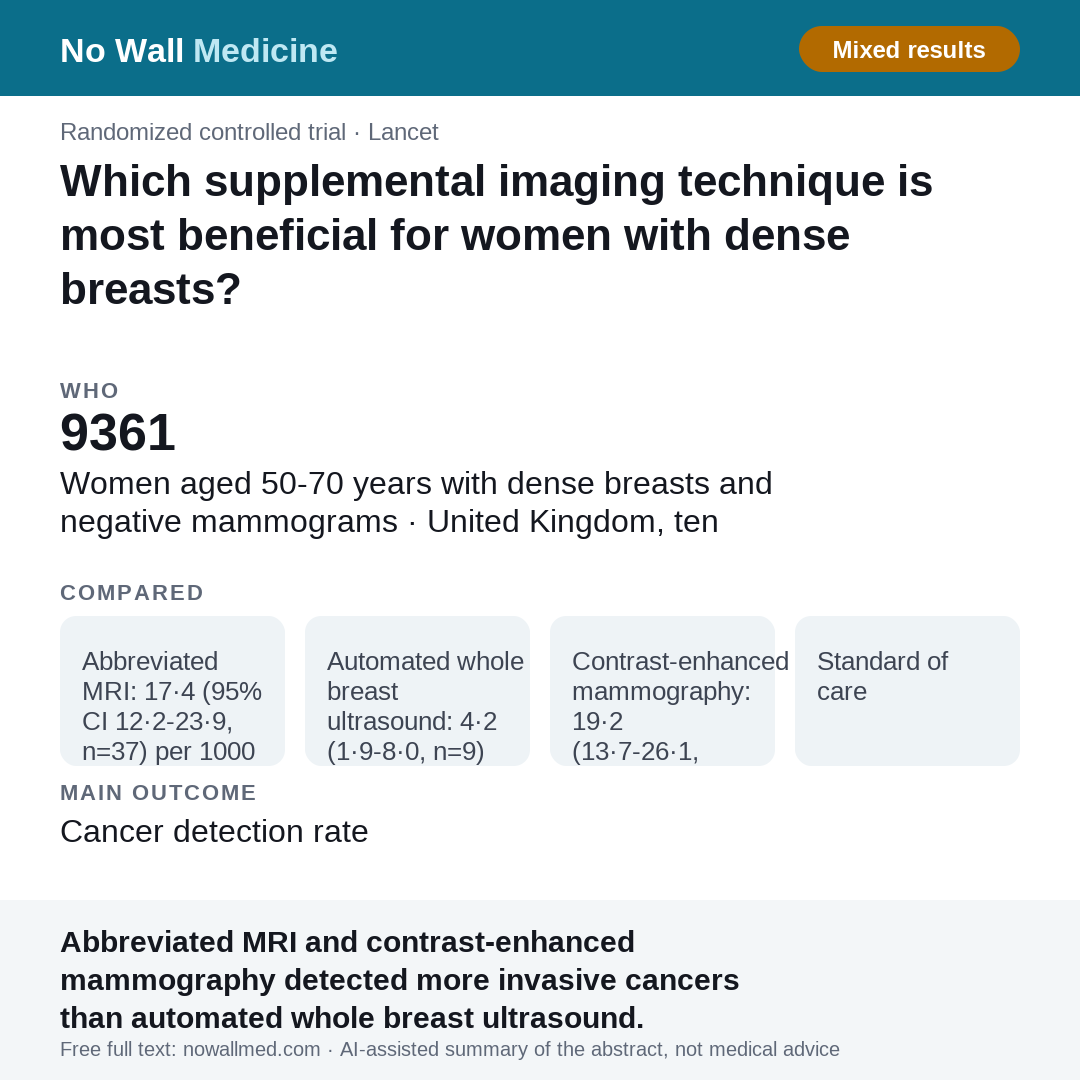
Comparison of supplemental breast cancer imaging techniques-interim results from the BRAID randomised controlled trial
Randomized controlled trialMixed results
Which supplemental imaging technique is most beneficial for women with dense breasts?
Who
9361
Women aged 50-70 years with dense breasts and negative mammograms · United Kingdom, ten breast screening sites
Compared
Abbreviated MRI: 17·4 (95% CI 12·2-23·9, n=37) per 1000 examinations
Automated whole breast ultrasound: 4·2 (1·9-8·0, n=9) per 1000 examinations
Contrast-enhanced mammography: 19·2 (13·7-26·1, n=39) per 1000 examinations
Standard of care
Main outcome
Cancer detection rate
Bottom line: Abbreviated MRI and contrast-enhanced mammography detected more invasive cancers than automated whole breast ultrasound.
Funded by: Cancer Research UK, GE Healthcare, and Bayer Healthcare
Lancet · 2025-05-21Download image
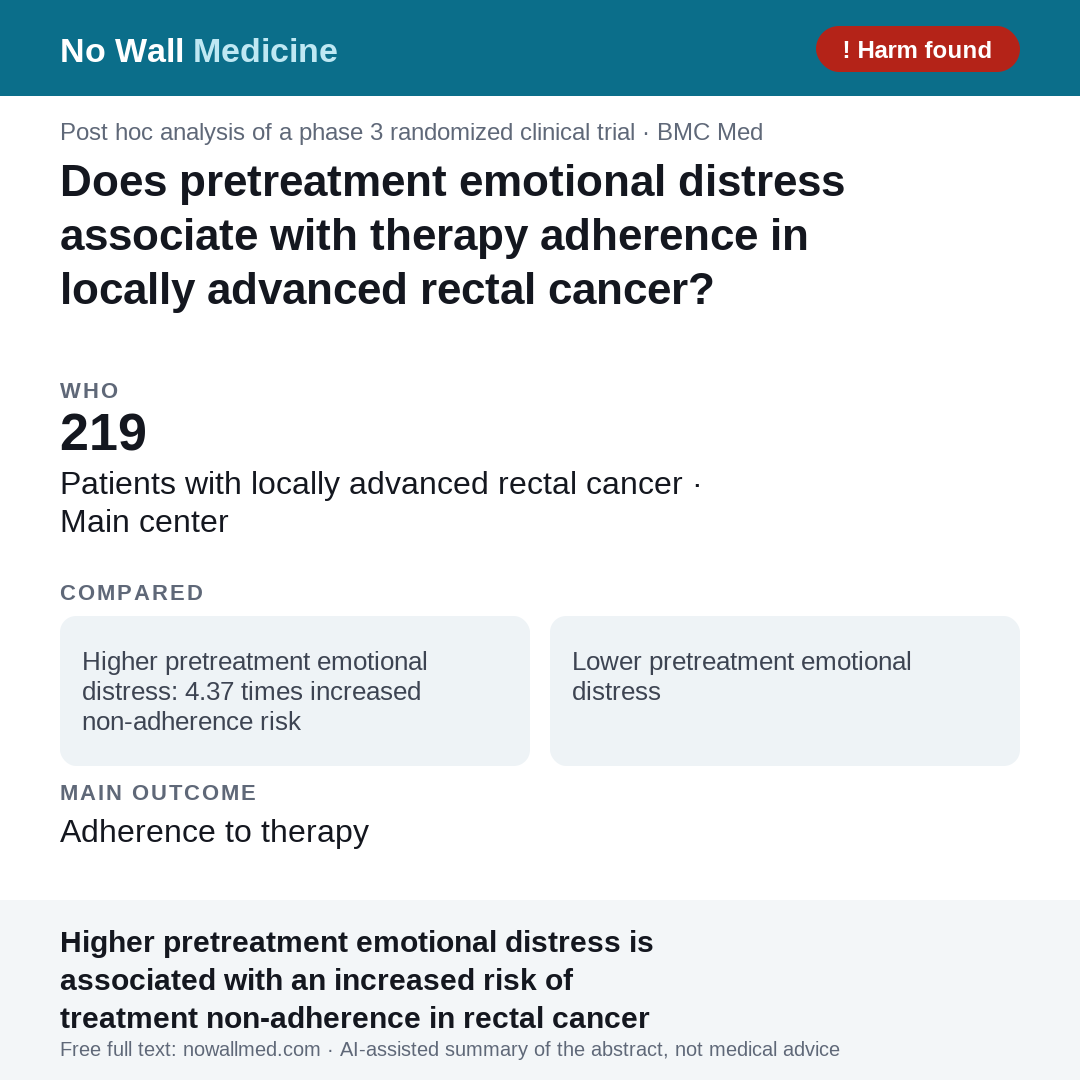
Associations of pretreatment emotional distress with adherence to therapy for patients with locally advanced rectal cancer: a post hoc analysis of the Chinese FOWARC phase 3 randomized clinical trial
Post hoc analysis of a phase 3 randomized clinical trialHarm found
Does pretreatment emotional distress associate with therapy adherence in locally advanced rectal cancer?
Who
219
Patients with locally advanced rectal cancer · Main center
Compared
Higher pretreatment emotional distress: 4.37 times increased non-adherence risk
Lower pretreatment emotional distress
Main outcome
Adherence to therapy
Result: OR: 4.37, 95% CI: 1.92-9.96
Bottom line: Higher pretreatment emotional distress is associated with an increased risk of treatment non-adherence in rectal cancer patients.
BMC Med · 2025-05-21Download image
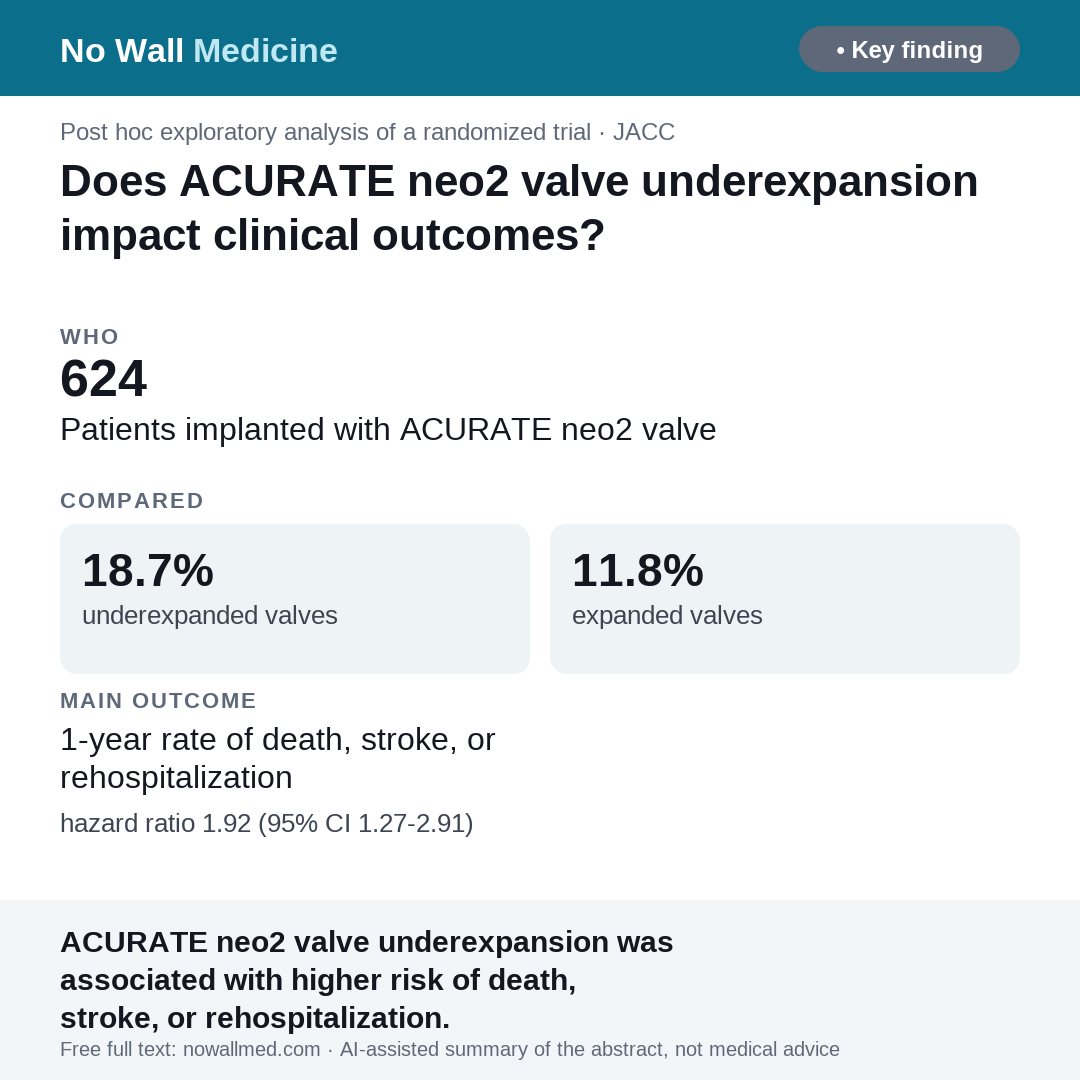
Valve Underexpansion and Clinical Outcomes With ACURATE neo2: Findings From the ACURATE IDE Trial
Post hoc exploratory analysis of a randomized trialHarm found
Does ACURATE neo2 valve underexpansion impact clinical outcomes?
Who
624
Patients implanted with ACURATE neo2 valve
Compared
18.7%underexpanded valves
11.8%expanded valves
Main outcome
1-year rate of death, stroke, or rehospitalization
Result: hazard ratio 1.92 (95% CI 1.27-2.91)
Bottom line: ACURATE neo2 valve underexpansion was associated with higher risk of death, stroke, or rehospitalization.
JACC · 2025-05-21Download image
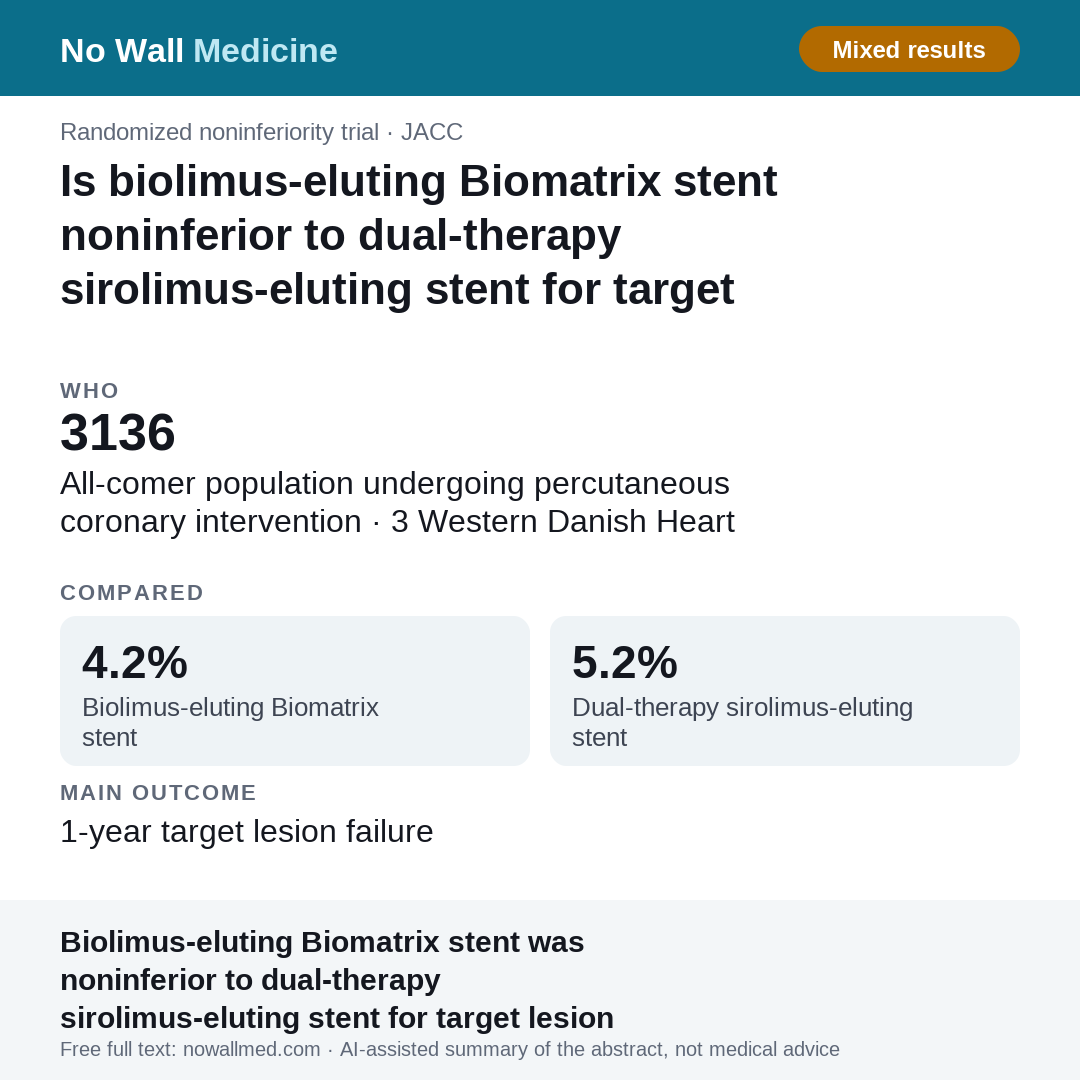
Biolimus-Eluting Biomatrix Stent vs a Dual-Therapy Sirolimus-Eluting Stent in PCI: The SORT OUT XI Randomized Trial
Randomized noninferiority trialMixed results
Is biolimus-eluting Biomatrix stent noninferior to dual-therapy sirolimus-eluting stent for target lesion failure?
Who
3136
All-comer population undergoing percutaneous coronary intervention · 3 Western Danish Heart centers
Compared
4.2%Biolimus-eluting Biomatrix stent
5.2%Dual-therapy sirolimus-eluting stent
Main outcome
1-year target lesion failure
Result: risk difference: -1.07% (upper limit of 1-sided 90% CI: 0.21%)
Bottom line: Biolimus-eluting Biomatrix stent was noninferior to dual-therapy sirolimus-eluting stent for target lesion failure but increased definite stent thrombosis.
JACC · 2025-05-21Download image
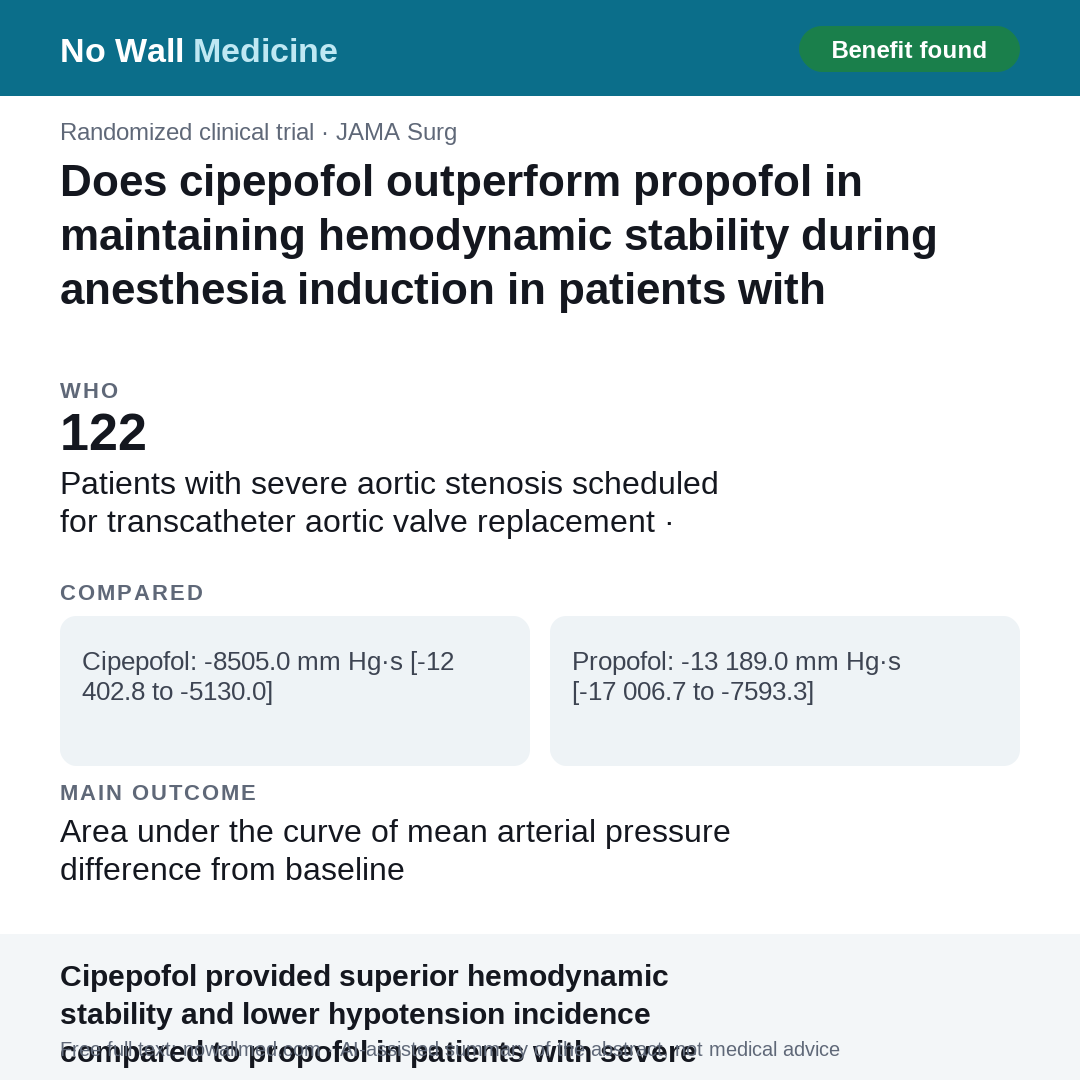
Hemodynamic Impact of Cipepofol vs Propofol During Anesthesia Induction in Patients With Severe Aortic Stenosis: A Randomized Clinical Trial
Randomized clinical trialBenefit found
Does cipepofol outperform propofol in maintaining hemodynamic stability during anesthesia induction in patients with severe aortic stenosis?
Who
122
Patients with severe aortic stenosis scheduled for transcatheter aortic valve replacement · Single-center hospital in China
Compared
Cipepofol: -8505.0 mm Hg·s [-12 402.8 to -5130.0]
Propofol: -13 189.0 mm Hg·s [-17 006.7 to -7593.3]
Main outcome
Area under the curve of mean arterial pressure difference from baseline
Bottom line: Cipepofol provided superior hemodynamic stability and lower hypotension incidence compared to propofol in patients with severe aortic stenosis.
JAMA Surg · 2025-05-21Download image
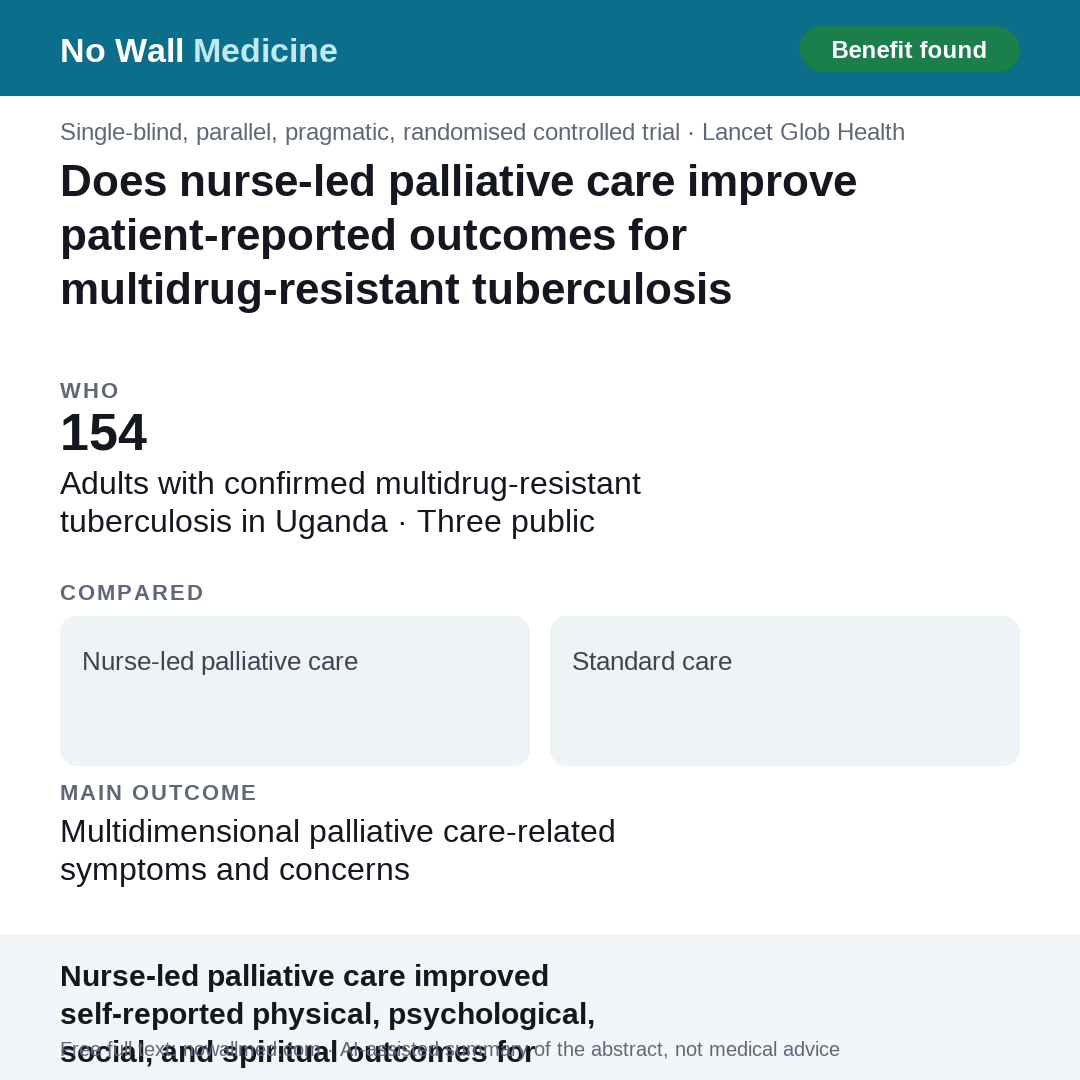
Nurse-led palliative care for multidrug-resistant tuberculosis: a parallel, single-blind, pragmatic, randomised controlled trial in Uganda
Single-blind, parallel, pragmatic, randomised controlled trialBenefit found
Does nurse-led palliative care improve patient-reported outcomes for multidrug-resistant tuberculosis patients?
Who
154
Adults with confirmed multidrug-resistant tuberculosis in Uganda · Three public hospitals in Uganda
Compared
Nurse-led palliative care
Standard care
Main outcome
Multidimensional palliative care-related symptoms and concerns
Result: 5·12 scale-points (95% CI 2·89-7·21)
Bottom line: Nurse-led palliative care improved self-reported physical, psychological, social, and spiritual outcomes for multidrug-resistant tuberculosis patients.
Funded by: Open Society Foundations
Lancet Glob Health · 2025-05-21Download image
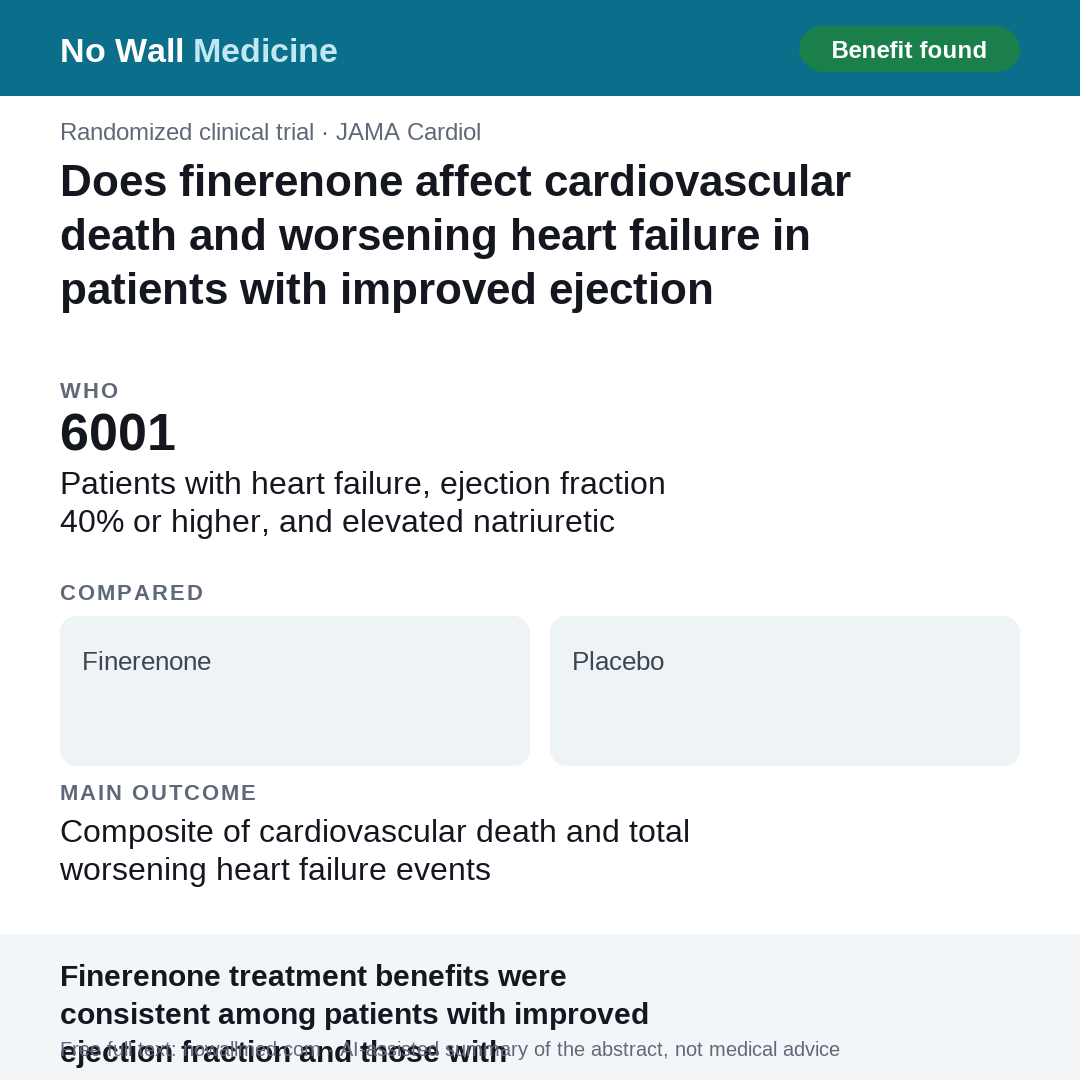
Finerenone in Heart Failure With Improved Ejection Fraction: The FINEARTS-HF Randomized Clinical Trial
Randomized clinical trialBenefit found
Does finerenone affect cardiovascular death and worsening heart failure in patients with improved ejection fraction?
Who
6001
Patients with heart failure, ejection fraction 40% or higher, and elevated natriuretic peptide
Compared
Finerenone
Placebo
Main outcome
Composite of cardiovascular death and total worsening heart failure events
Bottom line: Finerenone treatment benefits were consistent among patients with improved ejection fraction and those with consistently preserved ejection fraction.
JAMA Cardiol · 2025-05-21Download image
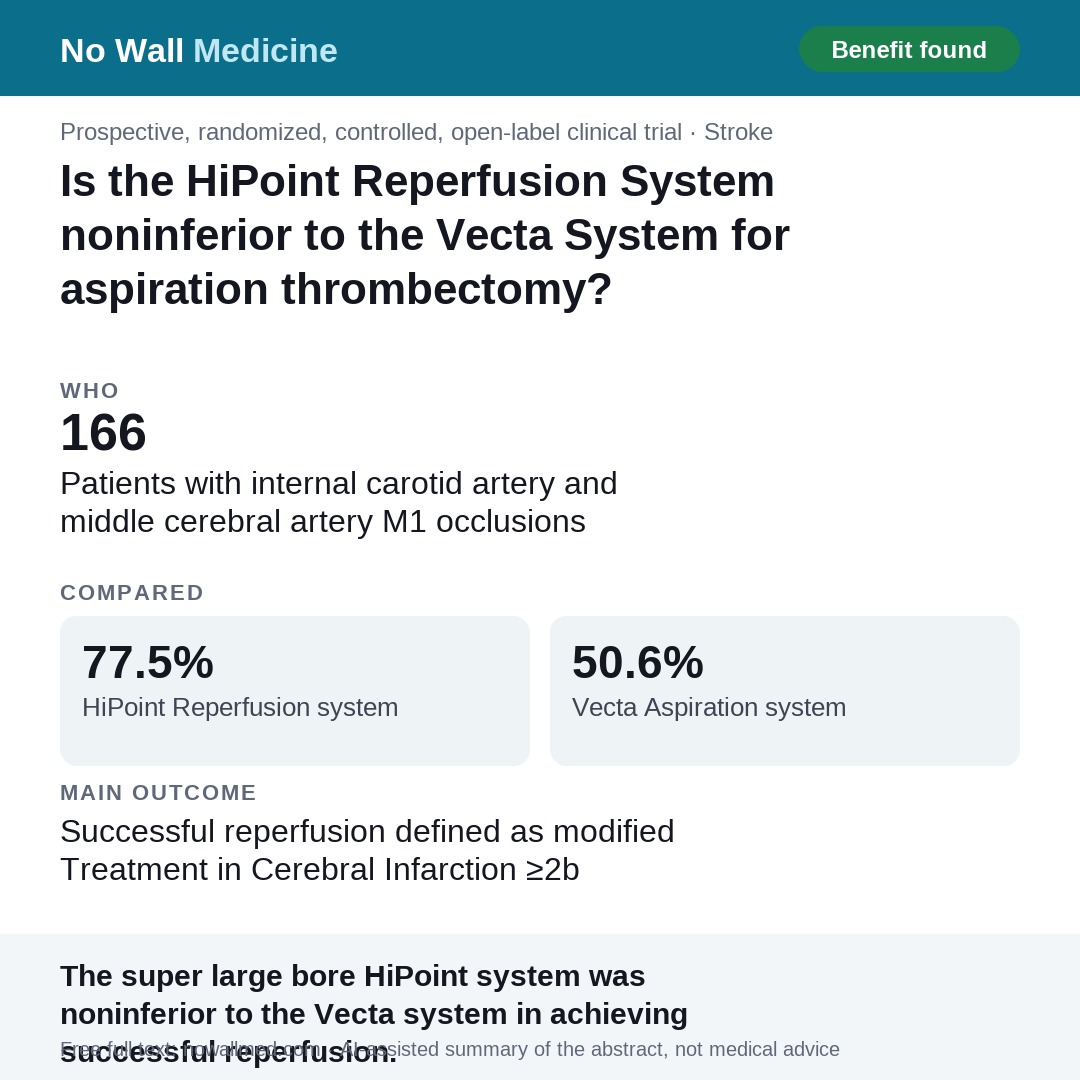
SUMMIT MAX: A Randomized Trial of the Super Large Bore HiPoint Reperfusion System Versus Vecta System for Aspiration Thrombectomy
Prospective, randomized, controlled, open-label clinical trialBenefit found
Is the HiPoint Reperfusion System noninferior to the Vecta System for aspiration thrombectomy?
Who
166
Patients with internal carotid artery and middle cerebral artery M1 occlusions
Compared
77.5%HiPoint Reperfusion system (69/89)
50.6%Vecta Aspiration system (39/77)
Main outcome
Successful reperfusion defined as modified Treatment in Cerebral Infarction ≥2b
Result: P<0.0001 for noninferiority
Bottom line: The super large bore HiPoint system was noninferior to the Vecta system in achieving successful reperfusion.
Stroke · 2025-05-21Download image