Visual abstracts
New randomized trials and meta-analyses from leading journals at a glance: who was studied, what was compared, and what was found. Every paper is free to read in full.
All specialtiesCardiology 4877Oncology 4138Gastroenterology & Hepatology 1942Infectious Disease 3837Neurology 1905Psychiatry & Mental Health 2273Pulmonology 2143Critical Care 1365Endocrinology & Diabetes 2580Pediatrics 2980Surgery 2559Orthopedics & Sports Medicine 931Neurosurgery 537Cardiothoracic & Vascular Surgery 674Plastic & Reconstructive Surgery 591Nephrology 1133Rheumatology 823Hematology 1109Dermatology 621Ophthalmology 543Obstetrics & Gynecology 1686Public & Global Health 1058Radiology & Imaging 648Anesthesiology 986Urology 764ENT (Otolaryngology) 503Emergency Medicine 511Allergy & Immunology 313Geriatrics 981Family Medicine & Primary Care 562Medical Genetics & Genomics 676Pathology & Laboratory Medicine 159Physical Medicine & Rehabilitation 757Palliative Care 444Nutrition 1588Digital Health & AI 2201General Medicine 321
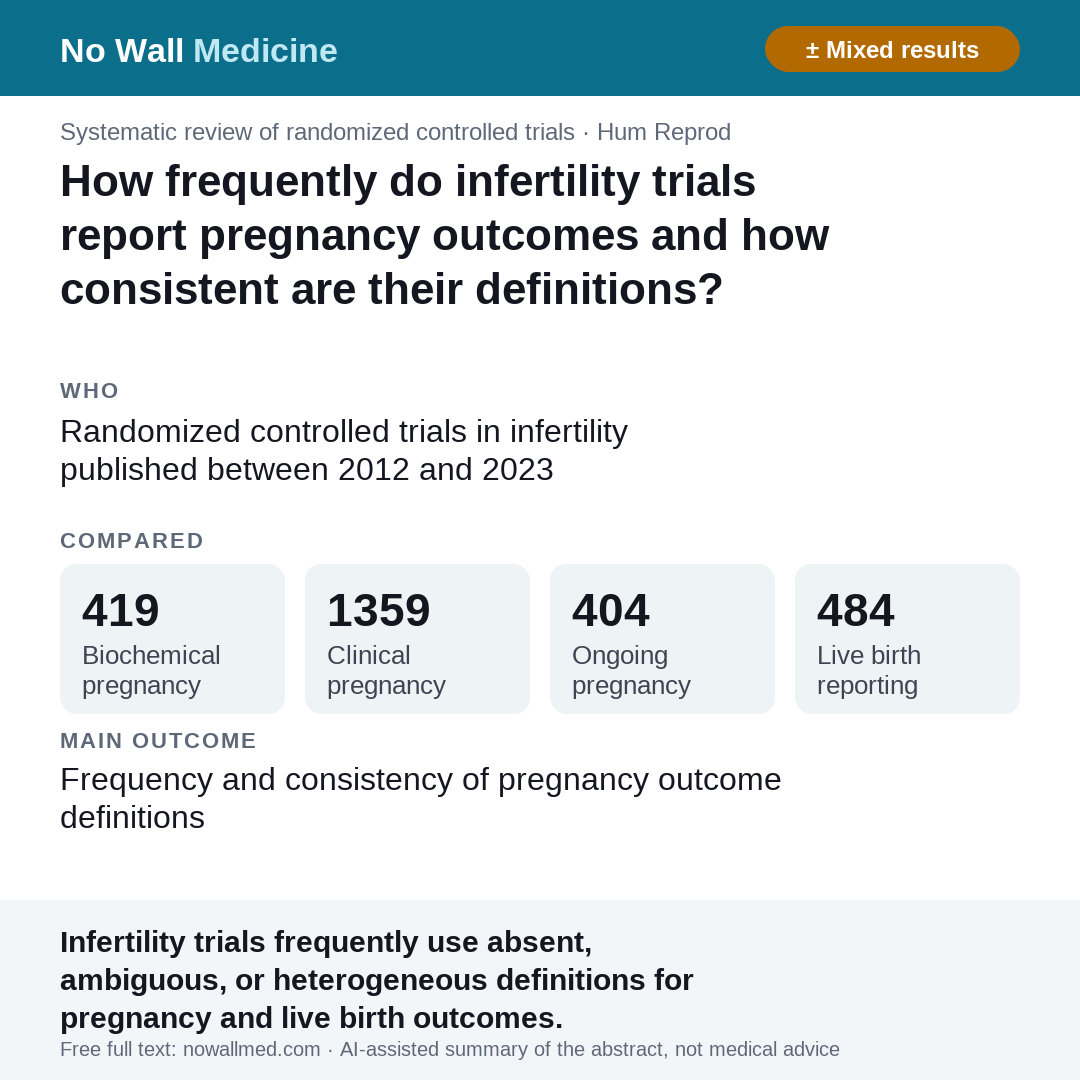
The presence, clarity, and consistency of definitions in pregnancy outcomes in infertility trials: a systematic review
Systematic review of randomized controlled trialsMixed results
How frequently do infertility trials report pregnancy outcomes and how consistent are their definitions?
Who
1425
Randomized controlled trials in infertility published between 2012 and 2023
Compared
419Biochemical pregnancy reporting (29.4%)
1359Clinical pregnancy reporting (95.4%)
404Ongoing pregnancy reporting (28.4%)
484Live birth reporting (34.0%)
Main outcome
Frequency and consistency of pregnancy outcome definitions
Bottom line: Infertility trials frequently use absent, ambiguous, or heterogeneous definitions for pregnancy and live birth outcomes.
Limitation: Definitions were missed in less than 10% of randomly checked studies due to text-mining.
Hum Reprod · 2025-02-22Download image
Clinical prediction models for in vitro fertilization outcomes: a systematic review, meta-analysis, and external validation
Systematic review and meta-analysisBenefit found
What is the best-performing model for predicting live birth outcomes in IVF or ICSI?
Who
Patients undergoing in vitro fertilization or intracytoplasmic sperm injection
Compared
Templeton's model: AUC 0.65 (95% CI: 0.61-0.69)
Nelson's model: AUC 0.63 (95% CI: 0.63-0.64)
McLernon's pre-treatment model: AUC 0.67 (95% CI: 0.62-0.71)
McLernon's post-treatment model: AUC 0.73 (95% CI: 0.71-0.75)
Main outcome
Area under the receiver operating characteristic curves for live birth
Result: McLernon's post-treatment model AUC 0.73 (95% CI 0.71-0.75)
Bottom line: McLernon's post-treatment model is the best-performing model for predicting live birth outcomes in IVF or ICSI.
Limitation: Focus on English-language studies and live birth outcomes may constrain generalizability to diverse populations.
Funded by: National Natural Science Foundation of China
Hum Reprod · 2025-02-22Download image

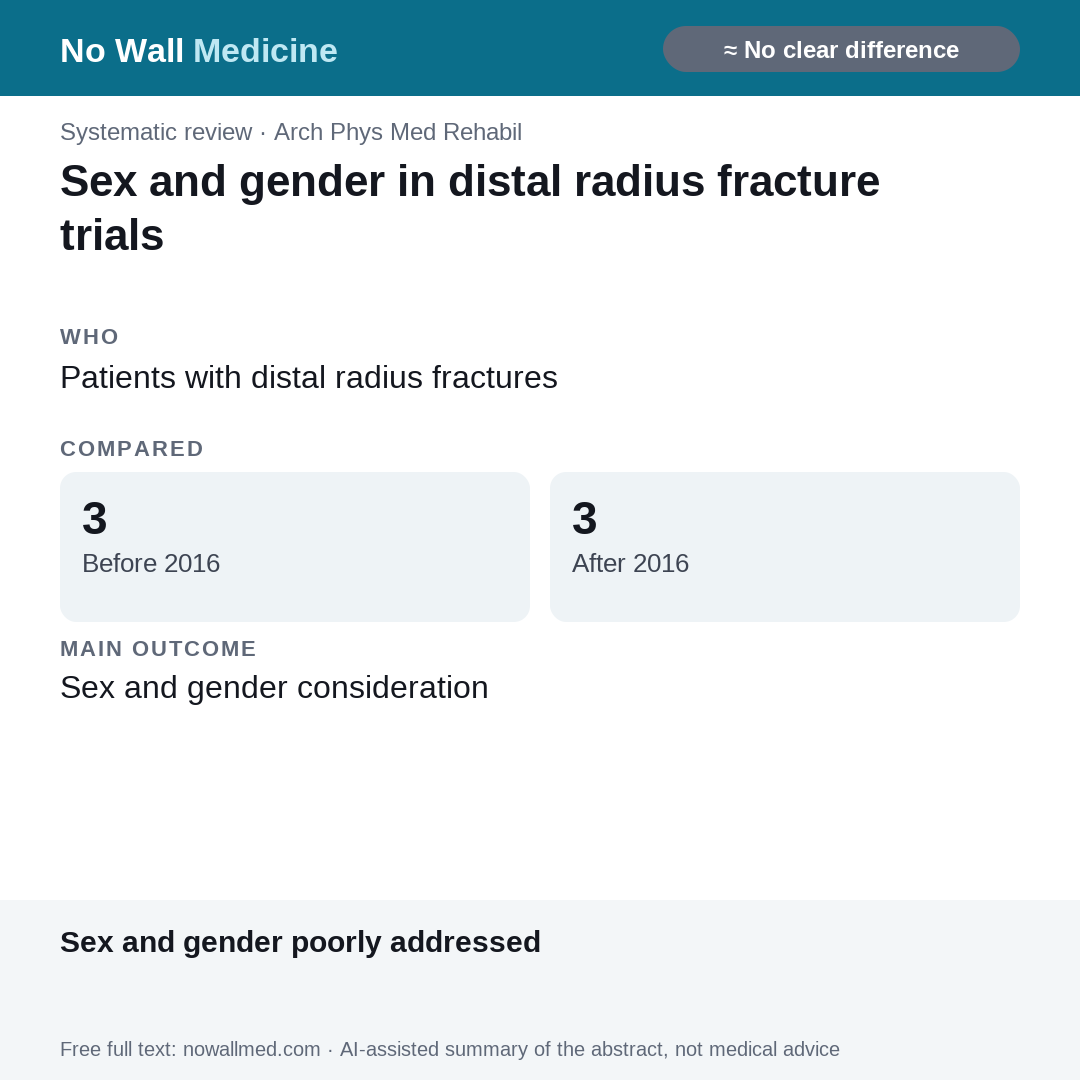
Reporting of Sex and Gender in Randomized Controlled Trials of Rehabilitation Treated Distal Radius Fractures: A Systematic Review
Systematic reviewNo clear difference
Sex and gender in distal radius fracture trials
Who
77
Patients with distal radius fractures
Compared
3Before 2016
3After 2016
Main outcome
Sex and gender consideration
Bottom line: Sex and gender poorly addressed
Arch Phys Med Rehabil · 2025-02-22Download image
Adoption or Placement in Foster Care and Catch-up in Linear Growth and Development: A Meta-Analysis of Individual Participant Data
Meta-analysis of individual participant dataBenefit found
Does adoption or foster care placement lead to catch-up in linear growth and development?
Who
485
Children under 5 years of age
Compared
Baseline: 3.9 cm length deficit
Adoption: reduced gap by 77% or 3.0 cm
Main outcome
catch-up in linear growth and child development
Result: 3.0 cm (95% CI: 1.9, 4.1 cm)
Bottom line: Adoption or foster care placement leads to significant catch-up in linear growth and partial recovery in child development.
Adv Nutr · 2025-02-22Download image

Sodium-Glucose Cotransporter-2 Inhibitors and Arrhythmias: A Meta-Analysis of 38 Randomized Controlled Trials
Meta-analysis of 38 randomized controlled trialsBenefit found
Do sodium-glucose cotransporter-2 inhibitors affect the risk of arrhythmias and sudden cardiac death?
Who
88704
Patients with type 2 diabetes mellitus, heart failure, or chronic kidney disease
Compared
Sodium-glucose cotransporter-2 inhibitors
Control
Main outcome
Risk of arrhythmias and sudden cardiac death
Result: atrial arrhythmia OR 0.85 (95% CI 0.75-0.98), sudden cardiac death OR 0.72 (95% CI 0.55-0.94)
Bottom line: Sodium-glucose cotransporter-2 inhibitors are associated with lower risk of atrial arrhythmia and sudden cardiac death.
JACC Adv · 2025-02-22Download image

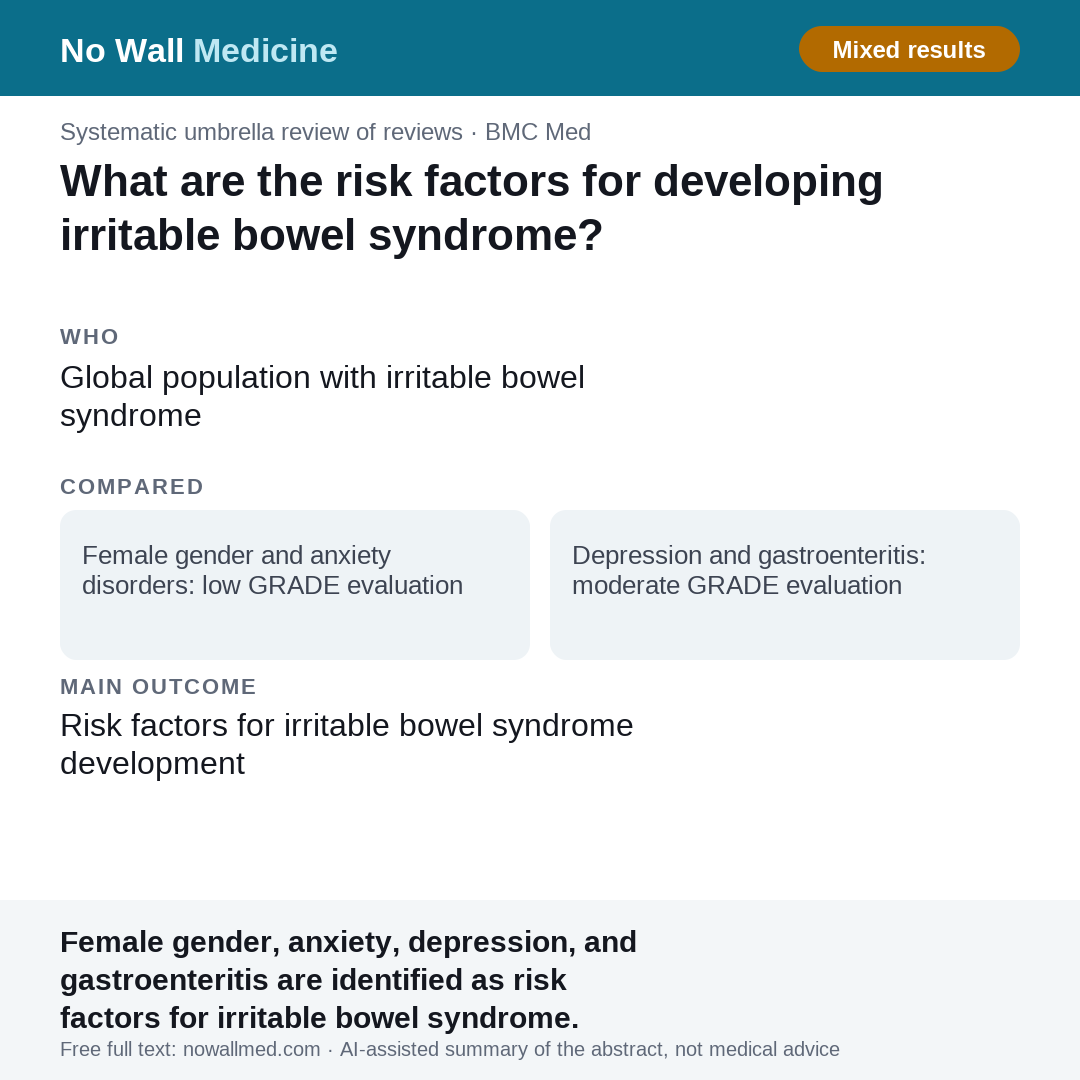
Risk factors for developing irritable bowel syndrome: systematic umbrella review of reviews
Systematic umbrella review of reviewsMixed results
What are the risk factors for developing irritable bowel syndrome?
Who
Global population with irritable bowel syndrome
Compared
Female gender and anxiety disorders: low GRADE evaluation
Depression and gastroenteritis: moderate GRADE evaluation
Main outcome
Risk factors for irritable bowel syndrome development
Bottom line: Female gender, anxiety, depression, and gastroenteritis are identified as risk factors for irritable bowel syndrome.
Limitation: Most included reviews were of critically low or low quality.
BMC Med · 2025-02-21Download image
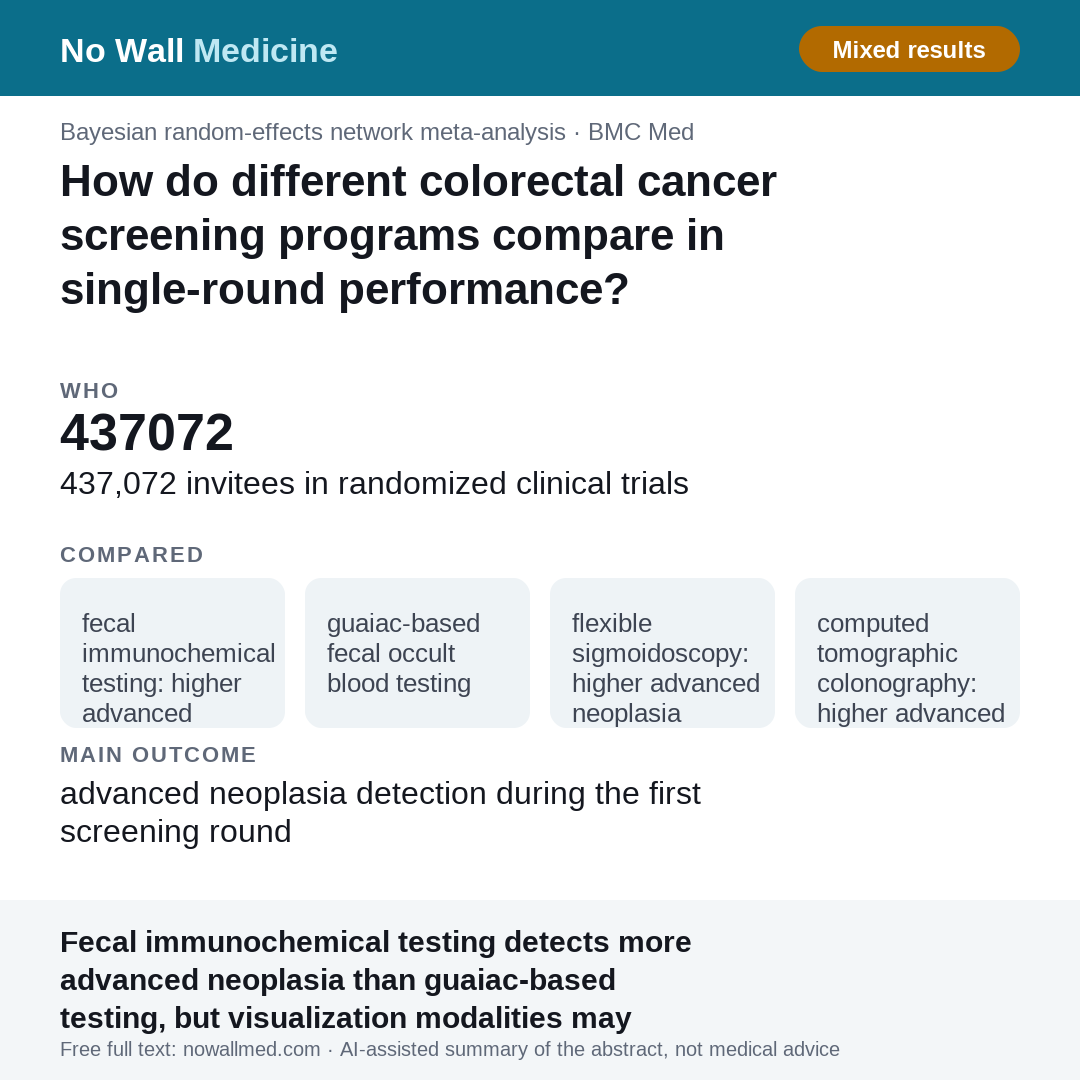
Single-round performance of colorectal cancer screening programs: a network meta-analysis of randomized clinical trials
Bayesian random-effects network meta-analysisMixed results
How do different colorectal cancer screening programs compare in single-round performance?
Who
437072
437,072 invitees in randomized clinical trials
Compared
fecal immunochemical testing: higher advanced neoplasia detection than guaiac-based
guaiac-based fecal occult blood testing
flexible sigmoidoscopy: higher advanced neoplasia detection than fecal immunochemical testing
computed tomographic colonography: higher advanced neoplasia detection than fecal immunochemical testing
Main outcome
advanced neoplasia detection during the first screening round
Result: relative risk 2.48 (95% credible interval 1.52-4.21)
Bottom line: Fecal immunochemical testing detects more advanced neoplasia than guaiac-based testing, but visualization modalities may outperform fecal immunochemical testing.
Limitation: High risk of bias for detection outcomes and low event rates for colorectal cancer detection.
BMC Med · 2025-02-21Download image
Individual patient data meta-analysis of paclitaxel-coated balloons vs. drug-eluting stents for small-vessel coronary artery disease: the ANDROMEDA study
Individual patient data meta-analysisBenefit found
Are paclitaxel-coated balloons or drug-eluting stents better for small-vessel coronary artery disease?
Who
1154
Patients with de novo small-vessel coronary artery disease
Compared
Paclitaxel-coated balloon angioplasty
Drug-eluting stent implantation
Main outcome
Major adverse cardiac events and target lesion failure
Result: hazard ratio 0.67 (95% CI 0.47-0.96)
Bottom line: Paclitaxel-coated balloon angioplasty is associated with reduced major adverse cardiac events compared to drug-eluting stents at 3 years.
Limitation: Larger trials comparing contemporary devices at prolonged follow-up are warranted.
Eur Heart J · 2025-02-21Download image

Global, regional, and national estimates of hepatitis C virus (HCV) infection incidence among people who inject drugs and number of new annual HCV infections attributable to injecting drug use: a multi-stage analysis
Multi-stage analysis using meta-analysis and modelingMixed results
What is the hepatitis C virus incidence among people who inject drugs?
Who
People who inject drugs · Global, 187 countries
Compared
Pre-2015 period: 13·9 per 100 person-years (95% uncertainty interval 11·9-16·4)
2015-21 period: 8·6 per 100 person-years (95% uncertainty interval 7·1-10·7)
Main outcome
Hepatitis C virus incidence per 100 person-years
Bottom line: Hepatitis C incidence among people who inject drugs decreased globally, but a 76.7% decline is still needed by 2030.
Funded by: World Health Organization and the Wellcome Trust
Lancet Gastroenterol Hepatol · 2025-02-21Download image

Vitamin D supplementation to prevent acute respiratory infections: systematic review and meta-analysis of stratified aggregate data
Updated systematic review and meta-analysisNo clear difference
Does vitamin D supplementation prevent acute respiratory infections?
Who
61589
Participants in randomized controlled trials
Compared
Vitamin D
Placebo
Main outcome
acute respiratory infection risk
Result: odds ratio 0.94 (95% CI 0.88-1.00)
Bottom line: Vitamin D supplementation did not statistically significantly affect overall acute respiratory infection risk.
Lancet Diabetes Endocrinol · 2025-02-21Download image

Comparison of hospitalisation settings and exercise interventions in acute care: a systematic review and meta-analysis
Systematic review and meta-analysisBenefit found
How do hospital-at-home and inpatient settings compare for functional outcomes and exercise efficacy?
Who
Older adults in acute care settings
Compared
Hospital-at-home
Inpatient hospitalisation
Inpatient exercise interventions: physical performance SMD 0.42 (95% CI 0.12-0.72)
Main outcome
Functional and cognitive outcomes and physical performance
Bottom line: Hospital-at-home may preserve status, and inpatient exercise improves physical performance and functional independence in older adults.
Age Ageing · 2025-02-21Download image

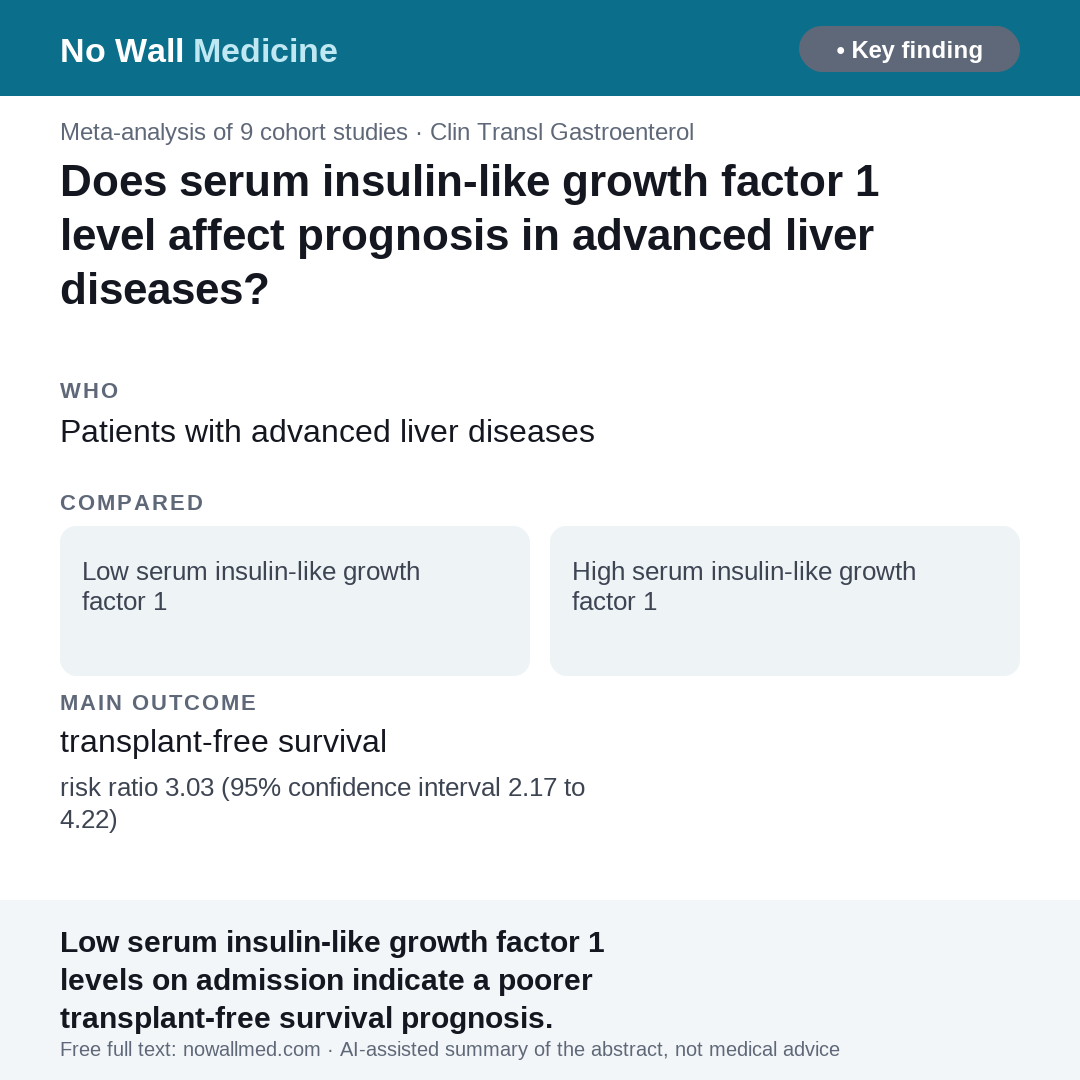
Serum Insulin-Like Growth Factor 1 and the Prognosis of Patients With Advanced Liver Diseases: A Meta-Analysis
Meta-analysis of 9 cohort studiesHarm found
Does serum insulin-like growth factor 1 level affect prognosis in advanced liver diseases?
Who
Patients with advanced liver diseases
Compared
Low serum insulin-like growth factor 1
High serum insulin-like growth factor 1
Main outcome
transplant-free survival
Result: risk ratio 3.03 (95% confidence interval 2.17 to 4.22)
Bottom line: Low serum insulin-like growth factor 1 levels on admission indicate a poorer transplant-free survival prognosis.
Clin Transl Gastroenterol · 2025-02-21Download image
Diagnostic Accuracy of Indocyanine Green-stained Sentinel Lymph Nodes in Prostate Cancer Patients: A Systematic Review and Meta-analysis
Systematic review and meta-analysisMixed results
What is the diagnostic accuracy of indocyanine green-guided sentinel lymph node dissection in prostate cancer?
Who
748
Prostate cancer patients undergoing radical prostatectomy
Compared
Per-patient level: sensitivity 0.87 (95% CI: 0.77-0.92)
Per-node level: sensitivity 0.53 (95% CI: 0.45-0.62)
Main outcome
sensitivity and negative predictive value for lymph node metastasis
Result: sensitivity 0.87 (95% CI: 0.77-0.92) at per-patient level
Bottom line: Indocyanine green-guided sentinel lymph node dissection shows favorable per-patient sensitivity but cannot yet be the standard approach.
Limitation: Lack of investigation into the impact of indocyanine green-guided sentinel lymph node dissection on survival outcomes.
Eur Urol Open Sci · 2025-02-21Download image

Diagnostic Performance of Monocyte Distribution Width for the Detection of Sepsis: A Systematic Review and Meta-Analysis
Systematic review and meta-analysisBenefit found
What is the diagnostic performance of monocyte distribution width for sepsis detection?
Who
39,041
Adults in emergency department and inpatient settings · Hospital setting
Compared
Sepsis-2: area under the summary receiver operating curve 0.82 (95% CI, 0.78-0.85)
Sepsis-3: area under the summary receiver operating curve 0.82 (95% CI, 0.78-0.85)
Main outcome
Diagnostic performance for sepsis detection
Result: area under the summary receiver operating curve 0.82 (95% CI, 0.78-0.85)
Bottom line: Monocyte distribution width shows good diagnostic performance for detecting sepsis in adults.
Limitation: The overall quality of evidence was low.
JACEP Open · 2025-02-21Download image

A systematic review of consumers' and healthcare professionals' trust in digital healthcare
Systematic reviewUnclear result
What are the domains, definitions, factors, and outcomes associated with trust in digital healthcare?
Who
49
Consumers and healthcare professionals
Compared
Consumers
Healthcare professionals
Main outcome
Trust in digital healthcare domains, definitions, factors, and outcomes
Bottom line: Trust in digital healthcare is complex and requires a theoretical framework for standardized measurement.
NPJ Digit Med · 2025-02-21Download image

Digital Health Interventions to Improve Mental Health in Patients With Cancer: Umbrella Review
Umbrella reviewBenefit found
Are digital health interventions effective for improving mental health in patients with cancer?
Who
78
Patients with cancer
Compared
Digital health interventions
Control
Main outcome
Mental health and psychosocial outcomes
Bottom line: Digital health interventions are shown to be effective for improving mental health in patients with cancer.
J Med Internet Res · 2025-02-21Download image

Improving research and development of wearable assistive and rehabilitation technologies: a systematic review on diversity factors
Systematic reviewUnclear result
Diversity in wearable assistive tech development
Who
wearable assistive technology users
Compared
Current research
Inclusive research
Main outcome
diversity in technology development
Bottom line: Diversity not addressed in wearable tech development
J Neuroeng Rehabil · 2025-02-21Download image

Comparative Efficacy of Glucagon-Like Peptide 1 Receptor Agonists for Cardiovascular Outcomes in Asian Versus White Populations: Systematic Review and Meta-analysis of Randomized Trials of Populations With or Without Type 2 Diabetes and/or Overweight or Obesity
Systematic review and meta-analysis of randomized trialsBenefit found
Are glucagon-like peptide 1 receptor agonists more effective for cardiovascular outcomes in Asians versus Whites?
Who
Asian and White individuals with type 2 diabetes or overweight or obesity
Compared
Asian people: hazard ratio 0.69 (95% CI 0.58, 0.83)
White people: hazard ratio 0.85 (95% CI 0.79, 0.91)
Main outcome
major adverse cardiovascular events
Result: hazard ratio 0.69 (95% CI 0.58, 0.83) in Asian versus 0.85 (95% CI 0.79, 0.91) in White
Bottom line: Glucagon-like peptide 1 receptor agonists may offer greater major adverse cardiovascular event reductions in Asian compared with White individuals.
Limitation: Lack of individual patient-level data precluded detailed subclassification of the Asian group.
Diabetes Care · 2025-02-20Download image

Prevalence and Management of Complications of Laser Ablation for Benign Thyroid Nodules
Systematic review and meta-analysisBenefit found
What is the prevalence and management of complications from laser ablation for benign thyroid nodules?
Who
4745
Patients with benign and solid noncystic thyroid nodules
Compared
23%Overall complications ([CI, 17%-30%])
21%Minor complications ([CI, 15%-27%])
2%Major complications ([CI, 1%-3%])
Main outcome
Prevalence of complications from laser ablation
Bottom line: Laser ablation for benign solid thyroid nodules is a generally safe technique with rare major complications.
J Clin Endocrinol Metab · 2025-02-20Download image

Cardiorespiratory fitness, body mass index and mortality: a systematic review and meta-analysis
Systematic review and meta-analysisBenefit found
How do cardiorespiratory fitness and body mass index jointly affect mortality risk?
Who
398716
Prospective cohort study observations
Compared
Normal weight-fit (reference)
Normal weight-unfit: all-cause HR: 1.92 (1.43-2.57)
Overweight-unfit: all-cause HR: 1.82 (1.47-2.24)
Obese-unfit: all-cause HR: 2.04 (1.54-2.71)
Main outcome
cardiovascular disease and all-cause mortality risk
Bottom line: Cardiorespiratory fitness is a strong predictor of mortality and attenuates risks associated with overweight and obesity.
Br J Sports Med · 2025-02-20Download image