Visual abstracts
New randomized trials and meta-analyses from leading journals at a glance: who was studied, what was compared, and what was found. Every paper is free to read in full.
All specialtiesCardiology 394Oncology 314Gastroenterology & Hepatology 158Infectious Disease 313Neurology 179Psychiatry & Mental Health 258Pulmonology 180Critical Care 125Endocrinology & Diabetes 236Pediatrics 188Surgery 128Orthopedics & Sports Medicine 75Neurosurgery 24Cardiothoracic & Vascular Surgery 47Plastic & Reconstructive Surgery 79Nephrology 77Rheumatology 81Hematology 92Dermatology 42Ophthalmology 64Obstetrics & Gynecology 120Public & Global Health 119Radiology & Imaging 36Anesthesiology 68Urology 91ENT (Otolaryngology) 48Emergency Medicine 41Allergy & Immunology 49Geriatrics 113Family Medicine & Primary Care 67Medical Genetics & Genomics 36Pathology & Laboratory Medicine 6Physical Medicine & Rehabilitation 96Palliative Care 60Nutrition 135Digital Health & AI 337General Medicine 46
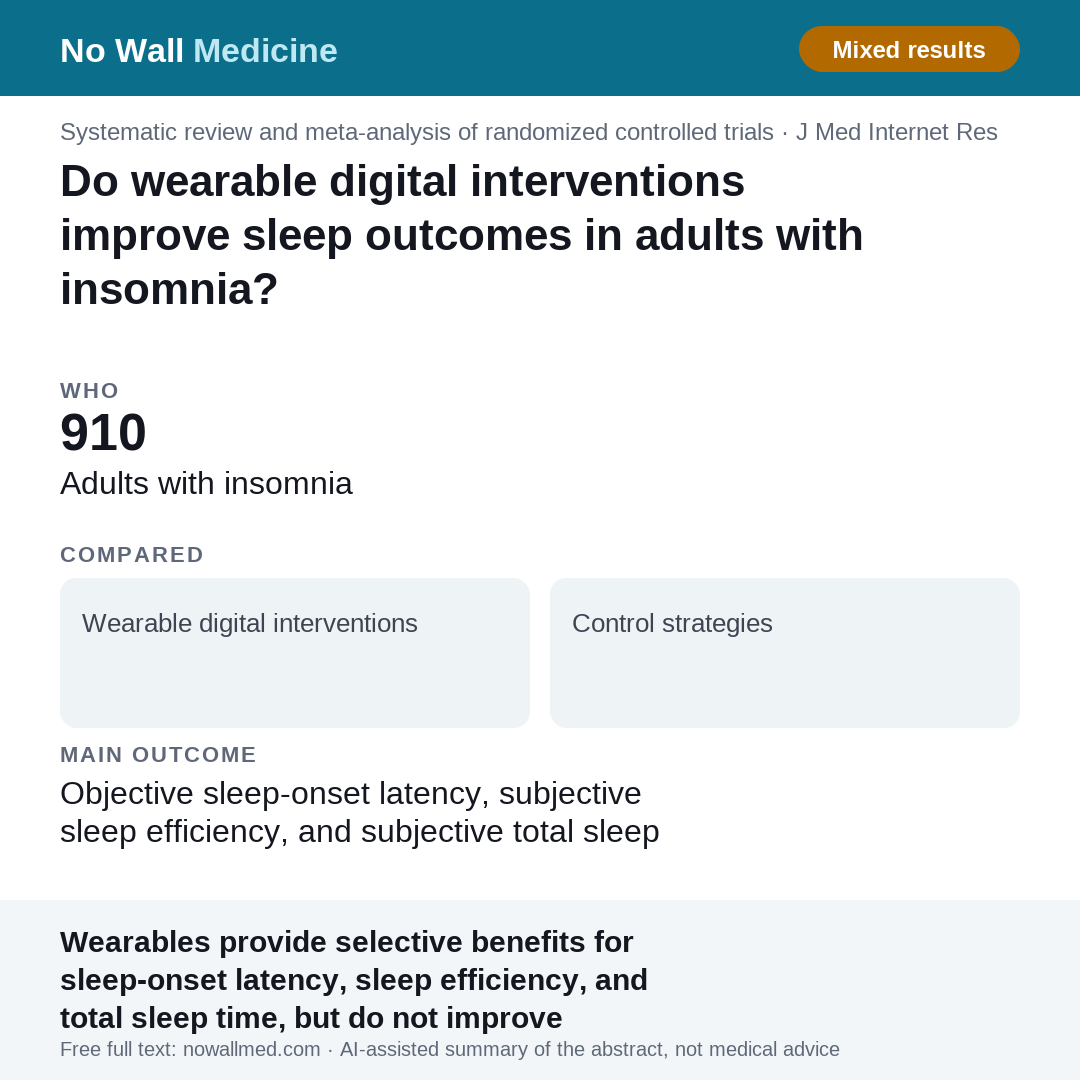
Effectiveness of Wearable Digital Therapeutics in Improving Sleep Outcomes Among Individuals With Insomnia: Systematic Review and Meta-Analysis of Randomized Controlled Trials
Systematic review and meta-analysis of randomized controlled trialsMixed results
Do wearable digital interventions improve sleep outcomes in adults with insomnia?
Who
910
Adults with insomnia
Compared
Wearable digital interventions
Control strategies
Main outcome
Objective sleep-onset latency, subjective sleep efficiency, and subjective total sleep time
Result: mean difference -4.52, 95% CI -8.38 to -0.67 for sleep-onset latency
Bottom line: Wearables provide selective benefits for sleep-onset latency, sleep efficiency, and total sleep time, but do not improve insomnia severity.
Limitation: Wide prediction intervals, substantial heterogeneity, and limited study numbers indicate preliminary, nonconclusive findings.
J Med Internet Res · 2026-09-11Download image
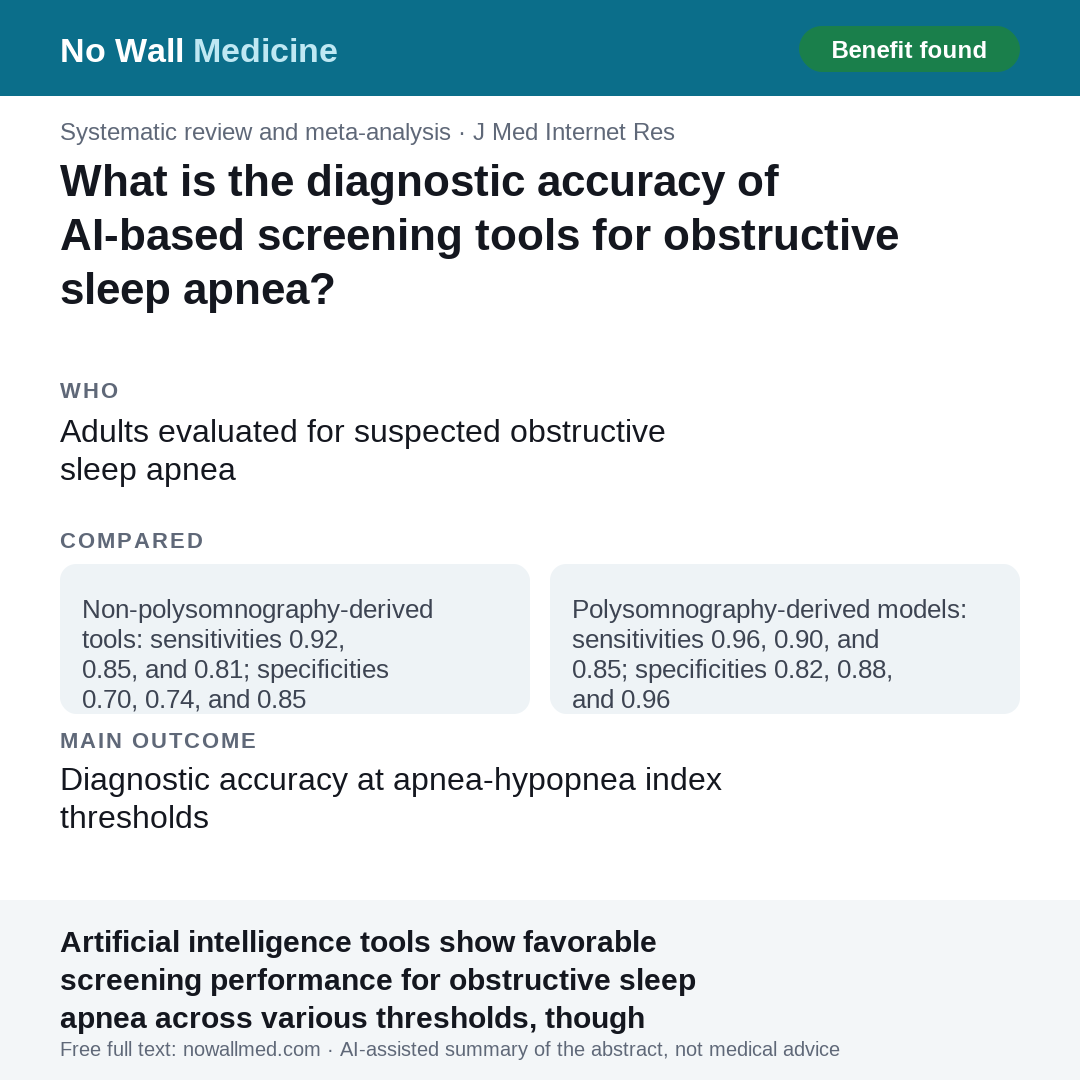
Performance of AI-Based Screening Tools for Obstructive Sleep Apnea Across Apnea-Hypopnea Index Thresholds: Systematic Review and Meta-Analysis
Systematic review and meta-analysisBenefit found
What is the diagnostic accuracy of AI-based screening tools for obstructive sleep apnea?
Who
Adults evaluated for suspected obstructive sleep apnea
Compared
Non-polysomnography-derived tools: sensitivities 0.92, 0.85, and 0.81; specificities 0.70, 0.74, and 0.85
Polysomnography-derived models: sensitivities 0.96, 0.90, and 0.85; specificities 0.82, 0.88, and 0.96
Main outcome
Diagnostic accuracy at apnea-hypopnea index thresholds
Bottom line: Artificial intelligence tools show favorable screening performance for obstructive sleep apnea across various thresholds, though performance may vary.
Limitation: Substantial heterogeneity, limited external validation, and low or very low certainty of evidence.
J Med Internet Res · 2026-09-11Download image
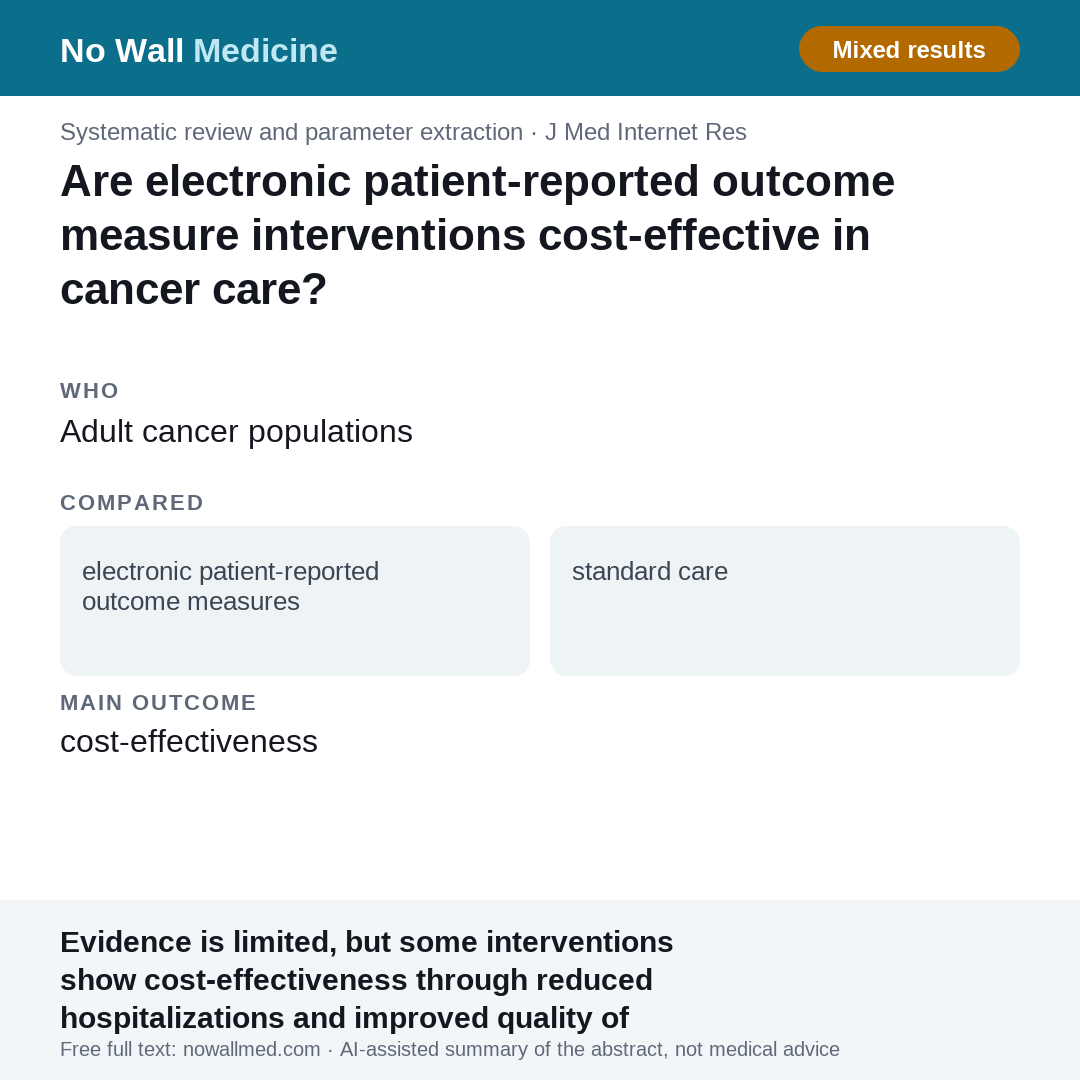
Cost-Effectiveness of Electronic Patient-Reported Outcome Measure Interventions in Cancer: Systematic Review and Parameter Extraction for Economic Modeling
Systematic review and parameter extractionMixed results
Are electronic patient-reported outcome measure interventions cost-effective in cancer care?
Who
Adult cancer populations
Compared
electronic patient-reported outcome measures
standard care
Main outcome
cost-effectiveness
Bottom line: Evidence is limited, but some interventions show cost-effectiveness through reduced hospitalizations and improved quality of life.
Limitation: The evidence base remains limited and qualitative research rarely addressed economic questions.
J Med Internet Res · 2026-09-11Download image
Culturally adapted post-diagnostic dementia support for South Asian people living with dementia and caregivers: a rapid review
Rapid reviewBenefit found
Is culturally adapted post-diagnostic dementia support effective for South Asian people and caregivers?
Who
South Asian people living with dementia and their caregivers · United Kingdom
Compared
Carer support programmes: increased carers' knowledge of dementia and confidence in caregiving
Psychosocial interventions: benefits for caregiver burden and mental health
Service-level innovations: improved access to services and culturally appropriate information
Main outcome
Feasibility and value of culturally sensitive dementia support
Bottom line: Culturally sensitive psychoeducation, carer training, and psychosocial interventions show feasibility and perceived value for South Asian communities.
Limitation: Research remains small-scale, methodologically limited, with little focus on interventions directly supporting people living with dementia.
Age Ageing · 2026-09-10Download image

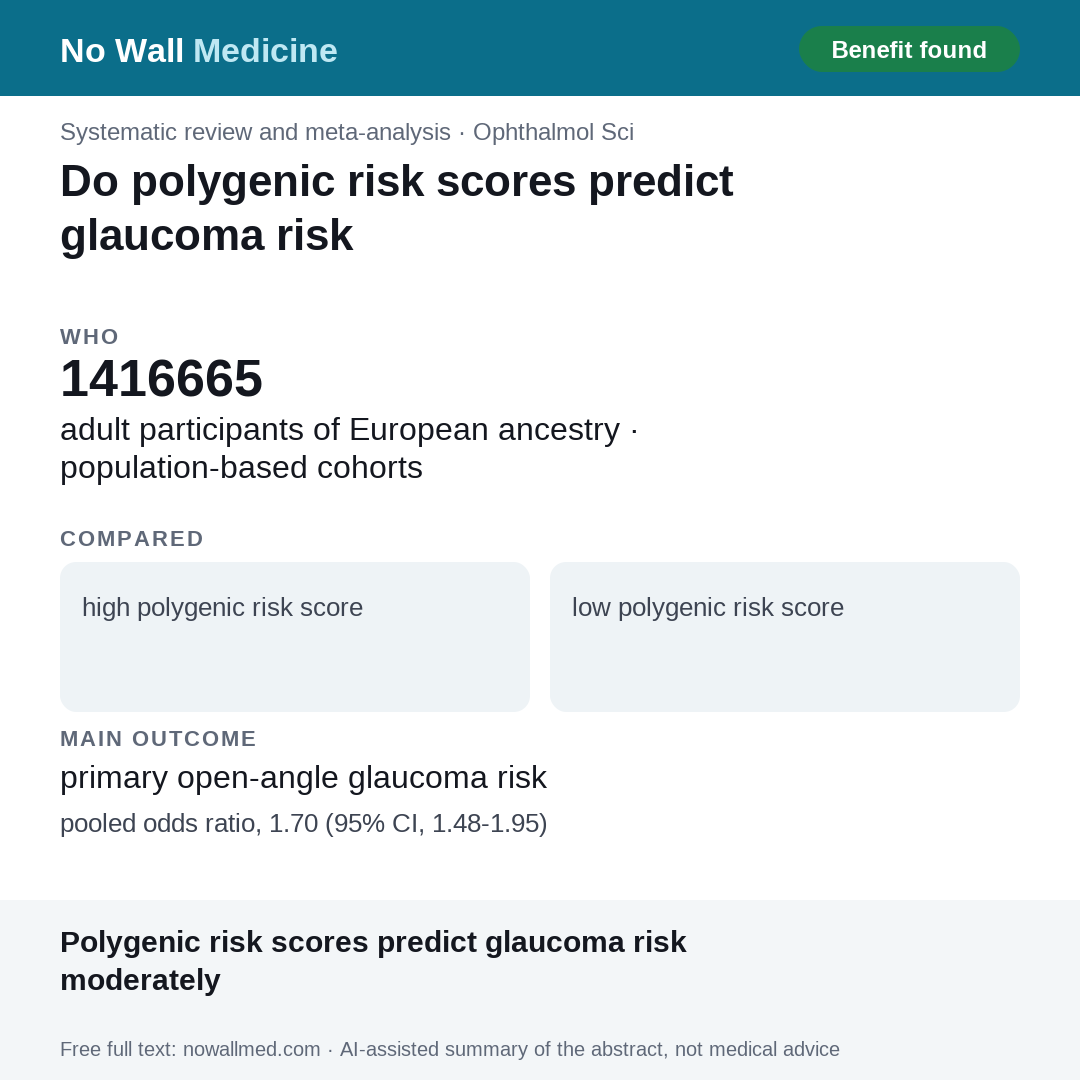
Predictive Performance of Polygenic Risk Scores for Primary Open-Angle Glaucoma: A Systematic Review and Meta-Analysis
Systematic review and meta-analysisBenefit found
Do polygenic risk scores predict glaucoma risk
Who
1416665
adult participants of European ancestry · population-based cohorts
Compared
high polygenic risk score
low polygenic risk score
Main outcome
primary open-angle glaucoma risk
Result: pooled odds ratio, 1.70 (95% CI, 1.48-1.95)
Bottom line: Polygenic risk scores predict glaucoma risk moderately
Limitation: substantial heterogeneity and limited ancestral diversity
Ophthalmol Sci · 2026-09-10Download image
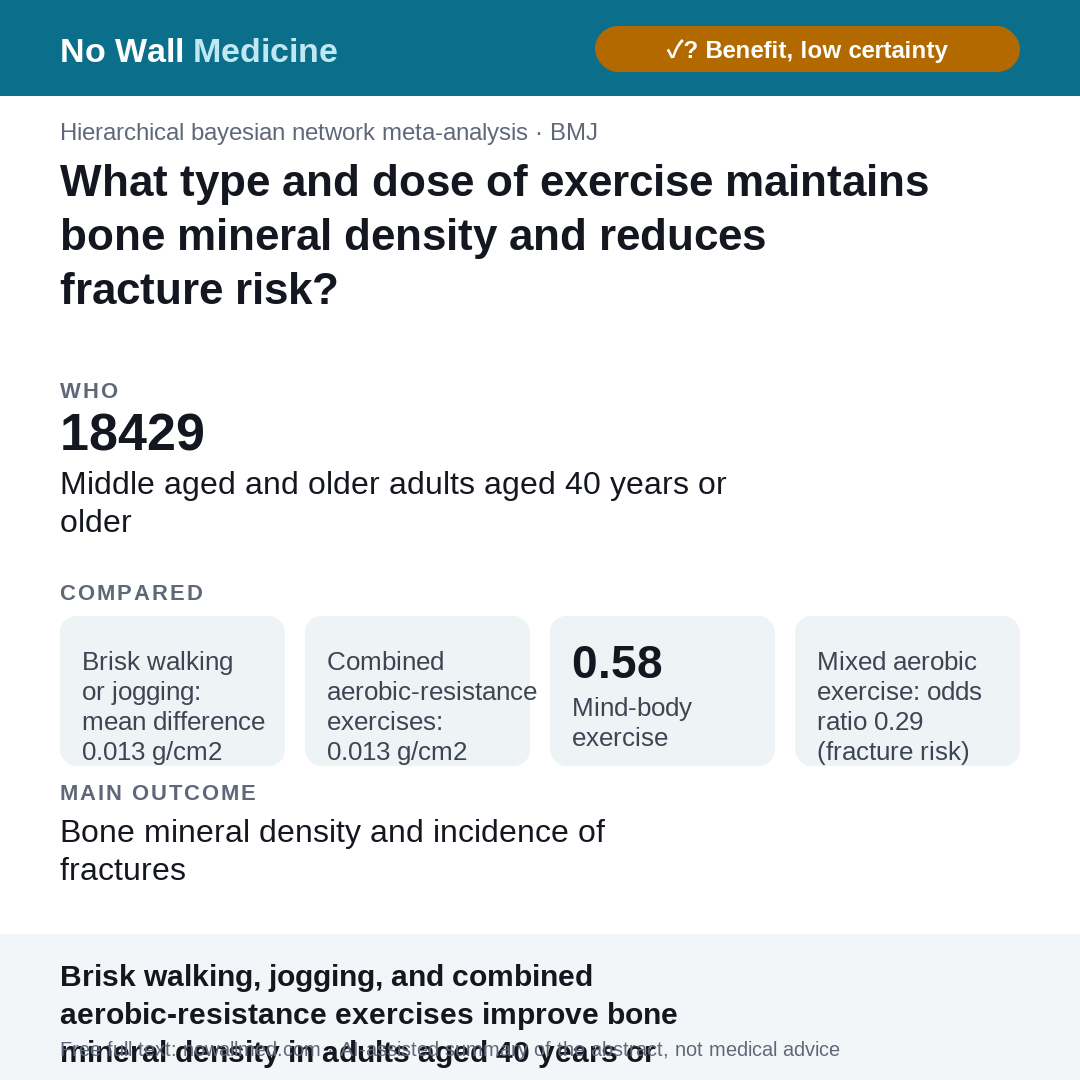
Effect of exercise on bone health in middle aged and older adults: hierarchical network meta-analysis of randomised trials
Hierarchical bayesian network meta-analysisBenefit found
What type and dose of exercise maintains bone mineral density and reduces fracture risk?
Who
18429
Middle aged and older adults aged 40 years or older
Compared
Brisk walking or jogging: mean difference 0.013 g/cm2 (lumbar spine)
Combined aerobic-resistance exercises: 0.013 g/cm2 (lumbar spine)
0.58Mind-body exercise (fracture risk odds ratio)
Mixed aerobic exercise: odds ratio 0.29 (fracture risk)
Main outcome
Bone mineral density and incidence of fractures
Result: mean difference 0.013 g/cm2 (95% CrI 0.006 to 0.021) for lumbar spine walking/jogging
Bottom line: Brisk walking, jogging, and combined aerobic-resistance exercises improve bone mineral density in adults aged 40 years or older.
BMJ · 2026-09-09Download image
Antenatal Corticosteroids in Gestational Diabetes: A Systematic Review of Glycemic Response and Management Strategies
Systematic reviewMixed results
How do antenatal corticosteroids affect glycemic response and management in gestational diabetes?
Who
Individuals with gestational diabetes mellitus
Compared
Medical nutrition therapy or oral agents: insulin initiation 13% to 91%
Already using insulin: 67%-88% required dose escalation
Main outcome
maternal glycemia and management strategies
Bottom line: Antenatal corticosteroids cause predictable but variable transient maternal hyperglycemia requiring insulin adjustments in gestational diabetes.
Limitation: evidence remains heterogeneous and largely observational
Diabetes Obes Metab · 2026-09-09Download image

Efficacy and Predictors of Response to Biologic Therapy and Endoscopic Sinus Surgery in Patients With Nasal Polyps: A Systematic Review
Systematic review of randomized controlled trialsBenefit found
What is the efficacy of biologics and endoscopic sinus surgery for nasal polyps?
Who
3775
Adults with chronic rhinosinusitis with nasal polyposis
Compared
Biologics: tezepelumab: SNOT-22: -27.4; NPS: -2.1
Endoscopic sinus surgery: SNOT-22: -21.9 at 6 months in MACRO
Main outcome
22-Item Sino-Nasal Outcome Test and nasal polyp score
Bottom line: Both endoscopic sinus surgery and biologics provide clinically meaningful benefit for patients with nasal polyps.
Int Forum Allergy Rhinol · 2026-09-09Download image

Routine Hematologic Indices as Scalable Biomarkers for Frailty: A Comprehensive Systematic Review and Meta-Analysis
Systematic review and meta-analysisMixed results
Do albumin-based biomarkers associate with mortality and major adverse cardiovascular events in coronary artery disease?
Who
47,763
Patients with coronary artery disease
Compared
Higher CALLY values: HR 0.46 (95% CI 0.24-0.87) for mortality
Elevated CAR/hsCAR: OR 1.61 (95% CI 1.09-2.38) for mortality
NPAR: HR 1.88 (95% CI 1.71-2.08) for mortality
LAR: HR 2.50 (95% CI 1.78-3.51) for mortality
Main outcome
Mortality and major adverse cardiovascular events
Bottom line: Albumin-based biomarkers are associated with adverse outcomes in coronary artery disease, providing potential complementary information for risk stratification.
Limitation: Prospective studies are needed to determine incremental prognostic value and clinical utility.
J Am Med Dir Assoc · 2026-09-09Download image

Domain-Derived Biomarkers of Treatment Response in Major Depressive Disorder: An Activation Likelihood Estimation Neuroimaging Meta-Analysis
Meta-analysis of 46 experimentsMixed results
Biomarkers of treatment response in major depression
Who
996
Adults with major depressive disorder
Compared
Poor outcome
Good outcome
Main outcome
Treatment response
Bottom line: Right anterior insula activation predicts poor prognosis
Biol Psychiatry · 2026-09-09Download image
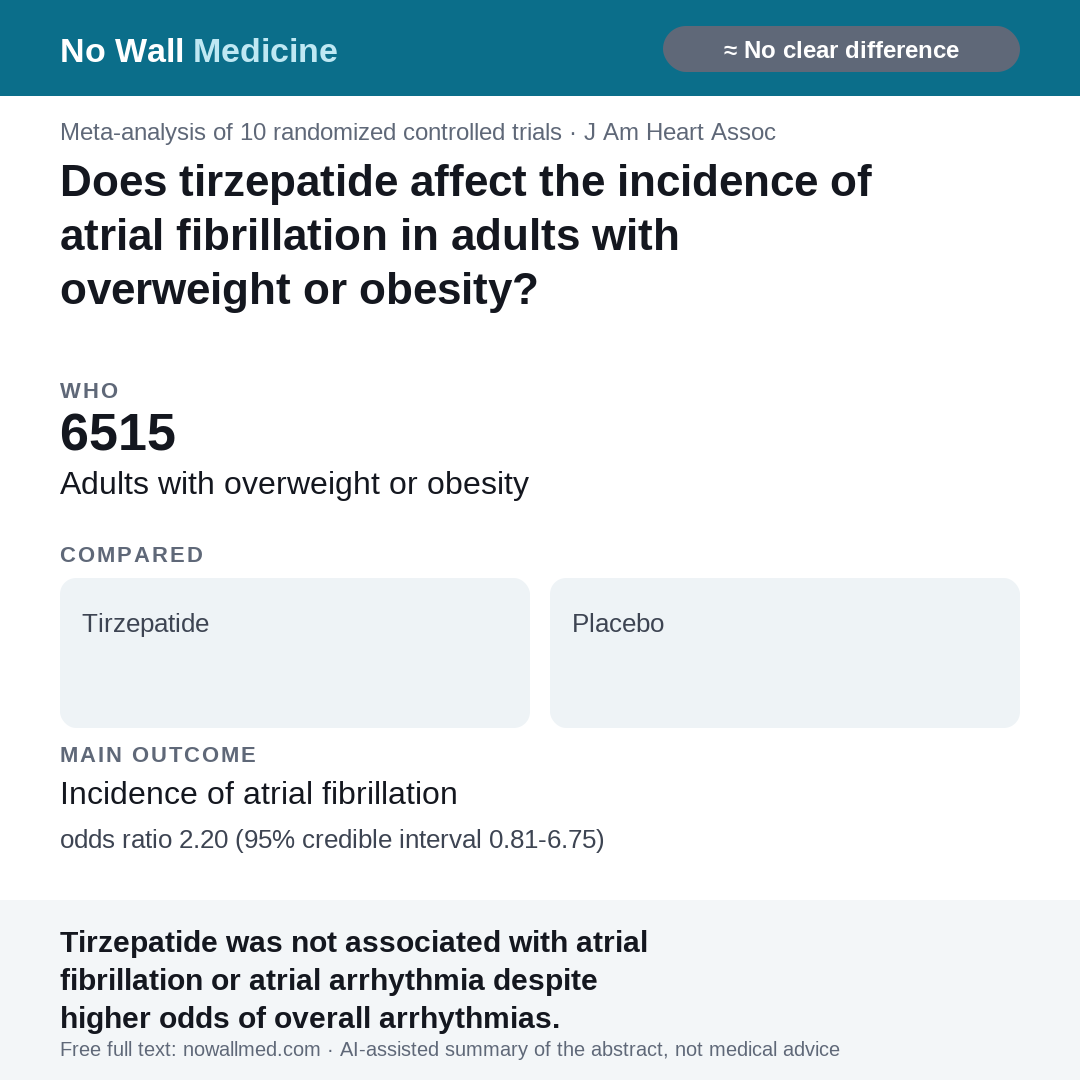
Tirzepatide and the Incidence of Atrial Fibrillation in Adults With Overweight or Obesity: An Updated Meta-Analysis of Randomized Controlled Trials
Meta-analysis of 10 randomized controlled trialsNo clear difference
Does tirzepatide affect the incidence of atrial fibrillation in adults with overweight or obesity?
Who
6515
Adults with overweight or obesity
Compared
Tirzepatide
Placebo
Main outcome
Incidence of atrial fibrillation
Result: odds ratio 2.20 (95% credible interval 0.81-6.75)
Bottom line: Tirzepatide was not associated with atrial fibrillation or atrial arrhythmia despite higher odds of overall arrhythmias.
Limitation: Event rates were low and findings should be interpreted cautiously.
J Am Heart Assoc · 2026-09-09Download image
Fractional Flow Reserve in Acute Coronary Syndrome: An Updated Systematic Review and Bayesian Meta-Analysis
Systematic review and Bayesian meta-analysisMixed results
Does fractional flow reserve guided revascularization performance differ in acute coronary syndrome?
Who
13029
Patients with acute coronary syndrome and chronic coronary syndrome
Compared
FFR-guided in acute coronary syndrome: increased risk of MACE at 1 year
FFR-guided in chronic coronary syndrome
Angiography-guided in acute coronary syndrome
FFR-guided in acute coronary syndrome
Main outcome
major adverse cardiac events at 1 year
Result: risk difference 1.9% (95% credible interval 0.2% to 3.6%)
Bottom line: Fractional flow reserve guided strategy in acute coronary syndrome had worse outcomes than chronic coronary syndrome, but no difference versus angiography-guided.
J Am Heart Assoc · 2026-09-09Download image

Artificial Intelligence-Enabled Electrocardiograms and Pregnancy-Related Cardiomyopathy: A Systematic Review and Diagnostic Meta-Analysis
Systematic review and diagnostic meta-analysisBenefit found
What is the diagnostic performance of artificial intelligence-enabled electrocardiograms for pregnancy-related cardiomyopathy detection?
Who
2,928
Patients with pregnancy-related cardiomyopathy
Compared
Artificial intelligence-enabled electrocardiogram models: sensitivity 0.775 (0.623-0.878)
Artificial intelligence-enabled electrocardiogram models: specificity 0.936 (0.871-0.969)
Main outcome
Diagnostic performance for pregnancy-related cardiomyopathy detection
Result: area under the curve 0.932 (0.813-0.953)
Bottom line: Artificial intelligence-enabled electrocardiogram models show good performance for detecting pregnancy-related cardiomyopathy.
JACC Adv · 2026-09-09Download image

Effectiveness, Safety, and Workflow Burden of Large Language Model-Based Medical Report Generation: Systematic Review
Systematic reviewMixed results
What are the effectiveness, safety, and workflow burden of large language model-based medical report generation?
Who
Studies evaluating large language models for medical report generation · Multiple databases including PubMed, Embase, and Web of Science
Compared
AI reports (chest x-ray): 70.5% (6047/8580) acceptance
Radiologist reports (chest x-ray): 73.3% (6288/8580) acceptance
Main outcome
Effectiveness, safety, and workflow burden of medical report generation
Bottom line: Large language models show assistive value in expert acceptance, but safety and workflow effects remain heterogeneous and inconsistent.
Limitation: Evidence is too heterogeneous, biased, and sparse on case-level end points to support pooled meta-analysis.
J Med Internet Res · 2026-09-09Download image

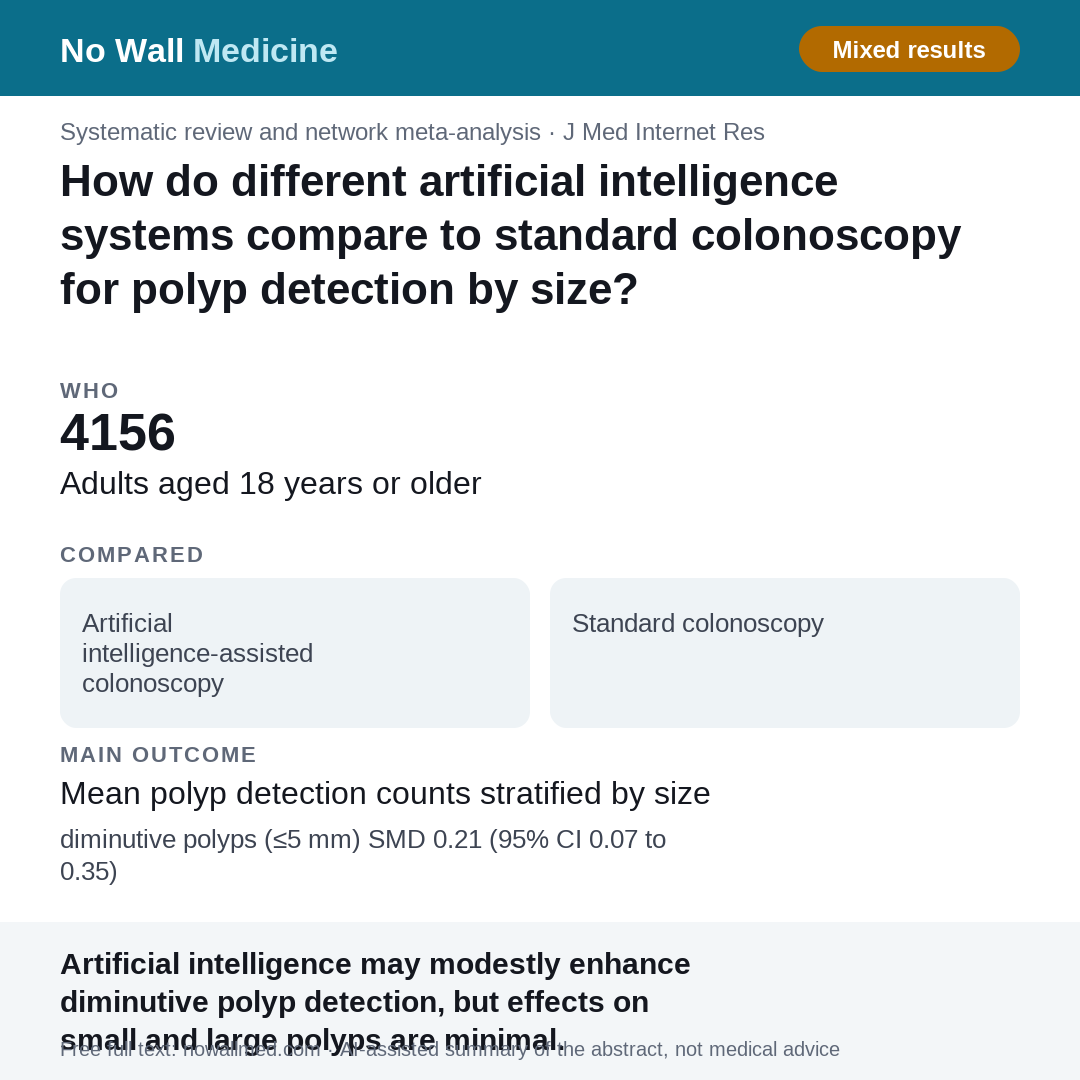
Comparative Efficacy of Different AI Systems for Polyp Detection by Size During Colonoscopy: Systematic Review and Network Meta-Analysis
Systematic review and network meta-analysisMixed results
How do different artificial intelligence systems compare to standard colonoscopy for polyp detection by size?
Who
4156
Adults aged 18 years or older
Compared
Artificial intelligence-assisted colonoscopy
Standard colonoscopy
Main outcome
Mean polyp detection counts stratified by size
Result: diminutive polyps (≤5 mm) SMD 0.21 (95% CI 0.07 to 0.35)
Bottom line: Artificial intelligence may modestly enhance diminutive polyp detection, but effects on small and large polyps are minimal.
Limitation: All cross-platform comparisons are indirect and certainty of evidence is very low to low.
J Med Internet Res · 2026-09-09Download image
Randomised phase III trials of cancer prevention drugs: a systematic review and prediction of trial success
Systematic reviewMixed results
What are the predictors of success in phase III cancer prevention drug trials?
Who
659904
Cancer-free adults in phase III randomised controlled trials
Compared
46Successful trials (50.0%)
Unsuccessful trials
Main outcome
Meeting the prespecified cancer risk reduction-related endpoint
Bottom line: Half of cancer prevention trials were successful, driven by pharmaceutical sponsorship, targeted strategies, and strong preliminary evidence.
ESMO Open · 2026-09-09Download image

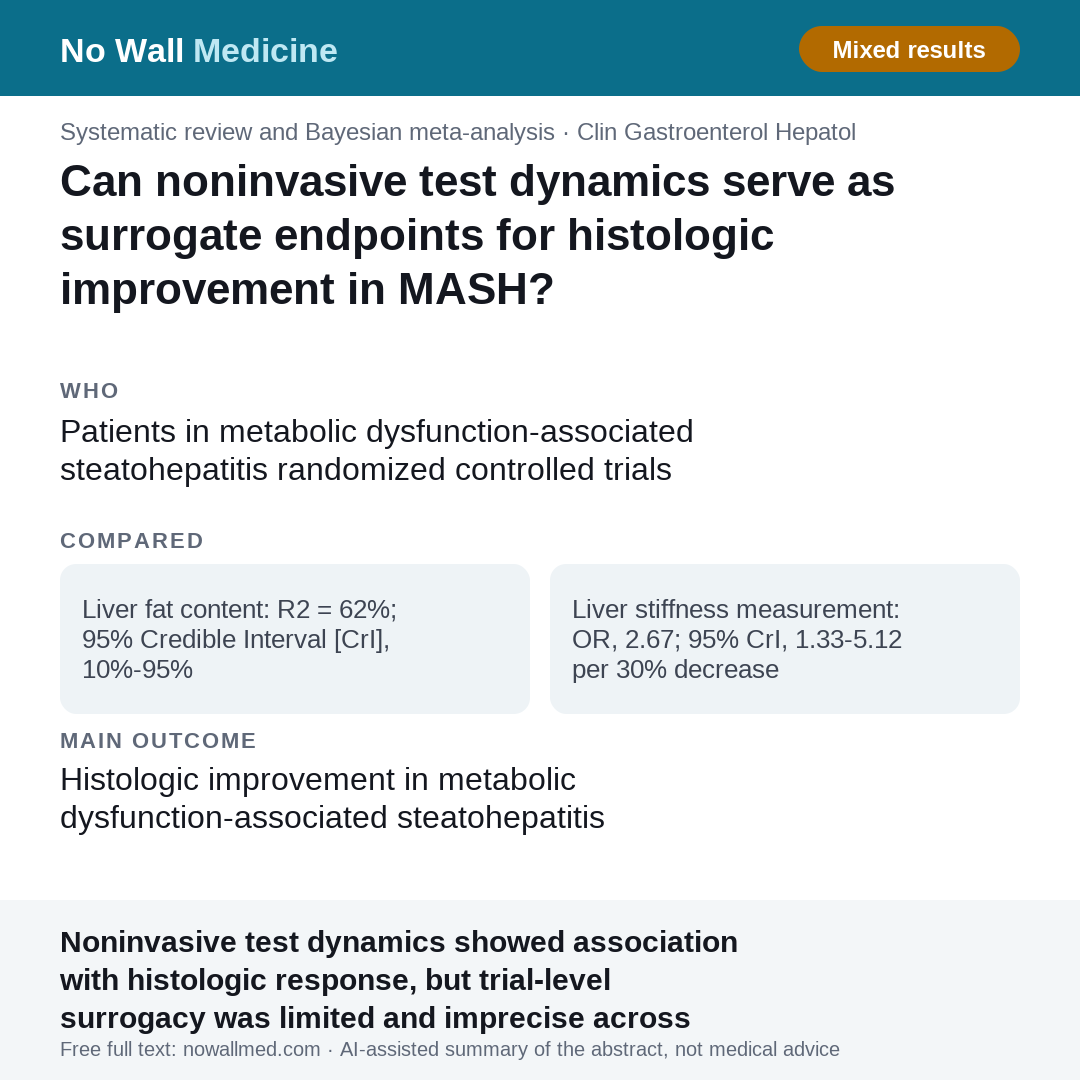
Can Noninvasive Test Dynamics Serve as Surrogate End Points for Histologic Improvement in Metabolic Dysfunction-Associated Steatohepatitis? A Systematic Review and Bayesian Meta-Analysis
Systematic review and Bayesian meta-analysisMixed results
Can noninvasive test dynamics serve as surrogate endpoints for histologic improvement in MASH?
Who
Patients in metabolic dysfunction-associated steatohepatitis randomized controlled trials
Compared
Liver fat content: R2 = 62%; 95% Credible Interval [CrI], 10%-95%
Liver stiffness measurement: OR, 2.67; 95% CrI, 1.33-5.12 per 30% decrease
Main outcome
Histologic improvement in metabolic dysfunction-associated steatohepatitis
Result: surrogacy was limited and imprecise across biomarkers
Bottom line: Noninvasive test dynamics showed association with histologic response, but trial-level surrogacy was limited and imprecise across biomarkers.
Clin Gastroenterol Hepatol · 2026-09-08Download image
Potential Harms of Ocular and Periorbital Topical Vitamin A Application: A Systematic Review and Meta-Analysis
Systematic review and meta-analysisHarm found
Do topical vitamin A products cause ophthalmic and periorbital harms?
Who
10,794
People using topical vitamin A on the ocular surface or periorbital region
Compared
Topical vitamin A derivatives: any harm (OR = 1.71)
Controls
Main outcome
Ophthalmic and periorbital harms
Result: odds ratio 1.71 (95% CI not reported)
Bottom line: Topical vitamin A products increase odds of pain, dryness, burning, and any harm.
Limitation: Evidence certainty ranged from very low to low.
Invest Ophthalmol Vis Sci · 2026-09-08Download image

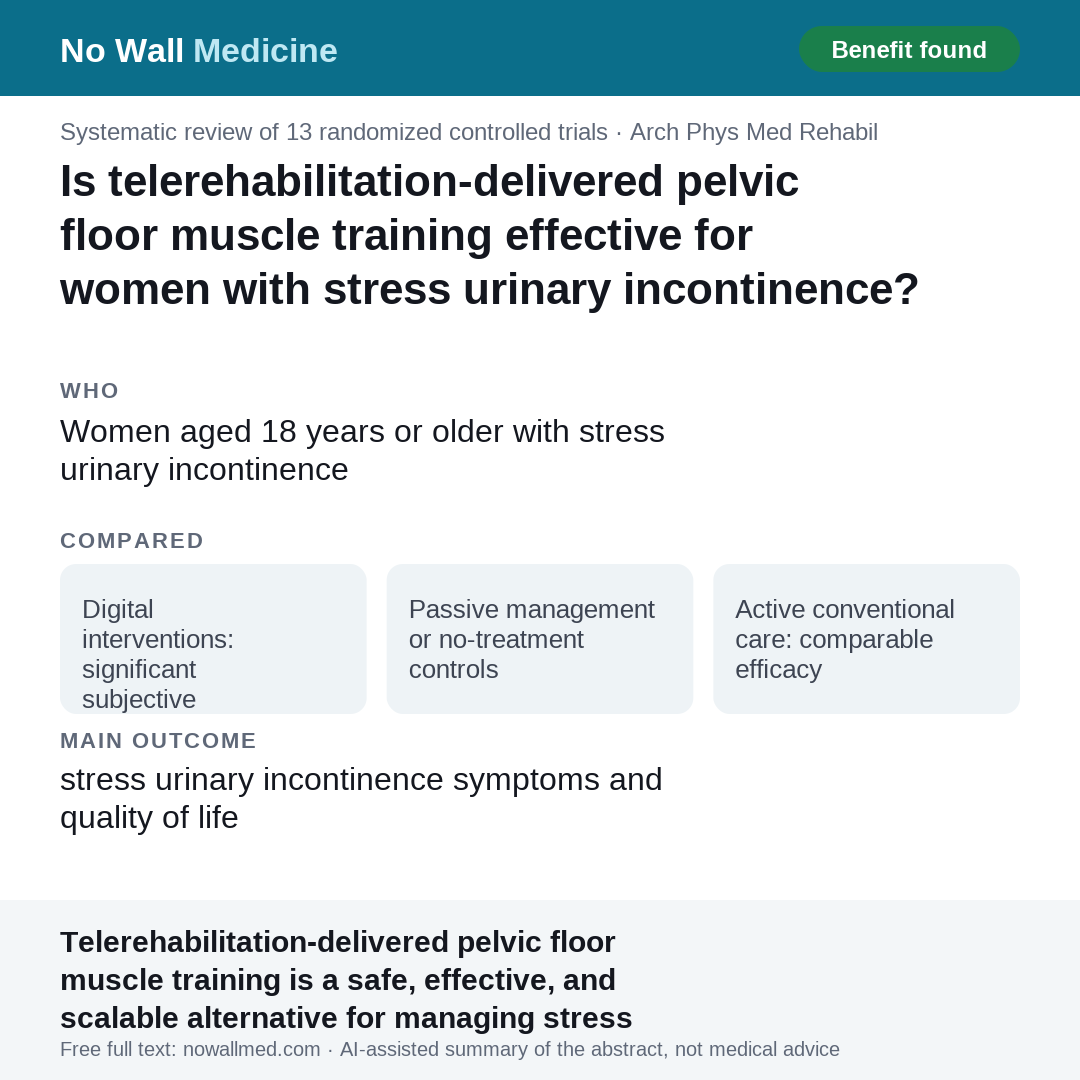
Novel Telerehabilitation Interventions for Stress Urinary Incontinence: A Systematic Review of Randomized Controlled Trials
Systematic review of 13 randomized controlled trialsBenefit found
Is telerehabilitation-delivered pelvic floor muscle training effective for women with stress urinary incontinence?
Who
Women aged 18 years or older with stress urinary incontinence
Compared
Digital interventions: significant subjective reductions in symptoms and improved quality of life
Passive management or no-treatment controls
Active conventional care: comparable efficacy
Main outcome
stress urinary incontinence symptoms and quality of life
Bottom line: Telerehabilitation-delivered pelvic floor muscle training is a safe, effective, and scalable alternative for managing stress urinary incontinence.
Limitation: Substantial methodological and clinical heterogeneity
Arch Phys Med Rehabil · 2026-09-08Download image
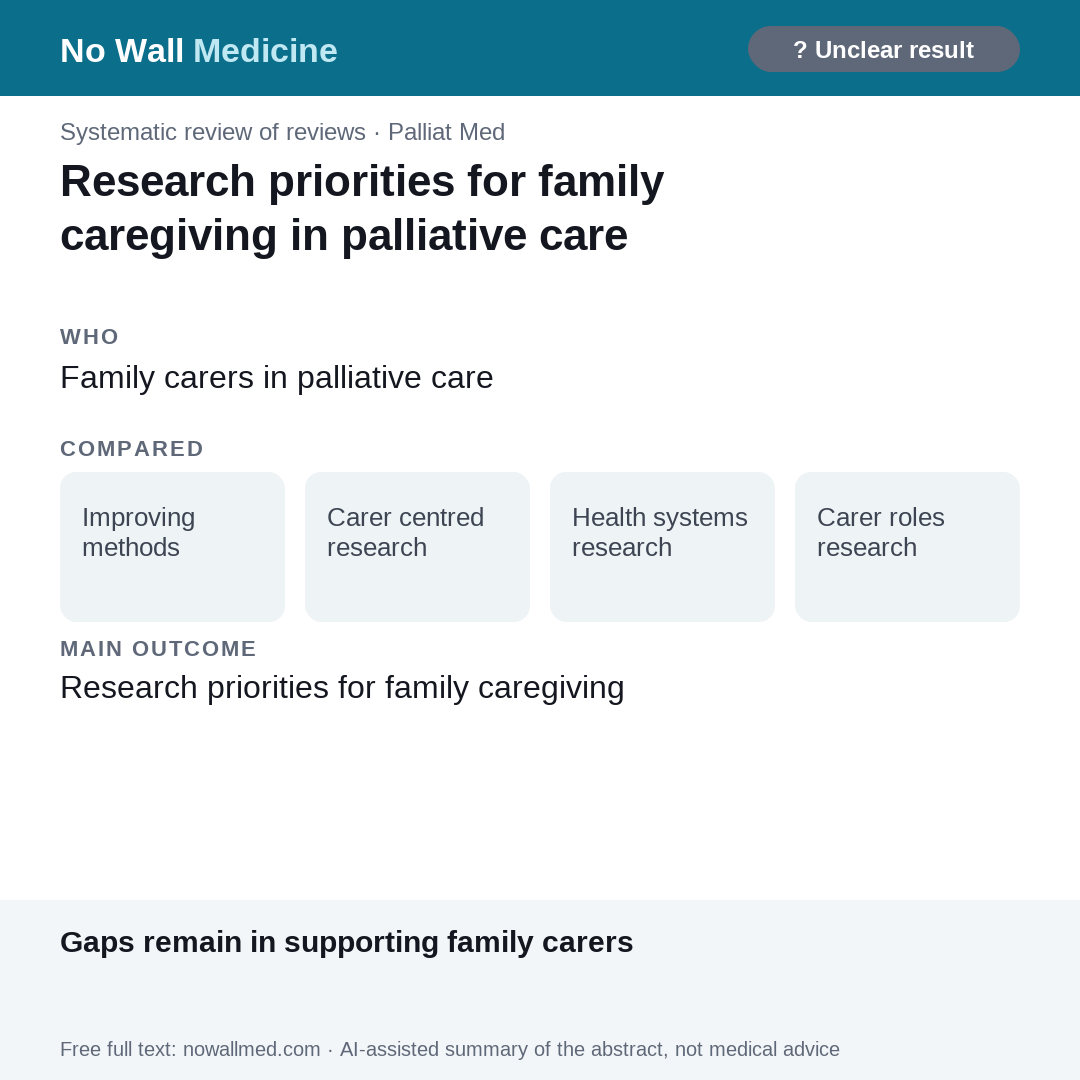
European Association of Palliative Care White Paper on research priorities for family caregiving in palliative care: A systematic review of reviews
Systematic review of reviewsUnclear result
Research priorities for family caregiving in palliative care
Who
Family carers in palliative care
Compared
Improving methods
Carer centred research
Health systems research
Carer roles research
Main outcome
Research priorities for family caregiving
Bottom line: Gaps remain in supporting family carers
Palliat Med · 2026-09-08Download image