Visual abstracts
New randomized trials and meta-analyses from leading journals at a glance: who was studied, what was compared, and what was found. Every paper is free to read in full.
All specialtiesCardiology 4780Oncology 4080Gastroenterology & Hepatology 1914Infectious Disease 3775Neurology 1883Psychiatry & Mental Health 2238Pulmonology 2058Critical Care 1331Endocrinology & Diabetes 2550Pediatrics 2908Surgery 2496Orthopedics & Sports Medicine 922Neurosurgery 532Cardiothoracic & Vascular Surgery 662Plastic & Reconstructive Surgery 584Nephrology 1111Rheumatology 812Hematology 1095Dermatology 617Ophthalmology 537Obstetrics & Gynecology 1656Public & Global Health 1041Radiology & Imaging 637Anesthesiology 958Urology 751ENT (Otolaryngology) 497Emergency Medicine 484Allergy & Immunology 310Geriatrics 973Family Medicine & Primary Care 538Medical Genetics & Genomics 662Pathology & Laboratory Medicine 156Physical Medicine & Rehabilitation 744Palliative Care 422Nutrition 1564Digital Health & AI 2188General Medicine 318
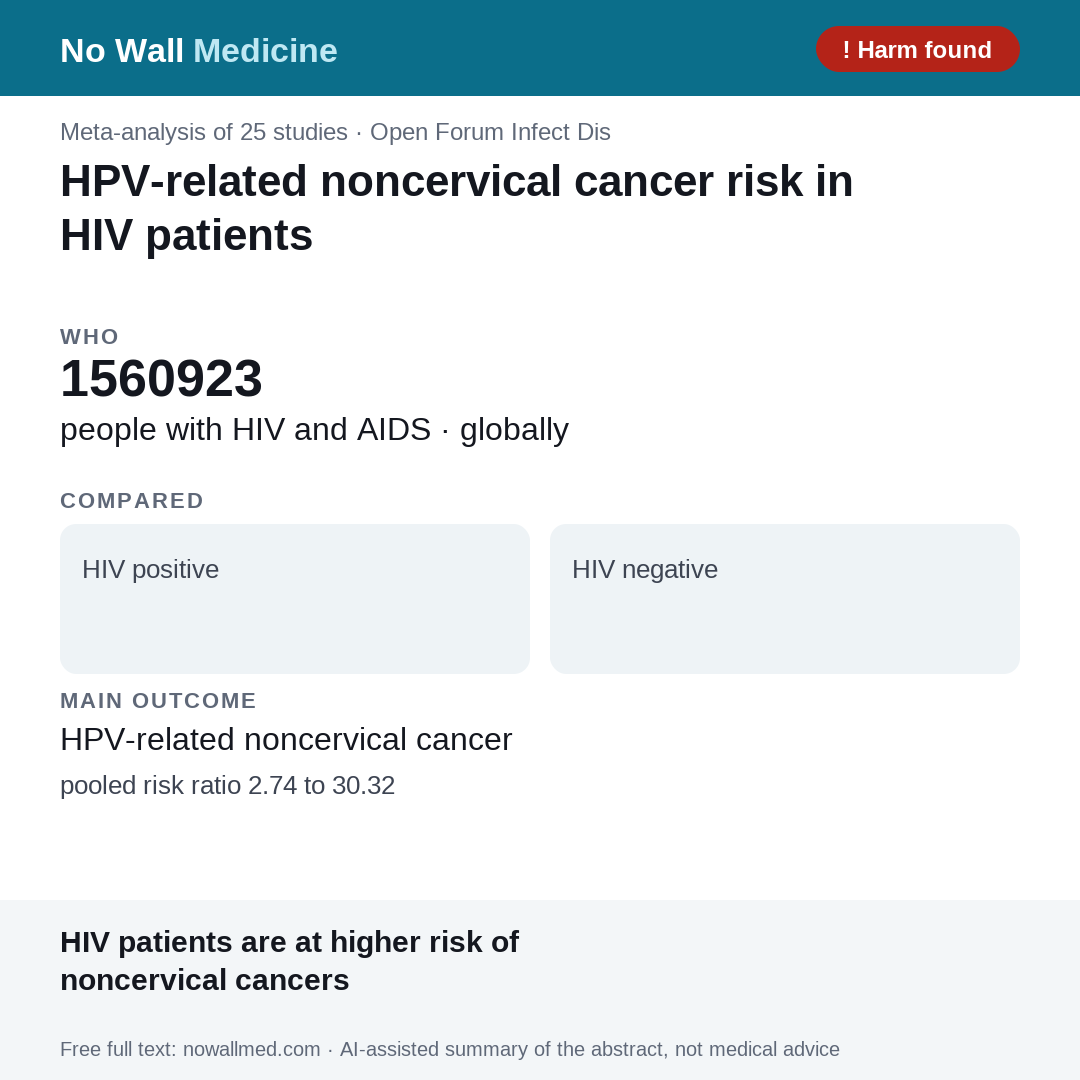
Global Estimates of the HPV-related, Noncervical Cancer Burden in People With HIV and AIDS and the Potential Effect of Improved HPV Vaccine Coverage in This Population: A Systematic Review, Meta-analysis and Modeling Study
Meta-analysis of 25 studiesHarm found
HPV-related noncervical cancer risk in HIV patients
Who
1560923
people with HIV and AIDS · globally
Compared
HIV positive
HIV negative
Main outcome
HPV-related noncervical cancer
Result: pooled risk ratio 2.74 to 30.32
Bottom line: HIV patients are at higher risk of noncervical cancers
Open Forum Infect Dis · 2025-09-16Download image
Minimum material requirements for hand hygiene in community settings: a systematic review
Systematic reviewUnclear result
What are the minimum material requirements for hand hygiene in community settings?
Who
People in non-healthcare community settings · 27 countries across 4 WHO regions
Compared
Material requirements
Hand hygiene practices
Main outcome
Relationship between material requirements and hand hygiene practices
Bottom line: There is a lack of evidence linking material requirements with handwashing practices in community settings.
Limitation: The review was limited to observational studies.
BMJ Glob Health · 2025-09-16Download image

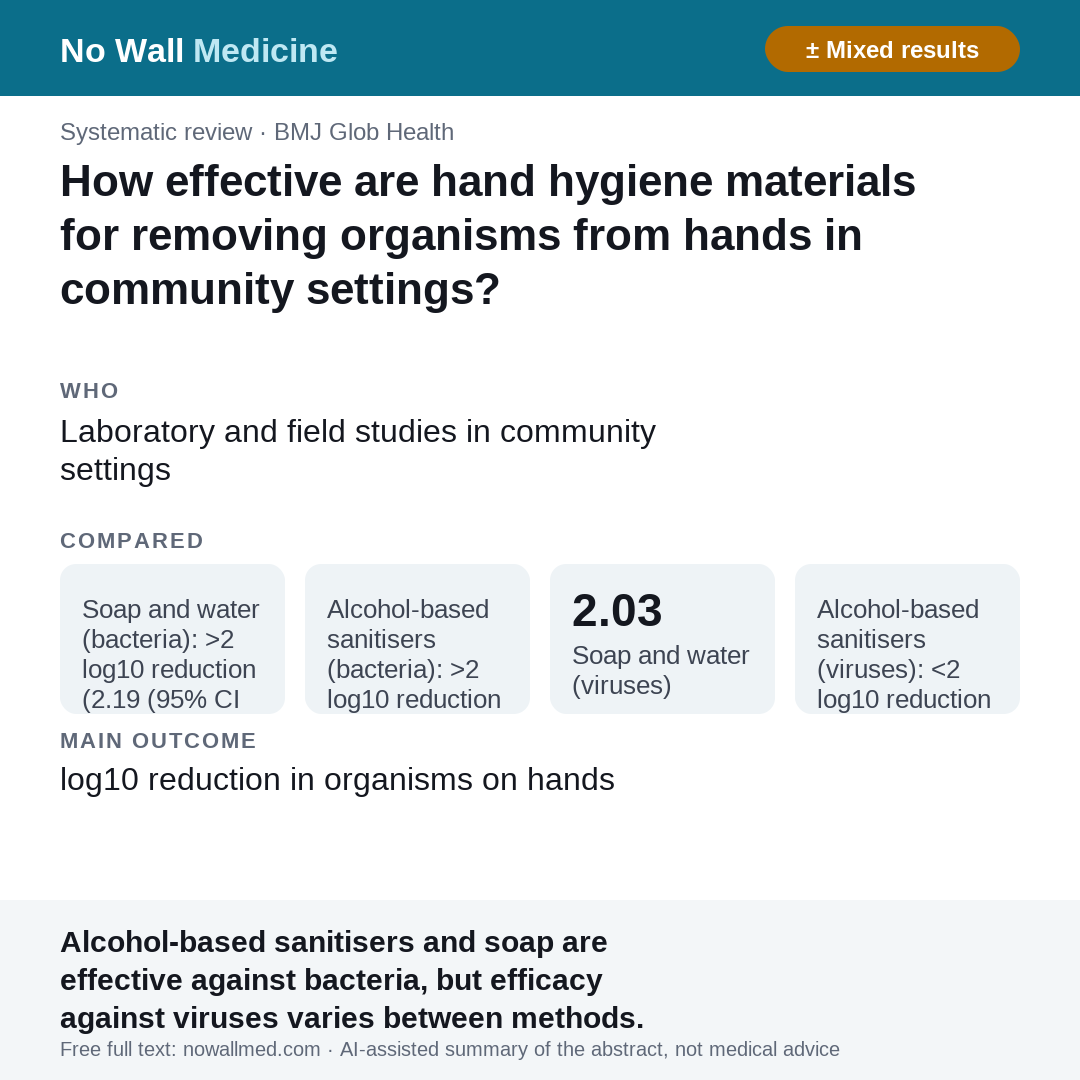
Efficacy and effectiveness of hand hygiene-related practices used in community settings for removal of organisms from hands: a systematic review
Systematic reviewMixed results
How effective are hand hygiene materials for removing organisms from hands in community settings?
Who
Laboratory and field studies in community settings
Compared
Soap and water (bacteria): >2 log10 reduction (2.19 (95% CI 1.5 to 2.87))
Alcohol-based sanitisers (bacteria): >2 log10 reduction (3.13 (95% CI 2.7 to 3.56))
2.03Soap and water (viruses) (95% CI 1.45 to 2.62)
Alcohol-based sanitisers (viruses): <2 log10 reduction (1.86 (95% CI 1.37 to 2.35))
Main outcome
log10 reduction in organisms on hands
Bottom line: Alcohol-based sanitisers and soap are effective against bacteria, but efficacy against viruses varies between methods.
Limitation: Limited ability to compare efficacy due to focus on bacteria, soap, and alcohol-based sanitisers.
BMJ Glob Health · 2025-09-16Download image
Interventions to improve hand hygiene in community settings: a systematic review of theories, barriers and enablers, behaviour change techniques and hand hygiene station design features
Systematic review of 223 studiesMixed results
What improves hand hygiene in community settings
Who
247398
people in non-healthcare community settings · community settings
Compared
82%effective interventions
ineffective interventions
Main outcome
hand hygiene practice
Bottom line: Most interventions improved hand hygiene
Limitation: inconsistent intervention reporting
BMJ Glob Health · 2025-09-16Download image

Behavioural factors influencing hand hygiene practices across domestic, institutional and public community settings: a systematic review and qualitative meta-synthesis
Systematic review and qualitative meta-synthesisMixed results
What are the barriers and enablers to hand hygiene in community settings?
Who
People in domestic, institutional and public community settings · Africa, South-East Asia and other community settings
Compared
Barriers: Physical Opportunity, Reflective Motivation and Automatic Motivation
Enablers: Automatic Motivation and Reflective Motivation
Main outcome
Barriers and enablers to hand hygiene practices
Bottom line: Lack of resources hinders hand hygiene even when people are motivated, with habits and risk perception driving practice.
Limitation: Representativeness may be limited and evidence on alcohol-based hand rubs was limited.
BMJ Glob Health · 2025-09-16Download image

Applications of Magnetic Resonance Imaging in Upper Eyelid Anatomy and Upper Eyelid Blepharoplasty: A Systematic Review
Systematic reviewBenefit found
What are the applications of magnetic resonance imaging in upper eyelid anatomy and blepharoplasty?
Who
Clinical studies utilizing magnetic resonance imaging
Compared
Normal anatomy and functions: 7 articles
Racial anatomical disparities: 2 articles
Tumor extent: 1 article
Anatomical changes postblepharoplasty: 2 articles
Main outcome
MRI applications in upper eyelid anatomy and blepharoplasty
Bottom line: Dynamic high-resolution magnetic resonance imaging supports personalized surgical planning and objective postoperative assessments in complex upper eyelid cases.
Limitation: Protocol inconsistencies, small samples, artifacts, and cost.
Plast Reconstr Surg Glob Open · 2025-09-16Download image

Charting the evolution of artificial intelligence mental health chatbots from rule-based systems to large language models: a systematic review
Systematic review of 160 studiesUnclear result
How have artificial intelligence mental health chatbots evolved and how are they evaluated?
Who
Artificial intelligence mental health chatbots
Compared
All studies: 47% focused on clinical efficacy testing
Large language model studies: 16% underwent clinical efficacy testing
Main outcome
Chatbot architecture evolution and evaluation rigor
Bottom line: Large language model chatbots are increasing but lack sufficient clinical efficacy testing and robust validation.
Limitation: Discrepancies exist between marketed claims and actual artificial intelligence architectures used.
World Psychiatry · 2025-09-15Download image

All-cause and cause-specific mortality in people with depression: a large-scale systematic review and meta-analysis of relative risk and aggravating or attenuating factors, including antidepressant treatment
Meta-analysis of 268 studiesHarm found
Mortality risk in people with depression
Who
10842094
people with depression and control subjects
Compared
depression
no depression
Main outcome
all-cause mortality
Result: relative risk 2.10 (95% CI 1.87 to 2.35)
Bottom line: Depression doubles mortality risk
World Psychiatry · 2025-09-15Download image

Brain structure and function in adult survivors of developmental trauma with psychosis: A systematic review
Systematic reviewMixed results
Brain structure in trauma survivors with psychosis
Who
1761
adult survivors of developmental trauma with psychosis
Compared
trauma survivors
healthy controls
Main outcome
brain structure and function
Bottom line: Trauma associated with brain differences
Psychol Med · 2025-09-15Download image

Systematic review and meta-analysis of the efficacy of biologic and targeted synthetic therapies in sarcoidosis
Systematic review and meta-analysisBenefit found
What is the efficacy of biologic and targeted synthetic therapies in sarcoidosis?
Who
Patients with multisystem sarcoidosis
Compared
Biologic and targeted synthetic therapies: mean change 4.79% (95% CI 1.22 to 8.35)
5.70%Anti-TNF trials (95% CI 1.61 to 9.78)
Main outcome
percent-predicted forced vital capacity mean change from baseline
Result: mean change 4.79% (95% CI 1.22 to 8.35)
Bottom line: Biologic and targeted synthetic therapies show modest improvement in lung function for sarcoidosis patients.
Limitation: Small sample sizes and substantial heterogeneity in study design and population.
Thorax · 2025-09-15Download image

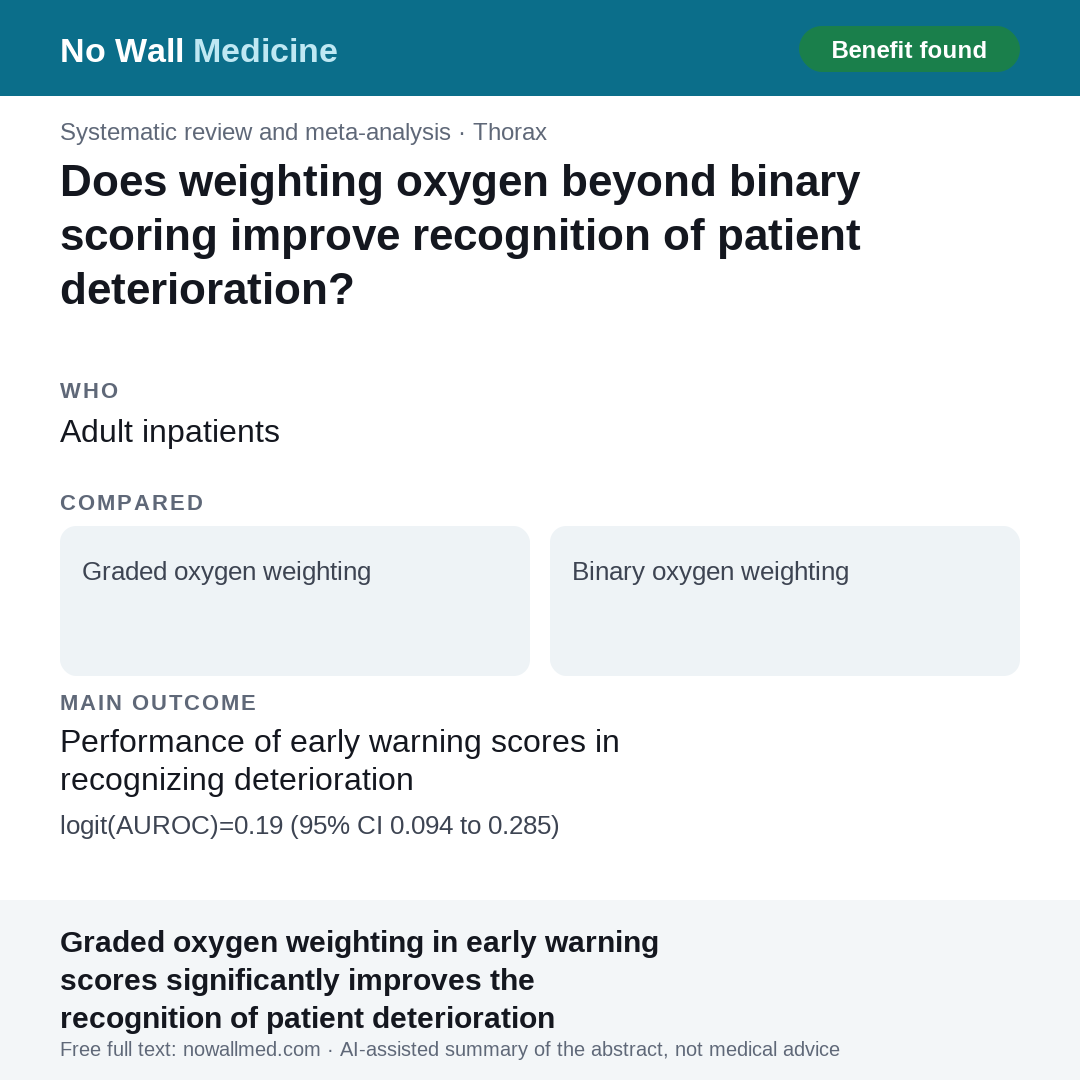
Oxygen therapy in early warning scores: a systematic review and meta-analysis
Systematic review and meta-analysisKey finding
Does weighting oxygen beyond binary scoring improve recognition of patient deterioration?
Who
Adult inpatients
Compared
Graded oxygen weighting
Binary oxygen weighting
Main outcome
Performance of early warning scores in recognizing deterioration
Result: logit(AUROC)=0.19 (95% CI 0.094 to 0.285)
Bottom line: Graded oxygen weighting in early warning scores significantly improves the recognition of patient deterioration compared to binary scoring.
Limitation: 15 of 16 models were at high risk of bias.
Thorax · 2025-09-15Download image
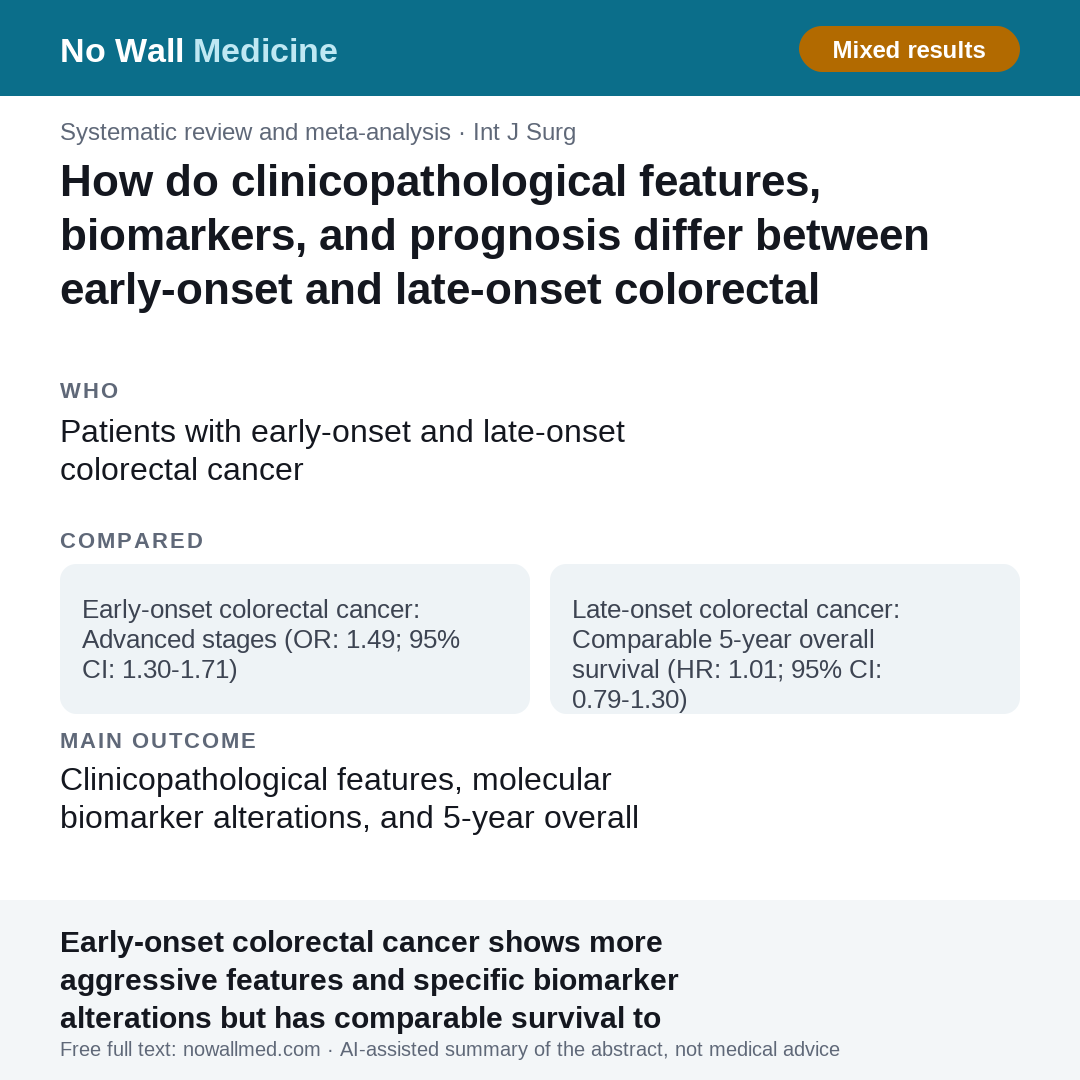
Clinicopathological characteristics and biomarker alterations in early-onset vs. late-onset colorectal cancer: a systematic review and meta-analysis
Systematic review and meta-analysisMixed results
How do clinicopathological features, biomarkers, and prognosis differ between early-onset and late-onset colorectal cancer?
Who
Patients with early-onset and late-onset colorectal cancer
Compared
Early-onset colorectal cancer: Advanced stages (OR: 1.49; 95% CI: 1.30-1.71)
Late-onset colorectal cancer: Comparable 5-year overall survival (HR: 1.01; 95% CI: 0.79-1.30)
Main outcome
Clinicopathological features, molecular biomarker alterations, and 5-year overall survival
Result: hazard ratio 1.01 (95% CI 0.79-1.30) for 5-year overall survival
Bottom line: Early-onset colorectal cancer shows more aggressive features and specific biomarker alterations but has comparable survival to late-onset cancer.
Int J Surg · 2025-09-15Download image
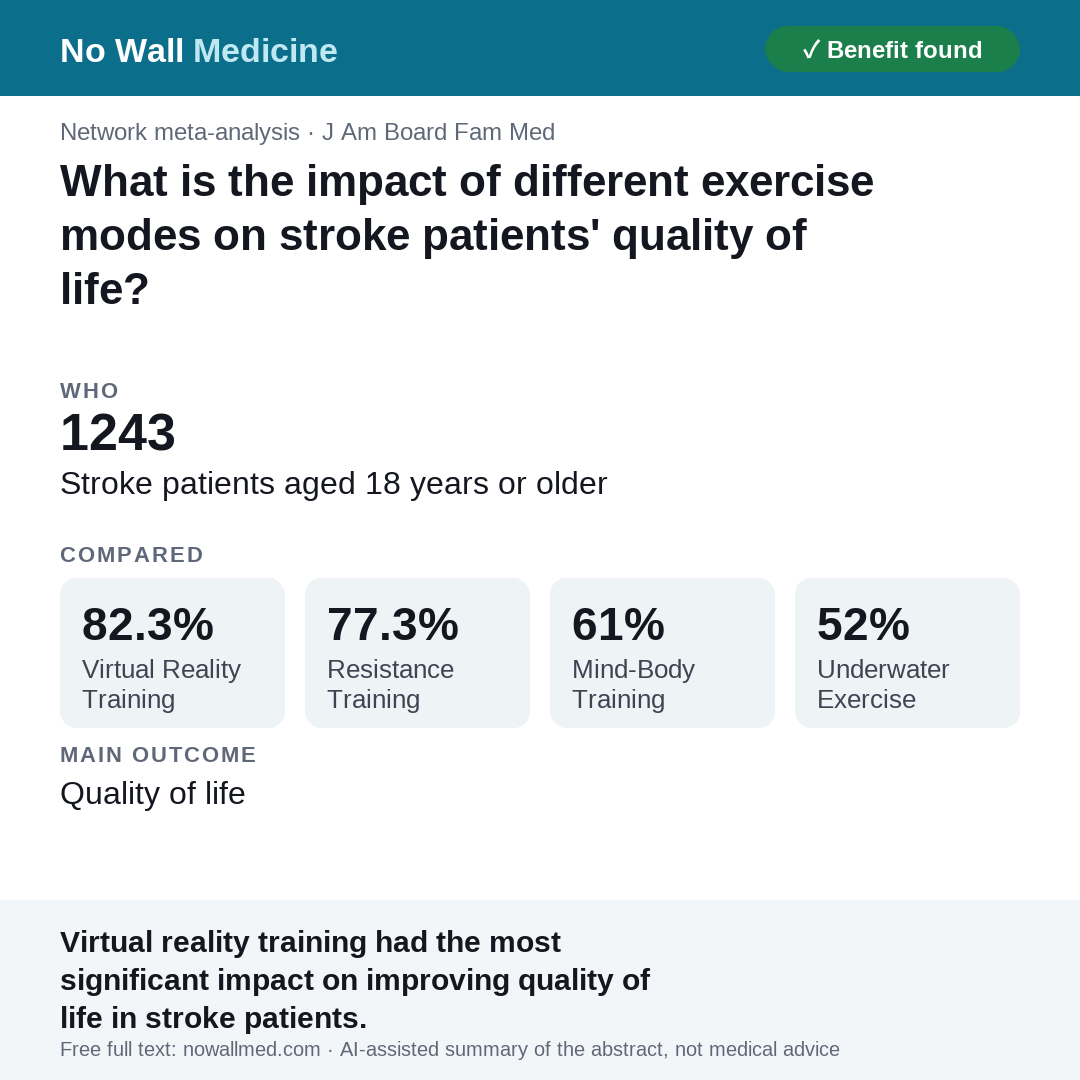
The Impact of Multiple Exercise Modes on the Quality of Life of Stroke Patients: A Network Meta-Analysis
Network meta-analysisBenefit found
What is the impact of different exercise modes on stroke patients' quality of life?
Who
1243
Stroke patients aged 18 years or older
Compared
82.3%Virtual Reality Training
77.3%Resistance Training
61%Mind-Body Training
52%Underwater Exercise
Main outcome
Quality of life
Bottom line: Virtual reality training had the most significant impact on improving quality of life in stroke patients.
J Am Board Fam Med · 2025-09-15Download image
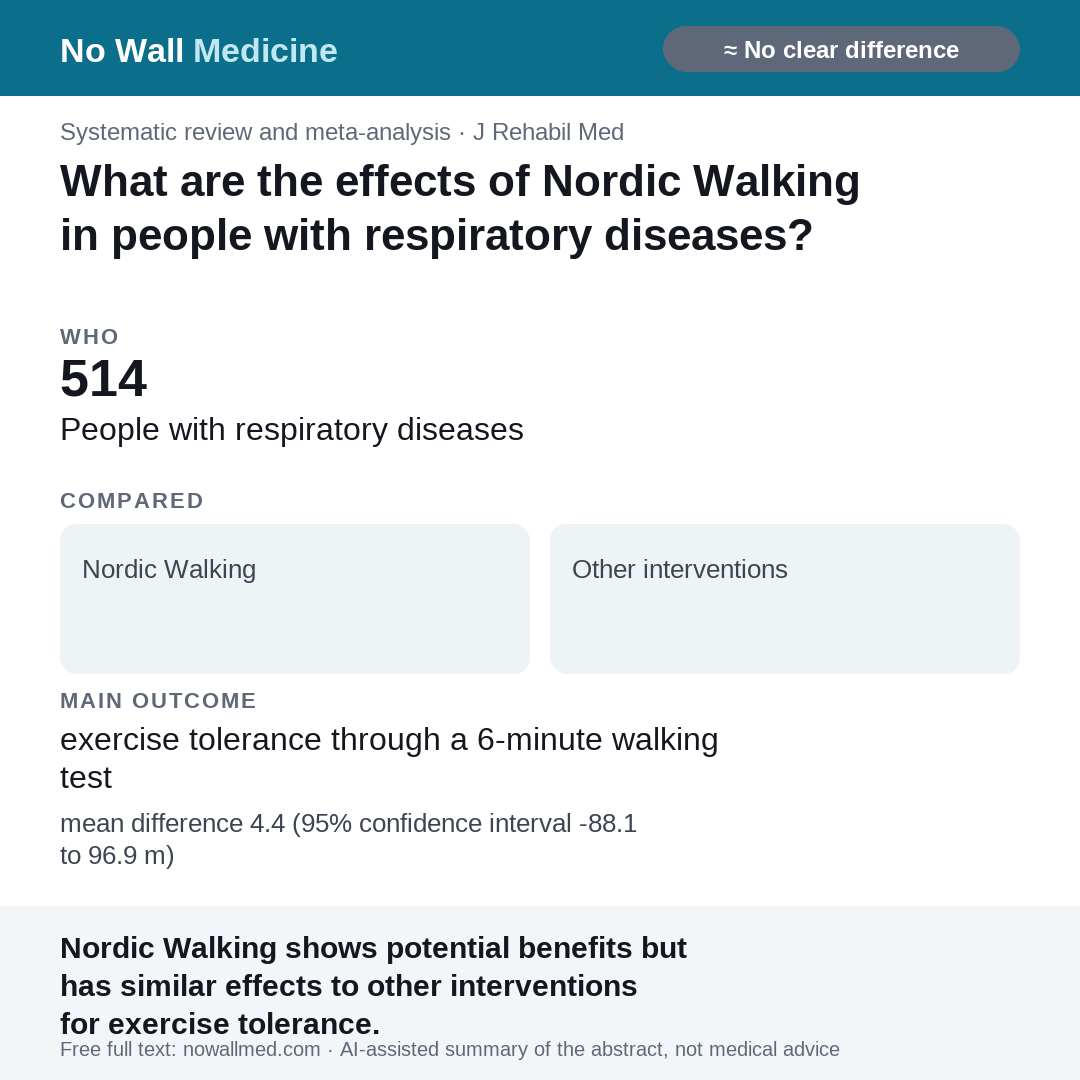
Effects of Nordic Walking in people with respiratory diseases: a systematic review and meta-analysis
Systematic review and meta-analysisNo clear difference
What are the effects of Nordic Walking in people with respiratory diseases?
Who
514
People with respiratory diseases
Compared
Nordic Walking
Other interventions
Main outcome
exercise tolerance through a 6-minute walking test
Result: mean difference 4.4 (95% confidence interval -88.1 to 96.9 m)
Bottom line: Nordic Walking shows potential benefits but has similar effects to other interventions for exercise tolerance.
J Rehabil Med · 2025-09-14Download image
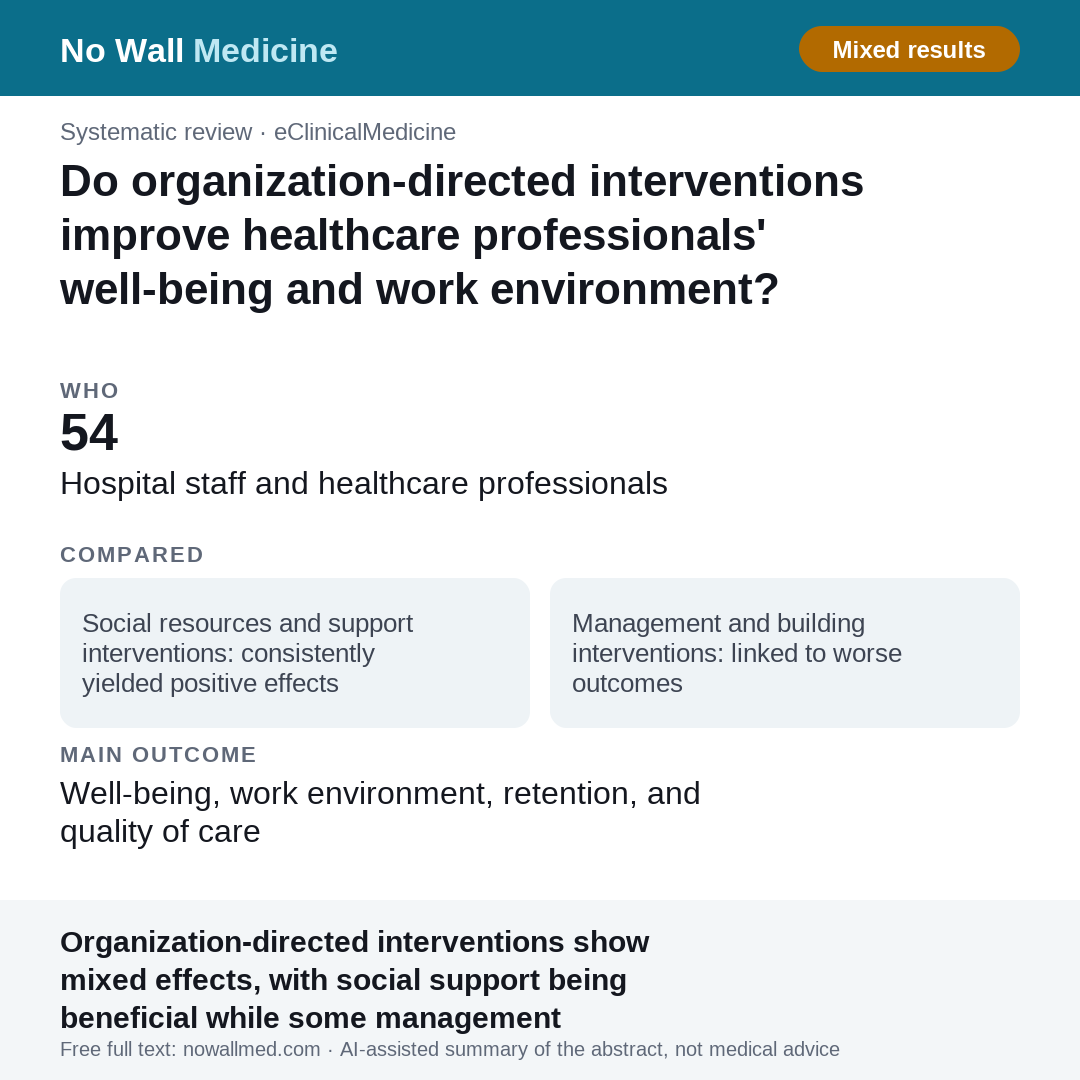
Effectiveness of organization-directed interventions on healthcare professionals' well-being: a systematic review
Systematic reviewMixed results
Do organization-directed interventions improve healthcare professionals' well-being and work environment?
Who
Hospital staff and healthcare professionals
Compared
Social resources and support interventions: consistently yielded positive effects
Management and building interventions: linked to worse outcomes
Main outcome
Well-being, work environment, retention, and quality of care
Result: standardized mean differences ranging from -3.28 to 3.56
Bottom line: Organization-directed interventions show mixed effects, with social support being beneficial while some management interventions may be detrimental.
Limitation: Overall certainty of evidence was rated very low and most studies showed some risk of bias.
Funded by: NFU and ZIN
eClinicalMedicine · 2025-09-13Download image
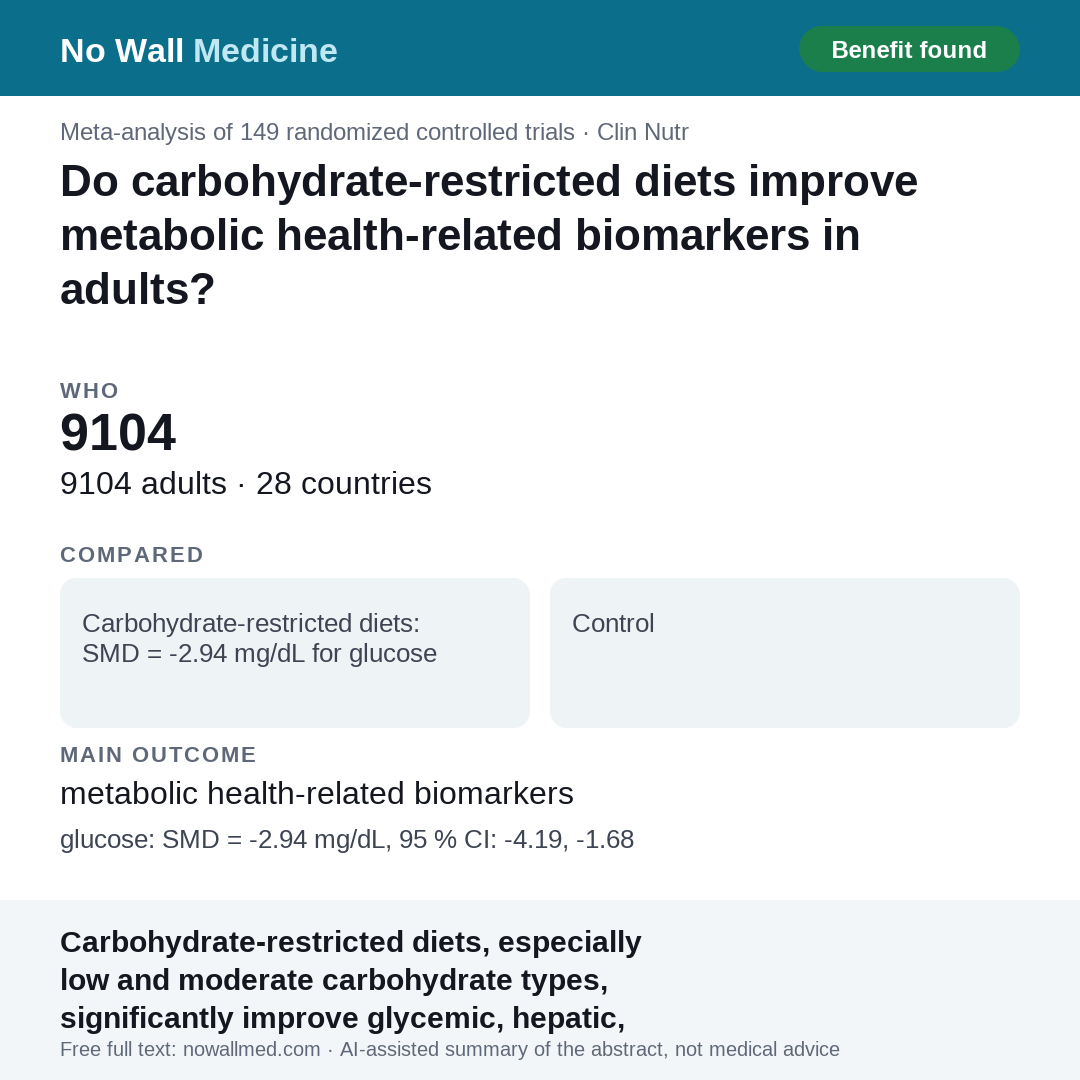
Carbohydrate-restricted diet types and macronutrient replacements for metabolic health in adults: A meta-analysis of randomized trials
Meta-analysis of 149 randomized controlled trialsBenefit found
Do carbohydrate-restricted diets improve metabolic health-related biomarkers in adults?
Who
9104
9104 adults · 28 countries
Compared
Carbohydrate-restricted diets: SMD = -2.94 mg/dL for glucose
Control
Main outcome
metabolic health-related biomarkers
Result: glucose: SMD = -2.94 mg/dL, 95 % CI: -4.19, -1.68
Bottom line: Carbohydrate-restricted diets, especially low and moderate carbohydrate types, significantly improve glycemic, hepatic, renal, and adipokine biomarkers.
Clin Nutr · 2025-09-13Download image
Horizontal versus vertical scapular free flap reconstructions in total maxillectomies without orbital exenteration-A systematic review and clinical case series
Systematic review and clinical case seriesBenefit found
Is horizontal or vertical scapular free flap better for total maxillectomy reconstructions?
Who
44
Patients undergoing total maxillectomy without orbital exenteration · Tertiary care center in Sweden
Compared
Vertically orientated scapulas: fewer complications
Horizontally orientated scapulas
Main outcome
Postoperative complications related to ocular and palato-maxillary outcomes
Result: p = 0.04
Bottom line: Vertically orientated scapula with an osteotomized fragment for orbital floor reconstruction may offer a single flap solution.
Limitation: No universally optimal technique exists for reconstructing the total maxillectomy without orbital exenteration.
JPRAS Open · 2025-09-13Download image

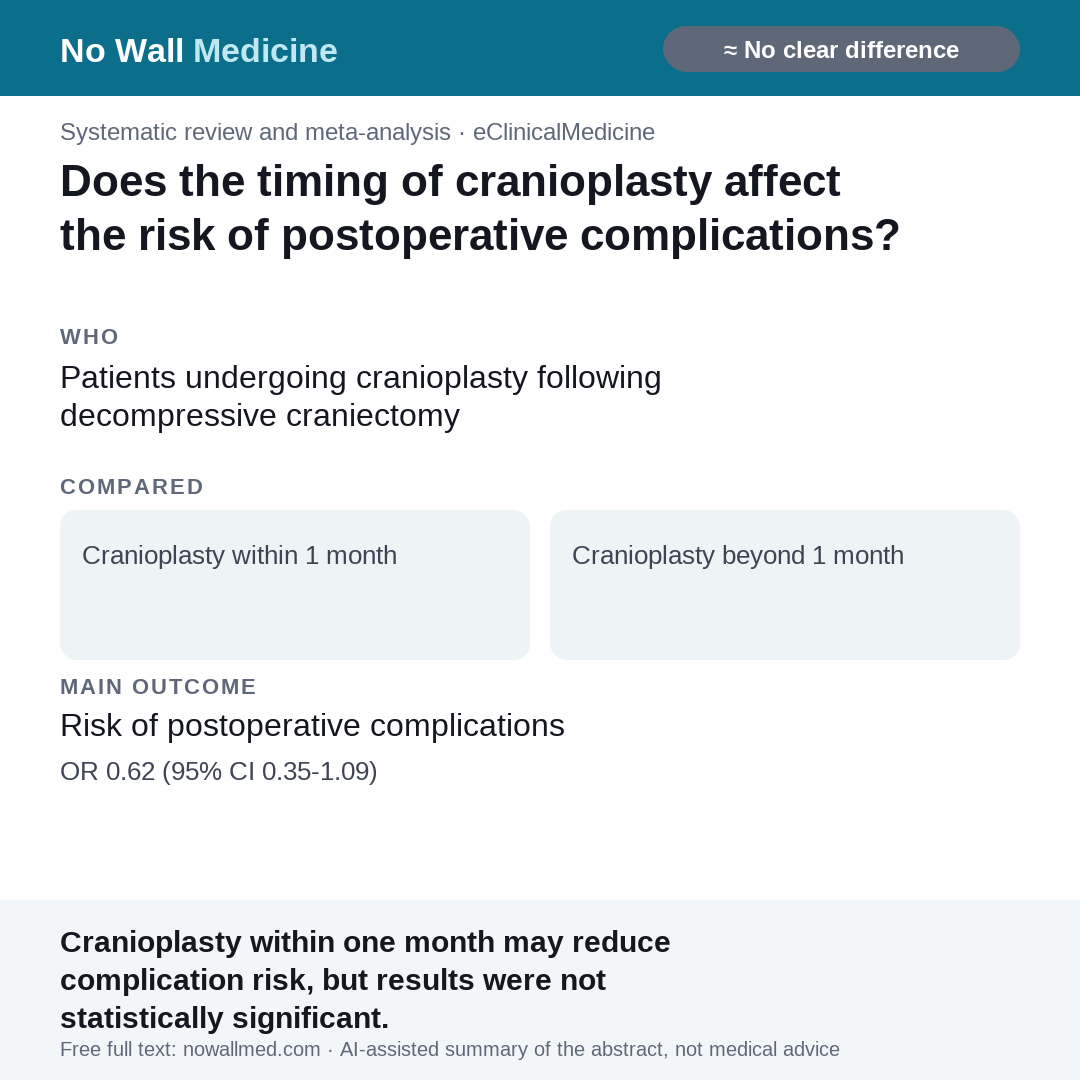
The timing of cranioplasty and the risk of postoperative complications: a systematic review and meta-analysis
Systematic review and meta-analysisNo clear difference
Does the timing of cranioplasty affect the risk of postoperative complications?
Who
Patients undergoing cranioplasty following decompressive craniectomy
Compared
Cranioplasty within 1 month
Cranioplasty beyond 1 month
Main outcome
Risk of postoperative complications
Result: OR 0.62 (95% CI 0.35-1.09)
Bottom line: Cranioplasty within one month may reduce complication risk, but results were not statistically significant.
Funded by: President Foundation of ZhuJiang Hospital and others
eClinicalMedicine · 2025-09-12Download image
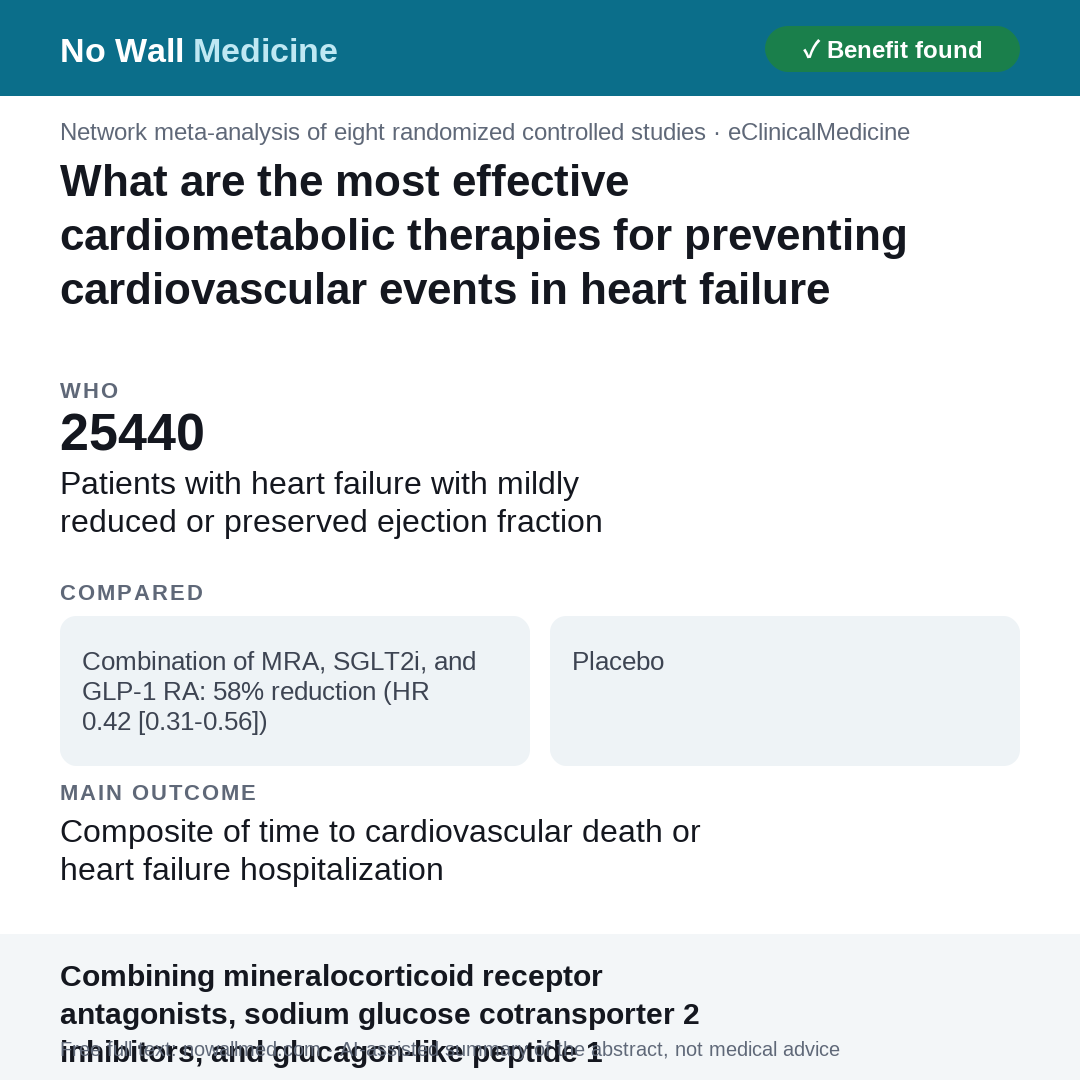
Prevention of cardiovascular events in heart failure with mildly reduced or preserved ejection fraction: a comprehensive network meta-analysis of eight randomized controlled trials using reconstructed individual patient's data
Network meta-analysis of eight randomized controlled trialsBenefit found
What are the most effective cardiometabolic therapies for preventing cardiovascular events in heart failure patients?
Who
25440
Patients with heart failure with mildly reduced or preserved ejection fraction
Compared
Combination of MRA, SGLT2i, and GLP-1 RA: 58% reduction (HR 0.42 [0.31-0.56])
Placebo
Main outcome
Composite of time to cardiovascular death or heart failure hospitalization
Result: hazard ratio 0.42 (95% CI 0.31 to 0.56)
Bottom line: Combining mineralocorticoid receptor antagonists, sodium glucose cotransporter 2 inhibitors, and glucagon-like peptide 1 receptor agonists reduces cardiovascular events.
Limitation: Large-scale randomized combination therapies with extended follow-up are needed to confirm these findings.
eClinicalMedicine · 2025-09-12Download image
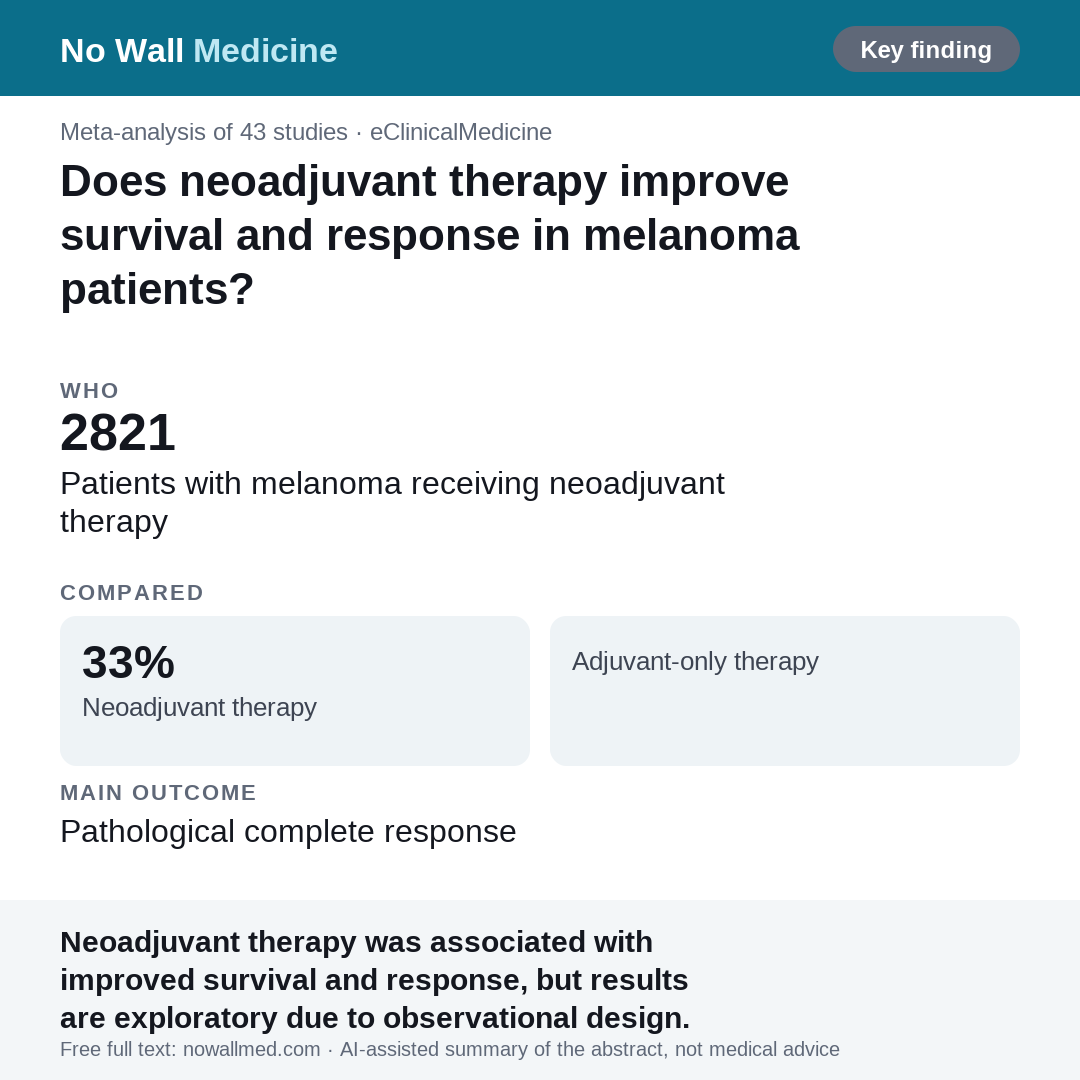
Effect of neoadjuvant therapy on survival outcomes in patients with melanoma: a systematic review and meta-analysis
Systematic review and meta-analysisBenefit found
What are the efficacy and safety of neoadjuvant therapy in melanoma patients?
Who
2821
Patients with melanoma receiving neoadjuvant therapy
Compared
Neoadjuvant therapy
Adjuvant-only therapy
Main outcome
Pathological complete response, radiological complete response, survival, and adverse events
Result: hazard ratio 0.58 (95% CI 0.39-0.87) for progression-free survival; hazard ratio 0.64 (95% CI 0.41-0.99) for overall survival
Bottom line: Neoadjuvant therapy shows promising survival benefits and favorable complete response rates compared to adjuvant-only therapy in melanoma.
Limitation: The majority of included studies are single-arm or observational studies.
eClinicalMedicine · 2025-09-12Download image