Visual abstracts
New randomized trials and meta-analyses from leading journals at a glance: who was studied, what was compared, and what was found. Every paper is free to read in full.
All specialtiesCardiology 4833Oncology 4115Gastroenterology & Hepatology 1934Infectious Disease 3825Neurology 1901Psychiatry & Mental Health 2256Pulmonology 2082Critical Care 1346Endocrinology & Diabetes 2572Pediatrics 2940Surgery 2525Orthopedics & Sports Medicine 926Neurosurgery 534Cardiothoracic & Vascular Surgery 671Plastic & Reconstructive Surgery 591Nephrology 1124Rheumatology 823Hematology 1104Dermatology 620Ophthalmology 543Obstetrics & Gynecology 1684Public & Global Health 1056Radiology & Imaging 641Anesthesiology 962Urology 754ENT (Otolaryngology) 503Emergency Medicine 489Allergy & Immunology 313Geriatrics 982Family Medicine & Primary Care 541Medical Genetics & Genomics 675Pathology & Laboratory Medicine 157Physical Medicine & Rehabilitation 751Palliative Care 424Nutrition 1580Digital Health & AI 2195General Medicine 321
Healthcare professionals' views of the use of oral morphine and transmucosal diamorphine in the management of paediatric breakthrough pain and the feasibility of a randomised controlled trial: A focus group study (DIPPER)
Focus group studyMixed results
What are healthcare professionals' views on transmucosal diamorphine versus oral morphine for paediatric breakthrough pain?
Who
28
Doctors, nurses and pharmacists caring for children with life-limiting illnesses · United Kingdom
Compared
Oral morphine: slow onset and unpredictable response
Transmucosal diamorphine: quick onset and easy administration
Main outcome
Healthcare professionals' perspectives on pain management and trial feasibility
Bottom line: Transmucosal diamorphine offers quick onset, but lacks licensed preparations and prescribing guidance for paediatric breakthrough pain management.
Palliat Med · 2021-04-13Download image

Clinical Practice Guidelines on the Diagnosis and Management of Polycystic Ovary Syndrome: A Systematic Review and Quality Assessment Study
Systematic review and quality assessment studyMixed results
What is the methodological quality and variation in polycystic ovary syndrome clinical practice guidelines?
Who
13
Clinical practice guidelines and consensus statements on polycystic ovary syndrome
Compared
Scope and purpose description: 12/13 (92%)
Stakeholder involvement and applicability: 2/13 (15%)
Main outcome
Methodological quality and variation in clinical recommendations
Bottom line: Clinical practice guidelines for polycystic ovary syndrome vary in scope and quality, with inconsistent recommendations across several disease domains.
J Clin Endocrinol Metab · 2021-04-12Download image

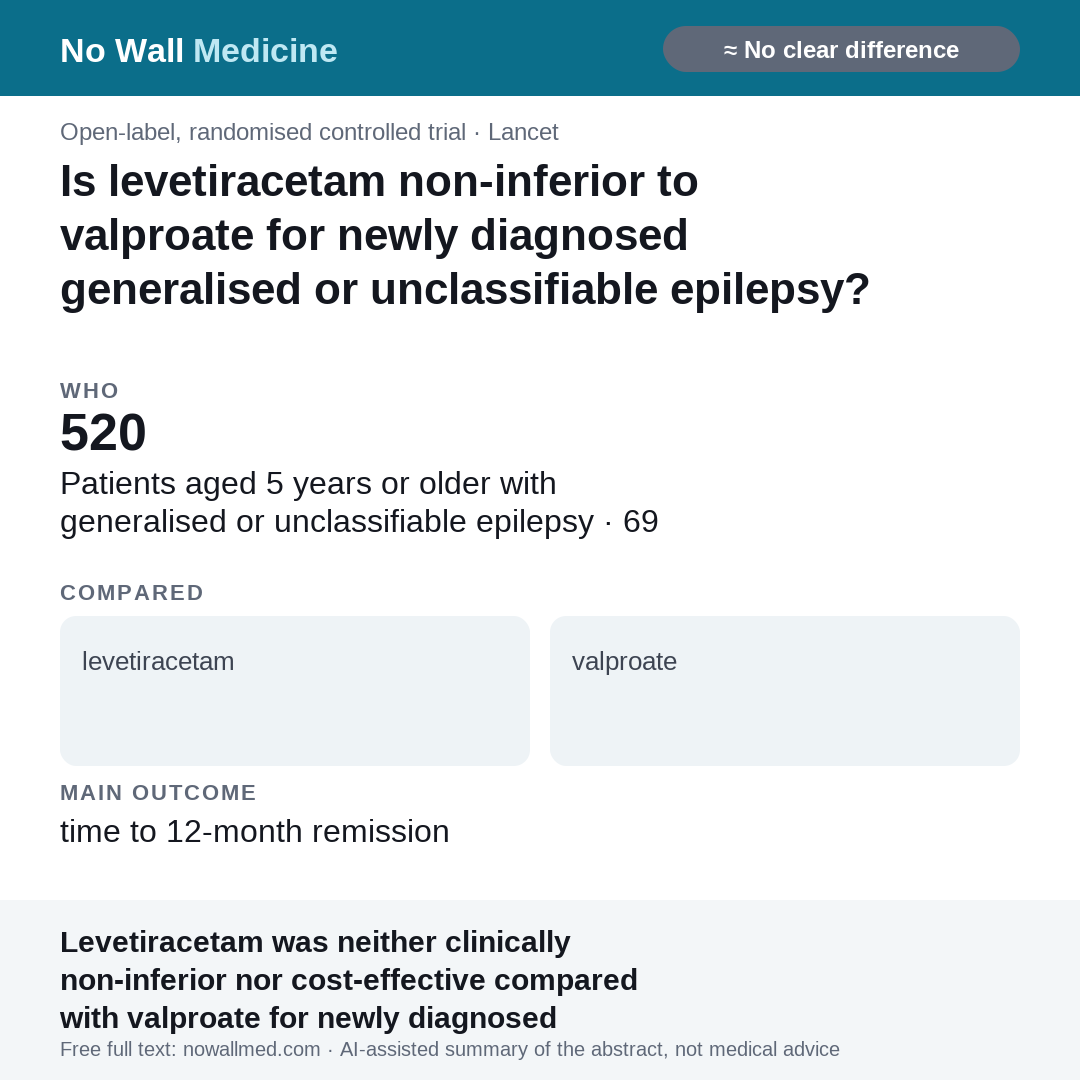
The SANAD II study of the effectiveness and cost-effectiveness of valproate versus levetiracetam for newly diagnosed generalised and unclassifiable epilepsy: an open-label, non-inferiority, multicentre, phase 4, randomised controlled trial
Open-label, randomised controlled trialNo clear difference
Is levetiracetam non-inferior to valproate for newly diagnosed generalised or unclassifiable epilepsy?
Who
520
Patients aged 5 years or older with generalised or unclassifiable epilepsy · 69 centres across the United Kingdom
Compared
levetiracetam
valproate
Main outcome
time to 12-month remission
Result: hazard ratio 1.19 (95% CI 0.96 to 1.47)
Bottom line: Levetiracetam was neither clinically non-inferior nor cost-effective compared with valproate for newly diagnosed generalised or unclassifiable epilepsy.
Funded by: National Institute for Health Research Health Technology Assessment Programme
Lancet · 2021-04-11Download image
The SANAD II study of the effectiveness and cost-effectiveness of levetiracetam, zonisamide, or lamotrigine for newly diagnosed focal epilepsy: an open-label, non-inferiority, multicentre, phase 4, randomised controlled trial
Randomised, open-label, controlled trialHarm found
Are levetiracetam and zonisamide non-inferior to lamotrigine for newly diagnosed focal epilepsy?
Who
990
Adult and paediatric patients with newly diagnosed focal epilepsy · Multicentre, United Kingdom
Compared
Lamotrigine
Levetiracetam: HR 1·18; 97·5% CI 0·95-1·47
Zonisamide: 1·03; 0·83-1·28
Main outcome
Time to 12-month remission
Result: hazard ratio 1·18 (97.5% CI 0.95 to 1.47) for levetiracetam
Bottom line: Lamotrigine is preferred over levetiracetam or zonisamide for first-line treatment of focal epilepsy due to better effectiveness and cost-utility.
Lancet · 2021-04-11Download image

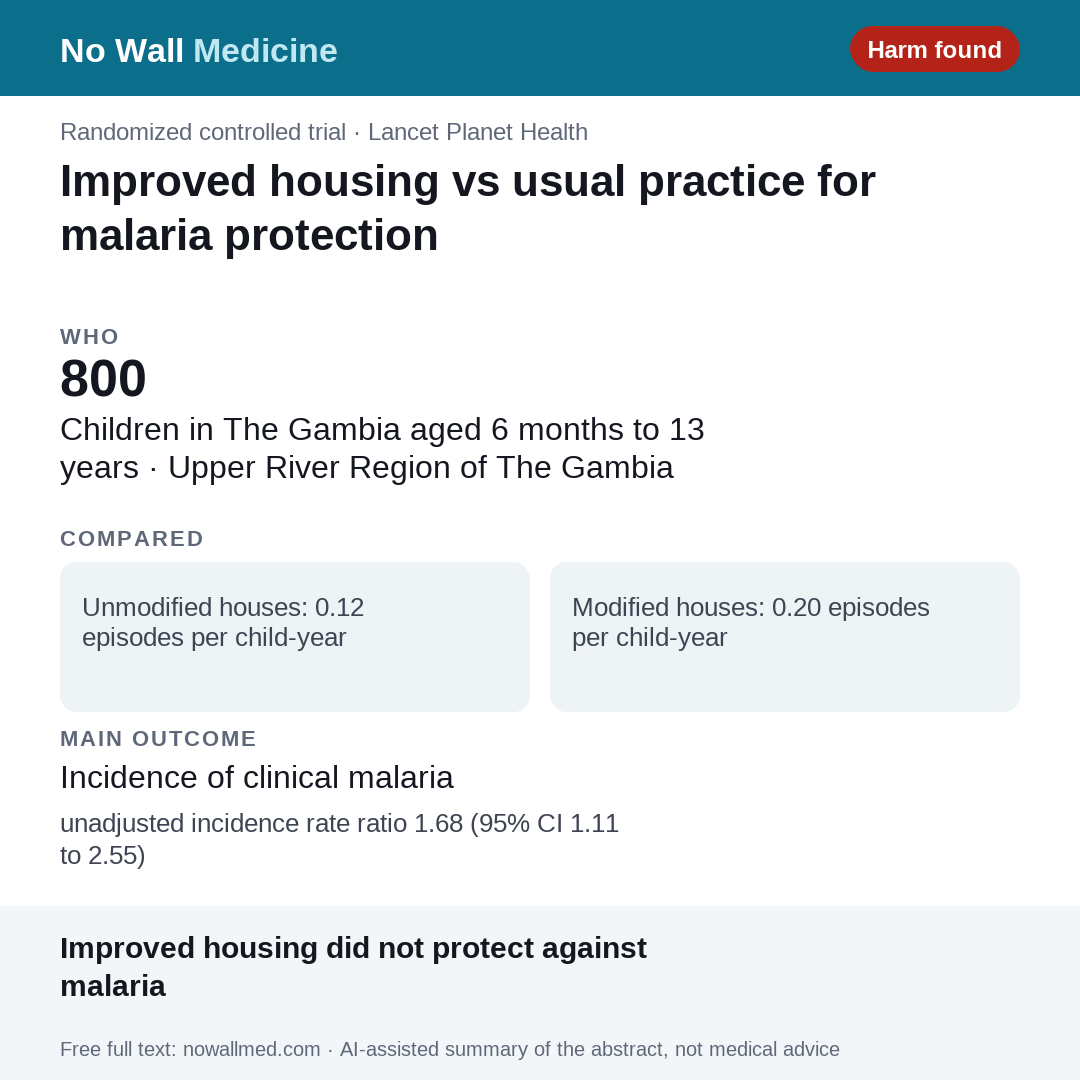
Improved housing versus usual practice for additional protection against clinical malaria in The Gambia (RooPfs): a household-randomised controlled trial
Randomized controlled trialHarm found
Improved housing vs usual practice for malaria protection
Who
800
Children in The Gambia aged 6 months to 13 years · Upper River Region of The Gambia
Compared
Unmodified houses: 0.12 episodes per child-year
Modified houses: 0.20 episodes per child-year
Main outcome
Incidence of clinical malaria
Result: unadjusted incidence rate ratio 1.68 (95% CI 1.11 to 2.55)
Bottom line: Improved housing did not protect against malaria
Funded by: Medical Research Council, UK Department for International Development, and Wellcome Trust
Lancet Planet Health · 2021-04-11Download image
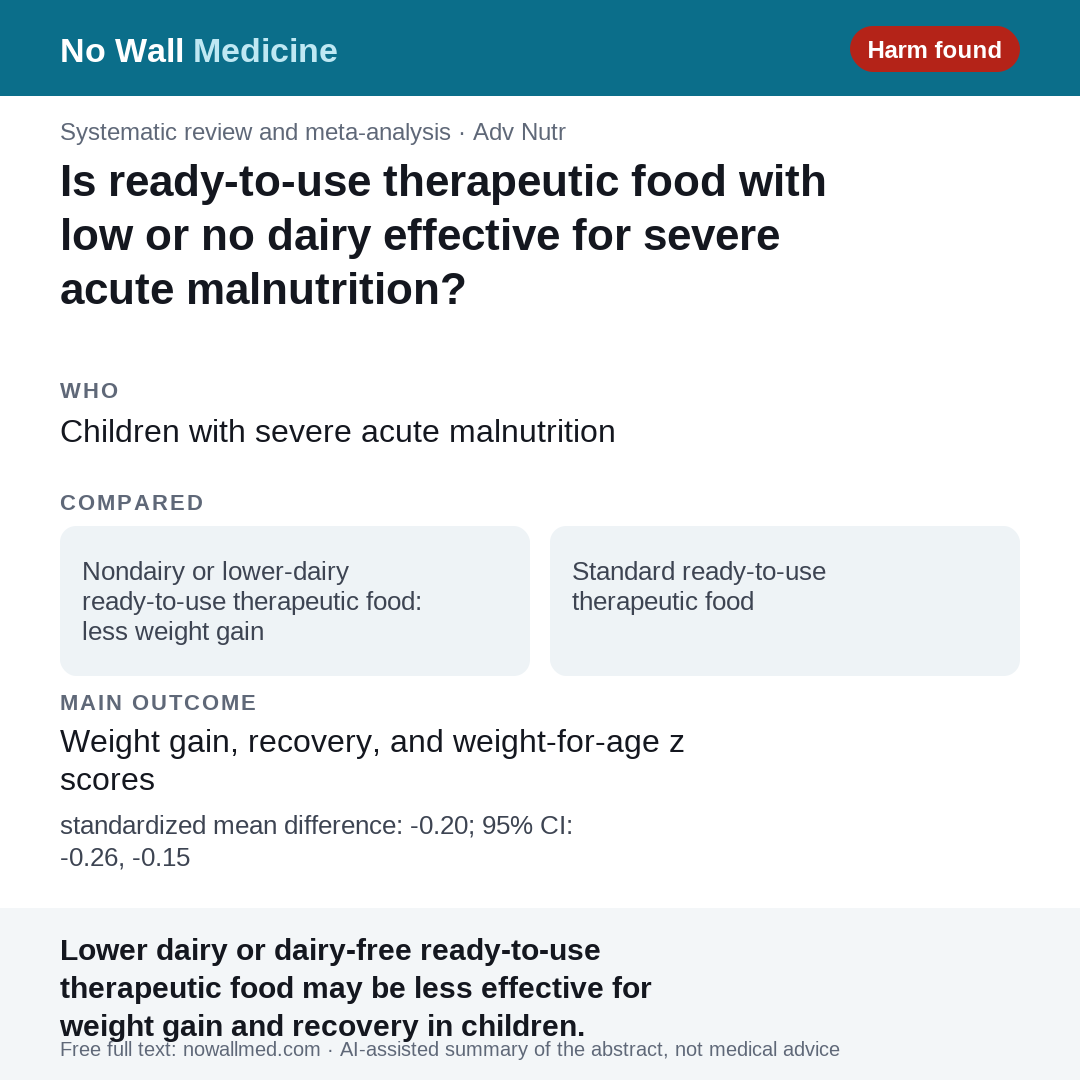
Ready-to-Use Therapeutic Food (RUTF) Containing Low or No Dairy Compared to Standard RUTF for Children with Severe Acute Malnutrition: A Systematic Review and Meta-Analysis
Systematic review and meta-analysisHarm found
Is ready-to-use therapeutic food with low or no dairy effective for severe acute malnutrition?
Who
Children with severe acute malnutrition
Compared
Nondairy or lower-dairy ready-to-use therapeutic food: less weight gain
Standard ready-to-use therapeutic food
Main outcome
Weight gain, recovery, and weight-for-age z scores
Result: standardized mean difference: -0.20; 95% CI: -0.26, -0.15
Bottom line: Lower dairy or dairy-free ready-to-use therapeutic food may be less effective for weight gain and recovery in children.
Adv Nutr · 2021-04-11Download image
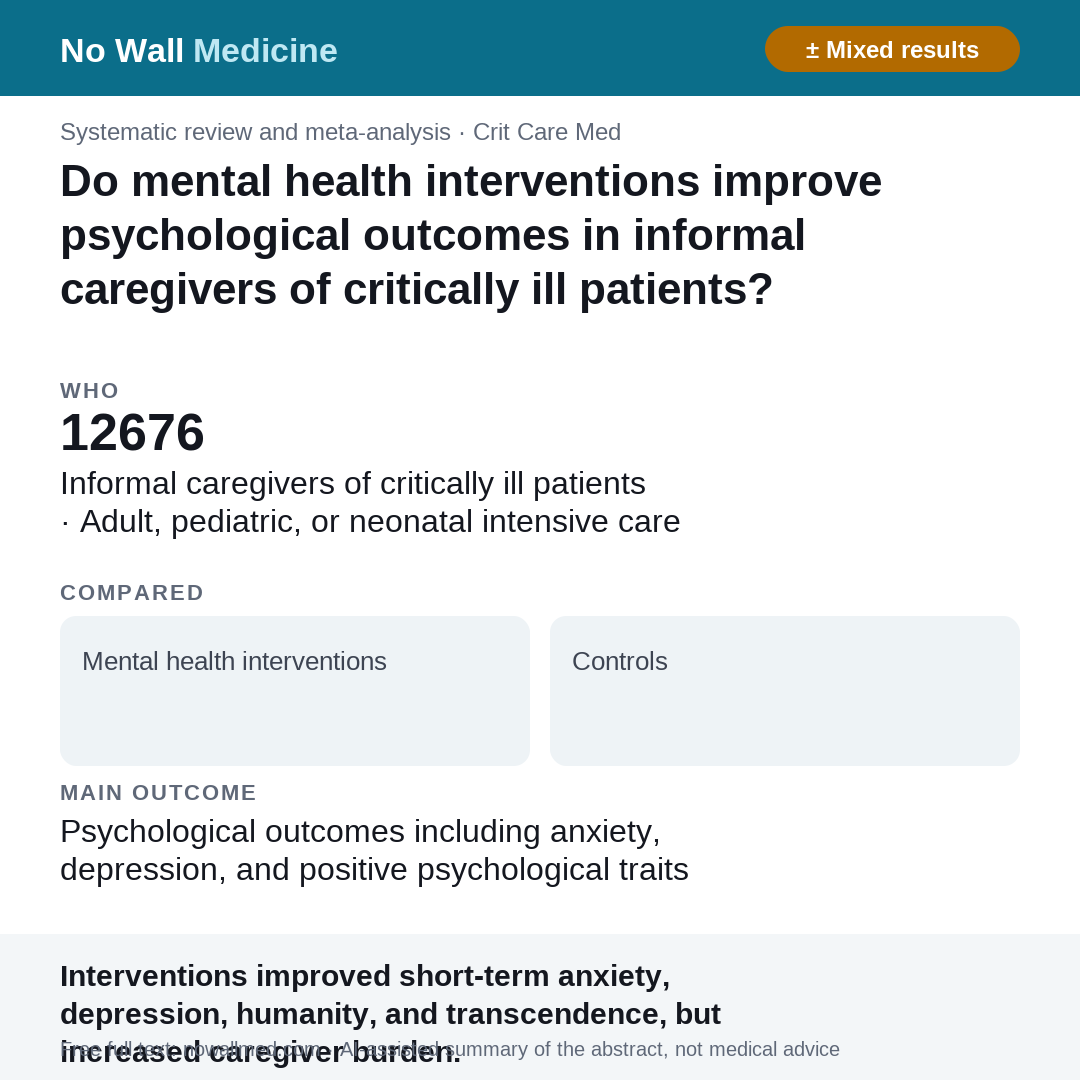
Mental Health Interventions to Improve Psychological Outcomes in Informal Caregivers of Critically Ill Patients: A Systematic Review and Meta-Analysis
Systematic review and meta-analysisMixed results
Do mental health interventions improve psychological outcomes in informal caregivers of critically ill patients?
Who
12676
Informal caregivers of critically ill patients · Adult, pediatric, or neonatal intensive care units
Compared
Mental health interventions
Controls
Main outcome
Psychological outcomes including anxiety, depression, and positive psychological traits
Result: anxiety ratio of means 0.92 (95% CI, 0.87-0.97); depression ratio of means 0.83 (95% CI, 0.69-0.99)
Bottom line: Interventions improved short-term anxiety, depression, humanity, and transcendence, but increased caregiver burden.
Crit Care Med · 2021-04-08Download image
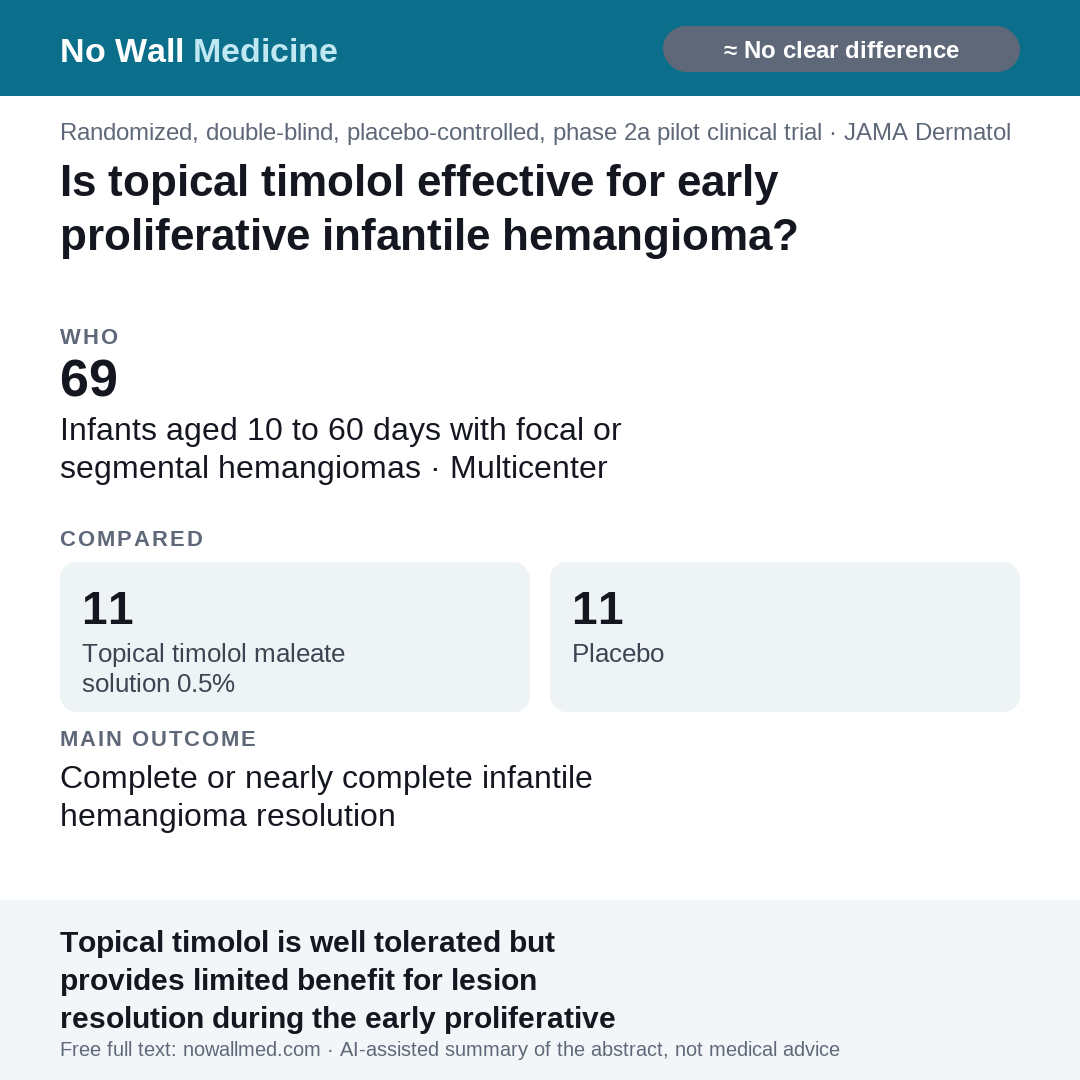
Efficacy and Safety of Topical Timolol for the Treatment of Infantile Hemangioma in the Early Proliferative Stage: A Randomized Clinical Trial
Randomized, double-blind, placebo-controlled, phase 2a pilot clinical trialNo clear difference
Is topical timolol effective for early proliferative infantile hemangioma?
Who
69
Infants aged 10 to 60 days with focal or segmental hemangiomas · Multicenter
Compared
11Topical timolol maleate solution 0.5% (42%)
11Placebo (36%)
Main outcome
Complete or nearly complete infantile hemangioma resolution
Result: odds ratio 1.33 (95% CI 0.45-3.89)
Bottom line: Topical timolol is well tolerated but provides limited benefit for lesion resolution during the early proliferative stage.
JAMA Dermatol · 2021-04-08Download image
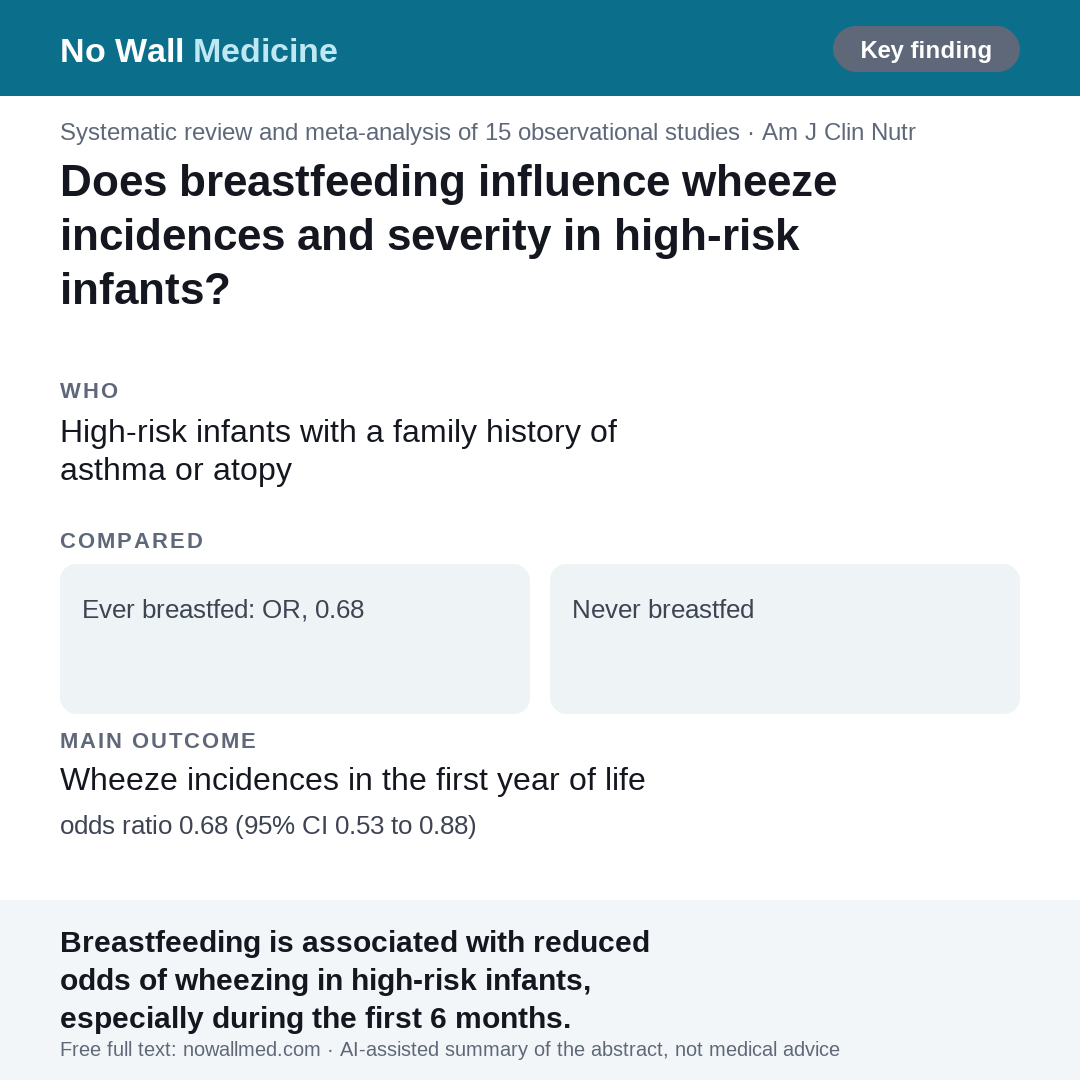
Breastfeeding and wheeze-related outcomes in high-risk infants: A systematic review and meta-analysis
Systematic review and meta-analysis of 15 observational studiesBenefit found
Does breastfeeding influence wheeze incidences and severity in high-risk infants?
Who
High-risk infants with a family history of asthma or atopy
Compared
Ever breastfed: OR, 0.68
Never breastfed
Main outcome
Wheeze incidences in the first year of life
Result: odds ratio 0.68 (95% CI 0.53 to 0.88)
Bottom line: Breastfeeding is associated with reduced odds of wheezing in high-risk infants, especially during the first 6 months.
Am J Clin Nutr · 2021-04-08Download image
A Microbiota-Directed Food Intervention for Undernourished Children
Randomized trialBenefit found
Does a microbiota-directed complementary food prototype improve growth in undernourished children?
Who
118
Slum-dwelling Bangladeshi children with moderate acute malnutrition · Bangladesh
Compared
Microbiota-directed complementary food prototype
Ready-to-use supplementary food
Main outcome
Weight-for-length and weight-for-age z scores
Bottom line: Microbiota-directed complementary food prototype showed benefits for growth in children with moderate acute malnutrition.
Funded by: Bill and Melinda Gates Foundation and National Institutes of Health
NEJM · 2021-04-07Download image

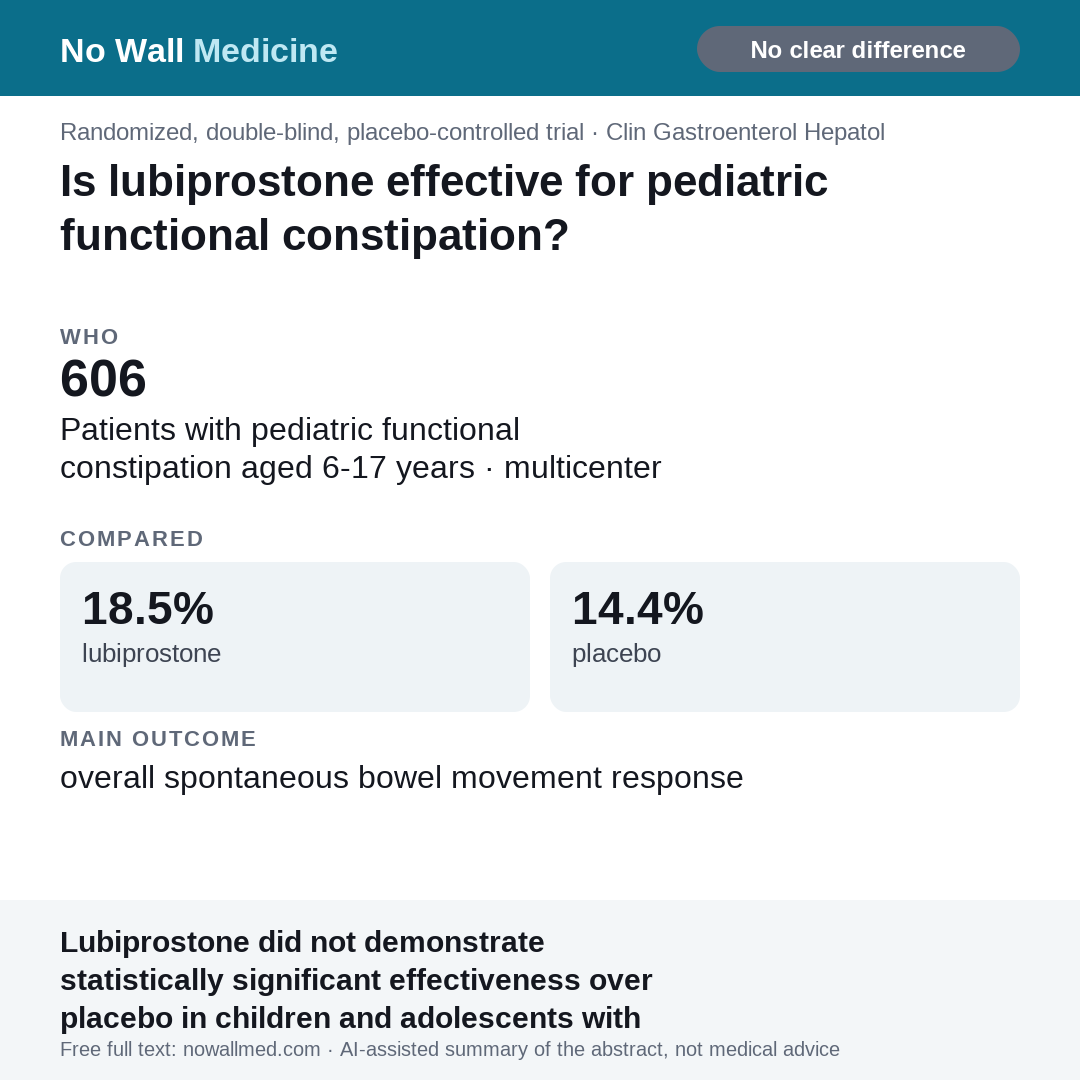
Lubiprostone for Pediatric Functional Constipation: Randomized, Controlled, Double-Blind Study With Long-term Extension
Randomized, double-blind, placebo-controlled trialNo clear difference
Is lubiprostone effective for pediatric functional constipation?
Who
606
Patients with pediatric functional constipation aged 6-17 years · multicenter
Compared
18.5%lubiprostone
14.4%placebo
Main outcome
overall spontaneous bowel movement response
Bottom line: Lubiprostone did not demonstrate statistically significant effectiveness over placebo in children and adolescents with pediatric functional constipation.
Clin Gastroenterol Hepatol · 2021-04-07Download image
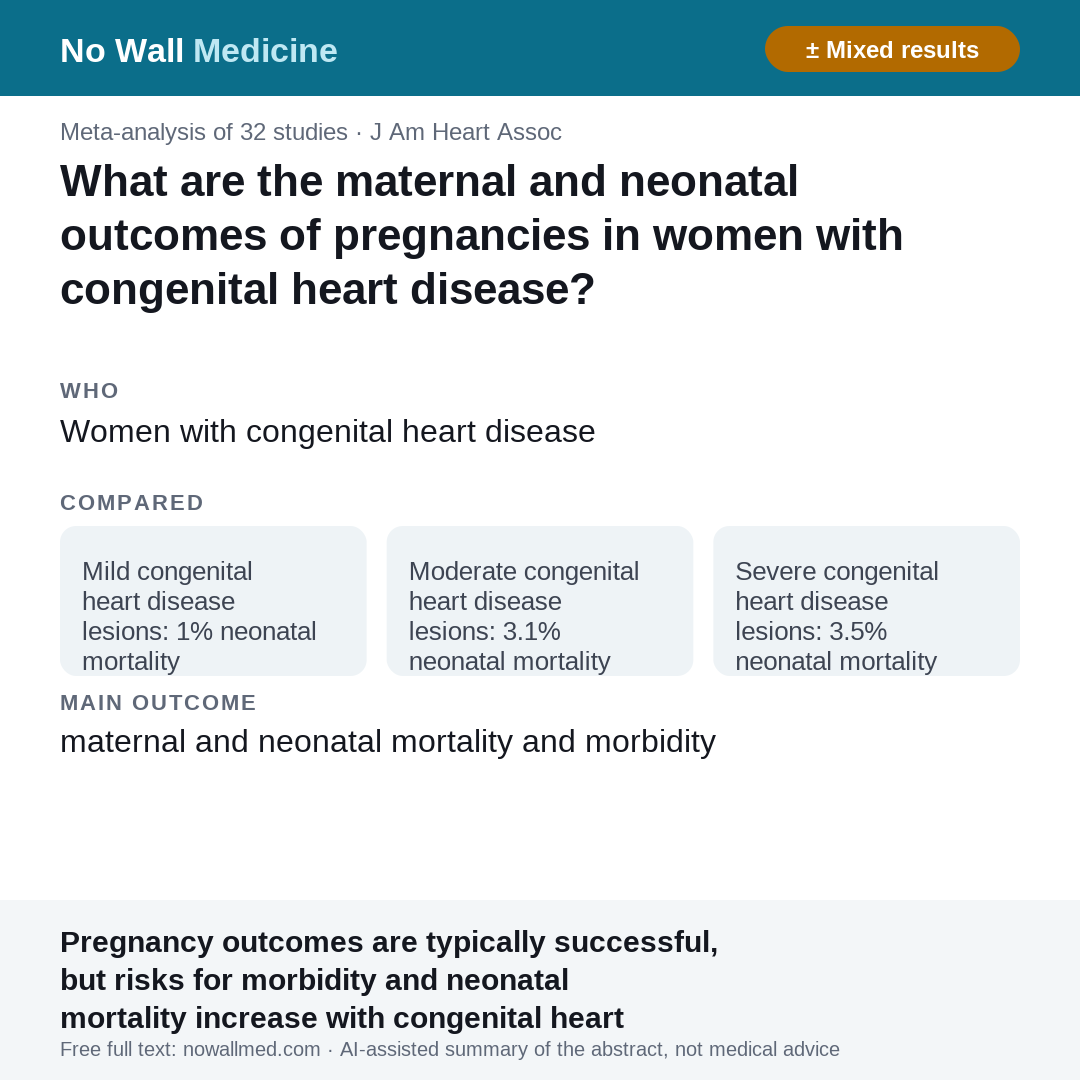
Maternal and Neonatal Outcomes of Pregnancies in Women With Congenital Heart Disease: A Meta-Analysis
Meta-analysis of 32 studiesMixed results
What are the maternal and neonatal outcomes of pregnancies in women with congenital heart disease?
Who
Women with congenital heart disease
Compared
Mild congenital heart disease lesions: 1% neonatal mortality
Moderate congenital heart disease lesions: 3.1% neonatal mortality
Severe congenital heart disease lesions: 3.5% neonatal mortality
Main outcome
maternal and neonatal mortality and morbidity
Bottom line: Pregnancy outcomes are typically successful, but risks for morbidity and neonatal mortality increase with congenital heart disease severity.
Limitation: There were too few maternal deaths in any group to pool data.
J Am Heart Assoc · 2021-04-06Download image
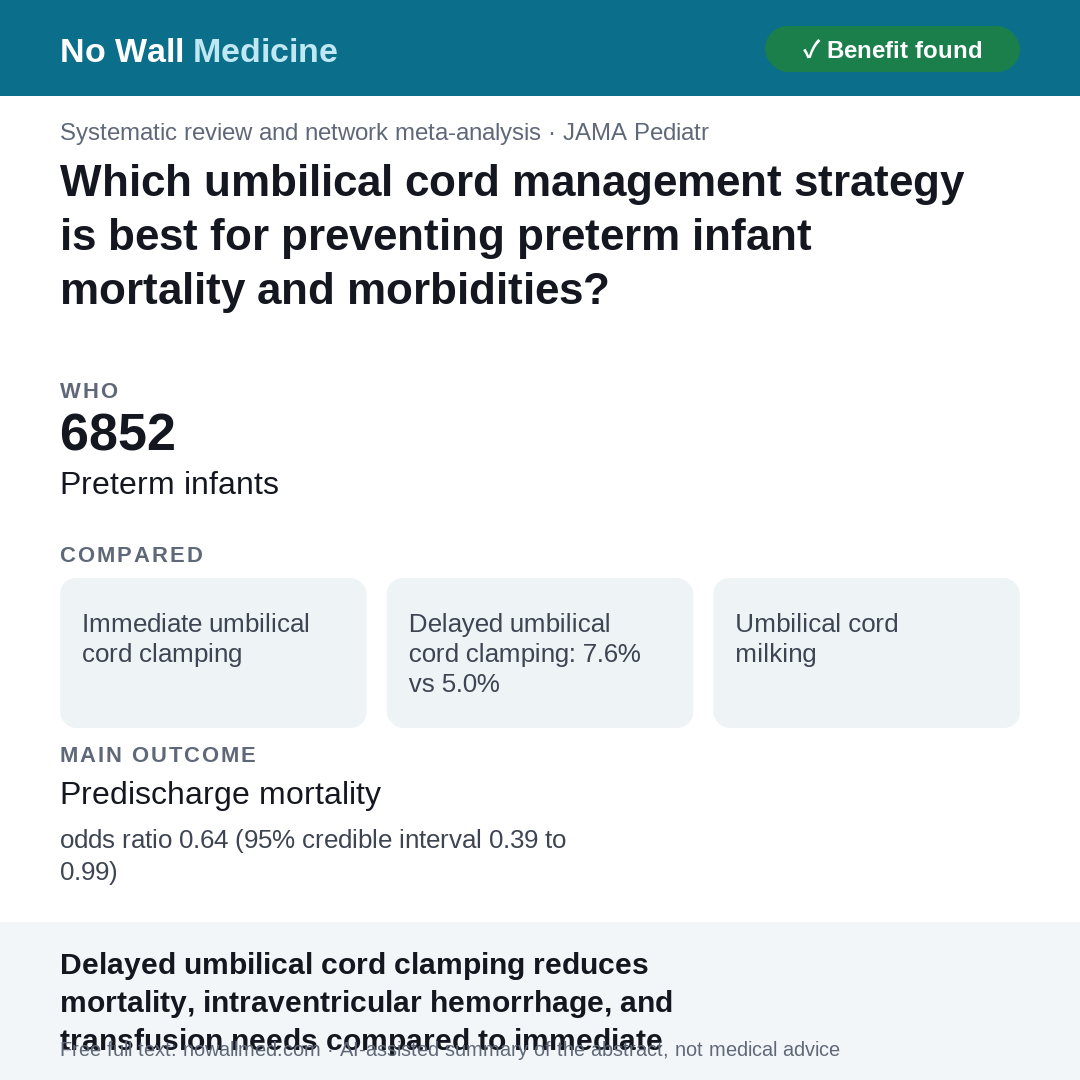
Association of Umbilical Cord Management Strategies With Outcomes of Preterm Infants: A Systematic Review and Network Meta-analysis
Systematic review and network meta-analysisBenefit found
Which umbilical cord management strategy is best for preventing preterm infant mortality and morbidities?
Who
6852
Preterm infants
Compared
Immediate umbilical cord clamping
Delayed umbilical cord clamping: 7.6% vs 5.0%
Umbilical cord milking
Main outcome
Predischarge mortality
Result: odds ratio 0.64 (95% credible interval 0.39 to 0.99)
Bottom line: Delayed umbilical cord clamping reduces mortality, intraventricular hemorrhage, and transfusion needs compared to immediate clamping in preterm infants.
JAMA Pediatr · 2021-04-05Download image
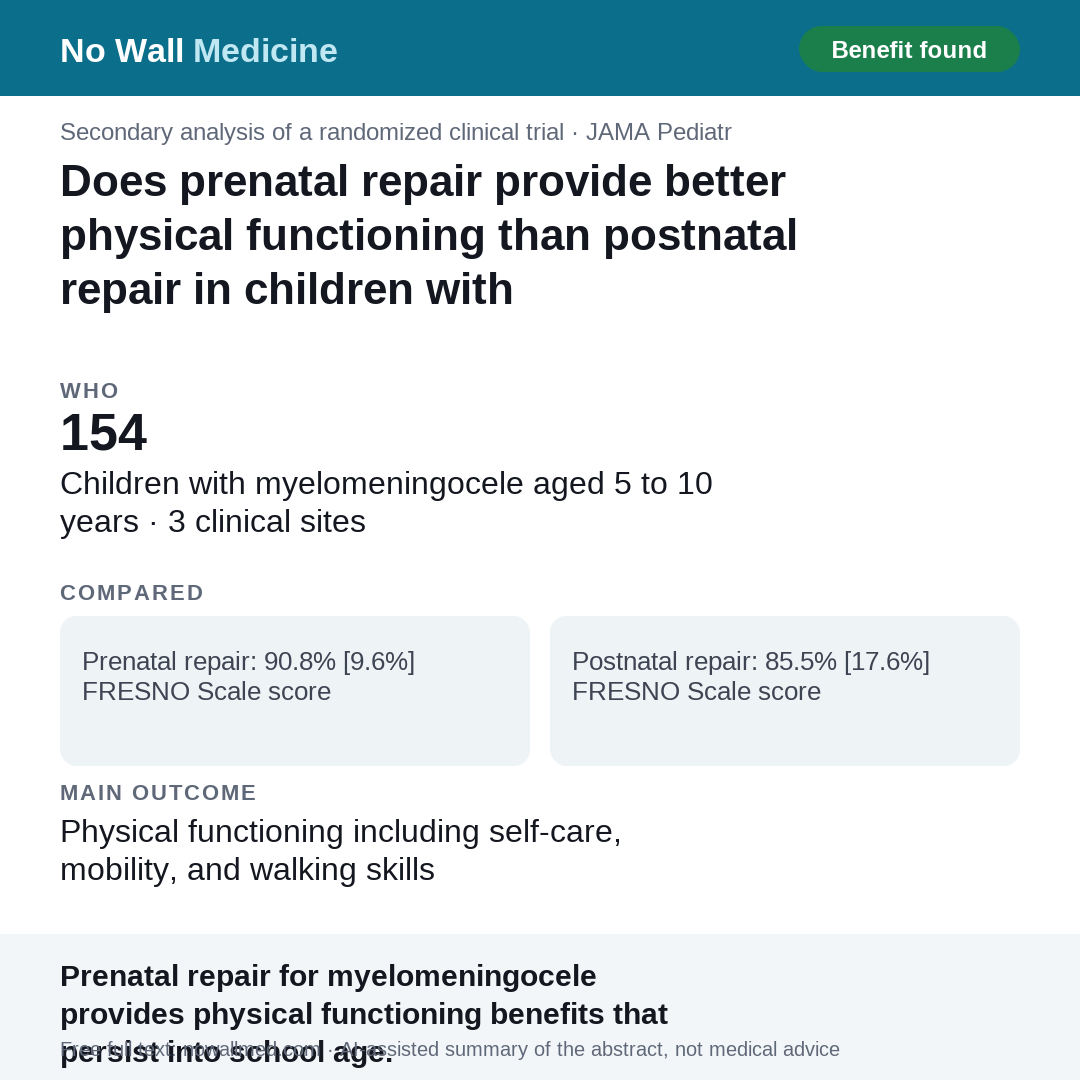
Prenatal Repair and Physical Functioning Among Children With Myelomeningocele: A Secondary Analysis of a Randomized Clinical Trial
Secondary analysis of a randomized clinical trialBenefit found
Does prenatal repair provide better physical functioning than postnatal repair in children with myelomeningocele?
Who
154
Children with myelomeningocele aged 5 to 10 years · 3 clinical sites
Compared
Prenatal repair: 90.8% [9.6%] FRESNO Scale score
Postnatal repair: 85.5% [17.6%] FRESNO Scale score
Main outcome
Physical functioning including self-care, mobility, and walking skills
Result: adjusted relative risk 1.70 (95% CI, 1.23-2.34) for community ambulation
Bottom line: Prenatal repair for myelomeningocele provides physical functioning benefits that persist into school age.
JAMA Pediatr · 2021-04-05Download image
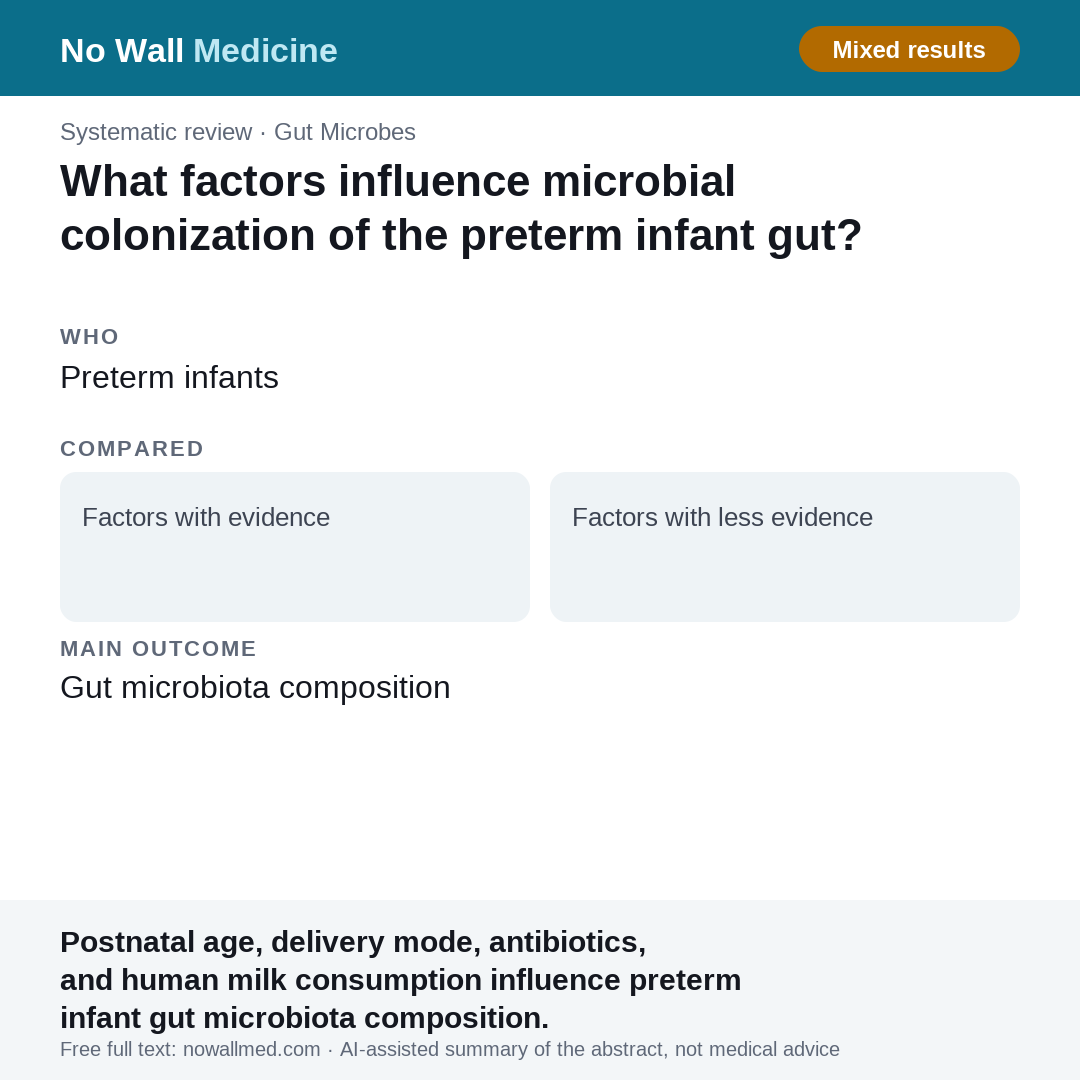
A systematic review of the factors influencing microbial colonization of the preterm infant gut
Systematic reviewMixed results
What factors influence microbial colonization of the preterm infant gut?
Who
Preterm infants
Compared
Factors with evidence
Factors with less evidence
Main outcome
Gut microbiota composition
Bottom line: Postnatal age, delivery mode, antibiotics, and human milk consumption influence preterm infant gut microbiota composition.
Gut Microbes · 2021-04-05Download image
Optimal initial antibiotic regimen for the treatment of acute appendicitis: a systematic review and network meta-analysis with surgical intervention as the common comparator
Network meta-analysis of randomized controlled trials and observational studiesMixed results
What is the optimal initial antibiotic regimen for treating acute appendicitis?
Who
4551
Adult and paediatric patients with acute appendicitis
Compared
Surgery
Cephalosporins
Beta-lactam/beta-lactamase inhibitor combination
Carbapenems
Main outcome
1 year treatment success and treatment-related complications
Result: OR: 3.50, 95% credible interval: 0.55-38.63
Bottom line: Carbapenems may be recommended for non-operative management due to fewer complications compared to surgery.
J Antimicrob Chemother · 2021-04-02Download image

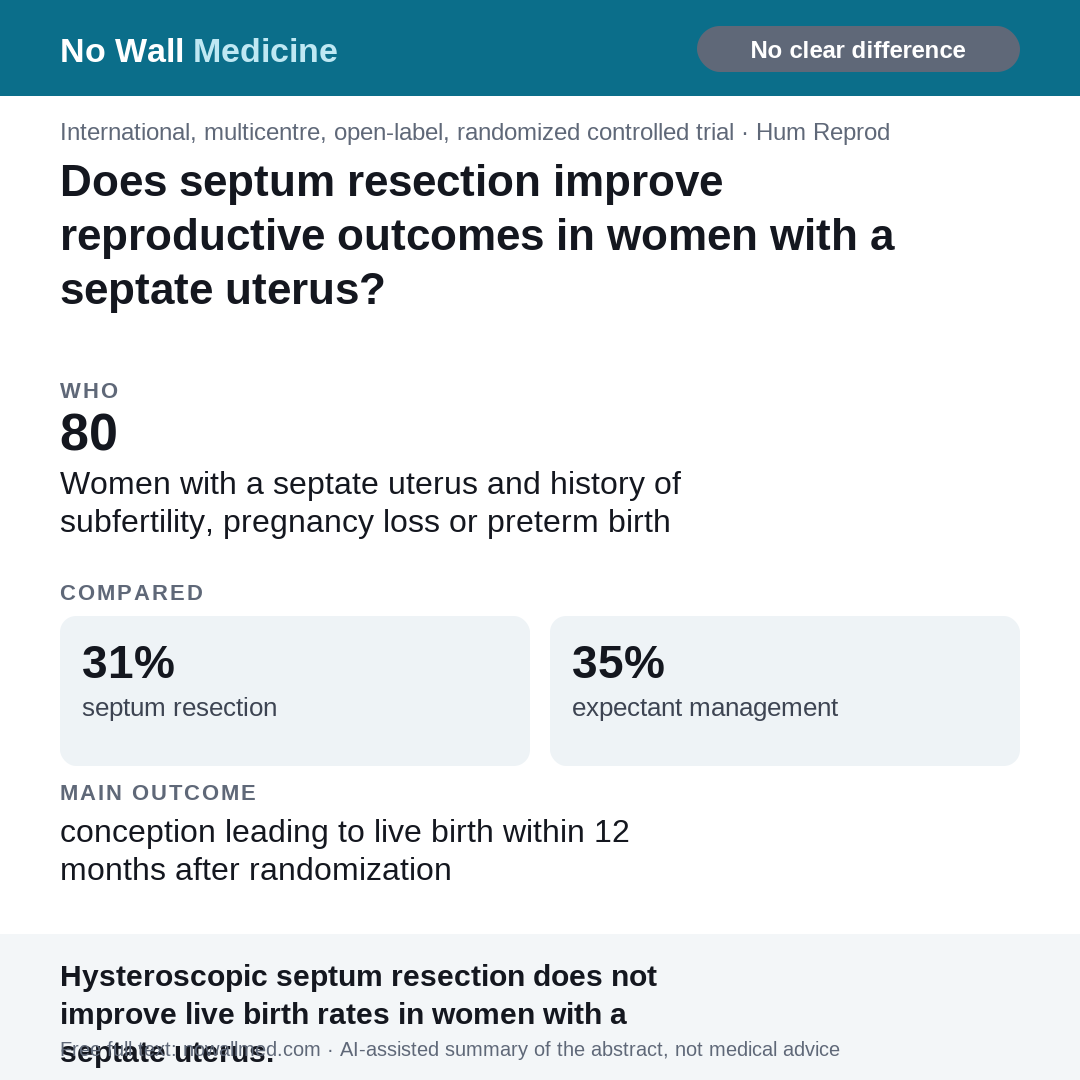
Septum resection versus expectant management in women with a septate uterus: an international multicentre open-label randomized controlled trial
International, multicentre, open-label, randomized controlled trialNo clear difference
Does septum resection improve reproductive outcomes in women with a septate uterus?
Who
80
Women with a septate uterus and history of subfertility, pregnancy loss or preterm birth · 10 centres in The Netherlands, UK, USA and Iran
Compared
31%septum resection
35%expectant management
Main outcome
conception leading to live birth within 12 months after randomization
Result: relative risk 0.88 (95% CI 0.47 to 1.65)
Bottom line: Hysteroscopic septum resection does not improve live birth rates in women with a septate uterus.
Limitation: the sample size was still limited and recruitment took a long period
Hum Reprod · 2021-04-02Download image
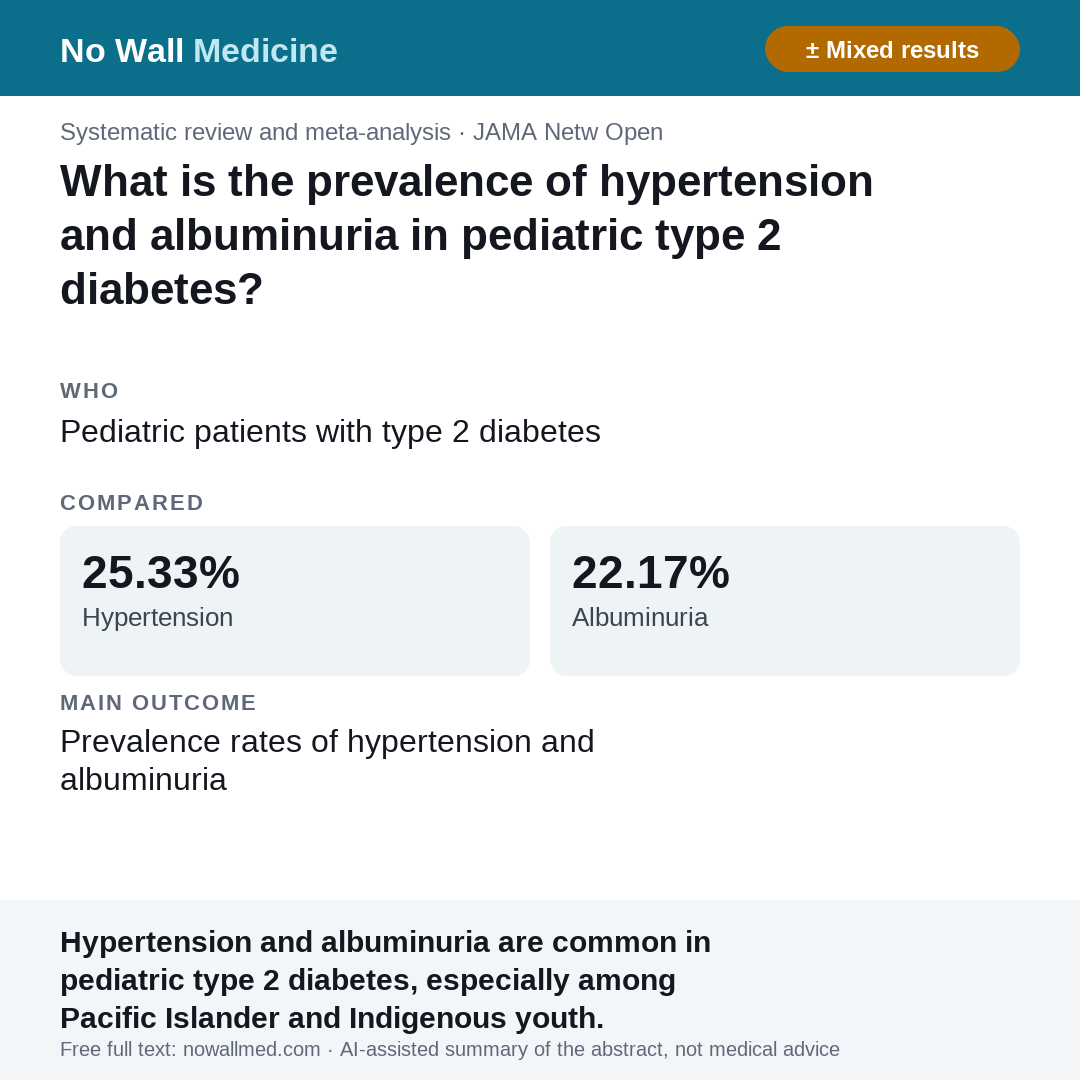
Prevalence of Hypertension and Albuminuria in Pediatric Type 2 Diabetes: A Systematic Review and Meta-analysis
Systematic review and meta-analysisMixed results
What is the prevalence of hypertension and albuminuria in pediatric type 2 diabetes?
Who
Pediatric patients with type 2 diabetes
Compared
25.33%Hypertension (95% CI, 19.57%-31.53%)
22.17%Albuminuria (95% CI, 17.34%-27.38%)
Main outcome
Prevalence rates of hypertension and albuminuria
Bottom line: Hypertension and albuminuria are common in pediatric type 2 diabetes, especially among Pacific Islander and Indigenous youth.
Limitation: Heterogeneity was high among studies
JAMA Netw Open · 2021-04-01Download image
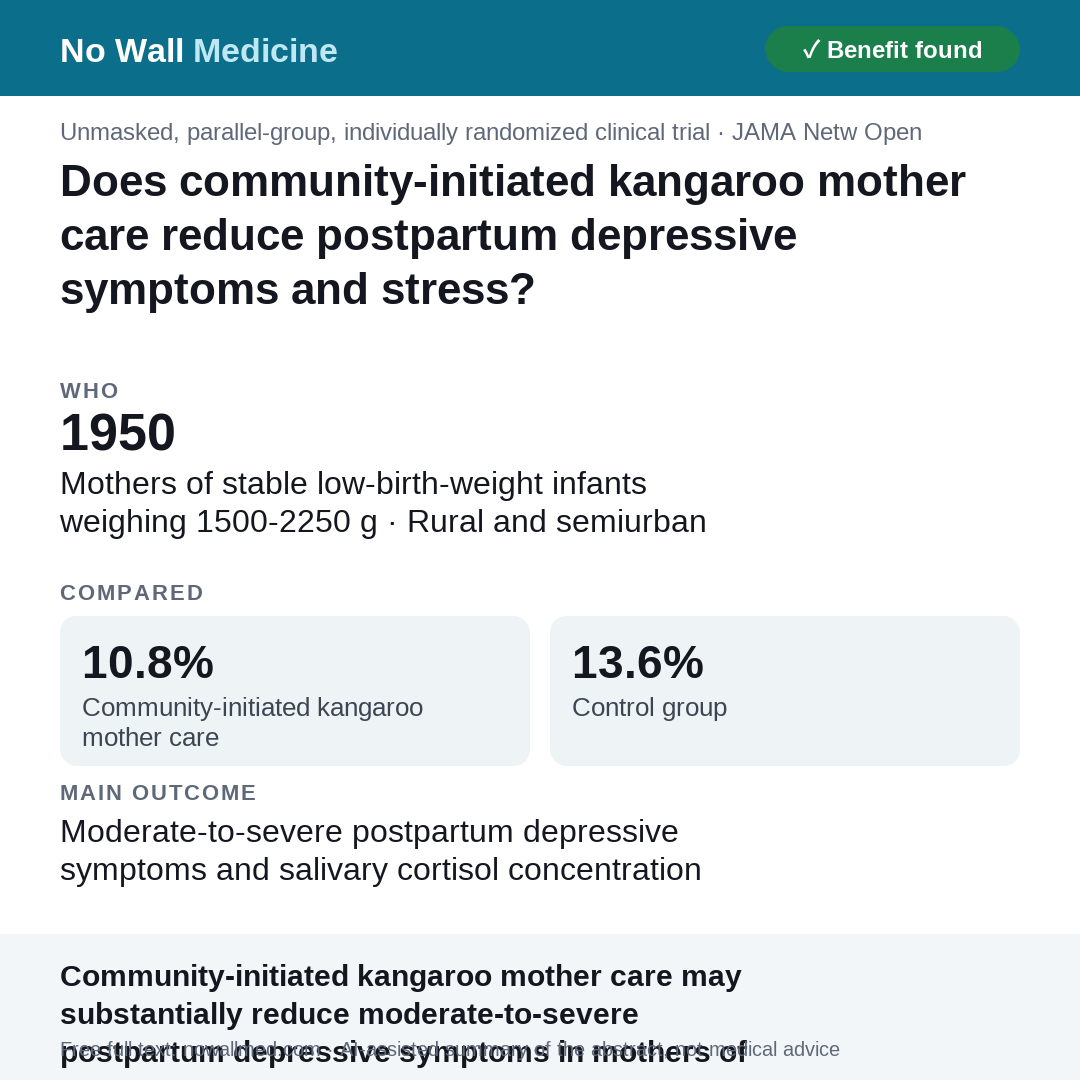
Effect of Community-Initiated Kangaroo Mother Care on Postpartum Depressive Symptoms and Stress Among Mothers of Low-Birth-Weight Infants: A Randomized Clinical Trial
Unmasked, parallel-group, individually randomized clinical trialBenefit found
Does community-initiated kangaroo mother care reduce postpartum depressive symptoms and stress?
Who
1950
Mothers of stable low-birth-weight infants weighing 1500-2250 g · Rural and semiurban low-income populations in North India
Compared
10.8%Community-initiated kangaroo mother care (105/974)
13.6%Control group (116/852)
Main outcome
Moderate-to-severe postpartum depressive symptoms and salivary cortisol concentration
Result: adjusted relative risk 0.75 (95% CI, 0.59-0.96)
Bottom line: Community-initiated kangaroo mother care may substantially reduce moderate-to-severe postpartum depressive symptoms in mothers of low-birth-weight infants.
JAMA Netw Open · 2021-04-01Download image
Comparative Efficacy and Acceptability of Psychotherapies for Self-harm and Suicidal Behavior Among Children and Adolescents: A Systematic Review and Network Meta-analysis
Systematic review and network meta-analysisMixed results
What is the comparative efficacy of psychotherapies for self-harm and suicidality in children and adolescents?
Who
5406
Children and adolescents with self-harm and suicidal behavior
Compared
Dialectical behavioral therapies: OR 0.28 (95% CI 0.12-0.64) for self-harm
Mentalization-based therapies: OR 0.38 (95% CI 0.15-0.97) for self-harm
Control conditions
Main outcome
Dichotomized self-harm and suicidal ideation
Bottom line: Some psychotherapies reduce self-harm and suicidal ideation, but high risk of bias prevents consistent comparative estimates.
Limitation: High risk of bias, heterogeneity, publication bias, inconsistency, and imprecision.
JAMA Netw Open · 2021-04-01Download image