Visual abstracts
New randomized trials and meta-analyses from leading journals at a glance: who was studied, what was compared, and what was found. Every paper is free to read in full.
All specialtiesCardiology 4877Oncology 4138Gastroenterology & Hepatology 1942Infectious Disease 3837Neurology 1905Psychiatry & Mental Health 2273Pulmonology 2143Critical Care 1365Endocrinology & Diabetes 2580Pediatrics 2980Surgery 2559Orthopedics & Sports Medicine 931Neurosurgery 537Cardiothoracic & Vascular Surgery 674Plastic & Reconstructive Surgery 591Nephrology 1133Rheumatology 823Hematology 1109Dermatology 621Ophthalmology 543Obstetrics & Gynecology 1686Public & Global Health 1058Radiology & Imaging 648Anesthesiology 986Urology 764ENT (Otolaryngology) 503Emergency Medicine 511Allergy & Immunology 313Geriatrics 981Family Medicine & Primary Care 562Medical Genetics & Genomics 676Pathology & Laboratory Medicine 159Physical Medicine & Rehabilitation 757Palliative Care 444Nutrition 1588Digital Health & AI 2201General Medicine 321
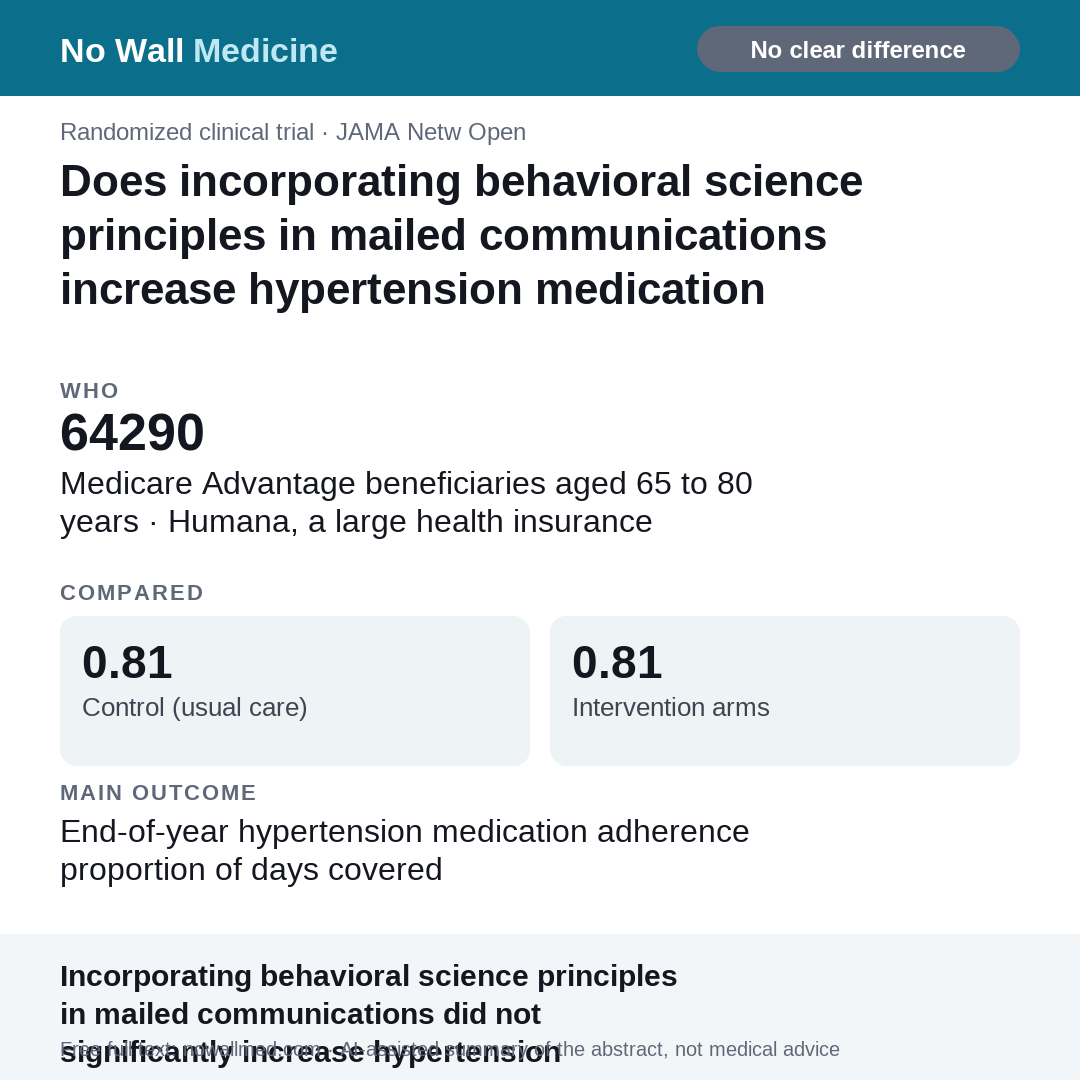
Incorporating Behavioral Science in Medication Adherence Communication: A Randomized Clinical Trial
Randomized clinical trialNo clear difference
Does incorporating behavioral science principles in mailed communications increase hypertension medication adherence?
Who
64290
Medicare Advantage beneficiaries aged 65 to 80 years · Humana, a large health insurance provider
Compared
0.81Control (usual care) (0.12)
0.81Intervention arms (0.12)
Main outcome
End-of-year hypertension medication adherence proportion of days covered
Result: absolute mean difference 0.00 (95% CI, -0.01 to 0.01)
Bottom line: Incorporating behavioral science principles in mailed communications did not significantly increase hypertension medication adherence.
JAMA Netw Open · 2025-05-01Download image
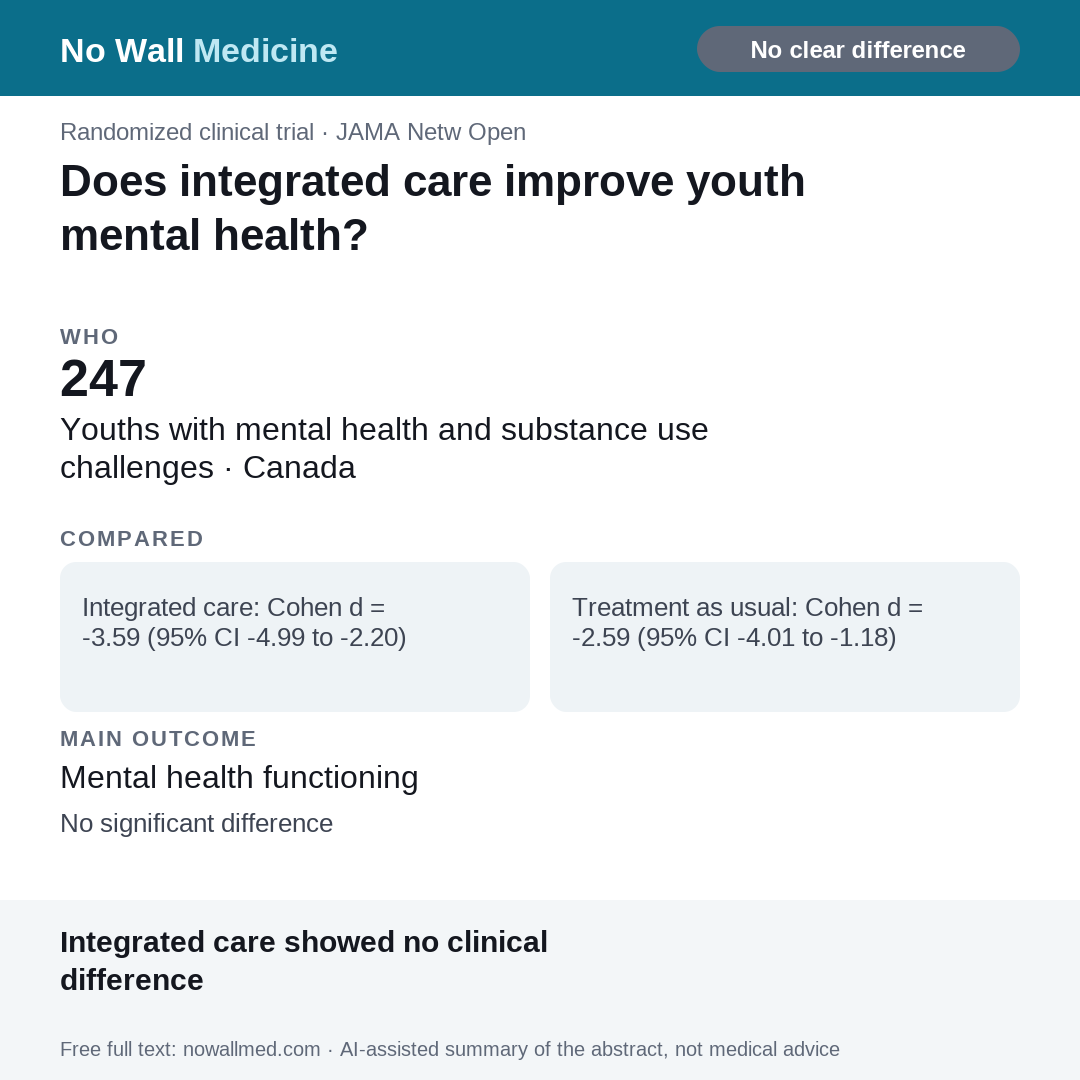
Integrated Collaborative Care for Youths With Mental Health and Substance Use Challenges: A Randomized Clinical Trial
Randomized clinical trialNo clear difference
Does integrated care improve youth mental health?
Who
247
Youths with mental health and substance use challenges · Canada
Compared
Integrated care: Cohen d = -3.59 (95% CI -4.99 to -2.20)
Treatment as usual: Cohen d = -2.59 (95% CI -4.01 to -1.18)
Main outcome
Mental health functioning
Result: No significant difference
Bottom line: Integrated care showed no clinical difference
JAMA Netw Open · 2025-05-01Download image
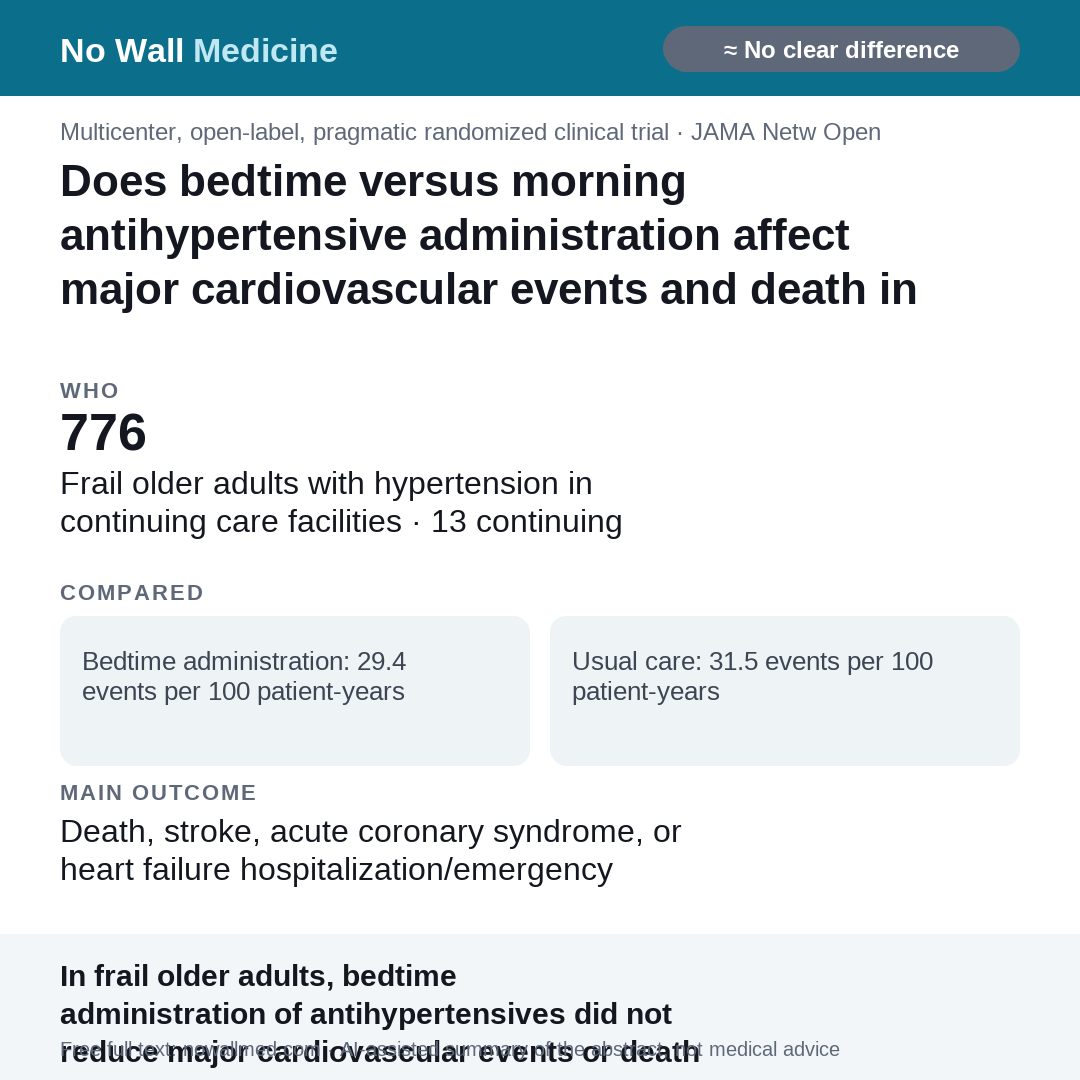
Bedtime vs Morning Antihypertensive Medications in Frail Older Adults: The BedMed-Frail Randomized Clinical Trial
Multicenter, open-label, pragmatic randomized clinical trialNo clear difference
Does bedtime versus morning antihypertensive administration affect major cardiovascular events and death in frail older adults?
Who
776
Frail older adults with hypertension in continuing care facilities · 13 continuing care facilities in Canada
Compared
Bedtime administration: 29.4 events per 100 patient-years
Usual care: 31.5 events per 100 patient-years
Main outcome
Death, stroke, acute coronary syndrome, or heart failure hospitalization/emergency department visit
Result: adjusted hazard ratio 0.88 (95% CI 0.71 to 1.11)
Bottom line: In frail older adults, bedtime administration of antihypertensives did not reduce major cardiovascular events or death compared to usual care.
JAMA Netw Open · 2025-05-01Download image
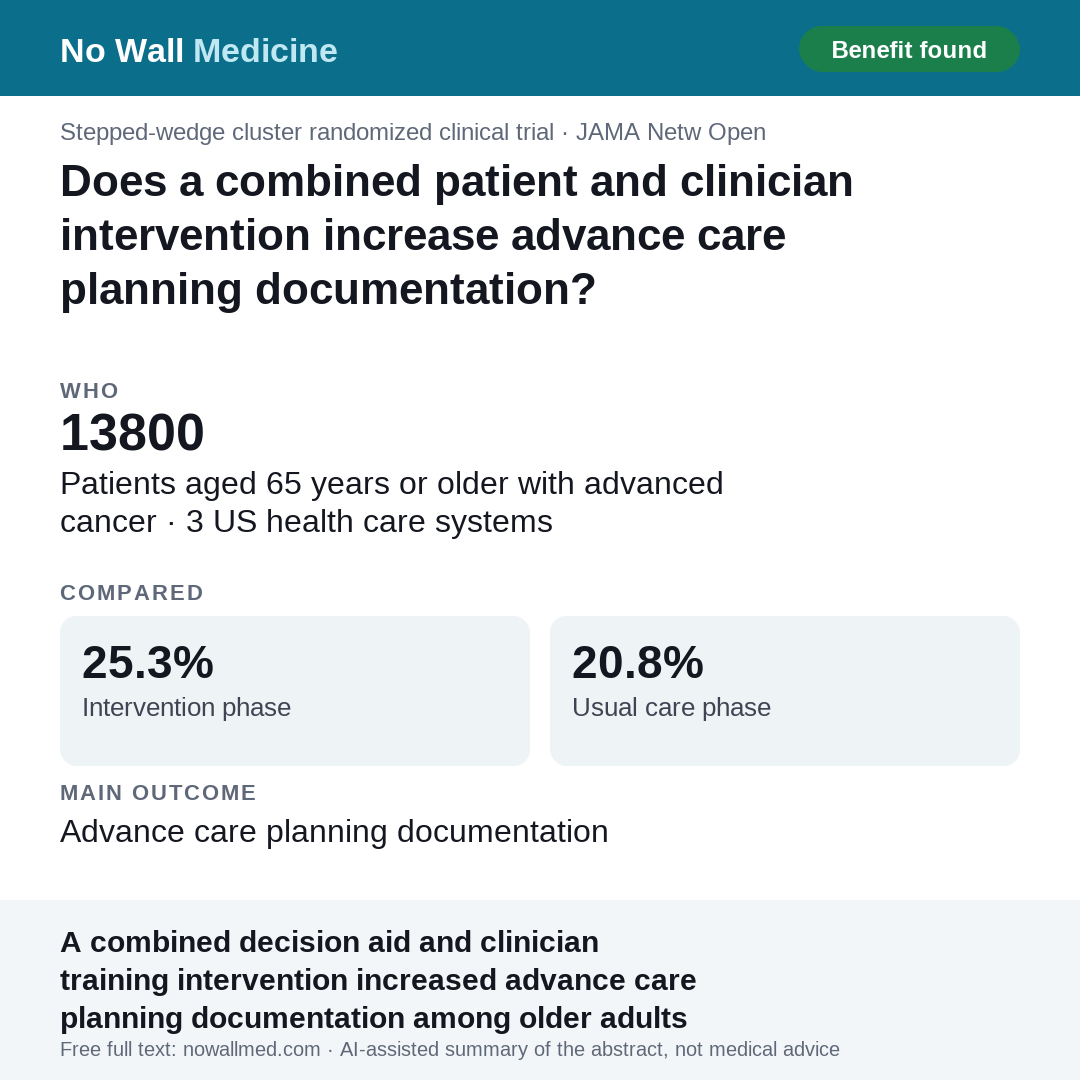
An Intervention to Increase Advance Care Planning Among Older Adults With Advanced Cancer: A Randomized Clinical Trial
Stepped-wedge cluster randomized clinical trialBenefit found
Does a combined patient and clinician intervention increase advance care planning documentation?
Who
13800
Patients aged 65 years or older with advanced cancer · 3 US health care systems
Compared
25.3%Intervention phase
20.8%Usual care phase
Main outcome
Advance care planning documentation
Result: adjusted rate difference, 6.8% (95% CI, 2.8%-10.8%)
Bottom line: A combined decision aid and clinician training intervention increased advance care planning documentation among older adults with advanced cancer.
JAMA Netw Open · 2025-05-01Download image
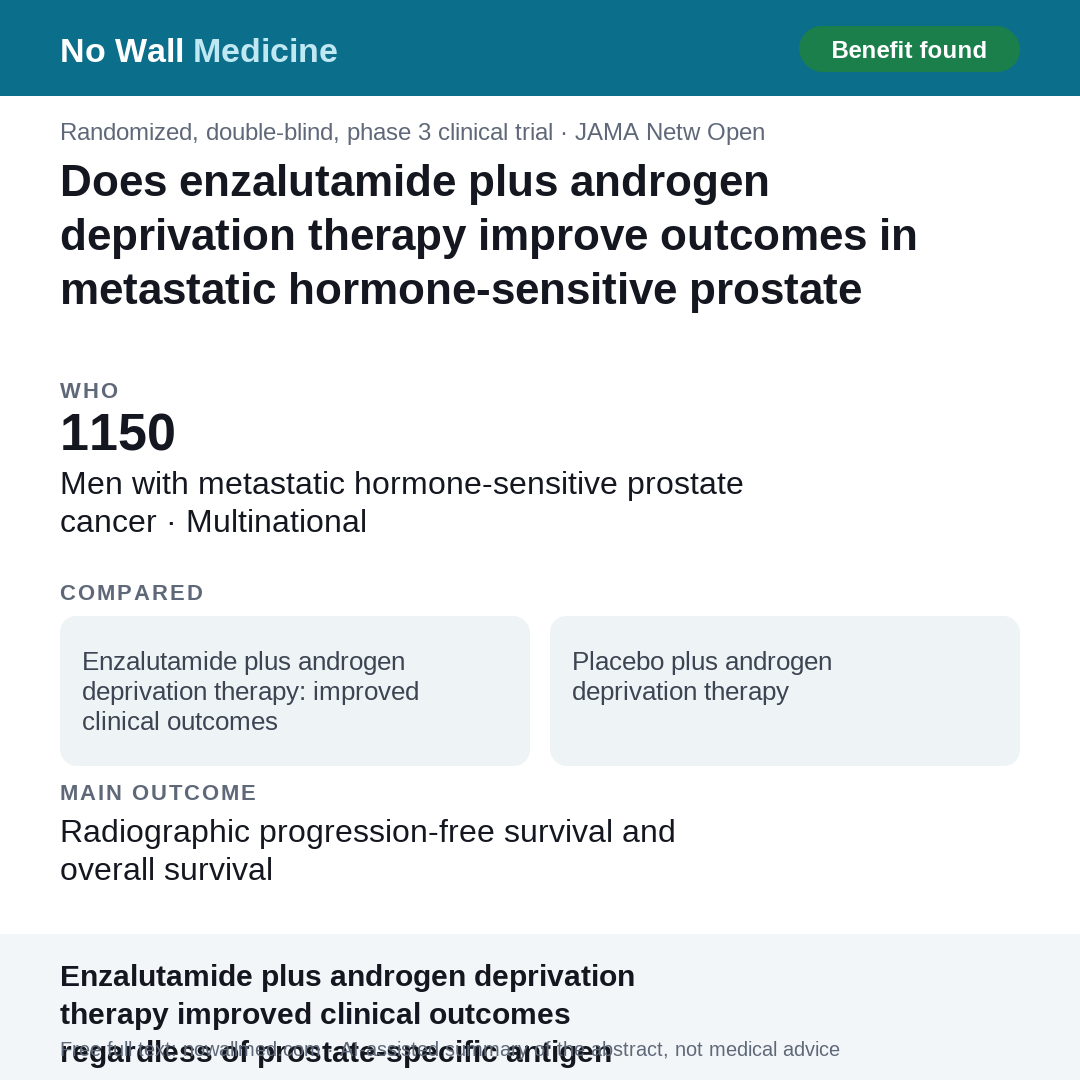
Enzalutamide and Prostate-Specific Antigen Levels in Metastatic Prostate Cancer: A Secondary Analysis of the ARCHES Randomized Clinical Trial
Randomized, double-blind, phase 3 clinical trialBenefit found
Does enzalutamide plus androgen deprivation therapy improve outcomes in metastatic hormone-sensitive prostate cancer?
Who
1150
Men with metastatic hormone-sensitive prostate cancer · Multinational
Compared
Enzalutamide plus androgen deprivation therapy: improved clinical outcomes
Placebo plus androgen deprivation therapy
Main outcome
Radiographic progression-free survival and overall survival
Result: hazard ratio 0.14 (95% CI, 0.09-0.23) for radiographic disease progression in undetectable PSA patients
Bottom line: Enzalutamide plus androgen deprivation therapy improved clinical outcomes regardless of prostate-specific antigen levels at enrollment.
Limitation: Future studies are required to characterize treatment intensification if undetectable prostate-specific antigen is not achieved.
JAMA Netw Open · 2025-05-01Download image
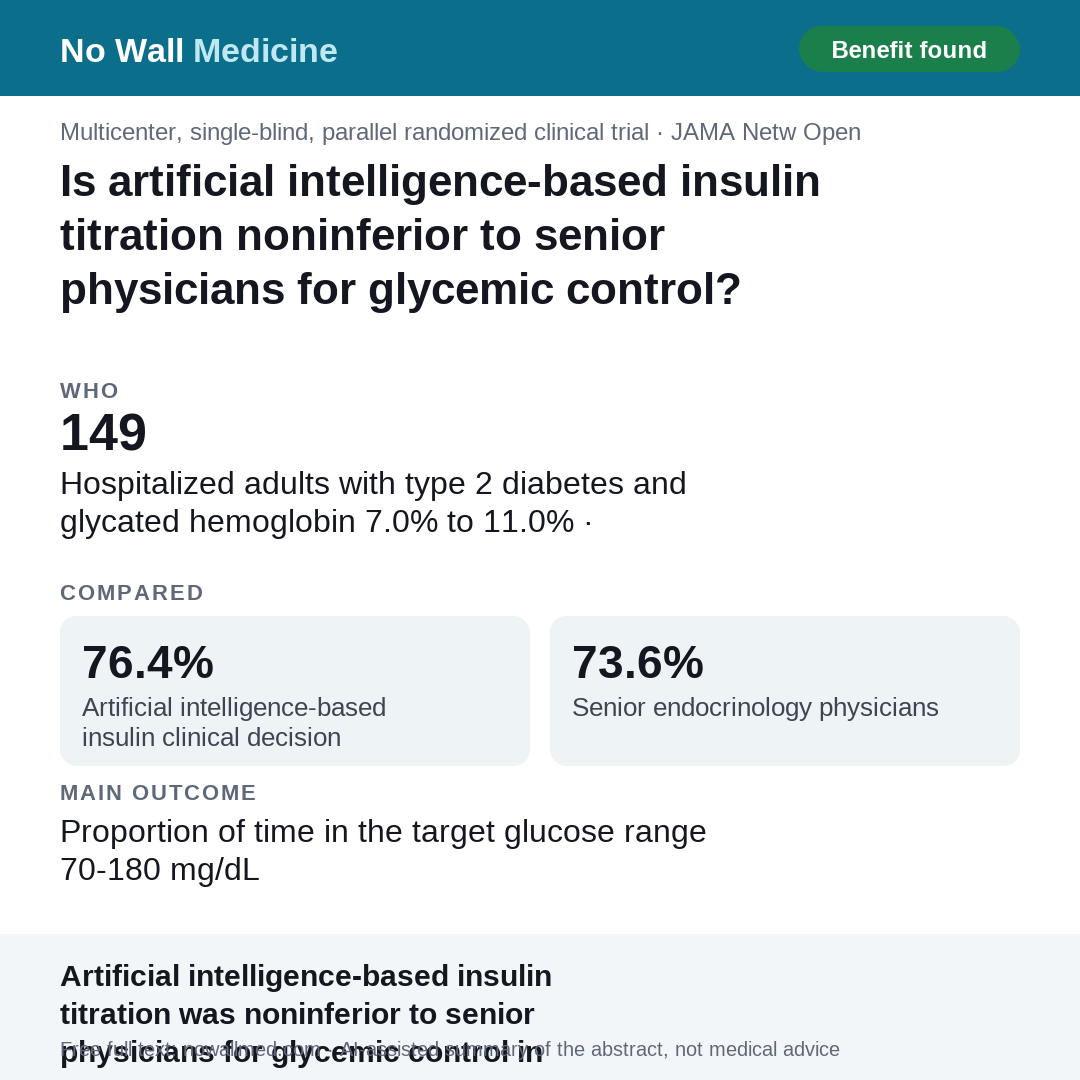
Real-Time AI-Assisted Insulin Titration System for Glucose Control in Patients With Type 2 Diabetes: A Randomized Clinical Trial
Multicenter, single-blind, parallel randomized clinical trialBenefit found
Is artificial intelligence-based insulin titration noninferior to senior physicians for glycemic control?
Who
149
Hospitalized adults with type 2 diabetes and glycated hemoglobin 7.0% to 11.0% · Endocrinology wards of 3 medical centers
Compared
76.4%Artificial intelligence-based insulin clinical decision support system (16.4%)
73.6%Senior endocrinology physicians (16.8%)
Main outcome
Proportion of time in the target glucose range 70-180 mg/dL
Result: estimated treatment difference, 2.7%; 95% CI, -2.7% to 8.0%
Bottom line: Artificial intelligence-based insulin titration was noninferior to senior physicians for glycemic control in hospitalized patients with type 2 diabetes.
JAMA Netw Open · 2025-05-01Download image
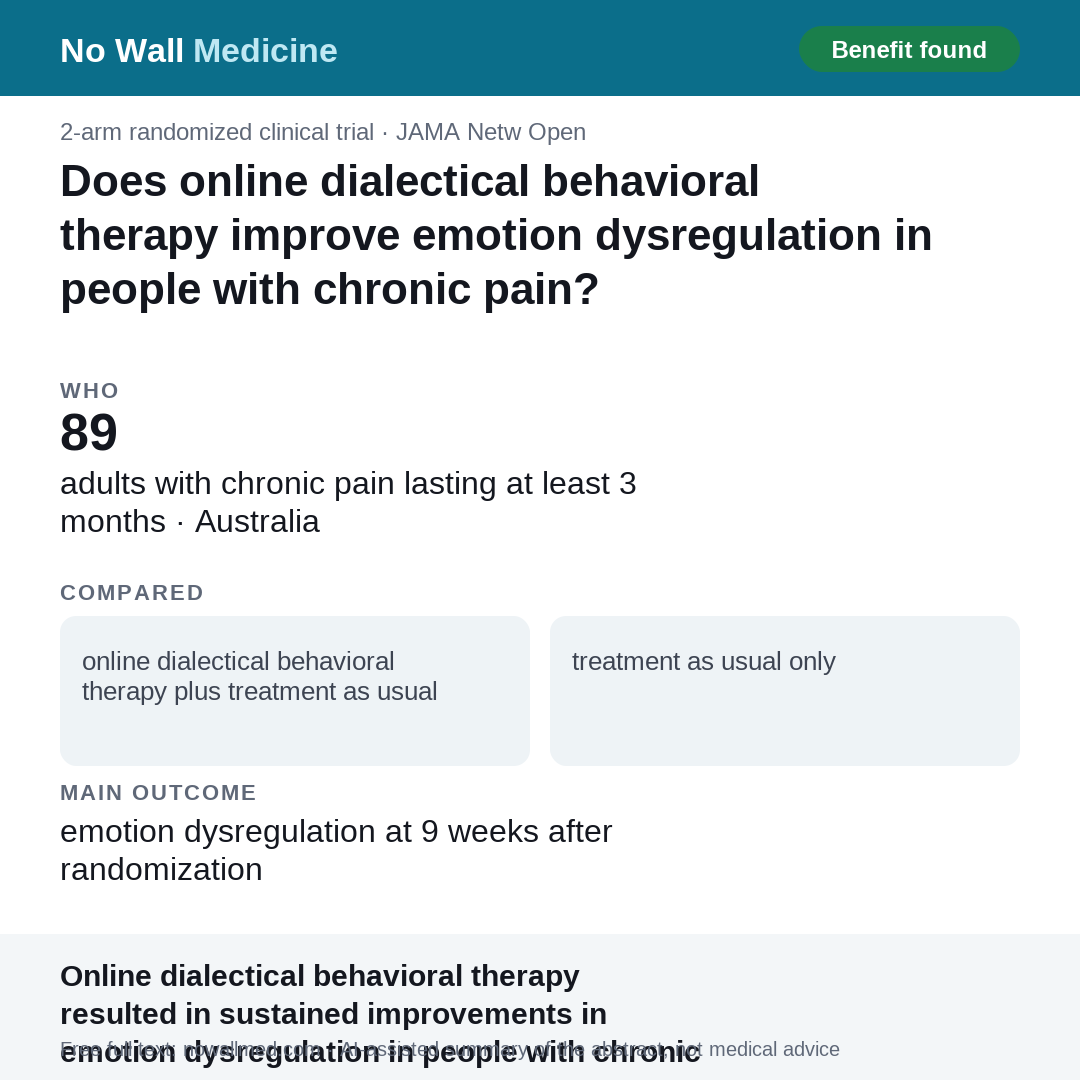
Online Dialectical Behavioral Therapy for Emotion Dysregulation in People With Chronic Pain: A Randomized Clinical Trial
2-arm randomized clinical trialBenefit found
Does online dialectical behavioral therapy improve emotion dysregulation in people with chronic pain?
Who
89
adults with chronic pain lasting at least 3 months · Australia
Compared
online dialectical behavioral therapy plus treatment as usual
treatment as usual only
Main outcome
emotion dysregulation at 9 weeks after randomization
Result: -4.88; 95% CI, -9.20 to -0.55
Bottom line: Online dialectical behavioral therapy resulted in sustained improvements in emotion dysregulation in people with chronic pain.
JAMA Netw Open · 2025-05-01Download image
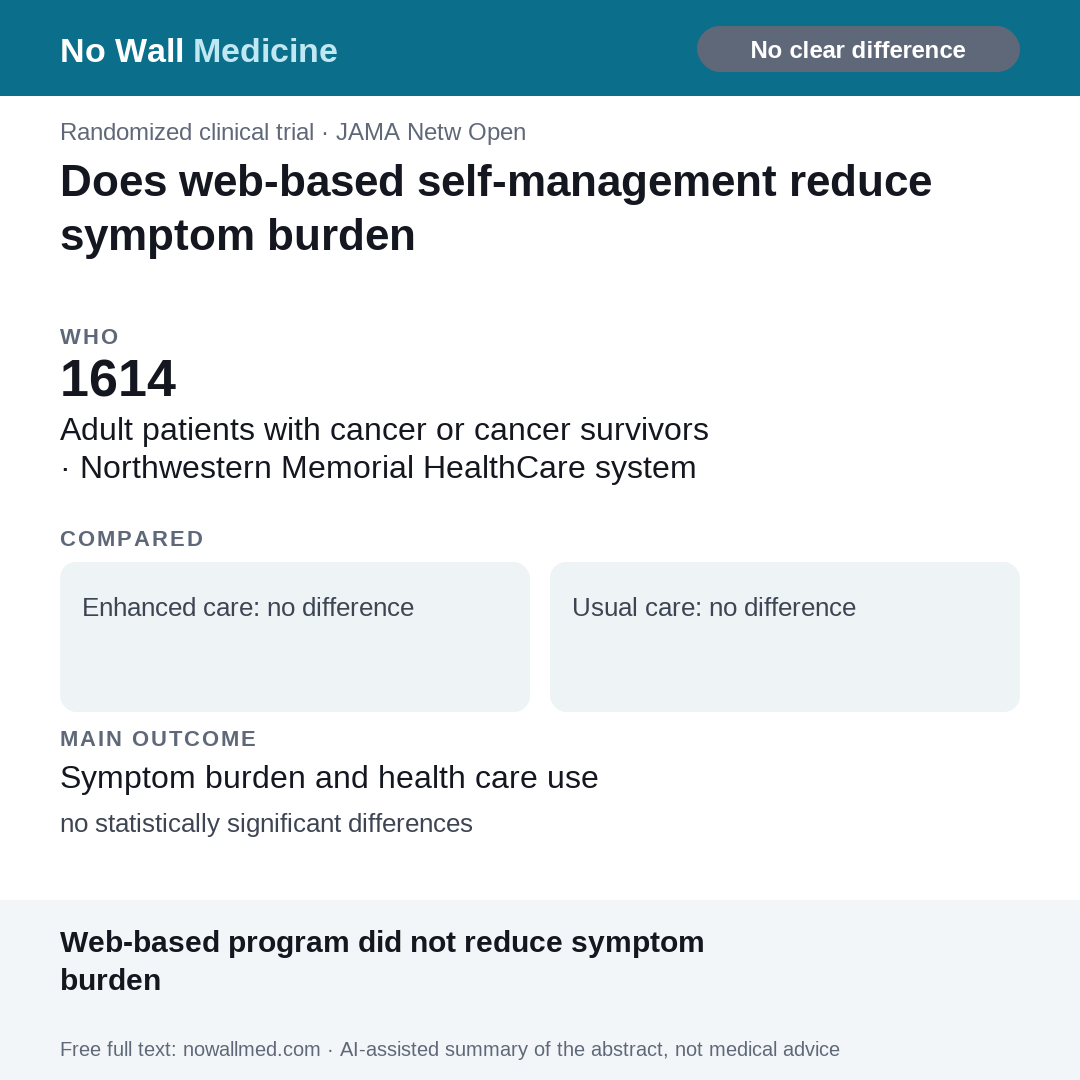
Web-Based Cancer Symptom Self-Management System: A Randomized Clinical Trial
Randomized clinical trialNo clear difference
Does web-based self-management reduce symptom burden
Who
1614
Adult patients with cancer or cancer survivors · Northwestern Memorial HealthCare system
Compared
Enhanced care: no difference
Usual care: no difference
Main outcome
Symptom burden and health care use
Result: no statistically significant differences
Bottom line: Web-based program did not reduce symptom burden
JAMA Netw Open · 2025-05-01Download image
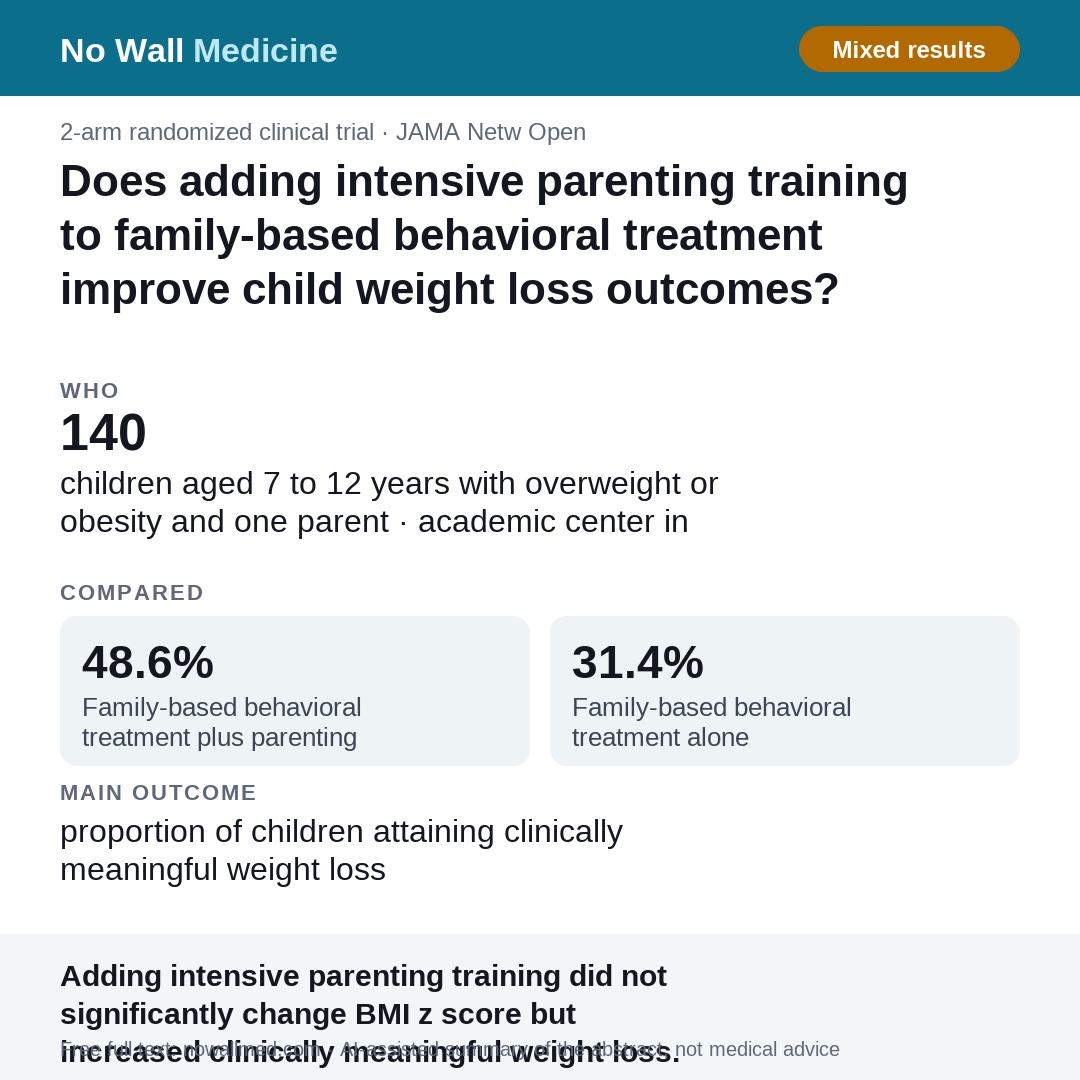
Parenting Training Plus Behavioral Treatment for Children With Obesity: A Randomized Clinical Trial
2-arm randomized clinical trialMixed results
Does adding intensive parenting training to family-based behavioral treatment improve child weight loss outcomes?
Who
140
children aged 7 to 12 years with overweight or obesity and one parent · academic center in San Diego, California
Compared
48.6%Family-based behavioral treatment plus parenting training
31.4%Family-based behavioral treatment alone
Main outcome
proportion of children attaining clinically meaningful weight loss
Result: adjusted odds ratio, 2.10 (95% CI 1.01-4.47)
Bottom line: Adding intensive parenting training did not significantly change BMI z score but increased clinically meaningful weight loss.
Limitation: Further work is needed to determine factors associated with treatment response and changes in parenting skills.
JAMA Netw Open · 2025-05-01Download image
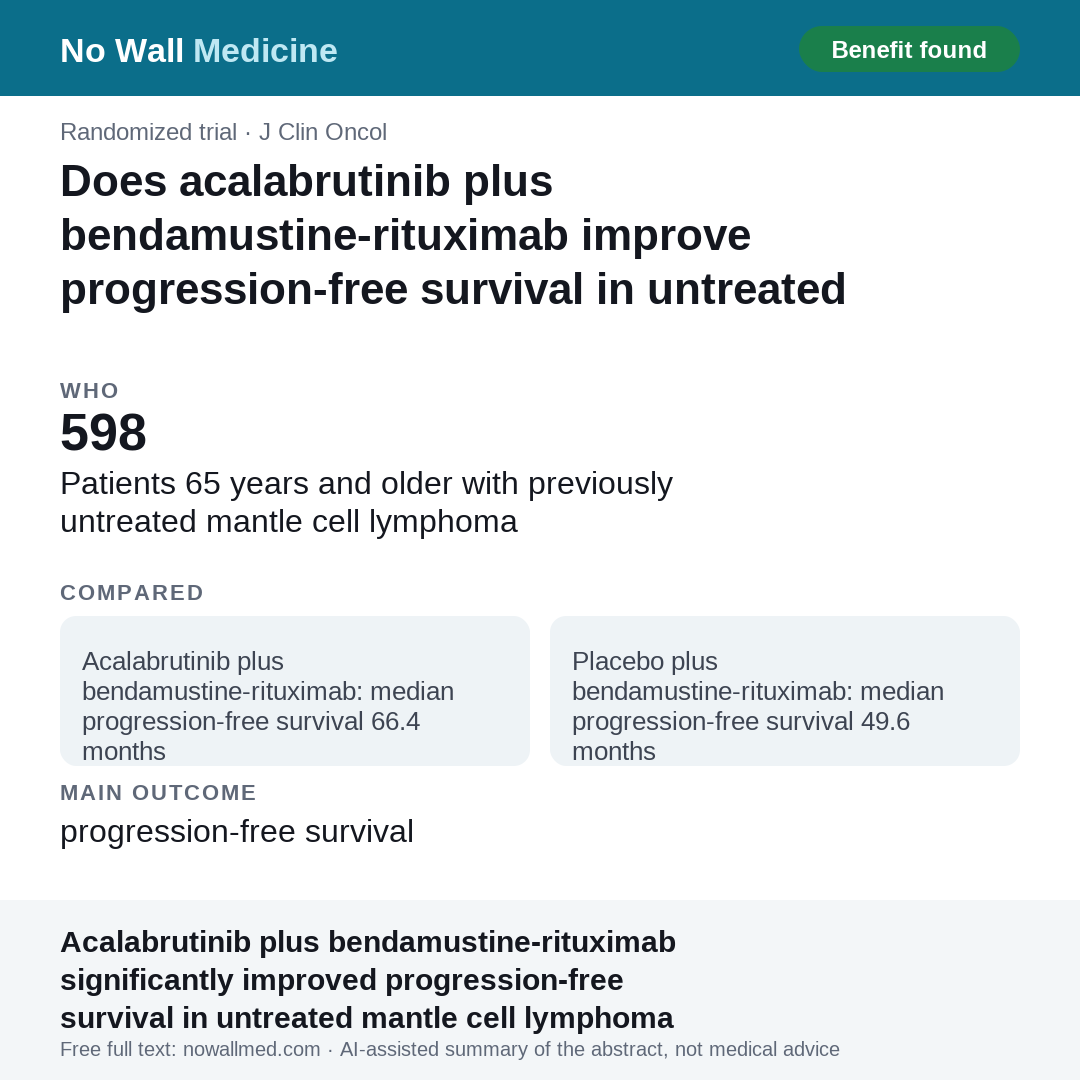
Acalabrutinib Plus Bendamustine-Rituximab in Untreated Mantle Cell Lymphoma
Randomized trialBenefit found
Does acalabrutinib plus bendamustine-rituximab improve progression-free survival in untreated mantle cell lymphoma?
Who
598
Patients 65 years and older with previously untreated mantle cell lymphoma
Compared
Acalabrutinib plus bendamustine-rituximab: median progression-free survival 66.4 months
Placebo plus bendamustine-rituximab: median progression-free survival 49.6 months
Main outcome
progression-free survival
Result: hazard ratio 0.73 (95% CI 0.57 to 0.94)
Bottom line: Acalabrutinib plus bendamustine-rituximab significantly improved progression-free survival in untreated mantle cell lymphoma patients.
J Clin Oncol · 2025-05-01Download image
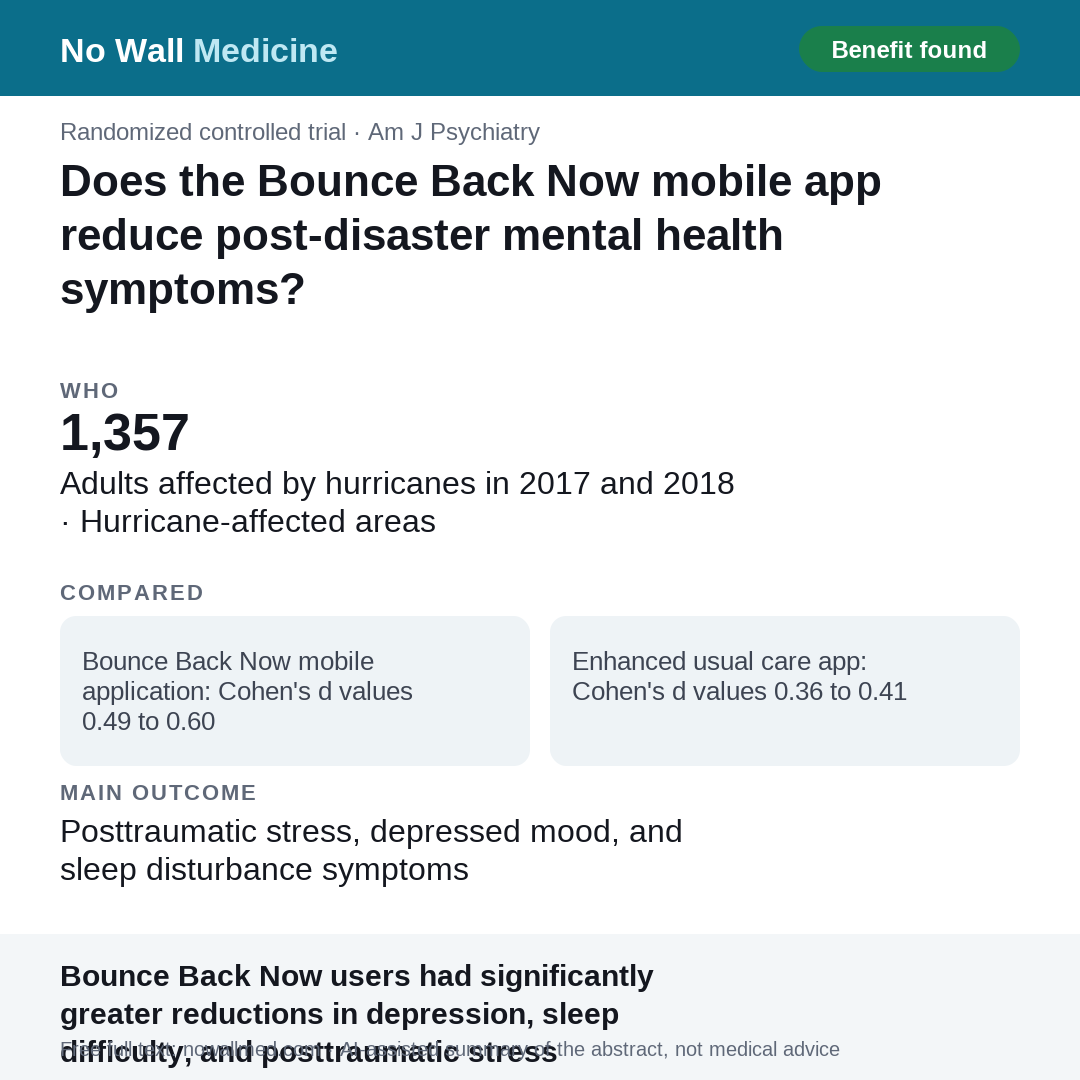
Randomized Controlled Trial of "Bounce Back Now," a Mobile App to Reduce Post-Disaster Symptoms of Posttraumatic Stress, Depressed Mood, and Sleep Disturbance
Randomized controlled trialBenefit found
Does the Bounce Back Now mobile app reduce post-disaster mental health symptoms?
Who
1,357
Adults affected by hurricanes in 2017 and 2018 · Hurricane-affected areas
Compared
Bounce Back Now mobile application: Cohen's d values 0.49 to 0.60
Enhanced usual care app: Cohen's d values 0.36 to 0.41
Main outcome
Posttraumatic stress, depressed mood, and sleep disturbance symptoms
Bottom line: Bounce Back Now users had significantly greater reductions in depression, sleep difficulty, and posttraumatic stress symptoms than usual care.
Am J Psychiatry · 2025-05-01Download image
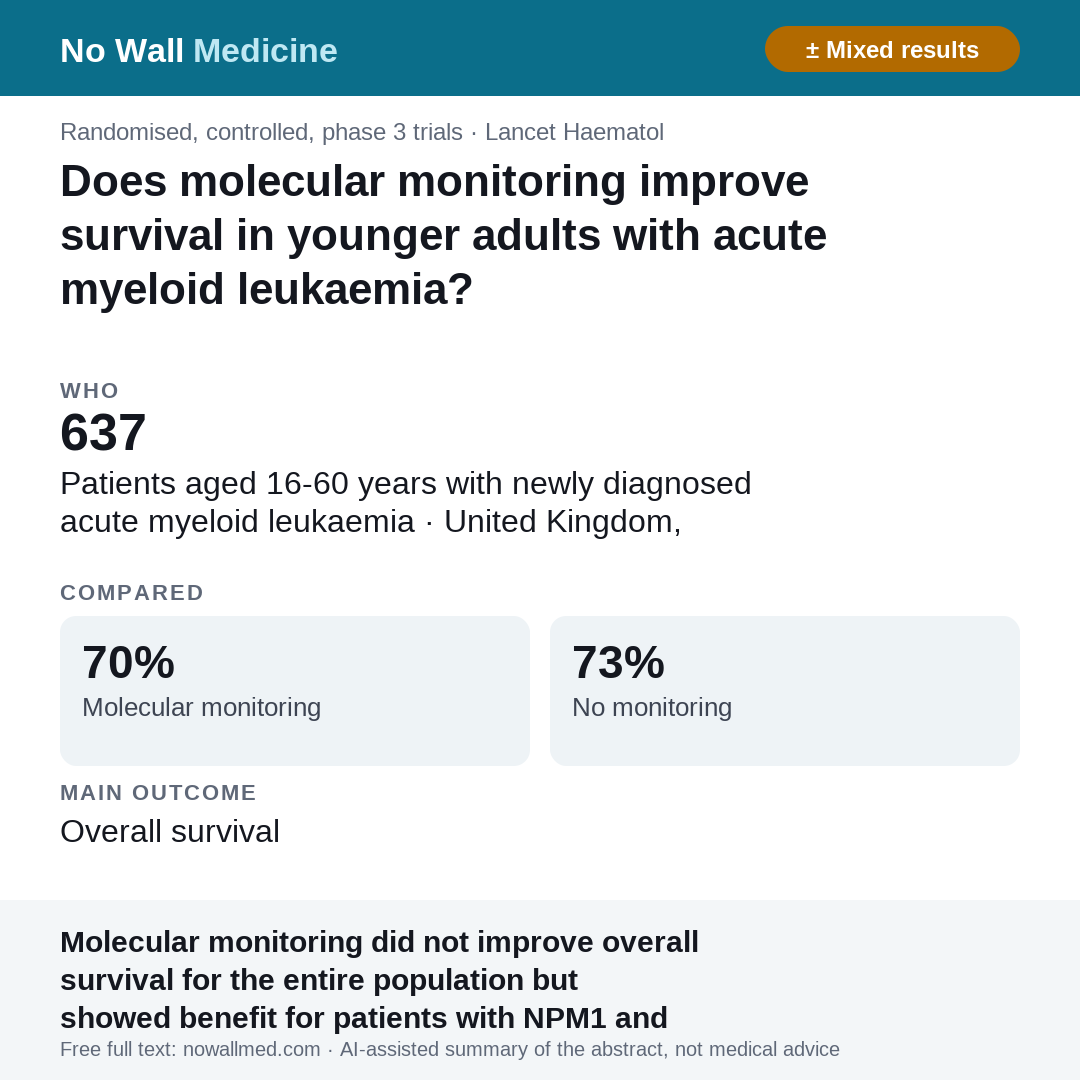
Molecular monitoring versus standard clinical care in younger adults with acute myeloid leukaemia: results from the UK NCRI AML17 and AML19 randomised, controlled, phase 3 trials
Randomised, controlled, phase 3 trialsMixed results
Does molecular monitoring improve survival in younger adults with acute myeloid leukaemia?
Who
637
Patients aged 16-60 years with newly diagnosed acute myeloid leukaemia · United Kingdom, Denmark, and New Zealand
Compared
70%Molecular monitoring (95% CI 66-75)
73%No monitoring (68-80)
Main outcome
Overall survival
Result: hazard ratio 1·11, 95% CI 0·83-1·49
Bottom line: Molecular monitoring did not improve overall survival for the entire population but showed benefit for patients with NPM1 and FLT3 mutations.
Funded by: National Institute for Health Research, Blood Cancer UK, and Cancer Research UK
Lancet Haematol · 2025-05-01Download image
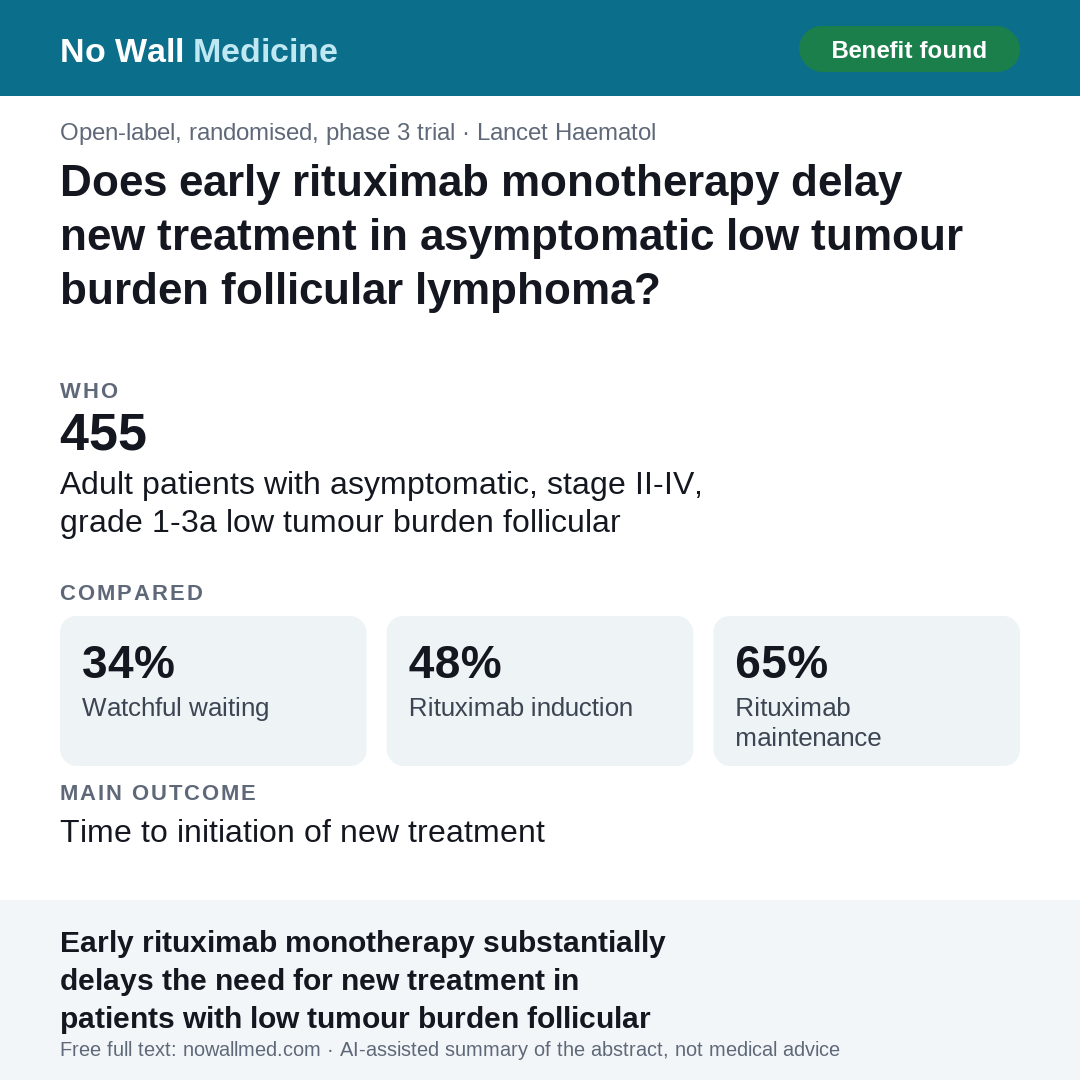
Early rituximab monotherapy versus watchful waiting for advanced stage, asymptomatic, low tumour burden follicular lymphoma: long-term results of a randomised, phase 3 trial
Open-label, randomised, phase 3 trialBenefit found
Does early rituximab monotherapy delay new treatment in asymptomatic low tumour burden follicular lymphoma?
Who
455
Adult patients with asymptomatic, stage II-IV, grade 1-3a low tumour burden follicular lymphoma · 118 centres in five countries
Compared
34%Watchful waiting (27-42)
48%Rituximab induction (36-60)
65%Rituximab maintenance (95% CI 56-72)
Main outcome
Time to initiation of new treatment
Result: hazard ratio 0·36 (95% CI 0·26-0·50) for maintenance vs watchful waiting
Bottom line: Early rituximab monotherapy substantially delays the need for new treatment in patients with low tumour burden follicular lymphoma.
Funded by: Cancer Research UK, Lymphoma Research Trust, Lymphoma Association, and Roche
Lancet Haematol · 2025-05-01Download image
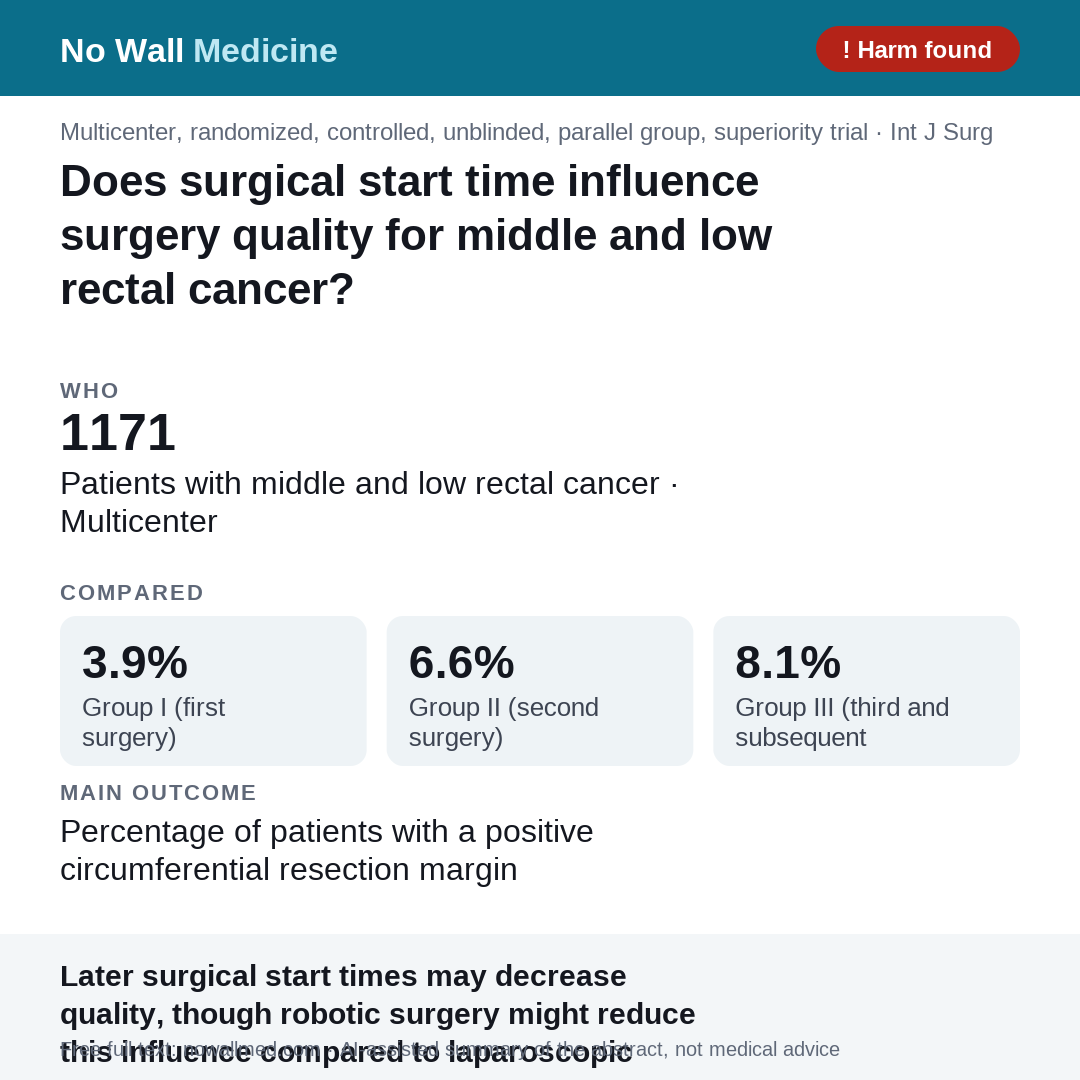
Influence of surgical start time on the quality of surgery for middle and low rectal cancer: a post hoc analysis of the real trial
Multicenter, randomized, controlled, unblinded, parallel group, superiority trialHarm found
Does surgical start time influence surgery quality for middle and low rectal cancer?
Who
1171
Patients with middle and low rectal cancer · Multicenter
Compared
3.9%Group I (first surgery)
6.6%Group II (second surgery)
8.1%Group III (third and subsequent surgeries)
Main outcome
Percentage of patients with a positive circumferential resection margin
Bottom line: Later surgical start times may decrease quality, though robotic surgery might reduce this influence compared to laparoscopic surgery.
Int J Surg · 2025-05-01Download image
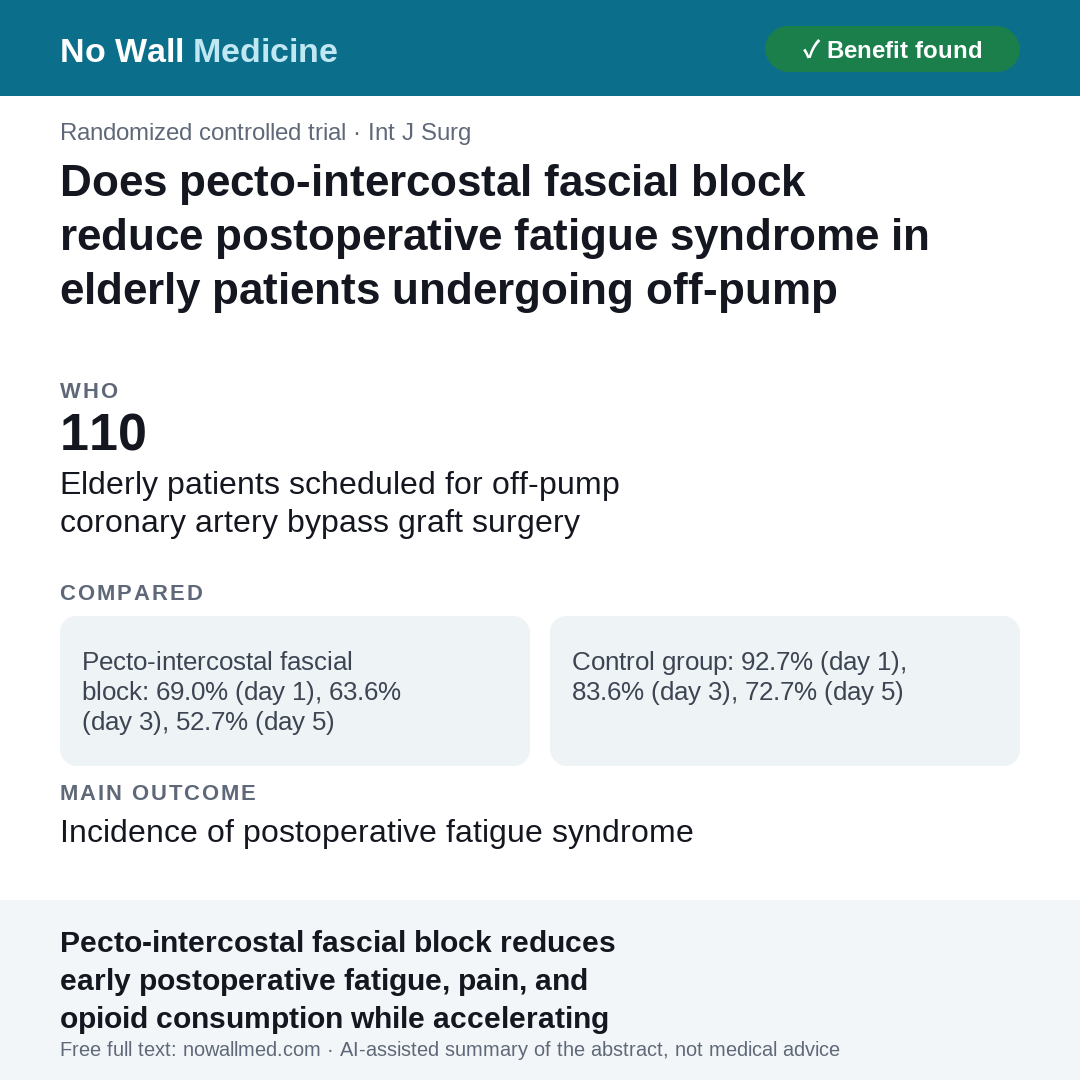
Impact of pecto-intercostal fascial block on postoperative fatigue in elderly patients undergoing off-pump coronary artery bypass grafting: a randomized clinical trial
Randomized controlled trialBenefit found
Does pecto-intercostal fascial block reduce postoperative fatigue syndrome in elderly patients undergoing off-pump coronary artery bypass grafting?
Who
110
Elderly patients scheduled for off-pump coronary artery bypass graft surgery
Compared
Pecto-intercostal fascial block: 69.0% (day 1), 63.6% (day 3), 52.7% (day 5)
Control group: 92.7% (day 1), 83.6% (day 3), 72.7% (day 5)
Main outcome
Incidence of postoperative fatigue syndrome
Bottom line: Pecto-intercostal fascial block reduces early postoperative fatigue, pain, and opioid consumption while accelerating recovery in elderly patients.
Int J Surg · 2025-05-01Download image
Assessing antibiotic effectiveness for reducing postoperative infectious complications in acute cholecystitis: a multicenter randomized controlled trial
Multicenter, double-blind, randomized controlled trialNo clear difference
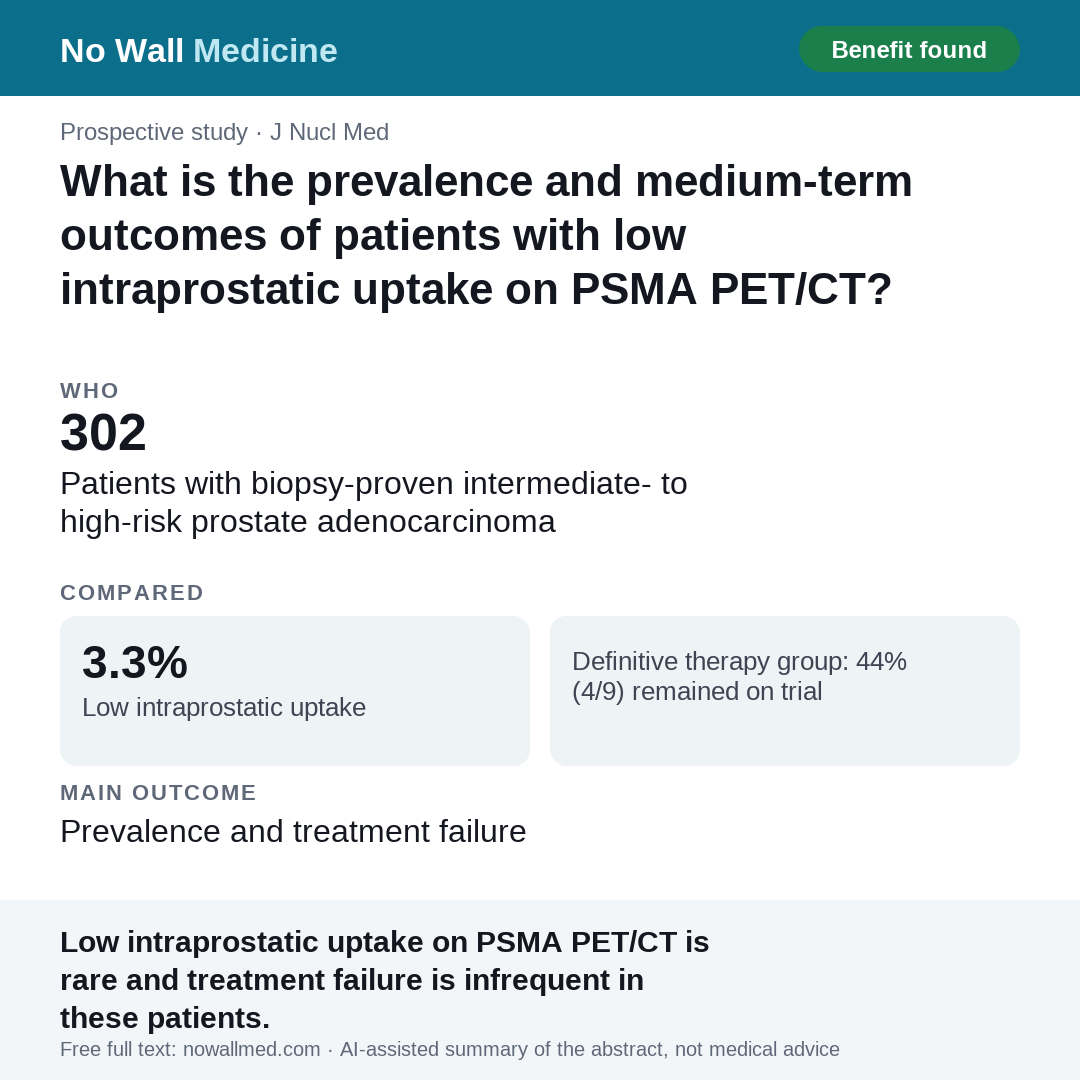
Do antibiotics reduce postoperative infectious complications in acute cholecystitis requiring emergency laparoscopic cholecystectomy?
Who
370
Patients with mild-to-moderate acute cholecystitis requiring emergency laparoscopic cholecystectomy · Four centers
Compared
7.6%Antibiotic group (14 patients)
7%Placebo group (13 patients)
Main outcome
Rate of infectious complications
Bottom line: Antibiotics did not significantly reduce the risk of infectious complications compared to placebo in acute cholecystitis.
Int J Surg · 2025-05-01Download image
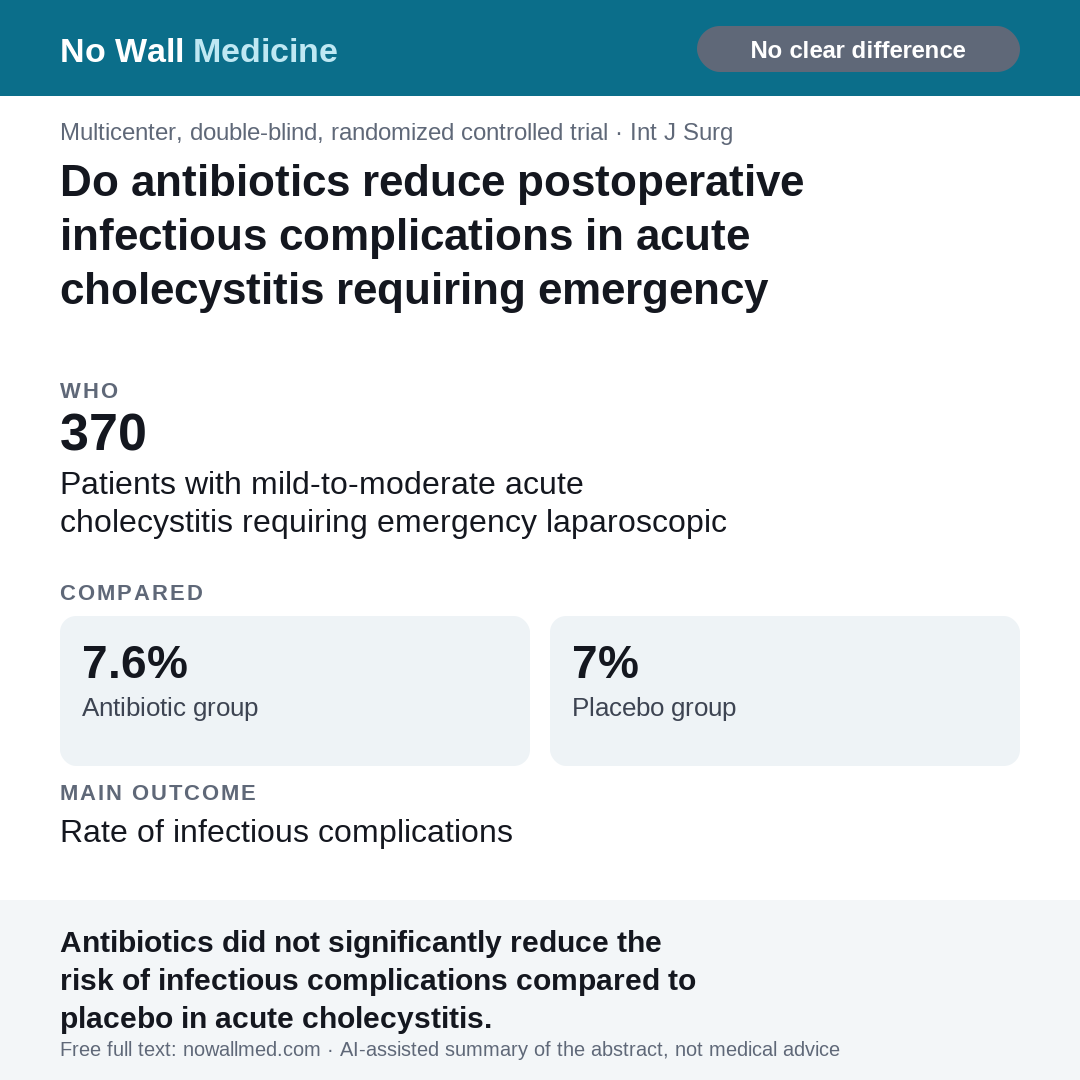
Effectiveness of ERAS program on postoperative recovery after gastric cancer surgery: a randomized clinical trial
Randomized, controlled, open-label trialBenefit found
Does an enhanced recovery after surgery program improve postoperative recovery after gastric cancer surgery?
Who
92
Adult patients undergoing elective laparoscopic or robotic distal gastrectomy · Single-center
Compared
Enhanced recovery after surgery
Conventional
Main outcome
Total Quality of Recovery-15 score
Result: mean difference: 16.0, 95% confidence interval: 8.9-23.0
Bottom line: The enhanced recovery after surgery program significantly improved early postoperative recovery quality after minimally invasive distal gastrectomy.
Int J Surg · 2025-05-01Download image
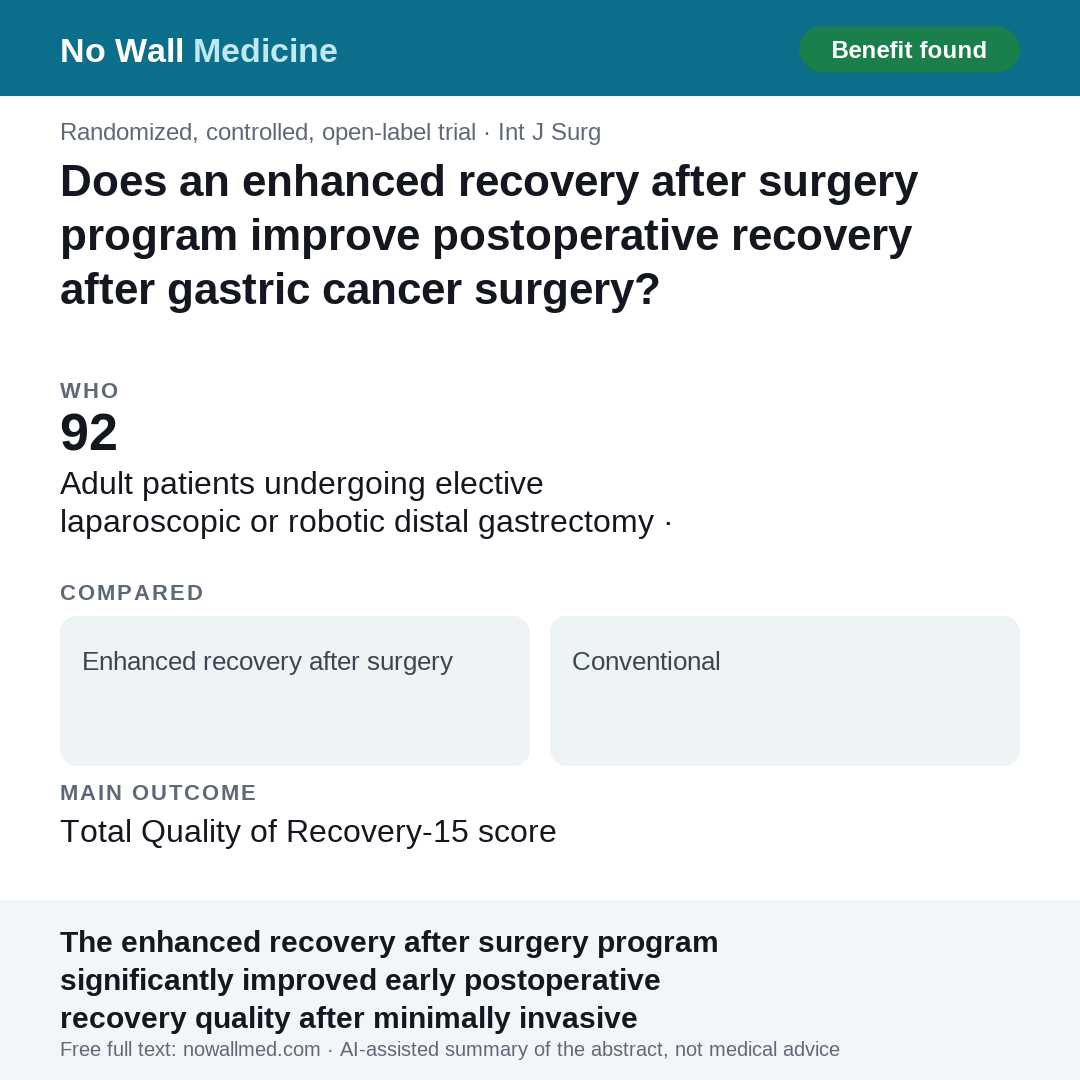
Is It Cost-Effective to Induce Labour Early to Prevent Shoulder Dystocia? Evidence From the Big Baby Trial
Within-trial economic evaluationNo clear difference
Is early induction of labour cost-effective to prevent shoulder dystocia in suspected large-for-gestational-age foetuses?
Who
Suspected large-for-gestational-age foetuses
Compared
Induction arm: £89 (95% confidence interval: -£79, £257) higher costs
Standard care arm
Main outcome
Incremental cost per shoulder dystocia prevented and maternal quality-adjusted life year gained
Result: £11 879 per shoulder dystocia prevented; £39 518 per maternal quality-adjusted life year gained
Bottom line: Early induction of labour is not cost-effective when effects are restricted to maternal quality-adjusted life years gained.
BJOG · 2025-05-01Download image
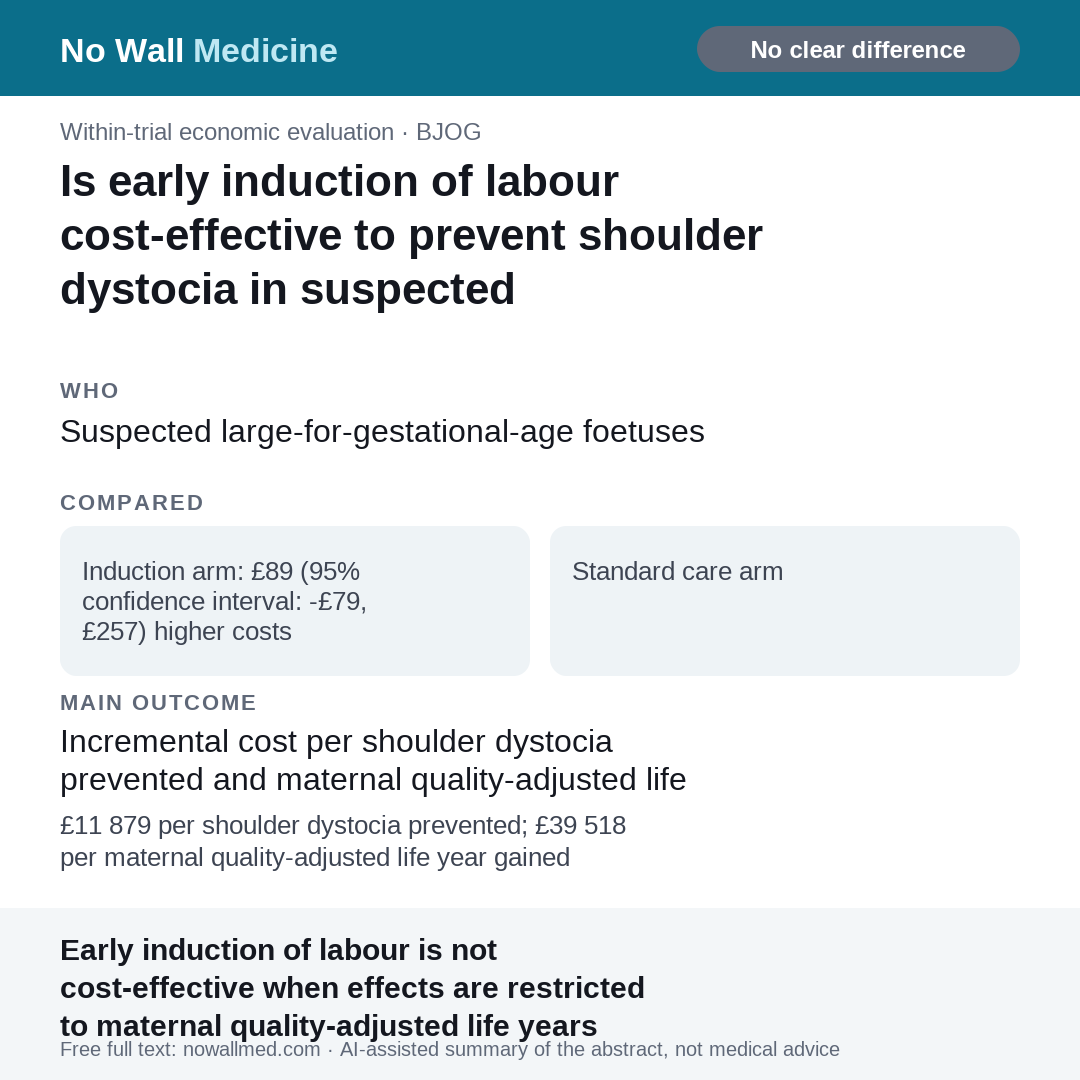
Prevalence and Medium-Term Outcomes of Patients with Biopsy-Proven Intermediate- to High-Risk Prostate Adenocarcinoma with Low Intraprostatic Uptake on [68Ga]Ga-PSMA-11 PET/CT in the proPSMA Study
Prospective studyBenefit found
What is the prevalence and medium-term outcomes of patients with low intraprostatic uptake on PSMA PET/CT?
Who
302
Patients with biopsy-proven intermediate- to high-risk prostate adenocarcinoma
Compared
3.3%Low intraprostatic uptake (10/302)
Definitive therapy group: 44% (4/9) remained on trial
Main outcome
Prevalence and treatment failure
Bottom line: Low intraprostatic uptake on PSMA PET/CT is rare and treatment failure is infrequent in these patients.
J Nucl Med · 2025-05-01Download image
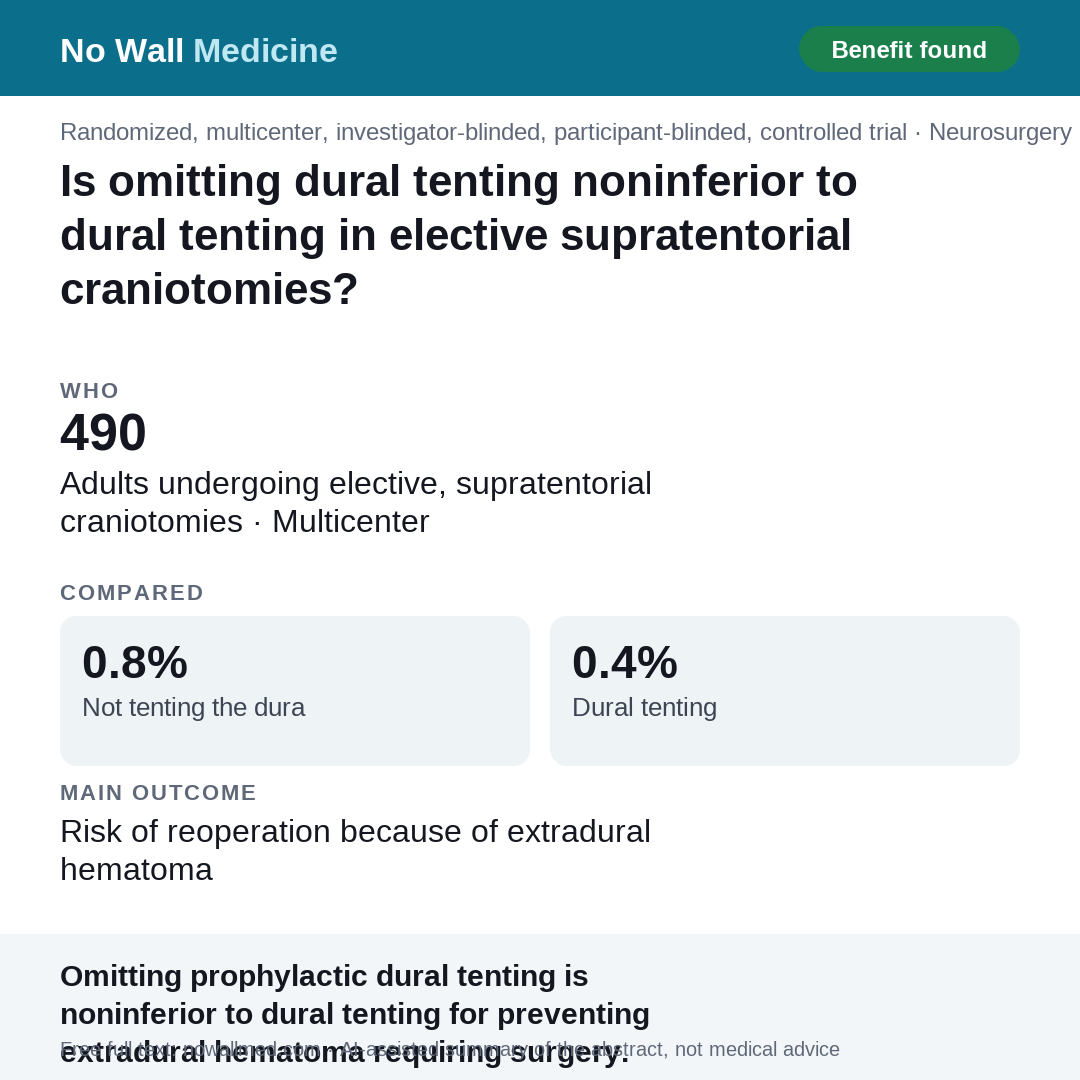
Dural Tenting in Elective Craniotomies: A Randomized Clinical Trial
Randomized, multicenter, investigator-blinded, participant-blinded, controlled trialBenefit found
Is omitting dural tenting noninferior to dural tenting in elective supratentorial craniotomies?
Who
490
Adults undergoing elective, supratentorial craniotomies · Multicenter
Compared
0.8%Not tenting the dura
0.4%Dural tenting
Main outcome
Risk of reoperation because of extradural hematoma
Bottom line: Omitting prophylactic dural tenting is noninferior to dural tenting for preventing extradural hematoma requiring surgery.
Neurosurgery · 2025-05-01Download image