Visual abstracts
New randomized trials and meta-analyses from leading journals at a glance: who was studied, what was compared, and what was found. Every paper is free to read in full.
All specialtiesCardiology 4763Oncology 4042Gastroenterology & Hepatology 1902Infectious Disease 3756Neurology 1872Psychiatry & Mental Health 2214Pulmonology 2042Critical Care 1319Endocrinology & Diabetes 2544Pediatrics 2889Surgery 2479Orthopedics & Sports Medicine 917Neurosurgery 525Cardiothoracic & Vascular Surgery 656Plastic & Reconstructive Surgery 574Nephrology 1107Rheumatology 810Hematology 1090Dermatology 611Ophthalmology 532Obstetrics & Gynecology 1645Public & Global Health 1037Radiology & Imaging 617Anesthesiology 957Urology 745ENT (Otolaryngology) 494Emergency Medicine 481Allergy & Immunology 309Geriatrics 972Family Medicine & Primary Care 533Medical Genetics & Genomics 659Pathology & Laboratory Medicine 156Physical Medicine & Rehabilitation 734Palliative Care 421Nutrition 1560Digital Health & AI 2133General Medicine 318
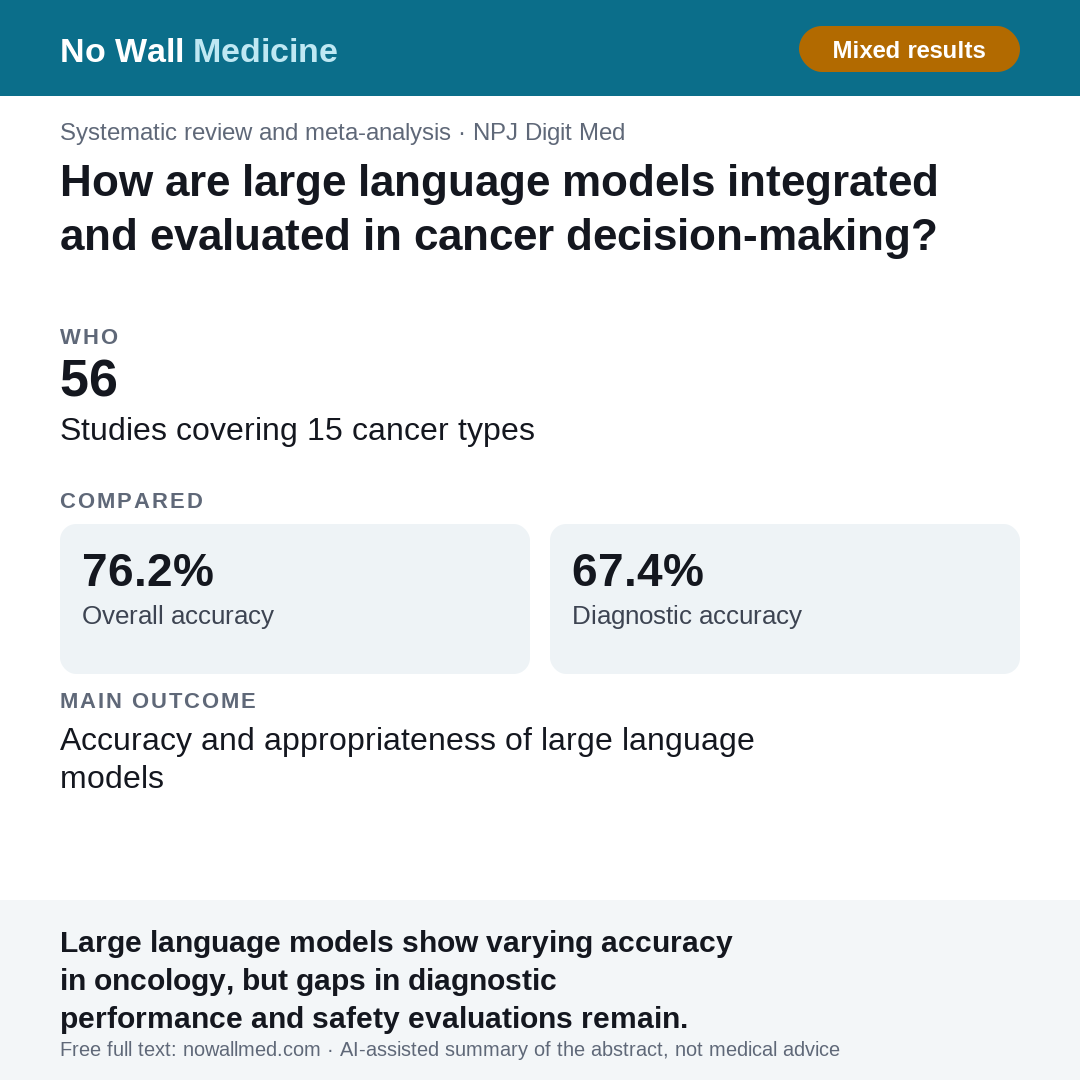
Large language model integrations in cancer decision-making: a systematic review and meta-analysis
Systematic review and meta-analysisMixed results
How are large language models integrated and evaluated in cancer decision-making?
Who
56
Studies covering 15 cancer types
Compared
76.2%Overall accuracy
67.4%Diagnostic accuracy
Main outcome
Accuracy and appropriateness of large language models
Bottom line: Large language models show varying accuracy in oncology, but gaps in diagnostic performance and safety evaluations remain.
Limitation: Evaluations relied on quantitative datasets and automated methods without human graders.
NPJ Digit Med · 2025-07-17Download image
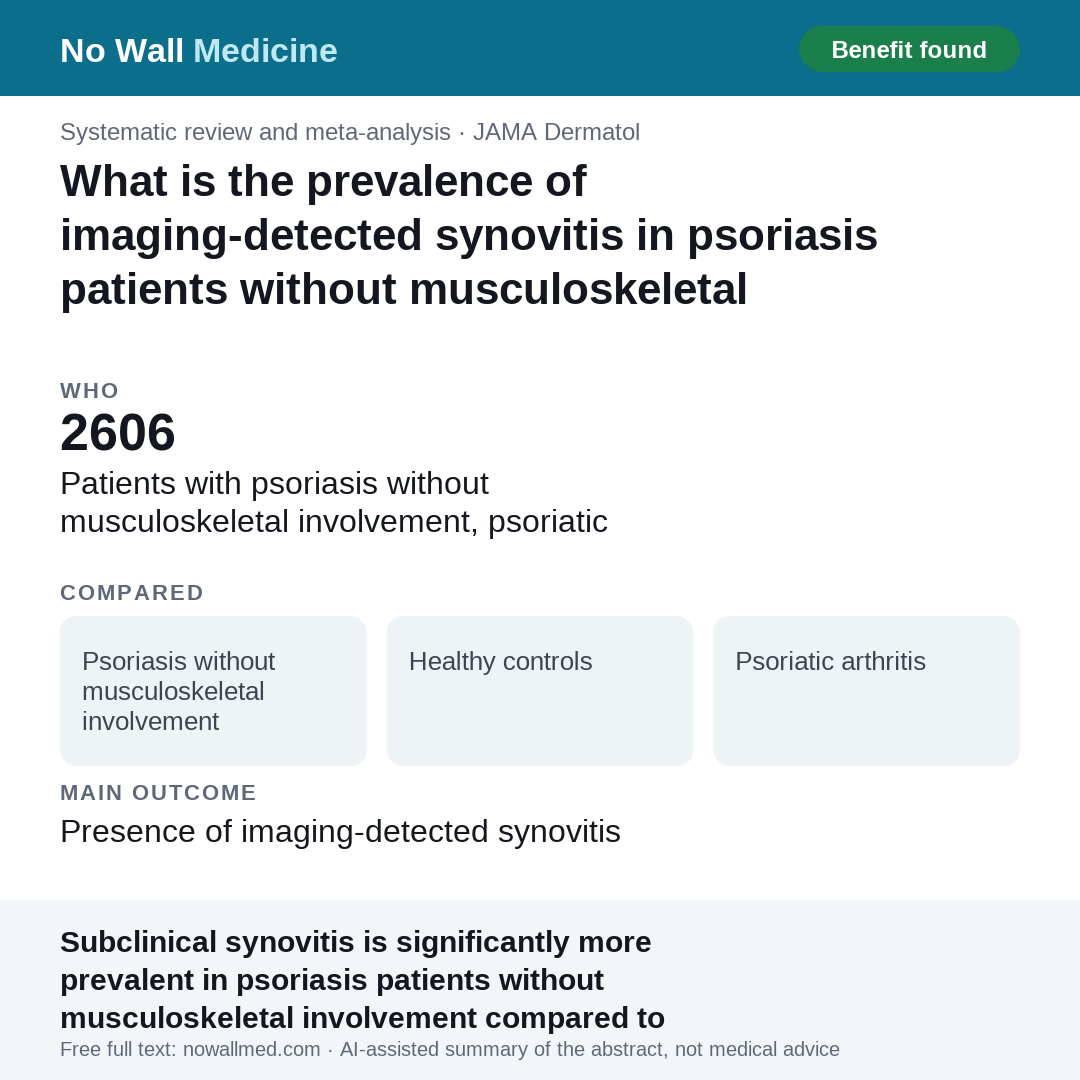
Subclinical Synovitis Among Patients With Psoriasis Without Musculoskeletal Involvement: A Systematic Review and Meta-Analysis
Systematic review and meta-analysisBenefit found
What is the prevalence of imaging-detected synovitis in psoriasis patients without musculoskeletal involvement?
Who
2606
Patients with psoriasis without musculoskeletal involvement, psoriatic arthritis, and healthy controls
Compared
Psoriasis without musculoskeletal involvement
Healthy controls
Psoriatic arthritis
Main outcome
Presence of imaging-detected synovitis
Result: risk ratio 2.55 (95% CI 1.18-5.52) for psoriasis versus controls
Bottom line: Subclinical synovitis is significantly more prevalent in psoriasis patients without musculoskeletal involvement compared to healthy controls.
JAMA Dermatol · 2025-07-16Download image
Genome-wide association analyses identify candidate loci for amyloid imaging and plasma biomarkers in adults with Down syndrome
Genome-wide association analysis and meta-analysisKey finding
What are the genetic loci associated with amyloid imaging and plasma biomarkers in Down syndrome?
Who
Adults with Down syndrome · Alzheimer's Biomarker Consortium-Down Syndrome and independent cohort
Compared
Plasma Aβ42: two novel loci
Plasma Aβ40: two novel loci
Amyloid positron emission tomography: five genome-wide signals
Main outcome
Amyloid positron emission tomography and plasma biomarkers
Bottom line: Genome-wide association analyses identified novel genetic loci for amyloid imaging and plasma biomarkers in Down syndrome.
Limitation: Small sample size
Alzheimers Dement · 2025-07-16Download image

Disentangling the biological mechanisms underlying the effects of physical exercise in major depressive disorder: a comprehensive systematic review of randomized controlled trials
Systematic review of randomized controlled trialsMixed results
What are the neurobiological effects of physical exercise on biomarkers in adults with major depressive disorder?
Who
2194
Adults with major depressive disorder
Compared
Physical exercise
Control
Main outcome
Biological biomarkers including inflammatory markers, neurotrophic factors, and stress-response systems
Bottom line: Physical exercise shows mixed and inconsistent effects on biological mechanisms in major depressive disorder.
Limitation: Small sample sizes, varying methodologies, and a predominant focus on biochemical markers.
Psychol Med · 2025-07-16Download image

Spontaneous mentalizing in patients with schizophrenia spectrum disorders: a meta-analysis
Meta-analysis of 15 studiesHarm found
What is the extent of spontaneous mentalizing impairments in schizophrenia?
Who
Patients with schizophrenia and healthy controls
Compared
Patients with schizophrenia: substantial impairments in intentionality and appropriateness
Controls
Main outcome
Spontaneous mentalizing in intentionality and appropriateness
Bottom line: Patients with schizophrenia exhibit substantial spontaneous mentalizing deficits in intentionality and appropriateness.
Psychol Med · 2025-07-16Download image

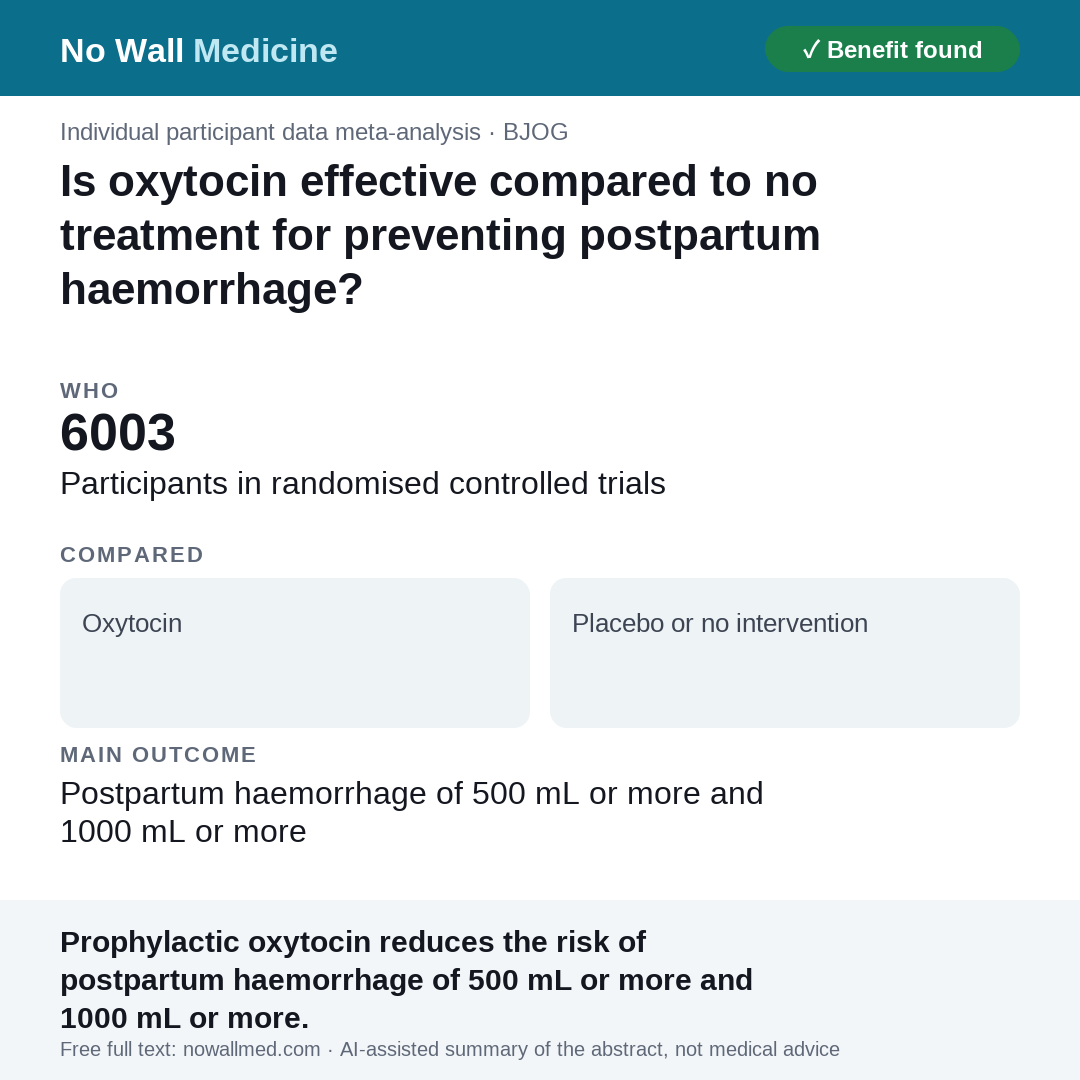
The Effectiveness of Oxytocin for Preventing Postpartum Haemorrhage: An Individual Participant Data Meta-Analysis
Individual participant data meta-analysisBenefit found
Is oxytocin effective compared to no treatment for preventing postpartum haemorrhage?
Who
6003
Participants in randomised controlled trials
Compared
Oxytocin
Placebo or no intervention
Main outcome
Postpartum haemorrhage of 500 mL or more and 1000 mL or more
Result: aOR 0.53 (95% CI 0.45 to 0.62) for PPH ≥ 500 mL
Bottom line: Prophylactic oxytocin reduces the risk of postpartum haemorrhage of 500 mL or more and 1000 mL or more.
BJOG · 2025-07-16Download image
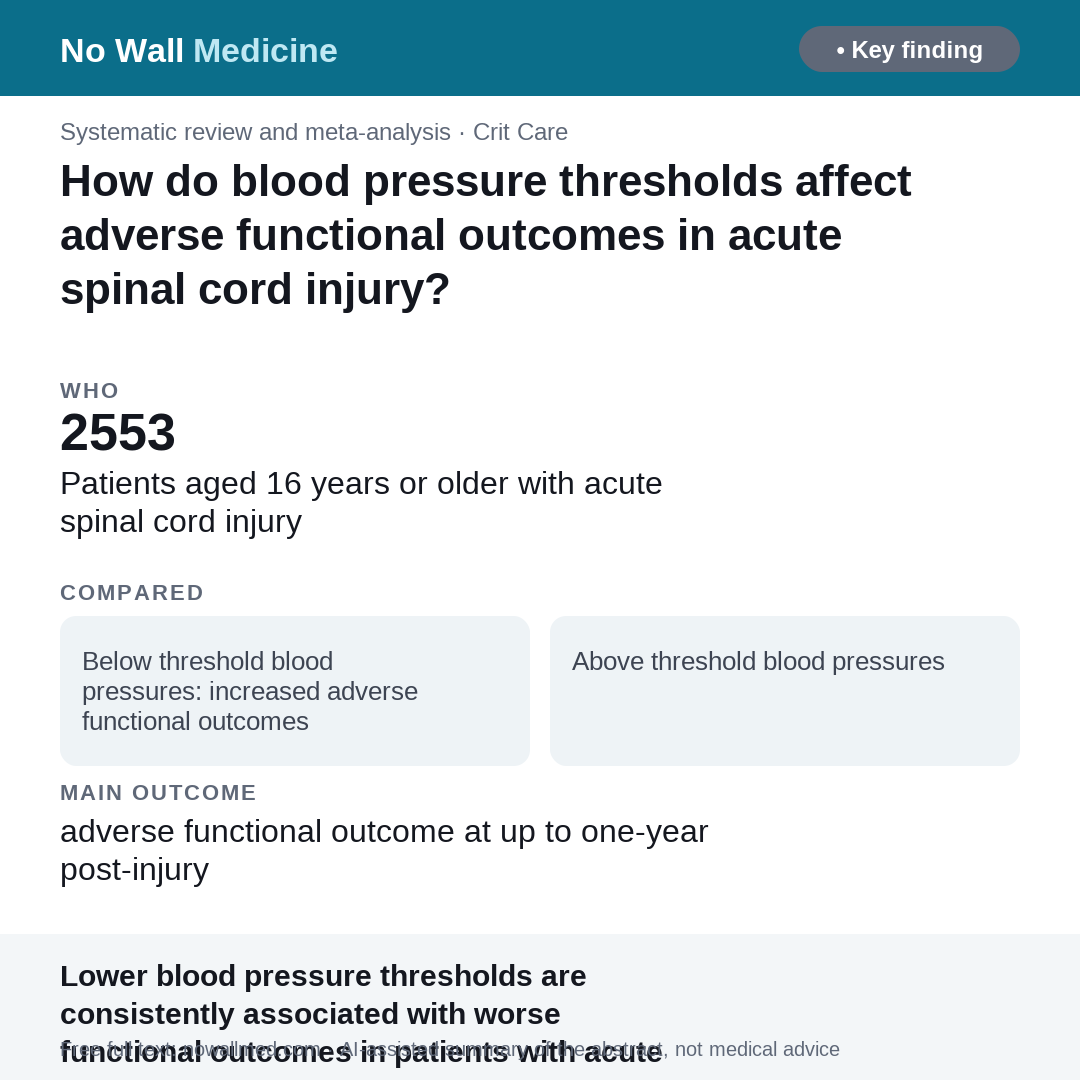
Effect of blood pressure threshold on adverse outcomes in patients with acute spinal cord injury: a systematic review and meta-analysis
Systematic review and meta-analysisKey finding
How do blood pressure thresholds affect adverse functional outcomes in acute spinal cord injury?
Who
2553
Patients aged 16 years or older with acute spinal cord injury
Compared
Below threshold blood pressures: increased adverse functional outcomes
Above threshold blood pressures
Main outcome
adverse functional outcome at up to one-year post-injury
Result: adjusted odds ratio 1.04 (95% CI 1.03-1.05)
Bottom line: Lower blood pressure thresholds are consistently associated with worse functional outcomes in patients with acute spinal cord injury.
Limitation: Observational nature of the data and high heterogeneity.
Crit Care · 2025-07-16Download image
Neuroimaging for prognosis of central nervous system infections: a systematic review and meta-analysis
Systematic review and meta-analysisKey finding
Does neuroimaging provide prognostic value in patients with central nervous system infections?
Who
6,434
Patients with all-type central nervous system infections
Compared
Presence of neuroimaging features
Absence of neuroimaging features
Main outcome
unfavorable outcome and mortality
Result: Abnormal MRI odds ratio 3.55 (95%CI 1.81-6.96)
Bottom line: Neuroimaging features like abnormal MRI, brain ischemia, and hydrocephalus are associated with unfavorable outcomes in central nervous system infections.
Ann Intensive Care · 2025-07-16Download image

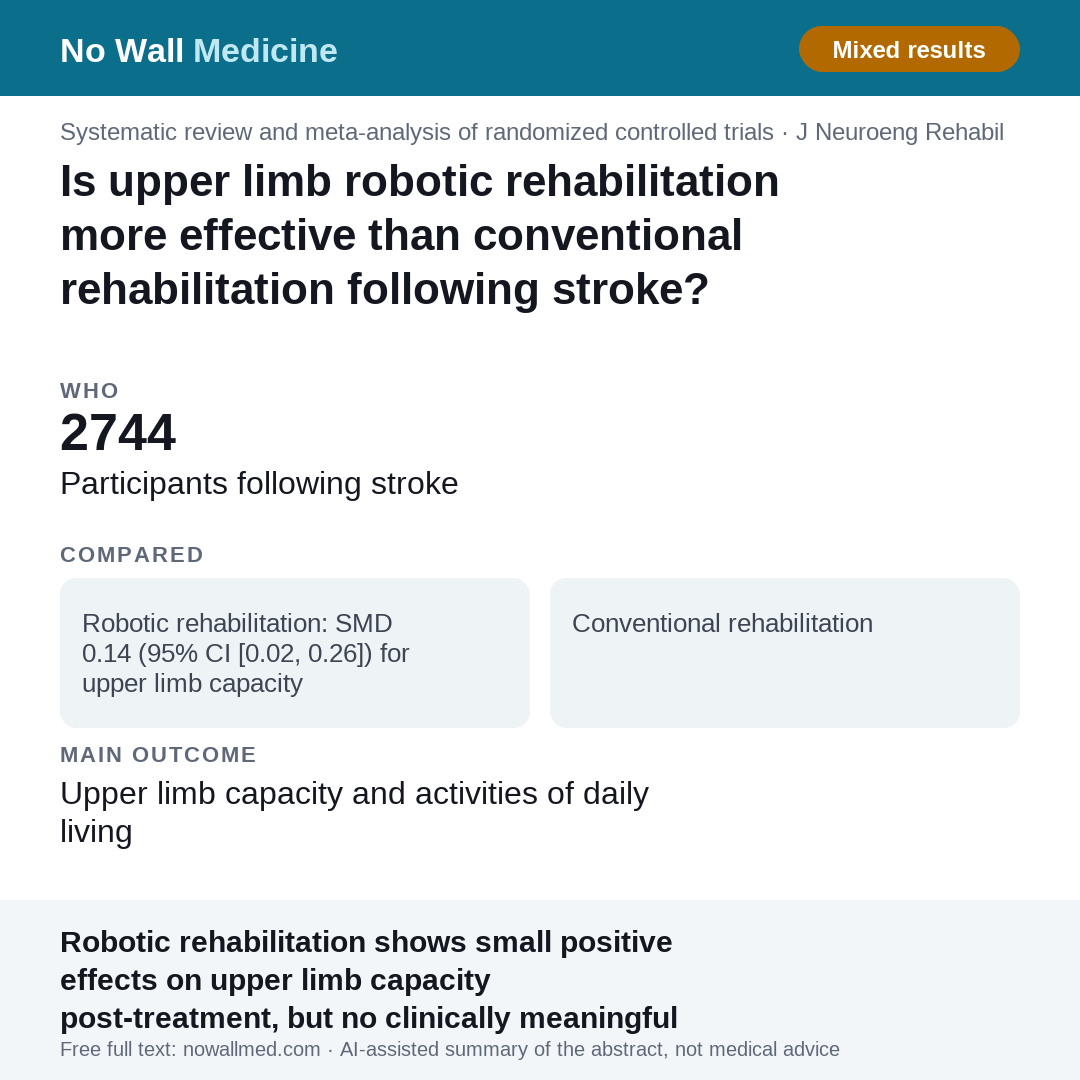
Upper limb robotic rehabilitation following stroke: a systematic review and meta-analysis investigating efficacy and the influence of device features and program parameters
Systematic review and meta-analysis of randomized controlled trialsMixed results
Is upper limb robotic rehabilitation more effective than conventional rehabilitation following stroke?
Who
2744
Participants following stroke
Compared
Robotic rehabilitation: SMD 0.14 (95% CI [0.02, 0.26]) for upper limb capacity
Conventional rehabilitation
Main outcome
Upper limb capacity and activities of daily living
Result: SMD 0.14 (95% CI [0.02, 0.26])
Bottom line: Robotic rehabilitation shows small positive effects on upper limb capacity post-treatment, but no clinically meaningful improvements in capacity or activities of daily living.
J Neuroeng Rehabil · 2025-07-16Download image
Effect of processed electroencephalography-guided anesthesia on postoperative delirium: an updated systematic review and meta-analysis
Systematic review and meta-analysis of randomized controlled trialsBenefit found
Does processed electroencephalography-guided anesthesia reduce postoperative delirium incidence?
Who
4523
Adult surgical patients
Compared
Processed electroencephalography-guided general anesthesia
Standard care
Main outcome
Postoperative delirium incidence
Result: risk ratio 0.81 (95% CI 0.69-0.95)
Bottom line: Processed electroencephalography-guided anesthesia reduces postoperative delirium incidence, especially in elderly patients and non-cardiac surgeries.
Limitation: Effectiveness may vary due to differences in practice, anesthetic protocols, and cultural factors.
Int J Surg · 2025-07-15Download image

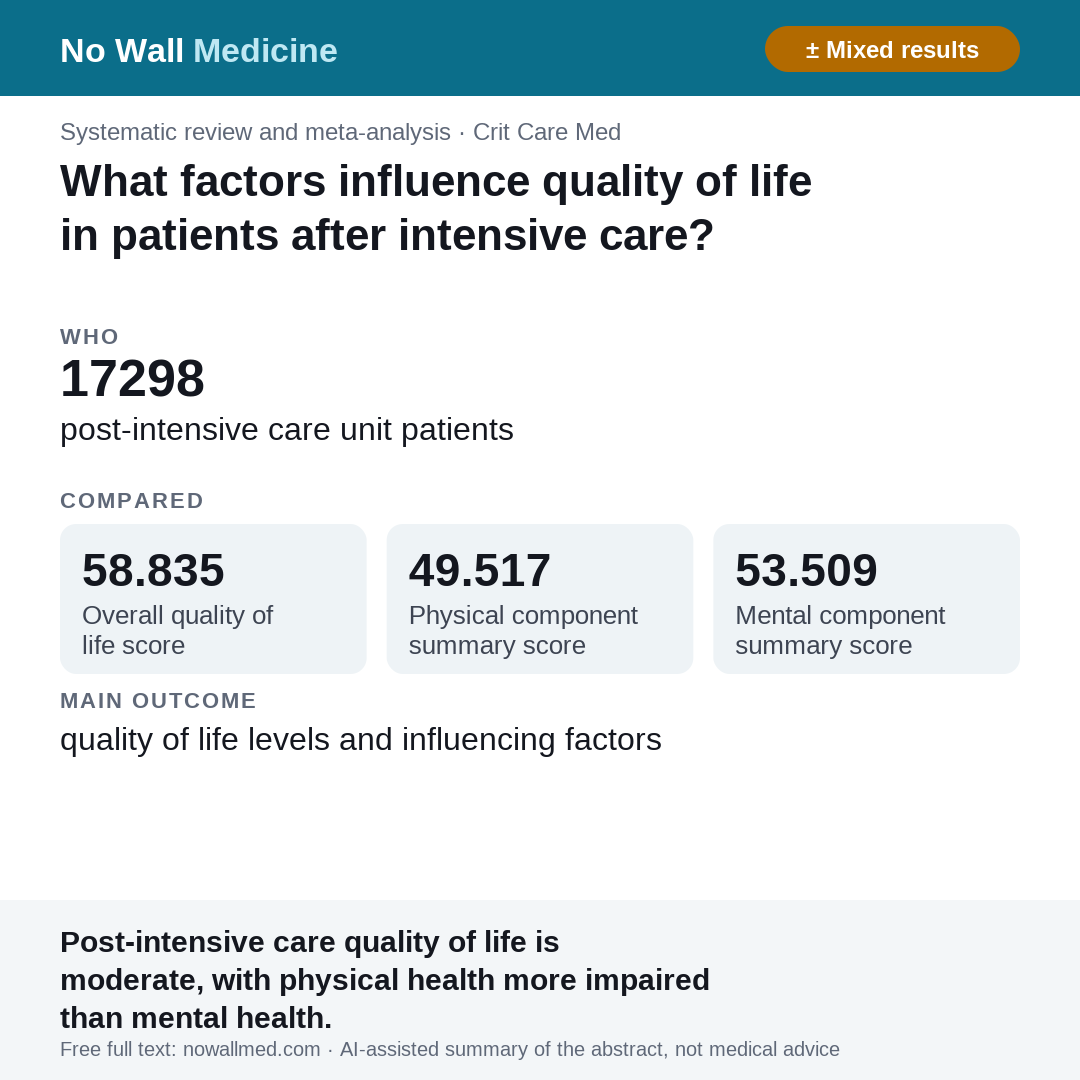
Factors Influencing Quality of Life After Intensive Care: A Systematic Review and Meta-Analysis
Systematic review and meta-analysisMixed results
What factors influence quality of life in patients after intensive care?
Who
17298
post-intensive care unit patients
Compared
58.835Overall quality of life score (95% CI, 52.935-64.735)
49.517Physical component summary score (95% CI, 45.781-53.253)
53.509Mental component summary score (95% CI, 50.301-56.718)
Main outcome
quality of life levels and influencing factors
Bottom line: Post-intensive care quality of life is moderate, with physical health more impaired than mental health.
Crit Care Med · 2025-07-15Download image
Global, regional, and national health-care inefficiency and associated factors in 201 countries, 1995-2022: a stochastic frontier meta-analysis for the Global Burden of Disease Study 2023
Stochastic frontier meta-analysisMixed results
What were the health-care inefficiency levels and associated factors from 1995 to 2022?
Who
201 countries · Global
Compared
Low spending ($100 per capita): US$92 (95% uncertainty interval 43-239) per capita
High spending ($5000 per capita): US$11 213 (8031-57 754) per capita
Main outcome
Health-adjusted life expectancy inefficiency and cost of additional healthy life
Bottom line: Health spending inefficiency fluctuated globally, with better governance and government funding associated with more efficient health-care spending.
Funded by: Bill & Melinda Gates Foundation
Lancet Glob Health · 2025-07-15Download image

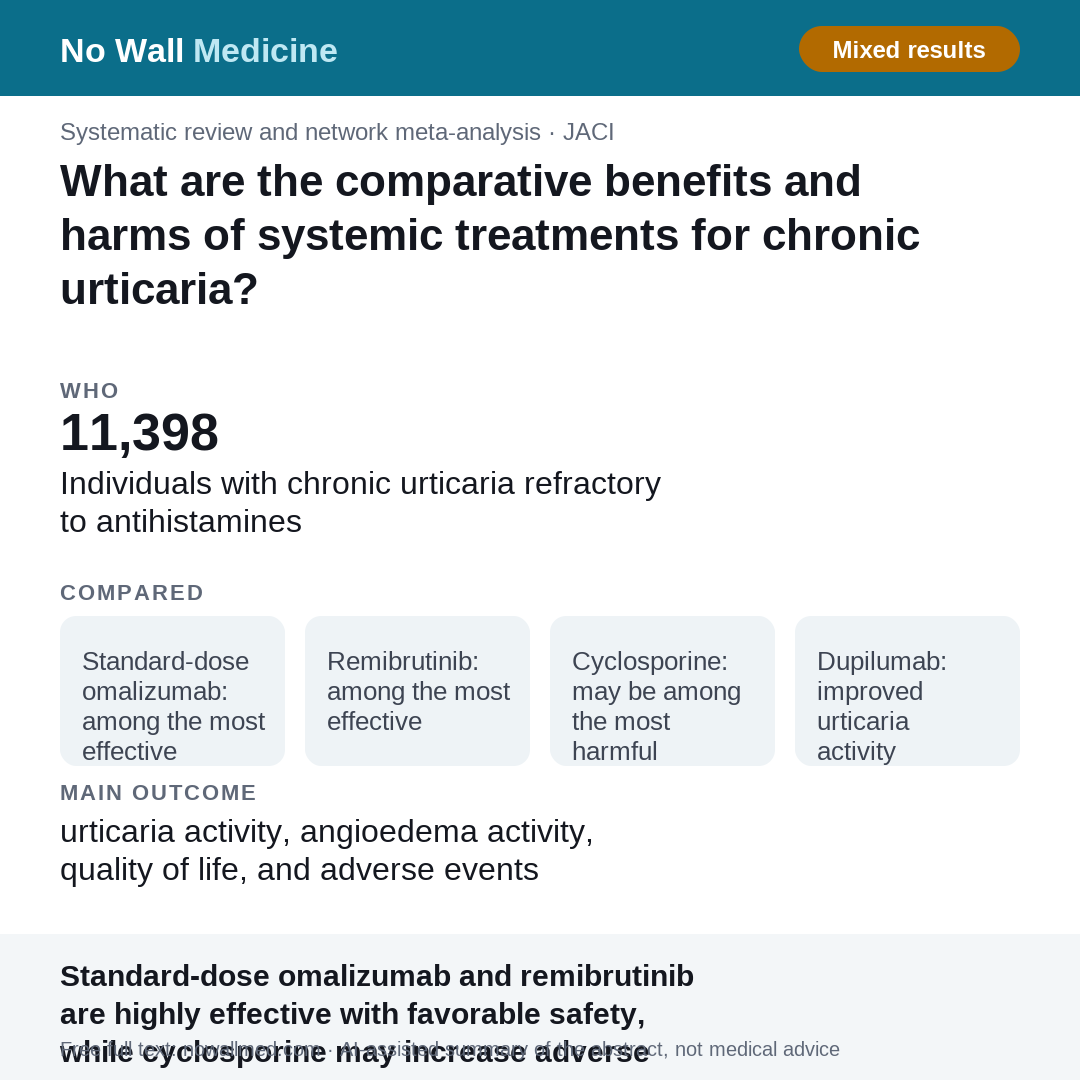
Comparative efficacy and safety of biologics and systemic immunomodulatory treatments for chronic urticaria: Systematic review and network meta-analysis
Systematic review and network meta-analysisMixed results
What are the comparative benefits and harms of systemic treatments for chronic urticaria?
Who
11,398
Individuals with chronic urticaria refractory to antihistamines
Compared
Standard-dose omalizumab: among the most effective
Remibrutinib: among the most effective
Cyclosporine: may be among the most harmful
Dupilumab: improved urticaria activity
Main outcome
urticaria activity, angioedema activity, quality of life, and adverse events
Bottom line: Standard-dose omalizumab and remibrutinib are highly effective with favorable safety, while cyclosporine may increase adverse events.
Limitation: The safety profile of remibrutinib is less certain.
JACI · 2025-07-15Download image
Efficacy and safety of earlier switching to an oral antibiotic therapy for the treatment of Gram-positive bloodstream infections: a systematic review and meta-analysis
Meta-analysis of 27 observational studiesKey finding
Is early switch to oral antibiotics effective and safe for Gram-positive bloodstream infections?
Who
6015
Patients with Gram-positive bloodstream infections
Compared
Early switch to oral therapy: 30-day mortality OR 0.33 (95% CI 0.13, 0.83)
Intravenous therapy
Main outcome
30-day all-cause mortality
Result: OR 0.33 (95% CI 0.13, 0.83)
Bottom line: Early switch to oral therapy was linked to lower 30-day and 90-day mortality in Gram-positive bloodstream infections.
J Antimicrob Chemother · 2025-07-15Download image

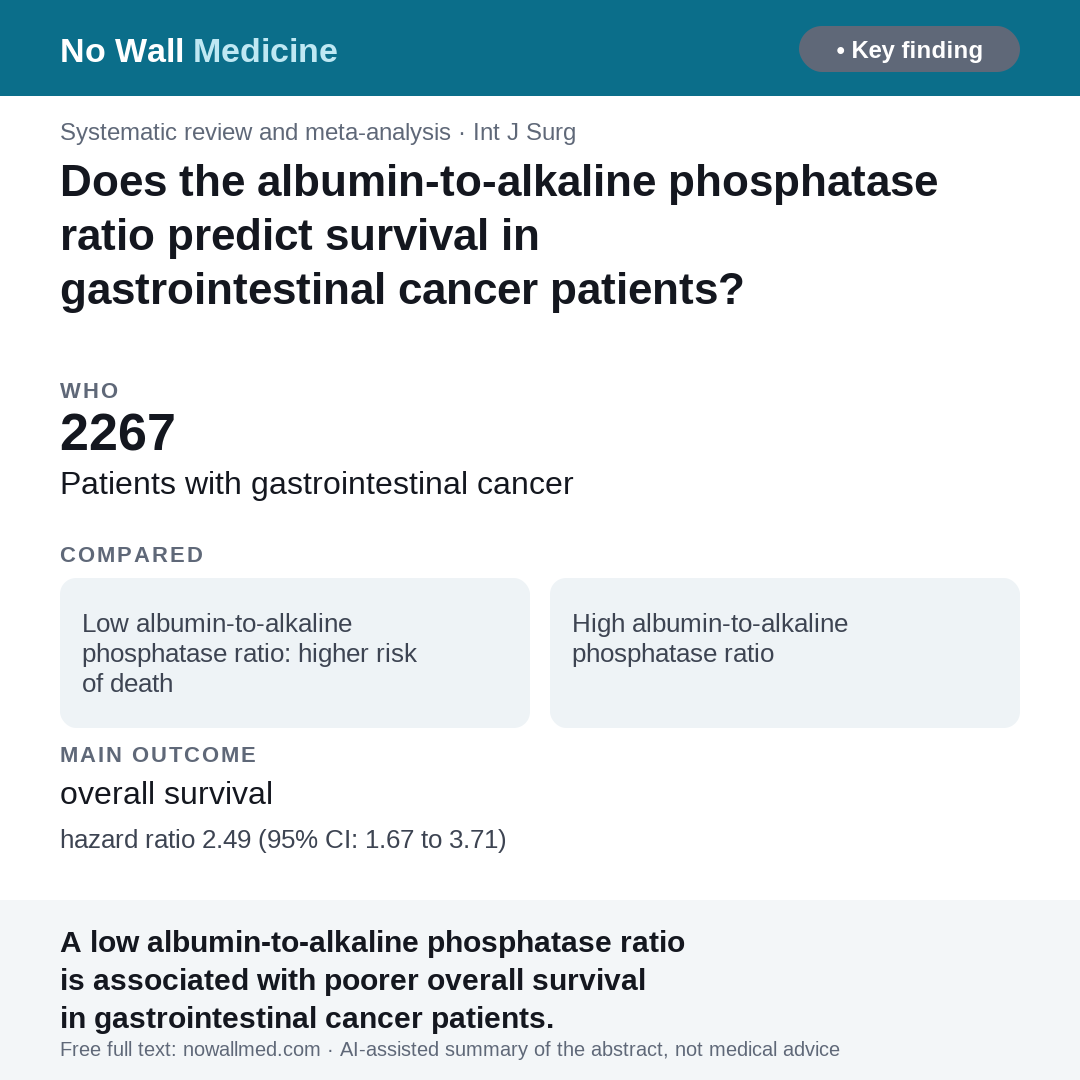
Prognostic significance of the albumin-to-alkaline phosphatase ratio in gastrointestinal cancer patients: a systematic review and meta-analysis
Systematic review and meta-analysisKey finding
Does the albumin-to-alkaline phosphatase ratio predict survival in gastrointestinal cancer patients?
Who
2267
Patients with gastrointestinal cancer
Compared
Low albumin-to-alkaline phosphatase ratio: higher risk of death
High albumin-to-alkaline phosphatase ratio
Main outcome
overall survival
Result: hazard ratio 2.49 (95% CI: 1.67 to 3.71)
Bottom line: A low albumin-to-alkaline phosphatase ratio is associated with poorer overall survival in gastrointestinal cancer patients.
Limitation: Publication bias was detected in the overall survival meta-analysis.
Int J Surg · 2025-07-15Download image
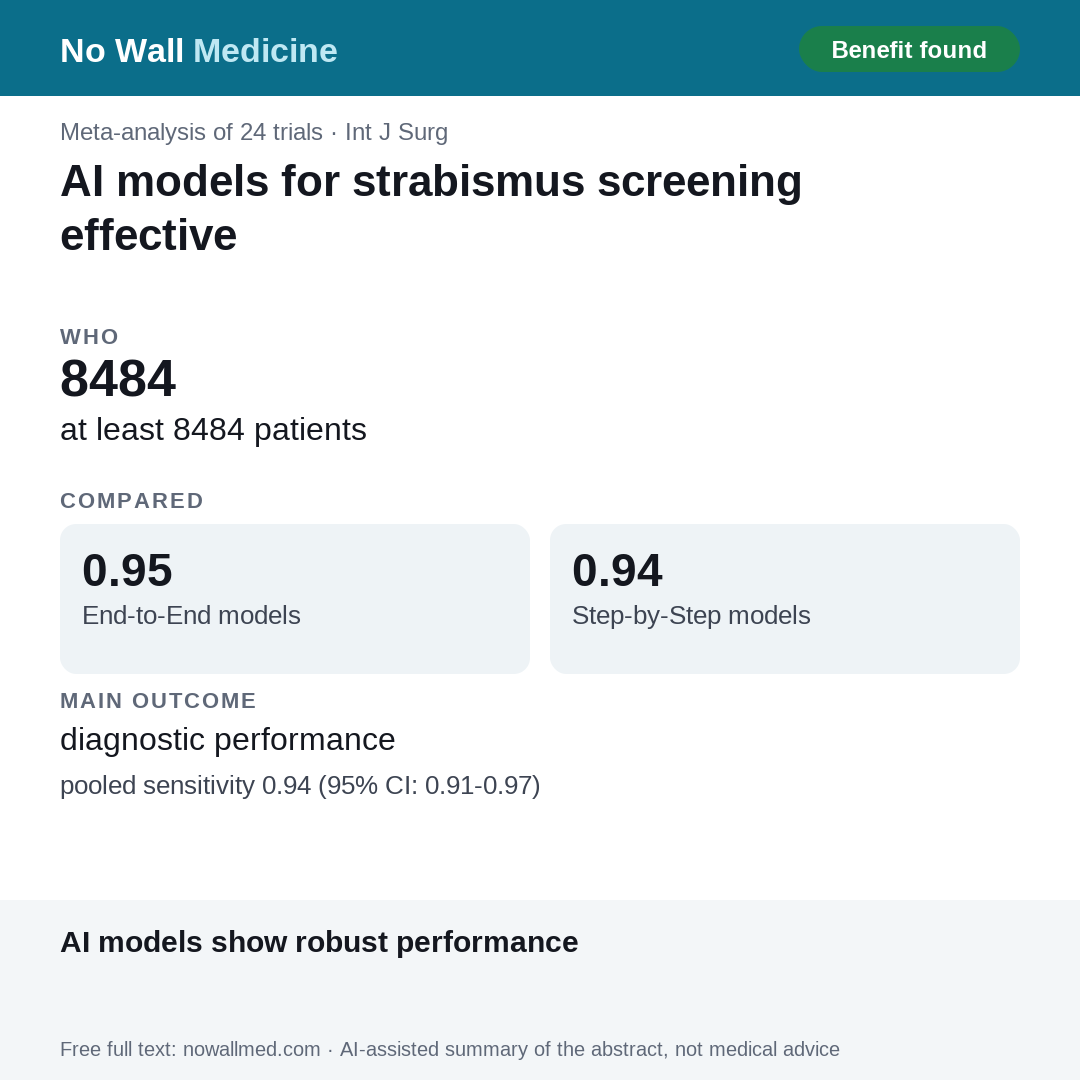
Systematic review and meta-analysis of artificial intelligence models for strabismus screening: methodological insights and future directions
Systematic review and meta-analysis of 24 studiesKey finding
What is the diagnostic performance of AI models for strabismus screening?
Who
8484
Patients undergoing strabismus screening in included studies
Compared
0.94AI models (95% CI: 0.91-0.97)
Reference standard
Main outcome
Diagnostic sensitivity and specificity of AI models
Result: pooled sensitivity of 0.94 (95% CI: 0.91-0.97) and specificity of 0.94 (95% CI: 0.91-0.96)
Bottom line: AI models exhibit robust performance in strabismus screening, with End-to-End models demonstrating greater consistency.
Limitation: Most studies demonstrated low risk of bias except for the index test domain
Int J Surg · 2025-07-15Download image
A network meta-analysis of randomized clinical trials in lenalidomide-exposed or -refractory multiple myeloma patients
Network meta-analysis of eight randomized controlled trialsBenefit found
Which lenalidomide-free regimen is most effective for relapsed or refractory multiple myeloma?
Who
3952
Lenalidomide-exposed or lenalidomide-refractory multiple myeloma patients
Compared
Belantamab mafodotin, bortezomib, and dexamethasone: highest surface under the cumulative ranking curve for progression-free survival
Other triplet regimens
Main outcome
progression-free survival
Bottom line: Belantamab mafodotin, bortezomib, and dexamethasone is the most effective lenalidomide-free second-line treatment option.
ESMO Open · 2025-07-15Download image

Screening tools for work-related asthma and their diagnostic accuracy: a systematic review
Systematic reviewMixed results
What is the diagnostic accuracy of screening tools for work-related asthma?
Who
Individuals aged 16 years or older · Tertiary hospitals and specialist centres
Compared
Improvement off work question: sensitivity 74-87% and specificity 15-58%
Multiple questions: sensitivity 80-100% and specificity 8-55%
Questionnaire with methacholine challenge test: specificity 75% with sensitivity 65%
Diagnostic models: area under the curve 0.69 to 0.89
Main outcome
Diagnostic accuracy of screening tools for work-related asthma
Bottom line: Screening tools have high sensitivity but low specificity, which may be sufficient for initial screening purposes.
Limitation: Studies are limited, inadequately reported, and need further evaluation in primary care and workplaces.
BMJ Open Respir Res · 2025-07-15Download image

Basic life support training targeted to family members or carers of those at high-risk of out-of-hospital cardiac arrest: a systematic review
Systematic reviewBenefit found
Does targeting basic life support training to high-risk groups improve outcomes?
Who
Family members or carers of those at high-risk of out-of-hospital cardiac arrest
Compared
Targeted training intervention
Control
Main outcome
Patient and educational outcomes
Bottom line: Targeting high-risk groups improves simulated cardiopulmonary resuscitation skills, confidence, and willingness to provide care.
Limitation: Very-low to low quality of evidence due to low event numbers and loss to follow-up.
Resusc Plus · 2025-07-15Download image

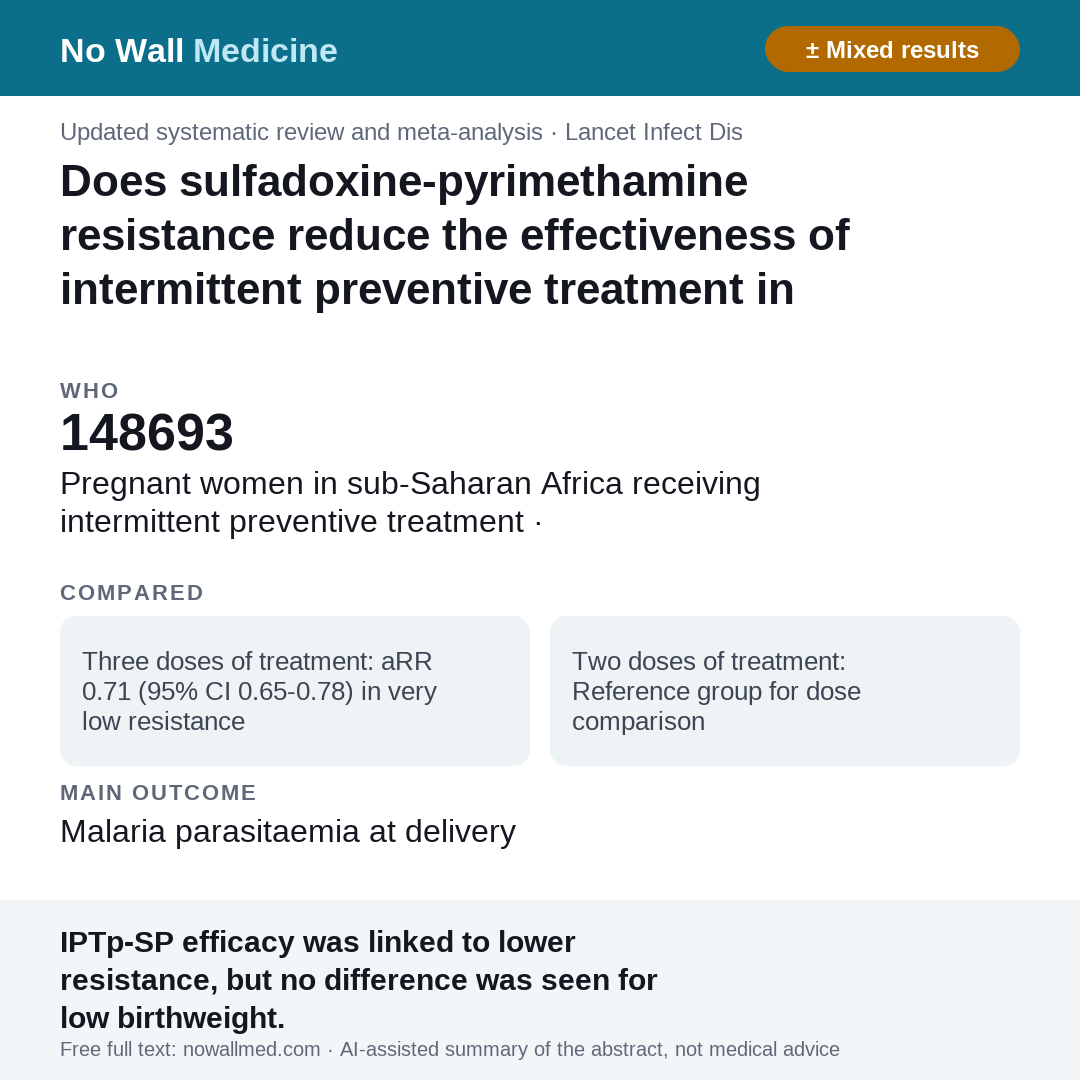
The impact of sulfadoxine-pyrimethamine resistance on the effectiveness of intermittent preventive treatment for the prevention of malaria in pregnancy in Africa: an updated systematic review and meta-analysis
Updated systematic review and meta-analysisMixed results
Does sulfadoxine-pyrimethamine resistance reduce the effectiveness of intermittent preventive treatment in pregnancy?
Who
148693
Pregnant women in sub-Saharan Africa receiving intermittent preventive treatment · Sub-Saharan Africa (West, Central, East, and Southern regions)
Compared
Three doses of treatment: aRR 0.71 (95% CI 0.65-0.78) in very low resistance
Two doses of treatment: Reference group for dose comparison
Main outcome
Malaria parasitaemia at delivery
Result: aRR 0.71 (95% CI 0.65-0.78) in very low resistance
Bottom line: IPTp-SP efficacy was linked to lower resistance, but no difference was seen for low birthweight.
Limitation: Dose comparisons in some resistance strata were limited by sample size
Lancet Infect Dis · 2025-07-14Download image