Visual abstracts
New randomized trials and meta-analyses from leading journals at a glance: who was studied, what was compared, and what was found. Every paper is free to read in full.
All specialtiesCardiology 4877Oncology 4138Gastroenterology & Hepatology 1942Infectious Disease 3837Neurology 1905Psychiatry & Mental Health 2273Pulmonology 2143Critical Care 1365Endocrinology & Diabetes 2580Pediatrics 2980Surgery 2559Orthopedics & Sports Medicine 931Neurosurgery 537Cardiothoracic & Vascular Surgery 674Plastic & Reconstructive Surgery 591Nephrology 1133Rheumatology 823Hematology 1109Dermatology 621Ophthalmology 543Obstetrics & Gynecology 1686Public & Global Health 1058Radiology & Imaging 648Anesthesiology 986Urology 764ENT (Otolaryngology) 503Emergency Medicine 511Allergy & Immunology 313Geriatrics 981Family Medicine & Primary Care 562Medical Genetics & Genomics 676Pathology & Laboratory Medicine 159Physical Medicine & Rehabilitation 757Palliative Care 444Nutrition 1588Digital Health & AI 2201General Medicine 321
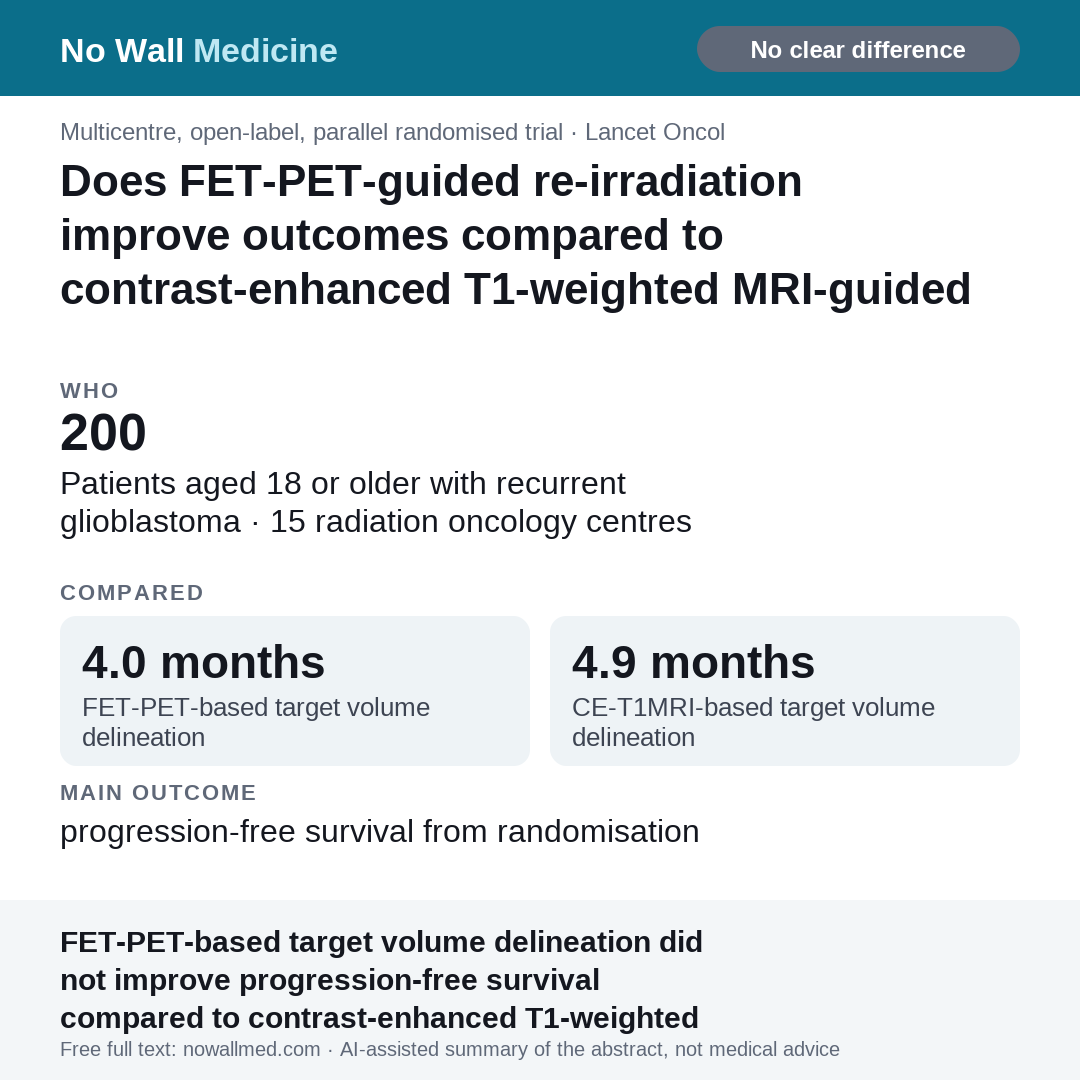
O-(2-[18F]fluoroethyl)-L-tyrosine-PET-guided versus contrast-enhanced T1-weighted MRI-guided re-irradiation in patients with recurrent glioblastoma (GLIAA/NOA-10 ARO2013-01): a multicentre, open-label, randomised trial
Multicentre, open-label, parallel randomised trialNo clear difference
Does FET-PET-guided re-irradiation improve outcomes compared to contrast-enhanced T1-weighted MRI-guided re-irradiation in recurrent glioblastoma?
Who
200
Patients aged 18 or older with recurrent glioblastoma · 15 radiation oncology centres in Germany
Compared
4.0 monthsFET-PET-based target volume delineation
4.9 monthsCE-T1MRI-based target volume delineation
Main outcome
progression-free survival from randomisation
Result: adjusted hazard ratio 1.14 (95% CI 0.85 to 1.52)
Bottom line: FET-PET-based target volume delineation did not improve progression-free survival compared to contrast-enhanced T1-weighted MRI in recurrent glioblastoma.
Funded by: Deutsche Krebshilfe
Lancet Oncol · 2025-12-19Download image
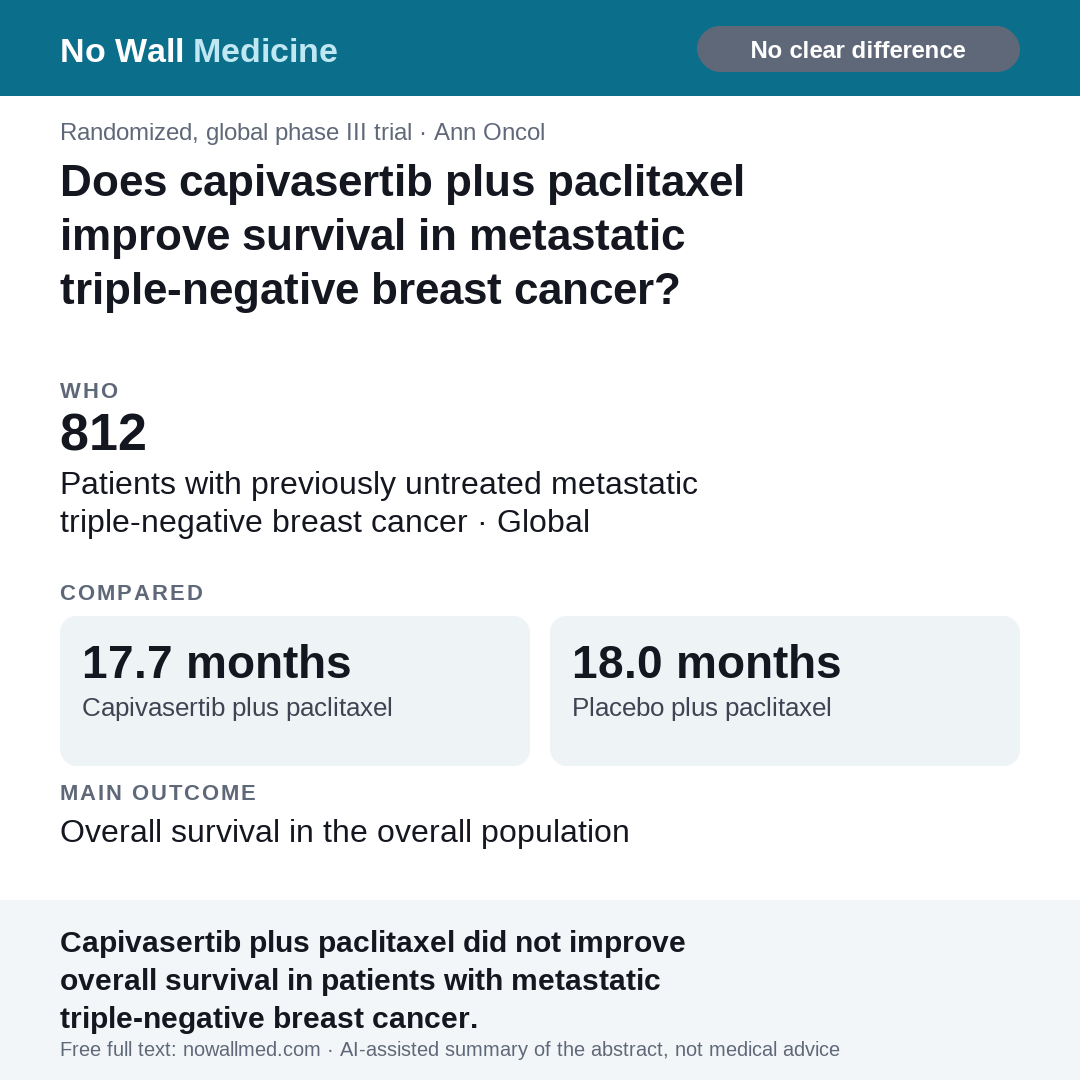
Capivasertib plus paclitaxel as first-line treatment for metastatic triple-negative breast cancer: results from the randomised, global phase III CAPItello-290 trial
Randomized, global phase III trialNo clear difference
Does capivasertib plus paclitaxel improve survival in metastatic triple-negative breast cancer?
Who
812
Patients with previously untreated metastatic triple-negative breast cancer · Global
Compared
17.7 monthsCapivasertib plus paclitaxel
18.0 monthsPlacebo plus paclitaxel
Main outcome
Overall survival in the overall population
Result: hazard ratio 0.92 (95% CI 0.78-1.08)
Bottom line: Capivasertib plus paclitaxel did not improve overall survival in patients with metastatic triple-negative breast cancer.
Ann Oncol · 2025-12-19Download image
Phase 2 study of zervimesine (CT1812) in participants with mild-to-moderate dementia with Lewy bodies (DLB)
Multi-center, double-blind, placebo-controlled, parallel-design studyUnclear result
Is zervimesine safe and effective in participants with mild-to-moderate dementia with Lewy bodies?
Who
130
Participants aged 50 to 85 years with probable dementia with Lewy bodies
Compared
zervimesine 100 mg: 4.5% discontinuation rate for adverse events
zervimesine 300 mg: 16.3% discontinuation rate for adverse events
placebo: 4.8% discontinuation rate for adverse events
Main outcome
Safety and efficacy via exploratory outcomes
Bottom line: Zervimesine was safe and showed favorable efficacy trends in exploratory outcomes for dementia with Lewy bodies.
Alzheimers Dement · 2025-12-19Download image

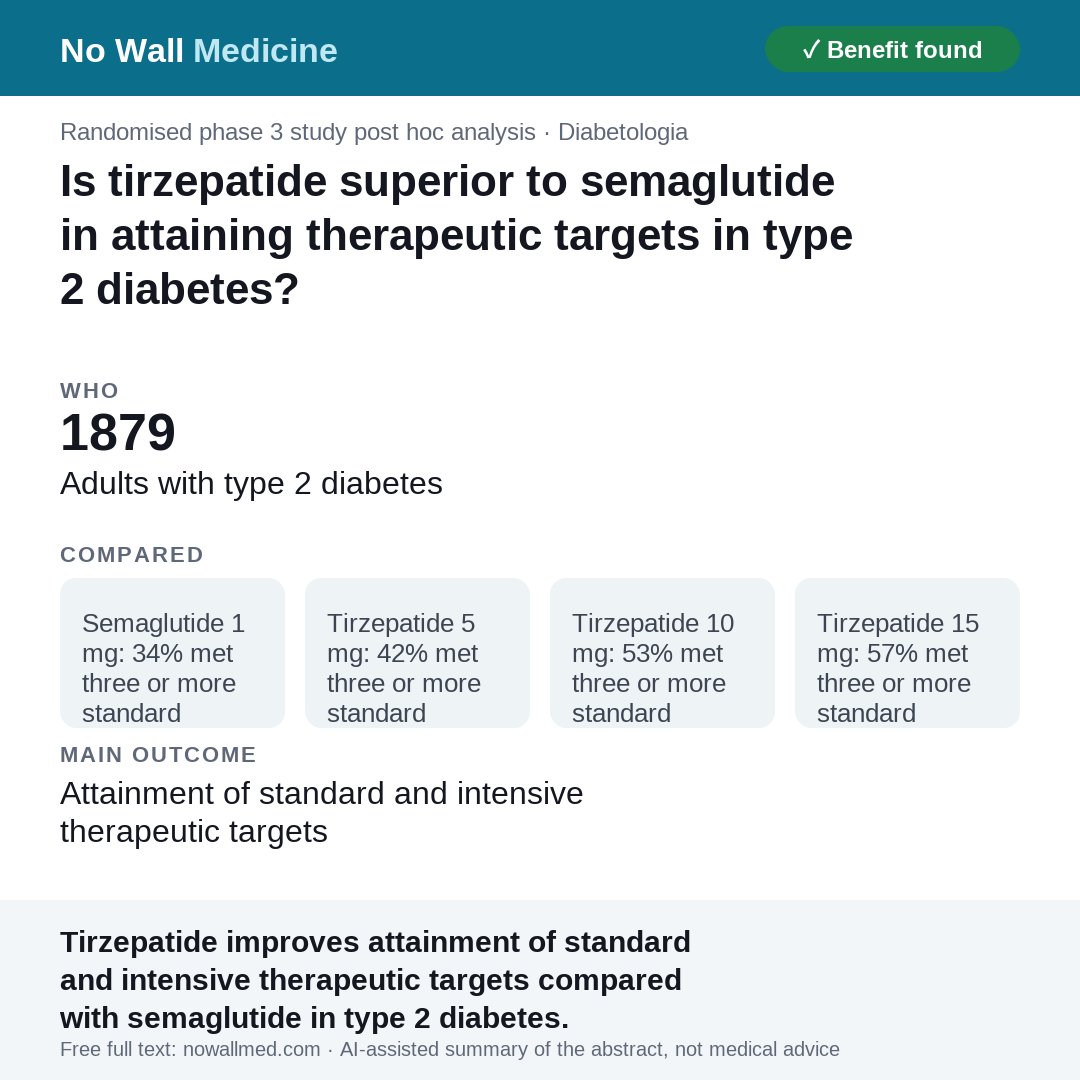
Efficacy of tirzepatide versus semaglutide in achieving therapeutic targets in type 2 diabetes: a post hoc analysis of the SURPASS-2 Trial
Randomised phase 3 study post hoc analysisBenefit found
Is tirzepatide superior to semaglutide in attaining therapeutic targets in type 2 diabetes?
Who
1879
Adults with type 2 diabetes
Compared
Semaglutide 1 mg: 34% met three or more standard targets
Tirzepatide 5 mg: 42% met three or more standard targets
Tirzepatide 10 mg: 53% met three or more standard targets
Tirzepatide 15 mg: 57% met three or more standard targets
Main outcome
Attainment of standard and intensive therapeutic targets
Result: OR 1.50 [95% CI 1.12, 2.00] for standard HbA1c targets
Bottom line: Tirzepatide improves attainment of standard and intensive therapeutic targets compared with semaglutide in type 2 diabetes.
Diabetologia · 2025-12-19Download image
Efficacy and safety of combining empagliflozin in people with type 2 diabetes mellitus uncontrolled with metformin and sitagliptin: A randomised, double-blind, multicentre, therapeutic confirmatory phase 3 clinical trial
Randomised, double-blind, multicentre, phase 3 clinical trialBenefit found
Does adding empagliflozin improve glycemic control in type 2 diabetes uncontrolled with metformin and sitagliptin?
Who
172
People with type 2 diabetes mellitus uncontrolled with metformin and sitagliptin · Korea
Compared
-0.7%empagliflozin 10 mg (95% CI -1.0, -0.4)
-0.8%empagliflozin 25 mg (95% CI -1.1, -0.5)
placebo
Main outcome
change in glycosylated haemoglobin from baseline to week 24
Result: -0.7% (95% CI -1.0, -0.4) and -0.8% (95% CI -1.1, -0.5)
Bottom line: Adding empagliflozin 10 or 25 mg safely improves glycemic control in patients with type 2 diabetes.
Diabetes Obes Metab · 2025-12-19Download image

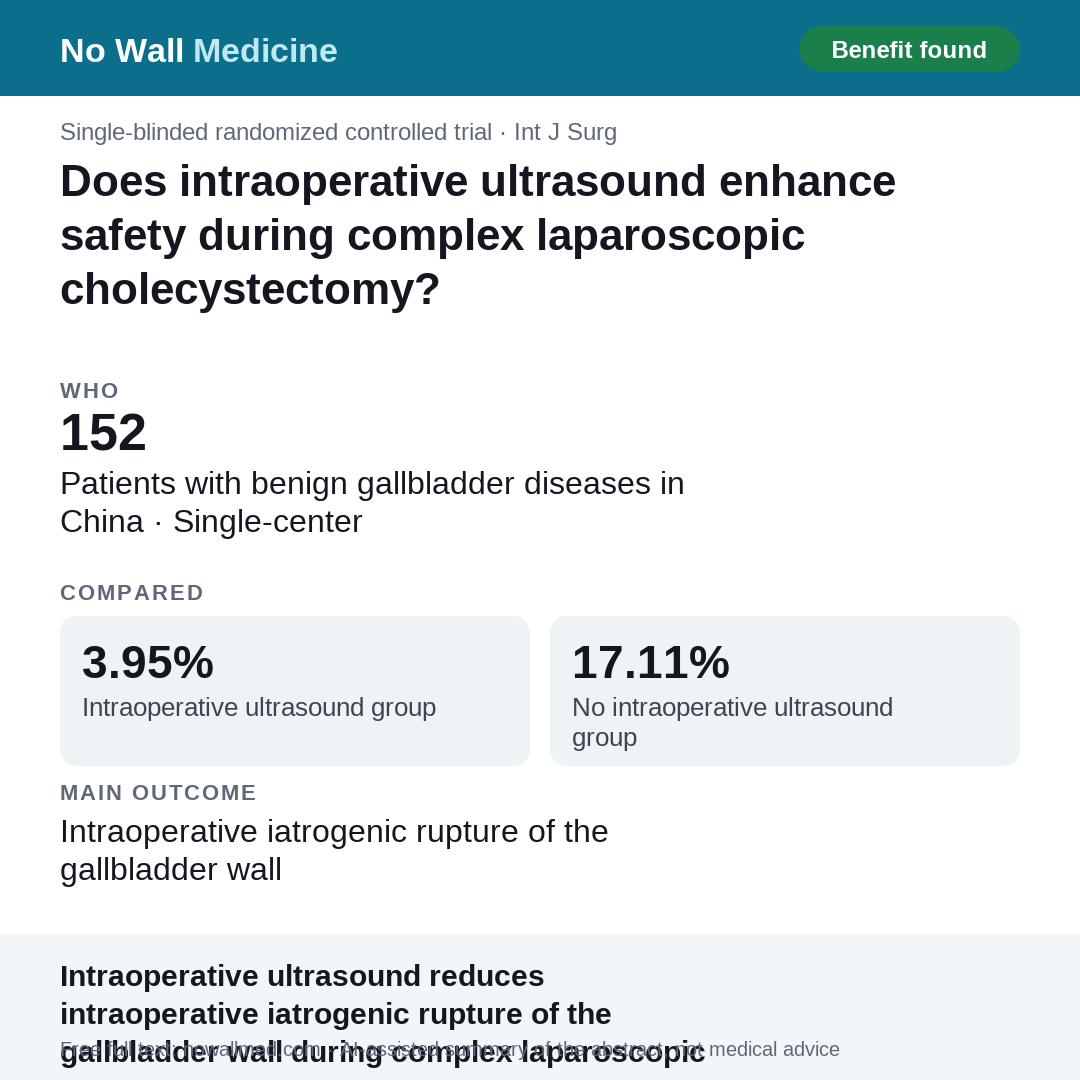
Intraoperative ultrasound enhancing safety of key steps in complex laparoscopic cholecystectomy: a single-blinded randomized controlled trial
Single-blinded randomized controlled trialBenefit found
Does intraoperative ultrasound enhance safety during complex laparoscopic cholecystectomy?
Who
152
Patients with benign gallbladder diseases in China · Single-center
Compared
3.95%Intraoperative ultrasound group
17.11%No intraoperative ultrasound group
Main outcome
Intraoperative iatrogenic rupture of the gallbladder wall
Bottom line: Intraoperative ultrasound reduces intraoperative iatrogenic rupture of the gallbladder wall during complex laparoscopic cholecystectomy.
Int J Surg · 2025-12-19Download image
Safety and accuracy of robot-assisted pedicle screw fixation: a randomized controlled trial
Multicenter, parallel-group, randomized trialBenefit found
Does robot-assisted pedicle screw fixation improve accuracy, efficiency, and safety?
Who
70
Patients requiring pedicle screw fixation · Three hospitals
Compared
robot-assisted group: 0.86 ± 0.57 mm
conventional fluoroscopy-guided group: 2.55 ± 1.88 mm
Main outcome
deviation of guide pin placement
Bottom line: Robot-assisted pedicle screw fixation improved guide pin accuracy and reduced radiation exposure compared to conventional fluoroscopy-guided techniques.
Int J Surg · 2025-12-19Download image

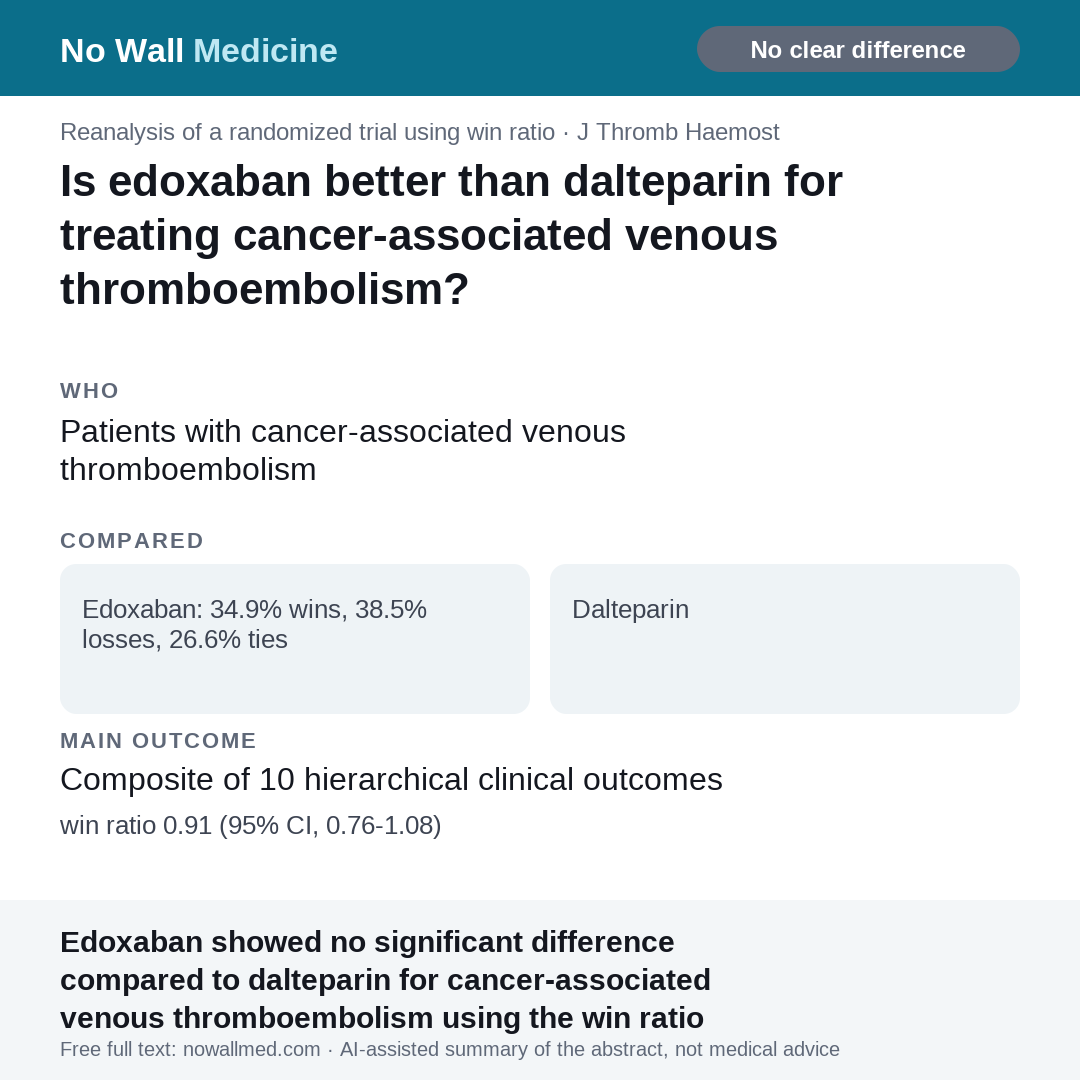
The win ratio for evaluating edoxaban vs dalteparin for cancer-associated venous thromboembolism: an analysis of the randomized Hokusai Venous Thromboembolism Cancer trial
Reanalysis of a randomized trial using win ratioNo clear difference
Is edoxaban better than dalteparin for treating cancer-associated venous thromboembolism?
Who
Patients with cancer-associated venous thromboembolism
Compared
Edoxaban: 34.9% wins, 38.5% losses, 26.6% ties
Dalteparin
Main outcome
Composite of 10 hierarchical clinical outcomes
Result: win ratio 0.91 (95% CI, 0.76-1.08)
Bottom line: Edoxaban showed no significant difference compared to dalteparin for cancer-associated venous thromboembolism using the win ratio approach.
J Thromb Haemost · 2025-12-19Download image
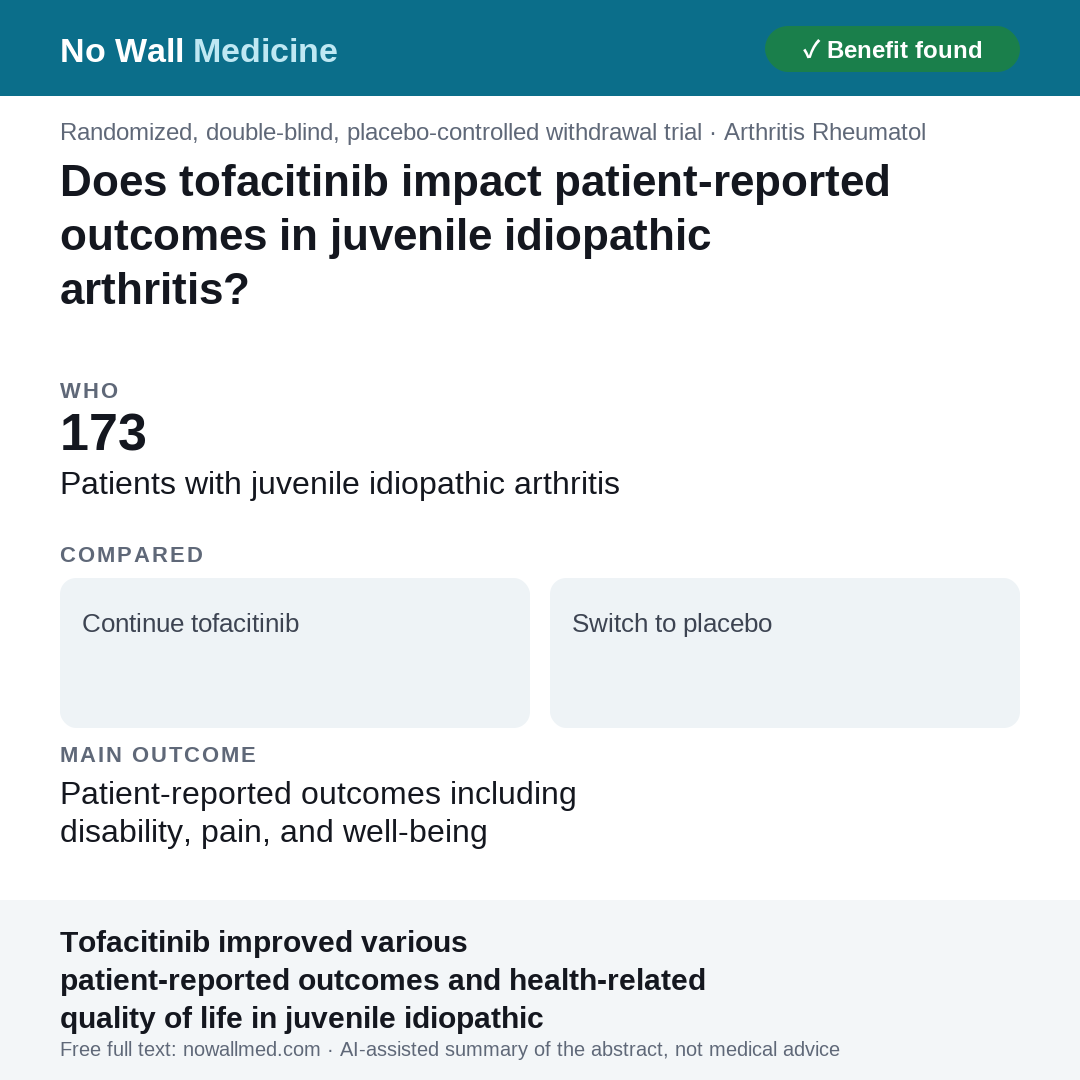
Tofacitinib for the Treatment of Juvenile Idiopathic Arthritis: Patient-Reported Outcomes in a Phase 3, Randomized, Double-Blind, Placebo-Controlled Withdrawal Trial
Randomized, double-blind, placebo-controlled withdrawal trialBenefit found
Does tofacitinib impact patient-reported outcomes in juvenile idiopathic arthritis?
Who
173
Patients with juvenile idiopathic arthritis
Compared
Continue tofacitinib
Switch to placebo
Main outcome
Patient-reported outcomes including disability, pain, and well-being
Bottom line: Tofacitinib improved various patient-reported outcomes and health-related quality of life in juvenile idiopathic arthritis.
Arthritis Rheumatol · 2025-12-19Download image
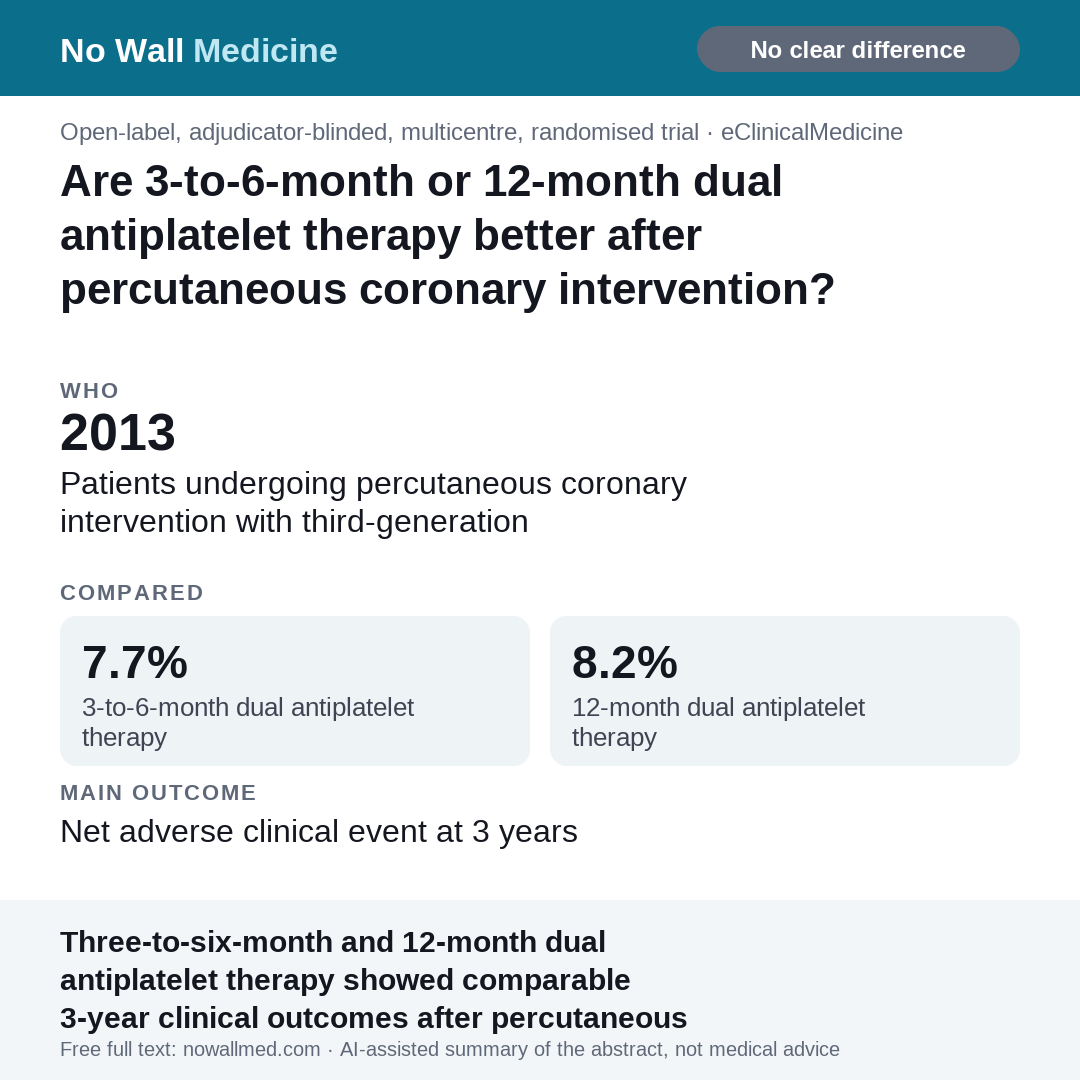
Abbreviated dual antiplatelet therapy after percutaneous coronary intervention with ultrathin-strut drug-eluting stents in South Korea: 3-year outcomes of the multicentre, randomised HOST-IDEA trial
Open-label, adjudicator-blinded, multicentre, randomised trialNo clear difference
Are 3-to-6-month or 12-month dual antiplatelet therapy better after percutaneous coronary intervention?
Who
2013
Patients undergoing percutaneous coronary intervention with third-generation drug-eluting stents · 37 hospitals in South Korea
Compared
7.7%3-to-6-month dual antiplatelet therapy
8.2%12-month dual antiplatelet therapy
Main outcome
Net adverse clinical event at 3 years
Result: hazard ratio 0.94 (95% CI 0.69-1.29)
Bottom line: Three-to-six-month and 12-month dual antiplatelet therapy showed comparable 3-year clinical outcomes after percutaneous coronary intervention.
Funded by: Biotronik Korea and B. Braun Korea
eClinicalMedicine · 2025-12-18Download image
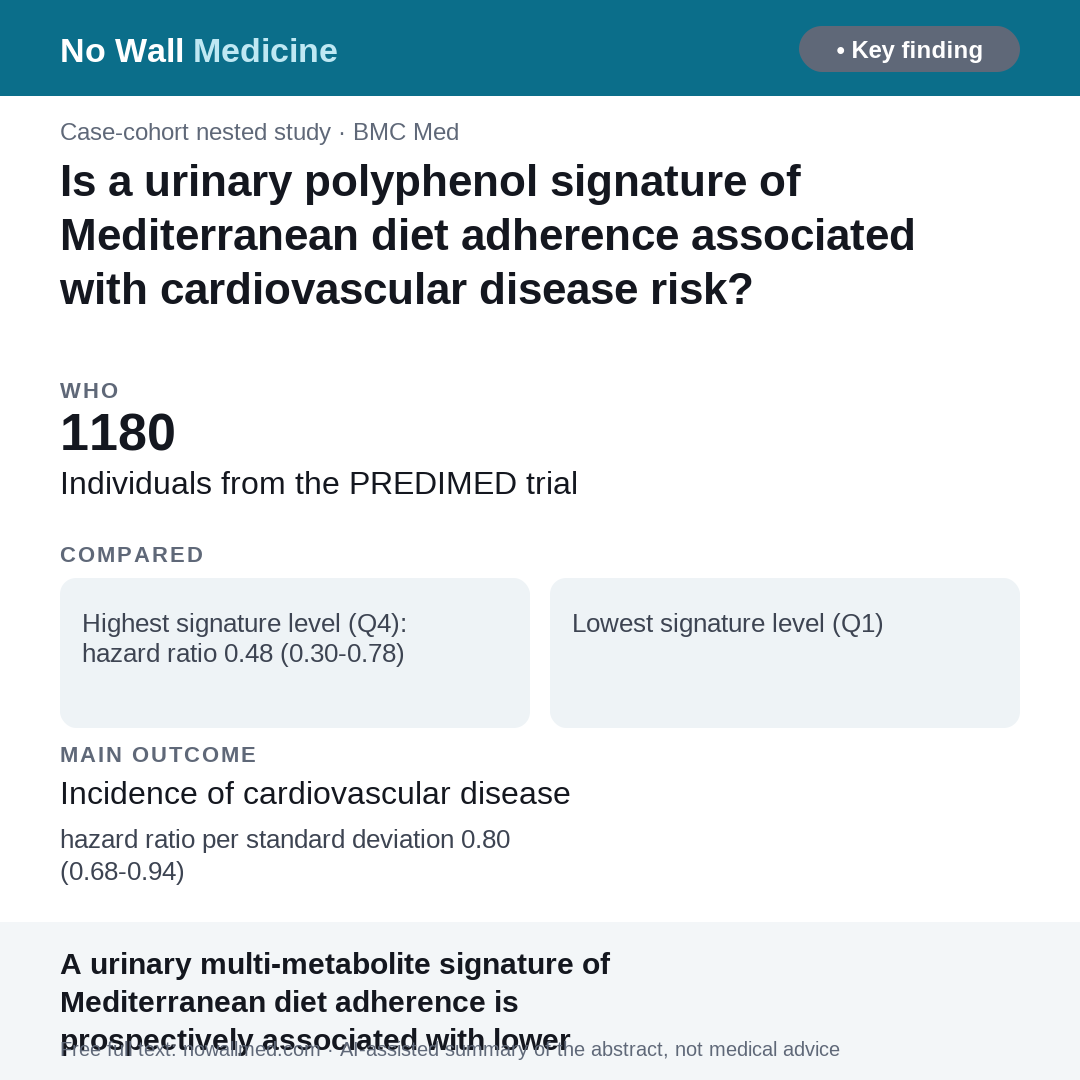
Urinary polyphenol signature of the Mediterranean diet is associated with lower cardiovascular disease risk: the PREDIMED trial
Case-cohort nested studyBenefit found
Is a urinary polyphenol signature of Mediterranean diet adherence associated with cardiovascular disease risk?
Who
1180
Individuals from the PREDIMED trial
Compared
Highest signature level (Q4): hazard ratio 0.48 (0.30-0.78)
Lowest signature level (Q1)
Main outcome
Incidence of cardiovascular disease
Result: hazard ratio per standard deviation 0.80 (0.68-0.94)
Bottom line: A urinary multi-metabolite signature of Mediterranean diet adherence is prospectively associated with lower cardiovascular disease risk.
BMC Med · 2025-12-18Download image
Effects of a probiotic fermented dairy product on hippocampal metabolites, structure and function: an 8-week randomised, placebo-controlled trial in healthy women
Triple-blind, randomised, placebo-controlled trialMixed results
Does a probiotic fermented dairy product impact hippocampal metabolites, structure, and function?
Who
40
Healthy women aged 18-55 years
Compared
Fermented probiotic yoghurt
Placebo
Main outcome
Change in left hippocampal metabolites
Result: mean difference in change: -0.49 (95% CI -0.95 to -0.04)
Bottom line: Probiotic fermented dairy may modulate hippocampal metabolites and connectivity, but results did not withstand multiple comparison corrections.
Gut · 2025-12-18Download image

Pharmacokinetics of Dexamethasone in Tuberculous Meningitis
Pharmacokinetic study nested in a randomized controlled trialNo clear difference
Does high-dose rifampicin further reduce dexamethasone exposure in HIV-associated tuberculous meningitis?
Who
43
Adults with HIV-associated tuberculous meningitis
Compared
High-dose rifampicin
Standard-dose rifampicin
Main outcome
Dexamethasone pharmacokinetic parameters
Bottom line: High-dose rifampicin had no additional effect on dexamethasone exposure compared to standard-dose rifampicin.
Clin Infect Dis · 2025-12-18Download image

Aflibercept 8 mg in Polypoidal Choroidal Vasculopathy: Post Hoc Analysis of the PULSAR Randomized Clinical Trial
Post hoc subgroup analysis of a randomized clinical trialNo clear difference
Is aflibercept 8 mg as effective as 2 mg for polypoidal choroidal vasculopathy?
Who
139
Adults with neovascular age-related macular degeneration and confirmed polypoidal choroidal vasculopathy · Hospitals and clinics in 12 countries
Compared
Aflibercept 8 mg every 12 weeks: +9.5 letters
Aflibercept 8 mg every 16 weeks: +8.4 letters
Aflibercept 2 mg every 8 weeks: +9.1 letters
Main outcome
Least-squares mean change in best-corrected visual acuity from baseline
Result: estimated difference 0.40 (95% CI -4.4 to 5.2 letters) and -0.7 (95% CI -4.6 to 3.2 letters)
Bottom line: Aflibercept 8 mg provided similar visual outcomes to aflibercept 2 mg in patients with polypoidal choroidal vasculopathy.
JAMA Ophthalmol · 2025-12-18Download image

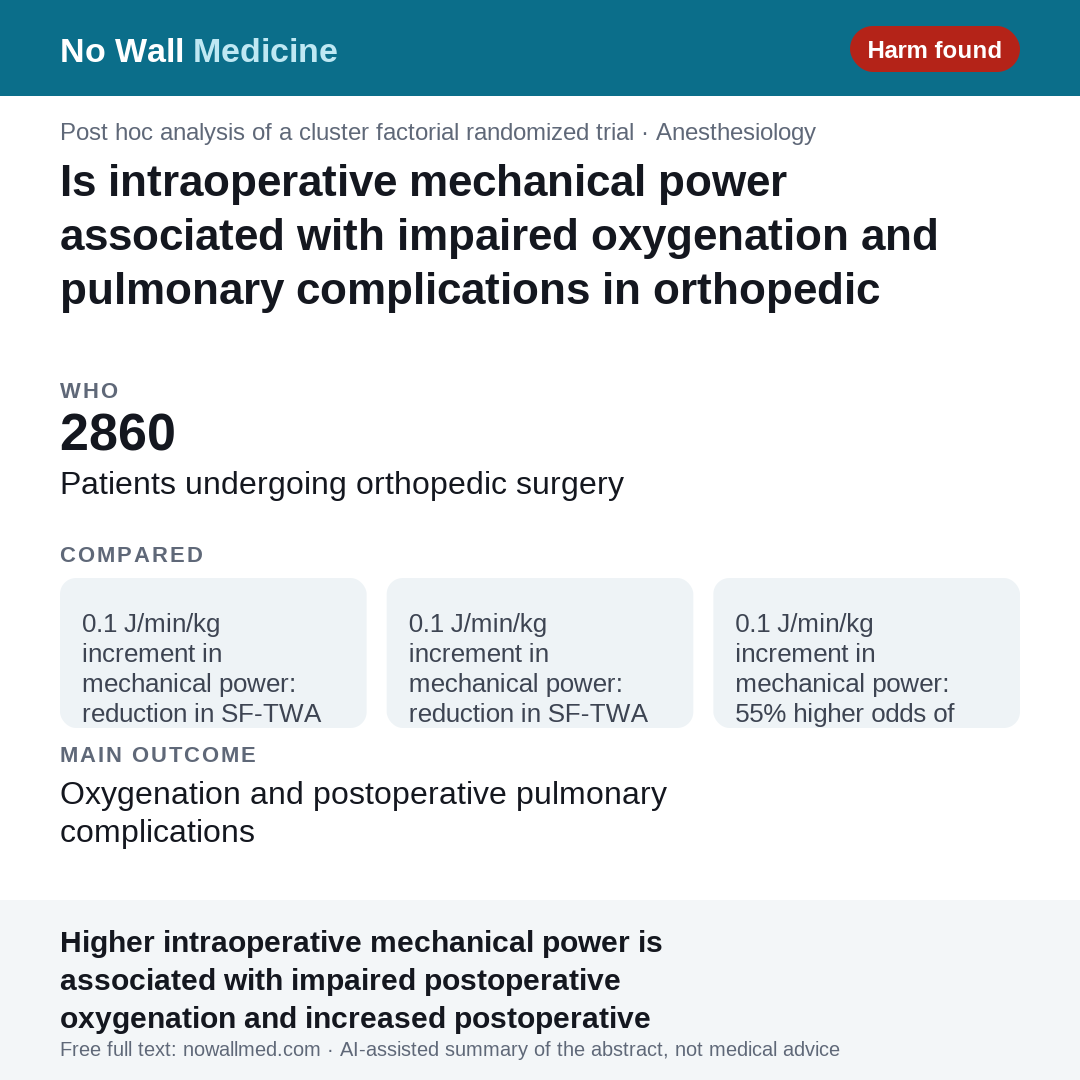
Mechanical Power and the Association with Postoperative Impaired Oxygenation and Pulmonary Complications in Orthopedic Patients: Post Hoc Analysis of a Cluster Factorial Randomized Trial
Post hoc analysis of a cluster factorial randomized trialHarm found
Is intraoperative mechanical power associated with impaired oxygenation and pulmonary complications in orthopedic patients?
Who
2860
Patients undergoing orthopedic surgery
Compared
0.1 J/min/kg increment in mechanical power: reduction in SF-TWA in PACU by -11 (95% CI, -14 to -8)
0.1 J/min/kg increment in mechanical power: reduction in SF-TWA in wards by -8 (95% CI, -11 to -5)
0.1 J/min/kg increment in mechanical power: 55% higher odds of PPCs
Main outcome
Oxygenation and postoperative pulmonary complications
Result: odds ratio 1.55 (95% CI 1.05 to 2.27)
Bottom line: Higher intraoperative mechanical power is associated with impaired postoperative oxygenation and increased postoperative pulmonary complications in orthopedic surgery patients.
Anesthesiology · 2025-12-18Download image
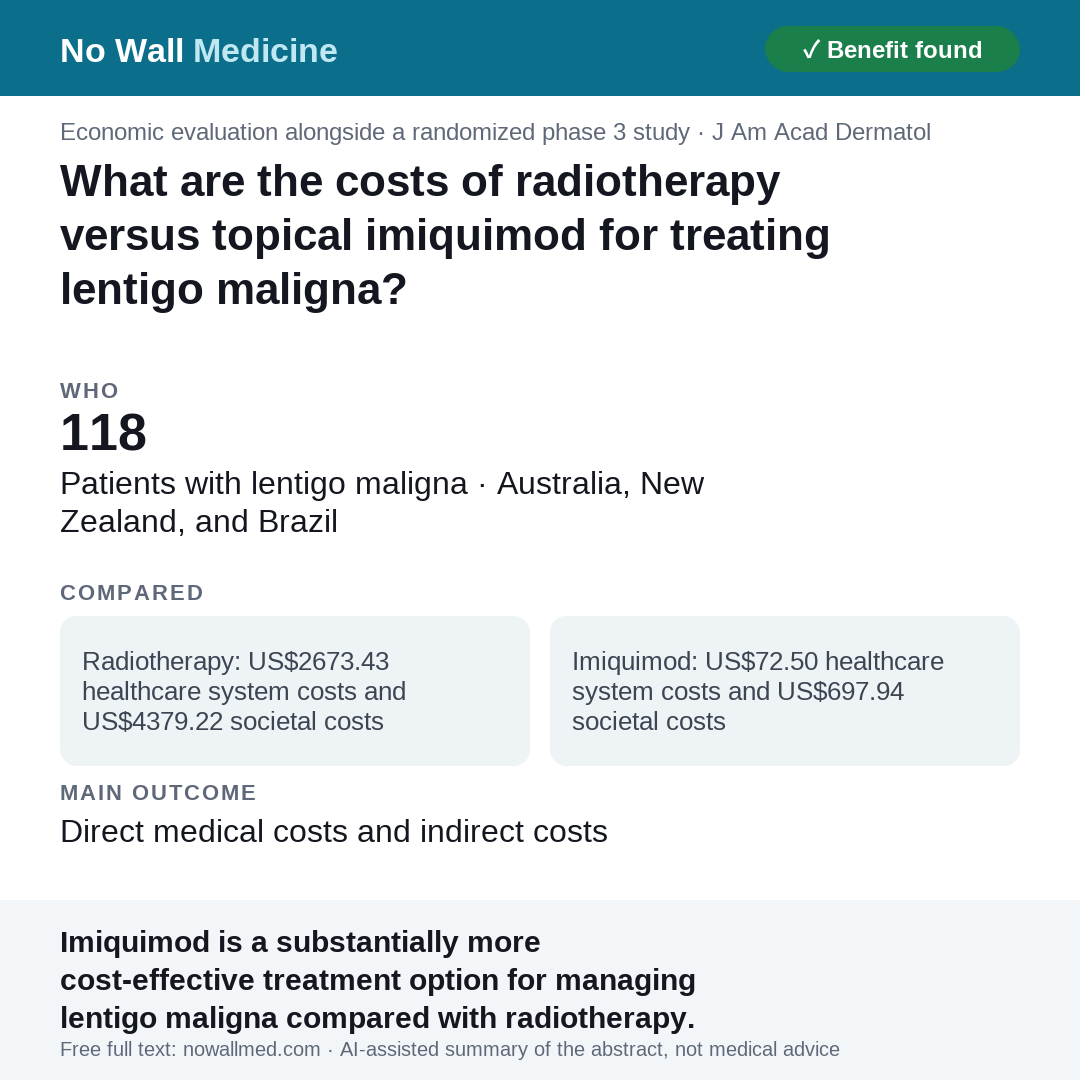
A cost comparison of radiotherapy and topical imiquimod for lentigo maligna treatment: Considerations for clinical decision-making
Economic evaluation alongside a randomized phase 3 studyBenefit found
What are the costs of radiotherapy versus topical imiquimod for treating lentigo maligna?
Who
118
Patients with lentigo maligna · Australia, New Zealand, and Brazil
Compared
Radiotherapy: US$2673.43 healthcare system costs and US$4379.22 societal costs
Imiquimod: US$72.50 healthcare system costs and US$697.94 societal costs
Main outcome
Direct medical costs and indirect costs
Bottom line: Imiquimod is a substantially more cost-effective treatment option for managing lentigo maligna compared with radiotherapy.
Limitation: Analysis relied solely on Australian health care cost data and excluded retired patients.
J Am Acad Dermatol · 2025-12-18Download image
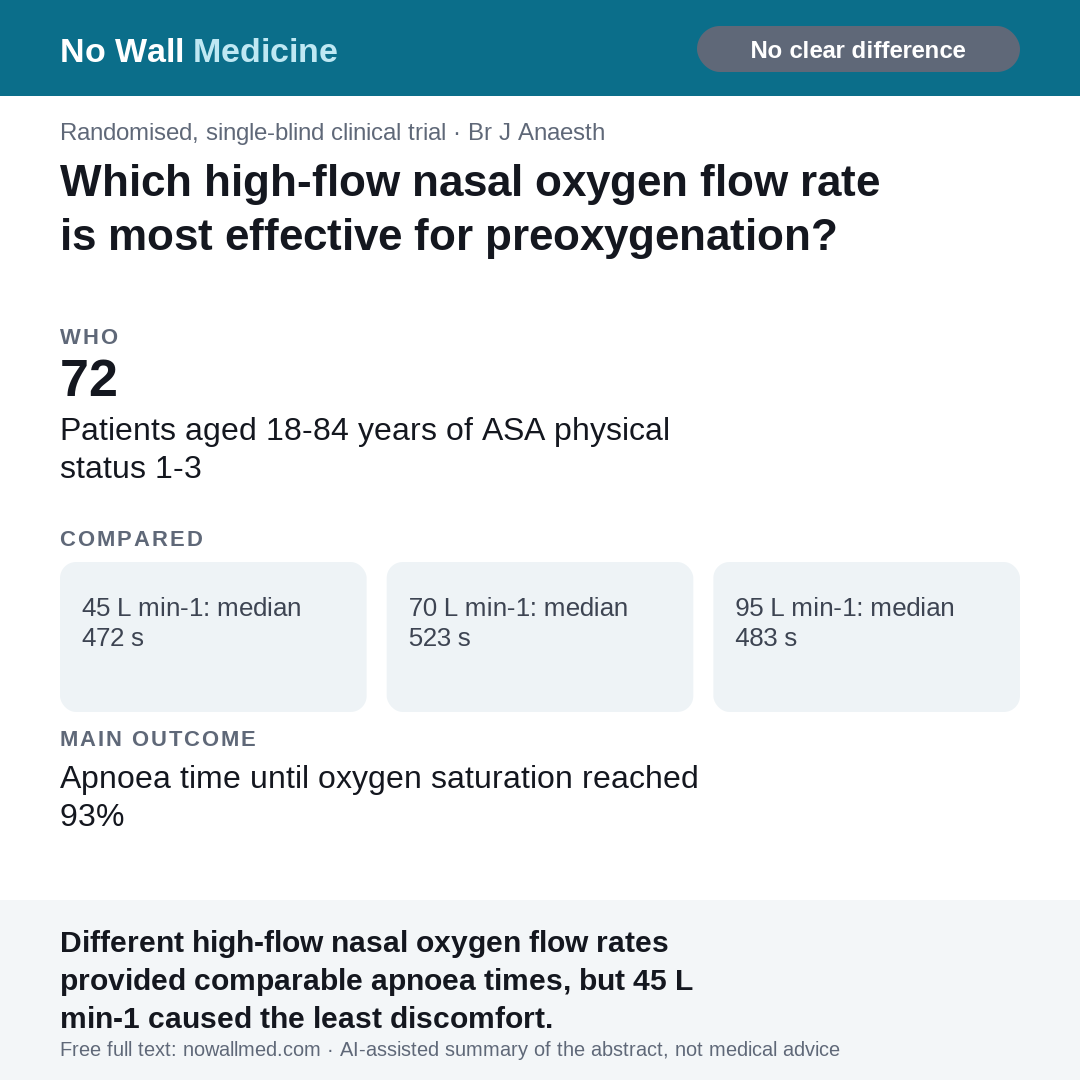
Preoxygenation with high-flow nasal oxygen at various flow rates in elective surgical patients: a prospective, randomised, single-blind clinical trial
Randomised, single-blind clinical trialNo clear difference
Which high-flow nasal oxygen flow rate is most effective for preoxygenation?
Who
72
Patients aged 18-84 years of ASA physical status 1-3
Compared
45 L min-1: median 472 s
70 L min-1: median 523 s
95 L min-1: median 483 s
Main outcome
Apnoea time until oxygen saturation reached 93%
Bottom line: Different high-flow nasal oxygen flow rates provided comparable apnoea times, but 45 L min-1 caused the least discomfort.
Br J Anaesth · 2025-12-18Download image
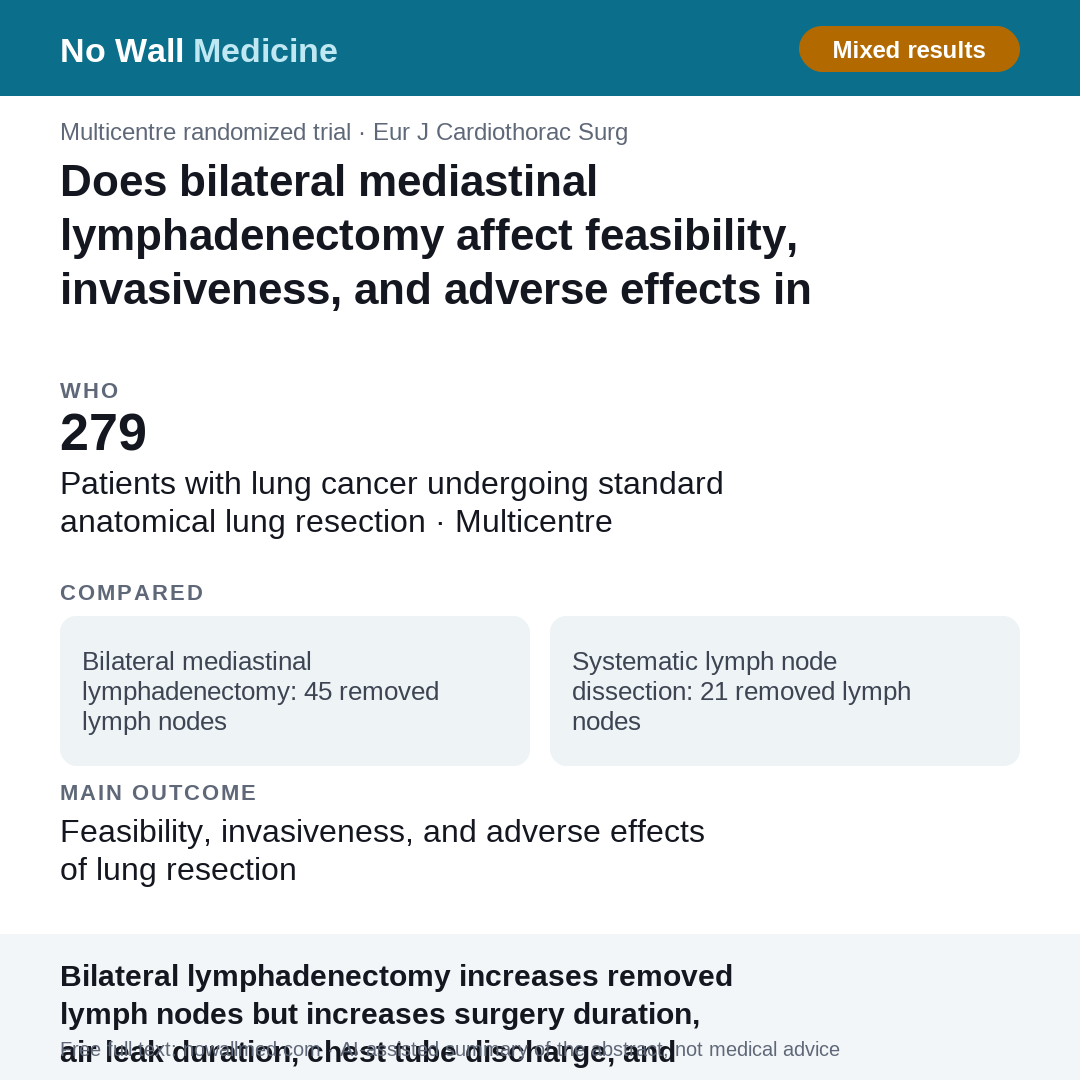
Randomized Study on Bilateral Versus Standard Mediastinal Lymphadenectomy in Patients With Lung Cancer-Early Results and Safety Analysis
Multicentre randomized trialMixed results
Does bilateral mediastinal lymphadenectomy affect feasibility, invasiveness, and adverse effects in lung cancer?
Who
279
Patients with lung cancer undergoing standard anatomical lung resection · Multicentre
Compared
Bilateral mediastinal lymphadenectomy: 45 removed lymph nodes
Systematic lymph node dissection: 21 removed lymph nodes
Main outcome
Feasibility, invasiveness, and adverse effects of lung resection
Bottom line: Bilateral lymphadenectomy increases removed lymph nodes but increases surgery duration, air leak duration, chest tube discharge, and pain.
Eur J Cardiothorac Surg · 2025-12-18Download image
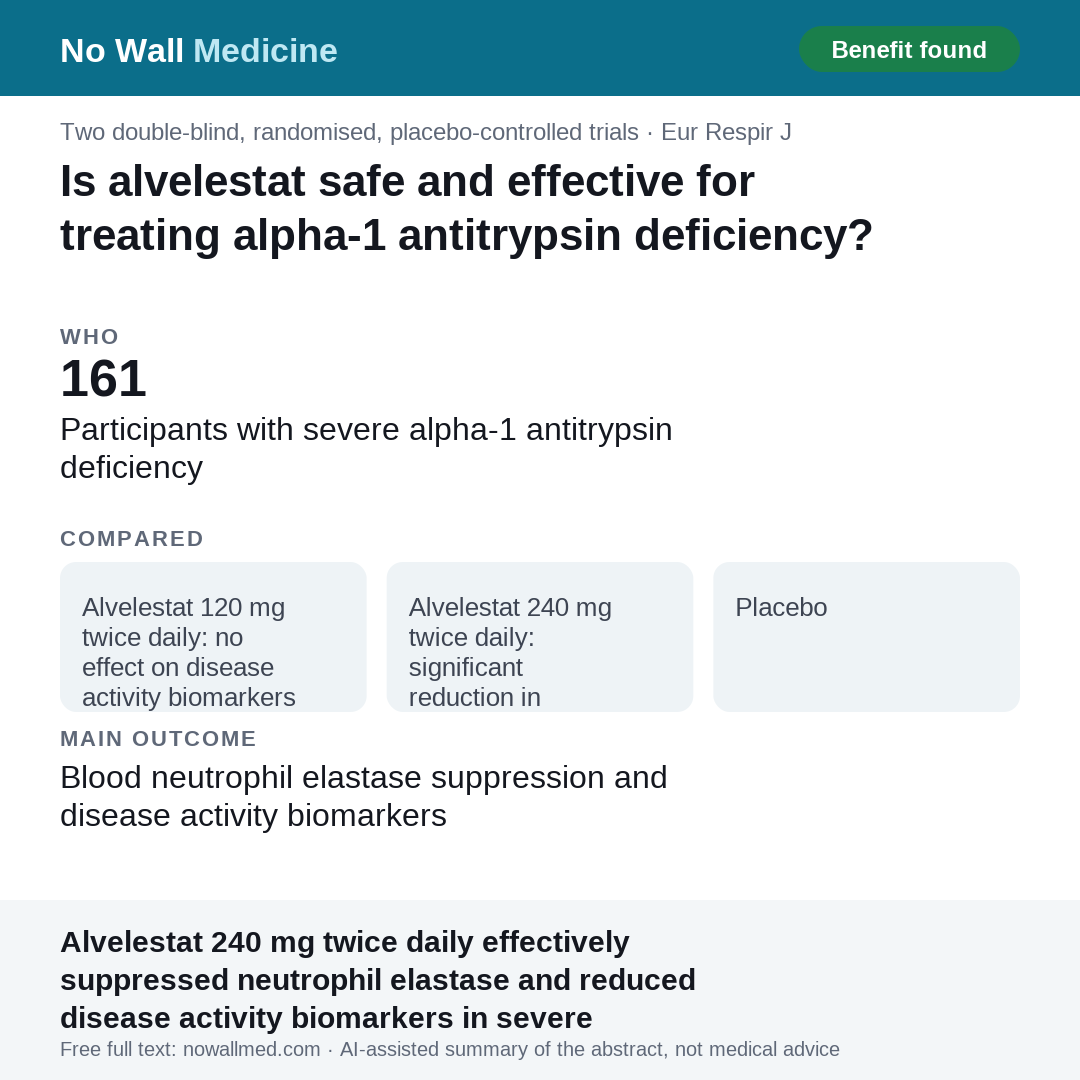
Two randomised controlled phase 2 studies of the oral neutrophil elastase inhibitor alvelestat in alpha-1 antitrypsin deficiency
Two double-blind, randomised, placebo-controlled trialsBenefit found
Is alvelestat safe and effective for treating alpha-1 antitrypsin deficiency?
Who
161
Participants with severe alpha-1 antitrypsin deficiency
Compared
Alvelestat 120 mg twice daily: no effect on disease activity biomarkers
Alvelestat 240 mg twice daily: significant reduction in Aα-Val360 and desmosine
Placebo
Main outcome
Blood neutrophil elastase suppression and disease activity biomarkers
Bottom line: Alvelestat 240 mg twice daily effectively suppressed neutrophil elastase and reduced disease activity biomarkers in severe alpha-1 antitrypsin deficiency.
Eur Respir J · 2025-12-18Download image
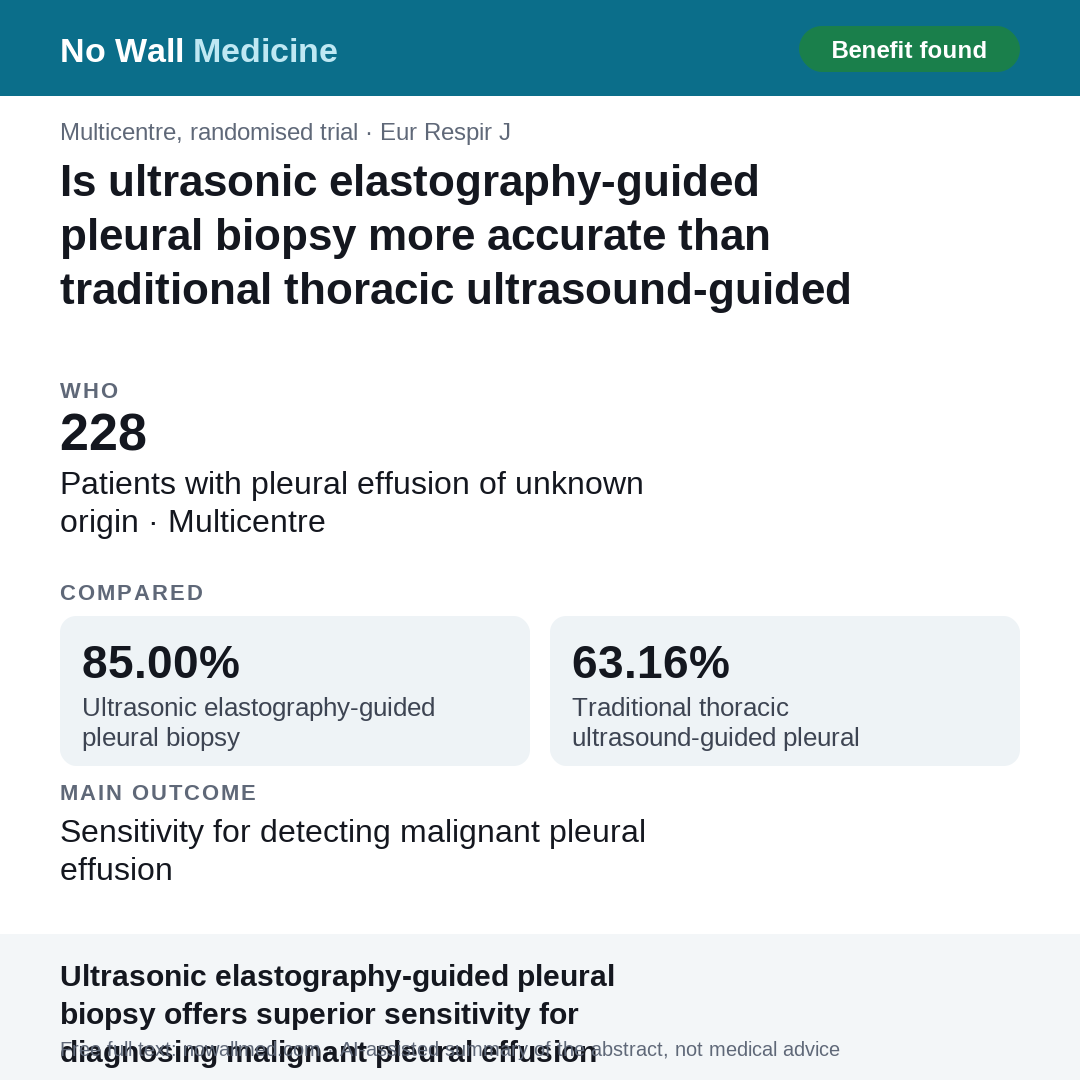
Ultrasonic elastography-guided pleural biopsy versus traditional thoracic ultrasound-guided pleural biopsy for the diagnosis of pleural effusion: a multicentre, randomised trial
Multicentre, randomised trialBenefit found
Is ultrasonic elastography-guided pleural biopsy more accurate than traditional thoracic ultrasound-guided pleural biopsy?
Who
228
Patients with pleural effusion of unknown origin · Multicentre
Compared
85.00%Ultrasonic elastography-guided pleural biopsy (51/60)
63.16%Traditional thoracic ultrasound-guided pleural biopsy (36/57)
Main outcome
Sensitivity for detecting malignant pleural effusion
Bottom line: Ultrasonic elastography-guided pleural biopsy offers superior sensitivity for diagnosing malignant pleural effusion compared to traditional thoracic ultrasound-guided biopsy.
Eur Respir J · 2025-12-18Download image