Visual abstracts
New randomized trials and meta-analyses from leading journals at a glance: who was studied, what was compared, and what was found. Every paper is free to read in full.
All specialtiesCardiology 4780Oncology 4080Gastroenterology & Hepatology 1914Infectious Disease 3775Neurology 1883Psychiatry & Mental Health 2238Pulmonology 2058Critical Care 1331Endocrinology & Diabetes 2550Pediatrics 2908Surgery 2496Orthopedics & Sports Medicine 922Neurosurgery 532Cardiothoracic & Vascular Surgery 662Plastic & Reconstructive Surgery 584Nephrology 1111Rheumatology 812Hematology 1095Dermatology 617Ophthalmology 537Obstetrics & Gynecology 1656Public & Global Health 1041Radiology & Imaging 637Anesthesiology 958Urology 751ENT (Otolaryngology) 497Emergency Medicine 484Allergy & Immunology 310Geriatrics 973Family Medicine & Primary Care 538Medical Genetics & Genomics 662Pathology & Laboratory Medicine 156Physical Medicine & Rehabilitation 744Palliative Care 422Nutrition 1564Digital Health & AI 2188General Medicine 318
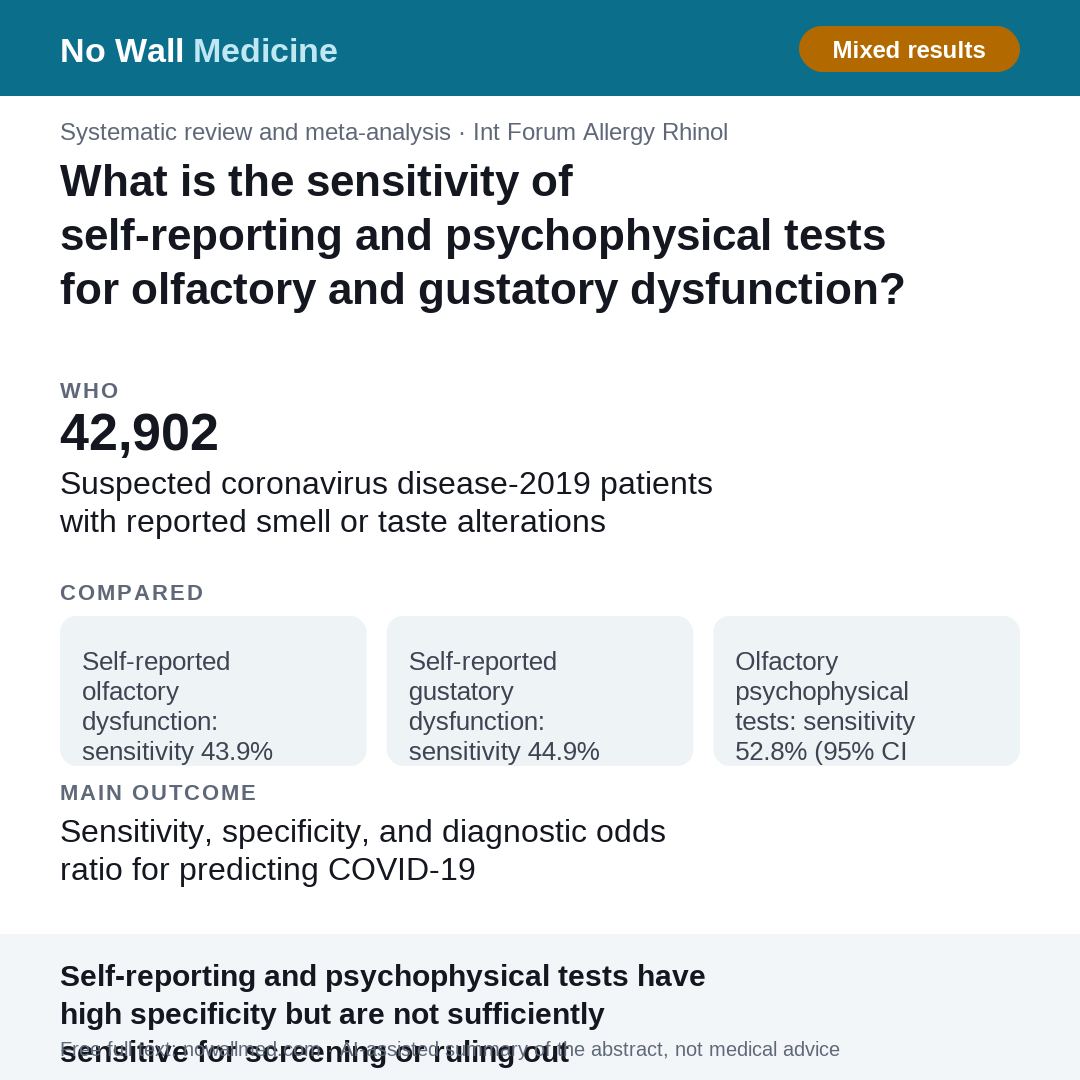
Self-reported olfactory and gustatory dysfunction and psychophysical testing in screening for COVID-19: A systematic review and meta-analysis
Systematic review and meta-analysisMixed results
What is the sensitivity of self-reporting and psychophysical tests for olfactory and gustatory dysfunction?
Who
42,902
Suspected coronavirus disease-2019 patients with reported smell or taste alterations
Compared
Self-reported olfactory dysfunction: sensitivity 43.9% (95% CI 37.8%-50.2%)
Self-reported gustatory dysfunction: sensitivity 44.9% (95% CI 36.4%-53.8%)
Olfactory psychophysical tests: sensitivity 52.8% (95% CI 25.5%-78.6%)
Main outcome
Sensitivity, specificity, and diagnostic odds ratio for predicting COVID-19
Bottom line: Self-reporting and psychophysical tests have high specificity but are not sufficiently sensitive for screening or ruling out COVID-19.
Limitation: Psychophysical tests were unvalidated and limited.
Int Forum Allergy Rhinol · 2021-12-06Download image
Genetically regulated expression in late-onset Alzheimer's disease implicates risk genes within known and novel loci
Meta-analysis of 39 data setsUnclear result
Genetic mechanisms of Alzheimer's
Who
58713
Alzheimer's disease cases and controls
Compared
cases
controls
Main outcome
gene association with disease
Bottom line: 216 genes associated with Alzheimer's
Transl Psychiatry · 2021-12-06Download image

Virtual reality: a powerful technology to provide novel insight into treatment mechanisms of addiction
Meta-analysis of 38 reportsUnclear result
Virtual reality for addiction treatment
Who
people with addictive behaviors
Compared
Virtual reality
Control
Main outcome
addictive behaviors
Bottom line: Virtual reality helps study addiction
Transl Psychiatry · 2021-12-06Download image

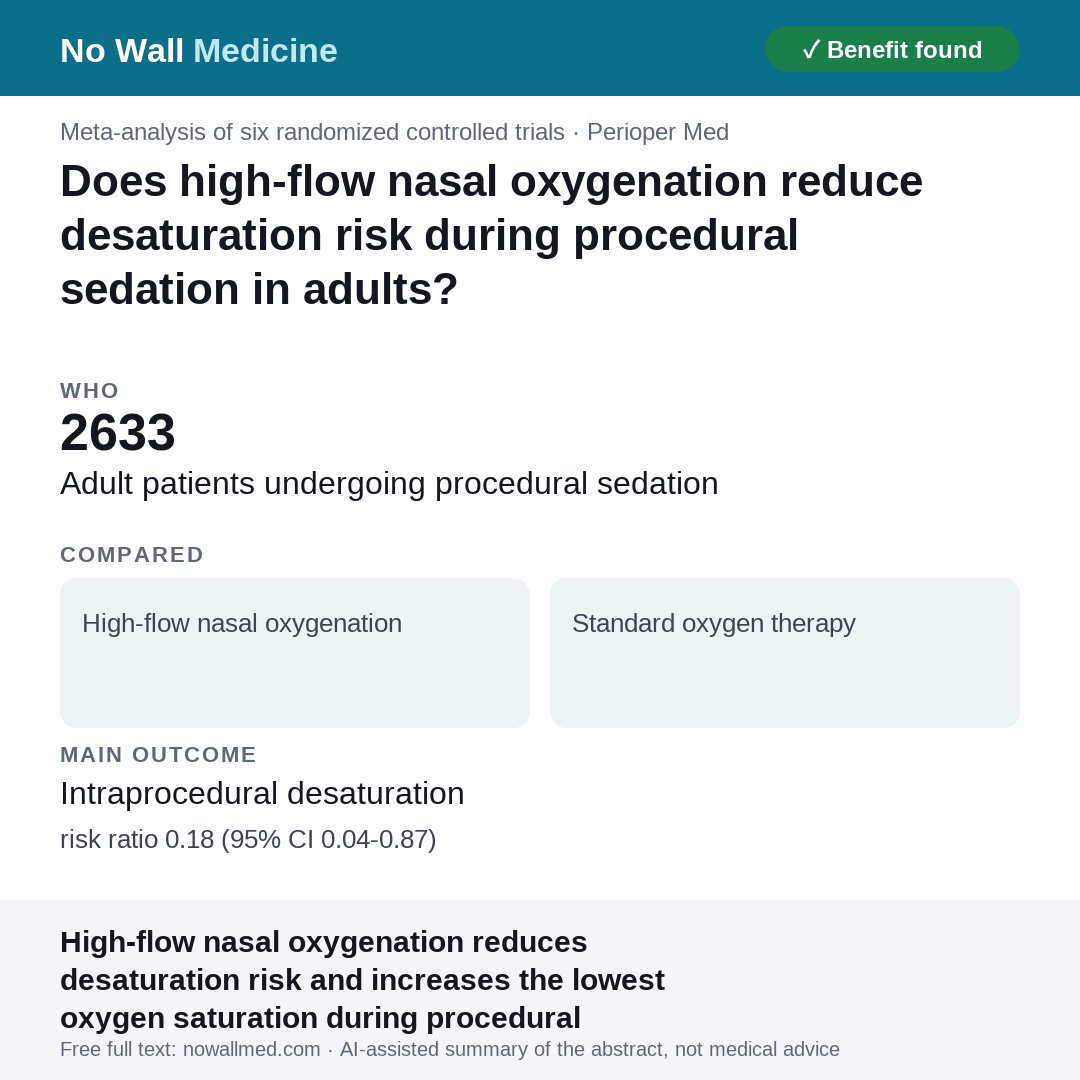
High-flow nasal oxygenation reduces the risk of desaturation in adults receiving procedural sedation: a meta-analysis of randomized controlled trials
Meta-analysis of six randomized controlled trialsBenefit found
Does high-flow nasal oxygenation reduce desaturation risk during procedural sedation in adults?
Who
2633
Adult patients undergoing procedural sedation
Compared
High-flow nasal oxygenation
Standard oxygen therapy
Main outcome
Intraprocedural desaturation
Result: risk ratio 0.18 (95% CI 0.04-0.87)
Bottom line: High-flow nasal oxygenation reduces desaturation risk and increases the lowest oxygen saturation during procedural sedation.
Perioper Med · 2021-12-06Download image
Prevention is better than cure: Surgical methods for neuropathic pain prevention following amputation - A systematic review
Systematic reviewBenefit found
Do surgical techniques during amputation prevent neuropathic pain?
Who
Patients undergoing finger or major limb amputations
Compared
Finger amputation prevention techniques: 0-3%
8%Finger amputation without prevention
Major limb amputation prevention techniques: 0 to 55%
Major limb amputation control group: 64-91%
Main outcome
Incidence of neuropathic pain
Bottom line: Surgical techniques during finger and major limb amputation reduce the incidence of neuropathic pain.
J Plast Reconstr Aesthet Surg · 2021-12-05Download image

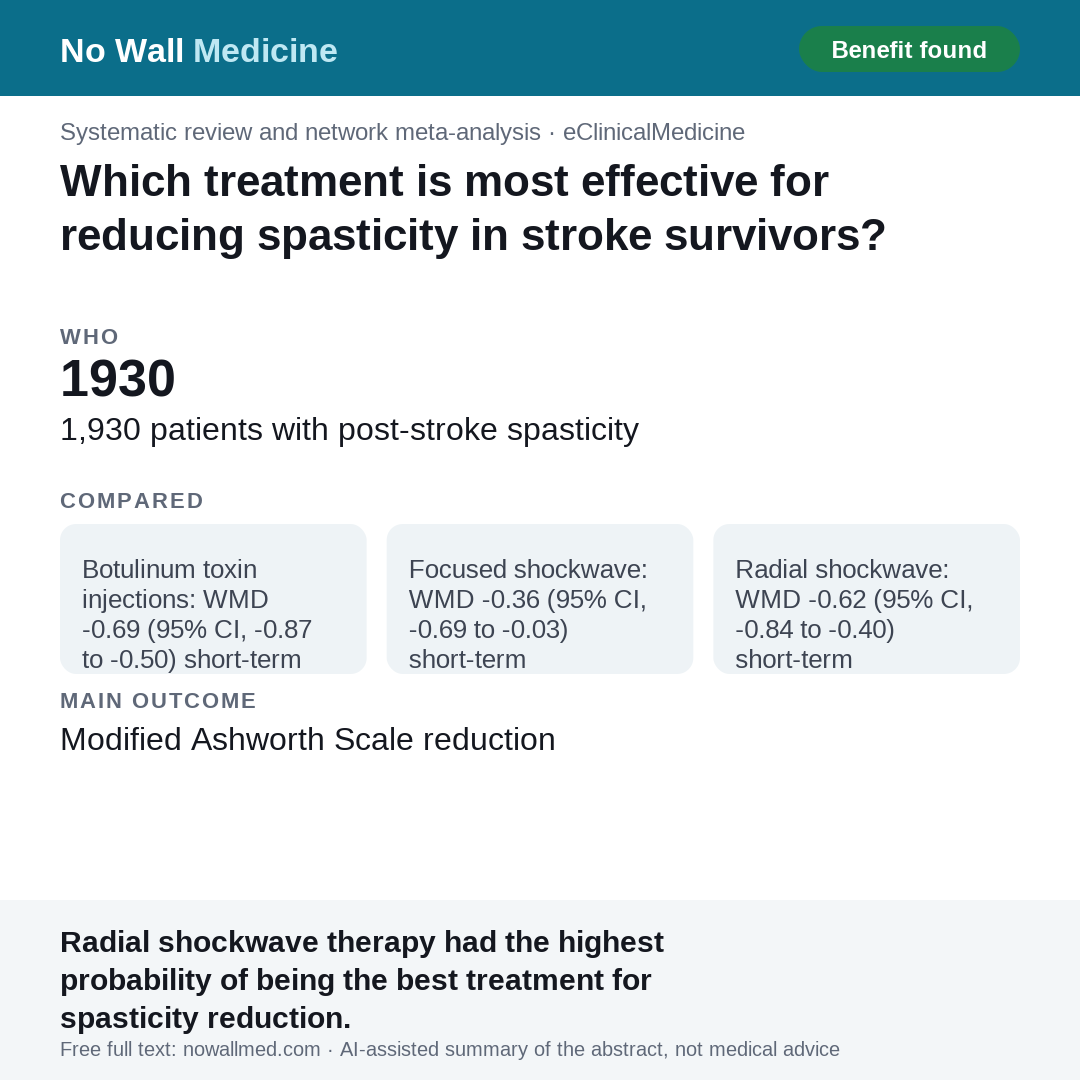
Comparative Effectiveness of Botulinum Toxin Injections and Extracorporeal Shockwave Therapy for Post-Stroke Spasticity: A Systematic Review and Network Meta-Analysis
Systematic review and network meta-analysisBenefit found
Which treatment is most effective for reducing spasticity in stroke survivors?
Who
1930
1,930 patients with post-stroke spasticity
Compared
Botulinum toxin injections: WMD -0.69 (95% CI, -0.87 to -0.50) short-term
Focused shockwave: WMD -0.36 (95% CI, -0.69 to -0.03) short-term
Radial shockwave: WMD -0.62 (95% CI, -0.84 to -0.40) short-term
Main outcome
Modified Ashworth Scale reduction
Bottom line: Radial shockwave therapy had the highest probability of being the best treatment for spasticity reduction.
Limitation: More prospective trials incorporating head-to-head comparisons of botulinum toxin injections versus extracorporeal shockwave therapy are needed.
eClinicalMedicine · 2021-12-04Download image
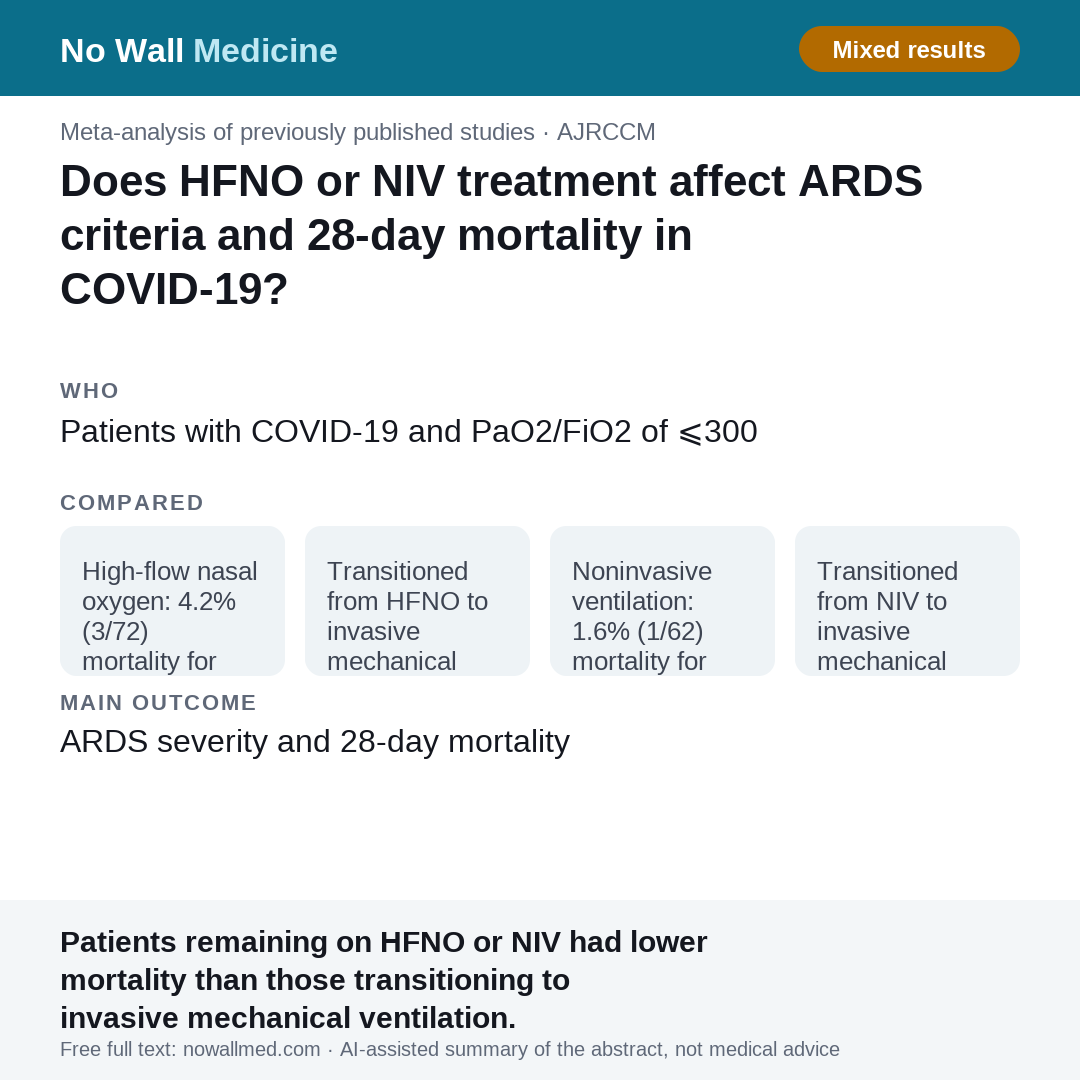
High-Flow Nasal Oxygen for Severe Hypoxemia: Oxygenation Response and Outcome in Patients with COVID-19
Meta-analysis of previously published studiesMixed results
Does HFNO or NIV treatment affect ARDS criteria and 28-day mortality in COVID-19?
Who
Patients with COVID-19 and PaO2/FiO2 of ⩽300
Compared
High-flow nasal oxygen: 4.2% (3/72) mortality for those remaining on HFNO
Transitioned from HFNO to invasive mechanical ventilation: 28.6% (32/112) mortality
Noninvasive ventilation: 1.6% (1/62) mortality for those remaining on NIV
Transitioned from NIV to invasive mechanical ventilation: 44.9% (31/69) mortality
Main outcome
ARDS severity and 28-day mortality
Bottom line: Patients remaining on HFNO or NIV had lower mortality than those transitioning to invasive mechanical ventilation.
AJRCCM · 2021-12-04Download image
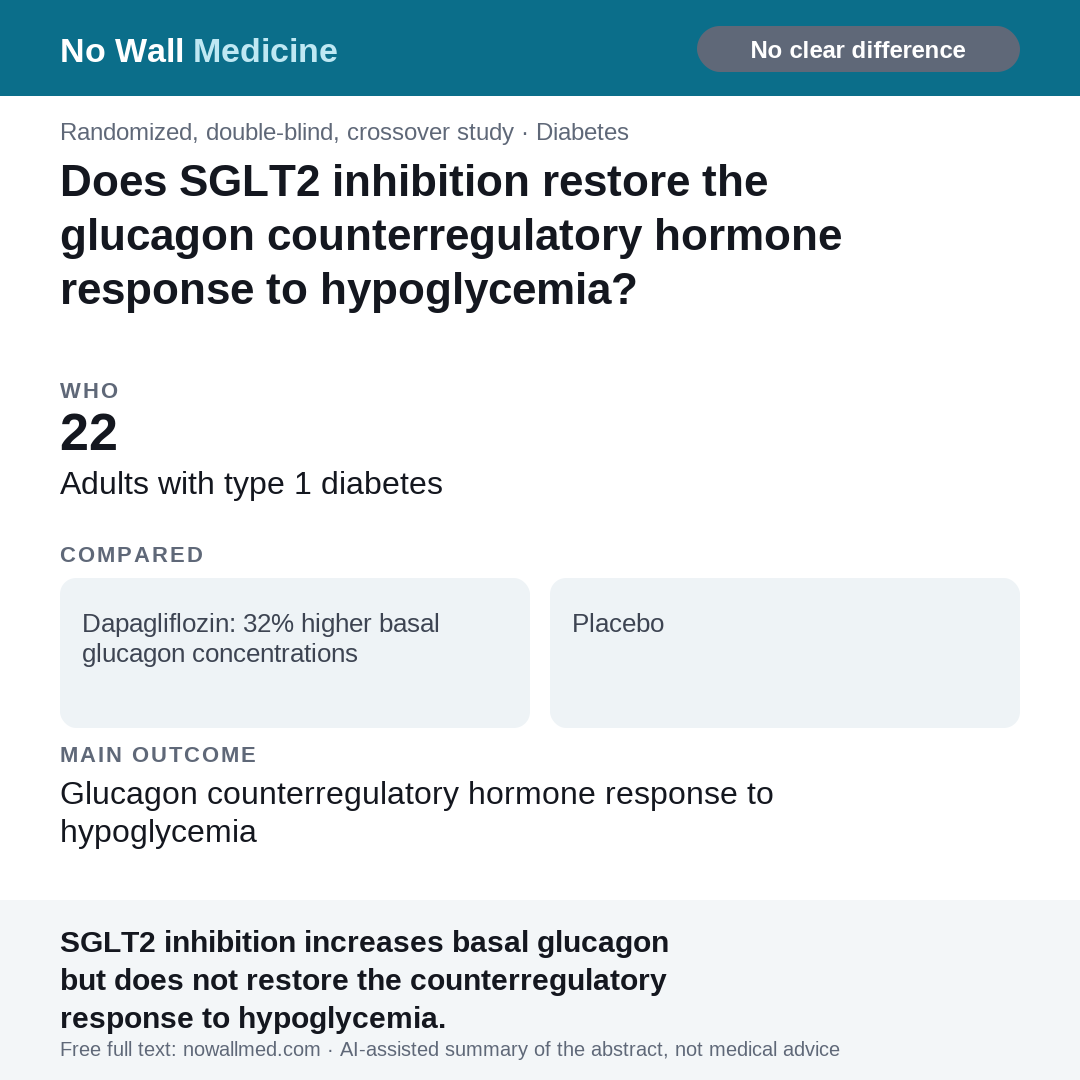
SGLT2 Inhibition Increases Fasting Glucagon but Does Not Restore the Counterregulatory Hormone Response to Hypoglycemia in Participants With Type 1 Diabetes
Randomized, double-blind, crossover studyNo clear difference
Does SGLT2 inhibition restore the glucagon counterregulatory hormone response to hypoglycemia?
Who
22
Adults with type 1 diabetes
Compared
Dapagliflozin: 32% higher basal glucagon concentrations
Placebo
Main outcome
Glucagon counterregulatory hormone response to hypoglycemia
Bottom line: SGLT2 inhibition increases basal glucagon but does not restore the counterregulatory response to hypoglycemia.
Diabetes · 2021-12-04Download image
Seasonality in surgical outcome data: a systematic review and narrative synthesis
Systematic reviewMixed results
Seasonal trends in surgical outcomes
Who
22210299
patients undergoing major surgery · four continents
Compared
emergency surgery in winter
surgery in summer
Main outcome
surgical outcomes
Result: increased risk of worse outcomes in winter, increased risk of surgical site infections in summer
Bottom line: Worse outcomes in winter, infections in summer
Br J Anaesth · 2021-12-04Download image

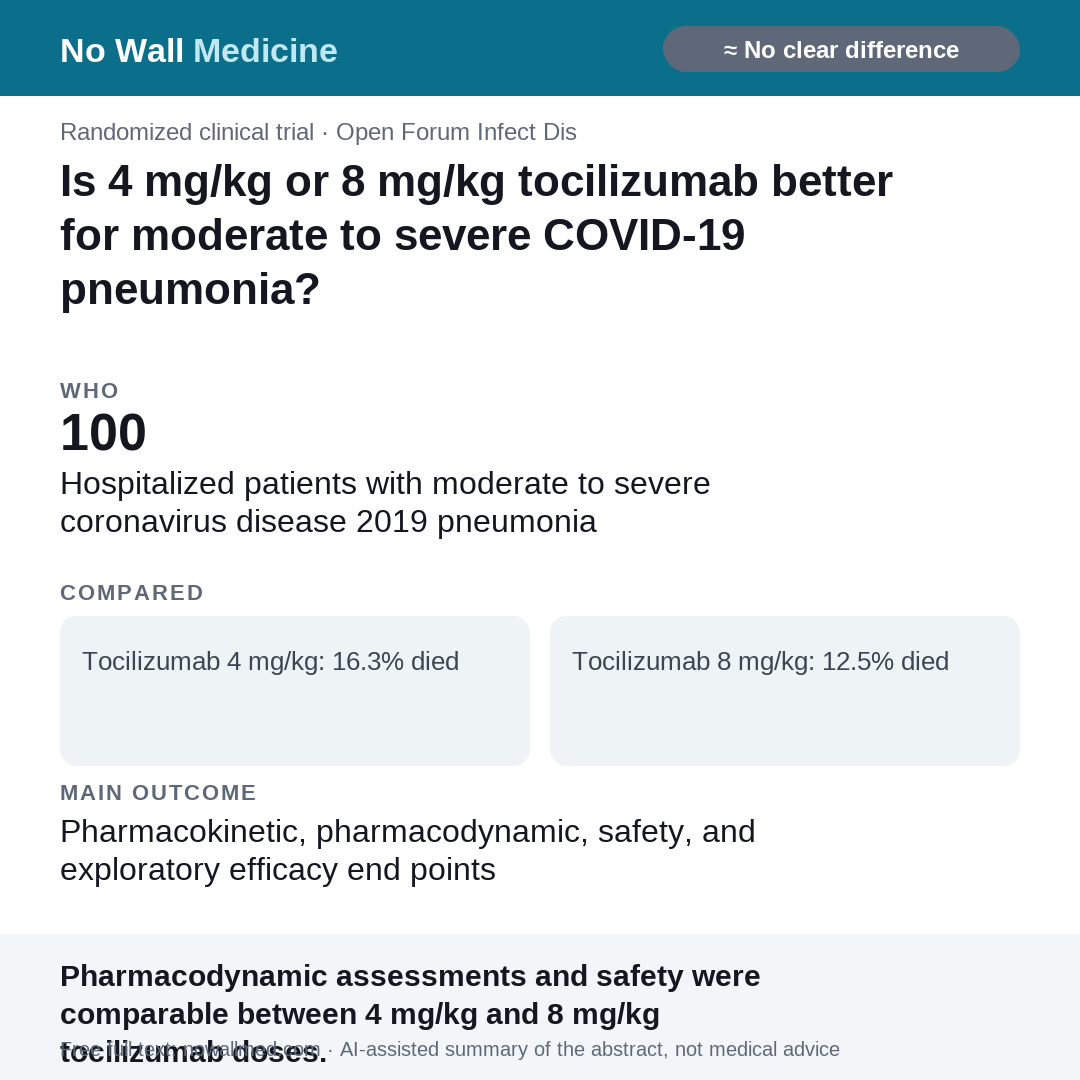
Safety and Efficacy of Tocilizumab 4 or 8 mg/kg in Hospitalized Patients With Moderate to Severe Coronavirus Disease 2019 Pneumonia: A Randomized Clinical Trial
Randomized clinical trialNo clear difference
Is 4 mg/kg or 8 mg/kg tocilizumab better for moderate to severe COVID-19 pneumonia?
Who
100
Hospitalized patients with moderate to severe coronavirus disease 2019 pneumonia
Compared
Tocilizumab 4 mg/kg: 16.3% died
Tocilizumab 8 mg/kg: 12.5% died
Main outcome
Pharmacokinetic, pharmacodynamic, safety, and exploratory efficacy end points
Bottom line: Pharmacodynamic assessments and safety were comparable between 4 mg/kg and 8 mg/kg tocilizumab doses.
Open Forum Infect Dis · 2021-12-04Download image
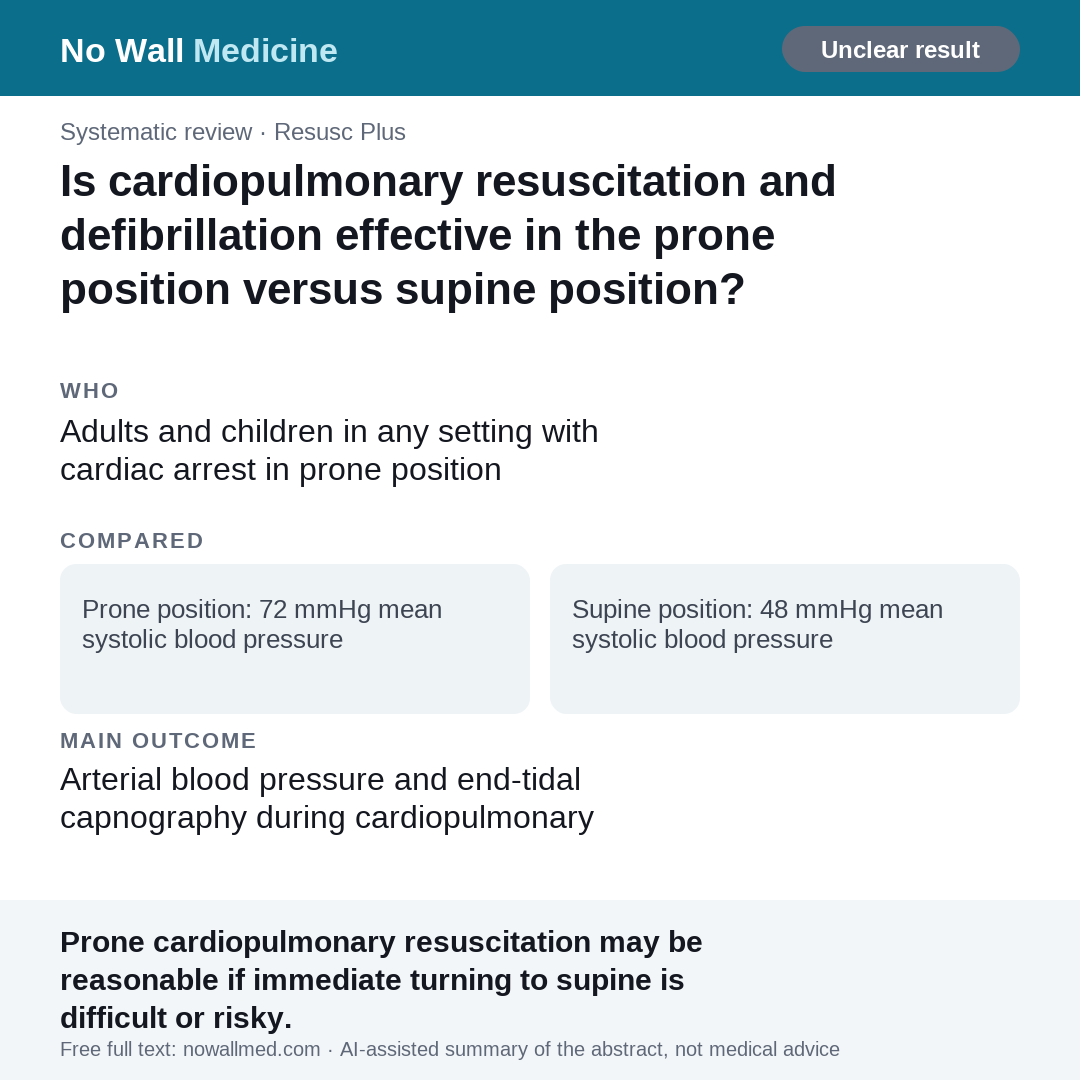
Cardiopulmonary resuscitation and defibrillation for cardiac arrest when patients are in the prone position: A systematic review
Systematic reviewUnclear result
Is cardiopulmonary resuscitation and defibrillation effective in the prone position versus supine position?
Who
Adults and children in any setting with cardiac arrest in prone position
Compared
Prone position: 72 mmHg mean systolic blood pressure
Supine position: 48 mmHg mean systolic blood pressure
Main outcome
Arterial blood pressure and end-tidal capnography during cardiopulmonary resuscitation
Bottom line: Prone cardiopulmonary resuscitation may be reasonable if immediate turning to supine is difficult or risky.
Limitation: Critical risk of bias limited the ability to perform pooled analyses.
Resusc Plus · 2021-12-04Download image
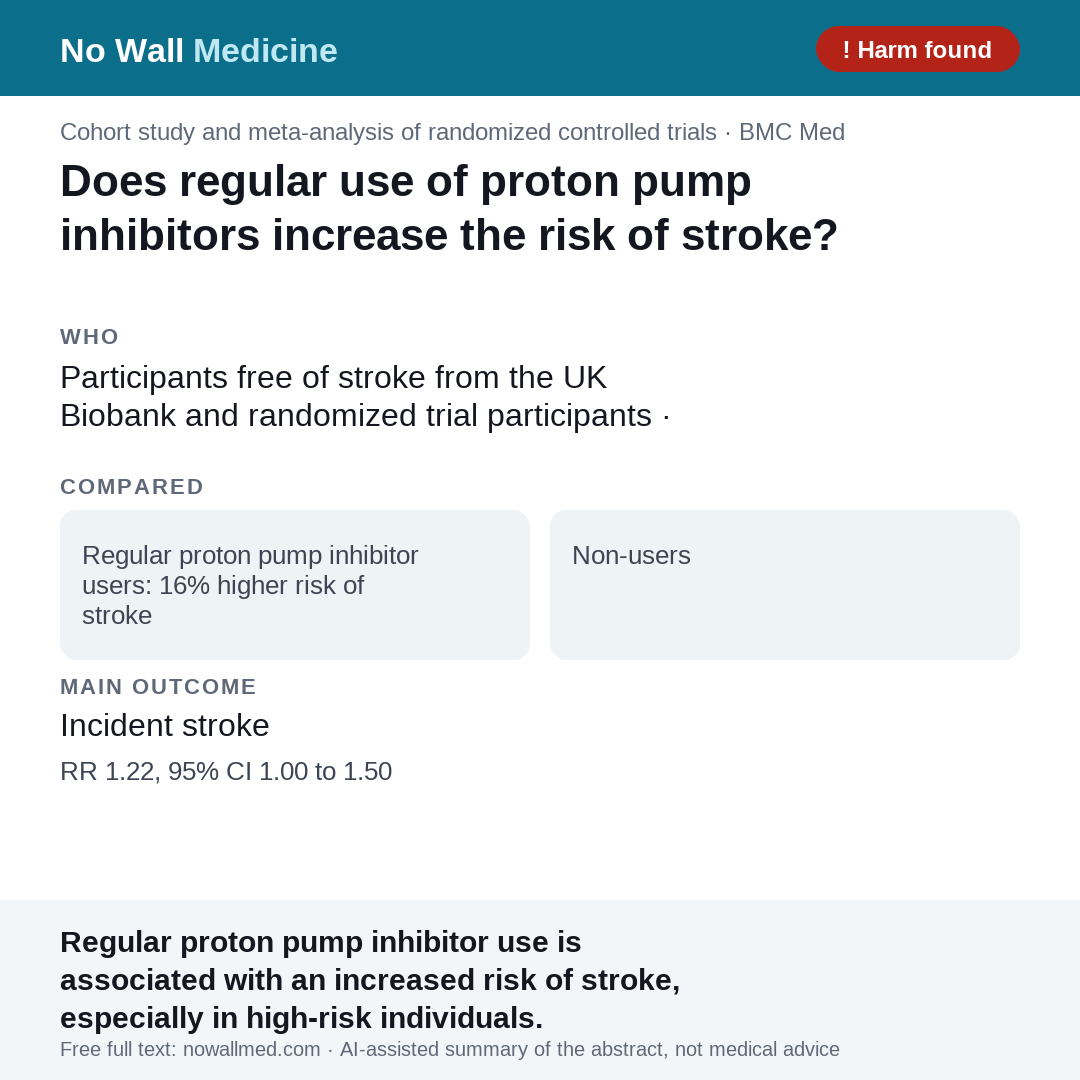
Regular use of proton-pump inhibitors and risk of stroke: a population-based cohort study and meta-analysis of randomized-controlled trials
Cohort study and meta-analysis of randomized controlled trialsHarm found
Does regular use of proton pump inhibitors increase the risk of stroke?
Who
Participants free of stroke from the UK Biobank and randomized trial participants · United Kingdom
Compared
Regular proton pump inhibitor users: 16% higher risk of stroke
Non-users
Main outcome
Incident stroke
Result: RR 1.22, 95% CI 1.00 to 1.50
Bottom line: Regular proton pump inhibitor use is associated with an increased risk of stroke, especially in high-risk individuals.
BMC Med · 2021-12-03Download image
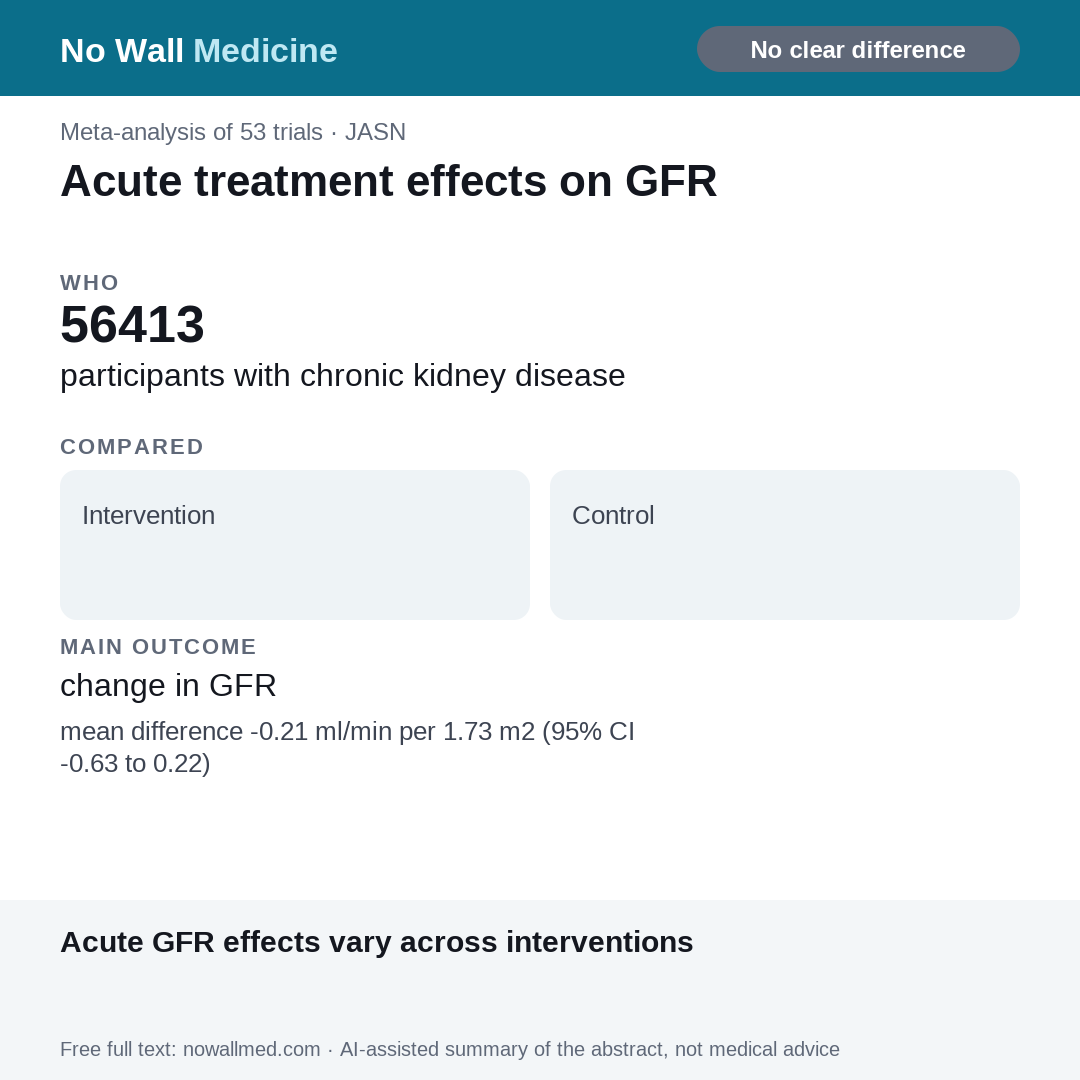
Acute Treatment Effects on GFR in Randomized Clinical Trials of Kidney Disease Progression
Meta-analysis of 53 trialsNo clear difference
Acute treatment effects on GFR
Who
56413
participants with chronic kidney disease
Compared
Intervention
Control
Main outcome
change in GFR
Result: mean difference -0.21 ml/min per 1.73 m2 (95% CI -0.63 to 0.22)
Bottom line: Acute GFR effects vary across interventions
JASN · 2021-12-03Download image
Racial and Ethnic Inequities in Cesarean Birth and Maternal Morbidity in a Low-Risk, Nulliparous Cohort
Secondary analysis of a randomized trialHarm found
Are there racial and ethnic inequities in cesarean birth and maternal morbidity?
Who
5759
Low-risk nulliparous people at term
Compared
non-Hispanic Black: aRR 1.21 (95% CI 1.03-1.42) for cesarean birth
Hispanic: aRR 1.26 (95% CI 1.08-1.46) for cesarean birth
non-Hispanic White
Main outcome
cesarean birth and maternal morbidity
Result: aRR 1.21 (95% CI 1.03-1.42) for cesarean birth in non-Hispanic Black
Bottom line: Non-Hispanic Black and Hispanic people have higher rates of cesarean birth and maternal morbidity than non-Hispanic White people.
Obstet Gynecol · 2021-12-03Download image

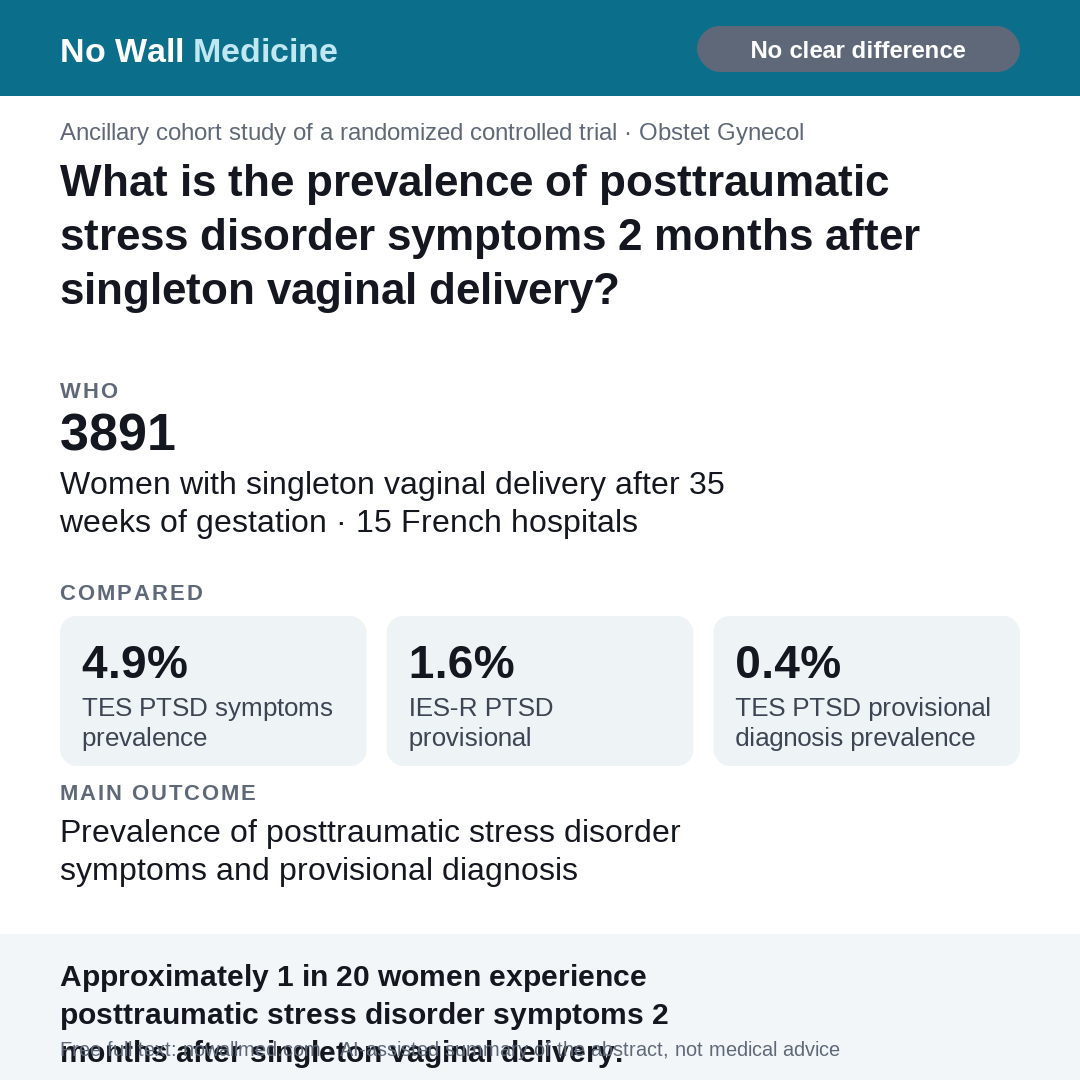
Posttraumatic Stress Disorder Symptoms 2 Months After Vaginal Delivery
Ancillary cohort study of a randomized controlled trialNo clear difference
What is the prevalence of posttraumatic stress disorder symptoms 2 months after singleton vaginal delivery?
Who
3891
Women with singleton vaginal delivery after 35 weeks of gestation · 15 French hospitals
Compared
4.9%TES PTSD symptoms prevalence (95% CI 4.1-5.8%; 137/2,785)
1.6%IES-R PTSD provisional diagnosis prevalence (95% CI 1.2-2.1%; 44/2,740)
0.4%TES PTSD provisional diagnosis prevalence (95% CI 0.2-0.8%; 9/2,080)
Main outcome
Prevalence of posttraumatic stress disorder symptoms and provisional diagnosis
Bottom line: Approximately 1 in 20 women experience posttraumatic stress disorder symptoms 2 months after singleton vaginal delivery.
Obstet Gynecol · 2021-12-03Download image
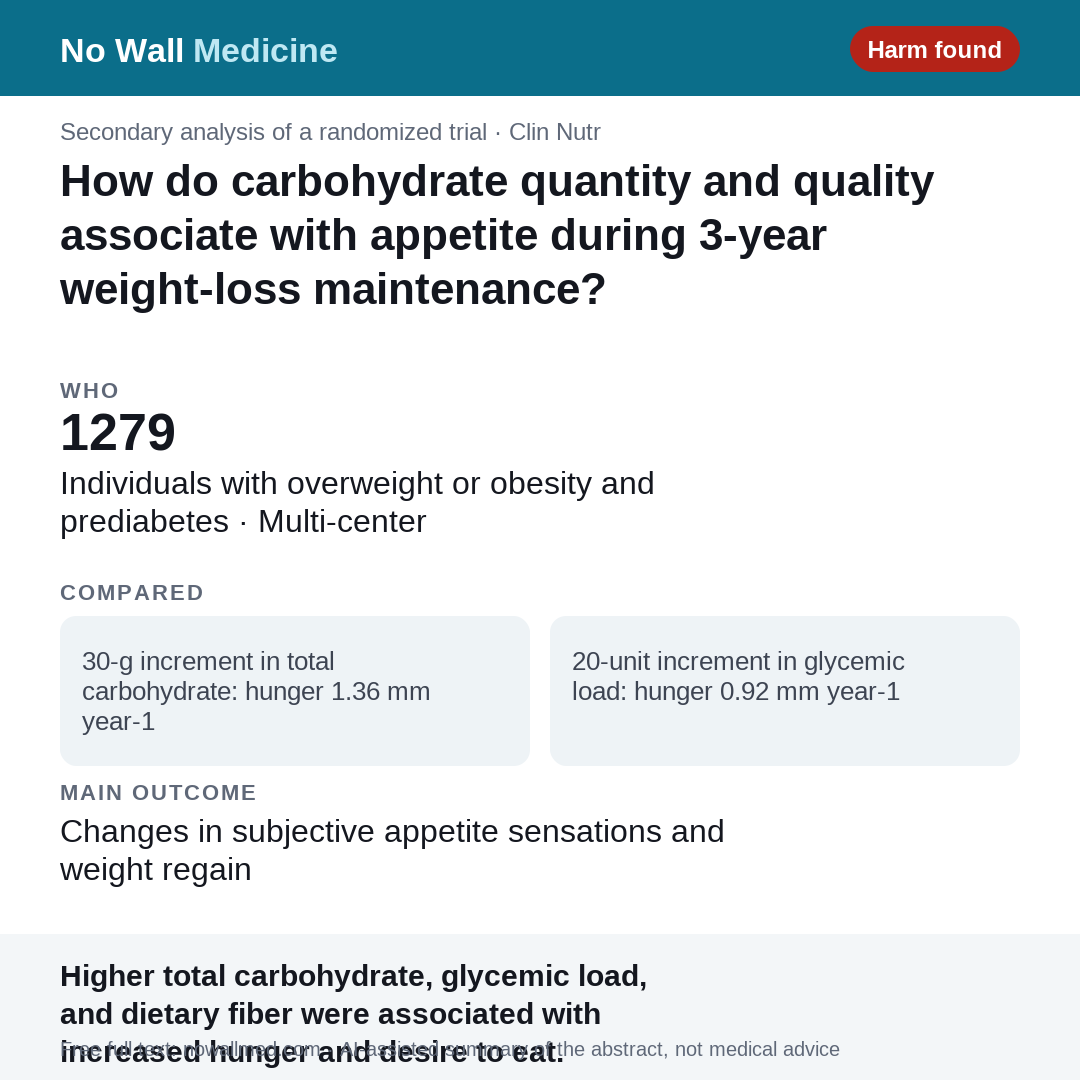
Associations of quantity and quality of carbohydrate sources with subjective appetite sensations during 3-year weight-loss maintenance: Results from the PREVIEW intervention study
Secondary analysis of a randomized trialHarm found
How do carbohydrate quantity and quality associate with appetite during 3-year weight-loss maintenance?
Who
1279
Individuals with overweight or obesity and prediabetes · Multi-center
Compared
30-g increment in total carbohydrate: hunger 1.36 mm year-1
20-unit increment in glycemic load: hunger 0.92 mm year-1
Main outcome
Changes in subjective appetite sensations and weight regain
Result: hunger 1.36 mm year-1 (95% CI 0.77, 1.95)
Bottom line: Higher total carbohydrate, glycemic load, and dietary fiber were associated with increased hunger and desire to eat.
Clin Nutr · 2021-12-03Download image
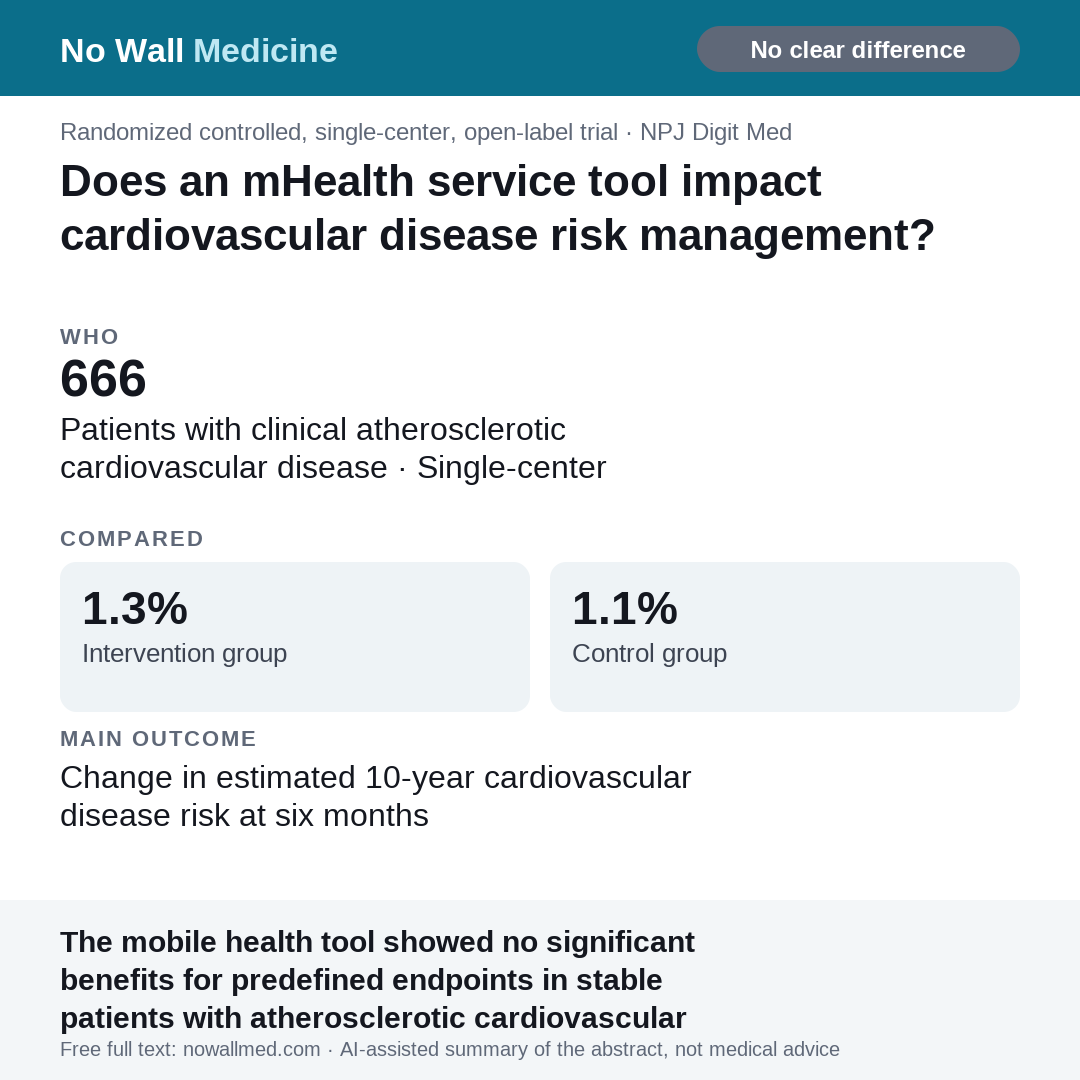
Management of cardiovascular disease using an mHealth tool: a randomized clinical trial
Randomized controlled, single-center, open-label trialNo clear difference
Does an mHealth service tool impact cardiovascular disease risk management?
Who
666
Patients with clinical atherosclerotic cardiovascular disease · Single-center
Compared
1.3%Intervention group
1.1%Control group
Main outcome
Change in estimated 10-year cardiovascular disease risk at six months
Bottom line: The mobile health tool showed no significant benefits for predefined endpoints in stable patients with atherosclerotic cardiovascular disease.
Limitation: Better design with a positive user experience needs to be considered for future tools.
NPJ Digit Med · 2021-12-03Download image
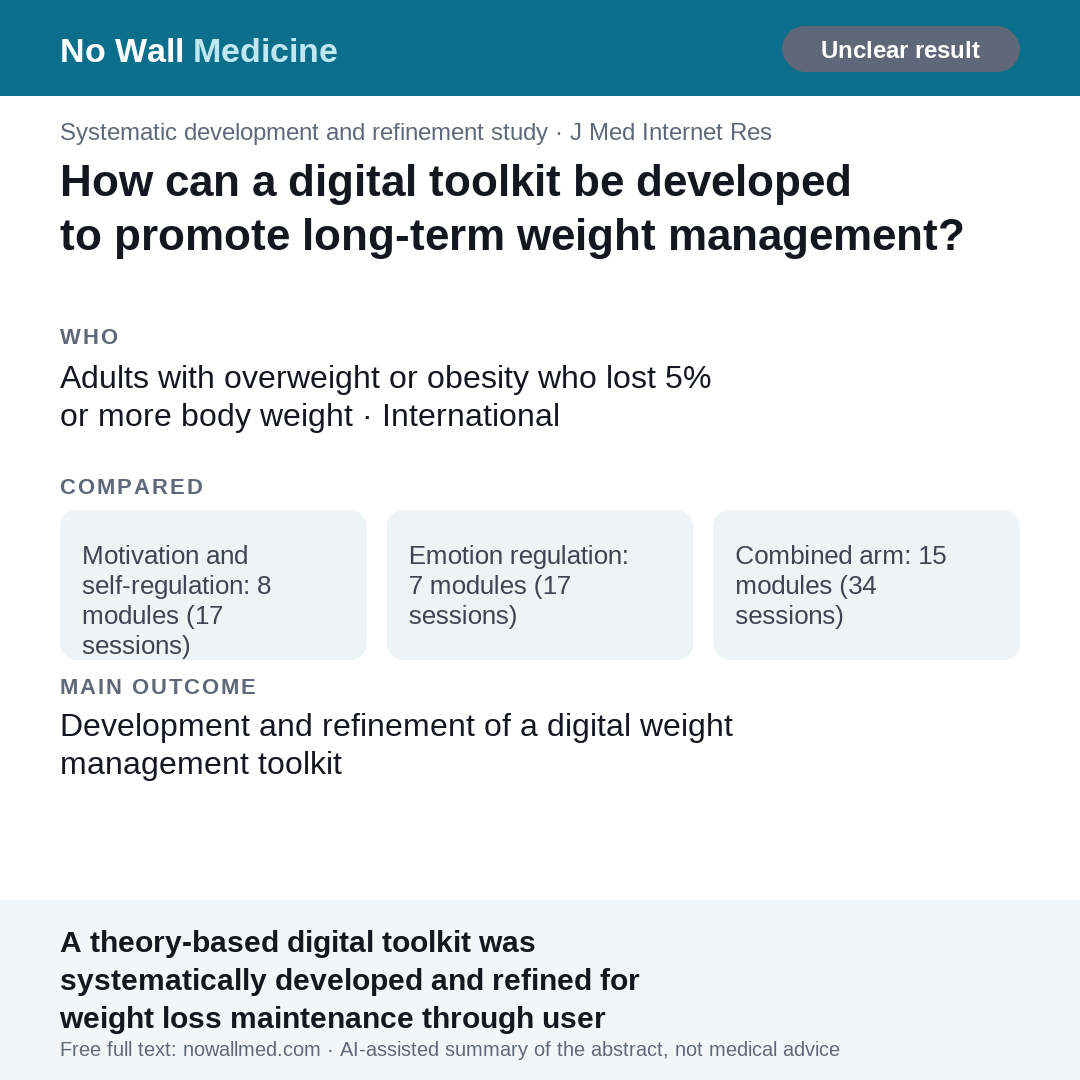
A Theory- and Evidence-Based Digital Intervention Tool for Weight Loss Maintenance (NoHoW Toolkit): Systematic Development and Refinement Study
Systematic development and refinement studyUnclear result
How can a digital toolkit be developed to promote long-term weight management?
Who
Adults with overweight or obesity who lost 5% or more body weight · International
Compared
Motivation and self-regulation: 8 modules (17 sessions)
Emotion regulation: 7 modules (17 sessions)
Combined arm: 15 modules (34 sessions)
Main outcome
Development and refinement of a digital weight management toolkit
Bottom line: A theory-based digital toolkit was systematically developed and refined for weight loss maintenance through user testing.
Funded by: European Union's Horizon 2020 research and innovation program
J Med Internet Res · 2021-12-03Download image
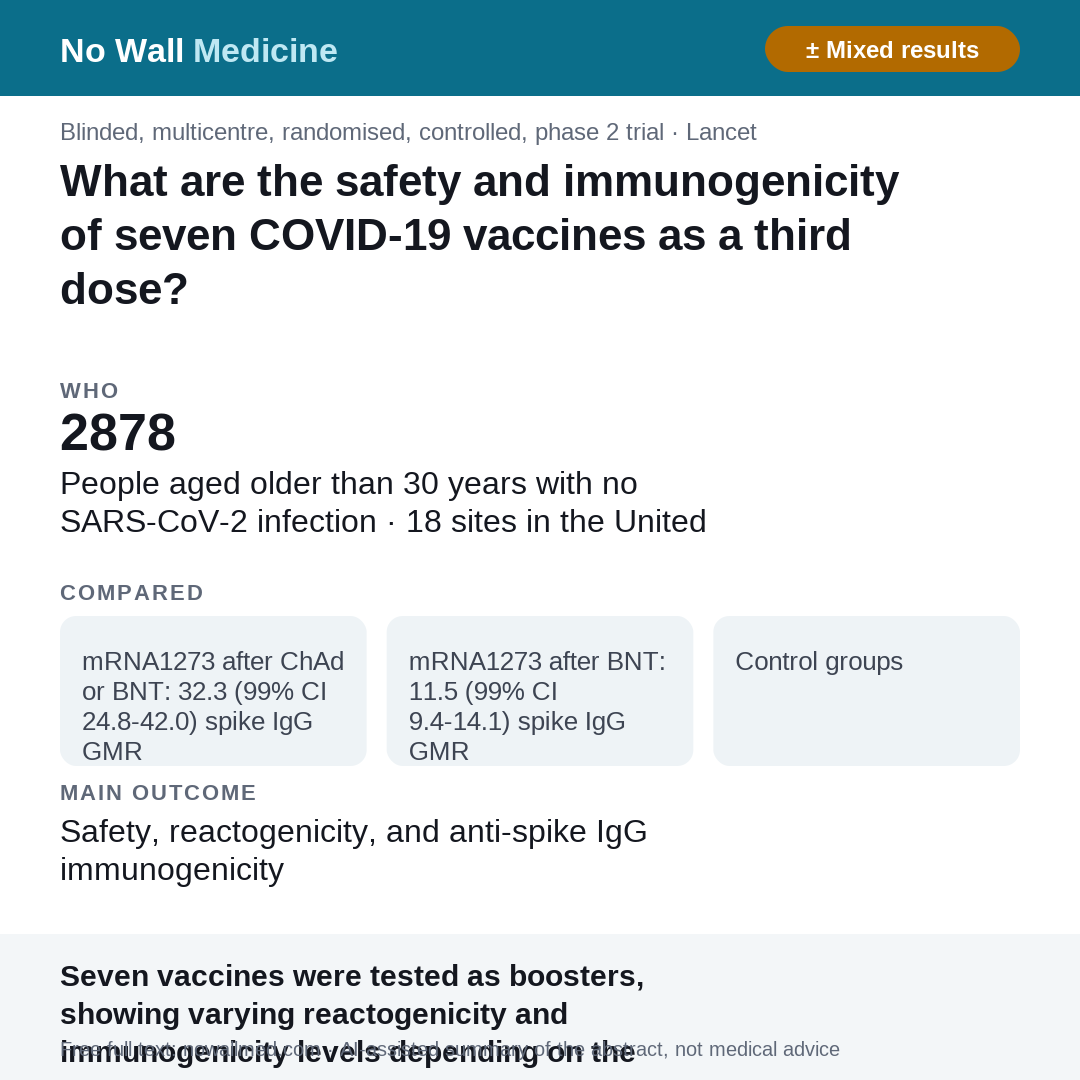
Safety and immunogenicity of seven COVID-19 vaccines as a third dose (booster) following two doses of ChAdOx1 nCov-19 or BNT162b2 in the UK (COV-BOOST): a blinded, multicentre, randomised, controlled, phase 2 trial
Blinded, multicentre, randomised, controlled, phase 2 trialMixed results
What are the safety and immunogenicity of seven COVID-19 vaccines as a third dose?
Who
2878
People aged older than 30 years with no SARS-CoV-2 infection · 18 sites in the United Kingdom
Compared
mRNA1273 after ChAd or BNT: 32.3 (99% CI 24.8-42.0) spike IgG GMR
mRNA1273 after BNT: 11.5 (99% CI 9.4-14.1) spike IgG GMR
Control groups
Main outcome
Safety, reactogenicity, and anti-spike IgG immunogenicity
Bottom line: Seven vaccines were tested as boosters, showing varying reactogenicity and immunogenicity levels depending on the vaccine and primary course.
Lancet · 2021-12-02Download image
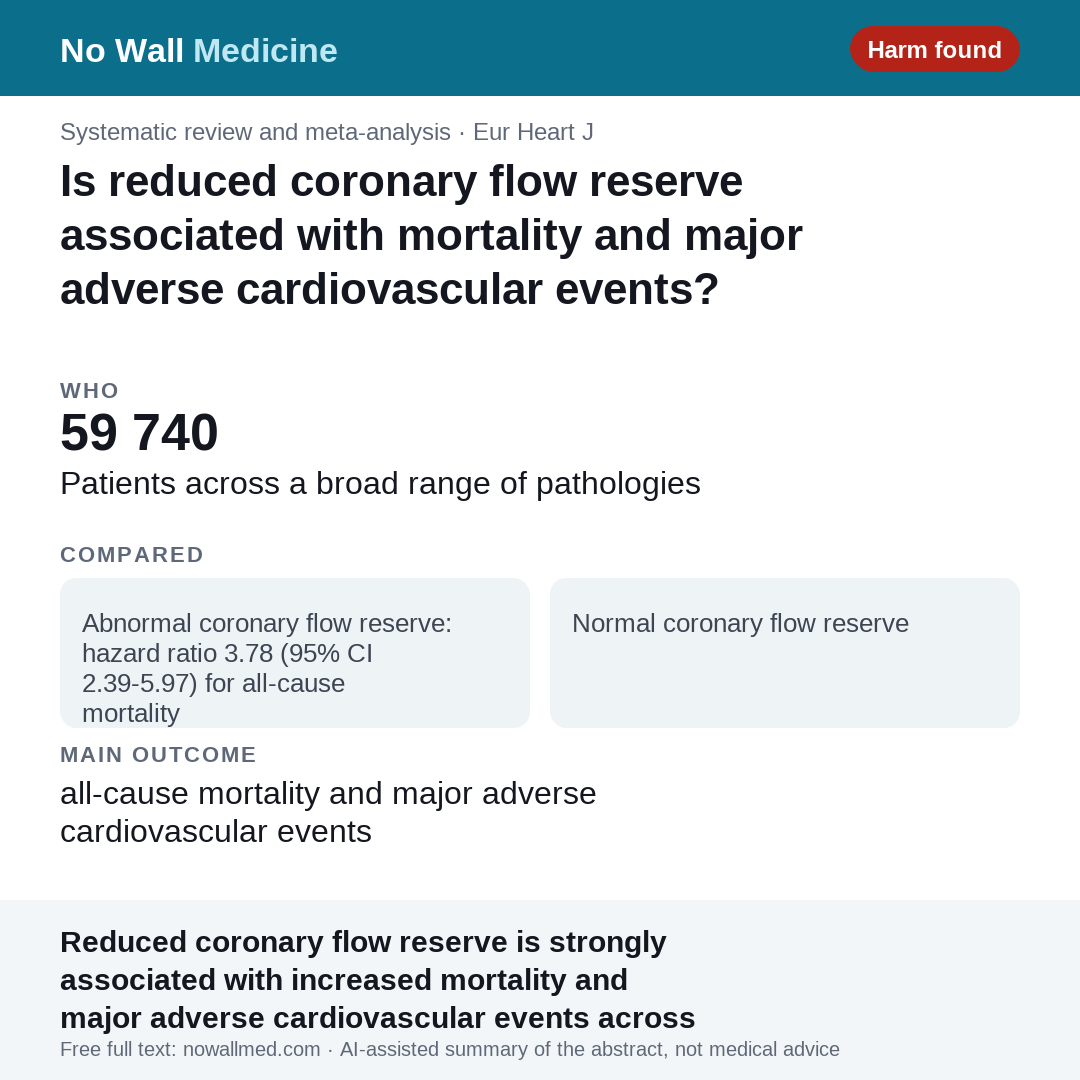
Coronary flow reserve and cardiovascular outcomes: a systematic review and meta-analysis
Systematic review and meta-analysisHarm found
Is reduced coronary flow reserve associated with mortality and major adverse cardiovascular events?
Who
59 740
Patients across a broad range of pathologies
Compared
Abnormal coronary flow reserve: hazard ratio 3.78 (95% CI 2.39-5.97) for all-cause mortality
Normal coronary flow reserve
Main outcome
all-cause mortality and major adverse cardiovascular events
Result: hazard ratio 3.78 (95% CI 2.39-5.97) for all-cause mortality
Bottom line: Reduced coronary flow reserve is strongly associated with increased mortality and major adverse cardiovascular events across various pathologies.
Eur Heart J · 2021-12-02Download image