Visual abstracts
New randomized trials and meta-analyses from leading journals at a glance: who was studied, what was compared, and what was found. Every paper is free to read in full.
All specialtiesCardiology 4780Oncology 4080Gastroenterology & Hepatology 1914Infectious Disease 3775Neurology 1883Psychiatry & Mental Health 2238Pulmonology 2058Critical Care 1331Endocrinology & Diabetes 2550Pediatrics 2908Surgery 2496Orthopedics & Sports Medicine 922Neurosurgery 532Cardiothoracic & Vascular Surgery 662Plastic & Reconstructive Surgery 584Nephrology 1111Rheumatology 812Hematology 1095Dermatology 617Ophthalmology 537Obstetrics & Gynecology 1656Public & Global Health 1041Radiology & Imaging 637Anesthesiology 958Urology 751ENT (Otolaryngology) 497Emergency Medicine 484Allergy & Immunology 310Geriatrics 973Family Medicine & Primary Care 538Medical Genetics & Genomics 662Pathology & Laboratory Medicine 156Physical Medicine & Rehabilitation 744Palliative Care 422Nutrition 1564Digital Health & AI 2188General Medicine 318
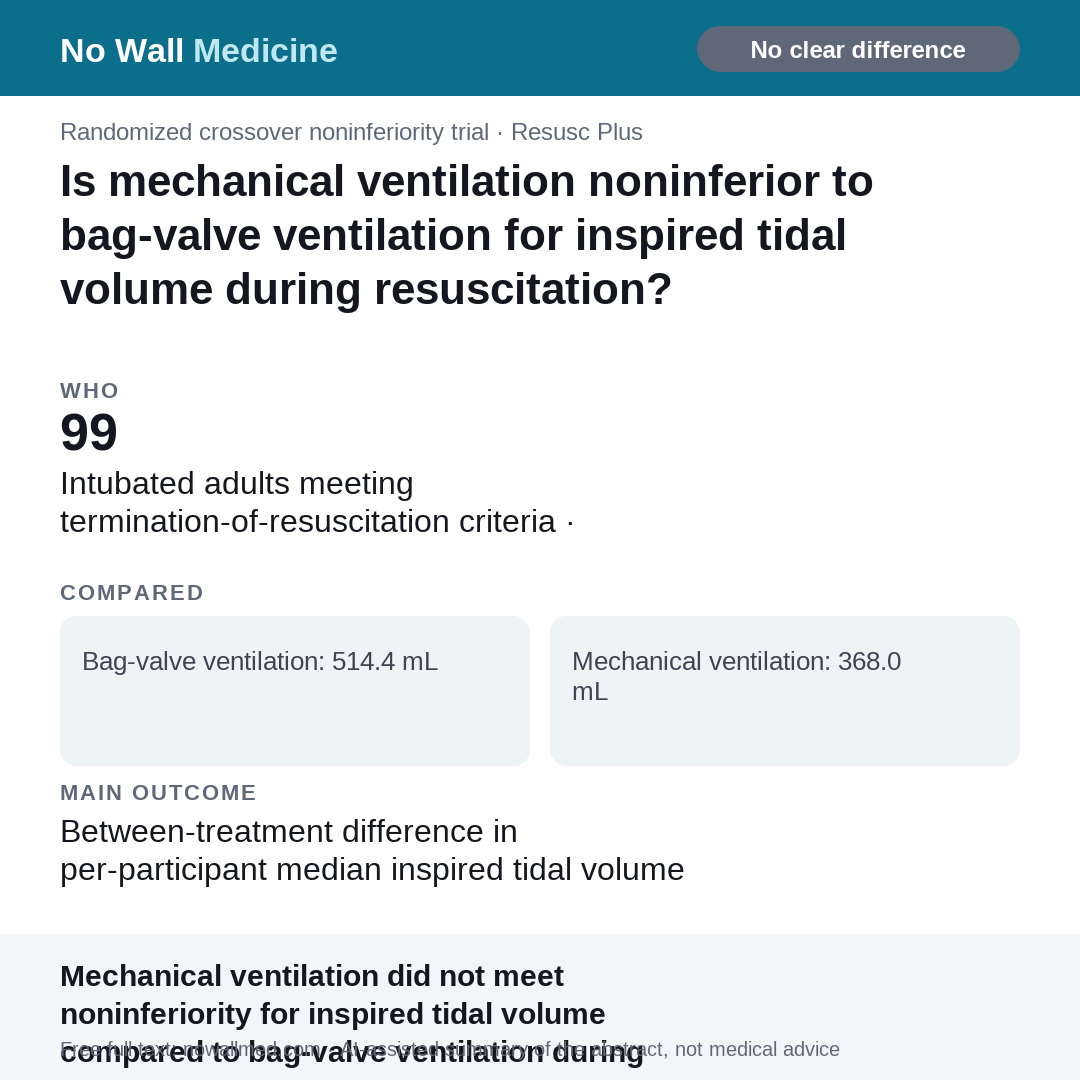
Mechanical ventilation vs bag-valve ventilation during cardiopulmonary resuscitation: a randomized crossover noninferiority trial
Randomized crossover noninferiority trialNo clear difference
Is mechanical ventilation noninferior to bag-valve ventilation for inspired tidal volume during resuscitation?
Who
99
Intubated adults meeting termination-of-resuscitation criteria · Single-center
Compared
Bag-valve ventilation: 514.4 mL
Mechanical ventilation: 368.0 mL
Main outcome
Between-treatment difference in per-participant median inspired tidal volume
Result: -146.2 mL (95% CI, -187.0 to -105.5)
Bottom line: Mechanical ventilation did not meet noninferiority for inspired tidal volume compared to bag-valve ventilation during cardiopulmonary resuscitation.
Limitation: The unvalidated analyzer and absence of clinical outcomes limit interpretation.
Resusc Plus · 2026-10-13Download image
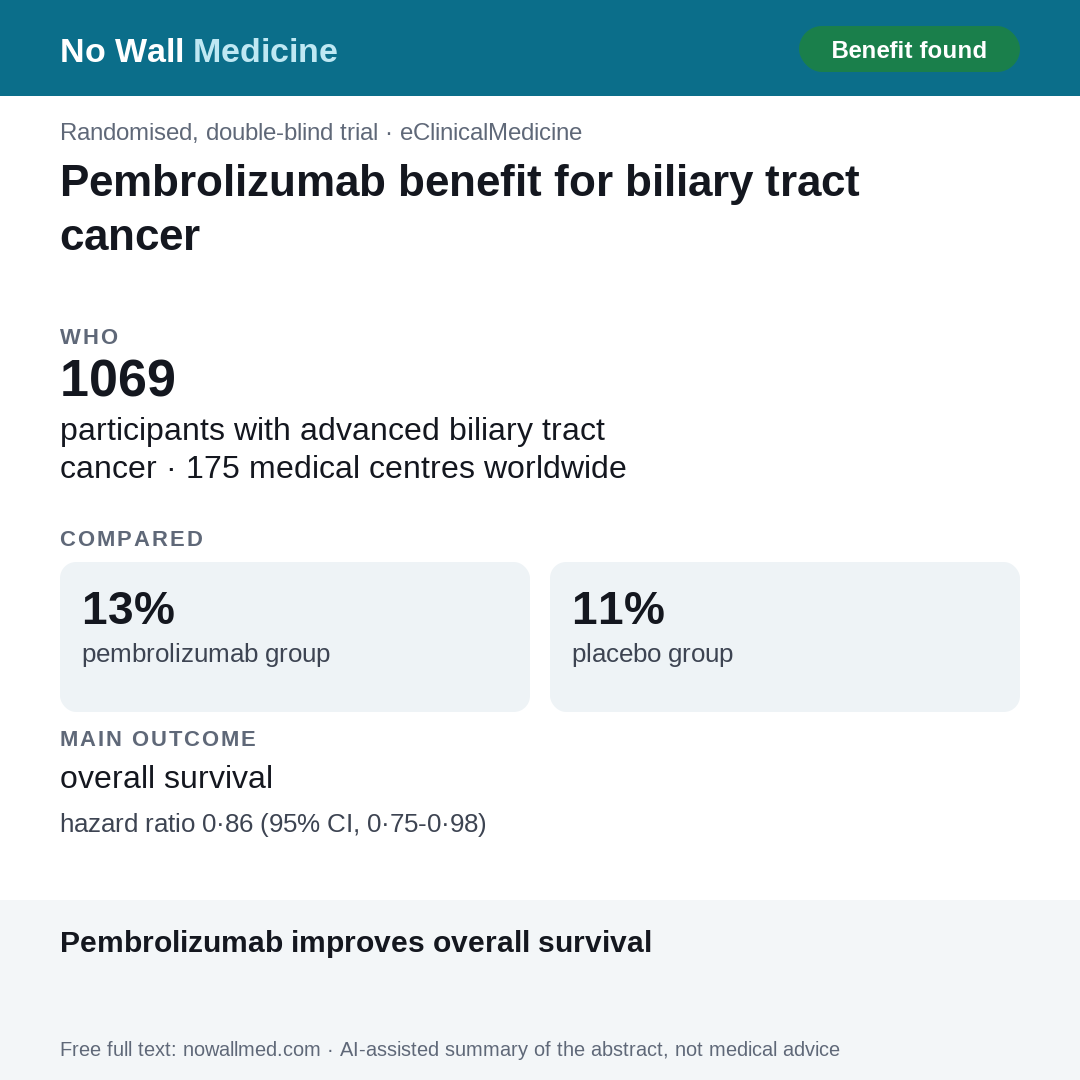
Pembrolizumab plus gemcitabine and cisplatin for advanced biliary tract cancer: longer-term follow-up from the randomised, double-blind, placebo-controlled, phase 3 KEYNOTE-966 trial
Randomised, double-blind trialBenefit found
Pembrolizumab benefit for biliary tract cancer
Who
1069
participants with advanced biliary tract cancer · 175 medical centres worldwide
Compared
13%pembrolizumab group (95% CI, 11-17)
11%placebo group (95% CI, 8-14)
Main outcome
overall survival
Result: hazard ratio 0·86 (95% CI, 0·75-0·98)
Bottom line: Pembrolizumab improves overall survival
Funded by: Merck Sharp & Dohme LLC
eClinicalMedicine · 2026-10-12Download image
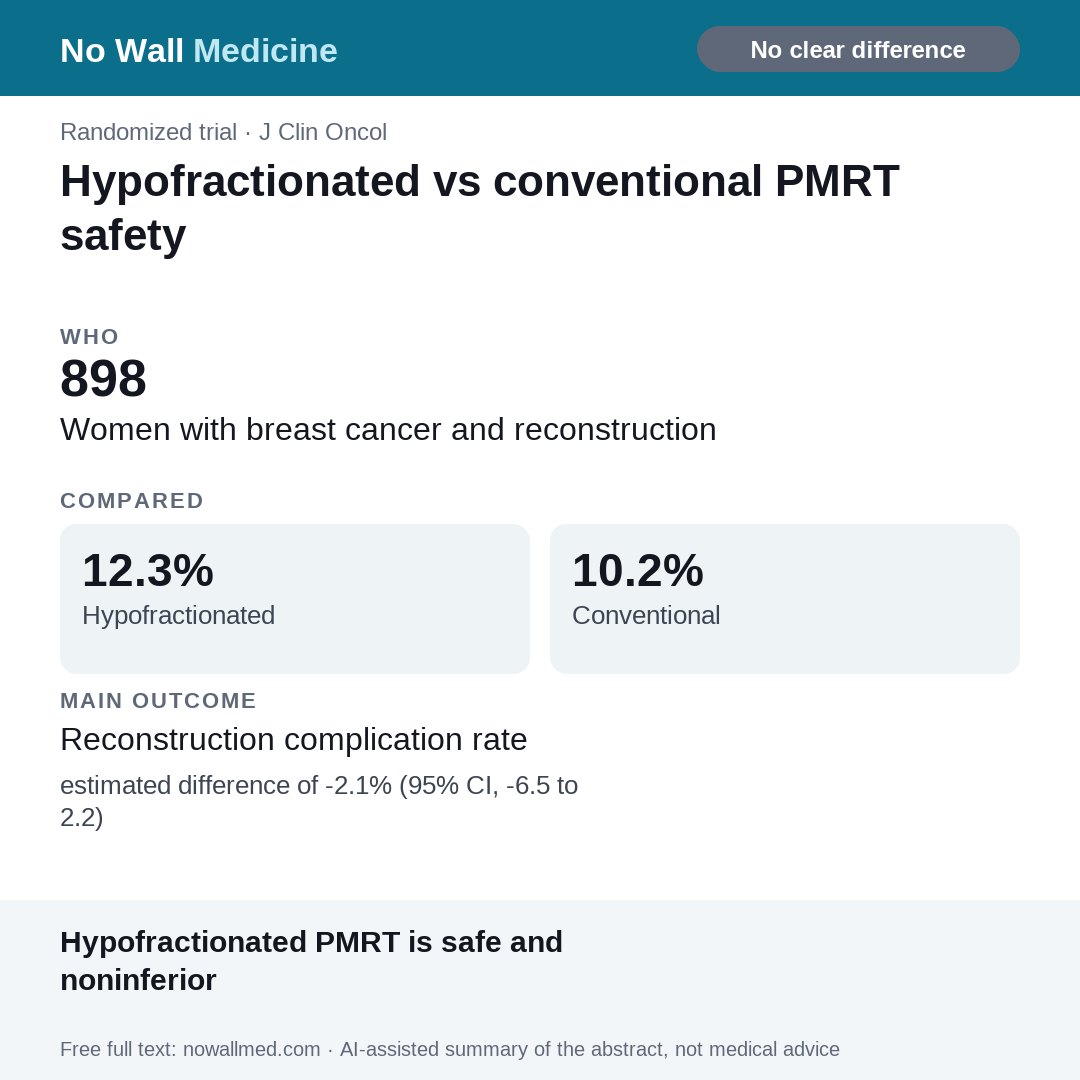
Randomized Trial of Hypofractionated Postmastectomy Radiation Therapy in Women With Breast Reconstruction (RT CHARM, Alliance A221505)
Randomized trialNo clear difference
Hypofractionated vs conventional PMRT safety
Who
898
Women with breast cancer and reconstruction
Compared
12.3%Hypofractionated (52/422)
10.2%Conventional (41/403)
Main outcome
Reconstruction complication rate
Result: estimated difference of -2.1% (95% CI, -6.5 to 2.2)
Bottom line: Hypofractionated PMRT is safe and noninferior
J Clin Oncol · 2026-10-12Download image
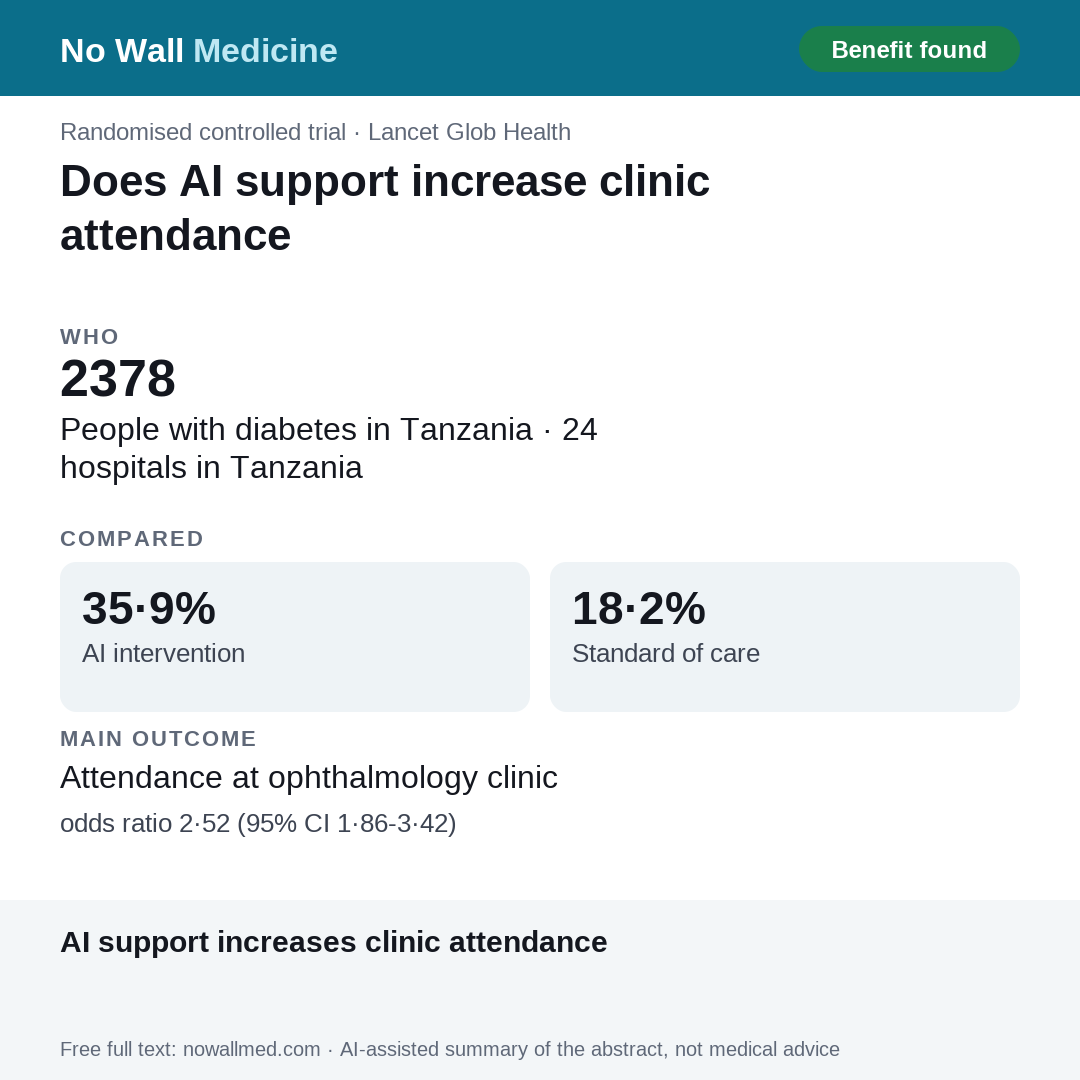
Artificial intelligence-supported diabetic retinopathy screening in Tanzania: a randomised controlled trial
Randomised controlled trialBenefit found
Does AI support increase clinic attendance
Who
2378
people with diabetes in Tanzania · 24 hospitals in Tanzania
Compared
35·9%AI support (157/437)
18·2%Standard care (85/467)
Main outcome
clinic attendance within 8 weeks
Result: odds ratio 2·52 (95% CI 1·86-3·42)
Bottom line: AI support increases clinic attendance
Funded by: British Council and others
Lancet Glob Health · 2026-10-12Download image
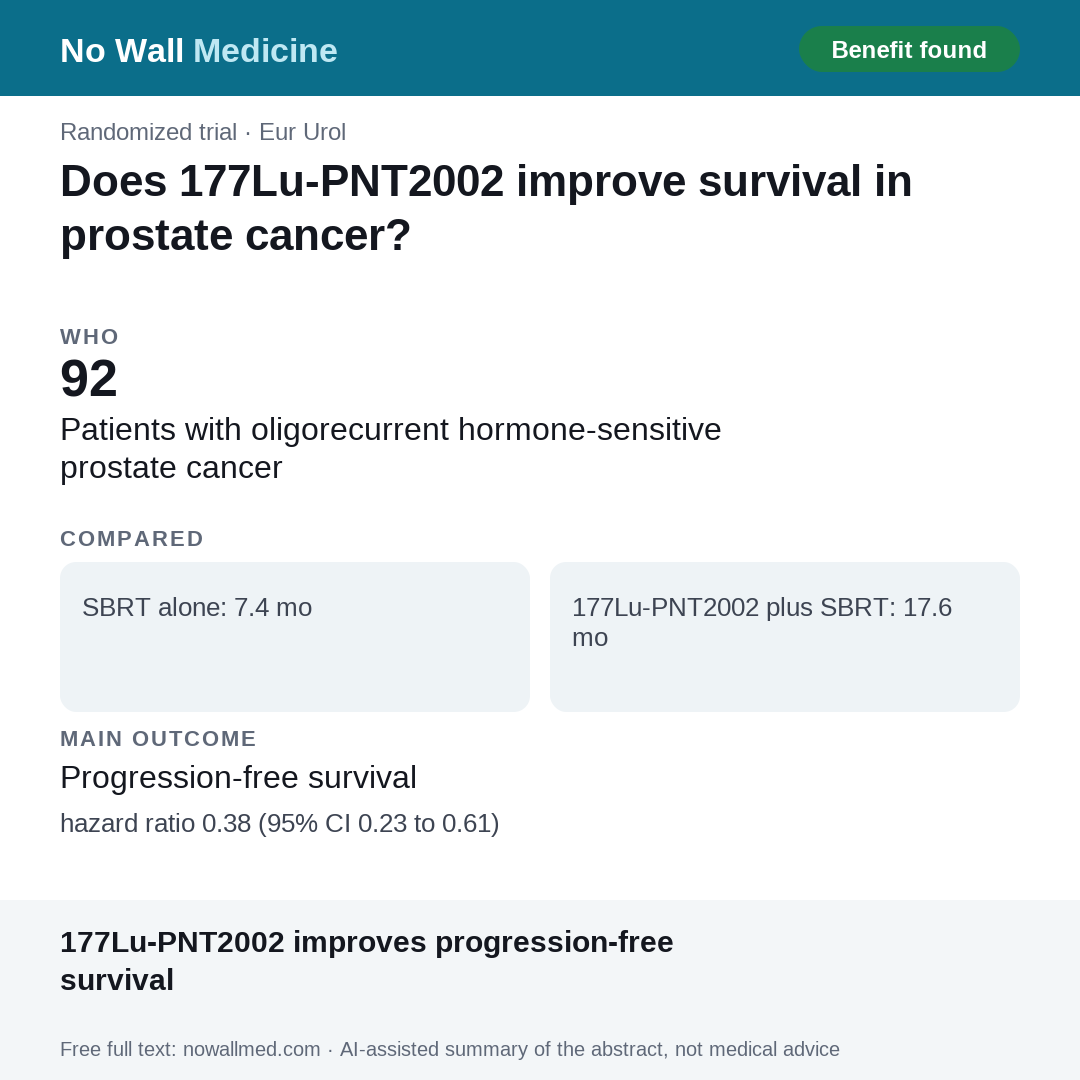
177Lu-Prostate-specific Membrane Antigen Prior to Stereotactic Ablative Radiotherapy in Oligorecurrent Prostate Cancer: Secondary and Exploratory End Point Results from the Randomized Phase 2 LUNAR Trial
Randomized trialEarly signal
Does 177Lu-PNT2002 improve survival in prostate cancer?
Who
92
Patients with oligorecurrent hormone-sensitive prostate cancer
Compared
SBRT alone: 7.4 mo
177Lu-PNT2002 plus SBRT: 17.6 mo
Main outcome
Progression-free survival
Result: hazard ratio 0.38 (95% CI 0.23 to 0.61)
Bottom line: 177Lu-PNT2002 improves progression-free survival
Eur Urol · 2026-10-12Download image
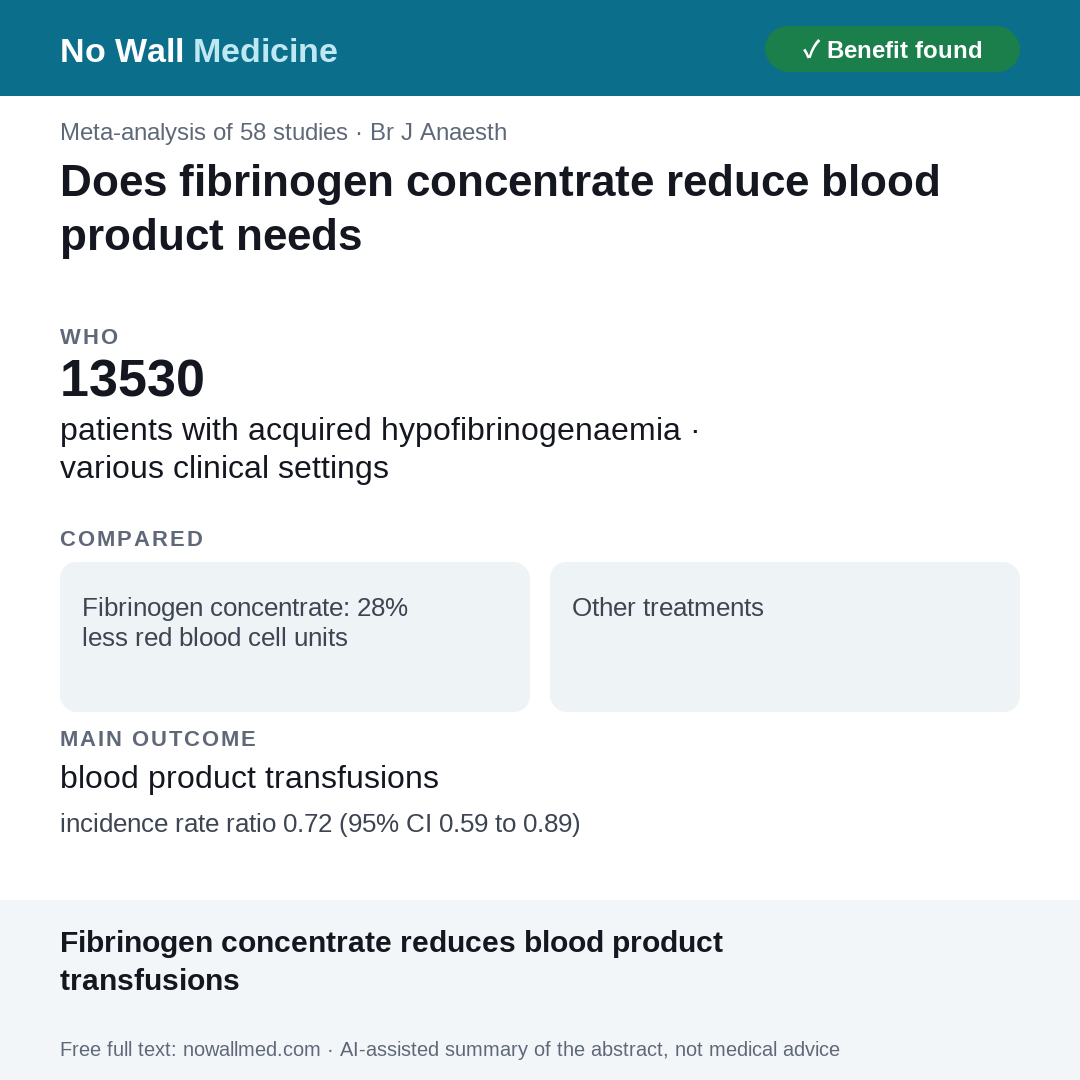
The role of fibrinogen concentrate in the reduction of allogeneic blood product requirements: a systematic review and meta-analysis
Meta-analysis of 58 studiesBenefit found
Does fibrinogen concentrate reduce blood product needs
Who
13530
patients with acquired hypofibrinogenaemia · various clinical settings
Compared
Fibrinogen concentrate: 28% less red blood cell units
Other treatments
Main outcome
blood product transfusions
Result: incidence rate ratio 0.72 (95% CI 0.59 to 0.89)
Bottom line: Fibrinogen concentrate reduces blood product transfusions
Br J Anaesth · 2026-10-12Download image
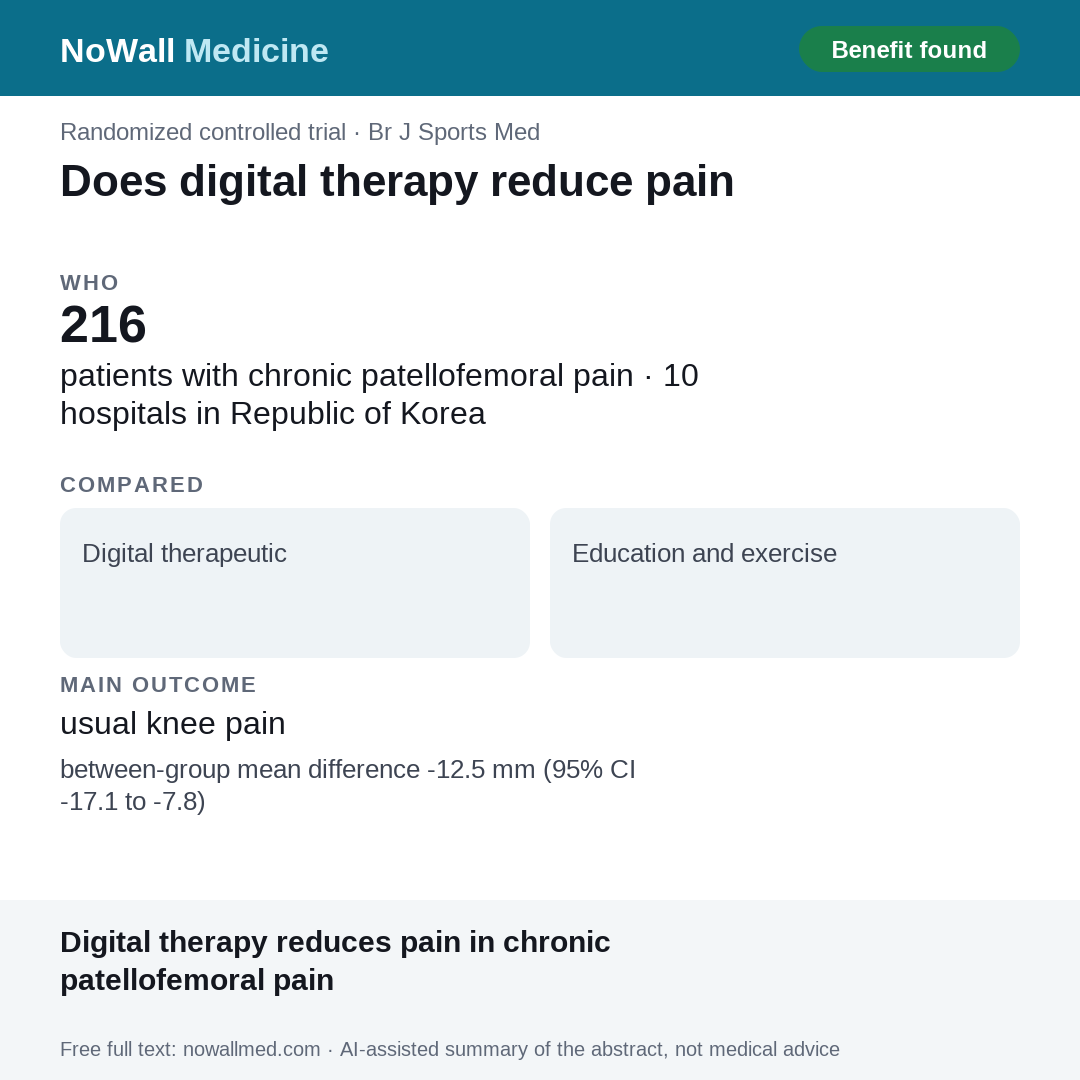
Digital therapeutic combining exercise and cognitive-behavioural therapy reduces pain in patients with chronic patellofemoral pain: a multicentre randomised controlled trial
Randomized controlled trialBenefit found
Does digital therapy reduce pain
Who
216
patients with chronic patellofemoral pain · 10 hospitals in Republic of Korea
Compared
Digital therapeutic
Education and exercise
Main outcome
usual knee pain
Result: between-group mean difference -12.5 mm (95% CI -17.1 to -7.8)
Bottom line: Digital therapy reduces pain in chronic patellofemoral pain
Br J Sports Med · 2026-10-12Download image
Evaluating social cognitive remediation for labour participation in severe mental illness: insights from a small-scale randomised controlled trial
Randomised controlled trialBenefit found
Does social cognitive remediation improve labour participation?
Who
105
individuals with severe mental illness · France, three sites
Compared
Social cognitive remediation: 6.5% increase
Active control
Main outcome
hours worked versus expected
Bottom line: Social cognitive remediation improves employment maintenance
BJPsych Open · 2026-10-12Download image

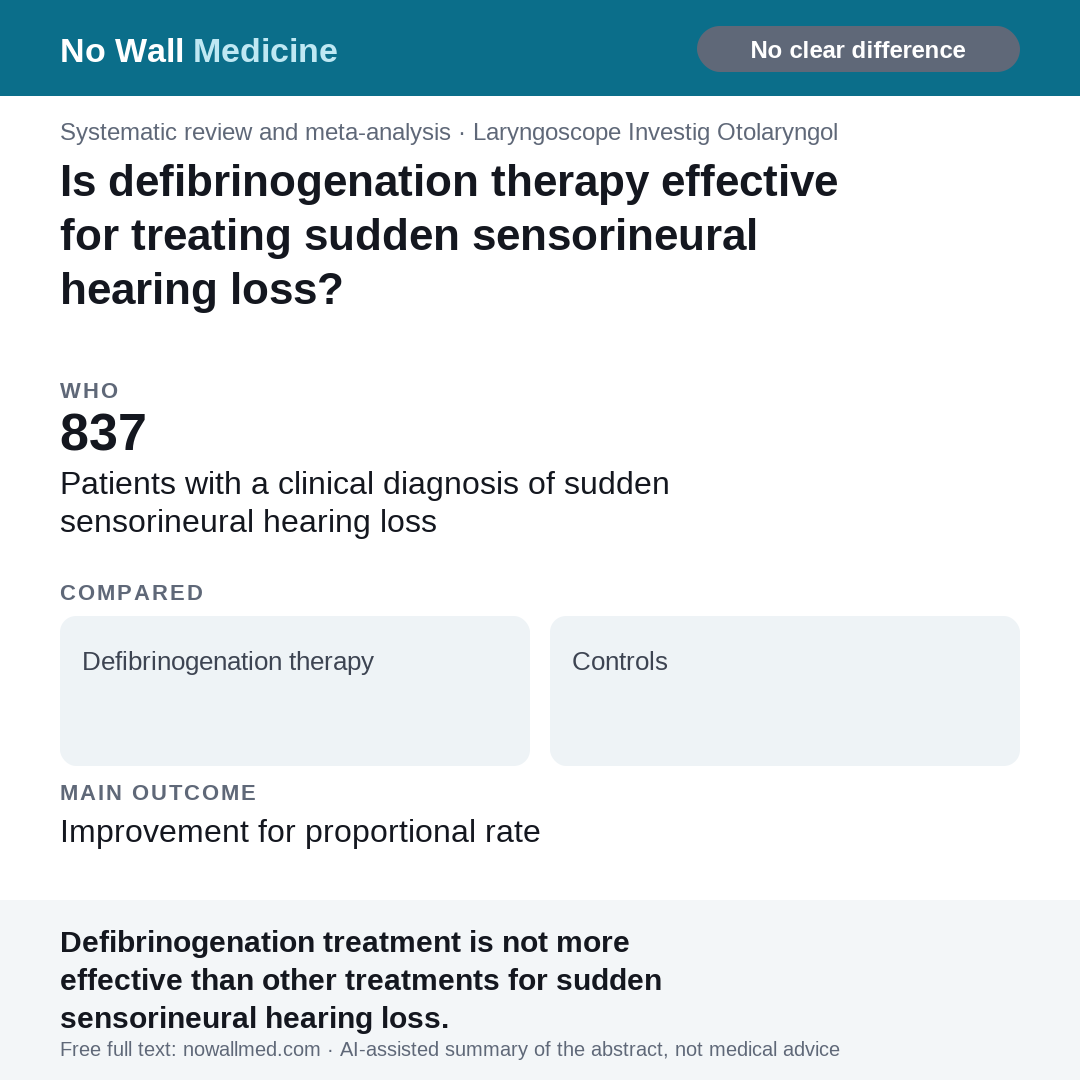
Efficacy of Defibrinogenation Therapy for Sudden Sensorineural Hearing Loss: A Systematic Review and Meta-Analysis
Systematic review and meta-analysisNo clear difference
Is defibrinogenation therapy effective for treating sudden sensorineural hearing loss?
Who
837
Patients with a clinical diagnosis of sudden sensorineural hearing loss
Compared
Defibrinogenation therapy
Controls
Main outcome
Improvement for proportional rate
Result: odds ratio 1.897 (95% CI, 0.84 to 4.27)
Bottom line: Defibrinogenation treatment is not more effective than other treatments for sudden sensorineural hearing loss.
Laryngoscope Investig Otolaryngol · 2026-10-12Download image
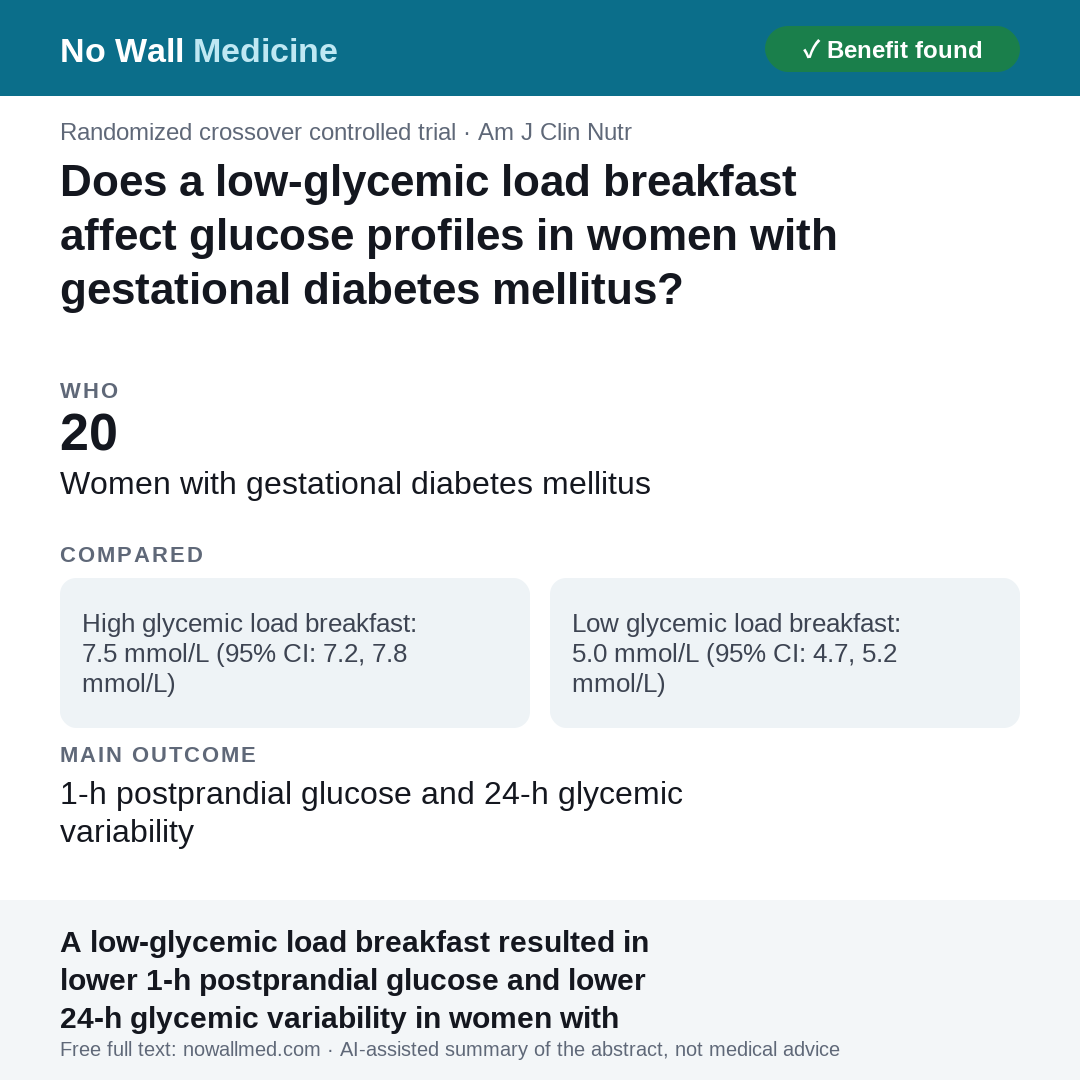
The impact of a low-glycemic load breakfast on diurnal glucose profiles in women with gestational diabetes mellitus: the Glycemic Load In Diabetes DurINg Gestation randomized crossover trial
Randomized crossover controlled trialBenefit found
Does a low-glycemic load breakfast affect glucose profiles in women with gestational diabetes mellitus?
Who
20
Women with gestational diabetes mellitus
Compared
High glycemic load breakfast: 7.5 mmol/L (95% CI: 7.2, 7.8 mmol/L)
Low glycemic load breakfast: 5.0 mmol/L (95% CI: 4.7, 5.2 mmol/L)
Main outcome
1-h postprandial glucose and 24-h glycemic variability
Bottom line: A low-glycemic load breakfast resulted in lower 1-h postprandial glucose and lower 24-h glycemic variability in women with gestational diabetes.
Am J Clin Nutr · 2026-10-10Download image
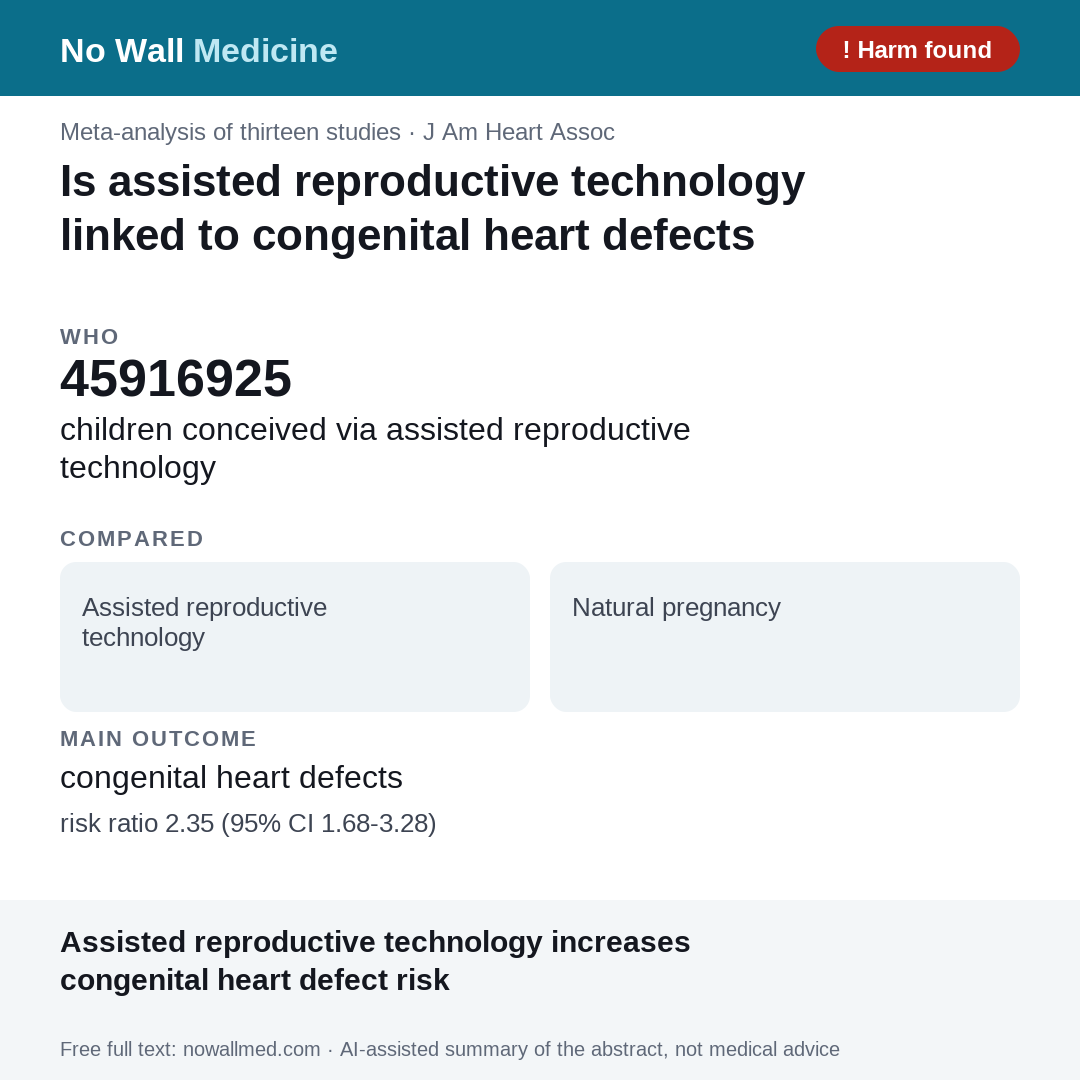
Assisted Reproductive Technology and Risk of Congenital Heart Defects in the Offspring: A Systematic Review and Meta-Analysis
Meta-analysis of thirteen studiesHarm found
Is assisted reproductive technology linked to congenital heart defects
Who
45916925
children conceived via assisted reproductive technology
Compared
Assisted reproductive technology
Natural pregnancy
Main outcome
congenital heart defects
Result: risk ratio 2.35 (95% CI 1.68-3.28)
Bottom line: Assisted reproductive technology increases congenital heart defect risk
Limitation: significant heterogeneity across studies
J Am Heart Assoc · 2026-10-10Download image
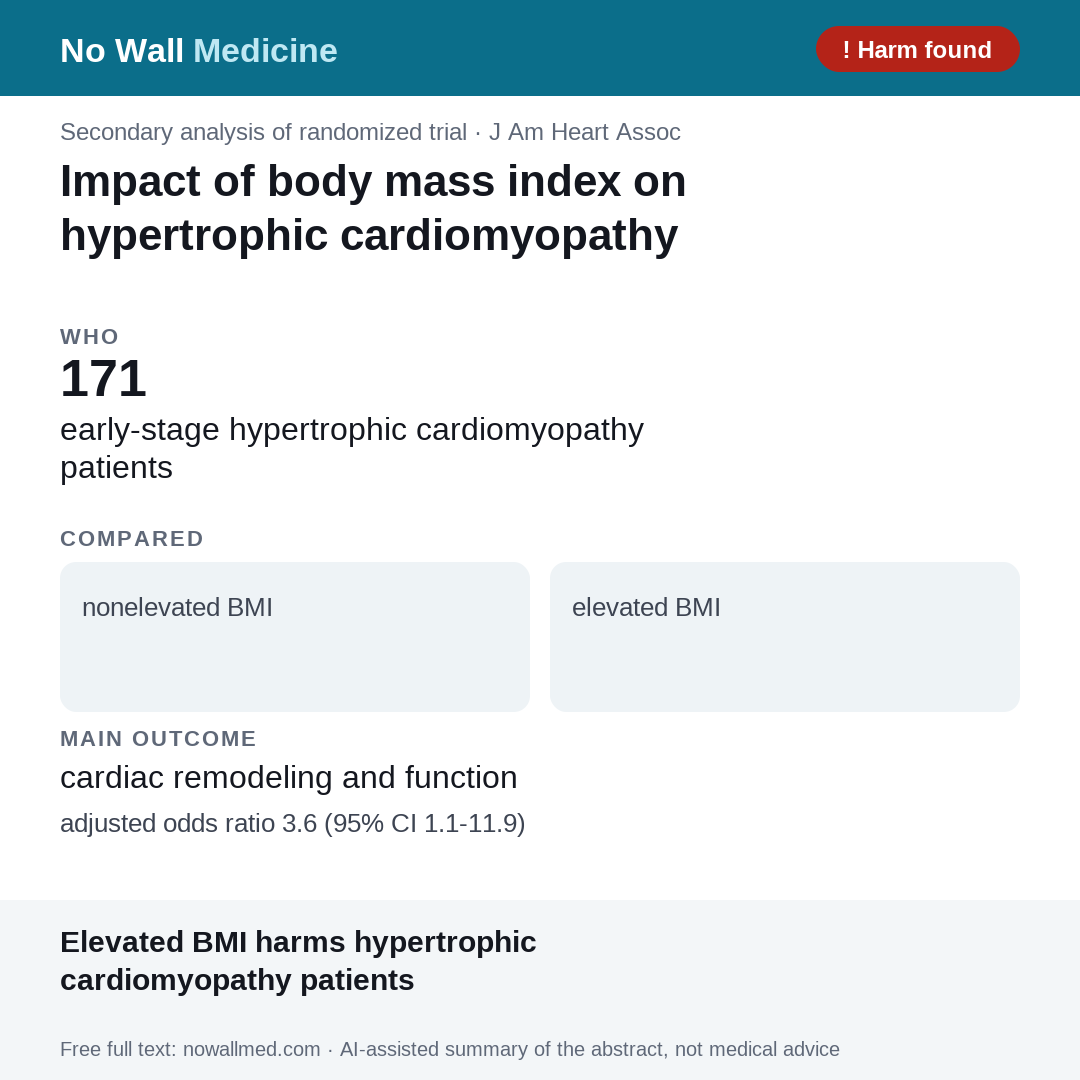
Body Mass Index, Valsartan, and Myocardial Remodeling in Early-Stage Hypertrophic Cardiomyopathy: A Secondary Analysis of the Randomized VANISH Trial
Secondary analysis of randomized trialHarm found
Impact of body mass index on hypertrophic cardiomyopathy
Who
171
early-stage hypertrophic cardiomyopathy patients
Compared
nonelevated BMI
elevated BMI
Main outcome
cardiac remodeling and function
Result: adjusted odds ratio 3.6 (95% CI 1.1-11.9)
Bottom line: Elevated BMI harms hypertrophic cardiomyopathy patients
J Am Heart Assoc · 2026-10-10Download image
Pilot Randomized Trial of 2 Food Purchasing Interventions in Individuals With Hypertension in New Orleans: An American Heart Association Food Is Medicine Initiative
Randomized pilot trialNo clear difference
Do online or in-store food vouchers better improve fruit and vegetable consumption?
Who
98
Individuals with uncontrolled hypertension · New Orleans
Compared
Online grocery platform: 20% (interquartile range, -17% to 93%) increase
In-store local grocery: 20% (interquartile range, -17% to 93%) increase
Main outcome
Change in self-reported fruit and vegetable consumption
Bottom line: Online and in-store food vouchers showed no difference in fruit and vegetable consumption among hypertensive individuals.
Limitation: Future interventions should be conducted in larger populations.
J Am Heart Assoc · 2026-10-10Download image

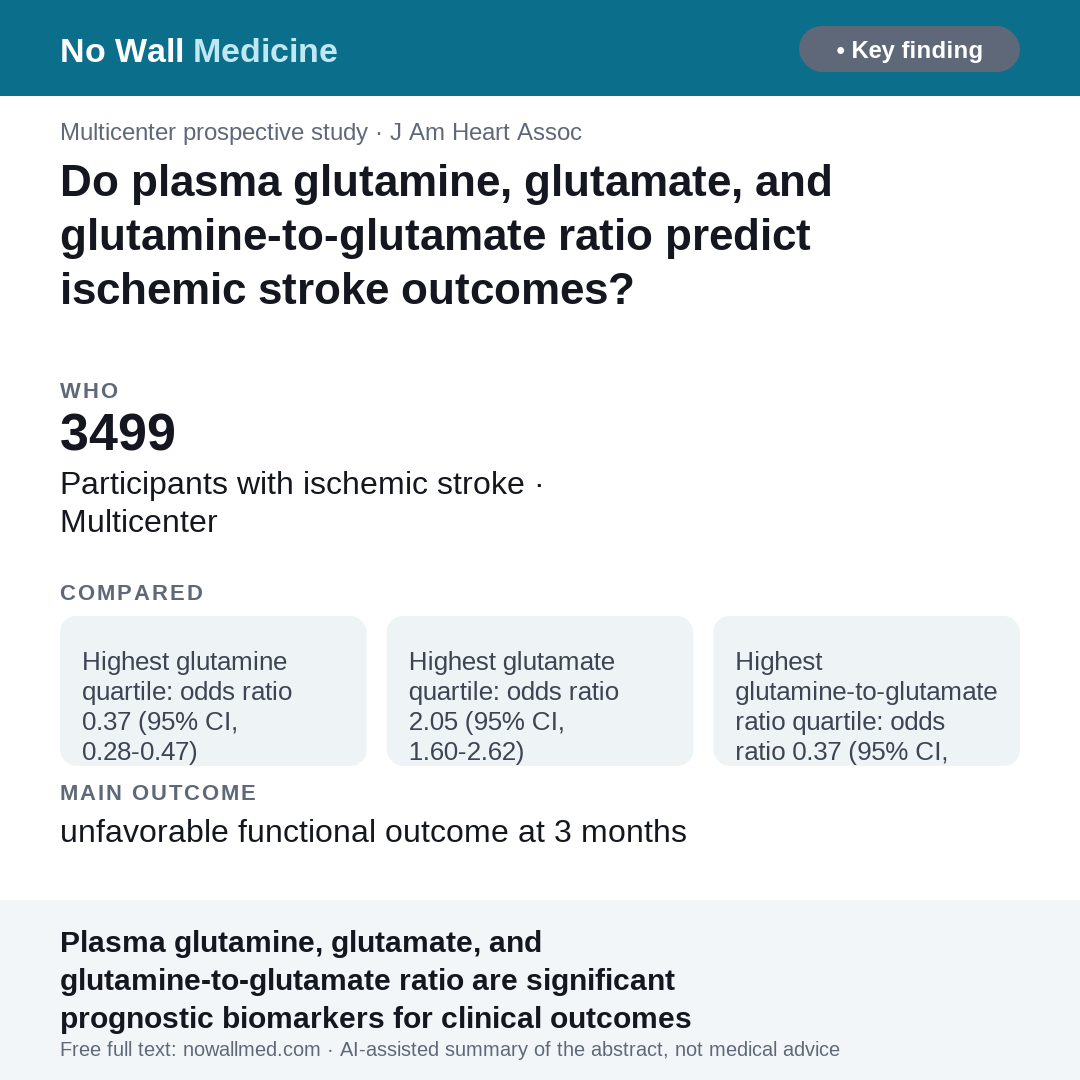
Plasma Glutamine and Glutamate in Relation to Clinical Outcomes After Ischemic Stroke: A Multicenter Prospective Study
Multicenter prospective studyKey finding
Do plasma glutamine, glutamate, and glutamine-to-glutamate ratio predict ischemic stroke outcomes?
Who
3499
Participants with ischemic stroke · Multicenter
Compared
Highest glutamine quartile: odds ratio 0.37 (95% CI, 0.28-0.47)
Highest glutamate quartile: odds ratio 2.05 (95% CI, 1.60-2.62)
Highest glutamine-to-glutamate ratio quartile: odds ratio 0.37 (95% CI, 0.29-0.48)
Main outcome
unfavorable functional outcome at 3 months
Bottom line: Plasma glutamine, glutamate, and glutamine-to-glutamate ratio are significant prognostic biomarkers for clinical outcomes after ischemic stroke.
J Am Heart Assoc · 2026-10-10Download image
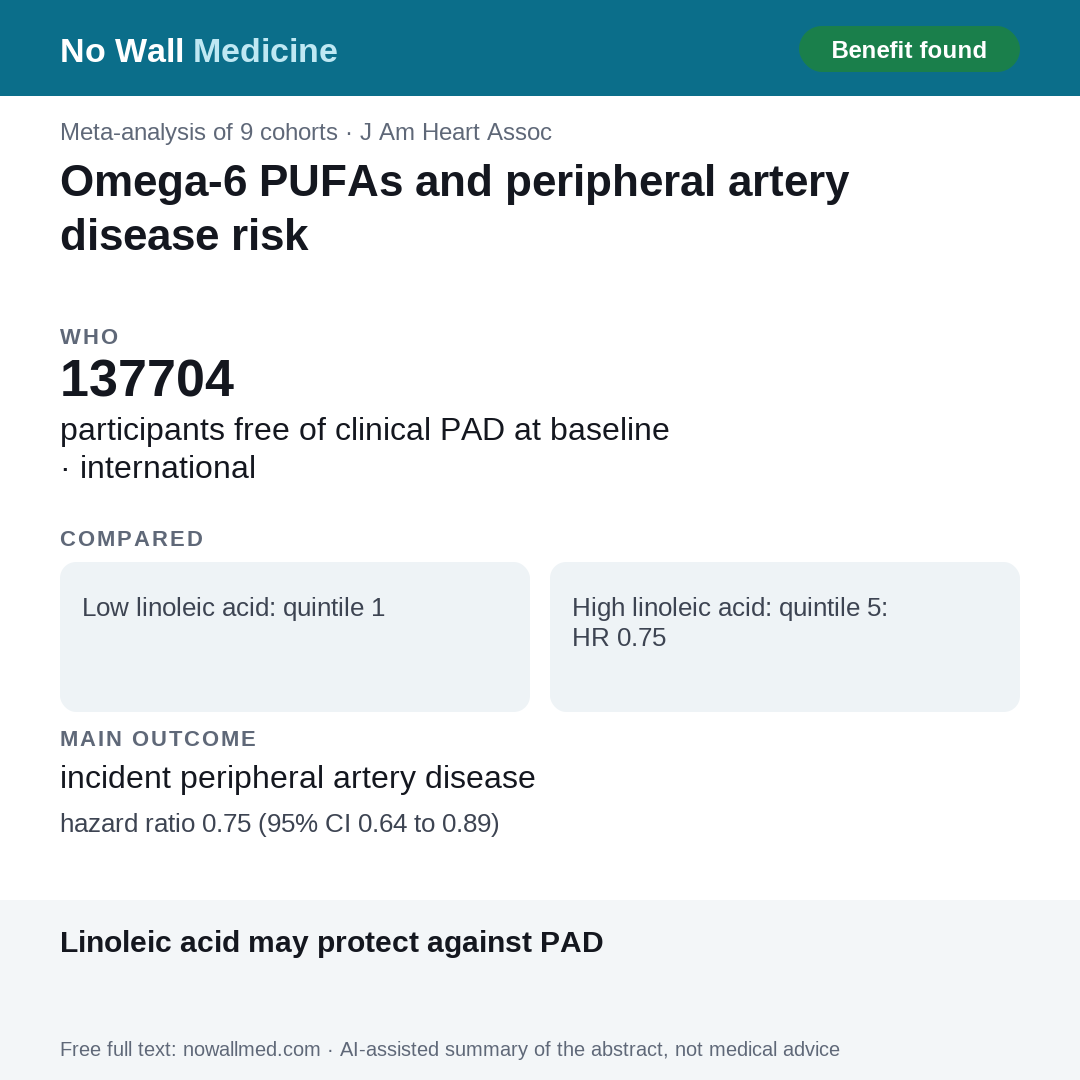
Omega-6 Polyunsaturated Fatty Acids and Peripheral Artery Disease: An Individual Participant-Level Analysis of 9 International Prospective Studies
Meta-analysis of 9 cohortsBenefit found
Omega-6 PUFAs and peripheral artery disease risk
Who
137704
participants free of clinical PAD at baseline · international
Compared
Low linoleic acid: quintile 1
High linoleic acid: quintile 5: HR 0.75
Main outcome
incident peripheral artery disease
Result: hazard ratio 0.75 (95% CI 0.64 to 0.89)
Bottom line: Linoleic acid may protect against PAD
J Am Heart Assoc · 2026-10-10Download image
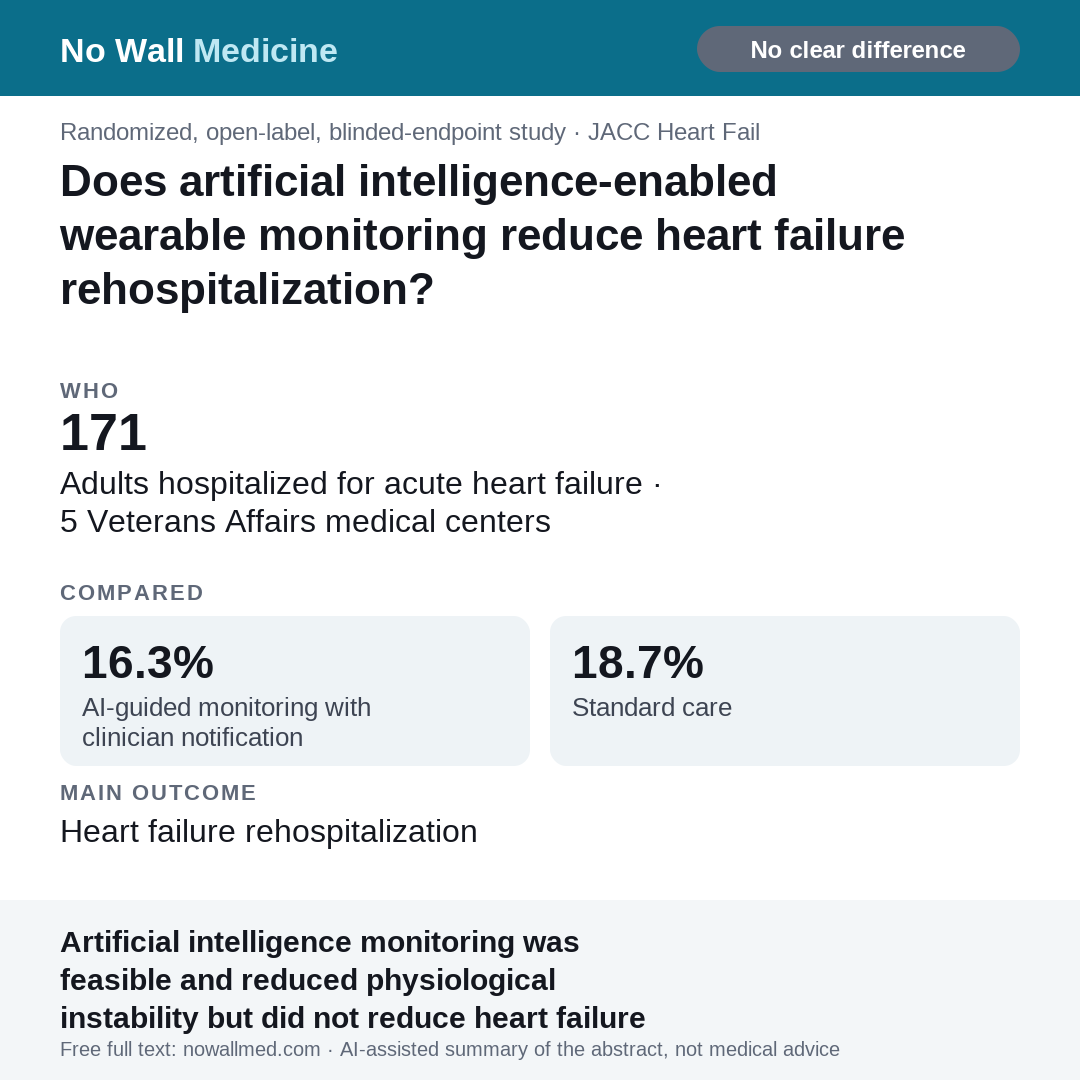
Artificial Intelligence-Enabled Detection and Management of Physiological Instability in Heart Failure: Results of the Randomized LINK-HF2 Trial
Randomized, open-label, blinded-endpoint studyNo clear difference
Does artificial intelligence-enabled wearable monitoring reduce heart failure rehospitalization?
Who
171
Adults hospitalized for acute heart failure · 5 Veterans Affairs medical centers
Compared
16.3%AI-guided monitoring with clinician notification
18.7%Standard care
Main outcome
Heart failure rehospitalization
Result: hazard ratio 0.90 (95% CI 0.43-1.84)
Bottom line: Artificial intelligence monitoring was feasible and reduced physiological instability but did not reduce heart failure rehospitalization.
JACC Heart Fail · 2026-10-09Download image
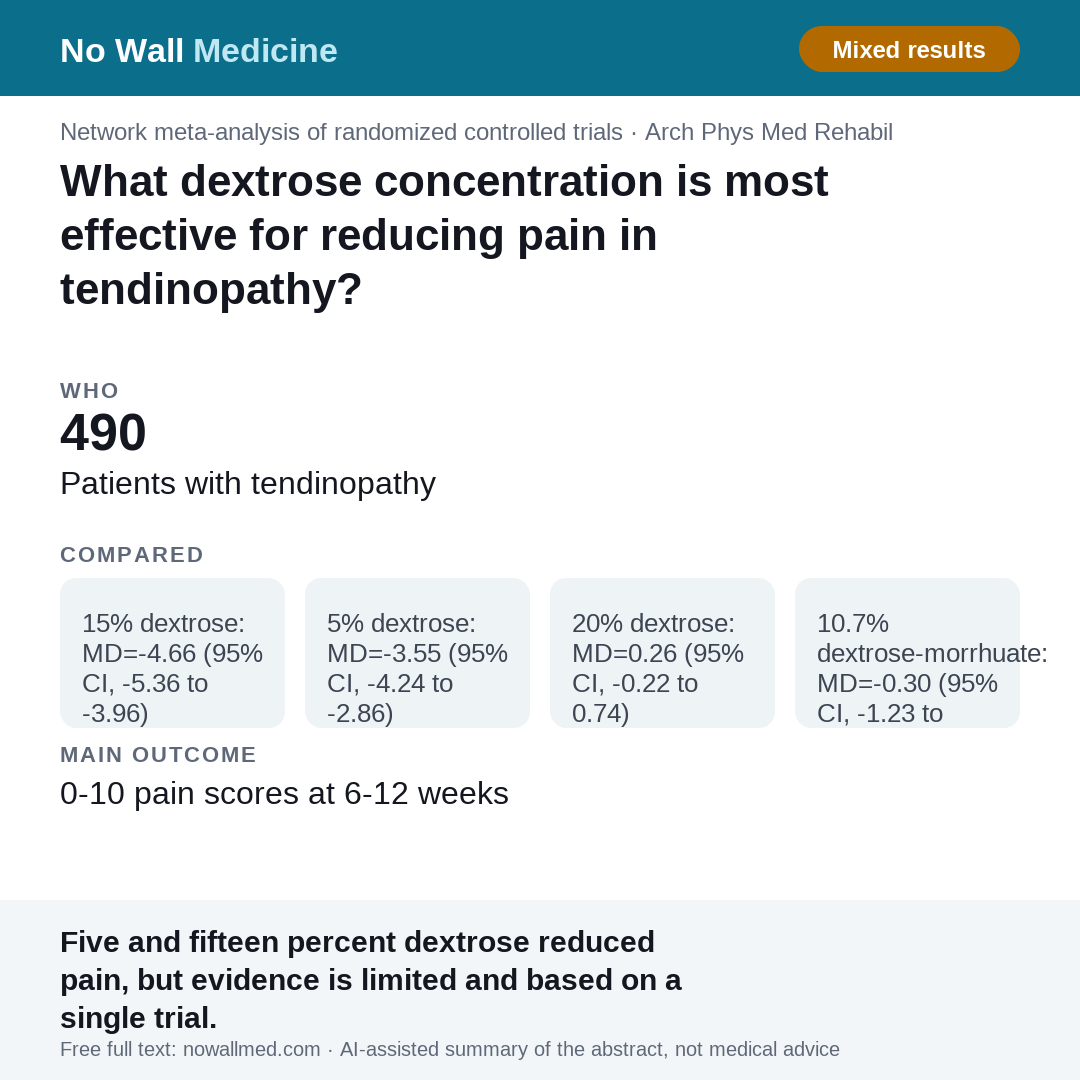
Optimal Dextrose Concentration for Prolotherapy in Tendinopathy: A Systematic Review and Network Meta-Analysis of Randomized Controlled Trials
Network meta-analysis of randomized controlled trialsMixed results
What dextrose concentration is most effective for reducing pain in tendinopathy?
Who
490
Patients with tendinopathy
Compared
15% dextrose: MD=-4.66 (95% CI, -5.36 to -3.96)
5% dextrose: MD=-3.55 (95% CI, -4.24 to -2.86)
20% dextrose: MD=0.26 (95% CI, -0.22 to 0.74)
10.7% dextrose-morrhuate: MD=-0.30 (95% CI, -1.23 to 0.63)
Main outcome
0-10 pain scores at 6-12 weeks
Bottom line: Five and fifteen percent dextrose reduced pain, but evidence is limited and based on a single trial.
Limitation: Evidence is limited, certainty is low to very low, and results may reflect differences in tendon site or schedule.
Arch Phys Med Rehabil · 2026-10-09Download image
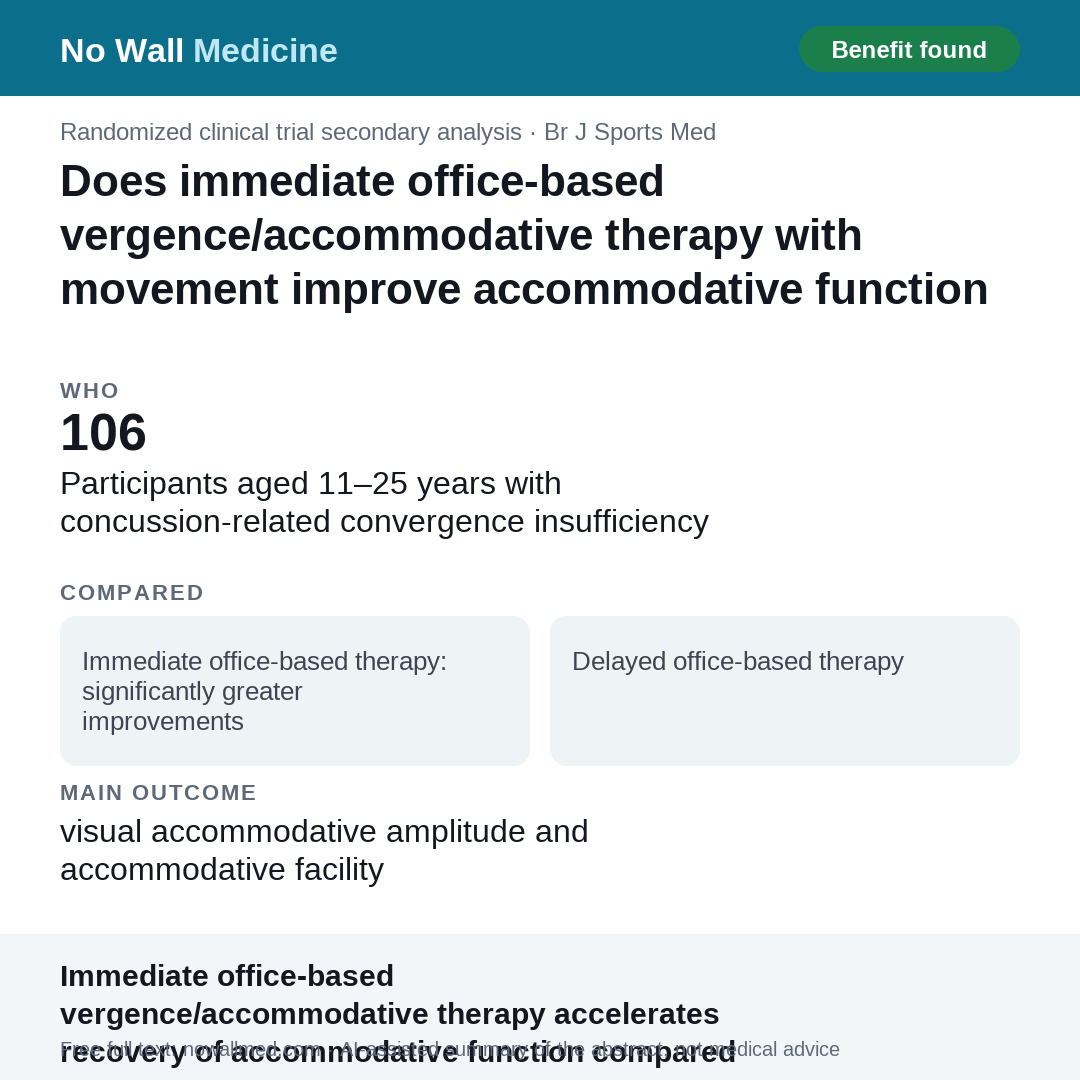
Effectiveness of office-based vergence/accommodative therapy with movement for accommodative dysfunction in concussion-related convergence insufficiency: a secondary analysis of the CONCUSS randomised clinical trial
Randomized clinical trial secondary analysisBenefit found
Does immediate office-based vergence/accommodative therapy with movement improve accommodative function in concussion-related convergence insufficiency?
Who
106
Participants aged 11–25 years with concussion-related convergence insufficiency
Compared
Immediate therapy: 86% achieved resolution
Delayed therapy: 28% achieved resolution
Main outcome
Accommodative amplitude, accommodative facility, and resolution of insufficiency
Bottom line: Immediate therapy accelerates recovery of accommodative function compared to delayed treatment after concussion.
Br J Sports Med · 2026-10-09Download image
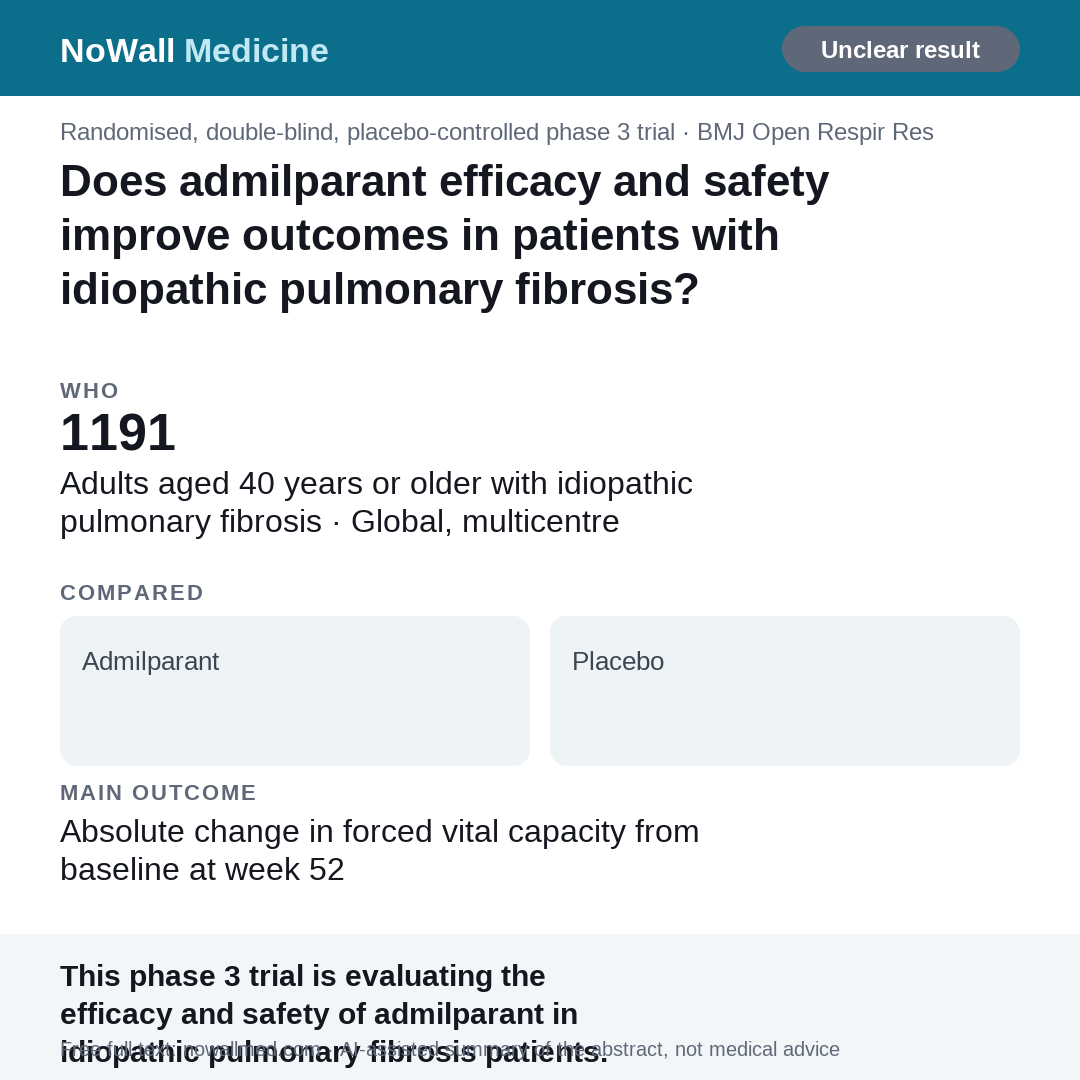
Protocol and rationale for a randomised, double-blind, placebo-controlled phase 3 trial of admilparant (BMS-986278), an oral lysophosphatidic acid receptor 1 antagonist, in patients with idiopathic pulmonary fibrosis: ALOFT-IPF
Randomised, double-blind, placebo-controlled phase 3 trialUnclear result
Does admilparant efficacy and safety improve outcomes in patients with idiopathic pulmonary fibrosis?
Who
1191
Adults aged 40 years or older with idiopathic pulmonary fibrosis · Global, multicentre
Compared
Admilparant
Placebo
Main outcome
Absolute change in forced vital capacity from baseline at week 52
Bottom line: This phase 3 trial is evaluating the efficacy and safety of admilparant in idiopathic pulmonary fibrosis patients.
BMJ Open Respir Res · 2026-10-09Download image
Imaging for diagnosis, monitoring and outcome prediction in polymyalgia rheumatica: a systematic literature review and meta-analysis informing an international task force
Systematic literature review and meta-analysisMixed results
What is the evidence for imaging in polymyalgia rheumatica diagnosis, monitoring, and outcome prediction?
Who
Patients with polymyalgia rheumatica
Compared
Imaging for diagnosis
Imaging for monitoring
Imaging for outcome prediction
Main outcome
Diagnostic, monitoring, prognostic, and technical aspects of imaging
Bottom line: Imaging can support polymyalgia rheumatica diagnosis, but evidence for monitoring and outcome prediction is sparse and heterogeneous.
Limitation: Available evidence was heterogeneous, of limited quality, and no study was graded as low risk of bias.
RMD Open · 2026-10-09Download image