Visual abstracts
New randomized trials and meta-analyses from leading journals at a glance: who was studied, what was compared, and what was found. Every paper is free to read in full.
All specialtiesCardiology 4800Oncology 4084Gastroenterology & Hepatology 1917Infectious Disease 3789Neurology 1886Psychiatry & Mental Health 2240Pulmonology 2061Critical Care 1335Endocrinology & Diabetes 2553Pediatrics 2914Surgery 2500Orthopedics & Sports Medicine 923Neurosurgery 532Cardiothoracic & Vascular Surgery 665Plastic & Reconstructive Surgery 585Nephrology 1115Rheumatology 815Hematology 1099Dermatology 619Ophthalmology 539Obstetrics & Gynecology 1661Public & Global Health 1044Radiology & Imaging 637Anesthesiology 959Urology 751ENT (Otolaryngology) 497Emergency Medicine 484Allergy & Immunology 310Geriatrics 974Family Medicine & Primary Care 538Medical Genetics & Genomics 662Pathology & Laboratory Medicine 156Physical Medicine & Rehabilitation 746Palliative Care 422Nutrition 1566Digital Health & AI 2191General Medicine 319
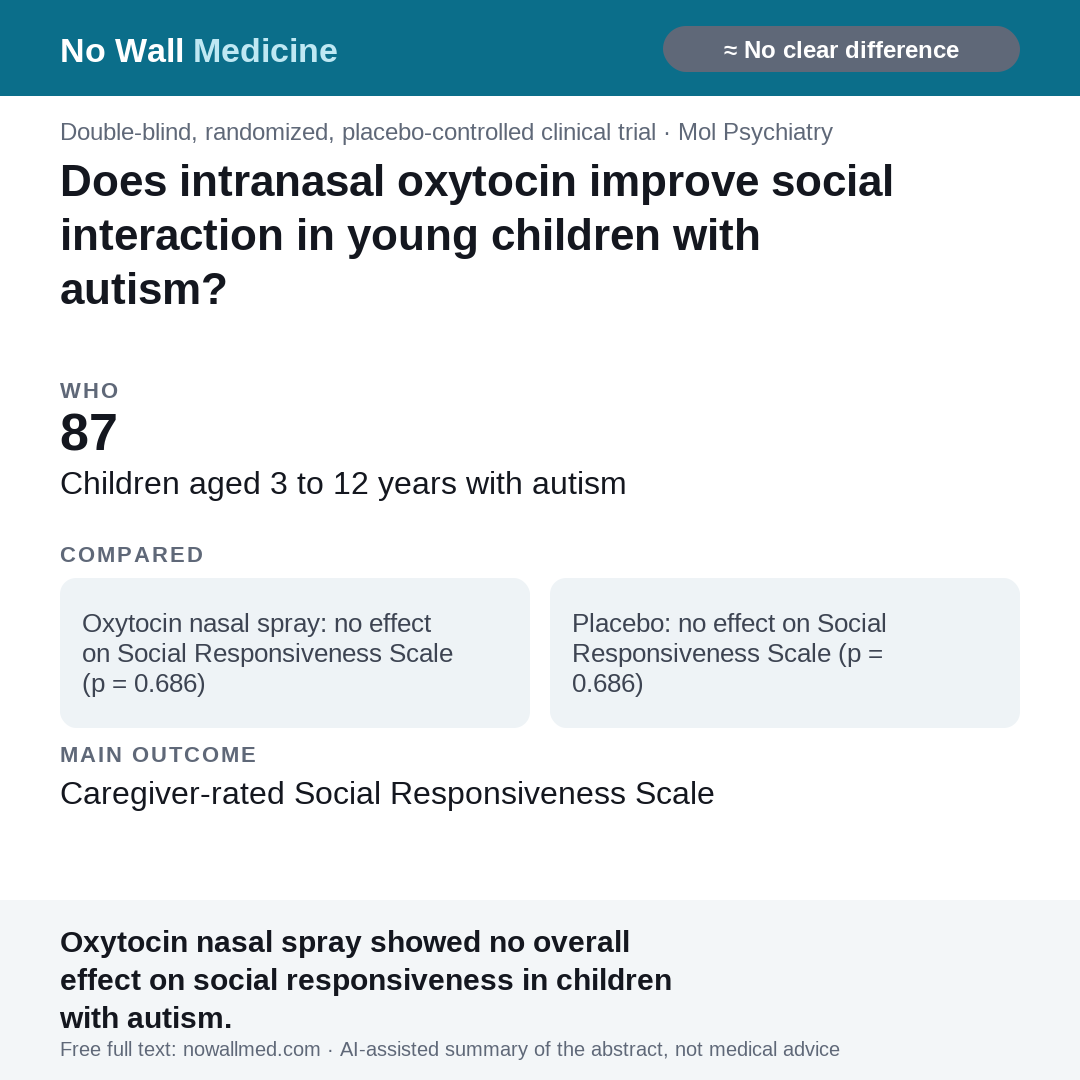
The effect of oxytocin nasal spray on social interaction in young children with autism: a randomized clinical trial
Double-blind, randomized, placebo-controlled clinical trialNo clear difference
Does intranasal oxytocin improve social interaction in young children with autism?
Who
87
Children aged 3 to 12 years with autism
Compared
Oxytocin nasal spray: no effect on Social Responsiveness Scale (p = 0.686)
Placebo: no effect on Social Responsiveness Scale (p = 0.686)
Main outcome
Caregiver-rated Social Responsiveness Scale
Bottom line: Oxytocin nasal spray showed no overall effect on social responsiveness in children with autism.
Limitation: Placebo effects were evident in the lead-in phase.
Mol Psychiatry · 2022-10-27Download image
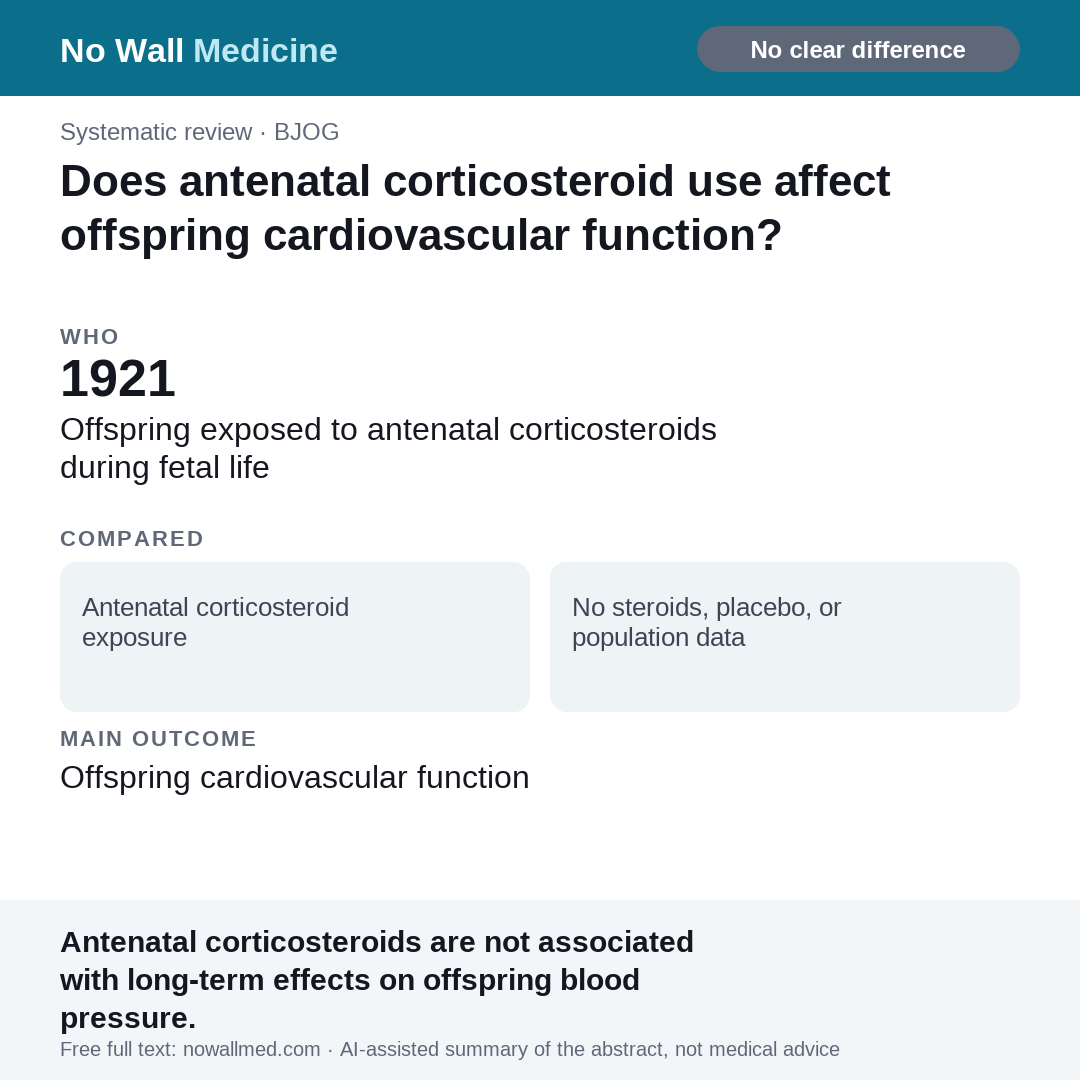
The effect of antenatal corticosteroid use on offspring cardiovascular function: A systematic review
Systematic reviewNo clear difference
Does antenatal corticosteroid use affect offspring cardiovascular function?
Who
1921
Offspring exposed to antenatal corticosteroids during fetal life
Compared
Antenatal corticosteroid exposure
No steroids, placebo, or population data
Main outcome
Offspring cardiovascular function
Bottom line: Antenatal corticosteroids are not associated with long-term effects on offspring blood pressure.
Limitation: Small number, heterogeneity, and mixed quality of studies assessing cardiac structure and function.
BJOG · 2022-10-27Download image
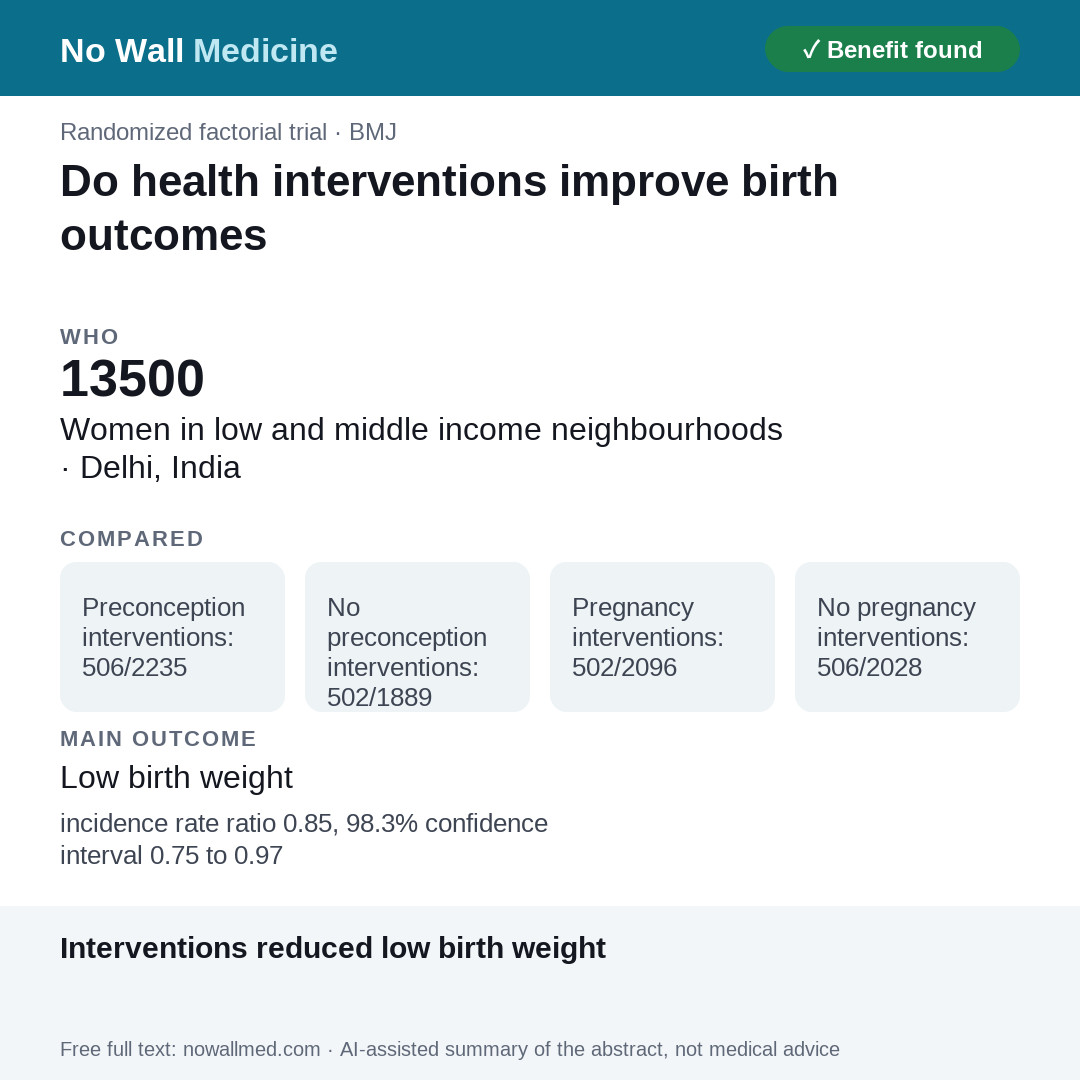
Impact of a package of health, nutrition, psychosocial support, and WaSH interventions delivered during preconception, pregnancy, and early childhood periods on birth outcomes and on linear growth at 24 months of age: factorial, individually randomised controlled trial
Randomized factorial trialBenefit found
Do health interventions improve birth outcomes
Who
13500
Women in low and middle income neighbourhoods · Delhi, India
Compared
Preconception interventions: 506/2235
No preconception interventions: 502/1889
Pregnancy interventions: 502/2096
No pregnancy interventions: 506/2028
Main outcome
Low birth weight
Result: incidence rate ratio 0.85, 98.3% confidence interval 0.75 to 0.97
Bottom line: Interventions reduced low birth weight
BMJ · 2022-10-26Download image
ESPNIC clinical practice guidelines: intravenous maintenance fluid therapy in acute and critically ill children- a systematic review and meta-analysis
Systematic review and meta-analysisUnclear result
IV maintenance fluid therapy guidelines
Who
acute and critically ill children
Compared
isotonic fluid
balanced solutions
Main outcome
IV fluid therapy outcomes
Bottom line: Use isotonic balanced solutions
Limitation: inconsistent outcome reporting
Intensive Care Med · 2022-10-26Download image

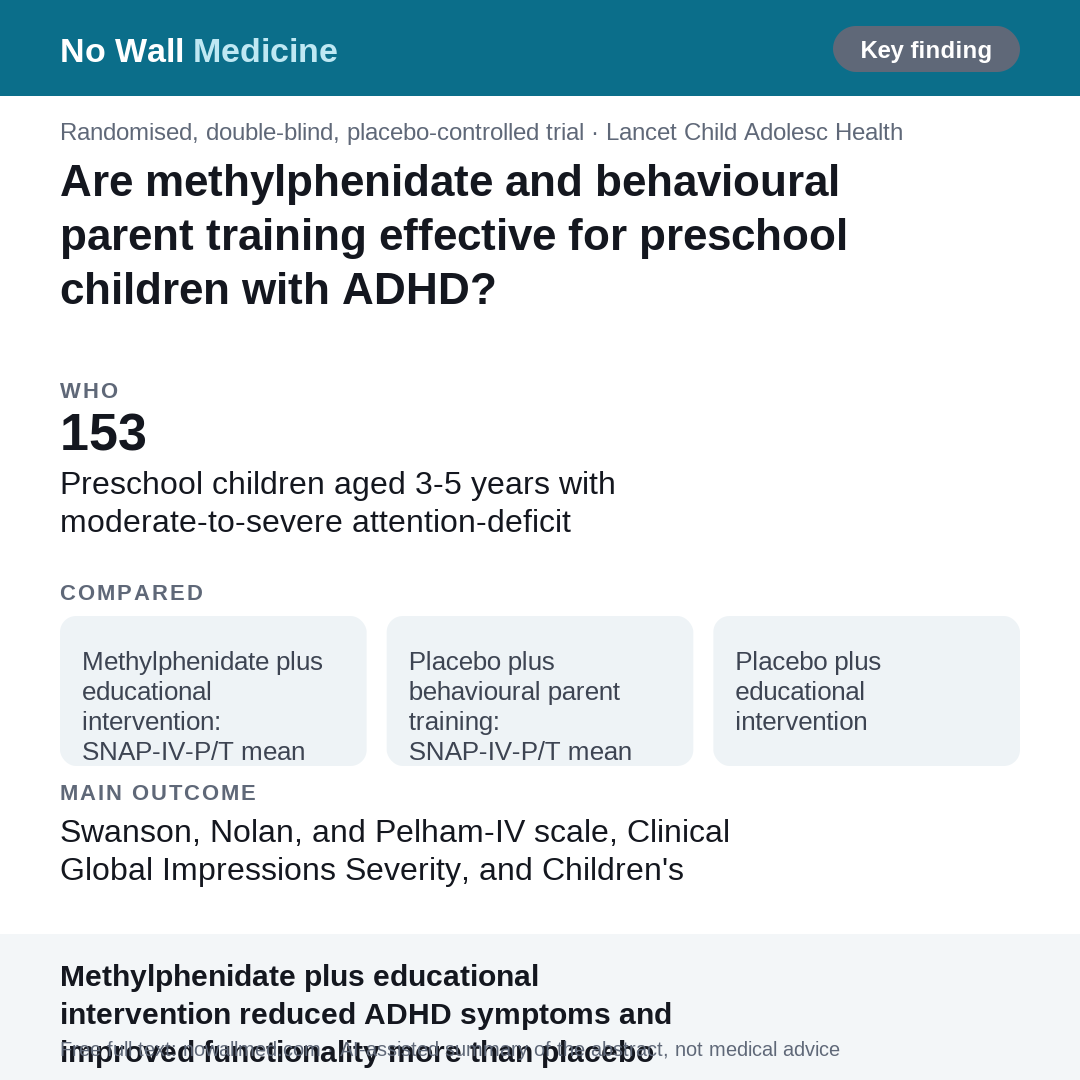
Efficacy and safety of methylphenidate and behavioural parent training for children aged 3-5 years with attention-deficit hyperactivity disorder: a randomised, double-blind, placebo-controlled, and sham behavioural parent training-controlled trial
Randomised, double-blind, placebo-controlled trialBenefit found
Are methylphenidate and behavioural parent training effective for preschool children with ADHD?
Who
153
Preschool children aged 3-5 years with moderate-to-severe attention-deficit hyperactivity disorder · São Paulo, Brazil
Compared
Methylphenidate plus educational intervention: SNAP-IV-P/T mean difference -3·93 (95% CI -7·14 to -0·73)
Placebo plus behavioural parent training: SNAP-IV-P/T mean difference -3·18 (95% CI -6·38 to 0·02)
Placebo plus educational intervention
Main outcome
Swanson, Nolan, and Pelham-IV scale, Clinical Global Impressions Severity, and Children's Global Assessment Scale
Result: endpoint mean difference -3·93 (95% CI -7·14 to -0·73) for SNAP-IV-P/T
Bottom line: Methylphenidate plus educational intervention reduced ADHD symptoms and improved functionality more than placebo plus educational intervention.
Lancet Child Adolesc Health · 2022-10-26Download image
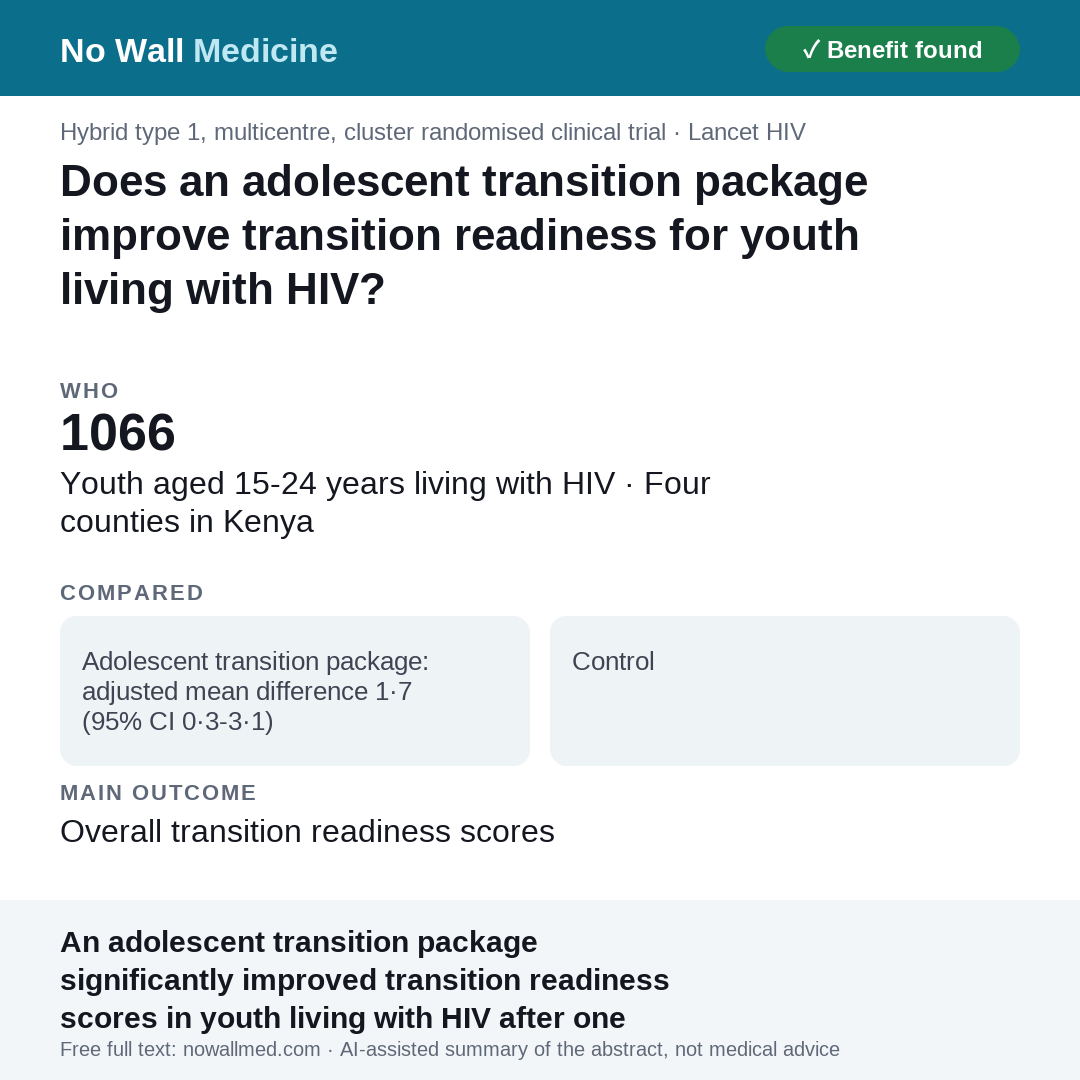
Transition to independent care for youth living with HIV: a cluster randomised clinical trial
Hybrid type 1, multicentre, cluster randomised clinical trialBenefit found
Does an adolescent transition package improve transition readiness for youth living with HIV?
Who
1066
Youth aged 15-24 years living with HIV · Four counties in Kenya
Compared
Adolescent transition package: adjusted mean difference 1·7 (95% CI 0·3-3·1)
Control
Main outcome
Overall transition readiness scores
Result: adjusted mean difference 1·7 (95% CI 0·3-3·1)
Bottom line: An adolescent transition package significantly improved transition readiness scores in youth living with HIV after one year.
Funded by: US National Institutes of Health
Lancet HIV · 2022-10-26Download image
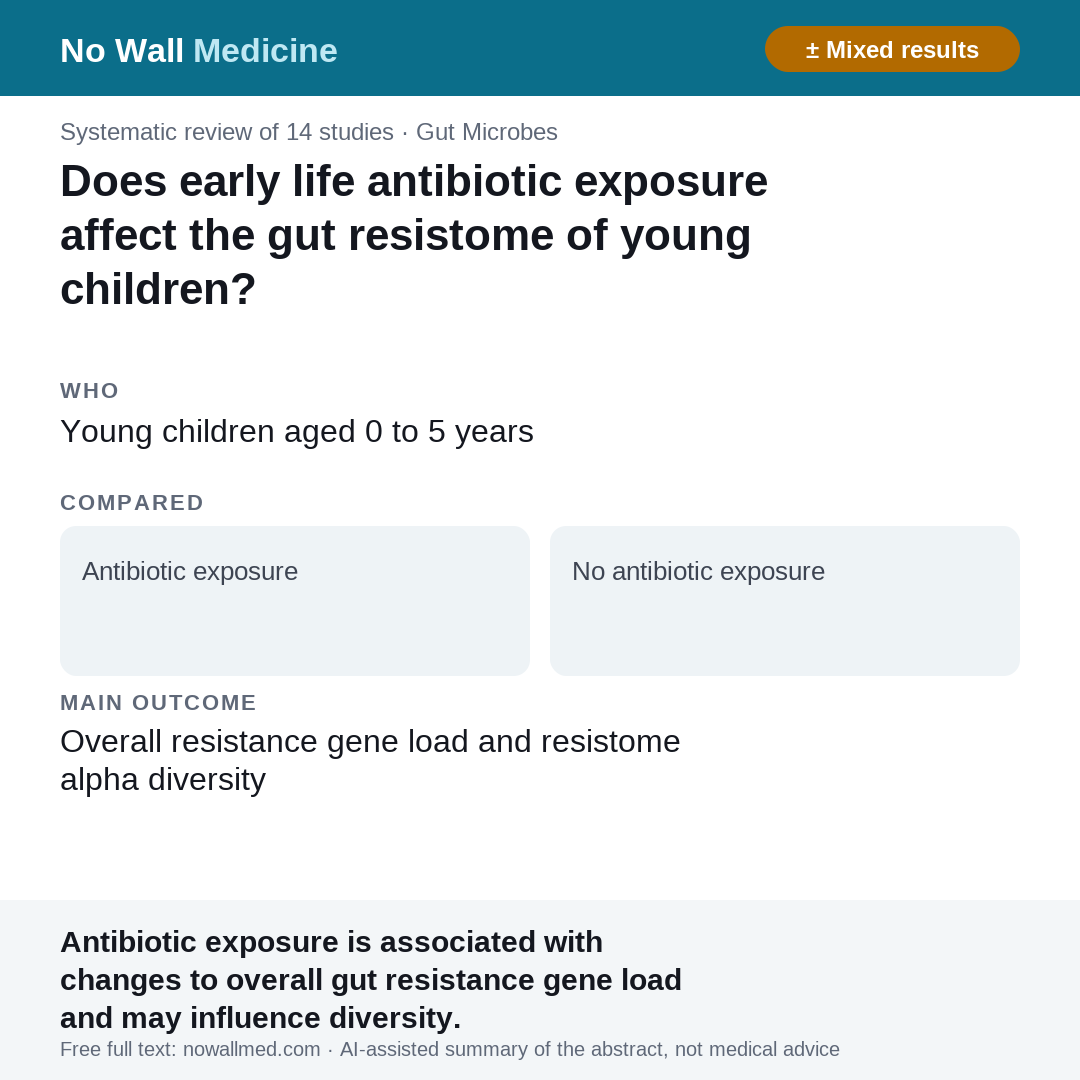
The association between early life antibiotic exposure and the gut resistome of young children: a systematic review
Systematic review of 14 studiesMixed results
Does early life antibiotic exposure affect the gut resistome of young children?
Who
Young children aged 0 to 5 years
Compared
Antibiotic exposure
No antibiotic exposure
Main outcome
Overall resistance gene load and resistome alpha diversity
Bottom line: Antibiotic exposure is associated with changes to overall gut resistance gene load and may influence diversity.
Limitation: Low or very low quality of evidence due to potential bias and confounding.
Gut Microbes · 2022-10-26Download image
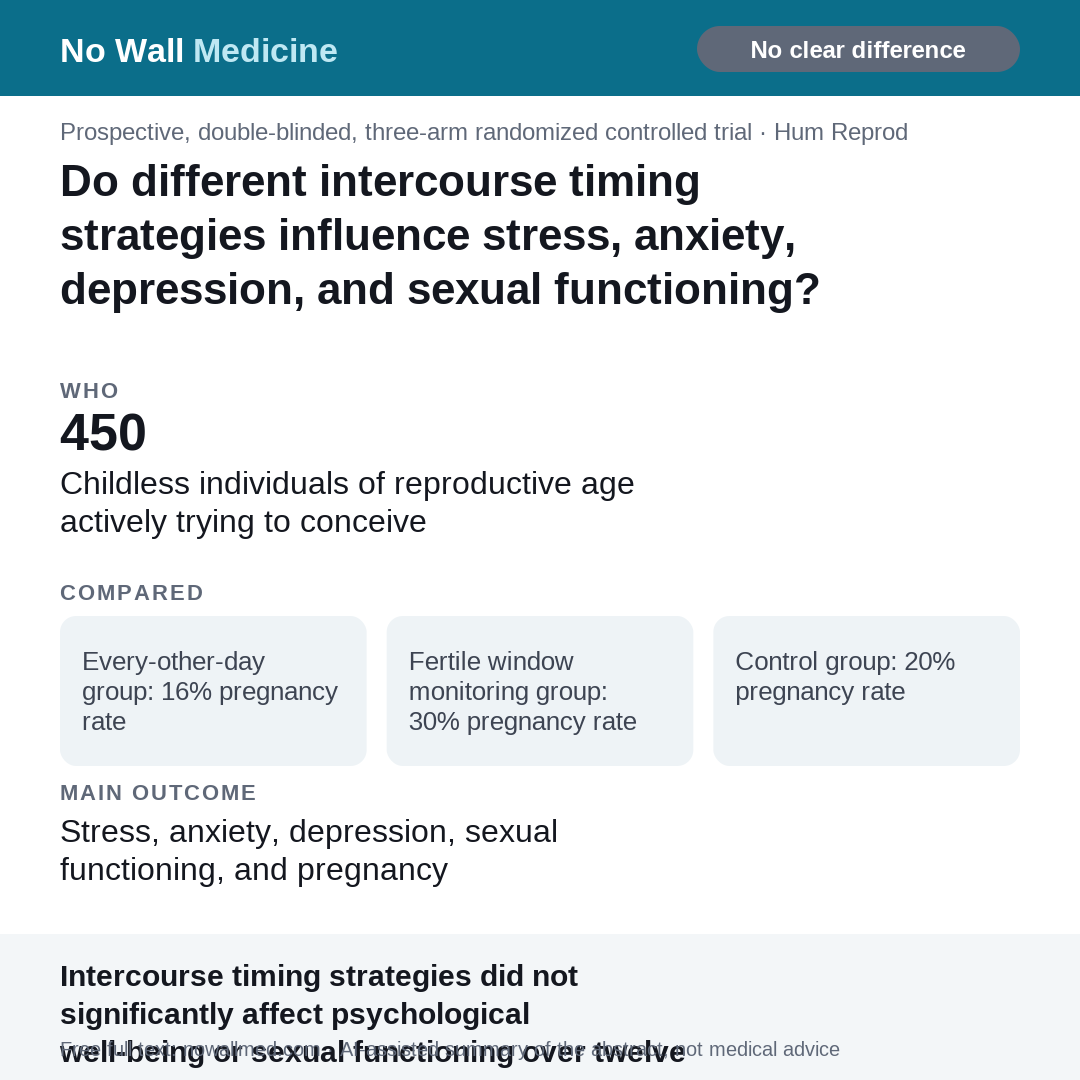
Effects of trying to conceive using an every-other-day strategy versus fertile window monitoring on stress: a 12-month randomized controlled trial
Prospective, double-blinded, three-arm randomized controlled trialNo clear difference
Do different intercourse timing strategies influence stress, anxiety, depression, and sexual functioning?
Who
450
Childless individuals of reproductive age actively trying to conceive
Compared
Every-other-day group: 16% pregnancy rate
Fertile window monitoring group: 30% pregnancy rate
Control group: 20% pregnancy rate
Main outcome
Stress, anxiety, depression, sexual functioning, and pregnancy
Bottom line: Intercourse timing strategies did not significantly affect psychological well-being or sexual functioning over twelve months.
Limitation: Potential bias as 30% met infertility criteria and other strategies might have been tried previously.
Hum Reprod · 2022-10-23Download image
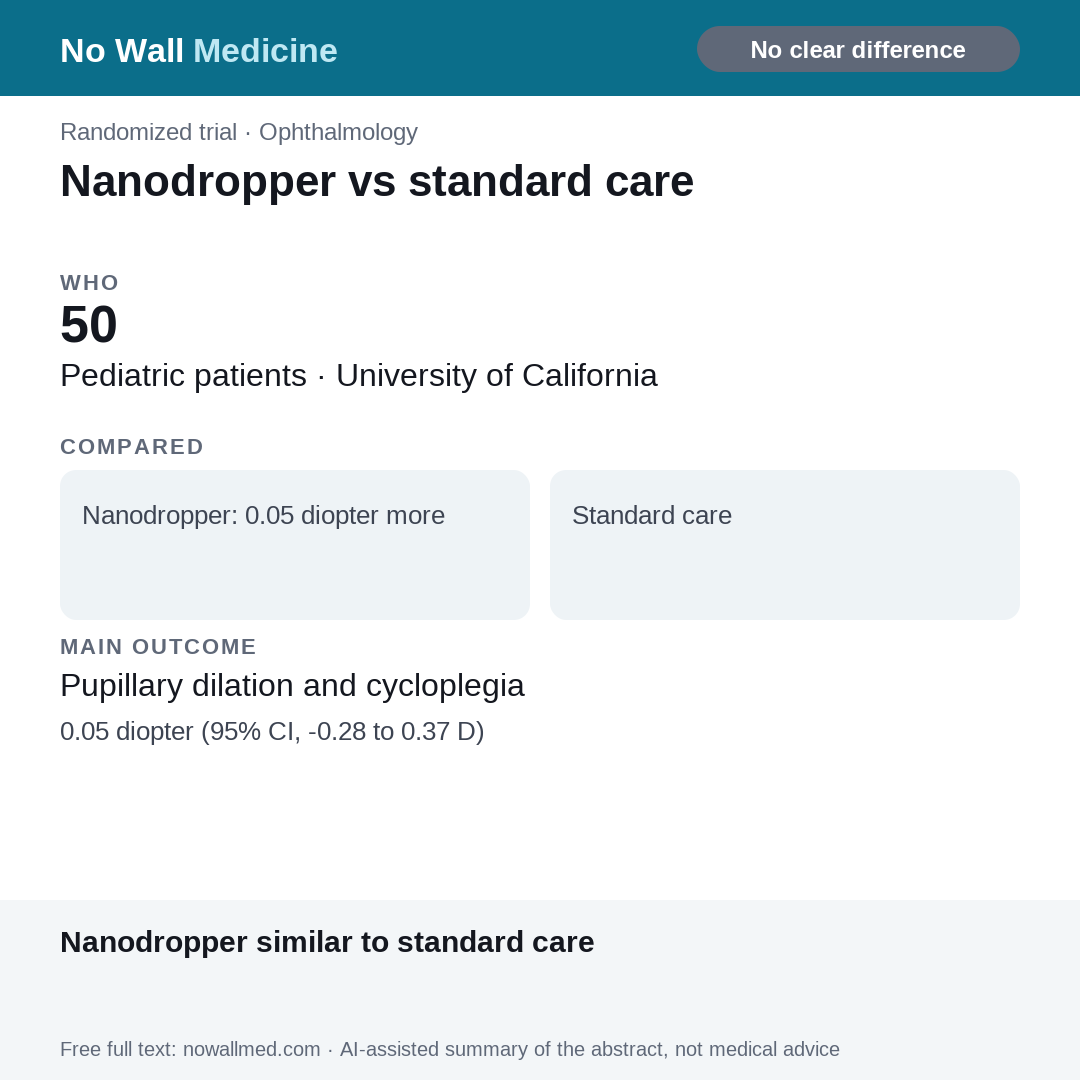
Randomized Trial to Evaluate the Efficacy of the Nanodropper Device for Pupillary Dilation and Cycloplegia in Children
Randomized trialNo clear difference
Nanodropper vs standard care
Who
50
Pediatric patients · University of California
Compared
Nanodropper: 0.05 diopter more
Standard care
Main outcome
Pupillary dilation and cycloplegia
Result: 0.05 diopter (95% CI, -0.28 to 0.37 D)
Bottom line: Nanodropper similar to standard care
Limitation: small differences not clinically significant
Ophthalmology · 2022-10-22Download image
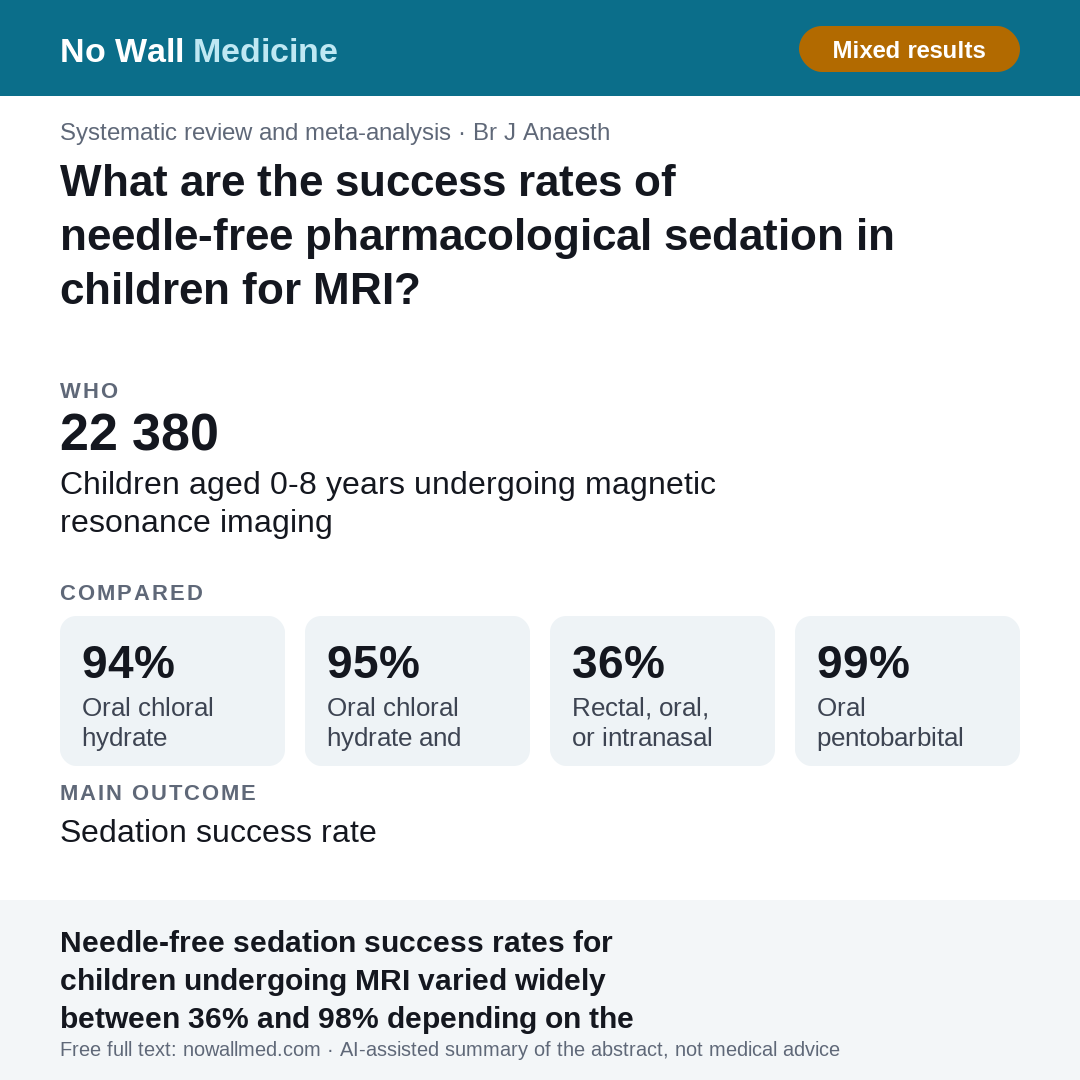
Needle-free pharmacological sedation techniques in paediatric patients for imaging procedures: a systematic review and meta-analysis
Systematic review and meta-analysisMixed results
What are the success rates of needle-free pharmacological sedation in children for MRI?
Who
22 380
Children aged 0-8 years undergoing magnetic resonance imaging
Compared
94%Oral chloral hydrate (95% confidence interval [CI]: 0.91-0.96)
95%Oral chloral hydrate and intranasal dexmedetomidine (95% CI: 0.92-0.97)
36%Rectal, oral, or intranasal midazolam (95% CI: 0.14-0.65)
99%Oral pentobarbital (95% CI: 0.90-1.00)
Main outcome
Sedation success rate
Bottom line: Needle-free sedation success rates for children undergoing MRI varied widely between 36% and 98% depending on the medication used.
Br J Anaesth · 2022-10-22Download image
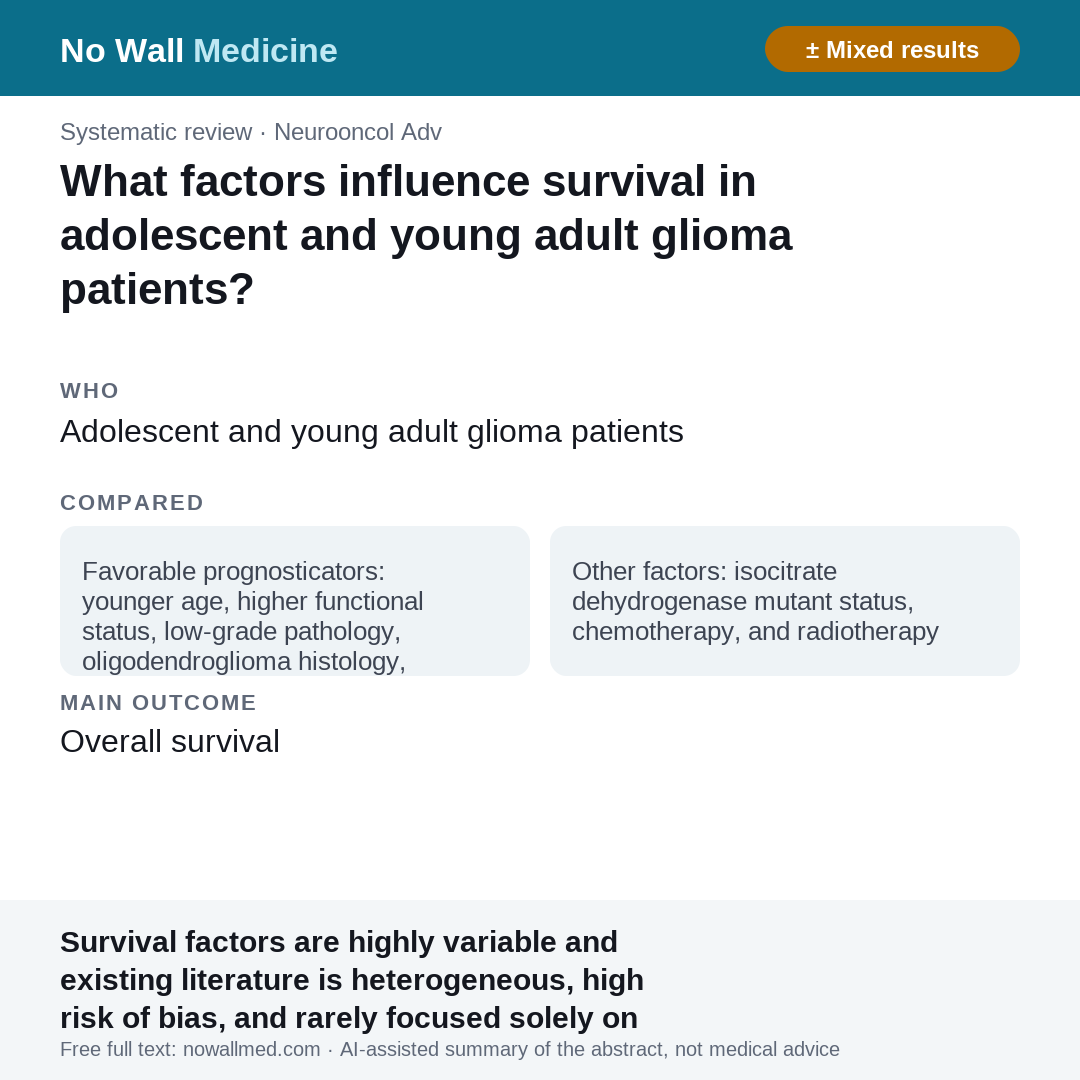
Adolescent and young adult glioma: systematic review of demographic, disease, and treatment influences on survival
Systematic reviewMixed results
What factors influence survival in adolescent and young adult glioma patients?
Who
40
Adolescent and young adult glioma patients
Compared
Favorable prognosticators: younger age, higher functional status, low-grade pathology, oligodendroglioma histology, increased surgical resection
Other factors: isocitrate dehydrogenase mutant status, chemotherapy, and radiotherapy
Main outcome
Overall survival
Bottom line: Survival factors are highly variable and existing literature is heterogeneous, high risk of bias, and rarely focused solely on AYA.
Limitation: High risk of bias in thirty-five studies and many included older adults.
Neurooncol Adv · 2022-10-22Download image
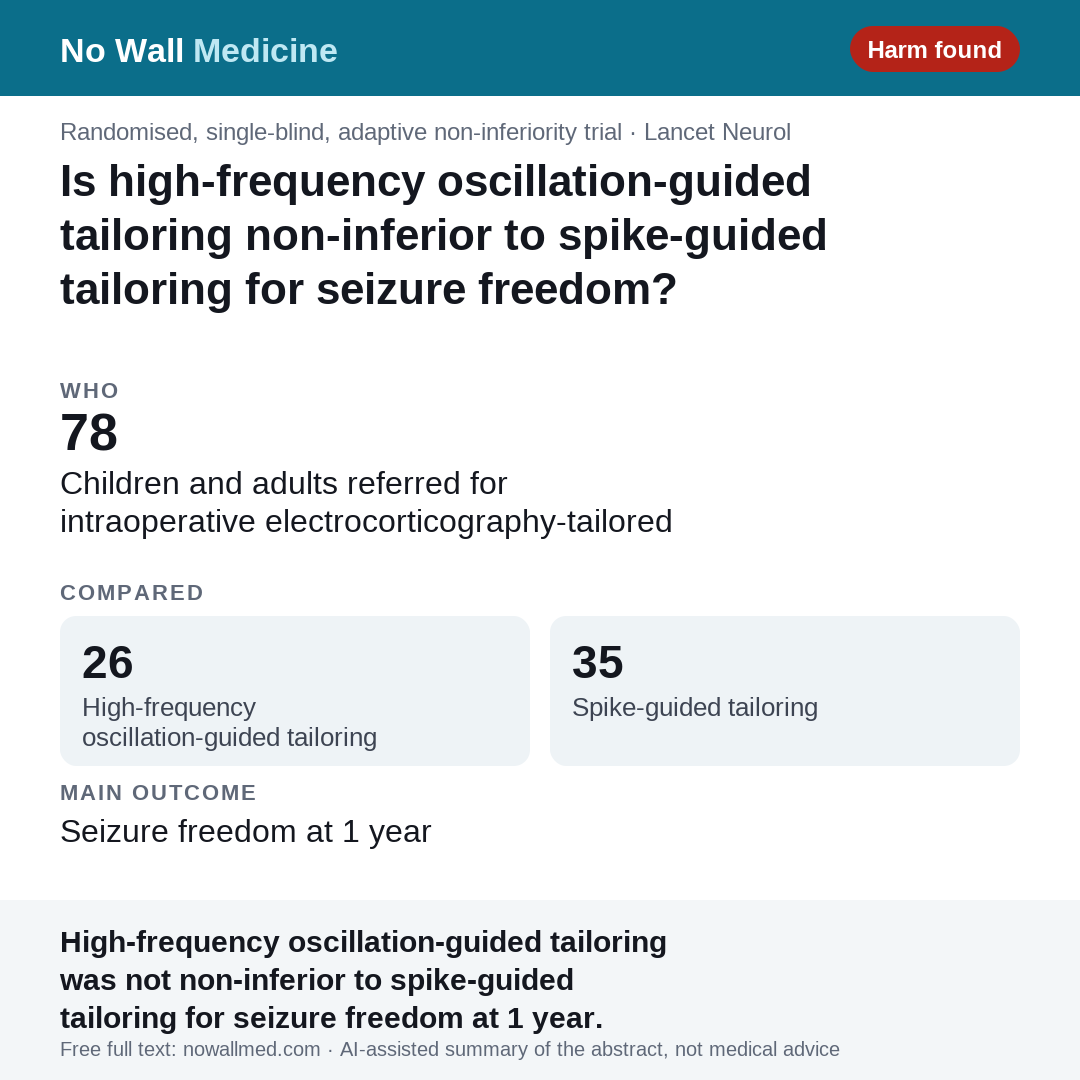
Intraoperative electrocorticography using high-frequency oscillations or spikes to tailor epilepsy surgery in the Netherlands (the HFO trial): a randomised, single-blind, adaptive non-inferiority trial
Randomised, single-blind, adaptive non-inferiority trialHarm found
Is high-frequency oscillation-guided tailoring non-inferior to spike-guided tailoring for seizure freedom?
Who
78
Children and adults referred for intraoperative electrocorticography-tailored epilepsy surgery · Netherlands, one epilepsy surgery centre
Compared
26High-frequency oscillation-guided tailoring (67%)
35Spike-guided tailoring (90%)
Main outcome
Seizure freedom at 1 year
Result: risk difference -23·5%, 90% CI -39·1 to -7·9
Bottom line: High-frequency oscillation-guided tailoring was not non-inferior to spike-guided tailoring for seizure freedom at 1 year.
Funded by: UMCU Alexandre Suerman, EpilepsieNL, RMI Talent Fellowship, European Research Council, and MING Fund
Lancet Neurol · 2022-10-21Download image
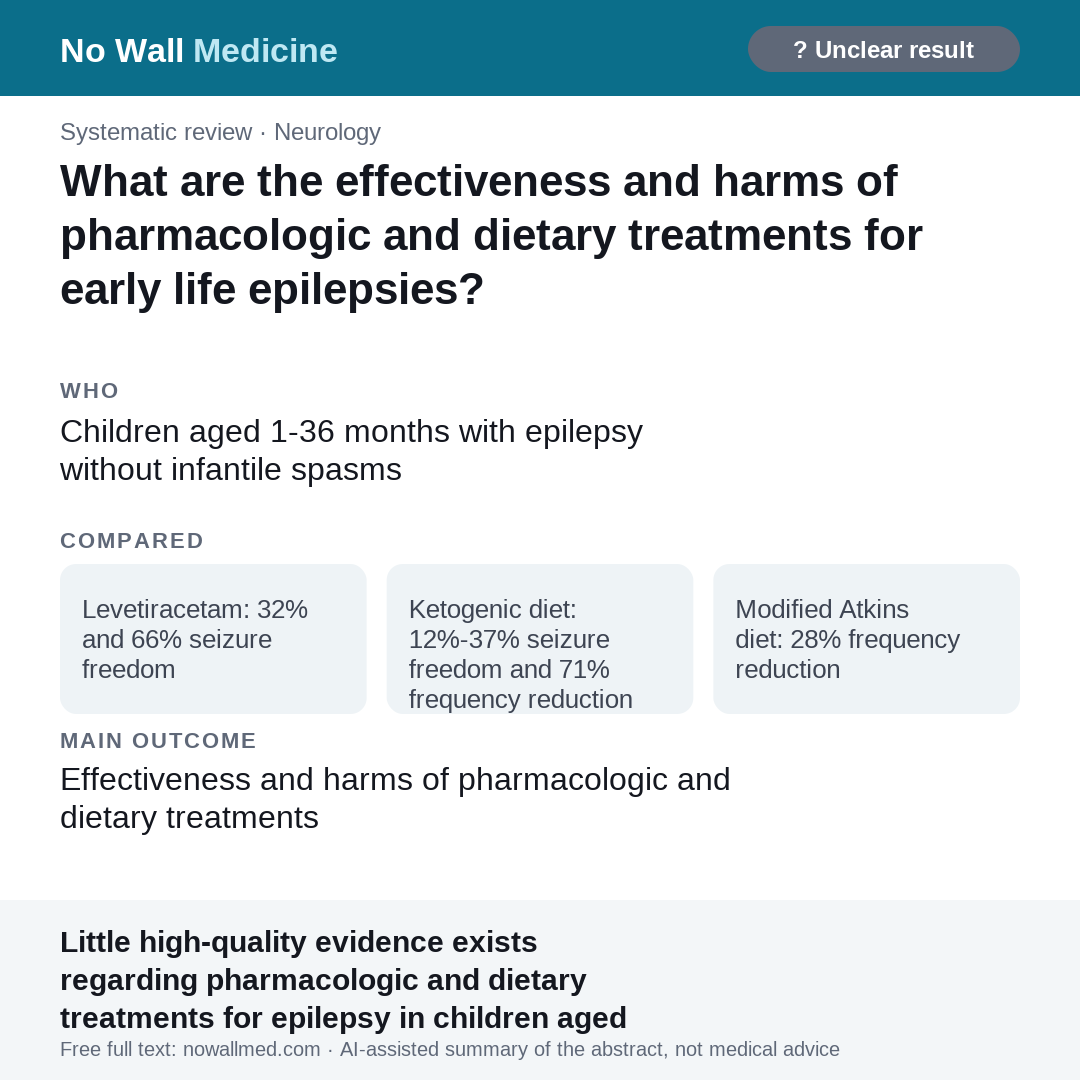
Pharmacologic and Dietary Treatments for Epilepsies in Children Aged 1-36 Months: A Systematic Review
Systematic reviewUnclear result
What are the effectiveness and harms of pharmacologic and dietary treatments for early life epilepsies?
Who
Children aged 1-36 months with epilepsy without infantile spasms
Compared
Levetiracetam: 32% and 66% seizure freedom
Ketogenic diet: 12%-37% seizure freedom and 71% frequency reduction
Modified Atkins diet: 28% frequency reduction
Main outcome
Effectiveness and harms of pharmacologic and dietary treatments
Bottom line: Little high-quality evidence exists regarding pharmacologic and dietary treatments for epilepsy in children aged 1-36 months.
Neurology · 2022-10-21Download image
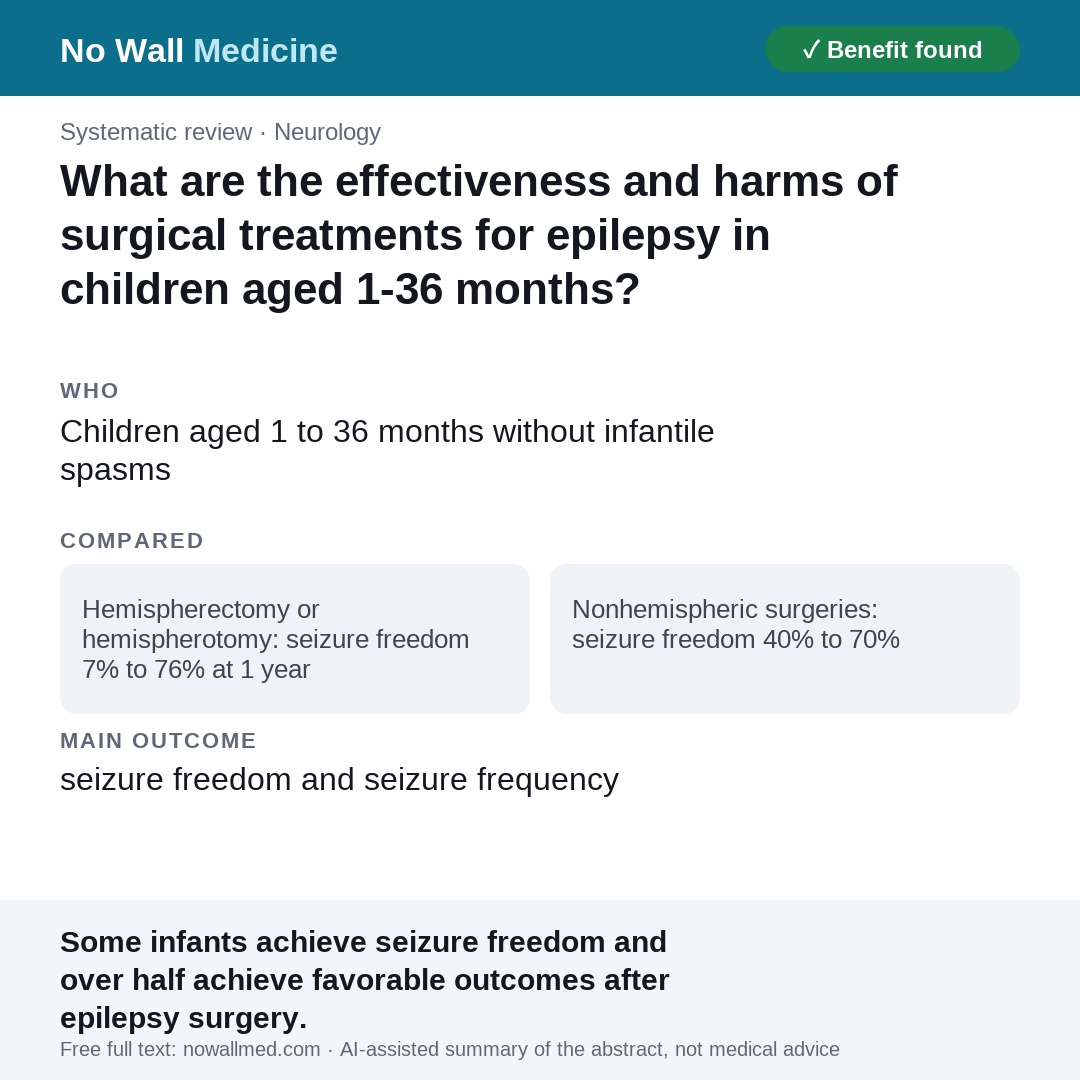
Surgical Treatments for Epilepsies in Children Aged 1-36 Months: A Systematic Review
Systematic reviewBenefit found
What are the effectiveness and harms of surgical treatments for epilepsy in children aged 1-36 months?
Who
Children aged 1 to 36 months without infantile spasms
Compared
Hemispherectomy or hemispherotomy: seizure freedom 7% to 76% at 1 year
Nonhemispheric surgeries: seizure freedom 40% to 70%
Main outcome
seizure freedom and seizure frequency
Bottom line: Some infants achieve seizure freedom and over half achieve favorable outcomes after epilepsy surgery.
Limitation: Existing evidence remains sparse and low quality.
Neurology · 2022-10-21Download image
A systematic review of in-patient psychiatric care for people with intellectual disabilities and/or autism: effectiveness, patient safety and experience
Systematic reviewBenefit found
What is the effectiveness, safety, and experience of in-patient psychiatric care for this population?
Who
106
People with intellectual disabilities and/or autism
Compared
Specialist intellectual disability in-patient services: fewer out-of-area discharges and lower seclusion rates
General mental health in-patient services
Main outcome
treatment effect, patient safety, and patient experience
Bottom line: In-patient admission is associated with improvements in mental health, social functioning, behaviour, and forensic risk.
BJPsych Open · 2022-10-21Download image

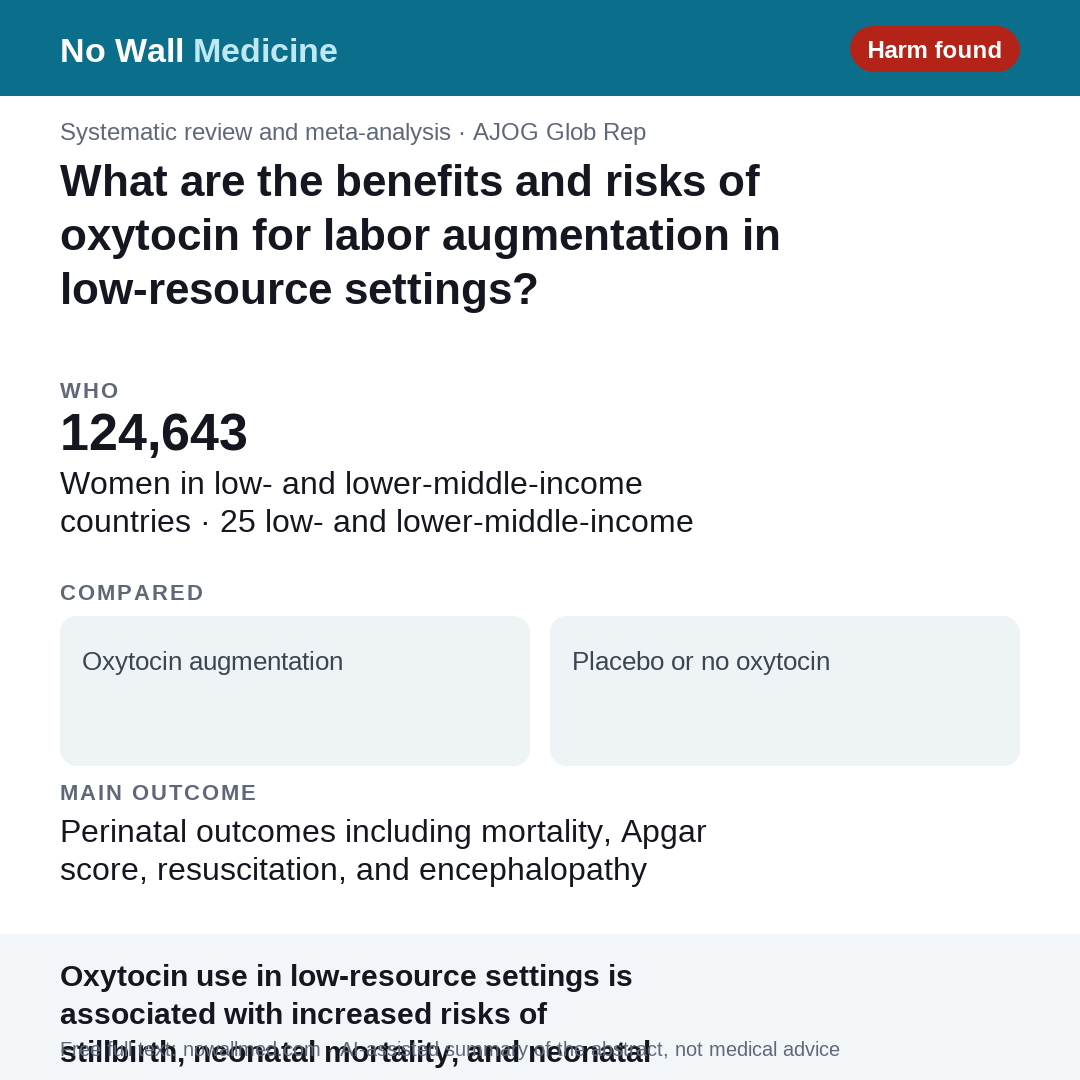
Labor augmentation with oxytocin in low- and lower-middle-income countries: a systematic review and meta-analysis
Systematic review and meta-analysisHarm found
What are the benefits and risks of oxytocin for labor augmentation in low-resource settings?
Who
124,643
Women in low- and lower-middle-income countries · 25 low- and lower-middle-income countries
Compared
Oxytocin augmentation
Placebo or no oxytocin
Main outcome
Perinatal outcomes including mortality, Apgar score, resuscitation, and encephalopathy
Result: relative risk 1.45 (95% confidence interval, 1.02-2.06) for stillbirth and day-1 neonatal mortality
Bottom line: Oxytocin use in low-resource settings is associated with increased risks of stillbirth, neonatal mortality, and neonatal encephalopathy.
Limitation: The finding is limited by confounding by indication.
AJOG Glob Rep · 2022-10-21Download image
Safety and immunogenicity of an Ad26.ZEBOV booster dose in children previously vaccinated with the two-dose heterologous Ad26.ZEBOV and MVA-BN-Filo Ebola vaccine regimen: an open-label, non-randomised, phase 2 trial
Open-label, non-randomised, phase 2 trialEarly signal
Is an Ad26.ZEBOV booster safe and immunogenic in children previously vaccinated with Ad26.ZEBOV and MVA-BN-Filo?
Who
50
Healthy children aged 1-11 years previously vaccinated with Ad26.ZEBOV and MVA-BN-Filo · One clinic in Kambia Town, Sierra Leone
Compared
Ad26.ZEBOV booster: 28 561 ELISA units per mL at 7 days
Ad26.ZEBOV booster: 64 690 ELISA units per mL at 21 days
Main outcome
Safety and Ebola virus glycoprotein-specific IgG binding antibody geometric mean concentration
Bottom line: An Ad26.ZEBOV booster was well tolerated and induced a rapid, robust increase in Ebola virus binding antibodies in children.
Funded by: Innovative Medicines Initiative 2 Joint Undertaking
Lancet Infect Dis · 2022-10-20Download image

Evaluation of mRNA-1273 Vaccine in Children 6 Months to 5 Years of Age
Randomized trialBenefit found
Is mRNA-1273 vaccine safe in young children?
Who
3040, 1762, 1008, 593
Children 6 months to 5 years of age
Compared
mRNA-1273
Placebo
Main outcome
Covid-19
Bottom line: mRNA-1273 vaccine is safe in young children
Funded by: Biomedical Advanced Research
NEJM · 2022-10-19Download image

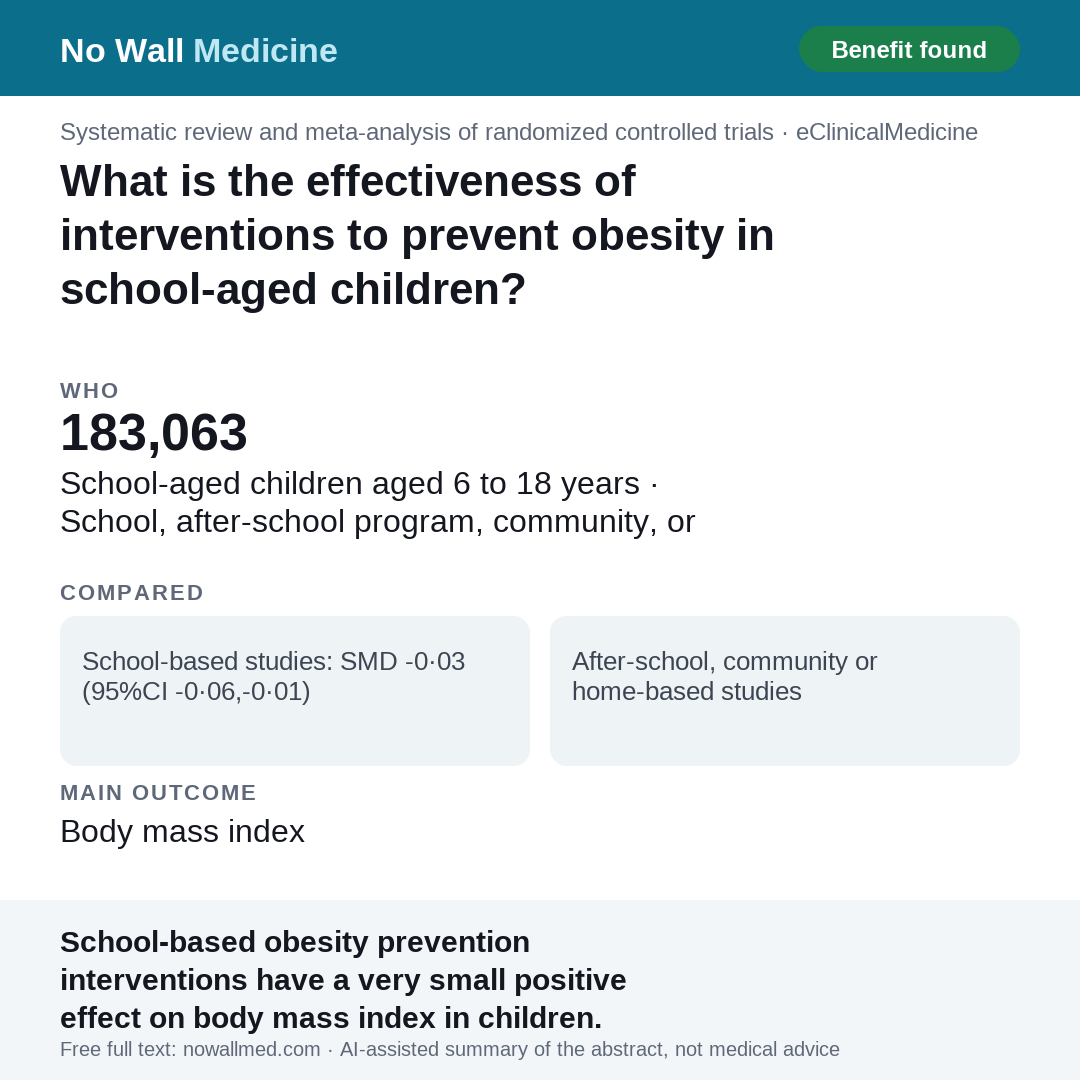
Interventions to prevent obesity in school-aged children 6-18 years: An update of a Cochrane systematic review and meta-analysis including studies from 2015-2021
Systematic review and meta-analysis of randomized controlled trialsBenefit found
What is the effectiveness of interventions to prevent obesity in school-aged children?
Who
183,063
School-aged children aged 6 to 18 years · School, after-school program, community, or home settings
Compared
School-based studies: SMD -0·03 (95%CI -0·06,-0·01)
After-school, community or home-based studies
Main outcome
Body mass index
Result: SMD -0·03 (95%CI -0·06,-0·01)
Bottom line: School-based obesity prevention interventions have a very small positive effect on body mass index in children.
Funded by: National Health and Medical Research Council, Australia
eClinicalMedicine · 2022-10-19Download image
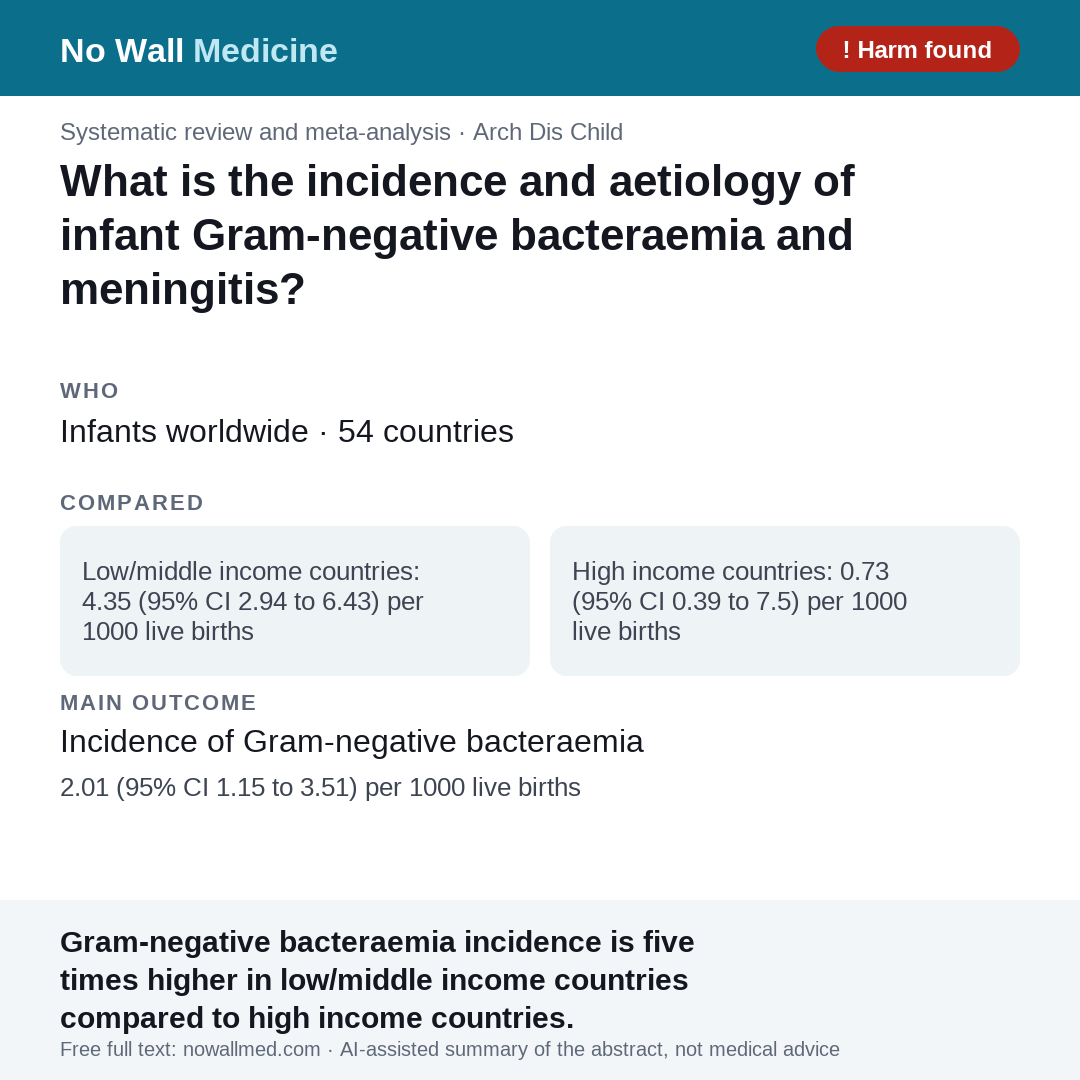
Incidence and aetiology of infant Gram-negative bacteraemia and meningitis: systematic review and meta-analysis
Systematic review and meta-analysisHarm found
What is the incidence and aetiology of infant Gram-negative bacteraemia and meningitis?
Who
152
Infants worldwide · 54 countries
Compared
Low/middle income countries: 4.35 (95% CI 2.94 to 6.43) per 1000 live births
High income countries: 0.73 (95% CI 0.39 to 7.5) per 1000 live births
Main outcome
Incidence of Gram-negative bacteraemia
Result: 2.01 (95% CI 1.15 to 3.51) per 1000 live births
Bottom line: Gram-negative bacteraemia incidence is five times higher in low/middle income countries compared to high income countries.
Arch Dis Child · 2022-10-19Download image