Visual abstracts
New randomized trials and meta-analyses from leading journals at a glance: who was studied, what was compared, and what was found. Every paper is free to read in full.
All specialtiesCardiology 4877Oncology 4138Gastroenterology & Hepatology 1942Infectious Disease 3837Neurology 1905Psychiatry & Mental Health 2273Pulmonology 2143Critical Care 1365Endocrinology & Diabetes 2580Pediatrics 2980Surgery 2559Orthopedics & Sports Medicine 931Neurosurgery 537Cardiothoracic & Vascular Surgery 674Plastic & Reconstructive Surgery 591Nephrology 1133Rheumatology 823Hematology 1109Dermatology 621Ophthalmology 543Obstetrics & Gynecology 1686Public & Global Health 1058Radiology & Imaging 648Anesthesiology 986Urology 764ENT (Otolaryngology) 503Emergency Medicine 511Allergy & Immunology 313Geriatrics 981Family Medicine & Primary Care 562Medical Genetics & Genomics 676Pathology & Laboratory Medicine 159Physical Medicine & Rehabilitation 757Palliative Care 444Nutrition 1588Digital Health & AI 2201General Medicine 321
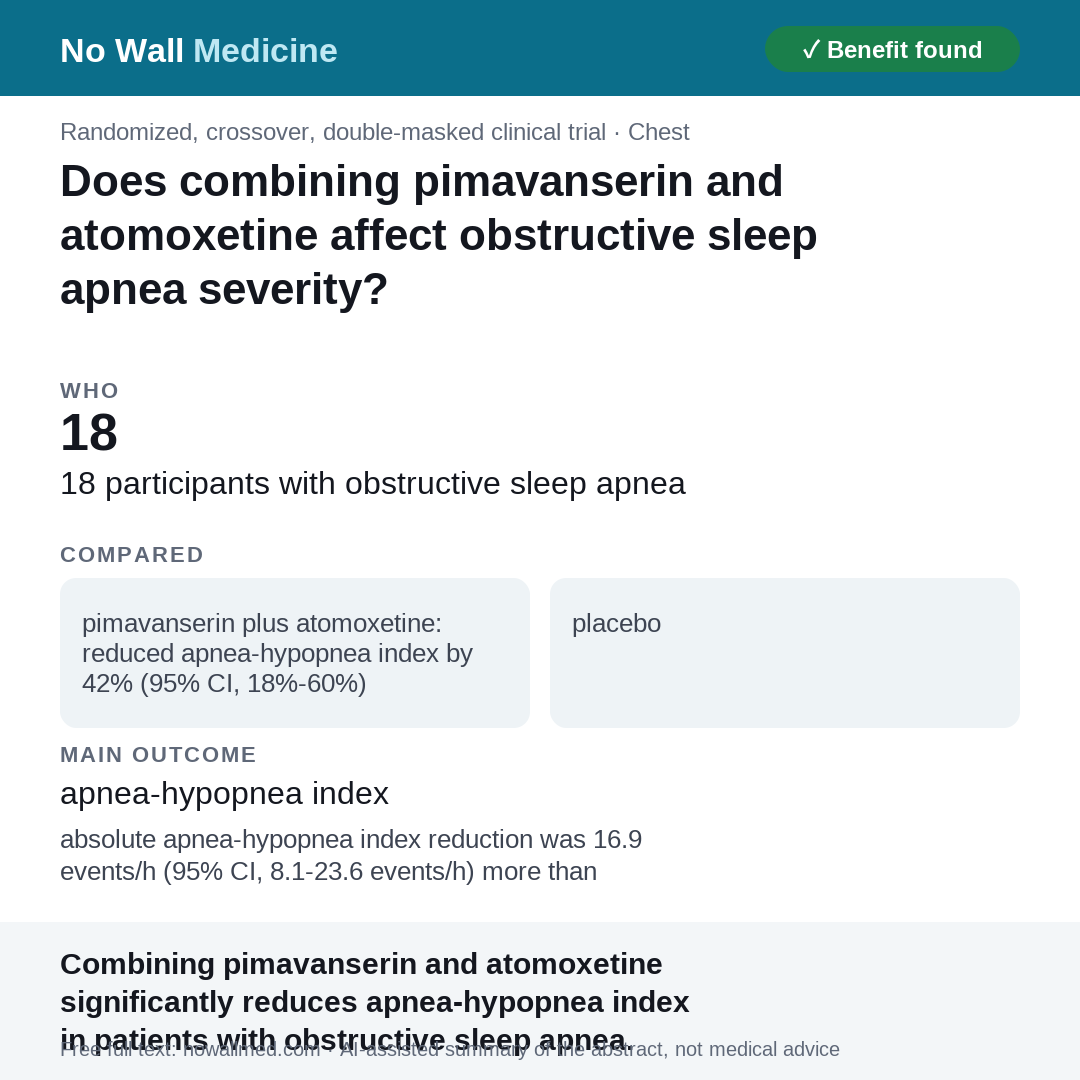
Effects of the Combination of Pimavanserin and Atomoxetine on OSA Severity: A Randomized Crossover Trial
Randomized, crossover, double-masked clinical trialBenefit found
Does combining pimavanserin and atomoxetine affect obstructive sleep apnea severity?
Who
18
18 participants with obstructive sleep apnea
Compared
pimavanserin plus atomoxetine: reduced apnea-hypopnea index by 42% (95% CI, 18%-60%)
placebo
Main outcome
apnea-hypopnea index
Result: absolute apnea-hypopnea index reduction was 16.9 events/h (95% CI, 8.1-23.6 events/h) more than placebo
Bottom line: Combining pimavanserin and atomoxetine significantly reduces apnea-hypopnea index in patients with obstructive sleep apnea.
Chest · 2025-03-28Download image
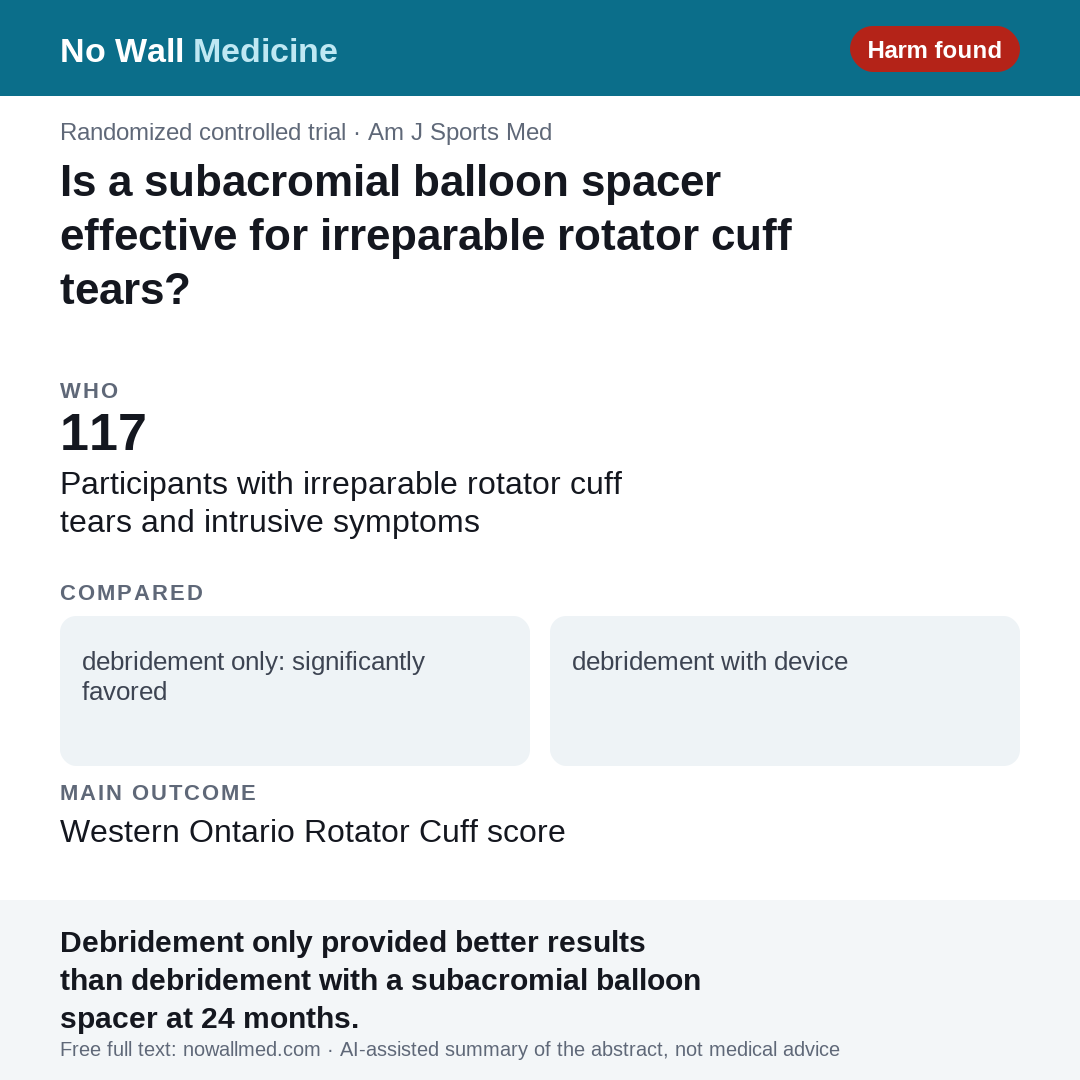
Two-Year Follow-up of a Group-Sequential, Multicenter Randomized Controlled Trial of a Subacromial Balloon Spacer for Irreparable Rotator Cuff Tears of the Shoulder (START:REACTS)
Randomized controlled trialHarm found
Is a subacromial balloon spacer effective for irreparable rotator cuff tears?
Who
117
Participants with irreparable rotator cuff tears and intrusive symptoms
Compared
debridement only: significantly favored
debridement with device
Main outcome
Western Ontario Rotator Cuff score
Result: mean difference, -10.1; 95% CI, -19.5 to -0.8
Bottom line: Debridement only provided better results than debridement with a subacromial balloon spacer at 24 months.
Am J Sports Med · 2025-03-28Download image
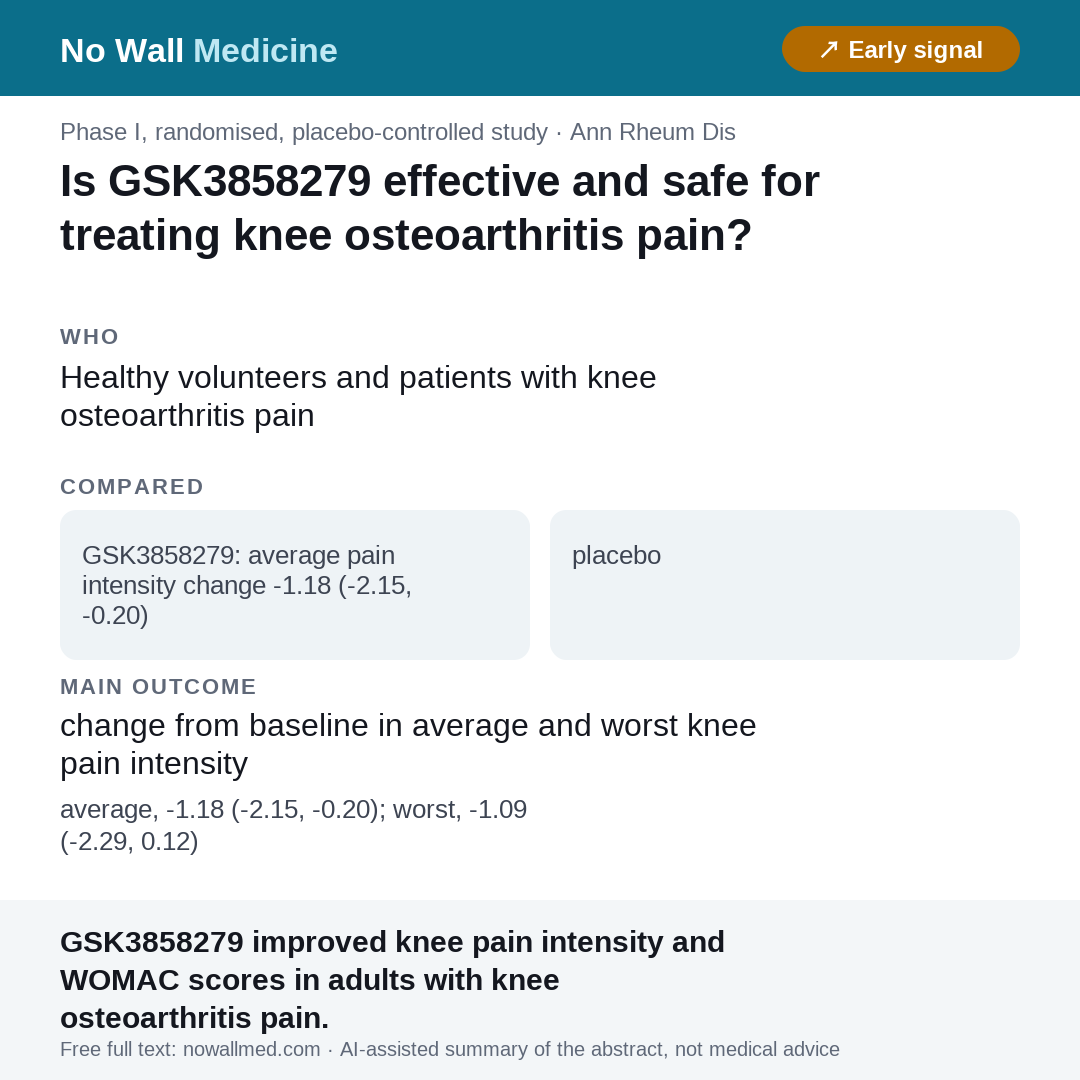
Efficacy, safety and tolerability of GSK3858279, an anti-CCL17 monoclonal antibody and analgesic, in healthy volunteers and patients with knee osteoarthritis pain: a phase I, randomised, double-blind, placebo-controlled, proof-of-mechanism and proof-of-concept study
Phase I, randomised, placebo-controlled studyBenefit found
Is GSK3858279 effective and safe for treating knee osteoarthritis pain?
Who
Healthy volunteers and patients with knee osteoarthritis pain
Compared
GSK3858279: average pain intensity change -1.18 (-2.15, -0.20)
placebo
Main outcome
change from baseline in average and worst knee pain intensity
Result: average, -1.18 (-2.15, -0.20); worst, -1.09 (-2.29, 0.12)
Bottom line: GSK3858279 improved knee pain intensity and WOMAC scores in adults with knee osteoarthritis pain.
Ann Rheum Dis · 2025-03-28Download image
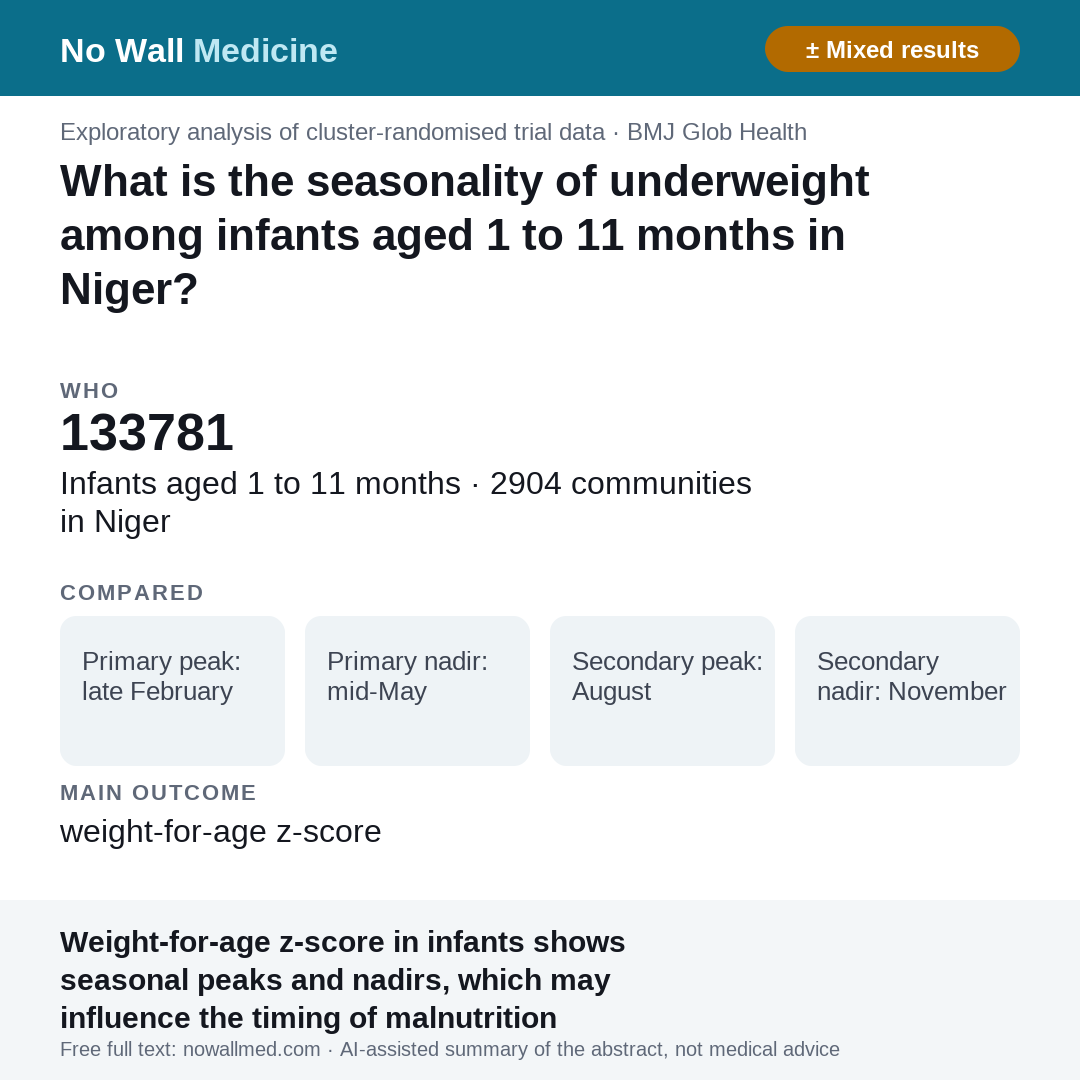
Seasonality of underweight among infants 1-11 months old in Niger: an exploratory analysis of data from a cluster-randomised trial
Exploratory analysis of cluster-randomised trial dataMixed results
What is the seasonality of underweight among infants aged 1 to 11 months in Niger?
Who
133781
Infants aged 1 to 11 months · 2904 communities in Niger
Compared
Primary peak: late February
Primary nadir: mid-May
Secondary peak: August
Secondary nadir: November
Main outcome
weight-for-age z-score
Bottom line: Weight-for-age z-score in infants shows seasonal peaks and nadirs, which may influence the timing of malnutrition programmes.
BMJ Glob Health · 2025-03-28Download image
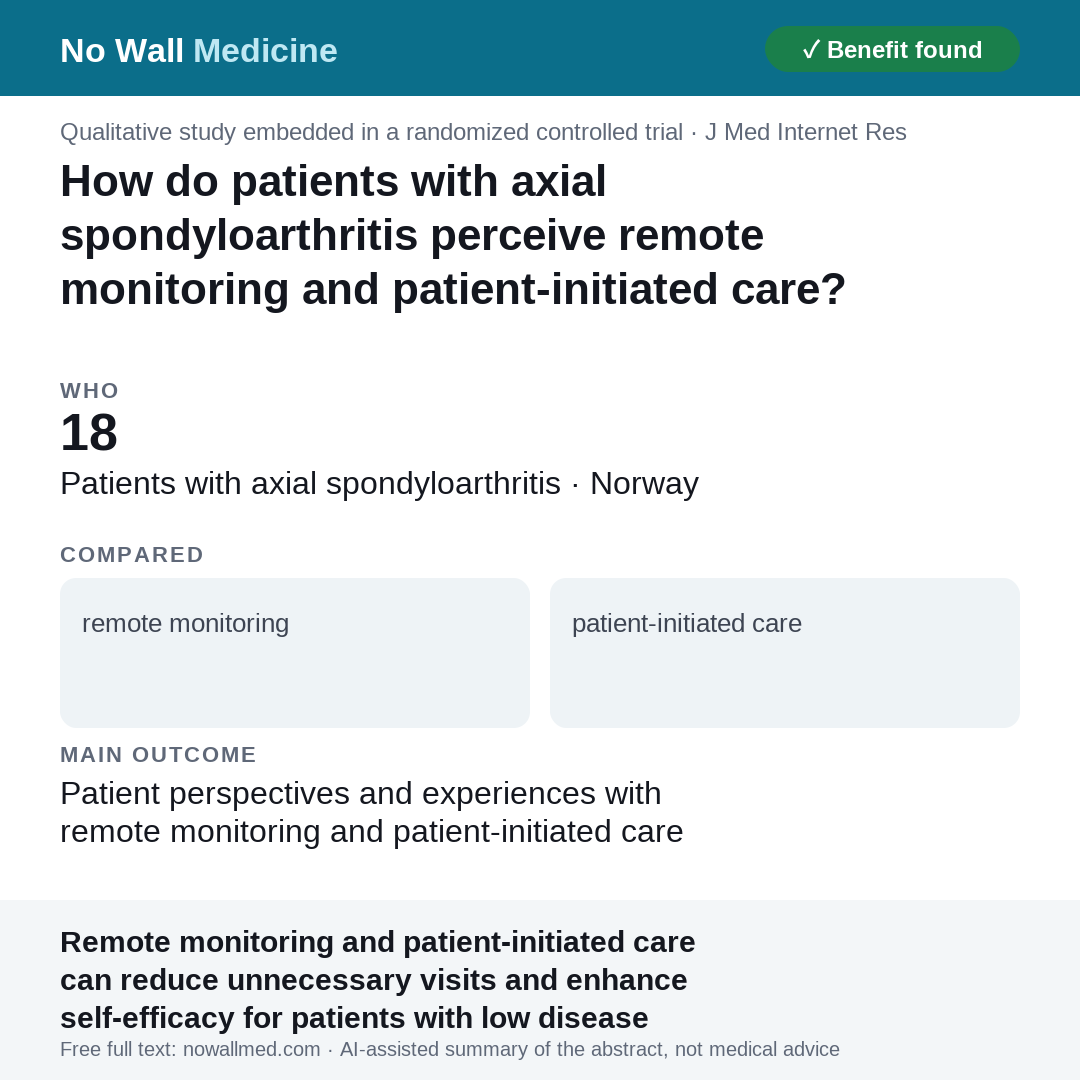
Perspectives on and Experiences With Remote Monitoring and Patient-Initiated Care Among Norwegian Patients With Axial Spondyloarthritis: Qualitative Study
Qualitative study embedded in a randomized controlled trialBenefit found
How do patients with axial spondyloarthritis perceive remote monitoring and patient-initiated care?
Who
18
Patients with axial spondyloarthritis · Norway
Compared
remote monitoring
patient-initiated care
Main outcome
Patient perspectives and experiences with remote monitoring and patient-initiated care
Bottom line: Remote monitoring and patient-initiated care can reduce unnecessary visits and enhance self-efficacy for patients with low disease activity.
Limitation: The qualitative study was based on interviews with only 18 participants from the intervention groups.
J Med Internet Res · 2025-03-28Download image
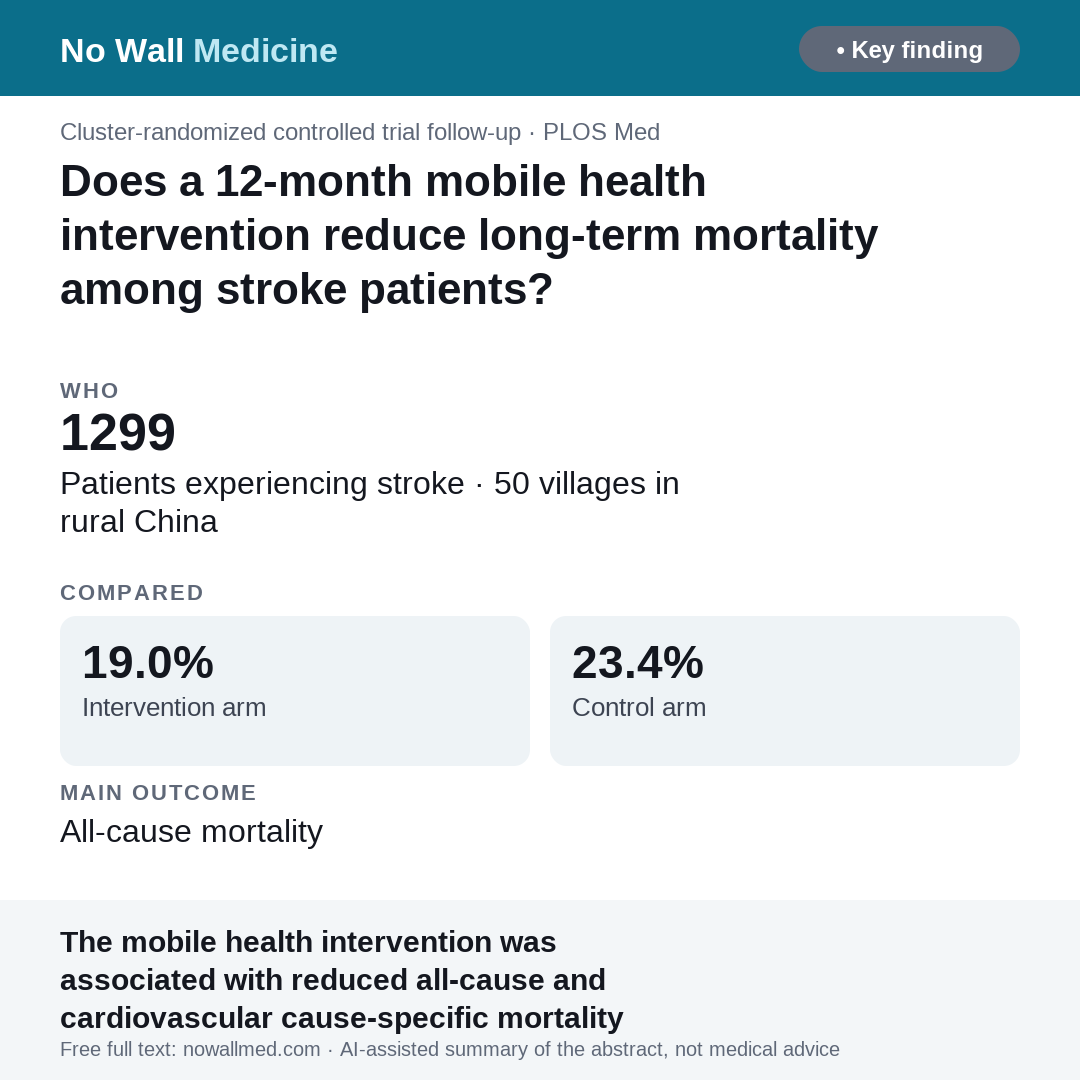
Long-term mortality outcome of a primary care-based mobile health intervention for stroke management: Six-year follow-up of a cluster-randomized controlled trial
Cluster-randomized controlled trial follow-upBenefit found
Does a 12-month mobile health intervention reduce long-term mortality among stroke patients?
Who
1299
Patients experiencing stroke · 50 villages in rural China
Compared
19.0%Intervention arm (121 among 637)
23.4%Control arm (155 among 662)
Main outcome
All-cause mortality
Result: hazard ratio 0.73 (95% CI 0.59, 0.90)
Bottom line: The mobile health intervention was associated with reduced all-cause and cardiovascular cause-specific mortality during six years of follow-up.
Limitation: Unavailability of accurate clinical diagnostic records and potential confounders influencing mortality associations.
PLOS Med · 2025-03-27Download image
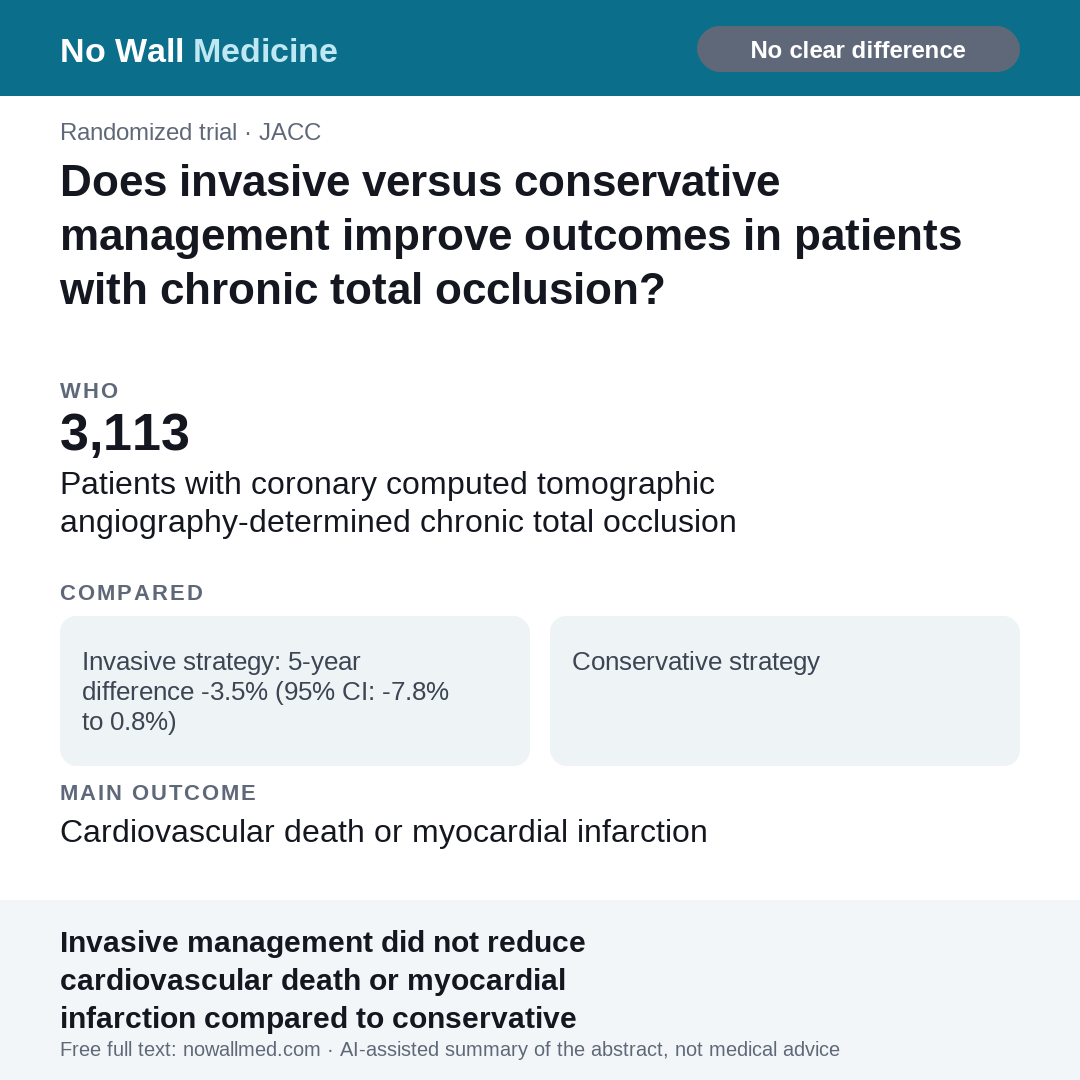
Invasive vs Conservative Management of Patients With Chronic Total Occlusion: Results From the ISCHEMIA Trial
Randomized trialNo clear difference
Does invasive versus conservative management improve outcomes in patients with chronic total occlusion?
Who
3,113
Patients with coronary computed tomographic angiography-determined chronic total occlusion
Compared
Invasive strategy: 5-year difference -3.5% (95% CI: -7.8% to 0.8%)
Conservative strategy
Main outcome
Cardiovascular death or myocardial infarction
Result: 5-year difference -3.5% (95% CI: -7.8% to 0.8%)
Bottom line: Invasive management did not reduce cardiovascular death or myocardial infarction compared to conservative management.
JACC · 2025-03-27Download image
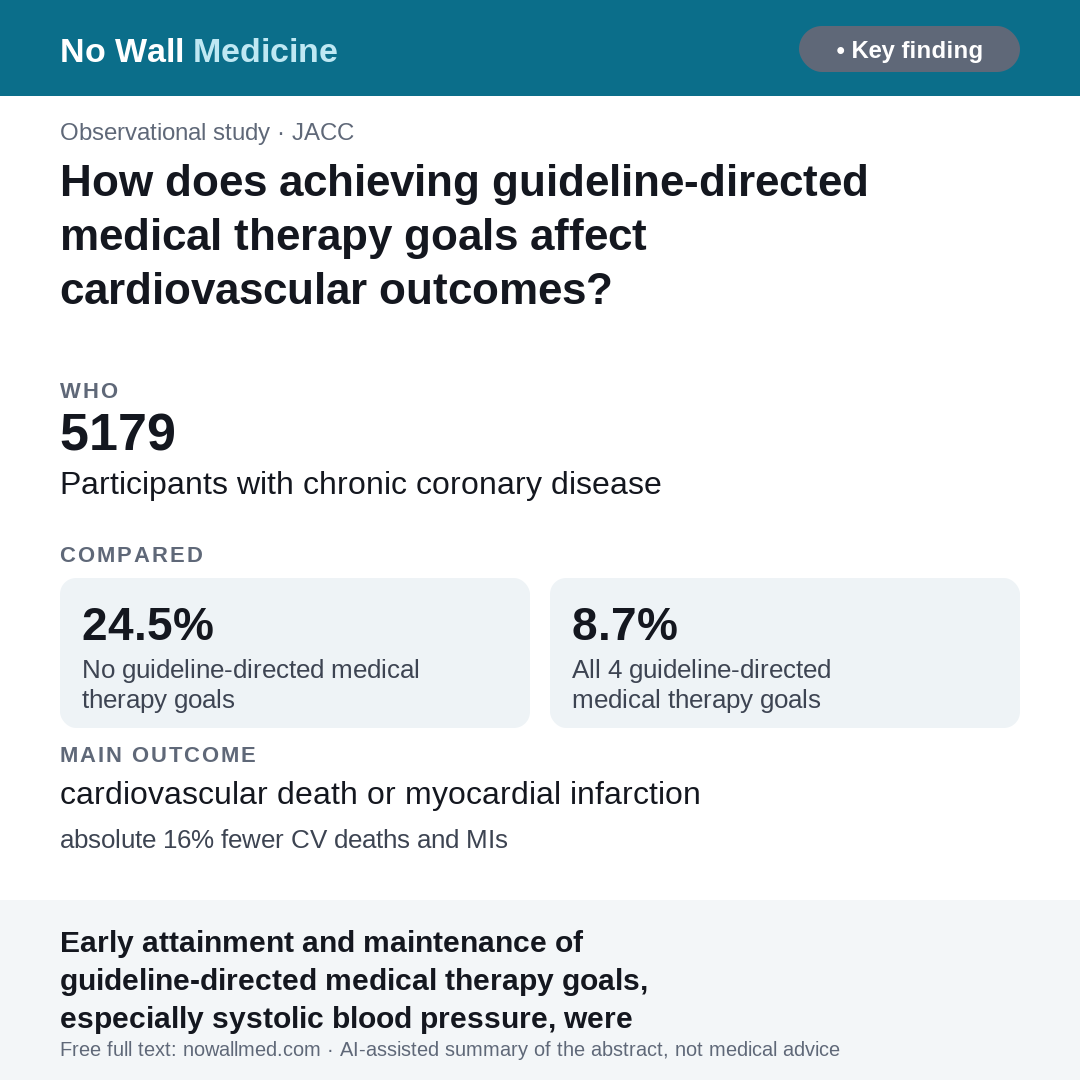
Guideline-Directed Medical Therapy and Outcomes in the ISCHEMIA Trial
Observational studyBenefit found
How does achieving guideline-directed medical therapy goals affect cardiovascular outcomes?
Who
5179
Participants with chronic coronary disease
Compared
24.5%No guideline-directed medical therapy goals (95% credible interval: 13.5%-42.2%)
8.7%All 4 guideline-directed medical therapy goals (95% credible interval: 6.7%-10.9%)
Main outcome
cardiovascular death or myocardial infarction
Result: absolute 16% fewer CV deaths and MIs
Bottom line: Early attainment and maintenance of guideline-directed medical therapy goals, especially systolic blood pressure, were associated with fewer cardiovascular events.
JACC · 2025-03-27Download image
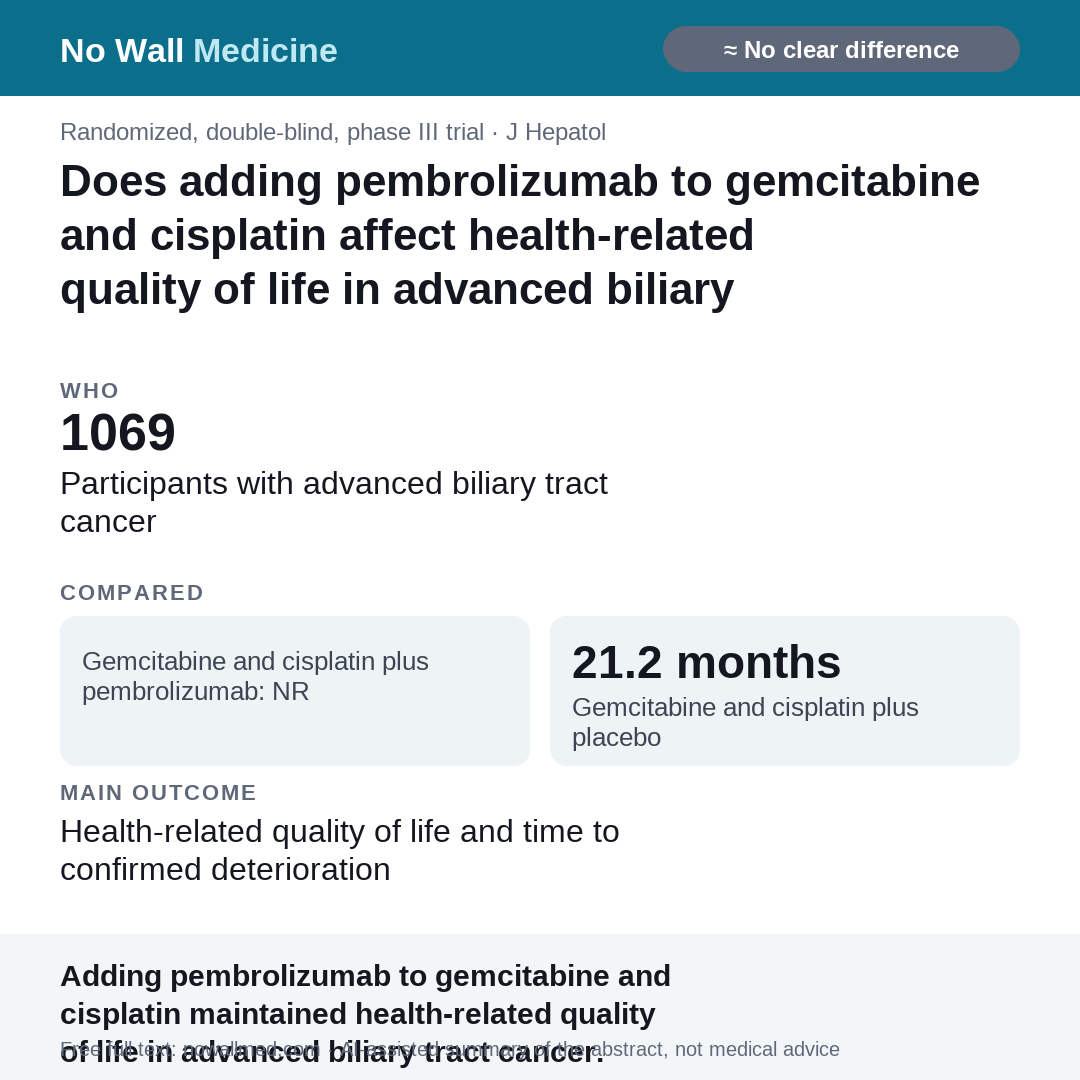
Health-related quality of life in participants with advanced biliary tract cancer from the randomized phase III KEYNOTE-966 study
Randomized, double-blind, phase III trialNo clear difference
Does adding pembrolizumab to gemcitabine and cisplatin affect health-related quality of life in advanced biliary tract cancer?
Who
1069
Participants with advanced biliary tract cancer
Compared
Gemcitabine and cisplatin plus pembrolizumab: NR
21.2 monthsGemcitabine and cisplatin plus placebo
Main outcome
Health-related quality of life and time to confirmed deterioration
Result: hazard ratio 0.86 (95% CI 0.70-1.07)
Bottom line: Adding pembrolizumab to gemcitabine and cisplatin maintained health-related quality of life in advanced biliary tract cancer.
J Hepatol · 2025-03-27Download image
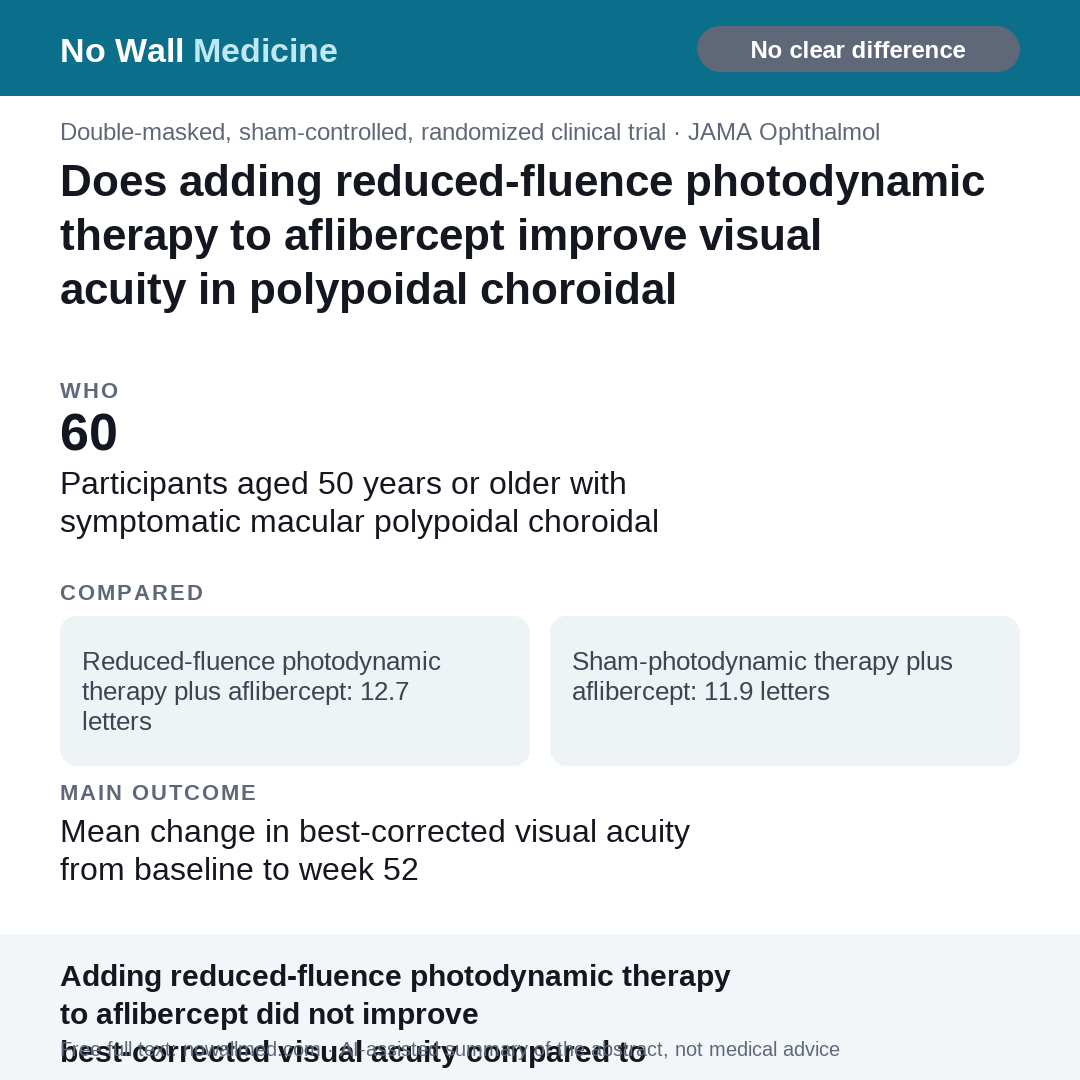
Aflibercept With vs Without Reduced-Fluence Photodynamic Therapy for Polypoidal Choroidal Vasculopathy: A Randomized Clinical Trial
Double-masked, sham-controlled, randomized clinical trialNo clear difference
Does adding reduced-fluence photodynamic therapy to aflibercept improve visual acuity in polypoidal choroidal vasculopathy?
Who
60
Participants aged 50 years or older with symptomatic macular polypoidal choroidal vasculopathy · 2 centers in Singapore
Compared
Reduced-fluence photodynamic therapy plus aflibercept: 12.7 letters
Sham-photodynamic therapy plus aflibercept: 11.9 letters
Main outcome
Mean change in best-corrected visual acuity from baseline to week 52
Result: difference = 0.8 letters; 95% CI, -3.0 to 6.0 letters
Bottom line: Adding reduced-fluence photodynamic therapy to aflibercept did not improve best-corrected visual acuity compared to aflibercept alone.
JAMA Ophthalmol · 2025-03-27Download image
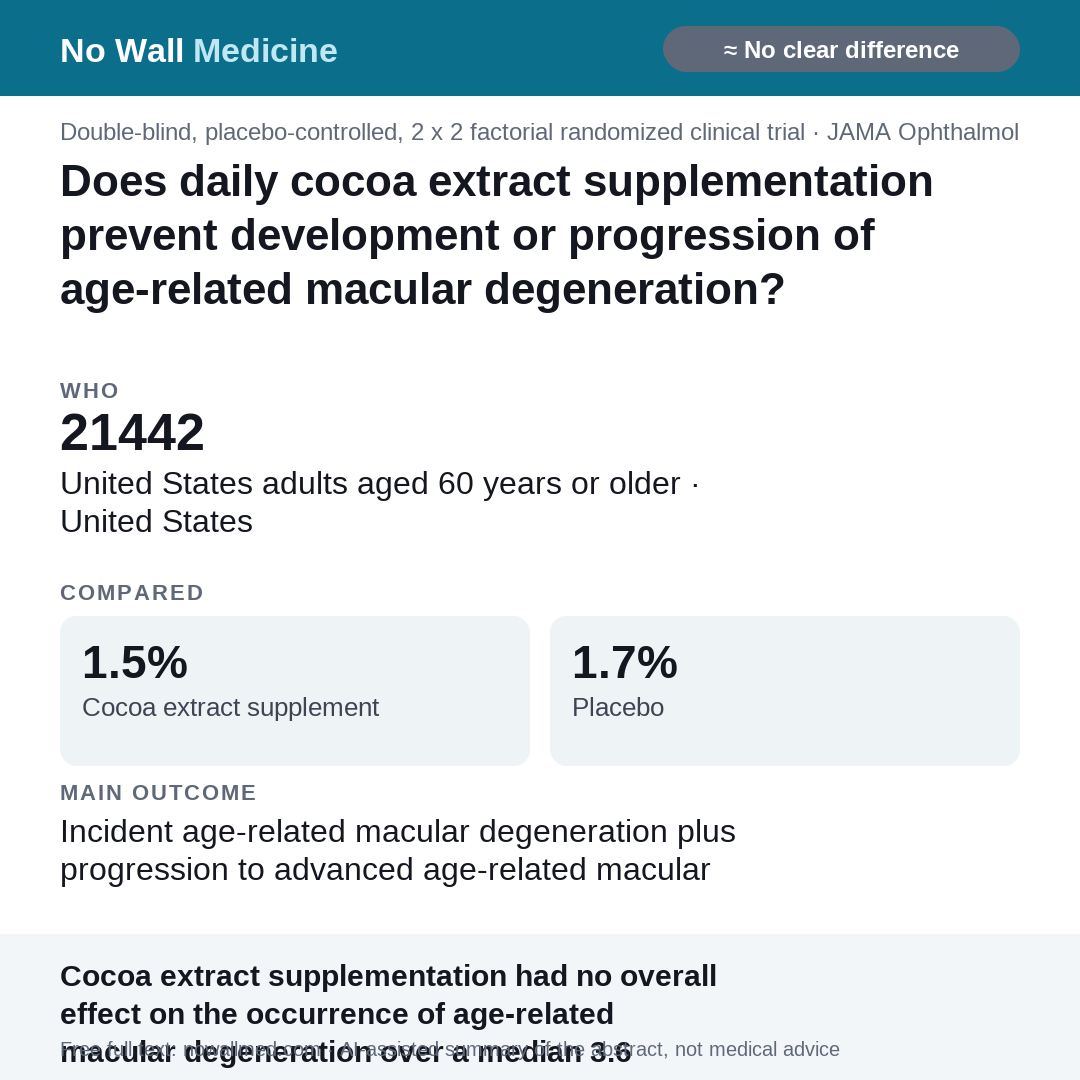
Cocoa Flavanol Supplementation and Risk of Age-Related Macular Degeneration: An Ancillary Study of the COSMOS Randomized Clinical Trial
Double-blind, placebo-controlled, 2 x 2 factorial randomized clinical trialNo clear difference
Does daily cocoa extract supplementation prevent development or progression of age-related macular degeneration?
Who
21442
United States adults aged 60 years or older · United States
Compared
1.5%Cocoa extract supplement
1.7%Placebo
Main outcome
Incident age-related macular degeneration plus progression to advanced age-related macular degeneration
Result: hazard ratio 0.87 (95% CI, 0.71-1.08)
Bottom line: Cocoa extract supplementation had no overall effect on the occurrence of age-related macular degeneration over a median 3.6 years.
Limitation: A possible modest treatment effect early in the trial could not be ruled out.
JAMA Ophthalmol · 2025-03-27Download image
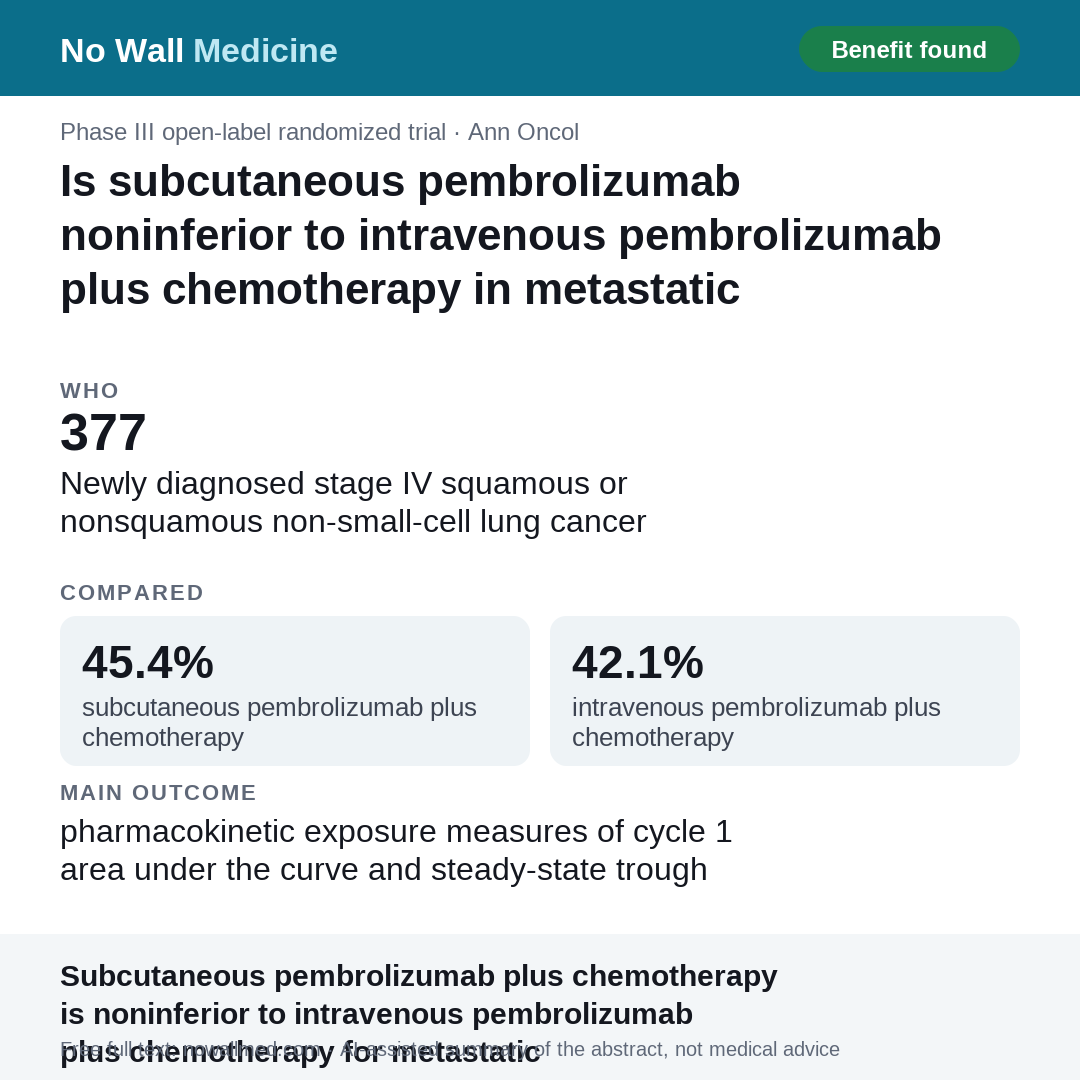
Subcutaneous versus intravenous pembrolizumab, in combination with chemotherapy, for treatment of metastatic non-small-cell lung cancer: the phase III 3475A-D77 trial
Phase III open-label randomized trialBenefit found
Is subcutaneous pembrolizumab noninferior to intravenous pembrolizumab plus chemotherapy in metastatic non-small-cell lung cancer?
Who
377
Newly diagnosed stage IV squamous or nonsquamous non-small-cell lung cancer patients
Compared
45.4%subcutaneous pembrolizumab plus chemotherapy
42.1%intravenous pembrolizumab plus chemotherapy
Main outcome
pharmacokinetic exposure measures of cycle 1 area under the curve and steady-state trough concentration
Result: GMR for cycle 1 AUC0-6 weeks 1.14 (96% CI 1.06-1.22)
Bottom line: Subcutaneous pembrolizumab plus chemotherapy is noninferior to intravenous pembrolizumab plus chemotherapy for metastatic non-small-cell lung cancer.
Ann Oncol · 2025-03-27Download image
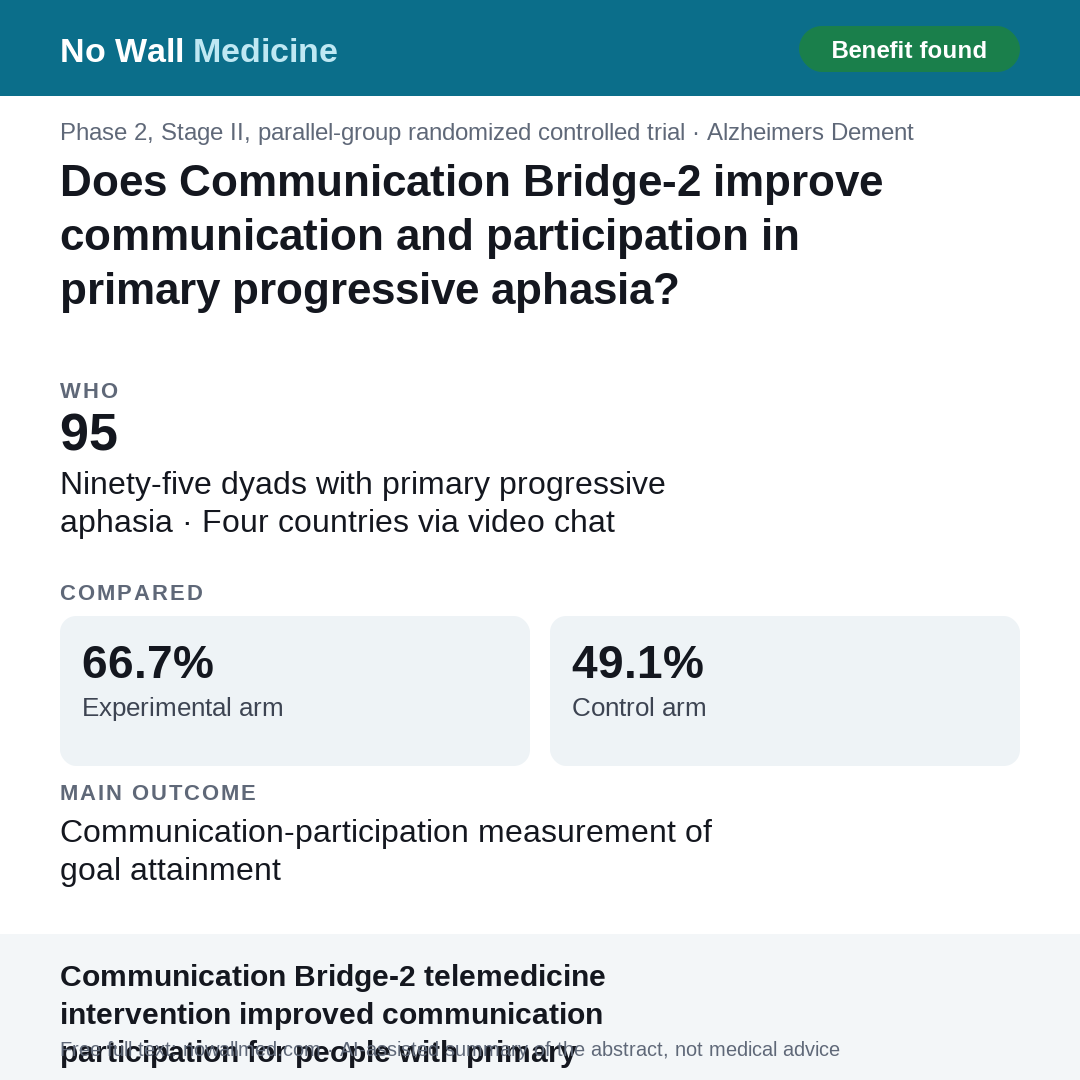
Efficacy of Communication Bridge-2 for primary progressive aphasia: A randomized controlled trial of communication intervention
Phase 2, Stage II, parallel-group randomized controlled trialBenefit found
Does Communication Bridge-2 improve communication and participation in primary progressive aphasia?
Who
95
Ninety-five dyads with primary progressive aphasia · Four countries via video chat
Compared
66.7%Experimental arm
49.1%Control arm
Main outcome
Communication-participation measurement of goal attainment
Result: 66.7% vs 49.1% (p = 0.006)
Bottom line: Communication Bridge-2 telemedicine intervention improved communication participation for people with primary progressive aphasia.
Alzheimers Dement · 2025-03-27Download image
Ozoralizumab shows effectiveness regardless of baseline RF and ACPA titres in patients with RA: a post hoc analysis of the OHZORA trial
Post hoc analysis of a Phase II/III trialBenefit found
Is ozoralizumab effective in rheumatoid arthritis patients regardless of RF and ACPA titres?
Who
381
Japanese patients with rheumatoid arthritis with inadequate methotrexate response · Japan
Compared
Ozoralizumab 30 mg: significantly reduced disease activity in all groups
Ozoralizumab 80 mg
Main outcome
disease activity scores, RF and ACPA titres
Bottom line: Ozoralizumab is effective for rheumatoid arthritis regardless of baseline rheumatoid factor and anti-citrullinated peptide antibody titres.
Rheumatology · 2025-03-27Download image

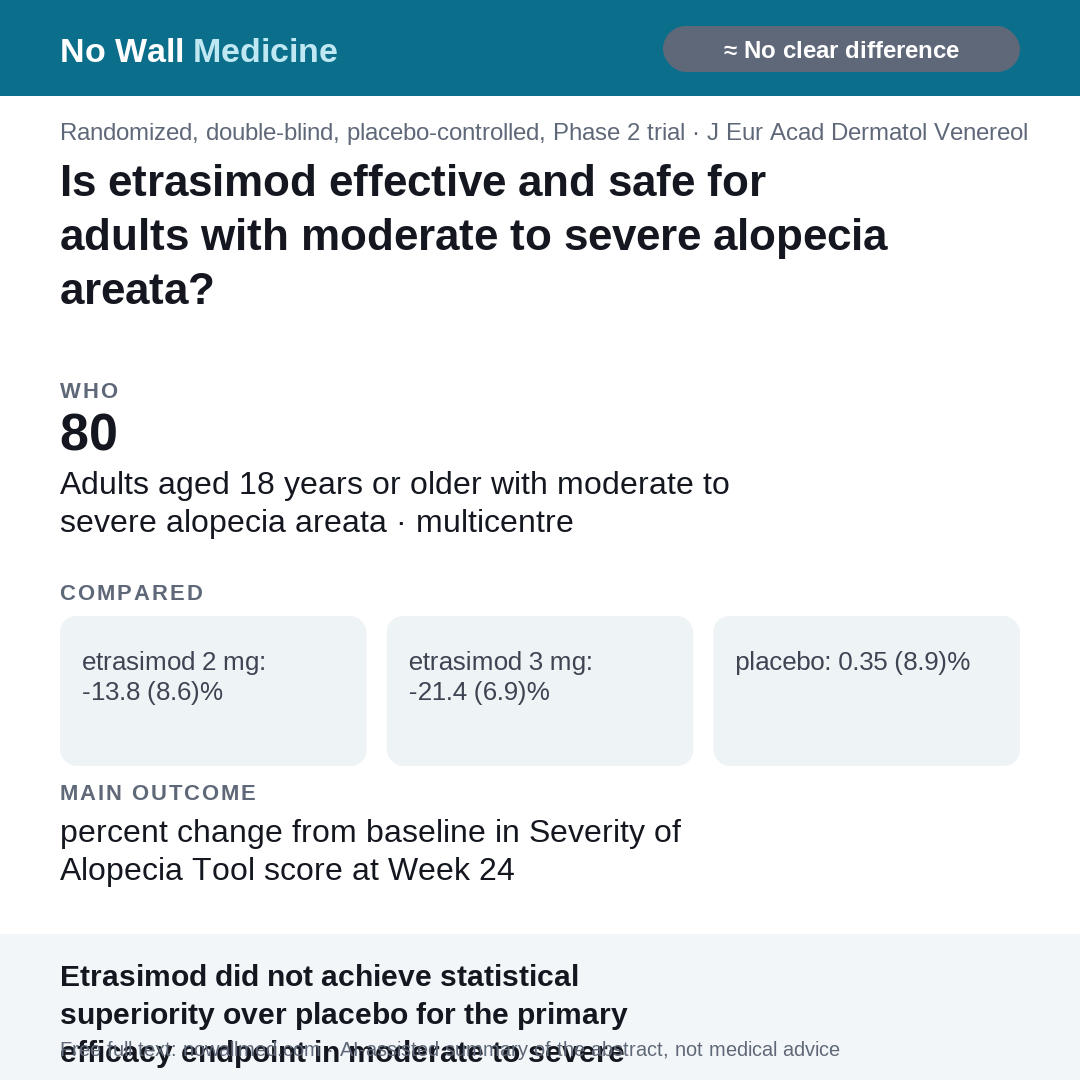
Efficacy and safety of etrasimod in alopecia areata: A multicentre, randomized, double-blind, placebo-controlled, Phase 2 study
Randomized, double-blind, placebo-controlled, Phase 2 trialNo clear difference
Is etrasimod effective and safe for adults with moderate to severe alopecia areata?
Who
80
Adults aged 18 years or older with moderate to severe alopecia areata · multicentre
Compared
etrasimod 2 mg: -13.8 (8.6)%
etrasimod 3 mg: -21.4 (6.9)%
placebo: 0.35 (8.9)%
Main outcome
percent change from baseline in Severity of Alopecia Tool score at Week 24
Result: -14.1 (-38.9 to 10.6; p = 0.2579) and -21.8 (-44.4 to 0.9; p = 0.0592)
Bottom line: Etrasimod did not achieve statistical superiority over placebo for the primary efficacy endpoint in moderate to severe alopecia areata.
J Eur Acad Dermatol Venereol · 2025-03-27Download image
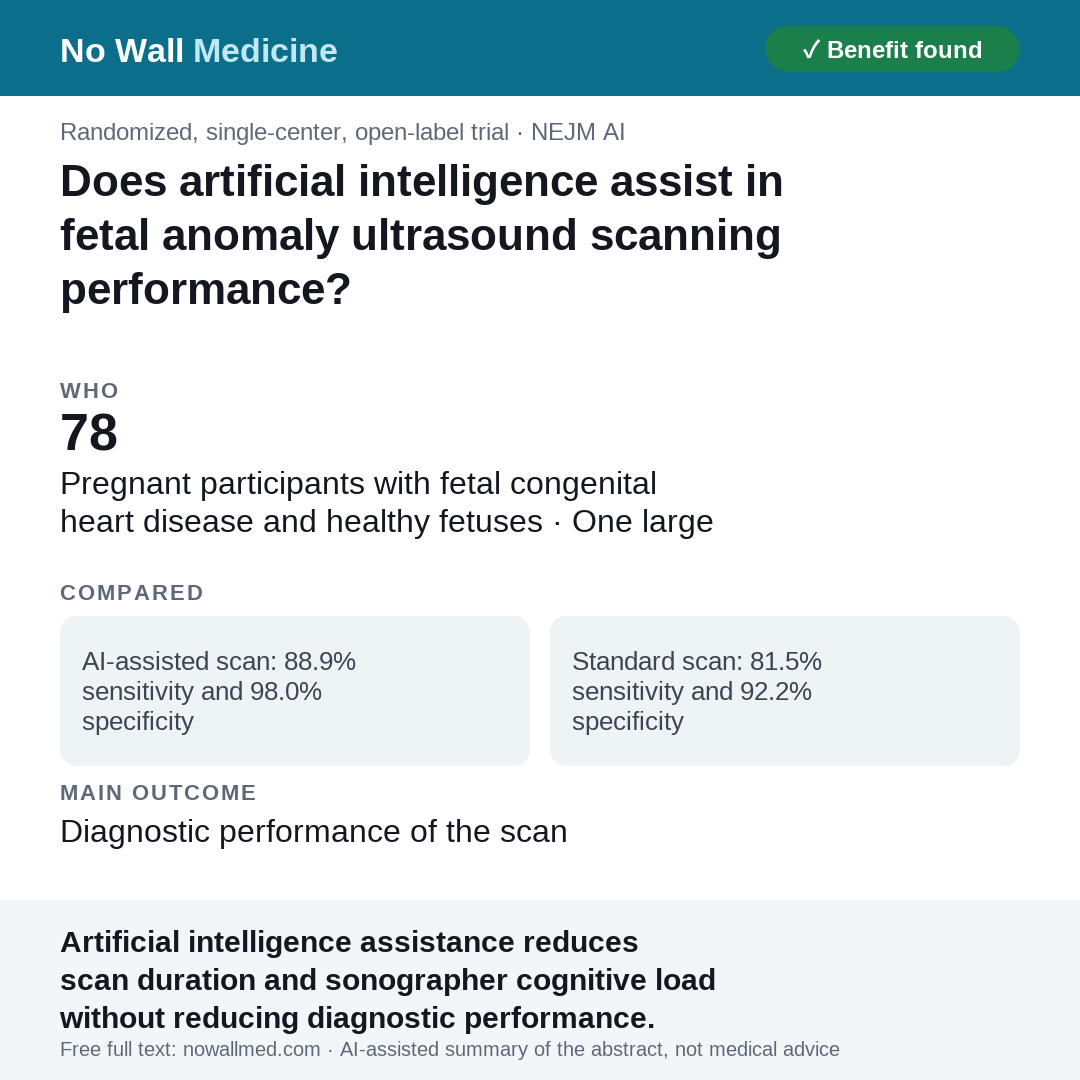
AI to Assist in the Fetal Anomaly Ultrasound Scan: A Randomized Controlled Trial
Randomized, single-center, open-label trialBenefit found
Does artificial intelligence assist in fetal anomaly ultrasound scanning performance?
Who
78
Pregnant participants with fetal congenital heart disease and healthy fetuses · One large teaching hospital
Compared
AI-assisted scan: 88.9% sensitivity and 98.0% specificity
Standard scan: 81.5% sensitivity and 92.2% specificity
Main outcome
Diagnostic performance of the scan
Result: difference in proportions 7.4% for sensitivity (97.5% CI, -15.9 to 30.7%)
Bottom line: Artificial intelligence assistance reduces scan duration and sonographer cognitive load without reducing diagnostic performance.
Funded by: NIHR doctoral fellowship and others
NEJM AI · 2025-03-27Download image
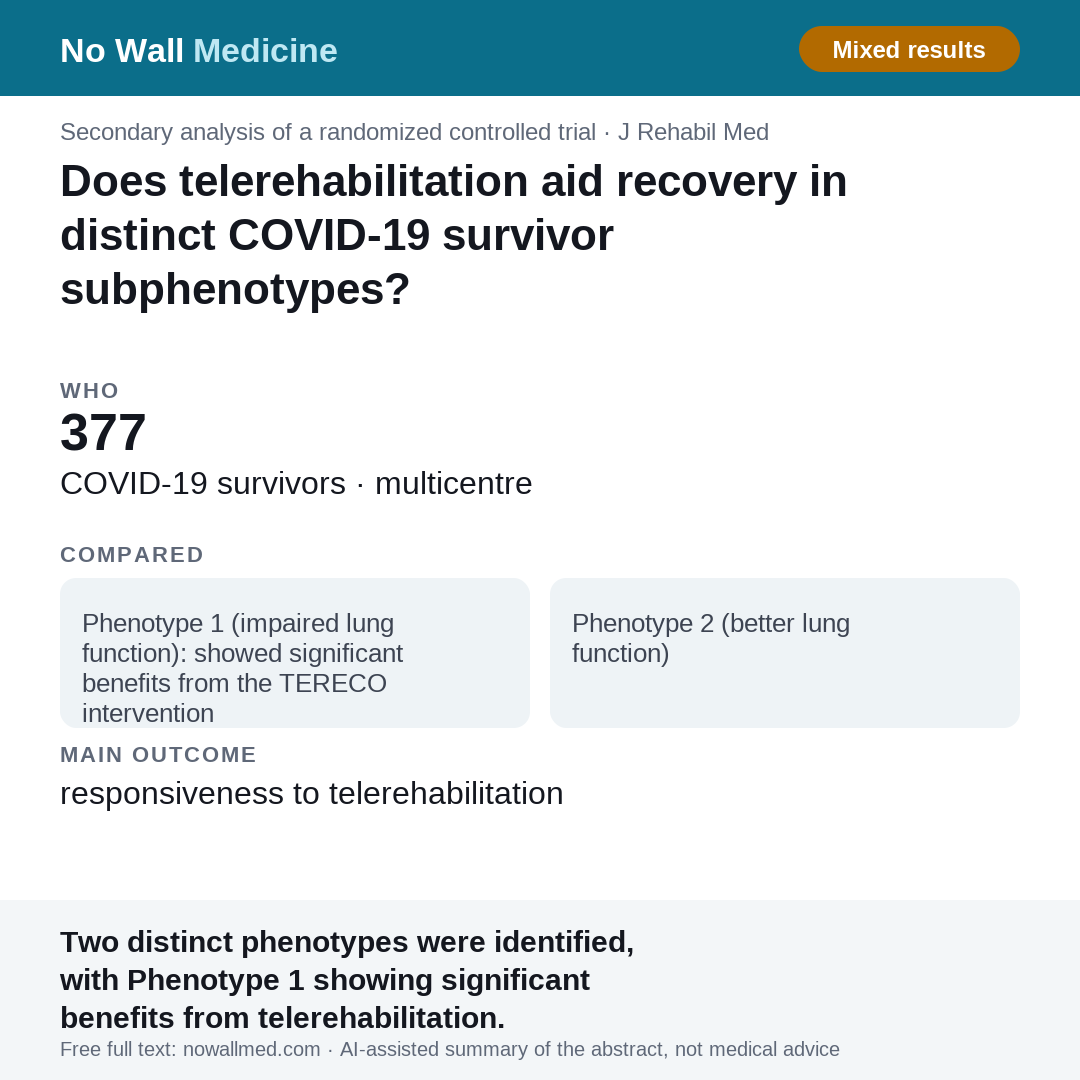
Subphenotypic classification of COVID-19 survivors and response to telerehabilitation: a latent class analysis
Secondary analysis of a randomized controlled trialMixed results
Does telerehabilitation aid recovery in distinct COVID-19 survivor subphenotypes?
Who
377
COVID-19 survivors · multicentre
Compared
Phenotype 1 (impaired lung function): showed significant benefits from the TERECO intervention
Phenotype 2 (better lung function)
Main outcome
responsiveness to telerehabilitation
Bottom line: Two distinct phenotypes were identified, with Phenotype 1 showing significant benefits from telerehabilitation.
J Rehabil Med · 2025-03-27Download image
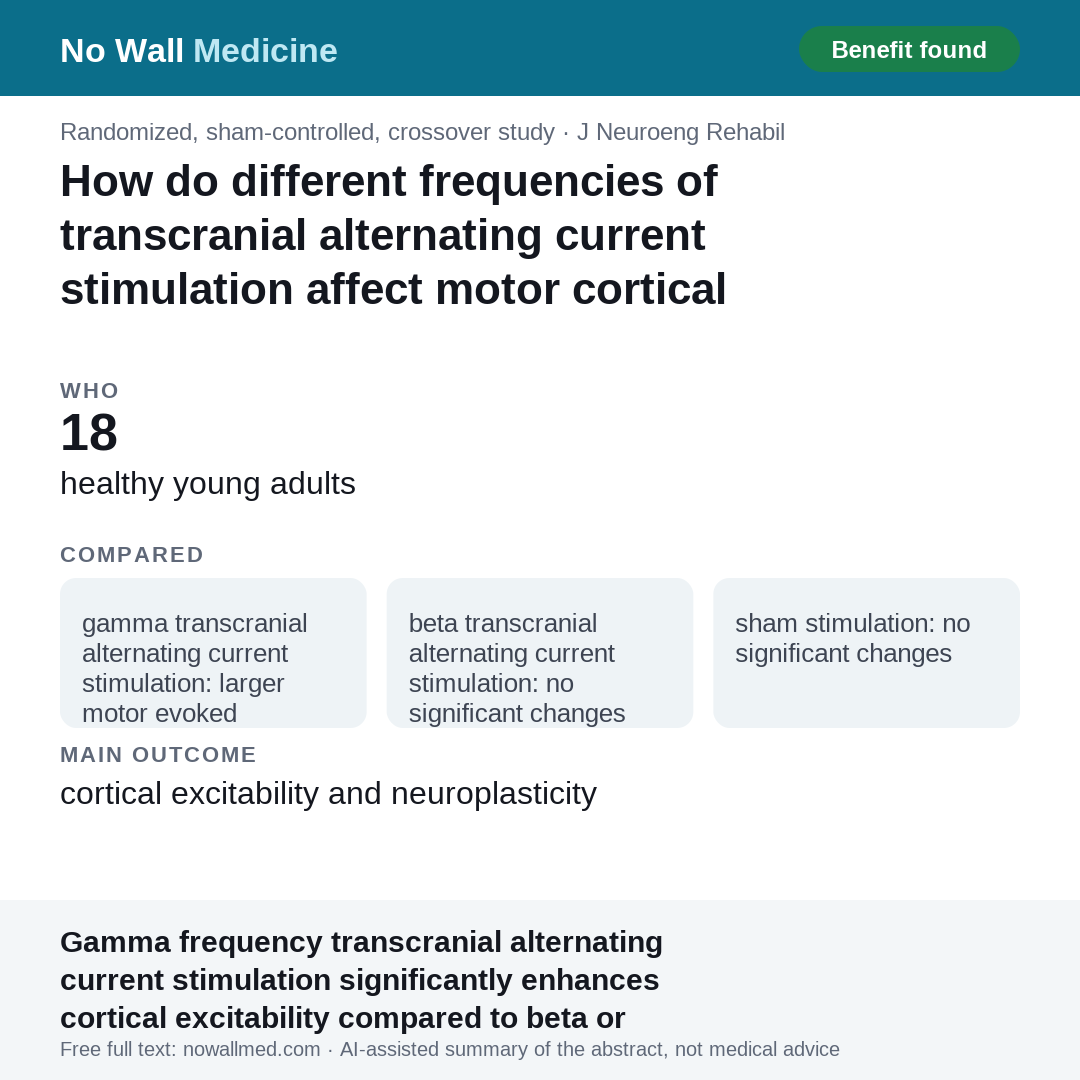
Frequency-specific modulation of motor cortical excitability by transcranial alternating current stimulation
Randomized, sham-controlled, crossover studyBenefit found
How do different frequencies of transcranial alternating current stimulation affect motor cortical excitability?
Who
18
healthy young adults
Compared
gamma transcranial alternating current stimulation: larger motor evoked potential amplitudes
beta transcranial alternating current stimulation: no significant changes
sham stimulation: no significant changes
Main outcome
cortical excitability and neuroplasticity
Bottom line: Gamma frequency transcranial alternating current stimulation significantly enhances cortical excitability compared to beta or sham stimulation.
J Neuroeng Rehabil · 2025-03-27Download image
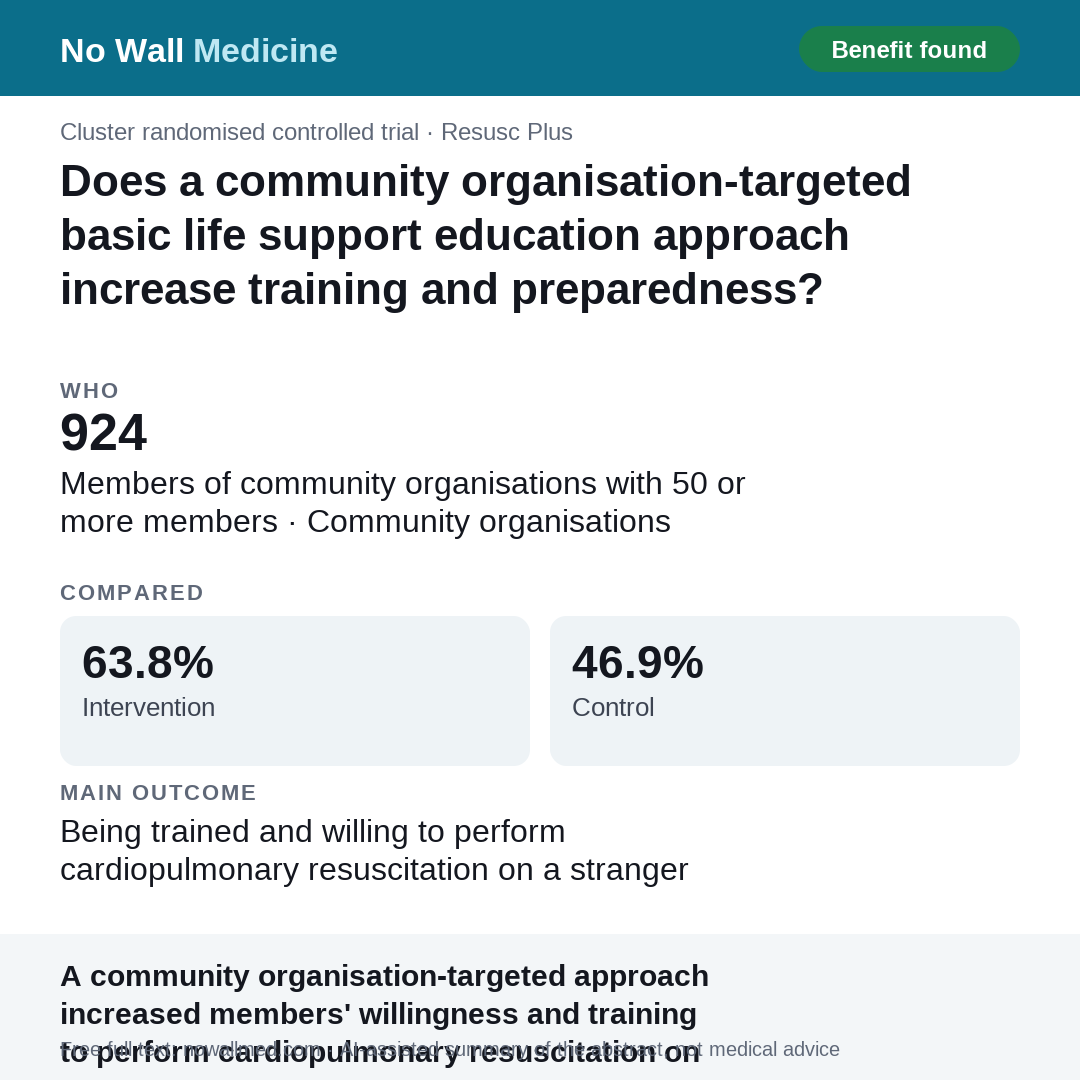
FirstCPR: A pragmatic community organisation-based cluster randomised trial to increase community training and preparedness to respond to out-of-hospital cardiac arrest
Cluster randomised controlled trialBenefit found
Does a community organisation-targeted basic life support education approach increase training and preparedness?
Who
924
Members of community organisations with 50 or more members · Community organisations
Compared
63.8%Intervention
46.9%Control
Main outcome
Being trained and willing to perform cardiopulmonary resuscitation on a stranger
Result: adjusted odds ratio 2.22 (95% confidence interval 1.50 to 3.30)
Bottom line: A community organisation-targeted approach increased members' willingness and training to perform cardiopulmonary resuscitation on strangers.
Limitation: The survey response rates were very low.
Resusc Plus · 2025-03-27Download image
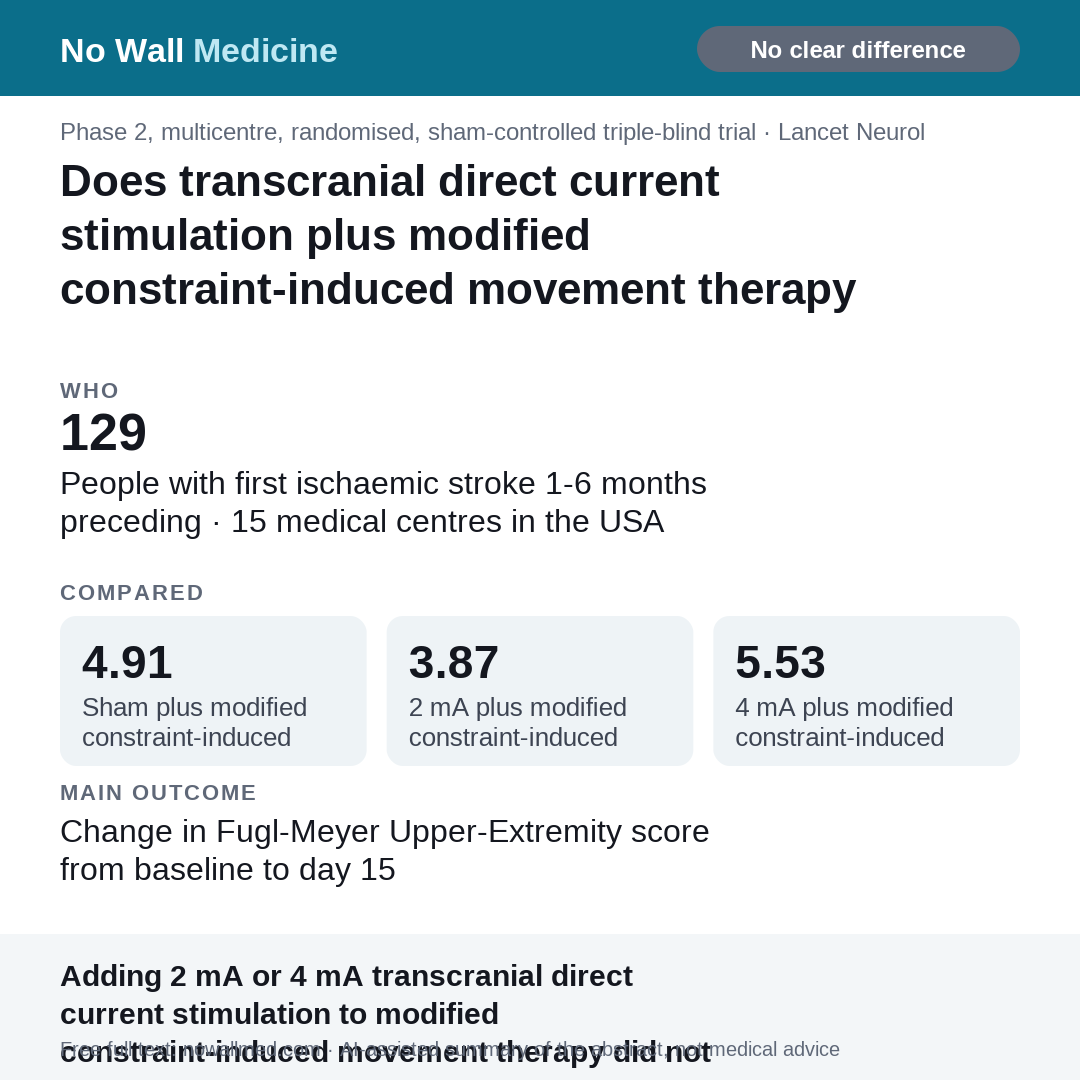
Safety and efficacy of transcranial direct current stimulation in addition to constraint-induced movement therapy for post-stroke motor recovery (TRANSPORT2): a phase 2, multicentre, randomised, sham-controlled triple-blind trial
Phase 2, multicentre, randomised, sham-controlled triple-blind trialNo clear difference
Does transcranial direct current stimulation plus modified constraint-induced movement therapy improve motor recovery after stroke?
Who
129
People with first ischaemic stroke 1-6 months preceding · 15 medical centres in the USA
Compared
4.91Sham plus modified constraint-induced movement therapy (3.00-6.82)
3.872 mA plus modified constraint-induced movement therapy (2.00-5.74)
5.534 mA plus modified constraint-induced movement therapy (3.64-7.42)
Main outcome
Change in Fugl-Meyer Upper-Extremity score from baseline to day 15
Result: p=0.39
Bottom line: Adding 2 mA or 4 mA transcranial direct current stimulation to modified constraint-induced movement therapy did not further reduce motor impairment.
Funded by: National Institute of Neurological Disorders and Stroke
Lancet Neurol · 2025-03-26Download image