Visual abstracts
New randomized trials and meta-analyses from leading journals at a glance: who was studied, what was compared, and what was found. Every paper is free to read in full.
All specialtiesCardiology 4763Oncology 4043Gastroenterology & Hepatology 1903Infectious Disease 3756Neurology 1872Psychiatry & Mental Health 2216Pulmonology 2044Critical Care 1319Endocrinology & Diabetes 2544Pediatrics 2889Surgery 2480Orthopedics & Sports Medicine 917Neurosurgery 525Cardiothoracic & Vascular Surgery 656Plastic & Reconstructive Surgery 574Nephrology 1107Rheumatology 810Hematology 1090Dermatology 611Ophthalmology 532Obstetrics & Gynecology 1645Public & Global Health 1037Radiology & Imaging 619Anesthesiology 958Urology 745ENT (Otolaryngology) 494Emergency Medicine 481Allergy & Immunology 309Geriatrics 972Family Medicine & Primary Care 534Medical Genetics & Genomics 659Pathology & Laboratory Medicine 156Physical Medicine & Rehabilitation 734Palliative Care 421Nutrition 1560Digital Health & AI 2137General Medicine 318
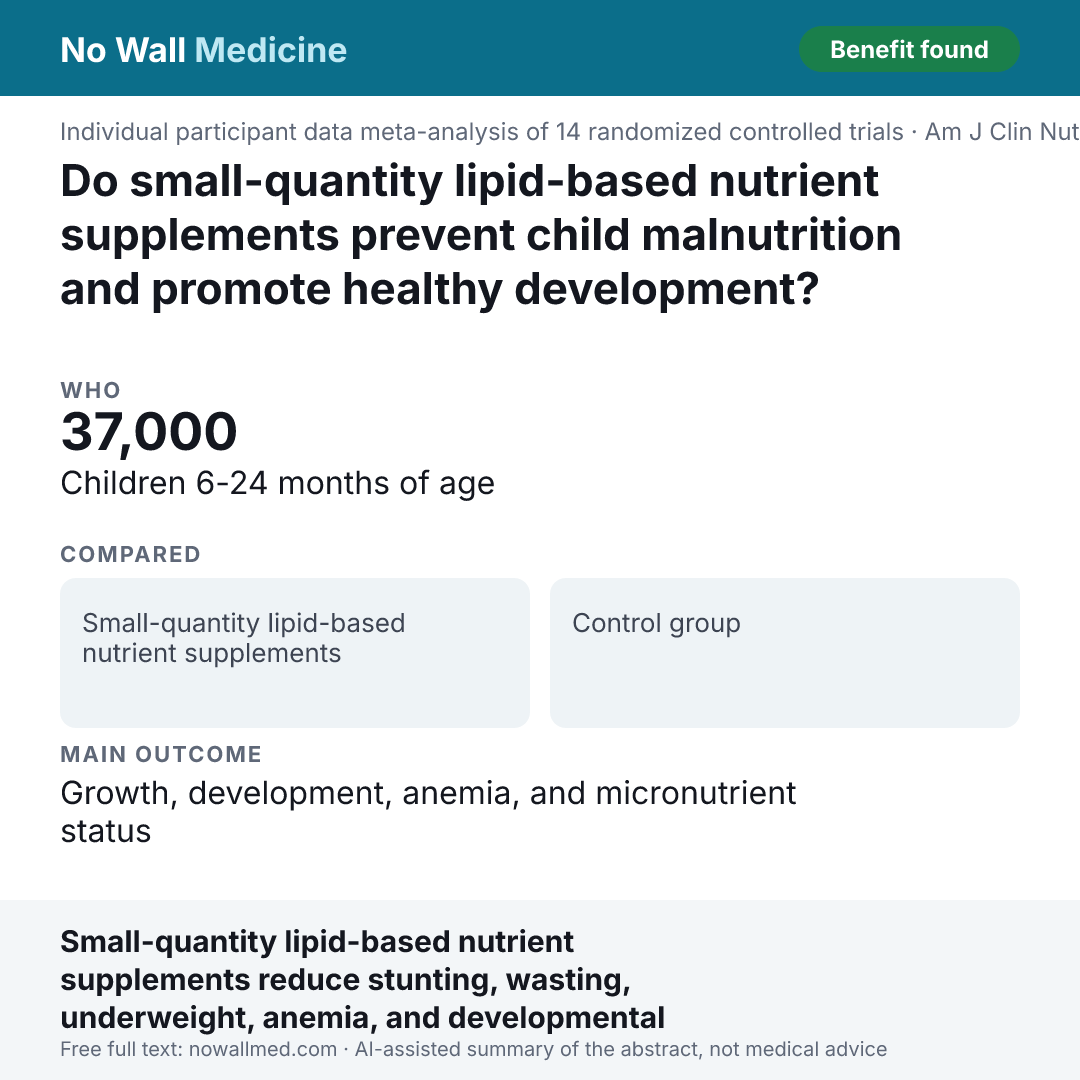
Small-quantity lipid-based nutrient supplements for the prevention of child malnutrition and promotion of healthy development: overview of individual participant data meta-analysis and programmatic implications
Individual participant data meta-analysis of 14 randomized controlled trialsBenefit found
Do small-quantity lipid-based nutrient supplements prevent child malnutrition and promote healthy development?
Who
37,000
Children 6-24 months of age
Compared
Small-quantity lipid-based nutrient supplements
Control group
Main outcome
Growth, development, anemia, and micronutrient status
Bottom line: Small-quantity lipid-based nutrient supplements reduce stunting, wasting, underweight, anemia, and developmental delays in children.
Am J Clin Nutr · 2021-10-01 · Save PNG
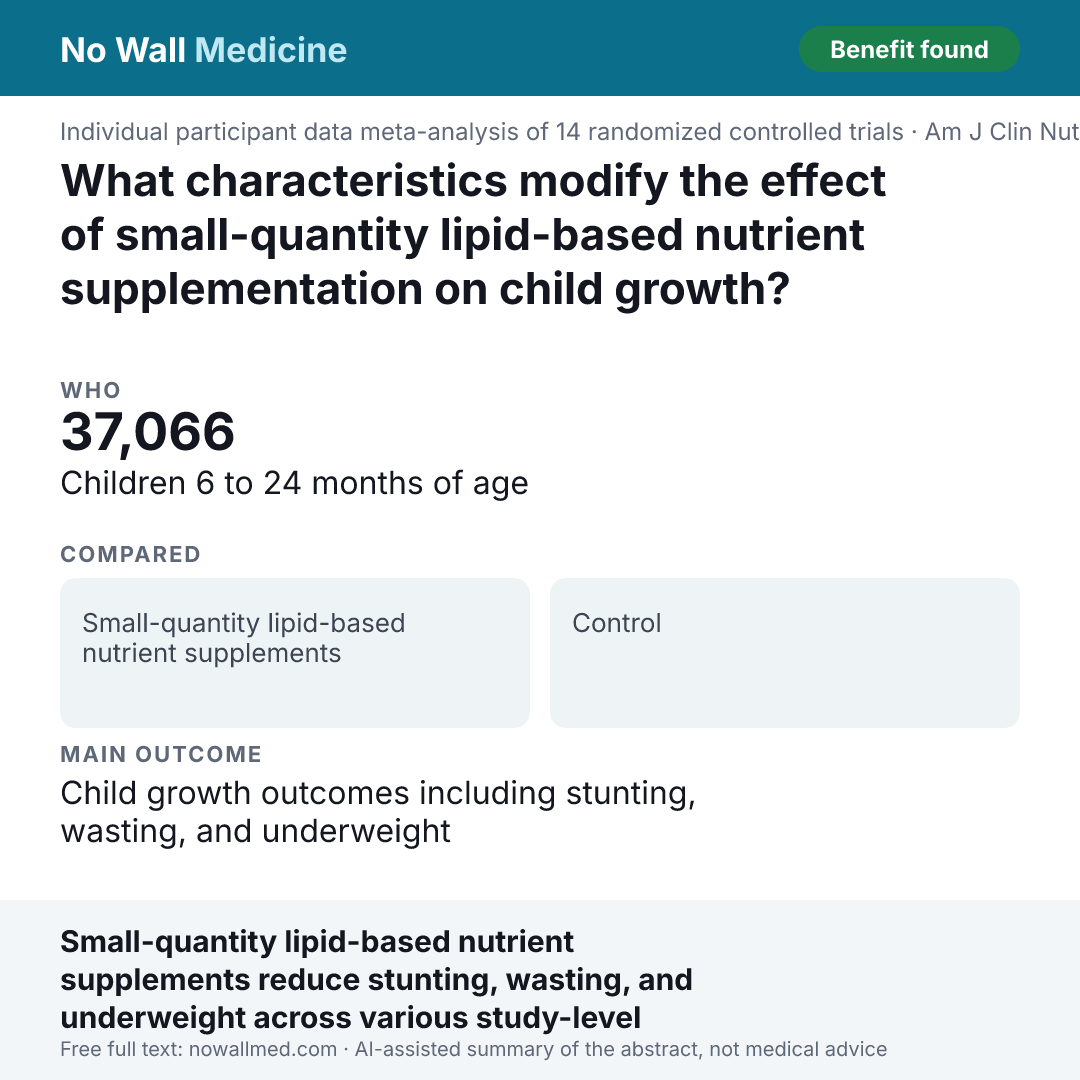
Characteristics that modify the effect of small-quantity lipid-based nutrient supplementation on child growth: an individual participant data meta-analysis of randomized controlled trials
Individual participant data meta-analysis of 14 randomized controlled trialsBenefit found
What characteristics modify the effect of small-quantity lipid-based nutrient supplementation on child growth?
Who
37,066
Children 6 to 24 months of age
Compared
Small-quantity lipid-based nutrient supplements
Control
Main outcome
Child growth outcomes including stunting, wasting, and underweight
Bottom line: Small-quantity lipid-based nutrient supplements reduce stunting, wasting, and underweight across various study-level contexts.
Am J Clin Nutr · 2021-10-01 · Save PNG
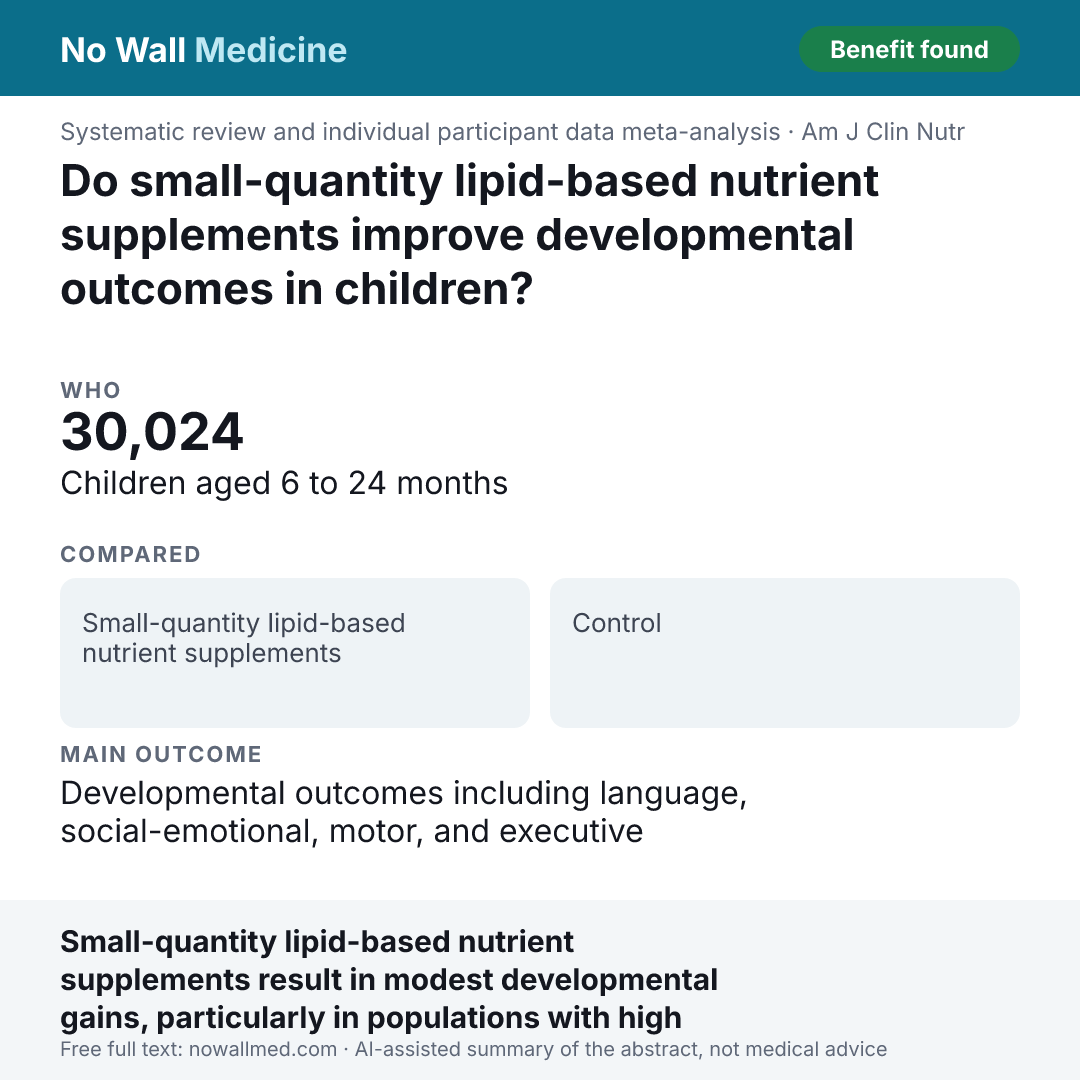
Small-quantity lipid-based nutrient supplements for children age 6-24 months: a systematic review and individual participant data meta-analysis of effects on developmental outcomes and effect modifiers
Systematic review and individual participant data meta-analysisBenefit found
Do small-quantity lipid-based nutrient supplements improve developmental outcomes in children?
Who
30,024
Children aged 6 to 24 months
Compared
Small-quantity lipid-based nutrient supplements
Control
Main outcome
Developmental outcomes including language, social-emotional, motor, and executive function
Result: mean difference: 0.07 SD (95% CI: 0.04, 0.10 SD) for language
Bottom line: Small-quantity lipid-based nutrient supplements result in modest developmental gains, particularly in populations with high stunting burden.
Am J Clin Nutr · 2021-10-01 · Save PNG
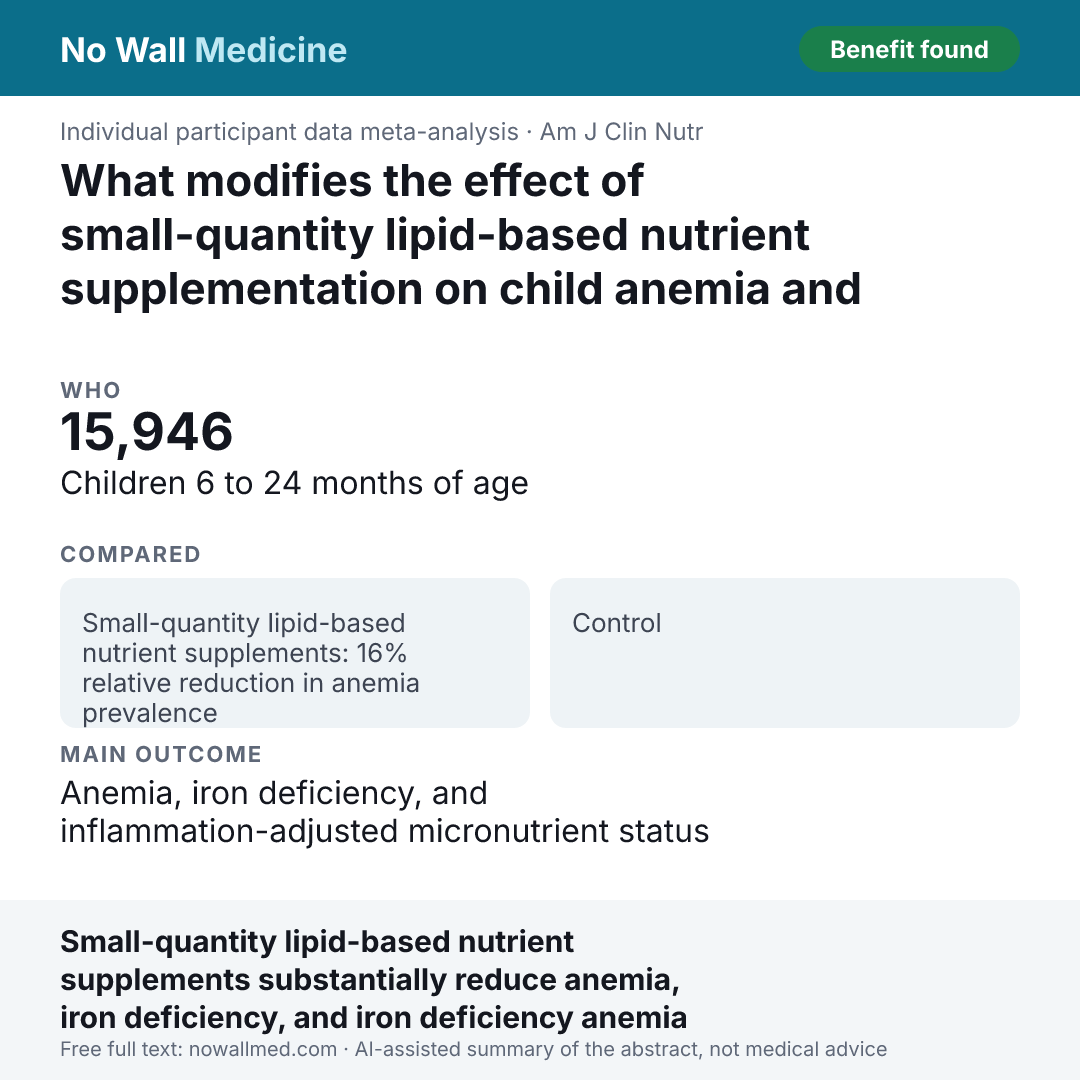
Characteristics that modify the effect of small-quantity lipid-based nutrient supplementation on child anemia and micronutrient status: an individual participant data meta-analysis of randomized controlled trials
Individual participant data meta-analysisBenefit found
What modifies the effect of small-quantity lipid-based nutrient supplementation on child anemia and micronutrient status?
Who
15,946
Children 6 to 24 months of age
Compared
Small-quantity lipid-based nutrient supplements: 16% relative reduction in anemia prevalence
Control
Main outcome
Anemia, iron deficiency, and inflammation-adjusted micronutrient status
Bottom line: Small-quantity lipid-based nutrient supplements substantially reduce anemia, iron deficiency, and iron deficiency anemia in children.
Am J Clin Nutr · 2021-10-01 · Save PNG
Spotlight influenza: Laboratory-confirmed seasonal influenza in people with acute respiratory illness: a literature review and meta-analysis, WHO European Region, 2004 to 2017
Meta-analysis and literature reviewNo clear difference
What proportion of people seeking medical care for acute respiratory infections have laboratory-confirmed influenza?
Who
People seeking medical care for influenza-like illness or acute respiratory infections · World Health Organization European Region
Compared
36%Outpatient setting (95% CI: 33-40)
24%Inpatient setting (95% CI: 20-29)
Main outcome
Proportion of people tested with laboratory-confirmed seasonal influenza
Result: 33% (95% CI: 30-36)
Bottom line: Laboratory-confirmed influenza accounted for approximately one third of all acute respiratory infections requiring medical care.
Euro Surveill · 2021-10-01 · Save PNG

Oral ondansetron for paediatric gastroenteritis in primary care: a randomised controlled trial
Pragmatic randomised controlled trialBenefit found
Does adding oral ondansetron to care as usual treat vomiting in children with acute gastroenteritis?
Who
194
Children aged 6 months to 6 years with acute gastroenteritis · Three out-of-hours primary care centres in the Netherlands
Compared
42.9%Care as usual
19.5%Care as usual plus oral ondansetron
Main outcome
Proportion of children who continued vomiting within 4 hours
Result: odds ratio 0.37 (95% CI 0.20 to 0.72)
Bottom line: Adding one dose of oral ondansetron to care as usual decreases vomiting and increases parental satisfaction.
Br J Gen Pract · 2021-09-30 · Save PNG
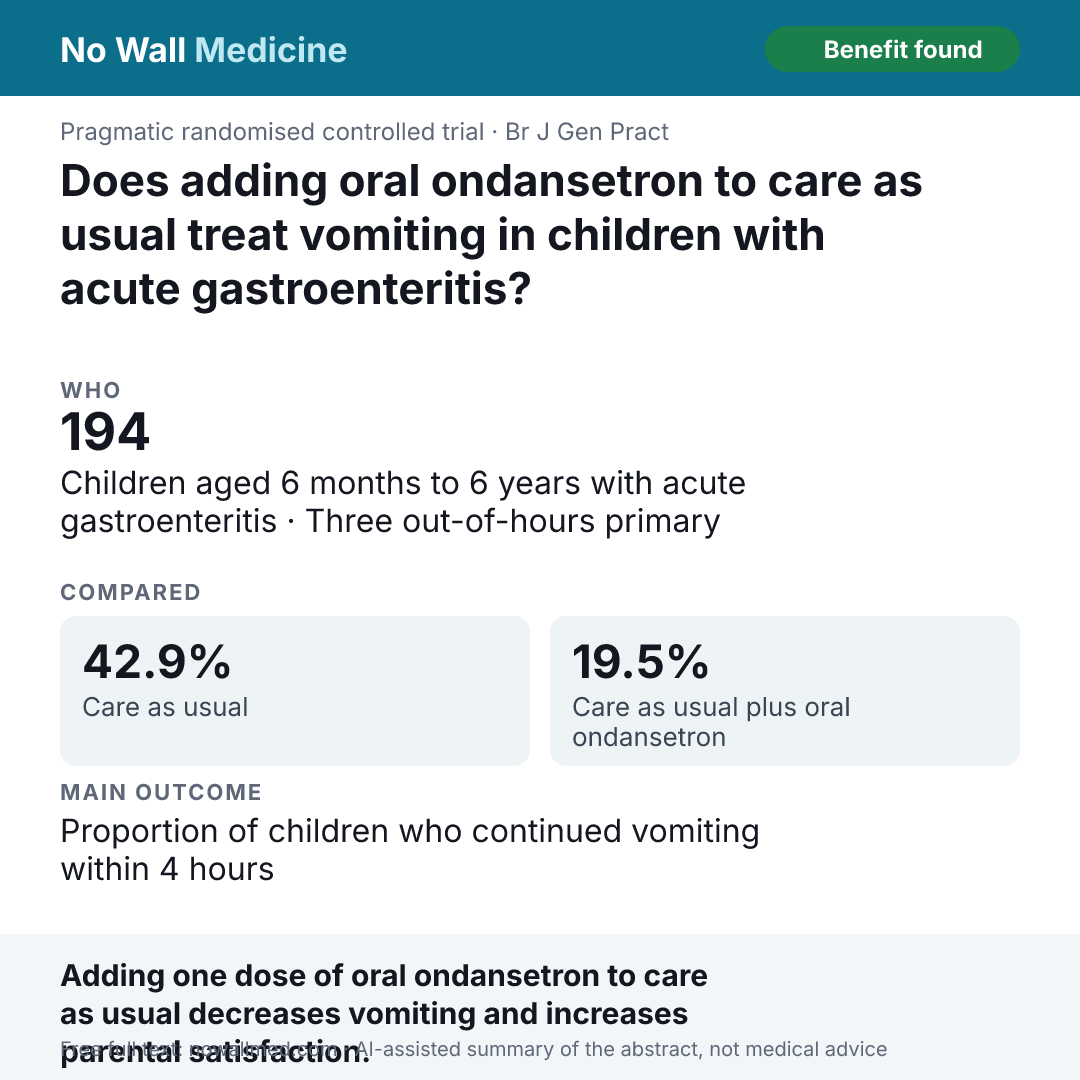
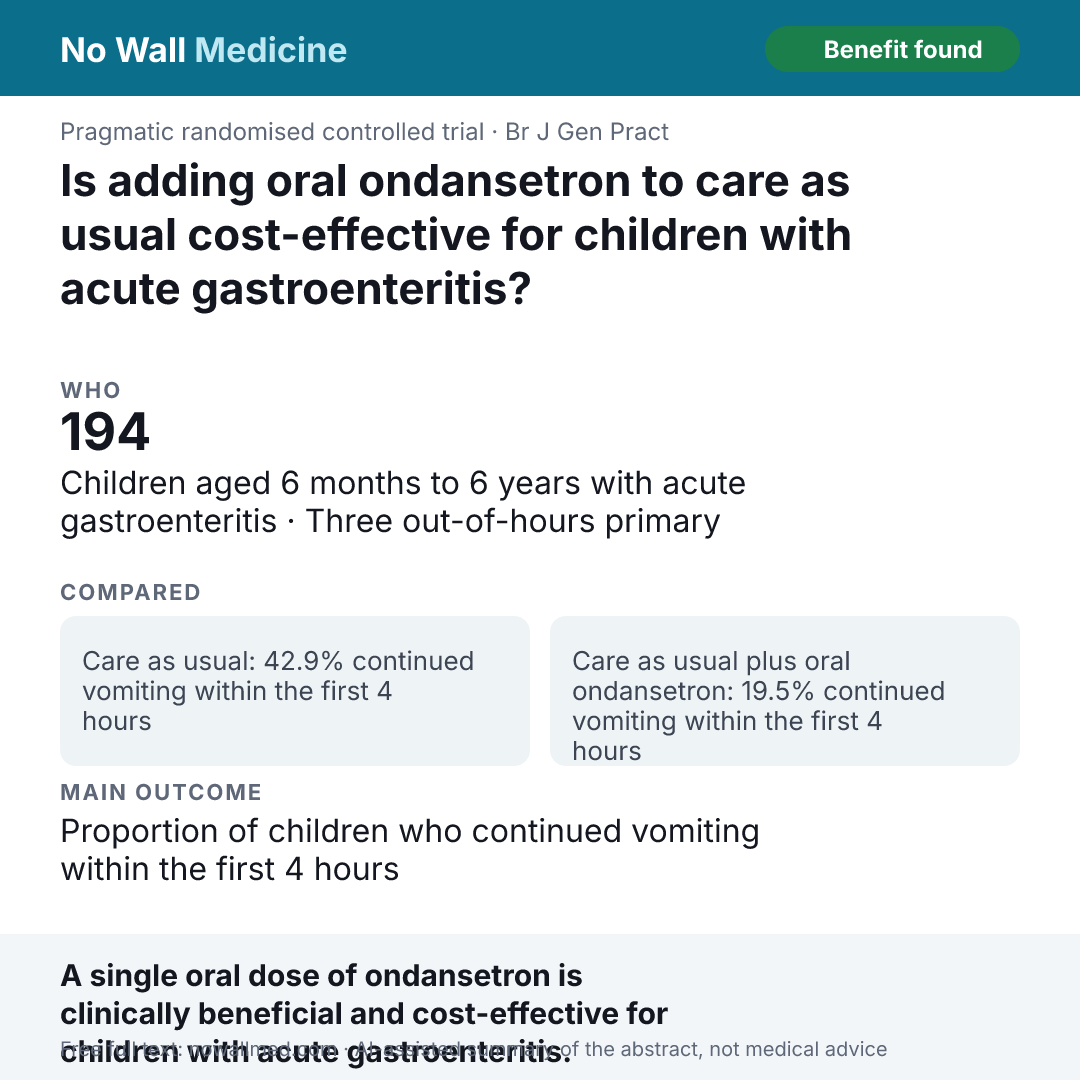
Cost-effectiveness of oral ondansetron for children with acute gastroenteritis in primary care: a randomised controlled trial
Pragmatic randomised controlled trialBenefit found
Is adding oral ondansetron to care as usual cost-effective for children with acute gastroenteritis?
Who
194
Children aged 6 months to 6 years with acute gastroenteritis · Three out-of-hours primary care centres in the Netherlands
Compared
Care as usual: 42.9% continued vomiting within the first 4 hours
Care as usual plus oral ondansetron: 19.5% continued vomiting within the first 4 hours
Main outcome
Proportion of children who continued vomiting within the first 4 hours
Result: odds ratio 0.4 (95% confidence interval 0.2 to 0.7)
Bottom line: A single oral dose of ondansetron is clinically beneficial and cost-effective for children with acute gastroenteritis.
Br J Gen Pract · 2021-09-30 · Save PNG
Psychoeducational Messaging to Reduce Alcohol Use for College Students With Type 1 Diabetes: Internet-Delivered Pilot Trial
Randomized pilot trialBenefit found
Does an internet-delivered psychoeducational intervention reduce alcohol use in college students with type 1 diabetes?
Who
138
College students aged 17-25 years with type 1 diabetes · Web-based channels
Compared
Peer narrator
Clinician narrator
Main outcome
Self-reported binge drinking
Result: odds ratio 0.48 (95% CI 0.31-0.75)
Bottom line: An internet-delivered psychoeducational intervention significantly reduced self-reported binge drinking among college students with type 1 diabetes.
J Med Internet Res · 2021-09-30 · Save PNG

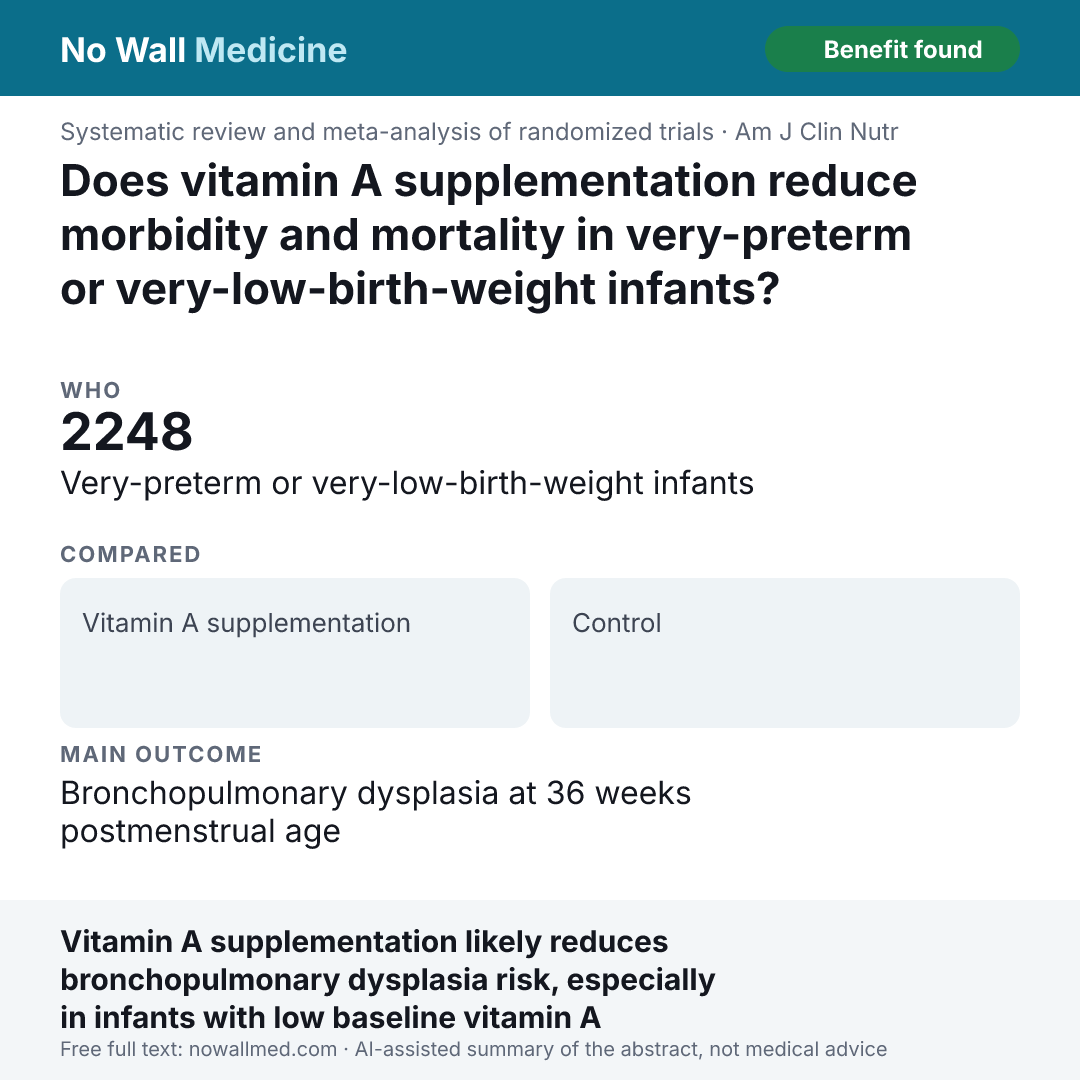
Vitamin A supplementation in very-preterm or very-low-birth-weight infants to prevent morbidity and mortality: a systematic review and meta-analysis of randomized trials
Systematic review and meta-analysis of randomized trialsBenefit found
Does vitamin A supplementation reduce morbidity and mortality in very-preterm or very-low-birth-weight infants?
Who
2248
Very-preterm or very-low-birth-weight infants
Compared
Vitamin A supplementation
Control
Main outcome
Bronchopulmonary dysplasia at 36 weeks postmenstrual age
Result: relative risk 0.83 (95% CI 0.74 to 0.93)
Bottom line: Vitamin A supplementation likely reduces bronchopulmonary dysplasia risk, especially in infants with low baseline vitamin A intake.
Am J Clin Nutr · 2021-09-29 · Save PNG
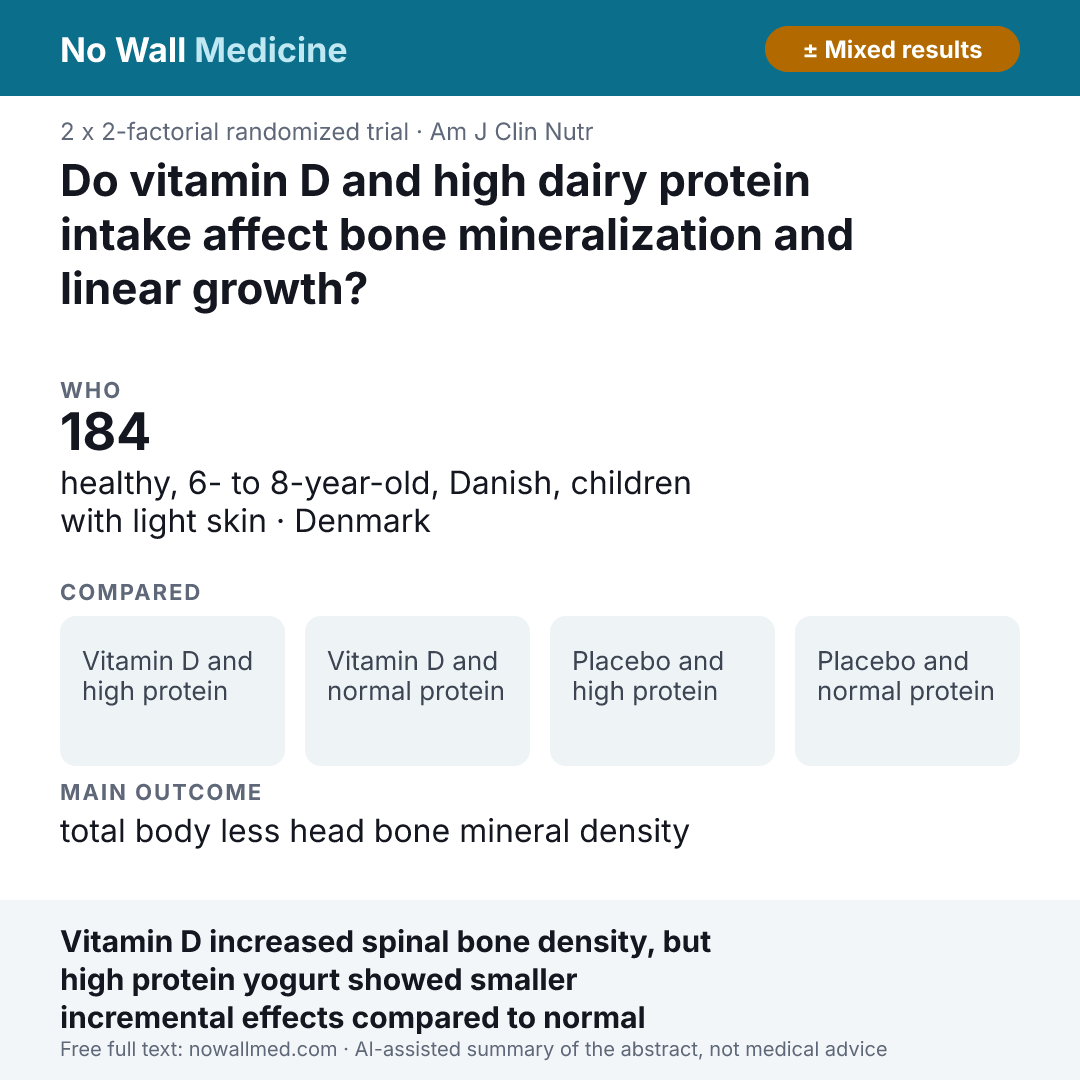
Effects of vitamin D and high dairy protein intake on bone mineralization and linear growth in 6- to 8-year-old children: the D-pro randomized trial
2 x 2-factorial randomized trialMixed results
Do vitamin D and high dairy protein intake affect bone mineralization and linear growth?
Who
184
healthy, 6- to 8-year-old, Danish, children with light skin · Denmark
Compared
Vitamin D and high protein
Vitamin D and normal protein
Placebo and high protein
Placebo and normal protein
Main outcome
total body less head bone mineral density
Bottom line: Vitamin D increased spinal bone density, but high protein yogurt showed smaller incremental effects compared to normal protein yogurt.
Am J Clin Nutr · 2021-09-29 · Save PNG
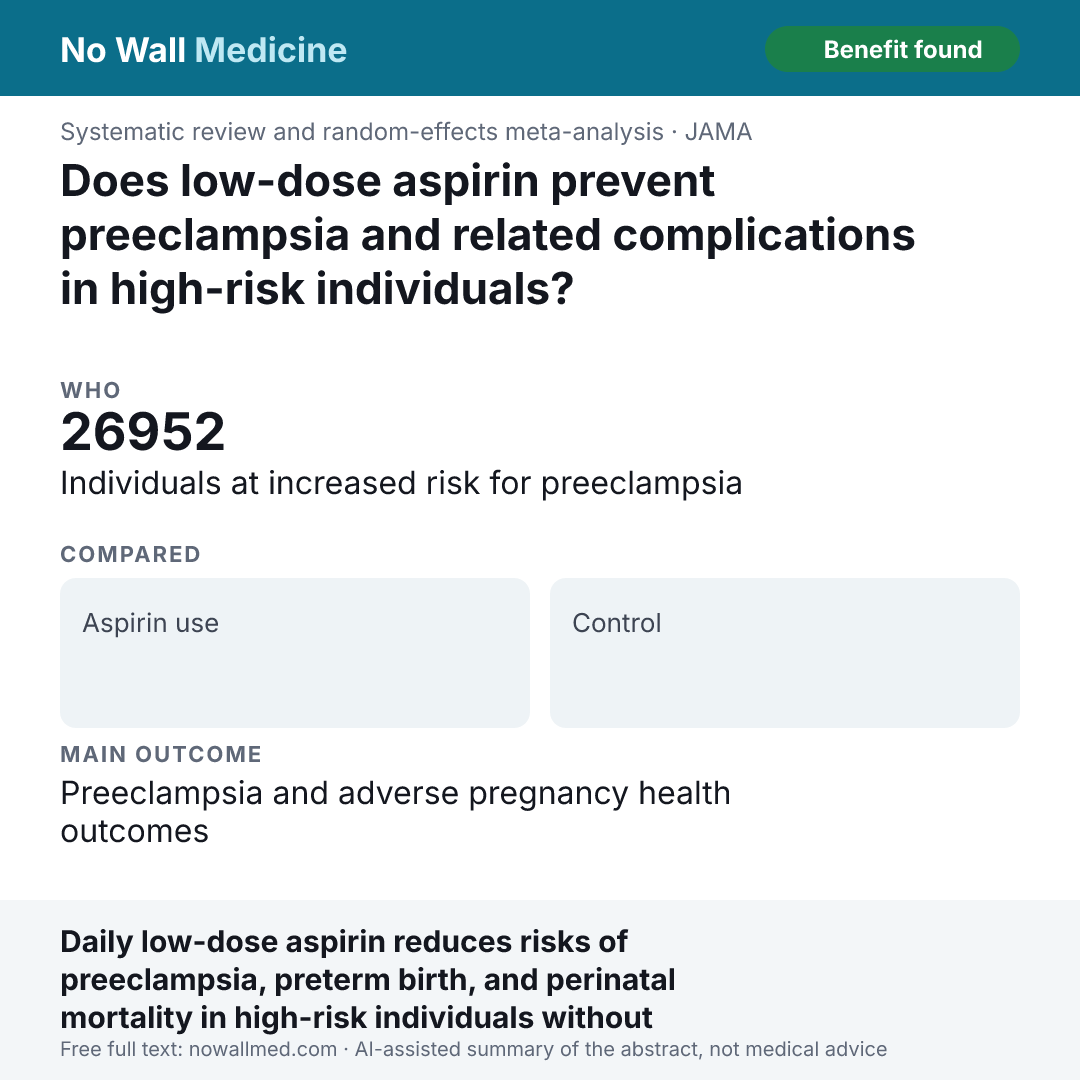
Aspirin Use to Prevent Preeclampsia and Related Morbidity and Mortality: Updated Evidence Report and Systematic Review for the US Preventive Services Task Force
Systematic review and random-effects meta-analysisBenefit found
Does low-dose aspirin prevent preeclampsia and related complications in high-risk individuals?
Who
26952
Individuals at increased risk for preeclampsia
Compared
Aspirin use
Control
Main outcome
Preeclampsia and adverse pregnancy health outcomes
Result: relative risk 0.85 (95% CI 0.75-0.95)
Bottom line: Daily low-dose aspirin reduces risks of preeclampsia, preterm birth, and perinatal mortality in high-risk individuals without evident harms.
Limitation: Absolute risk reductions were greater in smaller trials.
JAMA · 2021-09-28 · Save PNG
Gram-negative neonatal sepsis in low- and lower-middle-income countries and WHO empirical antibiotic recommendations: A systematic review and meta-analysis
Systematic review and meta-analysisKey finding
What are the proportions of Gram-negative organisms and antimicrobial resistance in neonatal sepsis?
Who
10,458
Neonates with microbiologically confirmed bloodstream infections or meningitis · 19 low- and lower-middle-income countries in Africa and Asia
Compared
60%Gram-negative organisms (95% CI 55% to 65%)
38%Klebsiella species (95% CI 33% to 43%)
Main outcome
Pooled proportions of Gram-negative organisms and antimicrobial resistance
Bottom line: Gram-negative bacteria cause 60% of neonatal sepsis in these regions with high resistance to recommended antibiotics.
Limitation: Significant heterogeneity, exclusion of upper-middle-income countries, and potential sampling bias from tertiary hospital settings.
PLOS Med · 2021-09-28 · Save PNG

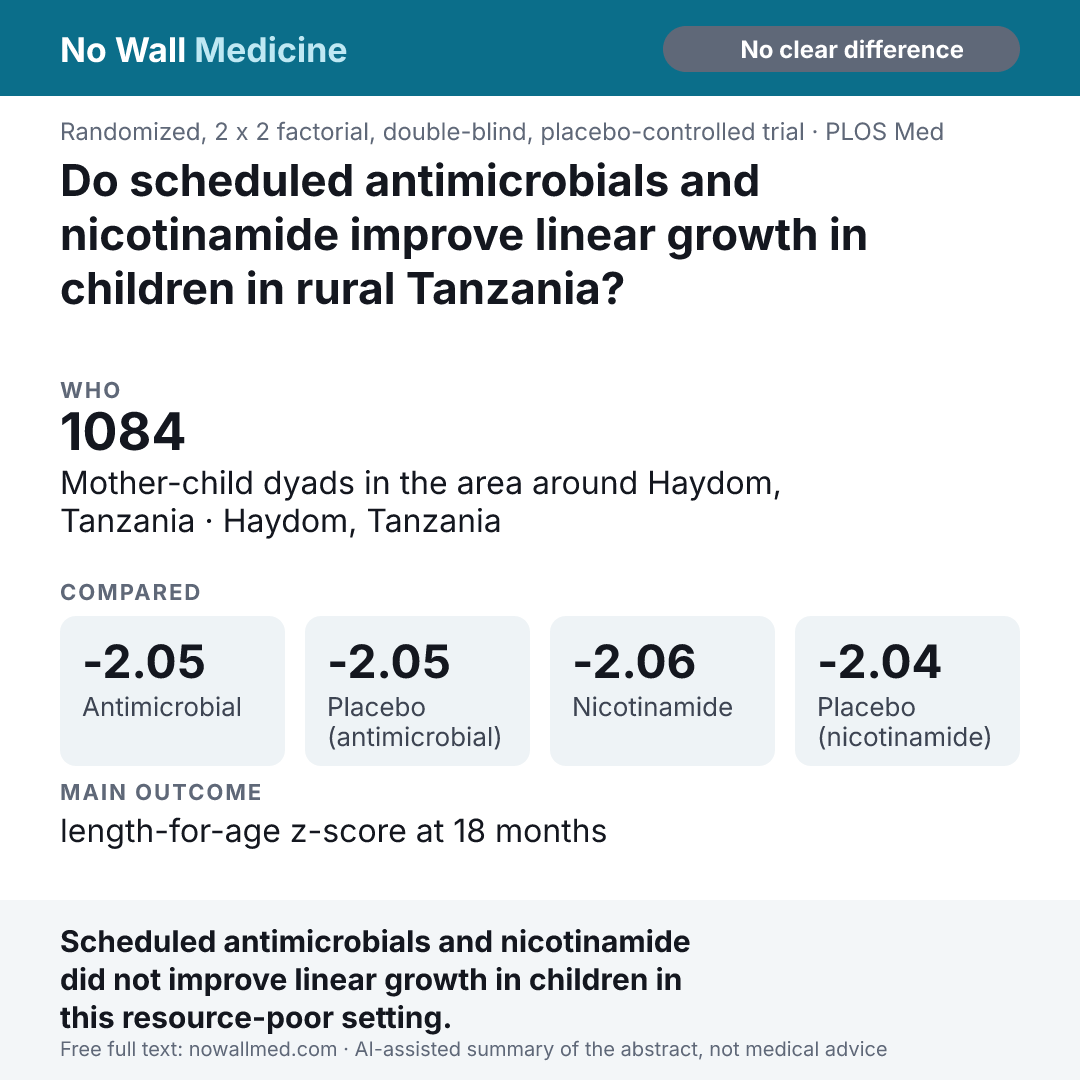
Effect of scheduled antimicrobial and nicotinamide treatment on linear growth in children in rural Tanzania: A factorial randomized, double-blind, placebo-controlled trial
Randomized, 2 x 2 factorial, double-blind, placebo-controlled trialNo clear difference
Do scheduled antimicrobials and nicotinamide improve linear growth in children in rural Tanzania?
Who
1084
Mother-child dyads in the area around Haydom, Tanzania · Haydom, Tanzania
Compared
-2.05Antimicrobial (95% CI -2.13, -1.96)
-2.05Placebo (antimicrobial) (95% CI -2.14, -1.97)
-2.06Nicotinamide (95% CI -2.13, -1.95)
-2.04Placebo (nicotinamide) (95% CI -2.14, -1.98)
Main outcome
length-for-age z-score at 18 months
Result: mean difference 0.01 (95% CI -0.13, 0.11) for antimicrobial; 0.03 (95% CI -0.15, 0.09) for nicotinamide
Bottom line: Scheduled antimicrobials and nicotinamide did not improve linear growth in children in this resource-poor setting.
Limitation: Absence of laboratory measures of pathogen carriage and nicotinamide metabolism to provide context.
PLOS Med · 2021-09-28 · Save PNG
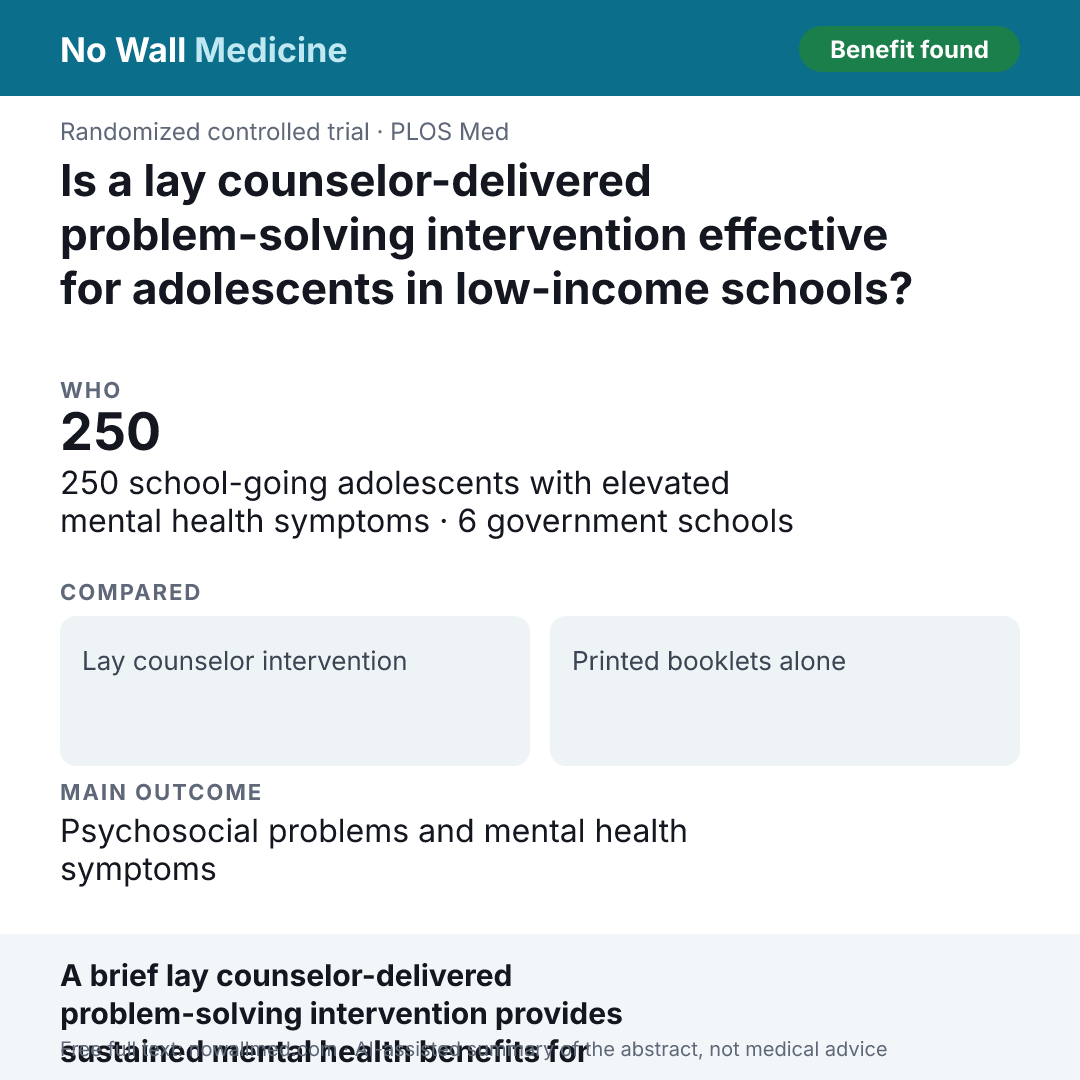
Effectiveness and costs associated with a lay counselor-delivered, brief problem-solving mental health intervention for adolescents in urban, low-income schools in India: 12-month outcomes of a randomized controlled trial
Randomized controlled trialBenefit found
Is a lay counselor-delivered problem-solving intervention effective for adolescents in low-income schools?
Who
250
250 school-going adolescents with elevated mental health symptoms · 6 government schools in New Delhi, India
Compared
Lay counselor intervention
Printed booklets alone
Main outcome
Psychosocial problems and mental health symptoms
Result: YTP: adjusted mean difference -0.75 (95% CI -1.47, -0.03); SDQ Total Difficulties: adjusted mean difference -1.73 (95% CI -3.47, 0.02)
Bottom line: A brief lay counselor-delivered problem-solving intervention provides sustained mental health benefits for adolescents over 12 months.
Limitation: Lack of sample size calculations for 12-month follow-up and absence of cost-effectiveness analyses.
PLOS Med · 2021-09-28 · Save PNG
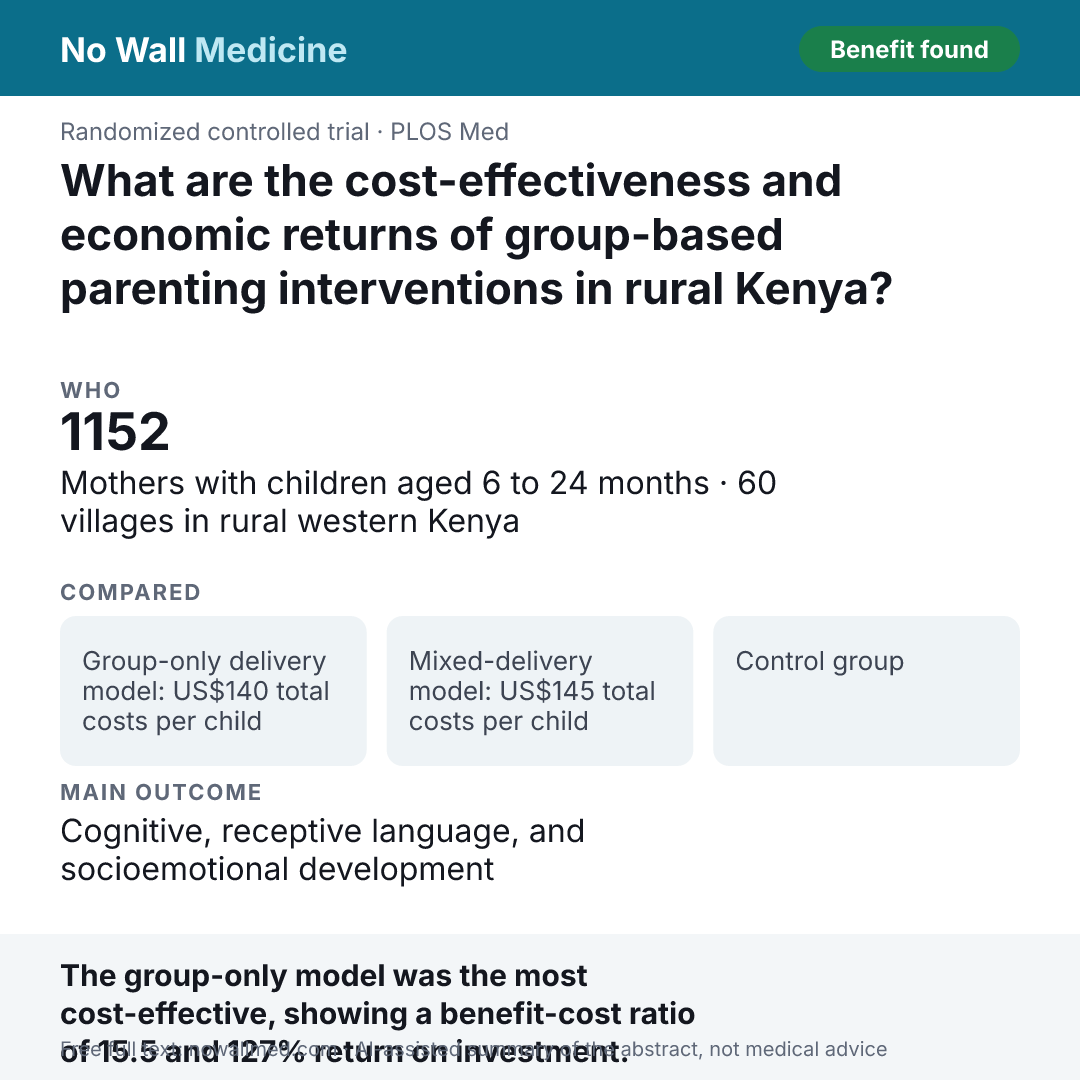
Cost-effectiveness and economic returns of group-based parenting interventions to promote early childhood development: Results from a randomized controlled trial in rural Kenya
Randomized controlled trialBenefit found
What are the cost-effectiveness and economic returns of group-based parenting interventions in rural Kenya?
Who
1152
Mothers with children aged 6 to 24 months · 60 villages in rural western Kenya
Compared
Group-only delivery model: US$140 total costs per child
Mixed-delivery model: US$145 total costs per child
Control group
Main outcome
Cognitive, receptive language, and socioemotional development
Bottom line: The group-only model was the most cost-effective, showing a benefit-cost ratio of 15.5 and 127% return on investment.
Limitation: Estimates make assumptions about discount rates, income tax rates, and future wages and schooling.
PLOS Med · 2021-09-28 · Save PNG
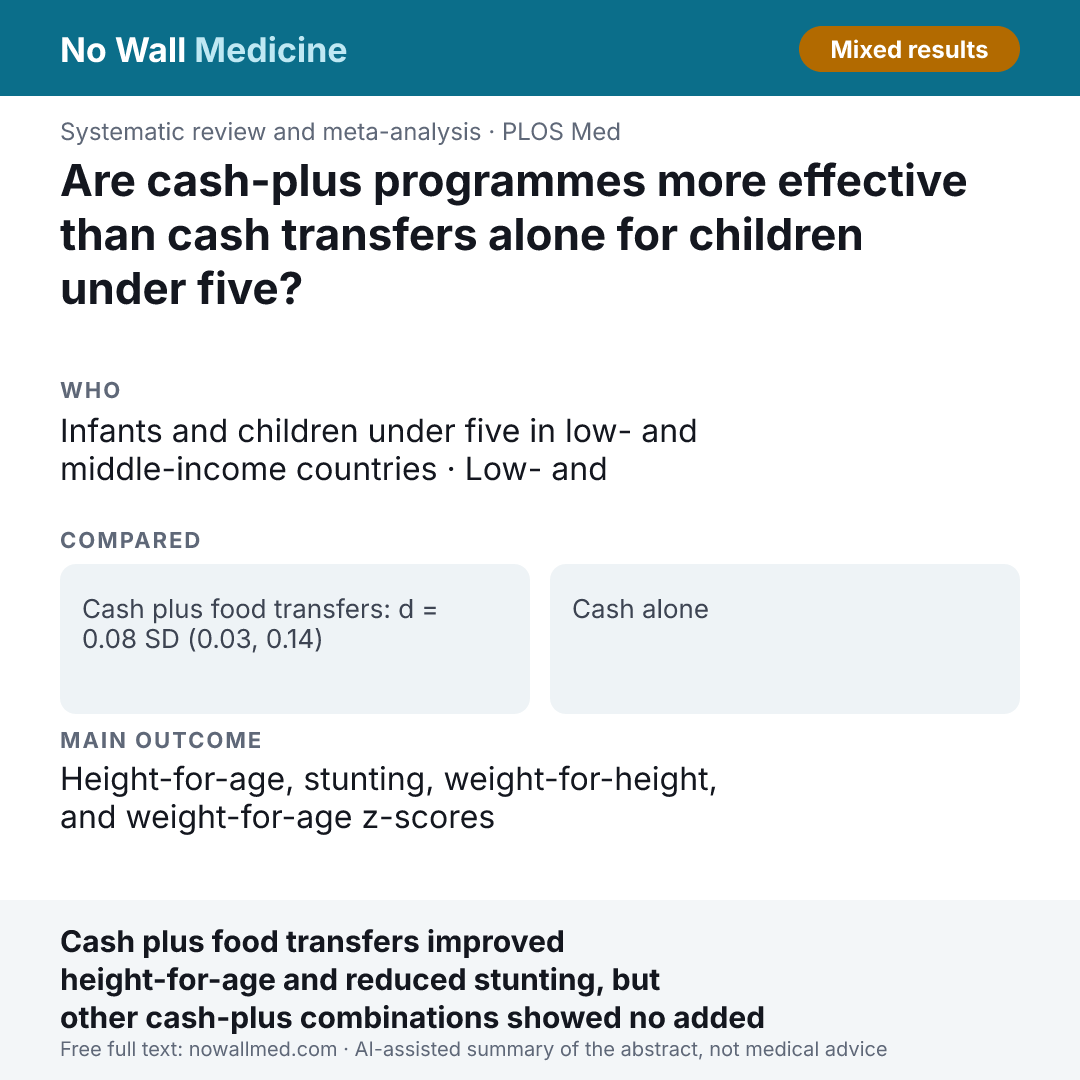
Effectiveness of cash-plus programmes on early childhood outcomes compared to cash transfers alone: A systematic review and meta-analysis in low- and middle-income countries
Systematic review and meta-analysisMixed results
Are cash-plus programmes more effective than cash transfers alone for children under five?
Who
Infants and children under five in low- and middle-income countries · Low- and middle-income countries
Compared
Cash plus food transfers: d = 0.08 SD (0.03, 0.14)
Cash alone
Main outcome
Height-for-age, stunting, weight-for-height, and weight-for-age z-scores
Result: OR = 0.82 (0.74, 0.92)
Bottom line: Cash plus food transfers improved height-for-age and reduced stunting, but other cash-plus combinations showed no added impact.
Limitation: Few studies compared cash-plus against cash alone and potentially high heterogeneity between findings.
PLOS Med · 2021-09-28 · Save PNG
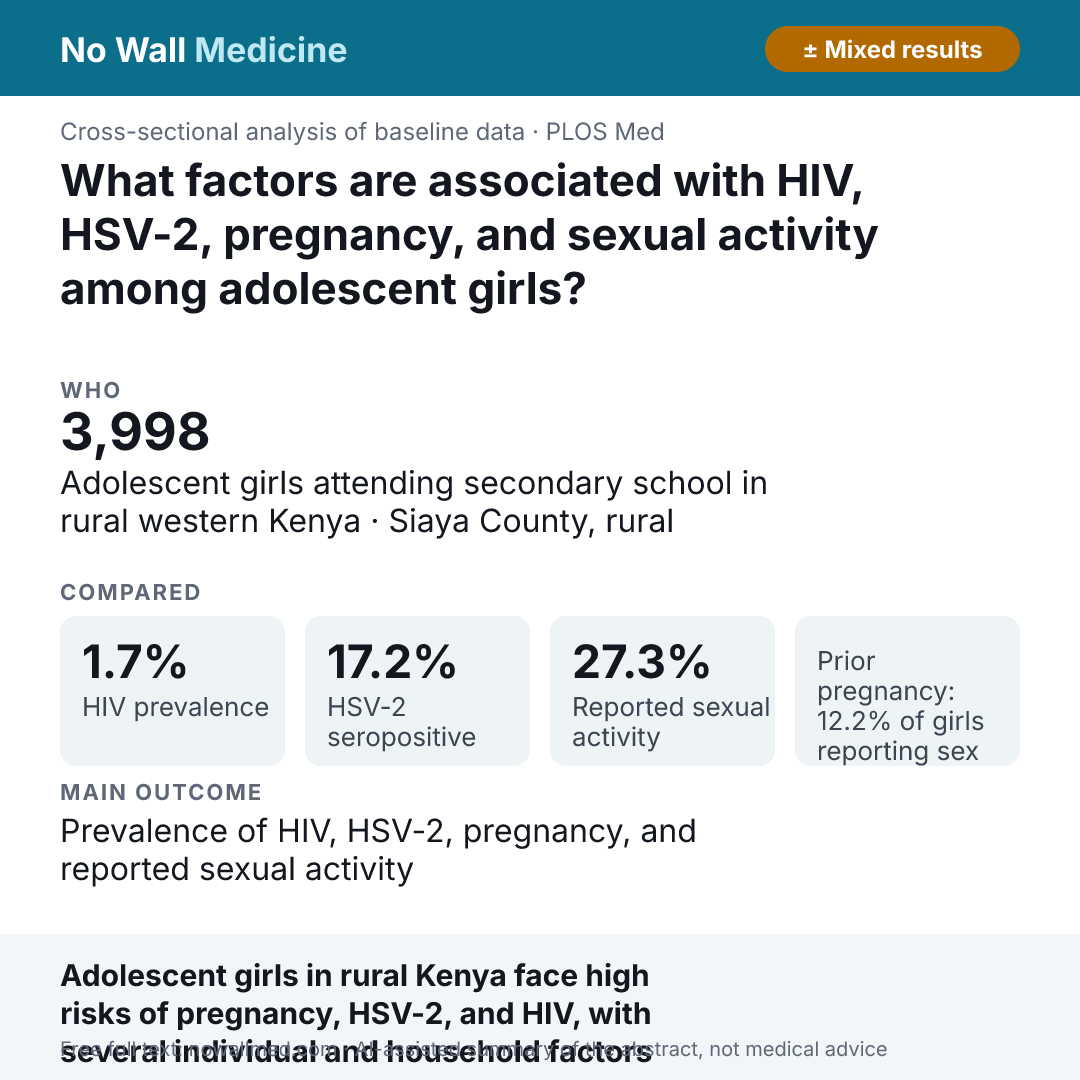
Factors associated with the prevalence of HIV, HSV-2, pregnancy, and reported sexual activity among adolescent girls in rural western Kenya: A cross-sectional analysis of baseline data in a cluster randomized controlled trial
Cross-sectional analysis of baseline dataMixed results
What factors are associated with HIV, HSV-2, pregnancy, and sexual activity among adolescent girls?
Who
3,998
Adolescent girls attending secondary school in rural western Kenya · Siaya County, rural western Kenya
Compared
1.7%HIV prevalence (n = 66)
17.2%HSV-2 seropositive (n = 686)
27.3%Reported sexual activity (n = 1,090)
Prior pregnancy: 12.2% of girls reporting sex (n = 133)
Main outcome
Prevalence of HIV, HSV-2, pregnancy, and reported sexual activity
Bottom line: Adolescent girls in rural Kenya face high risks of pregnancy, HSV-2, and HIV, with several individual and household factors associated with these outcomes.
Limitation: Cross-sectional design limits causal interpretation and self-reported exposure may lead to underreporting of risk factors.
PLOS Med · 2021-09-28 · Save PNG
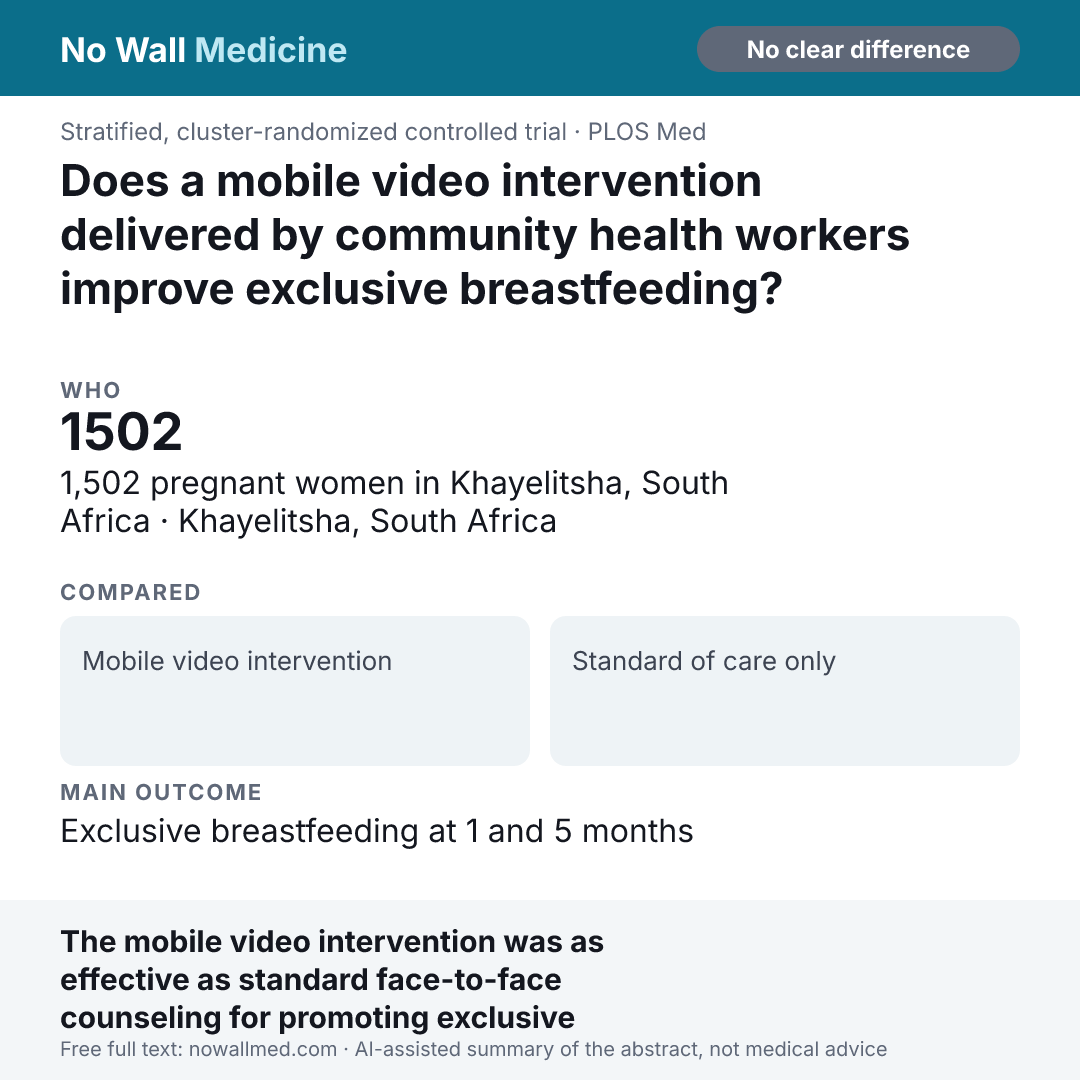
Evaluation of a community-based mobile video breastfeeding intervention in Khayelitsha, South Africa: The Philani MOVIE cluster-randomized controlled trial
Stratified, cluster-randomized controlled trialNo clear difference
Does a mobile video intervention delivered by community health workers improve exclusive breastfeeding?
Who
1502
1,502 pregnant women in Khayelitsha, South Africa · Khayelitsha, South Africa
Compared
Mobile video intervention
Standard of care only
Main outcome
Exclusive breastfeeding at 1 and 5 months
Result: RR 0.93 (95% CI 0.86 to 1.01) at 1 month
Bottom line: The mobile video intervention was as effective as standard face-to-face counseling for promoting exclusive breastfeeding.
Limitation: High loss to follow-up at 5 months due to COVID-19 pandemic and service changes.
PLOS Med · 2021-09-28 · Save PNG
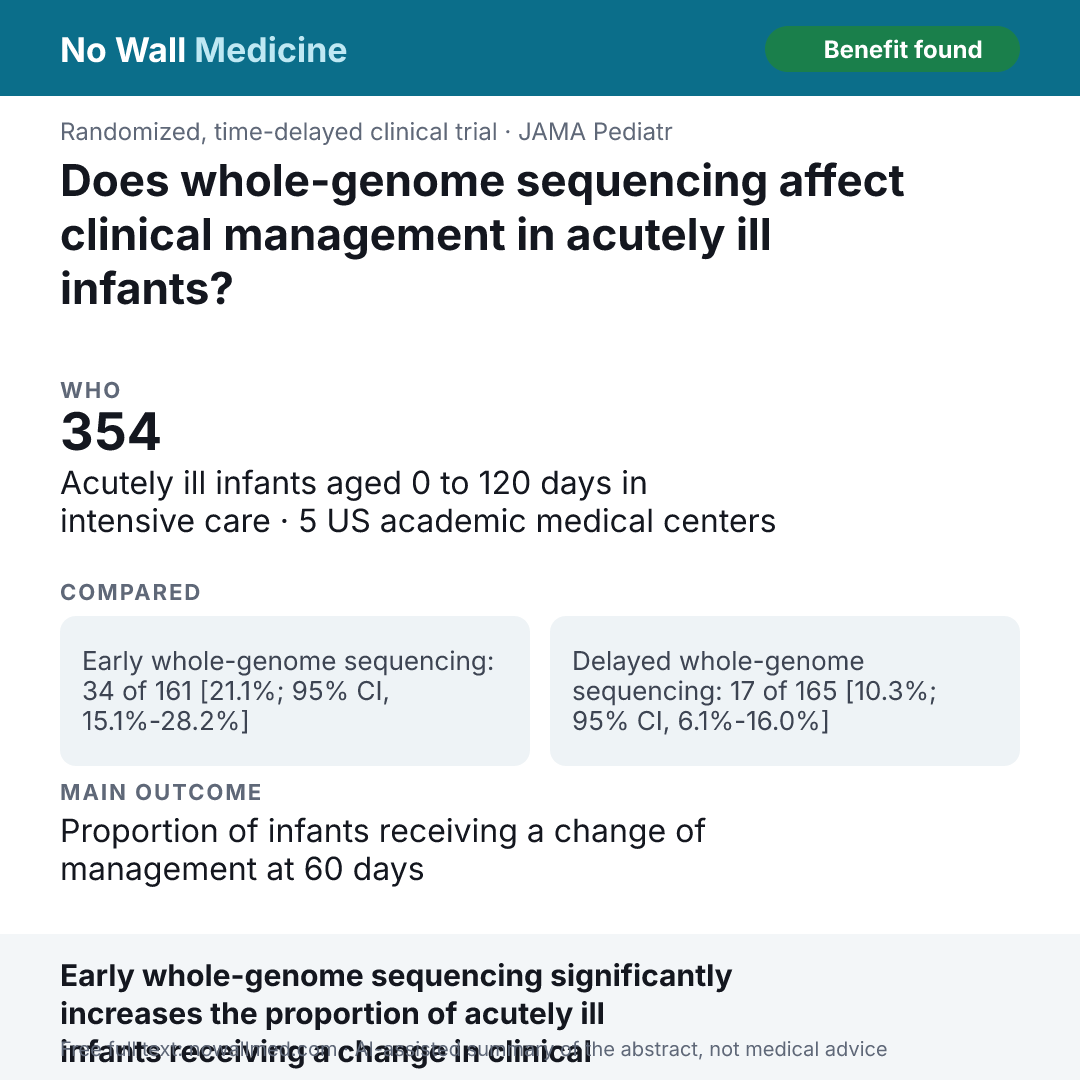
Effect of Whole-Genome Sequencing on the Clinical Management of Acutely Ill Infants With Suspected Genetic Disease: A Randomized Clinical Trial
Randomized, time-delayed clinical trialBenefit found
Does whole-genome sequencing affect clinical management in acutely ill infants?
Who
354
Acutely ill infants aged 0 to 120 days in intensive care · 5 US academic medical centers and affiliated children's hospitals
Compared
Early whole-genome sequencing: 34 of 161 [21.1%; 95% CI, 15.1%-28.2%]
Delayed whole-genome sequencing: 17 of 165 [10.3%; 95% CI, 6.1%-16.0%]
Main outcome
Proportion of infants receiving a change of management at 60 days
Result: odds ratio, 2.3; 95% CI, 1.22-4.32
Bottom line: Early whole-genome sequencing significantly increases the proportion of acutely ill infants receiving a change in clinical management.
JAMA Pediatr · 2021-09-28 · Save PNG
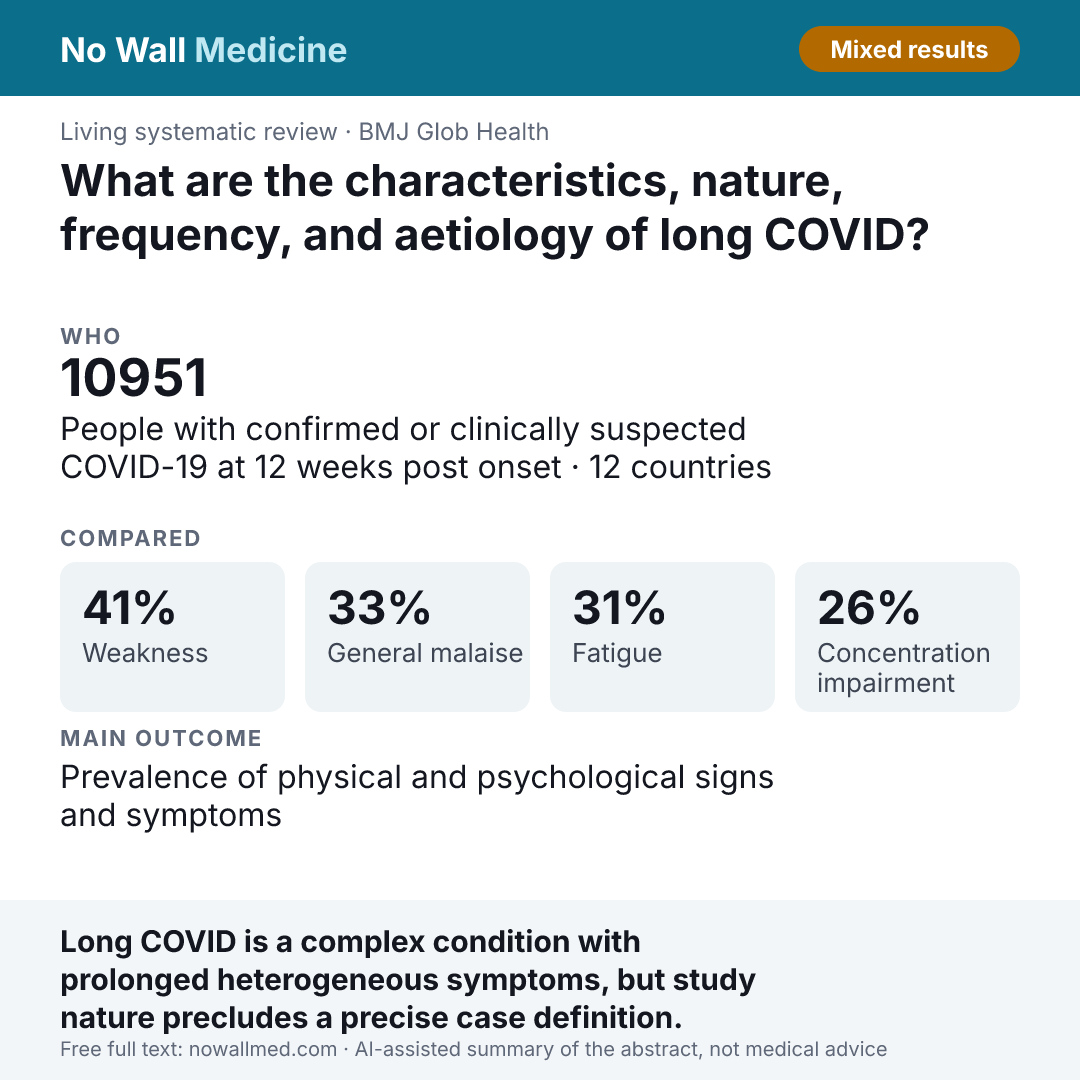
Characterising long COVID: a living systematic review
Living systematic reviewMixed results
What are the characteristics, nature, frequency, and aetiology of long COVID?
Who
10951
People with confirmed or clinically suspected COVID-19 at 12 weeks post onset · 12 countries
Compared
41%Weakness (95% CI 25% to 59%)
33%General malaise (95% CI 15% to 57%)
31%Fatigue (95% CI 24% to 39%)
26%Concentration impairment (95% CI 21% to 32%)
Main outcome
Prevalence of physical and psychological signs and symptoms
Bottom line: Long COVID is a complex condition with prolonged heterogeneous symptoms, but study nature precludes a precise case definition.
Limitation: Most studies showed high or moderate risk of bias and few included children.
BMJ Glob Health · 2021-09-28 · Save PNG