Visual abstracts
New randomized trials and meta-analyses from leading journals at a glance: who was studied, what was compared, and what was found. Every paper is free to read in full.
All specialtiesCardiology 910Oncology 820Gastroenterology & Hepatology 333Infectious Disease 653Neurology 373Psychiatry & Mental Health 448Pulmonology 392Critical Care 271Endocrinology & Diabetes 498Pediatrics 569Surgery 366Orthopedics & Sports Medicine 168Neurosurgery 116Cardiothoracic & Vascular Surgery 88Plastic & Reconstructive Surgery 145Nephrology 203Rheumatology 111Hematology 195Dermatology 87Ophthalmology 106Obstetrics & Gynecology 278Public & Global Health 183Radiology & Imaging 109Anesthesiology 136Urology 171ENT (Otolaryngology) 115Emergency Medicine 104Allergy & Immunology 63Geriatrics 166Family Medicine & Primary Care 116Medical Genetics & Genomics 93Pathology & Laboratory Medicine 28Physical Medicine & Rehabilitation 149Palliative Care 82Nutrition 228Digital Health & AI 466General Medicine 105
Six-month supervised telerehabilitation combining pilates-based therapeutic exercise and self-myofascial release in adults with fibromyalgia: a randomized controlled trial
Randomized controlled trialBenefit found
Does telerehabilitation help adults with fibromyalgia
Who
68
adults with fibromyalgia
Compared
telerehabilitation
usual care
Main outcome
fibromyalgia impact
Bottom line: Telerehabilitation helps fibromyalgia patients
J Rehabil Med · 2026-10-13Download image

Artificial Intelligence Decision-Making in Multidisciplinary Tumor Boards for Head and Neck Cancer: A Systematic Review
Systematic reviewMixed results
What is the performance of artificial intelligence in multidisciplinary tumor boards for head and neck cancer?
Who
7
Studies assessing artificial intelligence applications in multidisciplinary tumor boards for head and neck cancer
Compared
ChatGPT-4: superior performance compared to other models
Other models
Main outcome
Artificial intelligence performance across four key domains
Bottom line: ChatGPT-4 shows promising performance, but concerns regarding clinical accuracy, consistency, and transparency persist in head and neck cancer decision-making.
Limitation: The current evidence base remains limited and heterogeneous.
J Otolaryngol Head Neck Surg · 2026-10-13Download image

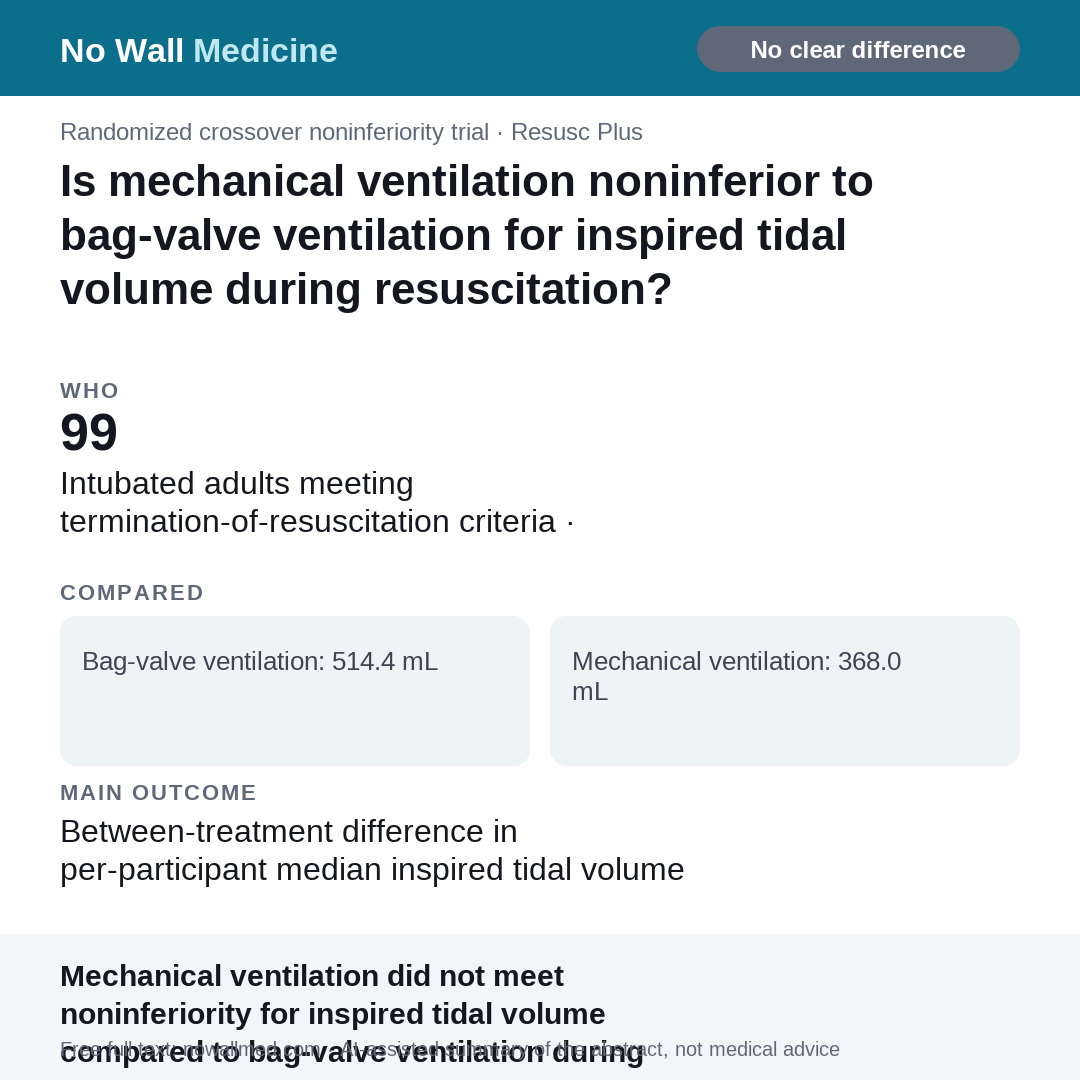
Mechanical ventilation vs bag-valve ventilation during cardiopulmonary resuscitation: a randomized crossover noninferiority trial
Randomized crossover noninferiority trialNo clear difference
Is mechanical ventilation noninferior to bag-valve ventilation for inspired tidal volume during resuscitation?
Who
99
Intubated adults meeting termination-of-resuscitation criteria · Single-center
Compared
Bag-valve ventilation: 514.4 mL
Mechanical ventilation: 368.0 mL
Main outcome
Between-treatment difference in per-participant median inspired tidal volume
Result: -146.2 mL (95% CI, -187.0 to -105.5)
Bottom line: Mechanical ventilation did not meet noninferiority for inspired tidal volume compared to bag-valve ventilation during cardiopulmonary resuscitation.
Limitation: The unvalidated analyzer and absence of clinical outcomes limit interpretation.
Resusc Plus · 2026-10-13Download image
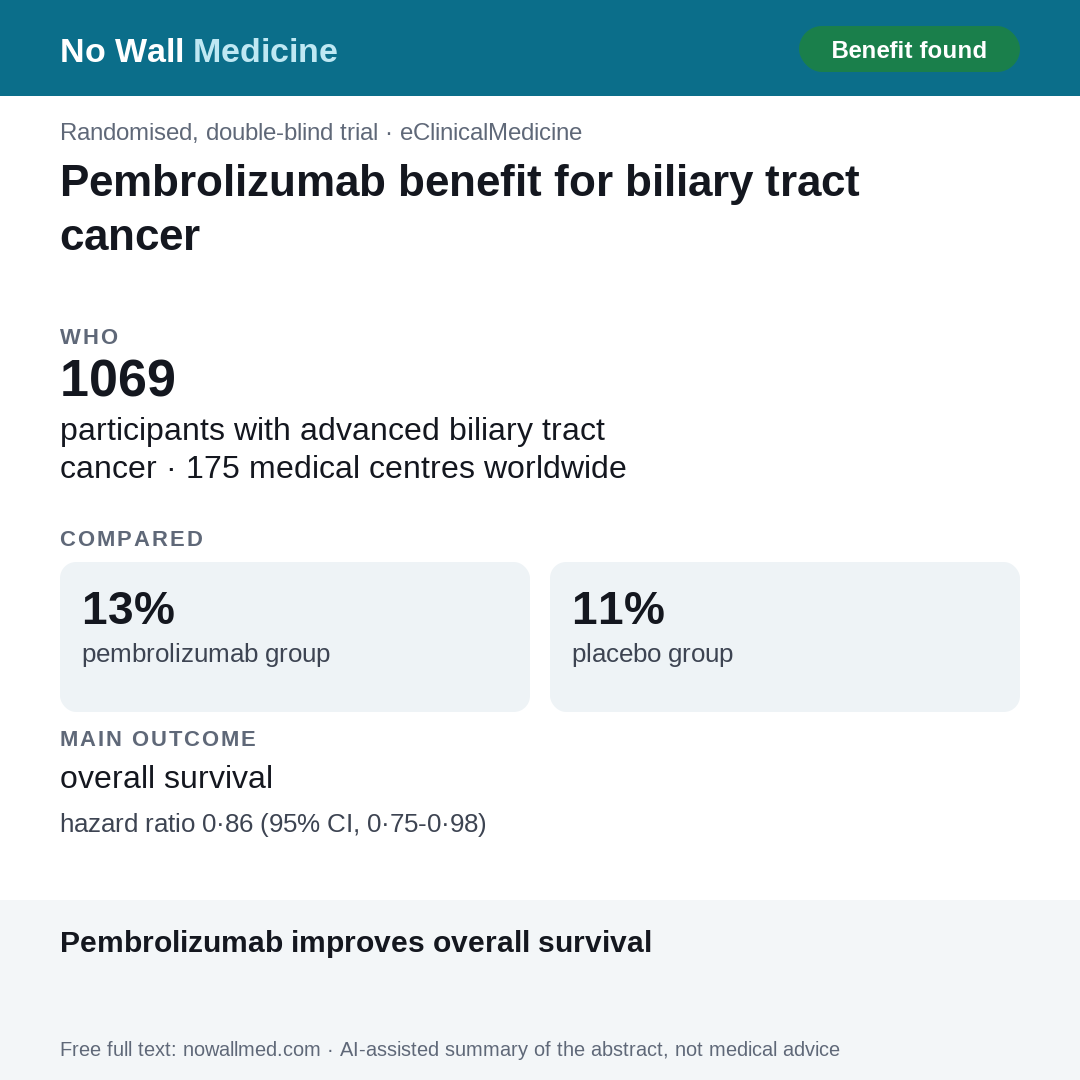
Pembrolizumab plus gemcitabine and cisplatin for advanced biliary tract cancer: longer-term follow-up from the randomised, double-blind, placebo-controlled, phase 3 KEYNOTE-966 trial
Randomised, double-blind trialBenefit found
Pembrolizumab benefit for biliary tract cancer
Who
1069
participants with advanced biliary tract cancer · 175 medical centres worldwide
Compared
13%pembrolizumab group (95% CI, 11-17)
11%placebo group (95% CI, 8-14)
Main outcome
overall survival
Result: hazard ratio 0·86 (95% CI, 0·75-0·98)
Bottom line: Pembrolizumab improves overall survival
Funded by: Merck Sharp & Dohme LLC
eClinicalMedicine · 2026-10-12Download image
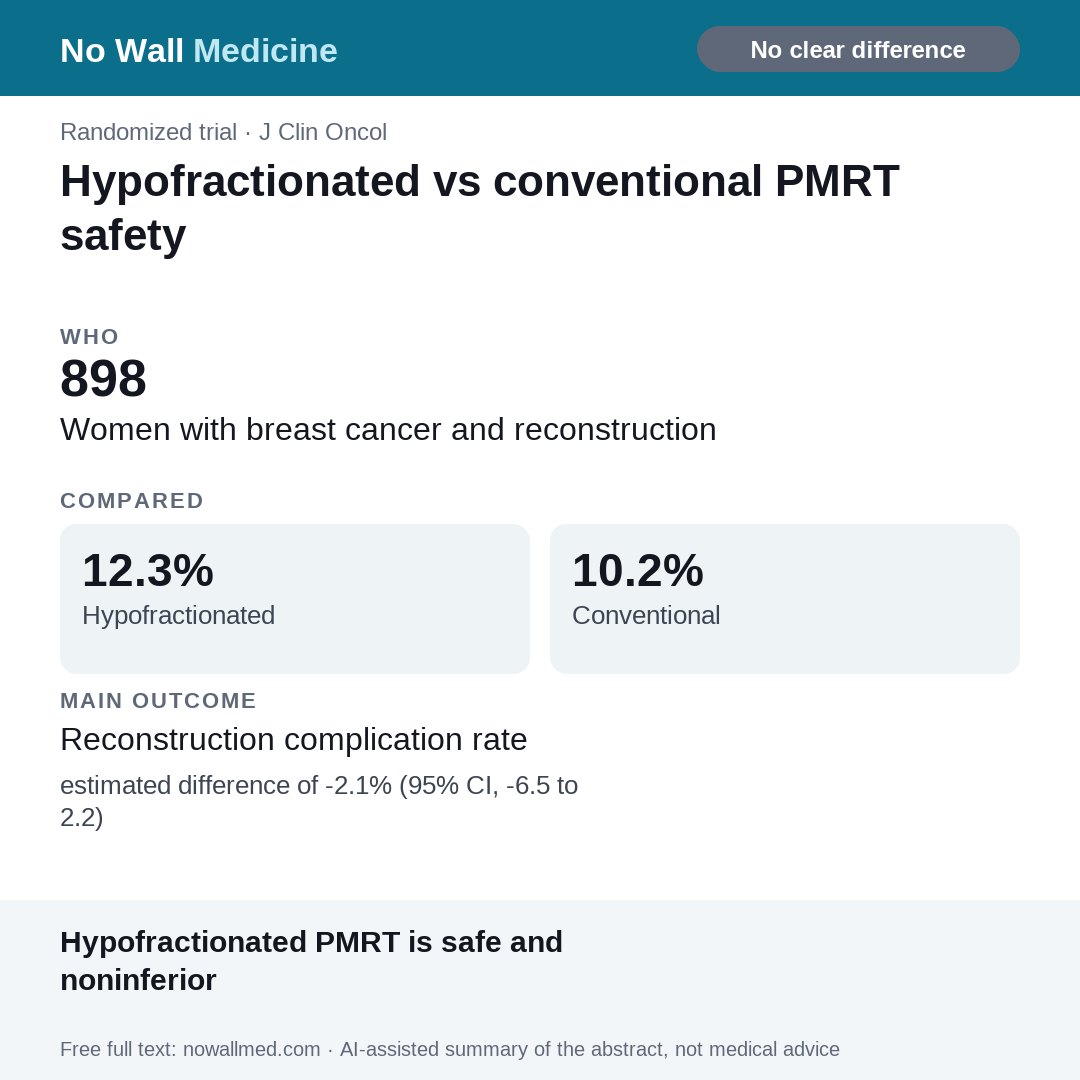
Randomized Trial of Hypofractionated Postmastectomy Radiation Therapy in Women With Breast Reconstruction (RT CHARM, Alliance A221505)
Randomized trialNo clear difference
Hypofractionated vs conventional PMRT safety
Who
898
Women with breast cancer and reconstruction
Compared
12.3%Hypofractionated (52/422)
10.2%Conventional (41/403)
Main outcome
Reconstruction complication rate
Result: estimated difference of -2.1% (95% CI, -6.5 to 2.2)
Bottom line: Hypofractionated PMRT is safe and noninferior
J Clin Oncol · 2026-10-12Download image
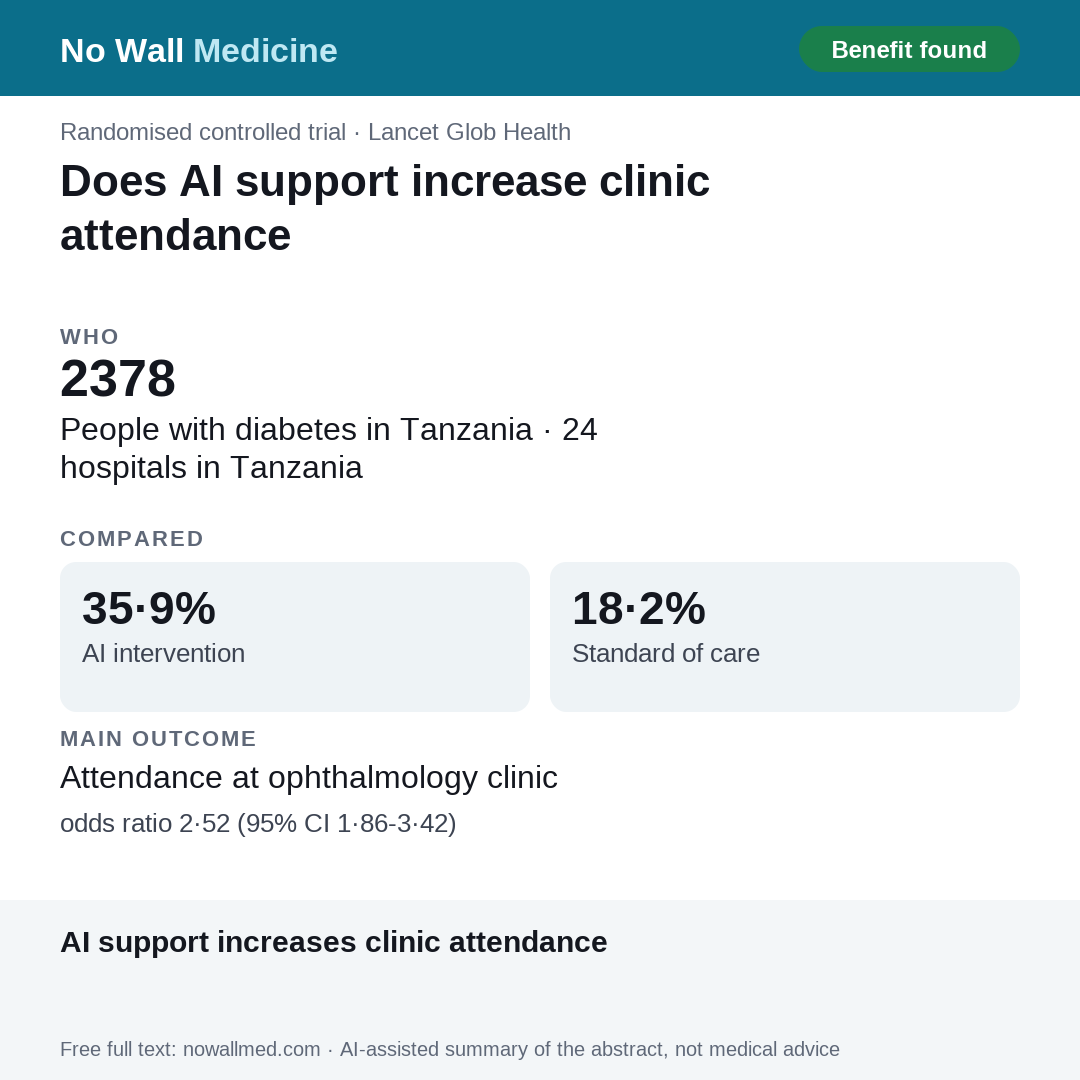
Artificial intelligence-supported diabetic retinopathy screening in Tanzania: a randomised controlled trial
Randomised controlled trialBenefit found
Does AI support increase clinic attendance
Who
2378
people with diabetes in Tanzania · 24 hospitals in Tanzania
Compared
35·9%AI support (157/437)
18·2%Standard care (85/467)
Main outcome
clinic attendance within 8 weeks
Result: odds ratio 2·52 (95% CI 1·86-3·42)
Bottom line: AI support increases clinic attendance
Funded by: British Council and others
Lancet Glob Health · 2026-10-12Download image
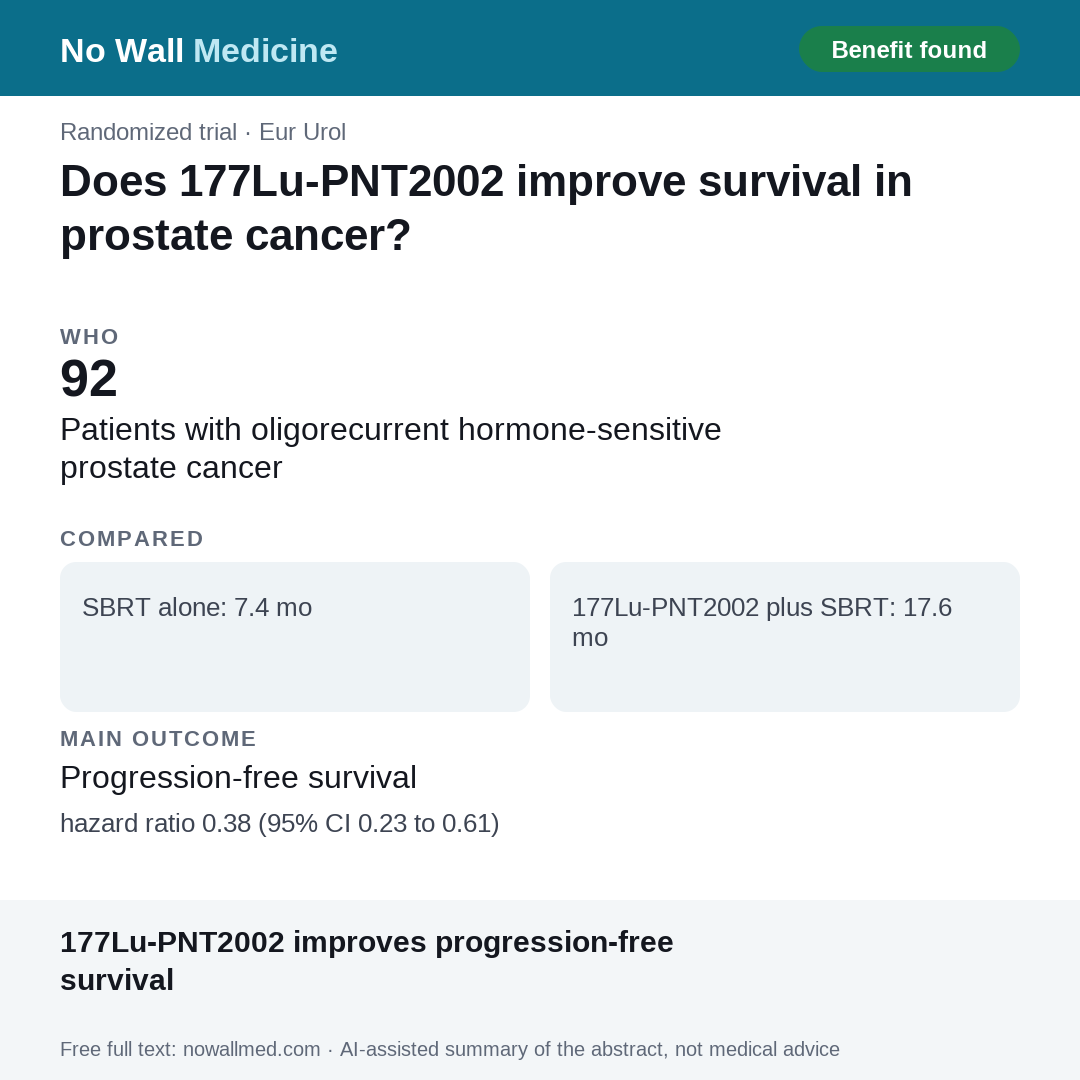
177Lu-Prostate-specific Membrane Antigen Prior to Stereotactic Ablative Radiotherapy in Oligorecurrent Prostate Cancer: Secondary and Exploratory End Point Results from the Randomized Phase 2 LUNAR Trial
Randomized trialBenefit found
Does 177Lu-PNT2002 improve survival in prostate cancer?
Who
92
Patients with oligorecurrent hormone-sensitive prostate cancer
Compared
SBRT alone: 7.4 mo
177Lu-PNT2002 plus SBRT: 17.6 mo
Main outcome
Progression-free survival
Result: hazard ratio 0.38 (95% CI 0.23 to 0.61)
Bottom line: 177Lu-PNT2002 improves progression-free survival
Eur Urol · 2026-10-12Download image
The role of fibrinogen concentrate in the reduction of allogeneic blood product requirements: a systematic review and meta-analysis
Meta-analysis of 58 studiesBenefit found
Does fibrinogen concentrate reduce blood product needs
Who
13530
patients with acquired hypofibrinogenaemia · various clinical settings
Compared
Fibrinogen concentrate: 28% less red blood cell units
Other treatments
Main outcome
blood product transfusions
Result: incidence rate ratio 0.72 (95% CI 0.59 to 0.89)
Bottom line: Fibrinogen concentrate reduces blood product transfusions
Br J Anaesth · 2026-10-12Download image

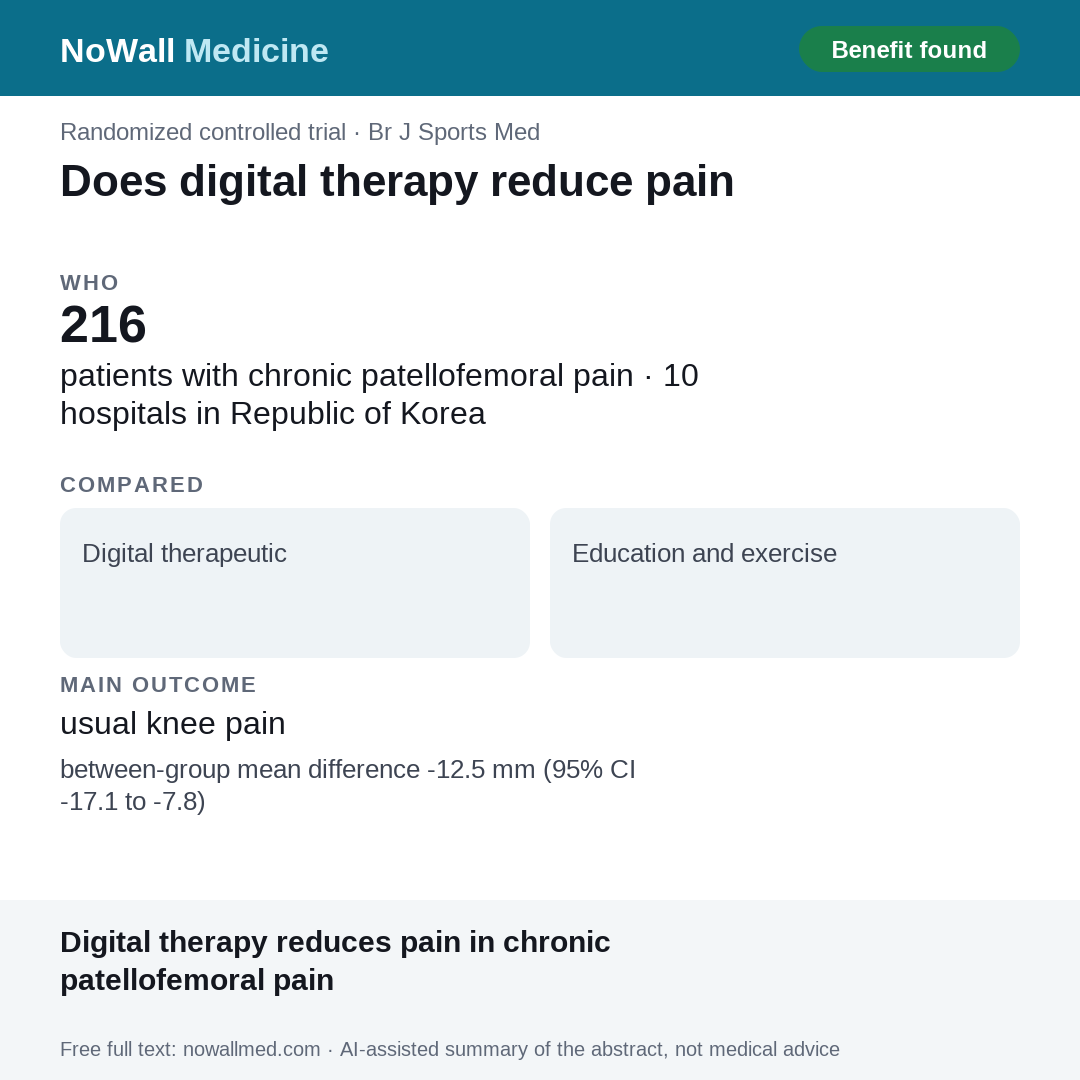
Digital therapeutic combining exercise and cognitive-behavioural therapy reduces pain in patients with chronic patellofemoral pain: a multicentre randomised controlled trial
Randomized controlled trialBenefit found
Does digital therapy reduce pain
Who
216
patients with chronic patellofemoral pain · 10 hospitals in Republic of Korea
Compared
Digital therapeutic
Education and exercise
Main outcome
usual knee pain
Result: between-group mean difference -12.5 mm (95% CI -17.1 to -7.8)
Bottom line: Digital therapy reduces pain in chronic patellofemoral pain
Br J Sports Med · 2026-10-12Download image
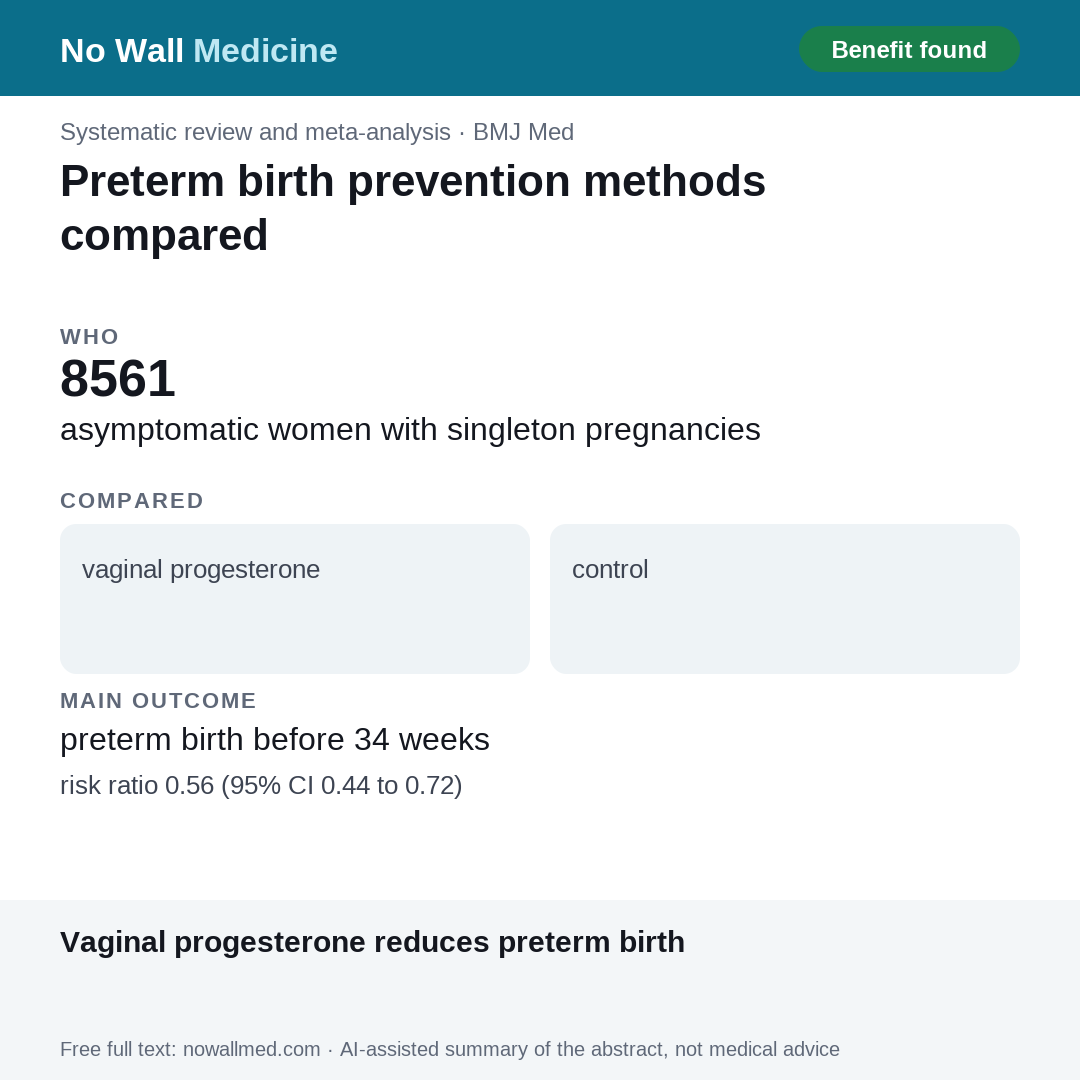
Progestogens, cervical cerclage, and cervical pessary for preventing preterm birth in asymptomatic singleton pregnancies with a sonographic short cervix and no previous history of spontaneous preterm birth: systematic review and bayesian network meta-analysis
Systematic review and meta-analysisBenefit found
Preterm birth prevention methods
Who
8561
asymptomatic singleton pregnancies with short cervix
Compared
vaginal progesterone: risk ratio 0.56 (95% CI 0.44 to 0.72)
pessary with vaginal progesterone
Main outcome
preterm birth before 34 weeks
Result: risk ratio 0.56 (95% CI 0.44 to 0.72)
Bottom line: Vaginal progesterone prevents preterm birth
BMJ Med · 2026-10-12Download image
Evaluating social cognitive remediation for labour participation in severe mental illness: insights from a small-scale randomised controlled trial
Randomised controlled trialBenefit found
Does social cognitive remediation improve labour participation?
Who
105
individuals with severe mental illness · France, three sites
Compared
Social cognitive remediation: 6.5% increase
Active control
Main outcome
hours worked versus expected
Bottom line: Social cognitive remediation improves employment maintenance
BJPsych Open · 2026-10-12Download image

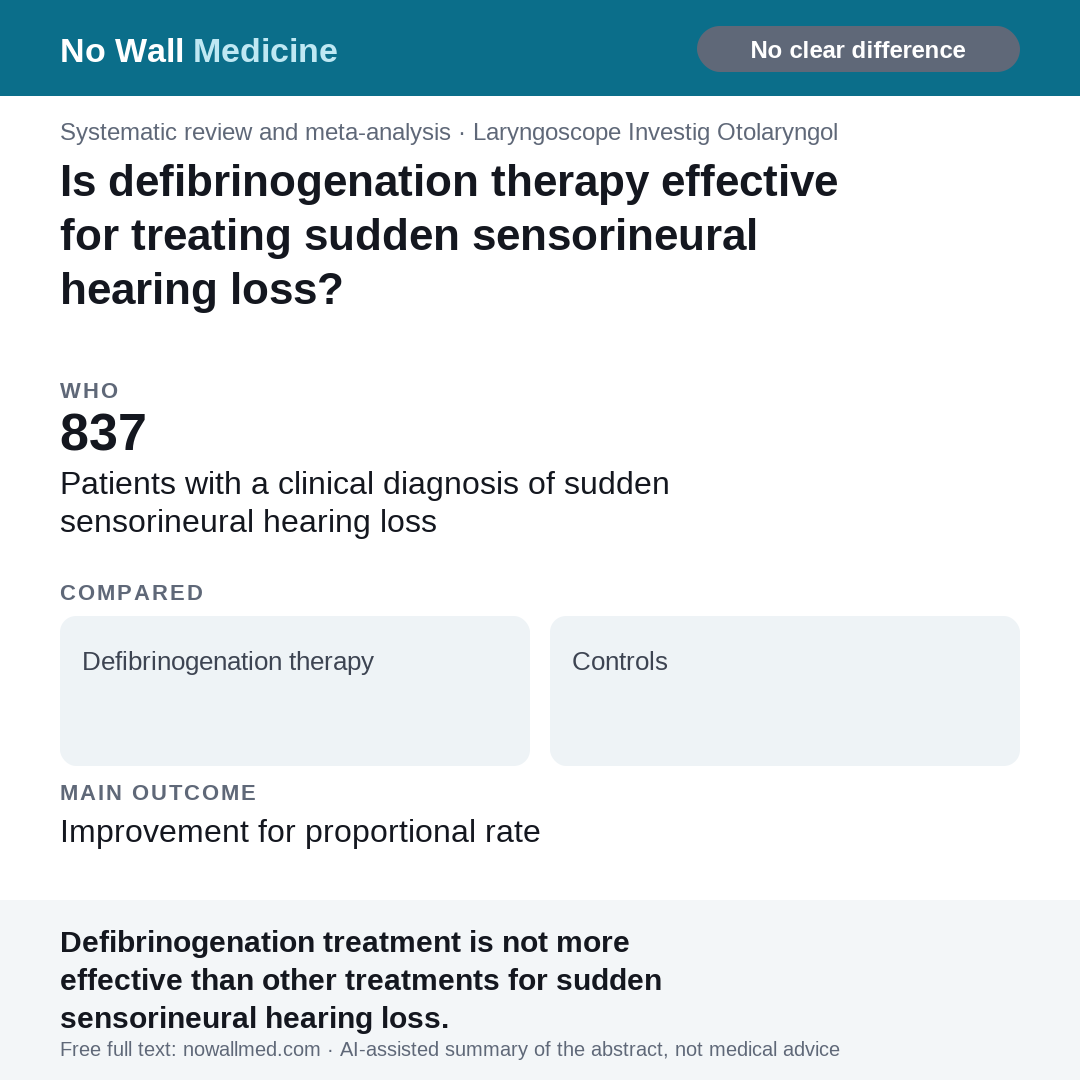
Efficacy of Defibrinogenation Therapy for Sudden Sensorineural Hearing Loss: A Systematic Review and Meta-Analysis
Systematic review and meta-analysisNo clear difference
Is defibrinogenation therapy effective for treating sudden sensorineural hearing loss?
Who
837
Patients with a clinical diagnosis of sudden sensorineural hearing loss
Compared
Defibrinogenation therapy
Controls
Main outcome
Improvement for proportional rate
Result: odds ratio 1.897 (95% CI, 0.84 to 4.27)
Bottom line: Defibrinogenation treatment is not more effective than other treatments for sudden sensorineural hearing loss.
Laryngoscope Investig Otolaryngol · 2026-10-12Download image
Plasma metabolomic profiles associated with breastfeeding history and subsequent ovarian cancer risk
Meta-analysis of case-control studiesBenefit found
Breastfeeding impact on ovarian cancer risk
Who
9904
Parous women in midlife and postpartum
Compared
0.62Highest breastfeeding score (0.39 to 0.99)
Lower breastfeeding score
Main outcome
Ovarian cancer risk
Result: odds ratio 0.62 (95% CI 0.39 to 0.99)
Bottom line: Breastfeeding reduces ovarian cancer risk
JNCI Cancer Spectr · 2026-10-11Download image

The impact of a low-glycemic load breakfast on diurnal glucose profiles in women with gestational diabetes mellitus: the Glycemic Load In Diabetes DurINg Gestation randomized crossover trial
Randomized crossover controlled trialBenefit found
Does a low-glycemic load breakfast affect glucose profiles in women with gestational diabetes mellitus?
Who
20
Women with gestational diabetes mellitus
Compared
High glycemic load breakfast: 7.5 mmol/L (95% CI: 7.2, 7.8 mmol/L)
Low glycemic load breakfast: 5.0 mmol/L (95% CI: 4.7, 5.2 mmol/L)
Main outcome
1-h postprandial glucose and 24-h glycemic variability
Bottom line: A low-glycemic load breakfast resulted in lower 1-h postprandial glucose and lower 24-h glycemic variability in women with gestational diabetes.
Am J Clin Nutr · 2026-10-10Download image

Assisted Reproductive Technology and Risk of Congenital Heart Defects in the Offspring: A Systematic Review and Meta-Analysis
Meta-analysis of thirteen studiesHarm found
Is assisted reproductive technology linked to congenital heart defects
Who
45916925
children conceived via assisted reproductive technology
Compared
Assisted reproductive technology
Natural pregnancy
Main outcome
congenital heart defects
Result: risk ratio 2.35 (95% CI 1.68-3.28)
Bottom line: Assisted reproductive technology increases congenital heart defect risk
Limitation: significant heterogeneity across studies
J Am Heart Assoc · 2026-10-10Download image

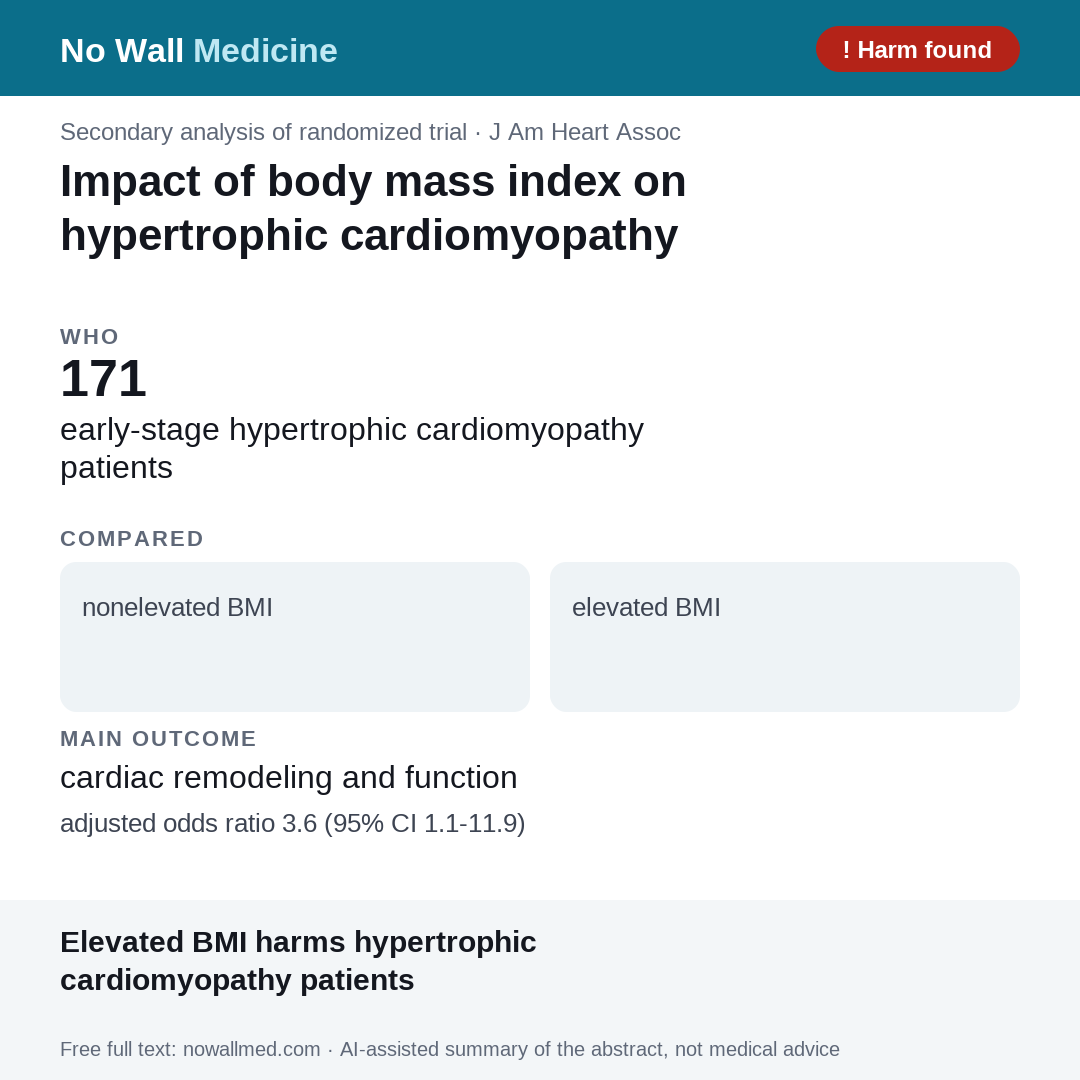
Body Mass Index, Valsartan, and Myocardial Remodeling in Early-Stage Hypertrophic Cardiomyopathy: A Secondary Analysis of the Randomized VANISH Trial
Secondary analysis of randomized trialHarm found
Impact of body mass index on hypertrophic cardiomyopathy
Who
171
early-stage hypertrophic cardiomyopathy patients
Compared
nonelevated BMI
elevated BMI
Main outcome
cardiac remodeling and function
Result: adjusted odds ratio 3.6 (95% CI 1.1-11.9)
Bottom line: Elevated BMI harms hypertrophic cardiomyopathy patients
J Am Heart Assoc · 2026-10-10Download image
Pilot Randomized Trial of 2 Food Purchasing Interventions in Individuals With Hypertension in New Orleans: An American Heart Association Food Is Medicine Initiative
Randomized pilot trialNo clear difference
Do online or in-store food vouchers better improve fruit and vegetable consumption?
Who
98
Individuals with uncontrolled hypertension · New Orleans
Compared
Online grocery platform: 20% (interquartile range, -17% to 93%) increase
In-store local grocery: 20% (interquartile range, -17% to 93%) increase
Main outcome
Change in self-reported fruit and vegetable consumption
Bottom line: Online and in-store food vouchers showed no difference in fruit and vegetable consumption among hypertensive individuals.
Limitation: Future interventions should be conducted in larger populations.
J Am Heart Assoc · 2026-10-10Download image

Plasma Glutamine and Glutamate in Relation to Clinical Outcomes After Ischemic Stroke: A Multicenter Prospective Study
Multicenter prospective studyBenefit found
Do plasma glutamine, glutamate, and glutamine-to-glutamate ratio predict ischemic stroke outcomes?
Who
3499
Participants with ischemic stroke · Multicenter
Compared
Highest glutamine quartile: odds ratio 0.37 (95% CI, 0.28-0.47)
Highest glutamate quartile: odds ratio 2.05 (95% CI, 1.60-2.62)
Highest glutamine-to-glutamate ratio quartile: odds ratio 0.37 (95% CI, 0.29-0.48)
Main outcome
unfavorable functional outcome at 3 months
Bottom line: Plasma glutamine, glutamate, and glutamine-to-glutamate ratio are significant prognostic biomarkers for clinical outcomes after ischemic stroke.
J Am Heart Assoc · 2026-10-10Download image

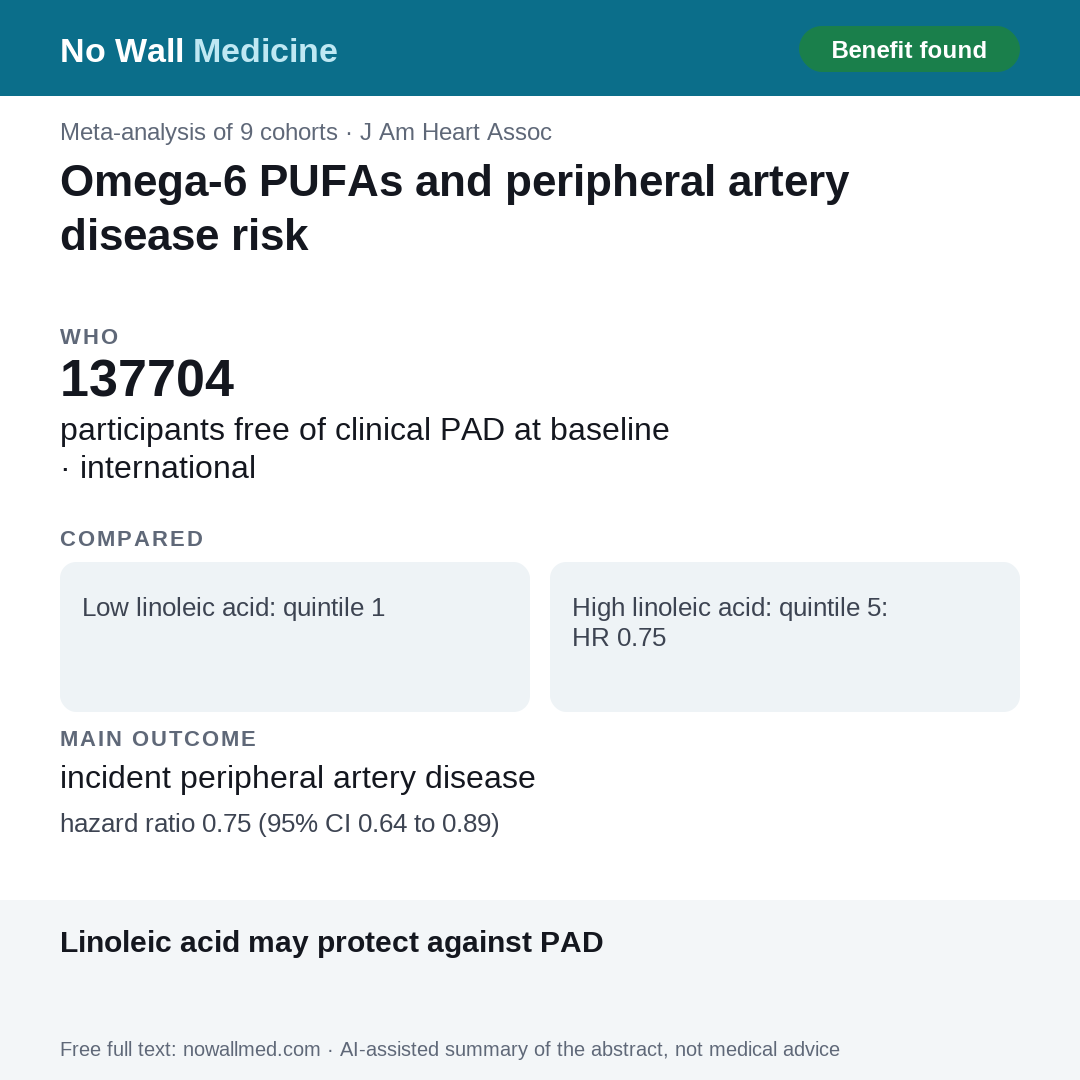
Omega-6 Polyunsaturated Fatty Acids and Peripheral Artery Disease: An Individual Participant-Level Analysis of 9 International Prospective Studies
Meta-analysis of 9 cohortsBenefit found
Omega-6 PUFAs and peripheral artery disease risk
Who
137704
participants free of clinical PAD at baseline · international
Compared
Low linoleic acid: quintile 1
High linoleic acid: quintile 5: HR 0.75
Main outcome
incident peripheral artery disease
Result: hazard ratio 0.75 (95% CI 0.64 to 0.89)
Bottom line: Linoleic acid may protect against PAD
J Am Heart Assoc · 2026-10-10Download image
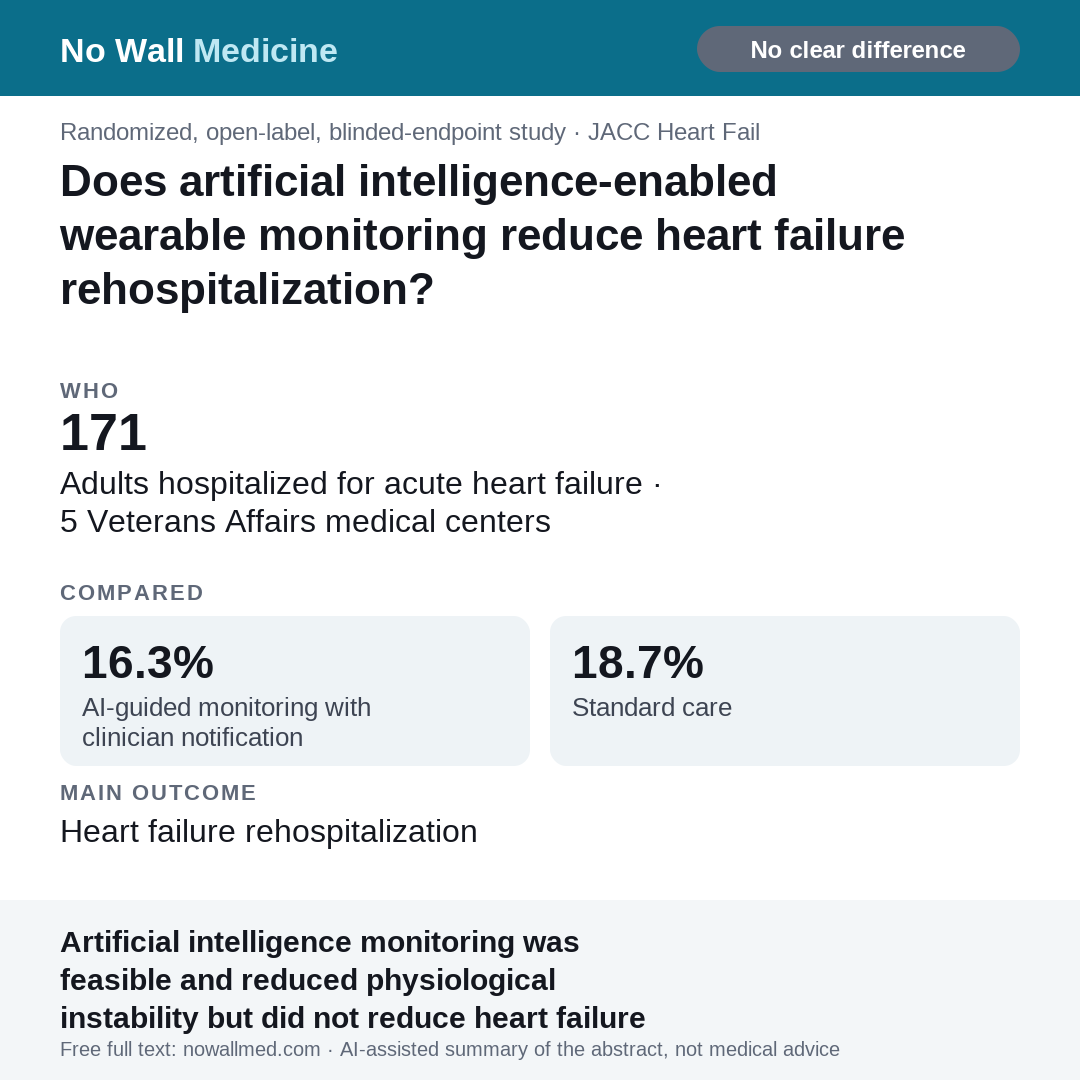
Artificial Intelligence-Enabled Detection and Management of Physiological Instability in Heart Failure: Results of the Randomized LINK-HF2 Trial
Randomized, open-label, blinded-endpoint studyNo clear difference
Does artificial intelligence-enabled wearable monitoring reduce heart failure rehospitalization?
Who
171
Adults hospitalized for acute heart failure · 5 Veterans Affairs medical centers
Compared
16.3%AI-guided monitoring with clinician notification
18.7%Standard care
Main outcome
Heart failure rehospitalization
Result: hazard ratio 0.90 (95% CI 0.43-1.84)
Bottom line: Artificial intelligence monitoring was feasible and reduced physiological instability but did not reduce heart failure rehospitalization.
JACC Heart Fail · 2026-10-09Download image