Visual abstracts
New randomized trials and meta-analyses from leading journals at a glance: who was studied, what was compared, and what was found. Every paper is free to read in full.
All specialtiesCardiology 4877Oncology 4138Gastroenterology & Hepatology 1942Infectious Disease 3837Neurology 1905Psychiatry & Mental Health 2273Pulmonology 2143Critical Care 1365Endocrinology & Diabetes 2580Pediatrics 2980Surgery 2559Orthopedics & Sports Medicine 931Neurosurgery 537Cardiothoracic & Vascular Surgery 674Plastic & Reconstructive Surgery 591Nephrology 1133Rheumatology 823Hematology 1109Dermatology 621Ophthalmology 543Obstetrics & Gynecology 1686Public & Global Health 1058Radiology & Imaging 648Anesthesiology 986Urology 764ENT (Otolaryngology) 503Emergency Medicine 511Allergy & Immunology 313Geriatrics 981Family Medicine & Primary Care 562Medical Genetics & Genomics 676Pathology & Laboratory Medicine 159Physical Medicine & Rehabilitation 757Palliative Care 444Nutrition 1588Digital Health & AI 2201General Medicine 321
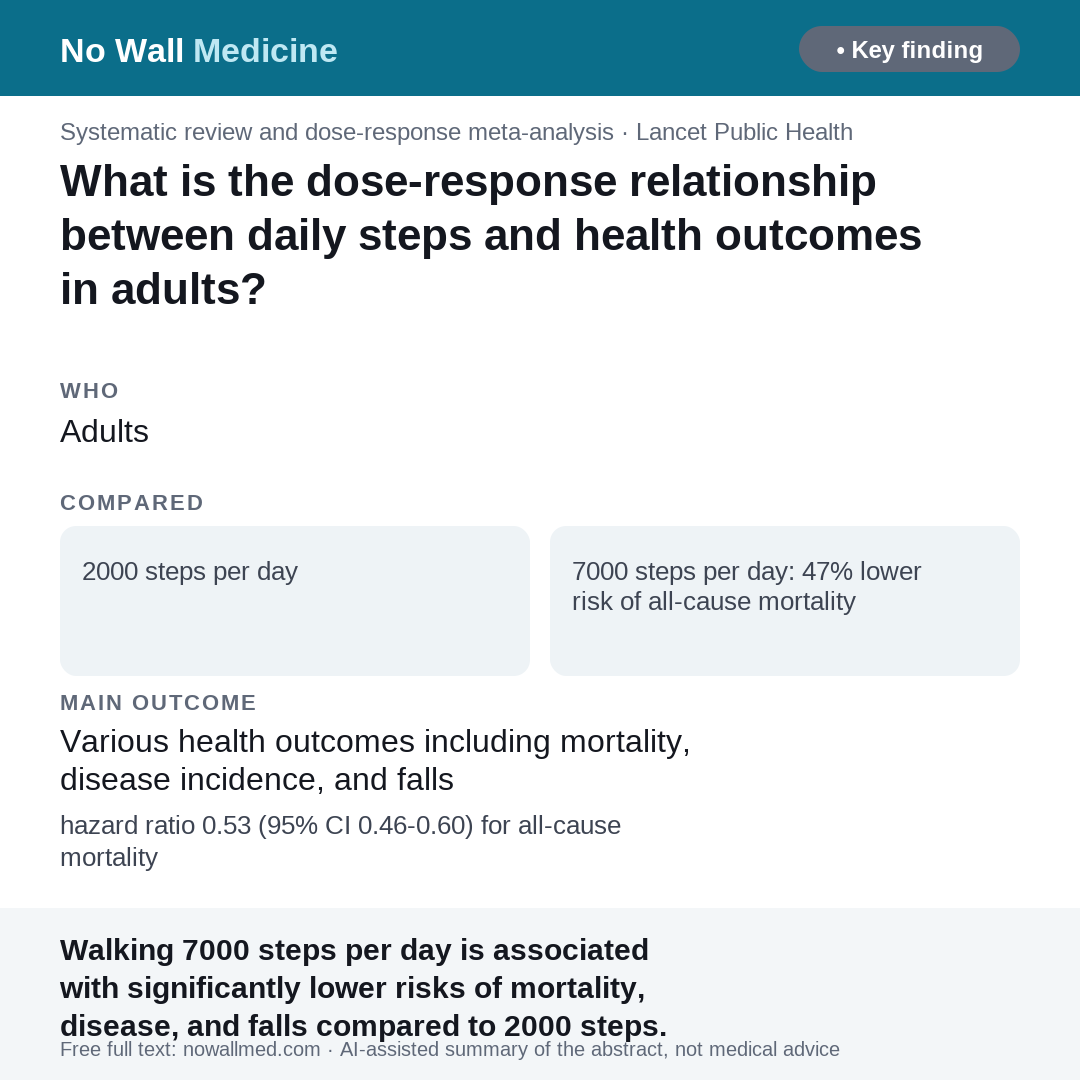
Daily steps and health outcomes in adults: a systematic review and dose-response meta-analysis
Systematic review and dose-response meta-analysisBenefit found
What is the dose-response relationship between daily steps and health outcomes in adults?
Who
Adults
Compared
2000 steps per day
7000 steps per day: 47% lower risk of all-cause mortality
Main outcome
Various health outcomes including mortality, disease incidence, and falls
Result: hazard ratio 0.53 (95% CI 0.46-0.60) for all-cause mortality
Bottom line: Walking 7000 steps per day is associated with significantly lower risks of mortality, disease, and falls compared to 2000 steps.
Limitation: Small number of studies for most outcomes, lack of age-specific analysis, and potential residual confounding.
Funded by: National Health and Medical Research Council, New South Wales Health, and Ian Potter Foundation
Lancet Public Health · 2025-07-23Download image
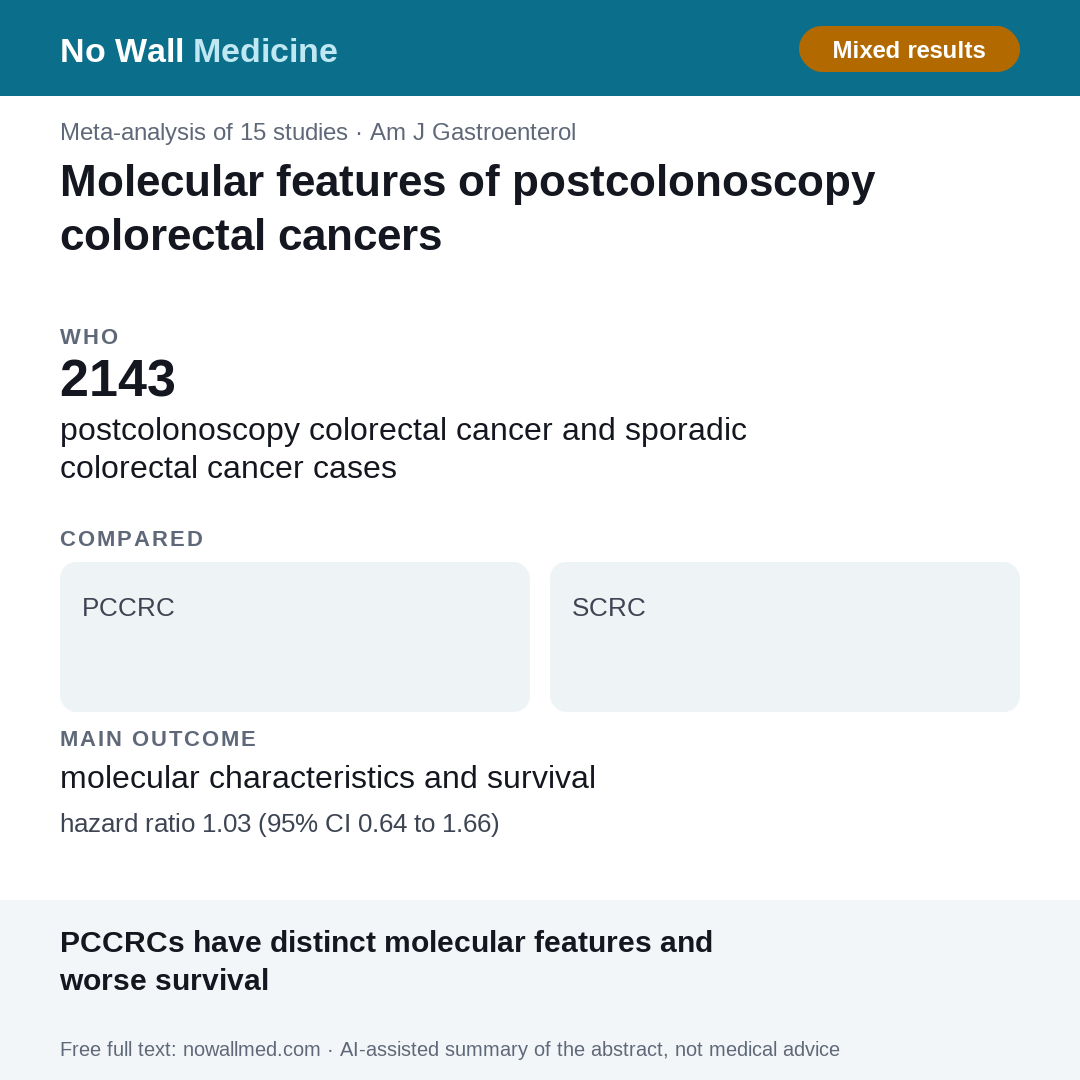
Predominant Serrated Molecular Signature in Postcolonoscopy Colorectal Cancer: A Systematic Review and Meta-Analysis
Meta-analysis of 15 studiesMixed results
Molecular features of postcolonoscopy colorectal cancers
Who
2143
postcolonoscopy colorectal cancer and sporadic colorectal cancer cases
Compared
PCCRC
SCRC
Main outcome
molecular characteristics and survival
Result: hazard ratio 1.03 (95% CI 0.64 to 1.66)
Bottom line: PCCRCs have distinct molecular features and worse survival
Am J Gastroenterol · 2025-07-23Download image
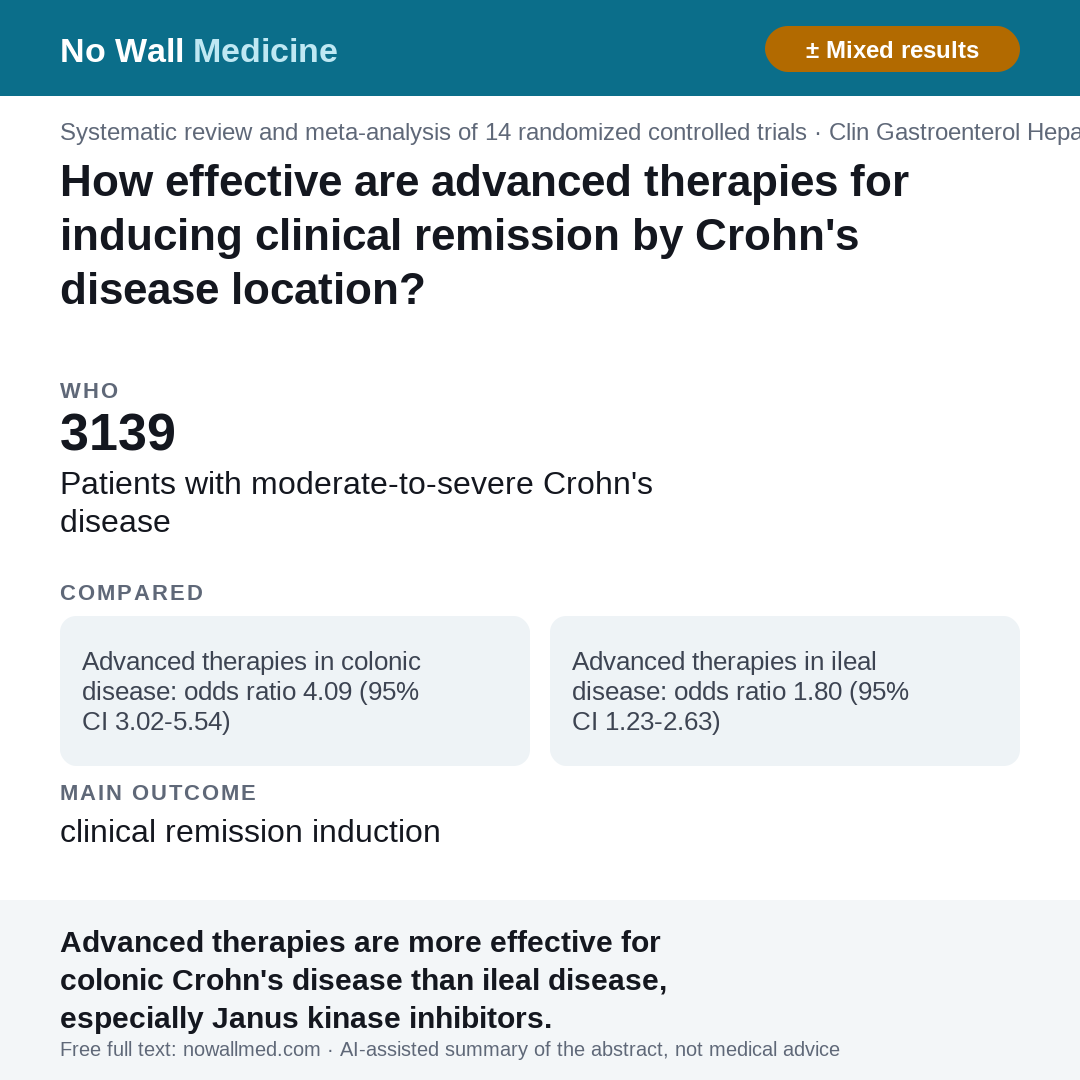
Efficacy of Advanced Therapies in Achieving Remission by Disease Location in Crohn's Disease: A Systematic Review and Meta-analysis
Systematic review and meta-analysis of 14 randomized controlled trialsMixed results
How effective are advanced therapies for inducing clinical remission by Crohn's disease location?
Who
3139
Patients with moderate-to-severe Crohn's disease
Compared
Advanced therapies in colonic disease: odds ratio 4.09 (95% CI 3.02-5.54)
Advanced therapies in ileal disease: odds ratio 1.80 (95% CI 1.23-2.63)
Main outcome
clinical remission induction
Result: odds ratio 4.09 (95% CI 3.02-5.54) vs 1.80 (95% CI 1.23-2.63)
Bottom line: Advanced therapies are more effective for colonic Crohn's disease than ileal disease, especially Janus kinase inhibitors.
Limitation: All analyses had minimal to moderate heterogeneity.
Clin Gastroenterol Hepatol · 2025-07-23Download image
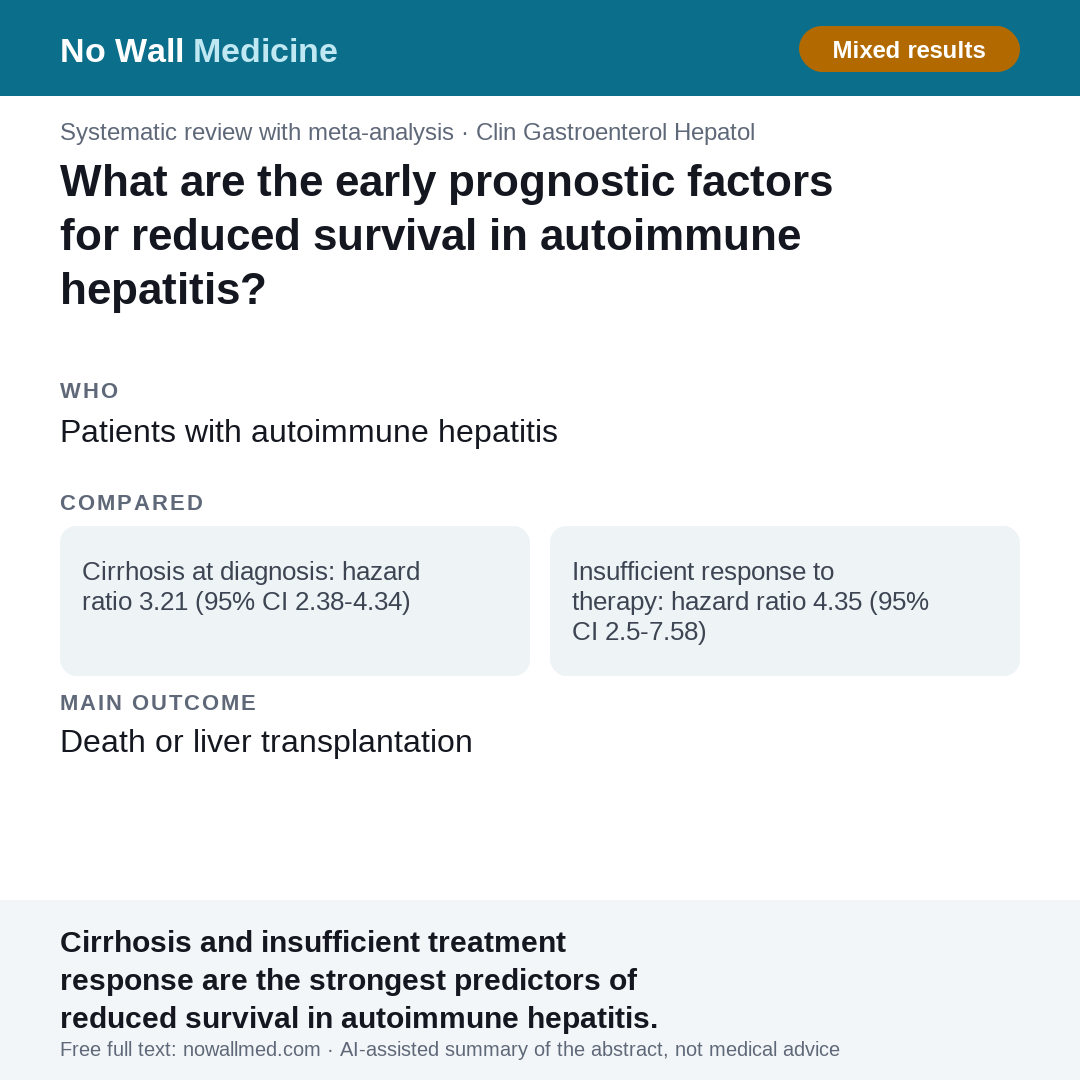
Early Prognostic Factors for Reduced Survival in Autoimmune Hepatitis: A Systematic Review With Meta-Analysis
Systematic review with meta-analysisMixed results
What are the early prognostic factors for reduced survival in autoimmune hepatitis?
Who
Patients with autoimmune hepatitis
Compared
Cirrhosis at diagnosis: hazard ratio 3.21 (95% CI 2.38-4.34)
Insufficient response to therapy: hazard ratio 4.35 (95% CI 2.5-7.58)
Main outcome
Death or liver transplantation
Bottom line: Cirrhosis and insufficient treatment response are the strongest predictors of reduced survival in autoimmune hepatitis.
Clin Gastroenterol Hepatol · 2025-07-23Download image
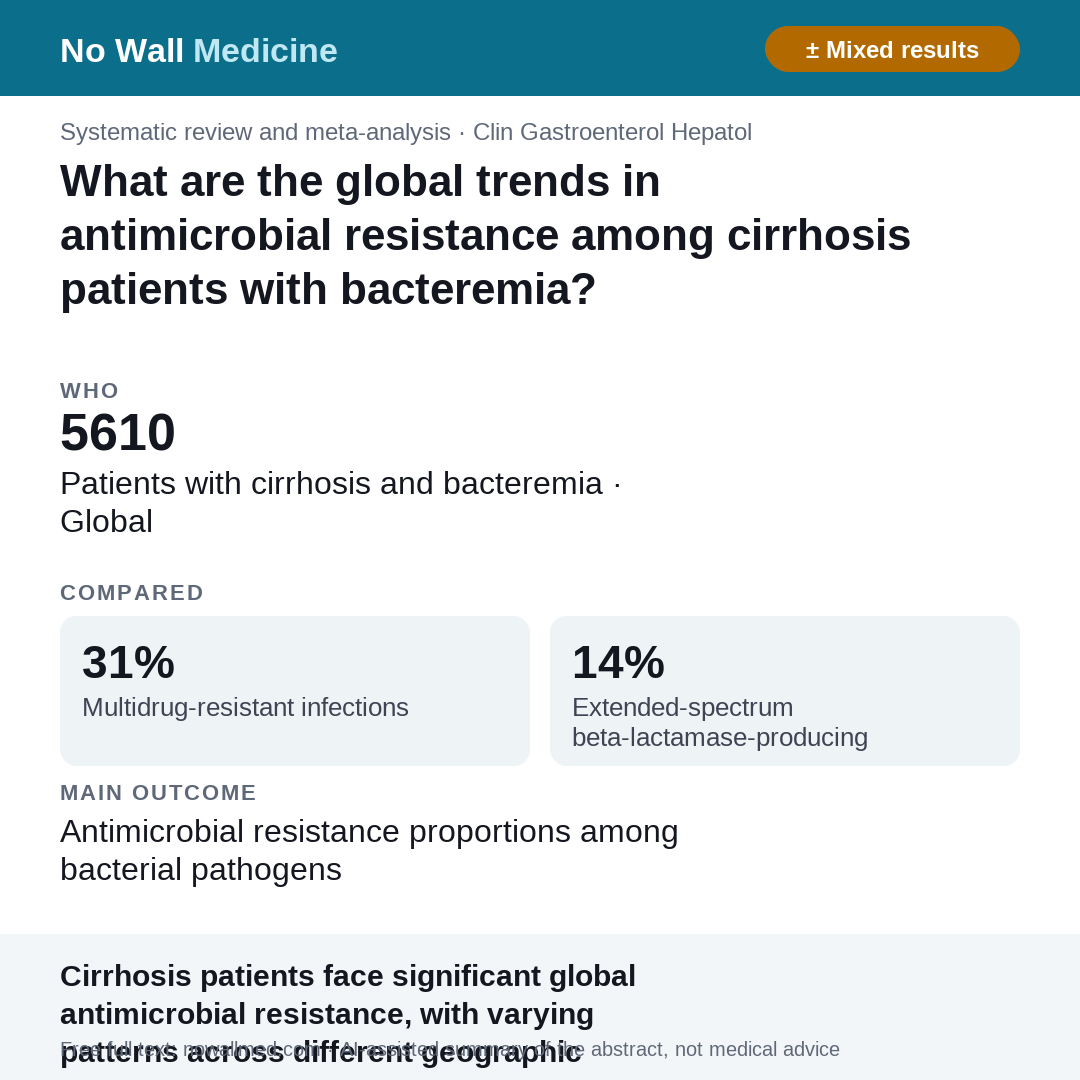
Global Trends in Antimicrobial Resistance Among Cirrhosis Patients With Bacteremia: A Systematic Review and Meta-analysis
Systematic review and meta-analysisMixed results
What are the global trends in antimicrobial resistance among cirrhosis patients with bacteremia?
Who
5610
Patients with cirrhosis and bacteremia · Global
Compared
31%Multidrug-resistant infections (95% CI, 19%-44%)
14%Extended-spectrum beta-lactamase-producing Escherichia coli (95% CI, 7%-22%)
Main outcome
Antimicrobial resistance proportions among bacterial pathogens
Bottom line: Cirrhosis patients face significant global antimicrobial resistance, with varying patterns across different geographic regions.
Clin Gastroenterol Hepatol · 2025-07-23Download image
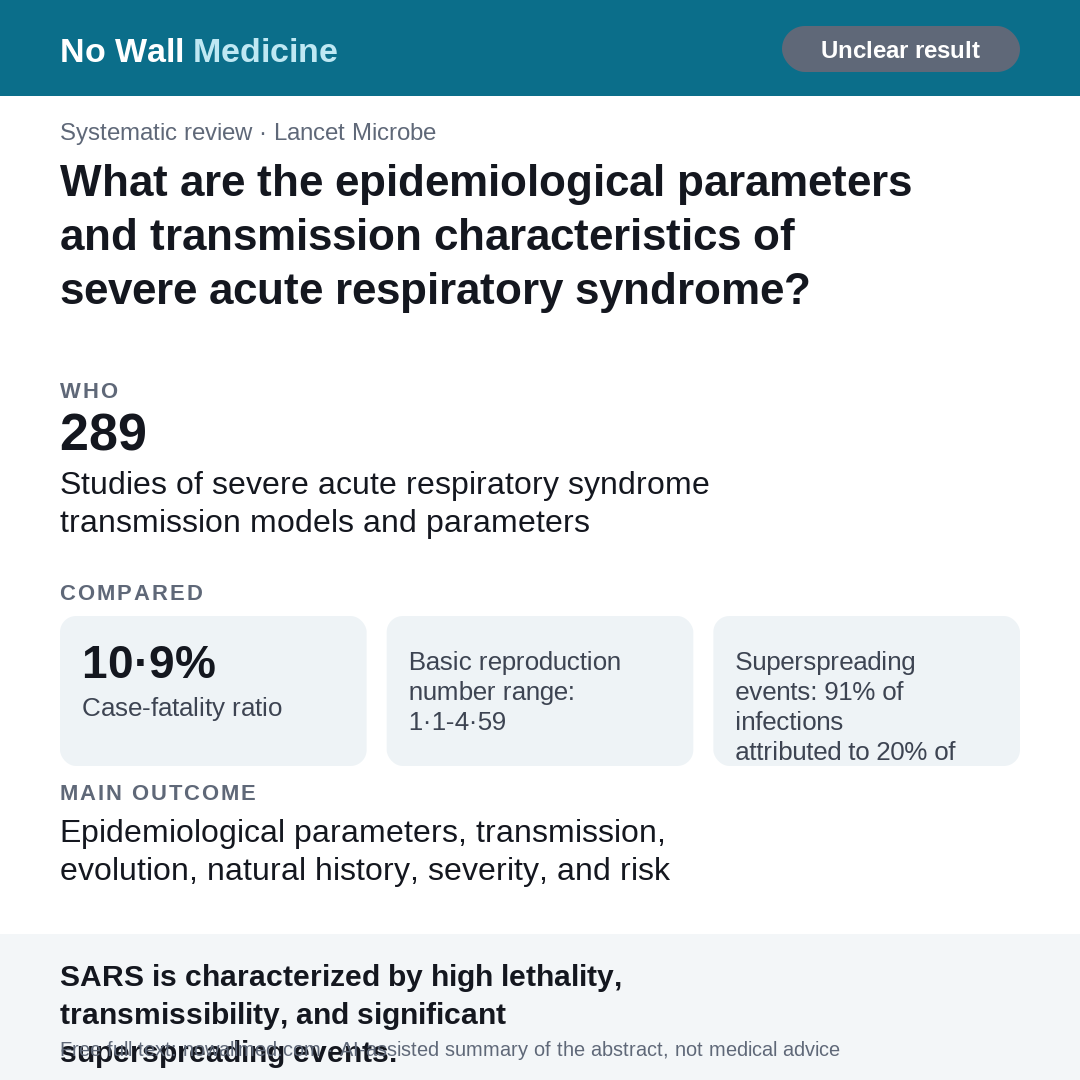
Severe acute respiratory syndrome (SARS) mathematical models and disease parameters: a systematic review
Systematic reviewUnclear result
What are the epidemiological parameters and transmission characteristics of severe acute respiratory syndrome?
Who
289
Studies of severe acute respiratory syndrome transmission models and parameters
Compared
10·9%Case-fatality ratio
Basic reproduction number range: 1·1-4·59
Superspreading events: 91% of infections attributed to 20% of individuals
Main outcome
Epidemiological parameters, transmission, evolution, natural history, severity, and risk factors
Bottom line: SARS is characterized by high lethality, transmissibility, and significant superspreading events.
Limitation: The natural history of SARS was poorly characterised, except for incubation and hospitalization delays.
Lancet Microbe · 2025-07-23Download image
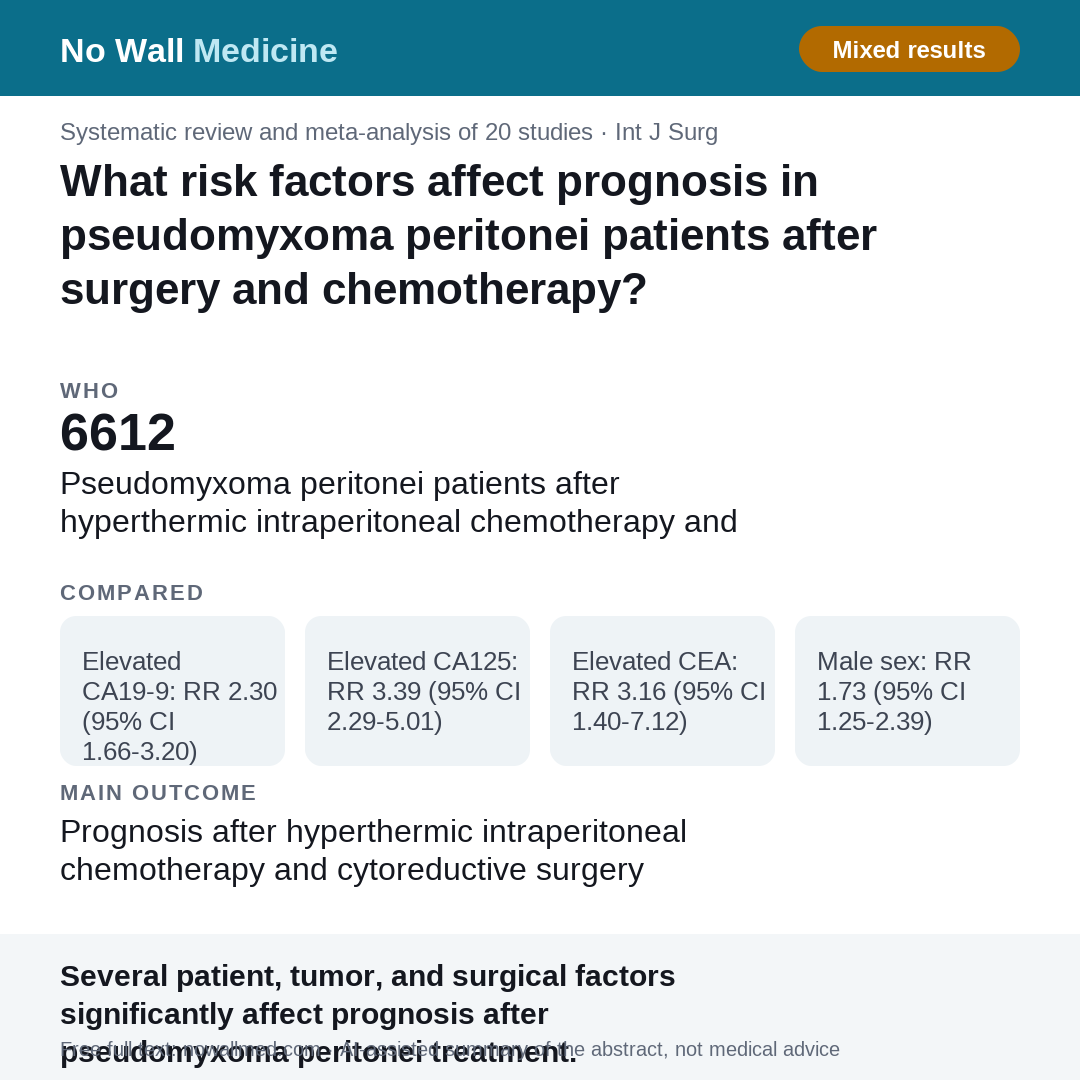
Risk factors affecting prognosis in pseudomyxoma peritonei patients after hyperthermic intraperitoneal chemotherapy and cytoreductive surgery: a systematic review and meta-analysis
Systematic review and meta-analysis of 20 studiesMixed results
What risk factors affect prognosis in pseudomyxoma peritonei patients after surgery and chemotherapy?
Who
6612
Pseudomyxoma peritonei patients after hyperthermic intraperitoneal chemotherapy and cytoreductive surgery
Compared
Elevated CA19-9: RR 2.30 (95% CI 1.66-3.20)
Elevated CA125: RR 3.39 (95% CI 2.29-5.01)
Elevated CEA: RR 3.16 (95% CI 1.40-7.12)
Male sex: RR 1.73 (95% CI 1.25-2.39)
Main outcome
Prognosis after hyperthermic intraperitoneal chemotherapy and cytoreductive surgery
Bottom line: Several patient, tumor, and surgical factors significantly affect prognosis after pseudomyxoma peritonei treatment.
Int J Surg · 2025-07-23Download image
A comparative analysis of tip-bendable suction ureteral access sheath versus traditional sheath in retrograde intrarenal stone surgery: a systematic review and meta-analysis of comparative studies
Systematic review and meta-analysisBenefit found
Is tip-bendable suction ureteral access sheath better than traditional sheath in stone surgery?
Who
1981
Patients undergoing retrograde intrarenal stone surgery
Compared
Tip-bendable suction ureteral access sheath
Traditional ureteral access sheath
Main outcome
Stone-free rates and complication rates
Result: immediate stone-free rate RR 1.57 (95% CI 1.18-2.09)
Bottom line: Tip-bendable suction ureteral access sheaths improve stone-free rates and reduce complication rates compared to traditional sheaths.
Int J Surg · 2025-07-23Download image

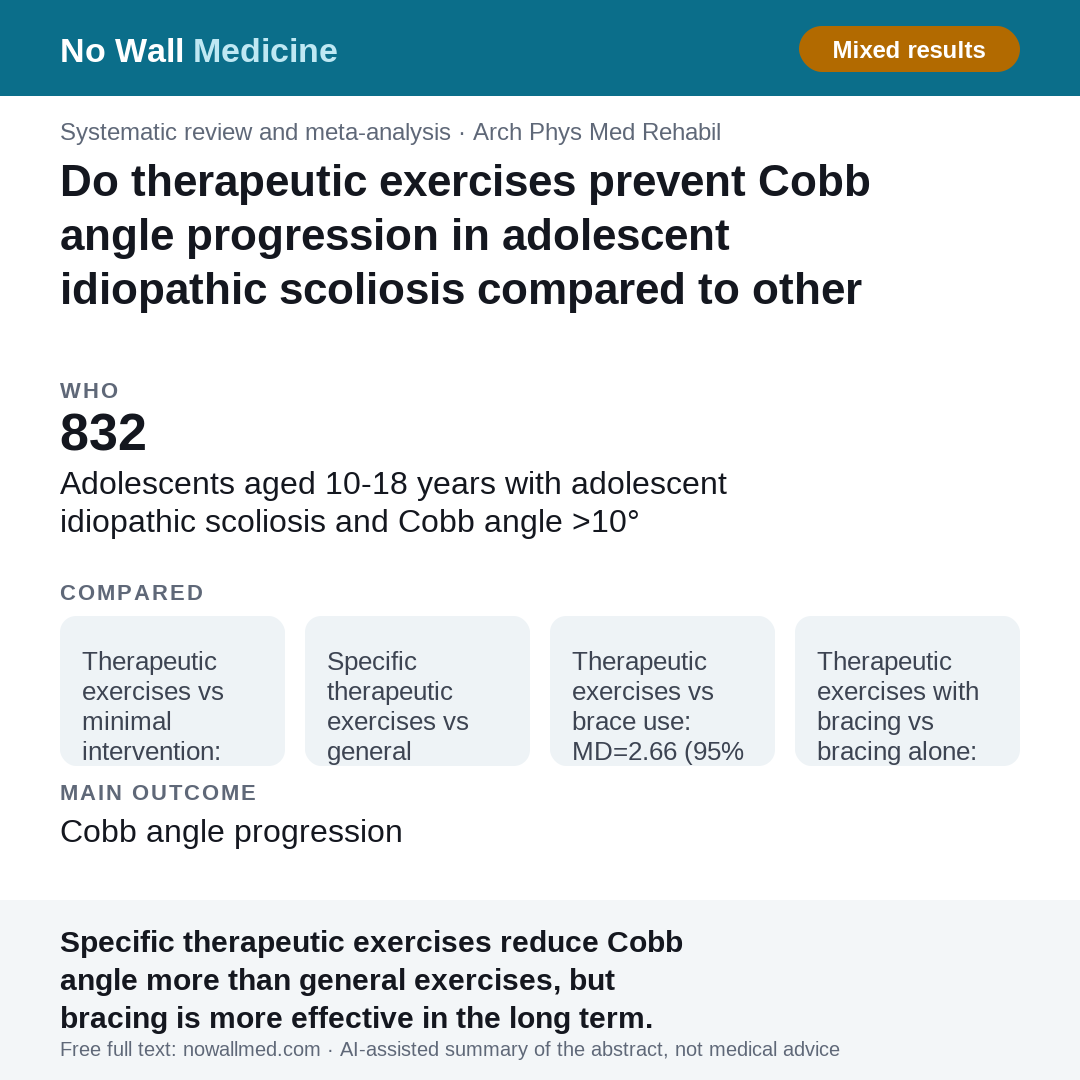
Impact of Therapeutic Exercises Versus General Conservative Modalities and Brace on the Progression of Adolescent Idiopathic Scoliosis: Systematic Review and Meta-analysis
Systematic review and meta-analysisMixed results
Do therapeutic exercises prevent Cobb angle progression in adolescent idiopathic scoliosis compared to other treatments?
Who
832
Adolescents aged 10-18 years with adolescent idiopathic scoliosis and Cobb angle >10°
Compared
Therapeutic exercises vs minimal intervention: mean difference -1.33 (95% CI -4.87 to 2.22)
Specific therapeutic exercises vs general exercises: MD=-6.00 (95% CI, -6.88 to -5.12) long term
Therapeutic exercises vs brace use: MD=2.66 (95% CI, 0.18-5.14) long term
Therapeutic exercises with bracing vs bracing alone: MD=2.25 (95% CI, -3.86 to -0.63) short term
Main outcome
Cobb angle progression
Bottom line: Specific therapeutic exercises reduce Cobb angle more than general exercises, but bracing is more effective in the long term.
Limitation: Further high-quality trials are needed to establish optimal treatment protocols.
Arch Phys Med Rehabil · 2025-07-23Download image
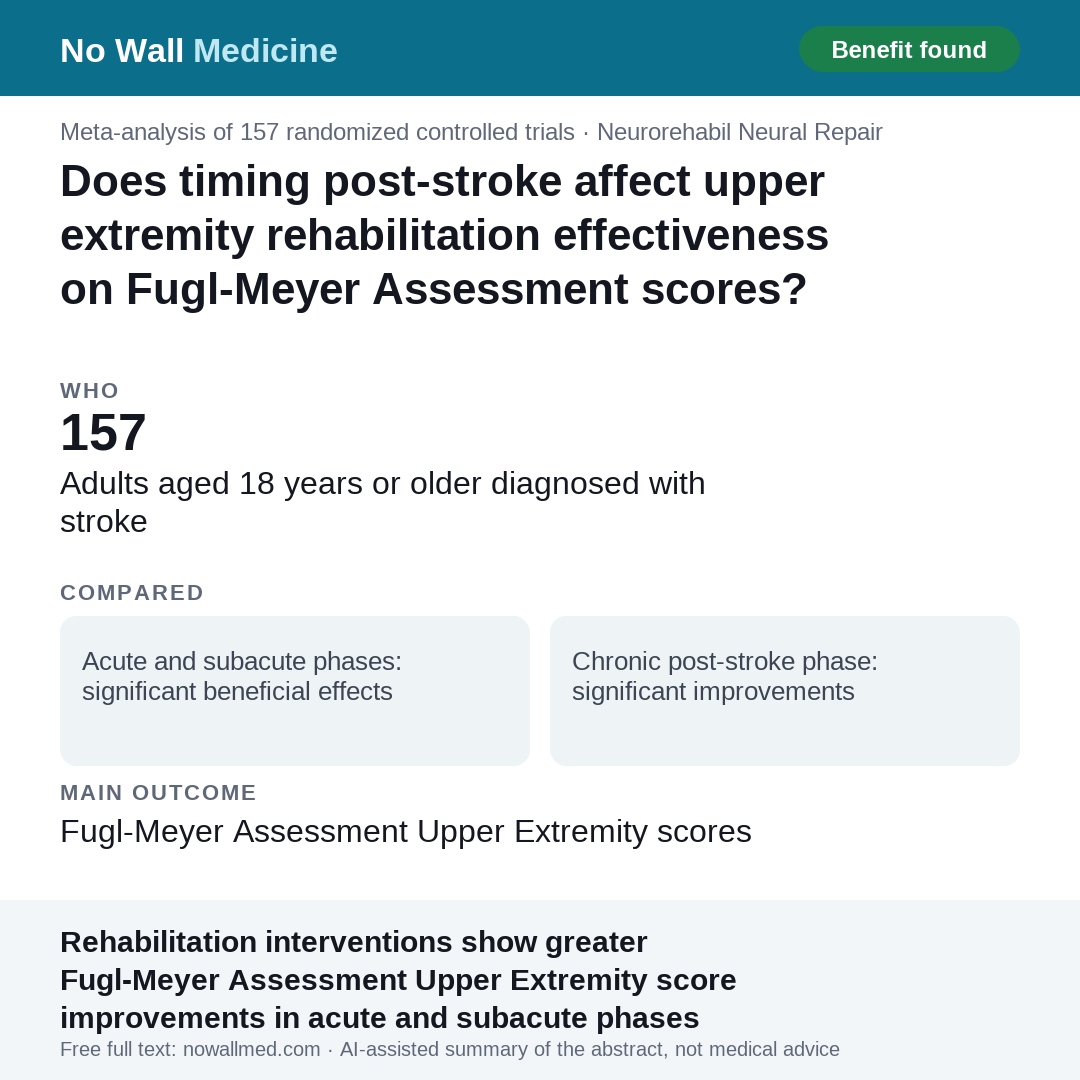
Time Post-Stroke and Upper Extremity Stroke Motor Recovery Rehabilitation: A Meta-Analysis
Meta-analysis of 157 randomized controlled trialsBenefit found
Does timing post-stroke affect upper extremity rehabilitation effectiveness on Fugl-Meyer Assessment scores?
Who
157
Adults aged 18 years or older diagnosed with stroke
Compared
Acute and subacute phases: significant beneficial effects
Chronic post-stroke phase: significant improvements
Main outcome
Fugl-Meyer Assessment Upper Extremity scores
Bottom line: Rehabilitation interventions show greater Fugl-Meyer Assessment Upper Extremity score improvements in acute and subacute phases than chronic phases.
Neurorehabil Neural Repair · 2025-07-23Download image
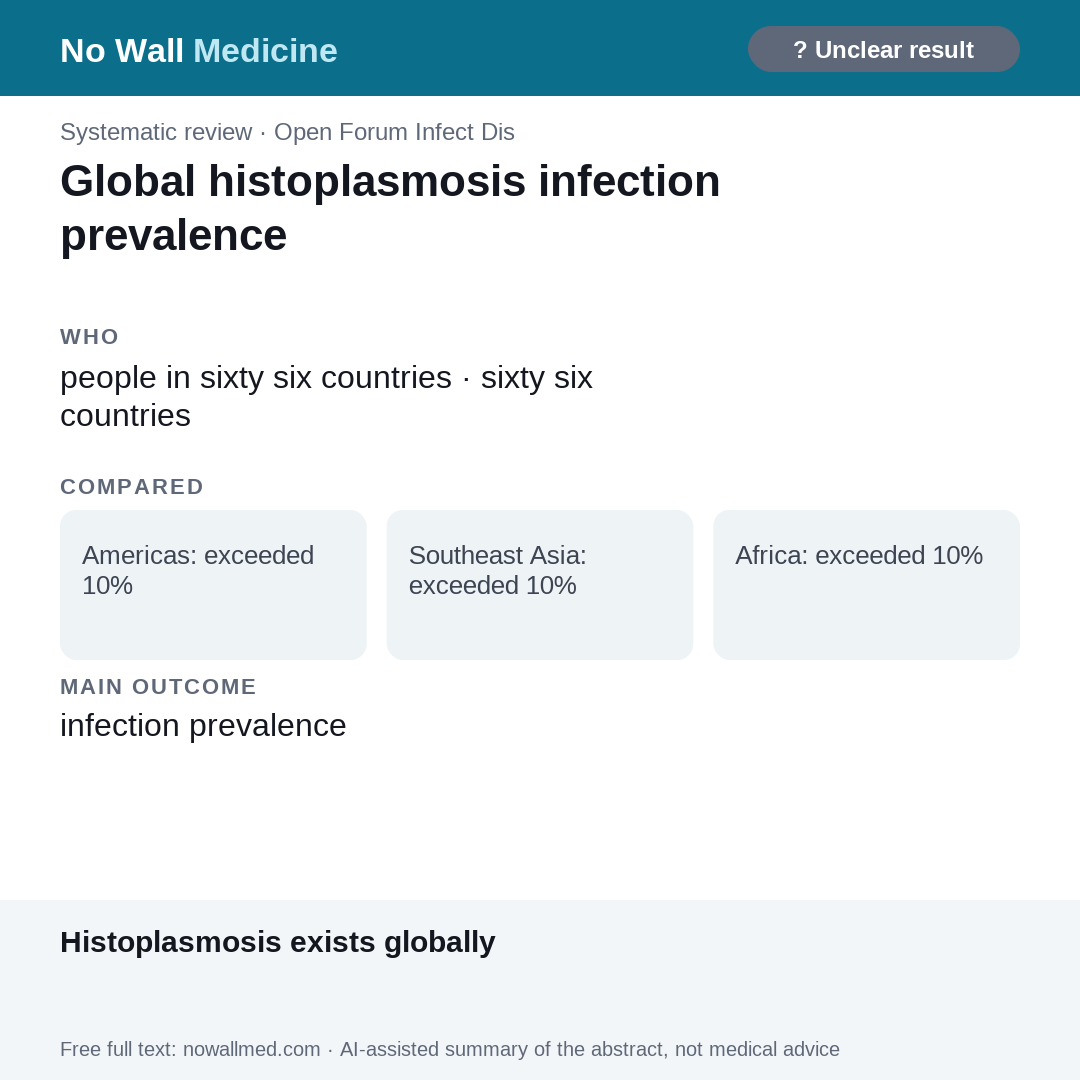
Assessment of Prior Infection With Histoplasmosis Using Skin Test and Serological Surveys: A Global Systematic Review
Systematic reviewUnclear result
Global histoplasmosis infection prevalence
Who
people in sixty six countries · sixty six countries
Compared
Americas: exceeded 10%
Southeast Asia: exceeded 10%
Africa: exceeded 10%
Main outcome
infection prevalence
Bottom line: Histoplasmosis exists globally
Open Forum Infect Dis · 2025-07-23Download image
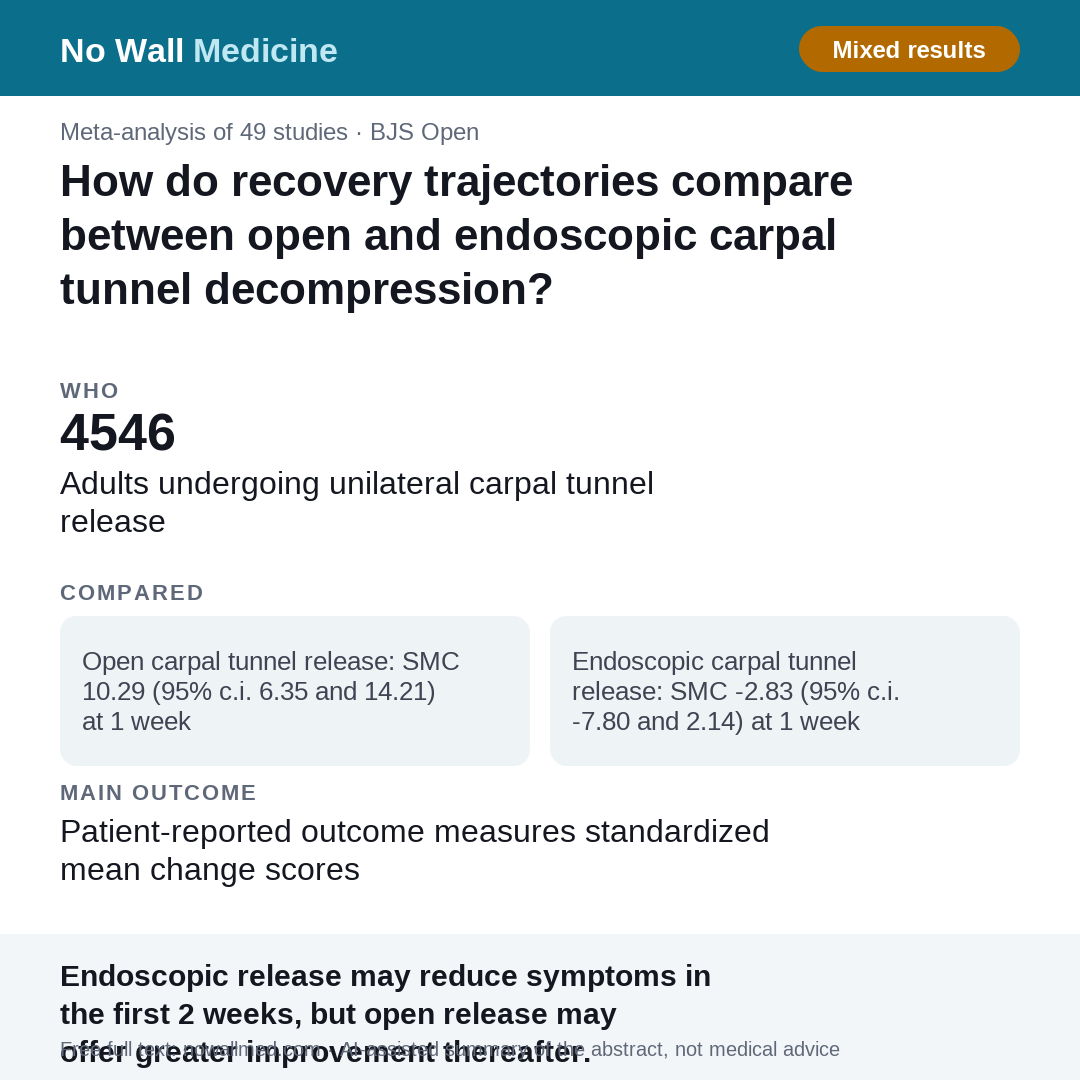
Time to recovery following open and endoscopic carpal tunnel decompression: meta-analysis
Meta-analysis of 49 studiesMixed results
How do recovery trajectories compare between open and endoscopic carpal tunnel decompression?
Who
4546
Adults undergoing unilateral carpal tunnel release
Compared
Open carpal tunnel release: SMC 10.29 (95% c.i. 6.35 and 14.21) at 1 week
Endoscopic carpal tunnel release: SMC -2.83 (95% c.i. -7.80 and 2.14) at 1 week
Main outcome
Patient-reported outcome measures standardized mean change scores
Bottom line: Endoscopic release may reduce symptoms in the first 2 weeks, but open release may offer greater improvement thereafter.
Limitation: Most studies had a high risk of bias and measured outcomes too infrequently.
BJS Open · 2025-07-23Download image
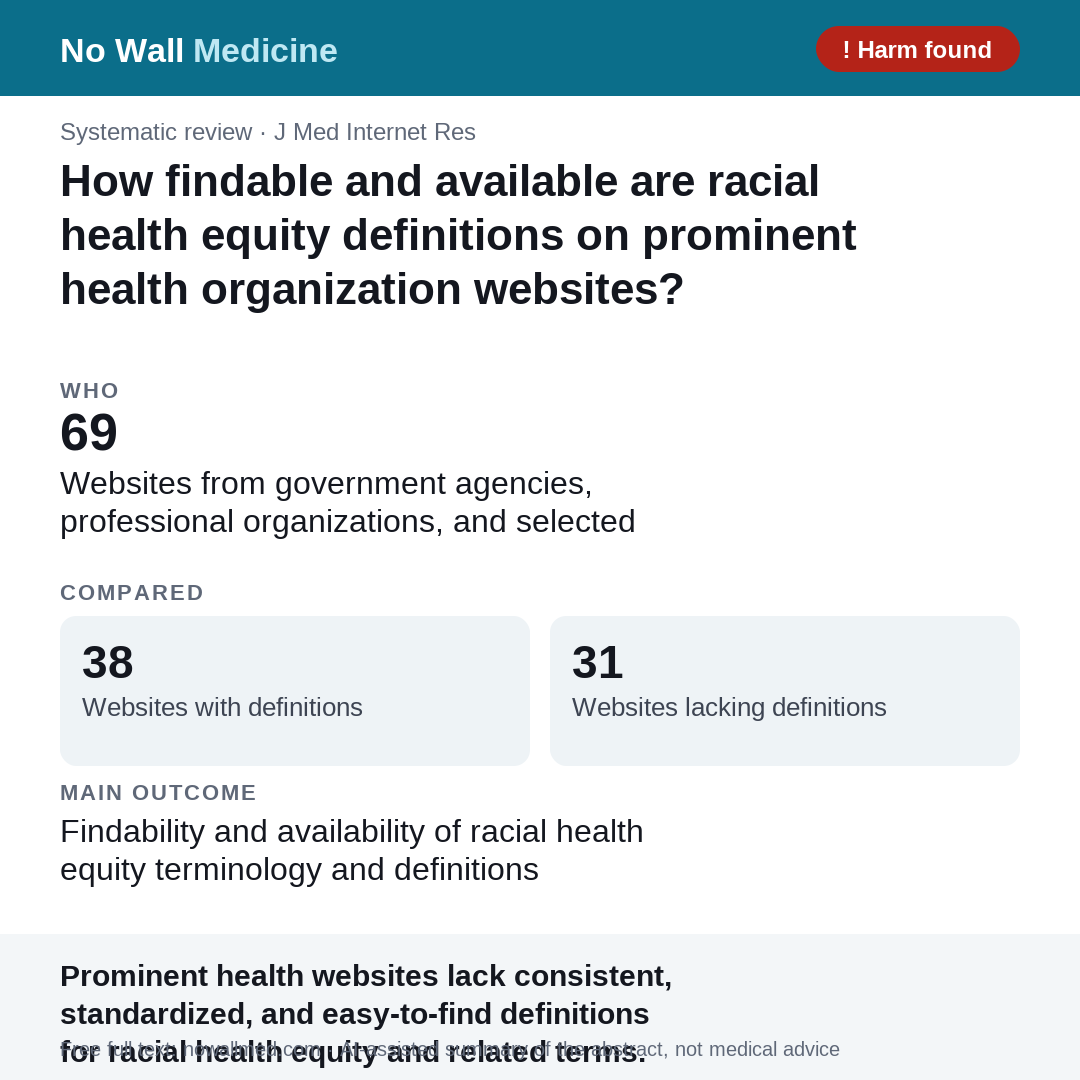
Terminology and Definitions of Racial Health Equity in Prominent Health Websites: Systematic Review
Systematic reviewHarm found
How findable and available are racial health equity definitions on prominent health organization websites?
Who
69
Websites from government agencies, professional organizations, and selected health care organizations · United States
Compared
38Websites with definitions
31Websites lacking definitions
Main outcome
Findability and availability of racial health equity terminology and definitions
Bottom line: Prominent health websites lack consistent, standardized, and easy-to-find definitions for racial health equity and related terms.
J Med Internet Res · 2025-07-23Download image
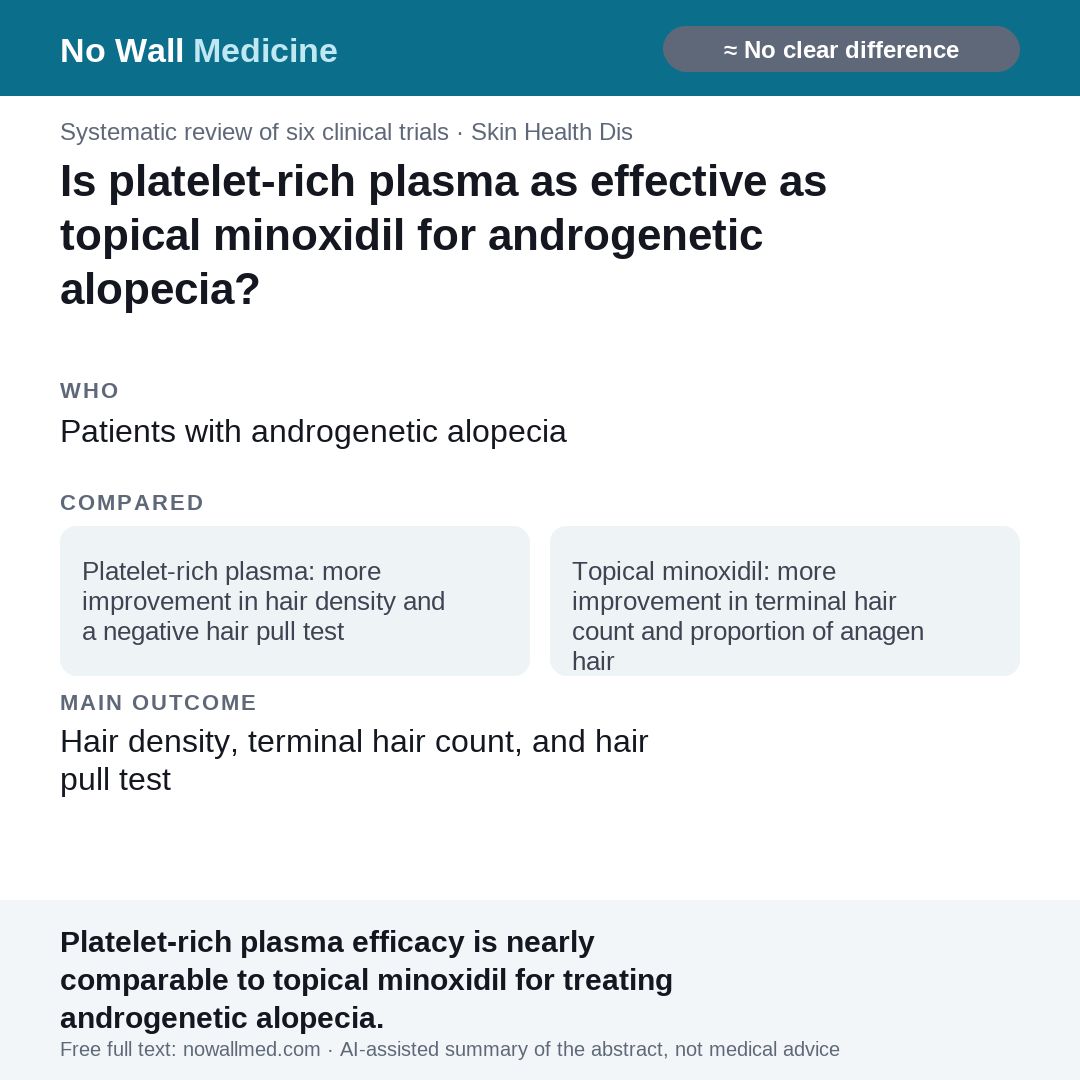
Comparison of the efficacy of platelet-rich plasma with topical minoxidil in treating patients with androgenetic alopecia: a systematic review of clinical trials
Systematic review of six clinical trialsNo clear difference
Is platelet-rich plasma as effective as topical minoxidil for androgenetic alopecia?
Who
Patients with androgenetic alopecia
Compared
Platelet-rich plasma: more improvement in hair density and a negative hair pull test
Topical minoxidil: more improvement in terminal hair count and proportion of anagen hair
Main outcome
Hair density, terminal hair count, and hair pull test
Bottom line: Platelet-rich plasma efficacy is nearly comparable to topical minoxidil for treating androgenetic alopecia.
Skin Health Dis · 2025-07-23Download image
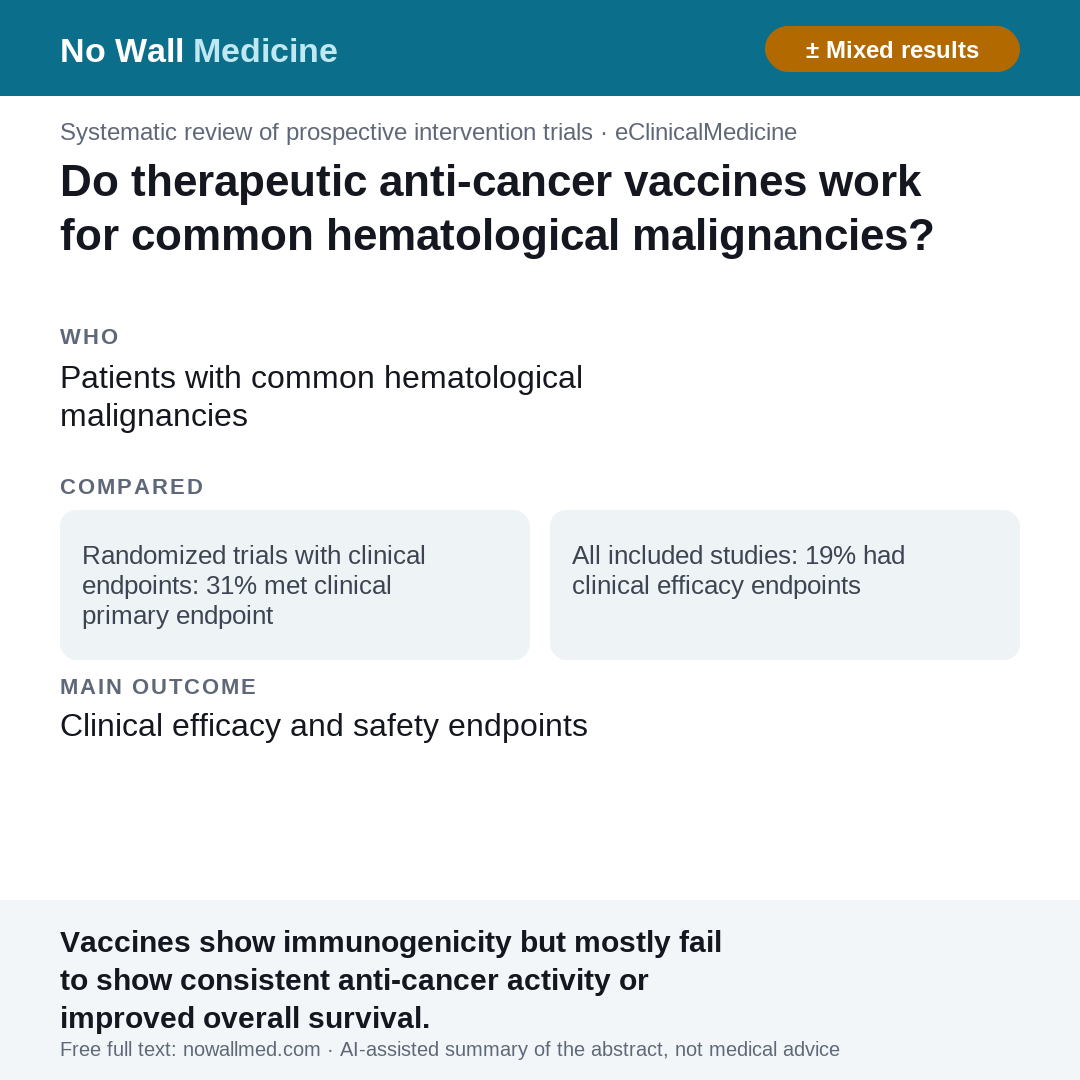
Therapeutic anti-cancer vaccines: a systematic review of prospective intervention trials for common hematological malignancies
Systematic review of prospective intervention trialsMixed results
Do therapeutic anti-cancer vaccines work for common hematological malignancies?
Who
187
Patients with common hematological malignancies
Compared
Randomized trials with clinical endpoints: 31% met clinical primary endpoint
All included studies: 19% had clinical efficacy endpoints
Main outcome
Clinical efficacy and safety endpoints
Bottom line: Vaccines show immunogenicity but mostly fail to show consistent anti-cancer activity or improved overall survival.
Limitation: Lack of quantitative synthesis due to heterogeneity, small sample sizes, and unclear endpoint descriptions.
eClinicalMedicine · 2025-07-22Download image
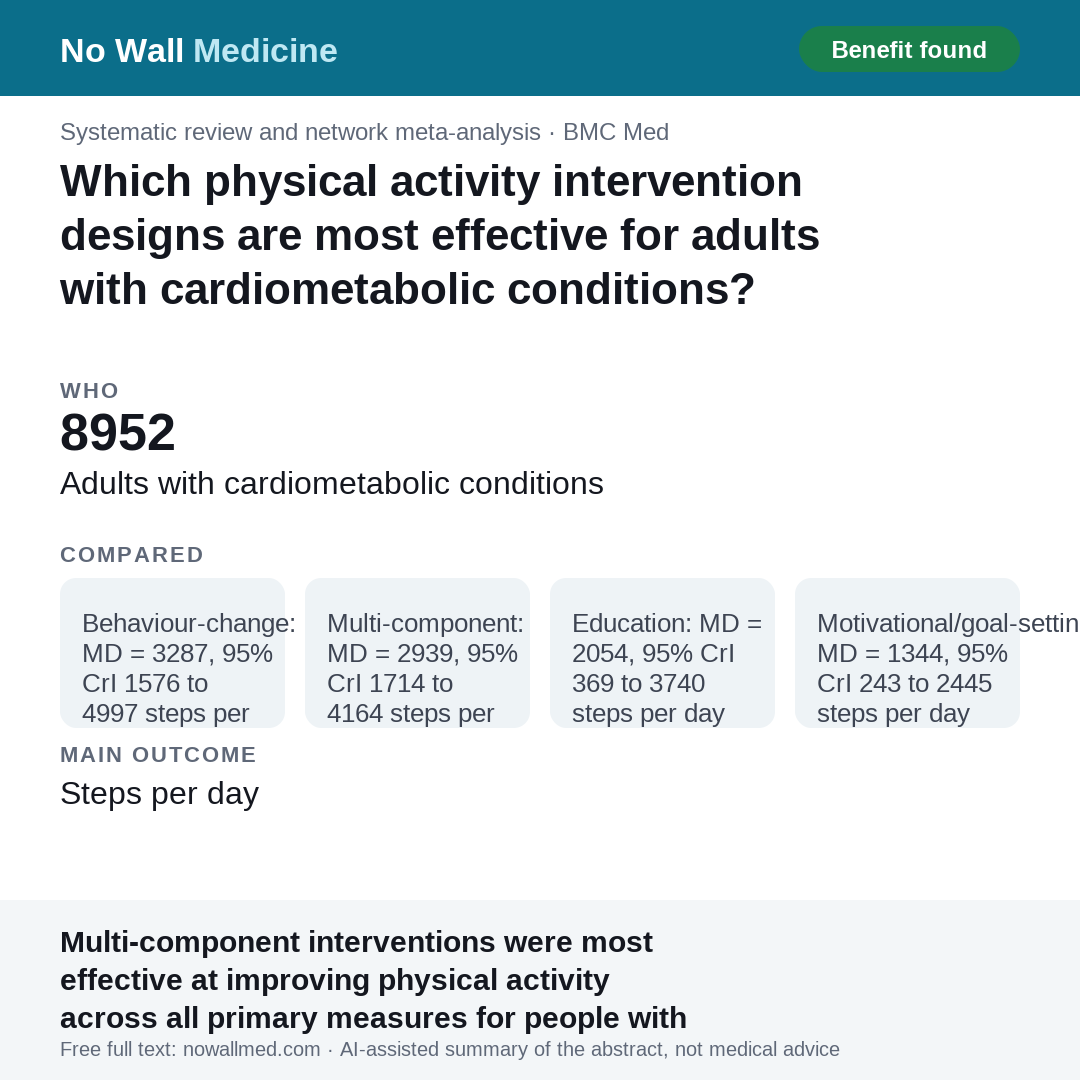
Effectiveness of different intervention designs for improving physical activity in adults with cardiometabolic conditions over time: a systematic review and network meta-analysis of randomised controlled trials
Systematic review and network meta-analysisBenefit found
Which physical activity intervention designs are most effective for adults with cardiometabolic conditions?
Who
8952
Adults with cardiometabolic conditions
Compared
Behaviour-change: MD = 3287, 95% CrI 1576 to 4997 steps per day
Multi-component: MD = 2939, 95% CrI 1714 to 4164 steps per day
Education: MD = 2054, 95% CrI 369 to 3740 steps per day
Motivational/goal-setting: MD = 1344, 95% CrI 243 to 2445 steps per day
Main outcome
Steps per day
Bottom line: Multi-component interventions were most effective at improving physical activity across all primary measures for people with cardiometabolic conditions.
BMC Med · 2025-07-22Download image
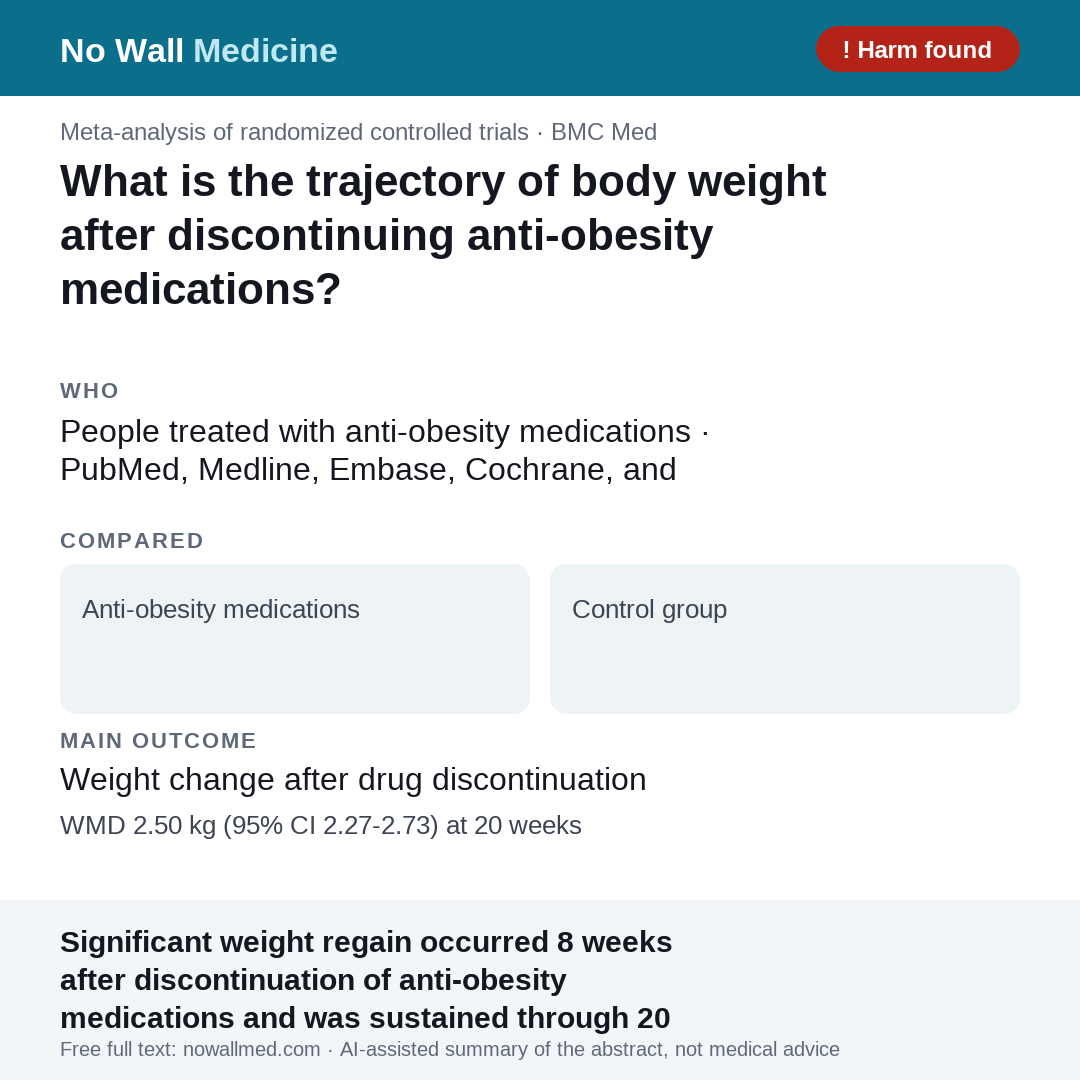
Trajectory of the body weight after drug discontinuation in the treatment of anti-obesity medications
Meta-analysis of randomized controlled trialsHarm found
What is the trajectory of body weight after discontinuing anti-obesity medications?
Who
People treated with anti-obesity medications · PubMed, Medline, Embase, Cochrane, and Clinicaltrials.gov
Compared
Anti-obesity medications
Control group
Main outcome
Weight change after drug discontinuation
Result: WMD 2.50 kg (95% CI 2.27-2.73) at 20 weeks
Bottom line: Significant weight regain occurred 8 weeks after discontinuation of anti-obesity medications and was sustained through 20 weeks.
BMC Med · 2025-07-22Download image
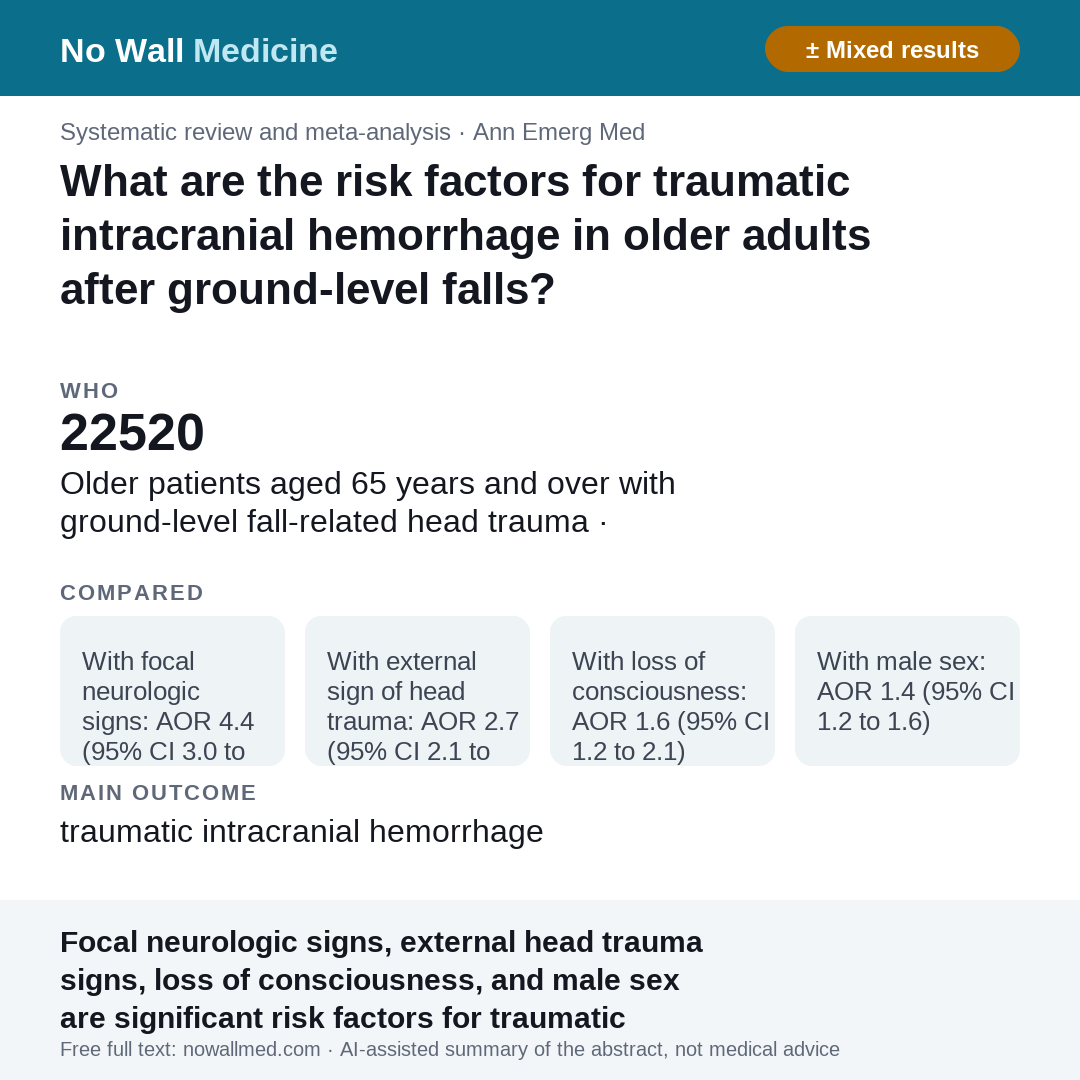
Risk Factors for Traumatic Intracranial Hemorrhage in Older Adults Sustaining a Head Injury in Ground-Level Falls: A Systematic Review and Meta-analysis
Systematic review and meta-analysisMixed results
What are the risk factors for traumatic intracranial hemorrhage in older adults after ground-level falls?
Who
22520
Older patients aged 65 years and over with ground-level fall-related head trauma · Emergency department
Compared
With focal neurologic signs: AOR 4.4 (95% CI 3.0 to 6.5)
With external sign of head trauma: AOR 2.7 (95% CI 2.1 to 3.5)
With loss of consciousness: AOR 1.6 (95% CI 1.2 to 2.1)
With male sex: AOR 1.4 (95% CI 1.2 to 1.6)
Main outcome
traumatic intracranial hemorrhage
Bottom line: Focal neurologic signs, external head trauma signs, loss of consciousness, and male sex are significant risk factors for traumatic intracranial hemorrhage.
Limitation: The study suggests a need for future prospective studies to evaluate potentially avoidable head computed tomography scans.
Ann Emerg Med · 2025-07-22Download image
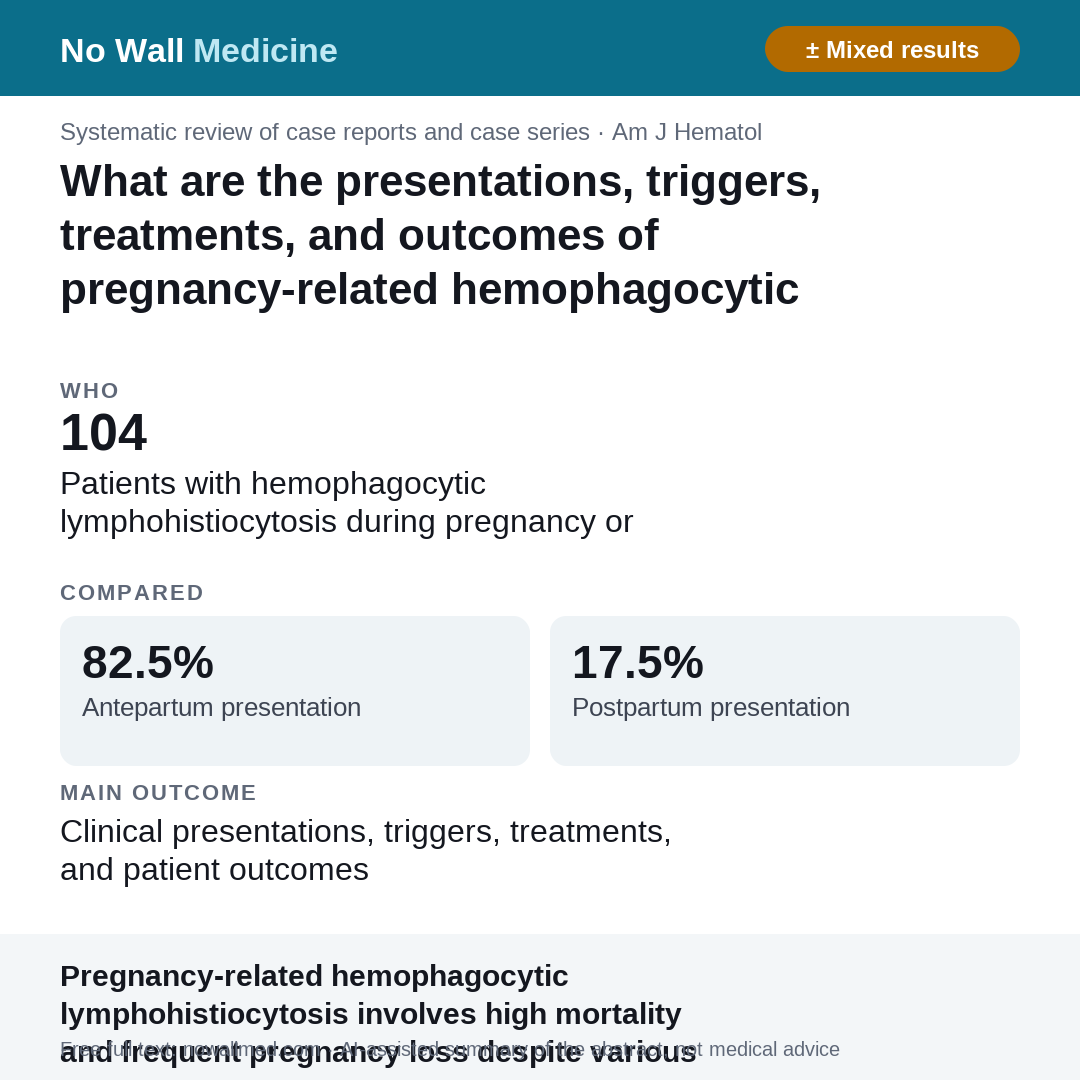
Hemophagocytic Lymphohistiocytosis in Pregnancy: A Systematic Review of Case Reports and Case Series
Systematic review of case reports and case seriesMixed results
What are the presentations, triggers, treatments, and outcomes of pregnancy-related hemophagocytic lymphohistiocytosis?
Who
104
Patients with hemophagocytic lymphohistiocytosis during pregnancy or postpartum
Compared
82.5%Antepartum presentation
17.5%Postpartum presentation
Main outcome
Clinical presentations, triggers, treatments, and patient outcomes
Bottom line: Pregnancy-related hemophagocytic lymphohistiocytosis involves high mortality and frequent pregnancy loss despite various treatment strategies.
Limitation: Limited data due to the nature of case reports and case series.
Am J Hematol · 2025-07-22Download image
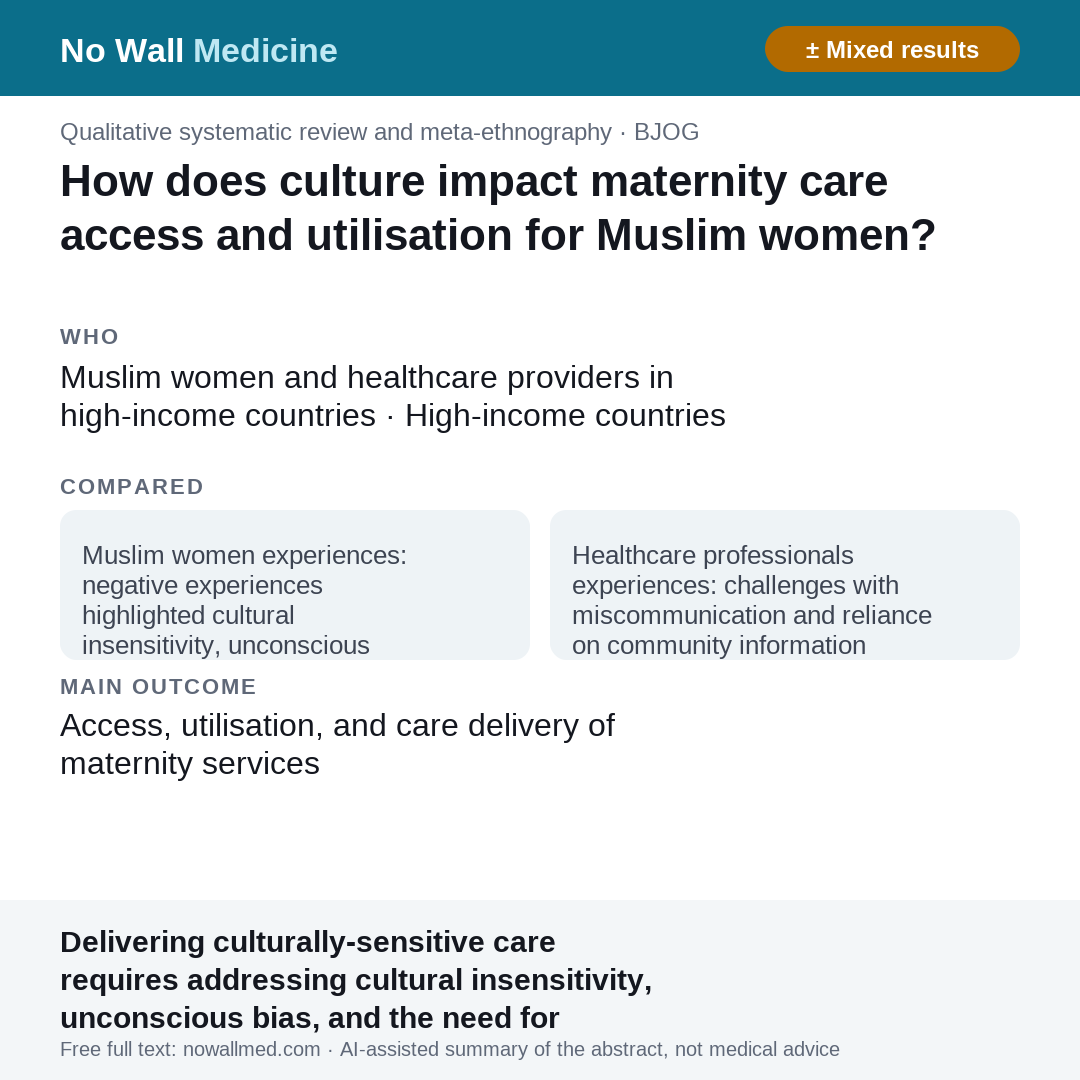
The Impact of Culture on Access to and Utilisation of Maternity Care Amongst Muslim Women in High-Income Countries: A Qualitative Systematic Review
Qualitative systematic review and meta-ethnographyMixed results
How does culture impact maternity care access and utilisation for Muslim women?
Who
Muslim women and healthcare providers in high-income countries · High-income countries
Compared
Muslim women experiences: negative experiences highlighted cultural insensitivity, unconscious bias, and inflexible care models
Healthcare professionals experiences: challenges with miscommunication and reliance on community information
Main outcome
Access, utilisation, and care delivery of maternity services
Bottom line: Delivering culturally-sensitive care requires addressing cultural insensitivity, unconscious bias, and the need for personalised care.
BJOG · 2025-07-22Download image