Visual abstracts
New randomized trials and meta-analyses from leading journals at a glance: who was studied, what was compared, and what was found. Every paper is free to read in full.
All specialtiesCardiology 4877Oncology 4136Gastroenterology & Hepatology 1942Infectious Disease 3836Neurology 1904Psychiatry & Mental Health 2273Pulmonology 2143Critical Care 1364Endocrinology & Diabetes 2580Pediatrics 2980Surgery 2556Orthopedics & Sports Medicine 931Neurosurgery 537Cardiothoracic & Vascular Surgery 674Plastic & Reconstructive Surgery 591Nephrology 1133Rheumatology 823Hematology 1109Dermatology 621Ophthalmology 543Obstetrics & Gynecology 1686Public & Global Health 1058Radiology & Imaging 648Anesthesiology 986Urology 764ENT (Otolaryngology) 503Emergency Medicine 511Allergy & Immunology 313Geriatrics 979Family Medicine & Primary Care 562Medical Genetics & Genomics 676Pathology & Laboratory Medicine 159Physical Medicine & Rehabilitation 757Palliative Care 444Nutrition 1588Digital Health & AI 2197General Medicine 320
Dignity in the Pediatric Population: A Systematic Review
Systematic reviewUnclear result
How is dignity defined, evaluated, and measured in the pediatric population?
Who
44
Children aged 0 to 18 years
Compared
Articles describing meaning of dignity: 38/44 (86%)
Articles including measurement or evaluation: 19/44 (43%)
Articles focused on end of life: 17/44 (39%)
Main outcome
Characterization of dignity definitions, evaluations, and measurements
Bottom line: Few published studies describe dignity in pediatrics, with limited measurement and evaluation methods available.
J Pain Symptom Manage · 2024-07-18Download image

Comparing cervical cerclage, pessary and vaginal progesterone for prevention of preterm birth in women with a short cervix (SuPPoRT): A multicentre randomised controlled trial
Multicentre, open label 3-arm randomised controlled trialNo clear difference
Are cerclage, pessary, and vaginal progesterone equally effective for preventing preterm birth in women with short cervix?
Who
386
Asymptomatic women with singleton pregnancies and cervical length <25 mm · 19 obstetric units in the United Kingdom
Compared
Vaginal cervical cerclage: 39/127
Cervical pessary: 38/122
Vaginal progesterone: 32/132
Main outcome
Preterm birth before 37 weeks' gestation
Result: p = 0.4
Bottom line: Cerclage, pessary, and vaginal progesterone were equally efficacious at preventing preterm birth in women with a short cervix.
Limitation: The trial was underpowered for neonatal outcomes and stopped early due to the COVID-19 pandemic.
PLOS Med · 2024-07-16Download image

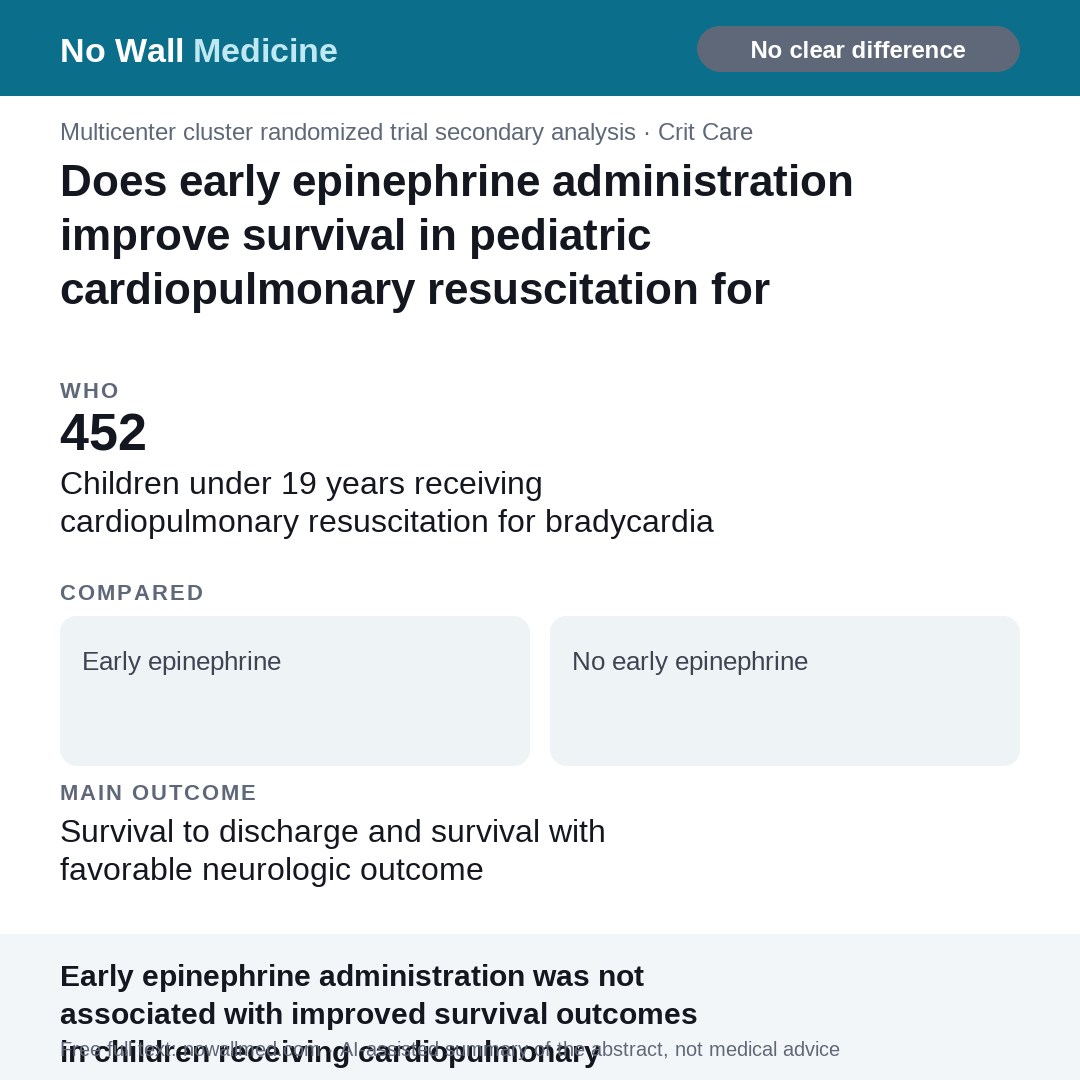
Early bolus epinephrine administration during pediatric cardiopulmonary resuscitation for bradycardia with poor perfusion: an ICU-resuscitation study
Multicenter cluster randomized trial secondary analysisNo clear difference
Does early epinephrine administration improve survival in pediatric cardiopulmonary resuscitation for bradycardia?
Who
452
Children under 19 years receiving cardiopulmonary resuscitation for bradycardia · 18 intensive care units in the United States
Compared
Early epinephrine
No early epinephrine
Main outcome
Survival to discharge and survival with favorable neurologic outcome
Result: aRR 0.97 (95% CI 0.82 to 1.14) for survival to discharge
Bottom line: Early epinephrine administration was not associated with improved survival outcomes in children receiving cardiopulmonary resuscitation for bradycardia.
Crit Care · 2024-07-16Download image
Performance and safety of the PRICO closed-loop oxygen saturation targeting system in neonates: pragmatic multicentre cross-over study (TarOx Study)
Multicentre randomised cross-over studyBenefit found
Does the PRICO system improve automated fraction of inspired oxygen control in neonates?
Who
39
39 infants receiving non-invasive or invasive respiratory support · Five neonatal intensive care units
Compared
Automated control: 74%±22%
Manual control: 51%±22%
Main outcome
Proportion of time in normoxaemia
Bottom line: The PRICO automated oxygen control algorithm improves time in normoxaemia and avoids hyperoxaemia without increasing hypoxaemia.
BMJ Paediatr Open · 2024-07-16Download image

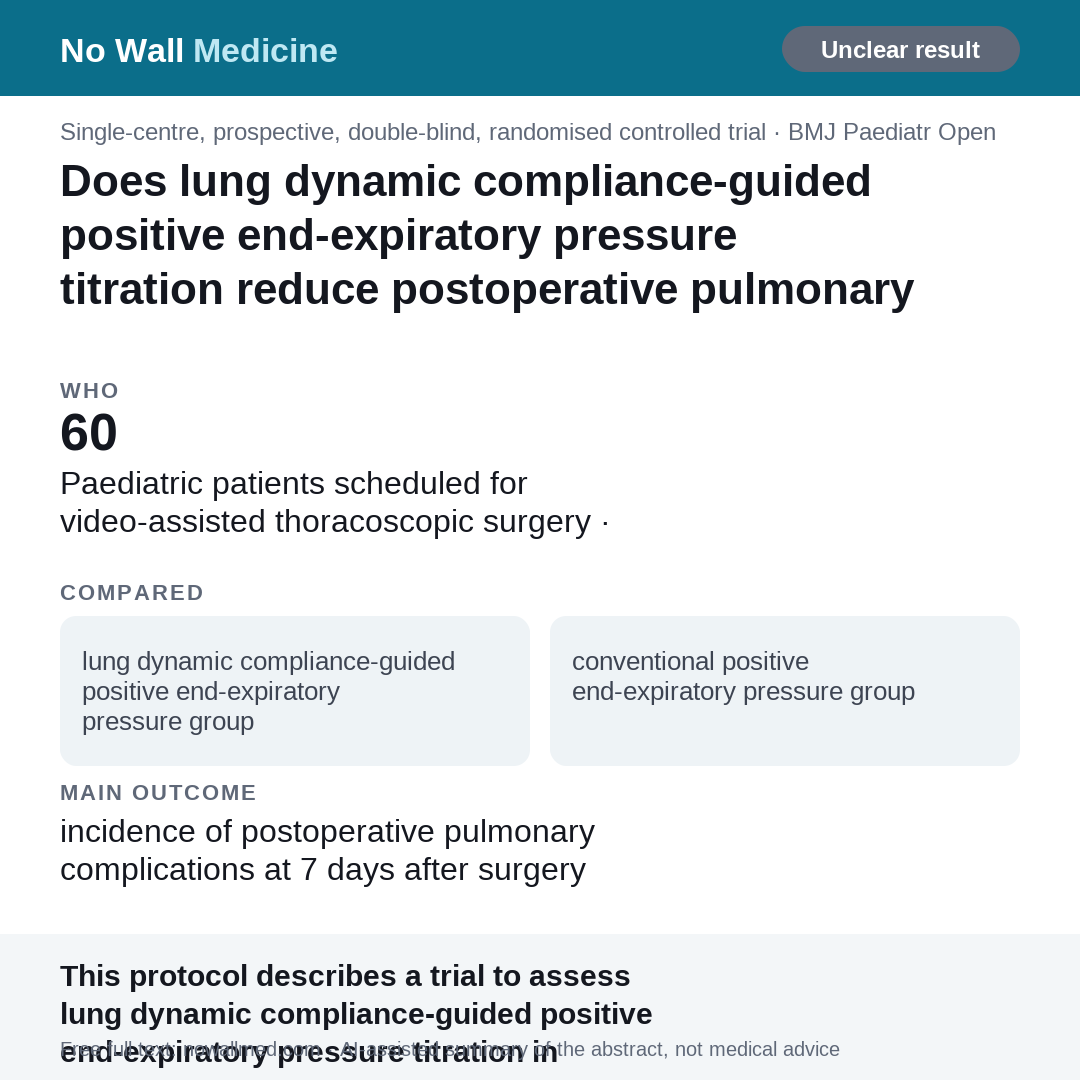
Effects of individualised lung-protective ventilation with lung dynamic compliance-guided positive end-expiratory pressure titration on postoperative pulmonary complications of paediatric video-assisted thoracoscopic surgery: protocol for a randomised controlled trial
Single-centre, prospective, double-blind, randomised controlled trialUnclear result
Does lung dynamic compliance-guided positive end-expiratory pressure titration reduce postoperative pulmonary complications?
Who
60
Paediatric patients scheduled for video-assisted thoracoscopic surgery · Shenzhen Children's Hospital
Compared
lung dynamic compliance-guided positive end-expiratory pressure group
conventional positive end-expiratory pressure group
Main outcome
incidence of postoperative pulmonary complications at 7 days after surgery
Bottom line: This protocol describes a trial to assess lung dynamic compliance-guided positive end-expiratory pressure titration in children.
BMJ Paediatr Open · 2024-07-16Download image
Securement to Prevent Noncuffed Central Venous Catheter Dislodgement in Pediatrics: The SECURED Superiority Randomized Clinical Trial
Pragmatic, multicenter, superiority randomized clinical trialBenefit found
Does a subcutaneous anchor securement system reduce noncuffed central venous catheter dislodgement in children?
Who
310
Patients aged 0 to 18 years requiring a noncuffed central venous catheter · 2 Australian quaternary pediatric hospitals
Compared
5.2%Subcutaneous anchor securement system (8/153)
22.7%Sutureless securement devices (35/154)
Main outcome
Dislodgement (partial or total) of the catheter
Result: risk ratio 0.23 (95% CI, 0.11-0.48)
Bottom line: Subcutaneous anchor securement systems reduced catheter dislodgement compared to sutureless securement devices in pediatric patients.
JAMA Pediatr · 2024-07-15Download image

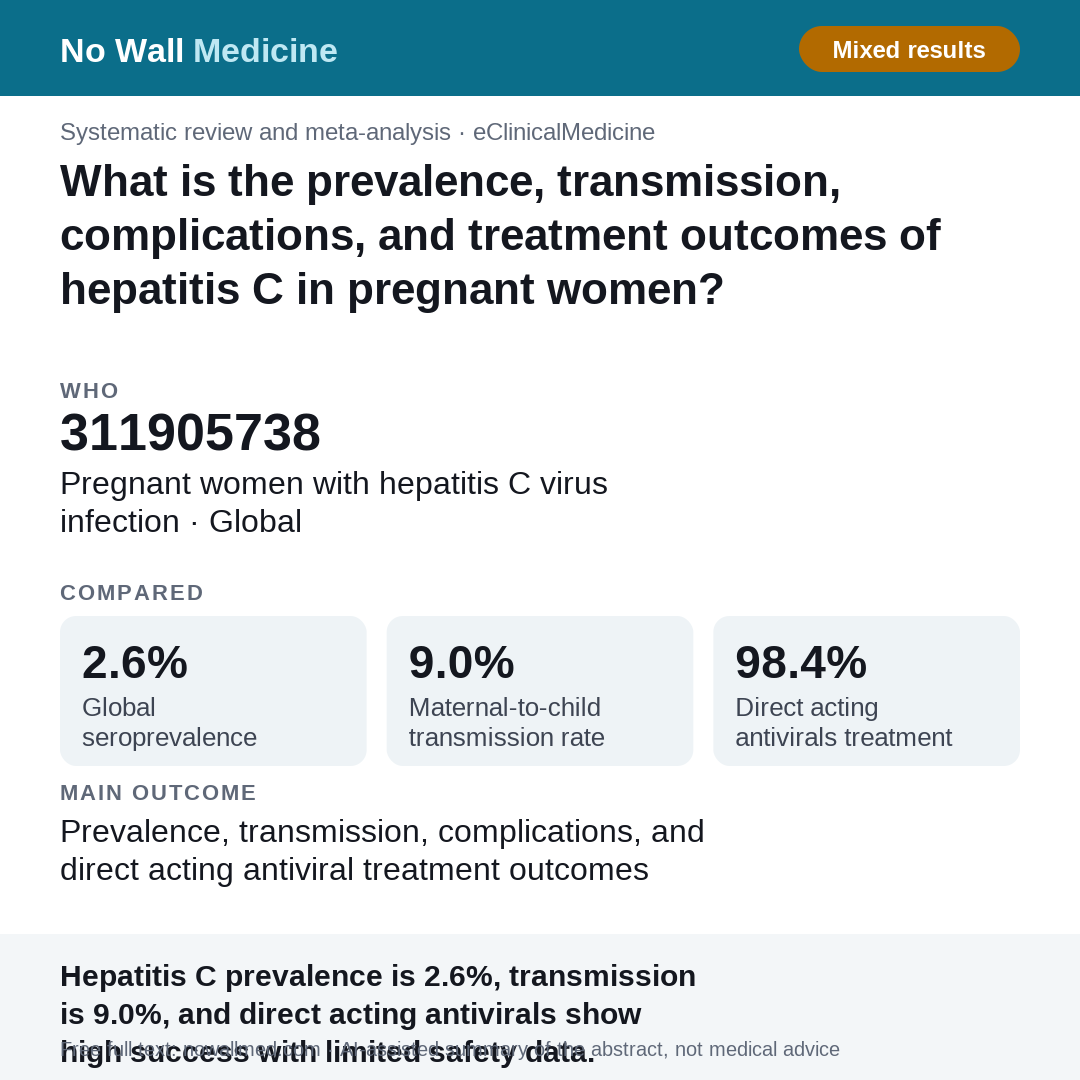
Global epidemiology, natural history, maternal-to-child transmission, and treatment with DAA of pregnant women with HCV: a systematic review and meta-analysis
Systematic review and meta-analysisMixed results
What is the prevalence, transmission, complications, and treatment outcomes of hepatitis C in pregnant women?
Who
311905738
Pregnant women with hepatitis C virus infection · Global
Compared
2.6%Global seroprevalence (95% CI: 2.0-3.2)
9.0%Maternal-to-child transmission rate (95% CI: 6.6-11.7)
98.4%Direct acting antivirals treatment (SVR12)
Main outcome
Prevalence, transmission, complications, and direct acting antiviral treatment outcomes
Bottom line: Hepatitis C prevalence is 2.6%, transmission is 9.0%, and direct acting antivirals show high success with limited safety data.
Limitation: Limited data suggest that direct acting antivirals are safe in pregnant women.
eClinicalMedicine · 2024-07-13Download image
Ivermectin therapy for young children with scabies infection: a multicentre phase 2 non-randomized trial
Multicentre, phase 2 non-randomized trialBenefit found
Is a 3 mg ivermectin dose effective for young children with scabies?
Who
100
Children aged 2-4 years, weighing 10-14 kg with scabies · Five health centres in Lao People's Democratic Republic
Compared
3 mg ivermectin dose: 815 μg h/L
Historical control group: 953 μg h/L
Main outcome
Mean plasma ivermectin exposure
Result: p = 0.256
Bottom line: A 3 mg ivermectin dose achieves comparable drug exposure and is effective for young children with scabies.
Funded by: Thrasher Foundation Early Career Research Award
Lancet Reg Health West Pac · 2024-07-13Download image

Randomized 20-year infancy-onset dietary intervention, life-long cardiovascular risk factors and retinal microvasculature
Randomized controlled dietary intervention studyBenefit found
Does an infancy-onset dietary intervention affect retinal microvasculature in young adulthood?
Who
486
Participants from the Special Turku Coronary Risk Factor Intervention Project
Compared
intervention group: less tortuous arterioles and venules and increased arteriolar fractal dimension
control group
Main outcome
retinal microvasculature characteristics
Bottom line: A 20-year infancy-onset heart-healthy dietary intervention had favourable effects on retinal microvasculature in young adulthood.
Eur Heart J · 2024-07-12Download image
Immunogenicity, Safety, and Efficacy of a Tetravalent Dengue Vaccine in Children and Adolescents: An Analysis by Age Group
Randomized trialBenefit found
What are the immunogenicity, safety, and efficacy of TAK-003 in children and adolescents?
Who
Children and adolescents aged 4 to 16 years · Dengue endemic areas
Compared
TAK-003 vaccine
Placebo
Main outcome
Vaccine efficacy against virologically confirmed dengue
Bottom line: TAK-003 was efficacious in preventing dengue across children and adolescents aged 4 to 16 years.
Limitation: Lower efficacy in 4-5 year-olds may be confounded by serotype distribution and small sample size.
Clin Infect Dis · 2024-07-12Download image
The Effect of High-Dose Erythropoietin Perinatally on Retinal Function in School-Aged Children Born Extremely or Very Preterm
Randomized, double-blind clinical trialNo clear difference
Does high-dose recombinant human erythropoietin affect retinal and visual function in preterm children?
Who
Extremely or very preterm-born children aged 7 to 15 years · University Hospital Zurich, Switzerland
Compared
high-dose recombinant human erythropoietin: no differences in ERG parameters
placebo: no differences in ERG parameters
Main outcome
Scotopic and photopic electroretinogram response amplitudes and peak times
Bottom line: High-dose recombinant human erythropoietin administered perinatally has no measurable effects on retinal function in preterm children.
Am J Ophthalmol · 2024-07-10Download image
Infection in preterm infants receiving topical emollient oil massage: a systematic review and meta-analysis of randomised control trials
Systematic review and meta-analysis of randomised controlled trialsBenefit found
Does topical emollient oil application prevent infections in preterm infants?
Who
Preterm infants
Compared
Emollient oil massage
Non-massaged
Main outcome
Risk of infection
Result: risk ratio 0.79 (95% CI 0.64 to 0.97)
Bottom line: Topical emollient oil application is likely effective in preventing infection in preterm neonates.
Limitation: Further studies, particularly from the African continent, are warranted to support universal recommendations.
BMJ Paediatr Open · 2024-07-10Download image

Cardiovascular disease in adults with a history of out-of-home care during childhood: a systematic review and meta-analysis of prospective cohort studies
Systematic review and meta-analysis of prospective cohort studiesHarm found
Is childhood out-of-home care associated with adult cardiovascular disease risk?
Who
611601
Individuals with childhood out-of-home care and unexposed comparators · United States, United Kingdom, Sweden, Finland, and Australia
Compared
Childhood out-of-home care: 51% greater risk
Unexposed
Main outcome
Adult cardiovascular disease events
Result: rate ratio 1.51 (95% CI 1.22 to 1.86)
Bottom line: Individuals with childhood out-of-home care have a moderately raised risk of cardiovascular disease in adulthood.
Funded by: Medical Research Council, National Institute on Aging, Wellcome Trust
Lancet Reg Health Eur · 2024-07-09Download image

Telemedicine in Improving Glycemic Control Among Children and Adolescents With Type 1 Diabetes Mellitus: Systematic Review and Meta-Analysis
Systematic review and meta-analysis of 20 randomized controlled trialsBenefit found
Does telemedicine improve glycemic control in children and adolescents with type 1 diabetes mellitus?
Who
1704
Children and adolescents with type 1 diabetes mellitus · 12 countries
Compared
Telemedicine
Usual care
Main outcome
Glycated hemoglobin levels
Result: reduction in HbA1c 0.22 (95% CI -0.33 to -0.10)
Bottom line: Telemedicine reduces glycated hemoglobin levels and improves non-youth-specific quality of life in children and adolescents with type 1 diabetes.
Limitation: Researchers should develop higher-quality randomized controlled trials using large samples focusing on hard clinical outcomes.
J Med Internet Res · 2024-07-09Download image
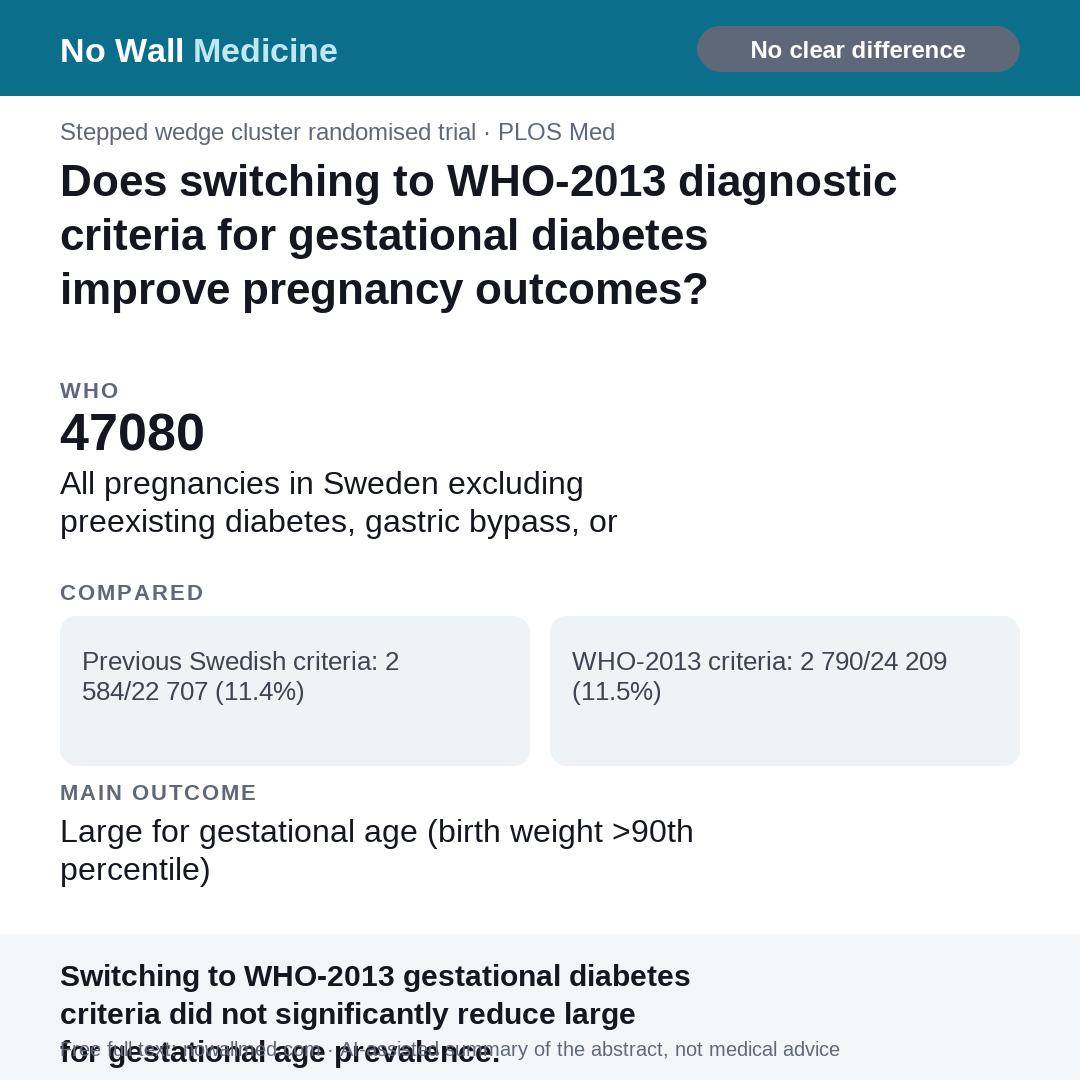
Changing diagnostic criteria for gestational diabetes (CDC4G) in Sweden: A stepped wedge cluster randomised trial
Stepped wedge cluster randomised trialNo clear difference
Does switching to WHO-2013 diagnostic criteria for gestational diabetes improve pregnancy outcomes?
Who
47080
All pregnancies in Sweden excluding preexisting diabetes, gastric bypass, or multifetal pregnancies · 11 clusters (17 delivery units) across Sweden
Compared
Previous Swedish criteria: 2 584/22 707 (11.4%)
WHO-2013 criteria: 2 790/24 209 (11.5%)
Main outcome
Large for gestational age (birth weight >90th percentile)
Result: adjusted risk ratio 0.97 (95% confidence interval 0.91 to 1.02)
Bottom line: Switching to WHO-2013 gestational diabetes criteria did not significantly reduce large for gestational age prevalence.
Limitation: Failure to adhere to guidelines within and between clusters and unidentified temporal variations.
PLOS Med · 2024-07-08Download image
Physical health complications in children and young people with avoidant restrictive food intake disorder (ARFID): a systematic review and meta-analysis
Systematic review and meta-analysisMixed results
What are the physical health complications in children and young people with avoidant restrictive food intake disorder?
Who
Children and young people aged 25 years or younger with avoidant restrictive food intake disorder
Compared
Avoidant restrictive food intake disorder
Anorexia nervosa
Main outcome
Physical health complications
Result: weighted mean difference 12.93 bpm (95% CI 8.65 to 17.21) for heart rate
Bottom line: Children with avoidant restrictive food intake disorder face various physical complications, including nutritional deficiencies and low bone mineral density.
Limitation: High heterogeneity was found in heart rate comparisons (I2: 81.33%).
BMJ Paediatr Open · 2024-07-08Download image

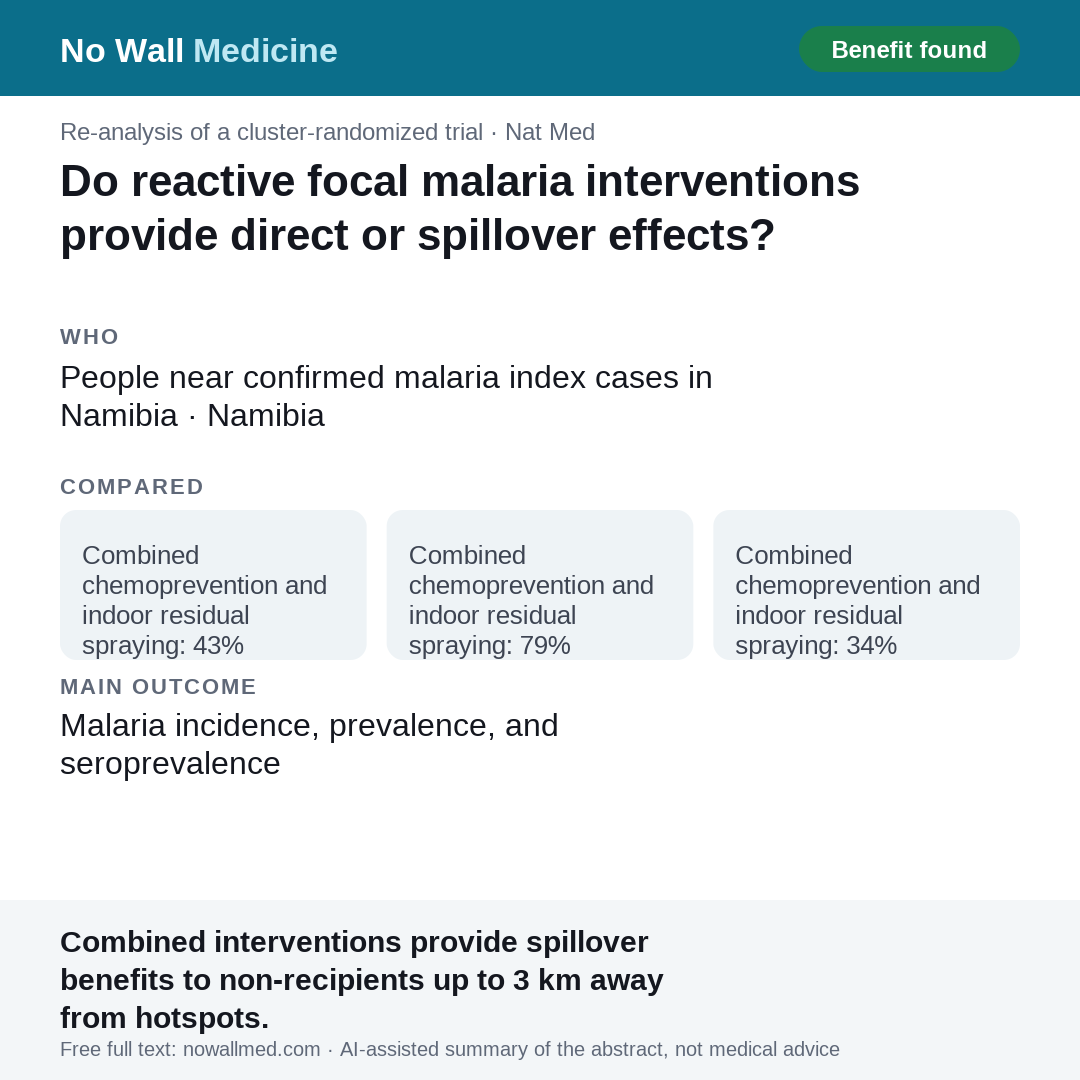
Extension of efficacy range for targeted malaria-elimination interventions due to spillover effects
Re-analysis of a cluster-randomized trialBenefit found
Do reactive focal malaria interventions provide direct or spillover effects?
Who
People near confirmed malaria index cases in Namibia · Namibia
Compared
Combined chemoprevention and indoor residual spraying: 43% reduction in incidence among non-recipients within 1 km
Combined chemoprevention and indoor residual spraying: 79% reduction in infection prevalence among non-recipients within 3 km
Combined chemoprevention and indoor residual spraying: 34% reduction in seroprevalence among non-recipients within 3 km
Main outcome
Malaria incidence, prevalence, and seroprevalence
Bottom line: Combined interventions provide spillover benefits to non-recipients up to 3 km away from hotspots.
Nat Med · 2024-07-04Download image
Artificial Intelligence in Malnutrition: A Systematic Literature Review
Systematic Literature ReviewUnclear result
Artificial Intelligence in Malnutrition
Who
children and adults with malnutrition
Compared
AI models
90%Unused models
Main outcome
malnutrition detection
Bottom line: Most AI models go unused in clinical practice
Limitation: most AI models unused
Adv Nutr · 2024-07-04Download image

Fluid accumulation in critically ill children: a systematic review and meta-analysis
Systematic review and meta-analysisHarm found
Is fluid accumulation associated with poor outcomes in critically ill children?
Who
44,682
Critically ill children
Compared
Fluid accumulation present: OR 4.36 (95% CI 3.53-5.38)
Fluid accumulation absent
Main outcome
all-cause mortality
Result: odds ratio 4.36 (95% CI 3.53-5.38)
Bottom line: Fluid accumulation is significantly associated with increased mortality, acute kidney injury, prolonged mechanical ventilation, and longer intensive care unit stays.
Limitation: Thirty-five different fluid accumulation definitions were identified across studies.
eClinicalMedicine · 2024-07-03Download image

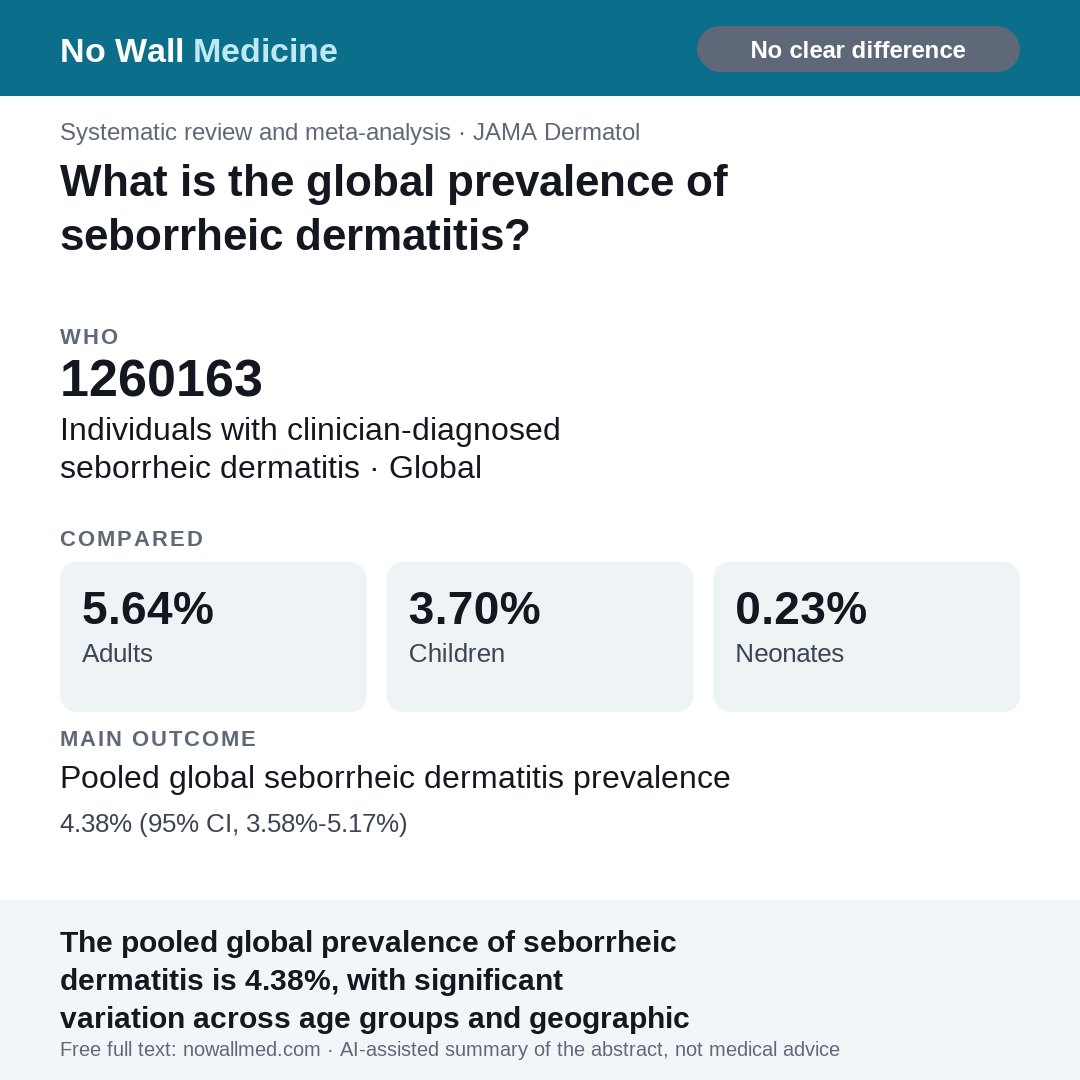
The Global Prevalence of Seborrheic Dermatitis: A Systematic Review and Meta-Analysis
Systematic review and meta-analysisNo clear difference
What is the global prevalence of seborrheic dermatitis?
Who
1260163
Individuals with clinician-diagnosed seborrheic dermatitis · Global
Compared
5.64%Adults (95% CI, 4.01%-7.27%)
3.70%Children (95% CI, 2.69%-4.80%)
0.23%Neonates (95% CI, 0.04%-0.43%)
Main outcome
Pooled global seborrheic dermatitis prevalence
Result: 4.38% (95% CI, 3.58%-5.17%)
Bottom line: The pooled global prevalence of seborrheic dermatitis is 4.38%, with significant variation across age groups and geographic locations.
JAMA Dermatol · 2024-07-03Download image