Visual abstracts
New randomized trials and meta-analyses from leading journals at a glance: who was studied, what was compared, and what was found. Every paper is free to read in full.
All specialtiesCardiology 2028Oncology 1756Gastroenterology & Hepatology 769Infectious Disease 1291Neurology 838Psychiatry & Mental Health 1001Pulmonology 871Critical Care 579Endocrinology & Diabetes 1088Pediatrics 1206Surgery 1032Orthopedics & Sports Medicine 379Neurosurgery 254Cardiothoracic & Vascular Surgery 218Plastic & Reconstructive Surgery 311Nephrology 427Rheumatology 287Hematology 447Dermatology 233Ophthalmology 235Obstetrics & Gynecology 669Public & Global Health 391Radiology & Imaging 281Anesthesiology 408Urology 361ENT (Otolaryngology) 271Emergency Medicine 225Allergy & Immunology 129Geriatrics 436Family Medicine & Primary Care 239Medical Genetics & Genomics 221Pathology & Laboratory Medicine 67Physical Medicine & Rehabilitation 358Palliative Care 175Nutrition 558Digital Health & AI 1058General Medicine 155
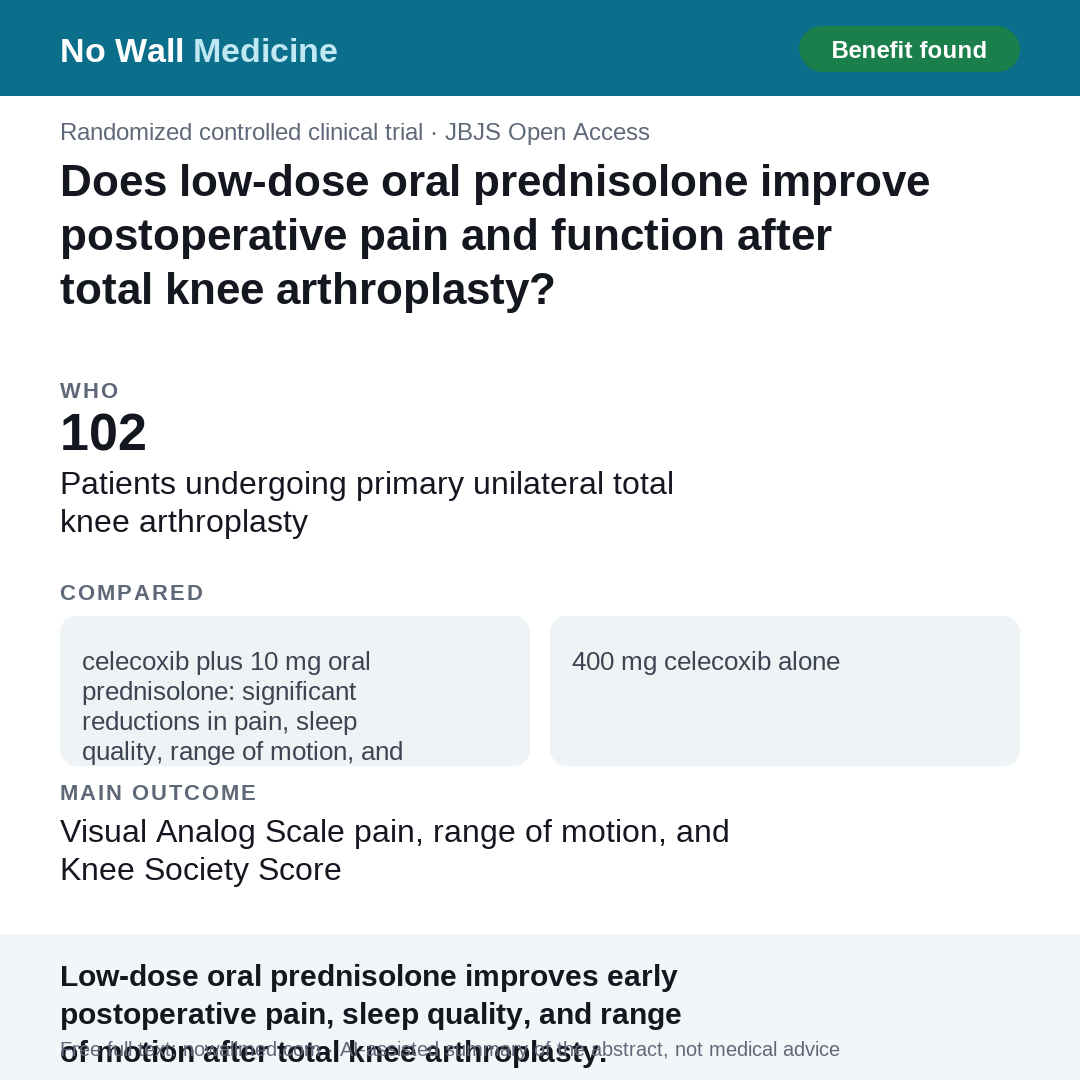
Systemic Low Dose Corticosteroid Improves Early Postoperative Knee Function and Pain Intensity in Patients Undergoing Unilateral Total Knee Arthroplasty: A Blinded Controlled Randomized Clinical Trial
Randomized controlled clinical trialBenefit found
Does low-dose oral prednisolone improve postoperative pain and function after total knee arthroplasty?
Who
102
Patients undergoing primary unilateral total knee arthroplasty
Compared
celecoxib plus 10 mg oral prednisolone: significant reductions in pain, sleep quality, range of motion, and Knee Society Score
400 mg celecoxib alone
Main outcome
Visual Analog Scale pain, range of motion, and Knee Society Score
Result: mean difference -0.81 (95% CI -1.59 to -0.03) for pain at 1 week
Bottom line: Low-dose oral prednisolone improves early postoperative pain, sleep quality, and range of motion after total knee arthroplasty.
Limitation: Wide confidence intervals and small effect sizes warrant cautious interpretation.
JBJS Open Access · 2026-03-24Download image
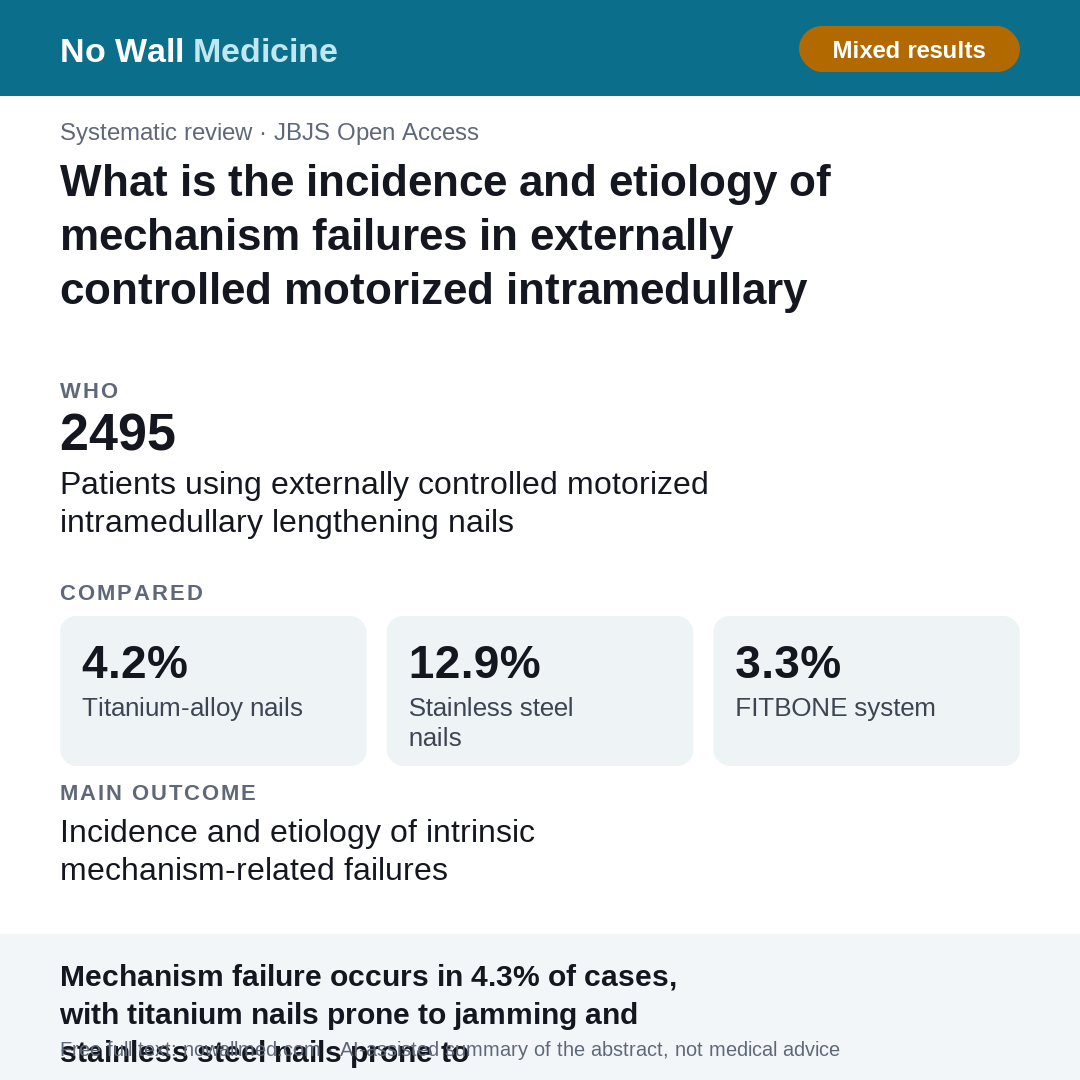
Mechanism Failures in Externally Controlled Motorized Intramedullary Lengthening Nails: A Systematic Review
Systematic reviewMixed results
What is the incidence and etiology of mechanism failures in externally controlled motorized intramedullary lengthening nails?
Who
2495
Patients using externally controlled motorized intramedullary lengthening nails
Compared
4.2%Titanium-alloy nails (74/1,761)
12.9%Stainless steel nails (12/93)
3.3%FITBONE system (21/641)
Main outcome
Incidence and etiology of intrinsic mechanism-related failures
Bottom line: Mechanism failure occurs in 4.3% of cases, with titanium nails prone to jamming and stainless steel nails prone to tribocorrosion.
JBJS Open Access · 2026-03-24Download image
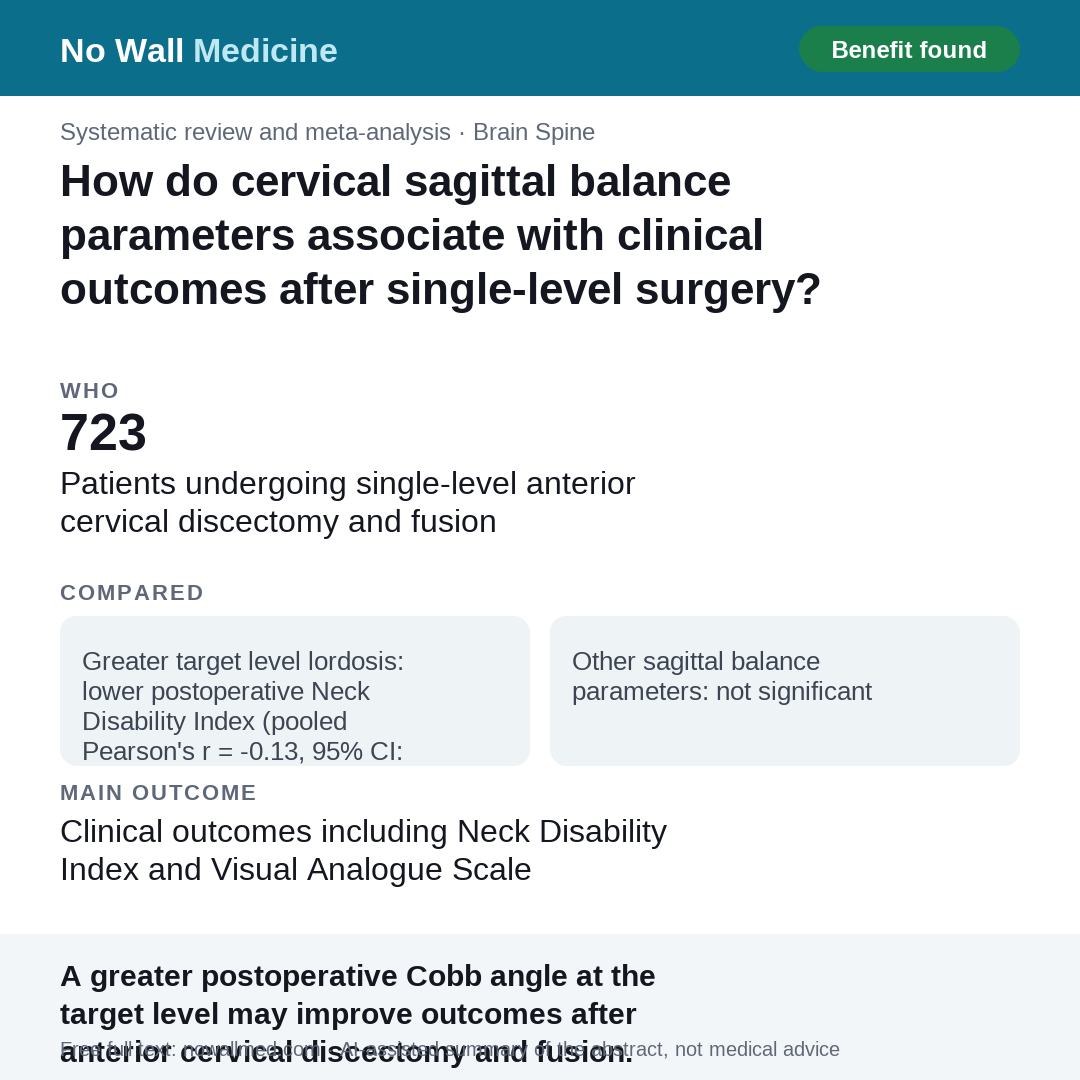
The association between cervical sagittal balance parameters and clinical outcomes after single-level surgery for cervical radiculopathy and/or stenosis: A systematic review and meta-analysis
Systematic review and meta-analysisBenefit found
How do cervical sagittal balance parameters associate with clinical outcomes after single-level surgery?
Who
723
Patients undergoing single-level anterior cervical discectomy and fusion
Compared
Greater target level lordosis: lower postoperative Neck Disability Index (pooled Pearson's r = -0.13, 95% CI: 0.23 to -0.02)
Other sagittal balance parameters: not significant
Main outcome
Clinical outcomes including Neck Disability Index and Visual Analogue Scale
Result: pooled Pearson's r = -0.13, 95% CI: 0.23 to -0.02
Bottom line: A greater postoperative Cobb angle at the target level may improve outcomes after anterior cervical discectomy and fusion.
Limitation: Further studies in larger, diverse populations are needed to confirm and generalize the results.
Brain Spine · 2026-03-24Download image
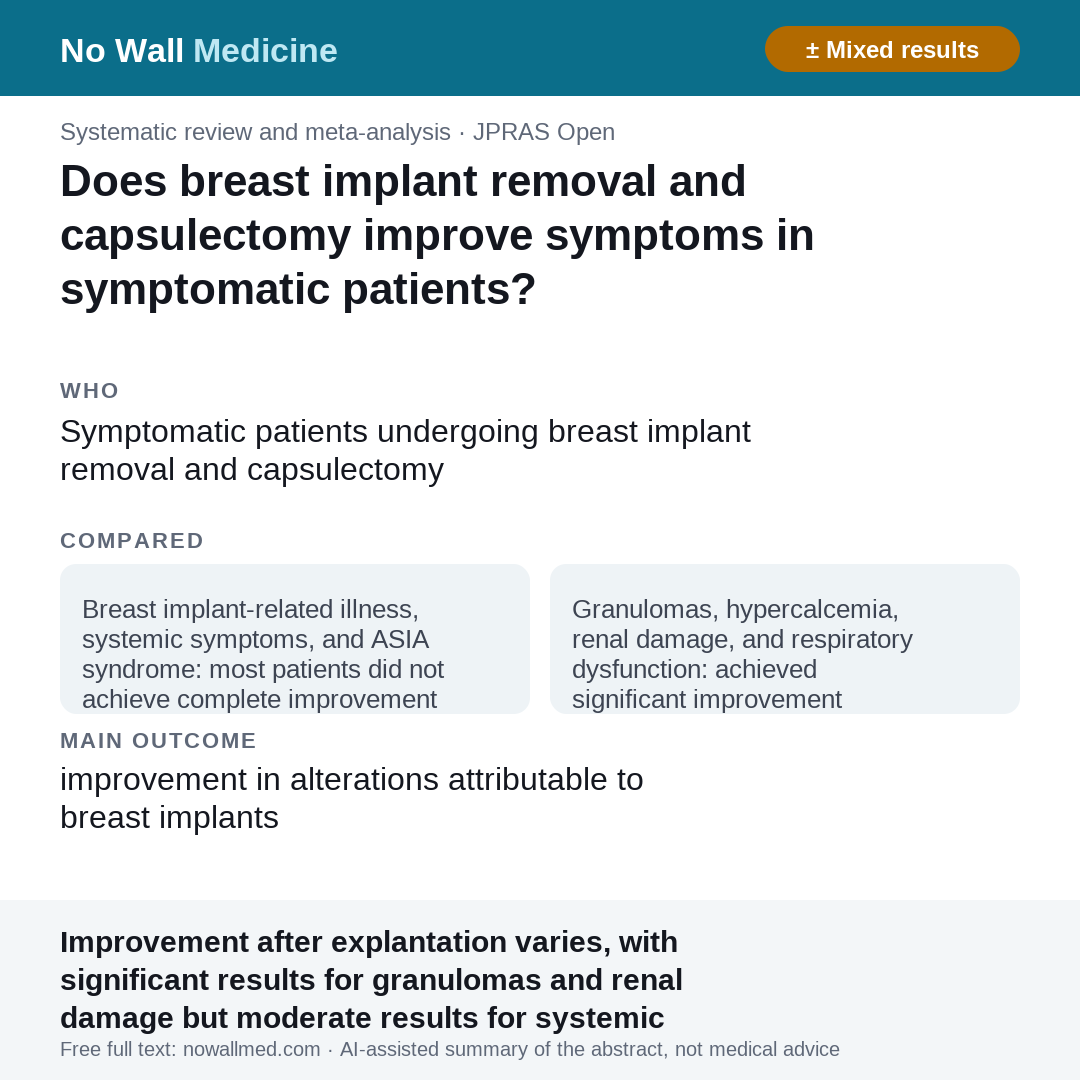
Breast implant explantation and capsulectomy in symptomatic patients. Is there any improvement with the procedure? Systematic review and meta-analysis
Systematic review and meta-analysisMixed results
Does breast implant removal and capsulectomy improve symptoms in symptomatic patients?
Who
Symptomatic patients undergoing breast implant removal and capsulectomy
Compared
Breast implant-related illness, systemic symptoms, and ASIA syndrome: most patients did not achieve complete improvement and degree was moderate
Granulomas, hypercalcemia, renal damage, and respiratory dysfunction: achieved significant improvement
Main outcome
improvement in alterations attributable to breast implants
Bottom line: Improvement after explantation varies, with significant results for granulomas and renal damage but moderate results for systemic symptoms.
Limitation: There was considerable heterogeneity in the literature
JPRAS Open · 2026-03-24Download image
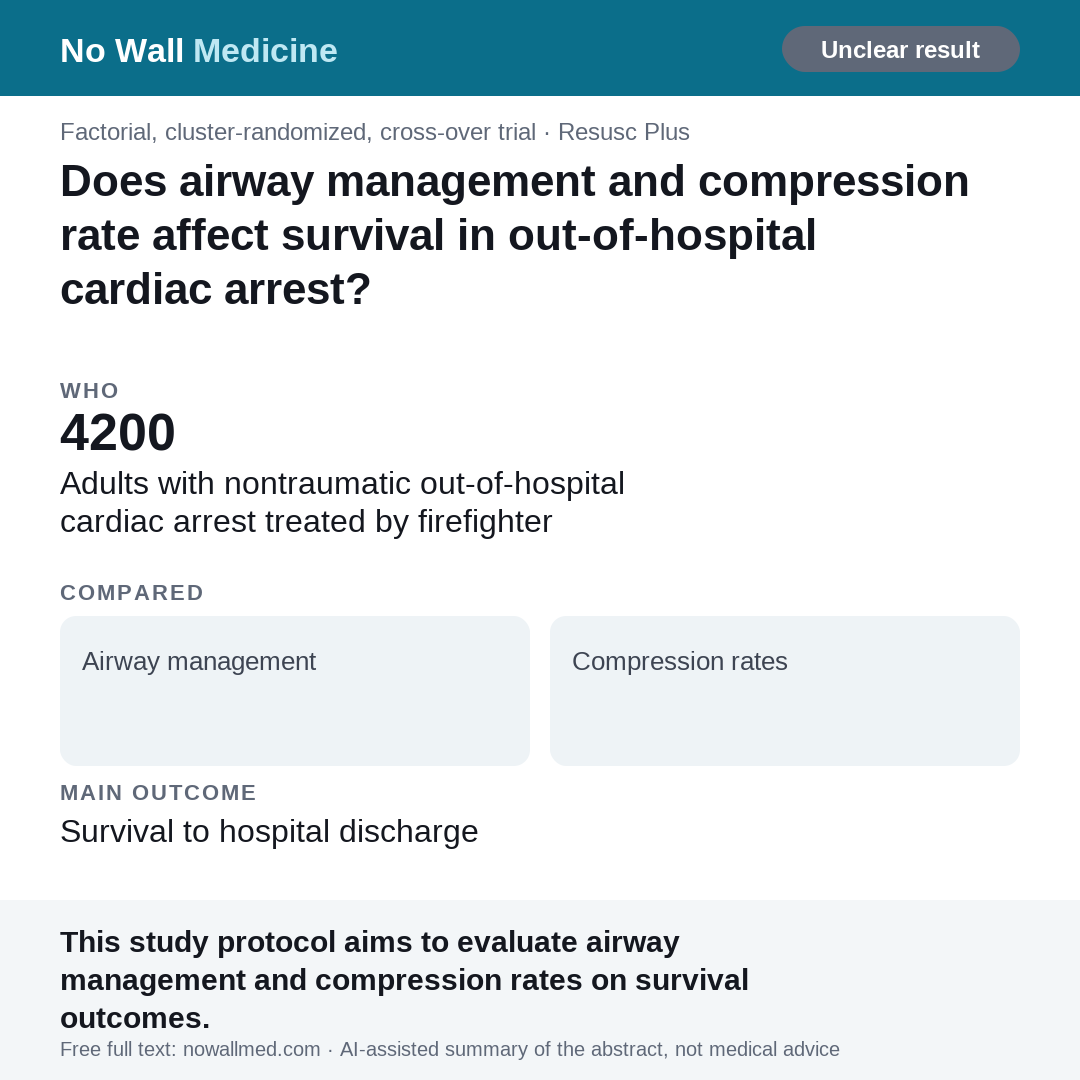
First responder airway and compression rate cluster randomized controlled trial: rational and design
Factorial, cluster-randomized, cross-over trialUnclear result
Does airway management and compression rate affect survival in out-of-hospital cardiac arrest?
Who
4200
Adults with nontraumatic out-of-hospital cardiac arrest treated by firefighter emergency medical technicians · Large metropolitan region in the United States
Compared
Airway management
Compression rates
Main outcome
Survival to hospital discharge
Bottom line: This study protocol aims to evaluate airway management and compression rates on survival outcomes.
Resusc Plus · 2026-03-24Download image
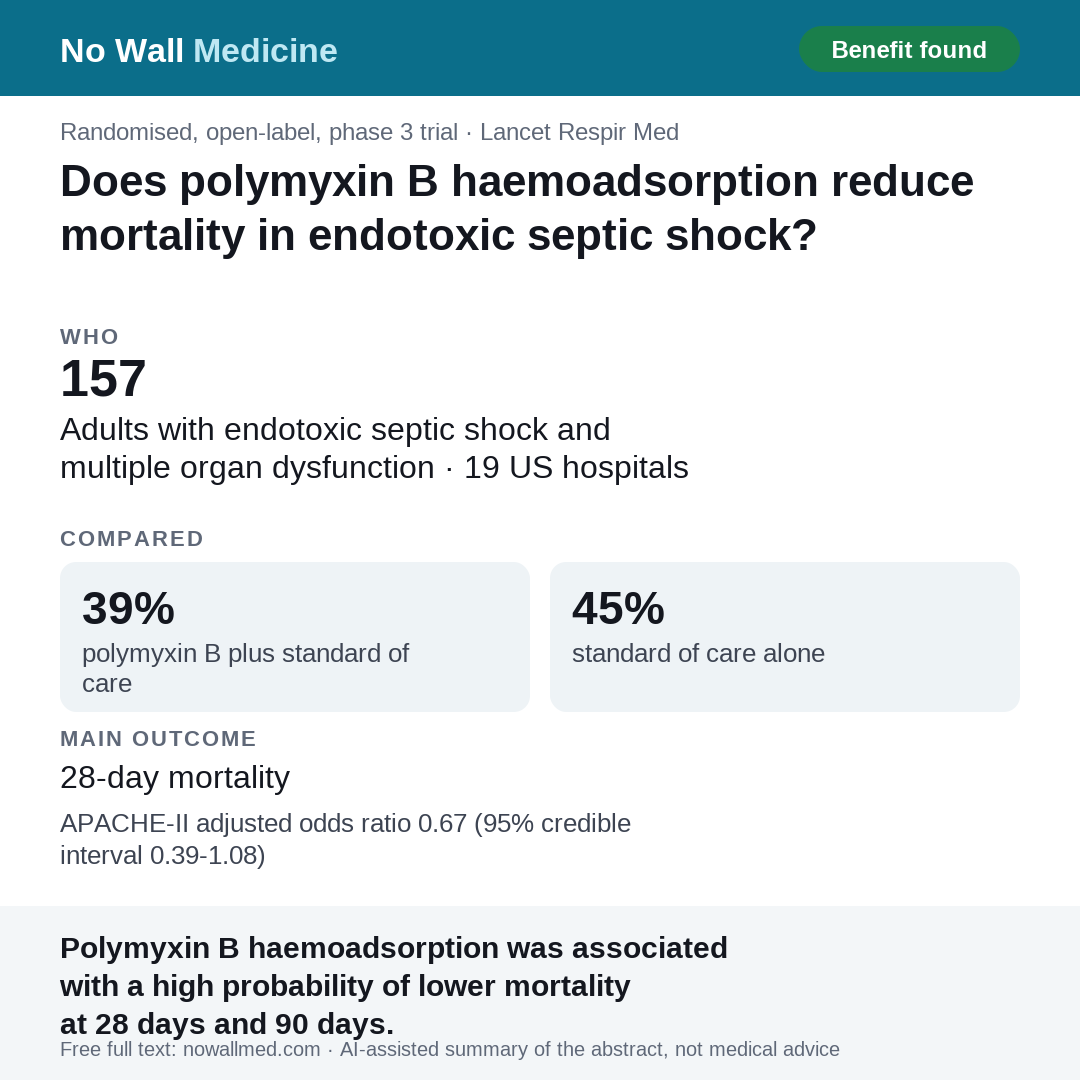
Polymyxin B haemoadsorption in endotoxic septic shock (Tigris): a multicentre, open-label, Bayesian, randomised, controlled, phase 3 trial
Randomised, open-label, phase 3 trialBenefit found
Does polymyxin B haemoadsorption reduce mortality in endotoxic septic shock?
Who
157
Adults with endotoxic septic shock and multiple organ dysfunction · 19 US hospitals
Compared
39%polymyxin B plus standard of care
45%standard of care alone
Main outcome
28-day mortality
Result: APACHE-II adjusted odds ratio 0.67 (95% credible interval 0.39-1.08)
Bottom line: Polymyxin B haemoadsorption was associated with a high probability of lower mortality at 28 days and 90 days.
Funded by: Spectral Medical
Lancet Respir Med · 2026-03-23Download image
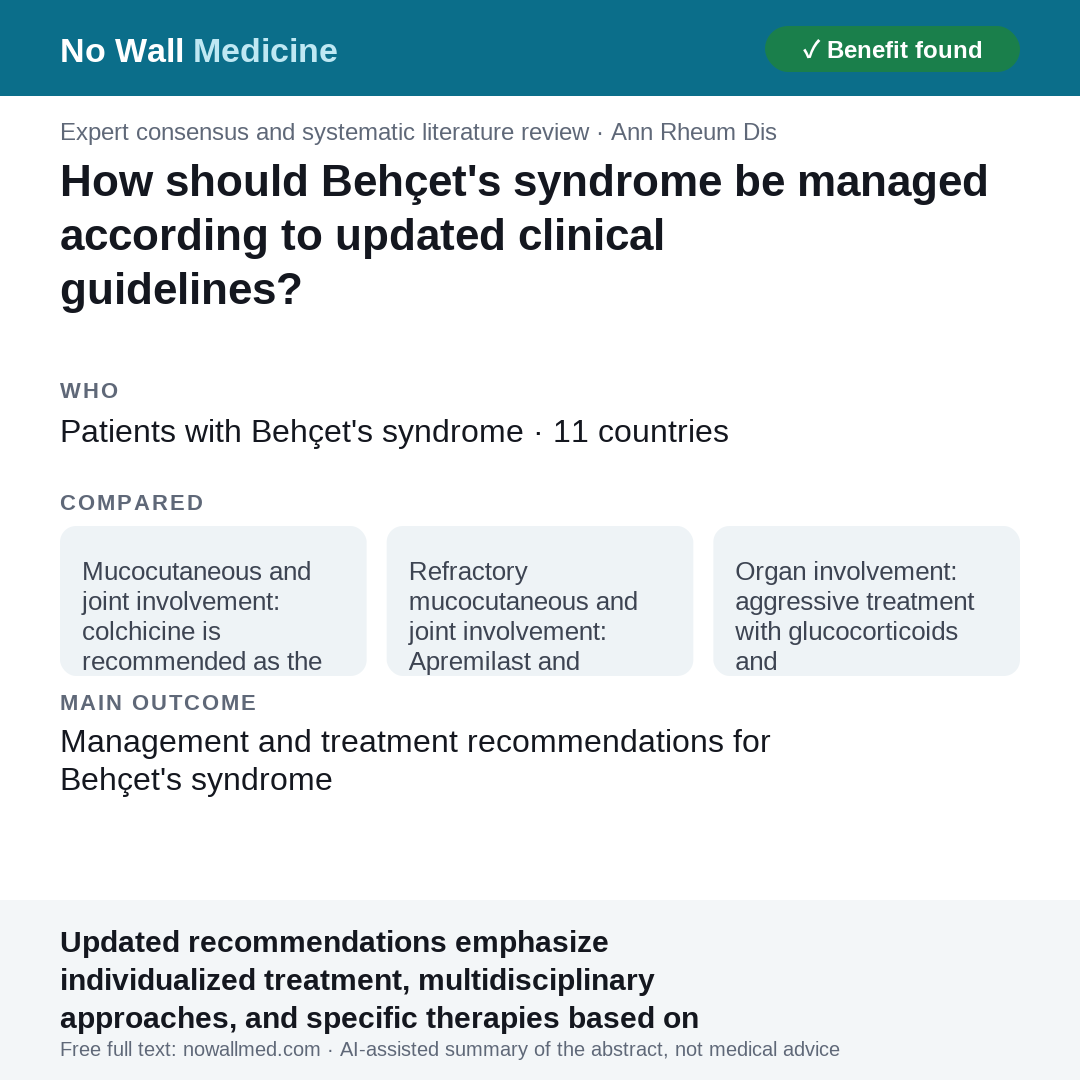
EULAR recommendations for the management of Behçet's syndrome: 2025 update
Expert consensus and systematic literature reviewBenefit found
How should Behçet's syndrome be managed according to updated clinical guidelines?
Who
Patients with Behçet's syndrome · 11 countries
Compared
Mucocutaneous and joint involvement: colchicine is recommended as the first-line treatment modality
Refractory mucocutaneous and joint involvement: Apremilast and immunosuppressives such as tumour necrosis factor alpha inhibitors
Organ involvement: aggressive treatment with glucocorticoids and immunosuppressives
Main outcome
Management and treatment recommendations for Behçet's syndrome
Bottom line: Updated recommendations emphasize individualized treatment, multidisciplinary approaches, and specific therapies based on organ involvement and disease activity.
Ann Rheum Dis · 2026-03-23Download image
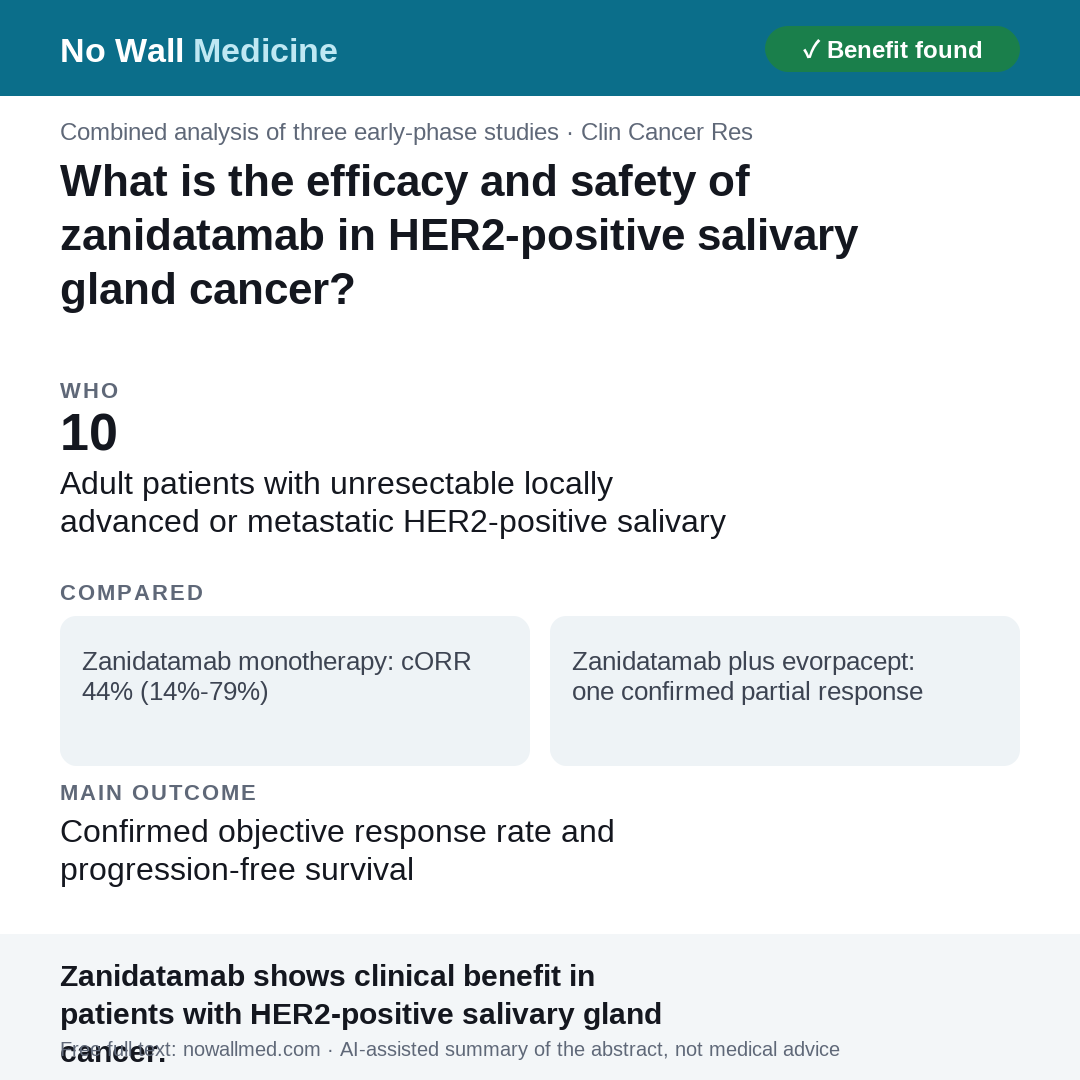
Zanidatamab, a Dual HER2-Targeted Bispecific Antibody, in Patients with Unresectable Locally Advanced or Metastatic HER2-Positive Salivary Gland Cancer: A Combined Analysis of Early-Phase Studies
Combined analysis of three early-phase studiesBenefit found
What is the efficacy and safety of zanidatamab in HER2-positive salivary gland cancer?
Who
10
Adult patients with unresectable locally advanced or metastatic HER2-positive salivary gland cancer
Compared
Zanidatamab monotherapy: cORR 44% (14%-79%)
Zanidatamab plus evorpacept: one confirmed partial response
Main outcome
Confirmed objective response rate and progression-free survival
Result: median progression-free survival 10.1 (3.8-not estimable) months
Bottom line: Zanidatamab shows clinical benefit in patients with HER2-positive salivary gland cancer.
Clin Cancer Res · 2026-03-23Download image
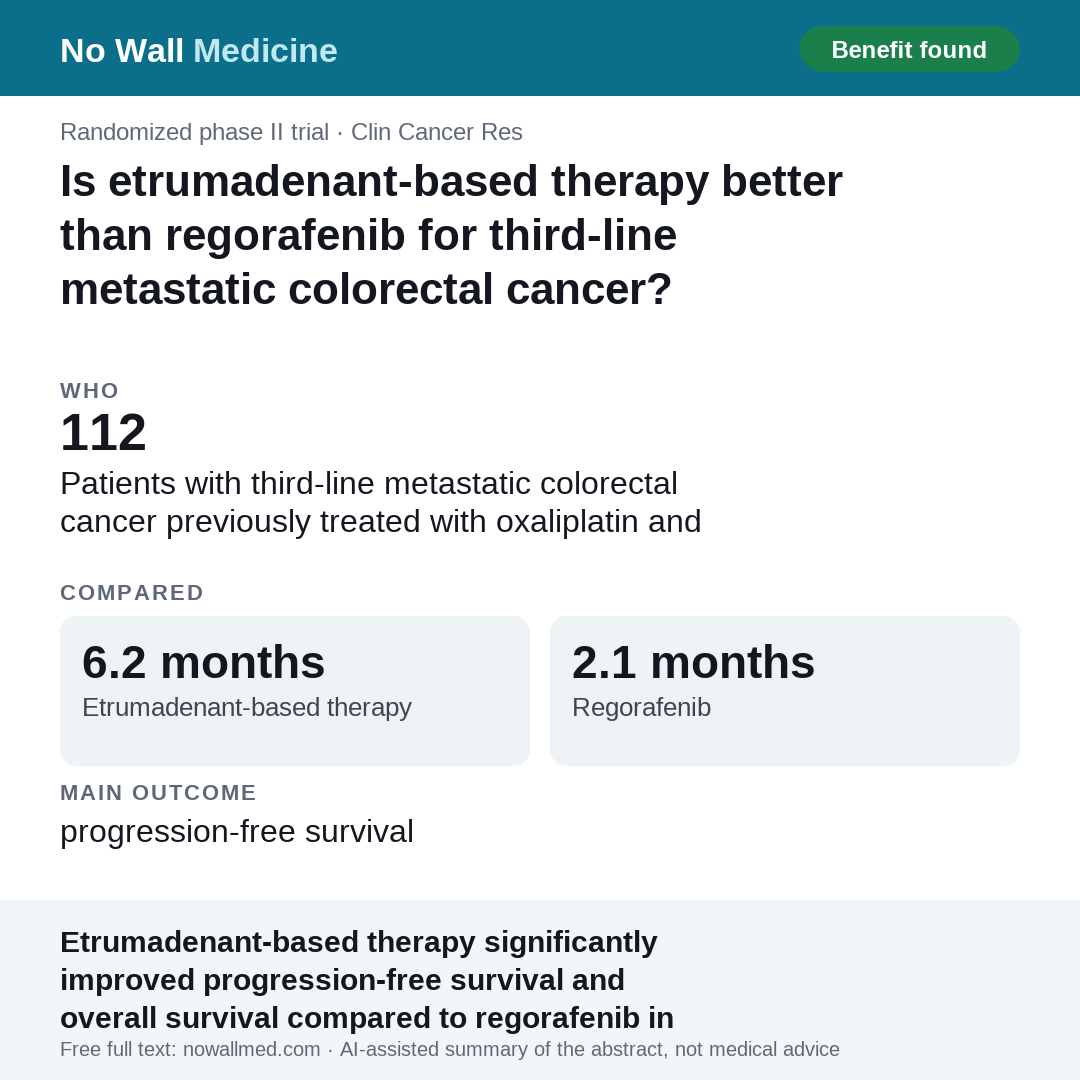
The Randomized Phase II ARC-9 Study of Etrumadenant-Based Therapy versus Regorafenib in Patients with Previously Treated Metastatic Colorectal Cancer
Randomized phase II trialBenefit found
Is etrumadenant-based therapy better than regorafenib for third-line metastatic colorectal cancer?
Who
112
Patients with third-line metastatic colorectal cancer previously treated with oxaliplatin and irinotecan
Compared
6.2 monthsEtrumadenant-based therapy
2.1 monthsRegorafenib
Main outcome
progression-free survival
Result: hazard ratio 0.27 (95% CI 0.17-0.43)
Bottom line: Etrumadenant-based therapy significantly improved progression-free survival and overall survival compared to regorafenib in third-line metastatic colorectal cancer.
Clin Cancer Res · 2026-03-23Download image
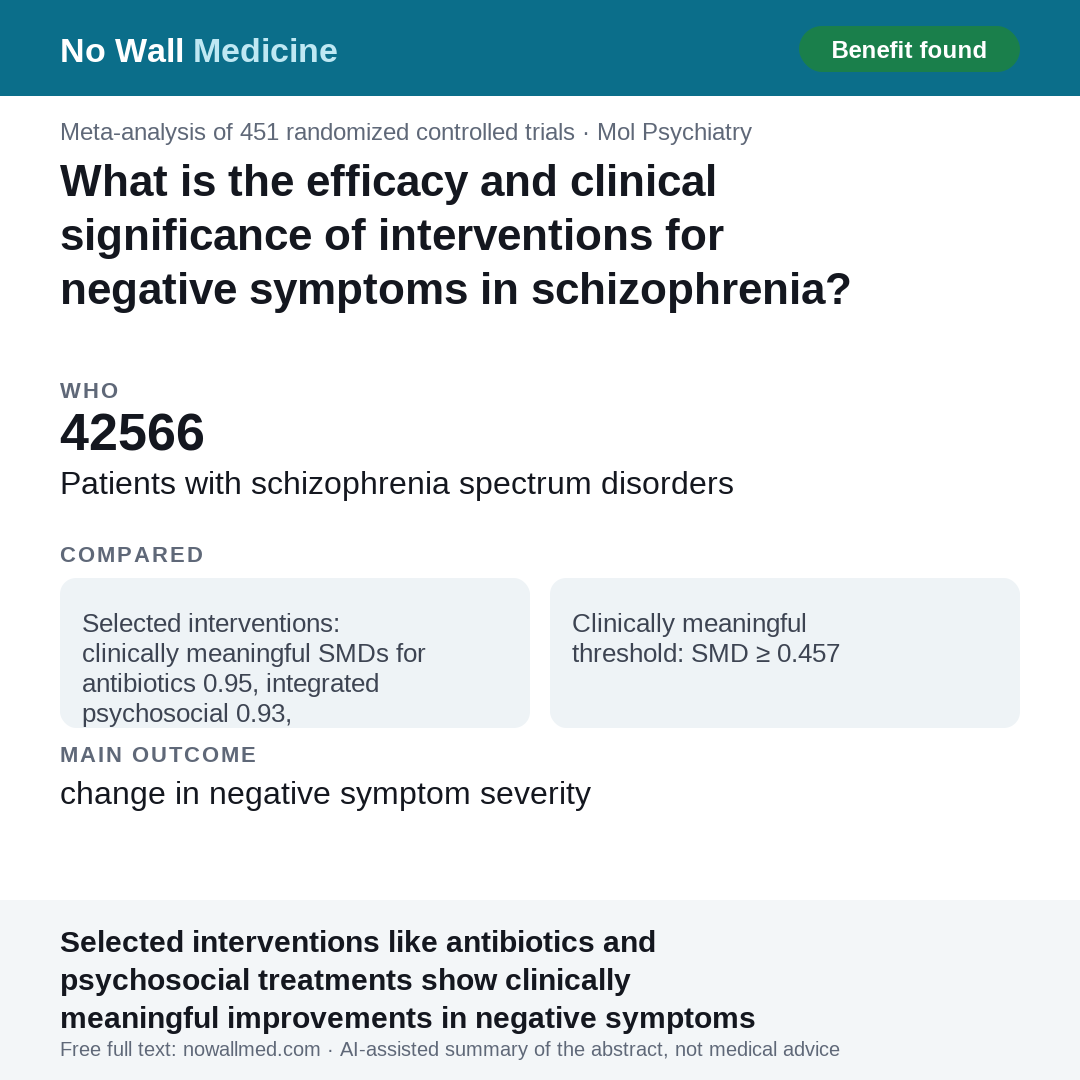
Interventions for negative symptoms in schizophrenia: efficacy and clinical interpretability in a meta-analysis of 451 randomized controlled trials
Meta-analysis of 451 randomized controlled trialsBenefit found
What is the efficacy and clinical significance of interventions for negative symptoms in schizophrenia?
Who
42566
Patients with schizophrenia spectrum disorders
Compared
Selected interventions: clinically meaningful SMDs for antibiotics 0.95, integrated psychosocial 0.93, antidepressants 0.76, physical activity 0.68, transcranial current stimulation 0.52, and immunomodulators 0.47
Clinically meaningful threshold: SMD ≥ 0.457
Main outcome
change in negative symptom severity
Bottom line: Selected interventions like antibiotics and psychosocial treatments show clinically meaningful improvements in negative symptoms of schizophrenia.
Limitation: Heterogeneity was the main limitation.
Mol Psychiatry · 2026-03-23Download image
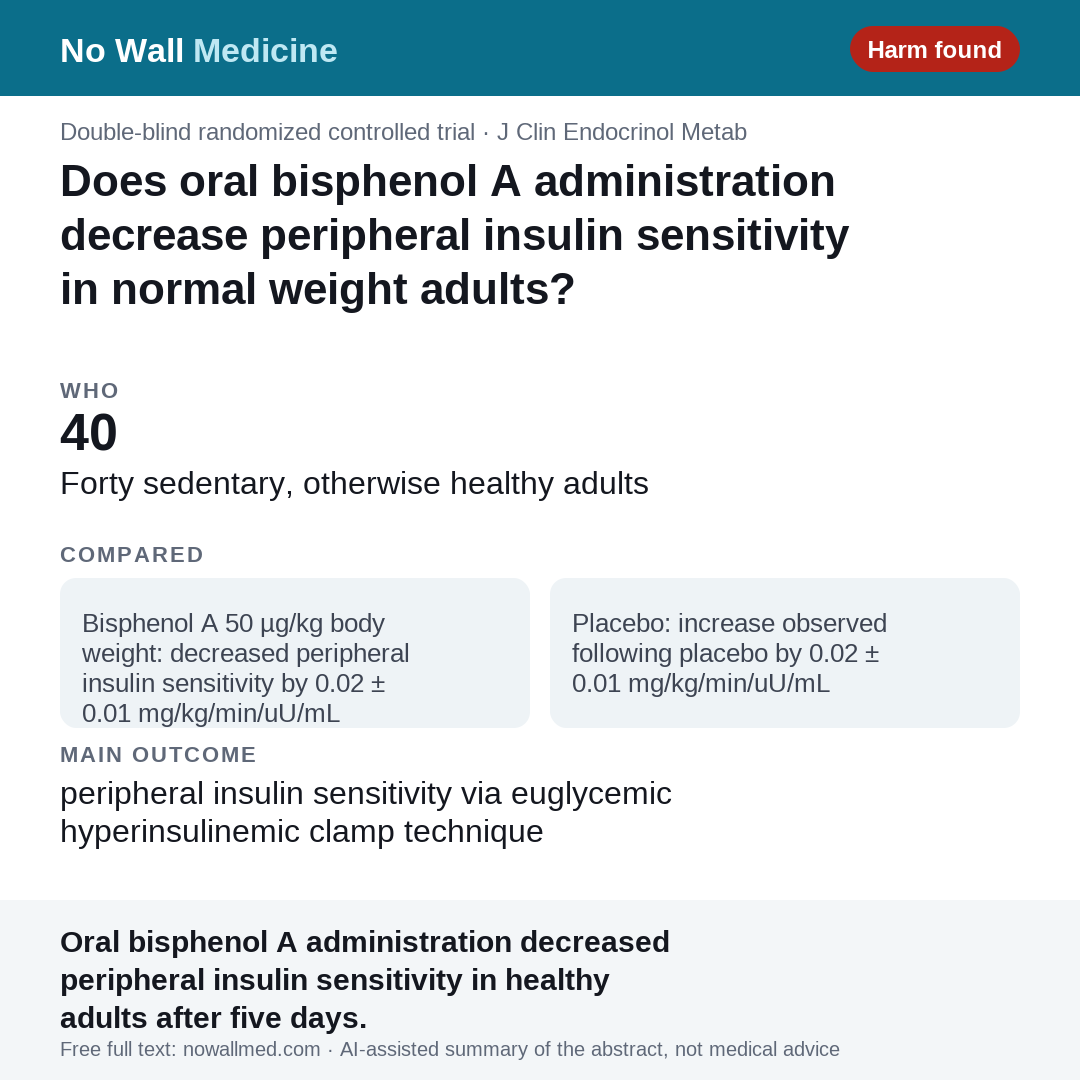
Bisphenol A decreases peripheral insulin sensitivity in normal weight adults: a double-blind randomized controlled trial
Double-blind randomized controlled trialHarm found
Does oral bisphenol A administration decrease peripheral insulin sensitivity in normal weight adults?
Who
40
Forty sedentary, otherwise healthy adults
Compared
Bisphenol A 50 µg/kg body weight: decreased peripheral insulin sensitivity by 0.02 ± 0.01 mg/kg/min/uU/mL
Placebo: increase observed following placebo by 0.02 ± 0.01 mg/kg/min/uU/mL
Main outcome
peripheral insulin sensitivity via euglycemic hyperinsulinemic clamp technique
Bottom line: Oral bisphenol A administration decreased peripheral insulin sensitivity in healthy adults after five days.
J Clin Endocrinol Metab · 2026-03-23Download image
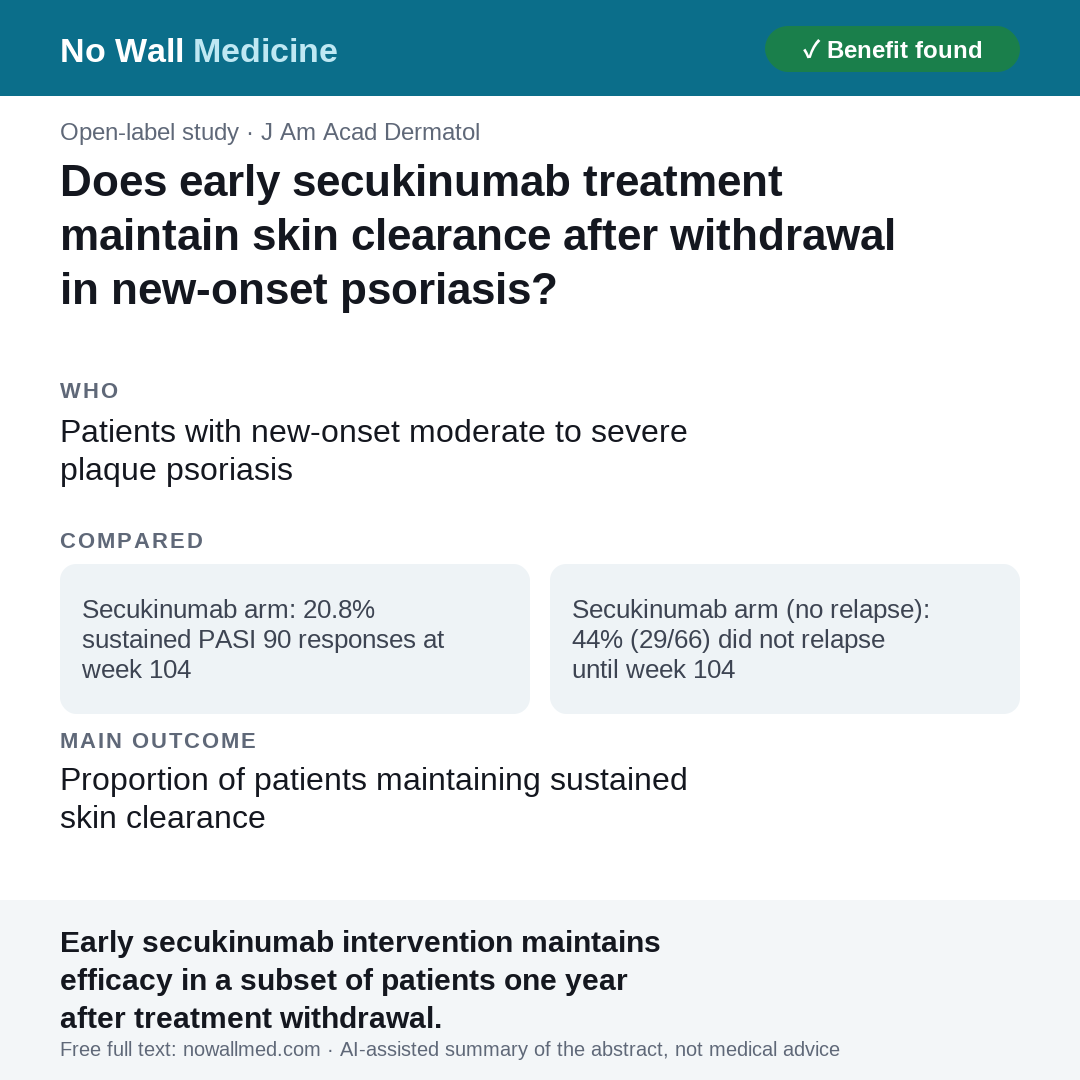
Impact of early treatment of psoriasis on disease recurrence-Results from the STEPIn study
Open-label studyBenefit found
Does early secukinumab treatment maintain skin clearance after withdrawal in new-onset psoriasis?
Who
Patients with new-onset moderate to severe plaque psoriasis
Compared
Secukinumab arm: 20.8% sustained PASI 90 responses at week 104
Secukinumab arm (no relapse): 44% (29/66) did not relapse until week 104
Main outcome
Proportion of patients maintaining sustained skin clearance
Bottom line: Early secukinumab intervention maintains efficacy in a subset of patients one year after treatment withdrawal.
Limitation: Absence of blinding due to open-label nature of the study
J Am Acad Dermatol · 2026-03-23Download image
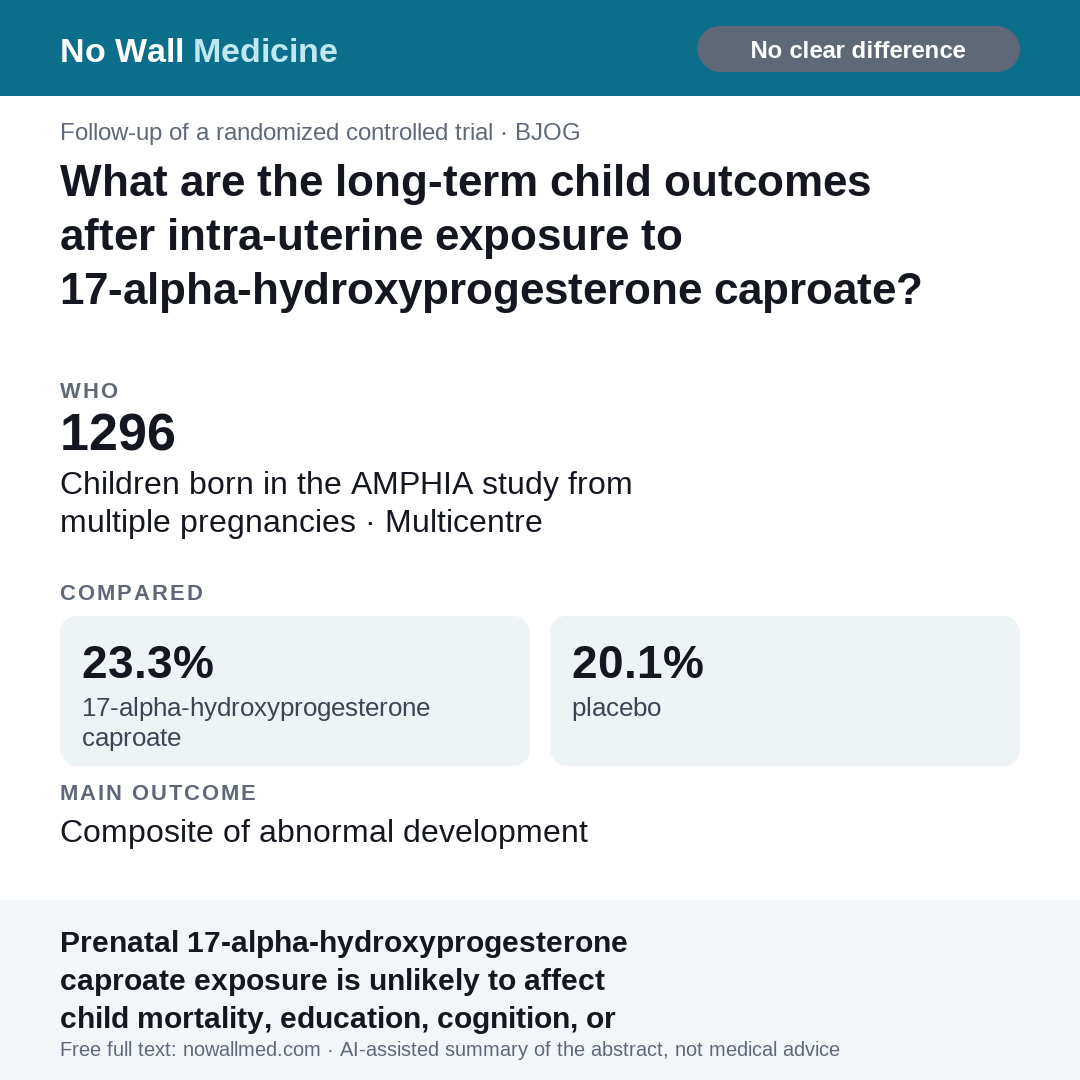
Prenatal 17-Alpha-Hydroxyprogesterone Caproate Exposure in Twins and Childhood Outcomes: 14-Year Follow-Up of a Randomised Trial
Follow-up of a randomized controlled trialNo clear difference
What are the long-term child outcomes after intra-uterine exposure to 17-alpha-hydroxyprogesterone caproate?
Who
1296
Children born in the AMPHIA study from multiple pregnancies · Multicentre
Compared
23.3%17-alpha-hydroxyprogesterone caproate
20.1%placebo
Main outcome
Composite of abnormal development
Result: OR 1.31 (95% CI 0.66-2.56)
Bottom line: Prenatal 17-alpha-hydroxyprogesterone caproate exposure is unlikely to affect child mortality, education, cognition, or behavior.
Limitation: Detailed developmental outcomes were collected for only 23% of surviving children.
BJOG · 2026-03-23Download image
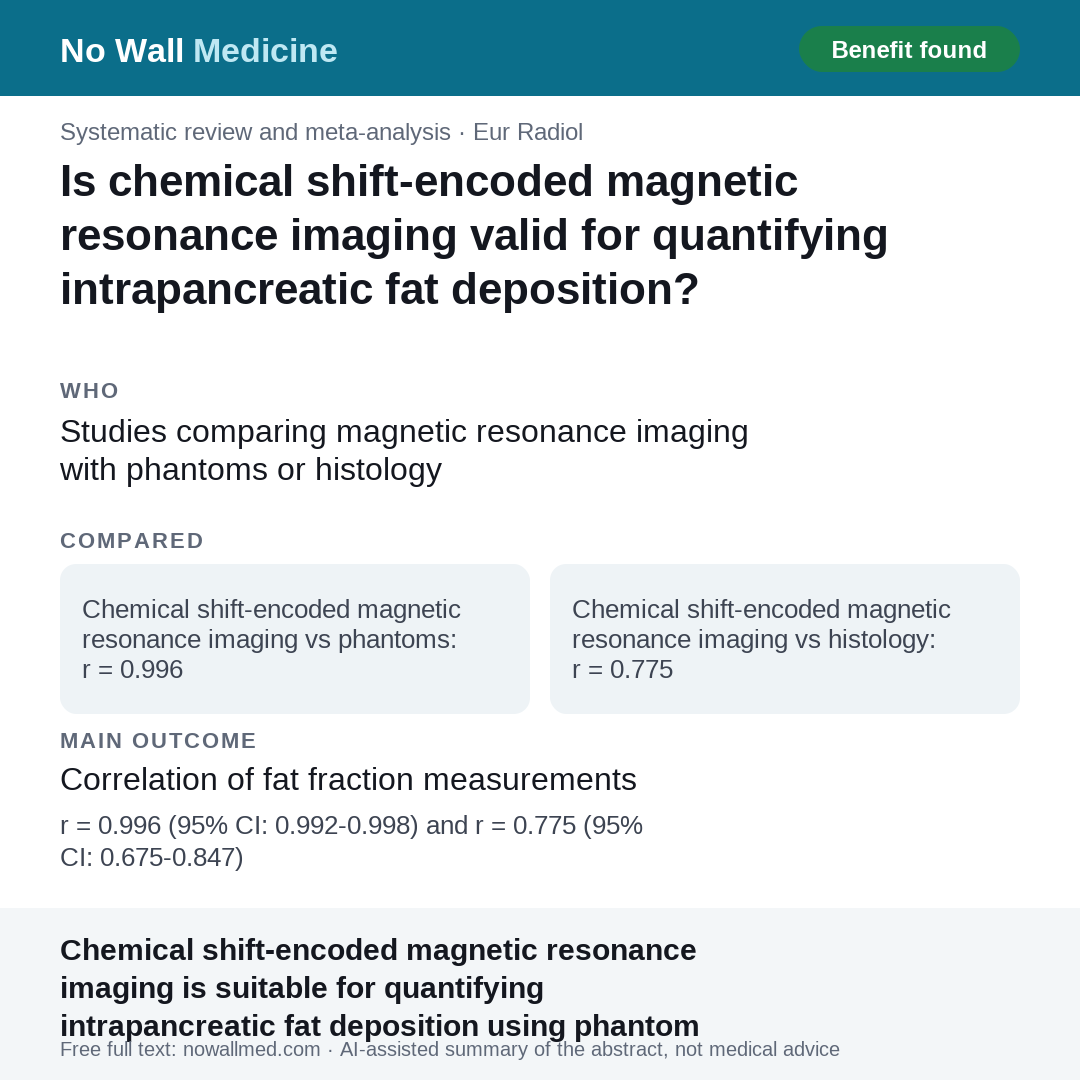
Validation of magnetic resonance imaging for quantification of intrapancreatic fat deposition using phantom and histologic comparators: a systematic review and meta-analysis
Systematic review and meta-analysisBenefit found
Is chemical shift-encoded magnetic resonance imaging valid for quantifying intrapancreatic fat deposition?
Who
Studies comparing magnetic resonance imaging with phantoms or histology
Compared
Chemical shift-encoded magnetic resonance imaging vs phantoms: r = 0.996
Chemical shift-encoded magnetic resonance imaging vs histology: r = 0.775
Main outcome
Correlation of fat fraction measurements
Result: r = 0.996 (95% CI: 0.992-0.998) and r = 0.775 (95% CI: 0.675-0.847)
Bottom line: Chemical shift-encoded magnetic resonance imaging is suitable for quantifying intrapancreatic fat deposition using phantom and histologic comparators.
Eur Radiol · 2026-03-23Download image
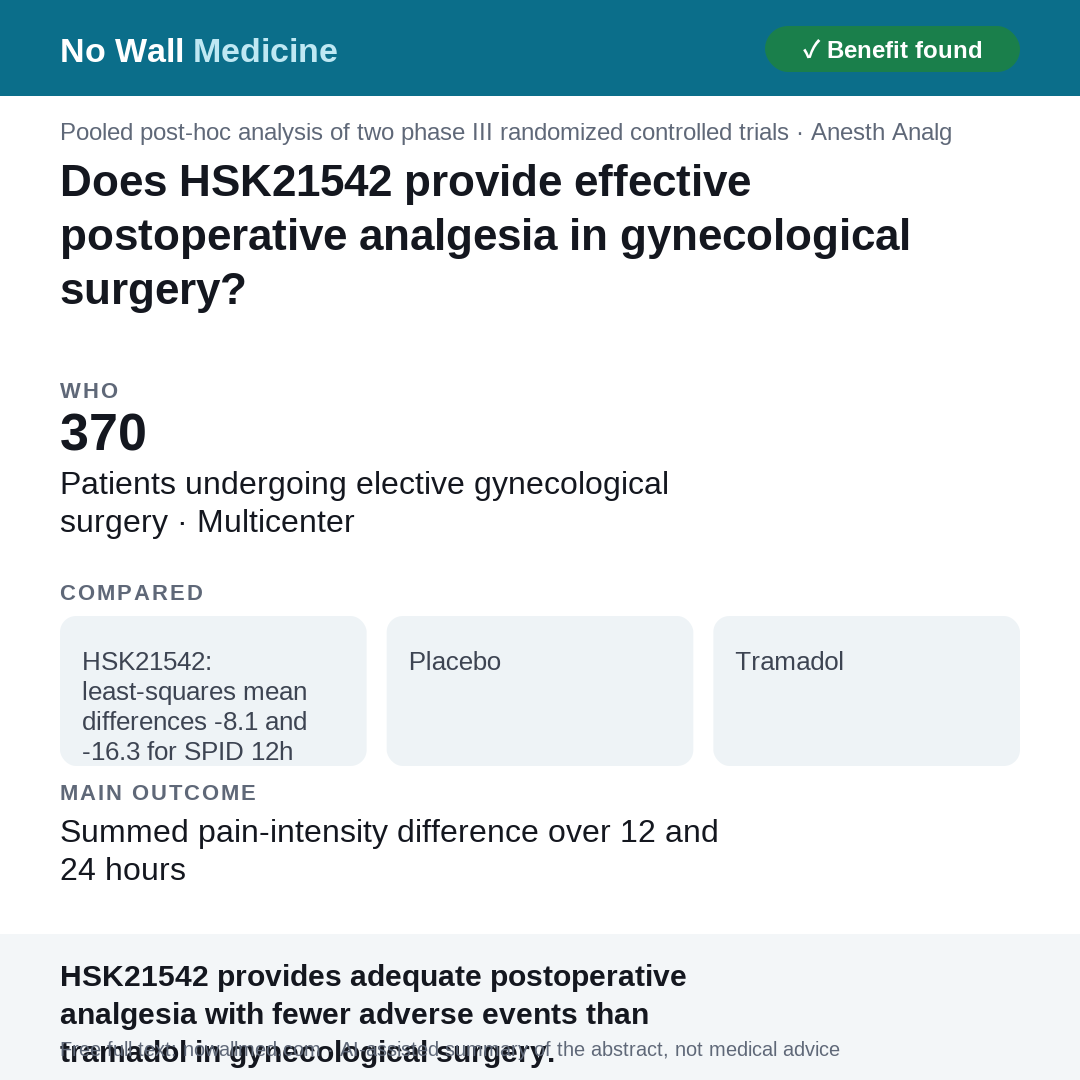
HSK21542 for Postoperative Analgesia in Gynecological Surgery: A Pooled Post-Hoc Analysis of Two Phase III Randomized Controlled Trials
Pooled post-hoc analysis of two phase III randomized controlled trialsBenefit found
Does HSK21542 provide effective postoperative analgesia in gynecological surgery?
Who
370
Patients undergoing elective gynecological surgery · Multicenter
Compared
HSK21542: least-squares mean differences -8.1 and -16.3 for SPID 12h and SPID 24h
Placebo
Tramadol
Main outcome
Summed pain-intensity difference over 12 and 24 hours
Bottom line: HSK21542 provides adequate postoperative analgesia with fewer adverse events than tramadol in gynecological surgery.
Anesth Analg · 2026-03-23Download image
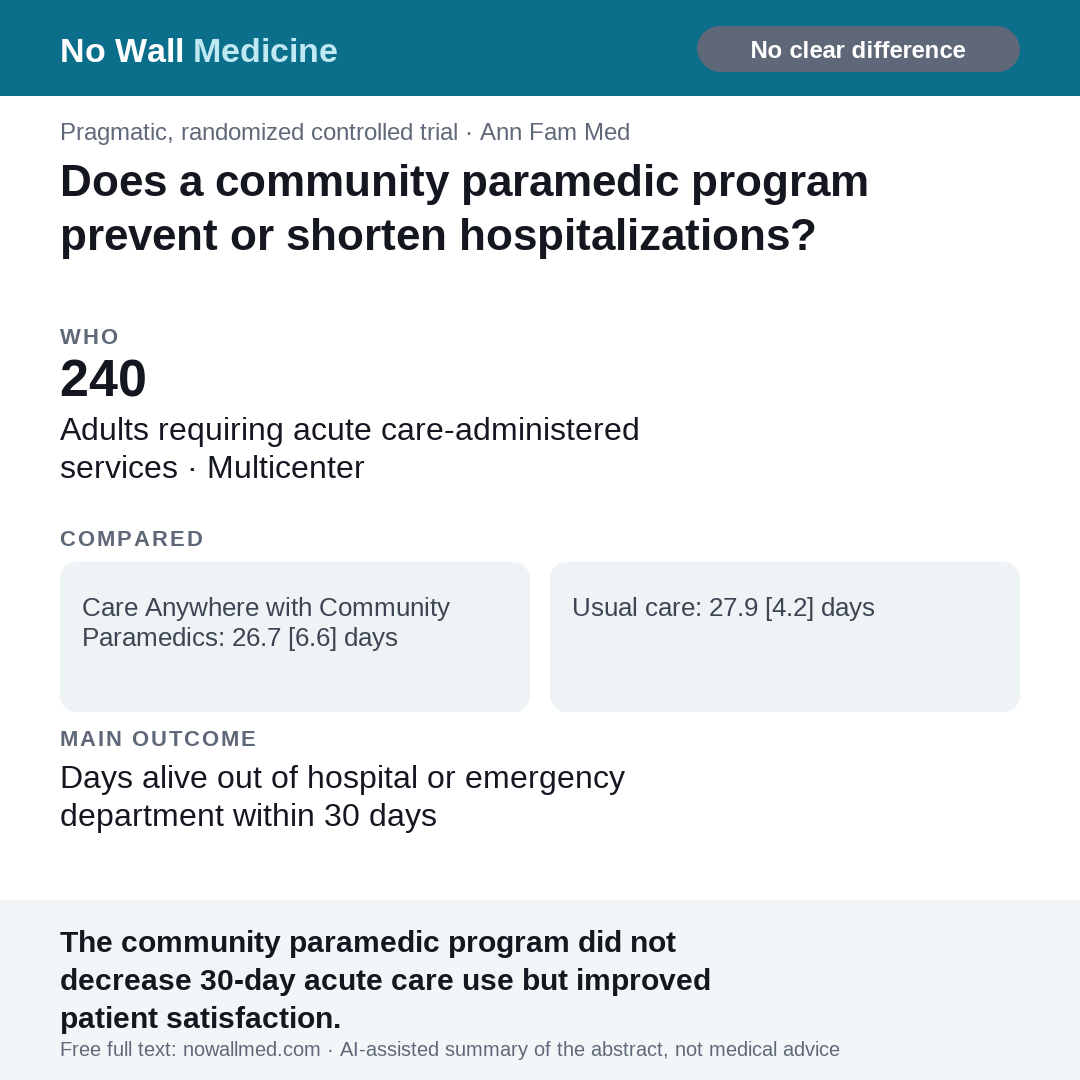
Effect of an Advanced Community Paramedic Program to Shorten or Prevent Hospitalizations: A Pragmatic, Point-of-Care, Randomized Clinical Trial
Pragmatic, randomized controlled trialNo clear difference
Does a community paramedic program prevent or shorten hospitalizations?
Who
240
Adults requiring acute care-administered services · Multicenter
Compared
Care Anywhere with Community Paramedics: 26.7 [6.6] days
Usual care: 27.9 [4.2] days
Main outcome
Days alive out of hospital or emergency department within 30 days
Bottom line: The community paramedic program did not decrease 30-day acute care use but improved patient satisfaction.
Ann Fam Med · 2026-03-23Download image
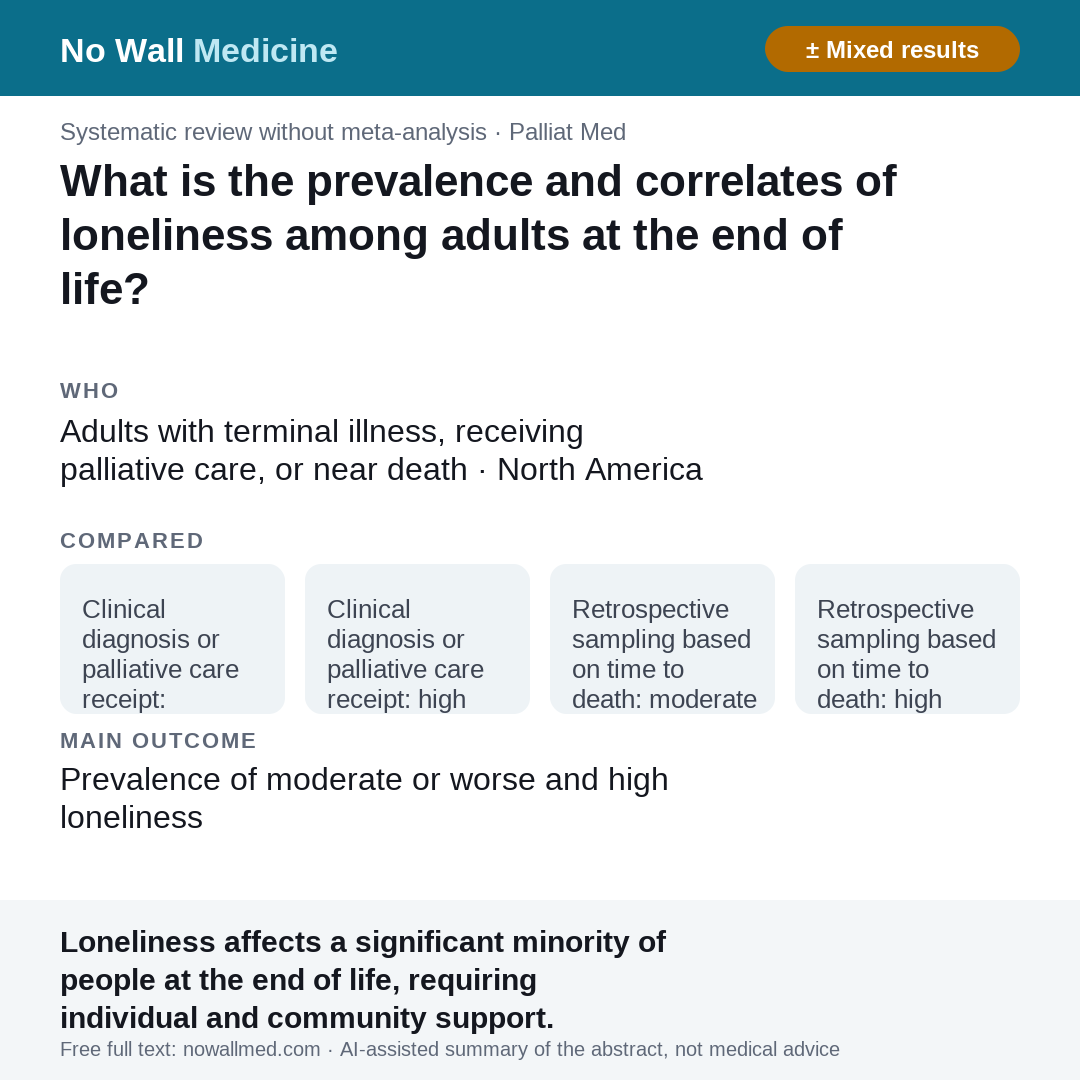
Loneliness among adults at the end of life: A systematic review of prevalence and correlates
Systematic review without meta-analysisMixed results
What is the prevalence and correlates of loneliness among adults at the end of life?
Who
Adults with terminal illness, receiving palliative care, or near death · North America and Europe
Compared
Clinical diagnosis or palliative care receipt: moderate or worse loneliness 20% to 73%
Clinical diagnosis or palliative care receipt: high loneliness 8% to 33%
Retrospective sampling based on time to death: moderate or worse loneliness 7%-12%
Retrospective sampling based on time to death: high loneliness 18.6%
Main outcome
Prevalence of moderate or worse and high loneliness
Bottom line: Loneliness affects a significant minority of people at the end of life, requiring individual and community support.
Limitation: Significant heterogeneity across studies and findings should be presented with caution.
Palliat Med · 2026-03-23Download image
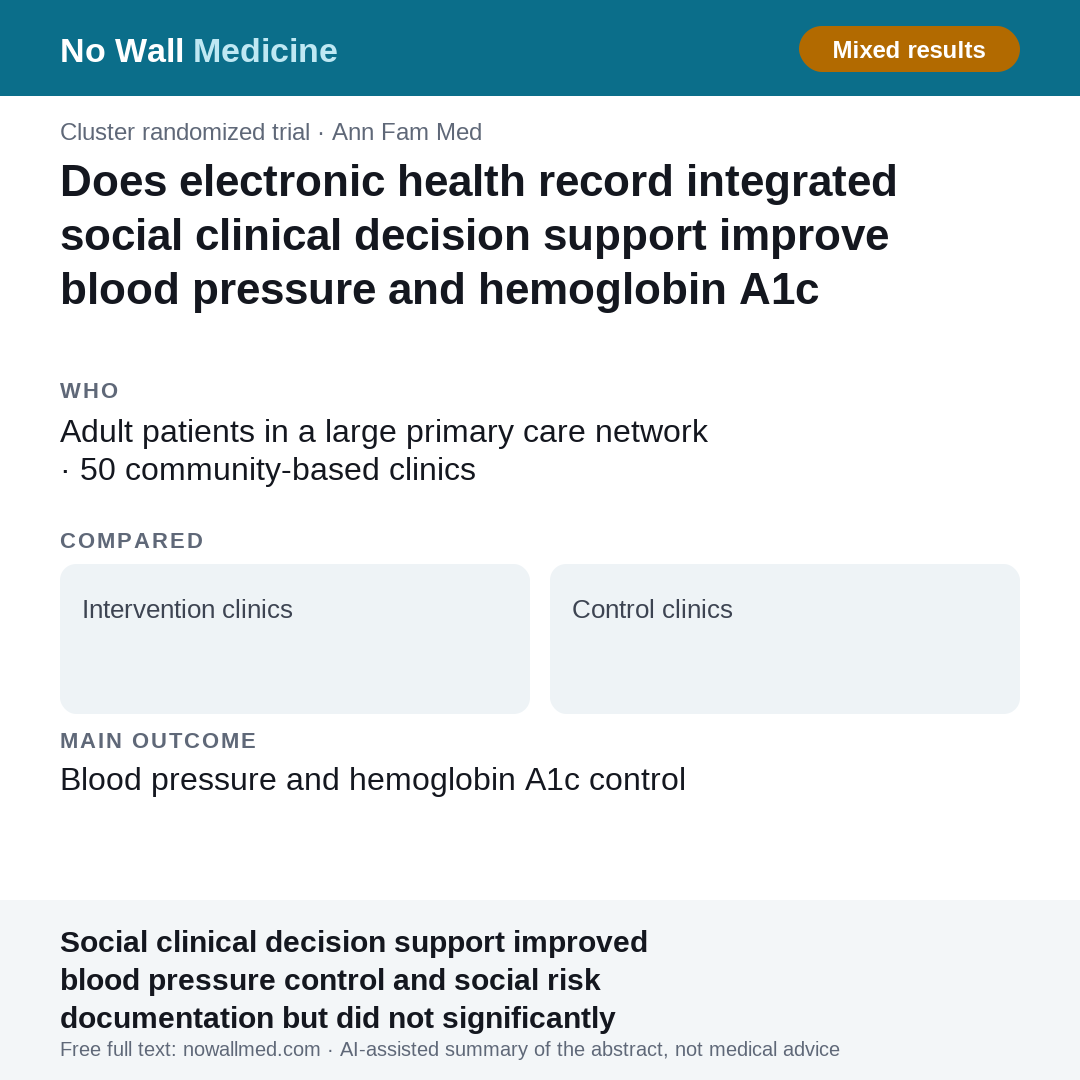
Social Risk-Informed Decision Support and Blood Pressure Control in a Primary Care Cluster Randomized Controlled Trial
Cluster randomized trialMixed results
Does electronic health record integrated social clinical decision support improve blood pressure and hemoglobin A1c control?
Who
Adult patients in a large primary care network · 50 community-based clinics
Compared
Intervention clinics
Control clinics
Main outcome
Blood pressure and hemoglobin A1c control
Bottom line: Social clinical decision support improved blood pressure control and social risk documentation but did not significantly affect hemoglobin A1c.
Ann Fam Med · 2026-03-23Download image
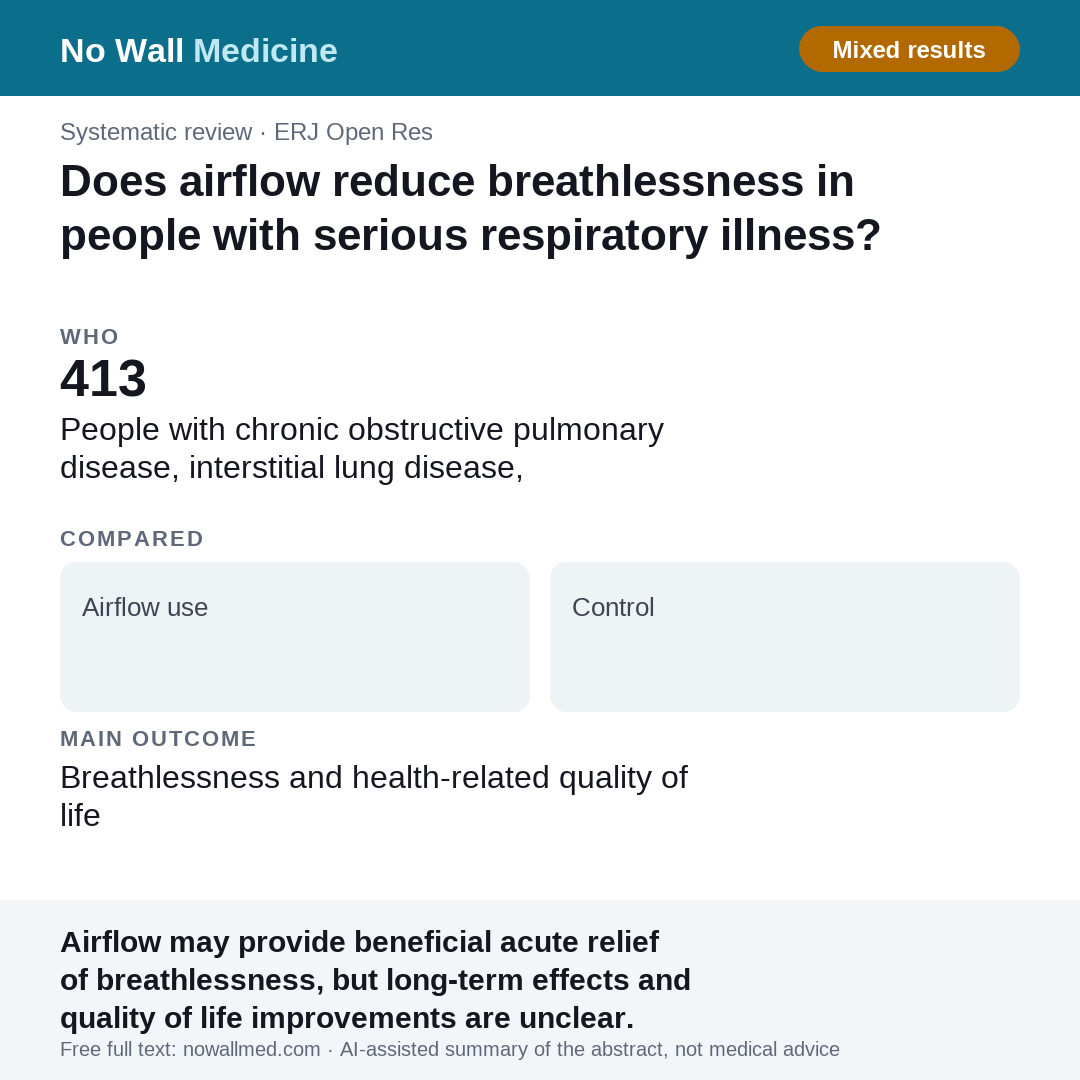
Airflow for reducing breathlessness in people with serious respiratory illness: a systematic review
Systematic reviewMixed results
Does airflow reduce breathlessness in people with serious respiratory illness?
Who
413
People with chronic obstructive pulmonary disease, interstitial lung disease, bronchiectasis and asthma · Laboratory, hospital, exercise tests, or daily life settings
Compared
Airflow use
Control
Main outcome
Breathlessness and health-related quality of life
Bottom line: Airflow may provide beneficial acute relief of breathlessness, but long-term effects and quality of life improvements are unclear.
Limitation: Risk of bias was high in all studies and meta-analyses were not feasible.
ERJ Open Res · 2026-03-23Download image
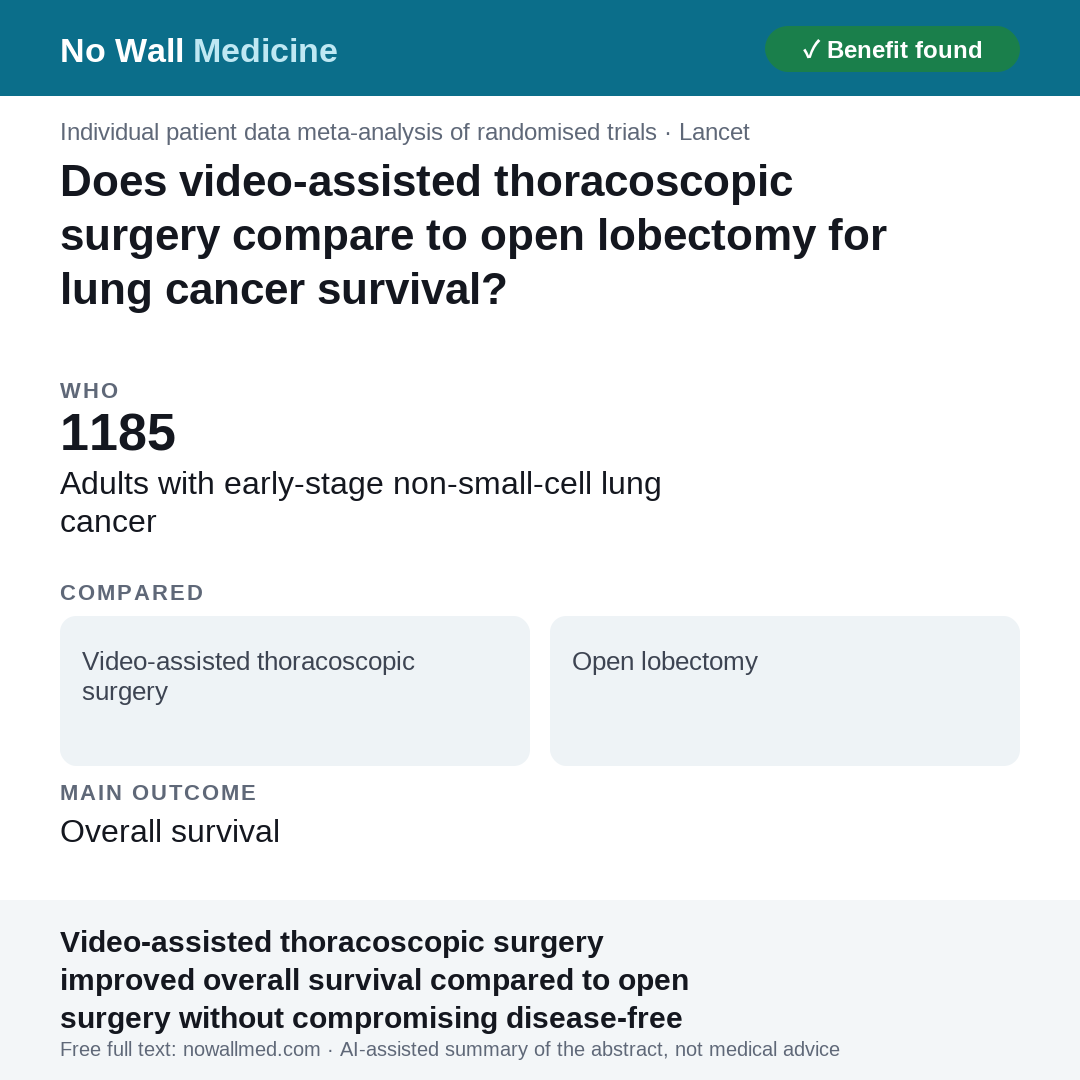
Survival outcome of VATS compared with open lobectomy for lung cancer: an individual patient data meta-analysis of randomised trials
Individual patient data meta-analysis of randomised trialsBenefit found
Does video-assisted thoracoscopic surgery compare to open lobectomy for lung cancer survival?
Who
1185
Adults with early-stage non-small-cell lung cancer
Compared
Video-assisted thoracoscopic surgery
Open lobectomy
Main outcome
Overall survival
Result: hazard ratio 0·79 (95% CI 0·65-0·96)
Bottom line: Video-assisted thoracoscopic surgery improved overall survival compared to open surgery without compromising disease-free survival.
Funded by: National Institute for Health and Care Research
Lancet · 2026-03-22Download image