Visual abstracts
New randomized trials and meta-analyses from leading journals at a glance: who was studied, what was compared, and what was found. Every paper is free to read in full.
All specialtiesCardiology 4763Oncology 4043Gastroenterology & Hepatology 1903Infectious Disease 3756Neurology 1872Psychiatry & Mental Health 2216Pulmonology 2044Critical Care 1319Endocrinology & Diabetes 2544Pediatrics 2889Surgery 2480Orthopedics & Sports Medicine 917Neurosurgery 525Cardiothoracic & Vascular Surgery 656Plastic & Reconstructive Surgery 574Nephrology 1107Rheumatology 810Hematology 1090Dermatology 611Ophthalmology 532Obstetrics & Gynecology 1645Public & Global Health 1037Radiology & Imaging 619Anesthesiology 958Urology 745ENT (Otolaryngology) 494Emergency Medicine 481Allergy & Immunology 309Geriatrics 972Family Medicine & Primary Care 534Medical Genetics & Genomics 659Pathology & Laboratory Medicine 156Physical Medicine & Rehabilitation 734Palliative Care 421Nutrition 1560Digital Health & AI 2137General Medicine 318
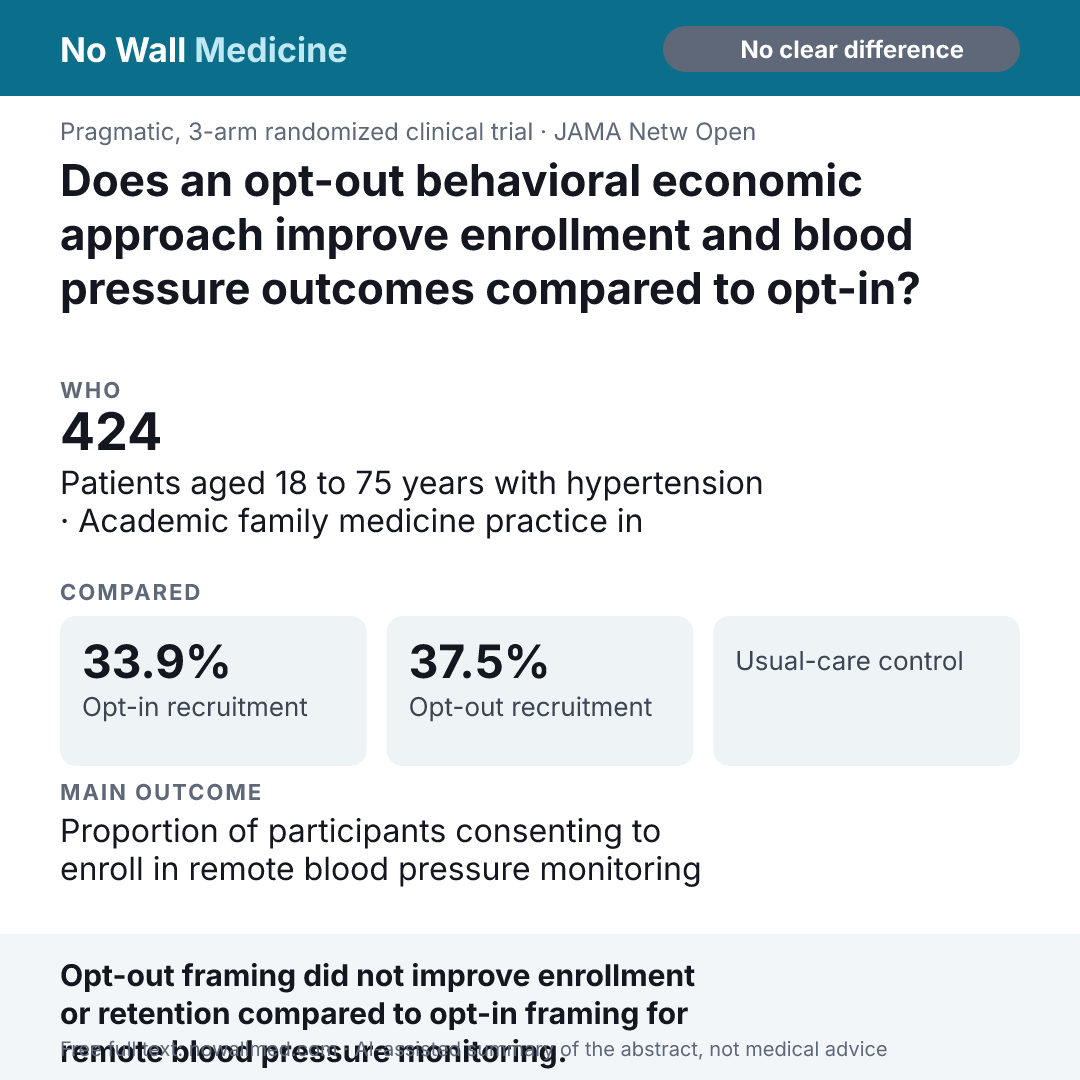
Behavioral Economic Framing for Enrollment and Retention of Patients in Remote Blood Pressure Monitoring: A Randomized Clinical Trial
Pragmatic, 3-arm randomized clinical trialNo clear difference
Does an opt-out behavioral economic approach improve enrollment and blood pressure outcomes compared to opt-in?
Who
424
Patients aged 18 to 75 years with hypertension · Academic family medicine practice in Philadelphia
Compared
33.9%Opt-in recruitment
37.5%Opt-out recruitment
Usual-care control
Main outcome
Proportion of participants consenting to enroll in remote blood pressure monitoring
Result: 3.6 percentage points (90% CI, -5.0 to 12.1 pp)
Bottom line: Opt-out framing did not improve enrollment or retention compared to opt-in framing for remote blood pressure monitoring.
JAMA Netw Open · 2025-09-02 · Save PNG
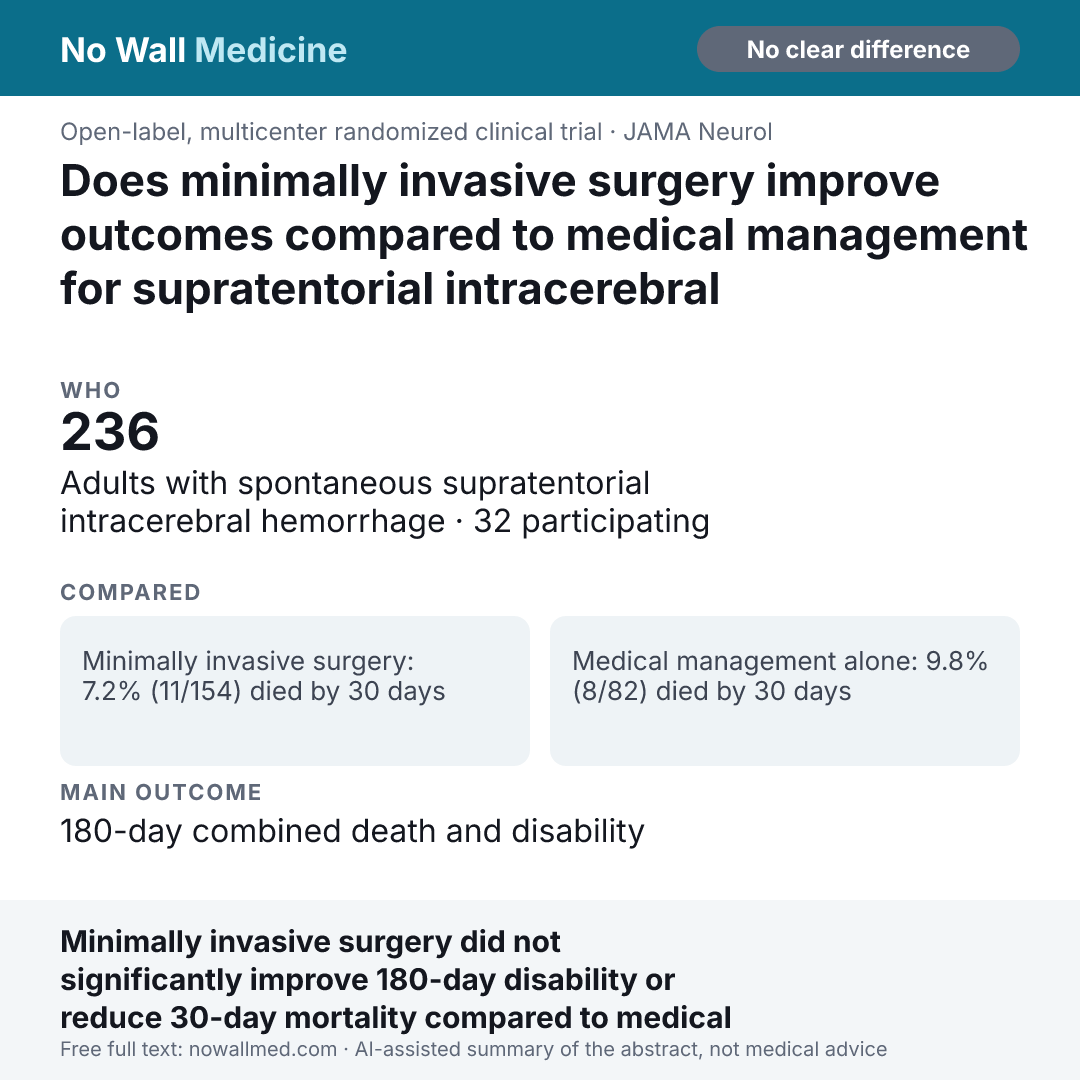
Minimally Invasive Surgery vs Medical Management Alone for Intracerebral Hemorrhage: The MIND Randomized Clinical Trial
Open-label, multicenter randomized clinical trialNo clear difference
Does minimally invasive surgery improve outcomes compared to medical management for supratentorial intracerebral hemorrhage?
Who
236
Adults with spontaneous supratentorial intracerebral hemorrhage · 32 participating global sites
Compared
Minimally invasive surgery: 7.2% (11/154) died by 30 days
Medical management alone: 9.8% (8/82) died by 30 days
Main outcome
180-day combined death and disability
Result: odds ratio 1.03 (96% CI, 0.62-1.72)
Bottom line: Minimally invasive surgery did not significantly improve 180-day disability or reduce 30-day mortality compared to medical management alone.
JAMA Neurol · 2025-09-02 · Save PNG
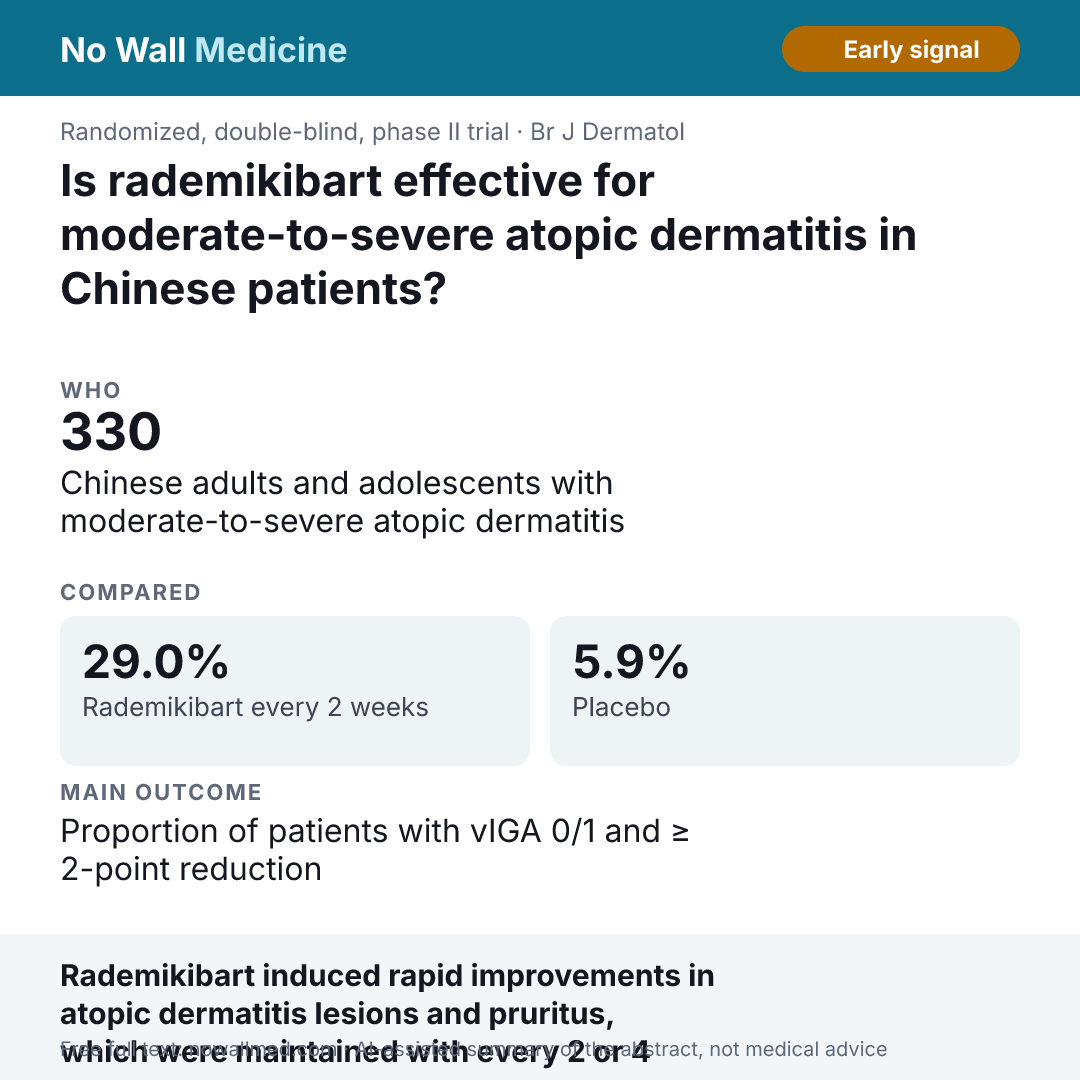
Rademikibart monotherapy for moderate-to-severe atopic dermatitis in a 1-year, randomized phase II trial (SEASIDE CHINA): initial 2-week dosing, followed by 2-week or 4-week dosing
Randomized, double-blind, phase II trialEarly signal
Is rademikibart effective for moderate-to-severe atopic dermatitis in Chinese patients?
Who
330
Chinese adults and adolescents with moderate-to-severe atopic dermatitis
Compared
29.0%Rademikibart every 2 weeks
5.9%Placebo
Main outcome
Proportion of patients with vIGA 0/1 and ≥ 2-point reduction
Bottom line: Rademikibart induced rapid improvements in atopic dermatitis lesions and pruritus, which were maintained with every 2 or 4 weeks dosing.
Br J Dermatol · 2025-09-02 · Save PNG
Low-dose digoxin improves cardiac function in patients with heart failure, preserved ejection fraction and atrial fibrillation - the RATE-AF randomized trial
Randomized trialBenefit found
Does low-dose digoxin improve cardiac function compared to beta-blockers in atrial fibrillation?
Who
145
Patients with permanent atrial fibrillation and heart failure symptoms
Compared
Low-dose digoxin: adjusted mean difference for LVEF 2.3%
Beta-blockers
Main outcome
Left ventricular systolic and diastolic function
Result: adjusted mean difference for LVEF 2.3% (95% CI 0.3-4.2)
Bottom line: Low-dose digoxin improves systolic function and symptoms compared to beta-blockers in patients with atrial fibrillation and heart failure.
Eur J Heart Fail · 2025-09-02 · Save PNG
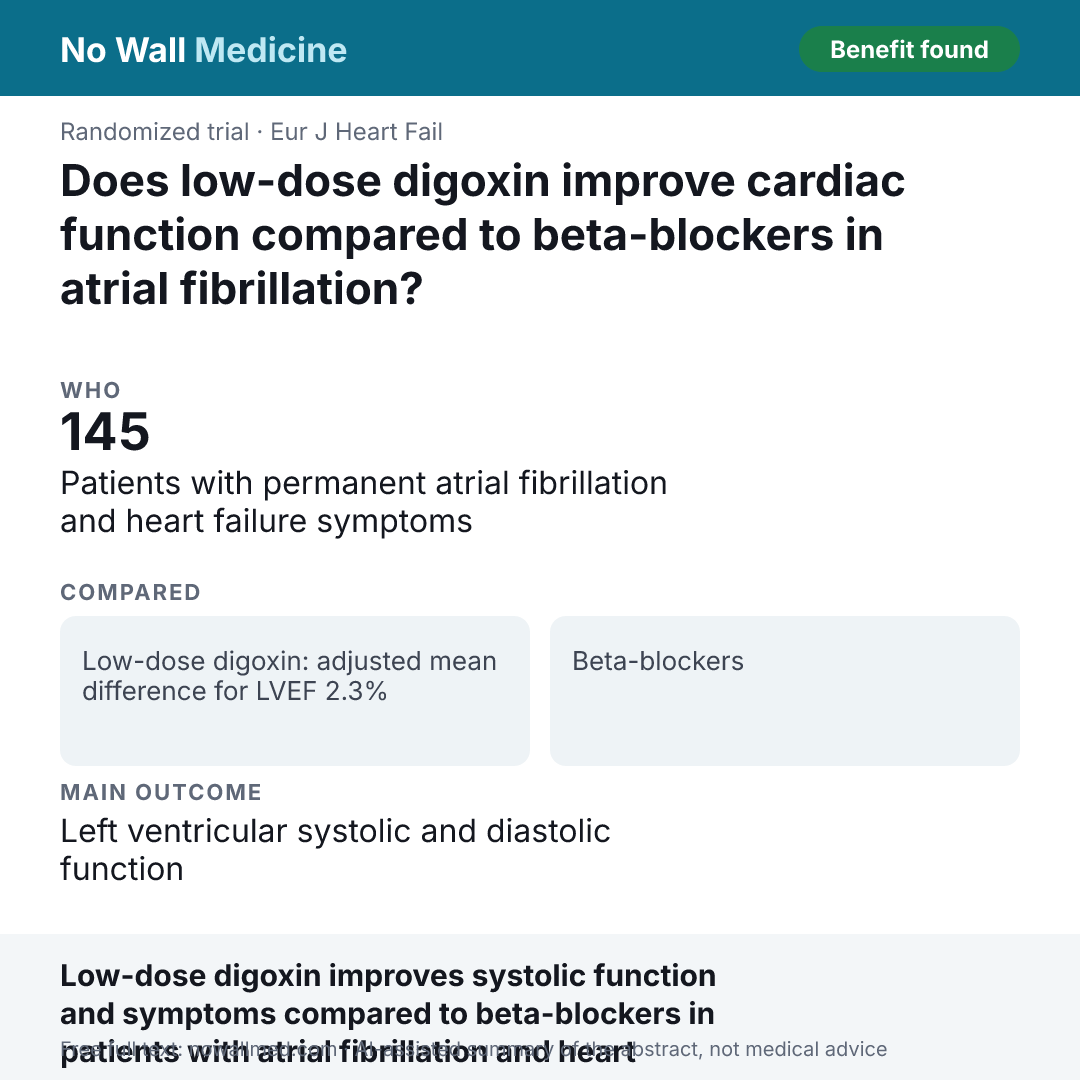
Reliability and Responsiveness of Endoscopic Indices for Assessing Crohn's Disease Postoperative Recurrence in the PREVENT Trial
Prospective, multicenter, randomized, double-blind, placebo-controlled trialMixed results
How reliable and responsive are endoscopic indices for assessing postoperative Crohn's disease activity?
Who
70
Patients undergoing surgical resection for Crohn's disease · Multicenter
Compared
Infliximab group
Placebo group
Main outcome
Reliability and responsiveness of endoscopic indices
Bottom line: Endoscopic indices are reliable and responsive in the neoterminal ileum but suboptimal for the anastomosis or distal colon.
Clin Gastroenterol Hepatol · 2025-09-02 · Save PNG
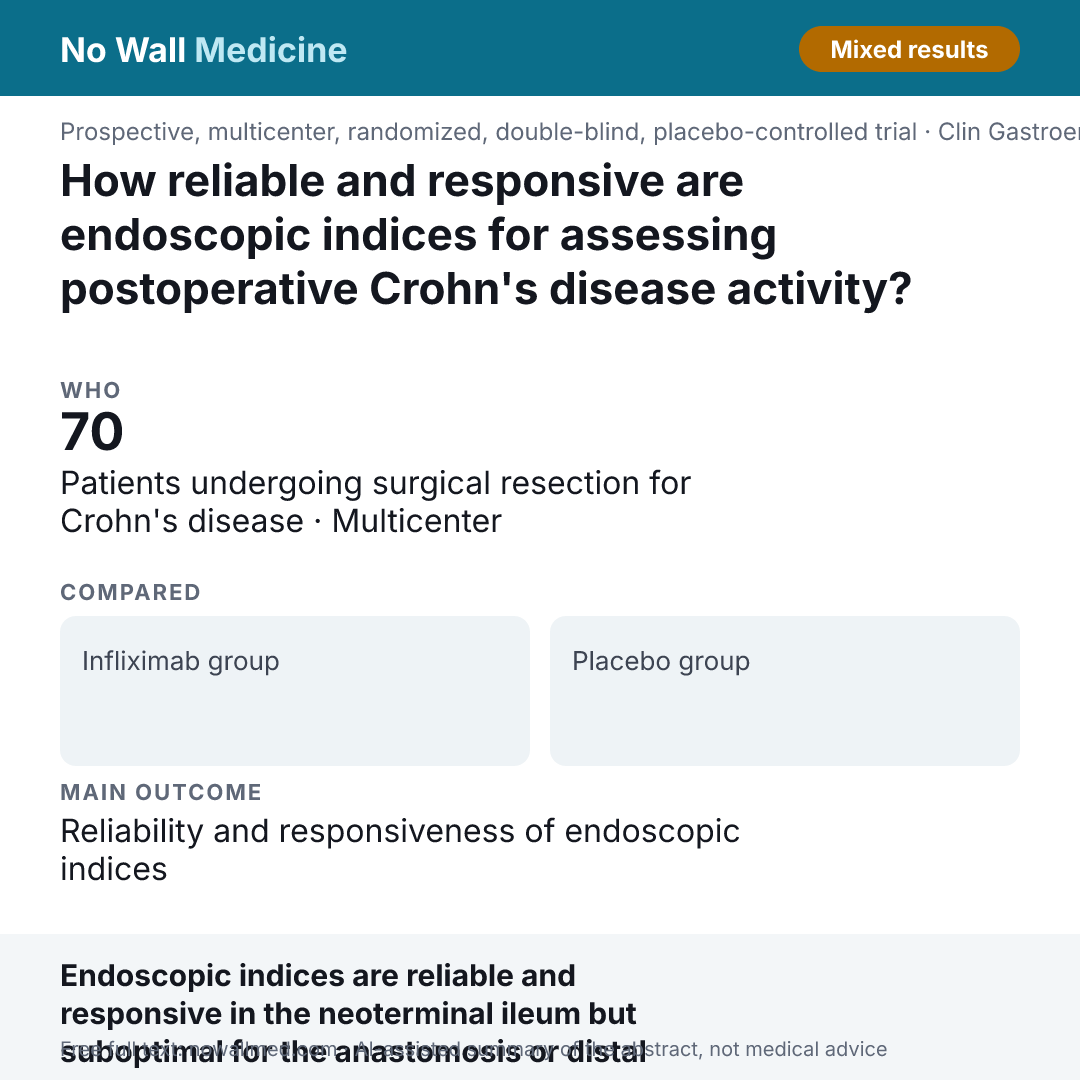
Apixaban and Recurrent Stroke Risk With Left Ventricular Dysfunction: A Secondary Analysis of the ARCADIA Trial
Randomized trial, post hoc analysisBenefit found
Does apixaban versus aspirin reduce recurrent ischemic stroke risk in patients with left ventricular systolic dysfunction?
Who
964
Patients with cryptogenic stroke and atrial cardiopathy · 185 sites in the United States and Canada
Compared
Apixaban with left ventricular systolic dysfunction
Aspirin with left ventricular systolic dysfunction
Apixaban without left ventricular systolic dysfunction
Aspirin without left ventricular systolic dysfunction
Main outcome
recurrent ischemic stroke
Result: hazard ratio 0.24 (95% CI 0.07-0.87) for apixaban vs aspirin with dysfunction
Bottom line: Apixaban significantly reduced recurrent ischemic stroke risk compared to aspirin in patients with left ventricular systolic dysfunction.
Stroke · 2025-09-02 · Save PNG
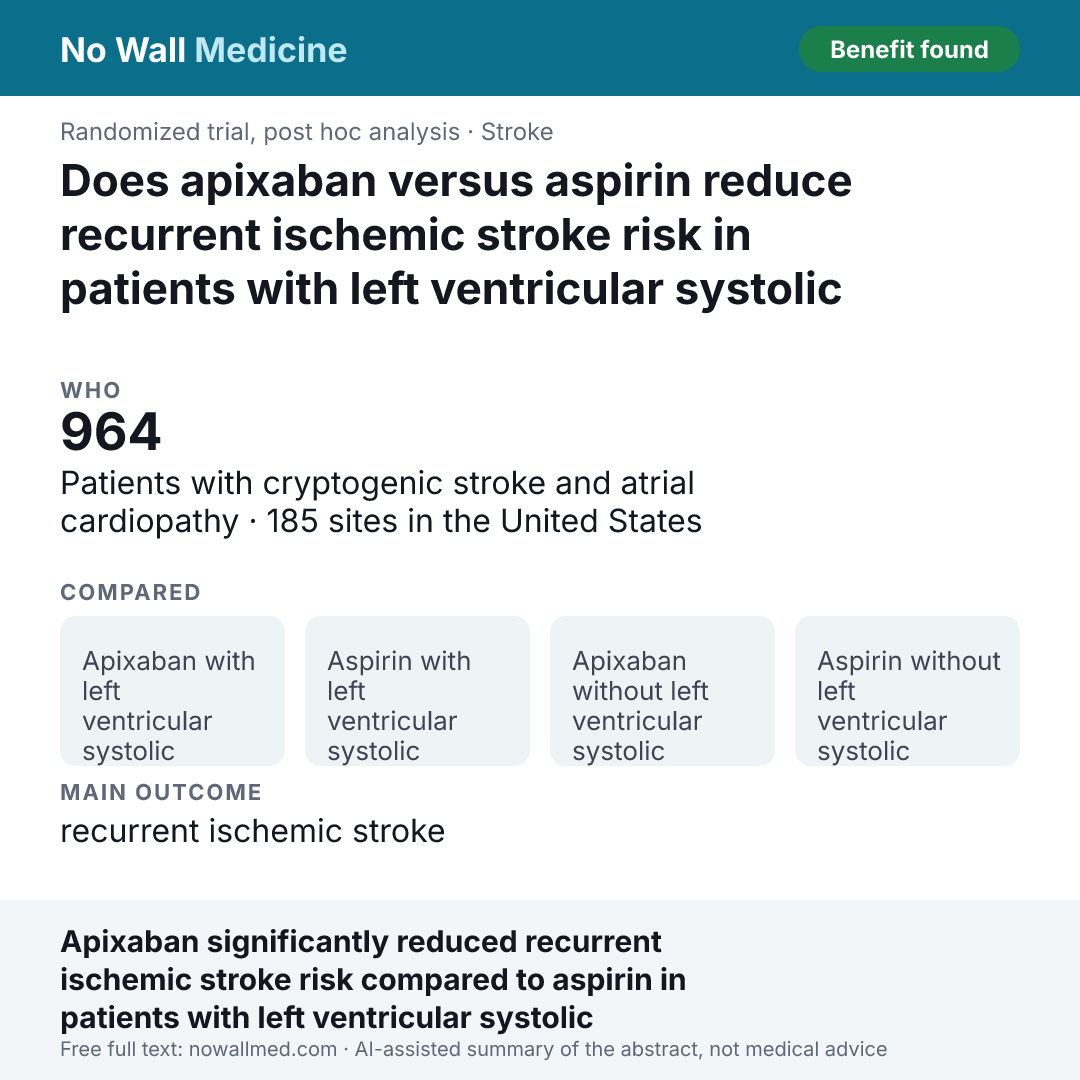
Assessing the effects of naltrexone-bupropion on hepatic steatosis and fibrosis in patients with T2DM and overweight or obesity: Insights from a placebo-controlled trial
Randomized, double-blind, placebo-controlled trialBenefit found
Does naltrexone-bupropion affect hepatic steatosis and fibrosis in patients with type 2 diabetes?
Who
505
505 adults with type 2 diabetes and overweight or obesity
Compared
naltrexone/bupropion: HSI -2.9
placebo: HSI -1.2
Main outcome
Hepatic Steatosis Index, Metabolic Dysfunction-Associated Fibrosis-5 and Fibrosis-4
Bottom line: Naltrexone/bupropion improved hepatic steatosis and fibrosis indices through greater weight loss compared to placebo.
Diabetes Obes Metab · 2025-09-02 · Save PNG
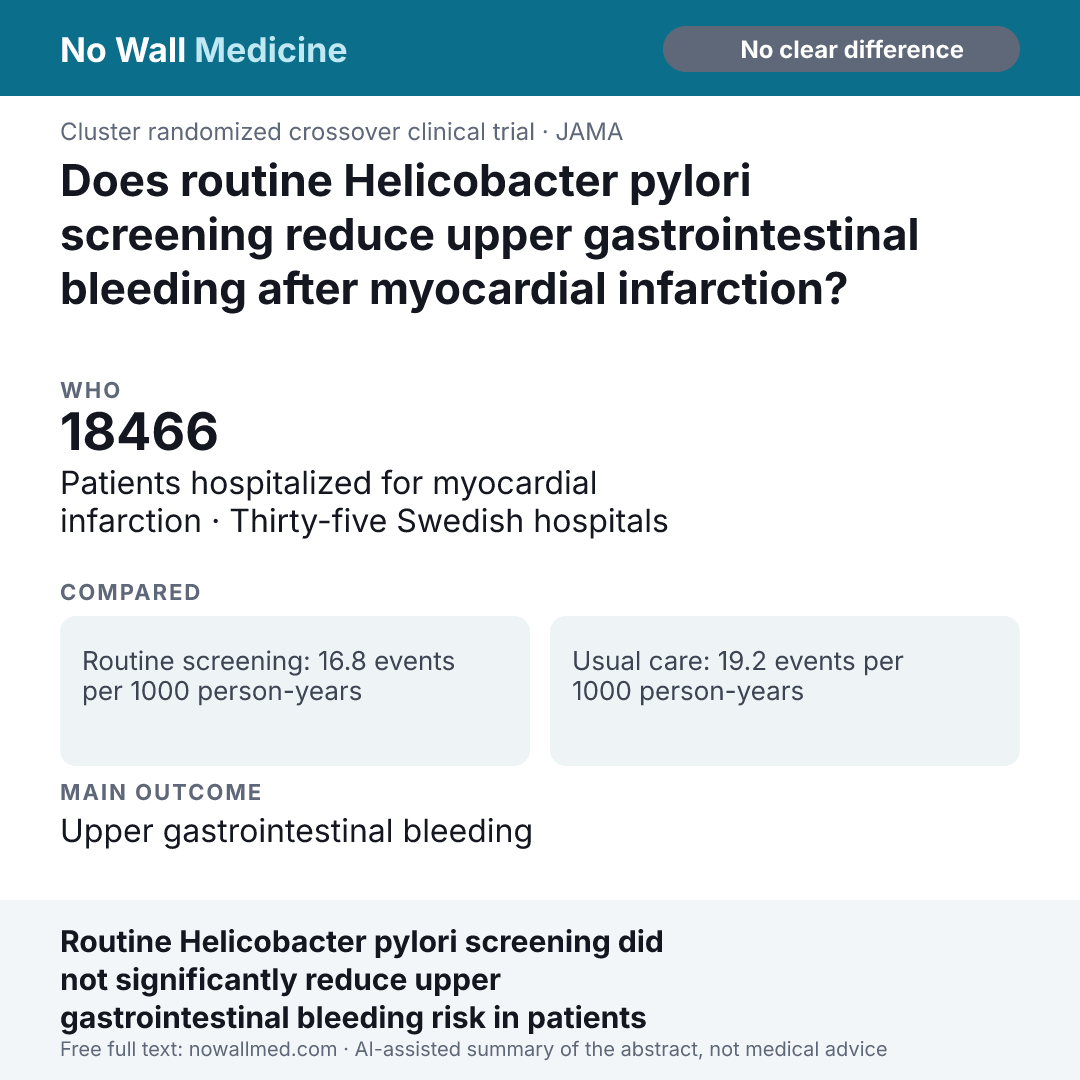
Effect of collagen scaffold vs. intrauterine device on preventing recurrence of intrauterine adhesions: a multicenter randomized controlled trial
Multicenter, open-label, randomized controlled trialBenefit found
Does collagen scaffold prevent intrauterine adhesion recurrence better than an intrauterine device?
Who
195
Patients aged 20-40 years with moderate intrauterine adhesions · Multicenter
Compared
78.6%collagen scaffold
58.8%intrauterine device
Main outcome
rate of no intrauterine adhesion recurrence at second-look hysteroscopy
Result: relative risk 1.4 (95% confidence interval 1.1-1.6)
Bottom line: Collagen scaffold is superior to intrauterine device in preventing adhesion recurrence after hysteroscopic adhesiolysis in moderate intrauterine adhesions.
Fertil Steril · 2025-09-02 · Save PNG
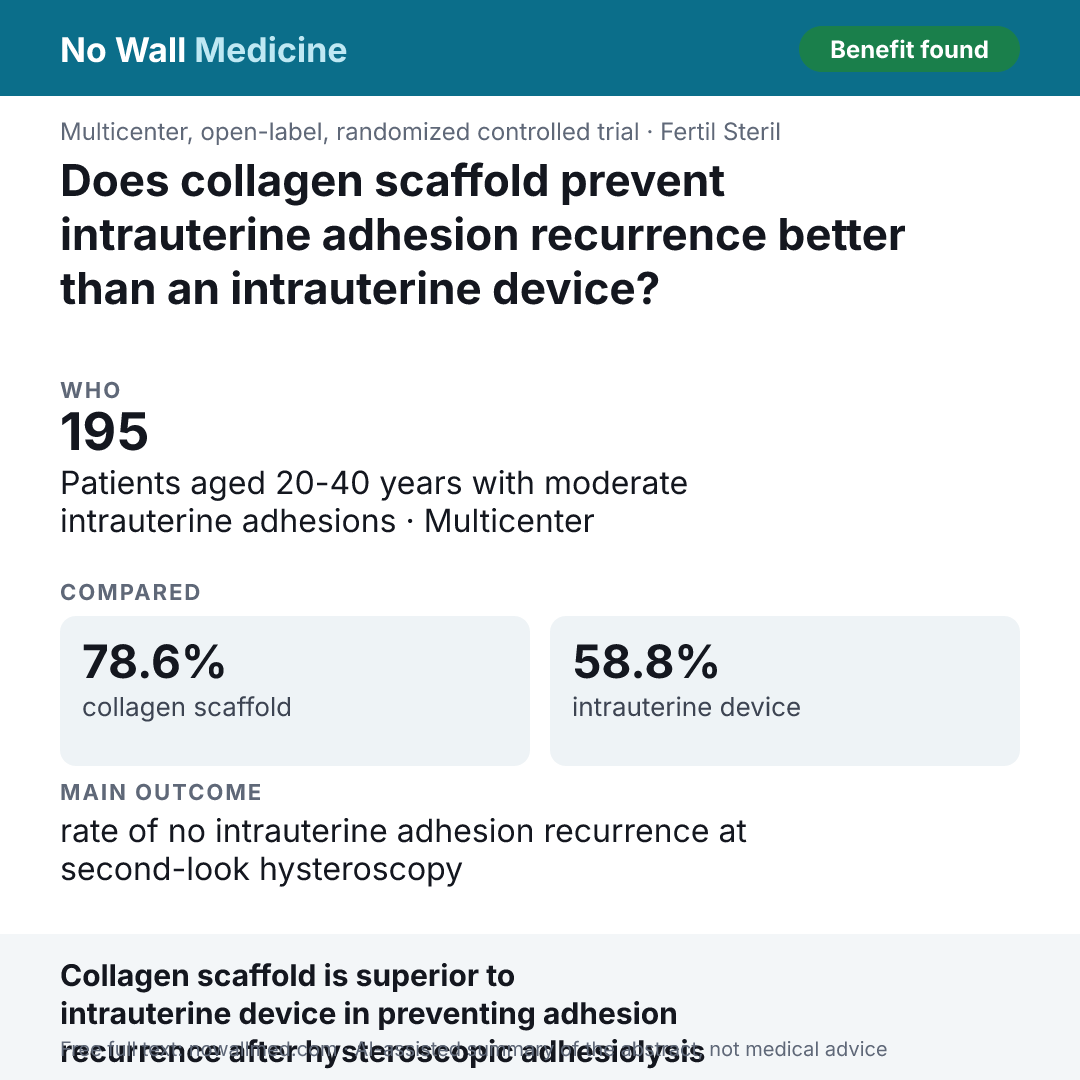
Surgery Versus Surveillance: A Quality-of-Life Analysis of Patients With Moderately Dilated Aortic Root or Ascending Aorta
Multicentre prospective non-randomized comparisonKey finding
Does surgery or surveillance improve quality of life in patients with moderate ascending thoracic aortic aneurysms?
Who
157
Patients with ascending thoracic aortic aneurysm between 5.0 and 5.4 cm · 15 centres
Compared
Surgery: MCS 4.1 ± 10.9
Surveillance: MCS 0.1 ± 7.7
Main outcome
Changes in physical and mental component summary scores
Bottom line: Surgical treatment was associated with greater improvement in mental quality of life components compared to surveillance.
Eur J Cardiothorac Surg · 2025-09-02 · Save PNG
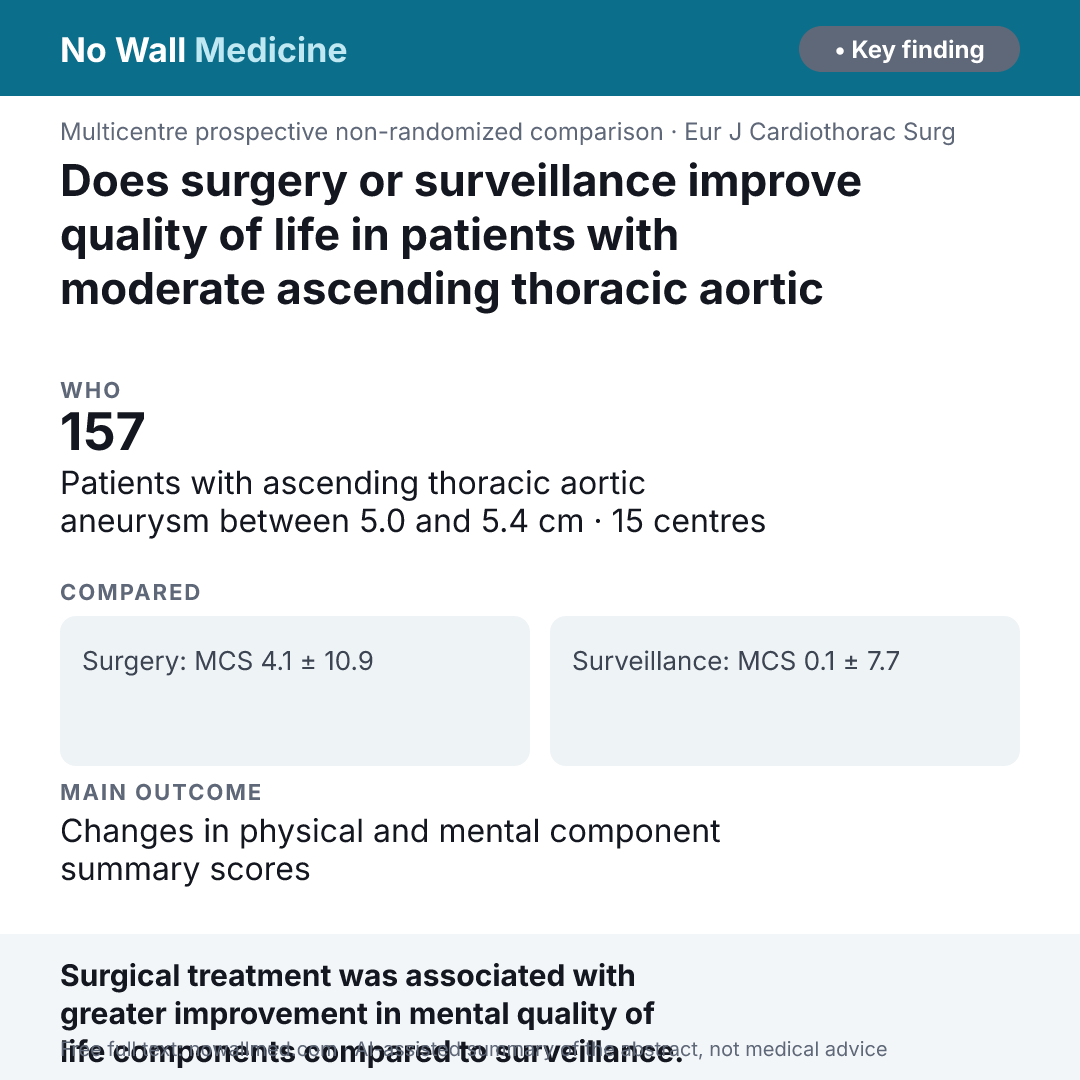
Home-Based Care for Hypertension in Rural South Africa
Open-label, randomized, controlled trialBenefit found
Does home-based care improve hypertension management in rural South Africa?
Who
774
Adults with hypertension · South Africa
Compared
57.4%Community health worker group
61.3%Enhanced community health worker group
32.5%Standard-care group
Main outcome
Systolic blood pressure at 6 months
Result: difference -7.9 mm Hg (95% CI -10.5 to -5.3) for CHW group
Bottom line: Home-based hypertension care significantly lowers systolic blood pressure compared to standard clinic-based care in South Africa.
Funded by: National Institutes of Health and others
NEJM · 2025-09-01 · Save PNG
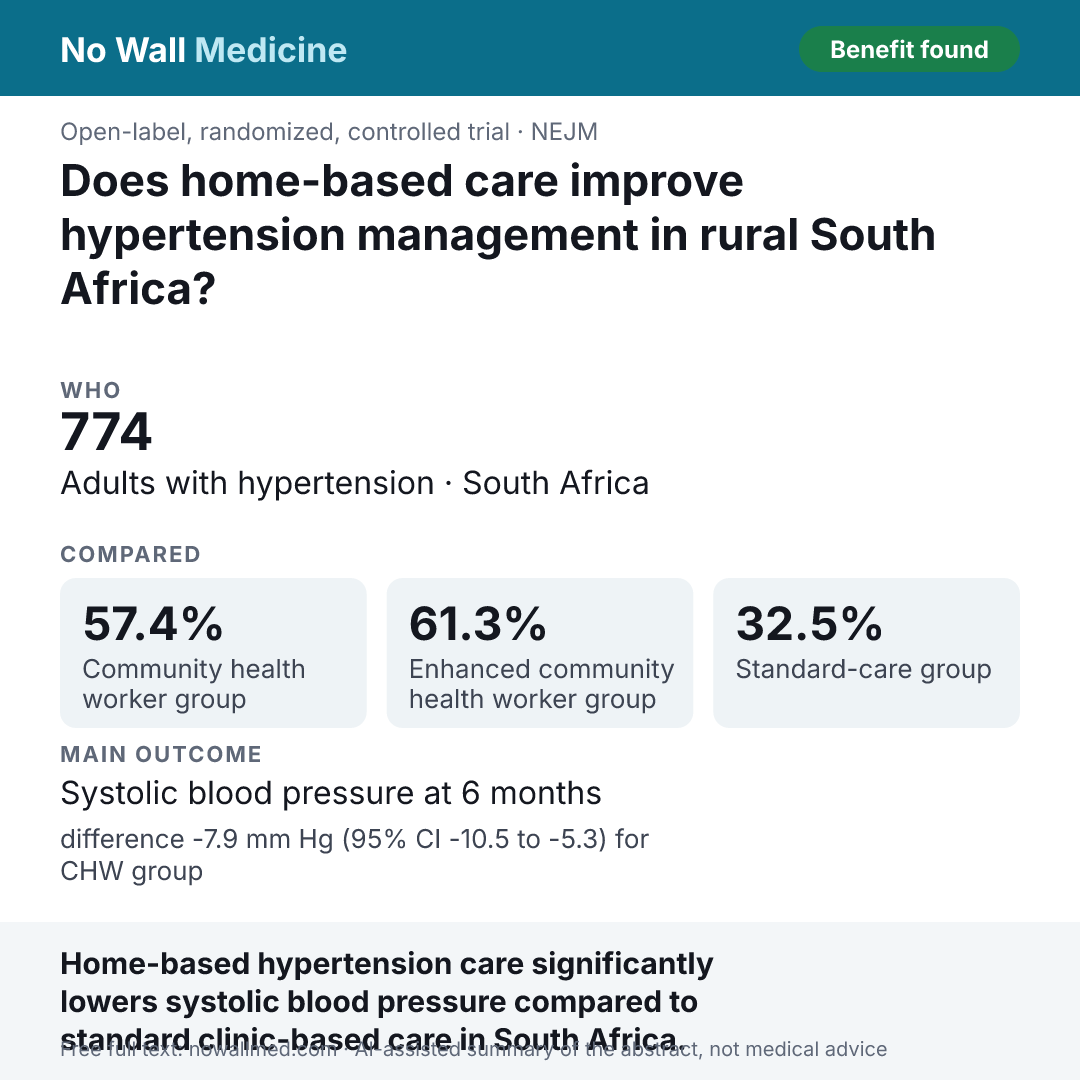
Helicobacter pylori Screening After Acute Myocardial Infarction: The Cluster Randomized Crossover HELP-MI SWEDEHEART Trial
Cluster randomized crossover clinical trialNo clear difference
Does routine Helicobacter pylori screening reduce upper gastrointestinal bleeding after myocardial infarction?
Who
18466
Patients hospitalized for myocardial infarction · Thirty-five Swedish hospitals
Compared
Routine screening: 16.8 events per 1000 person-years
Usual care: 19.2 events per 1000 person-years
Main outcome
Upper gastrointestinal bleeding
Result: rate ratio 0.90 (95% CI, 0.77-1.05)
Bottom line: Routine Helicobacter pylori screening did not significantly reduce upper gastrointestinal bleeding risk in patients with acute myocardial infarction.
JAMA · 2025-09-01 · Save PNG
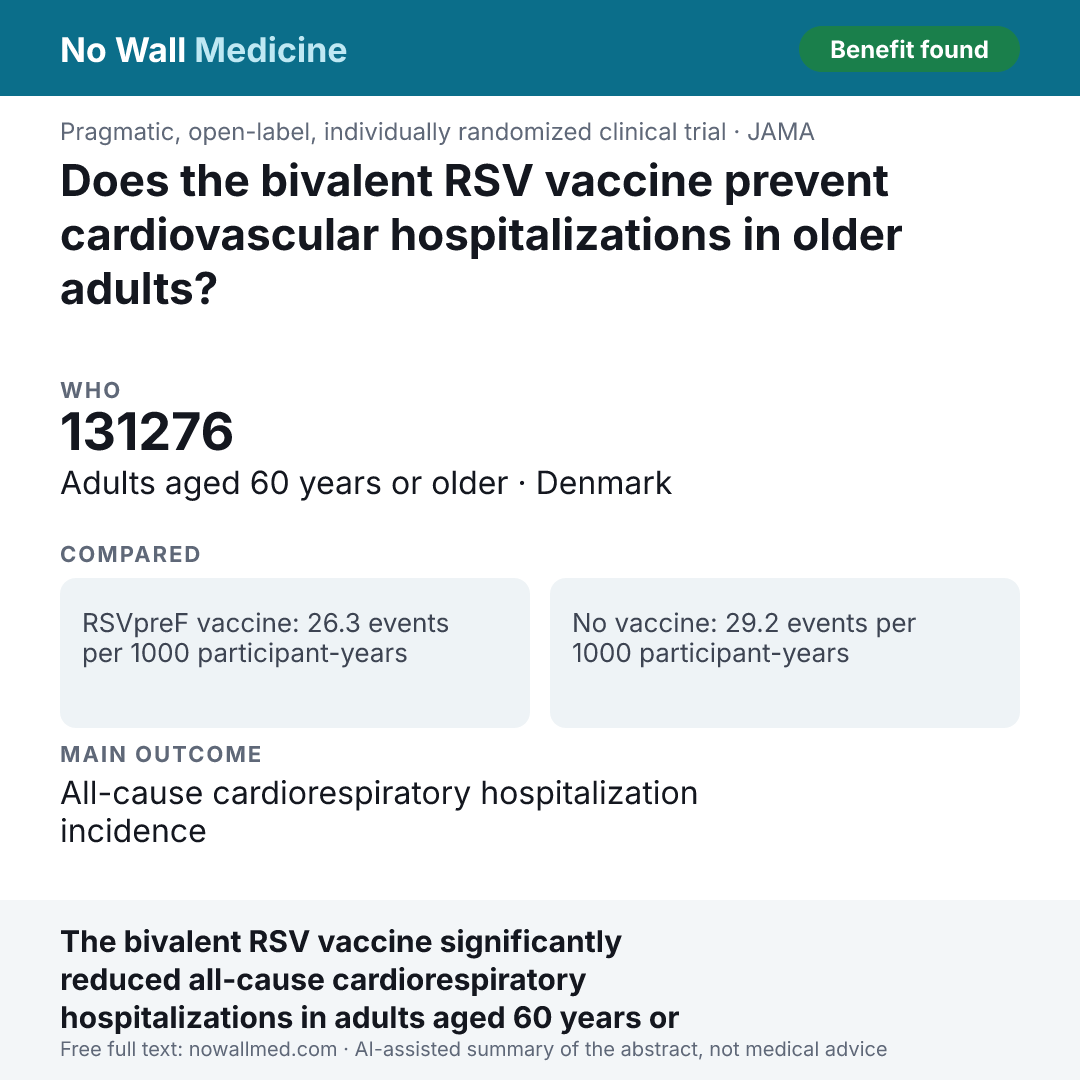
Bivalent RSV Prefusion F Protein-Based Vaccine for Preventing Cardiovascular Hospitalizations in Older Adults: A Prespecified Analysis of the DAN-RSV Trial
Pragmatic, open-label, individually randomized clinical trialBenefit found
Does the bivalent RSV vaccine prevent cardiovascular hospitalizations in older adults?
Who
131276
Adults aged 60 years or older · Denmark
Compared
RSVpreF vaccine: 26.3 events per 1000 participant-years
No vaccine: 29.2 events per 1000 participant-years
Main outcome
All-cause cardiorespiratory hospitalization incidence
Result: vaccine effectiveness, 9.9% (95% CI, 0.3%-18.7%)
Bottom line: The bivalent RSV vaccine significantly reduced all-cause cardiorespiratory hospitalizations in adults aged 60 years or older.
JAMA · 2025-09-01 · Save PNG
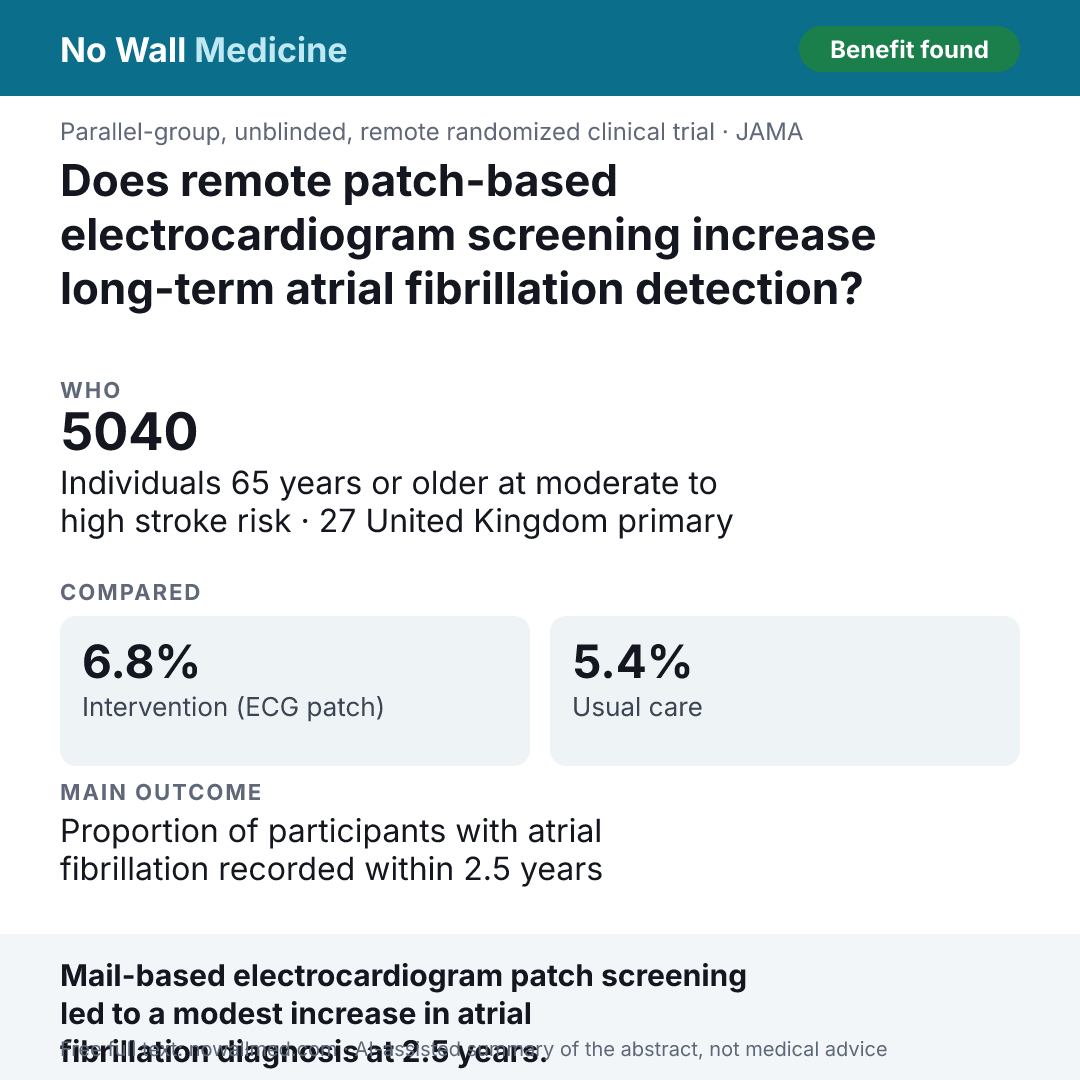
Remote Screening for Asymptomatic Atrial Fibrillation: The AMALFI Randomized Clinical Trial
Parallel-group, unblinded, remote randomized clinical trialBenefit found
Does remote patch-based electrocardiogram screening increase long-term atrial fibrillation detection?
Who
5040
Individuals 65 years or older at moderate to high stroke risk · 27 United Kingdom primary care practices
Compared
6.8%Intervention (ECG patch)
5.4%Usual care
Main outcome
Proportion of participants with atrial fibrillation recorded within 2.5 years
Result: ratio of proportions 1.26 (95% CI 1.02-1.57)
Bottom line: Mail-based electrocardiogram patch screening led to a modest increase in atrial fibrillation diagnosis at 2.5 years.
JAMA · 2025-09-01 · Save PNG
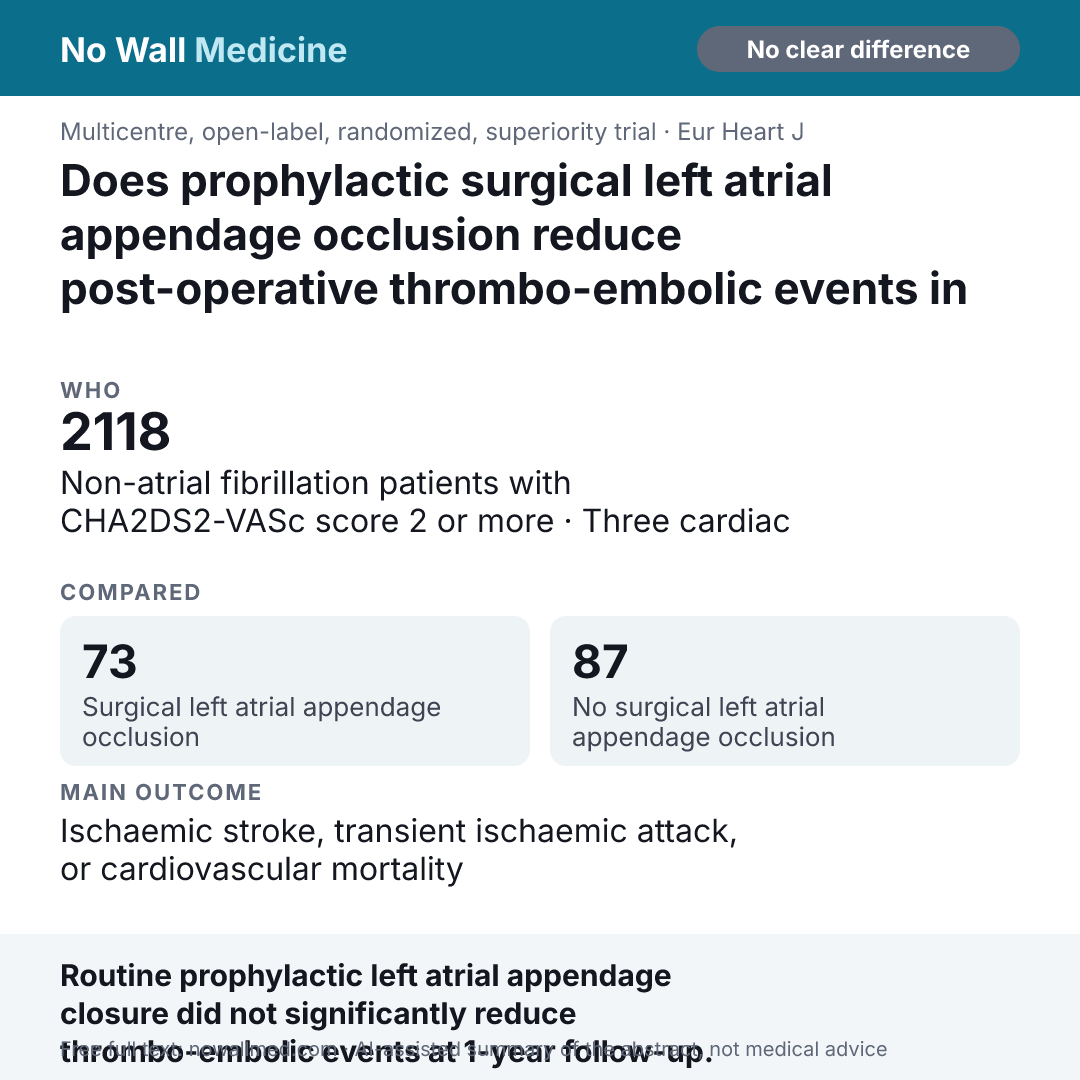
Surgical left atrial appendage occlusion in valvular heart disease without atrial fibrillation: the OPINION trial
Multicentre, open-label, randomized, superiority trialNo clear difference
Does prophylactic surgical left atrial appendage occlusion reduce post-operative thrombo-embolic events in valvular surgery patients?
Who
2118
Non-atrial fibrillation patients with CHA2DS2-VASc score 2 or more · Three cardiac surgery centres in China
Compared
73Surgical left atrial appendage occlusion (6.9%)
87No surgical left atrial appendage occlusion (8.2%)
Main outcome
Ischaemic stroke, transient ischaemic attack, or cardiovascular mortality
Result: hazard ratio 0.83 (95% confidence interval 0.61-1.14)
Bottom line: Routine prophylactic left atrial appendage closure did not significantly reduce thrombo-embolic events at 1-year follow-up.
Eur Heart J · 2025-09-01 · Save PNG
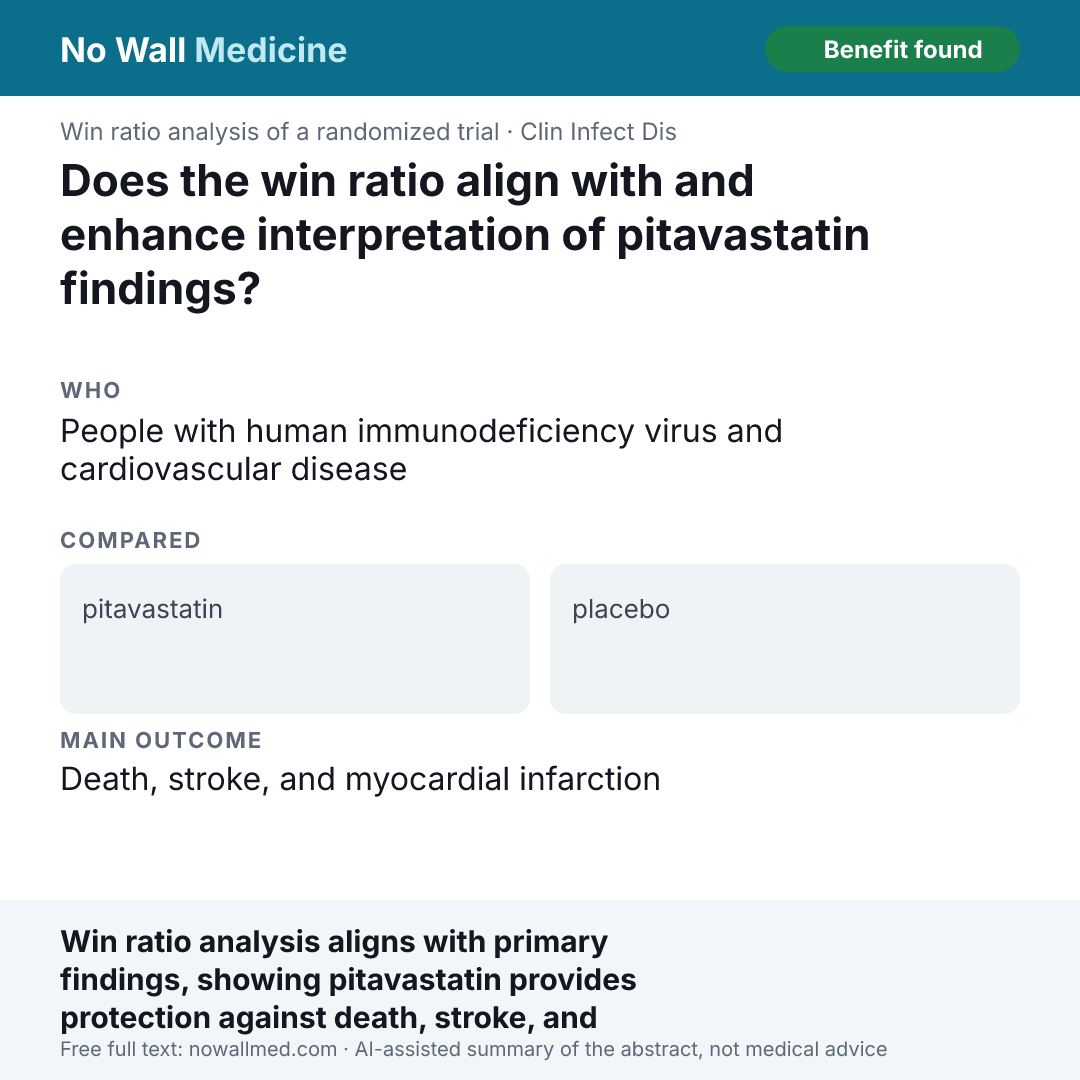
Win Ratio Aligns With and Enhances Interpretation of REPRIEVE's Primary Findings
Win ratio analysis of a randomized trialBenefit found
Does the win ratio align with and enhance interpretation of pitavastatin findings?
Who
People with human immunodeficiency virus and cardiovascular disease
Compared
pitavastatin
placebo
Main outcome
Death, stroke, and myocardial infarction
Bottom line: Win ratio analysis aligns with primary findings, showing pitavastatin provides protection against death, stroke, and myocardial infarction.
Clin Infect Dis · 2025-09-01 · Save PNG
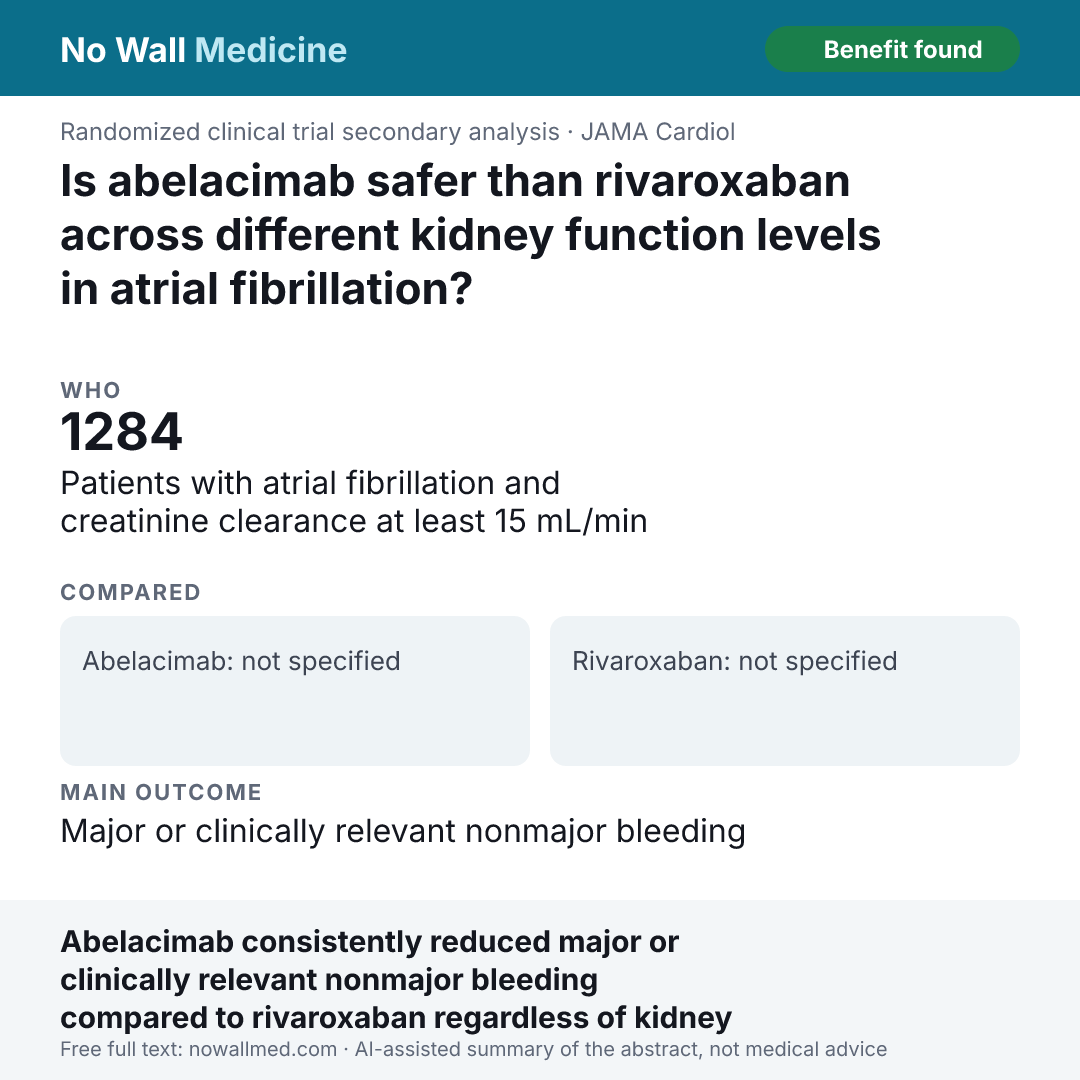
Safety of Factor XI Inhibition With Abelacimab in Atrial Fibrillation by Kidney Function: A Prespecified Analysis of the AZALEA-TIMI 71 Randomized Clinical Trial
Randomized clinical trial secondary analysisBenefit found
Is abelacimab safer than rivaroxaban across different kidney function levels in atrial fibrillation?
Who
1284
Patients with atrial fibrillation and creatinine clearance at least 15 mL/min
Compared
Abelacimab: not specified
Rivaroxaban: not specified
Main outcome
Major or clinically relevant nonmajor bleeding
Result: hazard ratio 0.26 (95% CI, 0.12-0.54) for CrCl ≤50 mL/min; hazard ratio 0.40 (95% CI, 0.26-0.62) for CrCl >50 mL/min
Bottom line: Abelacimab consistently reduced major or clinically relevant nonmajor bleeding compared to rivaroxaban regardless of kidney function.
Limitation: Larger studies are necessary to characterize the efficacy of abelacimab for stroke prevention in atrial fibrillation.
JAMA Cardiol · 2025-09-01 · Save PNG
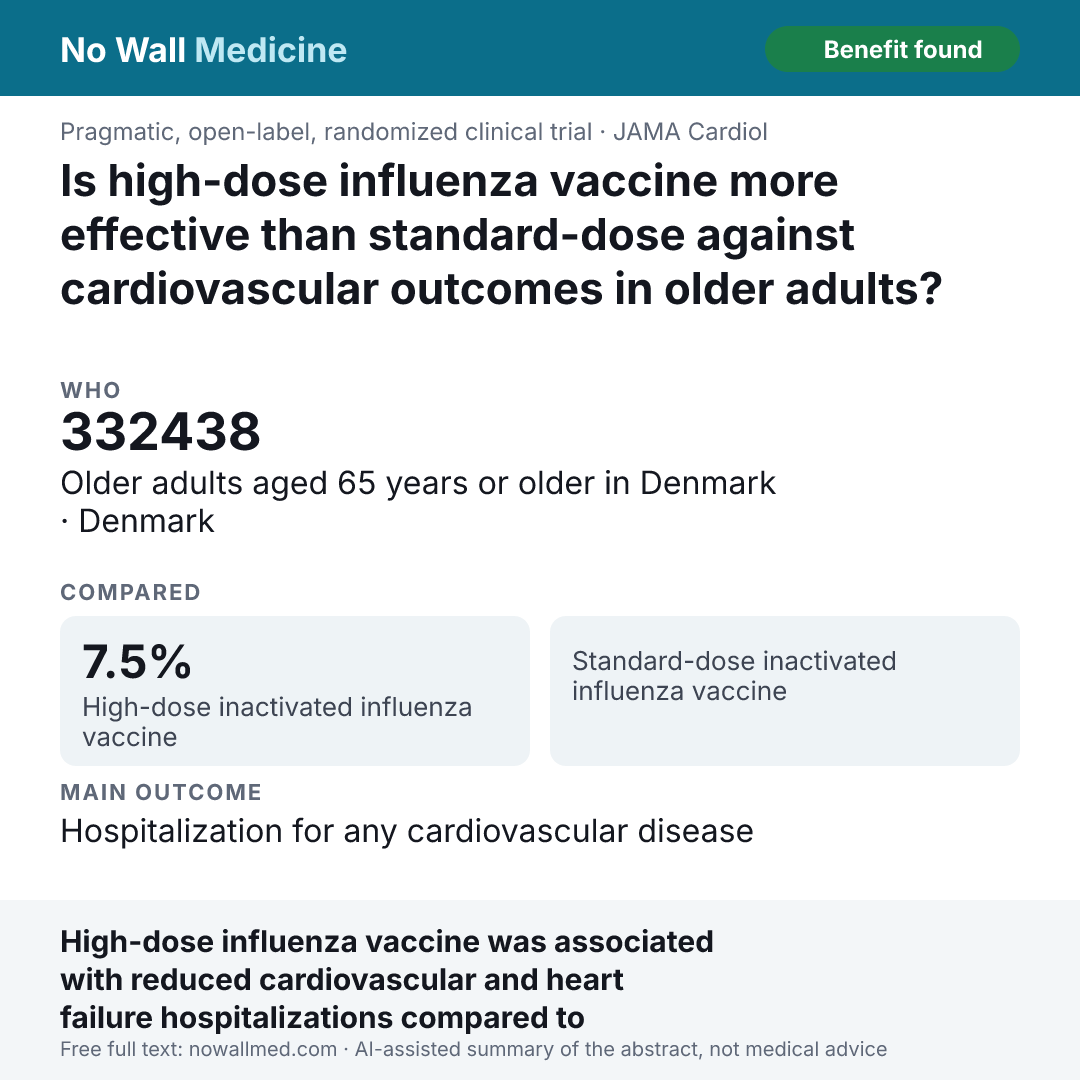
High-Dose vs Standard-Dose Influenza Vaccine and Cardiovascular Outcomes in Older Adults: A Prespecified Secondary Analysis of the DANFLU-2 Randomized Clinical Trial
Pragmatic, open-label, randomized clinical trialBenefit found
Is high-dose influenza vaccine more effective than standard-dose against cardiovascular outcomes in older adults?
Who
332438
Older adults aged 65 years or older in Denmark · Denmark
Compared
7.5%High-dose inactivated influenza vaccine (rVE for cardiovascular disease hospitalization)
Standard-dose inactivated influenza vaccine
Main outcome
Hospitalization for any cardiovascular disease
Result: relative vaccine effectiveness 7.5% (95% CI 1.5% to 12.5%)
Bottom line: High-dose influenza vaccine was associated with reduced cardiovascular and heart failure hospitalizations compared to standard-dose vaccine.
Limitation: Findings are exploratory because the primary end point of influenza-related hospitalization was neutral.
JAMA Cardiol · 2025-09-01 · Save PNG
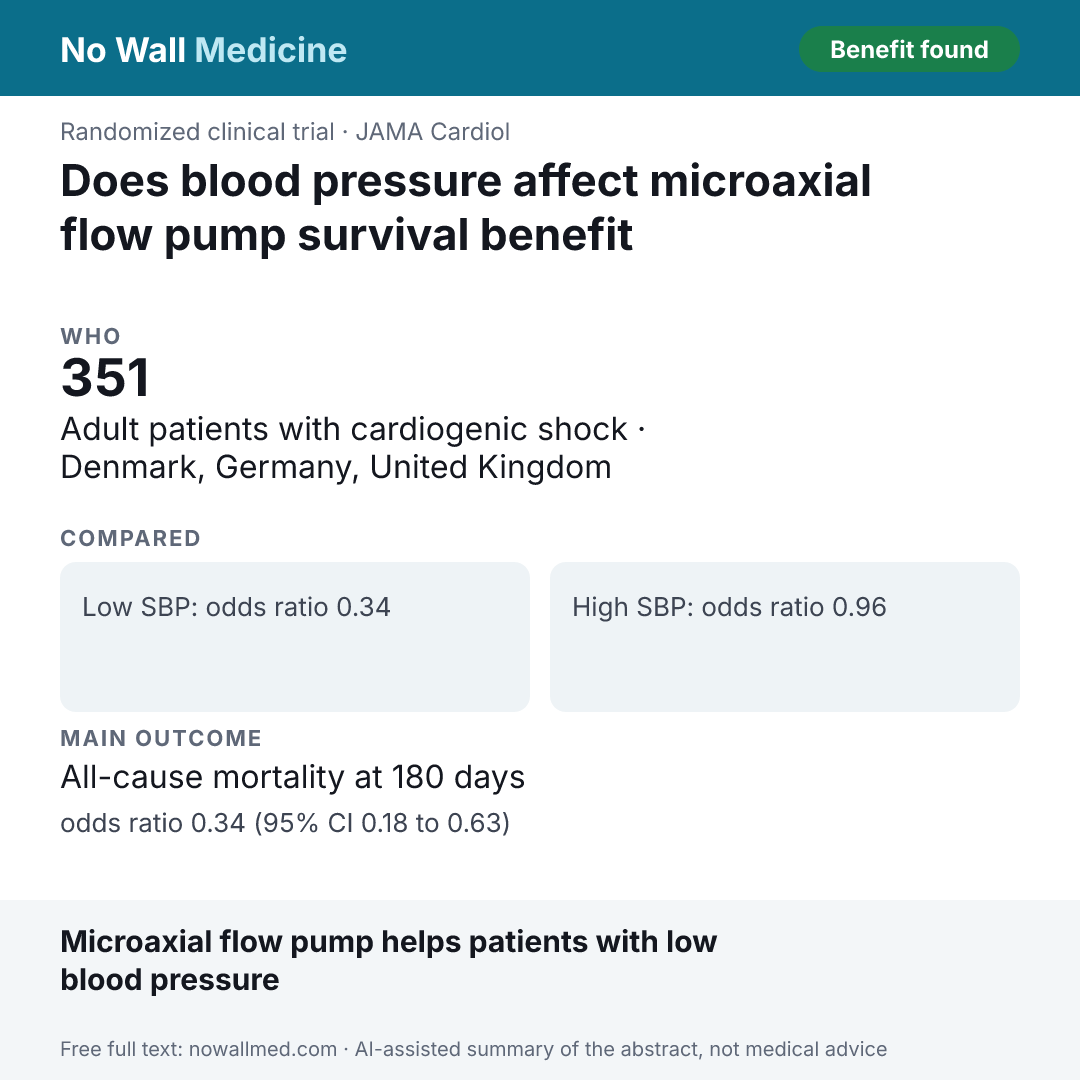
Systolic Blood Pressure and Microaxial Flow Pump-Associated Survival in Infarct-Related Cardiogenic Shock: A Post Hoc Analysis of the DanGer Shock Randomized Clinical Trial
Randomized clinical trialBenefit found
Does blood pressure affect microaxial flow pump survival benefit
Who
351
Adult patients with cardiogenic shock · Denmark, Germany, United Kingdom
Compared
Low SBP: odds ratio 0.34
High SBP: odds ratio 0.96
Main outcome
All-cause mortality at 180 days
Result: odds ratio 0.34 (95% CI 0.18 to 0.63)
Bottom line: Microaxial flow pump helps patients with low blood pressure
Limitation: post hoc analysis
JAMA Cardiol · 2025-09-01 · Save PNG
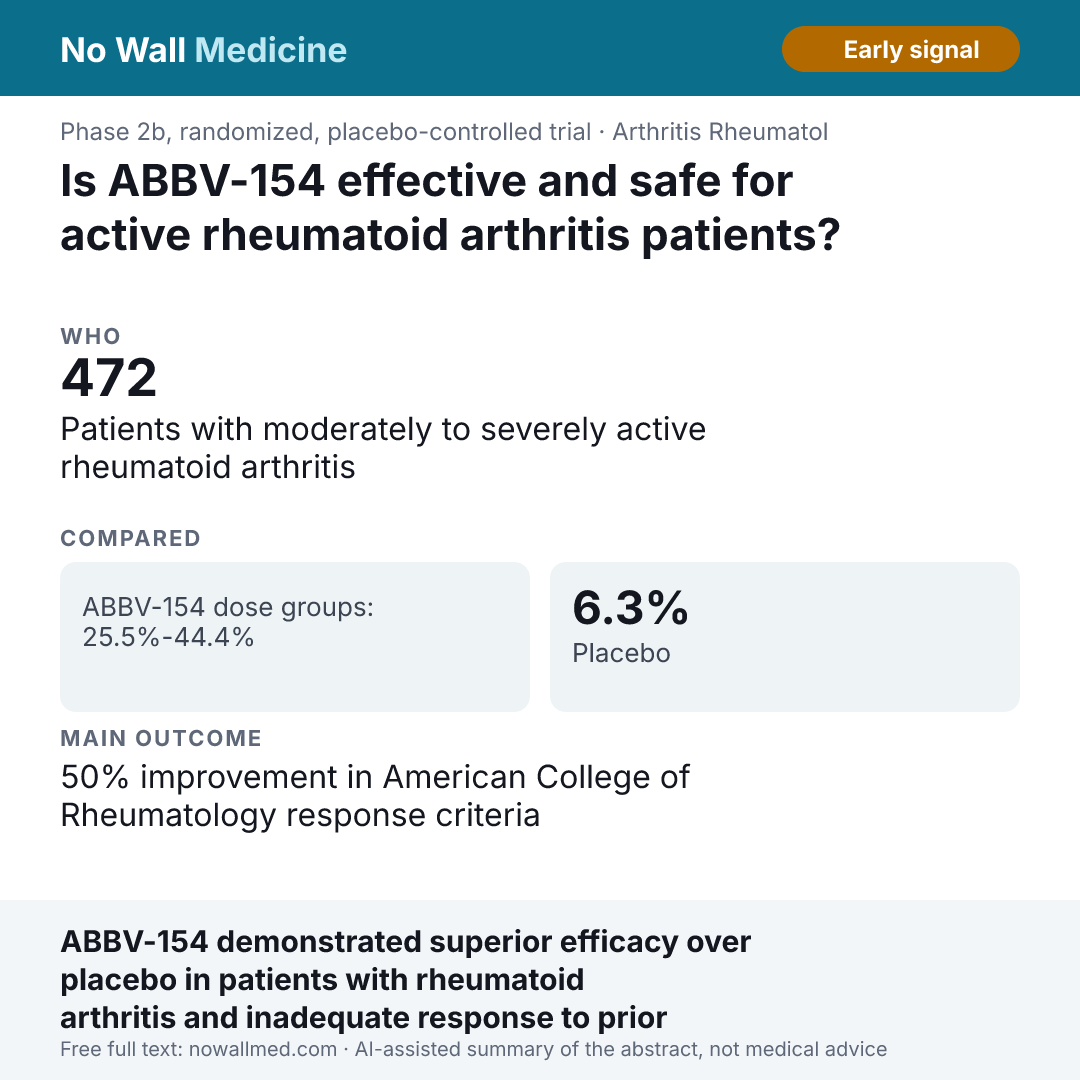
Efficacy and Safety of ABBV-154 for the Treatment of Active Rheumatoid Arthritis: A Phase 2b, Randomized, Placebo-Controlled Trial
Phase 2b, randomized, placebo-controlled trialEarly signal
Is ABBV-154 effective and safe for active rheumatoid arthritis patients?
Who
472
Patients with moderately to severely active rheumatoid arthritis
Compared
ABBV-154 dose groups: 25.5%-44.4%
6.3%Placebo
Main outcome
50% improvement in American College of Rheumatology response criteria
Bottom line: ABBV-154 demonstrated superior efficacy over placebo in patients with rheumatoid arthritis and inadequate response to prior treatments.
Arthritis Rheumatol · 2025-09-01 · Save PNG
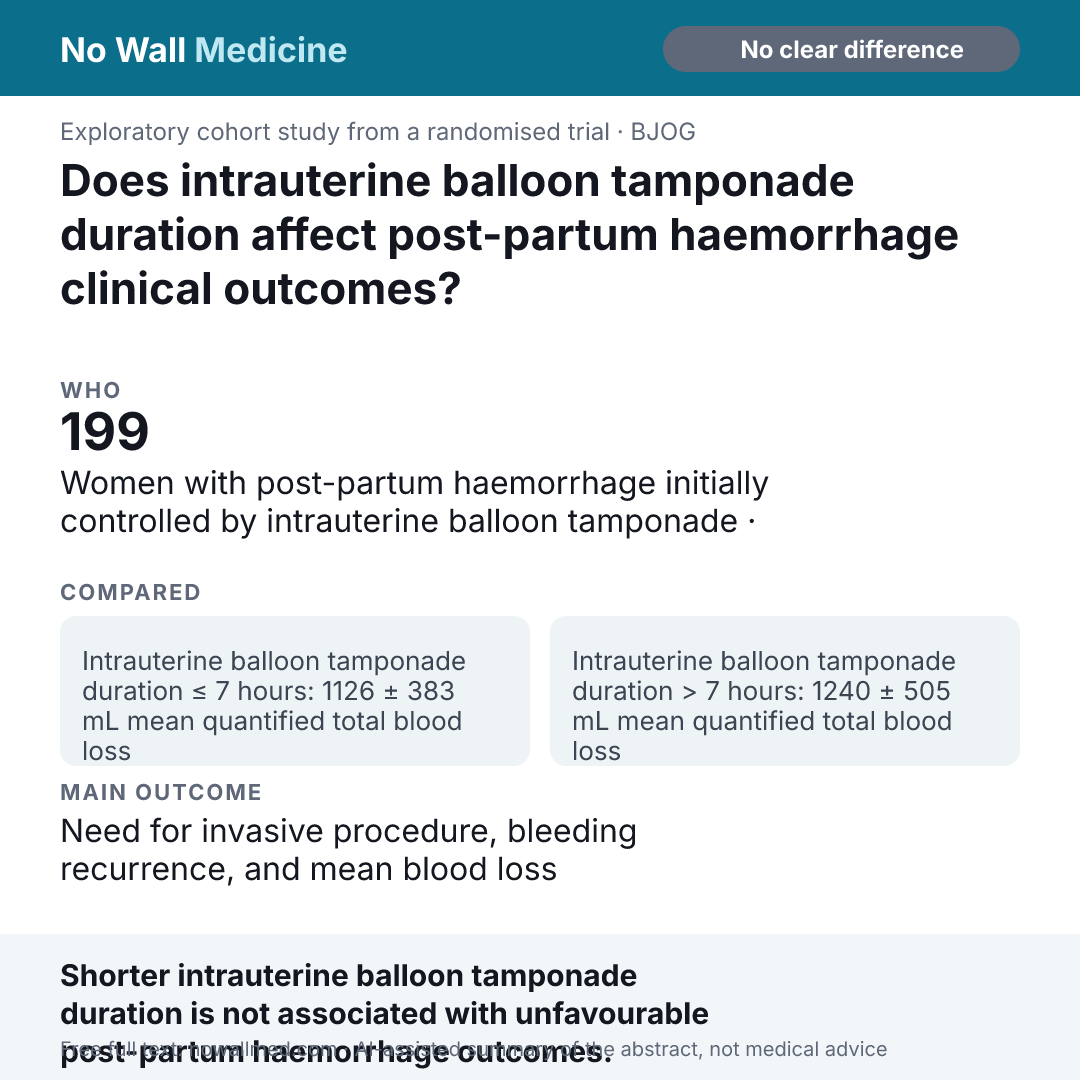
Duration of Intrauterine Balloon Tamponade in Post-Partum Haemorrhage Management After Vaginal Delivery: A Secondary Cohort Analysis From the French TUB Trial
Exploratory cohort study from a randomised trialNo clear difference
Does intrauterine balloon tamponade duration affect post-partum haemorrhage clinical outcomes?
Who
199
Women with post-partum haemorrhage initially controlled by intrauterine balloon tamponade · Eighteen hospitals in France
Compared
Intrauterine balloon tamponade duration ≤ 7 hours: 1126 ± 383 mL mean quantified total blood loss
Intrauterine balloon tamponade duration > 7 hours: 1240 ± 505 mL mean quantified total blood loss
Main outcome
Need for invasive procedure, bleeding recurrence, and mean blood loss
Bottom line: Shorter intrauterine balloon tamponade duration is not associated with unfavourable post-partum haemorrhage outcomes.
Limitation: Imbalance in clinical indication between groups.
BJOG · 2025-09-01 · Save PNG