Visual abstracts
New randomized trials and meta-analyses from leading journals at a glance: who was studied, what was compared, and what was found. Every paper is free to read in full.
All specialtiesCardiology 4763Oncology 4042Gastroenterology & Hepatology 1902Infectious Disease 3756Neurology 1872Psychiatry & Mental Health 2214Pulmonology 2042Critical Care 1319Endocrinology & Diabetes 2544Pediatrics 2889Surgery 2479Orthopedics & Sports Medicine 917Neurosurgery 525Cardiothoracic & Vascular Surgery 656Plastic & Reconstructive Surgery 574Nephrology 1107Rheumatology 810Hematology 1090Dermatology 611Ophthalmology 532Obstetrics & Gynecology 1645Public & Global Health 1037Radiology & Imaging 617Anesthesiology 957Urology 745ENT (Otolaryngology) 494Emergency Medicine 481Allergy & Immunology 309Geriatrics 972Family Medicine & Primary Care 533Medical Genetics & Genomics 659Pathology & Laboratory Medicine 156Physical Medicine & Rehabilitation 734Palliative Care 421Nutrition 1560Digital Health & AI 2133General Medicine 318
Headache in ADHD as comorbidity and a side effect of medications: a systematic review and meta-analysis
Systematic review and meta-analysisMixed results
Is headache associated with ADHD and ADHD medications?
Who
Children with ADHD and controls
Compared
26.6%Children with ADHD
Atomoxetine vs placebo: odds ratio 1.29 (95% CI 1.06-1.56)
Guanfacine vs placebo: odds ratio 1.43 (95% CI 1.12-1.82)
Methylphenidate vs placebo: odds ratio 1.33 (95% CI 1.09-1.63)
Main outcome
Prevalence of headache and headache as an adverse event
Result: odds ratio 2.01 (95% CI 1.63-2.46)
Bottom line: Headache is common in children with ADHD and can be a side effect of atomoxetine, guanfacine, and methylphenidate.
Psychol Med · 2021-10-12Download image

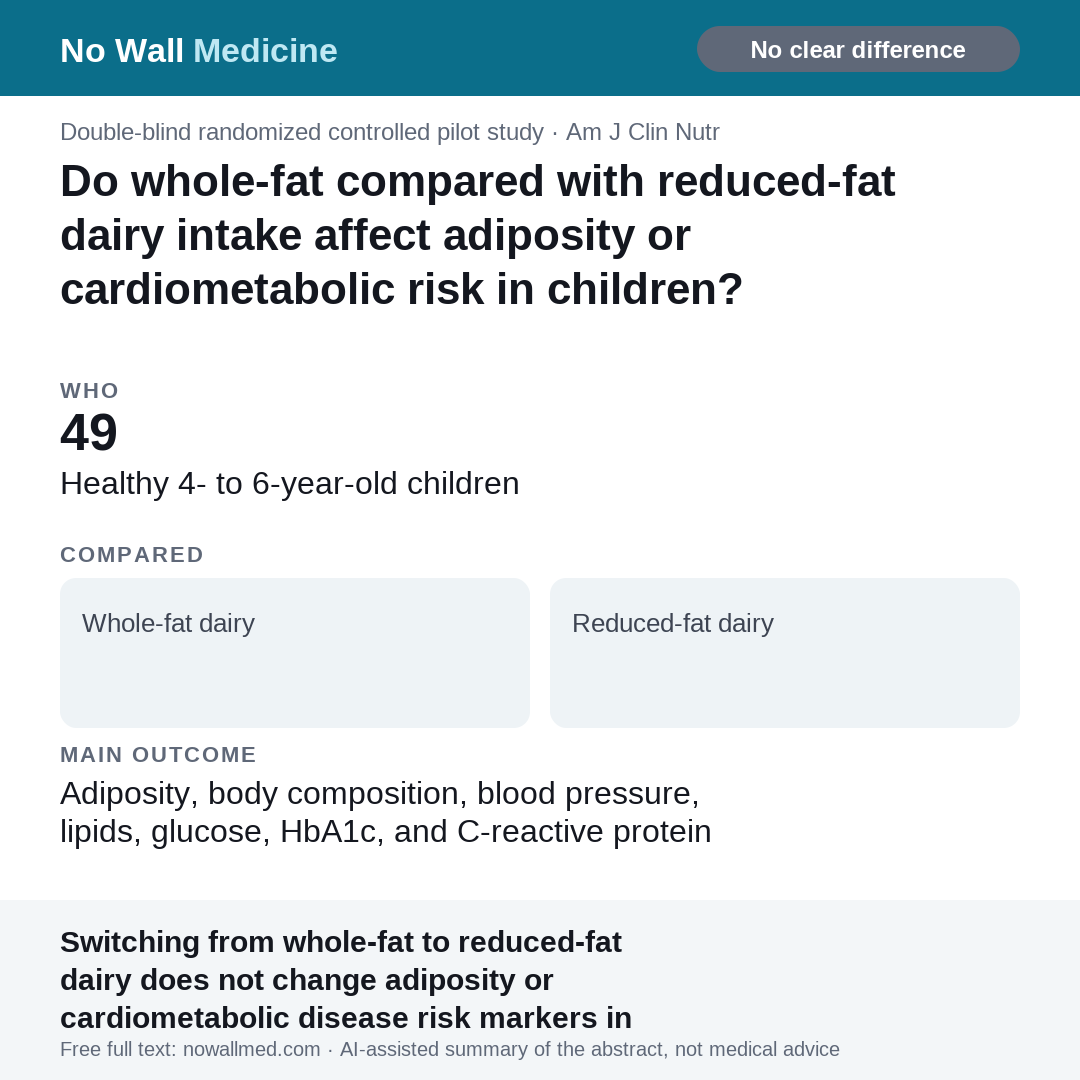
Whole-fat dairy products do not adversely affect adiposity or cardiometabolic risk factors in children in the Milky Way Study: a double-blind randomized controlled pilot study
Double-blind randomized controlled pilot studyNo clear difference
Do whole-fat compared with reduced-fat dairy intake affect adiposity or cardiometabolic risk in children?
Who
49
Healthy 4- to 6-year-old children
Compared
Whole-fat dairy
Reduced-fat dairy
Main outcome
Adiposity, body composition, blood pressure, lipids, glucose, HbA1c, and C-reactive protein
Bottom line: Switching from whole-fat to reduced-fat dairy does not change adiposity or cardiometabolic disease risk markers in healthy children.
Limitation: Pilot study
Am J Clin Nutr · 2021-10-12Download image
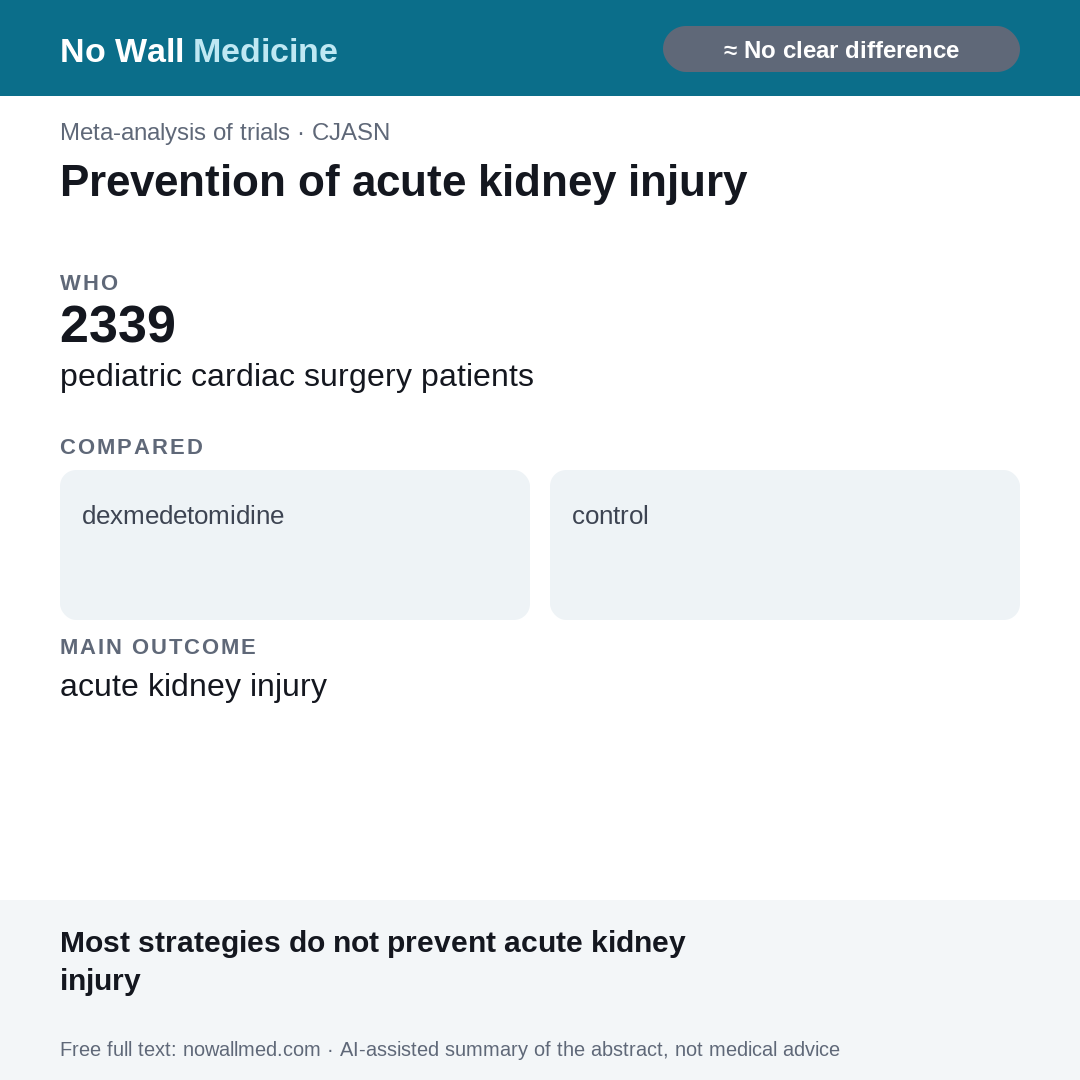
Strategies to Prevent Acute Kidney Injury after Pediatric Cardiac Surgery: A Network Meta-Analysis
Meta-analysis of trialsNo clear difference
Prevention of acute kidney injury
Who
2339
pediatric cardiac surgery patients
Compared
dexmedetomidine
control
Main outcome
acute kidney injury
Bottom line: Most strategies do not prevent acute kidney injury
CJASN · 2021-10-08Download image
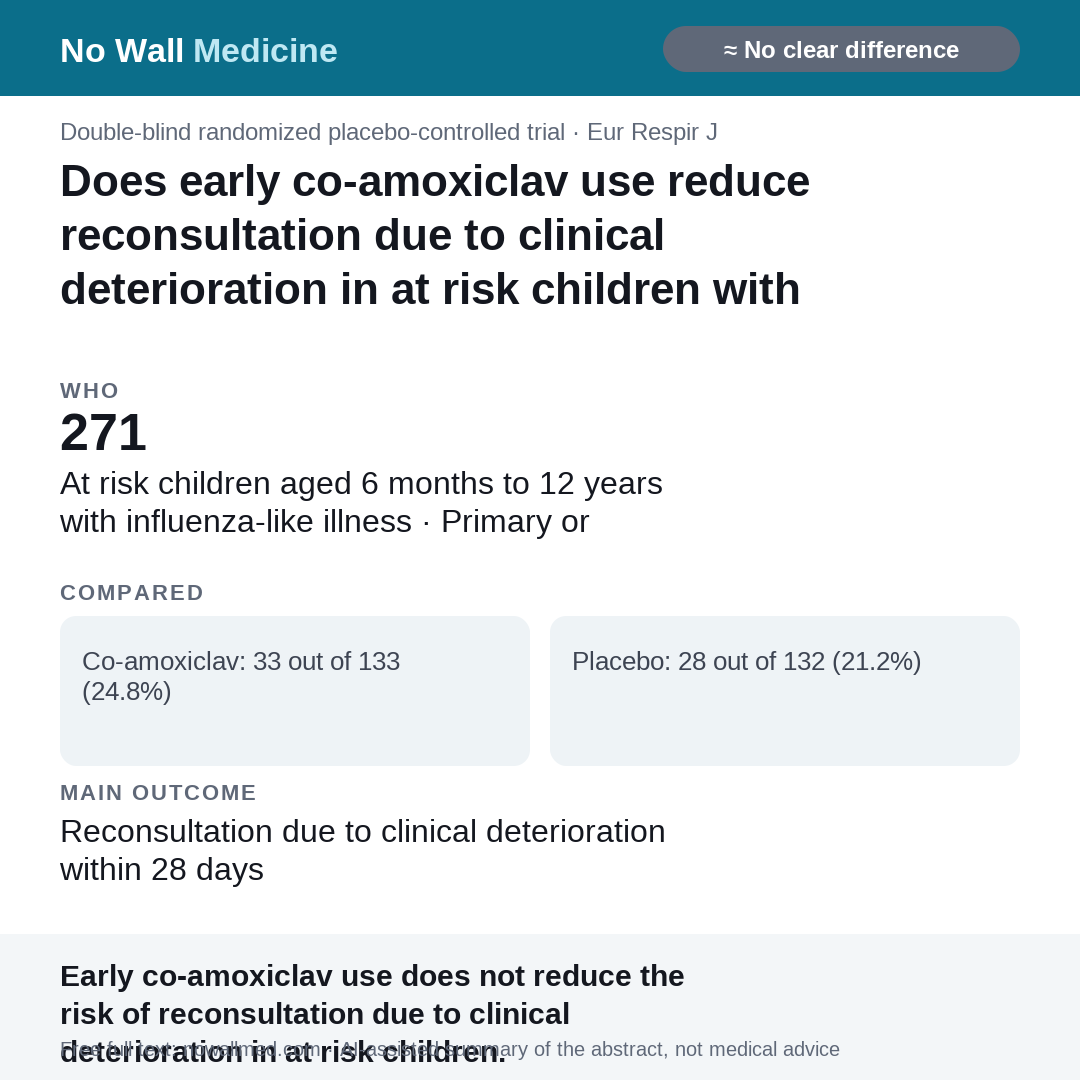
The early use of Antibiotics for at Risk CHildren with InfluEnza-like illness (ARCHIE): a double-blind randomised placebo-controlled trial
Double-blind randomized placebo-controlled trialNo clear difference
Does early co-amoxiclav use reduce reconsultation due to clinical deterioration in at risk children with influenza-like illness?
Who
271
At risk children aged 6 months to 12 years with influenza-like illness · Primary or ambulatory care
Compared
Co-amoxiclav: 33 out of 133 (24.8%)
Placebo: 28 out of 132 (21.2%)
Main outcome
Reconsultation due to clinical deterioration within 28 days
Result: adjusted risk ratio 1.16, 95% confidence interval 0.75-1.80
Bottom line: Early co-amoxiclav use does not reduce the risk of reconsultation due to clinical deterioration in at risk children.
Eur Respir J · 2021-10-07Download image
Neoplastic Etiology and Natural Course of Pituitary Stalk Thickening
Meta-analysis of 18 studiesMixed results
What is the neoplastic etiology and natural course of pituitary stalk thickening?
Who
1368
Patients with pituitary stalk thickening
Compared
45.2%Neoplastic etiology (95% CI, 33.3%-57.8%)
18.5%Progression in indeterminate cases (95% CI, 7.6%-38.3%)
Main outcome
Proportion of neoplastic etiology and progression during follow-up
Bottom line: Pituitary stalk thickening is commonly neoplastic and indeterminate cases frequently show progression during follow-up.
Limitation: substantial heterogeneity across studies (I2 = 93%)
J Clin Endocrinol Metab · 2021-10-07Download image

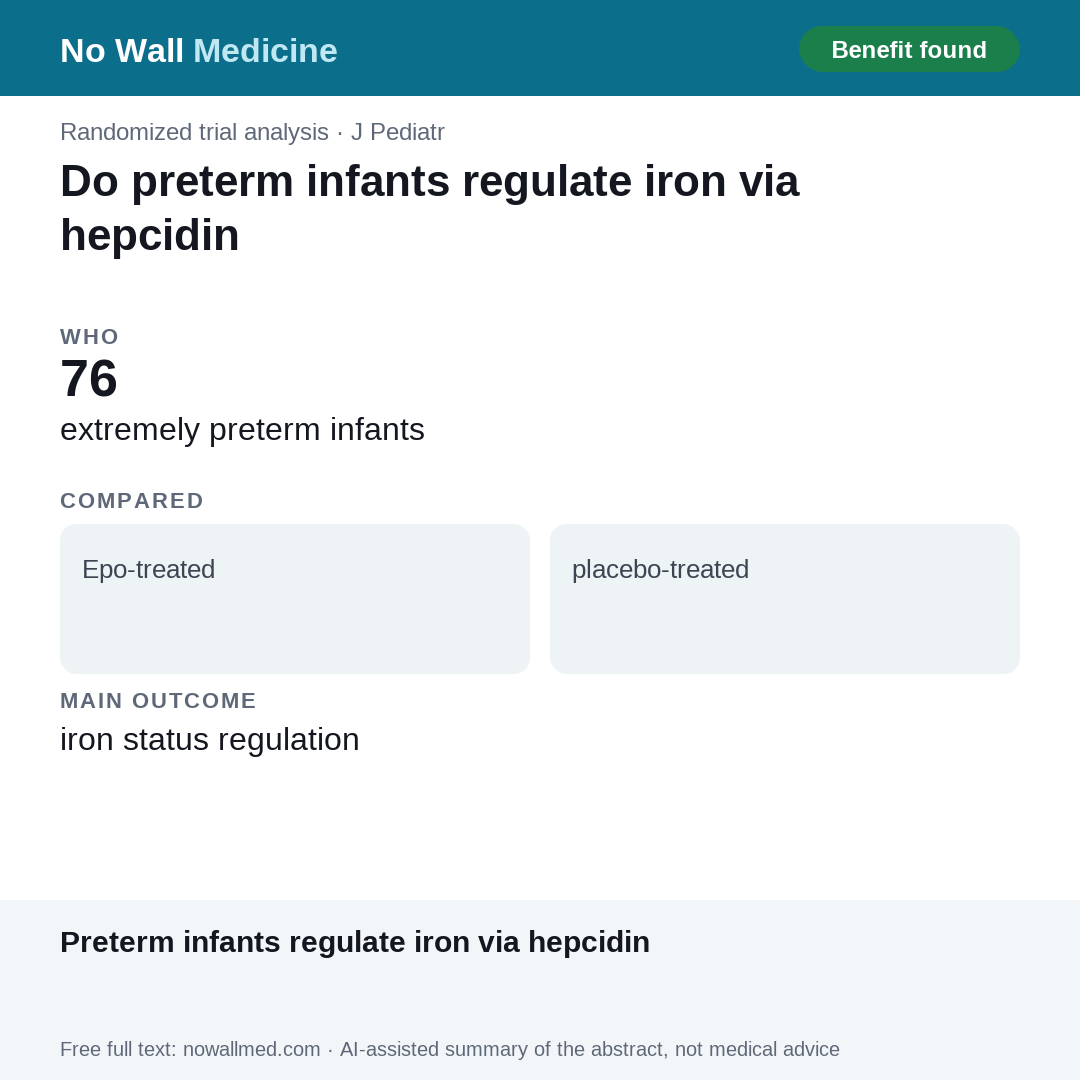
Do Extremely Low Gestational Age Neonates Regulate Iron Absorption via Hepcidin?
Randomized trial analysisBenefit found
Do preterm infants regulate iron via hepcidin
Who
76
extremely preterm infants
Compared
Epo-treated
placebo-treated
Main outcome
iron status regulation
Bottom line: Preterm infants regulate iron via hepcidin
J Pediatr · 2021-10-07Download image
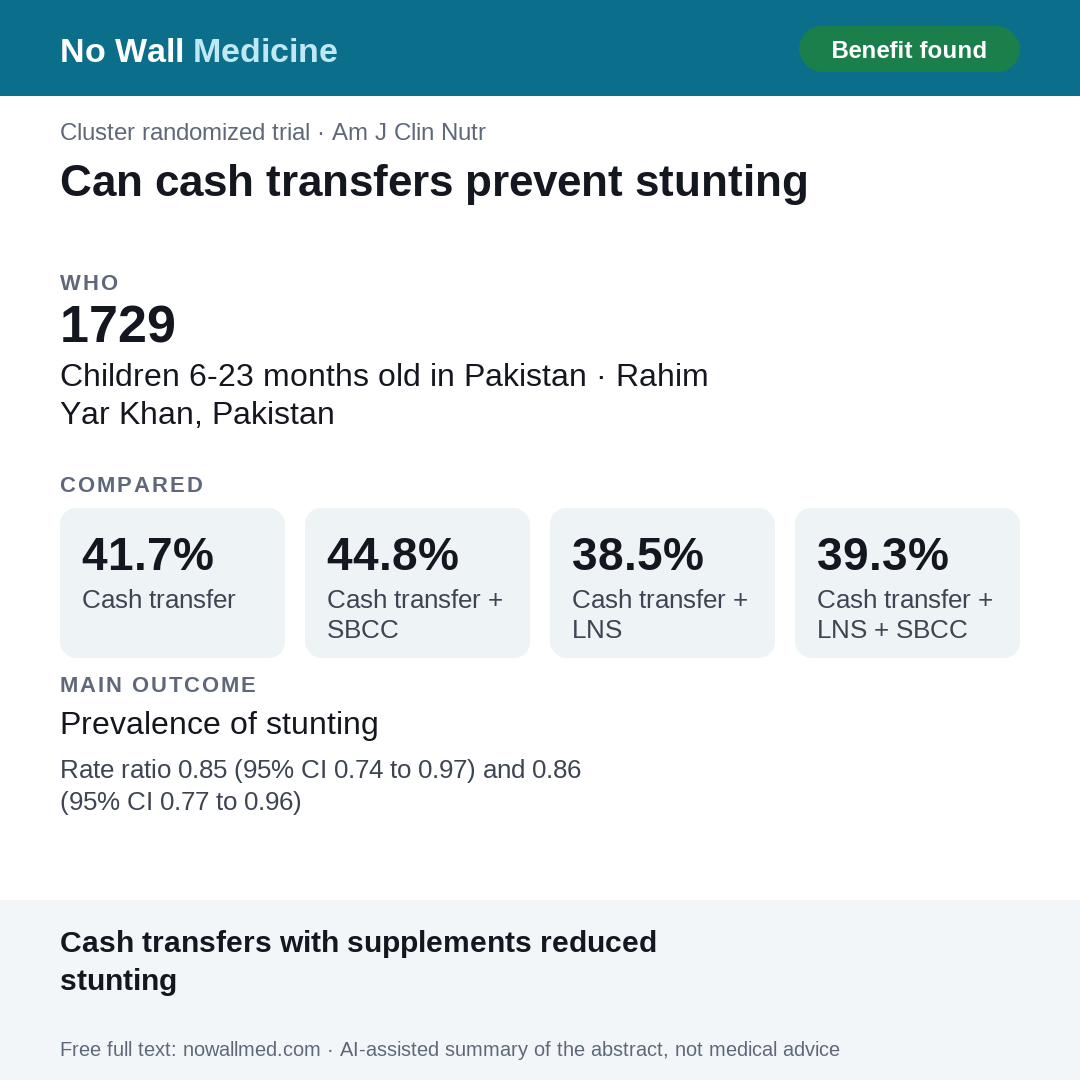
Effectiveness of unconditional cash transfers combined with lipid-based nutrient supplement and/or behavior change communication to prevent stunting among children in Pakistan: a cluster randomized controlled trial
Cluster randomized trialBenefit found
Can cash transfers prevent stunting
Who
1729
Children 6-23 months old in Pakistan · Rahim Yar Khan, Pakistan
Compared
41.7%Cash transfer
44.8%Cash transfer + SBCC
38.5%Cash transfer + LNS
39.3%Cash transfer + LNS + SBCC
Main outcome
Prevalence of stunting
Result: Rate ratio 0.85 (95% CI 0.74 to 0.97) and 0.86 (95% CI 0.77 to 0.96)
Bottom line: Cash transfers with supplements reduced stunting
Am J Clin Nutr · 2021-10-07Download image
Systematic review of medical literature for medicolegal claims and complaints involving neonates
Systematic reviewUnclear result
What are the nature and areas of family complaints in neonatal units?
Who
Families making complaints regarding neonatal care
Compared
Most common complaint category: delayed/incorrect diagnosis
Significant complaint category: Communication issues
Main outcome
Nature and areas of family complaints in neonatal units
Bottom line: Delayed or incorrect diagnosis and communication issues are the most frequent categories of neonatal care complaints.
BMJ Paediatr Open · 2021-10-06Download image
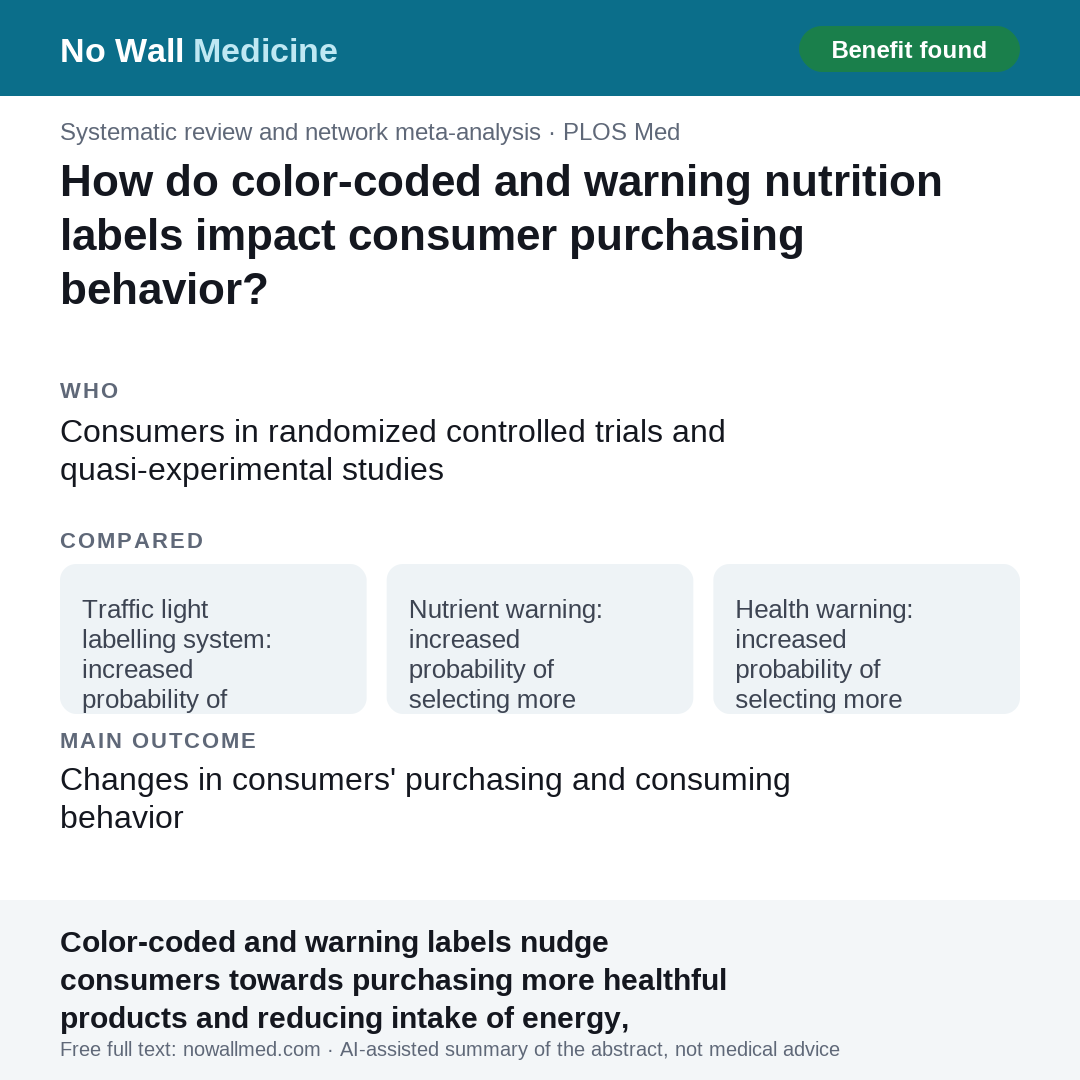
Impact of color-coded and warning nutrition labelling schemes: A systematic review and network meta-analysis
Systematic review and network meta-analysisBenefit found
How do color-coded and warning nutrition labels impact consumer purchasing behavior?
Who
Consumers in randomized controlled trials and quasi-experimental studies
Compared
Traffic light labelling system: increased probability of selecting more healthful products OR 1.5 (95% CI 1.2, 1.87)
Nutrient warning: increased probability of selecting more healthful products OR 3.61 (95% CI 2.82, 4.63)
Health warning: increased probability of selecting more healthful products OR 1.65 (95% CI 1.32, 2.06)
Main outcome
Changes in consumers' purchasing and consuming behavior
Bottom line: Color-coded and warning labels nudge consumers towards purchasing more healthful products and reducing intake of energy, sodium, fat, and saturated fat.
Limitation: High heterogeneity, limited real-world studies, and lack of long-term impact assessments.
PLOS Med · 2021-10-05Download image
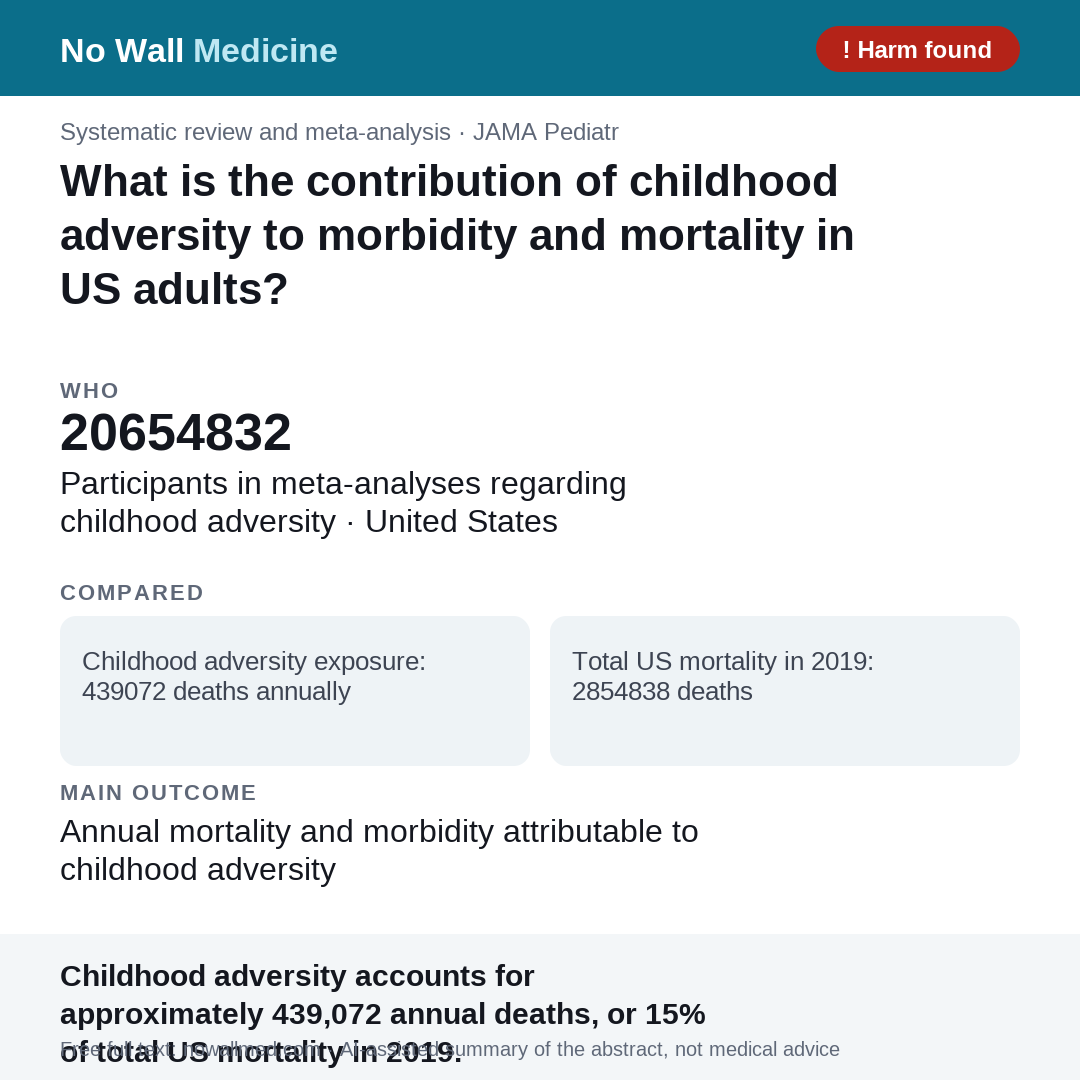
Association of Childhood Adversity With Morbidity and Mortality in US Adults: A Systematic Review
Systematic review and meta-analysisHarm found
What is the contribution of childhood adversity to morbidity and mortality in US adults?
Who
20654832
Participants in meta-analyses regarding childhood adversity · United States
Compared
Childhood adversity exposure: 439072 deaths annually
Total US mortality in 2019: 2854838 deaths
Main outcome
Annual mortality and morbidity attributable to childhood adversity
Bottom line: Childhood adversity accounts for approximately 439,072 annual deaths, or 15% of total US mortality in 2019.
JAMA Pediatr · 2021-10-05Download image
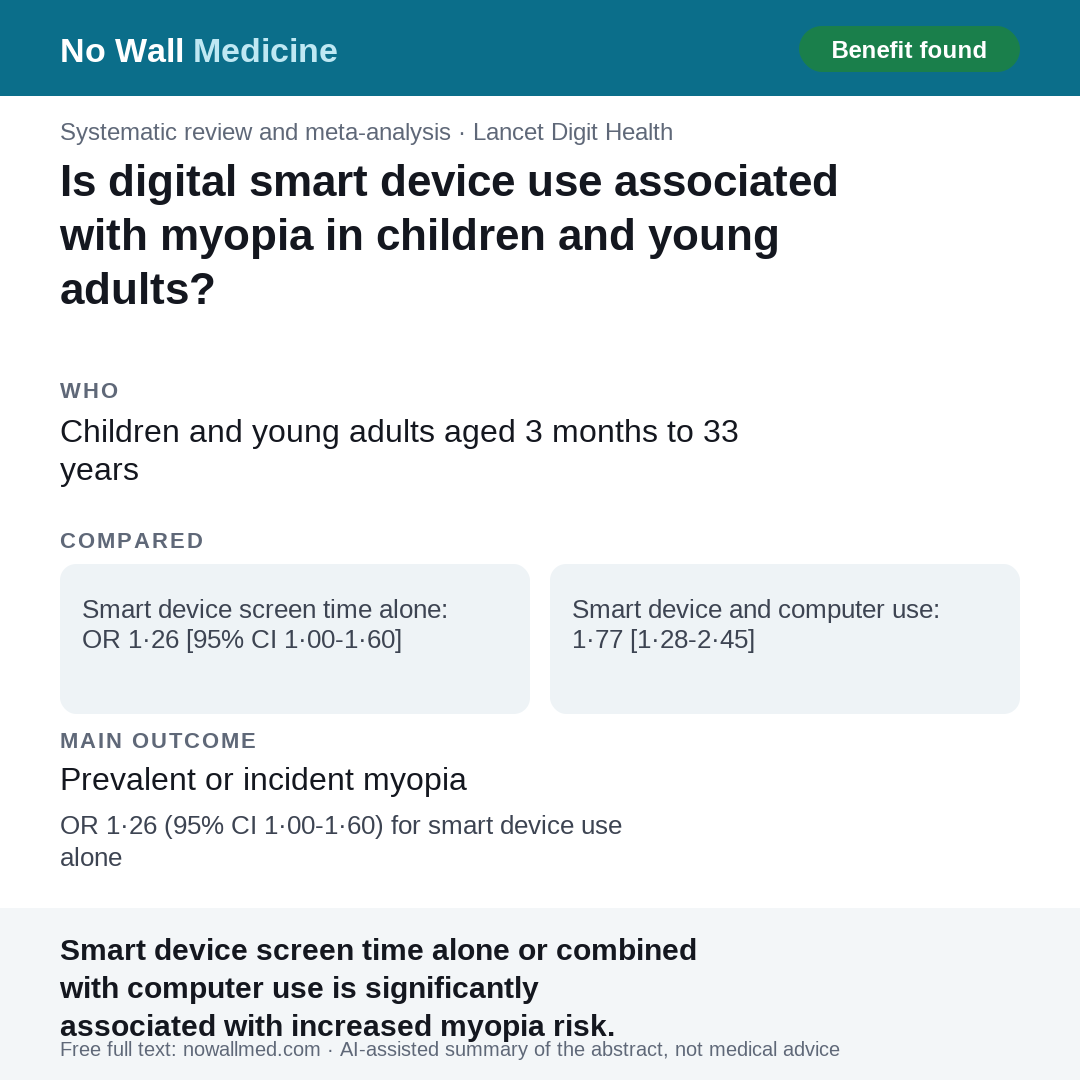
Association between digital smart device use and myopia: a systematic review and meta-analysis
Systematic review and meta-analysisKey finding
Is digital smart device use associated with myopia in children and young adults?
Who
Children and young adults aged 3 months to 33 years
Compared
Smart device screen time alone: OR 1·26 [95% CI 1·00-1·60]
Smart device and computer use: 1·77 [1·28-2·45]
Main outcome
Prevalent or incident myopia
Result: OR 1·26 (95% CI 1·00-1·60) for smart device use alone
Bottom line: Smart device screen time alone or combined with computer use is significantly associated with increased myopia risk.
Limitation: Studies lacked reliable measures of screen time and objective myopia measurements.
Lancet Digit Health · 2021-10-05Download image
Long-term reproductive outcomes in patients with unexplained infertility: follow-up of the Fast Track and Standard Treatment Trial participants
Telephone survey follow-up of a randomized trialBenefit found
What are the long-term reproductive outcomes for couples with unexplained infertility?
Who
286
Couples enrolled in the Fast Track and Standard Treatment Trial · Large urban university-affiliated fertility center
Compared
Participants: 80.9% achieved a live birth after trial
6.6%Never achieved live birth
Main outcome
Number of live births and methods of conception
Bottom line: The majority of couples achieved a live birth following the trial, with only 6.6% never achieving one.
Fertil Steril · 2021-10-05Download image

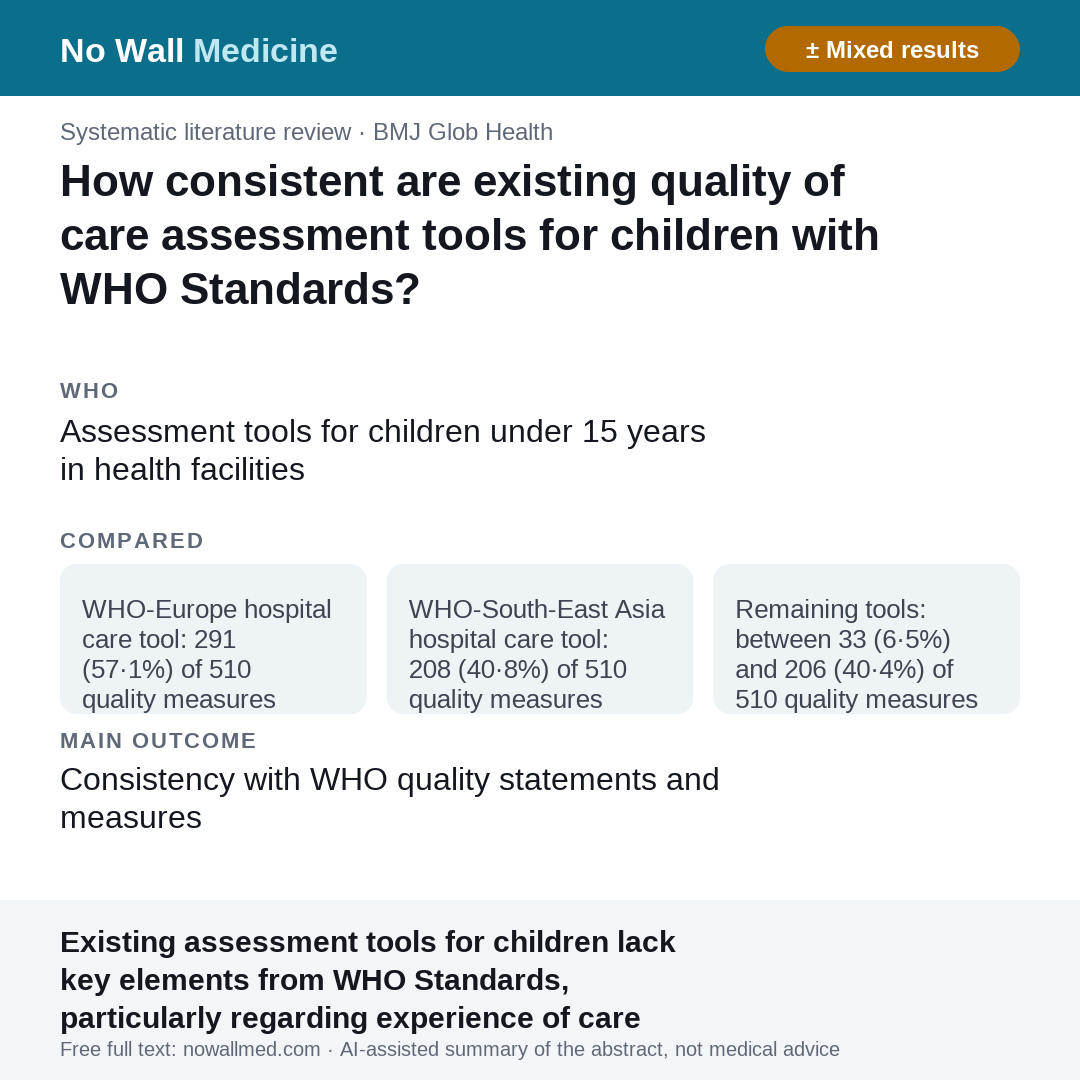
Assessing the quality of care for children attending health facilities: a systematic review of assessment tools
Systematic literature reviewMixed results
How consistent are existing quality of care assessment tools for children with WHO Standards?
Who
Assessment tools for children under 15 years in health facilities
Compared
WHO-Europe hospital care tool: 291 (57·1%) of 510 quality measures
WHO-South-East Asia hospital care tool: 208 (40·8%) of 510 quality measures
Remaining tools: between 33 (6·5%) and 206 (40·4%) of 510 quality measures
Main outcome
Consistency with WHO quality statements and measures
Bottom line: Existing assessment tools for children lack key elements from WHO Standards, particularly regarding experience of care and children's rights.
BMJ Glob Health · 2021-10-05Download image
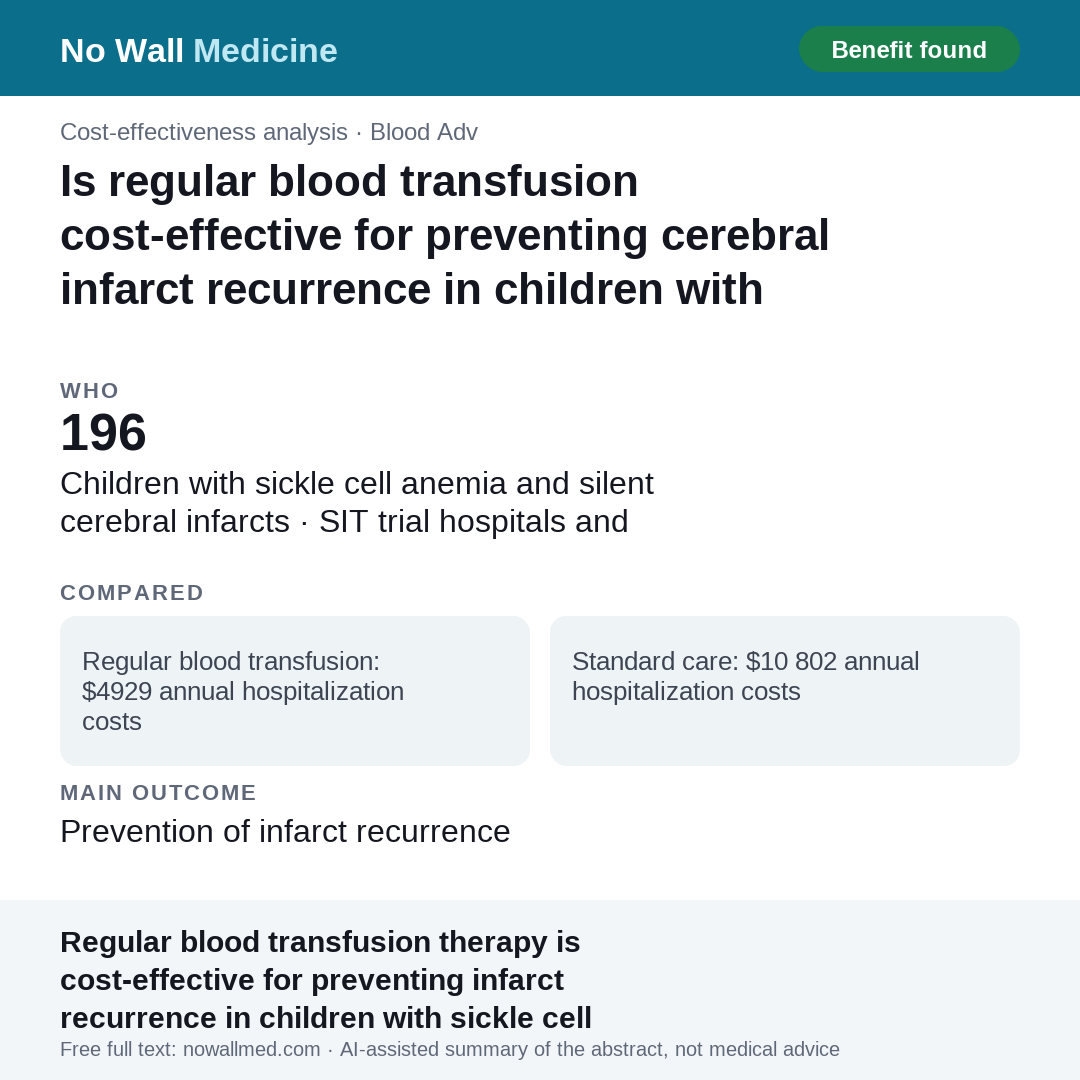
Economic evaluation of regular transfusions for cerebral infarct recurrence in the Silent Cerebral Infarct Transfusion Trial
Cost-effectiveness analysisBenefit found
Is regular blood transfusion cost-effective for preventing cerebral infarct recurrence in children with sickle cell anemia?
Who
196
Children with sickle cell anemia and silent cerebral infarcts · SIT trial hospitals and outpatient sites
Compared
Regular blood transfusion: $4929 annual hospitalization costs
Standard care: $10 802 annual hospitalization costs
Main outcome
Prevention of infarct recurrence
Bottom line: Regular blood transfusion therapy is cost-effective for preventing infarct recurrence in children with sickle cell anemia.
Blood Adv · 2021-10-05Download image
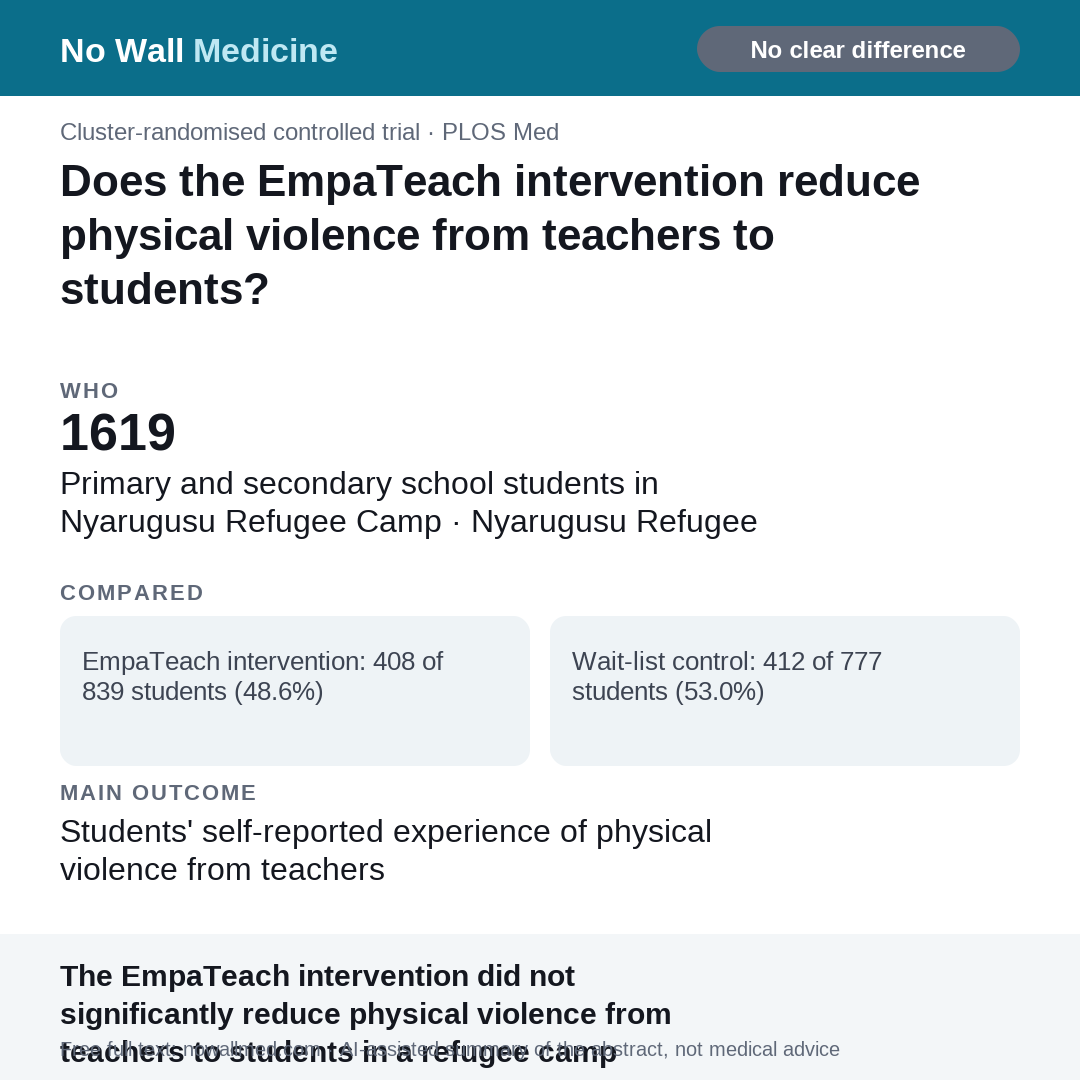
The EmpaTeach intervention for reducing physical violence from teachers to students in Nyarugusu Refugee Camp: A cluster-randomised controlled trial
Cluster-randomised controlled trialNo clear difference
Does the EmpaTeach intervention reduce physical violence from teachers to students?
Who
1619
Primary and secondary school students in Nyarugusu Refugee Camp · Nyarugusu Refugee Camp, Tanzania
Compared
EmpaTeach intervention: 408 of 839 students (48.6%)
Wait-list control: 412 of 777 students (53.0%)
Main outcome
Students' self-reported experience of physical violence from teachers
Result: risk ratio 0.91 (95% CI 0.80 to 1.02)
Bottom line: The EmpaTeach intervention did not significantly reduce physical violence from teachers to students in a refugee camp setting.
Limitation: Small number of schools limited statistical power to detect small differences.
PLOS Med · 2021-10-04Download image
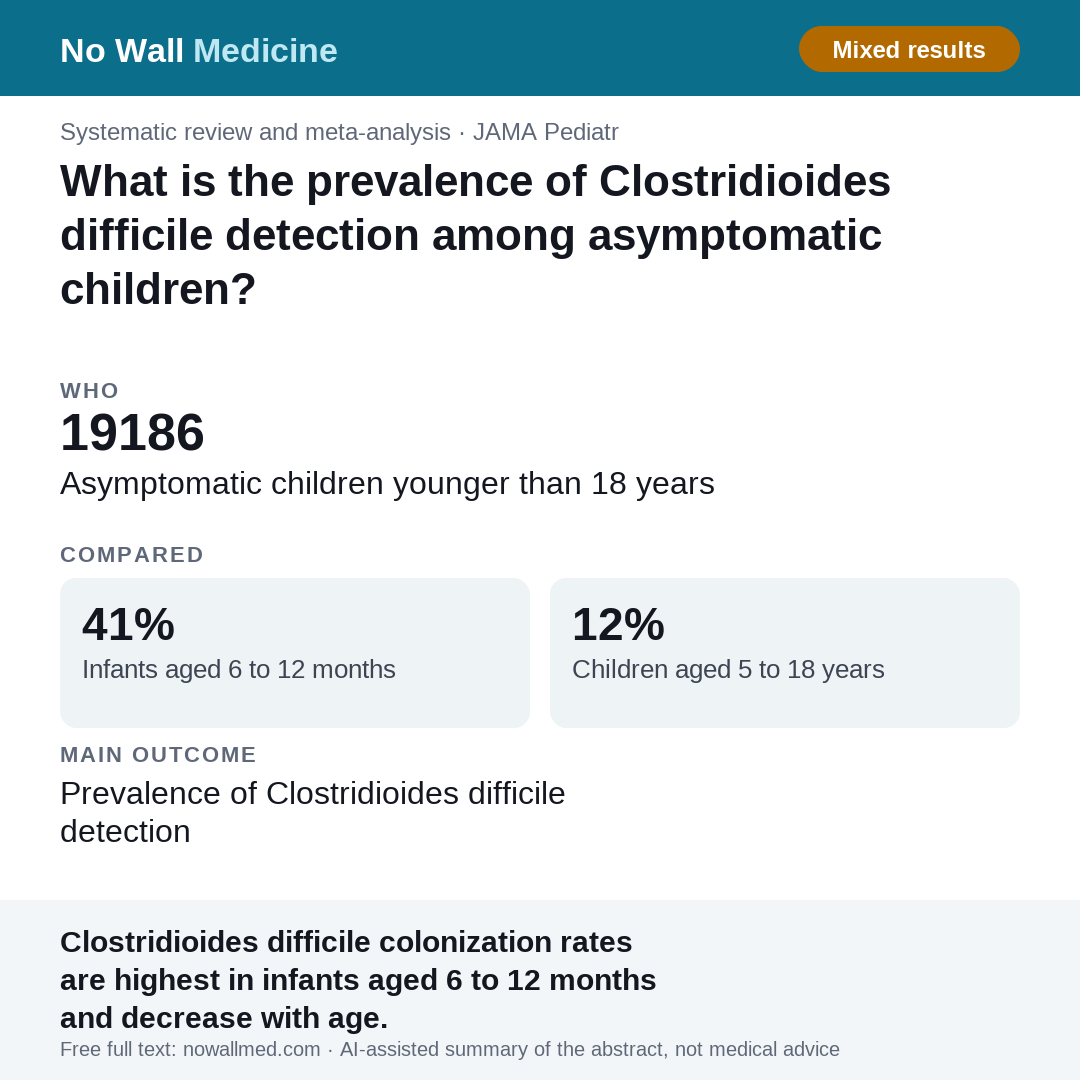
Prevalence of Detection of Clostridioides difficile Among Asymptomatic Children: A Systematic Review and Meta-analysis
Systematic review and meta-analysisMixed results
What is the prevalence of Clostridioides difficile detection among asymptomatic children?
Who
19186
Asymptomatic children younger than 18 years
Compared
41%Infants aged 6 to 12 months (95% CI, 32%-50%)
12%Children aged 5 to 18 years (95% CI, 7%-18%)
Main outcome
Prevalence of Clostridioides difficile detection
Bottom line: Clostridioides difficile colonization rates are highest in infants aged 6 to 12 months and decrease with age.
JAMA Pediatr · 2021-10-04Download image
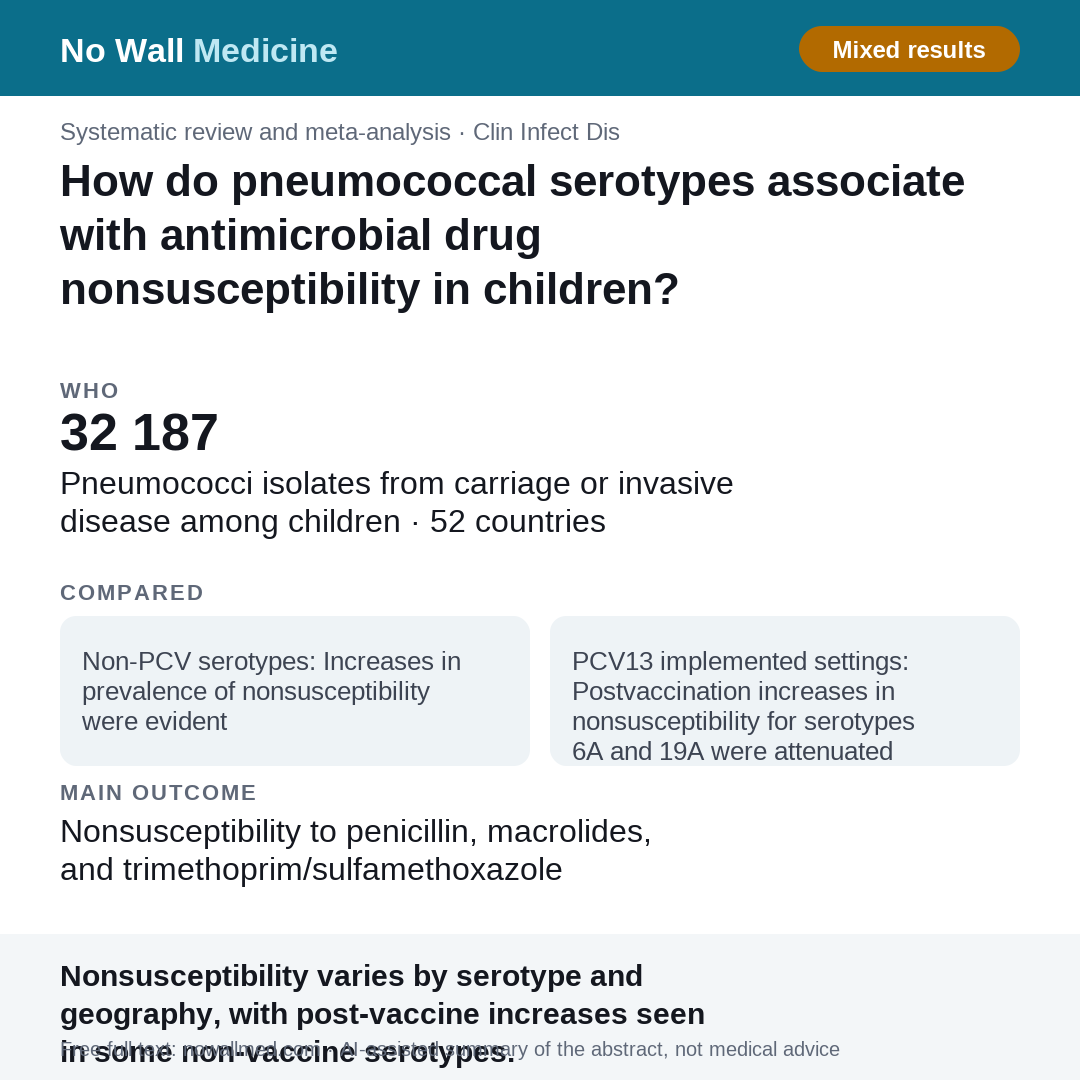
Association of Pneumococcal Serotype With Susceptibility to Antimicrobial Drugs: A Systematic Review and Meta-analysis
Systematic review and meta-analysisMixed results
How do pneumococcal serotypes associate with antimicrobial drug nonsusceptibility in children?
Who
32 187
Pneumococci isolates from carriage or invasive disease among children · 52 countries
Compared
Non-PCV serotypes: Increases in prevalence of nonsusceptibility were evident
PCV13 implemented settings: Postvaccination increases in nonsusceptibility for serotypes 6A and 19A were attenuated
Main outcome
Nonsusceptibility to penicillin, macrolides, and trimethoprim/sulfamethoxazole
Bottom line: Nonsusceptibility varies by serotype and geography, with post-vaccine increases seen in some non-vaccine serotypes.
Clin Infect Dis · 2021-10-03Download image
Pathogen-Specific Effects of Probiotics in Children With Acute Gastroenteritis Seeking Emergency Care: A Randomized Trial
Multicenter randomized, placebo controlled trialsNo clear difference
Do probiotics exert pathogen-specific effects in children with acute gastroenteritis?
Who
1565
Children 3-48 months with acute gastroenteritis · Pediatric emergency departments in Canada and the United States
Compared
Probiotic
Placebo
Main outcome
Post-intervention moderate-to-severe disease
Bottom line: Probiotics did not result in less severe disease compared to placebo across common etiologic pathogens in children.
Clin Infect Dis · 2021-10-02Download image

Bleeding assessment tools in the diagnosis of VWD in adults and children: a systematic review and meta-analysis of test accuracy
Meta-analysis of 7 studiesUnclear result
Do bleeding tools diagnose VWD accurately
Who
adult and pediatric patients
Compared
Bleeding assessment tools
Standard diagnosis
Main outcome
diagnosis of VWD
Result: sensitivity 75% (95% CI 66-83), specificity 54% (29-77)
Bottom line: Bleeding tools help diagnose VWD
Blood Adv · 2021-10-02Download image

Risk of Self-harm in Children and Adults With Autism Spectrum Disorder: A Systematic Review and Meta-analysis
Systematic review and meta-analysisKey finding
What is the risk of self-injurious behavior and suicidality in people with autism spectrum disorder?
Who
Children and adults with autism spectrum disorder
Compared
Autism spectrum disorder
Control
Main outcome
Self-injurious behavior and suicidality
Result: self-injurious behavior OR 3.18 (95% CI, 2.45-4.12); suicidality OR 3.32 (95% CI, 2.60-4.24)
Bottom line: Autism spectrum disorder is associated with a substantial increase in odds of self-injurious behavior and suicidality.
JAMA Netw Open · 2021-10-01Download image