Visual abstracts
New randomized trials and meta-analyses from leading journals at a glance: who was studied, what was compared, and what was found. Every paper is free to read in full.
All specialtiesCardiology 4763Oncology 4042Gastroenterology & Hepatology 1902Infectious Disease 3756Neurology 1872Psychiatry & Mental Health 2214Pulmonology 2042Critical Care 1319Endocrinology & Diabetes 2544Pediatrics 2889Surgery 2479Orthopedics & Sports Medicine 917Neurosurgery 525Cardiothoracic & Vascular Surgery 656Plastic & Reconstructive Surgery 574Nephrology 1107Rheumatology 810Hematology 1090Dermatology 611Ophthalmology 532Obstetrics & Gynecology 1645Public & Global Health 1037Radiology & Imaging 617Anesthesiology 957Urology 745ENT (Otolaryngology) 494Emergency Medicine 481Allergy & Immunology 309Geriatrics 972Family Medicine & Primary Care 533Medical Genetics & Genomics 659Pathology & Laboratory Medicine 156Physical Medicine & Rehabilitation 734Palliative Care 421Nutrition 1560Digital Health & AI 2133General Medicine 318
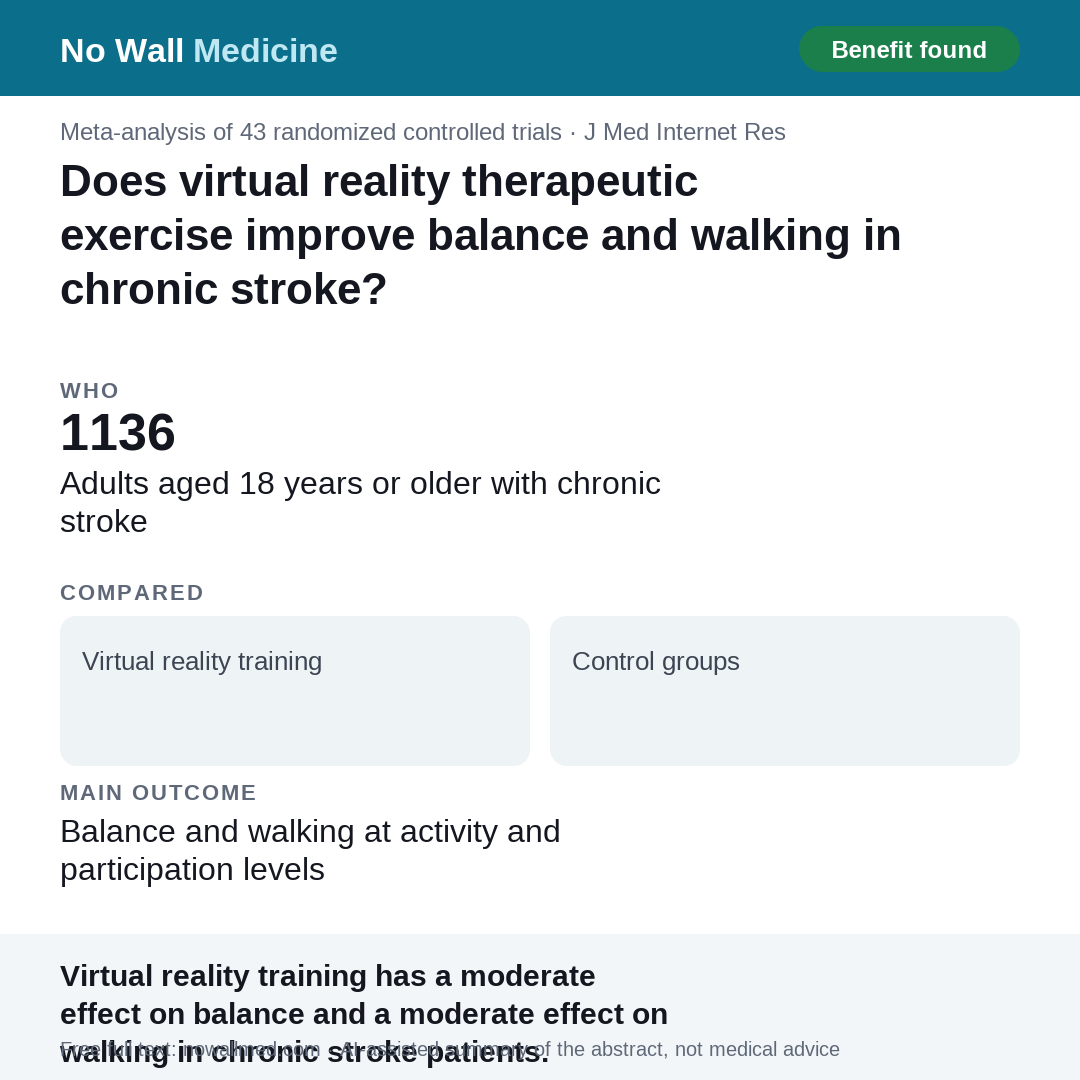
The Effectiveness of Therapeutic Exercise Interventions With Virtual Reality on Balance and Walking Among Persons With Chronic Stroke: Systematic Review, Meta-Analysis, and Meta-Regression of Randomized Controlled Trials
Meta-analysis of 43 randomized controlled trialsBenefit found
Does virtual reality therapeutic exercise improve balance and walking in chronic stroke?
Who
1136
Adults aged 18 years or older with chronic stroke
Compared
Virtual reality training
Control groups
Main outcome
Balance and walking at activity and participation levels
Result: standardized mean difference 0.51 (95% CI 0.29-0.72) for balance; standardized mean difference 0.31 (95% CI 0.09-0.53) for walking
Bottom line: Virtual reality training has a moderate effect on balance and a moderate effect on walking in chronic stroke patients.
J Med Internet Res · 2024-12-02Download image
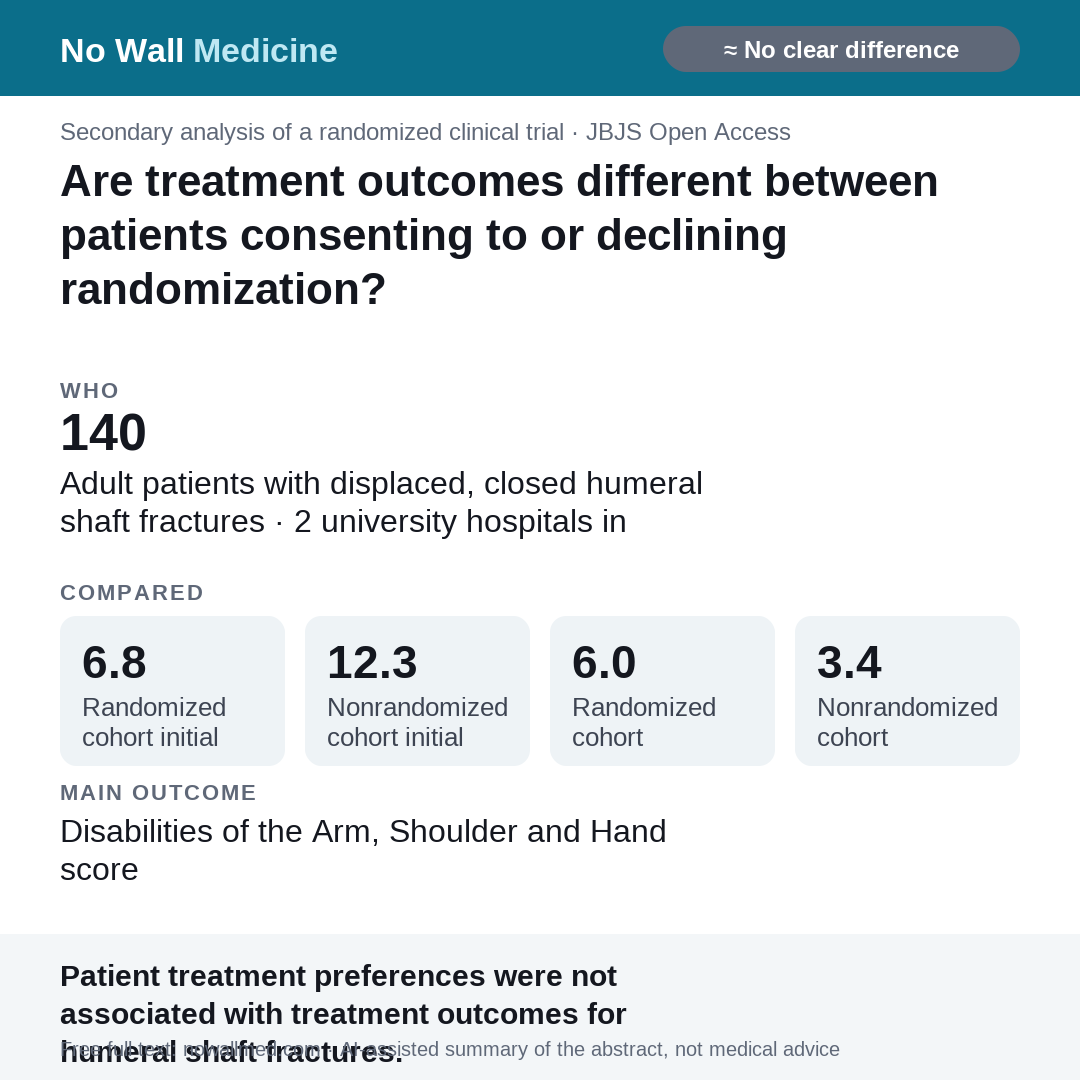
Comparing Treatment Outcomes of Eligible Patients Consenting to or Declining Randomization in a Randomized Clinical Trial: A Secondary Analysis of the FISH Trial on Humeral Shaft Fractures
Secondary analysis of a randomized clinical trialNo clear difference
Are treatment outcomes different between patients consenting to or declining randomization?
Who
140
Adult patients with displaced, closed humeral shaft fractures · 2 university hospitals in Finland
Compared
6.8Randomized cohort initial surgery (95% CI, 2.3 to 11.4)
12.3Nonrandomized cohort initial surgery (95% CI, 0.3 to 24.3)
6.0Randomized cohort functional bracing (95% CI, 1.0 to 11.0)
3.4Nonrandomized cohort functional bracing (95% CI, 0 to 9.3)
Main outcome
Disabilities of the Arm, Shoulder and Hand score
Bottom line: Patient treatment preferences were not associated with treatment outcomes for humeral shaft fractures.
JBJS Open Access · 2024-12-02Download image
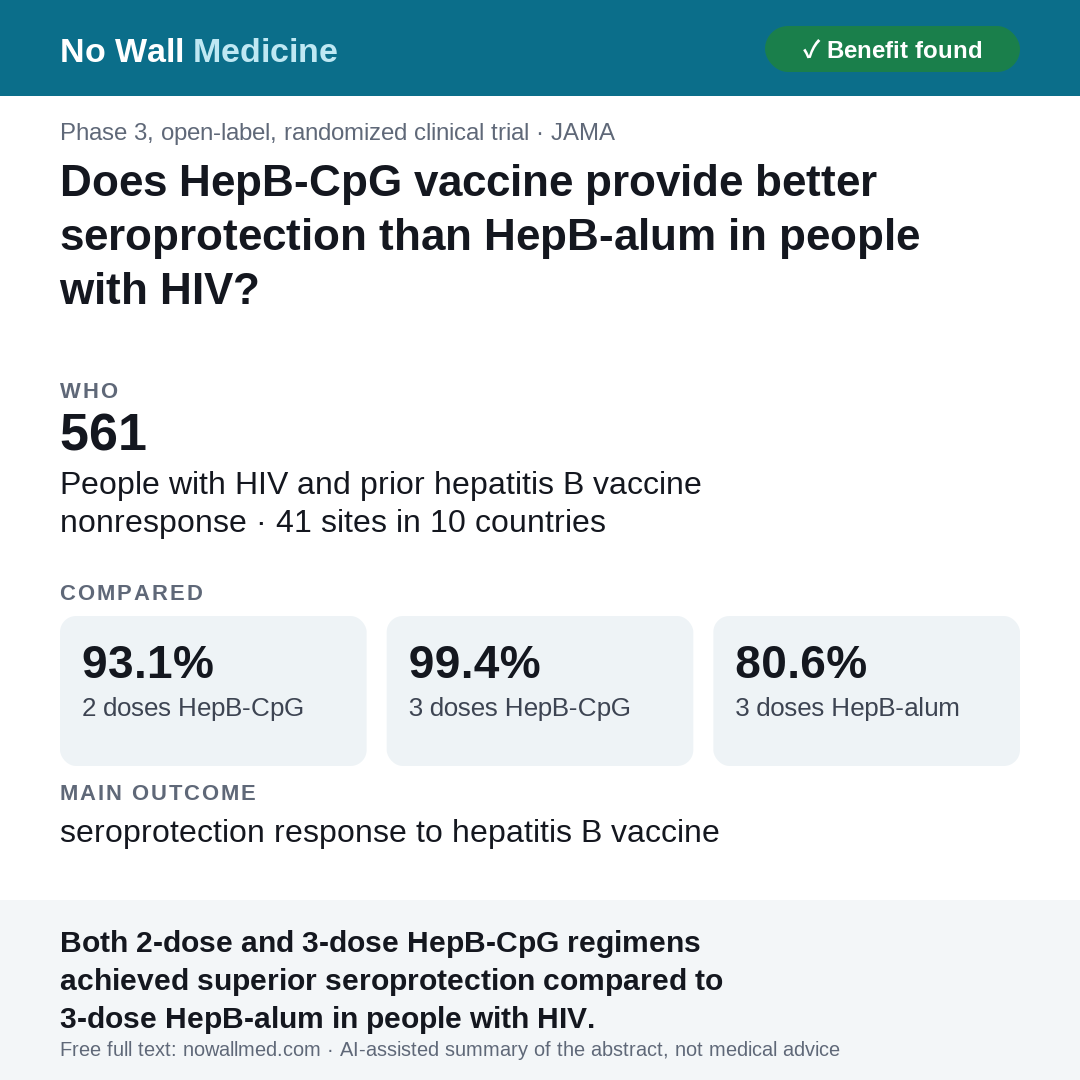
HepB-CpG vs HepB-Alum Vaccine in People With HIV and Prior Vaccine Nonresponse: The BEe-HIVe Randomized Clinical Trial
Phase 3, open-label, randomized clinical trialBenefit found
Does HepB-CpG vaccine provide better seroprotection than HepB-alum in people with HIV?
Who
561
People with HIV and prior hepatitis B vaccine nonresponse · 41 sites in 10 countries
Compared
93.1%2 doses HepB-CpG
99.4%3 doses HepB-CpG
80.6%3 doses HepB-alum
Main outcome
seroprotection response to hepatitis B vaccine
Result: stratified difference 12.5% (97.5% CI, 4.1%-20.9%)
Bottom line: Both 2-dose and 3-dose HepB-CpG regimens achieved superior seroprotection compared to 3-dose HepB-alum in people with HIV.
JAMA · 2024-12-01Download image
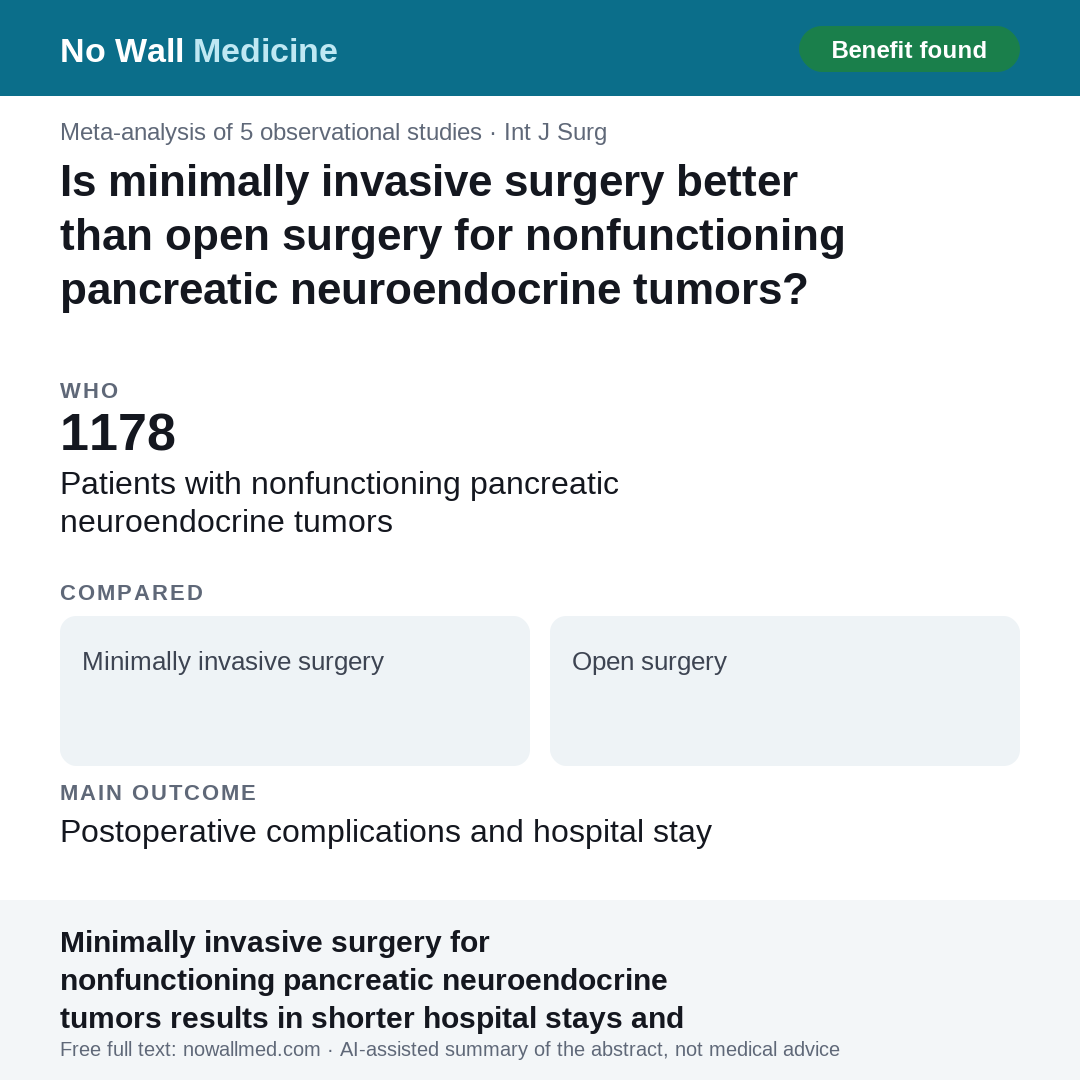
Minimally invasive versus open surgery for nonfunctioning pancreatic neuroendocrine tumors: a systematic review and meta-analysis
Meta-analysis of 5 observational studiesNo clear difference
Minimally invasive versus open surgery for nonfunctioning pancreatic neuroendocrine tumors
Who
1178
Patients with nonfunctioning pancreatic neuroendocrine tumors undergoing surgery
Compared
Minimally invasive surgery
Open surgery
Main outcome
Overall postoperative complications
Result: OR=0.78, 95% CI [0.59-1.03]
Bottom line: Minimally invasive surgery was associated with shorter hospital stay and less blood loss, but no difference in complications.
Int J Surg · 2024-12-01Download image
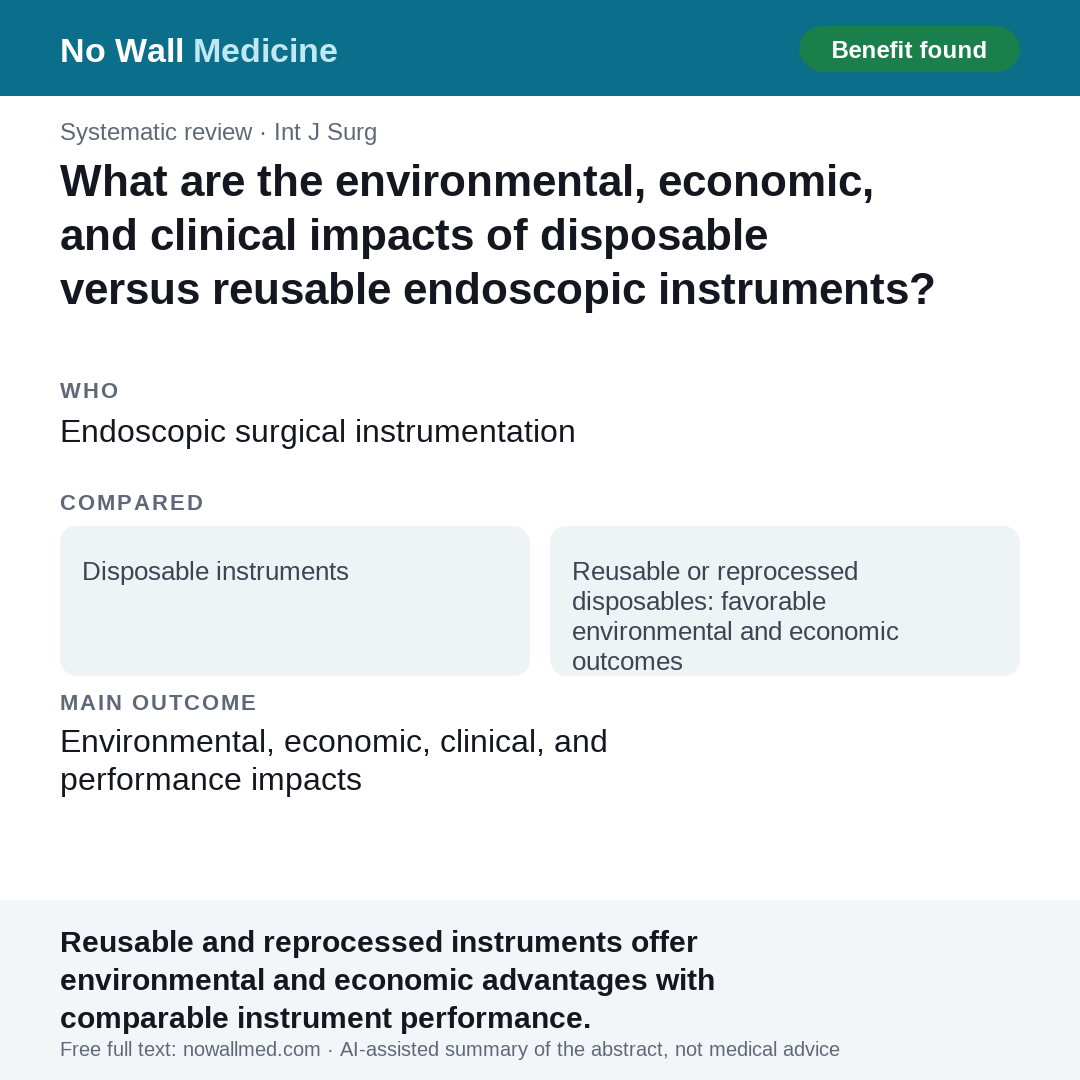
Beyond single-use: a systematic review of environmental, economic, and clinical impacts of endoscopic surgical instrumentation
Systematic reviewBenefit found
What are the environmental, economic, and clinical impacts of disposable versus reusable endoscopic instruments?
Who
Endoscopic surgical instrumentation
Compared
Disposable instruments
Reusable or reprocessed disposables: favorable environmental and economic outcomes
Main outcome
Environmental, economic, clinical, and performance impacts
Bottom line: Reusable and reprocessed instruments offer environmental and economic advantages with comparable instrument performance.
Int J Surg · 2024-12-01Download image
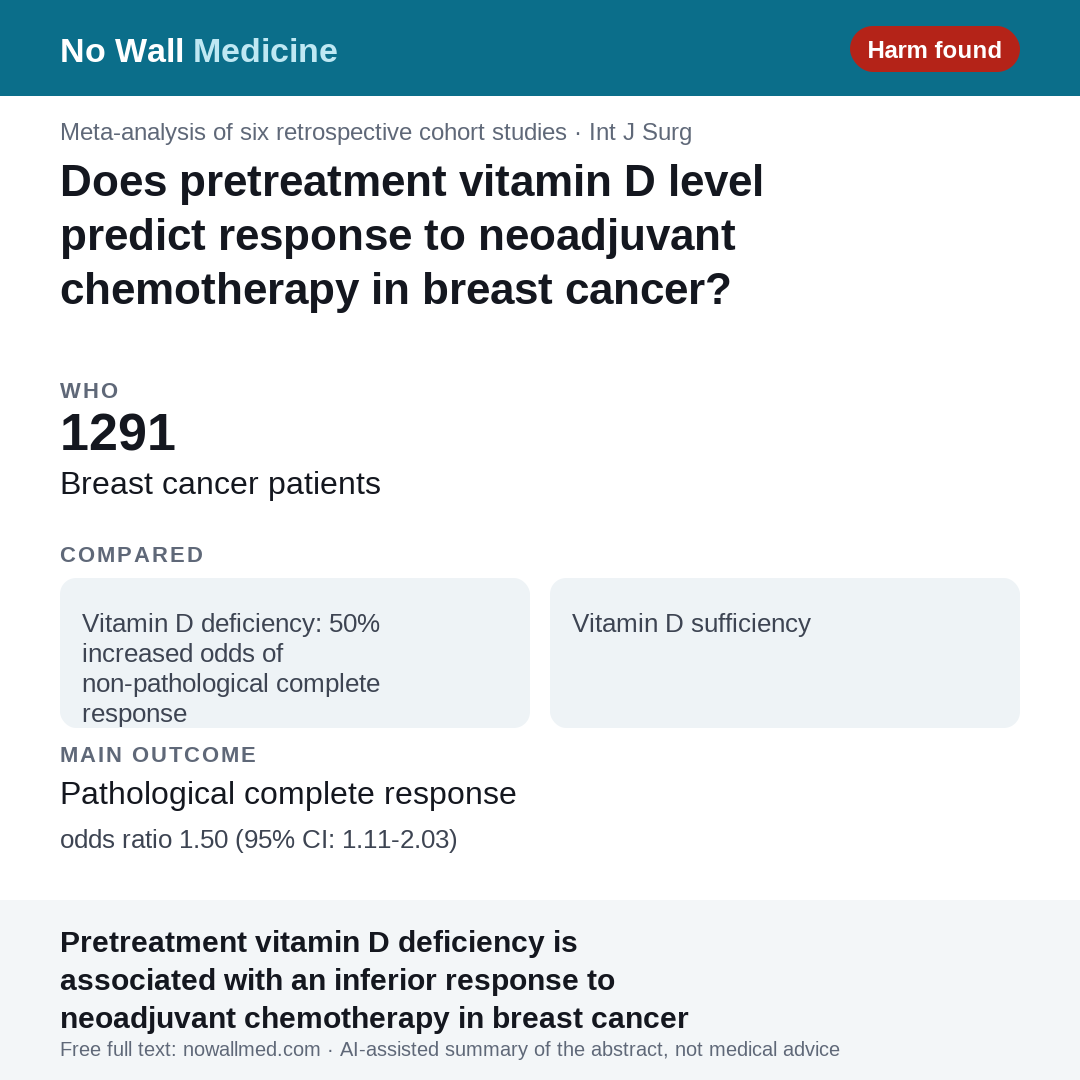
Pretreatment plasma vitamin D and response to neoadjuvant chemotherapy in breast cancer: evidence from pooled analysis of cohort studies
Meta-analysis of six retrospective cohort studiesKey finding
Does pretreatment vitamin D level predict response to neoadjuvant chemotherapy in breast cancer?
Who
1291
Breast cancer patients
Compared
Vitamin D deficiency: 50% increased odds of non-pathological complete response
Vitamin D sufficiency
Main outcome
Pathological complete response
Result: odds ratio 1.50 (95% CI: 1.11-2.03)
Bottom line: Pretreatment vitamin D deficiency is associated with an inferior response to neoadjuvant chemotherapy in breast cancer patients.
Int J Surg · 2024-12-01Download image
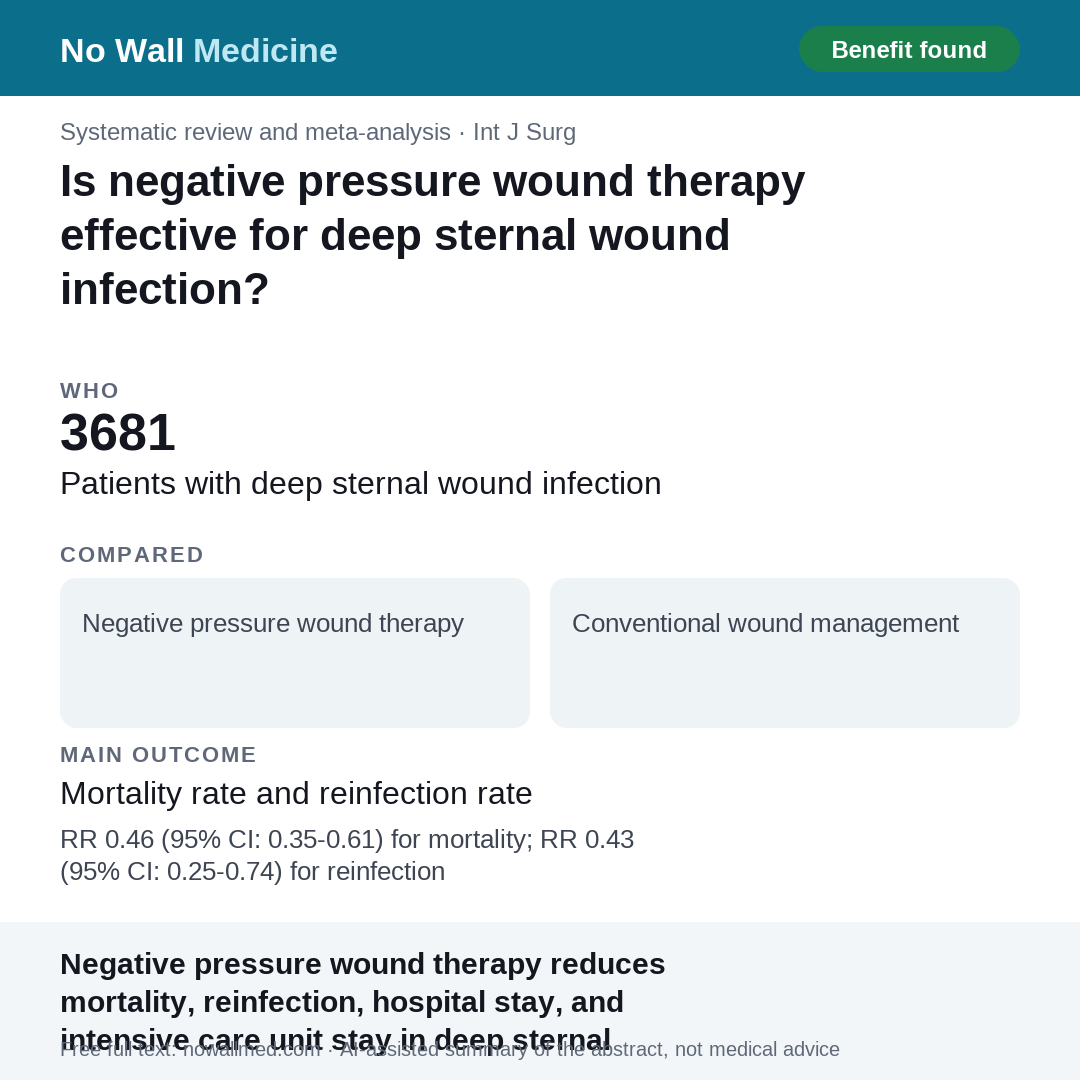
Effectiveness and safety of negative pressure wound therapy in patients with deep sternal wound infection: a systematic review and meta-analysis
Systematic review and meta-analysisBenefit found
Is negative pressure wound therapy effective for deep sternal wound infection?
Who
3681
Patients with deep sternal wound infection
Compared
Negative pressure wound therapy
Conventional wound management
Main outcome
Mortality rate and reinfection rate
Result: RR 0.46 (95% CI: 0.35-0.61) for mortality; RR 0.43 (95% CI: 0.25-0.74) for reinfection
Bottom line: Negative pressure wound therapy reduces mortality, reinfection, hospital stay, and intensive care unit stay in deep sternal wound infection.
Int J Surg · 2024-12-01Download image
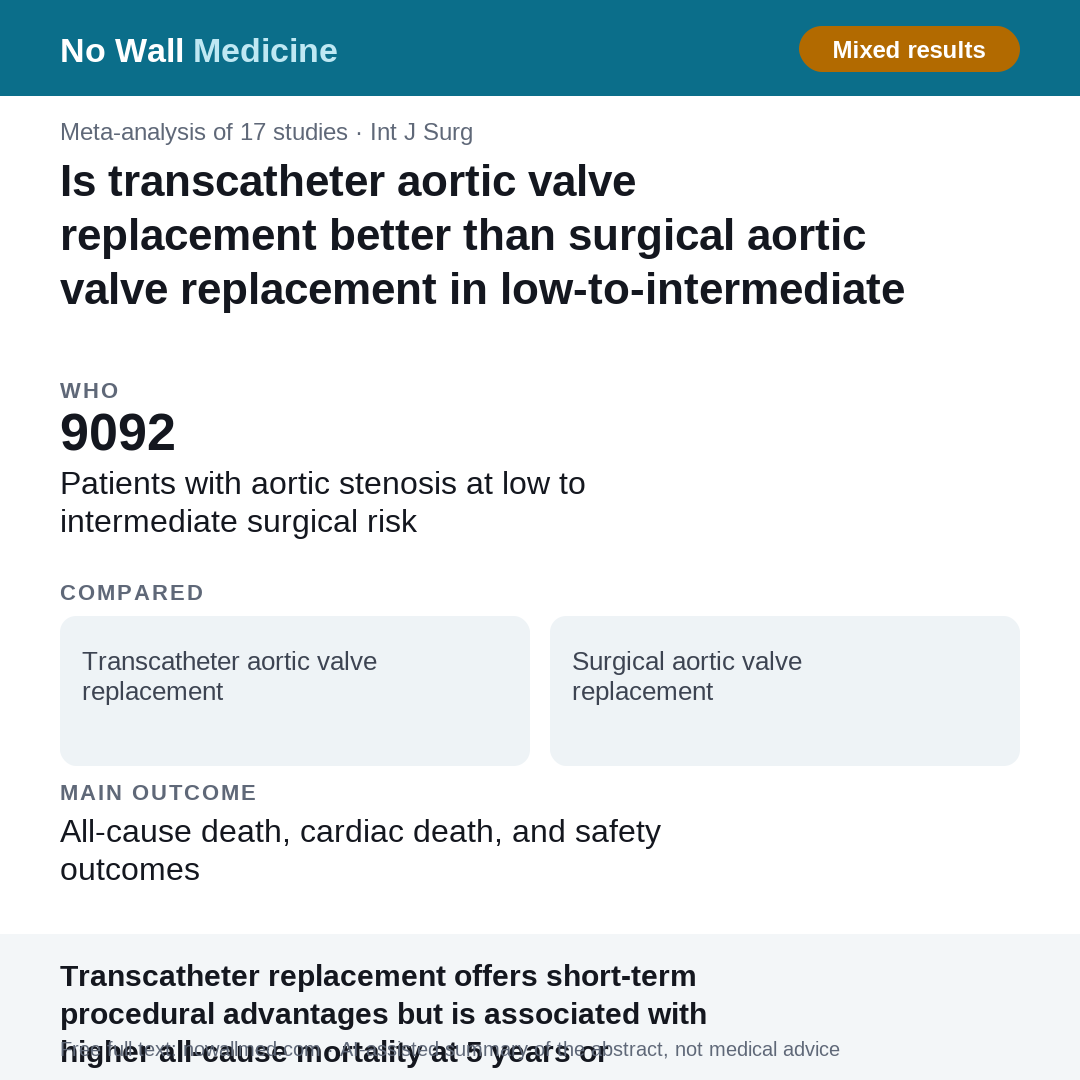
Meta-analysis of longitudinal comparison of transcatheter versus surgical aortic valve replacement in patients at low to intermediate surgical risk
Meta-analysis of 17 studiesMixed results
Is transcatheter aortic valve replacement better than surgical aortic valve replacement in low-to-intermediate risk patients?
Who
9092
Patients with aortic stenosis at low to intermediate surgical risk
Compared
Transcatheter aortic valve replacement
Surgical aortic valve replacement
Main outcome
All-cause death, cardiac death, and safety outcomes
Result: RR 1.13 (95% CI 1.03-1.23) for all-cause death at 5 years or longer
Bottom line: Transcatheter replacement offers short-term procedural advantages but is associated with higher all-cause mortality at 5 years or longer.
Int J Surg · 2024-12-01Download image
Impacts of immersive 3D videos on students' surgical learning compared to 2D videos: a randomized controlled trial
Randomized controlled trialMixed results
Does immersive 3D video improve surgical learning compared to 2D video?
Who
231
Fourth-year medical students
Compared
Immersive 3D video: lower knowledge retention score
2D video
Main outcome
knowledge retention, preparedness, and content engagement
Bottom line: 3D video improves engagement and preparedness but results in lower immediate knowledge retention than 2D video.
Limitation: The precise understanding of its pedagogical value required further investigation and refinement.
Int J Surg · 2024-12-01Download image

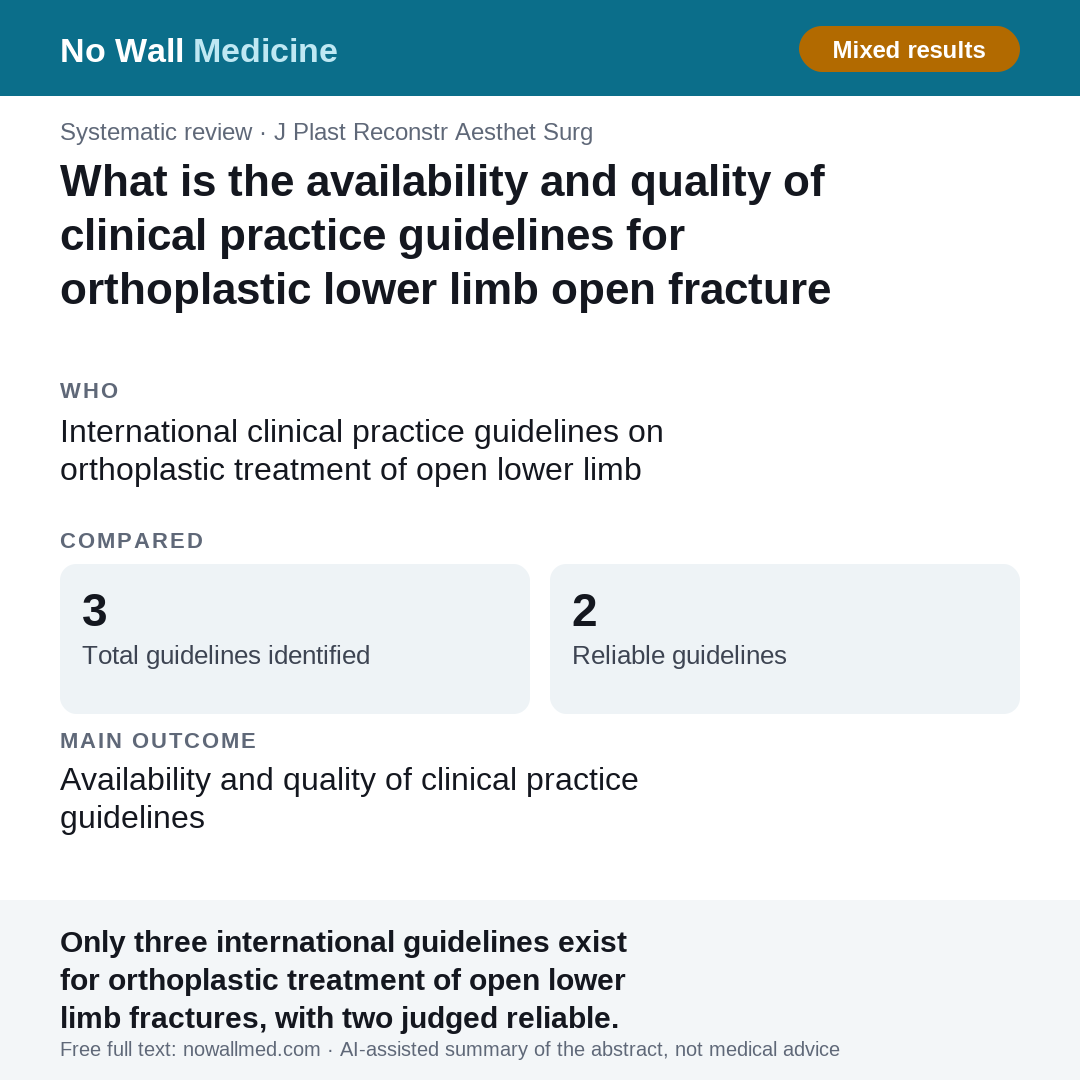
Availability and quality assessment of Clinical Practice Guidelines on orthoplastic surgery treatment of open fractures of the lower limb using AGREE II tool: A systematic review
Systematic reviewMixed results
What is the availability and quality of clinical practice guidelines for orthoplastic lower limb open fracture treatment?
Who
International clinical practice guidelines on orthoplastic treatment of open lower limb fractures · Major medical databases and gray literature
Compared
3Total guidelines identified
2Reliable guidelines
Main outcome
Availability and quality of clinical practice guidelines
Bottom line: Only three international guidelines exist for orthoplastic treatment of open lower limb fractures, with two judged reliable.
J Plast Reconstr Aesthet Surg · 2024-12-01Download image
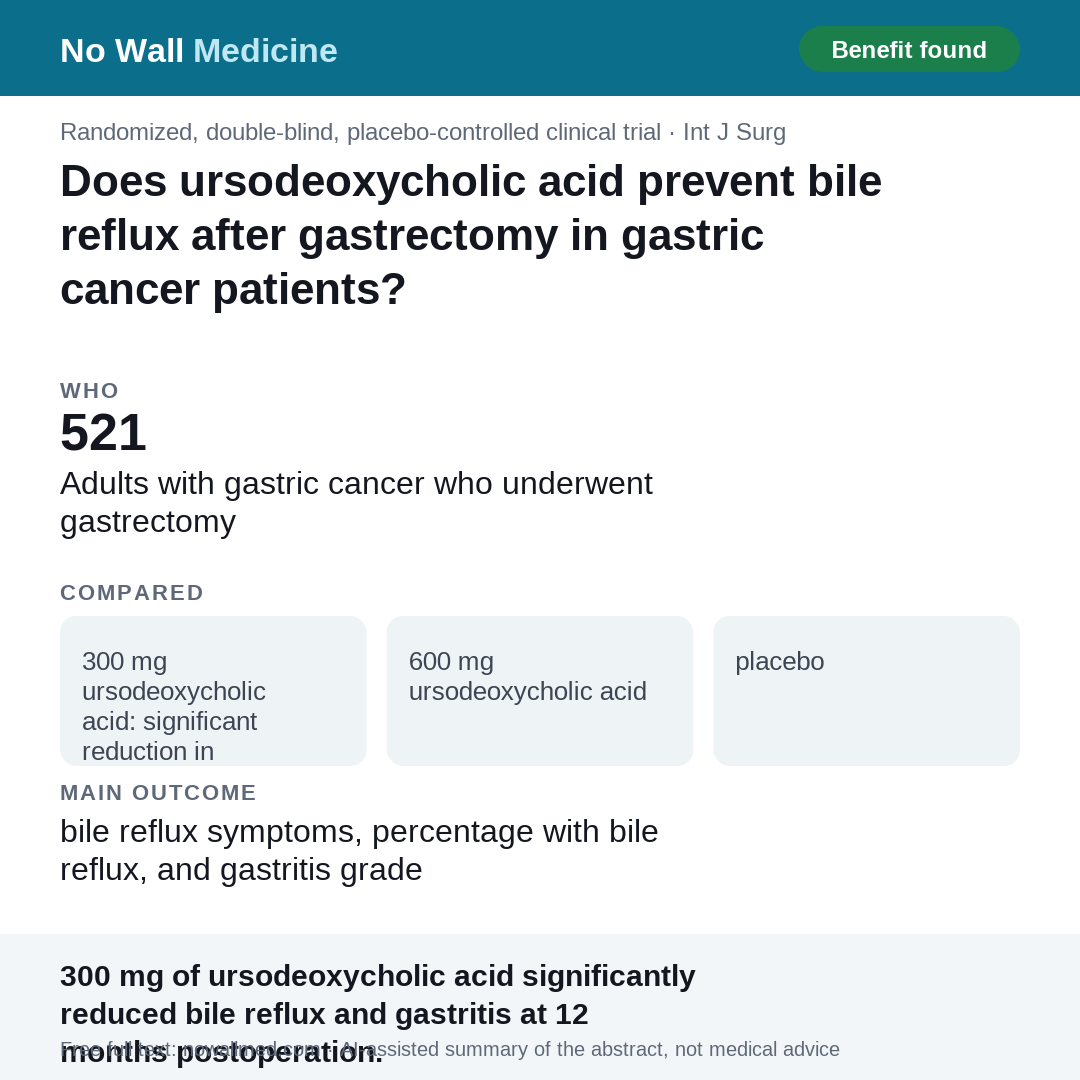
Efficacy of ursodeoxycholic acid for bile reflux after distal gastrectomy in patients with gastric cancer: a secondary analysis of the PEGASUS-D randomized clinical trial
Randomized, double-blind, placebo-controlled clinical trialBenefit found
Does ursodeoxycholic acid prevent bile reflux after gastrectomy in gastric cancer patients?
Who
521
Adults with gastric cancer who underwent gastrectomy
Compared
300 mg ursodeoxycholic acid: significant reduction in gastritis at 12 months
600 mg ursodeoxycholic acid
placebo
Main outcome
bile reflux symptoms, percentage with bile reflux, and gastritis grade
Result: odds ratio 0.44 (P =0.0076) for bile reflux in 300 mg group
Bottom line: 300 mg of ursodeoxycholic acid significantly reduced bile reflux and gastritis at 12 months postoperation.
Int J Surg · 2024-12-01Download image
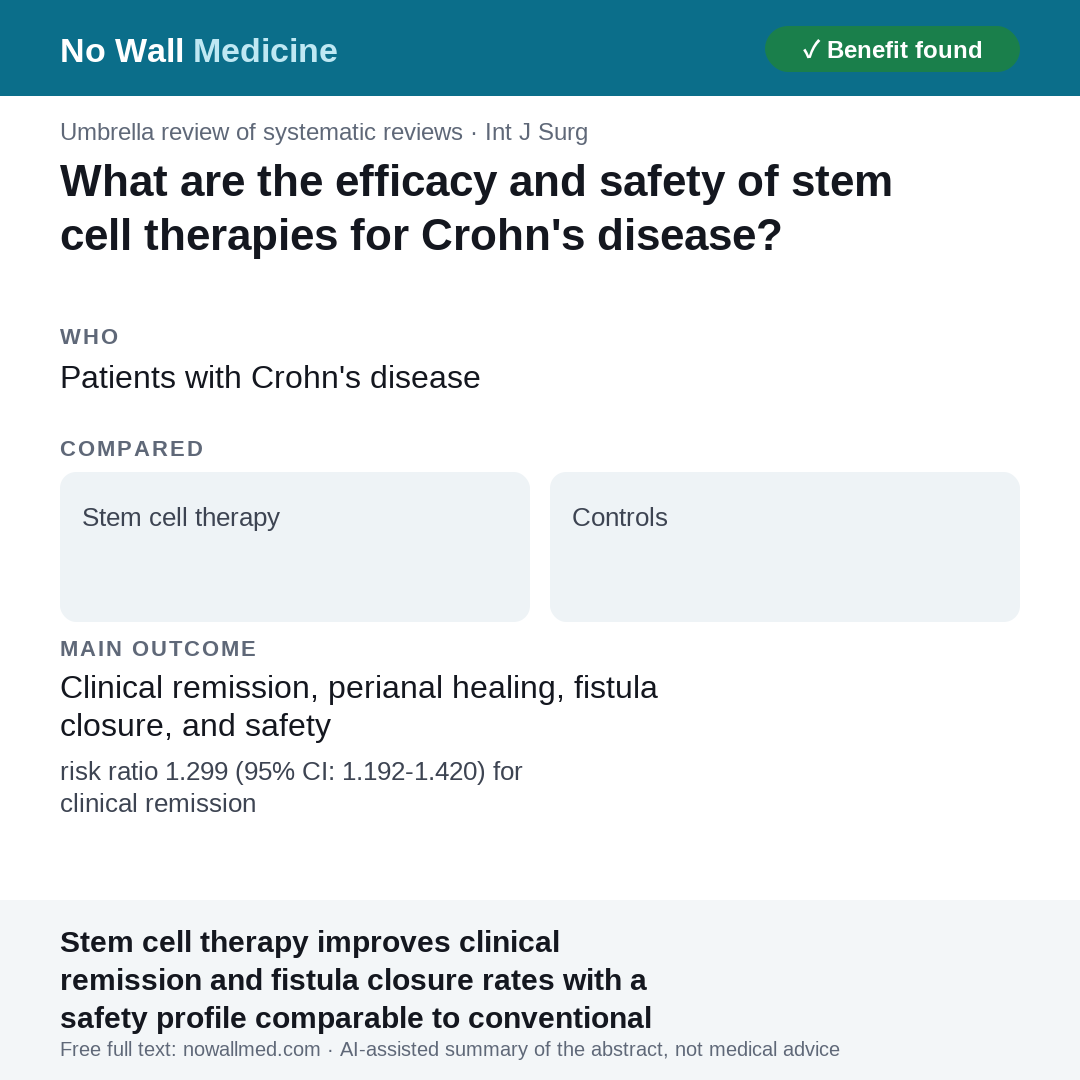
Safety and efficacy of stem cell therapy for Crohn's disease: an umbrella review of systematic reviews
Umbrella review of systematic reviewsBenefit found
What are the efficacy and safety of stem cell therapies for Crohn's disease?
Who
Patients with Crohn's disease
Compared
Stem cell therapy
Controls
Main outcome
Clinical remission, perianal healing, fistula closure, and safety
Result: risk ratio 1.299 (95% CI: 1.192-1.420) for clinical remission
Bottom line: Stem cell therapy improves clinical remission and fistula closure rates with a safety profile comparable to conventional therapies.
Int J Surg · 2024-12-01Download image
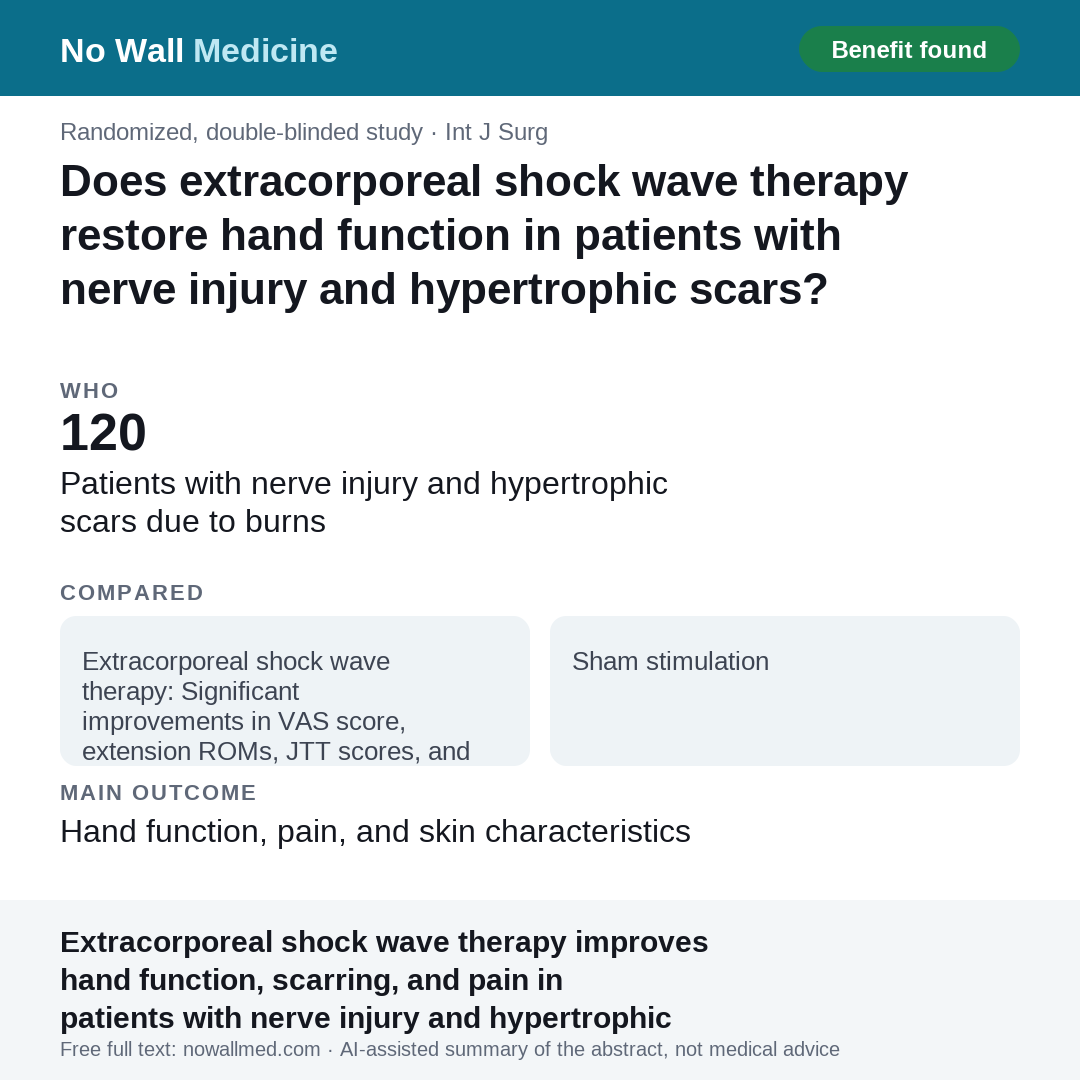
Clinical utility of extracorporeal shock wave therapy in restoring hand function of patients with nerve injury and hypertrophic scars due to burns: a prospective, randomized, double-blinded study
Randomized, double-blinded studyBenefit found
Does extracorporeal shock wave therapy restore hand function in patients with nerve injury and hypertrophic scars?
Who
120
Patients with nerve injury and hypertrophic scars due to burns
Compared
Extracorporeal shock wave therapy: Significant improvements in VAS score, extension ROMs, JTT scores, and skin characteristics
Sham stimulation
Main outcome
Hand function, pain, and skin characteristics
Bottom line: Extracorporeal shock wave therapy improves hand function, scarring, and pain in patients with nerve injury and hypertrophic scars.
Int J Surg · 2024-12-01Download image
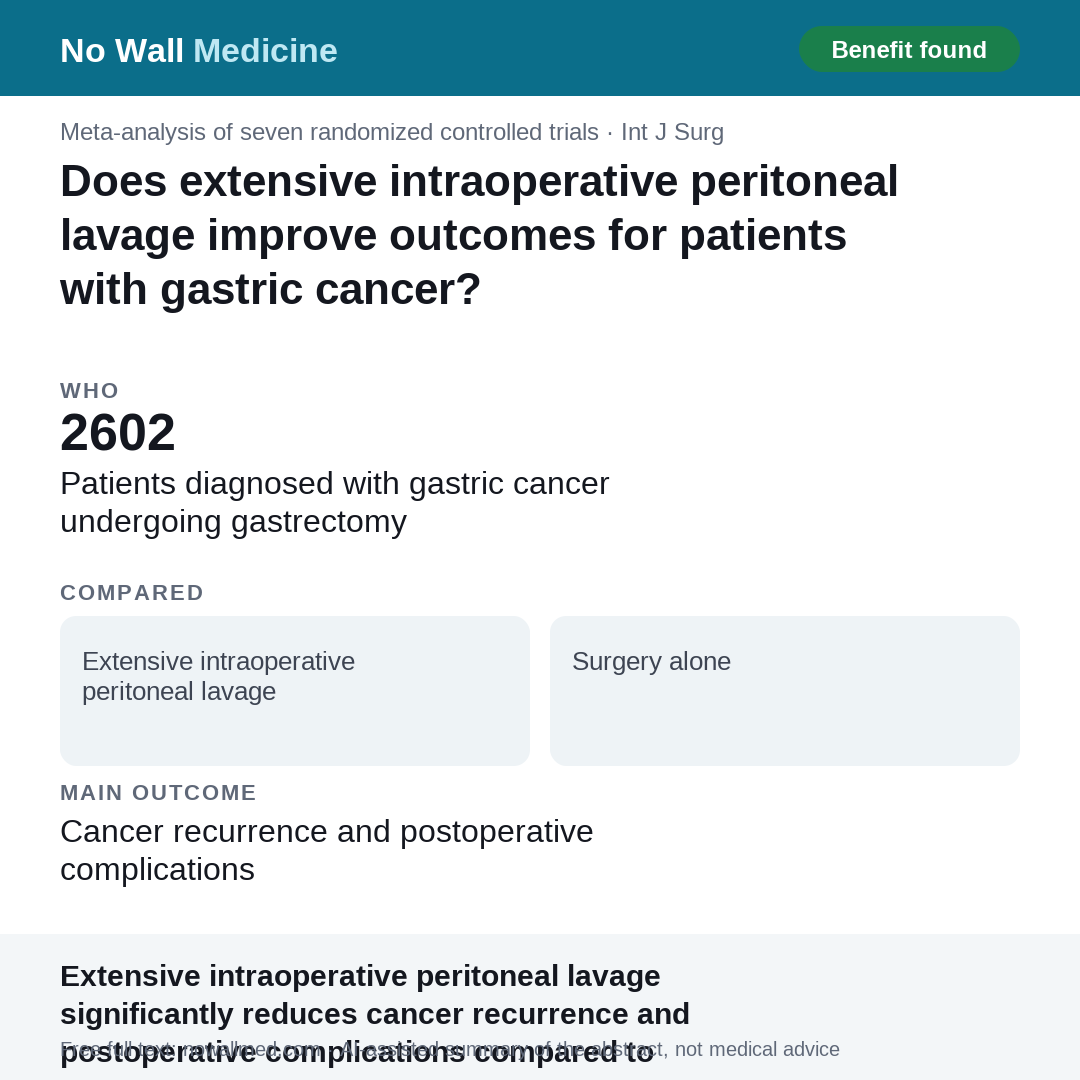
Extensive intraoperative peritoneal lavage with surgery, compared to surgery alone, for patients diagnosed with gastric cancer: a systematic review and meta-analysis of randomized controlled trials
Meta-analysis of seven randomized controlled trialsBenefit found
Does extensive intraoperative peritoneal lavage improve outcomes for patients with gastric cancer?
Who
2602
Patients diagnosed with gastric cancer undergoing gastrectomy
Compared
Extensive intraoperative peritoneal lavage
Surgery alone
Main outcome
Cancer recurrence and postoperative complications
Result: RR=0.73 (95% CI: 0.65-0.83) for recurrence
Bottom line: Extensive intraoperative peritoneal lavage significantly reduces cancer recurrence and postoperative complications compared to surgery alone.
Int J Surg · 2024-12-01Download image
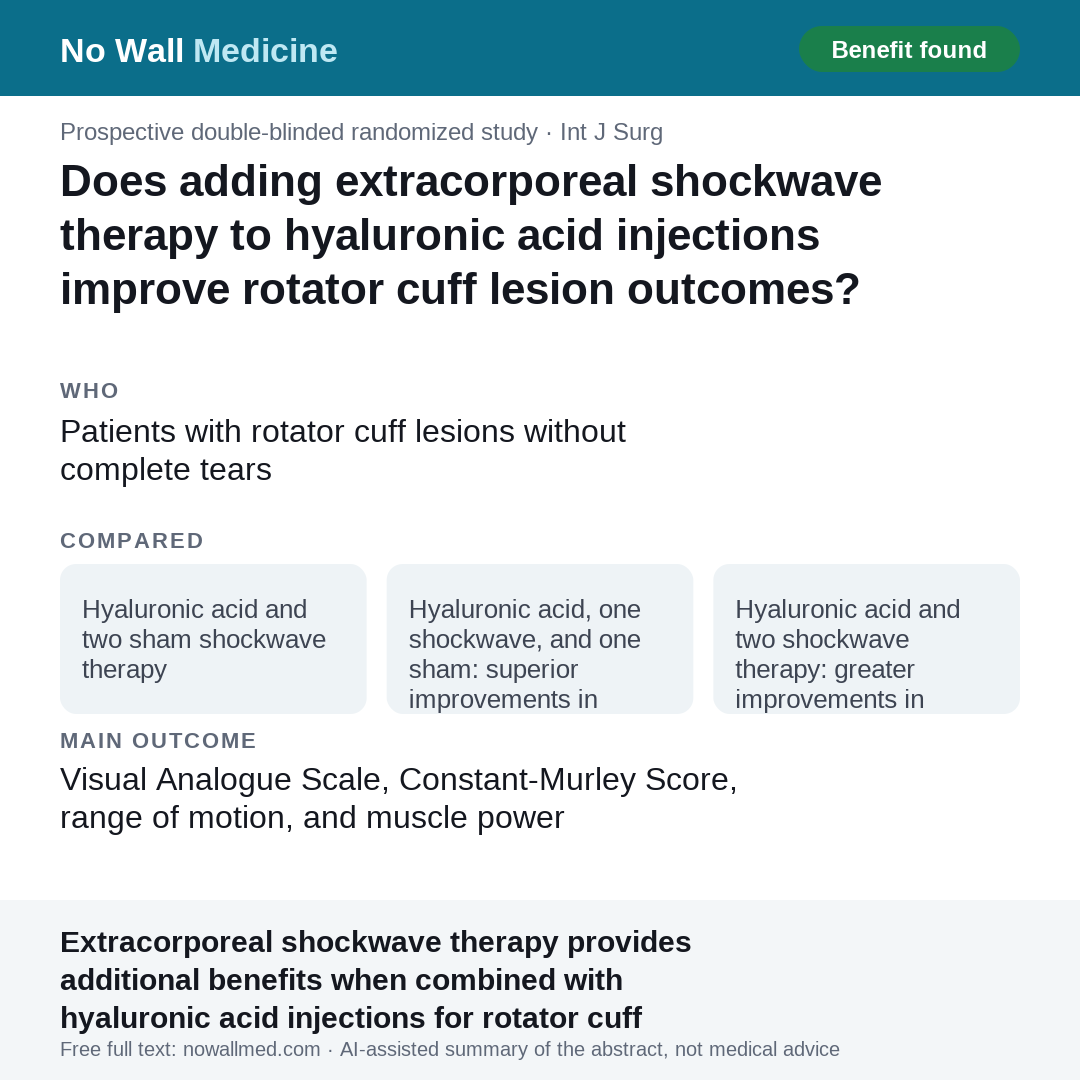
Effects of supplementing extracorporeal shockwave therapy to hyaluronic acid injection among patients with rotator cuff lesions without complete tear: a prospective double-blinded randomized study
Prospective double-blinded randomized studyBenefit found
Does adding extracorporeal shockwave therapy to hyaluronic acid injections improve rotator cuff lesion outcomes?
Who
Patients with rotator cuff lesions without complete tears
Compared
Hyaluronic acid and two sham shockwave therapy
Hyaluronic acid, one shockwave, and one sham: superior improvements in muscle power and Constant-Murley Score
Hyaluronic acid and two shockwave therapy: greater improvements in flexion, internal rotation, and shoulder range of motion
Main outcome
Visual Analogue Scale, Constant-Murley Score, range of motion, and muscle power
Bottom line: Extracorporeal shockwave therapy provides additional benefits when combined with hyaluronic acid injections for rotator cuff lesions.
Int J Surg · 2024-12-01Download image
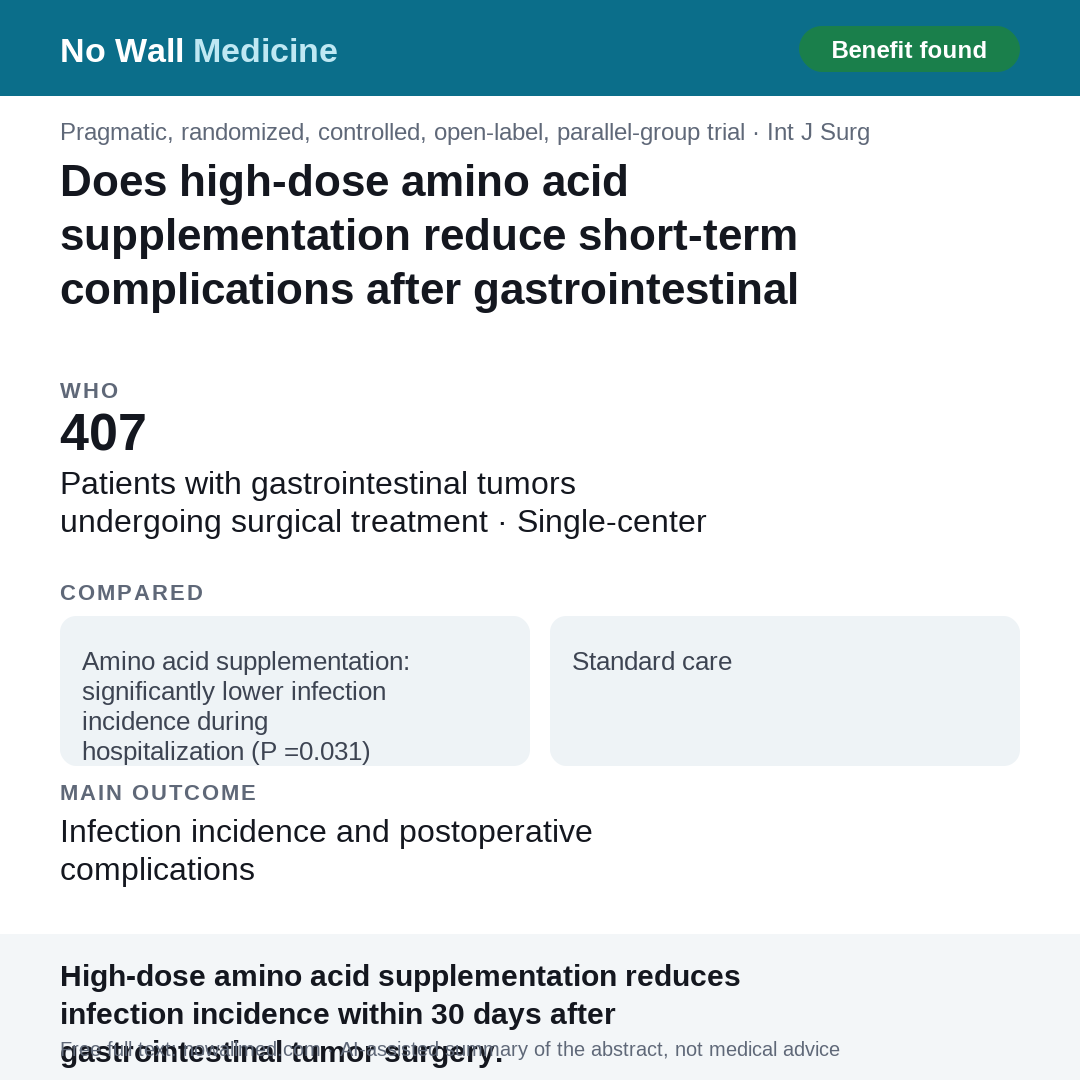
Effect of amino acid supplementation on short-term complications after gastrointestinal tumor surgery: the AMIGITS randomized clinical trial
Pragmatic, randomized, controlled, open-label, parallel-group trialBenefit found
Does high-dose amino acid supplementation reduce short-term complications after gastrointestinal tumor surgery?
Who
407
Patients with gastrointestinal tumors undergoing surgical treatment · Single-center tertiary care teaching hospital
Compared
Amino acid supplementation: significantly lower infection incidence during hospitalization (P =0.031)
Standard care
Main outcome
Infection incidence and postoperative complications
Bottom line: High-dose amino acid supplementation reduces infection incidence within 30 days after gastrointestinal tumor surgery.
Limitation: single-center study
Int J Surg · 2024-12-01Download image
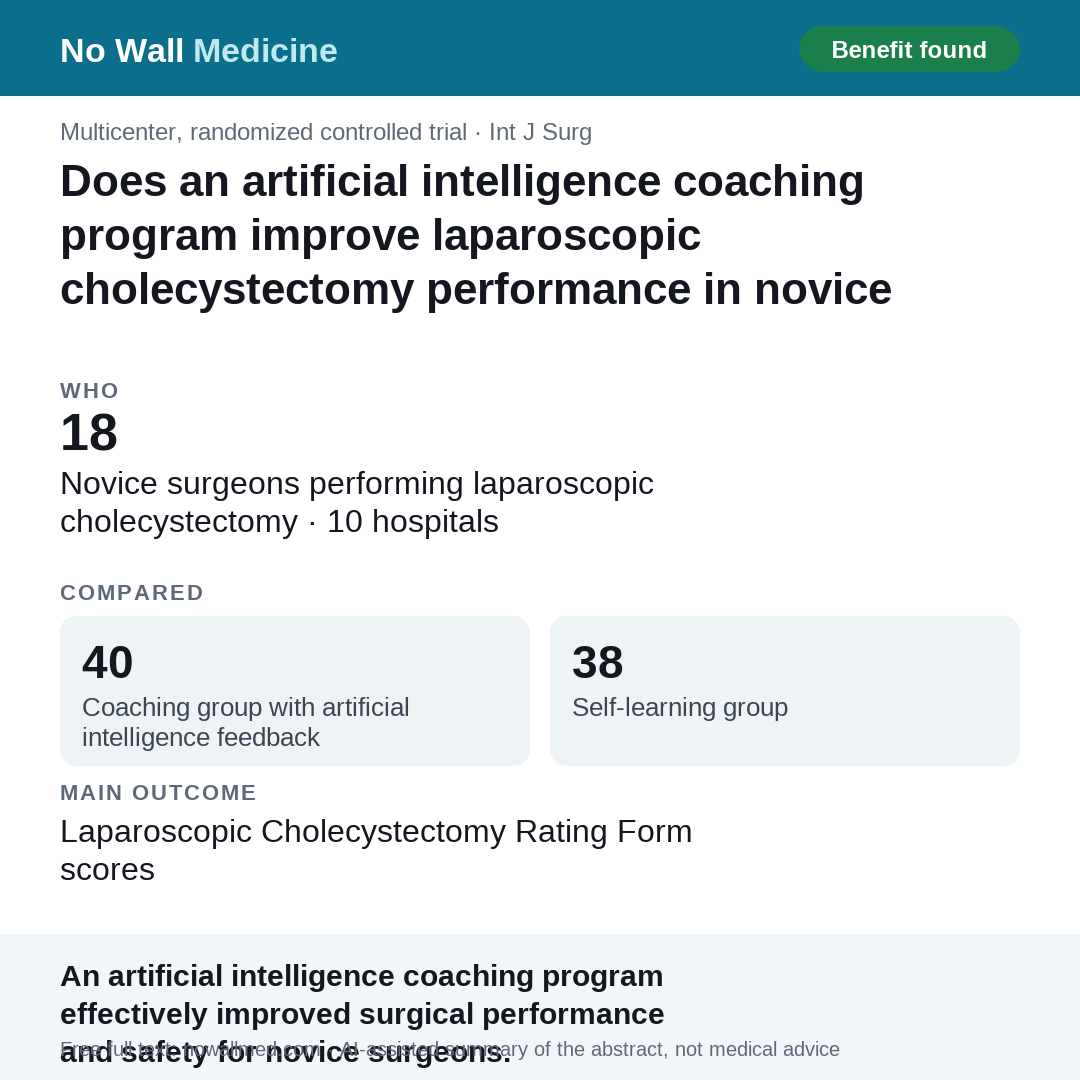
Impact of an AI-based laparoscopic cholecystectomy coaching program on the surgical performance: a randomized controlled trial
Multicenter, randomized controlled trialBenefit found
Does an artificial intelligence coaching program improve laparoscopic cholecystectomy performance in novice surgeons?
Who
18
Novice surgeons performing laparoscopic cholecystectomy · 10 hospitals
Compared
40Coaching group with artificial intelligence feedback
38Self-learning group
Main outcome
Laparoscopic Cholecystectomy Rating Form scores
Bottom line: An artificial intelligence coaching program effectively improved surgical performance and safety for novice surgeons.
Int J Surg · 2024-12-01Download image
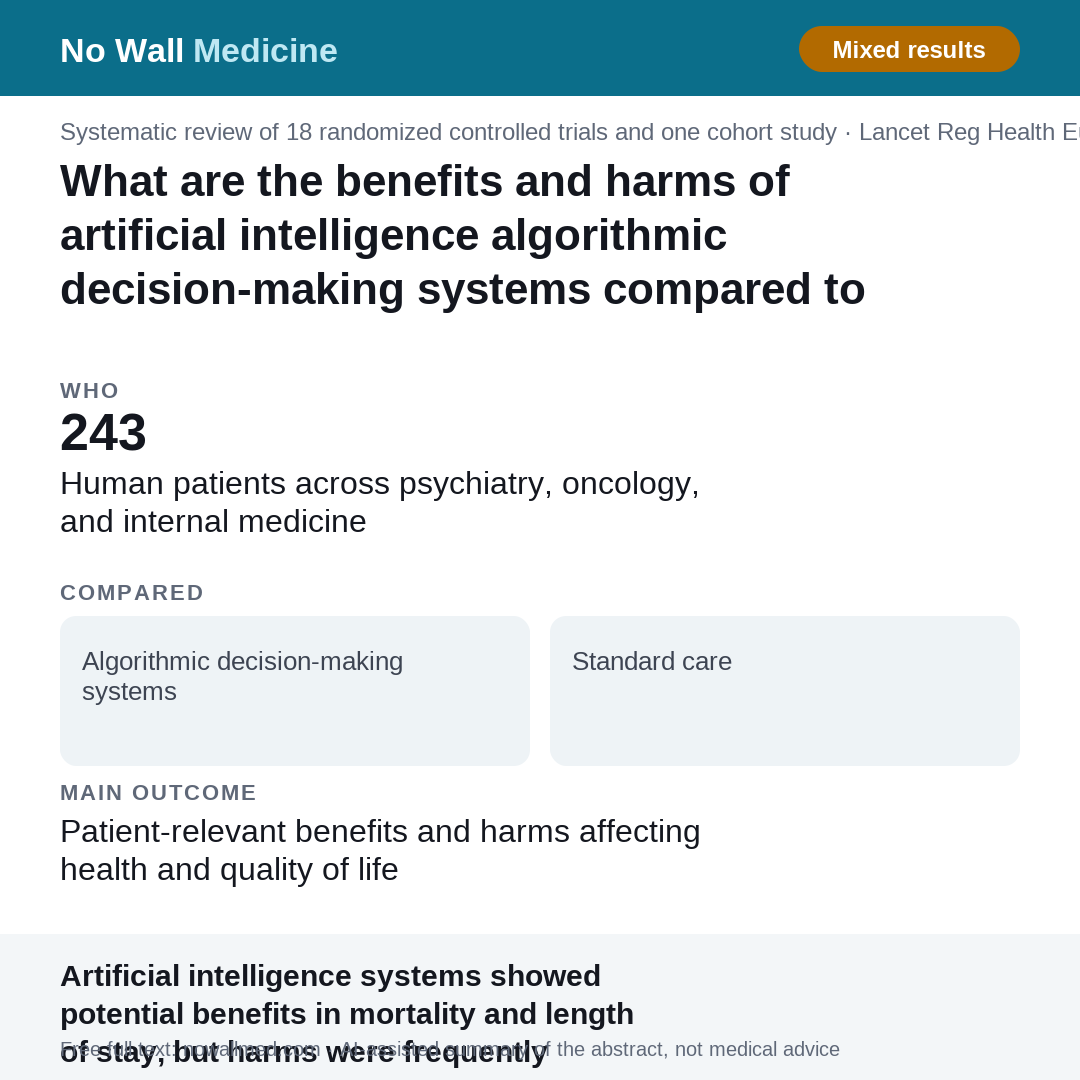
Benefits and harms associated with the use of AI-related algorithmic decision-making systems by healthcare professionals: a systematic review
Systematic review of 18 randomized controlled trials and one cohort studyMixed results
What are the benefits and harms of artificial intelligence algorithmic decision-making systems compared to standard care?
Who
243
Human patients across psychiatry, oncology, and internal medicine
Compared
Algorithmic decision-making systems
Standard care
Main outcome
Patient-relevant benefits and harms affecting health and quality of life
Bottom line: Artificial intelligence systems showed potential benefits in mortality and length of stay, but harms were frequently underreported.
Limitation: Harms were frequently underreported, with only eight studies documenting adverse events.
Lancet Reg Health Eur · 2024-12-01Download image
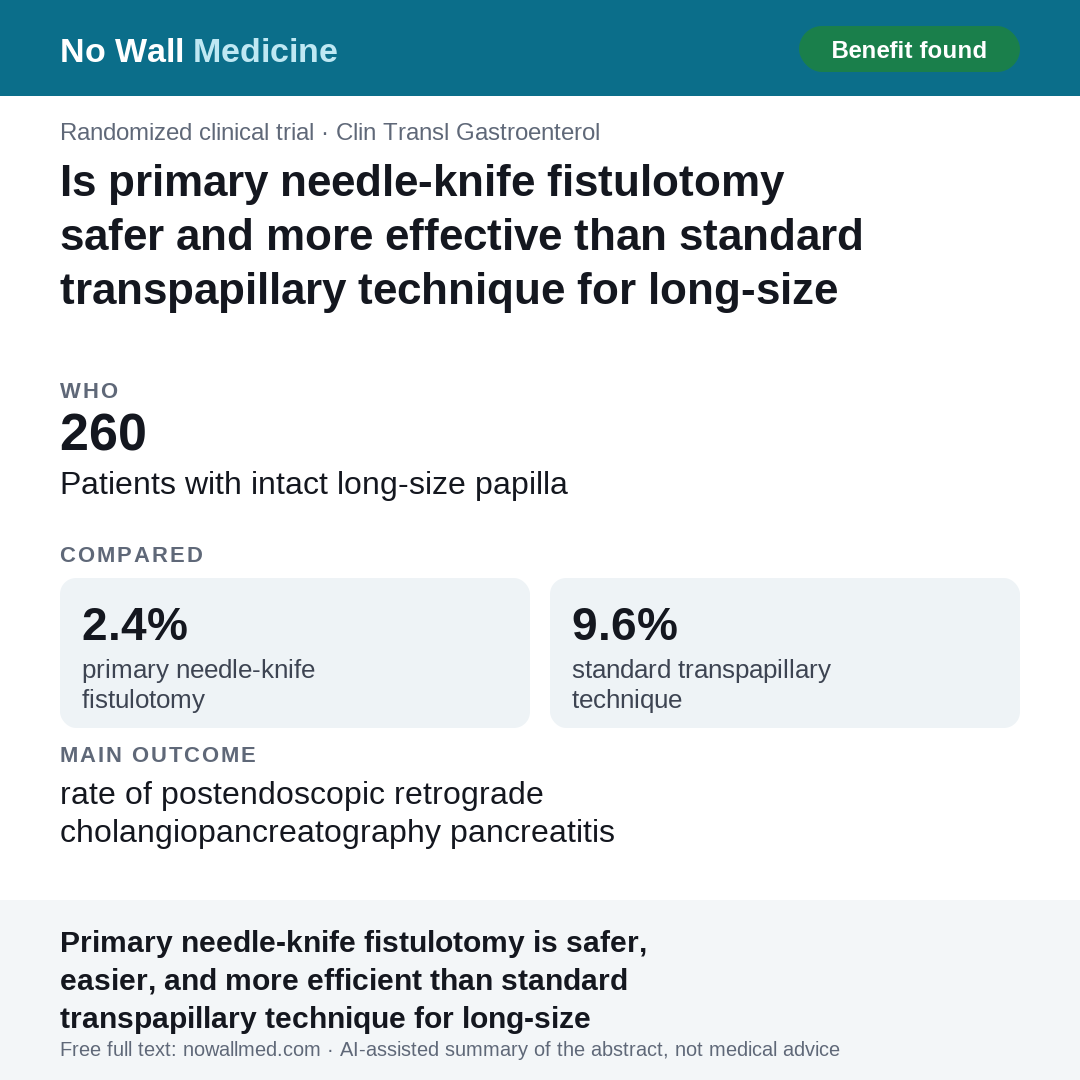
Primary Needle-Knife Fistulotomy Versus Standard Transpapillary Technique for Cannulation of Long-Size Papilla: A Randomized Clinical Trial
Randomized clinical trialBenefit found
Is primary needle-knife fistulotomy safer and more effective than standard transpapillary technique for long-size papilla?
Who
260
Patients with intact long-size papilla
Compared
2.4%primary needle-knife fistulotomy
9.6%standard transpapillary technique
Main outcome
rate of postendoscopic retrograde cholangiopancreatography pancreatitis
Result: number needed to treat [95% confidence interval] = 13.9 [7.5-83.2]
Bottom line: Primary needle-knife fistulotomy is safer, easier, and more efficient than standard transpapillary technique for long-size papilla cannulation.
Clin Transl Gastroenterol · 2024-12-01Download image
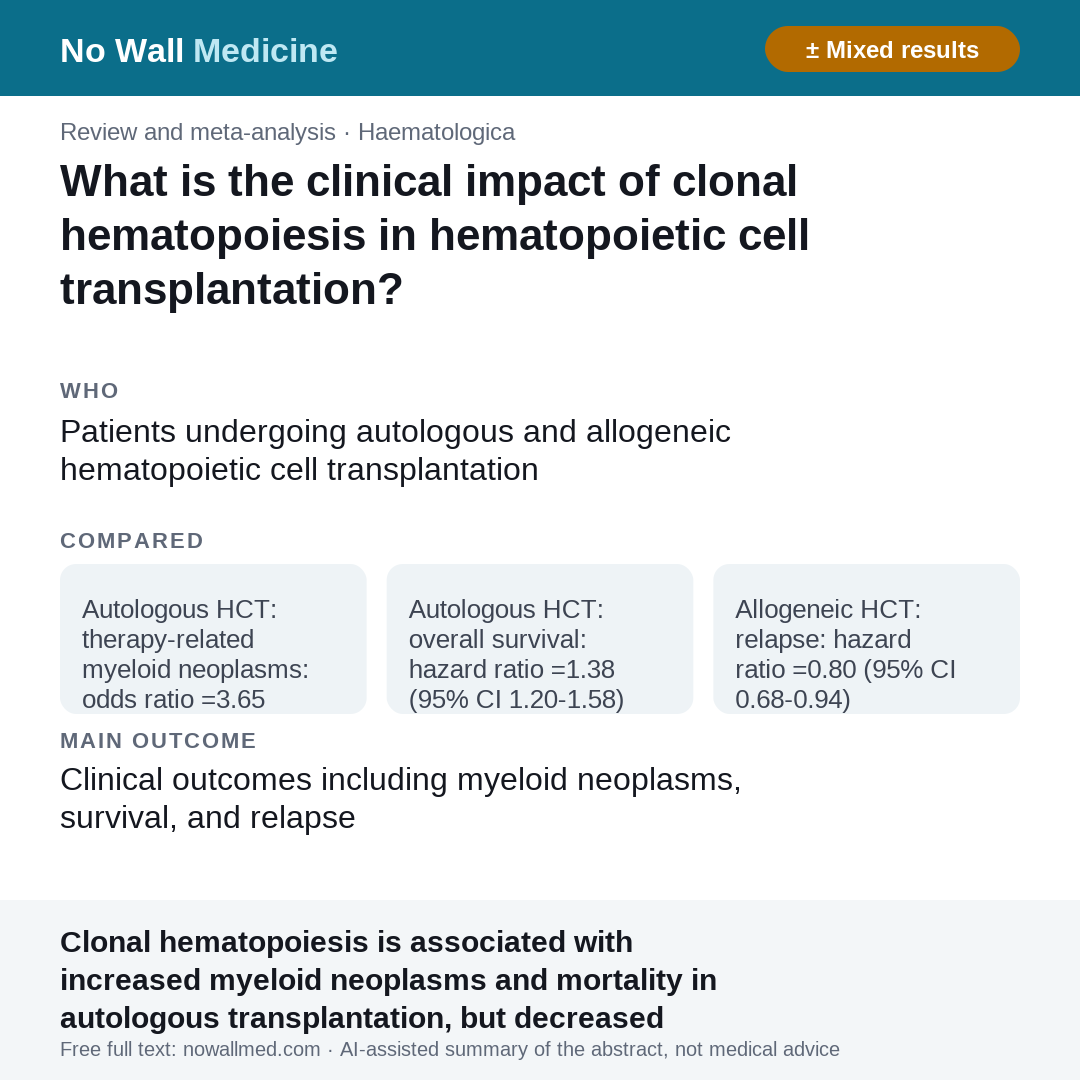
Clinical impact of clonal hematopoiesis in hematopoietic cell transplantation: a review, meta-analysis, and call to action
Review and meta-analysisMixed results
What is the clinical impact of clonal hematopoiesis in hematopoietic cell transplantation?
Who
Patients undergoing autologous and allogeneic hematopoietic cell transplantation
Compared
Autologous HCT: therapy-related myeloid neoplasms: odds ratio =3.65 (95% CI 2.18-6.10)
Autologous HCT: overall survival: hazard ratio =1.38 (95% CI 1.20-1.58)
Allogeneic HCT: relapse: hazard ratio =0.80 (95% CI 0.68-0.94)
Main outcome
Clinical outcomes including myeloid neoplasms, survival, and relapse
Bottom line: Clonal hematopoiesis is associated with increased myeloid neoplasms and mortality in autologous transplantation, but decreased relapse in allogeneic transplantation.
Limitation: Heterogeneity, biases, and limitations in the literature provide challenges for clinical decision-making.
Haematologica · 2024-12-01Download image