Visual abstracts
New randomized trials and meta-analyses from leading journals at a glance: who was studied, what was compared, and what was found. Every paper is free to read in full.
All specialtiesCardiology 1053Oncology 946Gastroenterology & Hepatology 386Infectious Disease 717Neurology 450Psychiatry & Mental Health 554Pulmonology 471Critical Care 320Endocrinology & Diabetes 607Pediatrics 664Surgery 470Orthopedics & Sports Medicine 206Neurosurgery 151Cardiothoracic & Vascular Surgery 109Plastic & Reconstructive Surgery 171Nephrology 239Rheumatology 138Hematology 223Dermatology 99Ophthalmology 122Obstetrics & Gynecology 331Public & Global Health 209Radiology & Imaging 134Anesthesiology 193Urology 202ENT (Otolaryngology) 146Emergency Medicine 121Allergy & Immunology 73Geriatrics 215Family Medicine & Primary Care 137Medical Genetics & Genomics 113Pathology & Laboratory Medicine 33Physical Medicine & Rehabilitation 187Palliative Care 96Nutrition 281Digital Health & AI 552General Medicine 106
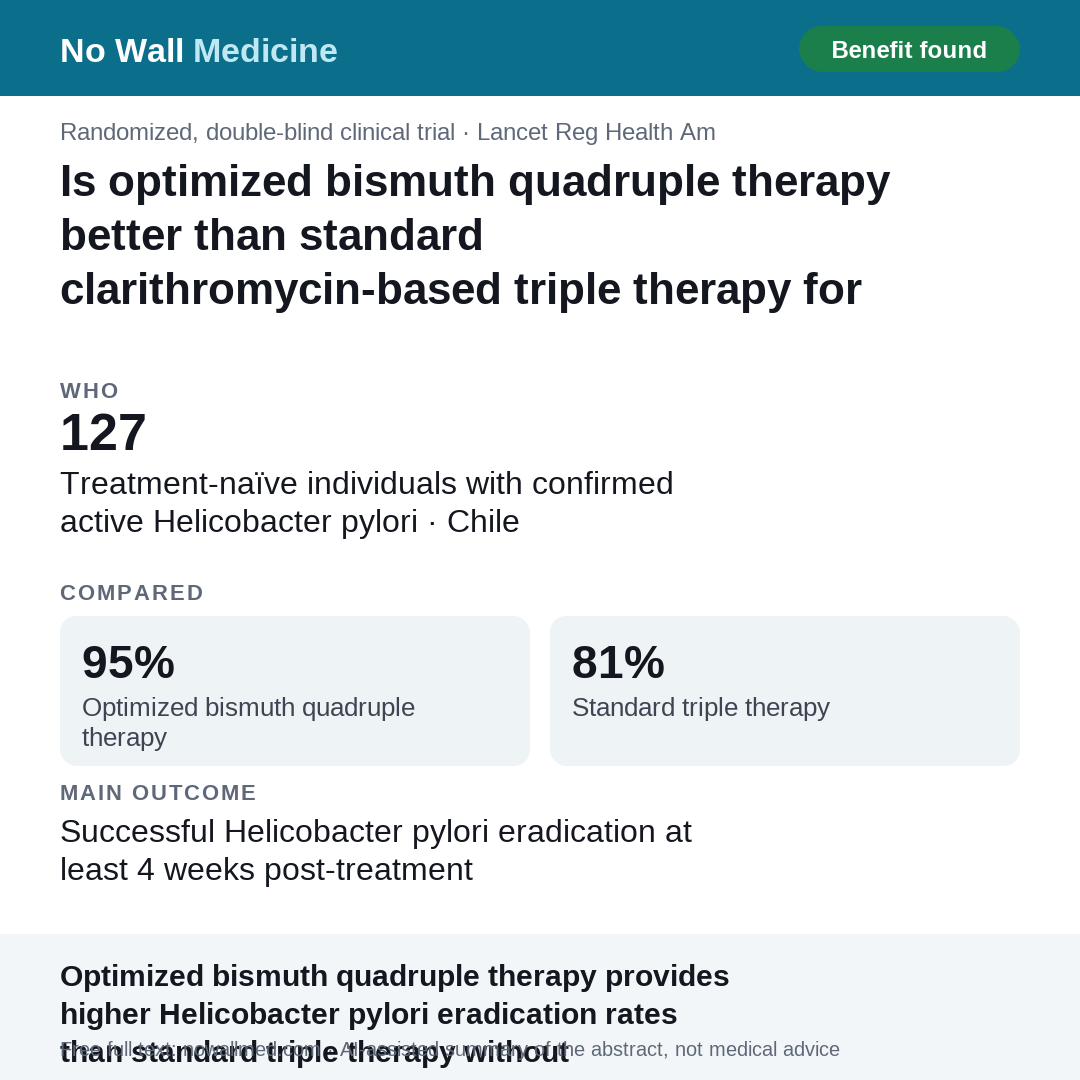
Comparison between optimized bismuth quadruple therapy and standard clarithromycin-based triple therapy for first-line Helicobacter pylori eradication: a double-blind randomized controlled trial
Randomized, double-blind clinical trialBenefit found
Is optimized bismuth quadruple therapy better than standard clarithromycin-based triple therapy for Helicobacter pylori eradication?
Who
127
Treatment-naïve individuals with confirmed active Helicobacter pylori · Chile
Compared
95%Optimized bismuth quadruple therapy (60/63)
81%Standard triple therapy (52/64)
Main outcome
Successful Helicobacter pylori eradication at least 4 weeks post-treatment
Result: 95% CI 86%-99% vs 81% (52/64) [70%-89%], p = 0.033
Bottom line: Optimized bismuth quadruple therapy provides higher Helicobacter pylori eradication rates than standard triple therapy without increasing adverse events.
Funded by: FONDECYT, ANID-FONDAP, and Horizon 2020 program
Lancet Reg Health Am · 2025-11-22Download image
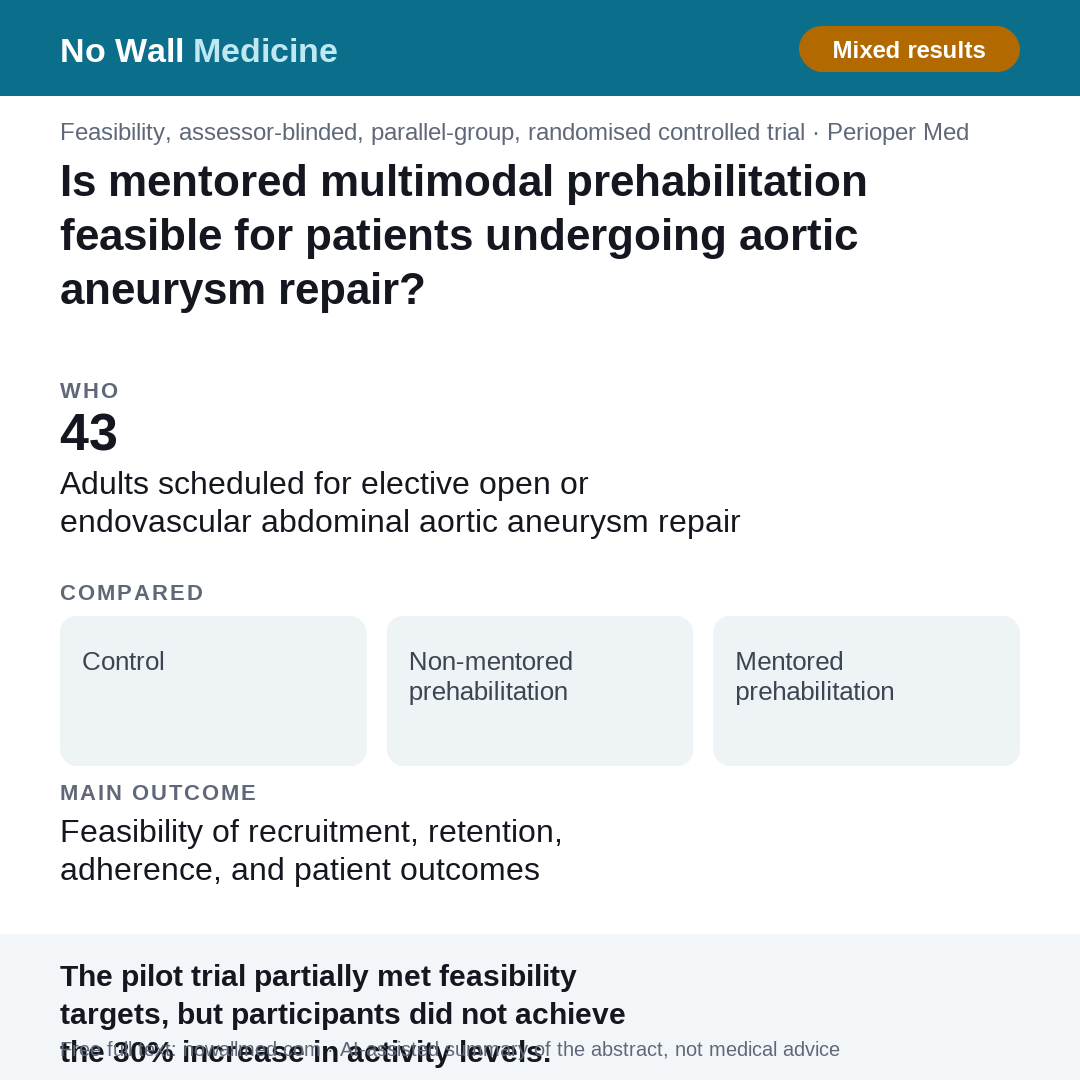
Mentored multimodal prehabilitation for aortic aneurysm surgery: a pilot randomised controlled trial
Feasibility, assessor-blinded, parallel-group, randomised controlled trialMixed results
Is mentored multimodal prehabilitation feasible for patients undergoing aortic aneurysm repair?
Who
43
Adults scheduled for elective open or endovascular abdominal aortic aneurysm repair
Compared
Control
Non-mentored prehabilitation
Mentored prehabilitation
Main outcome
Feasibility of recruitment, retention, adherence, and patient outcomes
Bottom line: The pilot trial partially met feasibility targets, but participants did not achieve the 30% increase in activity levels.
Limitation: Low tracker adherence (53.5%) was usually due to device failure.
Perioper Med · 2025-11-22Download image
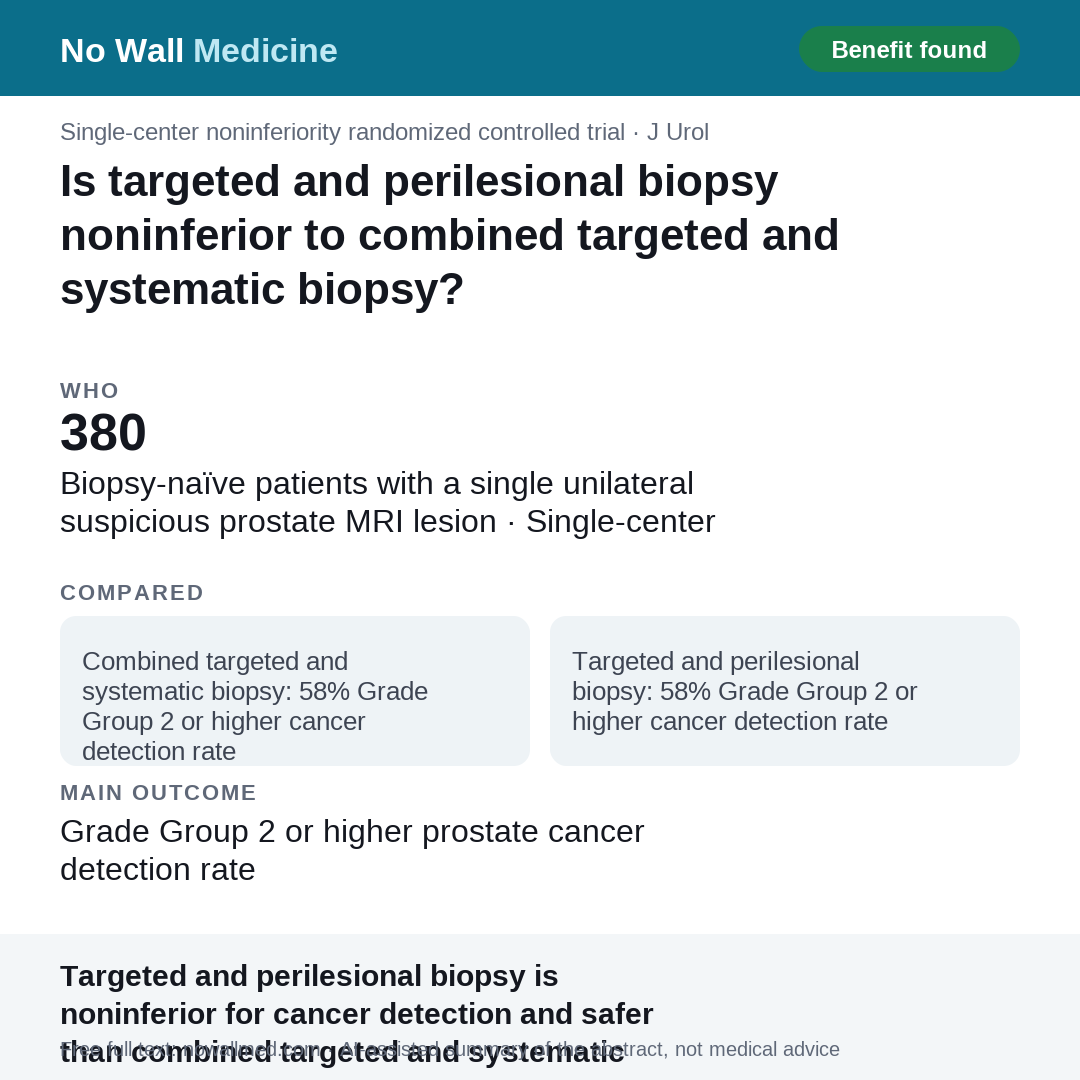
Comprehensive Evaluation of Targeted and Perilesional Biopsy in Biopsy-Naïve Patients With Prostate Positive Magnetic Resonance Imaging: PERI-PRO Noninferiority Randomized Controlled Trial
Single-center noninferiority randomized controlled trialBenefit found
Is targeted and perilesional biopsy noninferior to combined targeted and systematic biopsy?
Who
380
Biopsy-naïve patients with a single unilateral suspicious prostate MRI lesion · Single-center
Compared
Combined targeted and systematic biopsy: 58% Grade Group 2 or higher cancer detection rate
Targeted and perilesional biopsy: 58% Grade Group 2 or higher cancer detection rate
Main outcome
Grade Group 2 or higher prostate cancer detection rate
Result: risk difference 0.53% (95% CI -9.4% to 11%)
Bottom line: Targeted and perilesional biopsy is noninferior for cancer detection and safer than combined targeted and systematic biopsy.
J Urol · 2025-11-21Download image
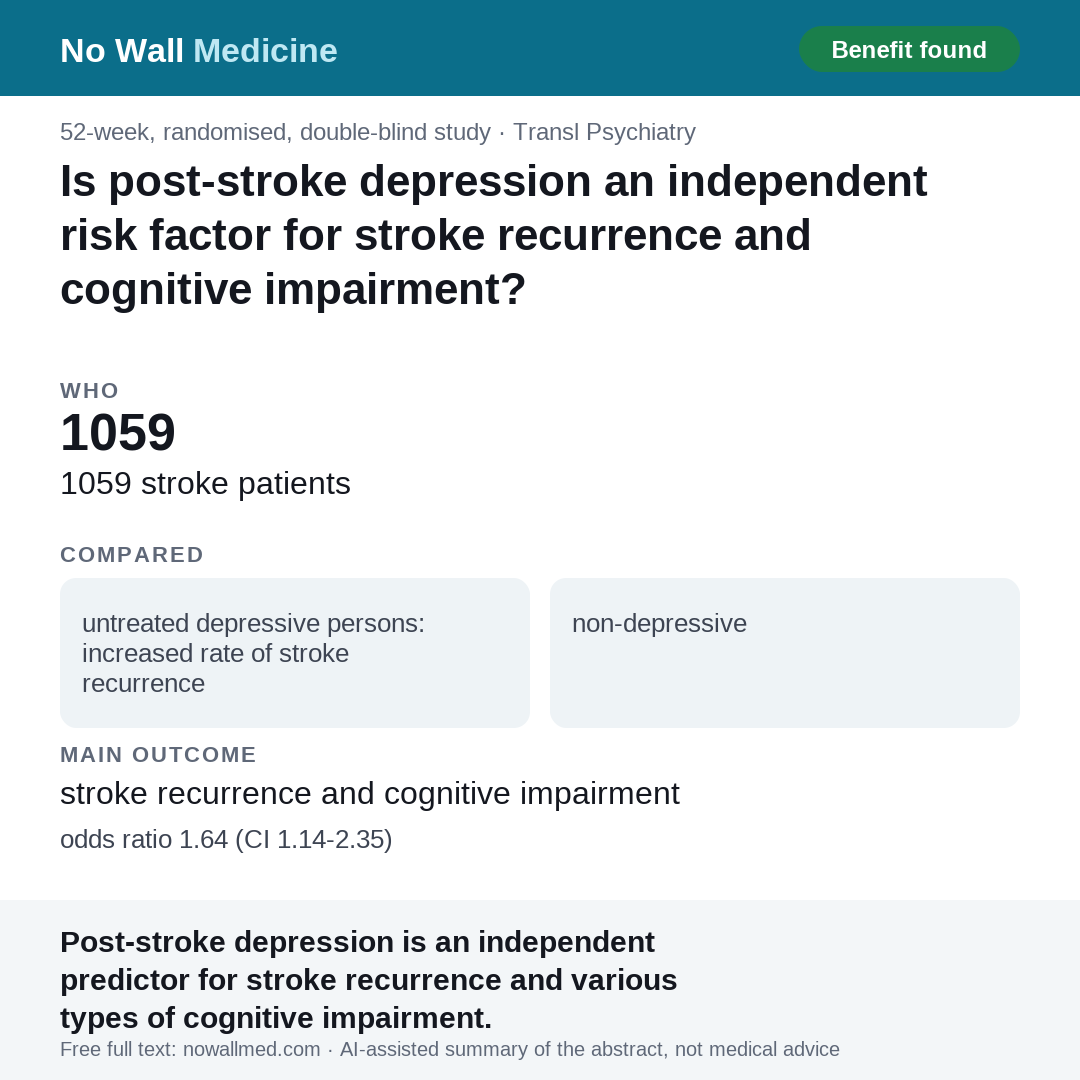
Depression is an independent risk factor for stroke reccurence and cognitive impairment in stroke patients
52-week, randomised, double-blind studyBenefit found
Is post-stroke depression an independent risk factor for stroke recurrence and cognitive impairment?
Who
1059
1059 stroke patients
Compared
untreated depressive persons: increased rate of stroke recurrence
non-depressive
Main outcome
stroke recurrence and cognitive impairment
Result: odds ratio 1.64 (CI 1.14-2.35)
Bottom line: Post-stroke depression is an independent predictor for stroke recurrence and various types of cognitive impairment.
Limitation: further research is needed to demonstrate the efficacy of treatment on stroke recurrence.
Transl Psychiatry · 2025-11-21Download image
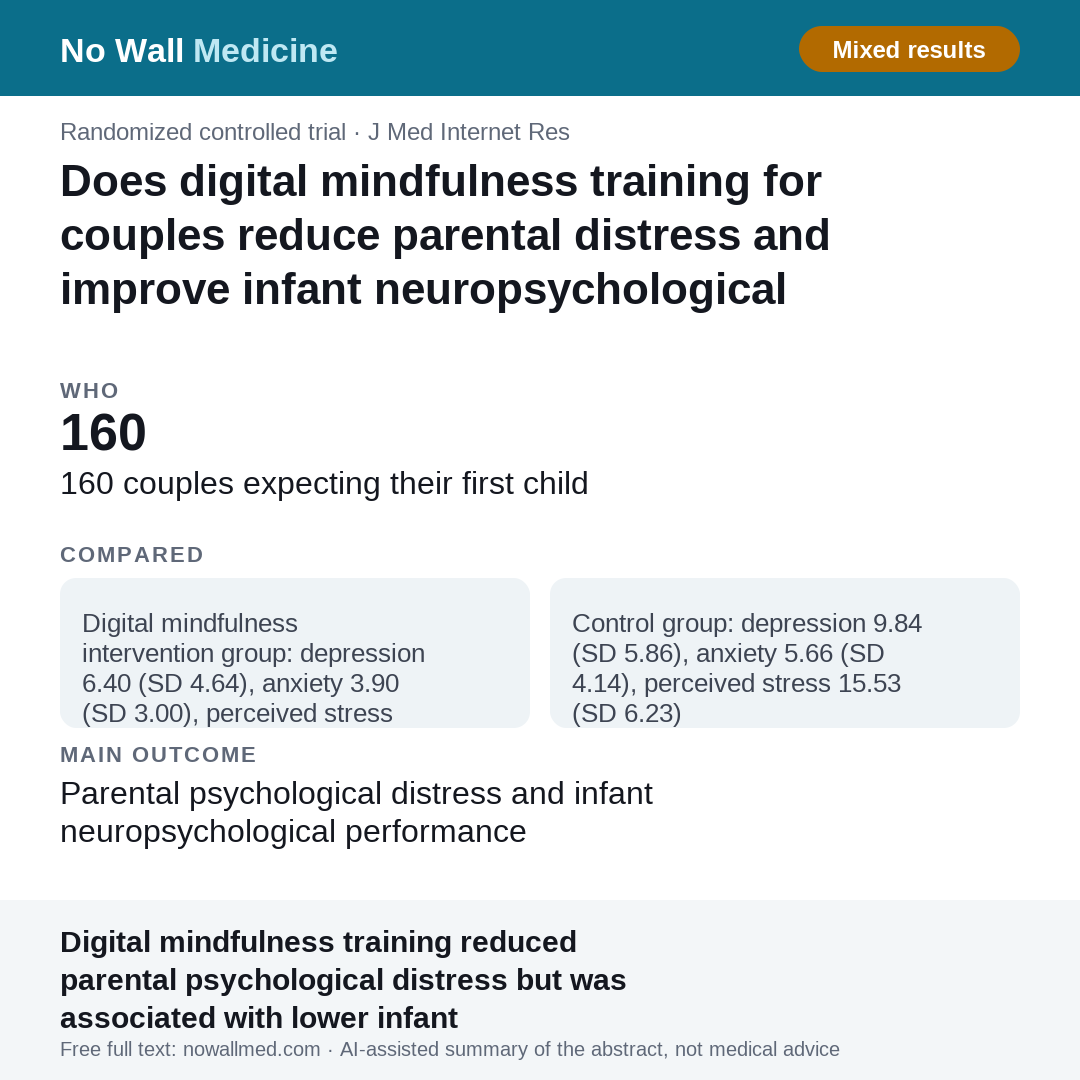
Effects of Digital Mindfulness Training for Couples on Psychological Distress and Infant Neuropsychological Development: Randomized Controlled Trial
Randomized controlled trialMixed results
Does digital mindfulness training for couples reduce parental distress and improve infant neuropsychological development?
Who
160
160 couples expecting their first child
Compared
Digital mindfulness intervention group: depression 6.40 (SD 4.64), anxiety 3.90 (SD 3.00), perceived stress 11.50 (SD 5.76)
Control group: depression 9.84 (SD 5.86), anxiety 5.66 (SD 4.14), perceived stress 15.53 (SD 6.23)
Main outcome
Parental psychological distress and infant neuropsychological performance
Bottom line: Digital mindfulness training reduced parental psychological distress but was associated with lower infant neuropsychological scores at six weeks postpartum.
J Med Internet Res · 2025-11-21Download image
Moderated Online Social Therapy (MOST) in Help-Seeking Young People: Pilot Randomized Controlled Study
Pilot randomized controlled studyBenefit found
Is Moderated Online Social Therapy feasible for third-level students?
Who
74
Third-level students who recently completed counseling · University counseling service
Compared
Intervention arm: modest gains in social function and cognitive function
Control arm
Main outcome
social, occupational, cognitive functioning, depression, anxiety, and loneliness
Bottom line: Moderated Online Social Therapy is feasible and shows potential for supporting youth mental health in university settings.
J Med Internet Res · 2025-11-21Download image

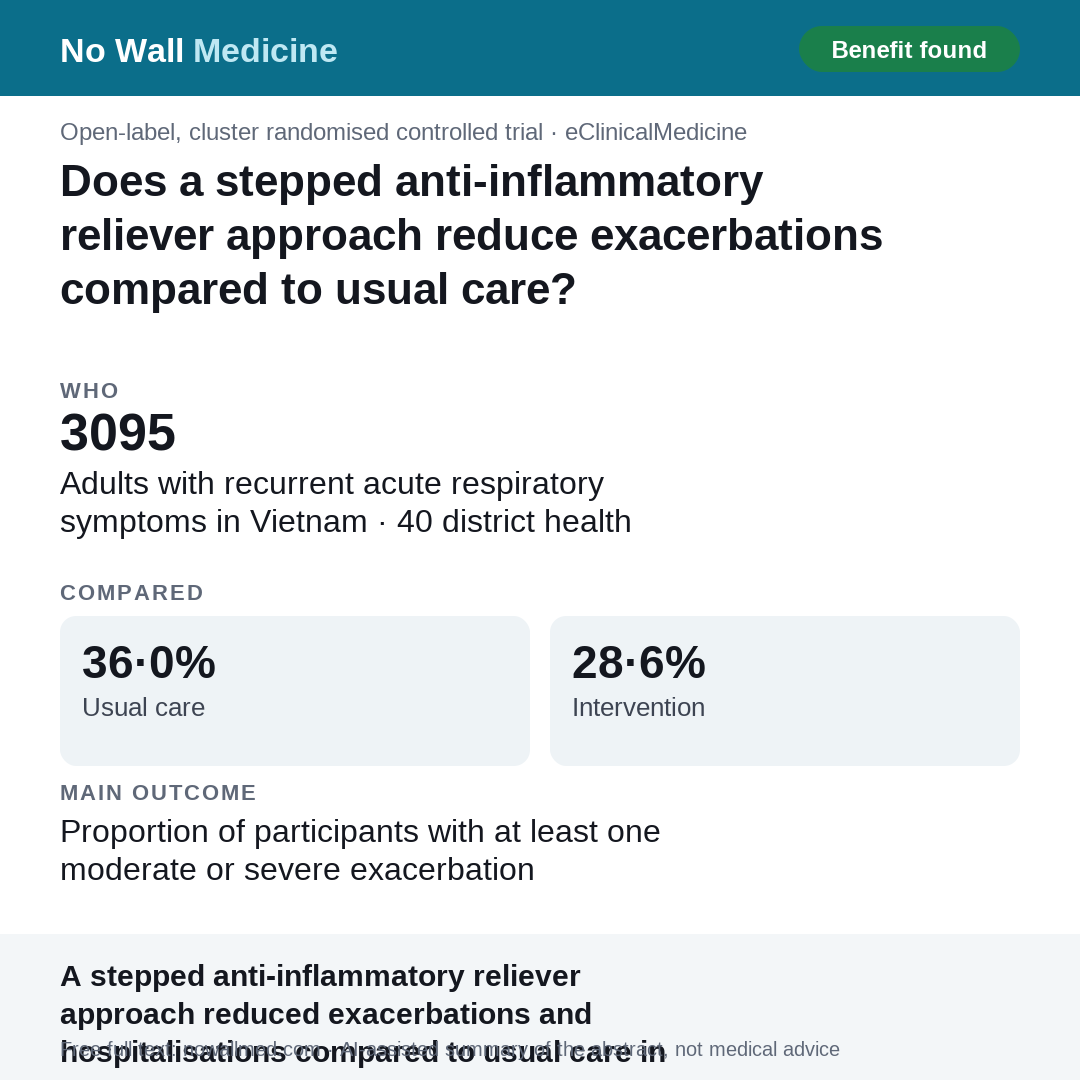
Implementation of a stepped anti-inflammatory reliever therapy intervention with budesonide-formoterol 160/4·5 mcg by Turbuhaler versus usual care for adults presenting during exacerbations of obstructive lung disease suggestive of asthma or chronic obstructive pulmonary disease in a resource-limited setting: an open-label, cluster randomised trial
Open-label, cluster randomised controlled trialBenefit found
Does a stepped anti-inflammatory reliever approach reduce exacerbations compared to usual care?
Who
3095
Adults with recurrent acute respiratory symptoms in Vietnam · 40 district health facilities in Vietnam
Compared
36·0%Usual care (511/1421)
28·6%Intervention (478/1674)
Main outcome
Proportion of participants with at least one moderate or severe exacerbation
Result: relative risk (RR) 0·794; 95% CI 0·649-0·971
Bottom line: A stepped anti-inflammatory reliever approach reduced exacerbations and hospitalisations compared to usual care in resource-limited settings.
Funded by: National Health and Medical Research Council of Australia
eClinicalMedicine · 2025-11-20Download image
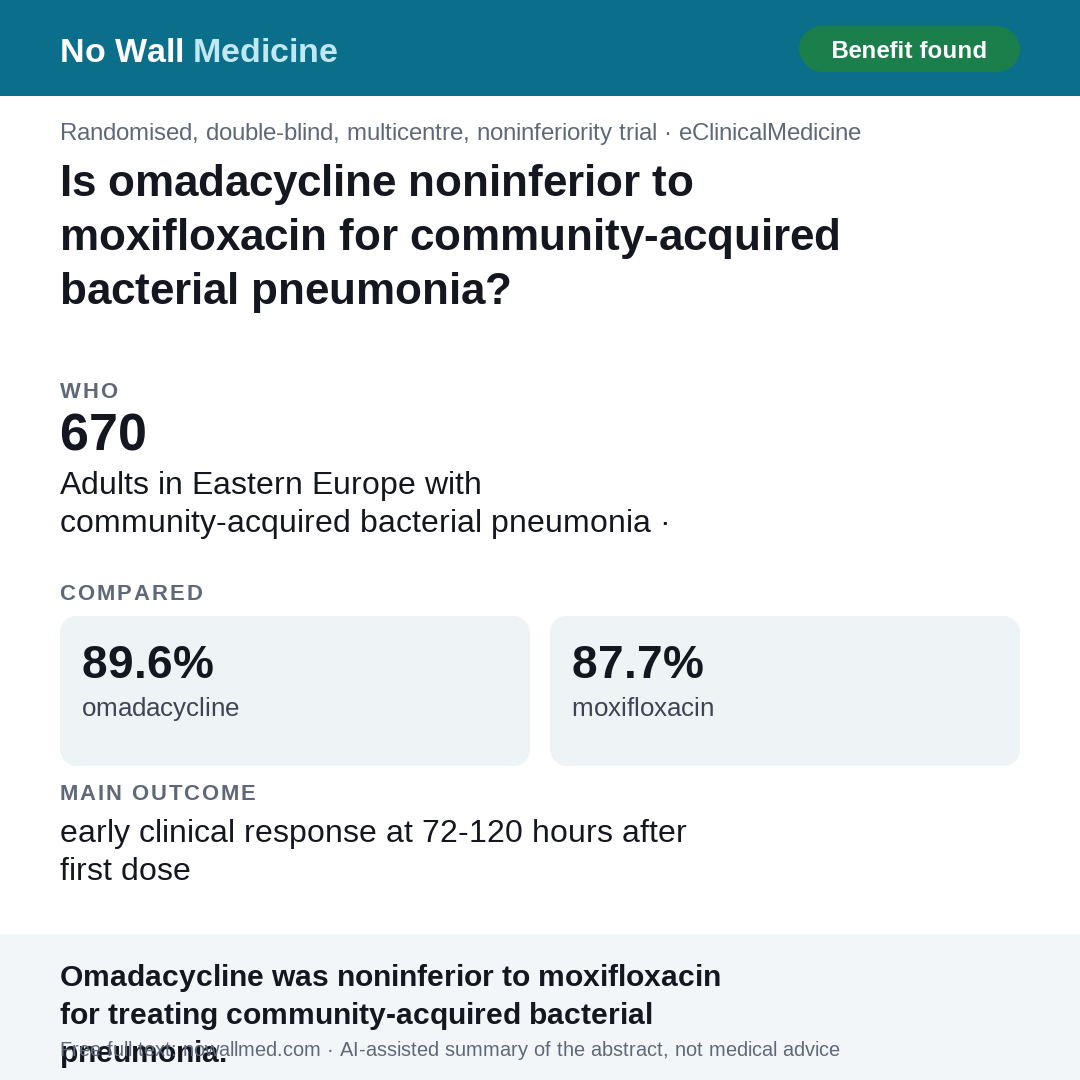
Omadacycline versus moxifloxacin for community-acquired bacterial pneumonia (OPTIC-2): a phase 3b, randomised, double-blind, multicentre, controlled, noninferiority trial
Randomised, double-blind, multicentre, noninferiority trialBenefit found
Is omadacycline noninferior to moxifloxacin for community-acquired bacterial pneumonia?
Who
670
Adults in Eastern Europe with community-acquired bacterial pneumonia · Eastern Europe
Compared
89.6%omadacycline
87.7%moxifloxacin
Main outcome
early clinical response at 72-120 hours after first dose
Result: treatment difference [95% CI]: 1.9 [-3.0, 6.8]
Bottom line: Omadacycline was noninferior to moxifloxacin for treating community-acquired bacterial pneumonia.
Funded by: Paratek Pharmaceuticals, Inc. and U.S. Department of Health and Human Services
eClinicalMedicine · 2025-11-20Download image
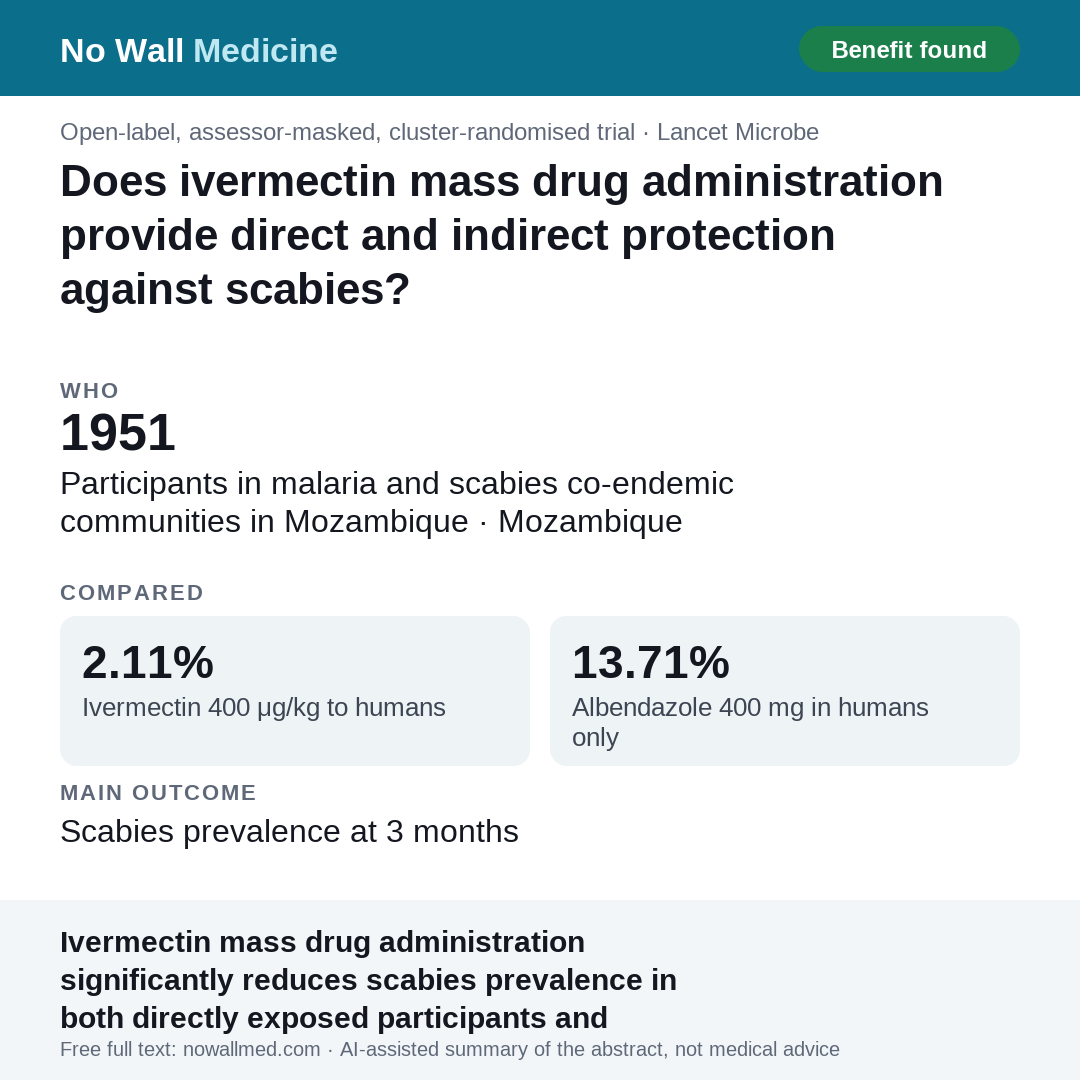
Direct and indirect protection against scabies through ivermectin mass drug administration designed for malaria in Mozambique: a substudy nested within a cluster-randomised, controlled trial
Open-label, assessor-masked, cluster-randomised trialBenefit found
Does ivermectin mass drug administration provide direct and indirect protection against scabies?
Who
1951
Participants in malaria and scabies co-endemic communities in Mozambique · Mozambique
Compared
2.11%Ivermectin 400 μg/kg to humans (95% CI 1.21-3.41)
13.71%Albendazole 400 mg in humans only (10.81-17.05)
Main outcome
Scabies prevalence at 3 months
Result: adjusted odds ratio 0.18 (95% CI 0.07-0.45)
Bottom line: Ivermectin mass drug administration significantly reduces scabies prevalence in both directly exposed participants and indirectly exposed children.
Funded by: Unitaid
Lancet Microbe · 2025-11-20Download image
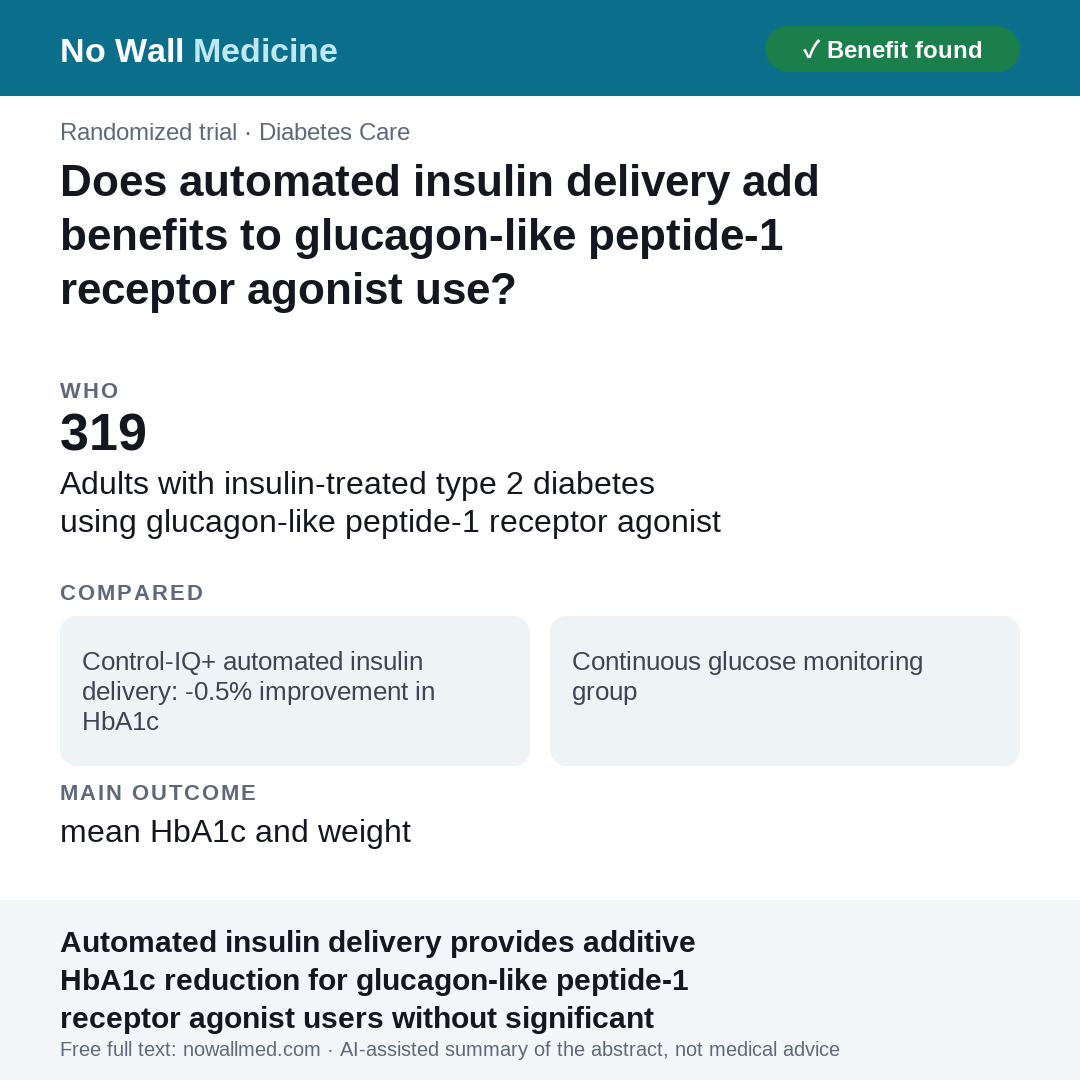
Additive Benefits of Control-IQ+ AID to GLP-1 Receptor Agonist Use in Adults With Type 2 Diabetes
Randomized trialBenefit found
Does automated insulin delivery add benefits to glucagon-like peptide-1 receptor agonist use?
Who
319
Adults with insulin-treated type 2 diabetes using glucagon-like peptide-1 receptor agonist
Compared
Control-IQ+ automated insulin delivery: -0.5% improvement in HbA1c
Continuous glucose monitoring group
Main outcome
mean HbA1c and weight
Result: mean improvement of -0.5% (95% CI -0.8 to -0.3, P < 0.001)
Bottom line: Automated insulin delivery provides additive HbA1c reduction for glucagon-like peptide-1 receptor agonist users without significant weight gain.
Diabetes Care · 2025-11-20Download image
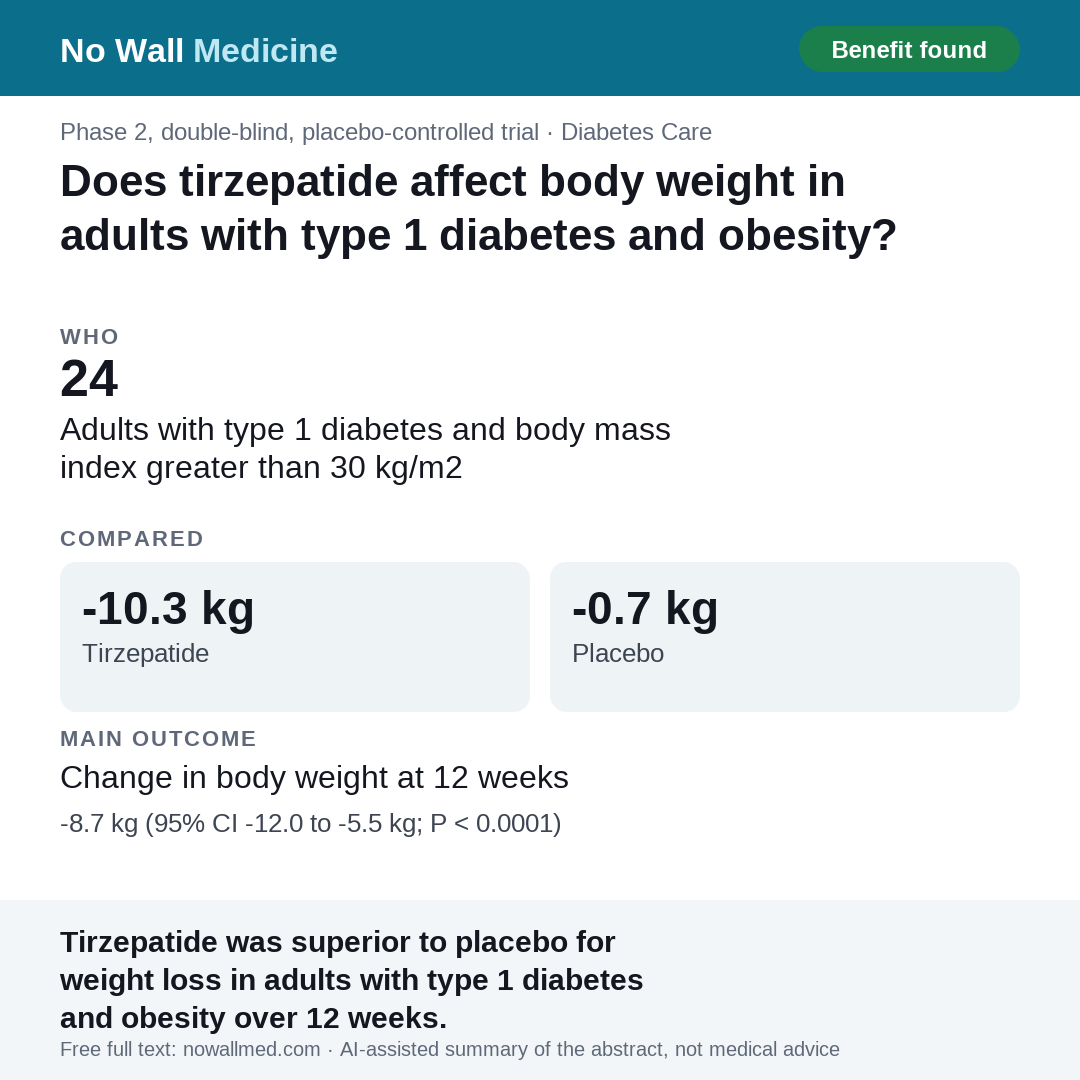
Tirzepatide in Adults With Type 1 Diabetes: A Phase 2 Randomized Placebo-Controlled Clinical Trial
Phase 2, double-blind, placebo-controlled trialBenefit found
Does tirzepatide affect body weight in adults with type 1 diabetes and obesity?
Who
24
Adults with type 1 diabetes and body mass index greater than 30 kg/m2
Compared
-10.3 kgTirzepatide (95% CI -12.8 to -7.7 kg)
-0.7 kgPlacebo (95% CI -1.4 to 2.8 kg)
Main outcome
Change in body weight at 12 weeks
Result: -8.7 kg (95% CI -12.0 to -5.5 kg; P < 0.0001)
Bottom line: Tirzepatide was superior to placebo for weight loss in adults with type 1 diabetes and obesity over 12 weeks.
Diabetes Care · 2025-11-20Download image
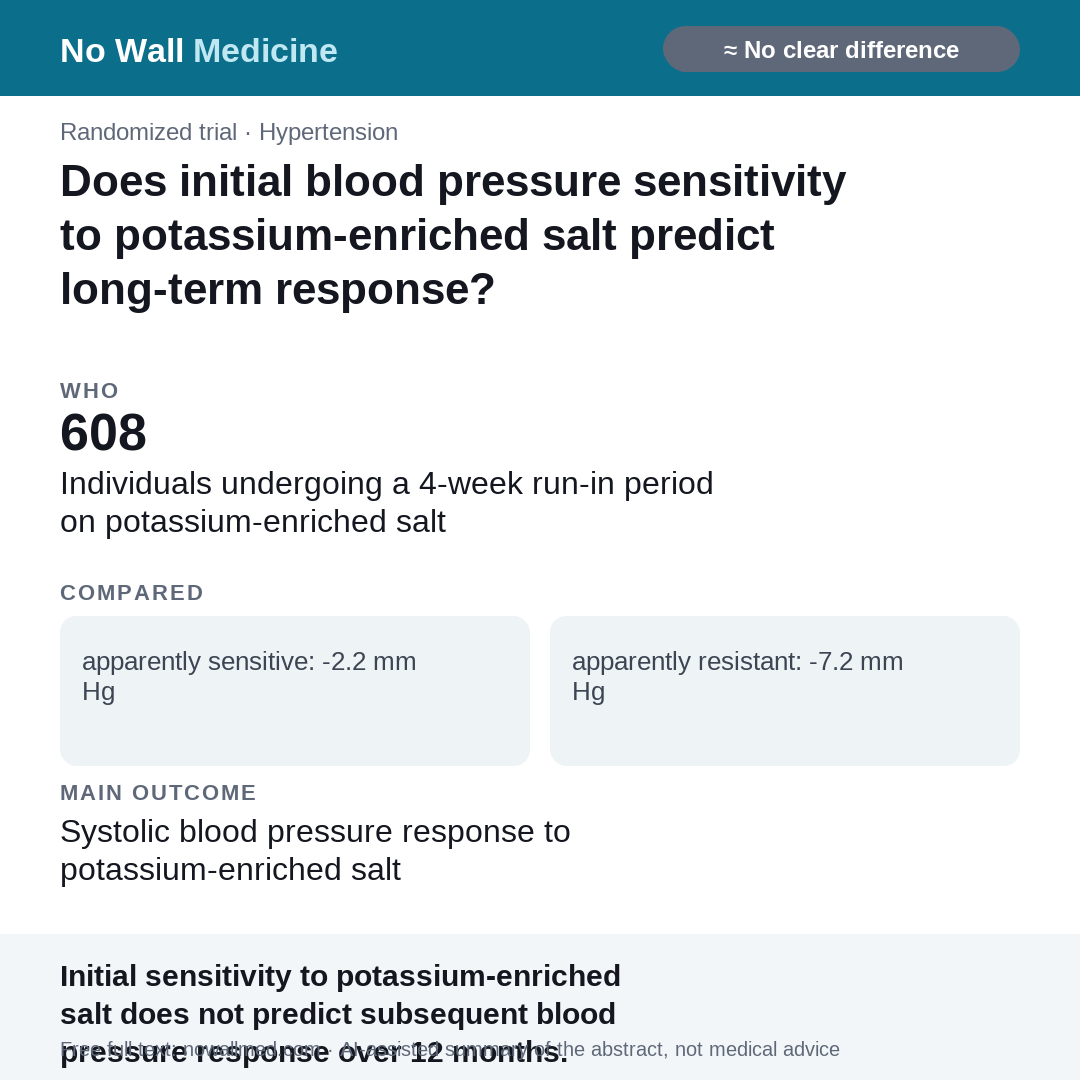
Consistency of Blood Pressure Response to Potassium-Enriched Salt in the China Salt Substitute Study
Randomized trialNo clear difference
Does initial blood pressure sensitivity to potassium-enriched salt predict long-term response?
Who
608
Individuals undergoing a 4-week run-in period on potassium-enriched salt
Compared
apparently sensitive: -2.2 mm Hg
apparently resistant: -7.2 mm Hg
Main outcome
Systolic blood pressure response to potassium-enriched salt
Result: no difference between the 2 groups (P=0.068)
Bottom line: Initial sensitivity to potassium-enriched salt does not predict subsequent blood pressure response over 12 months.
Hypertension · 2025-11-20Download image
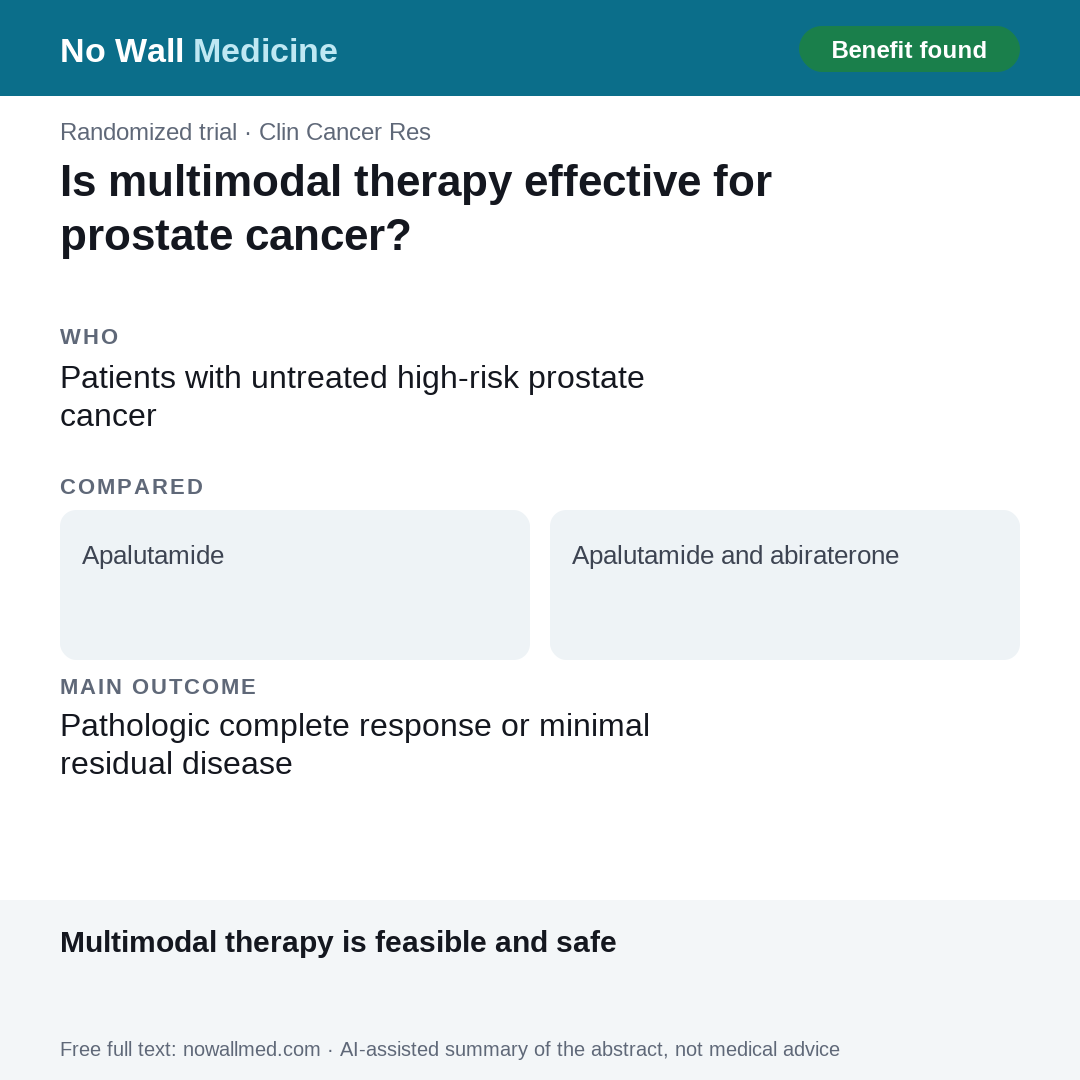
Accelerating Drug Development in Hormone-Naïve Prostate Cancer through Multimodal Therapy Strategies: The MetaCURE Phase 2 Randomized Clinical Trial
Randomized trialBenefit found
Is multimodal therapy effective for prostate cancer?
Who
Patients with untreated high-risk prostate cancer
Compared
Apalutamide
Apalutamide and abiraterone
Main outcome
Pathologic complete response or minimal residual disease
Bottom line: Multimodal therapy is feasible and safe
Clin Cancer Res · 2025-11-20Download image
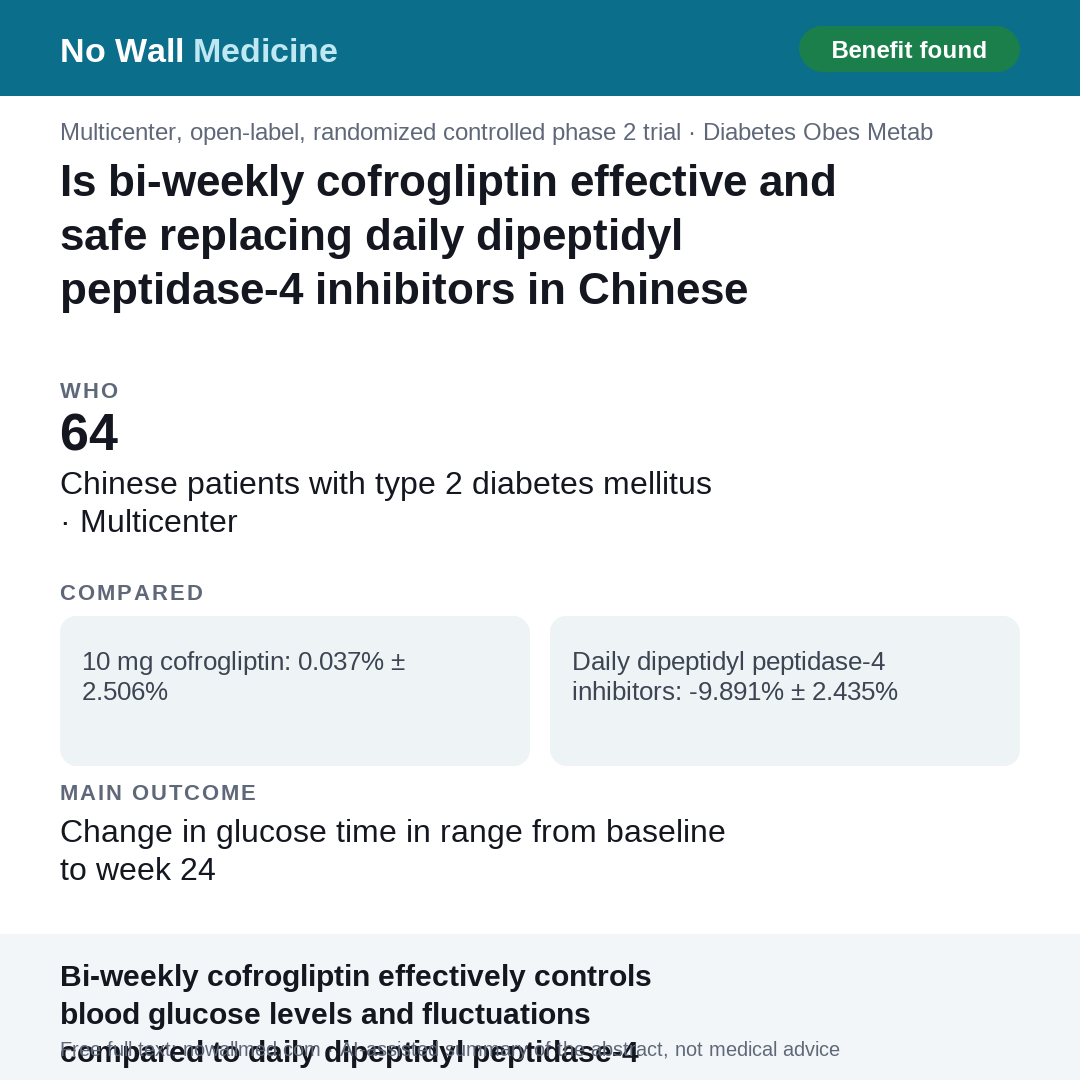
Efficacy and safety of bi-weekly cofrogliptin treatment replacing daily dipeptidyl peptidase-4 inhibitors in Chinese patients with type 2 diabetes mellitus: A multicenter, open-label, randomized controlled phase 2 trial
Multicenter, open-label, randomized controlled phase 2 trialBenefit found
Is bi-weekly cofrogliptin effective and safe replacing daily dipeptidyl peptidase-4 inhibitors in Chinese patients?
Who
64
Chinese patients with type 2 diabetes mellitus · Multicenter
Compared
10 mg cofrogliptin: 0.037% ± 2.506%
Daily dipeptidyl peptidase-4 inhibitors: -9.891% ± 2.435%
Main outcome
Change in glucose time in range from baseline to week 24
Result: LS mean difference 9.929% (95% confidence interval: 3.064%-16.793%)
Bottom line: Bi-weekly cofrogliptin effectively controls blood glucose levels and fluctuations compared to daily dipeptidyl peptidase-4 inhibitors in Chinese patients.
Diabetes Obes Metab · 2025-11-20Download image
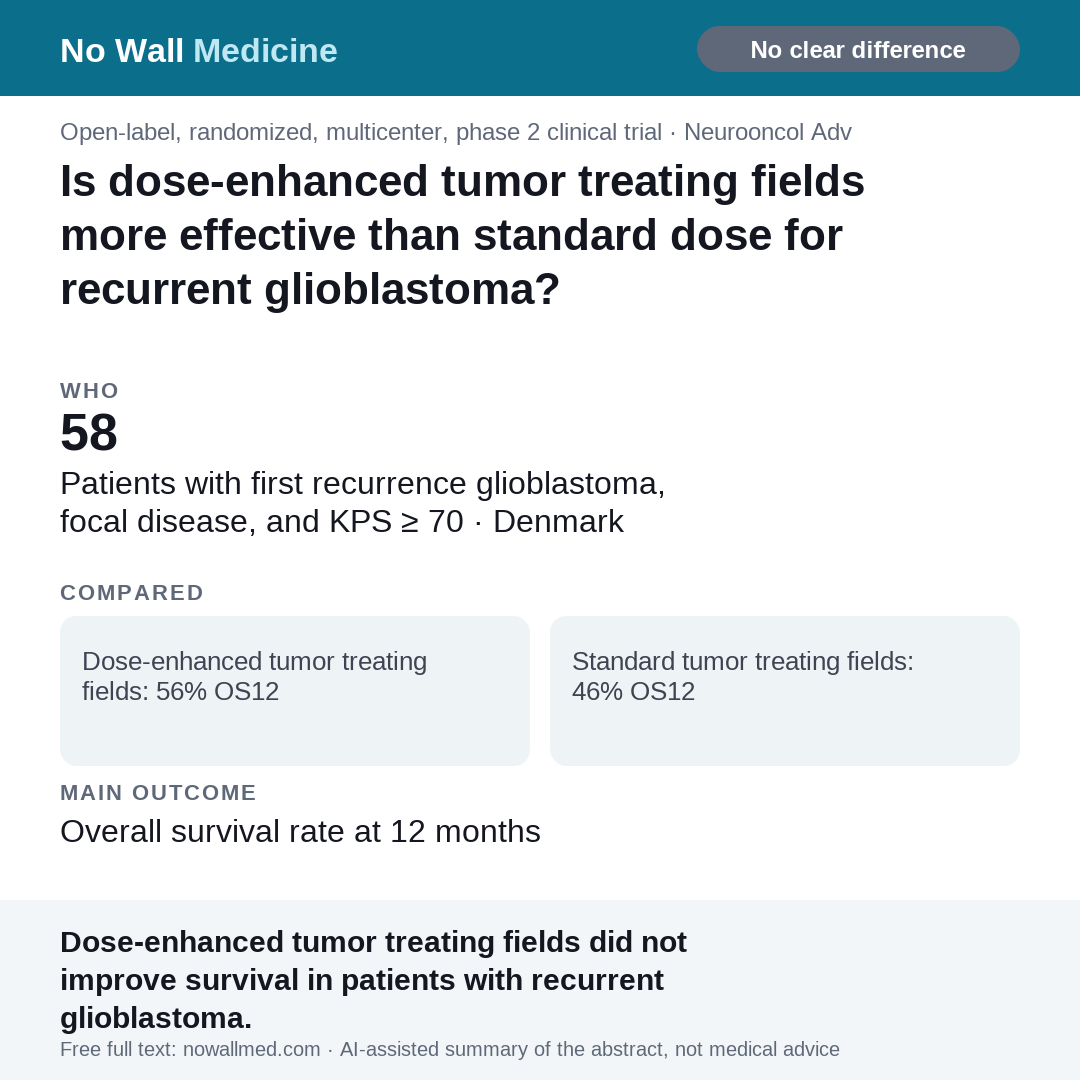
Dose-enhanced versus standard TTFields for first recurrence of glioblastoma: A randomized phase 2 clinical trial
Open-label, randomized, multicenter, phase 2 clinical trialNo clear difference
Is dose-enhanced tumor treating fields more effective than standard dose for recurrent glioblastoma?
Who
58
Patients with first recurrence glioblastoma, focal disease, and KPS ≥ 70 · Denmark
Compared
Dose-enhanced tumor treating fields: 56% OS12
Standard tumor treating fields: 46% OS12
Main outcome
Overall survival rate at 12 months
Bottom line: Dose-enhanced tumor treating fields did not improve survival in patients with recurrent glioblastoma.
Limitation: Low study power
Neurooncol Adv · 2025-11-20Download image
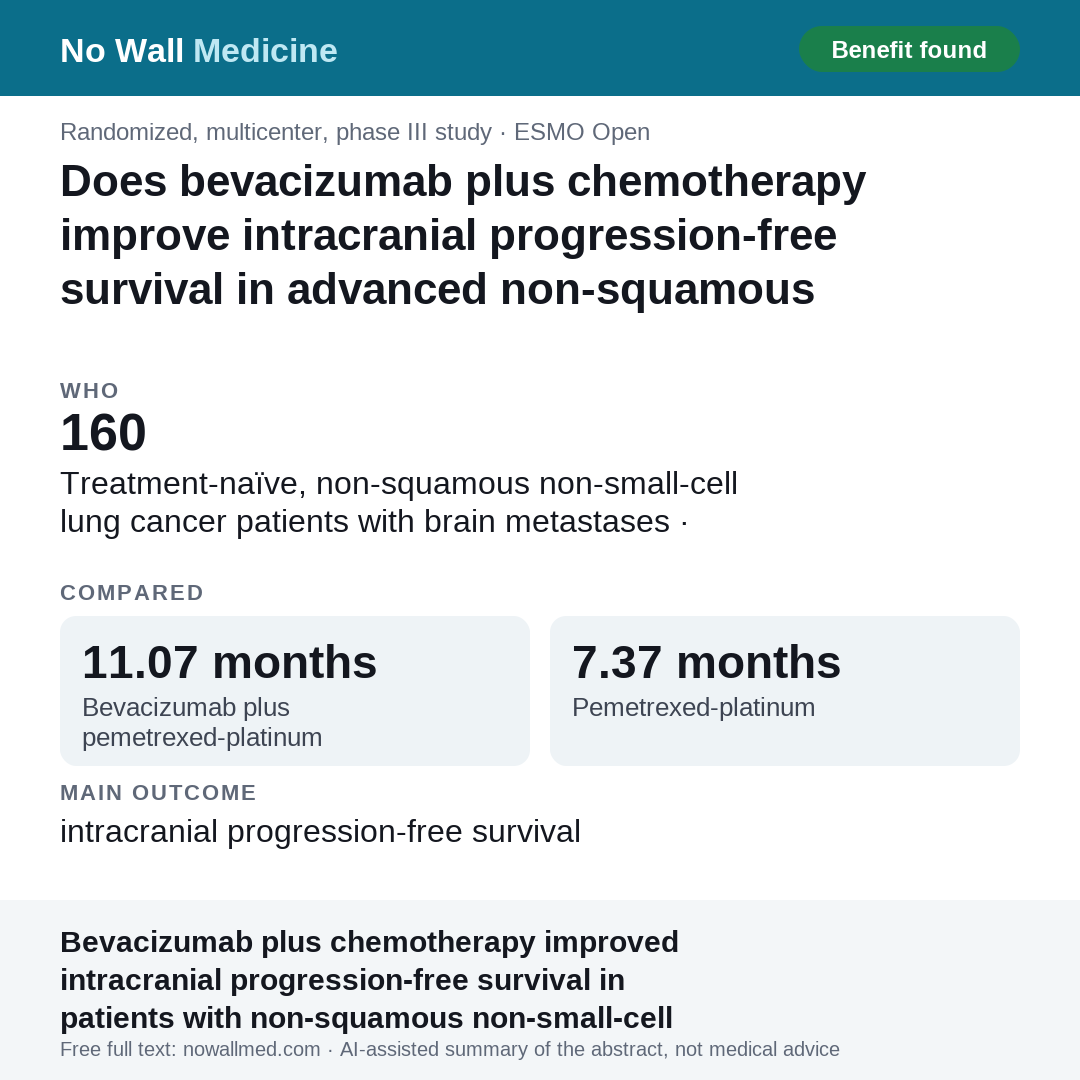
Bevacizumab plus chemotherapy versus chemotherapy in untreated advanced non-squamous non-small-cell lung cancer patients with brain metastases (BAP BRAIN): an open-label, randomized, multicenter, phase III study
Randomized, multicenter, phase III studyBenefit found
Does bevacizumab plus chemotherapy improve intracranial progression-free survival in advanced non-squamous non-small-cell lung cancer?
Who
160
Treatment-naïve, non-squamous non-small-cell lung cancer patients with brain metastases · 11 centers in China
Compared
11.07 monthsBevacizumab plus pemetrexed-platinum
7.37 monthsPemetrexed-platinum
Main outcome
intracranial progression-free survival
Result: hazard ratio 0.494, P < 0.001
Bottom line: Bevacizumab plus chemotherapy improved intracranial progression-free survival in patients with non-squamous non-small-cell lung cancer and brain metastases.
ESMO Open · 2025-11-20Download image
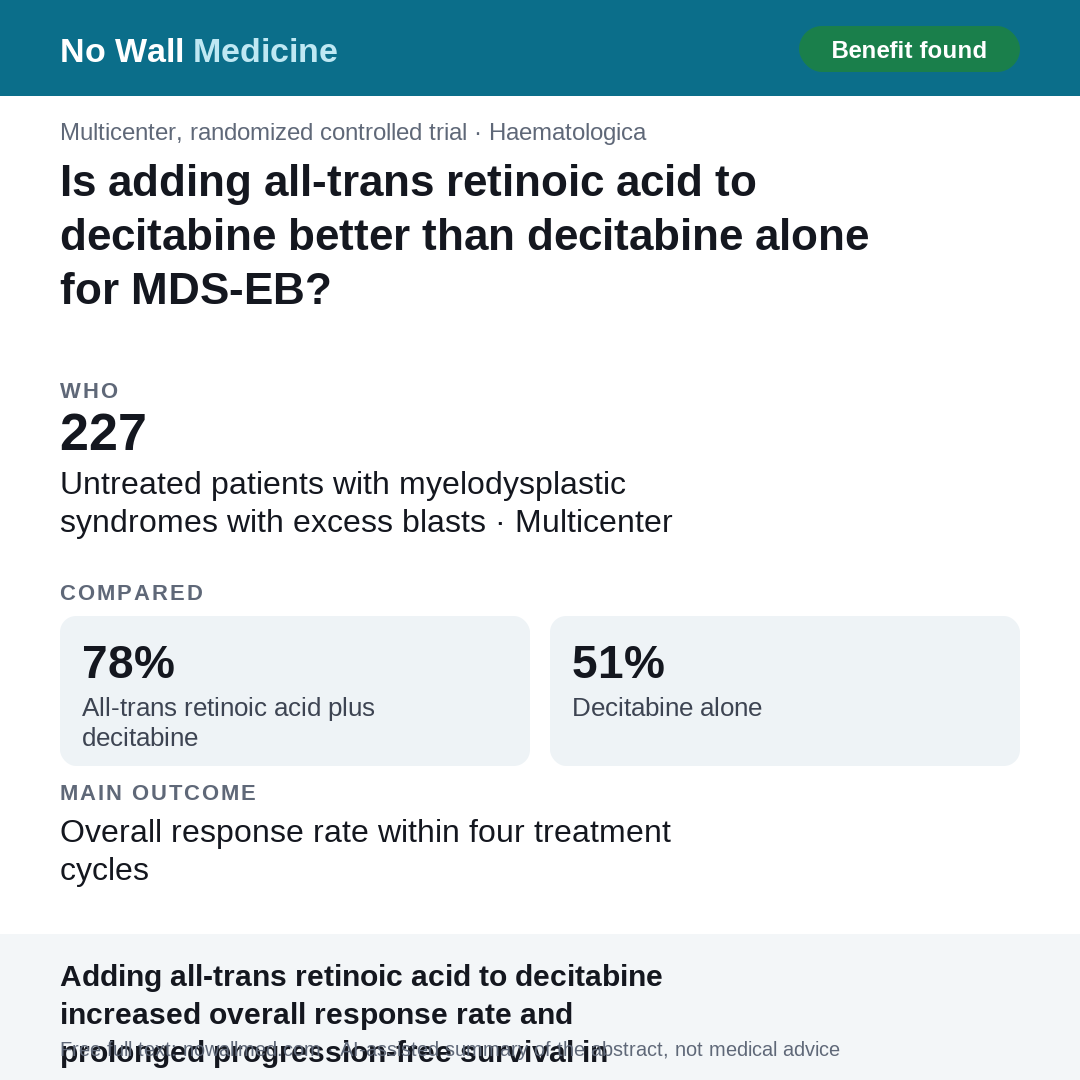
Decitabine plus all-trans retinoic acid versus decitabine monotherapy for myelodysplastic syndromes with excess blasts: a multicenter, randomized controlled trial
Multicenter, randomized controlled trialBenefit found
Is adding all-trans retinoic acid to decitabine better than decitabine alone for MDS-EB?
Who
227
Untreated patients with myelodysplastic syndromes with excess blasts · Multicenter
Compared
78%All-trans retinoic acid plus decitabine (86/110)
51%Decitabine alone (58/113)
Main outcome
Overall response rate within four treatment cycles
Result: odds ratio =3.40; 95% confidence interval [CI]: 1.90-6.09
Bottom line: Adding all-trans retinoic acid to decitabine increased overall response rate and prolonged progression-free survival in MDS-EB patients.
Haematologica · 2025-11-20Download image
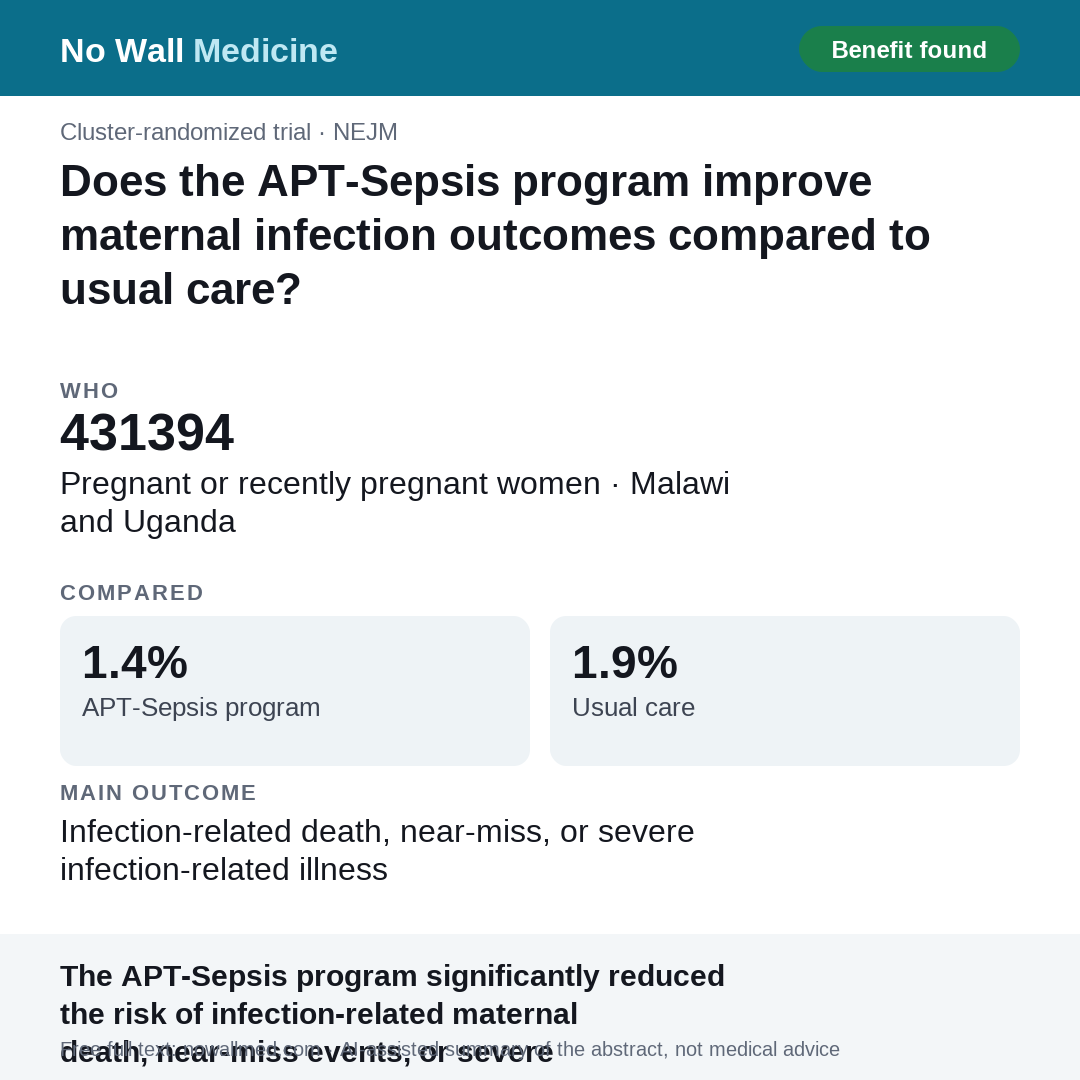
A Multicomponent Intervention to Improve Maternal Infection Outcomes
Cluster-randomized trialBenefit found
Does the APT-Sepsis program improve maternal infection outcomes compared to usual care?
Who
431394
Pregnant or recently pregnant women · Malawi and Uganda
Compared
1.4%APT-Sepsis program
1.9%Usual care
Main outcome
Infection-related death, near-miss, or severe infection-related illness
Result: risk ratio 0.68 (95% confidence interval 0.55 to 0.83)
Bottom line: The APT-Sepsis program significantly reduced the risk of infection-related maternal death, near-miss events, or severe infection-related illness.
Funded by: Joint Global Health Trials scheme and others
NEJM · 2025-11-19Download image
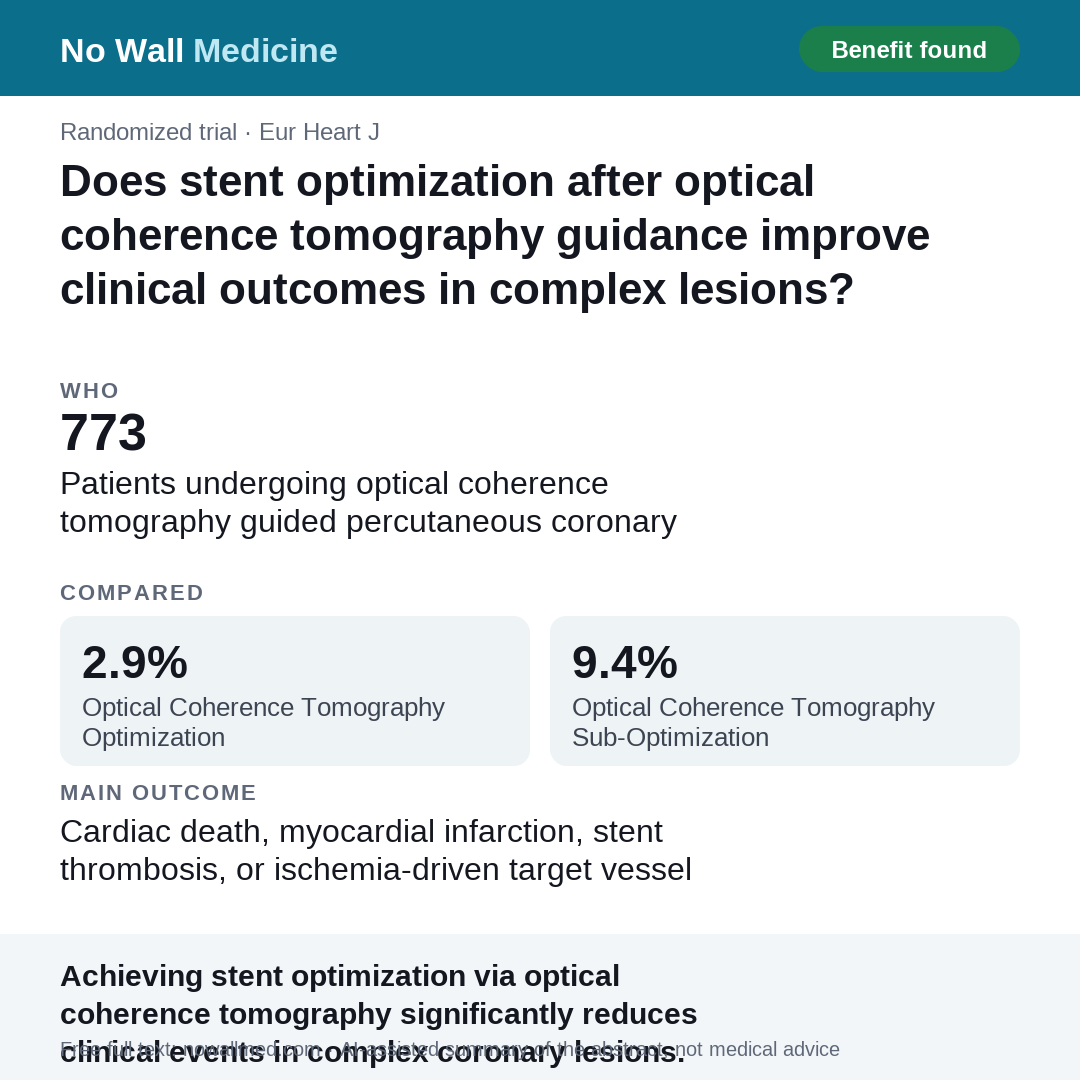
Optical coherence tomography-guided stent optimization for complex coronary lesions: the OCCUPI trial
Randomized trialBenefit found
Does stent optimization after optical coherence tomography guidance improve clinical outcomes in complex lesions?
Who
773
Patients undergoing optical coherence tomography guided percutaneous coronary intervention
Compared
2.9%Optical Coherence Tomography Optimization
9.4%Optical Coherence Tomography Sub-Optimization
Main outcome
Cardiac death, myocardial infarction, stent thrombosis, or ischemia-driven target vessel revascularization
Result: hazard ratio 0.30 (95% CI 0.16-0.58)
Bottom line: Achieving stent optimization via optical coherence tomography significantly reduces clinical events in complex coronary lesions.
Eur Heart J · 2025-11-19Download image
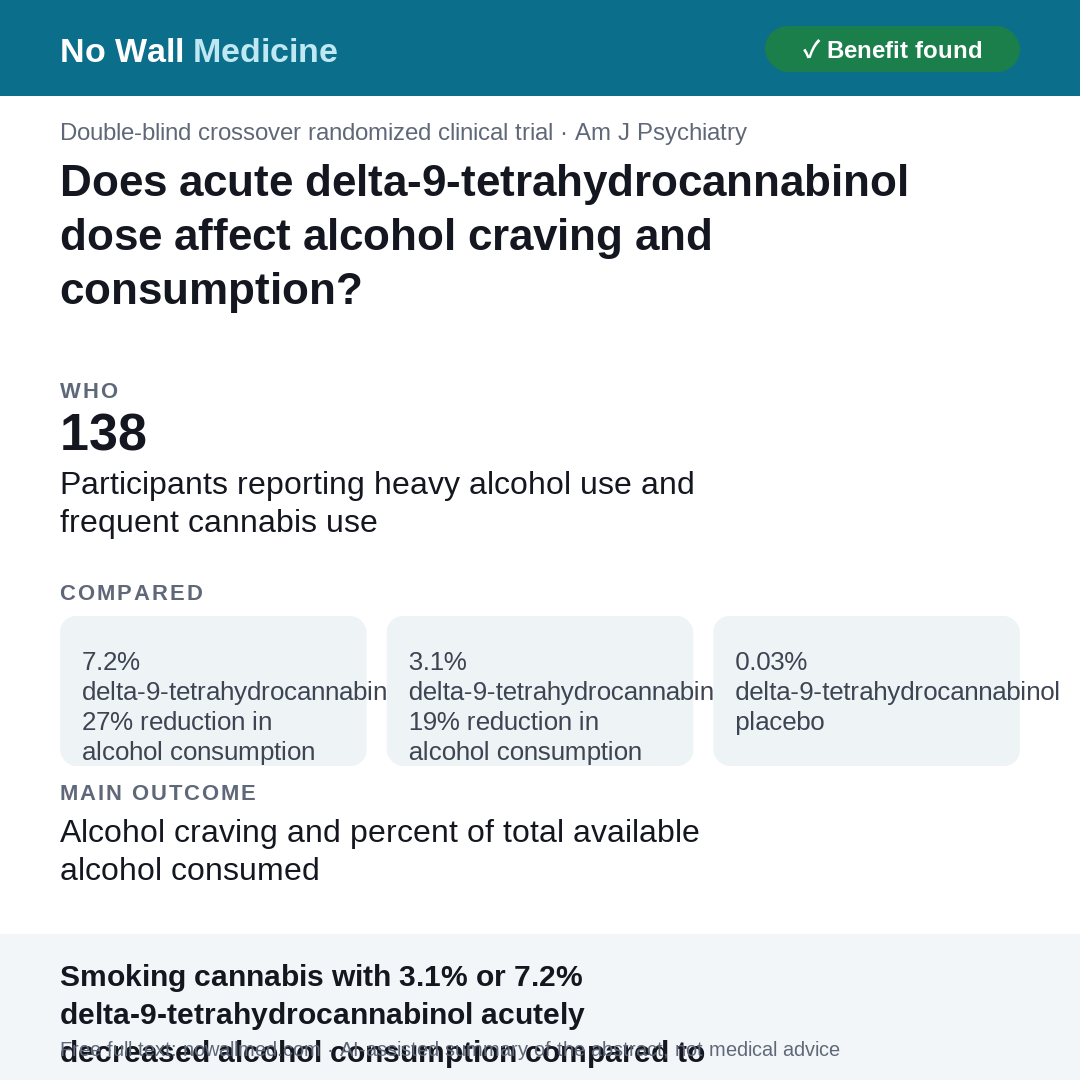
Acute Effects of Cannabis on Alcohol Craving and Consumption: A Randomized Controlled Crossover Trial
Double-blind crossover randomized clinical trialBenefit found
Does acute delta-9-tetrahydrocannabinol dose affect alcohol craving and consumption?
Who
138
Participants reporting heavy alcohol use and frequent cannabis use
Compared
7.2% delta-9-tetrahydrocannabinol: 27% reduction in alcohol consumption
3.1% delta-9-tetrahydrocannabinol: 19% reduction in alcohol consumption
0.03% delta-9-tetrahydrocannabinol placebo
Main outcome
Alcohol craving and percent of total available alcohol consumed
Bottom line: Smoking cannabis with 3.1% or 7.2% delta-9-tetrahydrocannabinol acutely decreased alcohol consumption compared to placebo.
Limitation: Further controlled research on a variety of cannabinoids is needed.
Am J Psychiatry · 2025-11-19Download image