Visual abstracts
New randomized trials and meta-analyses from leading journals at a glance: who was studied, what was compared, and what was found. Every paper is free to read in full.
All specialtiesCardiology 4832Oncology 4114Gastroenterology & Hepatology 1934Infectious Disease 3824Neurology 1899Psychiatry & Mental Health 2256Pulmonology 2082Critical Care 1345Endocrinology & Diabetes 2572Pediatrics 2940Surgery 2525Orthopedics & Sports Medicine 926Neurosurgery 534Cardiothoracic & Vascular Surgery 671Plastic & Reconstructive Surgery 591Nephrology 1124Rheumatology 823Hematology 1104Dermatology 620Ophthalmology 543Obstetrics & Gynecology 1684Public & Global Health 1056Radiology & Imaging 641Anesthesiology 962Urology 754ENT (Otolaryngology) 503Emergency Medicine 489Allergy & Immunology 313Geriatrics 981Family Medicine & Primary Care 541Medical Genetics & Genomics 675Pathology & Laboratory Medicine 157Physical Medicine & Rehabilitation 751Palliative Care 424Nutrition 1580Digital Health & AI 2195General Medicine 321
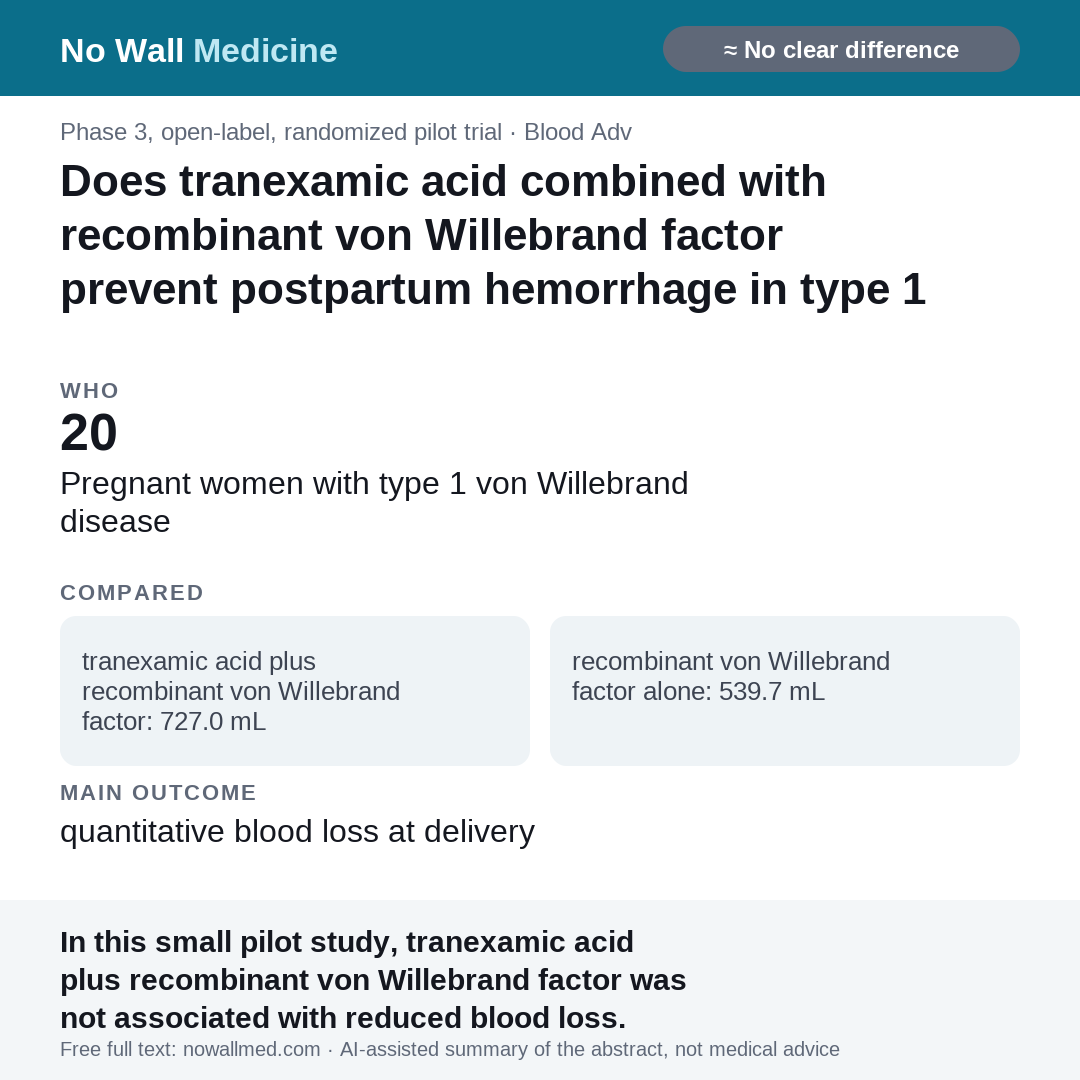
Impact of tranexamic acid on postpartum hemorrhage in type 1 von Willebrand disease treated with recombinant VWF
Phase 3, open-label, randomized pilot trialNo clear difference
Does tranexamic acid combined with recombinant von Willebrand factor prevent postpartum hemorrhage in type 1 von Willebrand disease?
Who
20
Pregnant women with type 1 von Willebrand disease
Compared
tranexamic acid plus recombinant von Willebrand factor: 727.0 mL
recombinant von Willebrand factor alone: 539.7 mL
Main outcome
quantitative blood loss at delivery
Bottom line: In this small pilot study, tranexamic acid plus recombinant von Willebrand factor was not associated with reduced blood loss.
Blood Adv · 2025-09-03Download image
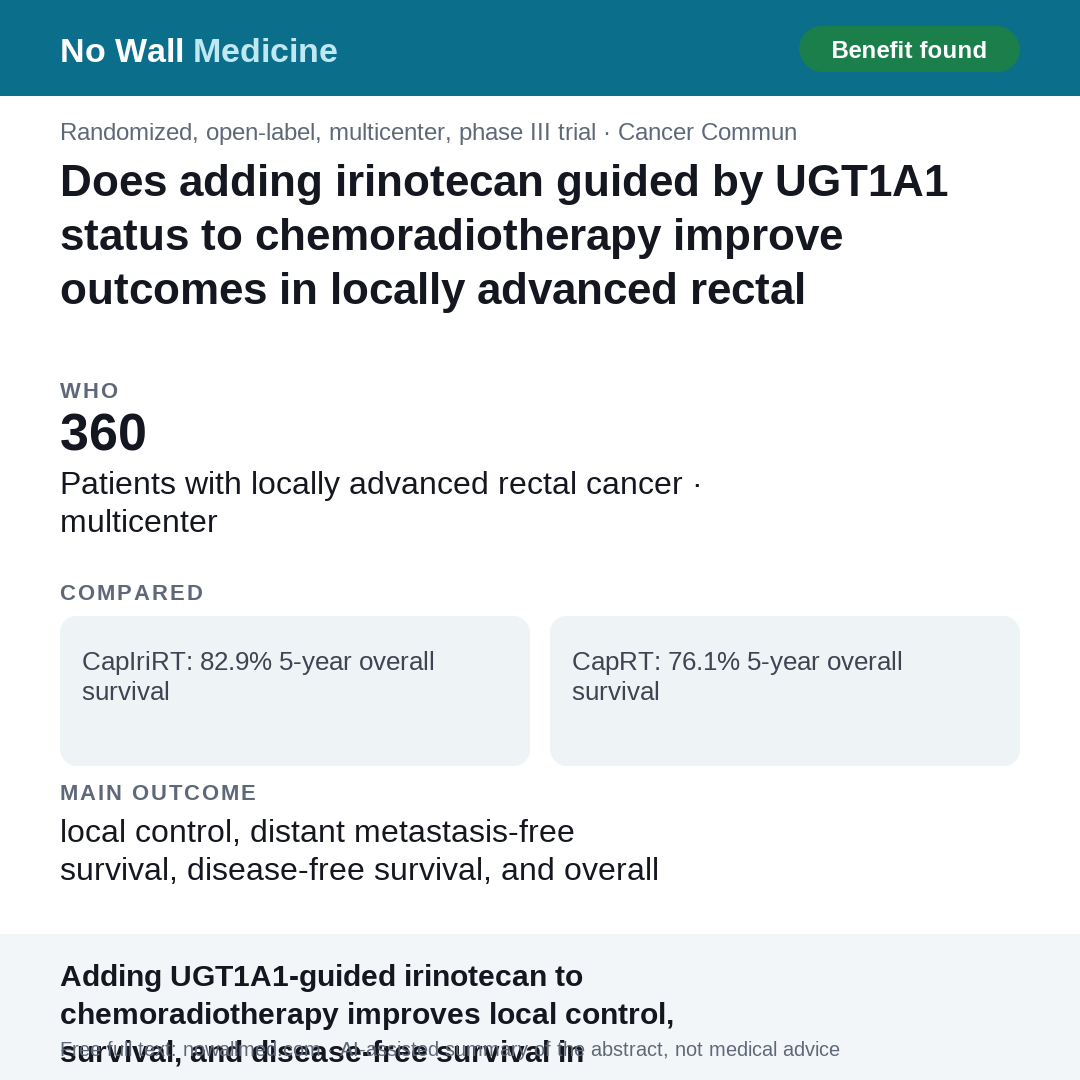
Neoadjuvant chemoradiotherapy with capecitabine and irinotecan guided by UGT1A1 status in patients with locally advanced rectal cancer: 5-year update of the CinClare trial
Randomized, open-label, multicenter, phase III trialBenefit found
Does adding irinotecan guided by UGT1A1 status to chemoradiotherapy improve outcomes in locally advanced rectal cancer?
Who
360
Patients with locally advanced rectal cancer · multicenter
Compared
CapIriRT: 82.9% 5-year overall survival
CapRT: 76.1% 5-year overall survival
Main outcome
local control, distant metastasis-free survival, disease-free survival, and overall survival
Bottom line: Adding UGT1A1-guided irinotecan to chemoradiotherapy improves local control, survival, and disease-free survival in locally advanced rectal cancer.
Cancer Commun · 2025-09-03Download image
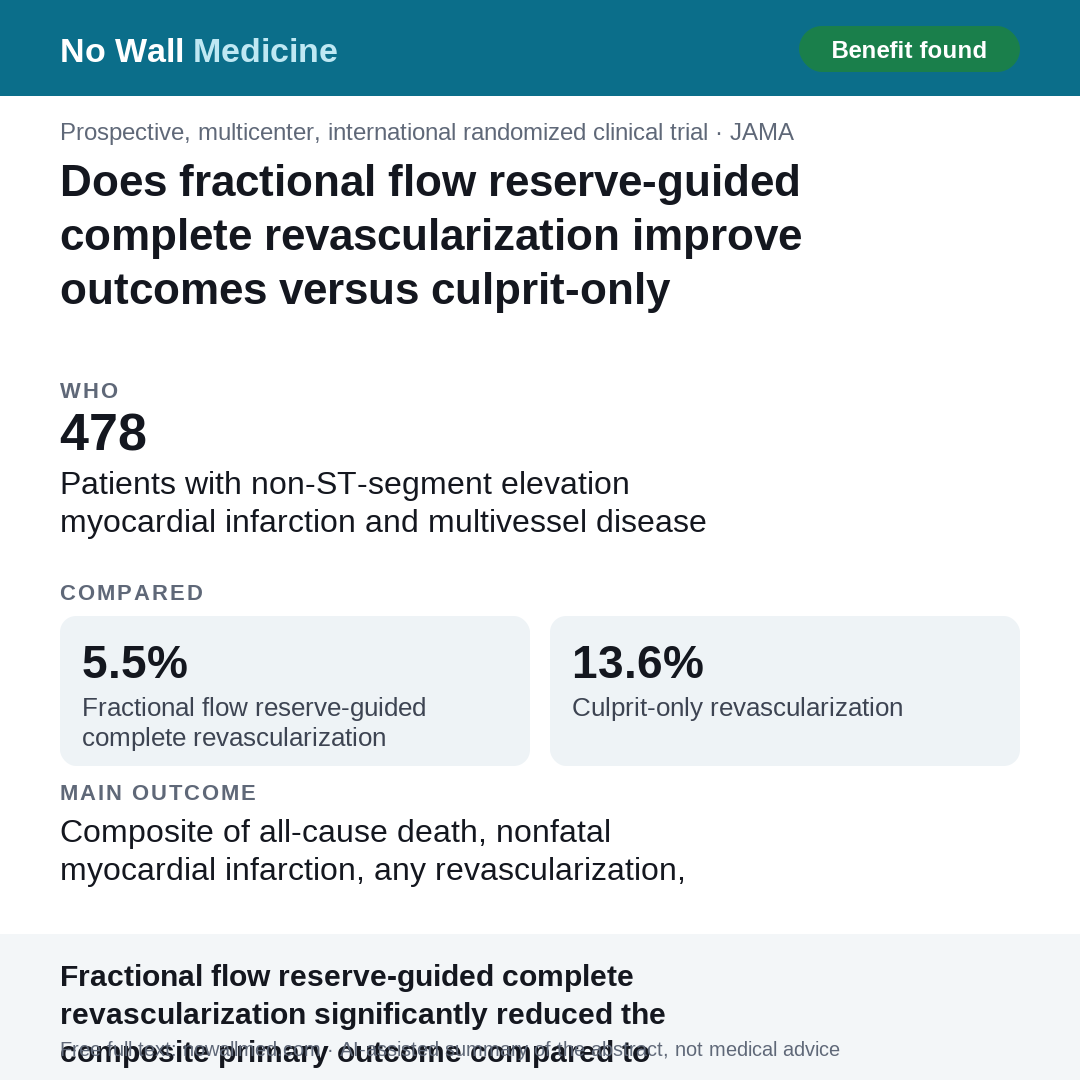
Fractional Flow Reserve-Guided Complete vs Culprit-Only Revascularization in Non-ST-Elevation Myocardial Infarction and Multivessel Disease: The SLIM Randomized Clinical Trial
Prospective, multicenter, international randomized clinical trialBenefit found
Does fractional flow reserve-guided complete revascularization improve outcomes versus culprit-only revascularization in NSTEMI patients?
Who
478
Patients with non-ST-segment elevation myocardial infarction and multivessel disease · 9 hospitals in Europe
Compared
5.5%Fractional flow reserve-guided complete revascularization
13.6%Culprit-only revascularization
Main outcome
Composite of all-cause death, nonfatal myocardial infarction, any revascularization, and stroke
Result: hazard ratio 0.38 (95% CI 0.20-0.72)
Bottom line: Fractional flow reserve-guided complete revascularization significantly reduced the composite primary outcome compared to culprit-only revascularization at 1 year.
JAMA · 2025-09-02Download image
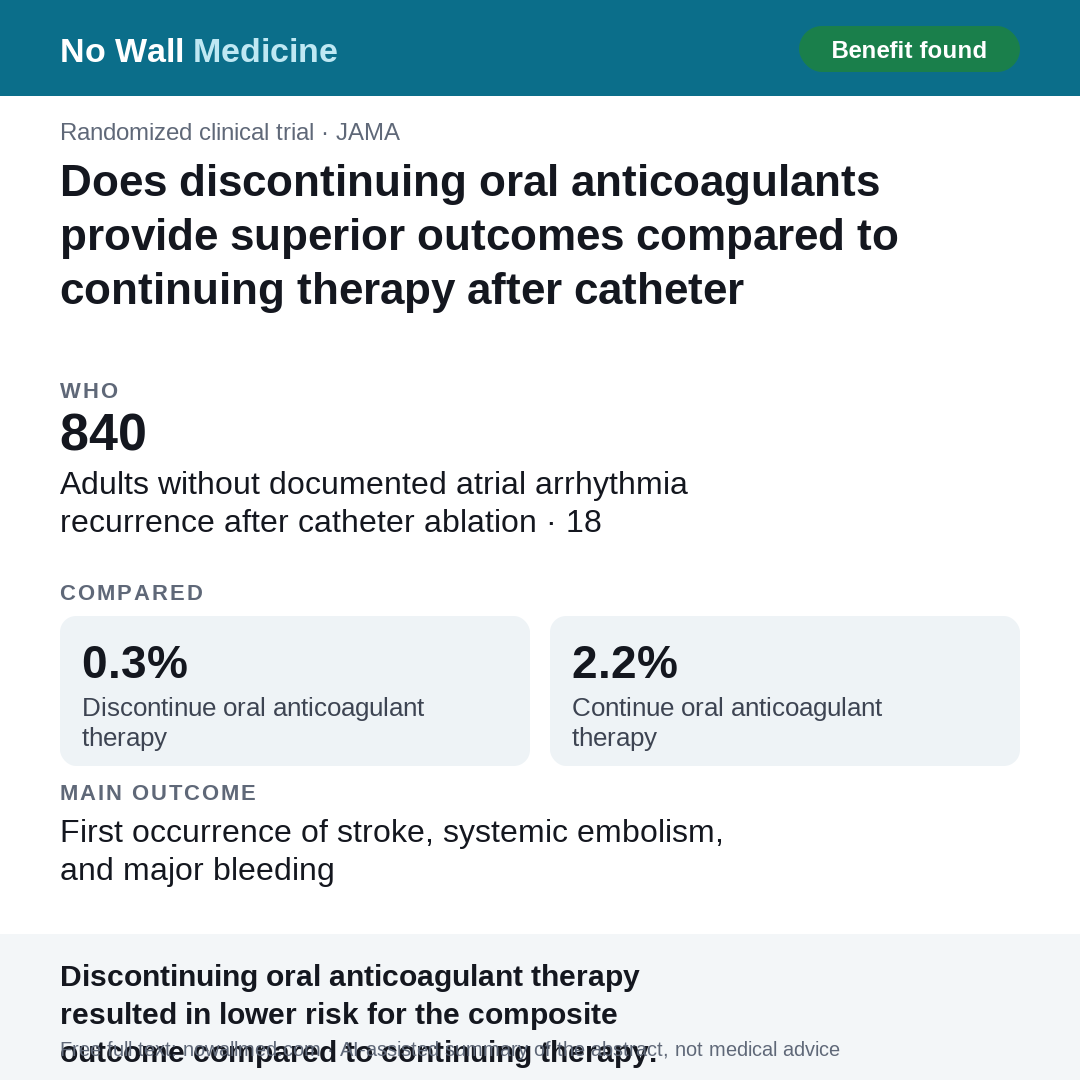
Long-Term Anticoagulation Discontinuation After Catheter Ablation for Atrial Fibrillation: The ALONE-AF Randomized Clinical Trial
Randomized clinical trialBenefit found
Does discontinuing oral anticoagulants provide superior outcomes compared to continuing therapy after catheter ablation?
Who
840
Adults without documented atrial arrhythmia recurrence after catheter ablation · 18 hospitals in South Korea
Compared
0.3%Discontinue oral anticoagulant therapy
2.2%Continue oral anticoagulant therapy
Main outcome
First occurrence of stroke, systemic embolism, and major bleeding
Result: absolute difference, -1.9 percentage points (95% CI, -3.5 to -0.3)
Bottom line: Discontinuing oral anticoagulant therapy resulted in lower risk for the composite outcome compared to continuing therapy.
JAMA · 2025-09-02Download image
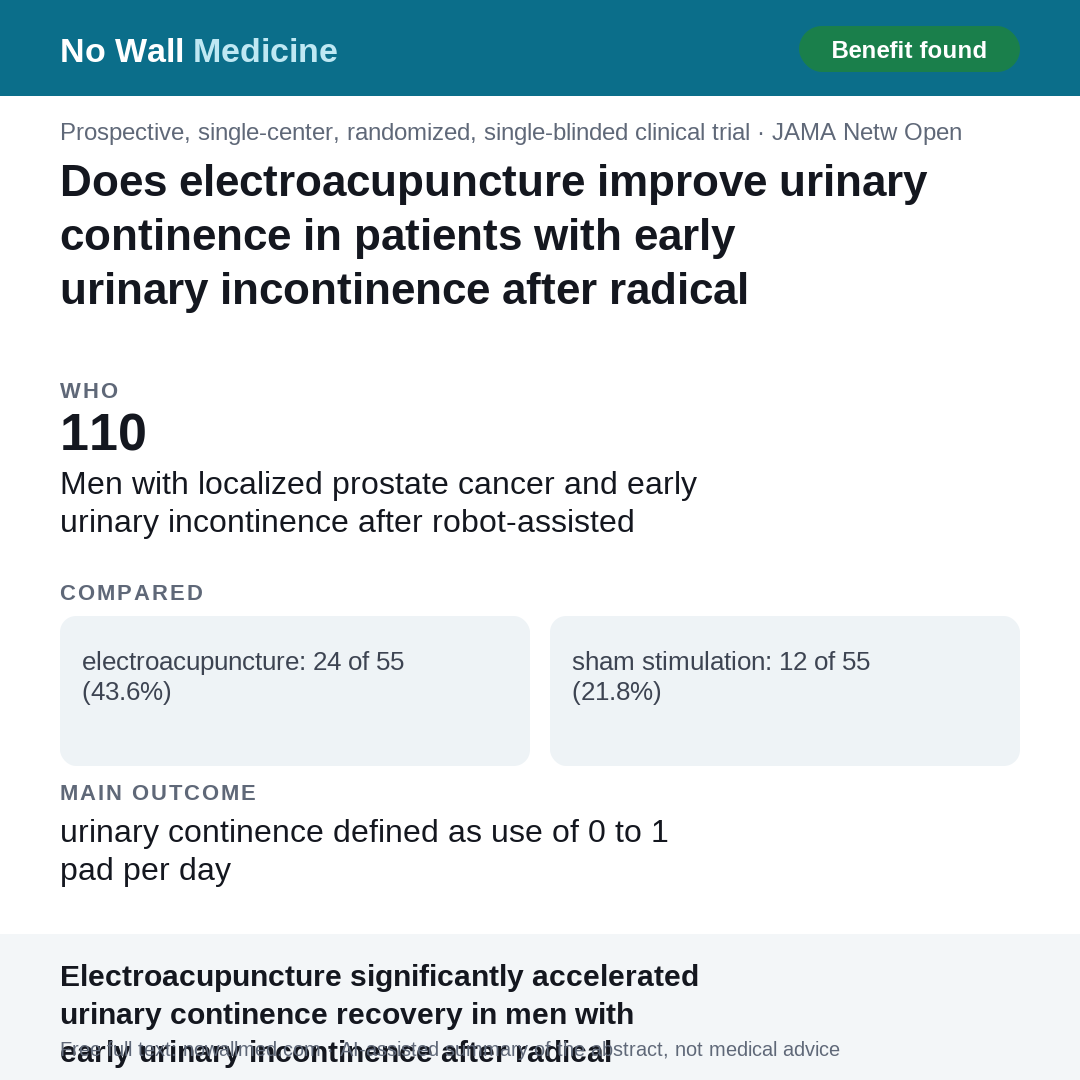
Electroacupuncture in Patients With Early Urinary Incontinence After Radical Prostatectomy: A Randomized Clinical Trial
Prospective, single-center, randomized, single-blinded clinical trialBenefit found
Does electroacupuncture improve urinary continence in patients with early urinary incontinence after radical prostatectomy?
Who
110
Men with localized prostate cancer and early urinary incontinence after robot-assisted radical prostatectomy · Nanjing Drum Tower Hospital, China
Compared
electroacupuncture: 24 of 55 (43.6%)
sham stimulation: 12 of 55 (21.8%)
Main outcome
urinary continence defined as use of 0 to 1 pad per day
Result: relative risk 2.00 (95% CI 1.12-3.59)
Bottom line: Electroacupuncture significantly accelerated urinary continence recovery in men with early urinary incontinence after radical prostatectomy.
JAMA Netw Open · 2025-09-02Download image
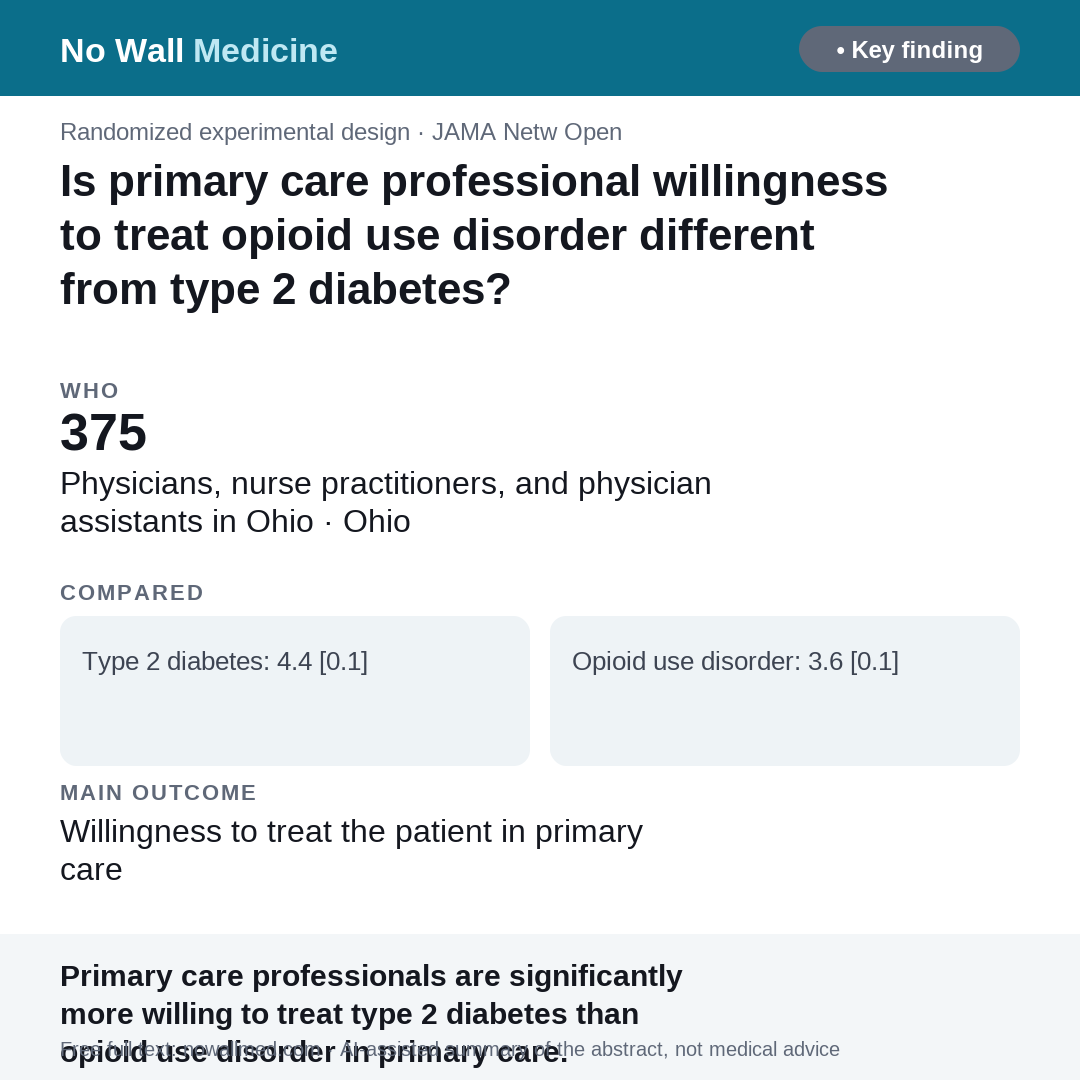
Health Care Professional Willingness to Treat Opioid Use Disorder vs Type 2 Diabetes in Primary Care
Randomized experimental designHarm found
Is primary care professional willingness to treat opioid use disorder different from type 2 diabetes?
Who
375
Physicians, nurse practitioners, and physician assistants in Ohio · Ohio
Compared
Type 2 diabetes: 4.4 [0.1]
Opioid use disorder: 3.6 [0.1]
Main outcome
Willingness to treat the patient in primary care
Bottom line: Primary care professionals are significantly more willing to treat type 2 diabetes than opioid use disorder in primary care.
JAMA Netw Open · 2025-09-02Download image
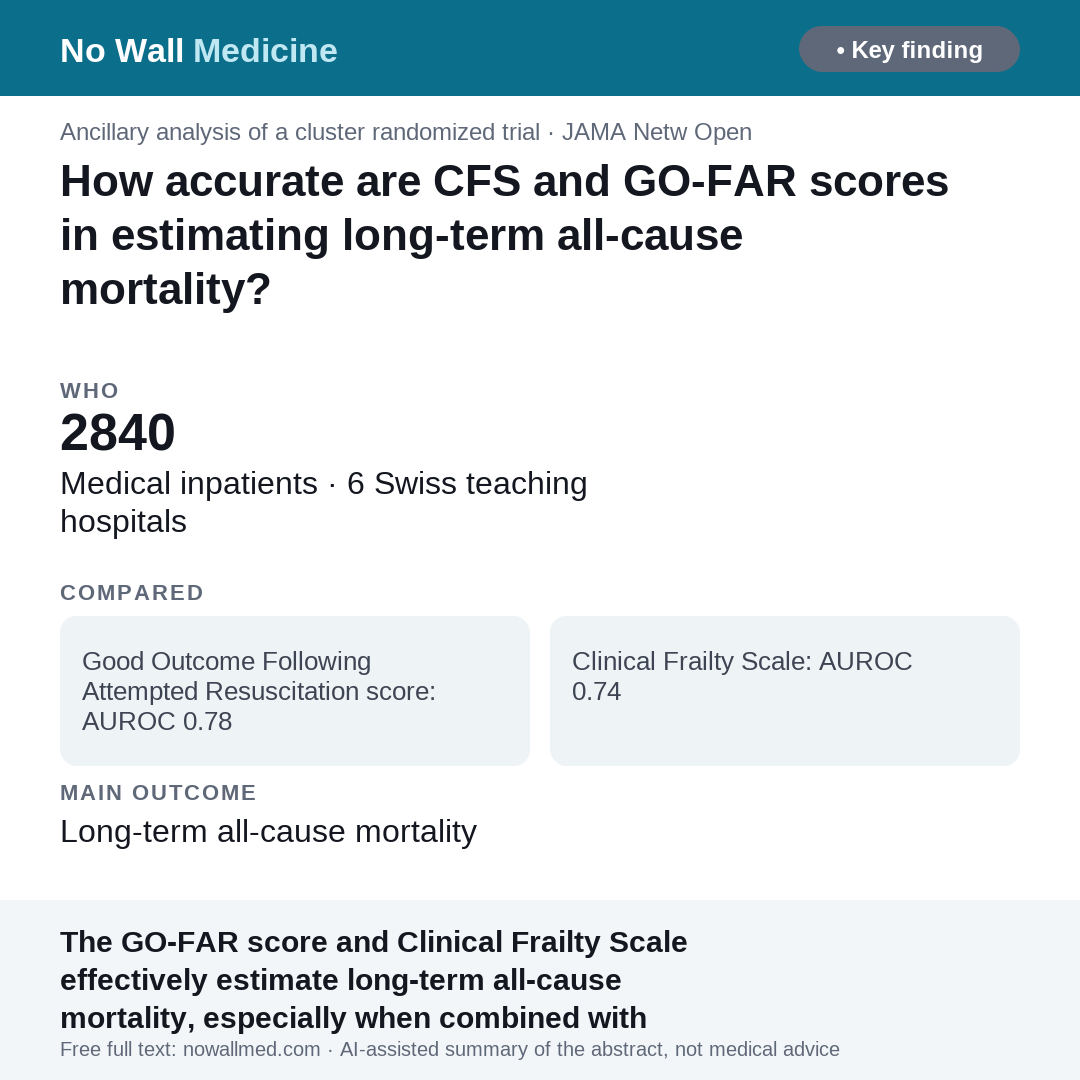
Good Outcome Following Attempted Resuscitation Score and Clinical Frailty Scale for Estimating Long-Term Mortality: An Ancillary Study of the CLEAR Randomized Clinical Trial
Ancillary analysis of a cluster randomized trialBenefit found
How accurate are CFS and GO-FAR scores in estimating long-term all-cause mortality?
Who
2840
Medical inpatients · 6 Swiss teaching hospitals
Compared
Good Outcome Following Attempted Resuscitation score: AUROC 0.78
Clinical Frailty Scale: AUROC 0.74
Main outcome
Long-term all-cause mortality
Result: combined regression model AUROC 0.87
Bottom line: The GO-FAR score and Clinical Frailty Scale effectively estimate long-term all-cause mortality, especially when combined with Charlson Comorbidity Index.
JAMA Netw Open · 2025-09-02Download image
Home-Delivered Nutrition Services for Older Adults Under the Older Americans Act
Qualitative substudyBenefit found
Benefits of home-delivered meals
Who
54
Older adults receiving home-delivered meals · California, Florida, North Carolina, South Carolina, Texas
Compared
Daily-delivered meals
Frozen meals
Main outcome
Benefits of home-delivered meals
Result: Meaningful benefits beyond stated purpose
Bottom line: Home-delivered meals achieved intended outcomes
JAMA Netw Open · 2025-09-02Download image
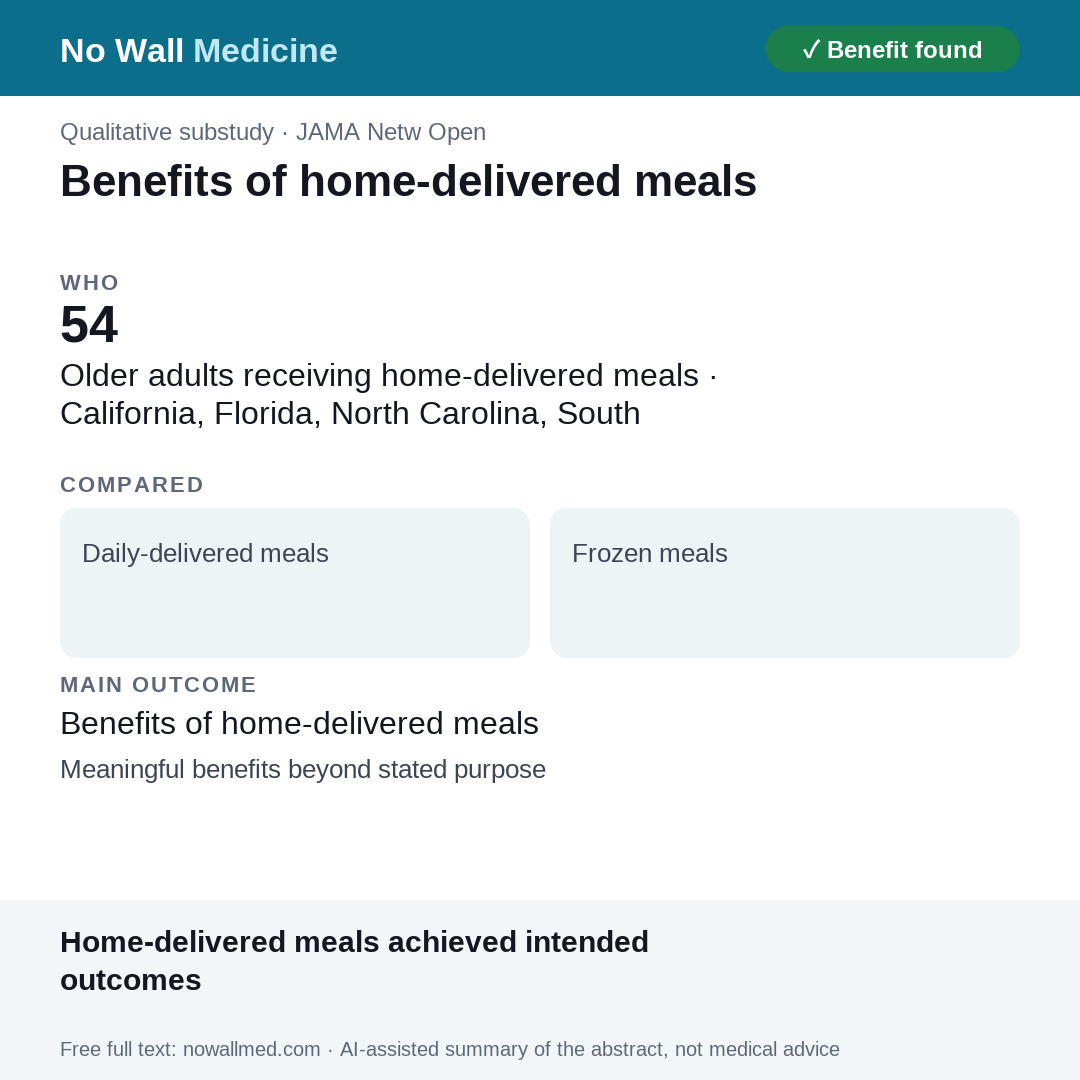
Brain Frailty and Functional Outcomes After Thrombolysis for Acute Ischemic Stroke
Post hoc analysis of a randomized clinical trialHarm found
Are brain frailty markers associated with functional outcomes after thrombolysis for acute ischemic stroke?
Who
1568
Adults with acute ischemic stroke treated with intravenous thrombolysis · 22 stroke centers across Canada
Compared
Fazekas score 3 to 6: lower odds of 90-day modified Rankin Scale 0 to 1
Fazekas score 0
Main outcome
excellent functional outcome (modified Rankin Scale score of 0-1) at 90 days
Result: adjusted odds ratio 0.40 (95% CI 0.24-0.65)
Bottom line: Higher brain frailty markers, including white matter changes and cortical atrophy, are associated with worse functional outcomes after thrombolysis.
JAMA Netw Open · 2025-09-02Download image
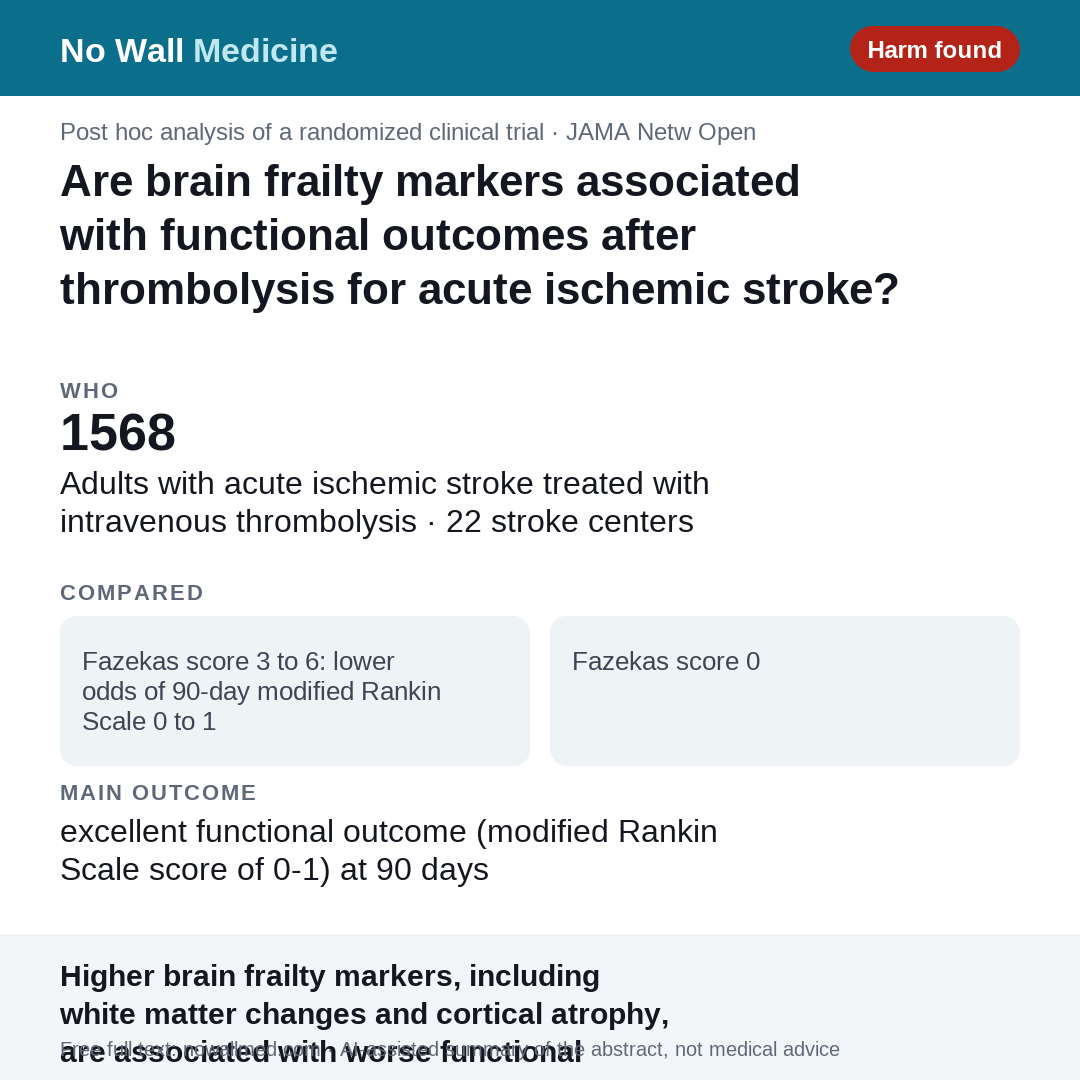
Multimodal Intervention and Child Passenger Safety Guideline Adherence in Young Children: A Sequential, Multiple-Assignment, Randomized Clinical Trial
Randomized clinical trialEarly signal
Does intervention improve child safety?
Who
1517
Caregivers of young children with suboptimal safety behaviors · Chicago, Illinois
Compared
47.1%Basic intervention (131/278)
32.2%Enhanced usual care (38/118)
Main outcome
Child passenger safety guideline adherence
Result: absolute change in treatment response, 13.1% (95% CI 3.6% to 22.6%)
Bottom line: Intervention improves child safety guideline adherence
JAMA Netw Open · 2025-09-02Download image
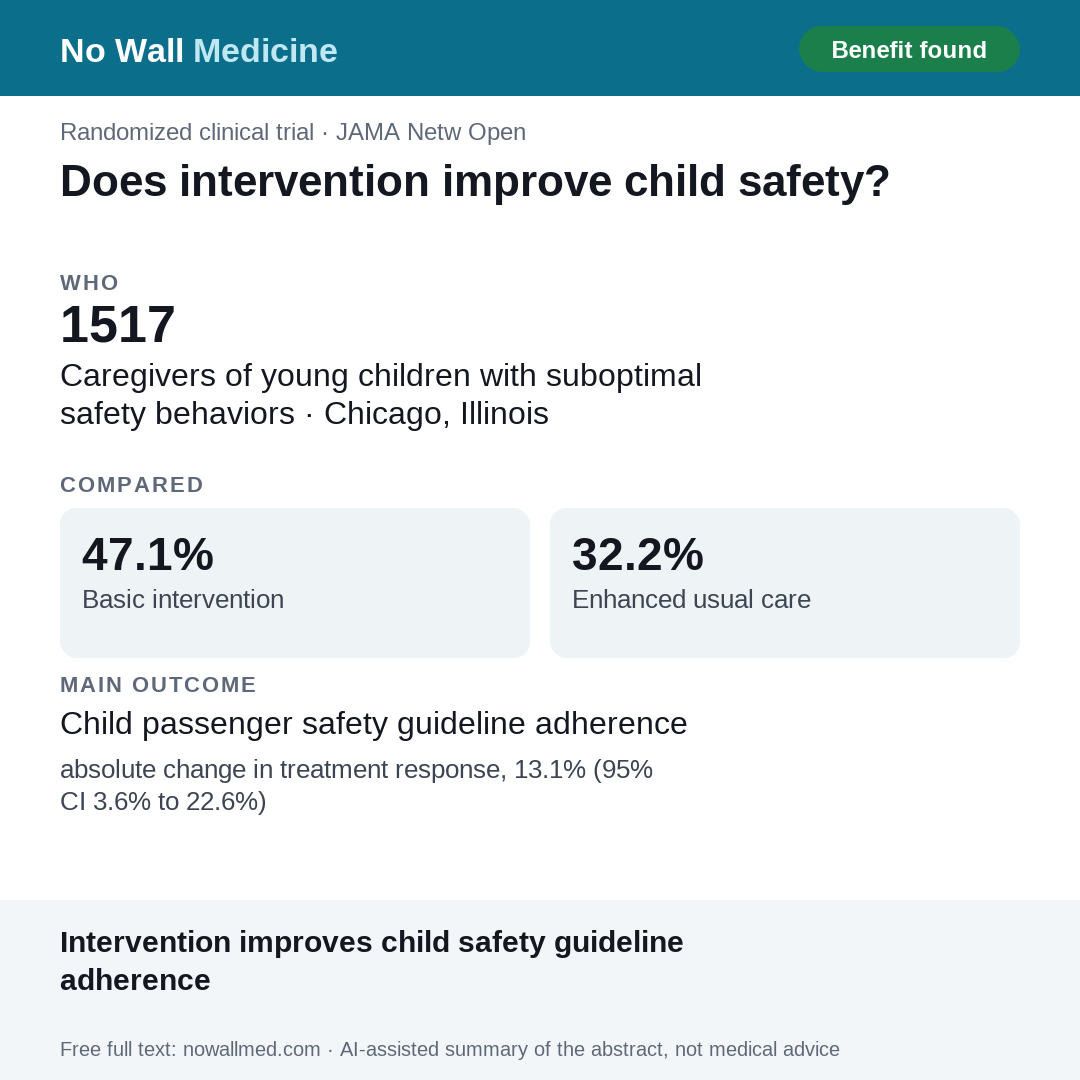
Antioxidant Treatment and the Chance to Conceive in Men Seeking Fertility Care: The SUMMER Randomized Clinical Trial
Multicenter, double-blind, placebo-controlled randomized clinical trialNo clear difference
Does antioxidant supplement treatment improve semen quality and pregnancy rates in men seeking fertility care?
Who
1171
Men aged 18 to 50 years and female partners aged 18 to 43 years · 21 hospitals and private fertility clinics in the Netherlands
Compared
Antioxidant supplement: 193 of 571 [33.8%]
Placebo: 208 of 555 [37.5%]
Main outcome
Ongoing pregnancy conceived within 6 months after randomization
Result: adjusted odds ratio 0.85 (95% CI, 0.66-1.09)
Bottom line: Antioxidant supplement treatment did not improve ongoing pregnancy rates compared to a placebo in men seeking fertility care.
JAMA Netw Open · 2025-09-02Download image
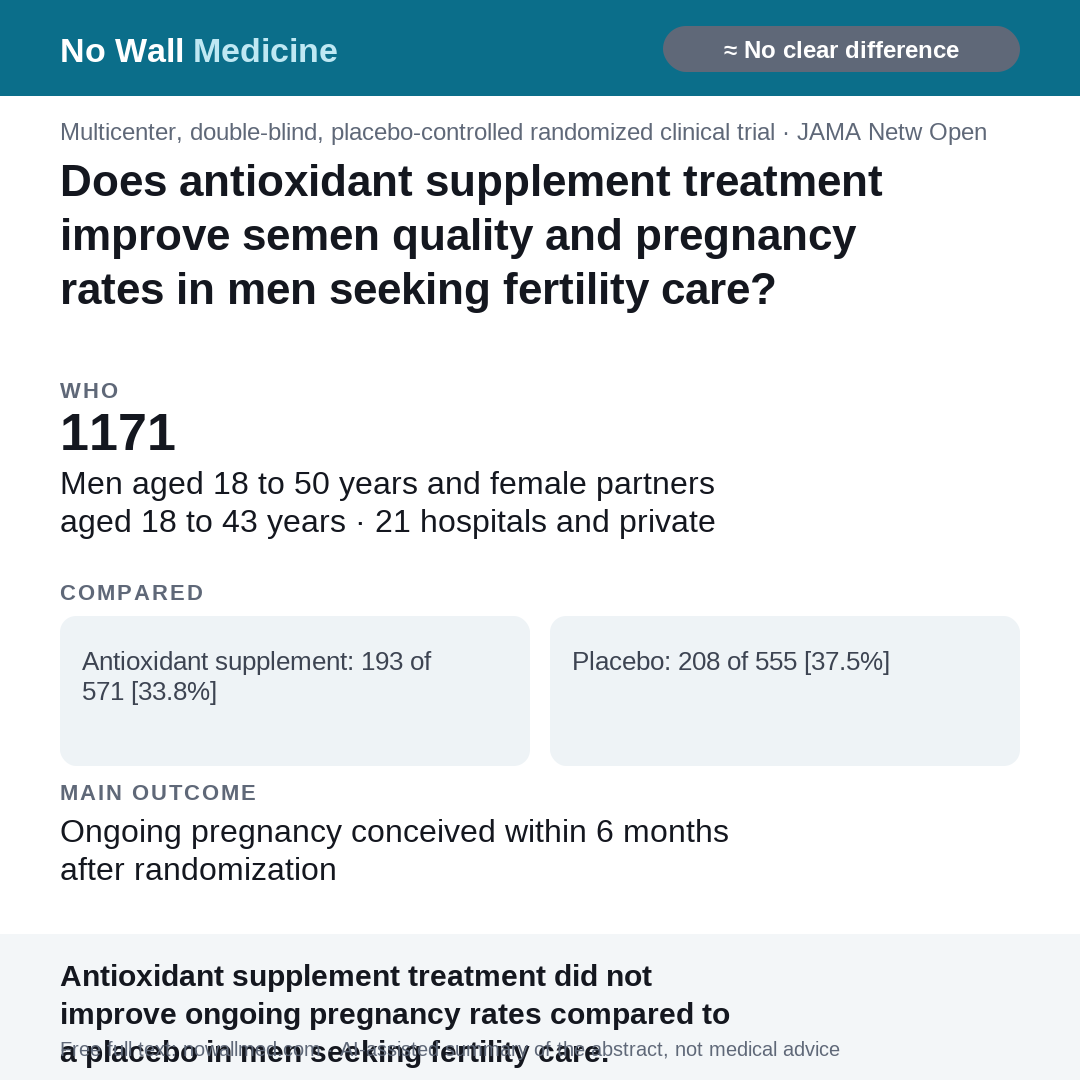
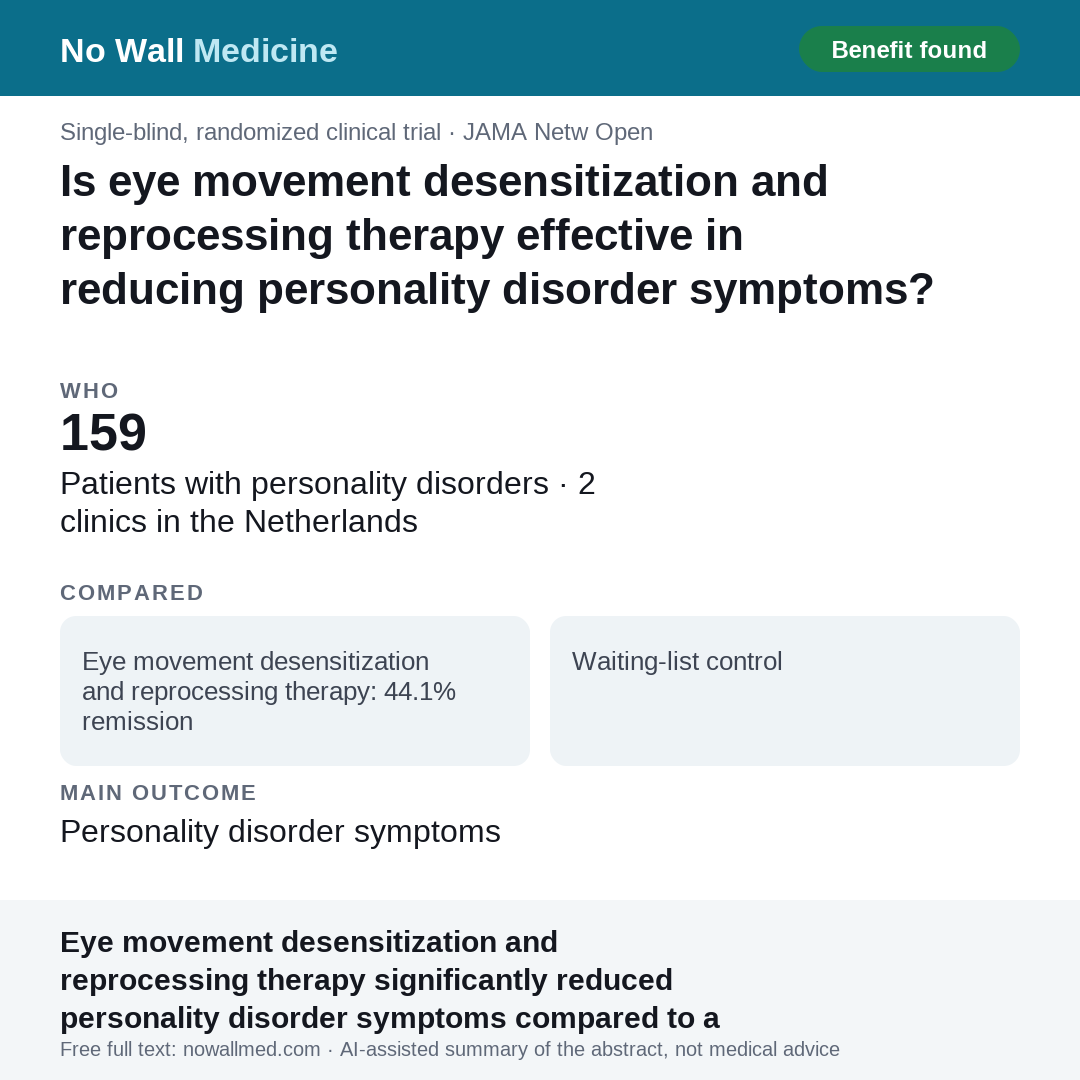
Eye Movement Desensitization and Reprocessing Therapy in Persons With Personality Disorders: A Randomized Clinical Trial
Single-blind, randomized clinical trialBenefit found
Is eye movement desensitization and reprocessing therapy effective in reducing personality disorder symptoms?
Who
159
Patients with personality disorders · 2 clinics in the Netherlands
Compared
Eye movement desensitization and reprocessing therapy: 44.1% remission
Waiting-list control
Main outcome
Personality disorder symptoms
Bottom line: Eye movement desensitization and reprocessing therapy significantly reduced personality disorder symptoms compared to a waiting list.
JAMA Netw Open · 2025-09-02Download image
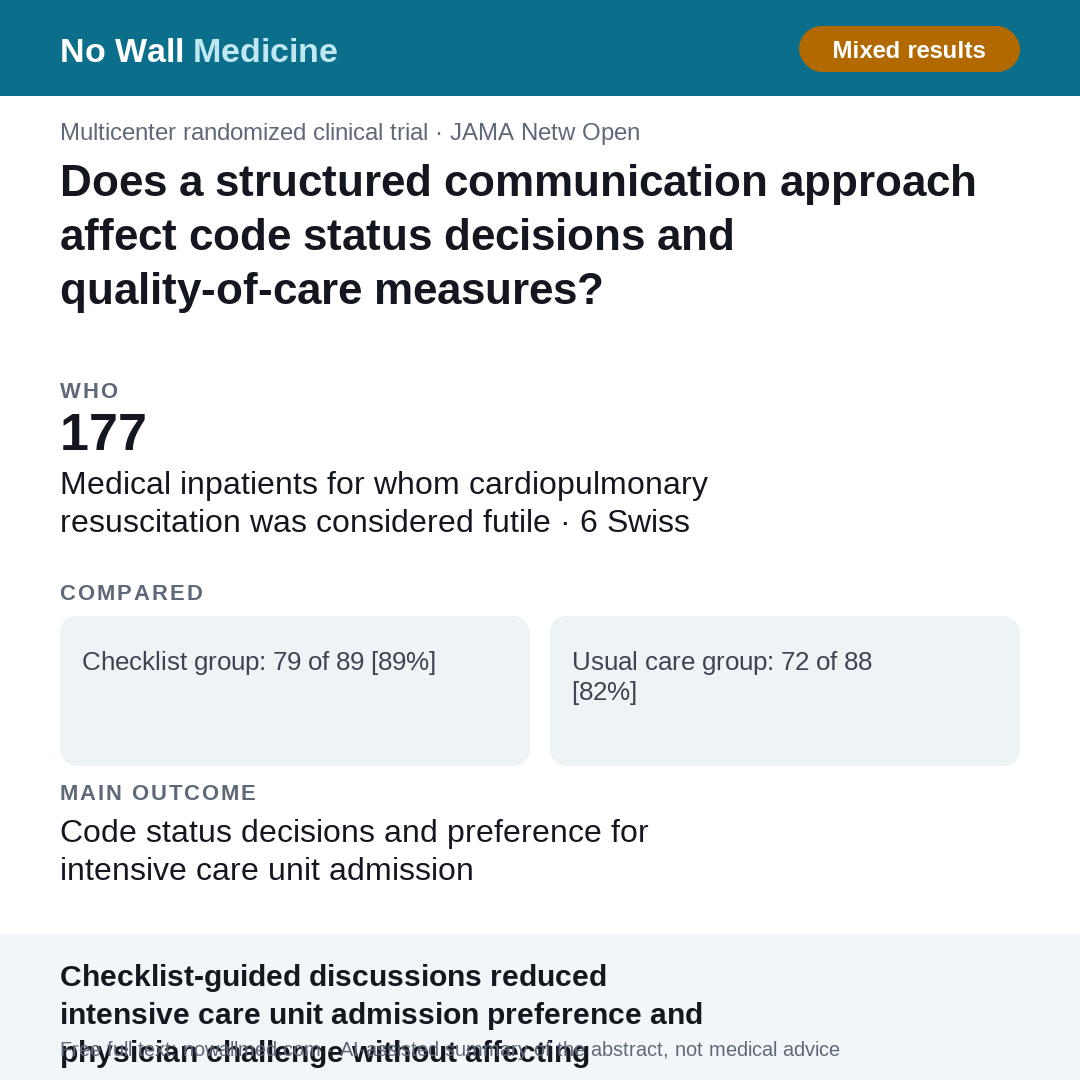
Checklist-Guided Code Status Discussions in Patients for Whom Cardiopulmonary Resuscitation Is Considered Futile: An Analysis of a Randomized Clinical Trial
Multicenter randomized clinical trialMixed results
Does a structured communication approach affect code status decisions and quality-of-care measures?
Who
177
Medical inpatients for whom cardiopulmonary resuscitation was considered futile · 6 Swiss teaching hospitals
Compared
Checklist group: 79 of 89 [89%]
Usual care group: 72 of 88 [82%]
Main outcome
Code status decisions and preference for intensive care unit admission
Result: odds ratio 1.76 (95% CI 0.75-4.12)
Bottom line: Checklist-guided discussions reduced intensive care unit admission preference and physician challenge without affecting patient psychological burden.
JAMA Netw Open · 2025-09-02Download image
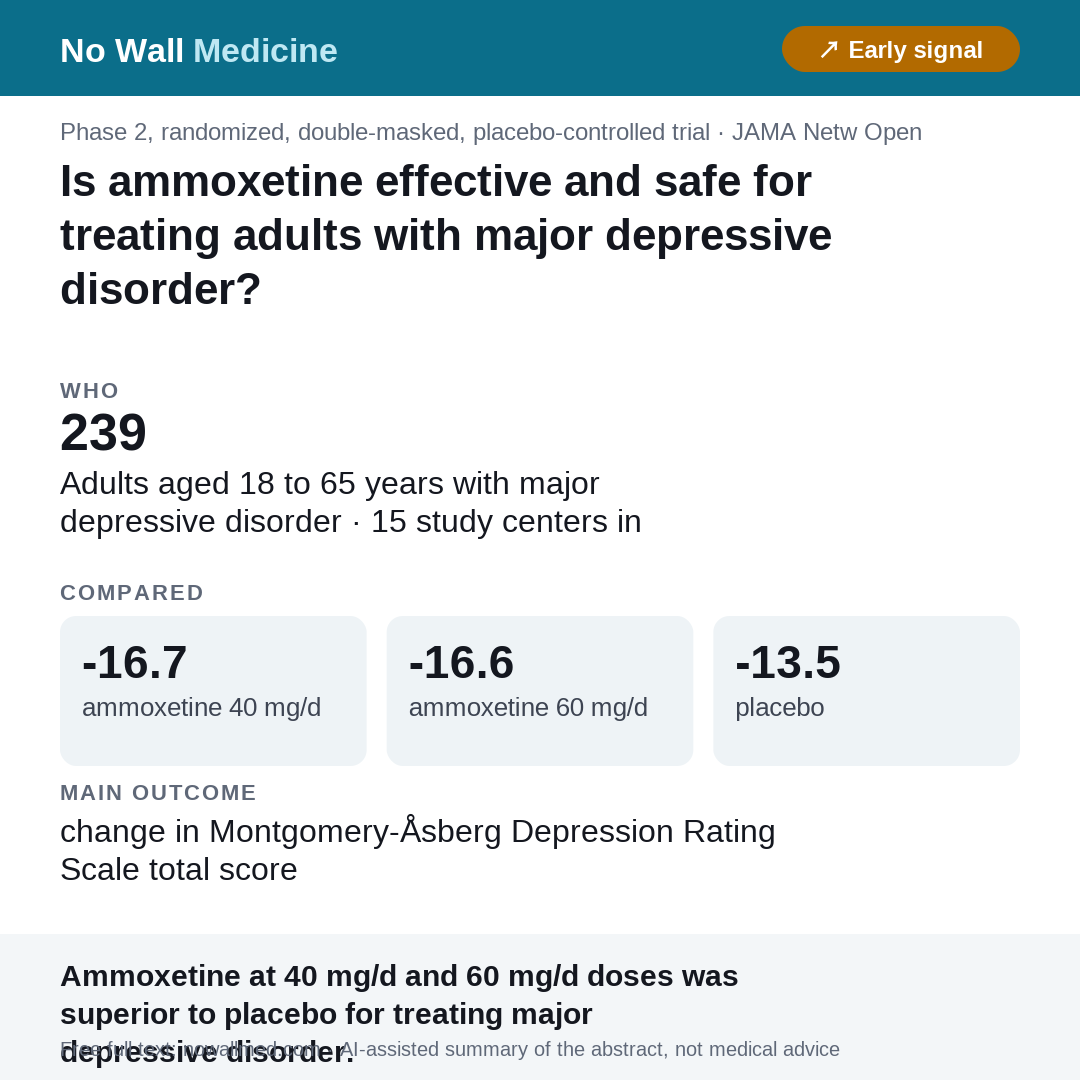
Efficacy and Safety of Ammoxetine in Major Depressive Disorder: A Randomized Clinical Trial
Phase 2, randomized, double-masked, placebo-controlled trialEarly signal
Is ammoxetine effective and safe for treating adults with major depressive disorder?
Who
239
Adults aged 18 to 65 years with major depressive disorder · 15 study centers in China
Compared
-16.7ammoxetine 40 mg/d (1.3)
-16.6ammoxetine 60 mg/d (1.3)
-13.5placebo (1.3)
Main outcome
change in Montgomery-Åsberg Depression Rating Scale total score
Result: -3.3 (97.3 CI, -6.3 to -0.3) for ammoxetine 40 mg/d
Bottom line: Ammoxetine at 40 mg/d and 60 mg/d doses was superior to placebo for treating major depressive disorder.
JAMA Netw Open · 2025-09-02Download image
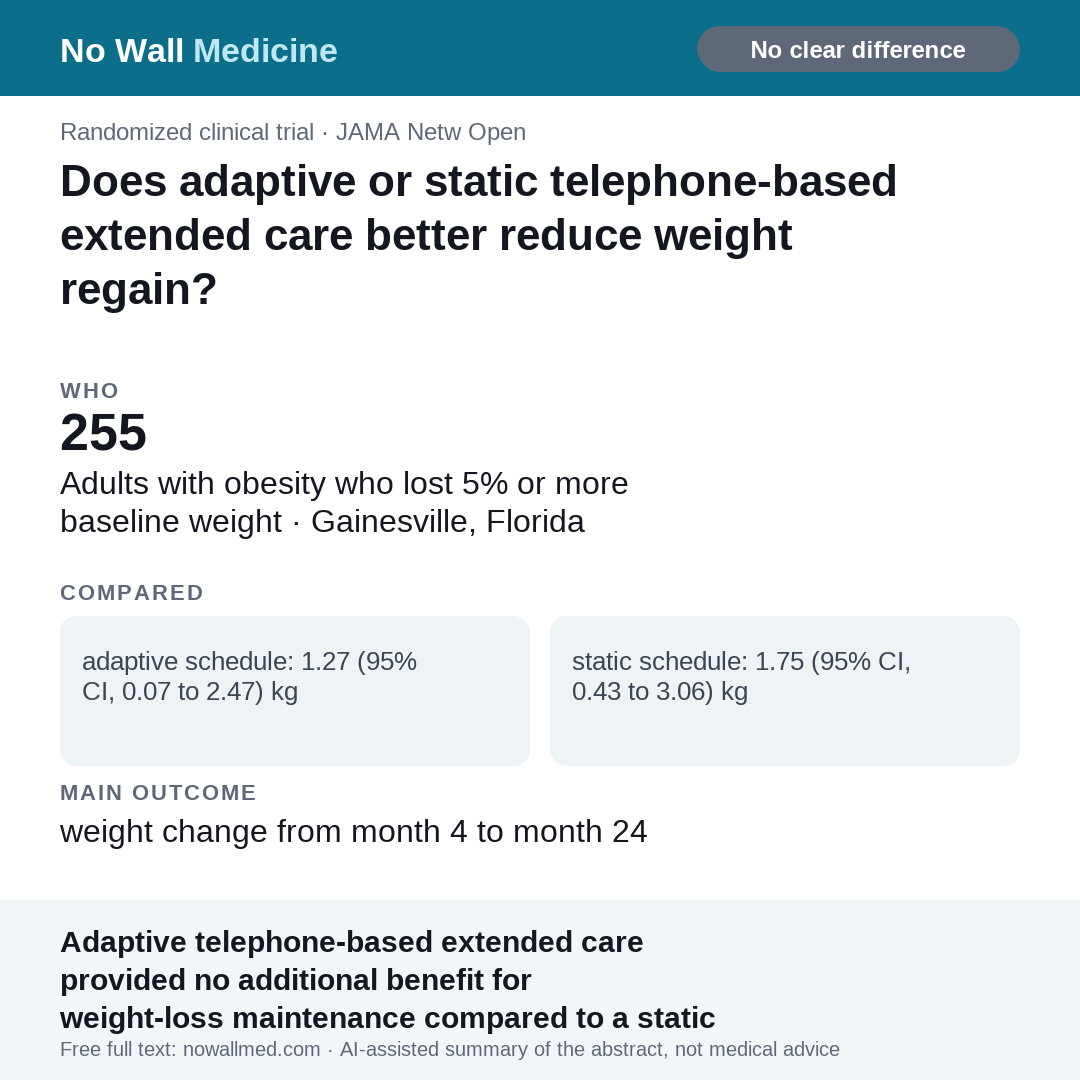
Adaptive vs Monthly Support for Weight-Loss Maintenance: A Randomized Clinical Trial
Randomized clinical trialNo clear difference
Does adaptive or static telephone-based extended care better reduce weight regain?
Who
255
Adults with obesity who lost 5% or more baseline weight · Gainesville, Florida
Compared
adaptive schedule: 1.27 (95% CI, 0.07 to 2.47) kg
static schedule: 1.75 (95% CI, 0.43 to 3.06) kg
Main outcome
weight change from month 4 to month 24
Bottom line: Adaptive telephone-based extended care provided no additional benefit for weight-loss maintenance compared to a static monthly schedule.
JAMA Netw Open · 2025-09-02Download image
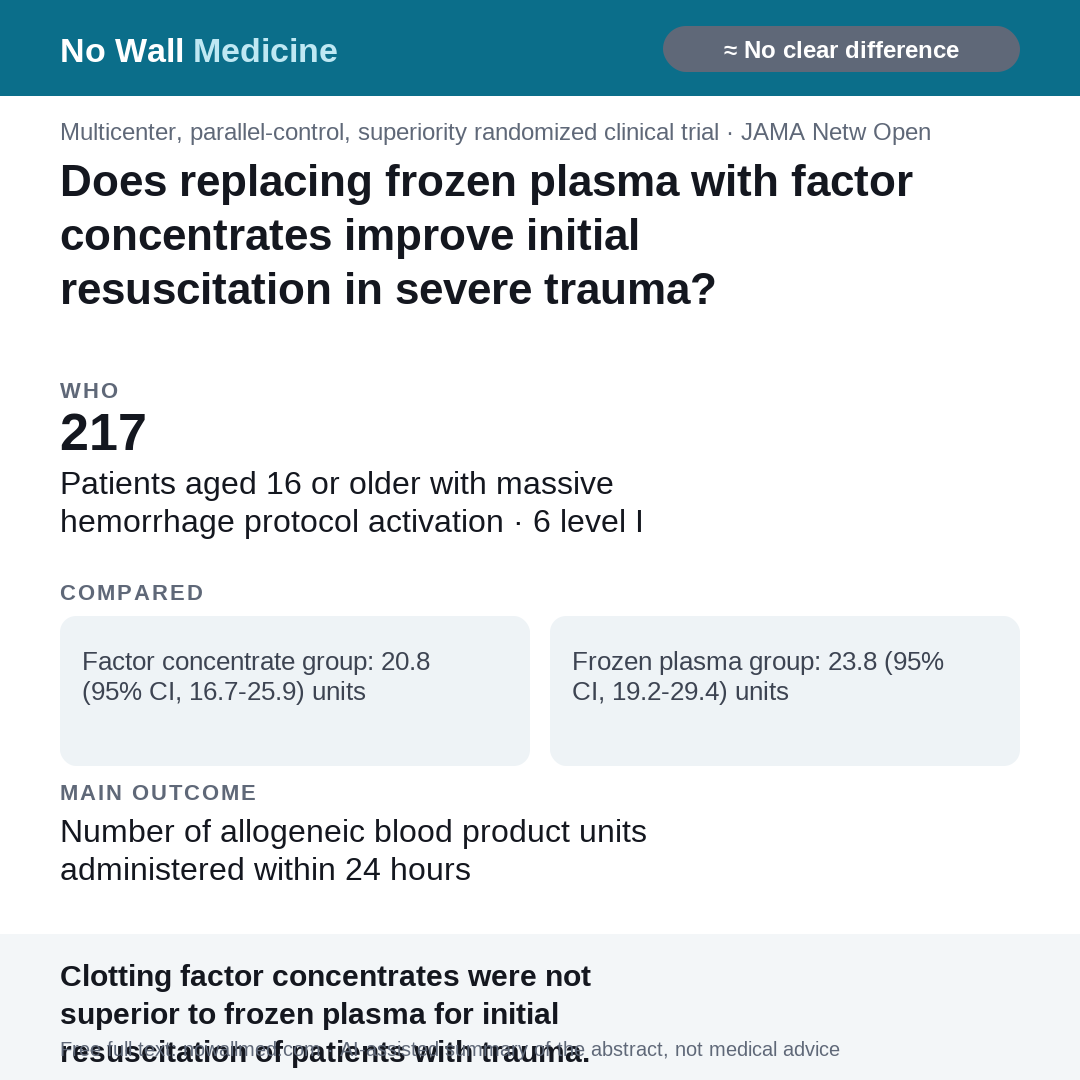
Factors in the Initial Resuscitation of Patients With Severe Trauma: The FiiRST-2 Randomized Clinical Trial
Multicenter, parallel-control, superiority randomized clinical trialNo clear difference
Does replacing frozen plasma with factor concentrates improve initial resuscitation in severe trauma?
Who
217
Patients aged 16 or older with massive hemorrhage protocol activation · 6 level I trauma centers in Canada
Compared
Factor concentrate group: 20.8 (95% CI, 16.7-25.9) units
Frozen plasma group: 23.8 (95% CI, 19.2-29.4) units
Main outcome
Number of allogeneic blood product units administered within 24 hours
Result: mean ratio 0.87 (1-sided 97.5% CI, 0.00-1.19)
Bottom line: Clotting factor concentrates were not superior to frozen plasma for initial resuscitation of patients with trauma.
JAMA Netw Open · 2025-09-02Download image
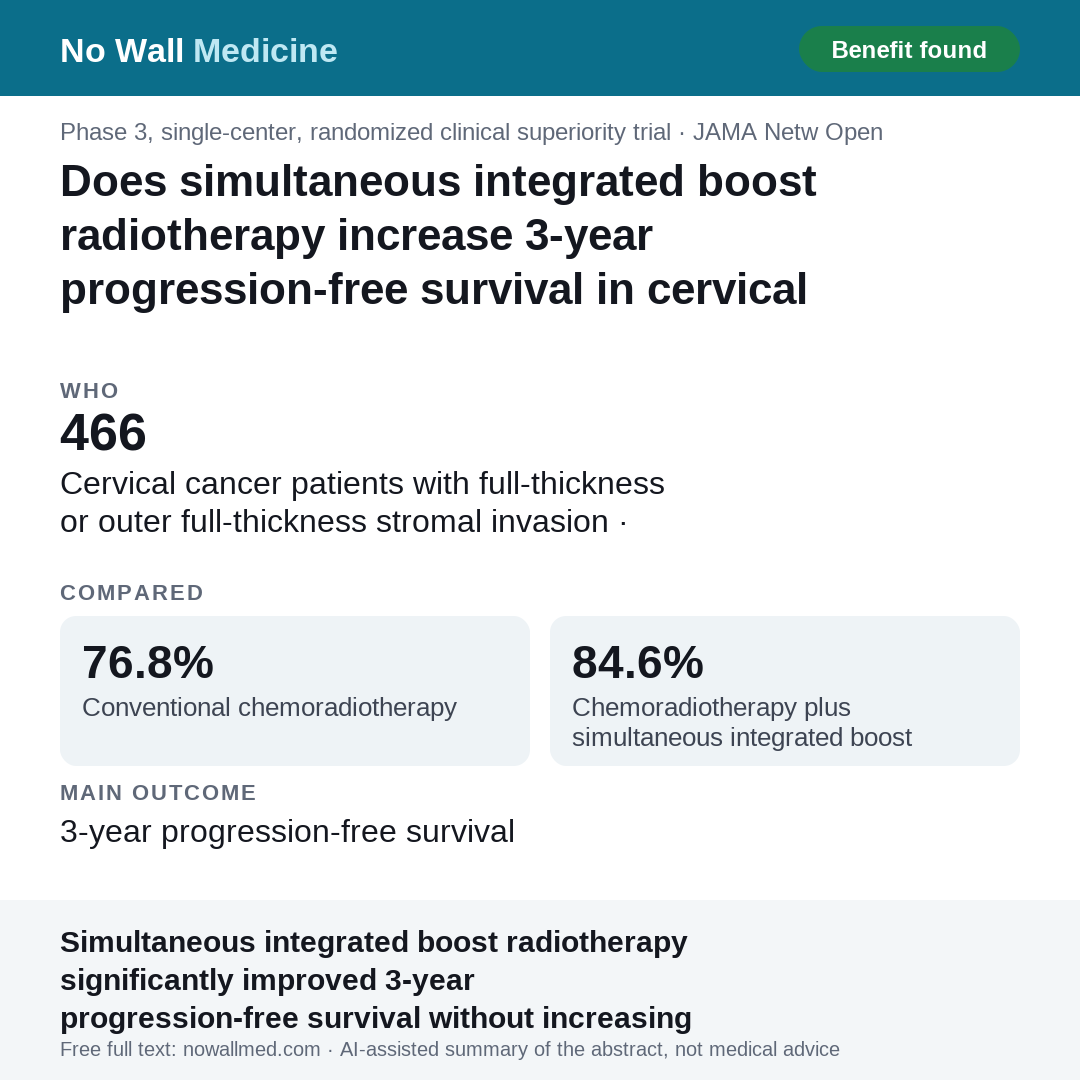
Chemoradiotherapy With or Without Simultaneous Integrated Boost for Cervical Cancer With Full-Thickness Stromal Invasion: A Phase 3 Randomized Clinical Trial
Phase 3, single-center, randomized clinical superiority trialBenefit found
Does simultaneous integrated boost radiotherapy increase 3-year progression-free survival in cervical cancer?
Who
466
Cervical cancer patients with full-thickness or outer full-thickness stromal invasion · Shanghai Cancer Center
Compared
76.8%Conventional chemoradiotherapy
84.6%Chemoradiotherapy plus simultaneous integrated boost
Main outcome
3-year progression-free survival
Result: hazard ratio 0.64 (95% CI 0.42-0.99)
Bottom line: Simultaneous integrated boost radiotherapy significantly improved 3-year progression-free survival without increasing toxic effects in these patients.
JAMA Netw Open · 2025-09-02Download image
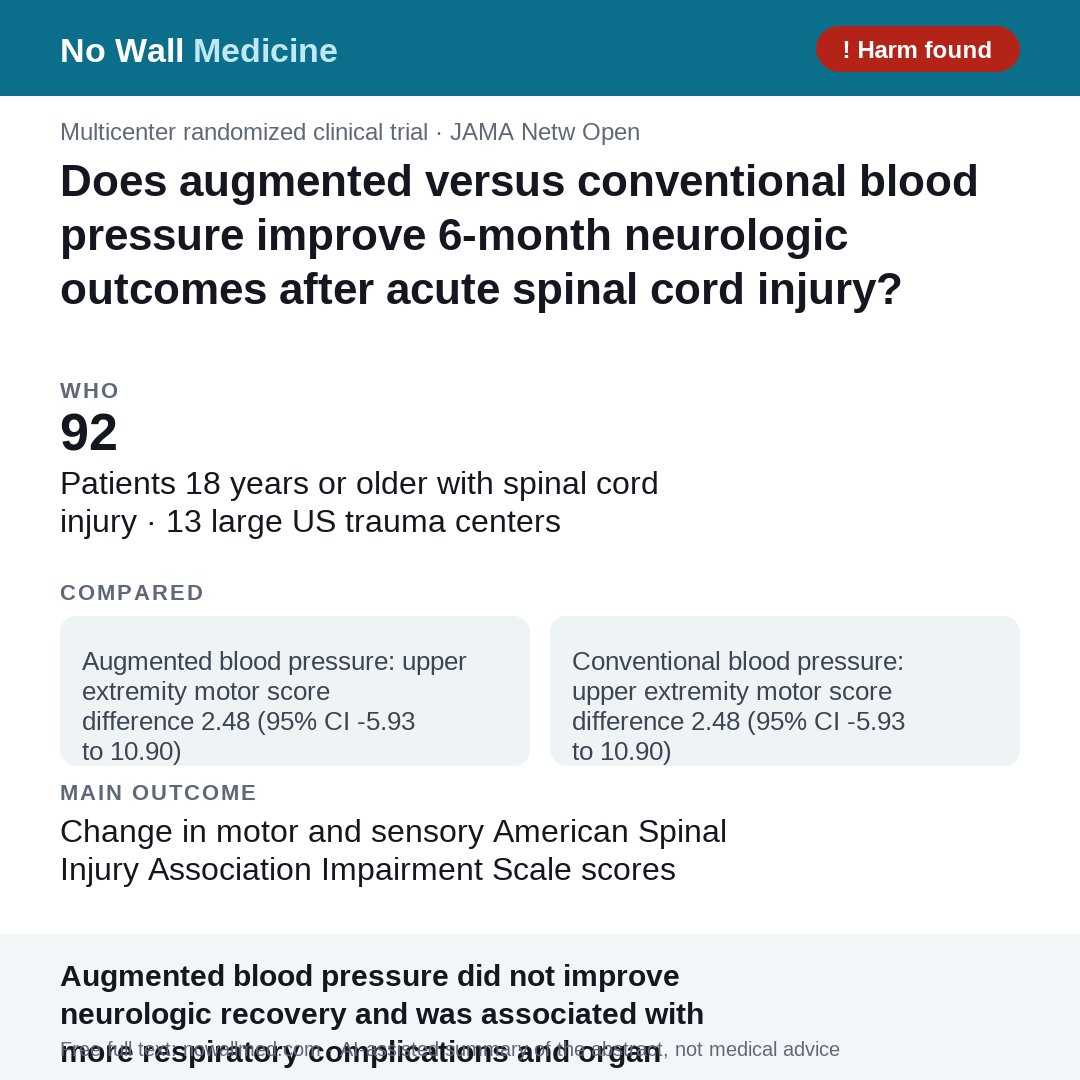
Early Blood Pressure Targets in Acute Spinal Cord Injury: A Randomized Clinical Trial
Multicenter randomized clinical trialHarm found
Does augmented versus conventional blood pressure improve 6-month neurologic outcomes after acute spinal cord injury?
Who
92
Patients 18 years or older with spinal cord injury · 13 large US trauma centers
Compared
Augmented blood pressure: upper extremity motor score difference 2.48 (95% CI -5.93 to 10.90)
Conventional blood pressure: upper extremity motor score difference 2.48 (95% CI -5.93 to 10.90)
Main outcome
Change in motor and sensory American Spinal Injury Association Impairment Scale scores
Result: difference 2.48 (95% CI -5.93 to 10.90) for upper extremity motor scores
Bottom line: Augmented blood pressure did not improve neurologic recovery and was associated with more respiratory complications and organ dysfunction.
Limitation: The trial was underpowered.
JAMA Netw Open · 2025-09-02Download image
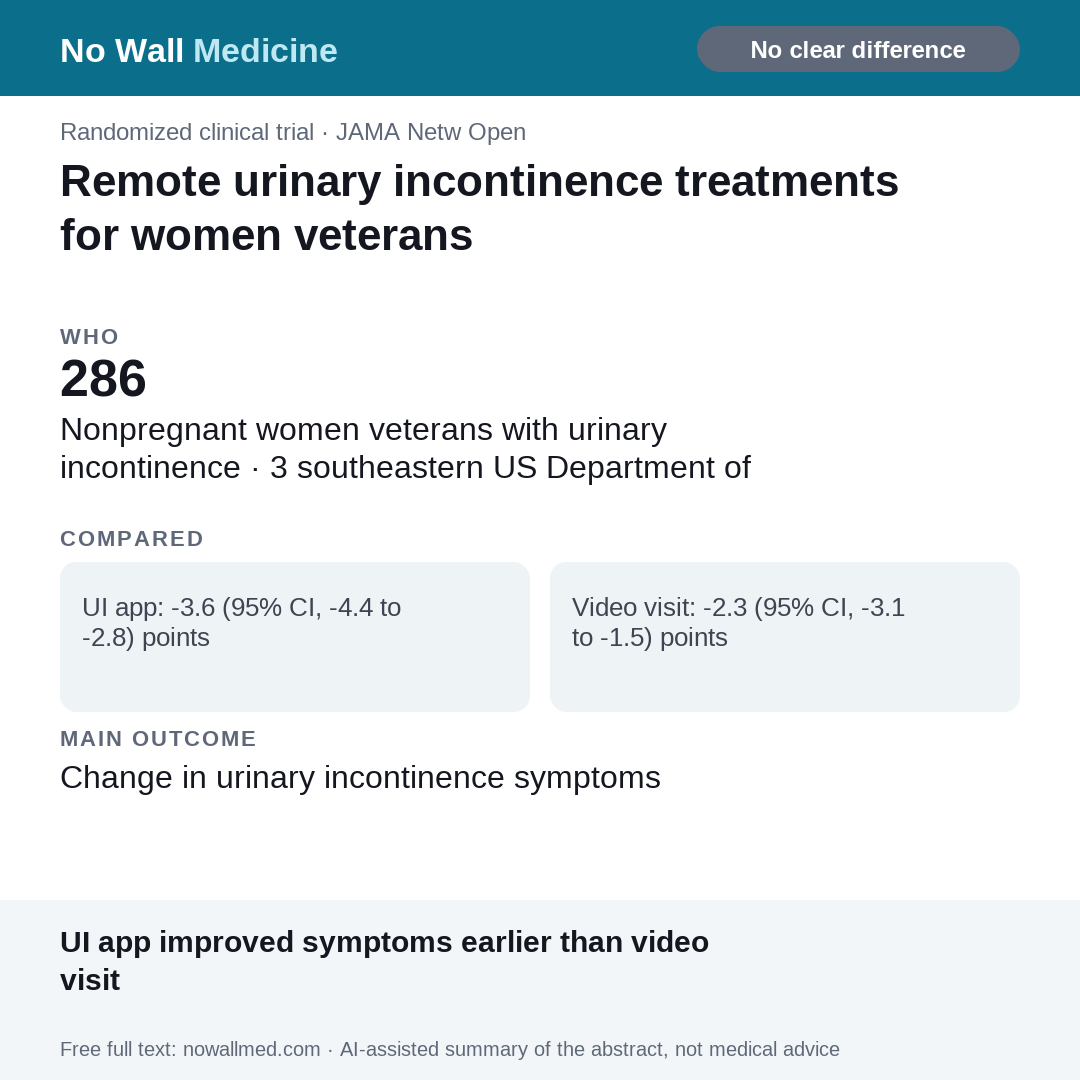
Remote Access to Urinary Incontinence Treatments for Women Veterans: The PRACTICAL Randomized Clinical Trial
Randomized clinical trialNo clear difference
Remote urinary incontinence treatments for women veterans
Who
286
Nonpregnant women veterans with urinary incontinence · 3 southeastern US Department of Veterans Affairs health care systems
Compared
UI app: -3.6 (95% CI, -4.4 to -2.8) points
Video visit: -2.3 (95% CI, -3.1 to -1.5) points
Main outcome
Change in urinary incontinence symptoms
Bottom line: UI app improved symptoms earlier than video visit
JAMA Netw Open · 2025-09-02Download image
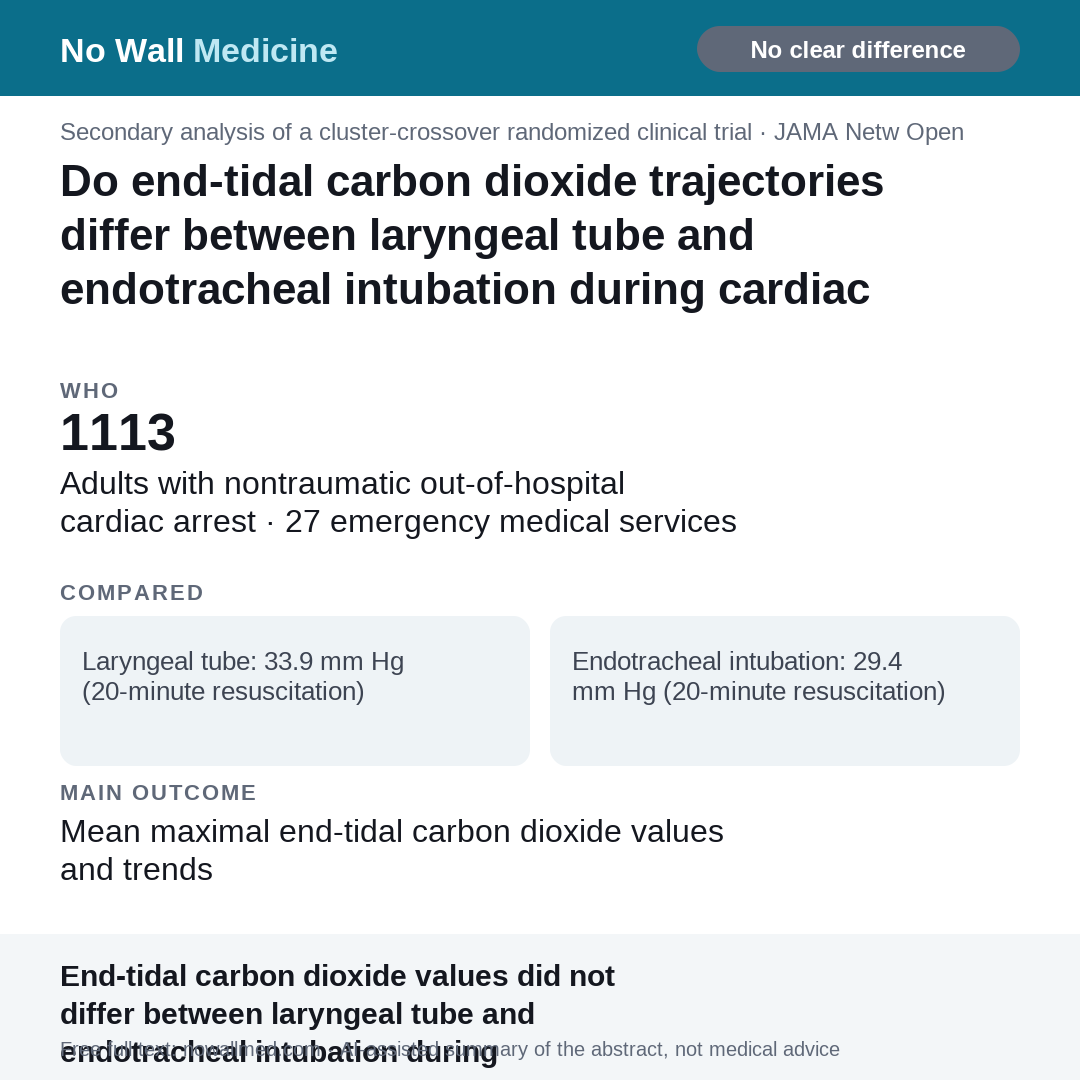
Advanced Airway Devices and End-Tidal Capnography Trends in Cardiac Arrest: A Secondary Analysis of a Randomized Clinical Trial
Secondary analysis of a cluster-crossover randomized clinical trialNo clear difference
Do end-tidal carbon dioxide trajectories differ between laryngeal tube and endotracheal intubation during cardiac arrest?
Who
1113
Adults with nontraumatic out-of-hospital cardiac arrest · 27 emergency medical services agencies
Compared
Laryngeal tube: 33.9 mm Hg (20-minute resuscitation)
Endotracheal intubation: 29.4 mm Hg (20-minute resuscitation)
Main outcome
Mean maximal end-tidal carbon dioxide values and trends
Bottom line: End-tidal carbon dioxide values did not differ between laryngeal tube and endotracheal intubation during resuscitation.
Limitation: This was a secondary analysis of a randomized clinical trial.
JAMA Netw Open · 2025-09-02Download image