Visual abstracts
New randomized trials and meta-analyses from leading journals at a glance: who was studied, what was compared, and what was found. Every paper is free to read in full.
All specialtiesCardiology 4763Oncology 4042Gastroenterology & Hepatology 1902Infectious Disease 3756Neurology 1872Psychiatry & Mental Health 2214Pulmonology 2042Critical Care 1319Endocrinology & Diabetes 2544Pediatrics 2889Surgery 2479Orthopedics & Sports Medicine 917Neurosurgery 525Cardiothoracic & Vascular Surgery 656Plastic & Reconstructive Surgery 574Nephrology 1107Rheumatology 810Hematology 1090Dermatology 611Ophthalmology 532Obstetrics & Gynecology 1645Public & Global Health 1037Radiology & Imaging 617Anesthesiology 957Urology 745ENT (Otolaryngology) 494Emergency Medicine 481Allergy & Immunology 309Geriatrics 972Family Medicine & Primary Care 533Medical Genetics & Genomics 659Pathology & Laboratory Medicine 156Physical Medicine & Rehabilitation 734Palliative Care 421Nutrition 1560Digital Health & AI 2133General Medicine 318
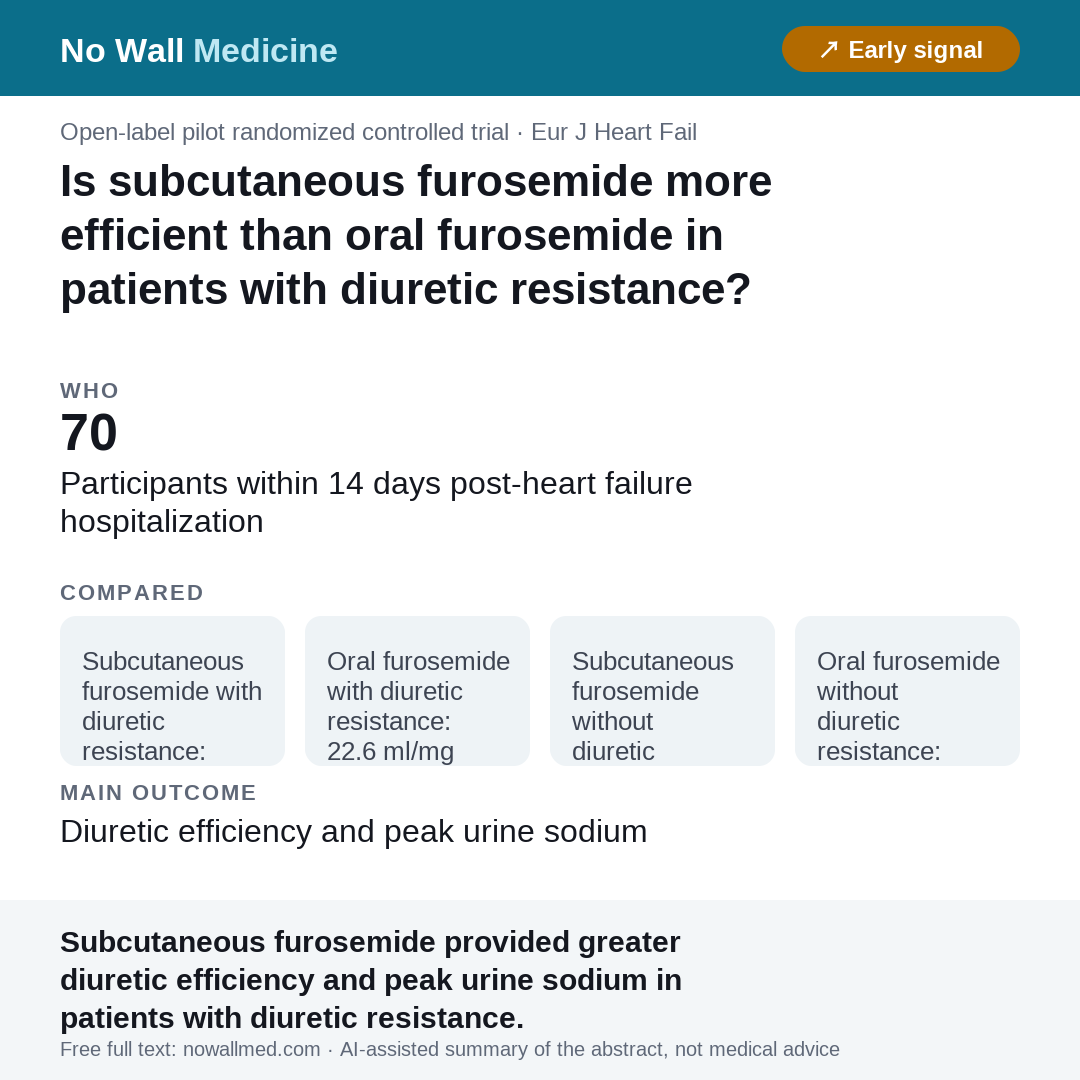
Diuretic efficiency of a single dose of subcutaneous versus oral furosemide after heart failure hospitalization across diuretic resistance strata: A pilot randomized controlled trial
Open-label pilot randomized controlled trialEarly signal
Is subcutaneous furosemide more efficient than oral furosemide in patients with diuretic resistance?
Who
70
Participants within 14 days post-heart failure hospitalization
Compared
Subcutaneous furosemide with diuretic resistance: 34.0 ml/mg
Oral furosemide with diuretic resistance: 22.6 ml/mg
Subcutaneous furosemide without diuretic resistance: 29.8 ml/mg
Oral furosemide without diuretic resistance: 30.1 ml/mg
Main outcome
Diuretic efficiency and peak urine sodium
Bottom line: Subcutaneous furosemide provided greater diuretic efficiency and peak urine sodium in patients with diuretic resistance.
Limitation: This was an open-label pilot randomized controlled trial.
Eur J Heart Fail · 2024-12-02Download image
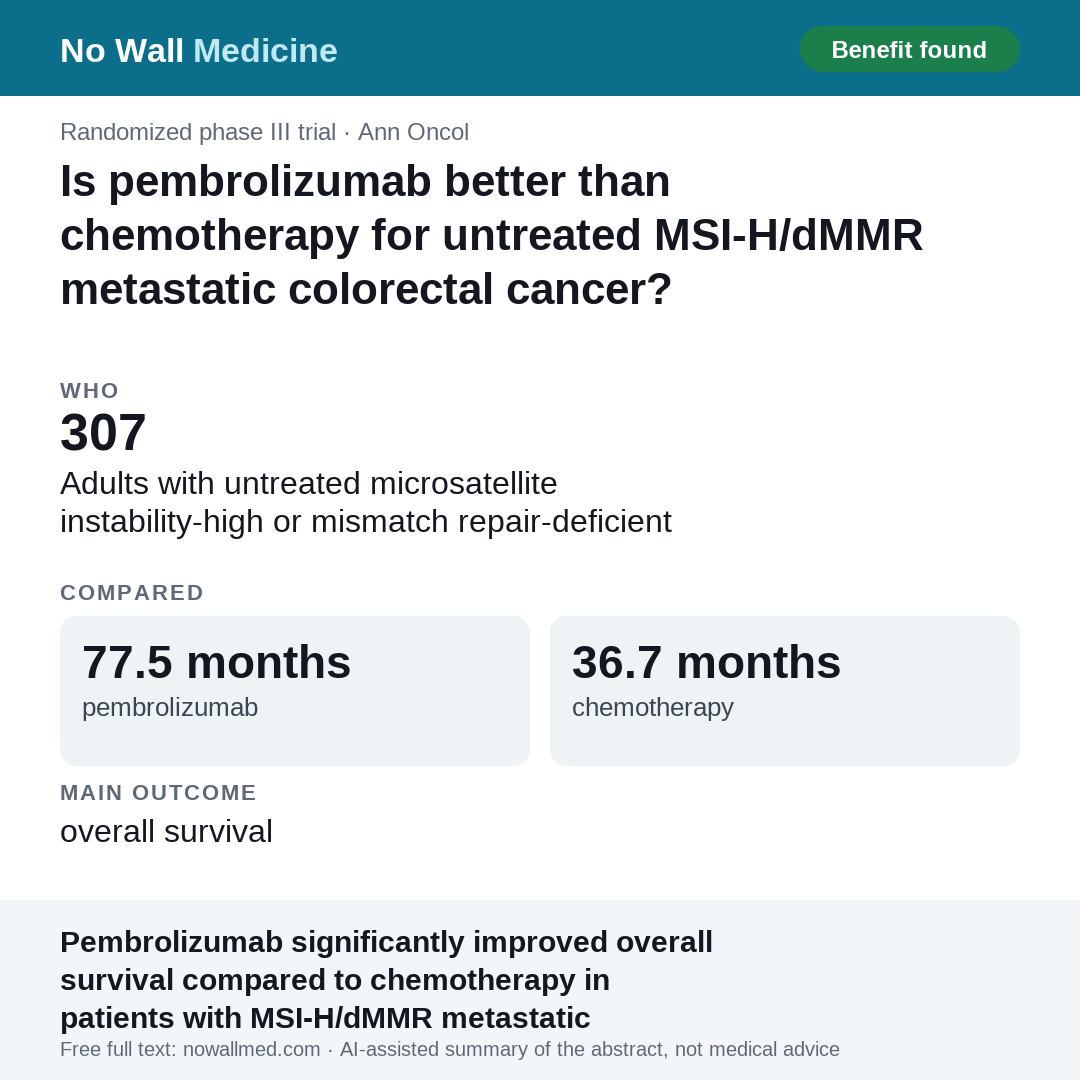
Pembrolizumab versus chemotherapy in microsatellite instability-high or mismatch repair-deficient metastatic colorectal cancer: 5-year follow-up from the randomized phase III KEYNOTE-177 study
Randomized phase III trialBenefit found
Is pembrolizumab better than chemotherapy for untreated MSI-H/dMMR metastatic colorectal cancer?
Who
307
Adults with untreated microsatellite instability-high or mismatch repair-deficient metastatic colorectal cancer
Compared
77.5 monthspembrolizumab
36.7 monthschemotherapy
Main outcome
overall survival
Result: hazard ratio 0.73 (95% confidence interval 0.53-0.99)
Bottom line: Pembrolizumab significantly improved overall survival compared to chemotherapy in patients with MSI-H/dMMR metastatic colorectal cancer.
Ann Oncol · 2024-12-02Download image
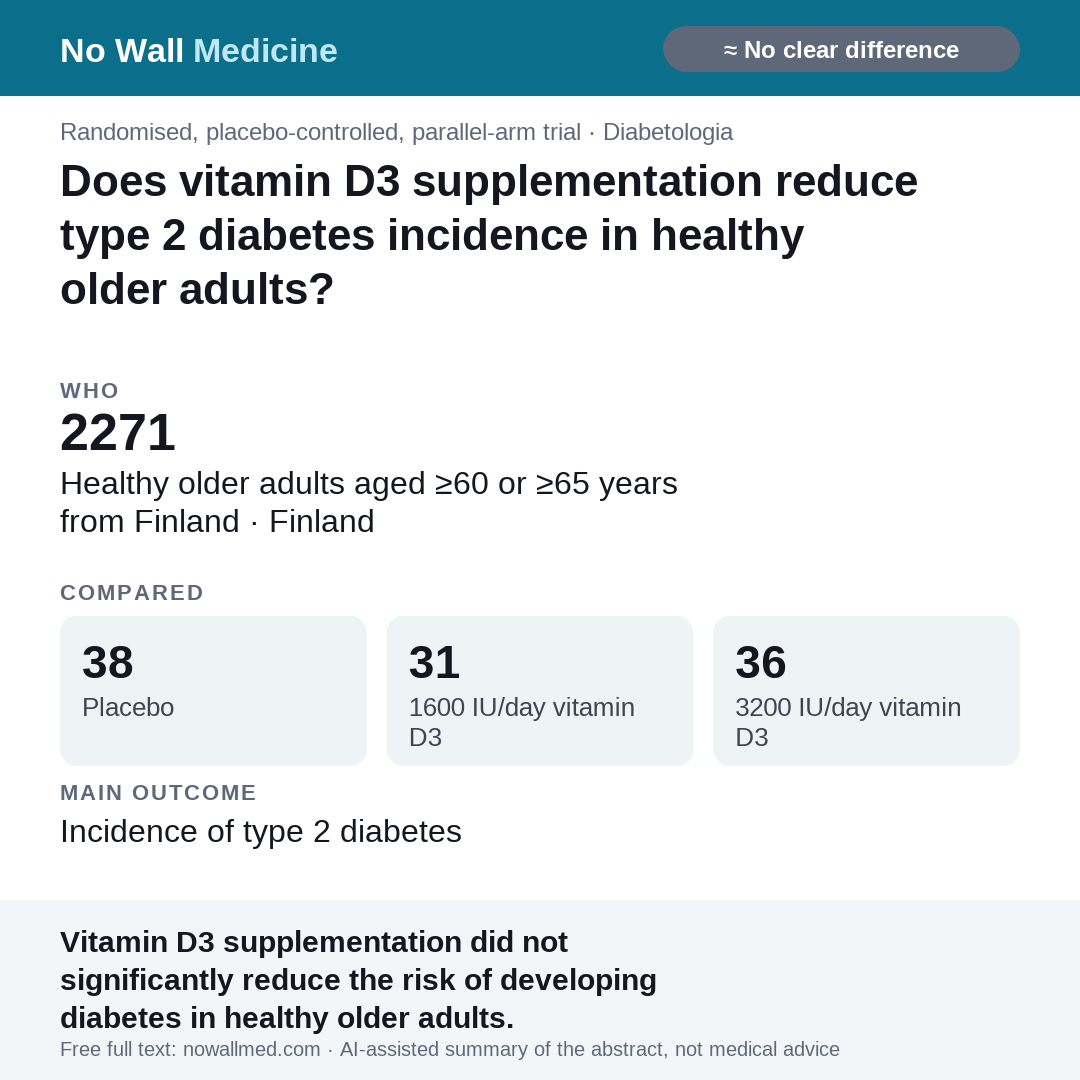
The effect of vitamin D3 supplementation on the incidence of type 2 diabetes in healthy older adults not at high risk for diabetes (FIND): a randomised controlled trial
Randomised, placebo-controlled, parallel-arm trialNo clear difference
Does vitamin D3 supplementation reduce type 2 diabetes incidence in healthy older adults?
Who
2271
Healthy older adults aged ≥60 or ≥65 years from Finland · Finland
Compared
38Placebo (5.0%)
311600 IU/day vitamin D3 (4.2%)
363200 IU/day vitamin D3 (4.7%)
Main outcome
Incidence of type 2 diabetes
Result: hazard ratio 0.86 (95% CI 0.58, 1.29)
Bottom line: Vitamin D3 supplementation did not significantly reduce the risk of developing diabetes in healthy older adults.
Diabetologia · 2024-12-02Download image
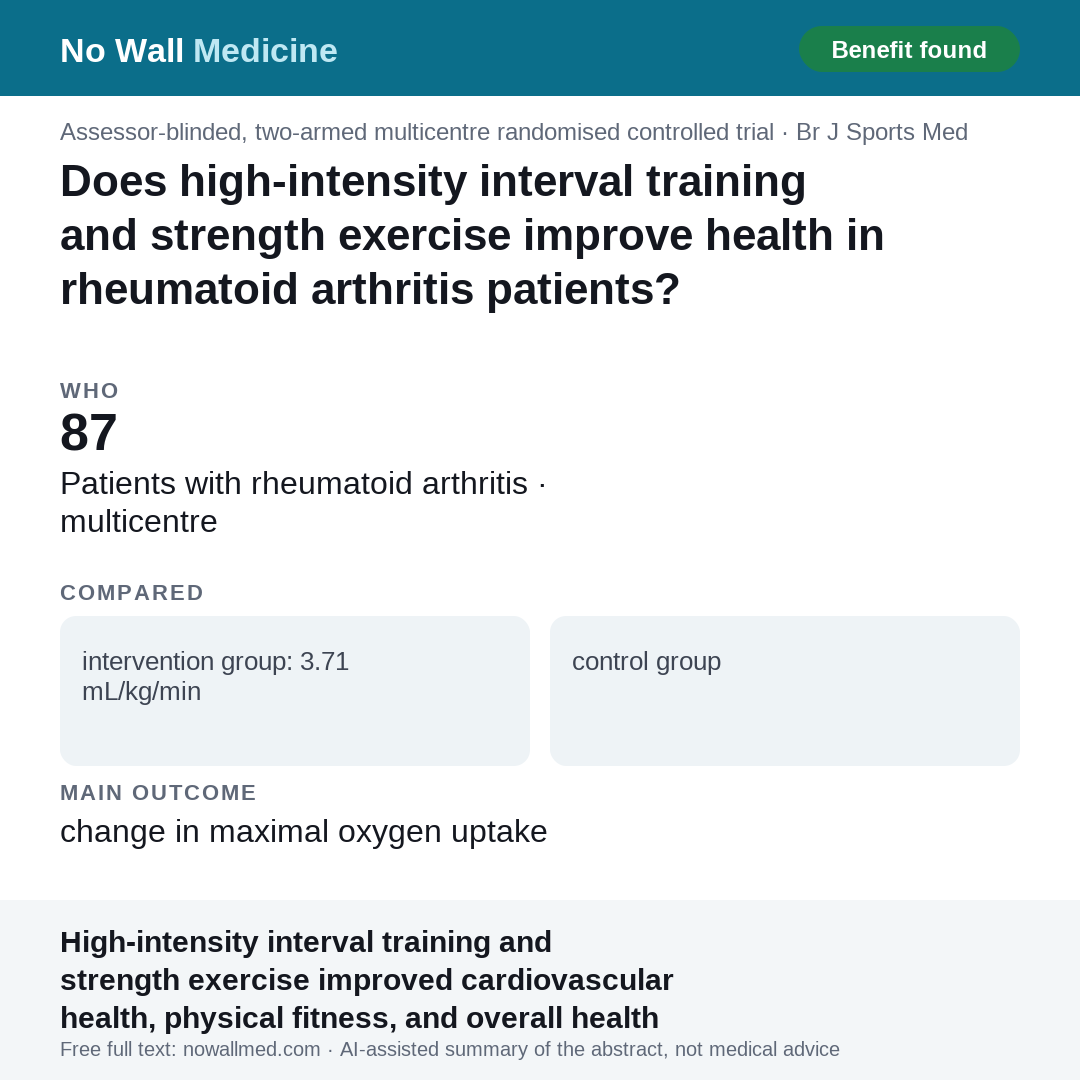
High-intensity interval training improves cardiovascular and physical health in patients with rheumatoid arthritis: a multicentre randomised controlled trial
Assessor-blinded, two-armed multicentre randomised controlled trialBenefit found
Does high-intensity interval training and strength exercise improve health in rheumatoid arthritis patients?
Who
87
Patients with rheumatoid arthritis · multicentre
Compared
intervention group: 3.71 mL/kg/min
control group
Main outcome
change in maximal oxygen uptake
Result: 3.71 mL/kg/min (95% CI 2.16, 5.25)
Bottom line: High-intensity interval training and strength exercise improved cardiovascular health, physical fitness, and overall health in rheumatoid arthritis patients.
Br J Sports Med · 2024-12-02Download image
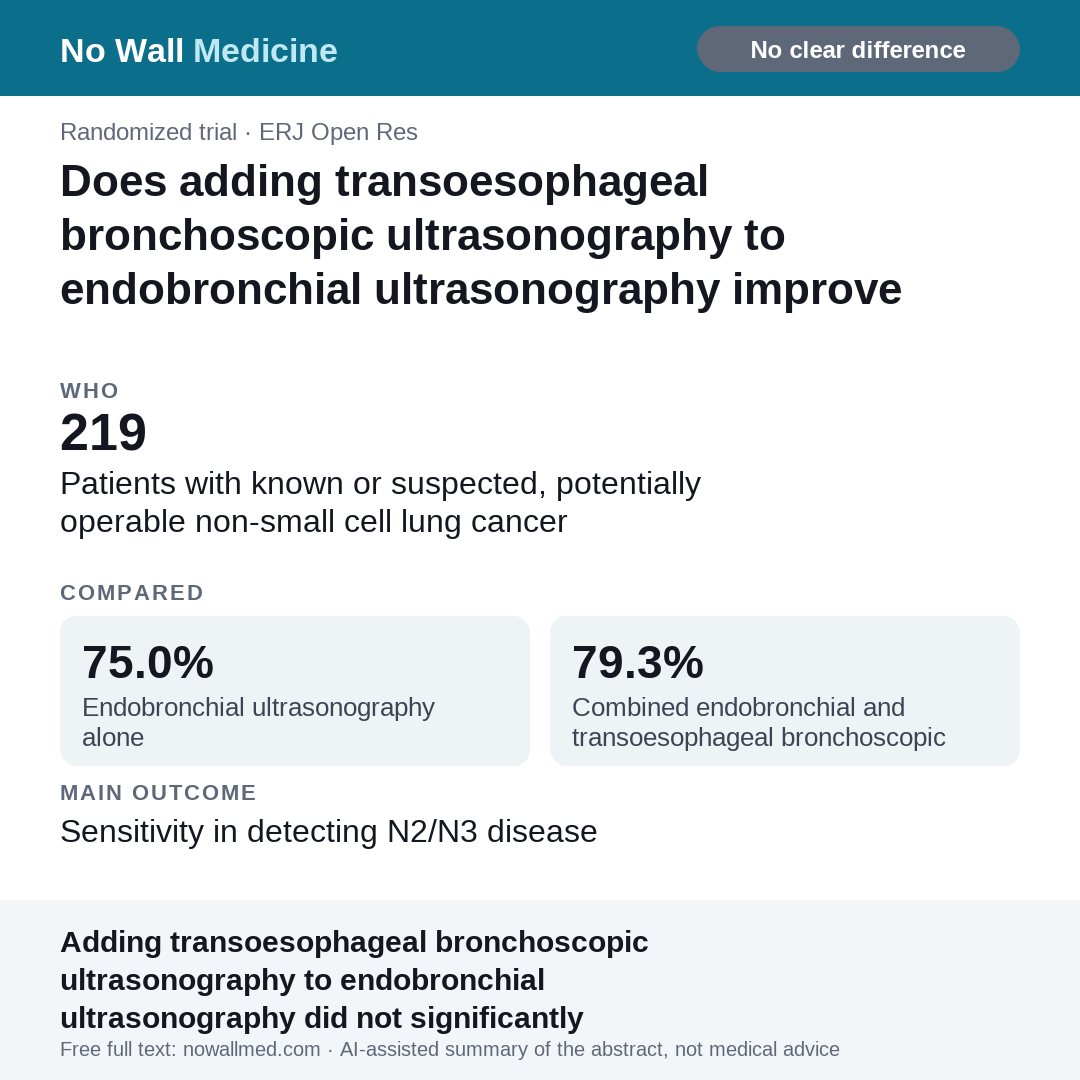
Utility of adding oesophageal to endobronchial endosonography when staging lung cancer: a randomised trial
Randomized trialNo clear difference
Does adding transoesophageal bronchoscopic ultrasonography to endobronchial ultrasonography improve N2/N3 disease detection sensitivity?
Who
219
Patients with known or suspected, potentially operable non-small cell lung cancer
Compared
75.0%Endobronchial ultrasonography alone
79.3%Combined endobronchial and transoesophageal bronchoscopic ultrasonography
Main outcome
Sensitivity in detecting N2/N3 disease
Result: p=0.698
Bottom line: Adding transoesophageal bronchoscopic ultrasonography to endobronchial ultrasonography did not significantly increase sensitivity for detecting N2/N3 disease.
ERJ Open Res · 2024-12-02Download image
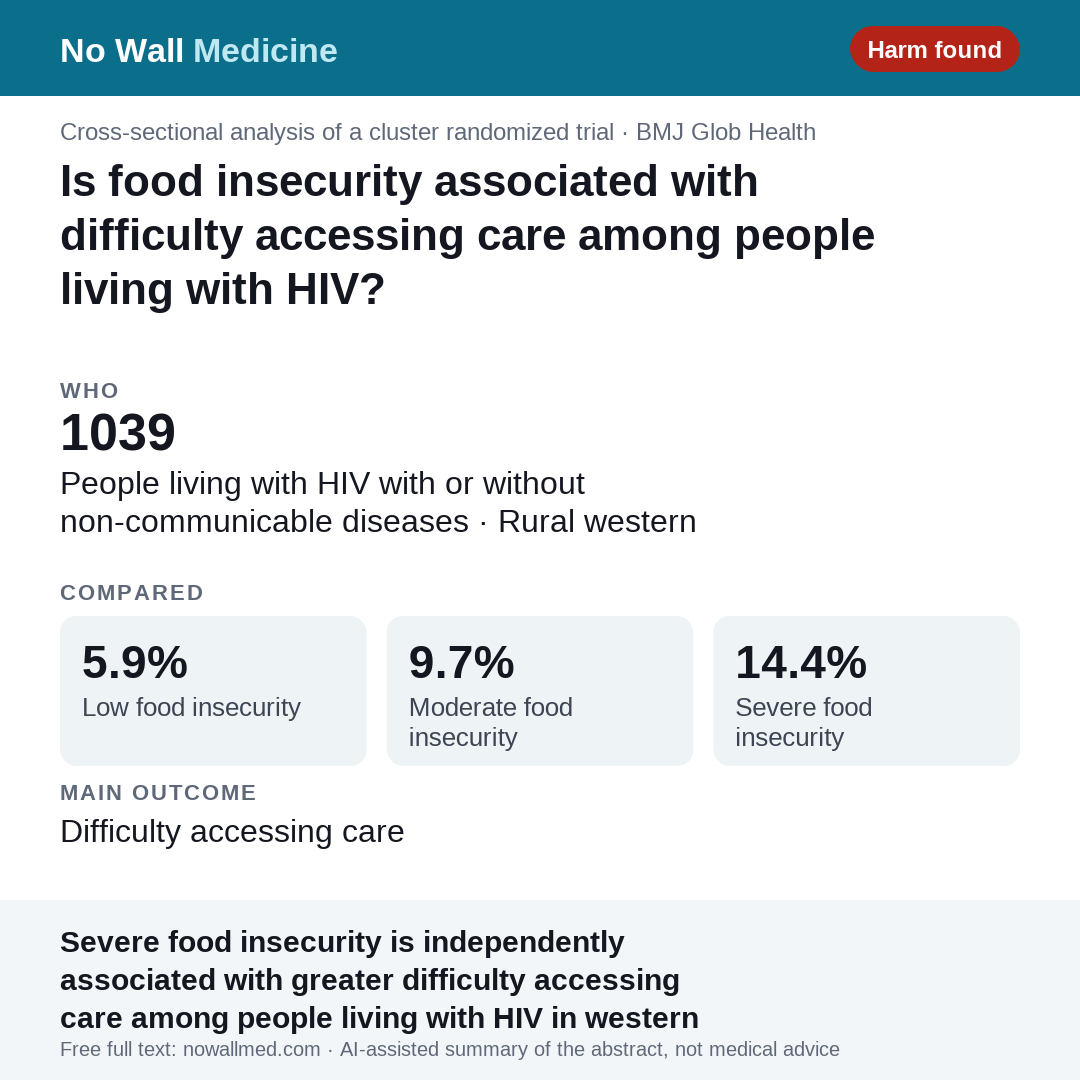
Food insecurity is associated with greater difficulty accessing care among people living with HIV with or without comorbid non-communicable diseases in western Kenya
Cross-sectional analysis of a cluster randomized trialKey finding
Is food insecurity associated with difficulty accessing care among people living with HIV?
Who
1039
People living with HIV with or without non-communicable diseases · Rural western Kenya
Compared
5.9%Low food insecurity
9.7%Moderate food insecurity
14.4%Severe food insecurity
Main outcome
Difficulty accessing care
Result: adjusted odds ratio 2.5 (95% CI 1.4 to 4.4)
Bottom line: Severe food insecurity is independently associated with greater difficulty accessing care among people living with HIV in western Kenya.
BMJ Glob Health · 2024-12-02Download image
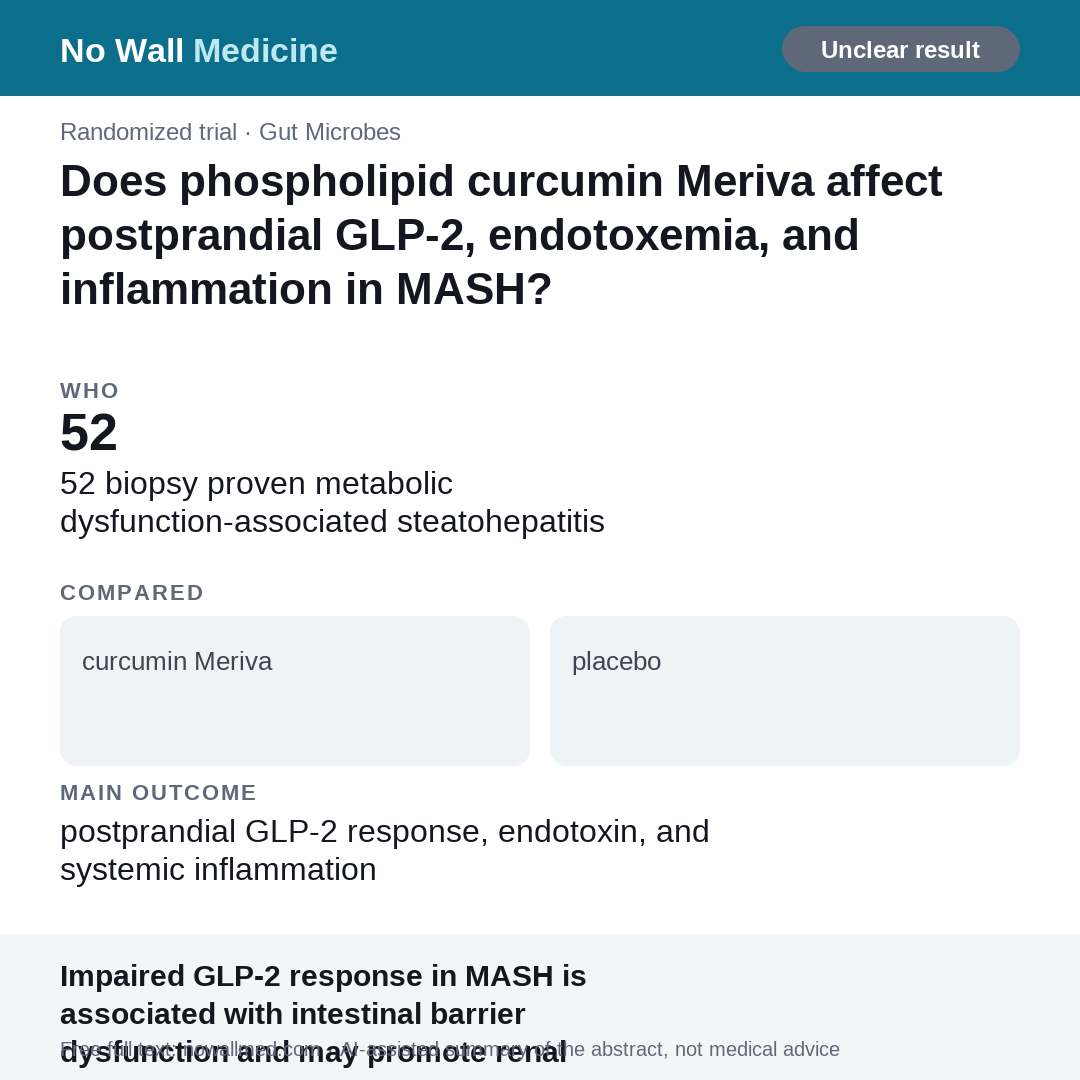
Impaired postprandial GLP-2 response enhances endotoxemia, systemic inflammation, and kidney injury in metabolic dysfunction-associated steatohepatitis (MASH): effect of phospholipid curcumin meriva
Randomized trialUnclear result
Does phospholipid curcumin Meriva affect postprandial GLP-2, endotoxemia, and inflammation in MASH?
Who
52
52 biopsy proven metabolic dysfunction-associated steatohepatitis patients
Compared
curcumin Meriva
placebo
Main outcome
postprandial GLP-2 response, endotoxin, and systemic inflammation
Bottom line: Impaired GLP-2 response in MASH is associated with intestinal barrier dysfunction and may promote renal dysfunction.
Gut Microbes · 2024-12-02Download image
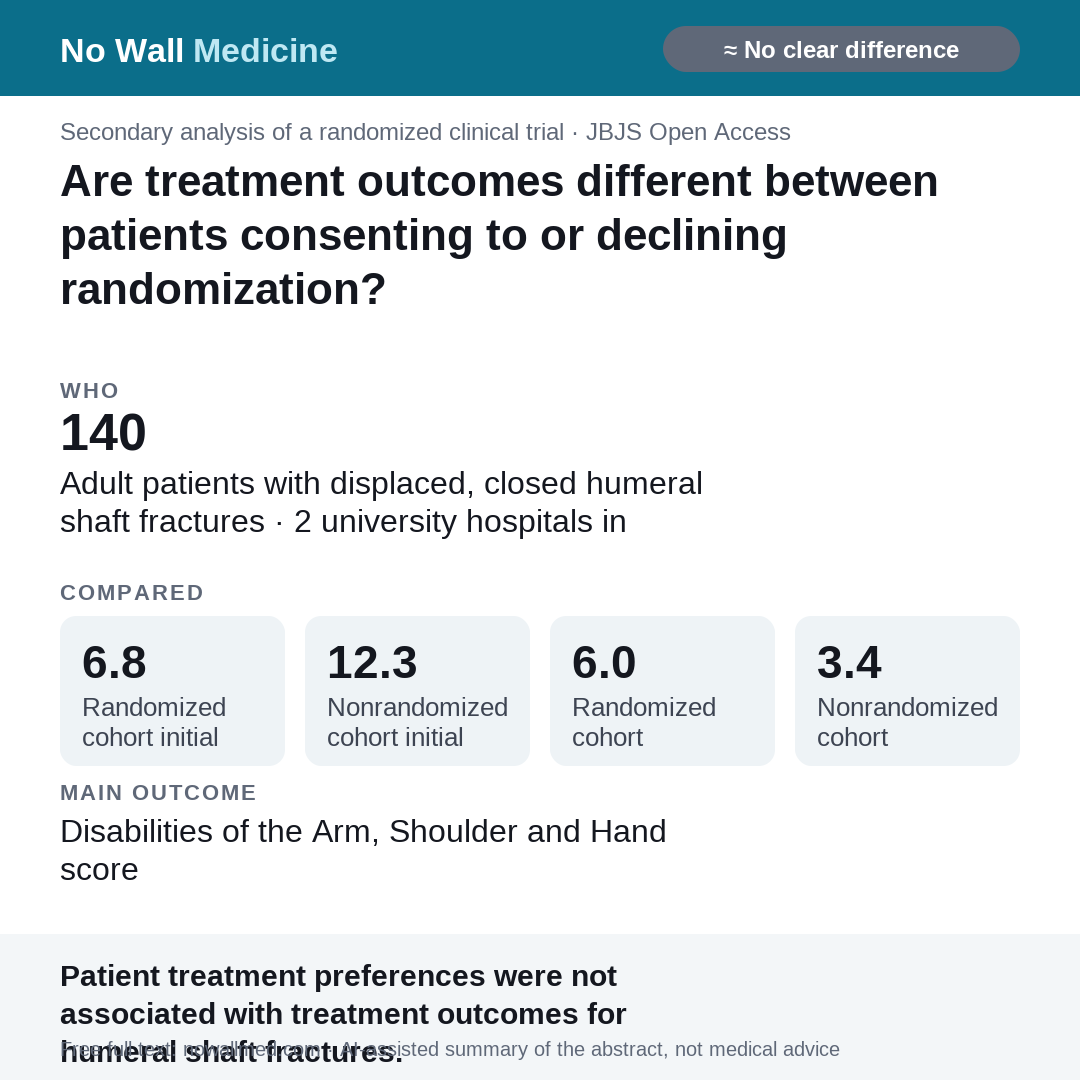
Comparing Treatment Outcomes of Eligible Patients Consenting to or Declining Randomization in a Randomized Clinical Trial: A Secondary Analysis of the FISH Trial on Humeral Shaft Fractures
Secondary analysis of a randomized clinical trialNo clear difference
Are treatment outcomes different between patients consenting to or declining randomization?
Who
140
Adult patients with displaced, closed humeral shaft fractures · 2 university hospitals in Finland
Compared
6.8Randomized cohort initial surgery (95% CI, 2.3 to 11.4)
12.3Nonrandomized cohort initial surgery (95% CI, 0.3 to 24.3)
6.0Randomized cohort functional bracing (95% CI, 1.0 to 11.0)
3.4Nonrandomized cohort functional bracing (95% CI, 0 to 9.3)
Main outcome
Disabilities of the Arm, Shoulder and Hand score
Bottom line: Patient treatment preferences were not associated with treatment outcomes for humeral shaft fractures.
JBJS Open Access · 2024-12-02Download image
HepB-CpG vs HepB-Alum Vaccine in People With HIV and Prior Vaccine Nonresponse: The BEe-HIVe Randomized Clinical Trial
Phase 3, open-label, randomized clinical trialBenefit found
Does HepB-CpG vaccine provide better seroprotection than HepB-alum in people with HIV?
Who
561
People with HIV and prior hepatitis B vaccine nonresponse · 41 sites in 10 countries
Compared
93.1%2 doses HepB-CpG
99.4%3 doses HepB-CpG
80.6%3 doses HepB-alum
Main outcome
seroprotection response to hepatitis B vaccine
Result: stratified difference 12.5% (97.5% CI, 4.1%-20.9%)
Bottom line: Both 2-dose and 3-dose HepB-CpG regimens achieved superior seroprotection compared to 3-dose HepB-alum in people with HIV.
JAMA · 2024-12-01Download image

Impacts of immersive 3D videos on students' surgical learning compared to 2D videos: a randomized controlled trial
Randomized controlled trialMixed results
Does immersive 3D video improve surgical learning compared to 2D video?
Who
231
Fourth-year medical students
Compared
Immersive 3D video: lower knowledge retention score
2D video
Main outcome
knowledge retention, preparedness, and content engagement
Bottom line: 3D video improves engagement and preparedness but results in lower immediate knowledge retention than 2D video.
Limitation: The precise understanding of its pedagogical value required further investigation and refinement.
Int J Surg · 2024-12-01Download image

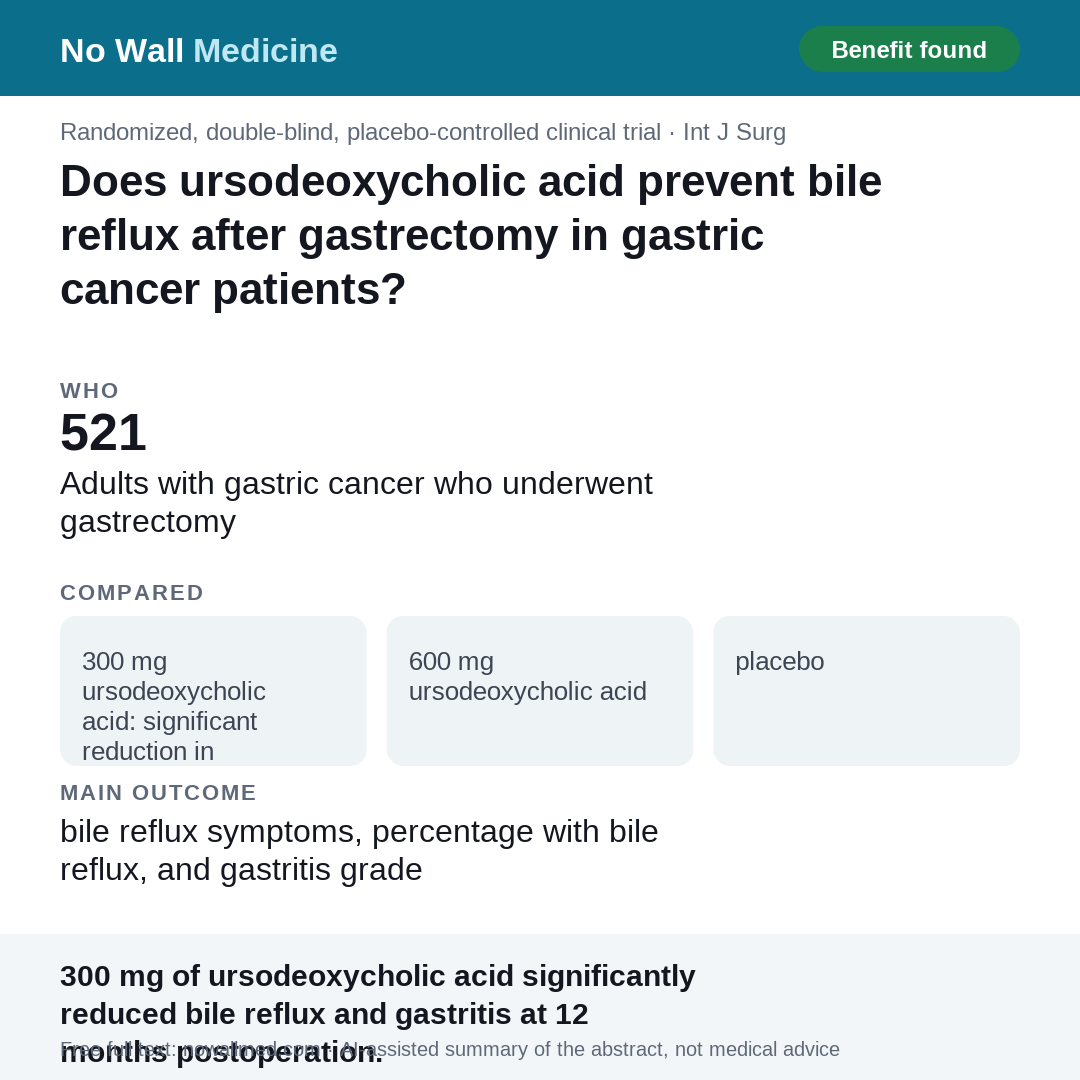
Efficacy of ursodeoxycholic acid for bile reflux after distal gastrectomy in patients with gastric cancer: a secondary analysis of the PEGASUS-D randomized clinical trial
Randomized, double-blind, placebo-controlled clinical trialBenefit found
Does ursodeoxycholic acid prevent bile reflux after gastrectomy in gastric cancer patients?
Who
521
Adults with gastric cancer who underwent gastrectomy
Compared
300 mg ursodeoxycholic acid: significant reduction in gastritis at 12 months
600 mg ursodeoxycholic acid
placebo
Main outcome
bile reflux symptoms, percentage with bile reflux, and gastritis grade
Result: odds ratio 0.44 (P =0.0076) for bile reflux in 300 mg group
Bottom line: 300 mg of ursodeoxycholic acid significantly reduced bile reflux and gastritis at 12 months postoperation.
Int J Surg · 2024-12-01Download image
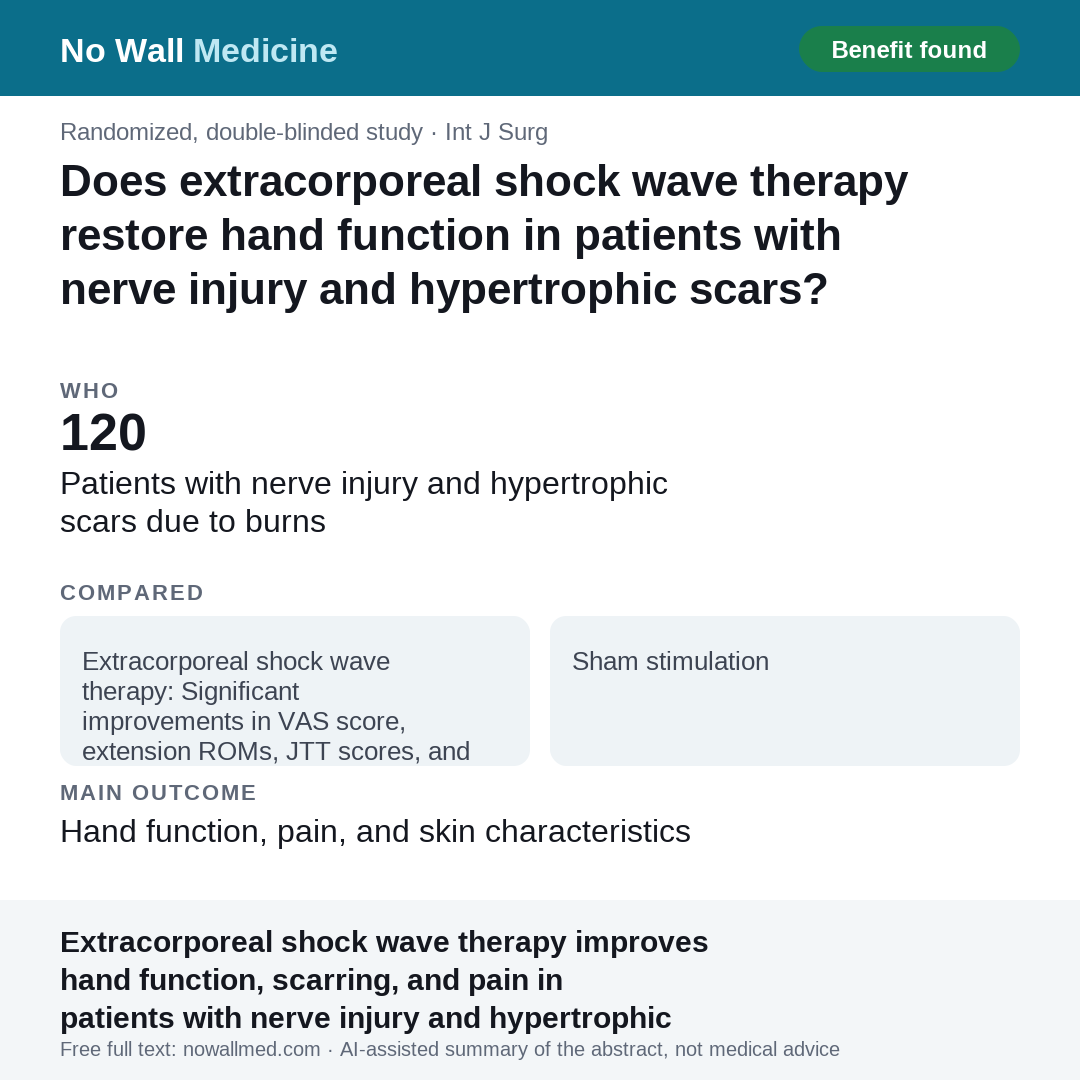
Clinical utility of extracorporeal shock wave therapy in restoring hand function of patients with nerve injury and hypertrophic scars due to burns: a prospective, randomized, double-blinded study
Randomized, double-blinded studyBenefit found
Does extracorporeal shock wave therapy restore hand function in patients with nerve injury and hypertrophic scars?
Who
120
Patients with nerve injury and hypertrophic scars due to burns
Compared
Extracorporeal shock wave therapy: Significant improvements in VAS score, extension ROMs, JTT scores, and skin characteristics
Sham stimulation
Main outcome
Hand function, pain, and skin characteristics
Bottom line: Extracorporeal shock wave therapy improves hand function, scarring, and pain in patients with nerve injury and hypertrophic scars.
Int J Surg · 2024-12-01Download image
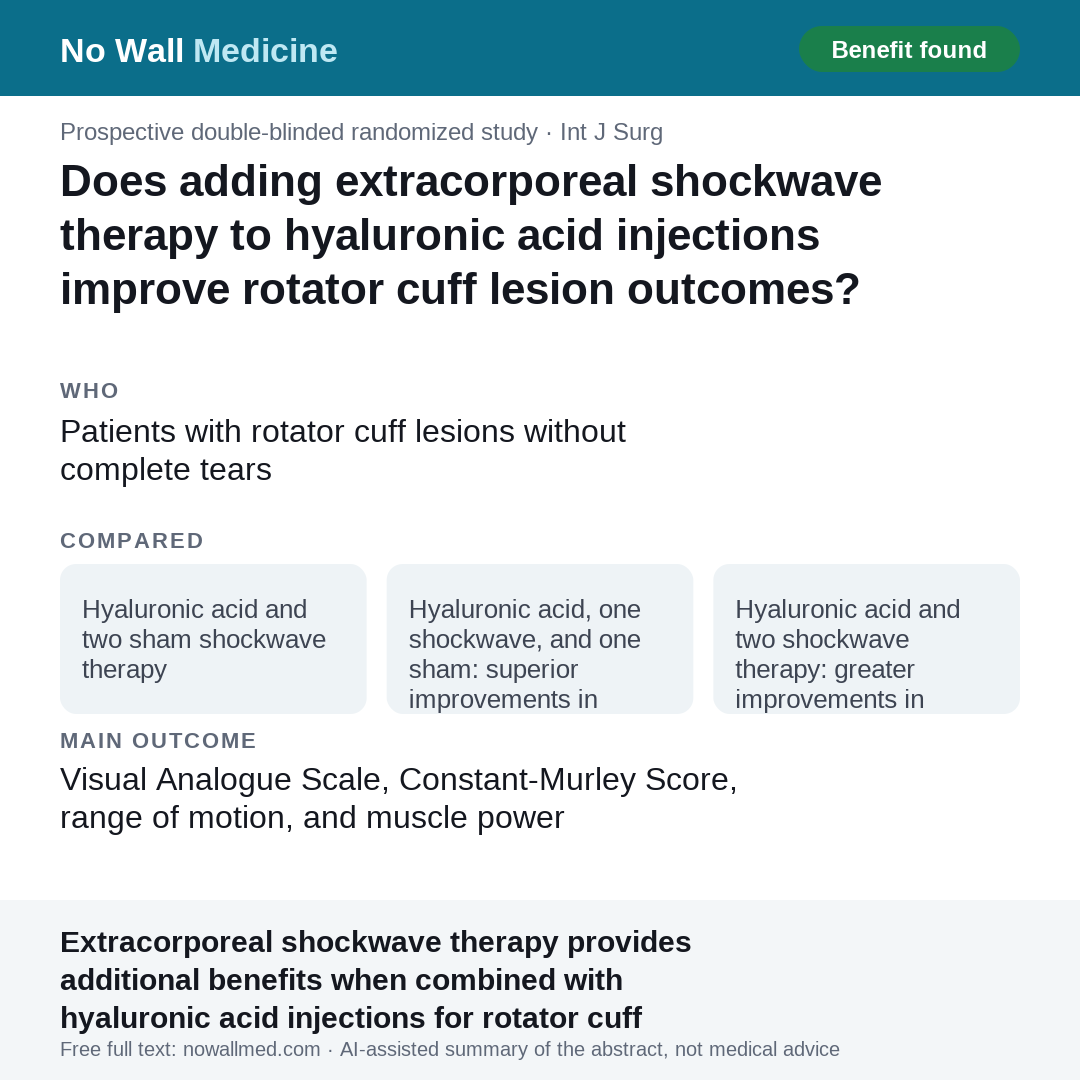
Effects of supplementing extracorporeal shockwave therapy to hyaluronic acid injection among patients with rotator cuff lesions without complete tear: a prospective double-blinded randomized study
Prospective double-blinded randomized studyBenefit found
Does adding extracorporeal shockwave therapy to hyaluronic acid injections improve rotator cuff lesion outcomes?
Who
Patients with rotator cuff lesions without complete tears
Compared
Hyaluronic acid and two sham shockwave therapy
Hyaluronic acid, one shockwave, and one sham: superior improvements in muscle power and Constant-Murley Score
Hyaluronic acid and two shockwave therapy: greater improvements in flexion, internal rotation, and shoulder range of motion
Main outcome
Visual Analogue Scale, Constant-Murley Score, range of motion, and muscle power
Bottom line: Extracorporeal shockwave therapy provides additional benefits when combined with hyaluronic acid injections for rotator cuff lesions.
Int J Surg · 2024-12-01Download image
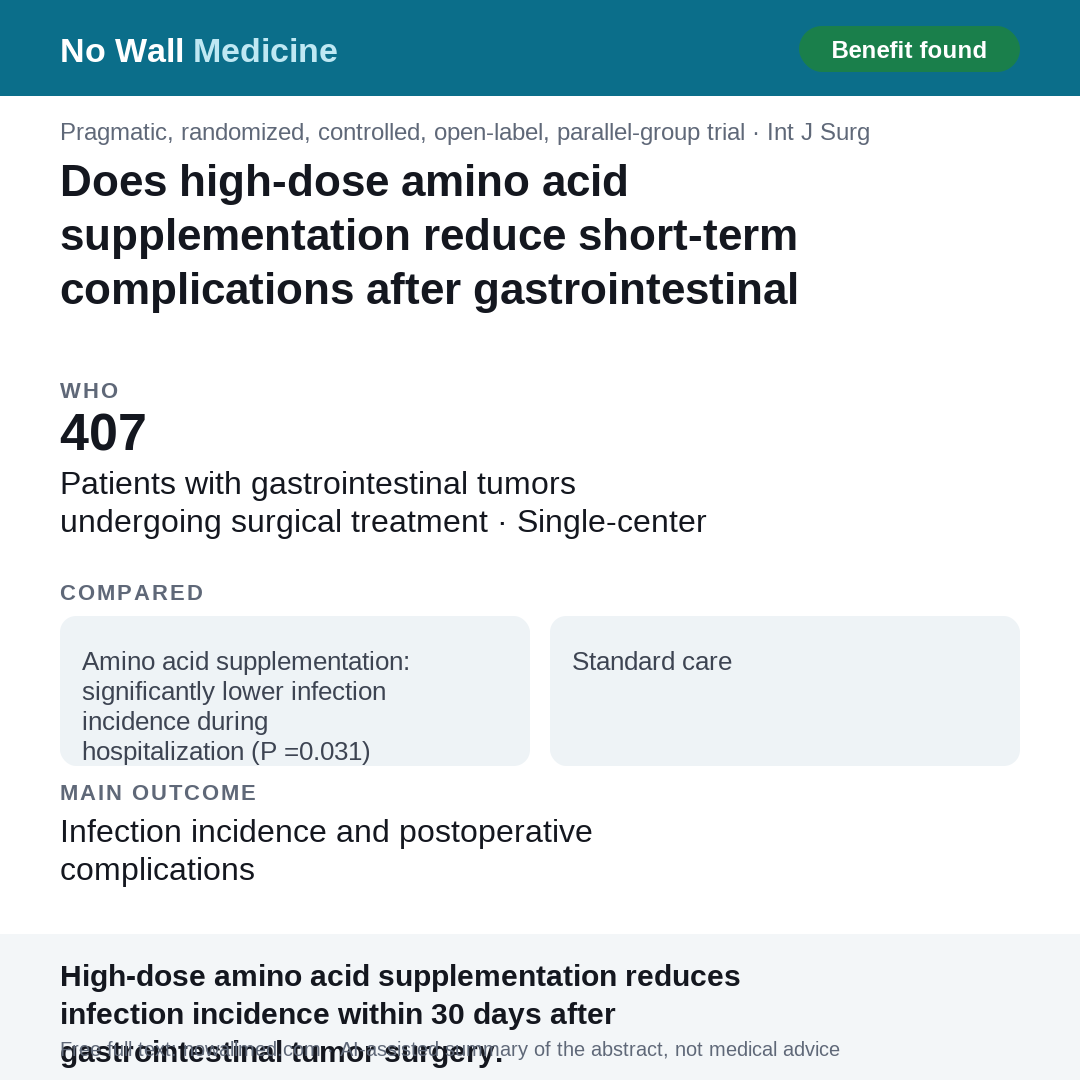
Effect of amino acid supplementation on short-term complications after gastrointestinal tumor surgery: the AMIGITS randomized clinical trial
Pragmatic, randomized, controlled, open-label, parallel-group trialBenefit found
Does high-dose amino acid supplementation reduce short-term complications after gastrointestinal tumor surgery?
Who
407
Patients with gastrointestinal tumors undergoing surgical treatment · Single-center tertiary care teaching hospital
Compared
Amino acid supplementation: significantly lower infection incidence during hospitalization (P =0.031)
Standard care
Main outcome
Infection incidence and postoperative complications
Bottom line: High-dose amino acid supplementation reduces infection incidence within 30 days after gastrointestinal tumor surgery.
Limitation: single-center study
Int J Surg · 2024-12-01Download image
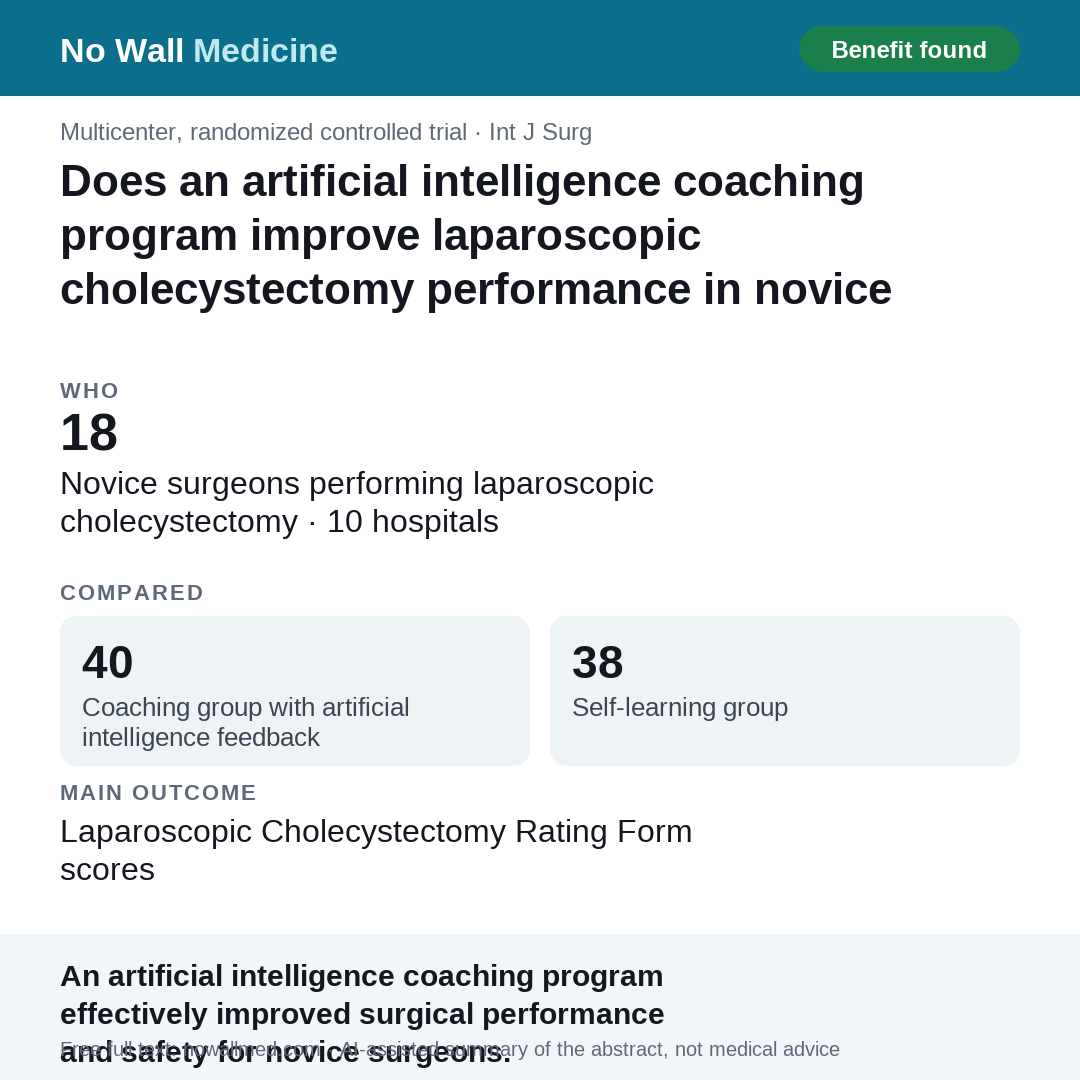
Impact of an AI-based laparoscopic cholecystectomy coaching program on the surgical performance: a randomized controlled trial
Multicenter, randomized controlled trialBenefit found
Does an artificial intelligence coaching program improve laparoscopic cholecystectomy performance in novice surgeons?
Who
18
Novice surgeons performing laparoscopic cholecystectomy · 10 hospitals
Compared
40Coaching group with artificial intelligence feedback
38Self-learning group
Main outcome
Laparoscopic Cholecystectomy Rating Form scores
Bottom line: An artificial intelligence coaching program effectively improved surgical performance and safety for novice surgeons.
Int J Surg · 2024-12-01Download image
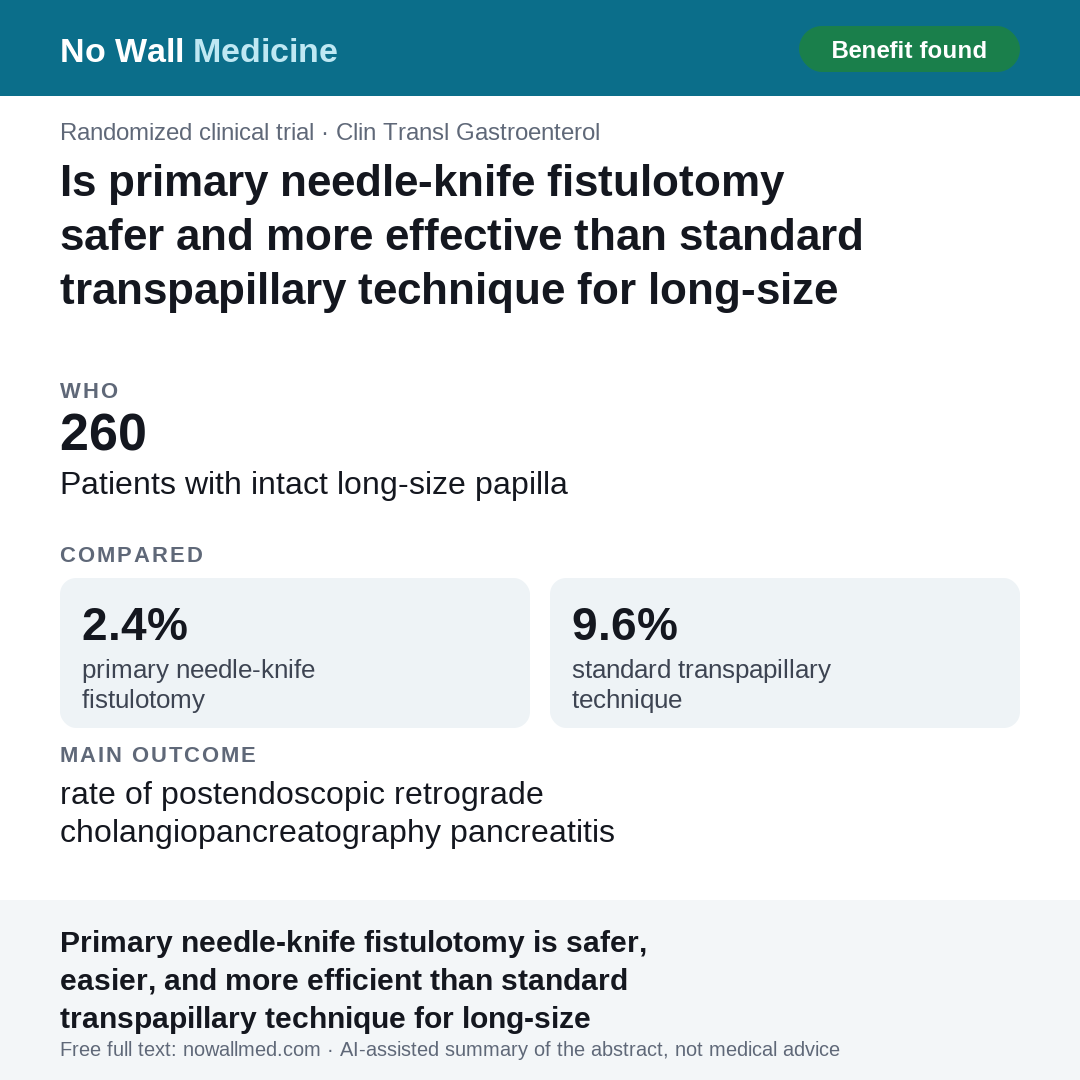
Primary Needle-Knife Fistulotomy Versus Standard Transpapillary Technique for Cannulation of Long-Size Papilla: A Randomized Clinical Trial
Randomized clinical trialBenefit found
Is primary needle-knife fistulotomy safer and more effective than standard transpapillary technique for long-size papilla?
Who
260
Patients with intact long-size papilla
Compared
2.4%primary needle-knife fistulotomy
9.6%standard transpapillary technique
Main outcome
rate of postendoscopic retrograde cholangiopancreatography pancreatitis
Result: number needed to treat [95% confidence interval] = 13.9 [7.5-83.2]
Bottom line: Primary needle-knife fistulotomy is safer, easier, and more efficient than standard transpapillary technique for long-size papilla cannulation.
Clin Transl Gastroenterol · 2024-12-01Download image
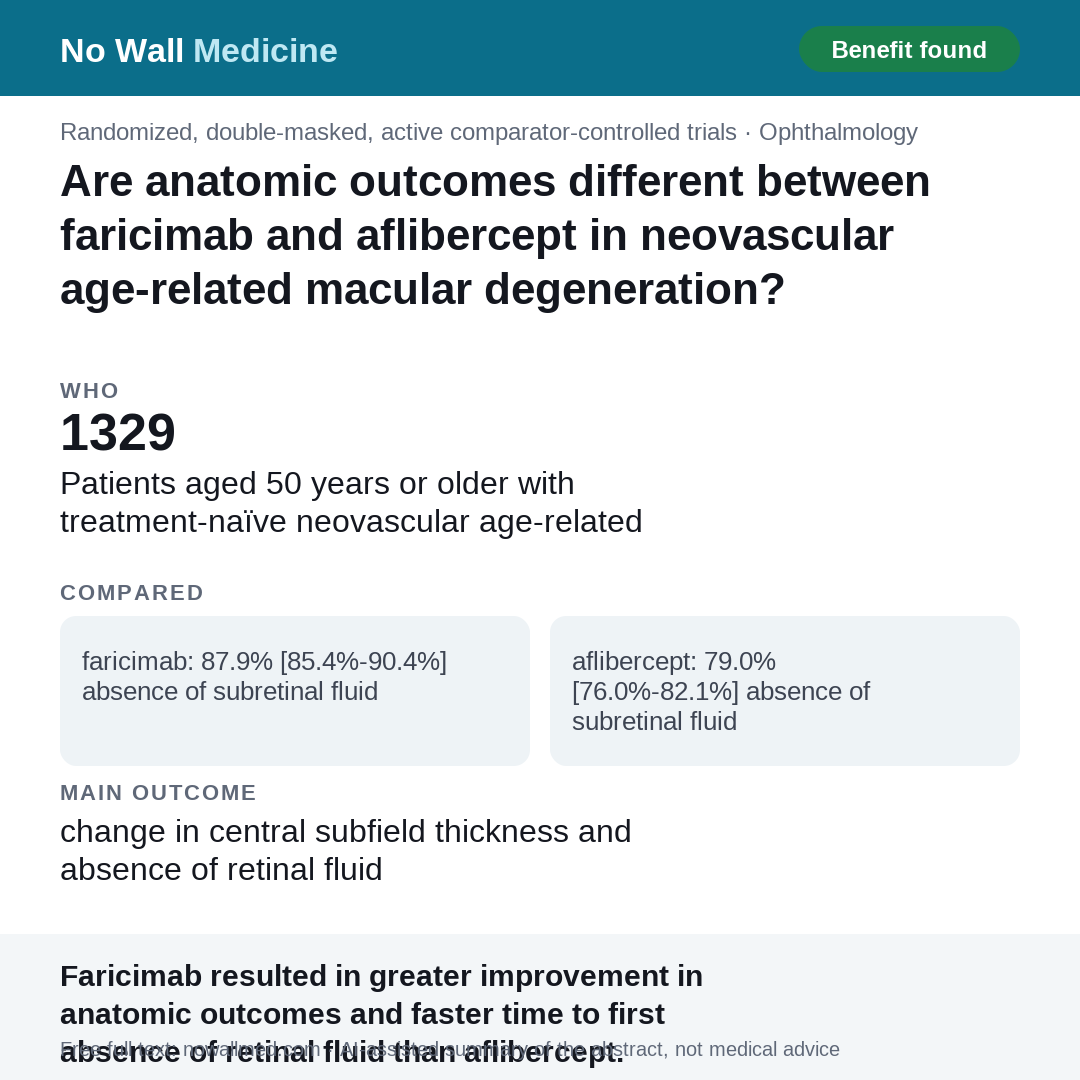
Anatomic Outcomes with Faricimab vs Aflibercept in Head-to-Head Dosing Phase of the TENAYA/LUCERNE Trials in Neovascular Age-related Macular Degeneration
Randomized, double-masked, active comparator-controlled trialsBenefit found
Are anatomic outcomes different between faricimab and aflibercept in neovascular age-related macular degeneration?
Who
1329
Patients aged 50 years or older with treatment-naïve neovascular age-related macular degeneration
Compared
faricimab: 87.9% [85.4%-90.4%] absence of subretinal fluid
aflibercept: 79.0% [76.0%-82.1%] absence of subretinal fluid
Main outcome
change in central subfield thickness and absence of retinal fluid
Bottom line: Faricimab resulted in greater improvement in anatomic outcomes and faster time to first absence of retinal fluid than aflibercept.
Ophthalmology · 2024-11-30Download image
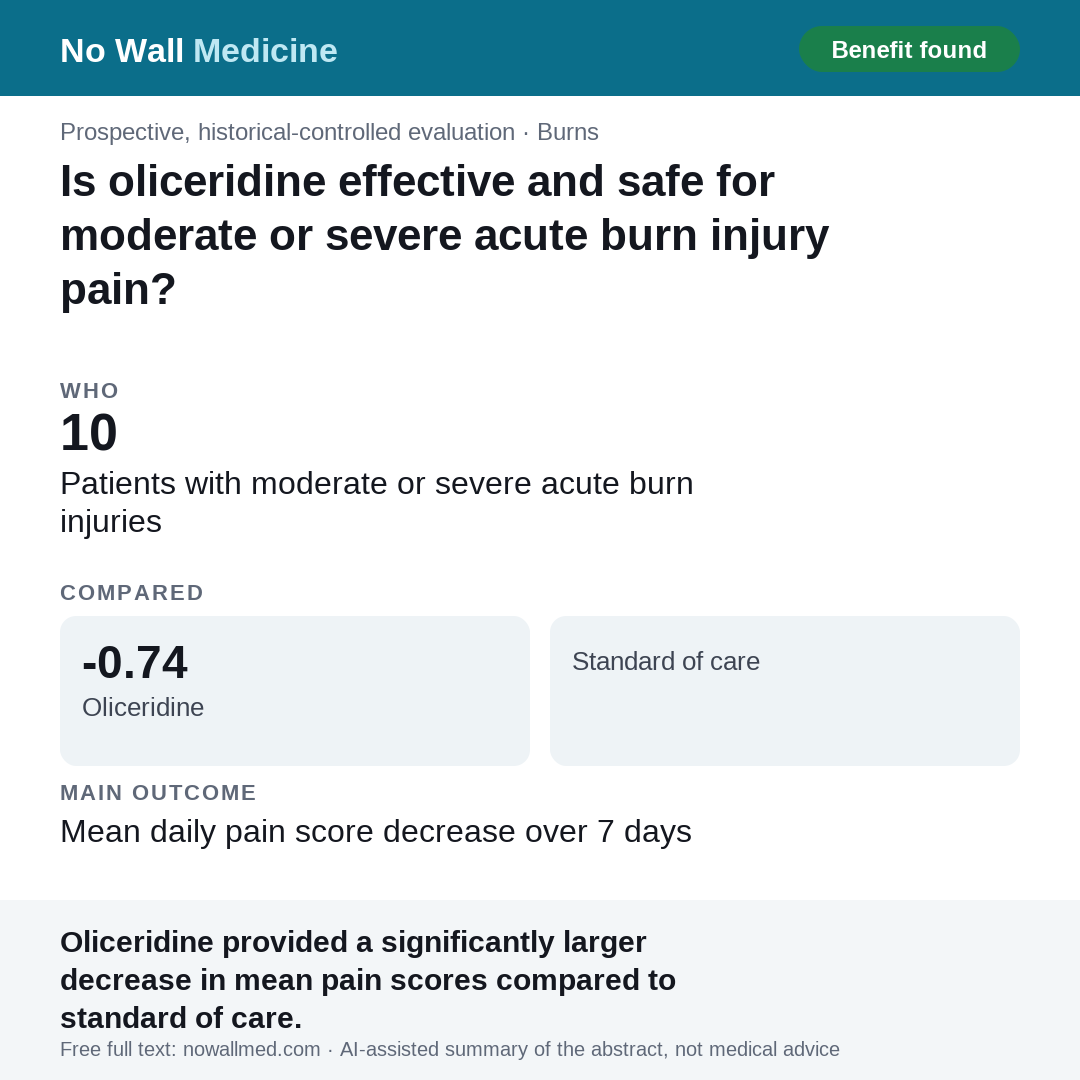
A prospective, historical-controlled evaluation of oliceridine for moderate or severe pain in patients with acute burn injuries (RELIEVE)
Prospective, historical-controlled evaluationKey finding
Is oliceridine effective and safe for moderate or severe acute burn injury pain?
Who
10
Patients with moderate or severe acute burn injuries
Compared
-0.74Oliceridine (-1.36, -0.12)
Standard of care
Main outcome
Mean daily pain score decrease over 7 days
Bottom line: Oliceridine provided a significantly larger decrease in mean pain scores compared to standard of care.
Limitation: Small sample size of ten patients and use of a historical control group.
Burns · 2024-11-30Download image
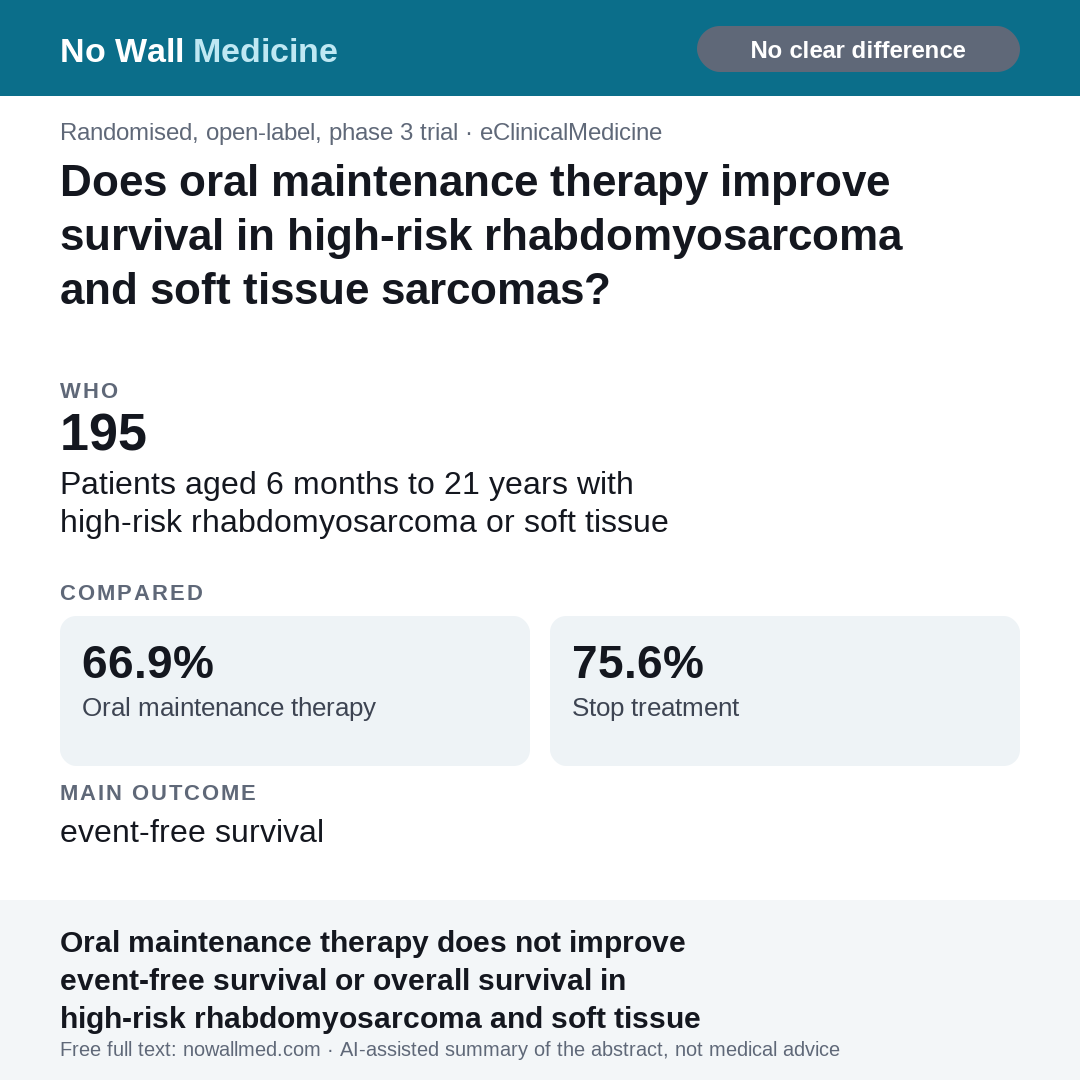
Maintenance therapy with trofosfamide, idarubicin and etoposide in patients with rhabdomyosarcoma and other high-risk soft tissue sarcomas (CWS-2007-HR): a multicentre, open-label, randomised controlled phase 3 trial
Randomised, open-label, phase 3 trialNo clear difference
Does oral maintenance therapy improve survival in high-risk rhabdomyosarcoma and soft tissue sarcomas?
Who
195
Patients aged 6 months to 21 years with high-risk rhabdomyosarcoma or soft tissue sarcomas · 87 centers in 5 countries
Compared
66.9%Oral maintenance therapy (95% CI 58.1-77.2)
75.6%Stop treatment (67.6-84.6)
Main outcome
event-free survival
Result: hazard ratio 1.62 (95% CI 0.98-2.69)
Bottom line: Oral maintenance therapy does not improve event-free survival or overall survival in high-risk rhabdomyosarcoma and soft tissue sarcomas.
Funded by: Deutsche Kinderkrebsstiftung
eClinicalMedicine · 2024-11-29Download image
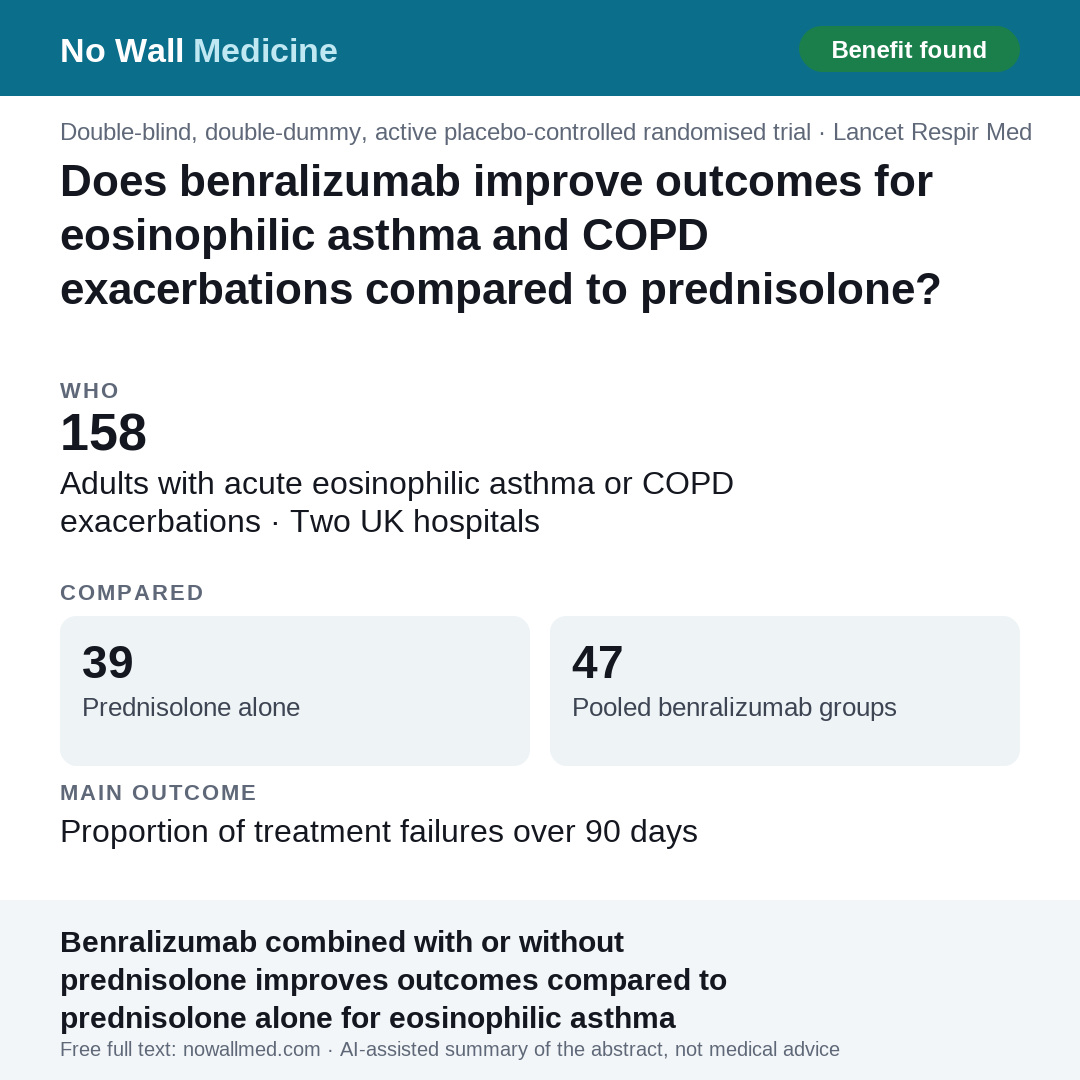
Treating eosinophilic exacerbations of asthma and COPD with benralizumab (ABRA): a double-blind, double-dummy, active placebo-controlled randomised trial
Double-blind, double-dummy, active placebo-controlled randomised trialEarly signal
Does benralizumab improve outcomes for eosinophilic asthma and COPD exacerbations compared to prednisolone?
Who
158
Adults with acute eosinophilic asthma or COPD exacerbations · Two UK hospitals
Compared
39Prednisolone alone (74%)
47Pooled benralizumab groups (45%)
Main outcome
Proportion of treatment failures over 90 days
Result: OR 0·26 (95% CI 0·13-0·56)
Bottom line: Benralizumab combined with or without prednisolone improves outcomes compared to prednisolone alone for eosinophilic asthma and COPD exacerbations.
Funded by: AstraZeneca
Lancet Respir Med · 2024-11-29Download image