Visual abstracts
New randomized trials and meta-analyses from leading journals at a glance: who was studied, what was compared, and what was found. Every paper is free to read in full.
All specialtiesCardiology 4763Oncology 4043Gastroenterology & Hepatology 1903Infectious Disease 3756Neurology 1872Psychiatry & Mental Health 2216Pulmonology 2044Critical Care 1319Endocrinology & Diabetes 2544Pediatrics 2889Surgery 2480Orthopedics & Sports Medicine 917Neurosurgery 525Cardiothoracic & Vascular Surgery 656Plastic & Reconstructive Surgery 574Nephrology 1107Rheumatology 810Hematology 1090Dermatology 611Ophthalmology 532Obstetrics & Gynecology 1645Public & Global Health 1037Radiology & Imaging 619Anesthesiology 958Urology 745ENT (Otolaryngology) 494Emergency Medicine 481Allergy & Immunology 309Geriatrics 972Family Medicine & Primary Care 534Medical Genetics & Genomics 659Pathology & Laboratory Medicine 156Physical Medicine & Rehabilitation 734Palliative Care 421Nutrition 1560Digital Health & AI 2137General Medicine 318
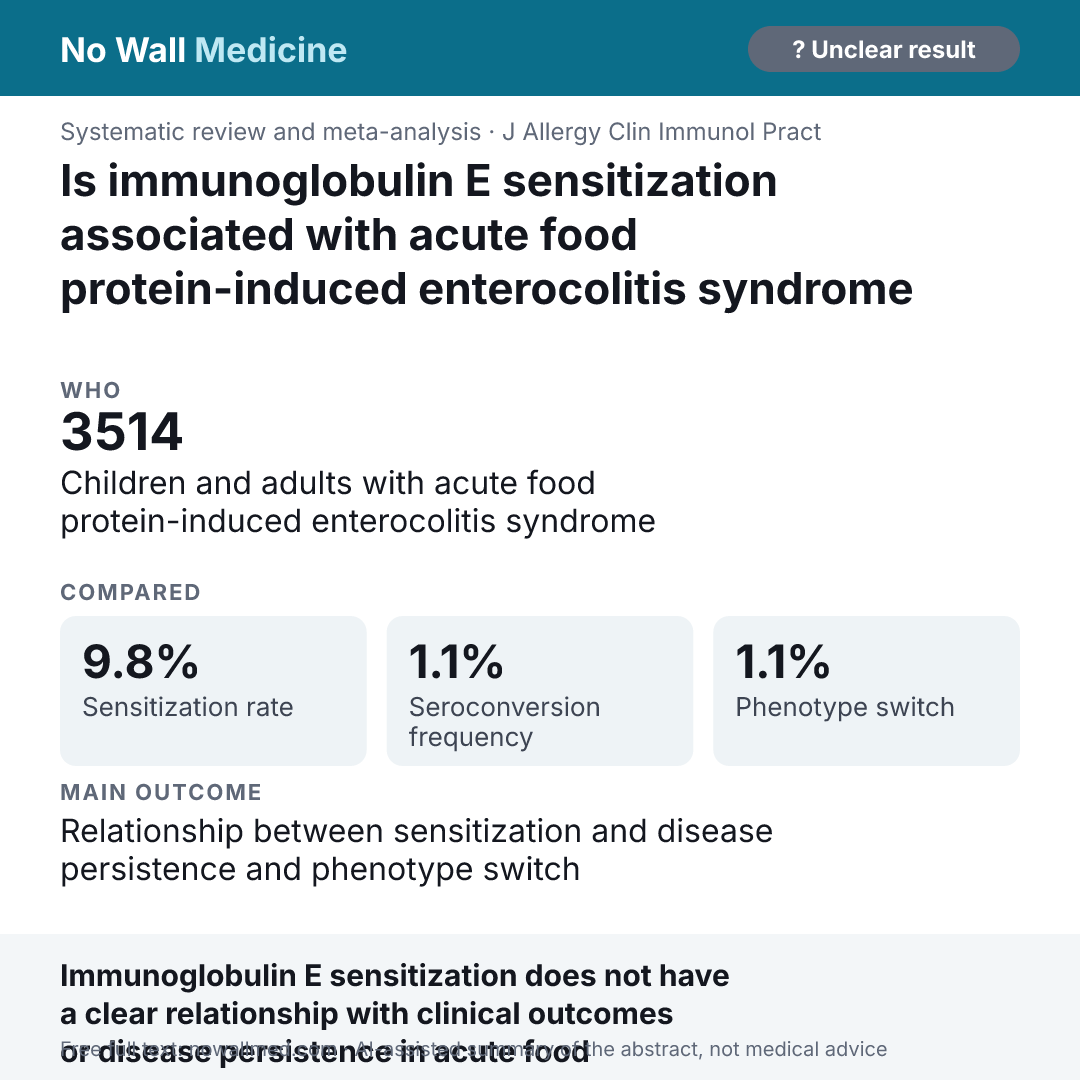
The Role of IgE Sensitization in Acute FPIES: A Systematic Review and Meta-Analysis
Systematic review and meta-analysisUnclear result
Is immunoglobulin E sensitization associated with acute food protein-induced enterocolitis syndrome outcomes?
Who
3514
Children and adults with acute food protein-induced enterocolitis syndrome
Compared
9.8%Sensitization rate (95% confidence interval 7.4%-12.1%)
1.1%Seroconversion frequency (95% confidence interval 0.1%-2.1%)
1.1%Phenotype switch (95% confidence interval 0.4%-1.7%)
Main outcome
Relationship between sensitization and disease persistence and phenotype switch
Bottom line: Immunoglobulin E sensitization does not have a clear relationship with clinical outcomes or disease persistence in acute food protein-induced enterocolitis syndrome.
Limitation: Studies showed inconsistent evidence regarding the relationship between sensitization and disease persistence.
J Allergy Clin Immunol Pract · 2025-01-22 · Save PNG
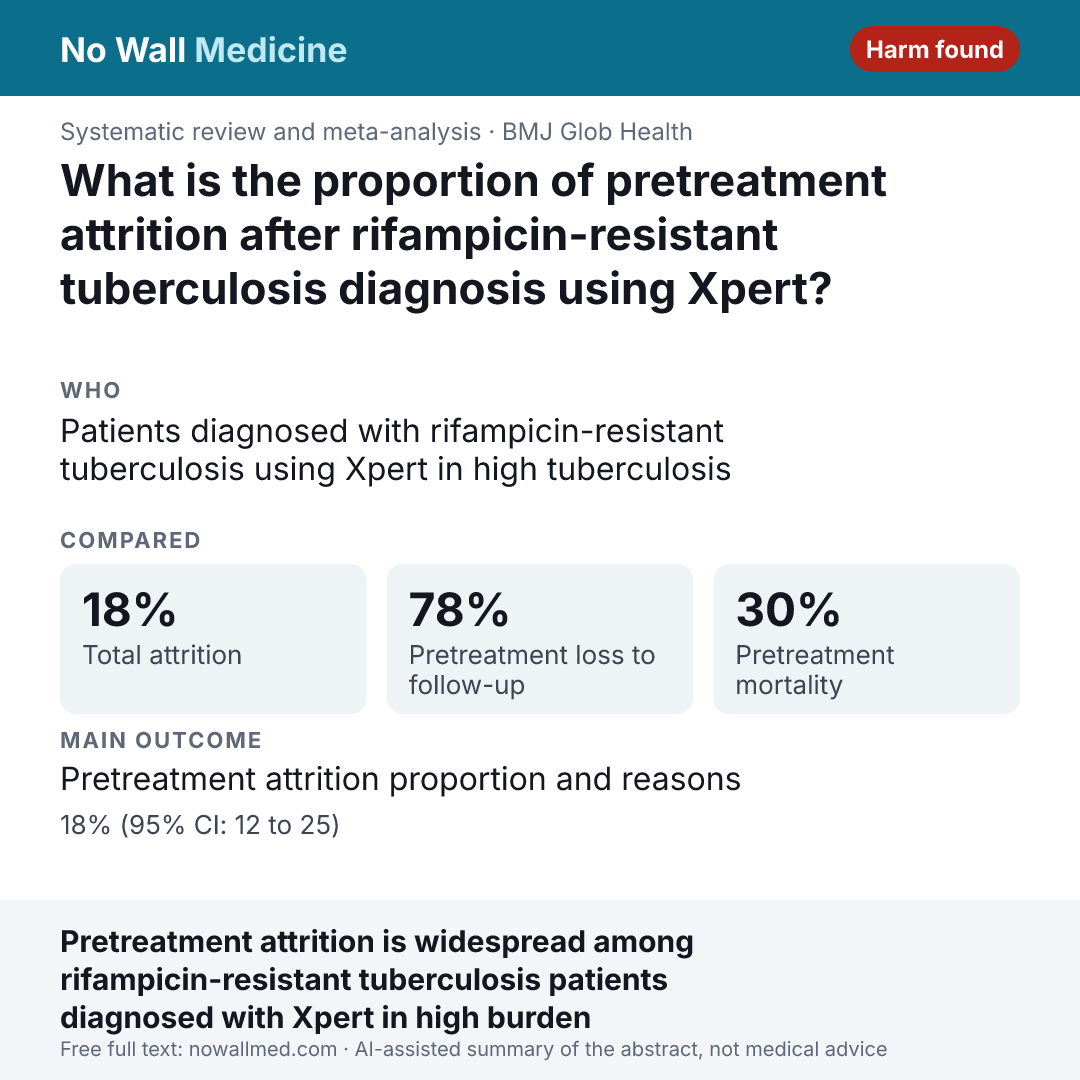
Pretreatment attrition after rifampicin-resistant tuberculosis diagnosis with Xpert MTB/RIF or ultra in high TB burden countries: a systematic review and meta-analysis
Systematic review and meta-analysisHarm found
What is the proportion of pretreatment attrition after rifampicin-resistant tuberculosis diagnosis using Xpert?
Who
Patients diagnosed with rifampicin-resistant tuberculosis using Xpert in high tuberculosis burden countries · 21 countries
Compared
18%Total attrition (95% CI: 12 to 25)
78%Pretreatment loss to follow-up (95% CI: 51% to 92%)
30%Pretreatment mortality (95% CI: 15% to 52%)
Main outcome
Pretreatment attrition proportion and reasons
Result: 18% (95% CI: 12 to 25)
Bottom line: Pretreatment attrition is widespread among rifampicin-resistant tuberculosis patients diagnosed with Xpert in high burden countries.
Limitation: Significant heterogeneity between included studies and most studies used routine programme data.
BMJ Glob Health · 2025-01-22 · Save PNG
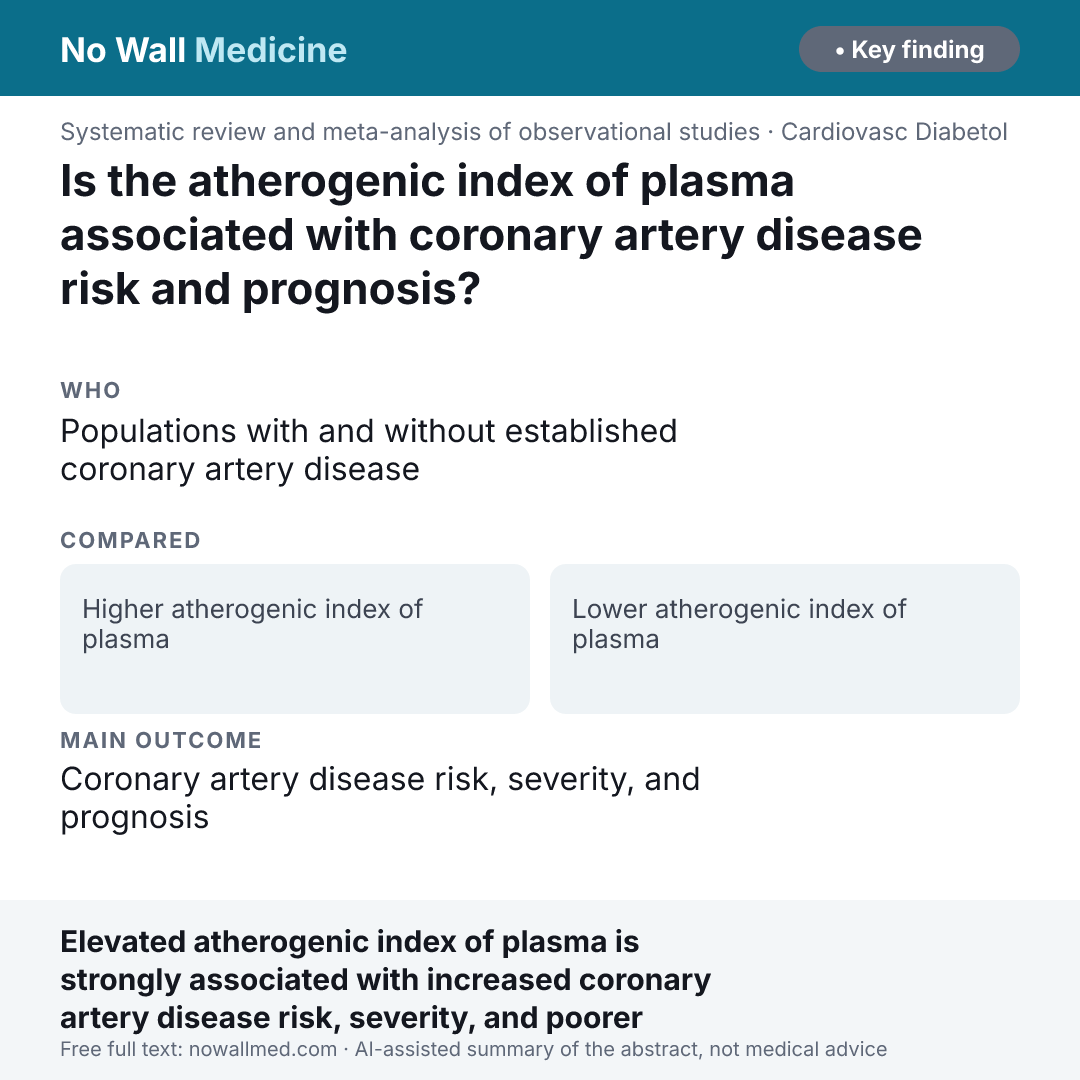
Atherogenic index of plasma and coronary artery disease: a systematic review and meta-analysis of observational studies
Systematic review and meta-analysis of observational studiesKey finding
Is the atherogenic index of plasma associated with coronary artery disease risk and prognosis?
Who
Populations with and without established coronary artery disease
Compared
Higher atherogenic index of plasma
Lower atherogenic index of plasma
Main outcome
Coronary artery disease risk, severity, and prognosis
Result: odds ratio 2.79 (95% CI 1.75-4.45)
Bottom line: Elevated atherogenic index of plasma is strongly associated with increased coronary artery disease risk, severity, and poorer prognosis.
Limitation: More studies are needed to evaluate predictive performance and determine the optimal cut-off.
Cardiovasc Diabetol · 2025-01-22 · Save PNG
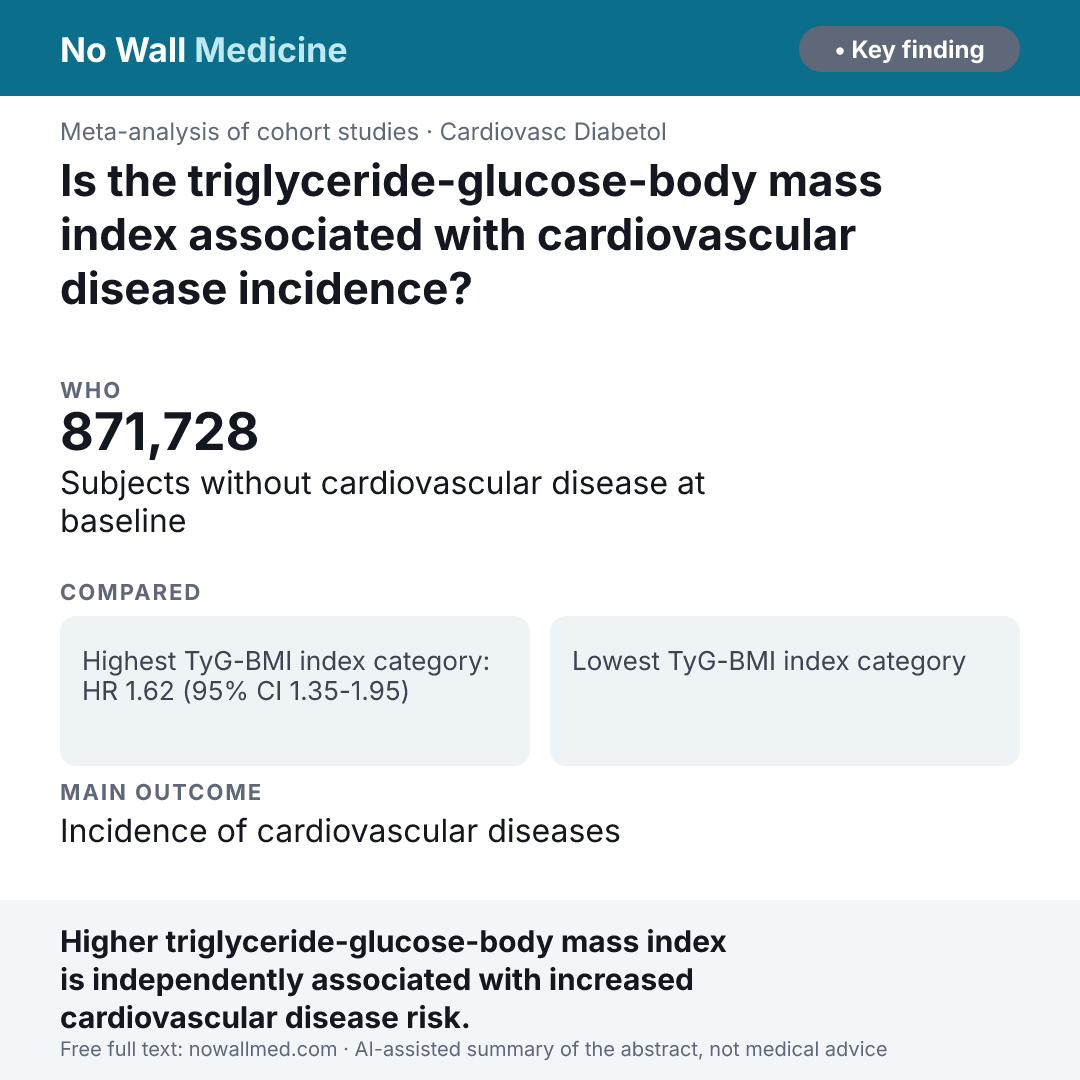
Triglyceride-glucose-body mass index and the incidence of cardiovascular diseases: a meta-analysis of cohort studies
Meta-analysis of cohort studiesKey finding
Is the triglyceride-glucose-body mass index associated with cardiovascular disease incidence?
Who
871,728
Subjects without cardiovascular disease at baseline
Compared
Highest TyG-BMI index category: HR 1.62 (95% CI 1.35-1.95)
Lowest TyG-BMI index category
Main outcome
Incidence of cardiovascular diseases
Result: hazard ratio 1.62 (95% CI 1.35-1.95)
Bottom line: Higher triglyceride-glucose-body mass index is independently associated with increased cardiovascular disease risk.
Cardiovasc Diabetol · 2025-01-22 · Save PNG
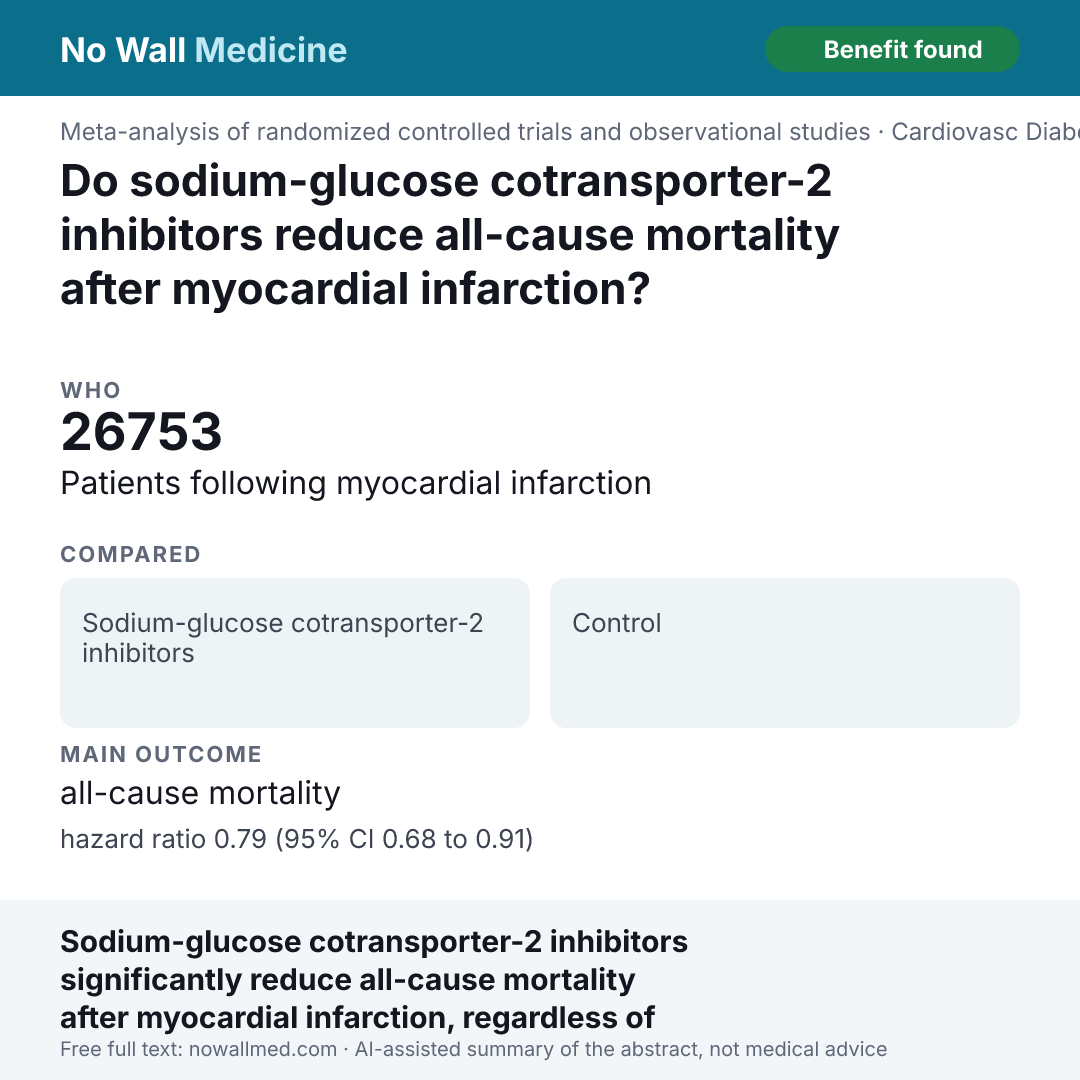
Association of sodium-glucose cotransporter-2 inhibitors with mortality across the spectrum of myocardial infarction: a systematic review and meta-analysis
Meta-analysis of randomized controlled trials and observational studiesBenefit found
Do sodium-glucose cotransporter-2 inhibitors reduce all-cause mortality after myocardial infarction?
Who
26753
Patients following myocardial infarction
Compared
Sodium-glucose cotransporter-2 inhibitors
Control
Main outcome
all-cause mortality
Result: hazard ratio 0.79 (95% CI 0.68 to 0.91)
Bottom line: Sodium-glucose cotransporter-2 inhibitors significantly reduce all-cause mortality after myocardial infarction, regardless of early or delayed treatment.
Cardiovasc Diabetol · 2025-01-22 · Save PNG
Efficacy and safety of pharmacological treatments in inclusion body myositis: a systematic review
Meta-analysis of 2 trialsNo clear difference
Do drugs help inclusion body myositis?
Who
adults with inclusion body myositis
Compared
treatment
control
Main outcome
muscle strength and function
Bottom line: Drugs do not help inclusion body myositis
Limitation: inconsistency of outcome measures
RMD Open · 2025-01-22 · Save PNG

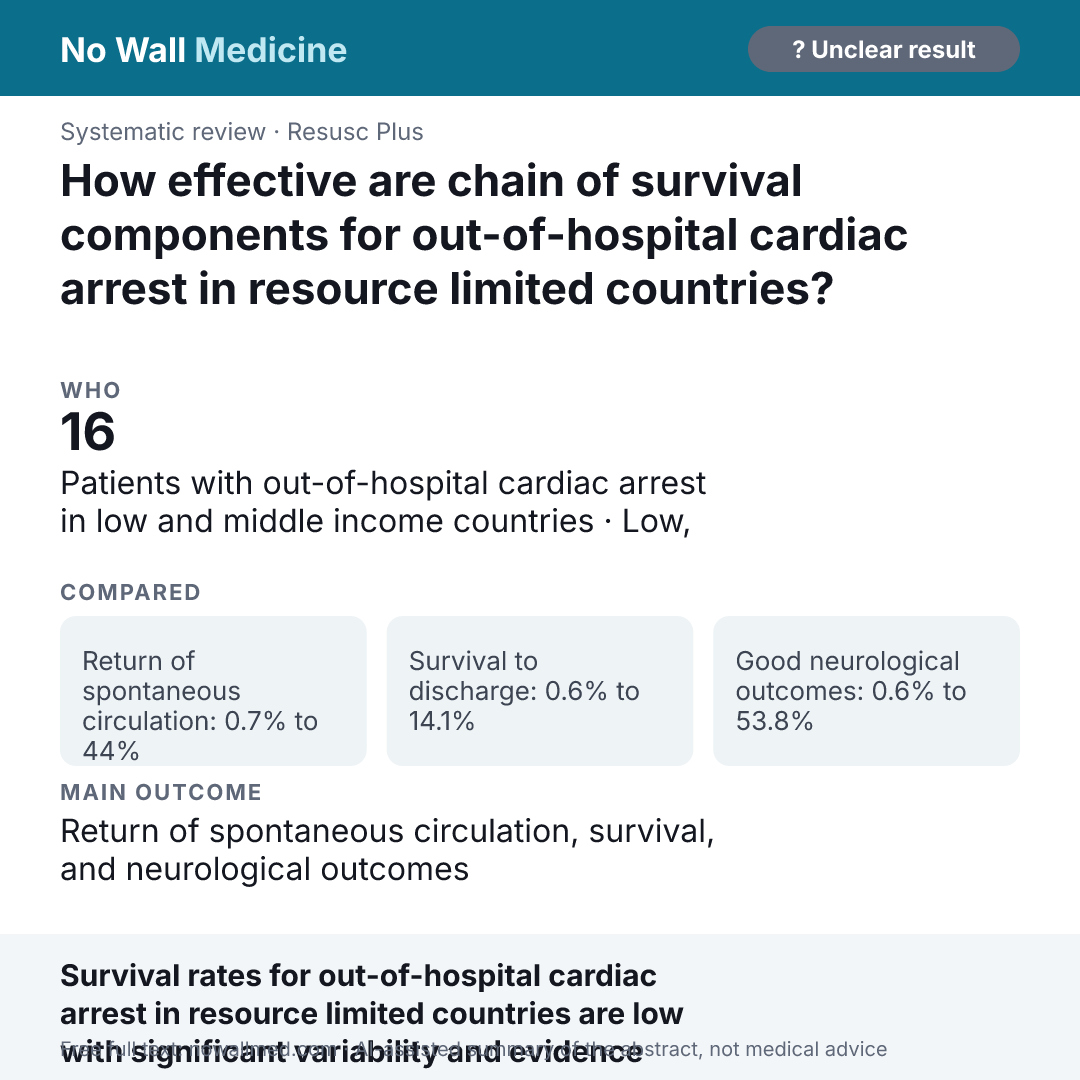
Effectiveness of chain of survival for out-of-hospital-cardiac-arrest (OHCA) in resource limited countries: A systematic review
Systematic reviewUnclear result
How effective are chain of survival components for out-of-hospital cardiac arrest in resource limited countries?
Who
16
Patients with out-of-hospital cardiac arrest in low and middle income countries · Low, lower-middle, and upper-middle-income countries
Compared
Return of spontaneous circulation: 0.7% to 44%
Survival to discharge: 0.6% to 14.1%
Good neurological outcomes: 0.6% to 53.8%
Main outcome
Return of spontaneous circulation, survival, and neurological outcomes
Bottom line: Survival rates for out-of-hospital cardiac arrest in resource limited countries are low with significant variability and evidence gaps.
Limitation: Moderate to high risk of bias due to selection bias and inconsistent reporting.
Resusc Plus · 2025-01-22 · Save PNG
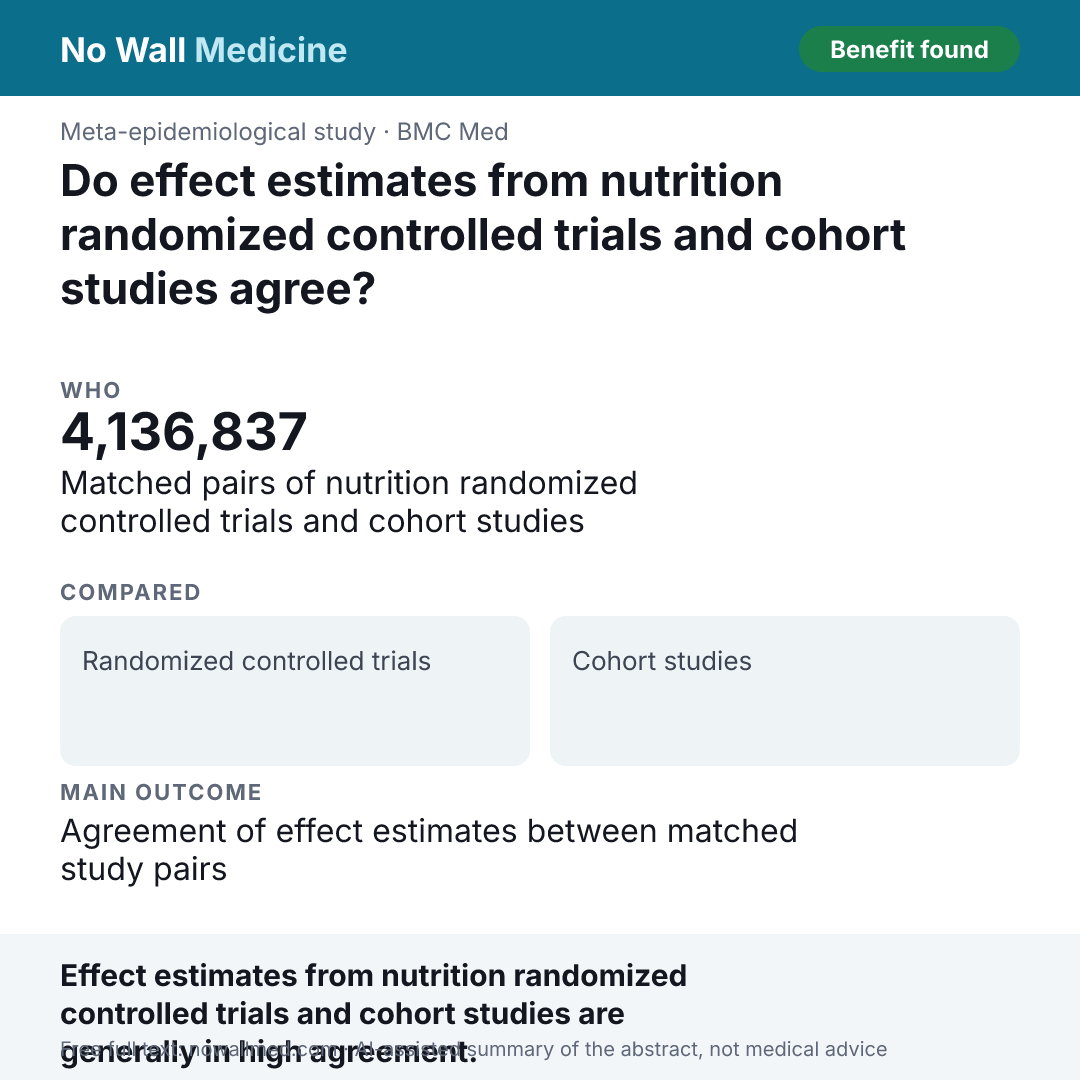
Evaluating agreement between individual nutrition randomised controlled trials and cohort studies - a meta-epidemiological study
Meta-epidemiological studyBenefit found
Do effect estimates from nutrition randomized controlled trials and cohort studies agree?
Who
4,136,837
Matched pairs of nutrition randomized controlled trials and cohort studies
Compared
Randomized controlled trials
Cohort studies
Main outcome
Agreement of effect estimates between matched study pairs
Result: ratio of risk ratios 1.00 (95% CI 0.91-1.10)
Bottom line: Effect estimates from nutrition randomized controlled trials and cohort studies are generally in high agreement.
Limitation: Cohort studies were mostly rated with some concerns or high risk of bias.
BMC Med · 2025-01-21 · Save PNG
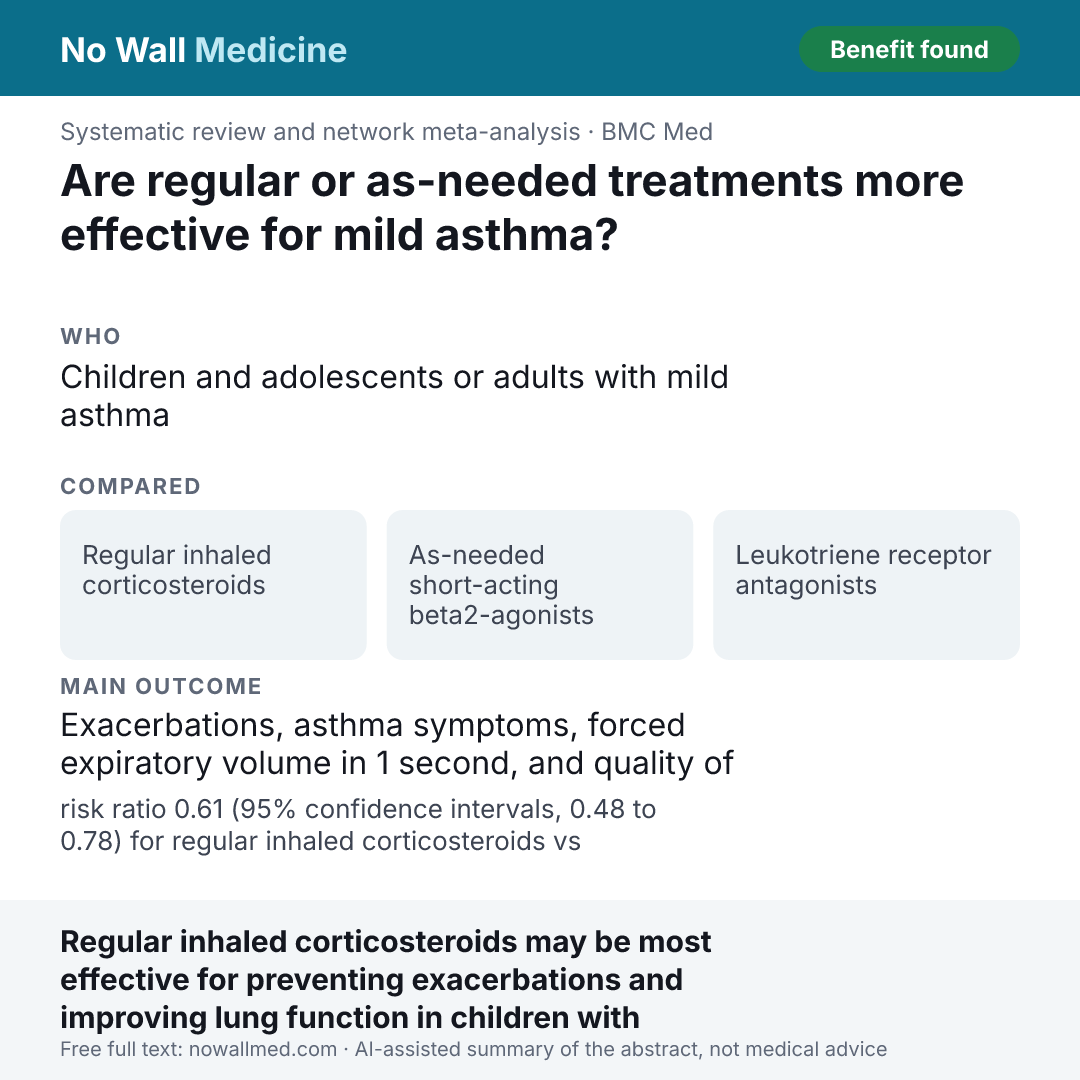
Regular versus as-needed treatments for mild asthma in children, adolescents, and adults: a systematic review and network meta-analysis
Systematic review and network meta-analysisBenefit found
Are regular or as-needed treatments more effective for mild asthma?
Who
Children and adolescents or adults with mild asthma
Compared
Regular inhaled corticosteroids
As-needed short-acting beta2-agonists
Leukotriene receptor antagonists
Main outcome
Exacerbations, asthma symptoms, forced expiratory volume in 1 second, and quality of life
Result: risk ratio 0.61 (95% confidence intervals, 0.48 to 0.78) for regular inhaled corticosteroids vs as-needed short-acting beta2-agonists
Bottom line: Regular inhaled corticosteroids may be most effective for preventing exacerbations and improving lung function in children with mild asthma.
Limitation: varying degrees of heterogeneity
BMC Med · 2025-01-21 · Save PNG
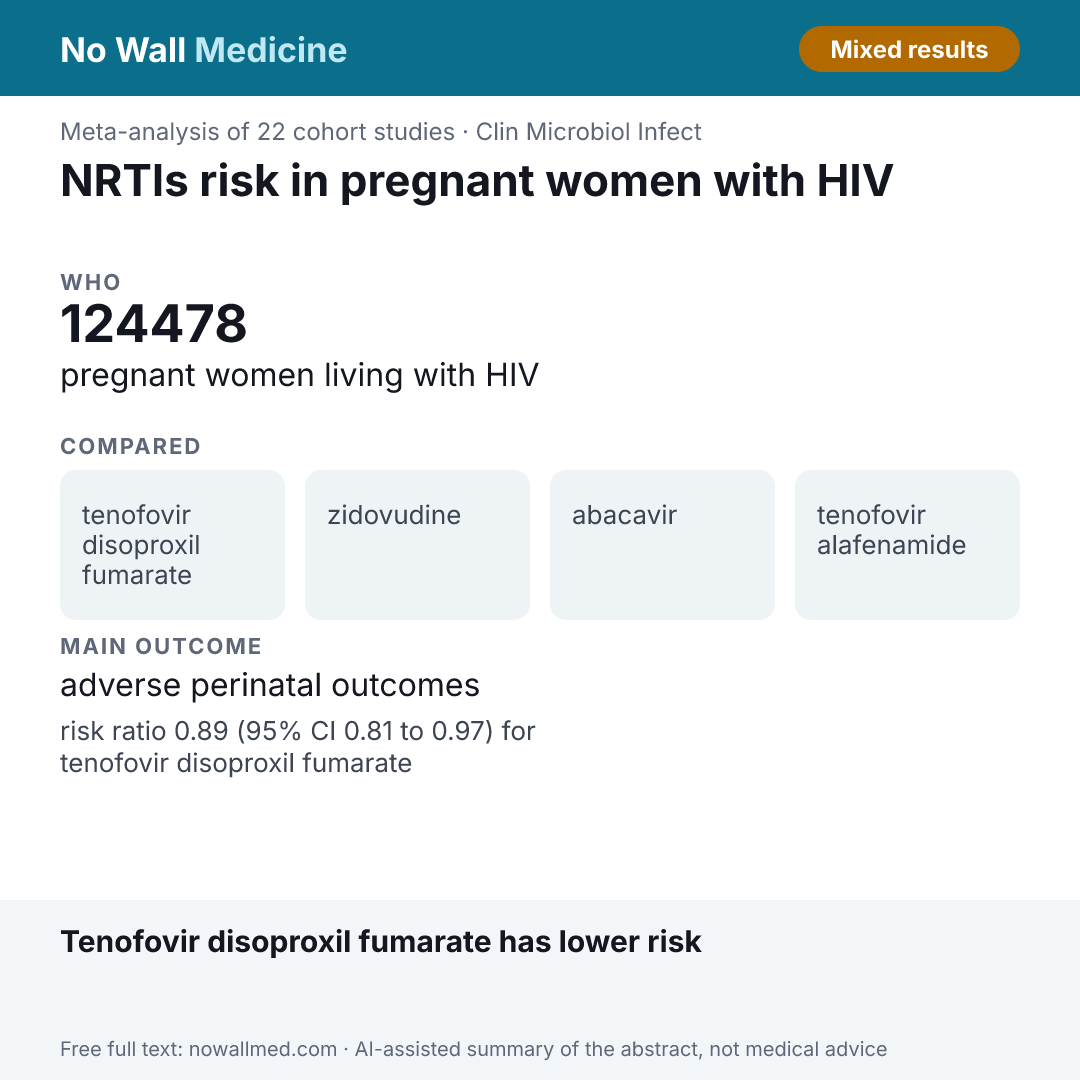
Association of nucleoside reverse transcriptase inhibitors with adverse perinatal outcomes in pregnant women living with HIV: systematic review and meta-analysis
Meta-analysis of 22 cohort studiesMixed results
NRTIs risk in pregnant women with HIV
Who
124478
pregnant women living with HIV
Compared
tenofovir disoproxil fumarate
zidovudine
abacavir
tenofovir alafenamide
Main outcome
adverse perinatal outcomes
Result: risk ratio 0.89 (95% CI 0.81 to 0.97) for tenofovir disoproxil fumarate
Bottom line: Tenofovir disoproxil fumarate has lower risk
Clin Microbiol Infect · 2025-01-21 · Save PNG
Population-Based vs Health System and Insurer Records: Significant Underdiagnosis of PCOS
Systematic reviewKey finding
Is polycystic ovary syndrome underdiagnosed in health system and insurer records compared to population studies?
Who
Women in the United States, United Kingdom, and South Korea · United States, United Kingdom, and South Korea
Compared
Population-based studies: 4% to 19.6% in United States
Health System or Insurer Records: 0.2% to 5.2% in United States
Main outcome
Polycystic ovary syndrome prevalence
Bottom line: Health system and insurer records show substantially lower prevalence of polycystic ovary syndrome than population-based studies.
J Clin Endocrinol Metab · 2025-01-21 · Save PNG

The Statistical Fragility of Functional Outcomes for Arthroscopic Rotator Cuff Repair With and Without Acromioplasty: A Systematic Review and Meta-analysis
Systematic review and meta-analysisUnclear result
Are functional outcomes for arthroscopic rotator cuff repair fragile with or without acromioplasty?
Who
609
Patients undergoing arthroscopic rotator cuff repair
Compared
Arthroscopic rotator cuff repair with acromioplasty
Arthroscopic rotator cuff repair without acromioplasty
Main outcome
Functional outcome scores
Result: median RCFI 14 (IQR, 13-19) for Student t test
Bottom line: Functional outcome results are fragile depending on the statistical test used, indicating a lack of strong evidence.
Am J Sports Med · 2025-01-21 · Save PNG

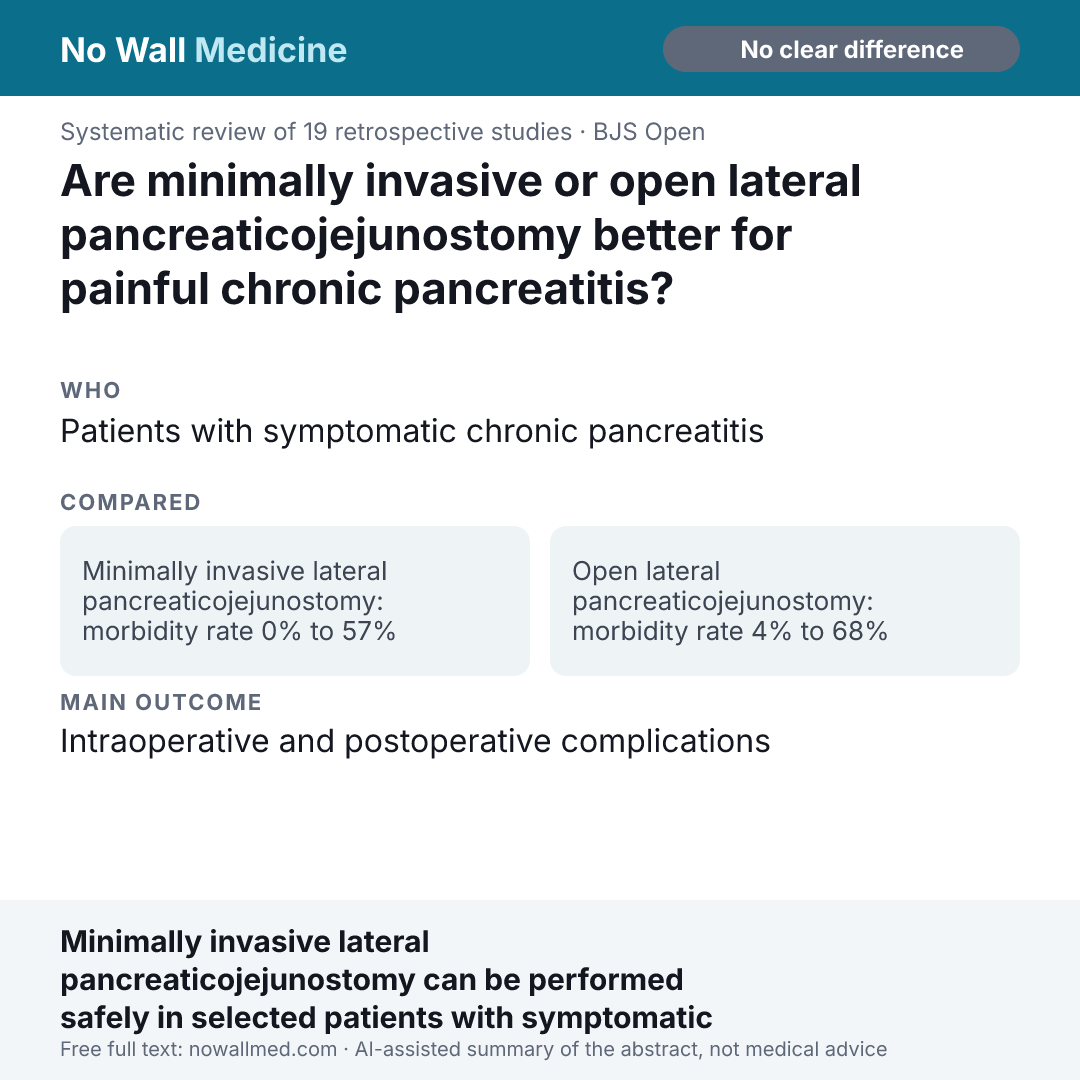
Minimally invasive versus open lateral pancreaticojejunostomy in patients with painful chronic pancreatitis: systematic review
Systematic review of 19 retrospective studiesNo clear difference
Are minimally invasive or open lateral pancreaticojejunostomy better for painful chronic pancreatitis?
Who
Patients with symptomatic chronic pancreatitis
Compared
Minimally invasive lateral pancreaticojejunostomy: morbidity rate 0% to 57%
Open lateral pancreaticojejunostomy: morbidity rate 4% to 68%
Main outcome
Intraoperative and postoperative complications
Bottom line: Minimally invasive lateral pancreaticojejunostomy can be performed safely in selected patients with symptomatic chronic pancreatitis.
BJS Open · 2025-01-21 · Save PNG
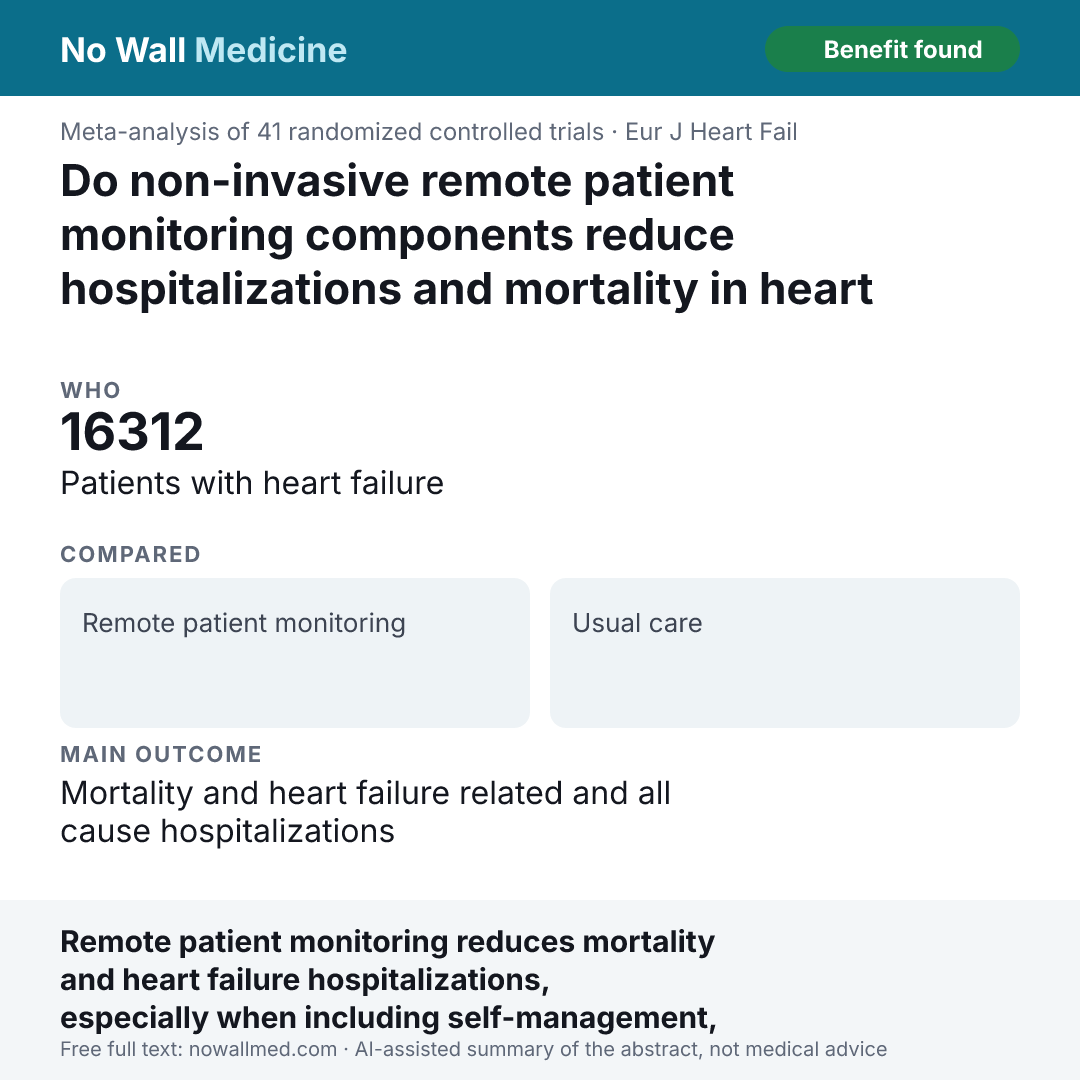
Remote patient monitoring in heart failure: A comprehensive meta-analysis of effective programme components for hospitalization and mortality reduction
Meta-analysis of 41 randomized controlled trialsBenefit found
Do non-invasive remote patient monitoring components reduce hospitalizations and mortality in heart failure?
Who
16312
Patients with heart failure
Compared
Remote patient monitoring
Usual care
Main outcome
Mortality and heart failure related and all cause hospitalizations
Result: pooled odds ratio 0.81 (95% CI 0.69-0.95) for mortality; pooled odds ratio 0.78 (95% CI 0.70-0.87) for first heart failure hospitalization
Bottom line: Remote patient monitoring reduces mortality and heart failure hospitalizations, especially when including self-management, education, and video calls.
Limitation: Heterogeneity among interventions challenges the overall evaluation.
Eur J Heart Fail · 2025-01-20 · Save PNG
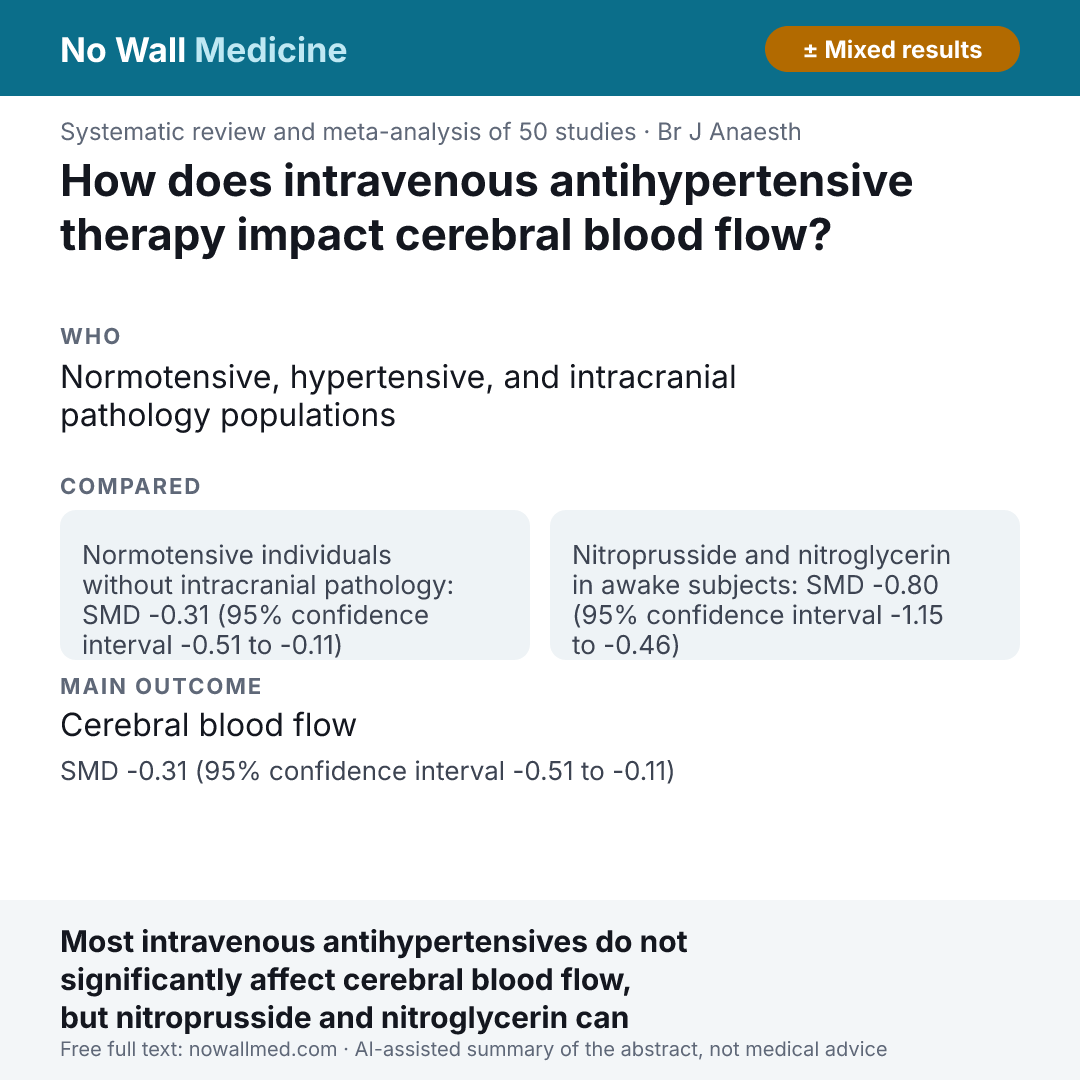
Impact of intravenous antihypertensive therapy on cerebral blood flow and neurocognition: a systematic review and meta-analysis
Systematic review and meta-analysis of 50 studiesMixed results
How does intravenous antihypertensive therapy impact cerebral blood flow?
Who
Normotensive, hypertensive, and intracranial pathology populations
Compared
Normotensive individuals without intracranial pathology: SMD -0.31 (95% confidence interval -0.51 to -0.11)
Nitroprusside and nitroglycerin in awake subjects: SMD -0.80 (95% confidence interval -1.15 to -0.46)
Main outcome
Cerebral blood flow
Result: SMD -0.31 (95% confidence interval -0.51 to -0.11)
Bottom line: Most intravenous antihypertensives do not significantly affect cerebral blood flow, but nitroprusside and nitroglycerin can reduce it.
Limitation: The certainty of evidence remains low.
Br J Anaesth · 2025-01-20 · Save PNG
Machine Learning for the Early Prediction of Delayed Cerebral Ischemia in Patients With Subarachnoid Hemorrhage: Systematic Review and Meta-Analysis
Systematic review and meta-analysisKey finding
What is the predictive accuracy of machine learning models for delayed cerebral ischemia?
Who
16294
Patients with subarachnoid hemorrhage
Compared
All machine learning models training set: concordance index 0.786 (95% CI 0.737-0.835)
All machine learning models validation set: concordance index 0.767 (95% CI 0.741-0.793)
Main outcome
prediction accuracy of delayed cerebral ischemia
Result: concordance index 0.786 (95% CI 0.737-0.835) in training set
Bottom line: Machine learning models show desirable power for early prediction of delayed cerebral ischemia after subarachnoid hemorrhage.
Limitation: enhancing the prediction sensitivity of these models is challenging
J Med Internet Res · 2025-01-20 · Save PNG

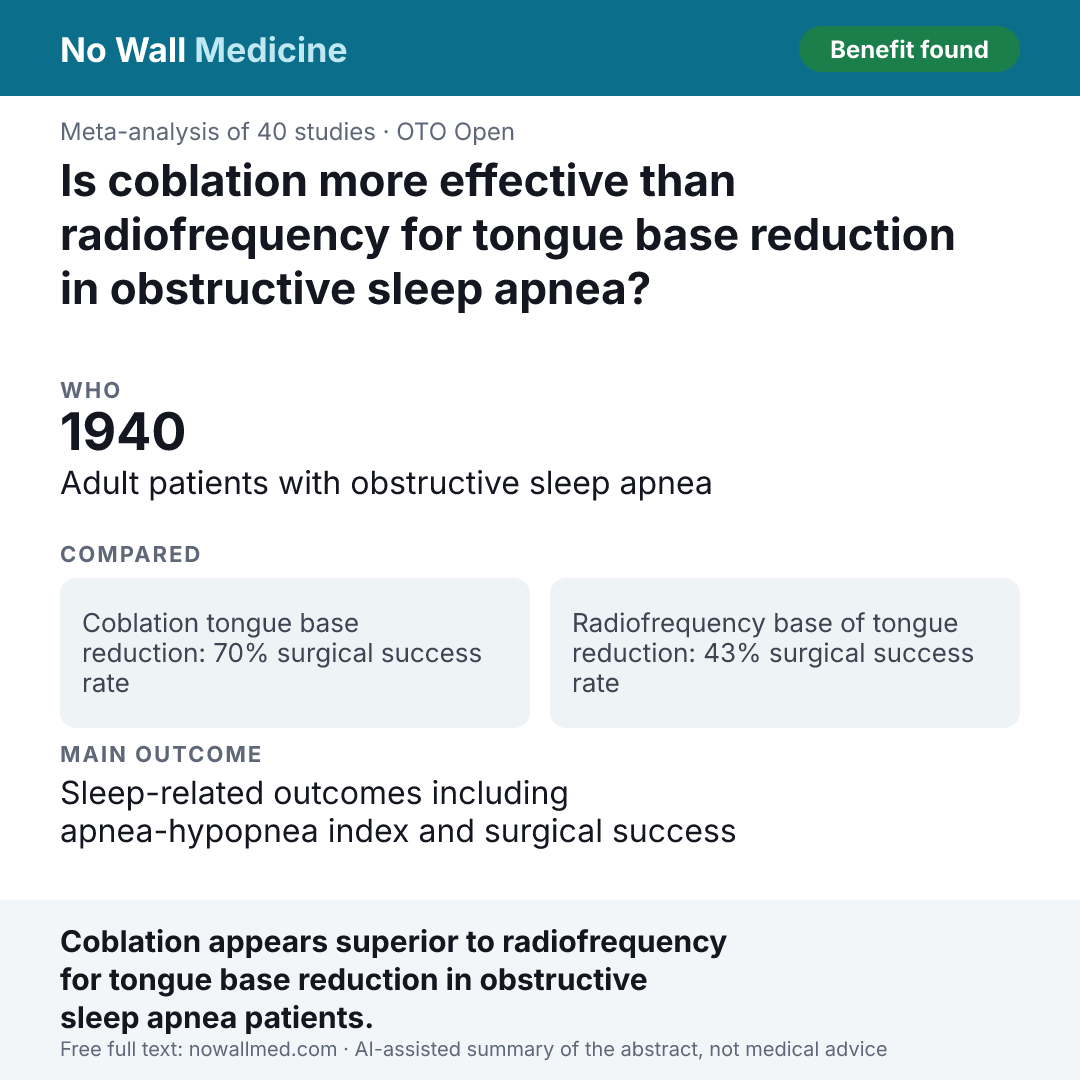
Coblation Versus Radiofrequency for Tongue Base Reduction in Obstructive Sleep Apnea: A Meta-analysis
Meta-analysis of 40 studiesBenefit found
Is coblation more effective than radiofrequency for tongue base reduction in obstructive sleep apnea?
Who
1940
Adult patients with obstructive sleep apnea
Compared
Coblation tongue base reduction: 70% surgical success rate
Radiofrequency base of tongue reduction: 43% surgical success rate
Main outcome
Sleep-related outcomes including apnea-hypopnea index and surgical success
Bottom line: Coblation appears superior to radiofrequency for tongue base reduction in obstructive sleep apnea patients.
Limitation: Further studies with direct comparisons between both interventions must be performed.
OTO Open · 2025-01-19 · Save PNG
Effects of ketogenic and low-carbohydrate diets on the body composition of adults with overweight or obesity: A systematic review and meta-analysis of randomised controlled trials
Systematic review and meta-analysis of randomised controlled trialsBenefit found
Do ketogenic and low-carbohydrate diets improve body composition in overweight or obese adults?
Who
2821
Adults with overweight or obesity
Compared
Ketogenic and low-carbohydrate diets
Control
Main outcome
Body weight, body mass index, fat mass, and body fat percentage
Bottom line: Ketogenic and low-carbohydrate diets significantly reduce body weight, body mass index, and body fat percentage.
Clin Nutr · 2025-01-18 · Save PNG

Radiotherapy and radiosurgery for intracranial lesions in Africa: Insights from 3 country case studies: A systematic review
Systematic reviewUnclear result
What is the current landscape of radiotherapy and radiosurgery for intracranial lesions in Africa?
Who
397
Patients with central nervous system lesions in Africa · Africa, including South Africa and Nigeria
Compared
88.8%Brain tumors (95% CI: 66.9-100.0)
37.5%Metastatic tumors (95% CI: 1.6-73.4)
Main outcome
Current landscape of radiotherapy and stereotactic radiosurgery use
Bottom line: Radiotherapy and radiosurgery are being implemented for central nervous system lesions across various African settings.
Neurooncol Adv · 2025-01-18 · Save PNG

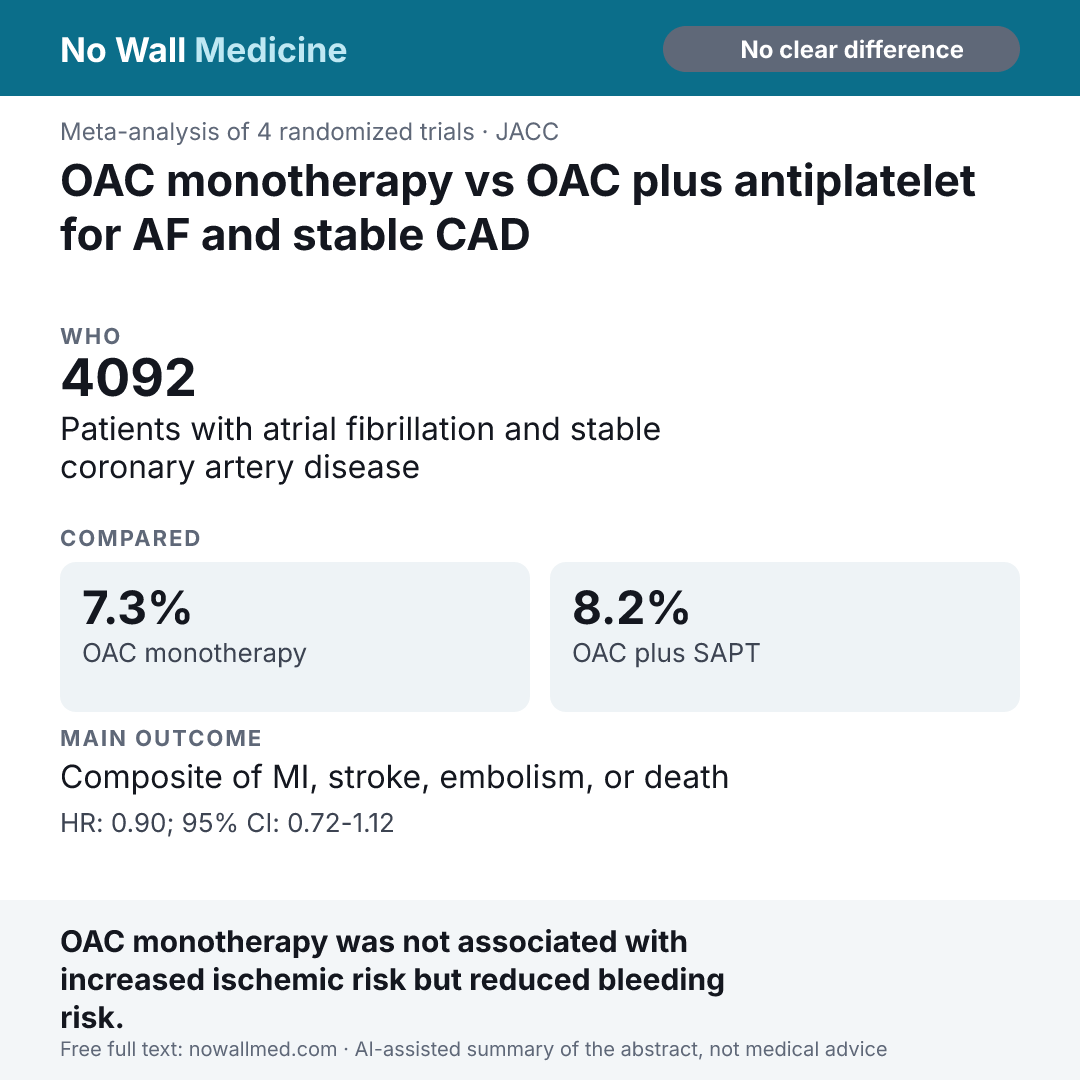
Anticoagulation and Antiplatelet Therapy for Atrial Fibrillation and Stable Coronary Disease: Meta-Analysis of Randomized Trials
Meta-analysis of 4 randomized trialsNo clear difference
OAC monotherapy vs OAC plus antiplatelet for AF and stable CAD
Who
4092
Patients with atrial fibrillation and stable coronary artery disease
Compared
7.3%OAC monotherapy
8.2%OAC plus SAPT
Main outcome
Composite of MI, stroke, embolism, or death
Result: HR: 0.90; 95% CI: 0.72-1.12
Bottom line: OAC monotherapy was not associated with increased ischemic risk but reduced bleeding risk.
JACC · 2025-01-17 · Save PNG