Visual abstracts
New randomized trials and meta-analyses from leading journals at a glance: who was studied, what was compared, and what was found. Every paper is free to read in full.
All specialtiesCardiology 131Oncology 98Gastroenterology & Hepatology 53Infectious Disease 100Neurology 50Psychiatry & Mental Health 64Pulmonology 51Critical Care 32Endocrinology & Diabetes 59Pediatrics 54Surgery 36Orthopedics & Sports Medicine 20Neurosurgery 5Cardiothoracic & Vascular Surgery 8Plastic & Reconstructive Surgery 24Nephrology 20Rheumatology 22Hematology 32Dermatology 12Ophthalmology 20Obstetrics & Gynecology 36Public & Global Health 38Radiology & Imaging 10Anesthesiology 18Urology 26ENT (Otolaryngology) 9Emergency Medicine 14Allergy & Immunology 10Geriatrics 35Family Medicine & Primary Care 13Medical Genetics & Genomics 12Pathology & Laboratory Medicine 1Physical Medicine & Rehabilitation 28Palliative Care 14Nutrition 40Digital Health & AI 111General Medicine 20
Food supplementation and behavioural counselling to reduce the double burden of malnutrition among pregnant women and their infants: protocol for the K'ASLEM hybrid type 1 effectiveness-implementation randomised controlled trial
Randomized controlled trialUnclear result
Does food supplementation reduce malnutrition?
Who
766
Pregnant women and their infants · Guatemala
Compared
Intervention
Comparator
Main outcome
Maternal weight and child length
Bottom line: Study will assess food supplementation impact
BMJ Paediatr Open · 2026-10-28Download image

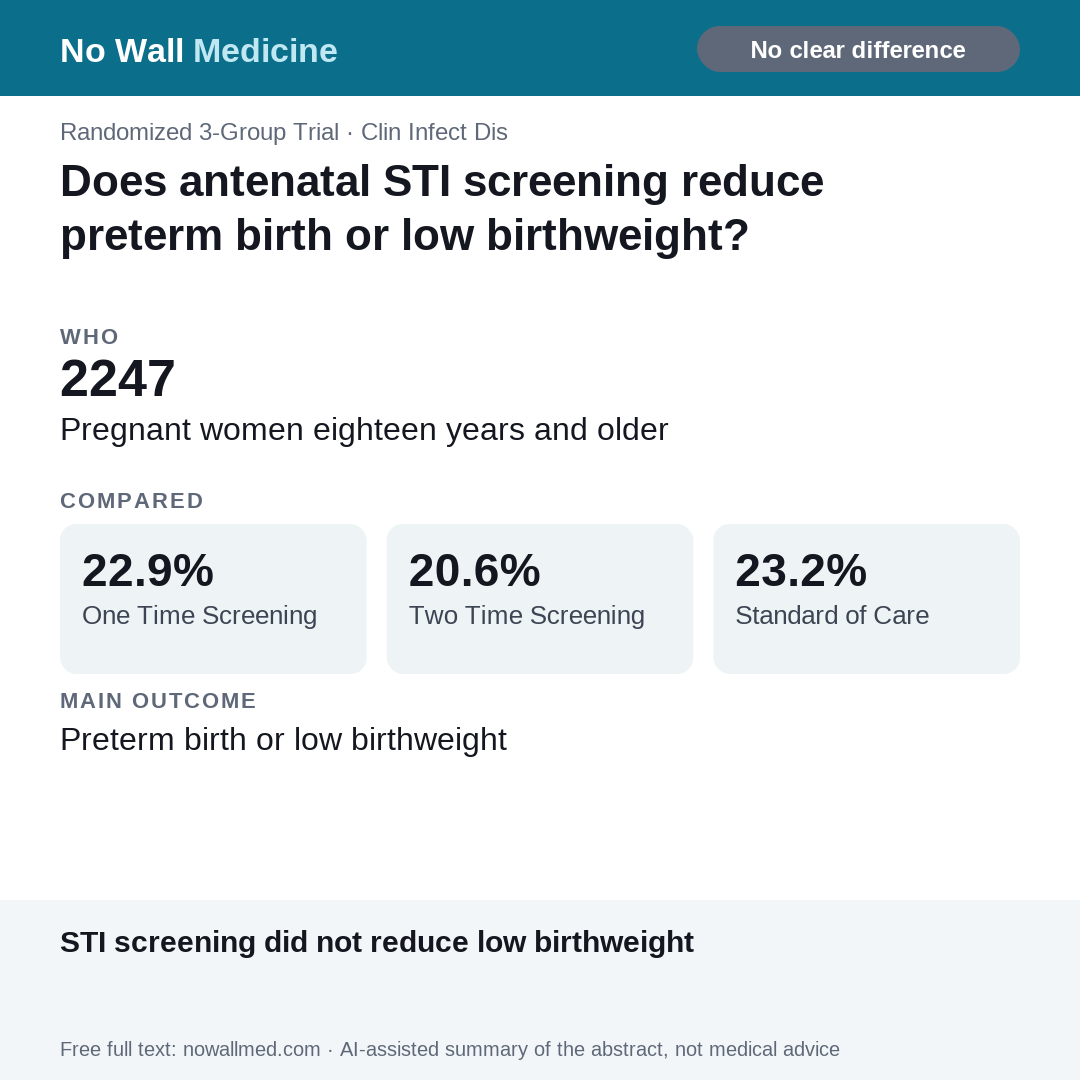
Antenatal Screening for Sexually Transmitted Infections to Reduce Preterm Birth or Low Birthweight (Philani Ndiphile Study): A Randomized 3-Group Trial
Randomized 3-Group TrialNo clear difference
Does antenatal STI screening reduce preterm birth?
Who
2247
Pregnant women eighteen years and older
Compared
22.9%One Time Screening
20.6%Two Time Screening
23.2%Standard of Care
Main outcome
Preterm birth or low birthweight
Bottom line: STI screening did not reduce low birthweight
Clin Infect Dis · 2026-10-27Download image
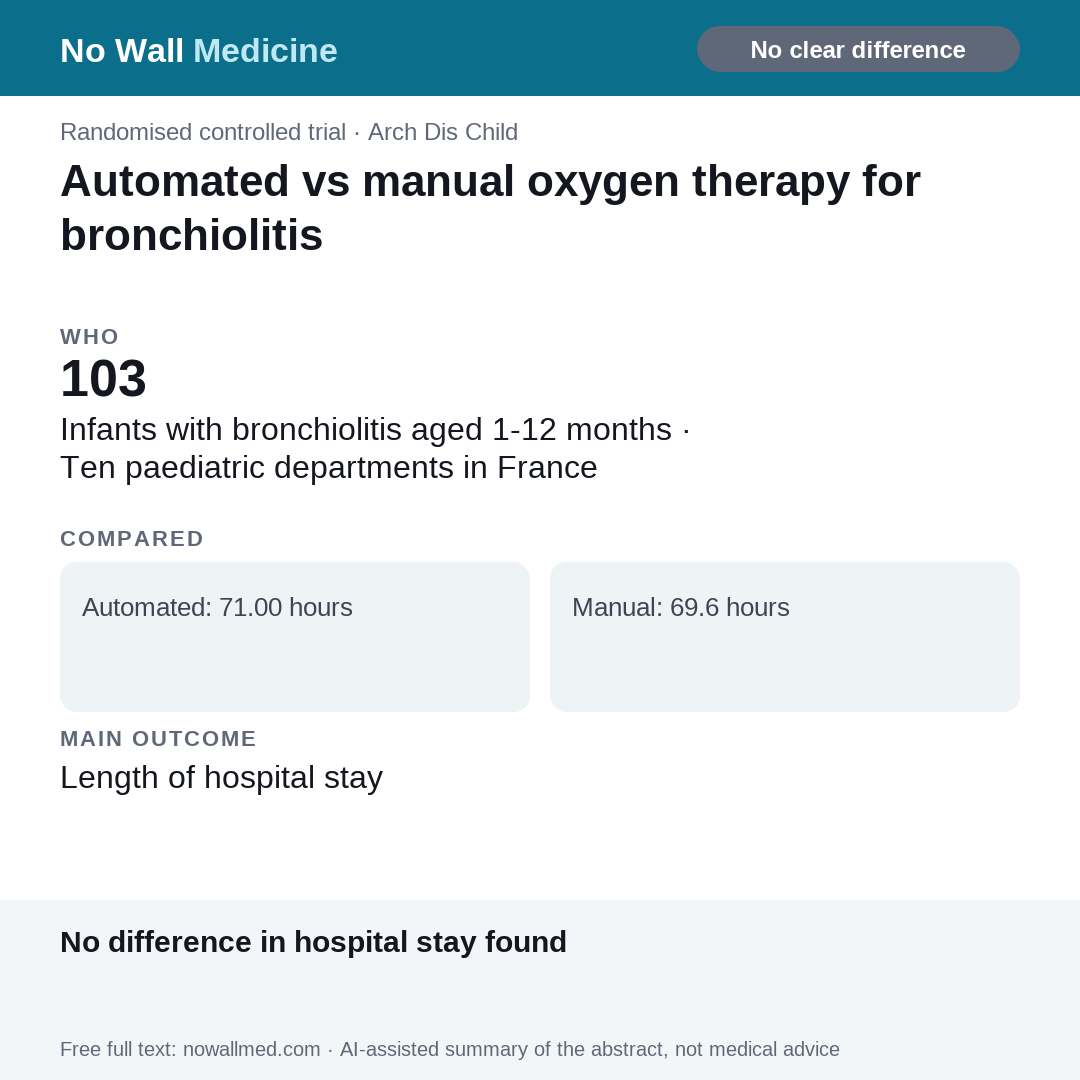
Automated oxygen flow titration for infants with bronchiolitis: a multicentre randomised controlled trial
Randomised controlled trialNo clear difference
Automated vs manual oxygen therapy for bronchiolitis
Who
103
Infants with bronchiolitis aged 1-12 months · Ten paediatric departments in France
Compared
FreeO2 device: 71.00 hours
Manual therapy: 69.6 hours
Main outcome
Length of hospital stay
Bottom line: No difference in hospital stay found
Arch Dis Child · 2026-10-20Download image
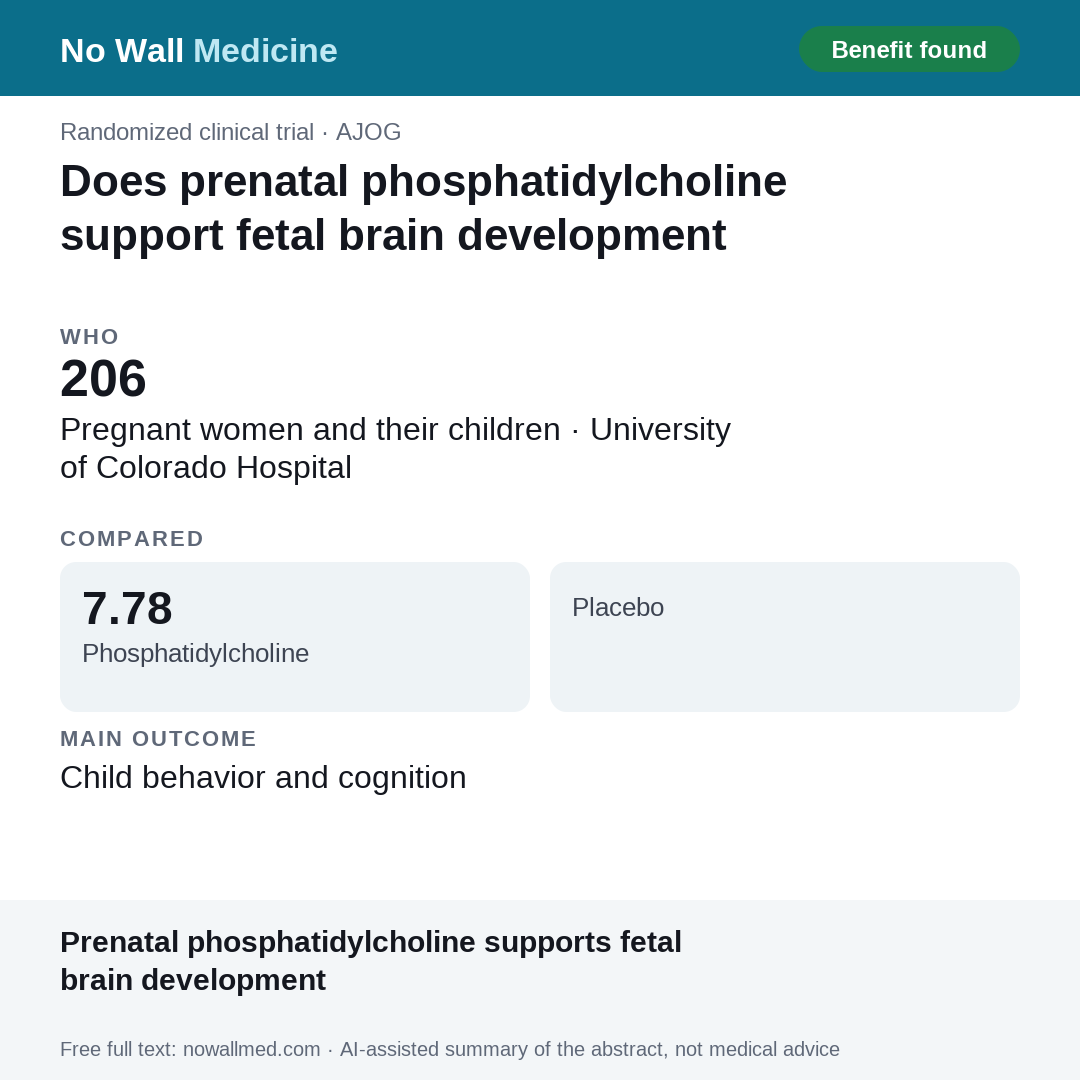
Prenatal maternal phosphatidylcholine and children's behavior and cognition through 4 years of age: a randomized clinical trial
Randomized clinical trialBenefit found
Does prenatal phosphatidylcholine support fetal brain development
Who
206
Pregnant women and their children · University of Colorado Hospital
Compared
7.78Phosphatidylcholine (95% CI 1.88-13.7)
Placebo
Main outcome
Child behavior and cognition
Bottom line: Prenatal phosphatidylcholine supports fetal brain development
Limitation: Loss of women between enrollment and assessments
AJOG · 2026-10-19Download image
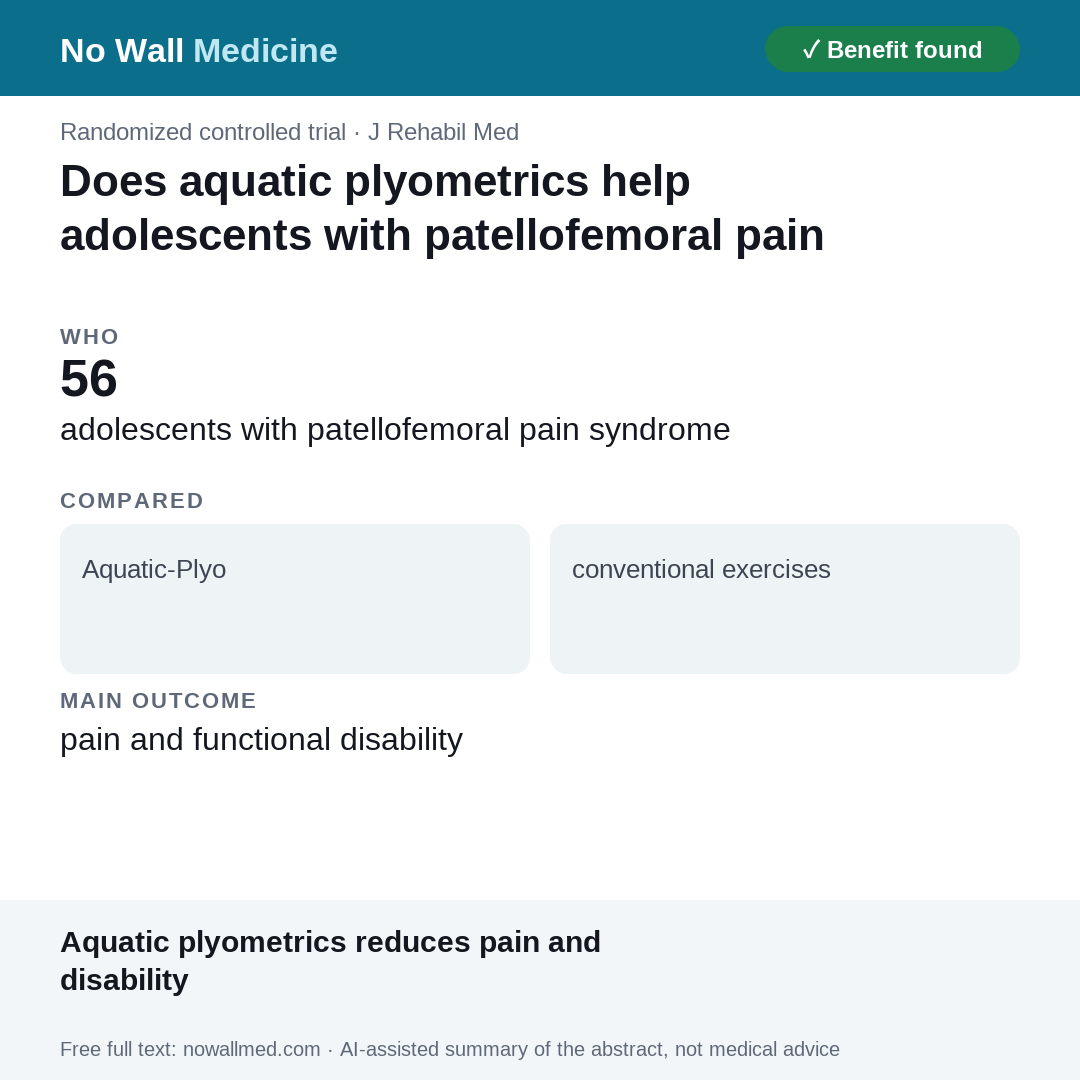
Clinical and functional outcomes of aquatic plyometrics in adolescent patellofemoral pain syndrome: a dual-arm randomized controlled trial
Randomized controlled trialBenefit found
Does aquatic plyometrics help adolescents with patellofemoral pain
Who
56
adolescents with patellofemoral pain syndrome
Compared
Aquatic-Plyo
conventional exercises
Main outcome
pain and functional disability
Bottom line: Aquatic plyometrics reduces pain and disability
J Rehabil Med · 2026-10-19Download image
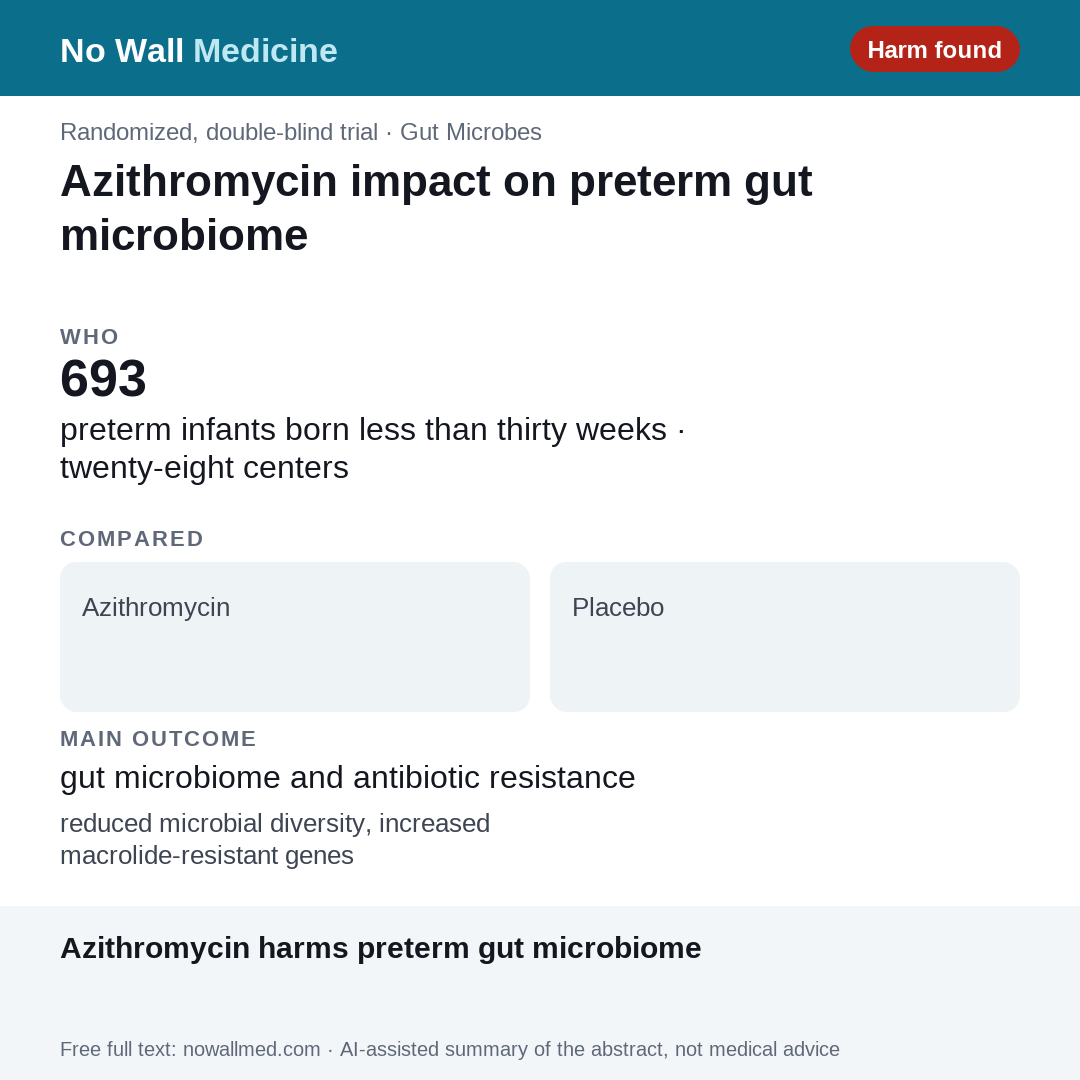
The impact of prophylactic azithromycin on the developing preterm gut microbiome and resistome
Randomized, double-blind trialHarm found
Azithromycin impact on preterm gut microbiome
Who
693
preterm infants born less than thirty weeks · twenty-eight centers
Compared
Azithromycin
Placebo
Main outcome
gut microbiome and antibiotic resistance
Result: reduced microbial diversity, increased macrolide-resistant genes
Bottom line: Azithromycin harms preterm gut microbiome
Gut Microbes · 2026-10-15Download image
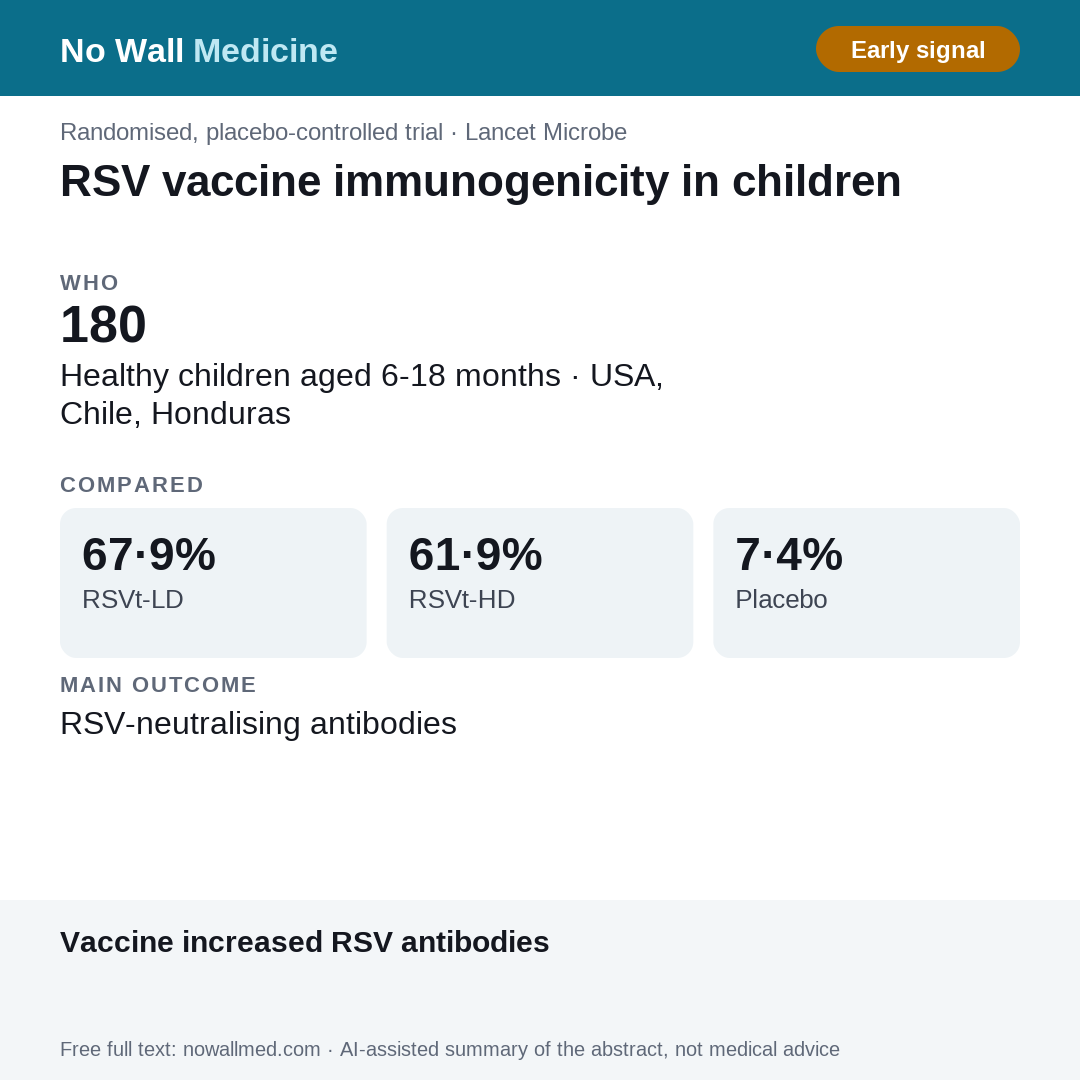
Immunogenicity and shedding of live-attenuated intranasal respiratory syncytial virus vaccine in children aged 6-18 months by baseline serostatus: a multicentre, randomised, placebo-controlled, phase 1/2 trial
Randomised, placebo-controlled trialBenefit found
RSV vaccine immunogenicity in children
Who
180
Healthy children aged 6-18 months · USA, Chile, Honduras
Compared
67·9%RSVt-LD (19/28)
61·9%RSVt-HD (13/21)
7·4%Placebo (2/27)
Main outcome
RSV-neutralising antibodies
Bottom line: Vaccine increased RSV antibodies
Lancet Microbe · 2026-10-13Download image
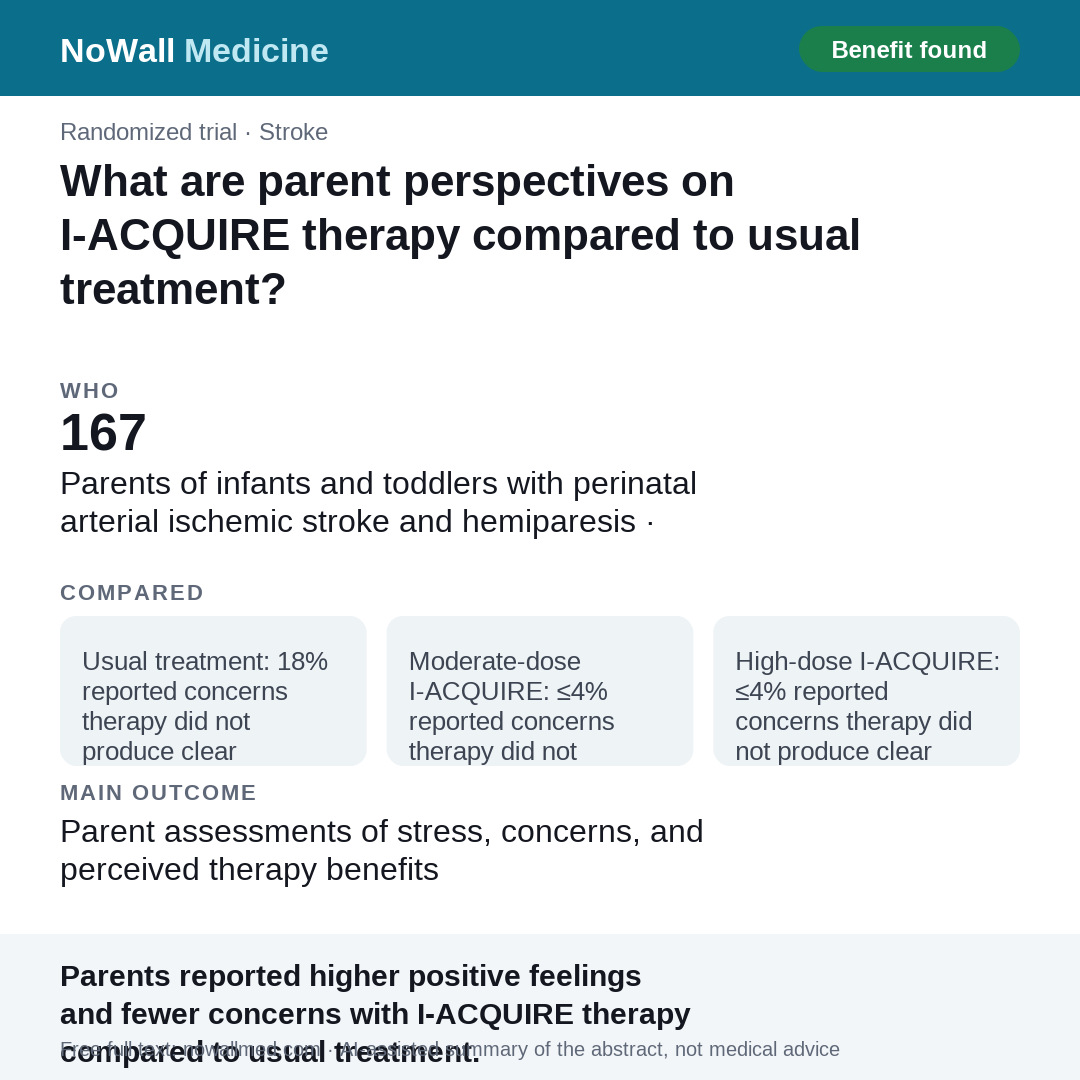
Parent Perspectives on I-ACQUIRE Therapy
Randomized trialBenefit found
What are parent perspectives on I-ACQUIRE therapy compared to usual treatment?
Who
167
Parents of infants and toddlers with perinatal arterial ischemic stroke and hemiparesis · United States 15-site
Compared
Usual treatment: 18% reported concerns therapy did not produce clear benefits
Moderate-dose I-ACQUIRE: ≤4% reported concerns therapy did not produce clear benefits
High-dose I-ACQUIRE: ≤4% reported concerns therapy did not produce clear benefits
Main outcome
Parent assessments of stress, concerns, and perceived therapy benefits
Bottom line: Parents reported higher positive feelings and fewer concerns with I-ACQUIRE therapy compared to usual treatment.
Stroke · 2026-10-09Download image
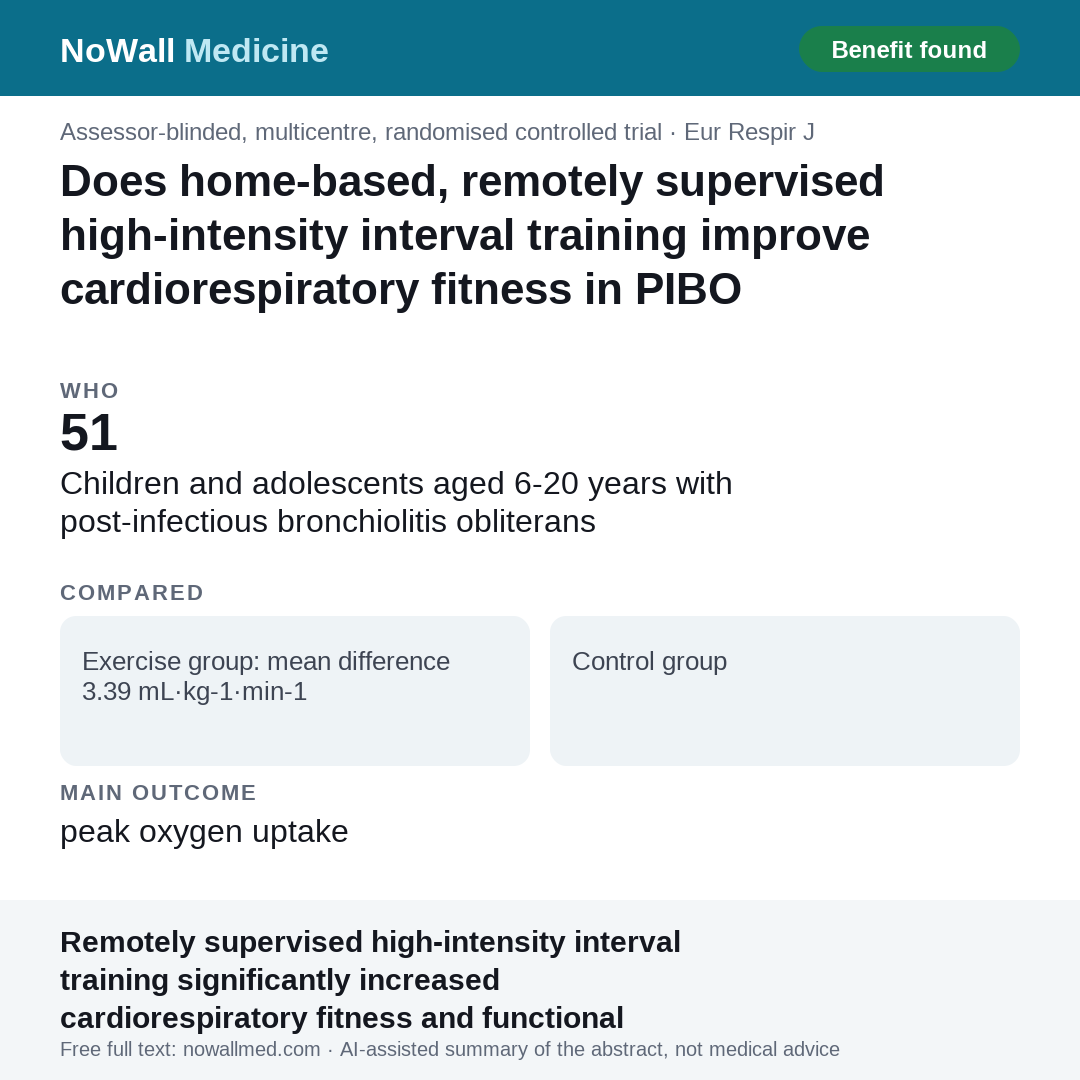
Home-based, remotely supervised, high-intensity interval training and cardiorespiratory fitness in children and adolescents with post-infectious bronchiolitis obliterans: a randomised controlled trial
Assessor-blinded, multicentre, randomised controlled trialBenefit found
Does home-based, remotely supervised high-intensity interval training improve cardiorespiratory fitness in PIBO patients?
Who
51
Children and adolescents aged 6-20 years with post-infectious bronchiolitis obliterans
Compared
Exercise group: mean difference 3.39 mL·kg-1·min-1
Control group
Main outcome
peak oxygen uptake
Result: mean difference 3.39 mL·kg-1·min-1; p=0.04
Bottom line: Remotely supervised high-intensity interval training significantly increased cardiorespiratory fitness and functional capacity in children with post-infectious bronchiolitis obliterans.
Eur Respir J · 2026-10-09Download image
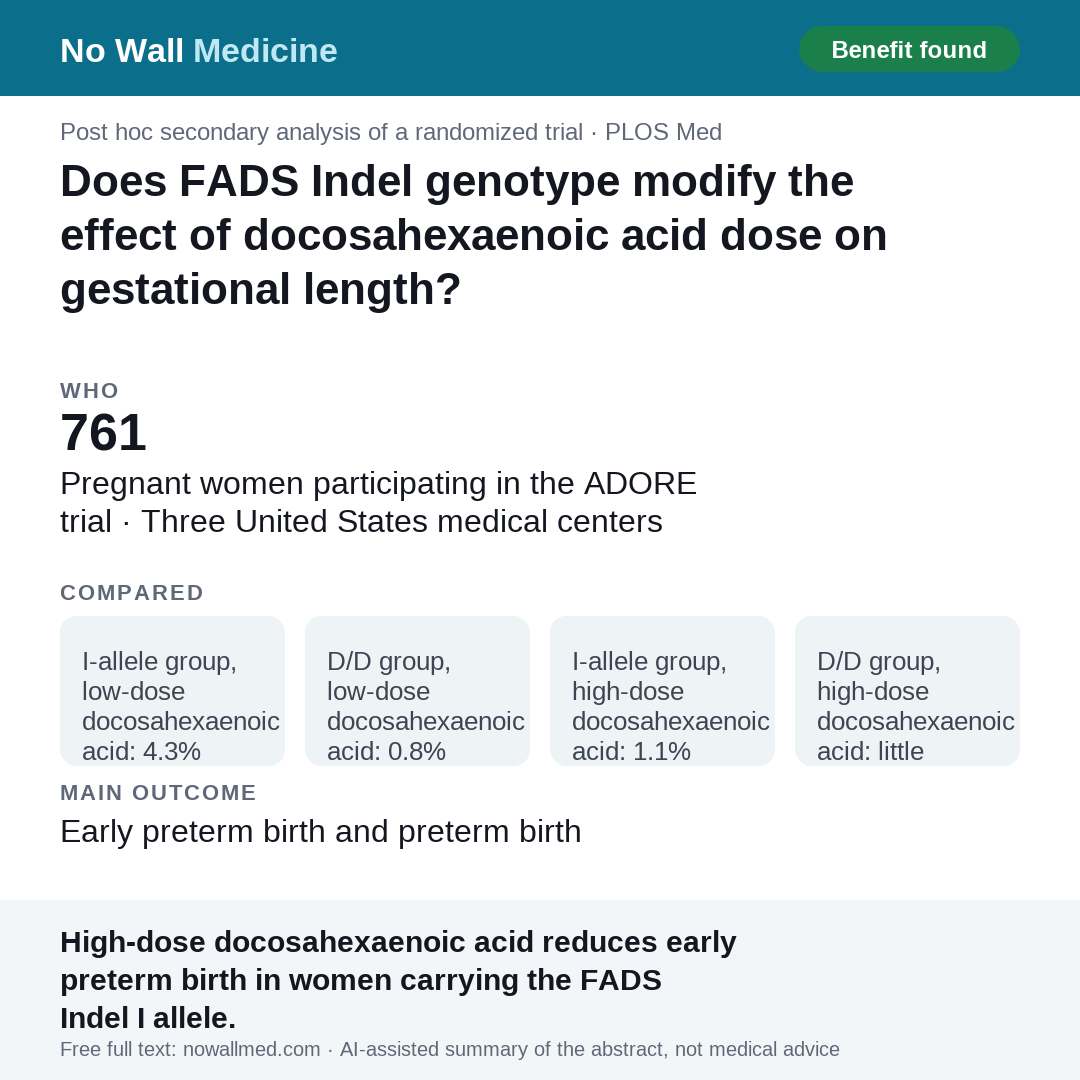
Genotype-informed docosahexaenoic acid dosing based on the FADS Indel to reduce preterm and prolonged gestation: A secondary analysis of the ADORE randomized trial
Randomized trialBenefit found
Does genotype modify DHA dose effect
Who
pregnant women at twelve to twenty weeks gestation · three US medical centers
Compared
I-allele high dose
D/D high dose
I-allele low dose
D/D low dose
Main outcome
preterm and early preterm birth
Bottom line: Genotype-informed DHA dosing reduces preterm birth
PLOS Med · 2026-10-08Download image
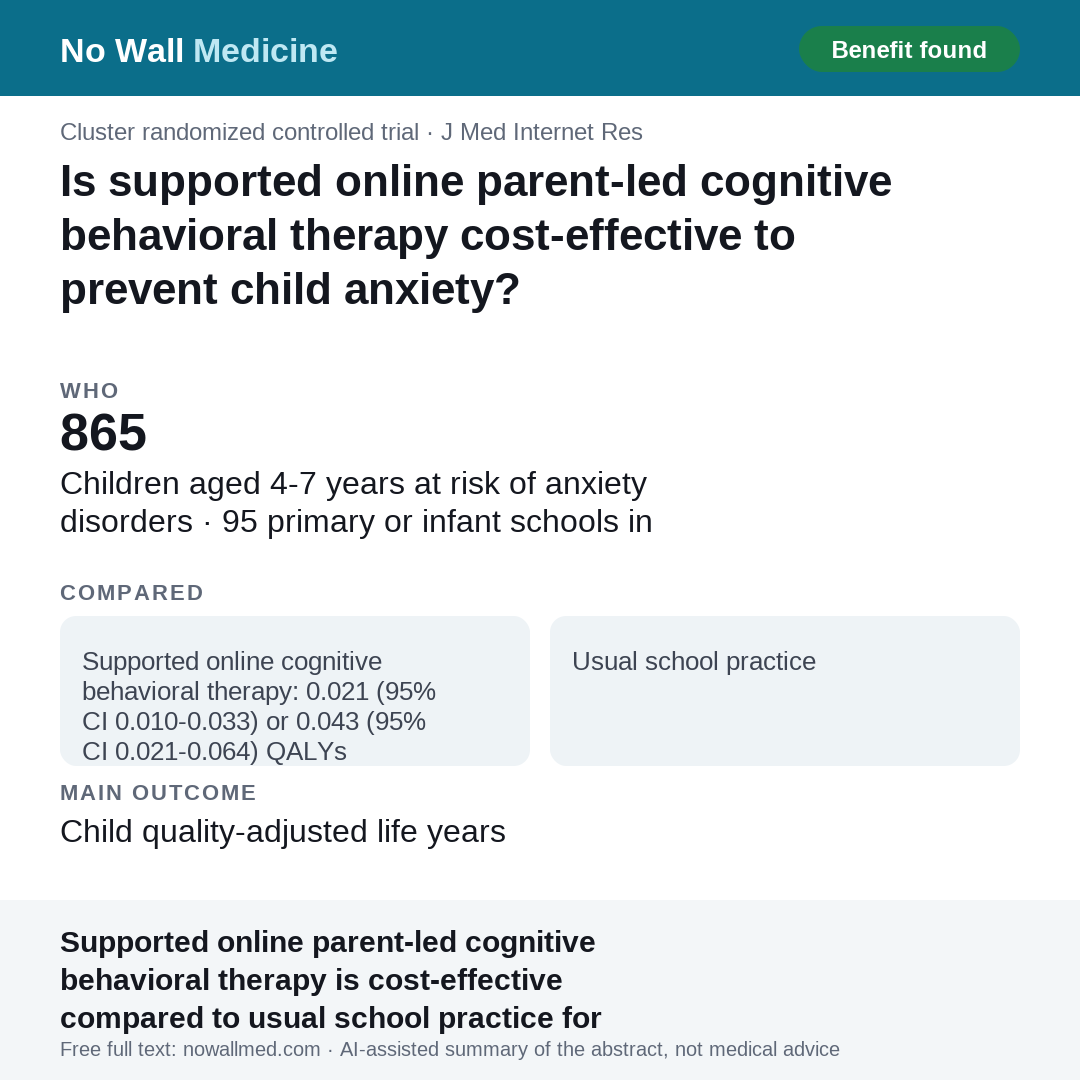
Estimating the Economic Value of Supported Online Parent-Led Cognitive Behavioral Therapy to Prevent Child Anxiety Problems: Economic Evaluation of the MYCATS Cluster Randomized Controlled Trial
Cluster randomized controlled trialBenefit found
Is supported online parent-led cognitive behavioral therapy cost-effective to prevent child anxiety?
Who
865
Children aged 4-7 years at risk of anxiety disorders · 95 primary or infant schools in England
Compared
Supported online parent-led cognitive behavioral therapy: 0.021 QALYs gained
Usual school practice
Main outcome
Child quality-adjusted life years
Result: 0.021 (95% CI 0.010-0.033)
Bottom line: Supported online parent-led cognitive behavioral therapy is cost-effective for preventing anxiety in children.
J Med Internet Res · 2026-10-08Download image
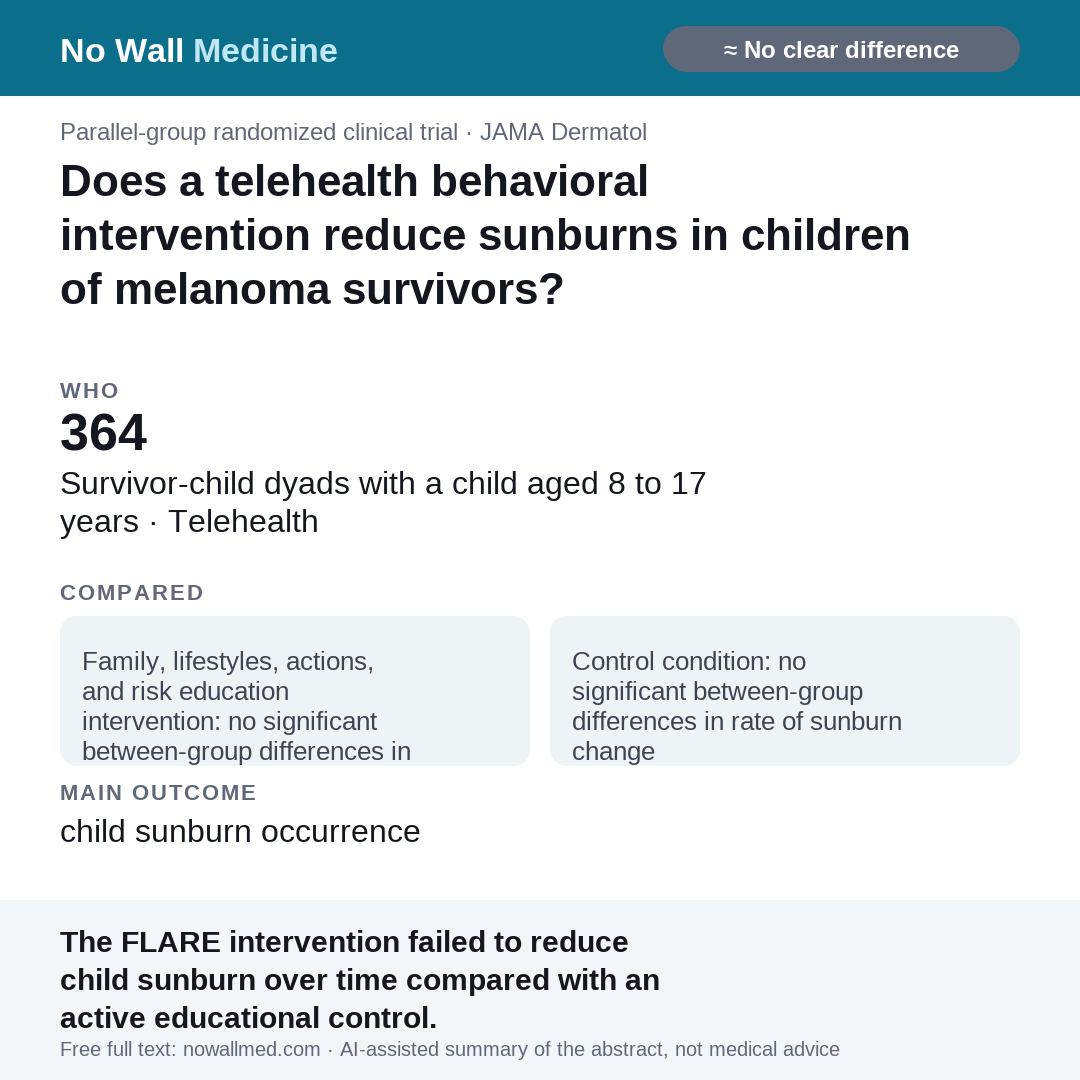
Melanoma Prevention Among Children of Melanoma Survivors: A Randomized Clinical Trial
Randomized clinical trialNo clear difference
Does FLARE prevent melanoma in children
Who
364
Children of melanoma survivors · United States, multiple sites
Compared
FLARE: lower sunburn occurrence
Control: no difference
Main outcome
Child sunburn occurrence
Result: no significant between-group differences
Bottom line: FLARE did not reduce child sunburn over time
Limitation: no sustained reductions
JAMA Dermatol · 2026-10-07Download image
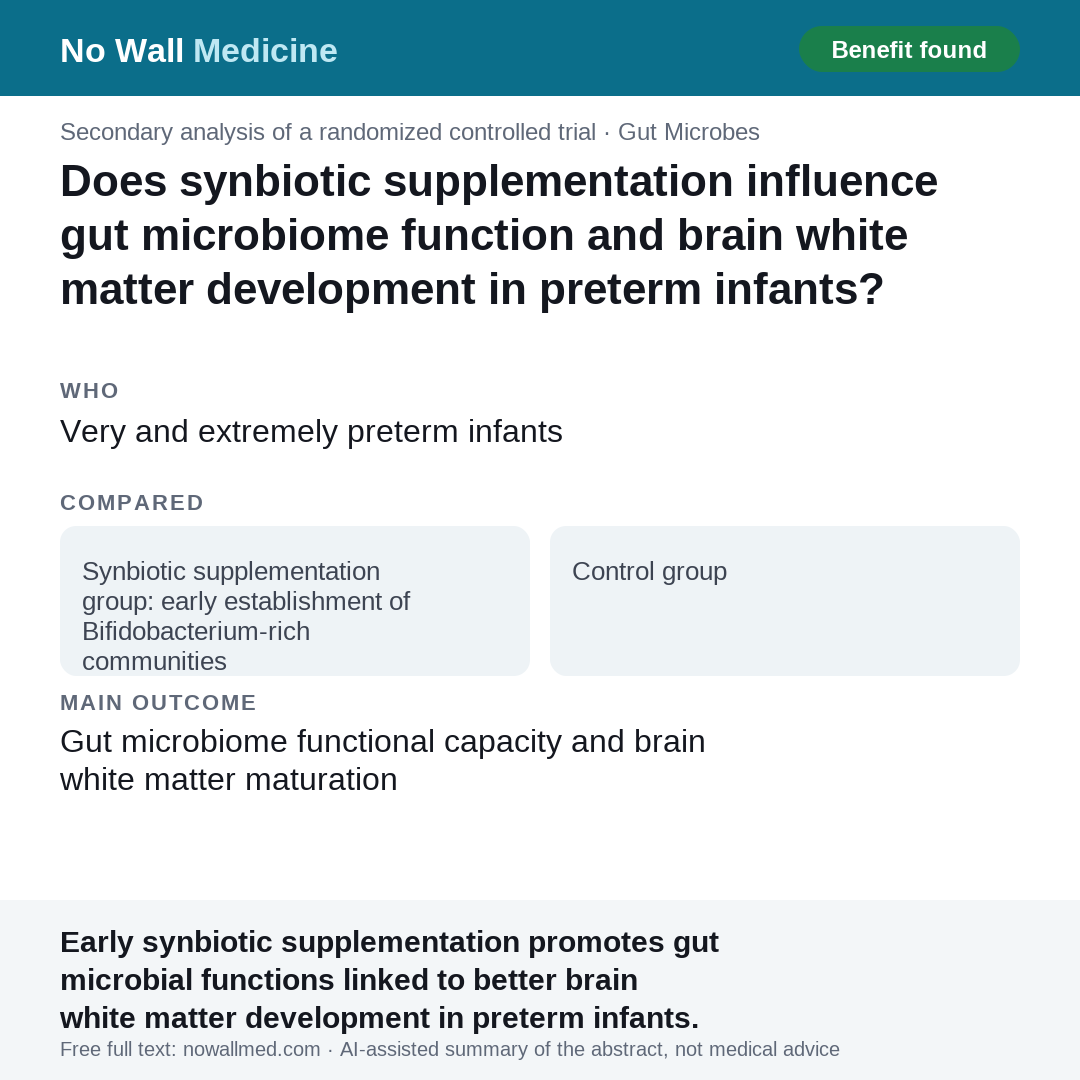
Synbiotic supplementation leads to gut microbiome communities with functional capacity linked to better brain white matter development in preterm infants
Secondary analysis of a randomized controlled trialBenefit found
Does synbiotic supplementation influence gut microbiome function and brain white matter development in preterm infants?
Who
Very and extremely preterm infants
Compared
Synbiotic supplementation group: early establishment of Bifidobacterium-rich communities
Control group
Main outcome
Gut microbiome functional capacity and brain white matter maturation
Bottom line: Early synbiotic supplementation promotes gut microbial functions linked to better brain white matter development in preterm infants.
Gut Microbes · 2026-10-07Download image
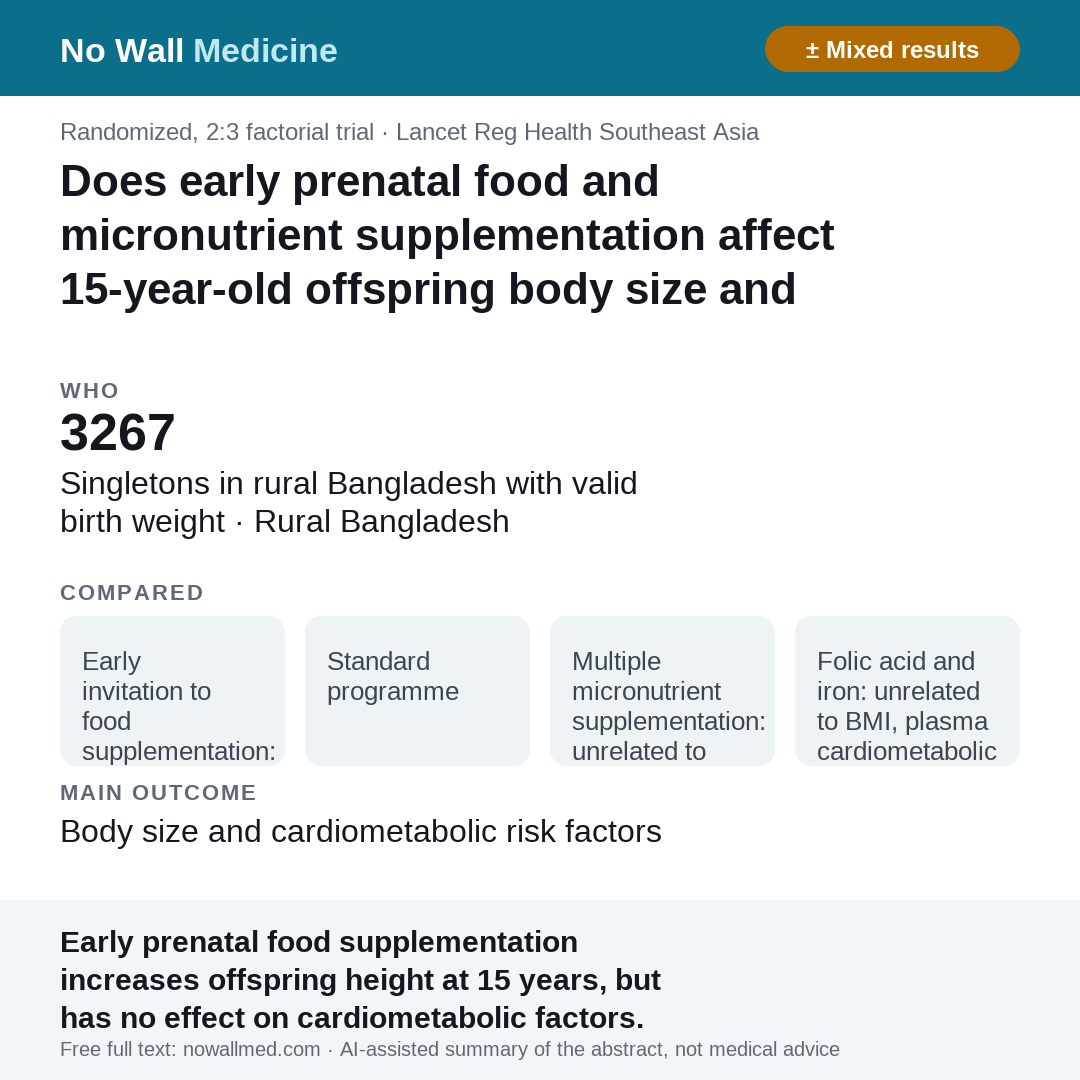
Effects of prenatal early food and micronutrient supplementations on body size and cardiometabolic risk factors in the 15-year-old offspring - the MINIMat randomised trial
Randomized, 2:3 factorial design trialMixed results
Does prenatal food and micronutrient supplementation affect 15-year-old offspring body size and cardiometabolic risk?
Who
2300
Singletons in rural Bangladesh whose mothers received prenatal interventions · Rural Bangladesh
Compared
Early invitation to food supplementation: 0.08 units higher height z score (95% CI 0.01, 0.16)
Standard programme
Multiple micronutrient supplementation: no effect
Folic acid and iron: no effect
Main outcome
Body size and cardiometabolic risk factors
Bottom line: Early prenatal food supplementation increases height z score at 15 years, but no effect was found on cardiometabolic factors.
Funded by: Swedish, Finnish, and Novo Nordisk foundations
Lancet Reg Health Southeast Asia · 2026-10-05Download image
A nationwide prospective randomized trial for diagnosing developmental disorders demonstrates genome sequencing outperforms standard of care
Nationwide prospective randomized trialBenefit found
Does genome sequencing outperform standard of care for diagnosing developmental disorders?
Who
567
Individuals with unexplained developmental disorders · All Belgian human genetics centers
Compared
39.8%Genome sequencing (113/284)
30%Standard of care (85/283)
Main outcome
Diagnostic yield
Bottom line: Genome sequencing outperforms standard of care for the diagnosis of patients with developmental disorders.
Genome Med · 2026-10-05Download image

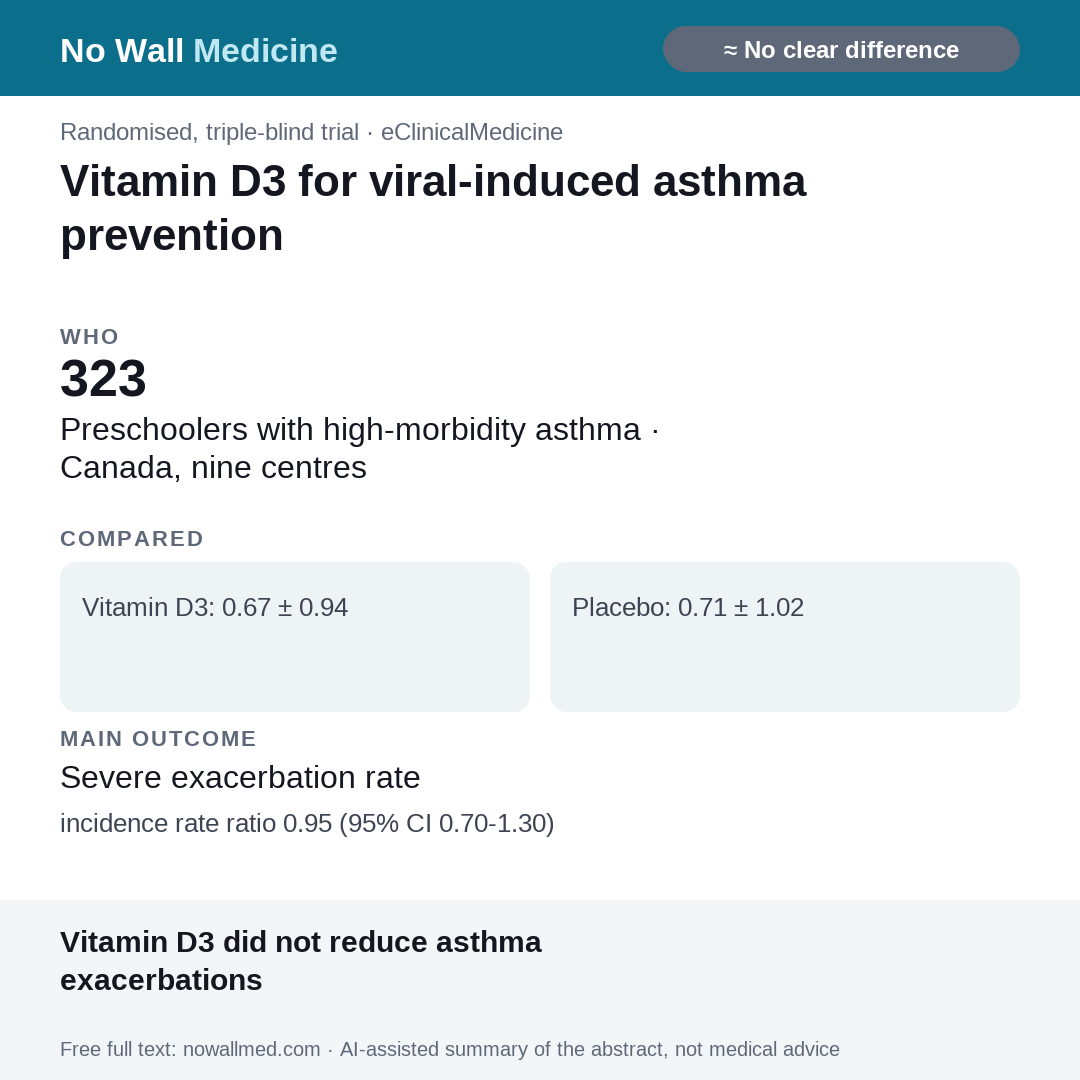
High-dose vitamin D3 supplementation in the prevention of viral-induced asthma in high-morbidity preschoolers (DIVA): a randomised controlled trial in Canada
Randomised, triple-blind trialNo clear difference
Vitamin D3 for viral-induced asthma prevention
Who
323
Preschoolers with high-morbidity asthma · Canada, nine centres
Compared
Vitamin D3: 0.67 ± 0.94
Placebo: 0.71 ± 1.02
Main outcome
Severe exacerbation rate
Result: incidence rate ratio 0.95 (95% CI 0.70-1.30)
Bottom line: Vitamin D3 did not reduce asthma exacerbations
Limitation: fewer participants than planned
Funded by: Canadian Institutes of Health Research
eClinicalMedicine · 2026-10-04Download image
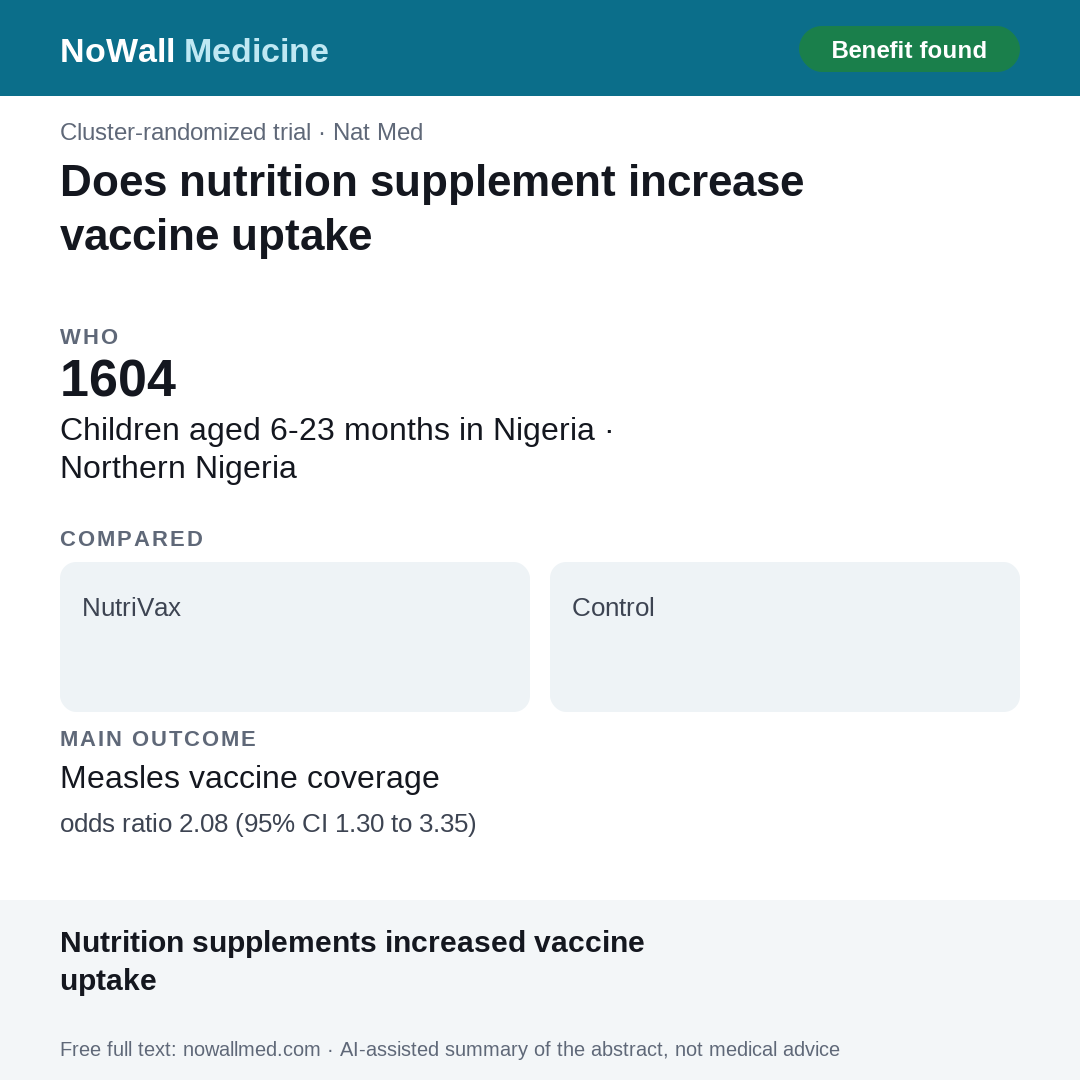
Small quantity lipid-based nutritional supplementation and measles vaccination coverage in children aged 6-23 months: a pragmatic cluster-randomized trial
Cluster-randomized trialBenefit found
Does nutrition supplement increase vaccine uptake
Who
1604
Children aged 6-23 months in Nigeria · Northern Nigeria
Compared
NutriVax
Control
Main outcome
Measles vaccine coverage
Result: odds ratio 2.08 (95% CI 1.30 to 3.35)
Bottom line: Nutrition supplements increased vaccine uptake
Nat Med · 2026-10-02Download image
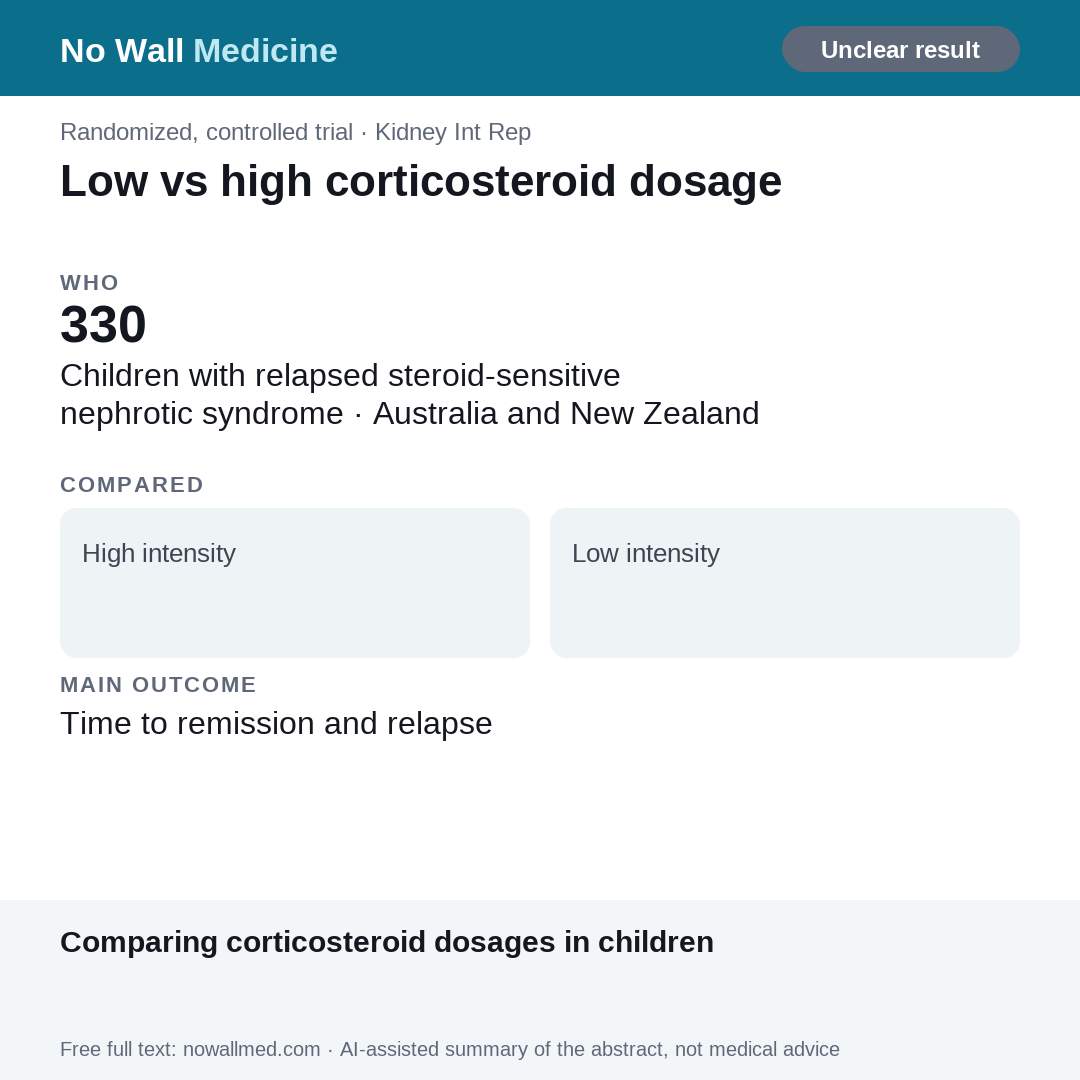
A Randomized Controlled Trial of Two Corticosteroid Dosages for Relapsed Childhood Steroid-Sensitive Nephrotic Syndrome: The OPtimising dosE in Nephrotic Syndrome (OPEN) Trial Protocol
Randomized, controlled trialUnclear result
Low vs high corticosteroid dosage
Who
330
Children with relapsed steroid-sensitive nephrotic syndrome · Australia and New Zealand
Compared
High intensity
Low intensity
Main outcome
Time to remission and relapse
Bottom line: Comparing corticosteroid dosages in children
Kidney Int Rep · 2026-10-02Download image
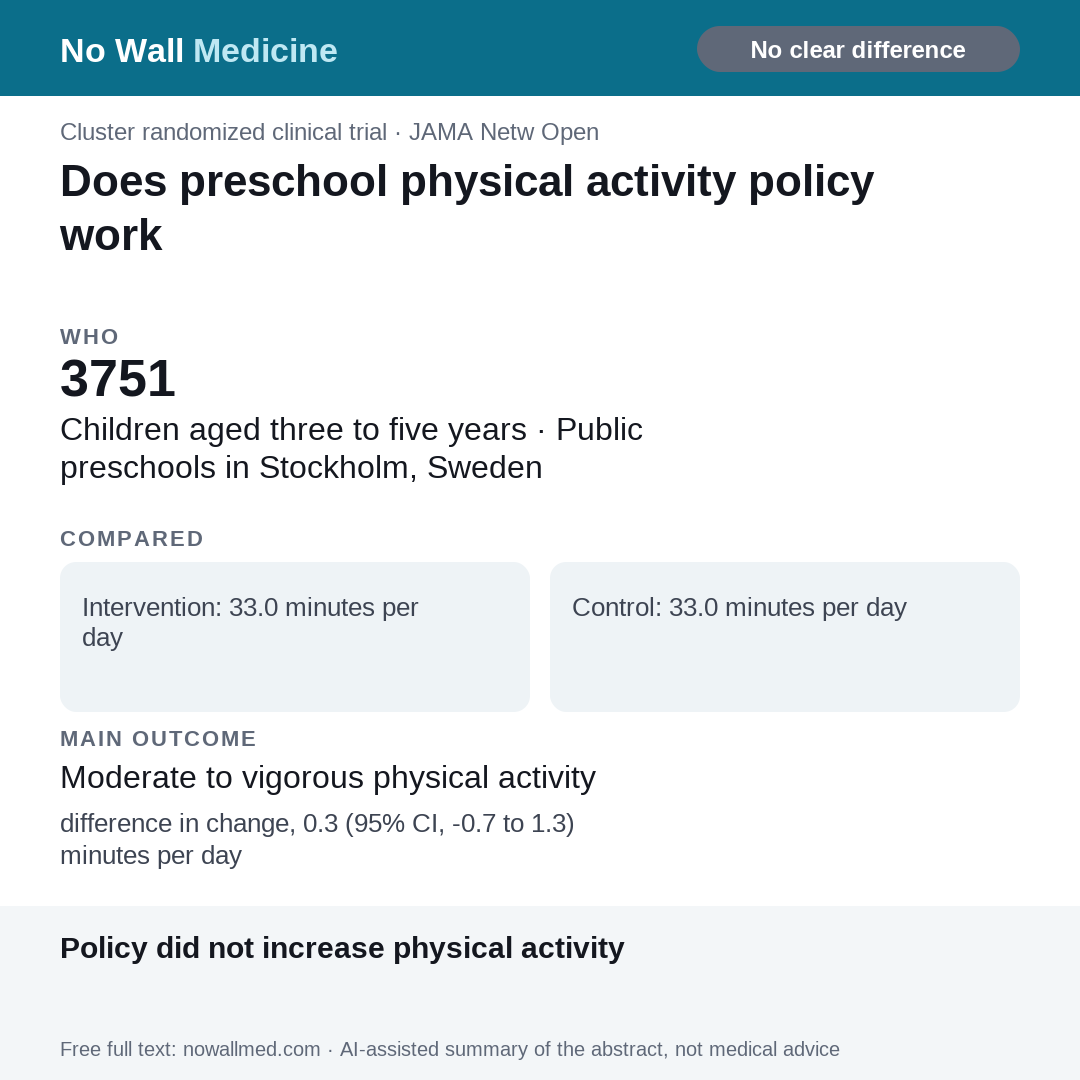
Preschool Physical Activity Policy and Children's Physical Activity: A Pragmatic Cluster Randomized Clinical Trial
Cluster randomized clinical trialNo clear difference
Does preschool physical activity policy work
Who
3751
Children aged three to five years · Public preschools in Stockholm, Sweden
Compared
Intervention: 33.0 minutes per day
Control: 33.0 minutes per day
Main outcome
Moderate to vigorous physical activity
Result: difference in change, 0.3 (95% CI, -0.7 to 1.3) minutes per day
Bottom line: Policy did not increase physical activity
Limitation: detecting change in preschool settings
JAMA Netw Open · 2026-10-01Download image
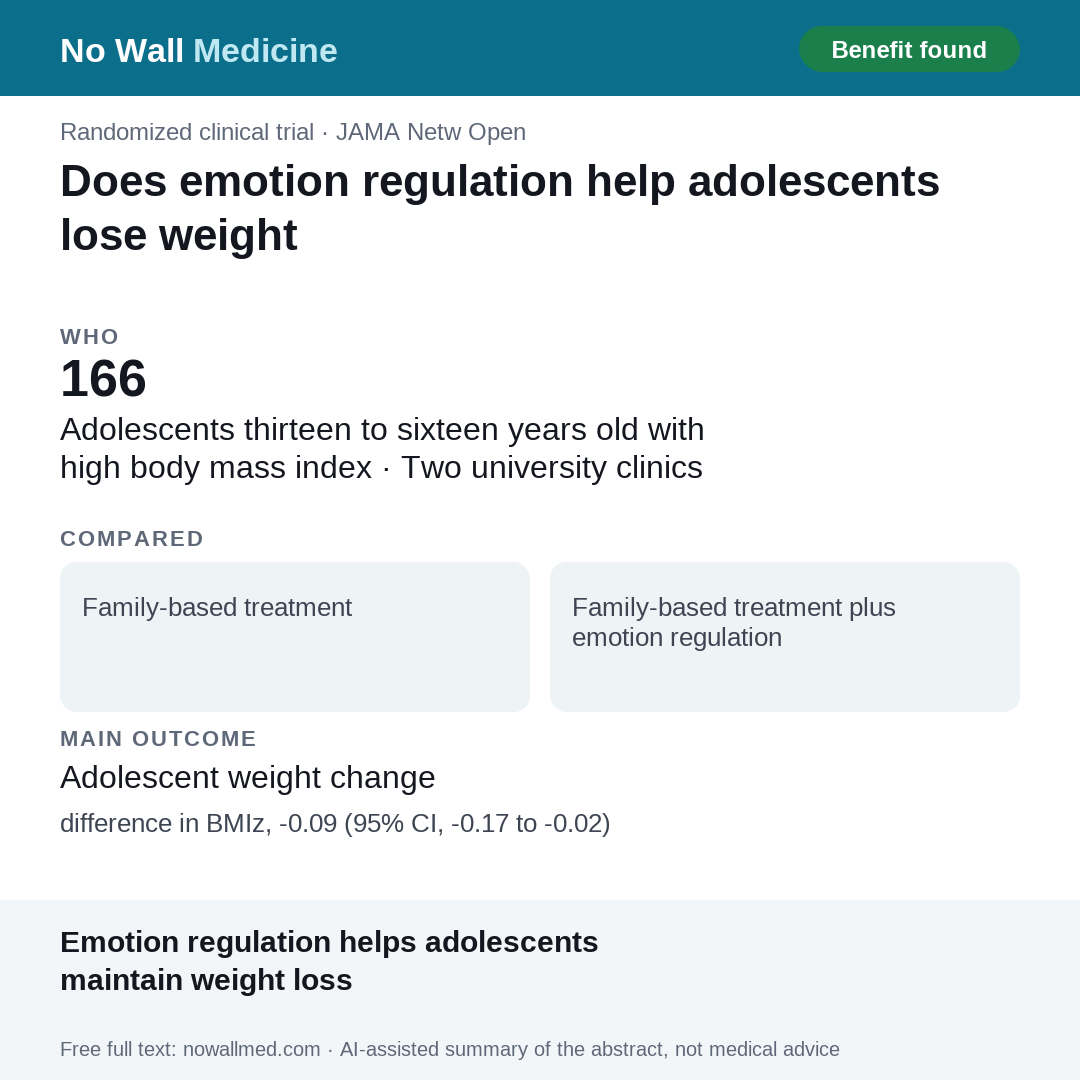
Emotion-Focused Behavioral Weight Loss Treatment for Adolescents: A Randomized Clinical Trial
Randomized clinical trialBenefit found
Does emotion regulation help adolescents lose weight
Who
166
Adolescents thirteen to sixteen years old with high body mass index · Two university clinics
Compared
Family-based treatment
Family-based treatment plus emotion regulation
Main outcome
Adolescent weight change
Result: difference in BMIz, -0.09 (95% CI, -0.17 to -0.02)
Bottom line: Emotion regulation helps adolescents maintain weight loss
JAMA Netw Open · 2026-10-01Download image