Visual abstracts
New randomized trials and meta-analyses from leading journals at a glance: who was studied, what was compared, and what was found. Every paper is free to read in full.
All specialtiesCardiology 842Oncology 763Gastroenterology & Hepatology 307Infectious Disease 626Neurology 350Psychiatry & Mental Health 430Pulmonology 366Critical Care 245Endocrinology & Diabetes 480Pediatrics 536Surgery 324Orthopedics & Sports Medicine 162Neurosurgery 93Cardiothoracic & Vascular Surgery 87Plastic & Reconstructive Surgery 124Nephrology 197Rheumatology 108Hematology 182Dermatology 80Ophthalmology 97Obstetrics & Gynecology 261Public & Global Health 167Radiology & Imaging 98Anesthesiology 114Urology 162ENT (Otolaryngology) 91Emergency Medicine 73Allergy & Immunology 58Geriatrics 160Family Medicine & Primary Care 111Medical Genetics & Genomics 91Pathology & Laboratory Medicine 24Physical Medicine & Rehabilitation 148Palliative Care 81Nutrition 223Digital Health & AI 460General Medicine 101
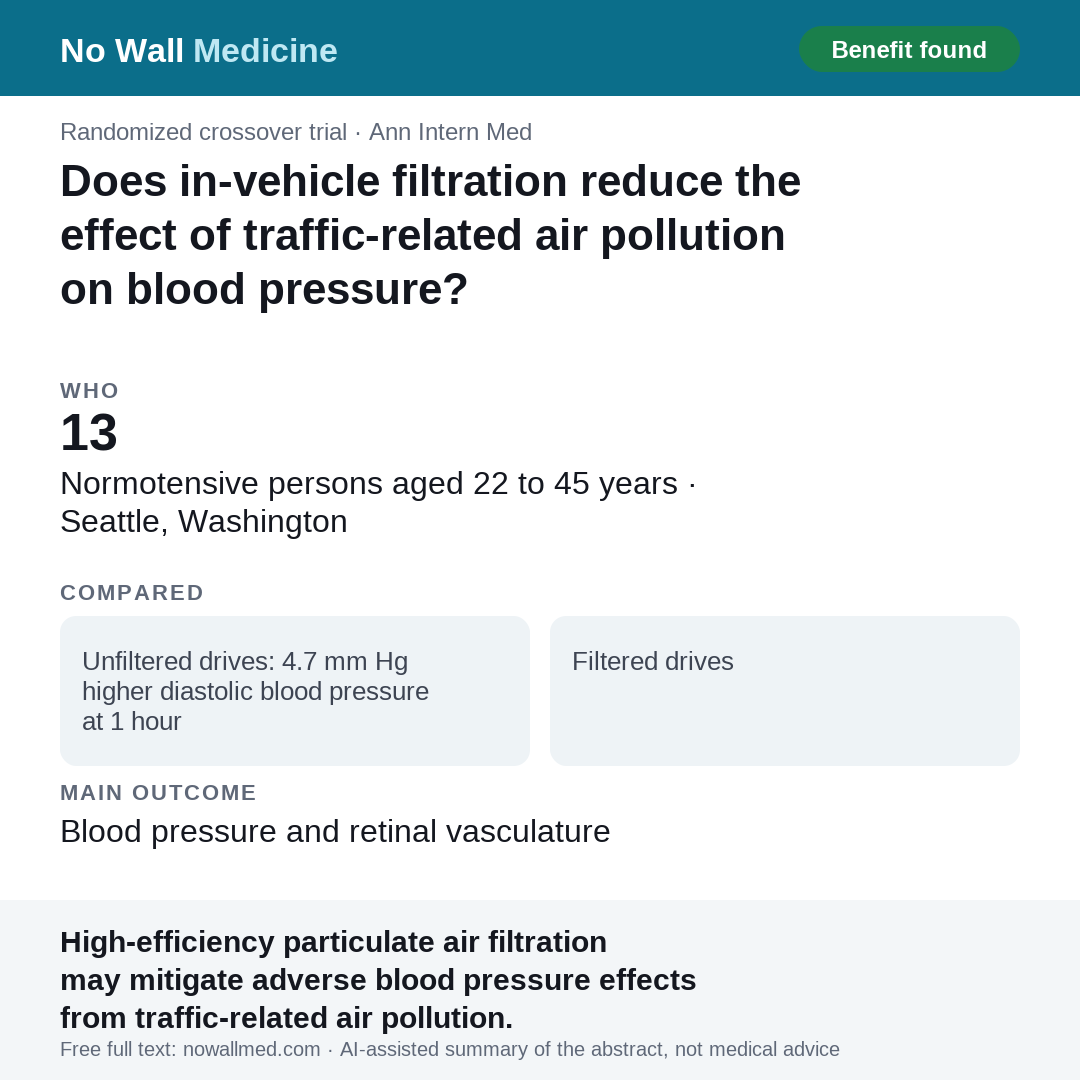
Blood Pressure Effect of Traffic-Related Air Pollution : A Crossover Trial of In-Vehicle Filtration
Randomized crossover trialBenefit found
Does in-vehicle filtration reduce the effect of traffic-related air pollution on blood pressure?
Who
13
Normotensive persons aged 22 to 45 years · Seattle, Washington
Compared
Unfiltered drives: 4.7 mm Hg higher diastolic blood pressure at 1 hour
Filtered drives
Main outcome
Blood pressure and retinal vasculature
Result: 4.7 mm Hg higher (95% CI, 0.9 to 8.4 mm Hg)
Bottom line: High-efficiency particulate air filtration may mitigate adverse blood pressure effects from traffic-related air pollution.
Limitation: Imprecise estimates due to small sample size; seasonal imbalance by exposure order.
Funded by: U.S. Environmental Protection Agency and National Institutes of Health
Ann Intern Med · 2023-11-28Download image
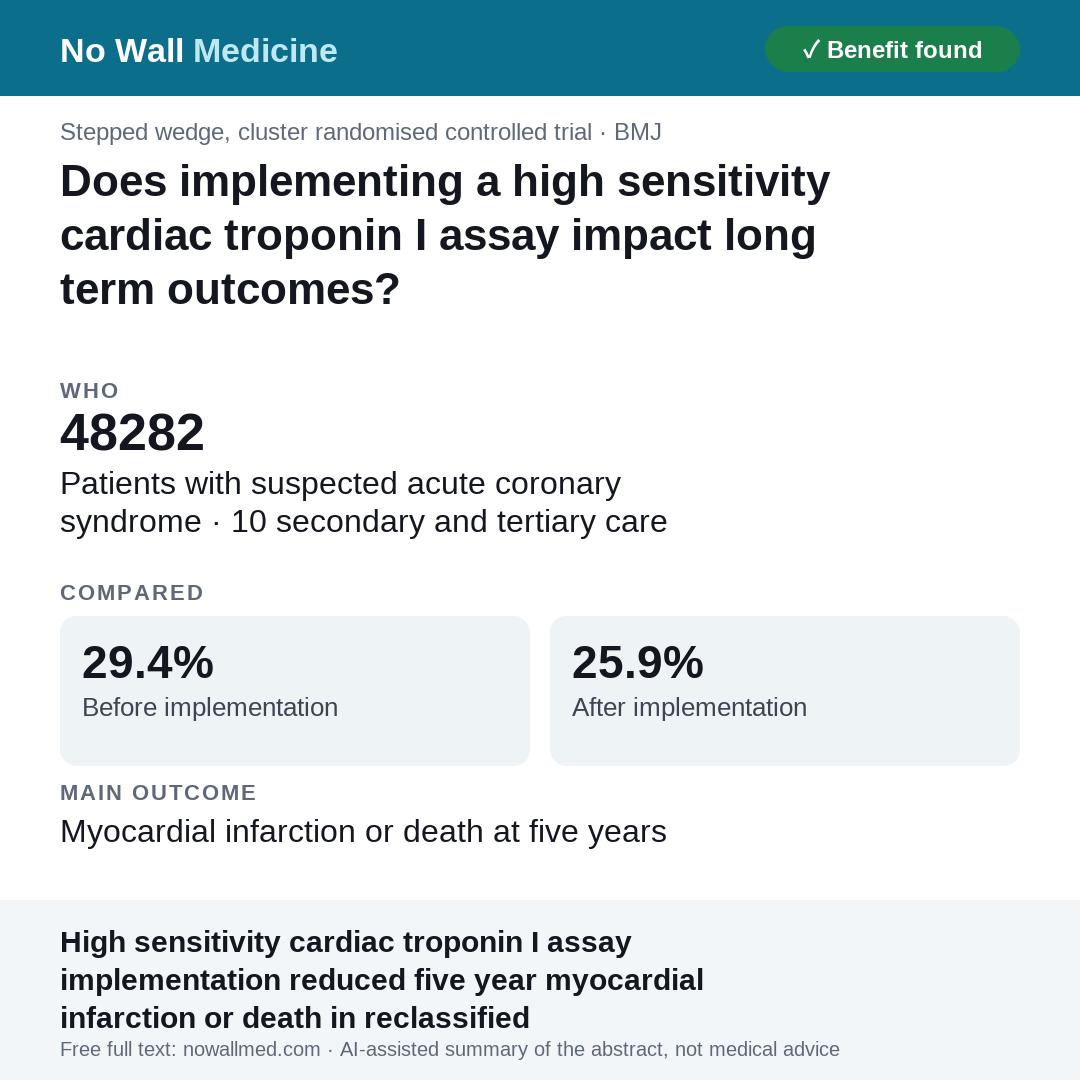
Implementation of a high sensitivity cardiac troponin I assay and risk of myocardial infarction or death at five years: observational analysis of a stepped wedge, cluster randomised controlled trial
Stepped wedge, cluster randomised controlled trialBenefit found
Does implementing a high sensitivity cardiac troponin I assay impact long term outcomes?
Who
48282
Patients with suspected acute coronary syndrome · 10 secondary and tertiary care centres in Scotland, UK
Compared
29.4%Before implementation (5588/18 978)
25.9%After implementation (7591/29 304)
Main outcome
Myocardial infarction or death at five years
Result: adjusted hazard ratio 0.97 (95% confidence interval 0.93 to 1.01)
Bottom line: High sensitivity cardiac troponin I assay implementation reduced five year myocardial infarction or death in reclassified patients.
BMJ · 2023-11-27Download image
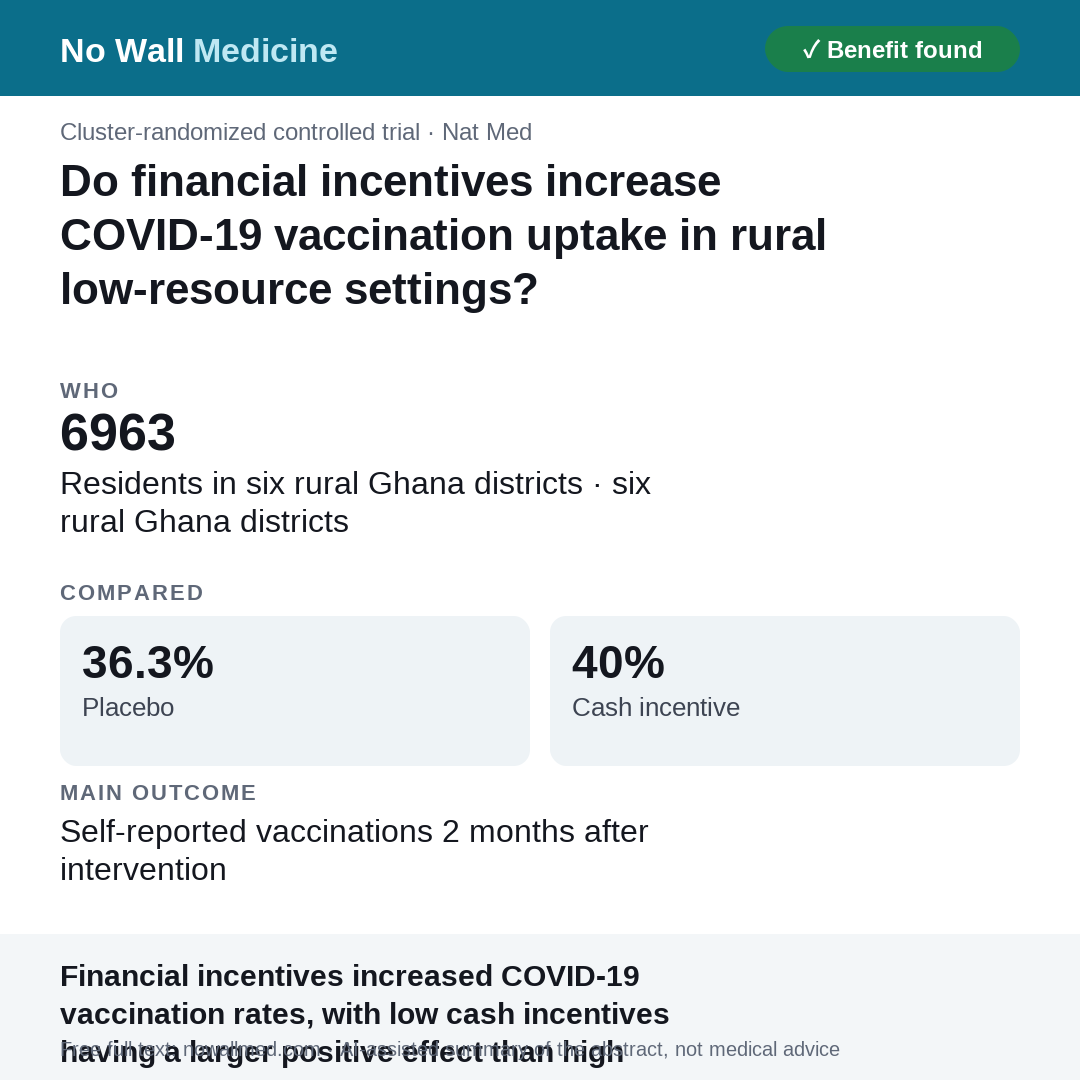
Financial incentives for COVID-19 vaccines in a rural low-resource setting: a cluster-randomized trial
Cluster-randomized controlled trialBenefit found
Do financial incentives increase COVID-19 vaccination uptake in rural low-resource settings?
Who
6963
Residents in six rural Ghana districts · six rural Ghana districts
Compared
36.3%Placebo (672 of 1,850)
40%Cash incentive (602 of 1,486)
Main outcome
Self-reported vaccinations 2 months after intervention
Result: 3.5% higher (95% confidence interval: 0.001, 6.9)
Bottom line: Financial incentives increased COVID-19 vaccination rates, with low cash incentives having a larger positive effect than high incentives.
Nat Med · 2023-11-27Download image
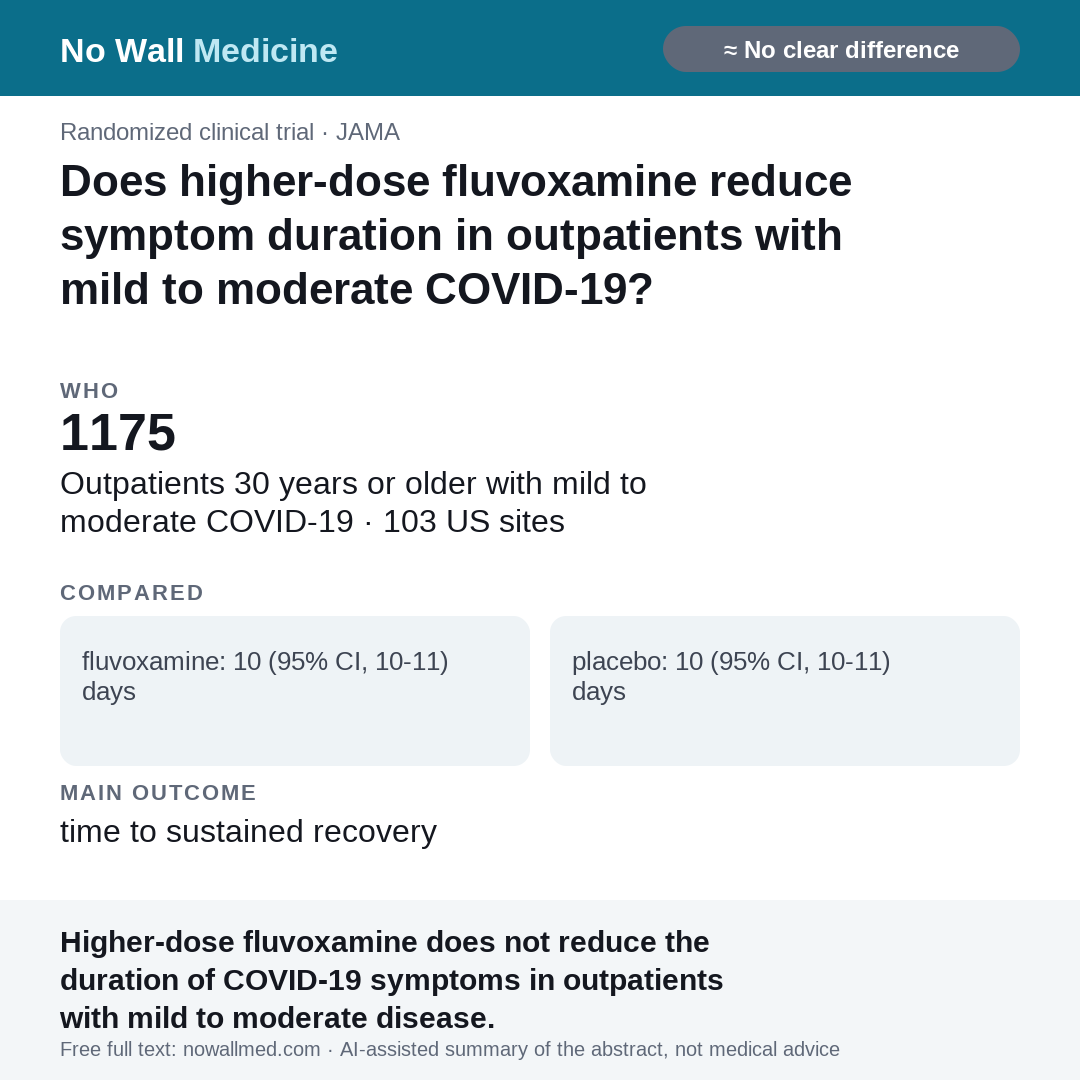
Higher-Dose Fluvoxamine and Time to Sustained Recovery in Outpatients With COVID-19: The ACTIV-6 Randomized Clinical Trial
Randomized clinical trialNo clear difference
Does higher-dose fluvoxamine reduce symptom duration in outpatients with mild to moderate COVID-19?
Who
1175
Outpatients 30 years or older with mild to moderate COVID-19 · 103 US sites
Compared
fluvoxamine: 10 (95% CI, 10-11) days
placebo: 10 (95% CI, 10-11) days
Main outcome
time to sustained recovery
Result: adjusted hazard ratio 0.99 (95% credible interval, 0.89-1.09)
Bottom line: Higher-dose fluvoxamine does not reduce the duration of COVID-19 symptoms in outpatients with mild to moderate disease.
JAMA · 2023-11-17Download image
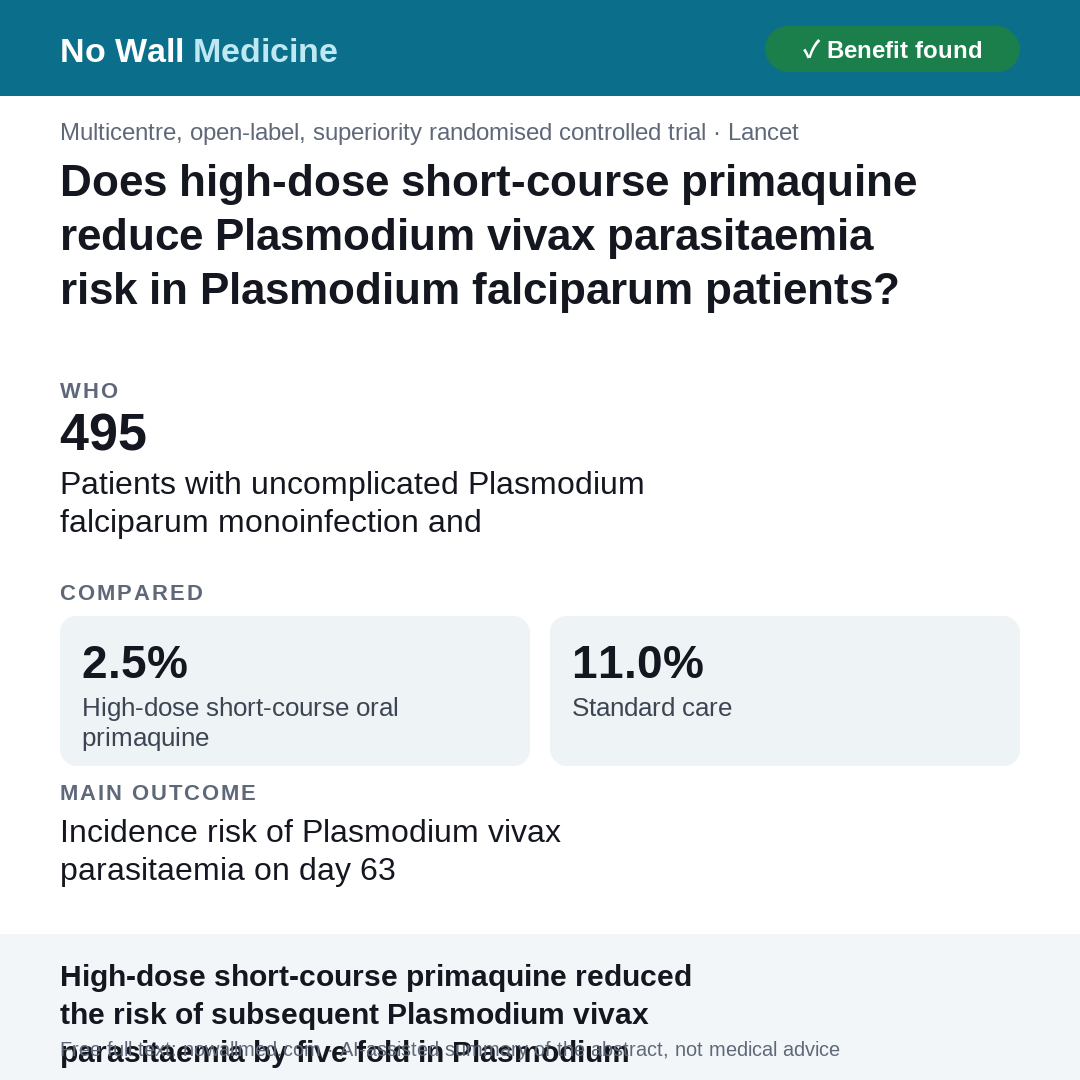
Primaquine radical cure in patients with Plasmodium falciparum malaria in areas co-endemic for P falciparum and Plasmodium vivax (PRIMA): a multicentre, open-label, superiority randomised controlled trial
Multicentre, open-label, superiority randomised controlled trialBenefit found
Does high-dose short-course primaquine reduce Plasmodium vivax parasitaemia risk in Plasmodium falciparum patients?
Who
495
Patients with uncomplicated Plasmodium falciparum monoinfection and glucose-6-dehydrogenase activity of 70% or greater · Five health clinics in Bangladesh, Indonesia, and Ethiopia
Compared
2.5%High-dose short-course oral primaquine (1.0-5.9)
11.0%Standard care (95% CI 7.5-15.9)
Main outcome
Incidence risk of Plasmodium vivax parasitaemia on day 63
Result: hazard ratio 0.20, 95% CI 0.08-0.51
Bottom line: High-dose short-course primaquine reduced the risk of subsequent Plasmodium vivax parasitaemia by five fold in Plasmodium falciparum patients.
Lancet · 2023-11-15Download image
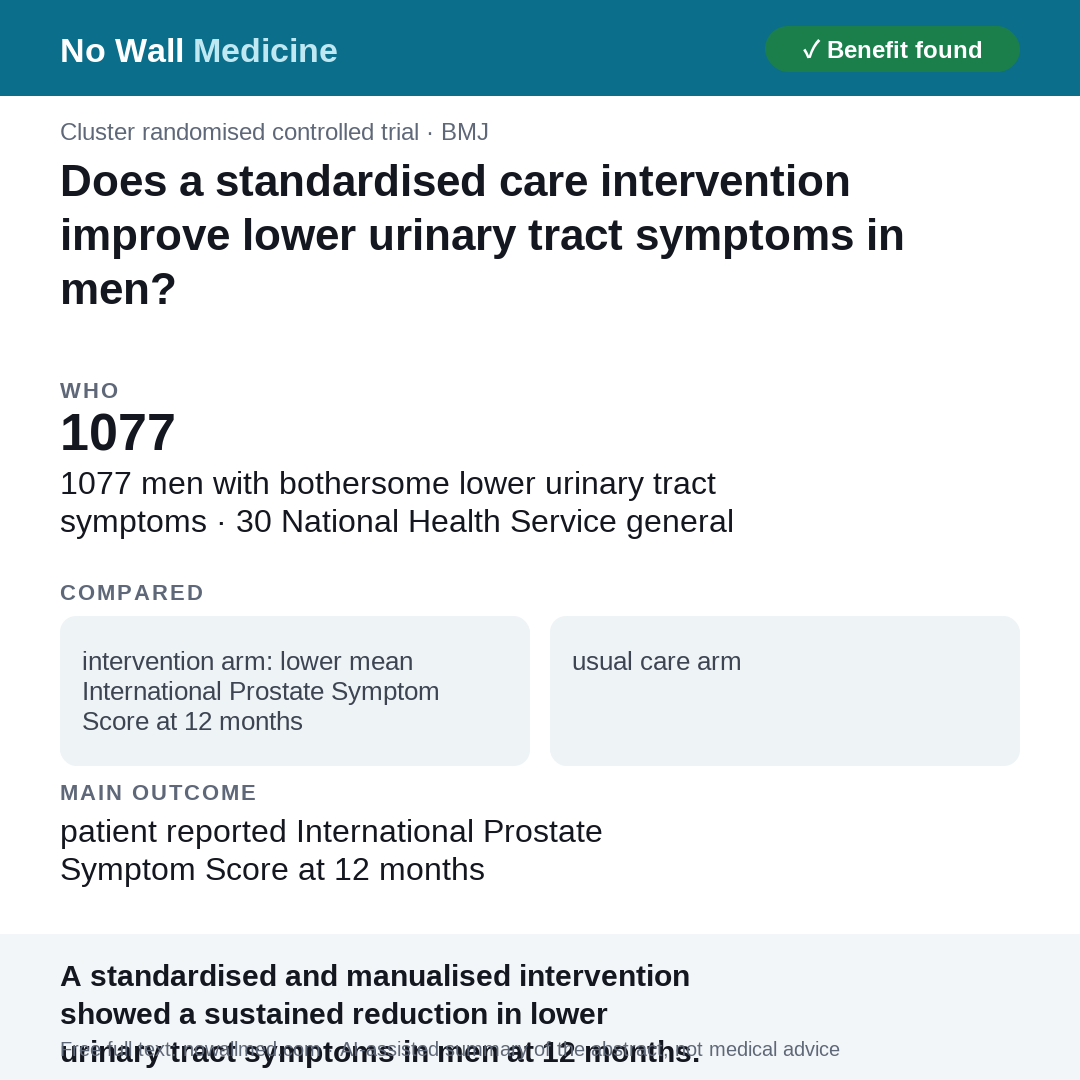
Treatment of lower urinary tract symptoms in men in primary care using a conservative intervention: cluster randomised controlled trial
Cluster randomised controlled trialBenefit found
Does a standardised care intervention improve lower urinary tract symptoms in men?
Who
1077
1077 men with bothersome lower urinary tract symptoms · 30 National Health Service general practice sites in England
Compared
intervention arm: lower mean International Prostate Symptom Score at 12 months
usual care arm
Main outcome
patient reported International Prostate Symptom Score at 12 months
Result: adjusted mean difference -1.81 points (95% confidence interval -2.66 to -0.95)
Bottom line: A standardised and manualised intervention showed a sustained reduction in lower urinary tract symptoms in men at 12 months.
BMJ · 2023-11-15Download image
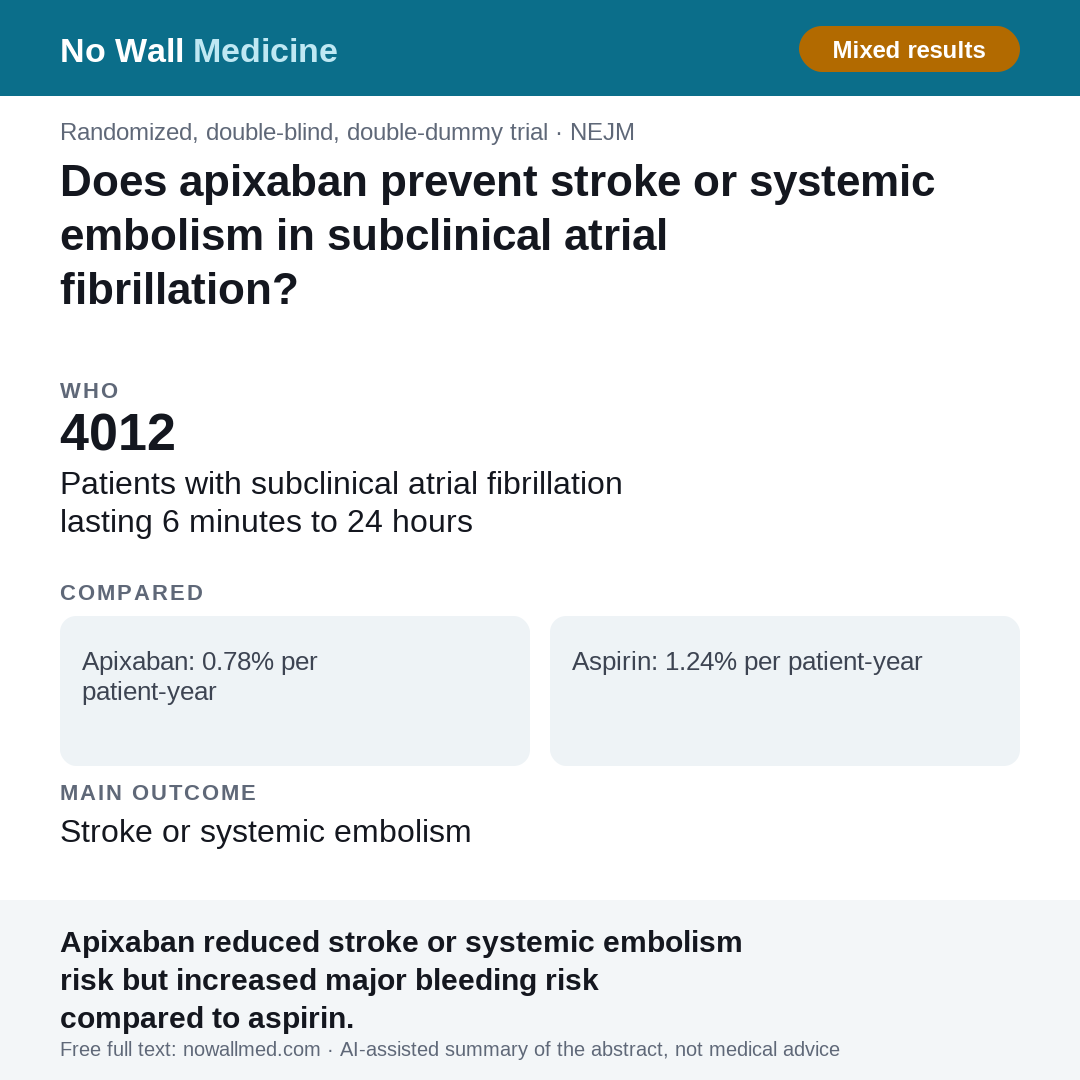
Apixaban for Stroke Prevention in Subclinical Atrial Fibrillation
Randomized, double-blind, double-dummy trialMixed results
Does apixaban prevent stroke or systemic embolism in subclinical atrial fibrillation?
Who
4012
Patients with subclinical atrial fibrillation lasting 6 minutes to 24 hours
Compared
Apixaban: 0.78% per patient-year
Aspirin: 1.24% per patient-year
Main outcome
Stroke or systemic embolism
Result: hazard ratio 0.63 (95% CI 0.45 to 0.88)
Bottom line: Apixaban reduced stroke or systemic embolism risk but increased major bleeding risk compared to aspirin.
Funded by: Canadian Institutes of Health Research and others
NEJM · 2023-11-12Download image
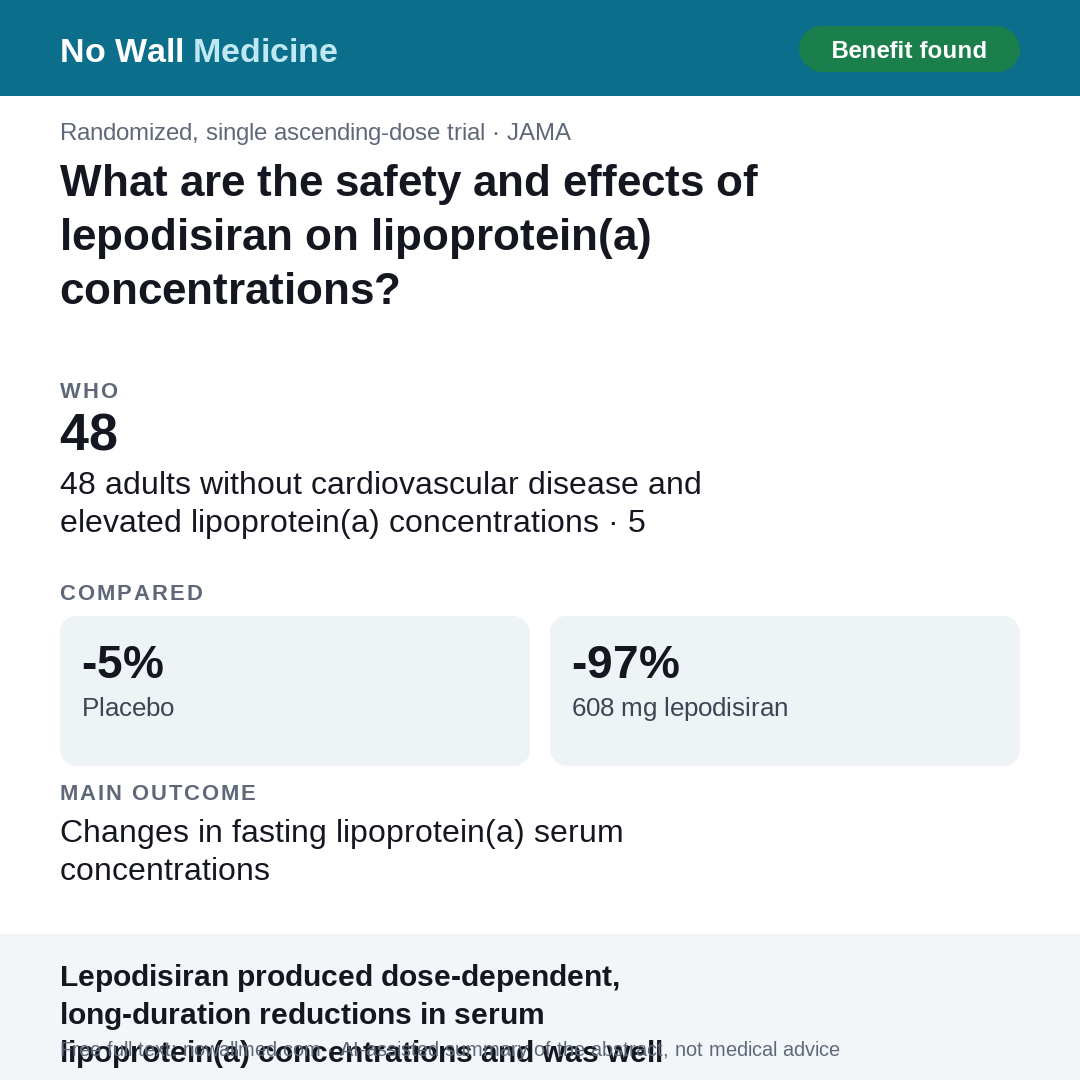
Lepodisiran, an Extended-Duration Short Interfering RNA Targeting Lipoprotein(a): A Randomized Dose-Ascending Clinical Trial
Randomized, single ascending-dose trialBenefit found
What are the safety and effects of lepodisiran on lipoprotein(a) concentrations?
Who
48
48 adults without cardiovascular disease and elevated lipoprotein(a) concentrations · 5 clinical research sites in the US and Singapore
Compared
-5%Placebo (IQR, -16% to 11%)
-97%608 mg lepodisiran (IQR, -98% to -96%)
Main outcome
Changes in fasting lipoprotein(a) serum concentrations
Bottom line: Lepodisiran produced dose-dependent, long-duration reductions in serum lipoprotein(a) concentrations and was well tolerated.
JAMA · 2023-11-12Download image
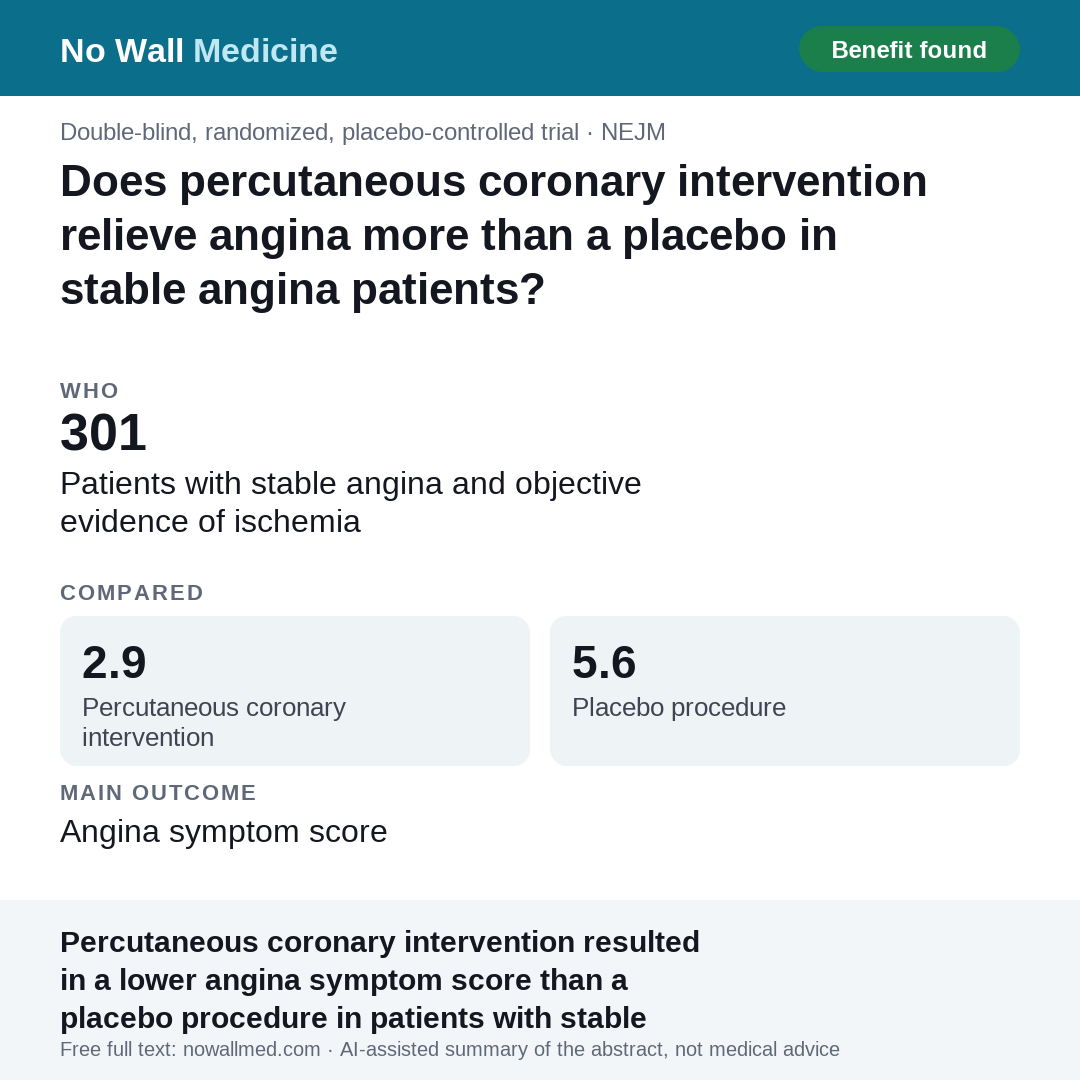
A Placebo-Controlled Trial of Percutaneous Coronary Intervention for Stable Angina
Double-blind, randomized, placebo-controlled trialBenefit found
Does percutaneous coronary intervention relieve angina more than a placebo in stable angina patients?
Who
301
Patients with stable angina and objective evidence of ischemia
Compared
2.9Percutaneous coronary intervention
5.6Placebo procedure
Main outcome
Angina symptom score
Result: odds ratio 2.21 (95% confidence interval 1.41 to 3.47)
Bottom line: Percutaneous coronary intervention resulted in a lower angina symptom score than a placebo procedure in patients with stable angina.
Funded by: National Institute for Health and Care Research Imperial Biomedical Research Centre
NEJM · 2023-11-11Download image
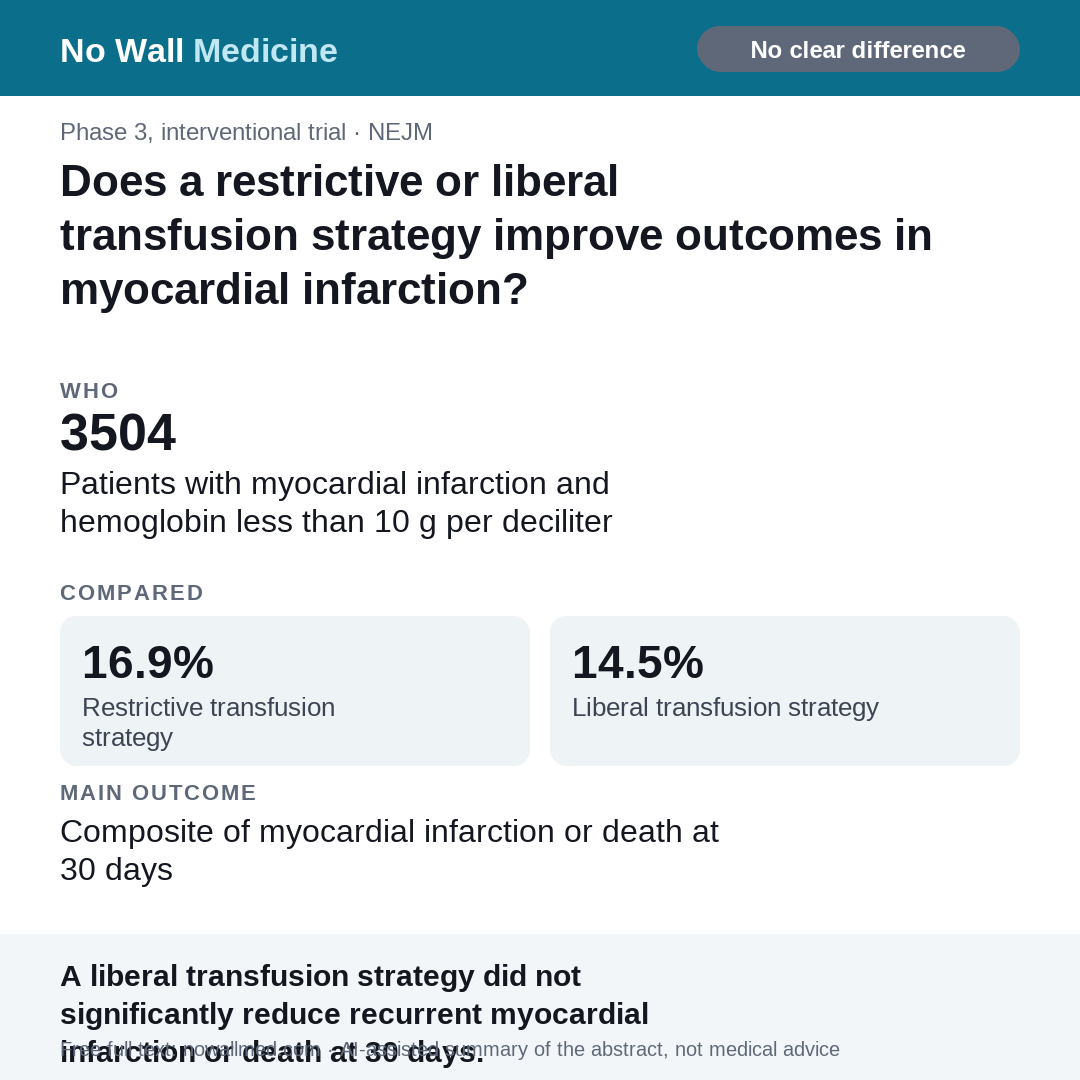
Restrictive or Liberal Transfusion Strategy in Myocardial Infarction and Anemia
Phase 3, interventional trialNo clear difference
Does a restrictive or liberal transfusion strategy improve outcomes in myocardial infarction?
Who
3504
Patients with myocardial infarction and hemoglobin less than 10 g per deciliter
Compared
16.9%Restrictive transfusion strategy (295/1749)
14.5%Liberal transfusion strategy (255/1755)
Main outcome
Composite of myocardial infarction or death at 30 days
Result: risk ratio 1.15 (95% CI 0.99 to 1.34)
Bottom line: A liberal transfusion strategy did not significantly reduce recurrent myocardial infarction or death at 30 days.
Limitation: potential harms of a restrictive transfusion strategy cannot be excluded
Funded by: National Heart, Lung, and Blood Institute and others
NEJM · 2023-11-11Download image
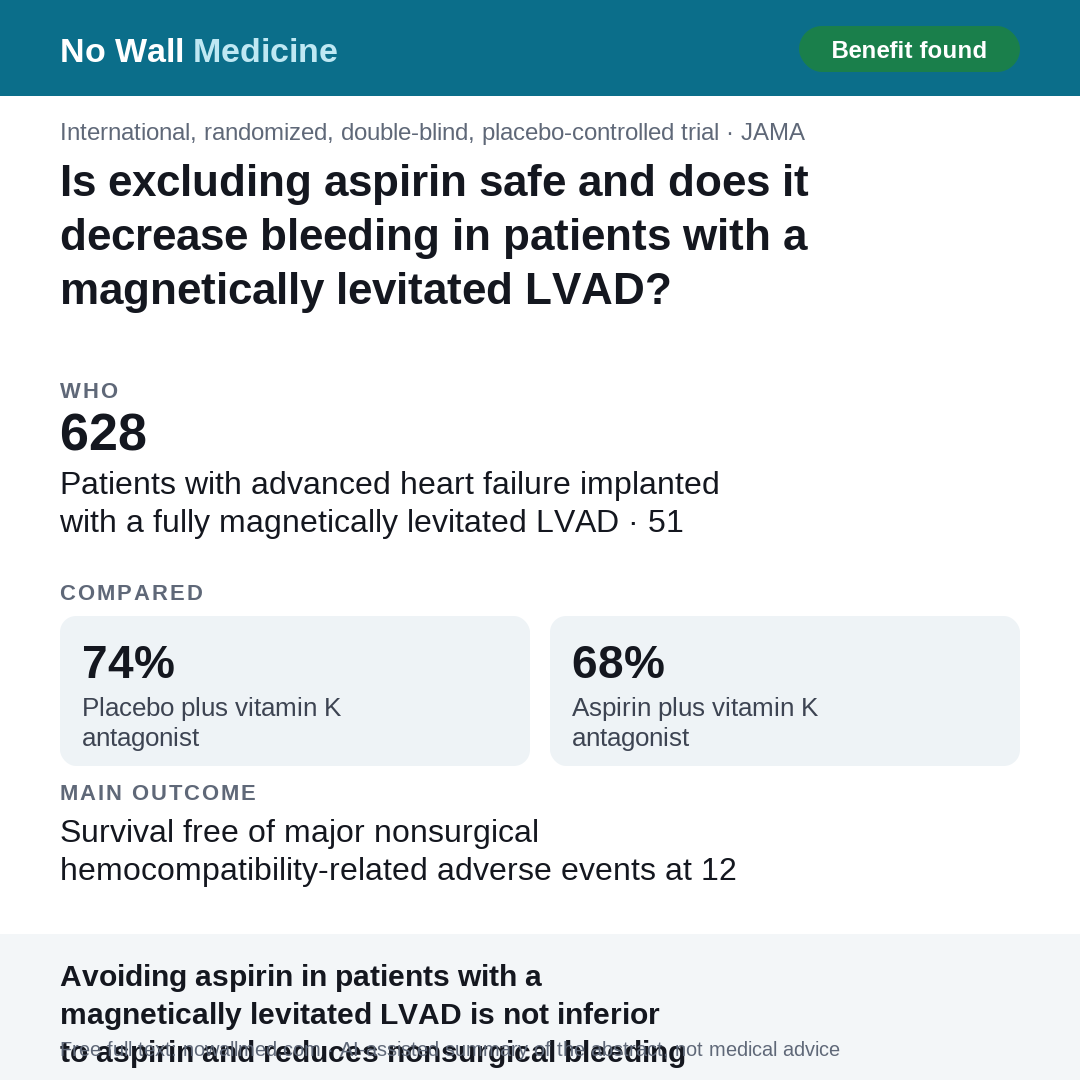
Aspirin and Hemocompatibility Events With a Left Ventricular Assist Device in Advanced Heart Failure: The ARIES-HM3 Randomized Clinical Trial
International, randomized, double-blind, placebo-controlled trialBenefit found
Is excluding aspirin safe and does it decrease bleeding in patients with a magnetically levitated LVAD?
Who
628
Patients with advanced heart failure implanted with a fully magnetically levitated LVAD · 51 centers across 9 countries
Compared
74%Placebo plus vitamin K antagonist
68%Aspirin plus vitamin K antagonist
Main outcome
Survival free of major nonsurgical hemocompatibility-related adverse events at 12 months
Result: relative risk 0.66 (95% confidence limit, 0.51-0.85) for nonsurgical bleeding events
Bottom line: Avoiding aspirin in patients with a magnetically levitated LVAD is not inferior to aspirin and reduces nonsurgical bleeding events.
JAMA · 2023-11-11Download image
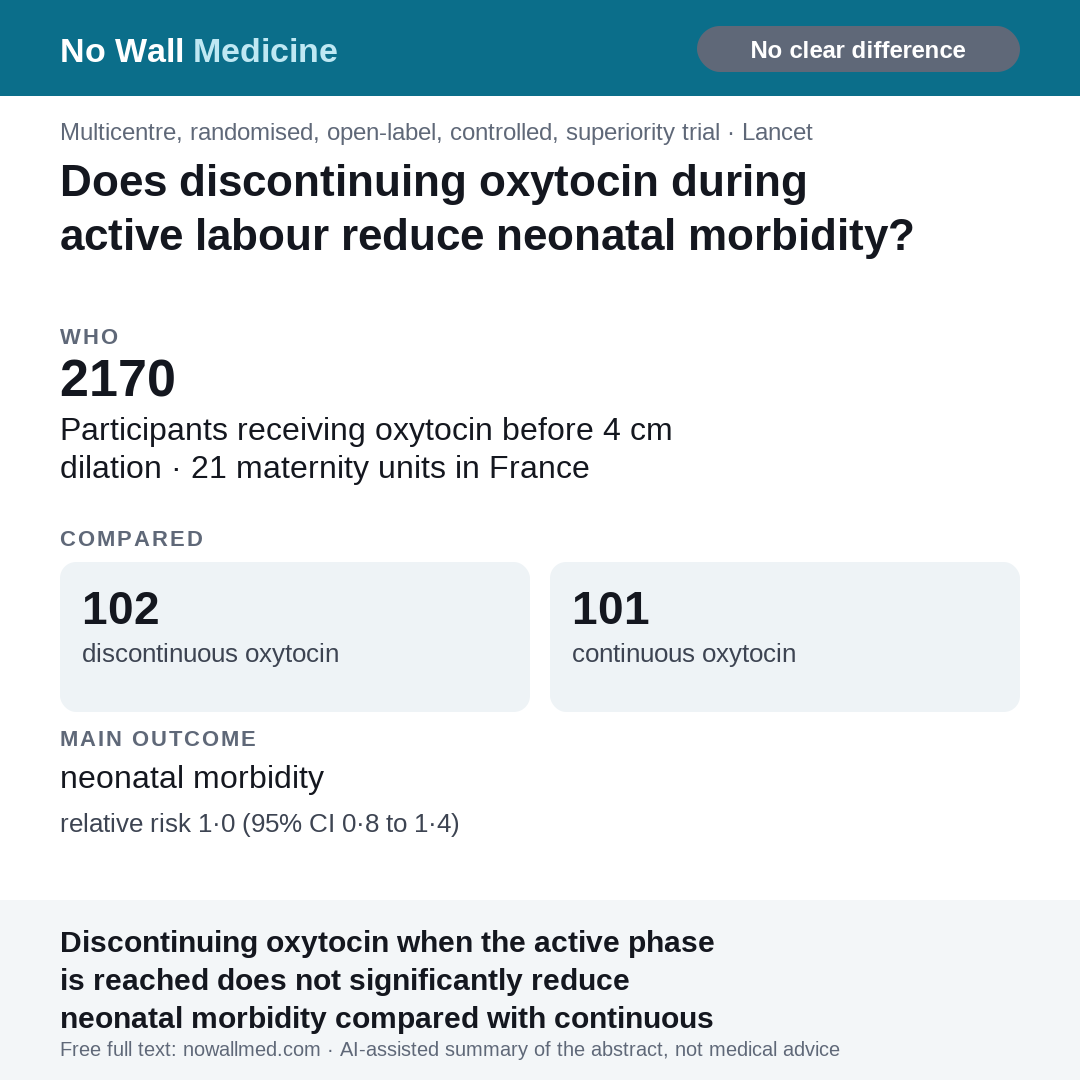
Impact of discontinuing oxytocin in active labour on neonatal morbidity: an open-label, multicentre, randomised trial
Multicentre, randomised, open-label, controlled, superiority trialNo clear difference
Does discontinuing oxytocin during active labour reduce neonatal morbidity?
Who
2170
Participants receiving oxytocin before 4 cm dilation · 21 maternity units in France
Compared
102discontinuous oxytocin (9·6%)
101continuous oxytocin (9·2%)
Main outcome
neonatal morbidity
Result: relative risk 1·0 (95% CI 0·8 to 1·4)
Bottom line: Discontinuing oxytocin when the active phase is reached does not significantly reduce neonatal morbidity compared with continuous oxytocin.
Funded by: French Ministry of Health and Assistance Publique-Hôpitaux de Paris
Lancet · 2023-11-09Download image
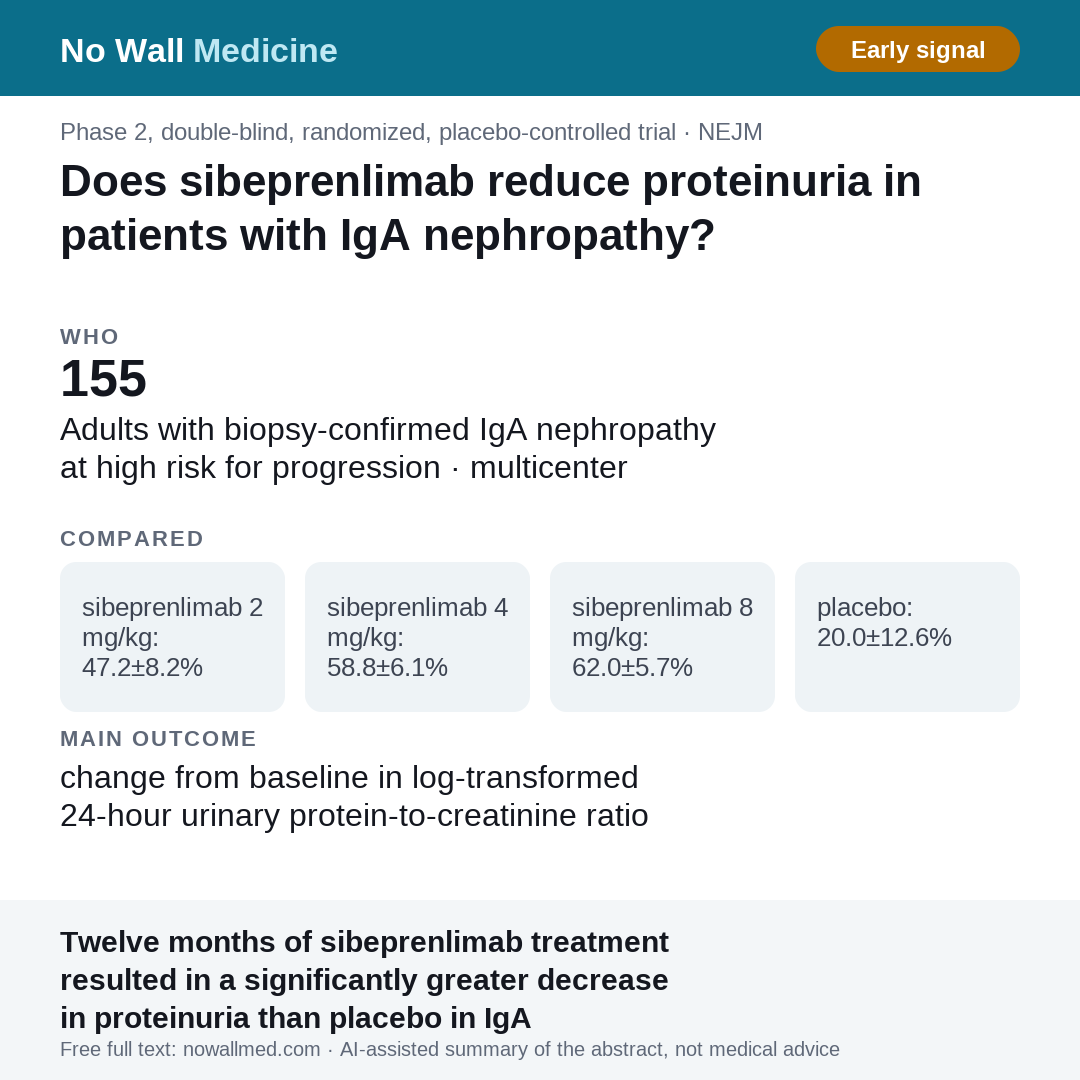
A Phase 2 Trial of Sibeprenlimab in Patients with IgA Nephropathy
Phase 2, double-blind, randomized, placebo-controlled trialBenefit found
Does sibeprenlimab reduce proteinuria in patients with IgA nephropathy?
Who
155
Adults with biopsy-confirmed IgA nephropathy at high risk for progression · multicenter
Compared
sibeprenlimab 2 mg/kg: 47.2±8.2%
sibeprenlimab 4 mg/kg: 58.8±6.1%
sibeprenlimab 8 mg/kg: 62.0±5.7%
placebo: 20.0±12.6%
Main outcome
change from baseline in log-transformed 24-hour urinary protein-to-creatinine ratio
Bottom line: Twelve months of sibeprenlimab treatment resulted in a significantly greater decrease in proteinuria than placebo in IgA nephropathy.
Funded by: Visterra
NEJM · 2023-11-02Download image
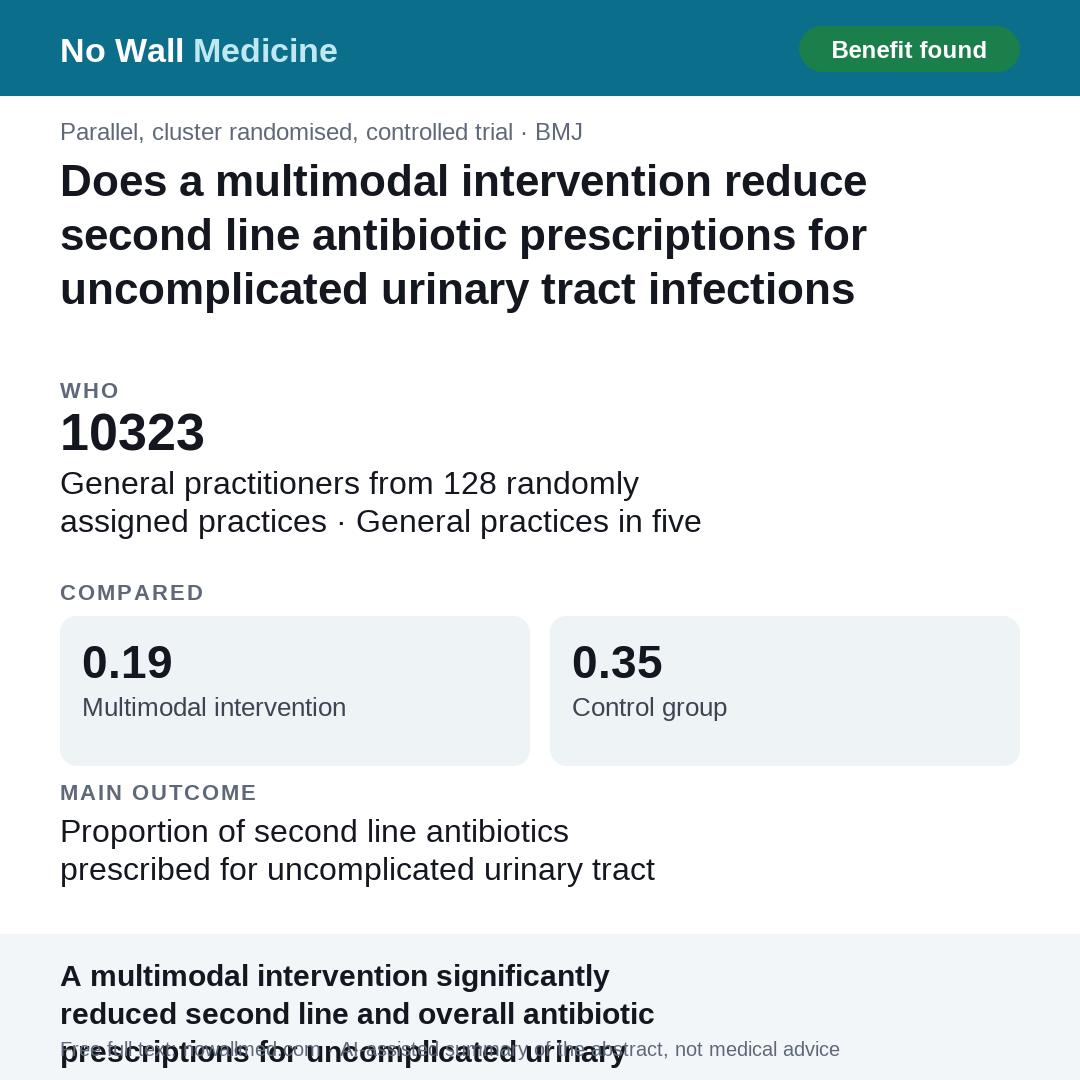
Effects of a multimodal intervention in primary care to reduce second line antibiotic prescriptions for urinary tract infections in women: parallel, cluster randomised, controlled trial
Parallel, cluster randomised, controlled trialBenefit found
Does a multimodal intervention reduce second line antibiotic prescriptions for uncomplicated urinary tract infections in women?
Who
10323
General practitioners from 128 randomly assigned practices · General practices in five regions in Germany
Compared
0.19Multimodal intervention (standard deviation 0.20)
0.35Control group (0.25)
Main outcome
Proportion of second line antibiotics prescribed for uncomplicated urinary tract infections
Result: -0.13 (95% confidence interval -0.21 to -0.06)
Bottom line: A multimodal intervention significantly reduced second line and overall antibiotic prescriptions for uncomplicated urinary tract infections in women.
BMJ · 2023-11-02Download image
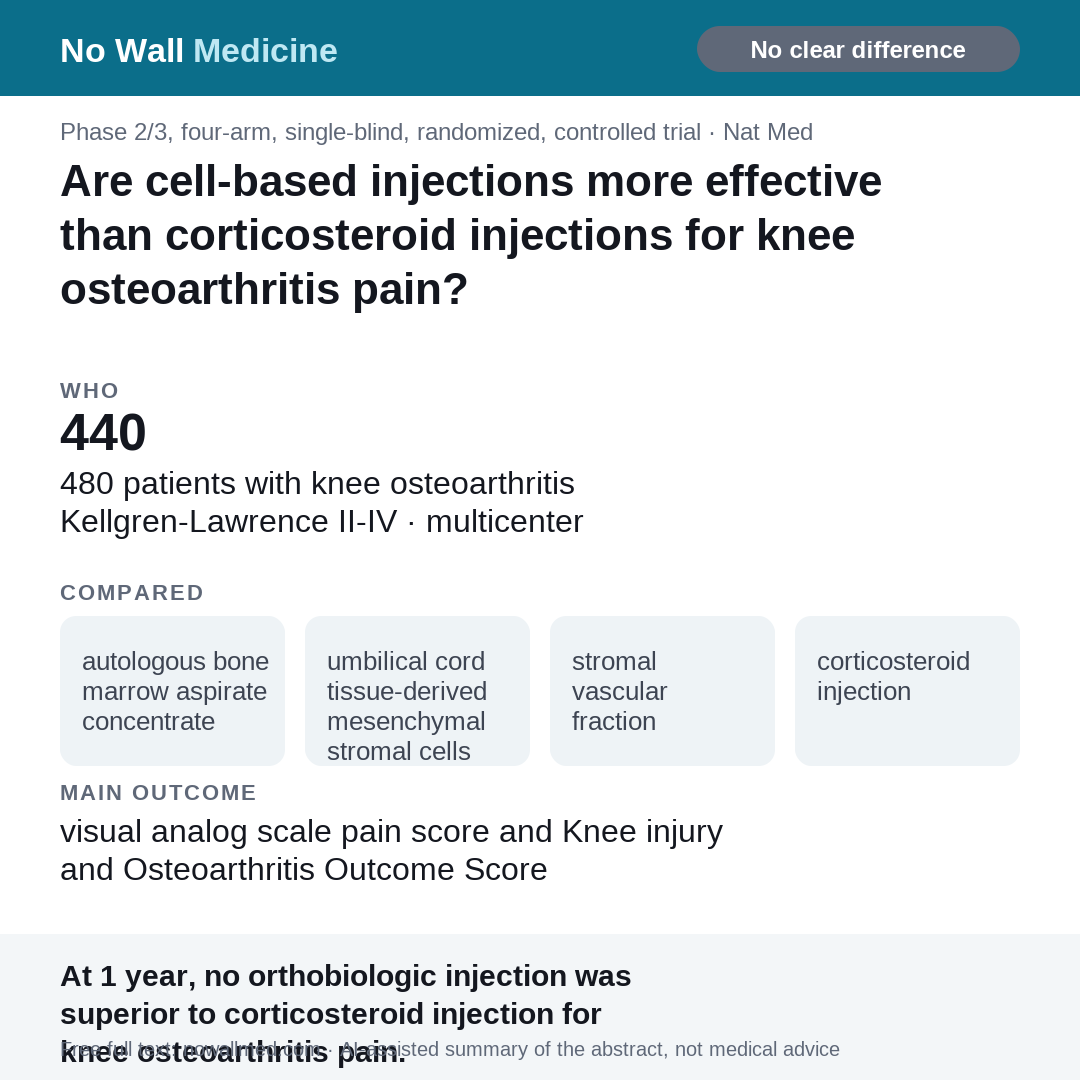
Cell-based versus corticosteroid injections for knee pain in osteoarthritis: a randomized phase 3 trial
Phase 2/3, four-arm, single-blind, randomized, controlled trialNo clear difference
Are cell-based injections more effective than corticosteroid injections for knee osteoarthritis pain?
Who
440
480 patients with knee osteoarthritis Kellgren-Lawrence II-IV · multicenter
Compared
autologous bone marrow aspirate concentrate
umbilical cord tissue-derived mesenchymal stromal cells
stromal vascular fraction
corticosteroid injection
Main outcome
visual analog scale pain score and Knee injury and Osteoarthritis Outcome Score
Bottom line: At 1 year, no orthobiologic injection was superior to corticosteroid injection for knee osteoarthritis pain.
Nat Med · 2023-11-02Download image
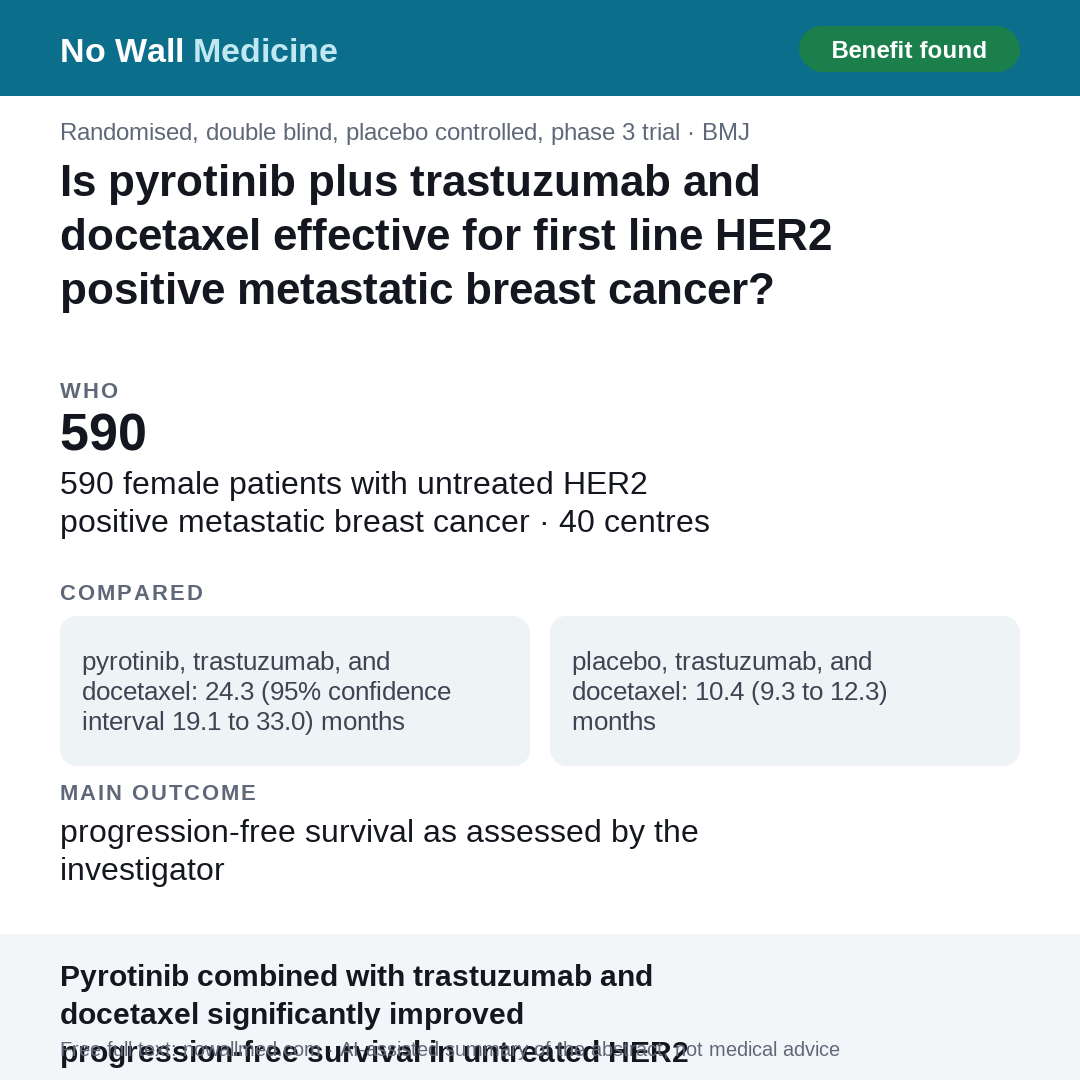
Pyrotinib versus placebo in combination with trastuzumab and docetaxel as first line treatment in patients with HER2 positive metastatic breast cancer (PHILA): randomised, double blind, multicentre, phase 3 trial
Randomised, double blind, placebo controlled, phase 3 trialBenefit found
Is pyrotinib plus trastuzumab and docetaxel effective for first line HER2 positive metastatic breast cancer?
Who
590
590 female patients with untreated HER2 positive metastatic breast cancer · 40 centres in China
Compared
pyrotinib, trastuzumab, and docetaxel: 24.3 (95% confidence interval 19.1 to 33.0) months
placebo, trastuzumab, and docetaxel: 10.4 (9.3 to 12.3) months
Main outcome
progression-free survival as assessed by the investigator
Result: hazard ratio 0.41 (95% confidence interval 0.32 to 0.53)
Bottom line: Pyrotinib combined with trastuzumab and docetaxel significantly improved progression-free survival in untreated HER2 positive metastatic breast cancer.
BMJ · 2023-10-31Download image
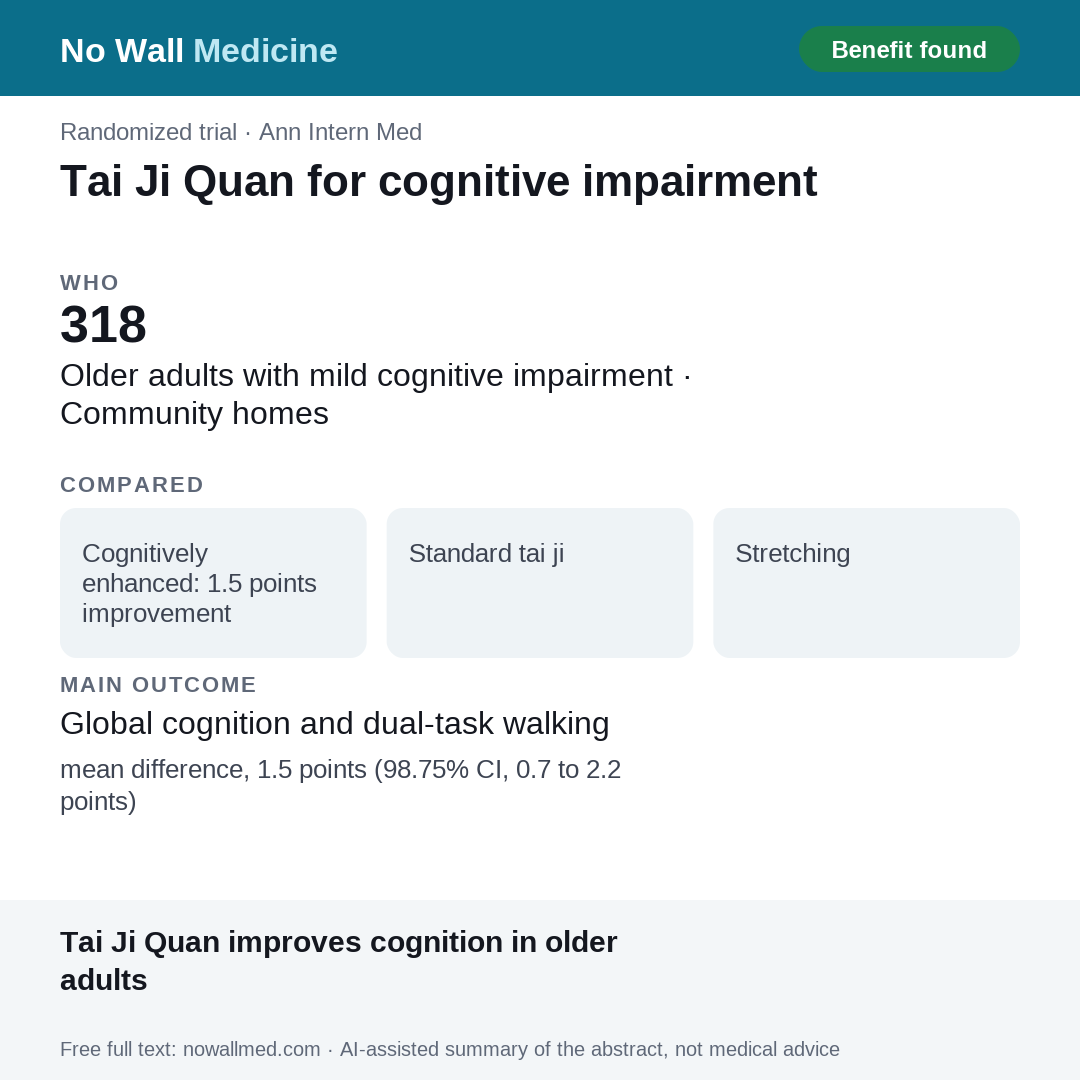
Clinical Effectiveness of Cognitively Enhanced Tai Ji Quan Training on Global Cognition and Dual-Task Performance During Walking in Older Adults With Mild Cognitive Impairment or Self-Reported Memory Concerns : A Randomized Controlled Trial
Randomized trialBenefit found
Tai Ji Quan for cognitive impairment
Who
318
Older adults with mild cognitive impairment · Community homes
Compared
Cognitively enhanced: 1.5 points improvement
Standard tai ji
Stretching
Main outcome
Global cognition and dual-task walking
Result: mean difference, 1.5 points (98.75% CI, 0.7 to 2.2 points)
Bottom line: Tai Ji Quan improves cognition in older adults
Limitation: No nonexercise control group
Funded by: National Institute on Aging
Ann Intern Med · 2023-10-31Download image
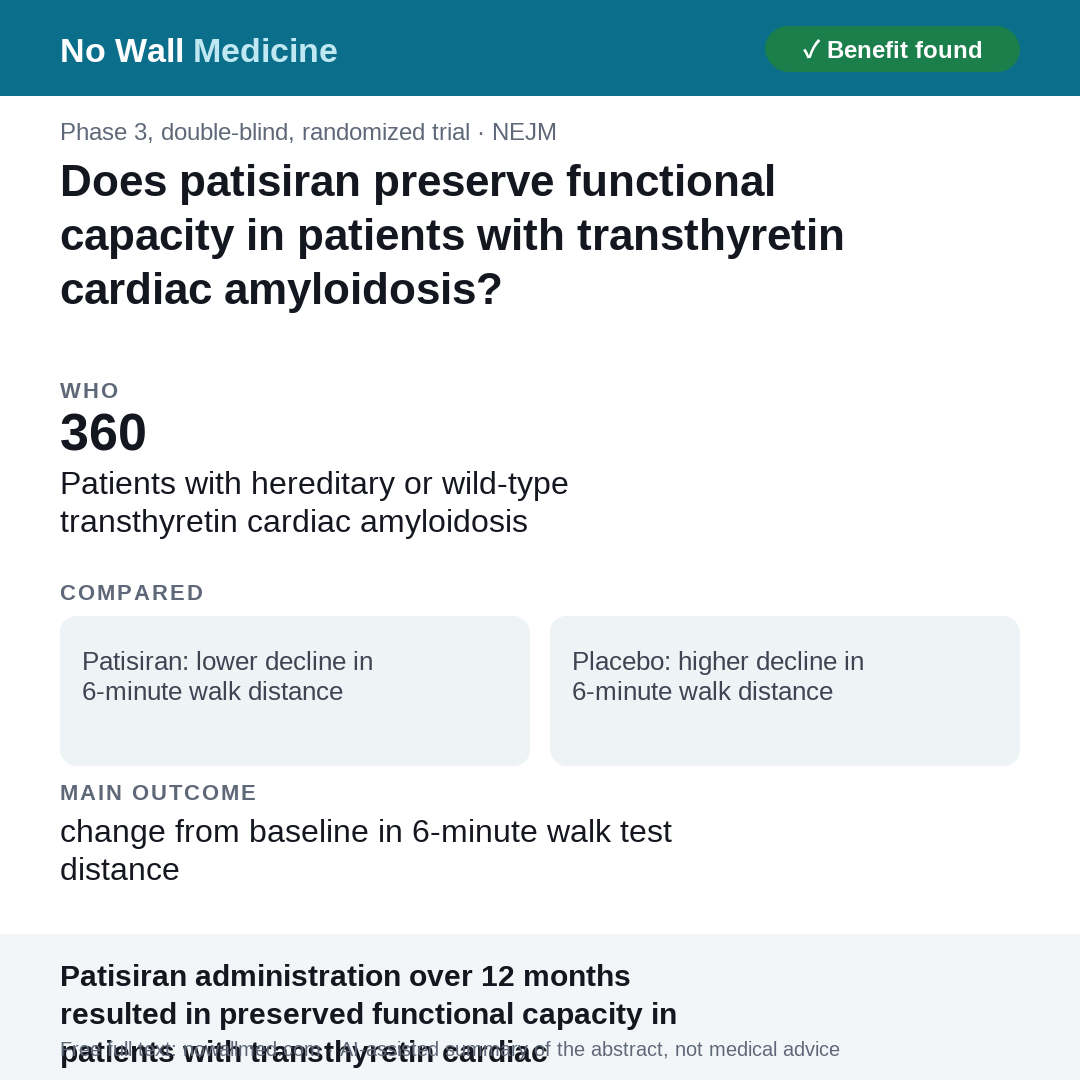
Patisiran Treatment in Patients with Transthyretin Cardiac Amyloidosis
Phase 3, double-blind, randomized trialBenefit found
Does patisiran preserve functional capacity in patients with transthyretin cardiac amyloidosis?
Who
360
Patients with hereditary or wild-type transthyretin cardiac amyloidosis
Compared
Patisiran: lower decline in 6-minute walk distance
Placebo: higher decline in 6-minute walk distance
Main outcome
change from baseline in 6-minute walk test distance
Result: Hodges-Lehmann estimate of median difference, 14.69 m; 95% CI, 0.69 to 28.69
Bottom line: Patisiran administration over 12 months resulted in preserved functional capacity in patients with transthyretin cardiac amyloidosis.
Funded by: Alnylam Pharmaceuticals
NEJM · 2023-10-27Download image
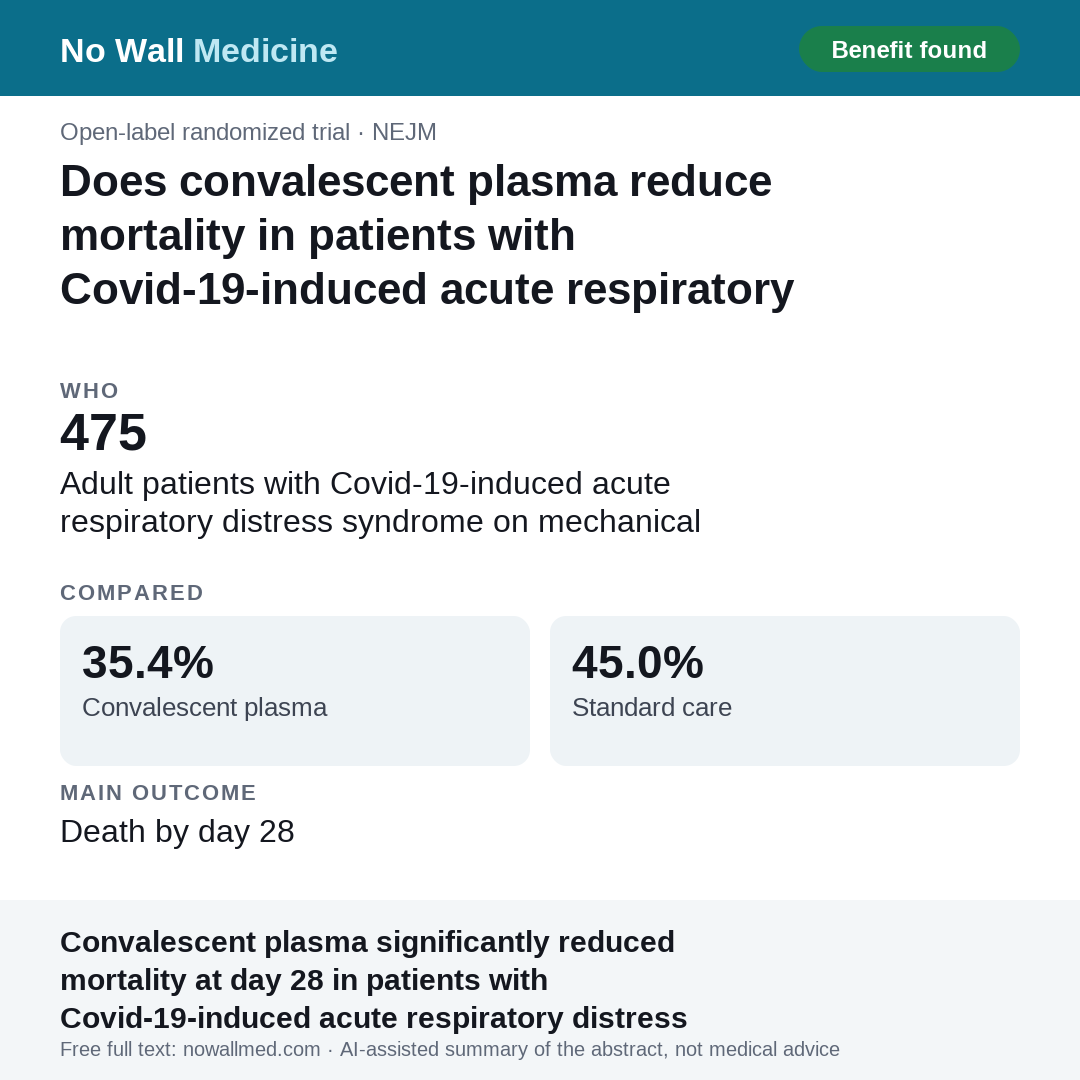
Convalescent Plasma for Covid-19-Induced ARDS in Mechanically Ventilated Patients
Open-label randomized trialBenefit found
Does convalescent plasma reduce mortality in patients with Covid-19-induced acute respiratory distress syndrome?
Who
475
Adult patients with Covid-19-induced acute respiratory distress syndrome on mechanical ventilation
Compared
35.4%Convalescent plasma
45.0%Standard care
Main outcome
Death by day 28
Bottom line: Convalescent plasma significantly reduced mortality at day 28 in patients with Covid-19-induced acute respiratory distress syndrome.
Funded by: Belgian Health Care Knowledge Center
NEJM · 2023-10-25Download image
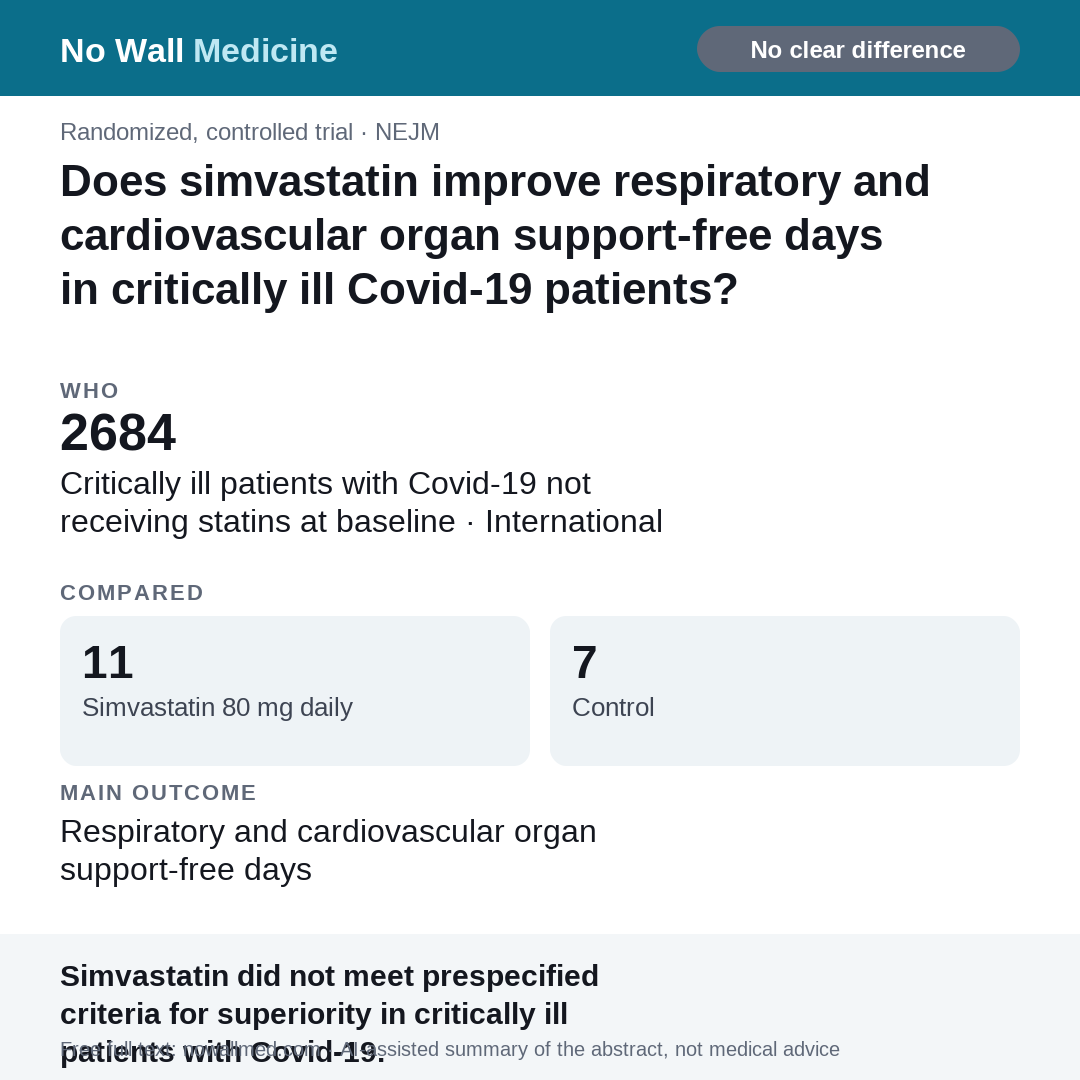
Simvastatin in Critically Ill Patients with Covid-19
Randomized, controlled trialNo clear difference
Does simvastatin improve respiratory and cardiovascular organ support-free days in critically ill Covid-19 patients?
Who
2684
Critically ill patients with Covid-19 not receiving statins at baseline · International
Compared
11Simvastatin 80 mg daily (interquartile range, -1 to 17)
7Control (interquartile range, -1 to 16)
Main outcome
Respiratory and cardiovascular organ support-free days
Result: posterior median adjusted odds ratio 1.15 (95% credible interval, 0.98 to 1.34)
Bottom line: Simvastatin did not meet prespecified criteria for superiority in critically ill patients with Covid-19.
NEJM · 2023-10-25Download image