Visual abstracts
New randomized trials and meta-analyses from leading journals at a glance: who was studied, what was compared, and what was found. Every paper is free to read in full.
All specialtiesCardiology 1004Oncology 906Gastroenterology & Hepatology 366Infectious Disease 688Neurology 423Psychiatry & Mental Health 530Pulmonology 440Critical Care 308Endocrinology & Diabetes 567Pediatrics 631Surgery 431Orthopedics & Sports Medicine 196Neurosurgery 146Cardiothoracic & Vascular Surgery 103Plastic & Reconstructive Surgery 164Nephrology 227Rheumatology 129Hematology 217Dermatology 93Ophthalmology 119Obstetrics & Gynecology 309Public & Global Health 189Radiology & Imaging 124Anesthesiology 180Urology 194ENT (Otolaryngology) 139Emergency Medicine 115Allergy & Immunology 68Geriatrics 197Family Medicine & Primary Care 133Medical Genetics & Genomics 105Pathology & Laboratory Medicine 31Physical Medicine & Rehabilitation 177Palliative Care 92Nutrition 260Digital Health & AI 529General Medicine 105
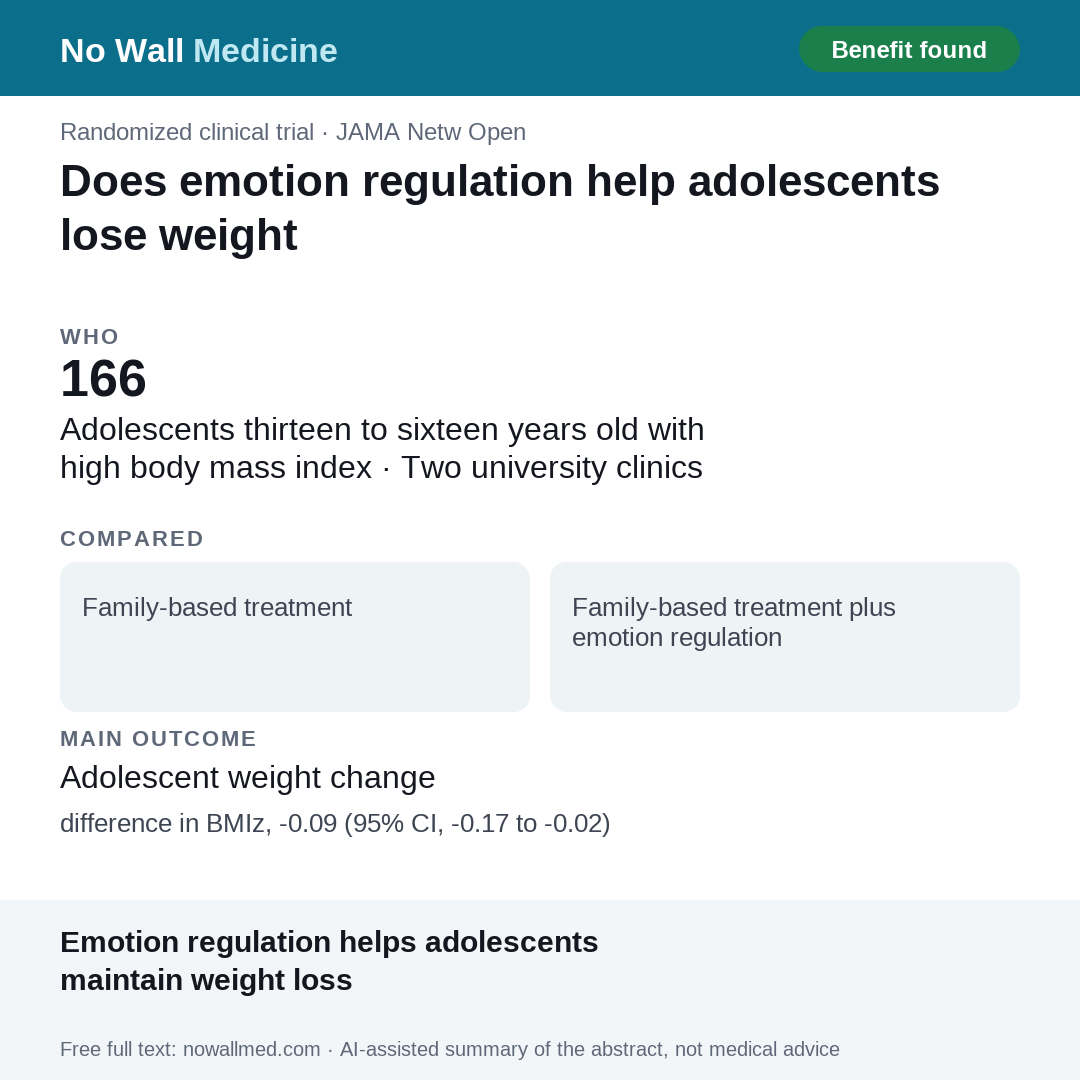
Emotion-Focused Behavioral Weight Loss Treatment for Adolescents: A Randomized Clinical Trial
Randomized clinical trialBenefit found
Does emotion regulation help adolescents lose weight
Who
166
Adolescents thirteen to sixteen years old with high body mass index · Two university clinics
Compared
Family-based treatment
Family-based treatment plus emotion regulation
Main outcome
Adolescent weight change
Result: difference in BMIz, -0.09 (95% CI, -0.17 to -0.02)
Bottom line: Emotion regulation helps adolescents maintain weight loss
JAMA Netw Open · 2026-10-01Download image
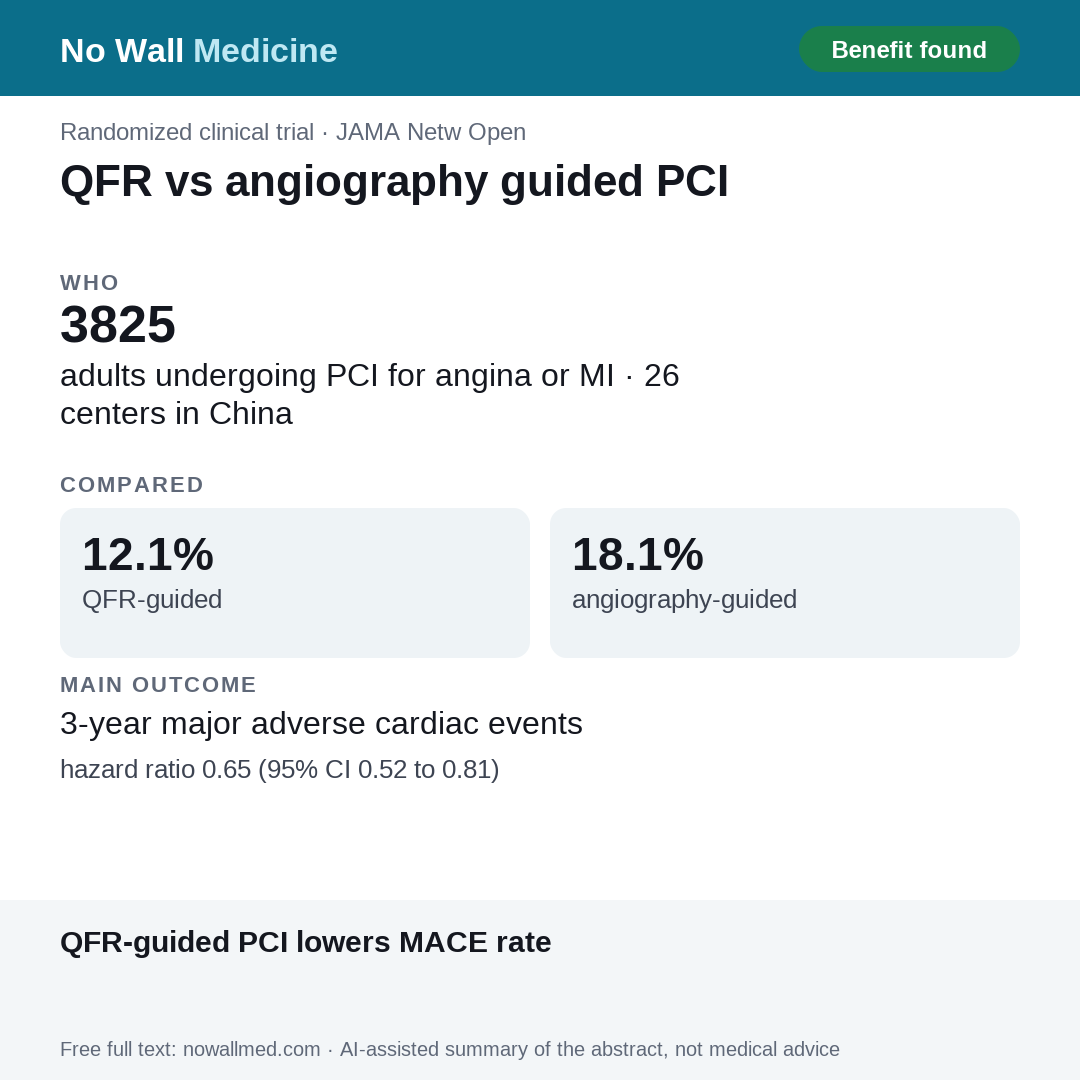
Quantitative Flow Ratio- vs Angiography-Guided Percutaneous Coronary Intervention: A Secondary Analysis of the FAVOR III China Trial
Randomized clinical trial secondary analysisBenefit found
Does QFR-guided PCI versus angiography-guided PCI affect 3-year outcomes by multivessel disease status?
Who
3825
Adults undergoing percutaneous coronary intervention for angina or myocardial infarction · 26 centers in China
Compared
12.1%QFR-guided PCI in MVD cohort
18.1%Angiography-guided PCI in MVD cohort
8.6%QFR-guided PCI in non-MVD cohort
11.0%Angiography-guided PCI in non-MVD cohort
Main outcome
3-year major adverse cardiac events
Result: hazard ratio 0.65 (95% CI 0.52-0.81) in MVD cohort
Bottom line: QFR-guided PCI was associated with lower 3-year major adverse cardiac events in patients with multivessel disease.
JAMA Netw Open · 2026-10-01Download image
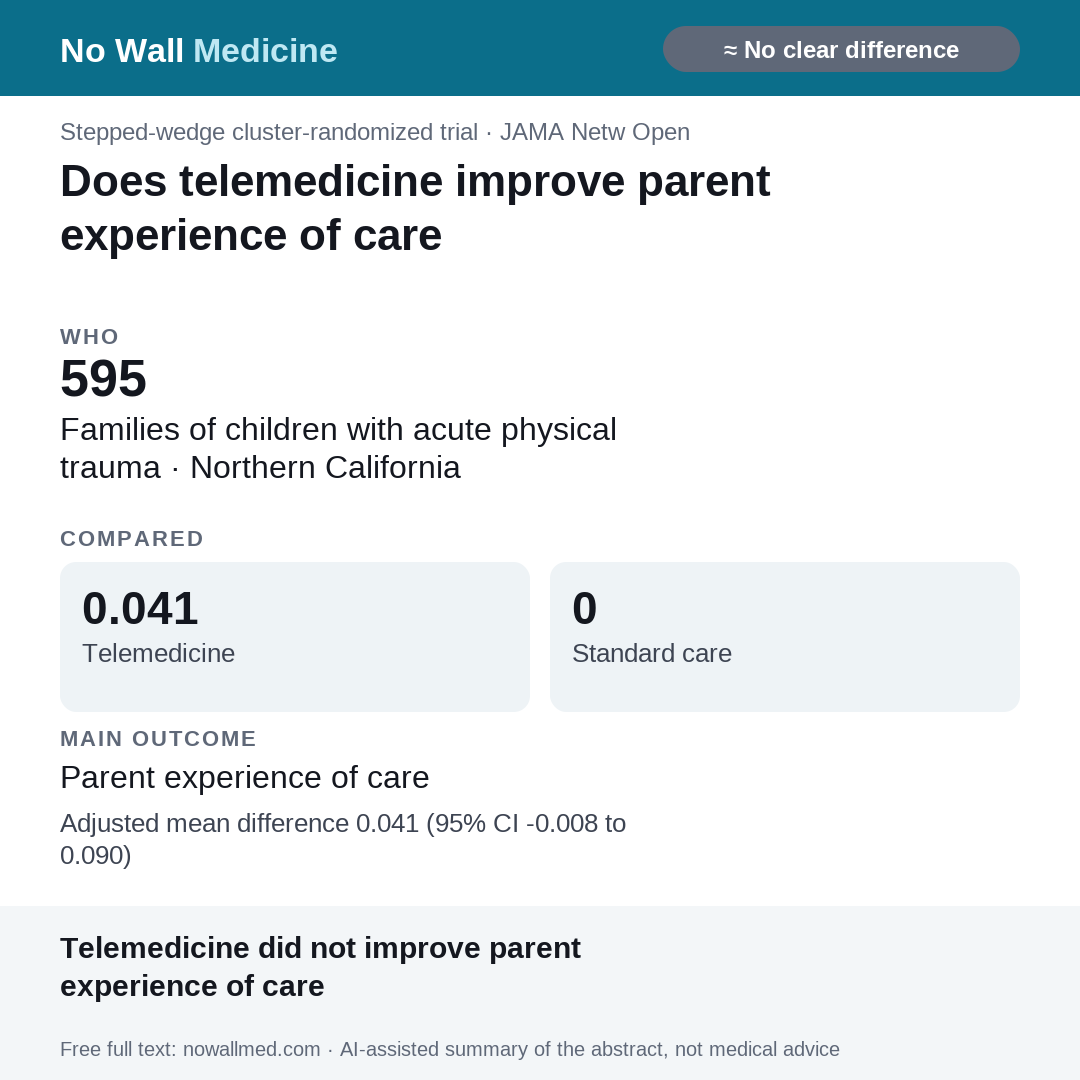
Telemedicine Consultation for Pediatric Trauma in Community ED Visits and Parent Experience of Care: A Stepped-Wedge Cluster-Randomized Clinical Trial
Stepped-wedge cluster-randomized trialNo clear difference
Does telemedicine improve parent experience of care
Who
595
Families of children with acute physical trauma · Northern California
Compared
0.041Telemedicine
0Standard care
Main outcome
Parent experience of care
Result: Adjusted mean difference 0.041 (95% CI -0.008 to 0.090)
Bottom line: Telemedicine did not improve parent experience of care
JAMA Netw Open · 2026-10-01Download image
Fecal Immunochemical Test Outreach for Colorectal Cancer Screening in Community Health Centers: A Randomized Clinical Trial
Cluster randomized clinical trialNo clear difference
Does mailed FIT outreach increase CRC screening?
Who
20250
Patients aged 50 to 75 years in FQHCs · Southern California
Compared
39.4%Mailed FIT outreach (95% CI, 36.3% to 42.6%)
36.5%Usual care (95% CI, 31.2% to 42.2%)
Main outcome
CRC screening proportion
Result: 2.9 percentage points; 95% CI, -3.2 to 9.0 percentage points
Bottom line: Mailed FIT outreach had no significant impact
JAMA Netw Open · 2026-10-01Download image
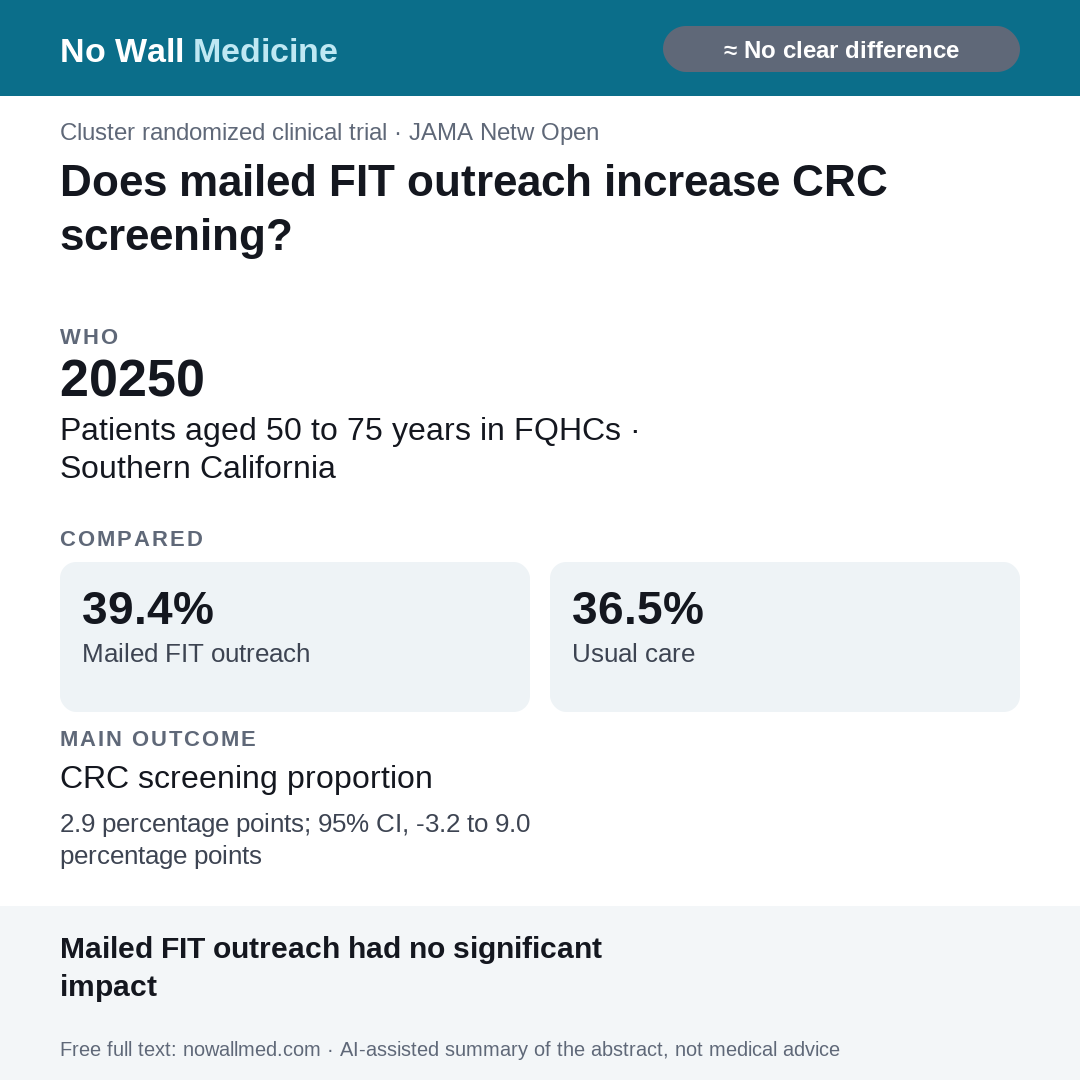
Clinical Evidence on Psilocybin and Its Representation in Media Reporting: A Systematic Review
Systematic reviewBenefit found
Does media reporting reflect clinical trial evidence for psilocybin?
Who
70
Clinical trial participants and media article audience
Compared
70%Clinical trials (49/70)
73%Media articles (125/172)
Main outcome
Efficacy of therapeutic psilocybin
Bottom line: Media reports overstate psilocybin benefits
Limitation: Small sample sizes and methodologic limitations
JAMA Netw Open · 2026-10-01Download image
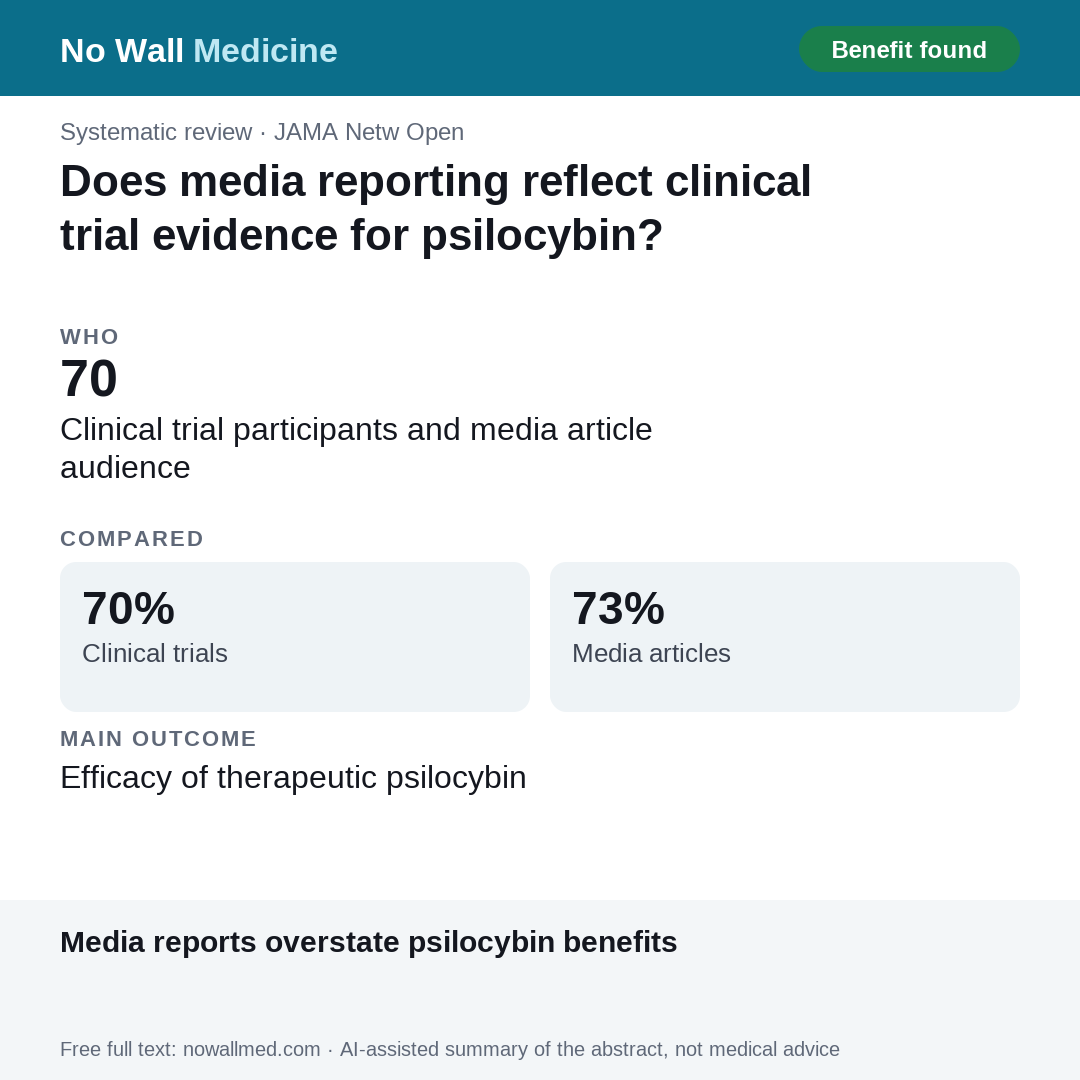
A Conversation Tool to Enhance Care for People With Type 2 Diabetes: The QBSafe Cluster Randomized Clinical Trial
Clinician-level cluster randomized clinical trialNo clear difference
Does an agenda-setting kit added to usual primary care improve care fit and glycemic control?
Who
143
English- or Spanish-speaking adults with type 2 diabetes and hemoglobin A1c greater than 8% · Federally qualified health center in New Haven, Connecticut
Compared
32.1Agenda-setting kit plus usual care (15.1)
37.1Usual primary care only (18.7)
Main outcome
6-month change in illness intrusiveness and hemoglobin A1c level
Result: adjusted mean difference, -3.9; 95% CI, -10.4 to 2.6
Bottom line: Adding an agenda-setting kit to usual care did not improve illness intrusiveness or glycemic control in adults with type 2 diabetes.
JAMA Netw Open · 2026-10-01Download image
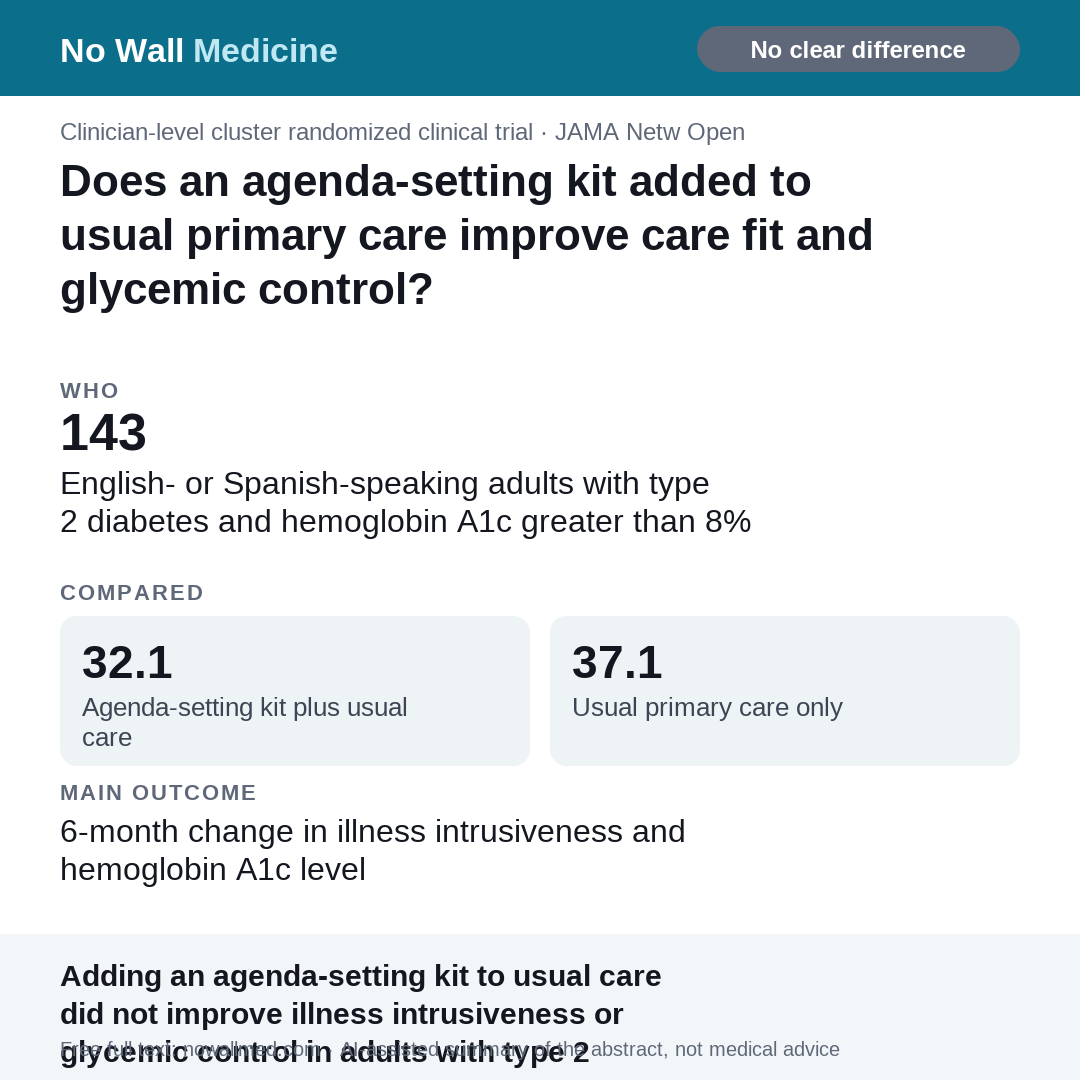
Concentrated Exposure Therapy vs Internet-Based Cognitive Behavioral Therapy for Obsessive-Compulsive Disorder: A Randomized Clinical Trial
Randomized controlled trialBenefit found
Concentrated therapy vs internet therapy for OCD
Who
119
Adults with obsessive-compulsive disorder · Single center
Compared
61.4%Concentrated therapy (35/57)
25.0%Internet therapy (11/44)
Main outcome
OCD symptom severity
Result: mean difference, -7.9 (95% CI, -9.7 to -6.0)
Bottom line: Concentrated therapy reduces OCD symptoms more
JAMA Netw Open · 2026-10-01Download image
Home Transcranial Direct Current Stimulation With Gamified Cognitive Control Training for Depression: A Randomized Clinical Trial
Randomized clinical trialNo clear difference
Does home tDCS with cognitive training help depression
Who
111
Adults with major depressive disorder · Three university hospitals
Compared
Active tDCS
Sham tDCS
Main outcome
Change in depression rating scale scores
Result: difference, 0.89 (95% CI, -1.37 to 3.15)
Bottom line: Home tDCS with cognitive training is not superior
JAMA Netw Open · 2026-10-01Download image
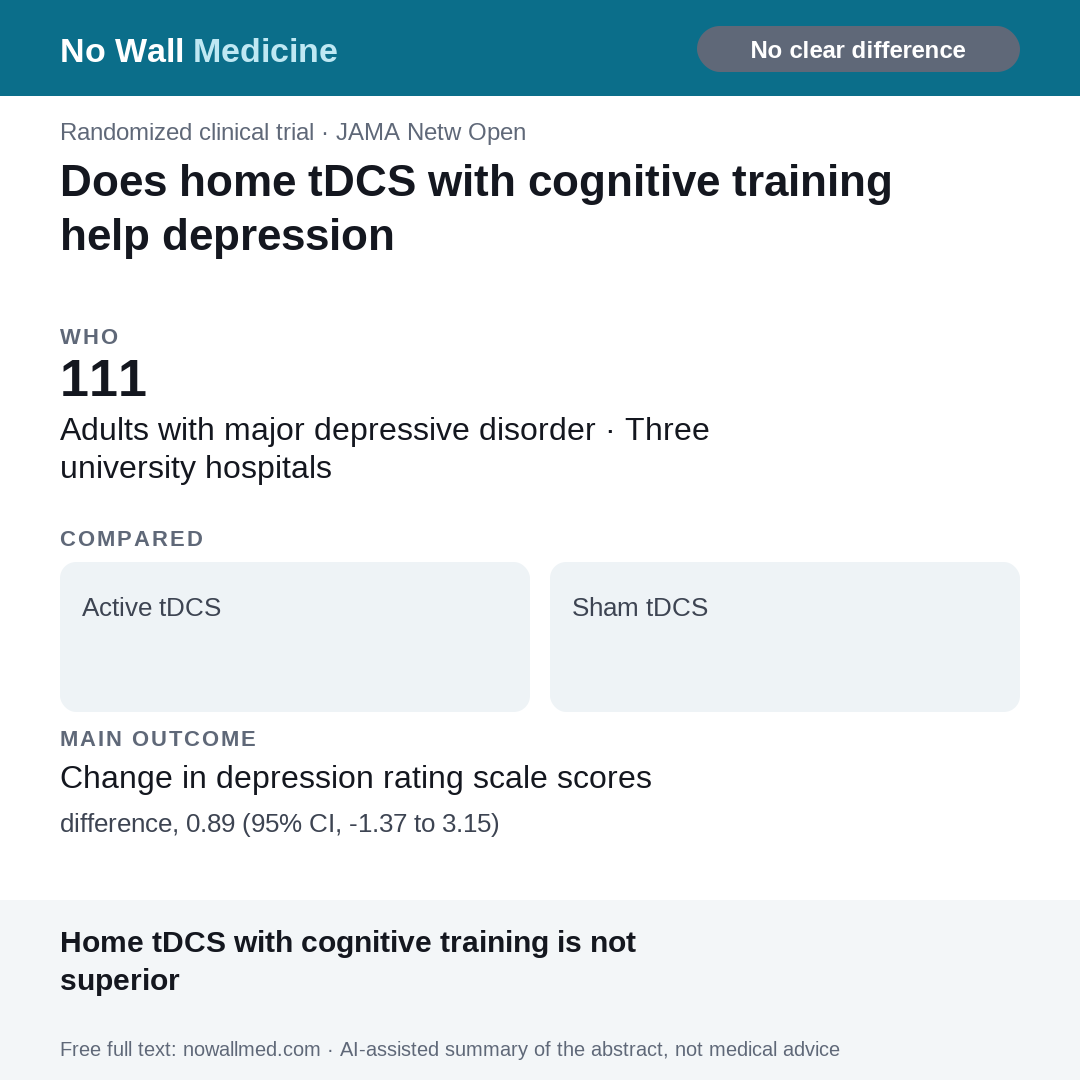
Mortality Among People With Attention-Deficit/Hyperactivity Disorder: A Systematic Review and Meta-Analysis
Systematic review and meta-analysisHarm found
Is attention-deficit/hyperactivity disorder associated with mortality and does medication affect this risk?
Who
15920970
Individuals with attention-deficit/hyperactivity disorder
Compared
People with ADHD: HR, 1.71 (95% CI, 1.31-2.24)
ADHD medication use: HR, 0.75 (95% CI, 0.64-0.87)
Main outcome
All-cause and cause-specific mortality
Result: all-cause mortality HR, 1.71 (95% CI, 1.31-2.24)
Bottom line: Attention-deficit/hyperactivity disorder is associated with increased mortality, but medication use is associated with reduced all-cause mortality risk.
Limitation: Substantial heterogeneity was observed across studies.
JAMA Netw Open · 2026-10-01Download image
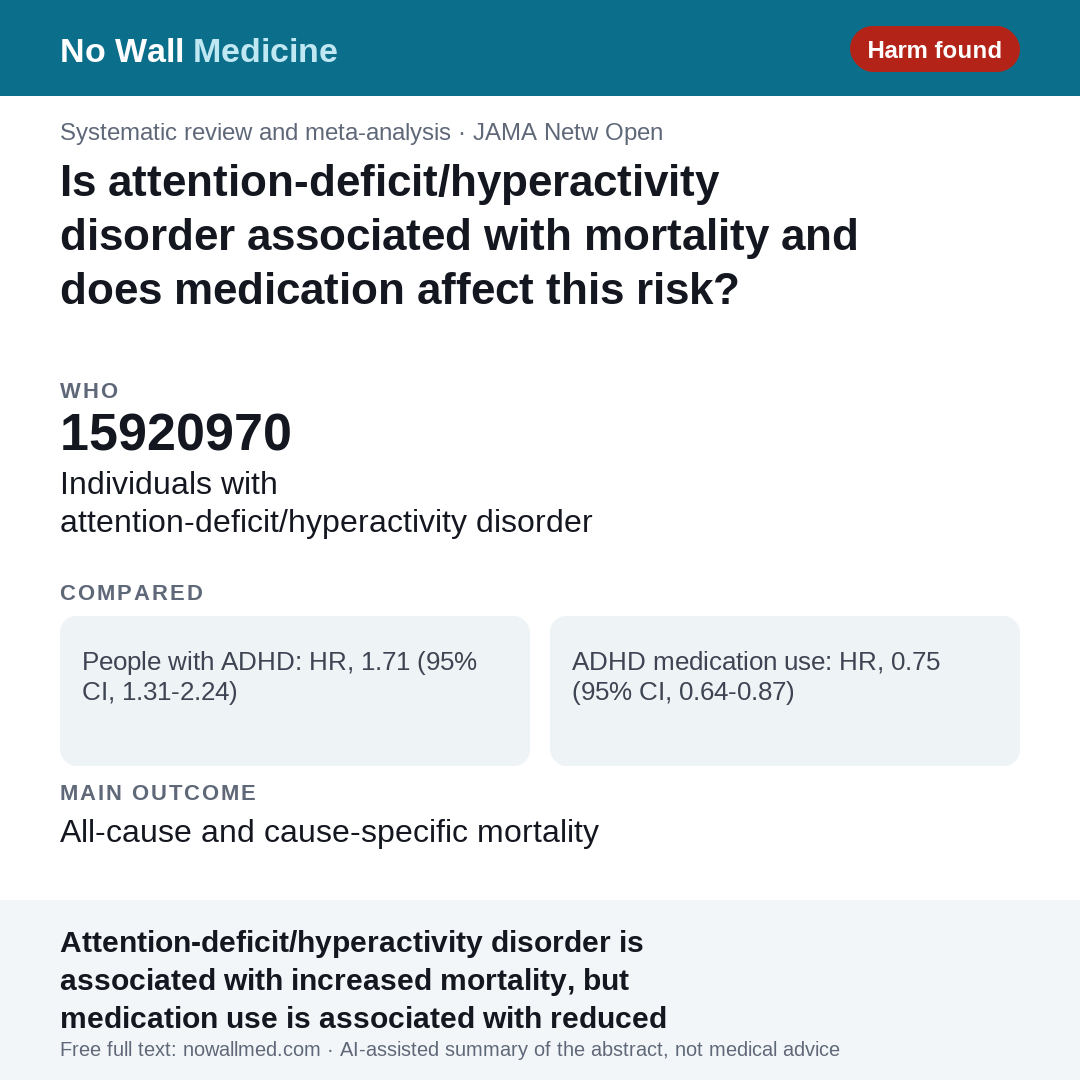
Clinical Decision Support for Fall Prevention in Primary Care: The eSTEPS Cluster Randomized Clinical Trial
Matched-pair cluster randomized clinical trialBenefit found
Does electronic health record-integrated clinical decision support reduce falls among older primary care patients?
Who
11945
Adults aged 65 years or older with positive fall-risk screen · 22 primary care practices within an integrated health system, US
Compared
eSTEPS intervention: 19.3 (95% CI, 18.6-20.1) per 100 patient-years
Control: 21.2 (95% CI, 20.2-22.1) per 100 patient-years
Main outcome
Rate of 1 or more ICD-10-coded falls per 100 patient-years
Result: rate ratio 0.91 (95% CI, 0.88-0.95)
Bottom line: Electronic health record-integrated decision support modestly reduced falls and fall-related injuries in older primary care patients.
JAMA Netw Open · 2026-10-01Download image
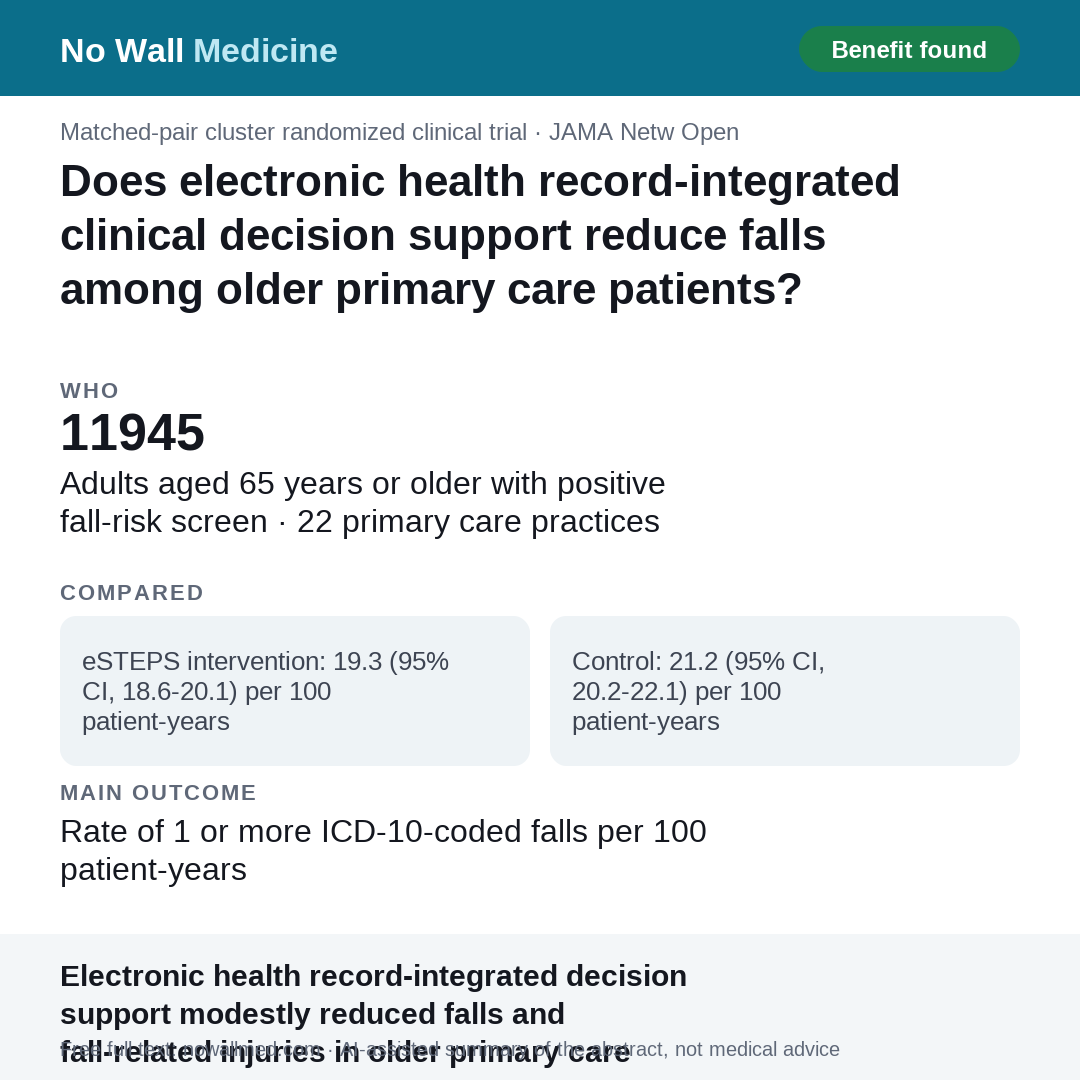
Laser Therapy for Sexual Health in Breast Cancer Survivors Receiving Aromatase Inhibitors: A Secondary Analysis of a Randomized Clinical Trial
Double-blind, sham-controlled randomized clinical trialNo clear difference
Does fractional carbon dioxide laser therapy improve sexual health in breast cancer survivors receiving aromatase inhibitors?
Who
84
Breast cancer survivors with genitourinary syndrome of menopause and dyspareunia · Tertiary academic hospital in Spain
Compared
Fractional carbon dioxide laser therapy
Sham laser therapy
Main outcome
Change in Female Sexual Function Index score
Result: difference, CLT vs SLT, -0.69 (95% CI, -3.58 to 2.20)
Bottom line: Fractional carbon dioxide laser therapy provided no additional benefit for sexual or vaginal health compared to sham therapy.
Limitation: Improvements in both groups likely reflected first-line nonhormonal therapy adherence or contextual factors.
JAMA Netw Open · 2026-10-01Download image
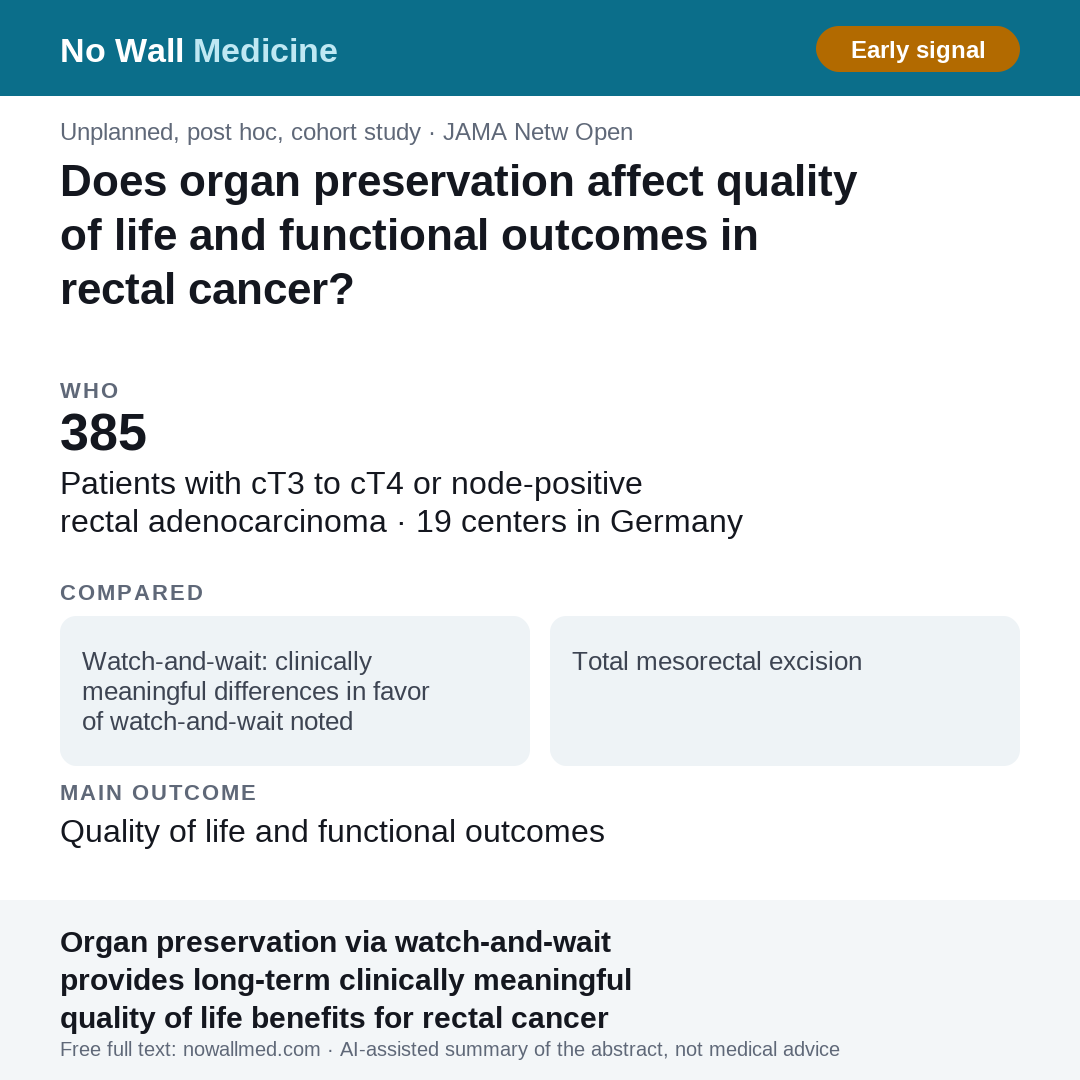
Organ Preservation and Quality of Life After Total Neoadjuvant Treatment in Rectal Cancer
Unplanned, post hoc, cohort studyBenefit found
Does organ preservation affect quality of life and functional outcomes in rectal cancer?
Who
385
Patients with cT3 to cT4 or node-positive rectal adenocarcinoma · 19 centers in Germany
Compared
Watch-and-wait: clinically meaningful differences in favor of watch-and-wait noted
Total mesorectal excision
Main outcome
Quality of life and functional outcomes
Bottom line: Organ preservation via watch-and-wait provides long-term clinically meaningful quality of life benefits for rectal cancer patients.
Limitation: In the absence of prospective randomized trials
JAMA Netw Open · 2026-10-01Download image
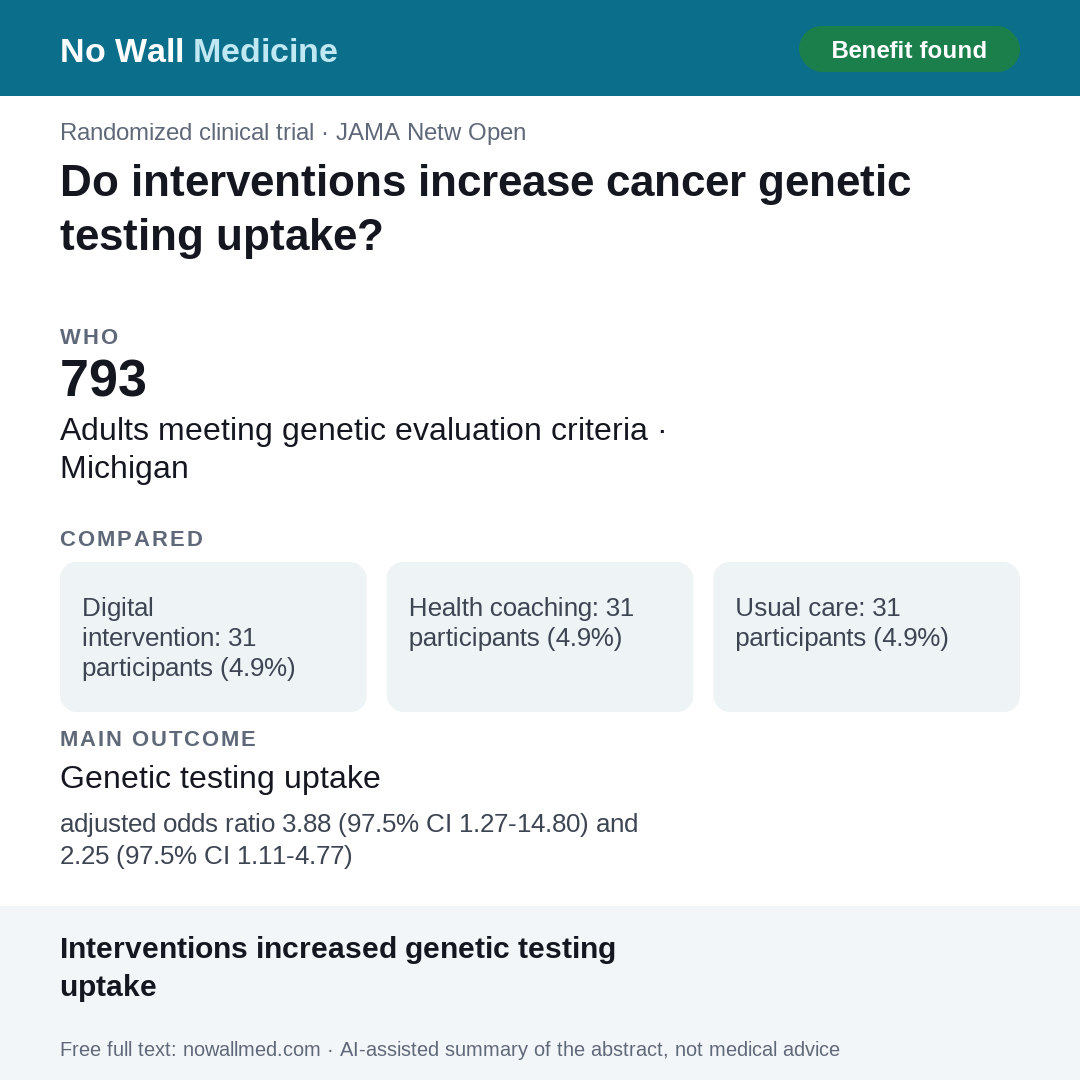
Digital and Coaching Interventions for Uptake of Cancer Genetic Testing: The MiGHT Randomized Clinical Trial
Randomized clinical trialBenefit found
Do interventions increase cancer genetic testing uptake?
Who
793
Adults meeting genetic evaluation criteria · Michigan
Compared
Digital intervention: 31 participants (4.9%)
Health coaching: 31 participants (4.9%)
Usual care: 31 participants (4.9%)
Main outcome
Genetic testing uptake
Result: adjusted odds ratio 3.88 (97.5% CI 1.27-14.80) and 2.25 (97.5% CI 1.11-4.77)
Bottom line: Interventions increased genetic testing uptake
JAMA Netw Open · 2026-10-01Download image
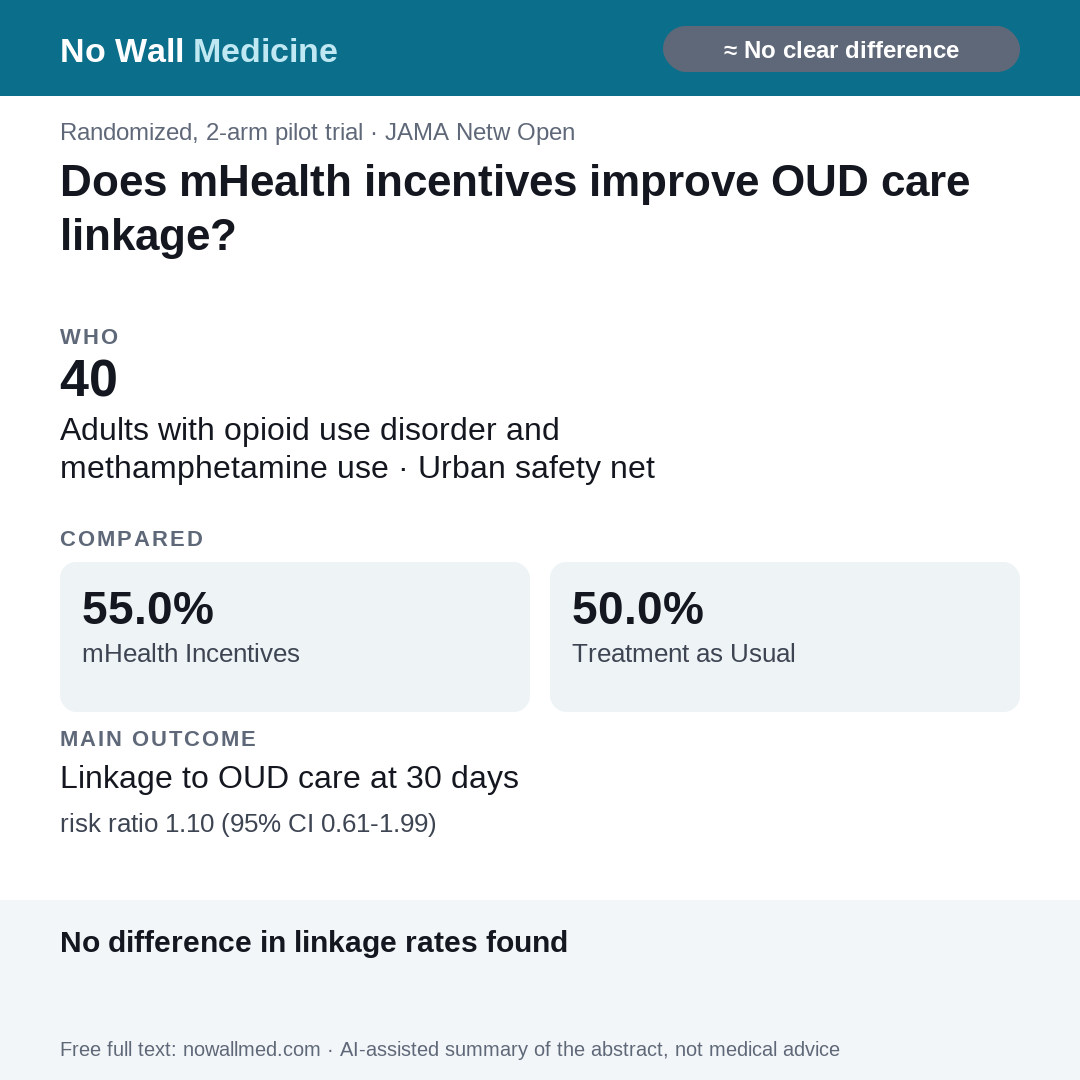
Patient Navigation Plus mHealth Incentives for Linkage to OUD Care for Adults Who Also Use Methamphetamines: A Pilot Randomized Clinical Trial
Randomized, 2-arm pilot trialNo clear difference
Does mHealth incentives improve OUD care linkage?
Who
40
Adults with opioid use disorder and methamphetamine use · Urban safety net hospital
Compared
55.0%mHealth Incentives (11/20)
50.0%Treatment as Usual (10/20)
Main outcome
Linkage to OUD care at 30 days
Result: risk ratio 1.10 (95% CI 0.61-1.99)
Bottom line: No difference in linkage rates found
JAMA Netw Open · 2026-10-01Download image
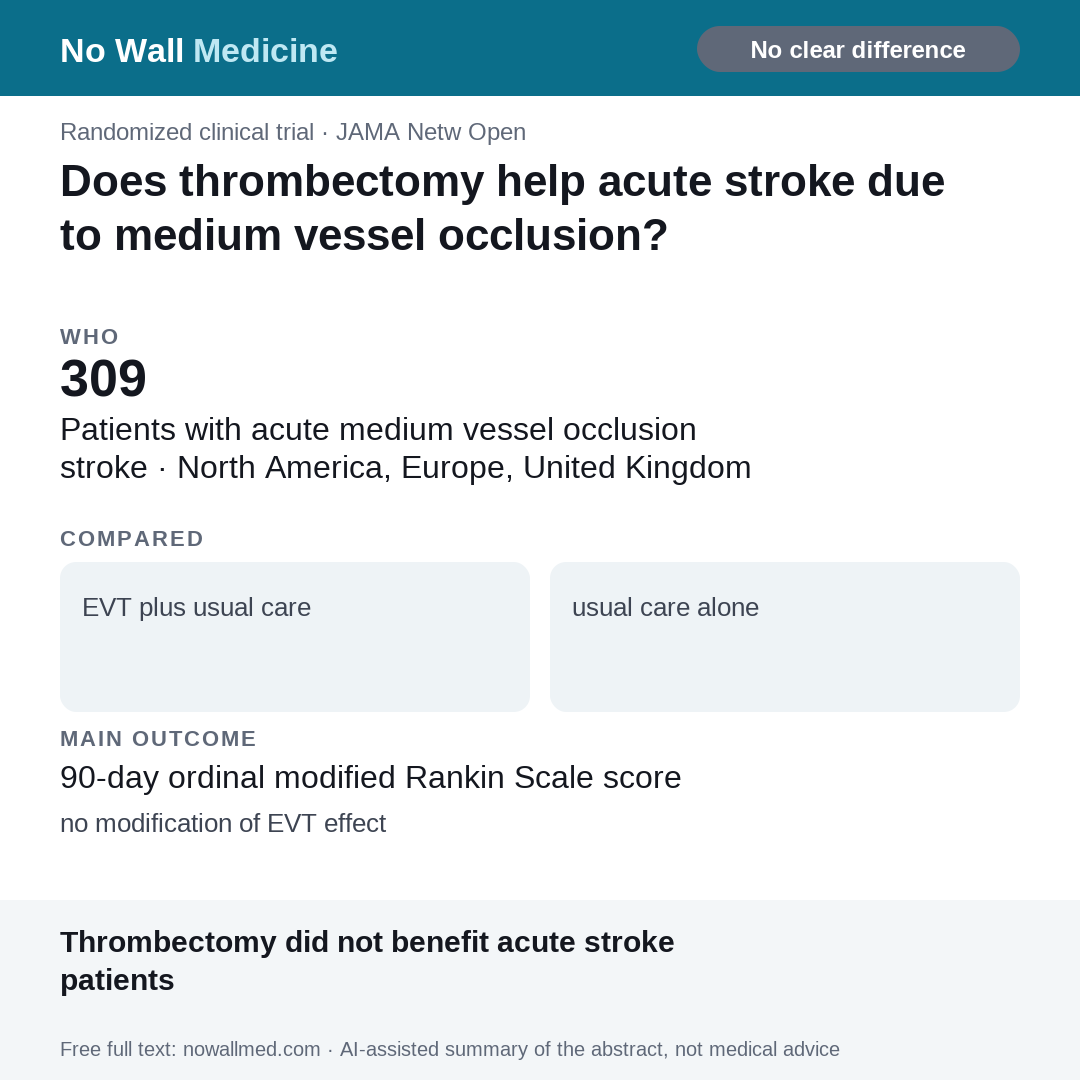
Thrombectomy for Acute Stroke Due to Medium Vessel Occlusion Across Perfusion Mismatch Profiles: A Post Hoc Analysis of the ESCAPE-MeVO Trial
Randomized clinical trialNo clear difference
Does thrombectomy help acute stroke due to medium vessel occlusion?
Who
309
Patients with acute medium vessel occlusion stroke · North America, Europe, United Kingdom
Compared
EVT plus usual care
usual care alone
Main outcome
90-day ordinal modified Rankin Scale score
Result: no modification of EVT effect
Bottom line: Thrombectomy did not benefit acute stroke patients
Limitation: post hoc analysis
JAMA Netw Open · 2026-10-01Download image
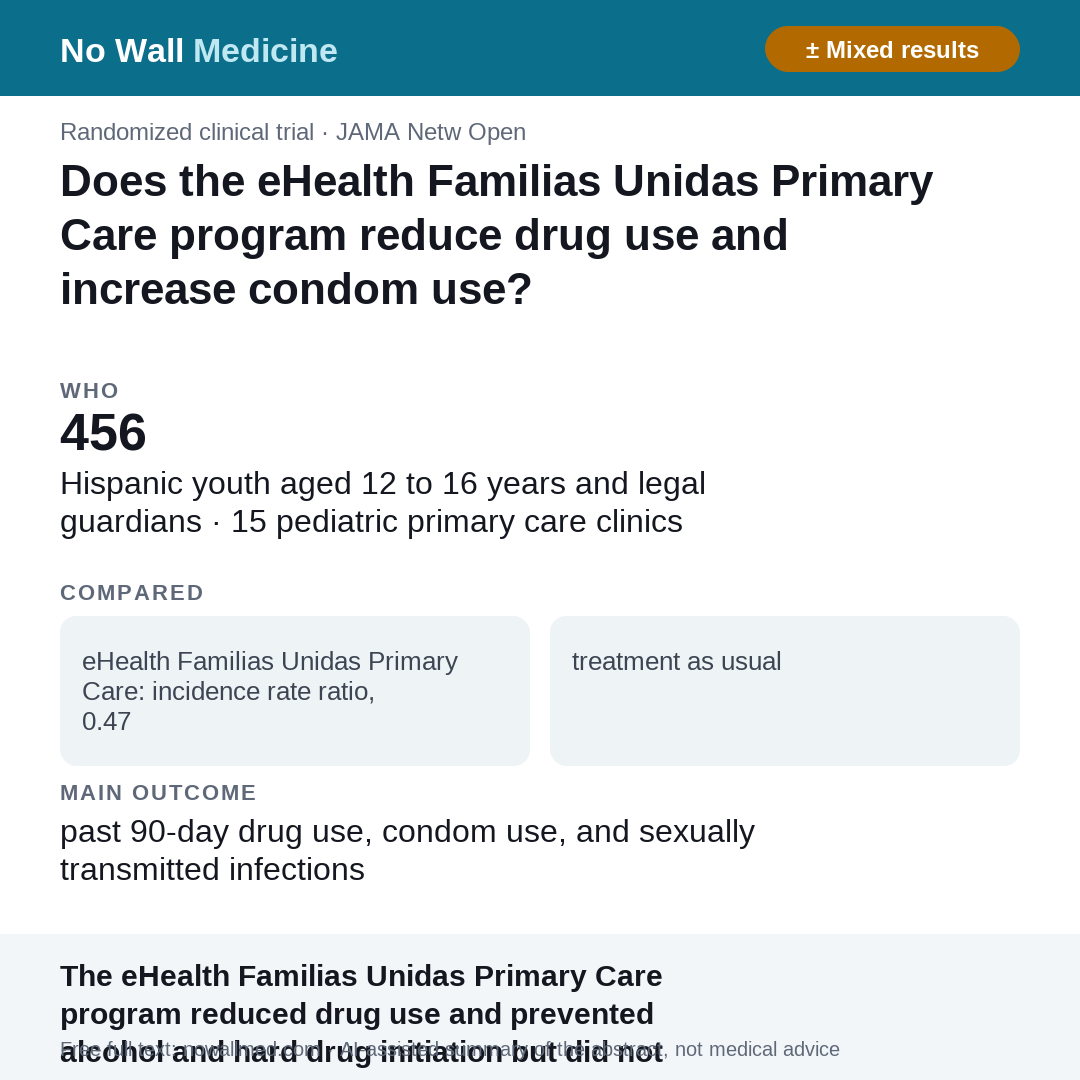
A Primary Care E-Health Family Intervention for Risk Behaviors in Hispanic Youths: A Randomized Clinical Trial
Randomized clinical trialMixed results
Does the eHealth Familias Unidas Primary Care program reduce drug use and increase condom use?
Who
456
Hispanic youth aged 12 to 16 years and legal guardians · 15 pediatric primary care clinics
Compared
eHealth Familias Unidas Primary Care: incidence rate ratio, 0.47
treatment as usual
Main outcome
past 90-day drug use, condom use, and sexually transmitted infections
Result: incidence rate ratio, 0.47; 95% CI, -0.84 to -0.55
Bottom line: The eHealth Familias Unidas Primary Care program reduced drug use and prevented alcohol and hard drug initiation but did not affect condom use.
JAMA Netw Open · 2026-10-01Download image
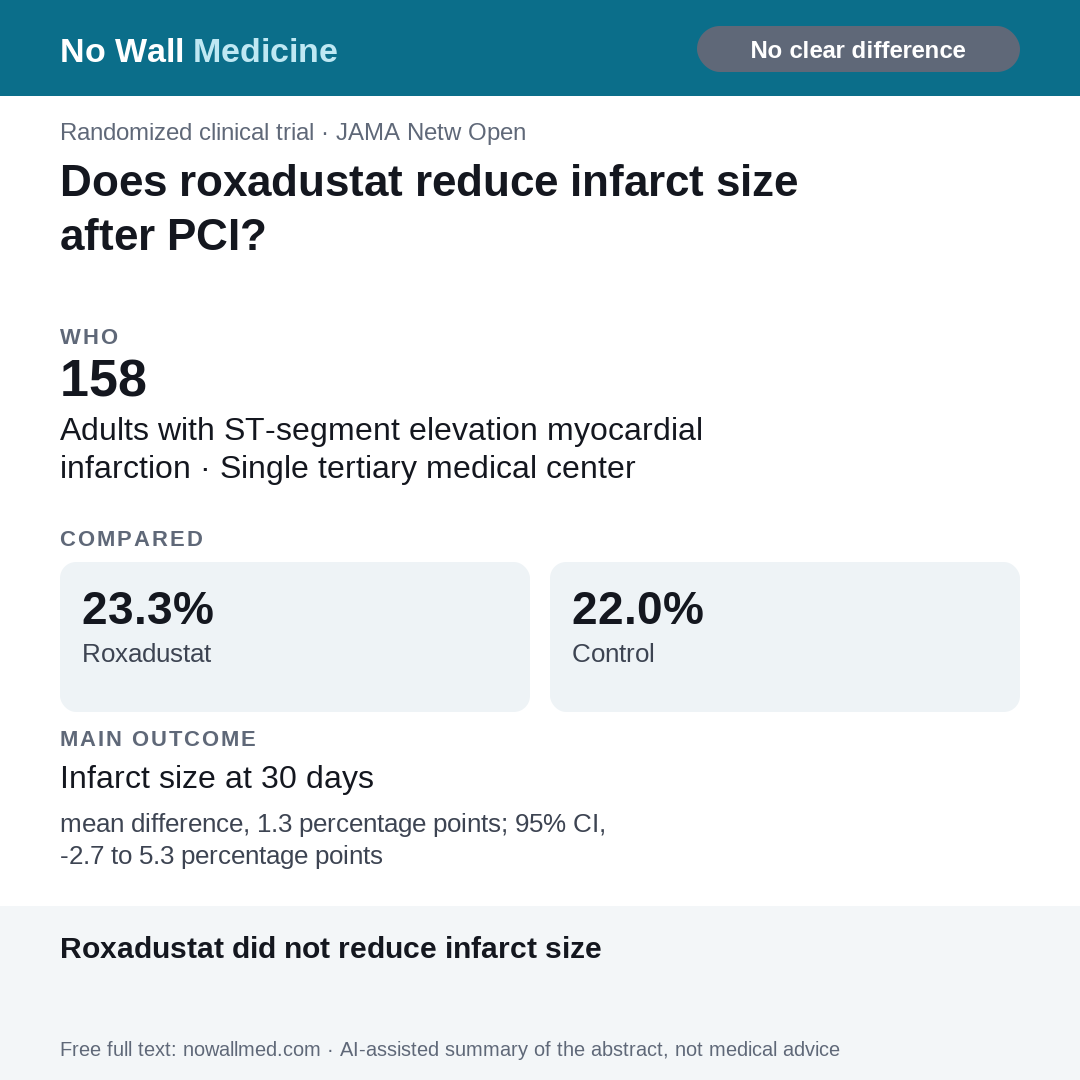
Roxadustat Treatment After PCI Among Patients With ST-Segment Elevation Myocardial Infarction: A Randomized Clinical Trial
Randomized clinical trialNo clear difference
Does roxadustat reduce infarct size after PCI?
Who
158
Adults with ST-segment elevation myocardial infarction · Single tertiary medical center
Compared
23.3%Roxadustat (12.2%)
22.0%Control (12.2%)
Main outcome
Infarct size at 30 days
Result: mean difference, 1.3 percentage points; 95% CI, -2.7 to 5.3 percentage points
Bottom line: Roxadustat did not reduce infarct size
JAMA Netw Open · 2026-10-01Download image
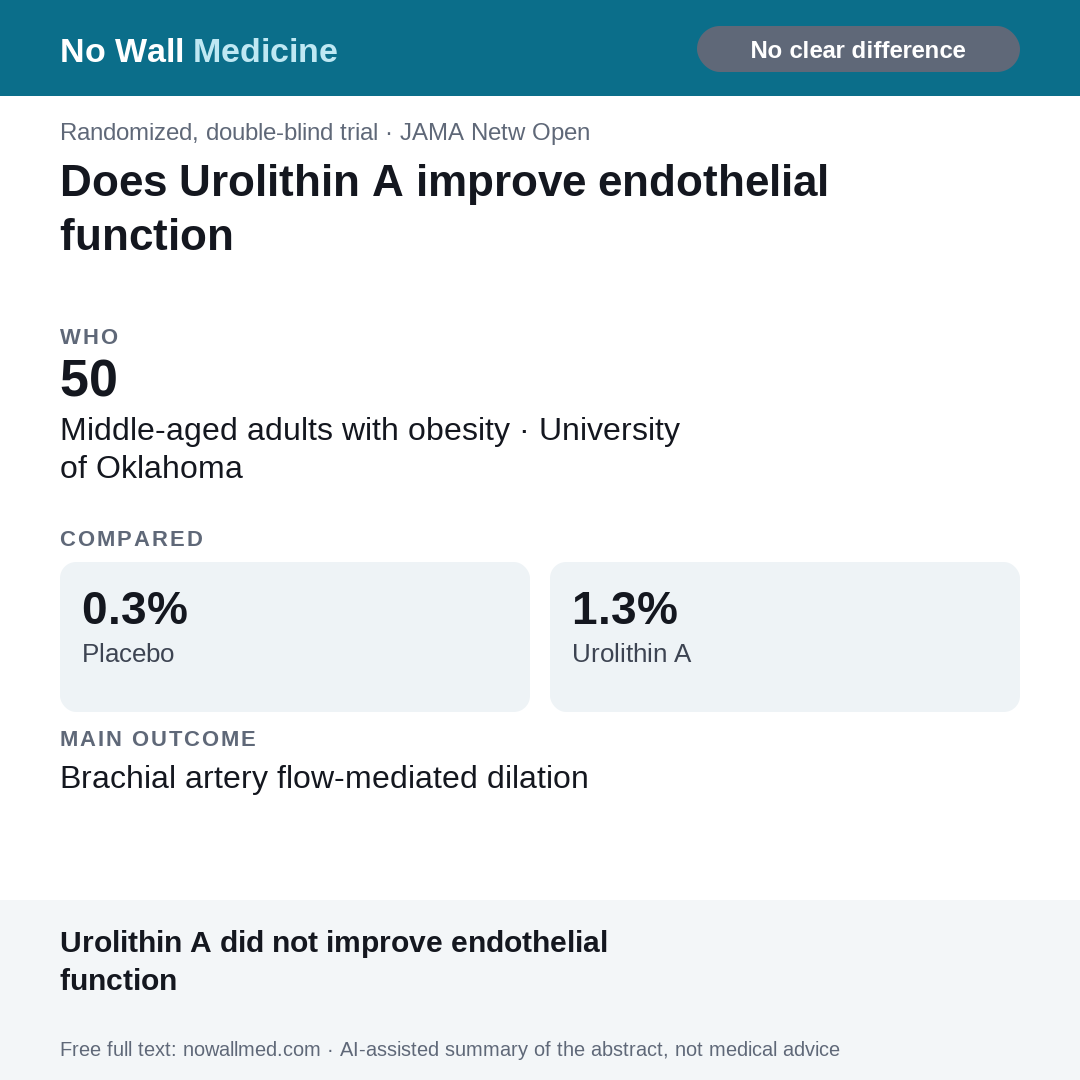
Urolithin A and Endothelial and Cerebrovascular Function in Middle-Aged Adults With Obesity: A Randomized Clinical Trial
Randomized, double-blind trialNo clear difference
Does Urolithin A improve endothelial function
Who
50
Middle-aged adults with obesity · University of Oklahoma
Compared
0.3%Placebo (5.1%)
1.3%Urolithin A (7.6%)
Main outcome
Brachial artery flow-mediated dilation
Bottom line: Urolithin A did not improve endothelial function
JAMA Netw Open · 2026-10-01Download image
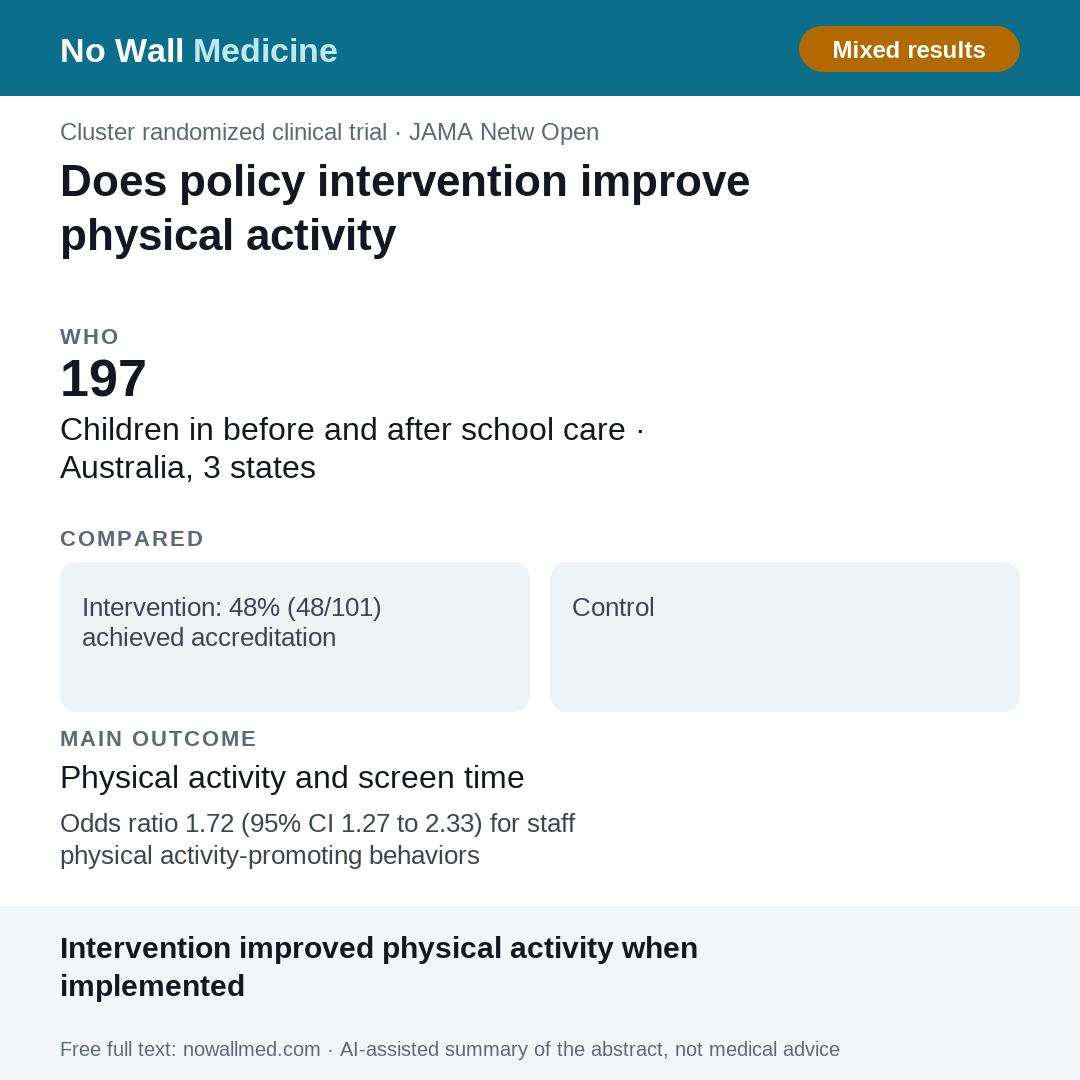
A Policy-Based Intervention for Physical Activity and Screen Time in Childcare Outside School Hours: A Cluster Randomized Clinical Trial
Cluster randomized clinical trialMixed results
Does policy intervention improve physical activity
Who
197
Children in before and after school care · Australia, 3 states
Compared
Intervention: 48% (48/101) achieved accreditation
Control
Main outcome
Physical activity and screen time
Result: Odds ratio 1.72 (95% CI 1.27 to 2.33) for staff physical activity-promoting behaviors
Bottom line: Intervention improved physical activity when implemented
Limitation: Limited uptake constrained population-level impact
JAMA Netw Open · 2026-10-01Download image
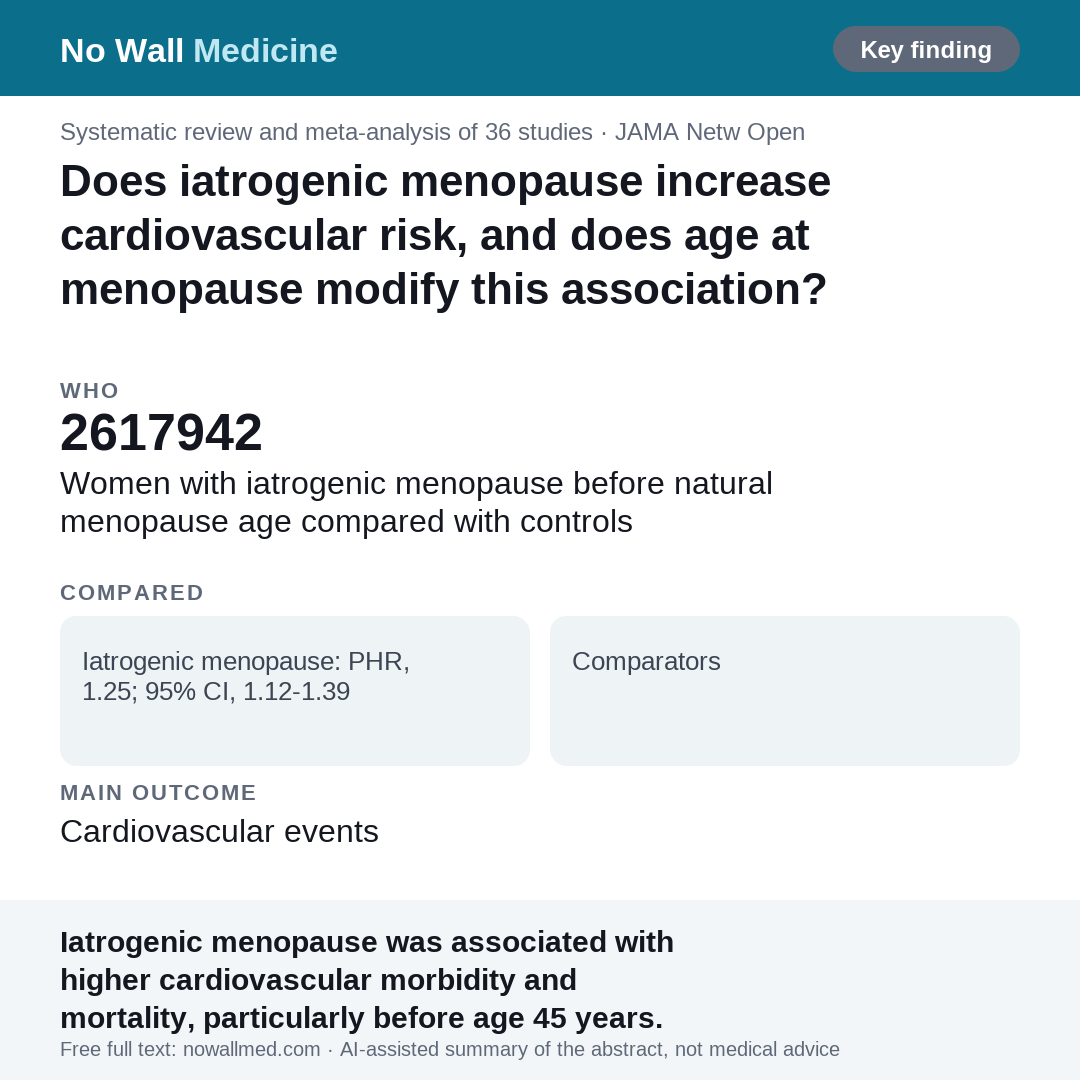
Age at Iatrogenic Menopause and Cardiovascular Morbidity and Mortality: A Systematic Review and Meta-Analysis
Meta-analysis of 36 studiesHarm found
Iatrogenic menopause impact on cardiovascular health
Who
2617942
women with iatrogenic menopause and comparators
Compared
Iatrogenic menopause before 45
Iatrogenic menopause at or after 45
Main outcome
cardiovascular morbidity and mortality
Result: hazard ratio 1.08 (95% CI 1.01 to 1.16) for all-cause mortality
Bottom line: Iatrogenic menopause increases cardiovascular risk
JAMA Netw Open · 2026-10-01Download image