Visual abstracts
New randomized trials and meta-analyses from leading journals at a glance: who was studied, what was compared, and what was found. Every paper is free to read in full.
All specialtiesCardiology 1182Oncology 1030Gastroenterology & Hepatology 411Infectious Disease 775Neurology 481Psychiatry & Mental Health 594Pulmonology 500Critical Care 344Endocrinology & Diabetes 654Pediatrics 701Surgery 519Orthopedics & Sports Medicine 225Neurosurgery 161Cardiothoracic & Vascular Surgery 129Plastic & Reconstructive Surgery 186Nephrology 248Rheumatology 156Hematology 240Dermatology 112Ophthalmology 134Obstetrics & Gynecology 358Public & Global Health 226Radiology & Imaging 153Anesthesiology 210Urology 214ENT (Otolaryngology) 160Emergency Medicine 125Allergy & Immunology 79Geriatrics 235Family Medicine & Primary Care 147Medical Genetics & Genomics 122Pathology & Laboratory Medicine 36Physical Medicine & Rehabilitation 202Palliative Care 107Nutrition 306Digital Health & AI 588General Medicine 112
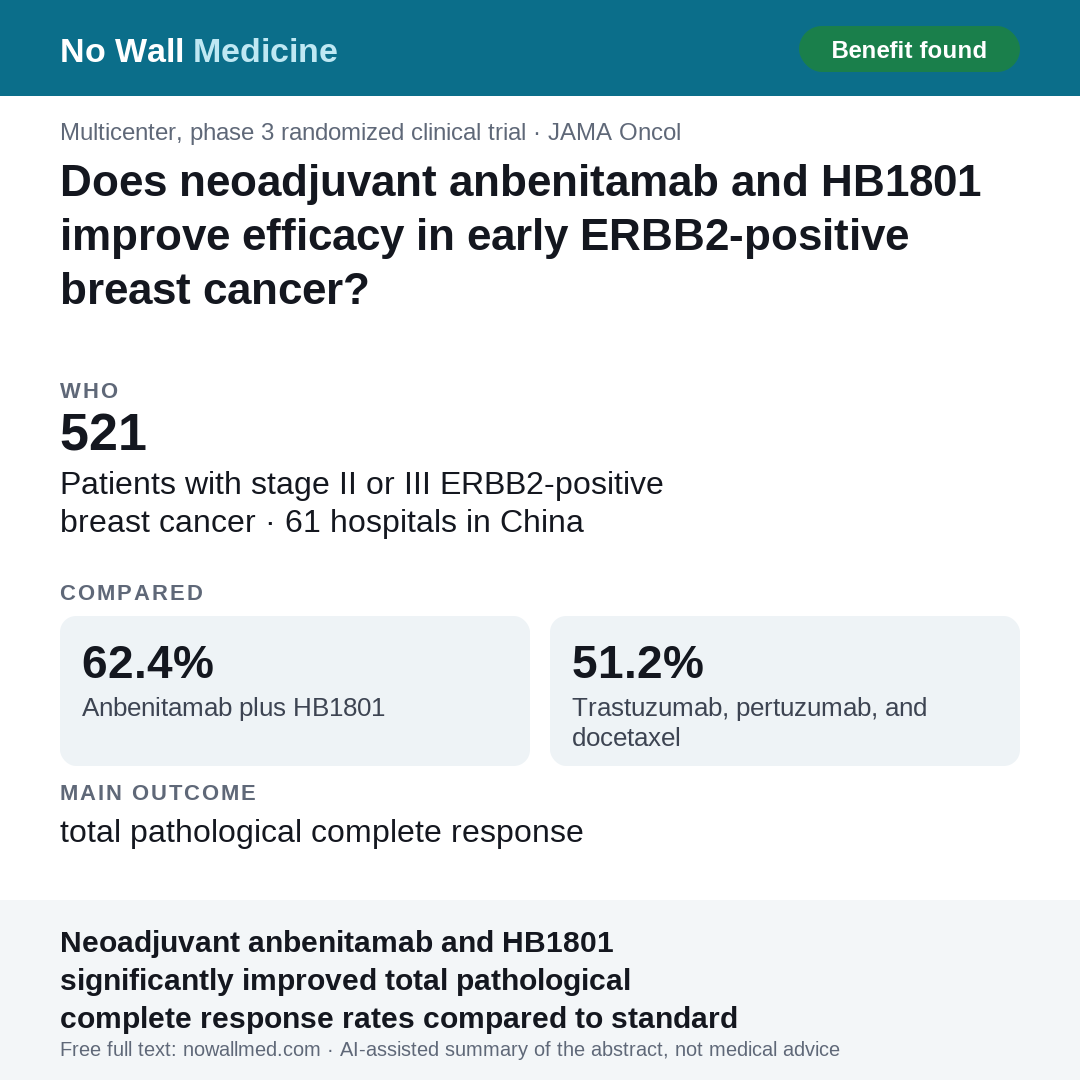
Neoadjuvant Anbenitamab and HB1801 in ERBB2-Positive Breast Cancer: A Phase 3 Randomized Clinical Trial
Multicenter, phase 3 randomized clinical trialBenefit found
Does neoadjuvant anbenitamab and HB1801 improve efficacy in early ERBB2-positive breast cancer?
Who
521
Patients with stage II or III ERBB2-positive breast cancer · 61 hospitals in China
Compared
62.4%Anbenitamab plus HB1801
51.2%Trastuzumab, pertuzumab, and docetaxel
Main outcome
total pathological complete response
Result: absolute difference, 11.4 (95% CI, 3.2 to 19.6) percentage points
Bottom line: Neoadjuvant anbenitamab and HB1801 significantly improved total pathological complete response rates compared to standard therapy.
JAMA Oncol · 2026-09-03Download image
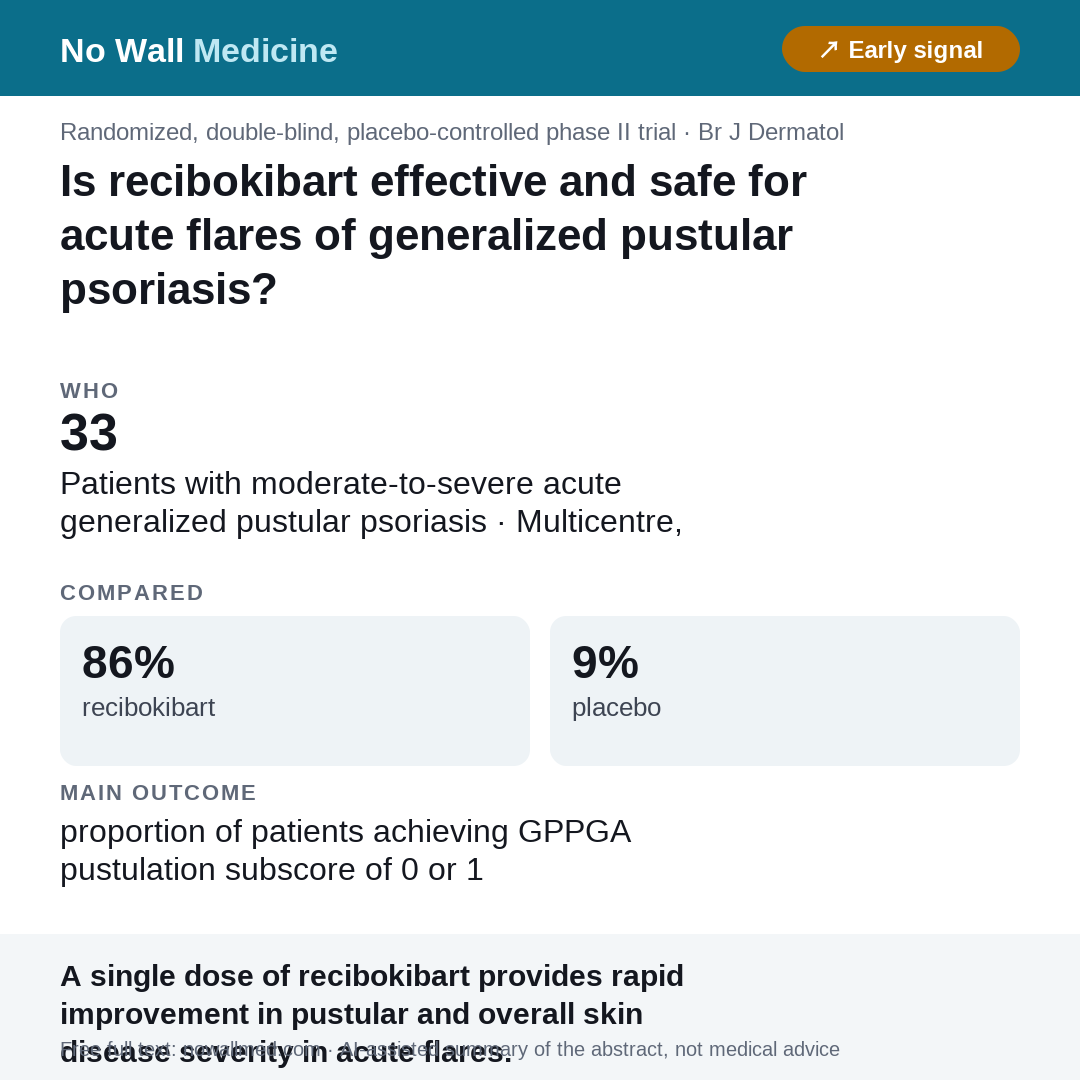
Efficacy and safety of recibokibart, an interleukin-36 receptor antibody, in generalized pustular psoriasis: a phase II randomized controlled trial
Randomized, double-blind, placebo-controlled phase II trialBenefit found
Is recibokibart effective and safe for acute flares of generalized pustular psoriasis?
Who
33
Patients with moderate-to-severe acute generalized pustular psoriasis · Multicentre, China
Compared
86%recibokibart
9%placebo
Main outcome
proportion of patients achieving GPPGA pustulation subscore of 0 or 1
Result: between-group difference 77.3%, 95% confidence interval 42.5-88.9
Bottom line: A single dose of recibokibart provides rapid improvement in pustular and overall skin disease severity in acute flares.
Limitation: assessments after day 8 included patients who received open-label treatment
Br J Dermatol · 2026-09-03Download image
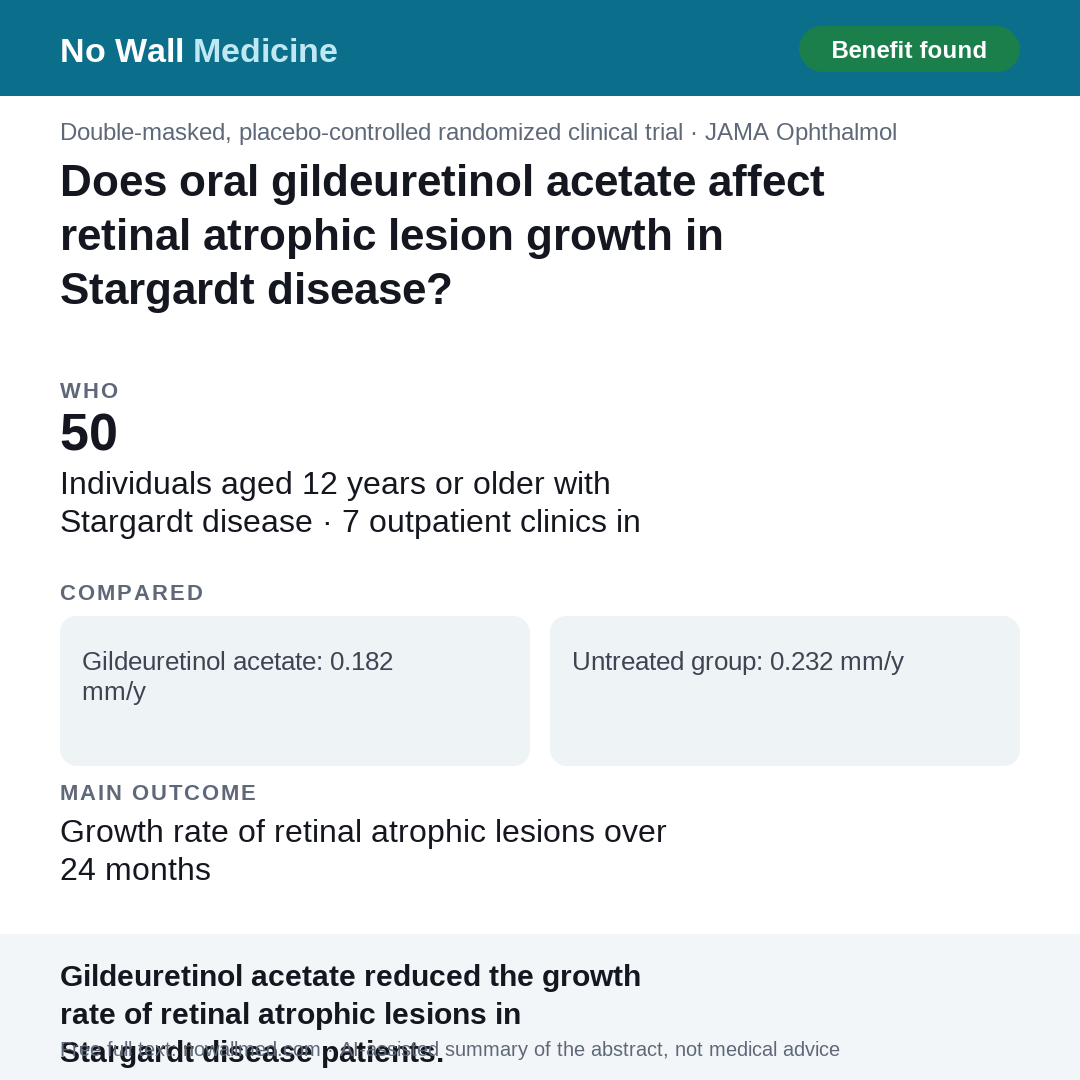
Safety and Effects of Gildeuretinol Acetate on Retinal Atrophic Lesions in Stargardt Disease: The TEASE-1 Randomized Clinical Trial
Double-masked, placebo-controlled randomized clinical trialBenefit found
Does oral gildeuretinol acetate affect retinal atrophic lesion growth in Stargardt disease?
Who
50
Individuals aged 12 years or older with Stargardt disease · 7 outpatient clinics in the US
Compared
Gildeuretinol acetate: 0.182 mm/y
Untreated group: 0.232 mm/y
Main outcome
Growth rate of retinal atrophic lesions over 24 months
Result: mean difference -0.050 mm/y (95% CI, -0.072 to -0.027)
Bottom line: Gildeuretinol acetate reduced the growth rate of retinal atrophic lesions in Stargardt disease patients.
JAMA Ophthalmol · 2026-09-03Download image
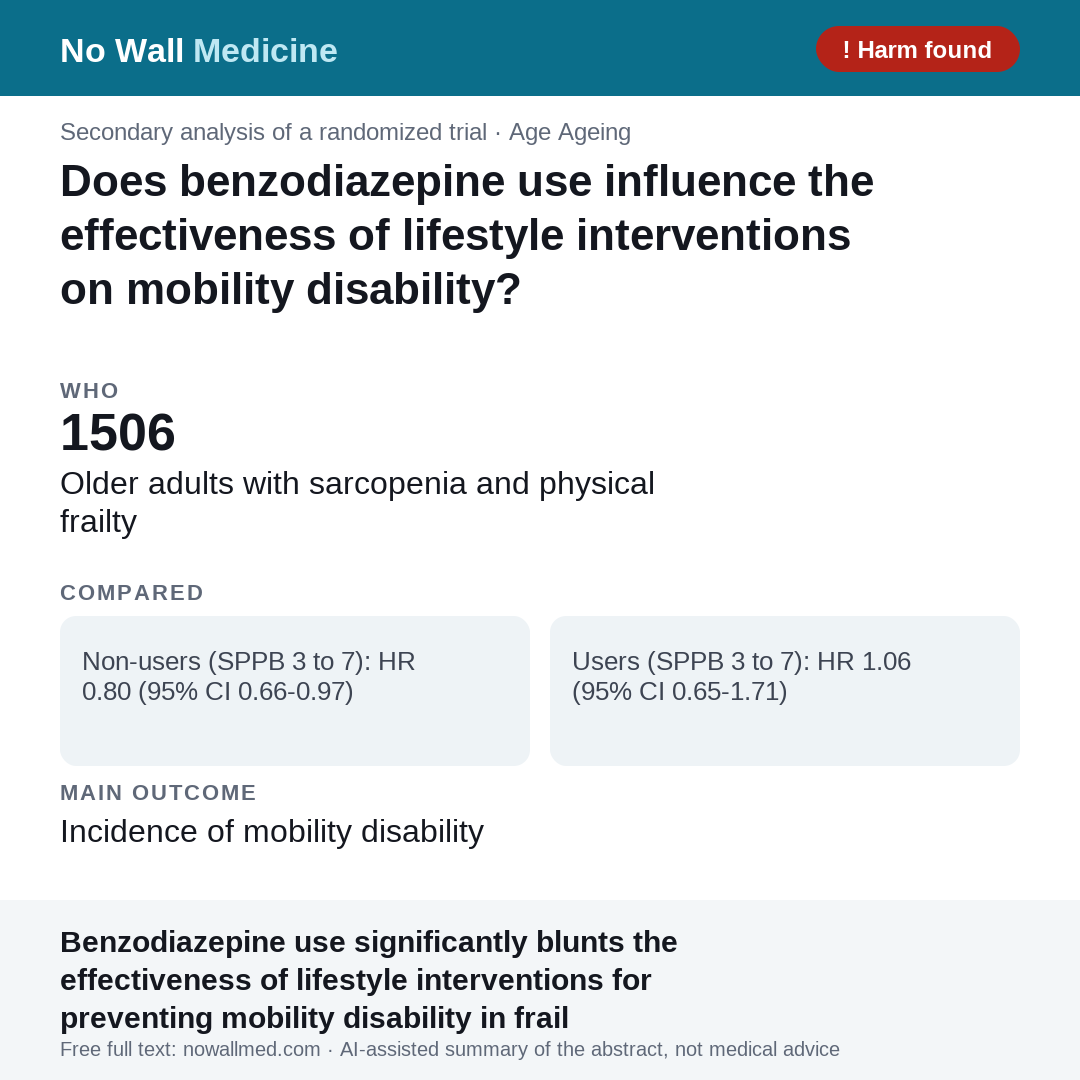
Does the use of benzodiazepine influence the effectiveness of lifestyle intervention? Secondary analysis from the Sarcopenia and Physical fRailty iN older people strategies (SPRINTT) trial
Secondary analysis of a randomized trialHarm found
Does benzodiazepine use influence the effectiveness of lifestyle interventions on mobility disability?
Who
1506
Older adults with sarcopenia and physical frailty
Compared
Non-users (SPPB 3 to 7): HR 0.80 (95% CI 0.66-0.97)
Users (SPPB 3 to 7): HR 1.06 (95% CI 0.65-1.71)
Main outcome
Incidence of mobility disability
Result: HR 0.80 (95% CI 0.66-0.97) for non-users vs HR 1.06 (95% CI 0.65-1.71) for users
Bottom line: Benzodiazepine use significantly blunts the effectiveness of lifestyle interventions for preventing mobility disability in frail older adults.
Age Ageing · 2026-09-03Download image
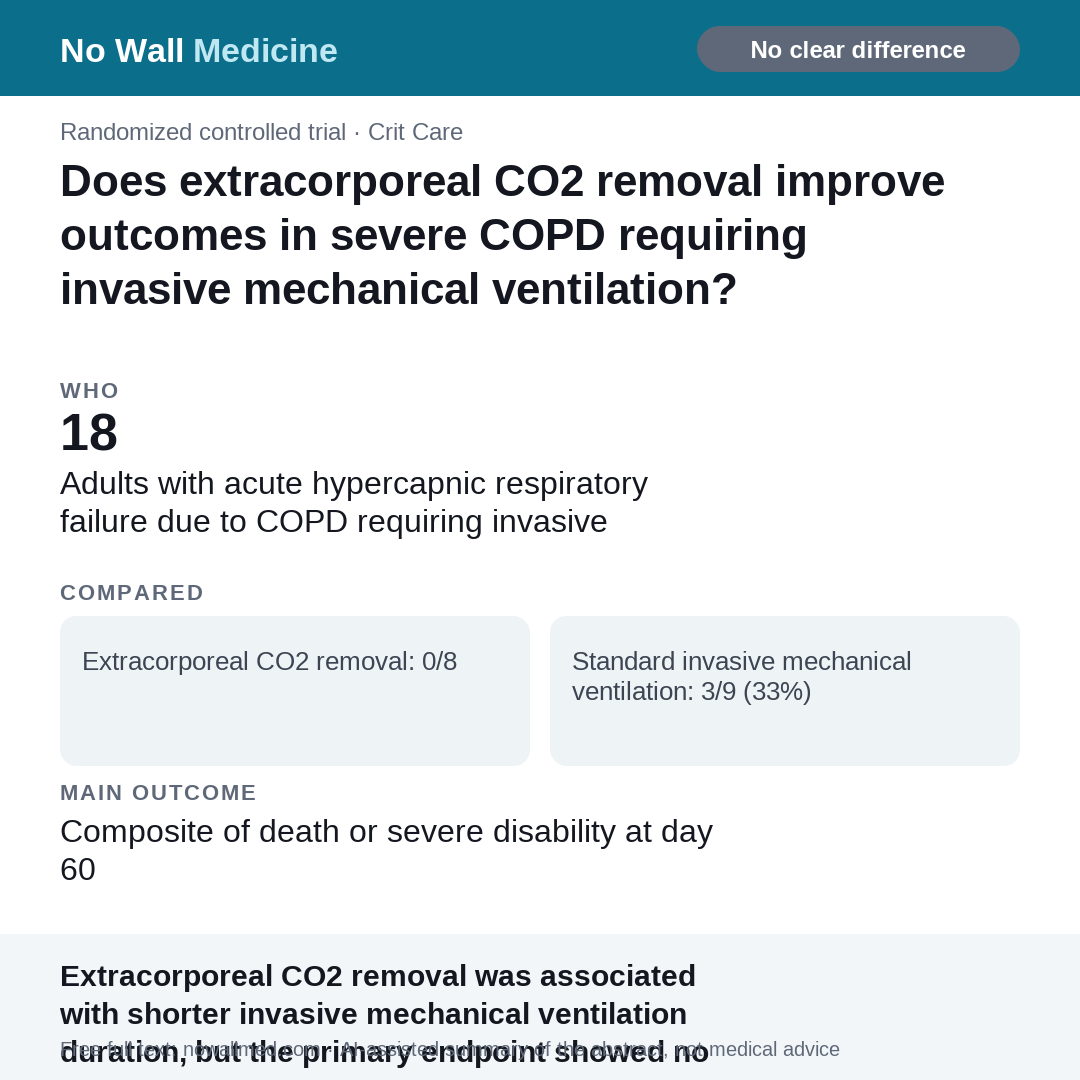
Extracorporeal CO2 elimination for acute exacerbation of severe COPD requiring invasive mechanical ventilation: a randomized controlled trial (the X-COPD trial)
Randomized controlled trialNo clear difference
Does extracorporeal CO2 removal improve outcomes in severe COPD requiring invasive mechanical ventilation?
Who
18
Adults with acute hypercapnic respiratory failure due to COPD requiring invasive mechanical ventilation
Compared
Extracorporeal CO2 removal: 0/8
Standard invasive mechanical ventilation: 3/9 (33%)
Main outcome
Composite of death or severe disability at day 60
Result: risk difference -33% (95% CI -65% to 6%)
Bottom line: Extracorporeal CO2 removal was associated with shorter invasive mechanical ventilation duration, but the primary endpoint showed no significant difference.
Limitation: Premature termination and very small sample size
Crit Care · 2026-09-03Download image
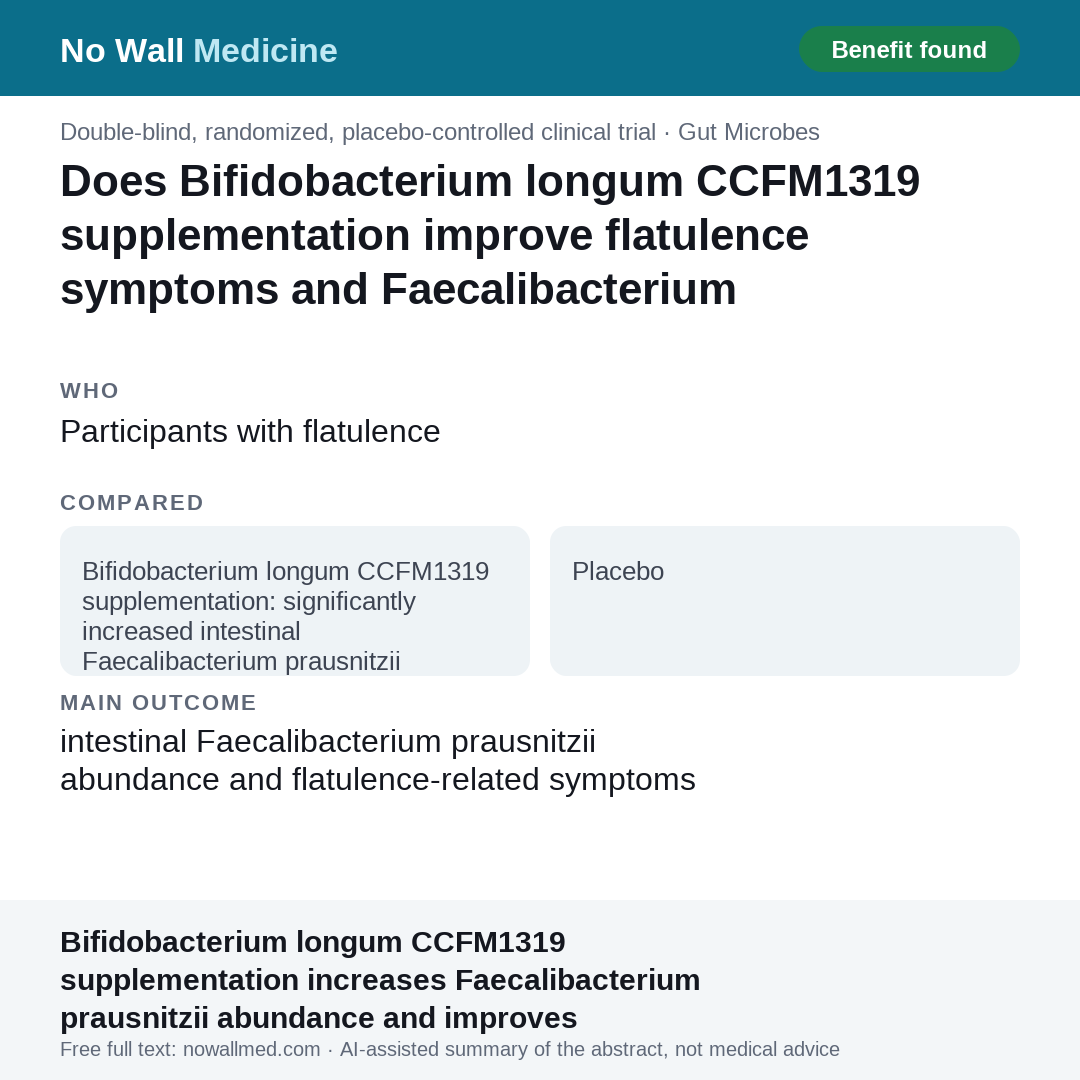
Gut microbiota and metabolic alterations in participants with flatulence identify Faecalibacterium prausnitzii as a key microbial target for clinical intervention
Double-blind, randomized, placebo-controlled clinical trialBenefit found
Does Bifidobacterium longum CCFM1319 supplementation improve flatulence symptoms and Faecalibacterium prausnitzii abundance?
Who
Participants with flatulence
Compared
Bifidobacterium longum CCFM1319 supplementation: significantly increased intestinal Faecalibacterium prausnitzii abundance and improved flatulence-related symptoms
Placebo
Main outcome
intestinal Faecalibacterium prausnitzii abundance and flatulence-related symptoms
Bottom line: Bifidobacterium longum CCFM1319 supplementation increases Faecalibacterium prausnitzii abundance and improves flatulence-related symptoms.
Gut Microbes · 2026-09-03Download image
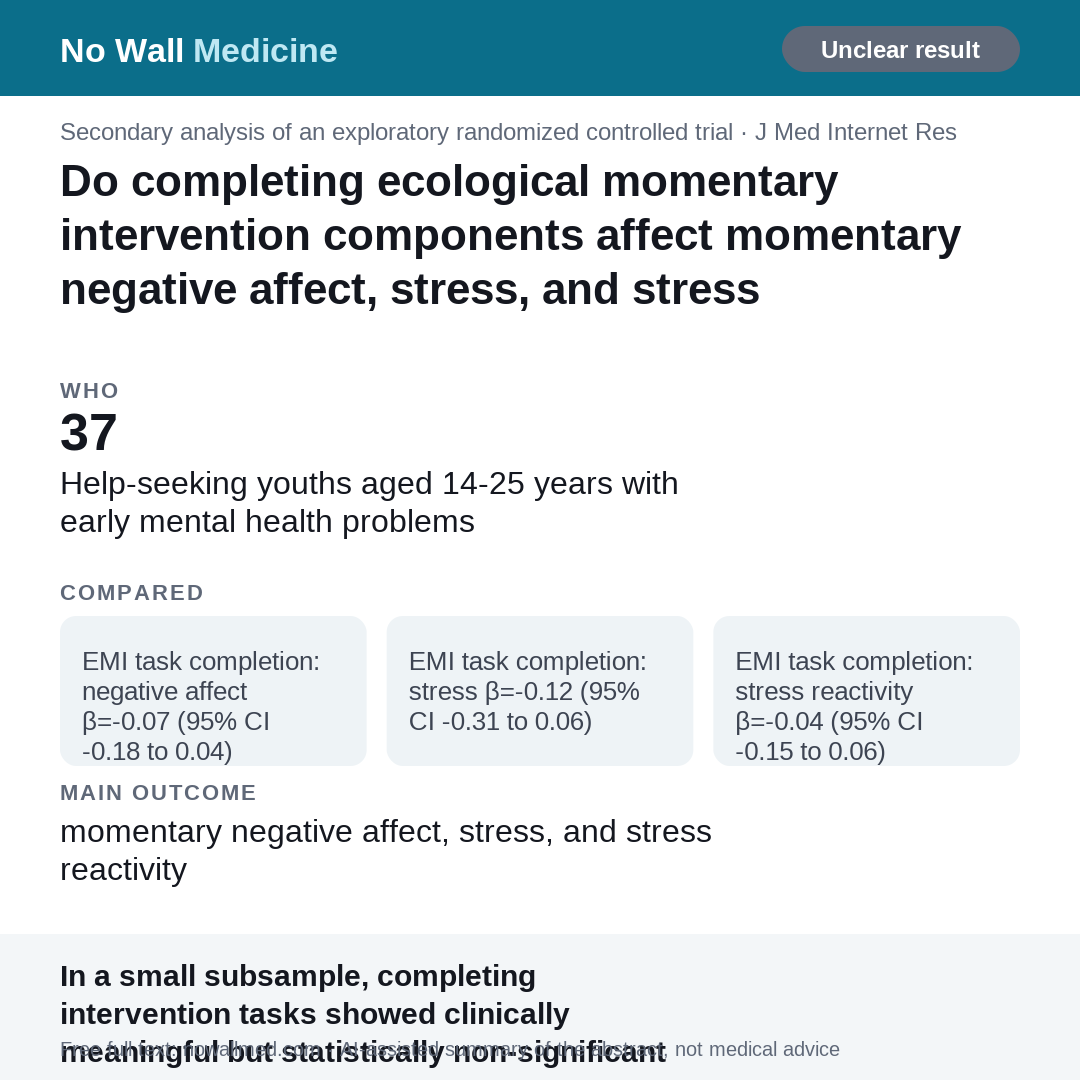
Proximal Effects of a Transdiagnostic, Ecological Momentary Intervention for Enhancing Resilience in Help-Seeking Young People (EMIcompass): Findings From a Secondary Analysis of an Exploratory Randomized Controlled Trial
Secondary analysis of an exploratory randomized controlled trialUnclear result
Do completing ecological momentary intervention components affect momentary negative affect, stress, and stress reactivity?
Who
37
Help-seeking youths aged 14-25 years with early mental health problems
Compared
EMI task completion: negative affect β=-0.07 (95% CI -0.18 to 0.04)
EMI task completion: stress β=-0.12 (95% CI -0.31 to 0.06)
EMI task completion: stress reactivity β=-0.04 (95% CI -0.15 to 0.06)
Main outcome
momentary negative affect, stress, and stress reactivity
Bottom line: In a small subsample, completing intervention tasks showed clinically meaningful but statistically non-significant effects on momentary mental health.
Limitation: Limited power due to a small subsample of 37 participants.
J Med Internet Res · 2026-09-03Download image
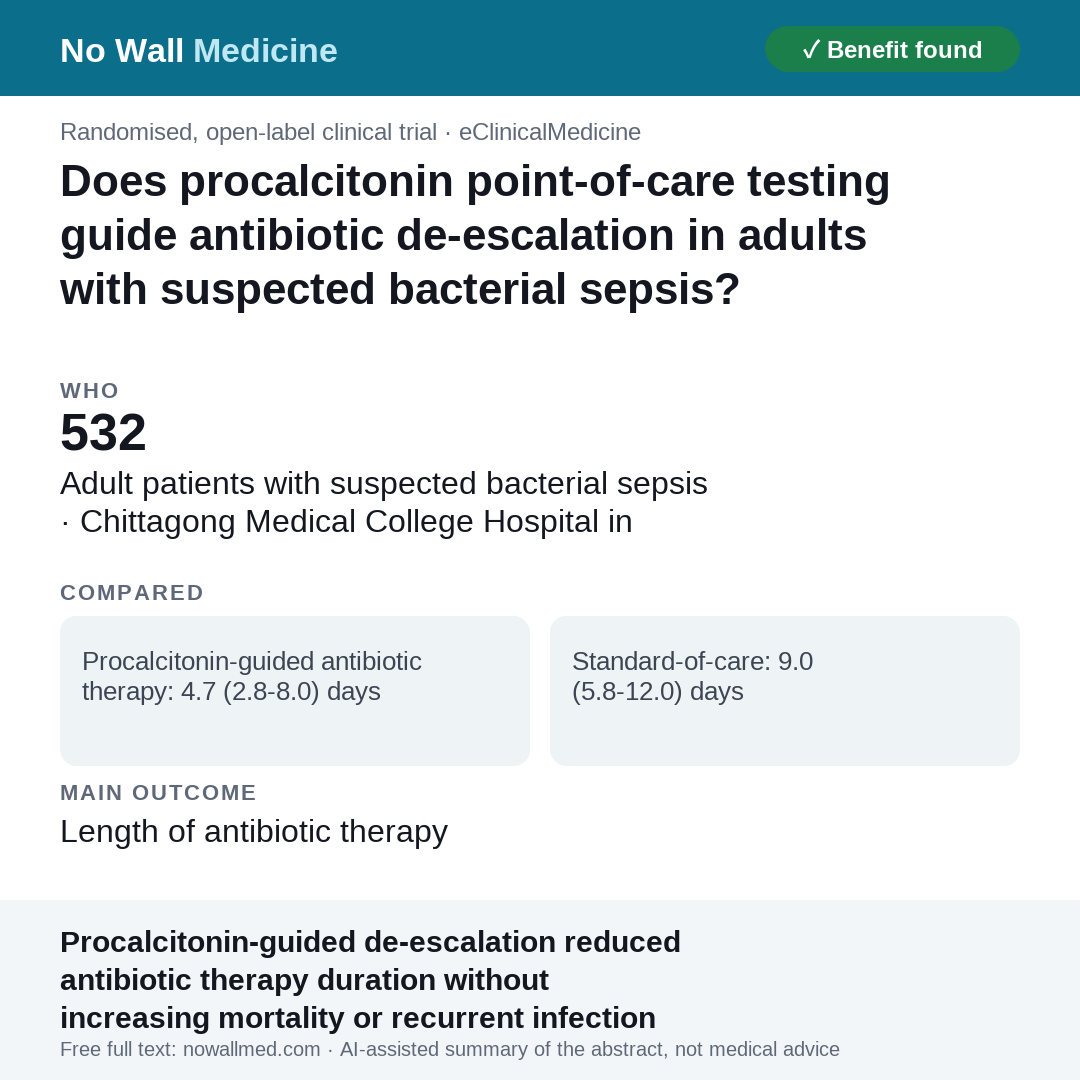
Use of procalcitonin point-of-care testing to guide de-escalation of antibiotic therapy in adults with suspected bacterial sepsis in a tertiary hospital in Bangladesh: a randomised controlled open-label trial
Randomised, open-label clinical trialBenefit found
Does procalcitonin point-of-care testing guide antibiotic de-escalation in adults with suspected bacterial sepsis?
Who
532
Adult patients with suspected bacterial sepsis · Chittagong Medical College Hospital in Bangladesh
Compared
Procalcitonin-guided antibiotic therapy: 4.7 (2.8-8.0) days
Standard-of-care: 9.0 (5.8-12.0) days
Main outcome
Length of antibiotic therapy
Bottom line: Procalcitonin-guided de-escalation reduced antibiotic therapy duration without increasing mortality or recurrent infection in adults with suspected sepsis.
Limitation: The trial was not powered to assess mortality and recurrent infection formally.
Funded by: Wellcome Trust of Great Britain
eClinicalMedicine · 2026-09-02Download image
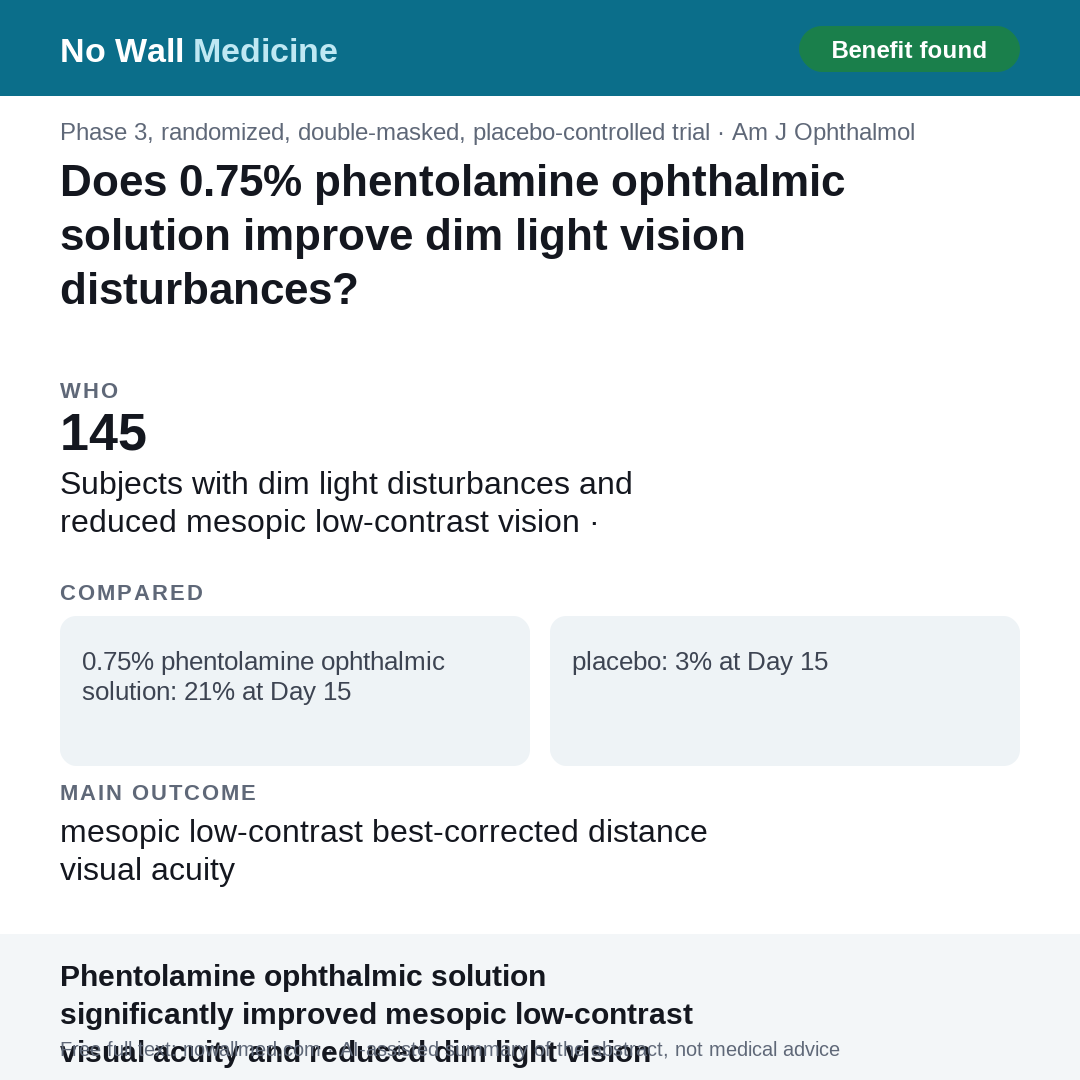
LYNX-1: A Phase 3 Study of 0.75% Phentolamine Ophthalmic Solution in Subjects With Dim Light Vision Disturbances
Phase 3, randomized, double-masked, placebo-controlled trialBenefit found
Does 0.75% phentolamine ophthalmic solution improve dim light vision disturbances?
Who
145
Subjects with dim light disturbances and reduced mesopic low-contrast vision · multicenter
Compared
0.75% phentolamine ophthalmic solution: 21% at Day 15
placebo: 3% at Day 15
Main outcome
mesopic low-contrast best-corrected distance visual acuity
Bottom line: Phentolamine ophthalmic solution significantly improved mesopic low-contrast visual acuity and reduced dim light vision disturbances.
Am J Ophthalmol · 2026-09-02Download image
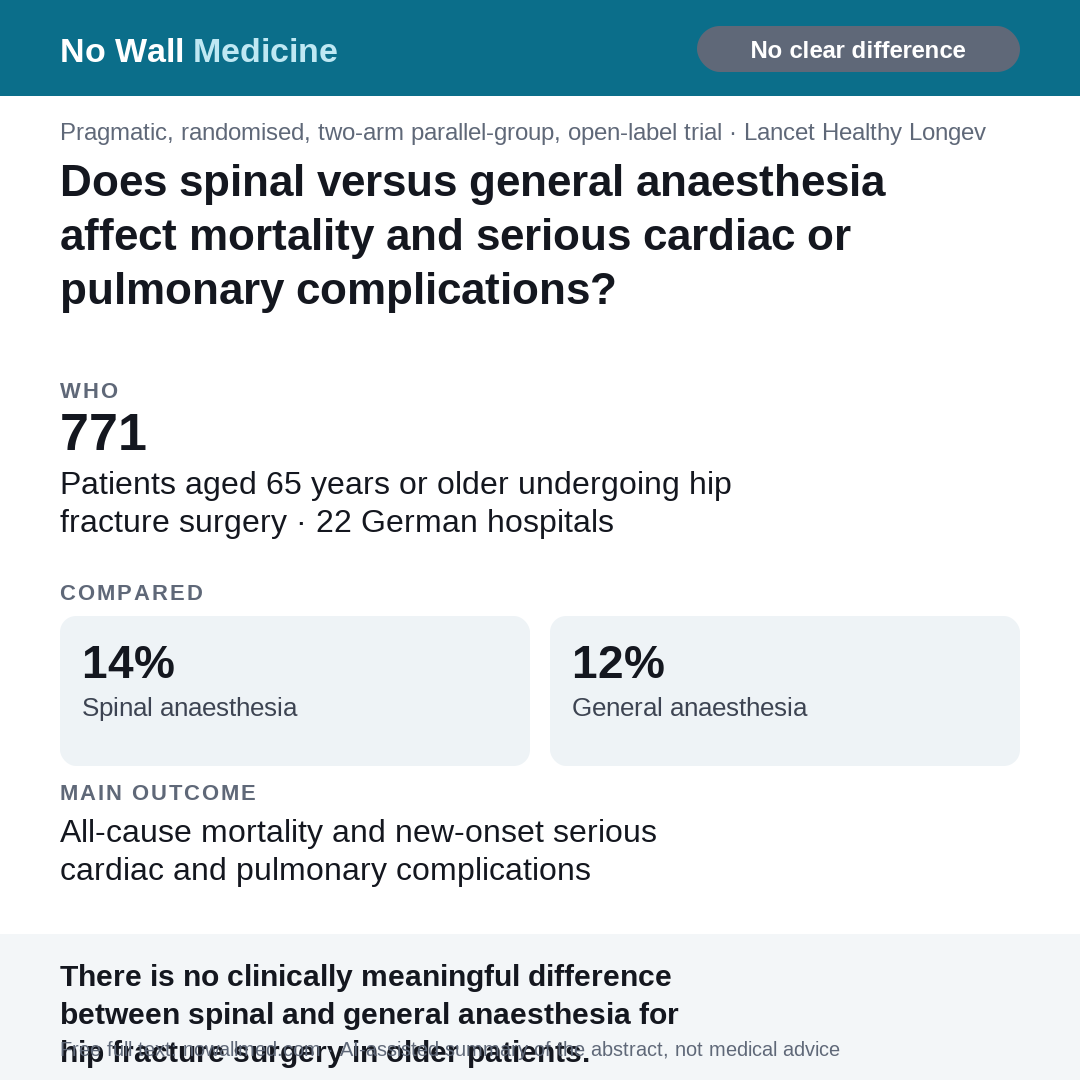
Spinal versus general anaesthesia and serious complications in older patients undergoing hip fracture surgery in Germany: a multicentre randomised clinical trial
Pragmatic, randomised, two-arm parallel-group, open-label trialNo clear difference
Does spinal versus general anaesthesia affect mortality and serious cardiac or pulmonary complications?
Who
771
Patients aged 65 years or older undergoing hip fracture surgery · 22 German hospitals
Compared
14%Spinal anaesthesia
12%General anaesthesia
Main outcome
All-cause mortality and new-onset serious cardiac and pulmonary complications
Result: hazard ratio 1.23, 95% CI 0.83-1.82
Bottom line: There is no clinically meaningful difference between spinal and general anaesthesia for hip fracture surgery in older patients.
Limitation: Premature trial termination, modest statistical power, and high treatment crossover.
Funded by: German Federal Ministry of Education and Research
Lancet Healthy Longev · 2026-09-02Download image
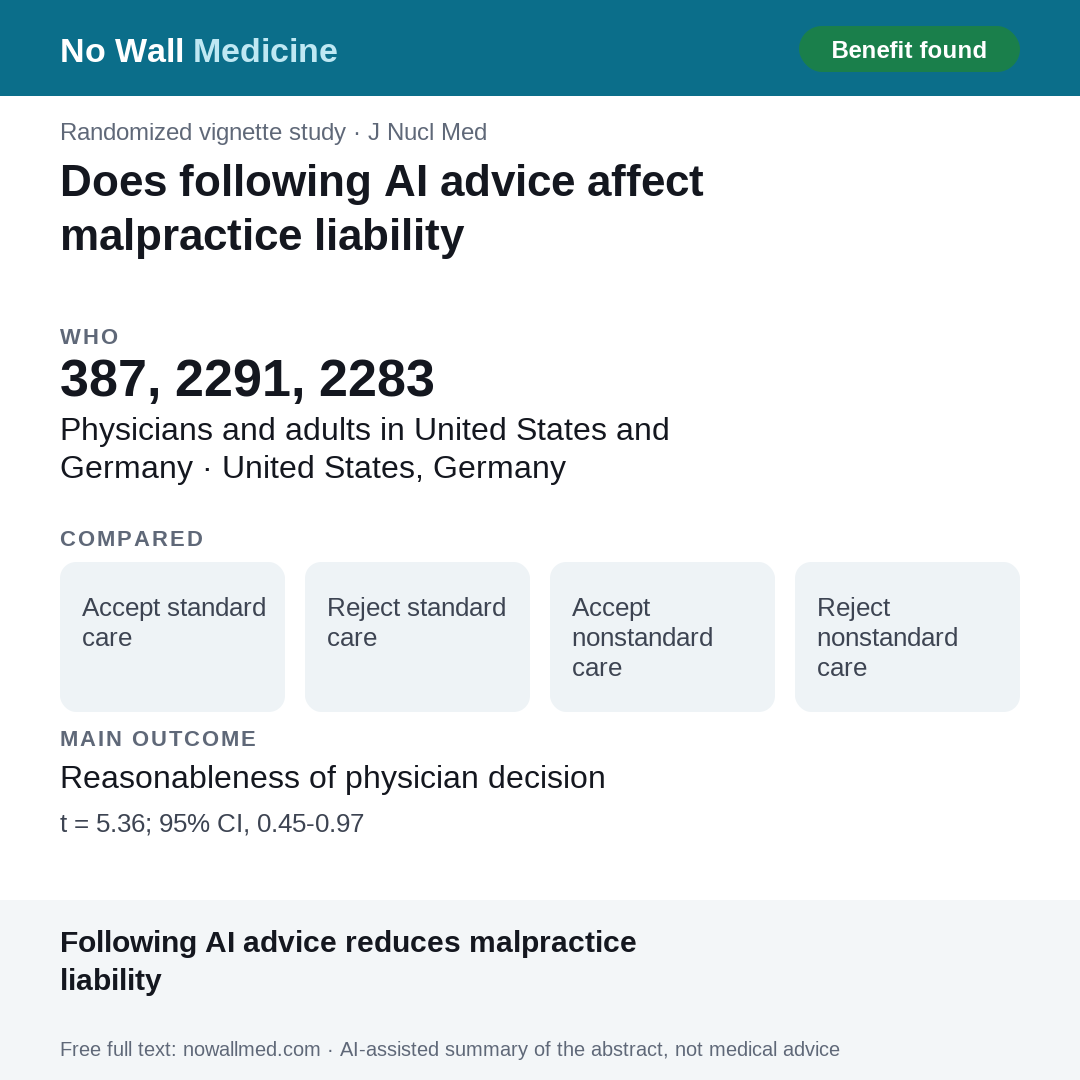
How Following Medical Artificial Intelligence Advice Can Mitigate Malpractice Liability: Cross-National Insights from a Randomized Trial
Randomized vignette studyBenefit found
Does following AI advice affect malpractice liability
Who
387, 2291, 2283
Physicians and adults in United States and Germany · United States, Germany
Compared
Accept standard care
Reject standard care
Accept nonstandard care
Reject nonstandard care
Main outcome
Reasonableness of physician decision
Result: t = 5.36; 95% CI, 0.45-0.97
Bottom line: Following AI advice reduces malpractice liability
J Nucl Med · 2026-09-02Download image
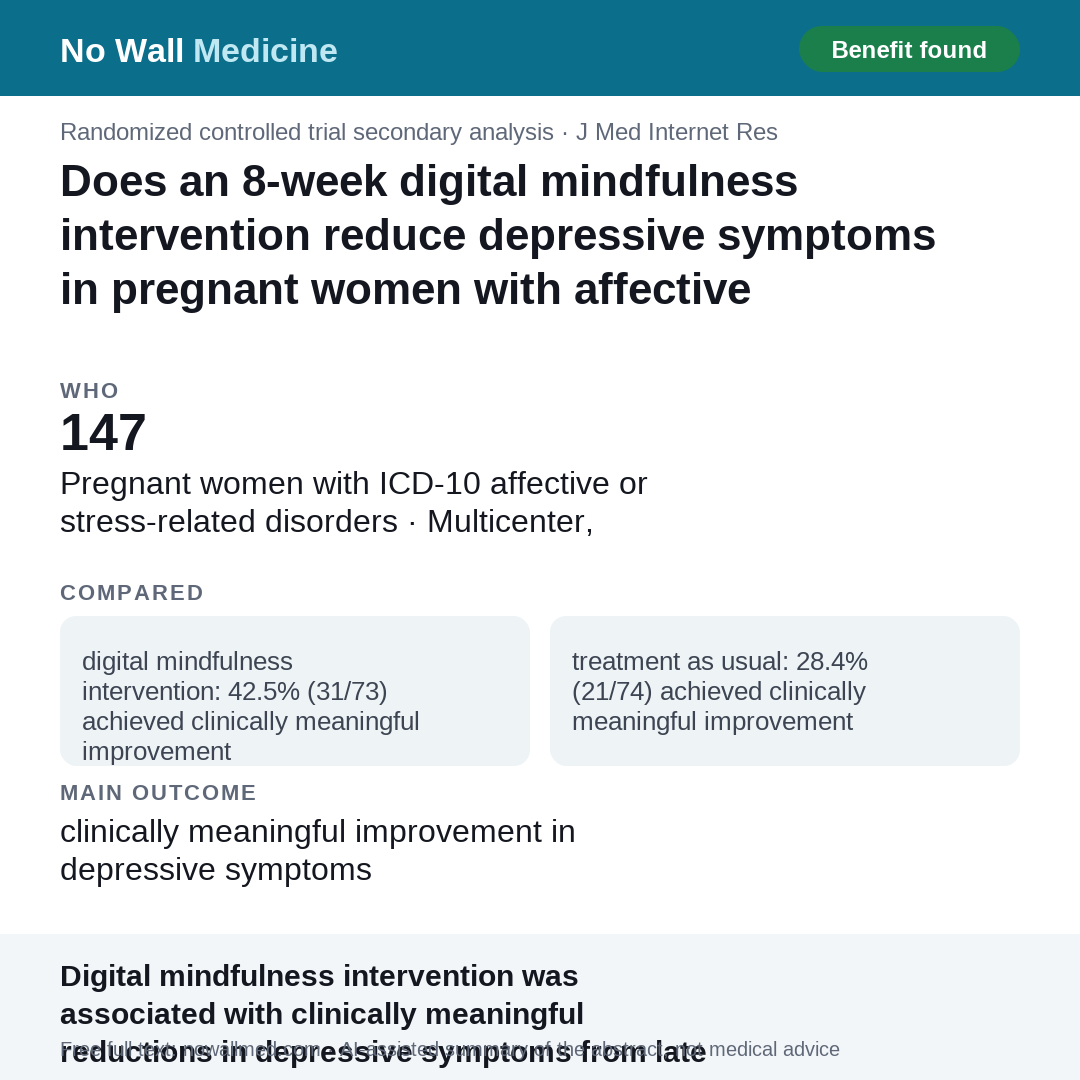
Digital Mindfulness Intervention for Pregnant Women With Affective Disorders and Acute Stress Reactions: Prespecified Secondary Analysis of a Randomized Controlled Trial
Randomized controlled trial secondary analysisBenefit found
Does an 8-week digital mindfulness intervention reduce depressive symptoms in pregnant women with affective disorders?
Who
147
Pregnant women with ICD-10 affective or stress-related disorders · Multicenter, Baden-Württemberg, Germany
Compared
digital mindfulness intervention: 42.5% (31/73) achieved clinically meaningful improvement
treatment as usual: 28.4% (21/74) achieved clinically meaningful improvement
Main outcome
clinically meaningful improvement in depressive symptoms
Result: adjusted odds ratio 1.56 (95% CI 1.19-2.05)
Bottom line: Digital mindfulness intervention was associated with clinically meaningful reductions in depressive symptoms from late pregnancy to 4-6 weeks postpartum.
Limitation: Effects at 6 months postpartum were attenuated and less stable across missing-data assumptions.
J Med Internet Res · 2026-09-02Download image
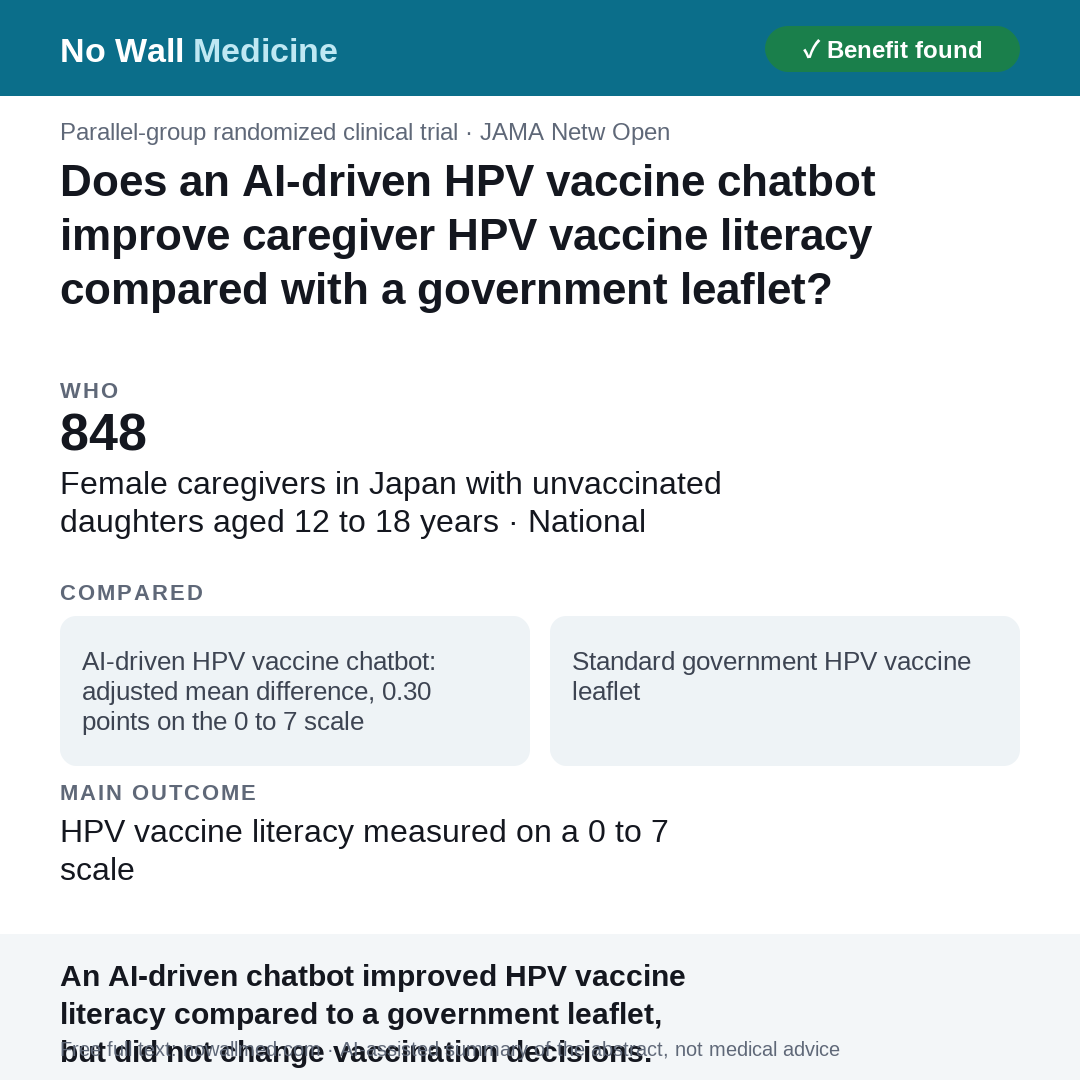
AI Chatbot Use for Human Papillomavirus Vaccine Literacy in Japan: A Randomized Clinical Trial
Parallel-group randomized clinical trialBenefit found
Does an AI-driven HPV vaccine chatbot improve caregiver HPV vaccine literacy compared with a government leaflet?
Who
848
Female caregivers in Japan with unvaccinated daughters aged 12 to 18 years · National research panel in Japan
Compared
AI-driven HPV vaccine chatbot: adjusted mean difference, 0.30 points on the 0 to 7 scale
Standard government HPV vaccine leaflet
Main outcome
HPV vaccine literacy measured on a 0 to 7 scale
Result: adjusted mean difference, 0.30 points on the 0 to 7 scale; 95% CI, 0.18-0.43 points
Bottom line: An AI-driven chatbot improved HPV vaccine literacy compared to a government leaflet, but did not change vaccination decisions.
JAMA Netw Open · 2026-09-01Download image
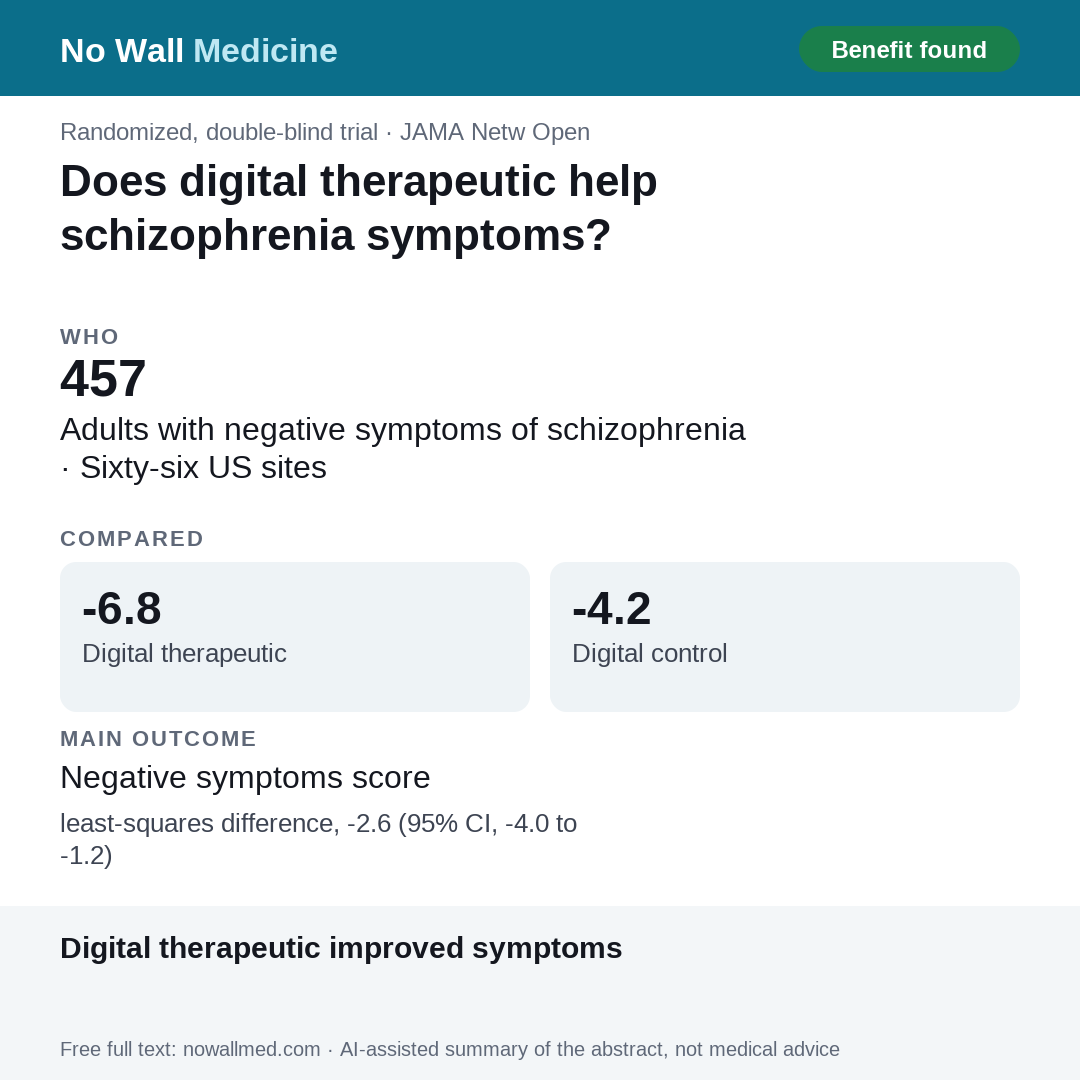
A Digital Therapeutic Intervention for Negative Symptoms of Schizophrenia: A Randomized Clinical Trial
Randomized, double-blind trialBenefit found
Does digital therapeutic help schizophrenia symptoms?
Who
457
Adults with negative symptoms of schizophrenia · Sixty-six US sites
Compared
-6.8Digital therapeutic (0.5)
-4.2Digital control (0.5)
Main outcome
Negative symptoms score
Result: least-squares difference, -2.6 (95% CI, -4.0 to -1.2)
Bottom line: Digital therapeutic improved symptoms
JAMA Netw Open · 2026-09-01Download image
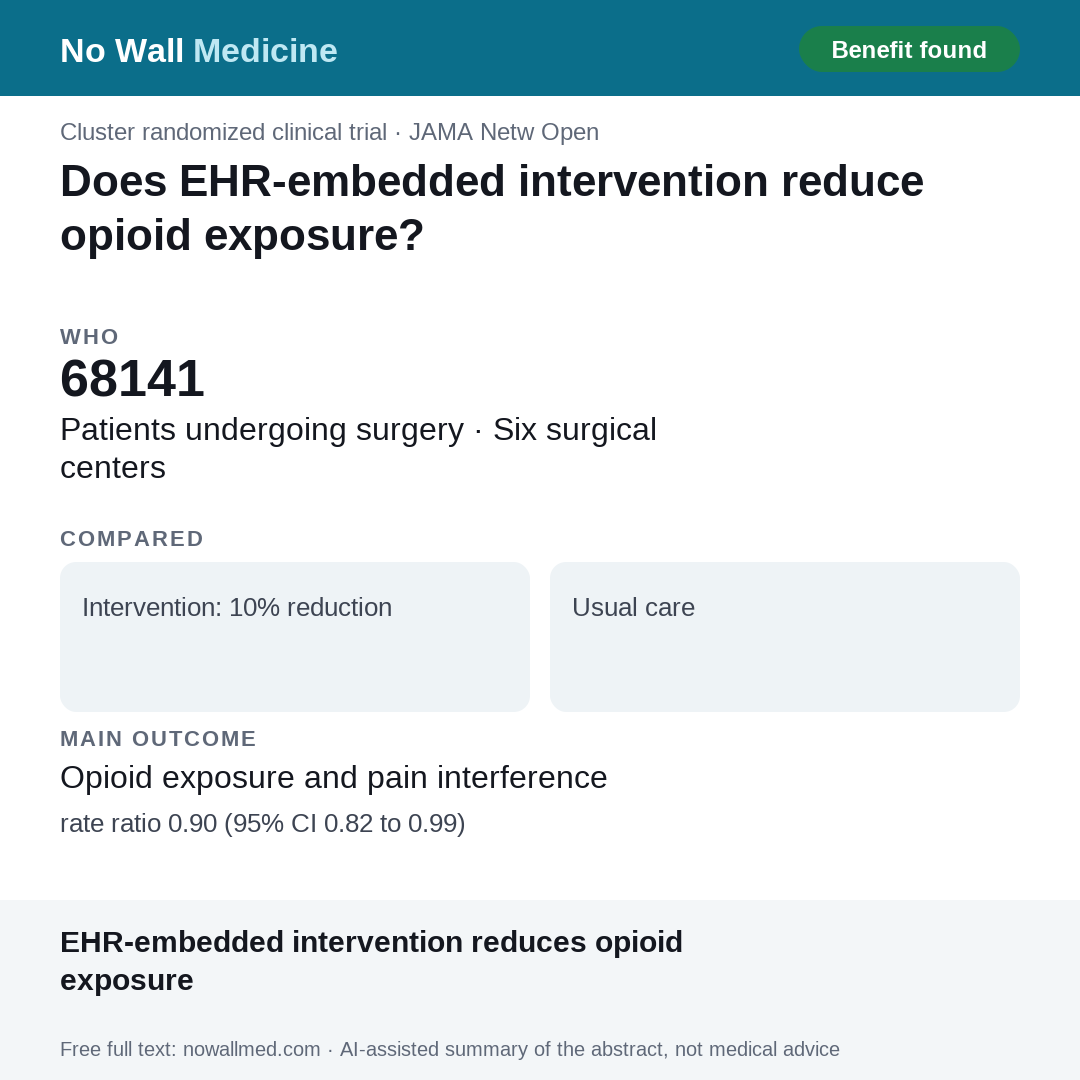
Integrating Nonpharmacological Options Into Perioperative Pain Care: A Cluster Randomized Clinical Trial
Cluster randomized clinical trialBenefit found
Does EHR-embedded intervention reduce opioid exposure?
Who
68141
Patients undergoing surgery · Six surgical centers
Compared
Intervention: 10% reduction
Usual care
Main outcome
Opioid exposure and pain interference
Result: rate ratio 0.90 (95% CI 0.82 to 0.99)
Bottom line: EHR-embedded intervention reduces opioid exposure
JAMA Netw Open · 2026-09-01Download image
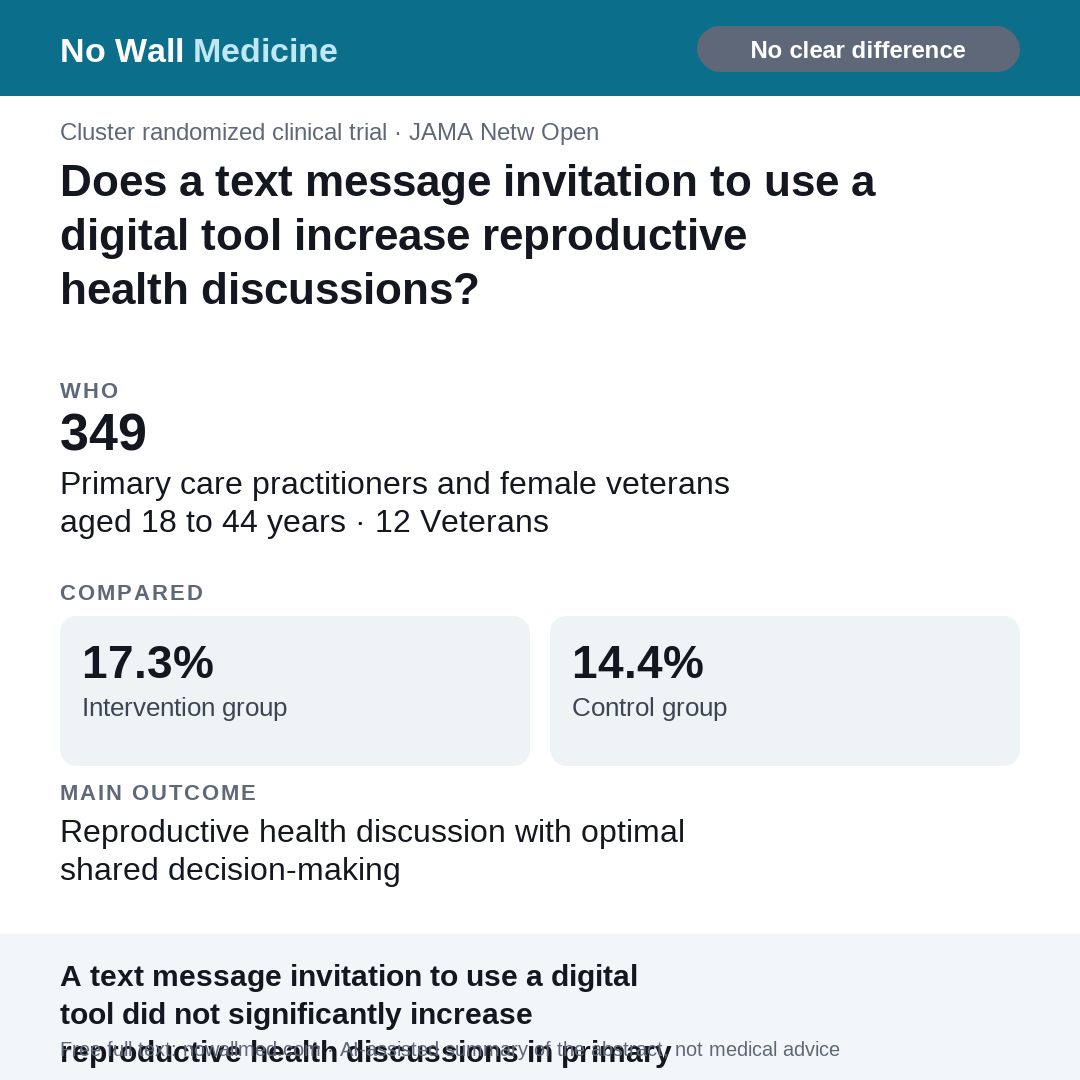
Text Message Delivery of a Digital Tool for Reproductive Health Discussions in Primary Care: A Cluster Randomized Clinical Trial
Cluster randomized clinical trialNo clear difference
Does a text message invitation to use a digital tool increase reproductive health discussions?
Who
349
Primary care practitioners and female veterans aged 18 to 44 years · 12 Veterans Administration health care systems
Compared
17.3%Intervention group
14.4%Control group
Main outcome
Reproductive health discussion with optimal shared decision-making
Result: adjusted odds ratio 1.46 (95% CI 0.70-3.06)
Bottom line: A text message invitation to use a digital tool did not significantly increase reproductive health discussions in primary care.
JAMA Netw Open · 2026-09-01Download image
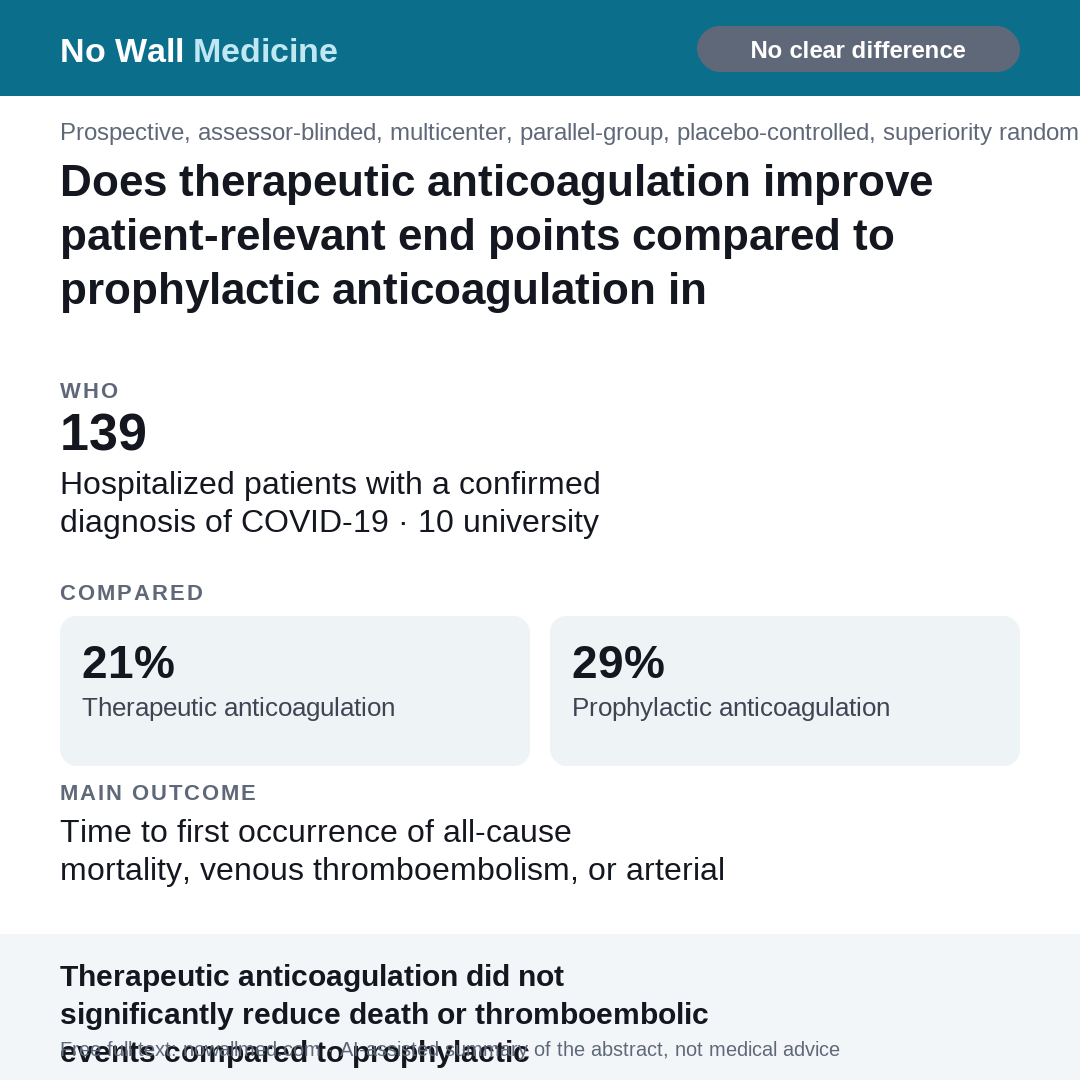
Prophylactic vs Therapeutic Anticoagulation in Hospitalized Patients With COVID-19: A Randomized Clinical Trial
Prospective, assessor-blinded, multicenter, parallel-group, placebo-controlled, superiority randomized clinical trialNo clear difference
Does therapeutic anticoagulation improve patient-relevant end points compared to prophylactic anticoagulation in hospitalized COVID-19 patients?
Who
139
Hospitalized patients with a confirmed diagnosis of COVID-19 · 10 university hospitals in Germany
Compared
21%Therapeutic anticoagulation (14 of 67)
29%Prophylactic anticoagulation (20 of 70)
Main outcome
Time to first occurrence of all-cause mortality, venous thromboembolism, or arterial thromboembolism
Result: hazard ratio 0.74 (95% CI 0.38-1.48)
Bottom line: Therapeutic anticoagulation did not significantly reduce death or thromboembolic events compared to prophylactic anticoagulation in hospitalized COVID-19 patients.
JAMA Netw Open · 2026-09-01Download image
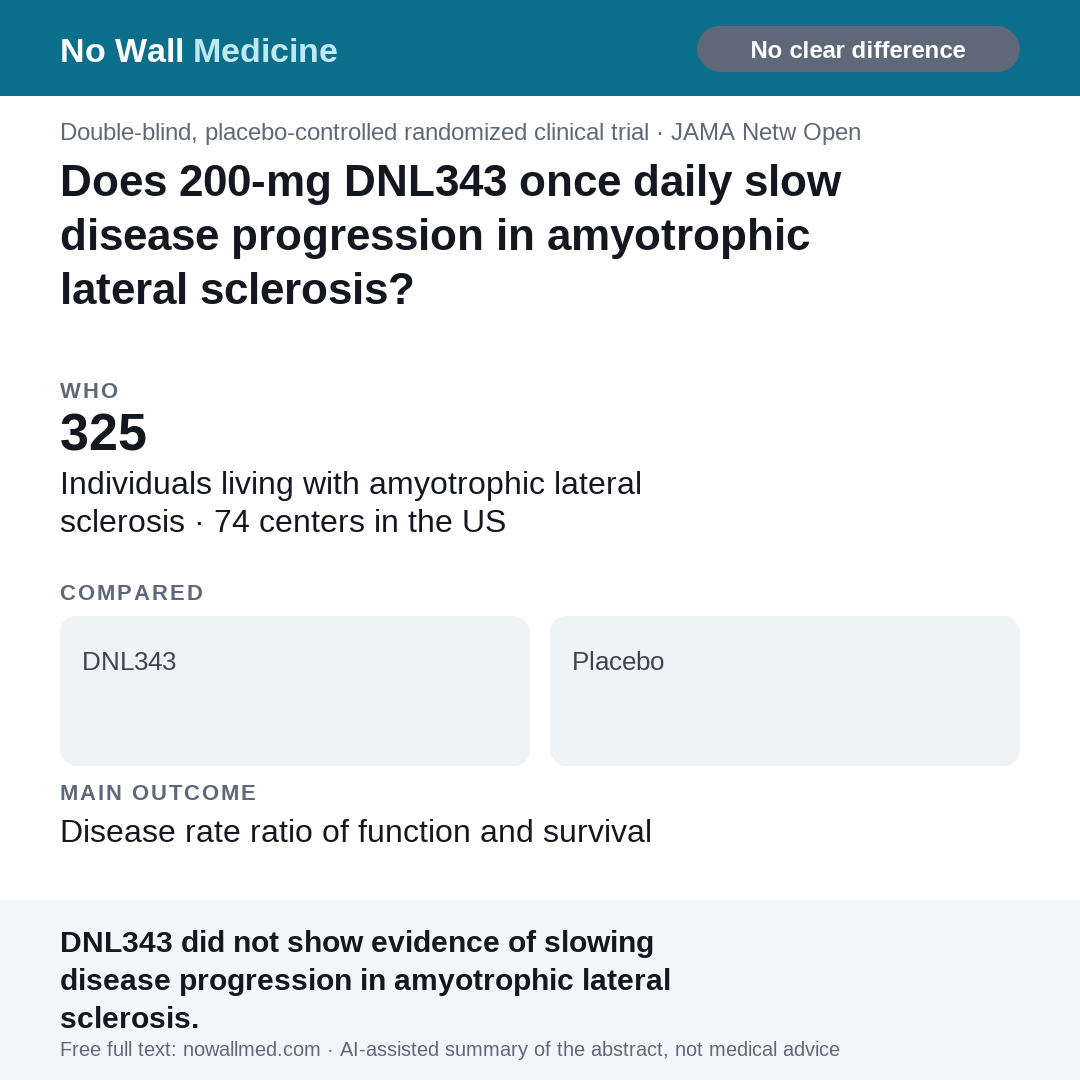
DNL343 and Disease Progression in Amyotrophic Lateral Sclerosis: A Randomized Clinical Trial
Double-blind, placebo-controlled randomized clinical trialNo clear difference
Does 200-mg DNL343 once daily slow disease progression in amyotrophic lateral sclerosis?
Who
325
Individuals living with amyotrophic lateral sclerosis · 74 centers in the US
Compared
DNL343
Placebo
Main outcome
Disease rate ratio of function and survival
Result: disease rate ratio 1.04 (95% credible interval, 0.83-1.32)
Bottom line: DNL343 did not show evidence of slowing disease progression in amyotrophic lateral sclerosis.
JAMA Netw Open · 2026-09-01Download image
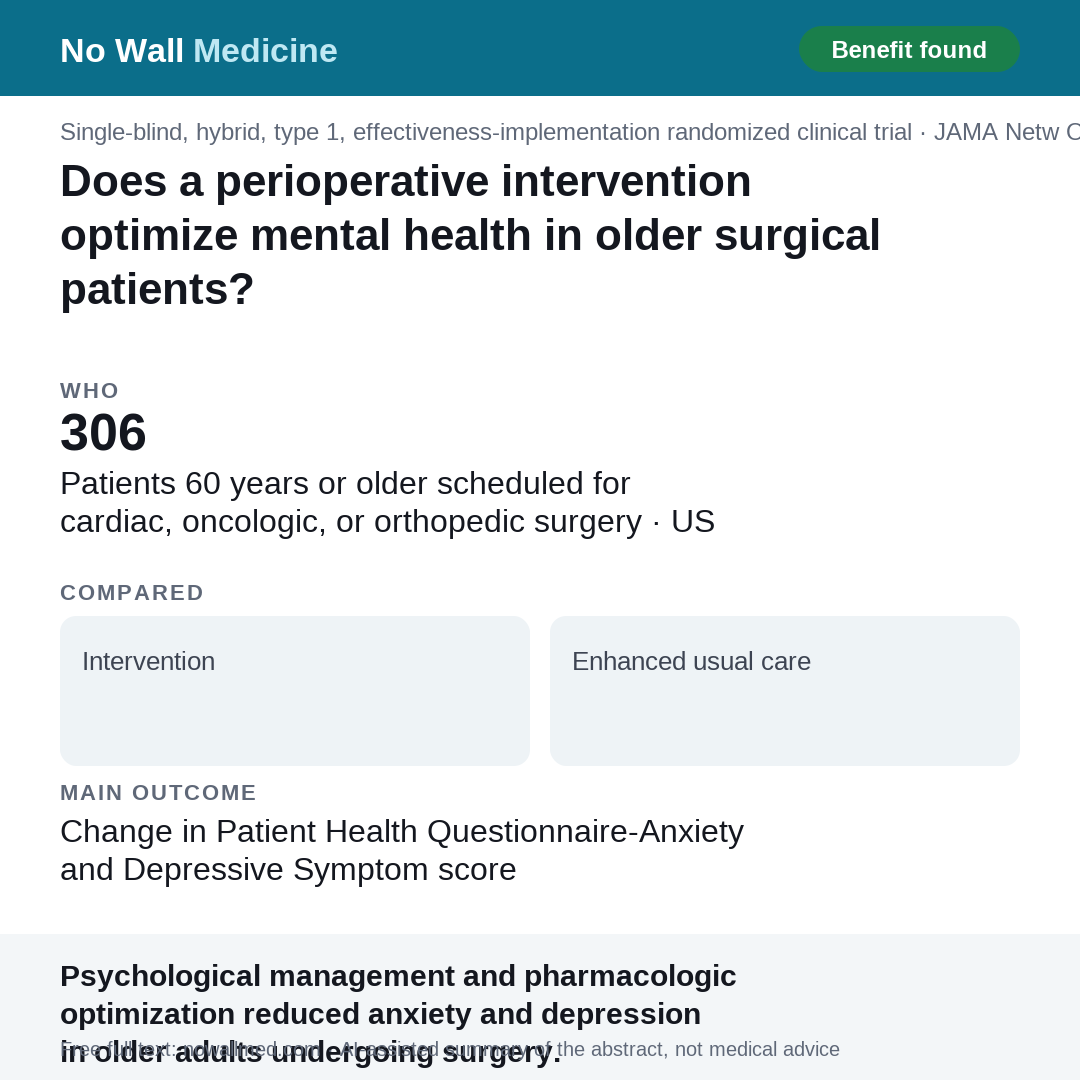
Perioperative Depression and Anxiety Care in Older Patients: A Randomized Clinical Trial
Single-blind, hybrid, type 1, effectiveness-implementation randomized clinical trialBenefit found
Does a perioperative intervention optimize mental health in older surgical patients?
Who
306
Patients 60 years or older scheduled for cardiac, oncologic, or orthopedic surgery · US academic and community practice hospital network
Compared
Intervention
Enhanced usual care
Main outcome
Change in Patient Health Questionnaire-Anxiety and Depressive Symptom score
Result: mean difference, 2.20 (95% CI, 0.16-4.24)
Bottom line: Psychological management and pharmacologic optimization reduced anxiety and depression in older adults undergoing surgery.
Limitation: Future studies should assess reproducibility and determine which patients benefit most.
JAMA Netw Open · 2026-09-01Download image
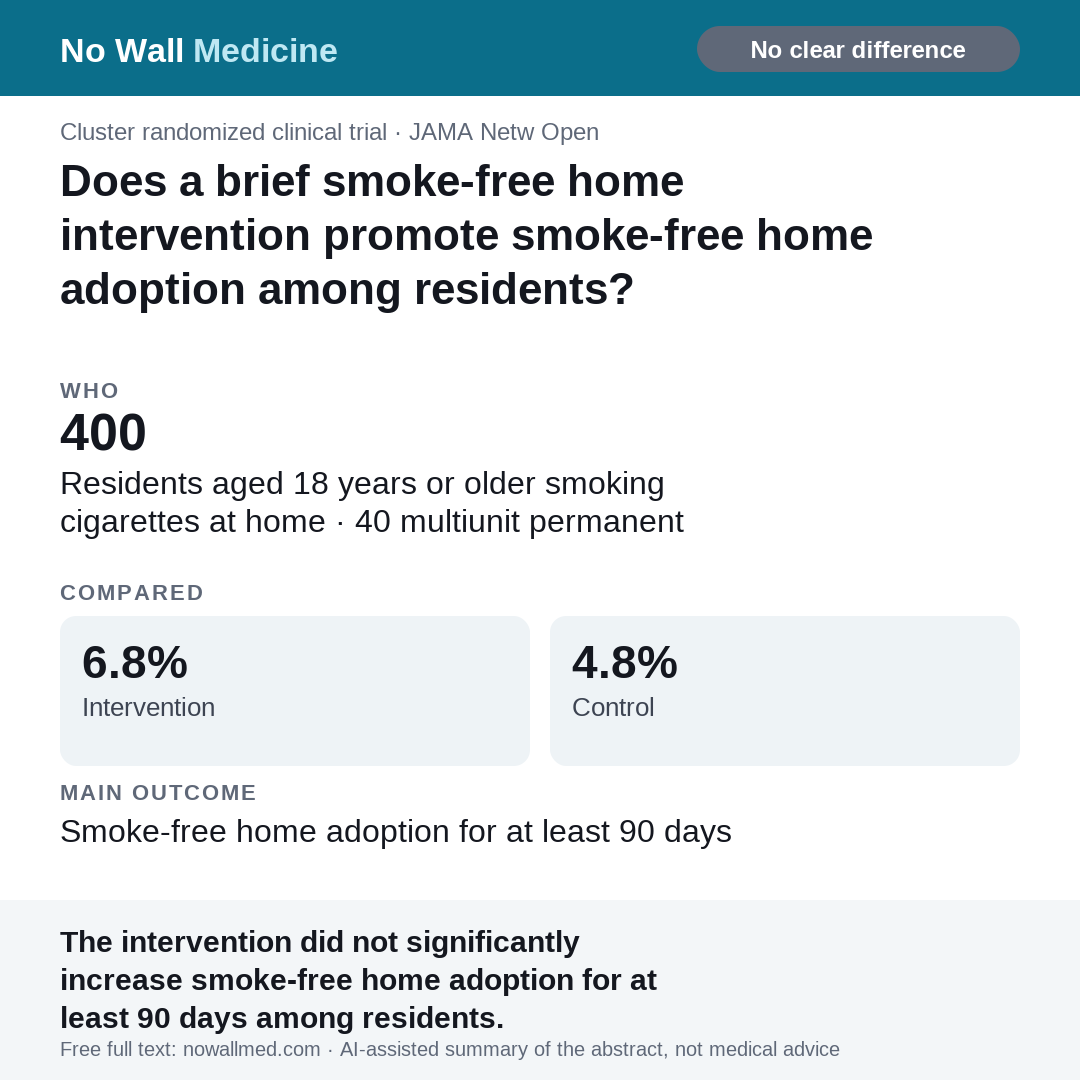
Smoke-Free Home Intervention in Permanent Supportive Housing: A Cluster Randomized Clinical Trial
Cluster randomized clinical trialNo clear difference
Does a brief smoke-free home intervention promote smoke-free home adoption among residents?
Who
400
Residents aged 18 years or older smoking cigarettes at home · 40 multiunit permanent supportive housing sites, San Francisco Bay area
Compared
6.8%Intervention
4.8%Control
Main outcome
Smoke-free home adoption for at least 90 days
Result: odds ratio 1.45 (95% CI, 0.69-3.07)
Bottom line: The intervention did not significantly increase smoke-free home adoption for at least 90 days among residents.
JAMA Netw Open · 2026-09-01Download image